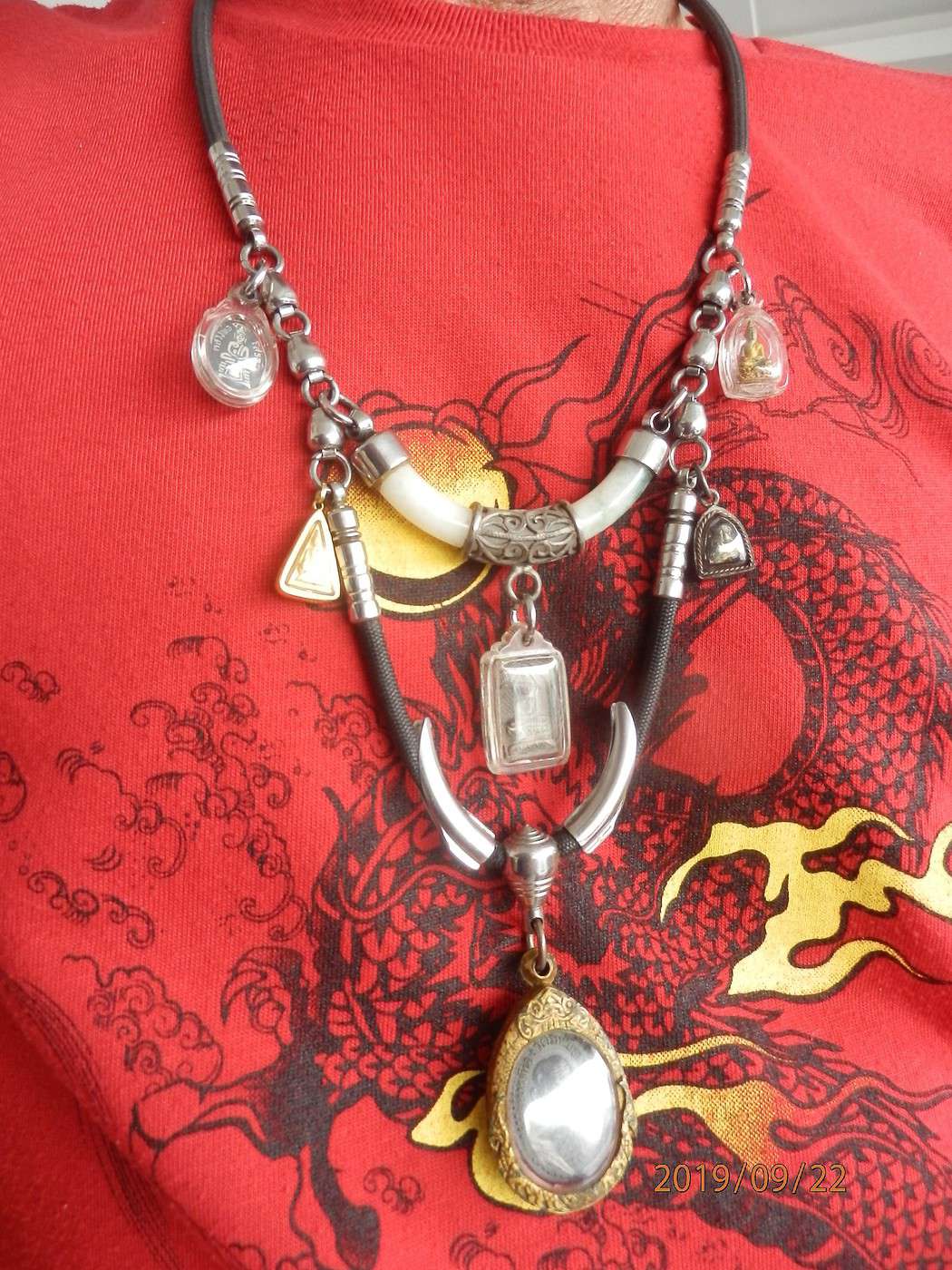
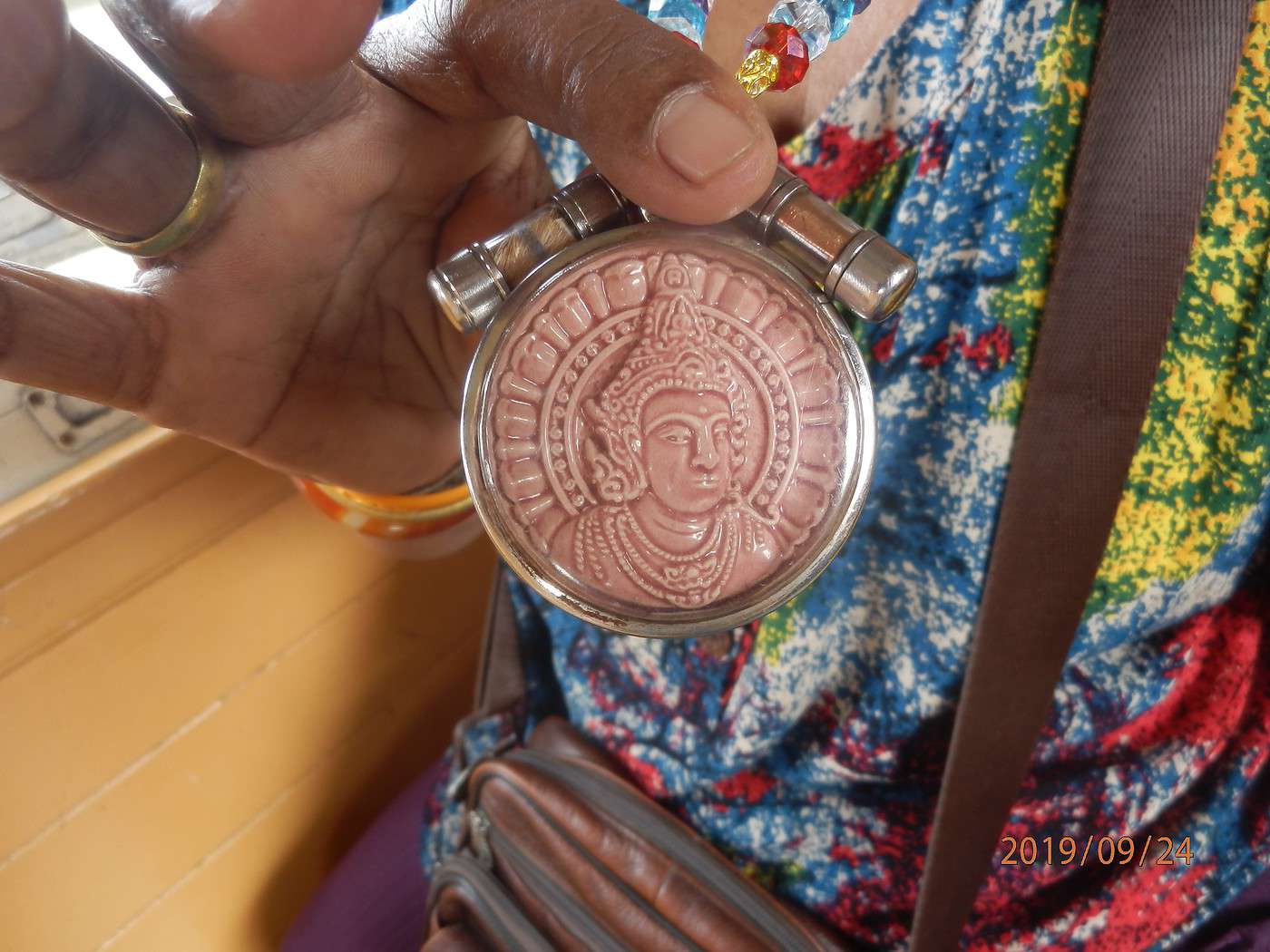
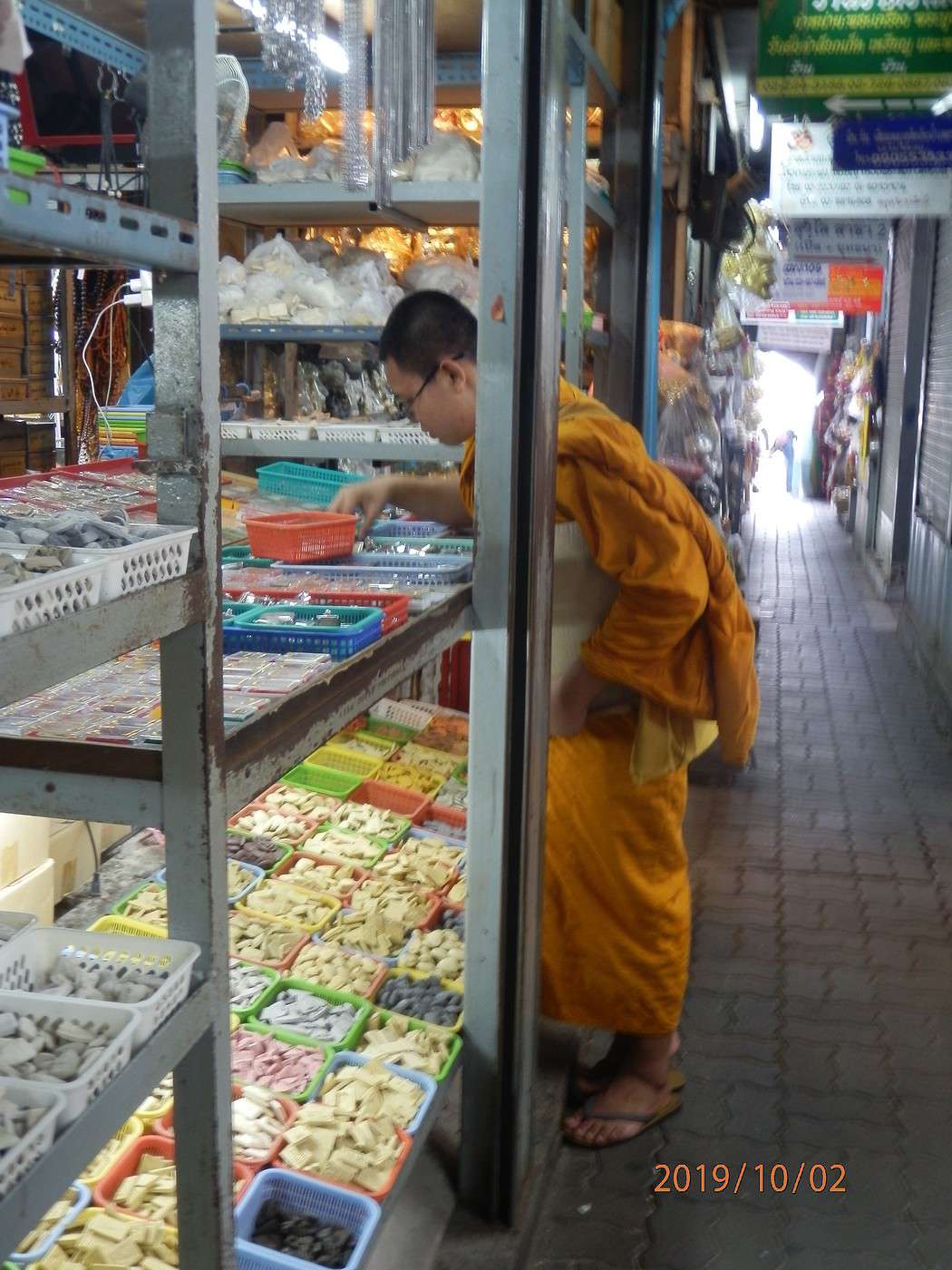
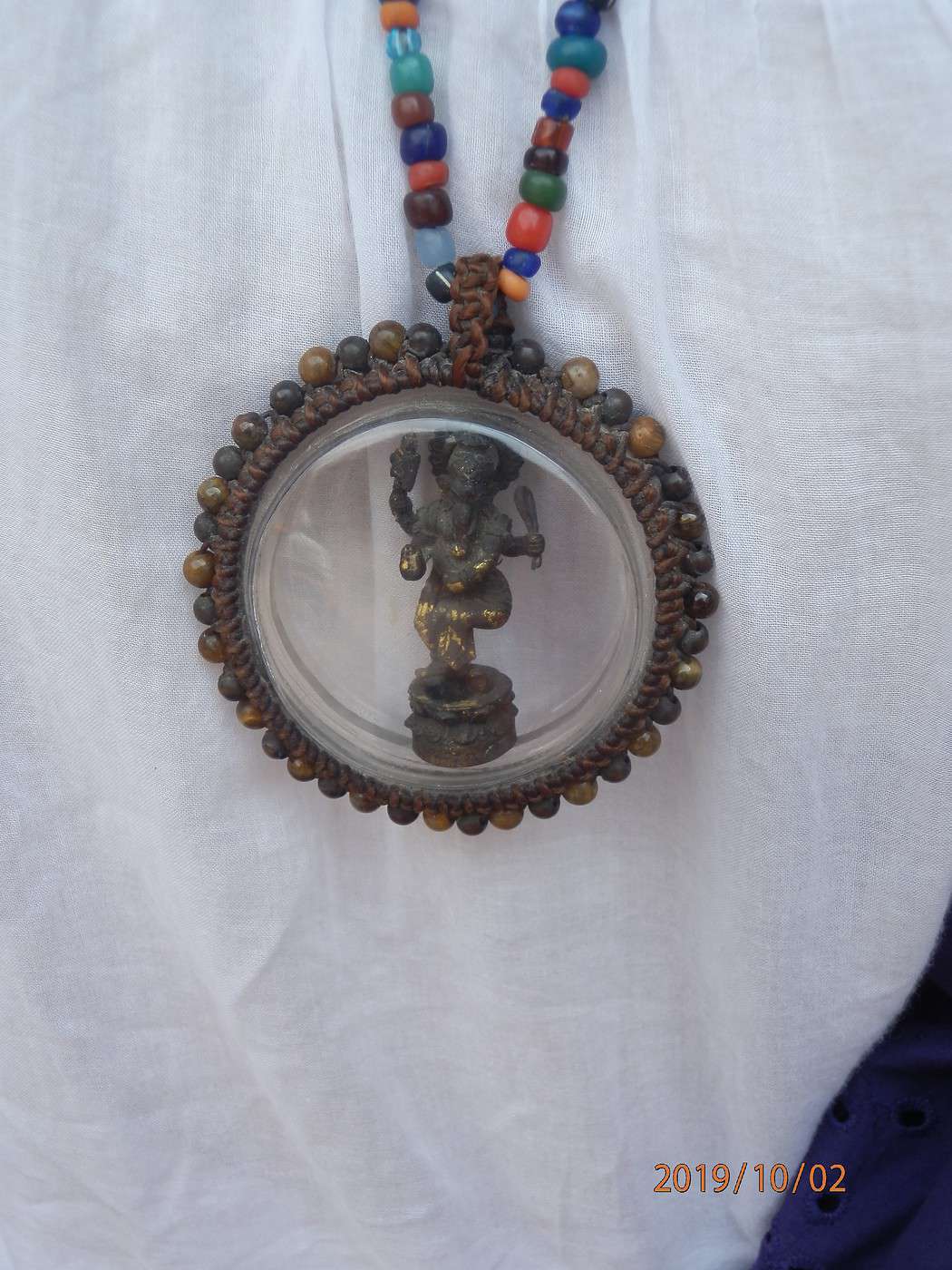
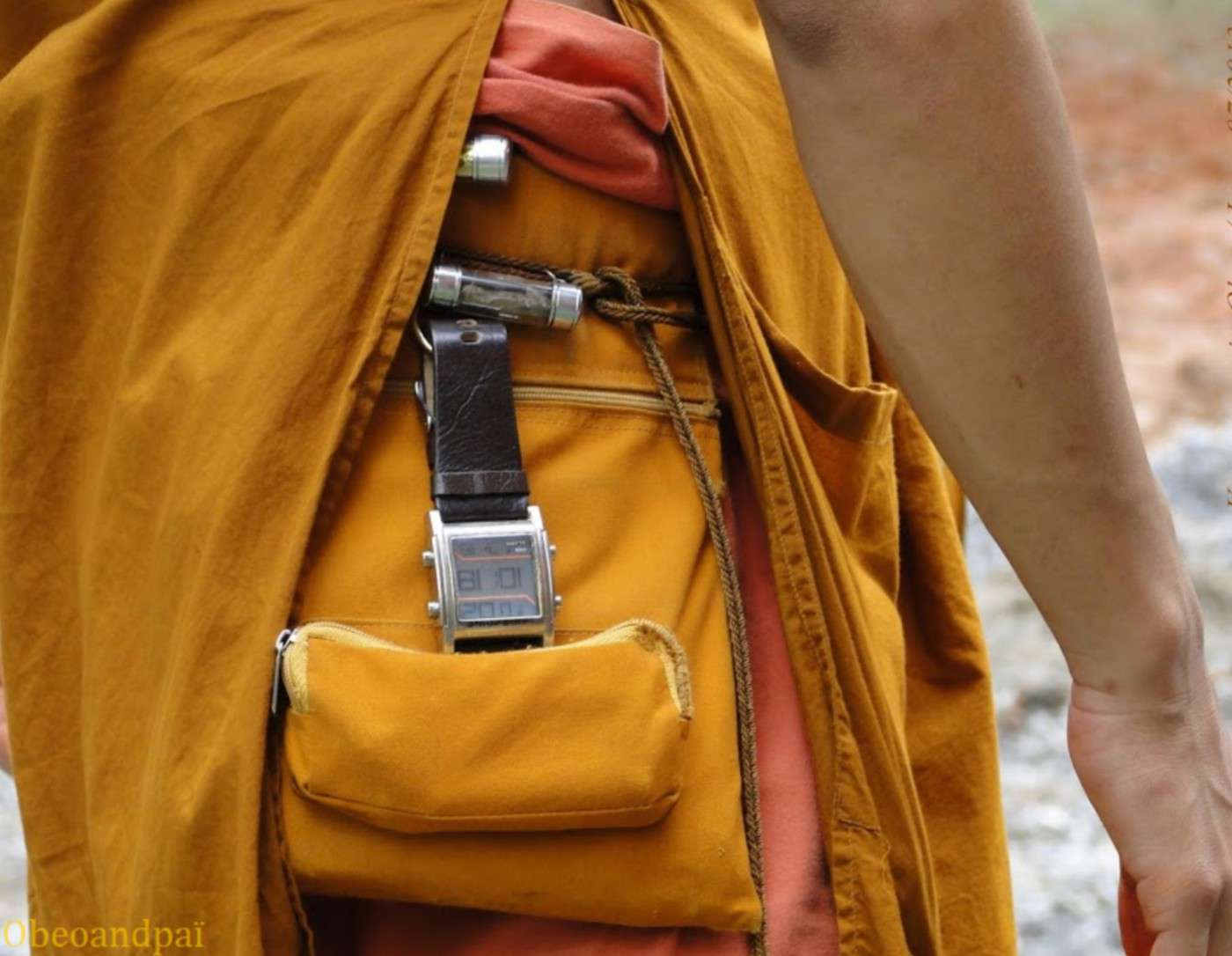
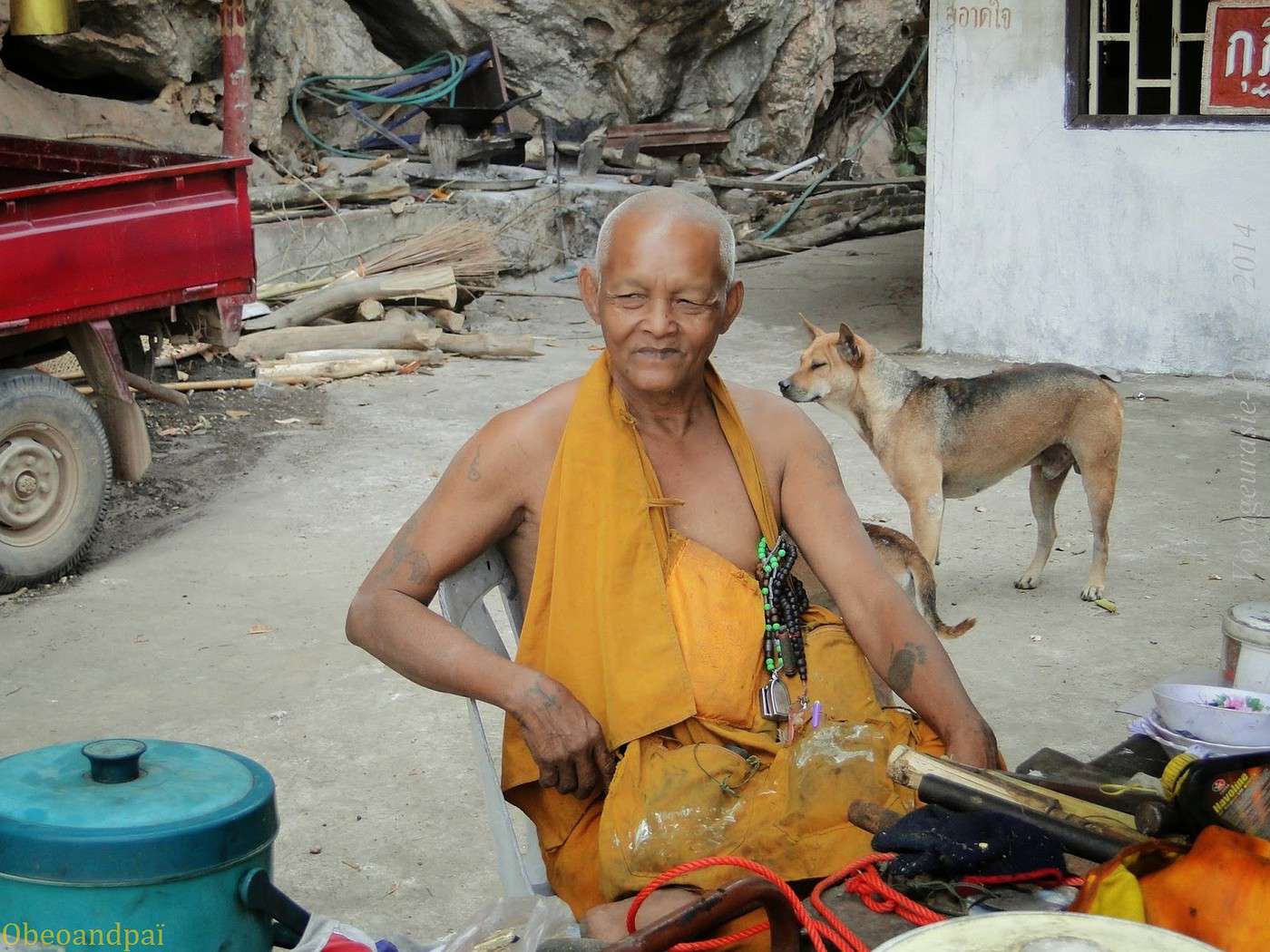
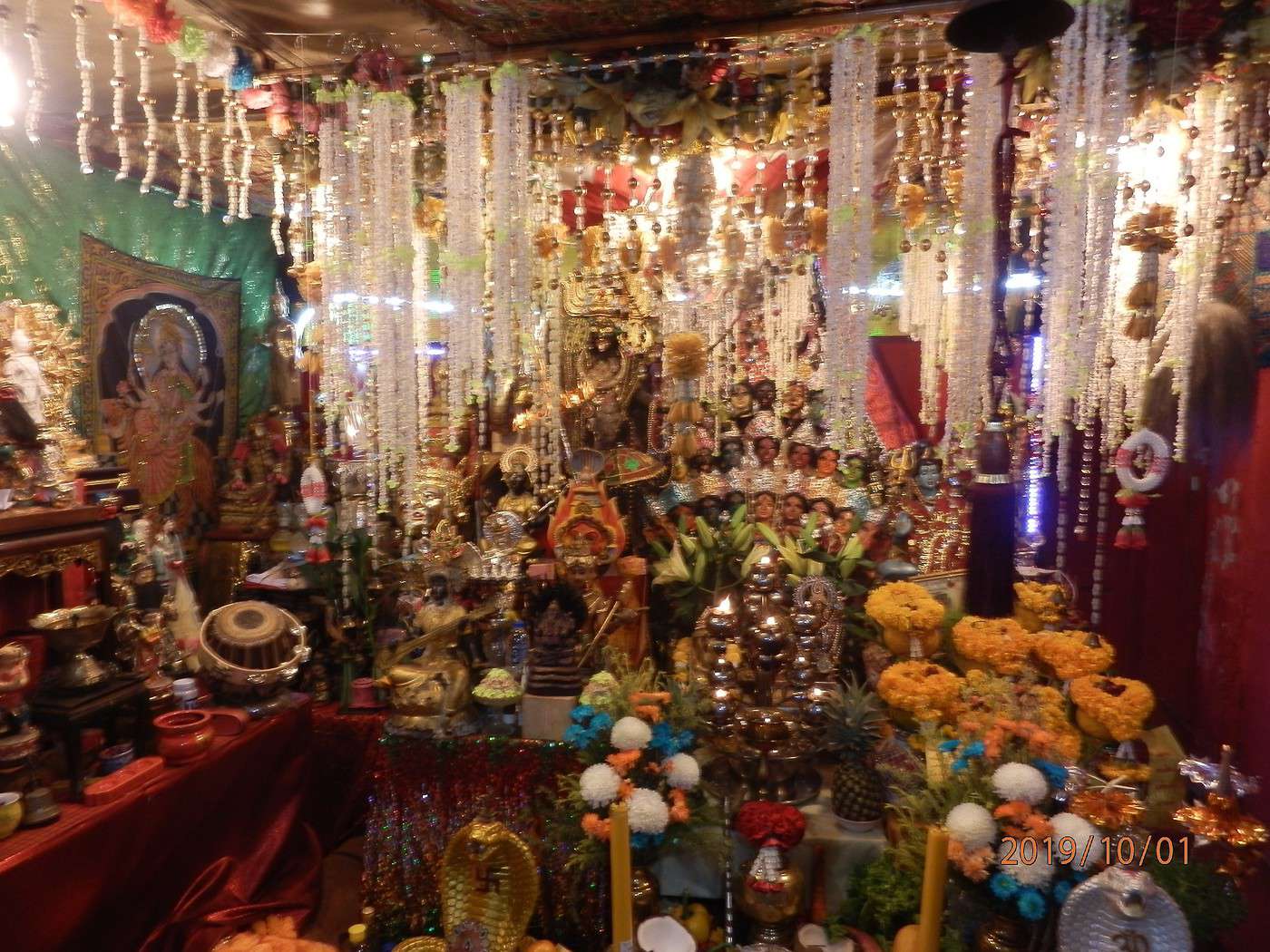
Kicking off the thread with an informative article about Phra Kreuang, protective amulets (according to local belief) that Thai people of all kinds wear around their necks:
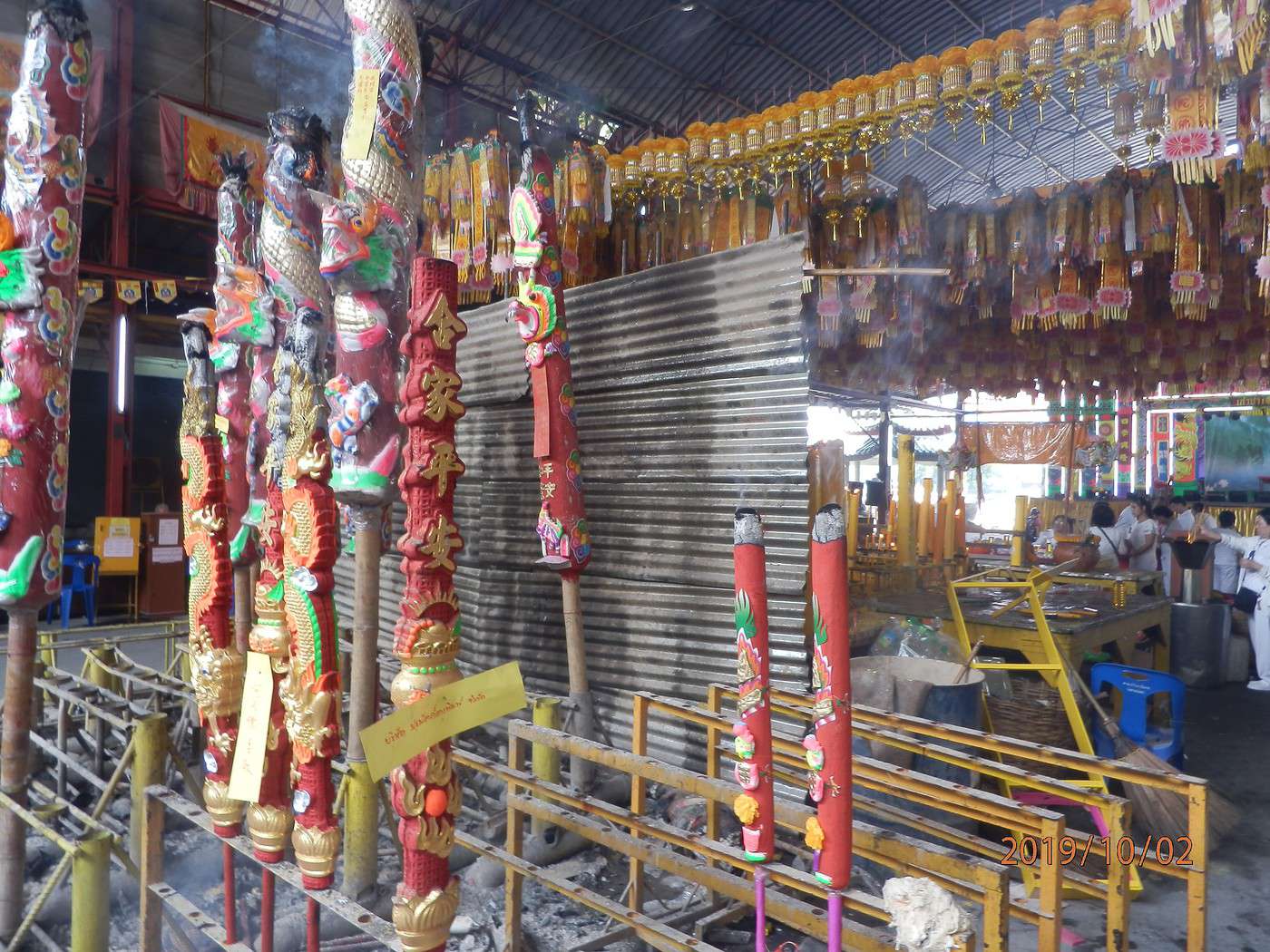
🙂 One of the really fun moments from our last trip to Thailand was the celebrations for Tetsakan Kin Je, aka the Vegetarian Festival, in Bangkok’s Chinatown.
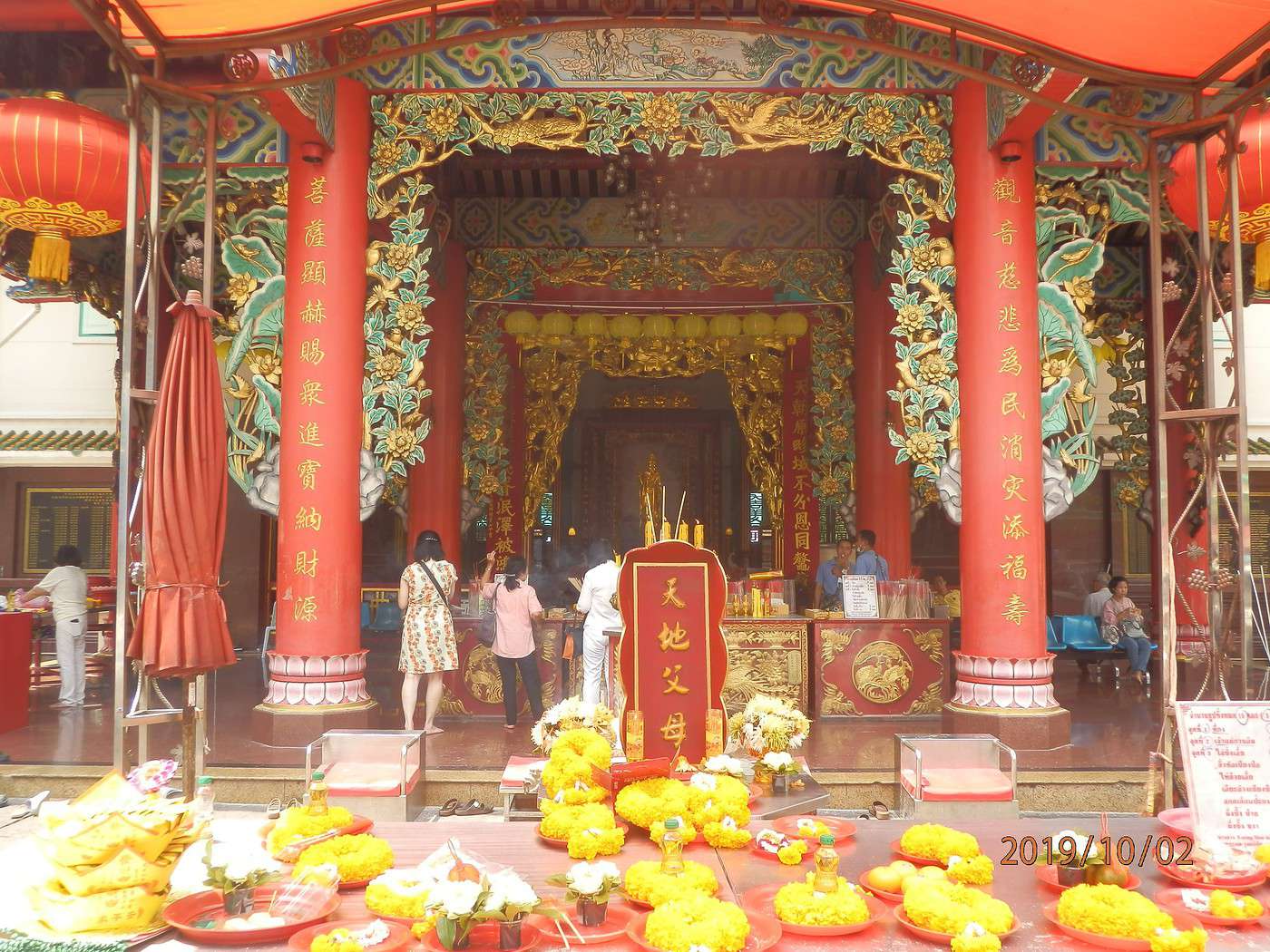
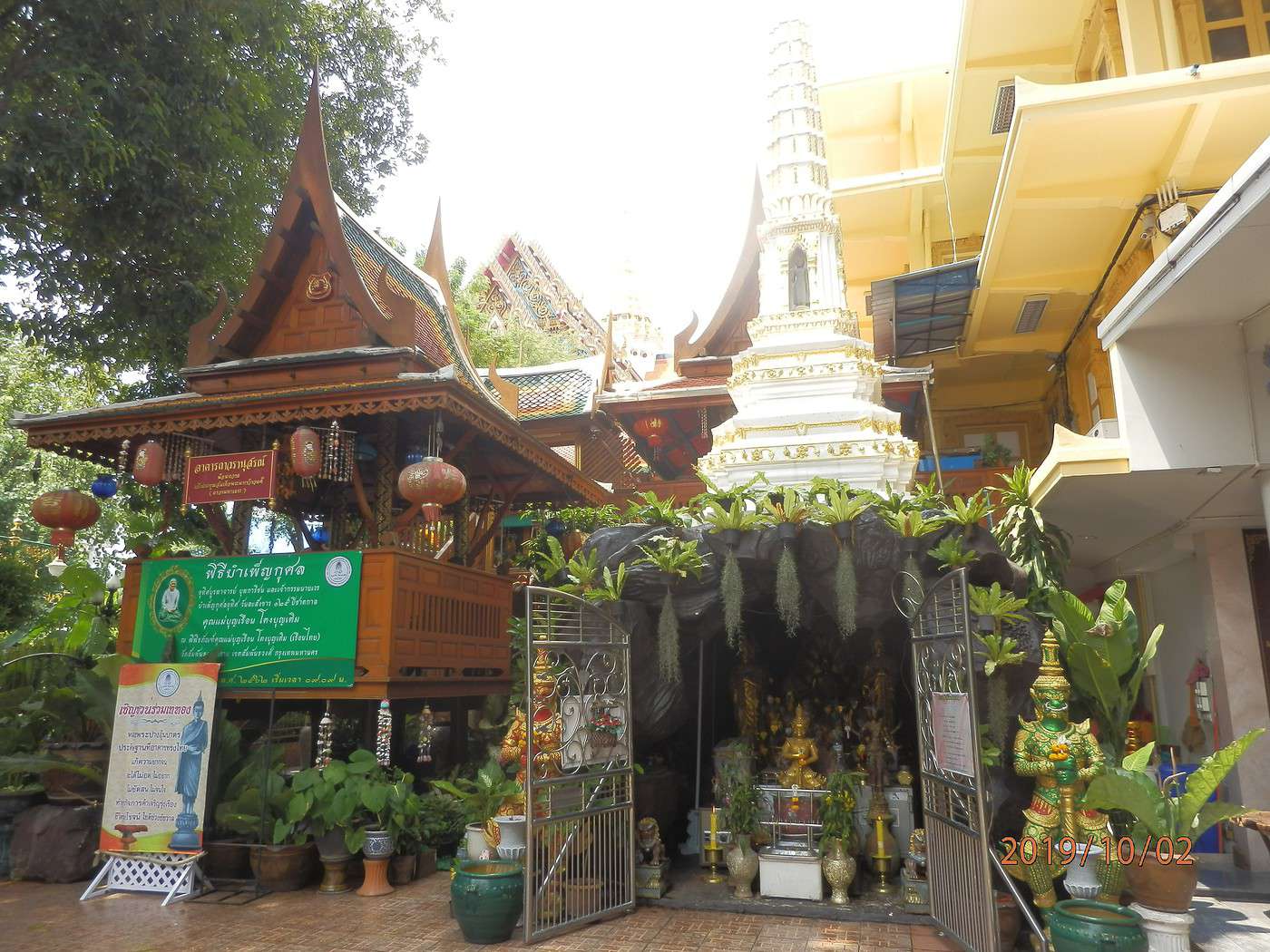
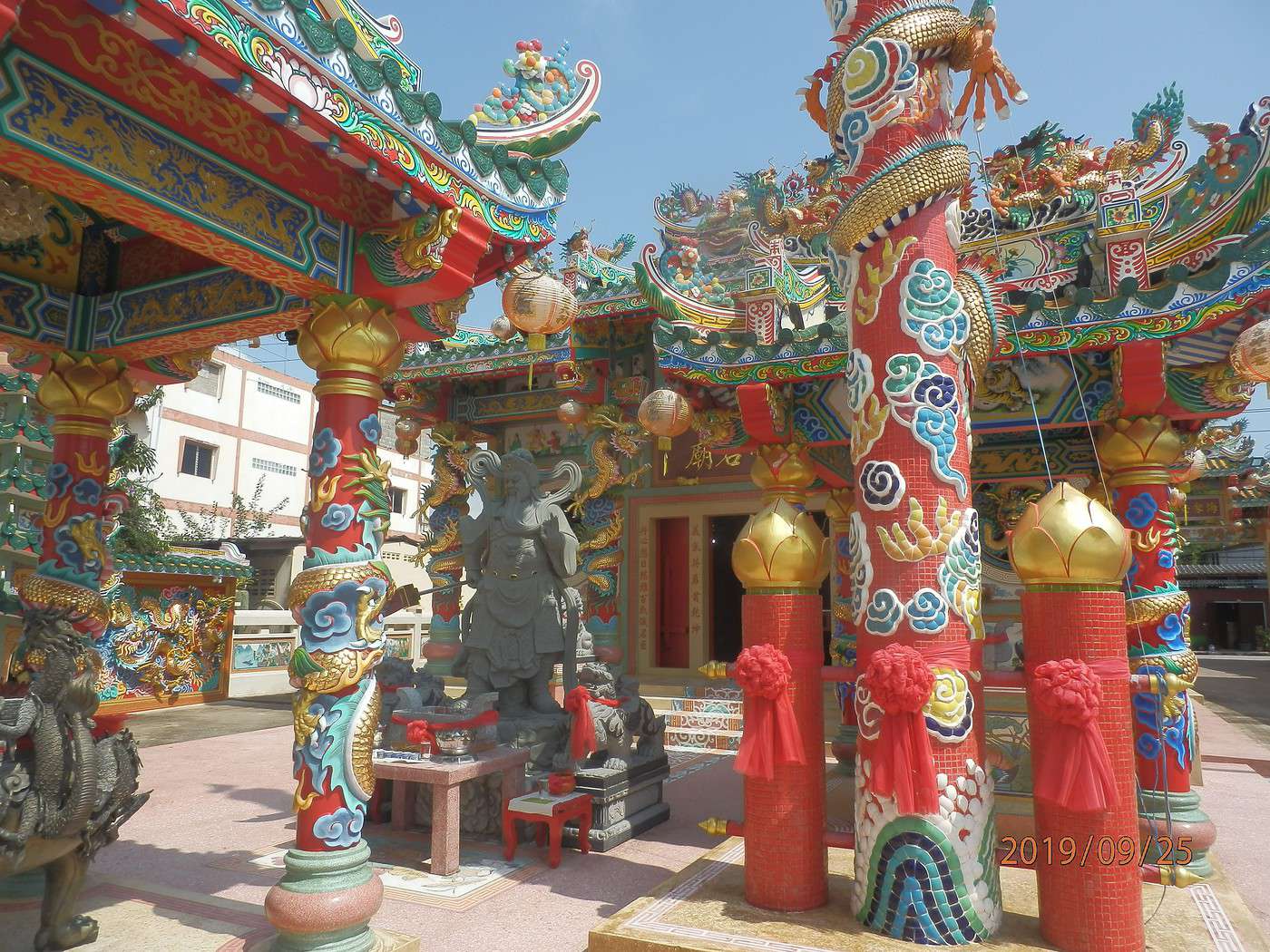
We experienced it at the Chao Zhou Shi Kong temple (or Wat Sun Changyi, photo1), tucked away in a "run-down" alley next to the famous Riverside GH, by the Chao Phraya River.
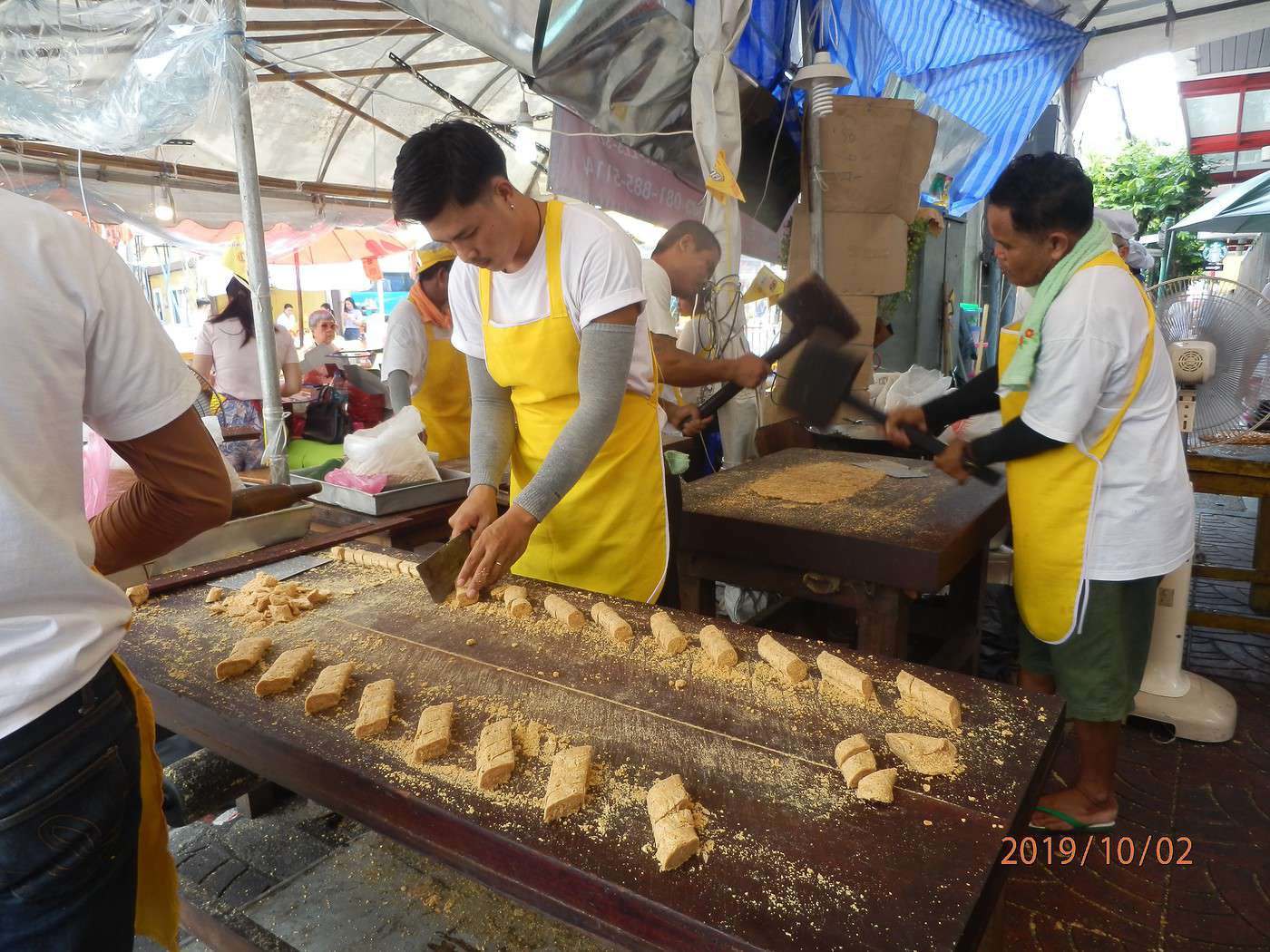
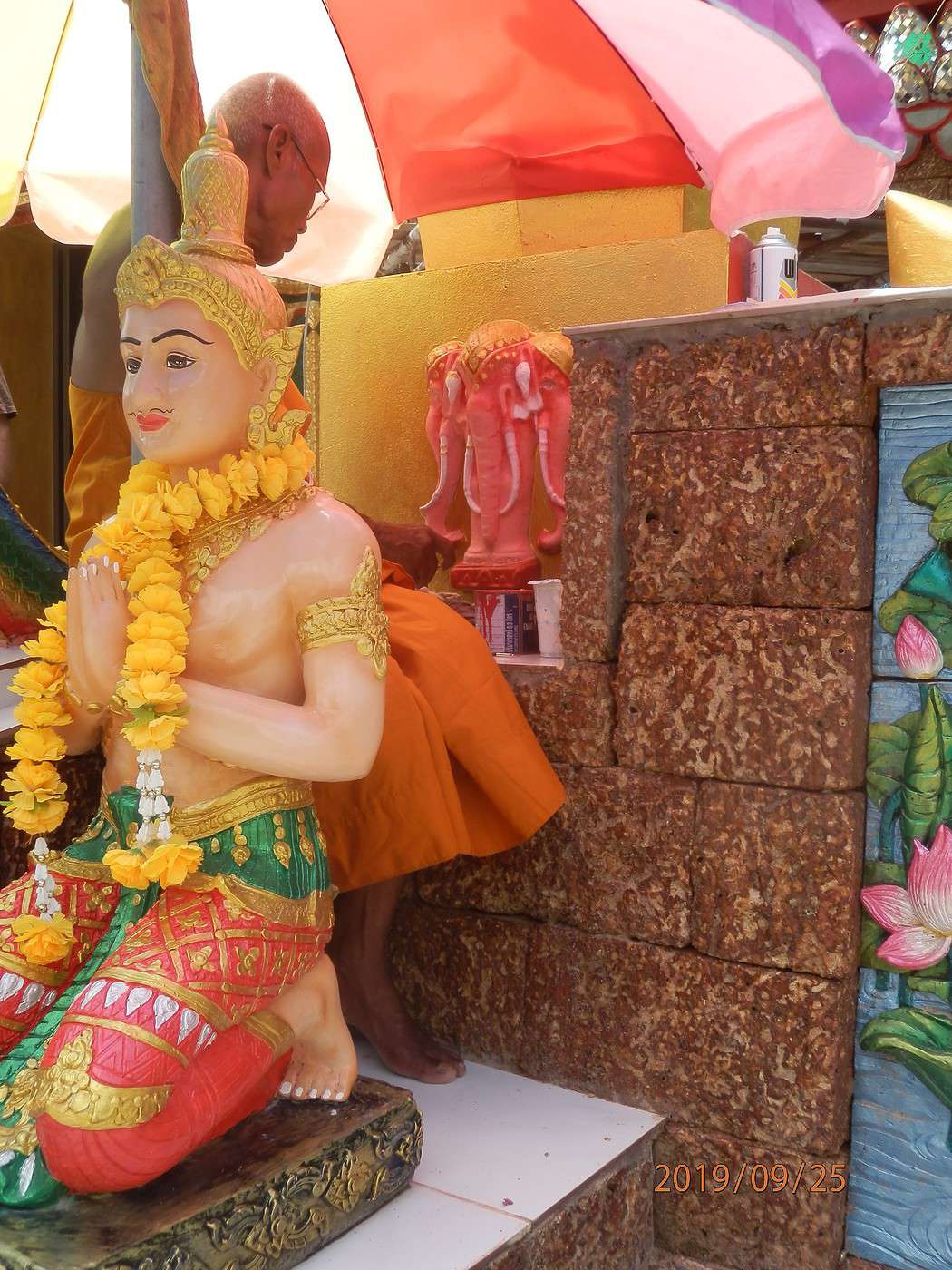
In an atmosphere thick with incense and vibrant decorations, throughout the day, devotees of all ages gather in a cheerful vibe, along with donation collectors, food prep volunteers (including the loud dough-pounding pastry makers, photo2), bird and turtle vendors for liberation rituals, temple merchants, and more...
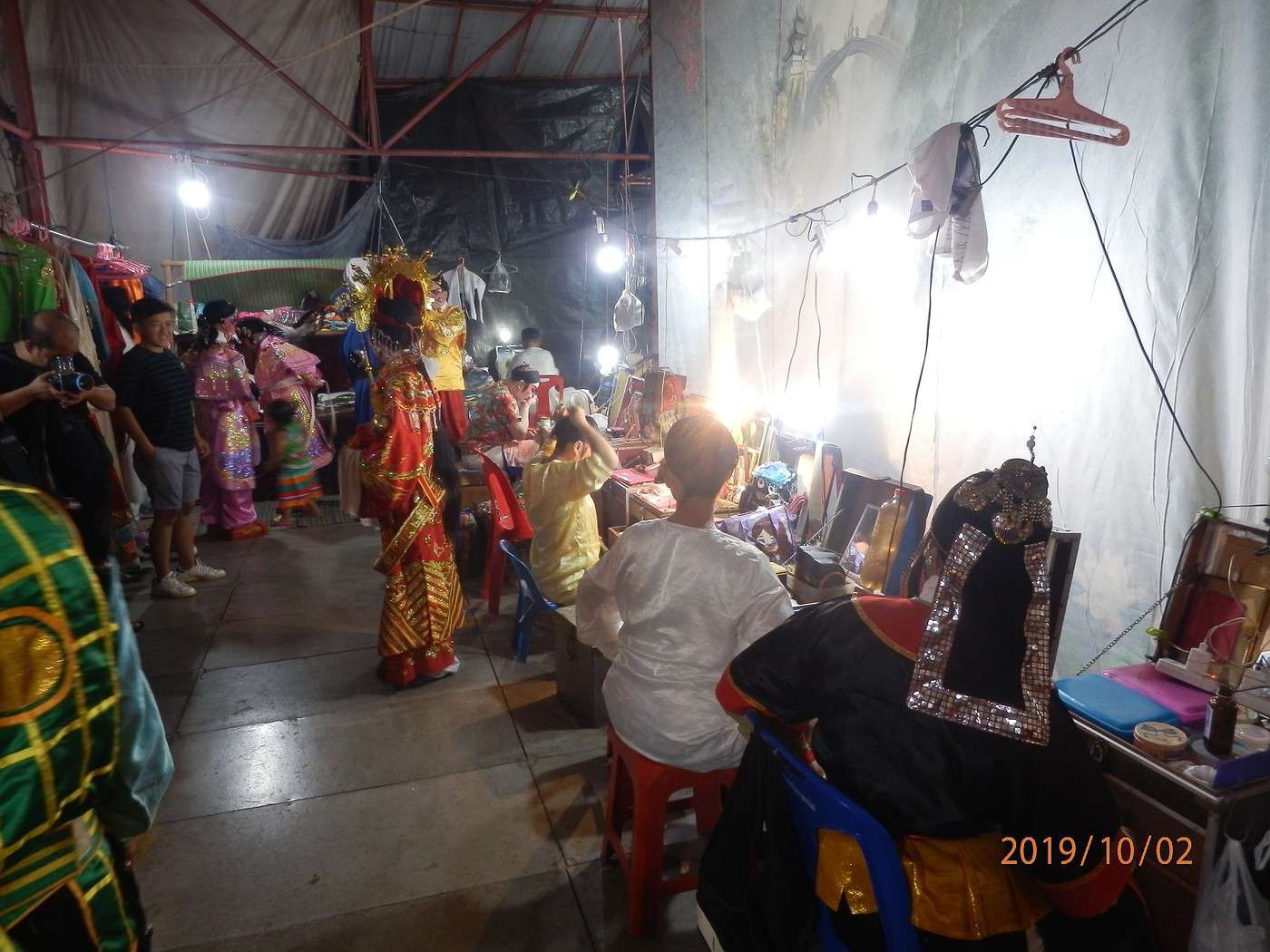
At 7 PM, it’s Chinese opera time (photo4 backstage).
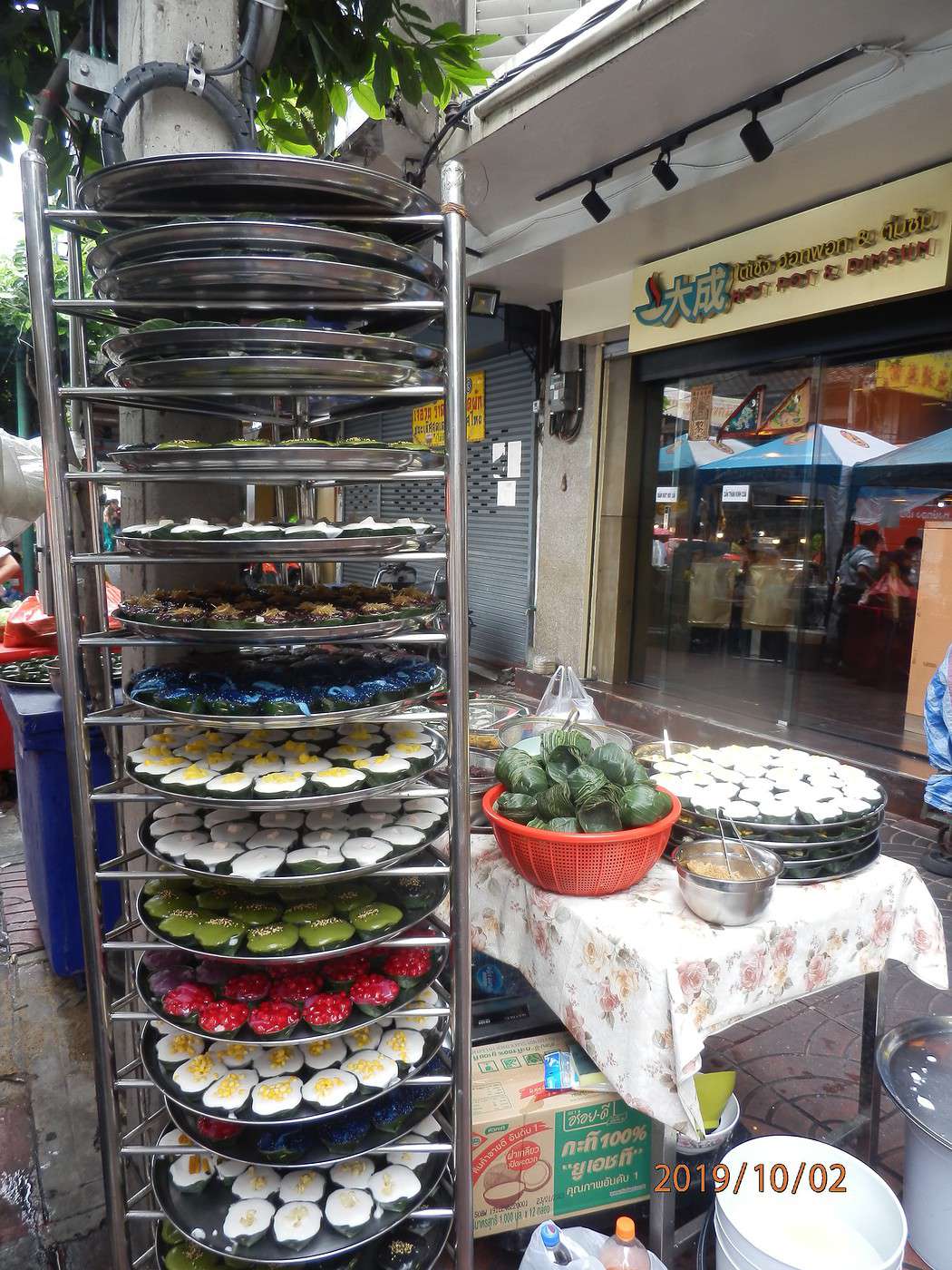
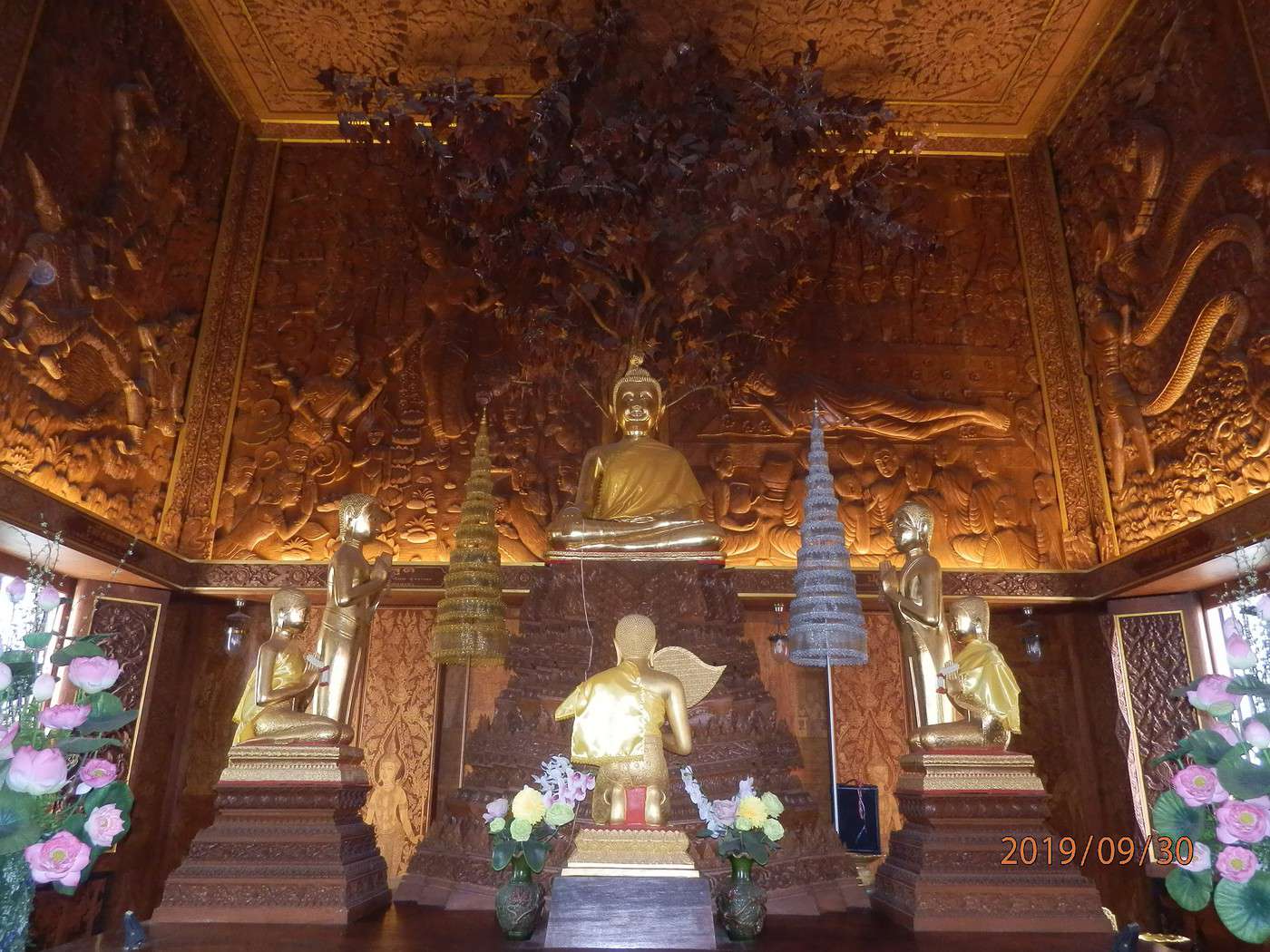
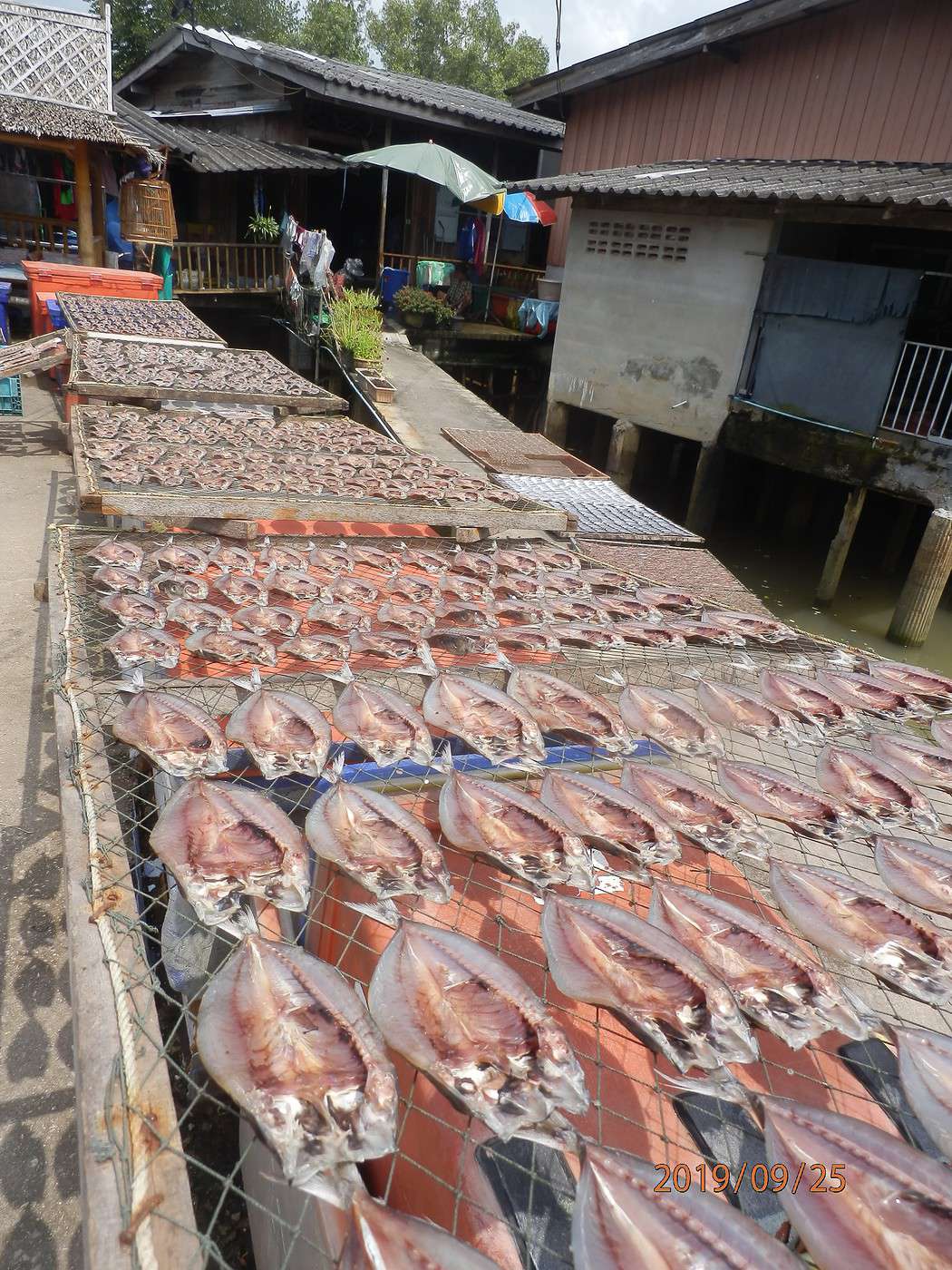
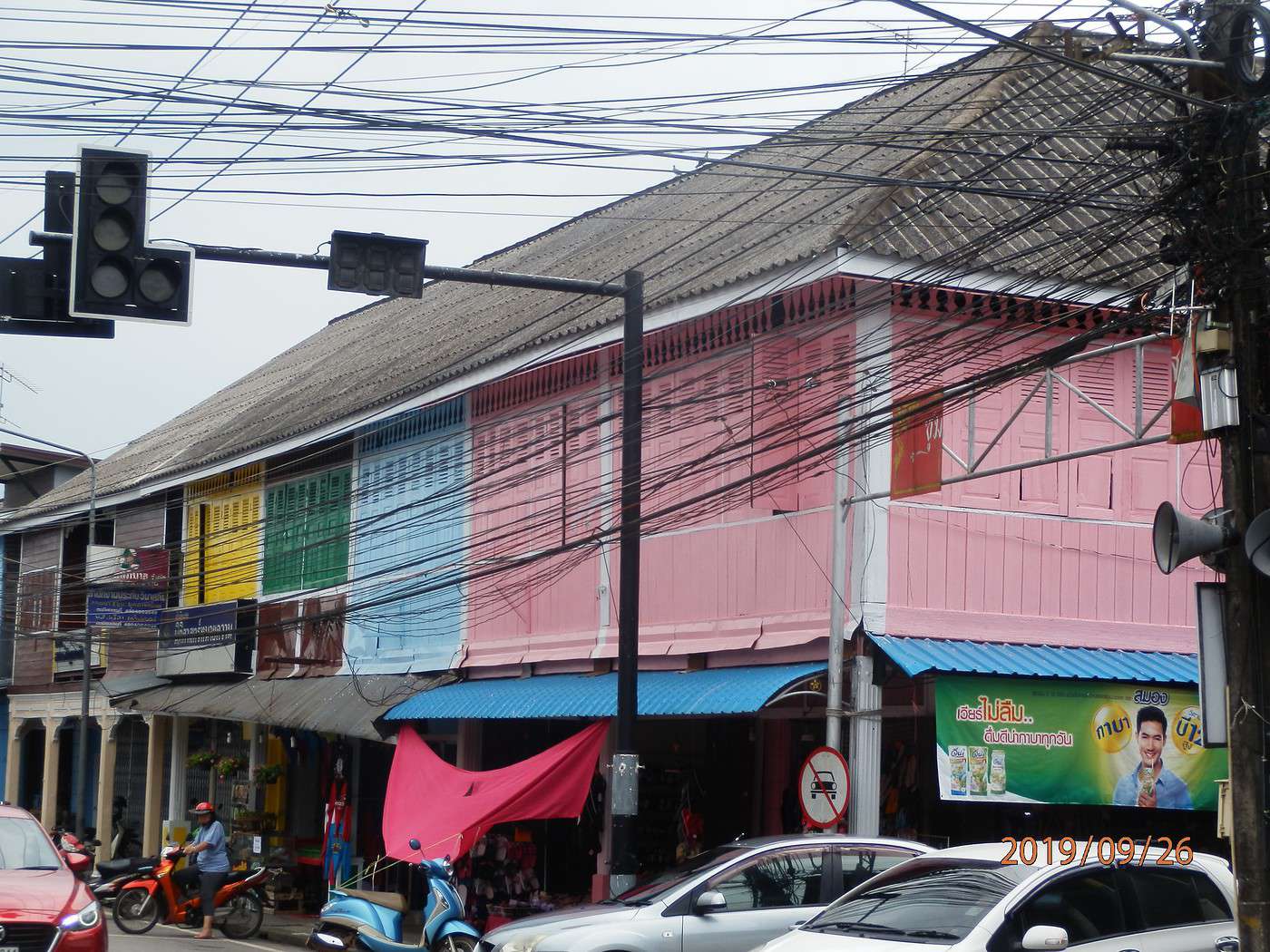
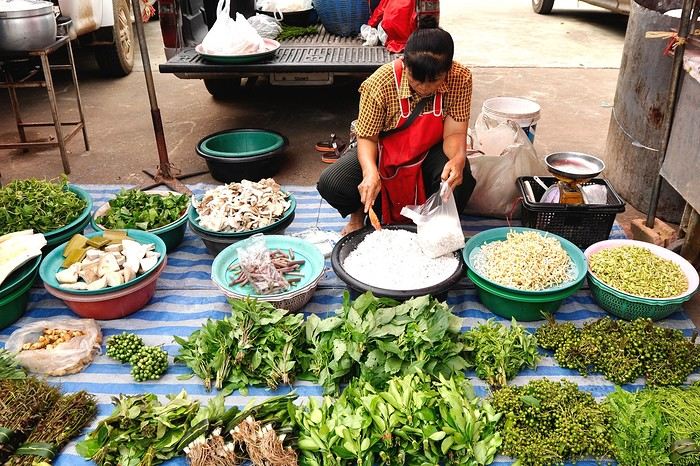
On the bustling Yaowarat Road, there’s also a lot of excitement: in the temples (photo3) and around the food stalls (photo5).
@Daisy: that's cool! Please be super patient with me—I post spontaneously, without "pre-writing," so I need to be in the "right energy of the moment." You understand me? @ everyone
@Pa ObeOne: excellent! As usual, I approve the footer under the rainbow lotus from the first link 😉
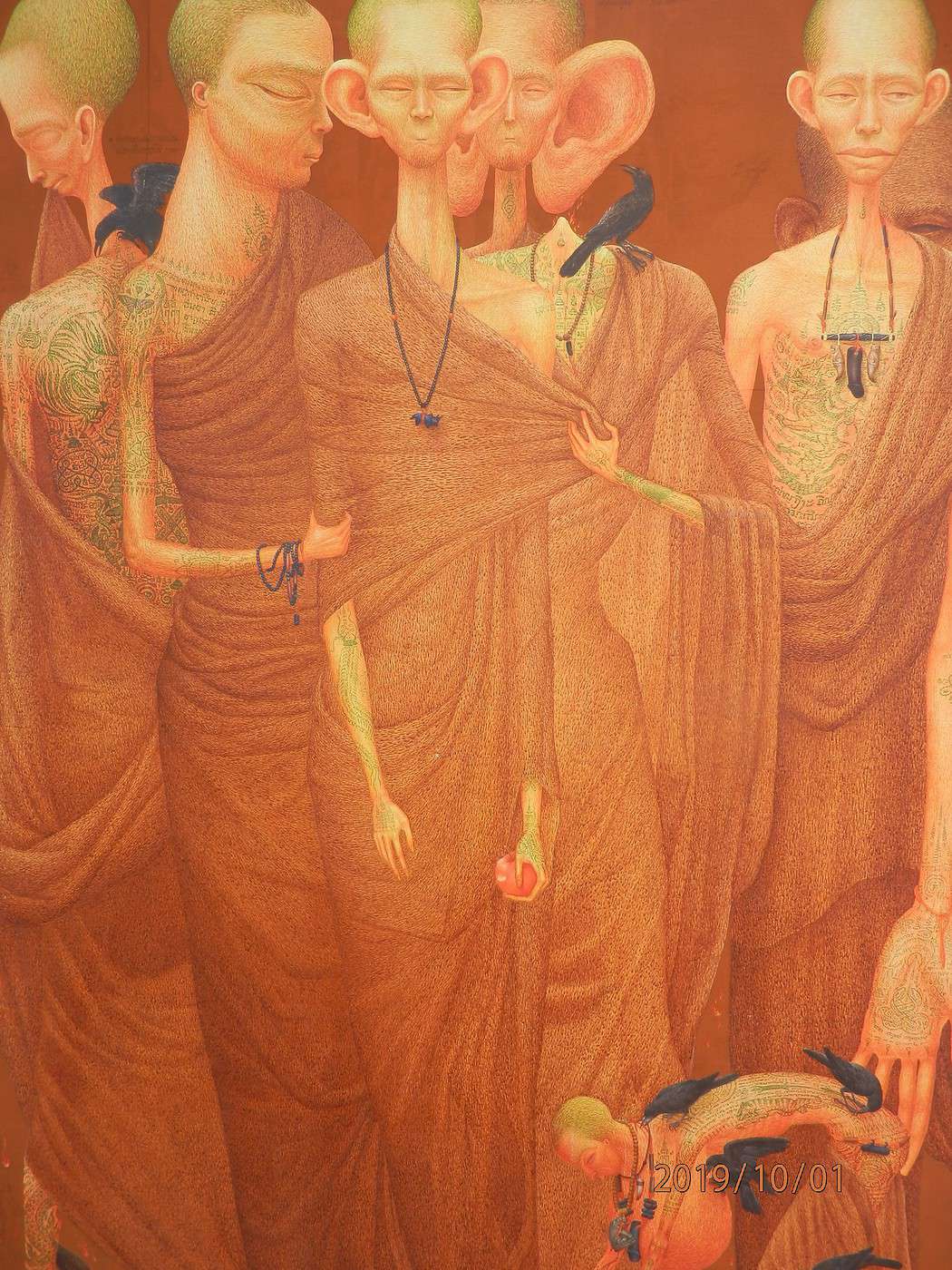
Amazing photos of monks—I love the wink of life: I "missed" a similar shot to your first one on Yaowarat Rd a few days ago... I have to say, I struggle to photograph people, especially their faces, and monks in particular... Khrap! Anyway, thanks for this interesting photo share.
Haven’t tried it, no—I ended up eating Peking duck on Yaowarat Rd that day . But as you know, the Thai Vegetarian Festival isn’t just about earthly food...
See you in this thread, may Buddha be with you! 😎
Just a little heads-up for my kind readers—this is our 15th trip (out of 25 years) to the Land of the Free, the first under the reign of H.M. Rama X (67 years old!!! He doesn’t look it!!!) and in September.
This mini Gulf of Siam tour of 7 "holes" over 30 days took us to: Mae Nam/Koh Samui, Songkhla & Koh Yo, Phattalung & Thale Noi, Pak Nam Lang Suan, Bangkrut, Maeklong-Amphawa, and Krung Thep.
It’s my whim to retrace it backward for you 😛:
Bangkok (2 nights/3 days) :
We reached it by minivan from Maeklong (1h30).
Stayed in Thonburi, by the Chao Phraya River.
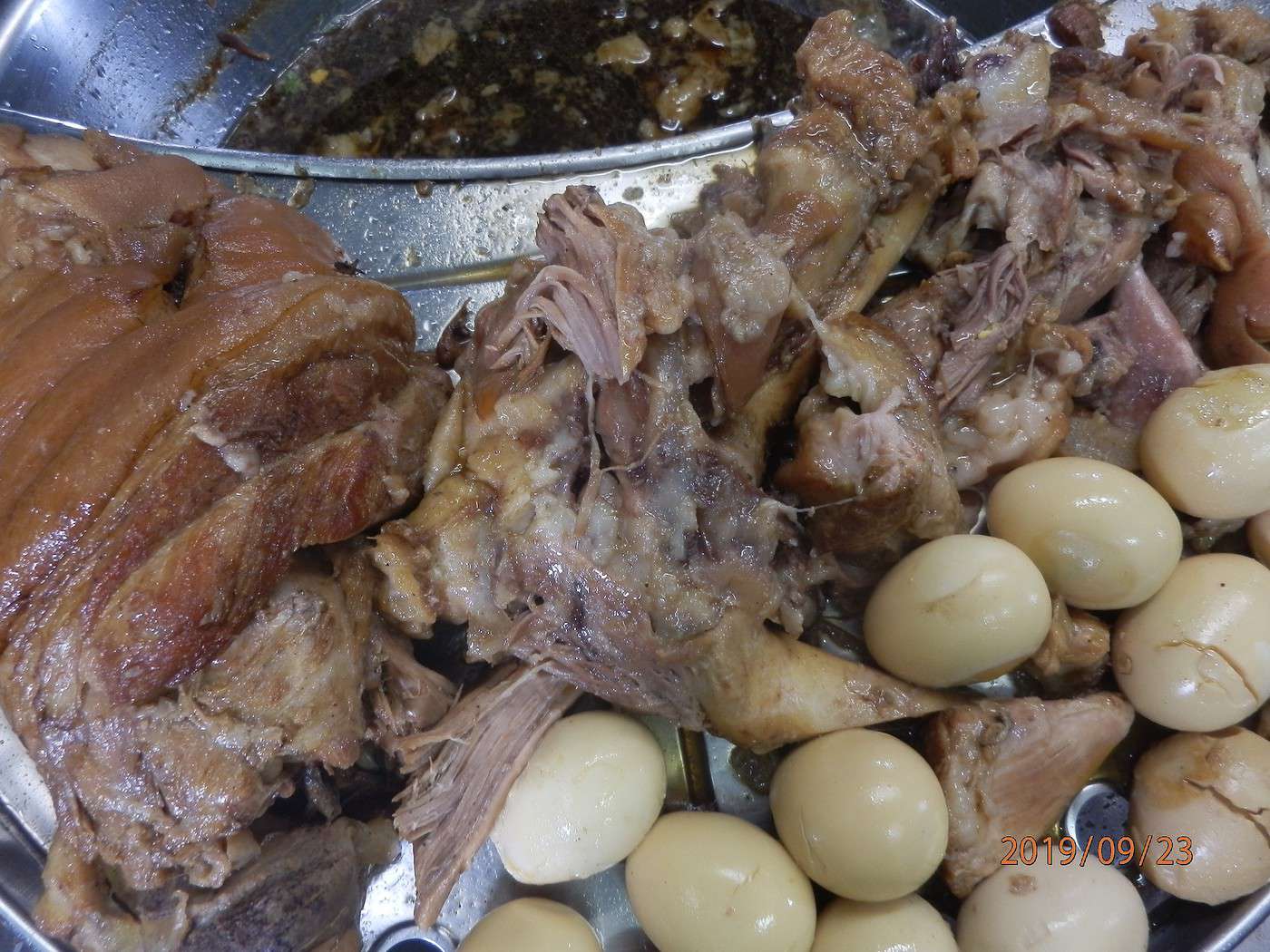
Exploring the area around our hotel—which, let’s be honest, didn’t wow us as much as Sathorn, with more car traffic—we still stumbled upon cool stuff (photo1—a tiny Hindu temple with a warm welcome). Dinner was one of our favorite Thai dishes, *kamou* (photo2), at the trendy Indy (Night) Market.
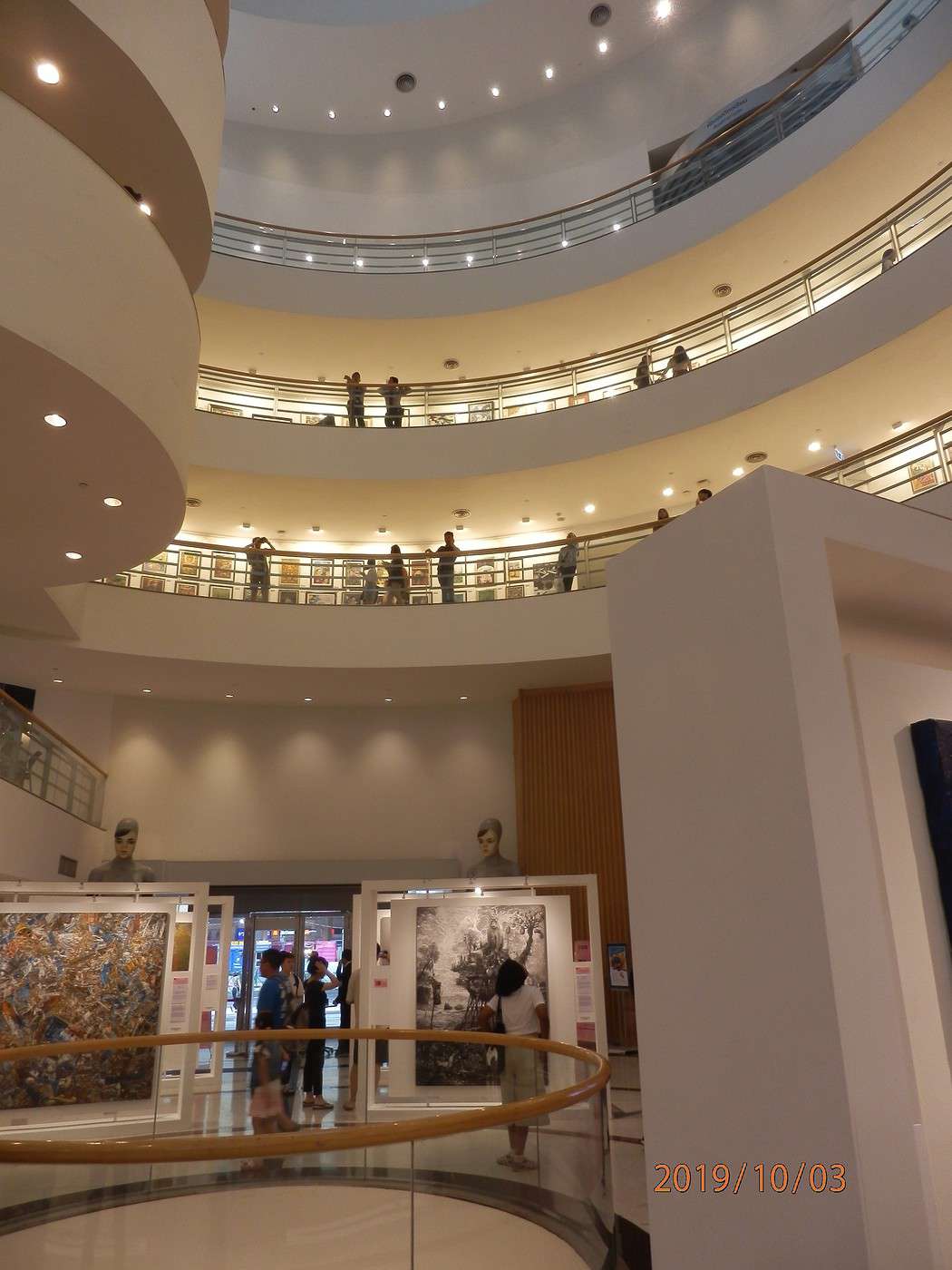
I wanted to check out Icon Siam: as someone who’s not into shopping malls, I’ll admit I was blown away by this new mall with its eye-catching exterior, over-the-top and luxurious interior (a floating market recreation on the ground floor, escalators with "naja" railings, art exhibits, a mind-blowing roof cascade...). There’s an interesting Icon Crafts corner showcasing high-end Thai handicrafts. Also, on the top level, an exciting exhibition of paintings and sculptures. Note that a museum opened in 2020, making Bangkok’s art scene buzz.
I wanted to visit the Alliance Française behind Lumpini—its bookstore and cultural space: meh! Except for respecting the Bordeaux painter on exhibit, Bruno Coq.
We *did* love the exhibitions at the Bangkok Art and Culture Center (across from MBK). Sadly, it’s announced to close—ugh (photo5).
My favorite amulet market, near Loha Prasat (close to Khao San Road): my Aladdin’s cave of Buddha! I spend two hours there wide-eyed, filling my bag with wholesale-priced bracelets (for Couchsurfing and BeWelcome friends passing through), *kumlai*, wind chimes, and other items for our altars. Just the visual pleasure is worth it!!
And the taste buds’ delight: at the Balcony Lounge of the Intercontinental, an afternoon tea featuring raspberry at a great quality/price ratio. I like!
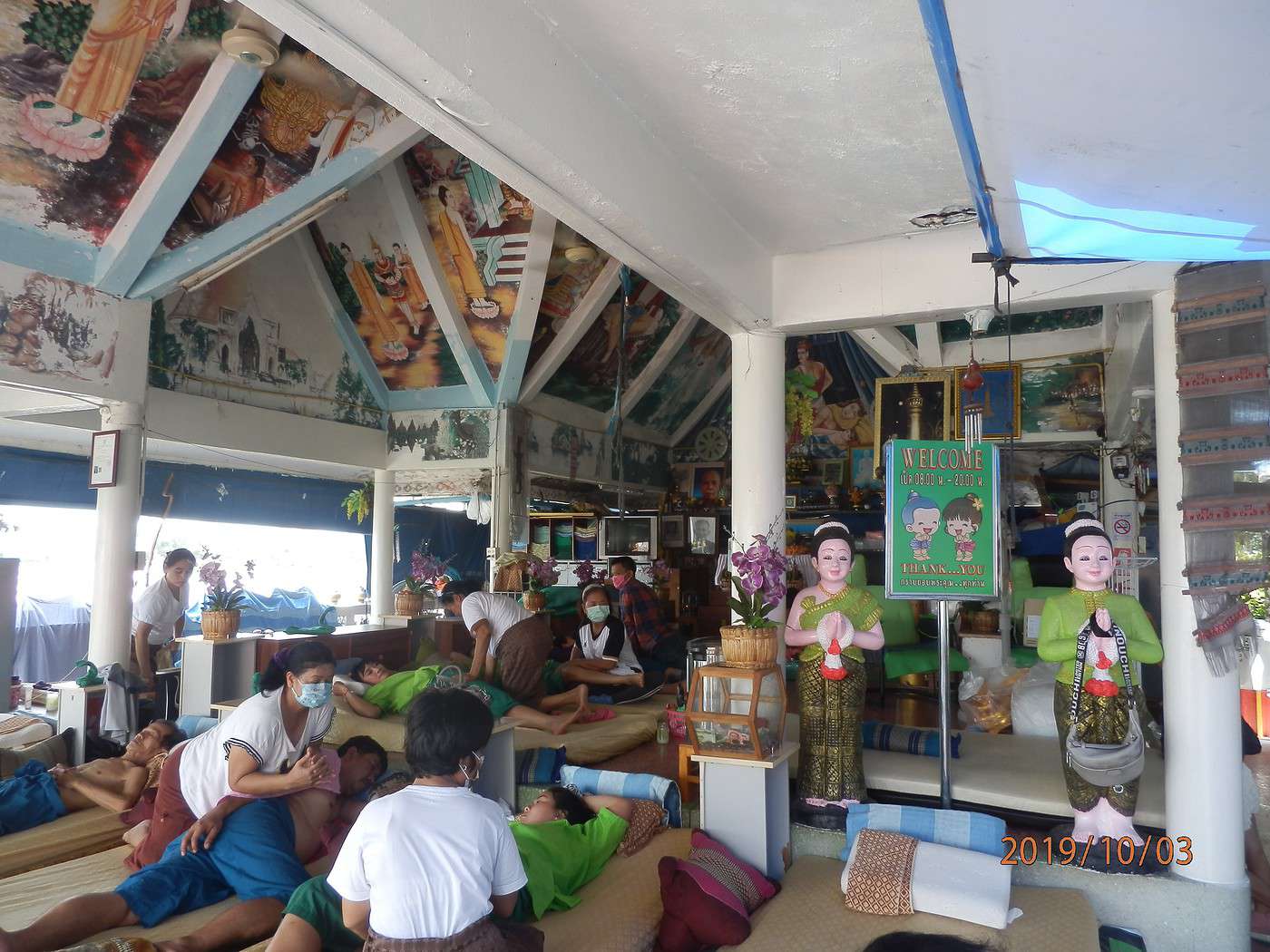
A top-notch massage experience (100 THB for one hour) by the Chao Phraya River, next to a reclining Buddha (photo4).
And then, a happy wander led us to the beautiful Wat Samphanthawongsaram Worawihan, if I recall correctly (photo3).
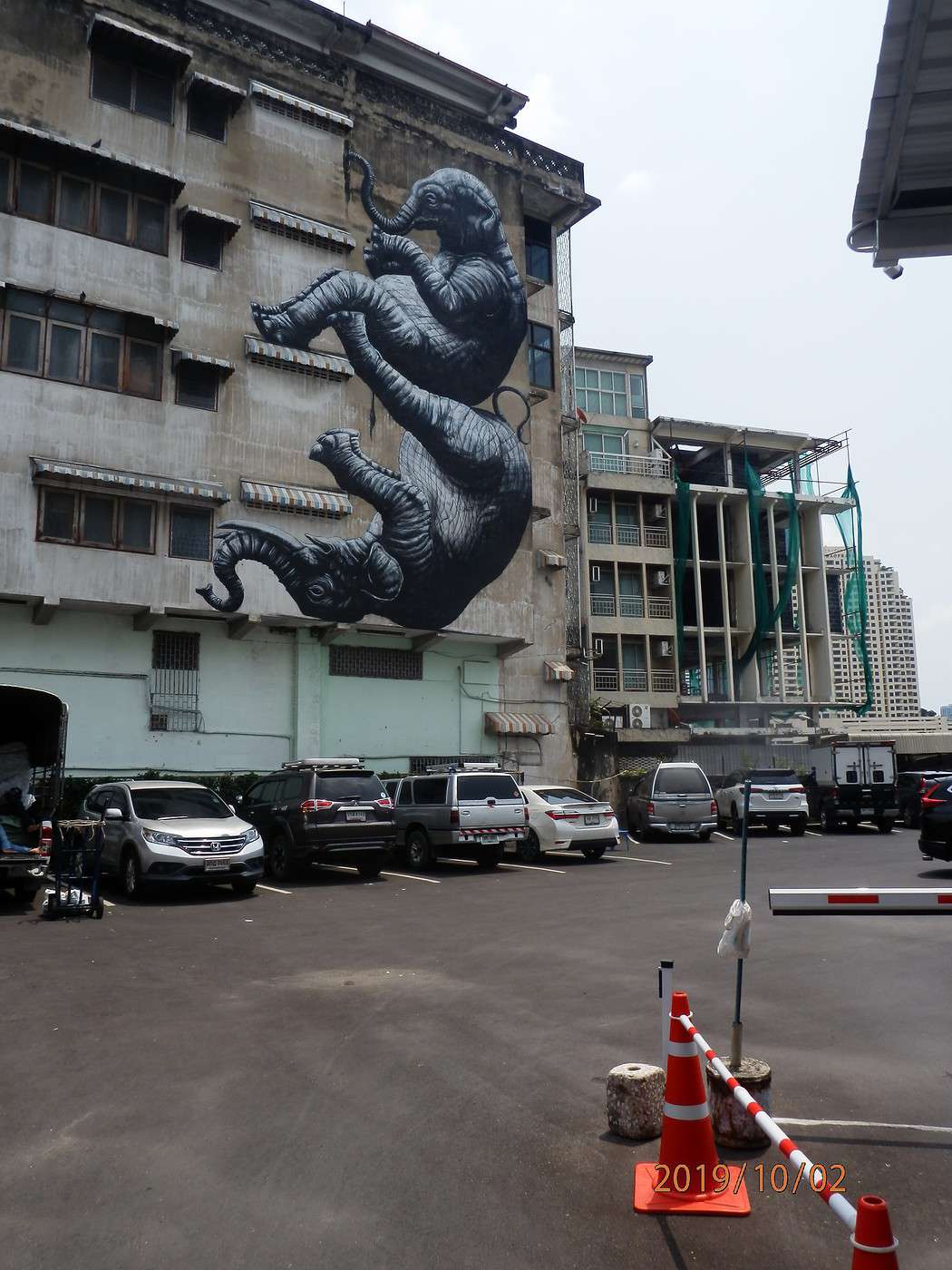
We started our afternoon and evening in Chinatown—see my previous post on the Vegetarian Festival (photo6 of urban hustle in the neighborhood).
Random tips:
To lighten our last afternoon in the capital, we left our luggage at MBK’s locker (Floor 6 - Zone B). Note: the first 4 hours are free. Perfect!
We needed a shower at Suvarnabhumi before our flight: no shower service in the airport (really??!!). We had to cough up 600 THB each at the Novotel’s fitness club—5-minute shuttle and towel included, lol. Those sneaky devils!!!!
The Ibis Riverside’s breakfast buffet is a great deal if you’re staying nearby: 170 THB per person.
That’s it for the City of Angels.
@ to be continued: Maeklong-Amphawa😎
A triumph of animism in the land of Buddha...
Thais are crazy about them and sometimes spend fortunes to get the amulet that will protect them.
Not so different from the religious trinkets of Lourdes and elsewhere.
We’re way too lazy to like all your epic adventures without clenching, please. 😎
And anyone who’s into amulets knows there’s a "mulet" (donkey) in "amulette" 😉
As for me, I’ve set my sights on Google Translate to follow you in ze nose, hamdulillah!
« Tout le monde s'interroge sur comment laisser une meilleure planète à nos enfants, mais on devrait plutôt penser à laisser de meilleurs enfants pour notre planète. » Clint Eastwood
(Sorry, dear reader, I’d prefer to wrap up this little travel thread faster, but I’m pretty busy at the moment. Promise I’ll try to finish in the next few days—I only have time to share our feedback on:
Maeklong (2 nights):
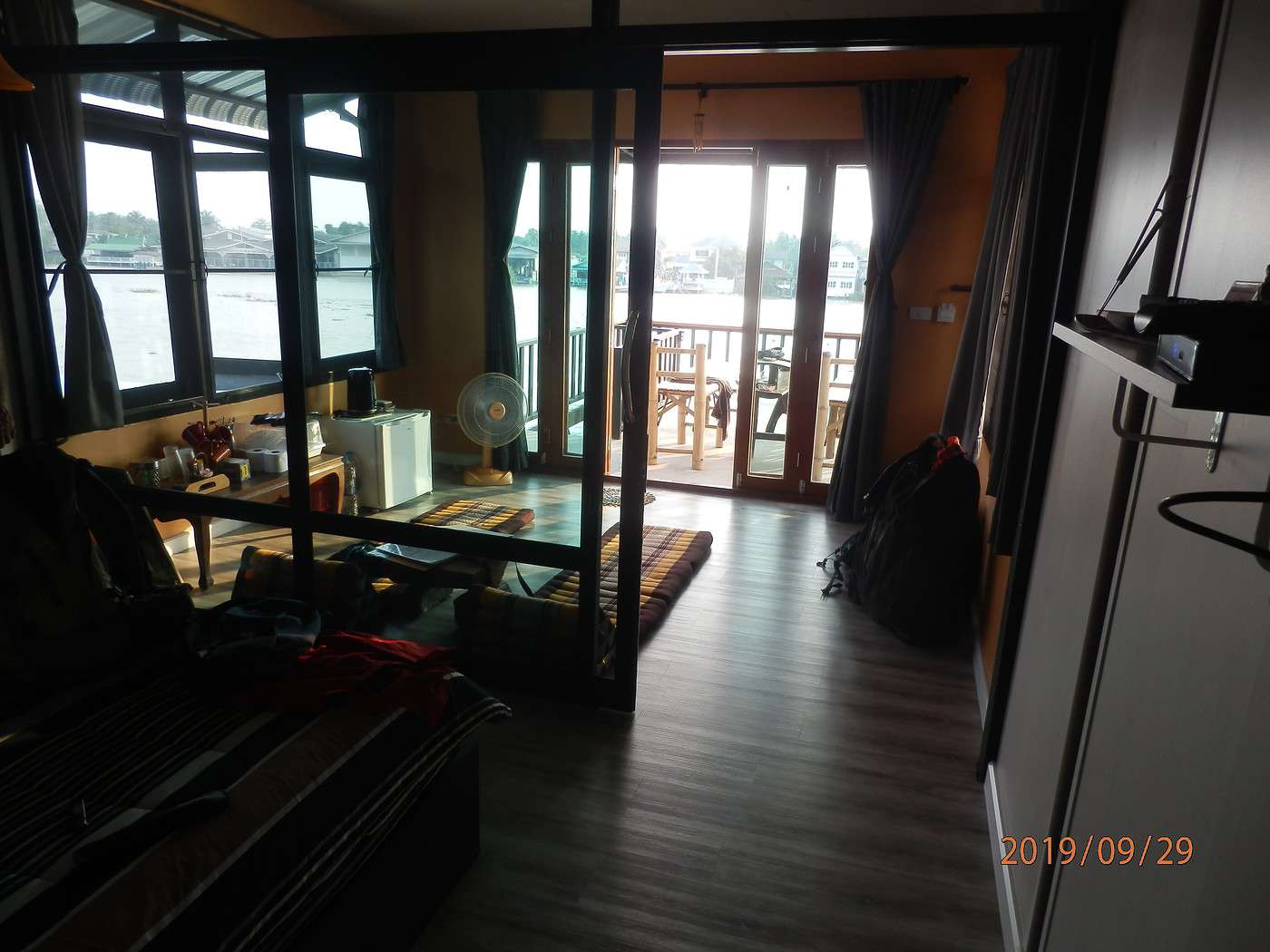
Stayed in a super excellent Airbnb right by the river (photo1).
Transport (around 5h) from Bankrut to Maeklong by bus (Bang Saphan-BKK route), dropped off at the side of the road.
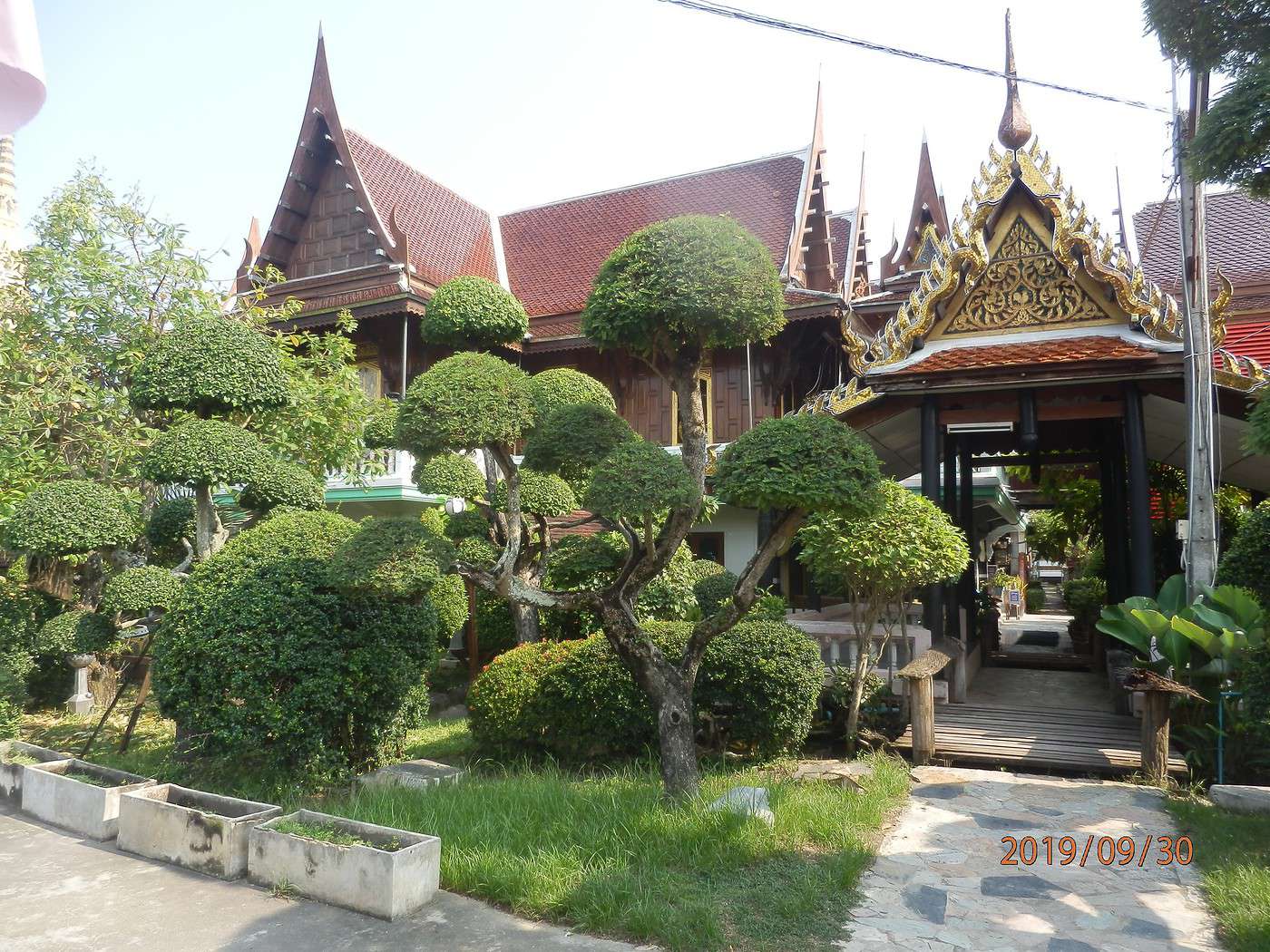
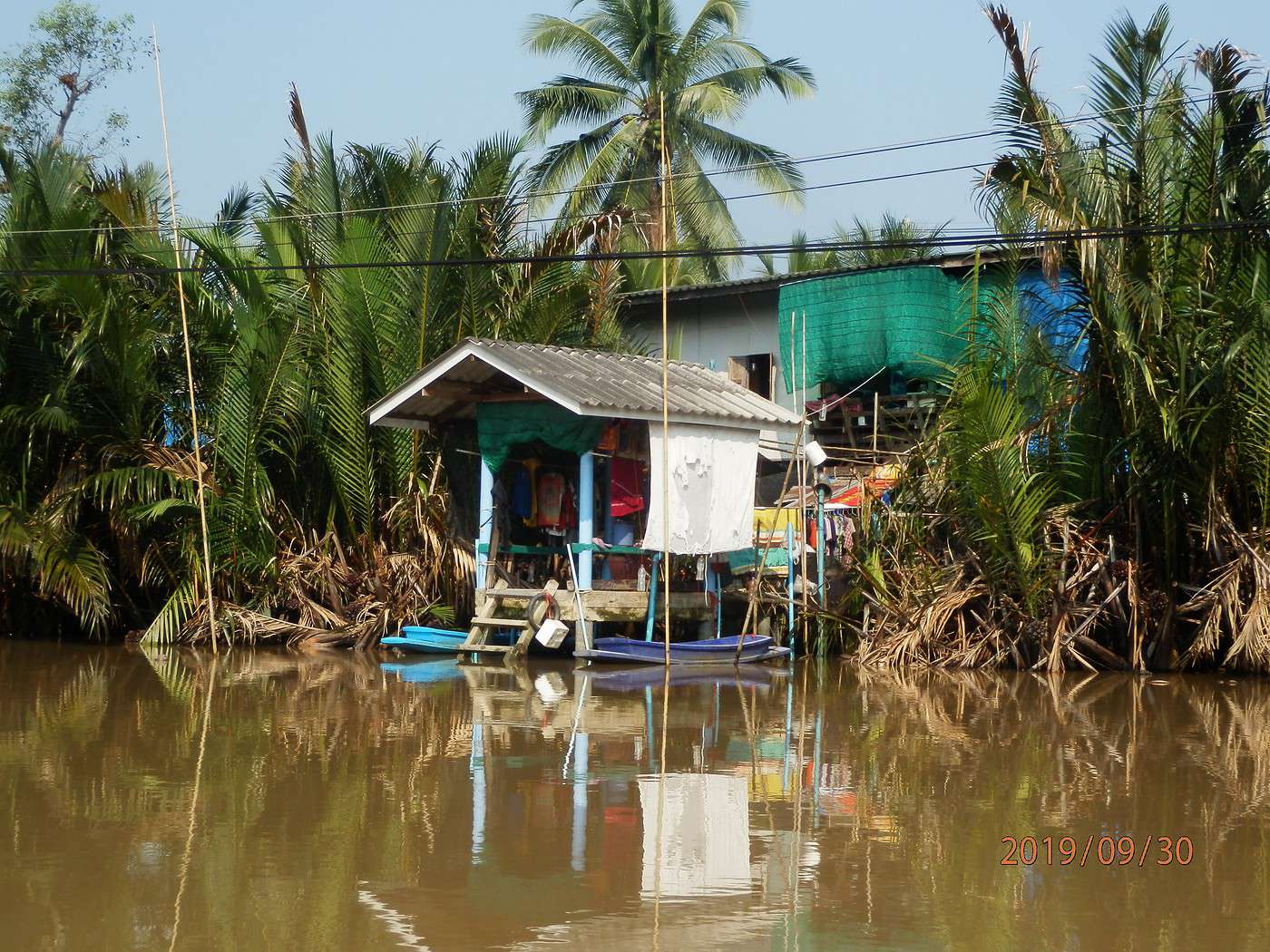
Really cool 3-hour private boat tour—1200 THB—(photo6) along the canals (photo4): the advertised itinerary included 5 temples, like the stunning Wat Chulamanee (photo2) & Wat Bang Kae Noi (photo3), plus the famous Amphawa floating market (open Mondays, the day after the weekend—phew!).
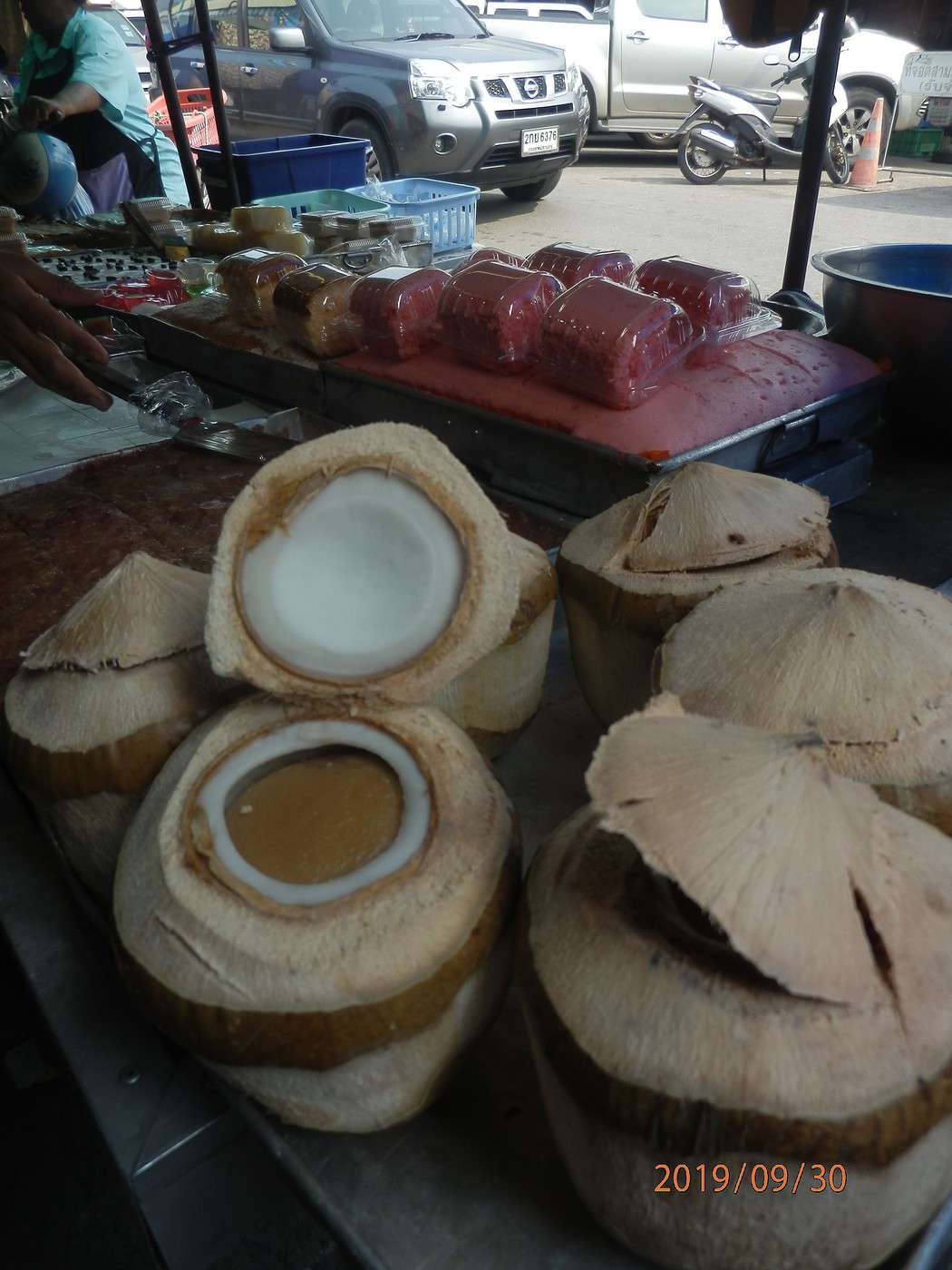
Nice stroll through Maeklong’s shopping center and its daily market (photo5), etcetera...
Transport from Lang Suan to Bankrut by express train (~3 hours, slight delay)
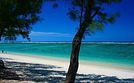
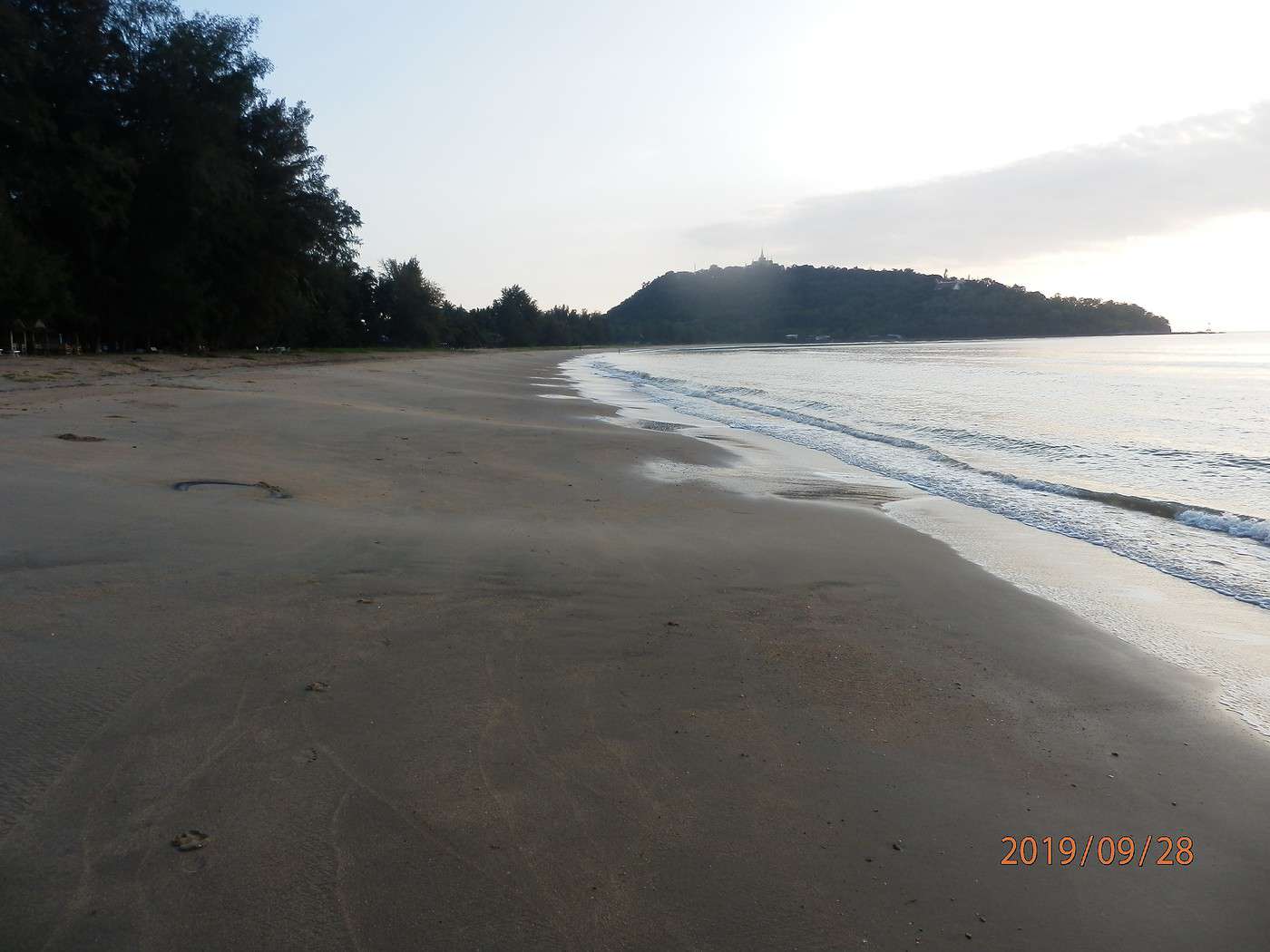
Third visit since 2014 and oh divine surprise: the seafront has never looked this good and the beach so clean (photo1).
This time we're staying "right on the sand," one of the few places on the main beach, in a comfy Airbnb with the sweetest hosts (18 bucks! per night).
We’re chilling out, tension level at 5—we’ve already "mastered" the local "tourist attractions," so the goal for this stop is just to unwind.
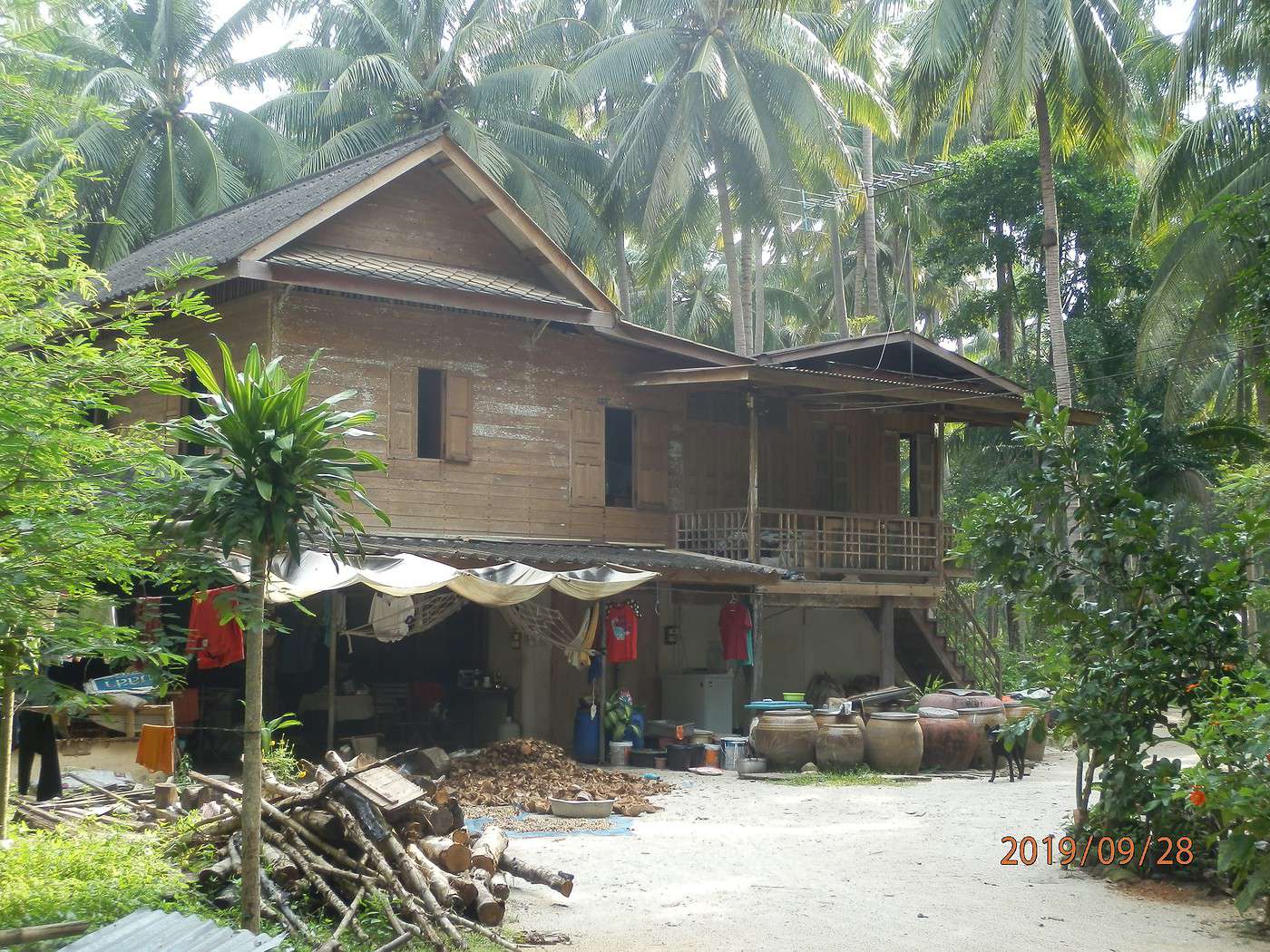
Our kind host drives us by scooter through the coconut grove (photo2) where Peng’s little massage parlor is "hidden." One of our best massages ever!
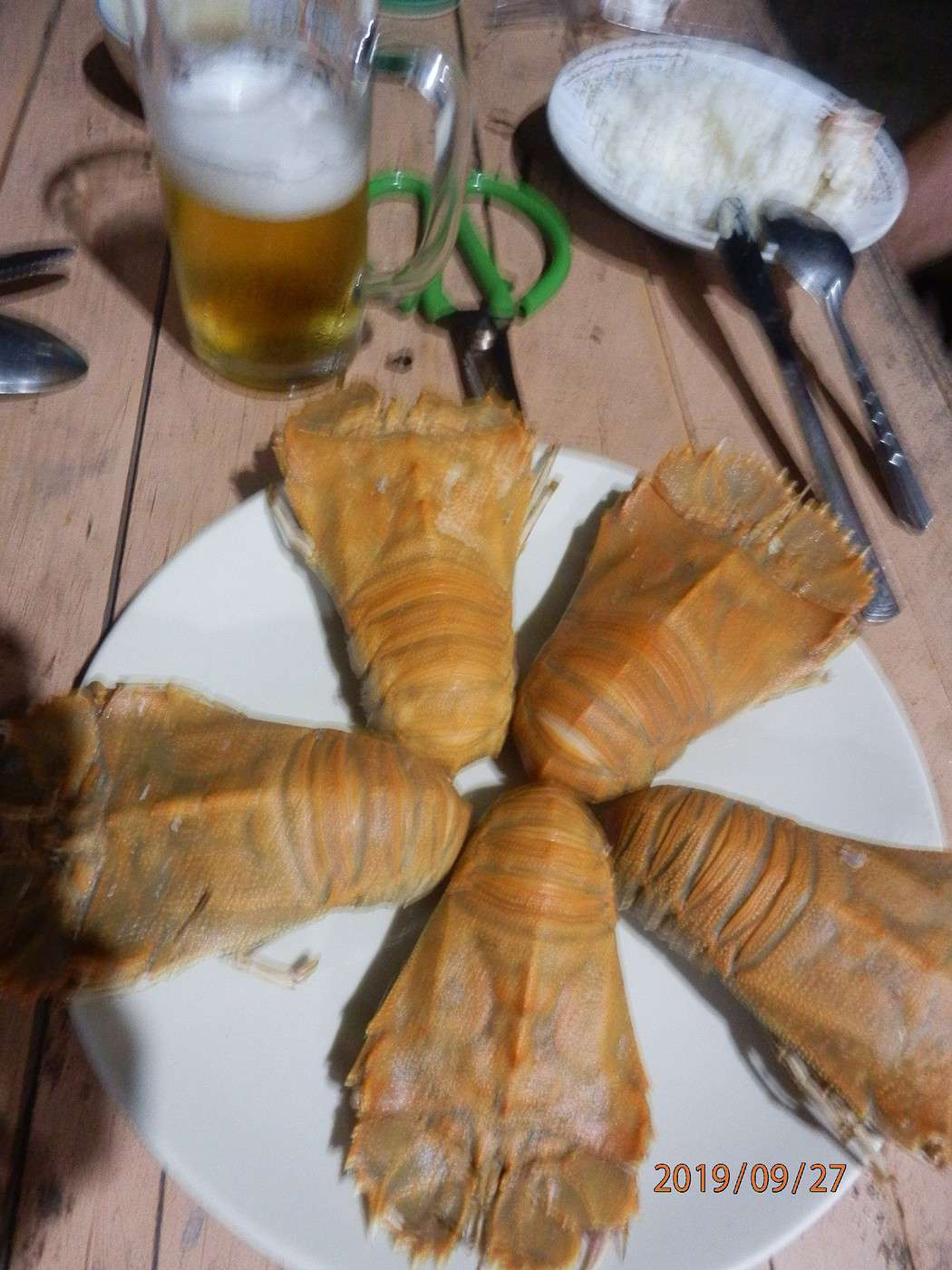
We feast on mantis shrimp (photo3) caught the day before, which only had to cross the little road to land on our plates: now *that’s* farm-to-table!! (200 THB per kilo cooked!!!)
I realize I haven’t heard any reggae music in the 3 weeks we’ve been in Thailand—I’m shocked and "investigate" with our host (46a): .🤪
Anyway, Bankrut: maybe our favorite beach spot in Thailand, based on all our personal criteria—setting, tranquility, comfort (hotel options, dining, accessibility), and activity possibilities (photo4).
Initially chosen on the map to split up the travel time on our way back up to BKK, it turns out that a friend of ours from Samui—who we’d met before she moved to the mainland—has been living there for 10 years. What a stroke of luck: she’s our enthusiastic guide-driver while we’re there.
Transport from Phattalung to Lang Suan by slow train at "peanuts" price (about 5 hours, a bit of a delay).
After checking out 4 or 5 resorts at Pak Nam Beach, we decide on the last one: www.99bayresort.com (600 THB, right on the beach).
(Another more casual option among others: www.chayhad.9nha.com)
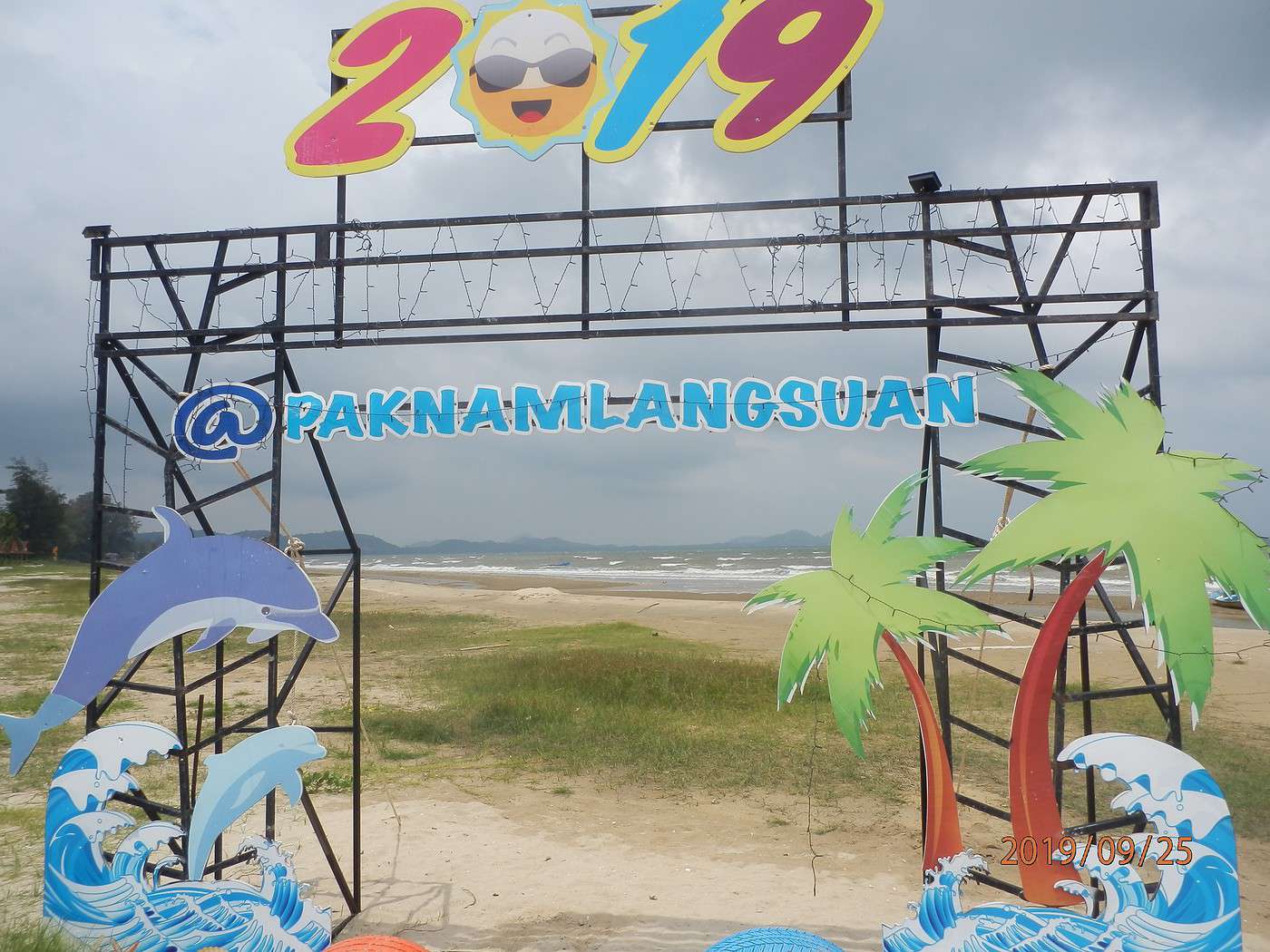
The loooong crescent-shaped beach (photo1) isn’t spotlessly clean, but it’s honestly fine (for someone like me who’s a beach-cleaning obsessive). Just know that from December to March, there are 2 or 3 "waves" of debris that wash up—apparently, it’s monstrous! 🤪
The beach is mostly home to a few fishermen on foot and joggers or walkers.
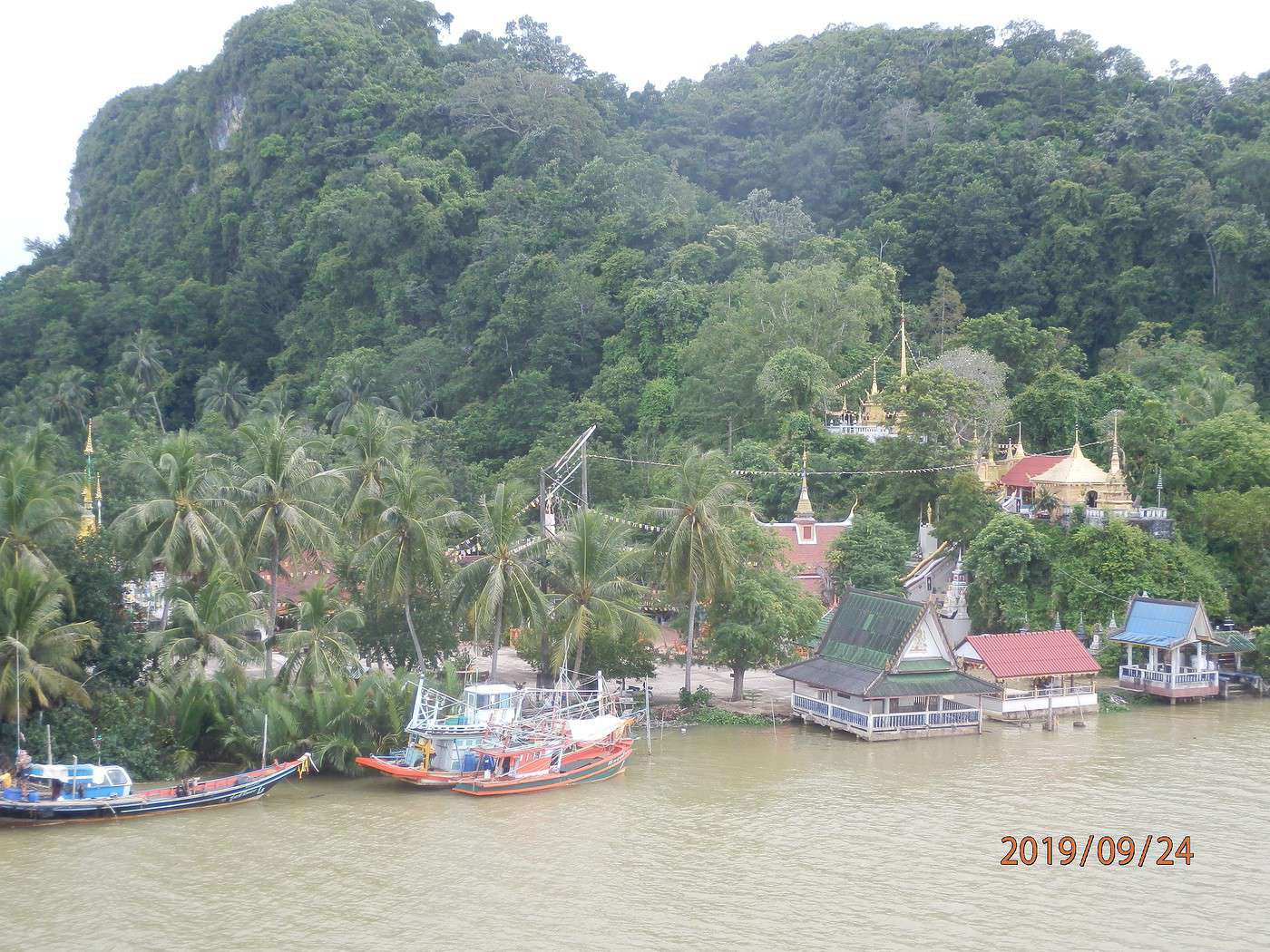
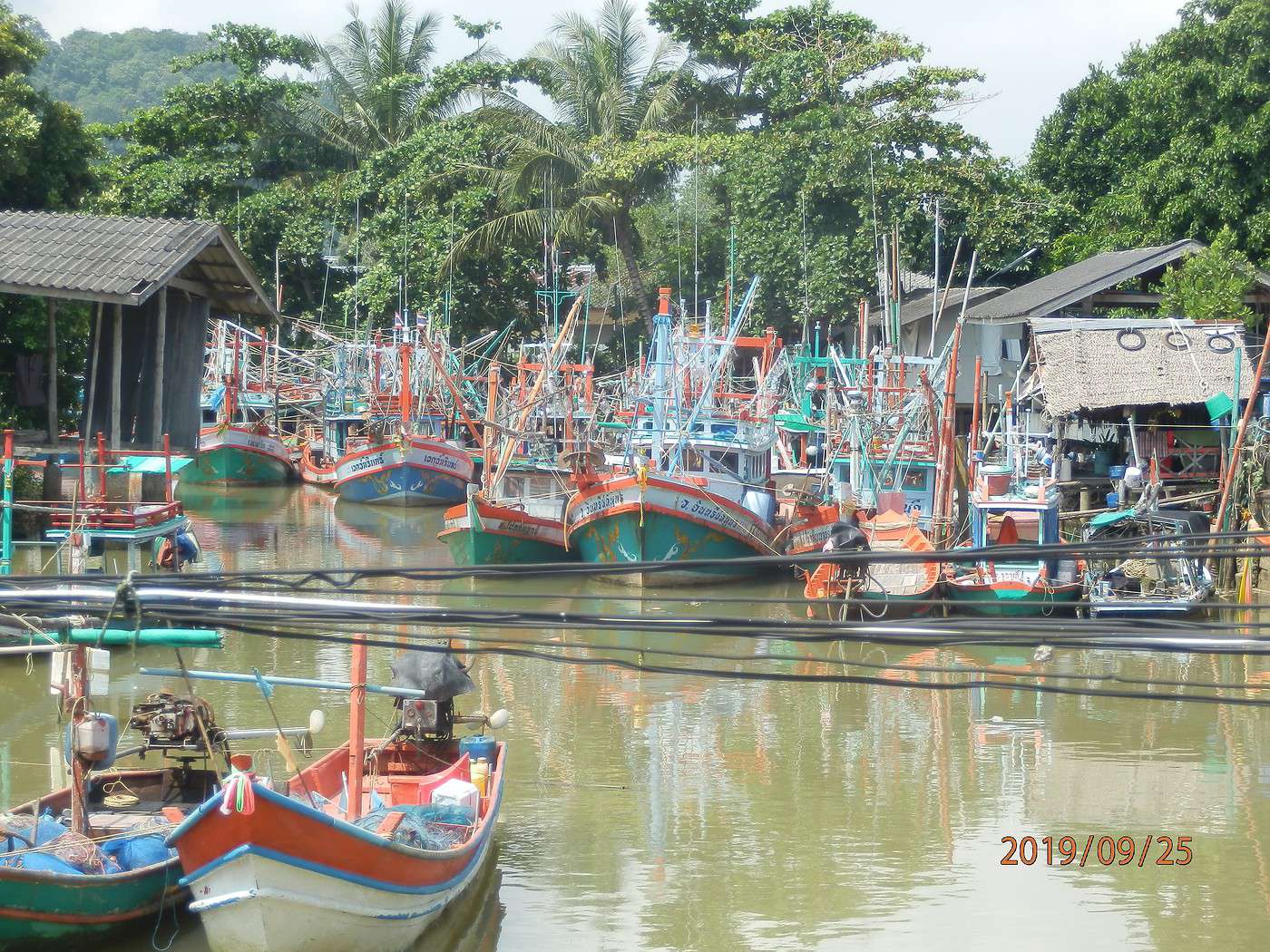
Pak Nam Lang Suan is such a pleasure to visit: its charming morning market, its "Instagrammable" temples (photo2&3), its fleet of fishing boats (photo4)... (photo5&6).
There’s the joy of sightseeing, but also the vibe of the village—peaceful, smiling, kind, and laid-back.
We didn’t have time to visit Ko Phitak, which you can actually walk to at low tide. I’ve got a feeling it’s a cool spot, with a few homestays 😉
A morning in Lang Suan to explore its big day market and its urban architecture, which still preserves a lot of wooden houses (photo7).
Worth noting: every October, the town hosts the boat races festival, the most famous in the Kingdom.
Transport from Songkhla to Phattalung by minivan (4h)
Stayed at the casual Merdelong Hotel (no reservation) just a 3-minute walk from the station.
The town is nice and quiet, nothing amazing to report for my part.
As soon as we dropped our stuff in the room, we asked the reception about renting a scooter to go to the floating market (it’s Sunday) 10 km away. We were handed one 15 minutes later for 300 THB (no credit card or passport required).
Fun scooter ride (stopped at the historic residence of the Phattalung governor—photo1), but the floating market was a letdown 🤪 in the landscaped amusement park...
Ate *kamou* both nights at the night market by the station. Also tested and approved the very popular restaurant across from the Merdelong H (Thai sign).
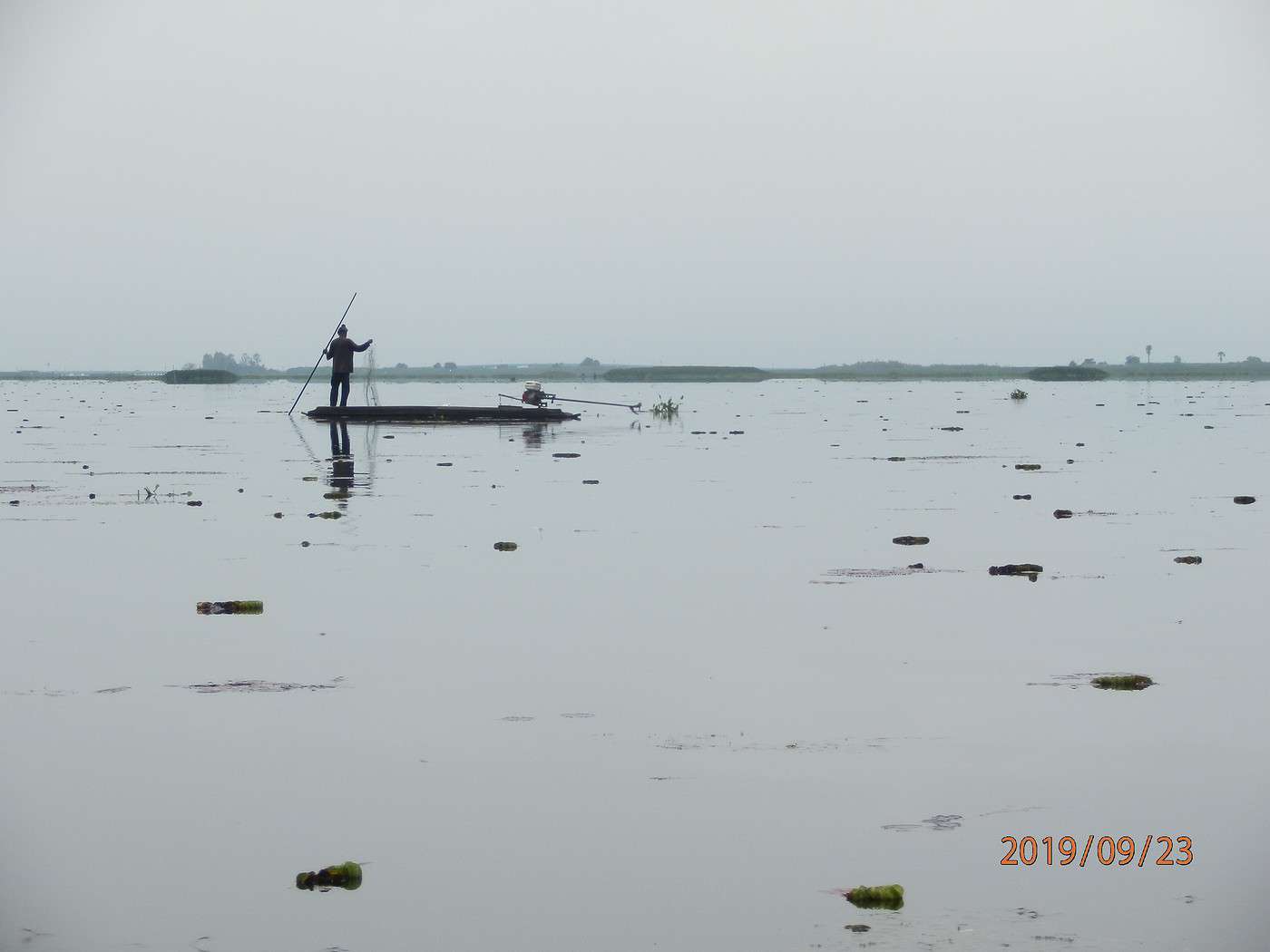
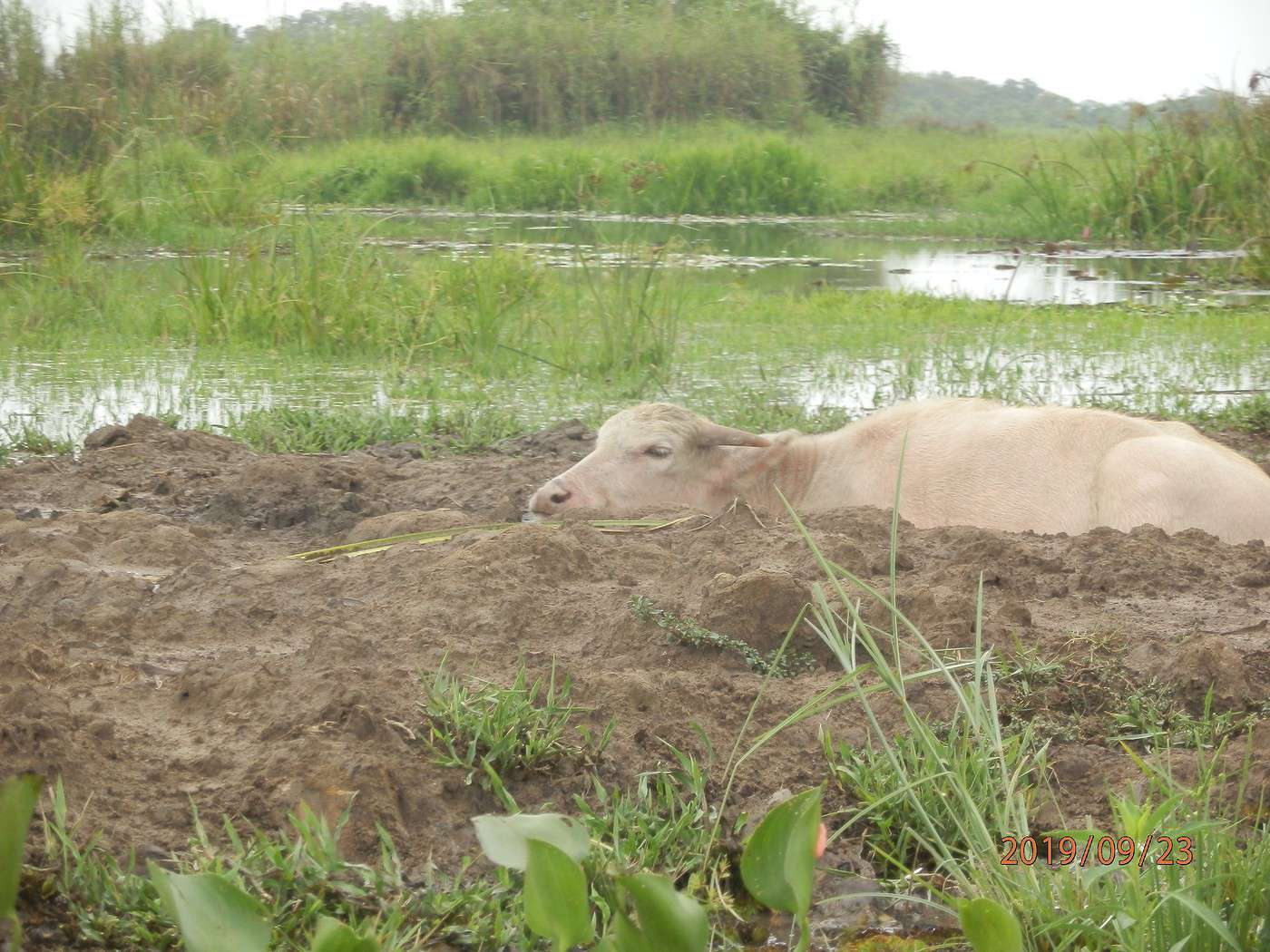
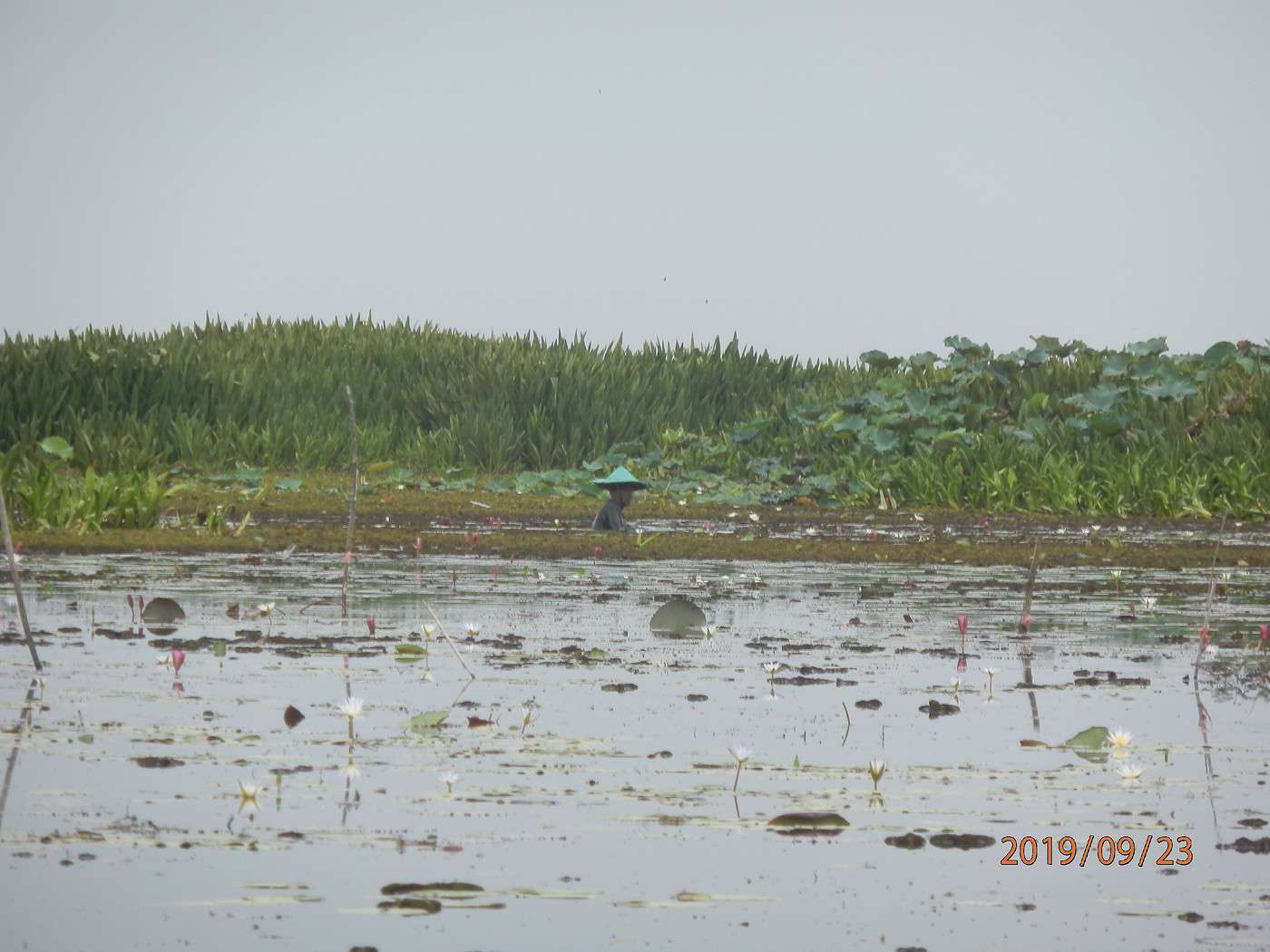
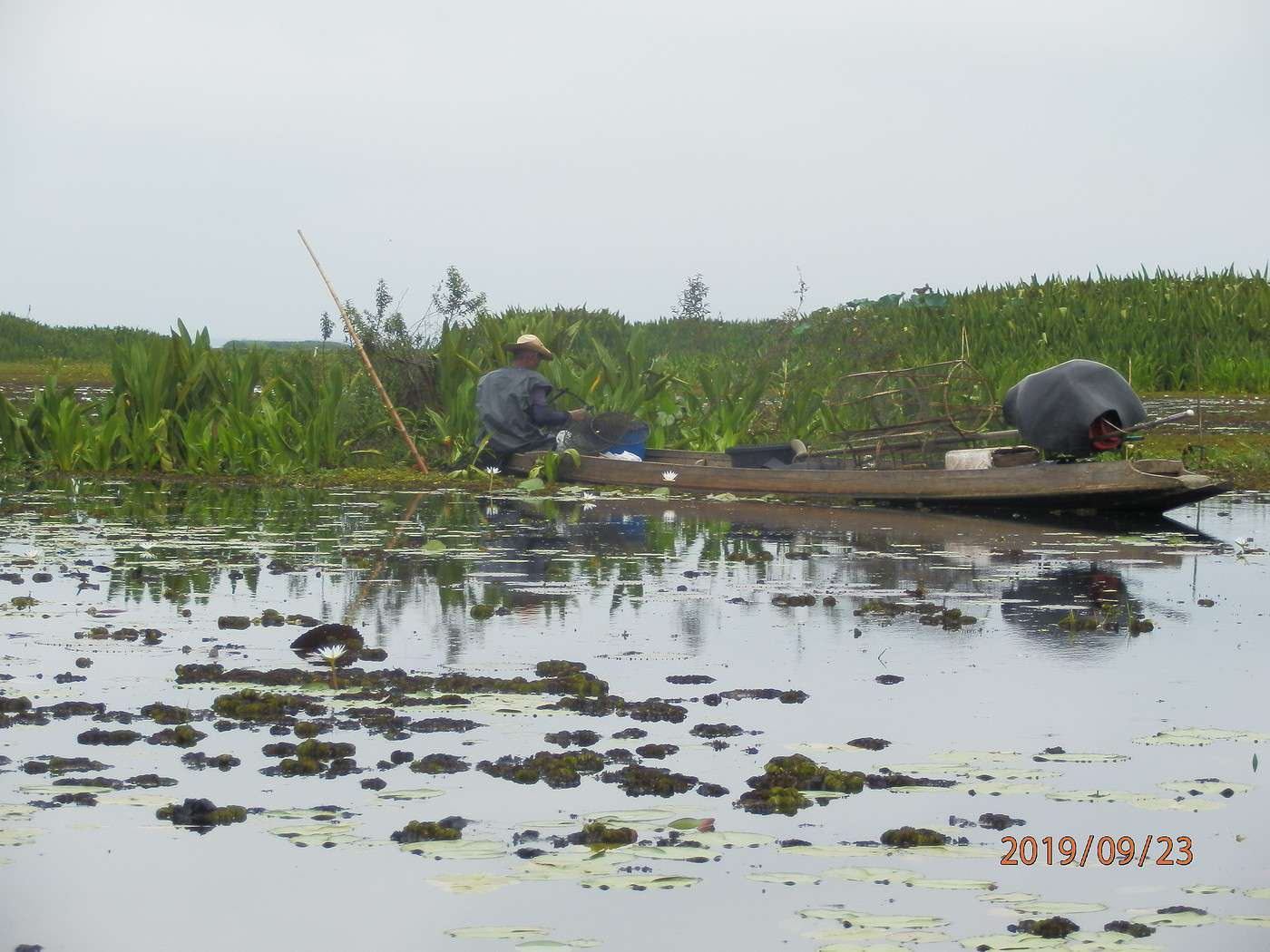
Before dawn, a big storm. We’d been told the day before to get to Thale Noi (@ 1h by scooter) by 6 am to see the lotuses in bloom. Pfff, we left at 8 am, and an hour and a half later, we hired a private boat for a 2-hour lake safari (450 THB for one hour / 800 THB for two). Well, we saw some open water lilies (oh, is it too late now??), a few water buffaloes, passed some fishermen (photos 1, 4, & 5), and spotted quite a few birds of all kinds. The "sold-out" fishing nets/fishing traps: zero or close to it...
Honestly, the excursion was really pleasant—we had a great time 😊—but not mind-blowing or memorable (unlike Lake Inle, for example). We think it’ll appeal more to bird lovers (apparently there are 180 "species"). Maybe it reminded us too much of the Camargue??
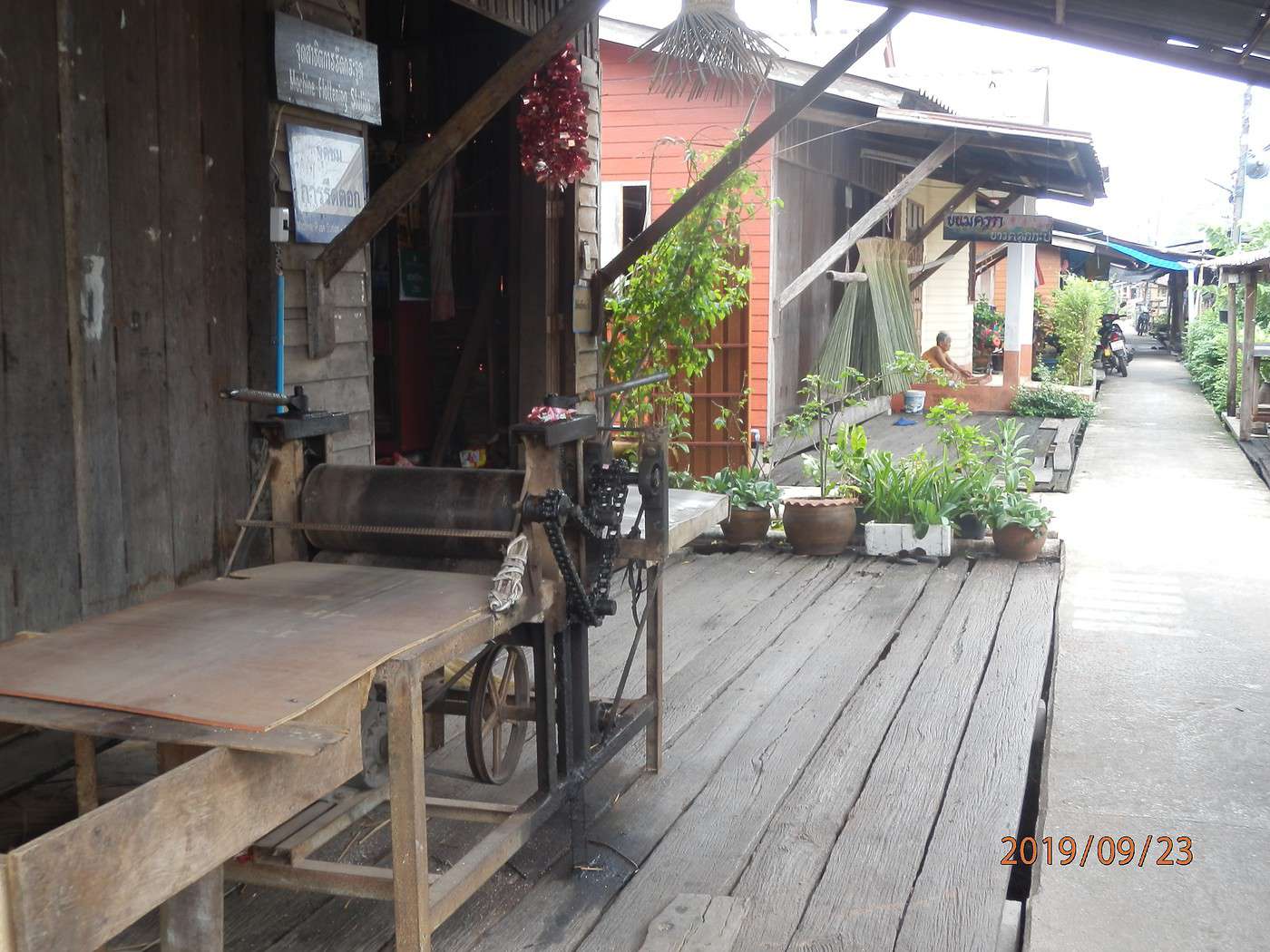
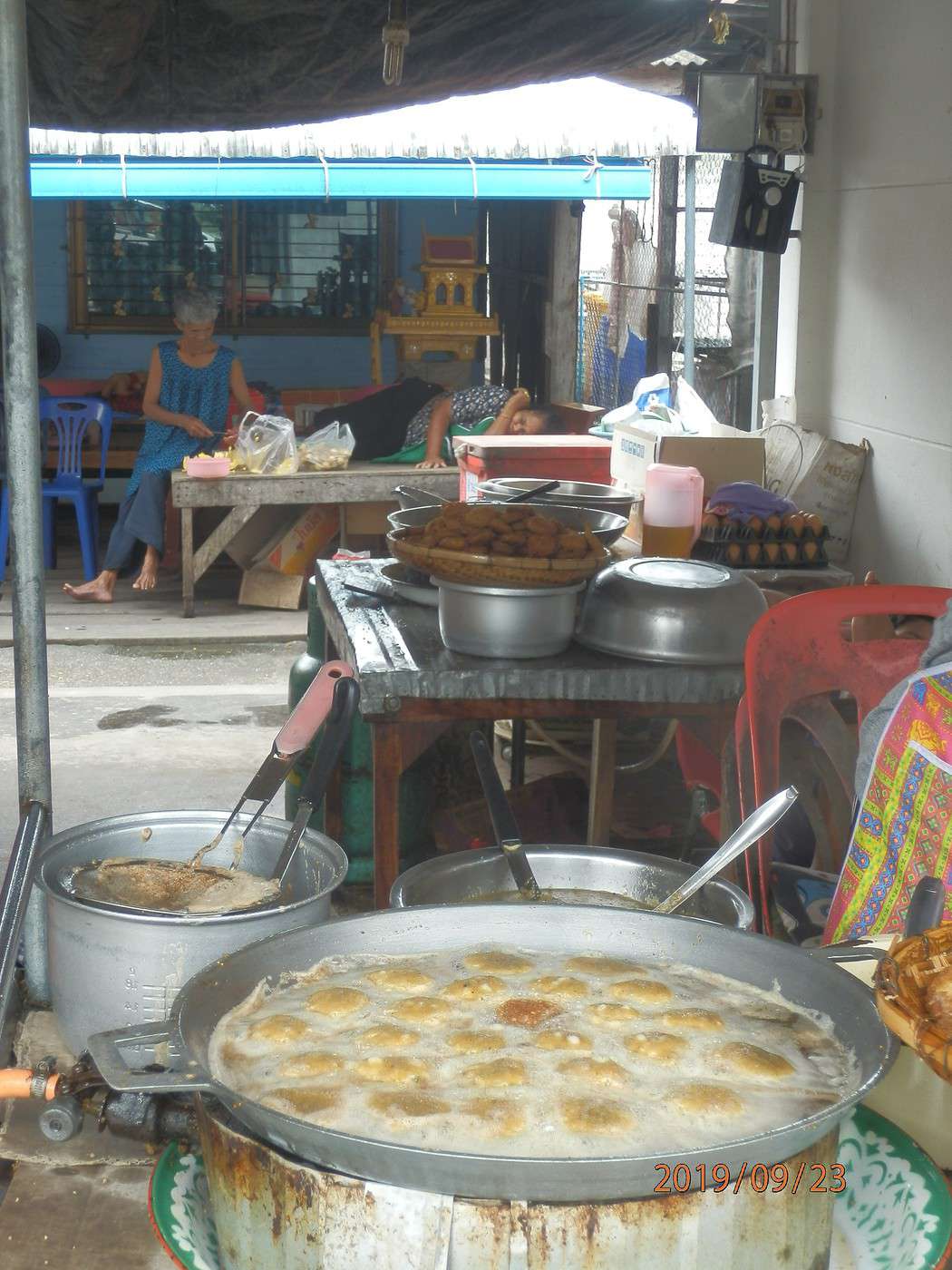
When we disembarked, we were taken through the small stilt-house neighborhood behind the row of shops: super nice and photogenic (photos 3 & 6—specialty sea fritters...).
We could’ve checked out Ekachai Bridge, which we’d crossed by minivan on the way from Songkhla, but no—especially since rain was threatening...
On the way back, we stopped for a drink at the famous Sripakpra Boutique Resort, which, while charming, still feels like a big complex...
The countryside around Phattalung is gorgeous, with lots of cattle farming and beautiful rural homes.
@++, we’ll head back to Songkhla, my first big crush...😎
Khrap! Thanks for the sound share—I hadn’t heard of it. If you say it’s the current number one, well, that’s interesting. (Still gotta admit it’s pretty cheesy, though—lol 😏).
Anyway, I just wanted to echo the point about reggae censorship in Thailand, nothing more!
@Natooooo: That’s cool, khrap!!! Nice track—more my thing, even if I barely listen to reggae (or any music, really). I’m more of a silence guy. Happy to see you back in the section—it’s been missing your lighthearted vibe these past few weeks...
Otherwise, I just wanted to echo the censorship of reggae in Thailand here, nothing more!
Got it like that
🙂
And speaking of censorship and its evolution, after his essential "Made in Thailand,"
Lek Carabao hits hard with his new track
about the legalization of weed that makes you see water buffaloes in pink
😎
to a reggae beat
Cannabis Commission
youtu.be/Z0P5ufGC12E
Lyrics in French (Automatic translation)
> HERE<
@ Thaiboss
Besides, Sek must be having a good laugh after his various setbacks related to the topic mentioned here.
In 2012, during his "rehabilitation" phase, he composed a great track:
Made at Night (2012)
I’ll answer you in Thai to give you the Thai mindset on this... Thais follow singers who constantly change their style, even their instruments like microphones or guitars, and switch up their topics.
The rhythms. That do-do-do thing always stays the same—let’s put it this way: he hasn’t been banned, but he’s LESS popular because he doesn’t change anything about his songs.
Loso in Thailand is a bit like Johnny Hallyday in France—he did it all with drugs and booze but found his way back, and all of it was live with the Thai public. Yes, even during his rough patches, his troubles were televised, as was his comeback, complete with his millions of baht. He changed his songs and guitar but kept his black sunglasses—he’s still the favorite star of Thais today, a bit like Johnny in France.
I spent quite a few evenings with Loso back in my day at Ratchada German Beer Hall—there wasn’t even internet or YouTube yet...
To stay on top in Thailand, you’ve got to constantly change your look or do something out of the ordinary—especially not do the same thing, because the Thai public gets bored *very* quickly😏. Thais change colors every day.
The other popular guy in Thailand is me, MARIO, the double MARIO—you know him????
😏I’m the most popular farang dad in Thailand with my name MARIO (Jeff is my first name in the novel *Jeff molto*). Every day you hear Mario on TV; there’s even a commercial where a Thai woman calls me like all the girls: Maa-ri ooooo.
Accommodation in Airbnb (2 nights, 20 €/night) + Mantra Resort (1 night, 600 THB/night).
Transport: Nathon/Koh Samui to Songkhla by ferry to Donsak Pier + minivan (5h30 duration, 250 THB each, booked at the Nathon bus terminal)
Songkhla City:
I loooove how tourism is approached and developed in this city, where the rich Sino-European historical heritage is showcased (without sterilization) and its traditional activities (fishing, trade...) are maintained. Tourism (mainly Malaysian and Thai) is "digested"—it doesn’t put the city under a glass bell.
To start, a visit to the Tourism Authority to get a city map. Just a stone’s throw away, the Crafts House shop sells regional handicrafts (textiles, basketry...) with a smile and explanations—excellent quality. Further on, the historic birthplace of the 16th Prime Minister (photo 1) and the small but interesting National Museum of Songkhla (photo 2), the big day market, the fishing and deep-sea ports (photo 11).
The Old Town (very well signposted) is particularly pleasant to explore on foot. Its streets, "just as they are," are a feast for the eyes for those who love the patina of time, with a soft, artsy atmosphere: the house facades (photos 3 & 4), the Chinese City Pillar Shrine (photo 5), the Old Mosque Masjid Asasul Islam (photo 6), the Jetty Buddaraksa & Saksiphithak (photo 7), the artisanal ice cream vendors (photo 8—Ong Ice Cream Shop opposite the City Pillar), charming homestays (Baan Nai Nakhon Boutique Hotel...), artists' workshops (photo 9), trendy cafés (Blue Smile Café, Café Station 66...), the Songkhla Towards World Heritage Gate (old dock), the Songkhla Art Mill Center (temporary photo exhibition: *Venezia in Singora*), and of course, the cool urban murals (photo 10).
On the city’s outskirts, the vast fishing parks of Songkhla Lake (gorgeous in the morning and evening light), the beautiful Samila Beach with its popular seafood restaurants in a row (tried and approved—the Monthathip Seafood Restaurant), and the lively Chalathat Beach with its big bars.
Wow, another little gem! Facing Songkhla City.
We visited by rented scooter through our adorable Thai host (no computer or passport required).
First stop, at the entrance of the small peninsula (connected to Songkhla by the Tinsulanonda Bridge) with its mountainous landscape: Wat Laem Pho (photo1). We continued along the coastal road lined with charming old houses (photo2) and stopped at a bird singing competition (photo3). We saw stunning stilt-house displays (photo4), some of which advertised homestays (noted photo5). There was also a 200-year-old temple that was absolutely breathtaking (photos6&7), attractive cafés and restaurants (photo8), and a viewpoint (photo9)....
What a blast this tour was!! Everywhere we felt the warmth, simplicity, and the *sanuk* spirit of Thai families enjoying their time.
(Now other islands on the lake above are catching our eye, Mak & Nang Kham... 😎)
This temple had been stuck in the back of my mind for ages—I just had to find the right spot.
We made it by minivan from downtown Songkhla + tuk-tuk (1.5-hour trip), arriving around 5 PM to admire it perched on its remote hill, bathed in natural light and then lit up at night, sparkling like a thousand stars and chiming in the breeze with a thousand tiny bells: magical, dreamy, and one-of-a-kind!! (photos)
Back down to earth at Songkhla City’s Walking Street for food, shopping, and Thai-style fun (photo8)
We connected directly from our Lyon-BKK Suvarnabhumi flight with Bangkok Airways (domestic flight duration: 1 hour). Just 15 short minutes in line at Suvarnabhumi Immigration.
We spent our first nights in Moo1 ("old" Mae Nam), second line from the sea, where we’re welcomed and treated like loyal guests (for 25 years now), at 500 THB per night. For our last four nights in Mae Nam, we’ll move to the panoramic and recently renovated Seaview Restaurant & Hotel (listed at 890 THB per night).
It’s worth noting that regulars like us are shocked by the prices now being asked for a seaside room—minimum 1,200–1,500 THB, even when negotiated. With almost constant construction of luxury resorts or villas next door—unpredictable completion times—we’re out! 😛
The beach is pretty spotless at this time of year; the polluted rivers are naturally "closed off" by sand carried in by the sea.
For beach cleaners who want to join forces: Trash Heroes of Koh Samui (see FB).
A must-visit Thai restaurant on the walking street: Mayom Garden Food and Drinks.
The walking street is slowly losing its farang food tables: goodbye to the Japanese Kobori, the Korean Gaon, the French Chez François, and Chicken Farm Rôtisserie...
It’s no surprise that tourist traffic in Mae Nam is really struggling outside of February—just 4–6 weeks to make a living for the year. The "tourism players" are looking pretty glum...
We tried and weren’t super impressed by the afternoon tea at the Four Seasons near Nathon (poor value for money, despite pleasant service and a "chic" setting).
If it weren’t for our expat friend living in Mae Nam, we’d have ditched Koh Samui a long time ago. What’s more, with new expat rules that clearly aim to "sanitize" the Kingdom’s , our buddy—like many of his peers (not just French)—is seriously considering leaving the country...
To wrap up this trip report, a few personal experiences:
-Transport:
* Minivans: We used them 4 times, including 3 medium-distance trips. Steady max speed of 80 km/h, smooth driving—I approve this travel option.
* Scooter rental: Twice, and they didn’t ask for a driver’s license or passport either time.
* Train: Two trips, almost on time.
-Cigarettes: No problem!
-Sleep budget: On average, under 20 € for a double room with hot water, AC, kettle & fridge, and a good location (view, etc.). Half the places we chose on the spot.
-Food: While the recipes delight tourists’ taste buds, what about the quality of the ingredients?!! (Not to mention MSG, added sugar...) 🤪
-September rain test: Our previous 30 days in Thailand in Feb–March 2018 "cured" us of ever going back during peak tourist season. Back then, we asked our friends there the fatal question: to enjoy the Gulf of Siam (the Samui Archipelago and the mainland coast up to BKK)? Unanimous answer: September! Well, after this September 2019 trip, we barely approve 😎: air and water temperatures are perfect (not too hot), tourist crowds are very manageable, locals are more relaxed and available, cultural agenda...
To wrap up the topic of amulets, just one more,
not very big but one that, for 30 years, has been making the youth (and the not-so-young) vibe
Phongsit Khampi
"Music for Life" (Phleng phuea chiwit)
Khrap for sharing! I didn’t quite get it all... the music LoL but the lyrics sound sooo romantic. A story about a ladyboy in a red shirt from Khao Lak who falls for a lady in a yellow shirt from Chantaburi, but there’s a tuk-tuk driver strike and they can’t meet up. They’re all melancholic, but in the end, the Wi-Fi comes back, and they can Skype and send each other tons of love stickers while the tuk-tuk drivers win their fight against the new taxi meter law. Did I get the lyrics right?🤪
An encounter at "Siammet", between His Holiness Pope Francis and the Supreme Patriarch of Thai Buddhism, in Bangkok on the bright day of November 21, 2019:
Khrap, Daisyone, thanks for your concern for chkdâne, but don’t worry about him—negative and insignificant things go in one ear and out the other, jaja 😛
(Looks like Daisytwo isn’t exactly a genius either—she’ll slip up and give herself away eventually, lol)
Apologies to my followers for this schizo off-topic 😉 that overshadows Daisyone’s Amuse Pass.
A triumph of animism in the land of Buddha....
Thais are crazy about them and sometimes spend fortunes to get the amulet that will save them.
Not so different from the religious trinkets of Lourdes and elsewhere, really.
Yes, Thais do spend a lot to protect themselves from ghosts; those who cash in are quite different, though. For them, ghosts aren’t that intrusive because they just don’t care and keep their business running.
Sur l'arbre qui donne des pommes il n'y a pas de citrons. Si tu t'attends à ce que le monde soit juste avec toi parce que tu es juste avec eux, tu te trompes. C'est comme s'attendre à ce que le lion ne te mange pas parce que tu ne l'as pas mangé.
For those of you in BKK during the Lunar New Year (Chinese New Year) celebrations, here are some ideas for outings (straight and/or gay-friendly parties, food, etc.) from Time Out:
If you'd like, Daisy-One, my little thread is open for your feedback from your FEB2020 trips to Khanom, Lang Suan & Bankrut.
Thanks in advance for sharing!
Until then (maybe), have a great, beautiful, and safe trip!
From glamping, our VIPs can switch to gambling on the other side: they’ll have the choice between the Burmese casino (apparently more fun, according to what the Thai locals tell me) and the King Roman Sino-Lao one (99.9% Chinese). If they stay several days, they can watch the buildings shoot up—China’s investors have been granted the Lao bank opposite Sop Ruak, and a casino-hotel complex called King Roman has sprung up in recent years. Construction has really picked up speed lately. When you arrive from Mae Sai, after a bend in the road, you suddenly see high-rise blocks just like the ones you see all over China. The Anantara Golden ad ironically boasts a view of the misty Lao hills.
Nous sommes en train de préparer notre voyage en thailande. Pour la visite de Bangkok, est ce que quelqu'un saurait nous renseigner svp sur les transports en…
Je sais qu'il ne faut pas mettre un short ou bermuda quand on visite Wat Phra Koew mais je sais pas si on a le droit de mettre une paire de basket ou est-ce…
Quels sont vos expériences d'implants dentaires positives et négatives pour plusieurs pays dans le mondes. Style 4-5 implants dentaires, bonne qualité prix.…
Hi,
On September 1st, we're heading to Kalimantan for six weeks, probably from Pontianak to the Derawan Islands.
I've scoured this site, which is usually my go-to 😉, and others like VoyageForum, but recent info is pretty scarce.
I'd love any tips on places you've visited—our itinerary is still a work in progress.
We're two couples traveling with backpacks, using buses, boats, guesthouses, and homestays.
Thanks in advance!
After reading and researching, we're planning the following stops in Cambodia in January 2027:
- Phnom Penh
- Kampong Cham
- Kratie
- Siem Reap
- Battambang
- Kampot (round trip)
I'm wondering about the direction of these stops, which could also influence our international flights.
Either a round trip from Phnom Penh in the order above.
Or landing in Siem Reap with the following order:
This second option would save us the Battambang - PP - Kampot trip but means doing a round trip to Battambang from Siem Reap and placing the "highlight of the trip" (Angkor) at the beginning of our stay.
Hi there,
I’m planning a family trip (my wife and I, both 47, and our two sons, aged 5 and 12) to Malaysia for the last week of June and the first two weeks of July 2027.
We used to love road trips as a couple, then as a trio, but since our second child arrived, we’ve taken a break with "camping village" style trips.
Now feels like the right time to get back to our old habits, while adjusting the pace for the kids.
We’re craving Asia. We’ve been lucky enough to visit Thailand, Indonesia (Bali and Lombok), and Sri Lanka before.
Friends have raved about Malaysia, so we’re definitely tempted.
For those who know and love Malaysia, what would be a good itinerary starting from Kuala Lumpur, with a maximum of 3-4 stops? We’d like a mix of culture, nature, and relaxation (just to clarify, we’re not big beach fans). All of this without rushing, of course.
We’ll be arriving in Phnom Penh this coming January and we’re thinking of starting our trip with a stop in Kampong Cham, then Kratie.
After Kratie, we’re considering heading toward Siem Reap with a stop in Kampong Thom.
That said, I’m not really sure how long the Kratie–Kampong Thom journey might take or how complicated it is.
Does this stop on the way to Siem Reap seem like a good idea to you?
If we don’t visit the Sambor Prei Kuk site, are there still any walks or sights worth checking out in Kampong Thom?
We’ll be arriving in Phnom Penh this coming January and we’re thinking of starting our trip with a stop in Kampong Cham, then Kratie.
After Kratie, we’re considering heading toward Siem Reap with a stop in Kampong Thom.
However, I’m not quite sure how long the Kratie–Kampong Thom journey might take or how complicated it is.
Does this stop on the way to Siem Reap seem like a good idea to you?
If we don’t visit the Sambor Prei Kuk site, are there still some walks and/or things to see in Kampong Thom?
Hi there,
We’re planning to travel from Chiang Rai to Luang Prabang next November.
We’d like to take a slow boat from Chiang Khong—or rather from Huay Xai in Laos—with an overnight stop in Pakbeng.
Could you let us know if the boat still leaves Huay Xai in the late morning? If so, what time roughly, and what’s the price for the trip?
Thanks for your help!
Alod
Hi everyone,
Could you share your thoughts on my 3-week itinerary?
We’re a small group (family + friends) of 12 people, planning to leave around January 21, 2027.
Here’s my itinerary:
3 nights in Bangkok
4 nights in Chiang Mai
3 nights on Koh Samui
3 nights on Koh Phangan
4 nights in Krabi
4 nights in Phuket
I’m also open to any great tips you might have...
Thanks, everyone! Alain.
We (3 adults: 68, 65, and 25 years old) are just back from a short trip to the Philippines, and I’d like to share a little summary of our journey. First of all, I’d like to thank everyone who contributes to this forum about this destination and answers the questions of those who aren’t familiar with it. I should also mention that my comments are personal and don’t reflect anyone else’s opinions. Since I don’t have any literary or photographic talent, I’ll stick to the facts and share a few details about the sights, hotels, and restaurants.
Preparations:
We chose this destination in December and quickly booked our flight tickets (540 € with Turkish Airlines) for a departure on February 16 and return on March 5, 2019. We then contacted two French-speaking tour operators based in Manila, asking them to put together an itinerary based on our wishes (places to visit, type of accommodation) and our budget. We wanted to see the rice terraces in northern Luzon, the hanging coffins in Sagada, before flying to the Visayas (Bohol, Siquijor, etc.), and the Taal Volcano, while limiting our nights in Manila as much as possible. In the end, we opted for Alize, whose itinerary and quote matched our request almost perfectly. Our exchanges helped us refine our circuit.
International flights:
The round-trip flights went smoothly. Turkish Airlines, while not at the level of Asian or Gulf airlines, does the job just fine.
Day 1:
We landed on time (6:15 PM) on Monday, February 16, at Terminal 3. We exchanged our euros (near the car rental counters), and I can confirm the exchange rate was very good. On the way to the St. Giles Hotel (decent and affordable for a transit night), we got our first glimpse of Manila’s dense traffic. The Makati district, where our hotel was located, offers a wide choice of restaurants, so we grabbed a quick bite to recover from the trip.
Day 2:
This day was dedicated to transferring to Banaue. Fortunately, we had a comfortable van and an excellent driver for this journey, which took all day (8 to 9 hours with stops). We got a taste of driving in the Philippines—and it’s terrifying. You wouldn’t want to drive on these roads. The first thing that struck us was the relatively good condition of the roads and the cleanliness (a change from other Southeast Asian countries). This impression lasted throughout our trip. Around 6 PM, we checked into our room at the Banaue Hotel (large, charm-free, but with a beautiful view of the rice terraces).
Day 3:
With the help of a local guide, we took a jeepney to Batad. And then—wow! The rice terraces form an amphitheater overlooking the small village. Under the sun, it’s simply spectacular and breathtaking! Even though we’re familiar with rice terraces (Sapa, Bali, Thailand, etc.), we were dazzled by so much beauty. We spent the day walking along the terrace walls. This place is timeless and fully deserves its UNESCO World Heritage status. However, we returned to the hotel exhausted (due to our ages and lack of exercise). We had dinner with our driver at the Las Vegas restaurant in the center of Banaue. The meal was decent, cheap, and the Filipino owner played the guitar to accompany our dinner.
Day 4:
Today, our driver took us to Sagada. The mountain road offered spectacular landscapes (about 1.5 to 2 hours). Along the way, we stopped in Bontoc to visit the small but interesting anthropological museum. It features old photos and various objects from the Ifugao tribes, as well as a reconstruction of primitive dwellings.
We then went on a short hike in Sagada with a very friendly local guide who explained the region’s funeral rites. The walk started at the communal cemetery before reaching “Echo Valley,” where we saw the first coffins hanging on the cliff. We continued to the “Underground River” and a small waterfall, ending our journey in the “Lumiang Cave” burial cave. All in all, this day was very interesting. On the way back, we made a few photo stops.
In the evening, on our driver’s recommendation, we ate at the “Bistro,” a French enclave in the center of Banaue (good pizza, roasted quail, homemade fries).
Day 5:
Today was a transfer day. To limit fatigue and nights in Manila, our tour operator arranged a flight from Clark to Tagbilaran (Bohol), saving us 2 to 3 hours of driving. But to catch our flight, we had to leave very early: 5:30 AM. Our kind driver dropped us off on time at the airport. To use it, we had to pay a 150 PHP tax per person. The Philippine Airlines flight (15 minutes) left early and was far from full. Upon arrival, we were taken to the Loboc River Hotel, on the banks of the river of the same name. A very charming lodge lost in a tropical garden. We stayed in a stilt cottage overlooking the river. We relaxed a bit in the lovely pool. This place is really great—the staff is charming, and the food is excellent for a reasonable price.
Day 6:
This day was dedicated to exploring Bohol. The program was classic, starting with the tarsier sanctuary. We saw a few specimens in a small garden, each pointed out by a staff member. It was both good and disappointing because the animals were in pseudo-freedom in a small enclosure. Then we went to the “Chocolate Hills” and climbed 240 steps to admire the panoramic view of the hills—but by 10 AM, it was crowded. On the way back, we stopped at the butterfly garden, which was uninteresting: tiny, with few butterflies. We consoled ourselves by photographing beautiful flowers. To please our teen, we stopped at the Loboc Eco Tourism Adventure Park and crossed the river lying down, suspended from a steel cable (300 PHP). Finally, we had the traditional lunch-cruise on the Loboc River. It was a factory-like experience, and the meal was unremarkable. The only good thing was the singer on each boat and the lush vegetation. Afterward, we visited colonial churches and the cathedral, remnants of the Spanish presence, before returning to the hotel for a well-deserved dip in the pool. Note that for those interested, there’s an arena near the hotel where cockfights are held every Sunday—something Filipinos are passionate (if not obsessed) about.
Day 8:
Very early departure for the port. We boarded a *banca* in search of dolphins. After about an hour of sailing, we were lucky enough to spot around a hundred dolphins. Our boat then headed to the small and charming island of Pamilacan. After a walk through the little village, we came across locals traditionally building a boat. They told us it takes about a month to finish their outrigger boat. Then we had to choose our snorkeling spot between the coral garden, the fish park, and the turtle enclosure. Note that a fee is charged for each spot: 150 PHP per place and per person. It felt a bit like we were being ripped off, especially since the spots weren’t amazing—we’d see much better on Apo for much less. We had lunch on the island at one of the many small eateries (350 PHP per person).
Days 9 and 10:
On our return, we were taken to the Bohol Sea Resort on Panglao Island, where we stayed for 2 nights. It’s a small, recent establishment in a quiet corner of the island. It’s relaxing—maybe a bit too much. It has a nice pool and access to Danao Beach, but the view is blocked by a flotilla of boats. We didn’t try their diving school. The meals were good. If we had to do it again, we’d skip this stop to spend more time in Negros.
Days 11 and 12:
We took a fast ferry (Ocean Jet) from Tagbilaran port to Dumaguete and were taken to the Thalatta Resort, about 20 km away near Zamboanguita. We stayed there for 2 nights. Let’s just say it was our favorite. It’s a small place facing Apo Island. The rooms are simple, and the pool, nestled in a magnificent tropical garden, is fantastic. The staff is friendly, and the meals are very good. The hotel has its own diving center (snorkeling gear provided) and its own boats. We booked the Apo Island excursion: 1,350 PHP per person, including lunch. It was incredible: magnificent corals, colorful fish, and turtles of all sizes. The crew was endlessly kind and didn’t hesitate to dive to guide us to the best spots. In short, a perfect day. This site is ranked among the top 5 diving spots in the Philippines.
Since we were lucky enough to be there on a Wednesday morning, we explored the surprising Malapay Market, a 10-minute walk from our hotel. You’ll find numerous stalls selling vegetables, fruits, live or dried fish, and handicrafts. Enclosures are set up for selling livestock (calves, zebu, pigs). There are also restaurants. We were lucky to see two pigs roasted traditionally on a spit. There are few Europeans, and the people are warm. A great moment.
We left this beautiful place with regret because we didn’t have time to visit the island or go swimming with whale sharks.
Days 12 to 15:
From Dumaguete port, we took a short crossing (1 hour with Ocean Jet) to Siquijor Island to reach the Coco Grove Beach Resort. A beautiful hotel nestled in a spacious tropical garden. Several restaurants and bars, 4 pools. Despite the size of the place, it remains intimate. You can snorkel (corals and fish) right in front of the beautiful beach. We stayed in a very pleasant duplex suite. For those interested, there’s a spa and a diving center. You can also take the Apo Island excursion (offered at 1,950 PHP).
We spent our days relaxing between the pool and the beach. In the evening, the sunsets over Negros and Apo were stunning.
We booked an island tour with a comfortable tricycle from the hotel (1,500 PHP). The circuit was classic and allowed us to go around the island. We discovered beaches, the famous 400-year-old ficus tree with its enormous roots, and its equally famous foot bath with its cleaning fish. Then we visited the St. Isidore Convent before heading to the Cambugahay waterfalls and their four pools. The setting is idyllic, and the water is surprisingly good—we had a lot of fun swimming. We had dinner at a restaurant overlooking the island, where you can see Apo, Cebu, and Negros. In the end, Siquijor turned out to be a real little tropical paradise.
Since the hotel restaurants were expensive, we dined at nearby establishments: Fuego (clean, good—excellent raw fish—and quiet), Chekesch (louder), and the very pleasant Baha Bar, which brews its own beer and offers more refined cuisine.
Days 15 to 16:
We left at dawn to return to Dumaguete and its airport by ferry. We had breakfast at the Coco Grande Hotel, an annex of the previous one. The Philippine Airlines flight went smoothly. A driver took us to the town of Taal. We stayed at Paradores Del Castillo, right in the heart of the old town. It’s a charming old house with only 6 rooms. The various rooms are decorated with antiques—a real little museum. The garden is pleasant and opens onto the town.
It’s an old early 19th-century house converted into a hotel, beautifully arranged with 6 rooms in the heart of the city. The restaurant in the garden is very pleasant and offers a panoramic view.
We visited an old Spanish house before heading to the beautiful Basilica of St. Martin of Tours, one of the most beautiful religious buildings in the Philippines. A mass was in progress, allowing us to gauge the Filipinos’ fervor before we could visit. When we left, it was dark, and we could admire the illuminated building. We ended our evening by exploring the night market with its many fruit and skewer stalls. A nice surprise.
In the morning, we were taken to the shores of Taal Lake, an ancient caldera where a second volcano has formed in the middle of the lake, which in turn contains another lake. We boarded a *banca* to reach the island in the middle of the lake. This was followed by an uphill walk, made difficult by the high temperature (36°C) and the dust on the path. The dust was worsened by the many horses carrying (or bringing back) the less courageous. To illustrate the difficulty of the climb, the trail is marked by the Stations of the Cross and its 14 stations. We were panting while our guide trotted far ahead. Our effort was rewarded when we reached the summit and its viewpoints over the inner lake and the surroundings. The wisps of smoke seen here and there confirmed we were on an active volcano. Inside the lake, there are supposedly 45 small volcanoes, one of which emerged during its last eruption in 1911.
On the way back, we had lunch by the lake before returning to Manila and the Bayleaf Hotel, whose main merit is its location in the Intramuros district. In the late afternoon, we walked along the walls of the old city.
We had dinner on the hotel’s panoramic terrace overlooking the city and the bay.
Day 17:
Last day! Our tour operator joined us for a tour of the Intramuros district. He enriched the visit with comments on the history, geopolitics, and economy of the Philippines. We visited the Manila Cathedral, destroyed 7 times in the past (6 earthquakes and the 1945 bombing). It’s beautiful, and its stained glass is magnificent. We couldn’t enter the San Agustin Church, the oldest Catholic building in Manila. We passed by the memorial to the Battle of Manila, which claimed over 100,000 lives. We visited the area around Casa Manila, which was closed on Monday, and had a drink at Barbara’s cabaret, located in a historic house. A very enriching morning.
Then we went to the Mall of Asia, the world’s largest shopping mall, to buy some souvenirs (Kultura store) before being taken to the airport. We exchanged our last pesos at the buying rate right after check-in.
The return flight went smoothly. We regretted not being able to use the facilities of Istanbul’s new airport, as its opening was delayed by another month.
Finances:
In the end, we spent 1,640 € for the international flights, 4,200 € for the stay (hotels, visits, various transports) with the agency (whose professionalism we can only praise), and about 700 € for meals, tips, and souvenirs.
Summary:
Luckily, we had beautiful weather throughout our stay, with temperatures between 26 and 35°C. Discovering the Philippines was a wonderful experience. The diversity of the landscapes, the kindness of the Filipinos, the cleanliness, and the truly delicious fruits (especially pineapples and mangoes). We were never harassed, unlike in many touristy countries. On the other hand, the food, though generally cheap, wasn’t exceptional.
Since this country is so vast, we might return in the near future.
Though I’m not a specialist on this destination, I’m happy to answer your questions based on my experience.
So, my flight tickets have just been booked for a trip to Cambodia from November 4th to 27th, 2025.
I’ll be traveling solo and want to explore this amazing country while getting a bit off the beaten path.
I’m arriving in Phnom Penh and also departing from Phnom Penh.
My goal is to travel as much as possible by bus and scooter.
What itinerary would you recommend?
What are the must-do things?
I’m open to all tips and info.
Thanks in advance for your help and responses.
We got back enchanted from a 6-week trip to Cambodia!
Our itinerary: Kampot - Kampong Chhnang - Battambang - Siem Reap - Kampong Cham - Sen Monorom (Mondulkiri) - Banlung (Ratanakiri) - Kratie - Kampong Thom - Phnom Penh.
We traveled by bus, minivan, boat (between Battambang and Siem Reap), overnight bus, scooter, tuk-tuk, and rickshaw for shorter distances. We stayed in guesthouses, homestays, and even in the jungle during a trek.
While the Angkor temples are fabulous, it’s the people you should visit Cambodia for—the "Land of Smiles" truly lives up to its nickname! Tourists gather in Angkor but are quite rare elsewhere, even though the country is easy to travel around.
I won’t describe our trip in detail but instead highlight a few favorite moments.
From Kampot, don’t hesitate to head out around 6 AM to see the fishermen return and their wives selling their catch (just 10 minutes away by the coast). Guaranteed picturesque!
In Battambang, known for its food scene, we discovered a cooking class with Smokin’ Pot (authentic Khmer cooking class). They pick you up from your guesthouse to shop for ingredients (we made fish amok and beef lok lak) at their village market, then cook and eat together. A private class—just the two of us! They also send the recipes via WhatsApp as a PDF. +855 12 821 400
In Siem Reap, I can recommend a francophone tuk-tuk driver who was very attentive to our wishes. We visited tourist spots but also more remote villages and local grilled-pork restaurants with him. He’s a wealth of information about local life, and chatting with him was a real pleasure—we left with regret! You can reach him on WhatsApp: Vung Hem, +855 96 614 0146.
We did a 2-day, 1-night trek in Mondulkiri. Don’t expect a super dense jungle—it looks more like a forest similar to ours. But Nara, our Bunong ethnic guide, made the experience adventurous and ultimately very immersive! WhatsApp +855 86 630 489
Bee Bee’s Chalets homestay: If you pass through Banlung in Ratanakiri, we *loved* this family and their budget-friendly bungalows. Playing Uno, enjoying Nita’s cooking (ask for her fish amok—amazing!), it was a true homestay experience! Contact Nita on WhatsApp: +855 88 818 5525.
In Kratie, rent a scooter and follow the Mekong north for 40 km at your own pace. Being so close to the locals was a treat! Same goes for heading south if you have time.
Kampong Thom: Head 25 km out to visit the pre-Angkorian temples of Sambor Prei Kuk. Around a hundred monuments spread across three sites… and hardly anyone there!
A few practical tips:
Though prices are often listed in dollars, you can always pay in riels (1 USD = 4000 riels), which is what we preferred.
PassApp: An app to book tuk-tuks or rickshaws (and most importantly, know the price upfront).
Virak Buntham: A bus company connecting several cities, bookable online.
Feel free to ask me questions about places, accommodations, etc.—I’d be happy to answer!
We’re planning our second trip to Thailand (2 weeks on-site, late April/early May) as a family with our 5- and 7-year-olds.
On our first trip, we visited Bangkok, Ayutthaya, the River Kwai, Koh Lipe, Koh Phi Phi, and Khao Lak. We especially loved Koh Phi Phi for its limestone cliffs and lush vegetation, as well as Koh Lipe for its crystal-clear waters and snorkeling.
This time, I’m thinking of spending 7 days on the islands. I was considering Koh Tao and Koh Phangan. We’d like some scenery, snorkeling right from the beach, and a bit of atmosphere—but not too much (just enough to grab dinner in the evening).
For the other part of the trip, we’re torn between Chiang Mai and Khao Sok. One or the other… or both? We don’t want to rush, but we’re really nature-focused, so we won’t be hitting too many temples…
Hi there, I’ll be on vacation in Malaysia in November and plan to spend 5 days in Penang. After that, I’d like to visit some temples and places in Butterworth or nearby, and also explore the city. Since I usually get around on foot, which neighborhood would be best for me—meaning within a 30-minute walk of attractions, street food stalls, bus lines, etc.? Thanks in advance for your help!
Françoise
Hi there,
We’re planning a 3-week family trip next summer with our three kids, who’ll be 8, 8, and 7 years old.
After some research, we’re leaning toward Malaysia to combine nature/forests and paradise beaches. The idea is to introduce our kids to the country’s culture, nature, and wildlife.
We want a great trip but without splurging on luxury options like high-end lodges and resorts. We’re looking for comfort with a touch of authenticity—basically, a good middle ground.
I’ve started putting together an itinerary and would love your expert advice and tips to help us build this amazing trip with our little ones.
Day 1: Departure from France
Day 2: Kuala Lumpur
Stay at a hotel near the airport or KL Sentral.
Just one night.
Day 3: Morning flight to Sandakan (Borneo).
Stay in Sepilok
Day 4: Sepilok:
* Orangutan Center
* Malayan Sun Bear Center
* Rainforest Discovery Centre
Day 5: Depart for Kinabatangan.
Boat safari in the late afternoon.
Day 6: Sunrise safari.
Jungle walk.
Evening safari.
Day 7: Final safari.
Return to Sandakan.
Flight to Kuala Lumpur, then to Kota Bharu (or overnight transit depending on schedules).
Day 8: Transfer to the port.
Boat to the Perhentian Islands.
Days 9 to 13: Perhentian Besar
5 full days.
* Snorkeling
* Hiking
* Turtle watching
* Wild beaches
* Relaxation
Day 14: Return to the mainland.
Bus or private car to Taman Negara.
Hello, it’s been a while since I last asked for your help on this forum—I’ve really missed it! I hope you’re all doing well, whether you're new or returning members.
I’m planning a trip from February 6 to 18, 2027, with my sister (we’re 47 and 50—time flies!). I’ve got my eye on a flight from Paris that lands in Bangkok on February 7 at 3 PM, with a return flight from Bangkok on February 18 at noon.
My sister has never been to this destination, and it’ll be her first time in Asia. Her priorities: beaches, sunshine, and cocktails by the shore. For me, I love that too, but I also enjoy exploring, nature, forests, and a bit of comfort (mixing guesthouses and higher-end hotels with pools). A little evening entertainment would be great, but not too much—good cocktails in a nice atmosphere rather than a rave party ;-). And I can’t help but dream of taking her on a little trek through a tropical forest (guaranteed memories and laughs, though she might curse me at the time) and showing her some karst landscapes.
I’ve been to Thailand before, but it was 15 years ago...
The idea is to give her a taste of Bangkok for 1 or 2 nights, a few days on an island (but which one...?), a tropical forest excursion with 1 or 2 nights on-site (Khao Sok?), and then back to Bangkok.
For the "main" island, even after reading the *Guide du Routard*, I’m still undecided. It’s hard to find a place that ticks all the boxes without feeling as crowded as the French Riviera in August: Koh Lanta? Khao Lak (though it’s not an island)? Koh Tao (I could maybe get my PADI certification, but I’m afraid she’d get bored, and it might be better to save that for a solo trip)? Koh Yao Yai (I worry we’d be bored in the evenings)? What a dilemma!
Thank you if you’ve read this far! Feel free to share any advice—it’ll all be warmly welcomed.
Here’s a rough outline of the itinerary (I’d rather skip a night in Bangkok if needed):
· Saturday, February 6, 2027: departure (overnight flight)
· Sunday, February 7, 2027: arrival at 3 PM, probably at the hotel by 6 PM, evening in Bangkok (overnight in Bangkok)
· Monday, February 8, 2027: day in Bangkok (Wat Pho and a floating market?) (overnight in Bangkok)
· Tuesday, February 9, 2027: travel to Koh Lanta or another island (flight to Phuket or Krabi?) (overnight on island "x")
· Wednesday, February 10, 2027: beach and walks (overnight on island "x")
· Thursday, February 11, 2027: beach and walks (overnight on island "x")
· Friday, February 12, 2027: beach and walks (overnight on island "x")
· Saturday, February 13, 2027: beach and walks (overnight on island "x")
· Sunday, February 14, 2027: beach and walks (overnight on island "x")
· Monday, February 15, 2027: travel to Khao Sok—nighttime excursion to Khao Sok (overnight in Khao Sok)
· Tuesday, February 16, 2027: exploration and hike in Khao Sok (overnight in Khao Sok)
· Wednesday, February 17, 2027: return trip to Bangkok (overnight in Bangkok)
· Thursday, February 18, 2027: return flight to Paris at noon
I’m planning a trip to Cambodia and was set on visiting the Ratanakiri region, which seemed to match what we love most in terms of landscapes: forests, jungle, greenery...
However, as I started looking into the area, I read that deforestation there is massive, and some of the info on the topic is years old—the situation hasn’t improved since, unfortunately.
So my question is: is Ratanakiri still worth visiting, and does it justify the long travel time and distance to get there?
I’ve seen that jungle treks are possible, but from experience, I know guides sometimes hesitate to venture deep into the forest and stick to shorter walks along the edges of parks.
Hi there,
I’ve found so many tips and reviews on this forum, so it’s my turn to contribute a little.
We spent just over two weeks with our family, with the following itinerary:
- Hanoi: 5 days
- Halong Bay: 3 days and 2 nights
- Tam Coc: 3 days
- Mai Chau: 2 days
- Sapa: 3 days
We got around by bike, scooter, Grab, and bus.
Our main accommodations were homestays and hotels in Hanoi.
We visited lots of museums, temples, and neighborhoods in Hanoi.
We did a 2-day, 1-night trek in Sapa with May, a Hmong local, without going through an agency.
A few small regrets: the weather was overcast, and we couldn’t make it to Fansipan, but nothing major 😅. We also couldn’t find transport to get from Sapa to Mu Cang Chai.
Other than that, this trip will stay in our memories for the kindness of the Vietnamese people, the connections we made, the food (street food, homestays...), the coffee 😋, the landscapes, and how easy it was to get around...
Our goal was to take our time and focus only on a small part of northern Vietnam.
If you need any tips or recommendations, don’t hesitate to ask.
Looking forward to hearing from you.
Cédric.
Hi there, we’re landing at Hanoi Airport and would like to head straight to Cao Bang without going into Hanoi. Does anyone know if there are buses that go directly from the airport to Cao Bang (especially in the early afternoon)? Thanks in advance!
Hi everyone,
I’m currently working on a 30-day itinerary for May/June 2027.
10 days in eastern Java (Malang, Bromo, waterfalls, Meru Beriti Park, Banyuwangi, and Ijen), a short transit in Ubud for a few days, then Flores before heading back to Jakarta.
We’ll spend 15 days in Flores (the classic route: Moni, Bajawa, Riung, Ruteng, ending in Labuan Bajo).
I’d love some firsthand feedback on flights to Maumere or Ende from Bali Denpasar. I know there are no direct routes and that you have to connect through Labuan Bajo or Timor (I think), which isn’t an issue in itself.
But I’ve read here and there that flights to these destinations can be delayed—or worse, canceled—and that it’s better to fly in and out of Labuan Bajo, which isn’t exactly ideal...
Thanks for any tips or experiences you can share!
hi everyone,
I want to travel in the north for 3 weeks in September-October 2026 to meet ethnic minorities, photograph mountain rice terraces and their harvest, and revisit Halong Bay—but maybe Lan Ha Bay instead. Can you recommend one or more local agencies?
Thanks, and happy holidays!
I need some expert advice on these two destinations for a 15-day trip. We land in KL and plan to stay for 2 days before heading to Borneo and finishing with an island for snorkeling.
For those who’ve been, what are your must-sees?
We were thinking of spending the last 3 days on the Perhentian Islands, unless you’ve got another island to recommend near Borneo.
Thanks for your tips and help!
I’d love to get some feedback on our itinerary—it’s probably pretty basic! This is our second trip to Asia and our first to Indonesia. We have three kids aged 20, 18, and 12. We land in Jakarta at 4 PM, spend 3 nights/2 days there, then take the train to Yogyakarta for 3 nights/2 days, followed by the train to Surabaya for 2 nights/1 day, then the train to Bromo for 1 day/1 night, a private driver to Ijen for 2 nights/2 days, then on to Bali (Ubud) for 4 nights/3 days, followed by Gili Air for 3 nights/2 days, Senggigi (Lombok) for 2 nights, and finally 5 nights in Kuta. I’m considering cutting the 2 nights in Senggigi to just keep Kuta and extend it to 7 nights. In Lombok, I’m not sure how to get around since I’m not comfortable with scooters... Your thoughts on all of this, and any advice, are more than welcome—don’t hesitate!
For those wondering why cities like Jakarta and Surabaya: we don’t often get the chance to visit big Asian cities, so we wanted to include that discovery in our trip. The trains between Jakarta and Yogyakarta, Surabaya and Probolinggo are booked. The return flight from Lombok to Jakarta is also set. Accommodations are booked but flexible (same for the trains).
Hi! I’m planning a 15-day trip to Malaysia. The idea is to visit KL for 2 or 3 days, then Borneo, and I’m wondering what to do with the rest of the time. I’d like to finish with the Perhentian Islands... What do you think? Any tips or advice would be great—I’d really appreciate it!
Hi everyone,
I’m looking for addresses for guesthouses or, even better, houseboats or rafting houses on the River Kwai, between Kanchanaburi and Sangkhlaburi, to spend a few weeks contemplating this beautiful river.
Thanks for your suggestions!
Premaria
Hi there,
we’re currently in Mai Chau and tomorrow we’re hitting the road back to Hanoi to head up toward Bac Ha and Sapa.
We haven’t really had a set plan since we arrived—we’ve already done the Halong Bay on land and by sea.
I’ve got 2 free days before heading to Bac Ha and Sapa.
Any tips?
Thanks, and looking forward to hearing from you.
Hi fellow travelers,
First trip to Vietnam.
We’ll be arriving in Ho Chi Minh City during Tet.
Is it complicated to find accommodation and get around during this period?
Any tips would be welcome.
Thanks for your replies.
Silly question—backpack or hard-shell suitcase for the Sepilok, Kinabatangan, Tioman, KL trip?
I’m struggling to fit all my son’s and my stuff into the 70L backpack... and I’m thinking a suitcase would be easier, but I’m not sure if it’ll work for getting around.
Hi there,
I didn’t plan to return to Thailand this year, but my health conditions mean it’ll be the best place for me to stay between two trips to India. The tourism setup there is so well-organized that it’s the most "comfortable" country for a short visit. Thailand feels too sanitized for my taste, and there’s too much religion, Buddha, and the King, but it’s still the best option given how my health has been evolving. I’d considered two weeks in ThaTon for hiking, but I got too sick from the burn-offs during my trips to the mountains around Chiang Rai. So I’m not sure where to go this year. Definitely not the sea, touristy spots, or the mountains with burn-offs...