Petit retour sur une douzaine de jour en self drive dans la péninsule du Yucatan.
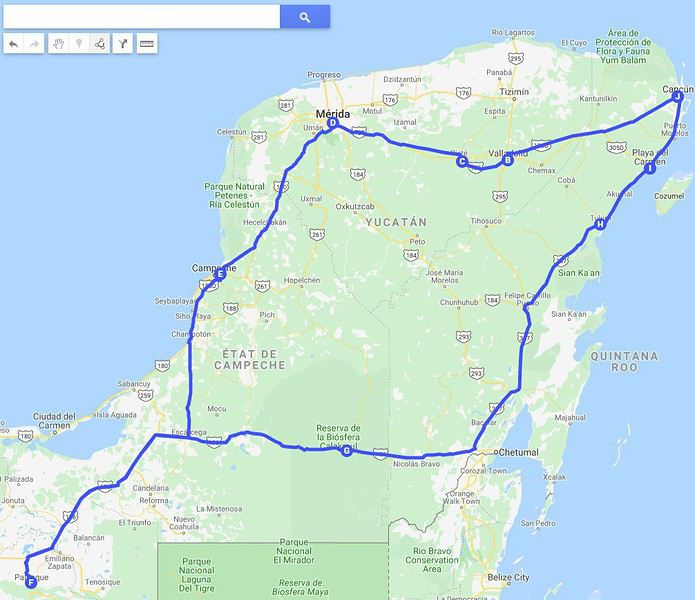
Notre itinéraire :
J1 : Vol Paris - Cancun
J2 : Cancun - Valladolid
J3 : Valladolid (Chichen Itza) - Mérida
J4 : Mérida
J5 : Mérida - Campeche
J6 : Campeche - Palenque
J7 : Palenque
J8 : Palenque - Chicanna
J9 : Chicanna - Calakmul - Chicanna
J10 : Chicanna - Becan - Playa del Carmen
J11 : Playa del Carmen - Tulum ou Coba - Playa del Carmen
J12 - 13: Playa del Carmen - Cancun - Paris
Nous avons loué un véhicule pour ce périple, nous avons fait approximativement 3000 km, les routes sont en bon état globalement, il est nécessaire d'être vigilant vous rencontrez beaucoup de dos d'âne plus ou moins "violent" et quelques trous sur la route.
L'essence n'est pas cher et attention sur certaines "autoroutes" il se peux que vous deviez faire 200 km pour faire le plein d'essence, les stations se situant systématiquement à l'entrée et la sortie d'une ville.
Vous trouverez facilement des hôtels avec de bons rapport qualité/prix, la nourriture est excellente et bon marché, en tout cas en dehors de Cancun ou Playa Del Carmen.
Ci-dessous le périple :
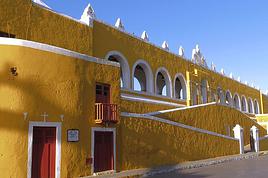
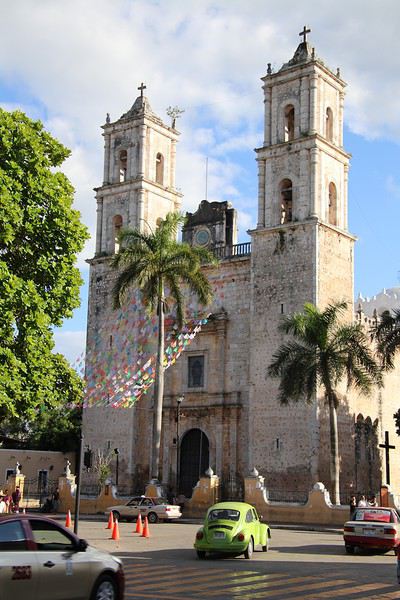
Après notre première nuit au Mexique nous partons pour Valladolid notre première étape, c'est une petite ville typique finalement peu touristique contrairement aux villes de la côtes, nous avons passé notre après midi à nous promener dans les rues et à flaner autour de la place centrale. Je ne m’étendrais pas plus sur la ville, pour moi le tour se fait en deux petites heures.
J3 : Chichen Itza,
A l'entrée de quasiment chaque site il vous ai possible de prendre un guide officiel, ils parlent majoritairement anglais et espagnol mais vous n'aurez pas de soucis pour en trouver des francophones, les tarifs s'échelonnant entre 500 et 2000 pesos en fonction du site. Je vous invite très fortement à en prendre un car il n'y a aucun panneau sur le site et l'histoire des Mayas est passionnante.
Nous nous levons tôt pour aller sur le site à l'ouverture et en règle générale je vous conseille de le faire ainsi les sites ouvrent entre 8h30 et 9h00, les camelots arrivent seulement et commencent tout juste à installer leurs produits. Il y a peu de monde ce qui facilite grandement la visite et la prise de photos.
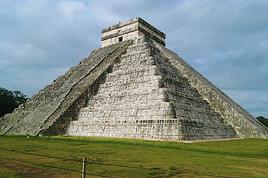
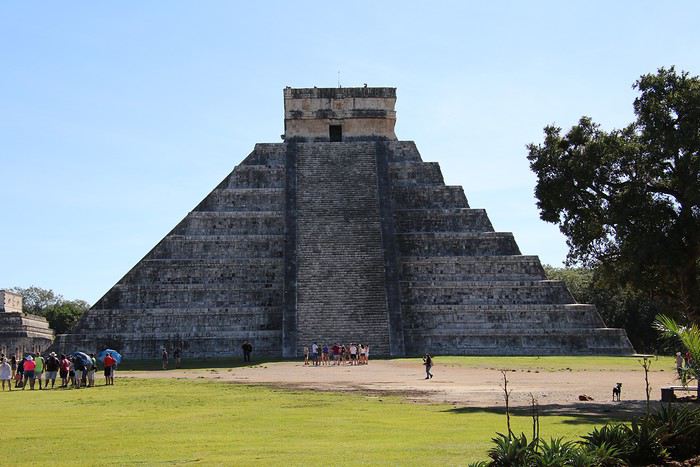
La grande pyramide :
D'après notre guide toute sa construction est basé sur les cycles du soleil et de la lune, le niveau de technicité en ingénierie, mathématique, astronomie et médecine de cette civilisation est purement impressionnante.
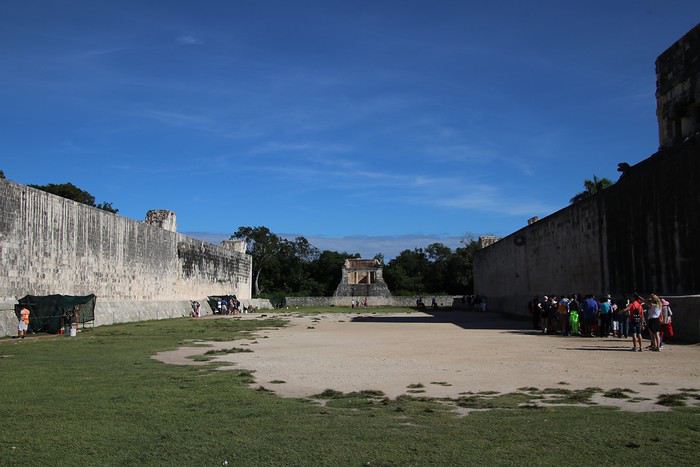
Le terrain de jeu de balle :
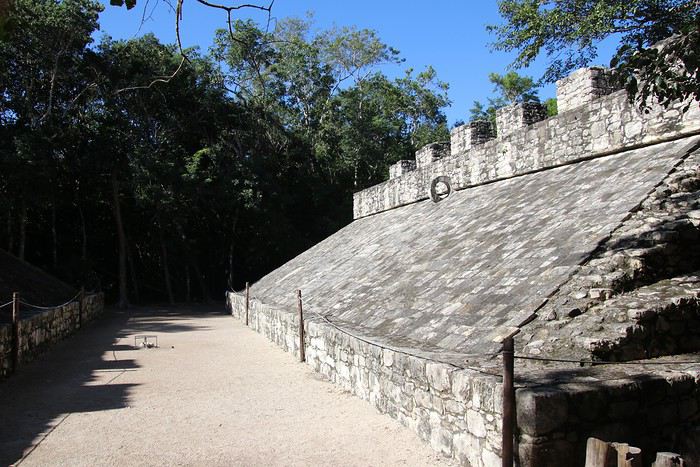
Deux équipes de 7 qui doivent faire passer une balle de caoutchouc de plus d'un kilogramme dans un tout petit cercle en pierre uniquement avec les hanches, les coudes et les genoux... d'après nos guides l'une des équipes étaient sacrifiées à la fin du jeu seulement il semblerait que les archéologue ne soient pas d'accord sur les "heureux" sacrifiés gagnants ou perdants??
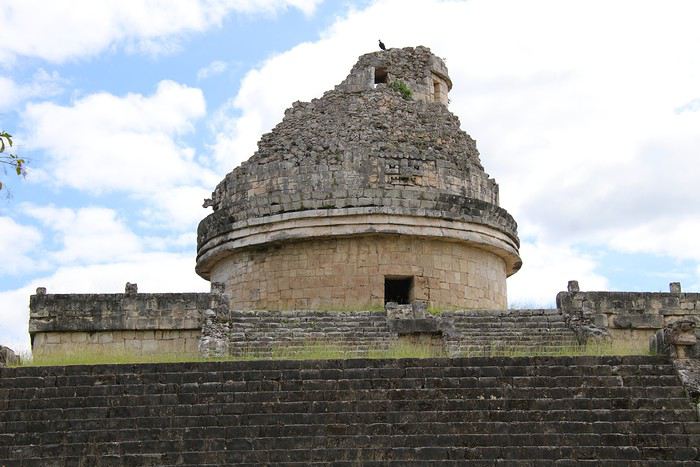
L'observatoire :
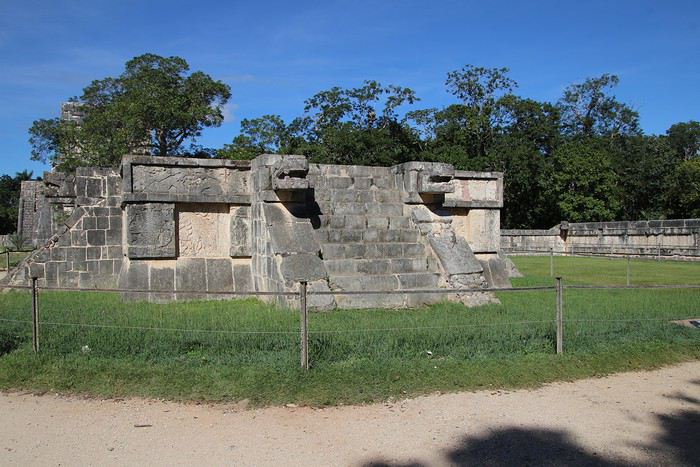
L'estrade des gagnants du jeu de balle :
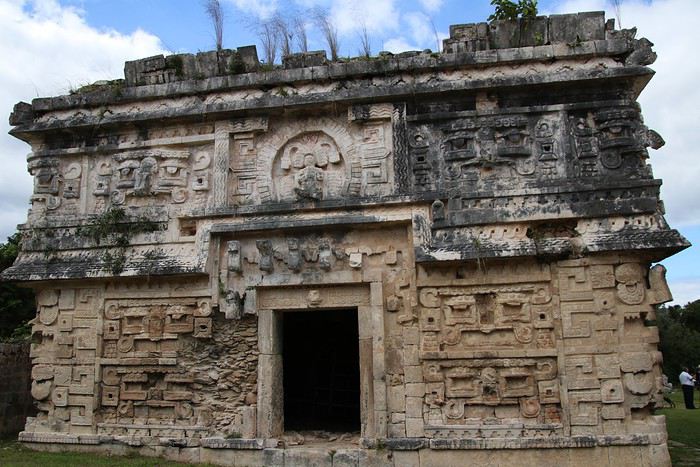
Un temple :
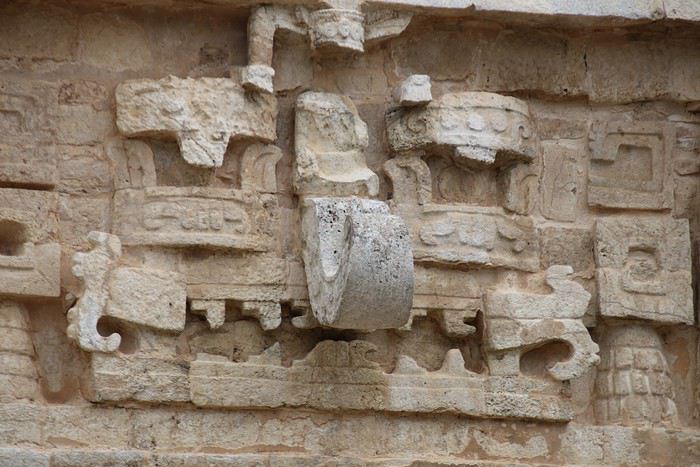
Représentation du dieu de la pluie :
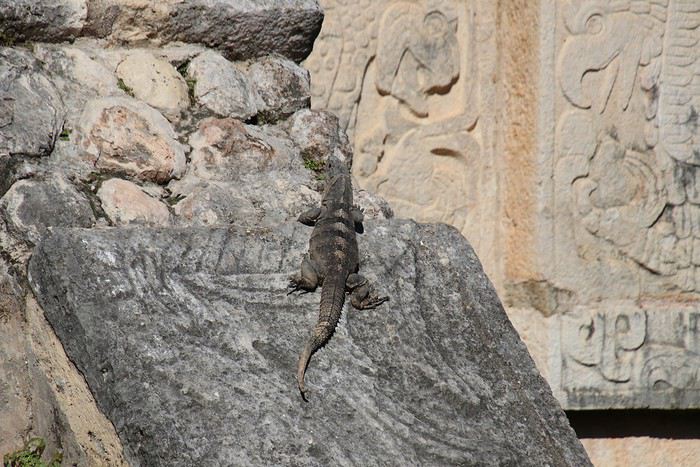
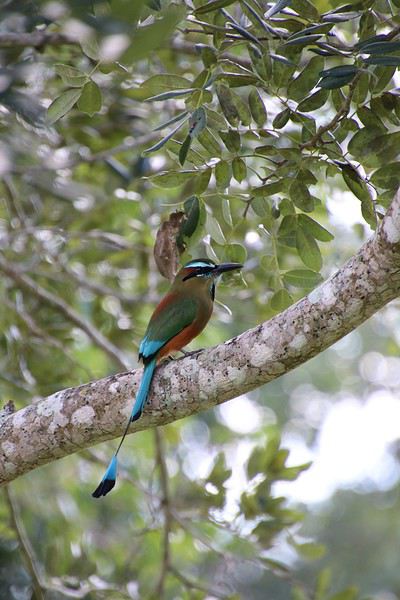
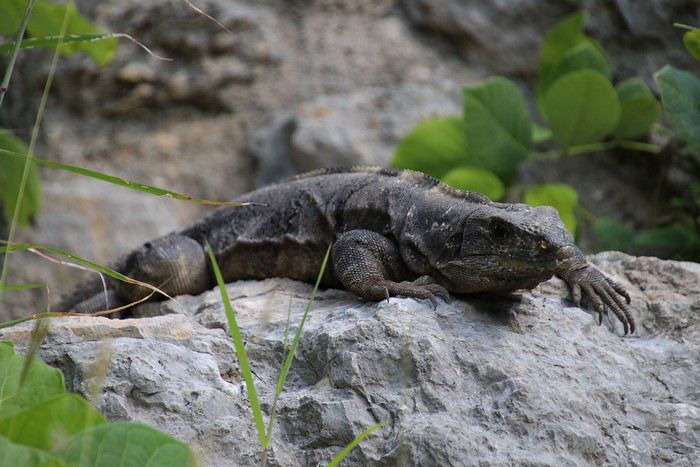
L'un des habitants du site :
Le site est très grands et toujours en cours de restauration c'est évidemment un must do si vous passez par le Yucatan.
Pour être tranquille allez y à l'ouverture, à 11h tous les cars de touristes rappliquent, les camelots ont finis de s'installés dans les allées du sites et cela devient compliqués ne serait-ce que pour naviguer dans les différents endroits du site et particulièrement vers la cenote sacrée dont l'allée ressemble plus à une allée de marché avec ses étales de chaque coté qu'a l'allée d'un site archéologique.
Nous continuons notre route jusqu'a Mérida, c'est une charmante ville comme Valladolid je pense qu'en deux heures vous en faites le tour.
Nous dormons sur place et décidons avec ma femme d'ajouter un site qui n'était pas prévu au programme : Dzibilchatun
Comme pour Chichen Itza nous partons pour l'ouverture, pour le coup ce fut inutile, peu de monde sur ce site, nous trouvons un guide (le seul à vrai dire) et nous partons pour 1h30 de visites avec lui. Nous sommes 3 sur tous le site à 9h00 du matin.
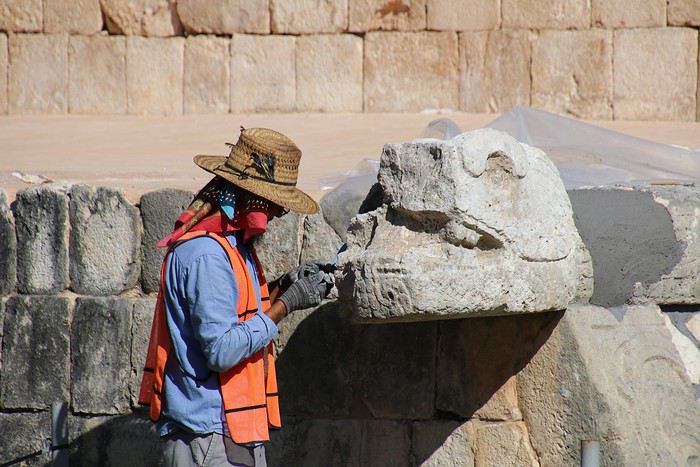
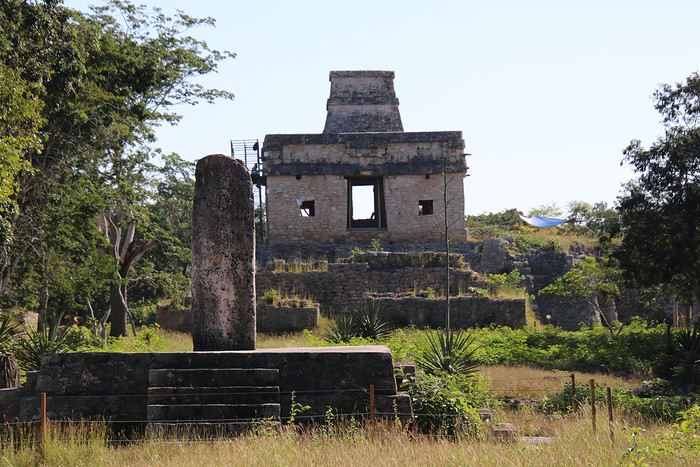
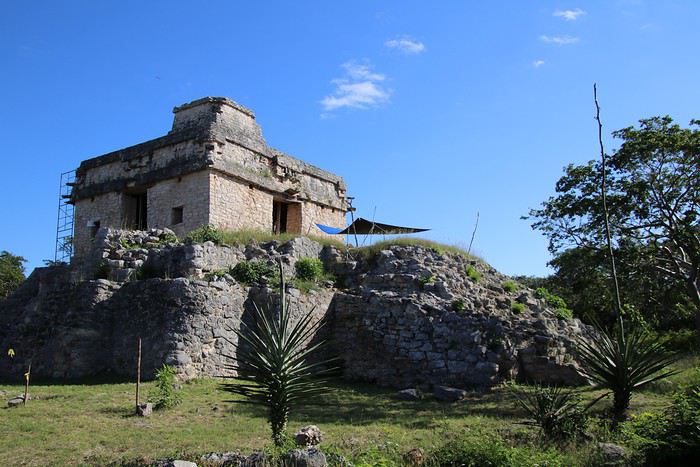
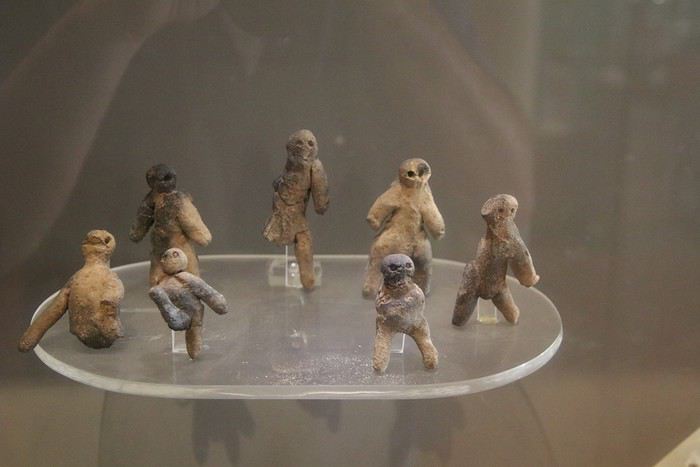
Dzibilchatun est un vieux site de l'époque pré-classique en pleine nature, le site est en cours de rénovation et de recherche. Sa particularité entre autre est sa pyramide qui a été construite de telle manière qu'un rayon de lumière à une date et une heure données venait éclairer 7 petites figurines au fin fond la pyramide.
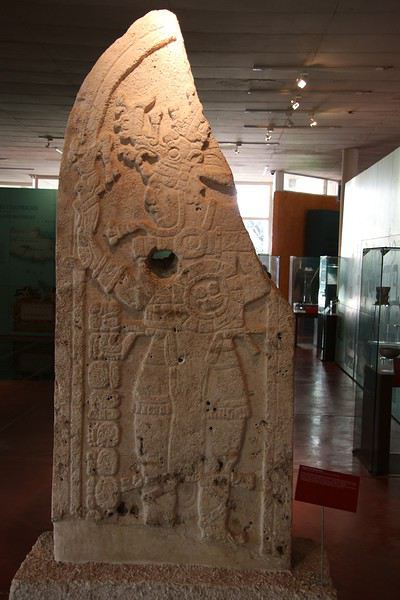
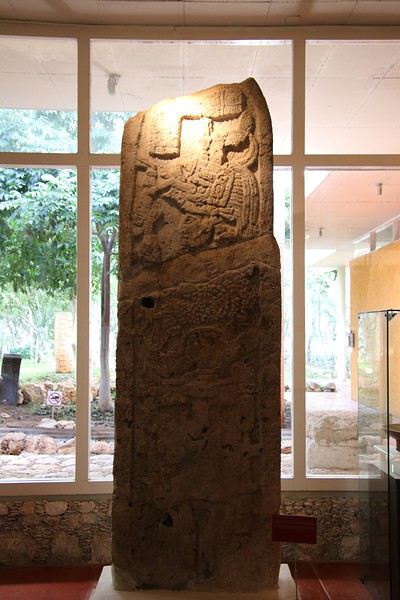
Il y a un petit musée dans le site dans lequel vous trouverez quelques informations sur l'histoire maya, du site en lui même ainsi que des fresques et les fameuses figurines.
La pyramide :
Les figurines :
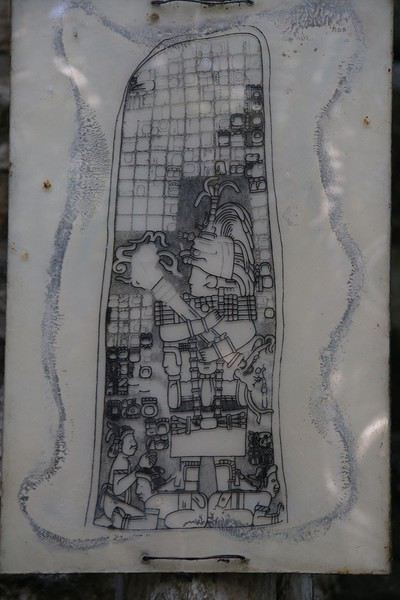
La stèle représentant le roi de la ville :
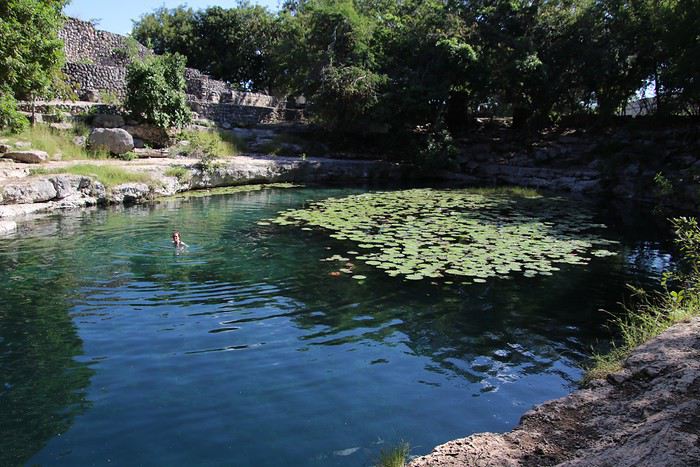
La cenote du site :
Les autochtones :
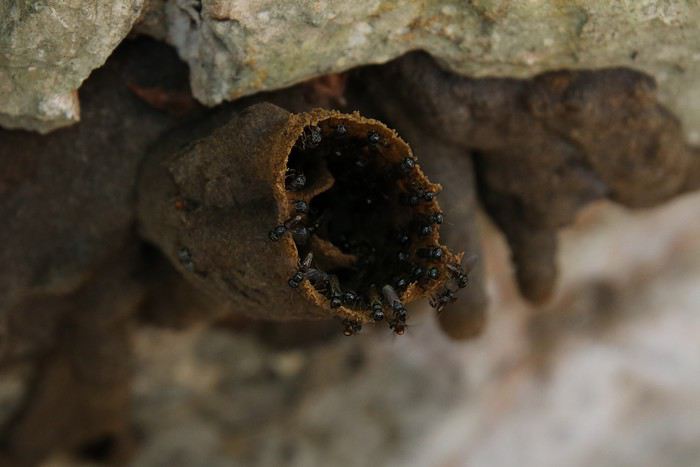
Des abeilles sans dards qui produisent un miel que les mayas utilisaient déjà et qui est l'un des miels les plus cher du monde à notre époque.
Suite du 4eme jour:
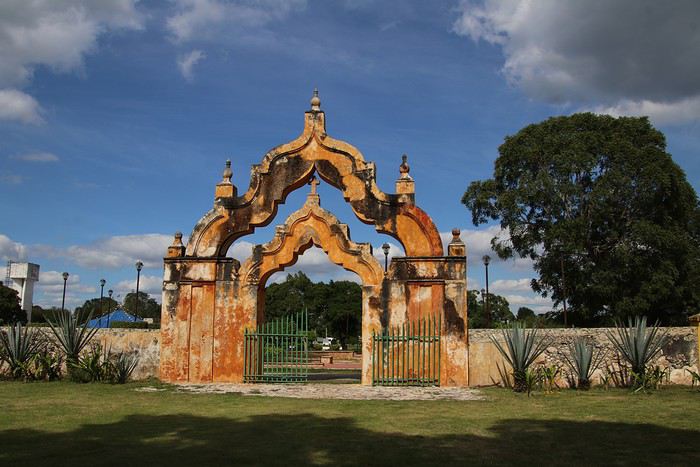
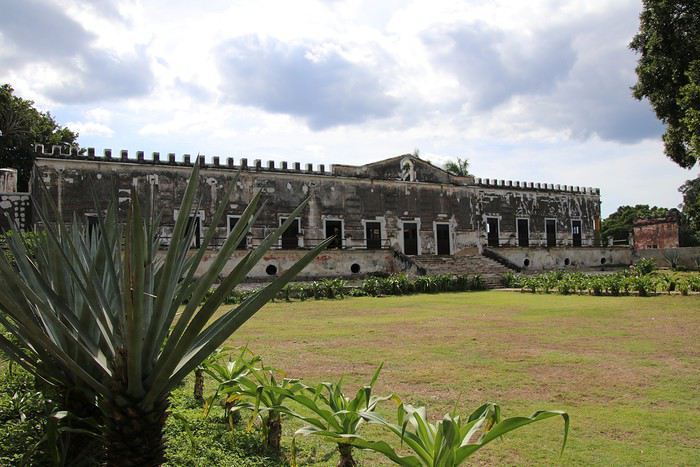
L'après midi nous visitons l'Hacienda Yaxopoil. Les haciendas sont d'anciennes propriétés espagnoles principalement dédiées à l'exploitation agricoles, très similaires aux plantations du sud des états unis.
Elles représentent pour le Mexique l'essor économiques mais aussi le quasi esclavage de la main d'oeuvre locale.
Ce site est intéressant à voir, mais il n'y a aucune explication sur son histoire, nous avons fait des recherches sur le net pour en apprendre un peu plus.
En fin de journée nous visitons le palais du gouverneur à Merida.
J5 : Nous partons pour Campeche et visite de Uxmal
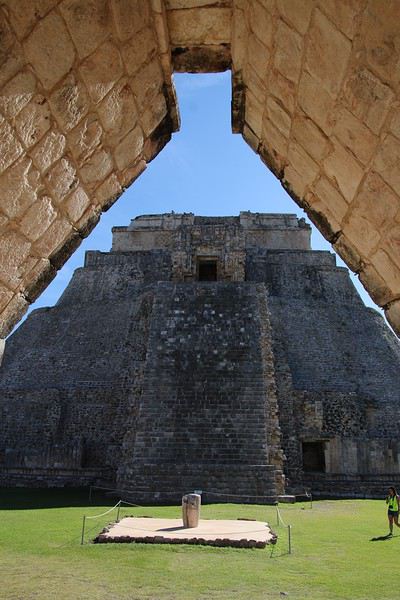
A une heure de route de Merida se trouve un magnifique site maya, Uxmal avec pour particularité la seule pyramide à base ovale de la région du Yucatan
Le site est touristique, je vous invites à vous y rendre à l'ouverture pour en profiter, il est également assez grands comptez 1h30 à 2h de visite avec un guide et au moins une heure de plus pour déambuler à votre rythme.
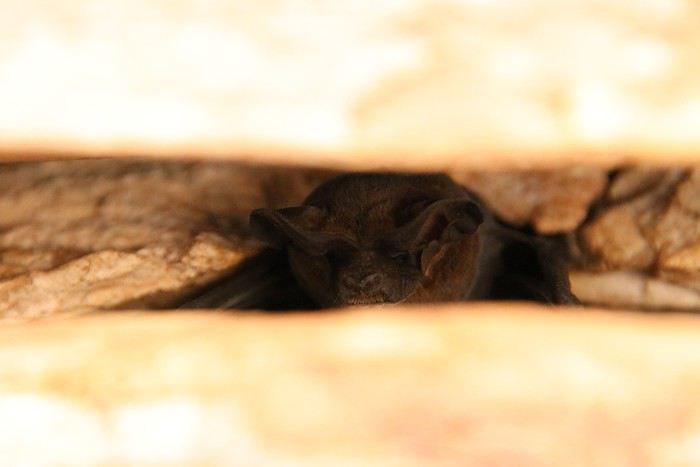
Petite chauve souris caché dans les interstices entre les pierres
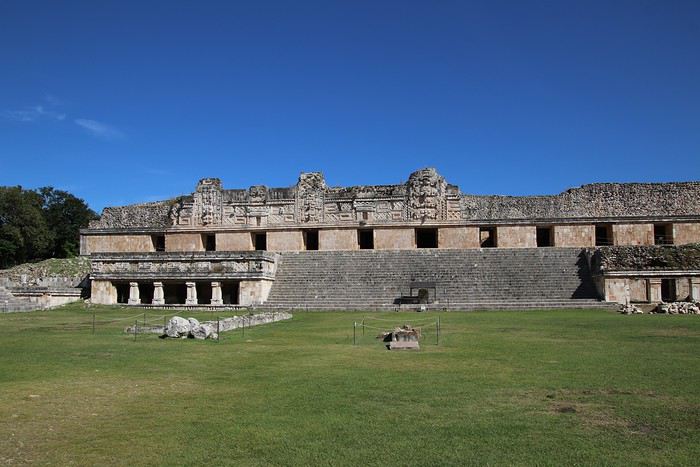
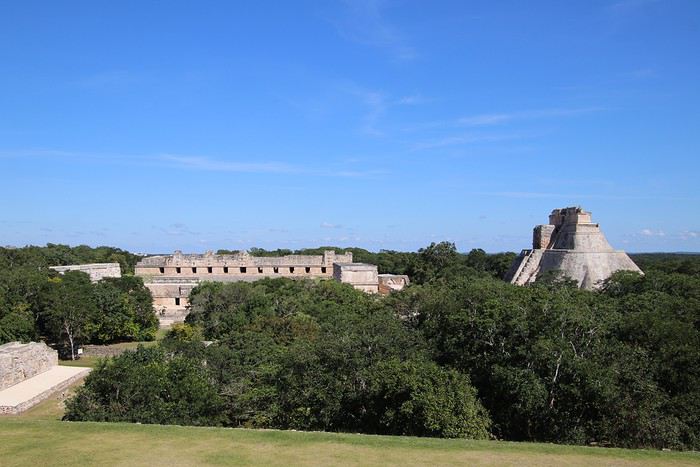
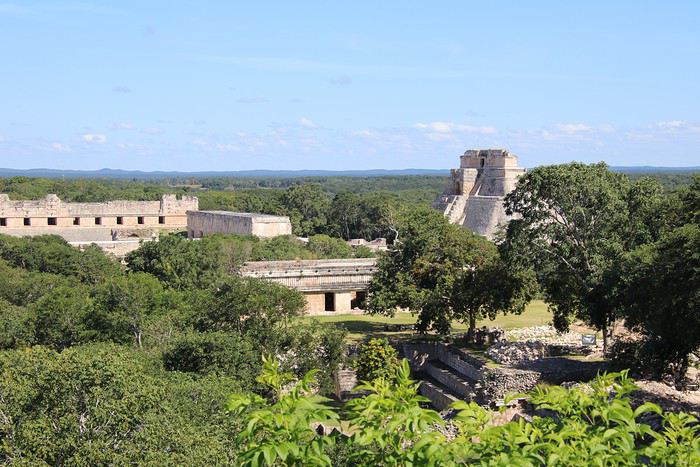
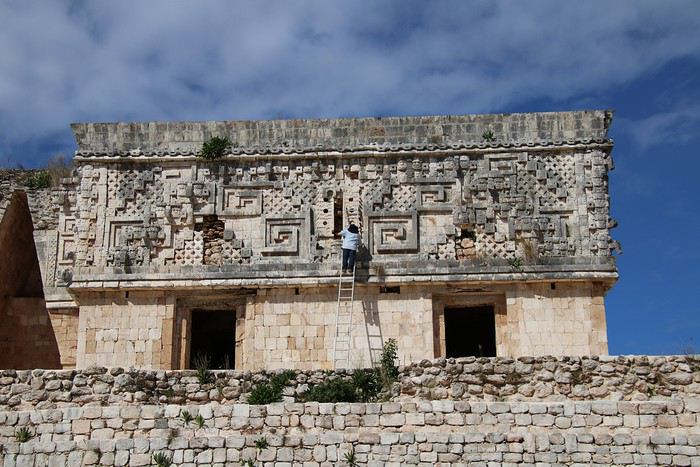
En plus de la pyramide, vous aurez l'occasion de voir une "université", un grand temple dominant toute la vallée, et bien d'autres bâtiments
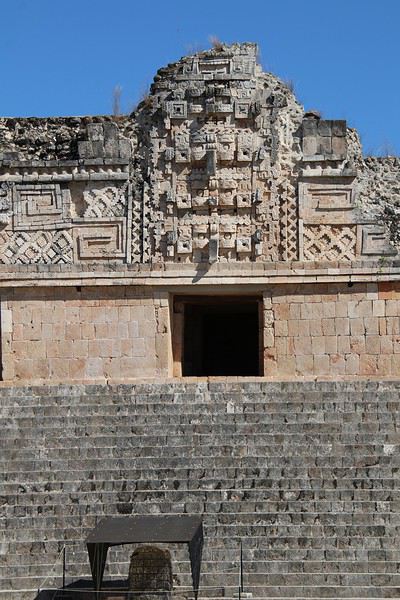
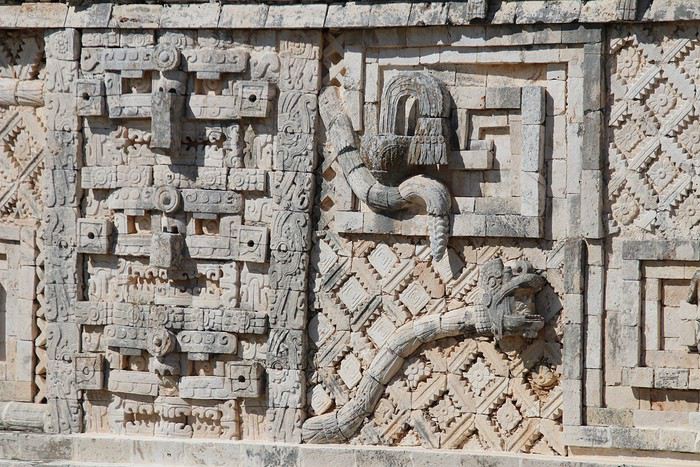
chaque bâtiment est richement décoré de bas relief représentant des dieux principalement taillés à même la pierre
Du haut du temple la vision sur l'ensemble du site
Le traditionnel jeu de balle
Ce site comme la plupart des sites mayas est toujours en cours de restauration, voir de découverte la jungle ayant repris ces droits
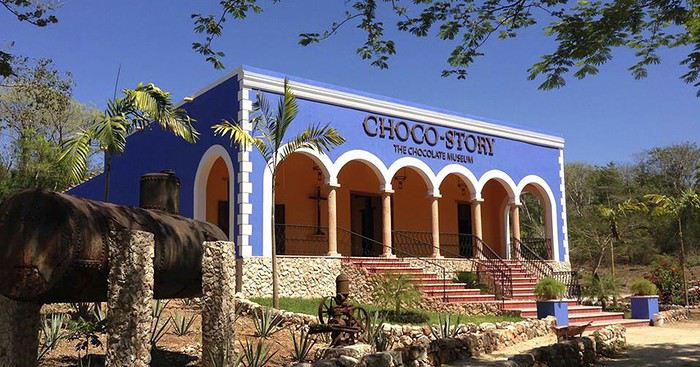
Nous avons ensuite visité un "musée" Choco-story" retraçant l'histoire du cacao au Mexique avec démonstration de la préparation puis dégustation d'un chocolat chaud, vous pourrez goûter du chocolat chaud tel que les mayas le buvait il y a plusieurs siècle à vos risques vue qu'ils y ajoutaient du piment.
Puis nous avons pris la route vers Campeche et visité la ville après installation à l’hôtel.
J6 : Route vers Palenque visite du parc ecotouristique Aluxes et visite des cascades l'après midi
L'éco parc Aluxes a pour ambition de recueillir des animaux blessés de les soigner puis de les relâcher dans la nature lorsque c'est possible, certains animaux de survivrait pas dans la nature une fois libéré. Si comme moi vous êtes fan d'animaux vous aurez l'occasion de voir une bonne partie de la faune endémique du Yucatan dans ce parc.
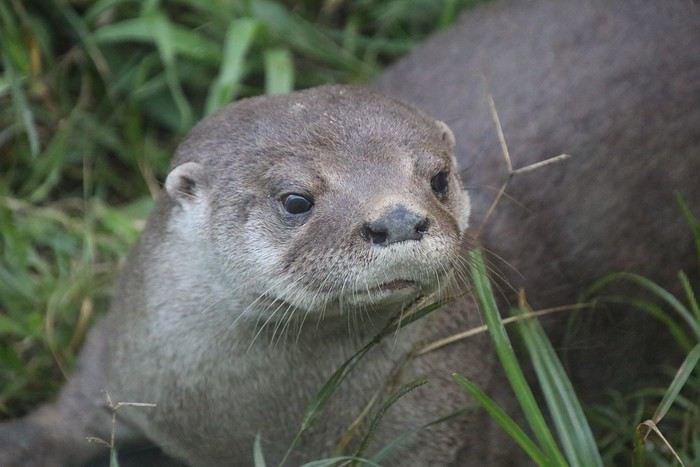
Loutre géante :
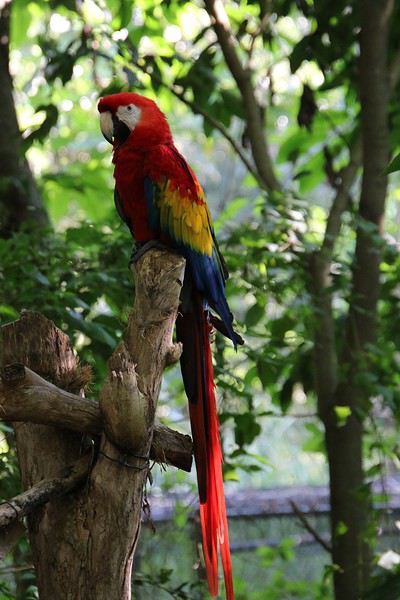
Le très (trop) populaire Ara :
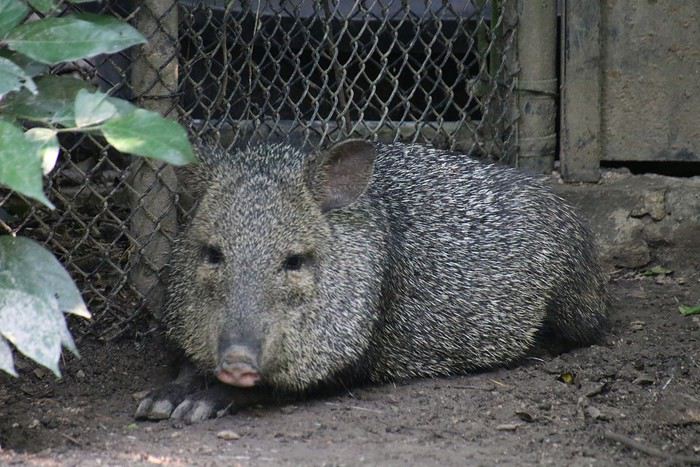
Le sanglier local :
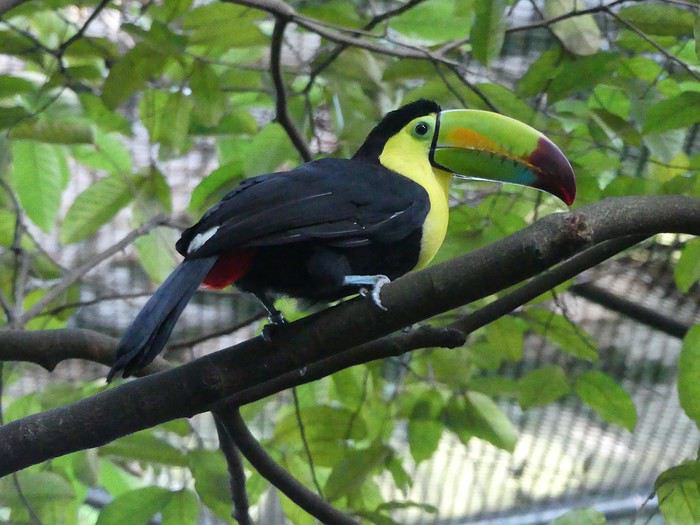
Le toucan
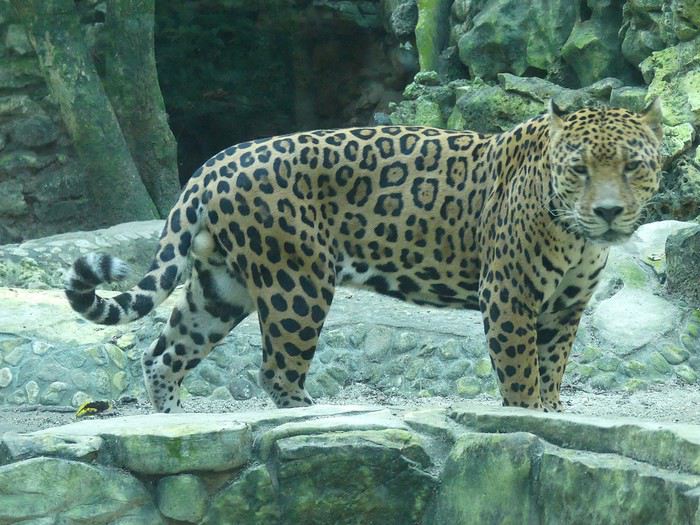
et bien sur le jaguar :
Ce pauvre bonhomme s'est fait tirer dessus par dans la cuisse à l'arrière et boitera toute sa vie.
Je ne suis pas un fan des zoo ou parc zoologique, je préfère voir les animaux dans leur habitat naturel mais leur travail est malheureusement nécessaire pour préserver les espèces.
Nous posons nos affaires à l'hotel puis ressortons pour visiter deux cascades Agua Azul et Misol, respectivement à 70km et 30km de Palenque
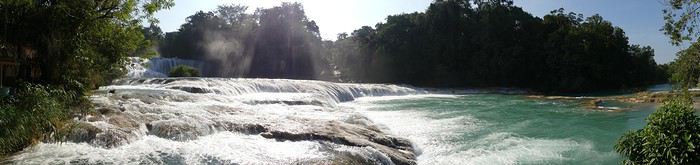
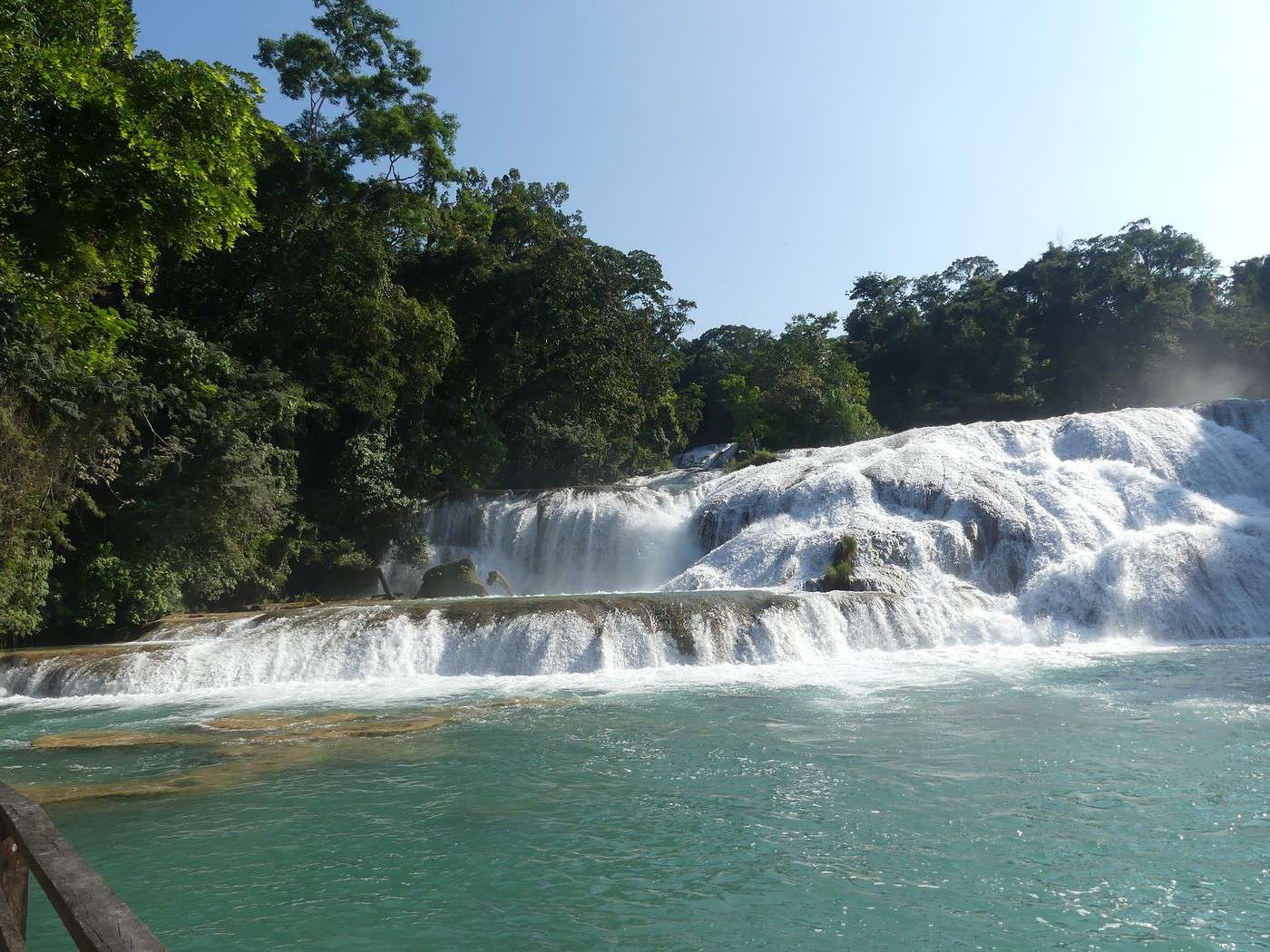
Agua Azul est plus impressionnante par sa longueur pas loin de 5 km que par sa hauteur, nous avons eu la chance de la voir d'un bleu/vert magnifique ce qui n'est pas forcément le cas après les pluies.
Vous accédez d'abord au parking qui précède un sentier en béton qui longe la cascade sur à peu près 1,5km bordé par des camelots sur tout le long. Vous pouvez vous baigner à certains endroits.
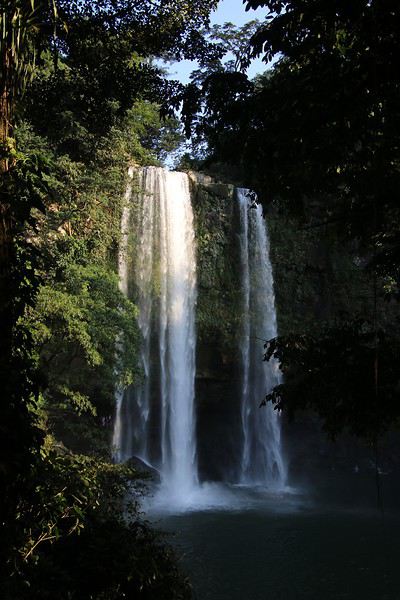
Misol Ha est bien plus haute, vous pouvez prendre un bain en bas des chutes pour vous rafraichir :
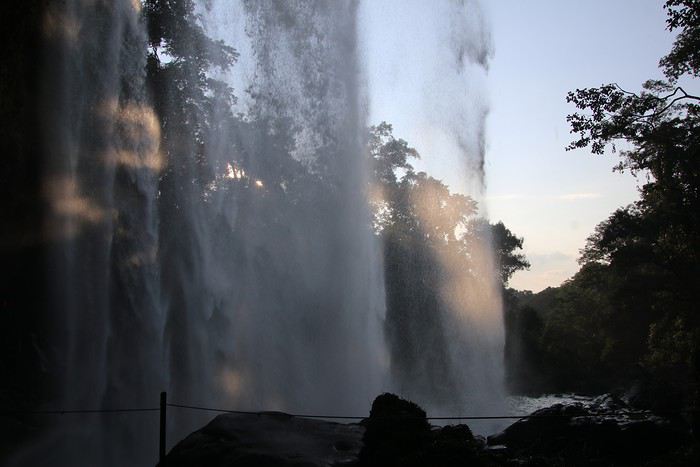
Le petit plus vous pouvez passer derrière la cascade et/ou faire le tour pour visiter une cave naturelle
J7 : Ce matin route vers chicanna et visite du site l'après midi
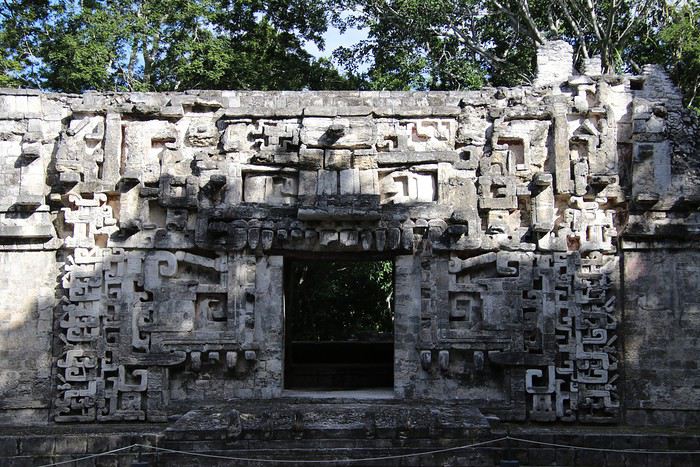
Chicanna est une ville étape, clairement il n'y a pas grand chose à voir dans la ville en revanche à proximité vous pourrez voir le site Maya de Chicanna mais aussi Calakmul le site sur lequel vous pourrez monter sur la plus haute pyramide du Yucatan (45m)
Le site de Chicanna :
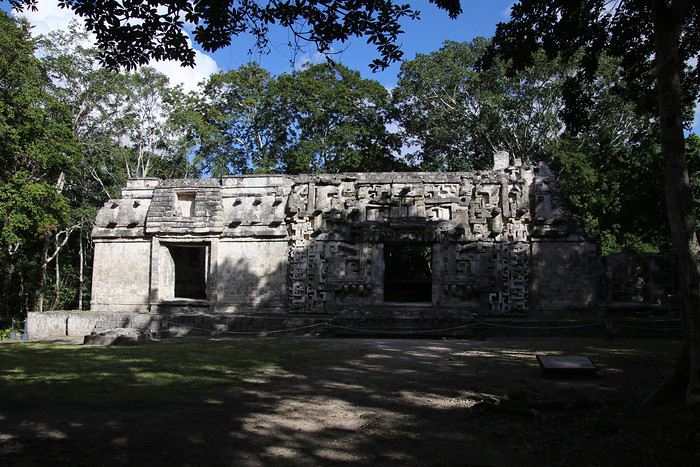
C'est un petit site, vous ne trouverez pas de guide à l'entrée mais vous pourrez lire des panneaux devant les structures du site. Son principal intérêt est la porte de la cité très ouvragé et très bien conservé.
La fameuse porte :
Demain le grand jour, le site de Calakmul!
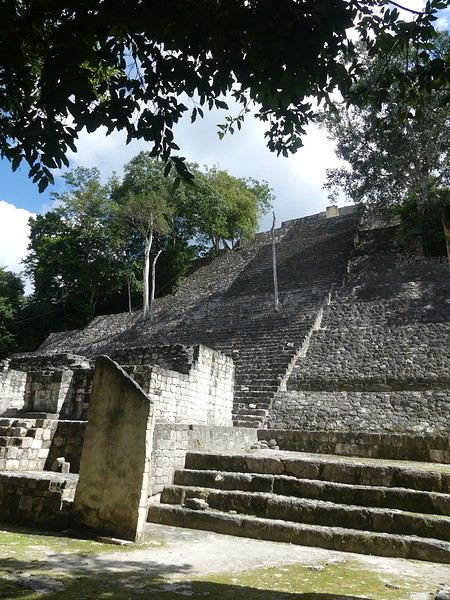
J8 : Ce matin nous visitons le site de Calakmul, un site gigantesque qui fut une ville centrale à l'époque post classique. Le site est non seulement très grand mais perdu au milieu d'une réserve naturelle.
Pour vous y rendre de chicanna, vous prenez l'autoroute 269 une trentaine de kilomètre, puis vous tournez sur la gauche et passer sur une petite route goudronnée jusqu'au petit musée, vous tournez à droite, la route se rétrécie encore mais reste bonne une disaine de kilomètre puis la trentaine de kilomètre suivant la route est en mauvaise état mais reste faisable en berline méfiez vous des animaux coati ou dinde qui traverse la route.
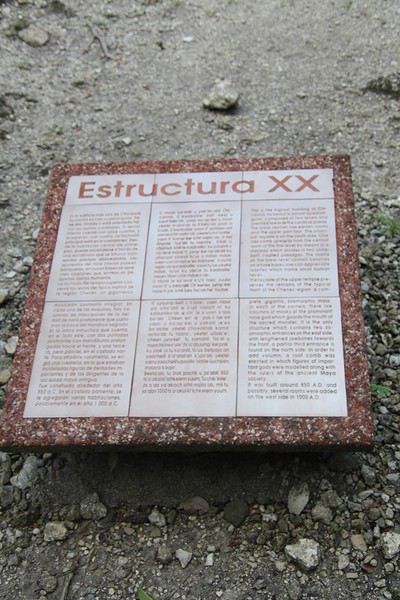
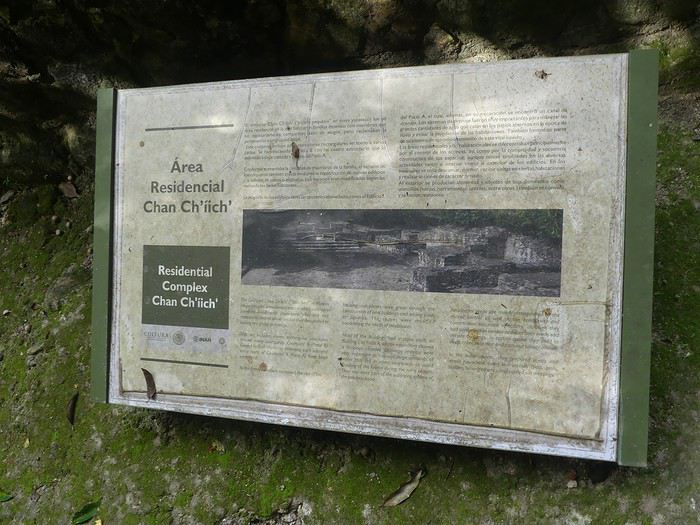
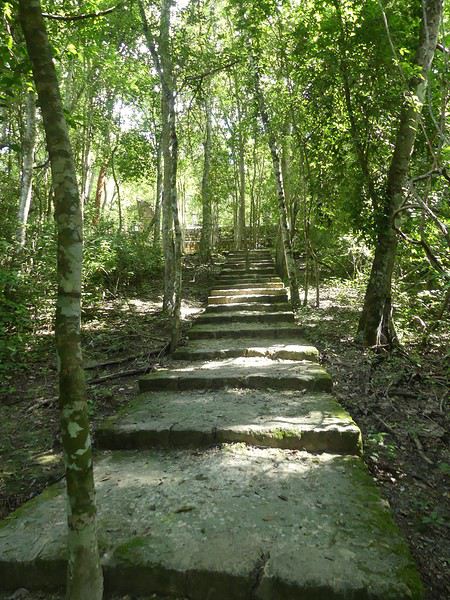
Vous êtes vraiment en pleine jungle, peu de touriste, heureusement tout est balisé commenté sur des panneaux.
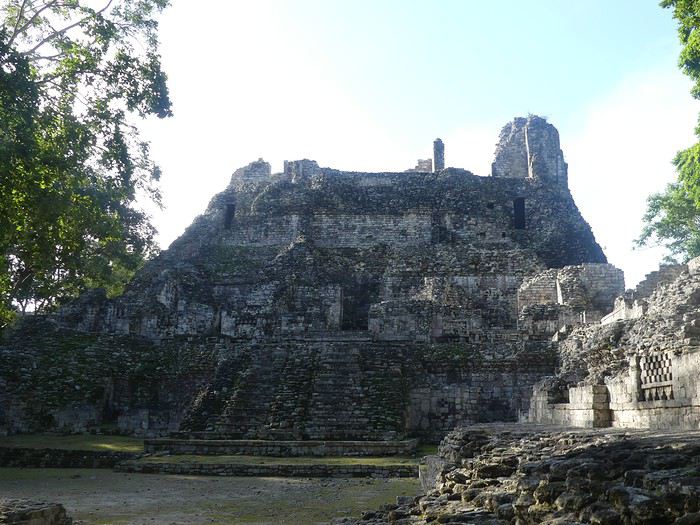
du bas de la grande pyramide
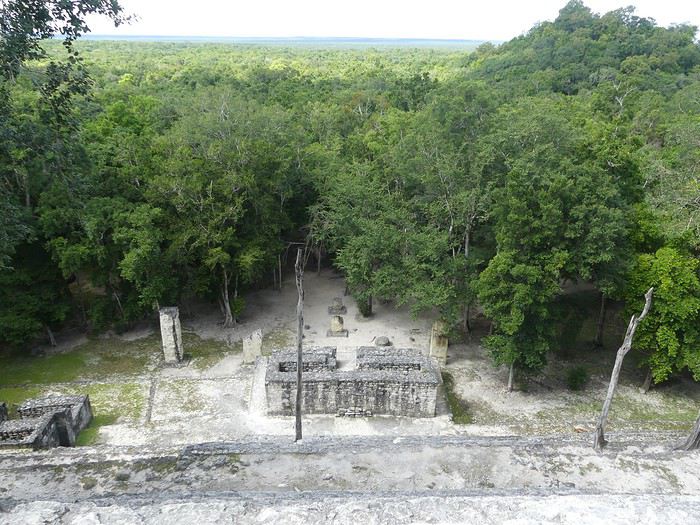
Et du haut
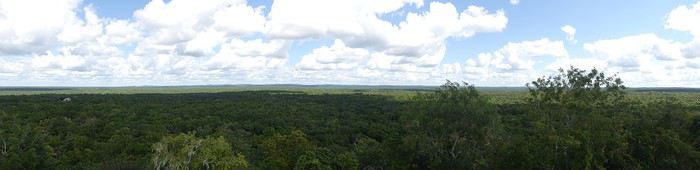
La vue sur la canopé
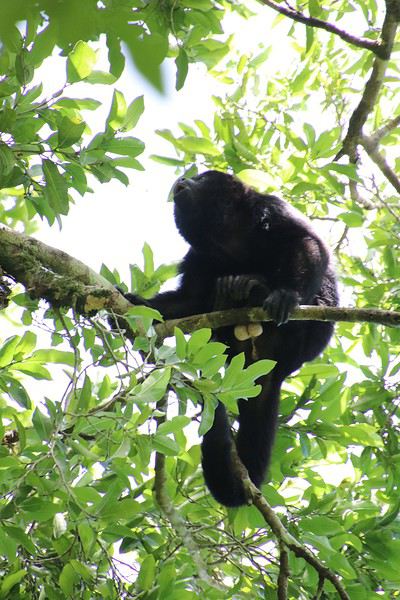
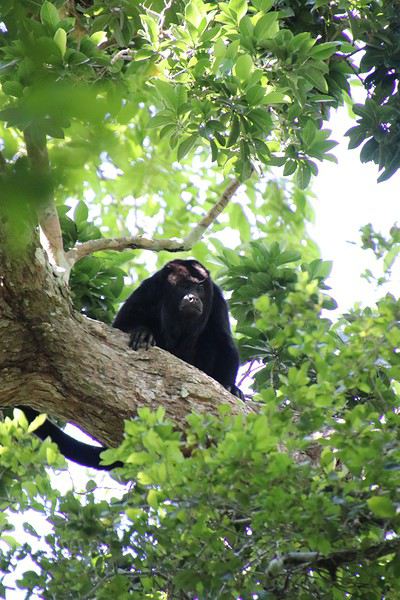
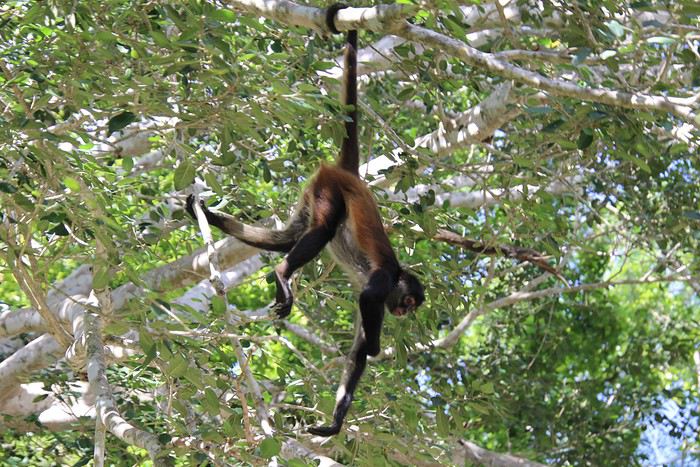
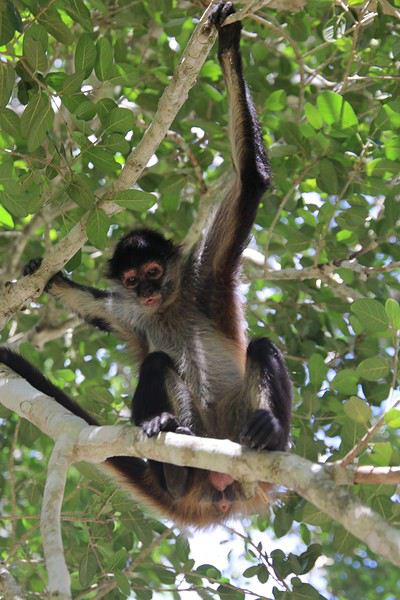
le tout sous le regard des singes hurleurs et des singes araignées
Calakmul est un site magnifique et préservé, il n'y a quasiment pas de touriste, cela me semble vraiment un must do.
Nous sommes déjà au 10eme jour, programme de la journée, visite de Becan puis route pour Playa del Carmen
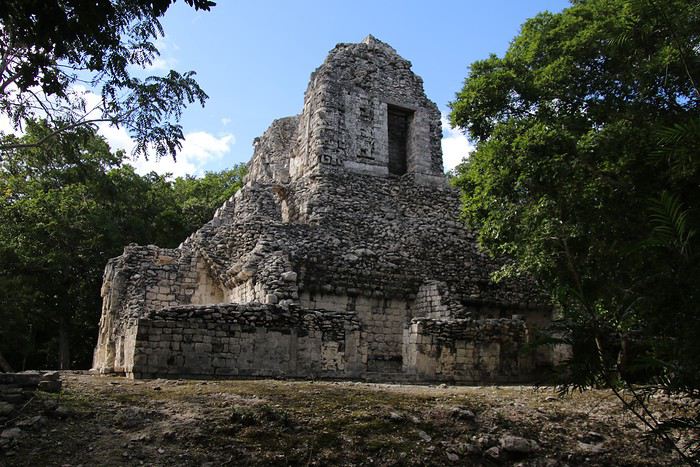
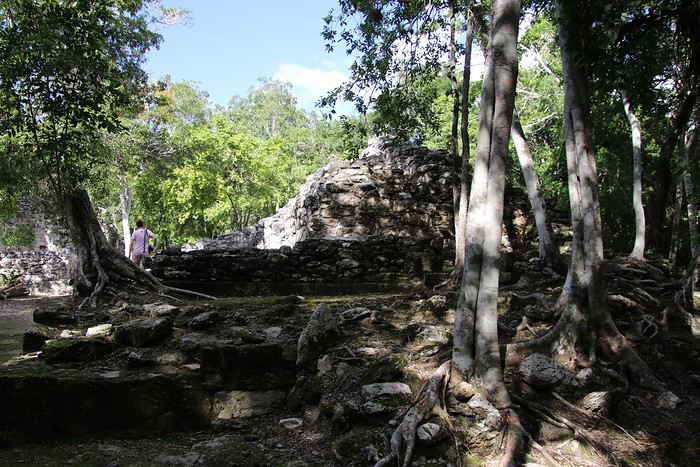
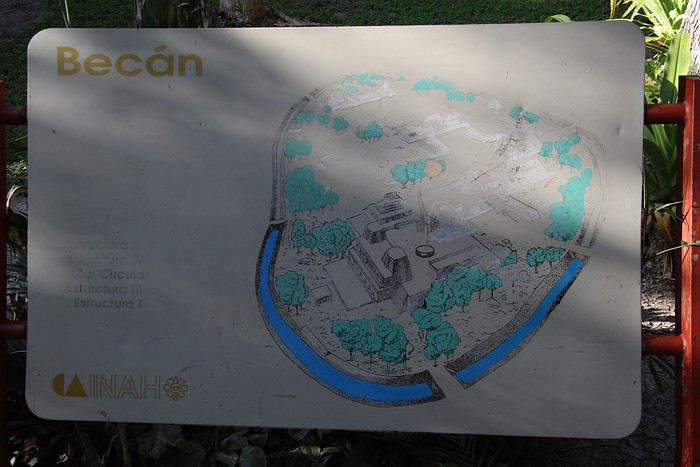
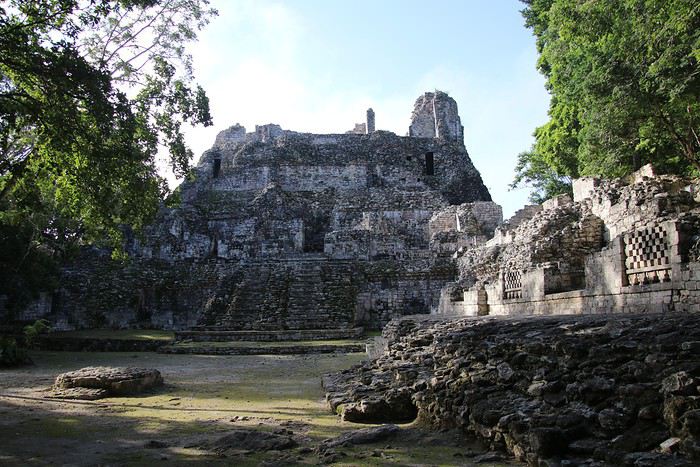
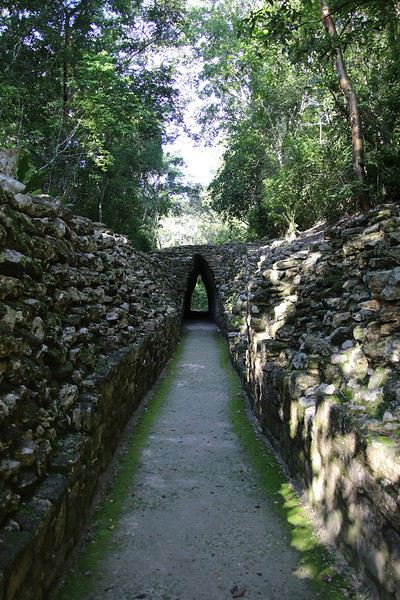
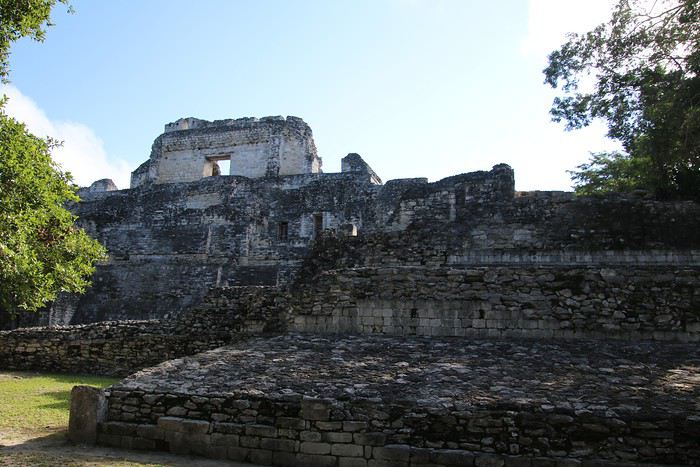
Becan : ce site est l'un des plus petit que nous avons visité. Becan à tout de même comme particularité des douves encore visible à l'entrée du site et d'être en parti submerger par la jungle. Vous aurez du mal à trouver un guide sur ce site également mais des panneaux d'informations vous donneront un minimum d'information.
Nous partons pour Playa del Carmen, nous installons à l'hotel puis sortons nous promener.
Playa del carmen est extrêmement touristique, vous retrouverez principalement des américains et en particulier sur la Quinta avenida ou les tarifs sont exorbitants clairement je vous invites à acheter vos souvenirs sur d'autre site (y compris Chichen Itza) ou dans les villes comme Merida. Les prix sont 4 fois plus cher à Cancun ou à Playa del Carmen...
Autre information la plage la plus populaire est Akumal, principalement pour y voir des tortues de mer, c'est un attrape touriste au dernier niveau, l'accès à la plage est payant 5€, vous êtes ensuite harcelé par des camelots pour vous vendre du matériel de plongée et/ou un tour pour observer les tortues... nous avons renoncé à y aller je ne peux malheureusement pas vous donner plus de détails.
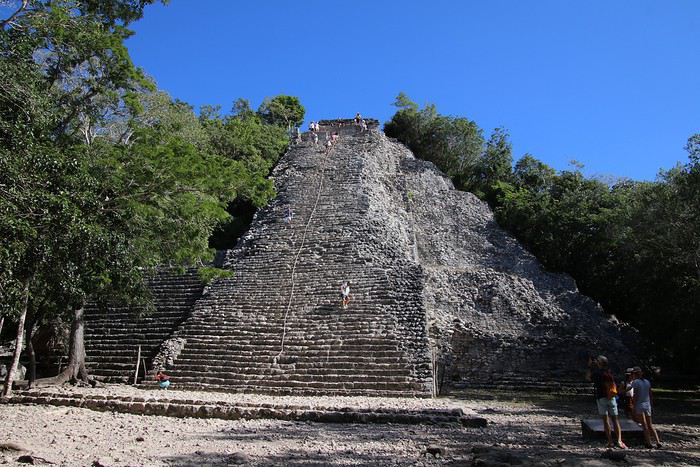
Nous avons visiter deux sites à coté de playa del carmen Tulum la seule cité maya cotière et Coba un site dans les terres. Nous avons fait l'erreur de commencer par Coba, il aurait clairement été préférable de commencer par Tulum, nous sommes arrivé à 11h à peu près et le site était noir de monde.
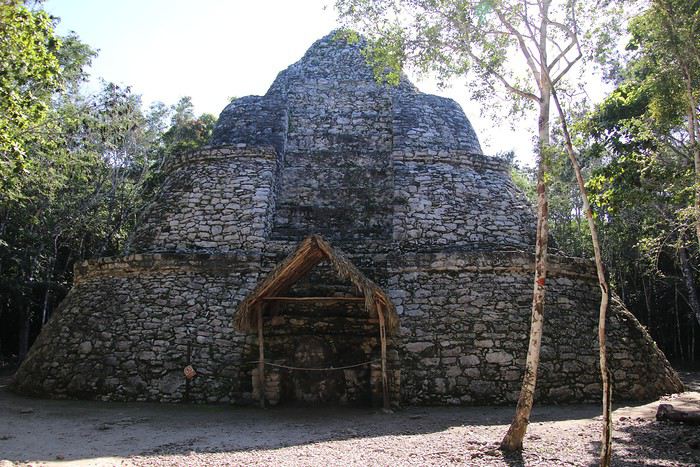
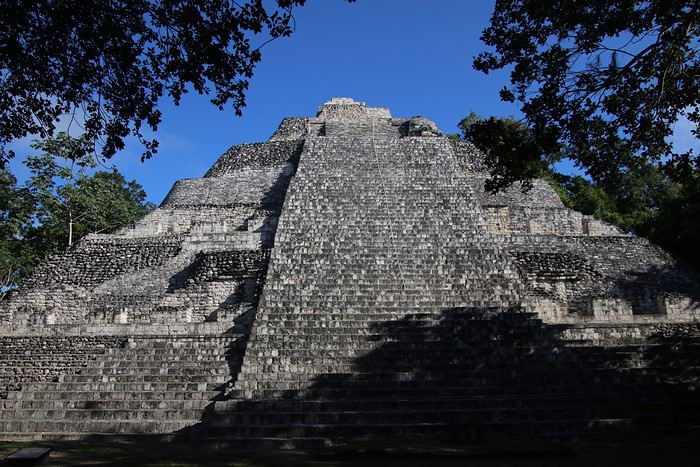
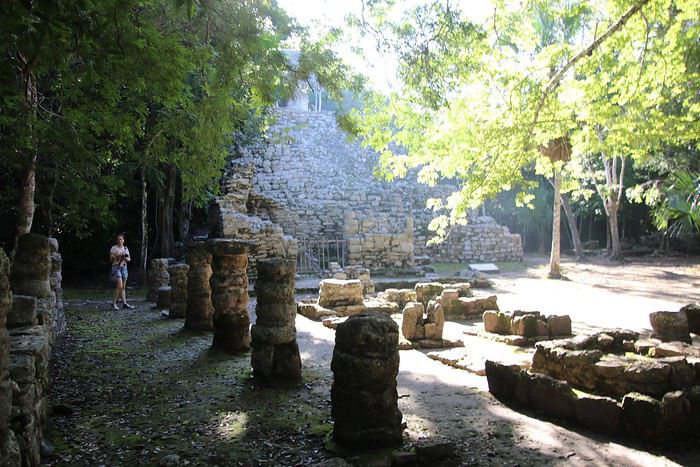
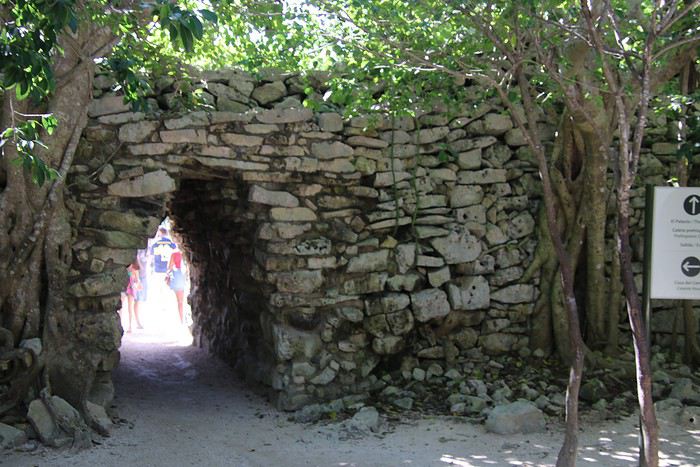
Coba est un petit site mais intéressant si vous en avez marre de la plage :
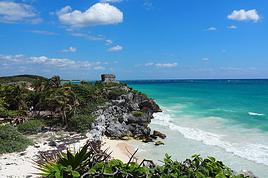
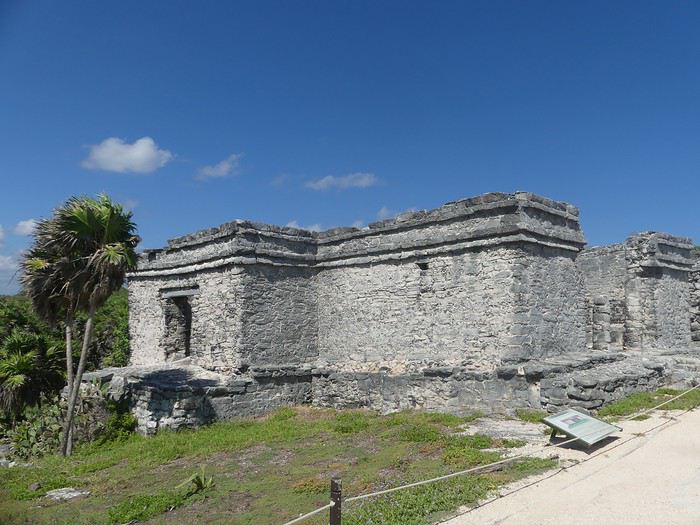
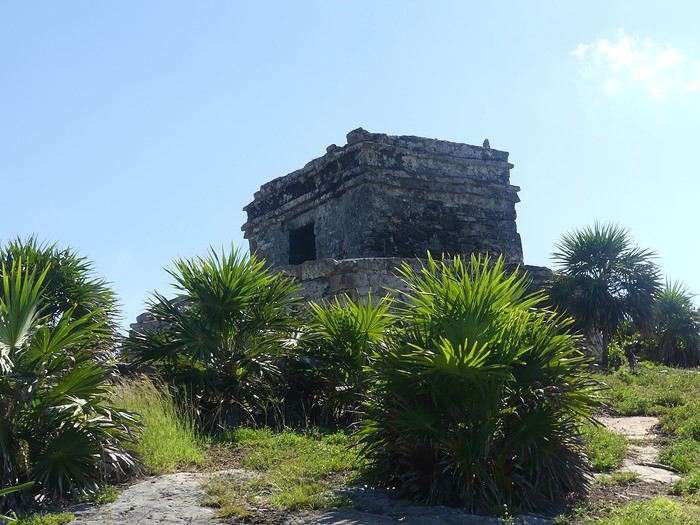
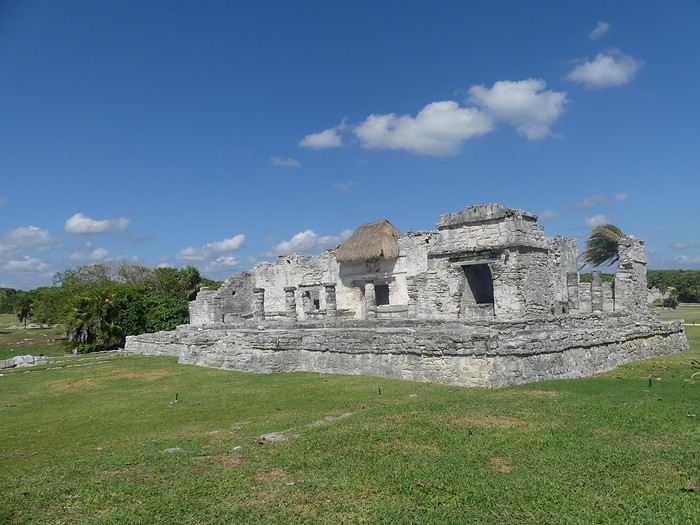
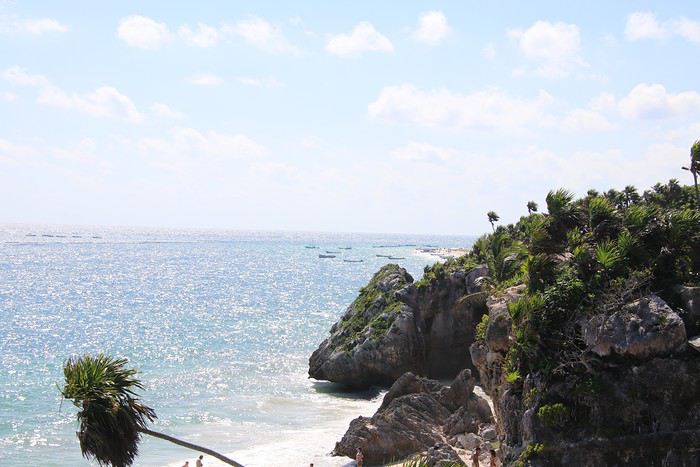
Tulum etait une cité côtière, la seule de l'empire maya et toujours ceinte de remparts toujours debout :
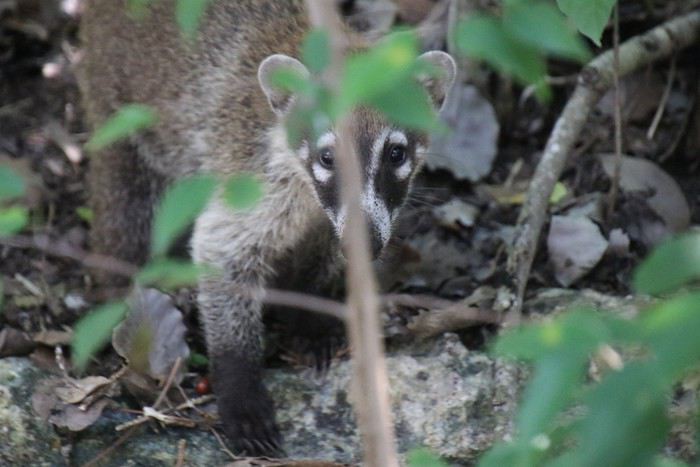
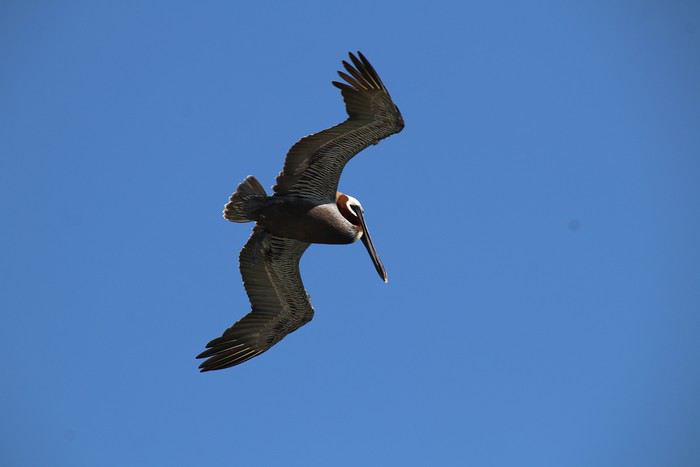
Vous la visitez sous l’œil des coatis et des pélicans en liberté sur le site
Voila qui conclus ce ce carnet en espérant que cela donne des idées à certain. En conclusion voyager dans le Yucatan est plutôt bon marché et facile en self drive. La culture mexicaine est riche et très intéressante et la population très gentille.
malgré ses belles Photos votre voyage n'est autre qu'un circuit en voiture au Yucatan si on n'employe pas de mots anglais Ce récit est plein de fautes tant d français que de méconnaissances du terrai et surtout des Mayas
Le Mexique pour toujours après de nomb Les chiens aboient la caravane passe
malgré ses belles Photos votre voyage n'est autre qu'un circuit en voiture au Yucatan si on n'employe pas de mots anglais Ce récit est plein de fautes tant d français que de méconnaissances du terrai et surtout des Mayas
Et bien oui, c'est un autotour organisé par nous même, je ne comprend pas ce qui vous dérange dans mon récit?
Oui je fais beaucoup de fautes, je le concède, j'en suis navré mais vous me semblez un peu mal placée pour m'en faire la remarque non? Vous avez fait 3 fautes par phrase dans votre message de 3 lignes.
Bien sur que je ne connais pas l'histoire Maya! Cette civilisation est très riche, ce n'est pas en 12 jours et le peu d'information que les guides donnent lors des visites que l'on peut appréhender une telle histoire.
Si vous êtes experte du Yucatán, écrivez des carnets de voyages pour faire profiter les gens de votre expérience et leur donner envie d'y aller plutôt que de critiquer ceux qui prennent le temps de partager.
Pour moi le Yucatan est moins cher que mon propre Pays je peux y pratiquer une langue que j'ai apprise dans ma jeunesse et a Akumal Playa après l'arche Personne ne nous géne
Le Mexique pour toujours après de nomb Les chiens aboient la caravane passe
merci pour votre carnet
c'est intéressant car je prépare un voyage sur un circuit similaire
vous y êtes partis sur quelle période ? quelles ont été vos points de chute pour dormir et votre appréciation du loueur de voiture ?
je me doute bien que vous n'avez pas fait de découvertes archéologiques mais c'est déjà très beau
PS : je me suis relue pour ne pas faire de fautes dans mon message ....😉
Nos points de chutes
J1 : Cancun => Beachscape Kin Ha villas & suites, proche de l'aéroport
J2 Valladolid => VILLAS ARQUEOLOGICAS CHICHEN ITZA, tout proche du site de Chichen Itza un peu cher pour le Mexique mais nous souhaitions être à l'ouverture sur le site sans forcément se lever très tôt.
J3 et J4 : Mérida => Hotel Doralba Inn bien placé à 400 mètres de la place du centre ville
J5 : Campeche => Hotel Francis Drake
J6 et J7 : Palenque => Posada Aguila Real
J8 et J9 : Chicanna => Hotel Maya Balam à Xpujil une ville proche de de Becàn, très bon rapport qualité prix.
J10 , J11 et J12 : laya del Carmen => La Leyenda Boutique Hotel, situé à 500m de la Quinta Avenida et 700 de la plage.
Concernant le loueur, je ne conseillerais pas le notre bien qu'il ai été très professionnel la location du véhicule était très bon marché 98$ US les 12 jours mais l'assurance n'était pas incluse 500$ l'assurance tout inclus... le nom était Val Car rental.
Nous aurions clairement due passer par rental car qui offre des tarifs très intéressant.
Hôtels en forfait tout-inclus › Mexique · 61 replies
12 au 26 Avril Sandos Playacar Riviera Maya!! Arrivé et Plage: A l’hôtel on se présente à la réception comme d’ habitude. On demande à la fille si nous pouvons…
Nous partons deux semaines, arrivée et départ: Cancun. Je parle couramment l'espagnol alors ceci facilite beaucoup les communications. Nous avons déjà fait la…
I’m heading to Guatemala for 18 days in August with my 11-year-old and I’m wondering if renting a car makes sense—not so much because of the road conditions, but because I’d like to spend about 3 days in Livingston. Since it’s only accessible by boat, I’d have to leave the car in Río Dulce. Maybe possible at a hotel, but that means paying for a rental for 3 days without using it...
Same issue for Semuc Champey—it’s only reachable by 4x4, and I won’t be renting that type of vehicle.
Also, has anyone traveled from Panajachel (Lake Atitlán) to Cobán (to explore the caves and waterfalls in the area)?
According to Google Maps, it’s a 6-hour, 44-minute drive... so whether by car or minibus, it’s *really* long (same for Cobán-Flores later).
Are there any interesting stops along the way where I could spend a night? And if I’m not renting a car, is it possible to take two private shuttles for this route?
In 2024, I spent two months solo in El Salvador. While I’m still putting together my travel journal on Myatlas, here’s a quick recap.
It’s a country where it’s really easy to travel without a guide or agency.
SAFETY:
For a long time, the country was considered one of the most dangerous in the world because of the "maras," ultra-violent gangs. But today, I think it’s the safest country in Latin America.
BUDGET:
For French tourists, the country is very affordable, especially in the less touristy regions.
TRANSPORT:
I got around everywhere by local bus.
Local buses go everywhere and run all the time. For me, it’s the best way to travel in El Salvador—you’re fully immersed, moving at the pace of the locals, and interacting with Salvadorans who are eager to connect with travelers.
I saw all sorts of things on those buses—I’ve got dozens of stories!
PEOPLE:
I’m used to traveling all over Latin America, and for me, Salvadorans are the warmest and most welcoming. Everywhere you go, people say, "Welcome to El Salvador!"
The connections and long conversations with locals were my favorite part of the trip.
TOURIST CROWDS:
The country isn’t well-known among European tourists, but Americans and Quebecers visit. Overall, it’s still pretty low-key, especially compared to other Central American countries. That said, tourism has been growing since security improved significantly.
WHAT I LOVED ❤️
-Suchitoto, one of the most beautiful colonial towns in Central America.
-The volcanoes—there are so many! Santa Ana is the most touristy.
-The lakes—also plentiful. Coatepeque is the most famous, but there are lots of lagoons too.
-The mountainous regions, where the cooler weather is a nice break: La Palma, Perquín, Cerro El Pital, etc.
-The charming villages along the Ruta de las Flores, especially Nahuizalco with its nighttime atmosphere and food stalls. Juayúa and others are great too.
-The conversations with people who lived through the horrors of the civil war in Perquín and Cinquera. I met one of them by chance while waiting for a bus.
For surfers, El Salvador is a paradise, with world-famous beaches.
WHAT I LIKED LESS:
I loved almost everything, but I found the archaeological sites a bit underwhelming. Joyabaj de Cerén is billed as the "Pompeii of El Salvador," which is a stretch (though it *is* a UNESCO World Heritage Site for its historical value).
I’ve been reading some really conflicting info about the best ways and advantages of exchanging euros for Mexican pesos. For those with recent experience, could you shed some light? Is exchanging at the airport currency exchange offices more worthwhile? Other advice suggests that withdrawing with an international bank card is the best option. Thanks for sharing your experiences on this!
Philippe
Hi,
We’re planning a trip to Mexico this summer (loop through Yucatan, Quintana Roo, Campeche). We’re thinking of using public transport or possibly renting a car. The French Ministry of Foreign Affairs website has a lot of recommendations. Are these states safe for solo travelers? Are there any precautions we should take or areas to avoid?
Thanks,
Hi everyone, I’m planning to go to Panama in December and I’d like to know which city is closest to the Panama-Costa Rica border—and just across the border in Costa Rica—to buy the cheapest bus ticket? Just so I have proof of onward travel when I take my flight, thanks.
When planning a trip to Panama, you often hear about Panama City, Bocas del Toro, Boquete, or even San Blas. Yet, there’s a region that remains relatively under the radar in travel guides: the Arco Seco.
Located on the Pacific coast, between the provinces of Panamá Oeste, Coclé, Herrera, and Los Santos, the Arco Seco enjoys a generally drier climate than the rest of the country. Even during the rainy season, you’ll often find more sunshine here than in other parts of Panama.
For travelers who love alternating between beaches, nature, hikes, and local discoveries, this region is definitely worth a detour.
A few ideas for visits:
• The beaches of La Ensenada, El Palmar, Punta Barco, and Coronado
• Surfing at El Palmar, one of the most well-known spots on the Pacific coast
• Kitesurfing at Punta Chame, which is highly reputed!
• El Valle de Antón, nestled in an ancient volcanic crater, with its hikes, waterfalls, artisan market, and hot springs
• Various hikes offering stunning panoramas
• The waterfalls in the San Carlos and El Valle areas
• Golf at Vista Mar or Coronado
• Fishing villages where you can still buy freshly caught fish directly from local fishermen
What I particularly love about this region is that it lets you discover a more authentic and peaceful side of Panama while remaining easily accessible from Panama City.
I’ve been living in San Carlos for several years now, and I’m still discovering new places, trails, beaches, and hidden gems.
If anyone is planning a trip to this region and has questions, I’d be happy to share my favorite spots and personal recommendations.
I’m reaching out to tap into your knowledge and experiences, as my partner and I are heading to Guatemala and Belize for the entire month of February 2020, and we could really use some tips.
I was thinking of spending 20 days in Guatemala and 10 days in Belize, especially since our flight arrives in Guatemala City and departs from Belize.
We were considering hiring a driver-guide for part of our time in Guatemala. Which part do you think would be best? We’re choosing this country for all the culture and traditions it has to offer, so skipping a guide entirely would be a shame—but I can imagine it’d be tough to keep one for all 20 days.
So maybe a week or ten days. What kind of budget should we plan for? And most importantly, do you have any contacts for reliable driver-guides?
Thanks in advance for your valuable advice.
Marilyne
Hi there! We’ve decided to head to Panama this summer and would love to do a road trip with a rental car—there are four of us, and our kids are 20 and 23. Do you have any recommendations on must-see spots and things to avoid? Any great tips for accommodation, restaurants, or activities? Thanks so much for your help
Hello,
We’re heading to Playa del Carmen for two weeks in August with our 4-year-old child.
We’ve seen that you can visit places like Tulum or Cozumel on your own using colectivos. For Coba, we’re hesitant to go alone because we’d like to see the cenotes and the Mayan village.
But we’d prefer to find a French-speaking agency that guarantees small-group tours, especially for Sian Ka’an.
We’d rather avoid the "mimi tours" even though they’re recommended by a lot of people and the *Guide du Routard*, based on the reviews we’ve read.
I’m interested in the agency Muuch Ximbal, which seems to offer slightly different outings. There’s also H and L Tours or Delphine Fautré’s agency (though the last two don’t list excursion prices). We also found Promomaya, but apparently, they don’t have an on-site agency.
Do you have any tips or other agencies to recommend?
We’d also like to swim with dolphins but outside of the Xcaret and Xel-Há parks. Do you know of other ways to swim with them, maybe even in the open sea???
I’ve also seen that it’s possible to swim with whale sharks—is this doable with a 4-year-old who doesn’t like putting her head underwater yet? Have any of you done it? This excursion is quite expensive, and I’d be okay with swimming with them, but just sailing on a boat without being able to see them would be disappointing.
PS: Our Spanish isn’t very good.
Thanks in advance for your replies.
we’re traveling as a couple to Guatemala from Feb 8 to 22.
We’ve realized that given the distances, it feels a bit short.
So, we’ve decided to limit ourselves to:
- Antigua: 3 nights (from Feb 8 to 11), including the arrival day
- Lake Atitlán: from Feb 11 to 14 – 3 nights in San Juan La Laguna, including the morning trip from Antigua to Lake Atitlán
- Chichicastenango: from Feb 14 to 15 – 1 night to attend the Sunday market and visit the cemetery
We have 7 days left that we’re not sure how to organize to cover:
Flores – Tikal – El Remate, then head back to Guatemala City for our flight on Feb 22.
Actually, I have a few questions:
Do you think the time in Antigua and at the lake is enough?
We might do the Pacaya Volcano, which is accessible for beginners, and that’s it.
Should we spend a bit more time at these two spots: Antigua and the lake? If so, we’d have to skip the Chichicastenango market.
We’re also thinking of leaving Chichicastenango to head to Flores, then staying overnight in El Remate. Does that seem doable in one day?
We’ve noted that the trips are long, and since we don’t want to rush, we’ve reduced the number of accommodations. Even though we know we won’t see everything, we don’t want to miss the must-sees.
We’re also wondering if we’ve planned the route in the right direction, or if we should head straight to Tikal when we arrive.
Anyway, I know this is long, but we’re a bit lost.
Thanks so much for your help!
Annick
My partner and I would like to travel to Mexico during the Christmas holidays. We’re well aware that this is a peak tourist season, but it’s the only time of year when we can take a long trip (over two weeks) due to work commitments.
We’re looking to avoid overly touristy areas and travel independently (renting a car). We want to explore Mexico’s history, take our time, and enjoy nature and the sea.
I’ve never been to Mexico before, and I’m considering the following regions (not all of them, of course): Yucatán (outside Quintana Roo), Baja California, Oaxaca, or Chiapas.
I’ve more or less ruled out Chiapas for safety reasons (even though the nature there looks amazing), and I’d love to hear your thoughts on the other regions. From experience, I know that even in highly touristy areas, you can often find quieter spots with good planning and by avoiding the main hotspots. For example, we were in Thailand last year during the same period, and aside from 2-3 places, we had a very peaceful trip—sometimes even being the only Westerners around. Would the same be true for Yucatán or Baja California?
Do you have any recommendations for nice, less touristy spots? What are your thoughts on the regions I mentioned?
Thanks so much for your help, and I hope you have a great weekend!
Hi there,
We’ve had to change our plans, so we’re heading to Guatemala from October 16 to 25, 2025 (in just 6 days 😱 😊😕), with two kids aged 8 and 10. No time difference for us.
Here’s our itinerary:
Day 1: Morning: Arrival in Guatemala City at 9 AM. Drive to Antigua (1-hour shuttle) / Afternoon: Stroll around Antigua / Night: Antigua
Day 2: Explore Antigua / Night: Antigua
Day 3: Visit the area around Antigua OR hike a volcano (Acatenango?) / Night: Antigua
Day 4: Drive to Chichicastenango for the big market (how many hours?) / Afternoon: Iximche ruins? Or the hanging bridges at Atitlán Reserve? Or spend the day in Chichicastenango / Night: Panajachel
Day 5: A day by boat visiting villages around the lake and checking out local crafts (which villages to pick?), Night: Panajachel
Day 6: Drive to Flores with 1 stop? Should we go to Semuc Champey? (how many hours?), Night: ??
Day 7: Drive to Flores (how many hours?), Night: Flores
Day 8: Yaxha (1.5-hour drive each way with a driver), Night: Flores
Day 9: Day trip to Tikal, Night: Flores
Day 10:: Flight from Flores to Guatemala City, then departure at 4:30 PM
About hiking a volcano, I’ve read mixed reviews. Some say it’s easy, others say it’s tough.
Is there a kid-friendly hike where we could see lava from a volcano? Is it only visible at night? Do we *have* to sleep at the top and come down the next day?
I’ve heard of people doing it with 2-year-olds by carrying them, and others using horses—but I guess the horses don’t go all the way up? Seeing a real volcano would be amazing! I think it’d be a memorable experience for the kids. It’d be so cool to say, "We did that as a family!" But maybe it’s way too hard and a bad idea...
I’m struggling to find reliable info on travel times:
- How long is the drive from Antigua to Chichicastenango, please?
I’ve read shuttles leave at 7 AM and arrive at the market by 8:30 AM, but I’ve also seen people say it’s a 4-hour trip 😕.
Are the times on Google Maps reliable?
A blog mentioned visiting Chichicastenango’s market in the morning and Iximché in the afternoon. That seems like a lot of driving, especially after leaving Antigua in the morning. What should we do in the afternoon instead?
Days 6 and 7: The trip from Panajachel to Flores. Any advice on taking an overnight bus?
Should we go during the day with a stop at Semuc Champey? Or fly and spend the extra day somewhere else?
Day 8: Is a full day at Yaxha too much?
Thanks so much for your help—it’s *so* valuable with such short notice! 😅 😅 😅 THANK YOU
PS: If you have recommendations for private drivers, shuttle services, or any firsthand experience, I’d love to hear it!
Hi, a friend will be in Panama at an all-inclusive resort and was wondering if it's worth visiting the Canal in a single day, and also which attractions shouldn't be missed.
Is it better to choose a package deal? What's the recommended mode of transport for this trip?
Thanks
We’re a retired couple in our 70s looking to spend six weeks in Costa Rica between mid-January and mid-March 2026. We’d like to stay in comfortable bungalows (2x3 weeks) and rent a car for the entire period. We enjoy light hiking and some beach time, but we also love relaxing on a shaded veranda, reading, and unwinding. Which places would suit these preferences? We have a lot of experience with this kind of stay in the French West Indies or Indian Ocean islands but have never been to Central America. Does anyone have good tips?
Hi there, after my trip to Nicaragua in January, I’m planning to visit Honduras and El Salvador during the same journey. Can anyone tell me where to cross the border from Nicaragua to Honduras by bus? Is it doable? Safe? And most importantly, what’s a good route to take and what’s worth seeing in Honduras in a safe way?
Is it better to travel with a group (through an agency) or is solo travel no problem?
P.S.: And for El Salvador, same question—what’s a good route and what’s generally worth seeing? Is it better to start in the south (El Salvador) and then head north to Honduras before continuing to Guatemala, or...?
I spent two months alone in Guatemala this summer, without a guide or agency, and I’d love to share a quick recap of my impressions.
● First off, it’s really easy to travel without a guide or agency.
If you want a guide for excursions, you can easily find one through the many agencies in Antigua or Panajachel. In Flores, there are also plenty of agencies offering multi-day jungle treks.
● I got around by shuttle for part of the "classic" and more touristy route. To step off that path, I took "camionetas" (chicken buses) or minibuses.
For me, "camionetas" are the best way to get around Guatemala. They let you travel everywhere, fully immersed, at the local pace. They run all the time and are even an adventure in themselves.
Shuttles are direct, but local buses aren’t.
No matter how you travel, trips take a while because roads are often in bad shape, and in the mountains, you can’t overtake.
● As for safety, there’s nothing unusual compared to other Latin American countries. Just keep in mind it’s not Europe. As a solo woman, I try not to draw too much attention—though traveling alone already does that. Like in other countries, I was often asked where my kids and husband were, and I just gave whatever answer I felt like.
● Budget-wise, Guatemala isn’t too expensive for French tourists, but Antigua and Panajachel—two very touristy spots—are pricier.
● Guatemala is a small country but incredibly rich in culture and nature (volcanoes, mountains, beaches, etc.). You can easily spend several days (or even weeks) in each region.
● My top picks ❤️:
- The Mayan markets, especially the one in San Francisco El Alto
- The Ixil Triangle: Nebaj, Chajul, Acul
- The stunning landscapes around Todos Santos Cuchumatán
- Antigua, very touristy but beautiful
- Lake Atitlán, also touristy but gorgeous
I planned to climb Pacaya Volcano, but early in my trip, there was an earthquake in Antigua, and by the end, I wasn’t in the mood. Climbing Acatenango is more spectacular but also more challenging.
● Biggest highlights ❤️ ❤️:
- Tikal—it’s THE must-see site, an incredible mix of archaeology and nature!
- The Joyabaj Fair, which I hadn’t planned to visit but ended up spending a week at: Mayan ceremonies, equestrian parades, diverse dances, processions with Mayan priests, and especially the "palo volador"—the highlight of the festival!
● Small letdown 👎:
- Ranchitos del Quetzal, where I went hoping to spot the quetzal. I knew it wasn’t the right season, but I was still disappointed—I didn’t see any other birds either, and the hiking options were limited. It also took me a slight detour from Cobán.
If you have any questions, I’d be happy to answer them.
● If you’re interested, I kept a more detailed travel journal, and I’m working on another one just about the Joyabaj Fair:
We’re planning a 15-day family trip in February 2026 (with 3 teens). We’ll be visiting friends who live in Puebla. Initially, I was thinking of the Yucatán, but after reading up on it, I don’t think it’s the right fit for us (too crowded, too touristy).
So, we’re leaning toward something like this:
- Mexico City: 2 days (Teotihuacán + city)
- Puebla: 3 days
- Tehuacán: 2 days (to break up the trip—is this a good choice? Is there enough to do for 2 days?)
- Oaxaca: 3 days (Hierve el Agua, Monte Albán, city/tours)
- Pacific Coast: 4 days (snorkeling, excursions)
Does this seem balanced? We’d like to end on the coast for some relaxation, ocean time, and fun for the kids. I’ve seen lots of excursions offered along the coast but can’t decide where to stay. Puerto Escondido? Huatulco? The beaches seem better for snorkeling in Huatulco, but I’ve read mixed things, and it’s farther away. What do you think?
For transportation, is this doable by bus? I’m struggling to find a decent bus between Tehuacán and Oaxaca (overnight schedules), and I’m not sure how to get around the coast. Also, how do we handle luggage between cities? We usually rent a car.
Finally, I’d love feedback on the Pacific Coast excursions—I get the feeling some are worth it and others aren’t. Is bioluminescence really magical? Are dolphin-watching tours ethical and not too "factory-like"? (We skipped them in Quebec and just watched whales from shore.) Can you see sea turtles up close?
Hi everyone,
There’s not much info out there on Nicaragua in general, which is why I posted my questions here on the forum... but didn’t get many answers since it’s tough to find any anyway.
It’s a stunning country, but my experience was mixed.
There are areas with very few tourists (which is exactly what we were looking for), but as a result, there’s almost no way to get around (unless you walk, and even that’s not easy or always possible) and no real tourist infrastructure.
Finding info is nearly impossible—there’s practically nothing, so it’s hard to know what you’ll find in a given place, whether it’s worth taking a 12-hour bus ride across the country, only to turn around 48 hours later.
The easy and pleasant spots: Granada, Ometepe, San Juan del Sur and the Pacific beaches, León, and the Corn Islands. These are the places mentioned in guidebooks (the rest is jungle to the east, not many roads south of the lake, and no boats on the lake either—except for the Rivas-Ometepe connection). Venturing off the beaten path is really tough.
The Caribbean coast: aside from the Corn Islands (which are very touristy but not easy to reach by ferry from Bluefields), or if you want to take a flight with La Costeña, book in advance—there are often very few seats! The rest isn’t particularly satisfying, especially Pearl Lagoon, where swimming isn’t possible due to unsafe water. Don’t expect a postcard-perfect setting. But everything’s worth it if you have the time...
Buses: there are plenty, and they’re super cheap—but be warned, they stop everywhere, take forever, and are loud (though kind of charming in a vintage way). Too many buses can ruin a trip.
Lodges: affordable on a small budget, except in Managua and along the entire Caribbean coast! For example, beaches like El Tránsito (which is gorgeous) charge at least $50 or $60 per night for a basic room. Good to know.
In Matagalpa, we tried to rent a motorcycle to get around—impossible. I asked everywhere, but there was no way. So we cut our stay short because once you’ve explored Selva Negra, there’s not much else to do (an 8-hour bus ride to see a waterfall? No thanks). These might seem like small details, but they really matter when you want to enjoy where you are and discover nice spots—you end up stuck.
Bring plenty of mosquito spray + oral antihistamines: mosquitoes and bites are a *serious* nuisance. (I got over 200 bites in one go during a trip to a humid tropical forest, even though I was covered and protected.)
All in all, it’s an adventurous, exploratory trip. The people are great, and we never felt unsafe (even though some travelers have had *really* bad experiences). I thought there’d be a carnival since it was the right time of year—nothing. No dancing, not festive at all (compared to Brazil, for example, it’s the complete opposite).
We saw animals, but no toucans, for example!
For a beautiful, pristine, and well-organized trip, everyone agrees—go to Costa Rica, but be prepared to pay a lot more. Nicaragua is something else entirely. For surfers, though, it’s amazing! Personally, I love watching fish in clear, calm waters, hiking in nature, and swimming—I think I picked the wrong destination, but I’m glad I got to experience this totally wild side of Central America! :-)
Here’s our itinerary for 15 days in Guatemala.
Does it seem logical in terms of distances to avoid overly long trips? If not, which stop should we cut?
- Antigua
- Atitlán
- Lanquín
- Río Dulce
- El Remate – Flores
- Guatemala City
Could you help me estimate the approximate travel time for these routes by tourist bus or shuttle?
- Atitlán – Lanquín
- Lanquín – Río Dulce
- Río Dulce – El Remate
- Flores – Guatemala City
Hi everyone,
I’m so happy 🙂 to be traveling again after 5 years without a trip. I’m heading back to Costa Rica for 18 days from December 12th to 30th with a friend. We’re doing San José-Sarapiquí (2 nights), then Sarapiquí-Tortuguero (3 nights), then from Tortuguero heading to the Cahuita and Puerto Viejo area. We’ll spend about ten days in that region, then make a 2-day stop somewhere before flying back out of San José.
From what I’ve read on this blog, Puerto Viejo seems like the "rasta," party-friendly spot, which is honestly the kind of place I tend to avoid—too touristy. I’m looking for places surrounded by beautiful nature. I’ve already spent several weeks in Drake Bay (in 2019 and 10 years before that) and loved it. My friend also wants to visit the Bri Bri.
Could you recommend some authentic spots in this southern Caribbean area? Your favorite places—whether it’s sights to see, accommodations, or even your favorite little restaurants 😛?
What’s the most authentic way to visit the Bri Bri? What’s your take on that?
And finally, what beautiful stop would you recommend before heading back to San José?
A huge thank you to everyone!
Have a great day,
Zineb
We’d like to do a tour to Yaxchilan and Bonampak from Palenque, but it seems there are tons of travel agencies offering this tour. We’ve also read about a lot of disappointments... any recommendations?
Hi,
I’m heading to Cancun next January and I’m looking for a rental car.
I’m overwhelmed by all these cheap offers from sites like Booking, Carigami, and others...
Some reviews mention extra insurance fees that had to be paid on the spot.
I’d love to hear about your experiences—what company did you use? Were you charged any additional costs?
A lot of ads redirect to Touracancun, but they don’t seem trustworthy to me.
Thanks for your feedback!
My son is finishing up a year of working holiday in Canada soon. His plan is to take a bus from Montreal to Florida on 10/26, stay there for a few days, then fly to Cancun, Mexico. From there, he doesn’t have a precise plan yet, except to head down to Panama if the security situation in the countries he’ll cross allows it. Then, in March 2026, he’ll take a flight to Martinique, where he’d like to either find a sailboat (as crew) for the return transatlantic crossing (option 1) or do a sailing internship that includes the crossing (option 2).
So my questions are:
- Will he be able to re-enter Mexico without an exit date or proof of a flight back to Belgium? Would being able to prove his return by sailboat with a specific date (option 2, the sailing internship) make things easier?
- Are there any countries to avoid between Mexico and Panama? He’s traveling backpacker-style on a small budget.
Hi everyone, absolute travel lovers after our 20 trips to the USA, we’ve decided to head to Mexico in February (flight already booked: Nice to Cancun on February 20th, returning on the evening of March 1st).
I’m mainly hesitating about trying to do too much, as usual when discovering a new country. Here’s my itinerary—I’m unsure about a few things:
- **Day 1**: Should we stay relaxed at the resort we booked, or should we do Isla Mujeres instead? If we stay, when’s the best time to visit the island?
- **Day 3**: If we visit Chichén Itzá right at opening, will the Ik-Kil cenote be quieter in terms of tourists? If not, which cenote nearby would you recommend?
- **Big decision**: Should we go all the way down to Bacalar or not? After that, it feels a bit rushed. **Day 6** is mandatory, or are there other options? Honestly, I’m counting on your advice!
For context, we’re a family of four (with very grown-up kids who are used to traveling), and we’ve already rented an SUV for this period. Thanks in advance for your help—it’ll be invaluable!
**Departure – February 20th**: Arrival in Cancún
Arrival at 8:20 PM, pick up rental car.
Overnight in Cancún.
**Day 1 – February 21st**: Isla Mujeres
Ferry from Cancún to Isla Mujeres.
Playa Norte, snorkeling, golf cart tour.
Return to Cancún. Overnight in Cancún.
Drive (~3.5h). Settle in Tulum.
Visit the Mayan ruins of Tulum (stunning ocean view).
Swim in Gran Cenote or Cenote Calavera.
End the day at Playa Paraíso.
Overnight in Tulum.
**Day 6 – February 26th**: Sian Ka’an Reserve
Guided excursion:
Option Muyil (half-day): boat tour + swim in the Mayan canal.
Option Punta Allen (full-day): dolphins, turtles, snorkeling on the reef.
Overnight in Tulum.
**Day 7 – February 27th**: Tulum → Akumal → Playa del Carmen
Morning: snorkeling with turtles in Akumal.
Lunch, then drive to Playa del Carmen.
Evening on 5th Avenue.
Overnight in Playa del Carmen.
**Day 8 – February 28th**: Playa del Carmen → Puerto Morelos
Free morning in Playa del Carmen (beach or Cenotes Azul & Cristalino).
Afternoon: drive to Puerto Morelos (~30 min).
Overnight in Puerto Morelos.
**Day 9 – March 1st**: Puerto Morelos → Cancún → Return flight
Relaxing morning in Puerto Morelos.
Drive (~30 min) to Cancún Airport.
Return rental car. Return flight.
Back in 2002, we spent two weeks in Playa del Carmen. We did day trips to Cozumel, Isla Mujeres, Chichén Itzá, Tulum, and Xcaret.
We’re heading back at Christmas with our two daughters, aged 15 and 19. I’m sure it’s changed a lot with the booming tourism.
Flights are booked: Paris-Cancún on 19/12 (arriving at 8:20 PM) and Cancún-Paris on 01/01 at 1:30 PM. We’re still finalizing the itinerary because we want to explore but don’t want to switch hotels too often. We’ll be there for 13 nights and 12 days, so we’re choosing among:
- Playa del Carmen
- Cozumel
- Holbox
- Valladolid
- Tulum
- Mahahual
We won’t do everything, so any tips would be great! I’m also unsure if renting a car is the best option.
Hi, can you tell me if there’s a bus or shuttle from Alajuela to the Nicaragua border via Los Chiles? I’d like to avoid going through San José.
Thanks for your help!
A fantastic trip, dominated by the Altiplano, volcanoes, and especially the Mayan people!
Our route: Antigua – San Lucas de Toliman (Lake Atitlán) – Chichicastenango – Sayaxché – El Remate – Flores – Río Dulce – Livingston – Antigua
I won’t describe our trip in detail but will highlight a few points that go beyond the usual routes and really won us over.
In Antigua, it’s easy to take a chicken bus from the bus station next to the central market in the eastern part of the city to visit nearby villages. We went to Santa María de Jesús on a Sunday without seeing any other Westerners. We got lost in its colorful market, ate at a *comedor* with local dishes we didn’t find anywhere else, and were surrounded by incredibly welcoming Mayans.
Several villages around Lake Atitlán are well-covered by travelers and guides like *Routard* and *Lonely Planet*, but if you want to stay somewhere more authentic, I recommend San Lucas de Toliman (we stayed at *Casa Qatzil*—great place!). It’s in the southeast of the lake, with a market on Tuesdays and Fridays, a central square full of locals (more of those super-friendly Mayans!), and the option to visit other villages by *lancha* (boat) for the day. A walk toward the lake lets you pass by the washhouses, and there are hikes accessible by *pick-up* (shared transport), like the twin volcanoes Tolimán and Atitlán or Cerro del Oro (less challenging!). We loved visiting Santa Catarina Palopó—get lost in its maze of steep alleys, admiring the blue facades with their characteristic paintings. There are direct *chicken bus* connections to Chichicastenango in 1.5 hours. Cheap and convenient, though a bit bumpy!
Chichicastenango is famous for its market, described as the largest in Central America, on Thursdays and Sundays. A flood of tourists arrives between 10 AM and 1 PM, shuttled in by organized buses from Lake Atitlán and Antigua. But if you have time, stay overnight the day before and enjoy the market before 10 AM or in the afternoon. This little town (more of those welcoming Mayans!) is worth lingering in for a day or two to visit the cemetery, extraordinarily colorful and a site of Mayan rituals. Also take time to go to *Plaza Baktun*, a site considered sacred in Mayan culture where religious ceremonies take place around seven sculptures several meters tall.
The ruins of Aguateca are barely excavated (most structures are still covered in vegetation) and are only accessible by boat, traveling up a tributary of the Río de la Pasión to the sound of howler monkeys and birdsong (1.5 hours from Sayaxché). We felt like we got a sense of daily life in the ancient city—not just its religious dimension—with its ravine for sheltering women and children during attacks, its cliff, and defensive walls. Alone with our *lancha* driver, who acted as our guide in the barely cleared jungle, this site doesn’t overlap with Tikal at all—the vibe is completely different.
We stayed in El Remate instead of Flores to visit Yaxhá and Tikal, at *Posada Ixchel* (great place!). This quiet little town lets you stroll along the lake and hike in *Cerro Cahui*, a protected biotope leading to a viewpoint. Plus, it’s on the way to the sites, saving 45 minutes per trip.
Feel free to ask me questions about the places, accommodations, etc.—I’d be happy to answer!
I’ve just got two tickets for my partner and me to spend 18 days starting from Oaxaca.
We arrive on the morning of 10/27 and leave on the afternoon of 11/13.
I’ve already booked a lodge for 7 nights about 20 km from Oaxaca.
The idea is to be nearby, especially for Día de los Muertos, which my partner has been dreaming about.
I’ve got a few questions:
- First, do you think renting a car is essential, or are the local bus networks (around Oaxaca) dense and reliable enough?
- Roughly how much do taxi rides cost?
- After our stay in Oaxaca (where the schedule is still flexible), I plan to head to the Pacific coast around Mazunte, with a goal of visiting a lagoon at night to swim in the bioluminescent algae and possibly witness turtle hatchings. But so far, I haven’t noted much else. Any suggestions for things to do/see around Mazunte, or along the route between Oaxaca and the Pacific coast?
Thanks in advance for your advice—I’ll definitely be back with more questions! :)

 Après notre première nuit au Mexique nous partons pour Valladolid notre première étape, c'est une petite ville typique finalement peu touristique contrairement aux villes de la côtes, nous avons passé notre après midi à nous promener dans les rues et à flaner autour de la place centrale. Je ne m’étendrais pas plus sur la ville, pour moi le tour se fait en deux petites heures.
 D'après notre guide toute sa construction est basé sur les cycles du soleil et de la lune, le niveau de technicité en ingénierie, mathématique, astronomie et médecine de cette civilisation est purement impressionnante.
 Deux équipes de 7 qui doivent faire passer une balle de caoutchouc de plus d'un kilogramme dans un tout petit cercle en pierre uniquement avec les hanches, les coudes et les genoux... d'après nos guides l'une des équipes étaient sacrifiées à la fin du jeu seulement il semblerait que les archéologue ne soient pas d'accord sur les "heureux" sacrifiés gagnants ou perdants??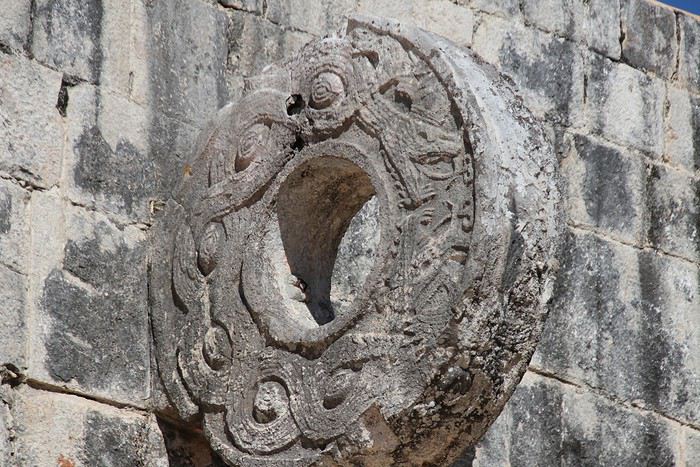
 La stèle représentant le roi de la ville :
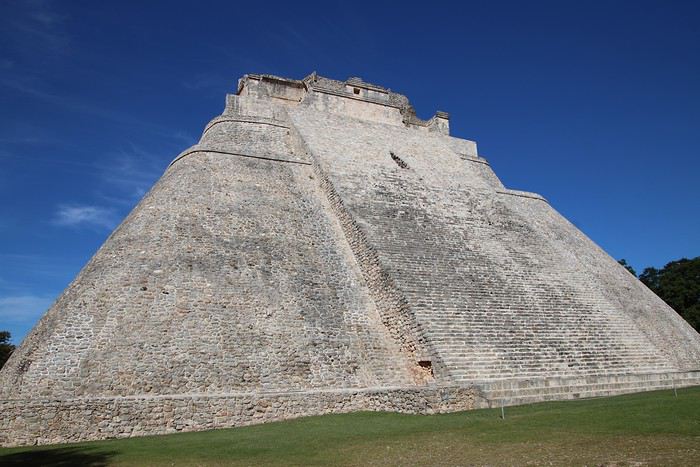 Le site est touristique, je vous invites à vous y rendre à l'ouverture pour en profiter, il est également assez grands comptez 1h30 à 2h de visite avec un guide et au moins une heure de plus pour déambuler à votre rythme.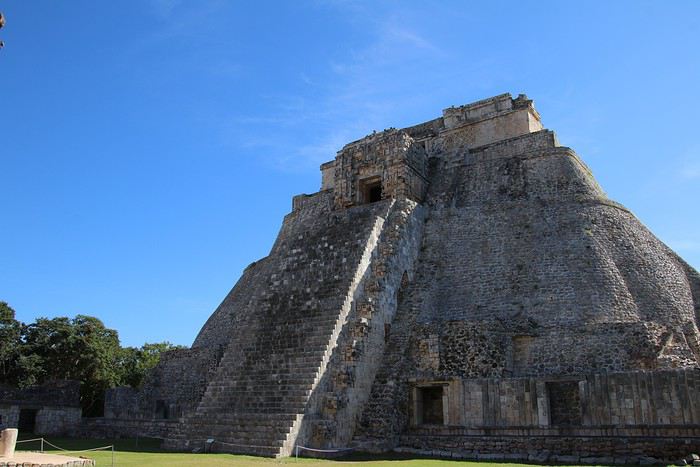
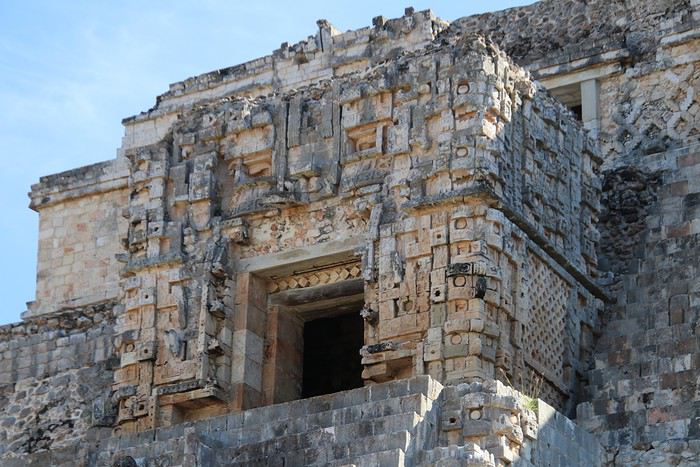
 chaque bâtiment est richement décoré de bas relief représentant des dieux principalement taillés à même la pierre
 Du haut du temple la vision sur l'ensemble du site
 Le traditionnel jeu de balle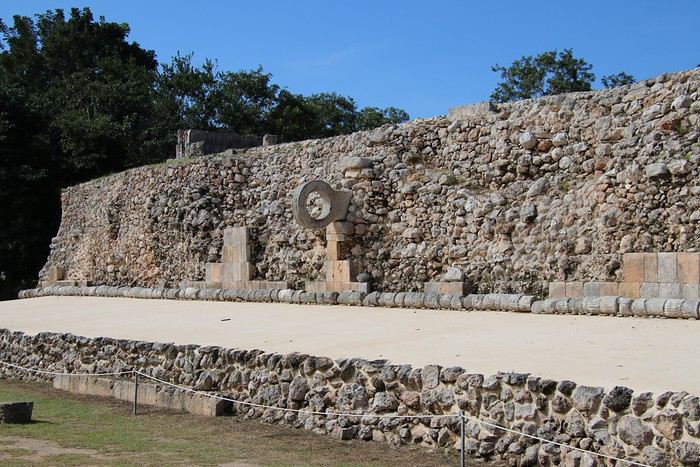
 Ce pauvre bonhomme s'est fait tirer dessus par dans la cuisse à l'arrière et boitera toute sa vie.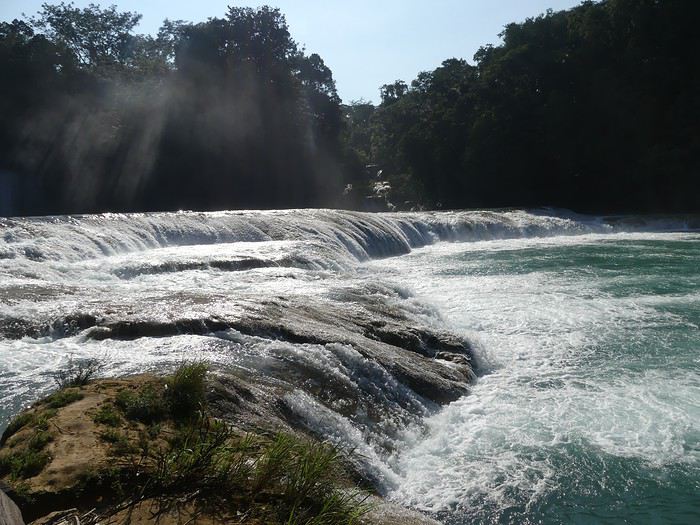
 Vous êtes vraiment en pleine jungle, peu de touriste, heureusement tout est balisé commenté sur des panneaux.
 du bas de la grande pyramide
 Et du haut
 La vue sur la canopé
 Vous la visitez sous l’œil des coatis et des pélicans en liberté sur le site