in Entre deux voyages › Carnets de voyage
Biking (MTB) along the Canal between the Two Seas (France) (page 12 of 16)
Discussion started by Facteur4 on 2007-03-17
309 replies
This thread has been translated into English.
Biking (MTB) along the canal between the two seas (France)
Facteur4 · 2016-11-05 · Message 221 of 310
Thursday 29/09, up at 06:30, Llançà 08:45, St Pére Pescador 19:00, 65 km
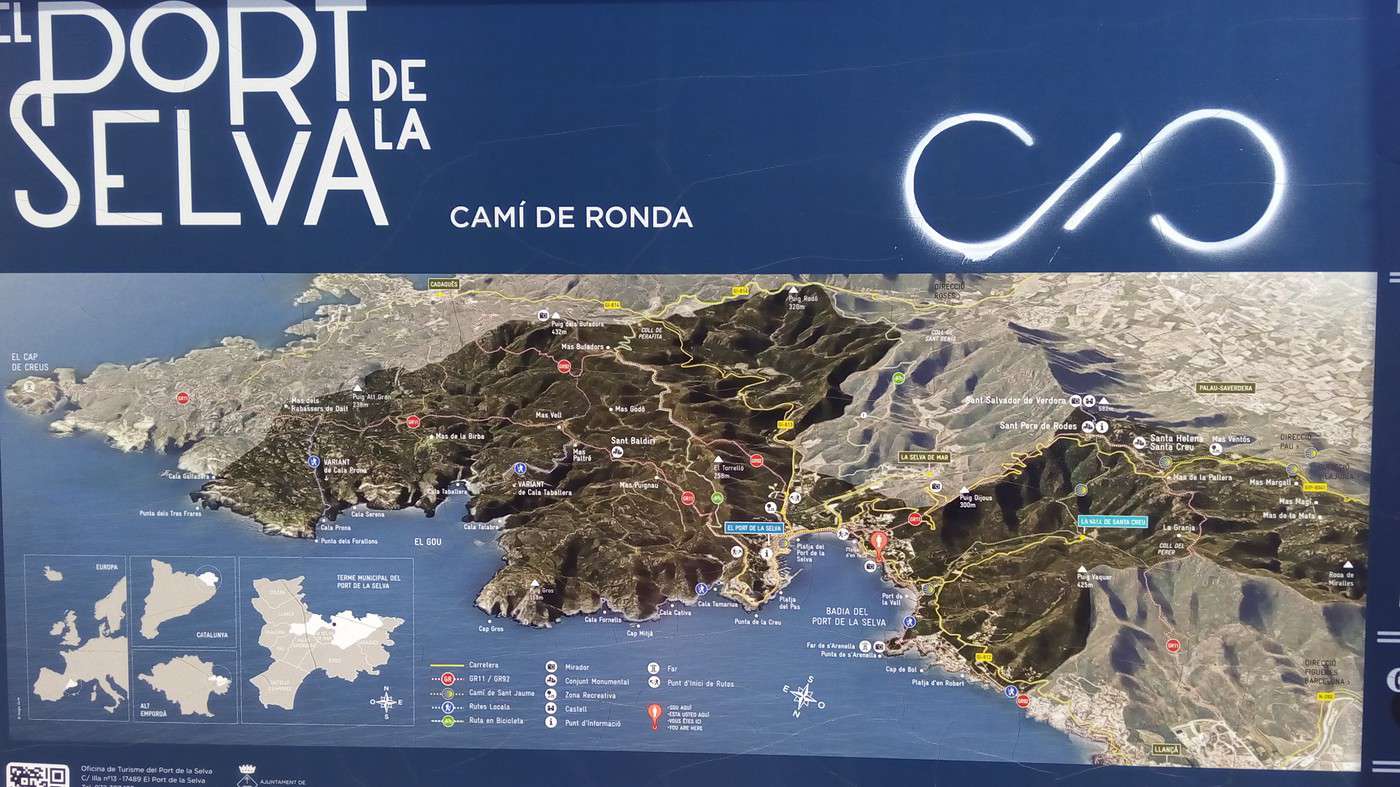
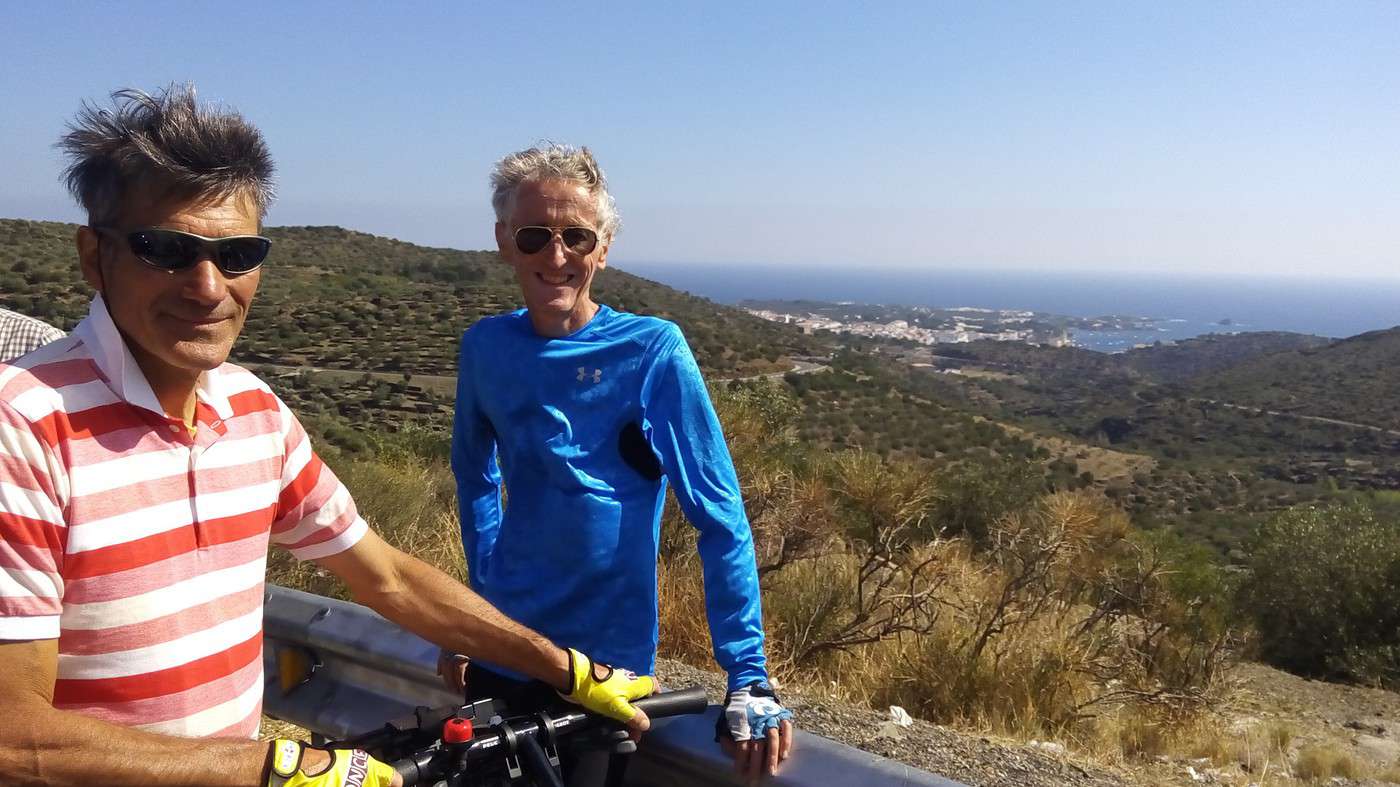
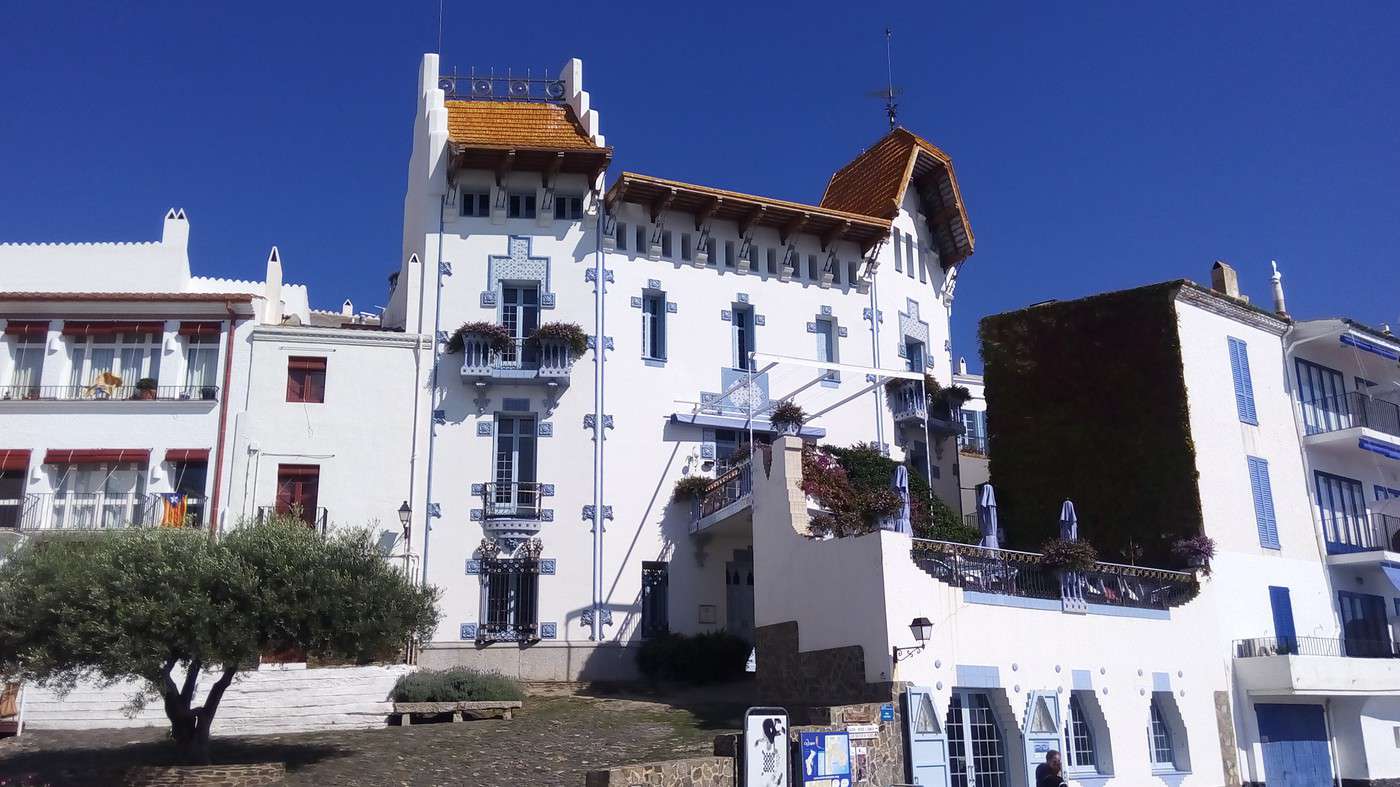
Since we didn’t feel like continuing on the N260 and wanted to see Cadaqués, we followed the coast to Port de la Selva.
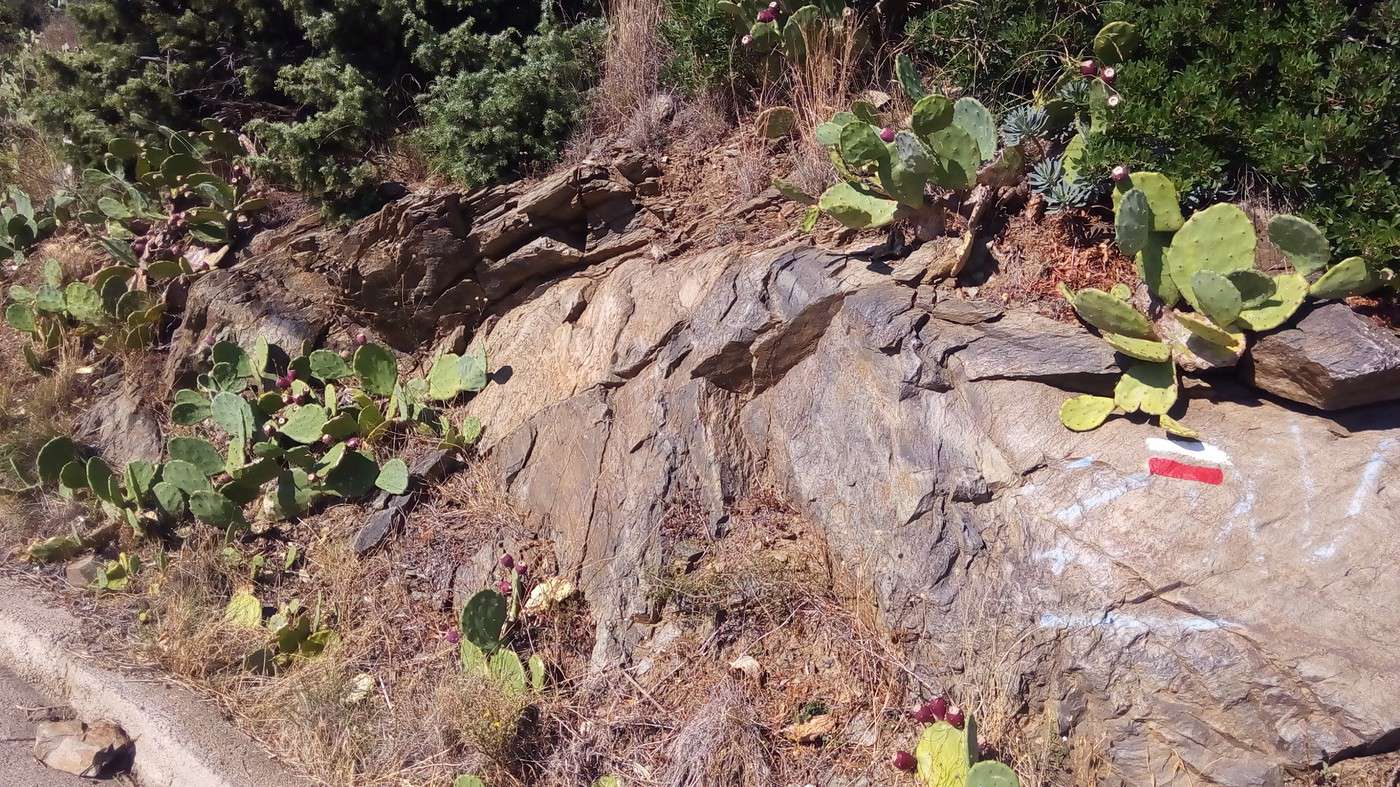
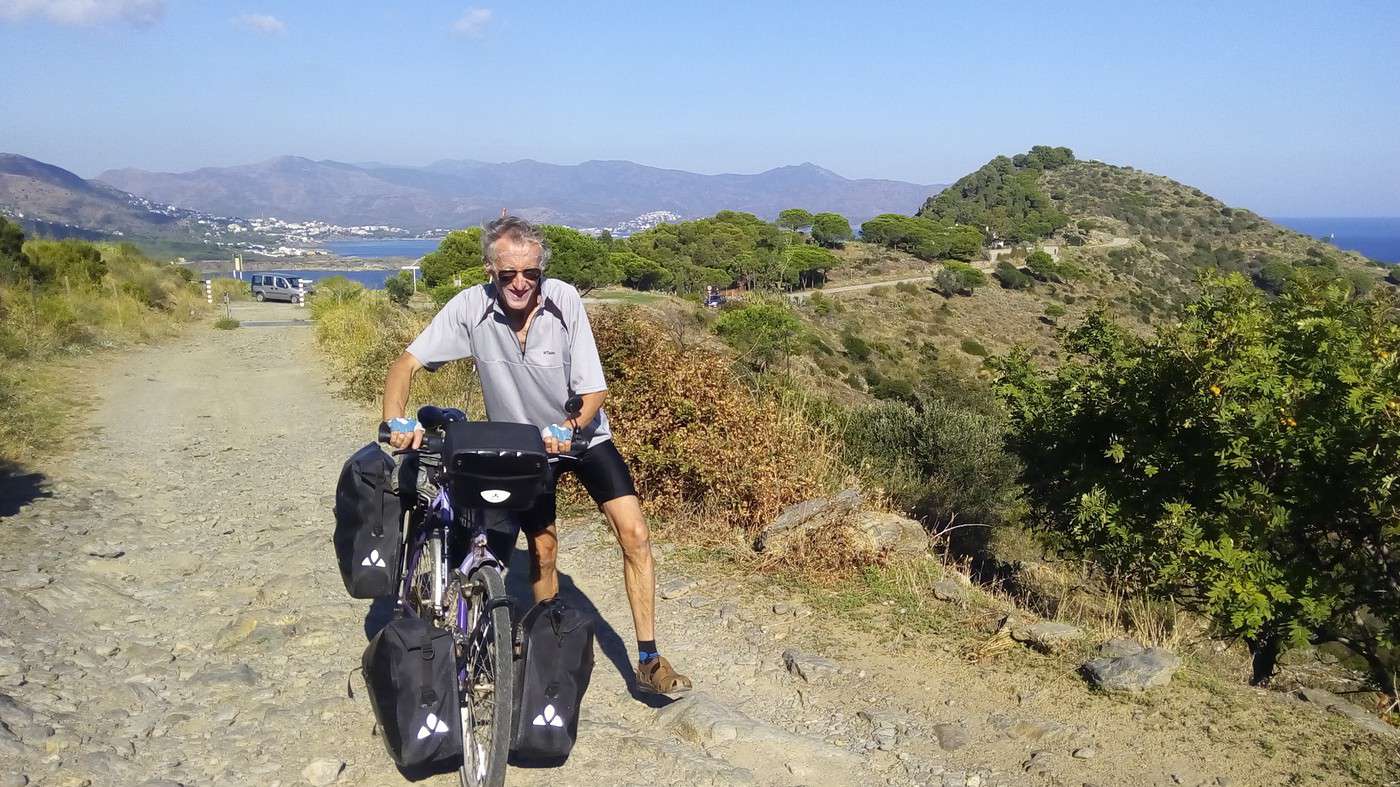
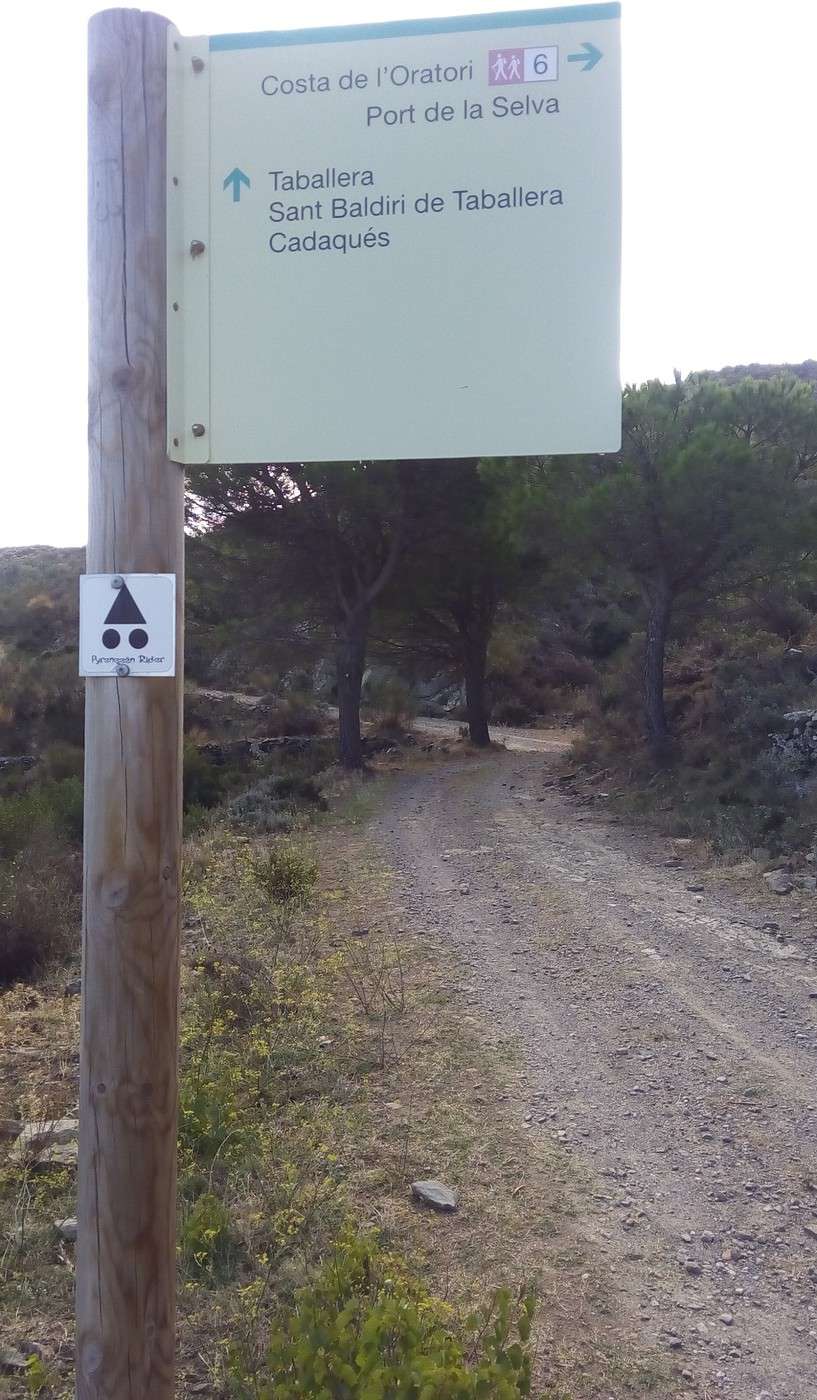
A beautiful information panel invited us to take the bike route instead of the GI613 to enjoy the scenery of this Natural Park. But it turned out to be a GR11 hiking trail in the first section, and we ended up walking beside our bikes because of the rocks.
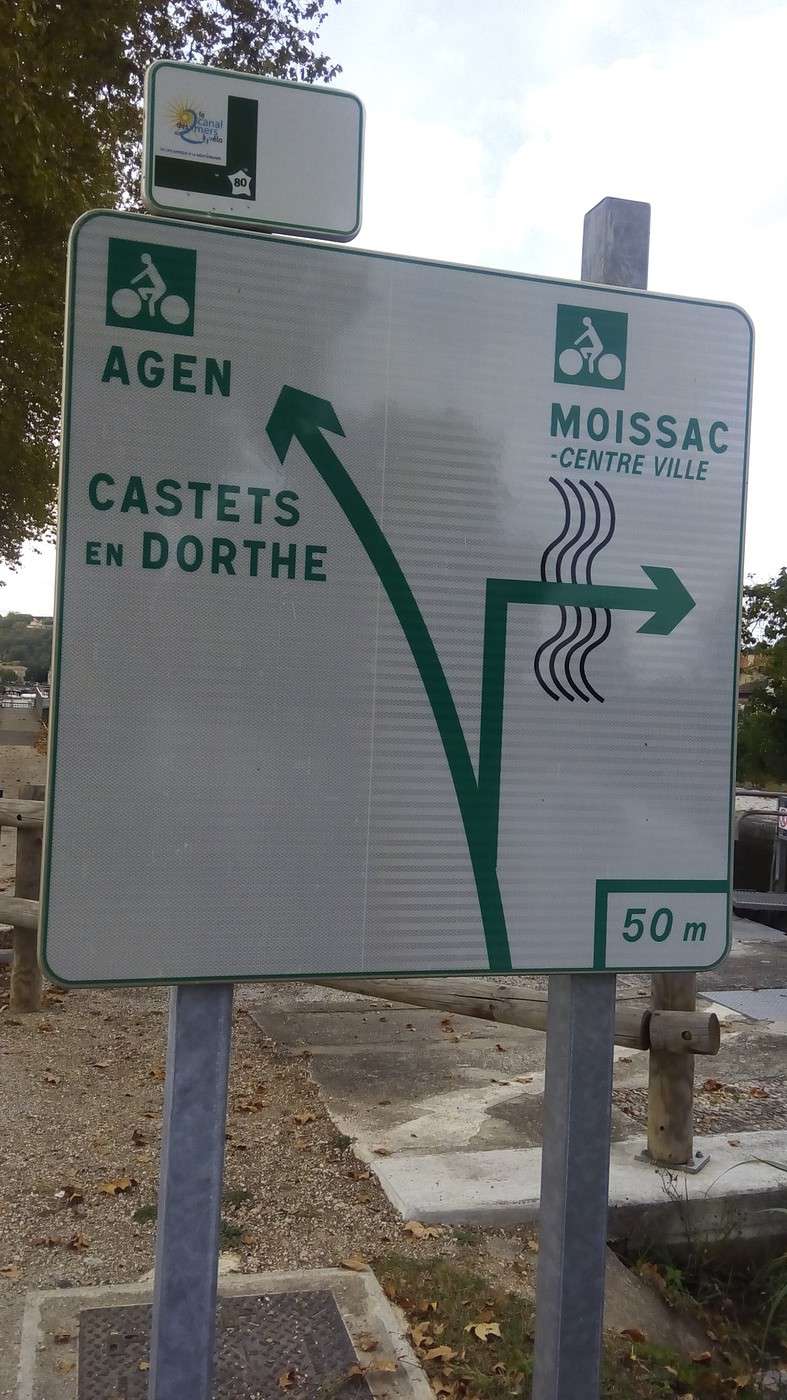
Since Dominique speaks Spanish well (I studied English and Russian), some mountain bikers confirmed we could reach Cadaqués by following this path. When we still had doubts, a German hiker reassured us with his map. But Dominique was tempted to get back on the road nearby. I didn’t want to go back down after all the effort it took to climb with my 42 kg bike. When I saw the bike path branching off sharply to the right—just like on the sign I’d photographed and as the Spaniards had confirmed—I didn’t understand why Dominique, who’d gone ahead, hadn’t taken the turn. I had to catch up to him and ride 600m back and forth for nothing, only to learn he hadn’t seen the small bike sign indicating the MTB direction.
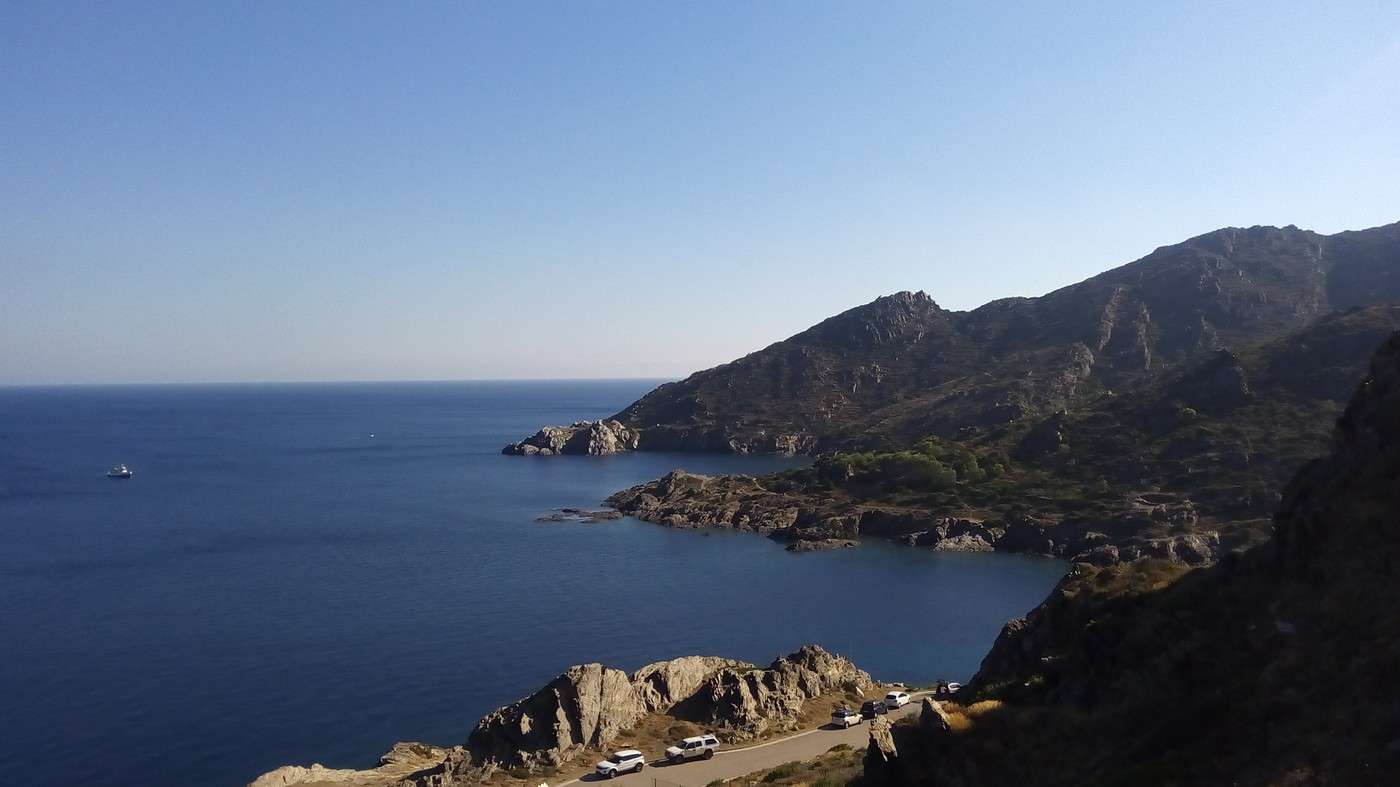
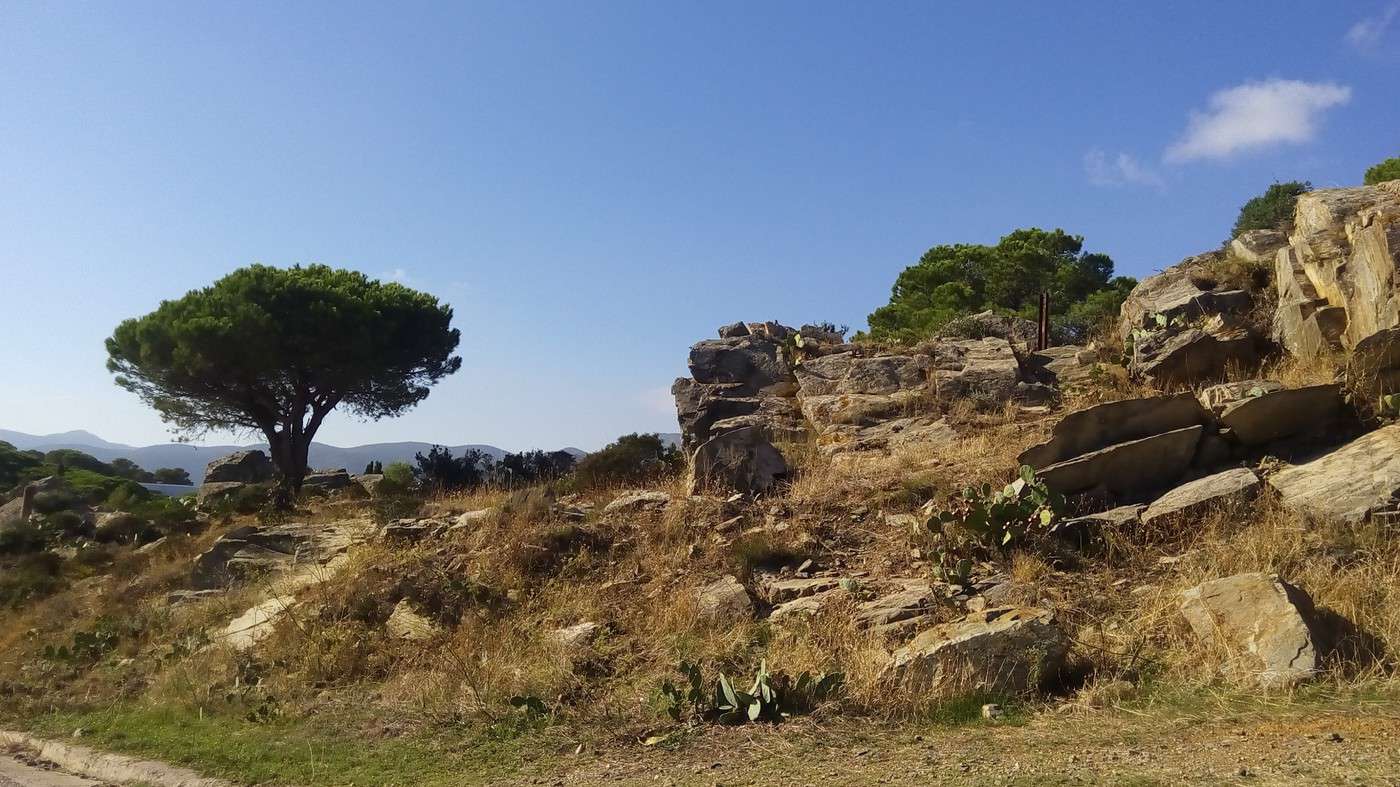
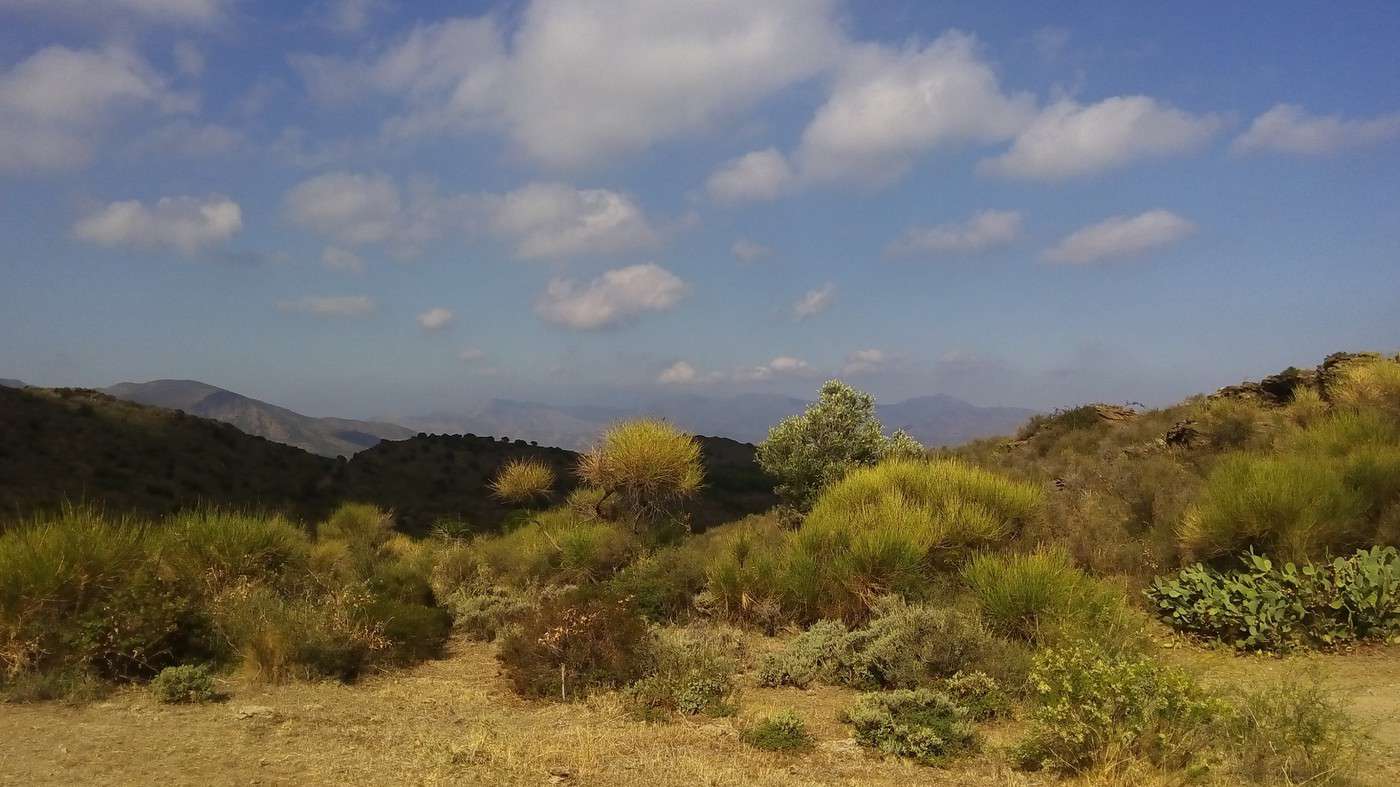
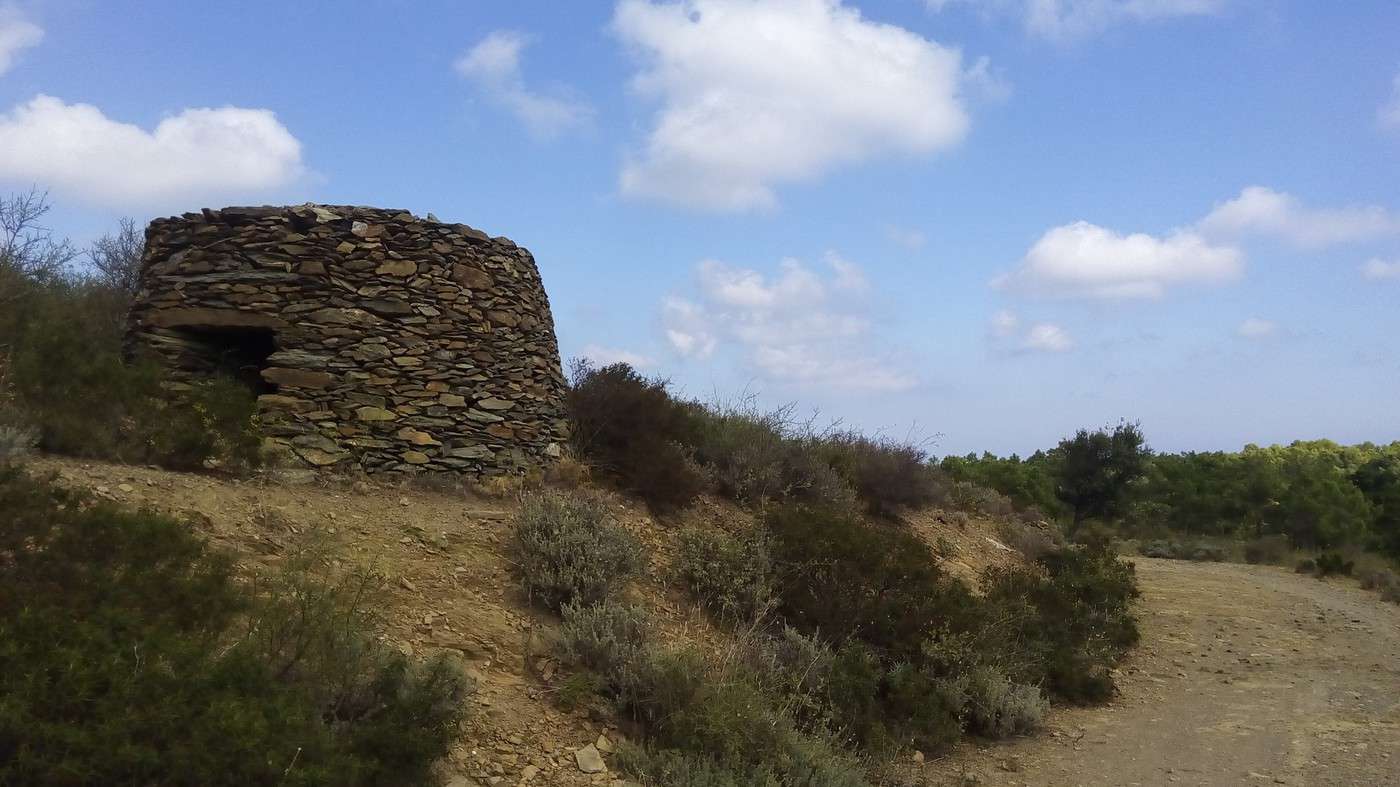
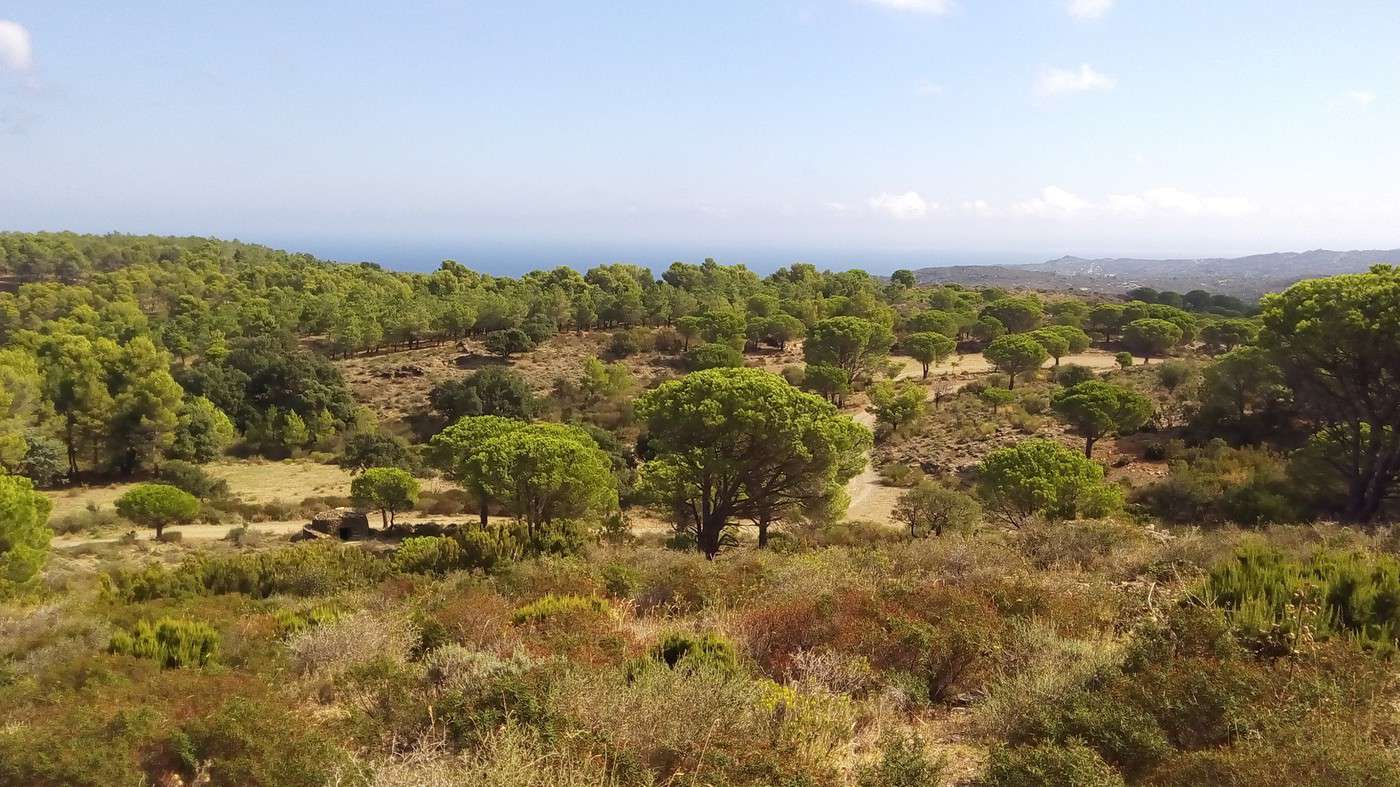
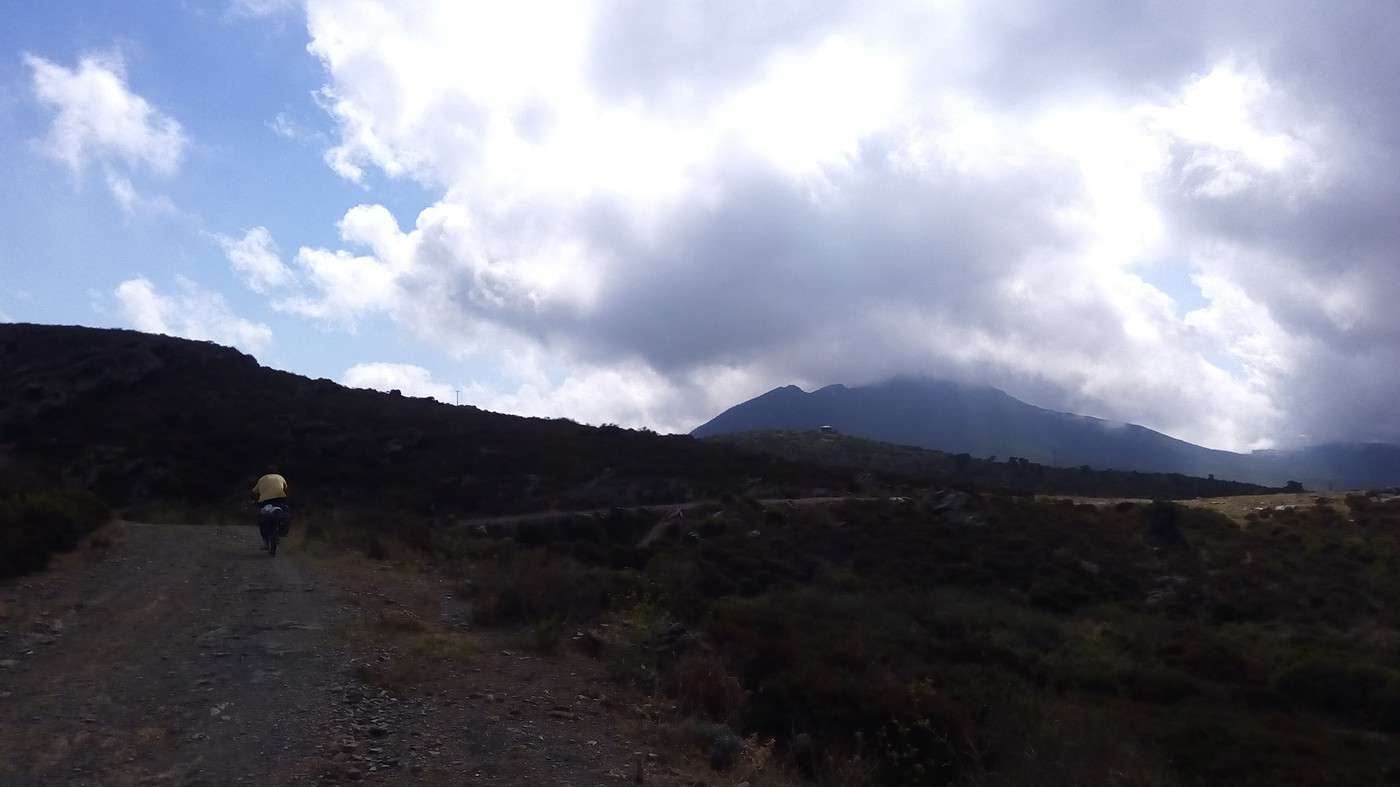
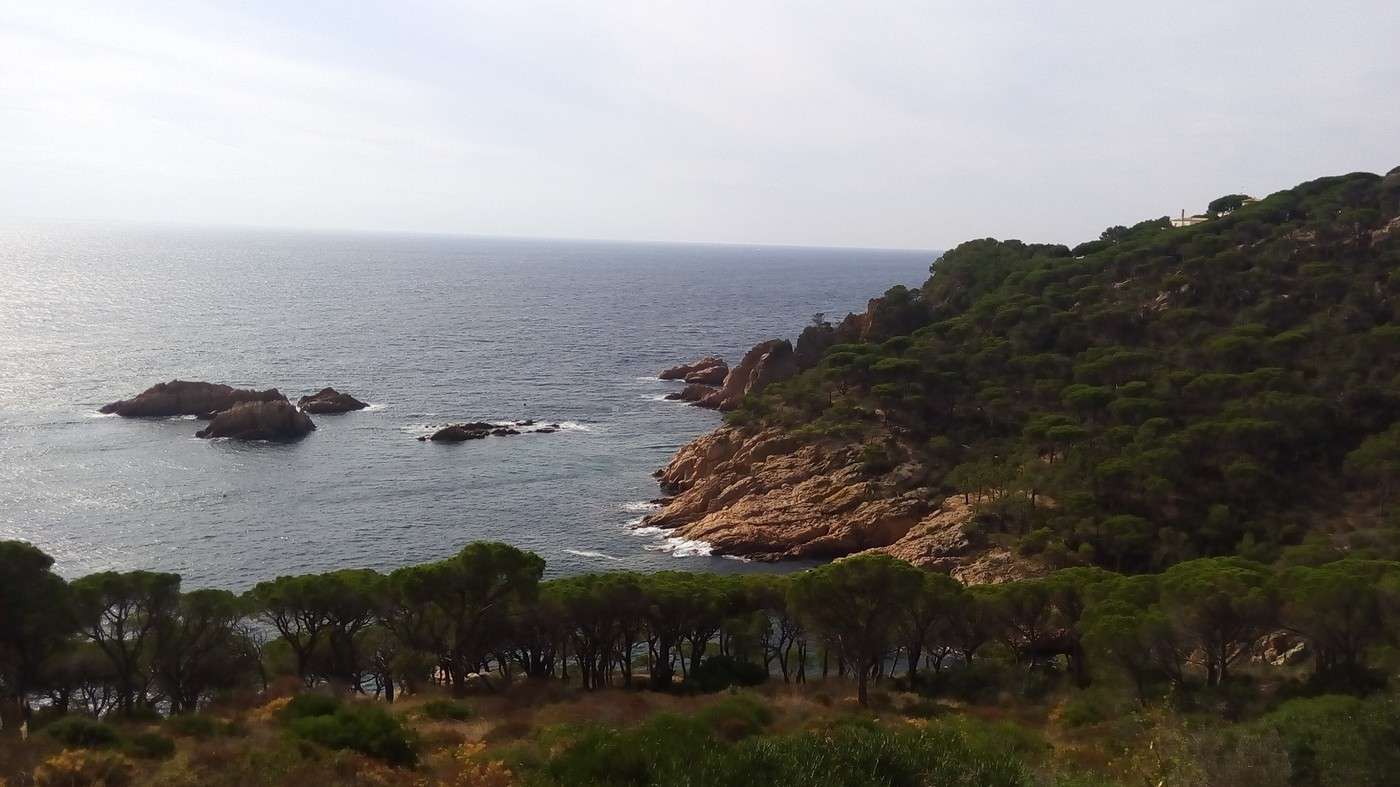
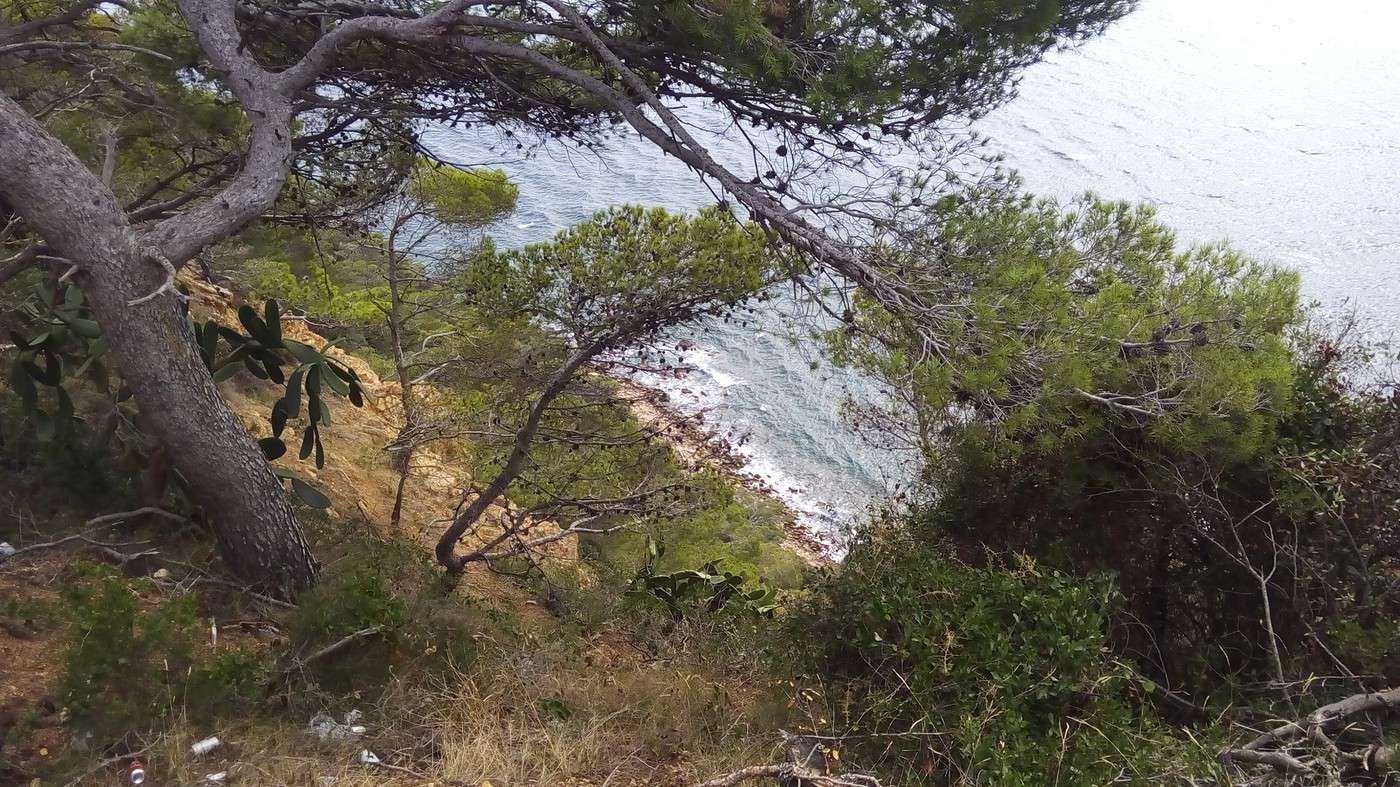
Sure enough, the route became smoother, and we discovered a landscape where mountains, cacti, and the sea blended on the horizon. Several shepherd shelters looked well-maintained and could’ve been useful if the sky, which briefly looked threatening, had turned stormy.
Later, a couple on MTBs advised us, seeing our heavy load, to stick to this route and finish on the road rather than take the shorter but rougher GR 92.
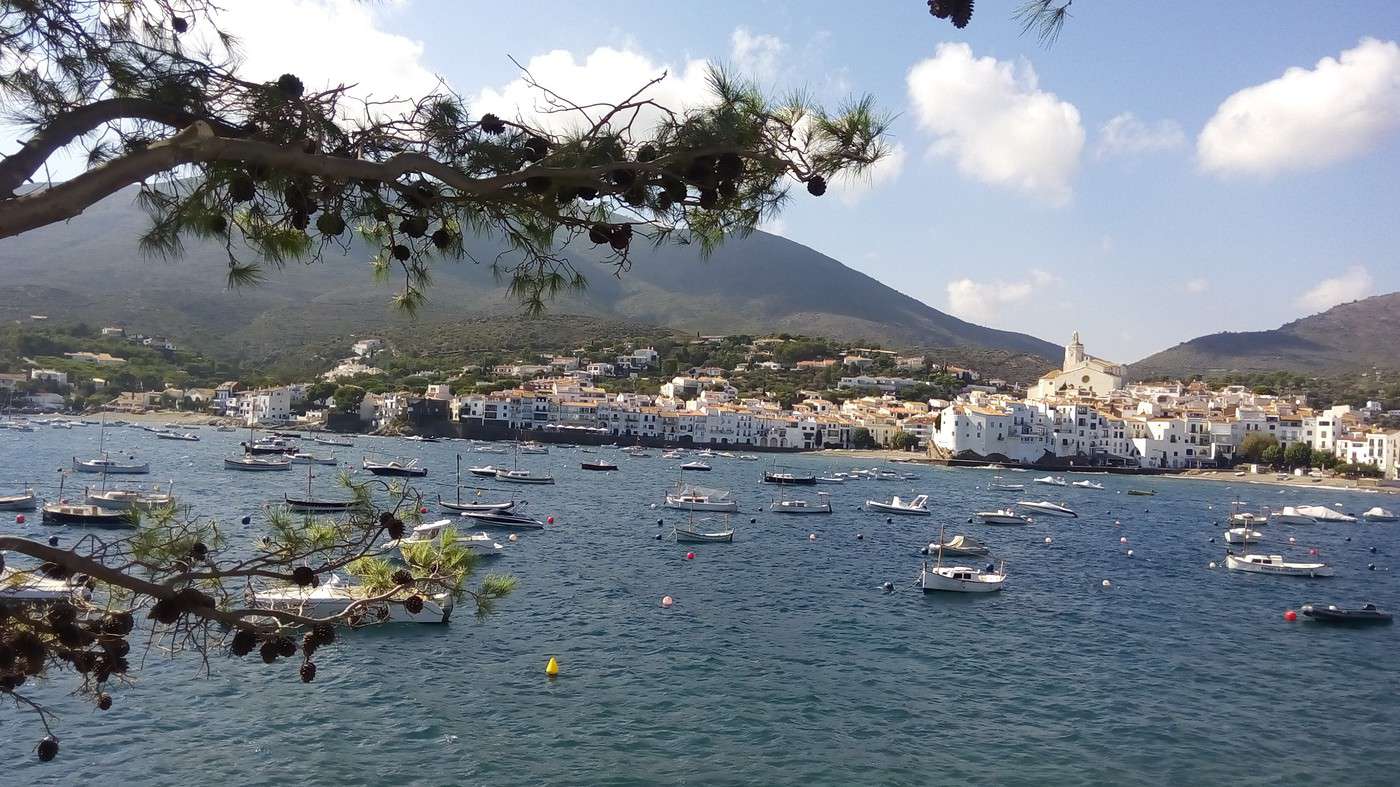
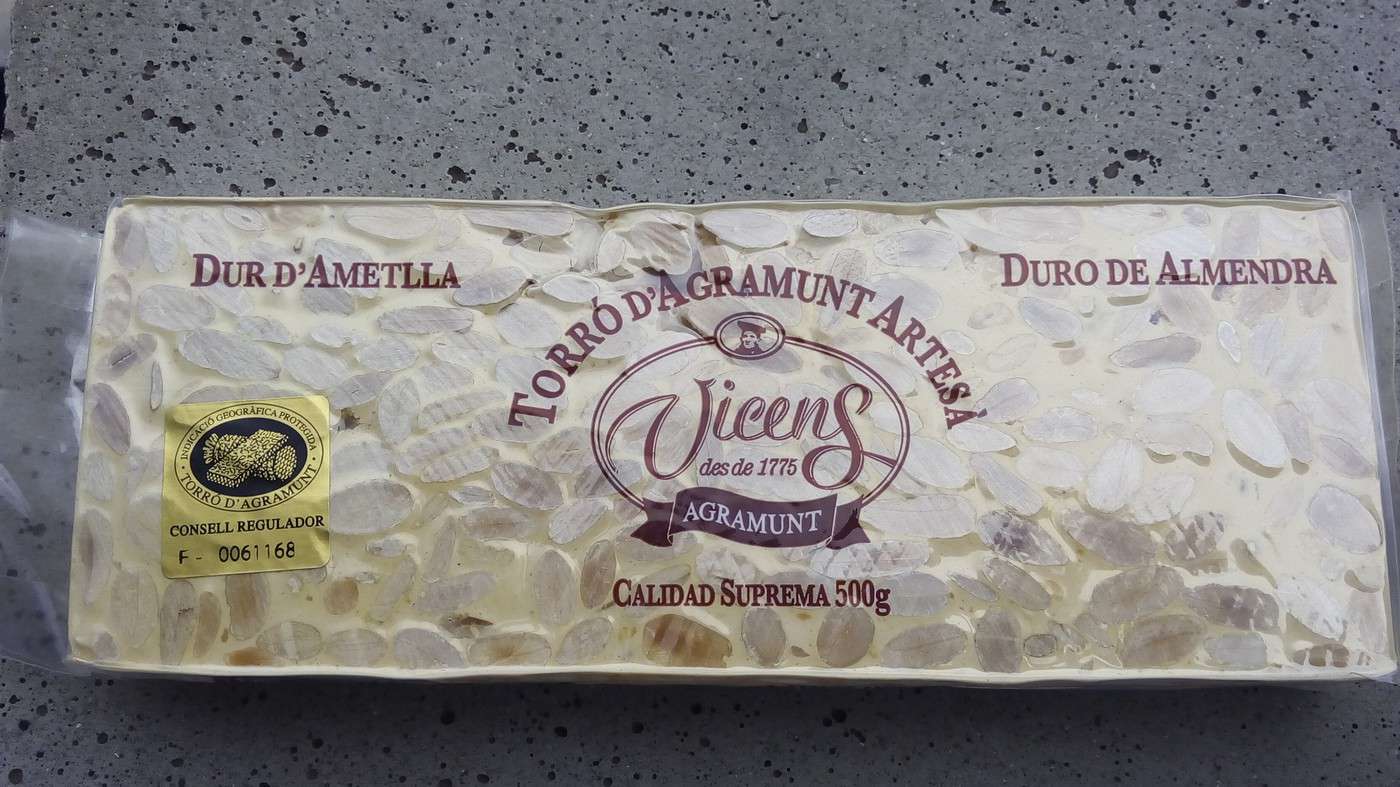
After a scenic descent, we arrived in Cadaqués at 13:45, having covered "only" 26 km in 5 hours, 12 of which were on the GR. We enjoyed our picnic with a view of the port. Even the egg I’d bought that morning to eat raw survived the bumps (I’d tucked it into my socks). I was surprised the supermarket didn’t have nougat—I’d been dreaming of Spanish turrón. But we did buy an excellent mix of dried fruits.
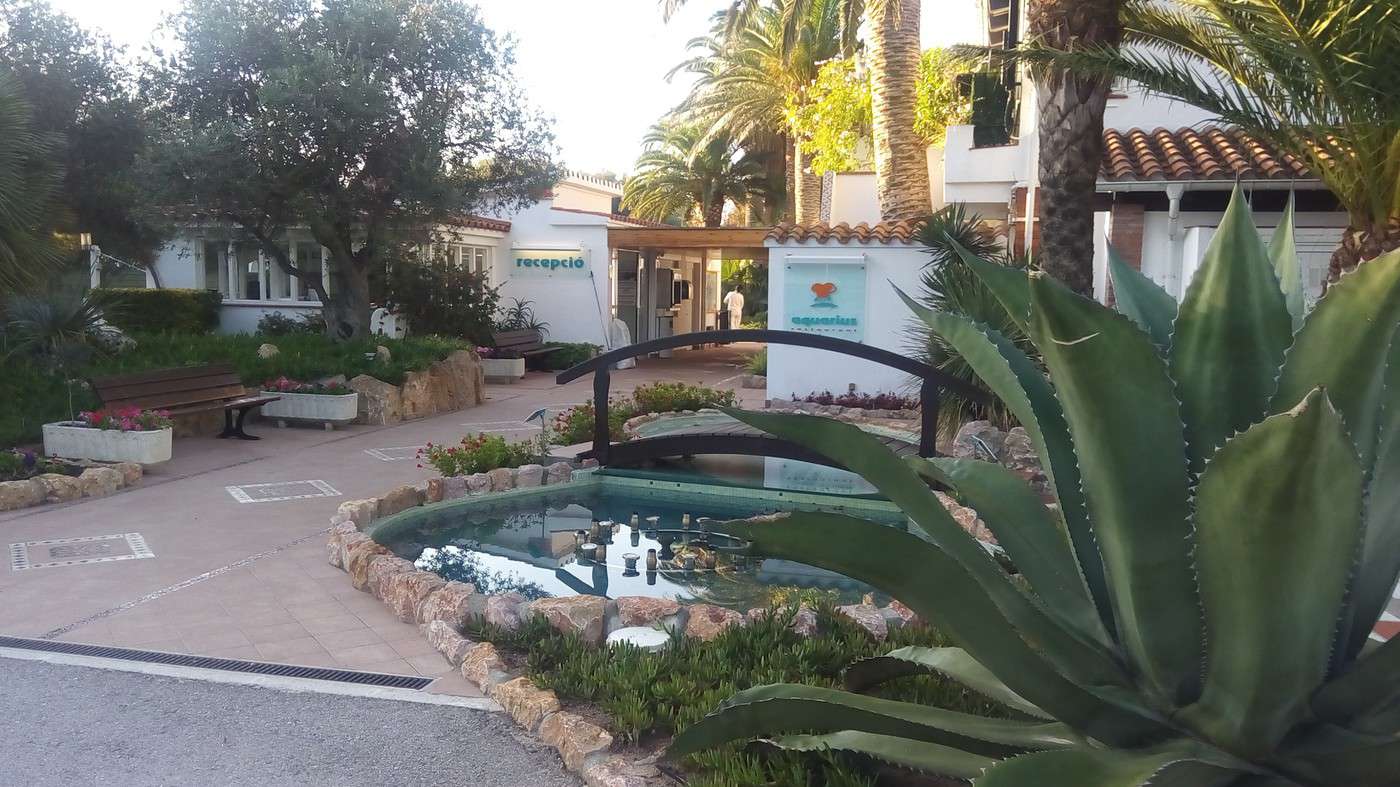
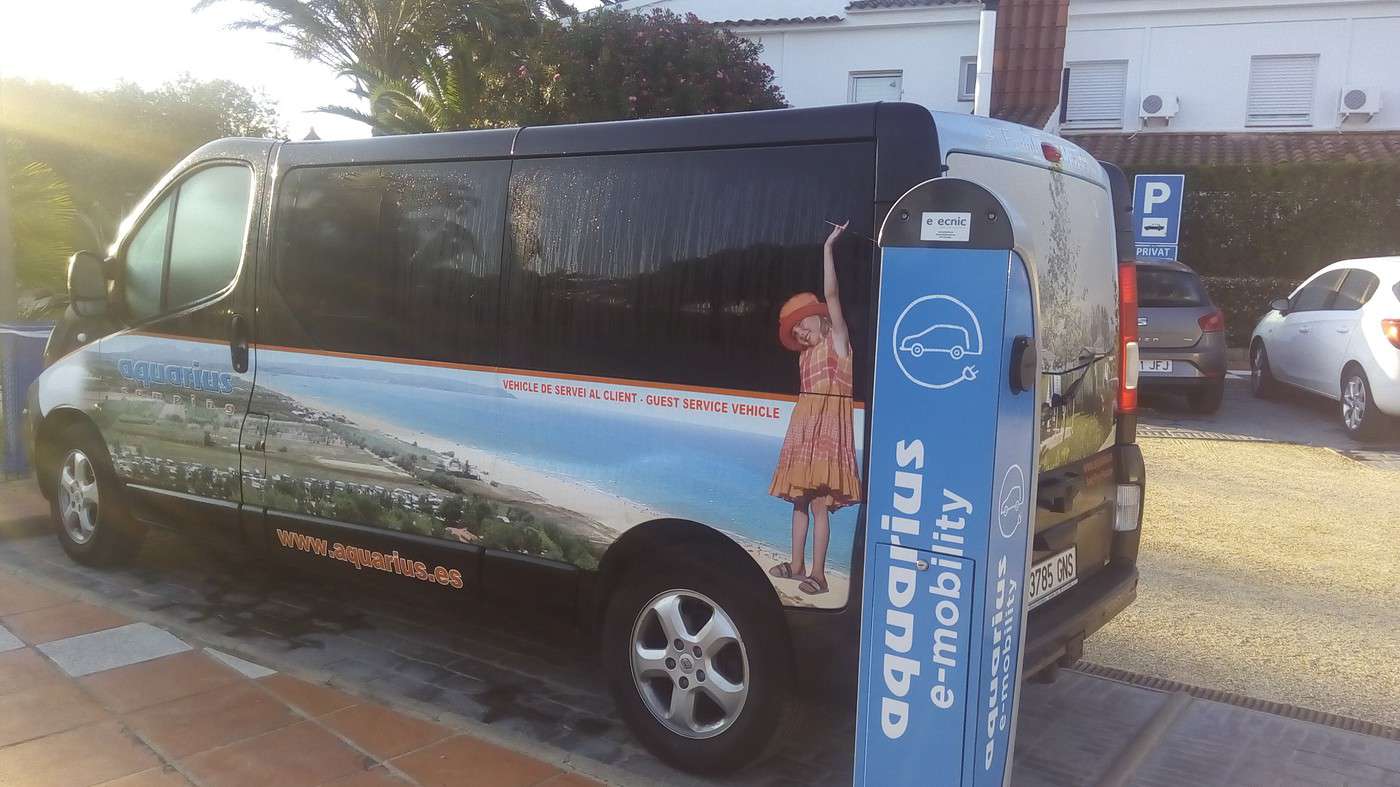
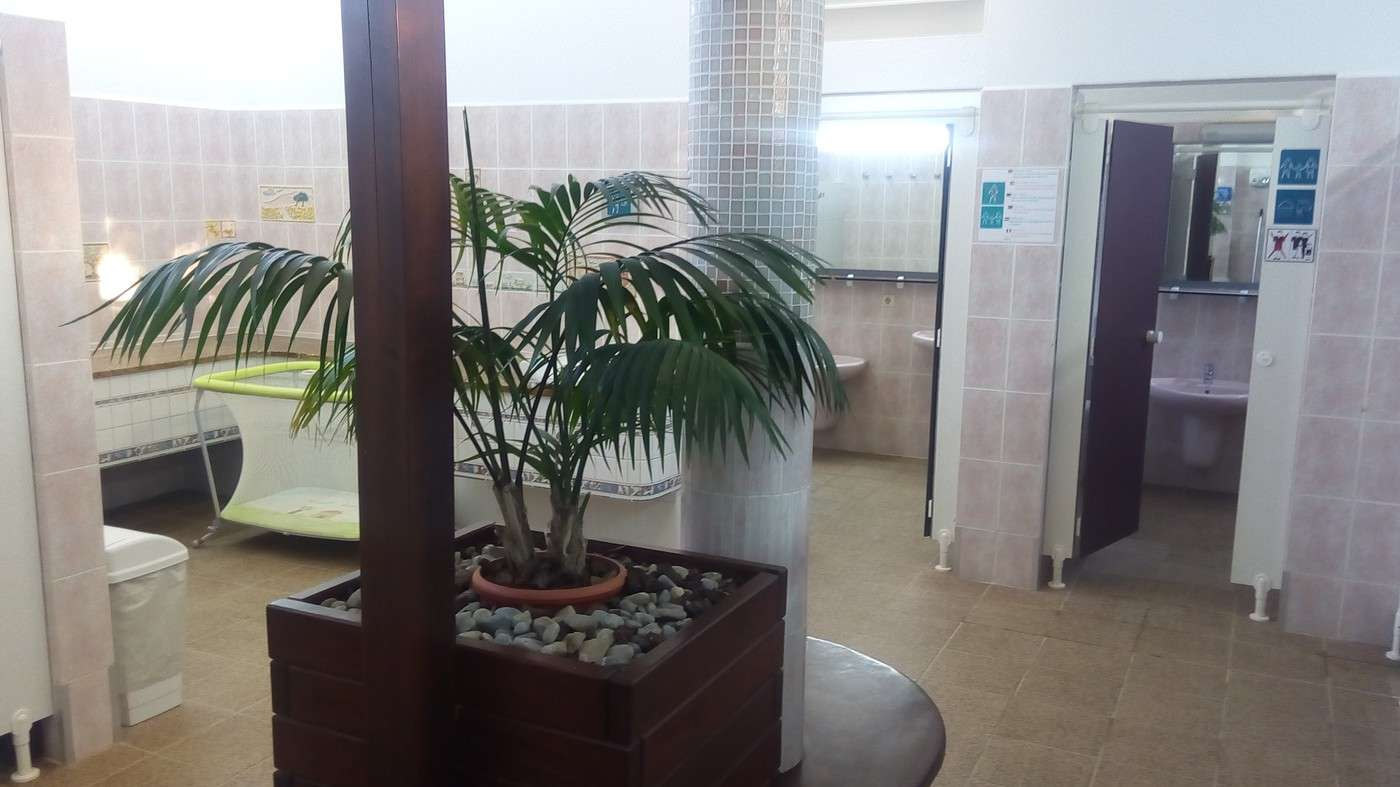
Now we had to leave sea level, climbing the GI 614 toward Roses (Rosas) with the cars. Once we finished the ascent, the south wind (which brought the nice weather—28°C today) slowed us down. Since our route merged into the C68 expressway, we looked for a way off. After restocking at a supermarket, we headed toward Empuriabrava, intending to follow the Mediterranean. Luckily, "my interpreter" had talked to a cyclist who warned that if we stuck to the coast, we’d be stopped by a waterway we couldn’t cross. So we took a road toward Sant Pere Pescador. Before arriving, I stopped at a gas station. After 500 km, my front tire had dropped to 2.5 bars and the rear to 2.2. I pumped them back up to 3 bars, just like at the start, using the compressor with its very precise gauge. Dominique, whose bike probably needed it too, didn’t dare, even though I’d just done it in front of him without popping anything. I guess the temperature swings from 10°C to 30°C explain the porosity of my MICHELIN inner tubes. This time, the town had plenty of campgrounds, but only 2 of the 6 were still open. At www.aquarius.es/fr/bienvenus/, there were no more spots left. The reception offered to let us pitch our tent in the RV parking area. For 18 €, we still got access to the campground and its high-end facilities. For example, each bathroom cabin had a shower and sink, and the family one even had two (one for kids, one for adults).
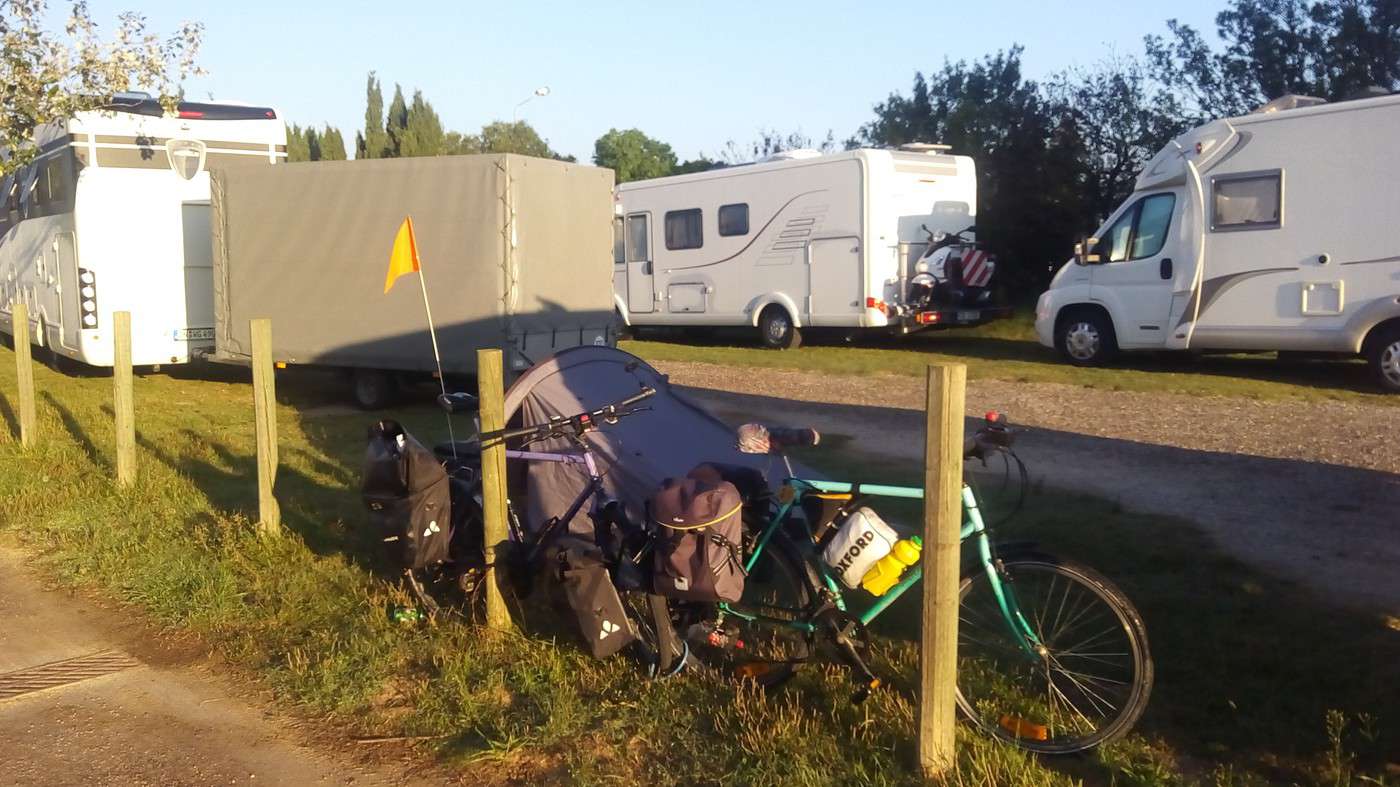
We found a nice spot with tables for dinner and breakfast.
Biking (MTB) along the canal between the two seas (France)
Facteur4 · 2016-11-05 · Message 222 of 310
Friday 30/09: up at 7 AM in Saint Père Pescador, 10 AM in Palamós, 7 PM after 56 km.
Despite our usual early start, we left late. Dominique decided to fix his pedal, which, like on every one of our bike trips, had started making noise. He borrowed tools from the neighboring camper van. My English came in handy to chat with this Flemish Belgian. When I asked, he told me he paid 9 € to park here.
Dominique set about both increasing the play and tightening the pedal. Since I’m not mechanically inclined, this went over my head, so I took down and packed up the tent. He managed it, and the noise didn’t reappear for the rest of our journey.
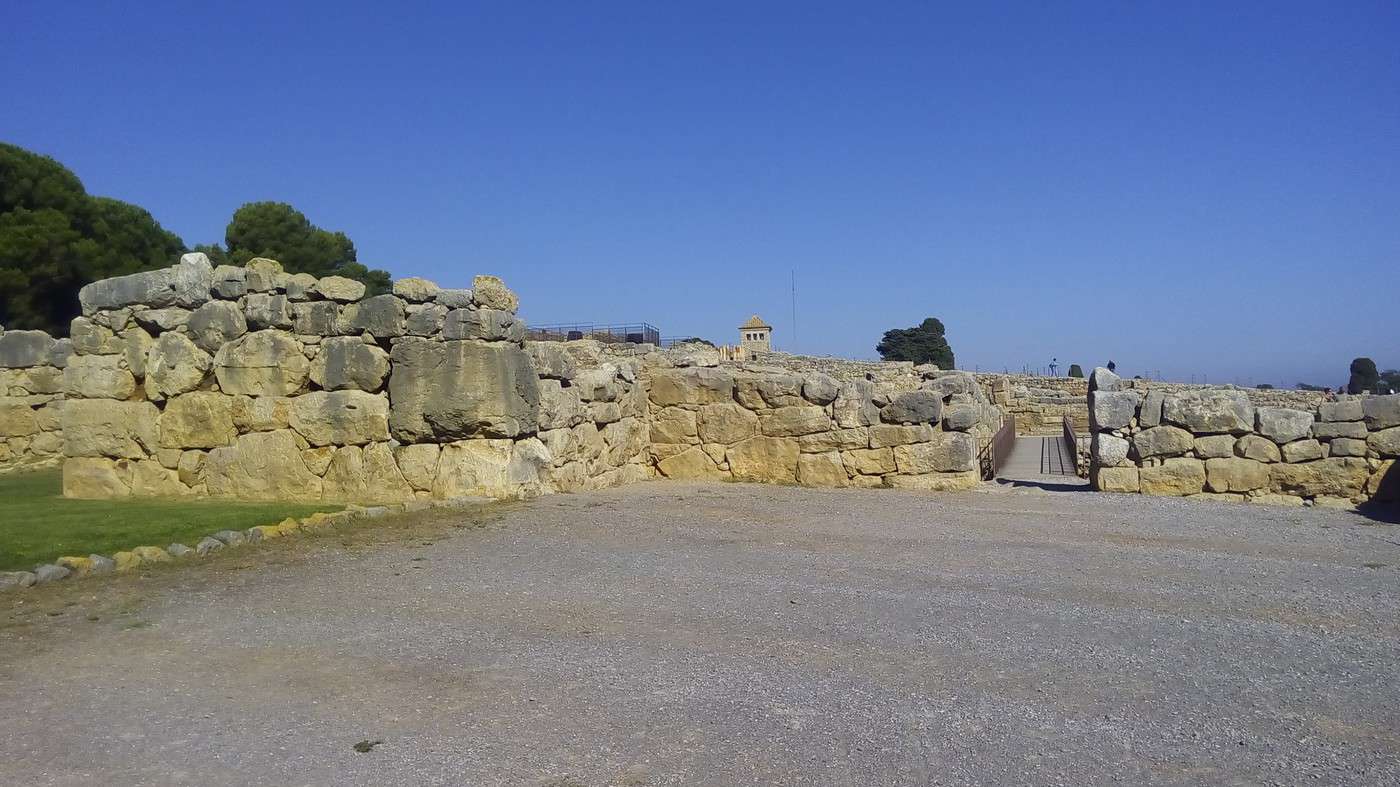
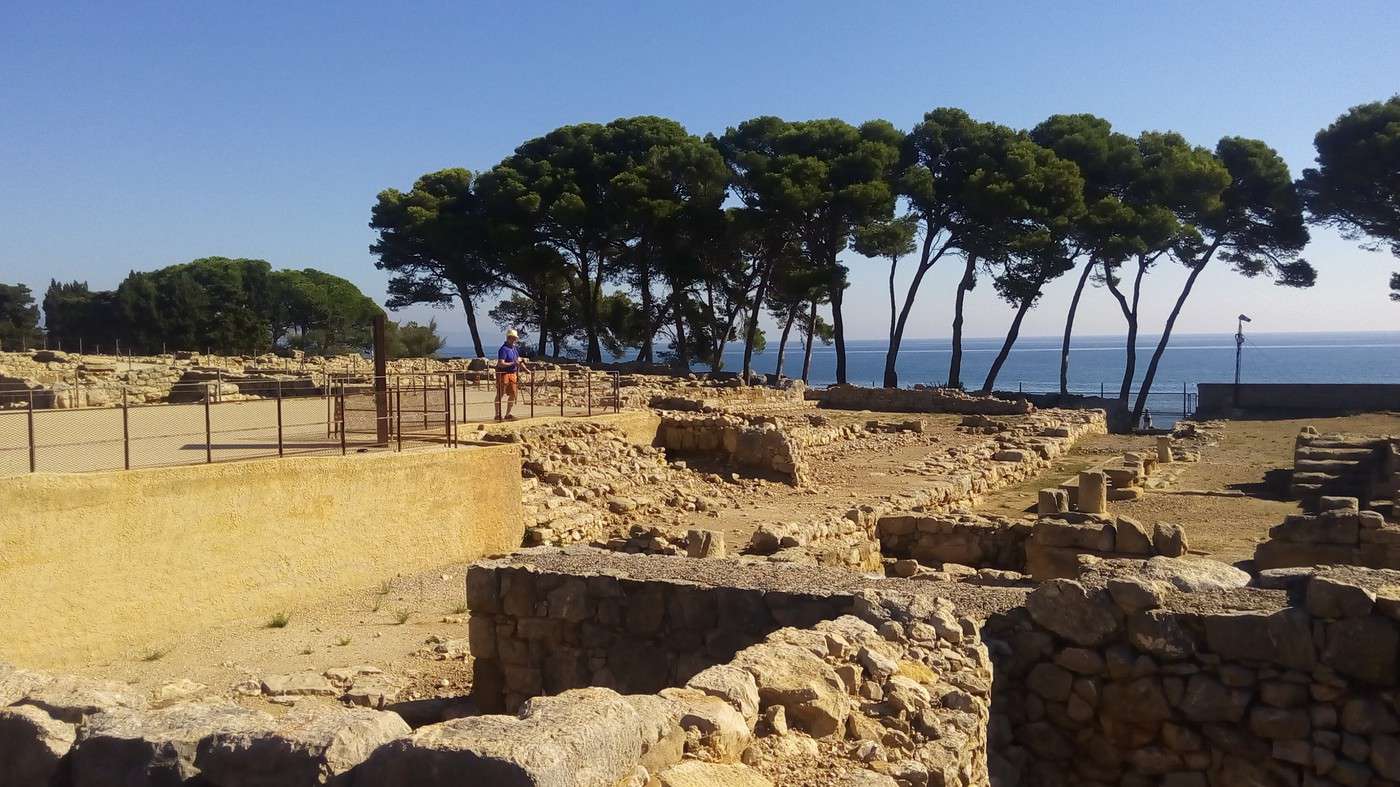
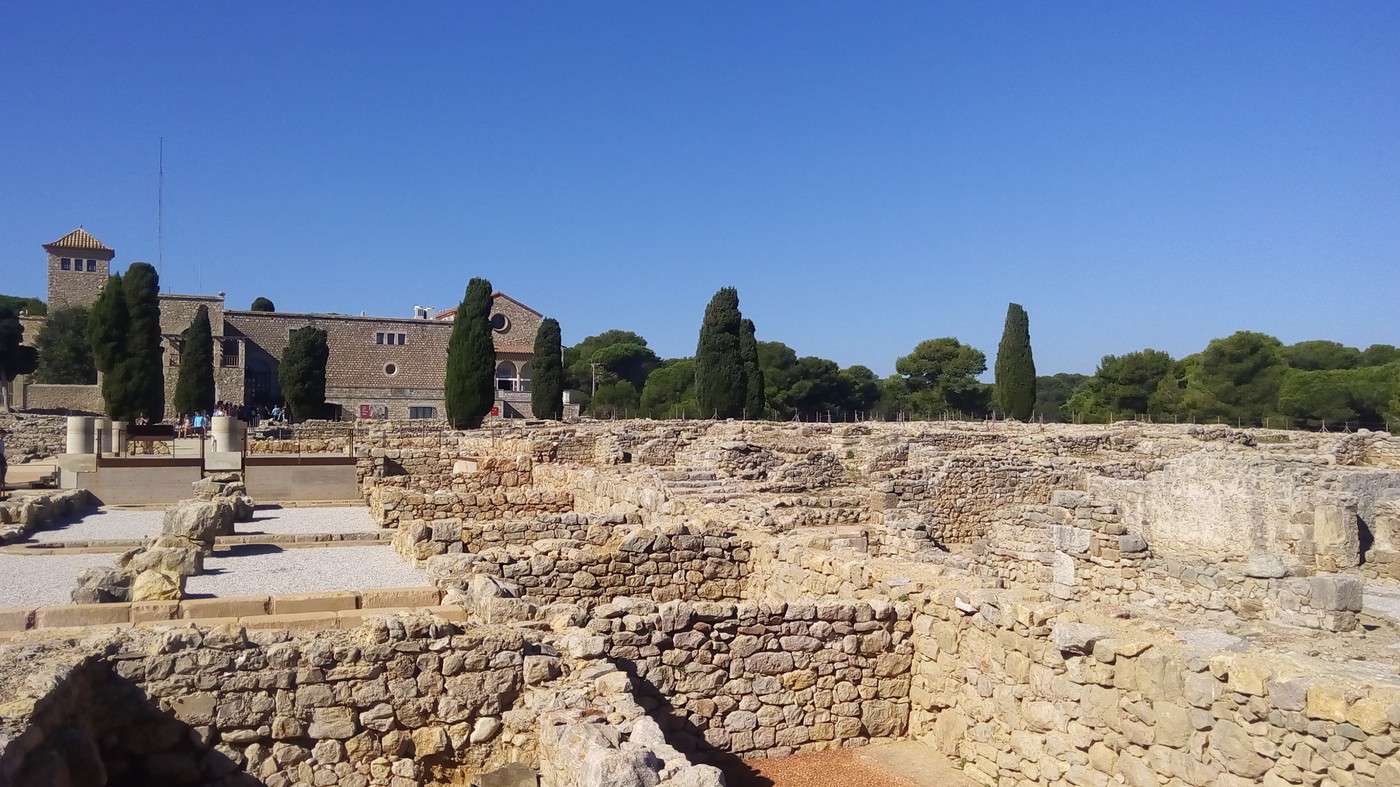
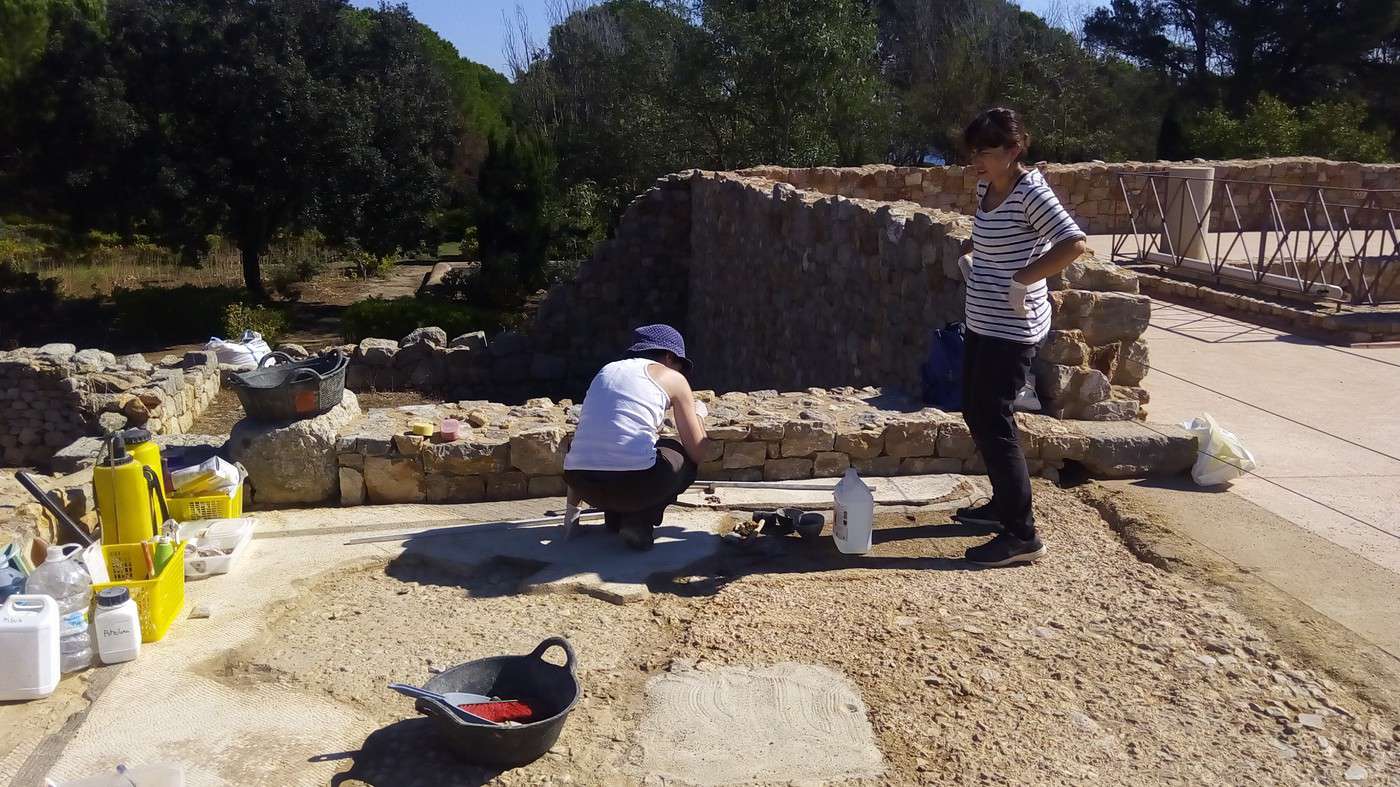
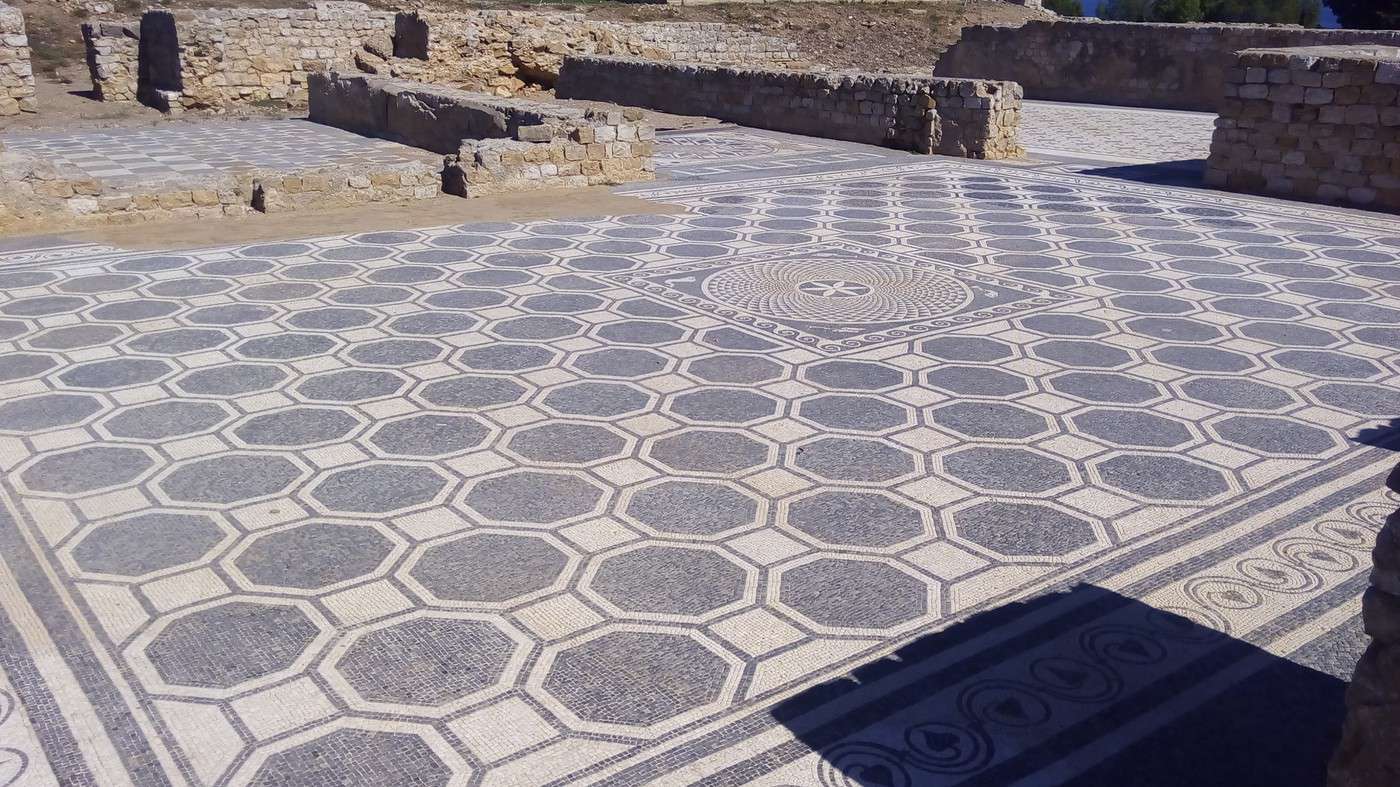
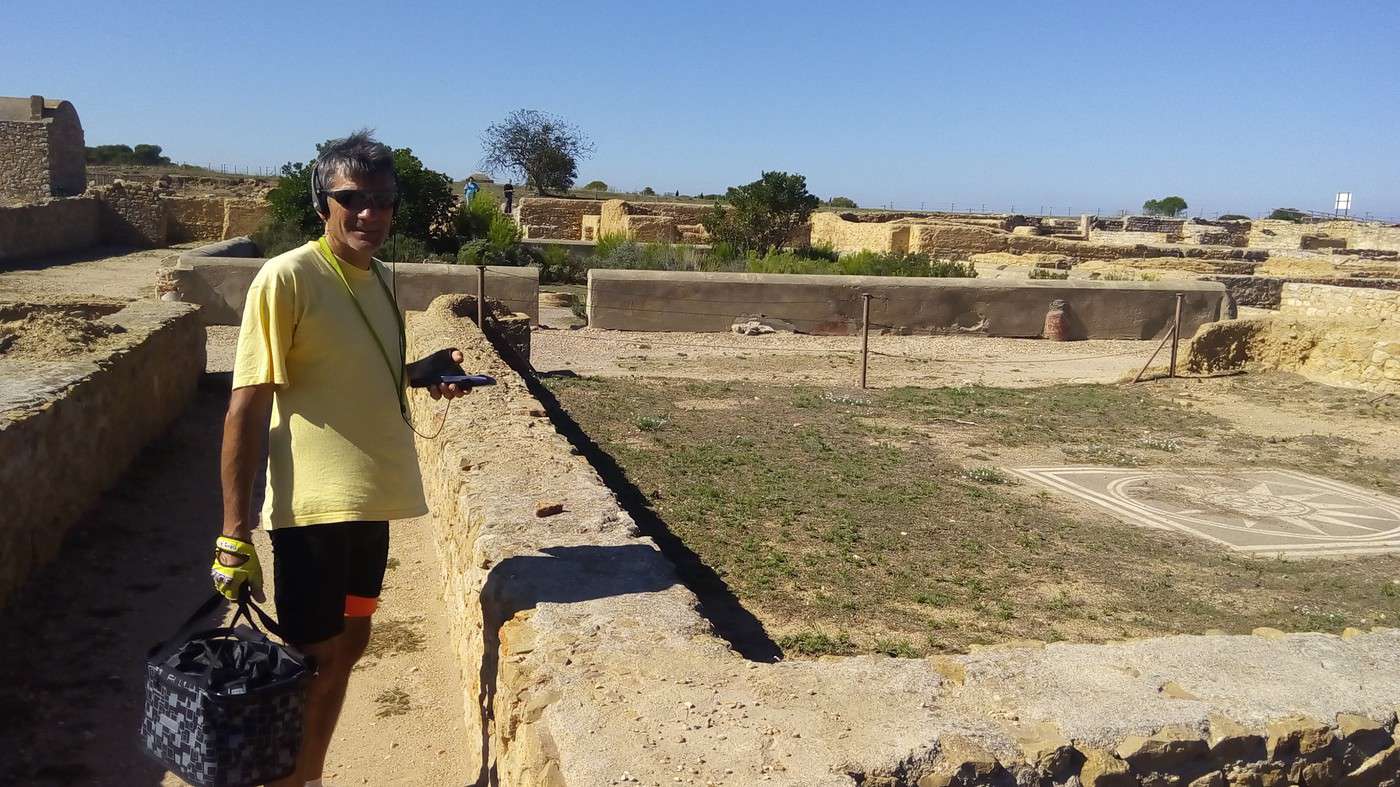
We visited the ancient Greek and Roman cities at L’Empúries.
For 5 €, we got a French audio guide for this 2-hour visit. The two civilizations coexisted harmoniously here at one point (The Greeks, who settled here starting in the 6th century BC, and later the Romans, chose this site not just for strategic reasons but also because they really liked it.)
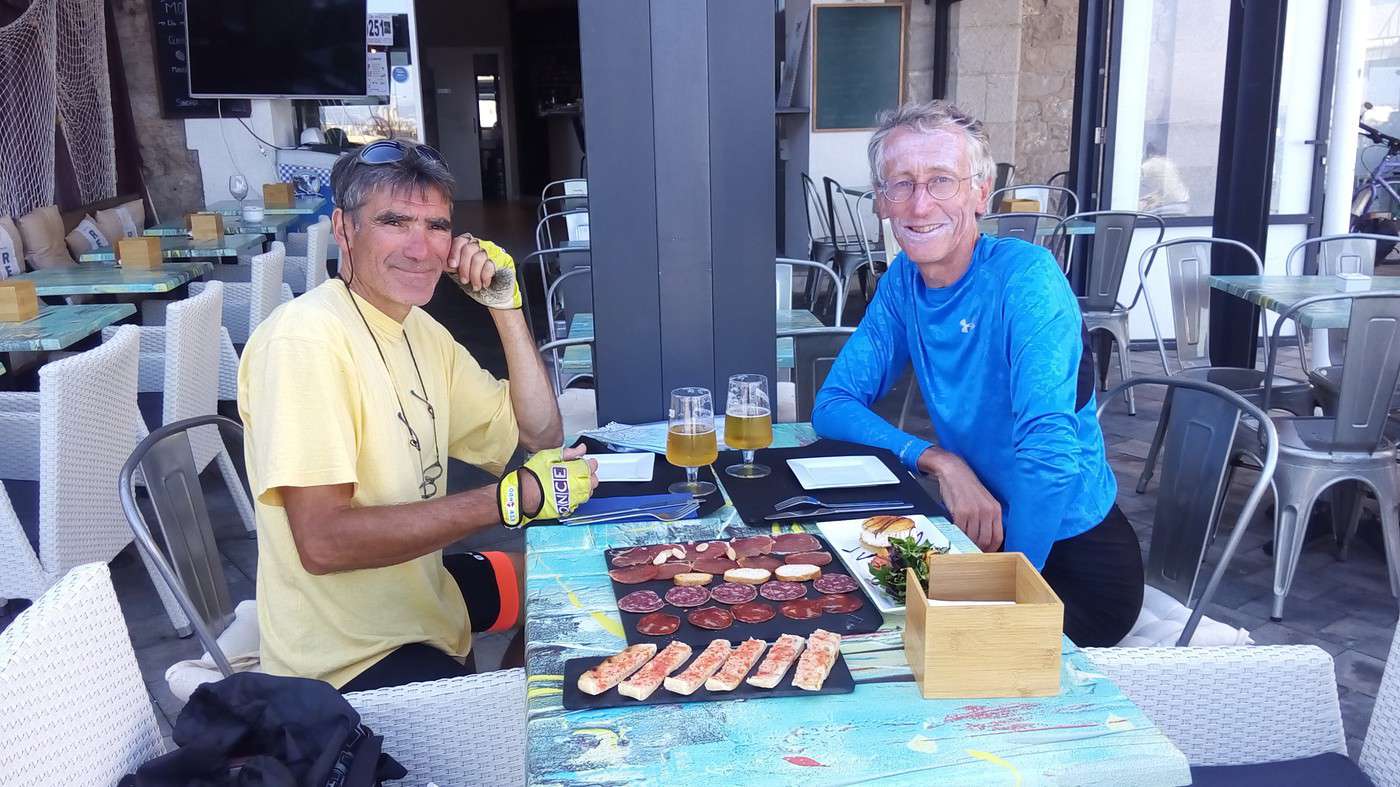
Then, at the port, I caved and had some tapas with beer. Dominique didn’t digest the 31.50 € bill too well—especially the 3.90 € for bread barely spread with tomato purée. I enjoyed the sea view and the quality of the food.
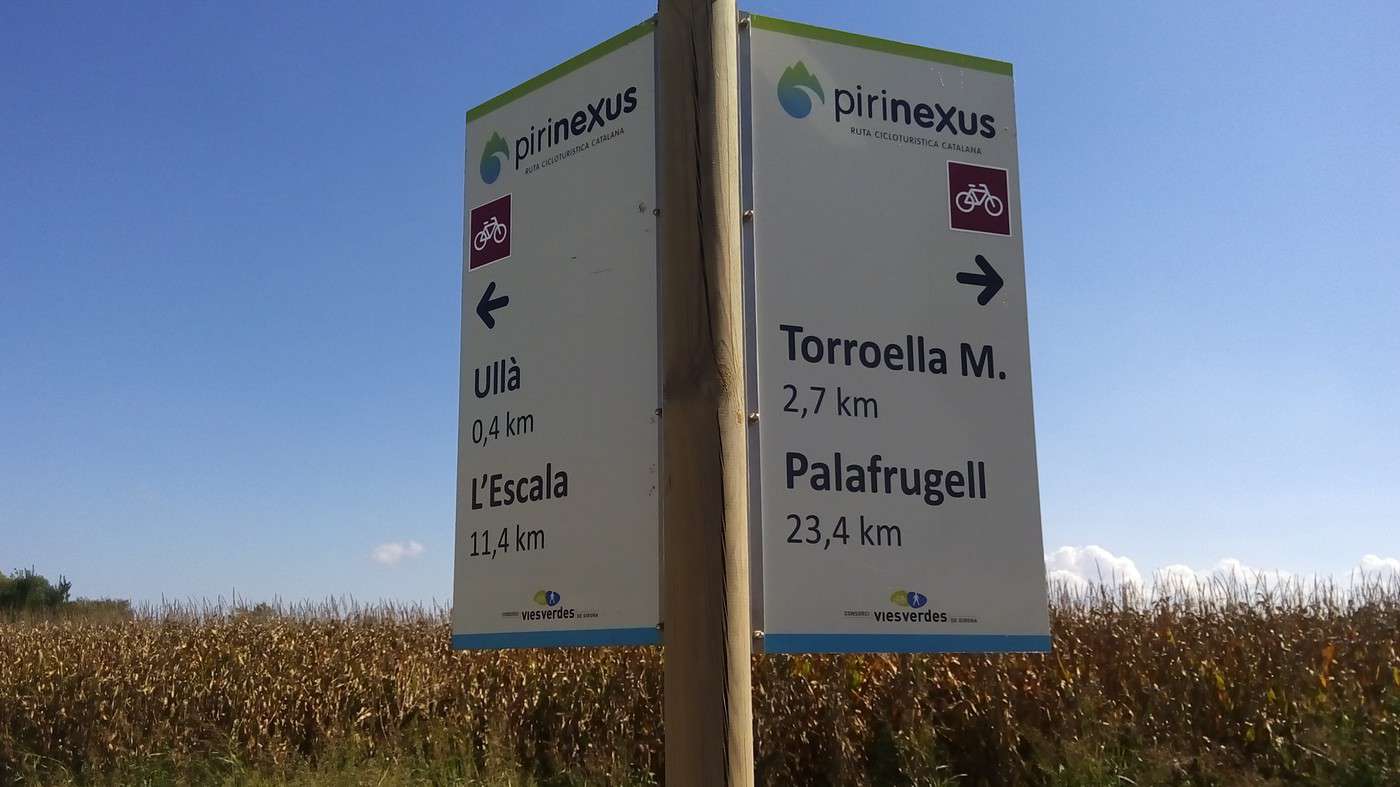
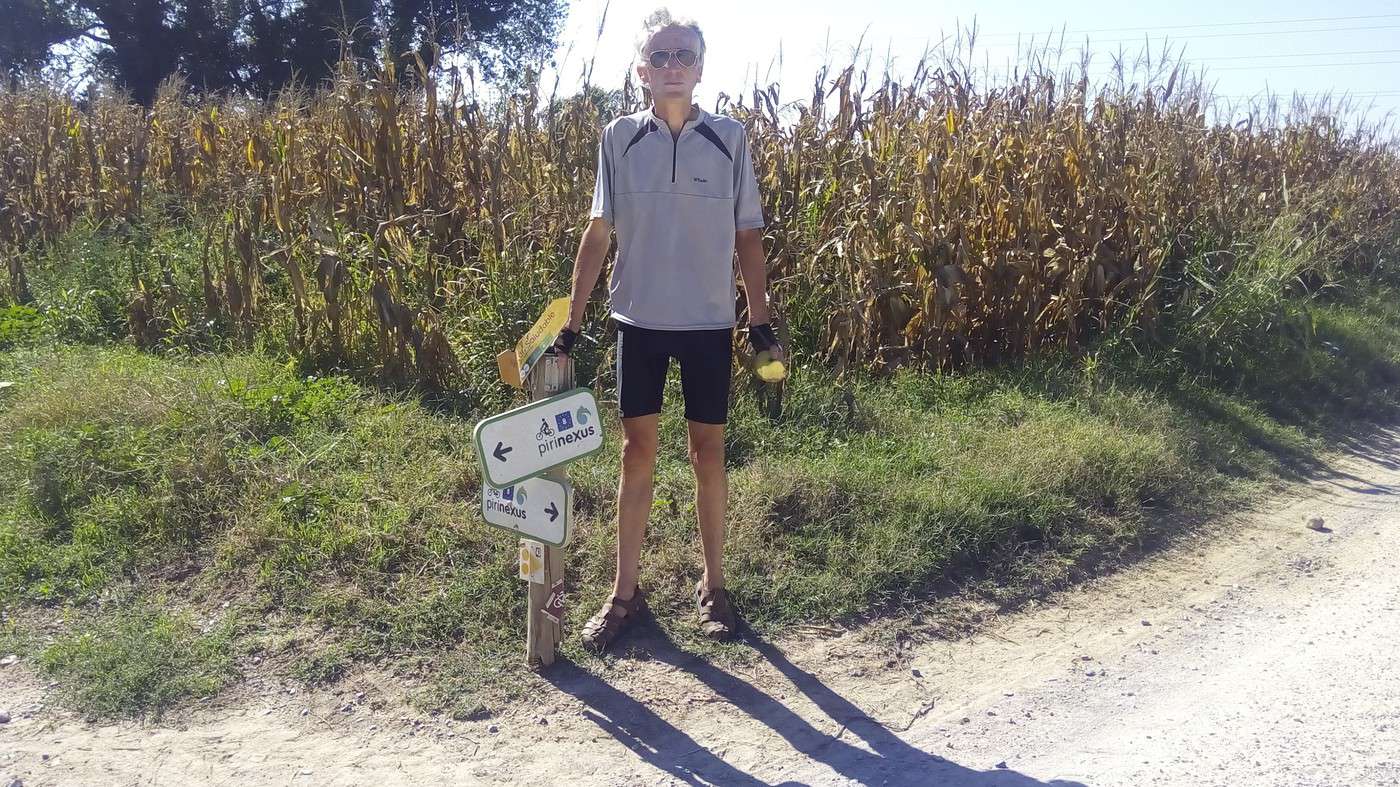
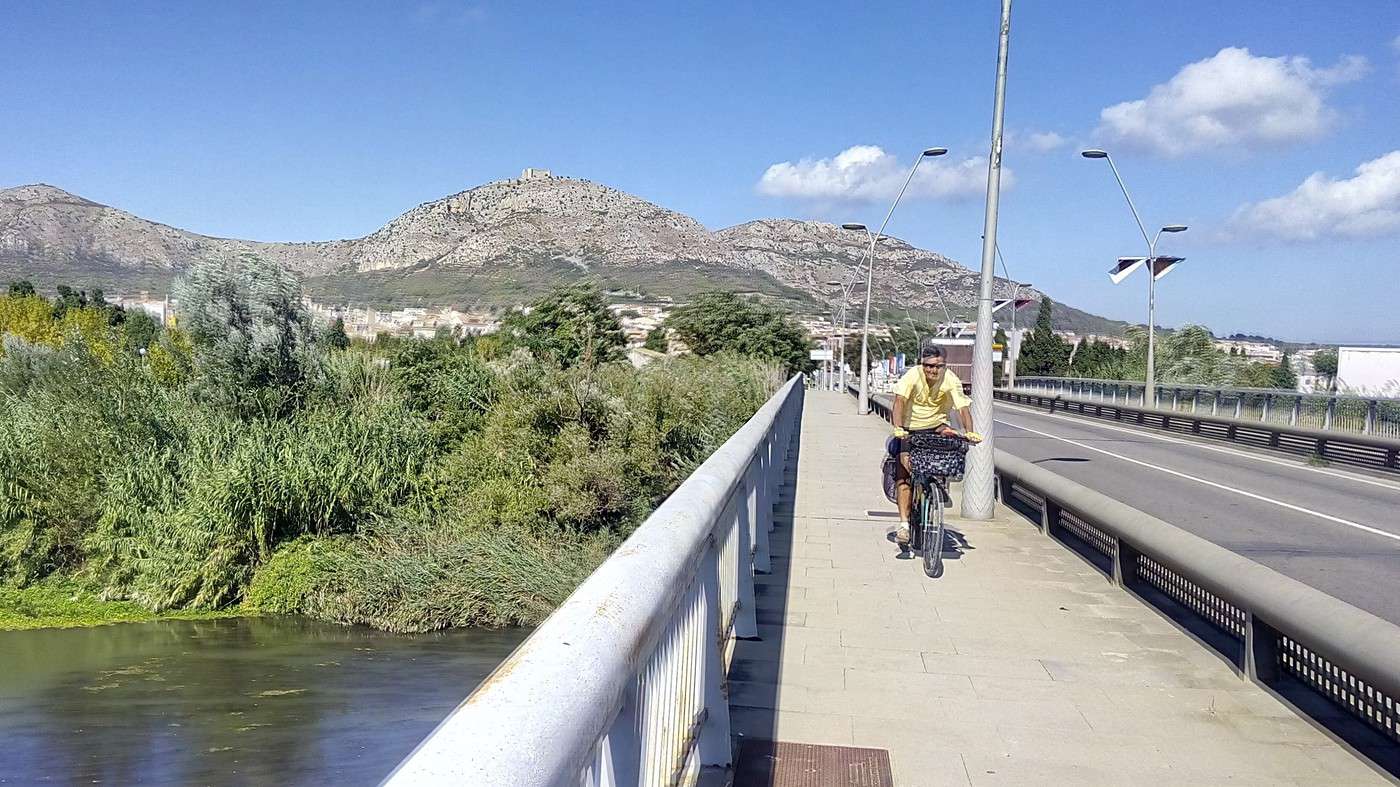
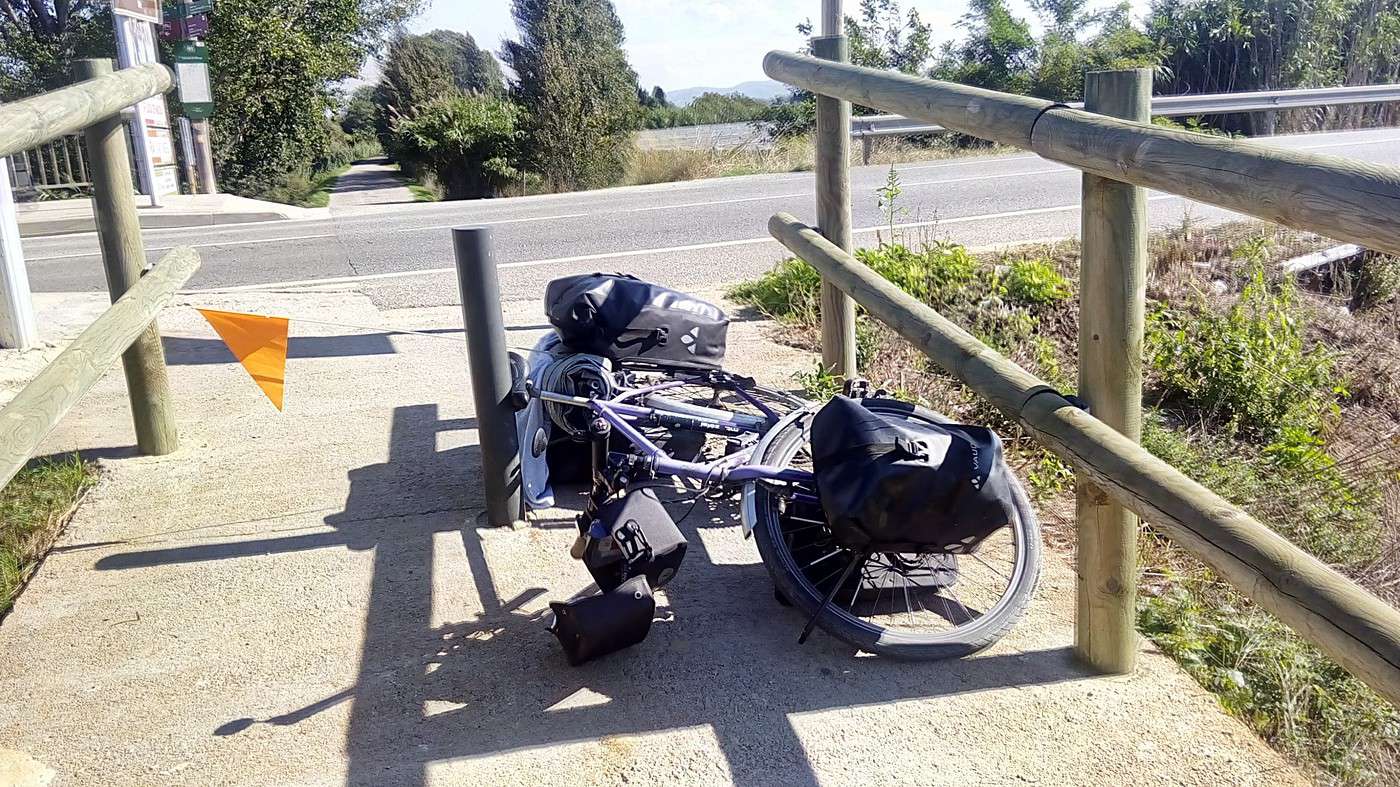
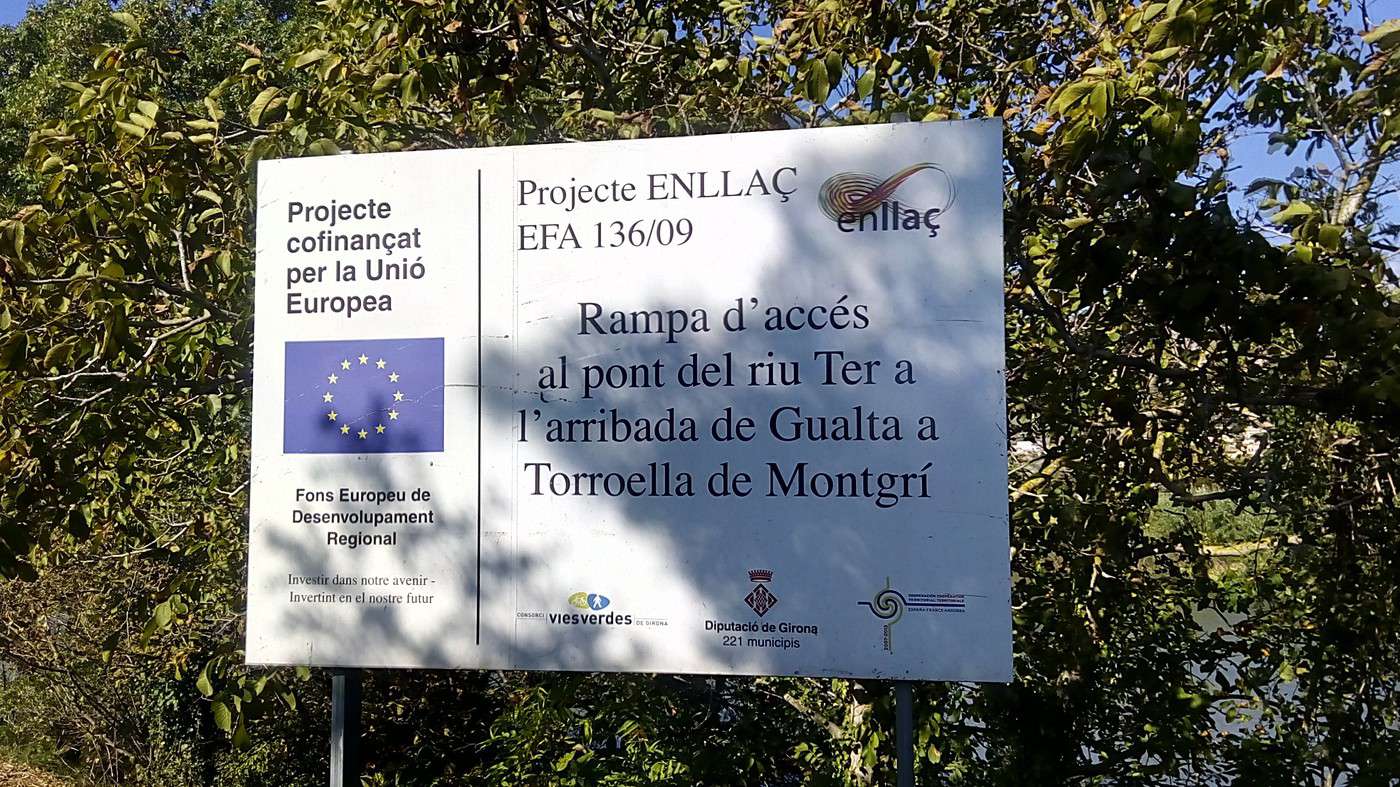
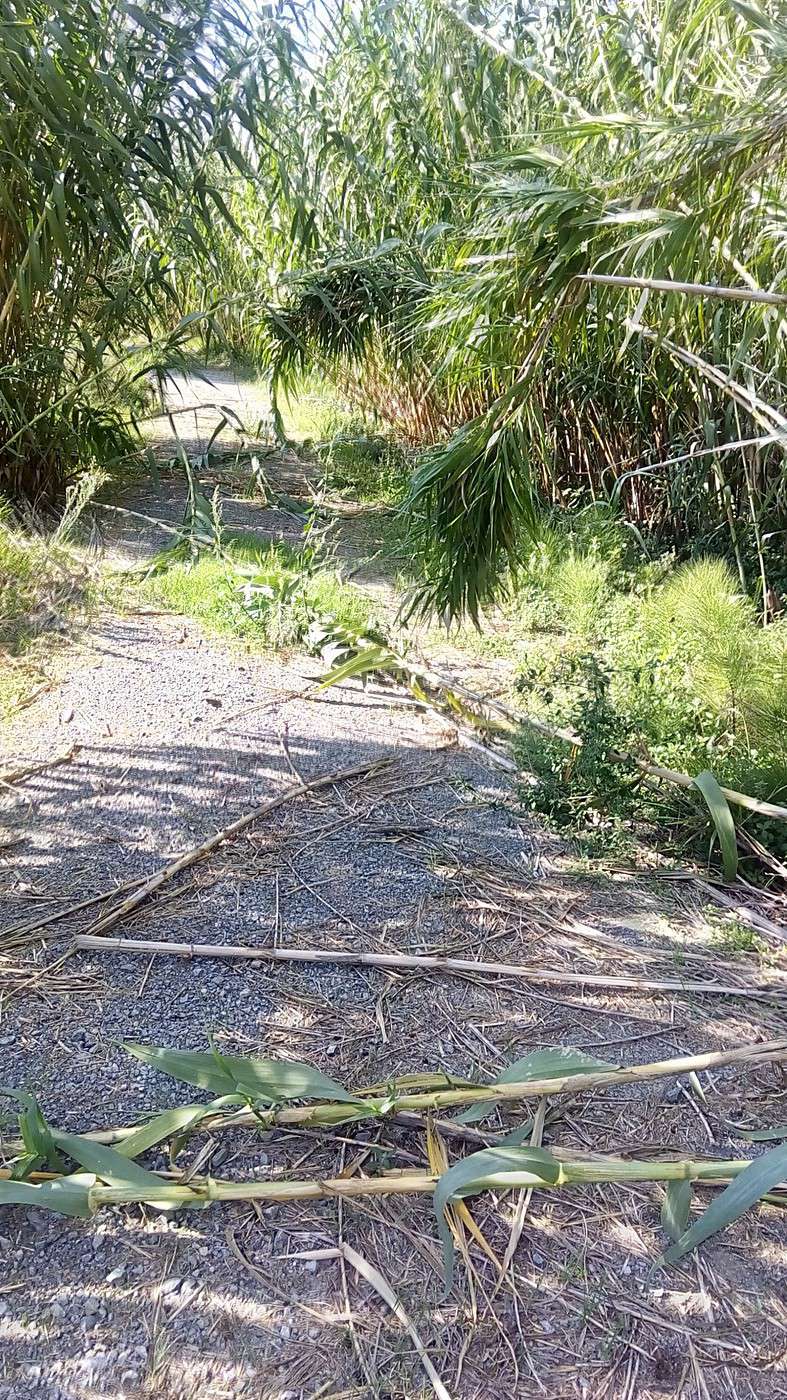
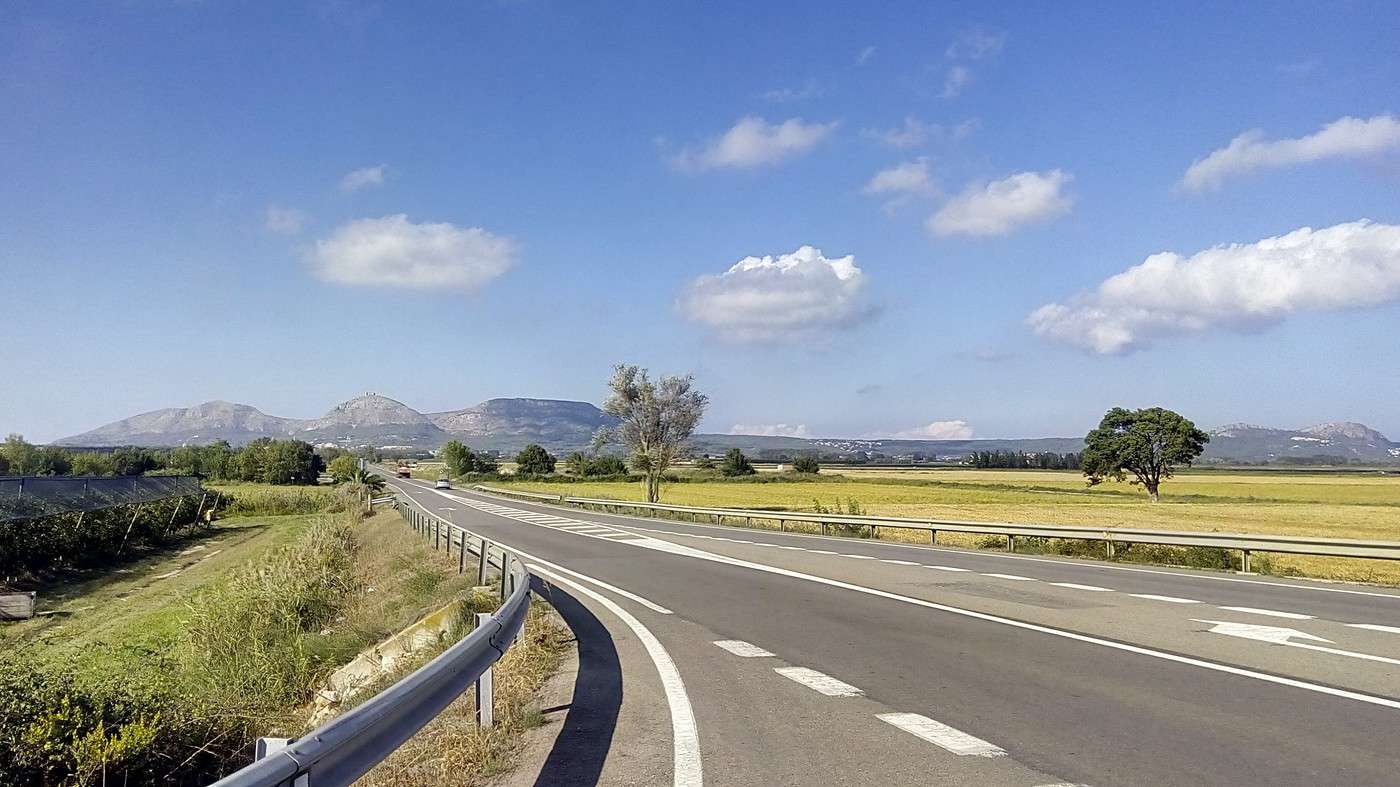
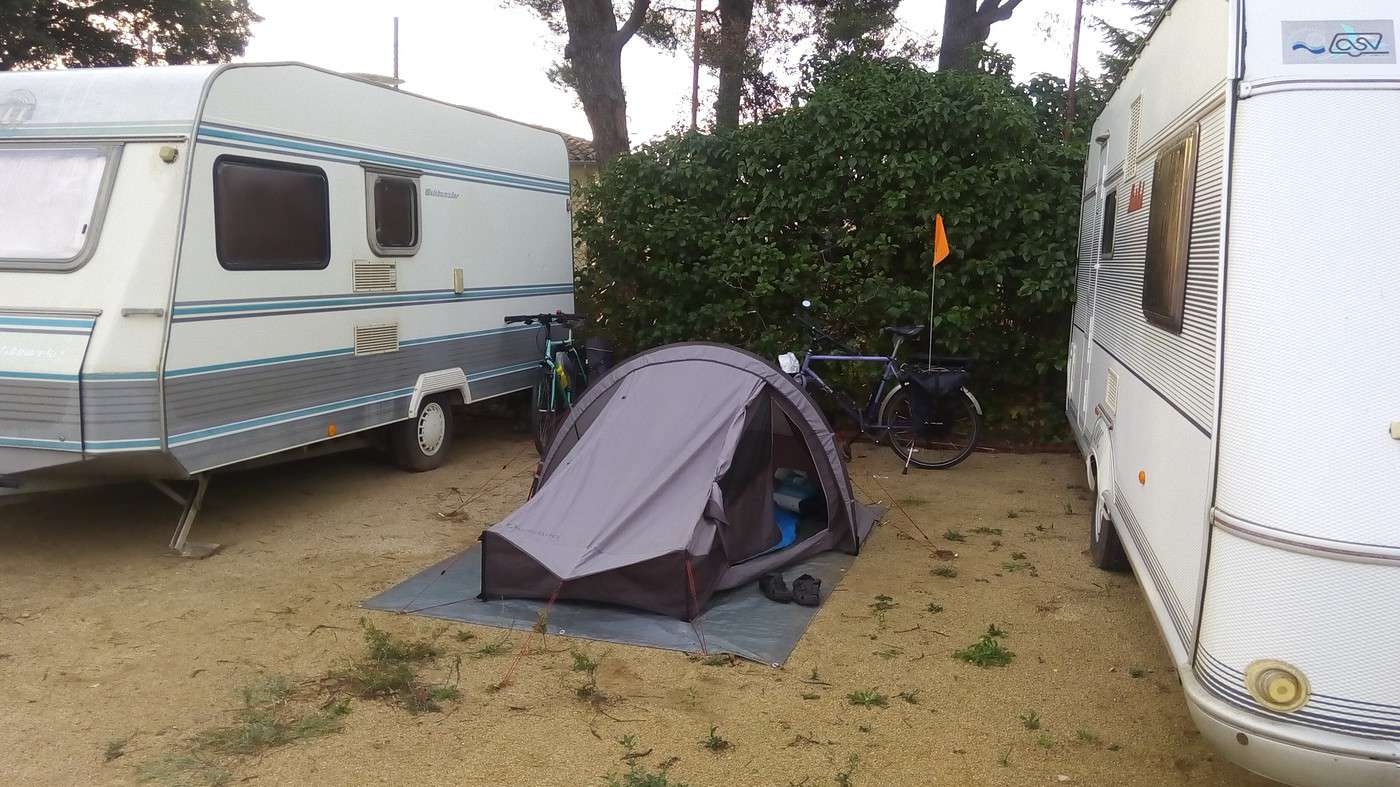
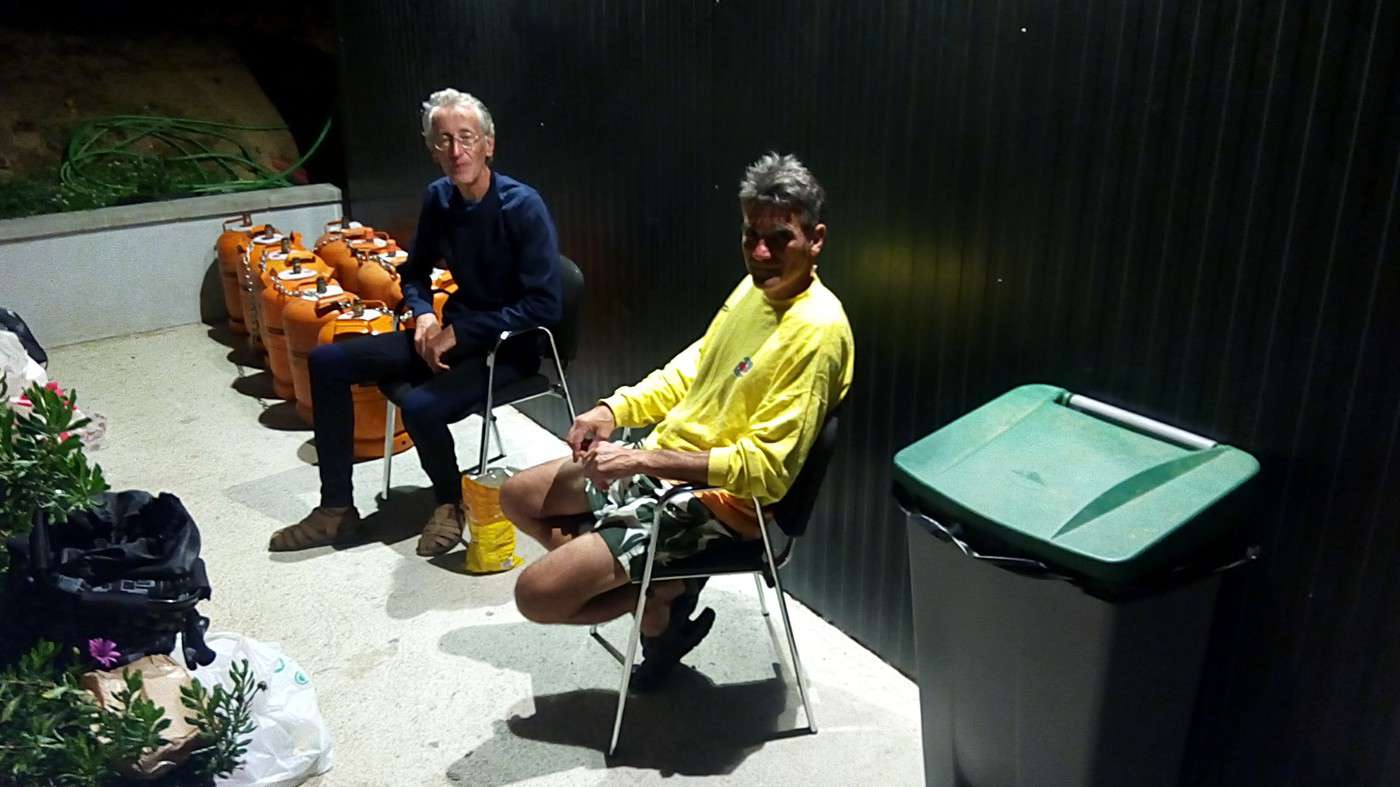
We continued south against the wind. We picked up the EuroVelo 8 route and the Pirenexus path, which helped us avoid traffic. In the middle of apple orchards at an intersection, we came across a vandalized signpost. I turned it every which way to restore the directional arrows. The route to Palafrugell took us across the Ter River on the sidewalk of a road bridge, then a sharp 90-degree turn onto a footbridge leading down to the riverside path. But in that sudden change of direction, my rear pannier rubbed against the central bollard blocking car access. It threw me off balance, and I took a spill—luckily at low speed. This recently completed EU-funded setup isn’t a success. Further on, at an intersection with a road, we thought we should go straight. But the path got overgrown with bamboo. We should’ve taken the road. We ended up on the C31 (4 lanes, headwind) after that brief, unconvincing experience on the Mediterranean Cycle Route. After 8 km, we arrived in Palamós, where the campsite had just closed. The caretaker directed us to a camper van parking area, saying we could pitch our tent there. Reception offered us the caravan winter storage zone—unlit—for 12 €, with mandatory electricity. Fortunately, they left the reception’s exterior lights on at our request and gave us two office chairs without us even asking. We skipped the 1 € hot shower and washed up at the sink with cold water. In the end, we were well set up for dinner and breakfast, with Wi-Fi nearby. We slept well between two caravans that shielded us a bit from the road noise.
Biking (MTB) along the canal between the two seas (France)
Facteur4 · 2016-11-05 · Message 223 of 310
Saturday 01/10, up at 07:30, Palamós 09:45, Malgrat del Mar 17:45, 68 km
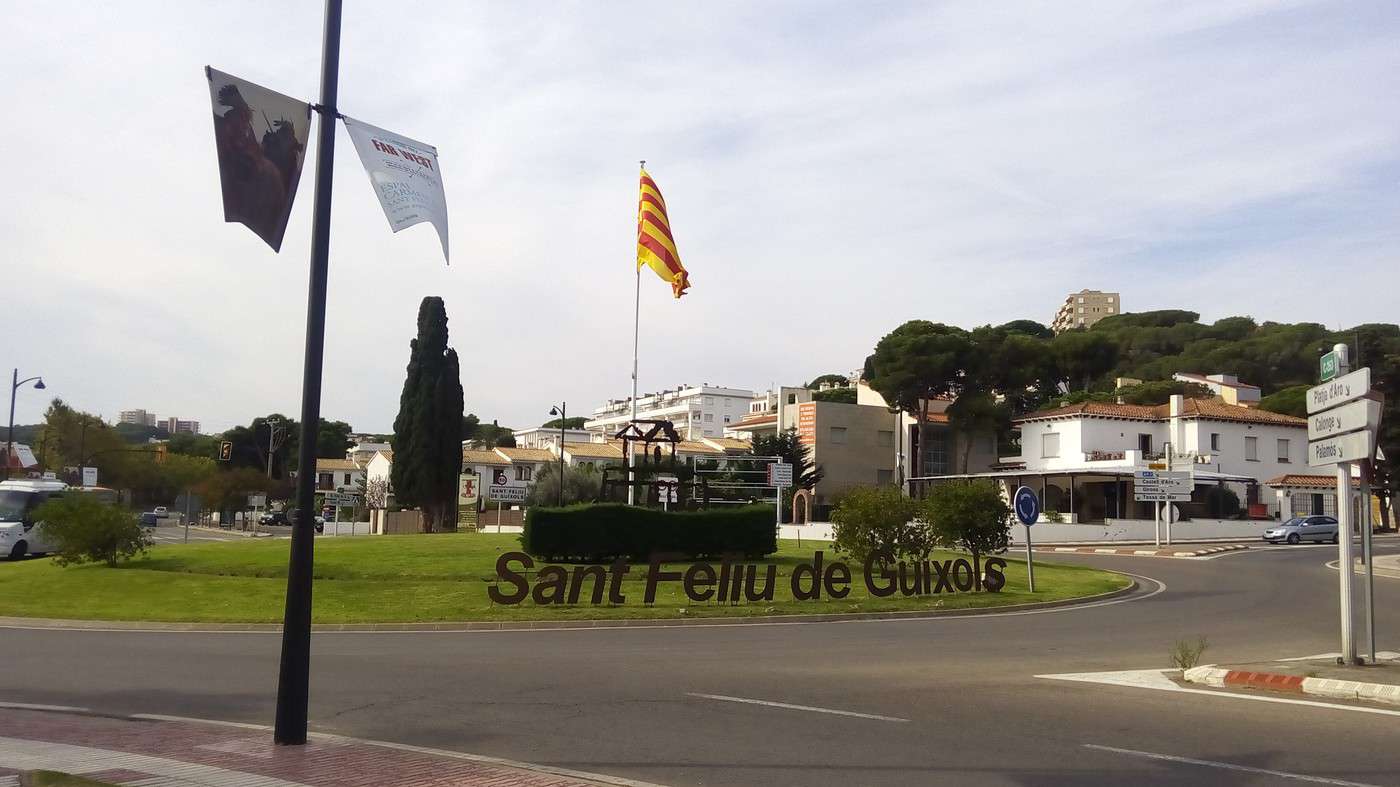
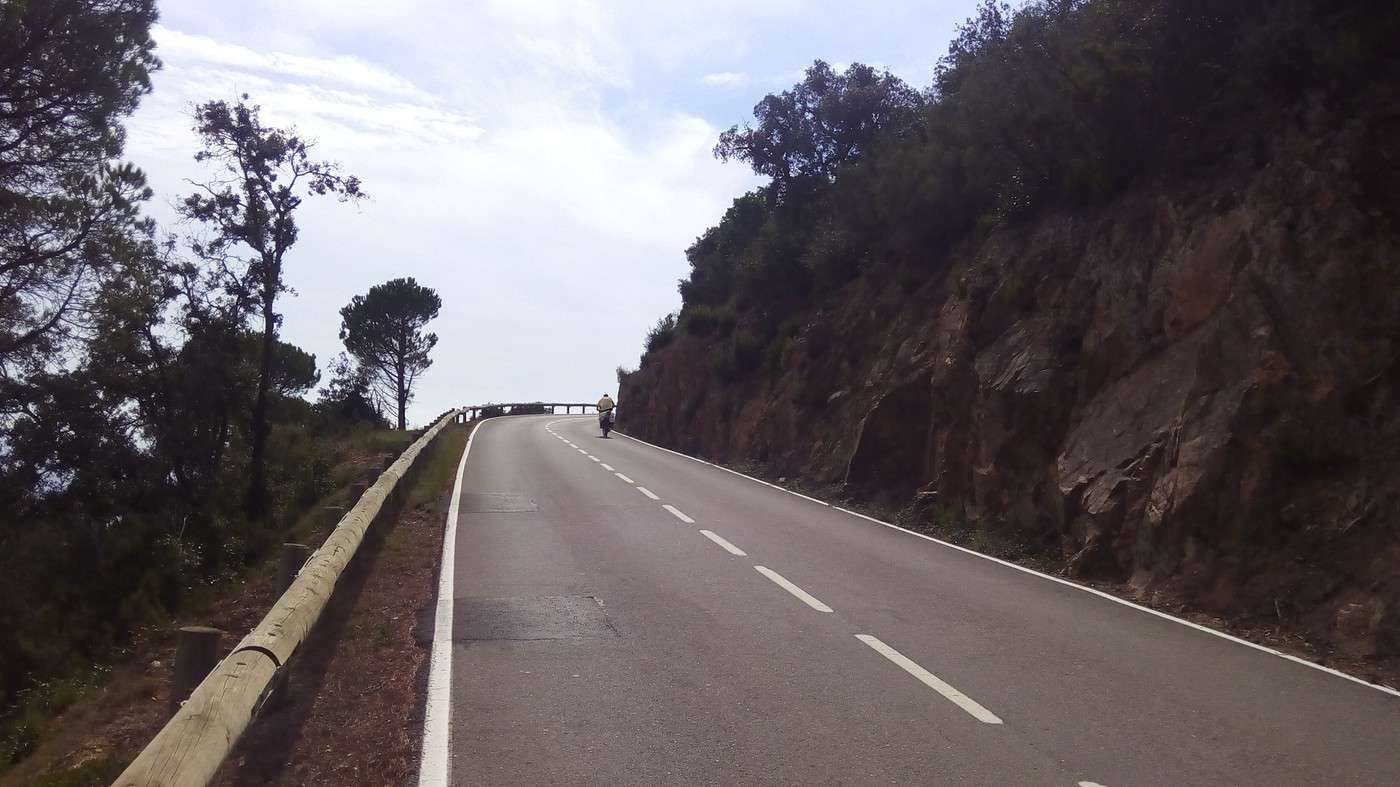
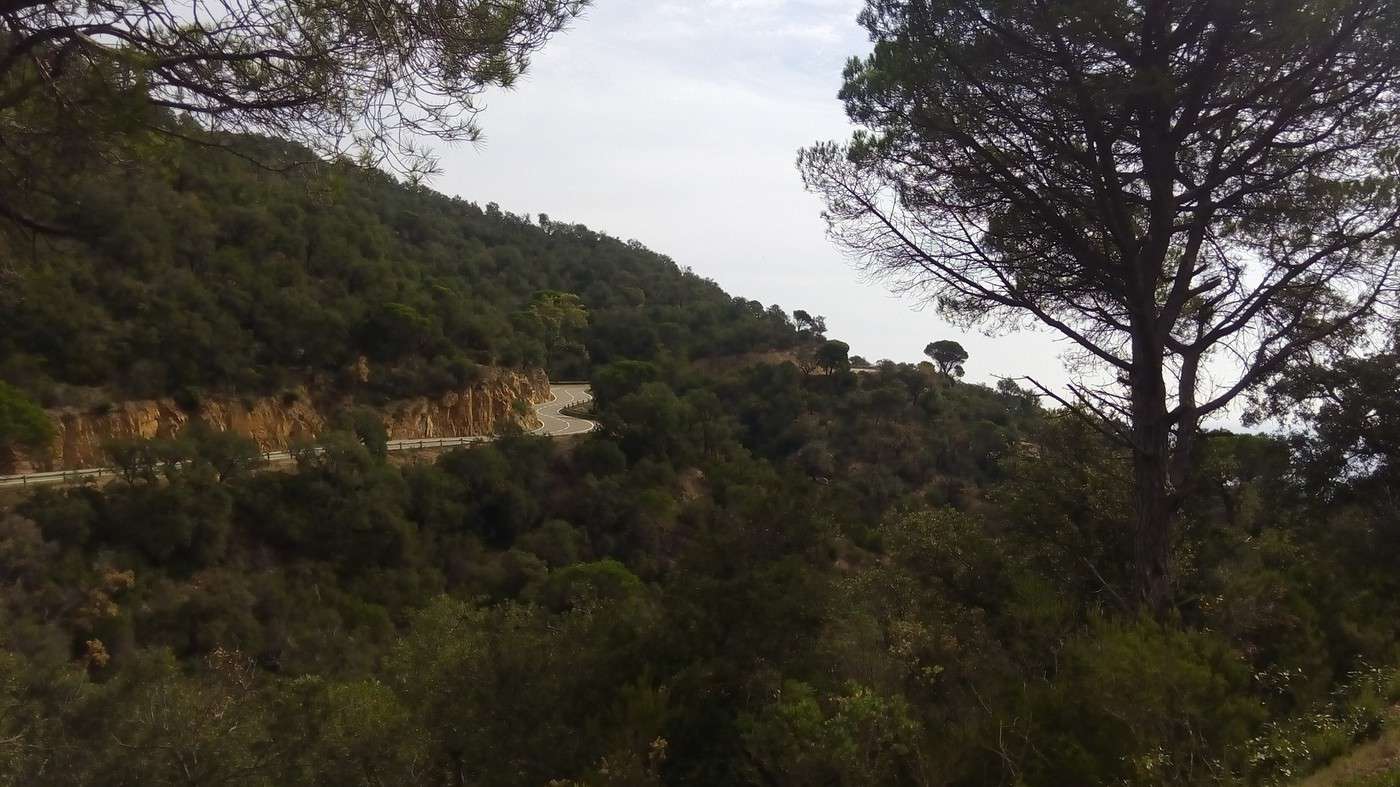
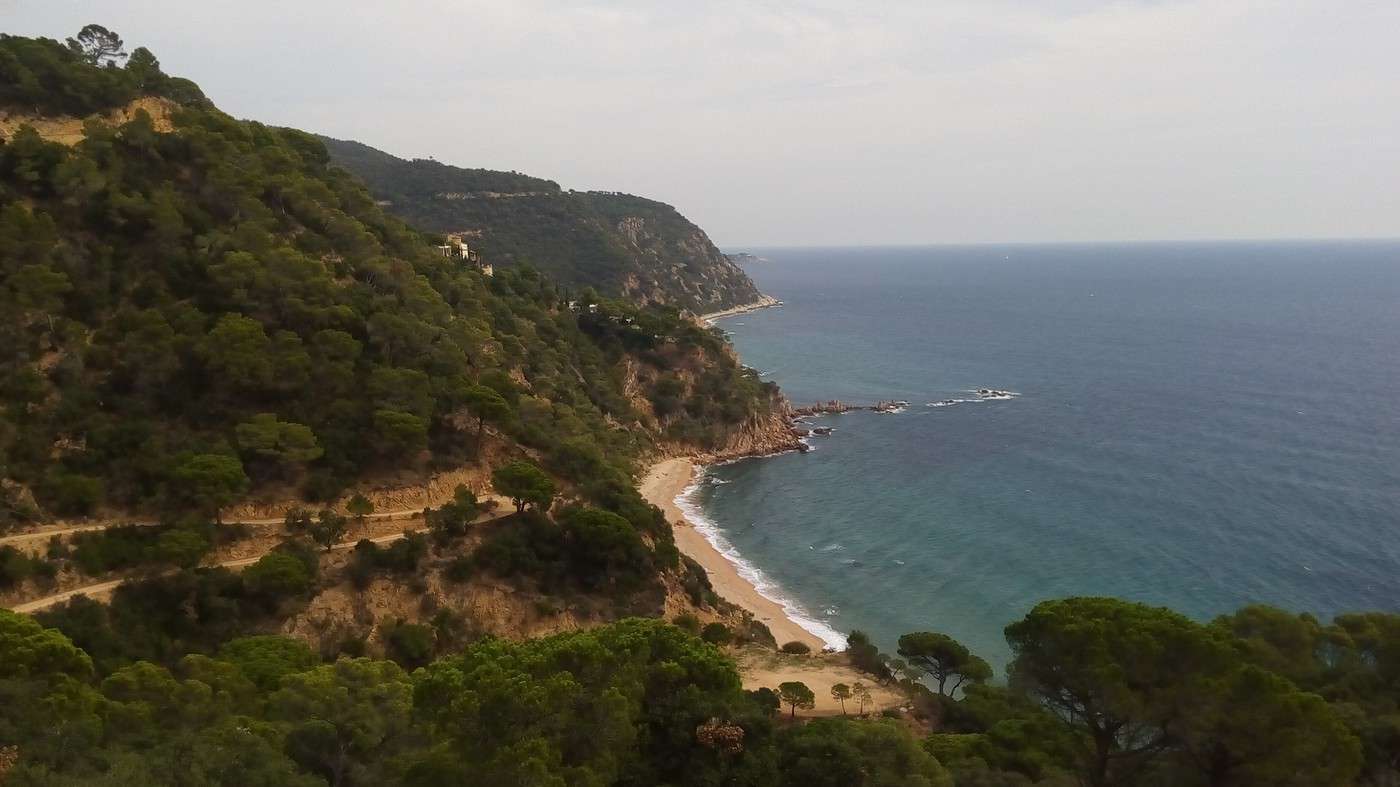
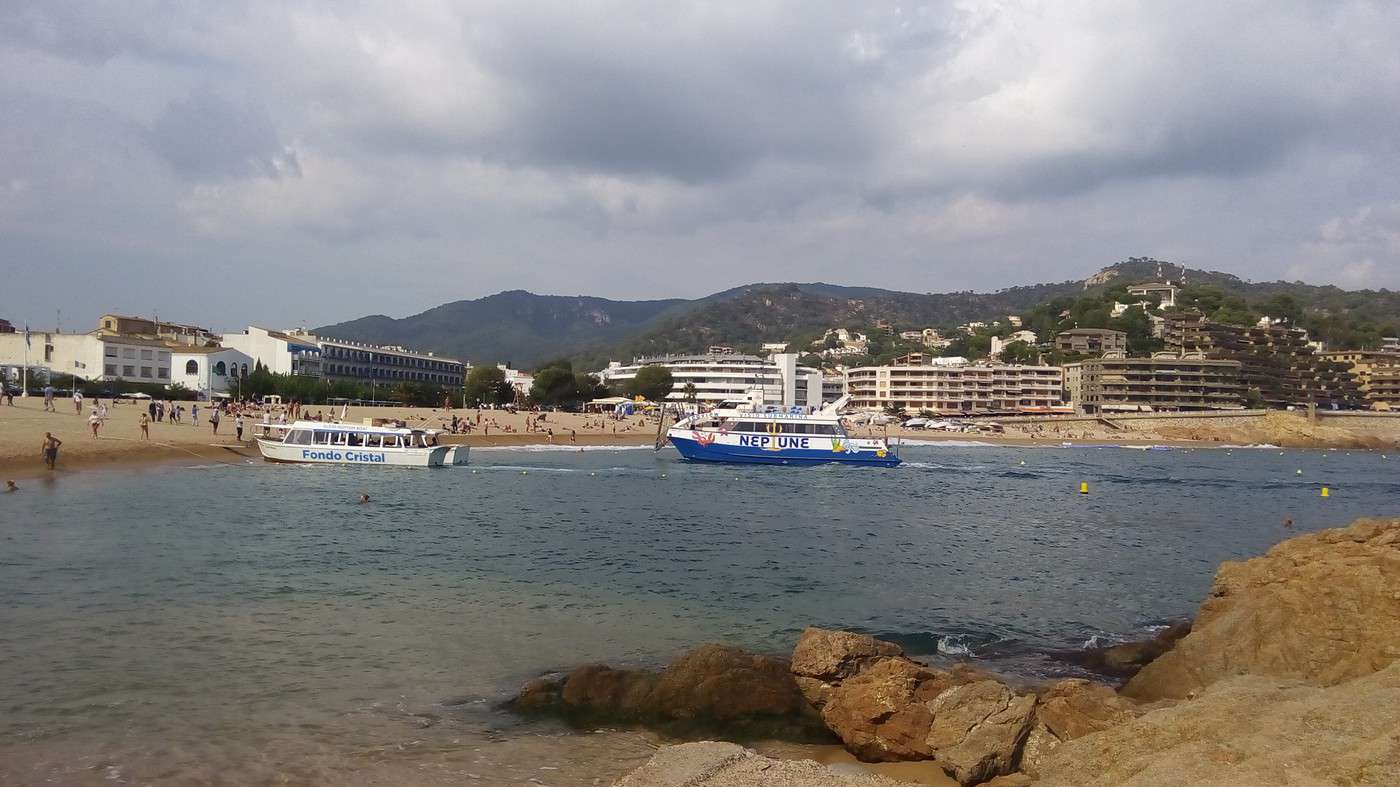
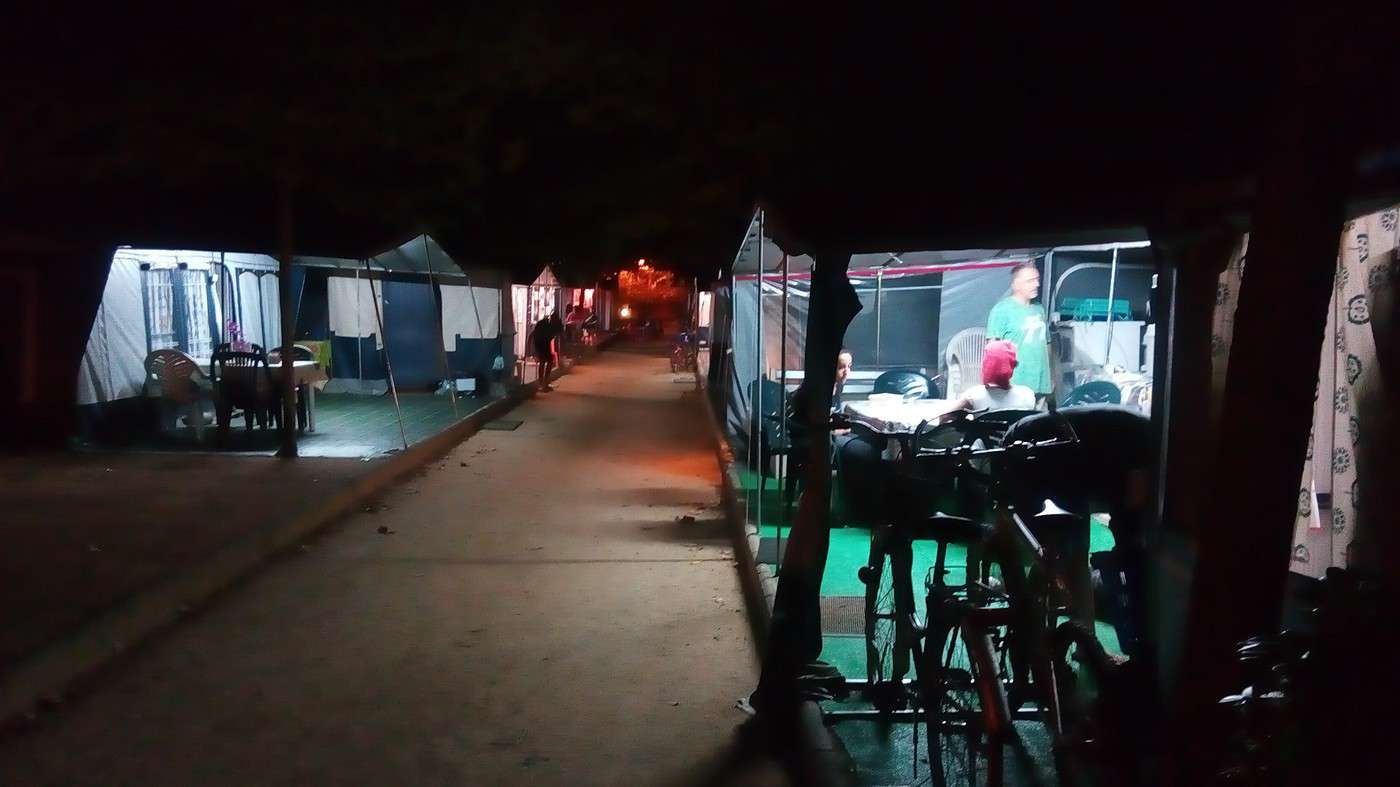
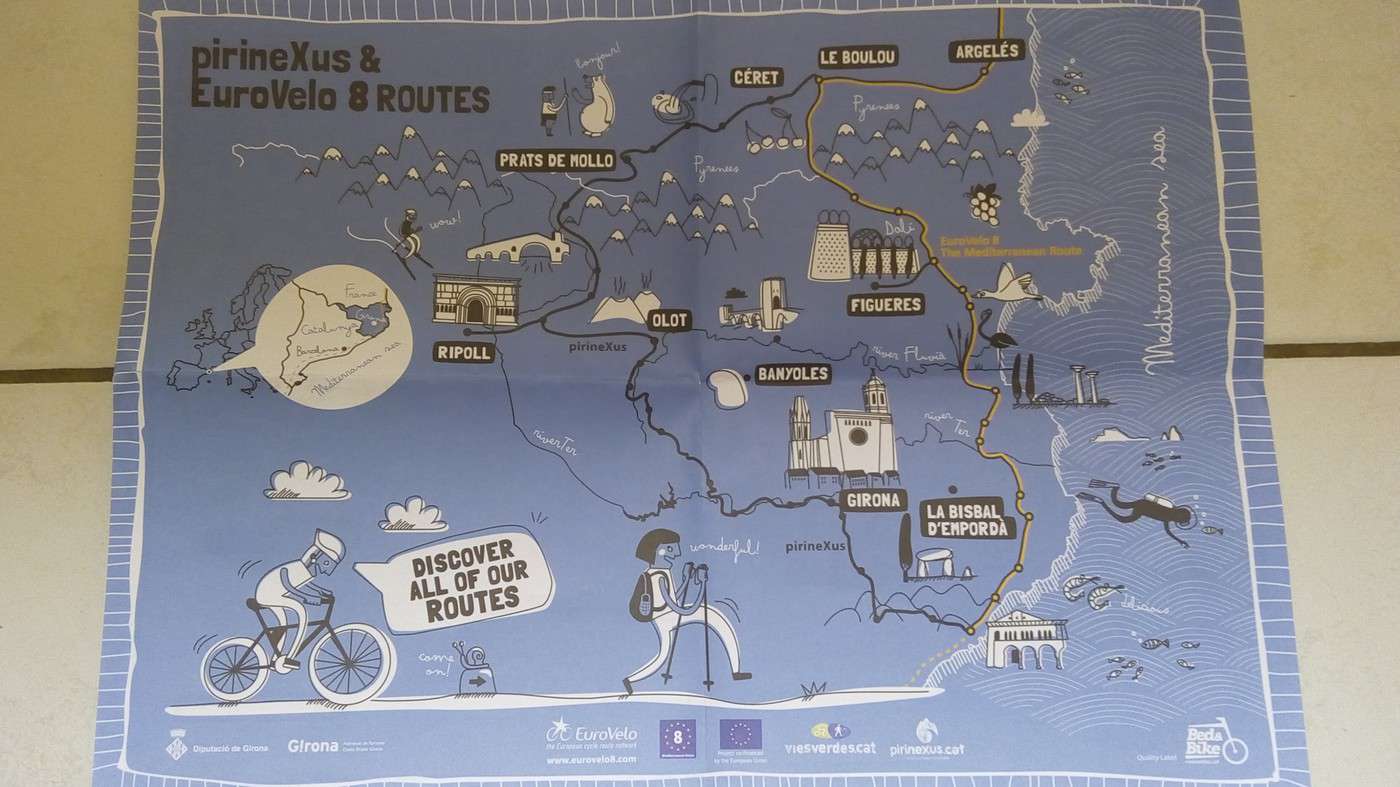
We set off for Sant Feliu de Guíxols, hugging the coast along the C253. At the Tourist Office, I finally get a brochure (see photo) about the EV8, but the French-speaking hostess also tells me that the development temporarily ends here. So we tackle the GI-682, which on the map winds tightly along the coast for 21 km to Tossa de Mar, with a halfway point promising a panoramic view. It takes us 1 hour to cover the first 10 km, where we meet a local coming out of his house. He encourages us for the next 10 km before silently overtaking us in his hybrid car. After every little climb, we discover a bay or cove where sand, rocks, vegetation, and the Mediterranean create new picturesque scenes. We’re not the only ones enjoying these stunning landscapes—drivers stop frequently, and motorcyclists love tackling the tight turns on the smooth pavement. After 42 km, we finally reach Tossa de Mar at 14:00. This really is the *Costa Brava*! We swim at the far end of the bay near the medieval castle. It’s nearly 28°C, and the water is 23°C. Glass-bottom boats beach themselves to pick up tourists. Melon and sausage restore us in this holiday setting. Then the road to Lloret de Mar becomes easier, smooth all the way to Malgrat de Mar. The 4-star *Camping La Tordera* is packed with Spanish families this weekend. They seem to park their caravans here year-round, with awnings and terraces side by side. For 24 €, we pitch our tent on a transit spot—much quieter at this time of year, though still close to the sea. I choose to swim in the sea rather than the pool. For showers, you need a badge, and a Spaniard offers us one of his units, so we share the same stall quickly. We only find a little light near the barbecue tables, which are strangely empty. Maybe it’s too early? Yet night has fallen.
Biking (MTB) along the canal between the two seas (France)
Facteur4 · 2016-11-05 · Message 224 of 310
Sunday 02/10, up at 6:30 AM, Malgrat del Mar at 9:15 AM, Barcelona at 7:00 PM, 76 km.
In the restrooms where I plugged in Dominique’s charger to power my smartphone, I booked a youth hostel. For 80 € including breakfast, we’ll have 2 nights in an 8-bed mixed dorm. I’m glad I subscribed to Orange’s 7-day Go Europe plan—for 15 €, unlimited calls and texts plus 500 MB of internet. But the catch is that every MMS is charged at 0.06 €. I noticed right away, but even receiving an MMS costs the same!
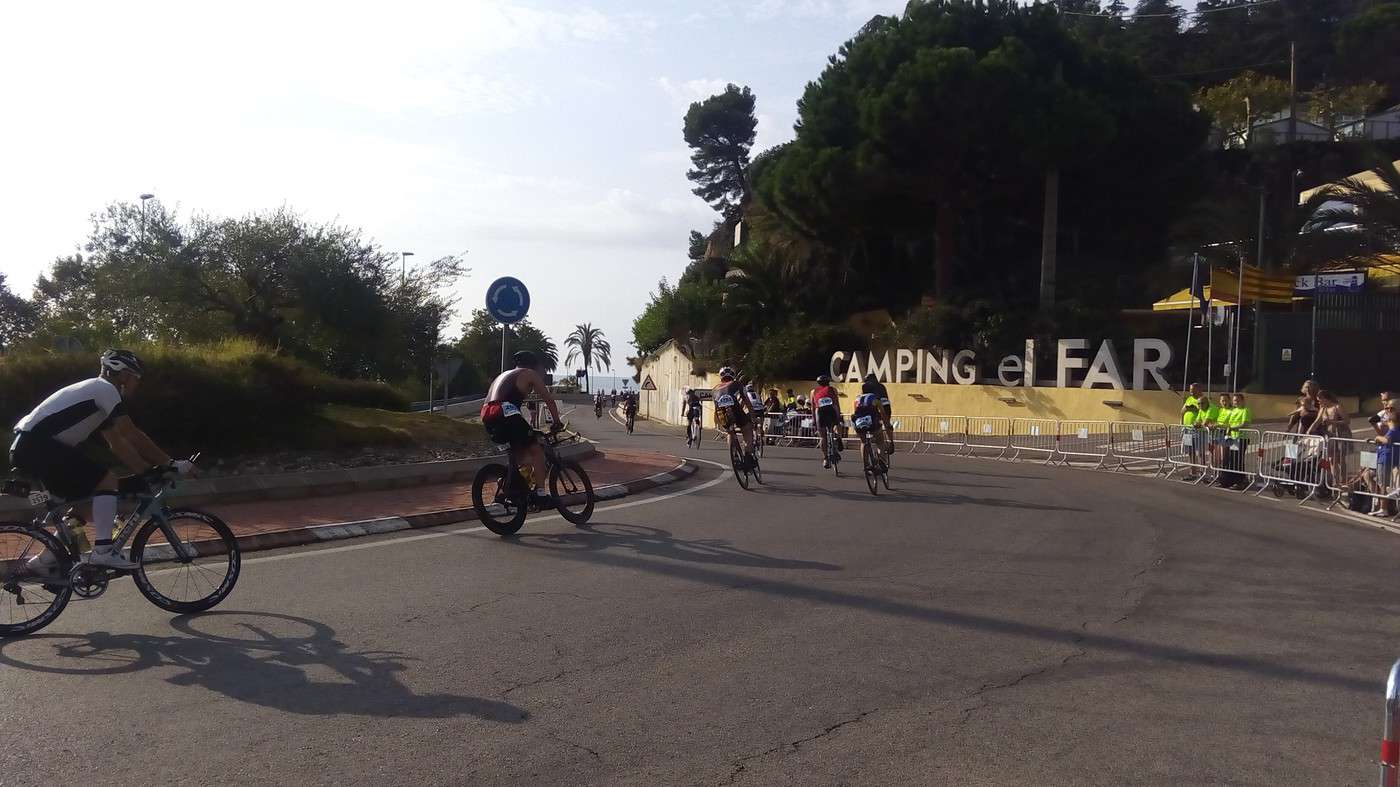
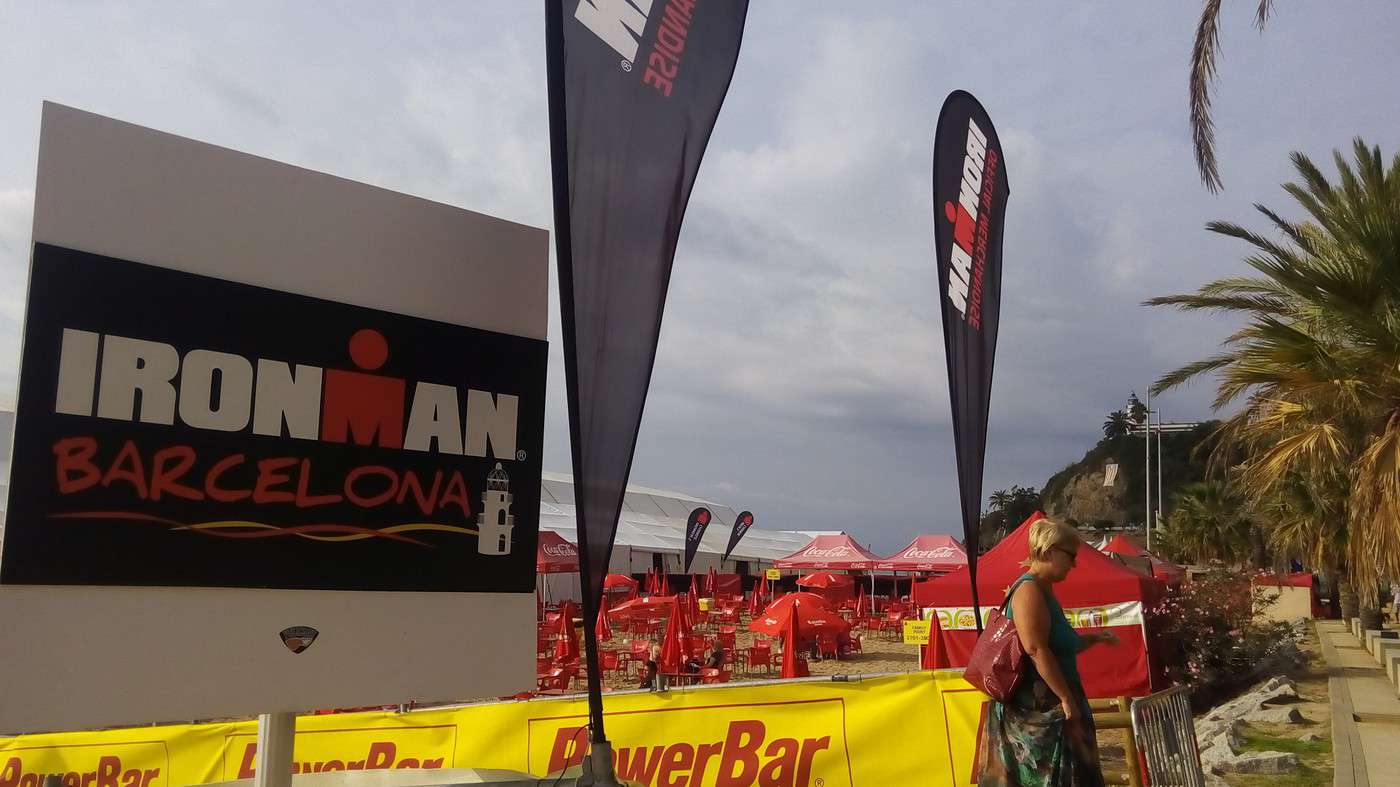
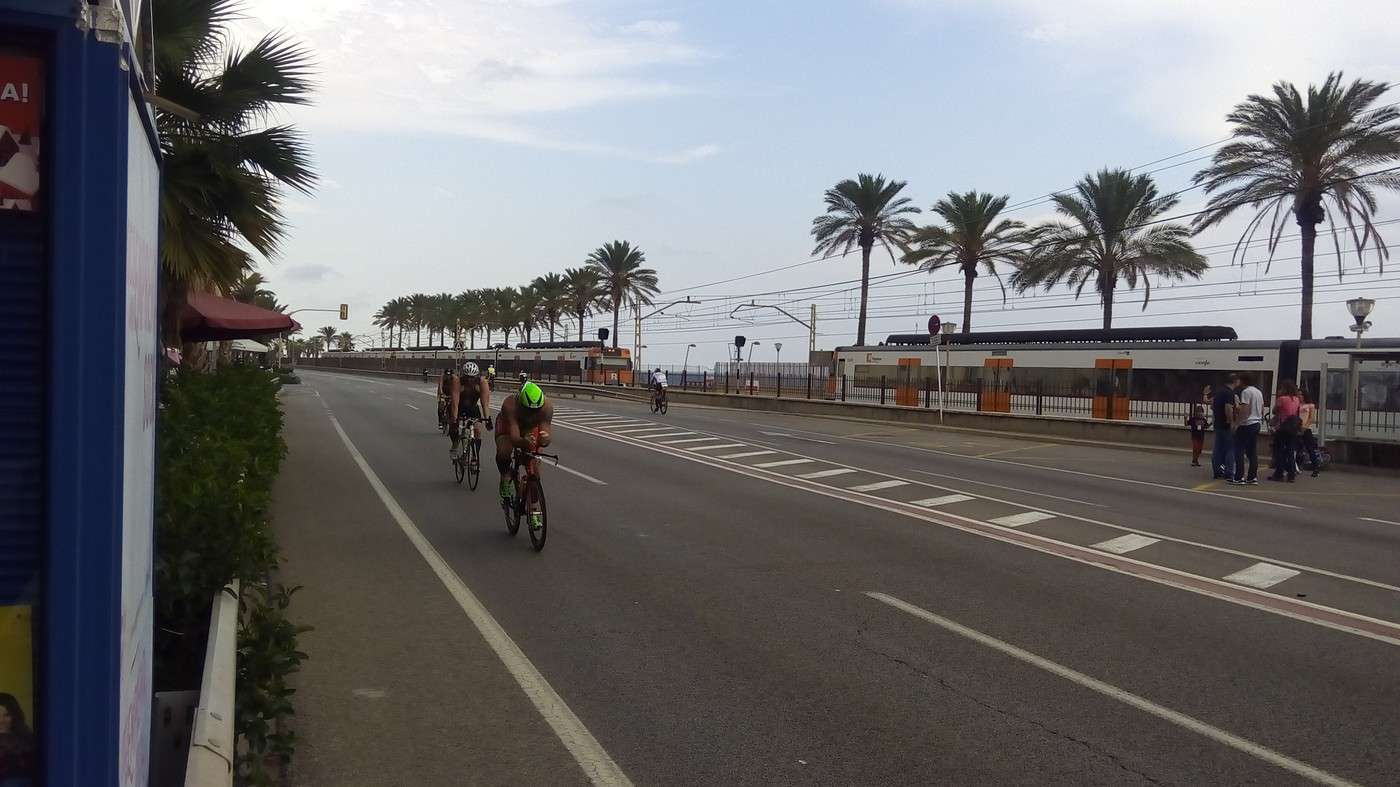
We tackle what should’ve been the easiest leg since the N11 along the coast is well-paved and completely flat. Even the wind died down. But we quickly run into the fr.wikipedia.org/wiki/Ironman.
After 4 km of swimming, competitors set off on a 180 km bike ride to and from Barcelona before finishing with a 40 km run. www.calendrier.dusportif.fr/ironman-barcelone-0...
www.youtube.com/watch?v=7pZbt0IgoOk
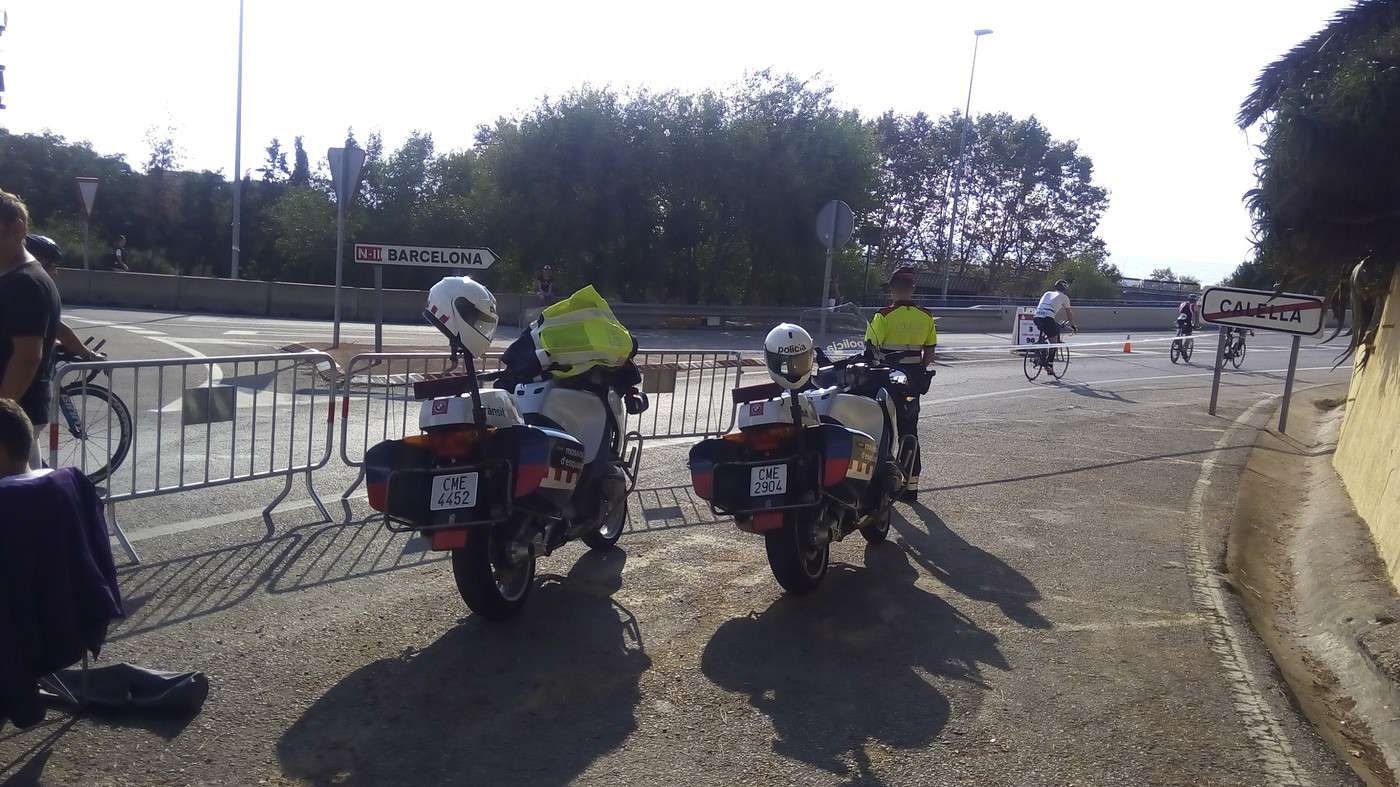
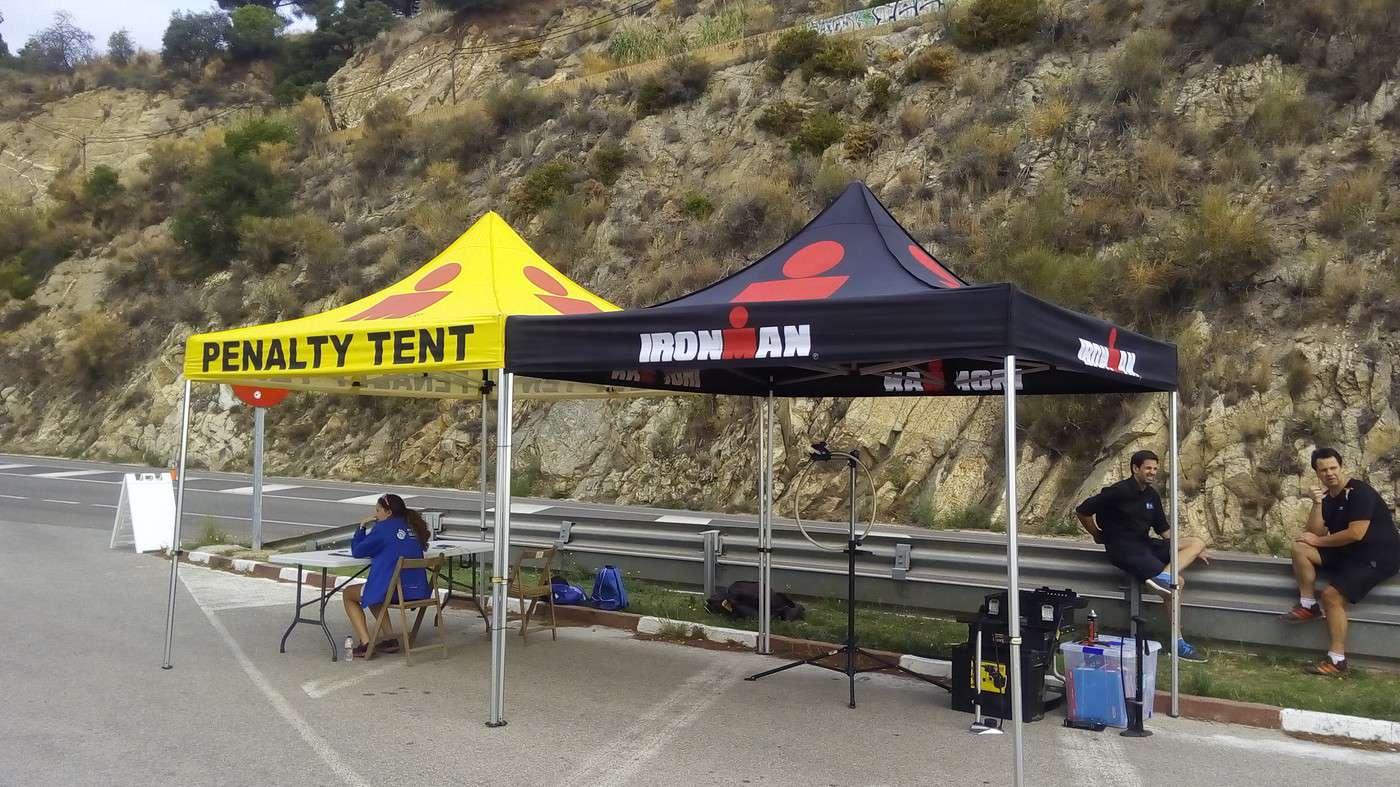
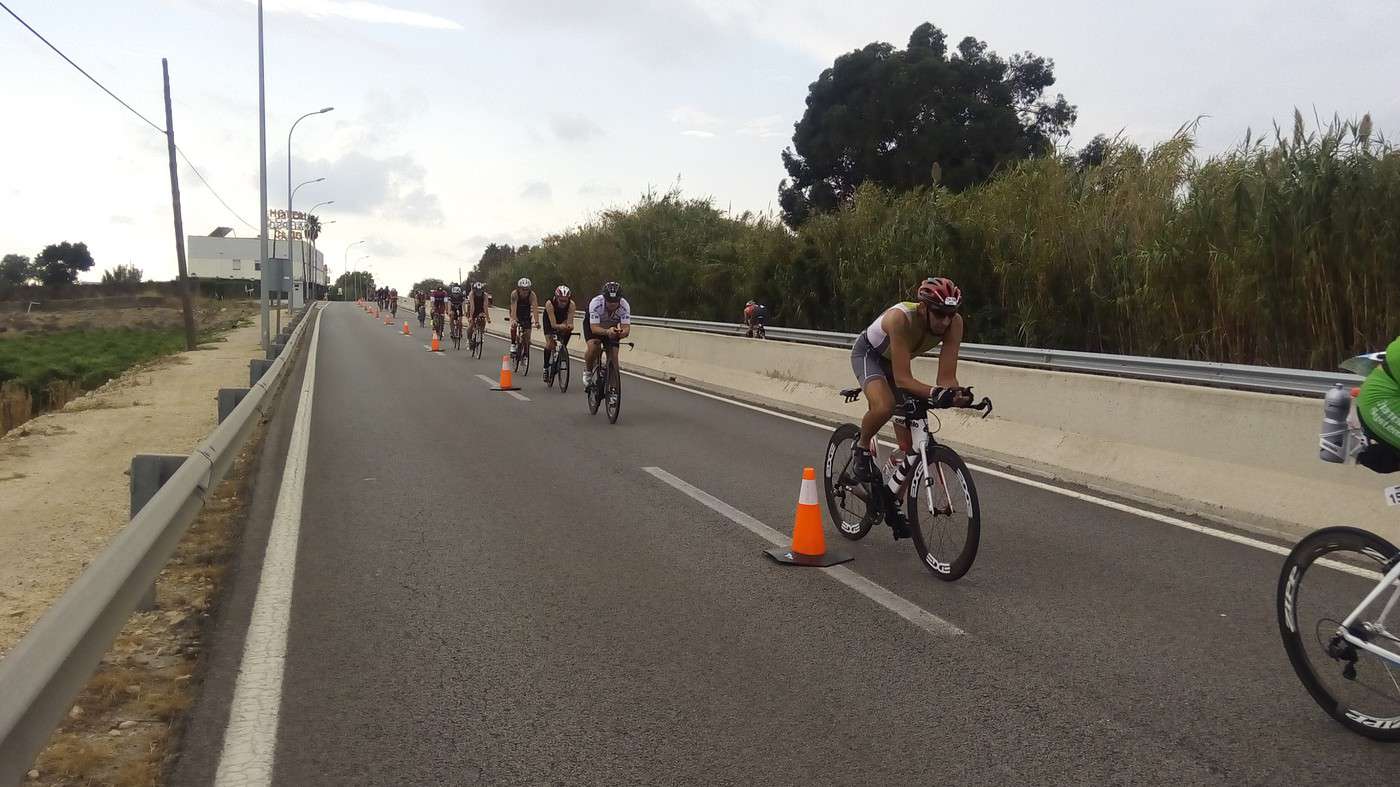
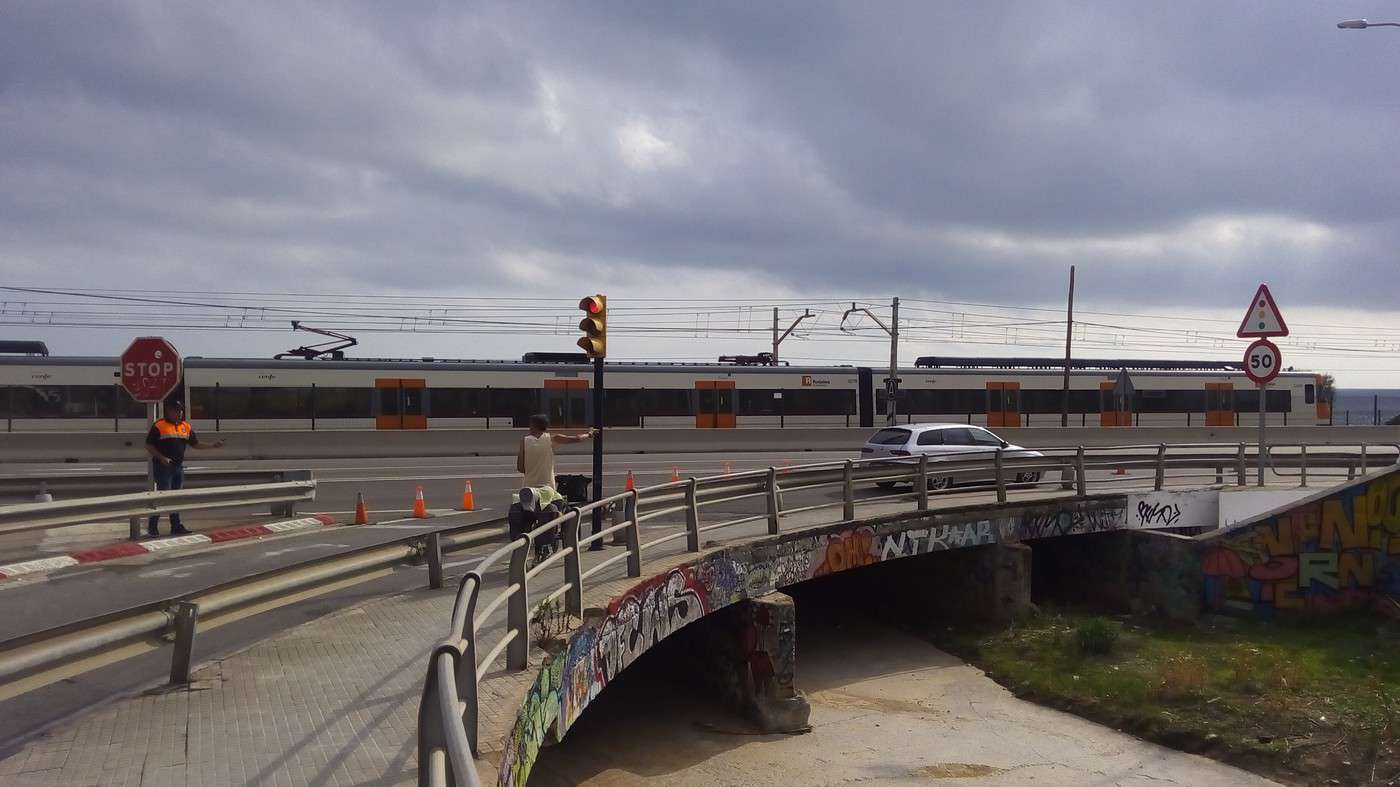
As a result, traffic is banned on the N11. We’re turned away by police at the roundabout at the exit of Calella, where we catch a glimpse of the race. After climbing a staircase, we move along behind the concrete barrier separating spectators from the cyclists.
Sometimes it’s possible to ride on part of the N11 near the competitors, separated by orange cones, but only when it’s a 4-lane road. Most of the time, traffic is completely banned. The alternative forced on drivers is the C32 expressway. A police vehicle approaches us when, after a port, we ride onto an access ramp to the N11. The friendly officer doesn’t go so far as to tell us to take the expressway but suggests we take some mountain roads to kill time until the race ends (which won’t be anytime soon—some cyclists are still heading to Barcelona while others are returning). We prefer to keep following the coast. Further on, the Guardia Civil is far less pleasant. In their excitement over hosting the Ironman, one officer even asks us to cross through a ditch under the railway (impossible with our panniers). It takes Dominique’s insistence, an elderly local’s intervention, and 20 minutes before we’re allowed to walk our bikes on the N11’s sidewalk.
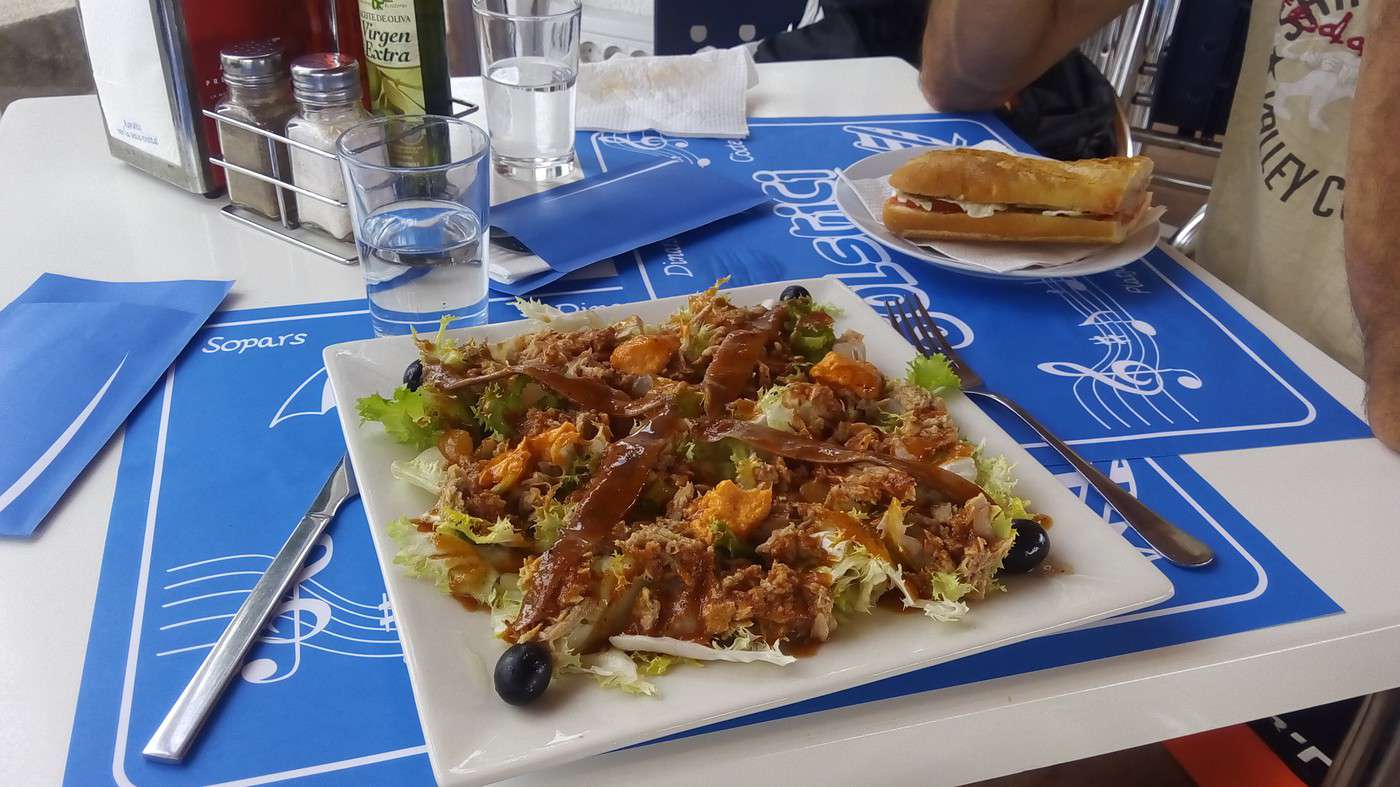
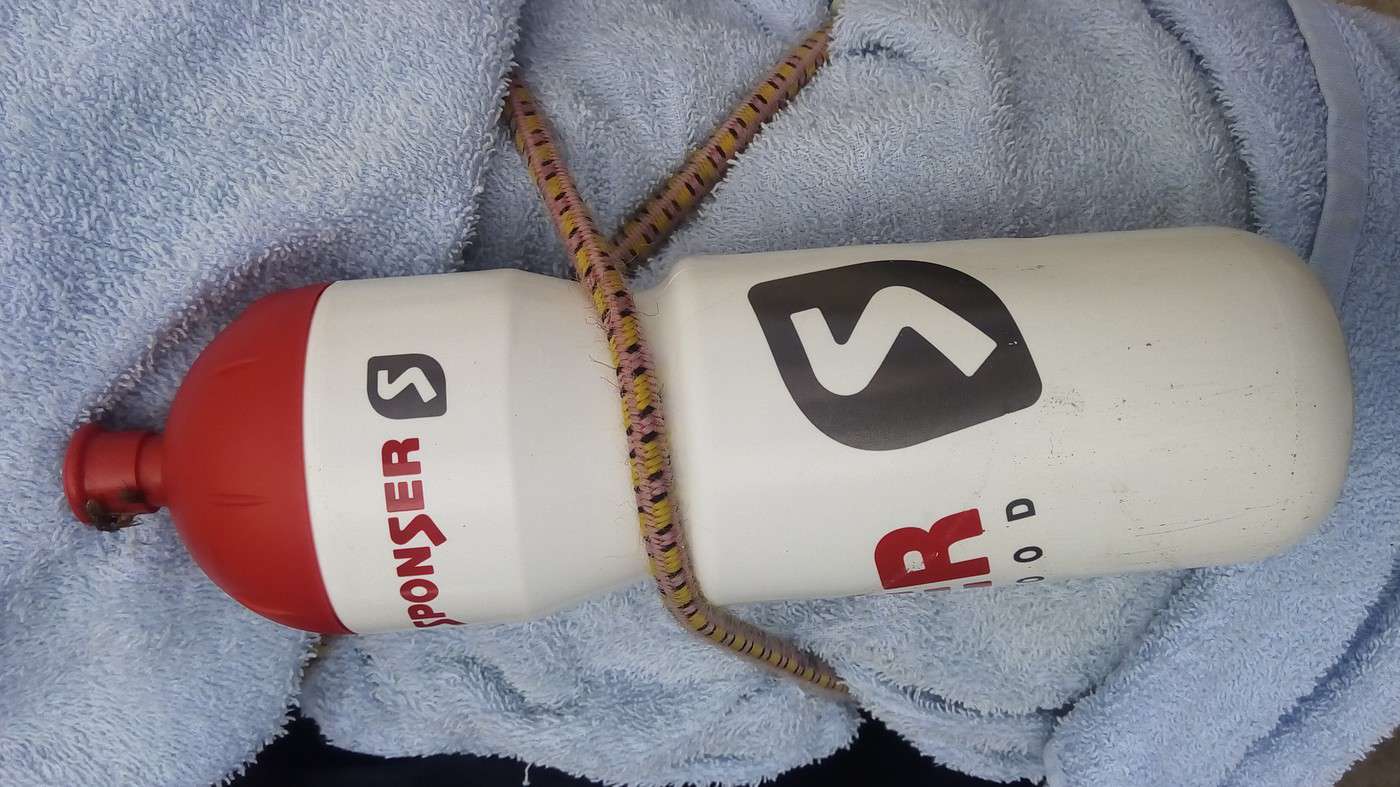
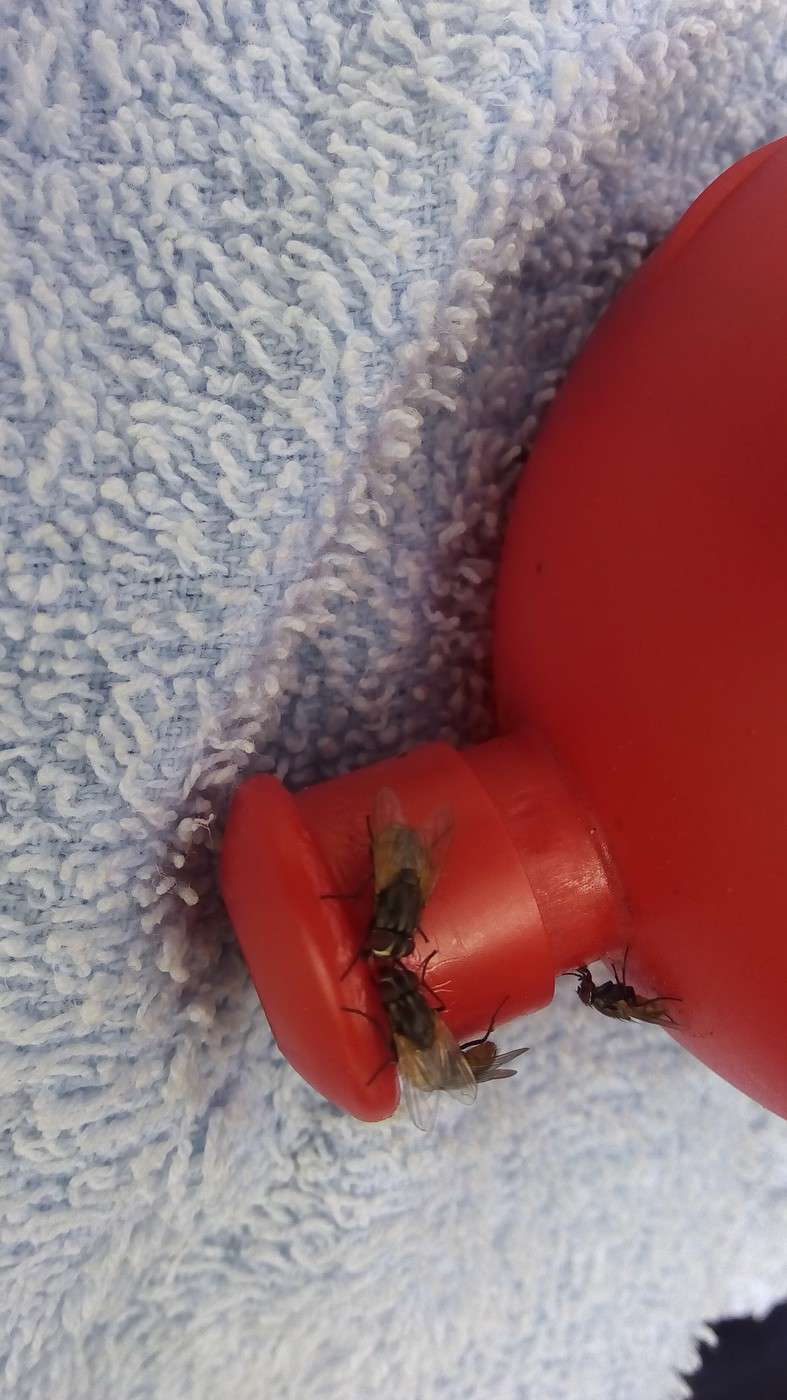
I suggest to my buddy that we take the train to Barcelona—these regional trains run almost as frequently as a metro. But he wants to keep biking. We eat at a beachside restaurant. After gazpacho, I order a cod salad, and Dominique gets a sandwich. On my rear rack, flies feast on the nozzle of a water bottle I picked up off the ground—discarded by a runner and refilled by generous sponsors with sugary sports drink.
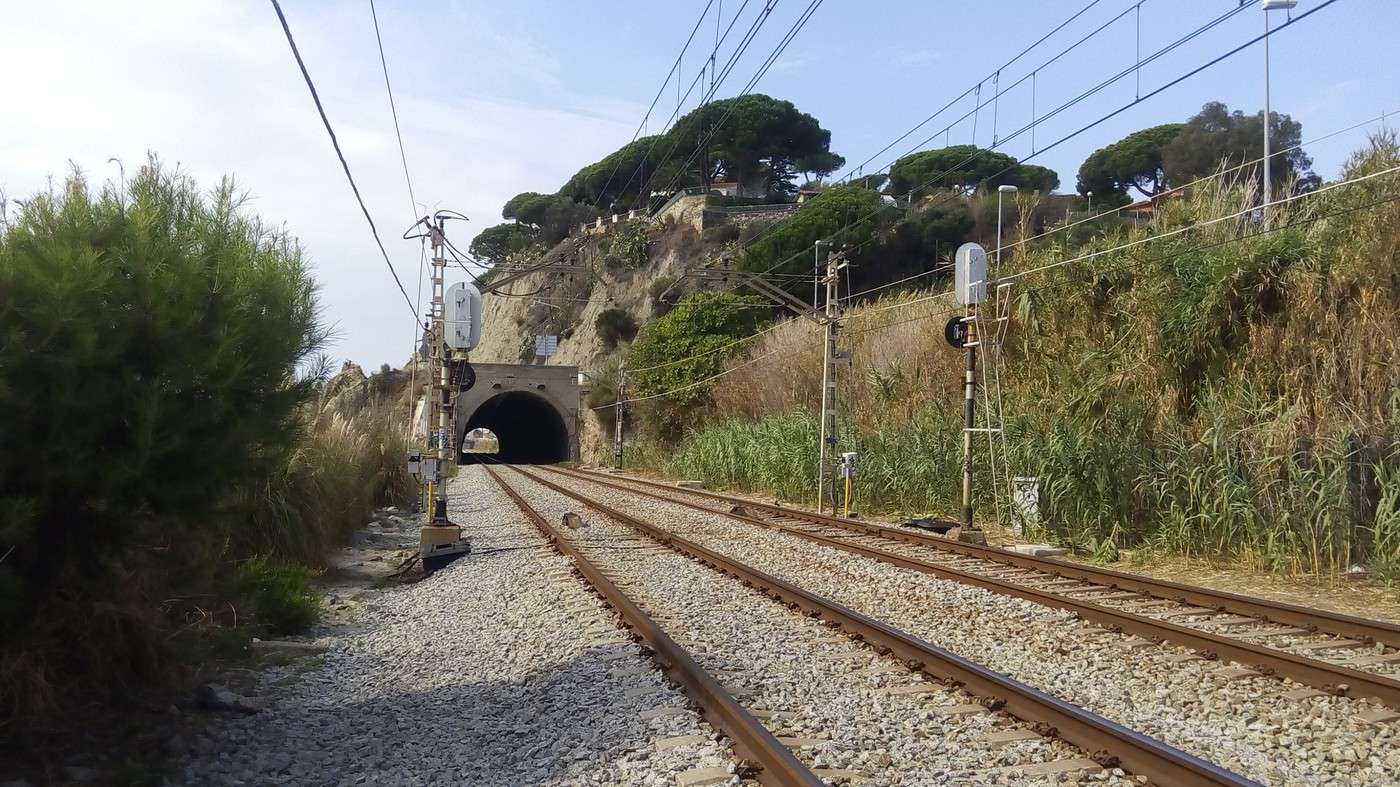
At 1:30 PM, we’ve only covered 30 km. With the railway running along the coast, we have no choice but to walk our bikes on the ballast, constantly seeing cyclists pass just above us. We squeeze through a tunnel between the tracks and the wall, ready to flatten ourselves against it if a train comes. Occasionally, a narrow strip of dirt or sand along the ballast lets us remount. Elsewhere, boulders forming a seawall force us to scramble. I’m afraid my MTB’s weight will drag me down, and Dominique helps me over obstacles after carefully propping his bike up.
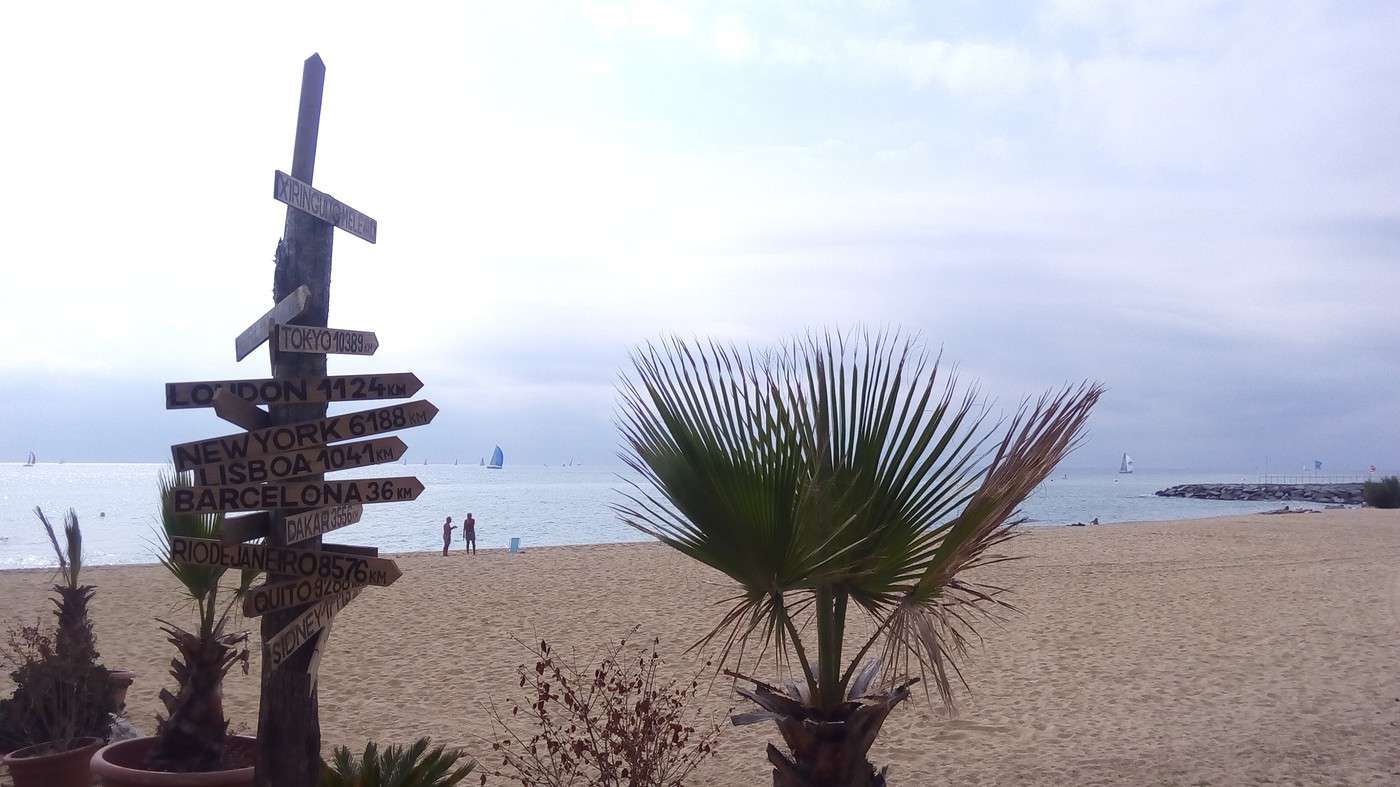
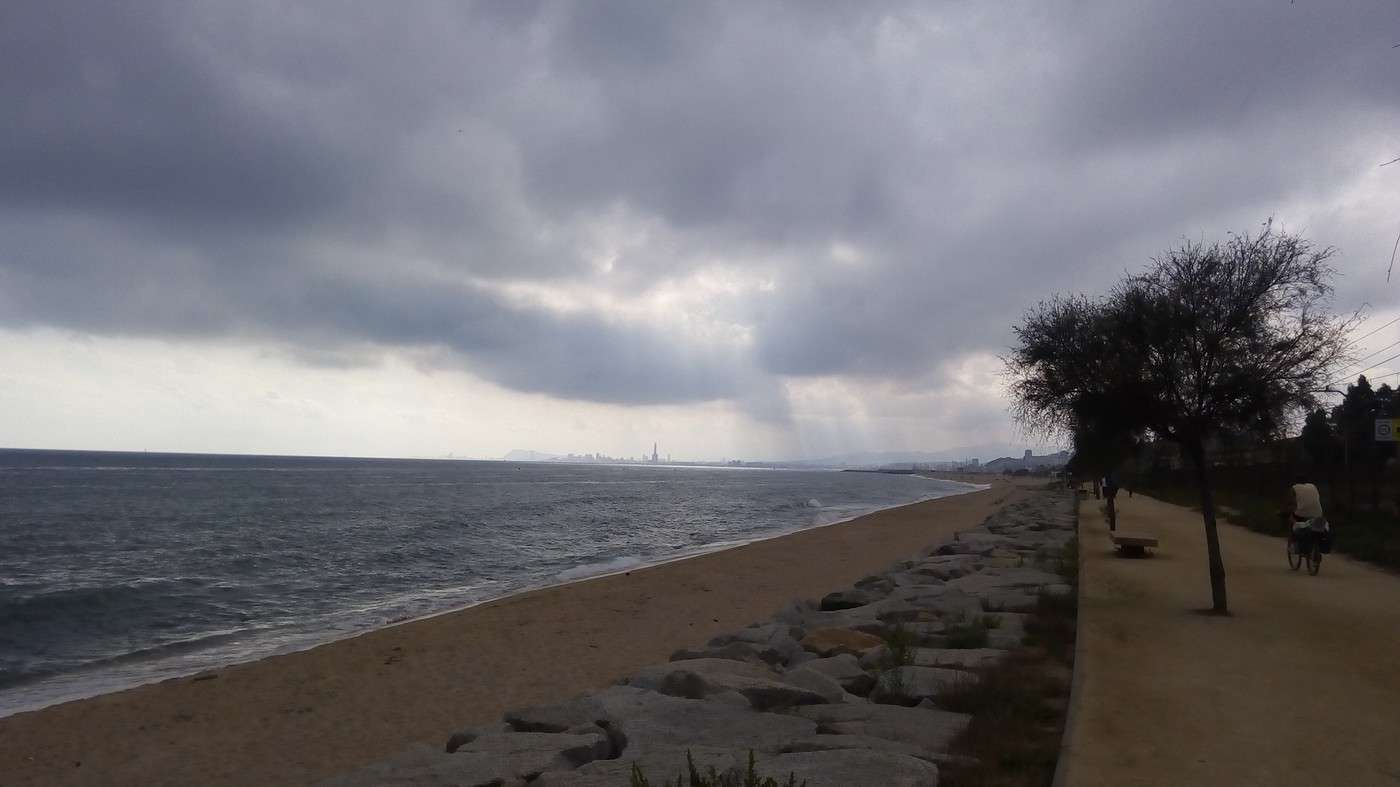
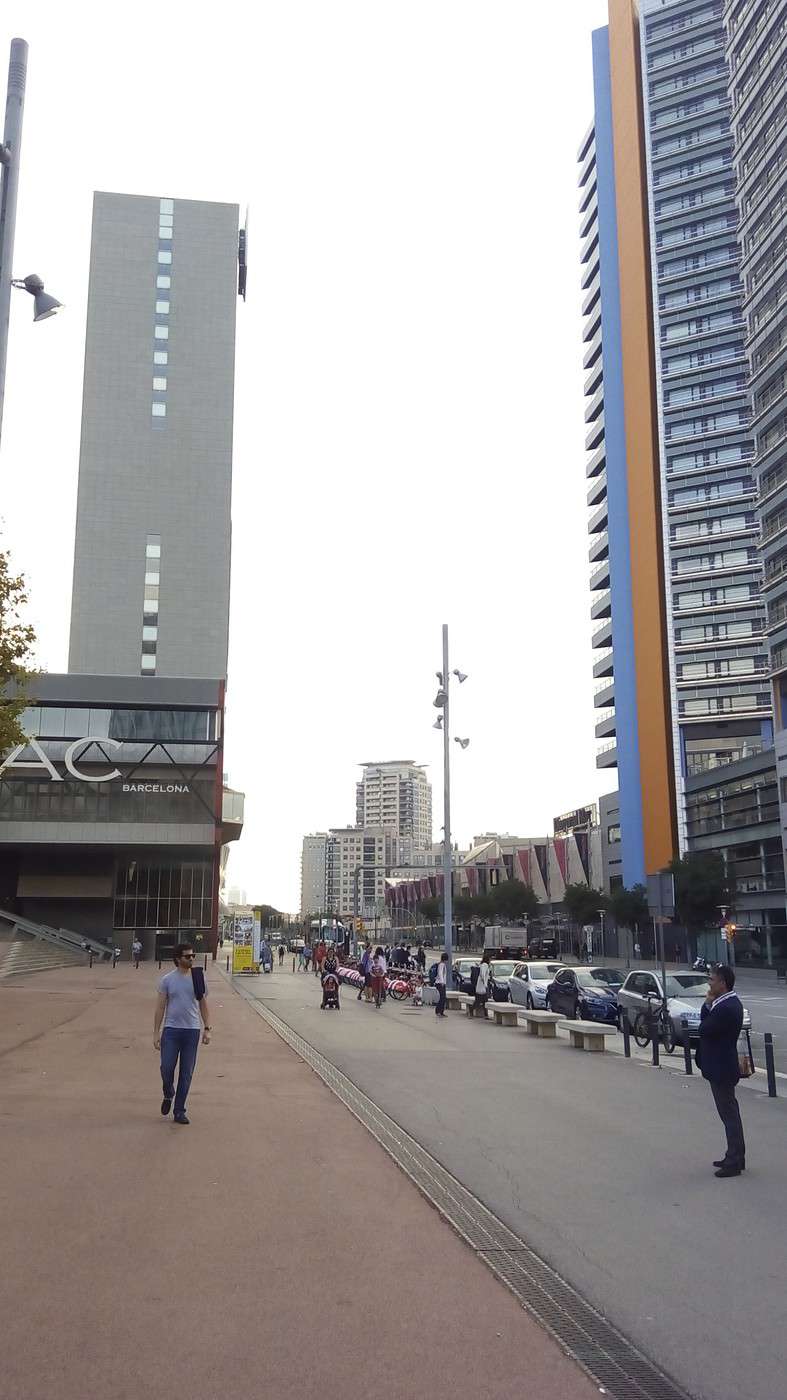
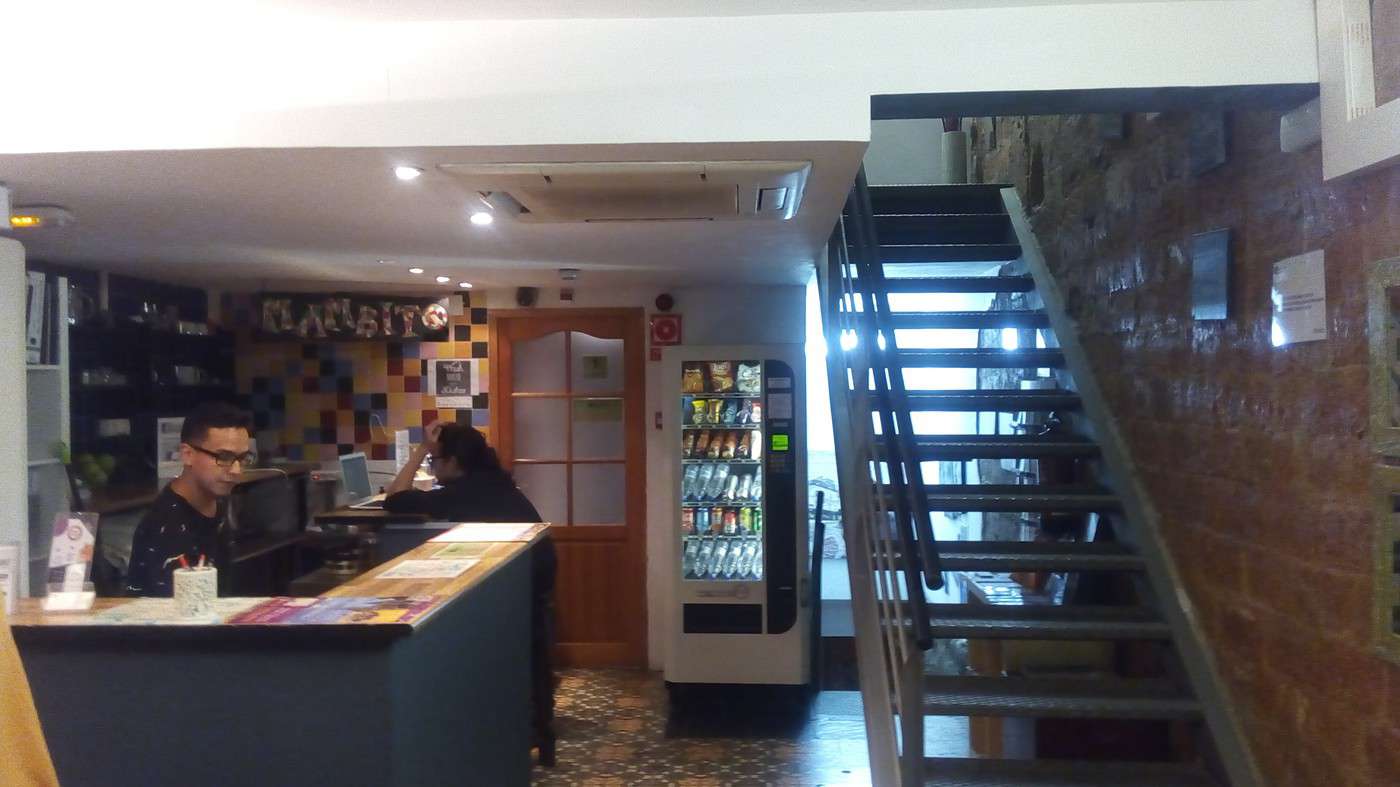
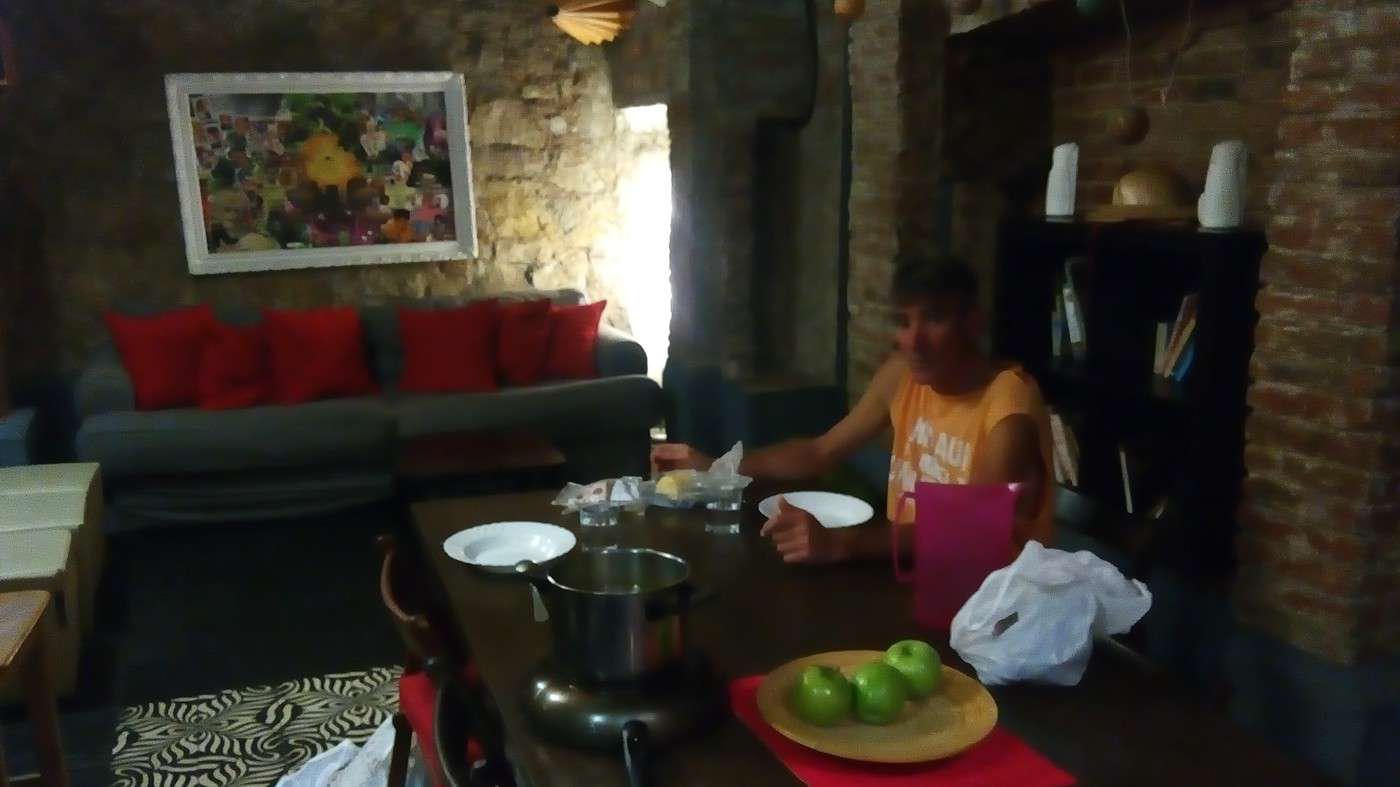
Finally, a promenade lets us cover the last few kilometers along the beaches, with Barcelona’s beach in sight, where clouds are dumping some showers. Like in any big city, we struggle to find our accommodation. Luckily, Dominique enjoys speaking Spanish. He wants to eat out, but I tell him it’d be a shame since the hostel has a kitchen and dining area. I’d rather use up the supplies I’ve been carrying for 696 km and save eating out for when we explore the city. The hostel is small—maybe forty beds—but very nice, well-equipped, and with a friendly vibe. We can leave our bikes in the hallway leading to the small laundry room. It even offers bland Chilean apples, while on the EV8, we passed orchards full of huge, delicious apples.
There’ll only be five of us in our room for the two nights: two young women whose nationality we don’t know, but they speak English with us; a French guy who arrived ten days ago and had his phone stolen the night before while partying with a Spaniard.
Biking (MTB) along the Canal between the Two Seas (France)
Facteur4 · 2016-11-05 · Message 225 of 310
Monday 03/10, up at 8 AM, left at 10 AM, back at 7 PM, 12 km on foot.
The night passed in almost total silence despite the open balcony door overlooking the inner courtyards where laundry hung on every floor (except for someone who asked me the time and I replied I had no idea, but it was still dark). This allowed us to recover from the grueling 76 km of the day before.
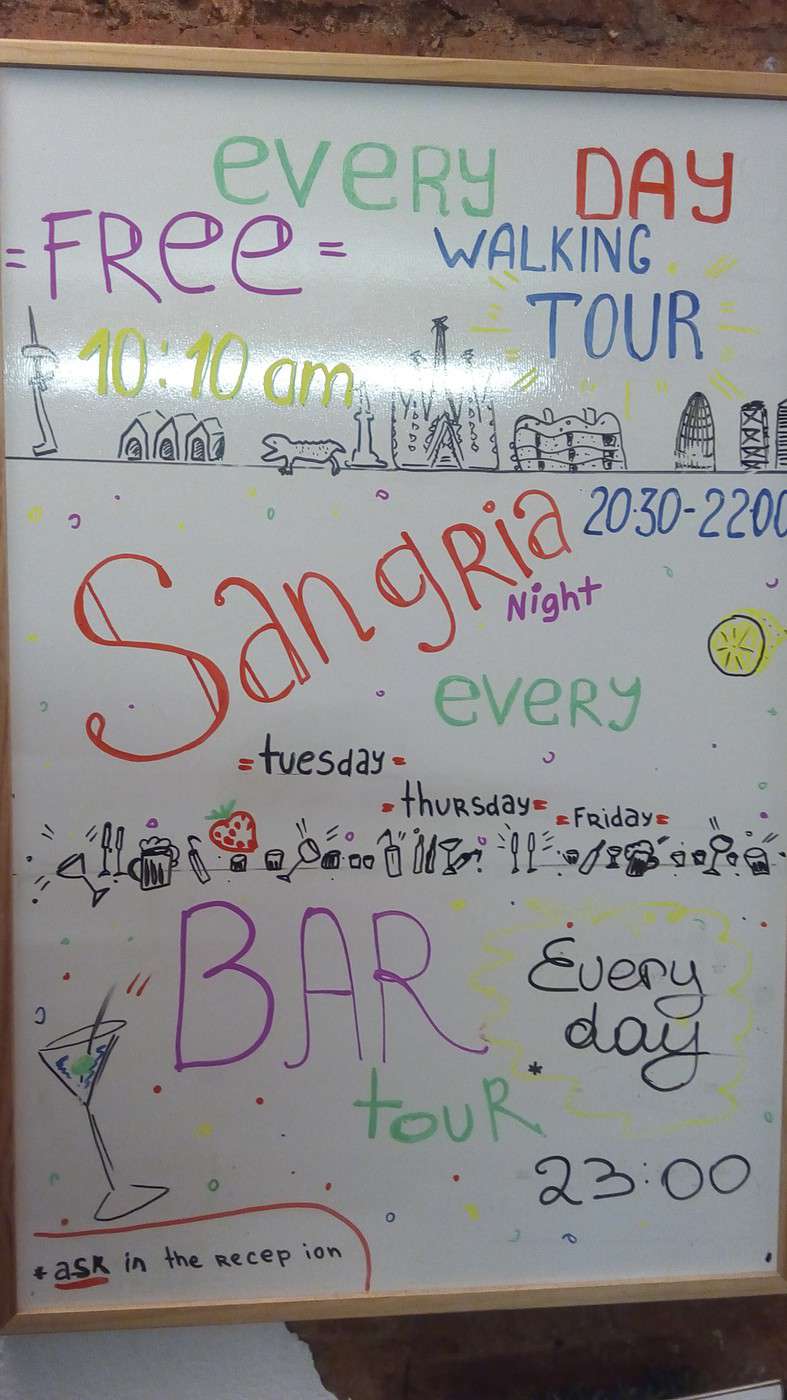
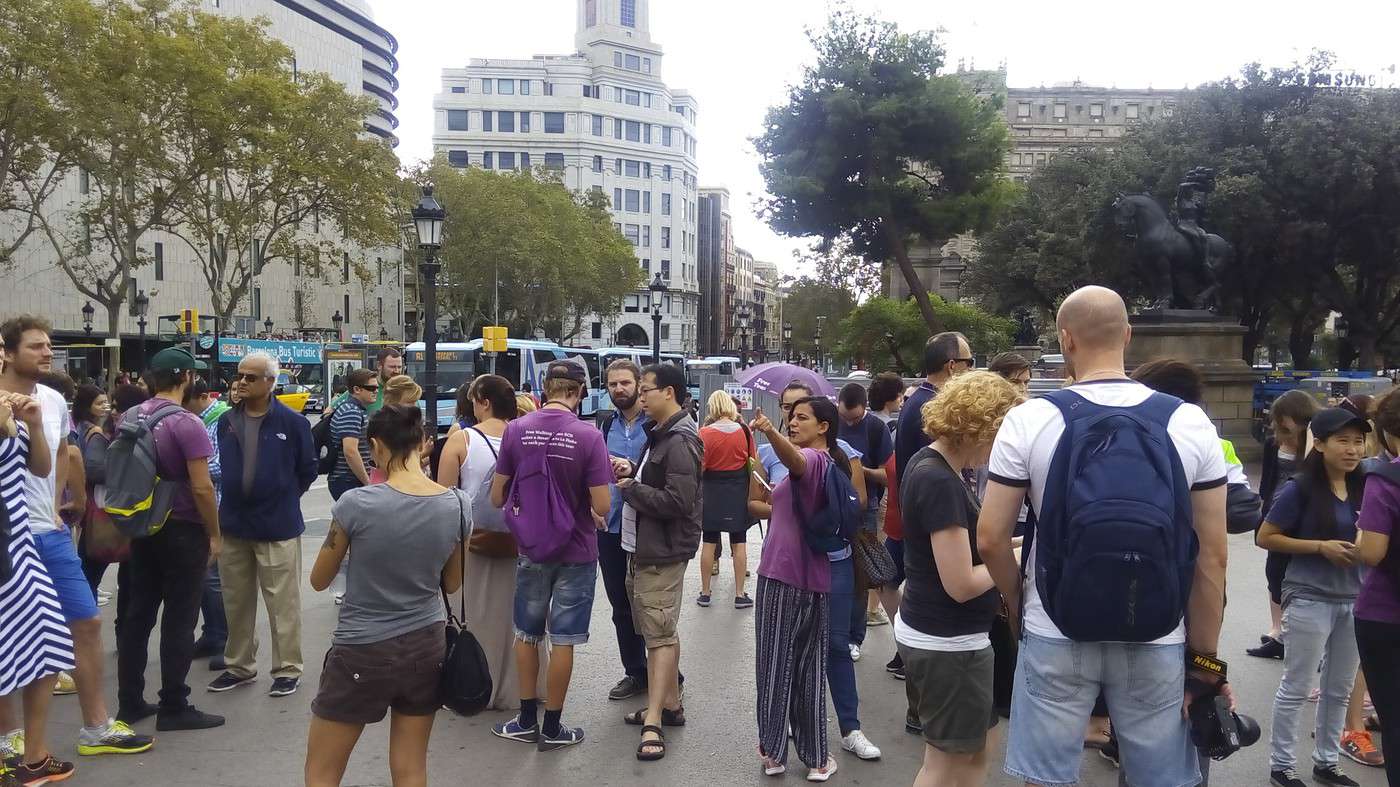
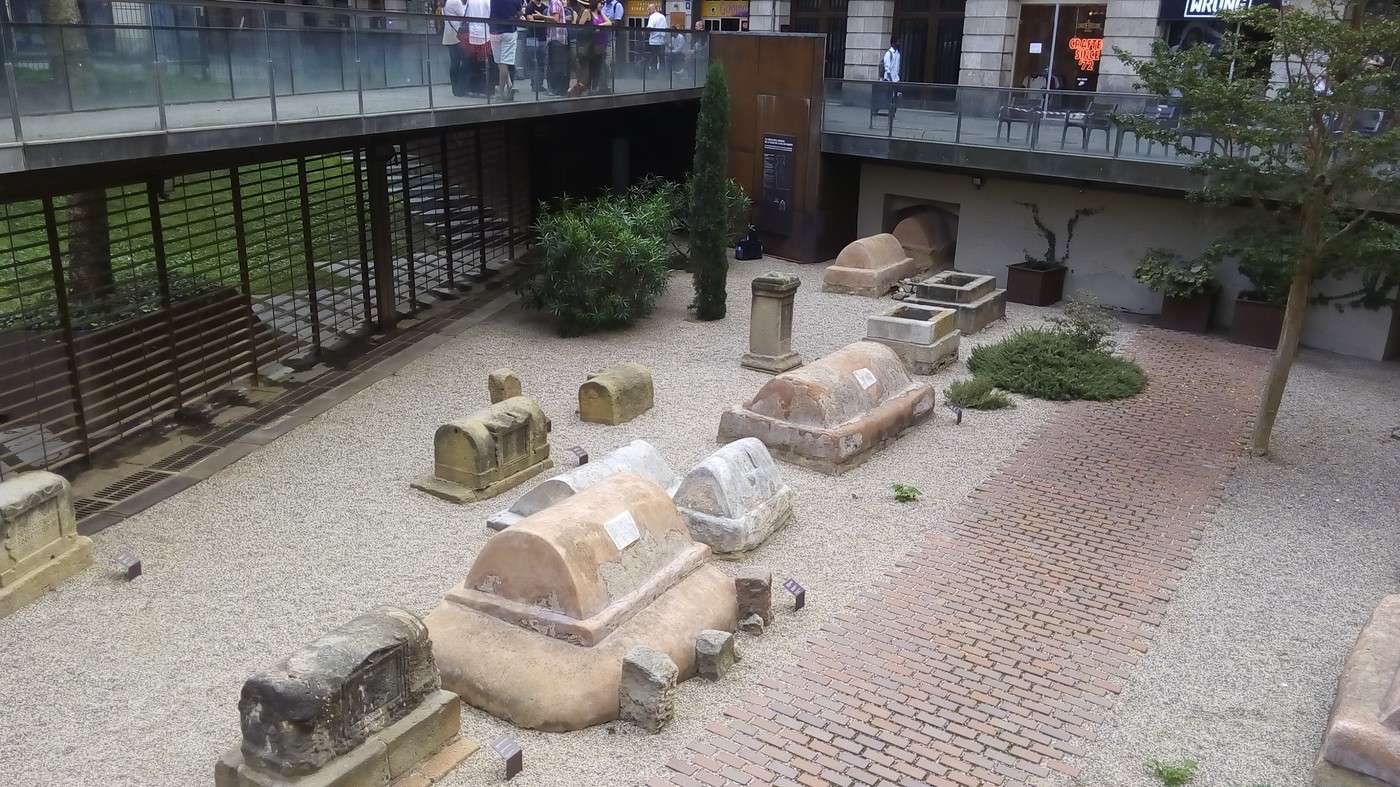
We waited for the guide who makes the rounds of 5 or 6 hotels every day for a "free walking tour" I’d spotted the notice for at the front desk. It was Marta who took us to Plaça de Catalunya, where all the guides from the "Purple Umbrella" organization converge. She speaks French, and we followed her on her pick-up route, which turned out to be fruitless. But on the square, there were 200 or 300 tourists and 7 or 8 guides. They offered a "Gothic tour" and a "Modern tour," as well as a bike tour, but none in French. Dominique offered to translate the Spanish for me, but I told her it would be too difficult to do simultaneously, so I chose the Gothic tour in English. Since he was afraid of losing me, he followed along. Quickly understanding nothing, he joined Marta’s group, which also passed by the Roman tombs. As for me, I didn’t understand much more except for a few historical tidbits.
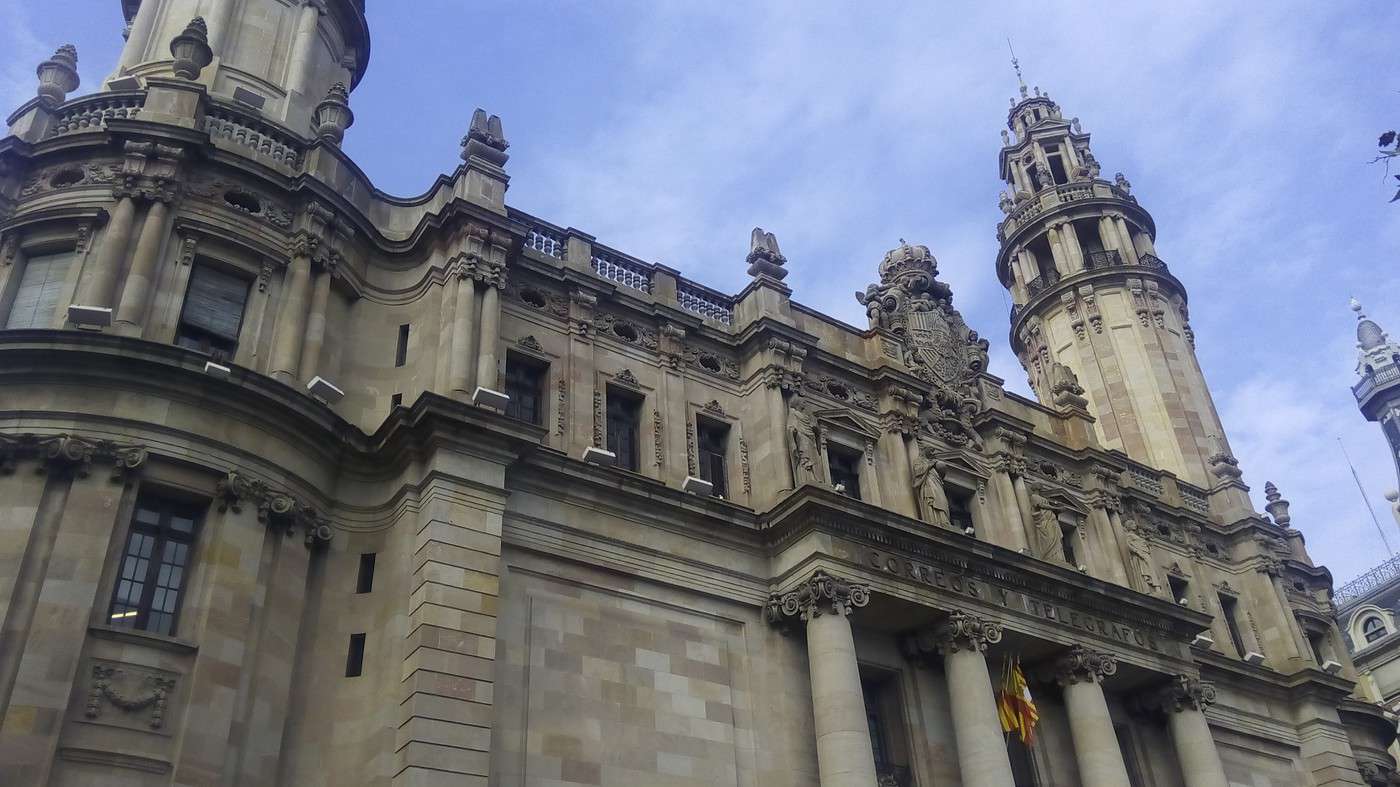
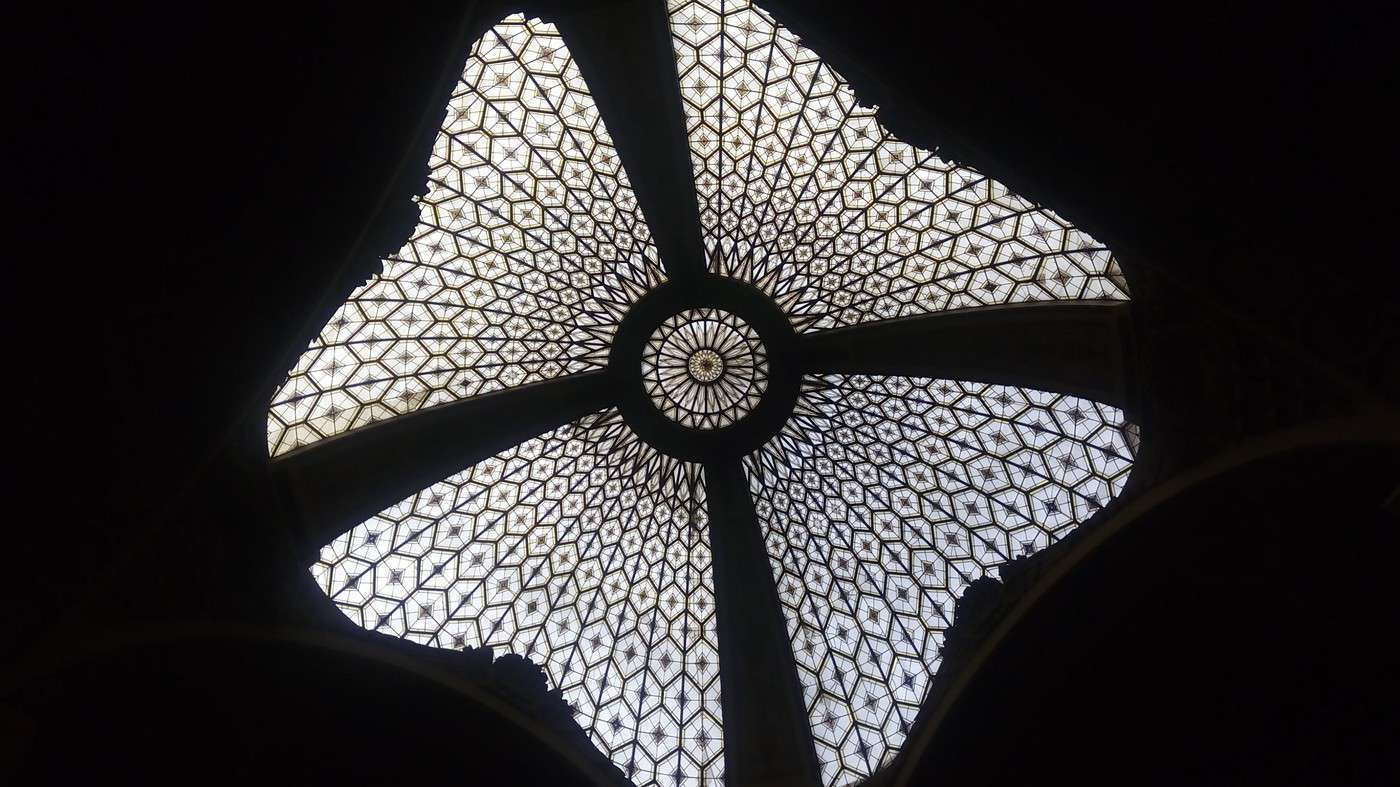
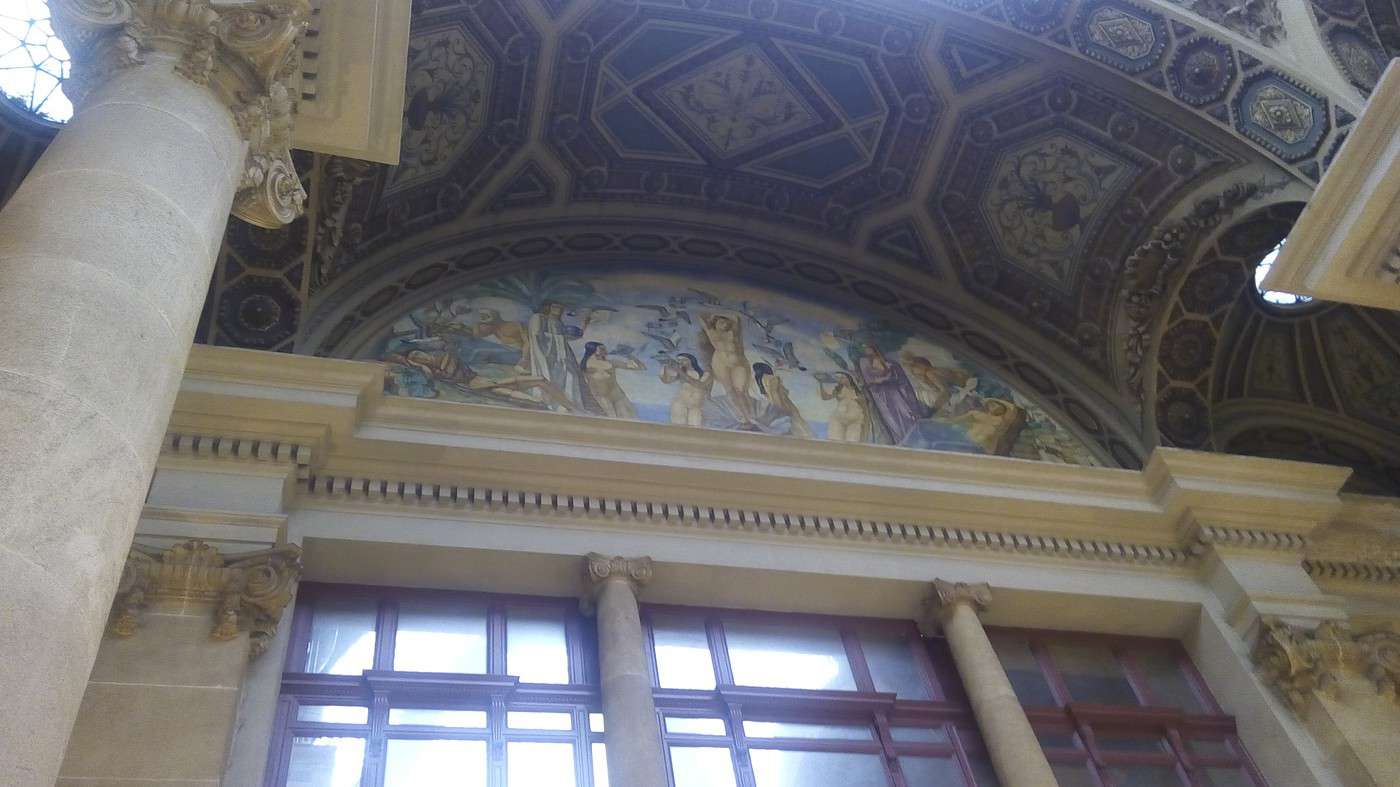
We reunited thanks to our phones after the tour in front of the impressive post office building. It looked like a museum with its frescoes and glass roof. I got some stamps there for France. It would be harder to find postcards—we didn’t see any all day. Dominique asked a salesperson in the shopping center located in the old arena, who suggested the FNAC. I had no choice but Antoni Gaudí, his
http://www.sagradafamilia.org/, and his monumental works.
Since it was my 57th birthday today, I wished for paella. Bad luck—during his Spanish tour, Dominique saw some for 10 €. I ended up with a pan of rice swimming in oil, 2 mussels, and 3 pieces of squid to "test my teeth." Still, he’d asked a local who’d recommended a paella nearby for 20 €. I can’t be disappointed—I got what I paid for.
As we decided not to continue to Valencia—our progress had been slowed by the elevation changes, headwinds, and sightseeing—we headed to the main train station. There, we were told that the TGVs to France don’t accept bikes. We’d have to take a regional train from the other station. It took nearly half an hour to figure out the connections in France. The funniest part was that the Renfe employee gave us the info from the Deutsche Bahn site—the German railway company is known among travelers for having all the schedules.
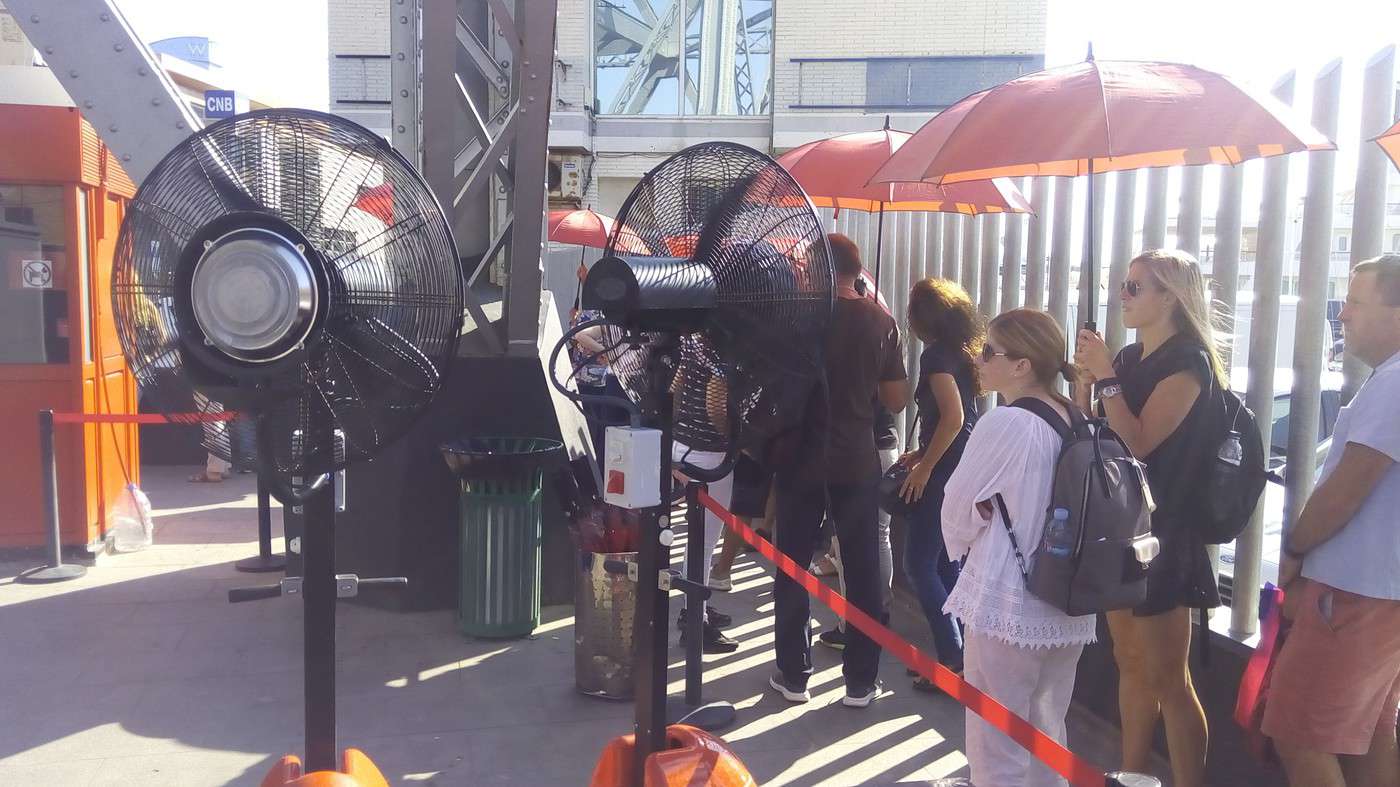
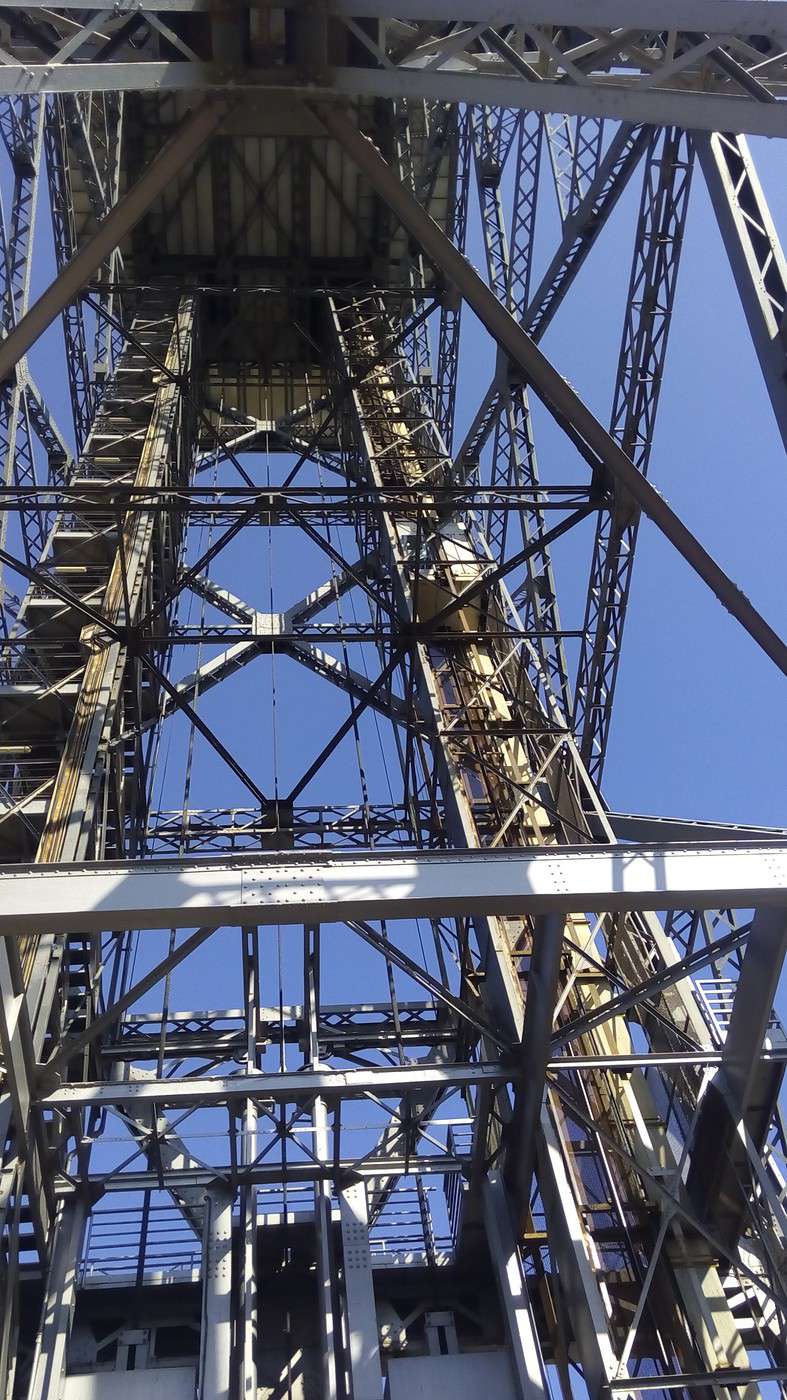
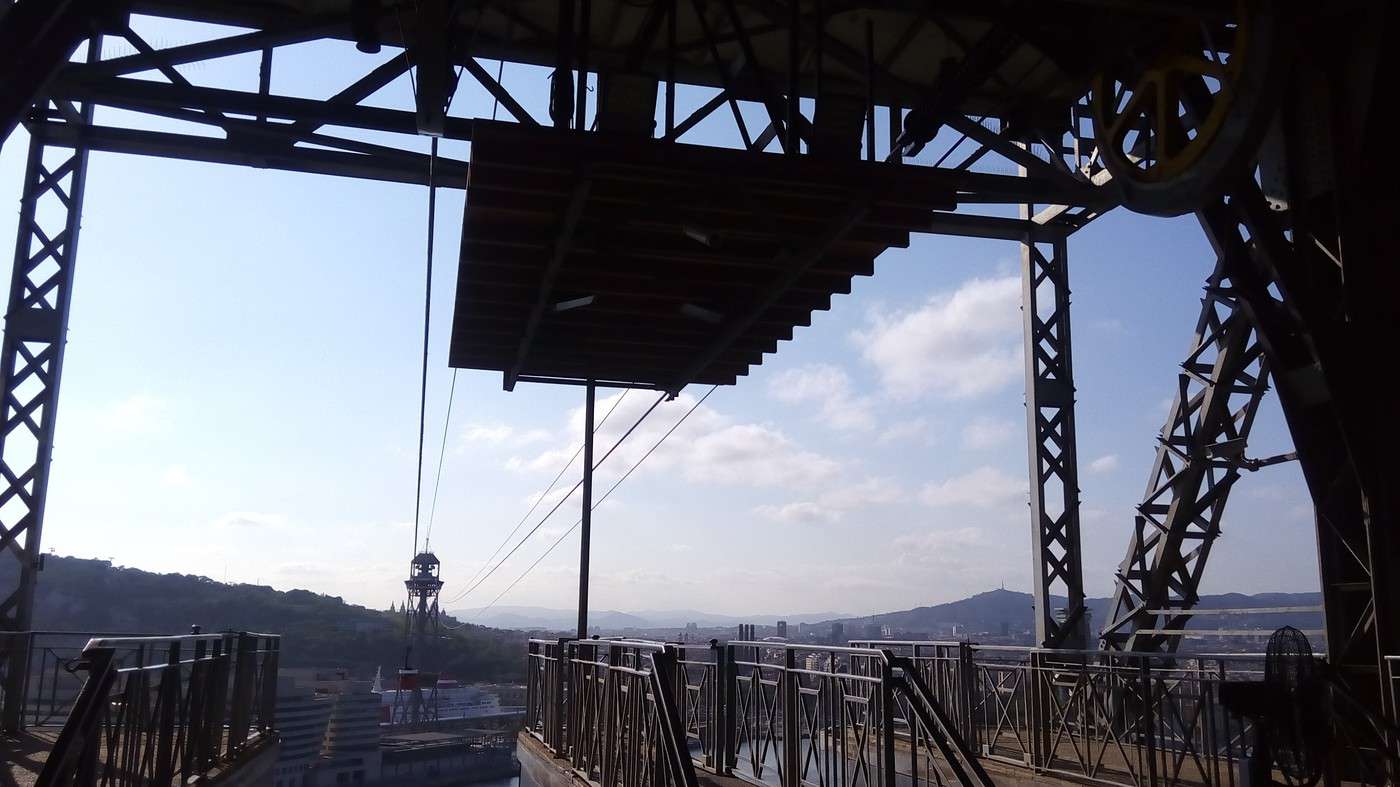
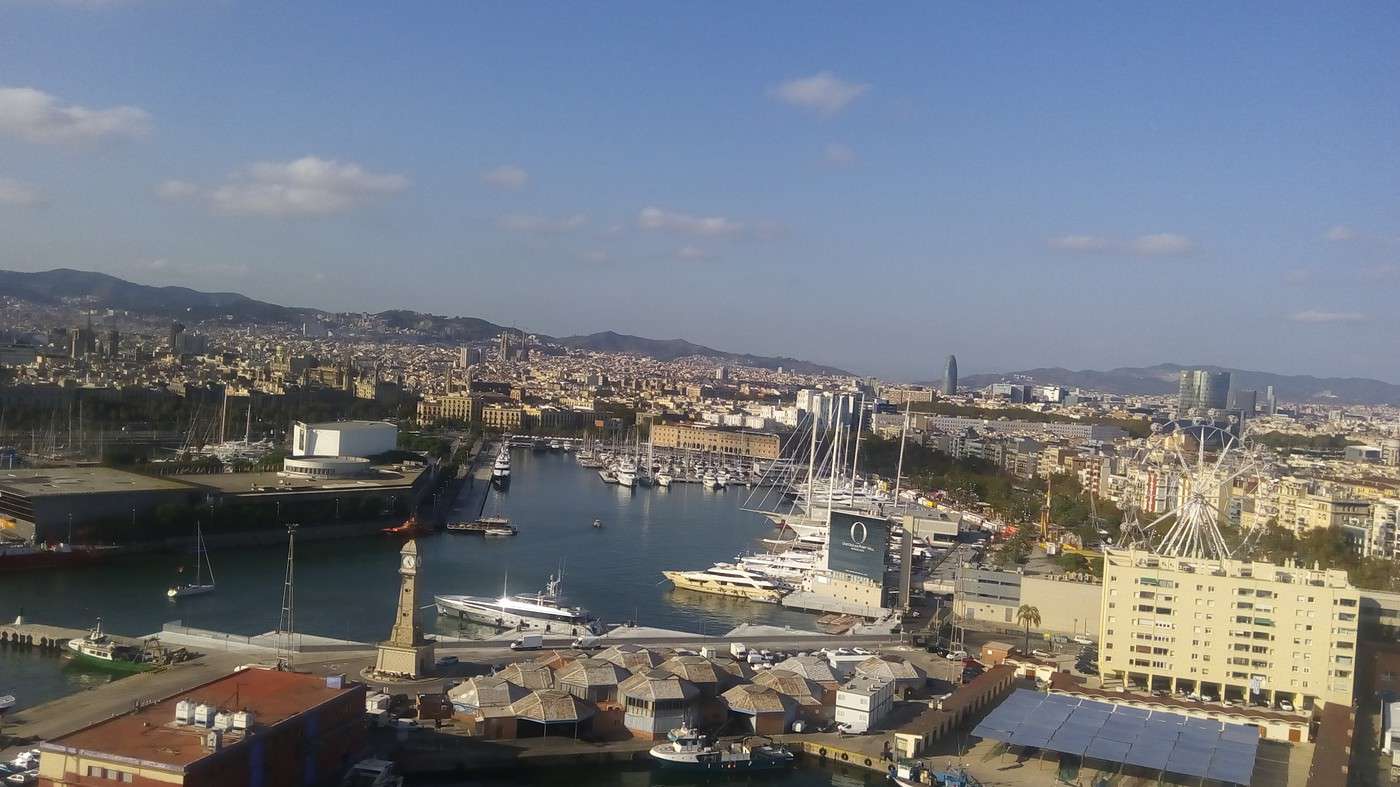
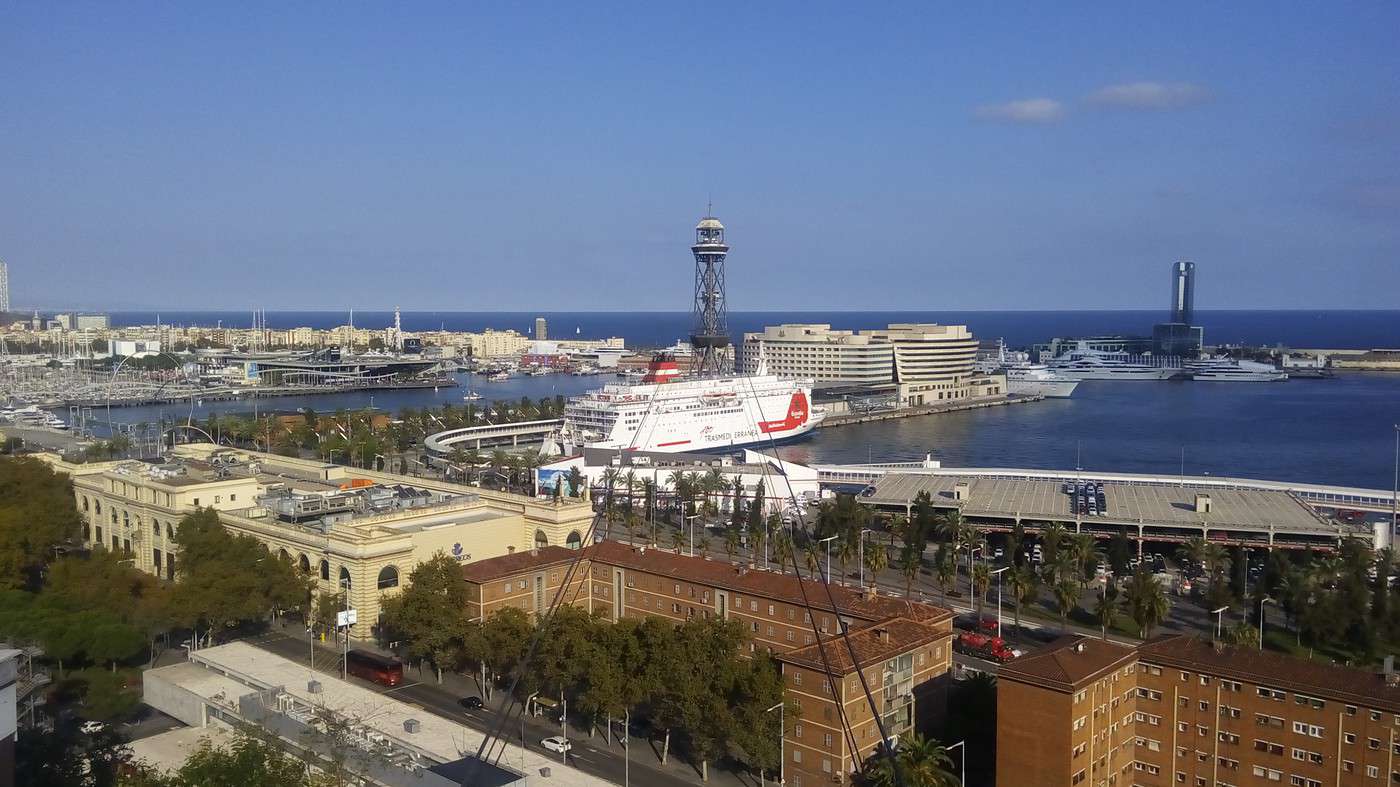
To mark my birthday, we treated ourselves to a cable car ride across the port, offering a view of the whole city under the sun. It was only 26 °C, but the line was equipped with fans and free parasols (I thought about how we’d declared a heatwave in France this summer, and African countries must’ve been laughing).
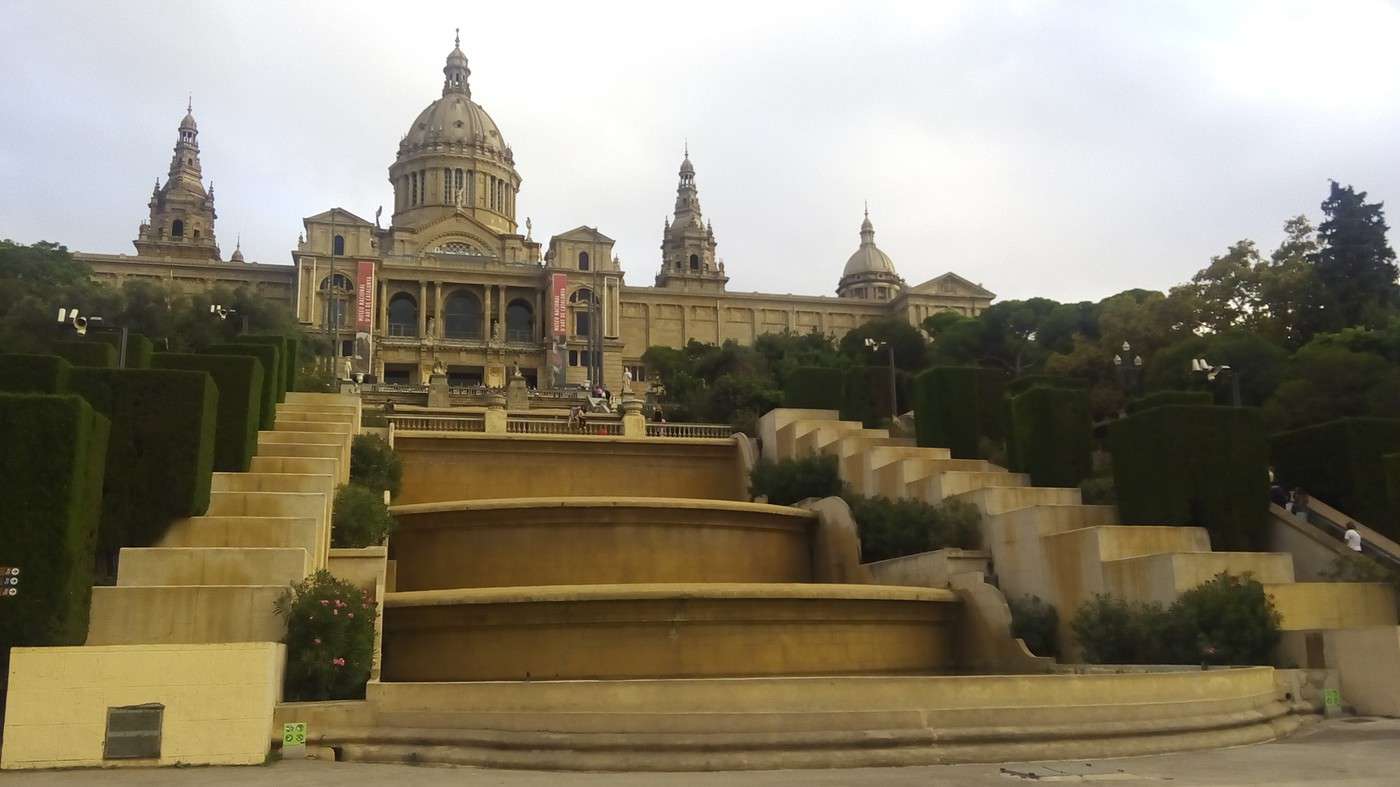
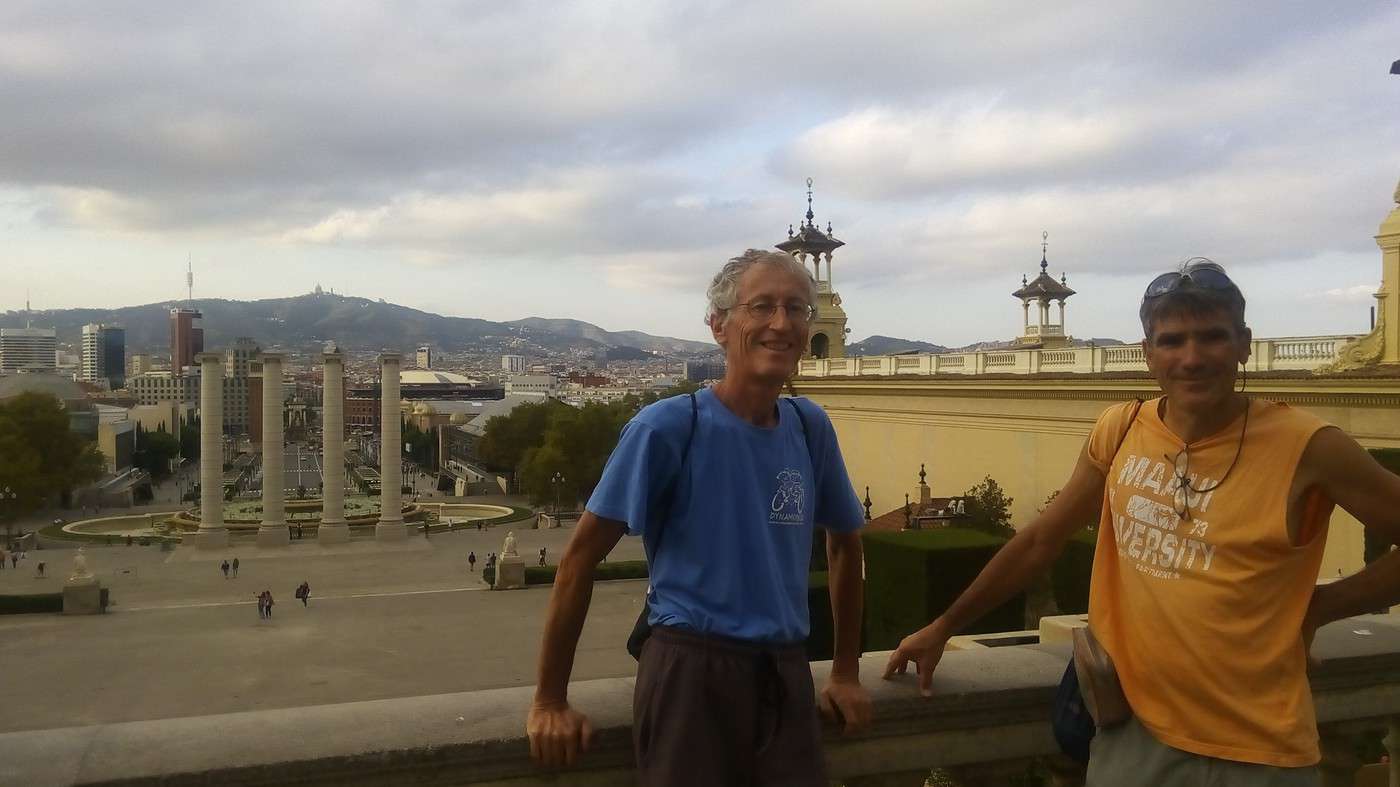
For 11 €, we got an elevator to the boarding platform and a one-way ride. We had plenty of time to enjoy the view of the port while waiting and the city during the crossing. We arrived at Miramar Park, then walked to the Museum of Catalan Art, whose impressive buildings Dominique had spotted from the port. Unfortunately, it was closed on Mondays. We had a couple take our photo in front of it—they’d asked us to take one of them with the city in the background. Then we walked back down to the city via the stairs lined with monumental (but currently dry) waterfalls. We found Sants Station, which was also large and bustling. In this modern, well-lit building, we confirmed our trains for the next day with another check of the DB site. But we couldn’t buy the ticket! We’d have to get it at the counter just before departure, as the agent indicated. All that was left was to head back to the hostel, mapping out tomorrow’s route. The bars were already getting lively, and soon the trash cans would overflow with cans, as they do every day.
Biking (MTB) along the canal between the two seas (France)
Facteur4 · 2016-11-05 · Message 226 of 310
Tuesday 04/10, up at 7:30 AM, 7 km by bike, 434 km by train.
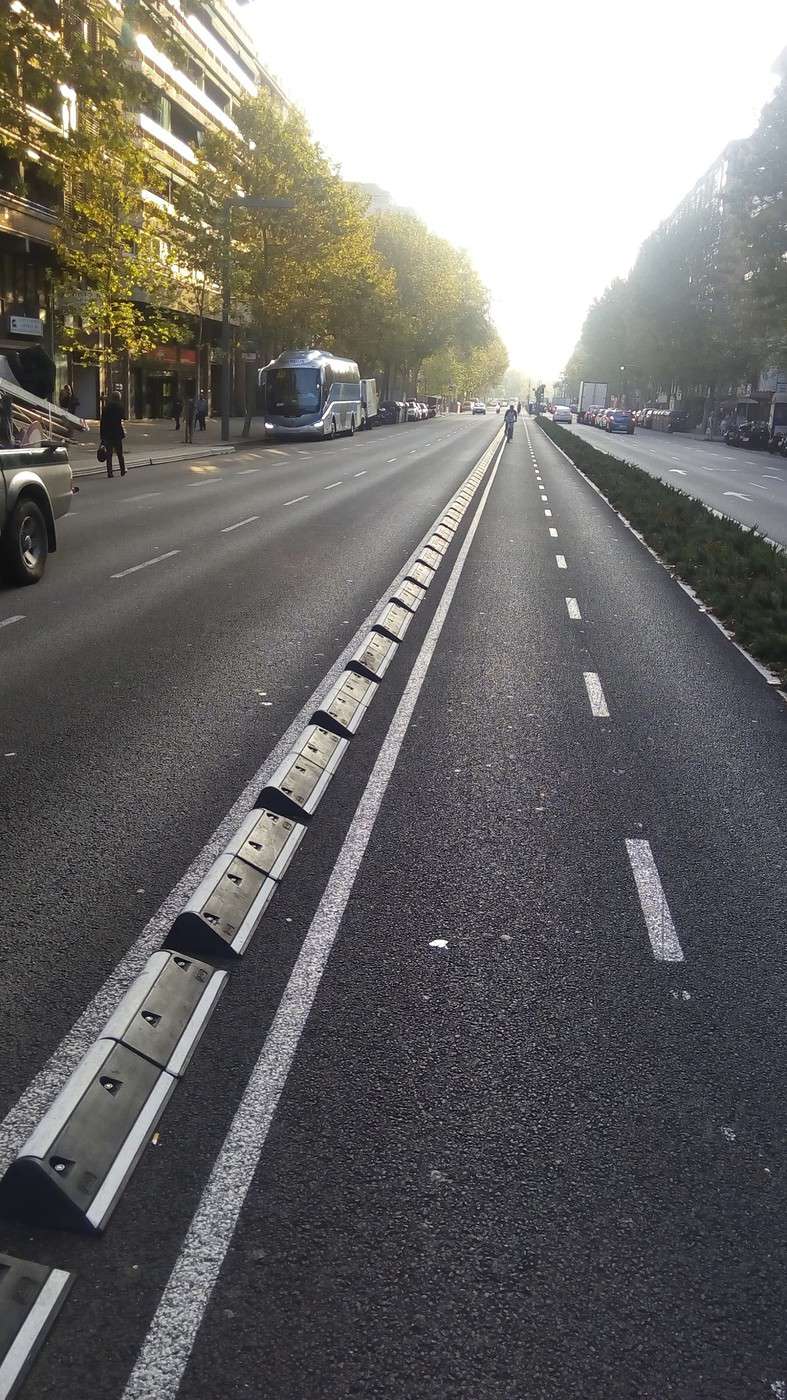
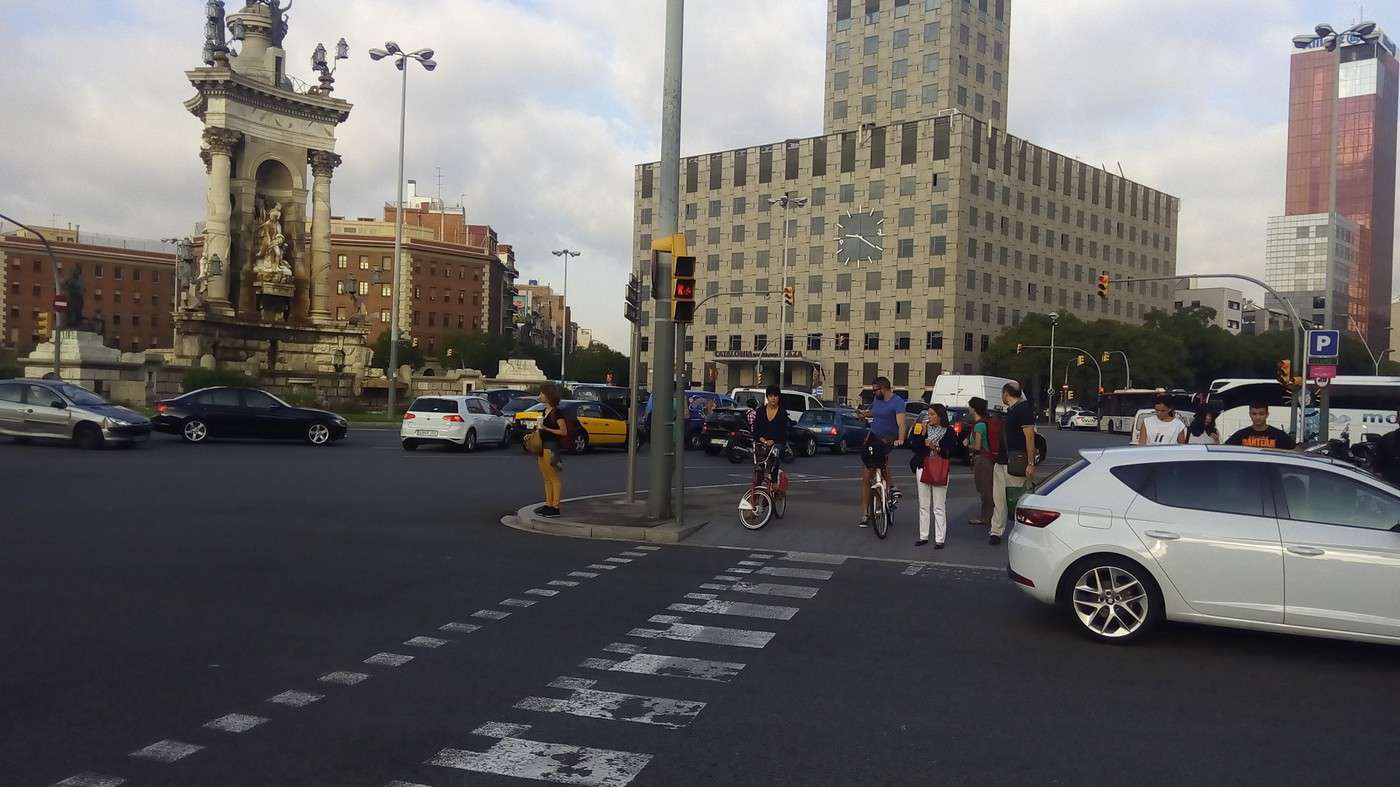
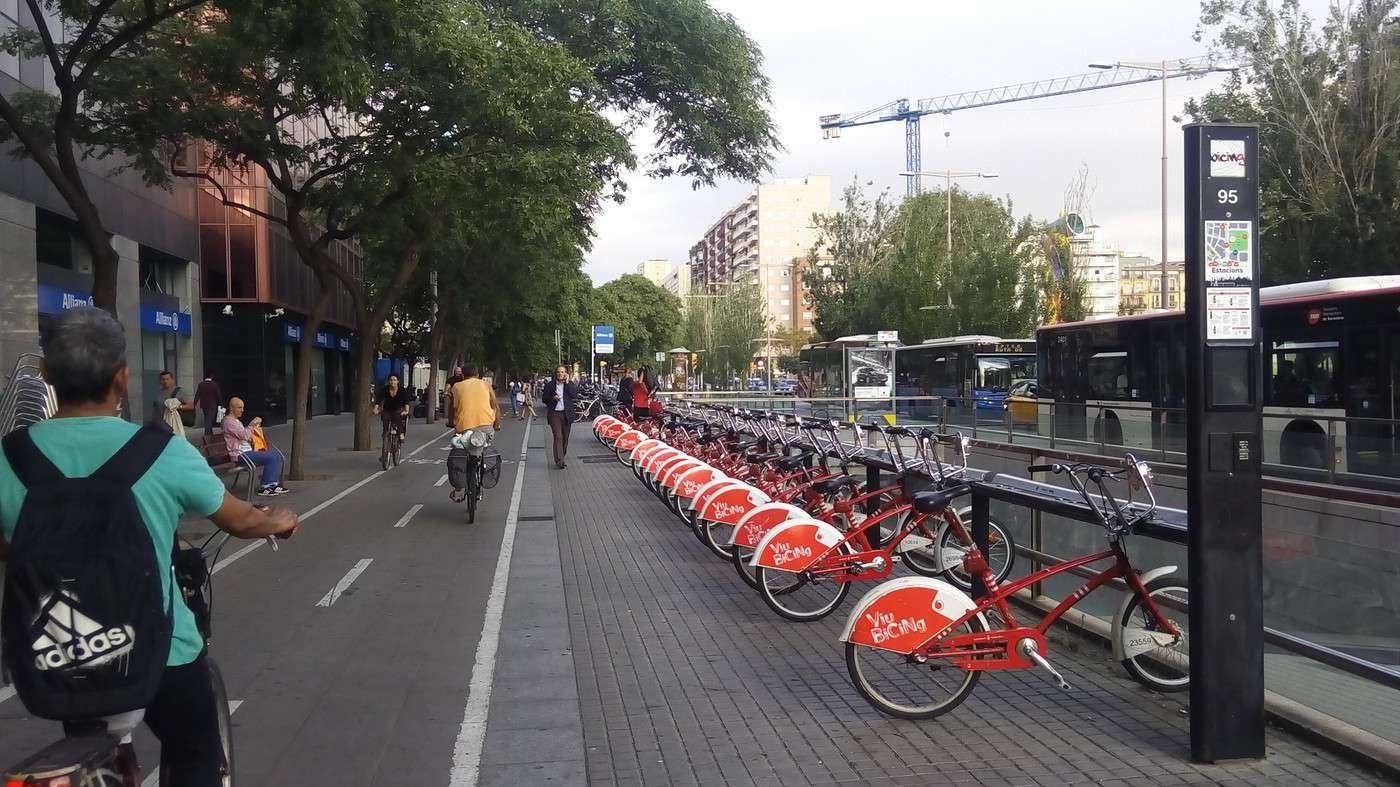
After breakfast, we carefully gather our things so as not to disturb the girls. The French guy once again spent the night in the living room, enjoying the sofa, AC, and Wi-Fi without bothering anyone. While I hadn’t noticed much bike infrastructure, we cover the 2.7 km to the station on bike paths. The first is in the middle of Latérale Avenue, and the second on the wide sidewalk of Tarragona Avenue. Passing by one of the stations, I notice that the city’s rental bikes are small. We arrive at the station an hour before departure. The ticket agent is furious because Dominique first said I’d pay by card. And so am I—before crossing the border, I’d withdrawn 600 € to avoid bank fees. Especially since the Banque Postale ATM gave me 30 twenty-euro bills. Back home, when I withdraw 80 €, they give me a 50 € bill that I don’t know what to do with (if I need to pay more than 20 €, I use a card). Since we’re not going all the way to Valencia, I still have a lot of cash, which is why I offered to pay for the train—even though I’m not behind in our shared accounts (Excel file). Actually, we should’ve used a card if we’d used a machine, but definitely not at the counter! For 164 km that aren’t even listed on the ticket, we only pay 13.50 € per person.
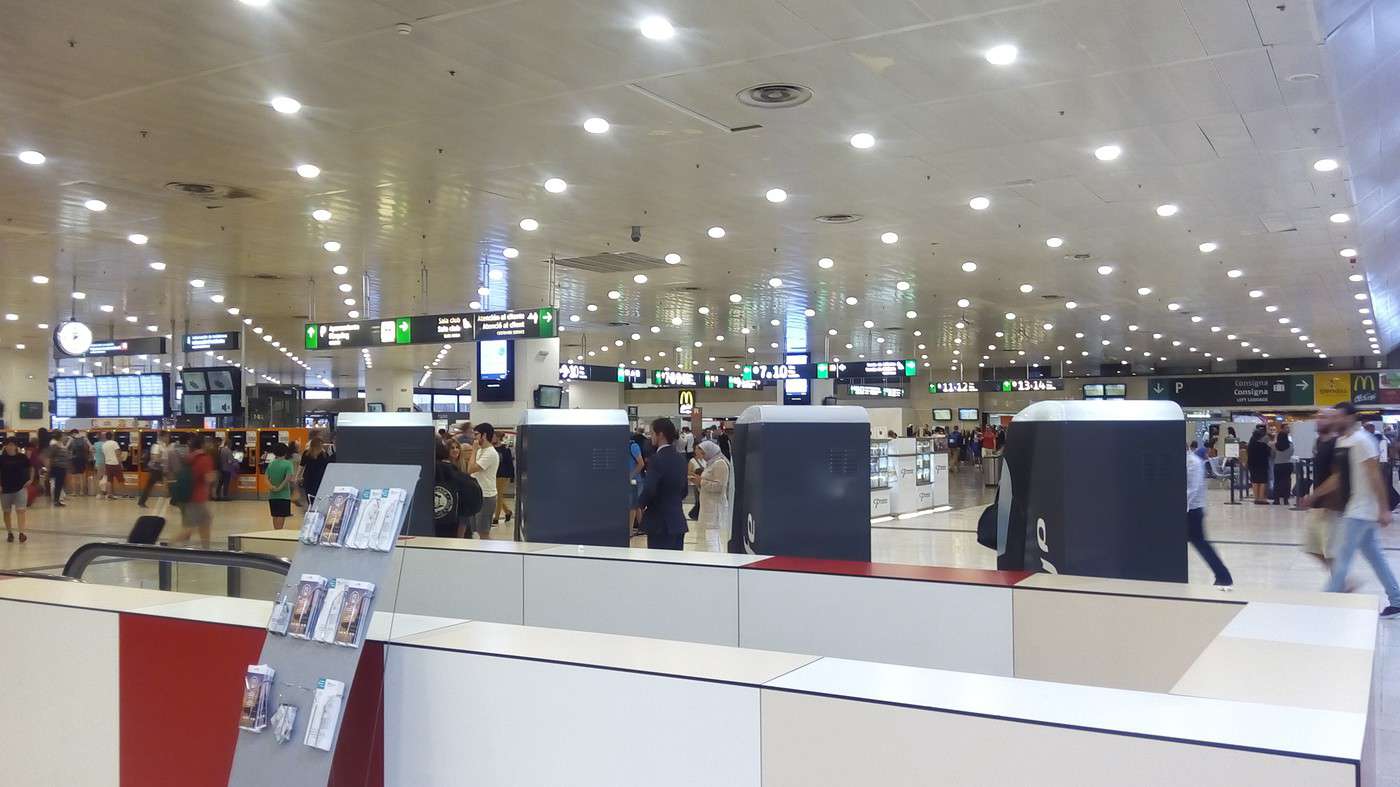
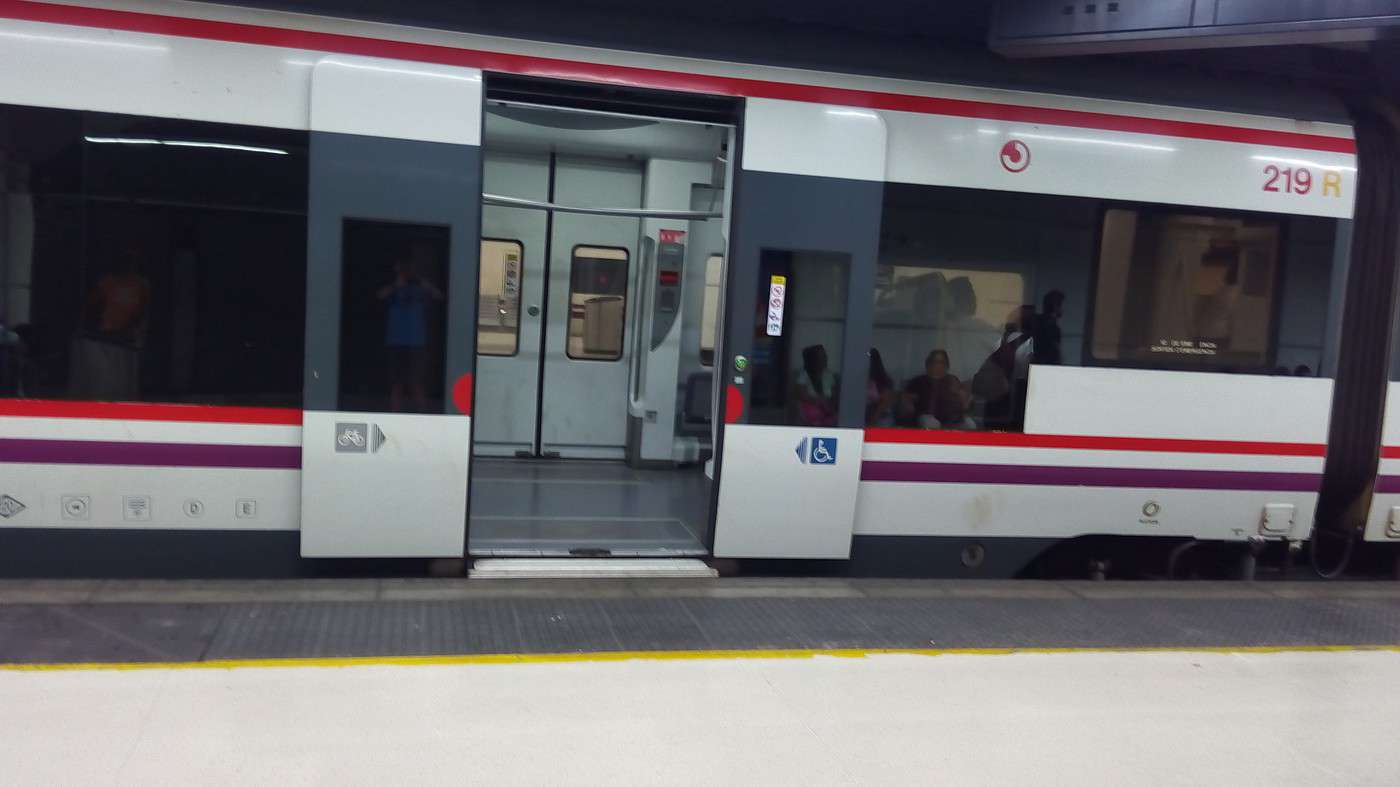
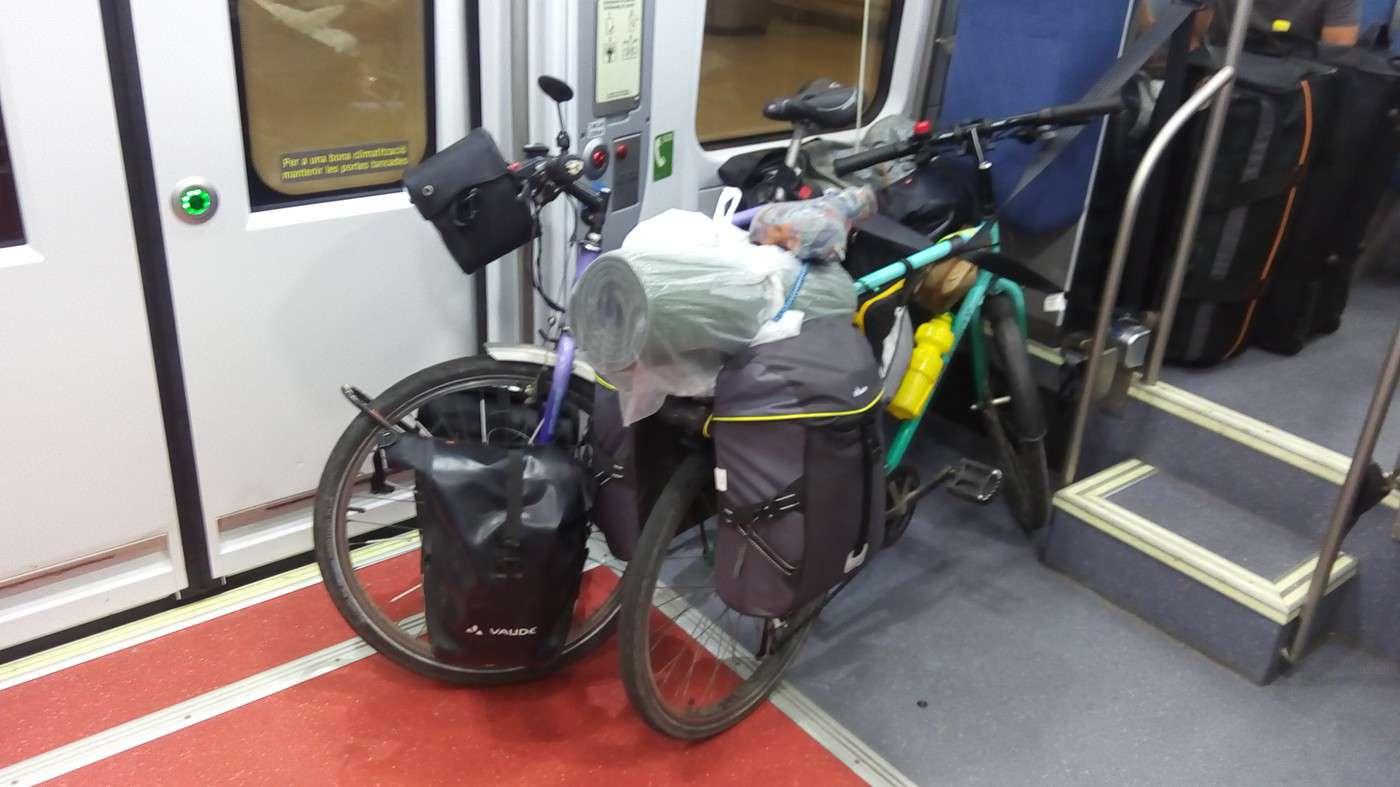
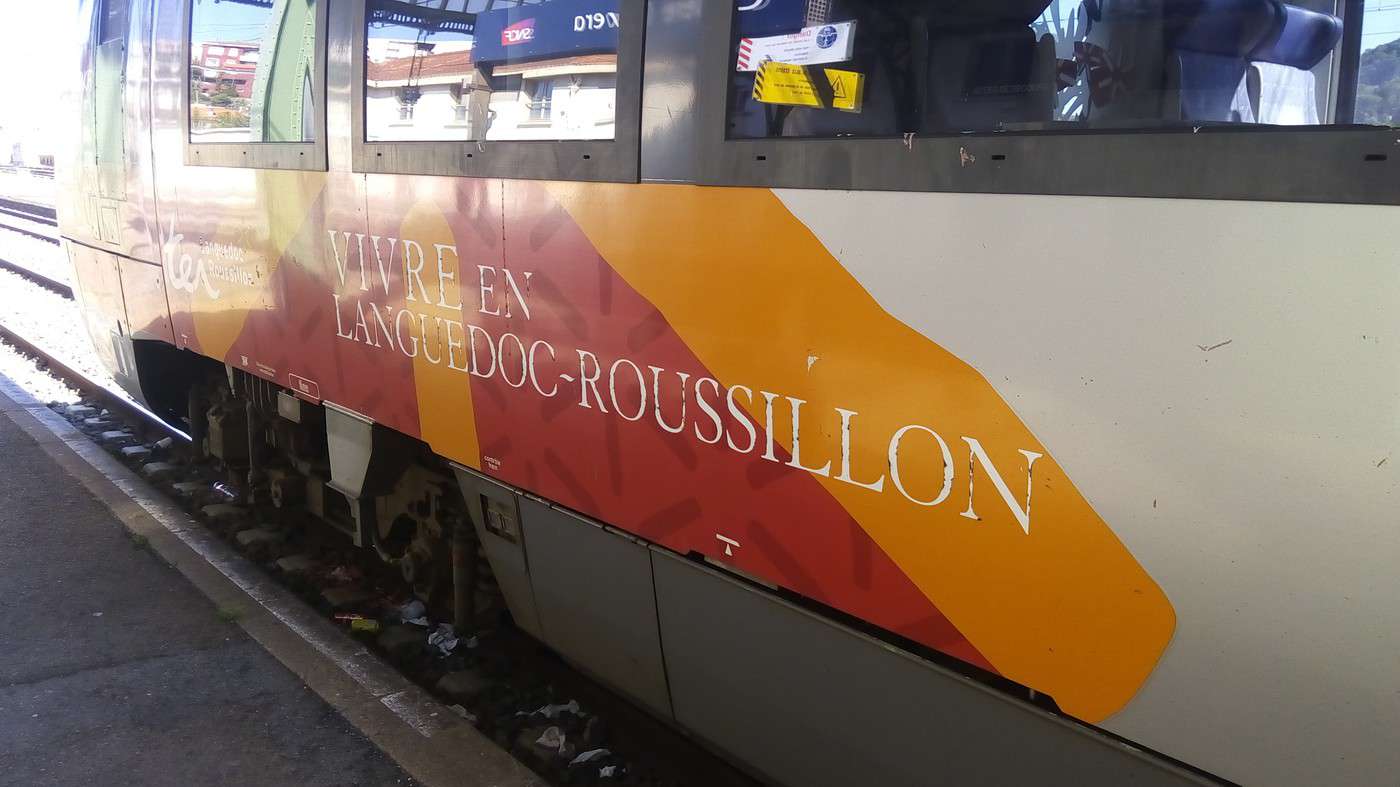
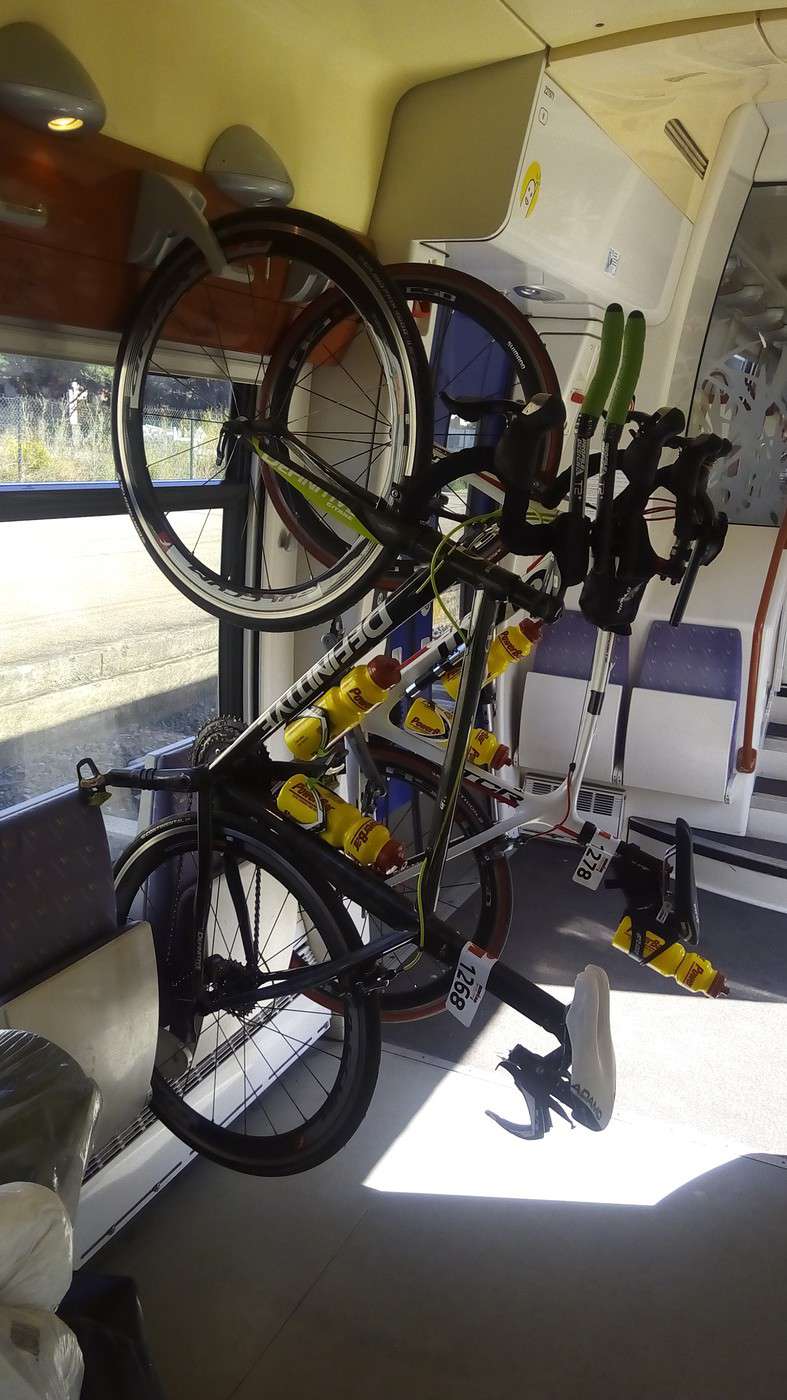
We grab a drink before the train is announced. The station is very modern, but that doesn’t stop the elevator from being out of order. I’m in an awkward position carrying the MTB down the escalator. On the other hand, boarding the train at platform level is perfect. There are two spots for wheelchairs with seatbelt restraints that are also accessible for bikes. This regional train first goes through a long tunnel and makes many stops. With its frequency, it reminds me of the RER. Then we see the coast we’d traveled earlier before the train heads inland to serve Girona. Fans are out more out of habit than necessity. After about fifteen stops, we get closer to our bikes. An elderly woman with her shopping basket struggles to get off—the door stays stuck despite Dominique’s help. Apparently, you had to press the button with the wheelchair symbol. She gets off at the next stop, Roses. In Cerbère, a group of French police ask for our IDs. But there’s no ticket agent at this hour to sell us an SNCF ticket, nor any machine. I ask a cleaner, who tells us we can buy one from the conductor. A fellow traveler confirms this. After scrambling up and down the stairs to get to the platform, we board the train through the door marked with a tiny bike symbol. A couple has already spread out their stuff. They complain about being directed south by SNCF staff when they want to go east in France. In fact, they’ve just been turned away at the border. We try to explain that to get there, they’ll need to take a train to Paris after changing in Perpignan (which the conductor already told them), but they don’t know anything about French geography, and the guy doesn’t even seem to know how to read. He doesn’t look at the TER sign where we point out Perpignan. The girl begs to borrow a phone to call her mother-in-law. Dominique, always ready to help, offers to dial the number, which does start with 03. But he realizes we’re still on the Spanish network. So she uses my smartphone to ask her mother-in-law for train schedules. After 20 minutes of back-and-forth (she even asks her to order a taxi), I take advantage of the conductor’s arrival to get my phone back. She immediately complains that I scratched it when I took it from her. But the SNCF agent has already spotted the pair and reminds them he can make them get off at the next stop. He tells us he has no way to penalize passengers without money. His instructions are to let them travel (at our expense) as long as they don’t bother other passengers. He admits he has to act like a social worker. He congratulates us for trying to help and doesn’t ask for our tickets. Before Perpignan, my “friend” starts dozing off just when we need to change direction. We remind her, but she’d rather eat the cookies Dominique just gave her. He helps them with their “luggage.” I wouldn’t have given a cent to someone ready to drag me to court for helping them. Plus, she kept me from chatting with the two French cyclists who’d hung up their bikes. They’d just finished the Ironman in 13 hours (over 15 isn’t counted). They remember seeing two bike tourists (us).
In Narbonne, my *Liberté Pass* (20 €) gives me 25% off on weekdays and 50% off during school holidays and weekends in Midi-Pyrénées, but it doesn’t get me any discount here. Even though we’re now in the same region. 26 € for 150 km—that’s exactly double what it costs in Spain. Spain’s better at managing its regional trains. (Lucky we didn’t end up paying for Cerbère–Narbonne.) We arrive in Toulouse at 6:08 PM as planned. This time, we’re staying at Dominique’s son’s place.
Biking (MTB) along the canal between the two seas (France)
Facteur4 · 2016-11-05 · Message 227 of 310
Wednesday 05/10, up at 6:30 AM (to let the young folks go to work), Toulouse at 9 AM, Valence d’Agen at 5:30 PM, 91 km.
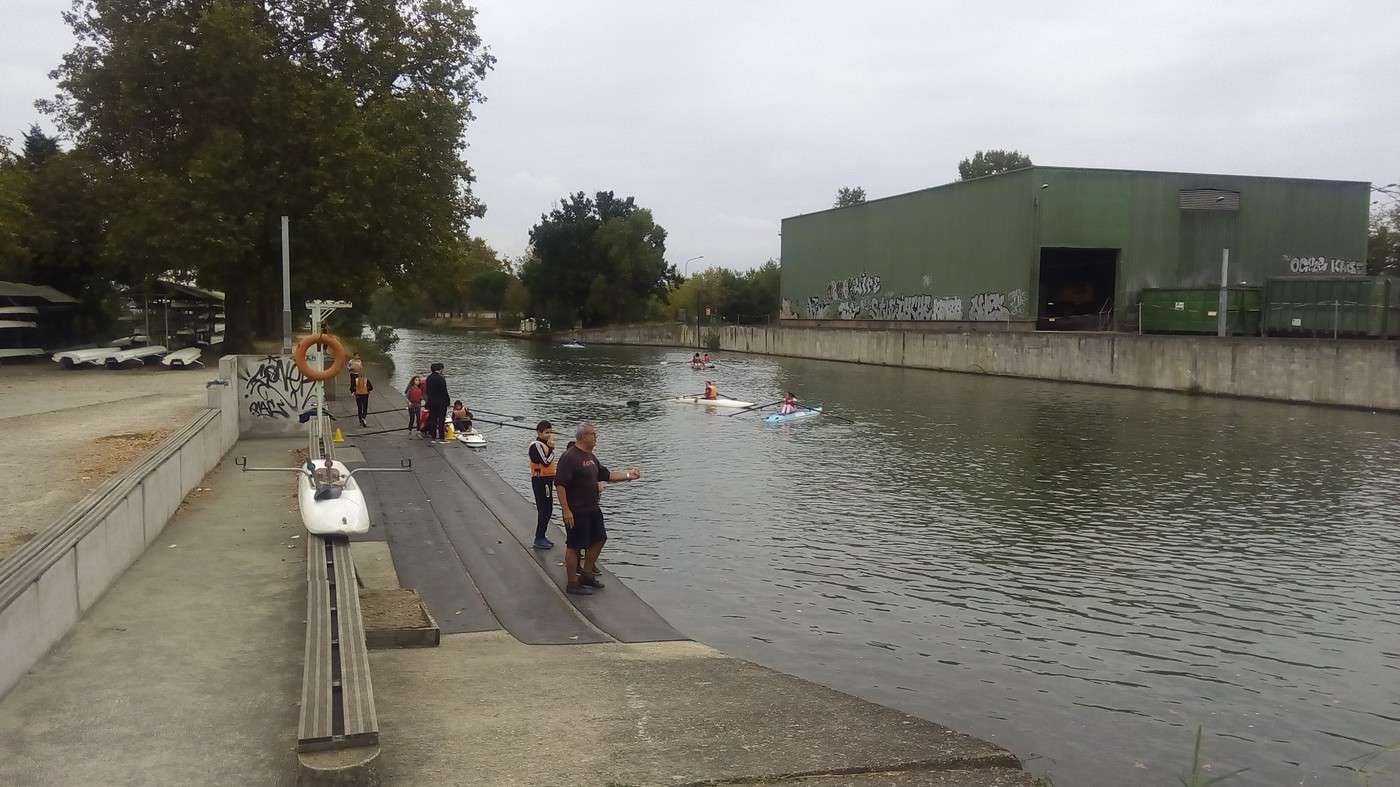
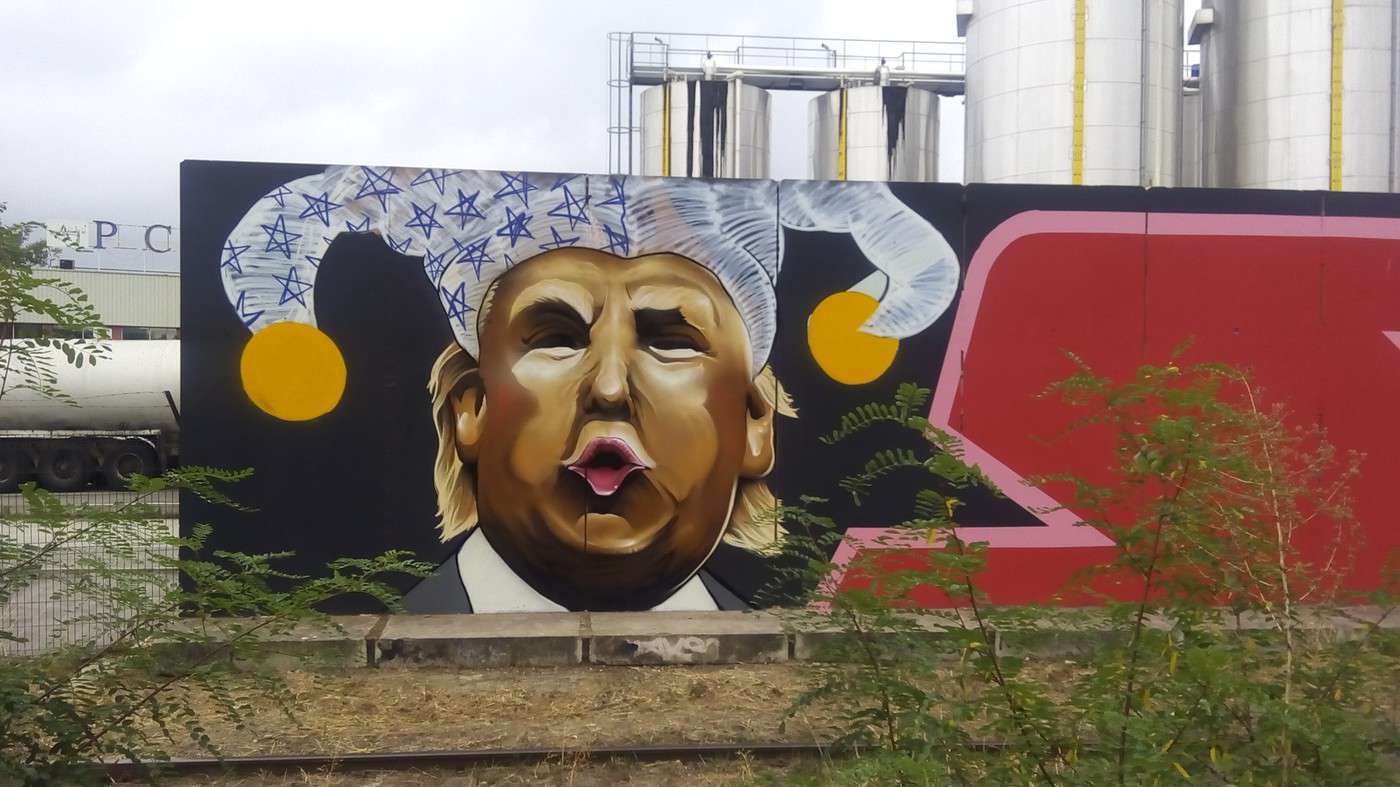
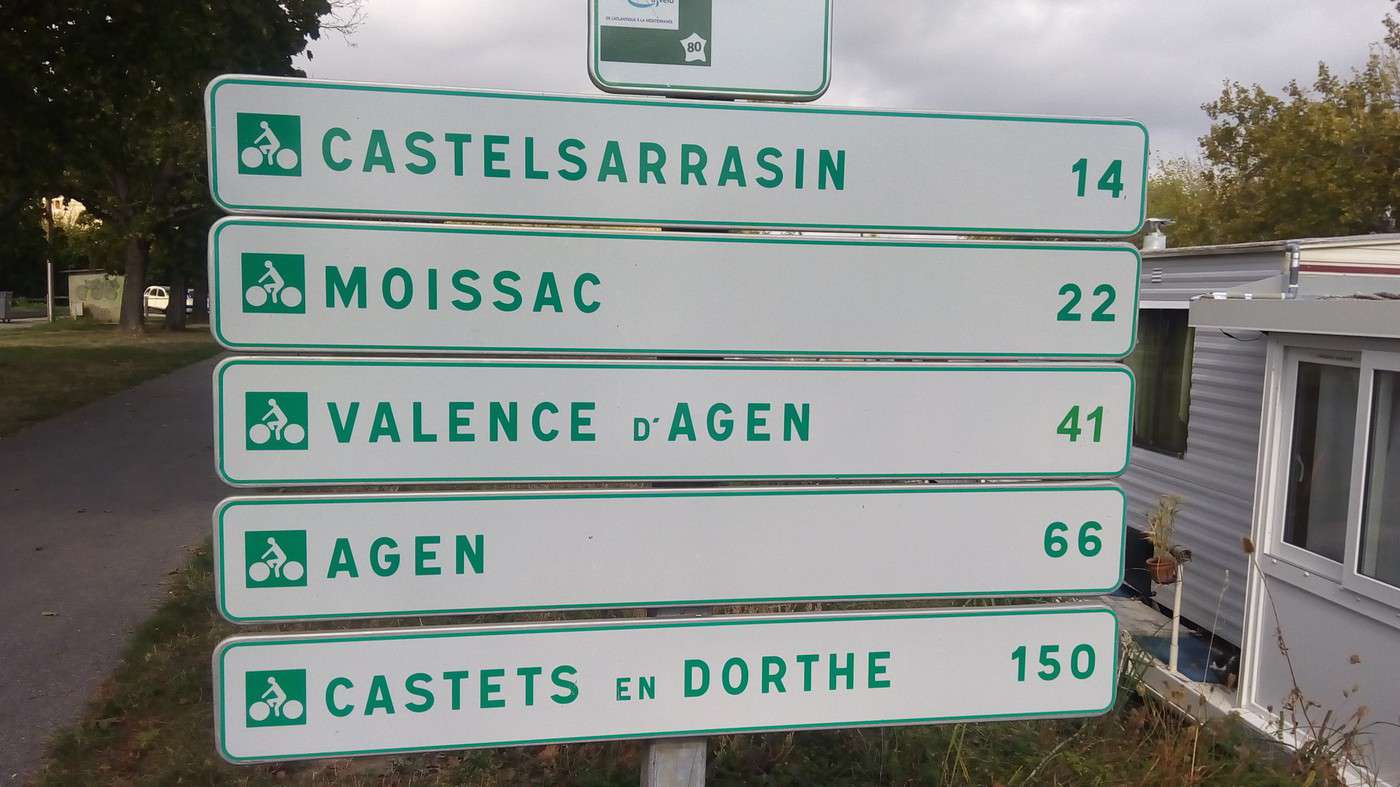
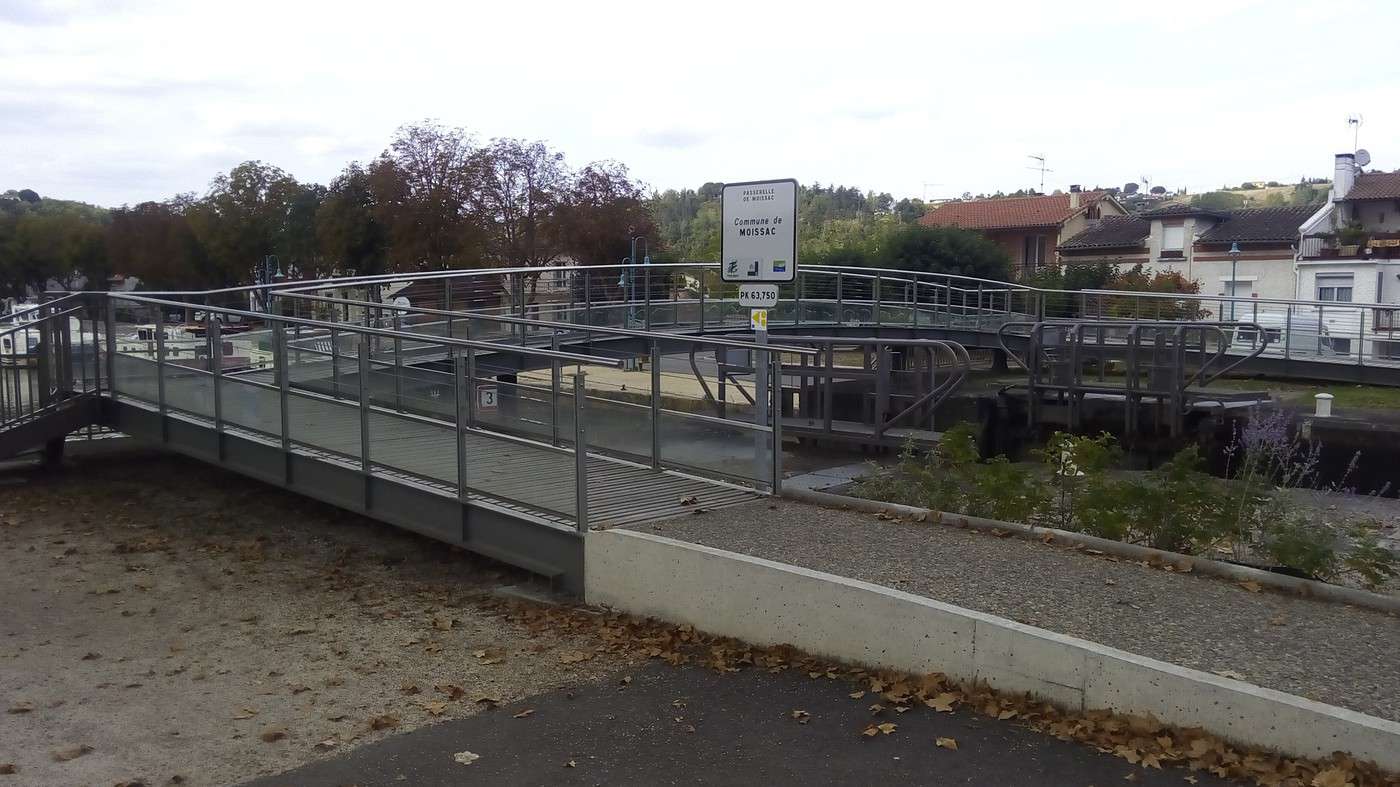
We preferred to do this last leg by bike. To wrap up this journey, it’s the Classico. After the Ponts Jumeaux, we meet up with the lateral canal to the Garonne again. While on the way there, the tags had been erased from the walls of this industrial zone. A superb caricature of Trump has already been painted with talent. We have lunch at a worker’s restaurant in Montech (still, it’s French cuisine…). Before getting back on the bike path, I pee on a tree near the port. An Englishman calls out to me from his moored boat: « You have Toilet ». I reply, « You want me to use clean water to make dirty water; I prefer to give something to eat or drink to the tree. » Something always happens on the canal. Here, they put back the sign for Valence d’Agen that had been removed when I reported a 12 km error. In Moissac, a pedestrian and bike footbridge was built to reach the center. At the exit of Moissac, Dominique spots an abandoned phone on a bench. The first number in the directory I call leads nowhere, the second doesn’t answer. On the third, I get the owner’s daughter-in-law, to whom I suggest we meet at the mill in Moissac. But the owner arrives, and I hand it back to him in person with thanks.
After 13 days of travel, I didn’t lose any weight, but my bike did—it’s 2 kilos lighter. All I have left is a can of sardines and one of mackerel, and there’s definitely less water in the bottles than when we started. For those interested in the cost of this trip, our wallets are 460 € lighter each, all included. Our tires covered 795 km without any punctures.
Meanwhile, the two adventurers from Morocco traveled 5,000 km on solar recumbent tricycles: scorpionsolaire.blogspot.fr/
And I haven’t heard from cyclecop22.blogspot.fr/
Maybe I should’ve connected with the Facebooker from Valencia, but I don’t want to give in to siliconization: www.lesinrocks.com/...-interview-11875097/
I’m already risking sedentarity by spending hours recounting this trip: www.isabelleetlevelo.fr/...e-sedentarite-onaps/ And I shouldn’t encourage you to read this story for the same reason!
Biking (MTB) along the canal between the two seas (France)
Facteur4 · 2016-11-10 · Message 228 of 310
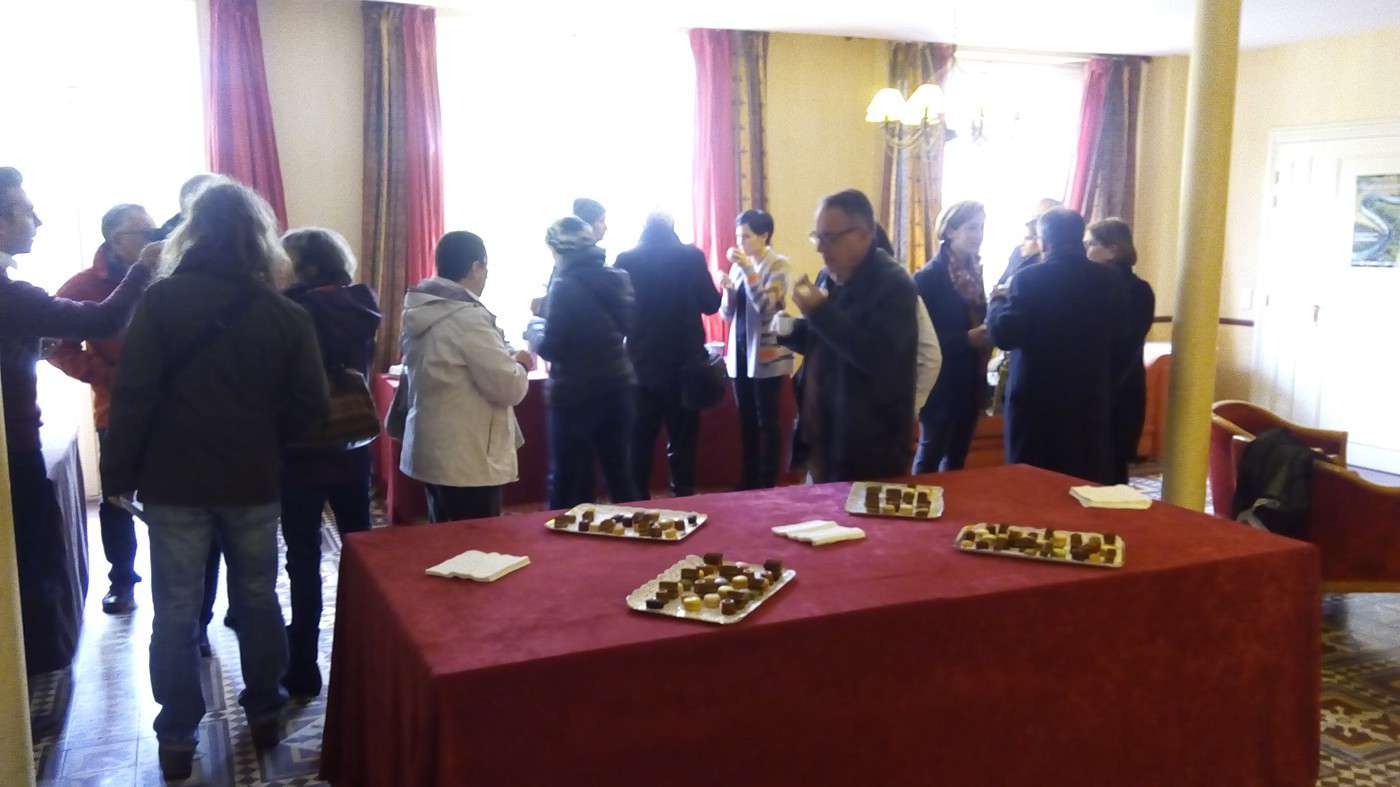
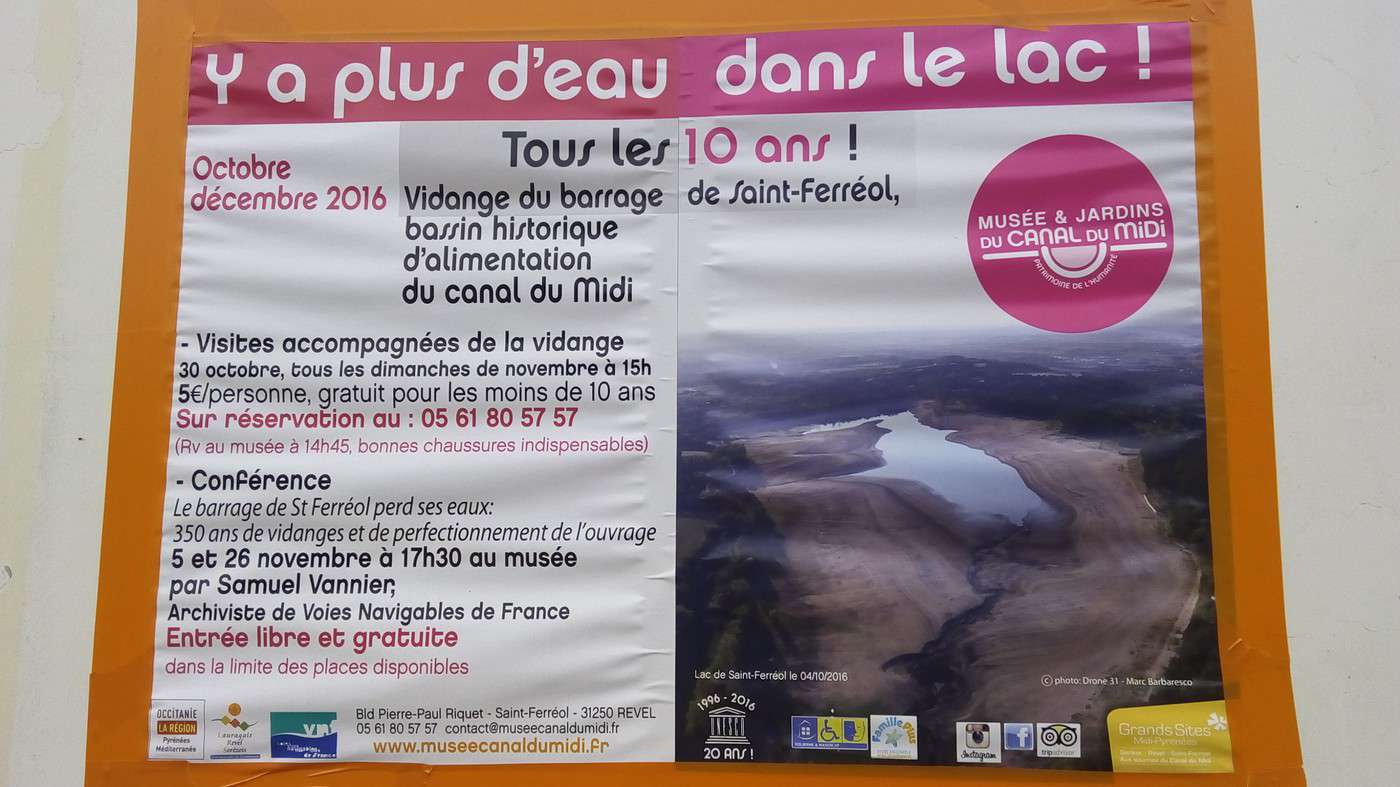
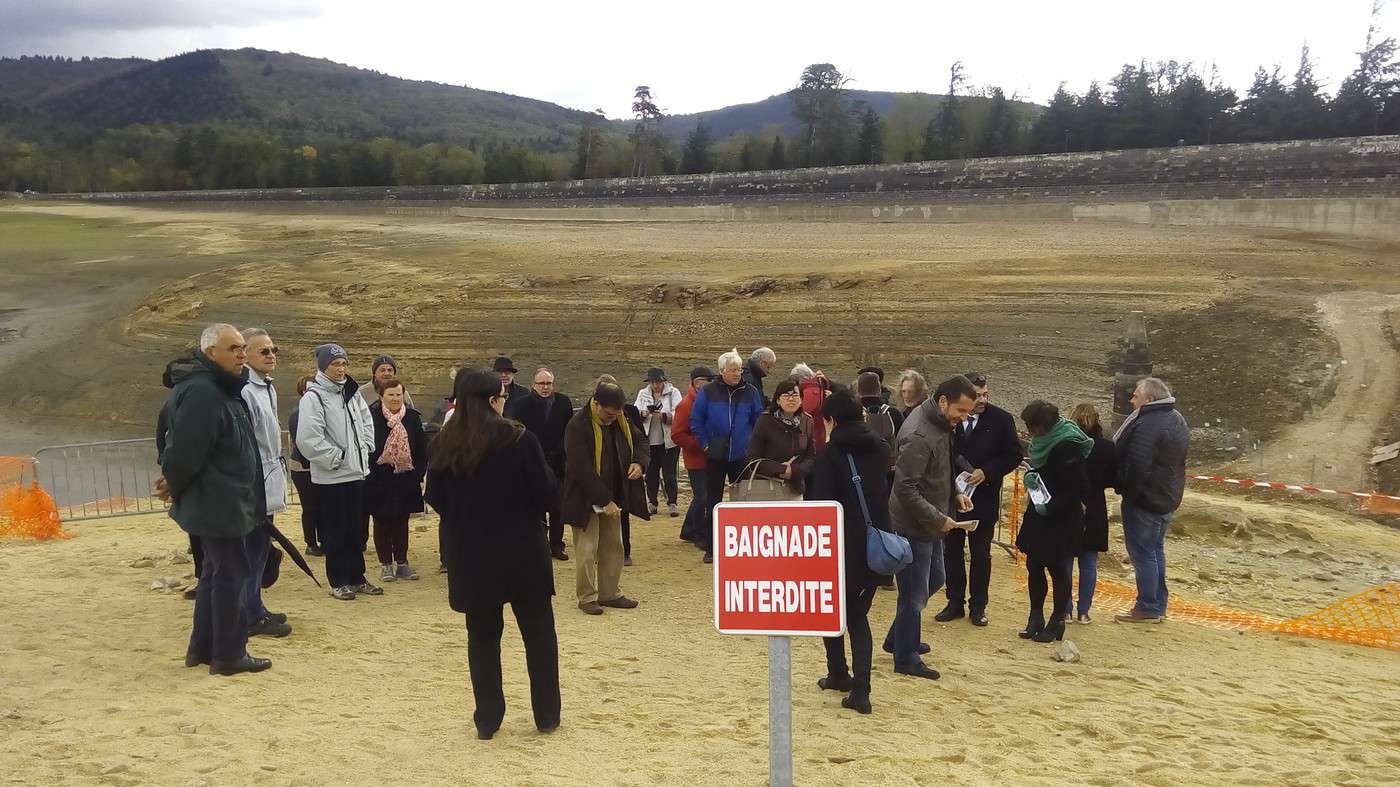
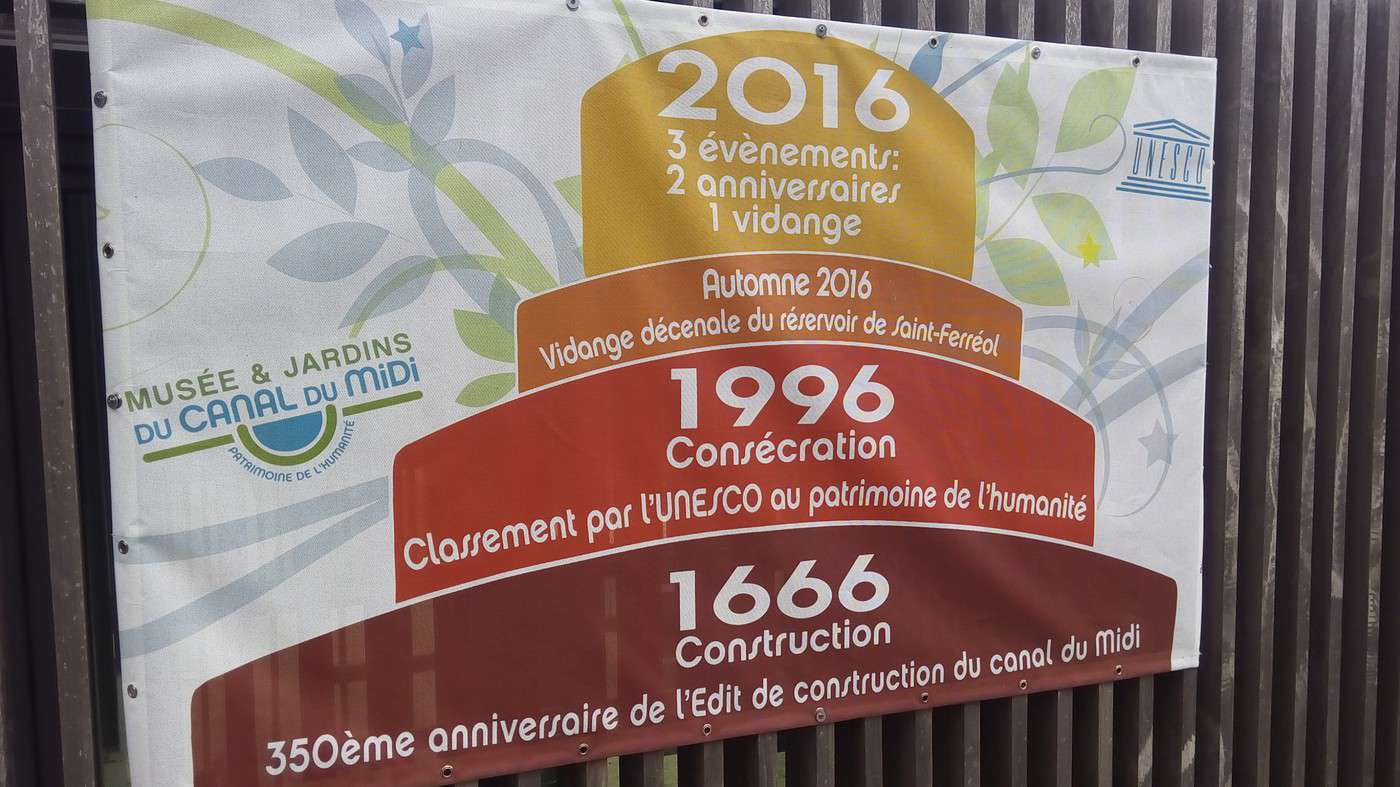
As a donor to www.replantonslecanaldumidi.fr/fr, I was invited to visit the Saint-Ferréol dam on November 8th during its decennial draining. We were welcomed by the staff of Voies Navigables de France for coffee at the Hôtel du Lac. I assumed the invitation was based on a donation of 100 €. Actually, it was 150 €. There were 40 of us who responded to the invitation, including companies that, of course, donate more.
There are 6,800 French and foreign donors, plus 65 corporate sponsors who have contributed 3 million euros. However, the project to replant 40,000 plane trees amounts to 200 million euros, funded one-third by the state via VNF and one-third by local authorities. Removing the plane trees requires reinforcing the banks.
The fungal disease *chancre coloré* kills a plane tree within 6 months to 5 years. The possibility of a vaccine, studied by INSA Toulouse, was not followed up with trials because it would have involved using GMOs. Three-year trials will be conducted with a fungicide.
By February 2017, 17,000 trees should have been felled and 5,800 replanted. To compensate, 475 nesting boxes were installed and are 75% occupied. Photos from my last trip along the towpath: voyageforum.com/...post=7673442#7673442
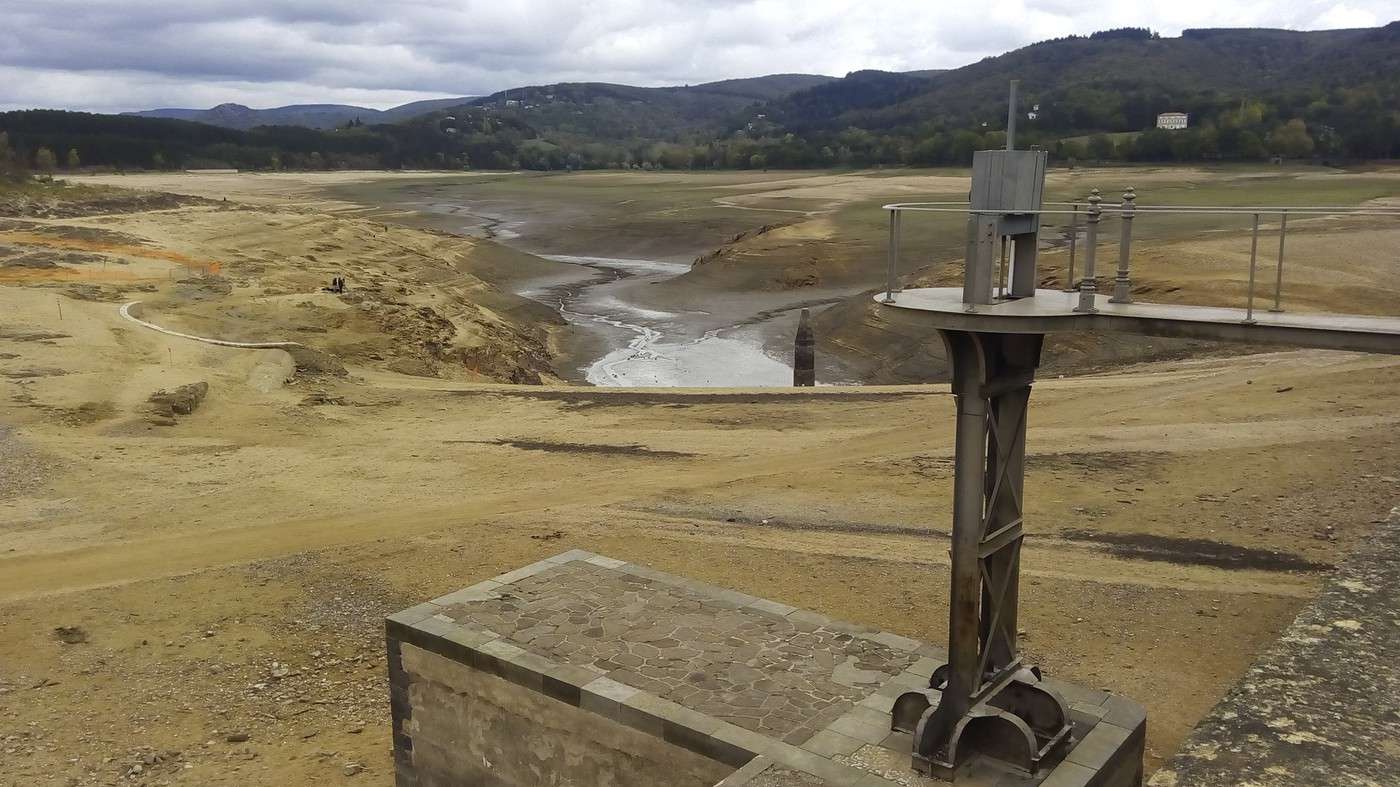
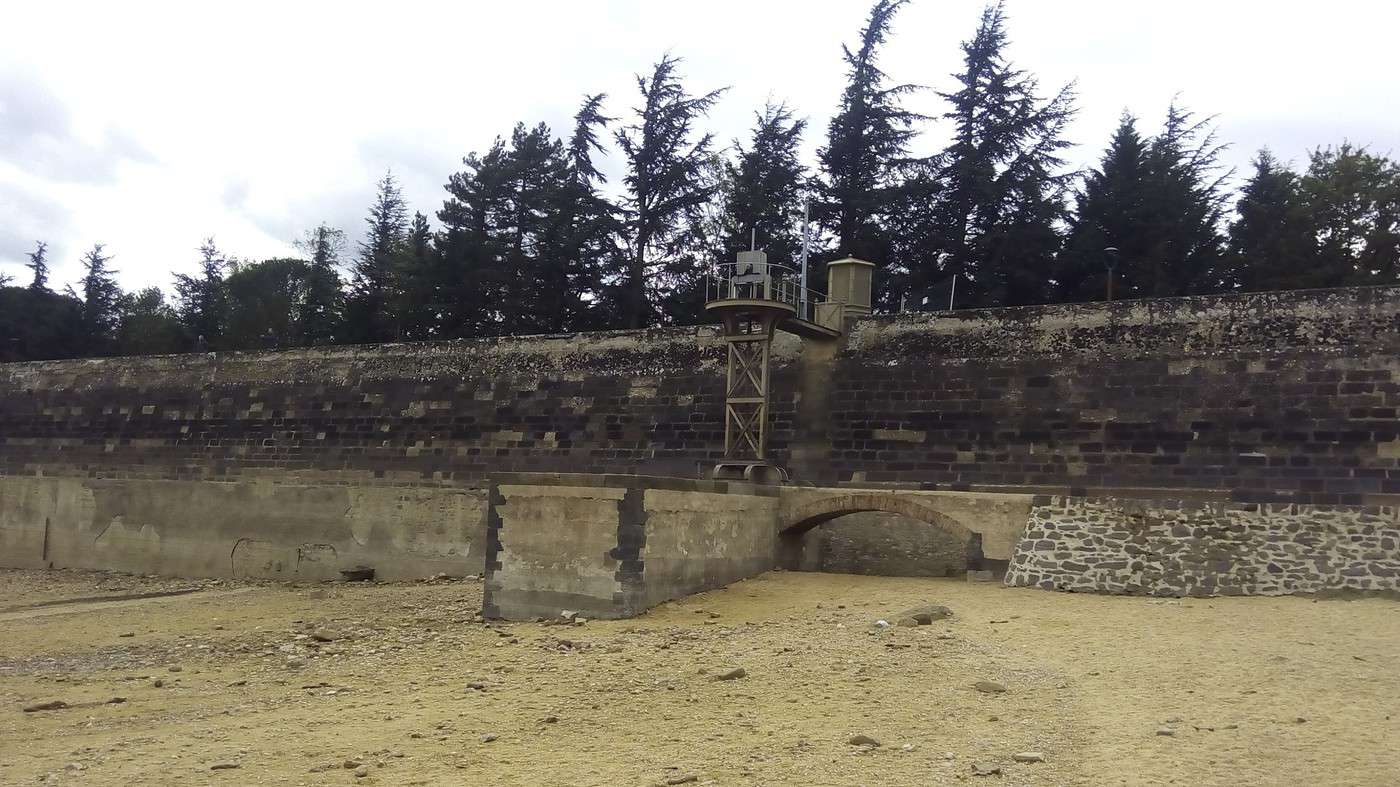
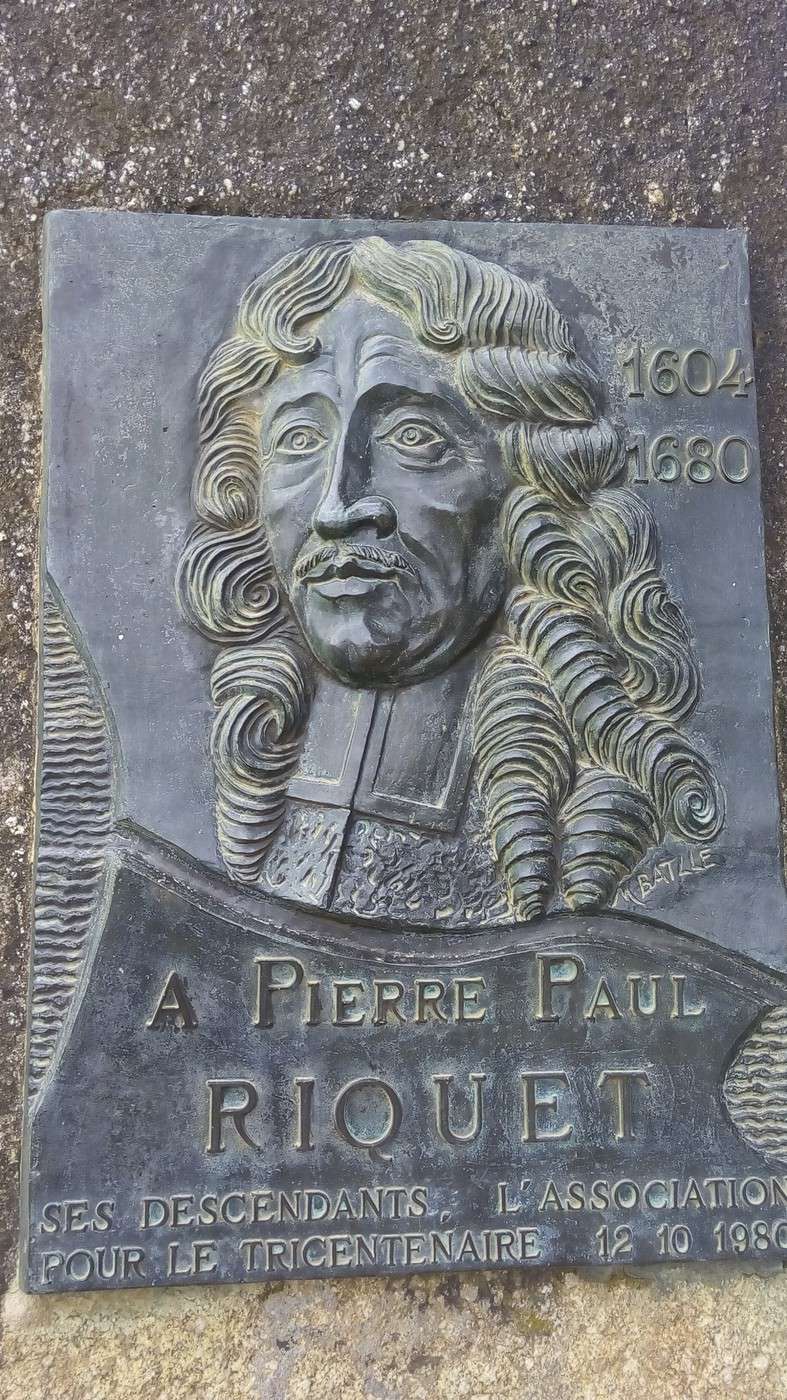
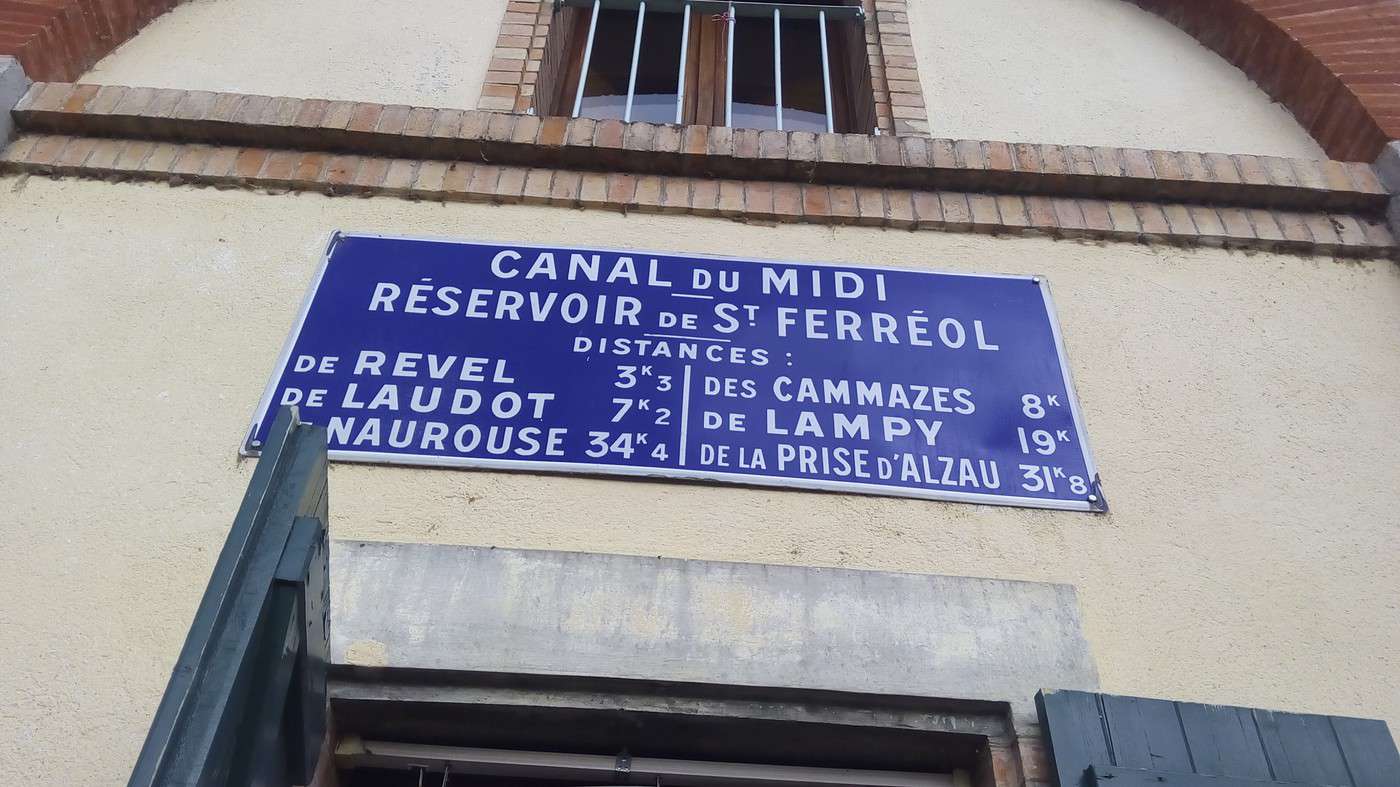
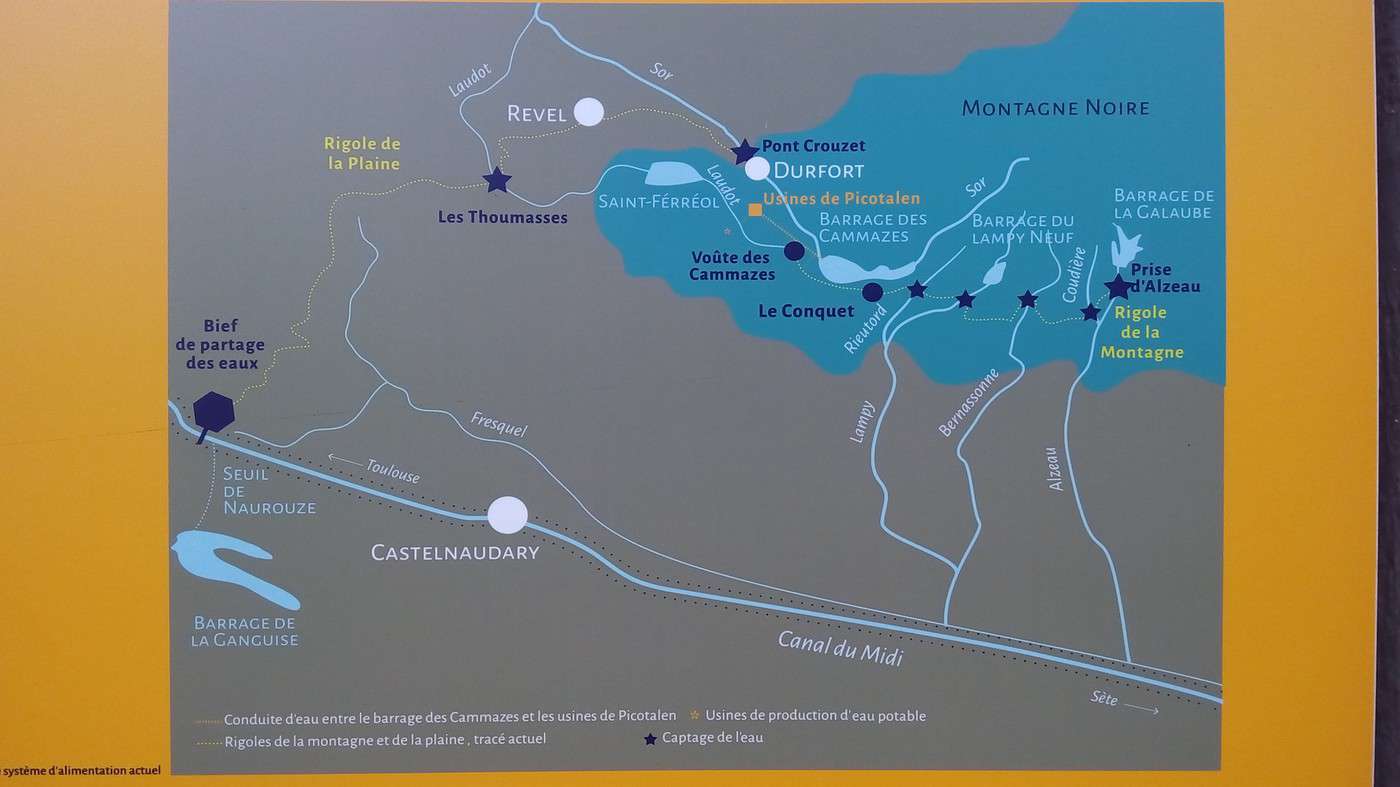
Lake Saint-Ferréol is a water reservoir that Pierre-Paul Riquet built on the Laudot riverbed to supply the Canal du Midi at the Naurouze threshold, the highest point of the route between Toulouse and Sète. Its capacity was increased from 4.5 million m³ to 6.5 million m³ with a dam height of 35 m by Vauban. Its use is limited to 4.8 million m³ due to the maximum flood discharge capacity.
Check out my first bike travel story that led me to it: voyageforum.com/...post=1000920#1000920
Where I swam in it: voyageforum.com/...post=4462769#4462769
And here with the mountain channel: voyageforum.com/...post=5284246#5284246
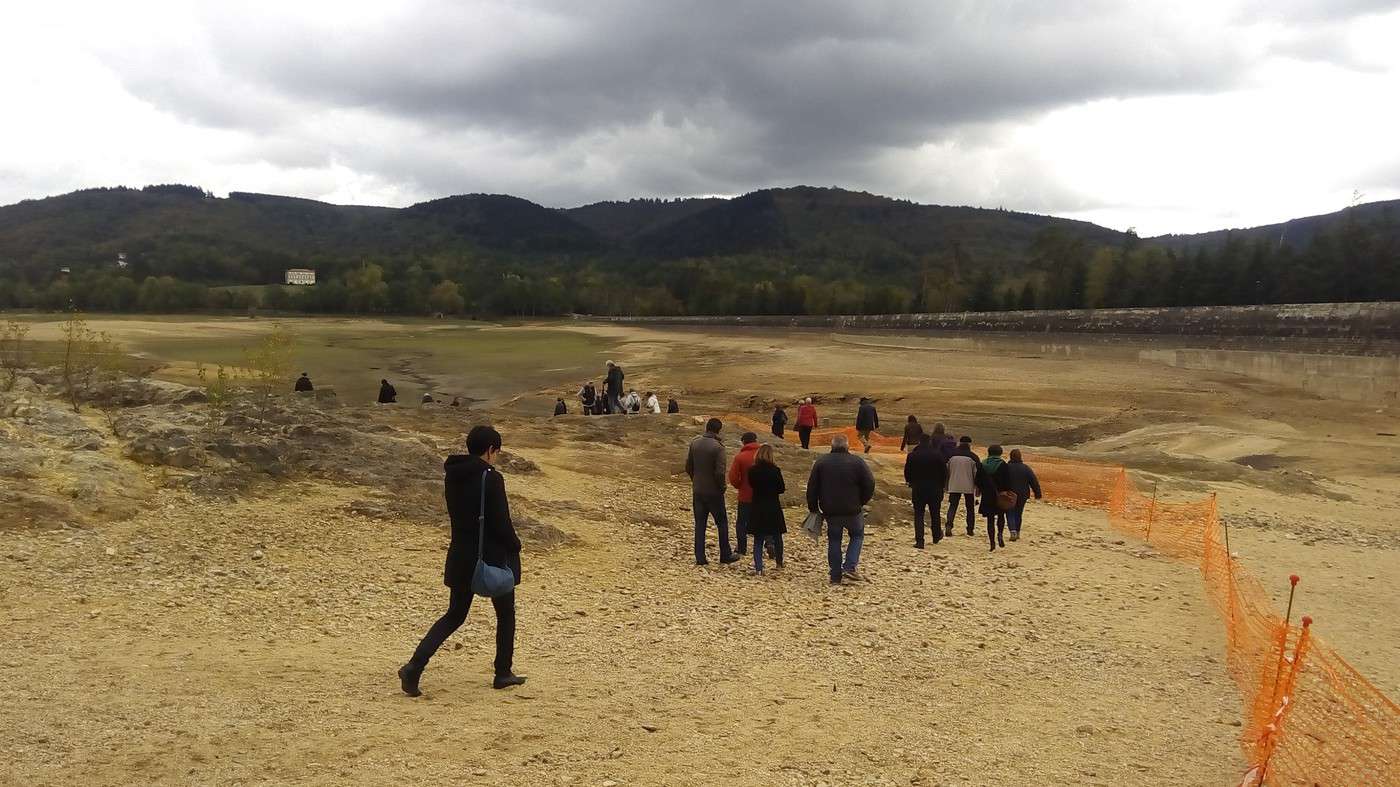
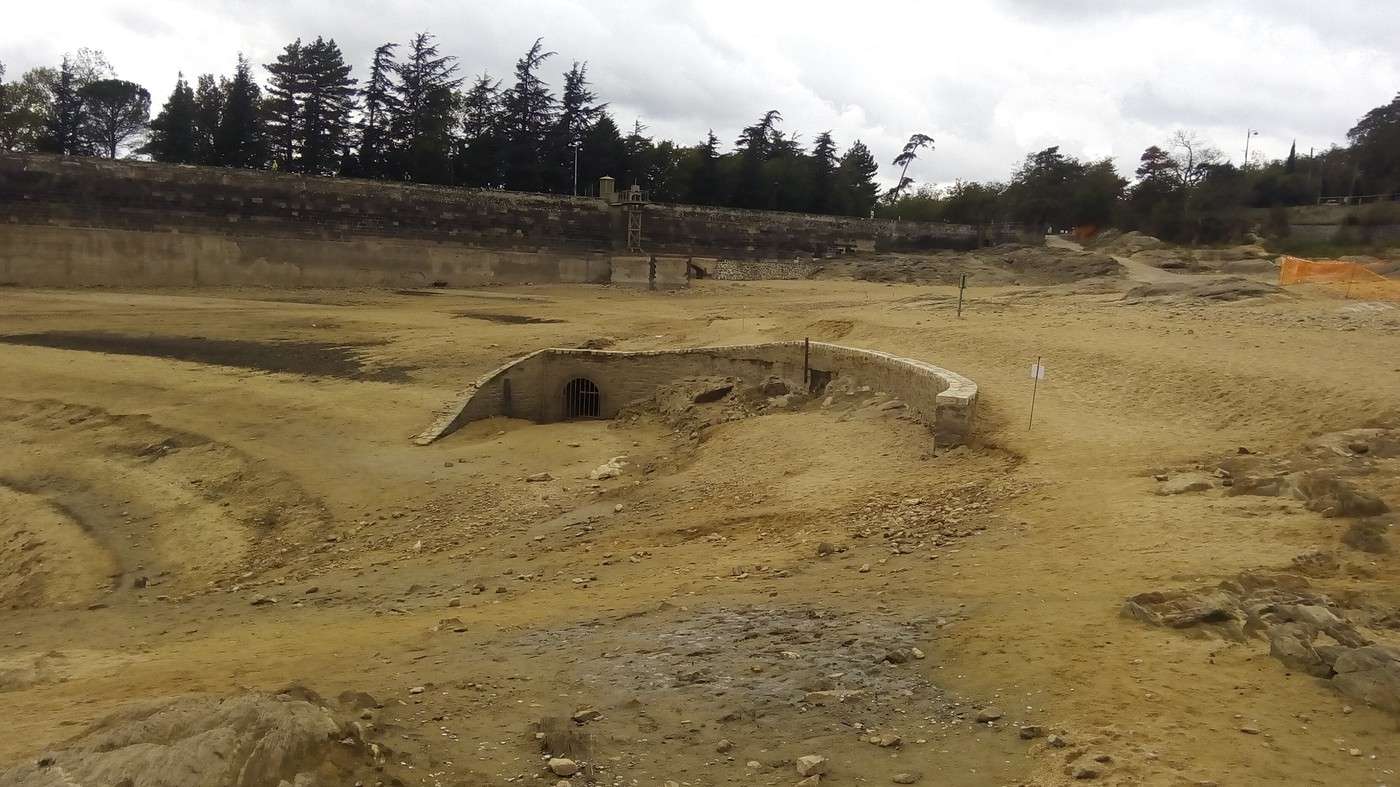
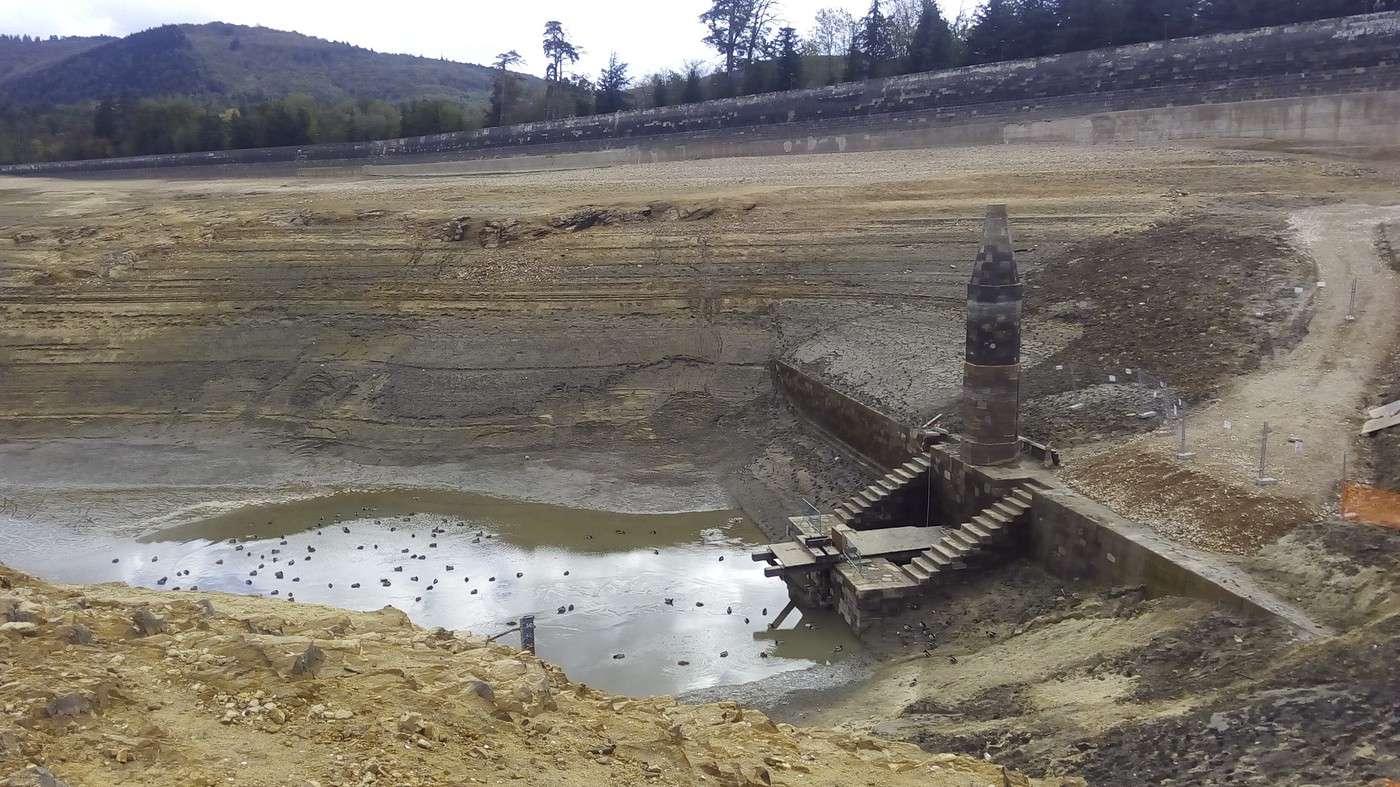
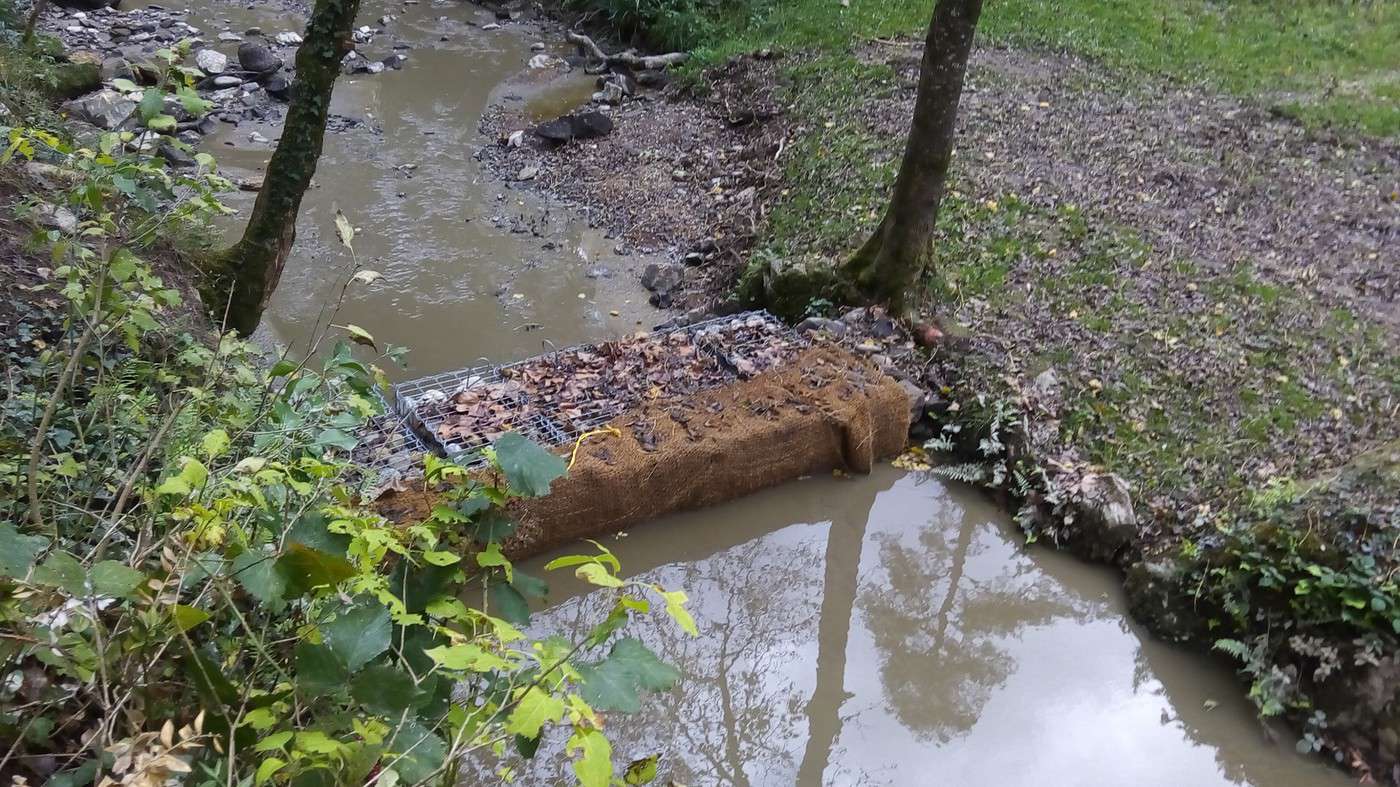
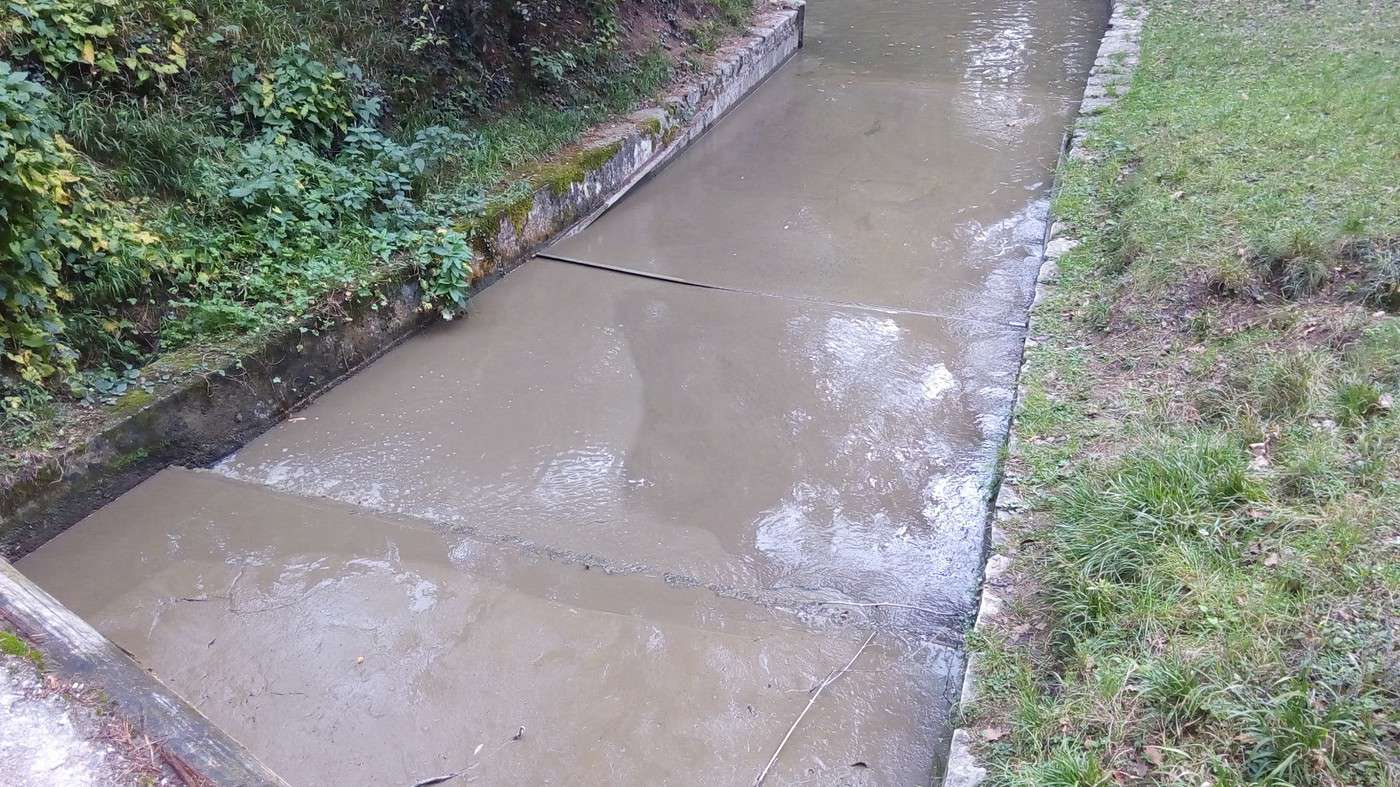
Today, the entire water collection system in the Montagne Noire supplies 20 million m³ per year to the Naurouze threshold. One-third flows toward the Atlantic and two-thirds toward the Mediterranean, thanks in part to the Sor water intake, where the Cammazes dam can hold 18 million m³. This network spans three departments, making interventions complex. Additionally, the hydraulic system has inertia—it takes, for example, 24 hours for a drop of water released from the Saint-Ferréol dam to reach the Canal du Midi (35 km via the plain channel). Due to the importance of water management for supplying the canal from March to October and for irrigation, a file with the draining protocol is submitted to the administration a year in advance. The water level must be sufficient to support tourism activities on the lake until the end of August. Draining began in September. The bypass channel is then used to stop bringing in water and to ensure river flow. After the normal water intake, a valve fed from a lower point continues the draining. By the end of September, the minimum level for fish life was reached, requiring water oxygenation via a jet. Then, 16 tons of fish were transferred to other bodies of water, and the valve for draining the 500,000 m³ sediment core was opened. By the end of October, it was necessary to filter sediments through a coconut fiber mat before mixing the waters with the Laudot to dilute the discharge.
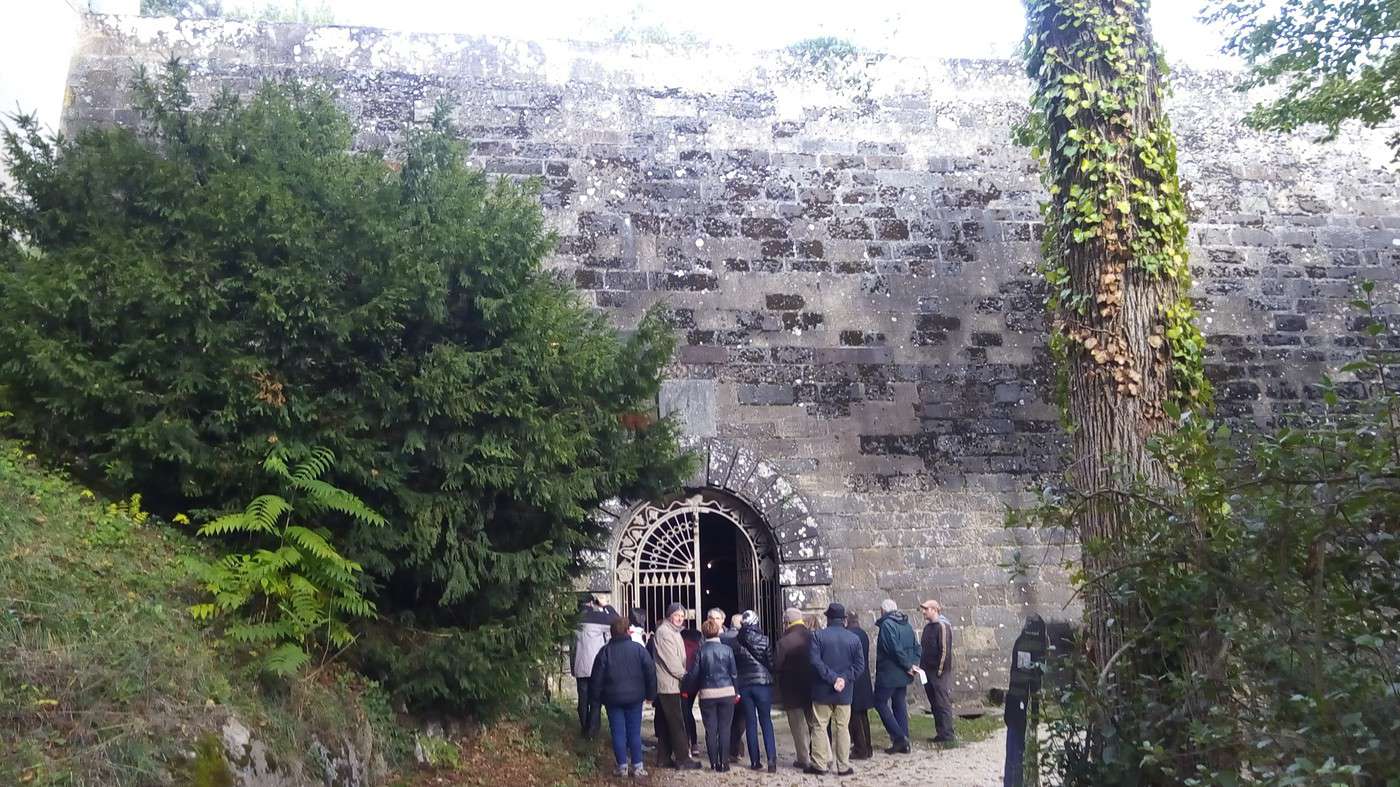
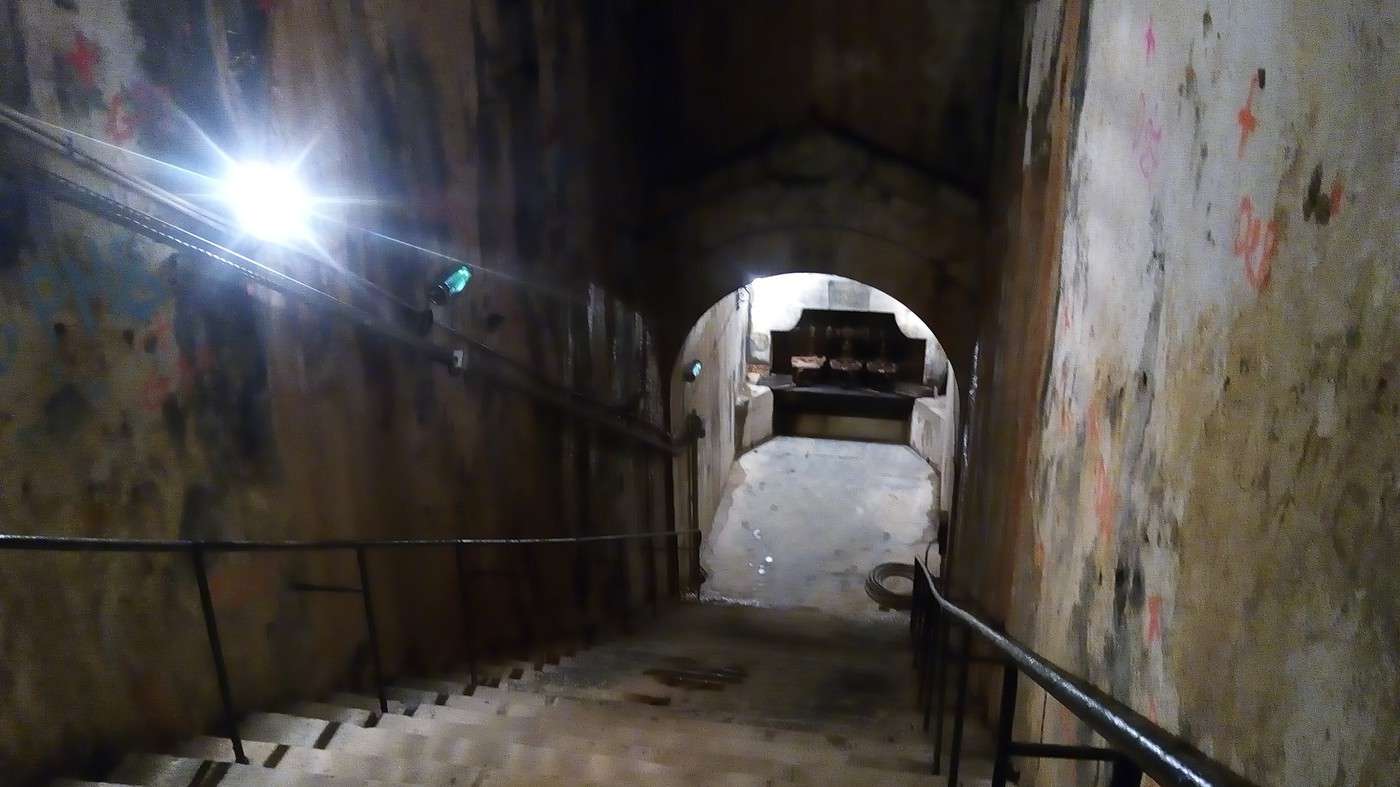
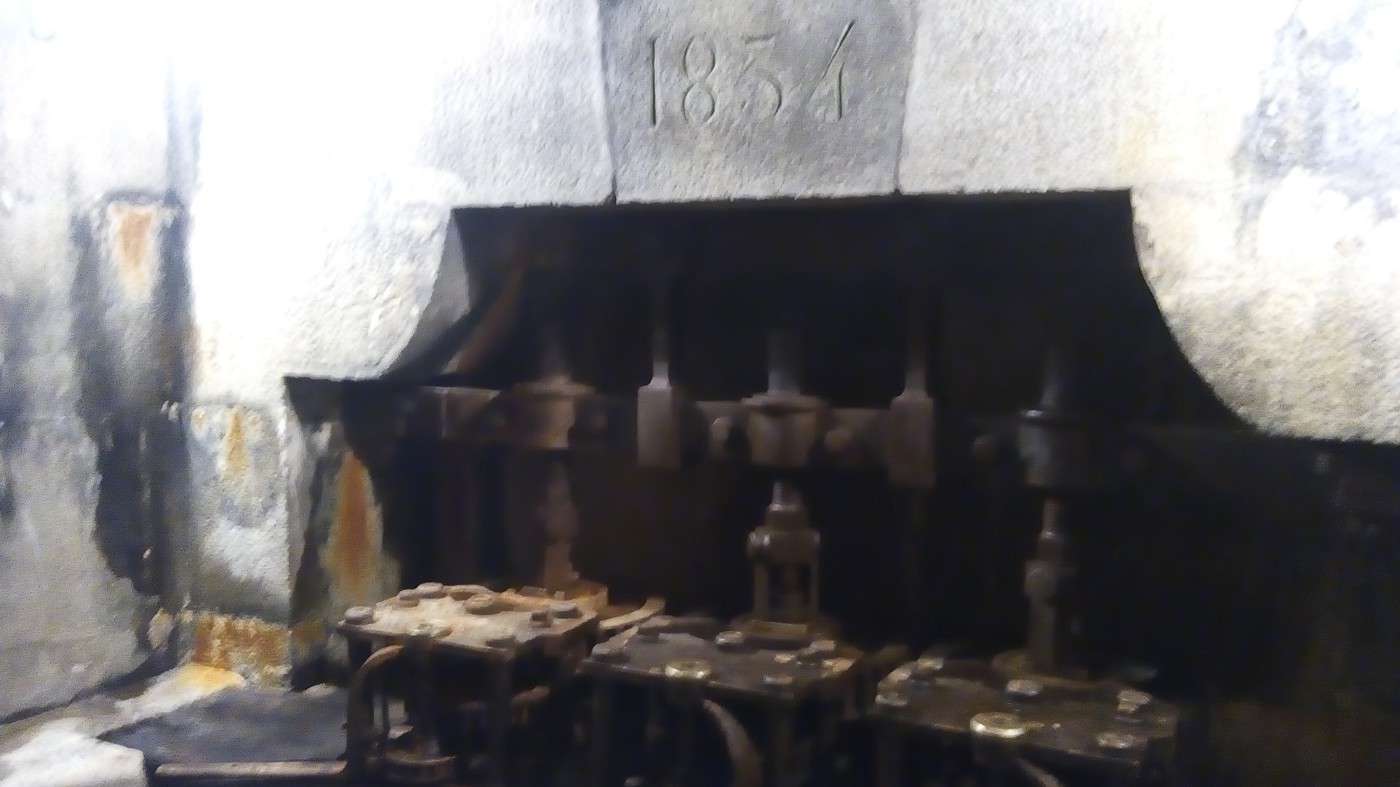
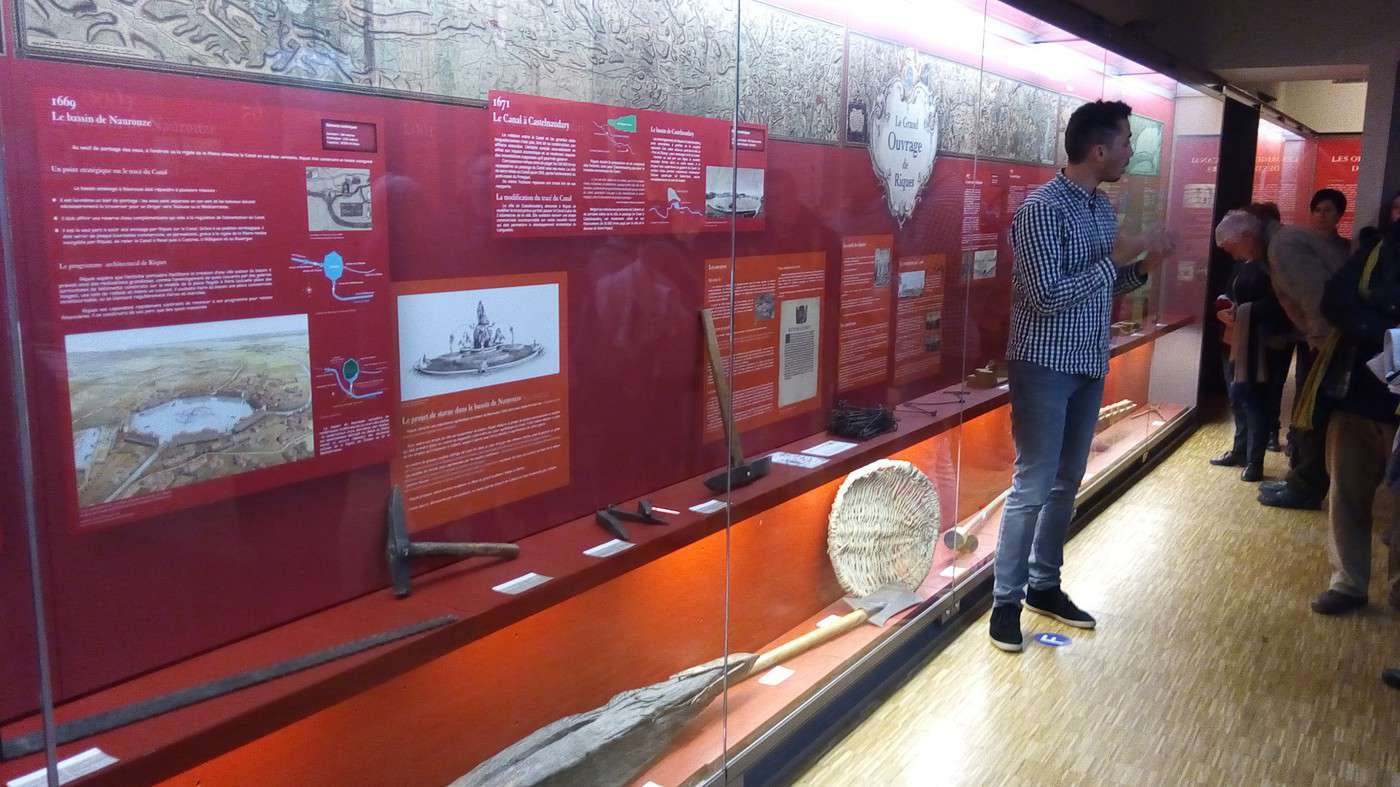
With the technical teams, we were able to see the pyramid (usually underwater) that marks the sediment core discharge point and its level. In the galleries, we saw the old valves made in 1834 by a watchmaker. The visit ended at the museum, which honors Pierre-Paul Riquet, with an equally passionate guide.
I’d like to thank the organizers and speakers for this informative afternoon about a structure that remains remarkably modern. I’d also like to thank the RENAULT garage in Revel for letting me recharge my Zoé before the 140 km trip back home.
Biking (MTB) along the canal between the two seas (France)
Facteur4 · 2016-12-11 · Message 229 of 310
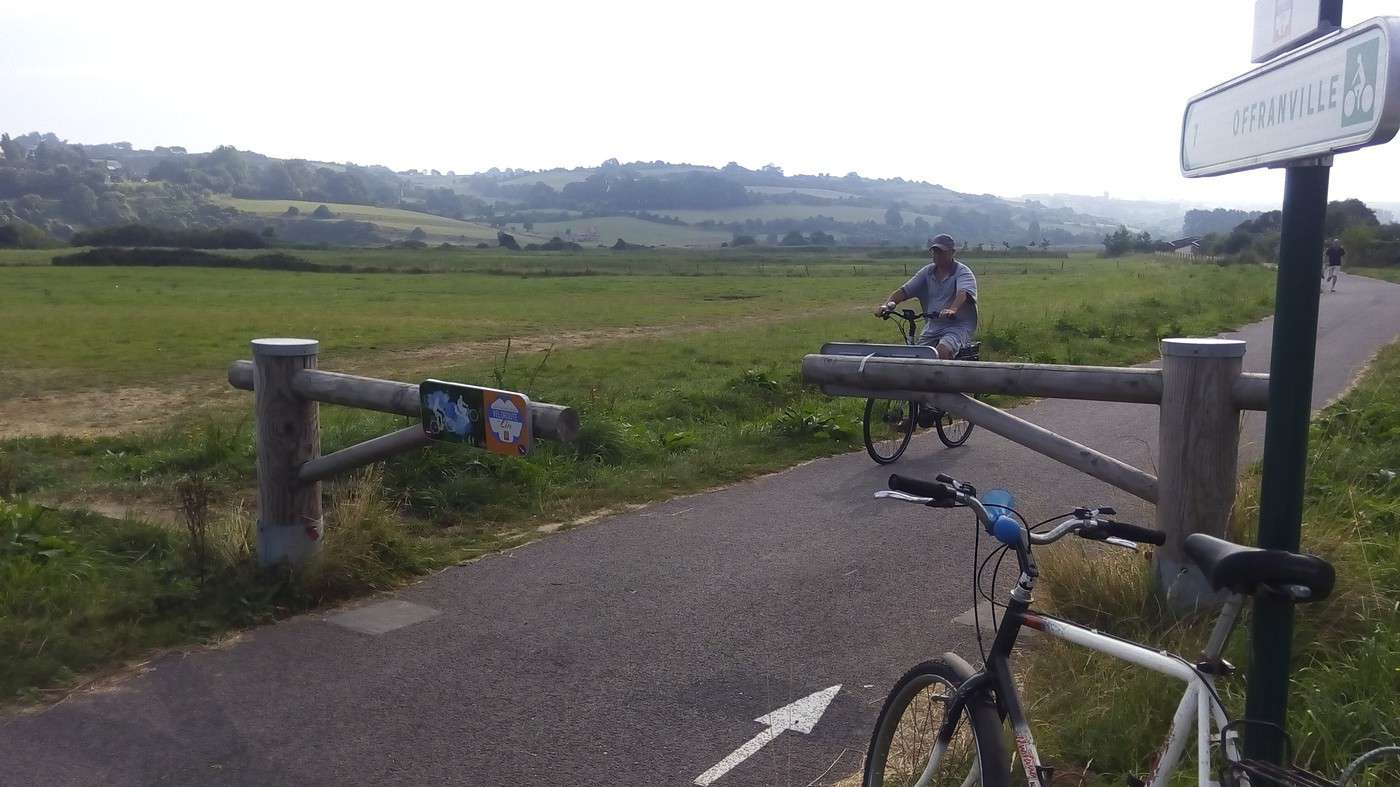
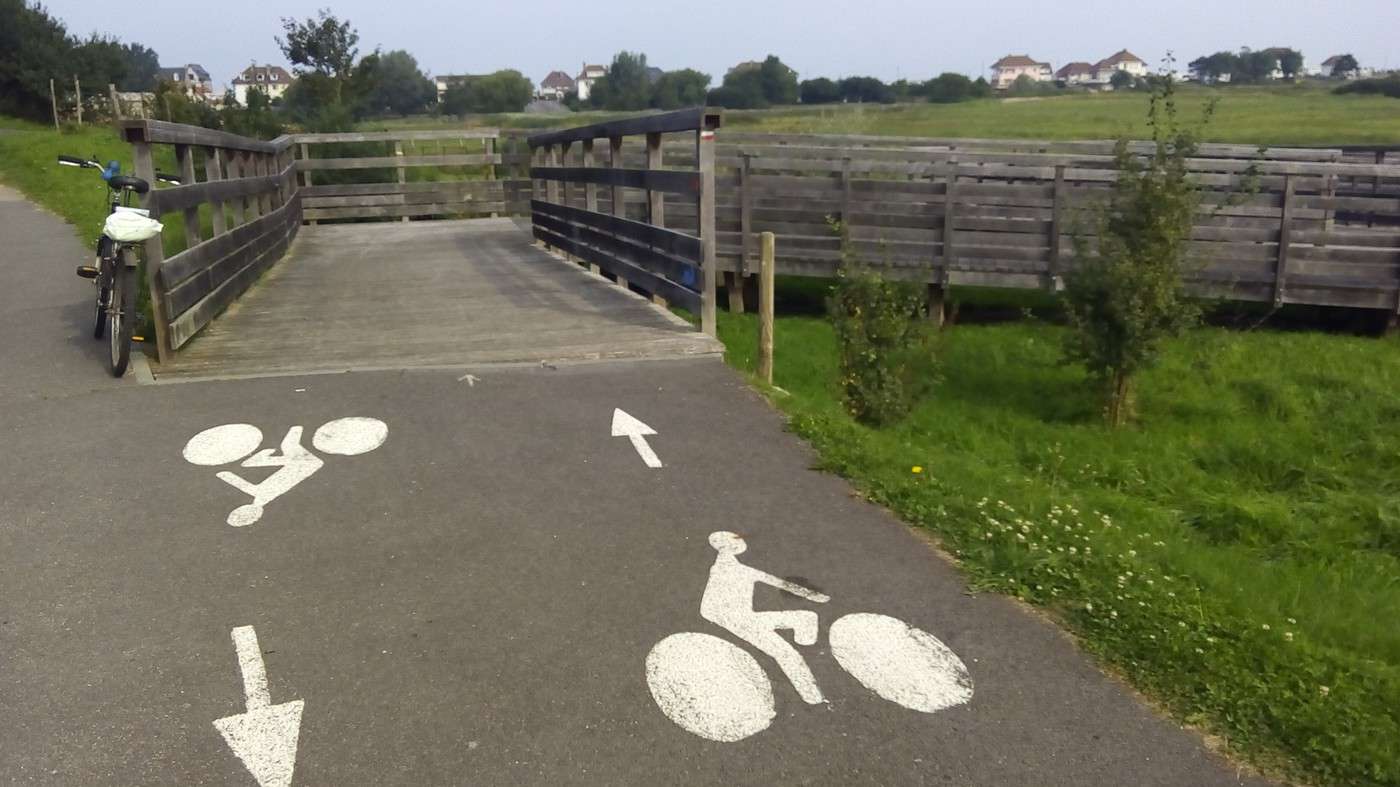
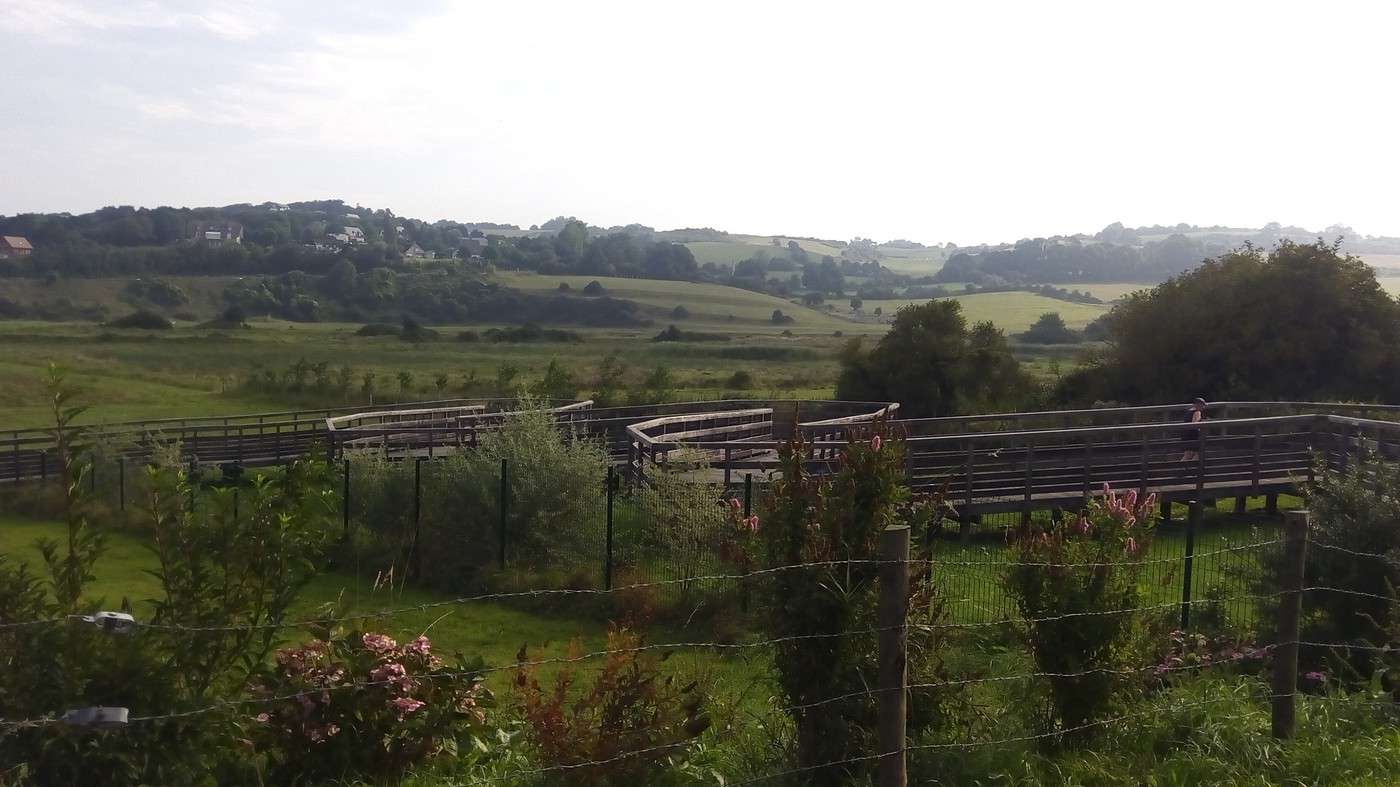
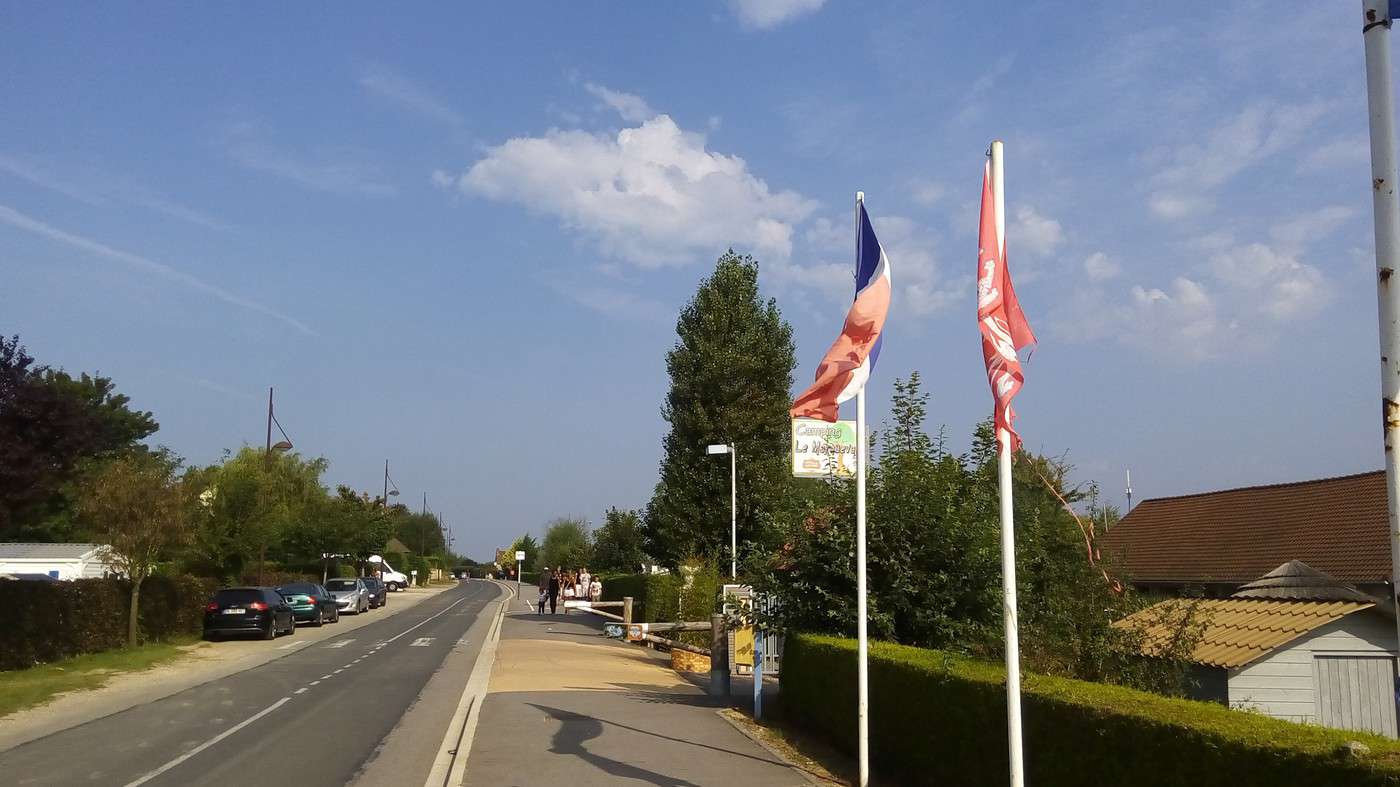
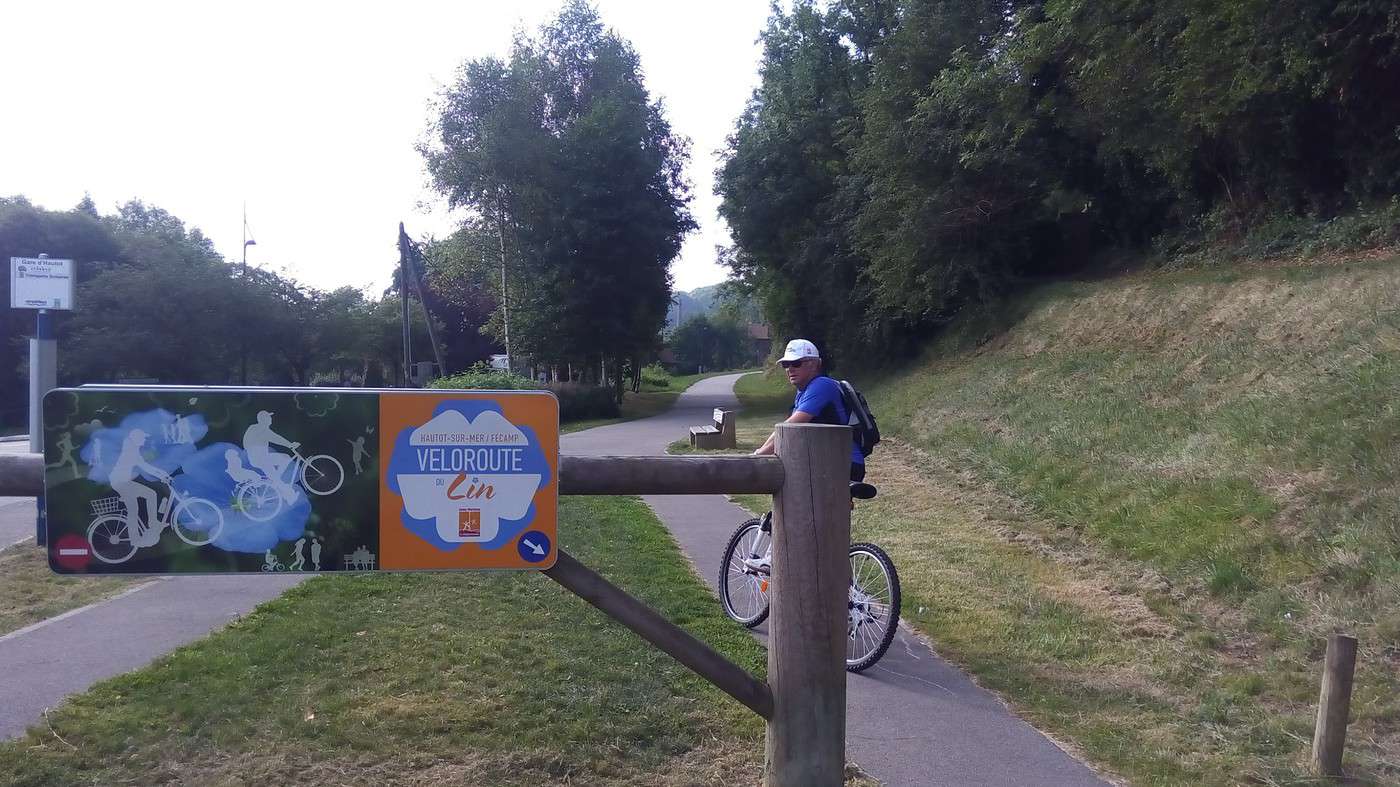
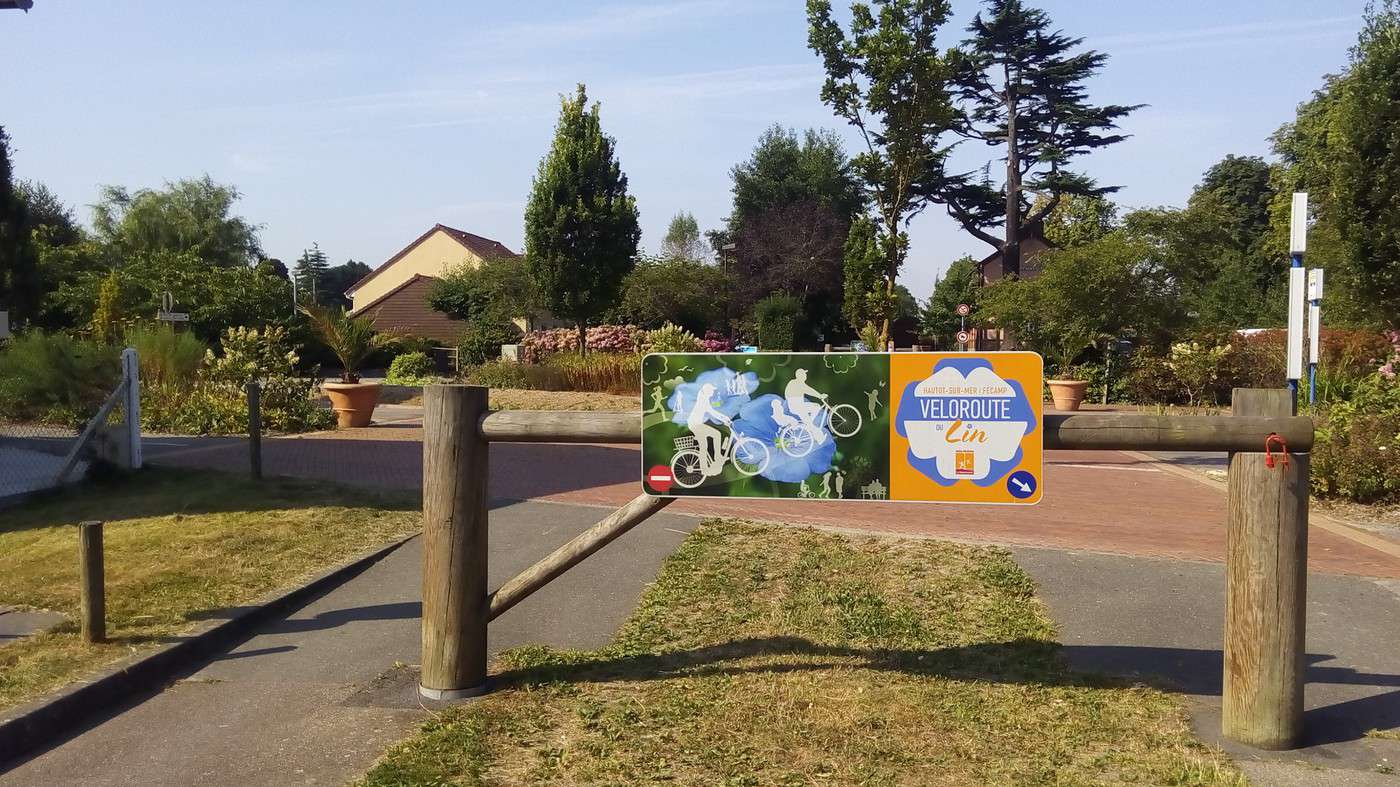
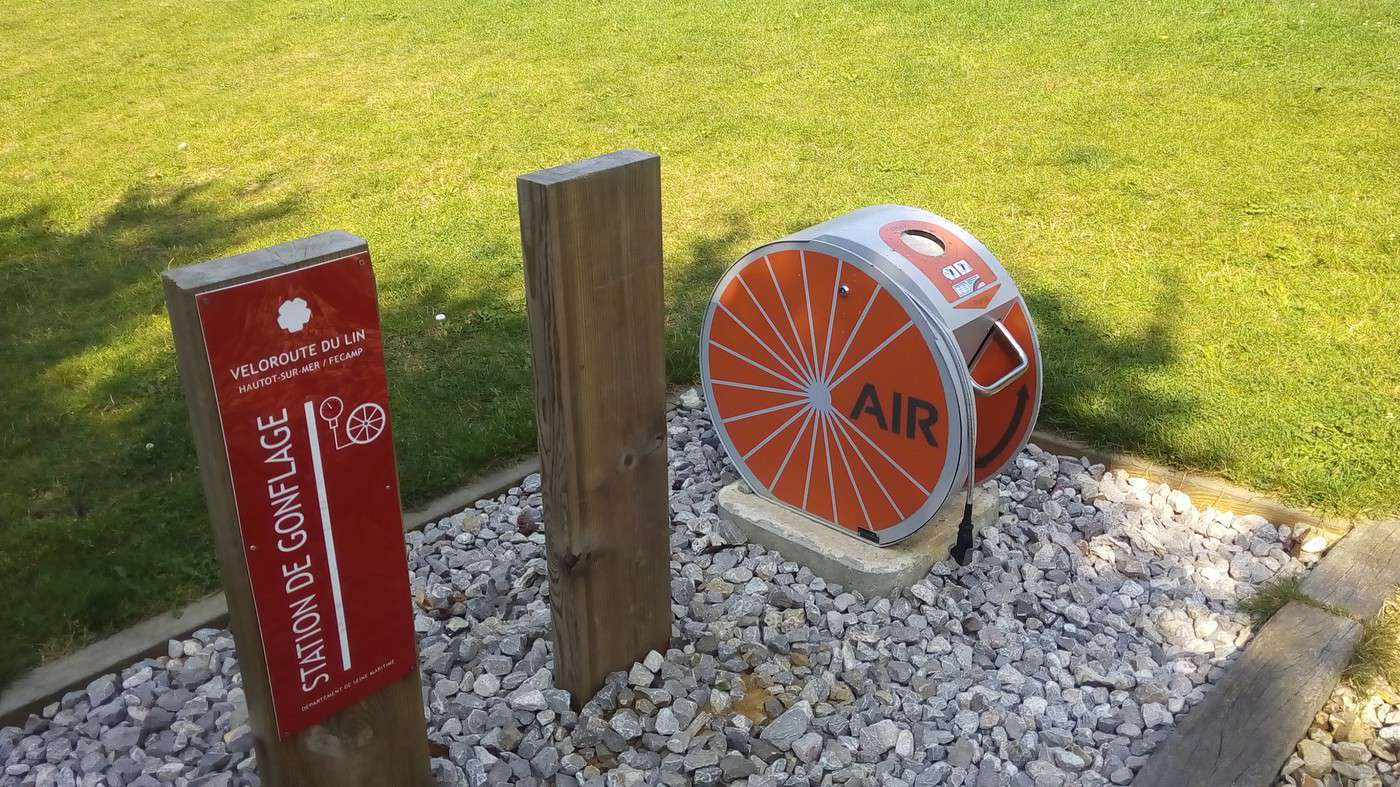
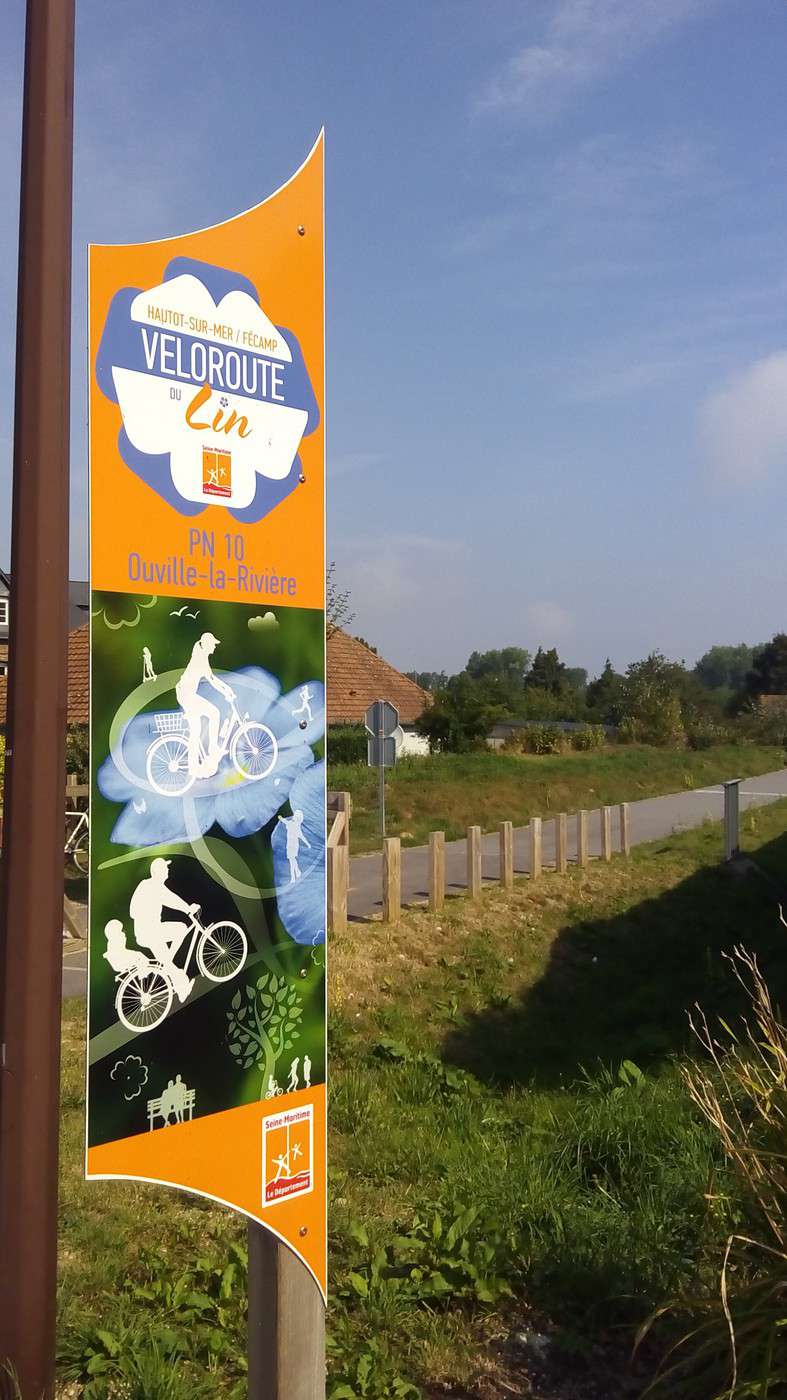
During a family trip to Normandy, I discovered the Flax Greenway with a bike borrowed from my brother-in-law.
www.seinemaritime.fr/...eloroute-du-lin.html
Based on the old railway line between Dieppe and Fécamp, this route will eventually span 80 km.
It will allow for a tour of Seine-Maritime when combined with www.avenuevertelondonparis.com/
And www.seine-maritime-tourisme.com/...ITINOR076FS0...
And www.vdseine.fr/ressources.html
The Flax Greenway won’t be able to use the entire former railway line, as the central section is still in use. So, it won’t be a fully greenway route and will instead take quiet roads.
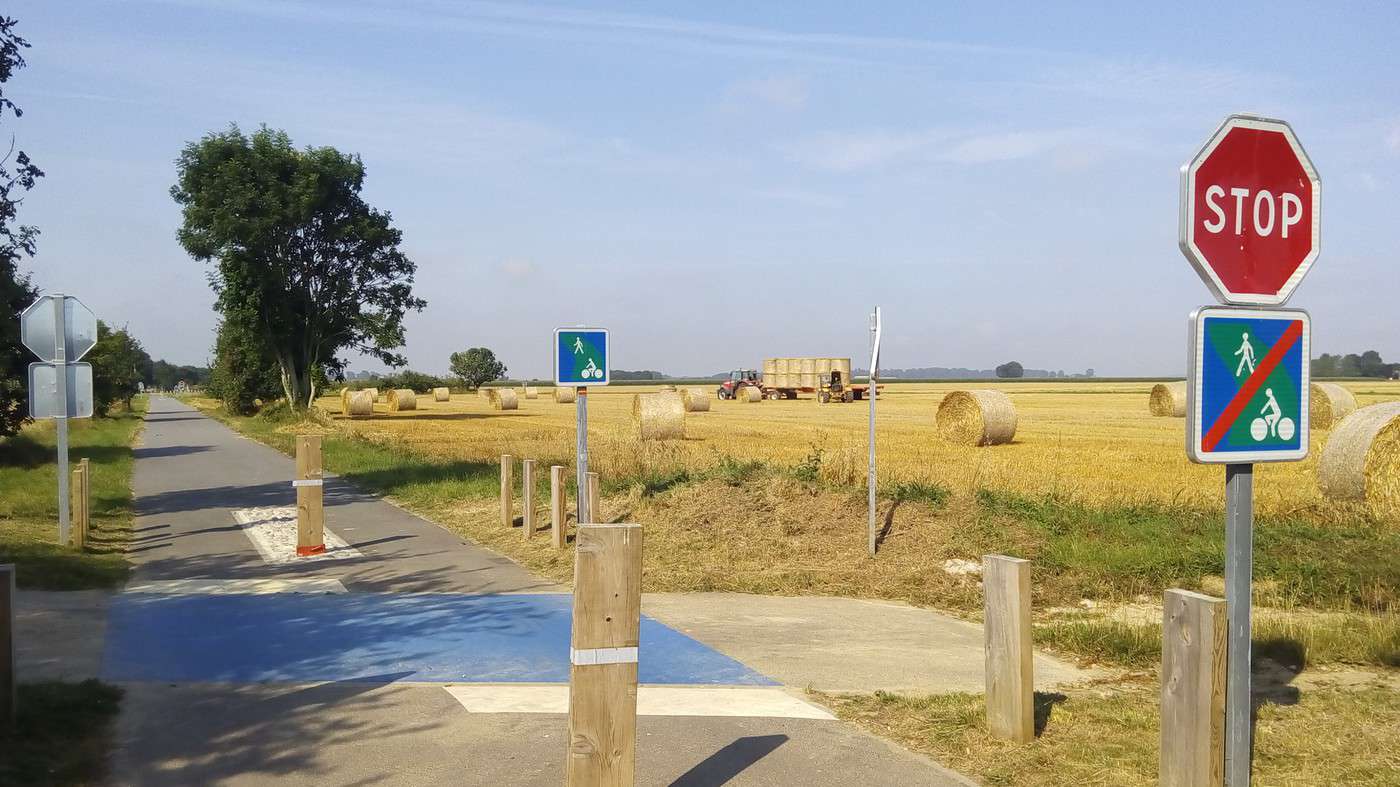
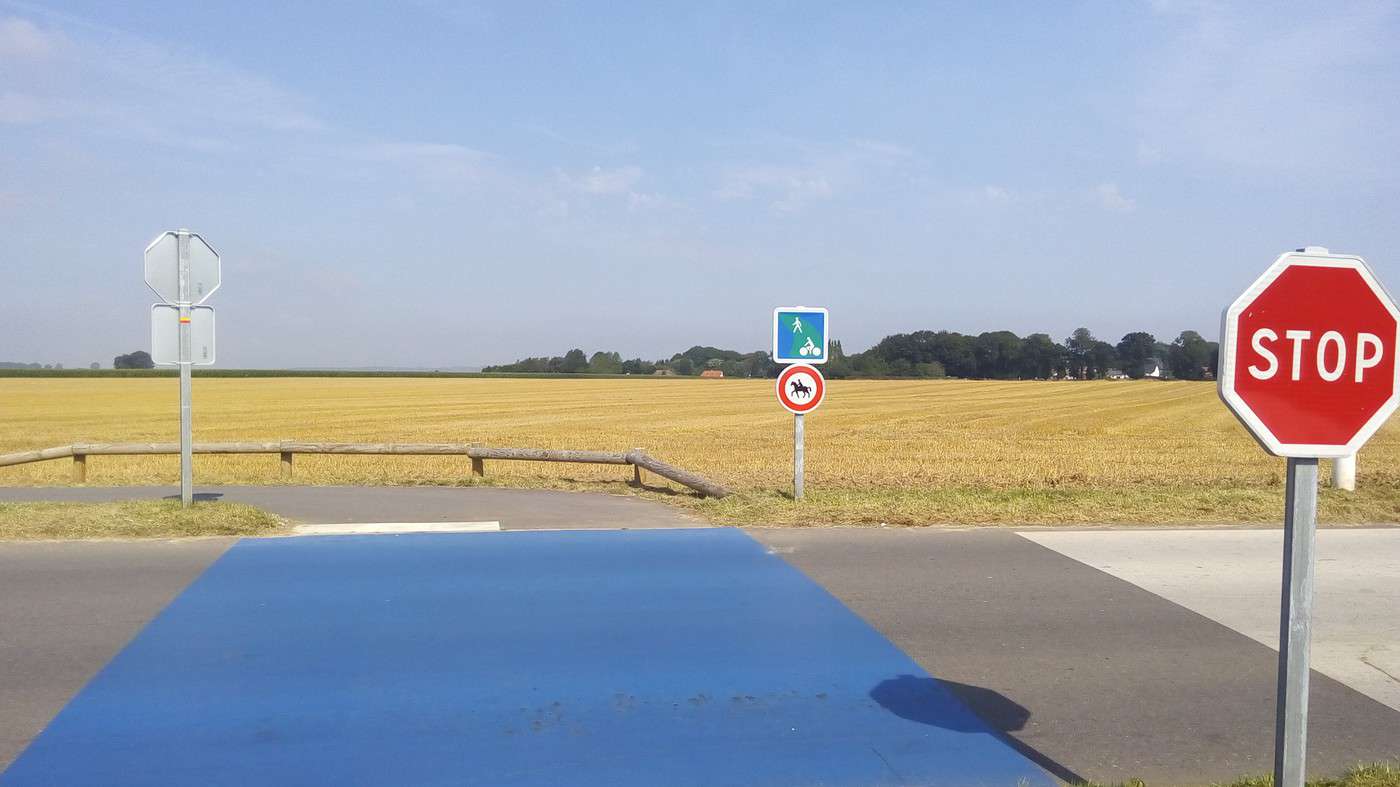
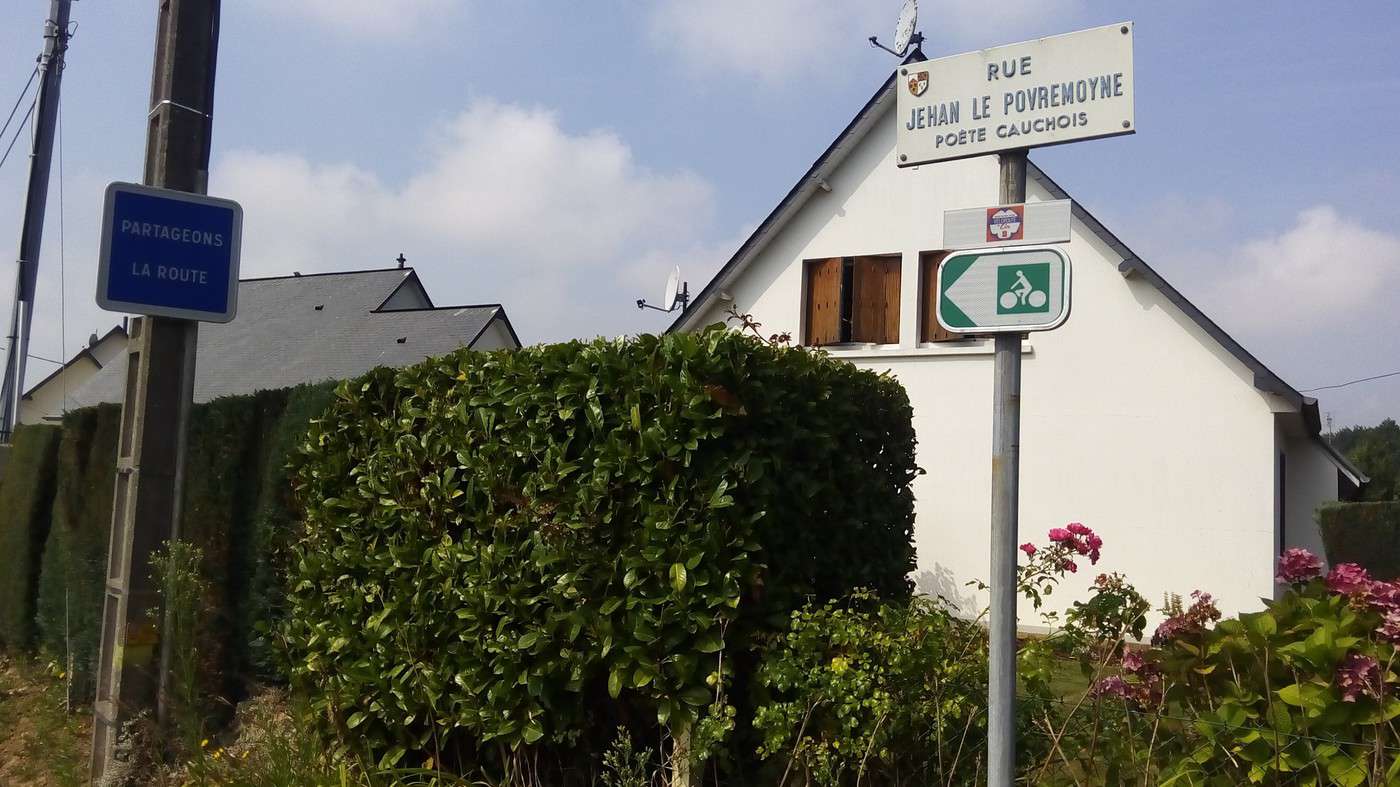
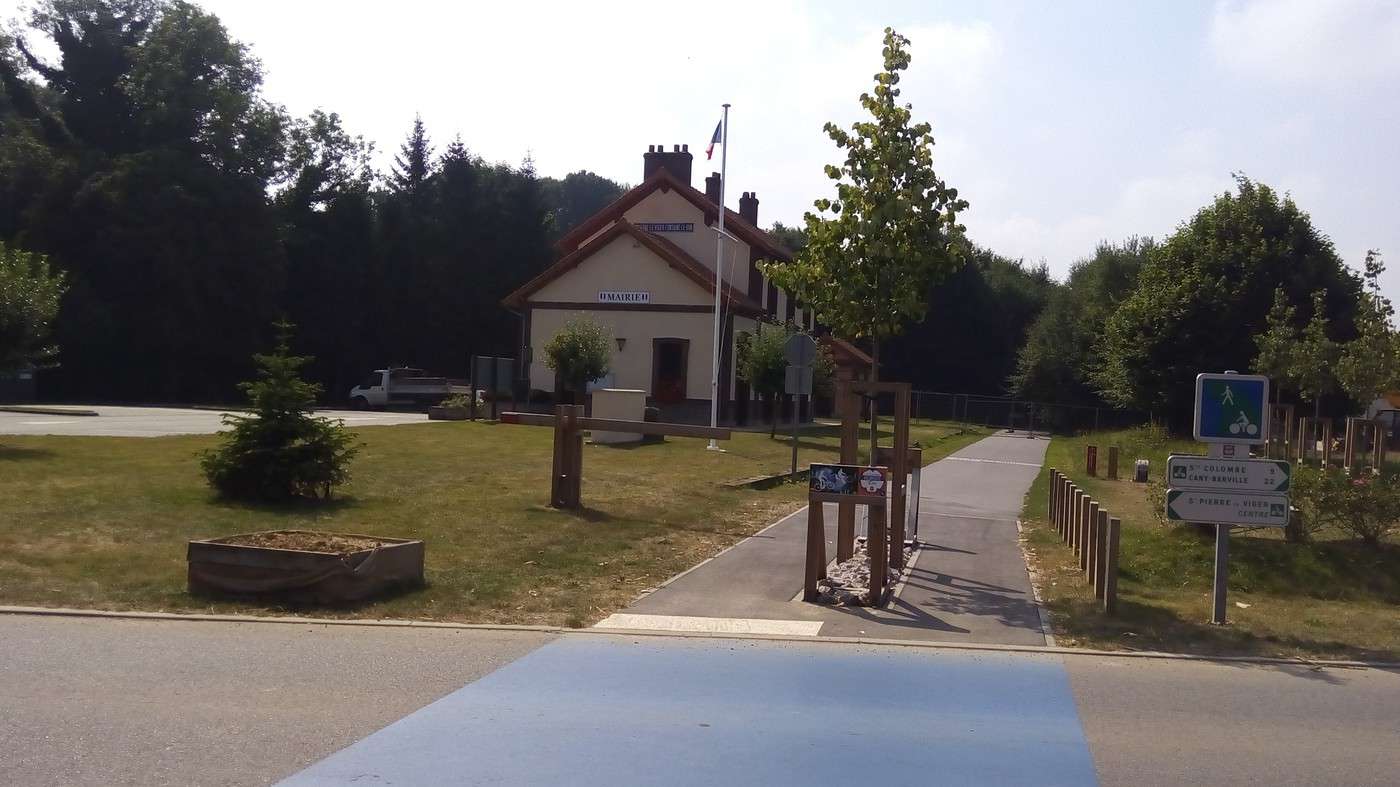
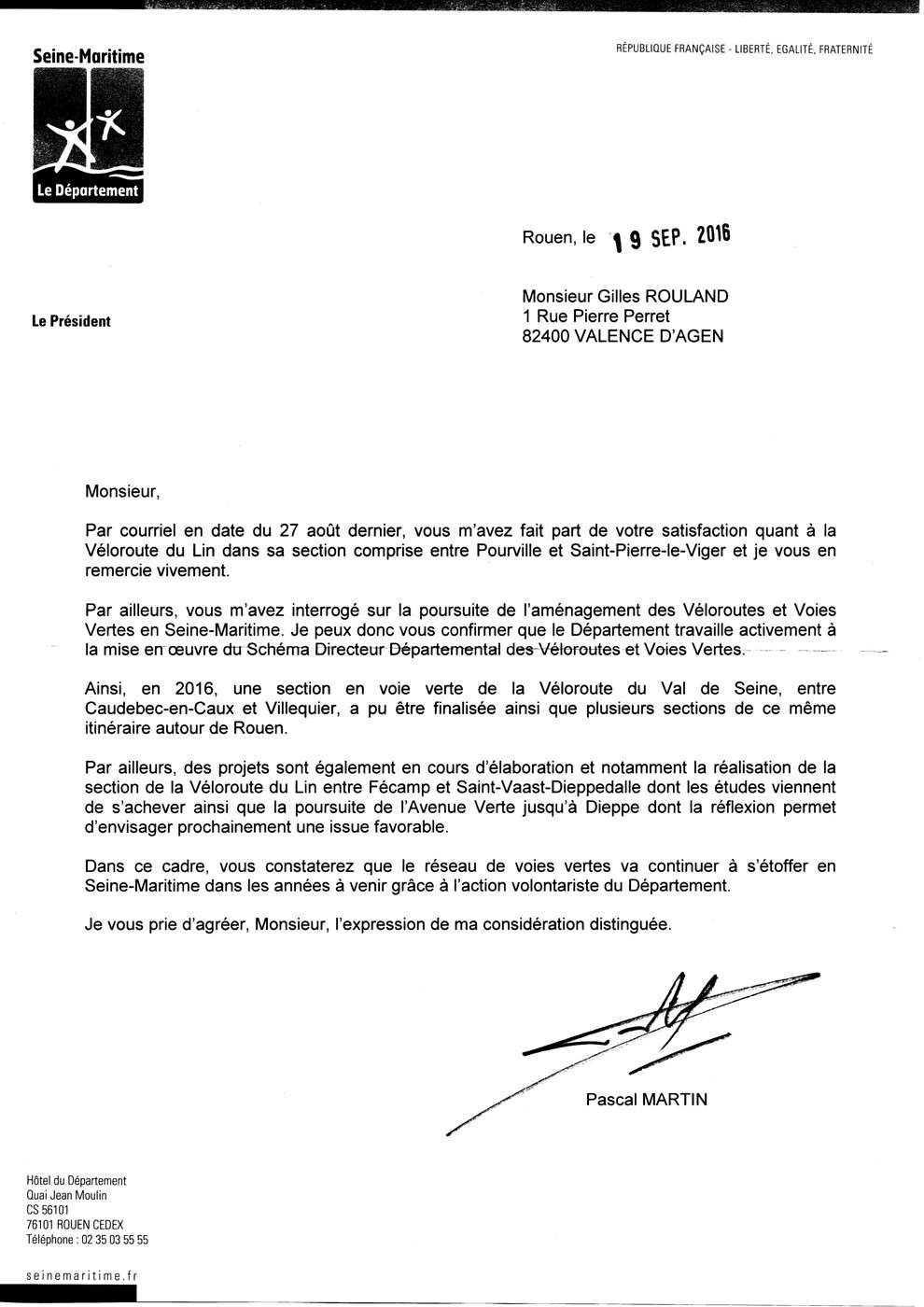
I enjoyed the 27 km I rode between Pourville and Saint-Pierre-le-Viger, with 23 km on a dedicated path. The intersections are very well secured, and the route’s continuity off the greenway isn’t just marked with a small white bike on a green background—the logo is added too.
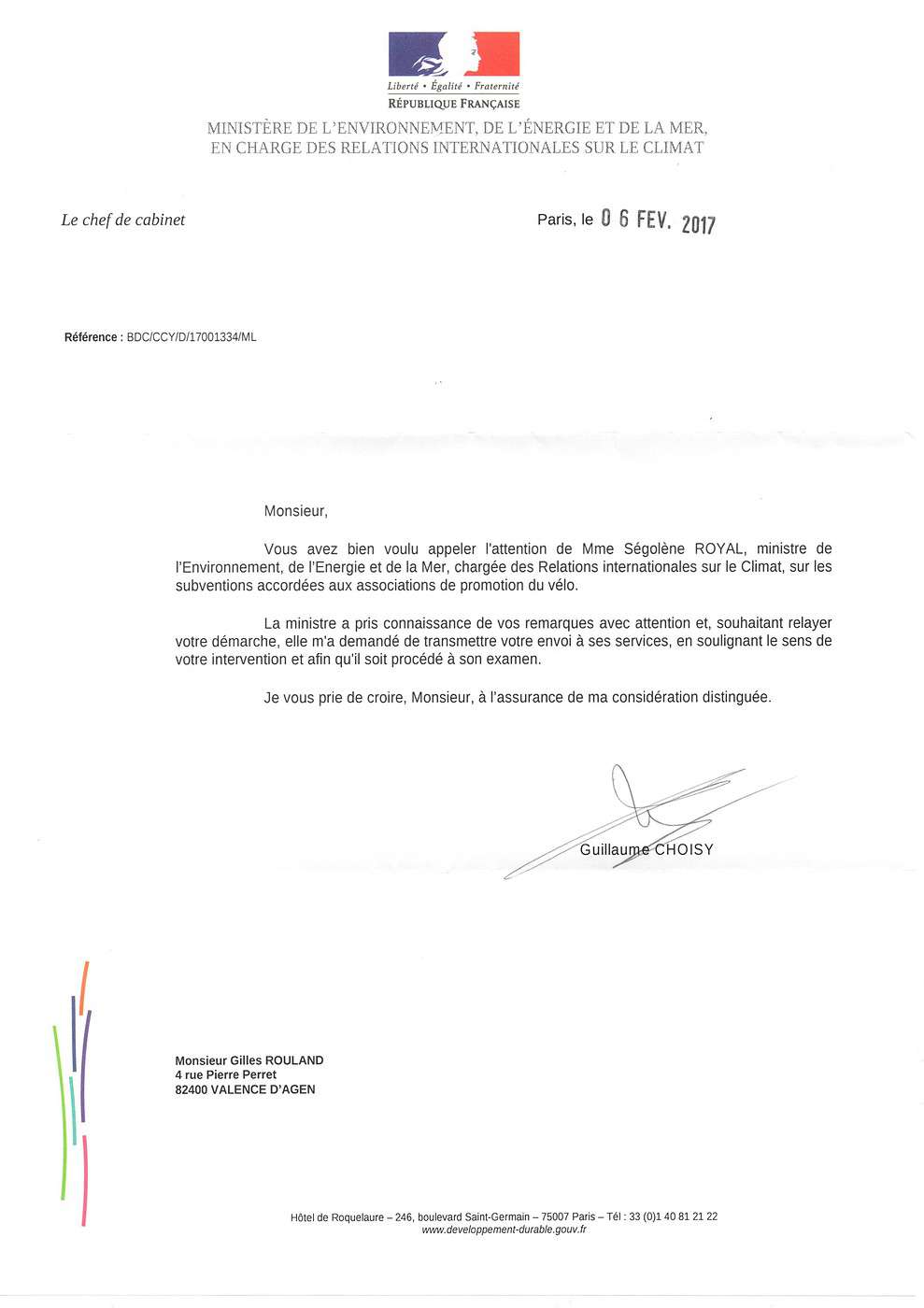
I congratulated the President of the Departmental Council:
Gilles ROULAND
4 rue Pierre Perret
82400 VALENCE d’AGEN
August 27, 2016
Subject: Greenway and Green Route.
To the President of the Seine-Maritime Departmental Council,
I wanted to congratulate you on the Flax Greenway, as well as all the entities involved in creating this greenway. It’s perfect between Pourville and Saint-Pierre-le-Viger. All it needs are water points and signs showing the route to make it family-friendly. It’s still too short to attract long-distance cyclists, but I hope you’ll continue with the same high-quality surfacing and safety measures to make this a fantastic way to discover the maritime Caux plateau and its villages.
I also wanted to commend you on the free map of greenways and green routes available at your tourist offices. The 1:150,000 scale map is very well done. Though no date is shown, I think it’s recent. (Even the paper choice seems excellent—it held up well in my pocket and bike bag!)
It’s made me want to return next year. Starting from Rouen, I’ll follow the Val de Seine greenway to Le Havre, then the Coastal Greenway to Dieppe, and finish the loop with the Avenue Verte. This ride will cover almost the entire Seine-Maritime tour and take me through accommodations and shops strategically placed along the route.
Looking forward to your response, which I hope will confirm your commitment to continuing the development of Seine-Maritime’s greenways and green routes. With thanks,
Map of Seine-Maritime cycling routes here:
www.seinemaritime.fr/docs/carte-des-veloroutes-...
See scan of the reply in the last photo.
Mountain Biking (MTB) Along the Canal Between the Two Seas (France)
Facteur4 · 2016-12-18 · Message 230 of 310
After my fall on the EuroVelo 8 in Spain, I used the contact form on the website:
www.eurovelo.com/fr/home
and sent this message:
Hello,
I made a bike trip from my home (90 km north of Toulouse) to Barcelona: voyageforum.com/...post=7673442#7673442
On this occasion, I discovered the EuroVelo 8.
In Spain, near Torroella de Montgrí, I was surprised by the crossing of the Ter River. The route, which shares part of the Pirenexus path, requires cyclists to follow the north bank of the river and then ride in the opposite direction along the south bank. To do this, bikes must climb onto the sidewalk of the road bridge and immediately descend via a footbridge built with EU support. The 90-degree angle makes it impossible to see the bollard blocking vehicle access until the last moment. My rear pannier rubbed against this post, causing me to lose my balance and fall. Fortunately, the setup forced me to ride slowly, so I wasn’t injured. It seems to me that this recent construction isn’t suitable for cycle tourists traveling with heavy loads.
I don’t know who to contact about this issue to prevent other cyclists from falling.
Hoping you can take action, best regards.
Gilles ROULAND
4 rue Pierre Perret
82400 VALENCE d’AGEN
FRANCE
Here’s the response from the European Cyclists' Federation:
Dear Gilles,
Thanks for your email.
We really appreciate your feedback. We have forwarded the information to our local partner so they can find a solution to avoid this situation in the future. They will contact you shortly.
Thanks again,
Kind regards
Jesus Freire Valderrama
Project Officer - EuroVelo
European Cyclists' Federation asbl
Rue Franklin, 28 - Brussels 1000
And here’s the response from the Voies Vertes de Gérone:
Dear Mr. Rouland,
First of all, we regret your accident and are glad it wasn’t serious. We’ve considered several solutions and think the best one will be to move the bollard further from the start of the path, giving cyclists more time to avoid it. We’ll also replace it with a taller one that’s visible from the bridge. We hope this action will resolve the issue, and we greatly appreciate your feedback, which helps us improve the route for everyone.
Sincerely,
Miquel Llop Puig. Economic Promotion Technician.
Consorci de les Vies Verdes de Girona
C/ Emili Grahit 13-15 9e B - 17002 Girona Tel. 972 48 69 50 Fax 972 48 69 59
This seems very responsive and encourages me to make a donation:
www.eurovelo.com/...-don?set_language=fr
to help them continue their work.
Especially since the government is shamefully backing out by not paying the 2016 subsidies promised to associations: www.isabelleetlevelo.fr/...er-les-associations/
Now more than ever, it’s important to join associations that support cycling.
Mountain Biking (MTB) Along the Canal Between the Two Seas (France)
Facteur4 · 2017-01-16 · Message 231 of 310
Following my donation to www.eurovelo.com/fr/ecf,
I received the European cycle route map and the free T-shirt.
However, I wasn’t expecting them to be sent by recorded delivery and by air.
I let ECF know:
Hello,
I’ve received the map and the T-shirt, and I thank you for them.
But I’m disappointed that the money from my donation was used unnecessarily for this delivery.
There was no need to send it by recorded delivery.
There was no need for it to be transported by plane.
I didn’t donate 100 € to support cycling just so 12.67 € could be wasted on transport—especially to fund air freight.
It’s the most polluting mode of transport and, on top of that, it’s not even taxed.
I hope the rest of my donation will be put to better use.
This doesn’t encourage me to renew my donation in the coming years…
--
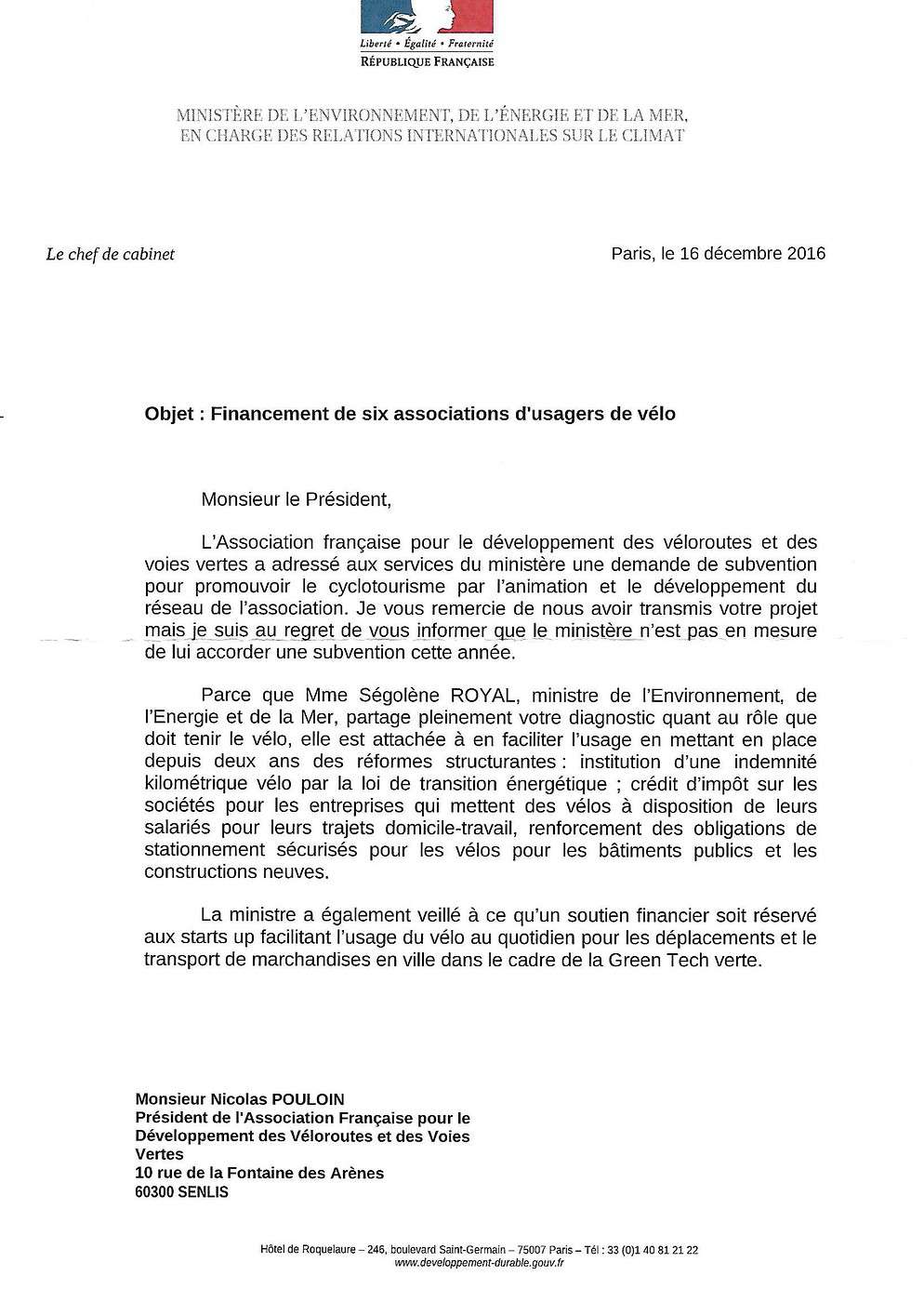
Following my email about subsidies for associations:
Gilles ROULAND
4 rue Pierre Perret
82400 VALENCE d’AGEN
December 19, 2016
Subject: 2016 Subsidy for Cycling Associations
Madam Minister of the Environment, Energy, and the Sea,
I was shocked to learn that the state subsidies promised for 2016 will not be paid to certain associations advocating for the development of bicycle travel—particularly AF3V, of which I am a member.
While our cities are choking under air pollution, this decision is incomprehensible.
Under the pretext that your ministry is not meant to subsidize tourism development, you’re overlooking the role of utility cycling.
Working 6 km from home, I commuted by bike every day for 10 years.
Twice, when sent on business trips to Bordeaux by my employer, I cycled there: voyageforum.com/...ost=2799841;#2799841
I wouldn’t have considered it without the Greenway along the Garonne lateral canal.
To attend a training course in Lyon, I cycled 700 km and returned by train: voyageforum.com/...post=6006514#6006514
I took the Canal des Deux Mers cycle route and the ViaRhôna.
These two routes, listed as V80 and EV17 in the national scheme, wouldn’t exist without AF3V’s proposals. This user association fills the gap left by the state, which should be leading these nationally and internationally significant routes.
The Association for the Development of Cycle Routes and Greenways (AF3V) pushes decision-makers, validates infrastructure, and suggests improvements as daily users—fulfilling a public-service role that promotes cycling.
I ask you to release the planned subsidy so they can continue their work and encourage soft mobility by providing viable alternatives to cars. Every kilometer cycled helps fight sedentary lifestyles, pollution, and their associated harms.
Looking forward to your response, please accept, Madam Minister, my respectful regards.
I received this reply by email:
Sir,
You wrote to the Minister of the Environment, Energy, and the Sea on December 19 to protest the non-allocation of a subsidy to AF3V in 2016. Regarding the reasons for this refusal, she sent a letter to the association’s president at the end of the year—I invite you to refer to that response.
For 2017, the Interministerial Coordination, convinced of the usefulness of user involvement in creating or improving cycling infrastructure, will be available to AF3V to explore the conditions for potentially reinstating these subsidies, either through more targeted actions within the MEEM’s scope or by intervening with another ministry.
Please accept, sir, our best regards.
--
Pierre Toulouse
Deputy to the Interministerial Coordinator for the Development of Walking and Cycling
General Council for the Environment and Sustainable Development
See the response in the attached photo
Following AF3V’s complaint:
www.af3v.org/...-Ministere-de-l.html
02/09/17 update: attached photo of the response to my email—letter received today.
Mountain Biking Along the Canal Between the Two Seas (France)
Facteur4 · 2017-02-26 · Message 232 of 310
Unlike the summer of 2014, when I traveled from Vienna (Austria) to Nantes: voyageforum.com/...post=6637644#6637644
and from Copenhagen to Paris in 2015: voyageforum.com/...post=7138190#7138190,
I opted for a more reasonable bike trip this summer of 2016, following the 180 cyclists from www.dynamobile.net/ between Paris and Mont Saint-Michel.
For a few years now, fellow bike tourers had spoken highly of this Belgian association.
They organize a family-friendly bike tour every summer, with overnight stays in gyms and organic vegetarian meals:
photos.google.com/...RjlBXzJubTJ0Mnk4a293
It was the choice of destination this year that made me want to join. I later realized that the route follows the www.veloscenie.com/, which could only be an extra good omen.
In 2016, Dynamobile cycled toward Mont Saint-Michel Bay.
The stages were: Brussels > Sceaux (Paris) by coach, then Sceaux - Massy (15/07) - Bonnelles (16/07) - Chartres (17/07) - Condé-sur-Huisne (18/07) - Alençon (19/07) - Bagnoles-de-l’Orne (20/07) - Saint-Hilaire-du-Harcouët (21/07) - Ducey in Mont Saint-Michel Bay (22/07), where we stayed two days to explore the area and meet local associations. On 23/07, we visited Avranches and the "Grouin du Sud," and on 24/07, we went to Mont Saint-Michel. They returned to Brussels by coach on 25/07.
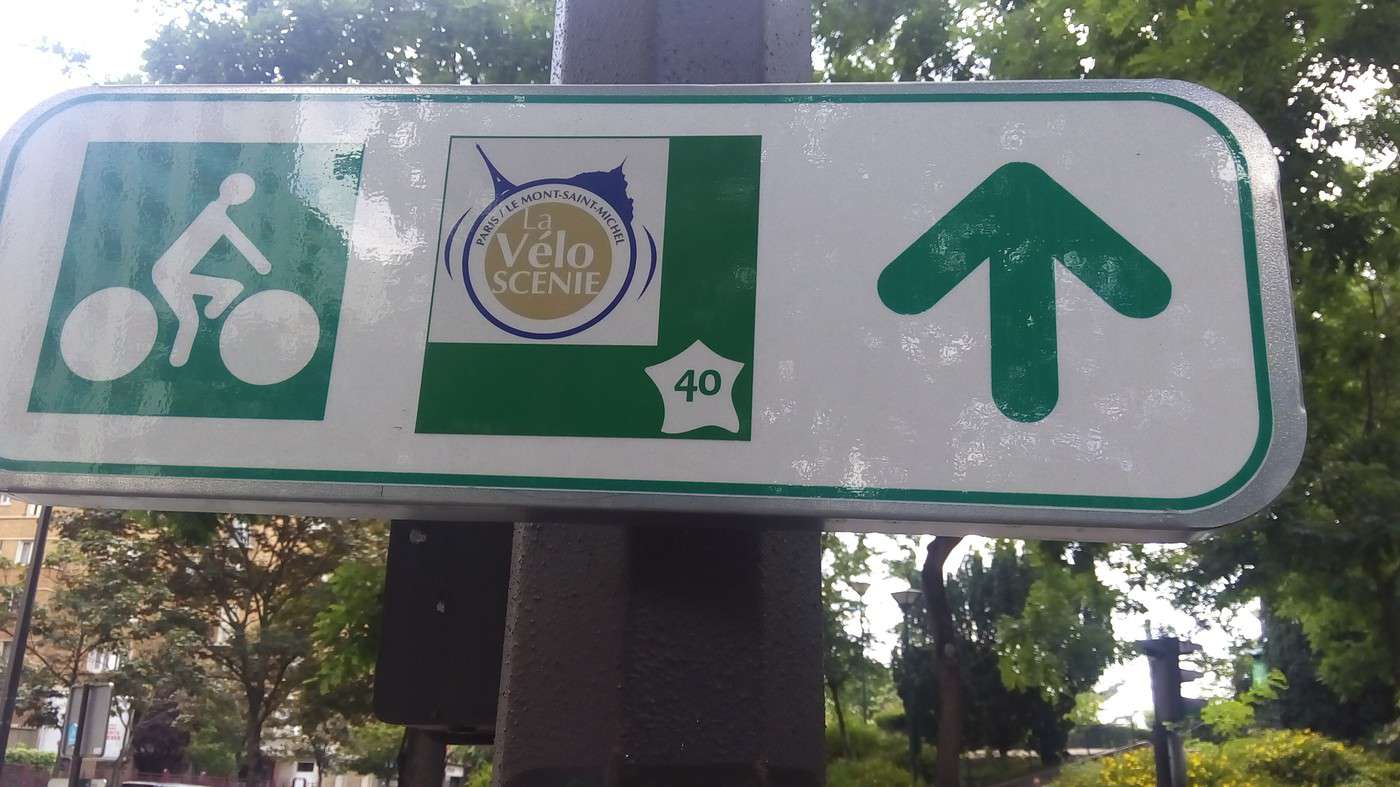
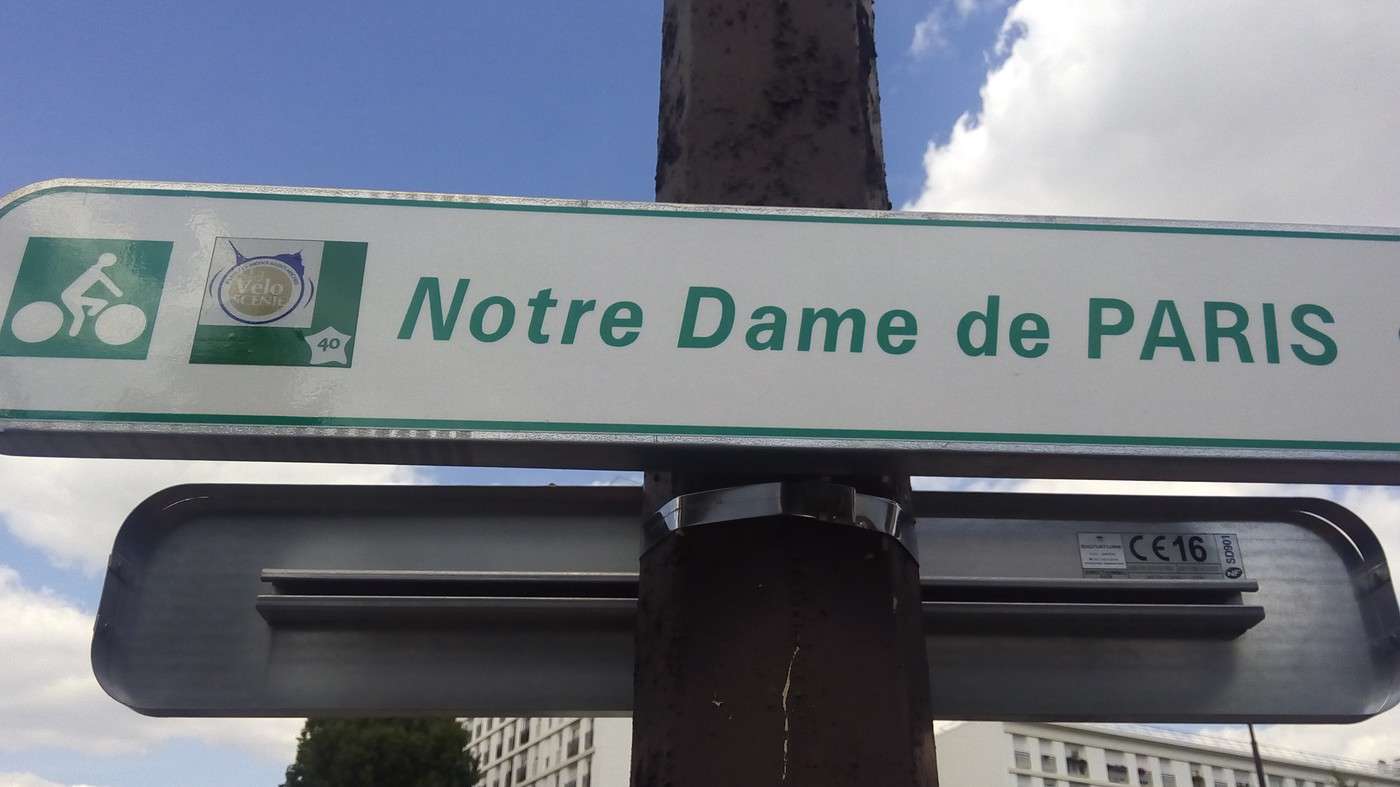
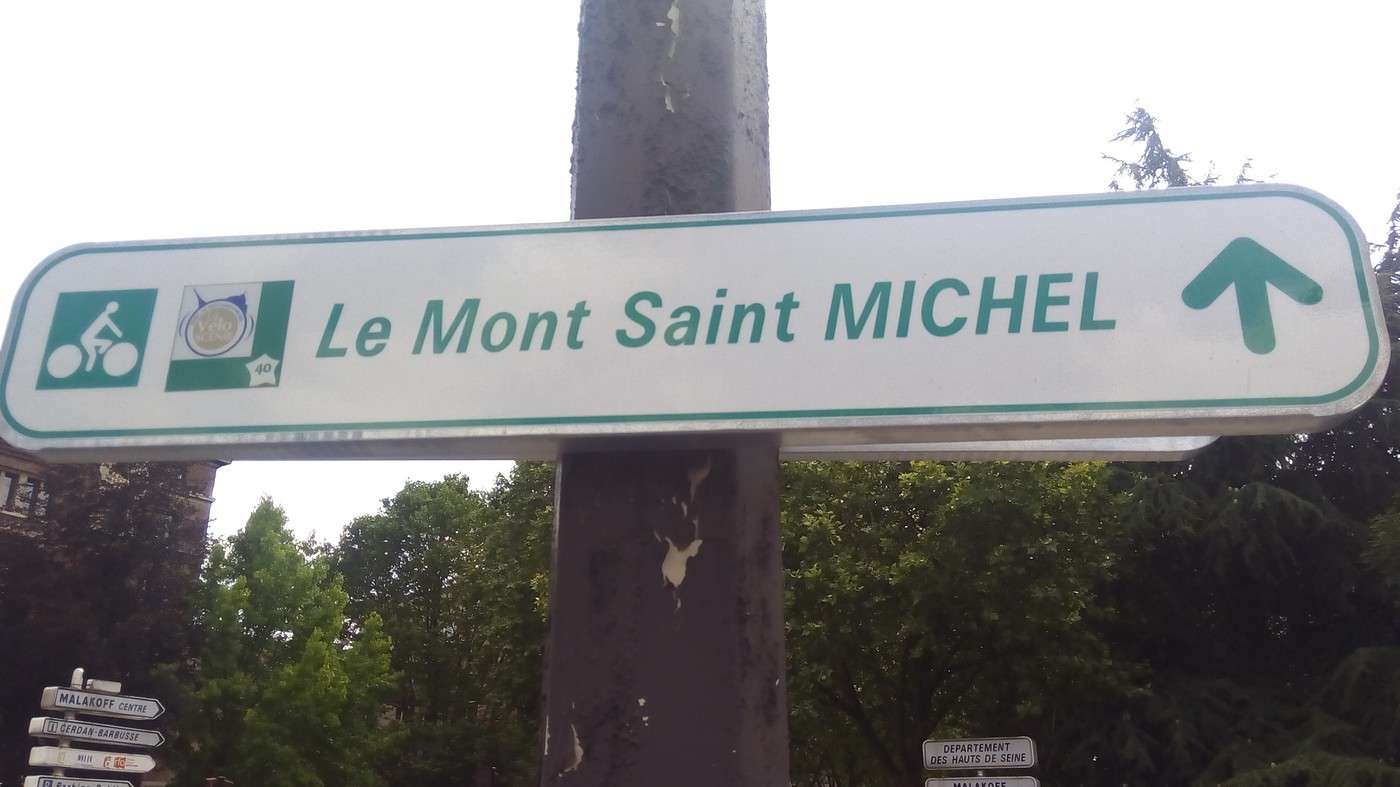
I took the TGV from Agen and arrived at Gare Montparnasse around 3 PM. To meet the Belgians by 5 PM in Sceaux, I turned on my smartphone and activated its GPS, but it said the connection to Google Maps was impossible even though I had internet. I decided to head due south, and surprisingly, at the intersection, a sign with the Véloscénie logo pointed one way to Notre-Dame and the other to Mont Saint-Michel.
Unfortunately, this was the only signposting I saw. I guessed I had to follow the *coulée verte* of southern Paris. When I found myself on the streets, I followed the sun, keeping it slightly to my right as time passed.
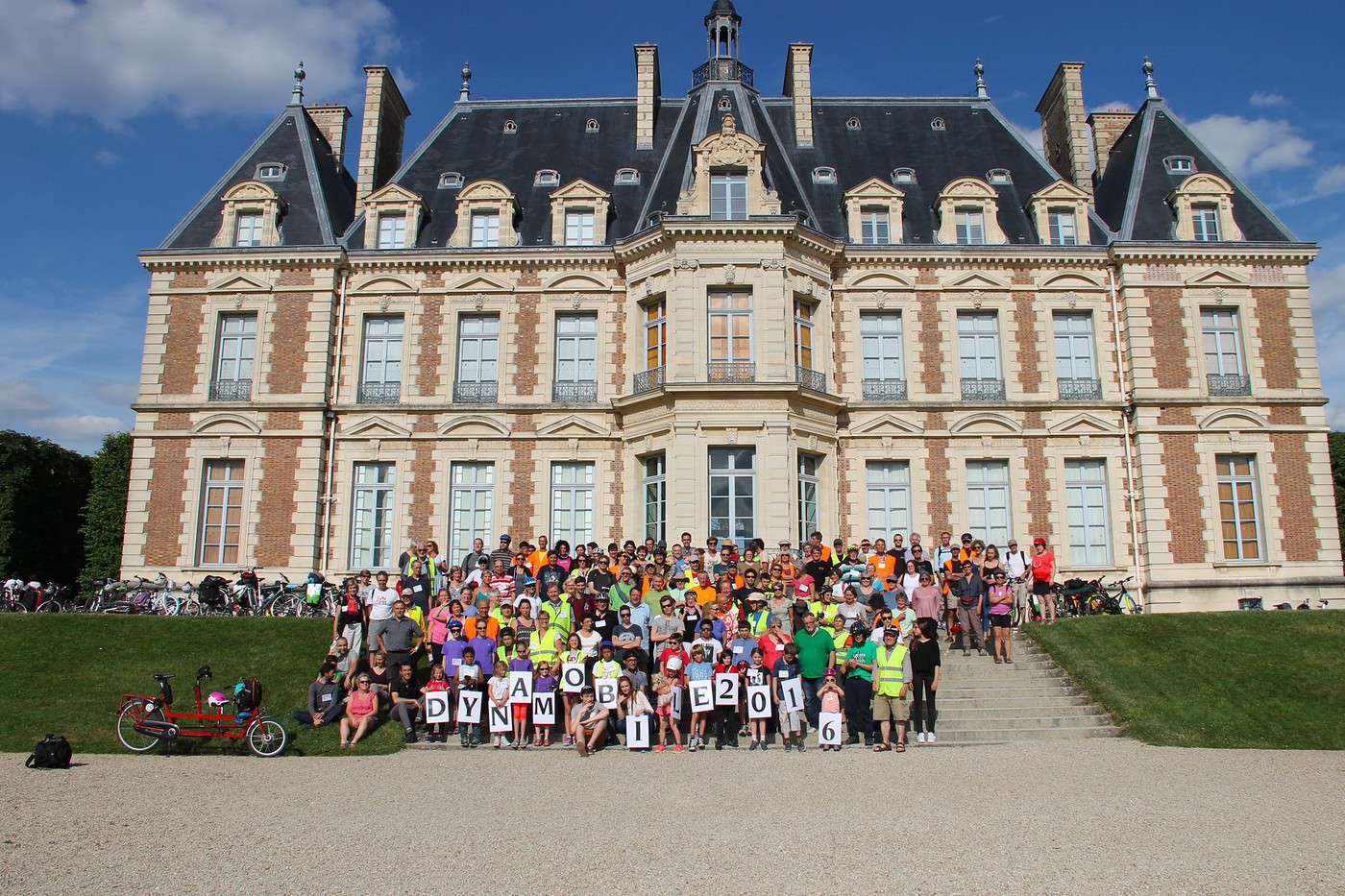
After 15 km, I reached Parc de Sceaux, where the last cyclists were unloading their bikes from the two coaches arriving from Brussels via Lille. Dynamobile limits the number of participants to 150, but due to its success and not wanting to turn away regulars who signed up late, we ended up with 180. After touring the park and admiring the château’s façade, we headed toward Massy.
We settled into the gym, and I reunited with Belgian and French cyclists I’d toured with in previous years. It seems we’re not that many who travel by bike. Despite different organizations, I always run into acquaintances.
With 20 years of experience, Dynamobile’s organization is well-oiled. They post signs for female and male restrooms, either in the local team’s locker room or the visitors’. Depending on the gym’s layout, one room is reserved for families (e.g., a dojo) and another for snorers. I ended up in the largest third room. Some prefer to pitch their tents outside when allowed to avoid the crowd.
For meals, a Dutch chef is hired with his truck, equipment, and two assistants.
Each day, a team of cyclists handles peeling (lots of veggies), setting up, cleaning, and washing dishes.
The next day, Saturday, 16/07/16, we headed toward Bonnelles for a short warm-up stage of 33 km.
It was my first time riding in such a large group—impressive, especially since ages ranged from 1 to 80. It was hard to fit everyone into the frame, even during gatherings. The first fall happened right in front of my wheel. Approaching a speed bump designed with a bypass for cyclists to avoid the jolt, a woman hesitated. One wheel on the bump, the other on the road, she took a tumble right in front of me. Luckily, I hadn’t picked up too much speed on the preceding downhill and stopped just in time. Her wrist took the hit, and her trip ended there.
We rode along the Yvette promenade, then were welcomed by a local official in Orsay who supports cycling. We were offered drinks and snacks.
A very relaxed first day, but I got a reminder at the first roundabout for not yet knowing the rules. I was about to act as a signaler, as I’d done last year with Cyclotranseurope, when I was sharply reminded that overtaking the road captains wearing orange vests is forbidden.
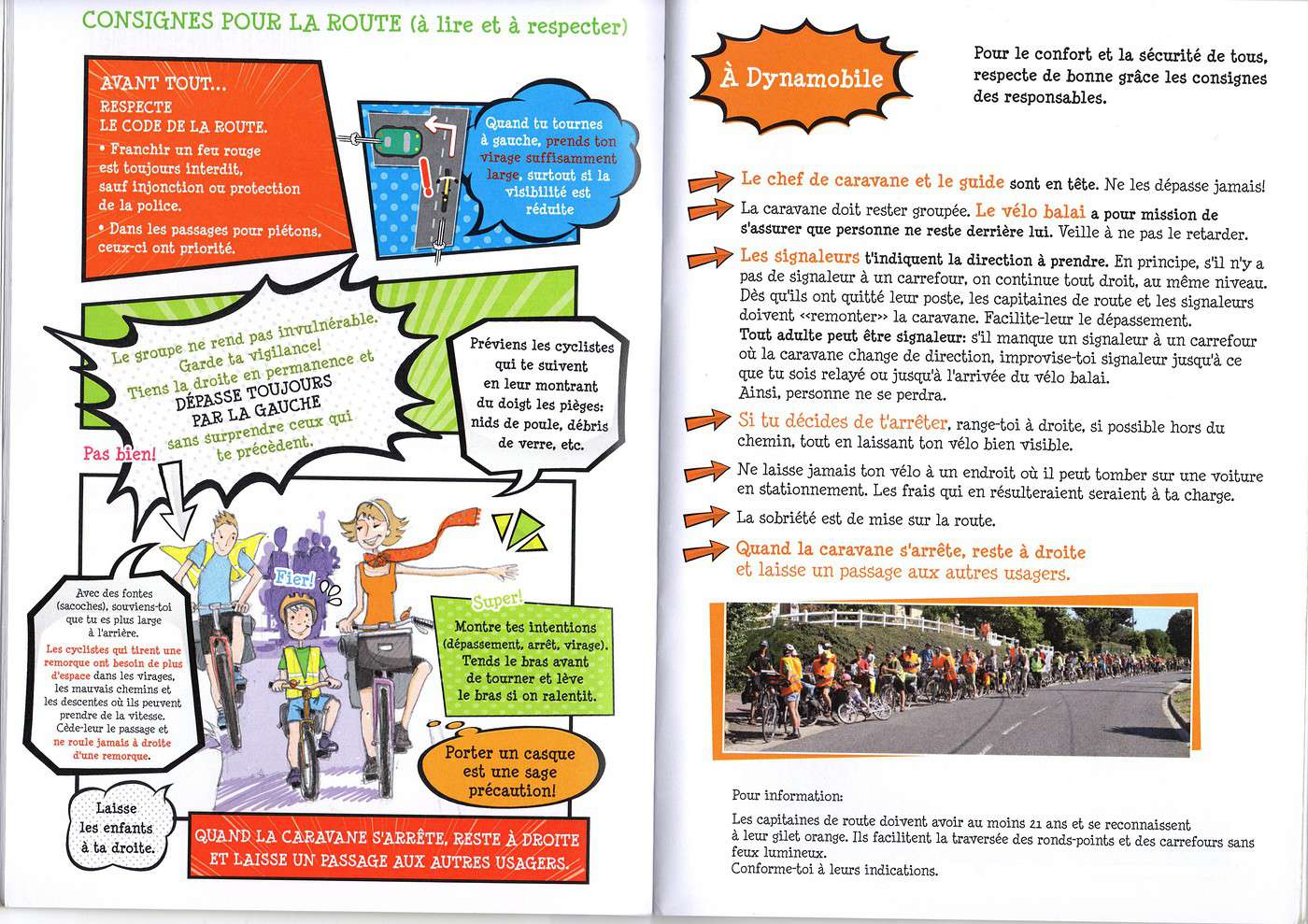
I should’ve read the road book given to each participant, along with a badge showing their name, origin, and the follow-car driver’s number. A fabric pouch with flyers was handed out to promote this activist ride and raise awareness among locals. But since I didn’t start from Brussels, I’d only just received it.
Besides the history of Dynamobile and the organizers, the well-made road book lists the stages and includes maps for each. It also outlines community living and road safety rules. See SCAN.
The welcome from Bonnelles’ town hall was very friendly, with local beer offered. They’re hoping for tourism benefits from the Véloscénie, though only a third of its 450 km is currently greenways. I don’t know if the gym was provided for free. The current trend is to charge only for electricity and hot water. Tables were set up outside, and kids could color during the welcome speech and before dinner.
Sunday, 17/07/16: Woken at 5:30 AM by the need to pee, I took the chance to shave by my headlamp’s light to respect the lights-out rule from 10 PM to 7 AM. Gyms often have two large communal shower rooms but only two toilets and two sinks.
After helping slice bread and set up breakfast, and holding a dad’s bike while he got his kids ready, I was the 150th to leave. Today’s 57 km stage took us to Chartres, mostly on small roads.
We were welcomed by the town hall and enjoyed a guided tour of the cathedral.
The bravest cycled the 7 km back to the gym to see its stunning light show at night.
Monday, 18/07/16: The 80 km stage was made tougher by the heat, especially for signalers who might stand in the sun for an hour at intersections due to the group’s spread—or two hours if there’s a breakdown. As a signaler for 30 minutes, I took refuge in the narrow shade of a concrete post but had to leave when two electricians came to work on the nearby box.
After the whole group passed, I briefly broke the rule against staying behind the sweep bike to take a photo after letting them know.
Condé-sur-Huisne welcomed us to its culture and sports hall. We slept in the gym or in tents by the pond and ate in the hall, which sometimes hosts cabaret nights. The site was lovely. I went back to take photos of the *Voie Verte* we’d arrived on, the village, and its charming little château near the station. The downside? Hearing trains pass from 6 AM.
Tuesday, 19/07/16: On my way to the restrooms by the soccer field, I found a child’s underwear. I added it to the lost-and-found bin (water bottles, clothes, phone chargers, toys…).
This 79 km stage was under a heatwave as we entered Normandy. Luckily, we had shade from the *Voie Verte* following an old tree-lined railway. Still, two people suffered heat exhaustion, and I don’t remember ever having such dark urine after a day’s ride. We picnicked in the shade of Mortagne-au-Perche’s gardens after a rough stretch of the *Voie Verte*, where runoff had exposed the gravel underneath. Dynamobile surprised us with a swim at Mêle-sur-Sarthe’s lake—great with the 36°C in the shade.
We were received at Alençon’s town hall, where the official prioritized drinks before speeches congratulating us and handing out backpacks.
Then we headed to a high school dorm for a restful night in a real bed.
Wednesday, 20/07/16: The scorching heat limited volunteers, so they organized a contest for the most original signaler. Bad luck for the young boy often perched on his dad’s shoulders—he ended the day with a broken arm.
Before small roads took us past the 1939 prisoner camp in Damigny, a water tanker broke its hitch in a village where a backhoe was lifting it at an intersection. We enjoyed a picnic break at the Normandy-Maine park house, with its regional product shop near Carrouges Château.
That afternoon, a descent toward Petit Jard pond on a gravel path caused a woman to fall, requiring a call for help. I’ve been surprised by how poorly cyclists distribute their load—many have all the weight on the rear rack. But I realize most are occasional bike tourers, only doing 10 days a year, and aren’t inclined to invest in more gear like me with my five panniers. It seems like at least a handlebar bag would help shift some weight forward. I should note that only those riding with young kids are allowed to put luggage in the van. I’m also surprised so few have mirrors. The group must include many urban cyclists.
After 58 km, we arrived in Bagnoles-de-l’Orne, welcomed at the stunning town hall. Its staircase made the perfect backdrop for our group photo and banner.
The accommodation at the château’s outbuildings was lovely. Too bad, as usual, we couldn’t adjust the gym showers’ temperature. The first to shower got scalded, and the last froze. It’s silly to waste energy by forcing hot showers when you might prefer cool ones.
I took advantage of a room that could serve as a bar to share photos from my Copenhagen (COP15 2009) to Paris (COP21 2016) bike trip with CyclotransEurope after dinner. I borrowed Baptistine’s laptop—she handles videos and press relations—and it had been used for other presentations related to our route. Some spectators who’d cycled between Copenhagen and Paris helped me comment on the photos.
Thursday, 21/07/16:
On this stage of the Véloscénie, where an old railway had been turned into a *Voie Verte*, we saw signs pointing to Mont Saint-Michel 96 km away, then 10 km later, Mt St Michel 66 km away.
I didn’t fail to point this out:
Mr. President of the Orne Departmental Council,
I congratulate you on the creation of the Véloscénie Greenway.
The cycle path on the old railway is very smooth, though dusty. Too bad the section before Alençon is degraded.
Leaving Domfront, it’s marked Mont Saint-Michel 96 km, then 9 km later, 66 km. I’m sure there’s a mistake—I’ve ridden it both ways. On the way with 180 cyclists from dynamobile.net, and back alone. I think a 21 km error on a car route would never happen. Why tolerate a 30% error for bikes, where kilometers are harder to cover?
Of course, I never got a response.
As every day, we appreciated the two support vehicles bringing fresh water and fruit to our rest stops.
After 70 km, we were welcomed at Saint-Hilaire-du-Harcouët’s town hall. After settling into the sports hall, I chose to go to the pool while others visited a bike exhibition for the Tour de France, which had passed through before us.
Friday, 22/07/16:
To reach Ducey, there were only 20 km via the Véloscénie, but Dynamobile chose the lakes route (42 km). It was also a chance to discover that Normandy isn’t always flat. As a signaler, I waited until the sweep bike passed, then enjoyed the descent toward Vezins Dam to catch up with the group at the rest stop. I hit 65 km/h for the first time on my loaded MTB (40 kg).
We had the choice between visiting a military cemetery or the Saint James knitwear factory. The latter attracted most of the women. After the tour, I splurged on a 100 € Breton sailor sweater. It’s the price of *made in France* and the 23 km of wool thread needed. Plus, its 800 g weight isn’t ideal for bike travel. I had it shipped home along with one I picked for my wife.
We were welcomed at the Montgomery Château with cider, then headed to the brand-new gym—a luxury for our last three nights. The organizers chose to make the last two days luggage-free. There were even outdoor tables for meals, though not enough for everyone. Still, it was nice.
Saturday, 23/07/16:
We left to visit Avranches and admire Mont Saint-Michel Bay from the coast. Suddenly, I pedaled into thin air—my chain had broken. I knew it had thousands of km on it but thought it’d hold for this short trip. Of course, I’d left my chain tool and gear with my luggage at the gym, taking only one pannier. Luckily, Dynamobile was there! One of their mechanics removed a link—no, two—he’d opened the wrong rivet. I told him it could only be better since my chain was loose. He checked that it still had enough length for the big chainring and cog. He was surprised that on this luggage-free day, I was the third to break a chain. We’d had lots of dust and tiny abrasive gravel on the old railways. In Avranches, we rejoined the group. The head mechanic offered to buy me a chain while getting other parts. I told him it wasn’t necessary—mine would last another 1,000 km. It must’ve been a weak link.
I took advantage of the market to buy melon, gray shrimp, and *pommeau* to share with Belgian friends. fr.wikipedia.org/wiki/Pommeau_(boisson)
Busy offering the Norman aperitif and packing my picnic, I almost missed seeing the Mont from the park. But we got closer to appreciate its beauty before tomorrow’s visit. Our group, joined by local cyclists, rode between fields and the English Channel.
Back in Ducey after 54 km, the evening was enlivened by magician Bachibouzouk, a choir, and medals for the kids.
Sunday, 24/07/16:
We finally rode to Mont Saint-Michel and arrived just as the Patrouille de France flew over to salute us. Dynamobile had really thought of everything—even a meet-up with Isabelle Lesens (former *Madame Vélo* of France):
www.isabelleetlevelo.fr/...nt-michel/#more-4148
But the protest against the bike ban on the Mont wasn’t carried out since negotiations were underway. Having signed the petition, I don’t find it that penalizing to use the shuttles like drivers. Especially since you can walk. The only issue is leaving luggage behind, but it’d be similar at the monument’s base.
In the afternoon, two guides took us barefoot through the bay toward Tombelaine Island, a bird sanctuary. We had to watch for quicksand and currents when crossing rivers. Though born in Rouen and having visited several times, it took Belgians to show me the Mont’s hidden side as we circled it. These organizers are amazing—we even got a mud bath to soothe our legs after 550 km together.
Before leaving, I dropped off a stack of our flyers at the tourist office, as I’d done in Domfront and elsewhere. It’d be a shame for them to go back to Belgium. Dynamobile really deserves to be known and recognized.
The grand finale: after the last meal, we celebrated the association president’s birthday.
Kudos to the vegetarian dinners for 180, with leftovers filling our picnic boxes for the next day. The only downsides were the pre-purchased food (for cost and convenience), like salad that suffered. Dutch bread and cheeses kept well. The jams and honey for breakfast were high-quality and organic, but I skipped the Dutch pears labeled ECO+—far from organic. We enjoyed the herbal tea made by the chef with wild herbs, available in the morning, late afternoon, and after dinner.
Monday, 25/07/16:
While most cyclists boarded the two coaches, I helped clean the facilities since I had no urgent plans.
Goodbye and thank you to my Belgian and French friends for 10 days of camaraderie.
Thanks to the organizers for making this trip a success, and to everyone for their help and kindness. I also thank the towns and associations that welcomed us.
To all who contributed to these 10 perfect days on bikes.
As one dad told a journalist, Dynamobile is a fantastic life school for kids—teaching them to wait their turn, accept what’s offered, respect rules, and share…
To see my photos in chronological order, click to sort by date (ascending):
share.orange.fr/...mosaic/all/dateasc//
Baptistine’s video:
www.youtube.com/watch?v=wHPVU_LK2fk
Biking (MTB) along the Canal des Deux Mers (France)
Facteur4 · 2017-03-01 · Message 233 of 310
Since the 570 km ride between Paris and Mont Saint-Michel felt a bit short, I planned to bike back home to Valence d’Agen. That’s why I had my tent on my rear rack and my MTB weighed in at 40 kg.
On July 25th, I set off again on the Véloscénie in the opposite direction until Domfront, where it intersects with the
https://www.lavelofrancette.com/, which I followed all the way to its endpoint in La Rochelle. From there, I took the
https://www.lavelodyssee.com/ to Royan.
That’s where the
https://www.canaldes2mersavelo.com/ bike route now starts.
It brought me back home on August 10th after a 1,750 km journey.
I’m not sure if I’ll take the time to recount the 1,180 km return trip, but as I mentioned earlier, my chain didn’t break again. Still no punctures with the so-called puncture-proof tires. However, after a few days, I found my rear tire flat. See the photo. Unbelievable—I must’ve gotten a puncture in the last few meters.
Switching from group camper to solo traveler wasn’t an issue. I enjoyed our beautiful country differently on routes that are perfect for bike trips. To see my photos in chronological order, click to sort by date (ascending):
https://share.orange.fr/#EWcDF5ZJcI266f1e1cc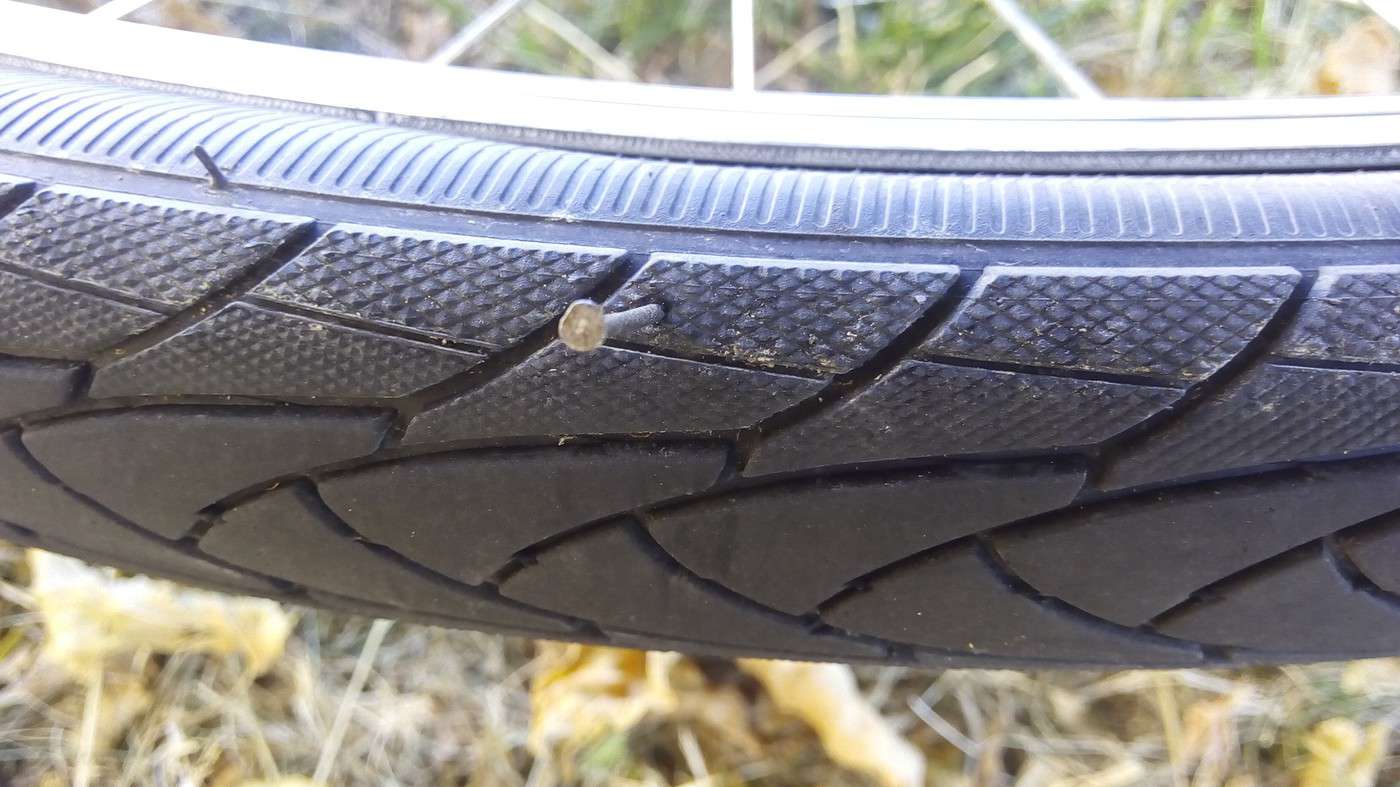
Mountain biking (MTB) along the Canal des Deux Mers (France)
Facteur4 · 2017-05-10 · Message 234 of 310
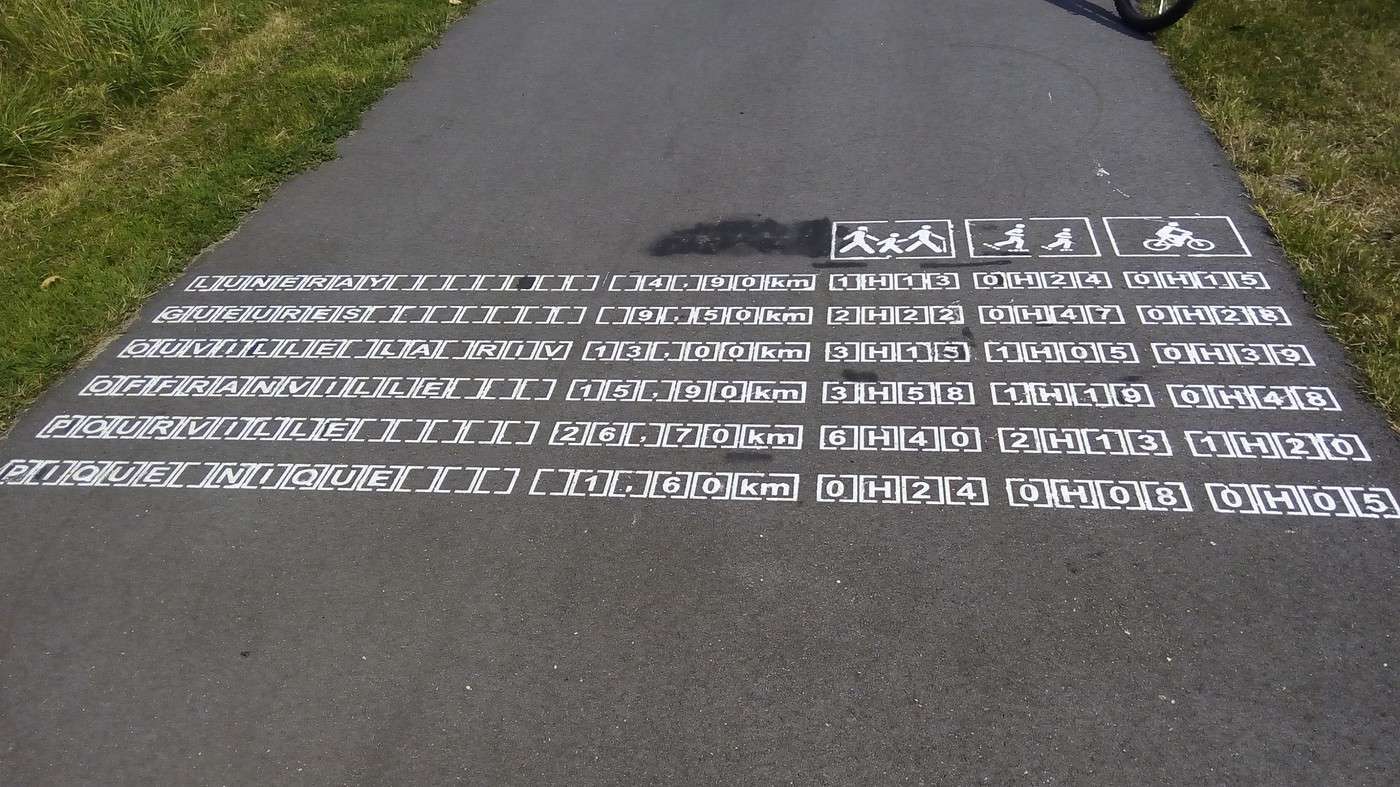
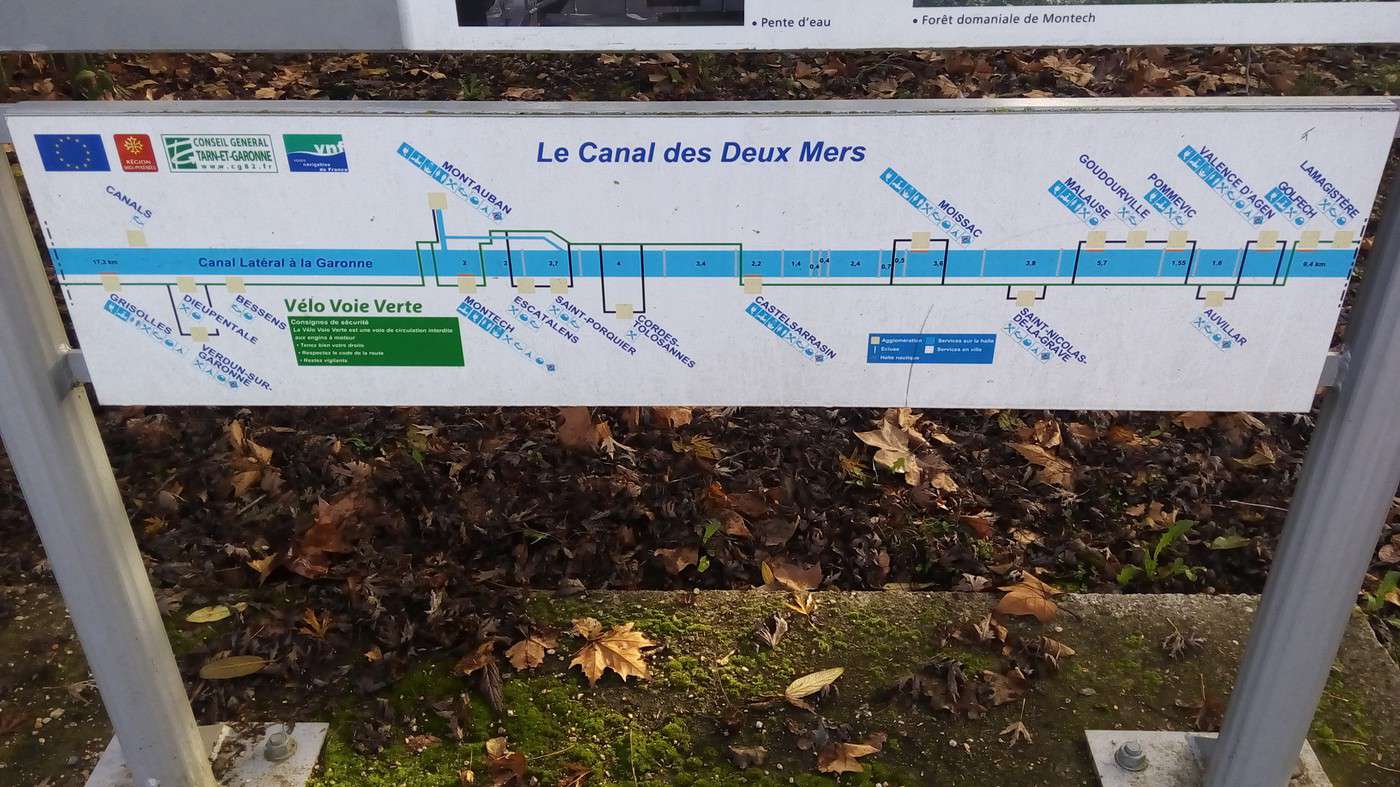
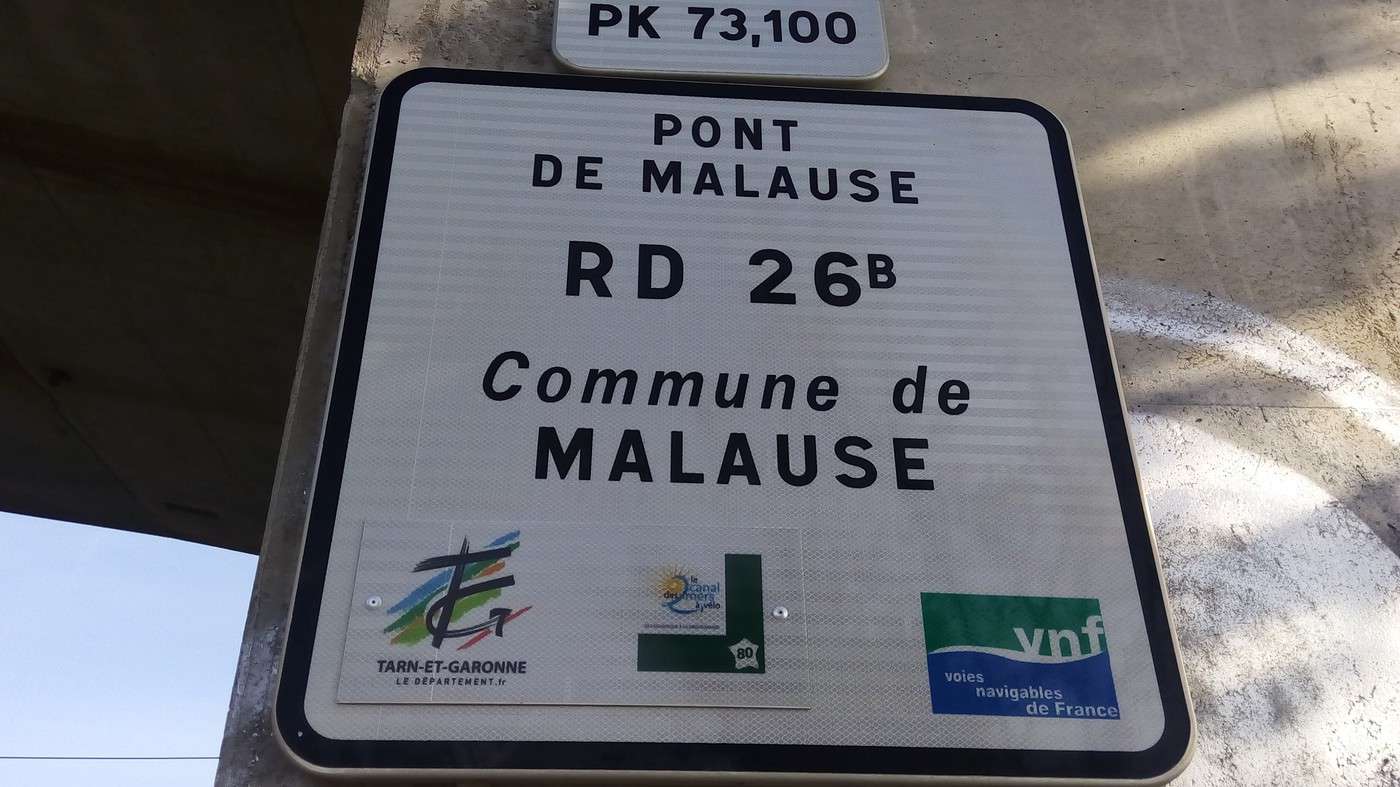
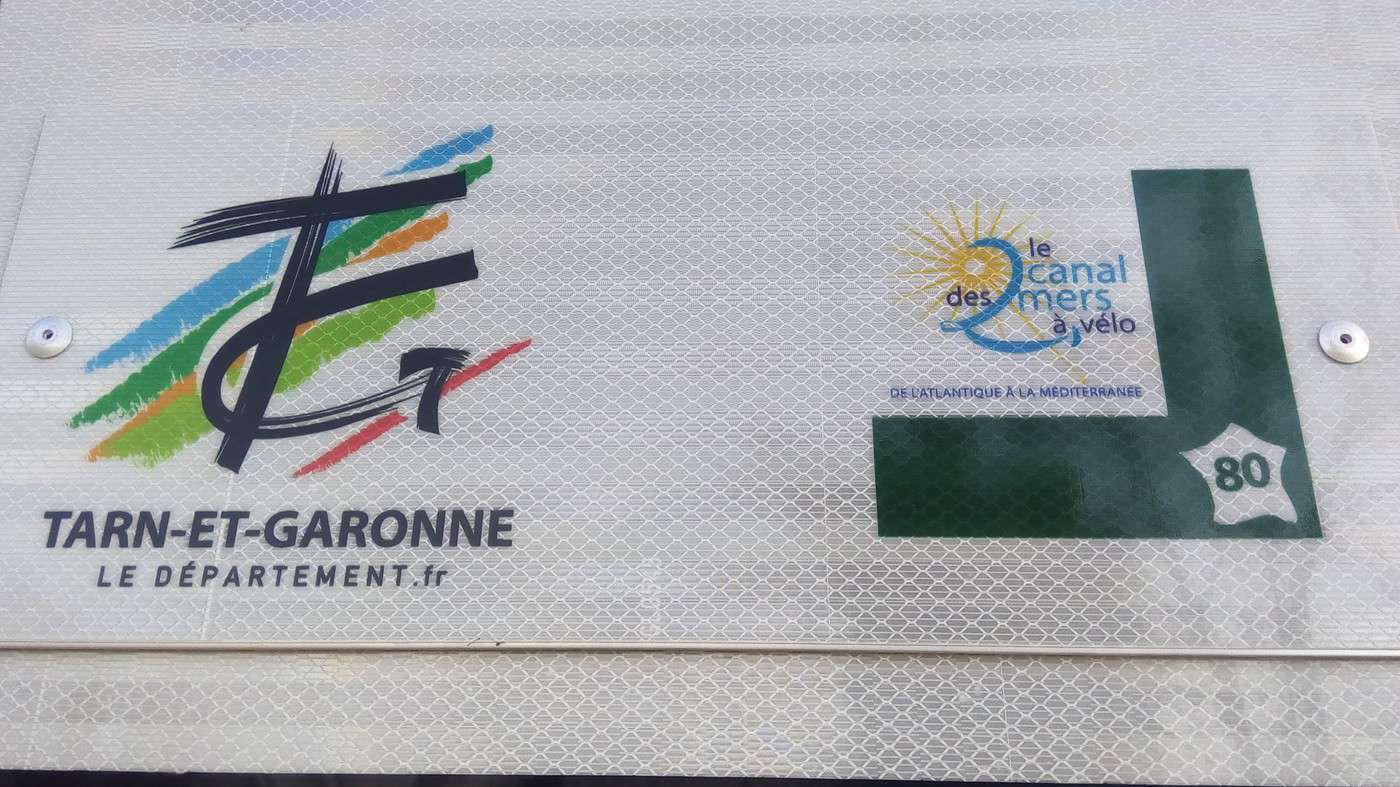
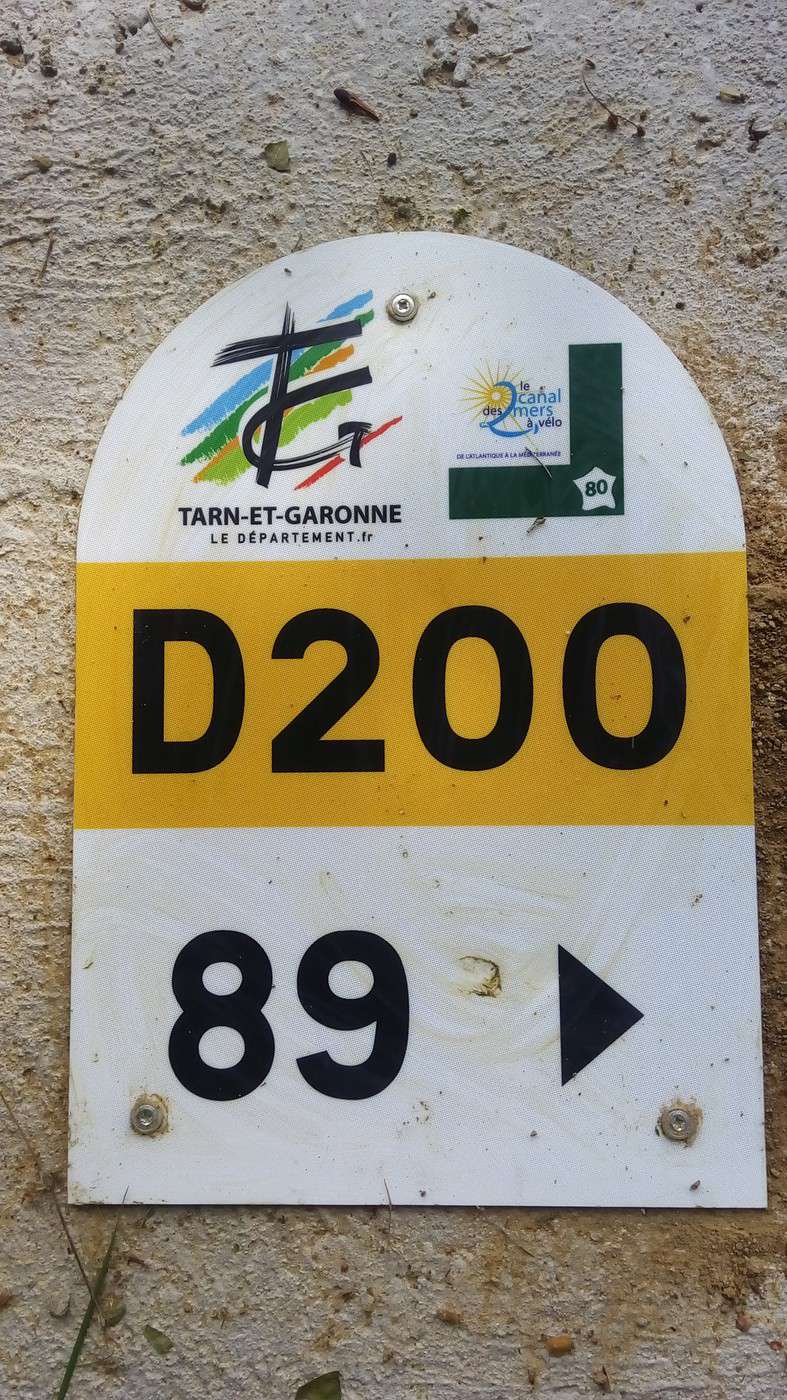
Tarn-et-Garonne takes great care of its cycling paths. It was one of the first departments to mark the Canal des Deux Mers Greenway www.af3v.org/...-VVV-.html?voie=197# with the official V80 logo and number (see photo). It has just named the 68 km section crossing it as the D200. This practice was adopted by Gironde a few years ago.
This shows my department’s commitment to maintaining and upkeeping this Greenway, which now has a marker every kilometer indicating the distance from the twin bridges of Toulouse, the starting point of the lateral canal to the Garonne.
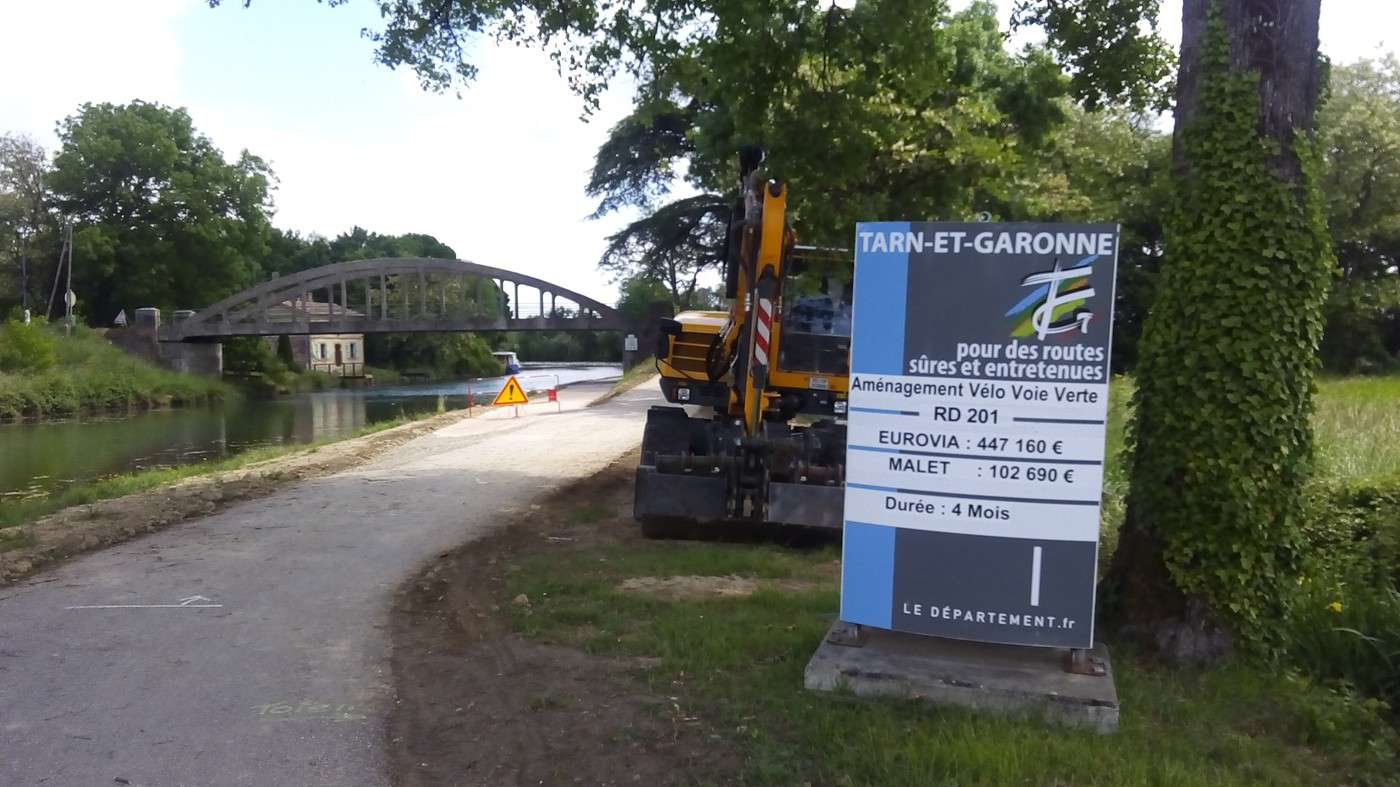
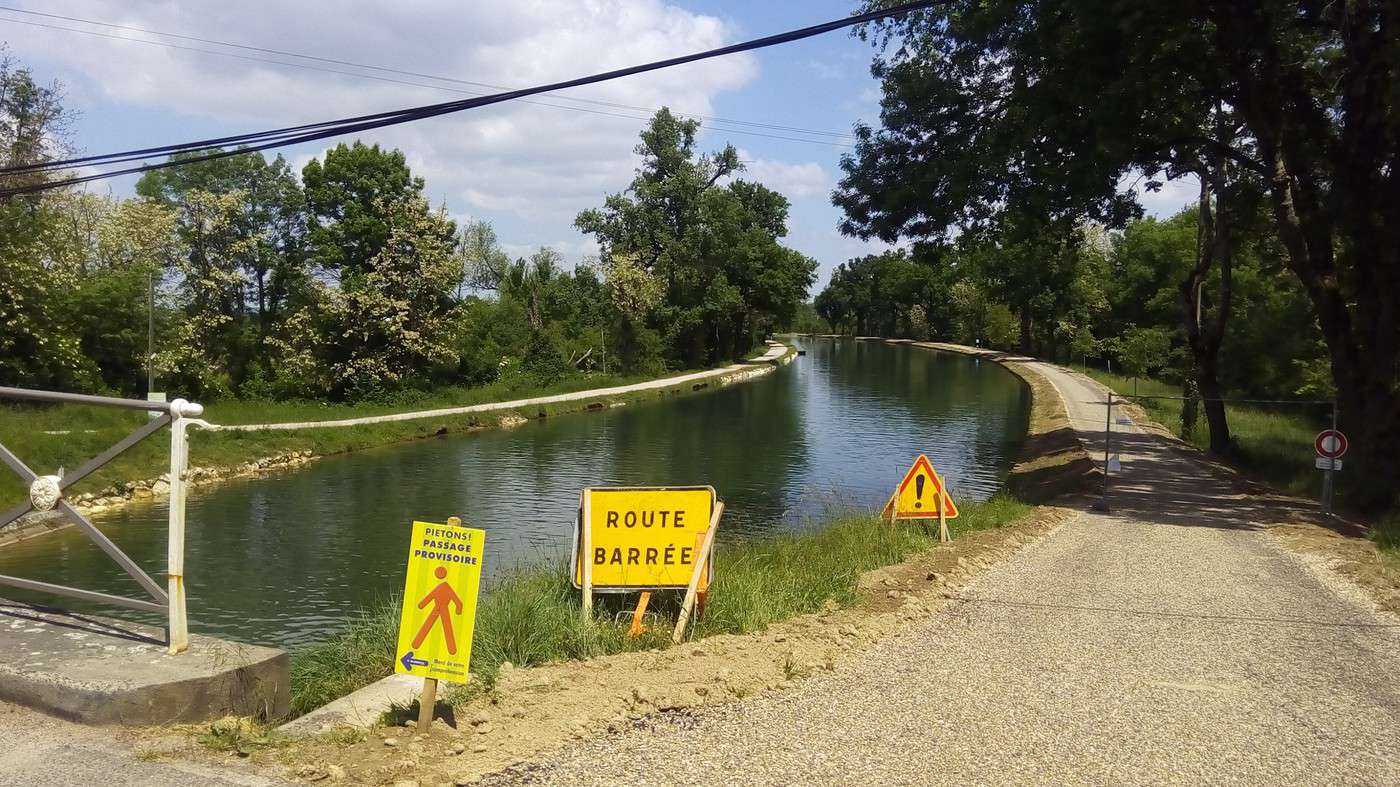
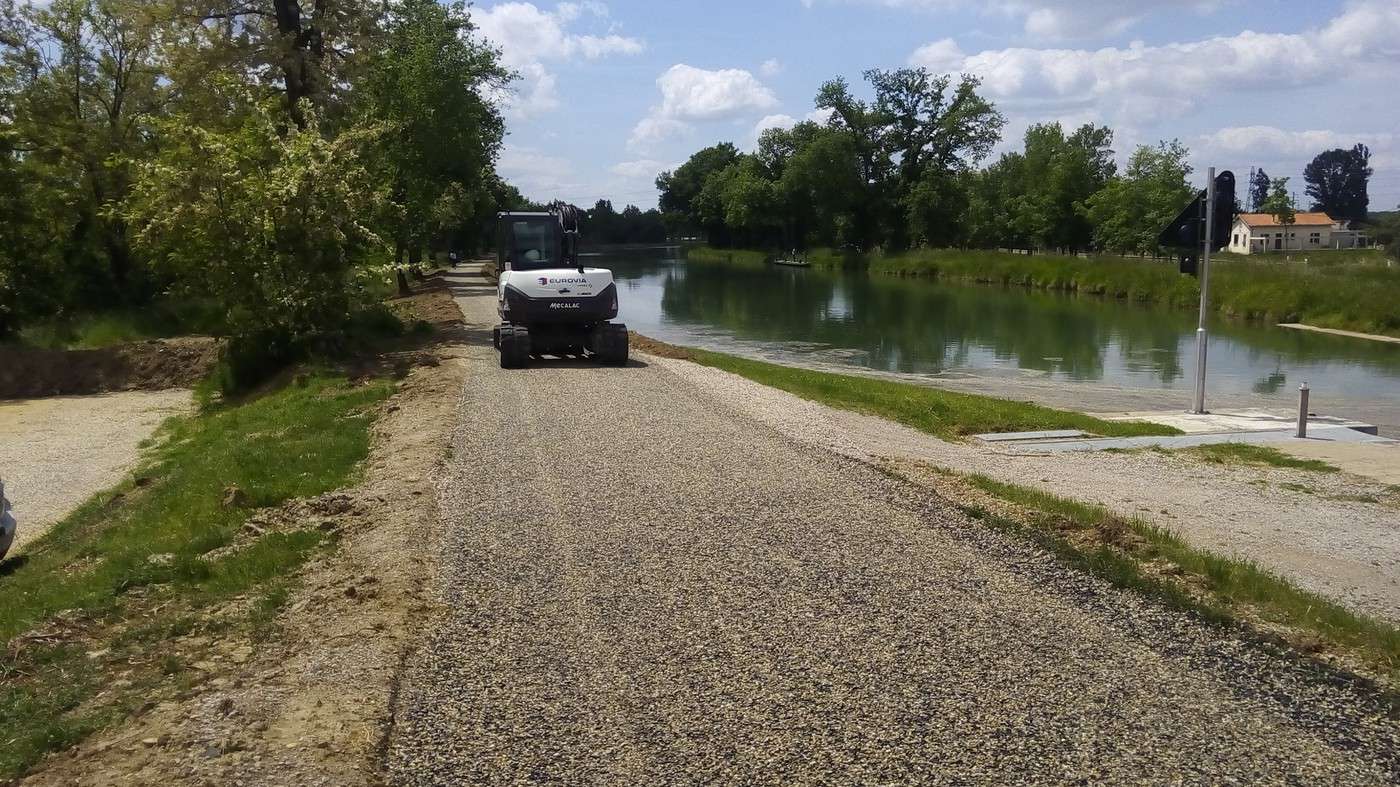
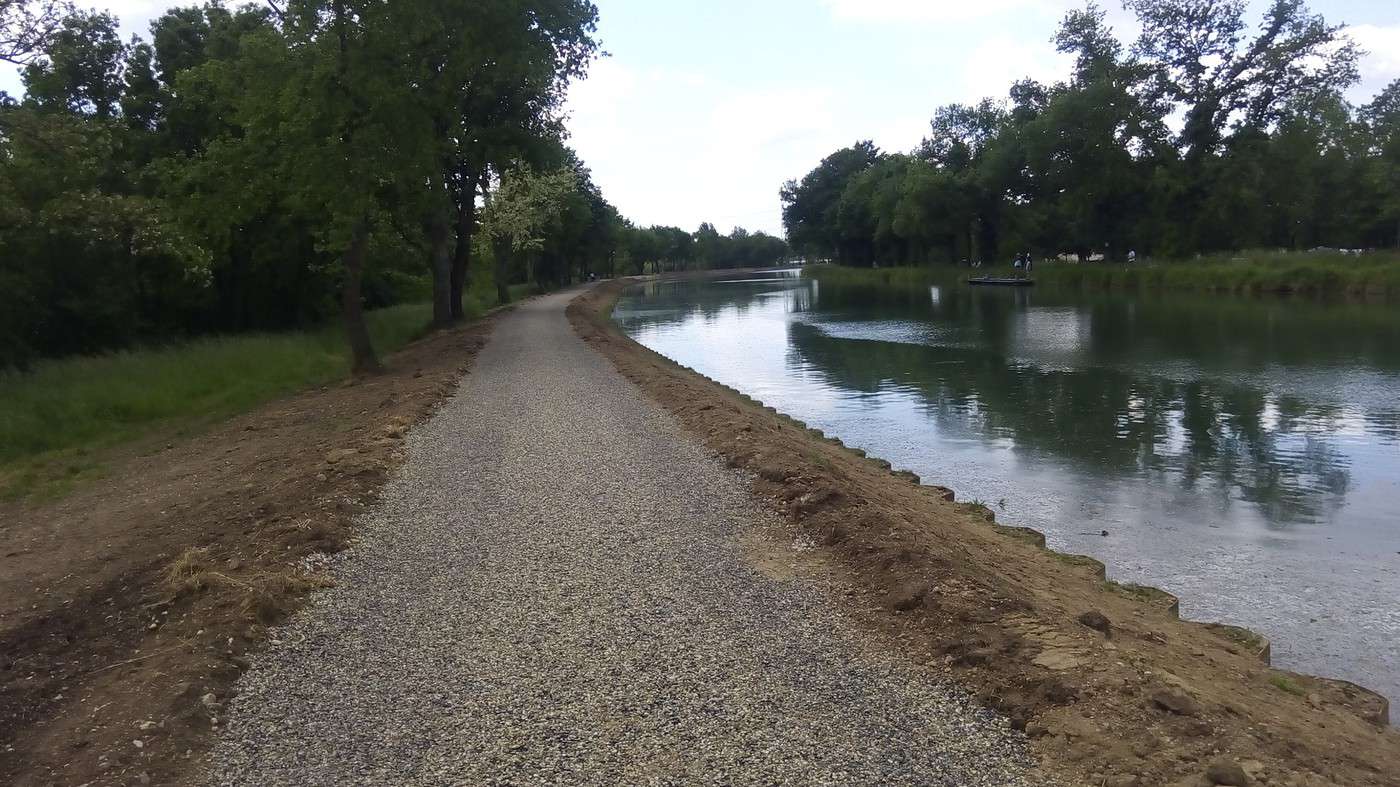
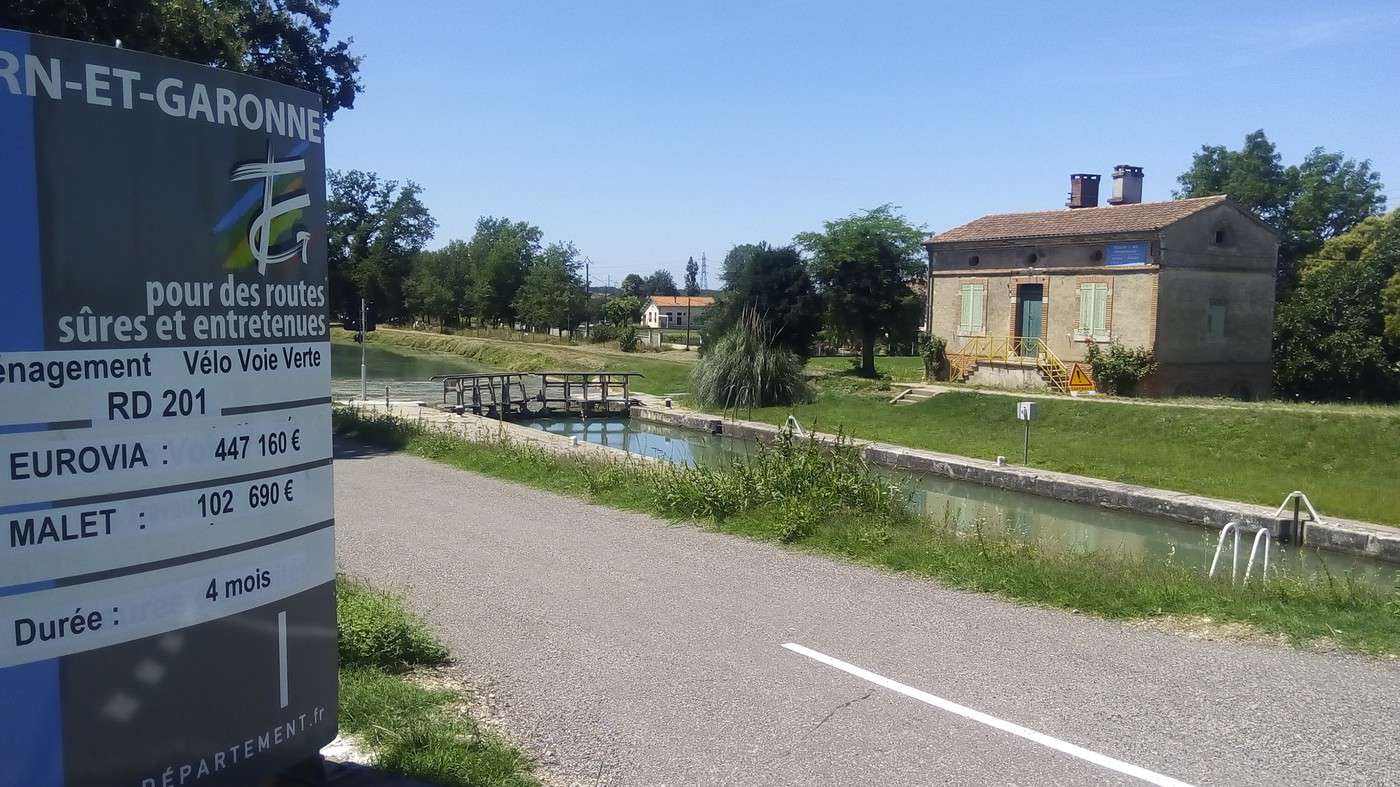
Additionally, the Departmental Council is currently funding the completion of the diversion canal development between Montech and Montauban www.af3v.org/...e-VVV-.html?voie=421 to transform the towpath into a Greenway. See photos of the sub-base completed on the last 6 km up to the port of Montauban.
All that’s left is the final surfacing for me to have a 53 km Greenway from my home in Valence d’Agen to the prefecture, with a high-quality surface and a very pleasant setting.
Kudos and thanks to local cyclists and traveling adventurers!
Cycling (MTB) along the canal between the two seas (France)
Facteur4 · 2017-05-10 · Message 235 of 310
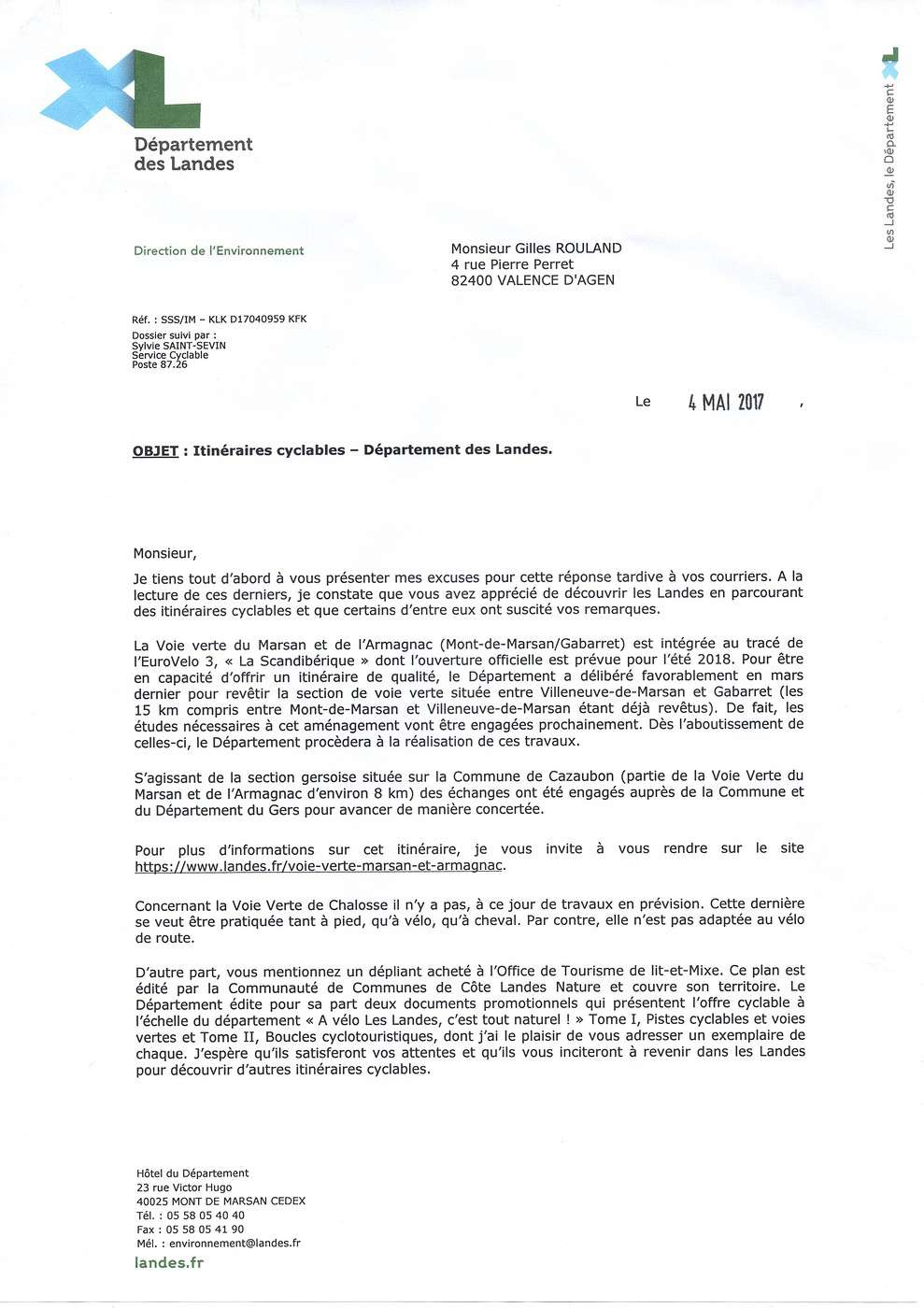
I finally received a reply (see scan) to my letter dated November 8, 2015:
Mr. President of the Départemental Council of Landes,
I’ve just completed a cycling trip in your beautiful département.
You can read my account and see photos here: voyageforum.com/...post=7239034#7239034
About 10 km past Morcenx, I discovered the Voie Verte du Résinier, which extends the one from Vignac, allowing you to reach the ocean at Cap de l’Homy or Contis Plage. I congratulate you on this superb achievement. In a natural setting, it lets you cover many kilometers effortlessly thanks to the high-quality surface and in complete safety, away from cars.
I also took the Voie Verte from Gabarret to Mont-de-Marsan and the one in Chalosse. While these two are suitable for walking, mountain biking, and horseback riding, they aren’t adapted for touring cyclists who necessarily travel with loaded bikes. The bumps from ruts and stones make the journey exhausting and even impossible with a child trailer. They shouldn’t be called Voie Verte, a term reserved for routes that can accommodate rollerbladers and wheelchairs. It’s a shame that a 50 km route isn’t suitable for touring cyclists and families.
I hope you’ll be able to improve these routes and extend your cycling network.
Looking forward to your response, please accept, Mr. President of the Départemental Council, my respectful regards.
PS: In Seignosse, a Vélodyssée sign indicated Léon 23 km to the SOUTH. 2 km to the north, the 21 km marker was in front of the Tourist Office. I pointed out the error to the hostess, who said she’d look into it. I hope she can find the person in charge of signage to ask them to turn the sign around.
And to the one dated June 3, 2016:
To Mr. President of the Départemental Council of Landes,
Please find attached a copy of the letter I sent you on 11/08/15 via the "contact us" section of your website: www.landes.fr
It seems you consider this mode of communication minor, as I received neither an acknowledgment nor a response.
I’ve just returned to your département to enjoy its attractions again. You can read my cycling trip account here: voyageforum.com/...post=7507081#7507081
I appreciated the Voies Vertes even more than last time because I had the brochure labeled PISTESCYCLABLES with the barcode *0000000025LM*, which I bought for 1 € at the Lit-et-Mixe Tourist Office.
This IGN map extract (No. 1341ET/1342/E) is very well done and functional.
But since a cycling trip doesn’t stop at a map fold, I don’t understand why you can’t offer an equivalent for the north and south of your beautiful département.
It seems a significant effort has been made for the Vignac, Cap, Contis, and Lo Camin de Hé routes, as well as for the Vélodyssée, but not across your entire territory. When I reached the Étang de Léon, the signage became poor or even nonexistent, to the point that someone with good intentions made a handwritten sign (see photo in the account).
(Links are easier to use in emails than on paper.)
I’ll repeat the same conclusion as in my November message, this time hoping for a response.
I hope you’ll be able to improve these routes and extend your cycling network. Please accept, Mr. President of the Départemental Council, my respectful regards.
This is encouraging for the completion of EuroVelo 3, and on top of that, I received the cycling route maps for Landes as a gift.
PS: Today, 05/11/17, I received a phone call from the woman who sent me the letter to confirm I’d received it. She wanted to apologize for having forgotten my requests for so long.
Biking (MTB) along the canal between the two seas (France)
Facteur4 · 2017-06-29 · Message 236 of 310
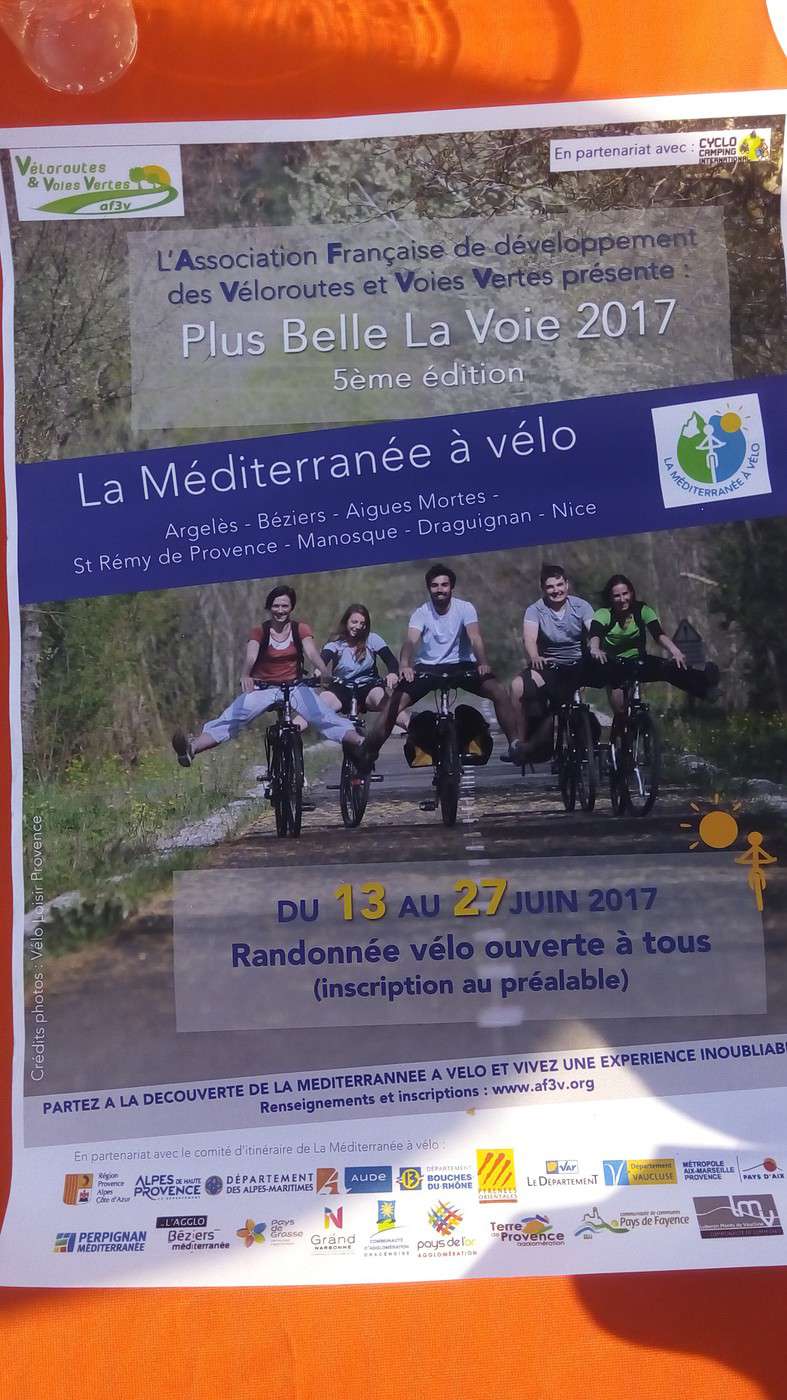
Dominique and I chose to leave from Valence d’Agen on June 9th to join a hike starting from Argelès-sur-Mer on June 13th.
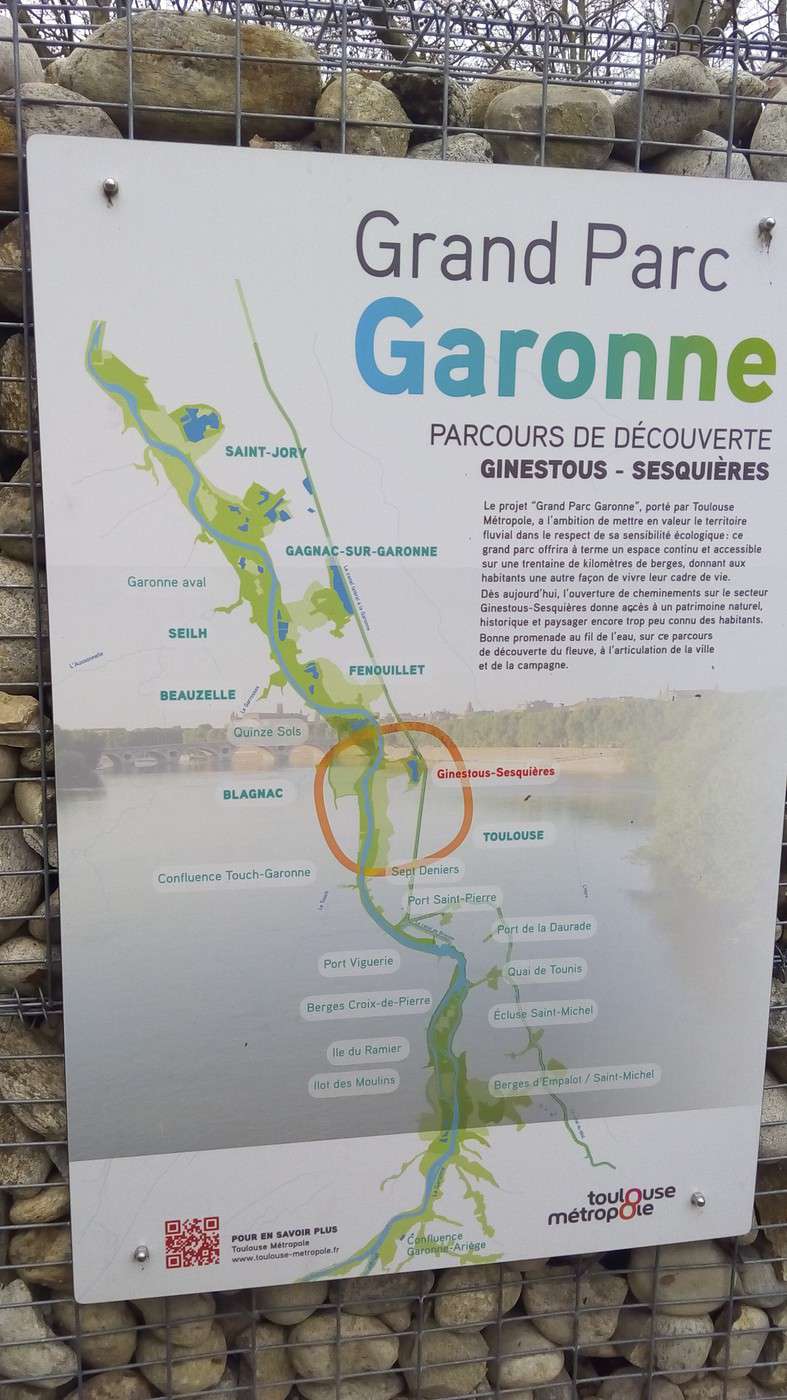
After covering 85 km on the Greenway along the lateral canal of the Garonne, we decided to take advantage of the Grand Parc Garonne development to enter Toulouse via the river instead of the usual Ponts Jumeaux. This pedestrian and bike route starts at the Sesquières leisure base and then follows the Garonne up to the Blagnac bridge. There, a Greenway sign invites us to continue along the Garonne. However, it’s indicated that the banks are flood-prone and access is prohibited in case of a flood. The grass and mud made us hesitate, but the appearance of a paved strip along the dyke—and especially the Greenway sign—encouraged us to keep going. After 3.5 km, we hit a dead end before the Bazacle dam. The only way out is a very steep staircase on the dyke, which is impossible to carry our loaded bikes up. Thanks to the metro area for this trap. Meanwhile, just above the dyke, there’s a real and superb Greenway that we took after turning back. Fun when you’ve already got 90 km in your legs!
After leaving our mountain bikes at my son’s place, the three of us walked to Rue Alsace-Lorraine to enjoy some grape juice from Tarn-et-Garonne before eating at an Indian restaurant.
After spending the night at my son’s, we rode the only 50 km of paved path along the Canal du Midi to Port Lauragais. At the Seuil de Naurouze, we took the GR 653, which follows the feeder canal for 40 km. We swam in the Lake of St. Ferréol, created by Pierre-Paul Riquet to supply the canal. We slept at the campsite.
The next day, unable to find the access to the Montagne feeder canal, we went back down to the Canal du Midi, where the heat became unbearable.
At the only well-equipped and organized campsite in Carcassonne, I was shocked to see the air-conditioned reception door wide open while it was 35 °C outside. Stunned to see the draft between the large door and the fully open bay window at the bar. Of course, they’re not the ones paying for the energy—it’s us—but there’s a minimum of respect required. The pool won’t open until next week; for now, only the birds are enjoying it.
The next day, we took a TER train from Carcassonne to Narbonne and another to Argelès because we didn’t have enough time to reach the meet-up by bike. There’s a TGV operated by SNCF and RENFE (the Spanish equivalent) that goes from Carcassonne to Perpignan without a transfer and is cheaper, but it doesn’t accept bikes.
We reached the Stade campsite, where the hike will begin, after 261 km by MTB and 144 km by train.
To see my photos in chronological order, click on "sort by date ascending":
share.orange.fr/#vlgsA0e24z43aa215c33
Addendum: Emails exchanged with Toulouse Métropole:
Mr. President of Toulouse Métropole, As a resident 90 km from your metro area, I regularly bike there thanks to the Greenway along the canal between the two seas. Instead of entering the center as usual via the Ponts Jumeaux, I decided to use the new route proposed by your services. I congratulate you on the start of this development called Grand Parc Garonne. This pedestrian and bike route begins at the Sesquières leisure base and then follows the Garonne up to the Blagnac bridge. There, a Greenway sign invites us to continue along the Garonne. However, it’s indicated that the banks are flood-prone and access is prohibited in case of a flood. The grass and mud made us hesitate, but the appearance of a paved strip along the dyke—and especially the Greenway sign—encouraged us to keep going. After 3.5 km, we hit a dead end before the Bazacle dam. The only way out is a very steep staircase on the dyke, which is impossible to carry our loaded bikes up. Thanks to the metro area for this trap. Meanwhile, just above the dyke, there’s a real and superb Greenway that we took after turning back. Fun when you’ve already got 90 km in your legs! I refer you to the official definition of a Greenway: ""
http://www.af3v.org/Voie-verte.html""; This walk along the Garonne after the Blagnac bridge, under which it should be marked as a dead end, doesn’t meet the criteria at all. It’s not accessible to rollerbladers or, even less, to people with reduced mobility. I have the damning photos available (which I can’t attach to this email as your site doesn’t allow it) and urge you to promptly instruct your services to correct this aberration and prevent the many tourists to come from falling into your trap. Photos here: ""https://voyageforum.com/v.f?post=8171245#8171245"" Looking forward to a quick response, please accept, Mr. President of Toulouse Métropole, my respectful regards.
Hello Sir,
Thank you for your alert, and please accept our apologies for this mishap. I fully understand the unpleasant surprise after nearly 3 km of effort, plus the 3 km to get back to the dyke…
We had never encountered this kind of issue before. And for good reason: after analyzing the situation, it turns out these "Greenway" signs were recently installed. Before, only the "flood risk" sign was present, which didn’t encourage users to venture onto this path, mostly used by fishermen.
However, a mistake was indeed made on our part: the signs were placed in the wrong direction. The correction has been made quickly.
Once again, sorry for the incident.
Best regards,
Blaise DELMAS
Project Manager, Soft Mobility Service
Mobility Networks Management Directorate
Toulouse Métropole
1 place de la Légion d'Honneur - BP 35 821
31 505 TOULOUSE CEDEX 5
05 81 91 72 56
Biking (MTB) along the canal between the two seas (France)
Facteur4 · 2017-06-29 · Message 237 of 310
Around thirty of us took part in the activist bike ride organized by Alain MICHEL from AF3V: www.af3v.org/...oie-2017-sur-le.html,
Sylvie PALPANT and Camille PERRETTA from www.veloloisirprovence.com/fr,
and Sébastien Baholet from the Provence-Alpes-Côte d’Azur region.
All three are participants in the Mediterranean by Bike Coordination: eurovelo8.jimdo.com/
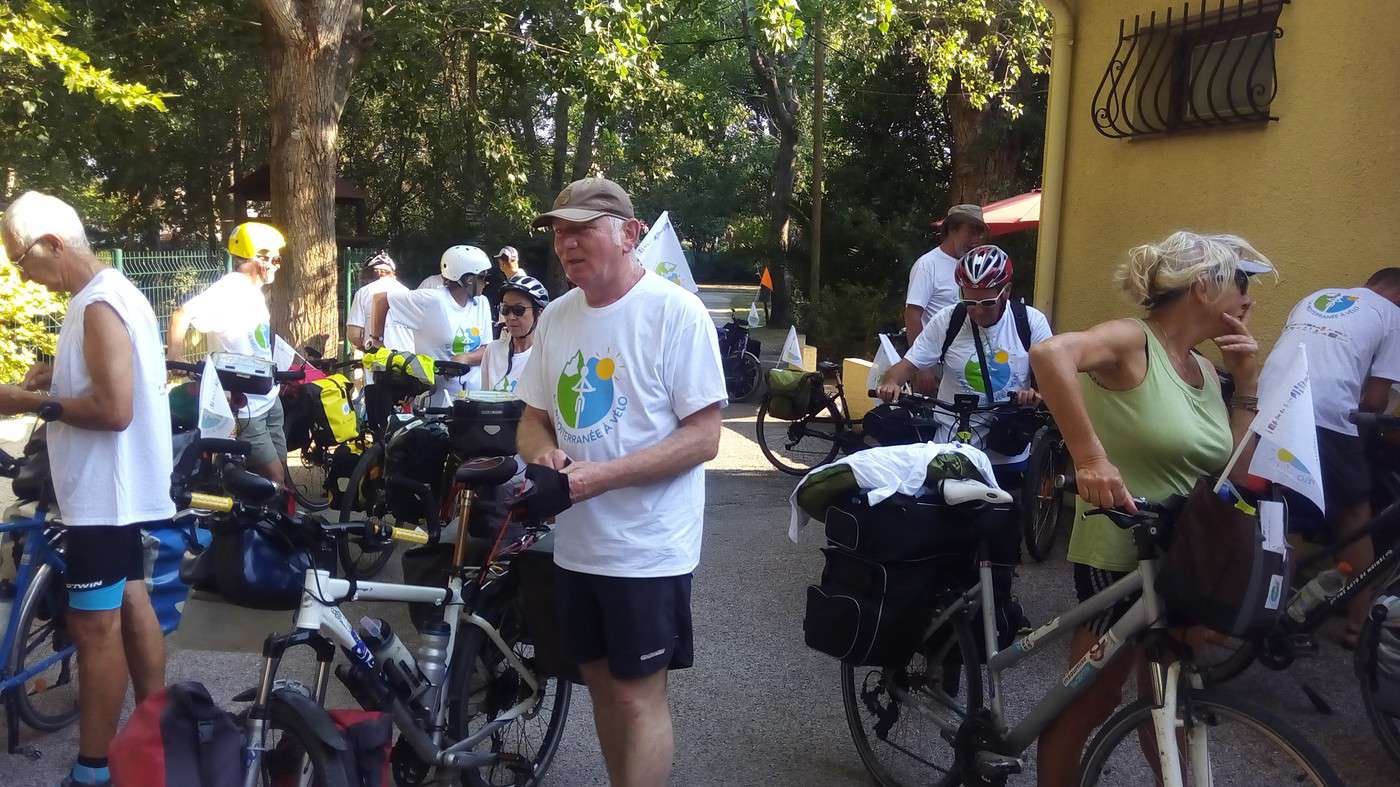
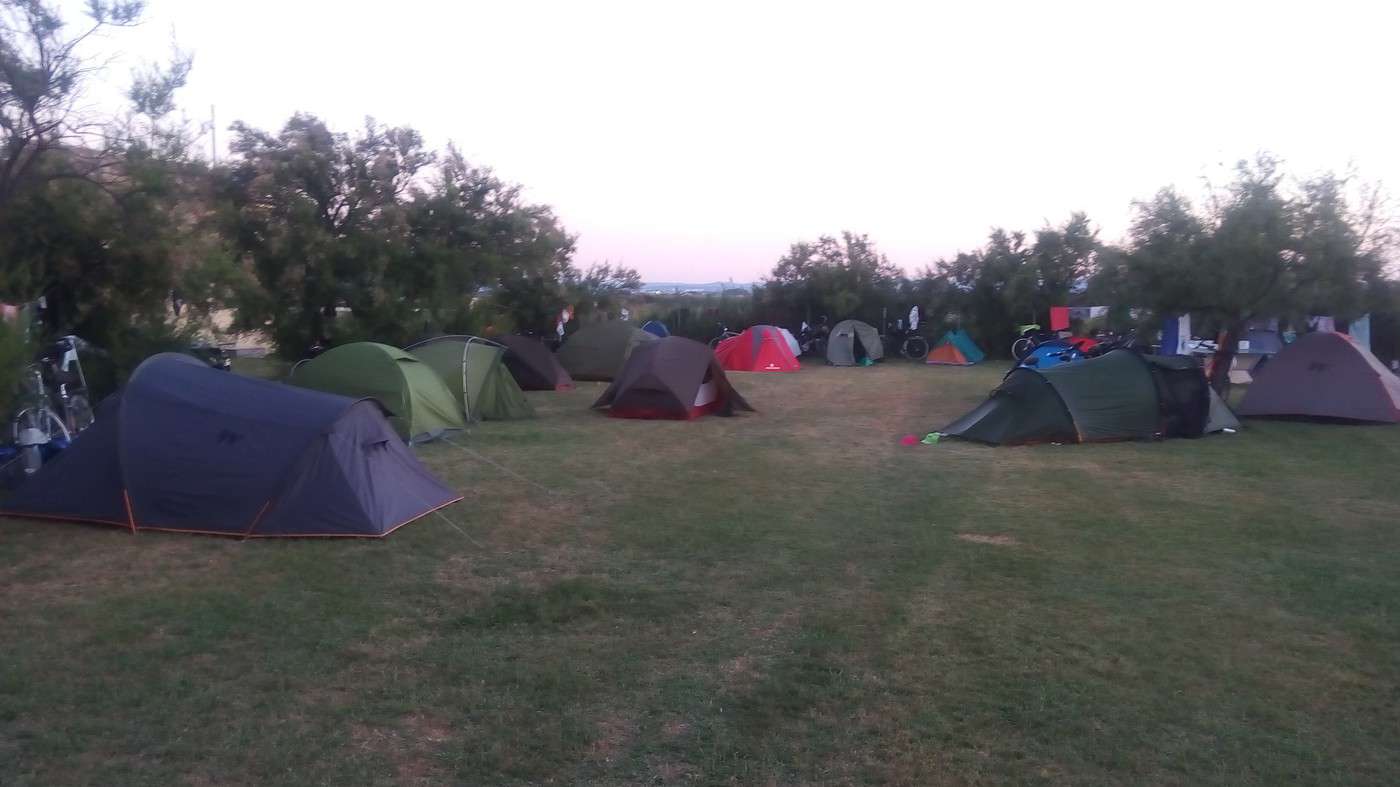
Most of us, carrying our tents, stayed in campgrounds reserved by the organizers every 60 km or so. A few, traveling lighter, booked nearby mobile homes, gîtes, or, as a last resort, hotels.
We followed the Mediterranean coast from Argelès to Port-la-Nouvelle, then the Canal de la Robine through Narbonne, the Canal du Midi to Sète, and finally the Canal du Rhône, which led us to Aigues-Mortes and Saint-Gilles. Later, in the Provençal hinterland, the elevation gains became significant, and the heat intensified in the Luberon.
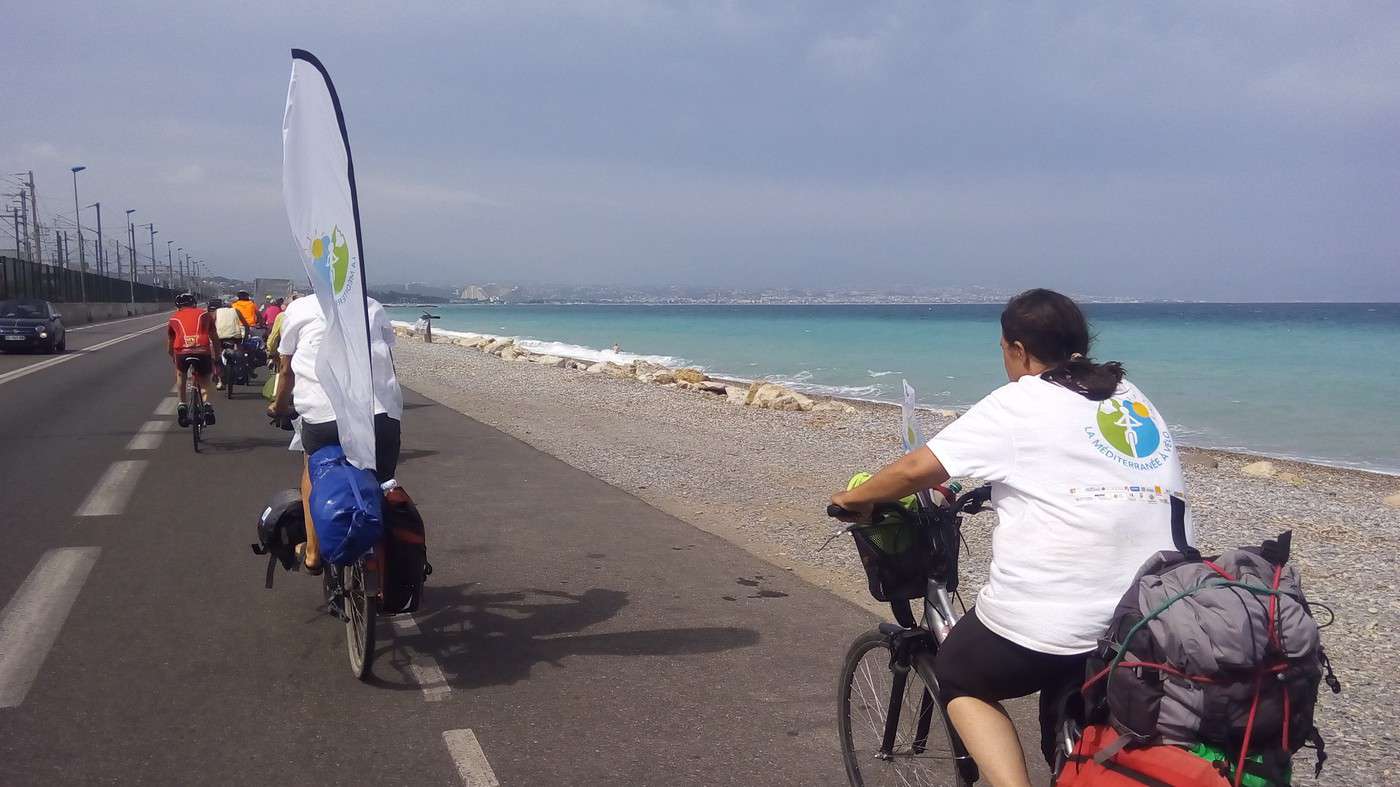
The goal of this ride was to promote the development of EUROVELO 8. Since only 37% of its route is completed in France, we often had to take overgrown and gravel-covered former railway tracks—sometimes impassable with loaded bikes—where we hope to see the EV8 one day. We attended the inauguration of a 22 km section converted into a greenway in the Var, going from "Hell to Paradise" in the process. On that occasion, we made the front page of *Var Matin*.
Over the course of these 800 km, we met local officials, associations, and cyclists who joined us for sections of the route. They offered us drinks, snacks, and sometimes even buffets. We enjoyed guided tours and also met journalists to promote the Mediterranean by Bike initiative.
It was tough on the climbs along dirt and gravel paths in 37°C heat with 40 kg bikes—especially since, to leave at 8 AM, we had to wake up at 6 AM to have breakfast, pack up the tent, and get organized. And the mosquitoes, spiders, and other critters like fleas or chiggers never missed a chance to feast on us. What really wore me down was the fact that in most campgrounds, you can’t adjust the shower temperature. Sometimes, the hot water pipe would deliver scalding water. Once, I didn’t even dare wash my outfit by stomping on it (which usually lets you use the same water and soap for both body and clothes). But at the laundry sink, the water was just as hot, and I ruined my cycling jersey (the elastane didn’t survive the temperature). This waste is absurd—it doesn’t make you happy; it just frustrates you. It doesn’t encourage you to shower before going to the pool (for campgrounds that have one), and rinsing off under the outdoor shower isn’t enough to avoid swimming in murky water, especially after applying sunscreen.
But thanks to a fantastic atmosphere, perfect organization, and great camaraderie, we powered through the kilometers. Thanks to everyone!
The women were just as tough as the men. The bikes held up well too, except for a broken spoke, a pedal axle (the bearings ended up on the ground), and a rack that gave out under the weight. We had multiple flat tires and a few falls, including one caused by a poorly visible central bollard in a group.
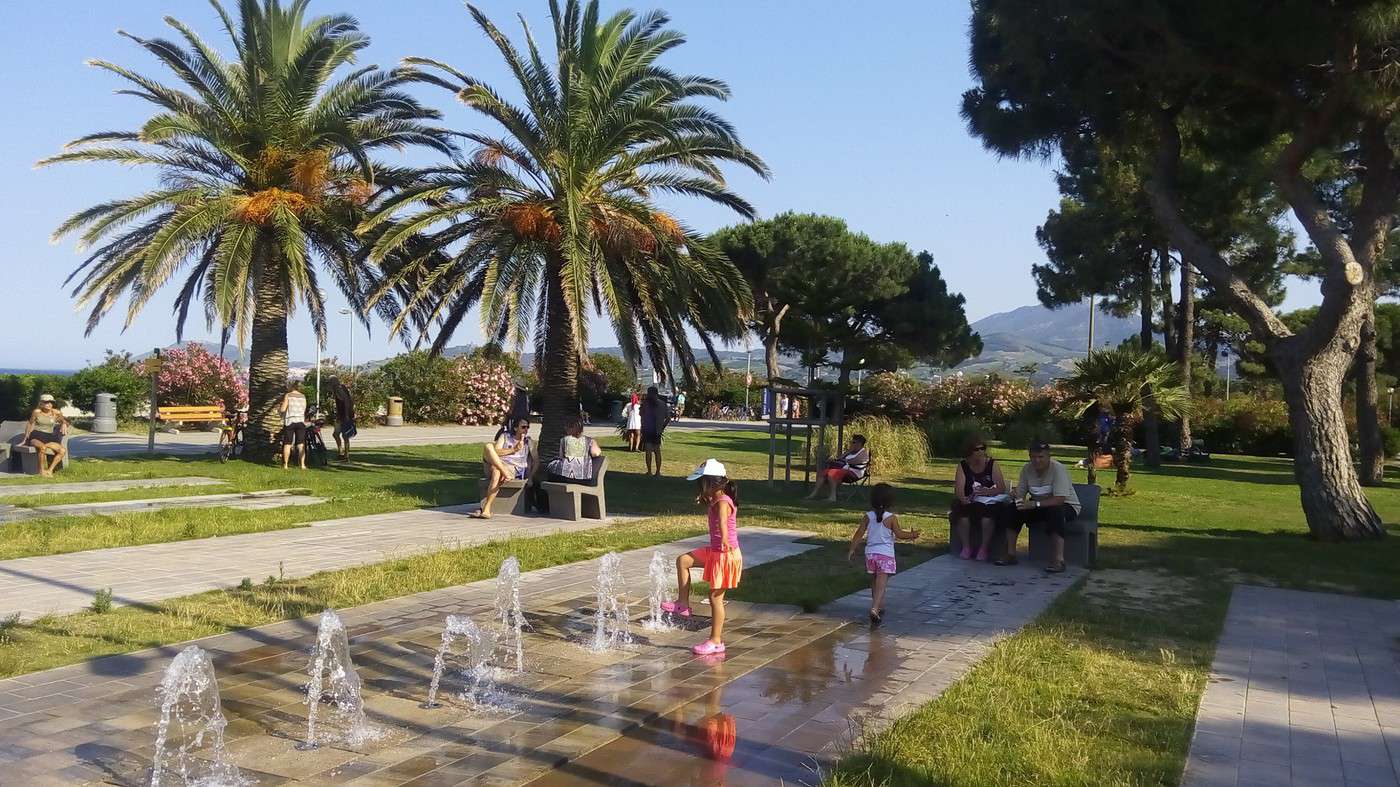
We finished this adventure without a drop of rain and reached the sea again by following the Siagne River and cycling paths—some completed, others under construction—along the coast to Nice, so that the EuroVelo 8 from Athens to Cádiz (5,888 km) can soon become a reality.
www.facebook.com/PlusBelleLaVoie2017/
My posts, along with those from other participants, are here:
m.facebook.com/...sk=timeline&_rdr
To see my photos in chronological order, click "sort by date (ascending)":
share.orange.fr/#gDky2hav4l43aa201cf9
My videos:
share.orange.fr/#gMU6EuRmJi43aa20cf68
Unfortunately, I had to reduce the quality to upload them to the cloud.
(The return trip by train was also tough for Dominique and me because of the two long staircases and the swinging door that made it difficult to board the old Corail carriages with our bikes. It was quite the workout changing platforms in Toulouse, where we left our bikes on the arrival platform of the Intercité from Nice (Tracks 4 and 5) and ran with our five panniers down the stairs to drop them off at Track 1 in front of the TER to Valence d’Agen. Then, a second sprint carrying the bikes up the stairs in the heat before the storm that greeted us upon arrival. But an 800 km return trip in 8 hours is worth a few drops of sweat compared to the liters we lost on the way out covering 1,100 km in 15 days.)
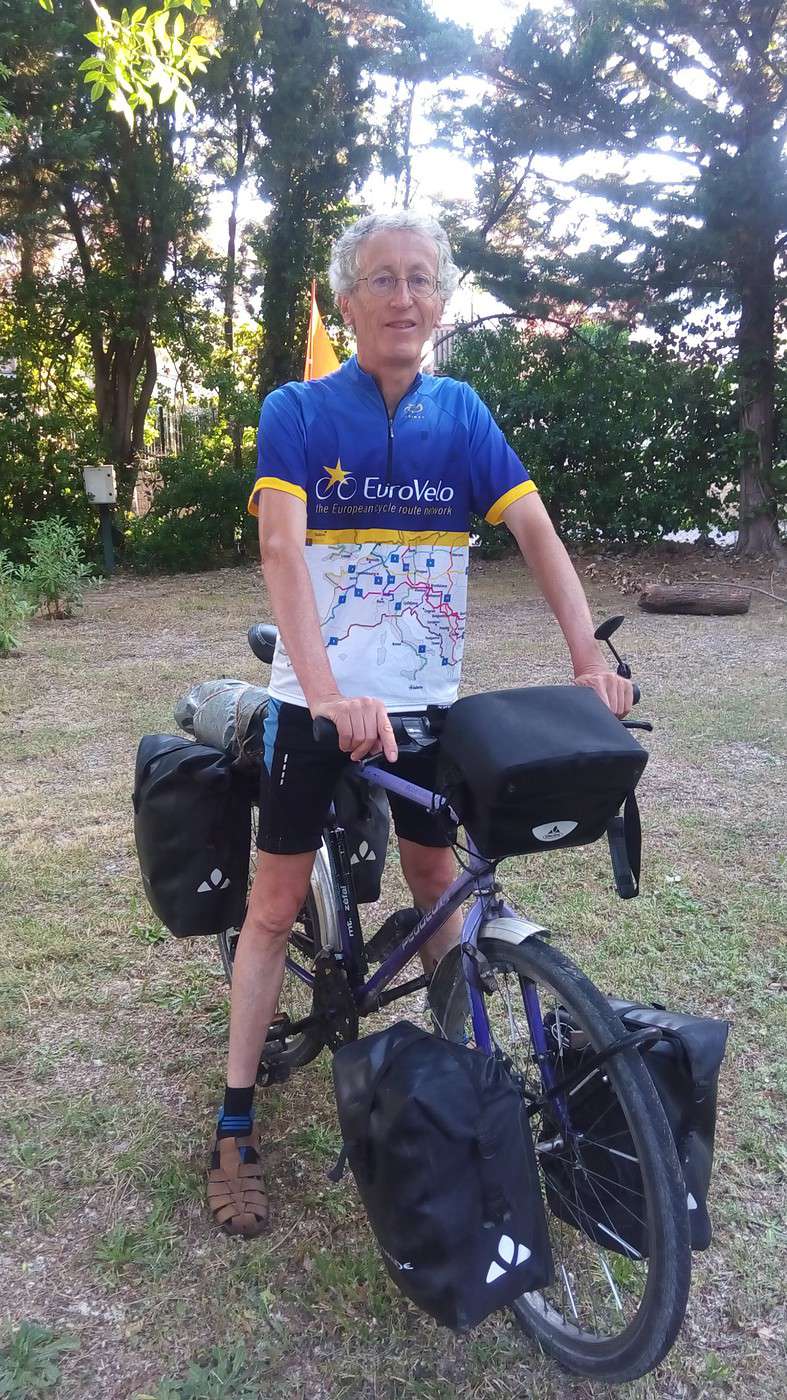
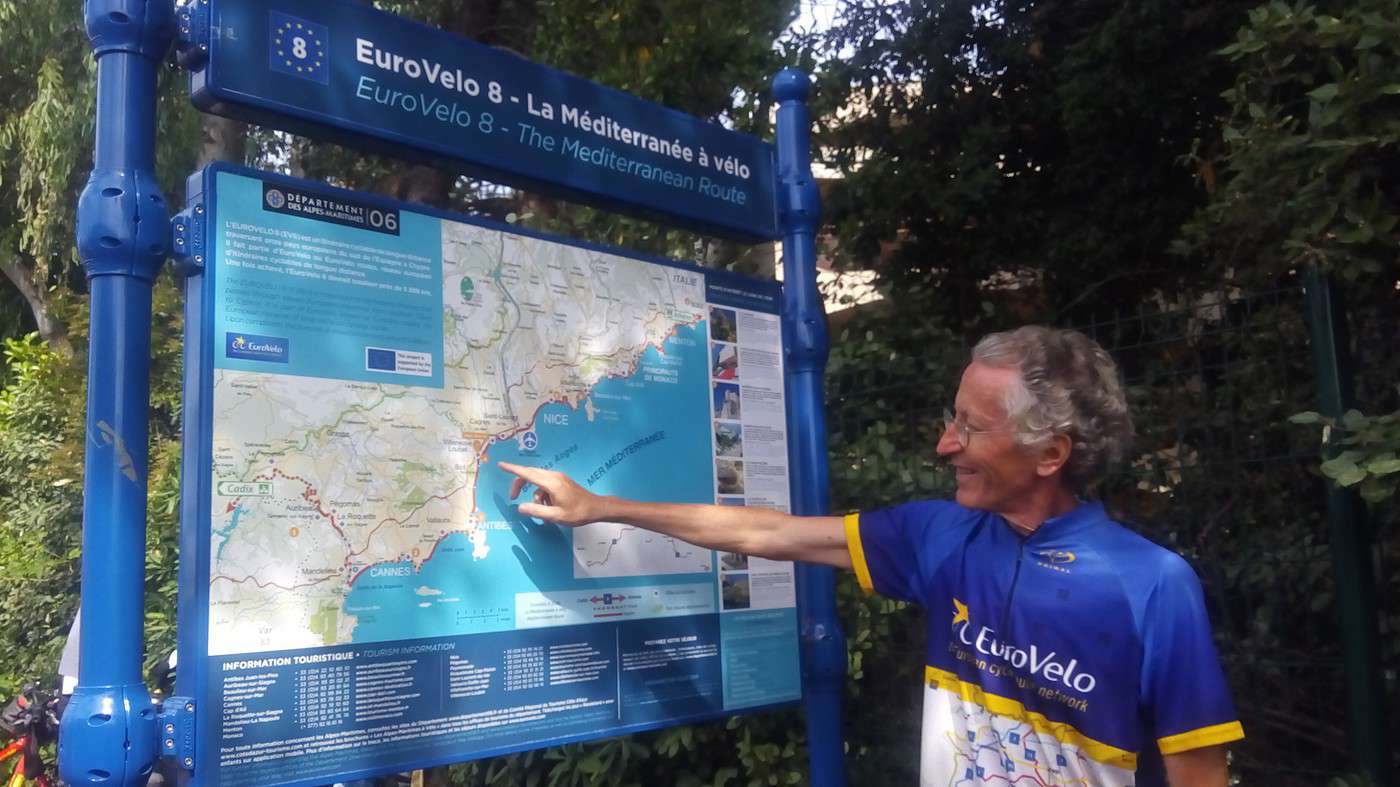
The T-shirt I received from EUROVELO after donating to the association sparked a lot of interest among cyclists and helped visualize the EV8 for those unfamiliar with it. However, it’s great for photos but not for biking in a heatwave—I ended up riding shirtless.
Mountain biking (MTB) along the Canal des Deux Mers (France)
Facteur4 · 2017-07-20 · Message 238 of 310
On Saturday, July 1st, 2017, by an unfortunate coincidence, I set off at the same time as the Tour de France for a friendly 560 km ride.
af3v.org/...ue-et-militante.html
Not for an infernal 3,540 km loop where all human vices come to light.
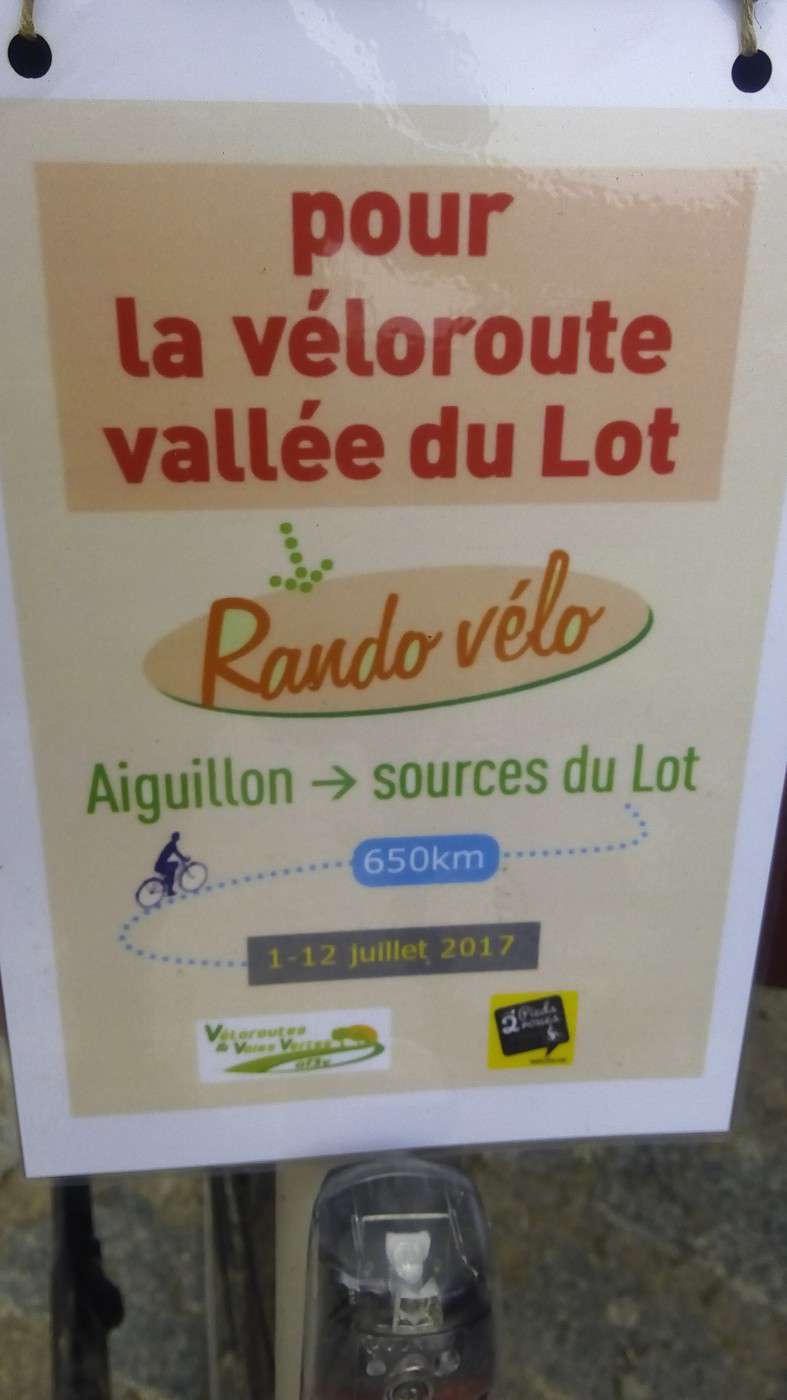
It was only 65 km that took me from my home in Valence d’Agen (82) to Aiguillon (47) along the Voie Verte of the canal lateral to the Garonne. Passing over the renovated canal bridge in Agen in front of Café Vélo, which just opened in the old water treatment building. But in the rain and with a headwind (see photos on the Cloud).
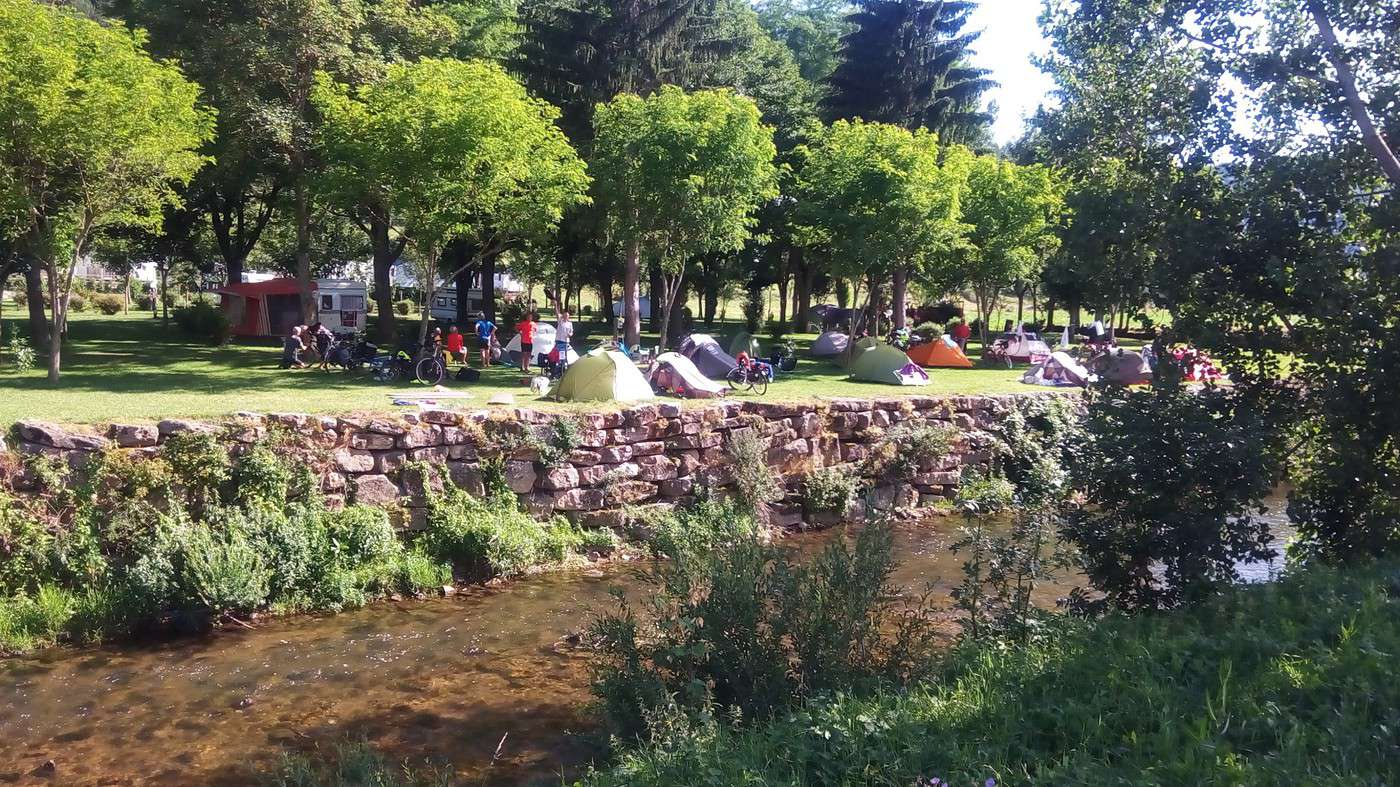
We were able to eat and, for those who wanted, sleep sheltered in the room next to the campsite, lent by the municipality.
As in 2011, the tireless Julien Savary from the Association Deux Pieds Deux Roues www.2p2r.org/
Regional delegation of AF3V for the Midi-Pyrénées and Languedoc-Roussillon regions www.vvv-sud.org/index.html
and Itinerary Delegation for Le Canal des 2 Mers à Vélo (V80)
www.canaldes2mersavelo.com/
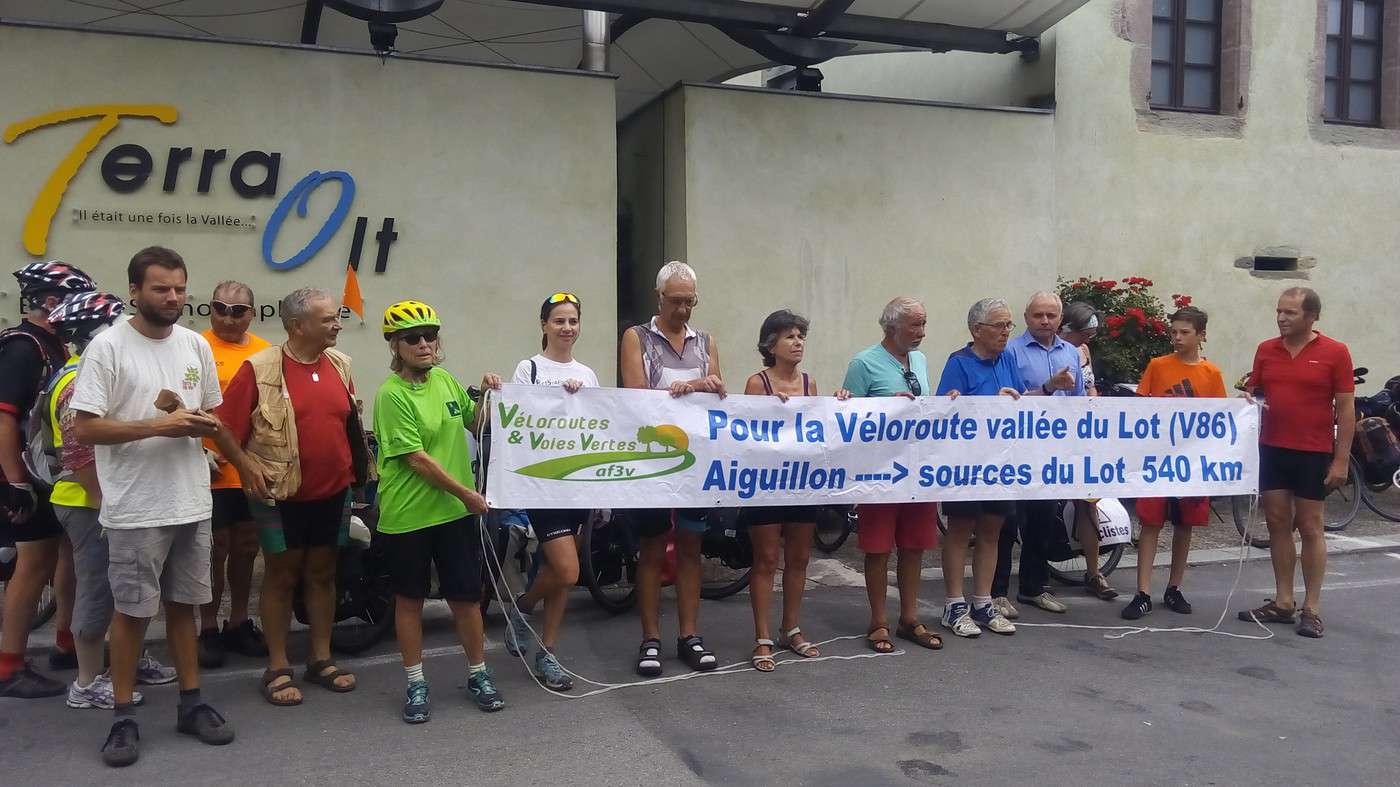
organized this ride titled "What’s new 6 years later." He had proposed a bike route along the Lot as early as 2001 and has never stopped promoting it and urging officials to mark the route and secure dangerous sections so it’s accessible to families.
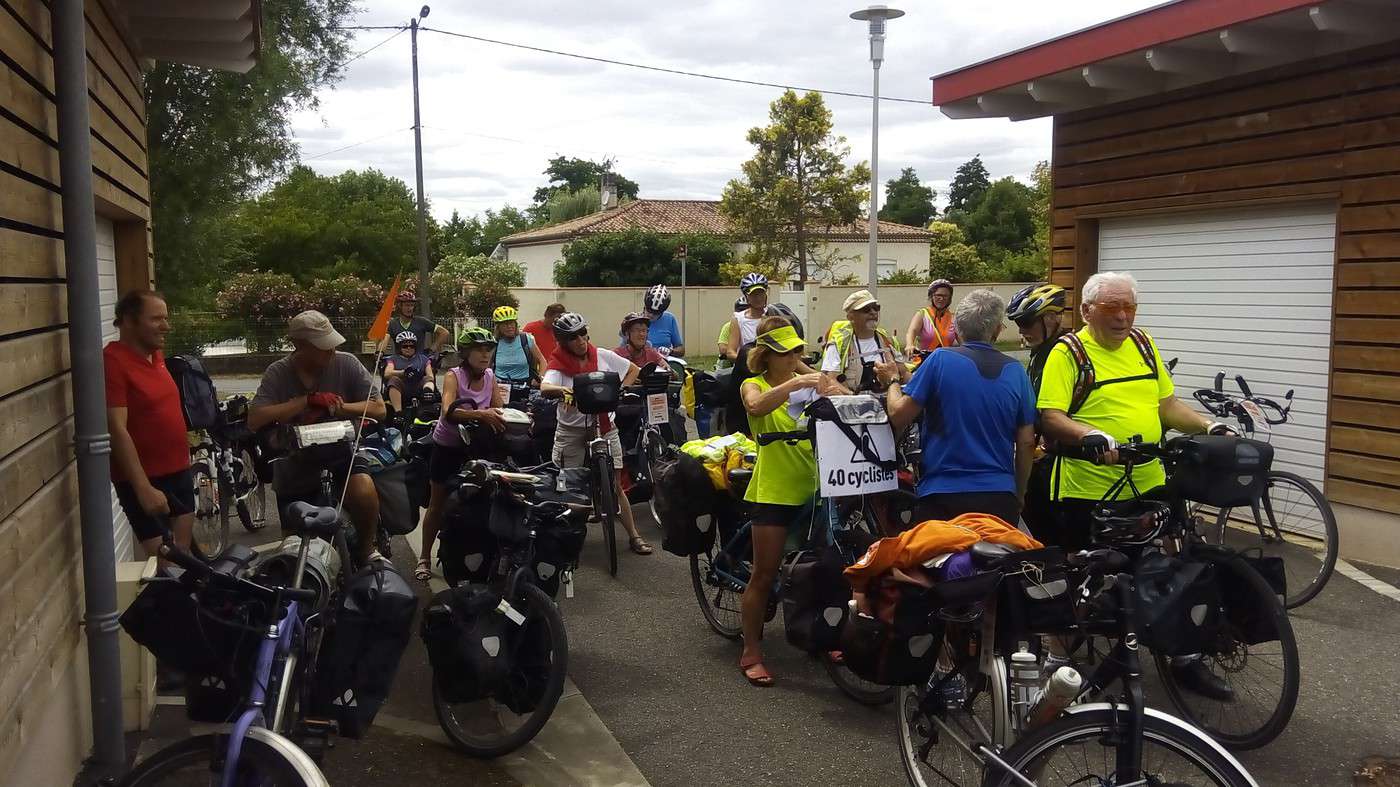
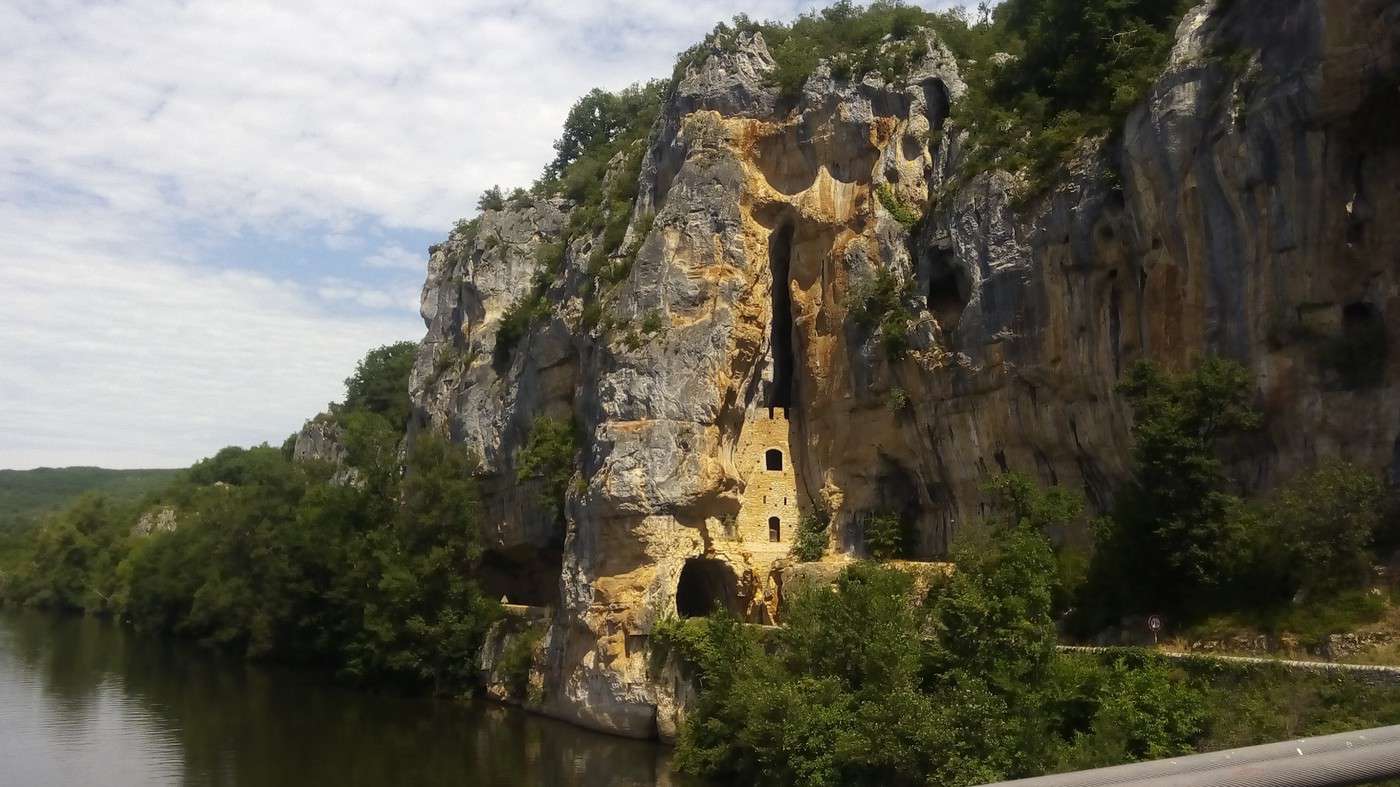
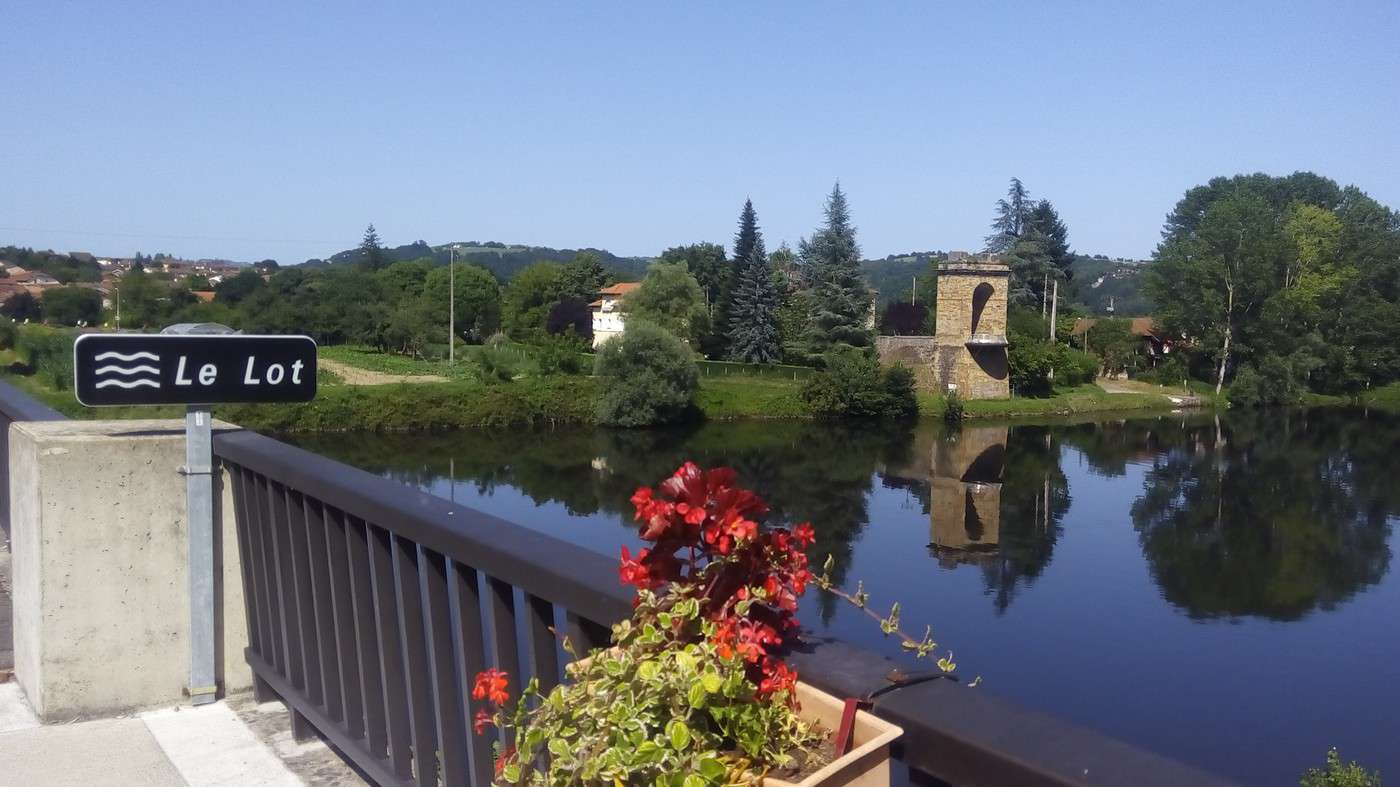
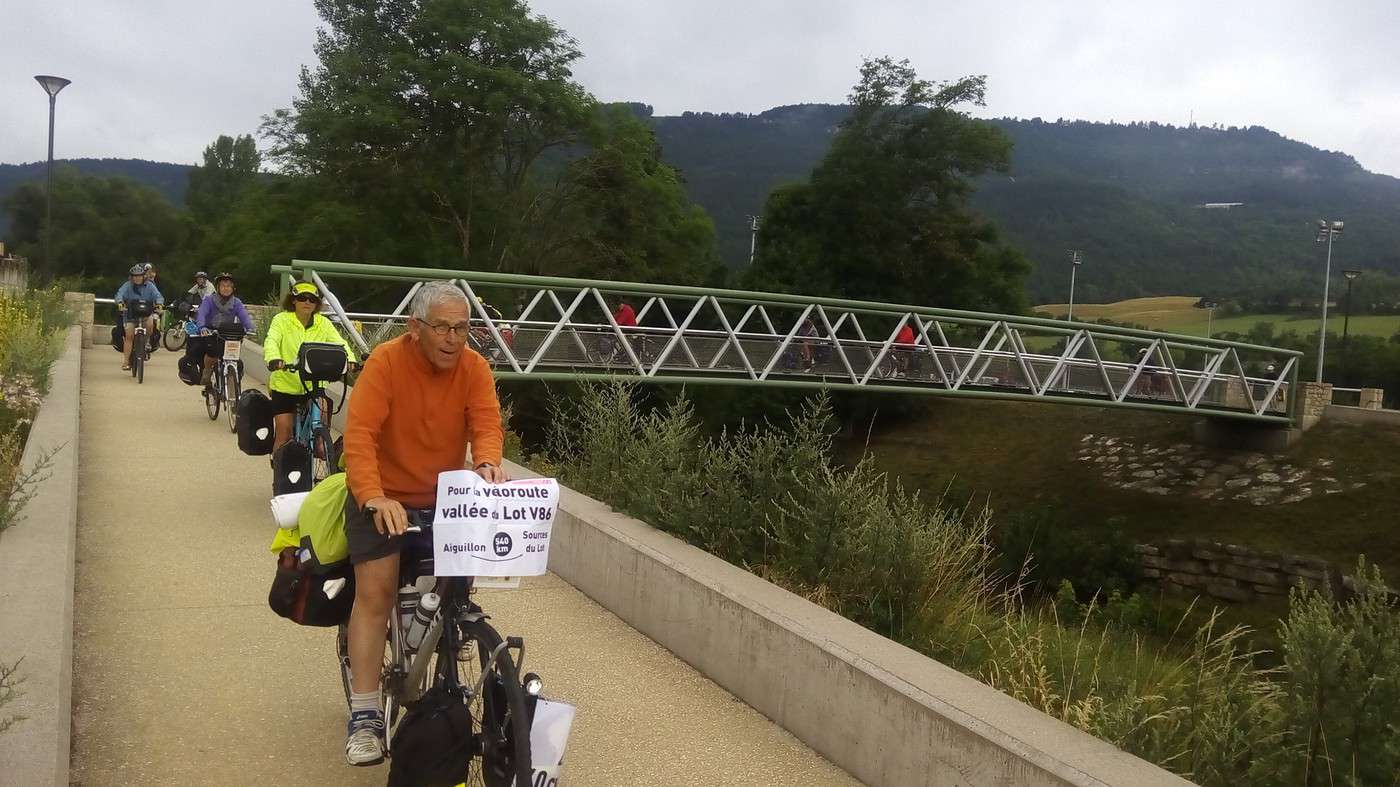
We were 25 bike campers at the start in Aiguillon, where the Lot flows into the Garonne, heading toward its source in Lozère near Le Bleymard. Plus two people accompanied by their 13-year-old grandson who slept indoors, and other participants signed up for a few days on the route. Local cyclists joined for half-days too.
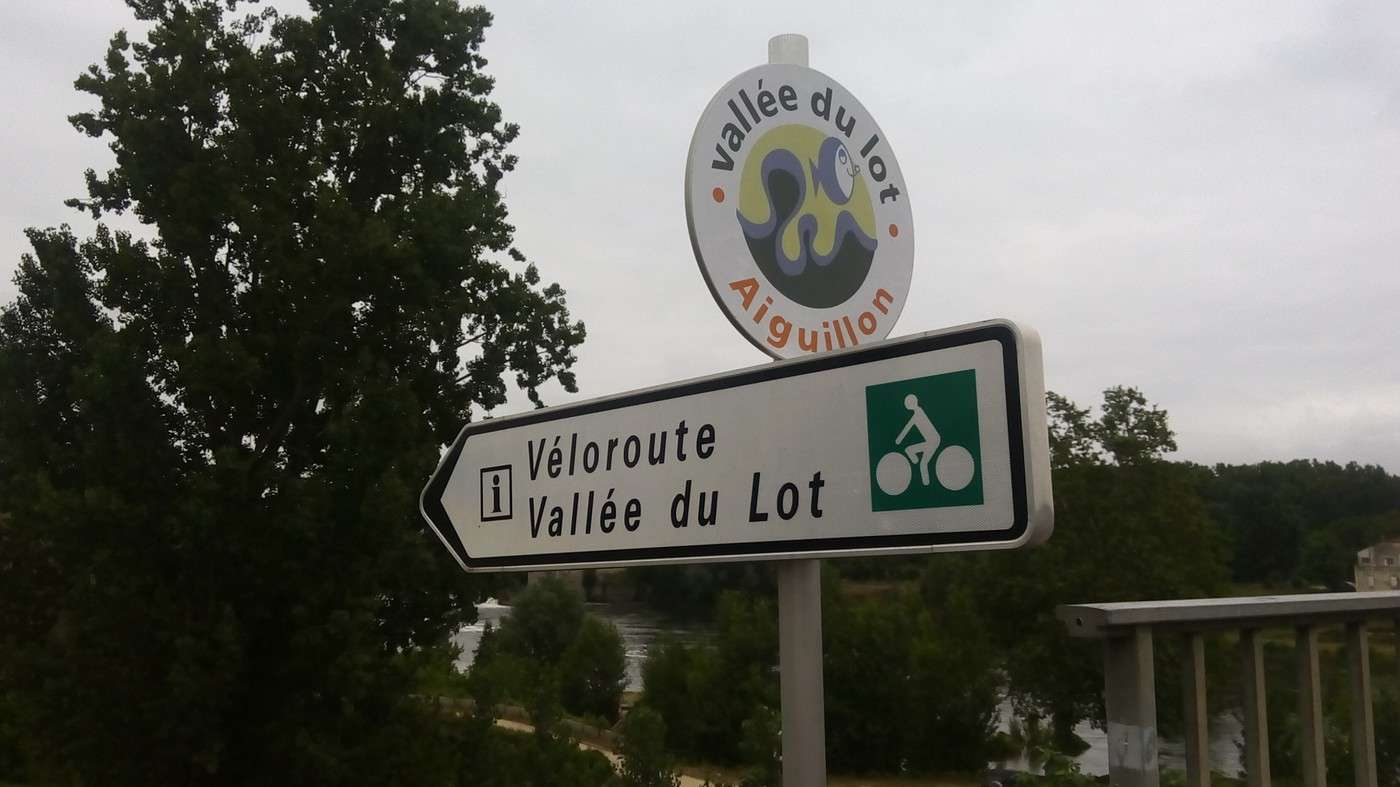
Along these 560 km, we met officials and associations. They offered us drinks and snacks. We enjoyed guided tours and also met journalists to promote the Lot Valley cycle route, officially referenced as V86. Download the national map here:
www.departements-regions-cyclables.org/...res/s...
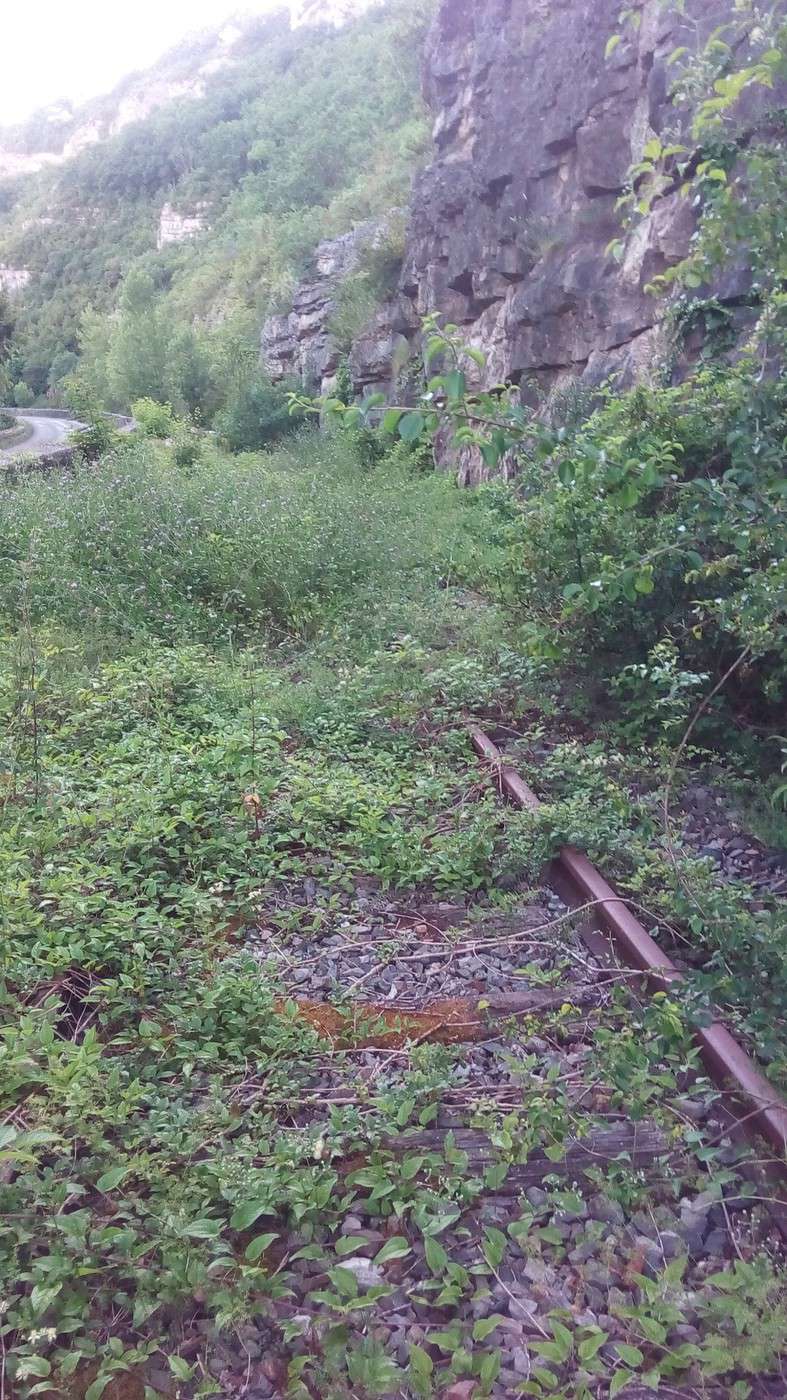
The route between Aiguillon and Cahors is marked for 160 km, developed on a few kilometers as a Voie Verte or on small roads. But arriving in Cahors requires taking the dangerous D811. Hence the importance of "nudging" officials to have the route follow the old railway line, as is the case in Fumel. However, this old railway line, unused by SNCF since 1989 and abandoned since 2011 with trees growing between the ties, is dear to the hearts of Capdenac railway workers who want to see a tourist train run on it. Note: the vast majority of cyclists don’t want trains to disappear but support turning old lines into greenways. Keeping the right-of-way allows for reversibility. For example, in the United States, Ford bought old lines to prevent trains from returning.
The morning we met the Mayor of Cahors, we made the front page of La Dépêche on the subject.
The only place where the route is marked V86 with the Lot Valley logo is before Livinhac-le-Haut. However, the signs were hidden by decision of the technical director of the Communauté des Communes due to slight subsidence and pending the installation of two footbridges, which was supposed to be soon. This made Julien furious, and we "uncovered" this beautiful route along the Lot.
We followed the Dourdou for a variant that our favorite organizer would like to see added to the route. We almost did wild camping there. Because the owner of the glamping site Terre Rouge (I’d say more like green earth) in Villecomtal hadn’t mowed the sites as Julien had requested during his visit in May. Of Dutch origin, she’s kind, very natural, and cool. I asked her if she wanted to end up in prison when I found a bottle of hydrochloric acid in the restrooms under the greenhouse. She still put it away.
With the coolness of the first few days, I was able to carry butter, cheese, local ham, and chocolate cookies (which I wouldn’t have tried on the Méditerranée à Vélo—see my previous post). I quickly offered the hundred individually wrapped nougat cubes, but the last ones given on the climb to Pomayrols between St Geniez and St Laurent d’Olt were stuck to the paper. Because we had days of high temperatures where we enjoyed swimming in the Lot and in the campsite pools. Then we had rain, and I’m glad I didn’t bring rain pants, a poncho, closed shoes, or chaps. I preferred riding in shorts and a T-shirt on the climbs, with a light jacket for the descents. However, it was only 9°C the last morning at the Bleymard campsite, where we slept after reaching the Lot’s sources at 1,272 m under a blue sky but with a cool wind.
We often rode uphill or downhill, but with reasonable slopes. Except for 3 km where a local cyclist friend took our panniers, and on the Espalion–La Canourgue stage, where we had them transported by a Lozère camping company from campsite to campsite due to the cumulative elevation gain.
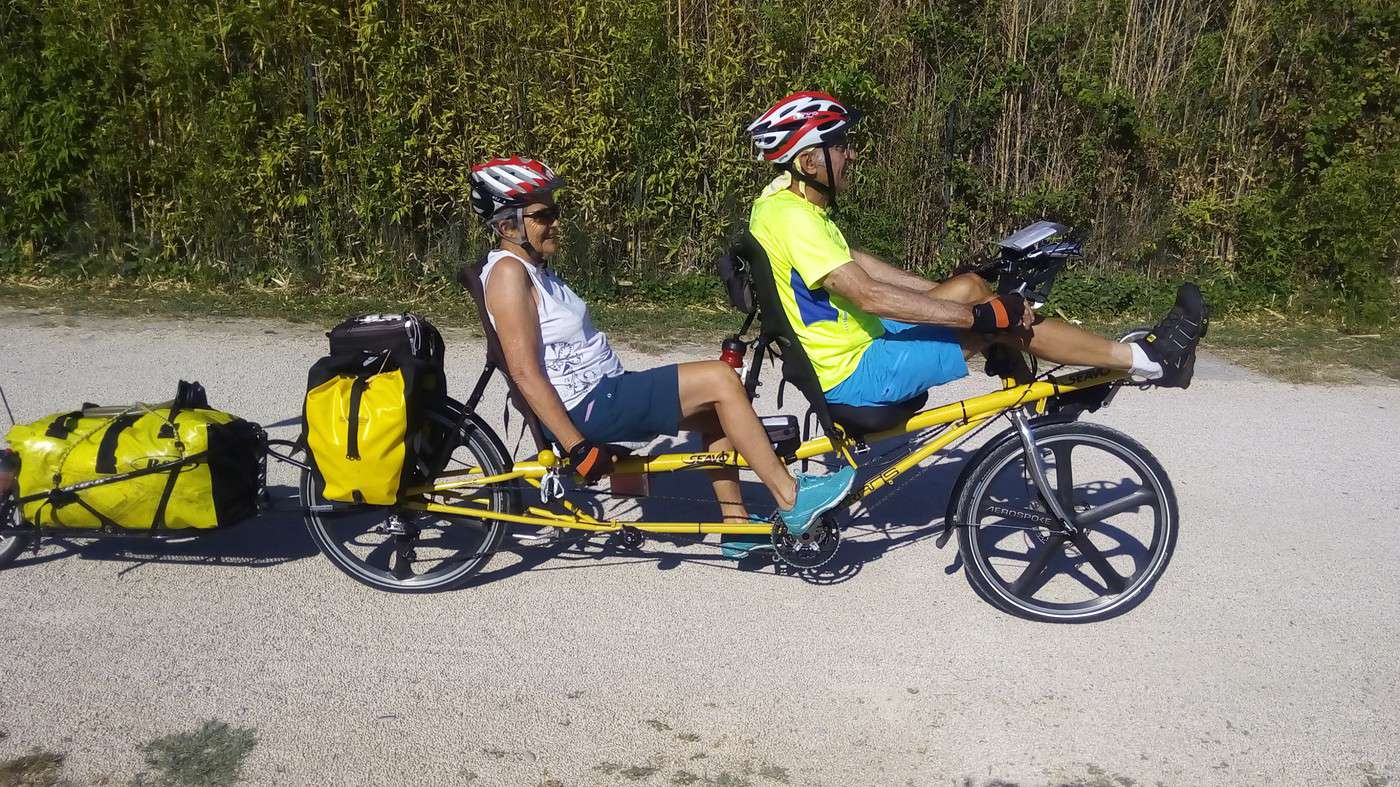
We tasted Cahors wine and enjoyed it on the climbs, sometimes pushing our bikes. Always in a great atmosphere with stunning scenery, respecting the safety rule of riding in "packs of 4" so cars and trucks could safely overtake us on busy roads. We had an amazing mechanic who, with his recumbent tandem, carried a great toolkit and used it brilliantly. For example, my gears hadn’t been shifting perfectly for a long time. Luc straightened my derailleur, and it’s fixed. I learned to add a shim (with two 2-cent coins) to my brake pads so they wouldn’t squeak. And he was busy, especially with a cyclist who first had to ride without assistance after her battery got wet in Aiguillon until Cahors, where a bike shop reset the error codes. Then she had one mechanical issue after another. Others also needed his help with punctures, falls, cables, and a wheel change.
And it all ended with an aperitif, usually offered by three cyclists from the group after the day’s debrief and the next stage’s briefing. I didn’t choose my turn well because the campsite was far from shops, and I had to carry a 5-liter box of rosé for 17 km on top of my usual 40 kg of MTB gear.
I later learned that this mandatory aperitif happened because of—or thanks to—me.
Indeed, six years ago, we also went down to the Lot to see the Lustrac mill (47). Then we had a picnic at the campsite, where the municipality offered us hospitality and access to the restrooms. Fearing my handlebar bag would be stolen, I put my wallet in my shorts pocket. After lunch, we set off along the railway on a narrow, uneven path. When we arrived at the Parc Espace des Droits de l’Enfant in St Vite, I realized I’d lost it and started to panic. Fortunately, a cyclist told me it had been found. Marie-Claude, in a small group behind, had seen it on the cultivated ground near the railway and identified it with my bank card. Since the Fumel campsite offered sangria, I bought some for everyone.
And I then read this compliment:
To Marie-Claude
I owe an ode
I had left my treasure at her feet
Promptly dismounted from her proud steed
She returned my fortune to me
I raise my glass to her virtue.
That’s how this tradition continued every summer.
randovelosud2012.le-pic.org/
randovelosud2013.le-pic.org/
www.lelimousinavelo.fr/...rique=15&lang=fr
randovelosud2015.le-pic.org/
www.lelimousinavelo.fr/
Here’s the ride’s website with the route and useful contacts for the journey:
velotroute.le-pic.org
You’ll find:
Tourist offices, campsites, bike repair shops and rentals, taxis (for people, luggage, bikes), and grocery stores.
While listing those near La Canourgue for Julien, I drooled when I discovered there’s an artisanal biscuit factory, Damazelles. Unfortunately, it was closed when we arrived at the campsite on Monday, and the next day, Tuesday (market day), it only opened at 9 AM. But we had an appointment at the town hall at 8 AM. I tried my luck in vain at 8:15 when people were stocking the store. Then at 8:45, I managed with difficulty to buy a bag of almond croquants. Too bad if they’d sold me an assortment—I would’ve shared it with the coffee at the town hall. They could’ve had a crowd of cyclists in their store. Especially since, with the rain, no one was in a hurry to leave except Julien, who had to stick to the schedule.
To see my photos in order, click on the date added and choose ascending order:
share.orange.fr/#h7HlCZGTdi2ebbac1d00
I had 1,270 (after deleting the failed shots and duplicates almost every evening). I only managed to delete 300, and it already took me 4 hours. Sorry, but I think many will please the participants.
Here are 3 videos:
share.orange.fr/#20GCgzXCdm2ebbac3c99
One with all the participants.
One I’d title "Our Spanish friends abandon the bike for the pedal boat" (watch the details closely).
One from the end of the school year.
Naturally, the train ride back was tough. Two brave souls rode 25 km at night after the closing meal to reach the Villefort railway halt and slept on a bench. I chose (for a trip supposed to last 8 hours) with three others to go to Mende (27 km), where the TER started its journey to take us to Narbonne.
We had plenty of time to settle in with the recumbent tandem. But in Alès, SNCF asked us to leave the diesel-electric train (single-track operation without catenary) for another TER.
There, people weren’t happy to see us arrive with our five bikes. In Narbonne, I had booked a bike spot for 10 € in car 3. But it wasn’t equipped for bikes. After hesitating, a conductor’s arrival let us know it was car 1. Having detached all my panniers from my bike because I can’t lift it into the old Corail carriages with their two steps and accordion door that closes, I pushed my MTB to the first carriage, where the Toulouse couple who accompanied me lifted it. I ran to get my five panniers, my tent, and my orange flag and threw them into car 2 as the door closed and the conductor on his radio shouted not to close the doors! In short, I would’ve been left on the Narbonne platform alone. The funniest part is that, as on the return from Nice, it’s clearly stated in bold in this equipped carriage that it’s located in position 3 or 13 (hence the correct reservation but not real life). Then our Intercité waited a quarter of an hour in Montpellier for the connection with the TGV from Paris, which stops here at this time. Although the train partly made up for its delay, with only 13 minutes to change platforms in Toulouse and not wanting to relive the race from the Méditerranée à Vélo return, and not knowing if I could load my bike onto the TER to Valence d’Agen at rush hour, I chose to continue on the Intercité to Agen. Then I rode 27 km back along the Canal des Deux Mers, where my bike trips almost always begin and end. (Hence the title of my travel journal.) The only upside was cooling off at www.lapouleavelo.fr/restaurant.html with a gazpacho topped with carrot and basil ice cream (see photos). But I got home at 10 PM after leaving the Bleymard campsite at 8:30 AM.
Biking (MTB) along the canal between the two seas (France)
Facteur4 · 2017-08-03 · Message 239 of 310
My PEUGEOT mountain bike (made in France) just turned 25 and has around 50,000 km on it. I’ve replaced the wheels, the crankset (pedals and the three chainrings) using parts from my wife’s identical bike (a women’s model) that we bought at the same time. She barely used it since she doesn’t travel by bike and her wrists hurt in the MTB position (so I bought her and our three kids a city/hybrid bike instead).
I was tired of chains wearing out quickly—I had to replace them 7 or 8 times and the cassettes (7-speed) 3 or 4 times—gears that wouldn’t shift smoothly, and the chain jumping off. Especially sick of getting grease stains on my clothes or towels (bath towels, hand towels). Always weighed down by all the gear stuffed into my five panniers, sometimes I’d drape things over the handlebars or frame. Especially towels, so they’d dry during picnics. Then a gust of wind would send the fabric straight into the chain. And it’d be stained for life.
So when I discovered the www.cyclable.com/...ufaktur-tx-1200.html, I fell in love right away. In October 2016, I emailed the Cyclable shop in Toulouse (where I bought my recumbent trike) for more info. Guillaume, the manager, offered to order one so I could test it. He was supposed to receive it on November 23, then December 6 (nice Christmas gift!).
Then: « My supplier has a production issue. The frames made for the TX 1200 aren’t up to standard. VSF decided to restart the entire production run. It won’t be available until April.»
« VSF Fahrrad tells me the delivery date is now the first half of May.
After many delays, this time it seems like it’s really happening! I’ll get back to you to arrange a test ride when possible. »
Finally, on 06/16/17: « After multiple setbacks, the TX-1200 has finally arrived in the shop and is ready for a test ride. I can hardly believe it! »
My reply:
Me too. Thanks, but I left on 06/13 for Argelès-sur-Mer to take part in:
www.af3v.org/...oie-2017-sur-le.html
From my home in Valence d’Agen, I passed through Toulouse and then St Ferréol.
After that, I’ll keep using my old bike for:
af3v.org/...ue-et-militante.html
So I won’t be able to test the TX1200.
Too bad.
When I got back, I was able to test it on July 15 since no one had bought it yet.
Convinced, I signed the order form after requesting a few modifications:
Shortening the handlebar by a few cm, adding a mirror and toe clips, and most importantly, swapping the headlight to get a USB port powered by the original dynamo (on the front wheel axle). Adding a mount and case for my smartphone.
Wednesday 07/26/17
The TER train leaves Valence d’Agen at 08:32. While reading my newspaper: www.ladecroissance.net/, I notice the carriage lights are off. I ask the conductor if it’s a new policy—I’d always seen them on for the past 40 years, even in broad daylight (for tunnels). He says he hadn’t noticed and would ask the driver. On this newer TER, he tells me it’s automatic (which is what I’d suggested before the Grenelle Environment Forum when the government opened a site for public input). But since it was overcast, they were on, and he’d forced them off. I ask him to pass on my compliments.
At 09:32, the train stops at Toulouse Matabiau, its terminus. Walking down Rue Bayard, Alsace Lorraine, and crossing Place du Capitole, I arrive at Rue Suau at 10:00. Thirty seconds later, the gate of the Cyclable shop opens.
On top of the discount I got as a loyal customer, Guillaume also gives me the handlebar bag mount since I couldn’t remove the one from my MTB—a bolt had broken off. Two inner tubes because I’ve never had 28-inch tires before, plus patches and rubber cement since mine dried out from lack of use (my so-called "puncture-proof" tires). The FAHRRAD MANUFAKTUR TX 1200, as the name suggests, is made in Germany and doesn’t come with puncture-proof tires. Guillaume says they’re heavier and less comfortable.
After some adjustments and lots of questions, I pay the balance and head to the www.maisonduvelotoulouse.com/ (across from the station).
While the technician engraves the frame and protects it from corrosion with wax and a sticker, I go upstairs to the bar (this association also runs the "Vélo Sentimental" restaurant) to order a beer and change into my cycling gear.
After grabbing a salad at Paul in the station, I leave the Pink City at 11:30—much earlier than I’d expected. The bike shop closes at noon, so I was worried the engraving might take too long.
I immediately take the bike path that more or less follows the Canal du Midi between Matabiau and Les Ponts Jumeaux. Then I tackle the Greenway along the Garonne lateral canal for the usual 90 km home. Once the city noise fades, I hear a slight rattling sound I’d noticed during the July 15 test ride. I’d blamed it on uneven pavement and a loose accessory.
Pressing on the fender or its supports while pedaling, I can’t stop the noise. Over the kilometers, the vibration gets worse, and it seems to come from the gearbox (which has gears combining to offer 18 speeds and a 636% gear range, with a development of 1.30 to 8.28m): pinion.eu/en/p-line/technology/.
After 50 km, a creaking sound starts with every pedal stroke. Even when I push the bike backward to turn the crank, I hear the creak. Squeezing the top and bottom of the belt with my hand produces the same noise. It’s definitely a transmission issue. I’d thought this morning was going too smoothly (no chain, after all!).
After just 1 km, the creaking stops. I’m too far from Toulouse to turn back. When I reach Moissac, I call Guillaume, who says it’s probably just an adjustment. I tell him I’ll come back the next day when the shop opens. That reassures me, but I still arrive home with a sore backside after battling a slight headwind. It’s been a long time since I’ve been this sore after just 90 km on a decent bike path. My LIDL gel saddle for 15 € is way more comfortable.
Thursday 07/27/17
Getting back on that narrow ROYAL saddle with a bit of gel reminds me of yesterday’s ride. Luckily, Valence d’Agen station is only 1.5 km from home.
The TER is much fuller than yesterday. A Belgian cycling family takes up the three bike hooks plus one on the floor. I sit next to them with my bike against the seats. We chat about my new purchase. A passenger who left his bike in a station locker thought it was an e-bike (there’ll often be confusion with the gearbox in the crankset). Then we talk about bike travel—this first experience with two adults and two kids made them want more. I write down the names of French and Belgian websites that’ll be useful for them.
Guillaume adjusts the belt tension using his smartphone with the Carbon Drive app from the manufacturer:
www.gatescarbondrive.com/products/belts/111t-cdx
www.gatescarbondrive.com/...ces/manuals-and-tech
A properly tensioned belt should vibrate between 35 and 50 Hertz. Mine was at 73, so he loosened it. That fixed the creaking.
As for the rattling noise, it was caused by a metal bracket supporting the belt housing that was touching it. I’d guessed that but thought the noise was coming from the gearbox.
Guillaume confirms that vibrations travel.
Finally, he swaps my saddle for a more comfortable SMP TRK.
I decide to take the train to Montauban to check out the newly completed Greenway along the Montech canal. The Garonne lateral canal doesn’t pass through there. The train takes a detour to serve the prefecture of Tarn-et-Garonne.
Toulouse Matabiau station proudly displays that it’s now only 4h09 from Paris. Yet once on the TGV, we’ll only do 140 km/h (max speed on conventional tracks) for 270 km to Bordeaux—and often much less due to aging sections. And it’s not like the LGV will reach Toulouse anytime soon, since France can’t afford to build new high-speed lines or even maintain the existing ones. Yet it can afford to exempt jet fuel from all taxes since the 1944 Chicago Convention on International Civil Aviation:
www.liberation.fr/...a-republique_1368783
Some departmental councils even go so far as to exempt airlines like RYANAIR from airport taxes to attract them. This lets Brits, for example, come for weekend getaways in their second homes on the cheap. The difference is covered by our local taxes.
Leaving Montauban Ville-Bourbon station, I take a right onto the bike lane on Avenue Chamier, then a right at the first light onto Avenue Marceau Hamecher, which also has a bike lane. After exactly 1 km, at number 30, I take a passage that hides a low tunnel under the train tracks, leading near "Montauban Plage" and the Montech canal port.
The Greenway starts after the footbridge over the canal, which goes under the train tracks and road via a lock to reach the Tarn. A boat tour is offered to see this feature: voyageforum.com/...post=7548157#7548157
No signs for directions or distances on this nearly straight bike path that follows the diversion canal for 10 km to Montech after 11 km. But it has a gorgeous surface, done in May: voyageforum.com/...post=8124459#8124459
This early afternoon, I pass walkers and cyclists but no touring cyclists. A 10 km stretch isn’t interesting for them unless it’s part of a bigger route. Here, it is—it’s part of the Véloroute 80: www.canaldes2mersavelo.com/...elo-dagen-a-toulouse
It just needs more visibility. Which I’m helping with in the testimonials section: www.af3v.org/...e-VVV-.html?voie=421
For now, it’s mostly used by locals and offers Montauban residents a lovely walk—you can go out on one bank and back on the other for the part near town.
Here, all the locks are numbered "Bis" to remind us this canal is just a diversion from the Garonne lateral canal for Montauban.
History here: voyageforum.com/...post=1919131#1919131
Photo of this amazing project, which Tarn-et-Garonne named D201 after naming the Garonne lateral canal Greenway D200. Thanks to cyclists and rollerbladers who can ride it—it’s even better surfaced than its big sister.
Back on the Canal des 2 Mers à Vélo, I quickly meet touring cyclists again. I treat myself to a beer on the summer terrace of the Lille coach turned into a bar/restaurant at the Jacques-Yves Cousteau port in Castelsarrasin. After 58 km, I arrive home with no suspicious noises and no sore backside. I was able to charge my smartphone via the USB port. However, charging only works above 15 km/h—it stops when I slow down and resumes when I speed up. This causes the screen to stay on almost constantly, resulting in little actual charge. The light’s manual claims energy storage allows charging for 4 minutes. Apparently, the battery isn’t working (Guillaume ordered another identical light to test).
Biking (MTB) along the Canal between the Two Seas (France)
Facteur4 · 2017-09-02 · Message 240 of 310
As a member of www.af3v.org/, I was asked, like everyone else, to do some "holiday homework." I took advantage of my stay in Normandy to describe the Véloroute du Lin (Flax Greenway), of which only the first 7 kilometers were listed on the website of the Association for the Development of Greenways and Cycle Routes.
Built by the Seine-Maritime department on the route of the former Dieppe-Fécamp railway line, this superb greenway was named the Flax Greenway due to the importance of flax cultivation on the Pays de Caux plateau. The 27 km developed stretch runs from the hamlet of Pourville, located in the municipality of Hautôt-sur-Mer, to Saint-Pierre-le-Viger (an extension of the first section, which ended at Offranville). After 2 km on a cycle path alongside the D153, the entire route is very well developed with a smooth, rolling surface 3 meters wide, allowing all types of bikes, wheelchairs, and rollerbladers to use it. Except for 1.5 km off the former railway route near Luneray on a lightly trafficked road, where the Flax Greenway logo complements "the usual small white bikes on a green background without direction indicators." However, the lack of maintenance on some sections, where leaves and branches from the previous autumn have accumulated—especially in wooded areas—slows down the possibility of covering the 23 km on a fully dedicated path for rollerbladers. The municipal boundaries are frequently indicated along the route, in addition to kilometer markers. It’s a shame that the signage differs between the old and new sections: the first phase has ground markers, while the second phase has vertical markers resembling railway sleepers. Even though there’s a 10-year gap between the two, consistency would have been preferred, as the project manager was the same. Moreover, the distance between these new kilometer markers isn’t exactly 1 km but ranges from 1.1 to 1.15 km!
This might explain the discrepancy between the directional signs and the ground markings. The former indicate Offranville is 19 km from Saint-Pierre-le-Viger, while the latter show 16 km between the two towns. Indeed, a very original stencil marking was applied to the ground, indicating distances to the next towns as well as rest areas, along with the time needed to cover them on foot, by rollerblades, and by bike. It’s appealing, but reading it is only possible when stopped due to the amount of information—some of which, unfortunately, is incorrect.
Every intersection is very well secured, even if it’s just access to a field used by a single farmer. Priority is clearly defined: users of the greenway must always yield to road or path users. This makes sense since the greenway is for leisure and is less frequented than the roads it crosses. However, cars are well warned about these crossings and encouraged to slow down, with intersections marked in blue paint, preceded by white zebra markings and speed bumps if traffic is heavy.
The stop at Offranville, set up in the old train station where a section of rail and an old wagon have been preserved, offers nice restrooms and an information point. Other rest and picnic areas have dry toilets, which, unfortunately, are locked (observed in August 2017—technical issue or vandalism?). Fortunately, near the former Saint-Pierre-le-Viger station, which now houses the town hall, new restrooms and a Flax Greenway tourist hub are under construction, managed by the Communauté des Communes de la Côte d’Albâtre.
This will enhance the appeal of this greenway, which will have a parking area and a point of interest at each end: Pourville-sur-Mer (called "Green Beach" during the Dieppe Raid or Operation Jubilee in 1942, the 75th anniversary of which is currently being commemorated for the Canadian offensive) and Saint-Pierre-le-Viger (exhibition).
To be perfect, this greenway just needs a few water points and the display of the full route on information panels at Pourville-sur-Mer, Offranville, and Saint-Pierre-le-Viger, as well as the correction of some kilometer errors.
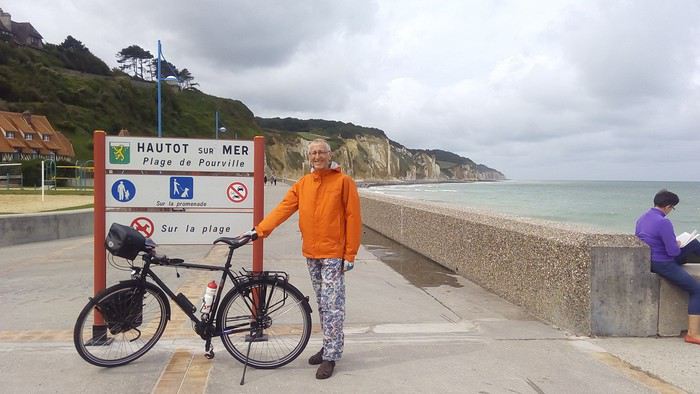
Its starting point is in the hamlet of Pourville, part of the municipality of Hautôt-sur-Mer.
Brochure: www.seine-maritime-tourisme.com/...re/nos-broch...
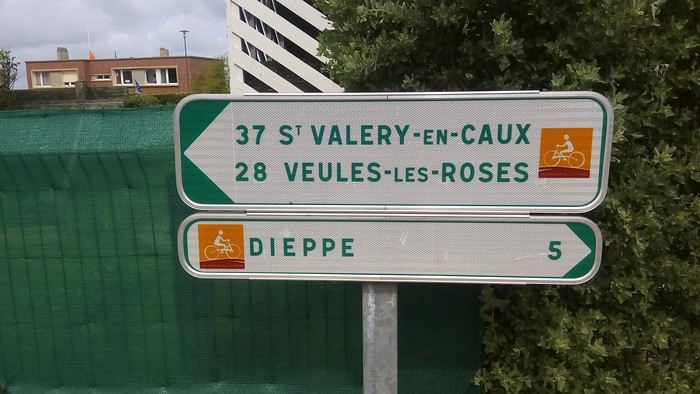
It then crosses the coastal greenway—see map: www.seine-maritime-tourisme.com/...ITINOR076FS0...
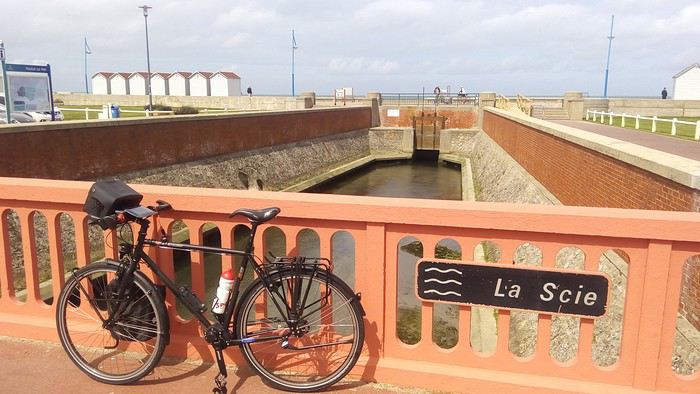
Nearby, the Scie River flows into the English Channel.
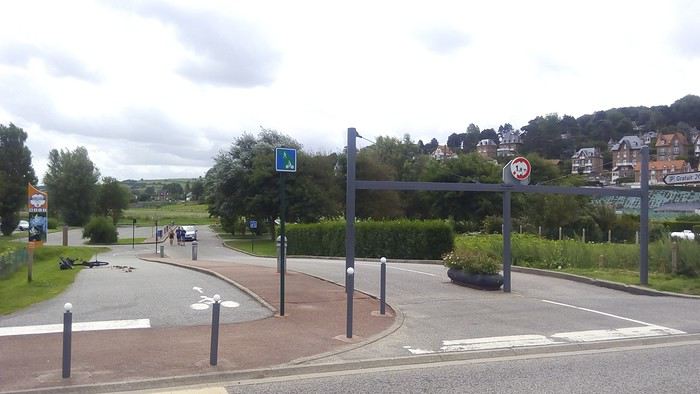
It begins after the beach parking lot.
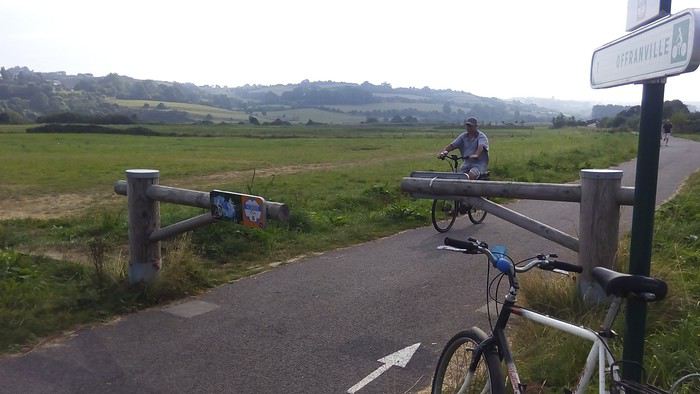
49.915467 N 1.031754 E
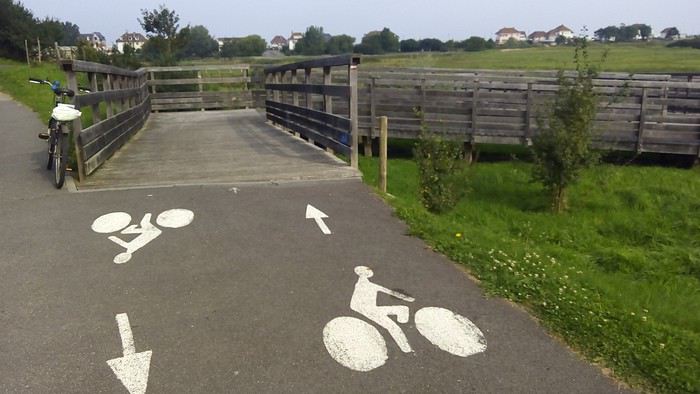
Via a footbridge.
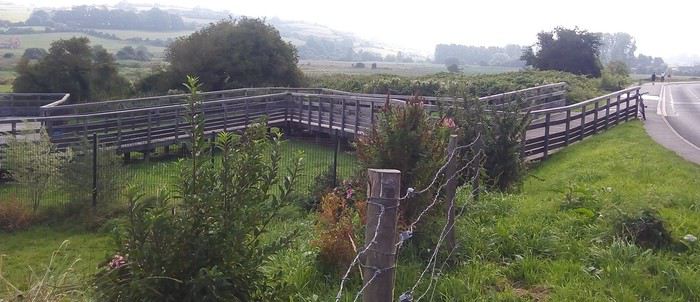
Which leads to a cycle path alongside the D153.
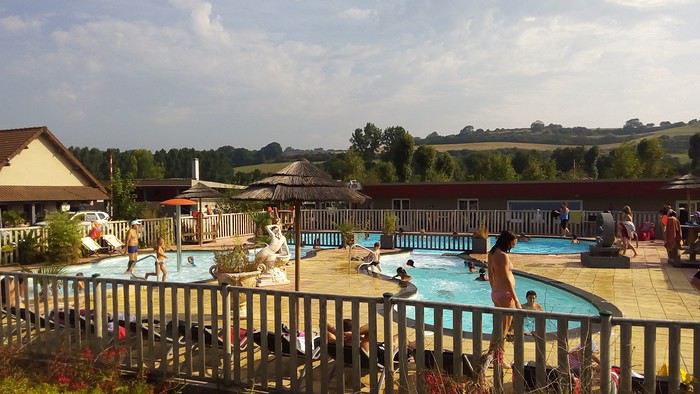
Passes by the Le Marqueval campsite.
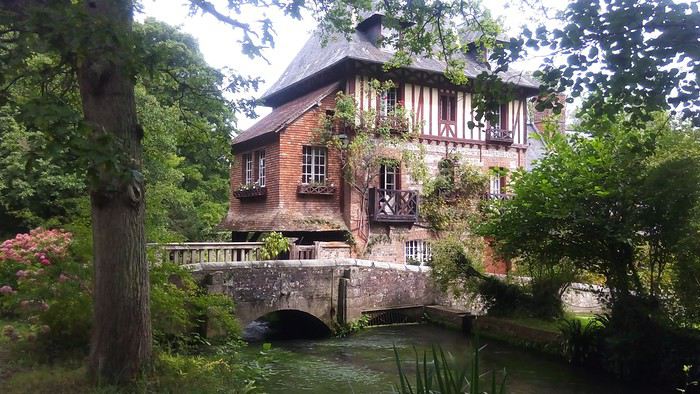
And a beautiful Norman house.
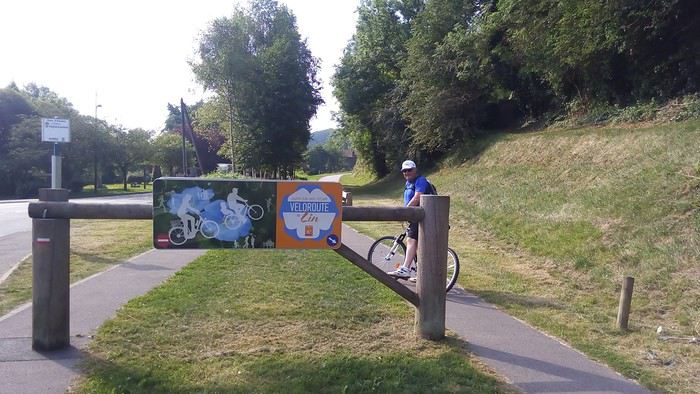
Becomes a greenway after Petit Abbeville, following the old railway line.
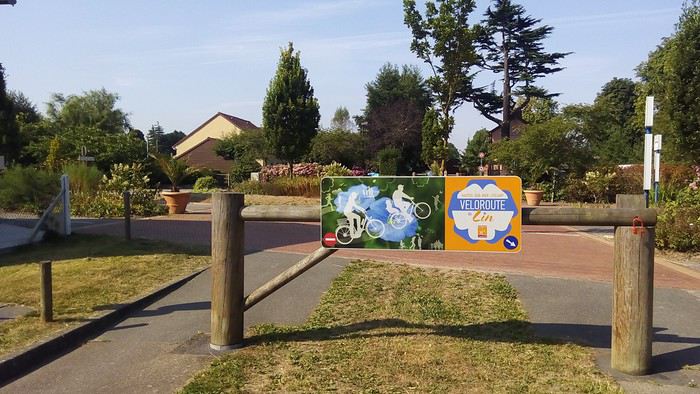
And even a magnificent greenway.
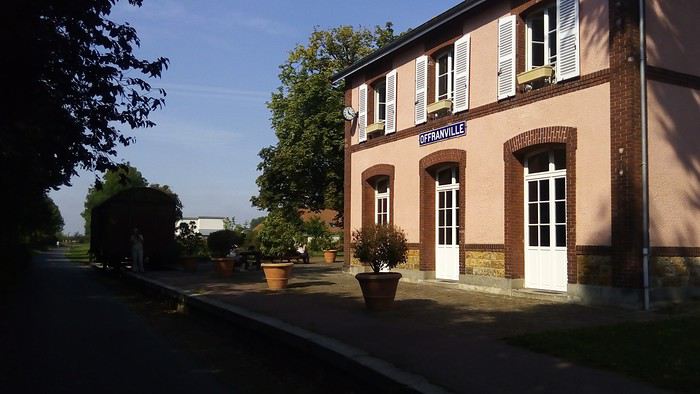
The former Offranville train station has been transformed
into a green stop.
With nice restrooms (even soap is provided).
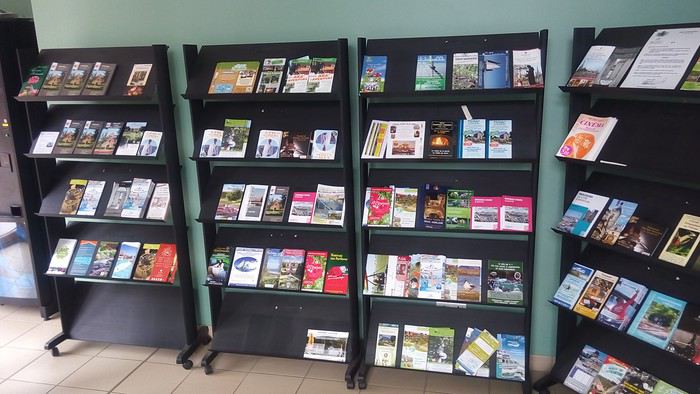
And information materials.
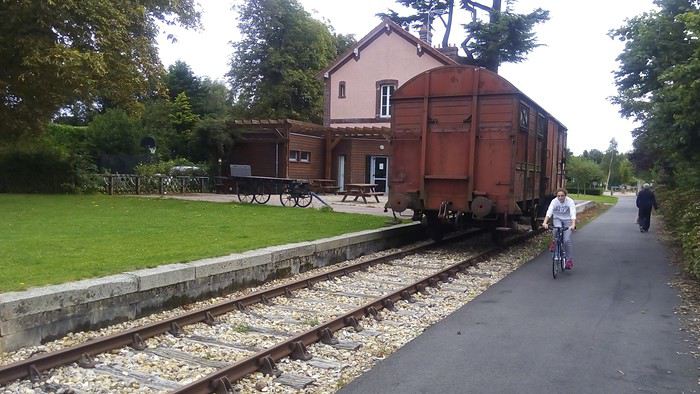
The old railway line is commemorated here.
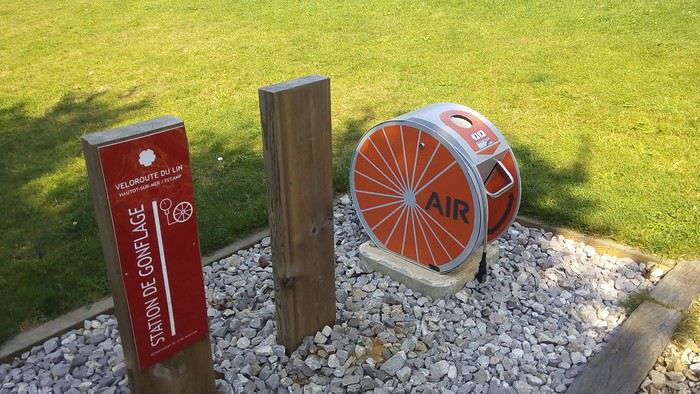
With an air pump station.
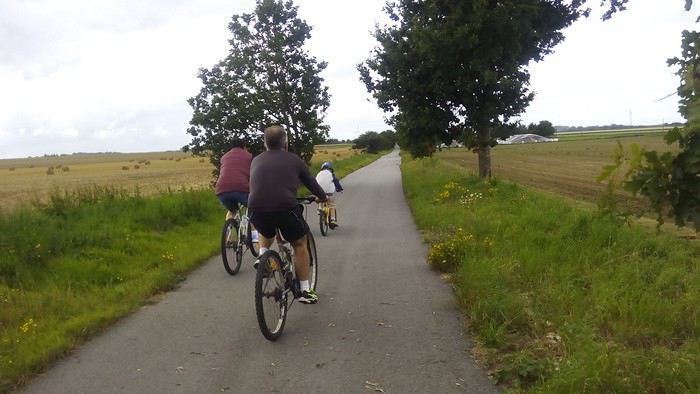
The surface is of very high quality, allowing rollerblading and wheelchair use.
Except in wooded sections where autumn leaves and branches remain due to lack of maintenance.
Or due to very rare damage caused by roots.
See the next message, as VoyageForum only allows 20 photos per post.
Eric BROUWER
Regional Delegate for AF3V Picardie (AU5V) and Local Relay for AF3V Cornouaille (Kernavélo) will update the Flax Greenway file based on the information I provided:
www.af3v.org/...e-VVV-.html?voie=522
Please consider joining or donating to AF3V to give volunteers the means to document all these routes.