Back to the discussion

in Entre deux voyages › Carnets de voyage

4 friends discover a piece of North India (page 2 of 8)

Discussion started by Kate on 2024-10-25

156 replies

This thread has been translated into English.


4 friends discover a piece of North India

Pagaljavab · 2024-10-26 · Message 21 of 157

This was my fourth time in Jodhpur this summer, and it turned out to be one of the highlights of the trip, even though Udaipur is exceptional. I also took away from this trip that you can have a different perception of places you’ve already visited depending on the context, the events, the people you’re traveling with, and a bunch of other factors. In other words, the experience is different every time, and you can feel like you’re rediscovering a place in a completely new light.

I started writing in my travel journal.

4 friends explore a piece of Northern India

Aleph240758 · 2024-10-26 · Message 22 of 157

I’m totally biased about Udaipur 😊 and I was happy to visit Jodhpur—I loved wandering around there. I’ll definitely follow your travel journal with pleasure.

4 friends explore a piece of Northern India

RichardXI · 2024-10-26 · Message 23 of 157

5. Agra - Fatehpur - Jaipur

Clearly, our driver is an excellent chauffeur. Careful, skilled at weaving his vehicle between the most diverse obstacles, unflappable, and using the horn sparingly, he quickly puts us at ease. Completely reassured, we let ourselves doze off while Ajay drives with full headlights through thick fog.

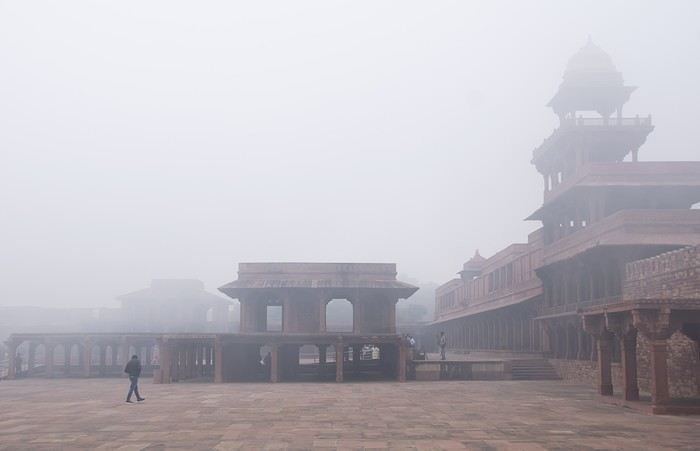
Here we are in Fatehpur, the short-lived capital of the Mughal Empire built in the 16th century in just over 10 years. The site is impressive: 6 km of ramparts enclose the red sandstone palace-city. Very few people and the silence combined with the mist clinging to the elegant facades give the whole place a ghostly feel.


On our way back to the car, a souvenir vendor I had chatted with at the entrance calls out to me. "Do you remember me?". Here I am, a few rupees lighter and weighed down by yet another set of magnets. Maybe I need to change my strategy.

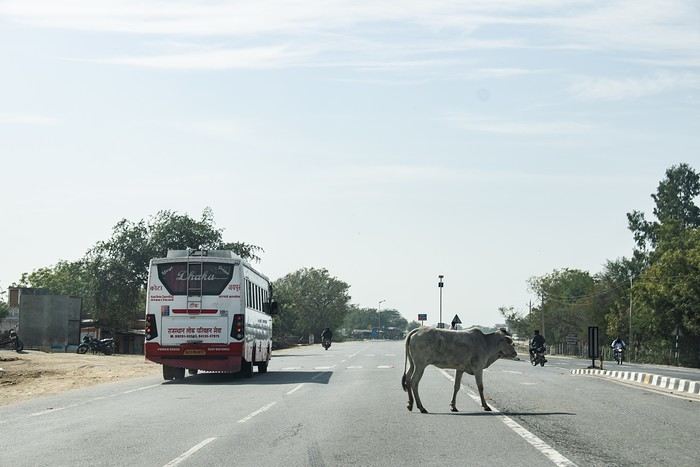
The drive to Jaipur is quite long, about 4 hours. It’s a chance for us to learn a bit more about the rules—or rather, the driving customs—on India’s main roads and highways. You can overtake on the right or left, it doesn’t matter, as long as you give a long honk first. The road isn’t just for vehicles—many animals, like cows, camels, and dogs, wander on the shoulders or even in the middle. That’s probably why cars rarely exceed 80 km/h. You also have to watch out for pedestrians, often farmers carrying bundles or sacks. And be careful of mopeds and tuk-tuks that might be driving the wrong way on the sides. I don’t think Indians are particularly reckless, but they have a different approach to driving—less rule-bound, more about anticipation.


We finally arrive in Jaipur, stuck in traffic. Night falls quickly, and we’re all feeling a bit tired. The hotel we chose is gorgeous, and the welcome, once again, is very warm (All Seasons Homestay). We decide to dine in.

4 friends discover a piece of Northern India

RichardXI · 2024-10-26 · Message 24 of 157

Day 6. Jaipur: Amber Fort – The Palace of Winds

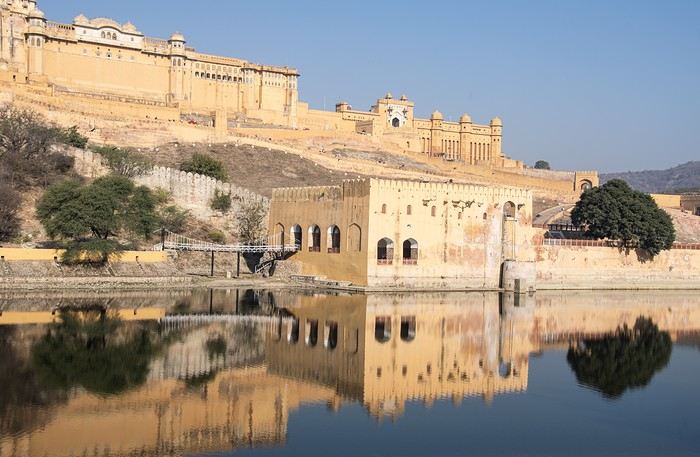
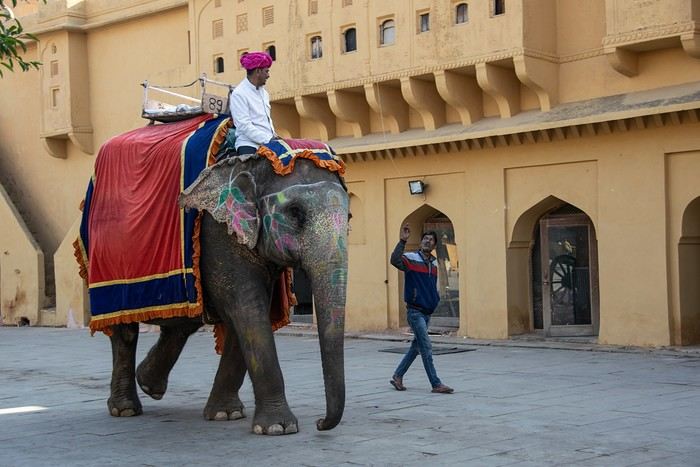
After a hearty Indian breakfast, we set off by car to Amber Fort, the residence of the Rajput maharajas and their families for centuries. As always in Rajasthan, the palace-fortress is built on a hilltop overlooking the valley. There was no way we were climbing the steep slope on elephant back. Even though they’re beautifully decorated and seem to be in good health from what I saw, numerous investigations by animal protection groups regularly denounce the mistreatment they often endure. Here we are, in the heart of maharaja India. Order and beauty, luxury and pleasure, born here as elsewhere from the labor and suffering of "those below." But these philosophical and moral considerations are quickly swept away by Nathalie’s infectious enthusiasm, who punctuates the long visit with a series of "so beautiful!" at every new room or courtyard we discover.


Leaving the site turned out to be an epic ordeal, just as we feared. We were swarmed by a crowd of vendors of all kinds, literally blocking our way. Chin up, jaw clenched, I managed to push through for several dozen meters. Bruno, on the other hand, didn’t fare as well. One, then two, then three, four vendors clustered around him. From a distance, I saw him buying a bit of everything: pens, figurines, keychains. It was like Tintin in *The Cigars of the Pharaoh* facing Señor Oliveira, the man who sells everything! The scene was really funny, especially when Nathalie, worried about her man, stormed back grumbling to try and rescue him from this tight spot! Finally, Ajay’s car parked on the esplanade. Saved—we could make our escape!

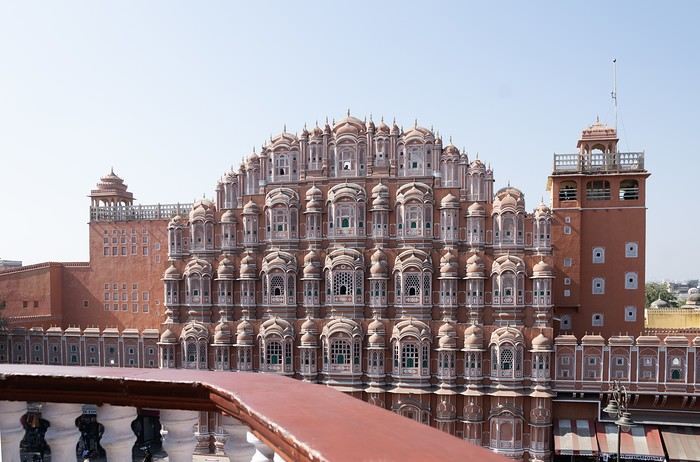
Back in Jaipur, we settled on the rooftop of a small restaurant right across from the Palace of Winds. The pink sandstone façade, with its dozens of delicately crafted niches, was actually the back of the women’s palace, where they could observe the street without being seen. A true visual enchantment.


The afternoon was dedicated to shopping, as Jaipur is renowned for the quality of its colorful textiles—cotton fabrics, cashmere, pashmina. I wasn’t exactly thrilled by the idea of hitting the shops, but I went along with the group’s decision. We let ourselves be lured by a tout, and suddenly we were inside a small store at the back of a narrow alley off the main street. Two hours of haggling with friendly, slightly cheeky shopkeepers. Kate negotiated fiercely, and we left with a whole batch of shirts and scarves, thinking we’d gotten a good deal. The experience of the following days would teach us we’d probably paid double the going rate. But in the end, it didn’t really matter.

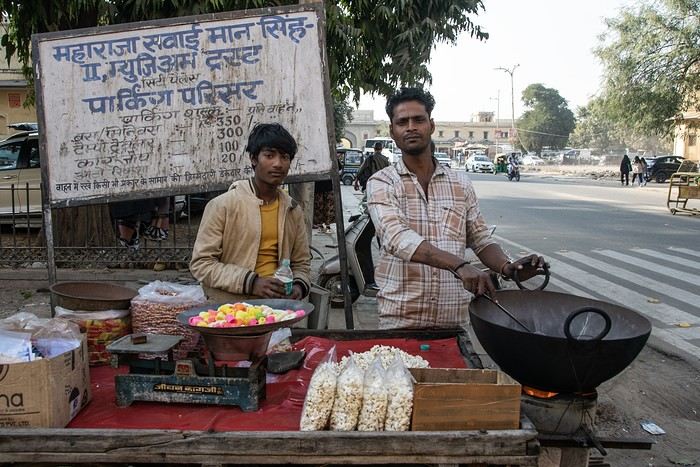
At the end of the day, we wandered through Johari Bazar (the jewelers’ bazaar), an endless string of shops selling jewelry, textiles, and sweets. We elbowed our way through the narrow, bustling sidewalks, in an incredible hubbub of touts’ shouts and deafening honks. Crossing the massive Bari Chaupar intersection was a real challenge—the pedestrian crossings were purely for urban decoration. The day ended at an Ayurvedic massage institute Ajay had recommended. A chance to rest body and mind.


4 friends discover a piece of North India

Kate · 2024-10-27 · Message 25 of 157

I'm picking up Richard's posts for Bundi...

Day 7. From Jaipur to Bundi Personally, I'm not sorry to leave Jaipur—a city where I felt a bit too "touristy." Bundi is less crowded, a bit off the main tourist trails. Plus, we'll have more time since we've booked three nights. I think all four of us are eager to step out of "tour operator" mode, which we've been in since Agra, and connect—even superficially—with the Indian people.

Our relationship with Ajay is starting to take shape. The beginning was a bit rough. His reserve, his poor English, and ours—only slightly better—didn’t make conversation easy. We decided to invite him to lunch every time we travel from one city to another. I think he appreciates the gesture; he seems more relaxed, and our ears, like his, are gradually getting used to this "Globish" we use as our common language.


We arrive in Bundi in the early afternoon. We're staying in a family-run guesthouse (Bundi Castel View Homestay) at the top of the town, run by a young man and his brother. The view from the rooftop, just below the fortress, is absolutely stunning. Staying inside the city walls, we feel like we're in a village.


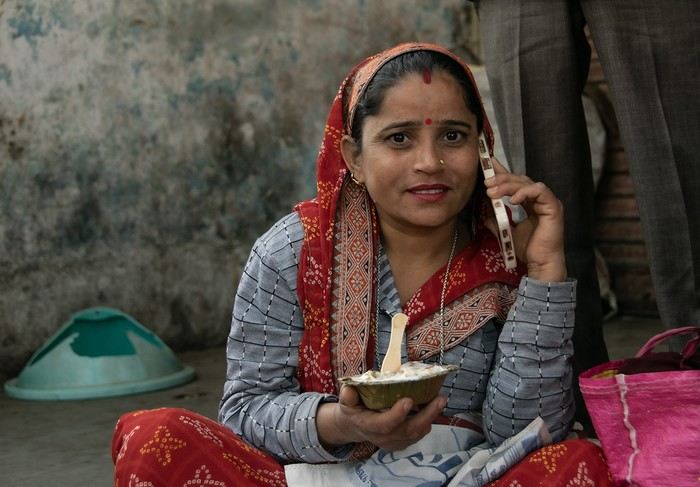
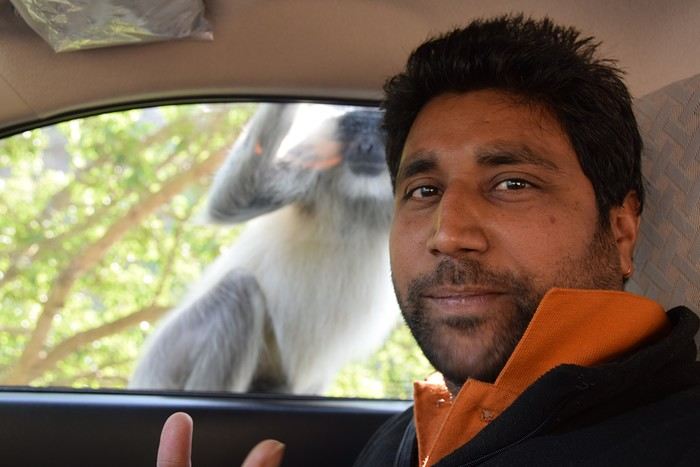
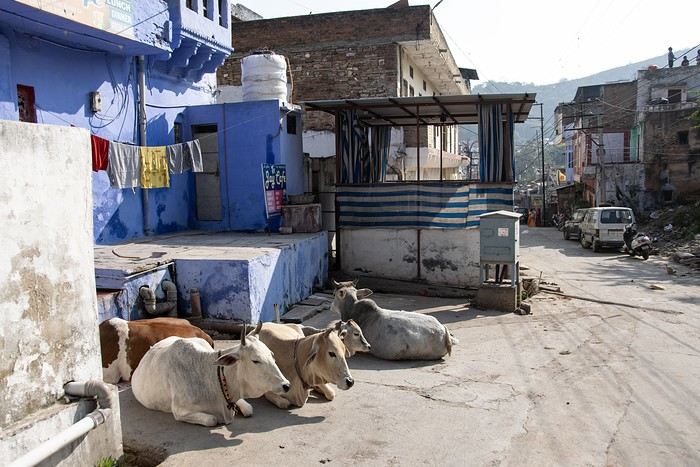
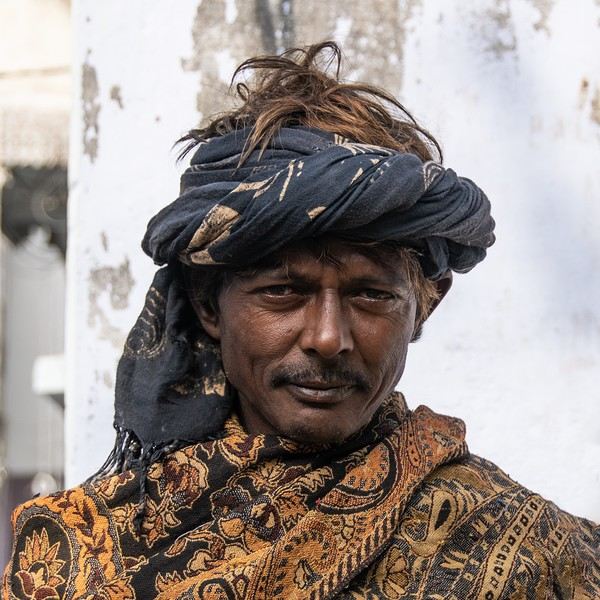
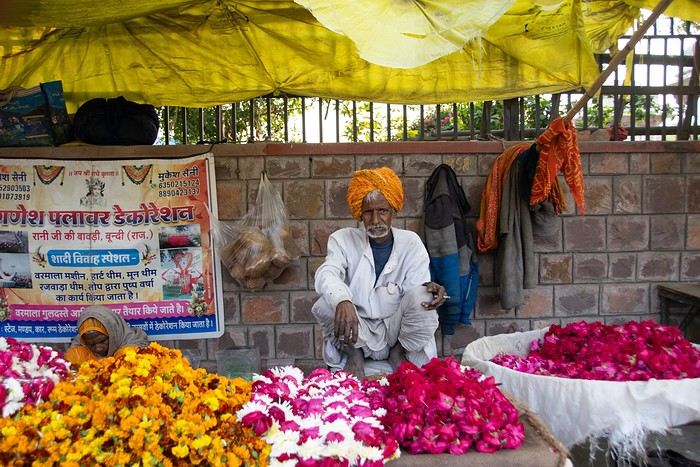
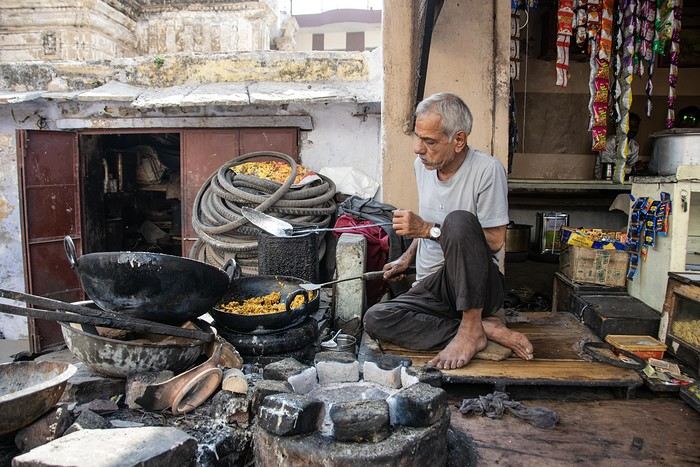
While the cows—still as laid-back as ever—clog the streets of the small neighborhood, the relationships between the monkeys (I think they're macaques) and the dogs don’t seem all that friendly. As we hoped, Bundi’s vibe is very different from Jaipur’s. We walk down to the lower town to visit a big market without being bothered at all. Just a few "Namasté," "Where are you from?" "First time in India?" to start brief conversations or sometimes a sales pitch, but with no pressure. Kate seems more and more comfortable with her camera; I’m impressed by how quickly she builds a connection to get the portraits she wants. A glance, a small gesture, a few words. She sometimes faces refusals or requests for money, but overall, Indians love being photographed. They often ask for selfies with us. "Selfie, selfie?" Yep, we’re always the exotic ones to someone else.


The market is huge but somewhat away from the main traffic flow, so we can wander around pretty peacefully. A slightly cheeky cow munching shamelessly on vegetables from a stall gets a stern scolding from a man with a stick—probably a market security guard. Further on, a vegetable vendor who sees us taking photos offers us a glass of tea. We accept politely; the tea is deliciously sweet, but what’s he going to ask for? Well, nothing, actually. Just a simple gesture of hospitality, a welcome to Bundi. Night falls quickly at these lower latitudes than in France, and we head back to our accommodation at dusk. But we’re literally stuck in a narrow street by an unbelievable traffic jam of motorcycles, scooters, tuk-tuks, and cows. A symphony of horns and other honking devices. Indians love noise.


4 friends discover a piece of North India

Kate · 2024-10-27 · Message 26 of 157

Day 8 / Day 9. Two days in Bundi. The "Kite Festival"

Woke up to a lively start early this morning. From the rooftop terraces in the neighborhood, speakers were blasting popular Indian music. We asked our host what was going on. "Kite festival for two days." The kite festival. It’s a big, popular celebration in North India (Utarayan), half-religious, half-secular, marking the end of winter and the start of the harvest season. Two days of festivities with music, fireworks, where kids and adults alike launch hundreds of kites as high as possible into the sky. Our hope for a quieter stay in Bundi vanished. India is definitely a stimulating country, but not exactly restful.

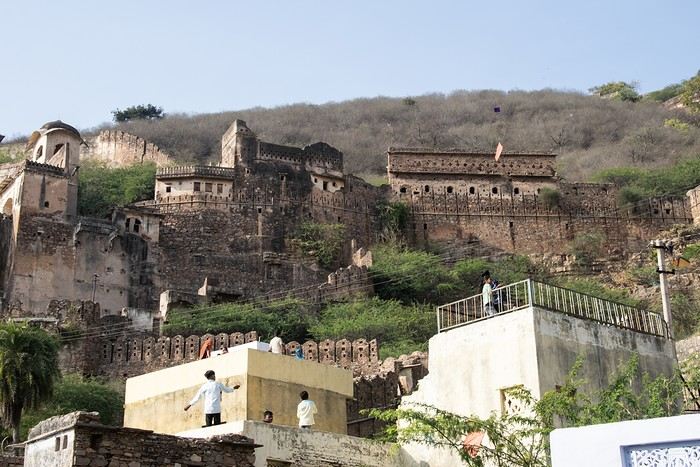
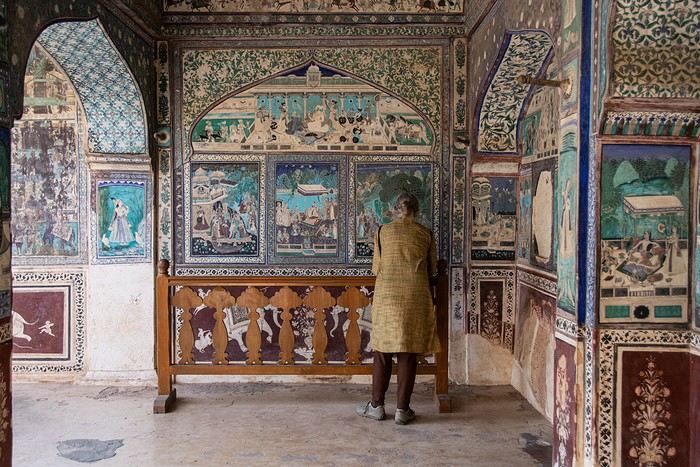
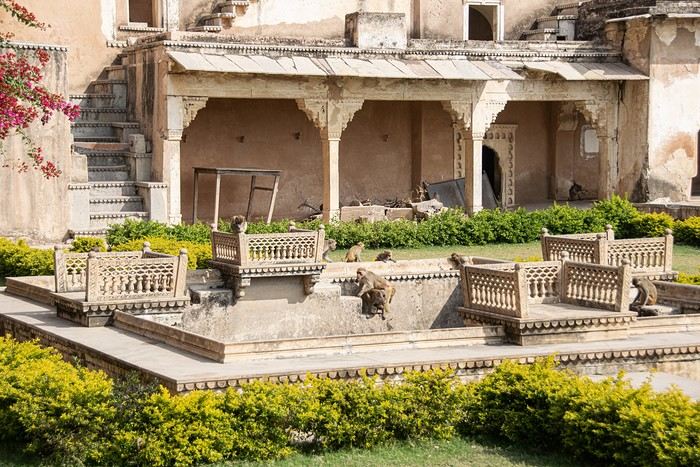
No point in sulking, though. We’re on vacation, and this is their home. Might as well enjoy the joyful energy buzzing through the city. Still, we decided to play it safe and spend the morning visiting the palace/fortress, away from the city’s noise. It’s definitely one of my favorite spots in Rajasthan. Probably because, aside from the beauty of the place, there was almost no one around—except for the monkeys who rule the site. No crowds of tourists, no touts. The place is half-maintained, half-abandoned, steeped in a splendor that’s now asleep. Another testament to the power and generosity of the Rajput rulers. The architecture is Indo-Persian-inspired, with broken and slightly horseshoe-shaped polylobed arches, a succession of inner courtyards, walkways, and rooms in vibrant colors. One of the few staff members opened a few rooms for us to admire magnificent 17th/18th-century murals. Hunting scenes, battles, and courtly love (gods or men?) in shades dominated by emerald green and turquoise blue.

We took a little break on one of the palace terraces. We were watching the many striped-back squirrels always on the lookout for food when a group of monkeys arrived, looking calm but determined. The kind that say, "This is our turf!" Better be careful. A beautiful morning in this timeless place. In the sky, the kites continued their festive dance...
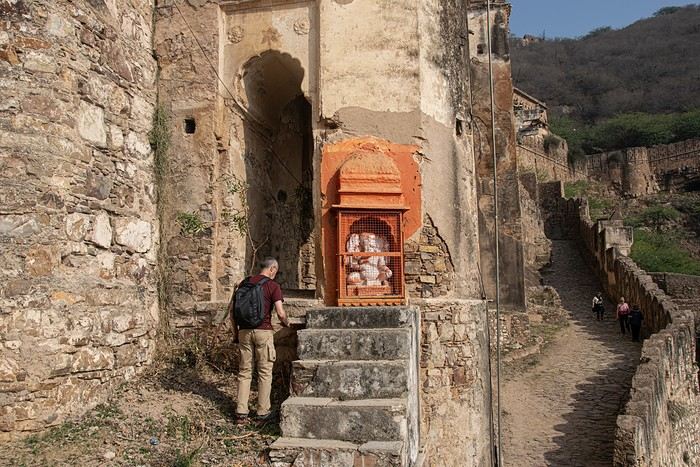



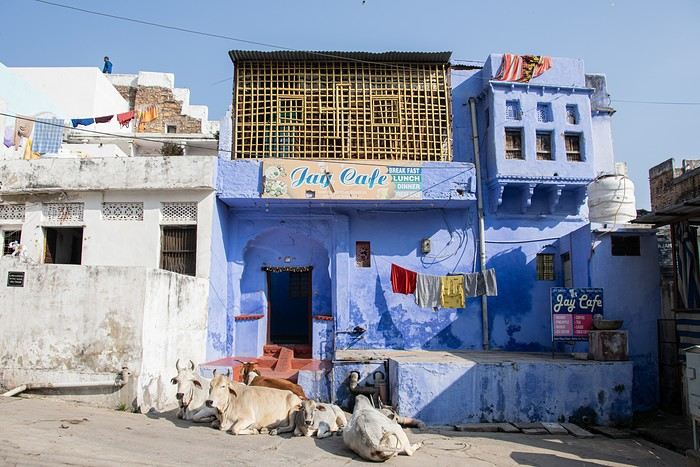
The afternoon was a bit disappointing. We’d hoped to join in, even discreetly, on the Utarayan festivities. But there didn’t seem to be any public gathering—or maybe we just didn’t find it. No Bastille Day-style street party, at least. It felt like a foreign celebration we couldn’t quite penetrate, except through the many nylon strings of defeated kites littering the ground and tripping us up. Luckily, Bruno saved the evening. I’ve only known him a short time, but I’ve figured out how he operates when traveling. He’s not big on logistics, but he’s open to any encounter. The day before, he’d struck up a conversation with Jay, a forty-something Indian with a big smile whose guesthouse is strategically located at the intersection of the street leading down from the palace. A prime spot he uses to sell sticks to tourists for warding off the sometimes overly bold monkeys that occupy the site. Jay managed to stop Bruno to show him his "guestbook," proving the quality of his hospitality and meals. So, we had plans for the evening. Jay and his sister served us a delicious Indian meal—I’ve unfortunately forgotten the names of the dishes. A lovely moment.



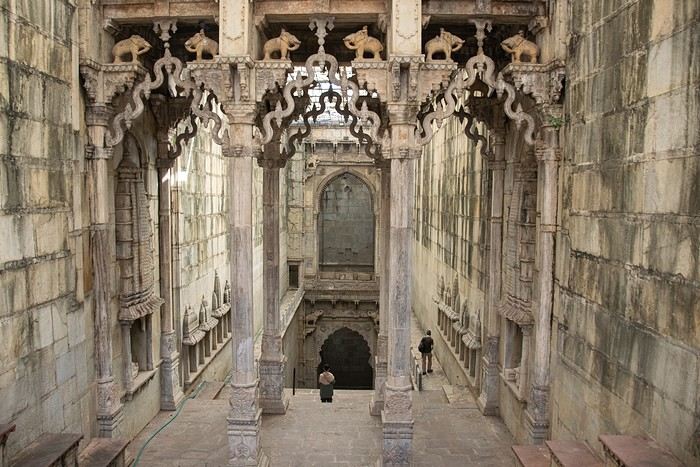
Last day in Bundi. In the morning, we headed back to the market to visit the "Raniji-ki-Baori," the queen’s stepwell (17th century). An astonishing 45-meter-deep structure designed to collect rainwater and runoff during the monsoon. A utilitarian and community monument, but also with a religious function, its walls covered in bas-reliefs depicting the countless gods of the Indian pantheon. Water, such a precious resource yesterday and today in this arid Rajasthan.


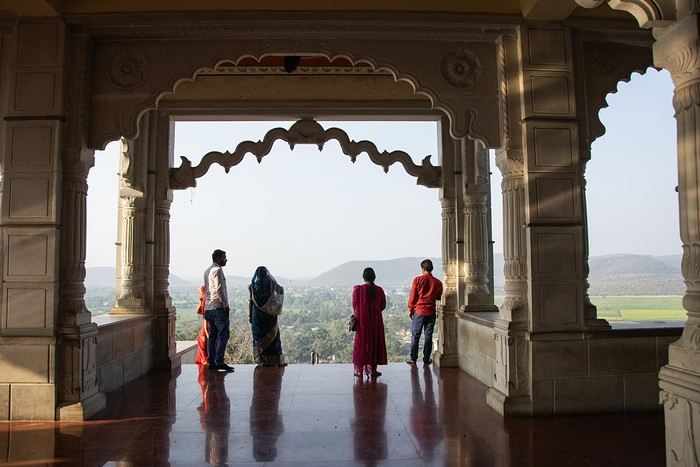
Ajay gave us a quick ride in the late afternoon to see the cenotaph with 84 pillars. An elegant monument built in the 17th century by King Rao Raja Anirudh to honor the memory of his wet nurse. Final strolls through the old town, with time for a masala chai. Dinner on the rooftop terrace of our guesthouse. The neighborhood kids were competing with their sound systems, and fireworks were bursting from all corners of the city. In the sky, glowing kites finished enchanting the night.



4 friends discover a piece of North India

Solene40 · 2024-10-27 · Message 27 of 157

Aaah Bundi 🤗! We also spent 3 nights there a few weeks after you and met Jay too—the local with the fastest talking speed I’ve seen in 7 trips to India 😂. I have such fond memories of the peacefulness of that town and the evening meals on rooftop terraces at the foot of the illuminated fortress! Have a great evening

4 friends discover a piece of North India

Attila · 2024-10-27 · Message 28 of 157

No hordes of tourists, no touts in this place—half-maintained, half-abandoned

If it’s that kind of atmosphere you’re looking for on your next trip to India, don’t head to South India—go to Madhya Pradesh (Bhopal) and Gujarat instead. (Didn’t see a single tourist in that state and very few in the other, even though there’s so much to see there…)😮 And from there, finish up in Goa…😇

I also really liked Bundi.😛

4 friends discover a piece of Northern India

RichardXI · 2024-10-27 · Message 29 of 157

Solene, that’s such a funny encounter! What a character, Jay! We actually ate really well at his place (despite him being a bit clingy )

Attila, we’re guessing the south (at least Tamil Nadu) will be less touristy than Rajasthan—well, that’s what we’re hoping, anyway. Either way, we’re excited to discover a side of India that’s totally different from the north (trip planned for January 2025) 🙂

4 friends explore a piece of North India

Attila · 2024-10-27 · Message 30 of 157

Yeah, Tamil Nadu is less touristy than Rajasthan. Not sure about Kerala? But still *way* more than Gujarat, though.

The south is really nice, though. [;)

4 friends discover a piece of Northern India

Zebulonne · 2024-10-27 · Message 31 of 157

Hi Kate and Richard, I just came across this lovely travel journal written by four hands that reminds me of our trips to India. We visited Bundi in 2015 and also toured the palace where an old gentleman opened rooms for us with magnificent frescoes. We were the only tourists that day. It seems no restoration has been done since then. It’s really sad to wonder how much longer we’ll be able to admire these wonders... I’m curious to hear about the rest of your trip! Have a great evening, Gabriele

4 friends discover a piece of North India

Solene40 · 2024-10-27 · Message 32 of 157

It depends, Richard: Mahabalipuram and Pondy are way more touristy than Karauli or Ajmer in Rajasthan—it all comes down to the stops you choose and the timing too. During our 3 weeks in Rajasthan at the end of March, we ran into very, very few Western tourists. On one hand, I got tons of great tips from Aleph/Marie Jo, and it was starting to get too hot for travel agencies, I guess 😅

4 friends discover a piece of Northern India

RichardXI · 2024-10-27 · Message 33 of 157

We stopped in Bundi in 2015 and also visited the palace where an elderly gentleman opened rooms with magnificent frescoes for us. We were the only tourists that day.

We had that luck too 😉


4 friends discover a piece of North India

RichardXI · 2024-10-28 · Message 34 of 157

Day 10. The road from Bundi to Udaipur. The Jain temple of Ranakpur

A long leg today between Bundi and Udaipur—nearly 5 hours on the road. But the first part of the journey, which takes us to the temple of Ranakpur, is really pleasant. For the first time, we’re taking back roads that let us explore the Rajasthan countryside and villages more closely. The landscape is greener than usual—we’re probably following a major river.

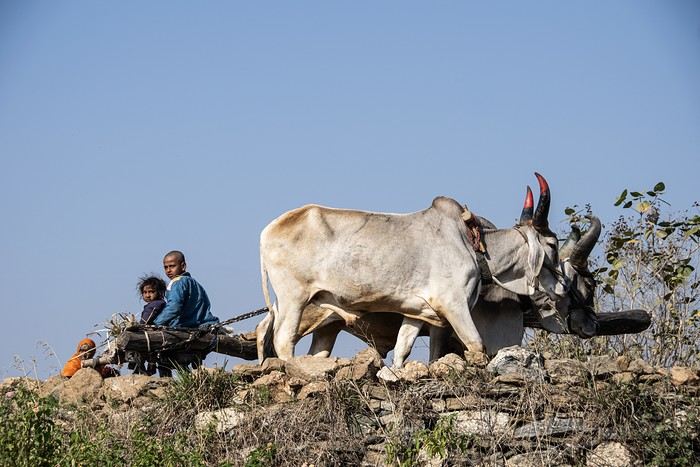
We spot gibbons by the side of the road, almost waving at us to stop! They’re adorable with their fluffy black heads and long arms. But it’s best to keep the windows up. A little further on, Kate asks Ajay to pull over so she can photograph women in saris washing clothes by the river. Even further along, I spot a bull up on the hillside, accompanied by three kids who are making the animal walk in circles to turn a large wooden wheel. It’s a *noria*—an irrigation tool that’s been around for thousands of years. The sun shines over this lush, lively valley where people are hard at work. The Rajasthan countryside is unfolding before us.


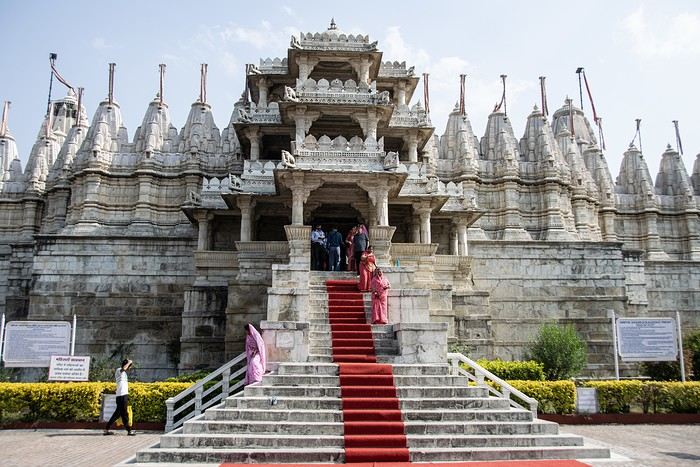
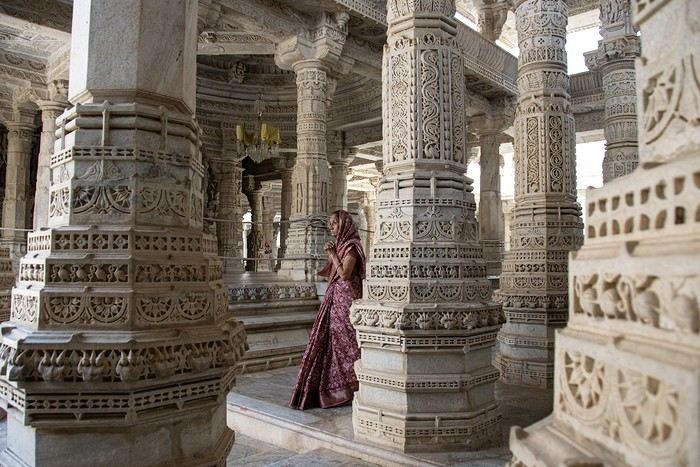
We stop at the Jain temple of Ranakpur. Jainism is a religion that emerged in the 6th century BCE, branching off from Hinduism. From what I’ve read, its followers are few (around 8 million) but well-represented in economic and political circles. Gandhi’s mother was Jain, and their cultural influence is more readily accepted in India than Islam. The Ranakpur temple is one of the main holy sites of Jainism. The temple is imposing from the outside, and inside, it’s supported by a veritable forest of marble pillars, slightly amber in hue, all intricately carved with floral, geometric, or figurative motifs—animals and humans alike. Little figures are often seated cross-legged or dancing, a faint smile on their lips. Each hall is topped with massive domes, so delicately worked that the stone looks like lace. Inside the temple, where devotees and tourists mingle, it’s hard for us to feel the spirituality of the place—partly because of the crowds, and also because we don’t understand the meaning of the devotional rituals unfolding before our eyes as observers.


4 friends discover a piece of North India

Kate · 2024-10-28 · Message 35 of 157

I'm back in Bundi... I really loved this stop, but I have a little reservation 😛 It was the festival for the Kite Festival (January 13–15). Since Bundi is a pretty small town, we were right in the middle of all the excitement. A mix of music—well, cacophony at full blast—firecrackers of all kinds, and an infernal noise from 5 AM to 11 PM, even later some nights. I lost it 🤪

4 friends discover a piece of North India

RichardXI · 2024-10-28 · Message 36 of 157

Kate doesn’t have the same hearing tolerance as me 😉

4 friends discover a piece of North India

Montagnard74 · 2024-10-28 · Message 37 of 157

Kate doesn’t have the same noise tolerance as me 😉

Or less effective earplugs 😅🧏🏼‍♀️

4 friends discover a piece of Northern India

Rjulie95 · 2024-10-28 · Message 38 of 157

This palace is magnificent! 🙂

4 friends discover a piece of Northern India

RichardXI · 2024-10-28 · Message 39 of 157

J.10 / J.12. Udaipur and its surroundings

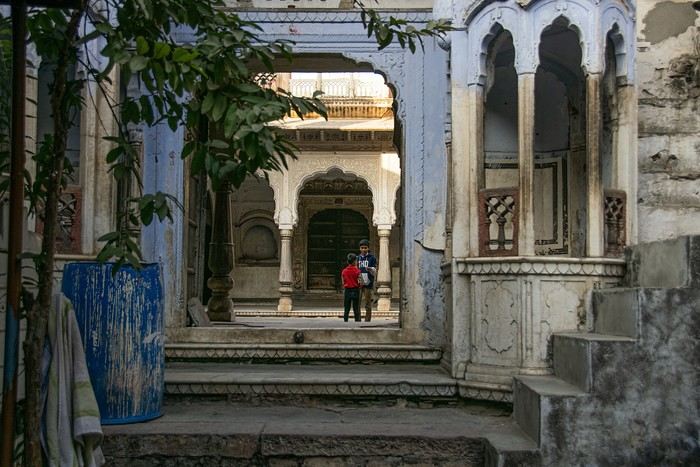
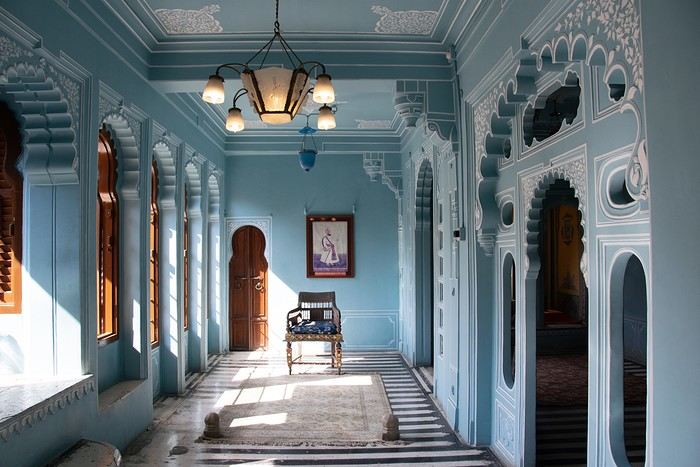
Udaipur, our next stop in Rajasthan. Ajay drops us off at the entrance of the walled city. This time, we’re staying in a beautifully restored haveli. Havelis are grand, princely-style bourgeois mansions built by wealthy merchants from the 17th century onward, serving as both residences and places of business. They’re an exceptional architectural heritage across northeast Rajasthan, but abandoned long ago by their owners, they’re deteriorating rapidly. Ours was bought by a Frenchman who undertook a major and delicate renovation to turn it into a hotel. (Madri Haveli)


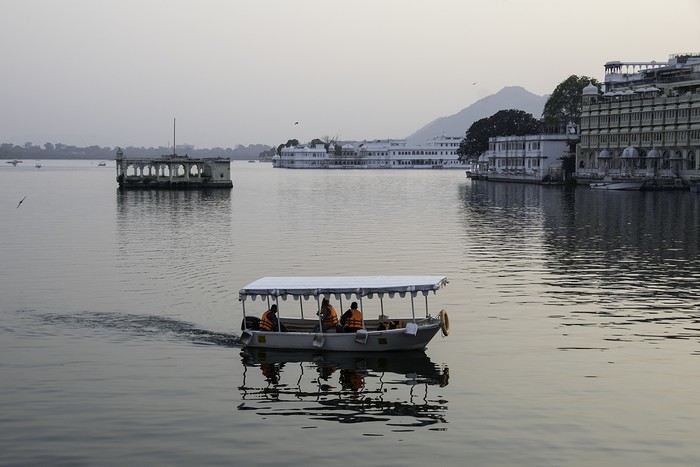
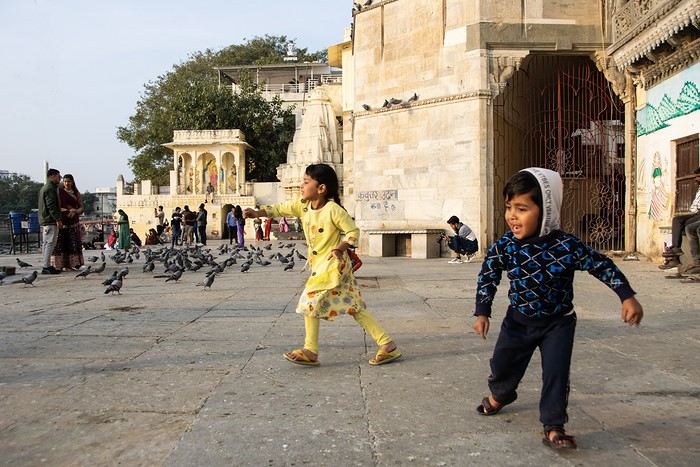
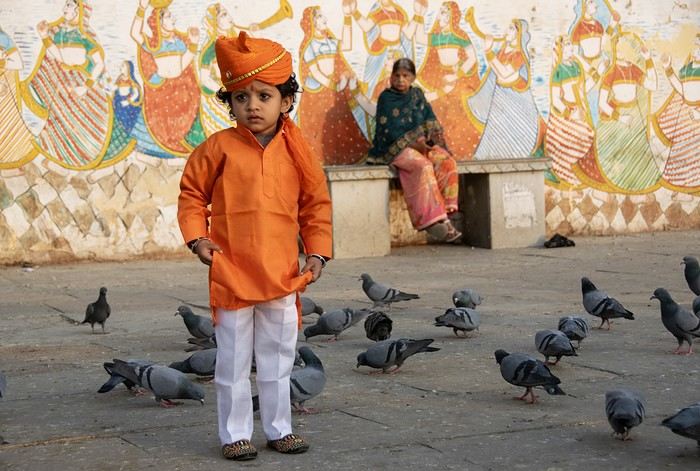
After settling in and marveling at the beauty of the place, we head down to the old city to get our bearings and soak up the atmosphere. We notice right away that Udaipur feels different from the other cities we’ve visited so far. Cleaner, more orderly, more polished—almost more bourgeois, if that word means anything in India (or anywhere else). Travel guides, with their ridiculous euphemisms, call it “the Venice of India.” As the evening cools, we stroll along the quays lining the famous Lake Pichola and linger on a pretty little square crowded with pigeons and tourists snapping photos of the sunset.


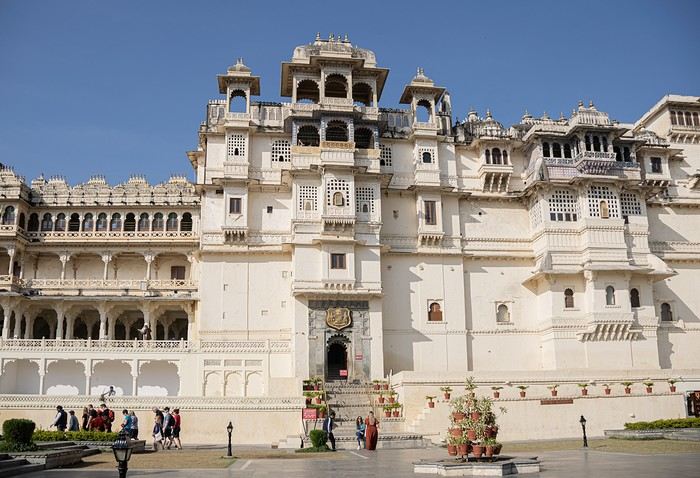
Today was a big day of sightseeing with a tour operator: City Palace, the Hindu temple of Jagdish, and a boat ride on Lake Pichola. The City Palace, built starting in the 16th century, looks like something out of *Arabian Nights* and is still home to the royal family of the Mewar maharanas. The current sovereign, Arvind Singh, is the 76th of his name. He holds no political power but wields real economic, social, and cultural influence through his many charitable and religious foundations, which have an international reach. While visiting the grand temple dedicated to Vishnu, we stumble upon a religious ceremony. Men and women chant prayers fervently—we obviously don’t understand the meaning, though I catch a few “Hare Krishna”s that make me smile.

In the afternoon, a short boat ride on the lake gives us a different perspective of the city and the palace. Dinner by the brazier on the rooftop terrace of our haveli. Evenings have been pretty chilly since we arrived in India. From the depths of the night, the call to prayer of the muezzin rises. Islam has its place in the land of the Mewar maharana.


The next day, we drive to Nagda, 20 km from Udaipur, to visit the Sahasra Bahu temple. The site is completely deserted. The two abandoned temples are partly in ruins, and seeing their half-destroyed towers reminds me of King Louie’s domain in Disney’s *The Jungle Book*. But here, it’s the realm of the god Virabhadra, born, according to legend, from Shiva’s wrath—and the atmosphere is perfectly peaceful. Back in Udaipur, we stroll along the other side of the shore in a quiet neighborhood along the ghats. In the end, the guides aren’t entirely wrong. With its alleys, bridges, quays, squares, and palaces, the city *does* have a bit of a Venetian vibe.


4 friends discover a piece of Northern India

RichardXI · 2024-10-28 · Message 40 of 157

J.13 / 14 /15. Stay in the village of Salawas. Visit to Jodhpur

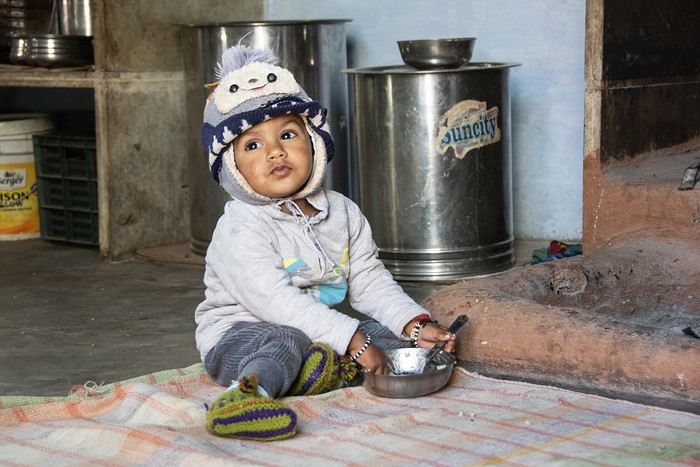
During our trip planning, we decided to take a break from big cities to get closer to rural Indian life. A wise choice that allowed us to experience a completely different atmosphere. We arrived at dusk after following a rather dusty track. The guesthouse is a little outside the village. The owner, who welcomed us with a big smile, is named Chotaram Prajapat. A truly beautiful Indian name that flows smoothly and broadly, like the waters of the Ganges. His home is organized around a large courtyard where we had all our meals on mats on the floor. The accommodations consist of round mud huts built in the traditional style of this region of Rajasthan. Sitting cross-legged around a welcome tea, we listened to Chotaram explain the village’s organization and the possibilities of discovering the "Bishnoi country" with him. Very talkative, with a playful look in his eyes, he spoke in excellent English. Jokingly, he shared a saying that tourism professionals must repeat among themselves: "The French are like bananas—everywhere, all year round."

We were tempted to spend two full days in the village and its surroundings to break away from the cycle of forts, palaces, temples, and markets, but Jodhpur was only 15 km away, so we decided to visit it the next day.

Special mention for Chhotaram Prajapat Home Stay


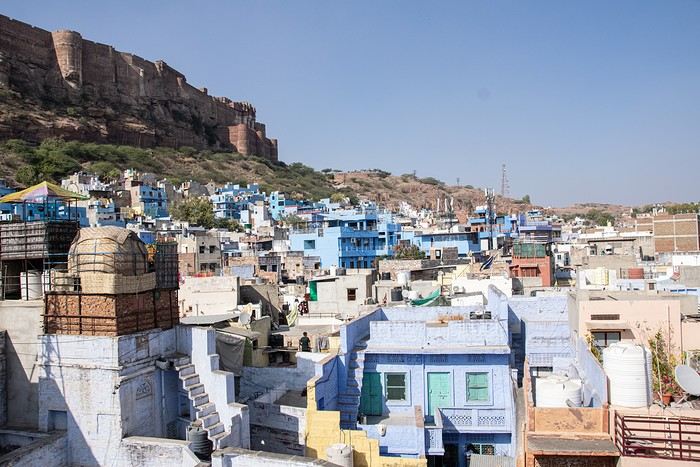
This morning, we headed to Jodhpur, "the Blue City." In India, there’s a complex symbolism around colors and their use based on caste affiliation or life events. Blue is often associated with deities like Shiva, Krishna, and Vishnu, but—paradoxically—Brahmins don’t wear it because indigo dyeing is considered an impure task.

We started the day by visiting the imposing fortress overlooking the city. The museum inside the palace is extraordinarily rich. The mild weather today encouraged us to linger on the large square surrounded by the ramparts. We descended into the lower city to explore a spice shop. The owner taught us how to recognize them by shape and smell, explaining their culinary, medicinal, and cosmetic uses. The visit was interesting, but the prices were high in this shop, which Kate found too touristy.

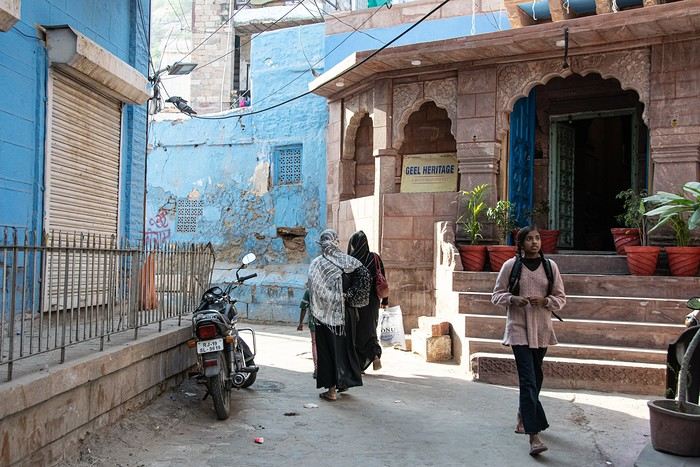
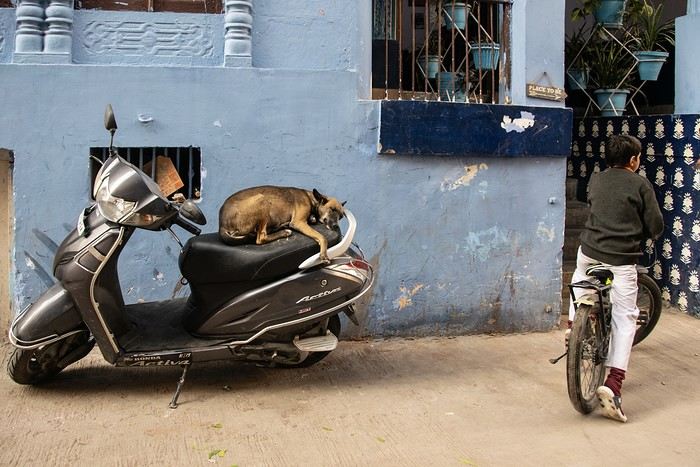
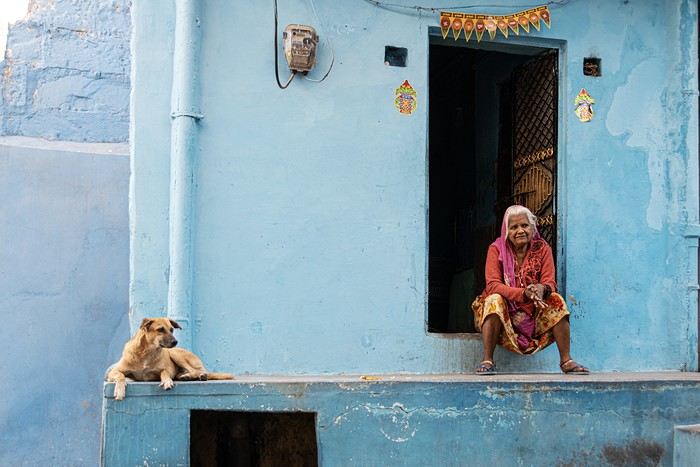
In the afternoon, we strolled through the narrow alleys of the old city, all blue. The houses were quite run-down, the streets stained with sewage mud. The neighborhood was quiet, rather gloomy, and seemed asleep. We ended our walk at the clock tower square in the center of Sadar Market, the city’s main bazaar, where an indescribable crowd reigned. After Nathalie and Bruno treated themselves to a final "banana lassi," we asked Ajay to take us back to the village. The day had been interesting, but none of us seemed truly enthusiastic. Fatigue? Maybe we missed something.


Back at the village, the atmosphere was buzzing. The streets were full of people, and shops and homes were covered in orange flags. Another festival? At dinner, Chotaram explained that it was to celebrate the inauguration of a massive temple dedicated to the god Rama in the city of Ayodhya the next day. Apparently, all of India was involved in the event. After the meal, Chotaram offered to take us on a jeep ride the next day to explore "Bishnoi country."


VoyageForum — the largest community of French-speaking travellers.