Back to the discussion

in Entre deux voyages › Carnets de voyage

12 days in Israel, before... (page 2 of 3)

Discussion started by Hyerois83 on 2025-01-15

44 replies

This thread has been translated into English.


12 days in Israel, before...

Mitch341 · 2025-01-26 · Message 21 of 45

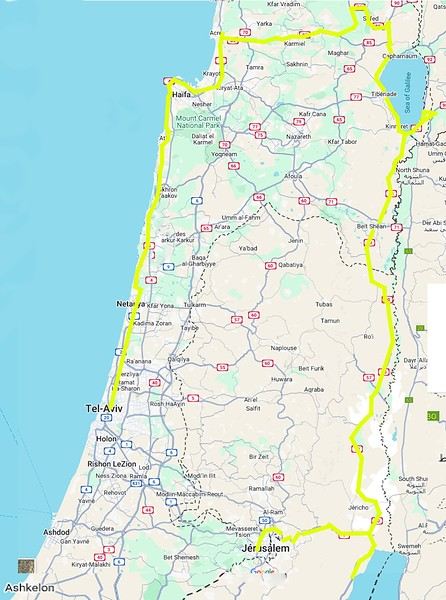
A really interesting day, with beautiful sites and landscapes all along the roads. Tomorrow we're heading to Masada, a historic high point where a group of Jews rebelling against the Roman Empire took the site from the Roman garrison in 66 AD.

Nice trip between Tiberias and Masada! Route 90, I presume?

12 days in Israel, before...

Hyerois83 · 2025-01-27 · Message 22 of 45

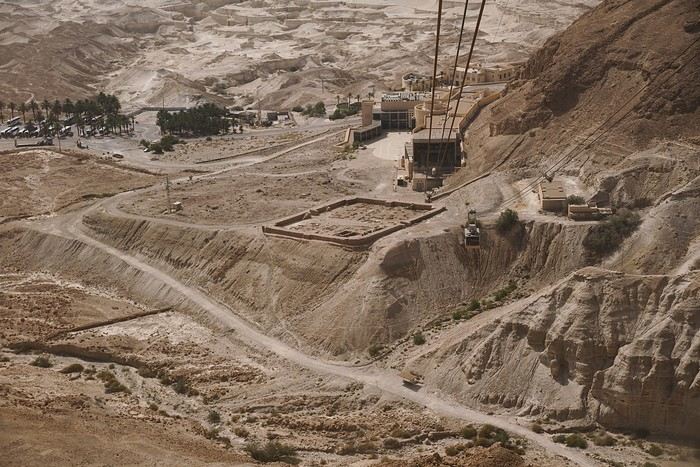
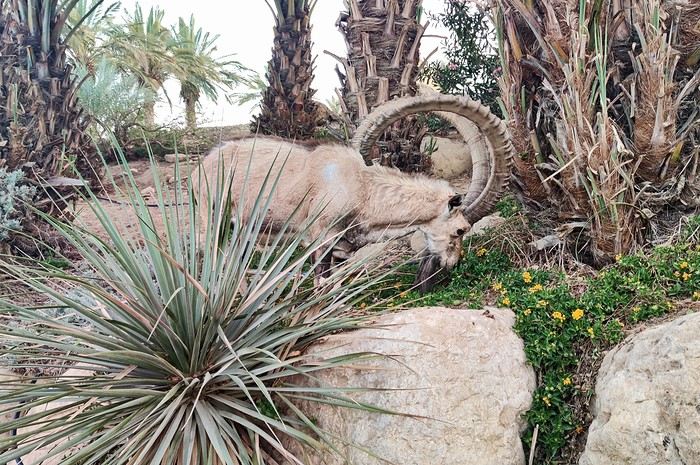
Day of May 24 As we step out of the room, we come face to face with an ibex, which seems very at ease among the hotel’s shrub beds and isn’t bothered by our presence at all. Today’s plan: the Masada fortress, about fifteen kilometers from Ein Gedi.


Before arriving at Masada (via Route 90, Mitch), we admire the extraordinary rock formations created by erosion in the limestone.


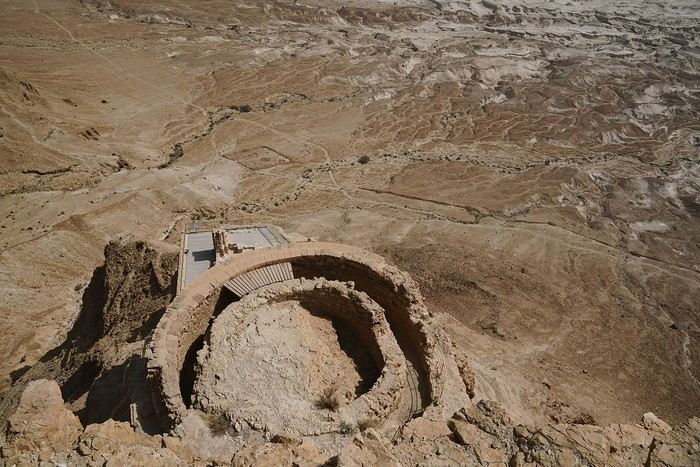
At the cable car, there’s hardly any line, and we’re quickly up on the plateau, with stunning views in every direction.


Despite the heat (over 38°C), which makes us seek shelter in the slightest shade,

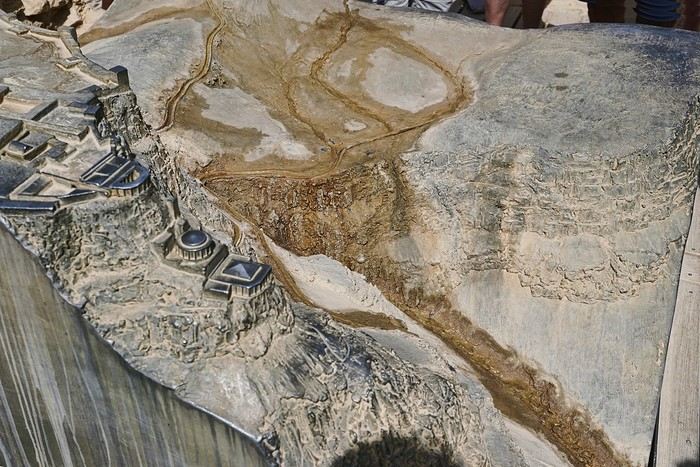
We take our time exploring this extraordinary site, which Herod managed to supply with water, thanks to the work of many slaves, and where a few hundred Jews resisted the Roman troops after defeating the Roman garrison. This makes Masada a symbolic place for the Jewish people. A model displayed on the plateau gives a great overview of the fortress.


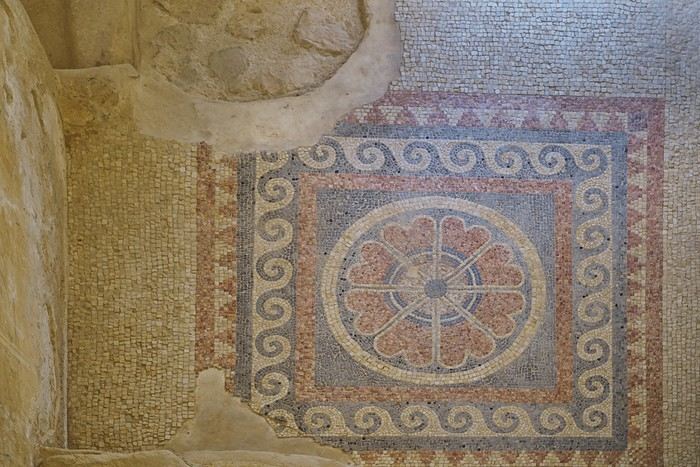
There are many points of interest, but especially the ruins of the Byzantine chapel, with walls decorated with stones embedded in mortar and beautiful mosaics.


Masada to be continued—I’ve hit the photo limit for this post!!

12 days in Israel, before...

Hyerois83 · 2025-01-28 · Message 23 of 45

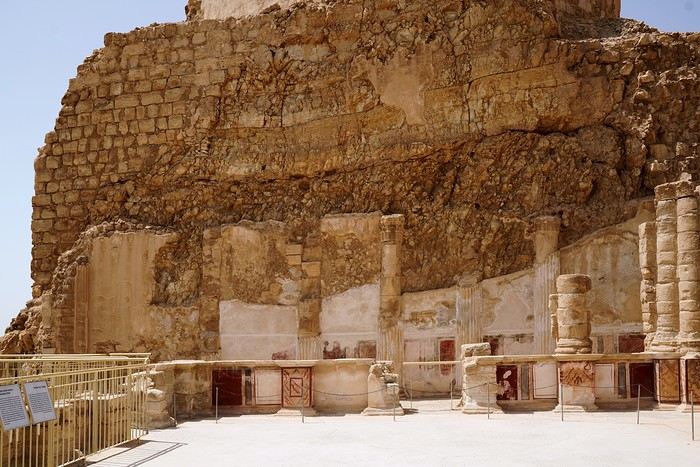
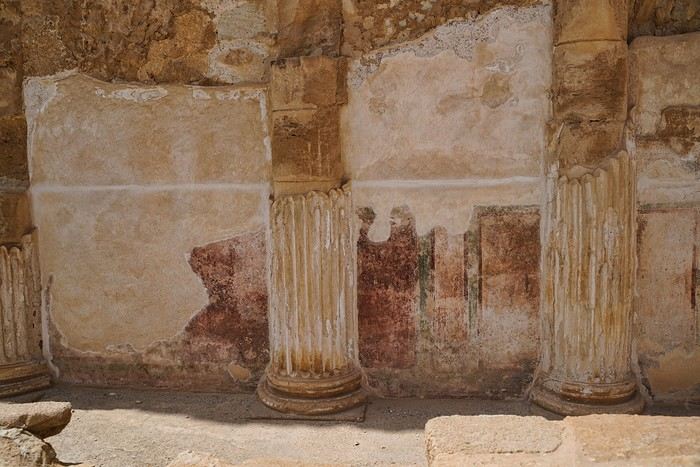
Continuing our visit to Masada: while walking around the plateau, we reach the staircase that leads to the top floor of Herod’s palace. It’s worth the effort because you have to climb the said staircase, which has 200 to 300 steps. All that remains of the palace is a beautiful set of colonnades and a few frescoes preserved in their original state.


An amazing visit, but exhausting due to the temperature. On the way back, we stop late for lunch at Ein Bokek, a 100% touristy spot packed with all-inclusive hotels. The meal was bad and expensive. Back in Ein Gedi, we relax and try out the hotel’s Dead Sea water pool to experience its curious properties. It’s fun to float on your back and propel yourself with just hand movements. Later, we skip the restaurant for dinner and head to the bar instead—much friendlier service, and the menu is simple but more than enough for us.

12 days in Israel, before...

Mitch341 · 2025-01-28 · Message 24 of 45

Totally agree with you about the restaurants in Ein Bokek!

12 days in Israel, before...

Hyerois83 · 2025-01-29 · Message 25 of 45

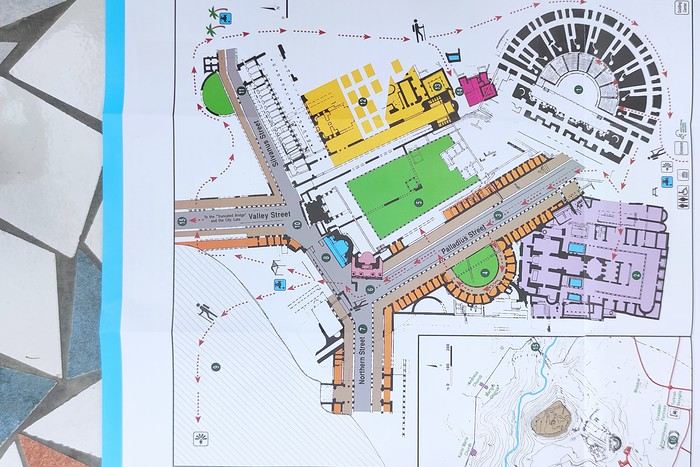
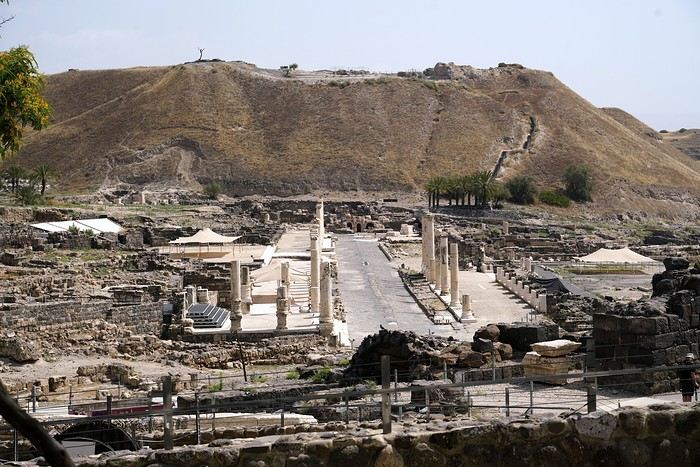
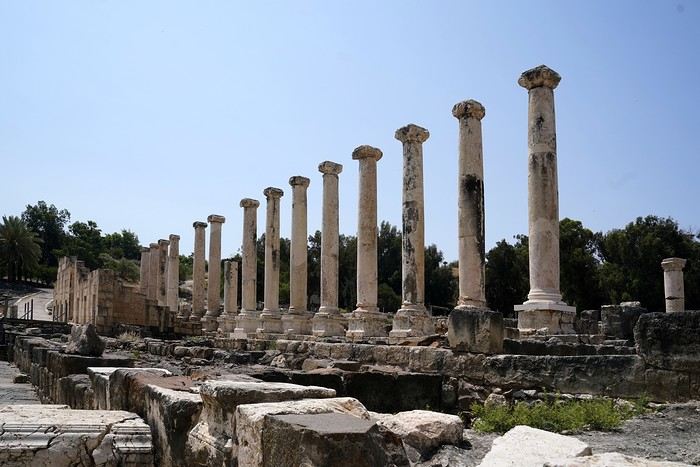
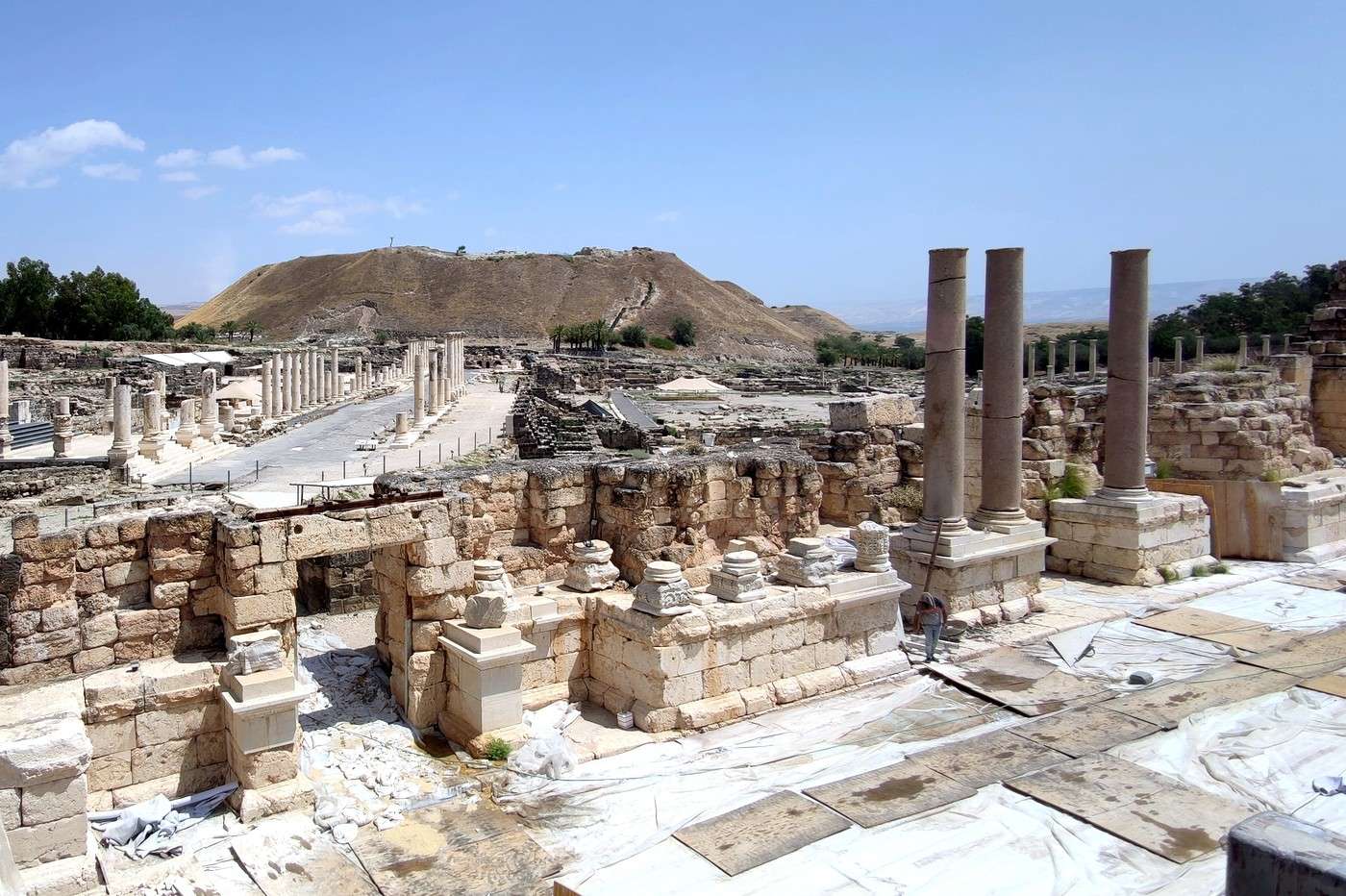
I just realized I skipped the day of May 23, which was actually marked by the memorable visit to the magnificent site of Beit Shean. In the morning, we reluctantly left the comfortable bungalow at Vered Hagalil to head toward the Dead Sea. We made a very long stop at Beit Shean, an impressive site due to its size, where numerous civilizations succeeded one another—from the Neolithic period to the Egyptians, Greeks (under Greek rule, Beit Shean was one of the ten cities of the Decapolis), and Romans—until the earthquake in 749 that destroyed the city. The site is that of a city with tens of thousands of inhabitants, spanning over ten hectares.


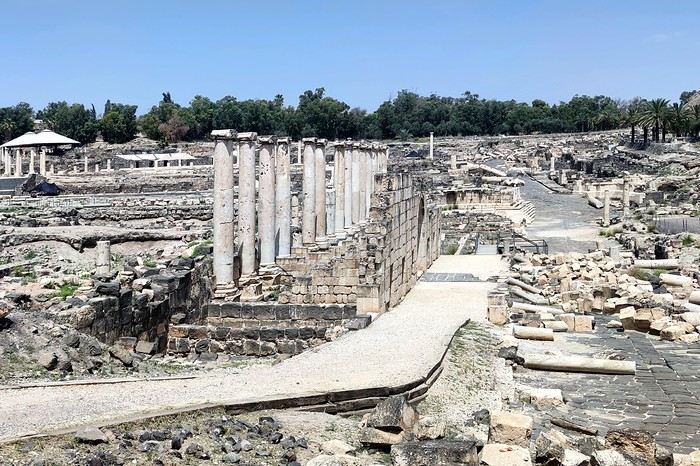
It’s structured around a beautiful central colonnaded street.

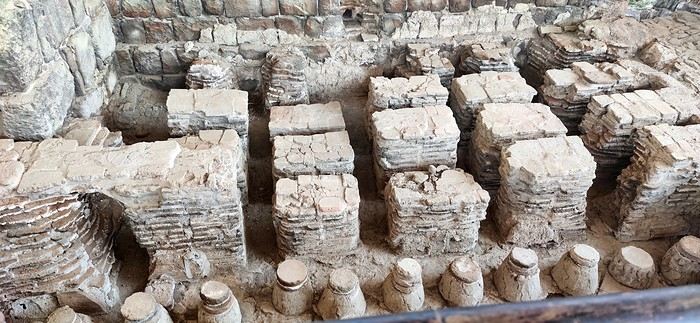
To the west, there are very significant baths, with the entire underfloor heating system still intact.


At the eastern end of the colonnaded street, you’ll find the ruins of a large temple.


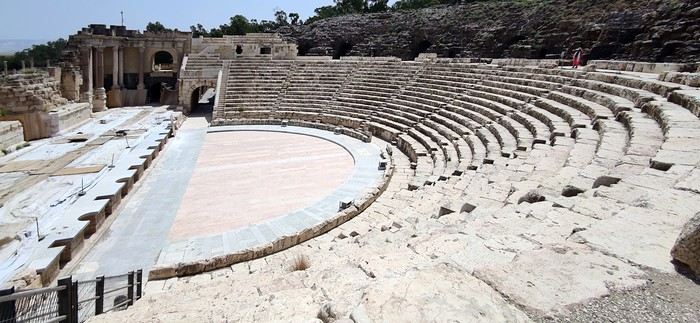
Another remarkable feature: the 7,000-seat amphitheater that overlooks the site.


We spent several hours exploring this vast site, where there’s so much to see. To our surprise, there were very few visitors, unlike the Christian sites packed with tour buses. More to come from the rest of the day!

12 days in Israel, before...

Hyerois83 · 2025-01-29 · Message 26 of 45

Continuation from May 23

After visiting Beit Shean, we continue to Kalya Beach, where we head down to the Dead Sea. The site is very well organized to make the most of tourists: paid parking, paid beach access. We have lunch at the lowest restaurant in the world, at -200 meters.

We’re the only customers, but it takes the two cooks a quarter of an hour to cut 10 tomatoes in half, add some feta pieces, and drizzle the sauce. While waiting, we enjoy the view of the Dead Sea.

We then head back to Ein Gedi to refuel and reach the Ein Gedi kibbutz where our hotel is located. Unfortunately, the gas station indicated on our map no longer exists—the site, which included a spa and restaurant, was closed due to risk of collapse. We arrive at the hotel on fumes and ask them to help us out, as the nearest pump is in Ein Bokek, 30 km away, which we definitely can’t reach. There’s a pump in the kibbutz, but no one seems willing to assist us. The reception sends us (on foot) to the checkpoint 700 meters away. The checkpoint sends us back to reception... On the way back, a taxi takes pity on me, stops, and kindly gives me 10 liters of fuel, which allows us to make it to Ein Bokek. The hotel staff’s attitude was very unfriendly (the manager even suggested we call our travel insurance to send a taxi from Ein Bokek with a jerrycan of gas!!) and there was a complete lack of cooperation from the staff. Fortunately, the rooms are spotless, with a breathtaking view of the rugged valley behind the hotel.


We dine at the hotel’s restaurant, which is a buffet. The dishes are half-cold, the chicken thighs are dry, probably reheated from the day before, and the sautéed potatoes are hard and cold. It’s also a real struggle to get a drink. The food is left uncovered, and everyone serves themselves with no regard for basic hygiene rules. It seems to suit the groups who pile their plates high, but this is low-quality cafeteria food. At 160 shekels per person, we wouldn’t recommend it. A great day marked by the remarkable visit to Beit Shean. Zero points for the welcome at Ein Gedi kibbutz and the value for money at its cafeteria..

12 days in Israel, before...

Mitch341 · 2025-01-29 · Message 27 of 45

Every time I visit, I never set foot in Kibbutz Ein Gedi. It’s a total tourist trap. Too bad for you and your experience. As for gas, everything’s been closed in Ein Gedi since the floods and destruction a few years back. And in Ein Bokek, is the parking at the end of the site paid? Is the public beach paid too?

12 days in Israel, before...

Hyerois83 · 2025-01-29 · Message 28 of 45

You’ve got to separate the kibbutz from the hotel-restaurant where I was so poorly received. They took advantage of their position (or rather, they *used* to take advantage of it, because right now tourism is at zero). In Ein Bokek, there were still free parking lots and beach access.

12 days in Israel, before...

Hyerois83 · 2025-01-31 · Message 29 of 45

Day of May 25 It's a transition day, on the way to Jerusalem. We’ve already had a great trip so far! :)


As in the previous days, driving is no problem until we reach the outskirts of Jerusalem, where Google Maps guidance becomes trickier. We make a quick stop to drop off our luggage at the Brown JLB hotel, in a lively neighborhood near the Old City, and park the car further away in an open parking lot recommended by Voyageurs du Monde for Shabbat. A nice downtown hotel. Warm welcome. The room is relatively small but well-equipped and very well furnished. The common areas are inviting, with deep leather sofas. In the evening, we head to the First Station, a former railway station that’s now a gathering spot with rides, activities, and all kinds of restaurants—very calm at this time of day.

And we dine at Culinary Workshop, a trendy restaurant right near the First Station. Great atmosphere, good food, and excellent service.

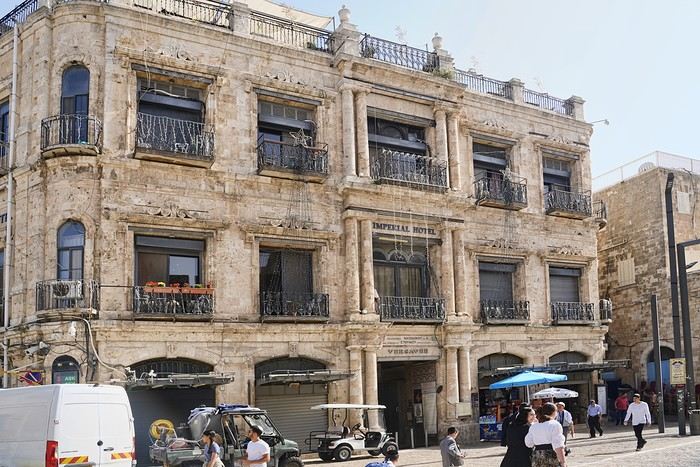
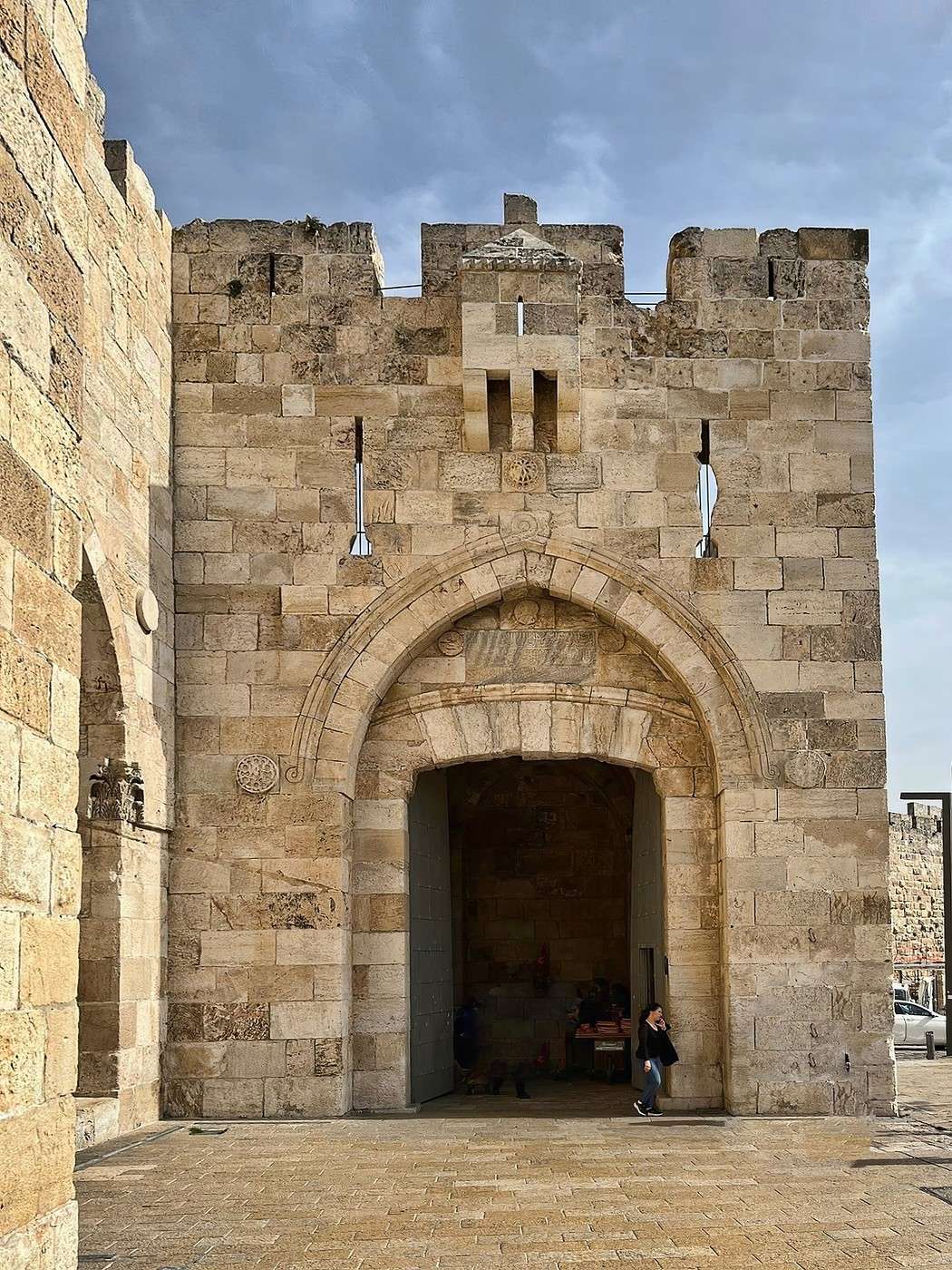
Day of May 26 Our guide, Deborah C., picks us up at the hotel at 9 AM for a full tour of Jerusalem’s Old City. She’s a Franco-Israeli who’s been living in Israel for 20 years. We start at Jaffa Gate, the closest entry point. First fun fact: they had to cut an opening in the wall to the right of the gate to let Emperor Wilhelm II pass on horseback during his visit. We pass by the Imperial Hotel, built in the late 19th century, where Wilhelm II stayed during his visit. Its façade is remarkable.


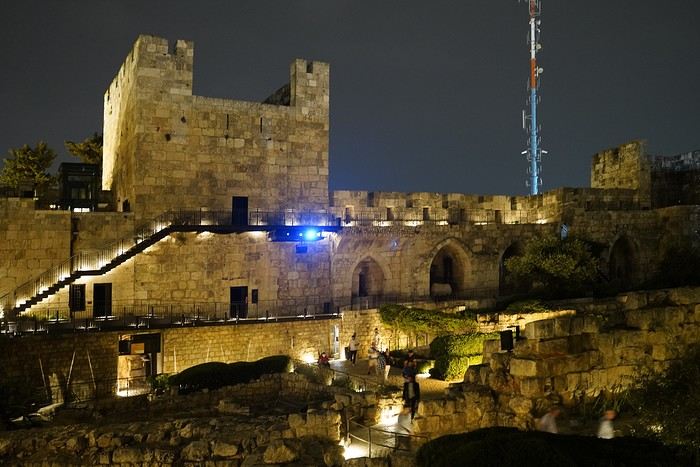
Then we leave the eastern entrance of the citadel to our right—we’ll visit it tomorrow for the sound-and-light show held inside.


We continue inside the walls to the room where the Last Supper, Christ’s final meal, took place. It’s far from the famous depiction by Leonardo da Vinci. The room bears traces of Muslim occupation, with an Arabic inscription confirming there was once a mosque here.


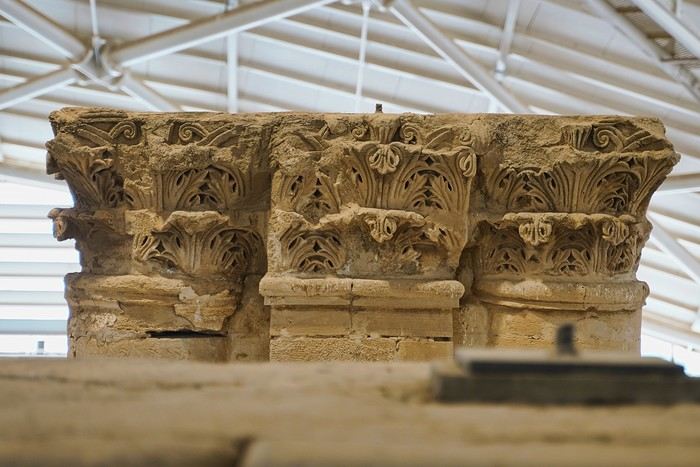
Alongside it, a carved capital depicts young pelicans piercing their mother’s heart—a sculpture attributed to the Crusaders.

On other pillars, we spot graffiti left by the Crusaders.

Since Muslims still consider this room a sanctuary and Jews venerate King David’s tomb here, there’s significant interfaith tension around this site. Miracles are said to have occurred in this room, with pilgrims suddenly speaking languages they didn’t know before. For this reason, some visitors lie on the ground and pray to experience the same miracle.


To be continued in another post (photo limit reached)

12 days in Israel, before...

Hyerois83 · 2025-01-31 · Message 30 of 45

Continuing from Jerusalem. After visiting the Cenacle, we arrive above the Cardo, a grand avenue lined with colonnades that spanned Jerusalem from one end to the other during Roman times.


As we can see on the Madaba mosaic that Deborah is showing us.


A little further on, we spot the Sidna Omar Mosque, with its tall minaret and a beautiful jacaranda tree brightening up the building.


We cross the square in front of the Hurva Synagogue, prepared for a big celebration.


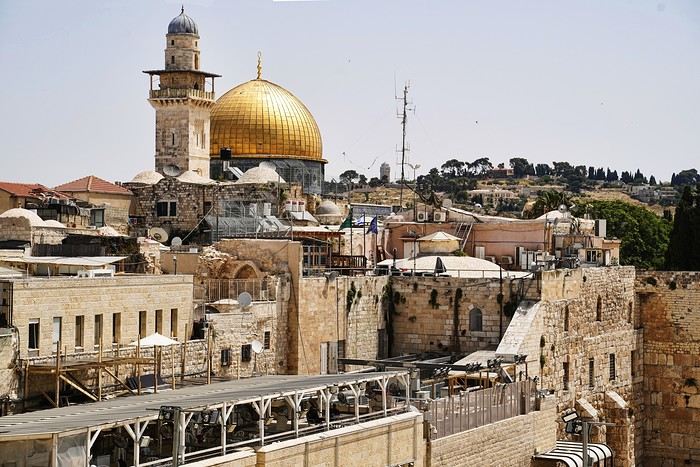
We continue through small paved alleys to the top of the Western Wall (the term "Wailing Wall," which we use in France, is quite reductive and disrespectful given the site's religious significance for Jews), where we get an overview of the wall.


We can also see the Dome of the Rock, which we won’t be able to approach since the Temple Mount is closed to non-Muslims today.


We go down to the wall, with the women on the right and the men on the left, who can enter the covered vaulted section to the left of the wall. Many worshippers are praying there in front of stands holding Torah scrolls. I refrain from taking photos, though no one seems to mind.

The wall is a constant source of conflict between Orthodox Jews and non-Orthodox Jews, as the latter do not practice gender segregation. Women have eventually managed to get a stool placed on their side, allowing them to catch a glimpse of their male children on the other side of the partition during their bar mitzvah. We then pass through small streets,


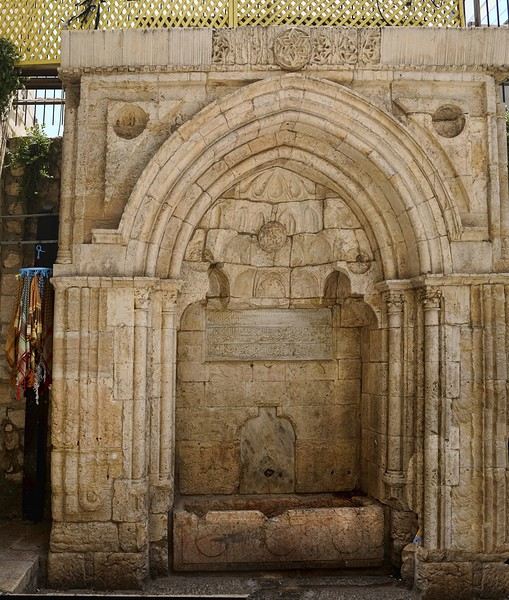
and admire one of the fountains built by Suleiman the Magnificent along the way,


We cross a souk where not all the items are local, by the way. 🙂


To be continued...

12 days in Israel, before...

Mitch341 · 2025-01-31 · Message 31 of 45

Continuing from Jerusalem.

We walk through a souk where not all the items are local, far from it 🙂

to be continued

😎 😎 Alas! That's right! And with all faiths mixed together, by the way!

12 days in Israel, before...

Hyerois83 · 2025-01-31 · Message 32 of 45

Jews, Catholics, Muslims—they all have one thing in common: they sell Chinese products. It’s a pretty flimsy basis for reconciliation.

12 days in Israel, before...

Mitch341 · 2025-01-31 · Message 33 of 45

Jews, Catholics, Muslims—they all have one thing in common: they sell Chinese products. It’s a pretty light basis for reconciliation.

We agree. That said, the shops in the souk are overwhelmingly run by very old Palestinian families. And your guide must’ve told you—the streets used to be wider, but commerce led to the stalls narrowing the alleys. I’m talking about the Arab Quarter of the Old City here. In the Armenian Quarter, it’s Armenians running the stalls. And in the Jewish Quarter, it’s Jews. But since Jaffa Gate is the most used by tourists, you’ve probably seen the result! That’s where the expression "The Souk" comes from! 😎

12 days in Israel, before...

Hyerois83 · 2025-02-01 · Message 34 of 45

Past the souk, we arrive again at the wall in its westernmost section, known as the Little Wall or Little Kotel. Two female worshippers are praying there in peace.


We continue into the Arab Quarter, where some houses display photos or representations of Mecca, a sign that their inhabitants have made the pilgrimage to this sacred Muslim site.
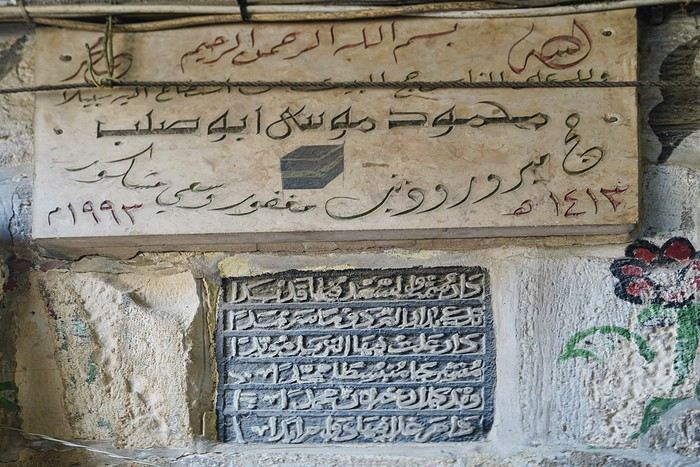


We follow the Via Dolorosa, whose route has changed over the centuries, with each Christian denomination trying to have its own station (to attract pilgrims and their offerings). In front of the Chapel of the Flagellation, marking the second stop, we come across singing processions of pilgrims, with crosses and guitars leading the way.


Inside, a large stained-glass window depicts the scene of the flagellation.


Next to the Chapel of the Flagellation is the Chapel of the Condemnation, run by the Franciscans.
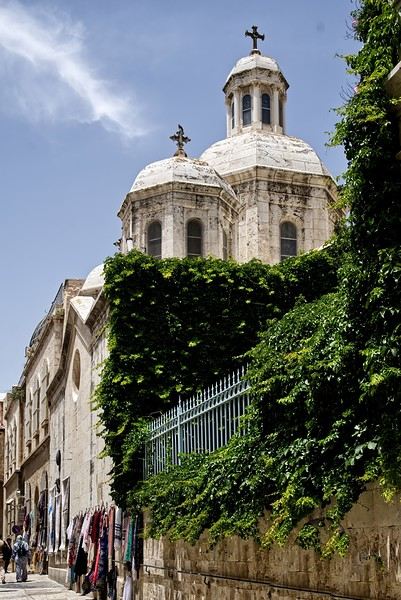


We then arrive at the Basilica of Ecce Homo, built in the late 19th century at the spot where Pontius Pilate is said to have presented Jesus to the crowd, saying "Ecce Homo," hence its name. Its architecture, in a very classical style, is interesting.


The Via Dolorosa then leads us to the Church of the Holy Sepulchre.
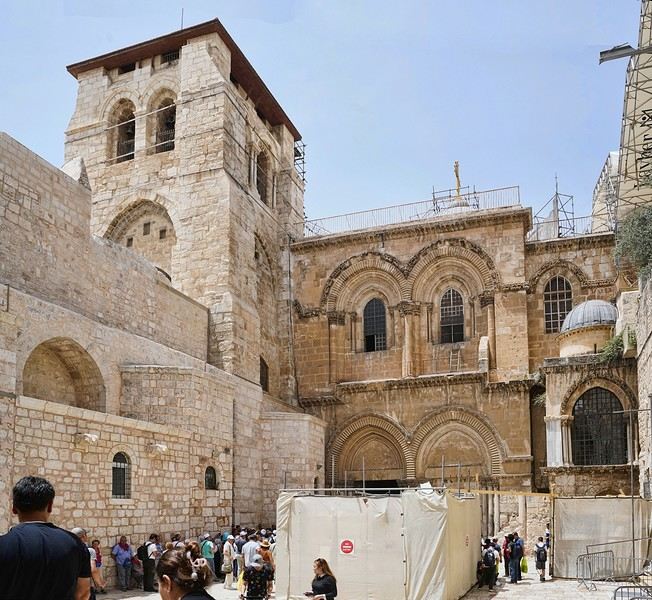


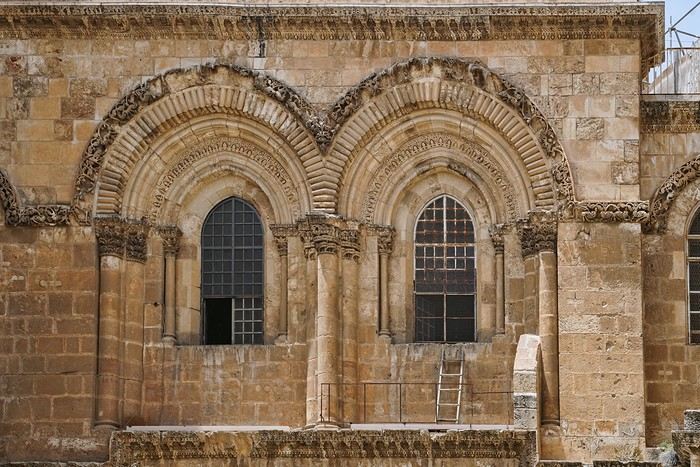
Deborah draws our attention to the wooden ladder placed on a ledge. This ladder has been there since 1757 🙂 🙂🙂. Following an agreement on the sharing of the management of holy sites among the various churches, the Ottomans froze the distribution of each element of the sites at that date, an agreement known as the *status quo*, later reinforced by the Treaties of Paris in 1856 and Berlin in 1878. This rule has governed the smallest details for two centuries, sometimes bordering on the absurd. The *status quo* establishes in detail the schedules of ceremonies, the placement of lamps, and the responsibility for each part of the building. The principle is that no church can encroach on the territory of others within the building. For example, the Greek Orthodox have the right to open the south windows of the Basilica of the Nativity, but only during cleaning, while the Armenians have the right to clean the north face of the pillar supporting the Greek Orthodox pulpit, but only up to the ledge, and so on... This ladder, present when the *status quo* was drafted, was not mentioned in it. Since then, an agreement among the six churches of the *status quo* (the Greek Orthodox Church, the Roman Catholic Church, the Armenian Apostolic Church, the Coptic Orthodox Church, the Ethiopian Orthodox Church, and the Syriac Orthodox Church) would be needed to move it. This detail illustrates the ongoing battle among the various churches and congregations that share the management of these sites. Each one fights to gain control of as many symbolic places as possible. Behind these struggles lie issues far removed from the precepts of the religions involved, with power struggles playing out over ridiculously trivial matters.


To be continued
12 days in Israel, before...

Hyerois83 · 2025-02-02 · Message 35 of 45

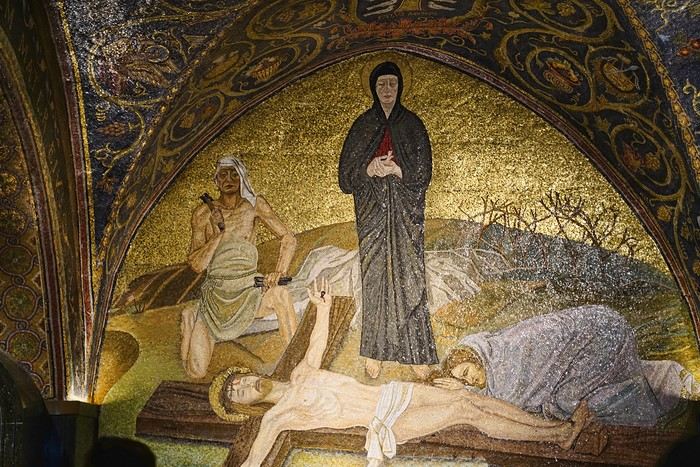
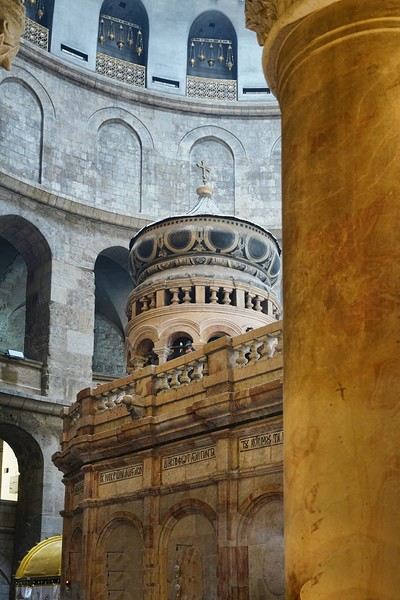
Special: Church of the Holy Sepulchre: Continuing our visit, we spend a very long time at the Church of the Holy Sepulchre, though it’s quite challenging because the inside is packed with pilgrims. The tour starts at the Chapel of the Crucifixion, run by the Catholic Church.

Next to it is the Chapel of Golgotha, where the rock on which Jesus was crucified emerges from the ground, all framed by an Orthodox altar. You can touch the rock by inserting your hand into an opening under the altar (if you’re very patient).


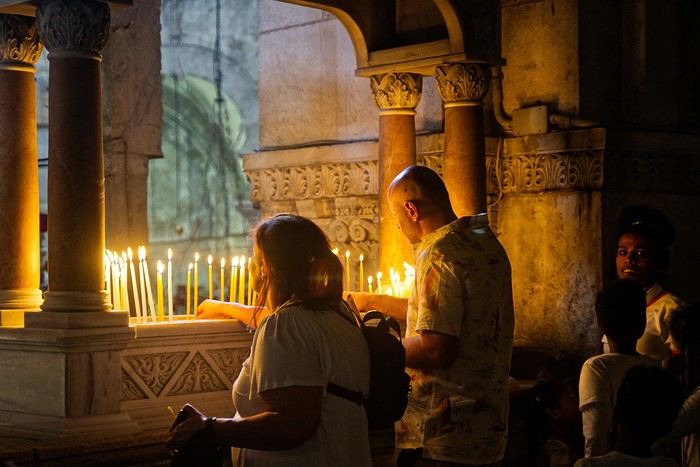
A little further on, worshippers pray with lit candles. We keep an eye on those candles, as they’ve already caused fires in the past.


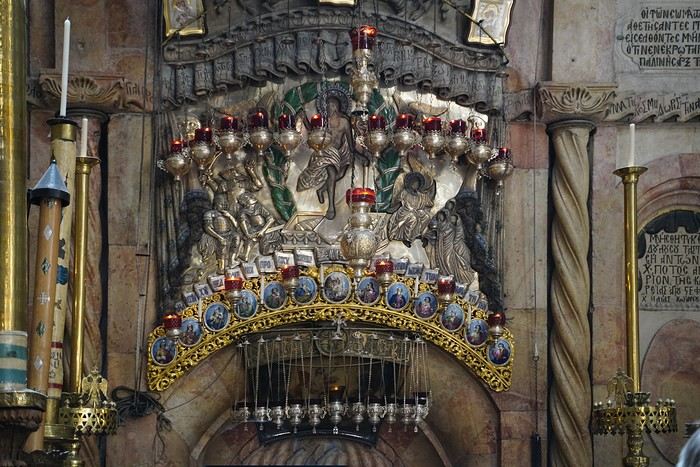
Back on the ground floor, many people are queuing up in front of the Stone of Anointing. This is where Jesus’ body is said to have been laid to be anointed with oil before burial. In reality, the original stone was destroyed by pilgrims taking pieces of it. The Orthodox replaced it with a pink marble slab (prettier, but not very Israeli in origin), and surrounded it with six copper pillars (two belong to the Orthodox Church, two to the Catholic Church, and two to the Armenian Church). Above it hang eight lamps—four Orthodox, two Armenian, one Catholic, and one Coptic. To add to the theatrical scene, the clergy anoint the stone with oil every morning, and pilgrims rub their scarves and handkerchiefs on it.


Among the pilgrims, clergy from various denominations move around, sometimes preceded by bodyguards to keep away unwanted visitors. These clergy bless the different parts of the Holy Sepulchre to assert their church’s presence and rights over the site. The law governing the Holy Sepulchre is actually the *Wafq*, a Muslim law concerning religious properties. Under this rule, you lose a right if you don’t use it, and encroachment by neighbors becomes legal if you don’t oppose it.


The Tomb of Christ is impossible to reach because of the crowds.


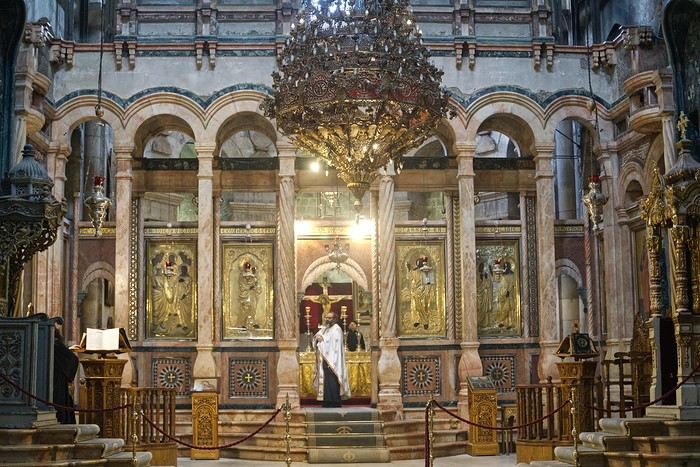
Next, we head to the Catholicon, an Orthodox church with a spectacular choir, which is the center of the Holy Sepulchre.


To be continued

12 days in Israel, before...

Hyerois83 · 2025-02-02 · Message 36 of 45

We finish our tour of the Church of the Holy Sepulchre with some less crowded spots: the small Syrian Jacobite chapel, which is in dire need of restoration, and where Joseph of Arimathea’s tomb is located. Here, we find a bit of quiet reflection among the few people present.


A Coptic priest passes by, far from the gilded splendor of the other churches here.


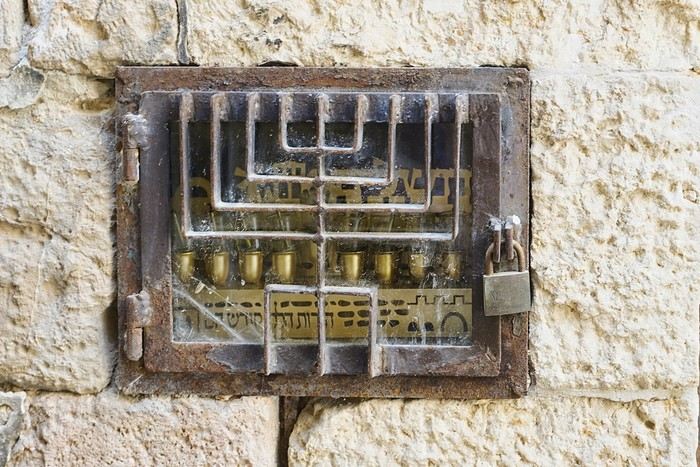
We leave the Church of the Holy Sepulchre a little surprised by the atmosphere inside. It must be said that the disparate architecture and the complicated layout of the place don’t exactly encourage quiet reflection—nor does the procession of clergy on blessing rounds. To wrap up this long day of sightseeing (seven hours, with just a quick lunch break), we head back to our hotel through a shopping arcade with luxury stores, which connects the Old City to the area near our hotel. Along the way, we notice a box housing what we later learn is a *hanukkiah*, an eight-branched candelabrum (plus one) lit during Hanukkah, the Jewish holiday commemorating an ancient victory of the Jews over the Seleucids.


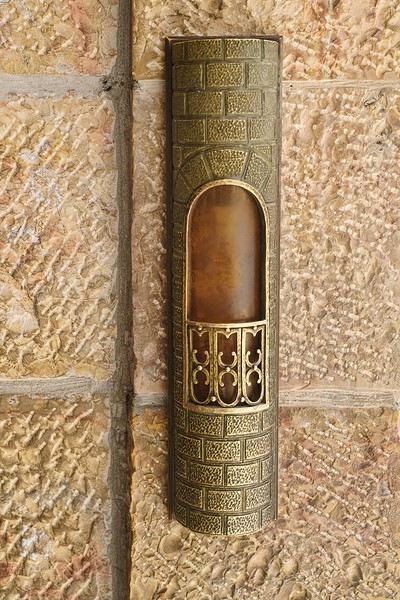
We also spot small artworks featuring *mezuzahs*, tiny cases containing a scroll with excerpts from the Torah.


It was an amazing day with an excellent guide—we saw, learned, and felt so much that it’ll take us a while to process it all.

12 days in Israel, before...

Hyerois83 · 2025-02-03 · Message 37 of 45

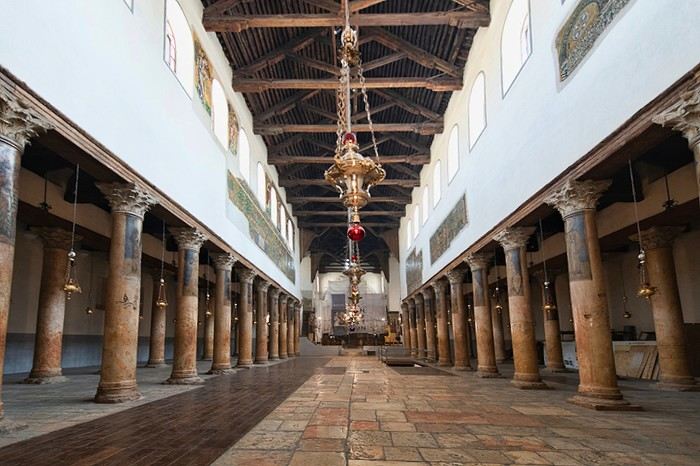
May 27th We set off for Bethlehem and Jericho with a Palestinian driver and car so we could access these areas, which are off-limits to Israelis. The vehicle is a very uncomfortable 20-seater bus. The driver speaks English, but as soon as we leave, he puts in earbuds and starts talking to someone on the phone. He’ll keep this up all day and only speak to us four times in total. Due to the size of the bus, we’re turned away by the police 500 meters from the Church of the Nativity, forcing us to walk the rest of the way in the heat. By the time we arrive, I’m on the verge of feeling faint, so we grab a coffee in the shade at Manger Square—a pedestrian area—before heading into the church. Minibuses are constantly dropping off tourists/pilgrims at the entrance to the basilica.


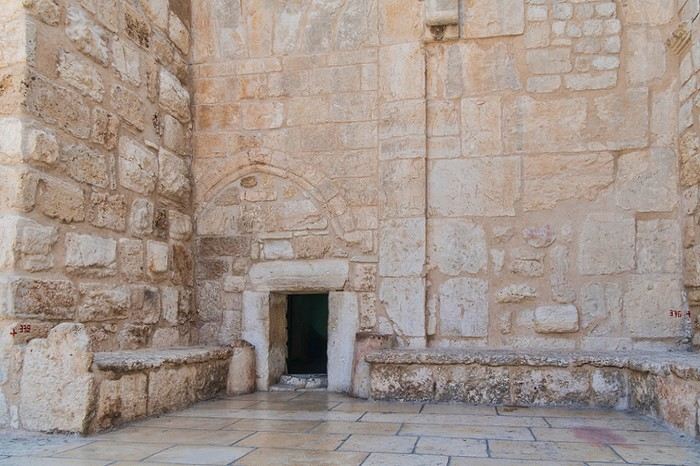
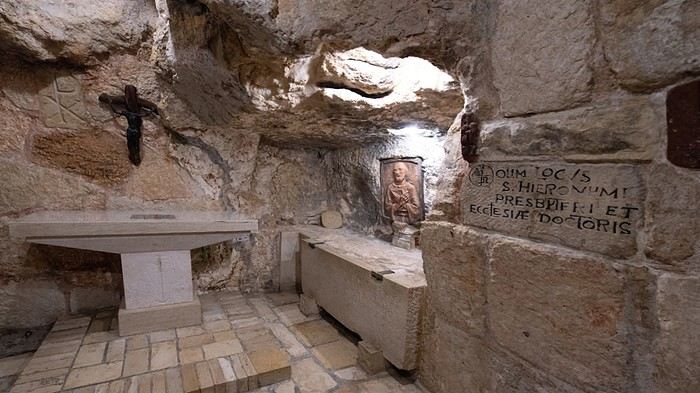
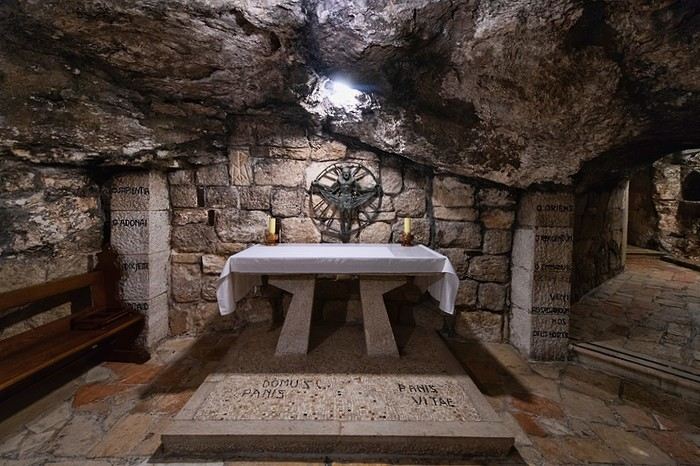
When we arrive, the right-side nave leading to the Grotto of the Nativity (where Jesus is said to have been born, according to the current consensus—though this spot bears no resemblance to the stable described in the oldest texts) is packed with pilgrims waiting in line. The queue isn’t moving at all; there must be over two hours’ wait. We give up and head to the far end of the left nave to find the entrance to the underground chapels of St. Jerome, St. Joseph, and the Holy Innocents, which we can explore in complete peace.


The central nave is lined with two rows of marble columns, on which apostles have been painted.


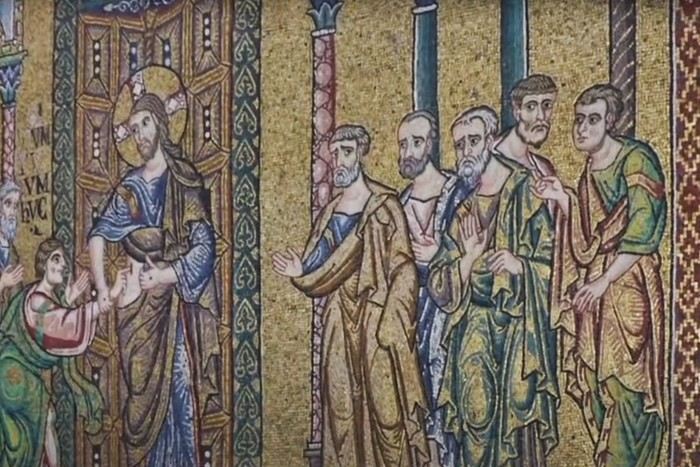
Above the columns, Crusader-era mosaics—recently restored—depict various scenes.


We leave the basilica fairly quickly to retrieve our bus, cross back through Jerusalem, and head toward Jericho and the Mount of Temptation. After a short queue, the cable car ride gives us a view of the semi-troglodyte Orthodox monastery perched on the cliffside since the 6th century (rebuilt in the 19th century). I manage to capture it with my telephoto lens through the scratched Plexiglas windows of the cable car.


Unfortunately, the heat is overwhelming, and we decide not to climb up to the monastery.

Instead, we settle for admiring the view from the Temptation Restaurant. The temptation is pretty limited when you see today’s buffet—decent but very basic. After lunch, we’ll head back toward Jericho—more to come!

12 days in Israel, before...

Hyerois83 · 2025-02-04 · Message 38 of 45

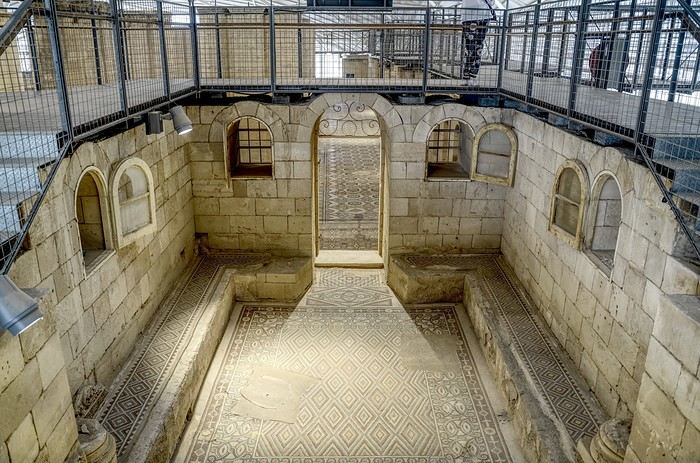
After lunch at the Temptation Hostel, our driver took us at our request to Hisham’s Palace, the ruins of a palace built in the 7th century by Caliph Hisham ben Abed El-Malik. Right away, we were charmed by the original six-pointed star, known as the Star of Jericho, standing in the middle of the palace ruins. It must have adorned a monumental gate.


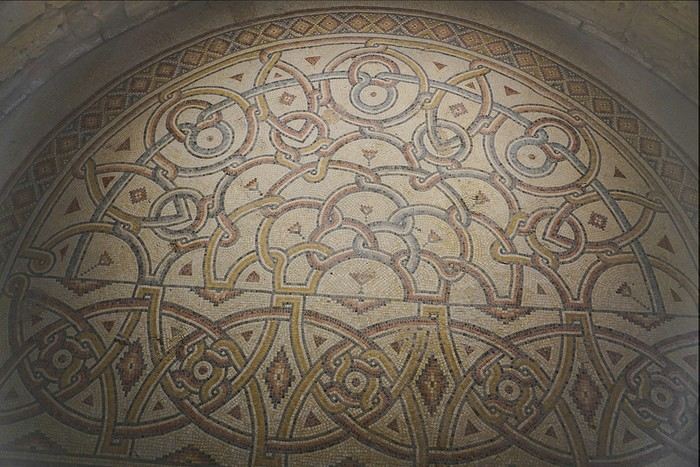
The heart of this site is the large and elegant dome that the Japanese built over a unique set of well-preserved mosaics, covering 850 m² of what were once the baths.


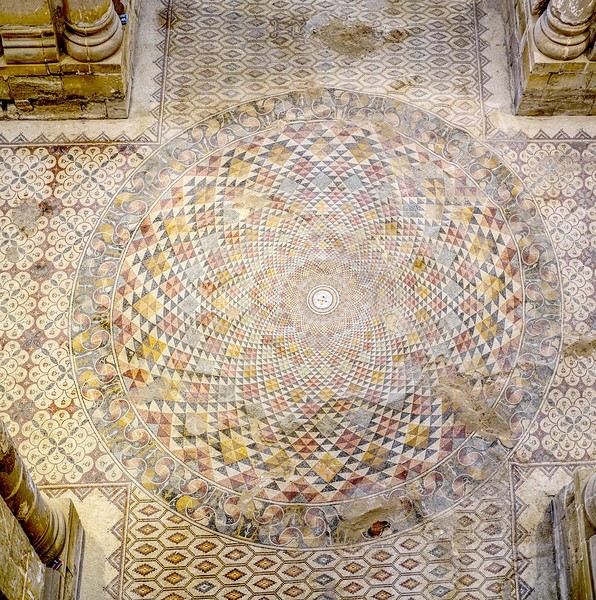
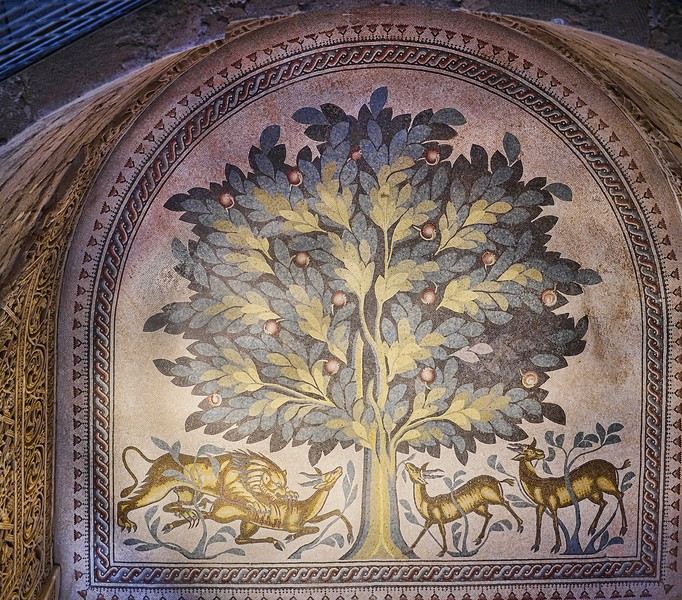
The mosaics are particularly beautiful.


The two most stunning are the central mosaic


and the famous Tree of Life mosaic (the two gazelles grazing peacefully on the right) and death (the lion devouring the gazelle on the left).


We also admired the beautiful capitals along the way.


It was a fantastic visit, despite the heat that made us give up on going further. We headed back to Jerusalem, admiring the stunning suspension bridge designed by Spanish architect Calatrava. A single pylon, held up by 90 cables, supports the entire weight of this curved bridge, which makes the engineering calculations incredibly complex. As we approached Jerusalem, a massive traffic jam brought us to a halt, and it took an hour to cover the last three kilometers—something that didn’t improve our already grumpy driver’s mood. To avoid an extra detour, we got out 400 meters from our hotel in a hurry, which led me to leave behind a case with an SD card containing some of the day’s photos. All I had left were the ones taken on my smartphone, which aren’t as good. We had dinner in the pedestrian area near our hotel, where the atmosphere was lively.


Before heading to the Citadel to watch the sound and light show that Voyageurs du Monde kindly added to our itinerary. More on that in my next post.

12 days in Israel, before...

Hyerois83 · 2025-02-04 · Message 39 of 45

The sound and light show depicts the evolution of Jerusalem through the ages, highlighting periods of prosperity, successive occupations, and darker times.


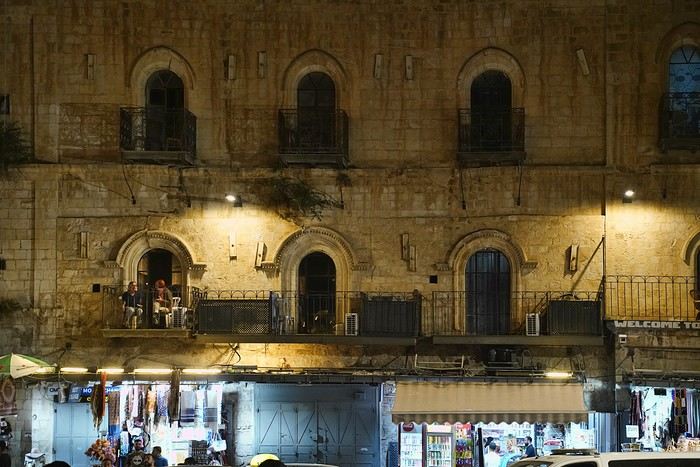
Aesthetically, it’s a really well-done show. On the way back, we pass by buildings where residents are enjoying the spectacle of the crowd.


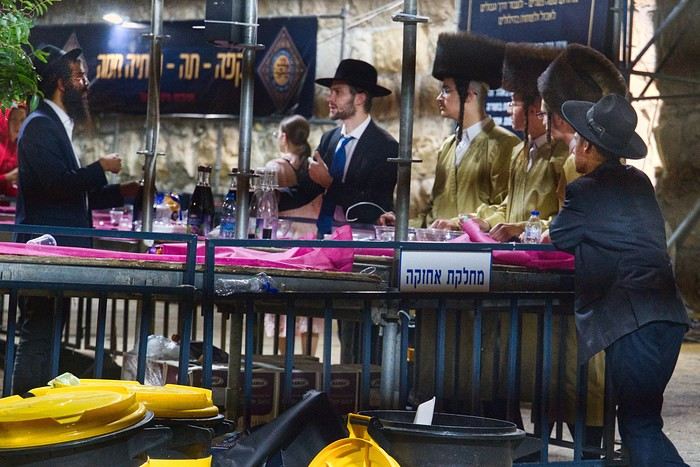
Further on, worshippers are ending their day (including three wearing *schtreimels*, fur hats).


As we walk back through the Mamilla shopping arcade, we’re surprised to see it quite busy, with lots of people making purchases at the end of Shabbat. A great day, brightened by the visit to Hisham’s Palace and the sound and light show—despite the disappointment of Bethlehem..

12 days in Israel, before...

Hyerois83 · 2025-02-05 · Message 40 of 45

Day of May 28th We drop off the car at Hertz. A moment of uncertainty when the receptionist starts photographing the numerous scratches and dents on the car. I show him the photos I took as a precaution when we picked it up, which immediately puts an end to his inspection. At the nearby gas station, we manage to flag down a taxi that takes us to Yad Vashem, the World Holocaust Remembrance Center.

This vast center, spanning several hectares, brings together images, testimonies of what was the largest holocaust of the modern era, monuments to the memory of those who fought, and a study center. We walk down the Avenue of the Righteous (in memory of all those who saved Jews) to the Children’s Memorial, then to the Pillar of Heroism and the great Hall of Remembrance, an imposing basalt building whose darkness is striking. The names of the main Nazi extermination camps are engraved on the floor. From there, we move on to the art museum, which features works created during the Holocaust, sometimes in the camps. You can sense a desire to cling to a normal life, despite the context.

At the exit, a heavy downpour discourages us from exploring further in the park, and we skip the railway car and the Wall of Remembrance to take refuge in the main museum, which traces the history of the Holocaust. Even though we know the numbers and are fairly familiar with the facts (given my age), the way it’s presented here really shakes you, and we come out feeling a bit shell-shocked. A long, deeply moving visit—definitely not the mood for taking photos. Still in the rain, we head by taxi to the Israel Museum. The entrance gallery is already a work of art.

We feel the need for a break and have lunch at the museum’s restaurant, in a very pleasant setting with a great quality-to-price ratio. Inside the museum, we find such a wealth of exhibits that we can only visit part of it. The archaeological section starts with terracotta sarcophagi of exceptional beauty.


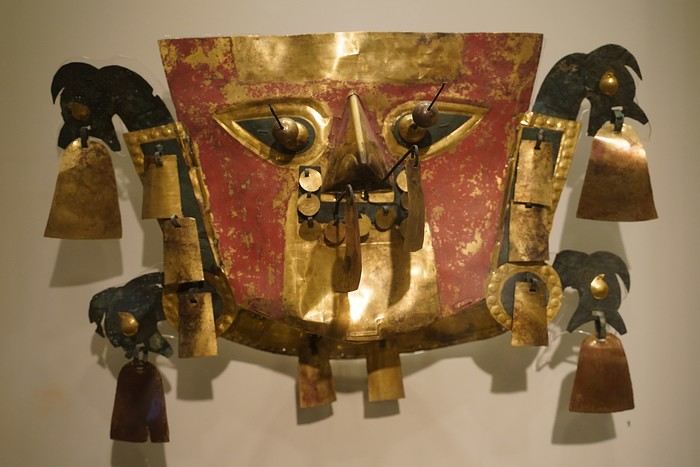
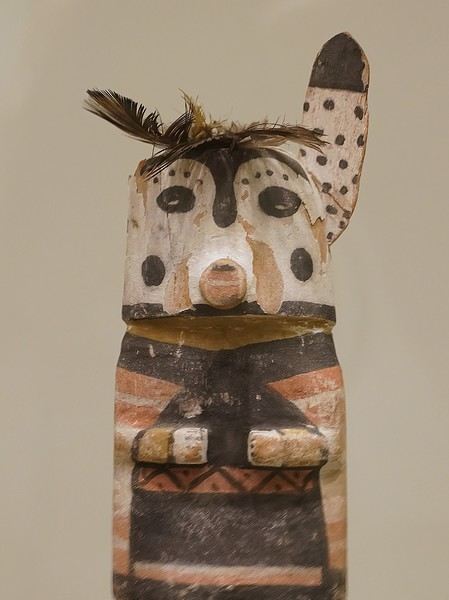
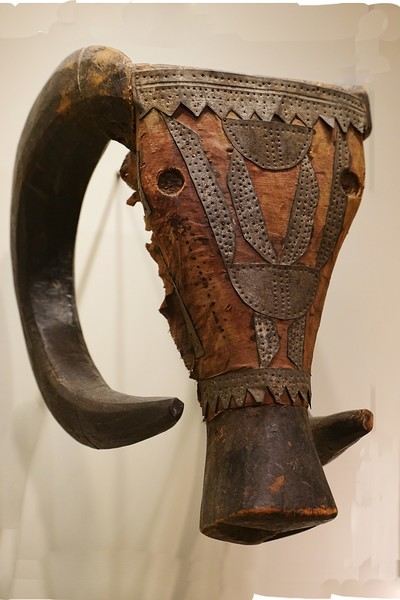
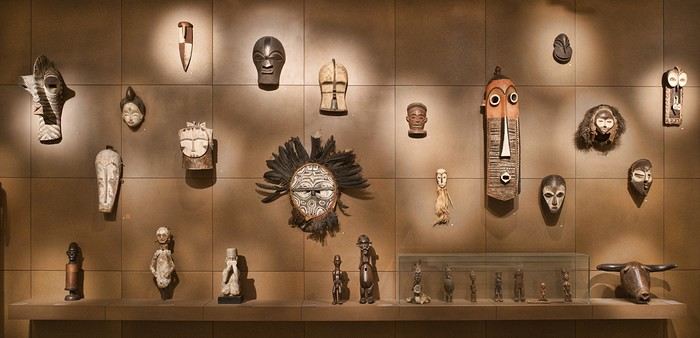
The ethnic collections are also remarkable.


Here’s a quick rundown of the ethnic section in ten photos—the rest to follow.

VoyageForum — the largest community of French-speaking travellers.