A month in Cambodia in November 2024
Tuesday, Nov 12
This morning, Thomas called Sophal, a tuk-tuk driver, who’ll take me to explore the area around KC. Joelle, the French woman I met last night, is joining me.
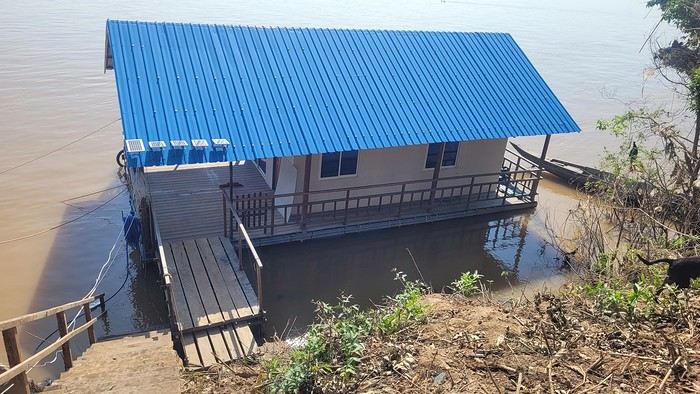
While waiting for him to arrive, I’ll visit the house under construction.
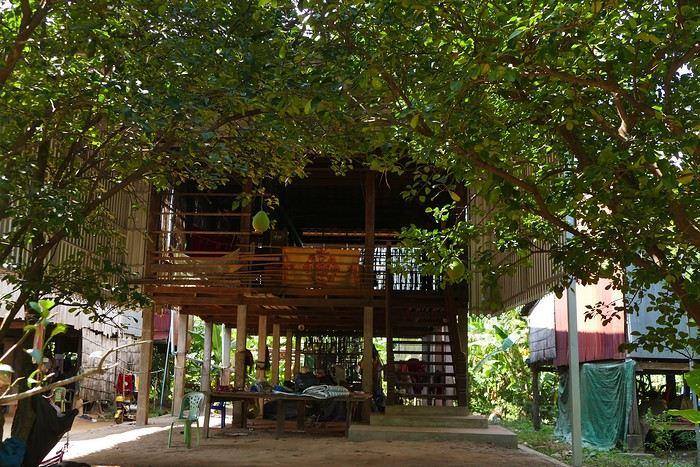
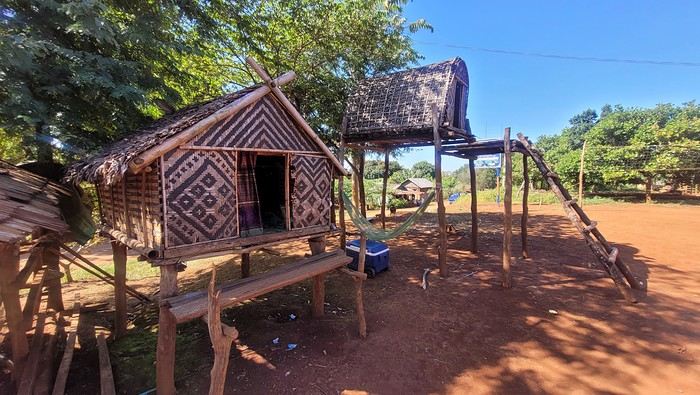
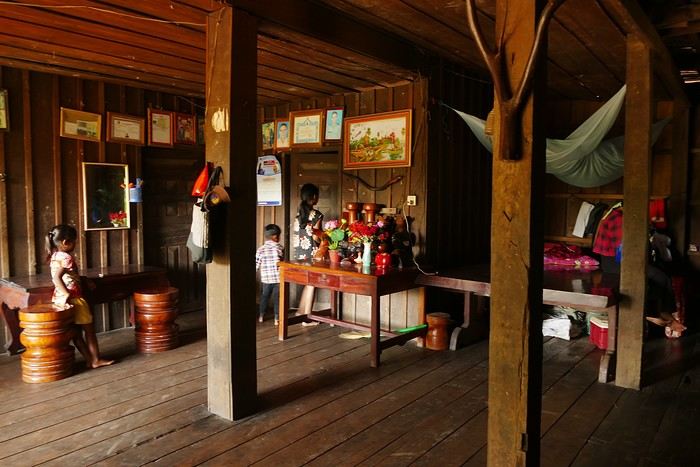
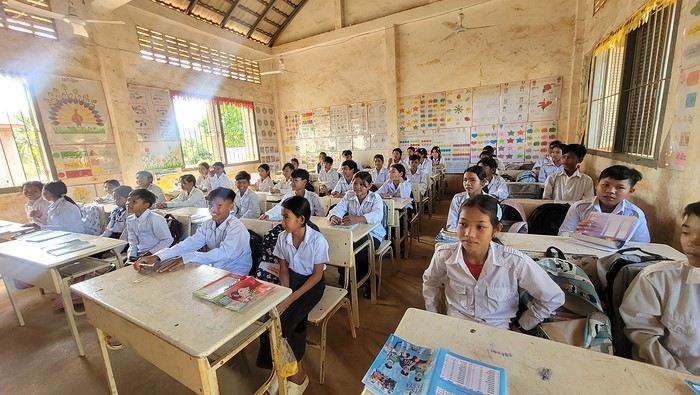
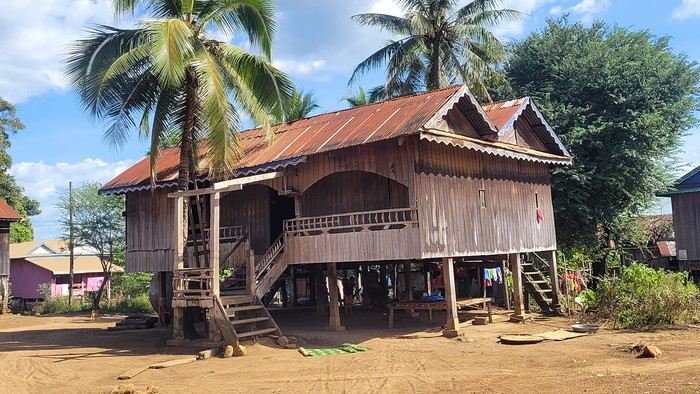
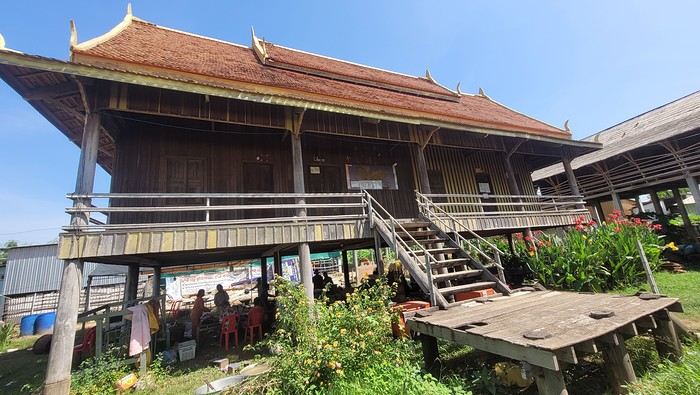
We leave around 09:30, pass by the lighthouse, and he takes us to a village called Cheung Kok to visit an NGO. A volunteer shows us around—the traditional bamboo houses and the school. The kids aren’t there today.
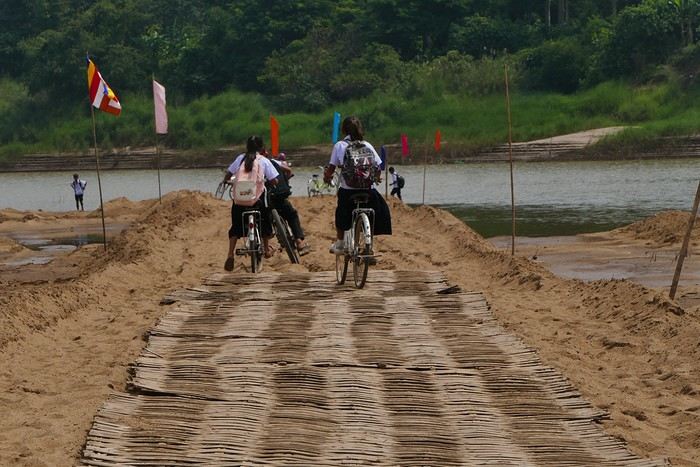
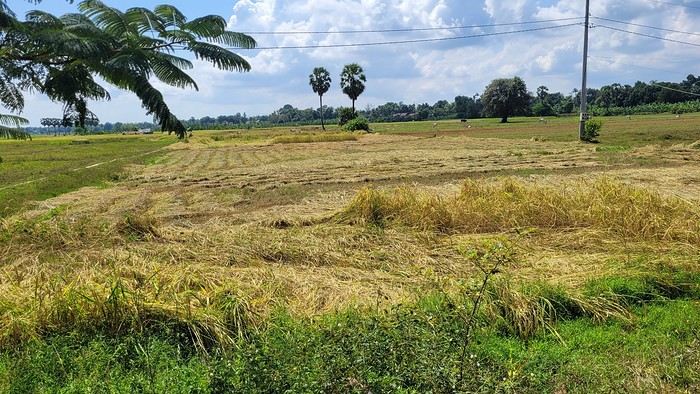
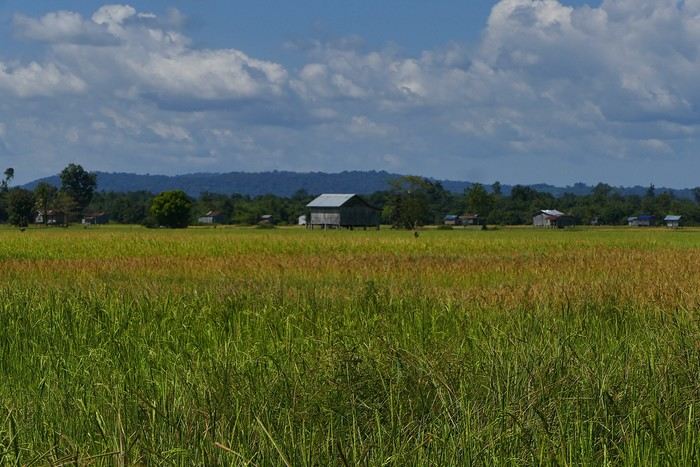
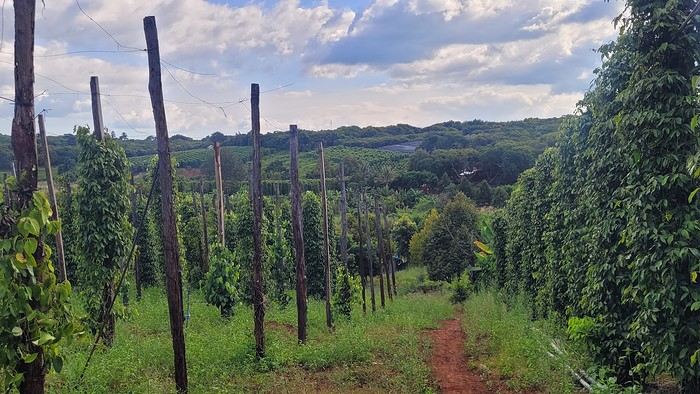
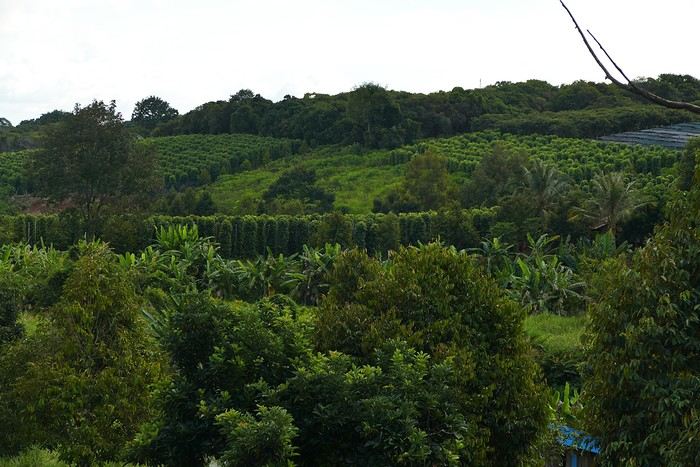
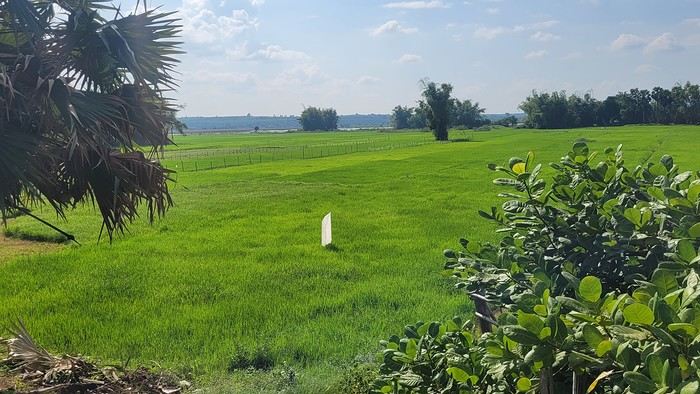
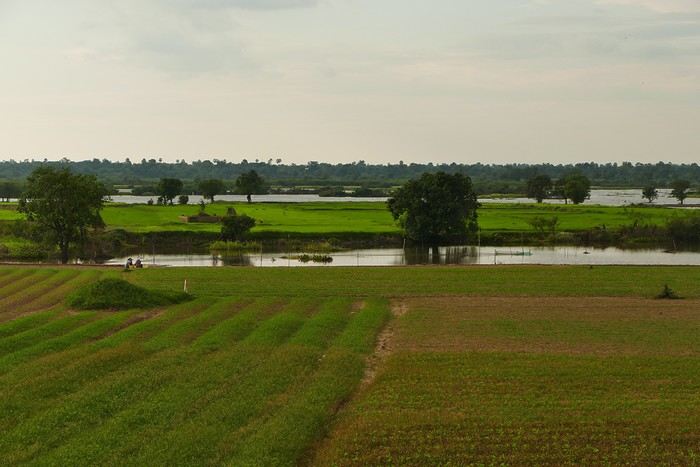
We follow the Mekong. During the monsoon, floods cover all the land, and as soon as it dries up, they grow corn, rice, vegetables (cucumbers, zucchinis... Chinese grapefruits, jackfruit, and sorghum also grow in this area). We cross cashew and rubber plantations.
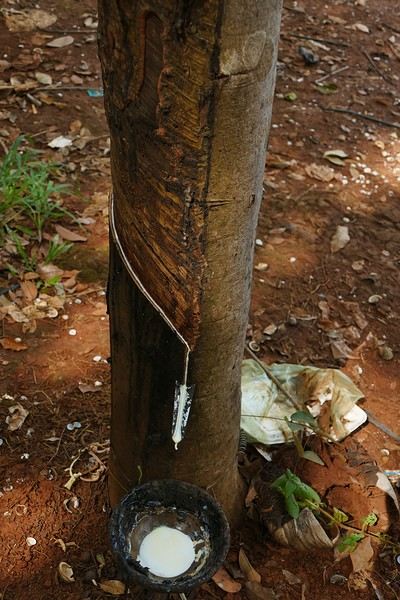
The latex is harvested by tapping, the same way pine trees are tapped for resin in the Landes region of France.
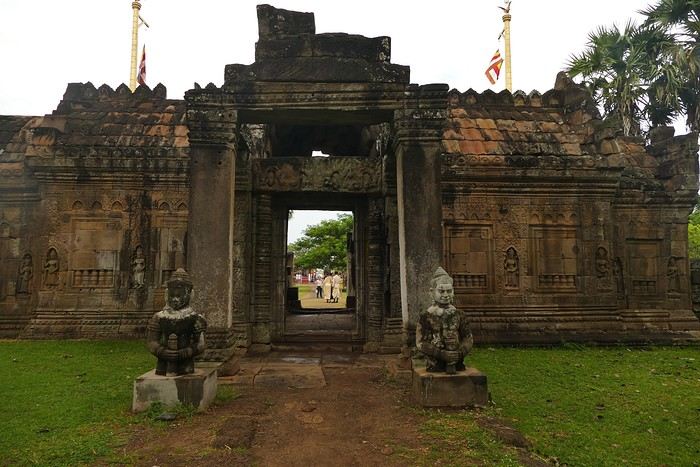
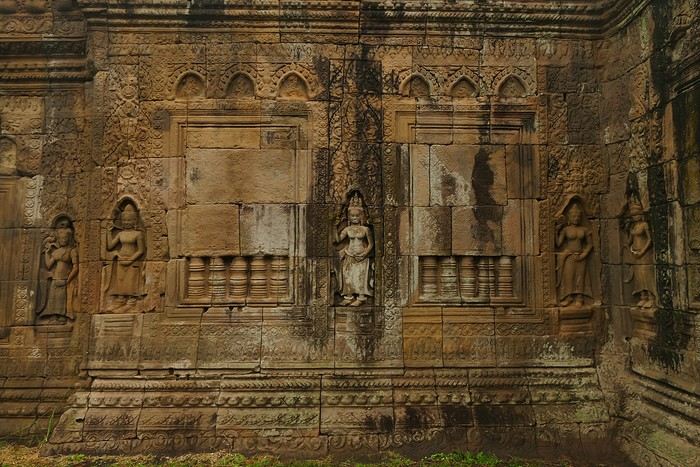
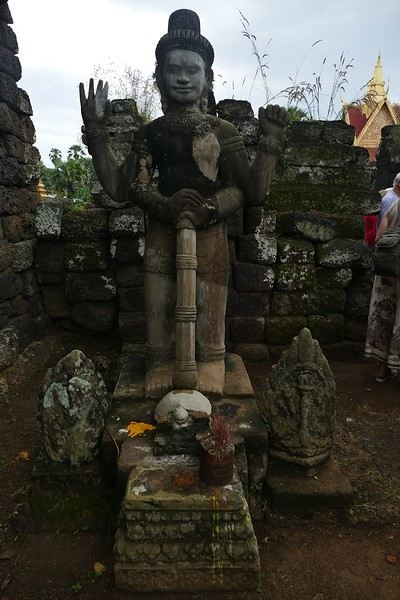
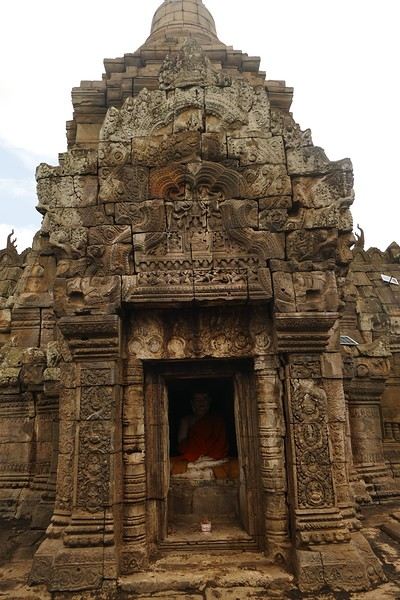
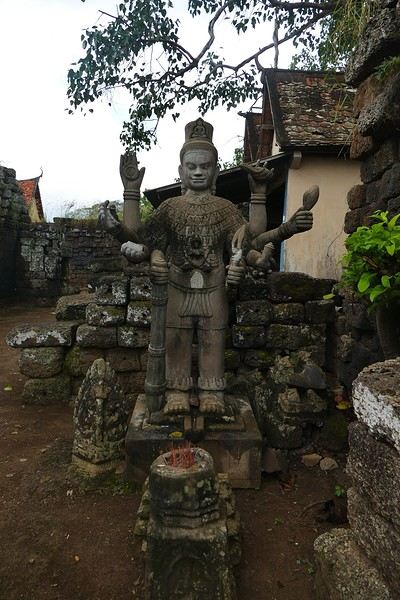
As we pass through the villages, we see many young Muslim children. The girls are already veiled, and by puberty, they wear the abaya—it’s striking. He tells us that the Khmer Rouge still govern the country. People always have to be very careful when they speak, even to their neighbors, because the Khmer Rouge are still present. There are still disappearances when someone verbally opposes the regime. He also told us that Cambodia is under Vietnam’s influence. They produce a lot of crops, which they sell raw and cheap to Vietnam. Vietnam then processes them and sells them back at a much higher price. Life is very expensive for them—an average of 500 dollars per month. At the same time, Cambodians drive big 4x4s, so many are doing well, but I don’t know what sector they work in. We head to Wat Hanchey, a hilltop complex of Hindu and Buddhist temples 20 km from KC.
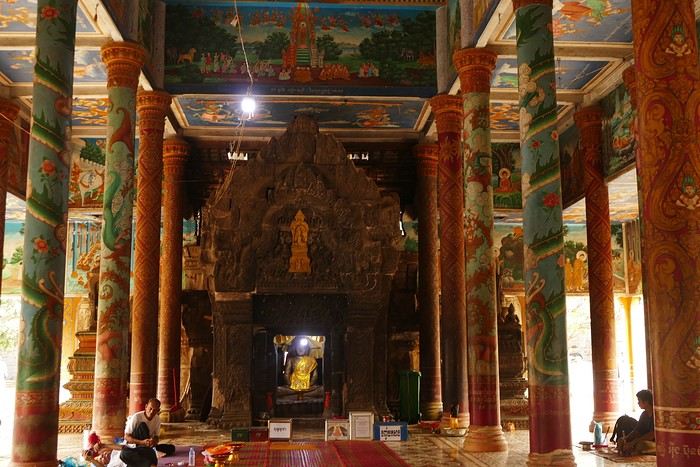
Outside one of the pagodas, I recognize scenes from the Ramayana on the frescoes.
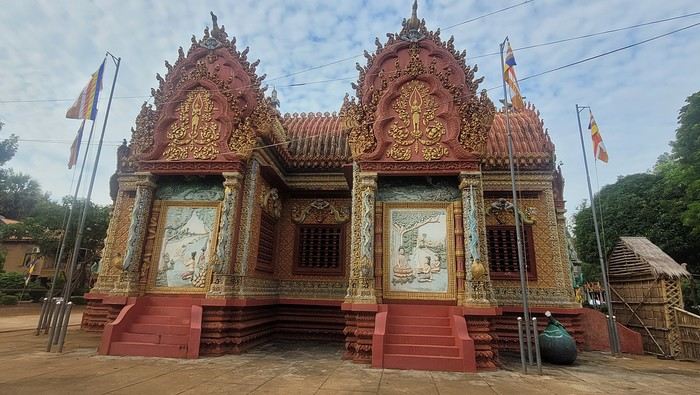
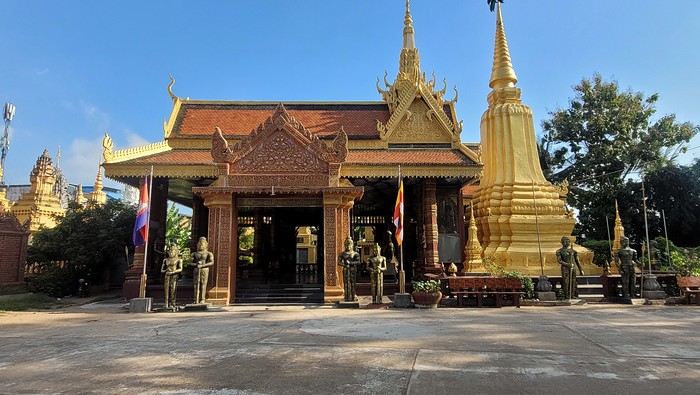
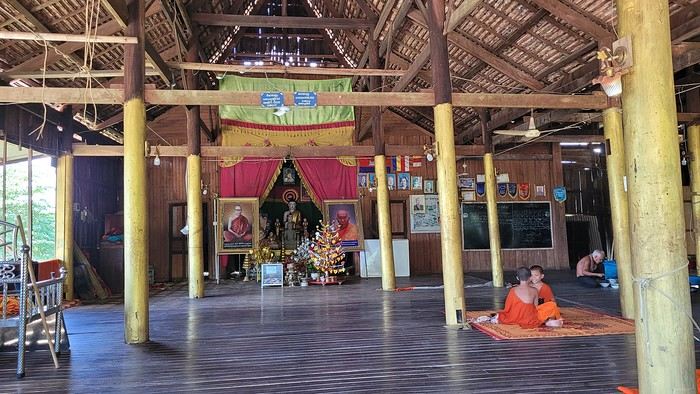
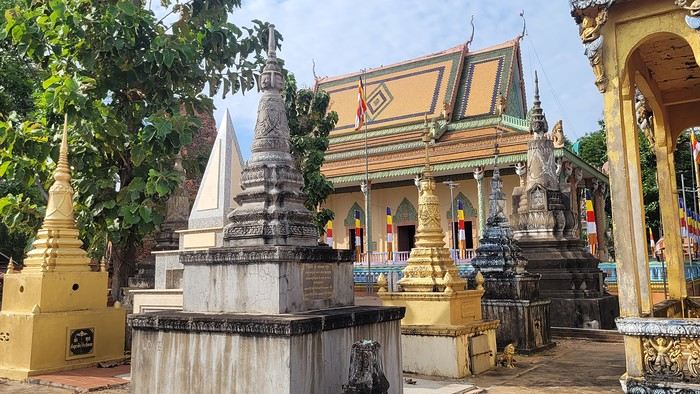
The complex is quite large, with beautiful colored or sculpted temples.
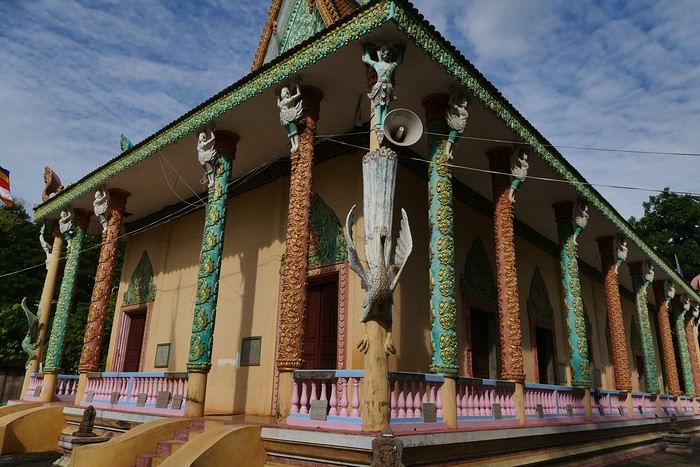
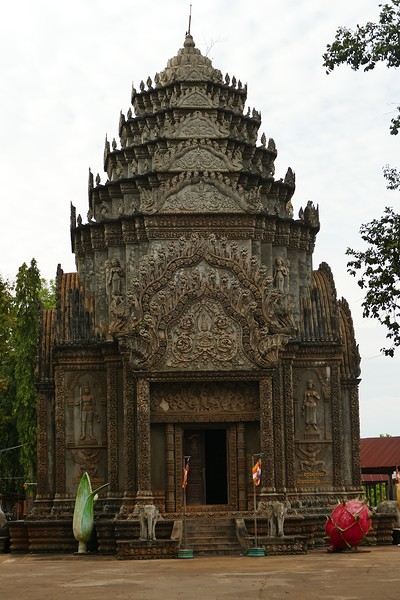
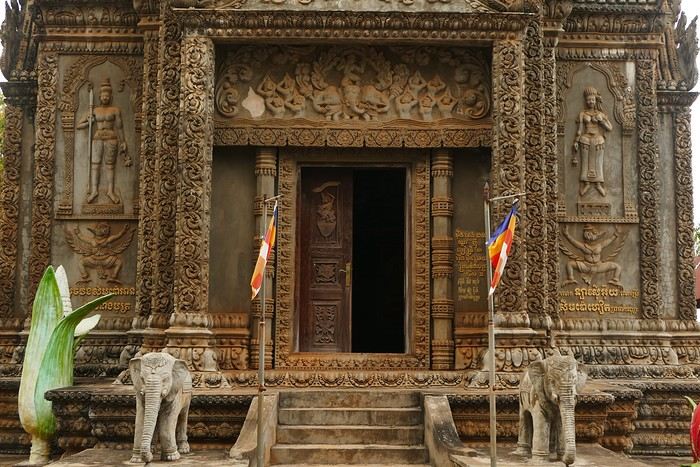
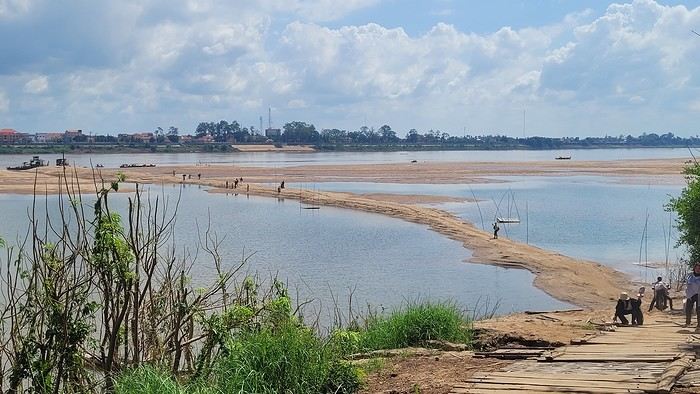
The views of the Mekong and the countryside are stunning.
The day was really enjoyable, and we return to the guesthouse, where Joelle’s French friends are waiting for us. We have drinks followed by a barbecue dinner at a restaurant near the market with Thomas and his family.
We leave around 09:30, pass by the lighthouse, and he takes us to a village called Cheung Kok to visit an NGO. A volunteer shows us around—the traditional bamboo houses and the school. The kids aren’t there today.
We follow the Mekong. During the monsoon, floods cover all the land, and as soon as it dries up, they grow corn, rice, vegetables (cucumbers, zucchinis... Chinese grapefruits, jackfruit, and sorghum also grow in this area). We cross cashew and rubber plantations.
The latex is harvested by tapping, the same way pine trees are tapped for resin in the Landes region of France.
As we pass through the villages, we see many young Muslim children. The girls are already veiled, and by puberty, they wear the abaya—it’s striking. He tells us that the Khmer Rouge still govern the country. People always have to be very careful when they speak, even to their neighbors, because the Khmer Rouge are still present. There are still disappearances when someone verbally opposes the regime. He also told us that Cambodia is under Vietnam’s influence. They produce a lot of crops, which they sell raw and cheap to Vietnam. Vietnam then processes them and sells them back at a much higher price. Life is very expensive for them—an average of 500 dollars per month. At the same time, Cambodians drive big 4x4s, so many are doing well, but I don’t know what sector they work in. We head to Wat Hanchey, a hilltop complex of Hindu and Buddhist temples 20 km from KC.
Outside one of the pagodas, I recognize scenes from the Ramayana on the frescoes.
The complex is quite large, with beautiful colored or sculpted temples.
The views of the Mekong and the countryside are stunning.
The day was really enjoyable, and we return to the guesthouse, where Joelle’s French friends are waiting for us. We have drinks followed by a barbecue dinner at a restaurant near the market with Thomas and his family.