Back to the discussion

in Entre deux voyages › Carnets de voyage

From Southern Shikoku, between land and sea, to the blue waters of Miyakojima and finally the Tokyo metropolis (page 2 of 4)

Discussion started by Nathalie971 on 2025-08-25

74 replies

This thread has been translated into English.


From Southern Shikoku, between land and sea, to the blue waters of Miyakojima and finally the megalopolis T

Solene40 · 2025-09-08 · Message 21 of 75

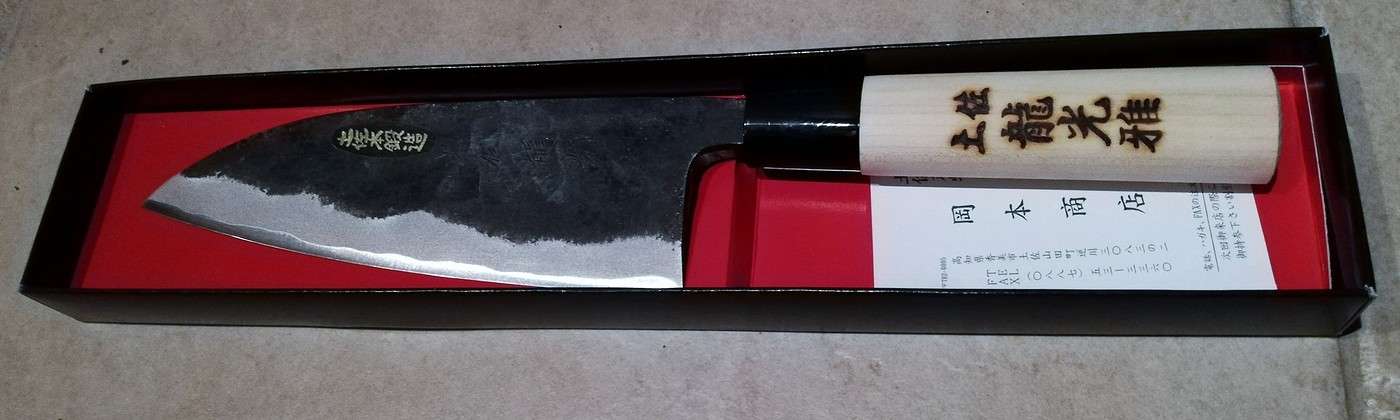
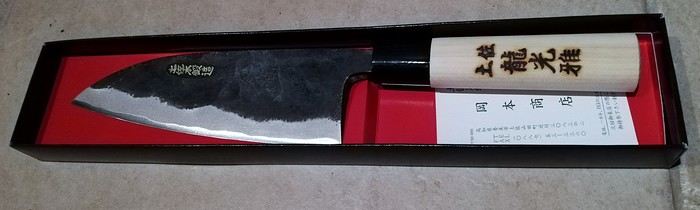
Here are some lovely walks, Nathalie! 😊 Just out of curiosity, could you show us what your Japanese knife looks like?

From Southern Shikoku, between land and sea, to the blue waters of Miyakojima and finally to the megalopolis T

Nathalie971 · 2025-09-15 · Message 22 of 75

Those are some lovely walks, Nathalie! 😊 Just out of curiosity, could you show us what your Japanese knife looks like?


Sorry for the delay in responding, but here’s the famous knife.


On the handle is the name of the person who made the knife, and on the blade is the name of the "workshop."

Southern Shikoku: Between Land and Sea, the Blue Waters of Miyakojima, and Ending in the Megacity T

Nathalie971 · 2025-09-23 · Message 23 of 75

Day 4 – Rice Terraces and Lake

After stopping by a 7-Eleven, we take the car to head into the center of Kochi Prefecture.

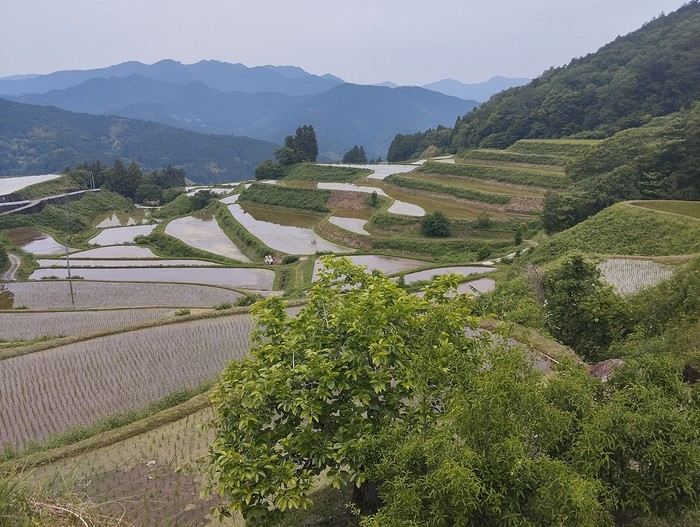
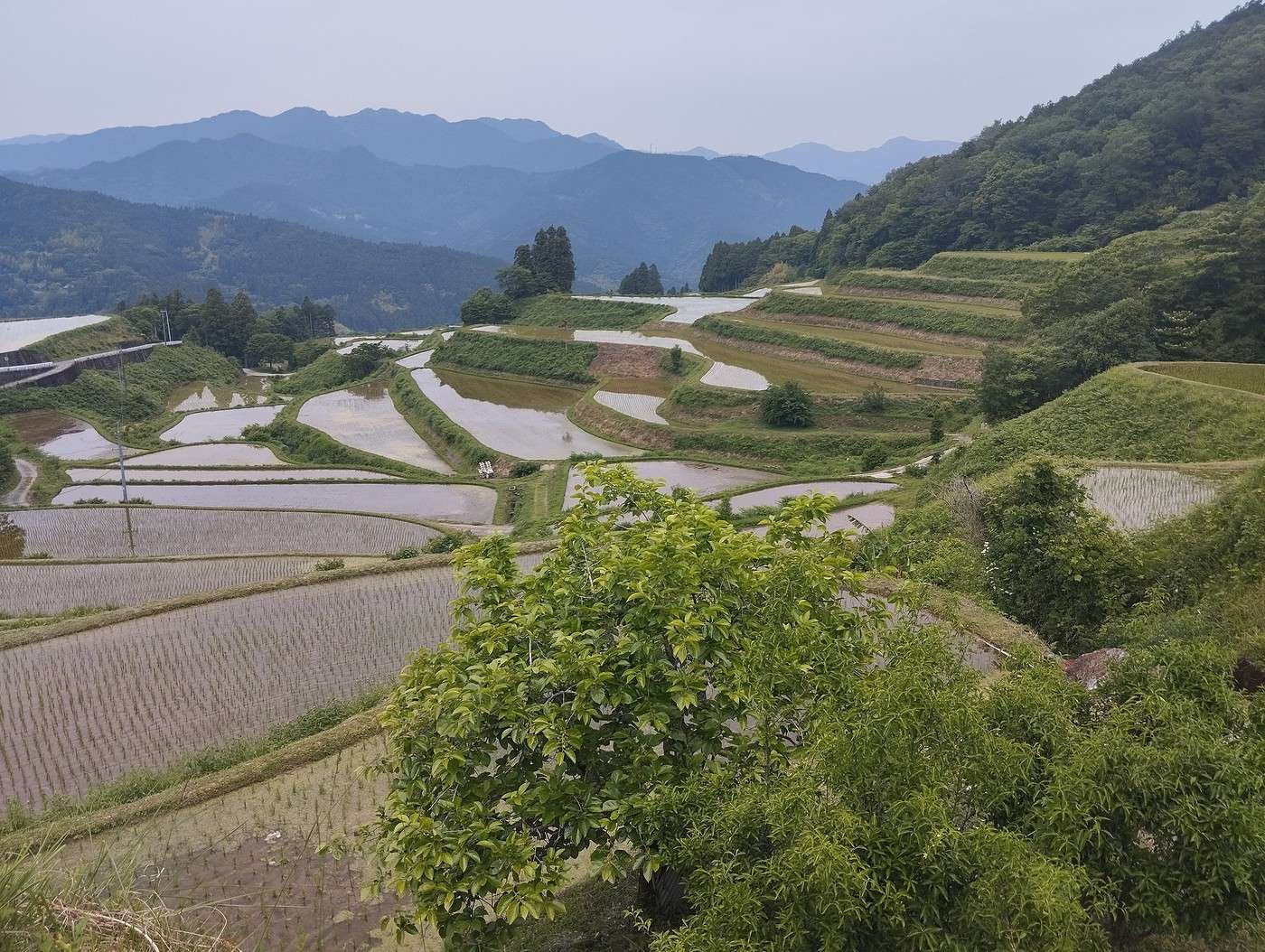
Not much driving time, and we find ourselves in a completely rural and mountainous environment. We intended to visit some waterfalls, but a sign pointing to rice terraces leads us to make an unplanned stop. We take a narrow road winding through tiny villages, climbing higher and higher in altitude until we reach the viewpoint overlooking the Takasu rice terraces. There’s absolutely no one around. We get to enjoy a spectacular view of the terraces. The sky is gray, but it’s not raining. We settle at the picnic tables and just take in the landscape, savoring the silence.


Every now and then, a car passes. But mostly, a van drives by—once, twice, three times—I always notice it’s the same van. It’s a local guy, I’m sure of it; he watches us as he passes. Then suddenly, the van speeds up and parks. Out steps a burly guy wearing only a sleeveless, slightly worn black vest. He’s got muscular arms and a thick, dark mustache. He’s got a cowboy vibe, but the Japanese version. He comes over to ask who we are and where we’re from. He speaks a little English. Eager to chat and clearly happy to speak English, even when I switch to Japanese.

We learn he owns 20 plots of the rice terraces spread out before us. He tells us he uses very little fertilizer and that organic farming is tricky here because of the wind and how close the plots are to each other. He’s married with three kids aged 30 to 37. He doesn’t seem worried about passing the terraces down to his children. He says it’s a lot of work and not very profitable, but his wife is a teacher, and she’s the one who ensures the family’s financial security. Given the type of terraces and the costs, he works manually but has five horses to help harvest the rice. He warns us to be careful because there are a lot of snakes and pretty dangerous spiders. He also makes sake.

We ask if we can buy some rice from him, but he says he can’t sell us any because of the price. He only sells in 3-kilogram parcels for 20,000 yen, about 130 euros—so 40 euros per kilo. We’re talking white gold here! He mainly works with luxury hotels. We also learn he lived in the U.S. for two years, which explains his cowboy look and his eagerness to speak English!

One of his friends stops by. He introduces us. This friend grows flowers higher up in the mountains. Today, he’s taking part in a TV show that’s already on-site. They’re on a break.

Usually, this place is packed with tourists, especially in the summer when the rice is golden. We’re thrilled to enjoy this setting in absolute tranquility.

He gives us advice for the rest of our day, warning us about the poisonous creatures near the waterfall. We take a souvenir photo and leave this colorful character after chatting for a good part of the morning.

The waterfall isn’t supposed to be far—just 30 minutes by car. After driving through a lifeless hamlet, we turn at an intersection where a vague sign points to different routes for different waterfalls.

We think we’re close. But we hadn’t counted on the complete lack of signs, people, or anything to help us find our way. We stop several times as we venture deeper into the mountains, sometimes following a stream with the forest covering the road, other times climbing higher with the car, watching the paved road turn into a dirt path covered in leaves or a rocky trail—all while praying we don’t get a flat or damage the car. The GPS insists we’re right there, and according to the vague map we saw earlier, we’re heading in the right direction, but there’s no sign of the waterfall.

Driving slowly because of the road, we still enjoy the exceptional natural surroundings. After driving for over an hour without spotting the waterfall and seeing how rough the path has become, we reluctantly decide to turn back. Plus, it starts raining.

We carefully make our way back down the mountain, still scanning for any clue, but nothing. Suddenly, a van passes us and pulls over. I stop next to it. The elderly driver doesn’t understand me trying to talk to him from my window. I have to get out, but even then, I have to insist for him to roll down his window. He doesn’t seem to know about the waterfall and doesn’t seem eager to help. Oh well, we hit the road again when I spot a woman working. I go talk to her, but she doesn’t seem to speak Japanese. Total bust. We drove for hours and got nothing. Knowing we’d already done a fair bit of driving for the rice terraces, the day is already well underway because the winding roads and slow speeds mean getting inland takes time. We give up on the second waterfall we’d planned to visit and continue toward our next goal: Lake Sameura.

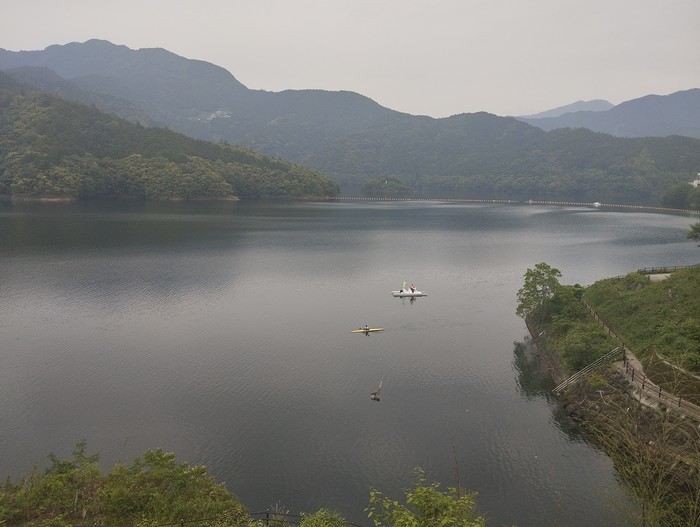
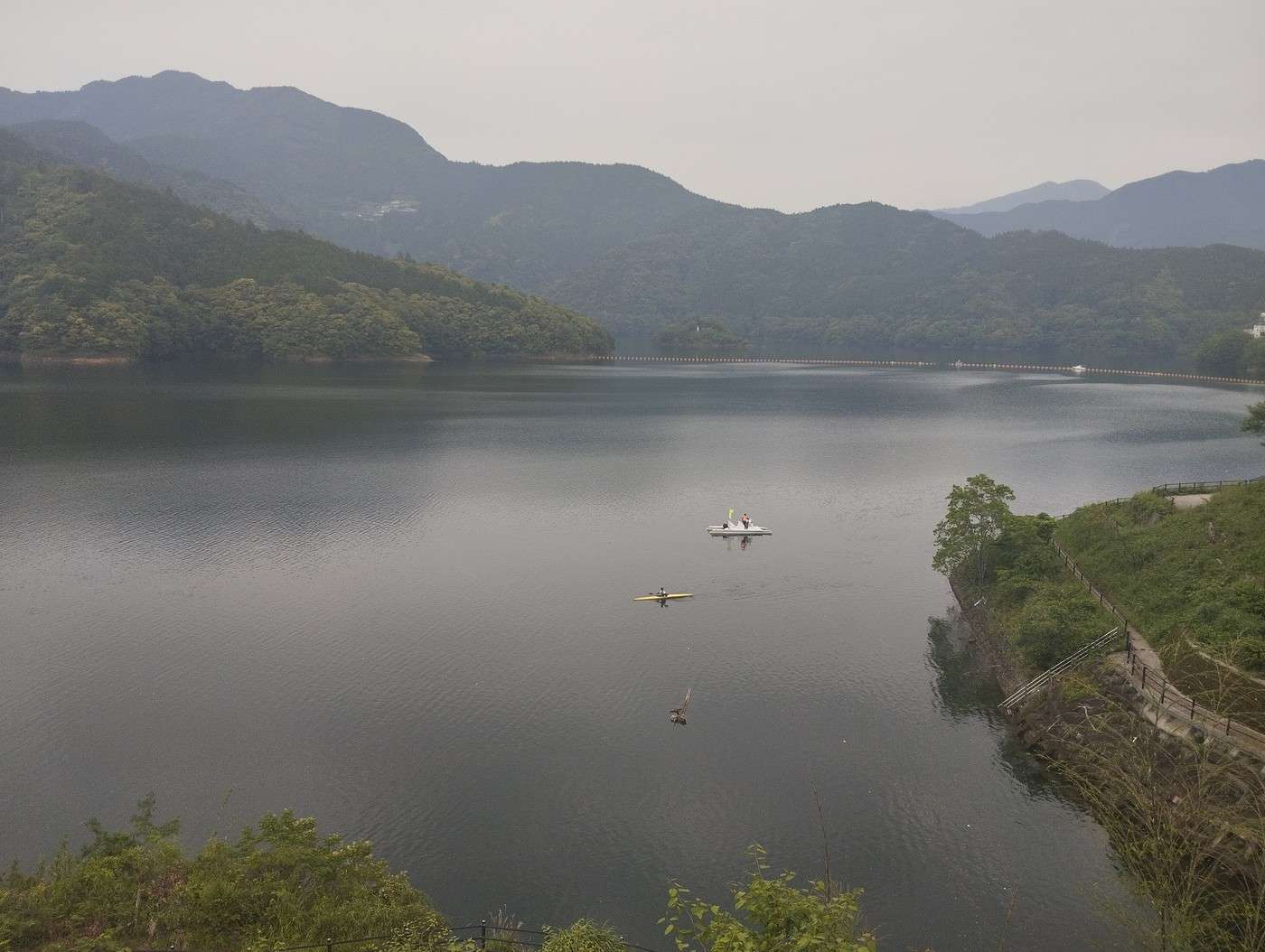
Despite the misty sky, we enjoy the lake’s scenery and the surrounding forests, especially while having a drink on the terrace of the nautical center overlooking the lake. We watch the kayakers on the water and when they return to the center.


We then head to the city center to grab an ice cream before the shop closes. Many stores in Japan close early, so you have to plan accordingly. We arrive just in time—five minutes before closing. The woman working was already tidying up, but she agrees to sell us some ice cream, though we’ll have to eat it outside. We try a delicious matcha ice cream and a shiso sorbet. It’s super refreshing and has a beautiful pomegranate color. We enjoy these treats on the bench in front of the shop, whose curtains have been drawn since we left. We’re on the main street of Motoyama, and it’s very quiet. The woman comes out afterward to tell us to go around back to throw away our cups, which we do. We even get to use the restroom. In the end, I think we could’ve eaten inside since she wasn’t completely done cleaning and tidying up, but rules are rules.

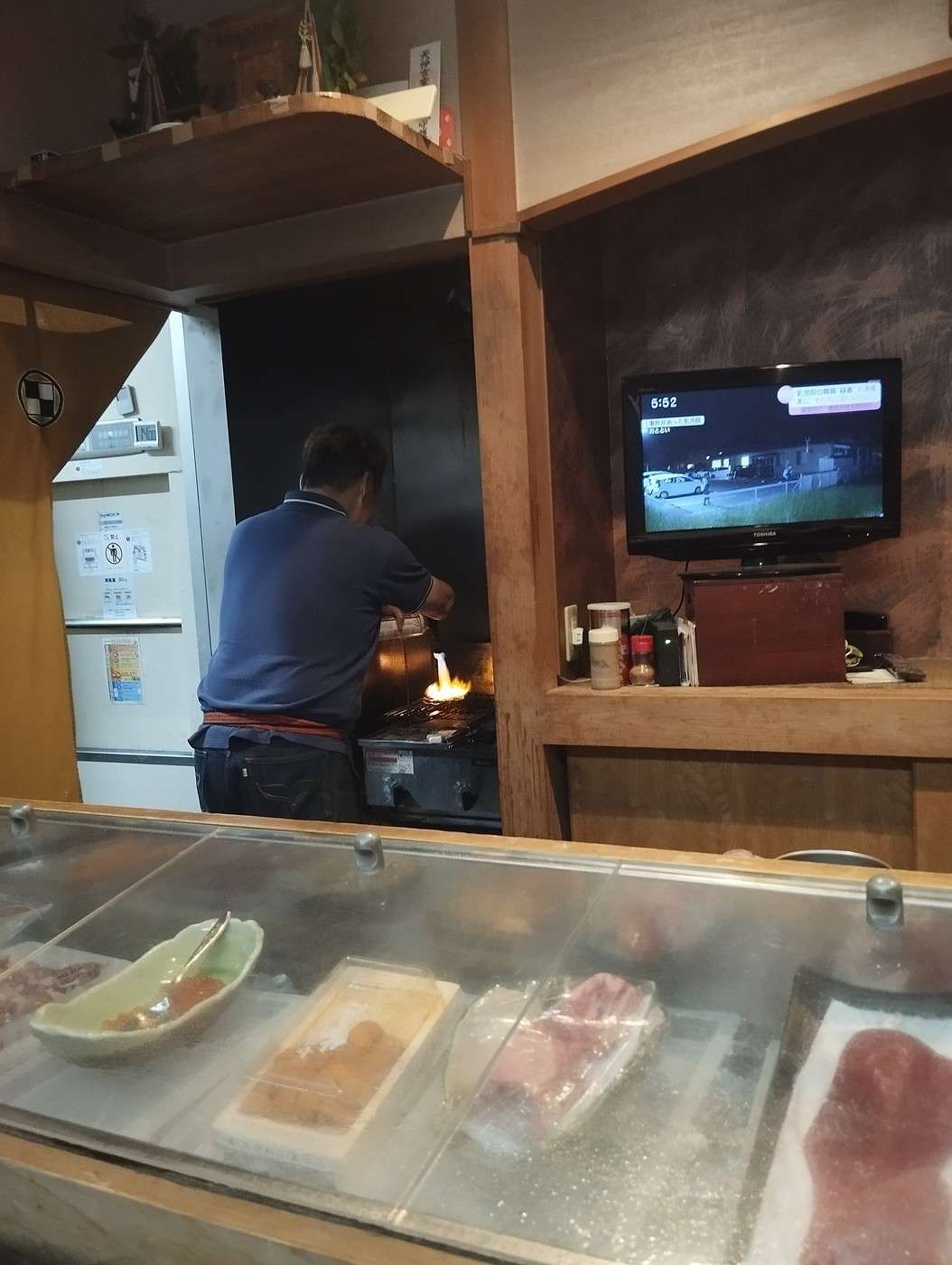
Then we think about what to do next. Given the time—late afternoon—and the drive back, we decide to eat early. We’d spotted a sushi restaurant online. We park in front of what looks like a house. We’d barely parked when a woman comes out to tell us we can’t park there, but when we say we’re here to eat, suddenly there’s no problem. In Japan, parking isn’t like in France. You have to be in the right spot, or you can quickly run into trouble, as we’ve experienced on previous trips.


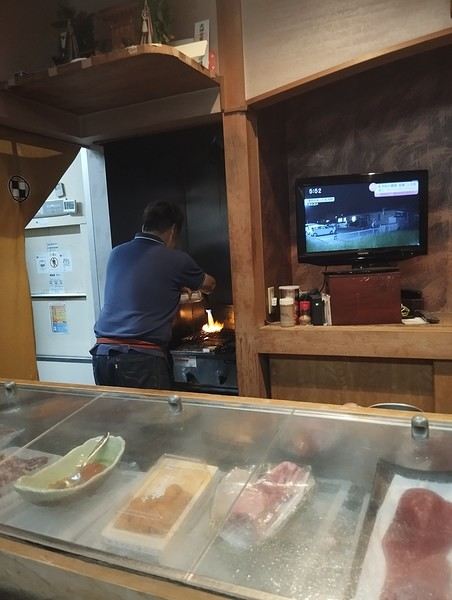
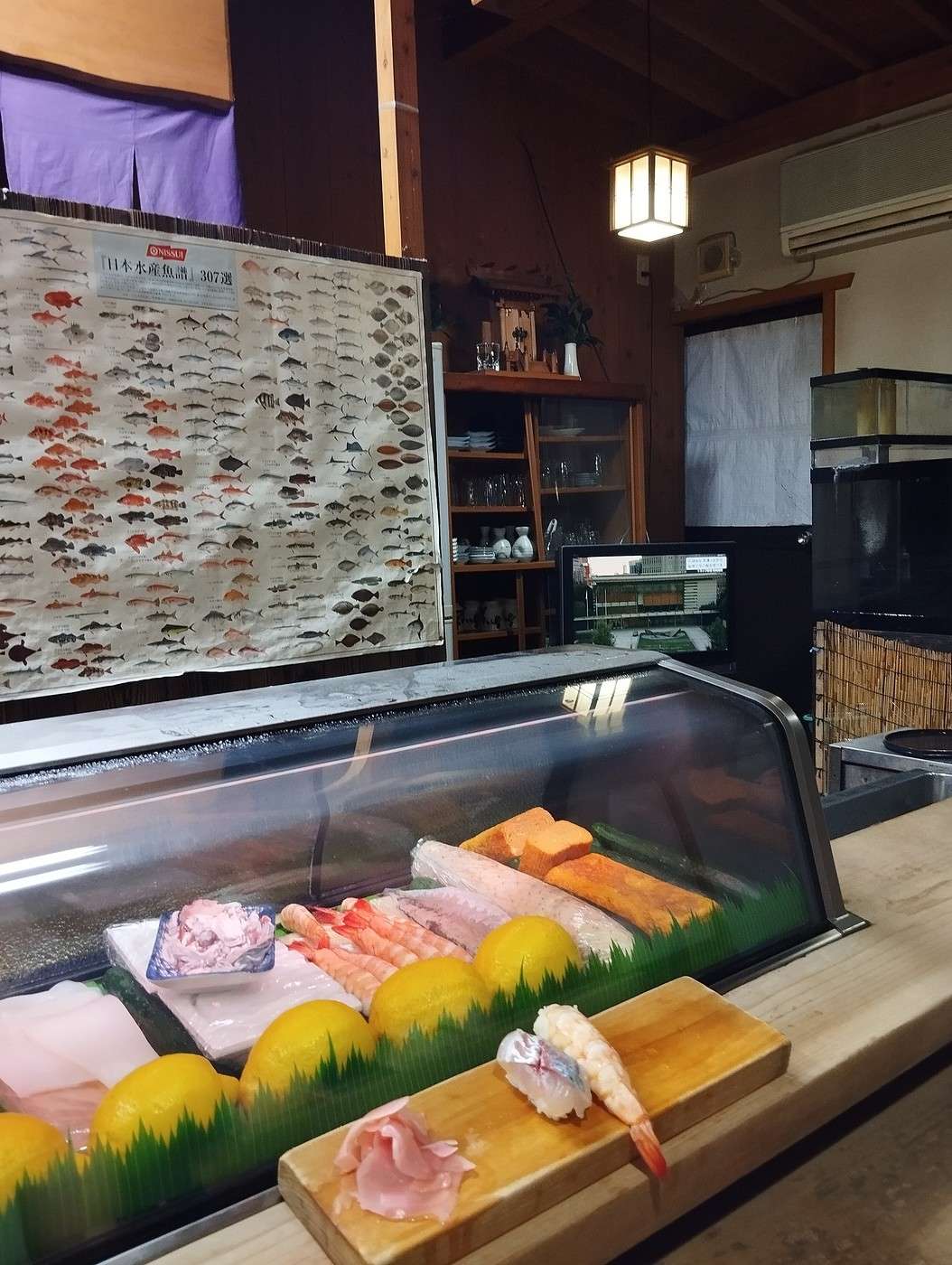
We sit at the counter. The restaurant is run by a man and his lively mother. We quickly start chatting with the sushi master and then his mother, who handles the service. A few words of Japanese work their usual magic, especially with grandma, who ends up giving me several gifts throughout the evening: a sake serving dish, a *naruko* (a Yosakoi dance instrument), tea bags, and above all, lots of laughter, warmth, and an invitation to come back and see them the next time we’re in the area.

We learn the sushi master trained under a master in Shizuoka for 15 years before opening this restaurant 23 years ago. His mother is from Motoyama, which is why they’re here. His father was a *salaryman* in Osaka. Mr. works a lot and is single. Meeting women is complicated. However, he has five dogs, whose photos are displayed in the restaurant. He practices Yosakoi dance, which is why his mother wanted to give me an instrument. He buys the fish for the sushi in Kochi every three days or so—about an hour’s drive away.

In addition to sushi, we try a bowl of local beef in *gyudon*—that’s beef over rice with an egg.

We have an amazing evening and leave only after taking a souvenir photo at grandma’s request—she’s got incredible energy. Of course, they stay in front of the restaurant until we leave, making sure to remind us to drive safely on the way back.

The evening ends quietly at the hotel. While this day wasn’t rich in sightseeing due to the travel times and the places we couldn’t find, it was filled with two wonderful human encounters and the stunning mountain landscapes we drove through.

From Southern Shikoku, between land and sea, to the blue waters of Miyakojima and finally the megalopolis T

Nathalie971 · 2025-09-30 · Message 24 of 75

Day 5 – Temple and arrival in Shimanto

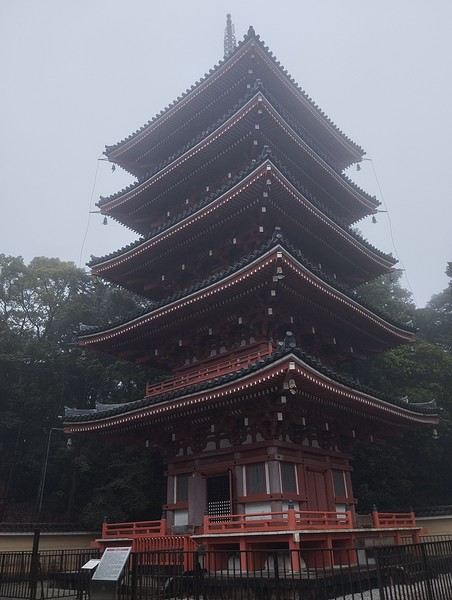
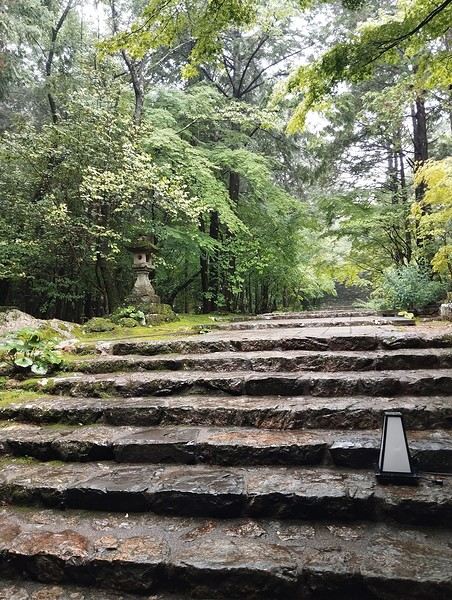
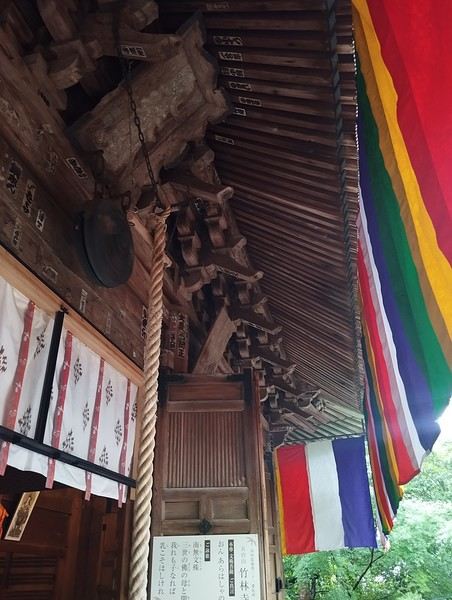
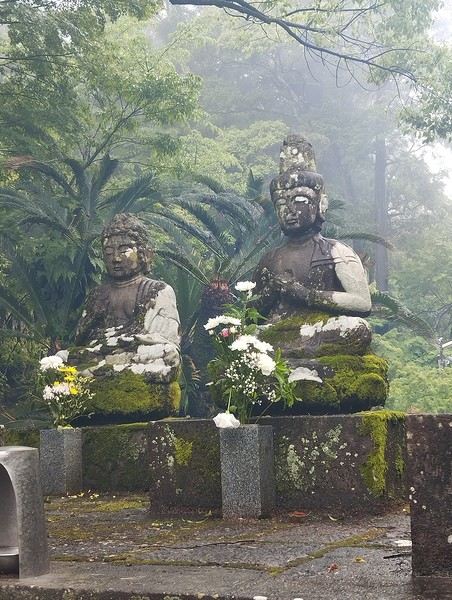
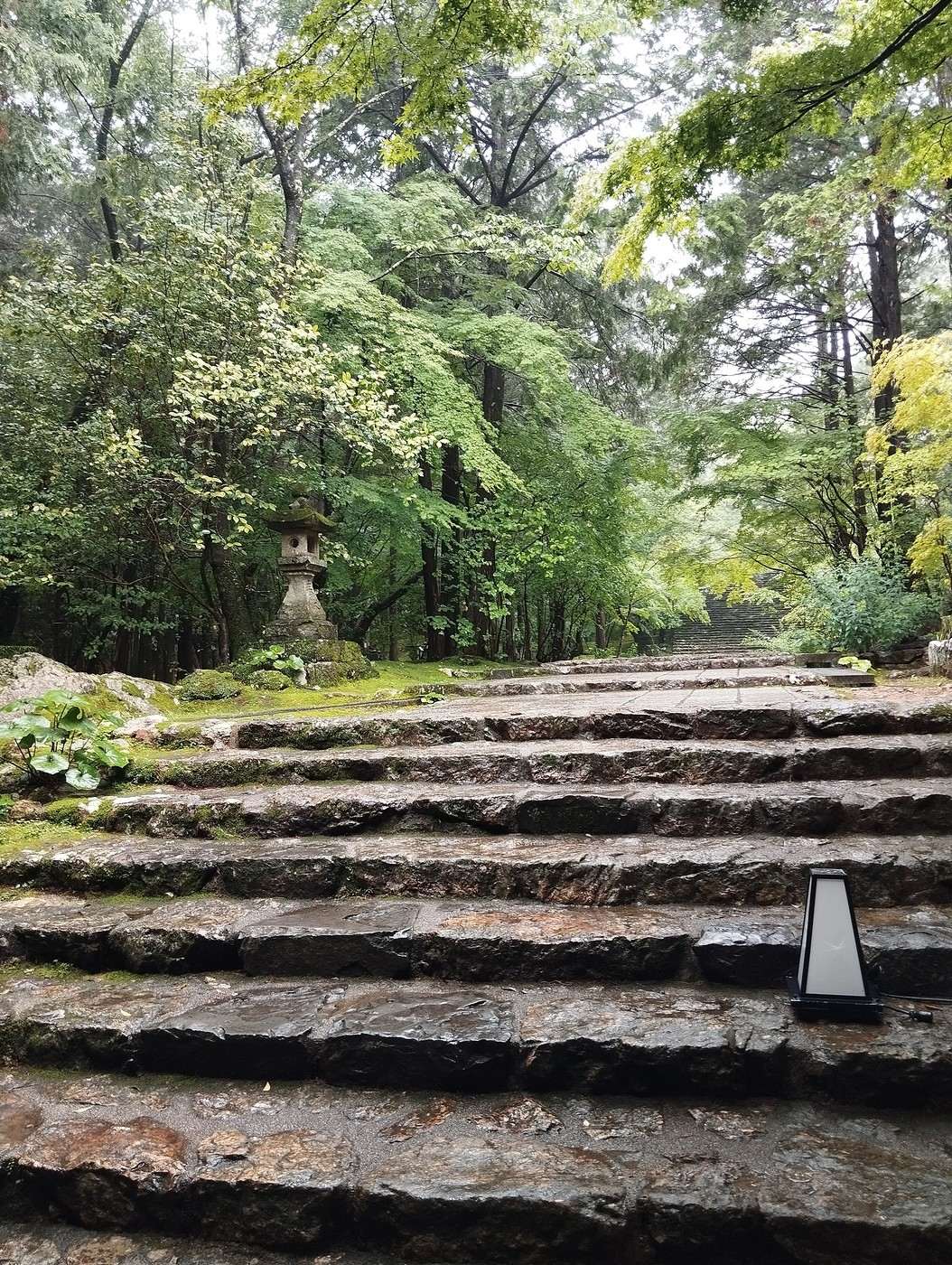
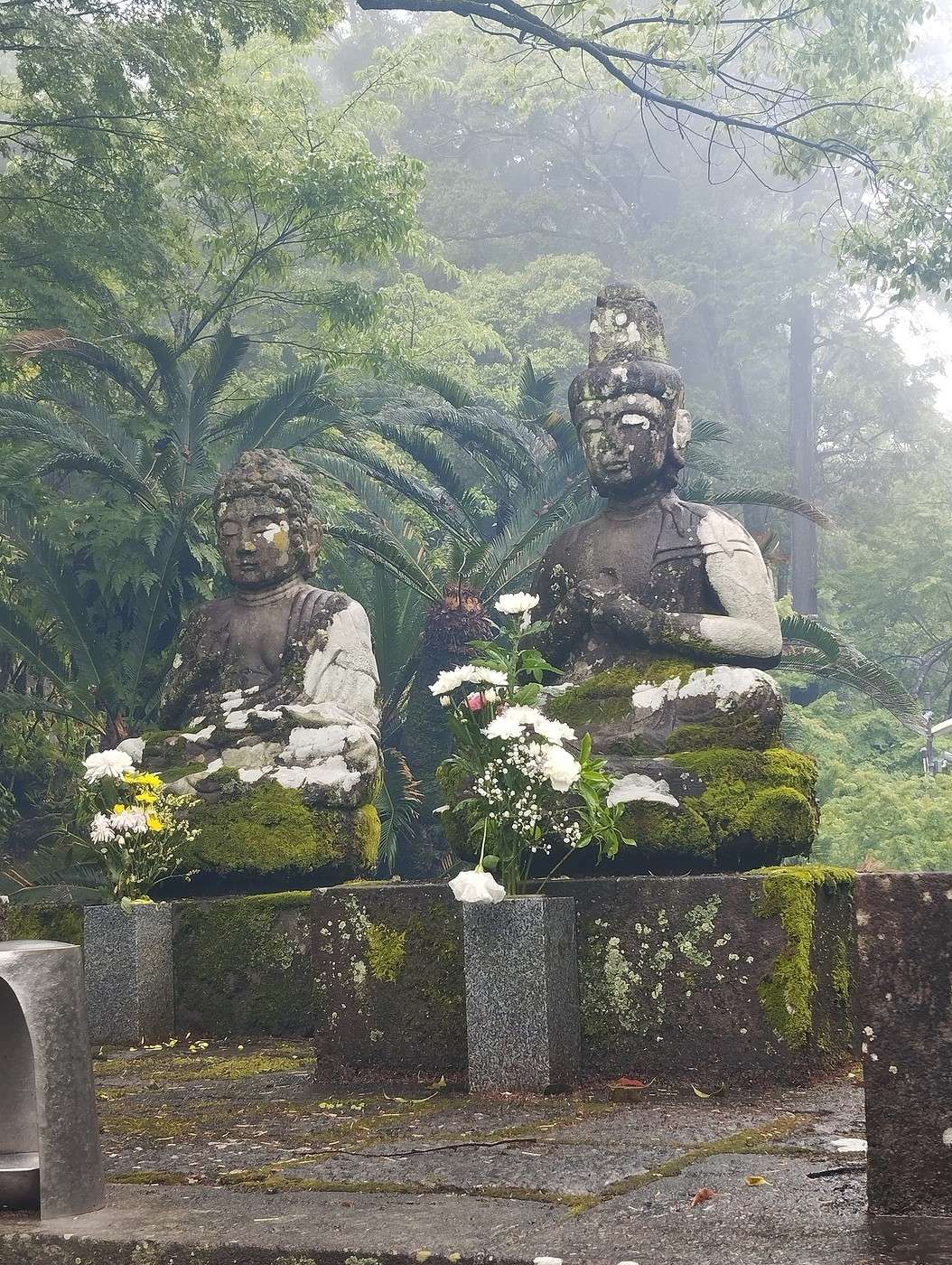
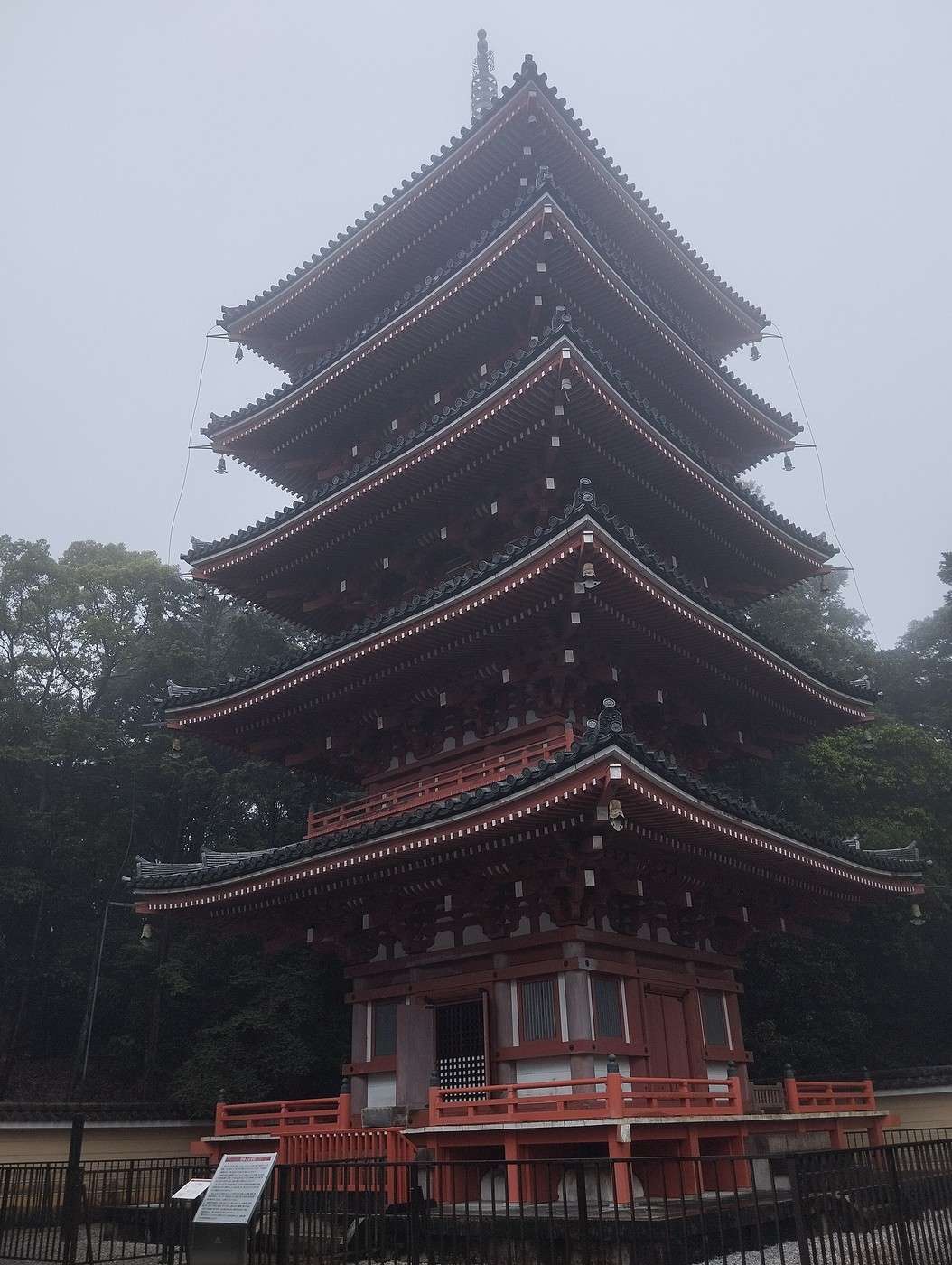
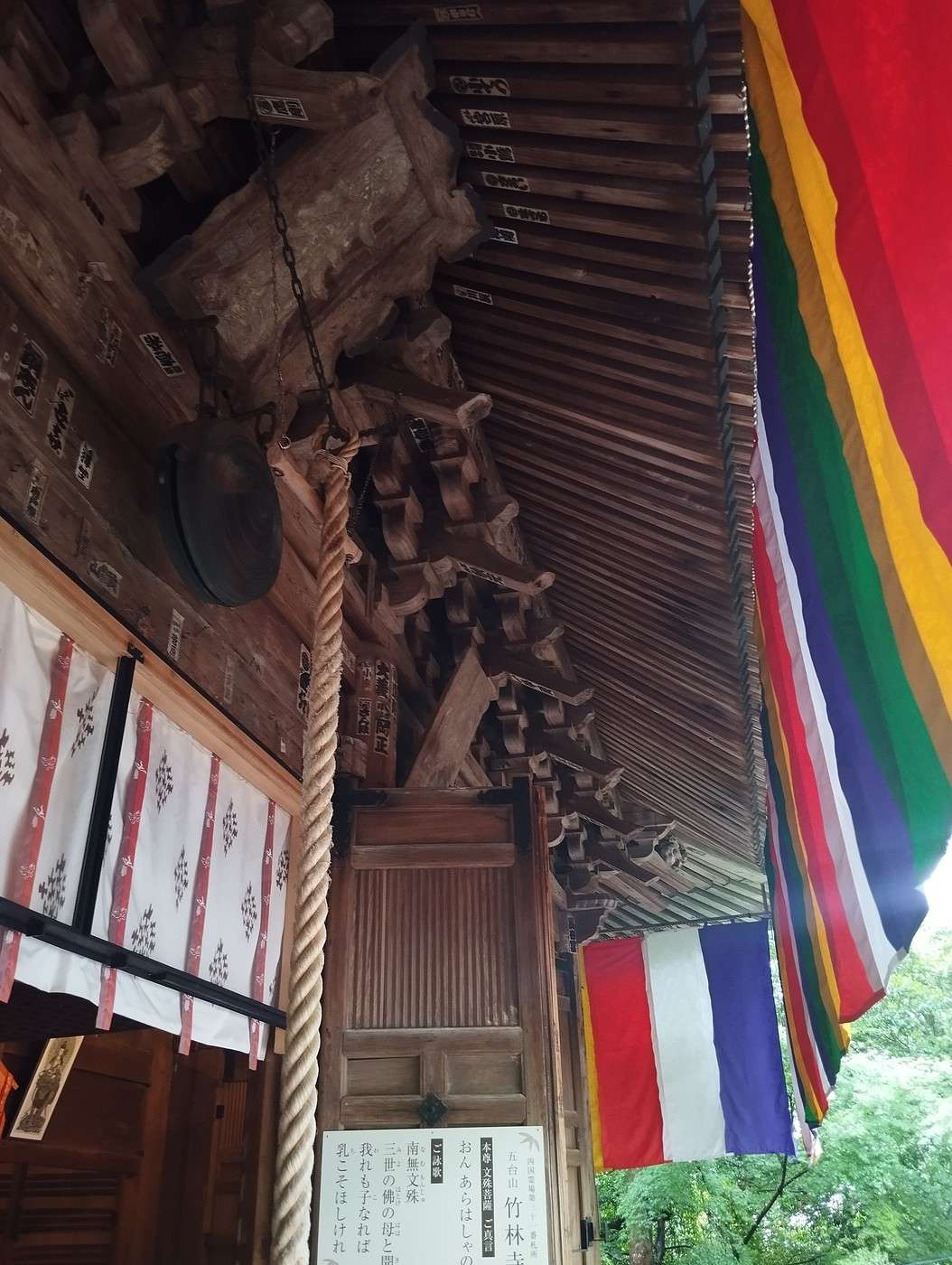
Today, we’re leaving Kochi with a touch of nostalgia since we really enjoyed the city and its surroundings. Plus, there were still so many places we wanted to explore. Before heading to Shimanto at the southwestern tip of Kochi Prefecture, we drive to Chikurin-ji Temple. The mist follows us, adding a mystical charm to the temple. The rain makes the chlorophyll in the leaves and some tree trunks glisten. Several things make this visit special, like the five-story pagoda, the many protective statues, the daikon offering, the statues that almost feel like they’re from Thailand, or the plaque dedicated to pilgrims. There’s almost no one around—just the two of us and two other people. We soak in the temple’s serene, mystical atmosphere to the sound of Buddhist gongs.


Now, we’re on our way to Shimanto.

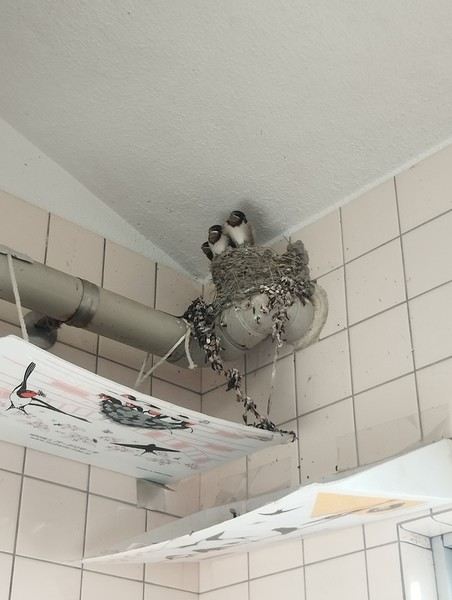
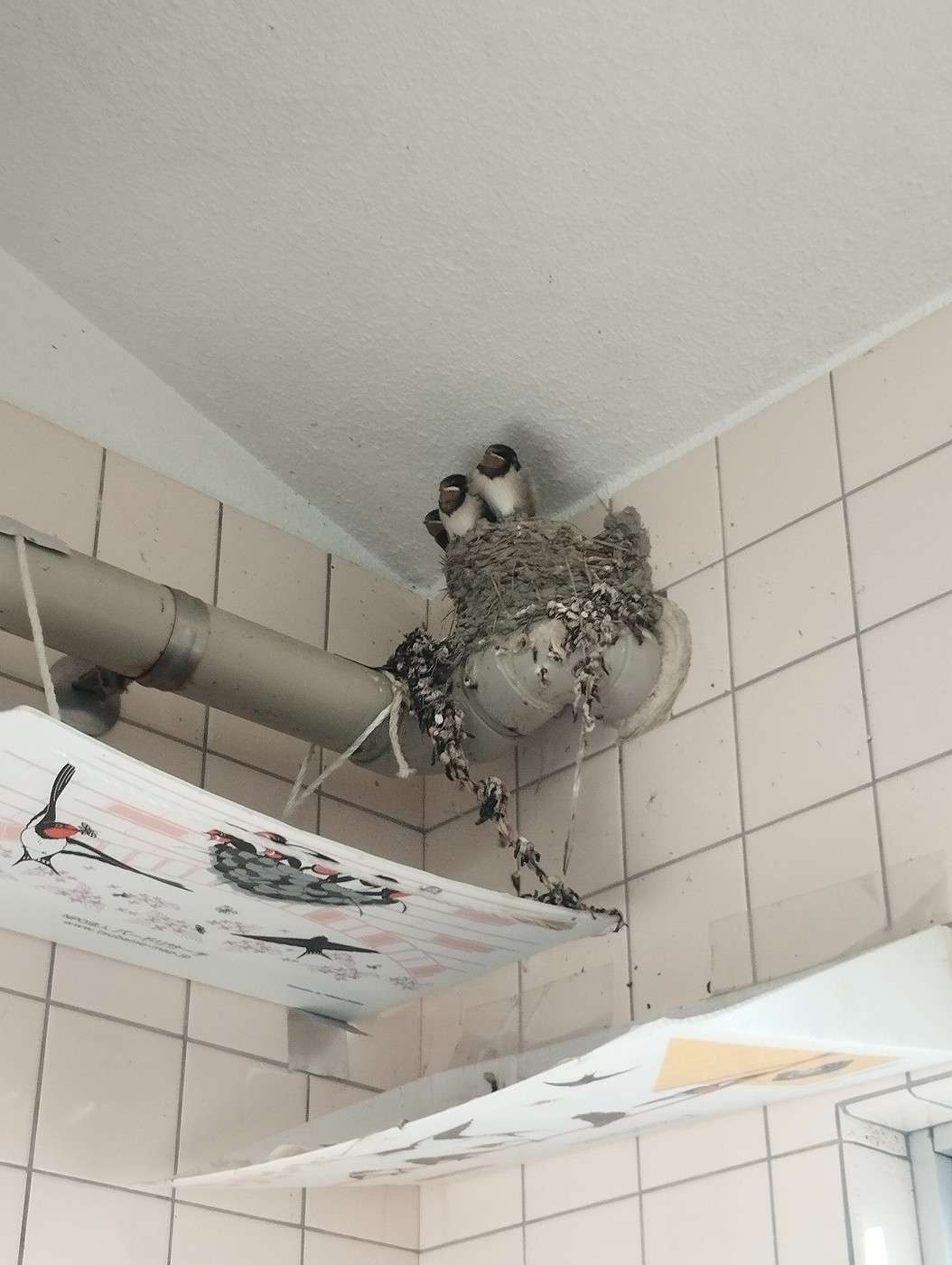
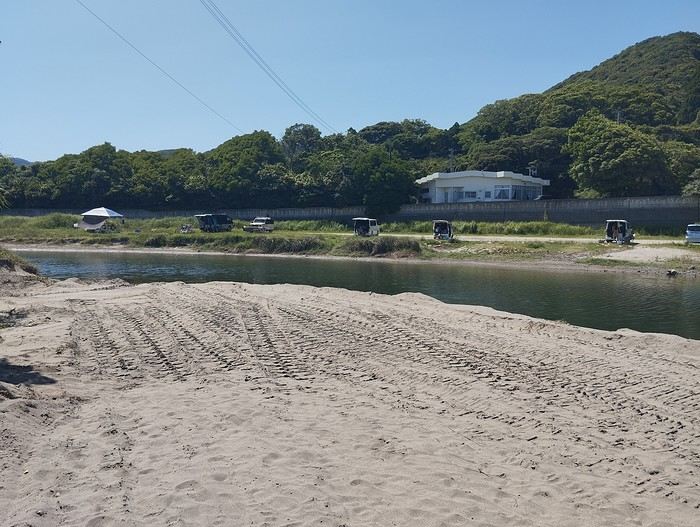
We stop a few times. The first stop is to enjoy the sea view, the second to grab a bite at a Marunaka supermarket and take a quick nap, and the third to relax while admiring a vast wild beach and a swallow’s nest that had settled in the women’s restroom.


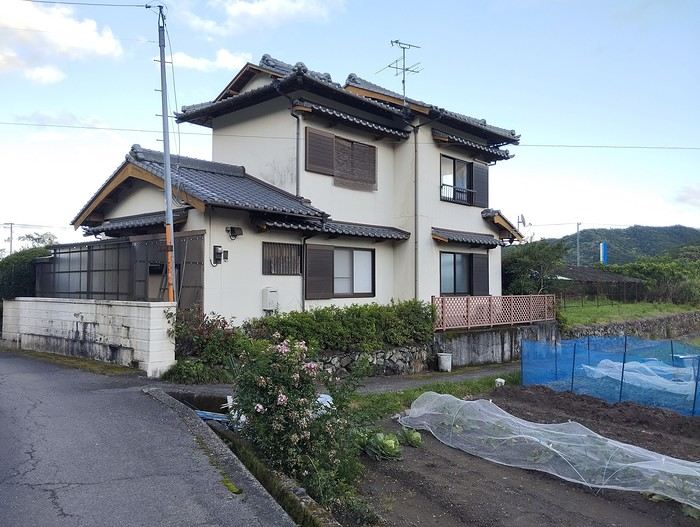
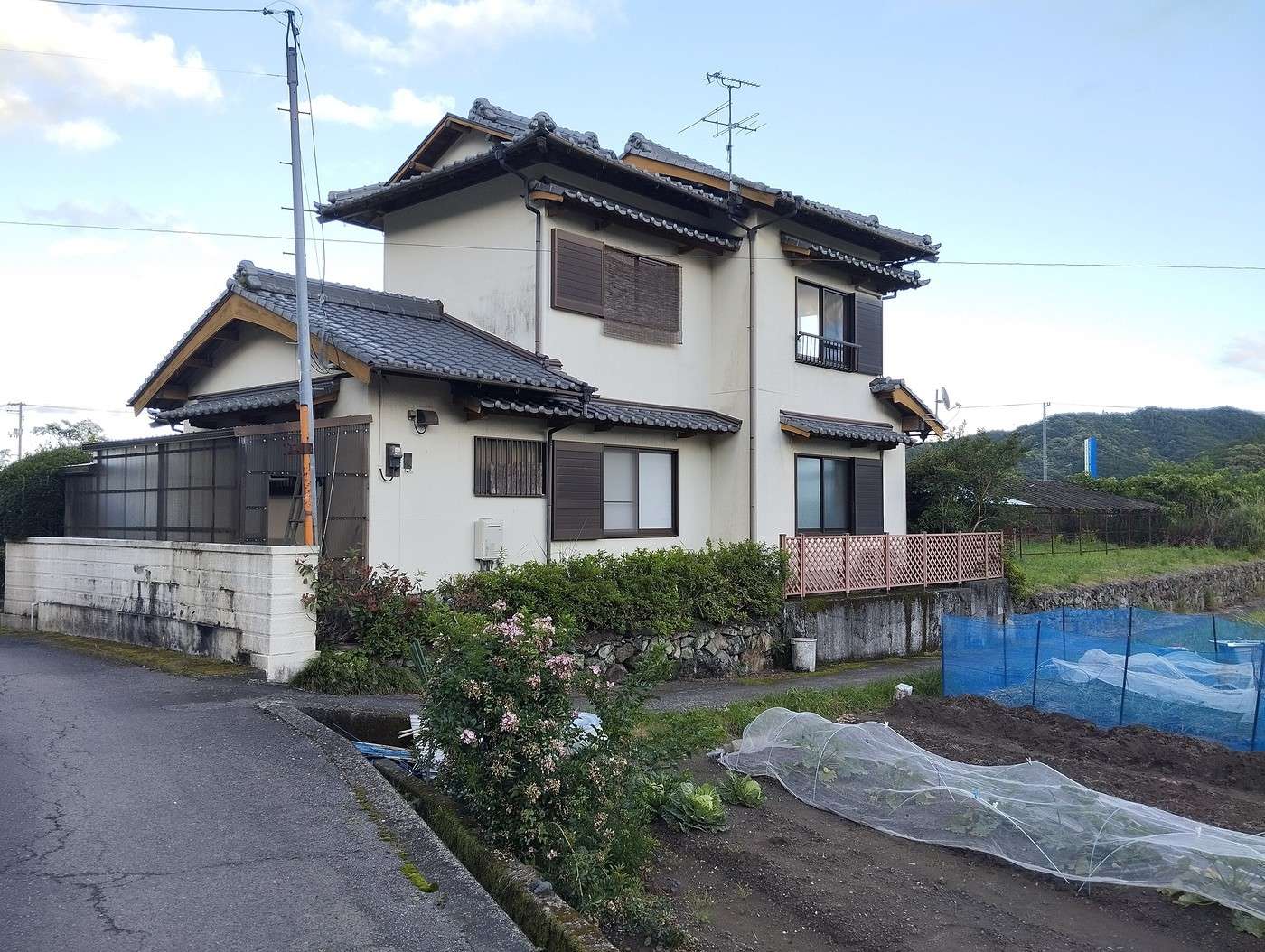
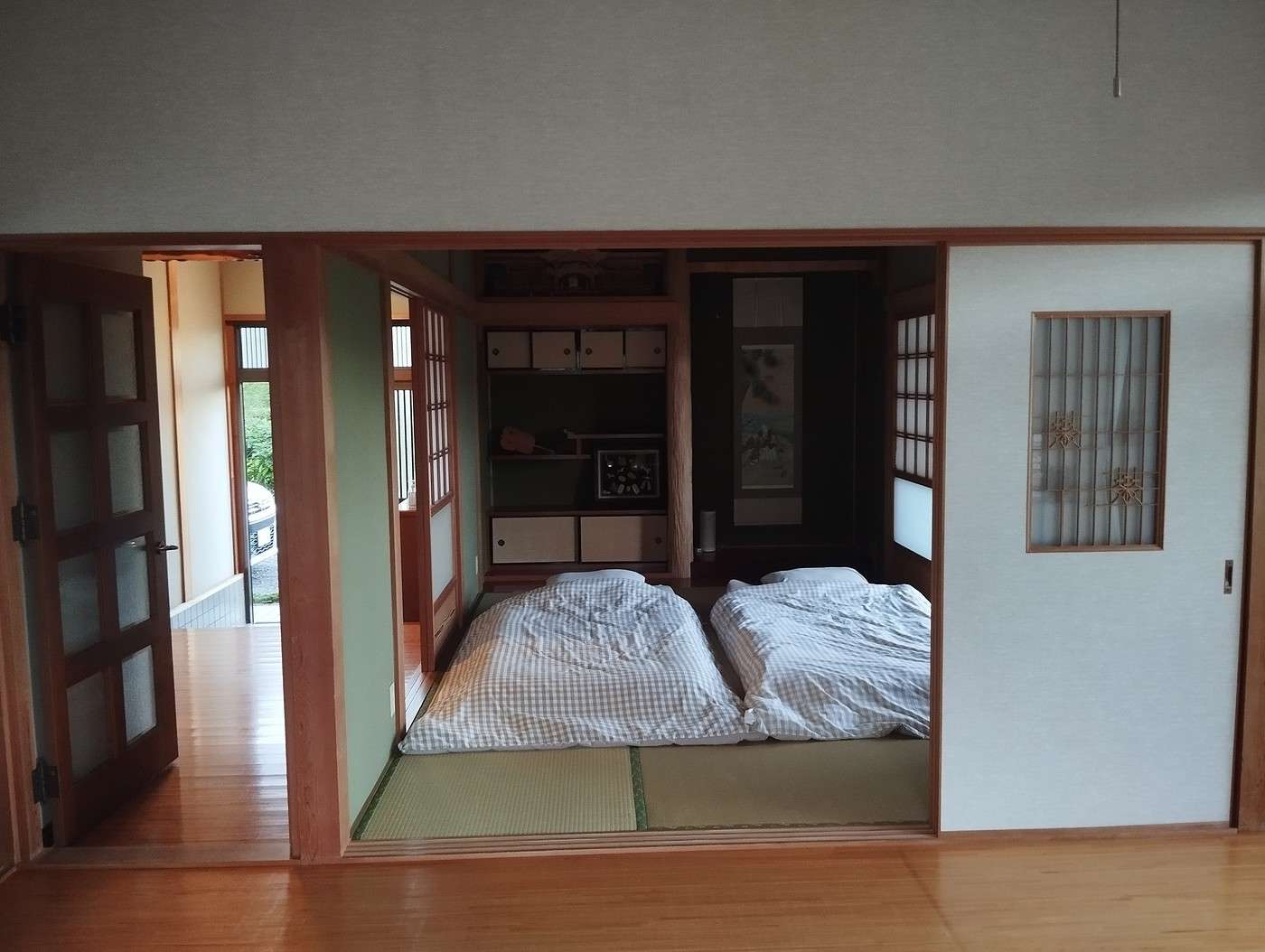
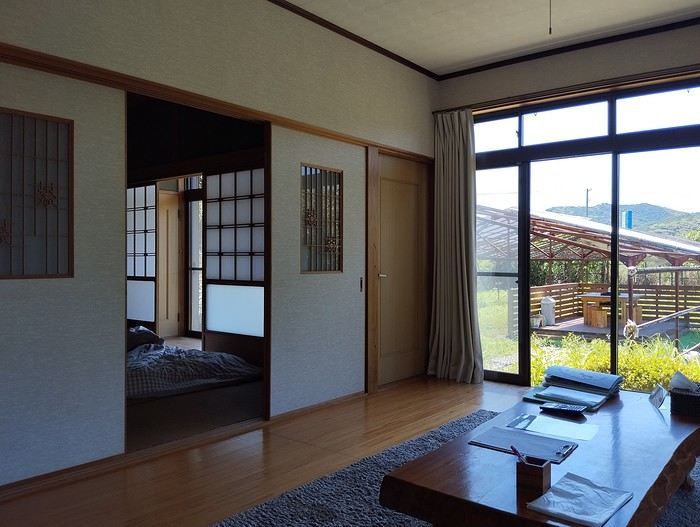
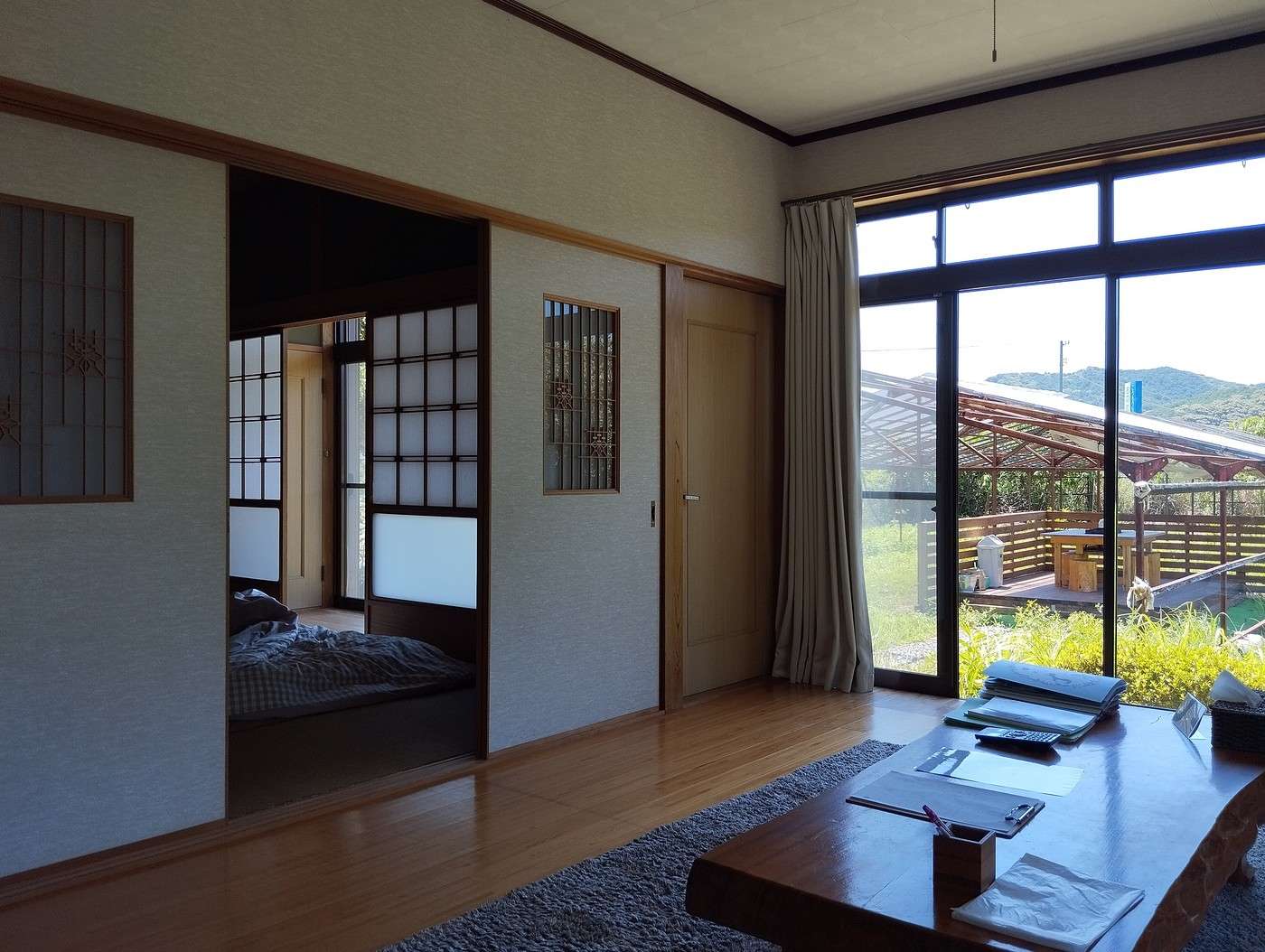
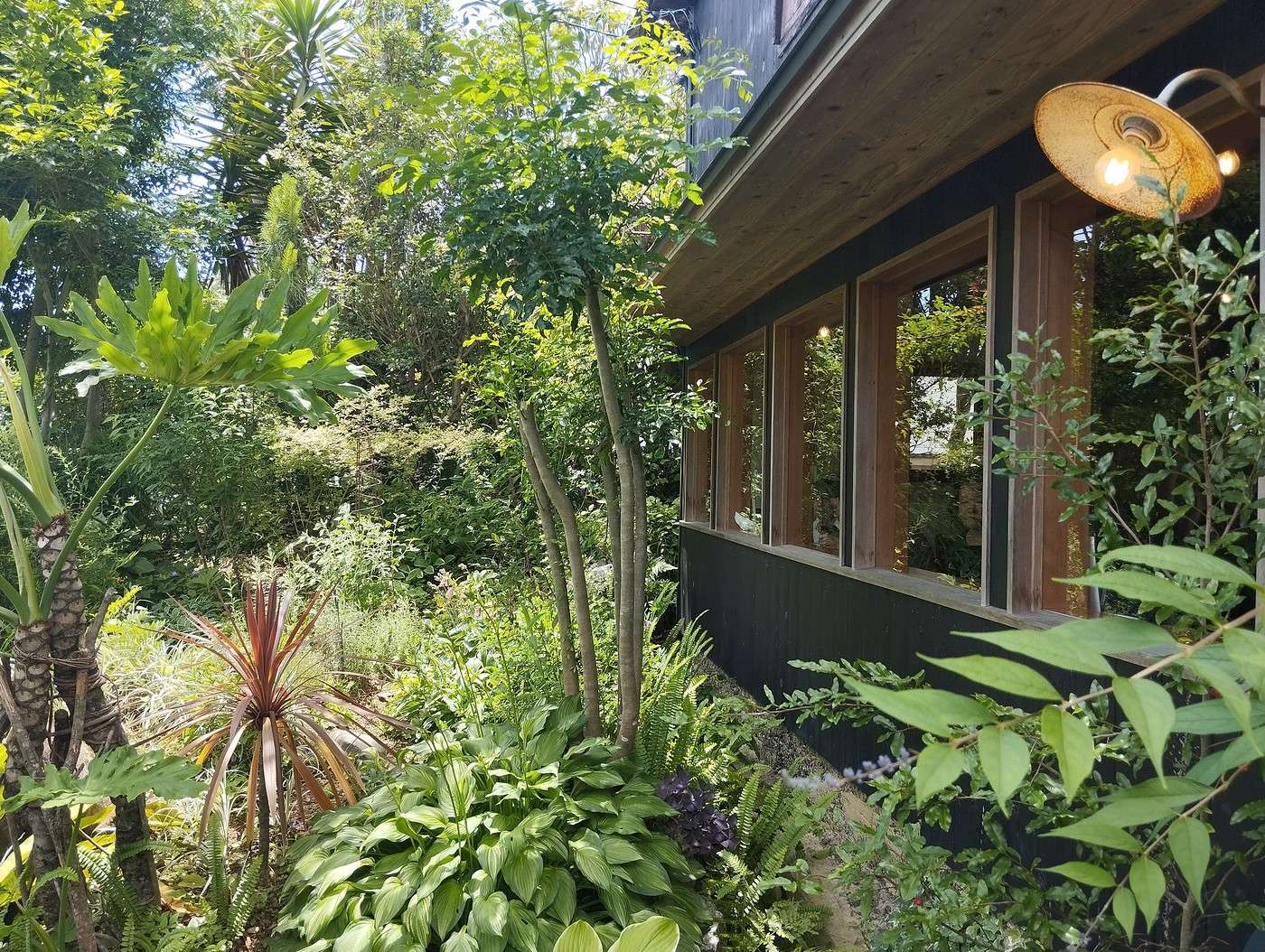
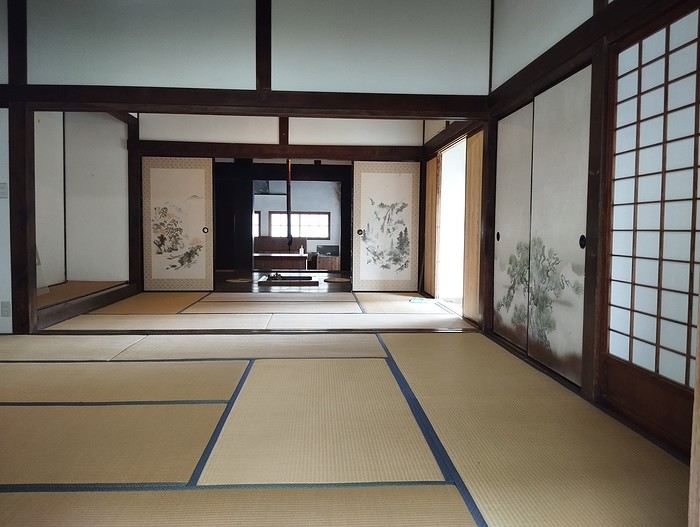
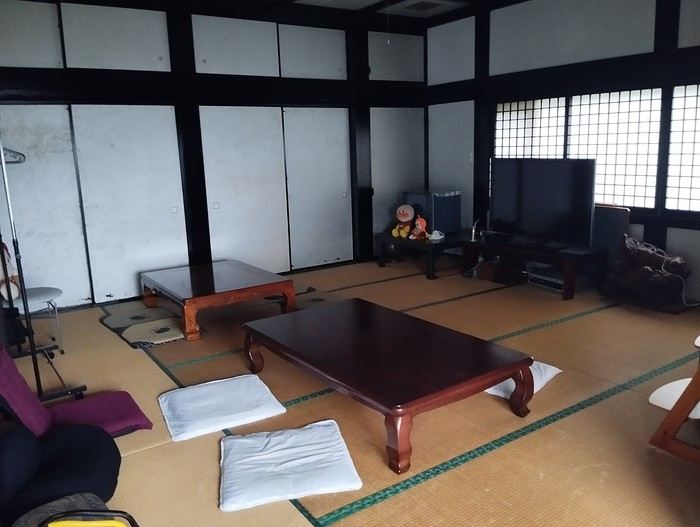
Finally, we arrive at our accommodation in the late afternoon. By chance, we’re staying in a Japanese house to save on costs. I can’t wait to experience this! We got here a little early, so we take a moment to look around. The house is in a quiet alley with several other homes. The gardens are in bloom, and a neighbor next door has a lovely vegetable garden. Check-in goes smoothly, and now we’re settled into a spacious Japanese house—four bedrooms for the next three nights. The best part? A garden. We head to Sunny Mart supermarket to pick up some snacks for tonight, but as always, it’s also a chance to discover local specialties. It closes at 10 PM, which is super convenient.

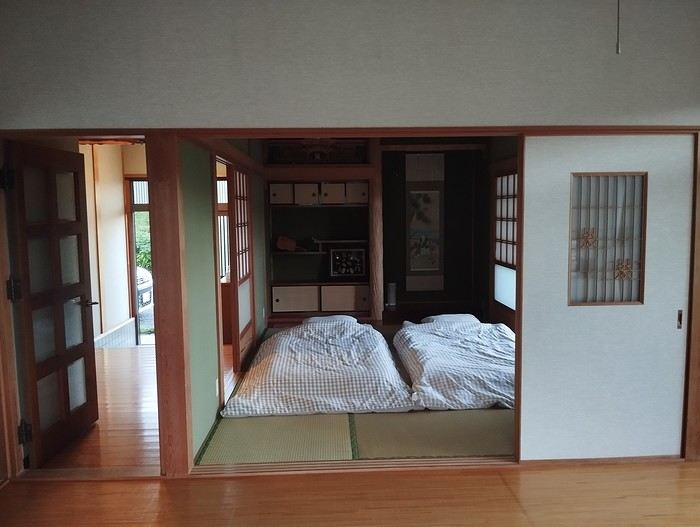
The evening ends at home, enjoying a meal at the kitchen table like we would back home, followed by a cozy night on the couch watching Japanese TV before tucking into our carefully prepared futons in the bedroom.


Southern Shikoku: Between Land and Sea, to the Blue Waters of Miyakojima and Ending in the Megacity T

Nathalie971 · 2025-10-08 · Message 25 of 75

Day 6 – Stroll in SHIMANTO

Since I’m sick and pretty exhausted, I rested this morning by sleeping in to recharge. When we finally got up, we slid open the rice-paper panels on the garden side, letting us enjoy the view of the garden through the glass doors. The sun flooded the room. Everything was quiet. Lying on our futons, we savored this simple moment of pleasure in this really charming house.


We enjoyed our breakfast quietly, cozily settled under the pergola in the garden, where we could see the house from a different angle. We also spotted an elderly couple dressed head-to-toe to protect themselves from the sun. They were gardening.

Heading out in the early afternoon, we discovered the “village” under the sun.

We made our way to Shimanto Station, where the tourist office is also nearby. We picked up some info and, most importantly, I asked about the possibility of a traditional boat excursion on the Shimanto River. Lucky day—a boatman was offering the classic tour but in the evening since it was combined with a firefly “hunt.” Without hesitation, we went for that option. Meet-up at 7 PM tonight.

The Shimanto River is considered one of Japan’s wildest because it has no dams. It flows directly from dense forests without interruption. It passes through very little urban area, so it’s seen as a natural, clear river—one of, if not *the* last of its kind in Japan.

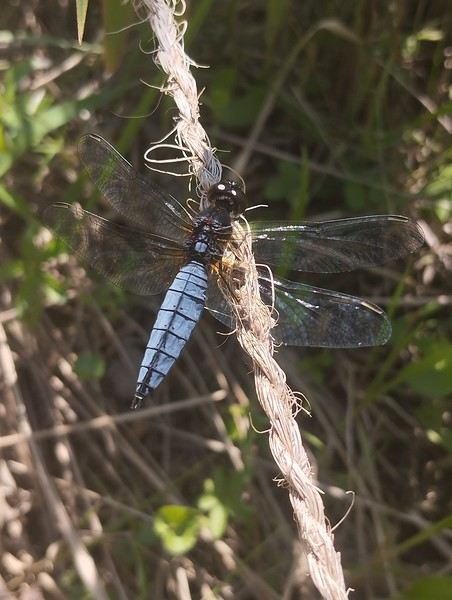
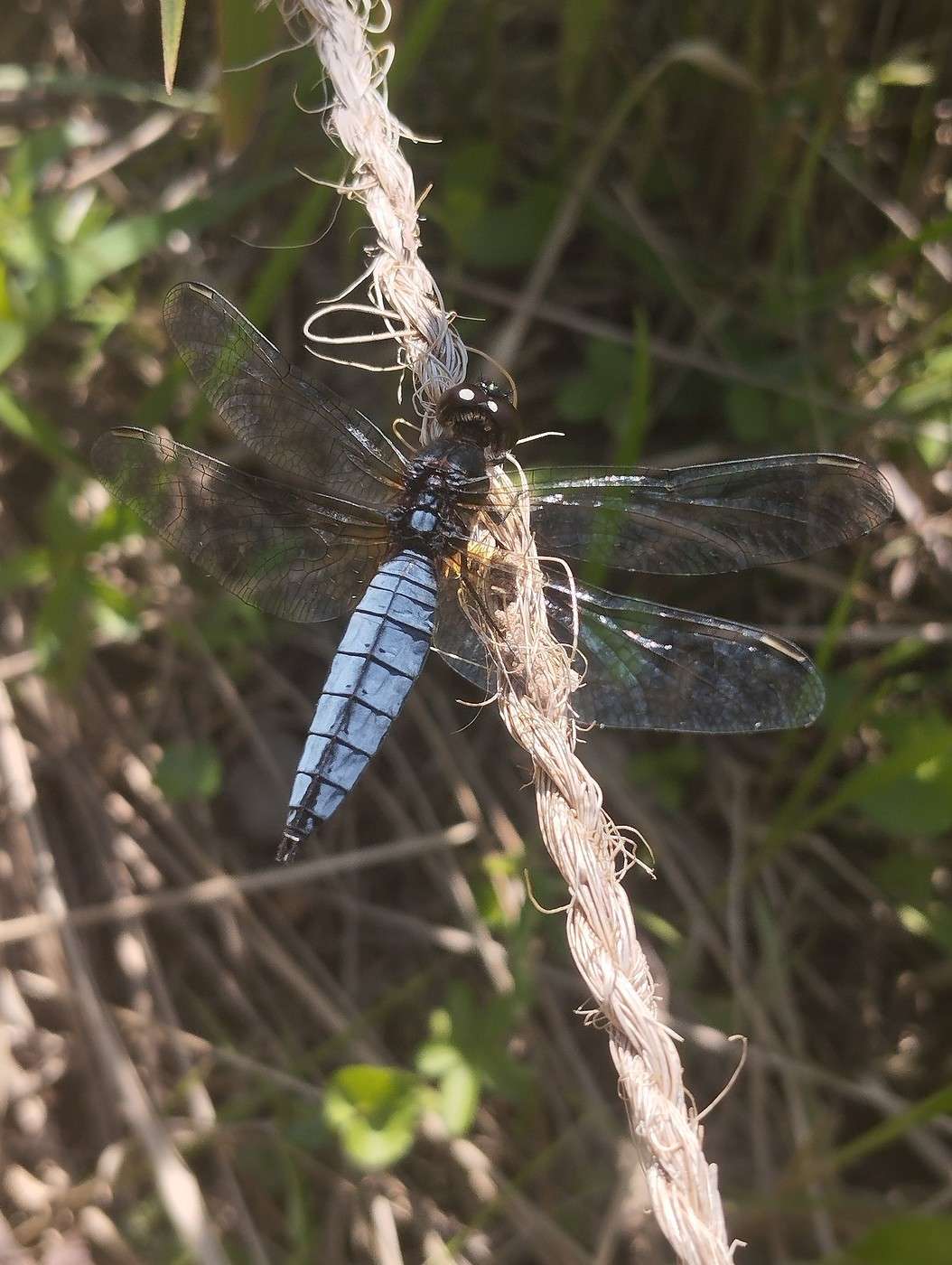
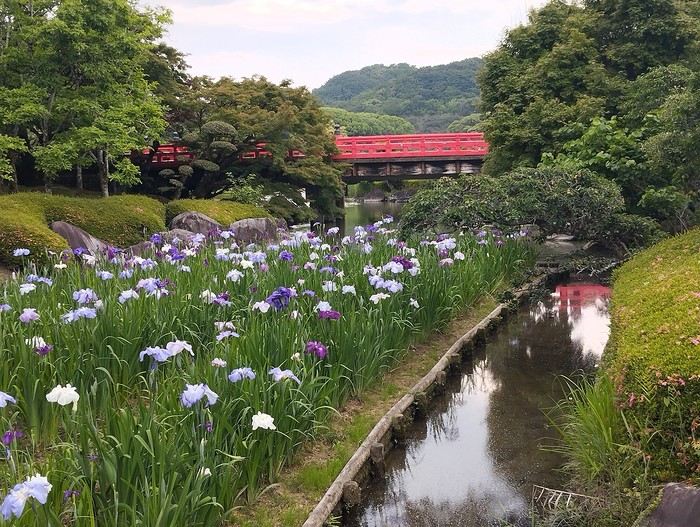
After that, we got back in the car to visit the dragonfly park not far away. It’s a free-access park. There were quite a few iris flowers still in bloom, and then we went dragonfly spotting. We saw a bunch—some were almost invisible, blending in with natural elements like a blade of grass. We counted 10 different types of dragonflies.


Next, we stopped by a local products store. We saw things like ginger oil and rice miso. You shouldn’t skip these shops because many products are only found in their regions. You might think, *I’ll check it out later*, but often you only stay a few days, and if you put it off, you’ll regret it because you won’t find those products again. It’s also a great way to learn more about Japanese cuisine.

We continued our little “shopping spree” by heading to a store that was closed last night, right next to the Sunny Mart—the equivalent of our garden/DIY store. We planned to have a barbecue but needed lighter fluid. Trying to make ourselves understood caused a bit of panic for the staff at first, but it always ended in laughter.

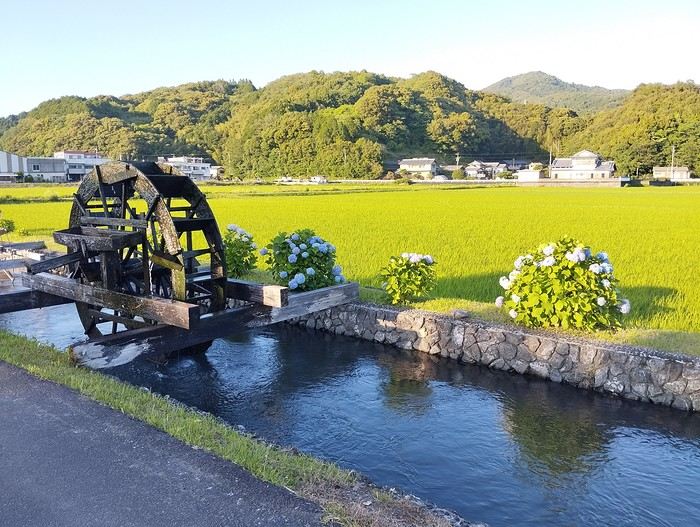
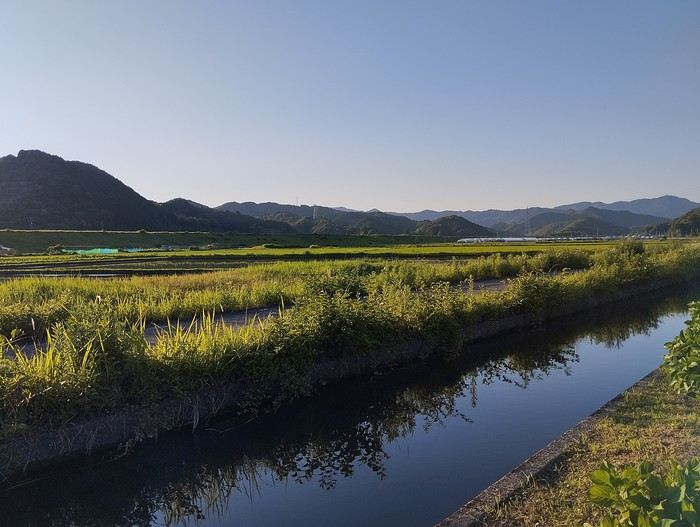
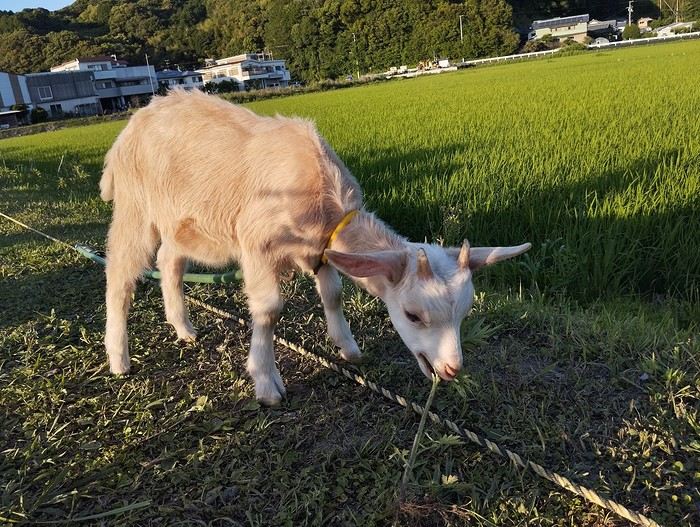
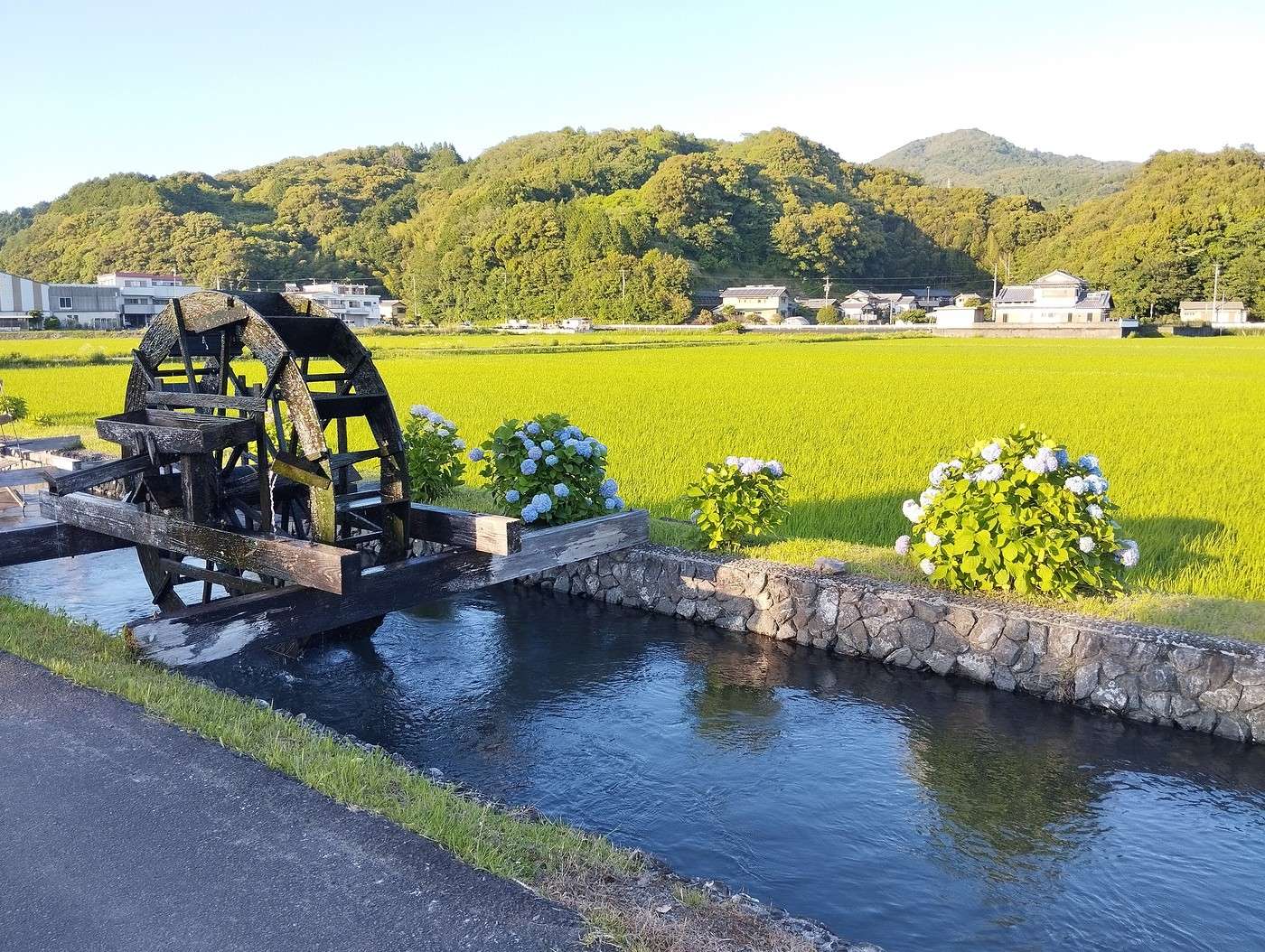
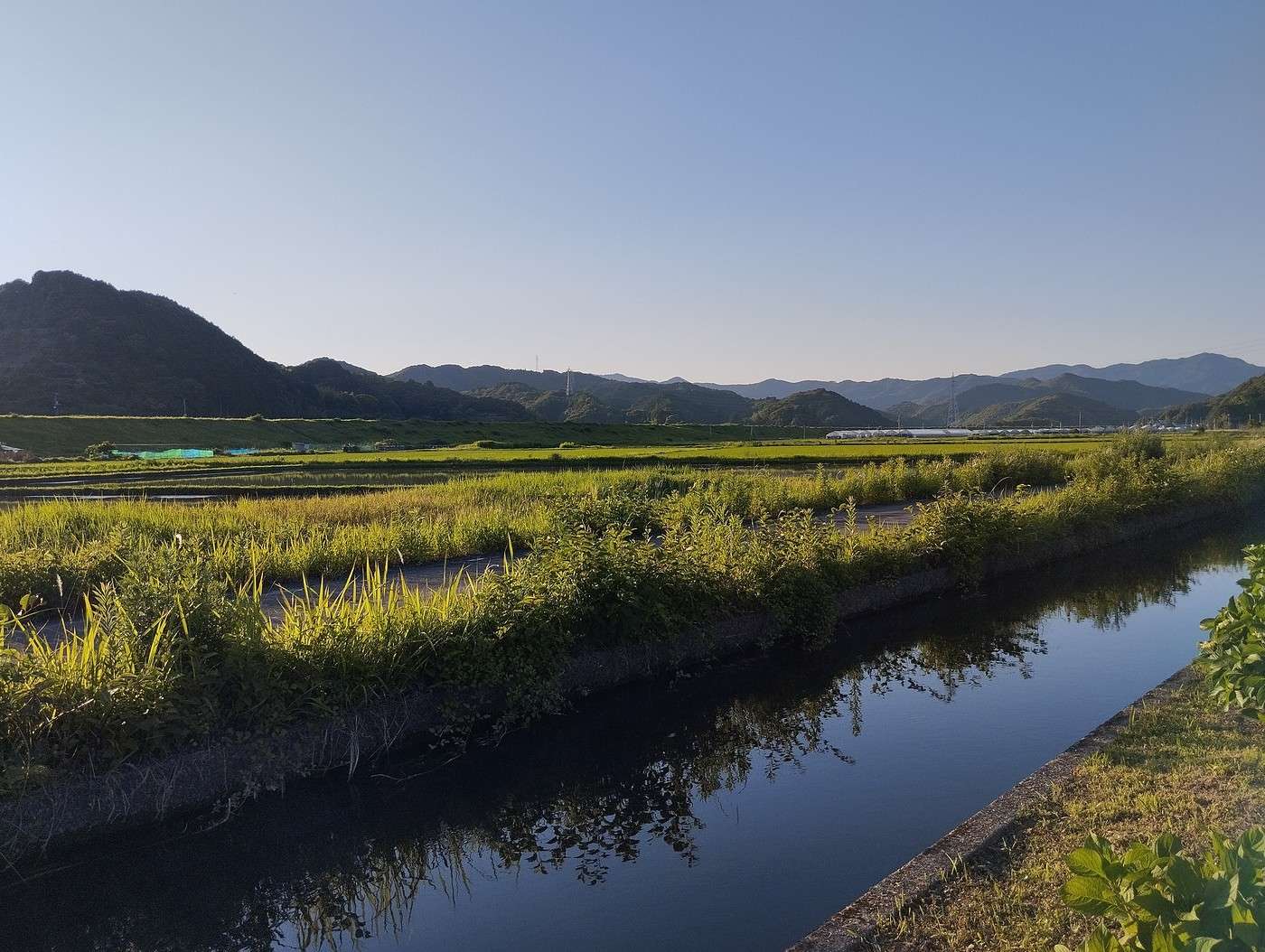
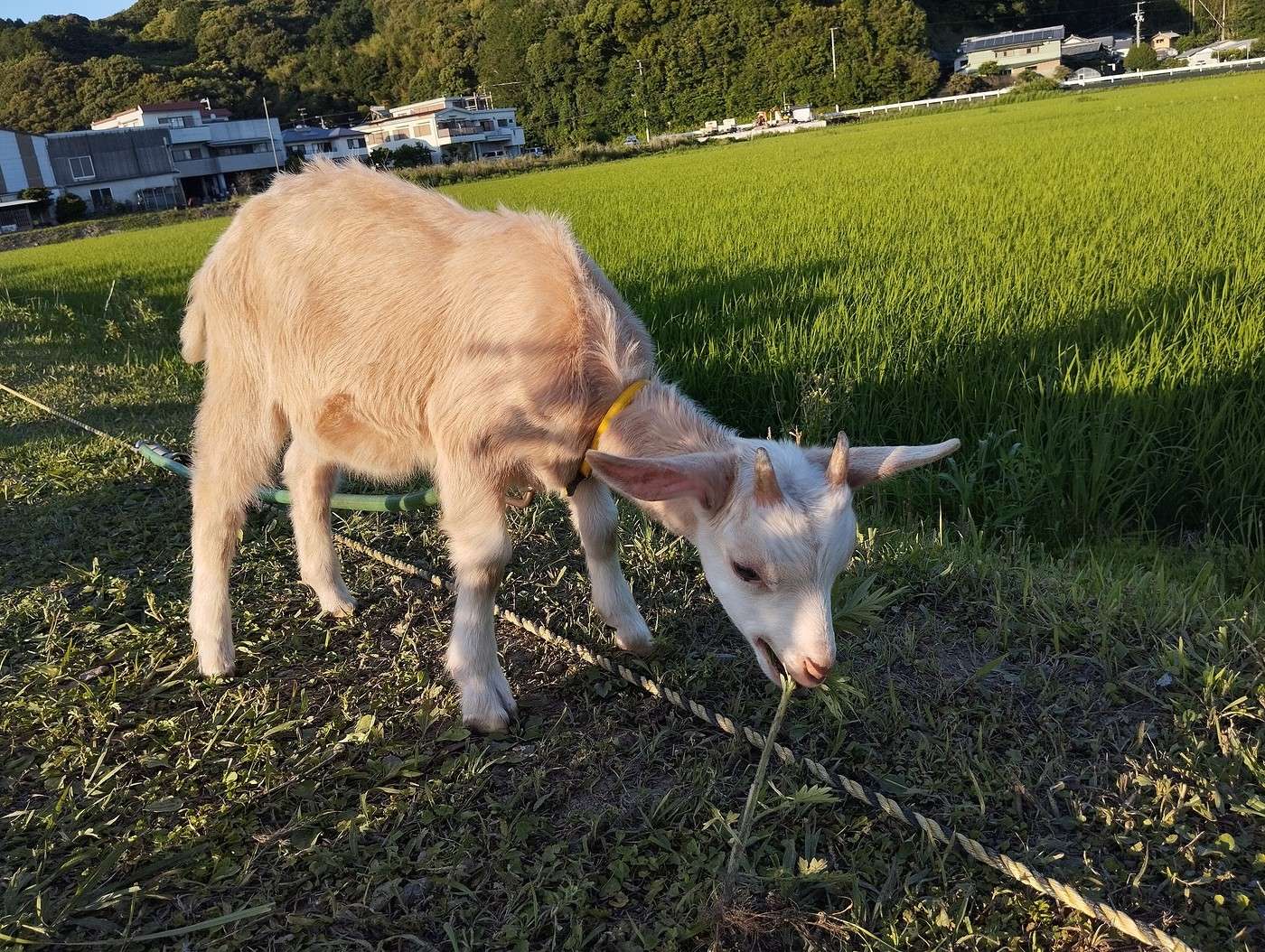
We still had some time before the boat ride but not enough for a big outing, so we stopped by the Shikamura Canal. It was built to divert water from the Aso River, a tributary of the Shimanto River, via a dam to irrigate four villages. Waterwheels were installed to pump water to the rice fields. Today, only a few of these wheels are still in use—the rest were set up for tourism and are maintained by the villagers. The site is in a rural, pastoral setting. It’s nicely arranged, and with the rice fields and the sun, the view is lovely. A few goats also live here for the enjoyment of passersby.


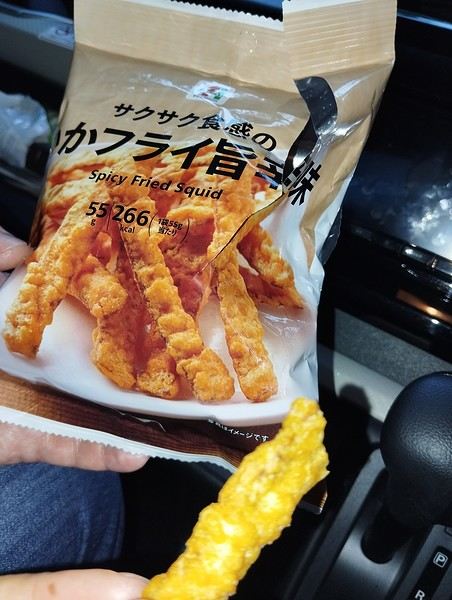
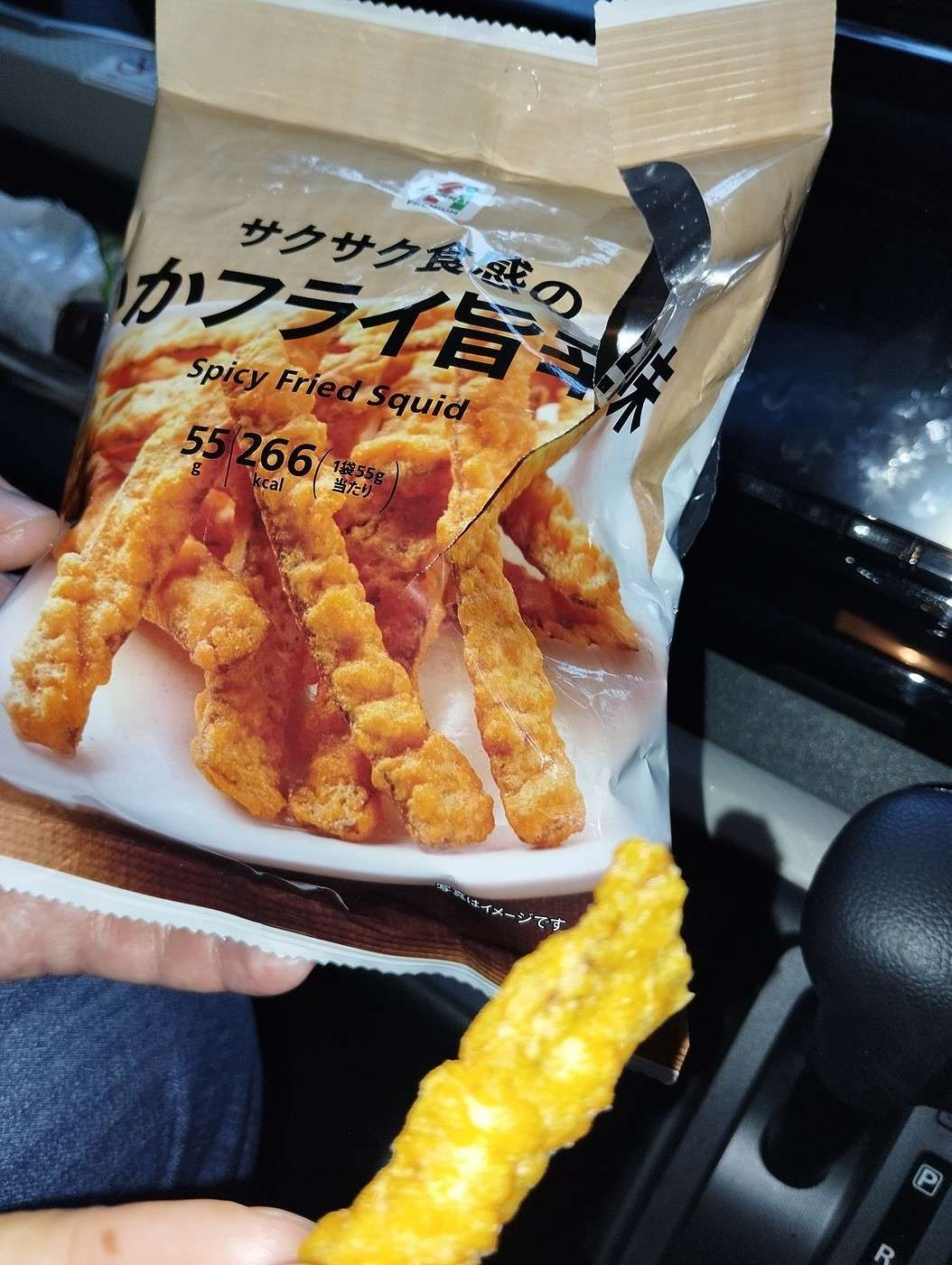
It was time for the traditional boat ride. We arrived a little early, so they asked us to wait. We took the opportunity to snack on treats we’d bought at the konbini in previous days, including pieces of octopus. The taste was strongly briny with a slight “off” flavor, and the texture was rubbery. We can say we tried it, but we won’t be doing that again. But we also tried spicy squid appetizer crackers, and *those* we liked.


Southern Shikoku: Between Land and Sea, the Blue Waters of Miyakojima, and Ending in the Megacity T

Nathalie971 · 2025-10-08 · Message 26 of 75

Day 6 - Stroll along the Shimanto River

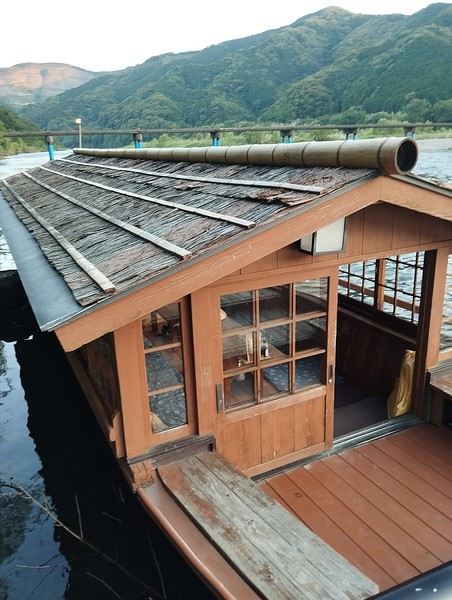
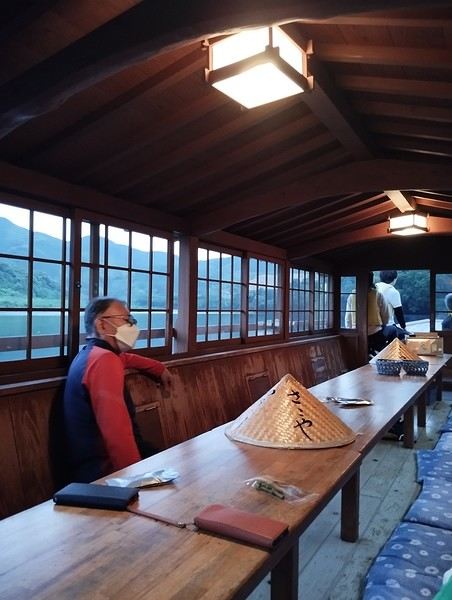
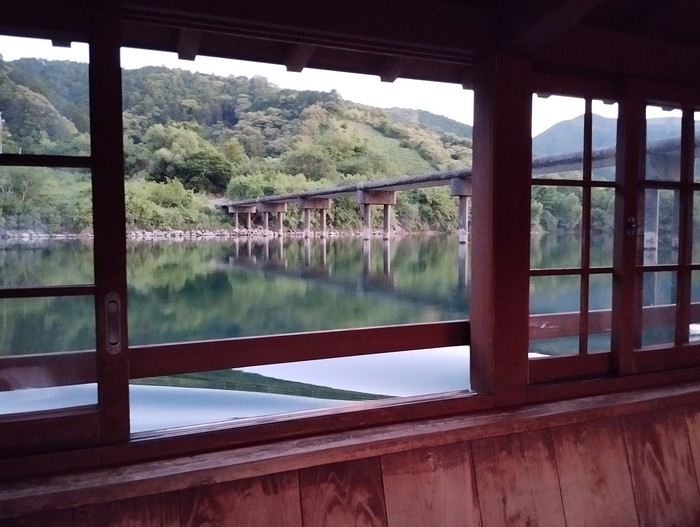
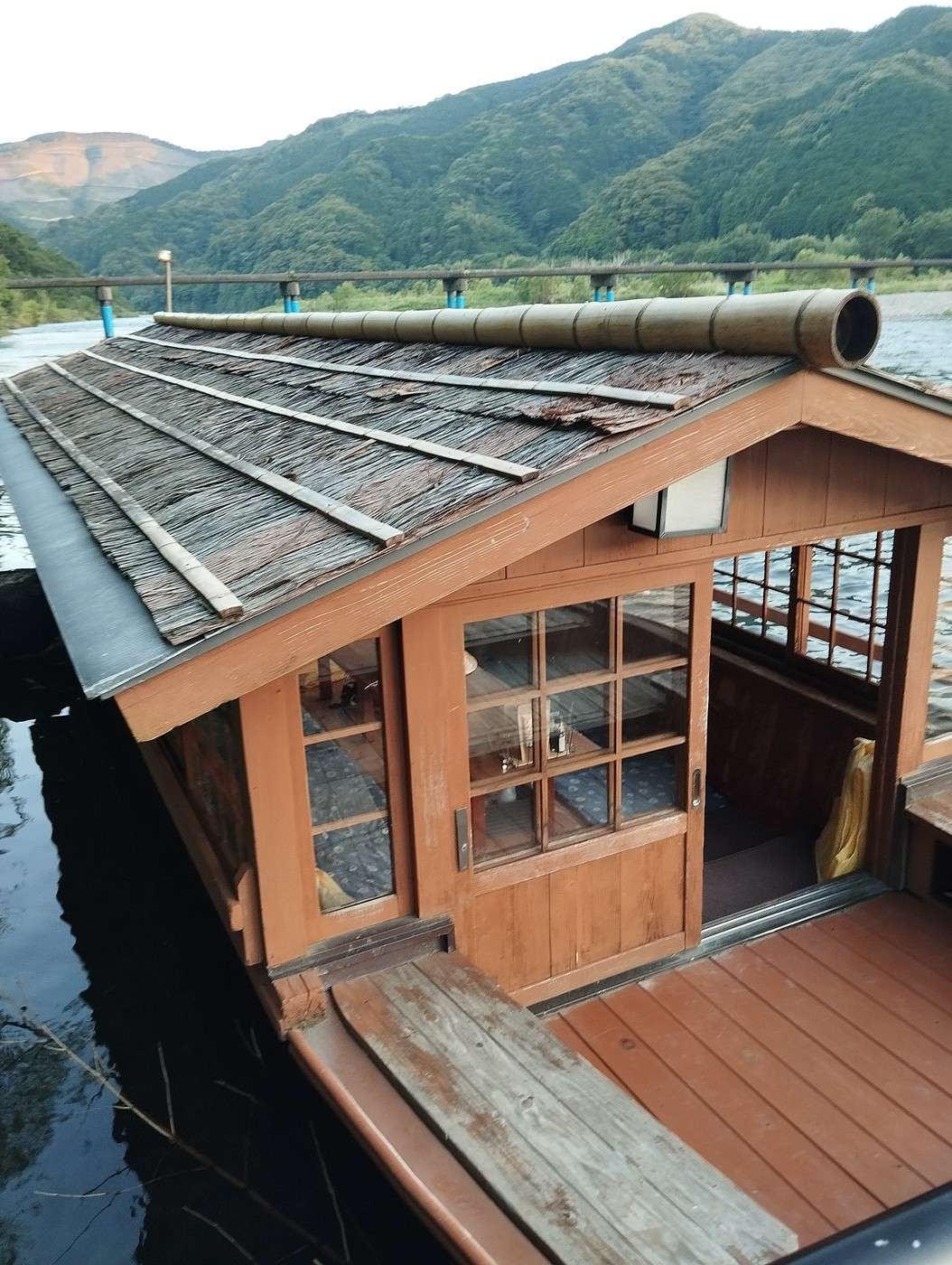
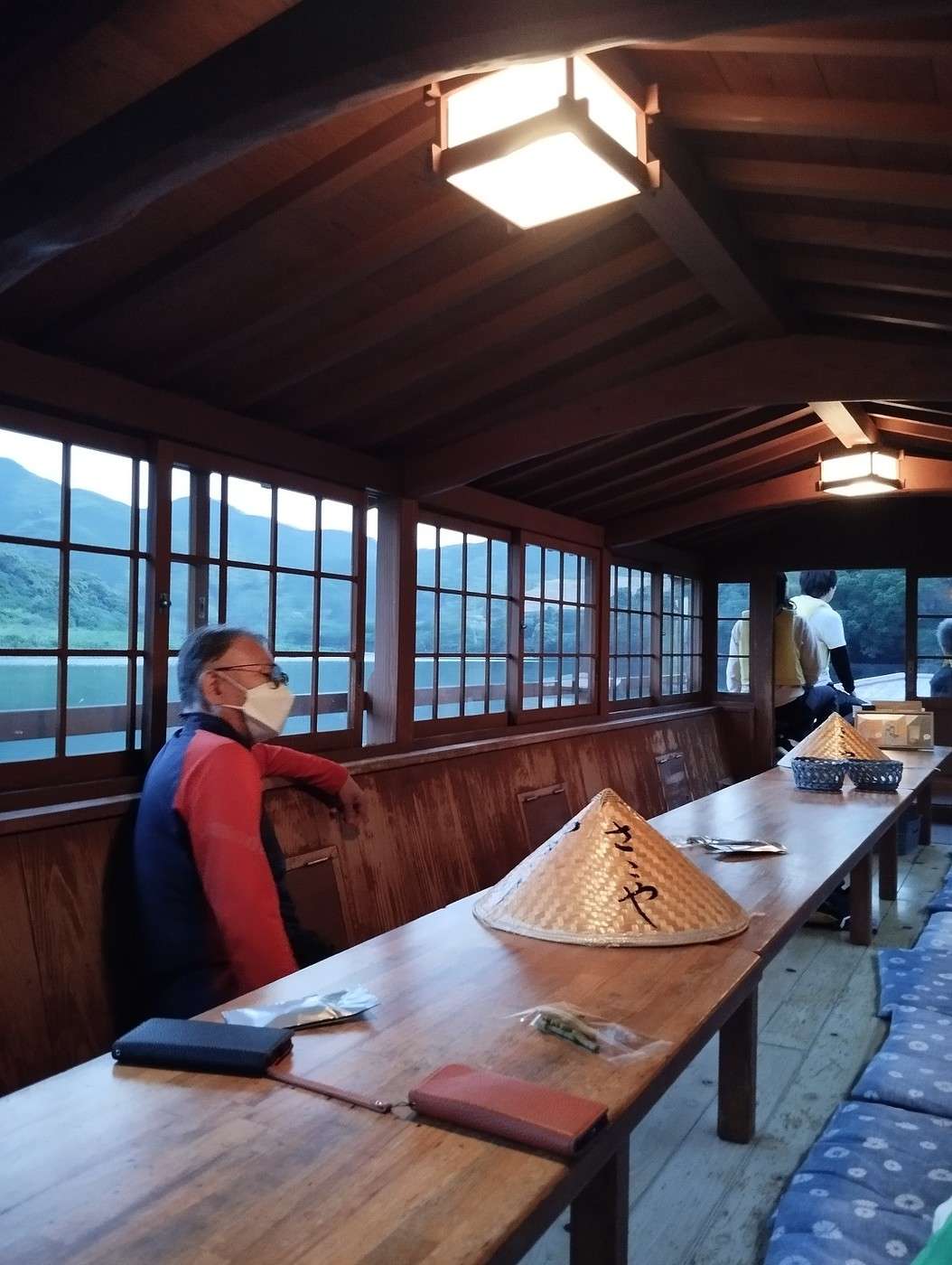
The sun has set, but it’s not quite night yet. We board the beautiful traditional boat called a Yakatabune. Here too, we have to take off our shoes. Inside, a long low table divides the space into two parts. The boatman arranges the passengers by size and weight to balance the boat. Once everyone is settled, we start sailing. The boat has windows that can be slid open to feel the air and see outside.


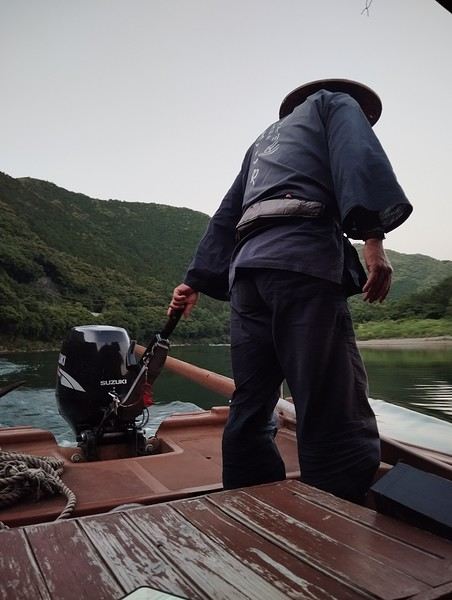
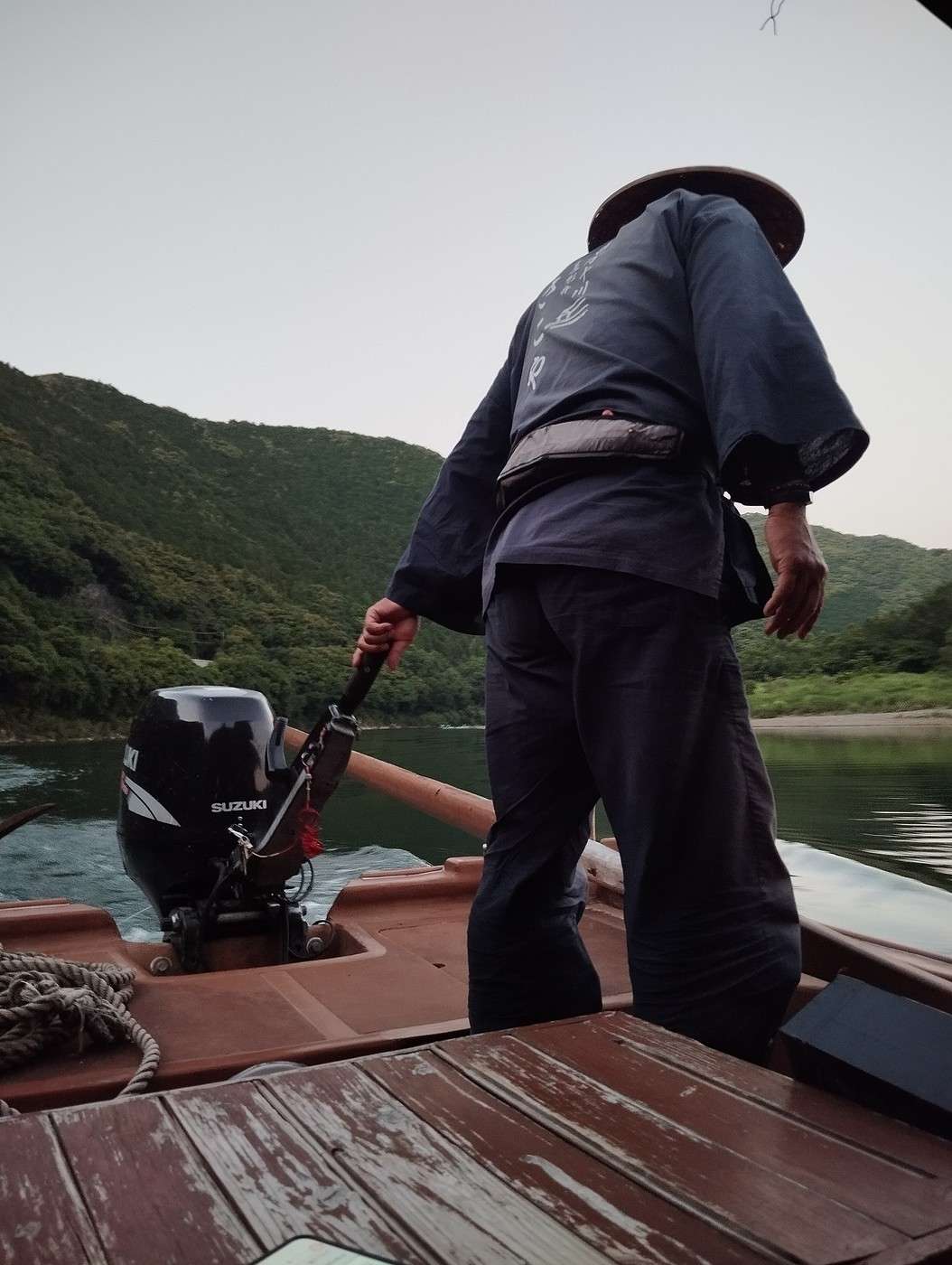
The boatman is really friendly. He explains a lot, even for us two—the only foreigners in the group—thanks mainly to the voice translator. The boatman used to be a fisherman, so he knows the river very well. We can see some photos of him in a small photo album he leaves available on the boat. He offers us some small Japanese appetizer treats. He tells us the river is 3 meters wide and the longest on Shikoku. You can fish for shrimp and eel here, among other things. We also learn that plastic bottles with trash are used to mark where fishermen’s nets are. He says some Japanese tourists think they’re just litter. I joke that maybe they want to pick them up. At that, the boatman bursts into laughter—a mix of shock at the idea and sheer amusement. He quickly tells me that could never happen because those plastic bottles are private property, and picking them up would be a crime.


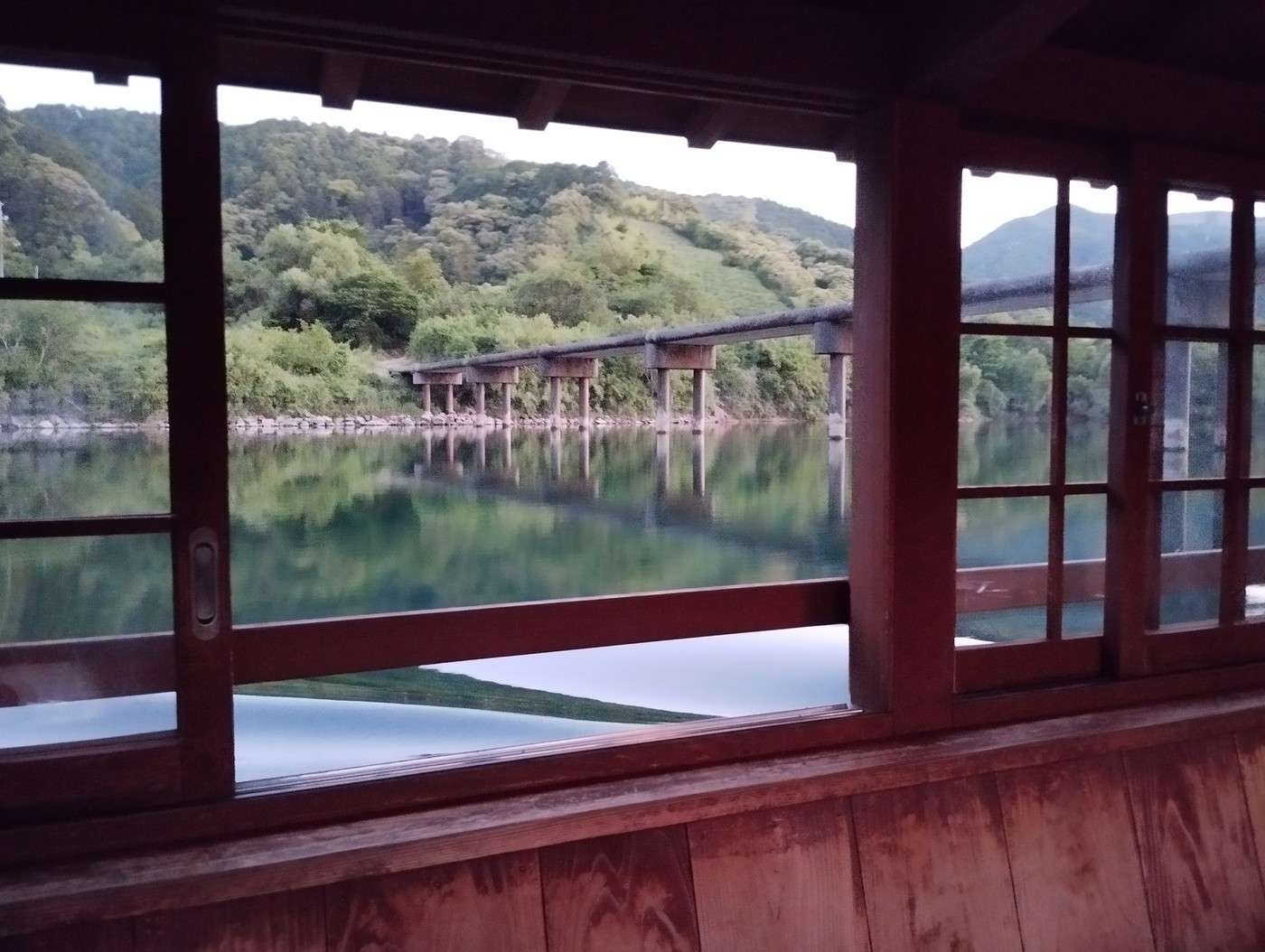
We pass under one of the region’s submersible bridges. They’re called Chinkabashi. These are bridges without railings, and they’re quite low. They were designed this way to reduce the risk of being washed away by floods.

We enjoy the tranquility of the river, being the only ones out for a ride. The boatman also tells us that the colder the water, the clearer it is. However, the color of the water—sometimes emerald, sometimes blue—seems to depend on the season.

Once night falls, we can see fireflies in different spots, glowing in groups. They shine with a bright light. It’s a natural spectacle best enjoyed in silence, punctuated by a few “kirei” (beautiful/pretty) and “kawaii” (cute) from the older Japanese woman sitting next to me, who marvels with the innocence of an 8-year-old. And it’s true—watching fireflies feels magical. You’re in the dark, waiting carefully, and when the night lights up with tiny glowing dots, it’s pure joy. Apparently, here in Shimanto, you can start seeing them as early as April, depending on the year. The boatman asks if we have this kind of activity in France. For the firefly-watching part, the boatman uses an oar to guide the boat closer to the shore once the motor is turned off. The word for firefly is *hotaru*.


The excursion lasted 2 hours. At the dock, a young man waits to help us back ashore.

We had planned to eat at the barbecue house, but given the time, we change our plans and decide to go to the izakaya recommended by our host. But it’s now 10 PM, and eating late in Japan is an adventure. When we arrive, the woman who greets us starts by saying no, then hesitates, thinks about it, goes to ask the chef, and finally tells us okay to eat—but we have to leave in 45 minutes. We say yes because we know we won’t find anywhere else easily—or maybe at all.

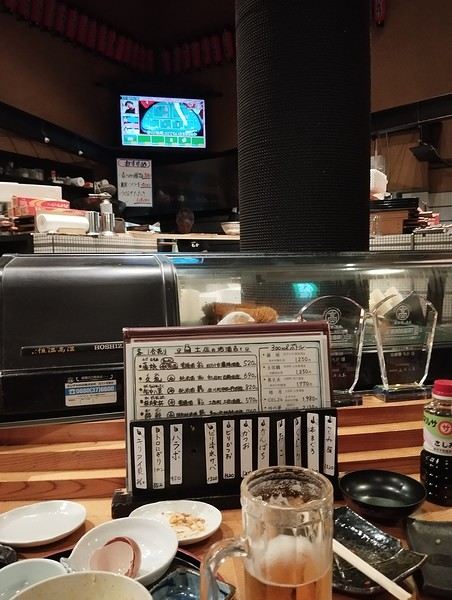
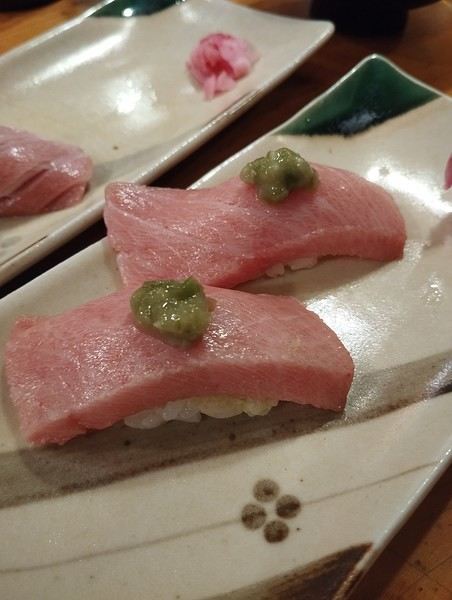
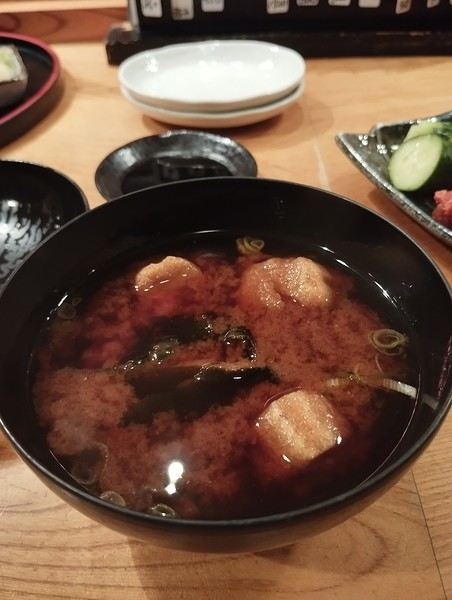
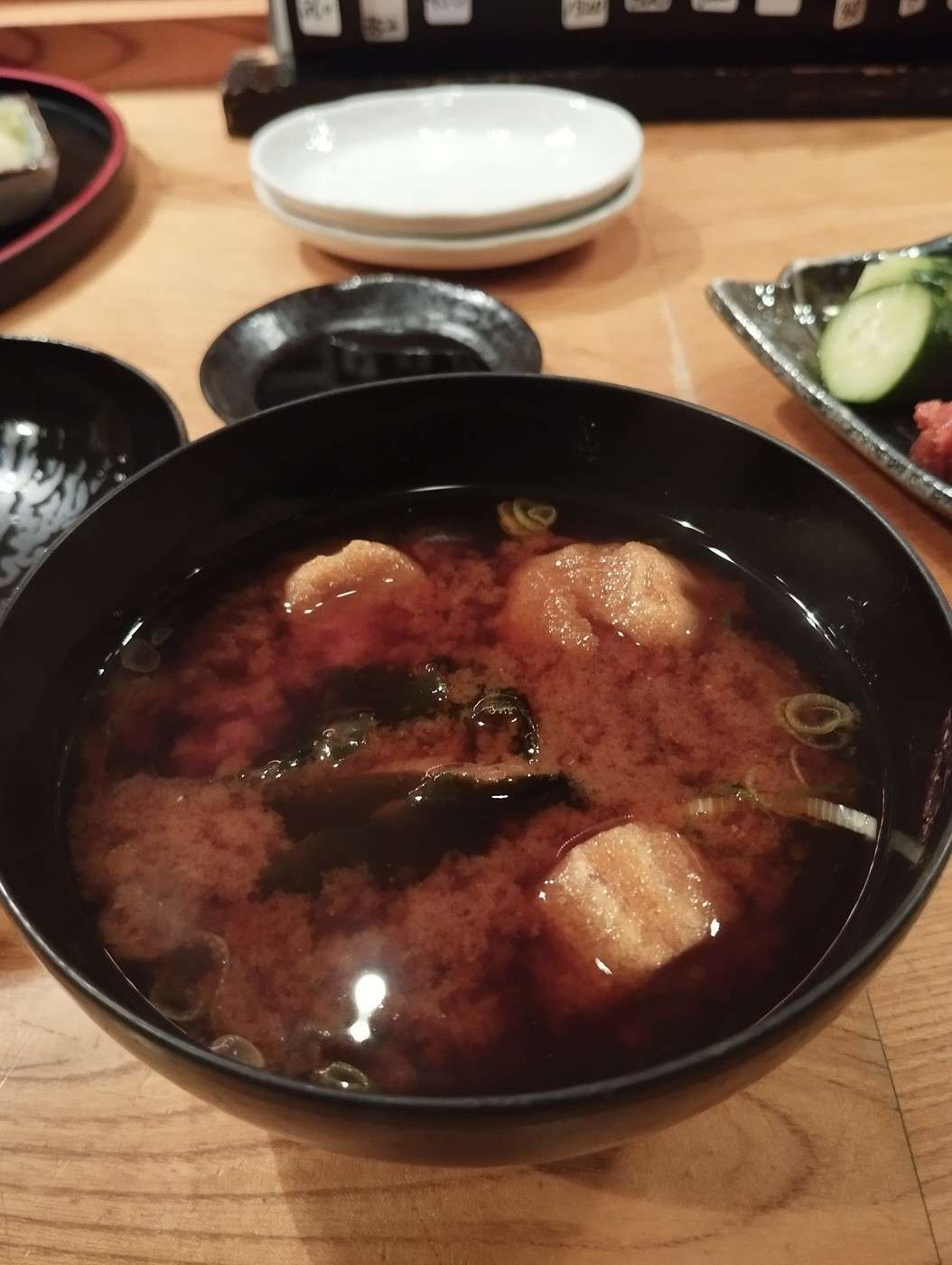
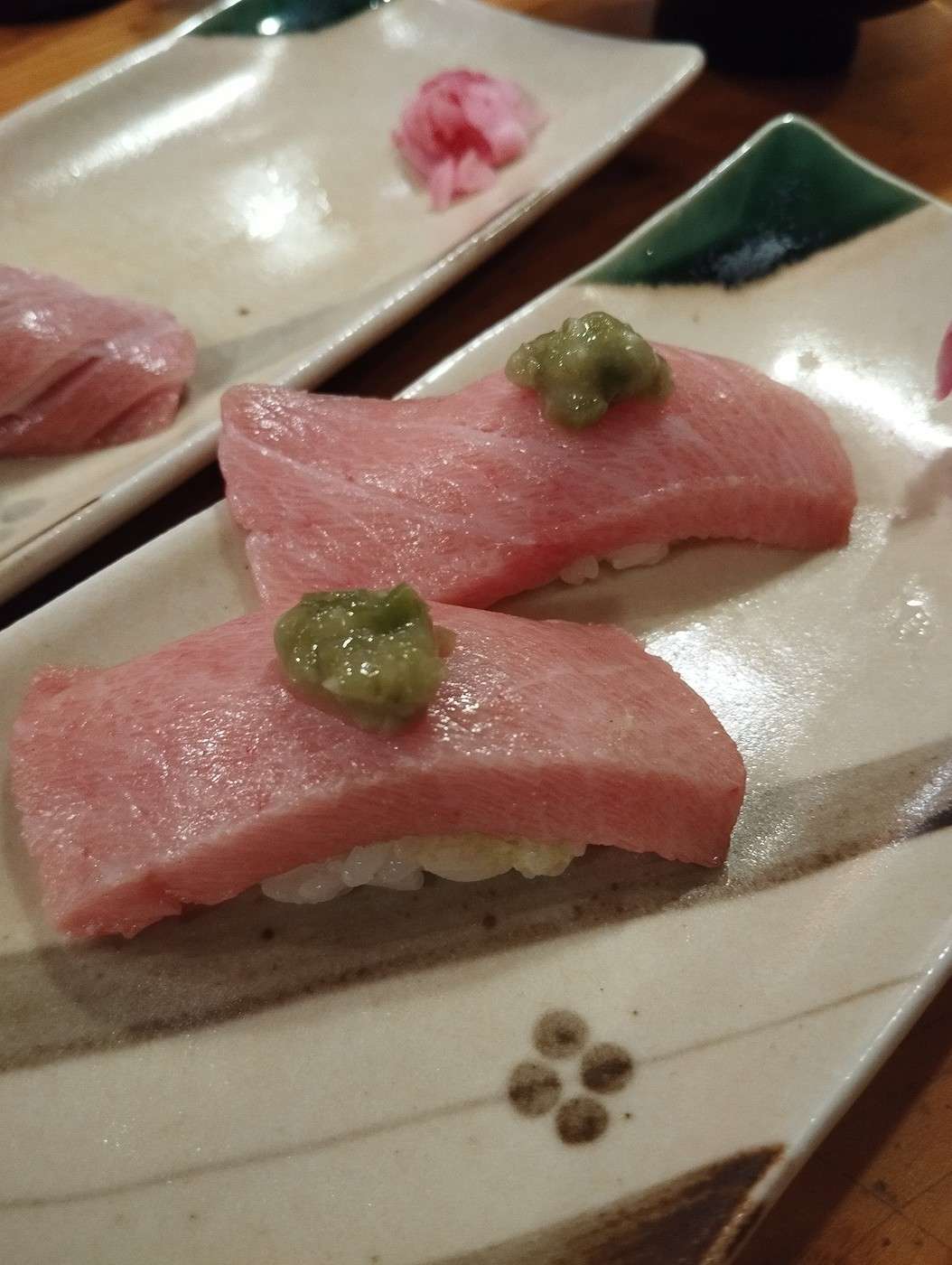
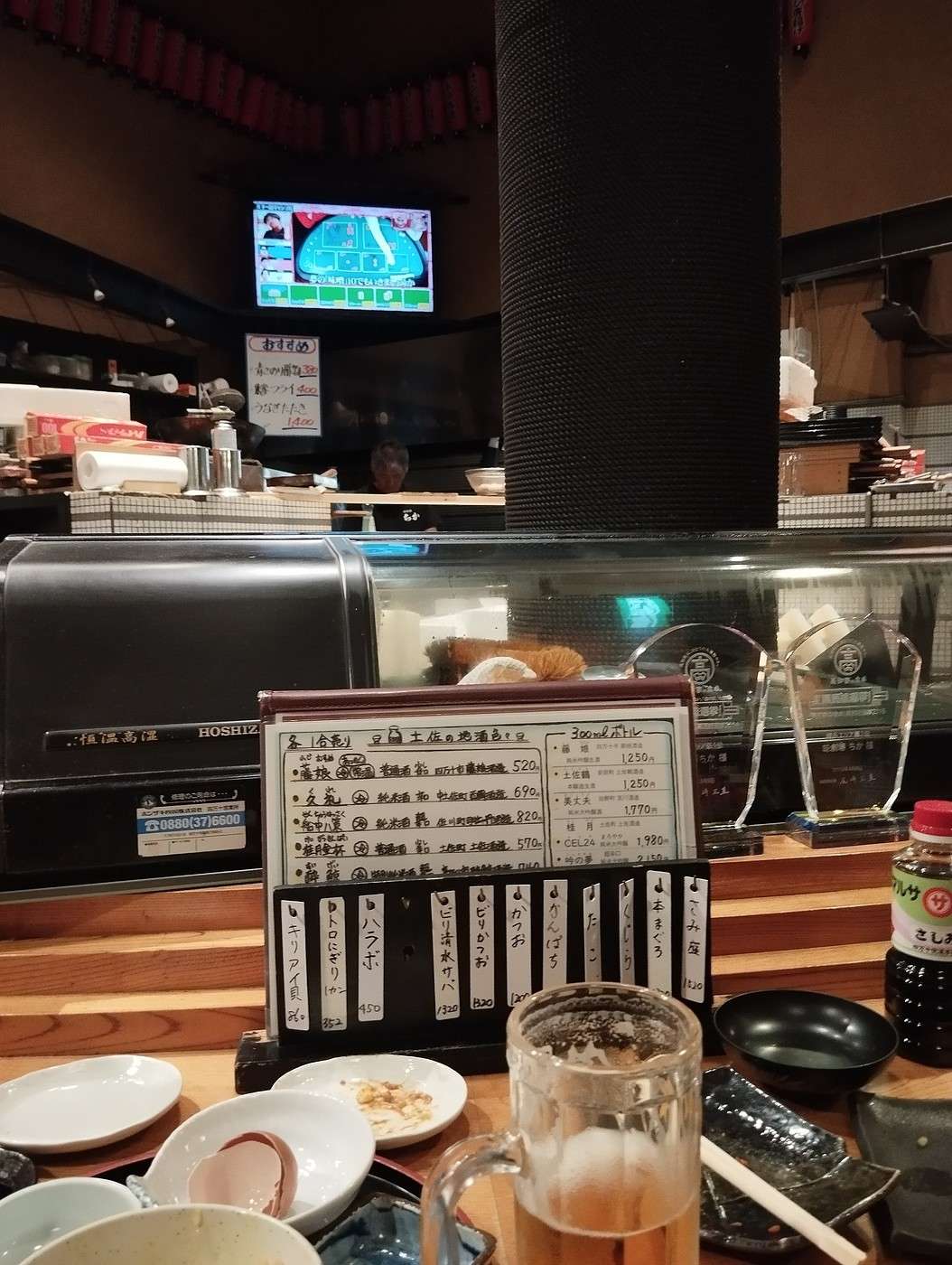
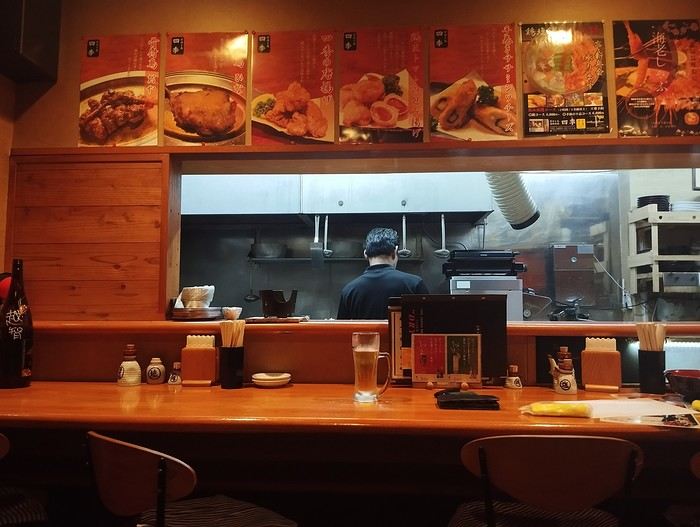
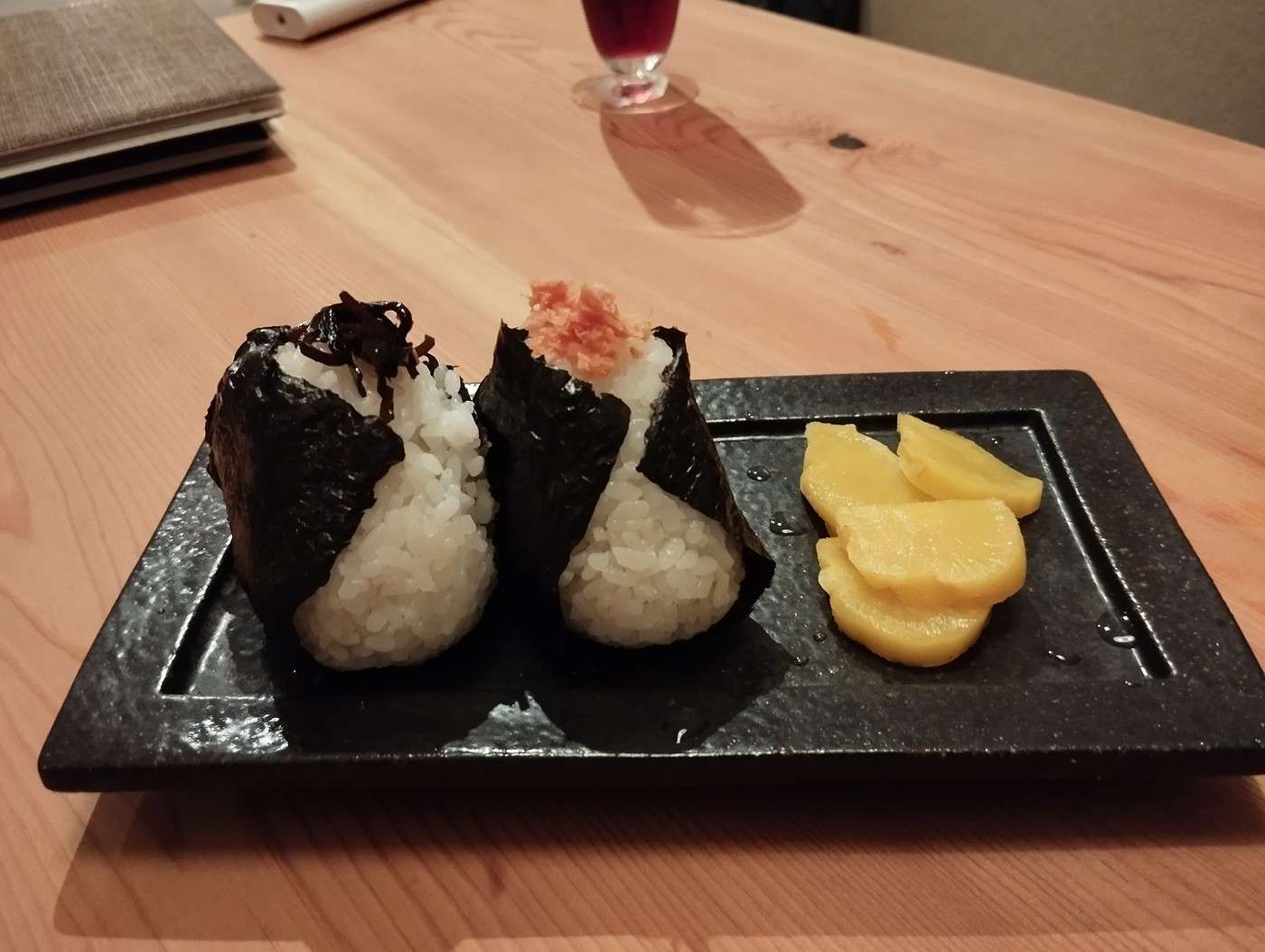
The vibe at this izakaya is really nice. We sit in a circle at the bar, with the TV in the background, customers chatting, and lots of chefs busy cooking, cleaning, and tidying up. We order quickly, so we don’t have much time to look at the menu, but we end up loving it: the miso broth is excellent, the fried chicken karaage is amazing, the fatty tuna sushi is delicious, and the grilled rice onigiri—plus the cucumber—are all great. We chat a bit with the servers, especially one energetic grandma who notices I’m learning Japanese and announces it to the chefs, sparking some conversation. In short, it was short but sweet. We head back home afterward. Time to sleep.


From Southern Shikoku, between land and sea, to the blue waters of Miyakojima and finally the megalopolis T

Muriel18 · 2025-10-09 · Message 27 of 75

Here’s a side of Japan that appeals to me way more than the cities 😉. No trouble getting by without a voice translator while you're there?

From Southern Shikoku, between land and sea, to the blue waters of Miyakojima and ending in the megacity T

Nathalie971 · 2025-10-11 · Message 28 of 75

Here’s an aspect of Japan that draws me in more than the cities 😉. No worries about making yourself understood (without a voice translator) once you're there?


This might just inspire you to discover this side of Japan for yourself.

Without a translator, of course, if you don’t speak any Japanese at all, it can be tricky—but Japanese people often use their phones to translate. I’d say it depends on the situation: if it’s just to find a place, it’s not a problem because the Japanese will guide you to the spot you’re looking for. If you want to chat with them about yourself or them without knowing Japanese or English, it’ll be limited, though you can always communicate with gestures and eye contact.

From my four trips, even though I’ve picked up a little Japanese since my second visit, language never felt like a barrier—but obviously, we didn’t have philosophical debates. It’s also very personal; everyone connects with people differently.

Southern Shikoku: Between Land and Sea, the Blue Waters of Miyakojima, and Finally the Megacity T

Nathalie971 · 2025-10-12 · Message 29 of 75

Day 7 - Heading to Cape Ashizuri

This morning again, we enjoy the house and garden while having breakfast. We hit the road leisurely in the early afternoon. Today, we're heading all the way south toward the tip called Cape Ashizuri.

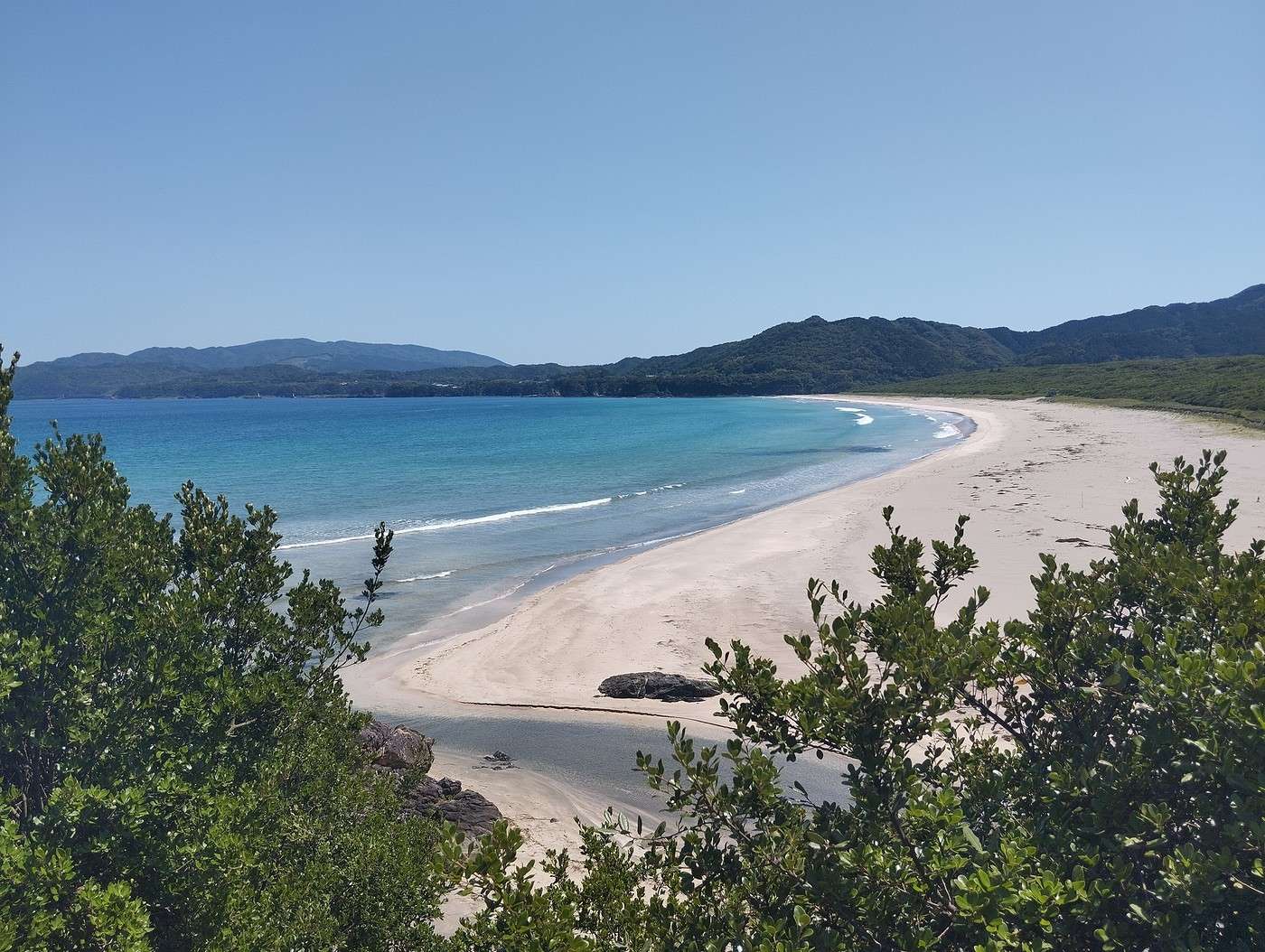
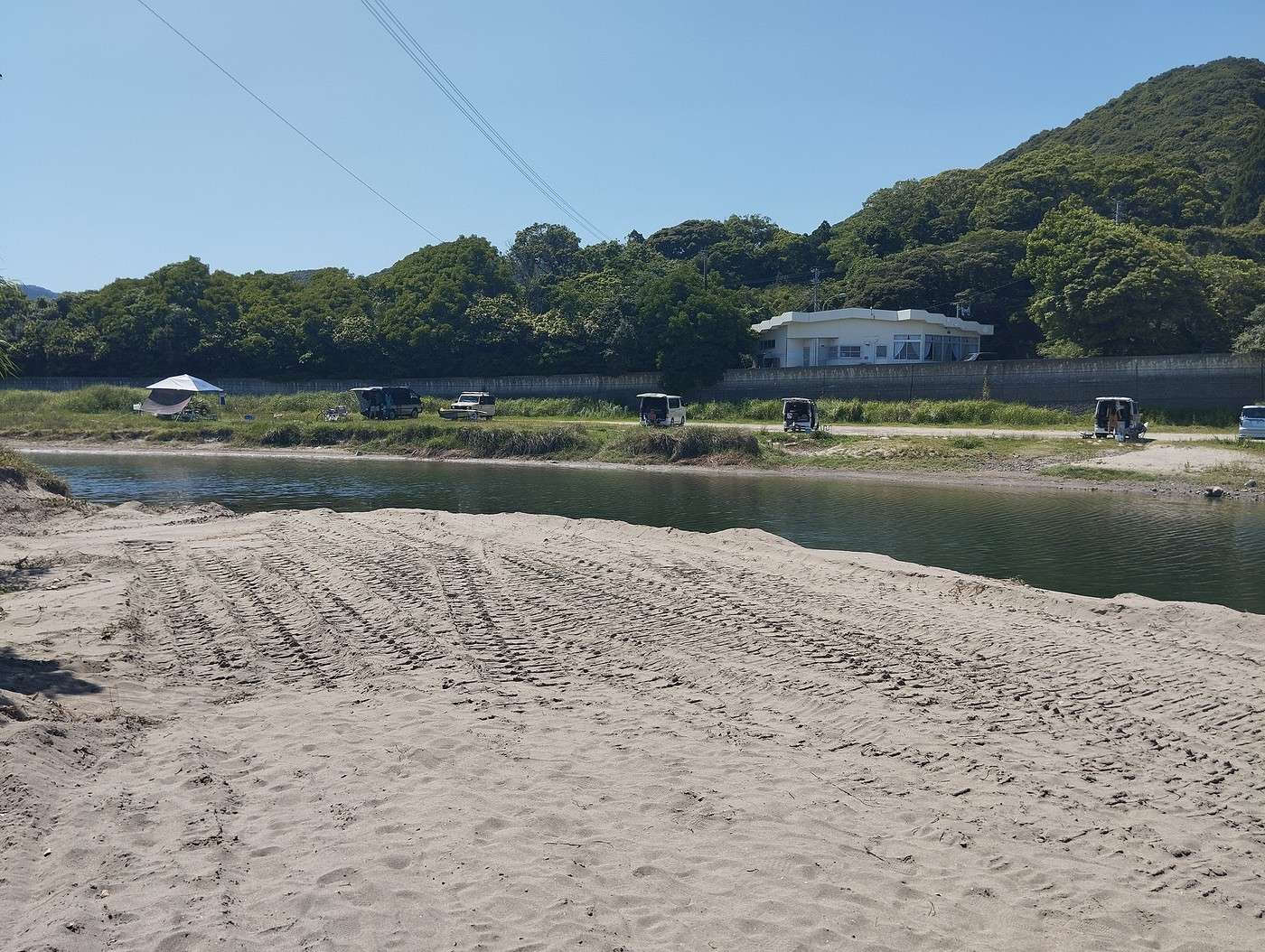
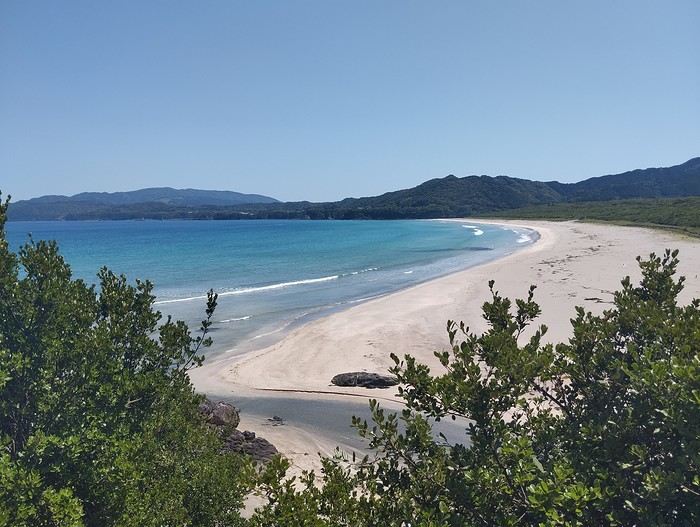
On Route 321, while I'm driving, a stunning beach suddenly appears on the left. As is often the case in Japan, where there's a spot, there's a well-placed parking lot right in front of it. I decide to stop and take a closer look. But I wasn't prepared for what I saw—a magnificent, immaculate beach nearly 2 kilometers long, lined with rows of pine trees.


This is Oki no Hama beach. The scenery hypnotizes me and calls out to me. We decide to stop there. Since we're up high, we get back in the car and turn left five minutes later to descend to the beach level. In the parking lot, there are only 5-6 vans with Japanese surfers camping. They're napping, and their clothes are drying in the sun. Absolute tranquility reigns here.


A sign warns to watch out for *bahin*.

We walk along the beach, lulled by the sound of the sea ebbing and flowing, the waves gentle. It's hot, and a breeze brings a bit of coolness. The heat combined with the beauty of the place makes me want to take a dip. I had planned to do it later in the afternoon at Kashiwajima, but I decide to enjoy this spot right away. I swim and see quite a few fish with the naked eye. I think the place must be great for snorkeling. The lush natural setting makes this swim really enjoyable, especially since there's no one around. Only a pilgrim walker comes by for a few minutes. Meanwhile, my partner takes the opportunity to walk around the area while I swim. Total relaxation... I even dozed off for a mini nap while drying off, listening to the waves. But it's time for us to get back on the road. We head to the car, rehydrate, and an eagle flies overhead. We enjoy this wildlife spectacle, which has been a frequent occurrence during our stay in Shikoku.

Back on the road toward Cape Ashizuri, a totally surprising scene unfolds before us. Pruning work is underway, and as usual, there are many workers, but what really strikes us is that two workers are holding a screen to prevent debris from landing on the road where drivers pass. Another example of the pragmatism of daily life in Japan.

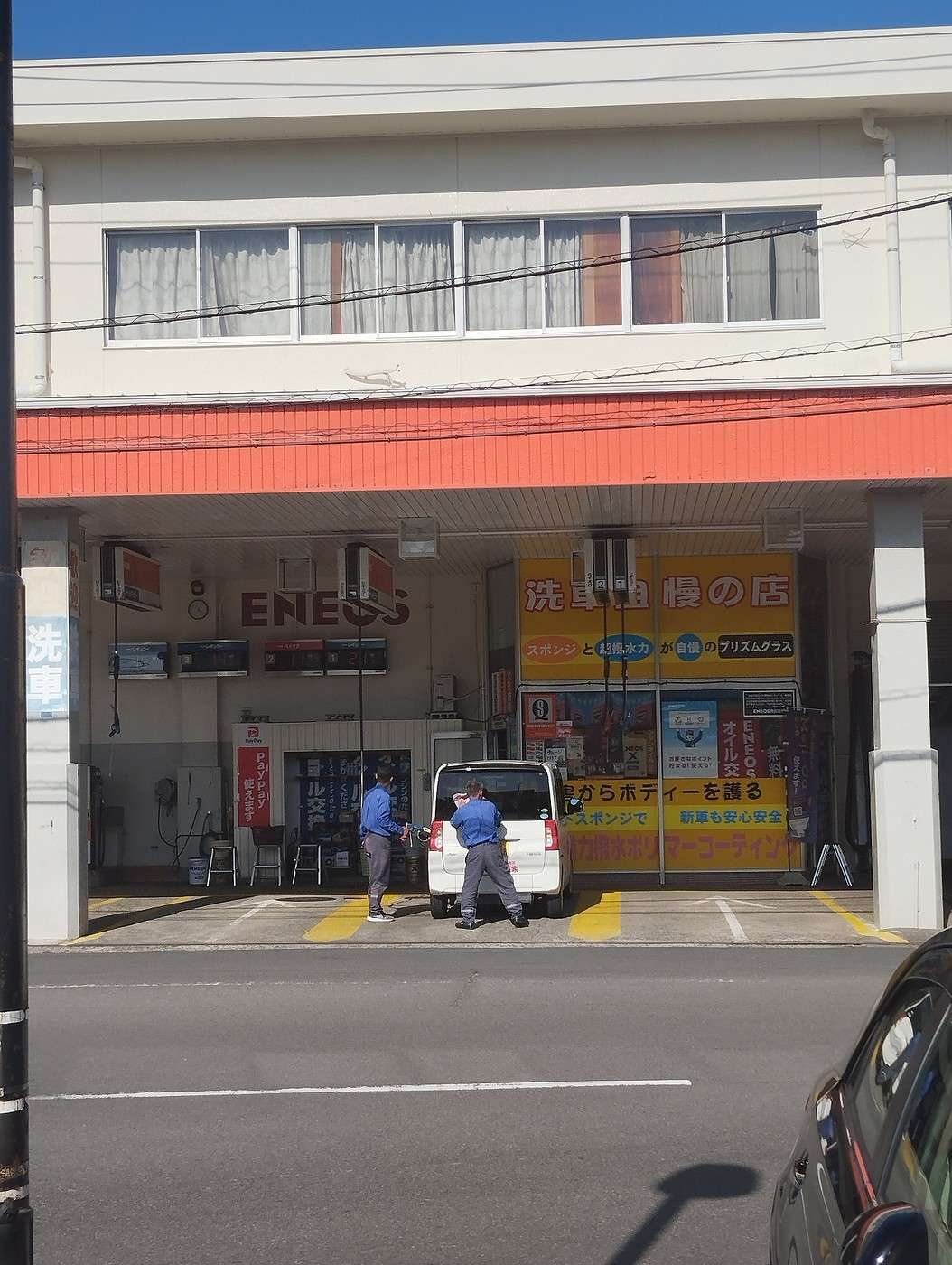
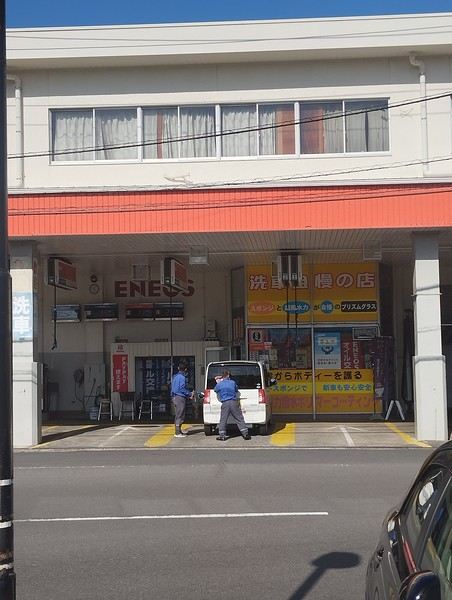
Further on, we stop at a gas station. As soon as the two employees see we intend to stop, they rush to guide us into a parking spot, then quickly ask what type of fuel and how much we want. You don’t even need to get out of the car—just roll down the window. While one fills up the tank, the other has already grabbed supplies to clean your windshield, both inside and out. It’s so fast that you barely have time to process what’s happening. And just like that, five minutes later, you're back on the road with a clean car and a full tank, having been guided out of the gas station as well.


We cross the road to go to the Sunny Mart supermarket to grab some snacks. As soon as we enter the store, staff greet us warmly. Here, you don’t go unnoticed. We find a tray of tuna sushi and sashimi, as well as some yellow watermelon. And in this rural area, we see for the first time a sign indicating gender-neutral restrooms.

After shopping, we hit the road again and finally arrive at our destination.

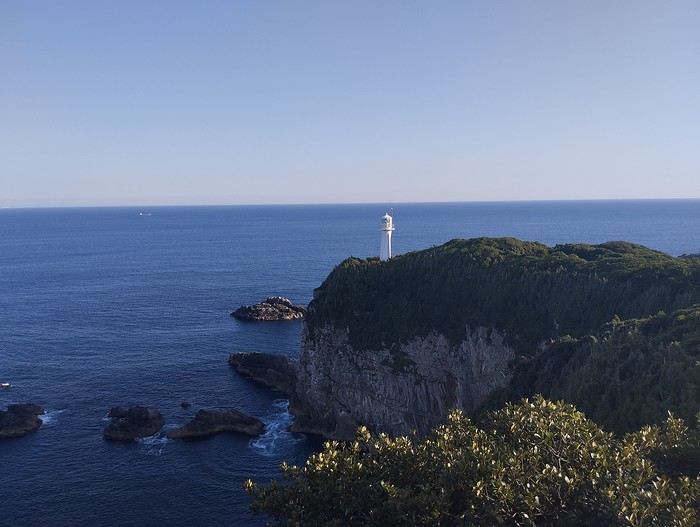
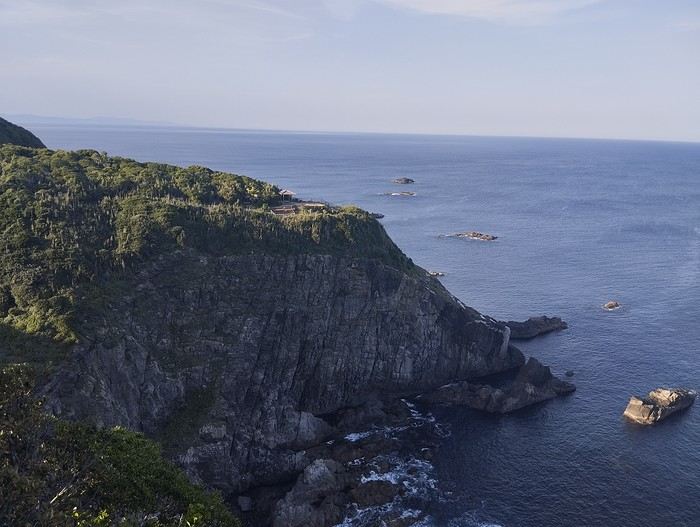
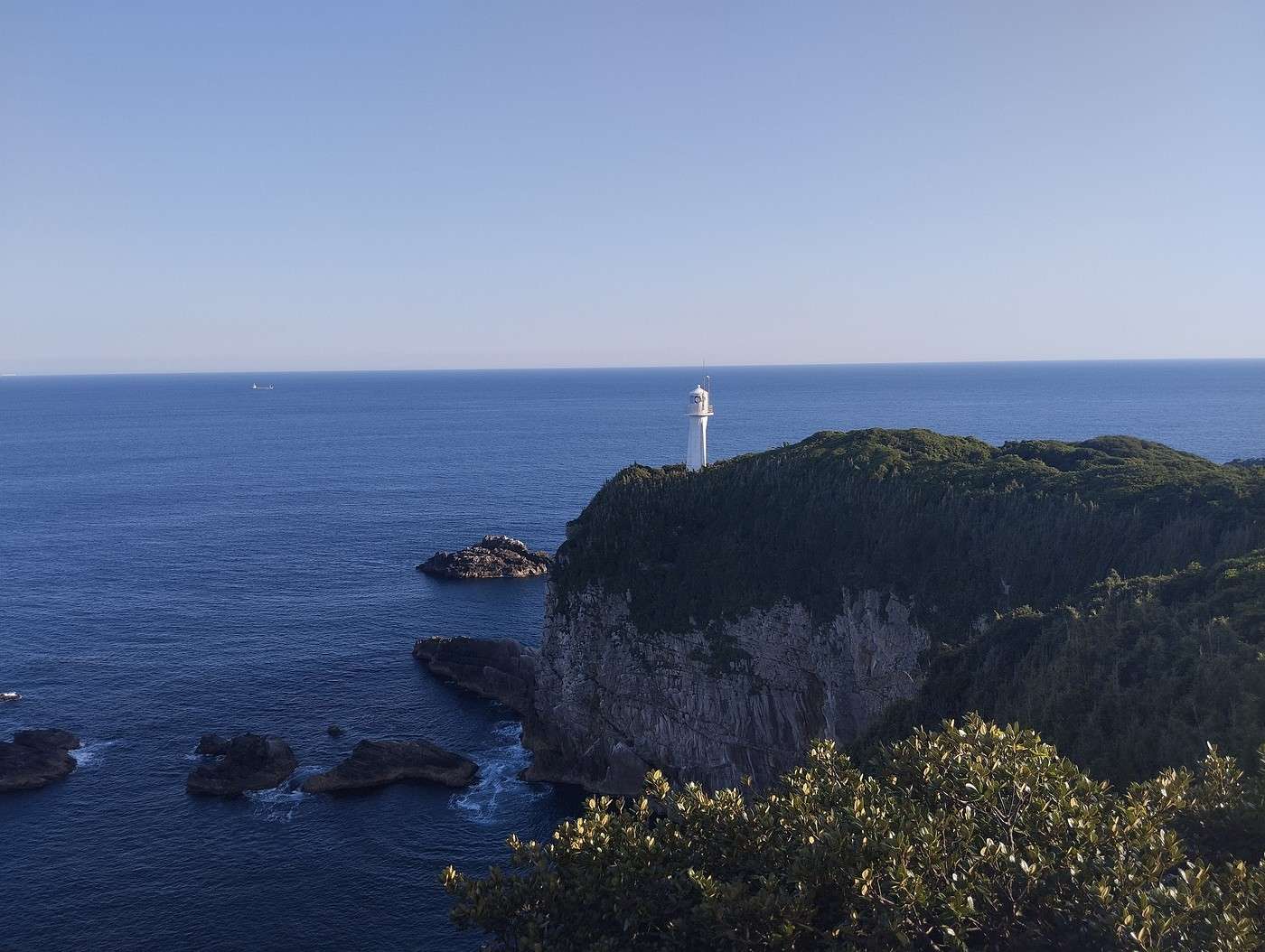
The cape is accessible on foot via hiking trails surrounded by tropical plants. There are different paths, so you don’t have to take a linear route. At the observatory, we have a clear view of the white lighthouse perched in the distance on a promontory. The Pacific Ocean stretches out before us as far as the eye can see. The site is quiet at this hour; we only cross paths with a few Japanese and Spanish tourists—about four in total.


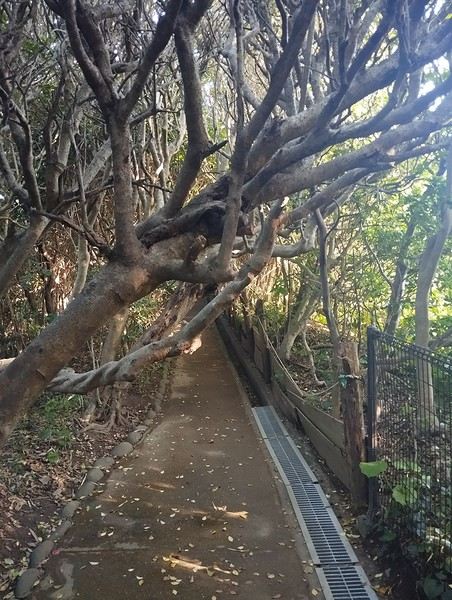
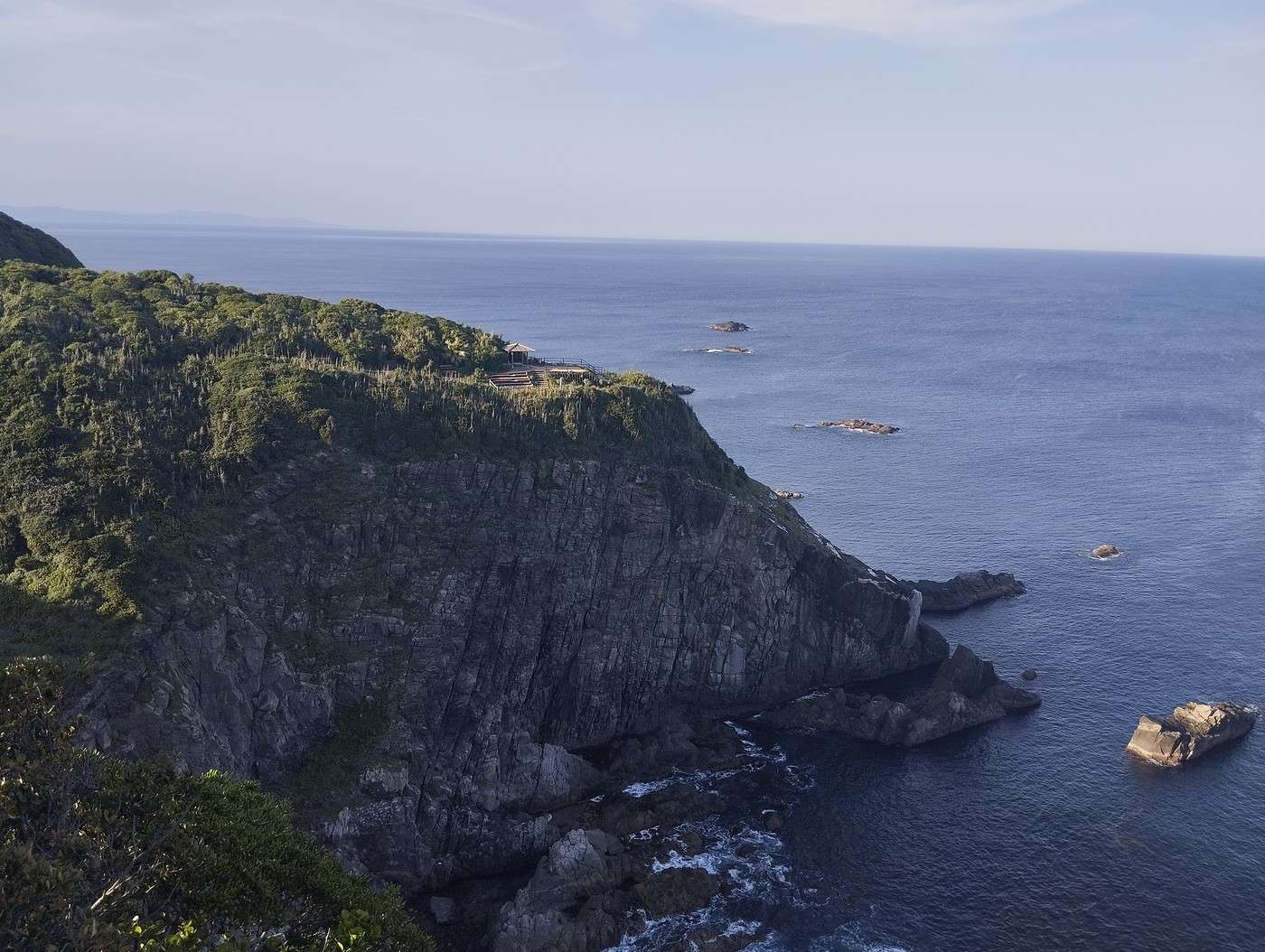
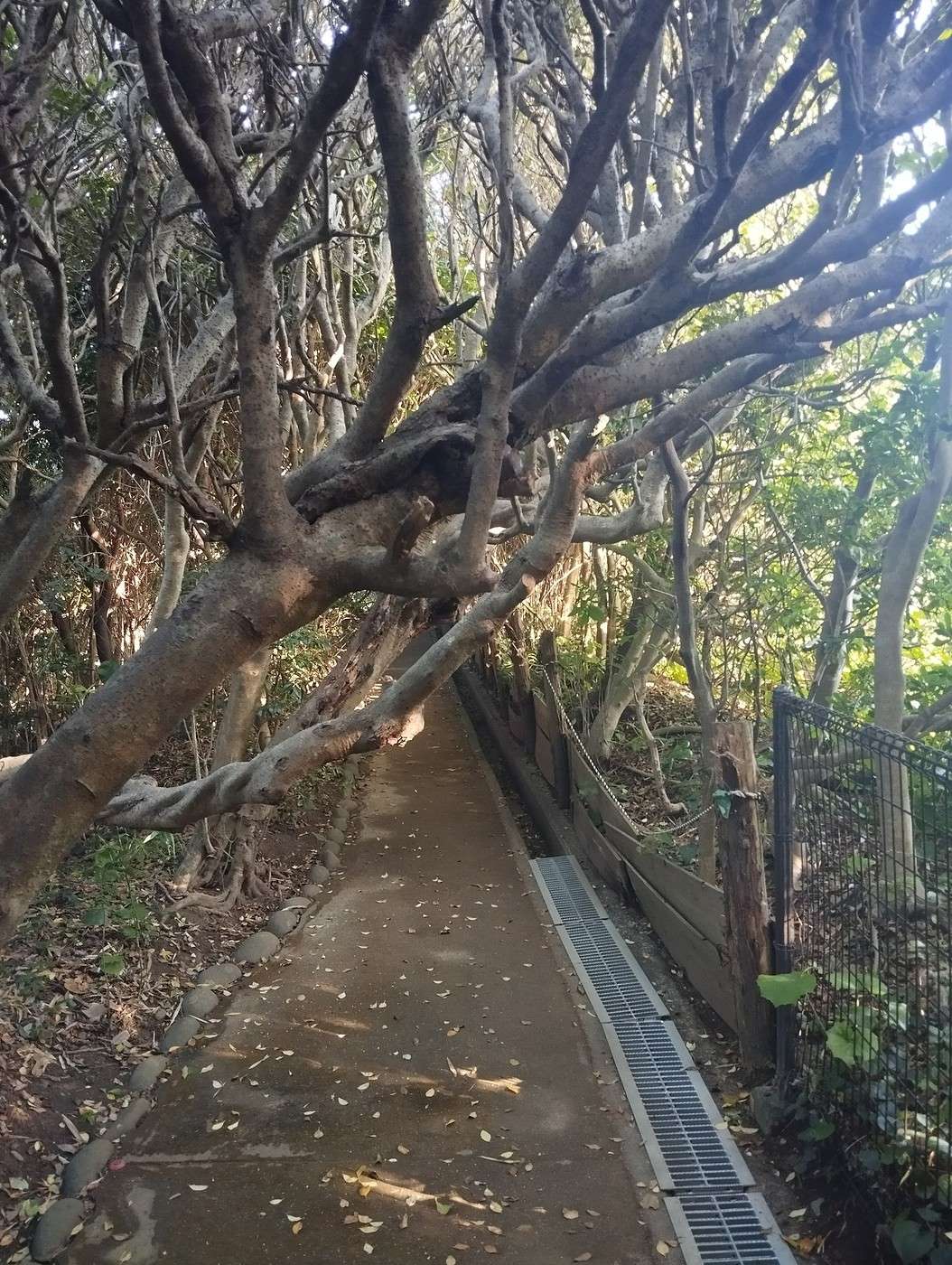
From the observatory, we take the trail along the coast, which leads us through a tunnel of trees.


From Southern Shikoku, between land and sea, to the blue waters of Miyakojima and finally the megacity T

Nathalie971 · 2025-10-12 · Message 30 of 75

Day 7 Follow-up - Heading to Cape Ashizuri

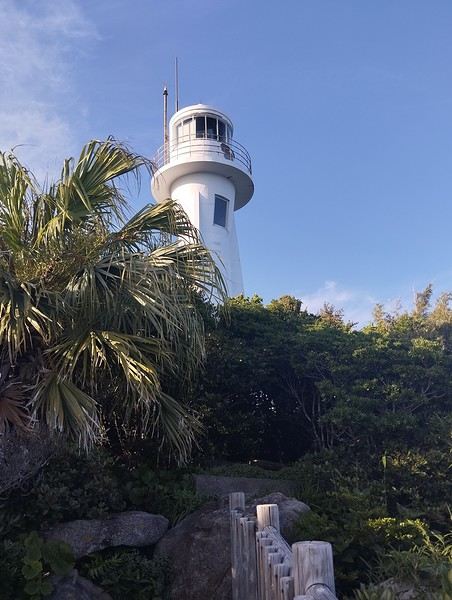
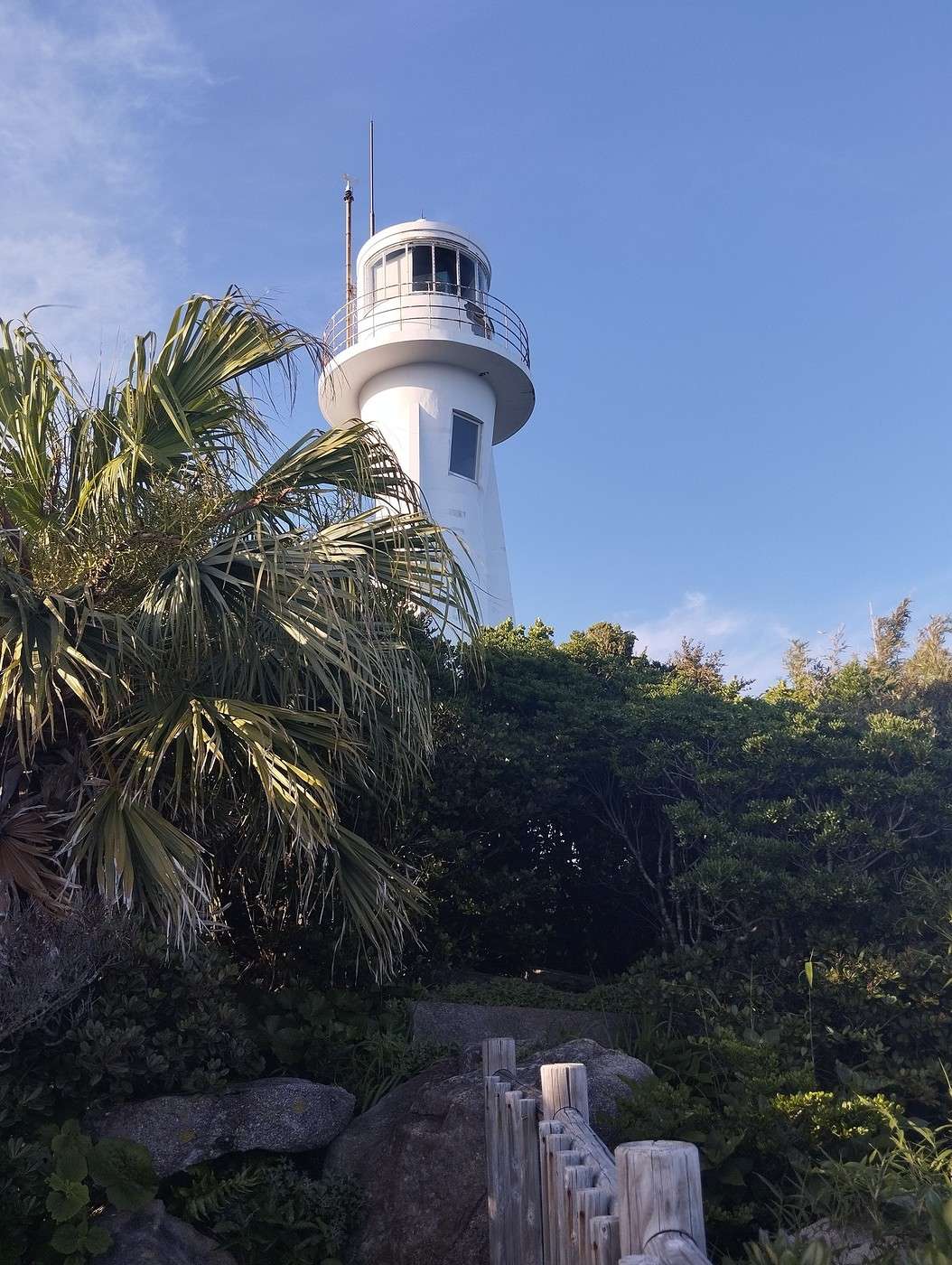
This contrast between the sea and the forest is really interesting. Then the lighthouse appears, towering over the steep cliff. It’s all white and dates back to the early 20th century. It’s surrounded by palm trees—there’s a tropical vibe here.

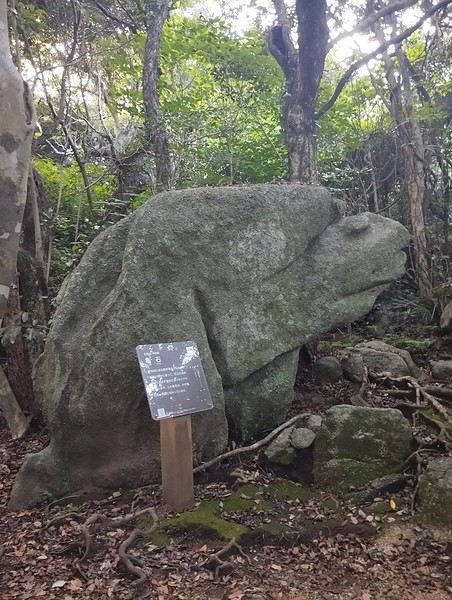
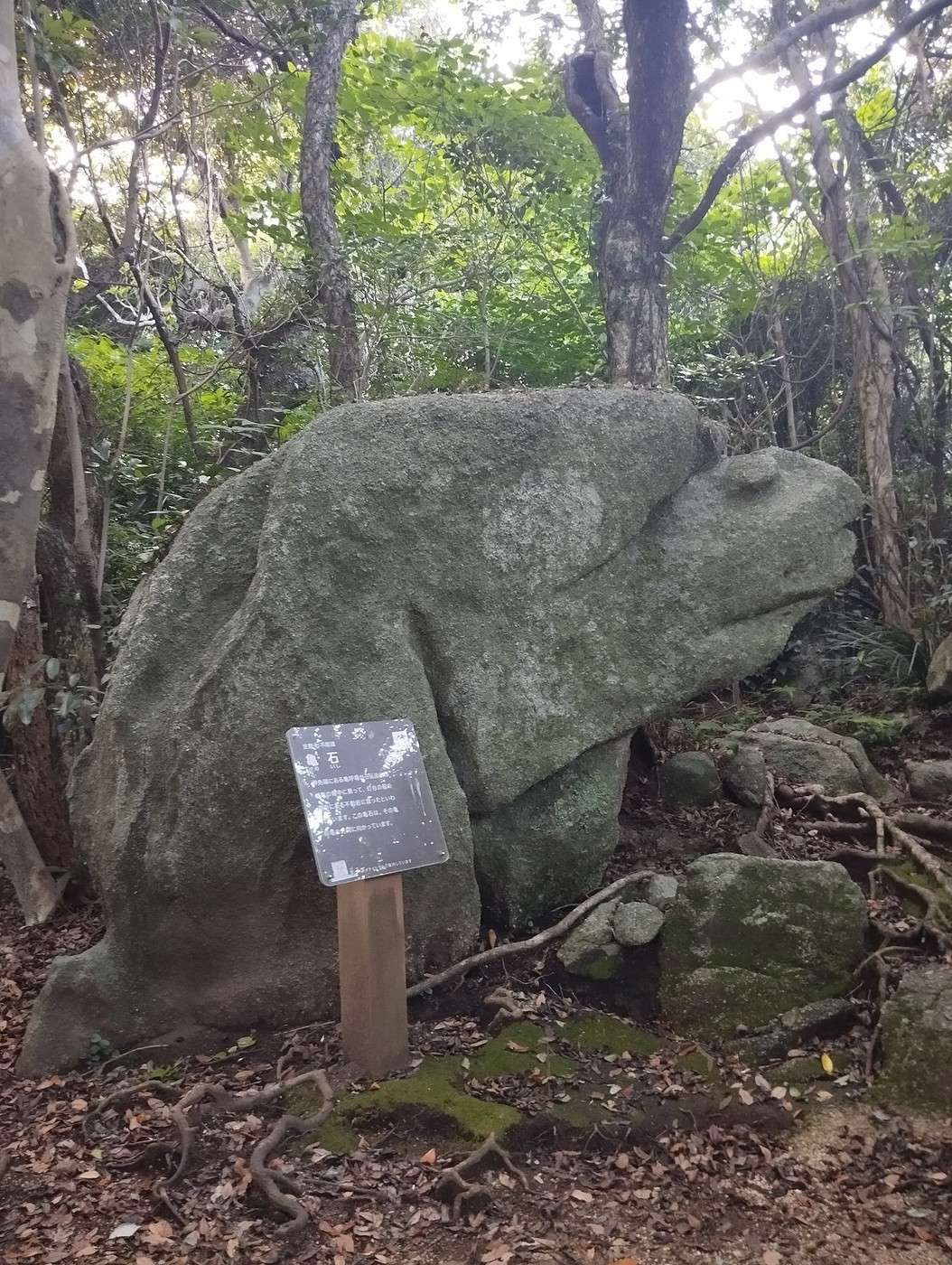
Next, we pass a turtle sculpture (kameoshi) and decide to continue along the coast first.


Wooden signs point out several different points of interest. The one we chose is supposedly only 600 meters away. However, the path, which had been flat until now, turns into a mix of uneven stone and dirt staircases, some steep. It’s pretty tough going. With the muggy heat, this little walk suddenly becomes much more of a workout, but we keep going even though the 600 meters feel way off.

Finally, after a climb, we reach a fork: one path is a steep descent toward the sea, and the other leads who-knows-where since there are no more signs. We take the staircase plunging toward the sea, and the view opens up, giving us a breath of fresh air. Coming up the other way, a young Japanese man appears. My partner, who’s faster than me, is already chatting with him when I catch up. He seems eager to talk, and we get to know each other a bit. This young man lives in Miyako, in the Tohoku region. He works on large fishing ferries. He explains that working on ferries is tough because he works a lot—starting at 6 PM and finishing at noon the next day. He’s currently on a two-week break. He’s visited Matsuyama and Uwajima. When we tell him we’re here for a month-long vacation, he’s shocked. He also teaches us the Japanese word for butterfly.

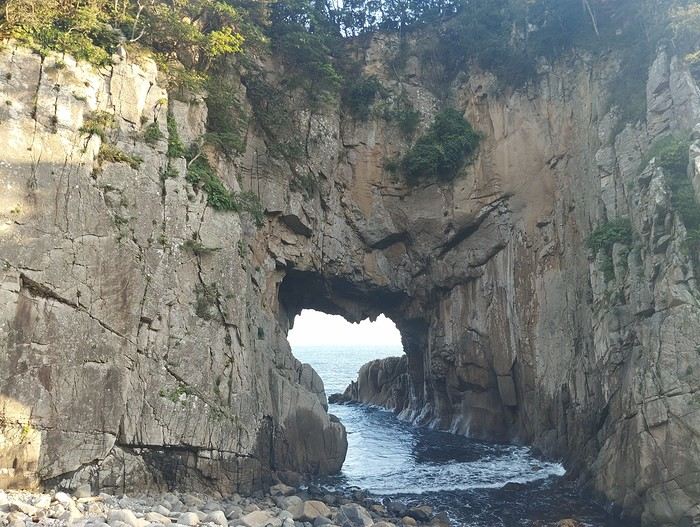
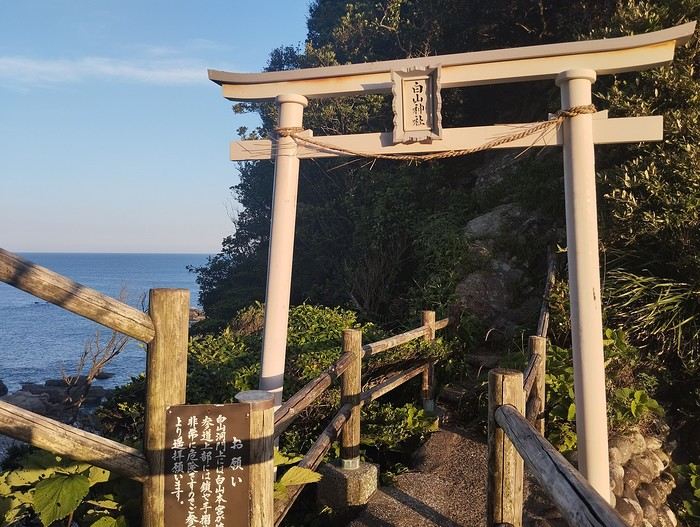
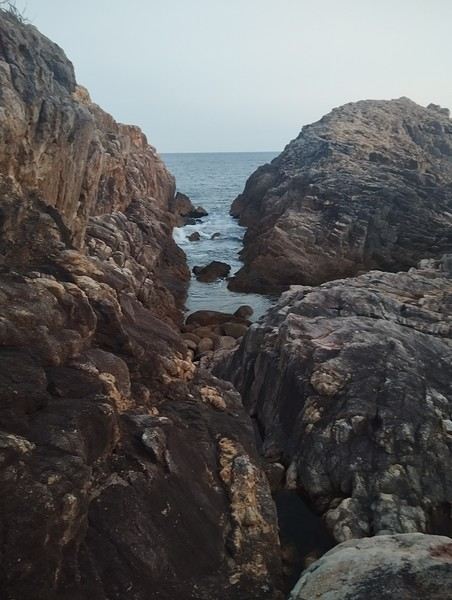
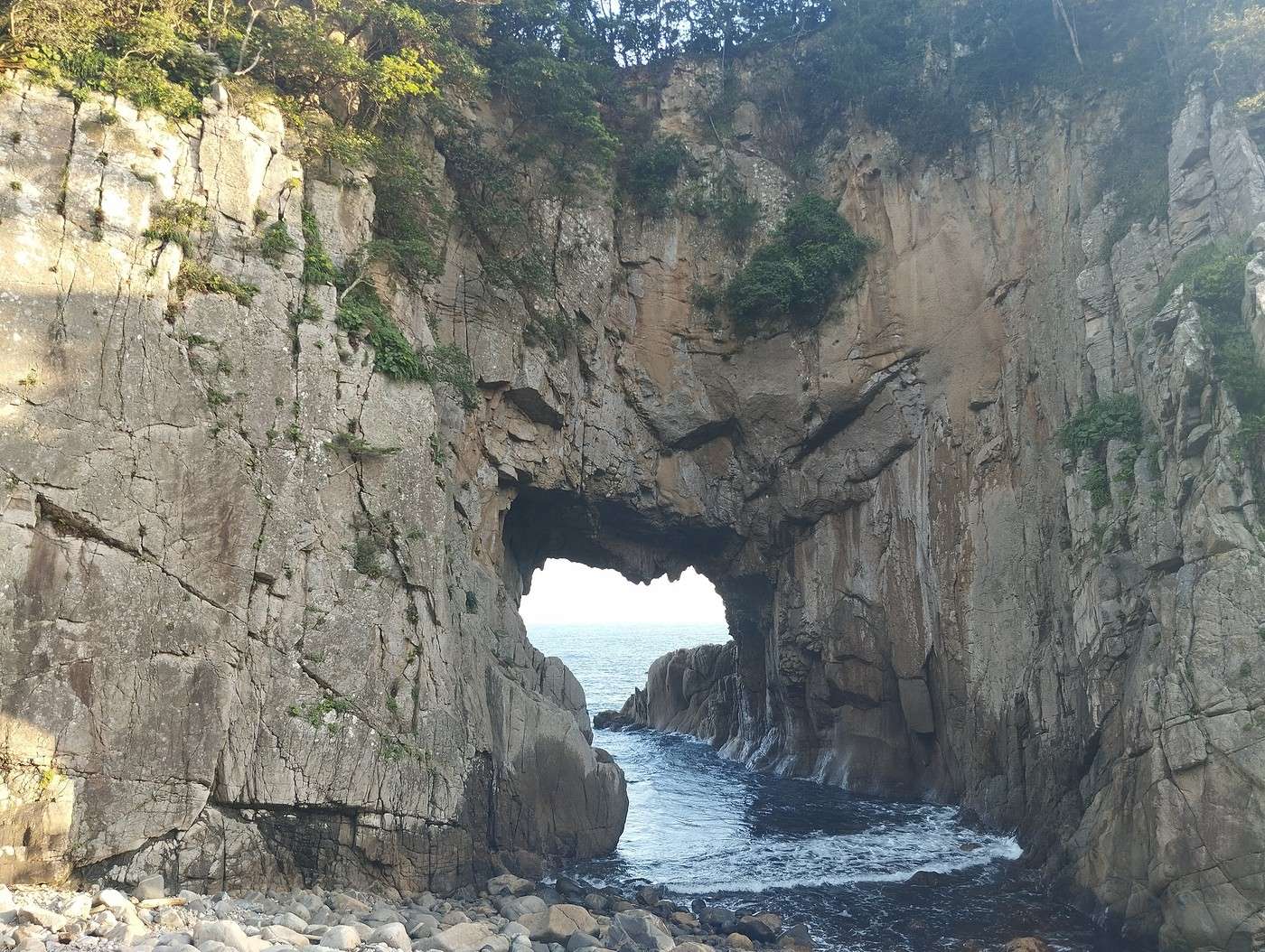
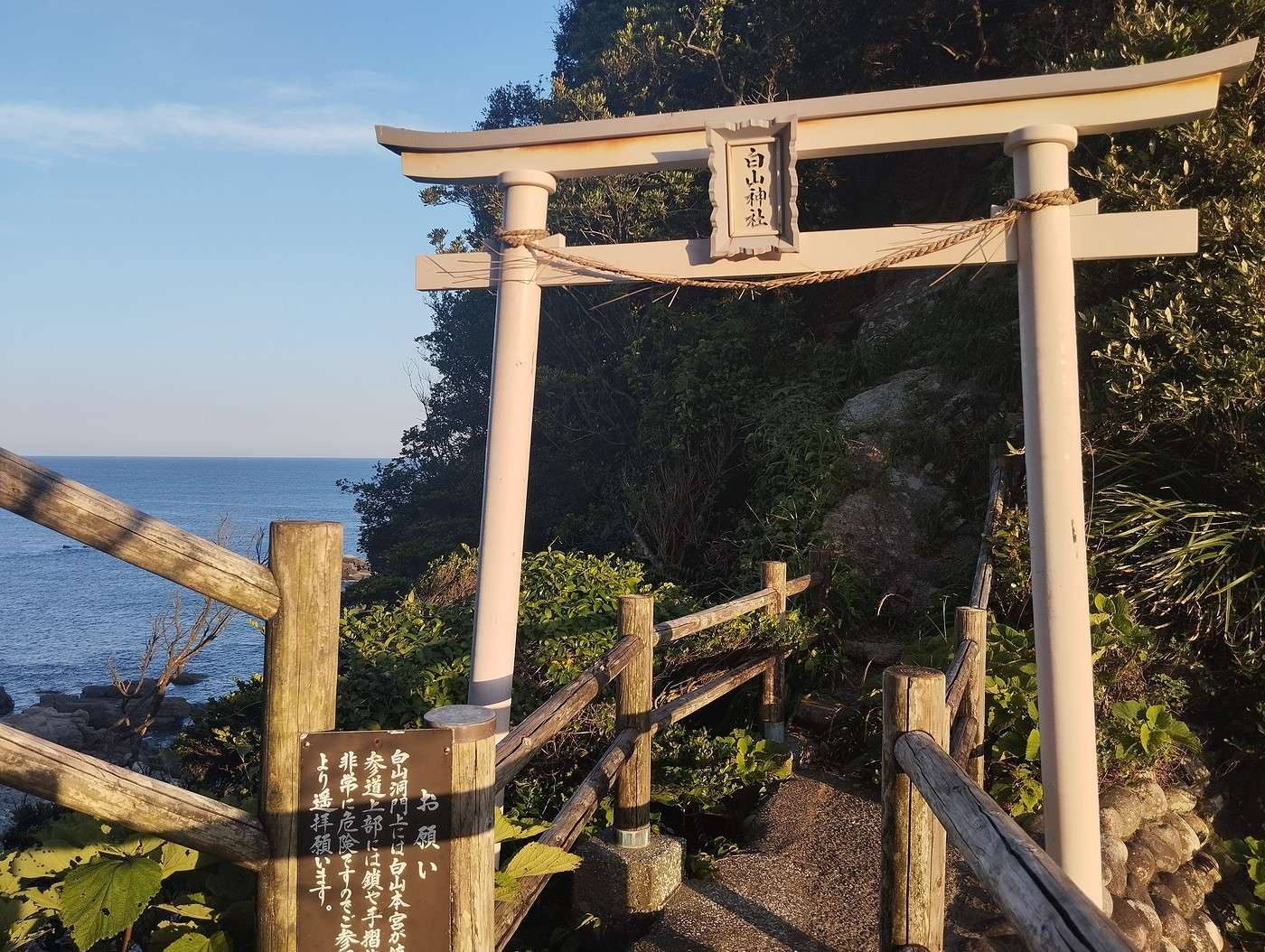
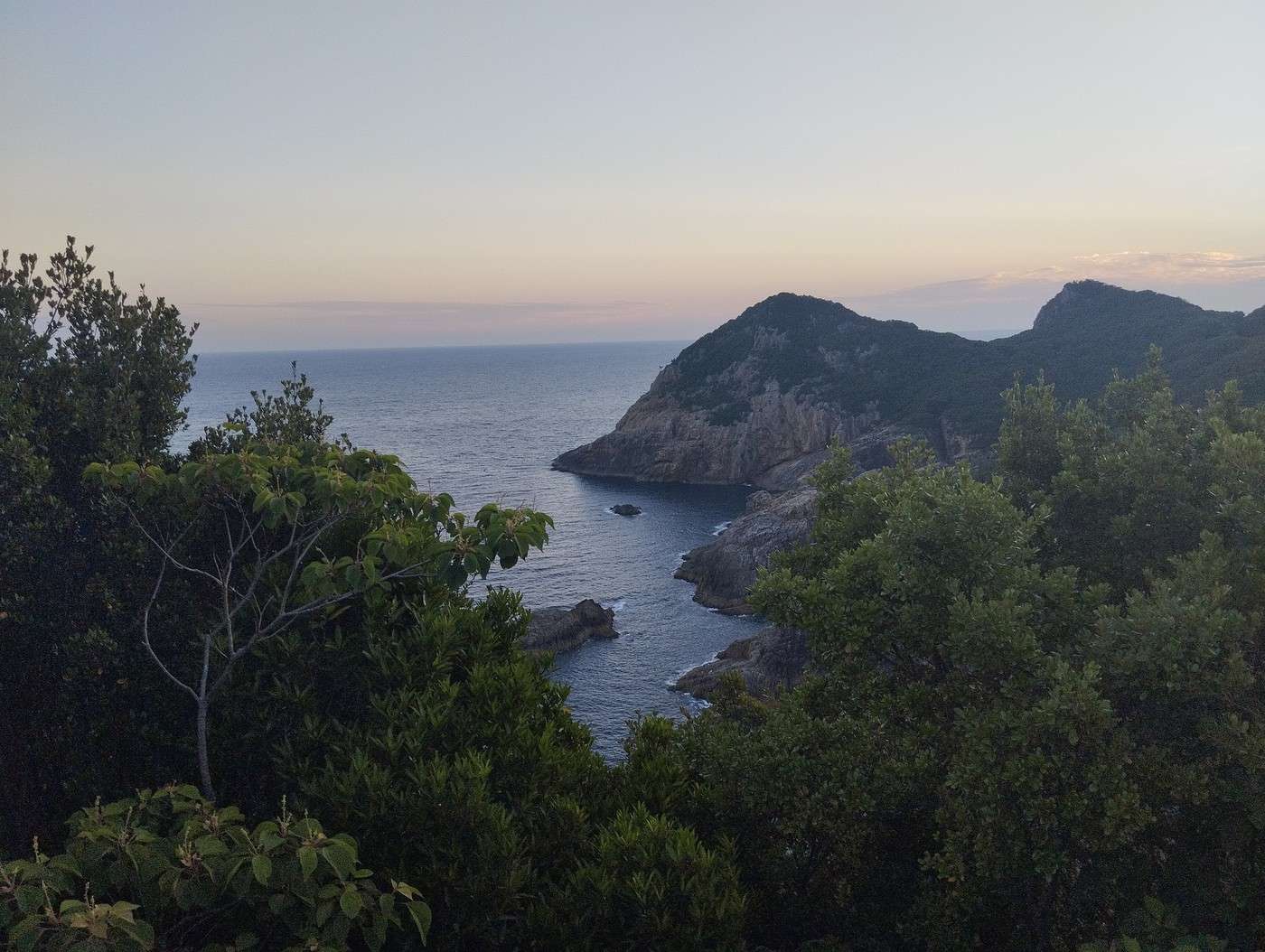
After this chat, we finish the descent and finally reach Hakusan Cave, carved out by the sea. It forms a heart shape. The cave is said to be 16 meters high and 17 meters wide. The waves crash in, sending us a burst of that salty sea energy. As you’d expect in Japan, benches have been set up so you can enjoy the view—we do, all alone since there’s no one else around.


We then retrace our steps, passing under the torii again—the spiritual gate of the place—which, at this time of day, is bathed in the soft late-afternoon sun. Despite the lack of clear signs, we easily find another path, partly along the main road that runs alongside the park, to get back to the car—without running into any wild boars. Just before that, there’s a sort of quarry with Buddhist statues. Nearby is Temple No. 38, I think—maybe there’s a connection.

Anyway, we hit the road again to visit Ryugu Shrine. It’s only a 15-20 minute drive, but part of the route is through a mountainous area with narrow roads.

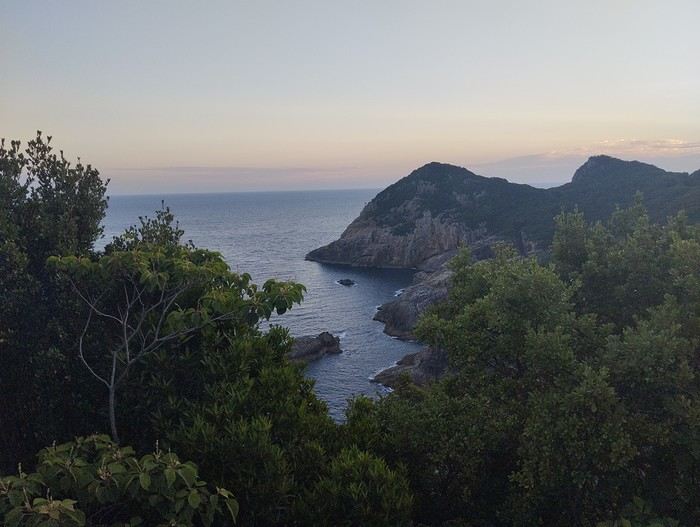
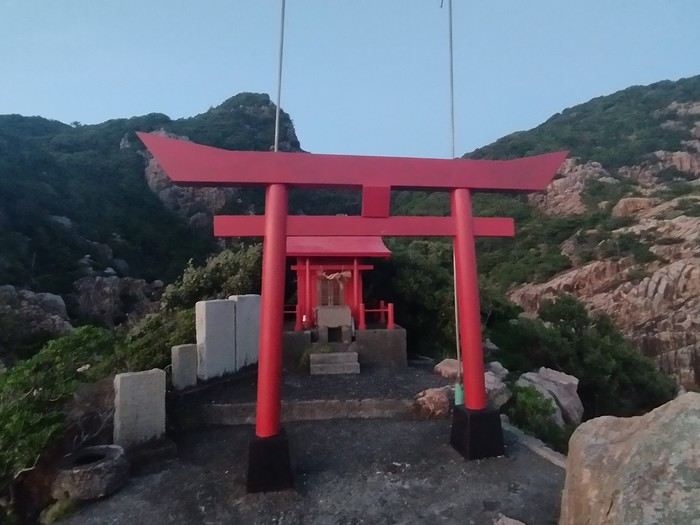
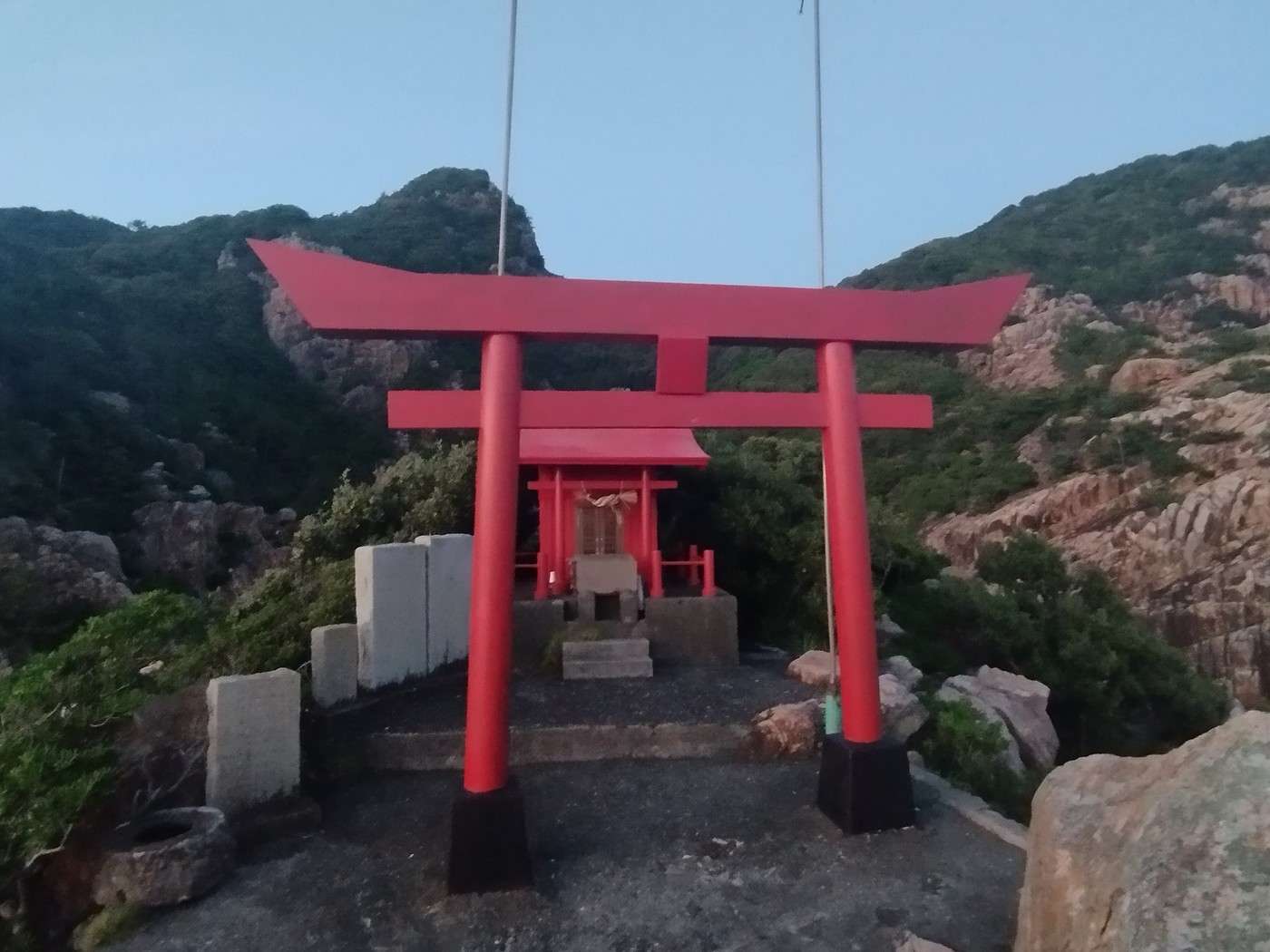
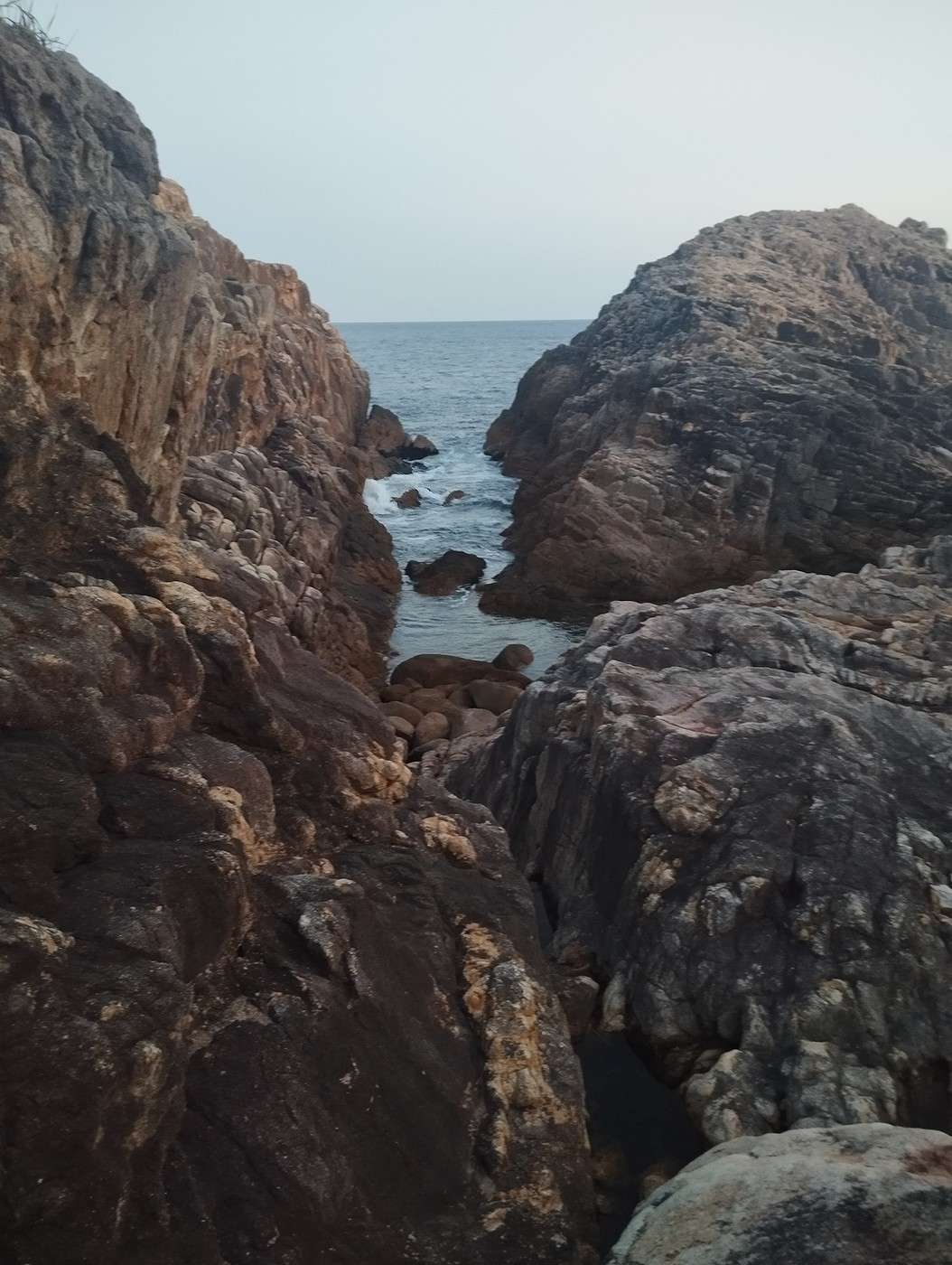
The entrance to the shrine is very discreet. Again, it’s a forest path, and the shrine isn’t far, but you have to reach the sea. To do that, we walk through a tunnel of trees, descending a stone staircase. The descent is tough, but at the end of the tunnel, we emerge from the shade—or even the darkness—cast by the trees, and the view that greets us is spectacular. The ocean, cliffs, a lighthouse, pink rocks—it’s a stunning panorama, and once again, there’s absolutely no one around. That said, we still have to walk a bit more to reach the shrine, which is tiny but right by the water.

The shrine is said to be dedicated to a sea goddess. Legend has it that women from the area would come here after their men had gone out to sea to fish. They’d dance, their kimonos open, revealing themselves to the sea, hoping their god would grant them a pleasant surprise.


When we finally decide to leave, the sun has already set. In the tunnel, we have to turn on our phone flashlights—we didn’t bring our headlamps since we hadn’t planned on needing them. We run into a small group of Japanese fishermen heading down to the shrine, all equipped with their headlamps.

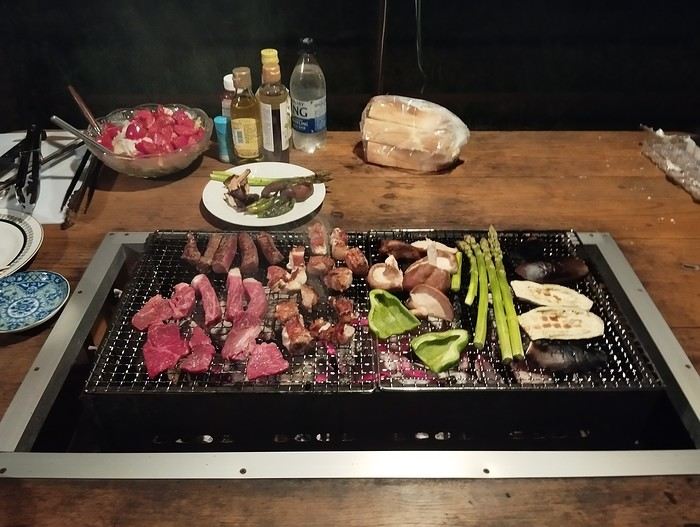
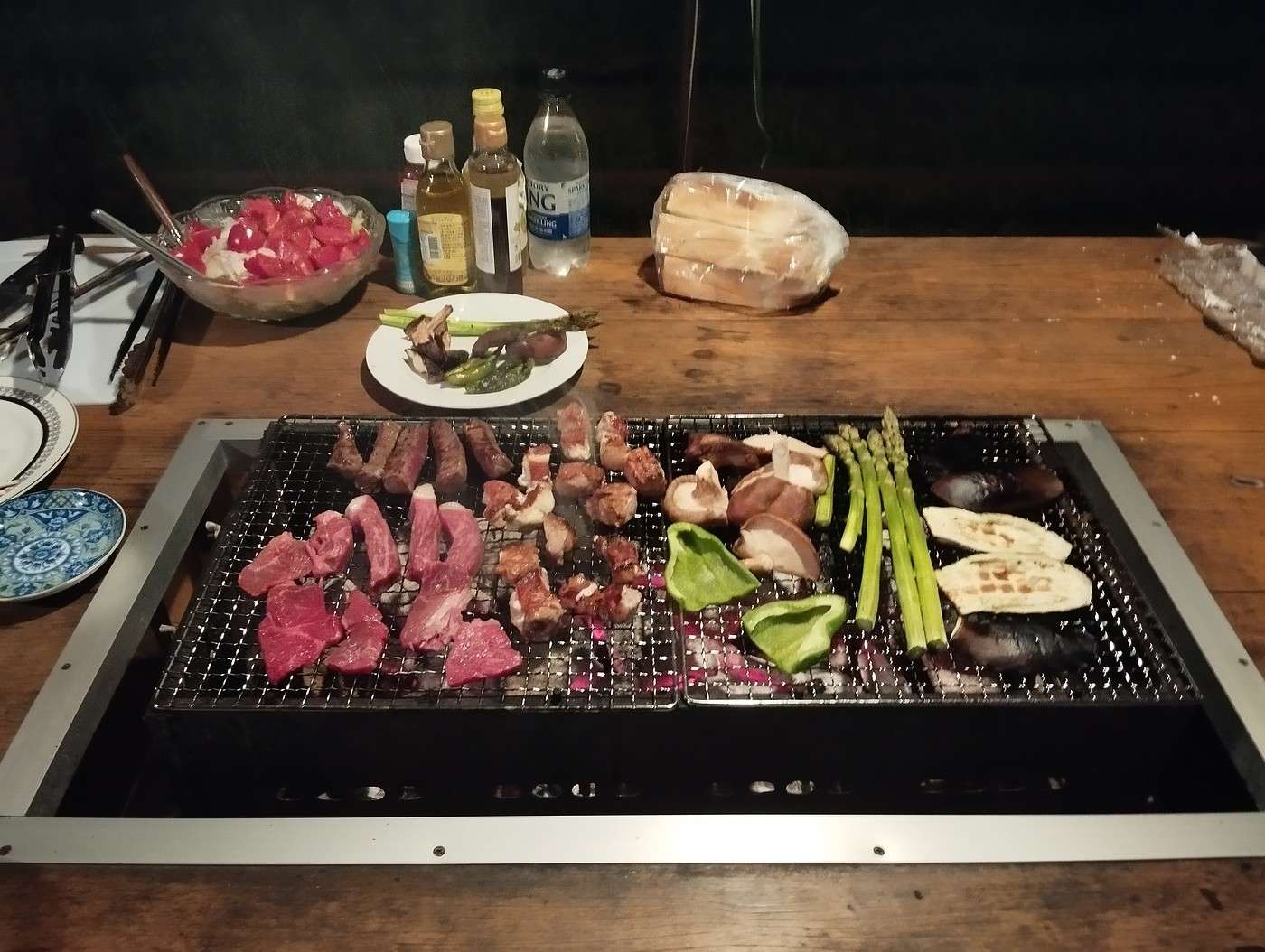
After this beautiful day in nature, we head back home. It’s our last night at the house, and we end on a high note with a barbecue. We bought some local wagyu, veggies to grill, and ingredients for a salad. The barbecue rental is 500 yen per use. It works on trust—the payment goes into a piggy bank in the kitchen. That same piggy bank is also used to pay for drinks and a few dry goods available for sale in the kitchen. We didn’t have to buy charcoal since the previous guest had left some, so the manager told us to use it.

We enjoy this last evening under the starry sky, our taste buds delighted, though a little sad to leave this house and the area we’ve grown to love—there’s still so much left to explore. The tranquility of Shimanto and its surroundings, the natural landscapes between mountains, sea, and rivers, offer one of the most pleasant sides of Japan.


From Southern Shikoku, between land and sea, to the blue waters of Miyakojima and finally the megalopolis T

Nathalie971 · 2025-10-23 · Message 31 of 75

Day 8 - Departure from Shimanto to Uwajima

The time has come. We have to leave this house that welcomed us for 3 nights. That’s probably why we’re a bit behind schedule. Japanese punctuality, on the other hand, never changes. The housekeeper is here. She smiles and stays calm despite what I imagine is an inconvenience in her schedule. To avoid losing too much time, she starts by taking care of the garden while we rush to finish packing and load our things into the car. Despite everything, aside from taking out the garden trash, she doesn’t have much to do, so she’s just waiting. So there I am, chatting to keep her patient, feeling a bit guilty inside for making her wait. But she shows no sign of irritation—she seems completely zen. Oh well, all the better. Once everything is in the car, we give her the green light for the house, repeating *gomenasai* (sorry, sorry) over and over. We say goodbye, and she doesn’t waste any time getting to work.

As for us, we finish loading the car before hitting the road under a magnificent, blazing sun. The plan for the day is mainly to reach the city of Uwajima. We have about 2 to 3 hours of driving ahead. To break up the trip, I looked for a place to stop for lunch roughly halfway. The road is pleasant, winding through the countryside. It’s always a joy to drive through the villages. Thanks to Google Maps, we can spot addresses, but most importantly, the comments and photos from other travelers give us extra tips—without which, in some cases, we might never have found the places, especially in a country where we can’t read the language and the alphabet is completely unfamiliar. For instance, today at this restaurant, a small sign in one of the photos helped me spot the place without any trouble.

We park nearby, following other cars’ lead. The restaurant is on a lane bordered by houses, with mountains across the way and rice fields at their base. We decided to eat early today because the Google reviews advised it, mentioning that you often have to queue.

We arrive shortly after the restaurant opens, around 11:15 AM. The sign for the restaurant is at the foot of a staircase. At the bottom, we discover a lush, exotic garden. The higher we climb the steps, the more we uncover an intimate space—a small terrace to wait for a table and a cozy seating area surrounded by plants. Someone is already waiting. A woman comes out of the restaurant and gestures for us to write down our names and wait. How long? No idea, but we comply. We take the opportunity to get a closer look at the outdoor area, which isn’t visible from the road at all. Two young men arrive and add their names to the waiting list. Then a woman shows up, soon joined by a friend, who doesn’t hesitate to call out to us from her bench. She speaks to us in English, asking where we’re from and how we found this place. She quickly wishes us a great trip. Finally, it’s our turn. We’re invited inside. The restaurant isn’t big, as is often the case. There are two tables for two, four seats at the bar, and six by the window with a view of the exotic garden, the rice fields, and the mountains in the distance. And guess what? We’re lucky enough to be seated at the bar by the garden! So cool. The setting is amazing!
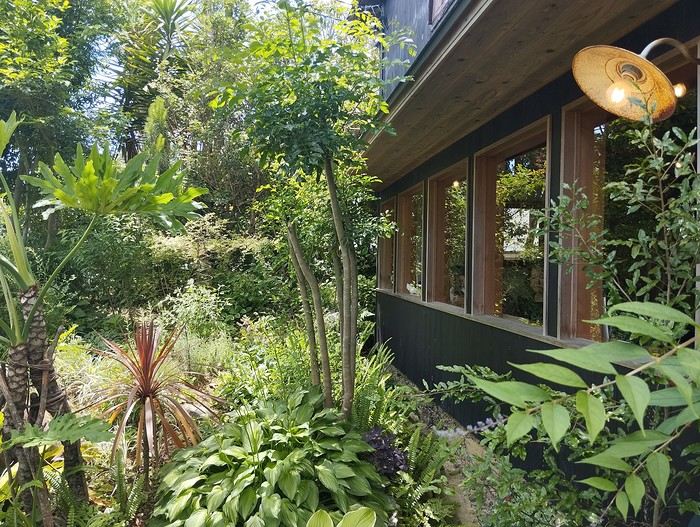


There’s no internet here, and the waitress doesn’t speak English, so we’re left with a menu in kanji. Okay, we’ll improvise. Our table neighbors—the woman who spoke to us and her friend—are here too.

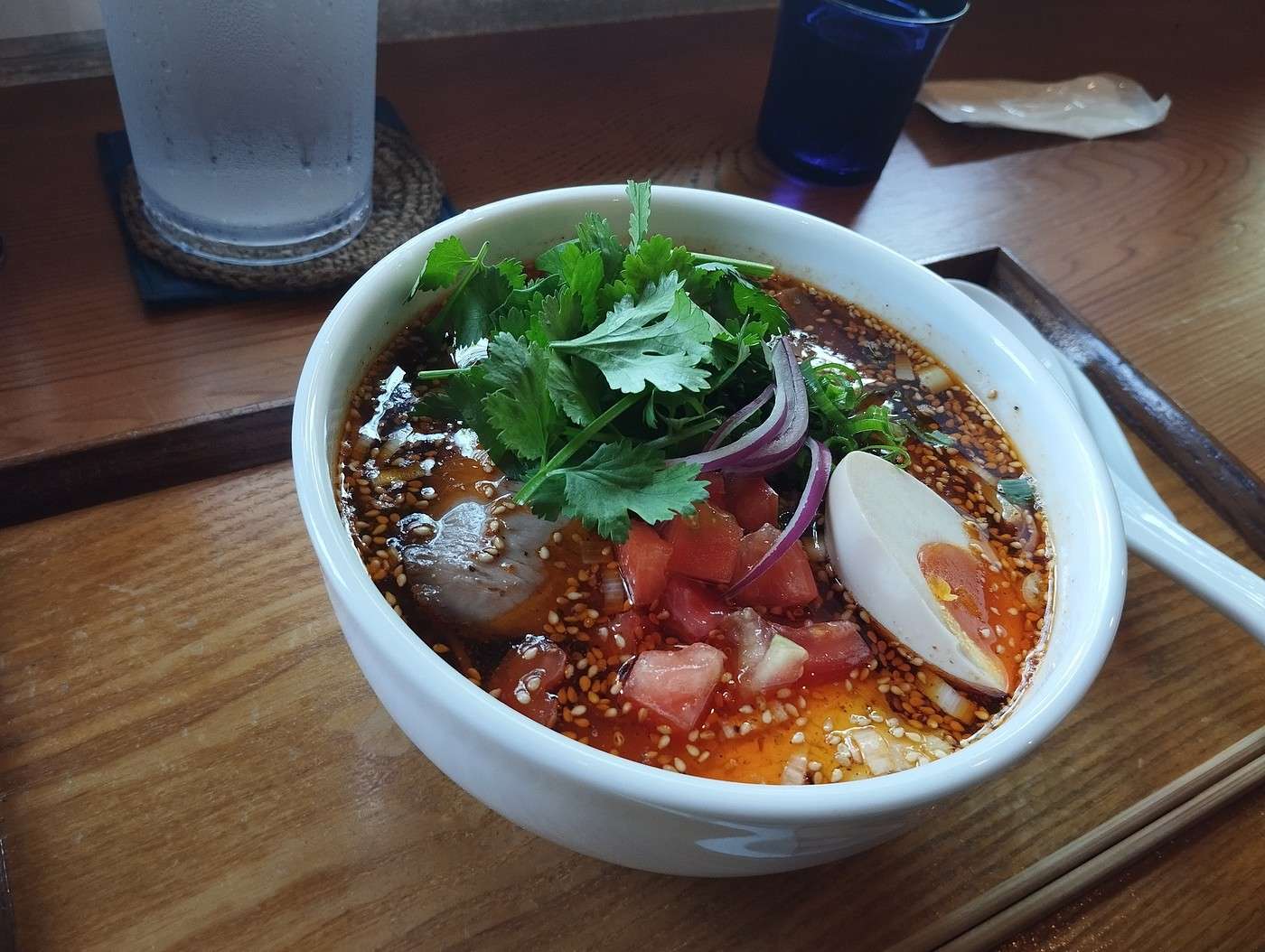
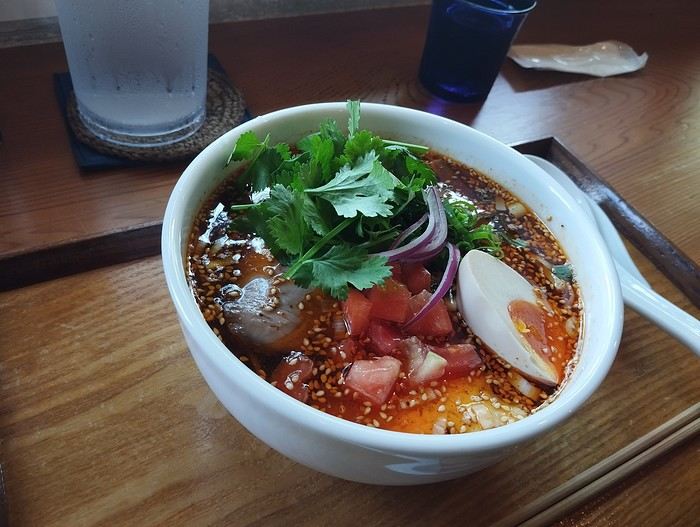
We ask the waitress a few questions, but it’s clear it’ll be tough to get explanations about the menu. So, to keep it simple, I use a screenshot of a ramen dish from the restaurant that I saved when I first spotted it on Google Maps to place our order. As for my partner, he chose at random.

Even though they arrived after us, the two women ordered before us, and their dishes look deliciously gourmet. The online reviews suggested this was a top spot, and the first impressions are very positive. The only downside? There are no drinks except water. So much for the ice-cold beer we were dreaming of to go with our ramen. While we wait, we enjoy the lush green landscape stretching out before us. And then our dishes arrive. They look appetizing, and we can already tell we’re in for a treat. The aroma is making our mouths water. Then comes the moment of truth. And wow—what a culinary punch! This is gourmet ramen. The broths are perfectly crafted—flavorful, delicate, and far from your typical ramen. These dishes have bold, distinct identities. One of our neighbors ordered a miso and tomato ramen, which also looks amazing. During the meal, the woman chats with us some more. We talk a bit more. She’s Japanese but lives in Miami, Florida. She’s back in Japan to take advantage of the more favorable Japanese healthcare system compared to the American one. We also discuss our trip and our plans for visiting the area. Then everyone finishes their meal in peace.

I can tell you this ramen restaurant is more than excellent, and even though it’s in the middle of nowhere, if the opportunity arises, I’d happily drive three hours just for the chance to taste their other ramen dishes. In the kitchen, there’s a grandmother whose smile brings you joy, and a young man—maybe it’s a family-run place.


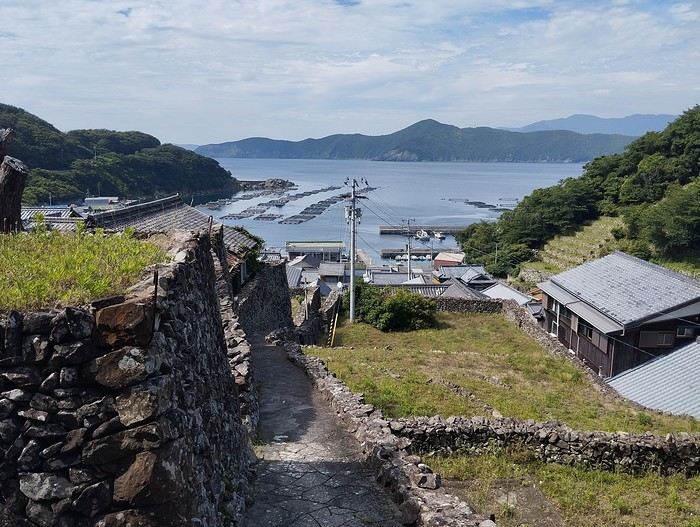
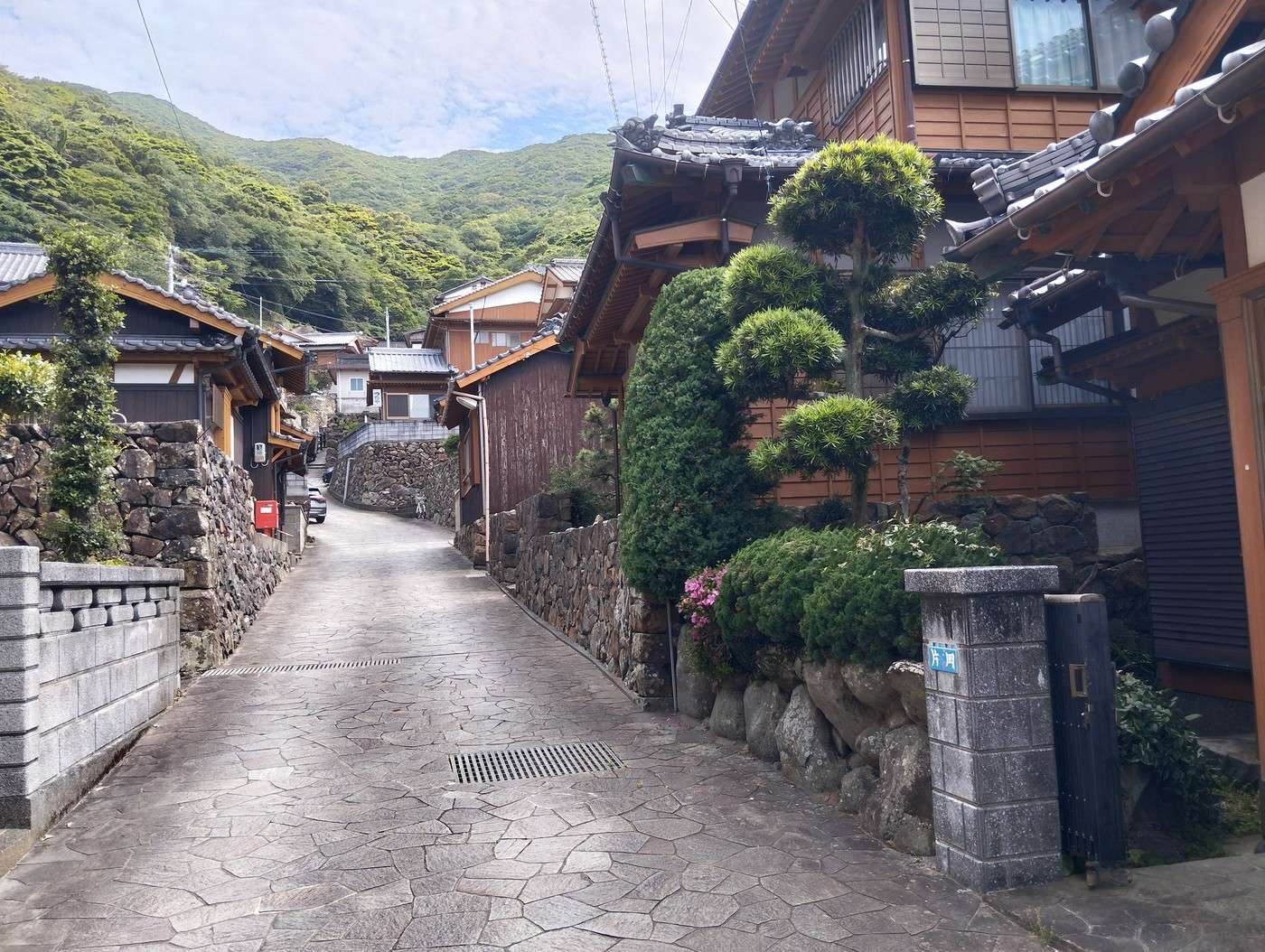
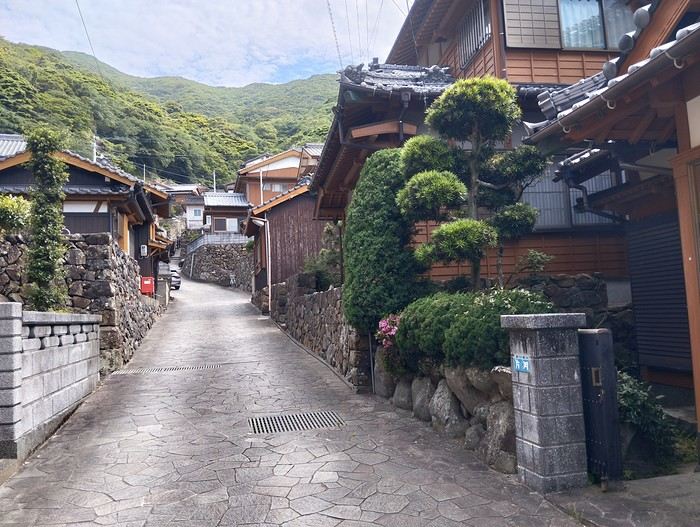
We drive on to the small village of Sotodomari Ishigaki no Sato (the stone-wall village) in the town of Ainan, Ehime Prefecture. The village is located on the Sakai Peninsula. It was built between the late Edo period and the early Meiji era. At the time, the population of the neighboring village of Nakadomari grew rapidly. Lacking space to accommodate everyone, the village chief proposed that the second (or youngest) son of each family move there. That’s how the village was created.

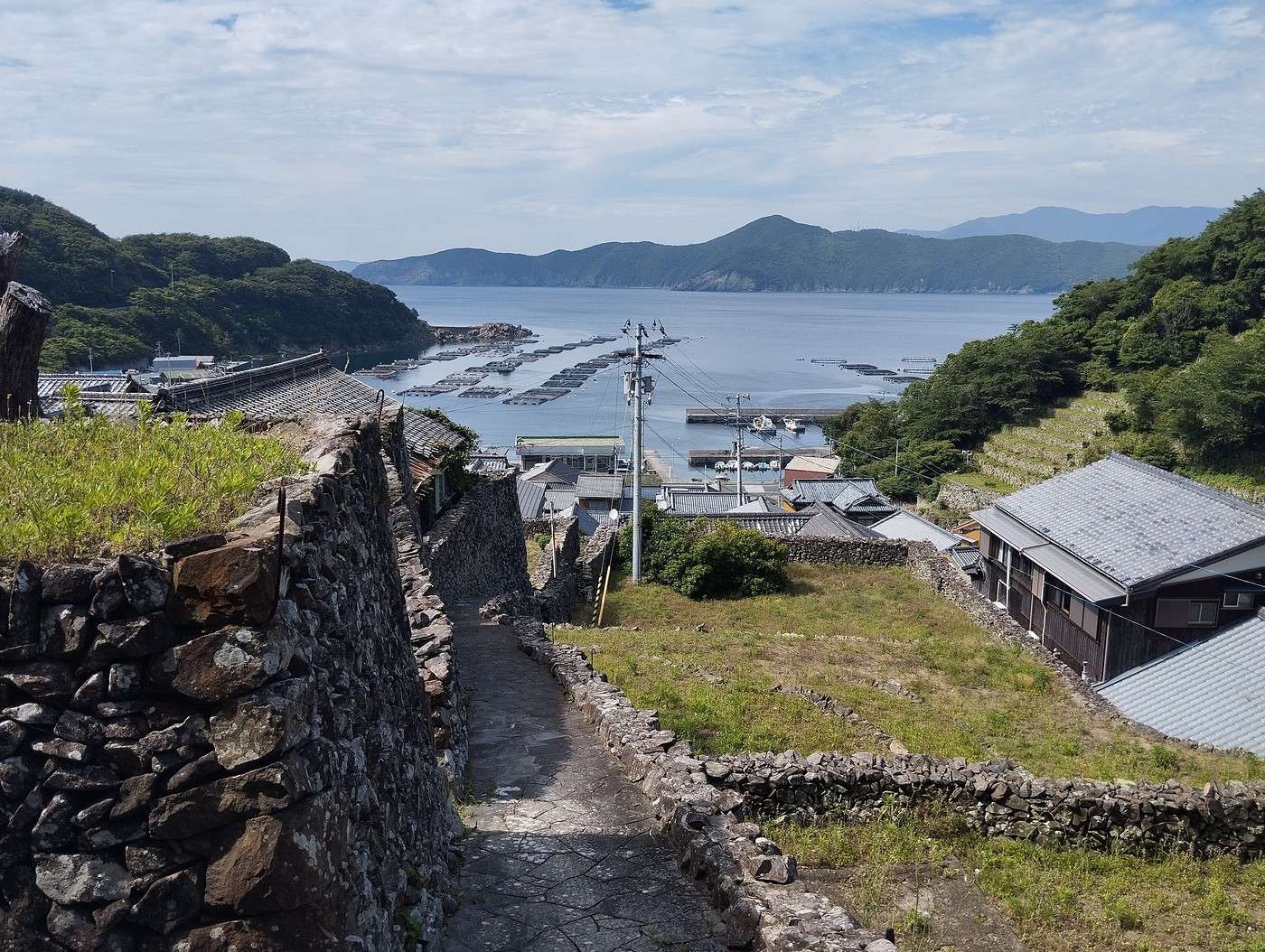
The village is perched on a steep slope overlooking the Uchiumi Sea. The houses, stretching up the mountainside, are adorned with carefully stacked stone walls that rise up to the eaves to protect the homes and their inhabitants from typhoons and seasonal winds.

This village, with its unique row of houses, was selected as one of the “Most Beautiful Villages in Japan” by the Ministry of Agriculture, Forestry and Fisheries and is also listed among the “100 Most Beautiful Historical and Cultural Fishing Villages to Preserve for the Future.” In 2007, it was also chosen as one of the “100 Most Beautiful Historical Landscapes of Japan” by the Foundation for the Preservation of Ancient Capitals, making it a major picturesque site of stone-wall culture, a symbol of Japan.

We didn’t know any of this when we visited. We stumbled upon it by chance while searching on a GPS map, so it was an unexpected discovery.

The place is small and remote, so tourism isn’t very developed here.

We’re greeted by a curious cat. Then we run into a group of four Japanese visitors. They’re here to participate in a marathon nearby the next day and are taking the opportunity to explore.

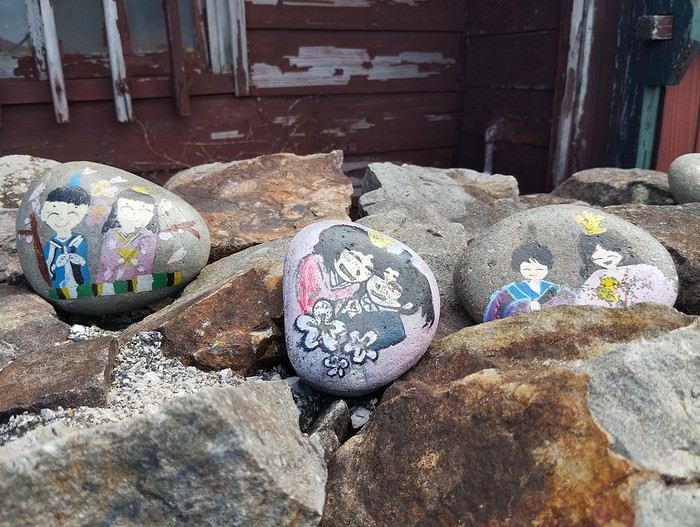
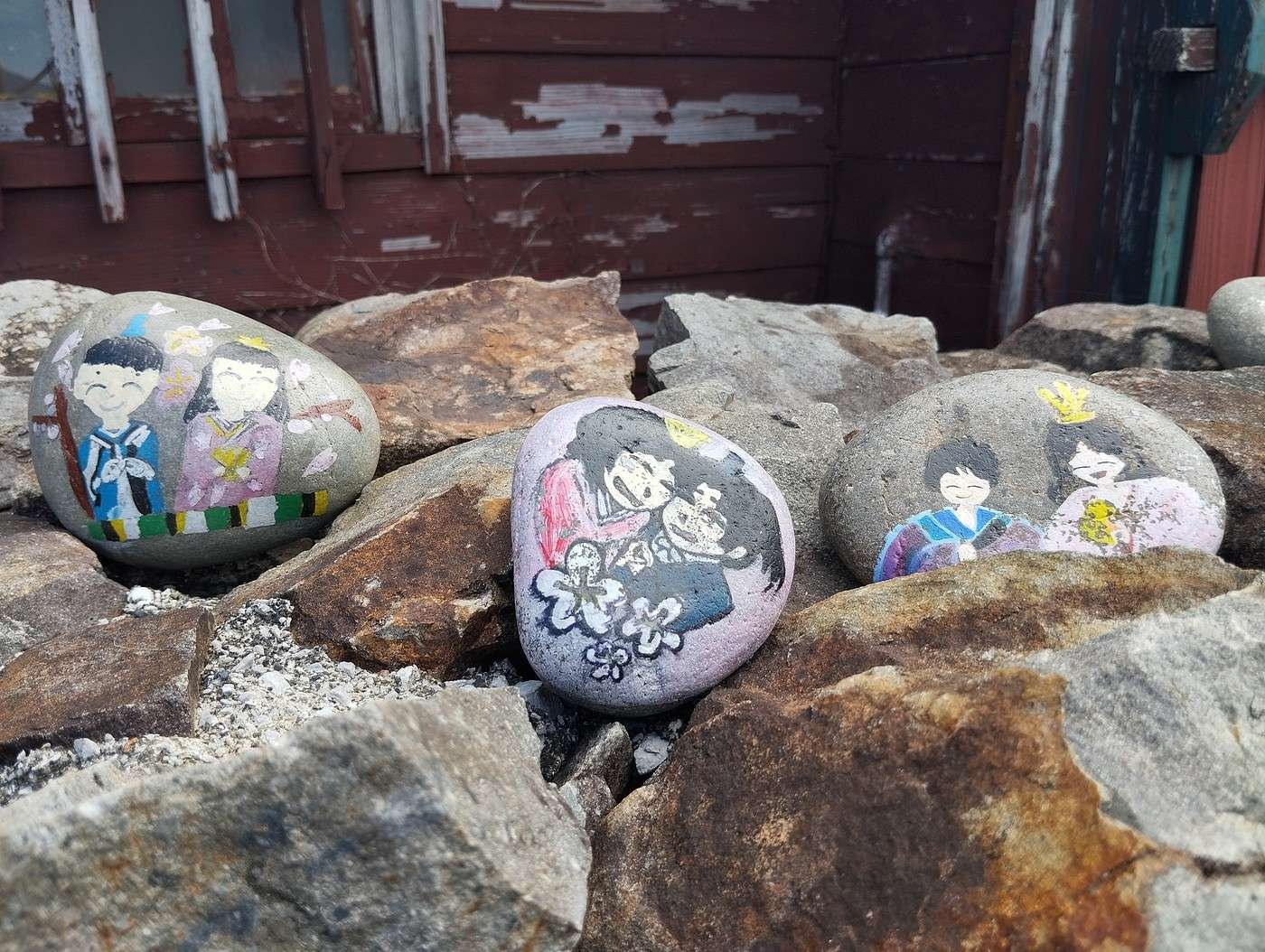
Though small, the village is charming to discover as you wander its steep alleys. Some houses are well-maintained, while others are less so. The village still seems partially inhabited, though we didn’t see any locals. Painted pebbles scattered throughout the village add a playful artistic touch. Probably on weekends, the gallery is open, but not today.

The higher you climb, the more the slope offers a stunning, unobstructed view of the village and the sea surrounded by mountains. You can even spot pearl farms, as the region is famous for them. The sun lights up the landscape, making it incredibly peaceful.

We pass by the renovated oven where women used to cook while waiting for the men of the village, who mainly lived off fishing at the time.

On the way down, we walk past the well-kept cemetery. A Japanese woman is there, paying her respects at her father’s grave.

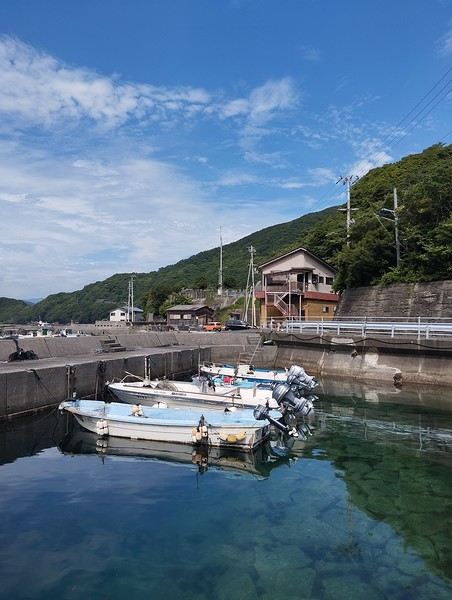
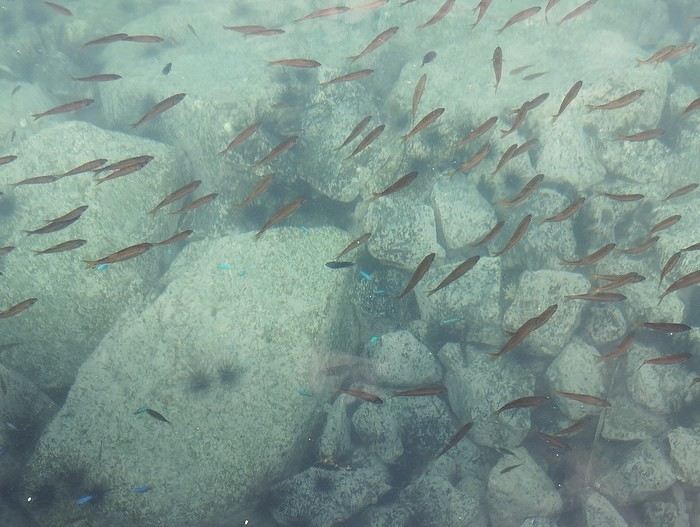
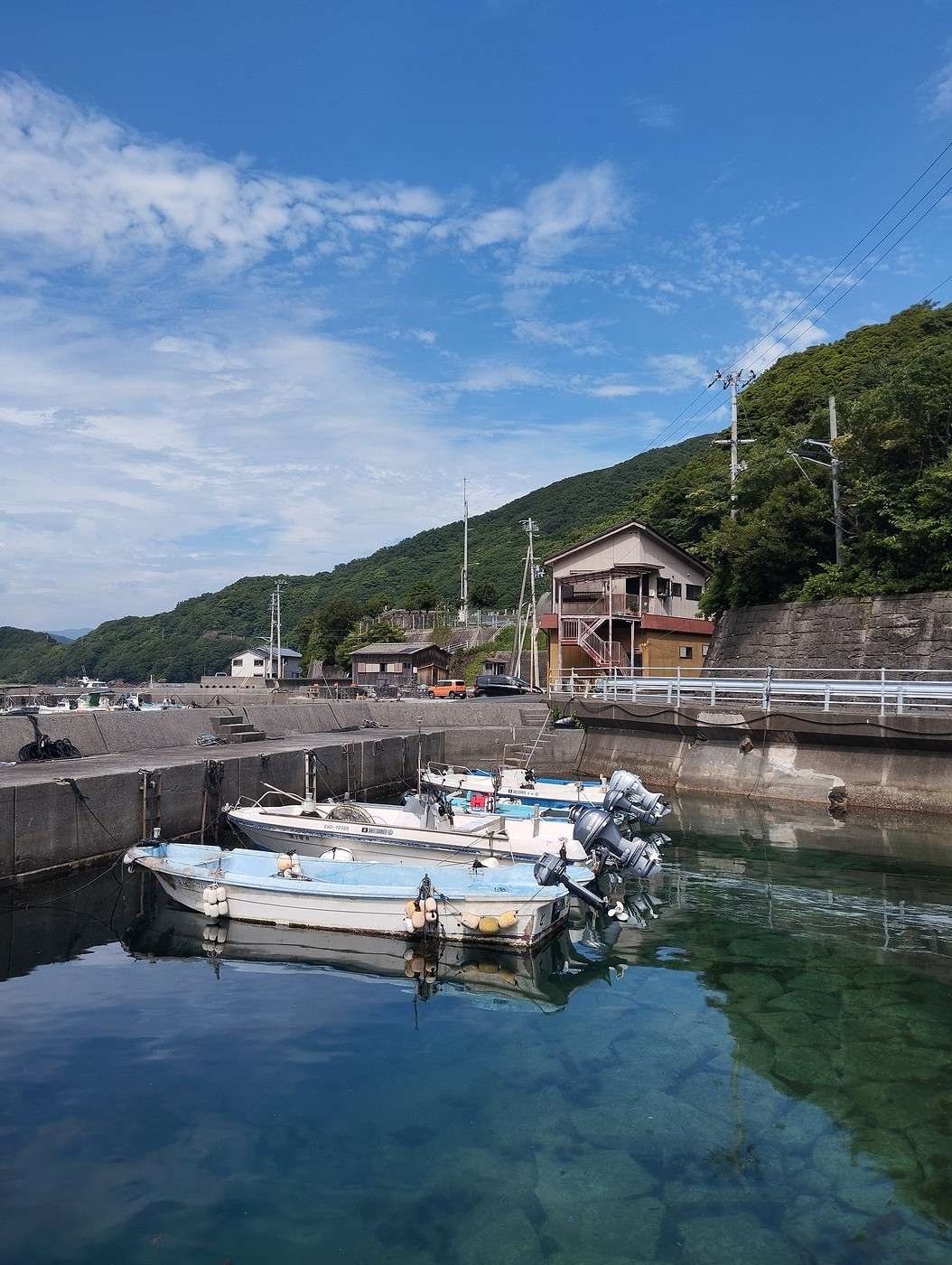
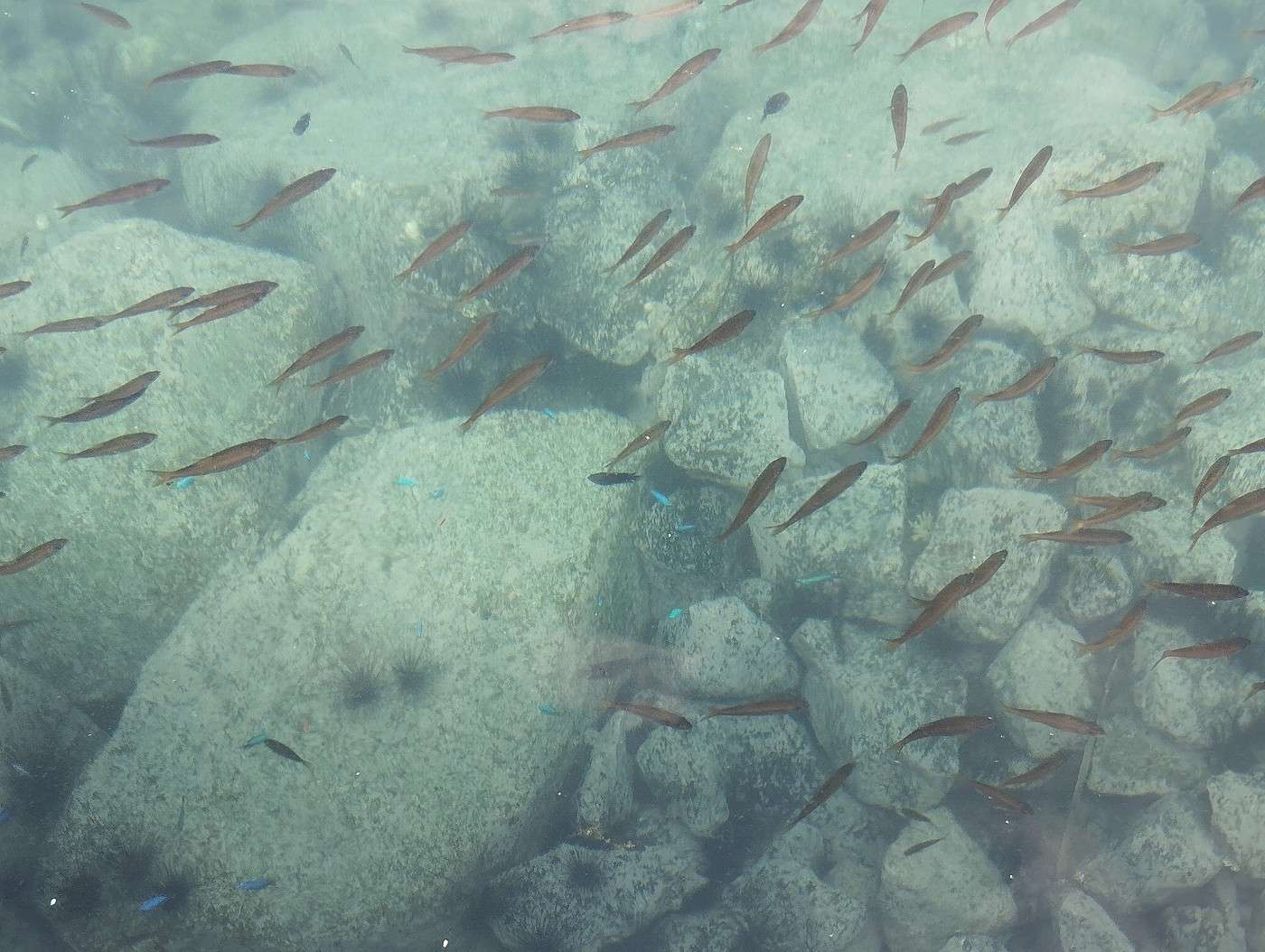
At the port, all is calm, but the crystal-clear water reveals plenty of fish, some with bright electric-blue hues.

This village is so peaceful and gave us yet another glimpse of Japan and Shikoku.


The next part of our adventure takes us down a very narrow, winding road through a tunnel of trees, where we spot and hear monkeys jumping from branch to branch. We also see what looks like a nutria. The seaside road is wild, and nature thrives here—flora and fauna in full freedom. Branches and rocks litter the road. We drive carefully.

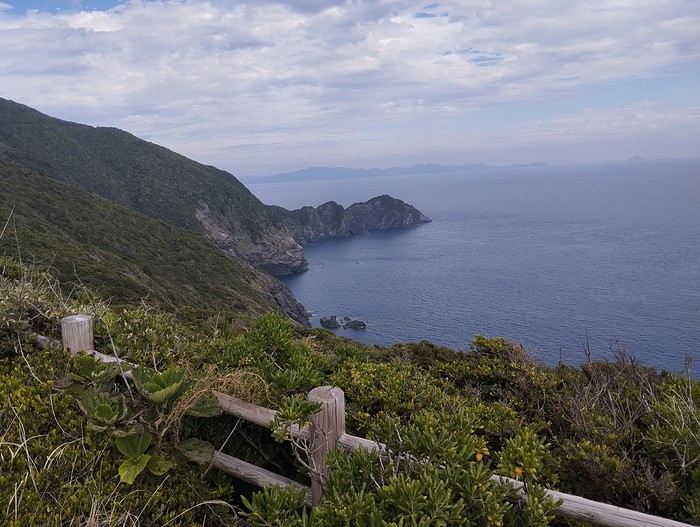
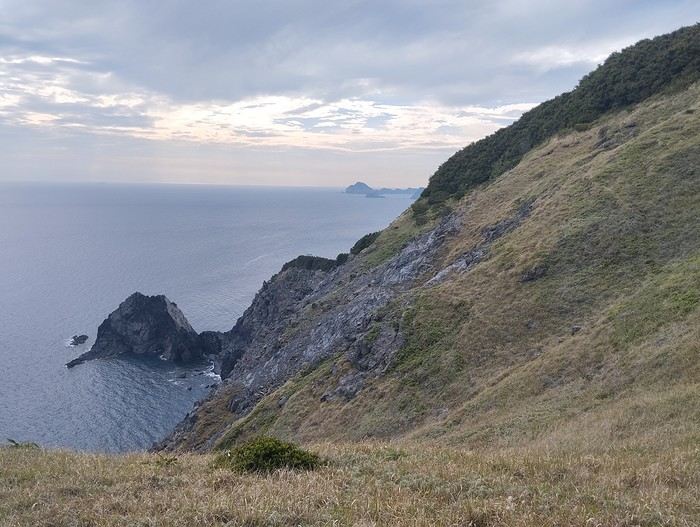
At the top, we park at the scenic Cap Koumo parking lot. Only one other car is there.

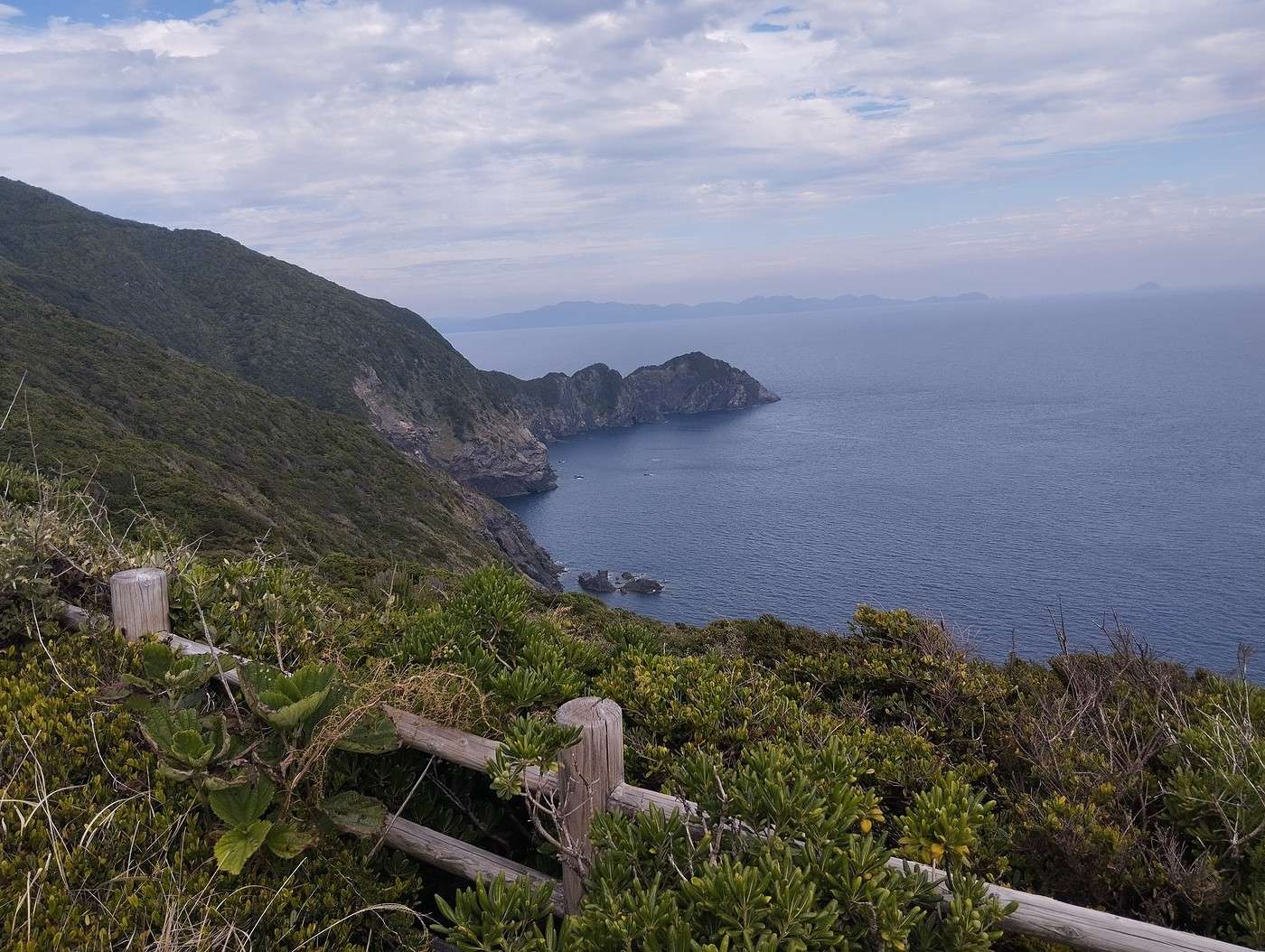
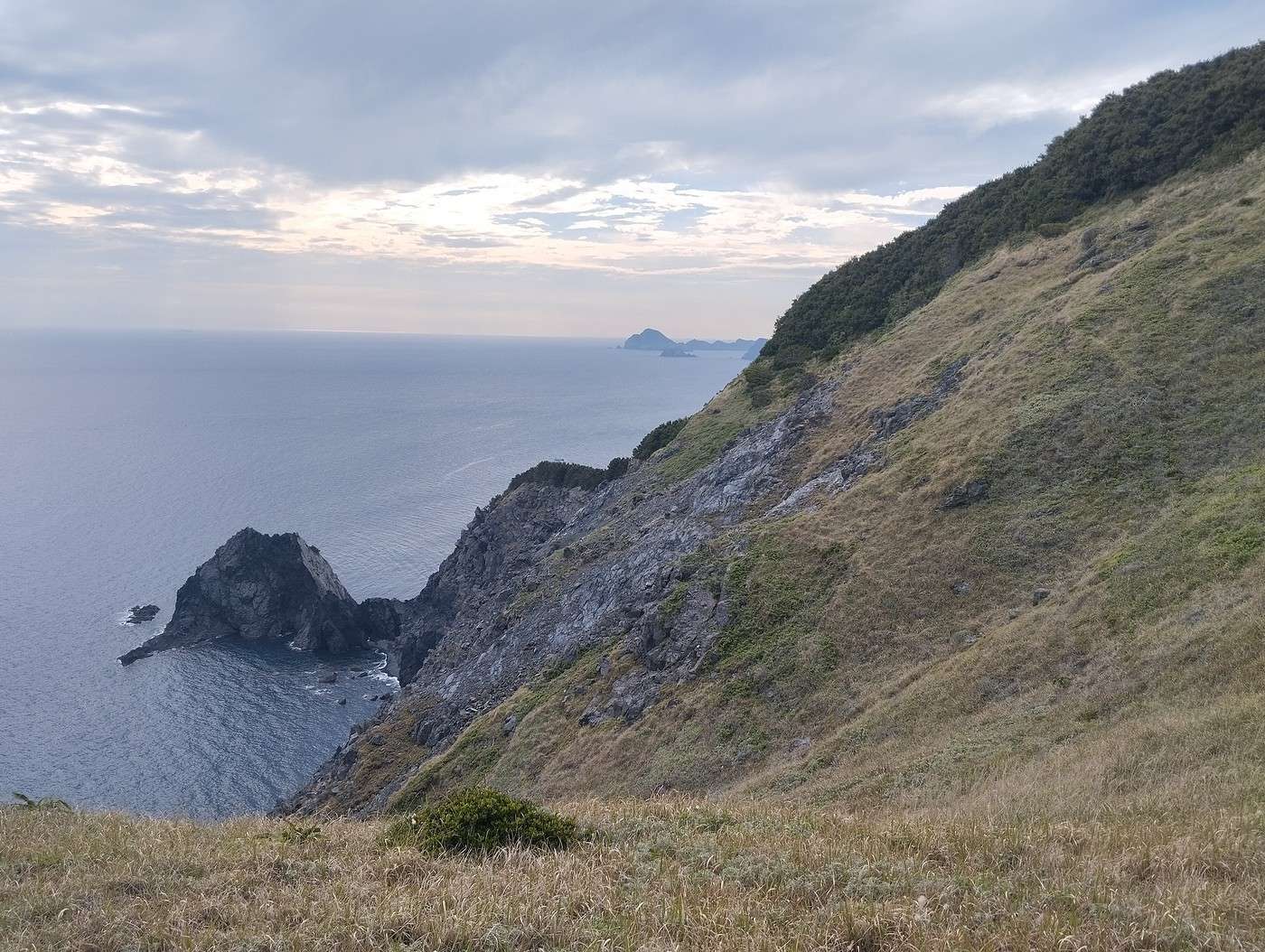
As soon as we step out, we breathe in the fresh air and feel a sense of freedom. Cap Koumo is located in the heart of Ashizuri-Uwakai National Park. We take the walking path, which gradually descends to offer a breathtaking view of the 80- to 100-meter-high cliffs, shaped by the ocean and wind. Nature is grand here. We cross paths with a Japanese grandmother and her grandson, who are leaving. We have the place to ourselves. And apparently, so do the snakes. On the way back up, my partner freezes when he spots a very long, thick snake that also freezes before slithering away. We also enjoy the sight of eagles soaring over the cape. A refreshing nature break.
Southern Shikoku: Between Land and Sea, the Blue Waters of Miyakojima, and Ending in the Megacity T

Nathalie971 · 2025-10-23 · Message 32 of 75

Day 8 – Departure from Shimanto to Uwajima

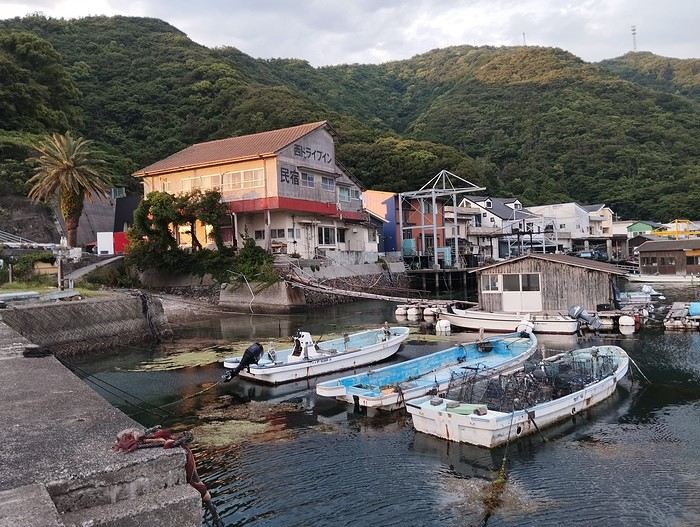
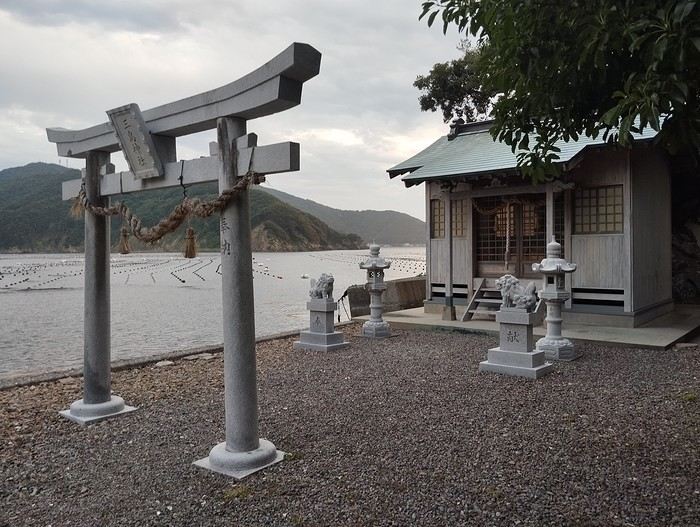
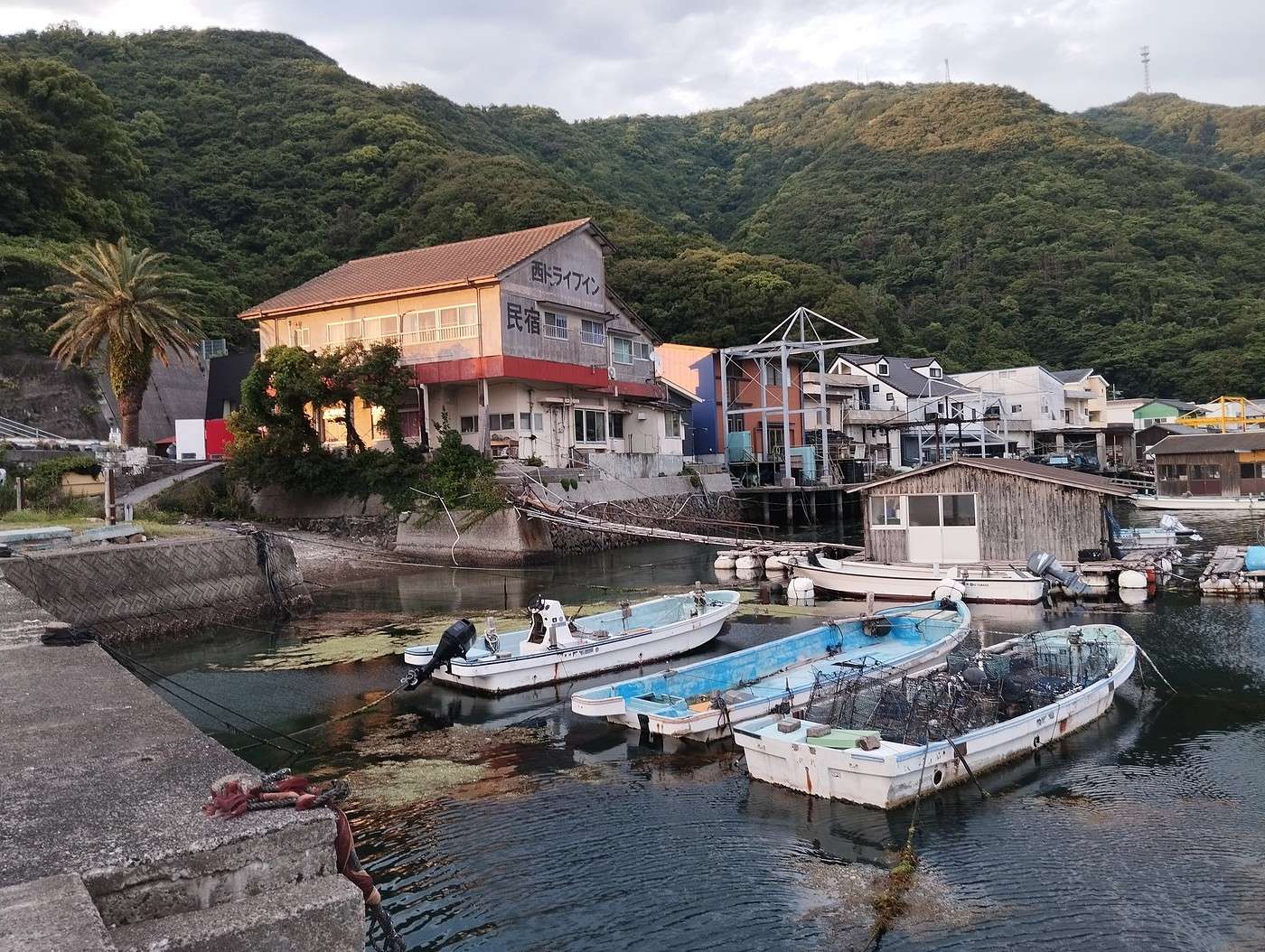
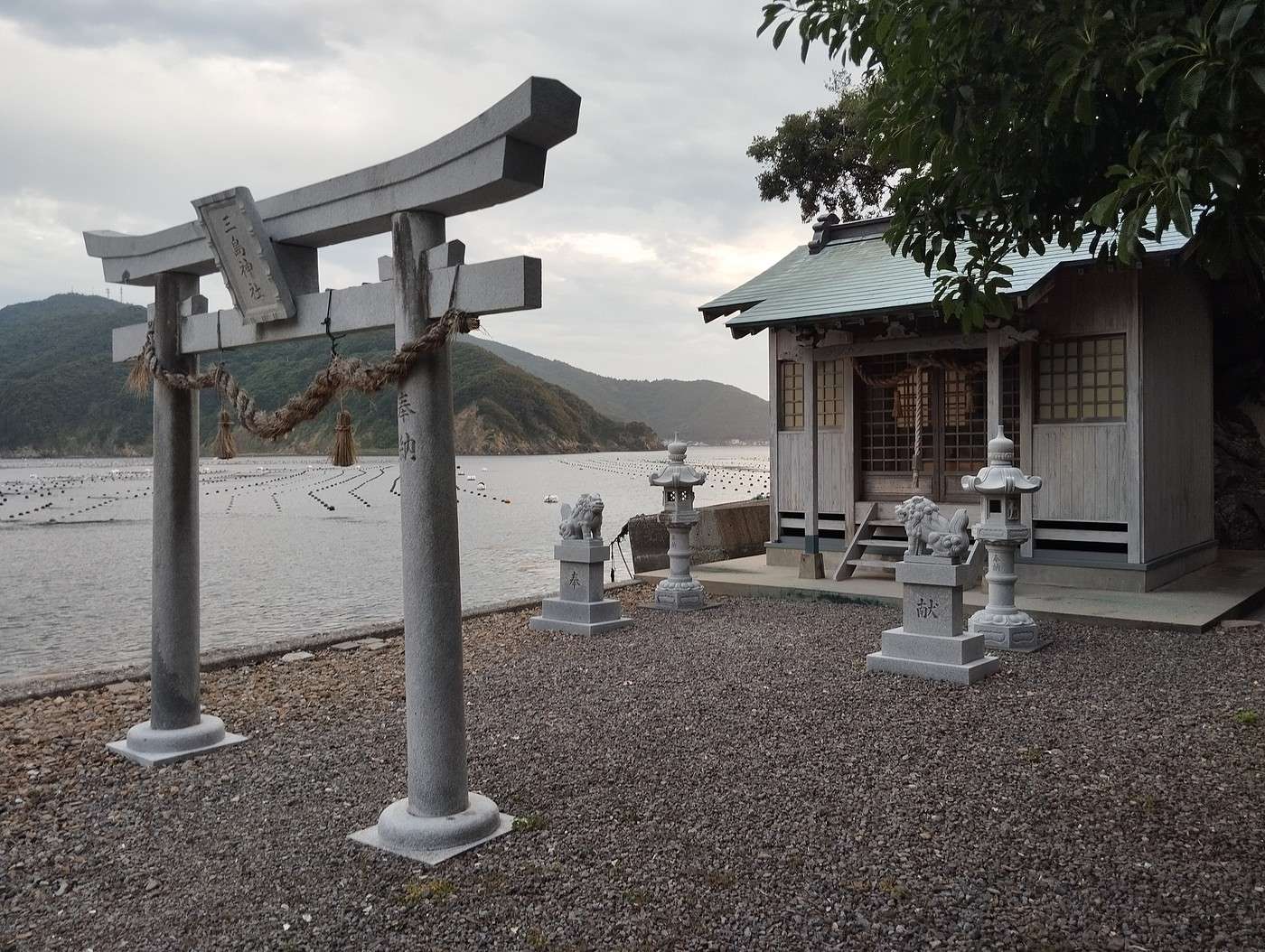
It’s time to head back toward Uwajima. Leaving Cape Koumo is pleasant because this time we’re taking the other side of the peninsula on a downhill ride. We keep an eye out for wild monkeys. We pass through seaside villages where life flows gently. It’s an unfiltered face of the world that gives the feeling of being at the edge of it. The need for a break leads us to stop in a parking lot at the end of a village. And by chance, we discover a lovely spot—the small but very cute Mishima Shrine in the village of Tsushimacho Harigi. Unlike the usual wooden shrines, this one is all white. It sits by the sea next to this port village. We can’t resist a little stroll to the harbor. The water is once again absolutely transparent, filled with colorful fish. The boats and buildings connected to the sea by bridges offer a truly picturesque photo of Japan. Eagles soar above the village. It’s so peaceful. We’re lucky enough to meet a man who strikes up a conversation—surprised to see foreigners here and wondering what we’re doing. It turns out he’s a pearl farmer in this bay. He works with his wife, mother-in-law, and two other people. We learn that it takes a year to produce a beige pearl and two years for a shiny one, which is therefore more valuable. He doesn’t work in January or February because it’s too cold. Another man from the village, out walking his 8-year-old Shiba Inu, joins the conversation. He introduces us to his dog and explains who we are. The four of us chat. They ask about our travels in Japan and realize we know the geography of Japan “better” than they do since they rarely travel. The pearl farmer, however, has been abroad. For his honeymoon, he went to Cancun, Mexico, and he’s also visited the United States—Los Angeles and Las Vegas. As for the man with the dog, we share knowledge of Miyako Island in Okinawa Prefecture.

We talked for a while before parting ways. We enjoy the sunset reflecting on the water, offering a magnificently romantic view.


After this mid-journey interlude, we finally drive the last hour to our hotel—the cheapest of the trip. It’s an excellent surprise. For less than 50 euros, and based on the photos we’d seen, we had some apprehensions, but it’s much better than expected in terms of value for money. First, we have a reserved parking spot right in front of the hotel. And it’s serious business—a white-and-orange striped post with our name on it marks our spot. Every time we park, an employee rushes out to remove it so we don’t have to get out of the car, guides us into the space, and puts the post back when we leave. What incredible service!

The room isn’t luxurious, of course, but it’s not as small as we’d imagined. Plus, there are unlimited drinks available 24/7, fresh fruit juice for a snack, free bath salts, and all the usual amenities (razors, cotton swabs, etc.) at our disposal.

We arrived late, so after checking into our room, we quickly set off in search of a restaurant. As mentioned earlier, given the time, we need to hurry. Plus, we’re in a small town, so it’s quieter.

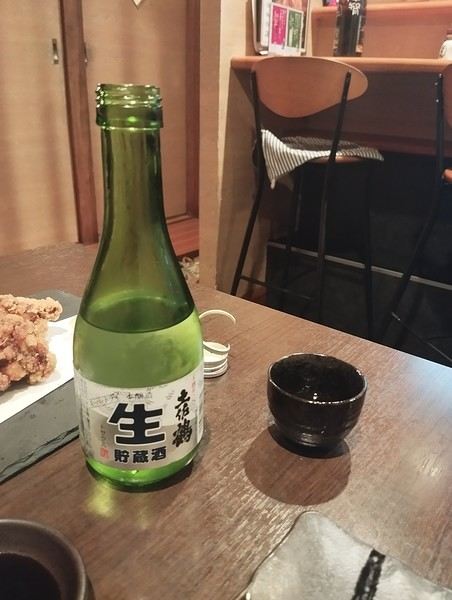
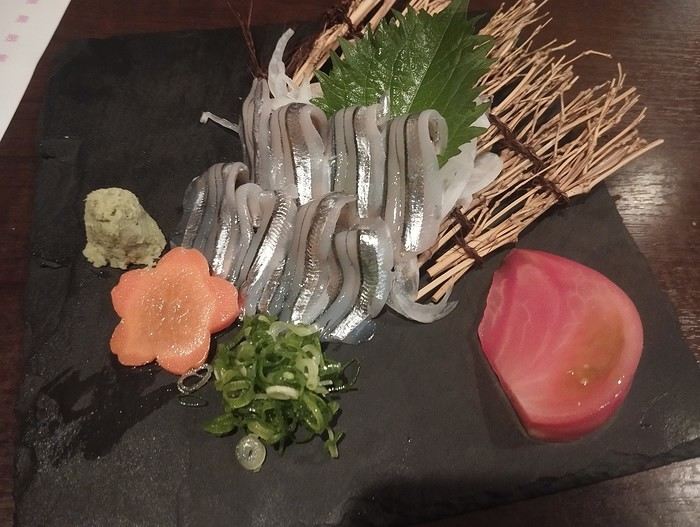
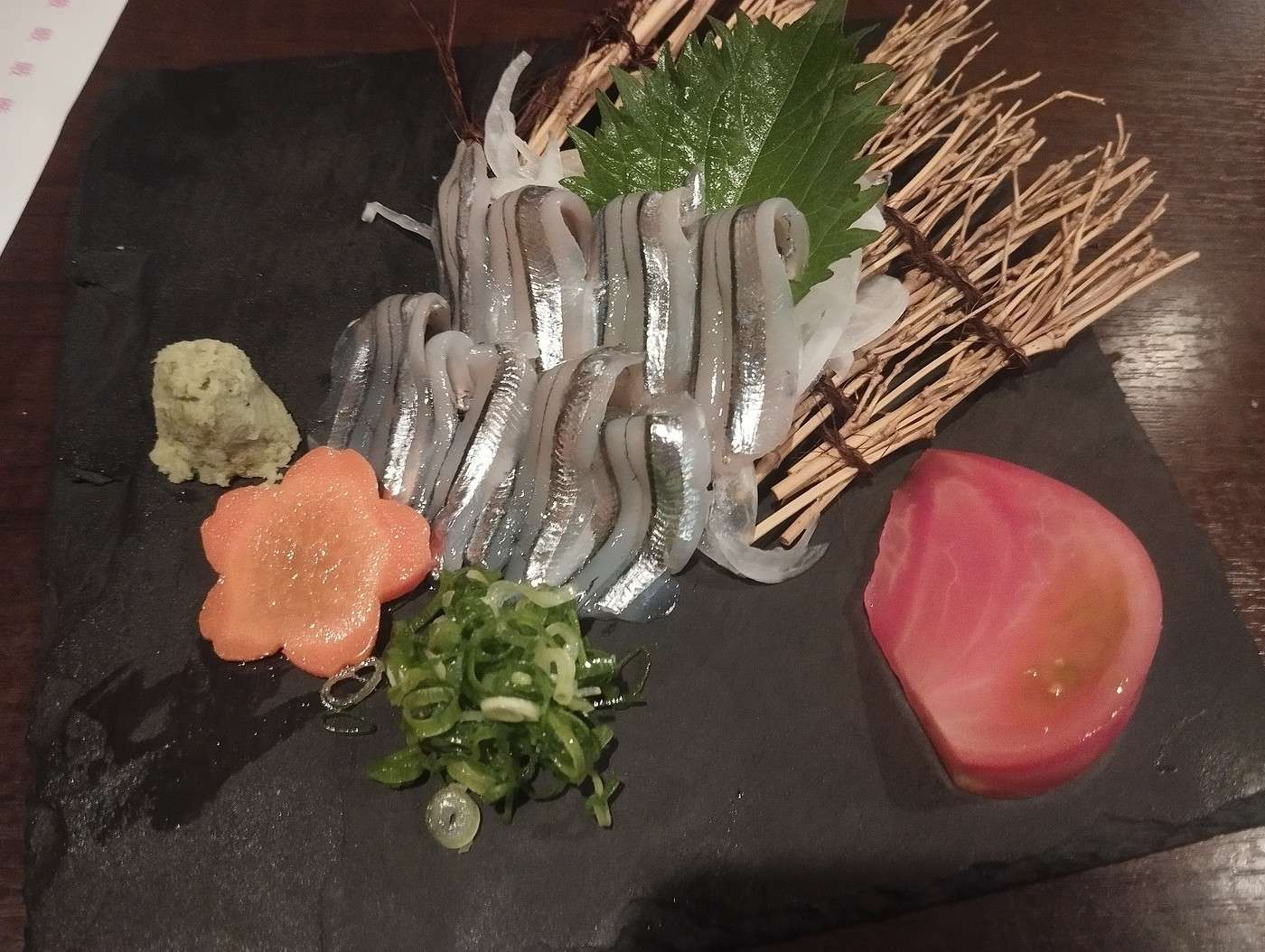
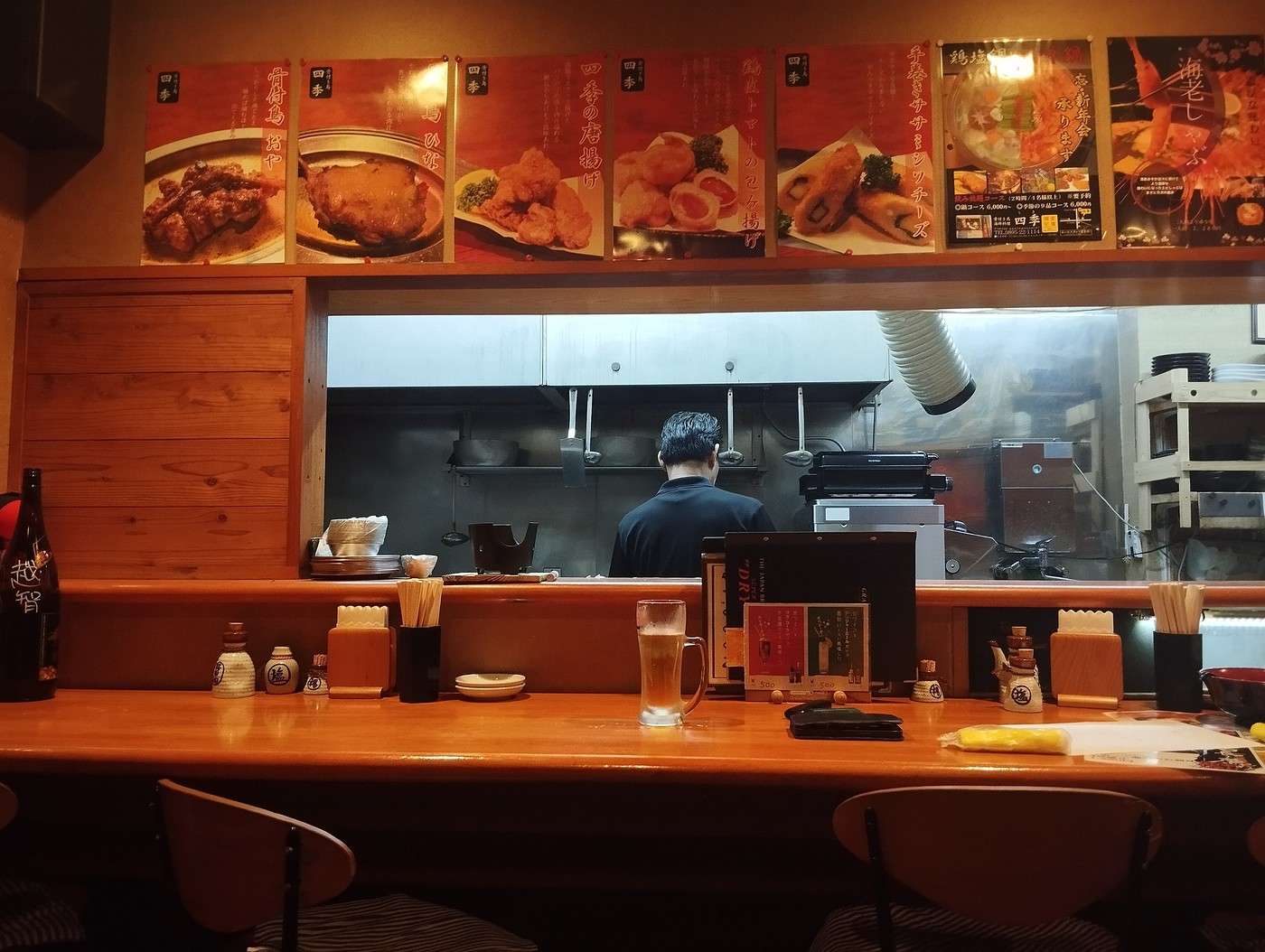
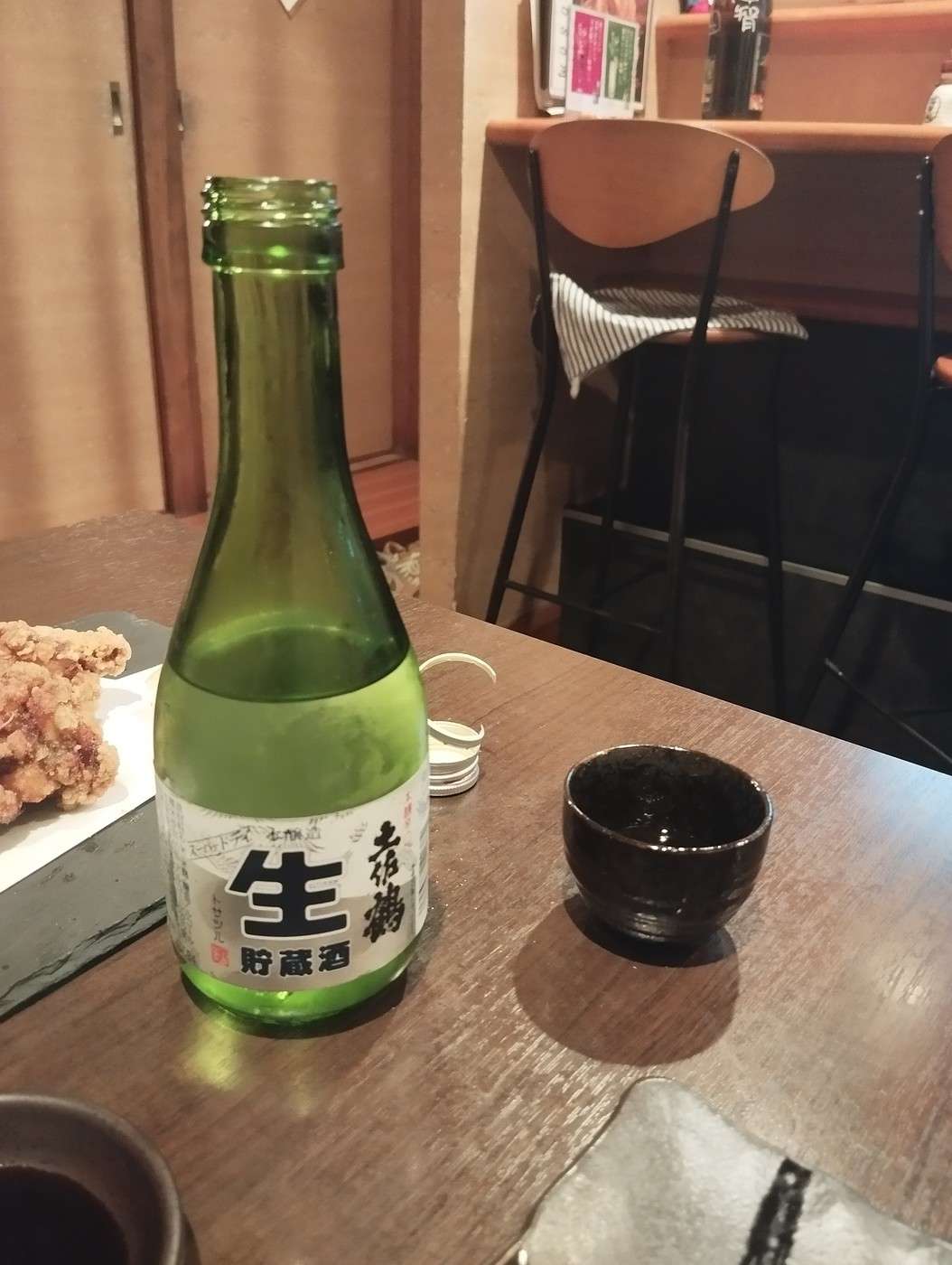
We’re in front of a restaurant but can’t quite tell what kind of place it is. We ask a young man passing by, not expecting it would lead to another lovely encounter. We ask him for a restaurant that’s still open at this hour and, more importantly, a good one. As always, he thinks seriously before giving us a name. With no internet, he eventually decides to take us there himself—it’s much simpler. We walk for about 10 minutes. He takes us to what he considers the best izakaya. Along the way, we chat a little. He’s 18 and a student. The izakaya is near a canal, tucked away in little-known streets, on the second floor of a building. He comes up with us to introduce us and explain our arrival. We’re on the restaurant’s landing, the door slightly ajar, and the young man explains that we’re French and looking for a good, open restaurant, which is why he brought us here—because, in his opinion, it’s the best izakaya. The staff is surprised to see French people and touched that the young man thought of their restaurant. They give us a very warm welcome because we’re their first French customers. As for the young man, to thank him for bringing us to their restaurant, the owner invites him to eat for free. He’s seated at the counter while we’re given a table for four. It’s tiny—just two tables, two private rooms, and a bar. The atmosphere is family-like and very laid-back. You can really feel the love. We receive a fabulous welcome. The owner, Yuki, comes to explain the dishes, offers us a bottle of sake, chats with us, and tells his regulars that we’re his “best friends.” In short, the evening unfolds in a joyful atmosphere, and the food is great. The team jokes around, and we laugh with them. The izakaya’s specialty is chicken. We try, for example, a cherry tomato wrapped in fried chicken skin. We also eat sashimi of a fish called Kibinago, which we discovered and particularly enjoyed on our last trip. The young student eats heartily (omurice, ramen, karaage).

When the restaurant quiets down, Yuka-san, the owner’s wife, comes to talk to us. We chat with her for at least an hour in Japanese, sometimes using a voice translator. She and her husband have rented the restaurant. They’ve been married for 20 years but never had a honeymoon because they’ve been too busy. Her dream is to go to France, but it’s expensive and requires time off.

She’s been to Korea, Hawaii, Tokyo, and Osaka because their 21-year-old son lives in the latter city.

Yuka is so cheerful. She seems to have the innocence and joy of an 8-year-old, and it’s refreshing. She’s thrilled to welcome French tourists. They’ve maybe had Americans three or four times. She gives us some sightseeing tips.


The night is well underway, and it’s time for us to head back to sleep after such a great day.

From Southern Shikoku, between land and sea, to the blue waters of Miyakojima and finally the megalopolis T

Nathalie971 · 2025-11-03 · Message 33 of 75

Day 9 – Uwajima


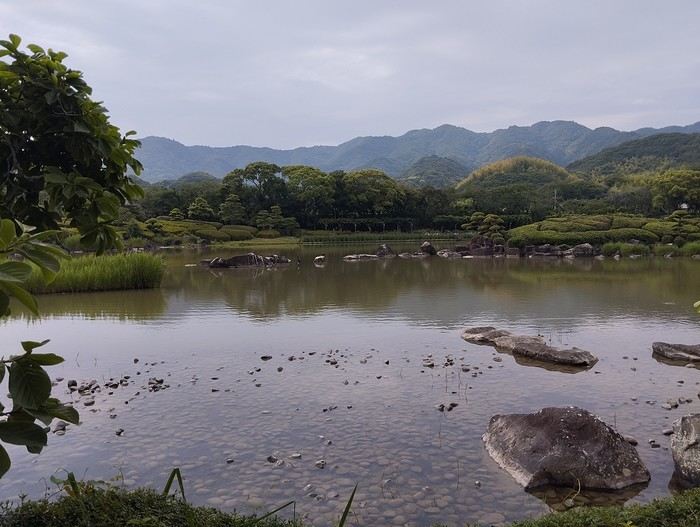
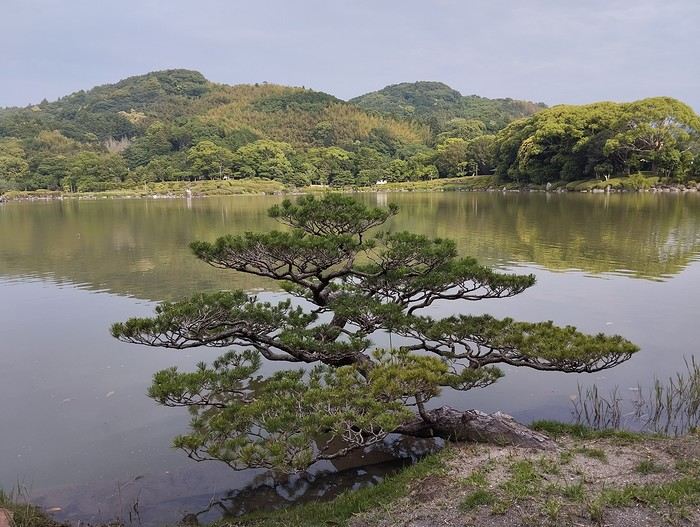
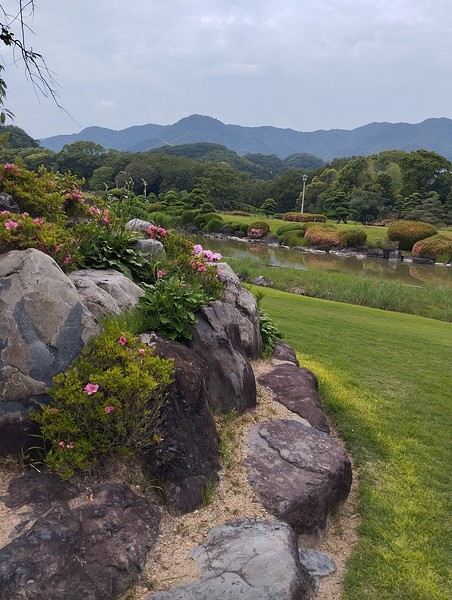
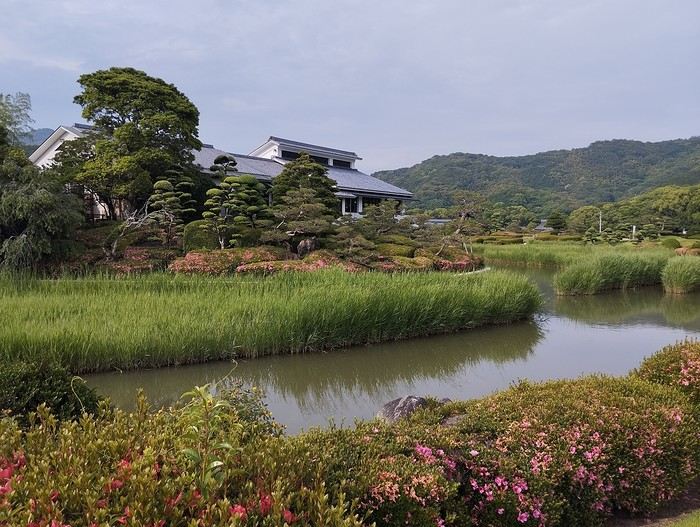
After my long rant, I’ll keep it short for today’s story. Also because the day was more relaxed. We stayed up late last night, so this morning, we’re taking our time to recover. It’s nice to slow down a bit during a road trip. As a result, just one activity today—but not just any. We discover the grand and splendid Nanrakuen Garden. It’s the largest garden on Shikoku.

Garden entry fees in Japan are usually affordable, but this one is an absolute steal. 160 yen per adult, which is about 1 euro. That’s the first pleasant surprise.

Right after the entrance (and exit), there are several stalls selling local food, like a mini market. There’s also the garden’s shop with lots of local products. You can grab an ice cream and relax near the bay windows, which offer a clear view of part of the garden.


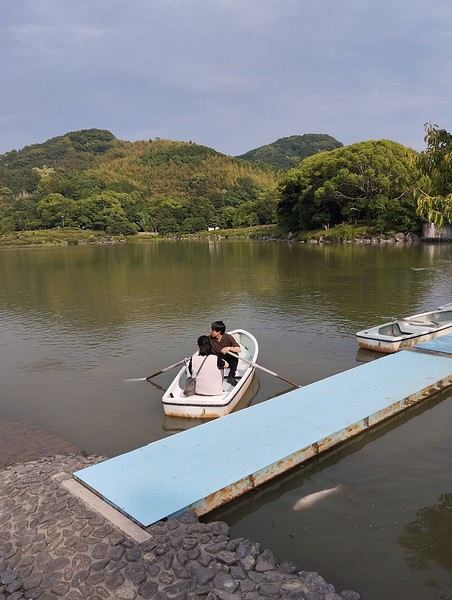
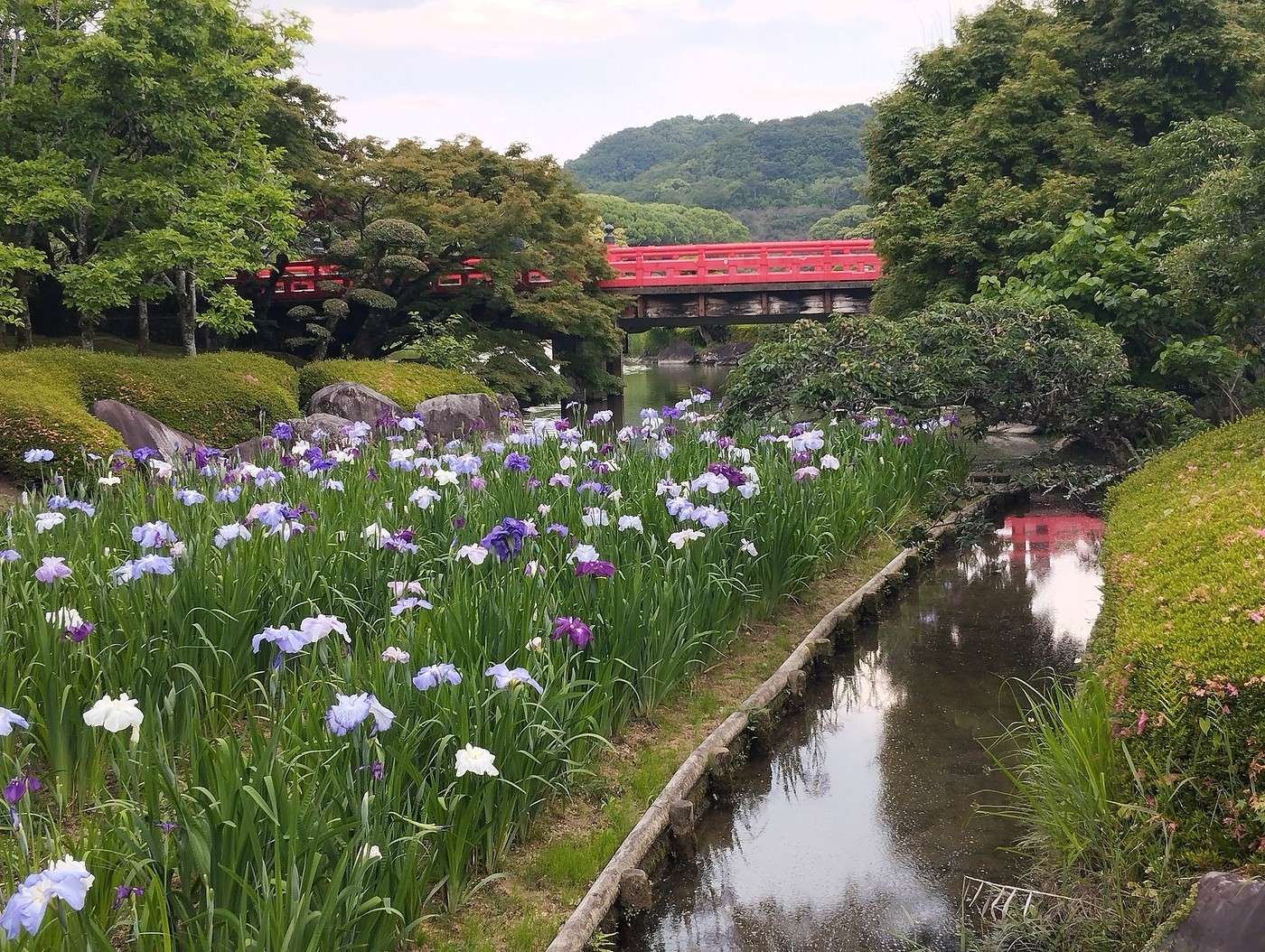
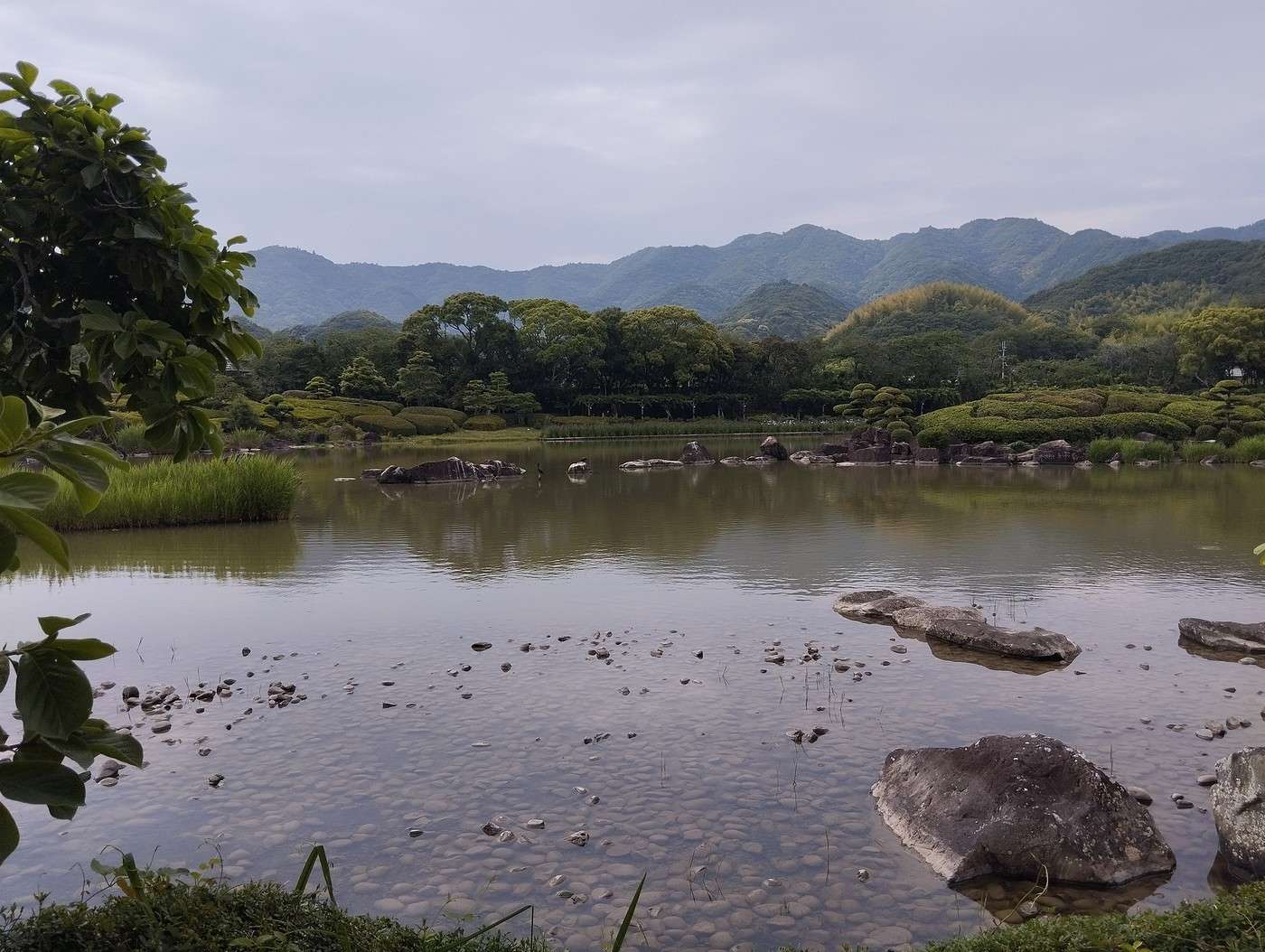
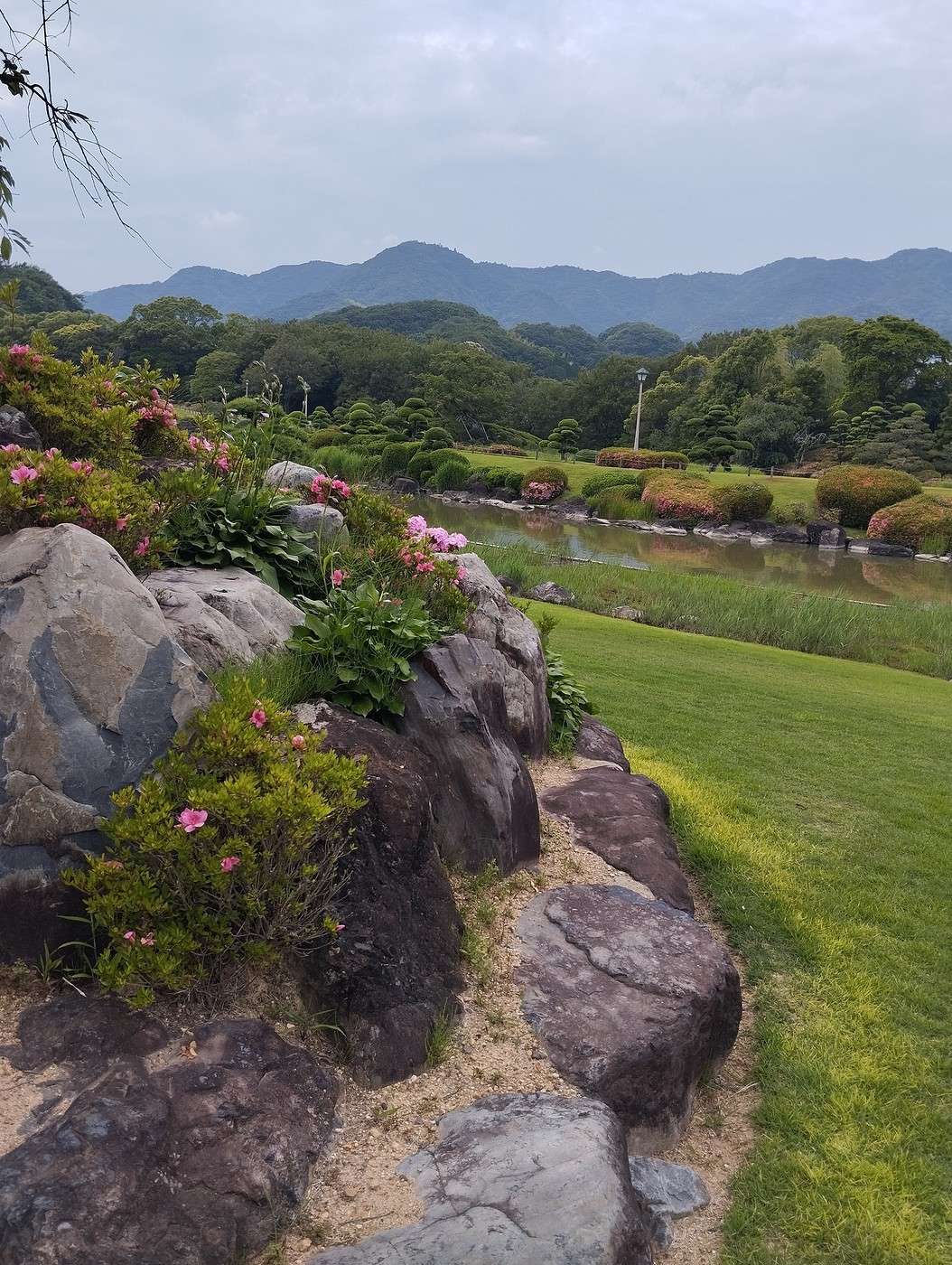
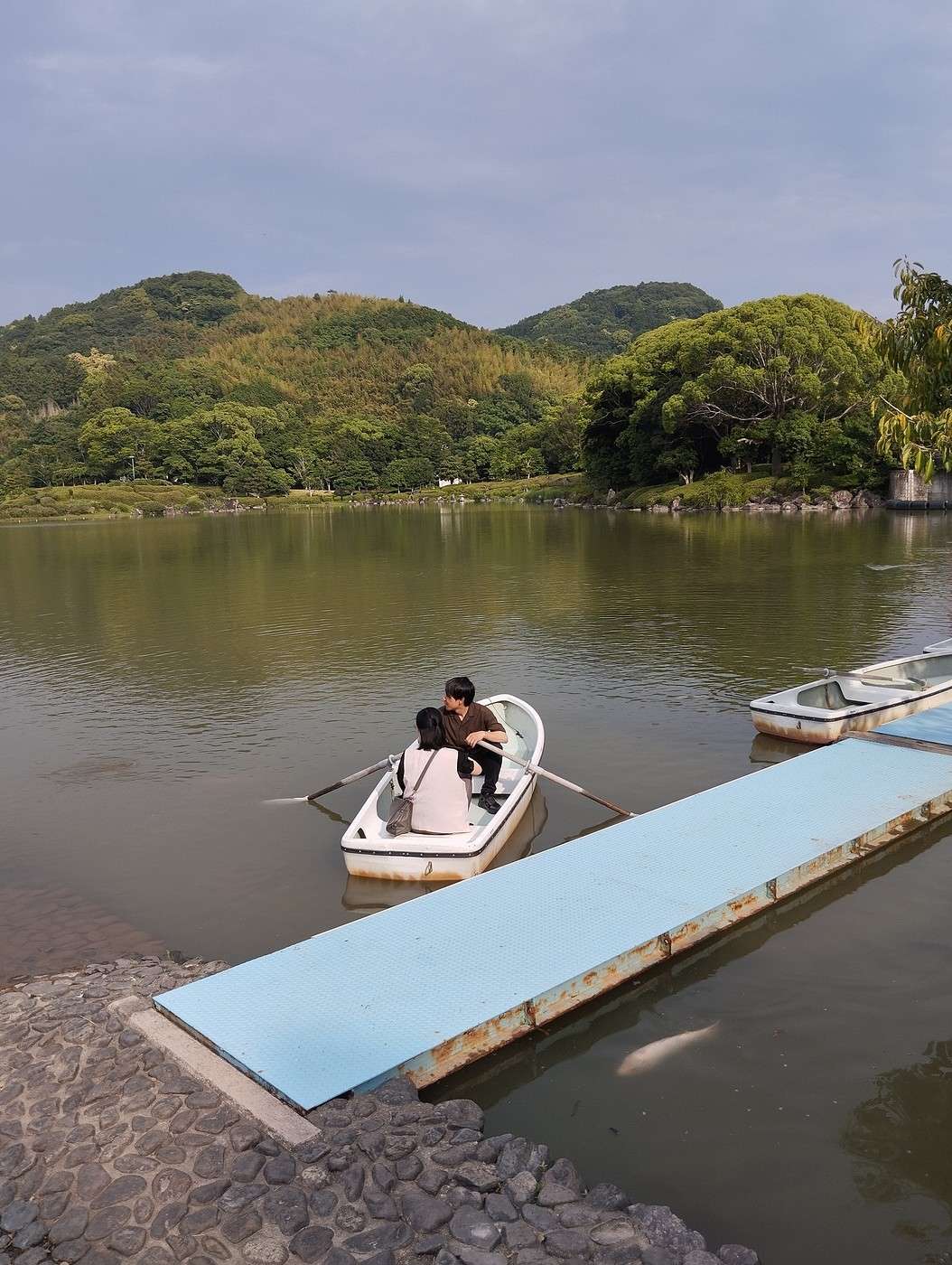
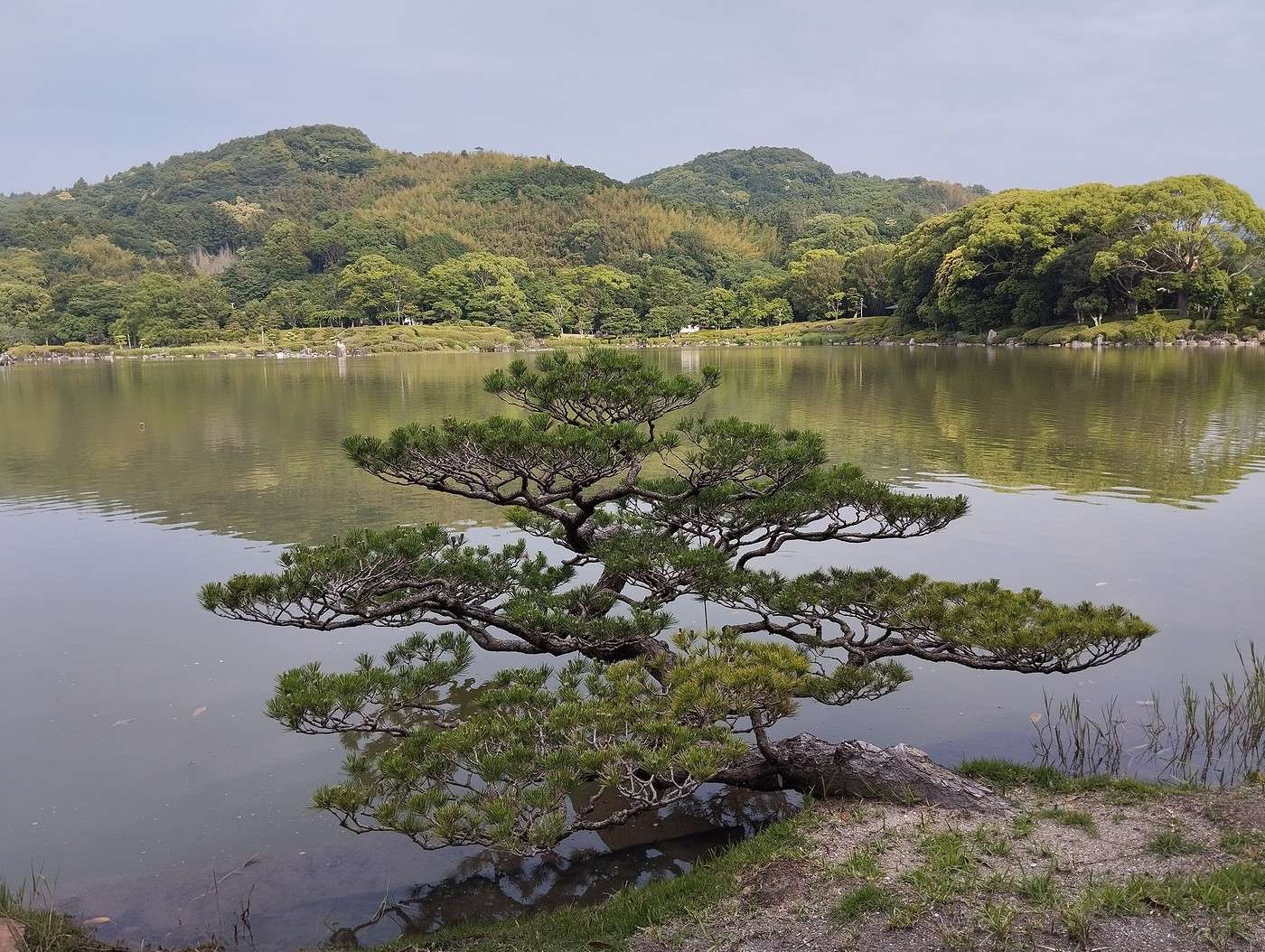
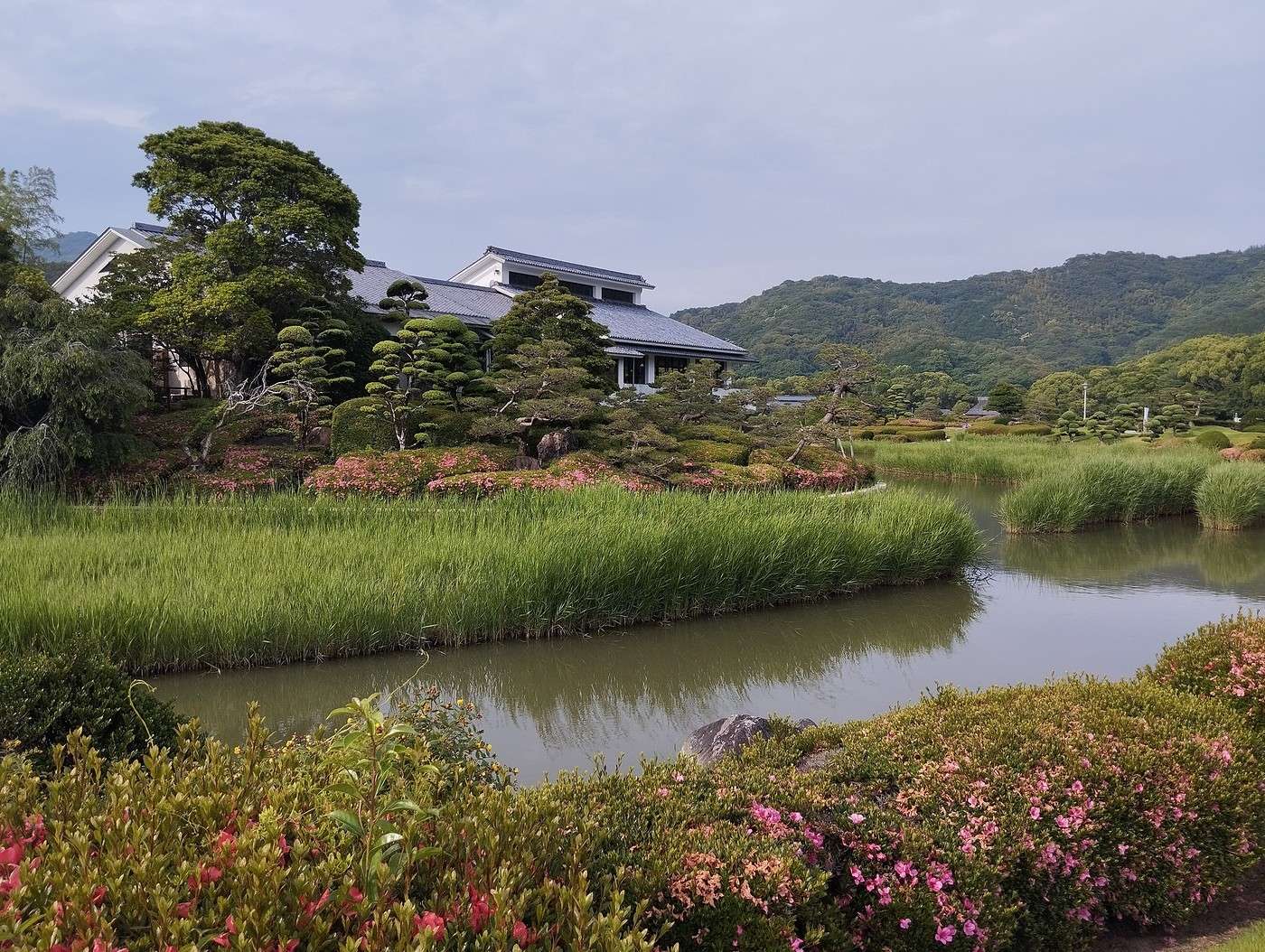
After a quick look around, we start our floral stroll. There are a few Japanese tourists. The place is peaceful and full of different spots: two ponds, flower-lined paths, lots of irises this season, a waterfall area in the forest, and several red bridges. Each of these spots can be seen from different angles, offering a new perspective depending on where you stand. There are plenty of places to sit and escape the heat. You can also go boating. For this activity, there’s no supervision—just a few boats at the dock. You drop what I think is 100 or 200 yen into an honesty box and row away. You can also buy duck food the same way if you’d like.


--Strolling here is incredibly bucolic, despite the muggy air under the gray sky that followed us all day.

--Strolling here is an invitation to contemplation.

--Strolling here is an ode to Japanese gardens, and I’m surprised it isn’t more widely promoted as a tourist attraction. It’s one of the most beautiful Japanese gardens I’ve seen so far.


Tonight, there’s an illumination event planned in the garden, but it doesn’t start until 7 PM. The entry fee isn’t increased for the event. If we’d known, we would’ve come later to see it by day and night. Still, the daytime visit was enchanting. We spent several hours there.

We got back in the car and headed to a café by the sea. We drove through coastal villages where daily life seemed to unfold peacefully—like the group of grandmas sitting by the road chatting, fishermen of all ages waiting for a bite, or joggers going about their usual run.

We also noticed lots of people walking dogs, especially Labradors. I point this out because dogs are generally rare in Japan, and when you do see them, they’re usually small. But here in Shikoku, there are way more dogs, and they tend to be larger breeds. Maybe—rightly or wrongly—I associate this with the natural environment and the sense of space, which makes it easier to own a dog. I don’t know for sure, but the observation stands.

After driving along the coast for a while, the GPS said we’d arrived, but there was nothing—just the sea, a young man fishing, and a narrow road. I got out of the car to ask the guy. He didn’t know but saw a sign in kanji down the road and made a cross sign to indicate it was closed today. I took a photo of the sign to translate later at the hotel with Wi-Fi. We found out it was an exceptional closure.

We turned around and headed back to the hotel. In the parking lot, as usual, we got a kick out of the staff welcoming us like stars—removing that little post with our name when we arrived and putting it back when we left. We’d spotted an izakaya we wanted to try. Though it wasn’t far, we decided to drive. We parked, but nothing indicated it was the restaurant’s parking. A young woman greeted us at the restaurant and made it clear it wasn’t the right one. She struggled to explain where their parking was, and we couldn’t find it after getting back in the car. We didn’t want to risk getting blocked in again, like we had on two other trips. So, we went back to drop off the car at the hotel and walked to the izakaya—it wasn’t too far.

At the restaurant, we were seated in a traditional private room on the floor. At waist height, it seemed high, and my partner misjudged the distance between his backside and the floor, nearly knocking over the partition separating us from another private room. His fall and the loud noise startled the people in the next room. The noise of the fall plus their reaction drew all eyes to us for a solid five minutes. Luckily, the partition wasn’t broken—just moved. A server fixed it, and life in the restaurant went back to normal.

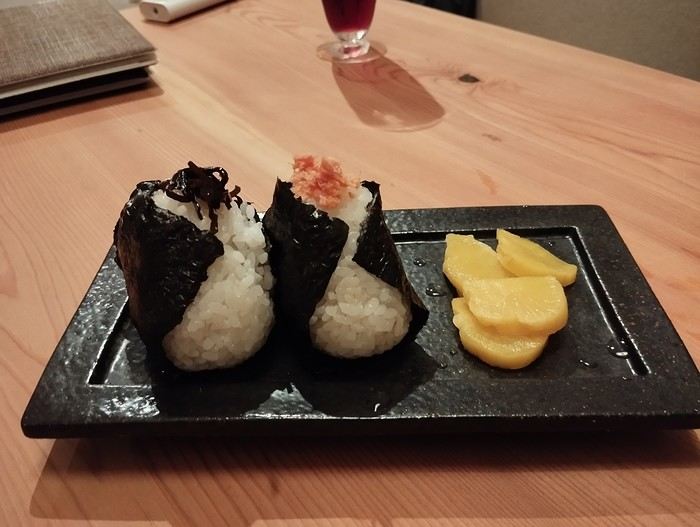
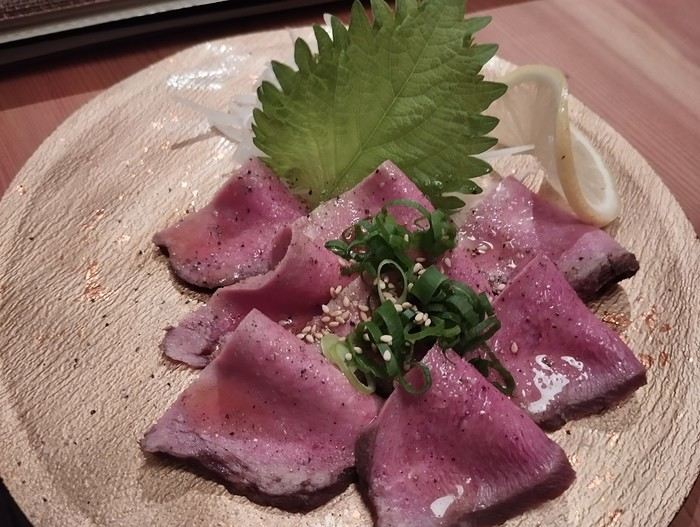
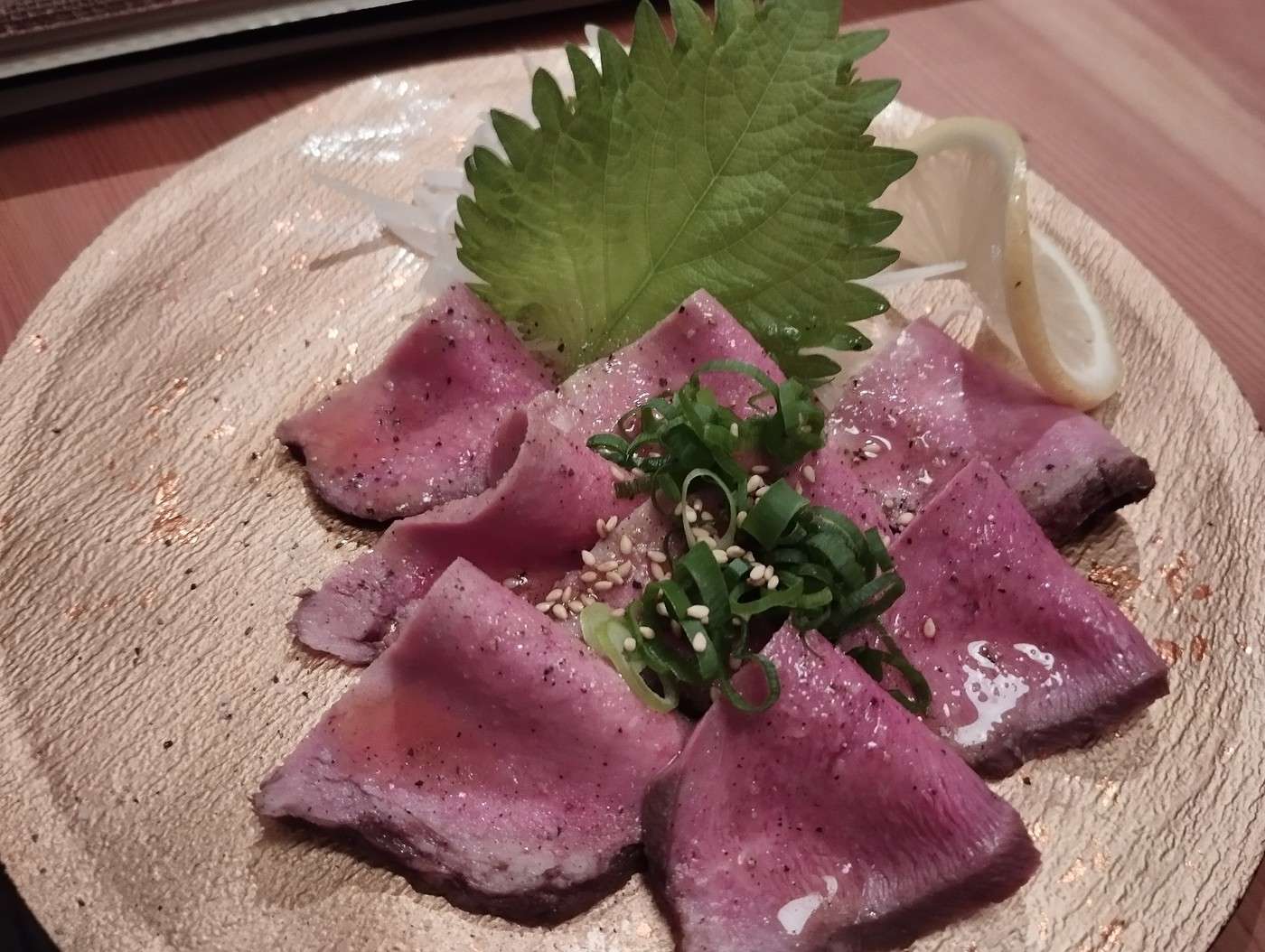
Here too, there was no photo menu. The staff, who only spoke Japanese, seemed uncomfortable serving foreigners. They were hesitant but gave it a shot. Despite the communication challenges, we managed to order enough to fill our stomachs. On the menu: karaage (fried chicken), beef tongue, egg, onigiri, beef skewers, and gyoza. It was good.

The izakaya was packed, and the conversations were lively.


From Southern Shikoku, between land and sea, to the blue waters of Miyakojima and finally the megalopolis T

Nathalie971 · 2025-12-02 · Message 34 of 75

Day 9 - Yusuhara

After a little break, I’m continuing my travel journal. Thanks for your patience!

Like many other mornings, this one was no exception—we headed to the mecca: the 7-Eleven konbini to grab breakfast. We’ve become fans of the fresh, affordable smoothies, not to mention the must-have fried chicken. Though I do sometimes cheat and go for a *curry pan* (warm bread stuffed with curry), which has a spicy, bold flavor I really enjoy.

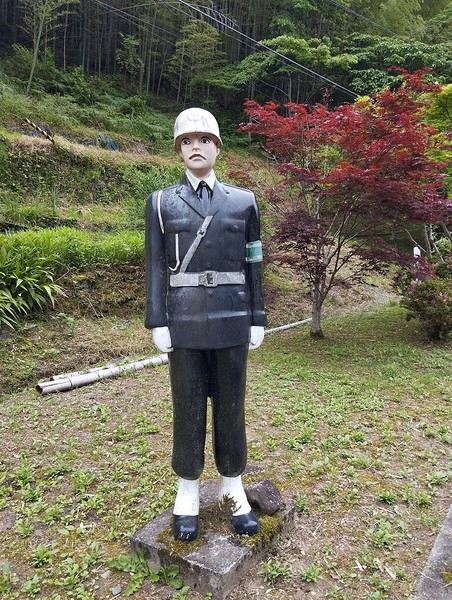
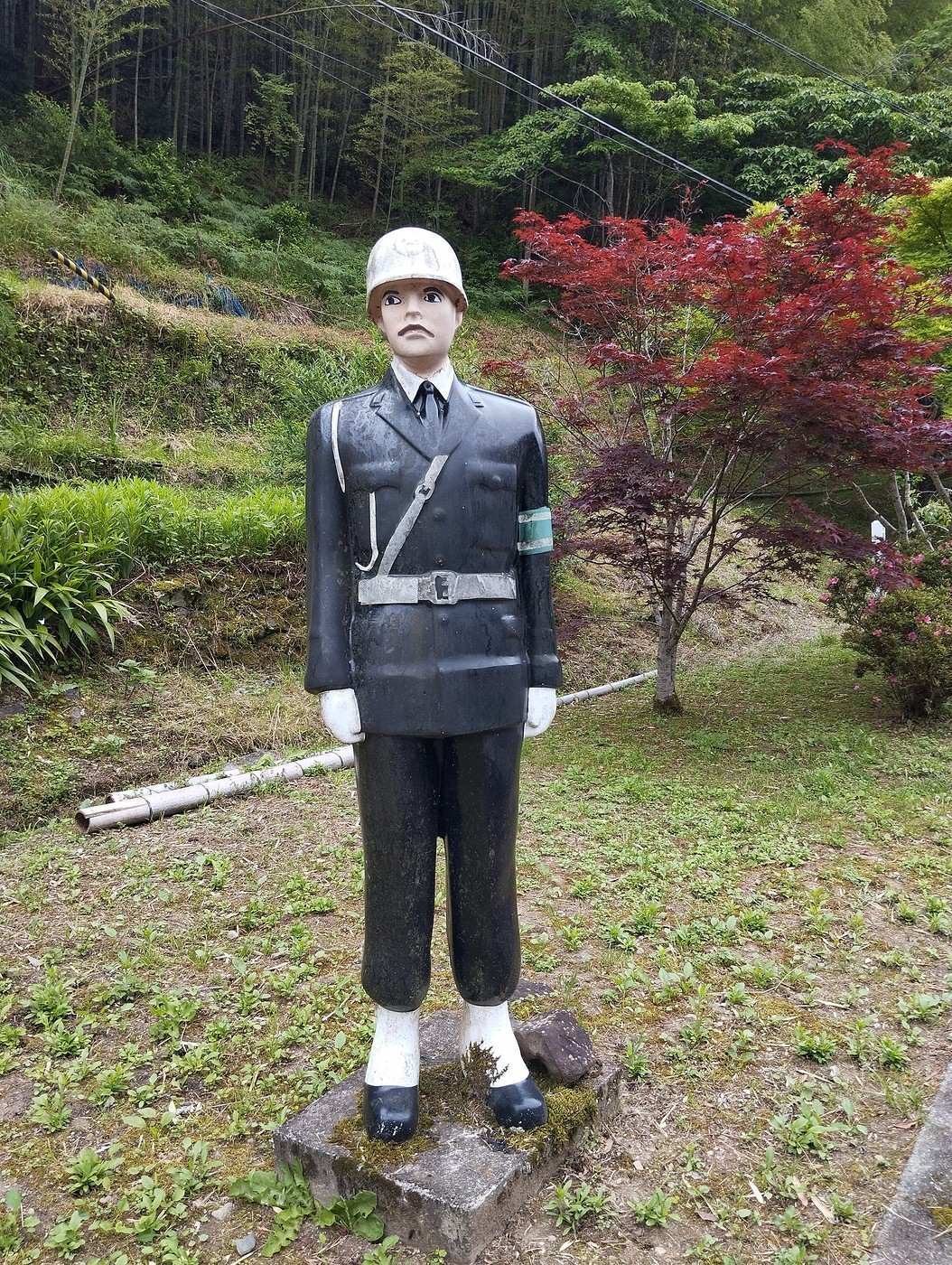
We then set off on our road-trip pilgrimage. We wanted to stop by Ayukaeri Falls, but it seems Shikoku’s waterfalls are trickier to find than we thought. We ended up driving in circles, feeling a bit frustrated. Having internet at that moment (and others) would’ve probably helped. So, a little defeated, we got back on the road. As we drove through the peaceful Japanese countryside—alternating between mountain landscapes, rice fields, and villages of all sizes—something familiar caught our eye for just a second. We knew we hadn’t imagined it when we spotted it again a little further down the road. It was Mamoru-kun, the iconic police officer from Miyakojima (Okinawa). A cop who’s always smiling, stands strong against typhoons, and never takes a day off—all to warn island residents about road dangers. Apparently, Shikoku cloned Mamoru-kun, and seeing him here in unfamiliar territory made us smile. What an adventurer!


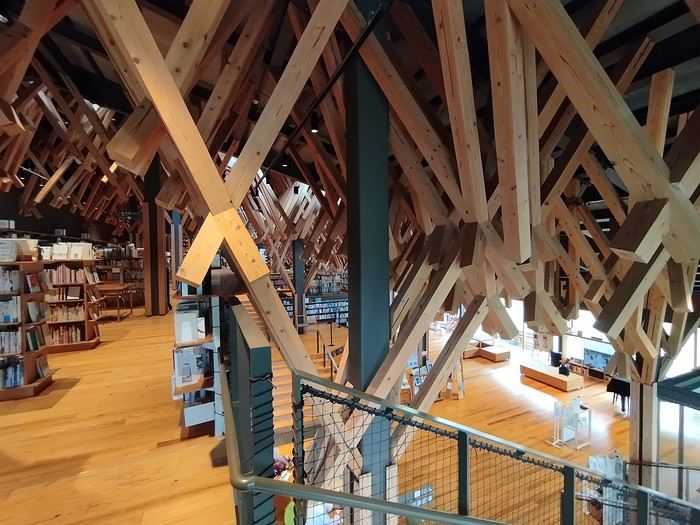
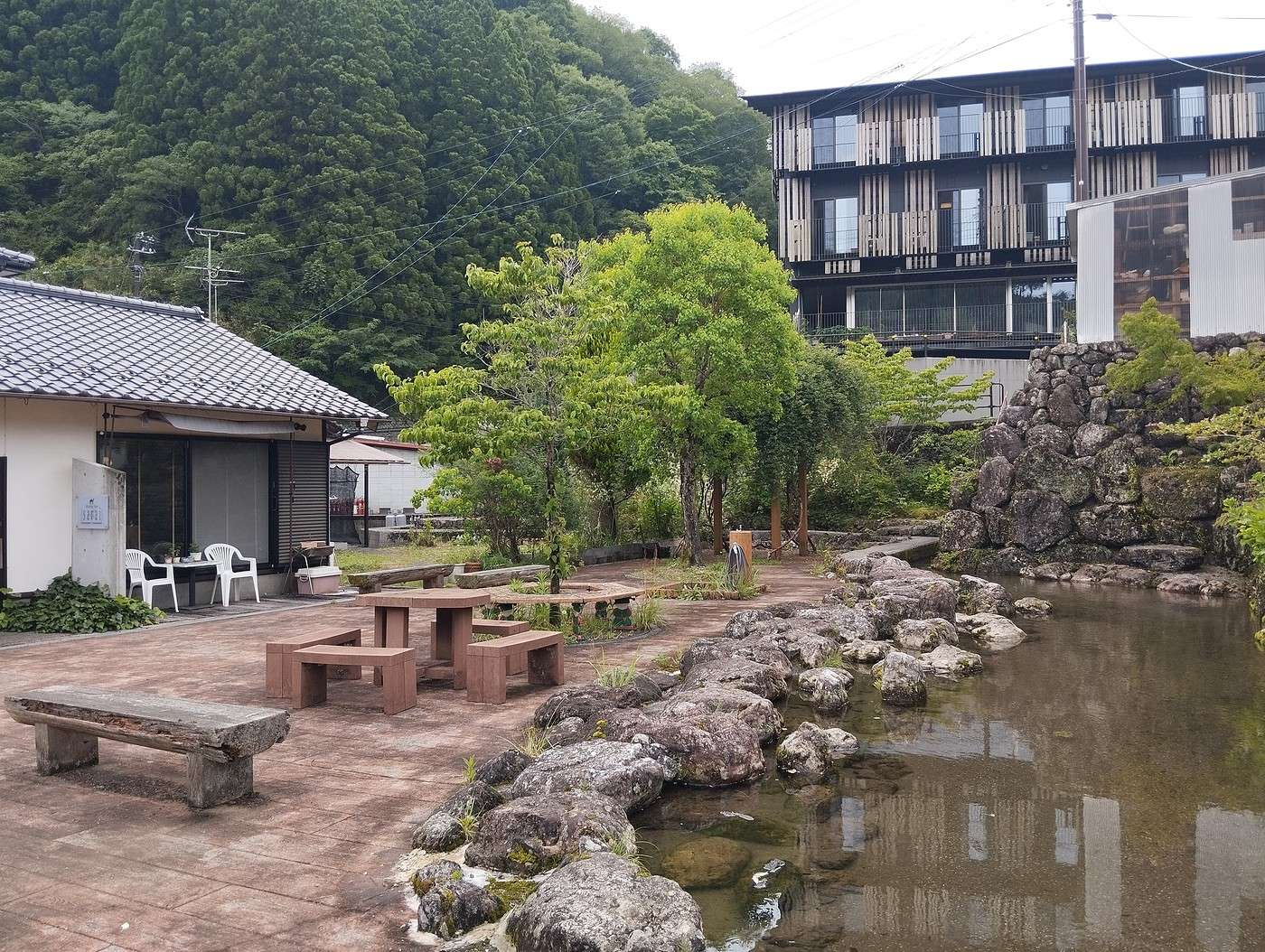
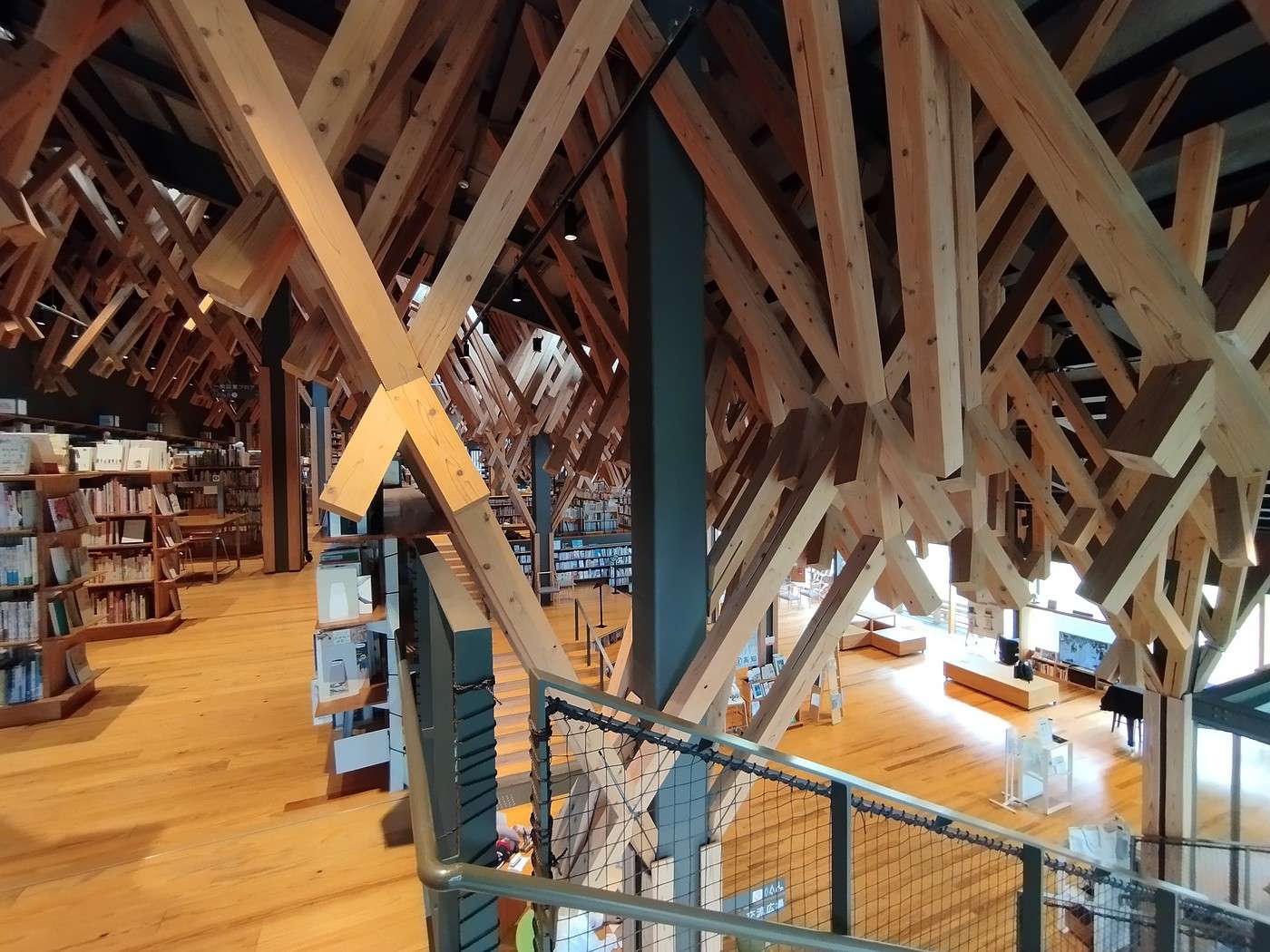
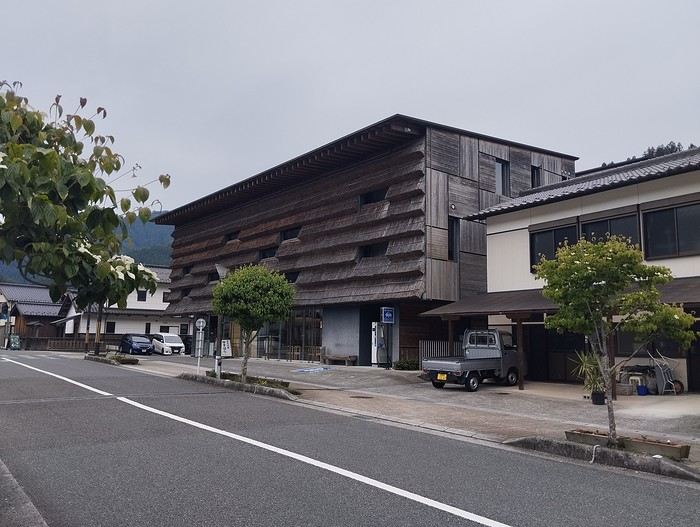
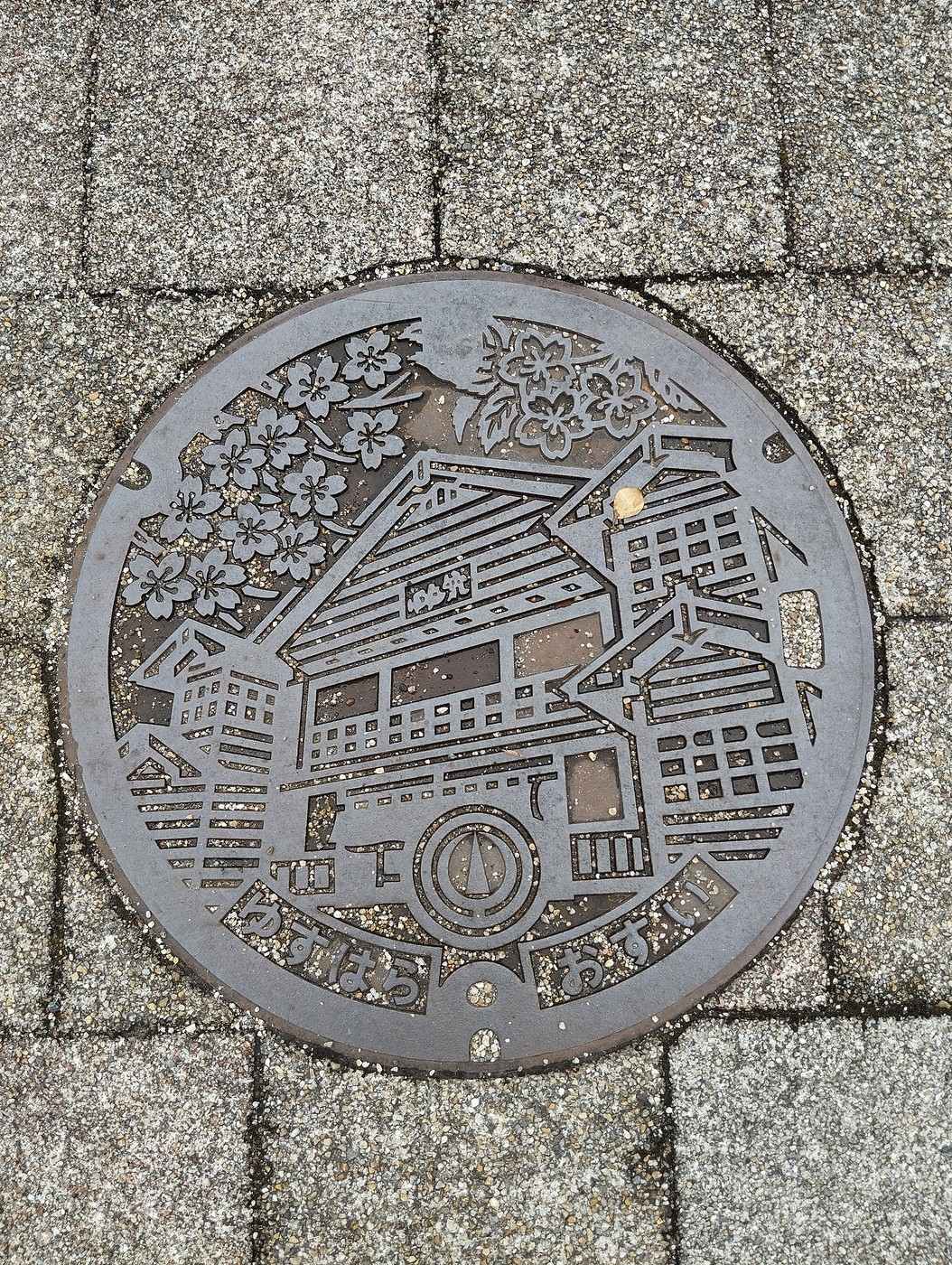
So, where were we headed today? Well, we were returning to Kochi Prefecture for a few hours. The destination was chosen for its architectural appeal: the small mountain town of Yusuhara, in the northwest part of Kochi. This town is special because it inspired the style (local materials, blending into the environment, and creating a homely feel) of the famous Japanese architect Kengo Kuma when he visited a friend in 1992. That’s why this tiny town of barely 3,000 people has six buildings designed by him. We started by visiting the stunning and impressive library. From the outside, the building has real style and invites you in without being intimidating.


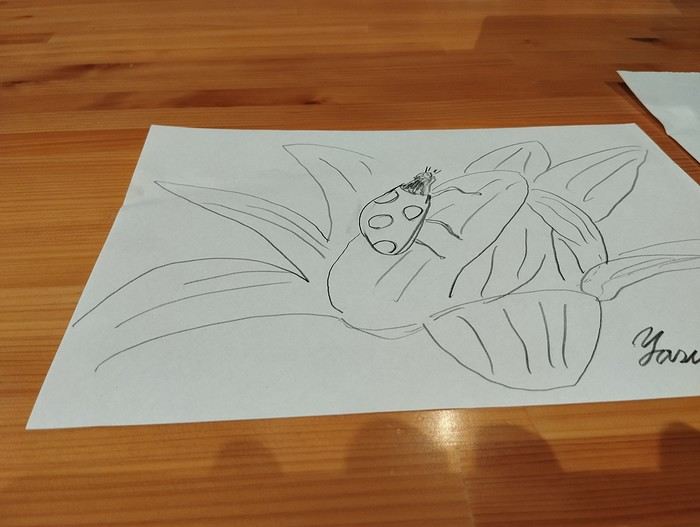
You have to take off your shoes to explore it—socks only! The visit begins in the café area, with a few round tables where you can snack and read. As I moved further in, I caught a glimpse of the main space. It felt both calm and lively. Kids were moving around, there was background noise from a TV in the lounge area, and the first bookshelves came into view. The children’s section is sunken, with all-wood shelves and a cozy nook for playing and reading. And unbelievably, there’s even a nursery where moms can warm up milk or take care of their babies. In this space, a man was drawing characters from books. He struck up a conversation with us, and after a little chat, I left him to continue exploring this incredibly soothing and warm library.

When you’re in the main area, you notice the soft light filtering in through all the glass walls that define the building. There’s also a grand piano, and the space feels open and tall, thanks to the wooden "stalactites" and the various staircases leading to other areas—the adult and teen sections, as well as several cozy, cocooning rooms. Teens also have their own corners on the ground floor for climbing or just hanging out with friends.


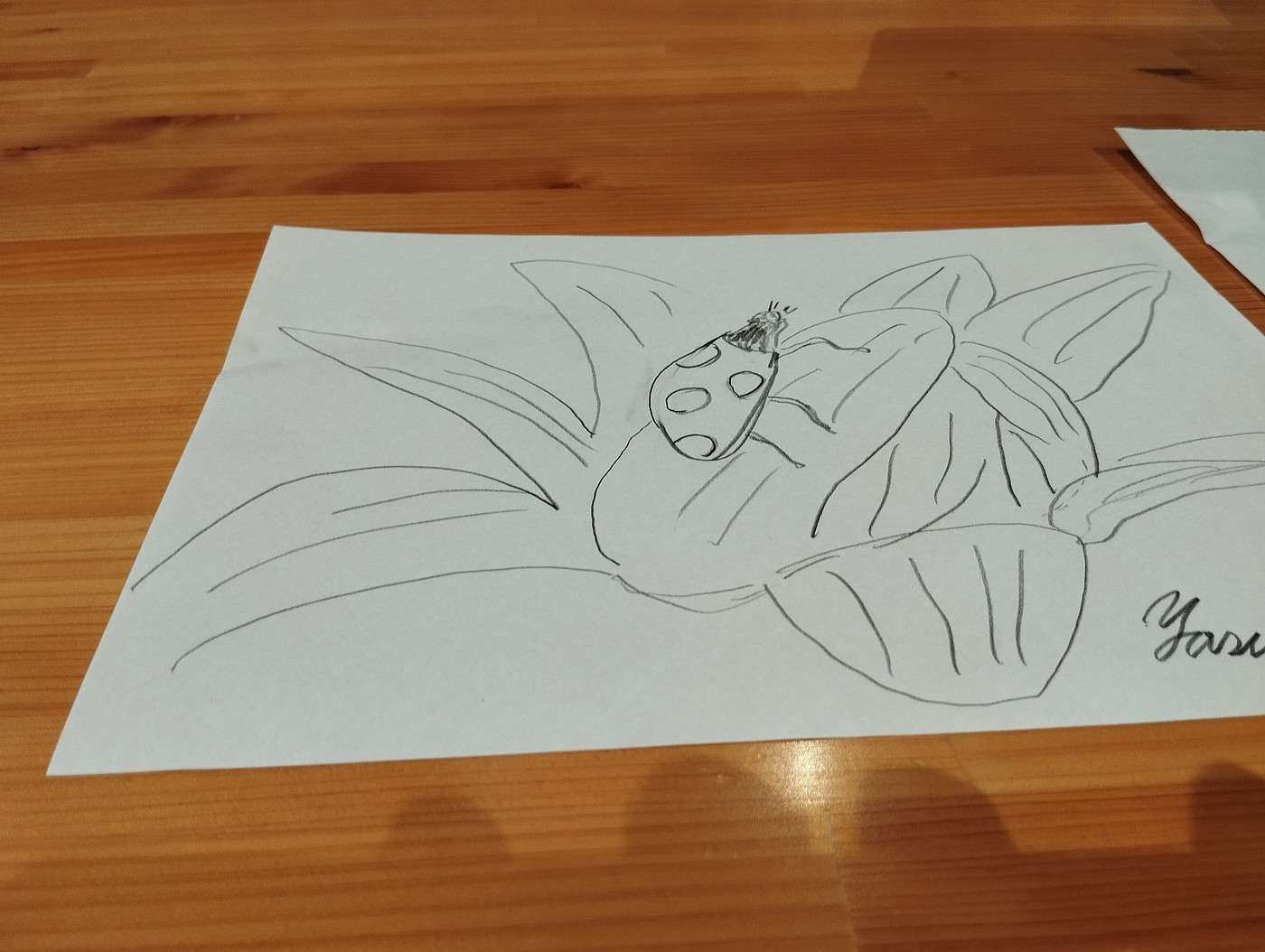
The place is absolutely gorgeous, and the trip was totally worth it. Plus, I left with another gift! The young artist I’d chatted with earlier ran after me in the library to give me two of his drawings—characters from books.


Books, manga, magazines...

I could’ve happily settled in for the afternoon, reading on the grand staircase, the lounge sofa, or in one of the private rooms. But the rest of Yusuhara was waiting, and this little immersion had already been so enjoyable. A place like this just makes you want to read more.

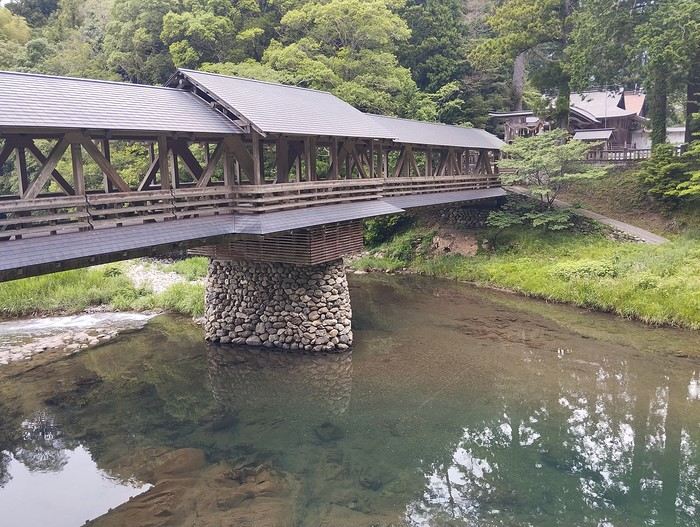
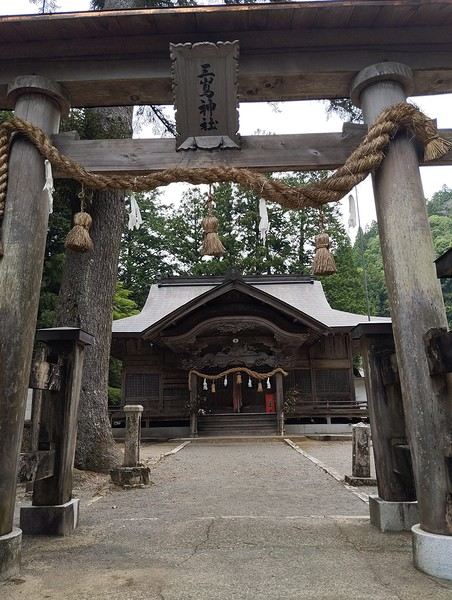
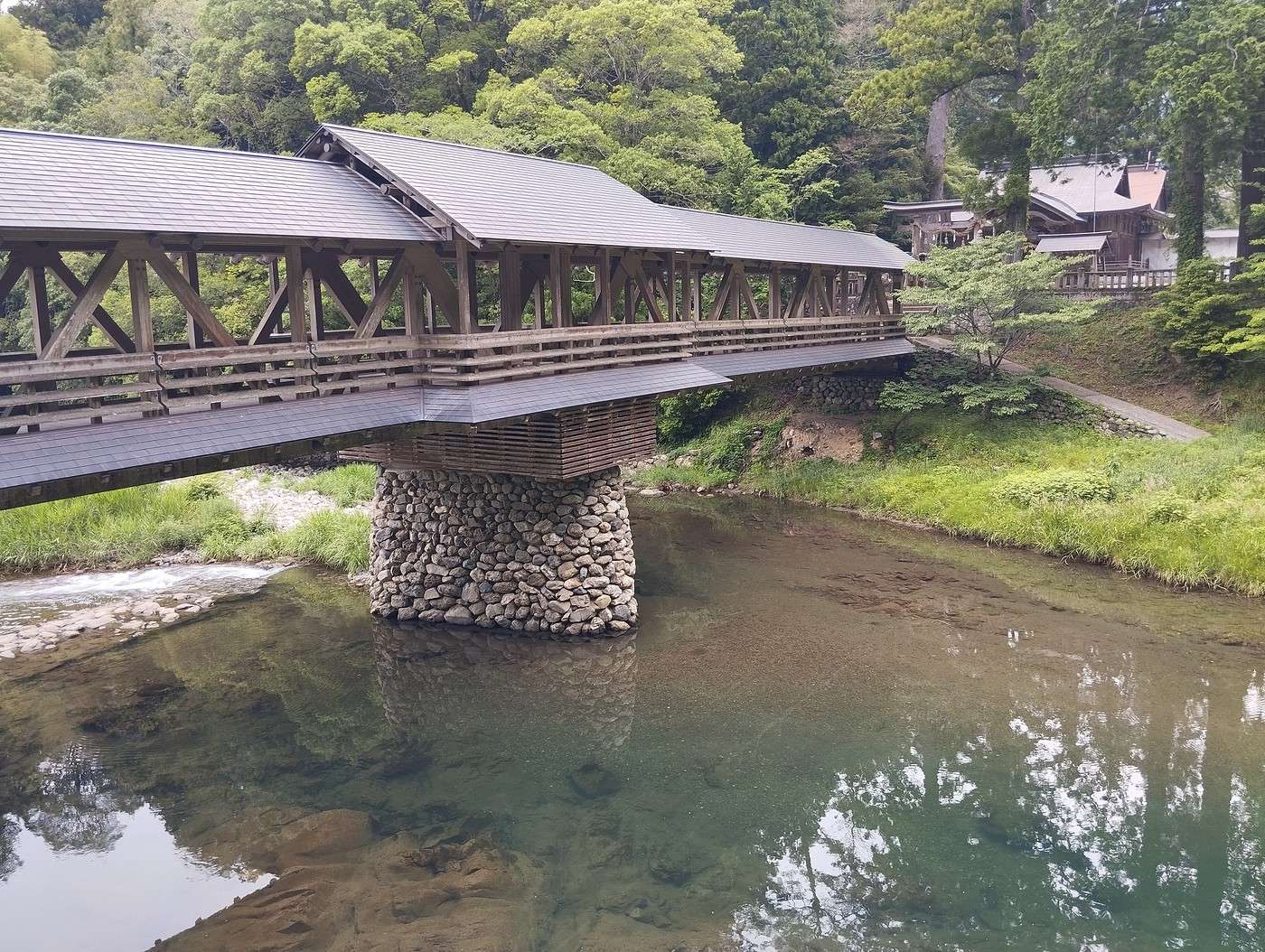
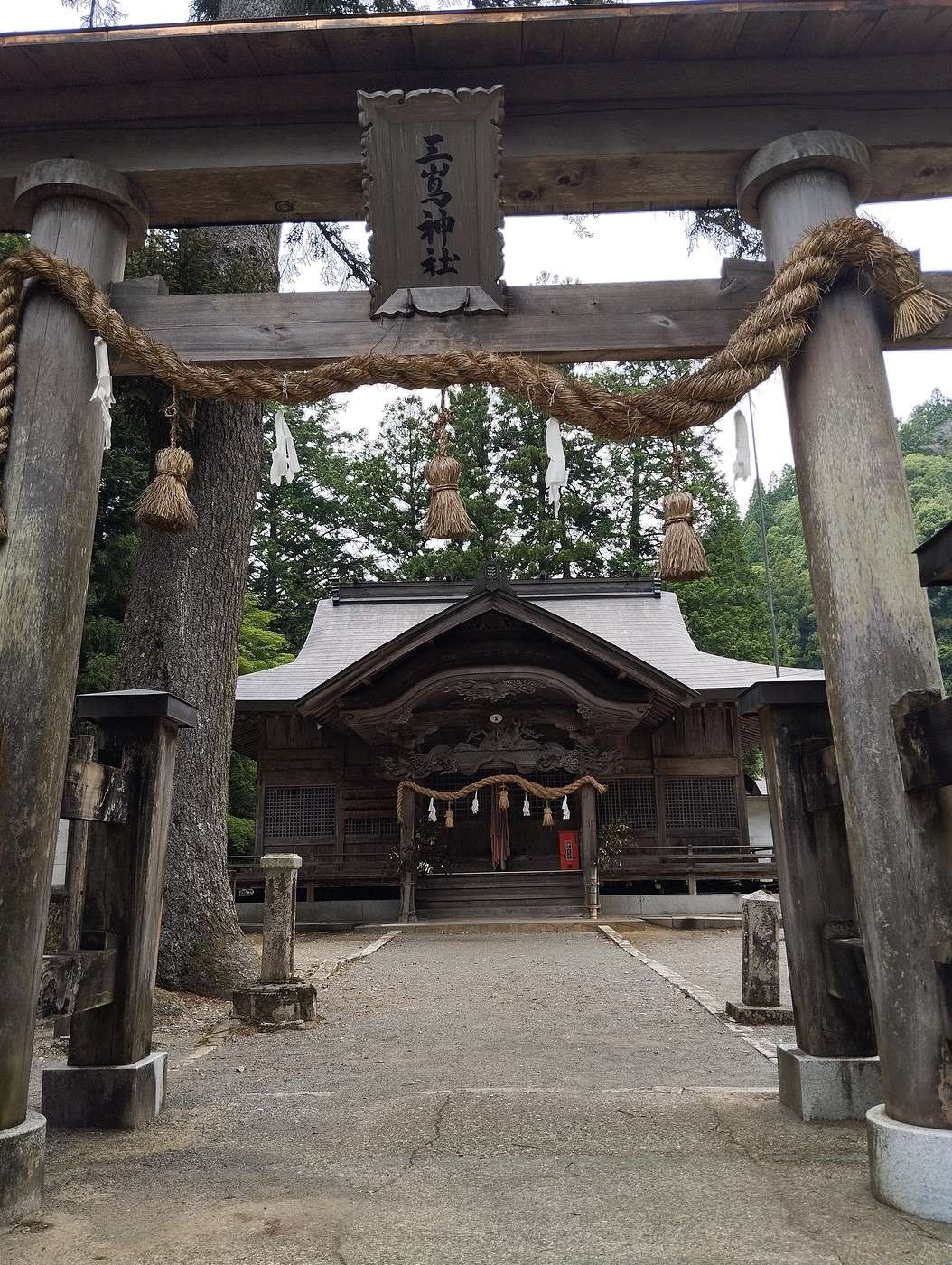
We continued on to Mishima Shrine, which is accessible via the Miyuki Bridge spanning the town’s river. At the end of the bridge, the shrine unfolds in the heart of a forest, home to a 400-year-old fir tree.


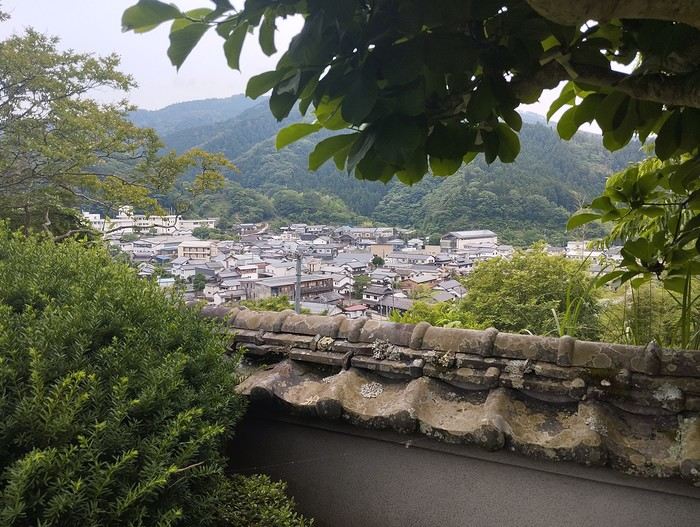
Next, we took what was called the *Dappan Road*, a path regularly used by Ryoma Sakamoto and his group of samurai (key figures in the overthrow of the Tokugawa shogunate). This route leads to the samurai tombs and a traditional house, all while offering a panoramic view of the town.


From Southern Shikoku, between land and sea, to the blue waters of Miyakojima and finally the megacity T

Nathalie971 · 2025-12-02 · Message 35 of 75

After turning back to head into town, we found ourselves strolling down its main street where few people were out and about. There were a few shops, but not many, and a lot of them were closed when we passed by. One café was open, offering freshly ground and brewed coffee.


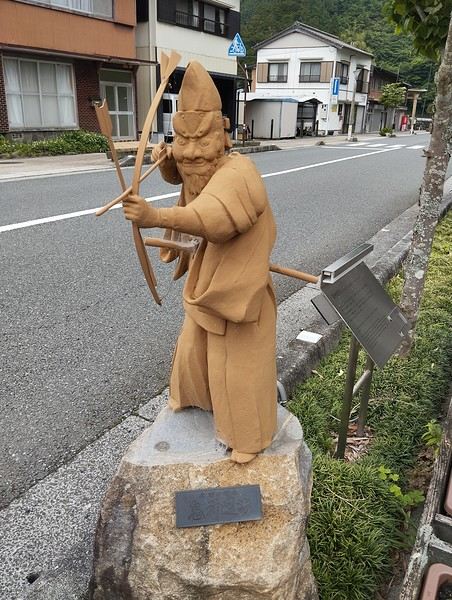
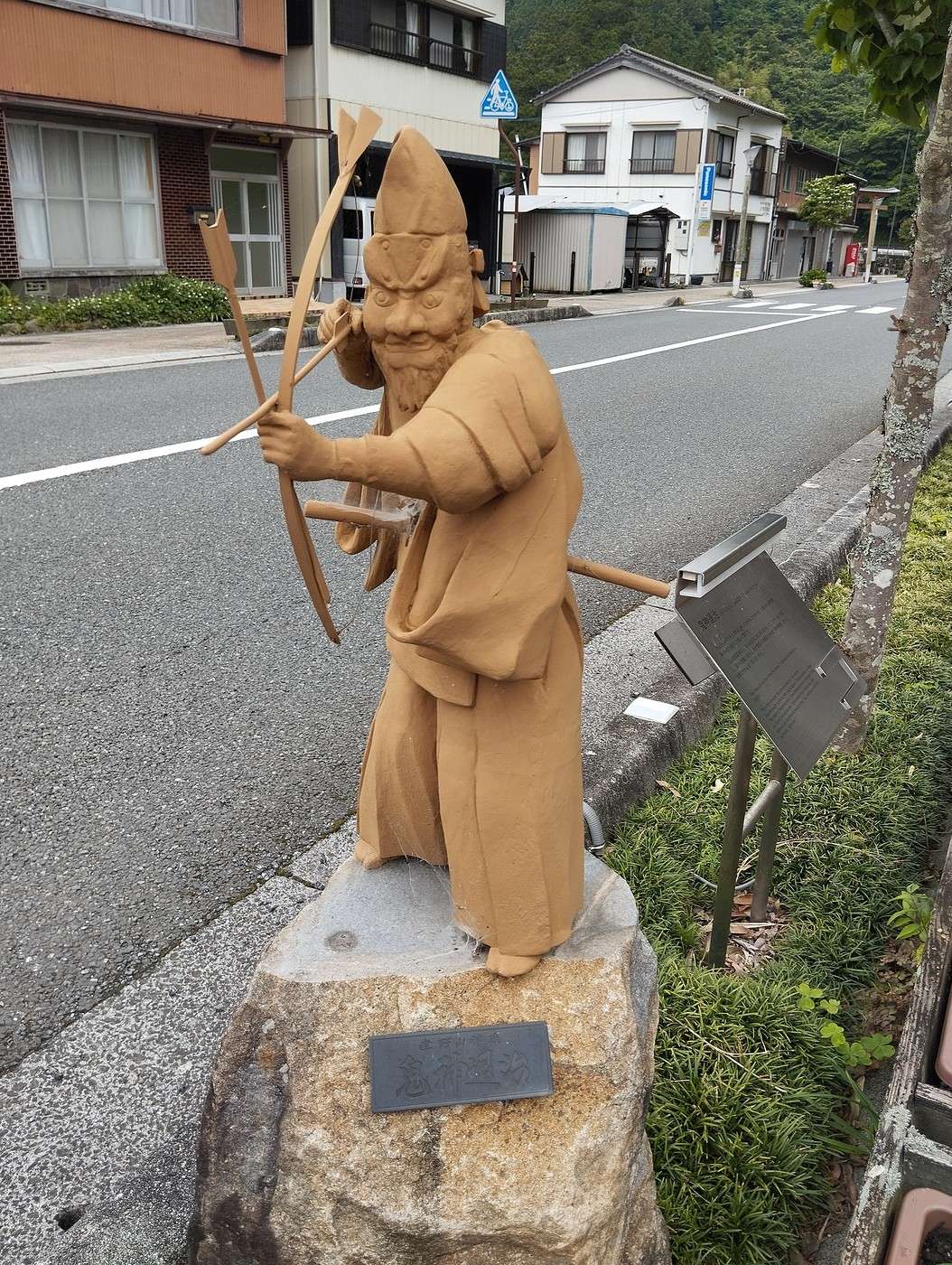
Some characters kept us company along the street.


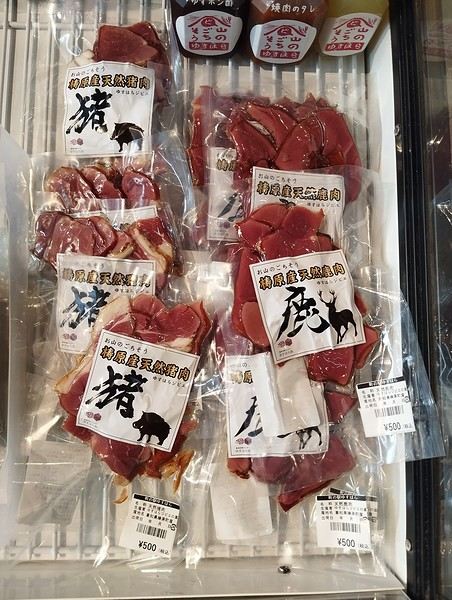
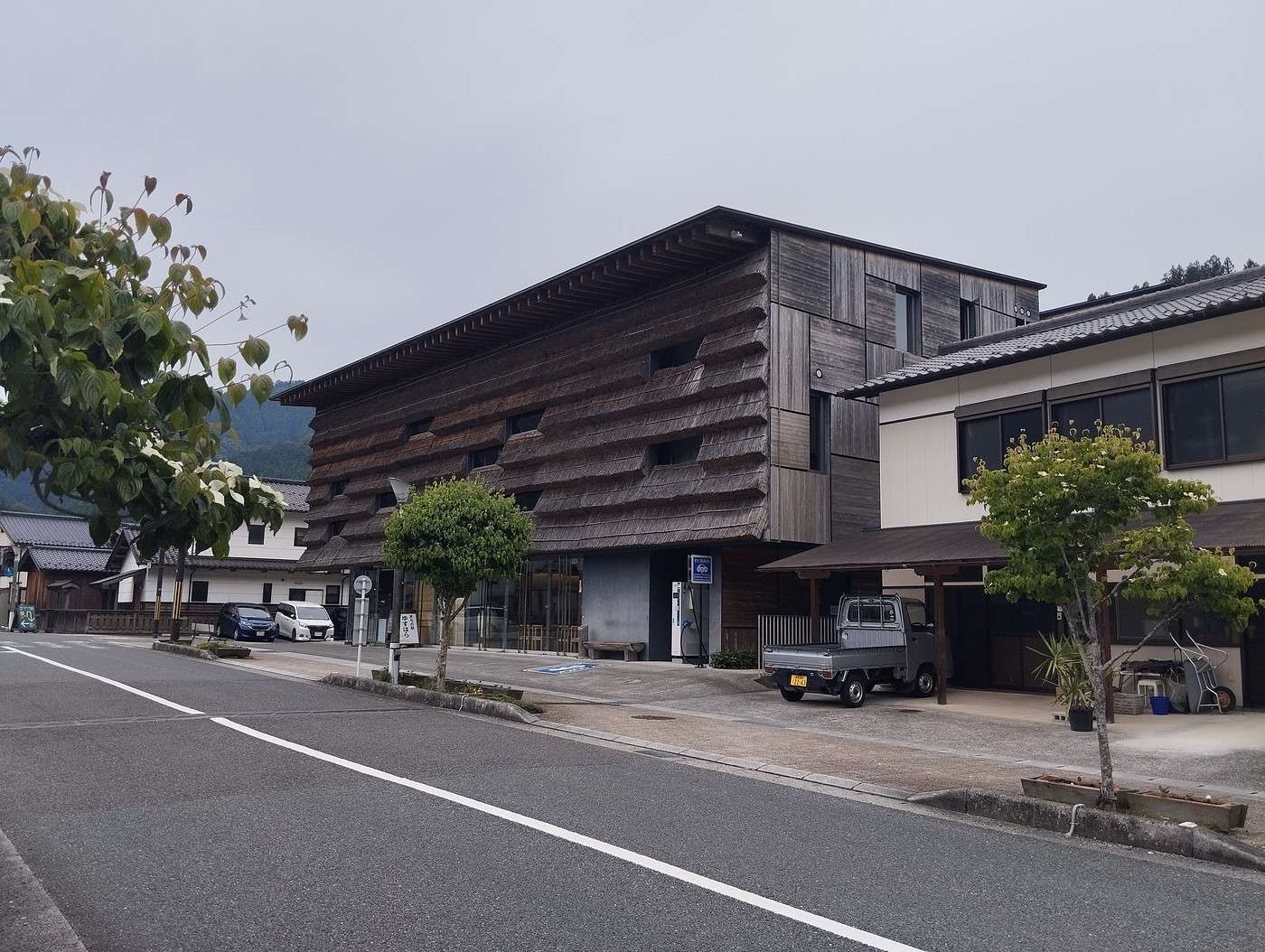
We discovered another architectural building, the market, Machi no eki. This place has a thatched roof. Inside, you’ll find local food and non-food products.


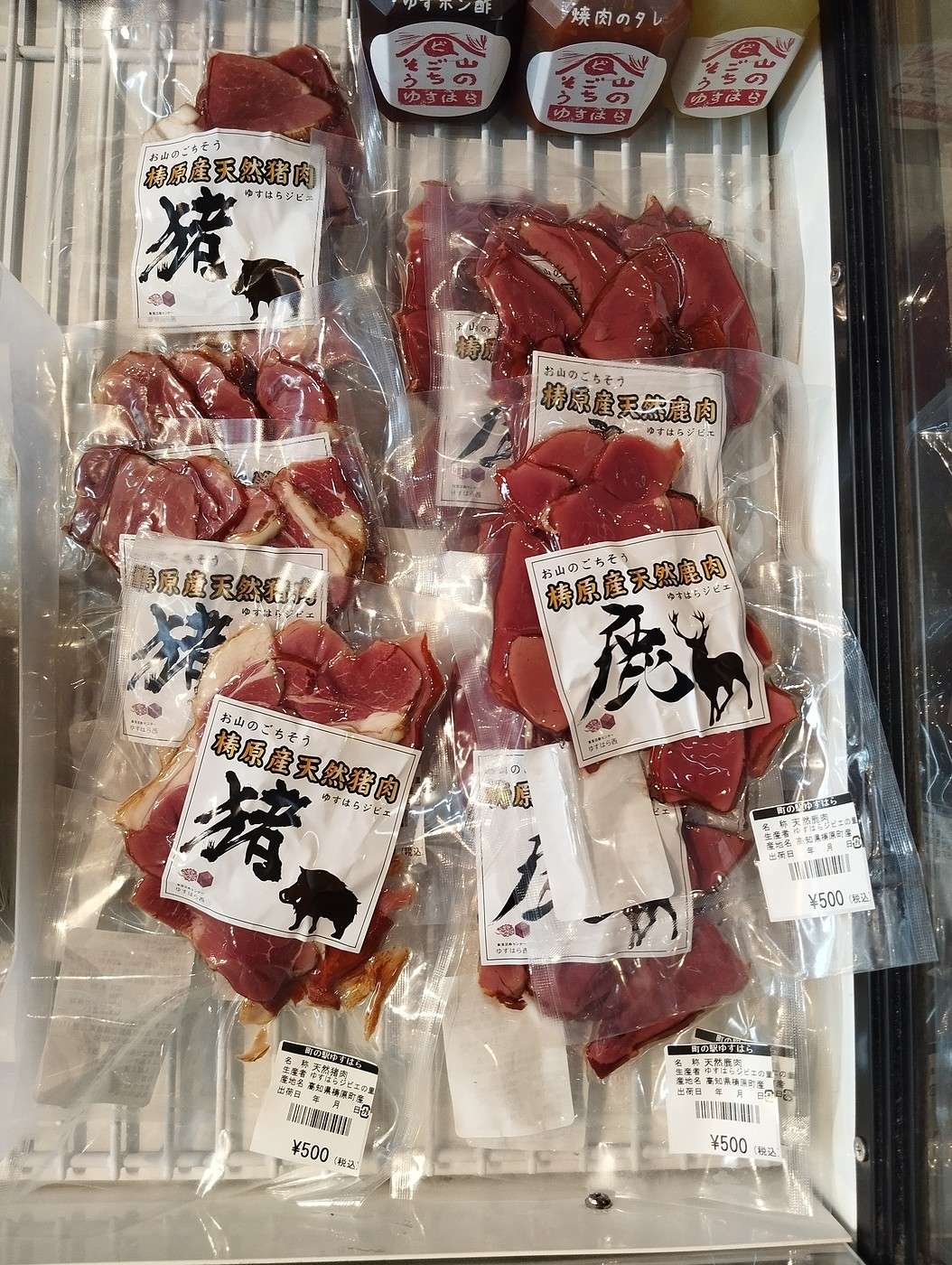
Game meat


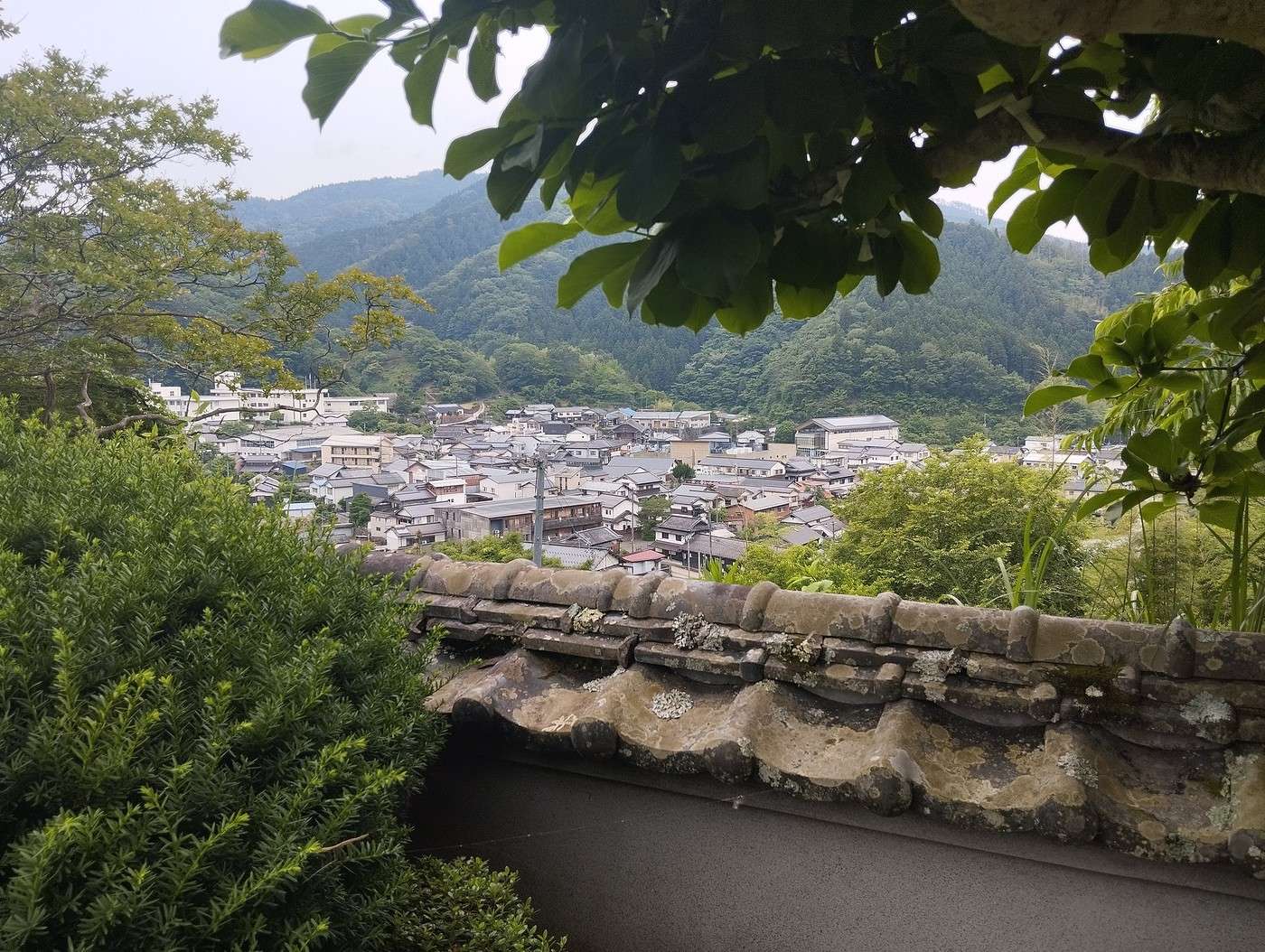
We continued our walk through the lower streets, eventually making our way back to the river and another bridge.

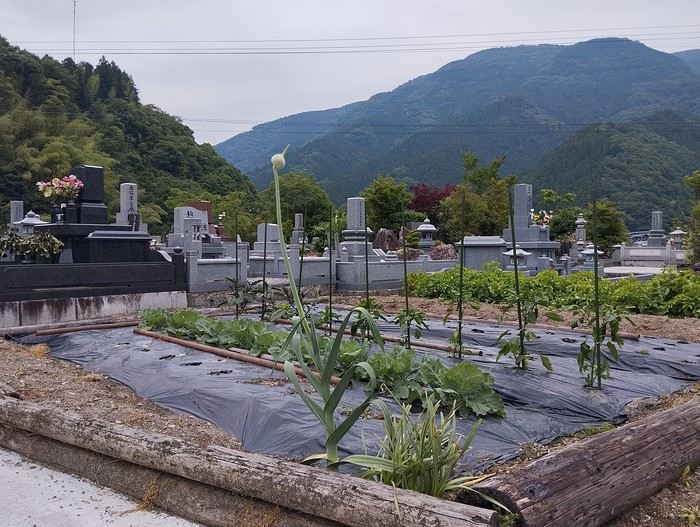
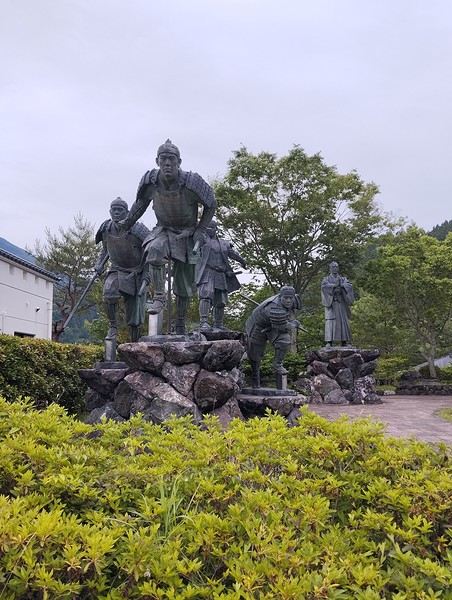
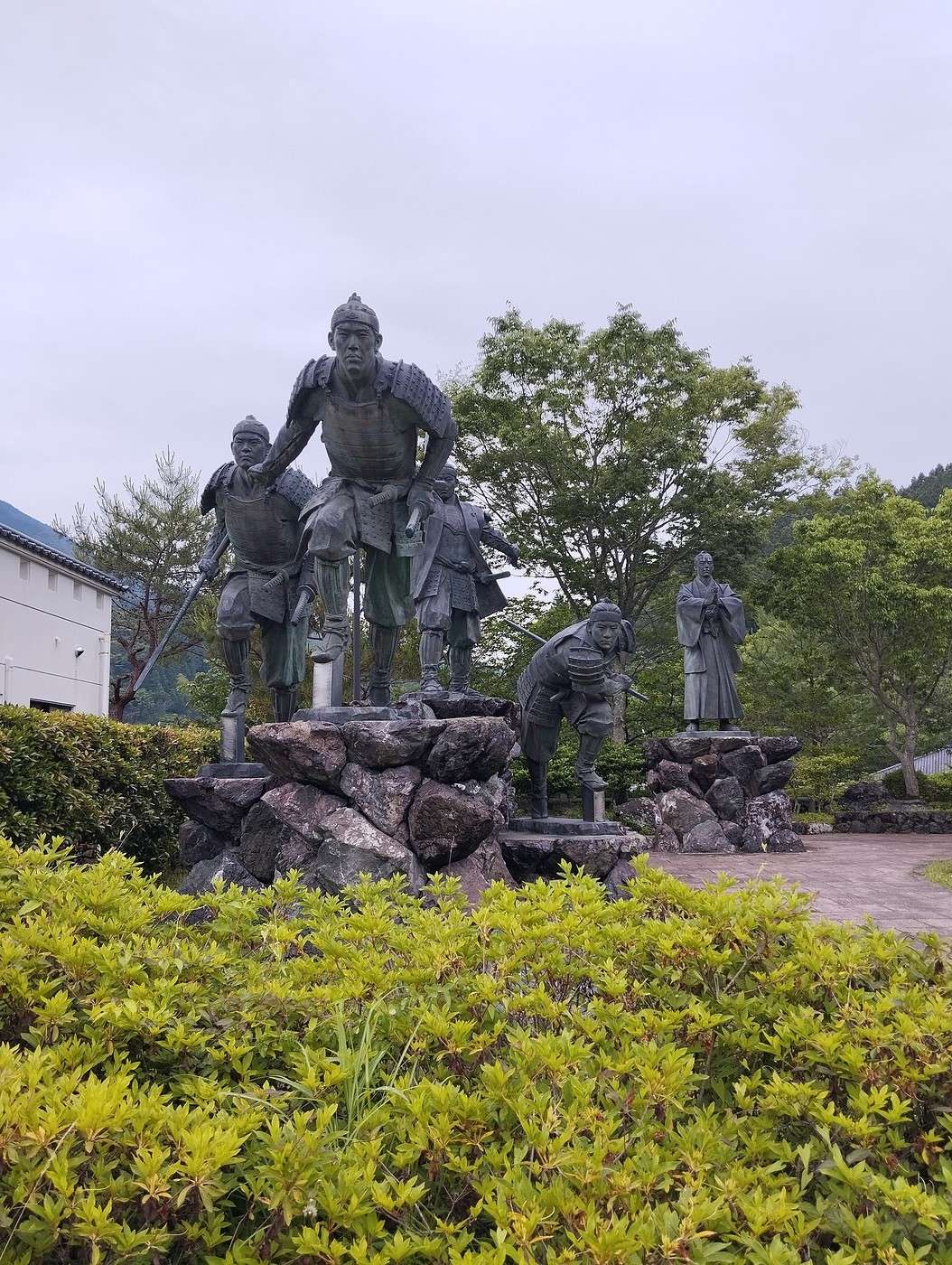
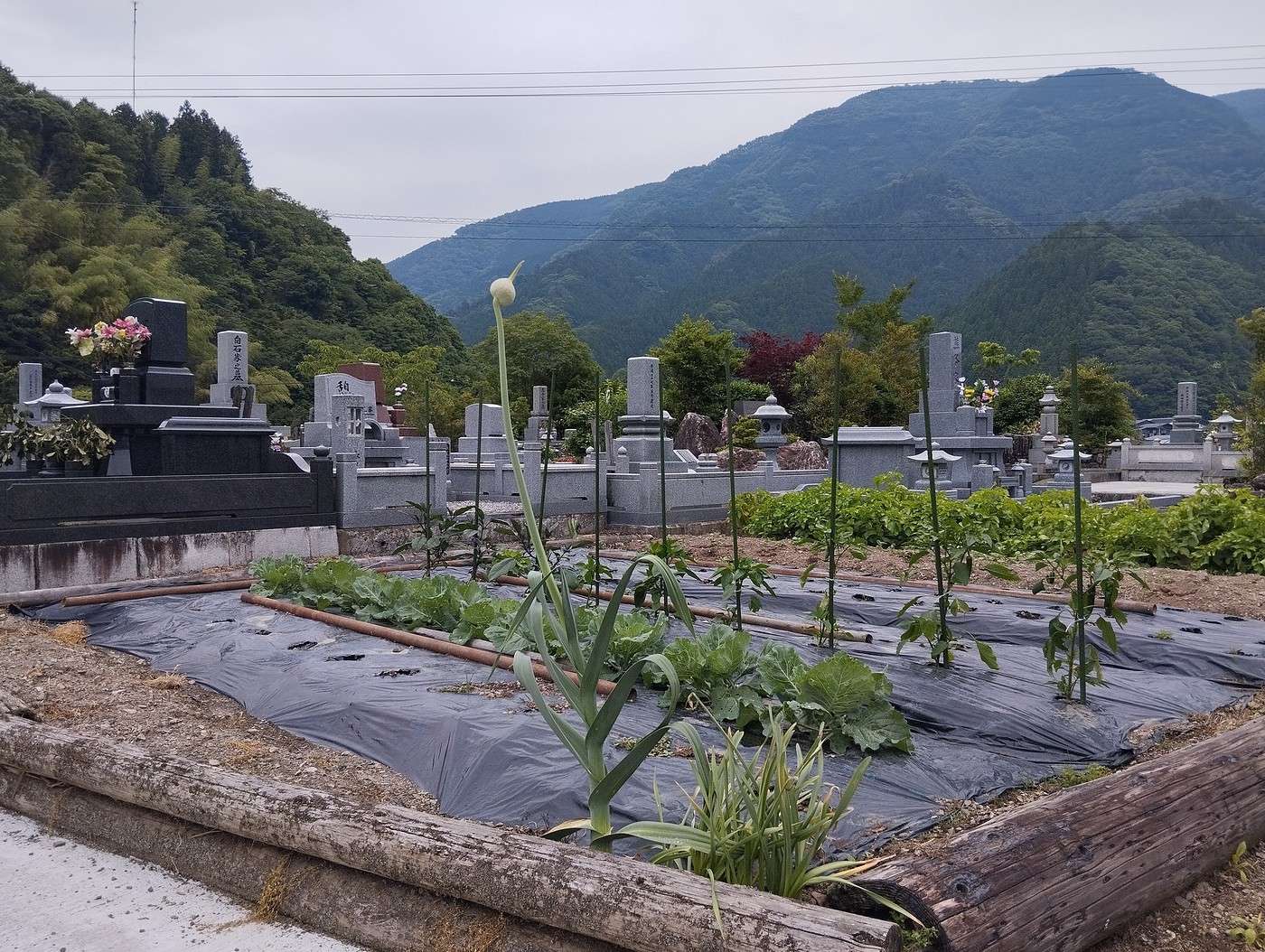
We headed toward the bronze samurai statues near a cemetery and a vegetable garden. Along the way, we came across an elderly man sitting in a chair, gathering his sweet potatoes—a quiet village scene.


The samurai statues have a proud presence, thanks to their size and dynamic poses.


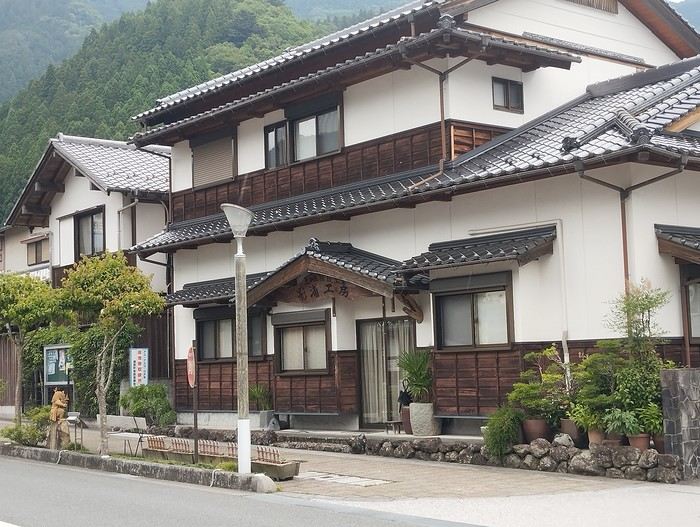
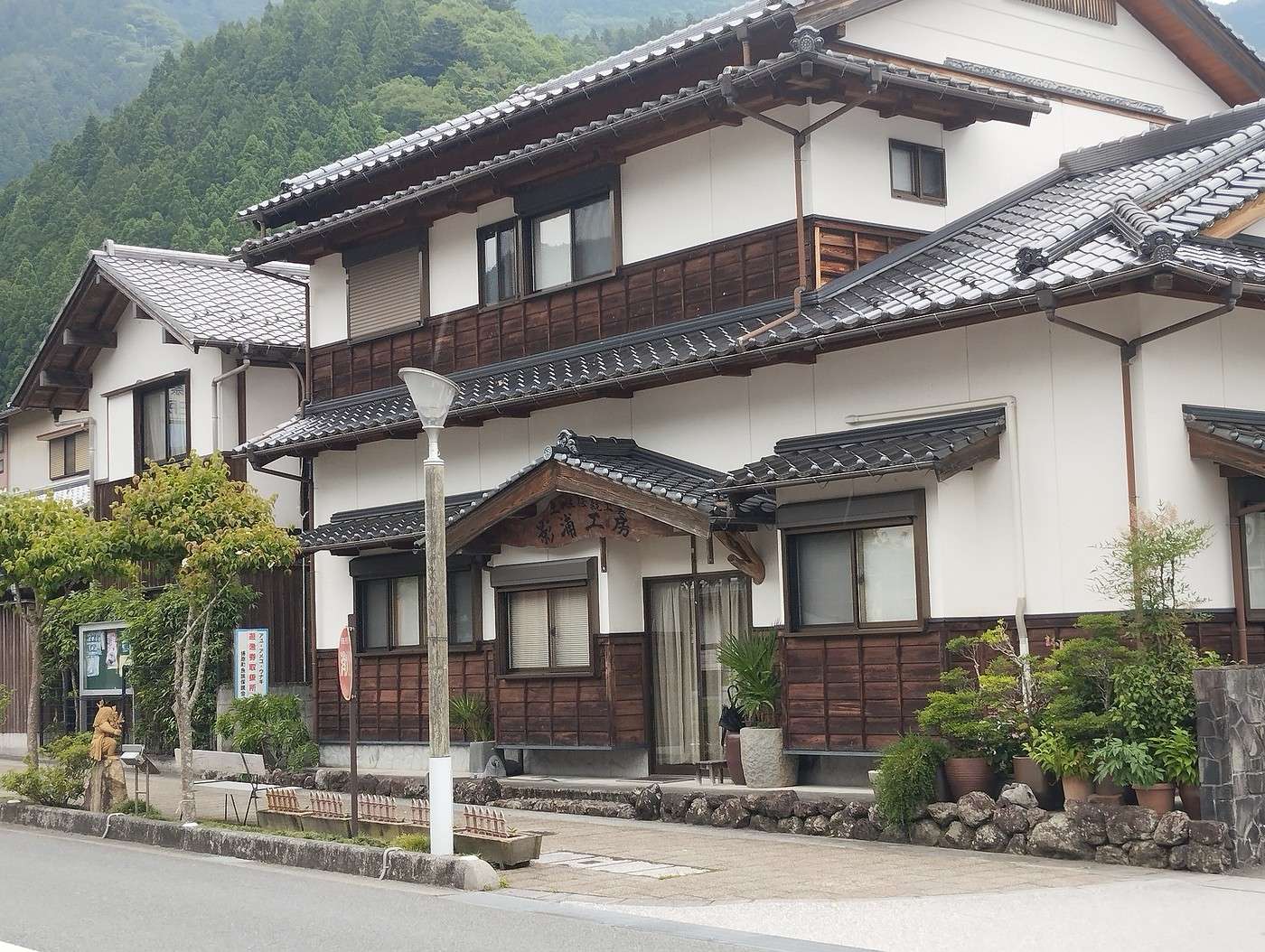
We made our way back to the town center through narrow streets lined with houses.


From Southern Shikoku, between land and sea, to the blue waters of Miyakojima and finally the megalopolis T

Nathalie971 · 2025-12-02 · Message 36 of 75

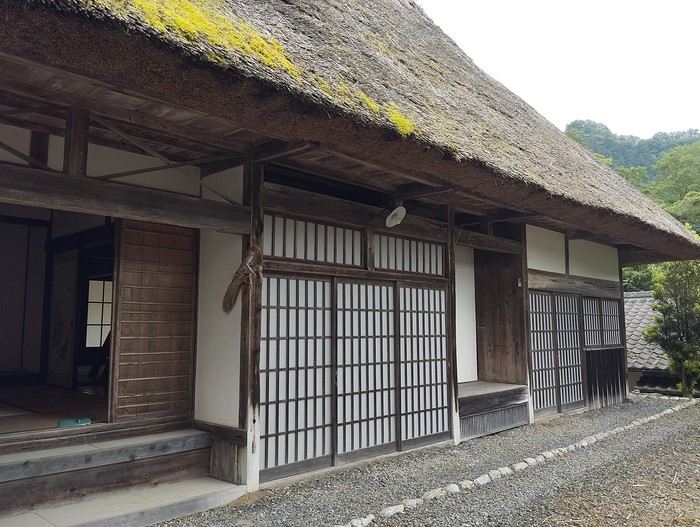
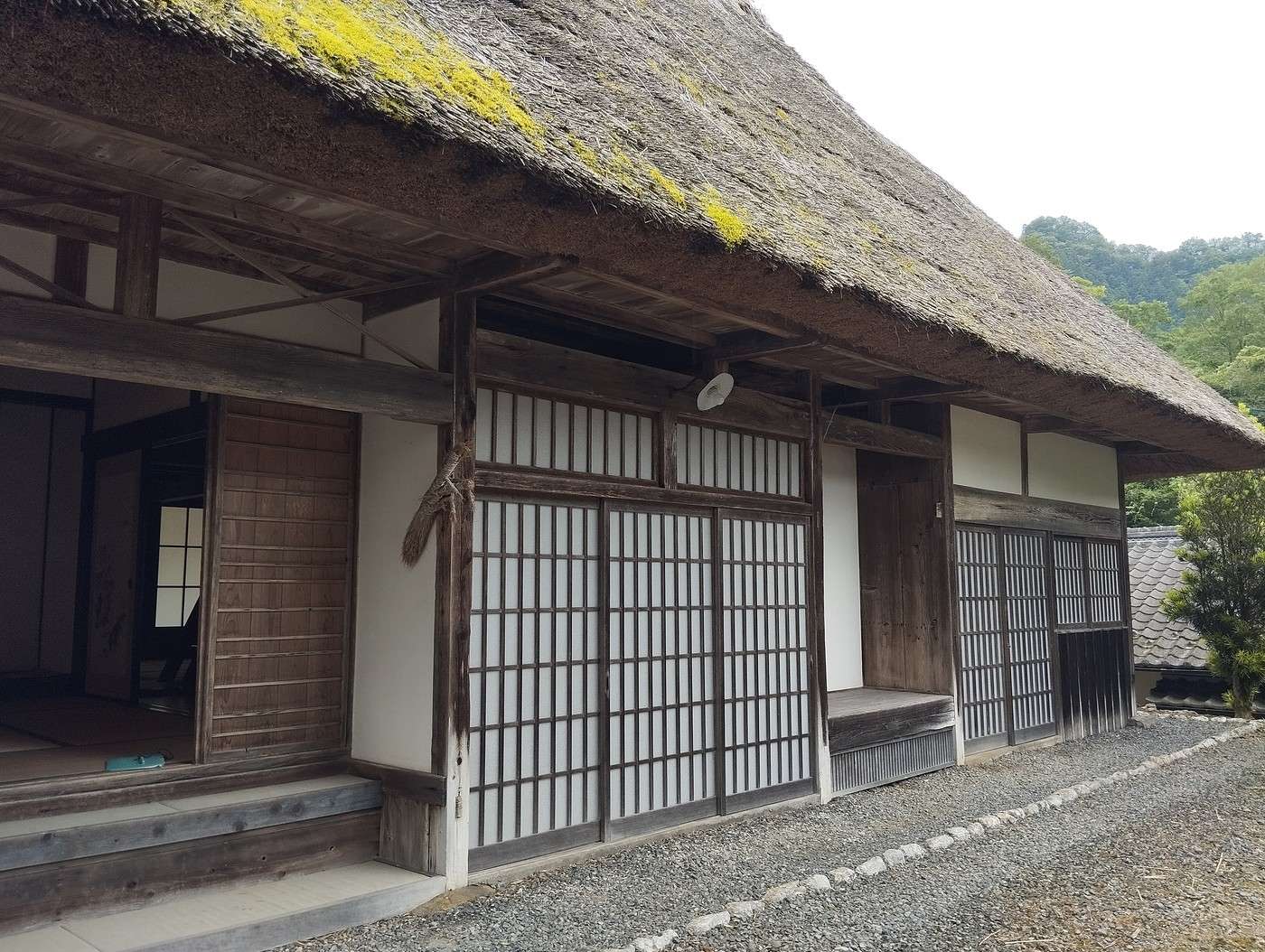
The walk continued with a visit to an old thatched-roof house.


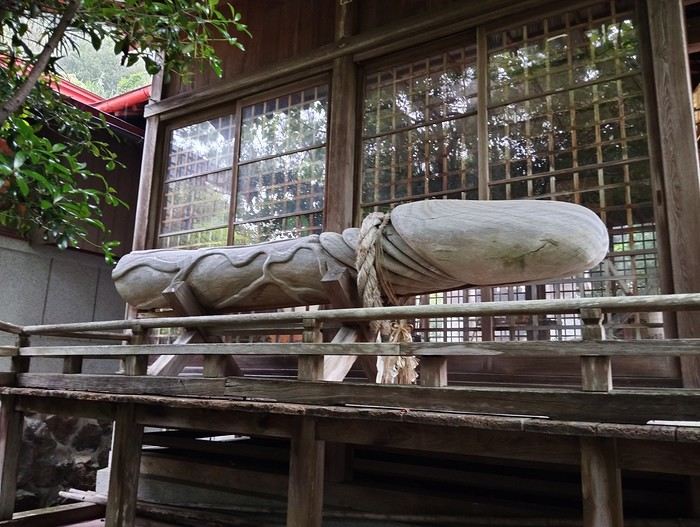
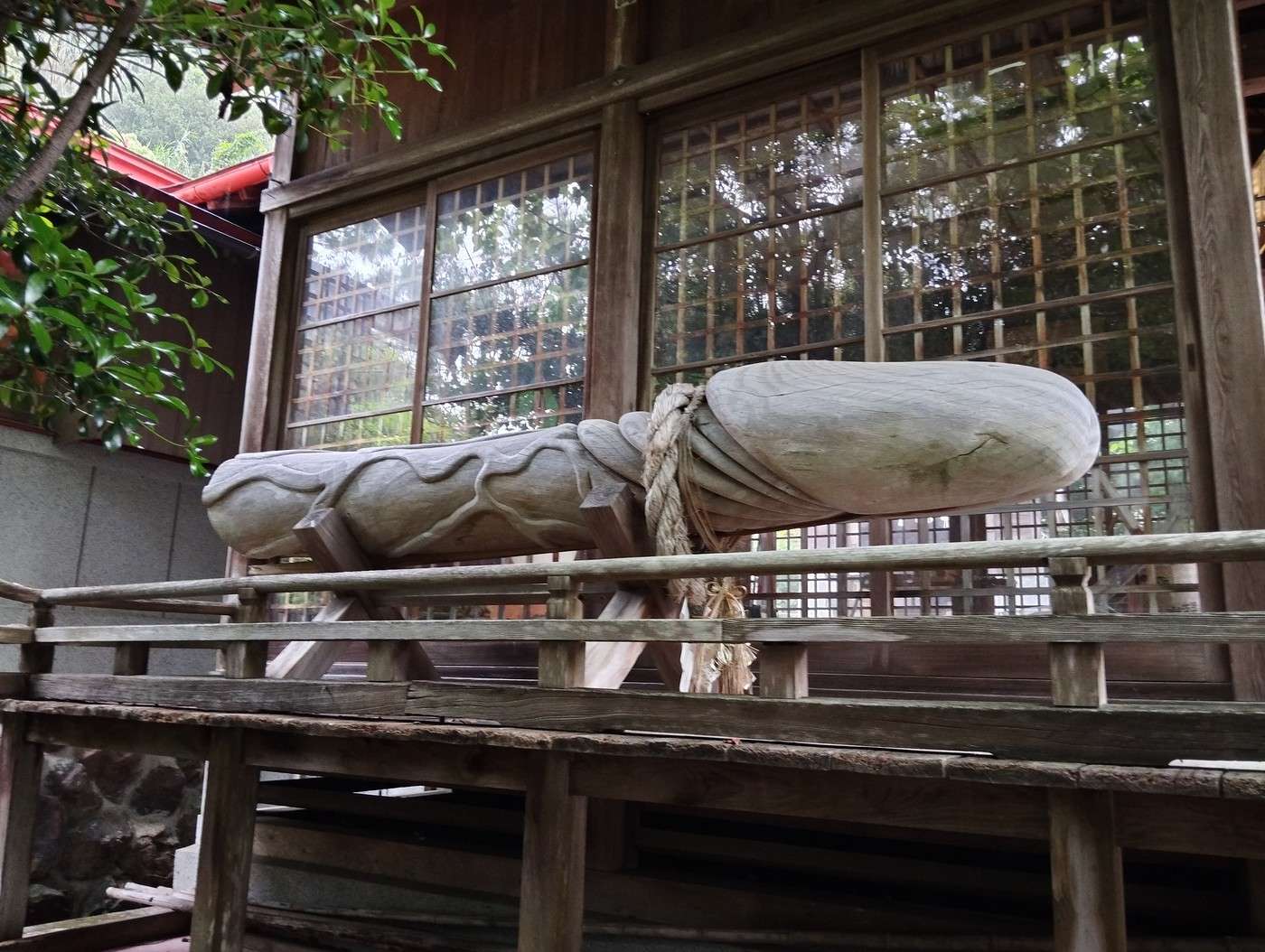
We had originally planned to take the scenic route to Shikoku Karst, but the sky wasn’t clear. We decided not to venture onto a mountain road with limited visibility to make the most of our walk. So, we cut our visit short and headed back to Uwajima. We wanted to go to yesterday’s café, so we took the same route back. Before heading to the café, we stopped at a very special shrine in Uwajima: Taga Shrine, where people pray for good health and fertility—hence the objects related to the latter.


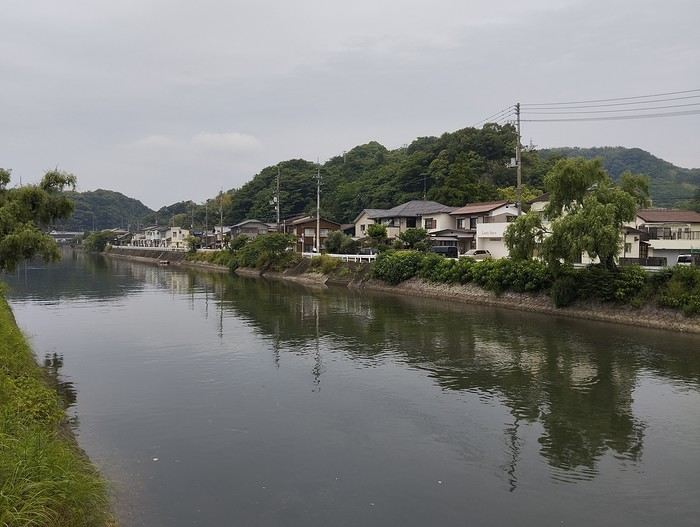
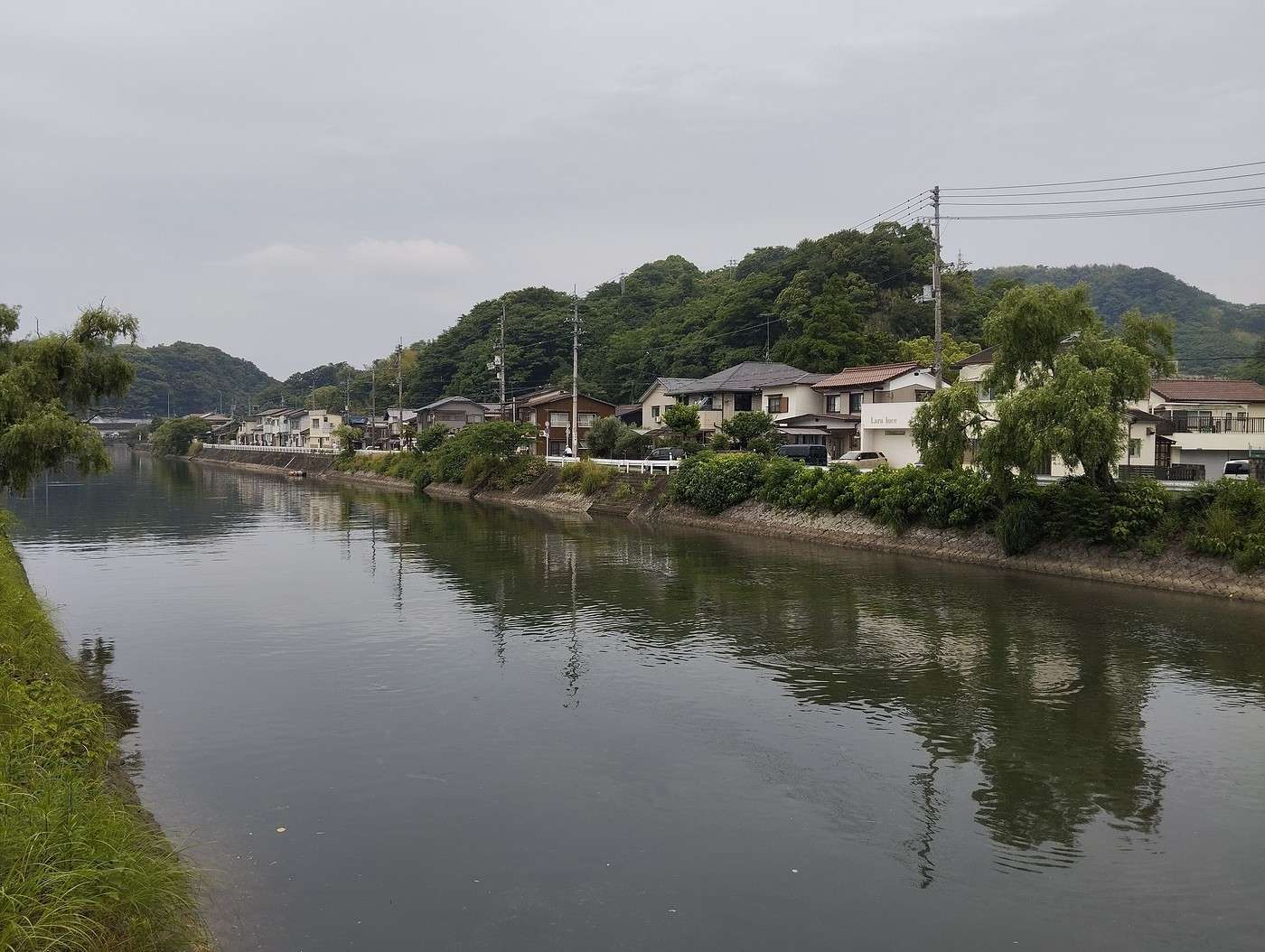
We reached the shrine from our hotel, where we’d left the car in the parking lot. It was about a 10-minute walk. We passed through a residential neighborhood and along a river. A florist’s child seemed intrigued by our presence.


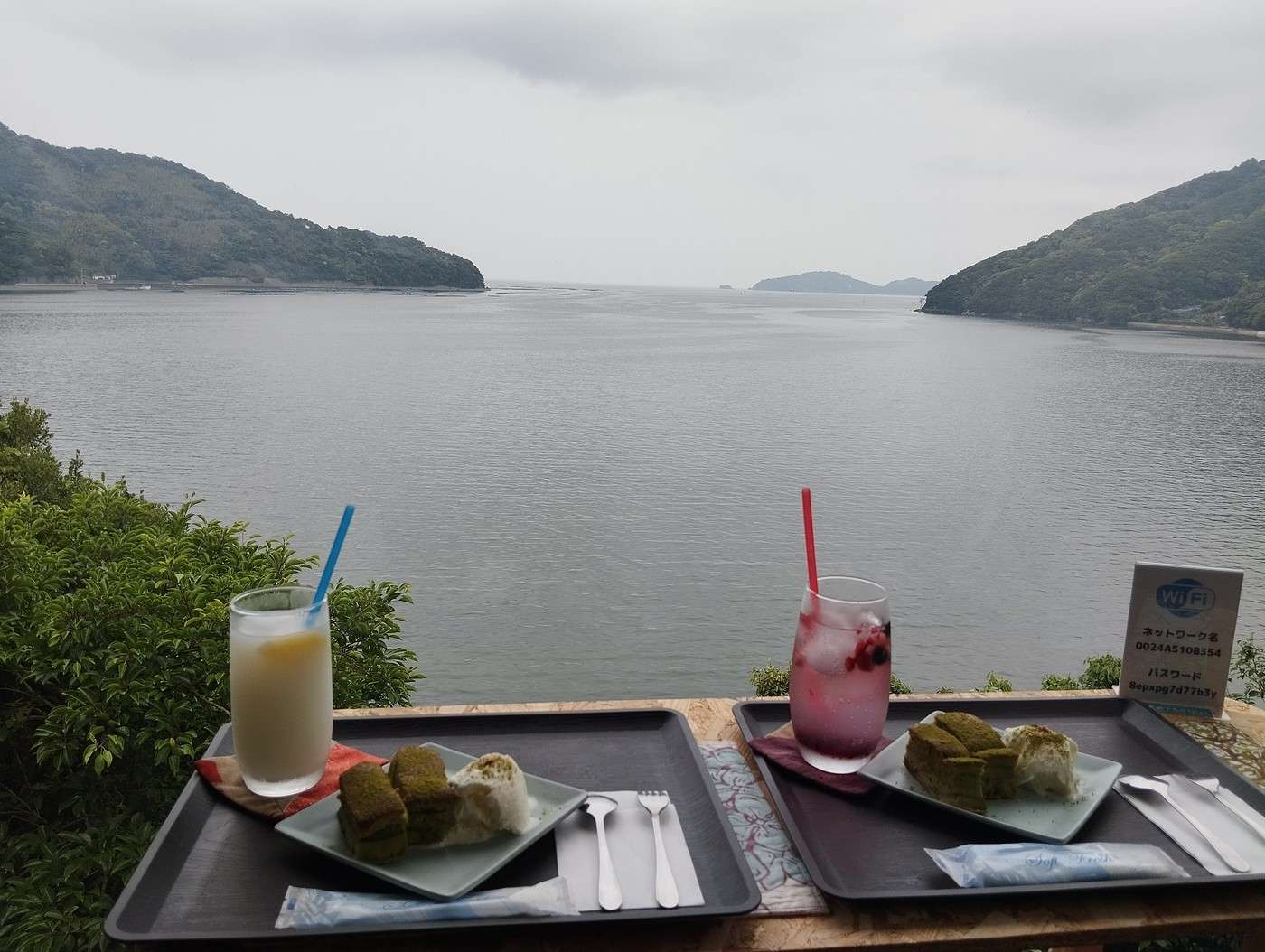
We then returned to the café, which had been closed yesterday but was open this time. A sign at the bottom of the hill indicated to leave the car there since there were only two parking spots, reserved for those who had made reservations.

So, we walked up to the restaurant overlooking the sea, even though we could’ve parked since there were no other customers.

The restaurant/café felt like stepping into a house blending Japanese, English, and Irish styles. The woman who greeted us seemed surprised to see us but welcomed us after a few moments of hesitation at the sight of foreigners.

You have to order before sitting down. There were a few barriers due to mutual understanding and some items not being available at that hour, but we managed to place our order and headed upstairs (the only option) to settle in. It was small and quirky but charming.

Since there were no other customers, we had our pick of spots. There was a family area with sofas and a TV, like being at home.


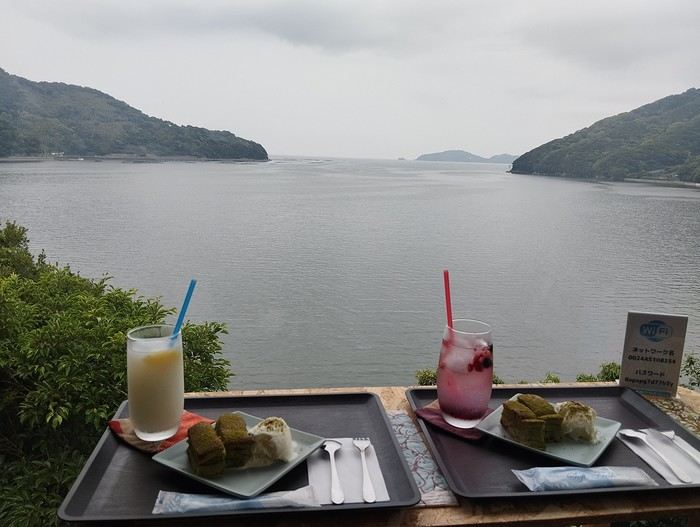
There was also a bar area overlooking the sea, but we chose the veranda with two armchairs facing the ocean. The view through the window was very zen, despite the gray sky. The vegetation was right at the foot of the building, so we could see all sorts of insects and birds passing by through the glass.

The woman brought us our colorful cold drinks and sweet treats—a kind of matcha tiramisu, soft and sweet.

Everything was perfect, or almost—the air conditioning was blasting, making it chilly even though it was warm outside, but the view and the treats made up for that small detail.


The sweets whetted our appetite, so back at the hotel, we took the time to look for a restaurant for dinner before heading out on foot. We opted for a sushi master’s place.

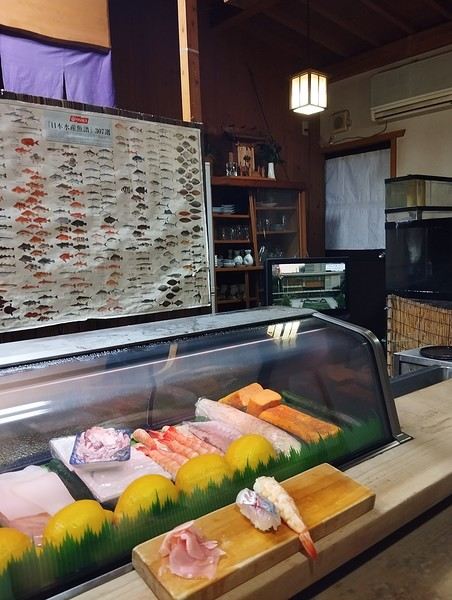
Walking in, it felt like stepping back in time to the Showa era, with the sushi grandpa welcoming us without fuss and inviting us to sit down. Grandpa sushi was a master at his craft, as shown by his dexterity in cutting fish, the speed of service, his extreme concentration on each task, and the quality of the dishes (fish/seaweed, omelet). At first, conversation wasn’t really flowing because he was so focused and probably hesitant to speak to foreigners given his age. Grandpa was assisted by his wife and their adult daughter. Honestly, this family seemed worn out by work—his wife was hunched over, the daughter looked depressed, and every movement seemed to cause them pain. Grandpa often had to step in to help. For example, the daughter was very slow, absent-minded, and struggled to answer the phone correctly. I don’t know how old grandpa was, but I’d easily guess over 80. Seeing them work so hard that they could barely keep going made me sad, and I wondered why they kept working like this. To make ends meet? Because work is everything? Or for another reason?

About 15-20 minutes after us, a couple walked into the restaurant. A little surprised to see us, they still came in and sat to my left. The counter had six seats, so there were four of us. We had ordered omakase—it’s simpler when you don’t know the fish, and I like the idea of being guided by the chef’s suggestions. Plus, grandpa spoke very quickly and wore a mask, so understanding him was really difficult.

We could still specify a few things for the omakase. In this case, we mentioned we didn’t want any cuttlefish, for example.

We enjoyed our sushi while the couple next to us ordered. Seeing them get an onigiri, I remembered it was one of the restaurant’s specialties, so I ordered the same by pointing at their plate, but grandpa didn’t understand us. The couple’s husband helped us out, and that’s how a long conversation and many laughs began.

He recommended the miso soup, and it was indeed delicious—one of the best I’ve had so far, with a strong but not overpowering fish flavor. We also asked for plum and shiso maki, like the couple. Interesting. We also tried a sushi with Hajzi fish (not sure about the spelling), a white fish with gray skin, firm yet melting in the mouth.

As for the couple, the man was a former fugu restaurant chef. He closed his restaurant this February. It’s a shame because we would’ve loved to eat at his place—he showed us photos of the dishes he’d cooked, and they looked delicious.

He asked how we found this little restaurant tucked away on a poorly lit street, as it’s an excellent spot, according to him. He explained to grandpa sushi that we found it online. Thanks to these exchanges with the couple, grandpa relaxed and connected with us more, though he still maintained his posture and extreme focus. The atmosphere shifted in just a few minutes—it just takes a little to break down barriers and share good moments.

We even teased the fugu chef about his supposed wealth from fugu, and it didn’t cause any awkwardness. He got our joking spirit! The man owns a Porsche, knows ambassadors from some countries (Estonia), and has a boat. Just to clarify, none of this necessarily indicates their standard of living—it’s just what we teased him about. The couple had also traveled in Europe, especially Italy and France, and as a good chef, Mr. loves Chianti and Burgundy wine.

Another person sat at the counter next to my companion, and Mr. struck up a conversation with them too. The evening continued like this, with chit-chat and delicious food. A special mention for the nori seaweed, which was soft and tender.


But all good things must come to an end, and the couple wanted a photo. The man asked grandpa to take a picture of us with his phone. It was hilarious—grandpa didn’t even seem to know what the device was and called his wife for help, but she didn’t know either, as they’re still living in the past. After 10 minutes of explaining how to take a photo, the souvenir shot was finally taken, and it was time to say goodbye. The couple told us they had a great time and wished us a good trip. Now it was just us with grandpa and his wife—their daughter had gone to lie down as soon as she could. Grandpa even asked us more freely if we’d enjoyed our meal. We reassured him, and a big smile appeared on his face. All in all, an excellent culinary and sharing experience.
Plus, we paid very little for a sushi restaurant, especially given the quality and quantity we enjoyed—less than 13,000 yen for two, or about 40 € per person.

We ended the evening by returning to the hotel in a light rain.

From Southern Shikoku, between land and sea, to the blue waters of Miyakojima and finally the megalopolis T

Nathalie971 · 2025-12-23 · Message 37 of 75

Day 10 - From Uwajima to Matsuyama

It's time for us to leave Uwajima. The rain is with us this morning.

We set off to visit the city's castle. We drive around a bit to find the entrance and the parking lot, but the people at the gas station point us in the right direction. They even block the road to let us make a U-turn and leave the gas station quietly.

Two minutes later, we park in the paid parking lot.

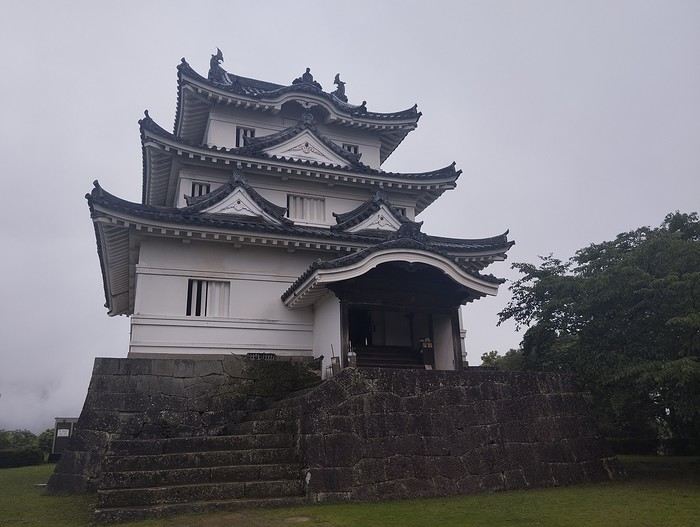
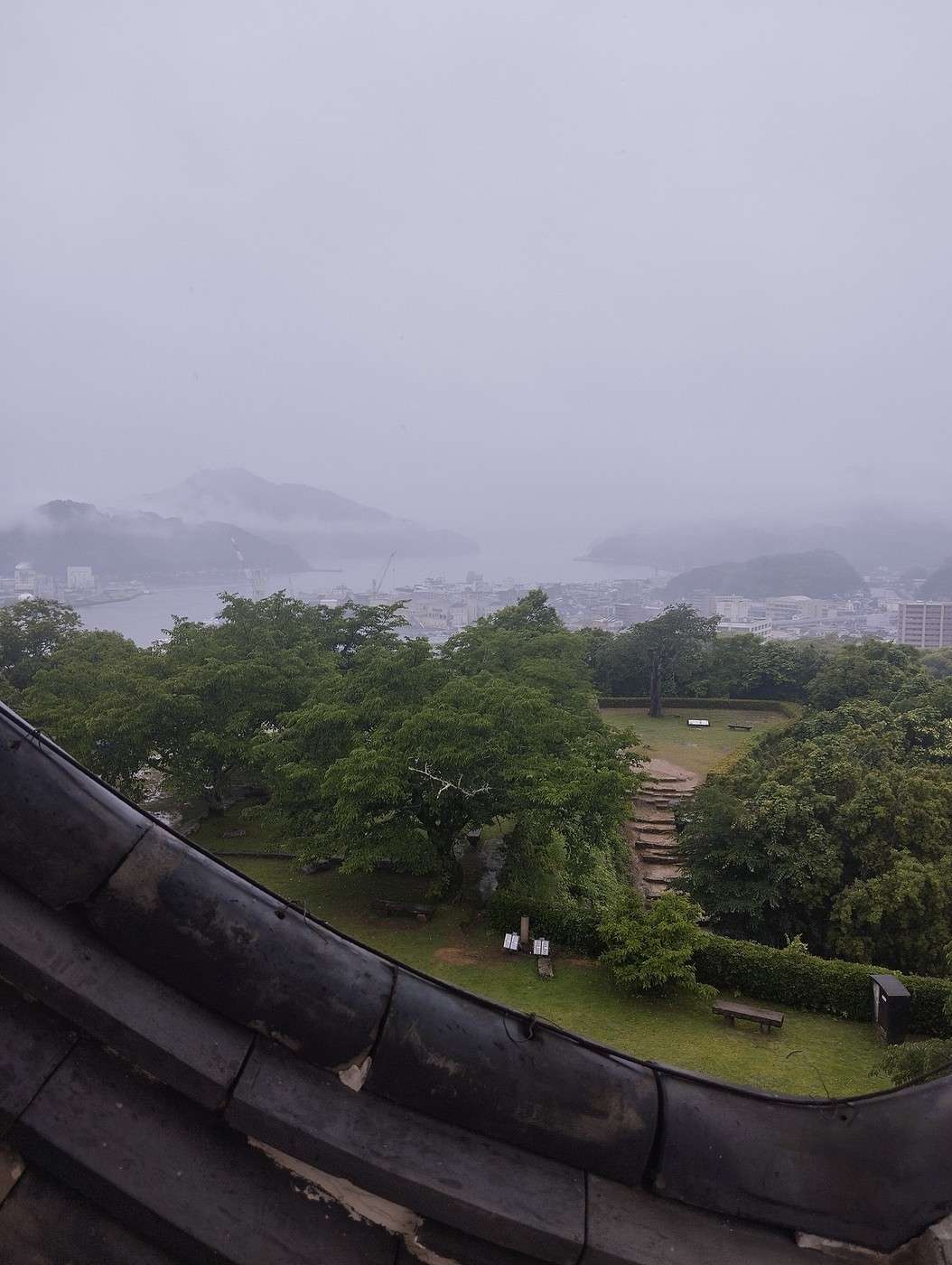
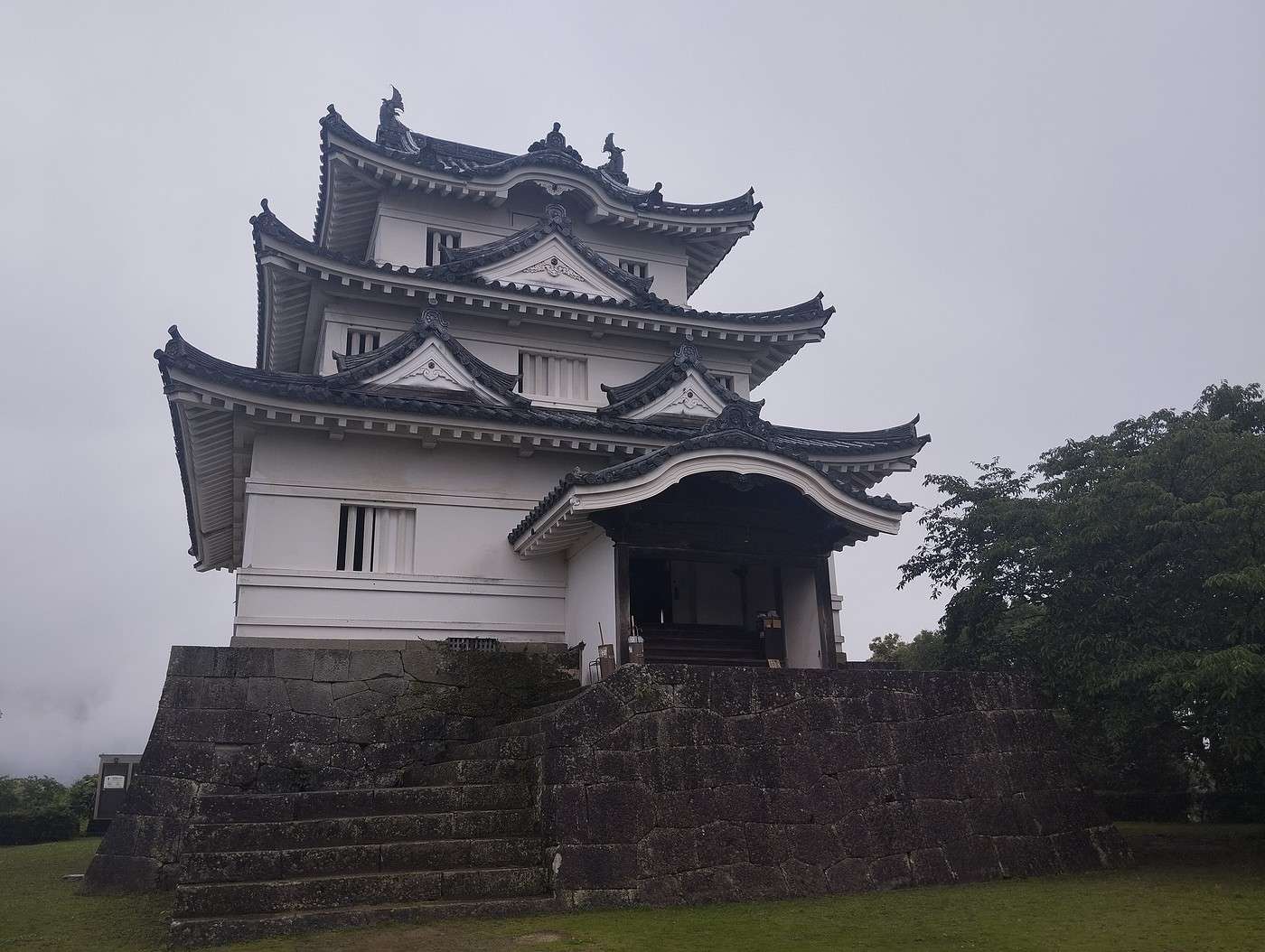
We have to climb through a park, following paths that are sometimes stone, sometimes muddy earth, trying not to slip or step in puddles. Despite the rain gradually getting heavier, the atmosphere is peaceful and pleasant. The path is green and helps you disconnect from the city. After maybe 20 minutes of climbing, the castle finally comes into view. It sits on a wooded hill overlooking a bay and the city. The castle entrance is also paid—400 yen per person.


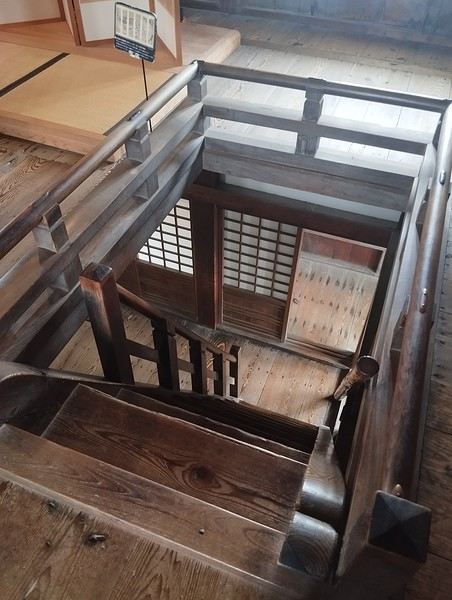
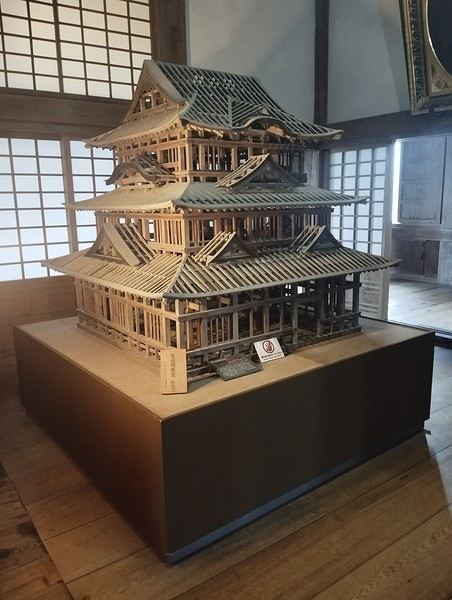
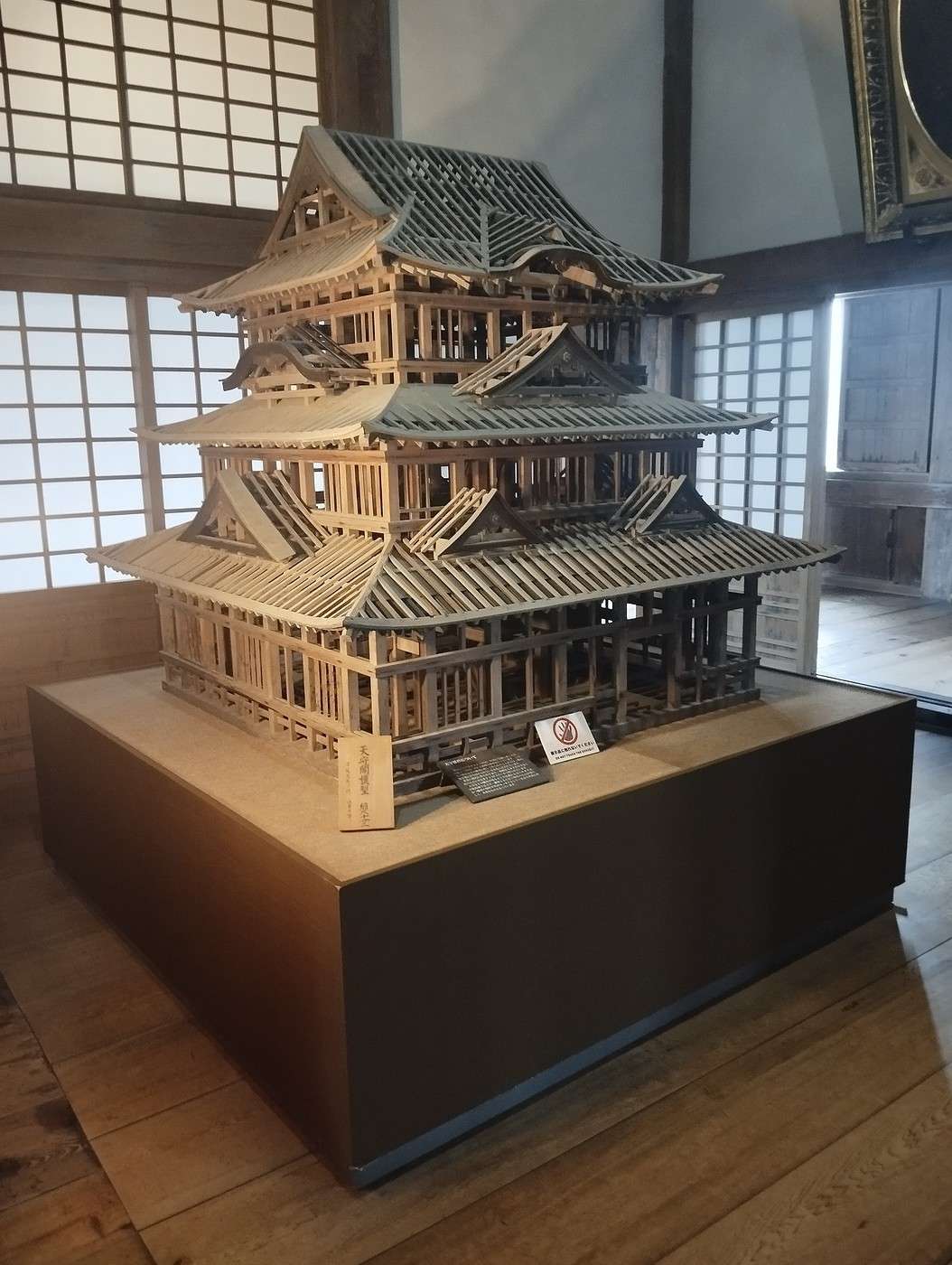
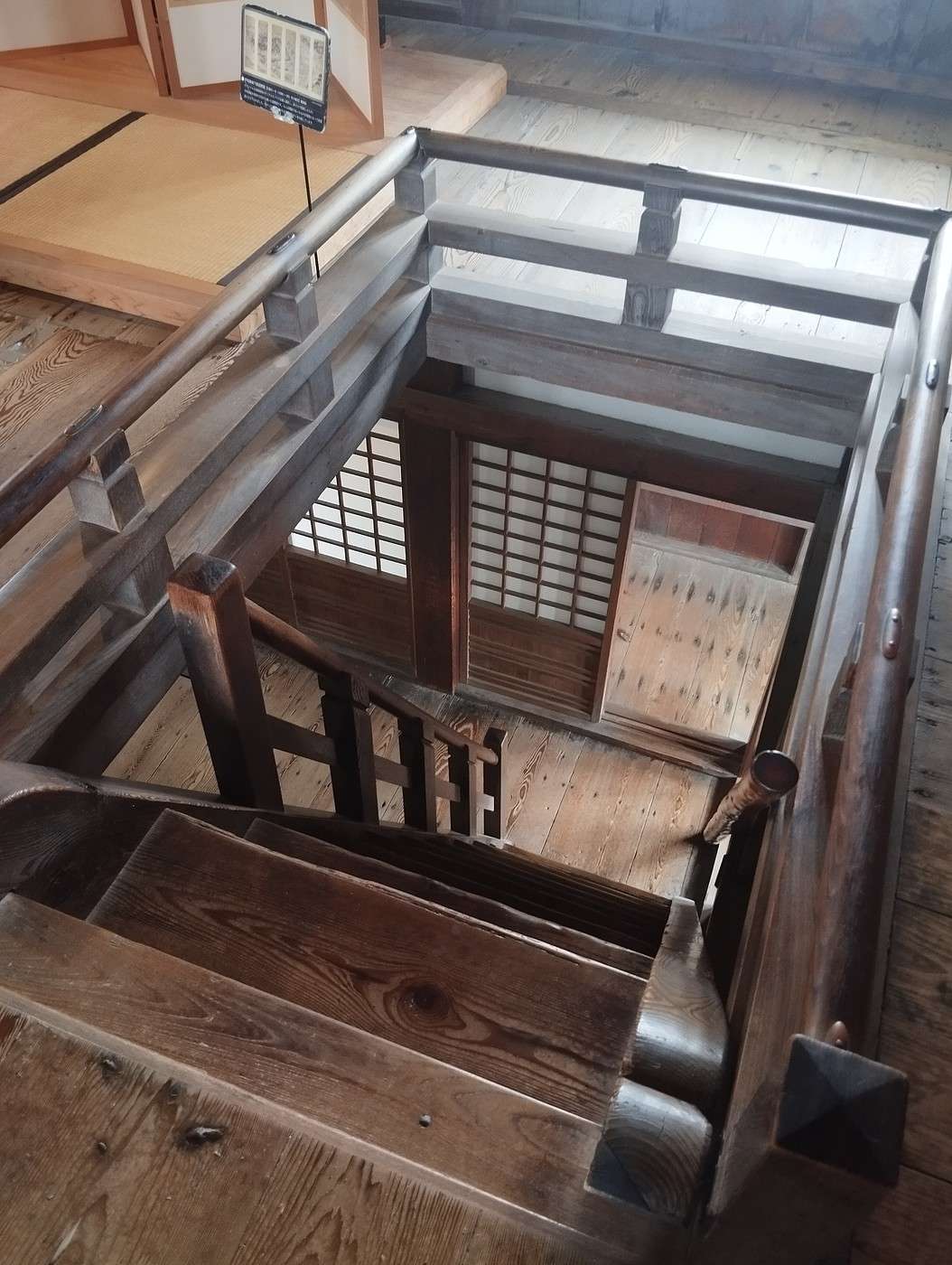
The castle isn’t very large, but it’s one of the last 12 castles in the country to still have its original keep. It was built in 1601. Like in Kochi, you have to climb steep, high steps to reach the upper floors. We scramble up in our socks, gripping with our hands to climb those steps. The feel and smell of the wood are nice.


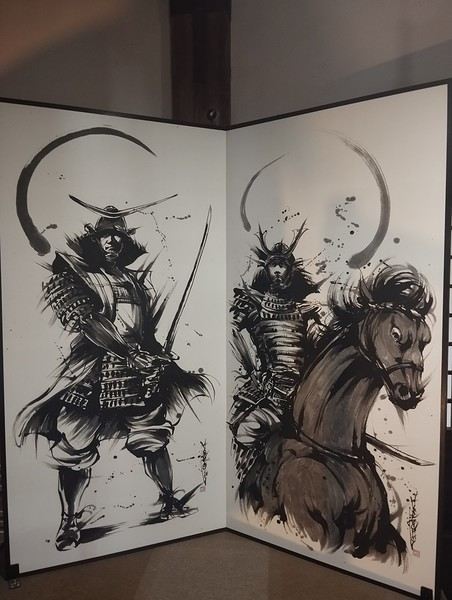
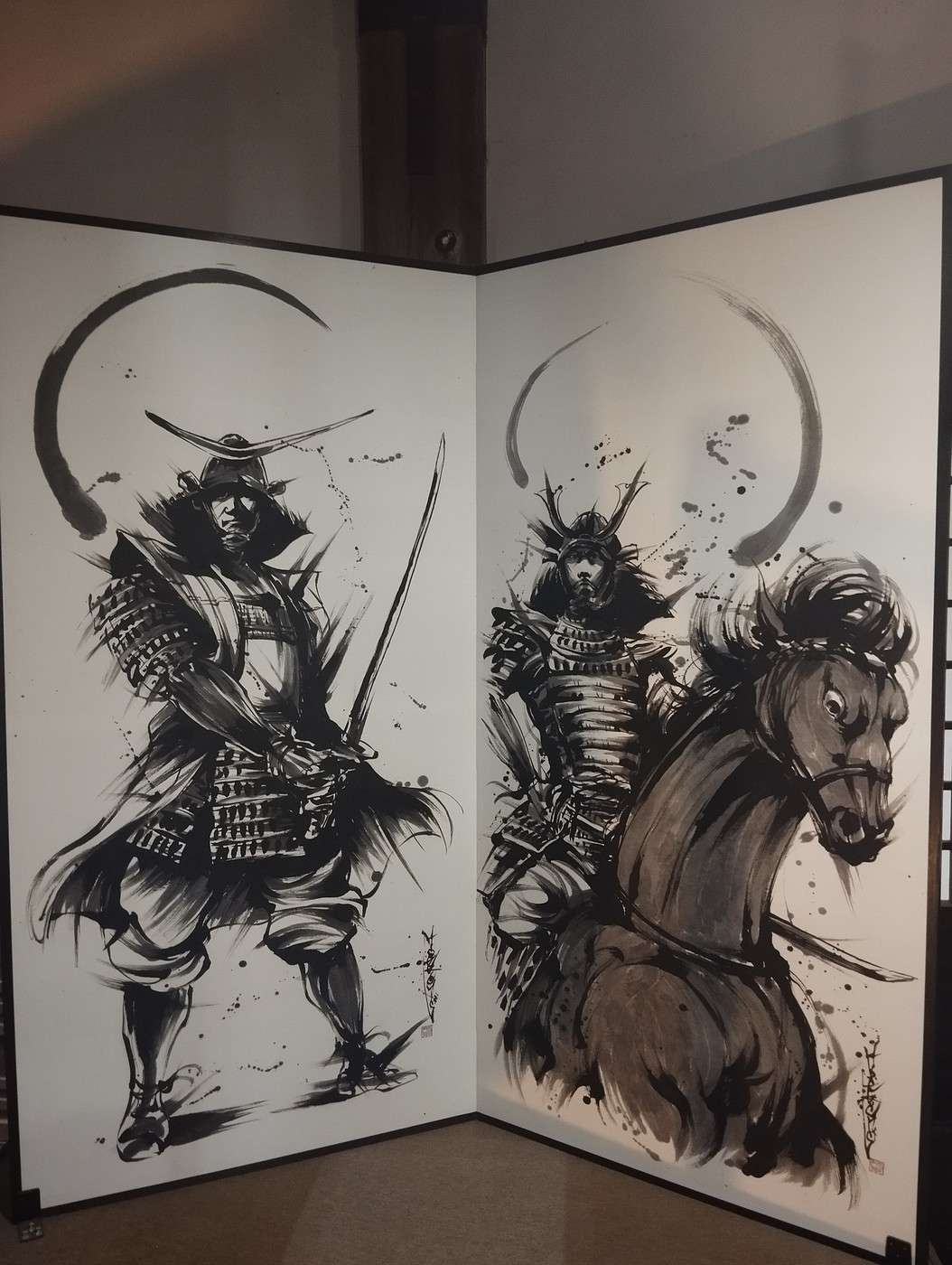
Inside the castle, samurai outfits are on display, along with some stunning modern drawings of samurai.


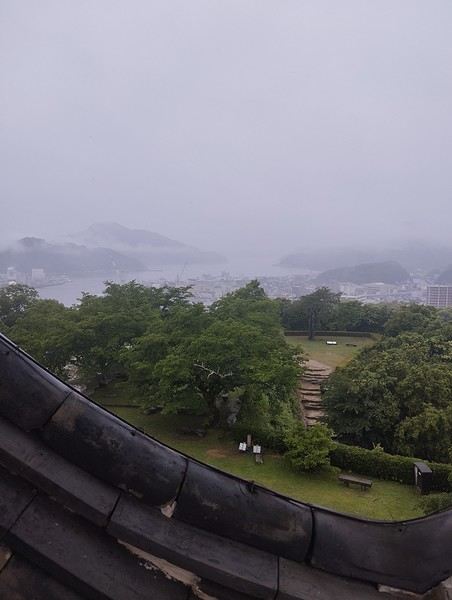
You can get a view of the city and the sea. Yes, Uwajima is a port city nestled between the hills and the sea. However, today the sky is overcast, and we can’t see much because of the hazy weather.


Even though the visit is short, it’s still enjoyable. Plus, there were only three other Japanese visitors, so we got to enjoy the place in peace.

Still in the rain, we head back down to the car to start our journey to our next destination, Matsuyama. The GPS said about 2 hours of driving.

We pass through Japanese suburbs when a restaurant front catches our eye. We stop.

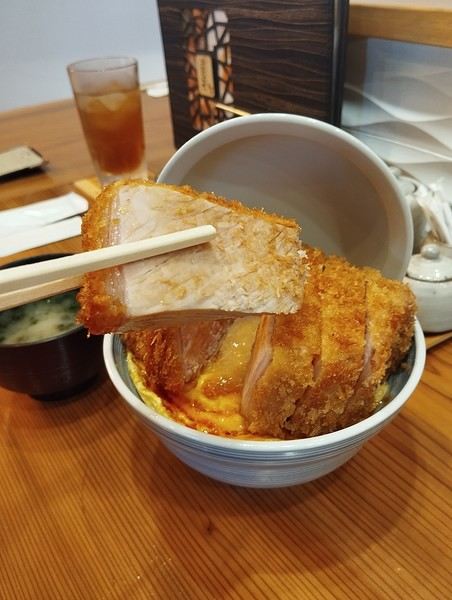
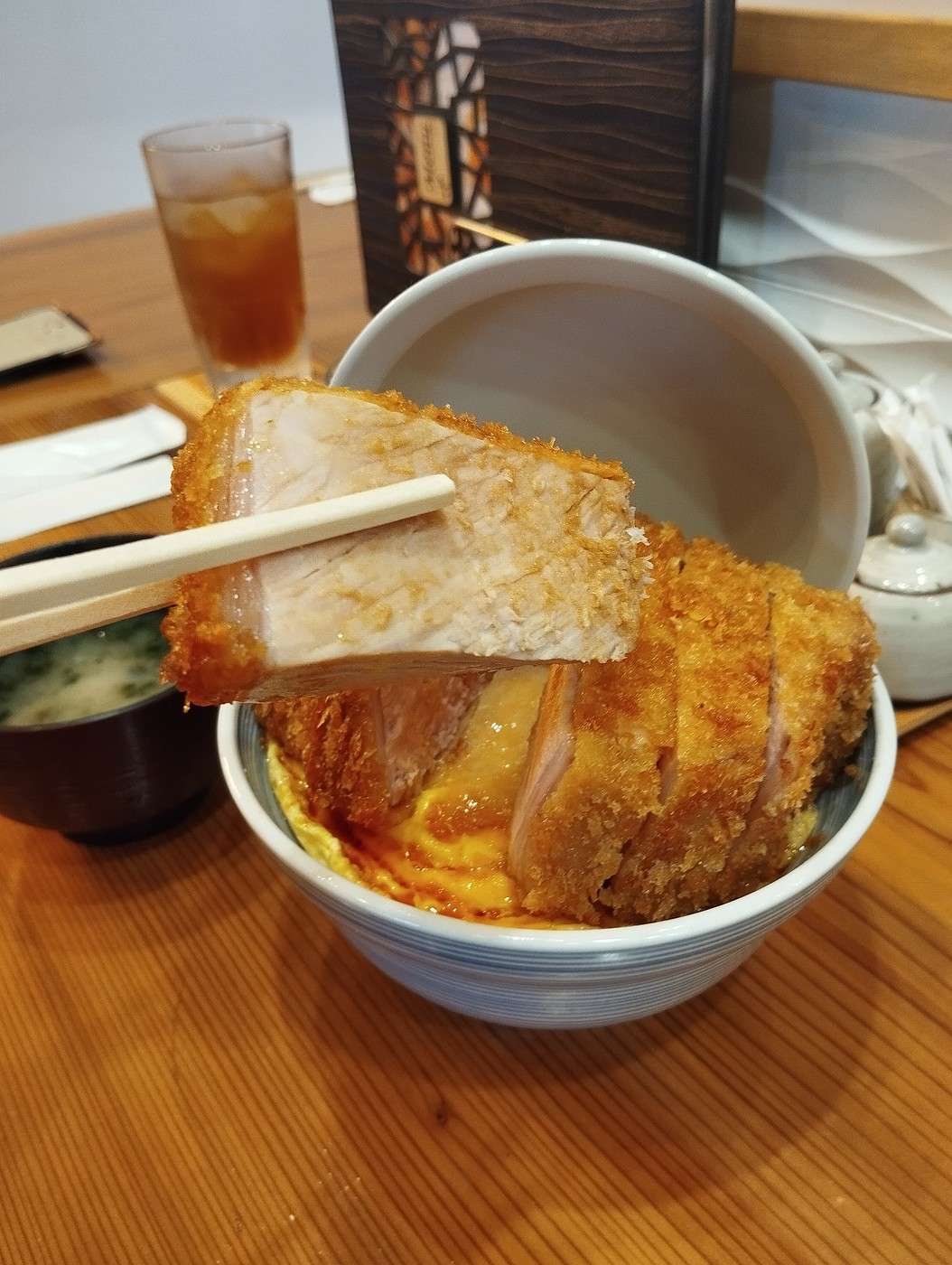
We discover a modern restaurant with a very appealing counter where you can watch the chefs prepare beautiful cuts of pork to make katsudon (breaded pork with eggs).

We enjoy a very generous katsudon—deliciously rich and tender, with good wasabi and Japanese mustard (hatarashi), all paired with an original and tasty plum-flavored alcoholic soda.

Given the size of the dish, we can’t finish it all. The restaurant thought of everything and provides us with a plastic container with an elastic band and chopsticks so we can take our leftovers with us.

We hadn’t really paid attention to the time when we went into the restaurant, but when we see one of the servers flip the "open" sign to show the restaurant is closed, we realize it’s closing time (elementary, my dear Watson). We apologize and hurry, but the smiling staff tells us to take our time. We still have a long drive ahead, though, and don’t want to take too much of their break, so we finish quickly, pay, and leave. An excellent spot.


A few minutes later, we stop again—this time at a konbini—to buy a clear umbrella since we’ve planned a stop before reaching Matsuyama.

From Southern Shikoku, between land and sea, to the blue waters of Miyakojima and finally the megalopolis T

Nathalie971 · 2025-12-28 · Message 38 of 75

Day 10 Continued - Passing through Ozu, from Uwajima to Matsuyama

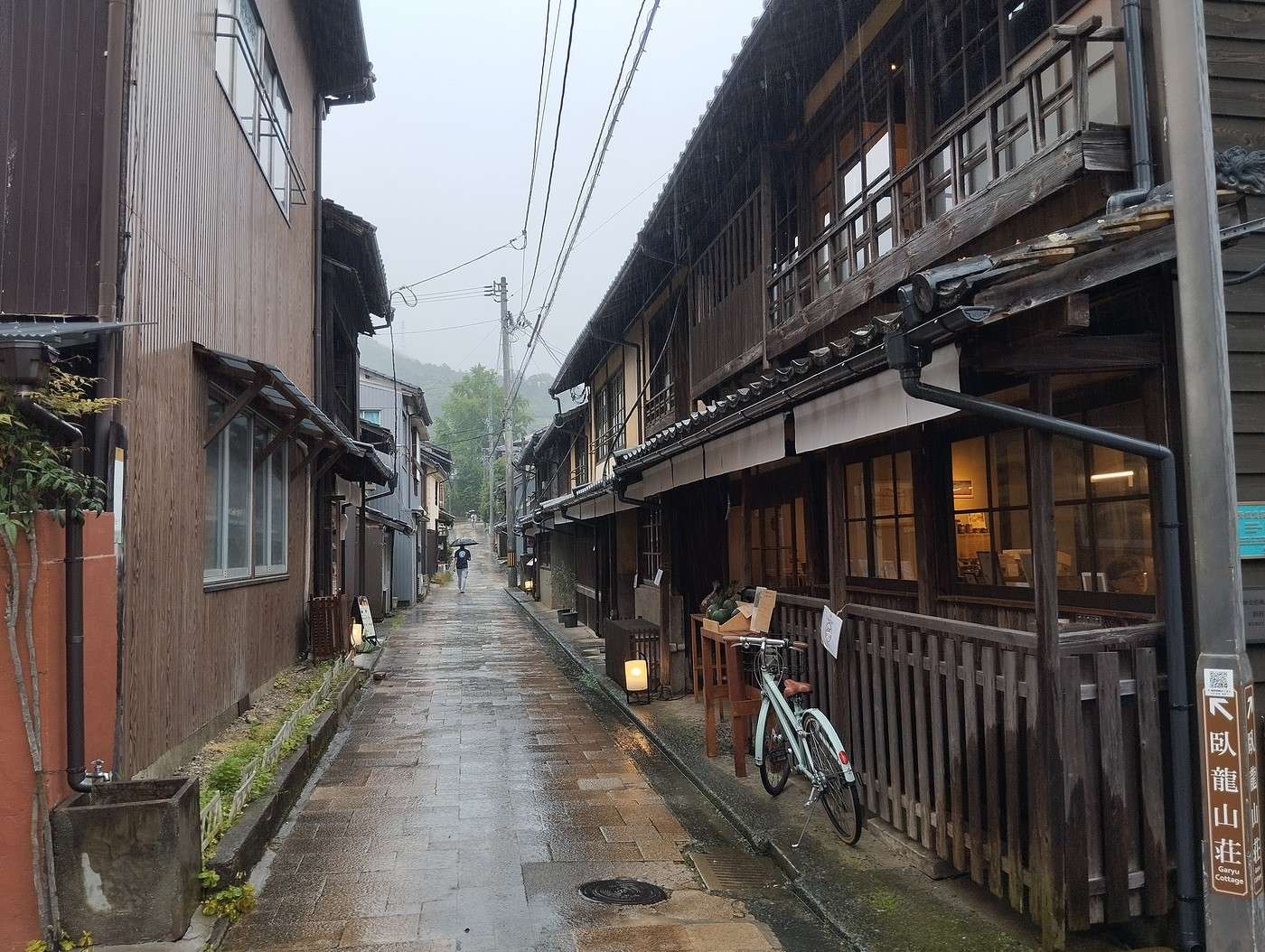
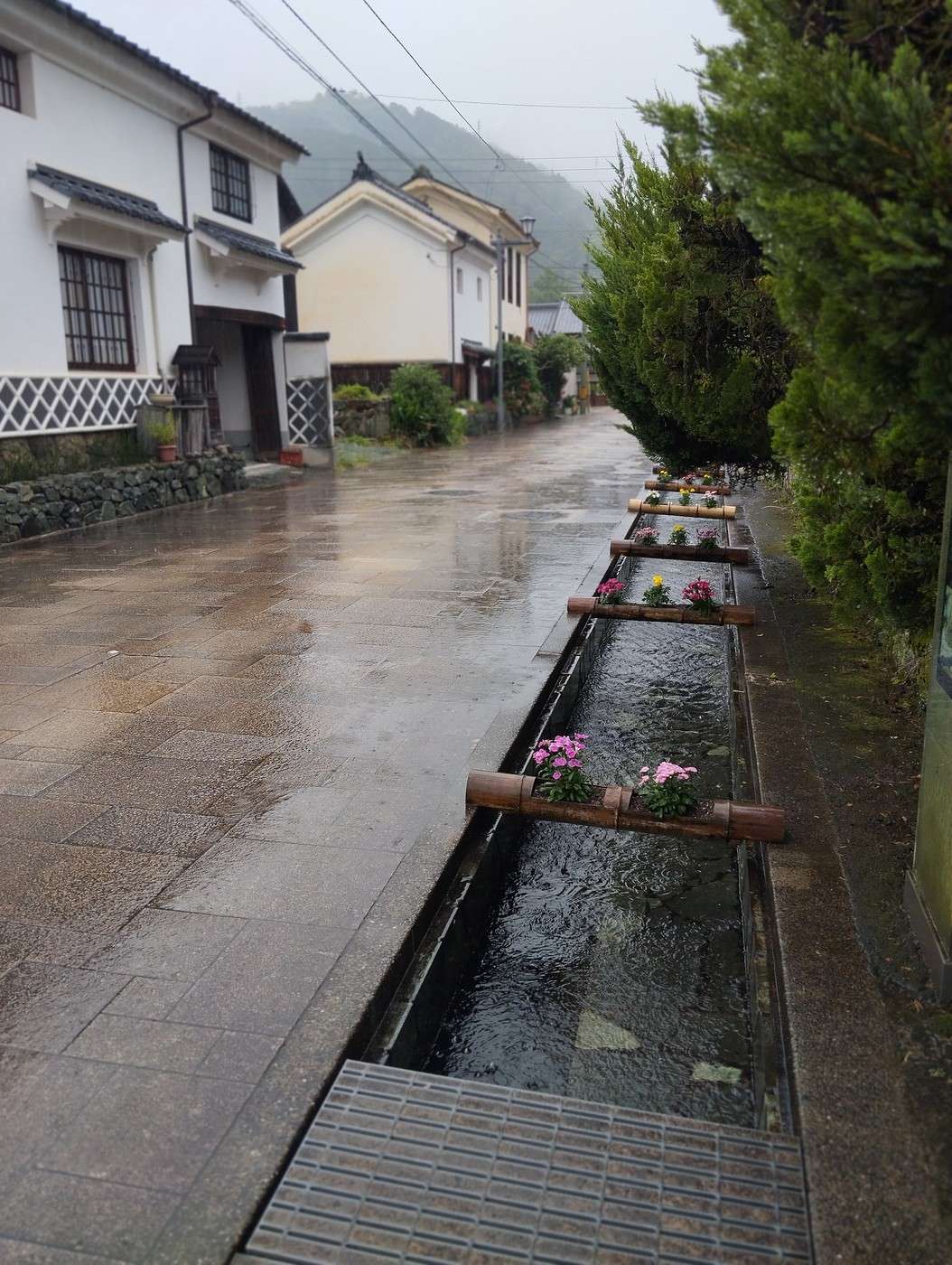
Several kilometers later, we park in a lot. Much to our disappointment, the rain is still here, and it’s clear it doesn’t plan on taking a break. Despite the weather, we decide to try visiting the town of Ozu in Ehime Prefecture.


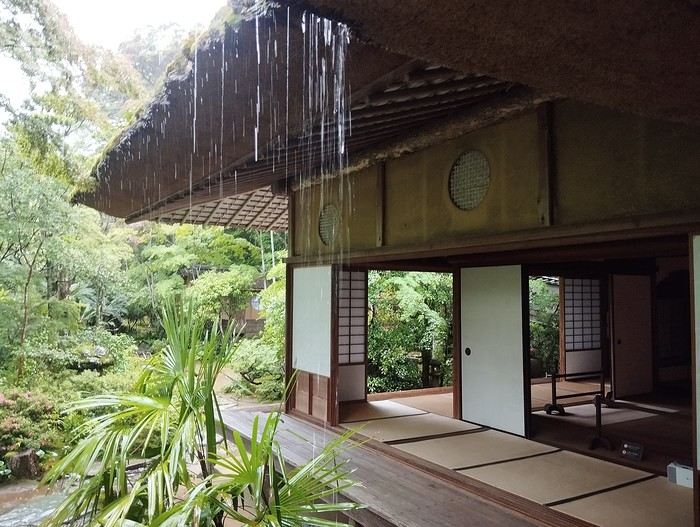
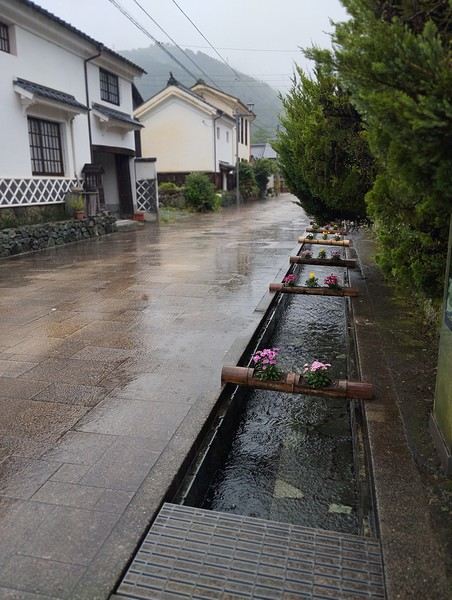
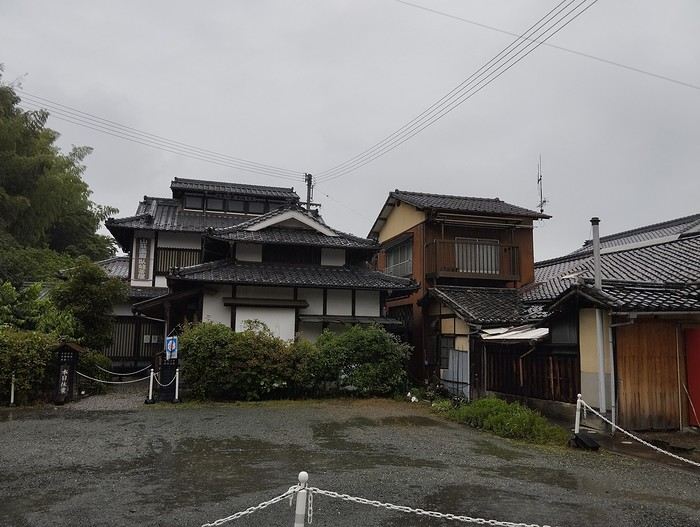
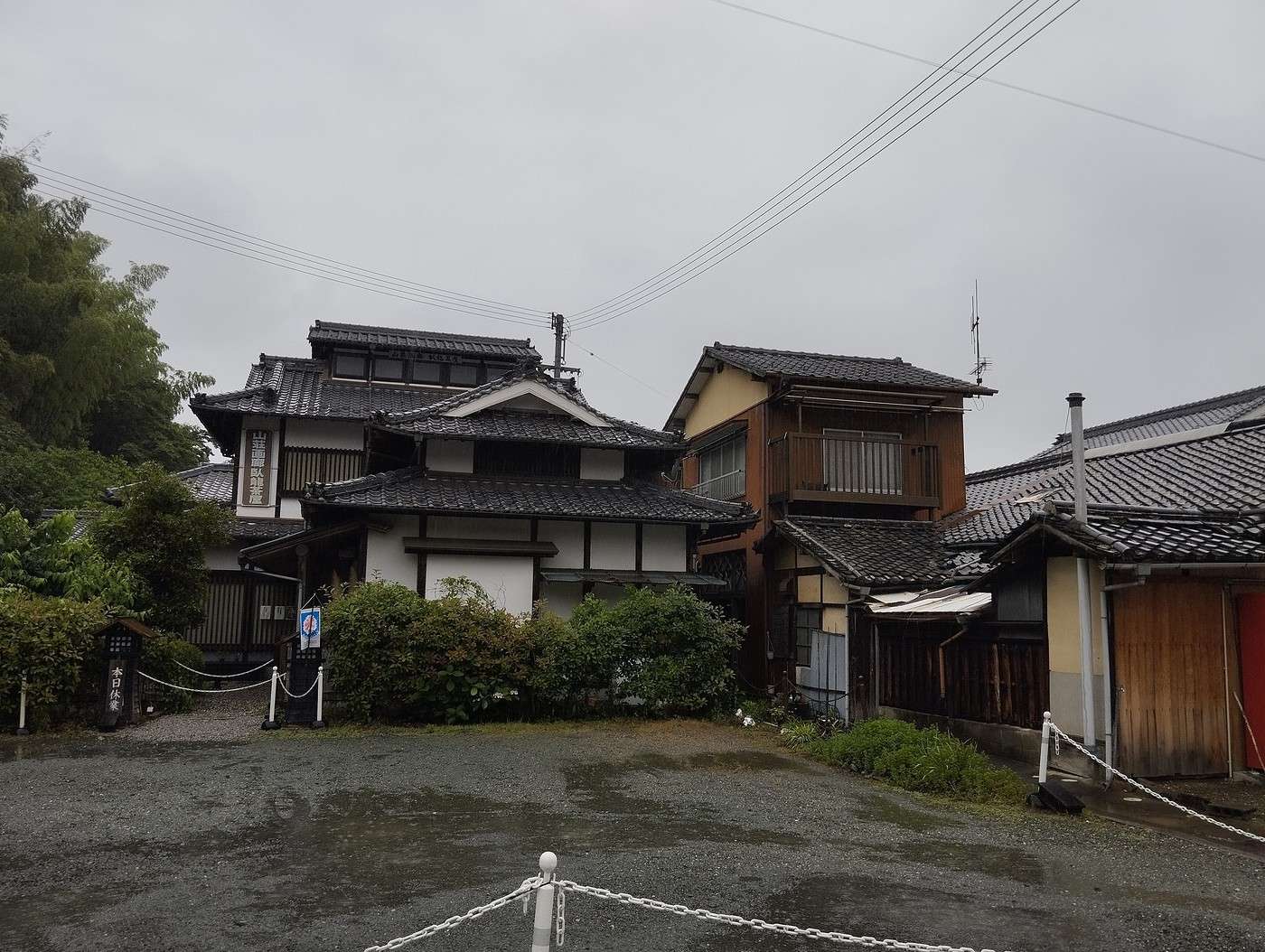
Wearing raincoats and armed with our clear umbrellas, we make our way through the cute but empty streets toward the Garyu Sanso villa. Along the way, we pass a few Korean tourists leaving on bicycles. This traditional-style house sits by the Hiji River.

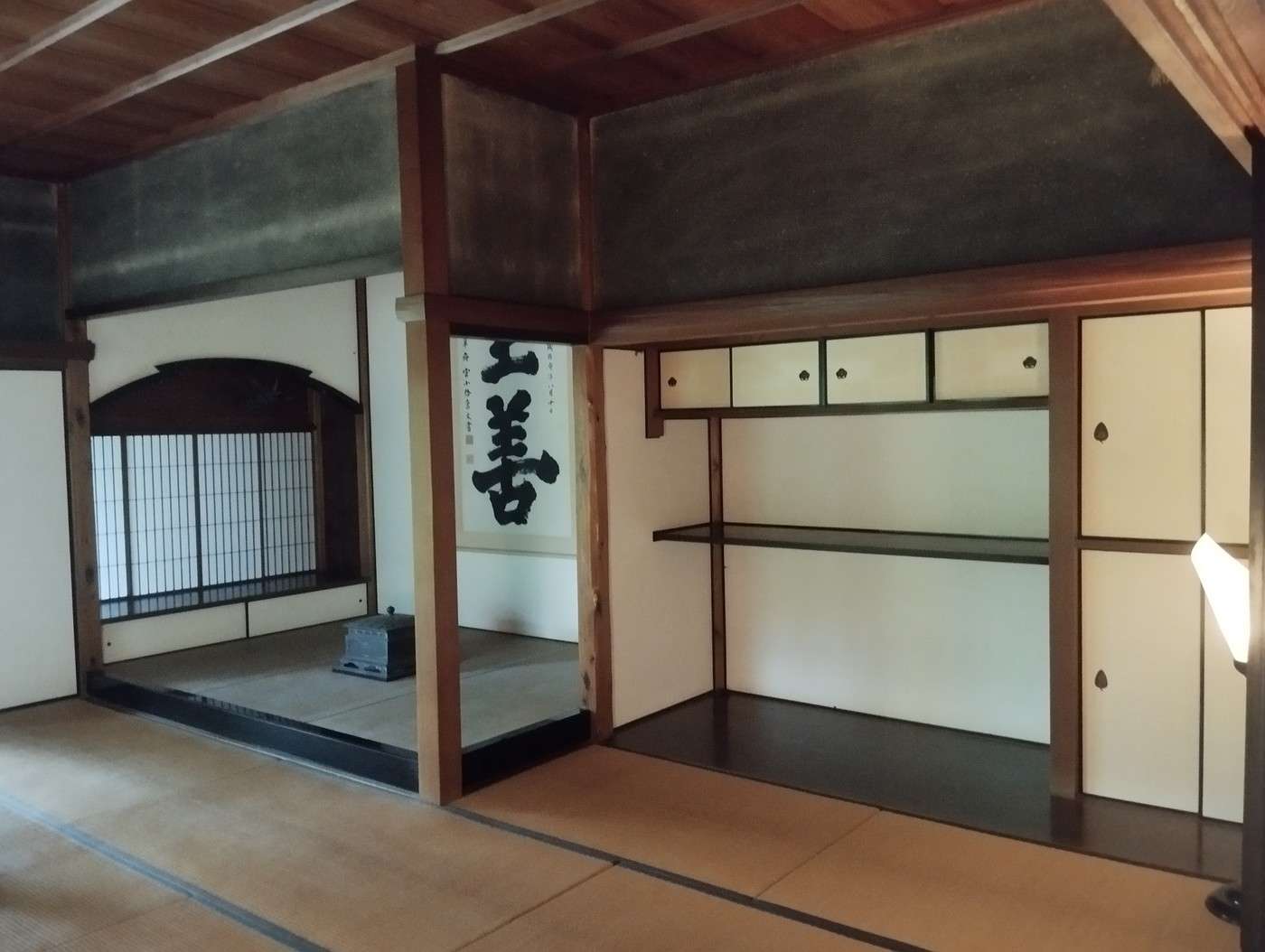
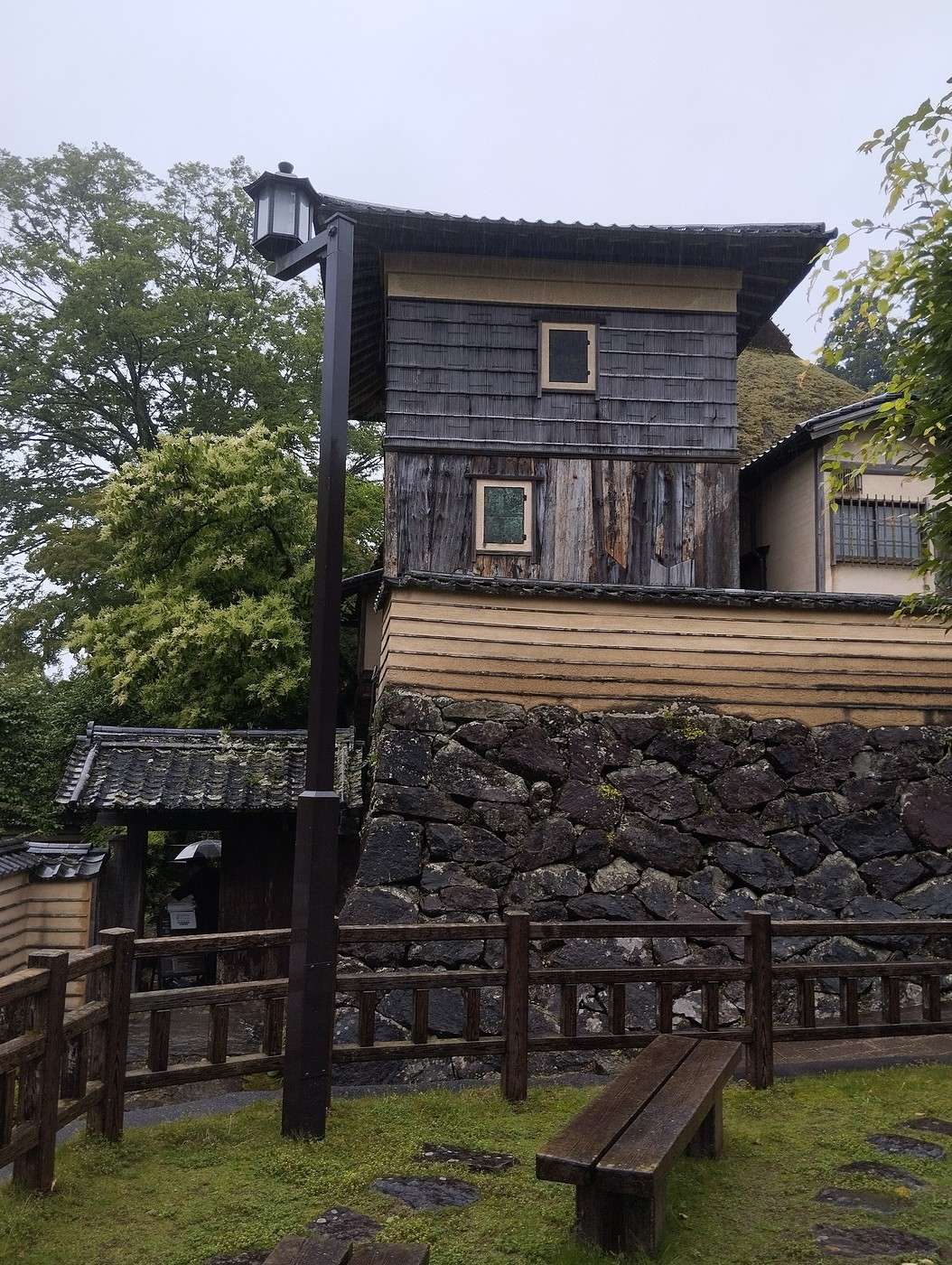
From the outside, it’s clear the building has a striking presence. The wood and the yellow hue of some walls give it real character.


The villa visit is paid. From what I recall, entry was 500 yen. But be warned—no wandering around in wet clothes that might drip water inside, so umbrellas must be left at the entrance, along with raincoats or any other damp clothing. And, as usual, you’ll need to take off your shoes.

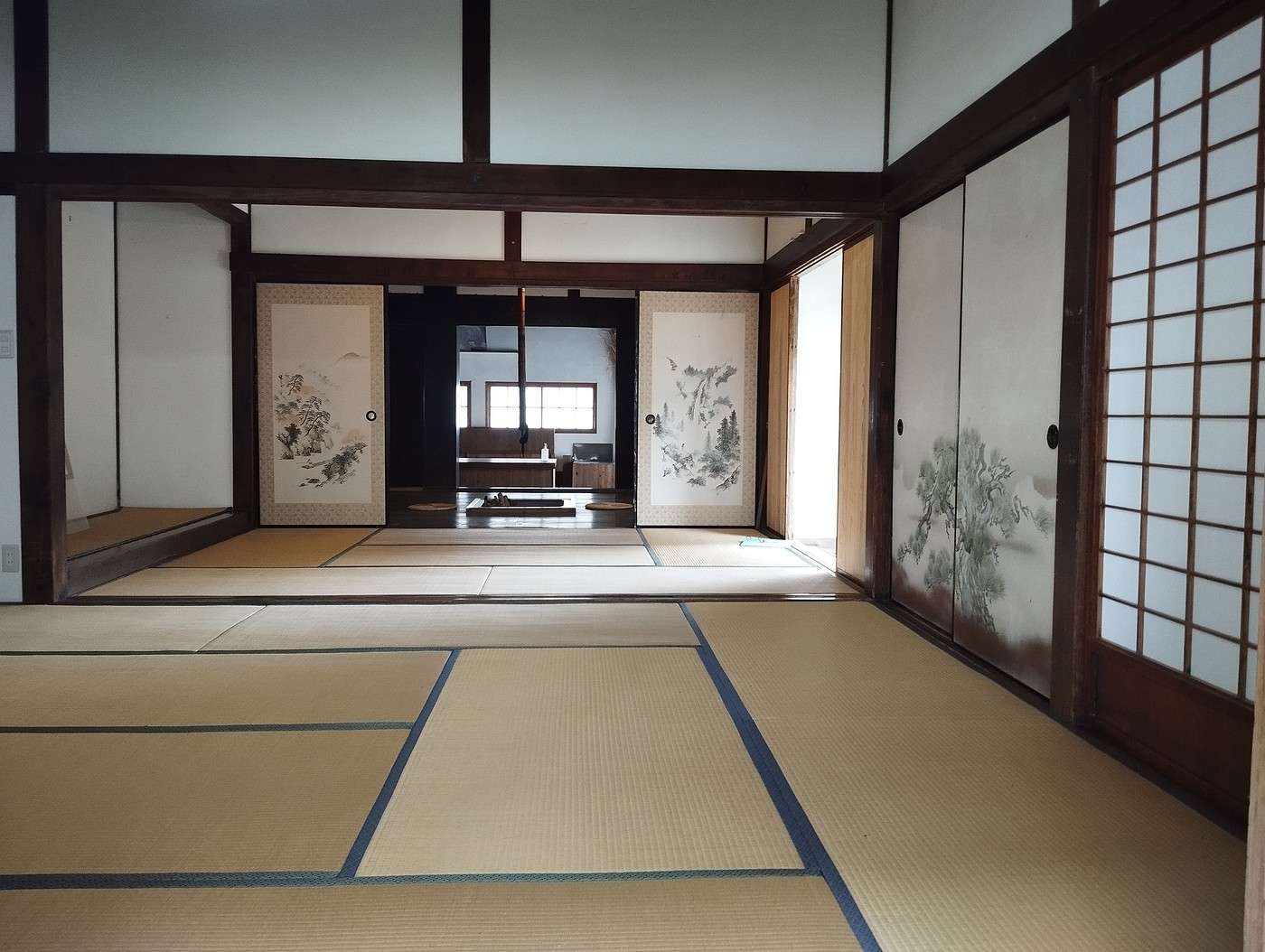
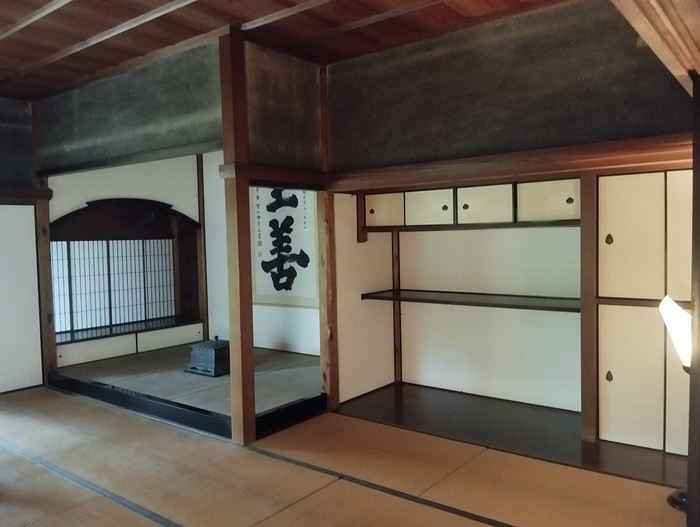
This building was reportedly constructed by a wealthy merchant named Torajiro Kawauchi. It took him years (10, to be exact) from conception to completion, finishing in 1907. The house has a thatched roof and traditional Japanese decor.


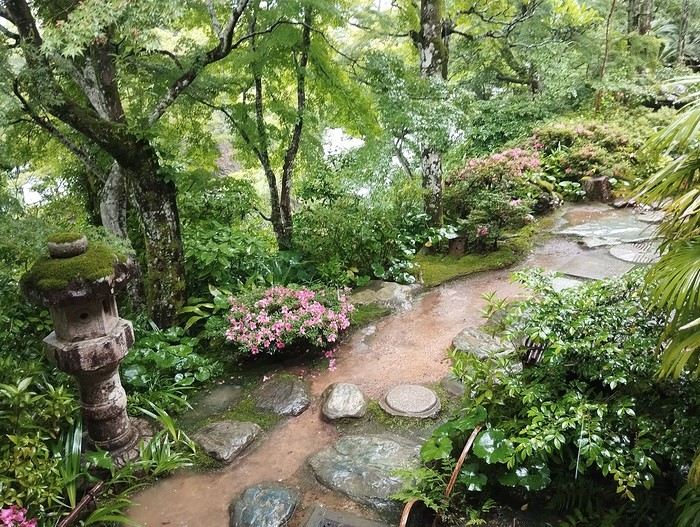
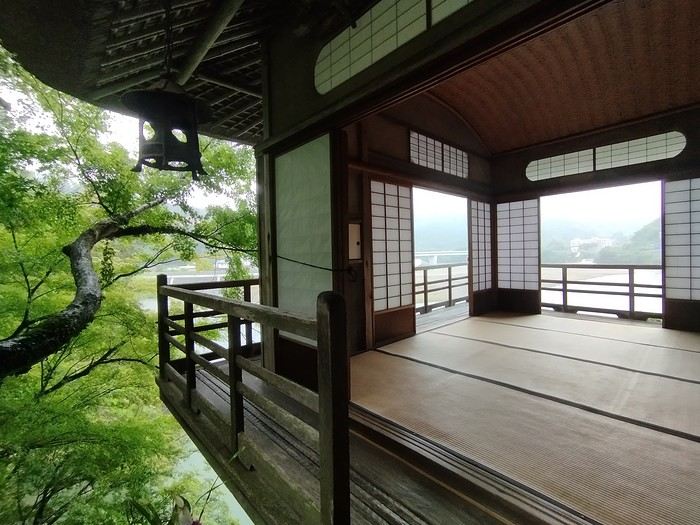
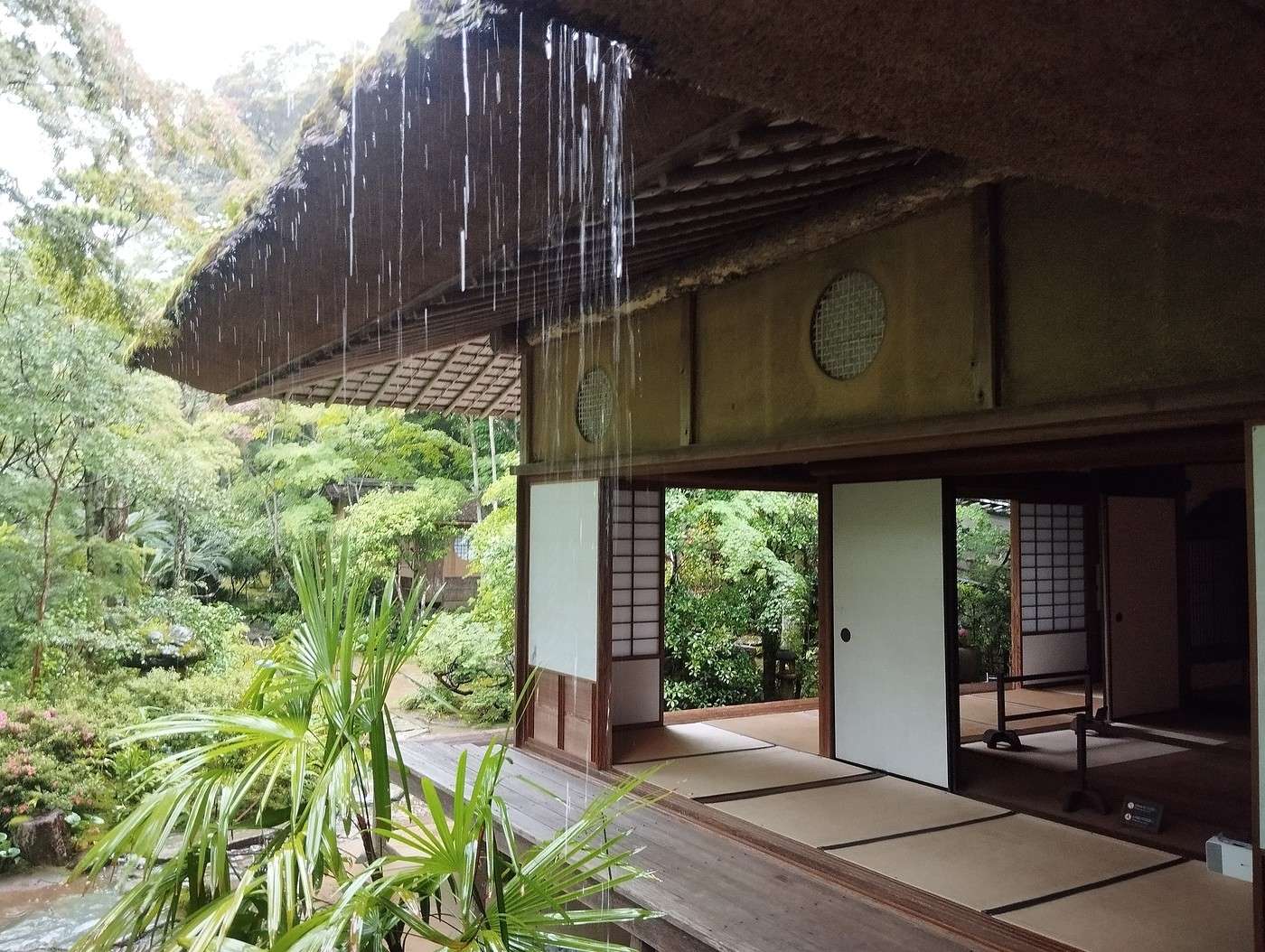
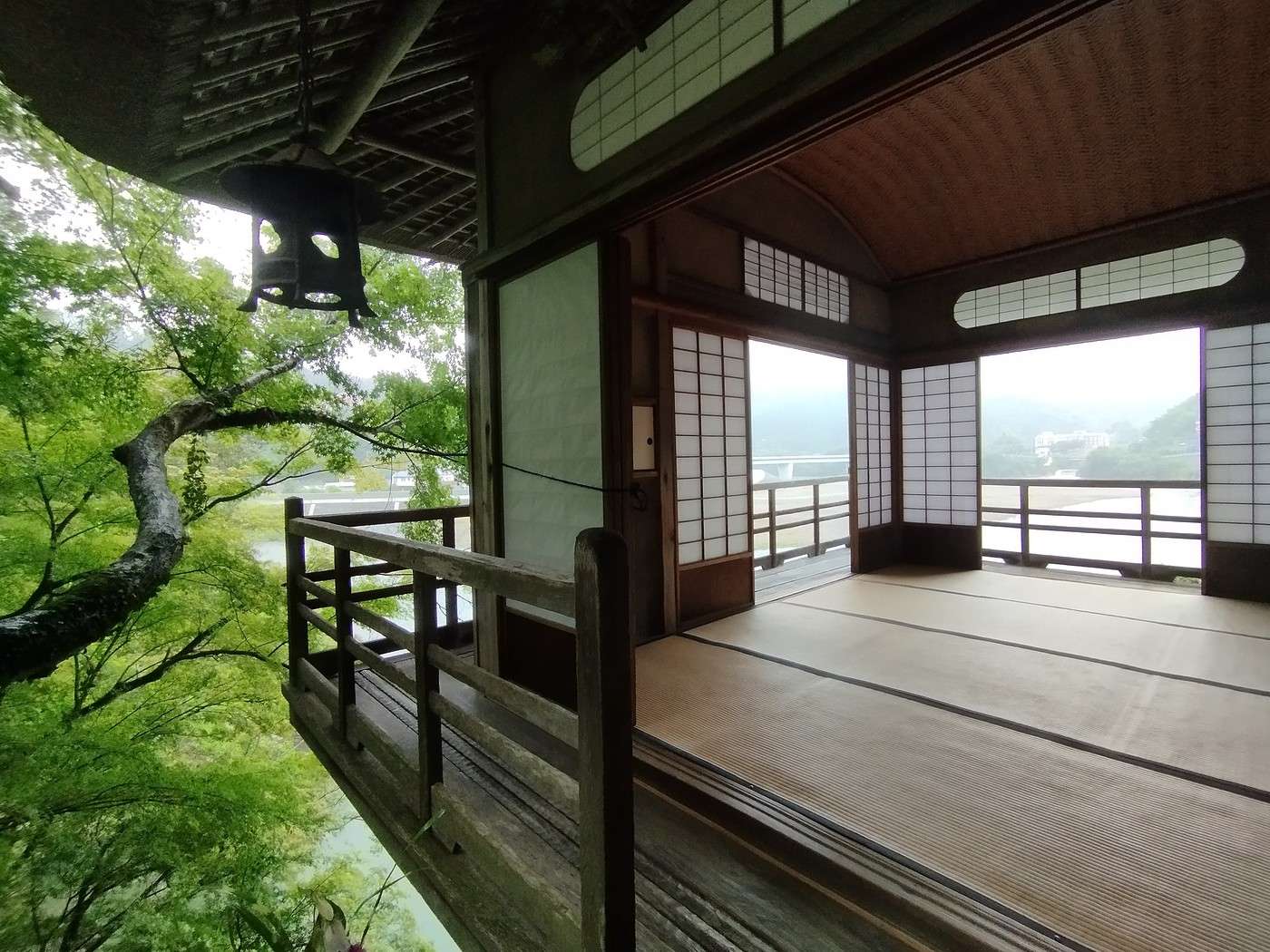
What struck me most was the constant feeling of being both inside and outside at the same time—the interior and exterior blending together, each observable from the other. The terrace running alongside the rooms overlooking the garden is especially inviting. You just want to sit there, legs dangling, and take in the charming garden. The rain dripping from the roof adds a peaceful atmosphere. From the terrace, you can also see the river below.


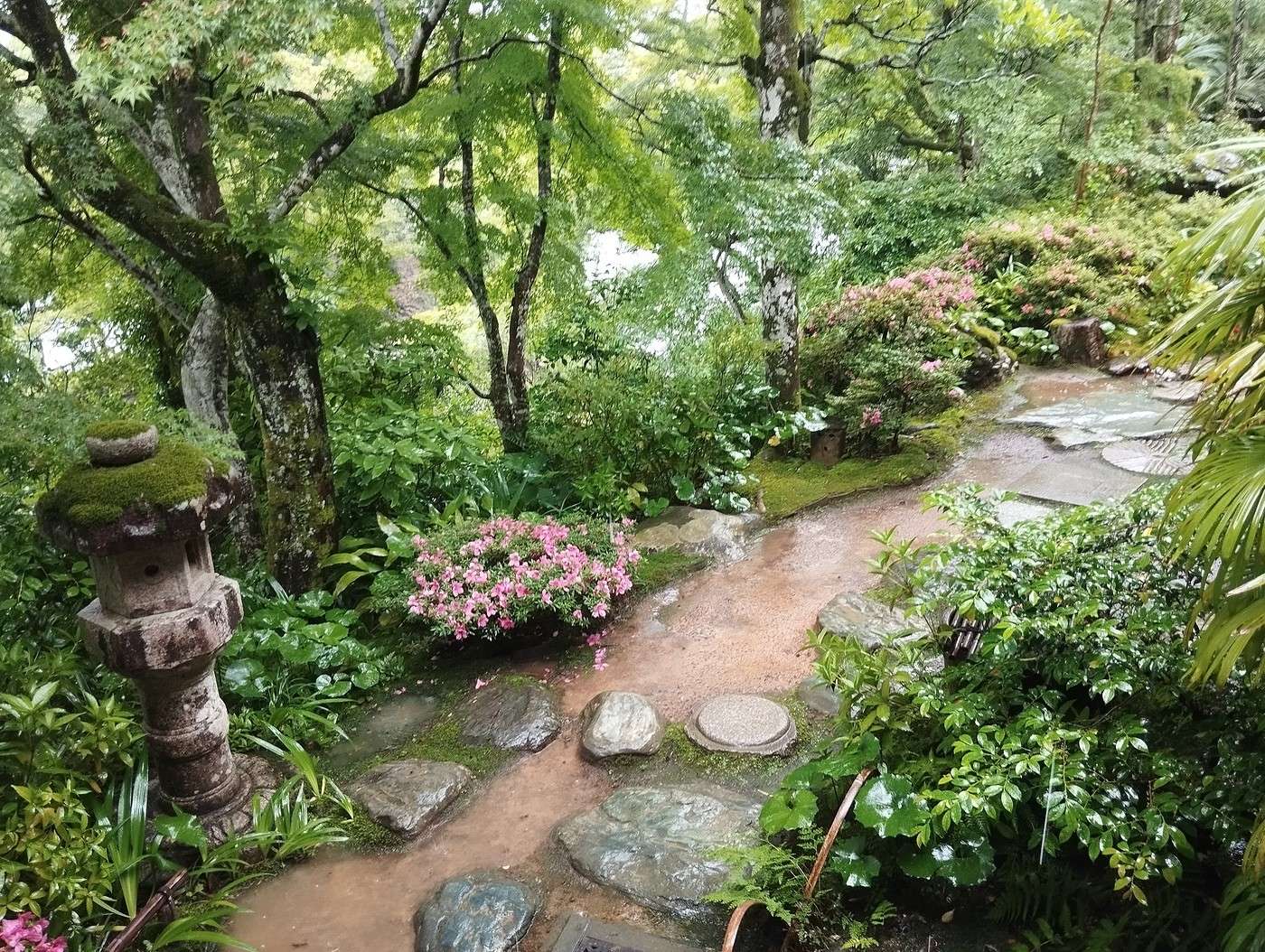
We also stroll through the garden, which leads to an old tea house overlooking the river at the end.


This villa is a bubble of old Japan. The visit ends when you have to crouch to pass under the half-door at the exit of the building. Though the visit is short, it’s still really enjoyable.

From Southern Shikoku, between land and sea, to the blue waters of Miyakojima and finally the megacity T

Nathalie971 · 2025-12-28 · Message 39 of 75

The relentless rain and wind that keeps blowing our umbrellas inside out made us rethink our plans. We wanted to spend more time exploring the town of Ozu, but the weather made walking around tiring and not very enjoyable. So, after wandering through a few alleys anyway, we decided to call it a day and head back on the road to Matsuyama, even though Ozu has plenty more to offer. This town really deserves at least a full day. For those interested, I’m sharing a link to a video by a Japanese YouTuber couple strolling through Ozu—it really shows off the town’s charm and why it’s worth the detour, in my opinion, of course. (English subtitles available).


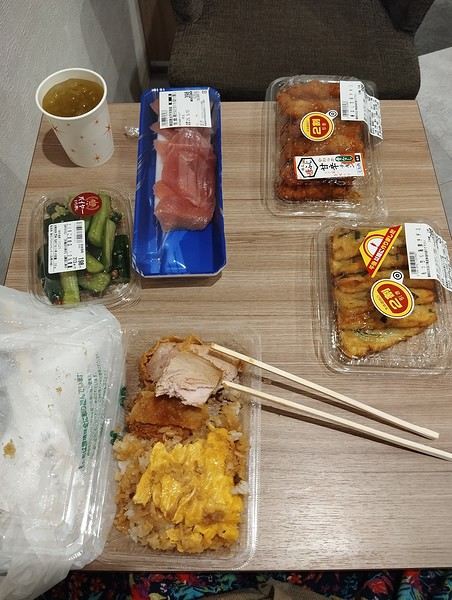
On the road, we pass through increasingly urban and densely built-up towns. We spot a mall and decide to stop to grab some snacks for tonight so we don’t have to go back out in this rain. The shopping center is huge, with plenty of parking. We wander around a bit before filling a basket with goodies and essentials for tonight and the next few days. The food options are impressive, with some really interesting choices.

After finishing our shopping, we take turns going to the restroom while the other keeps an eye on the bags. While I was in the restroom, my partner was approached by two young men who were surprised and curious to see a foreigner in the mall. They chatted for a bit, asking the usual questions—where we’re from, where we’re going, and what we’ve already visited, etc.

We finally make it to Matsuyama in the pitch-black night, lit only by car headlights and traffic lights. As we drive through the city, we can feel the energy of a bustling urban center through the car windows—much more so than in Kochi. But Matsuyama is the largest city on Shikoku, so that makes sense.

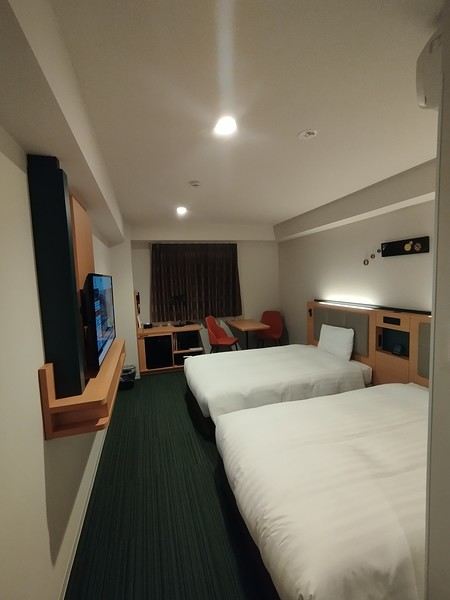
We’re staying at the same hotel chain as in Kochi—Comfort Hotel Matsuyama—for the next few nights. The hotel was a "good deal," so we even splurged a little on a slightly "bigger" room—a twin-bed room at 21 m² instead of the standard double at 15 m²—for 30,000 yen for 3 nights, including breakfast. At the exchange rate in June, that worked out to about 62 € per night. There’s also the option to park nearby at a discounted rate, which we took advantage of.


After checking into our pretty cozy room, we head down to the common area, where you can relax and eat until 11 PM, just like in Kochi. There are books and a microwave available for guests to use.


From Southern Shikoku, between land and sea, to the blue waters of Miyakojima and ending in the megalopolis T

Gedevoyageur · 2026-01-02 · Message 40 of 75

Hi Nathalie,

and happy 2026!

I’m taking a flight through your travel journal—I love the content and photos (just like your previous ones). It’s a real mood-lifter during my Japanese blues.

I didn’t particularly enjoy Nara, except for Todai-ji; nearby Uji charmed me more. The castles of Kochi and Wajima confirmed my (mistaken?) feeling of déjà vu. But the castles of Kanazawa, Himeji, and Okayama satisfied my love for these fortresses.

Anyway, thanks for sharing this journey through lesser-known lands. I know how much work goes into a travel journal. I’m curious to read your thoughts on Tokyo—I visited again last year. I’ll add our May 2025 trip journal to my long to-do list 🙂

VoyageForum — the largest community of French-speaking travellers.