Thanks Isabelle! 🙂
We hope that through our story, you can relive some of the sensations or atmosphere we experienced—or maybe not. It’s up to you to tell us!
Day 5 / Day 6: Two days in Luang Prabang and its surroundings
The temples Wat Xieng Thong and Wat Mai, the Royal Palace, and the ascent of Mount Phousi
A day of sightseeing. We opt for a classic tour to discover the main attractions of the city, relying on the *Routard* guide and our two or three small backpacks.
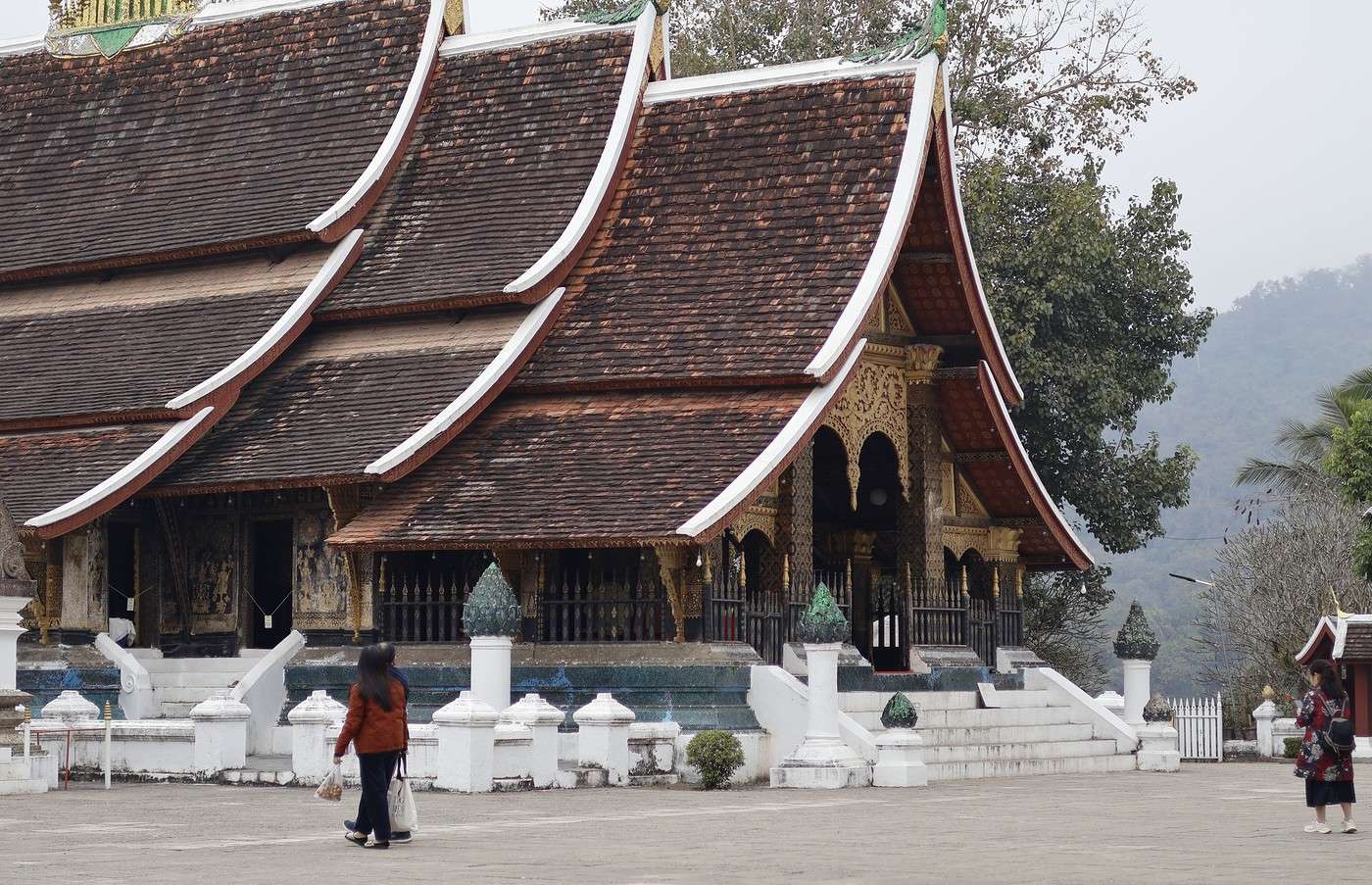
We enter the sanctuary of Wat Xieng Thong through a vast courtyard from which emerges a collection of religious buildings in the Lao style, with their large roof sections nearly touching the ground. A pleasant visit, wandering among all these temples scattered across the esplanade.
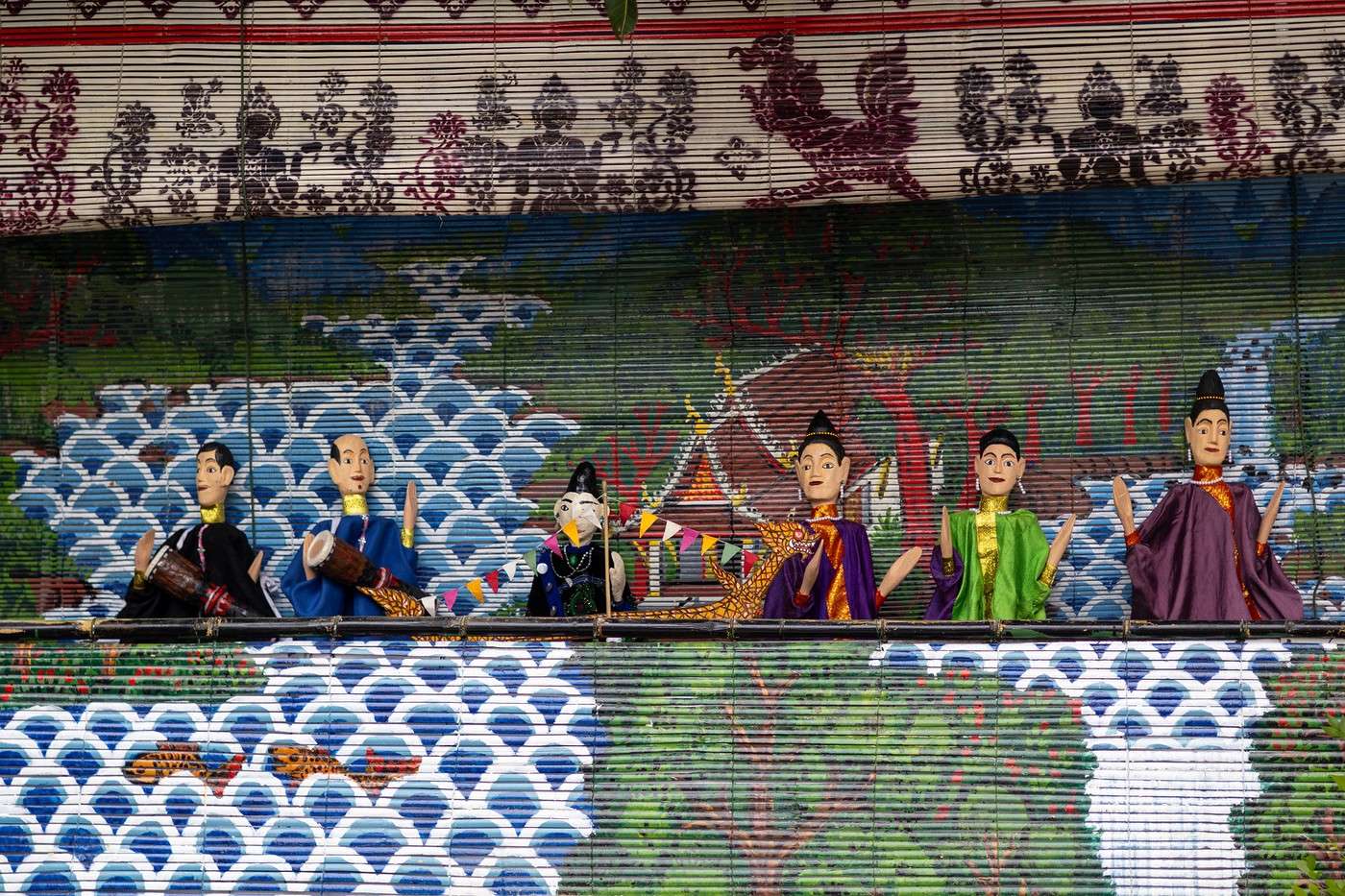
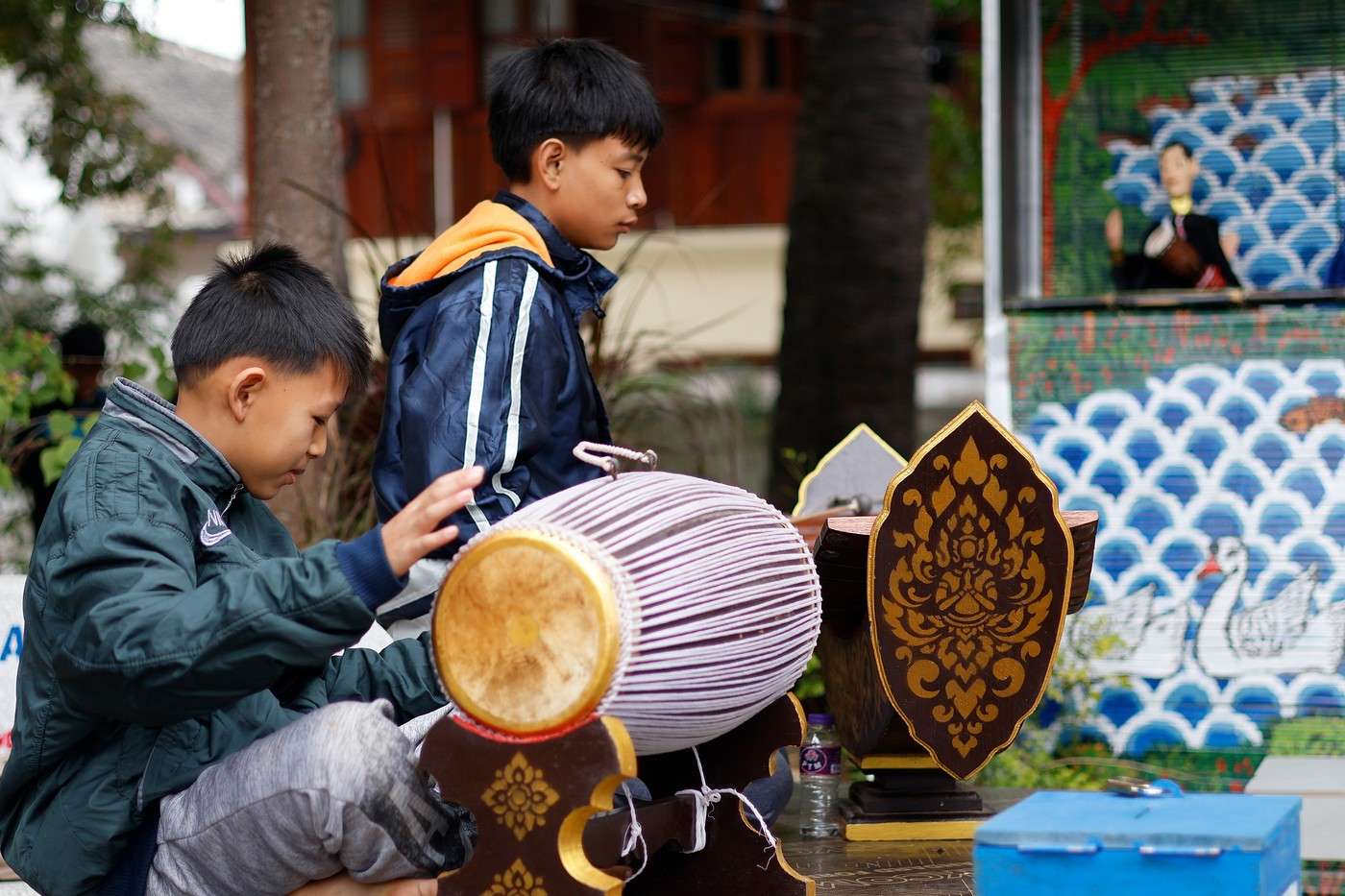
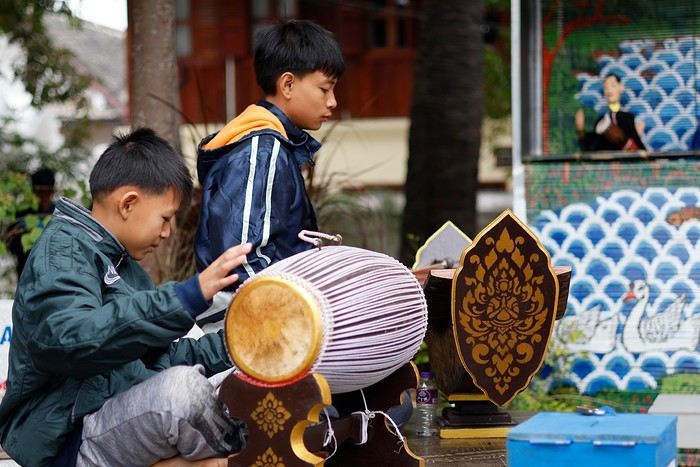
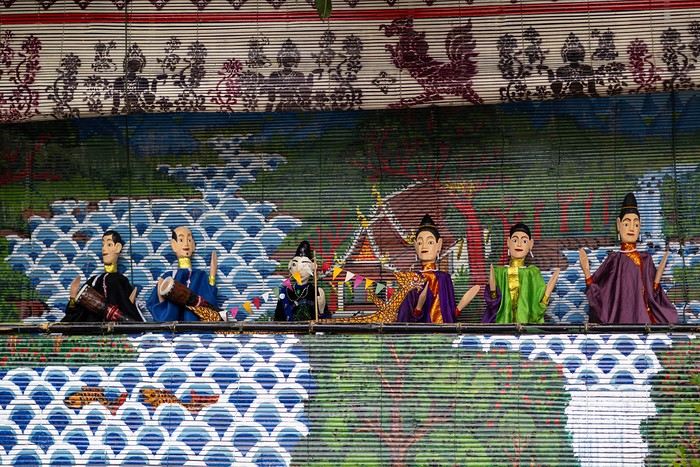
But soon, my attention is drawn to a crowd and music with East Asian tones coming from a corner of the square. Children are putting on a puppet show. Inside the little theater, a series of brightly dressed characters move in that distinctive way of rod puppets. Throughout the short story, traditional music plays, performed by two children—one beating a cylindrical drum, the other striking a xylophone-like instrument with a mallet. The story ends, the children step out of the theater and bow to the delighted audience. Everyone applauds. Out of the corner of my eye, I catch the demanding yet satisfied look of what seems to be the children’s teacher. Performed in the courtyard of a temple by kids so engaged and focused, this wasn’t just a tourist show, even if visitors did enjoy it. Later, I learned that traditional puppet performances are widely practiced and very popular in Southeast Asia.
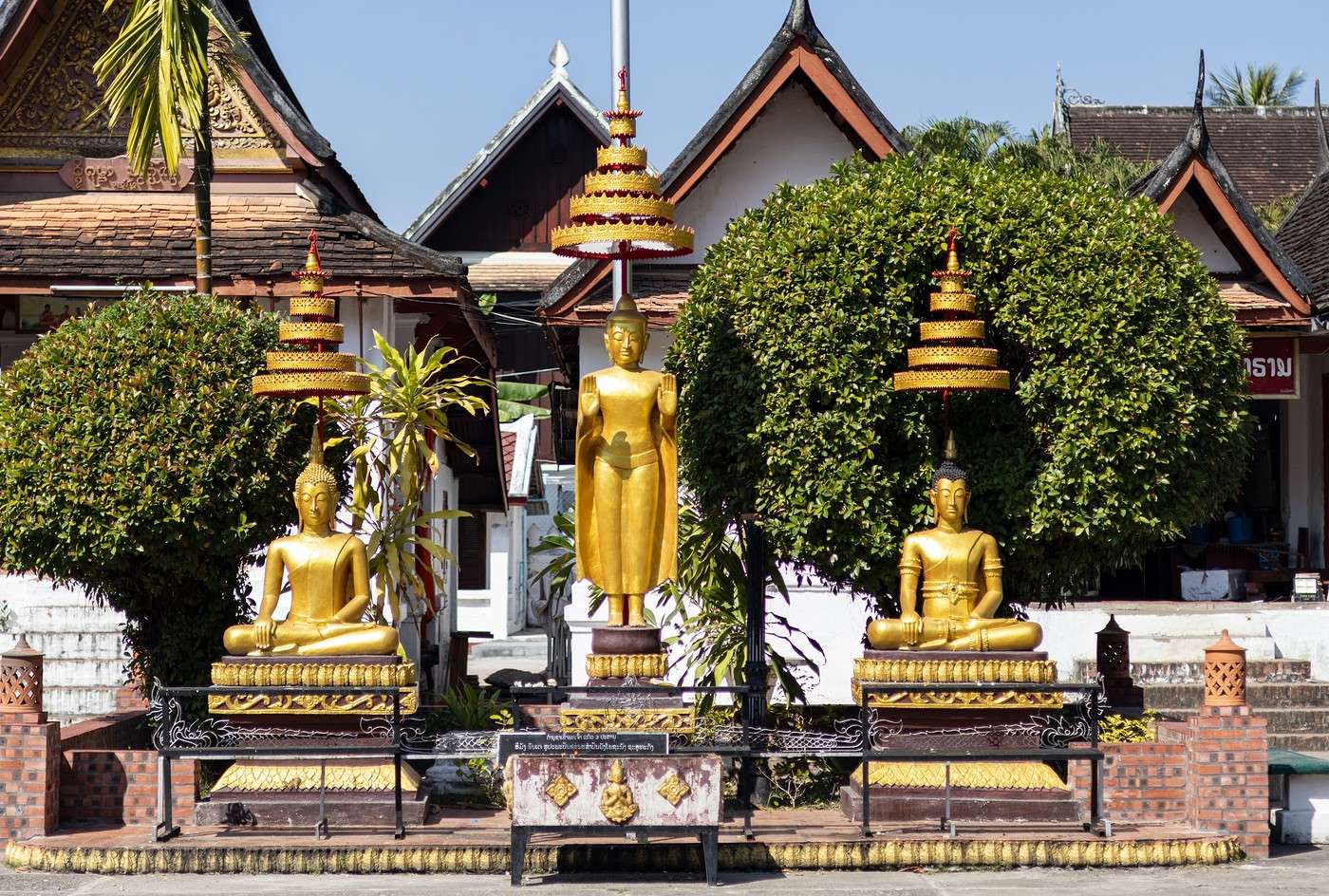
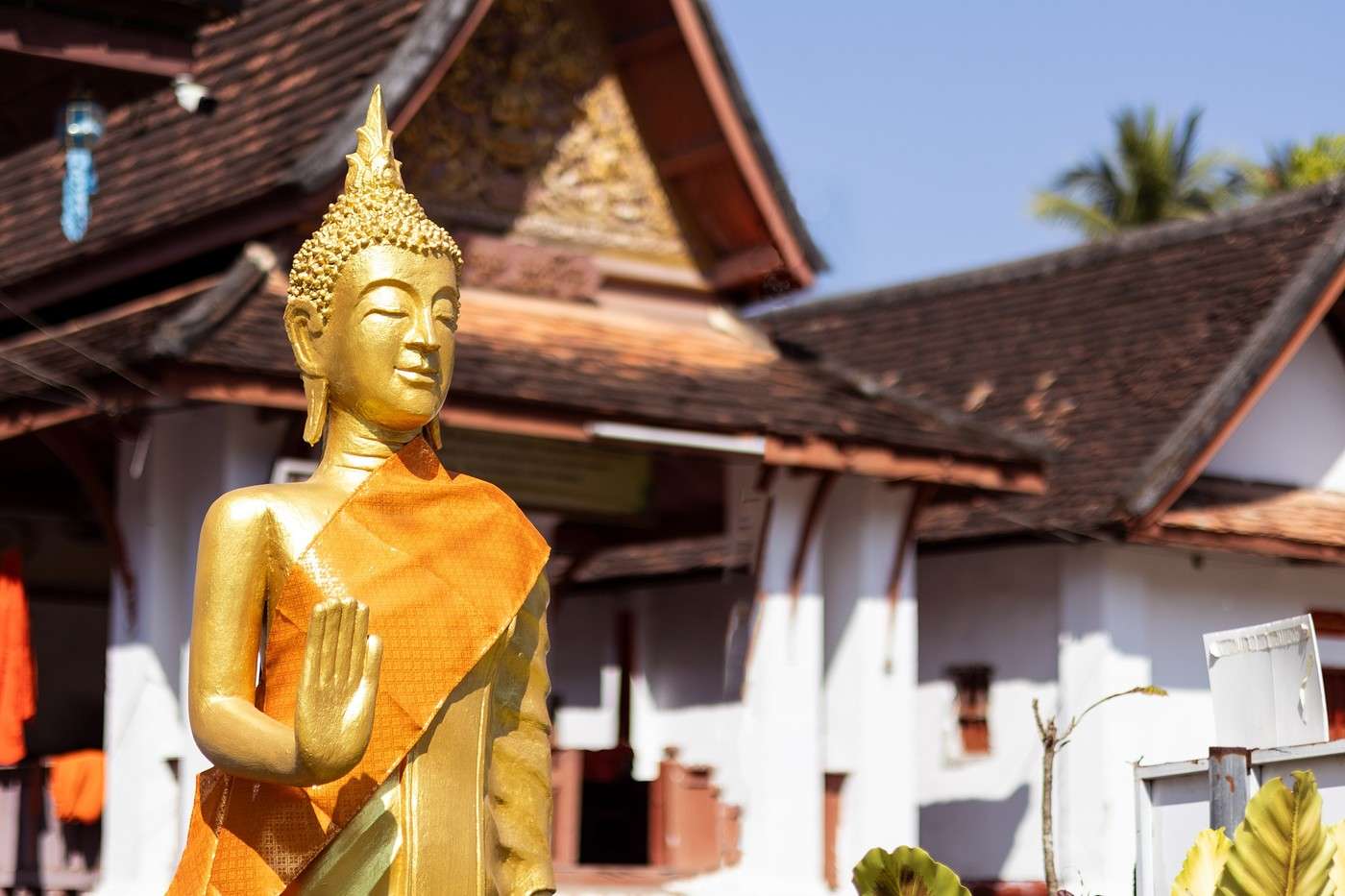
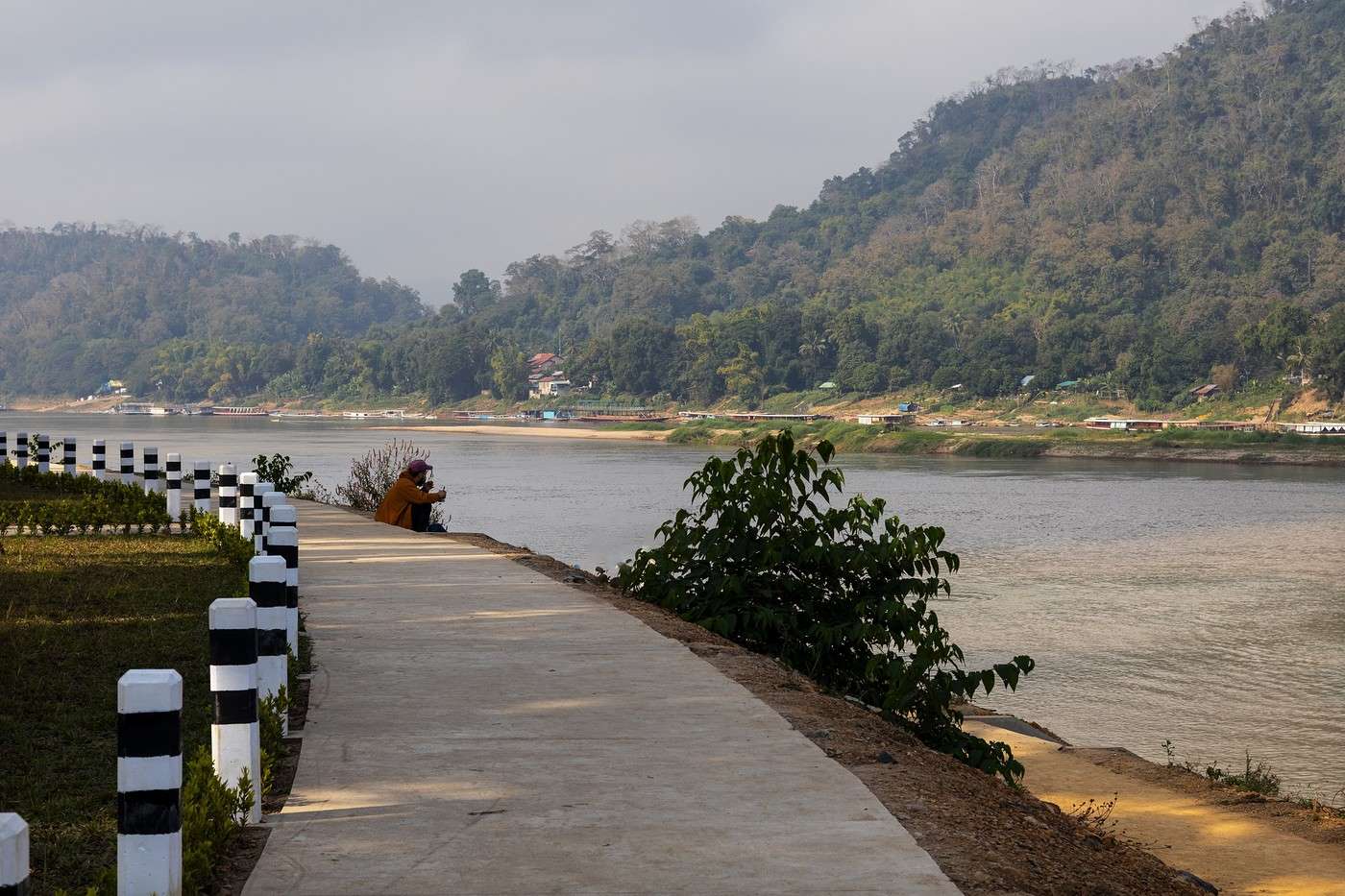
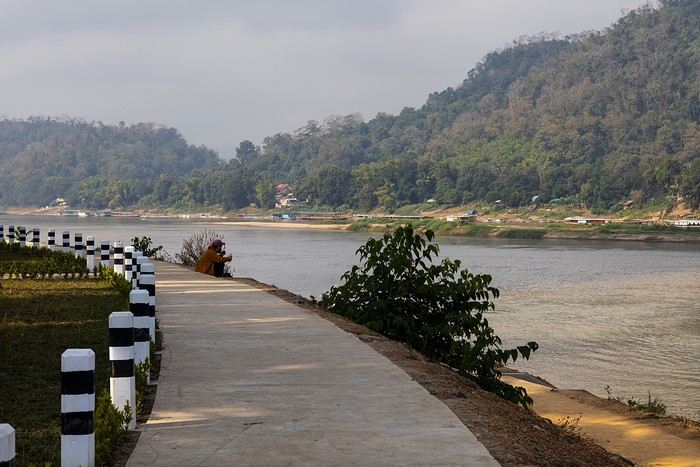
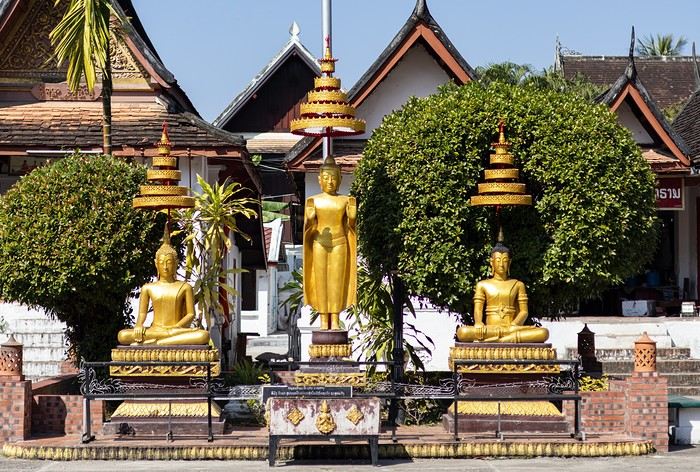
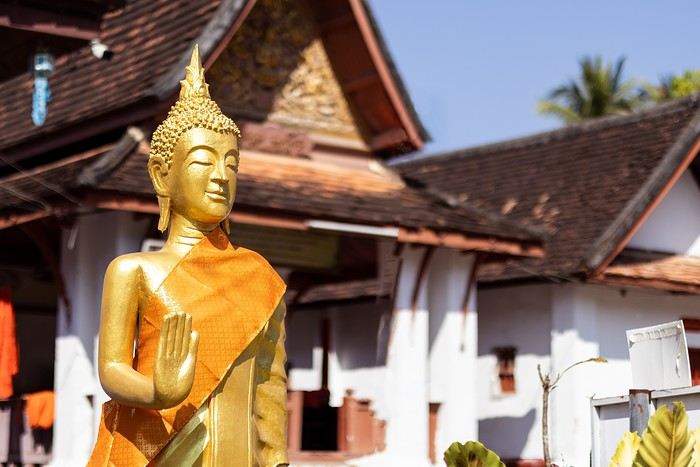
A pleasant stroll after leaving the temple, along the banks of the Nam Khan and the Mekong in the coolness of this beautiful sunny morning. After a coffee break, we head to Wat Mai. In the sun-drenched courtyard, the four of us enjoy admiring the many Buddha statues, each in different poses with delicate gestures and their somewhat enigmatic smiles.
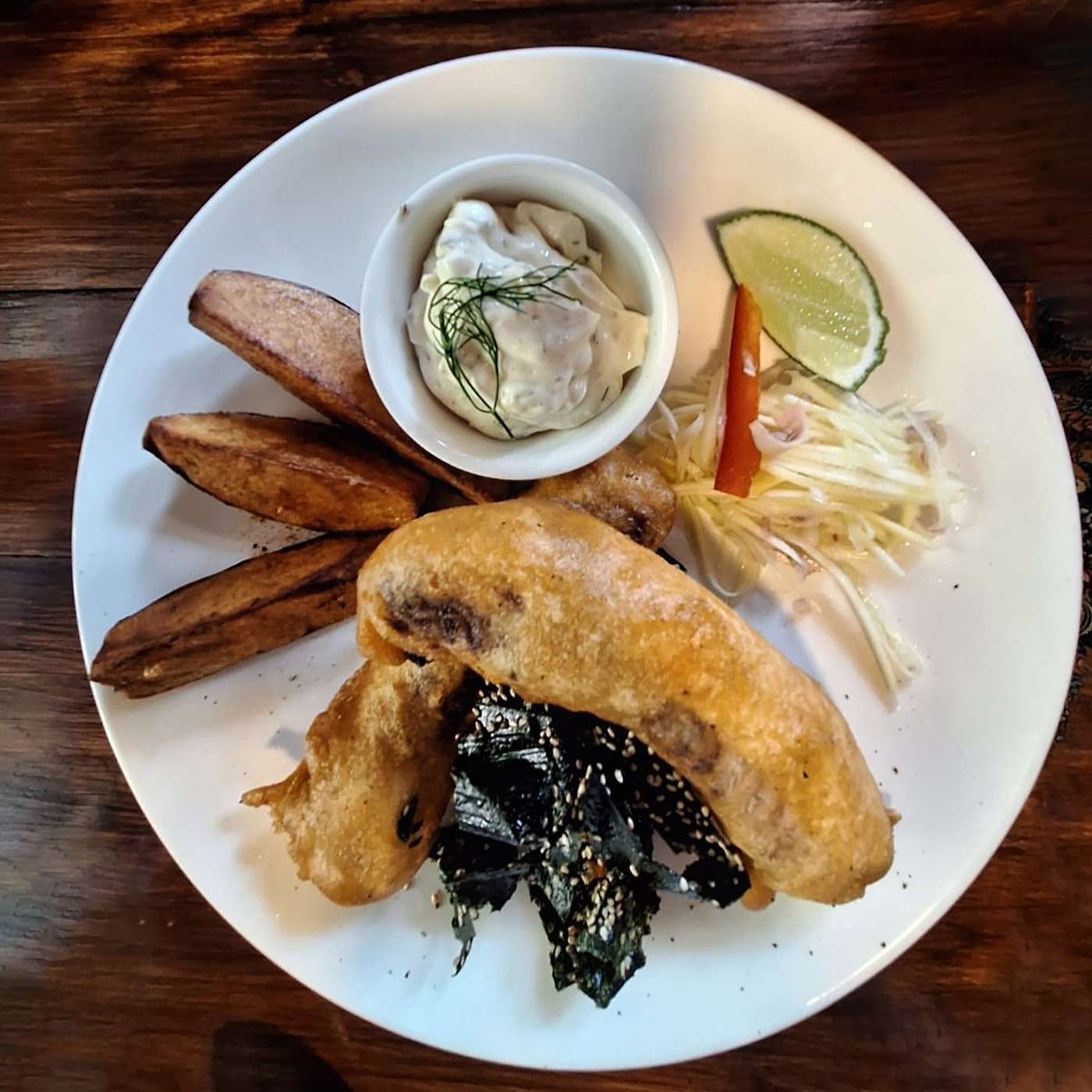
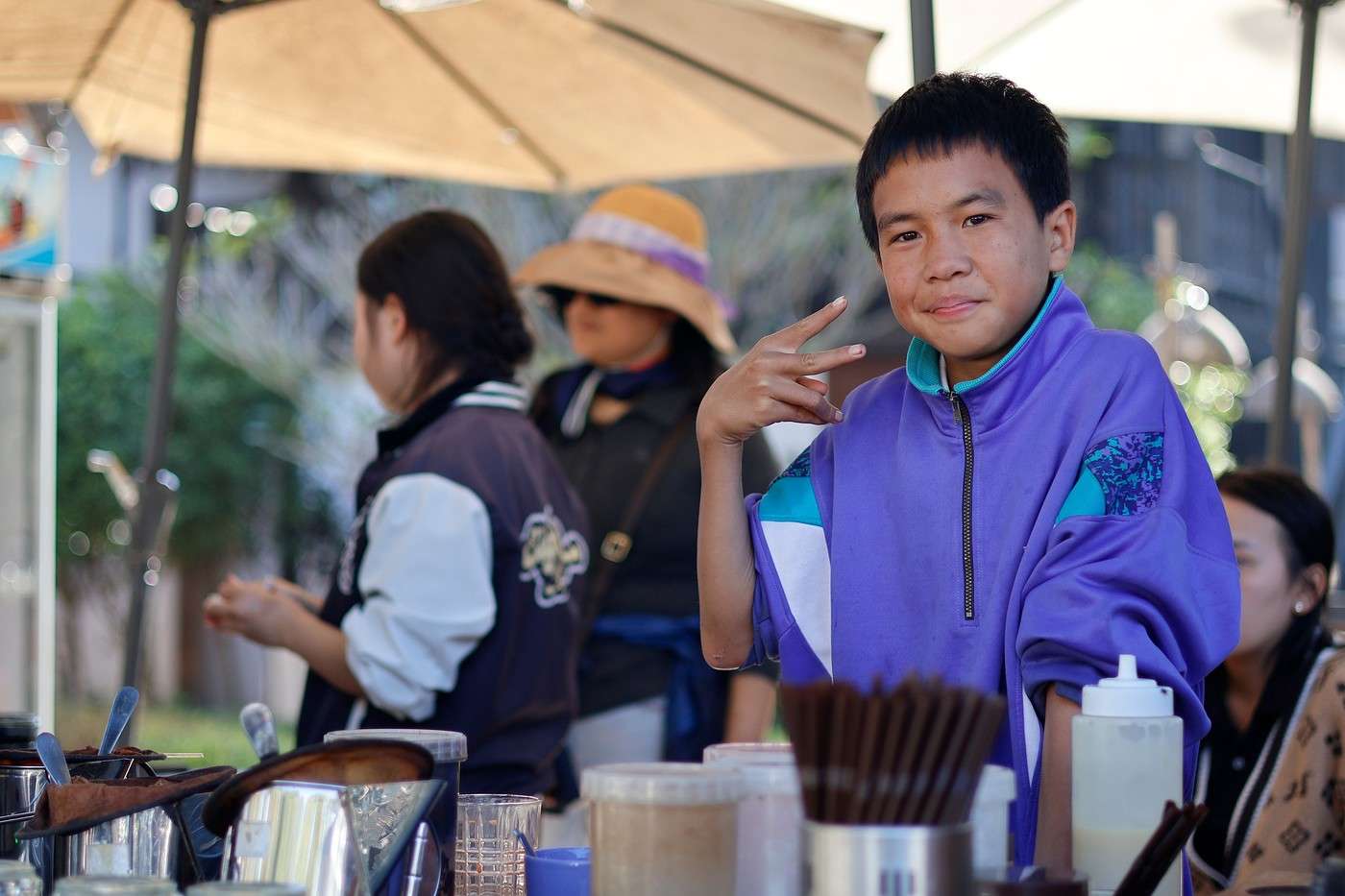
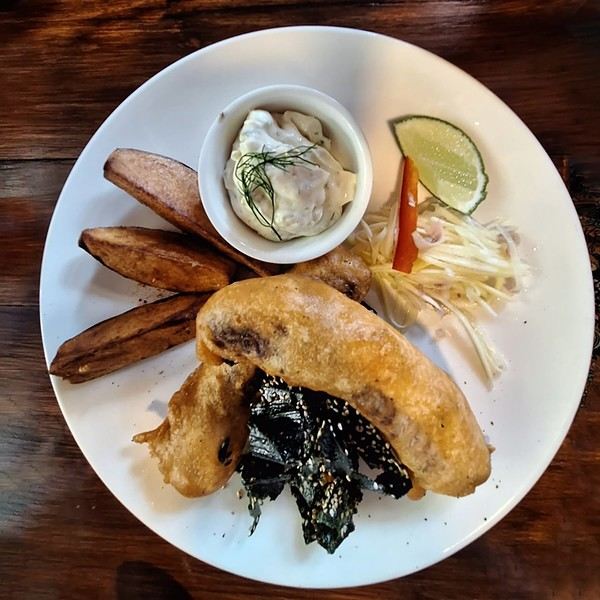
Lunch break at Khaiphean, a charming little restaurant run by the NGO Friends-International, which helps disadvantaged young Laotians by offering professional training in the hospitality industry.
It’s also a chance for us to use some basic Lao phrases beyond just “Hi” and “Thank you.” Sabaïdii (hello), Kop Thaï (thank you). It’s not much, but it’s a way to show respect for this country and the people who live and work here. A quick note on the exquisite courtesy of the Laotians—their discretion, their smiles, and their Asian-style greeting, with hands joined at face level and a slight bow.
A bit worn out after an intense morning, we rush through the visit to the Royal Palace. Built in the early 20th century during the French protectorate, it reflects a bygone era since the communist revolution of 1975 and the proclamation of the Lao People’s Democratic Republic. Yet, seeing the devotion of the locals before the Golden Buddha statue and the presence of around thirty still-active temples in Luang Prabang, it’s clear that the communist government has sought to regulate Buddhist practices rather than suppress them.
Buddhism, deeply rooted in the country’s culture, is seen by Lao leaders as a factor of social cohesion and even national unity.
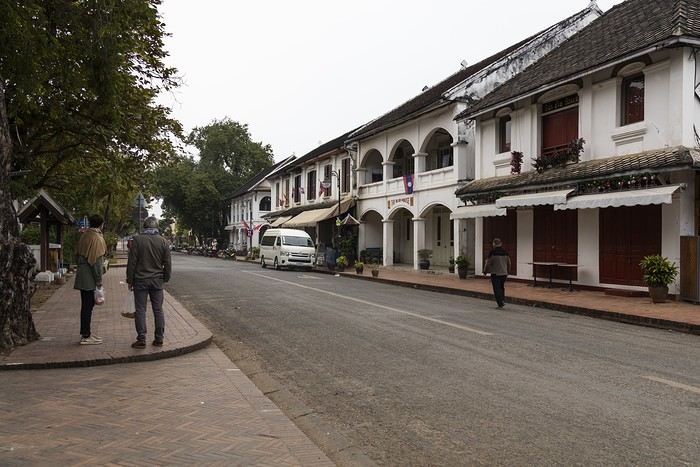
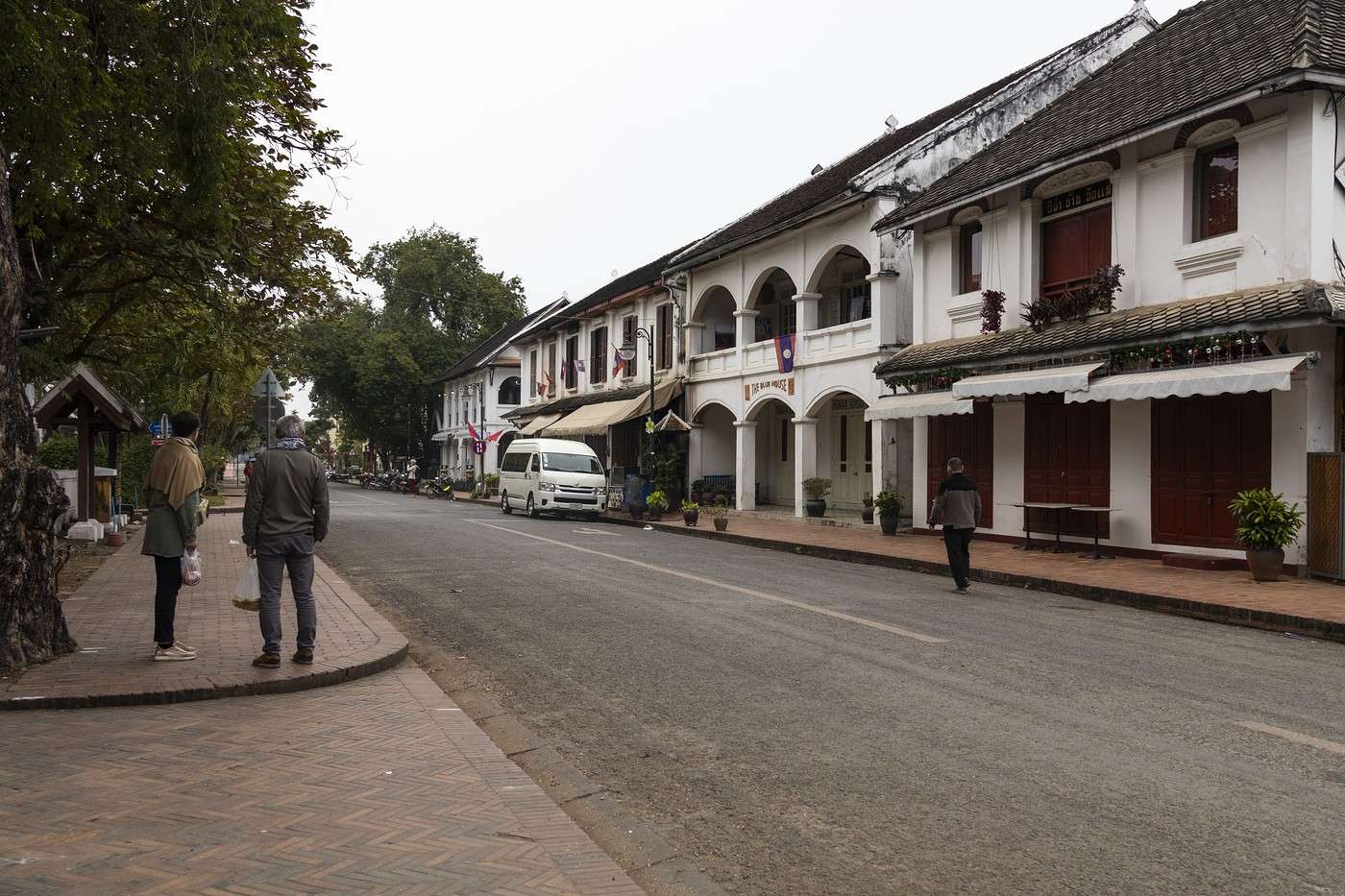
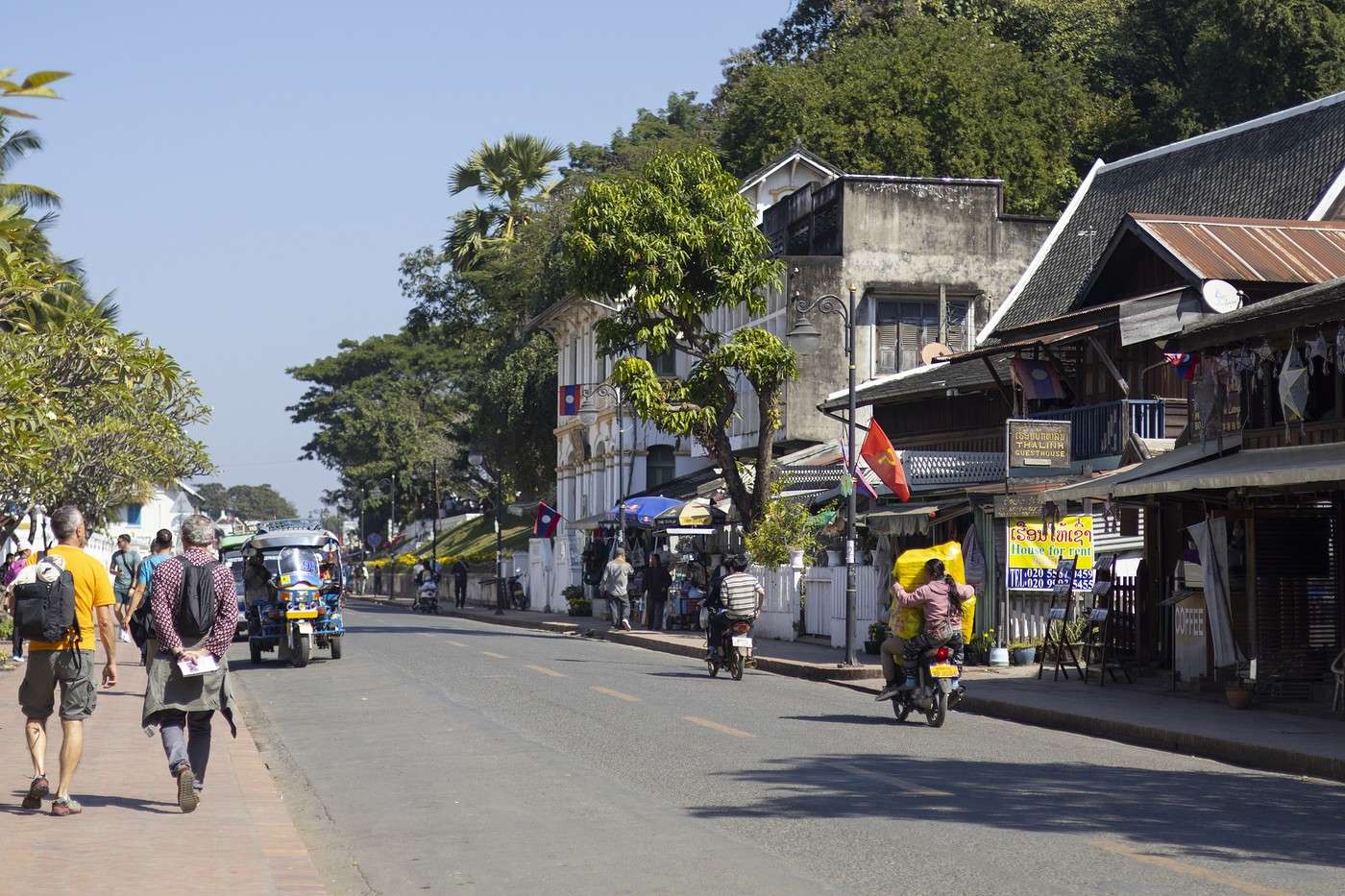
As for the French presence, though discreet, it’s still noticeable. In traces—colonial-style architecture, the layout of the urban grid, inscriptions on the facades of old buildings. And in more dynamic forms, like the Francophone School of Luang Prabang, the French cultural center... and a few bakeries.
The time for the “Sunset” is approaching. We need to climb Mount Phousi to watch the sunset over the Mekong.
For Kate, who hates climbing, it’s a Lao massage instead. When we reach the summit platform, it’s so crowded we can barely move. The view of the city and the river is stunning, sure, but as for the serenity of the place... The sun slowly sinks behind the hills, and everyone pulls out their phones. The sensory experience won’t leave us with great memories. Kate, on the other hand, seems thrilled with her massage session.
For dinner, we found a little spot in a side alley off the main street, the Phonheuang Café, with an excellent menu offering Thai, Vietnamese, and Laotian dishes.
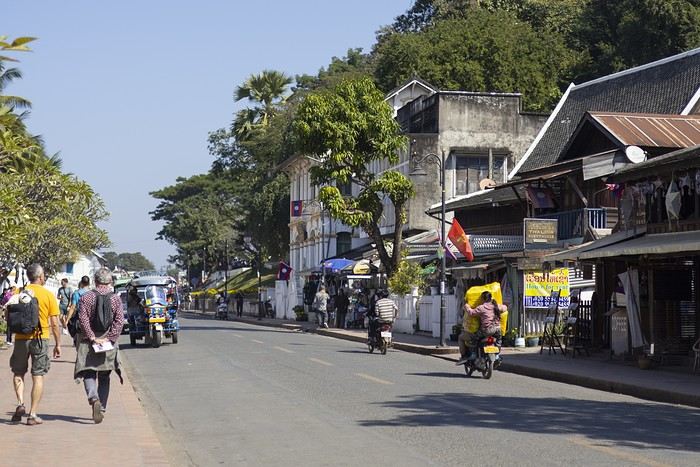
In the quiet of the side streets, we take the time to admire the colonial-style houses, often beautifully restored with their wooden balconies.
Tomorrow, we’ll wake up at dawn to witness the procession of monks through the city, the “Tak Bat.”

The rest is here