Hello,
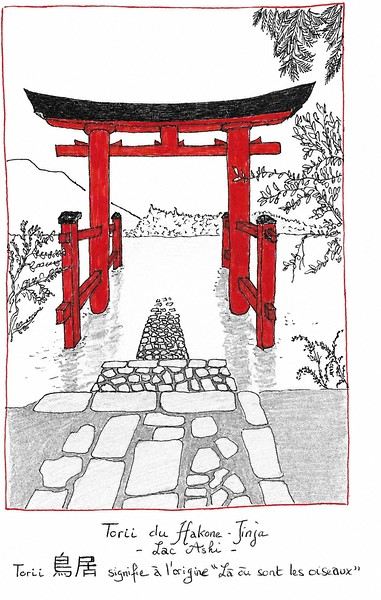
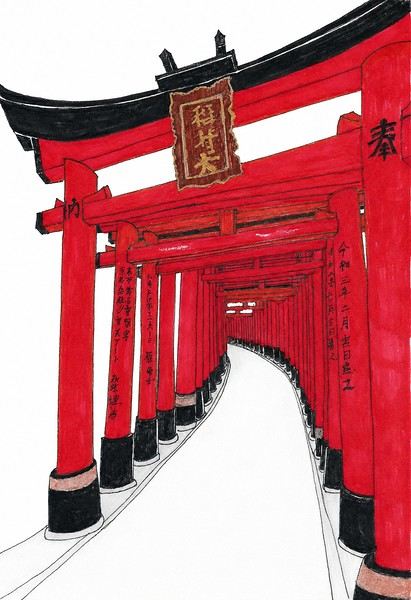
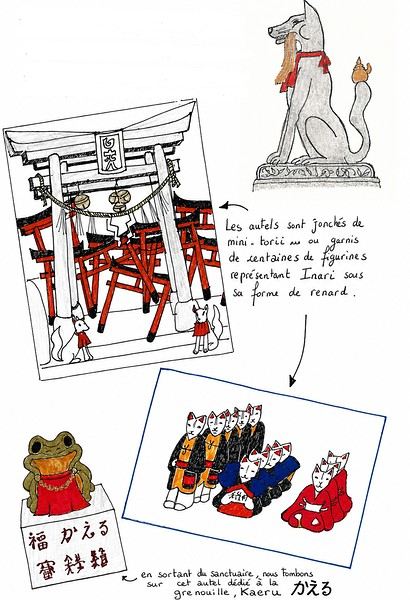
Following up on the previous post, I’m continuing with different snapshots related to places of worship:
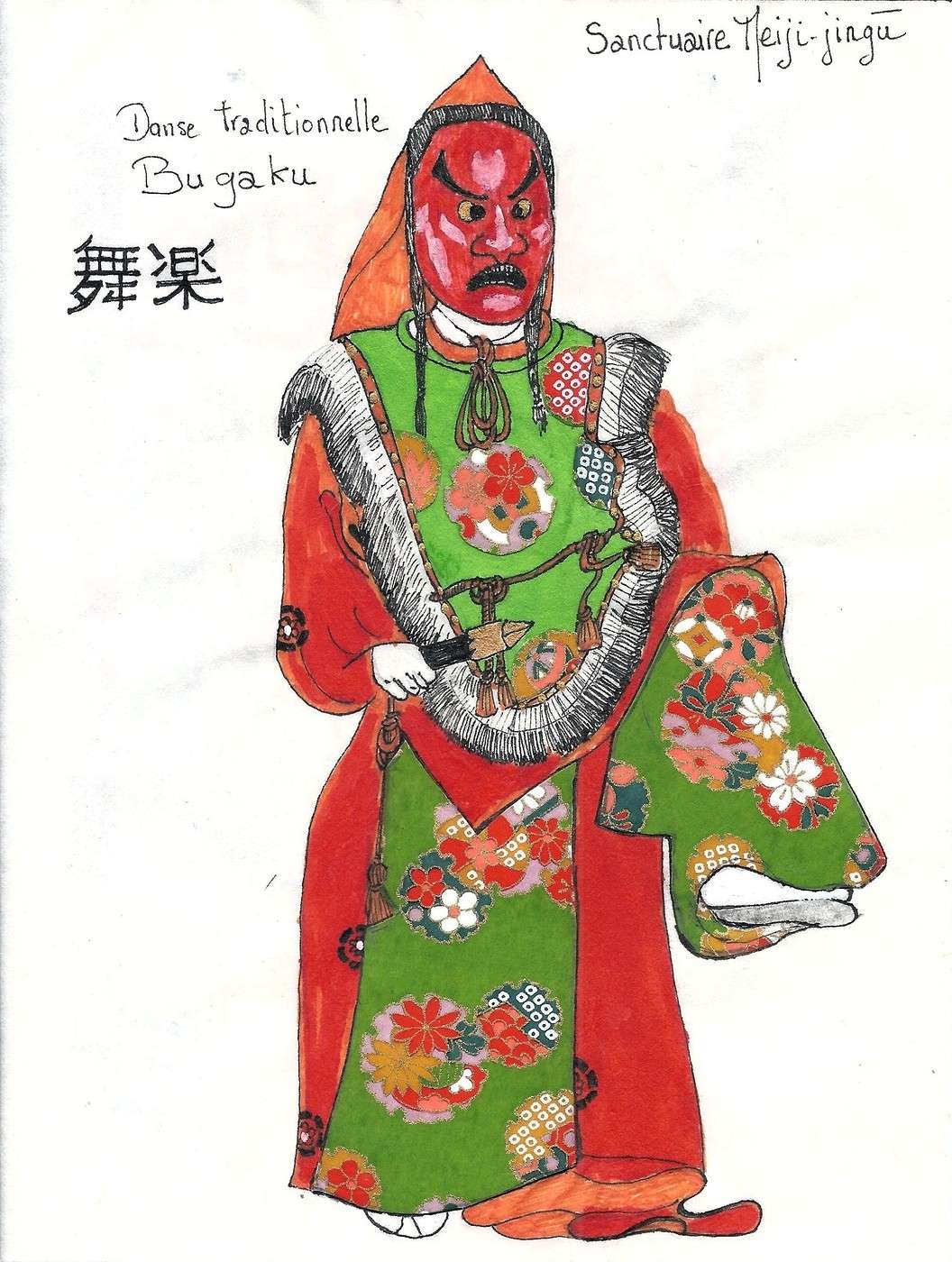
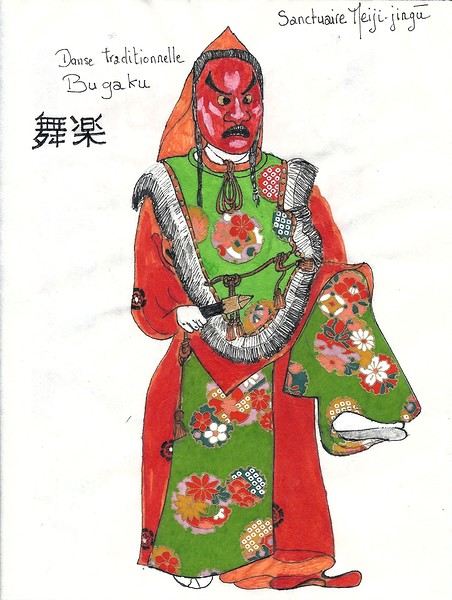
A Bugaku dancer at the Meiji Jingu Shrine in Tokyo (on the sidelines of wedding ceremonies) Ink and collage
And then:
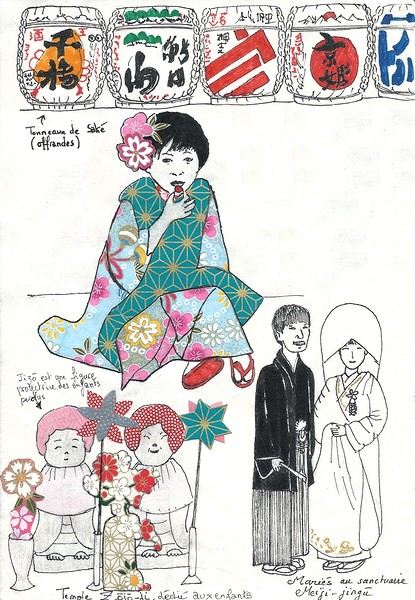
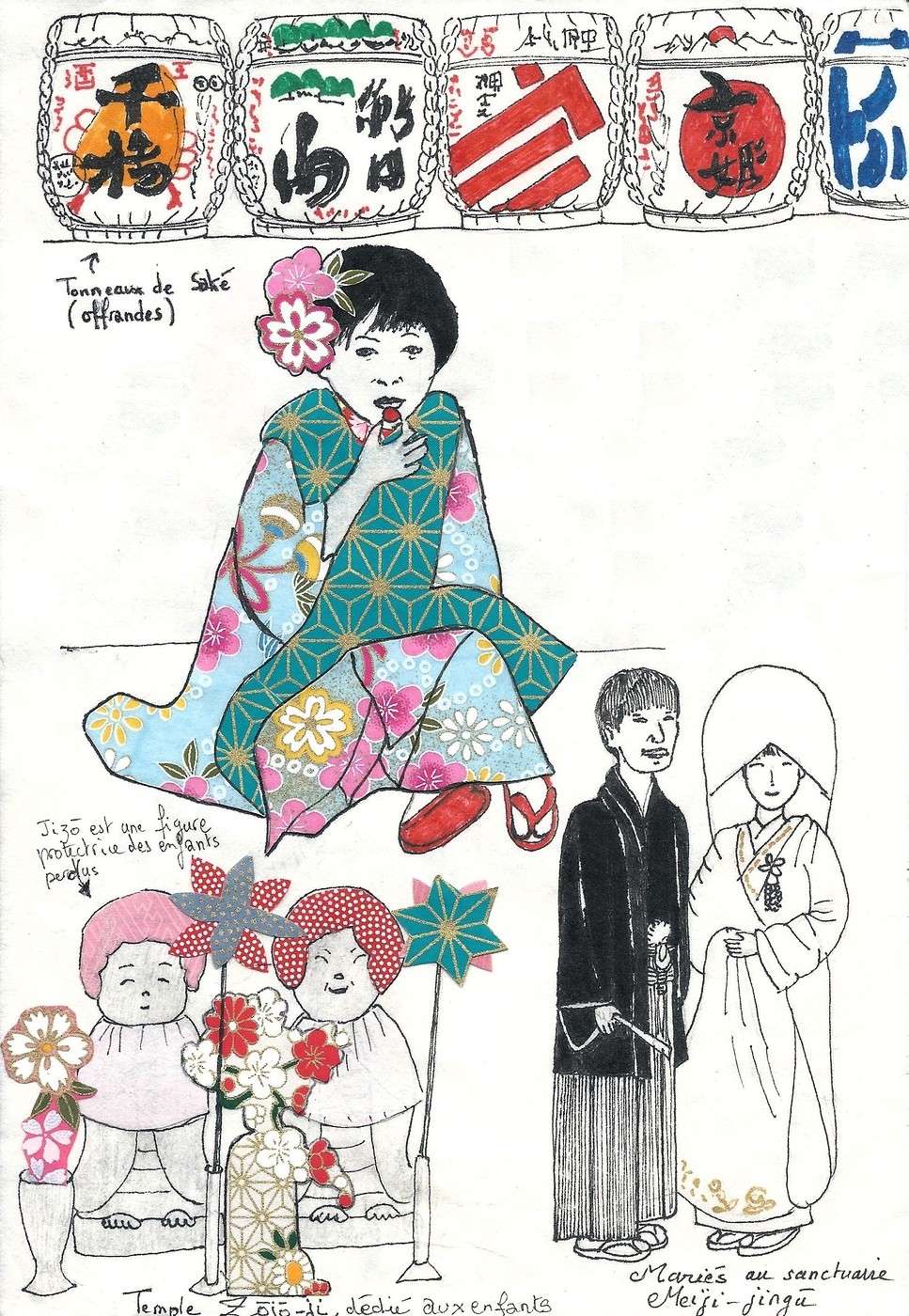
At the top of the illustration, you can see large sake barrels—offerings. Around 200 barrels form two large walls on either side of the path at one of the shrine’s entrances. They’re stunning! You can buy miniatures in shops to bring back from your trip!
On this page, you’ll also see a little girl in traditional attire. Masumi, the local guide who accompanied us on our first day in Tokyo, explained that parents come to "present" their child at the temple at 100 days, 3 years, and 5 years old, with their immediate family (grandparents, and sometimes uncles and aunts), all dressed in traditional clothing.
We encountered families like this in places of worship throughout our stay, and if you politely ask for permission to take a photo, they often say yes. Young people also visit, but more often with friends for their 20th birthday, dressed in formal attire.
You’ll also see a young married couple. The bride’s outfit and makeup remind me of *Star Wars*—Princess Amidala, to be exact!
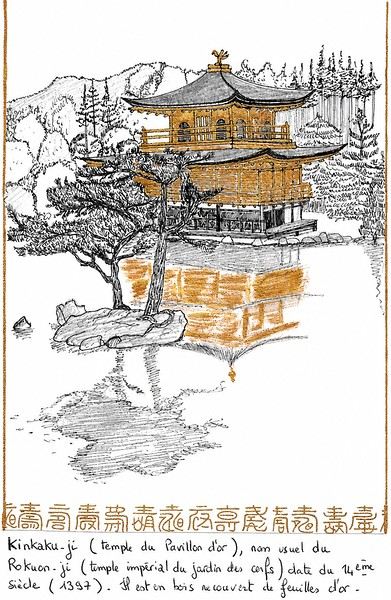
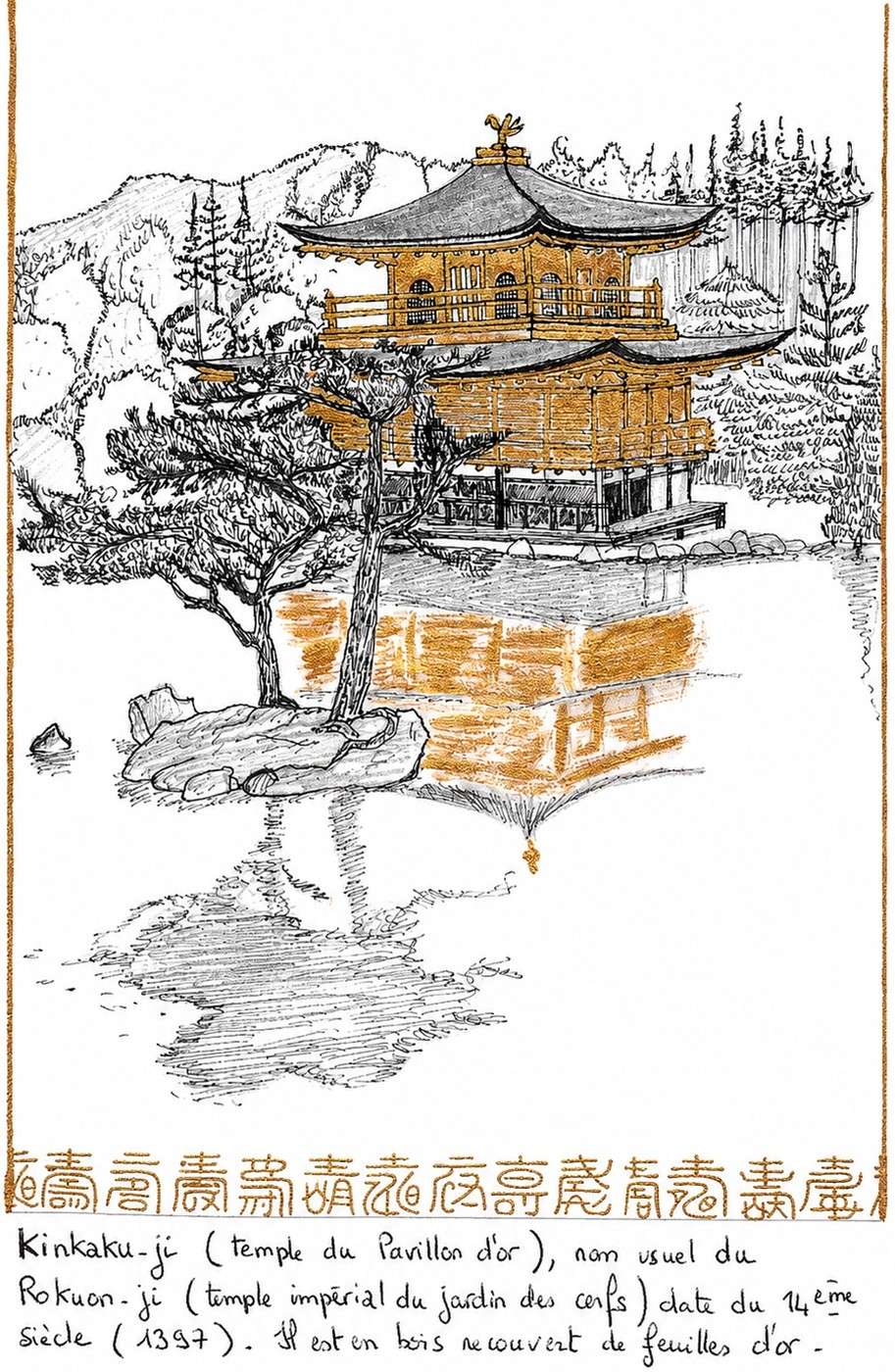
Above, Kinkaku-ji (the Golden Pavilion) in Kyoto, a wooden structure covered in gold leaf, dating back to 1397. It’s very popular, but the crowd spreads out along the paths bordering the small lake, offering sublime views of the pavilion, which stands alone and reflects in the water.
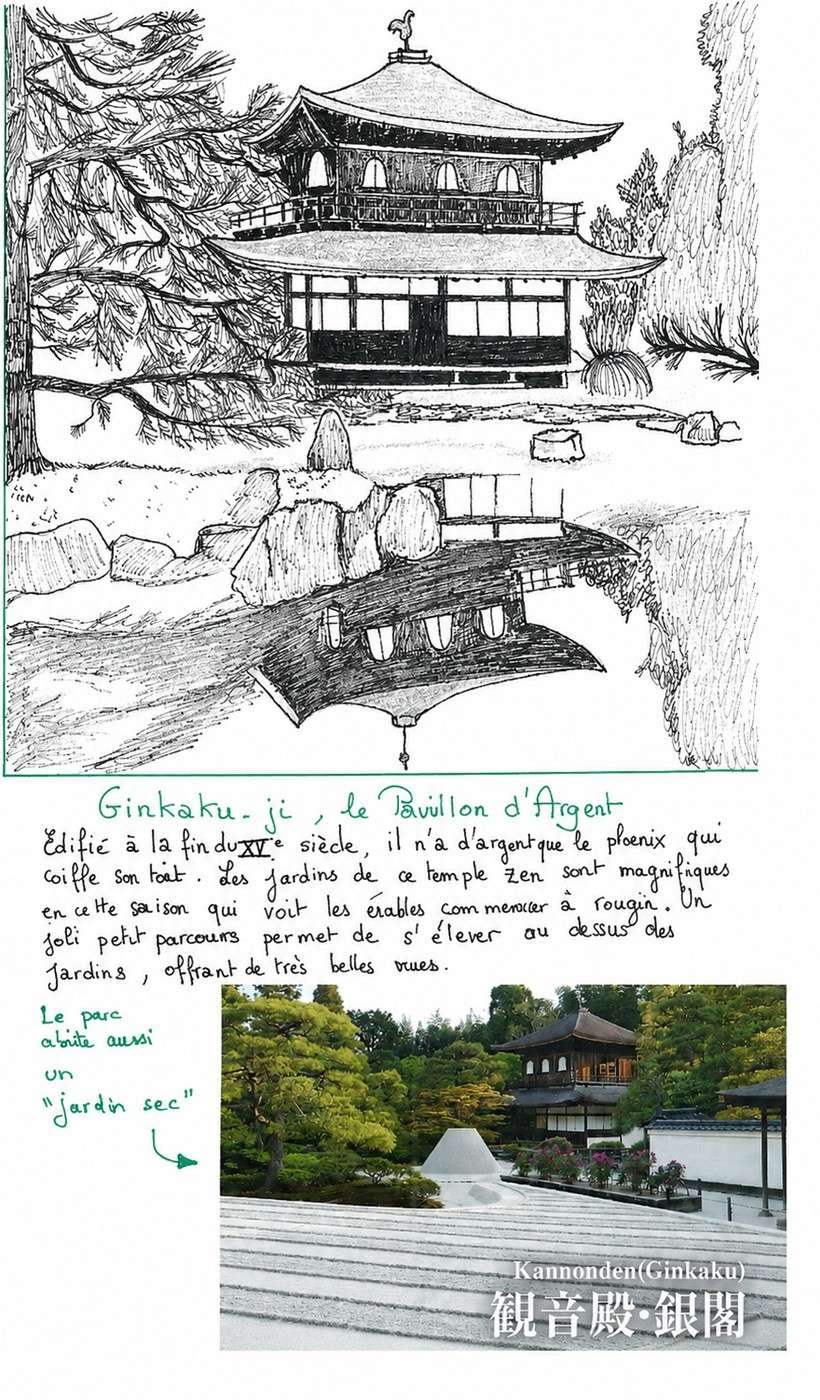
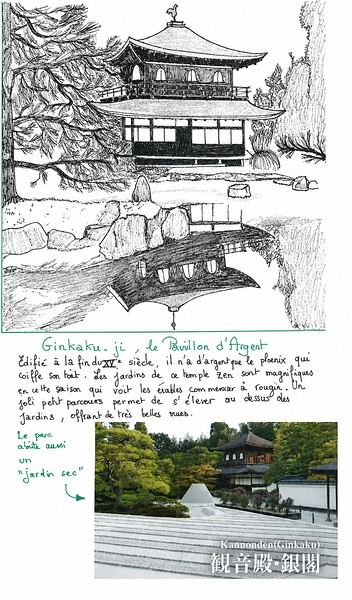
And below, Ginkaku-ji, or the Silver Pavilion, still in Kyoto, which only has silver in the phoenix that crowns it. Built in 1482, it was meant to rival the Golden Pavilion, but war efforts drained the budget allocated to the building. The gardens of this Zen temple are gorgeous in early November—the maple trees are starting to turn red. A lovely little trail leads up above the gardens, offering stunning views of the pavilion.
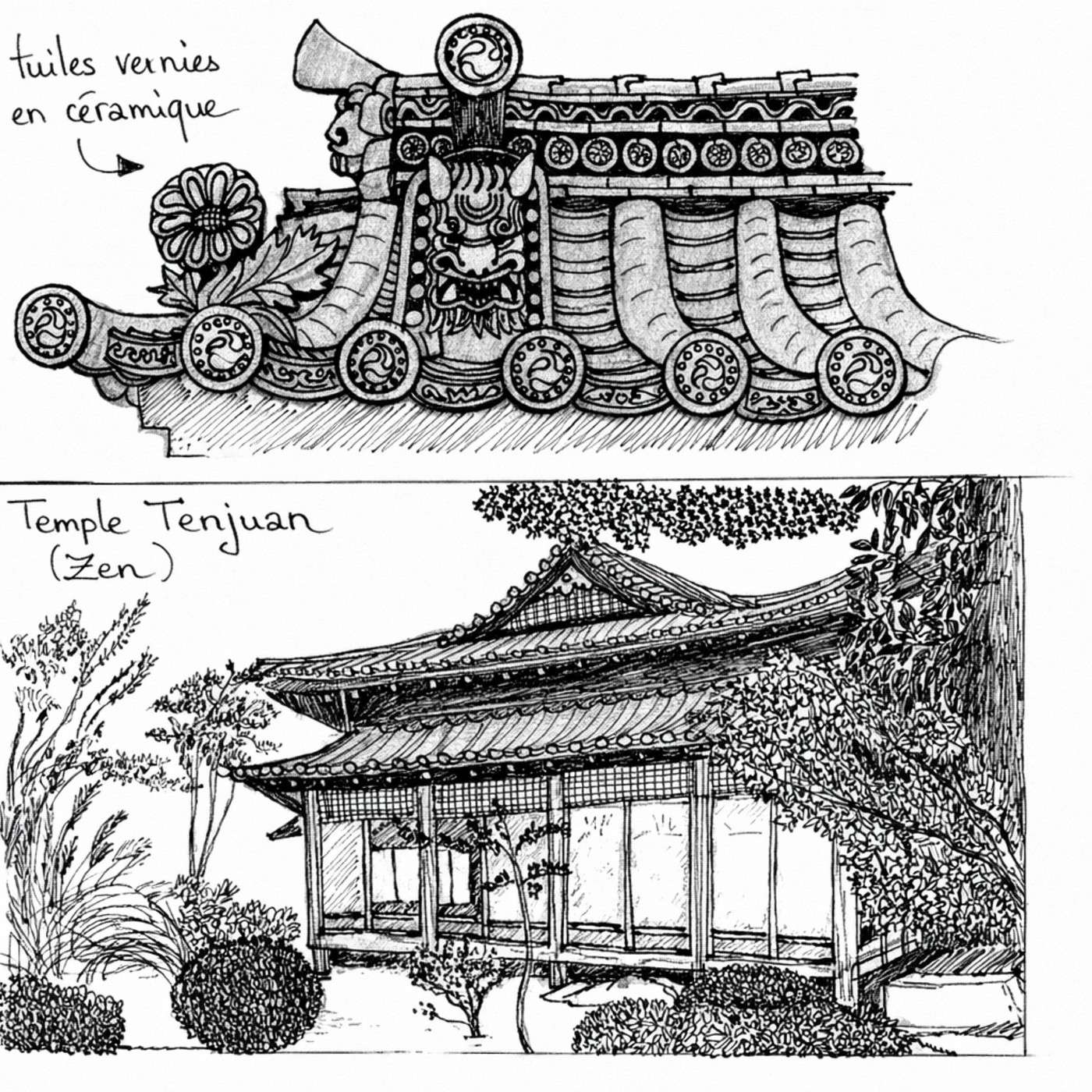
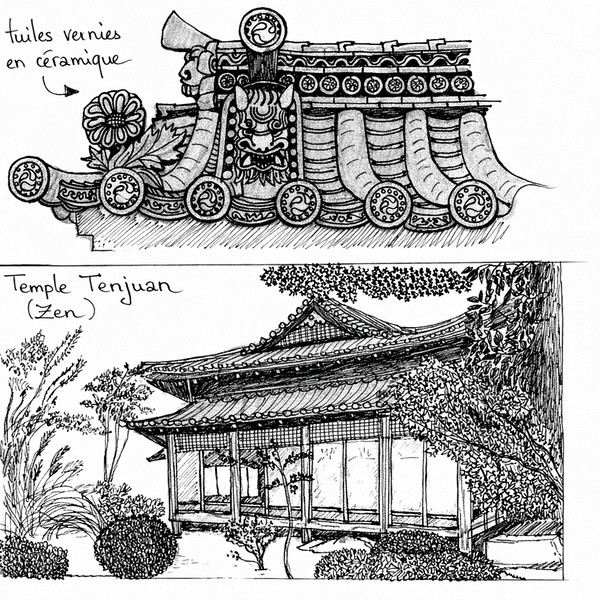
We’ve been lucky enough to visit several countries in East Asia (Vietnam, Cambodia, Laos, Myanmar) and have seen countless sites. Japan’s heritage is extraordinary. The architectural quality, construction techniques, building structures, materials, and finishes are remarkable—the landscaping, orientation... Harmony is everywhere. As an example, below is a detail of the beautiful ceramic tiles covering most temples, and Tenjuan Temple (Kyoto), a little gem among Zen temples.
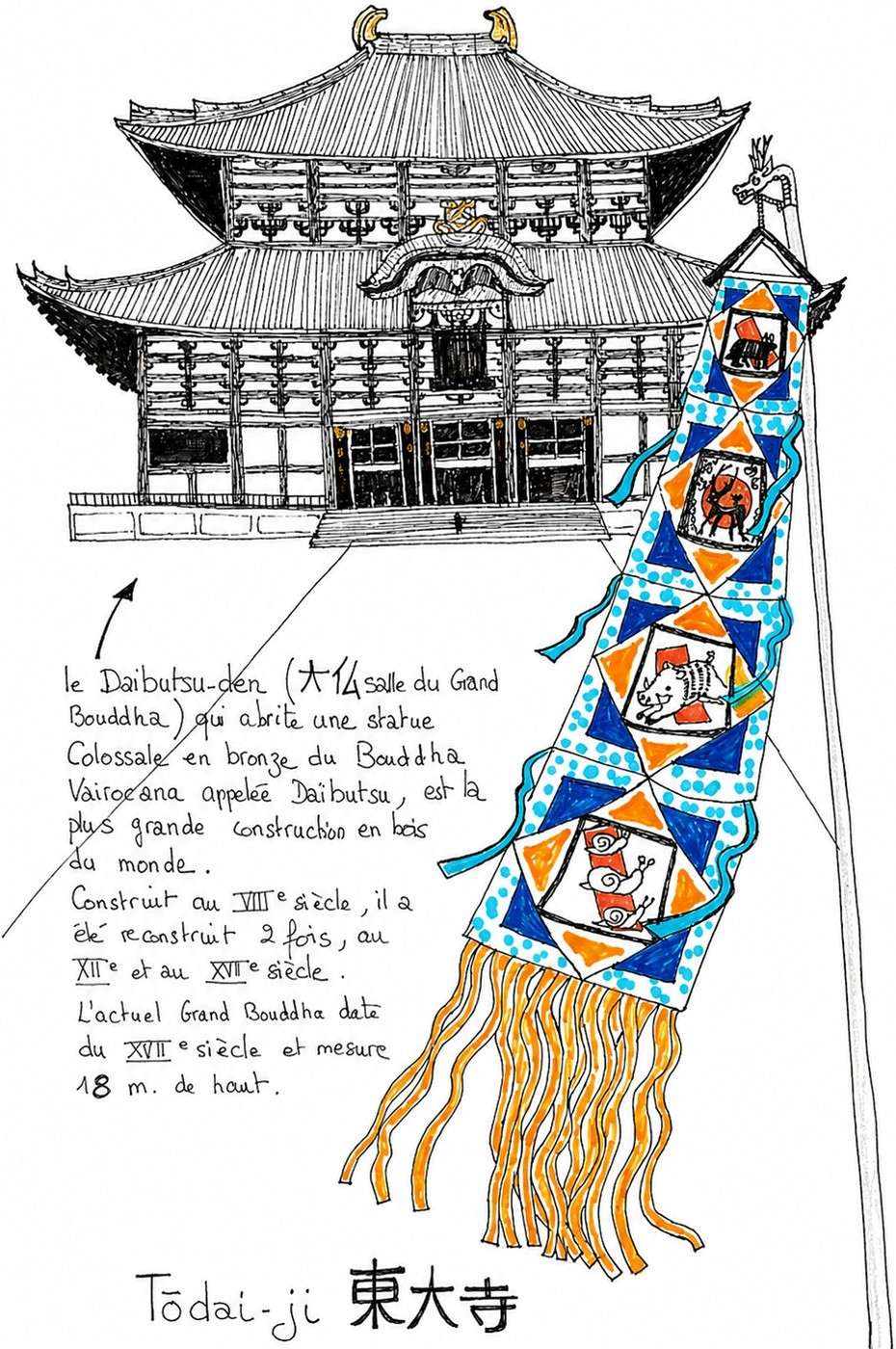
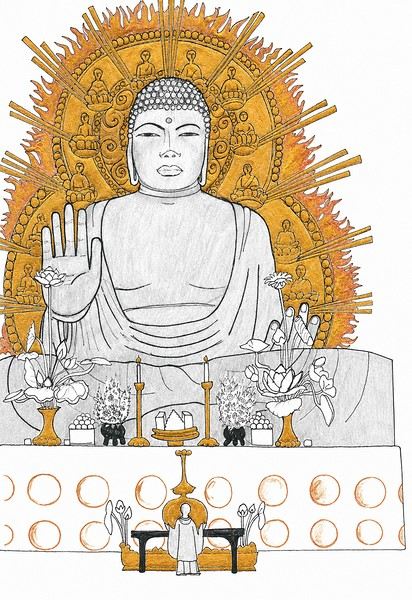
Sometimes, the scale is massive. Below, we’re in Nara (40 minutes from Kyoto by train), within the grounds of Todai-ji Temple, and here’s the Daibutsu-den (Great Buddha Hall), a monumental structure built to house a colossal Buddha.
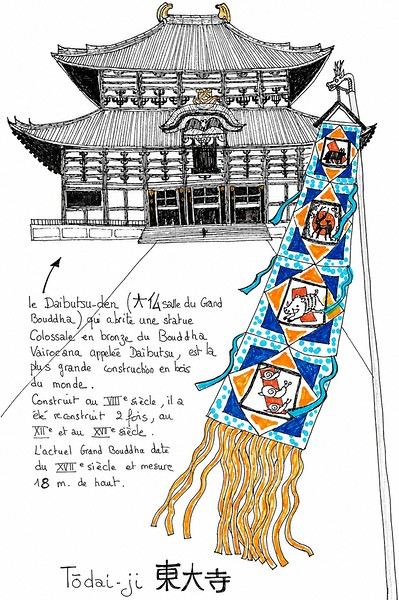
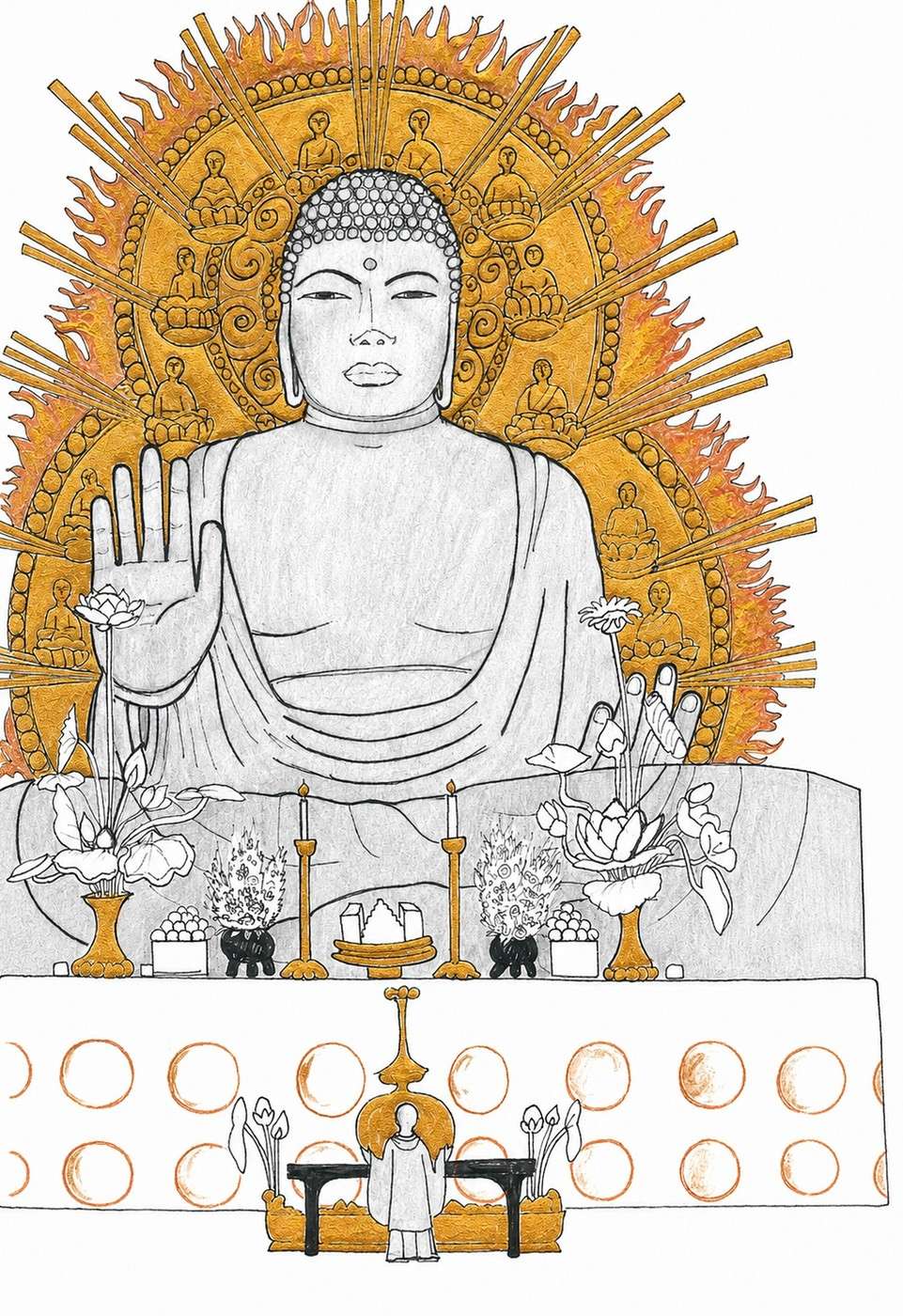
This building is the largest wooden structure in the world. Originally from the 8th century, it’s been rebuilt twice. This version dates back to the 17th century, like the current bronze Buddha, which stands 18 meters tall. In the drawing, I included a priest so you can get an idea of the size of the "baby" (I’m talking about Buddha, not the priest).
That’s all for today! I’m almost done with this travel journal, but there are still a few beautiful moments left to share.
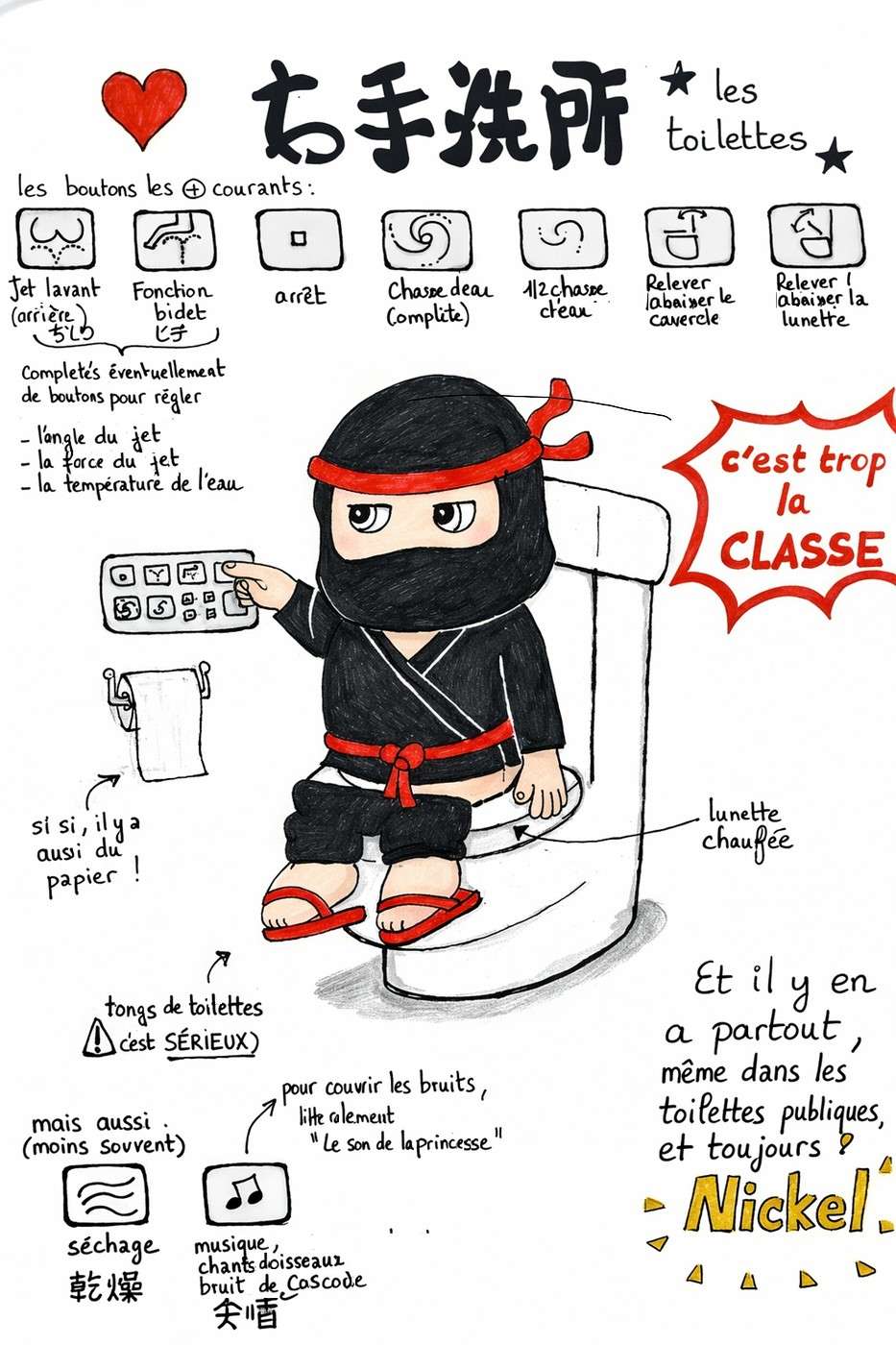
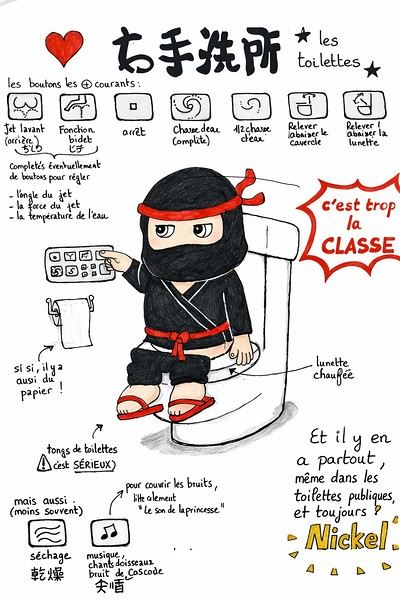 Here, I’ve simply reproduced an illustration I found online, adding a few details, particularly the "toilet slippers."
Indeed, in traditional hostels and likely many homes, you’ll find slippers (or plastic flip-flops) in front of the toilet door that you’ll put on before entering. And whatever you do, don’t walk around afterward wearing the toilet slippers—people will look away to avoid embarrassing you, but they’ll definitely be judging... To be continued!