Day 11: Gorillas in the Mist
The big day for me (even though the others have been amazing too).
When we planned this trip, my wife, being very practical, immediately decided not to come. Several reasons: she’s really afraid of the humid heat, she doesn’t feel like meeting our cousins because she feels awkward and uneasy about how much they resemble humans, she hates getting dirty, and all that combined with a pretty high price made her pass on the experience.
Meanwhile, with our friends, it’s the opposite—her big, strong husband is quite wary when it comes to doing something a bit extraordinary with animals.
So, « he’ll play the hero 😄 » and stay with my wife, while my friend and I go tracking the primates.
While my wife won’t regret anything, I think he’ll have a little « if only I’d known » moment.
So, Paul takes the two of us to the excursion departure center.
Paperwork, songs performed by locals, a presentation of local projects, and finally, a manager takes the floor.
His first words are to thank us for being there, because thanks to the money brought in by tourists, a village of 500 people can live, and above all, the gorillas have been protected since the huge work of Gladys Kalema-Zikusoka, who managed to convince the population that it was better (more profitable) to protect the gorillas than to poach them.
Then he divides the people into groups of 8 with a guide, two « rifles » (rangers), and 3 trackers we won’t see until the end, as they left two hours earlier to find our family, named Muyambi (which means « peacemaker »).
Paul apparently asked for us to be assigned a family not too far away, given my ankle and my friend’s not-so-great physical condition.
We’re with a young Spanish couple, a slightly older Czech couple, and an English couple our age. Everyone hires a porter except us.
So, our group consists of 8 tourists, 6 guides, and 3 trackers who’ve already left.
This little group sets off in a 4x4 for a 25-minute ride through the mountains on a very bumpy track. Of course, Paul drives us and will wait for us afterward.
Once we reach the top of a village, we start the hike (expedition?).
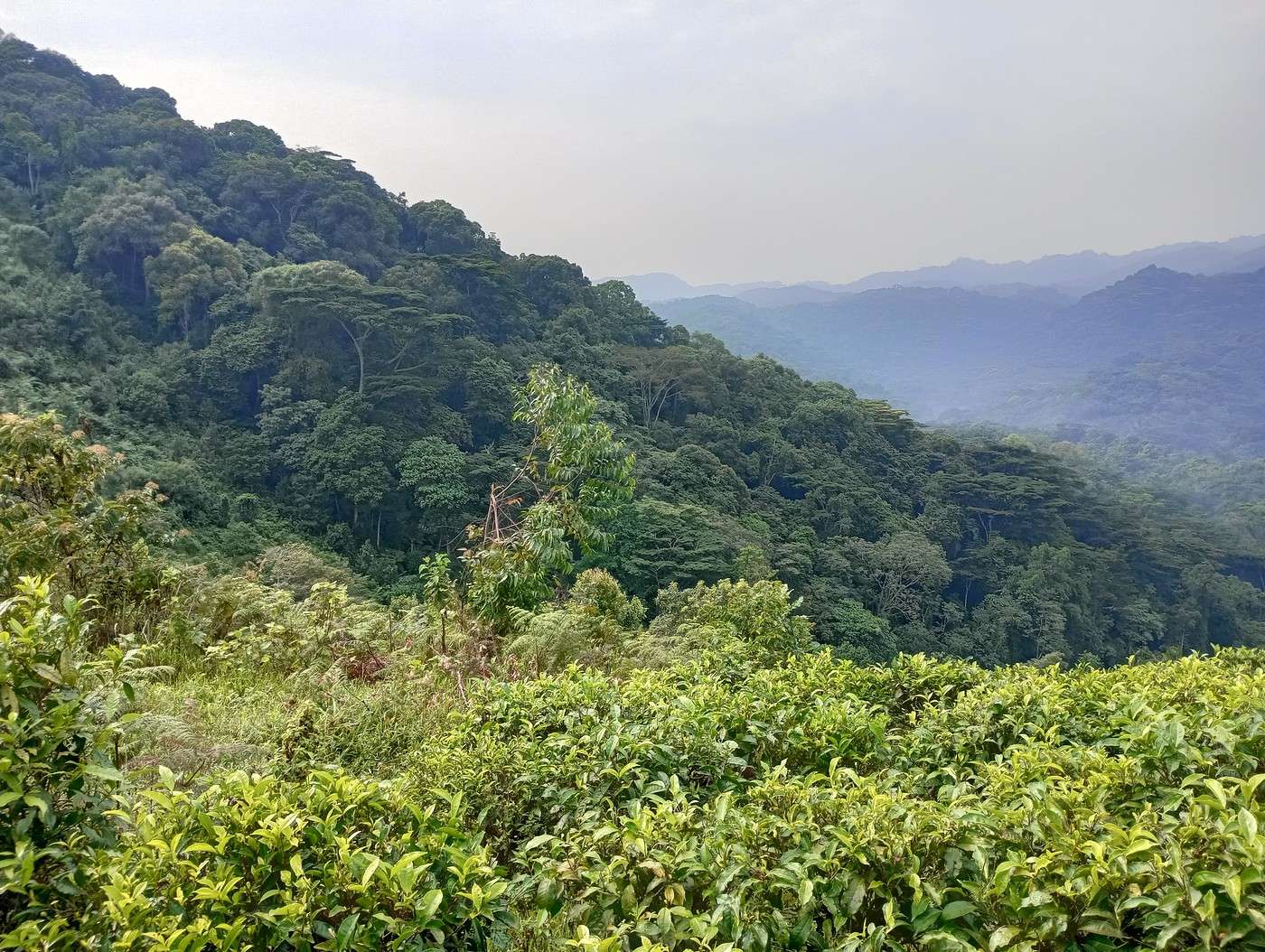
First, a steep descent through tea plantations. This plantation is one of the results of Gladys Kalema-Zikusoka’s work with the local communities. Gorillas don’t eat tea, so by planting these around the villages, even if they can cross through, it acts as a natural barrier.
At the bottom, our guide tells us the trackers haven’t found the nest where the Muyambi family spent the night yet. So, we tackle a hellish climb, still on a trail. The guide sets a very slow pace, stopping often to give us explanations about the jungle. Personally, I’m fine—I’m more worried about the descents.
After the climb, of course, comes the descent, shorter than the climb since overall, we’ll be going up a lot.
Again, the guide tells us the trackers still haven’t found anything. So, we start a very long climb, less steep than the previous one, since that’s the direction they were last seen yesterday.
At one point, the guide tells us they’ve finally found the nest and are now looking for which direction the gorillas went. We keep climbing…
After a break and a final phone call, the guide stops (we were almost at the summit), leaves the trail, and heads straight down a steep slope, cutting through the path with a machete.
We’ll learn later that the gorillas, instead of continuing uphill, changed their usual habits and decided to go down. Basically, we climbed for nothing!
The descent is quite the spectacle. Almost everyone took a tumble—it’s slippery, and we try to hold onto branches (hence the need for gloves). Plus, the phone doesn’t work, so the guide imitates animal sounds to contact the trackers.
Finally, we meet one of the three trackers. It smells like we’re close!!
We continue our descent, cross a stream (wet feet), and after a small climb in the forest (it lives up to its name: the impenetrable Bwindi), we’re asked to leave our walking sticks (essential), our bags, put on masks, and keep only our cameras and video equipment.
The gorillas can’t be far.
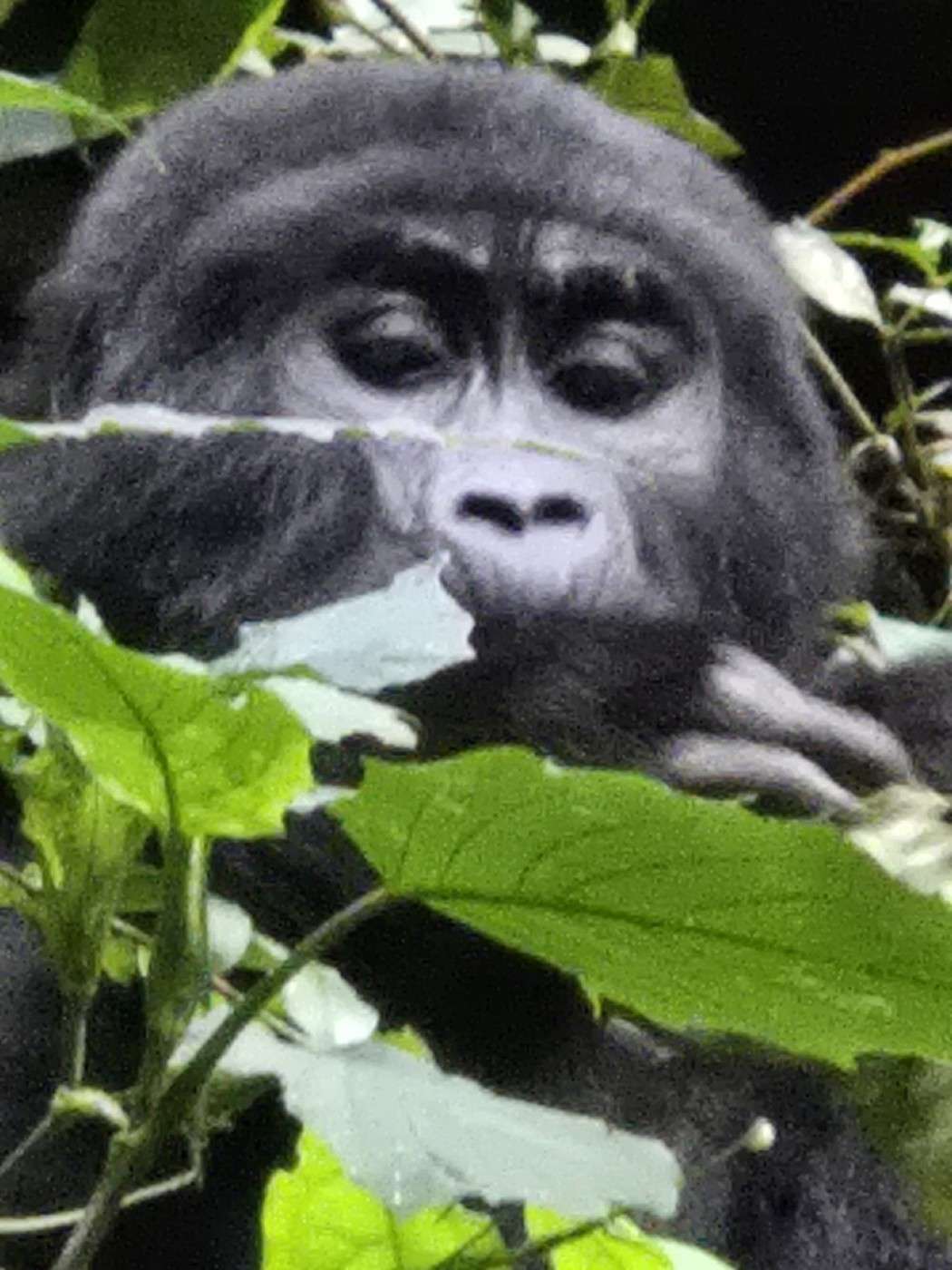
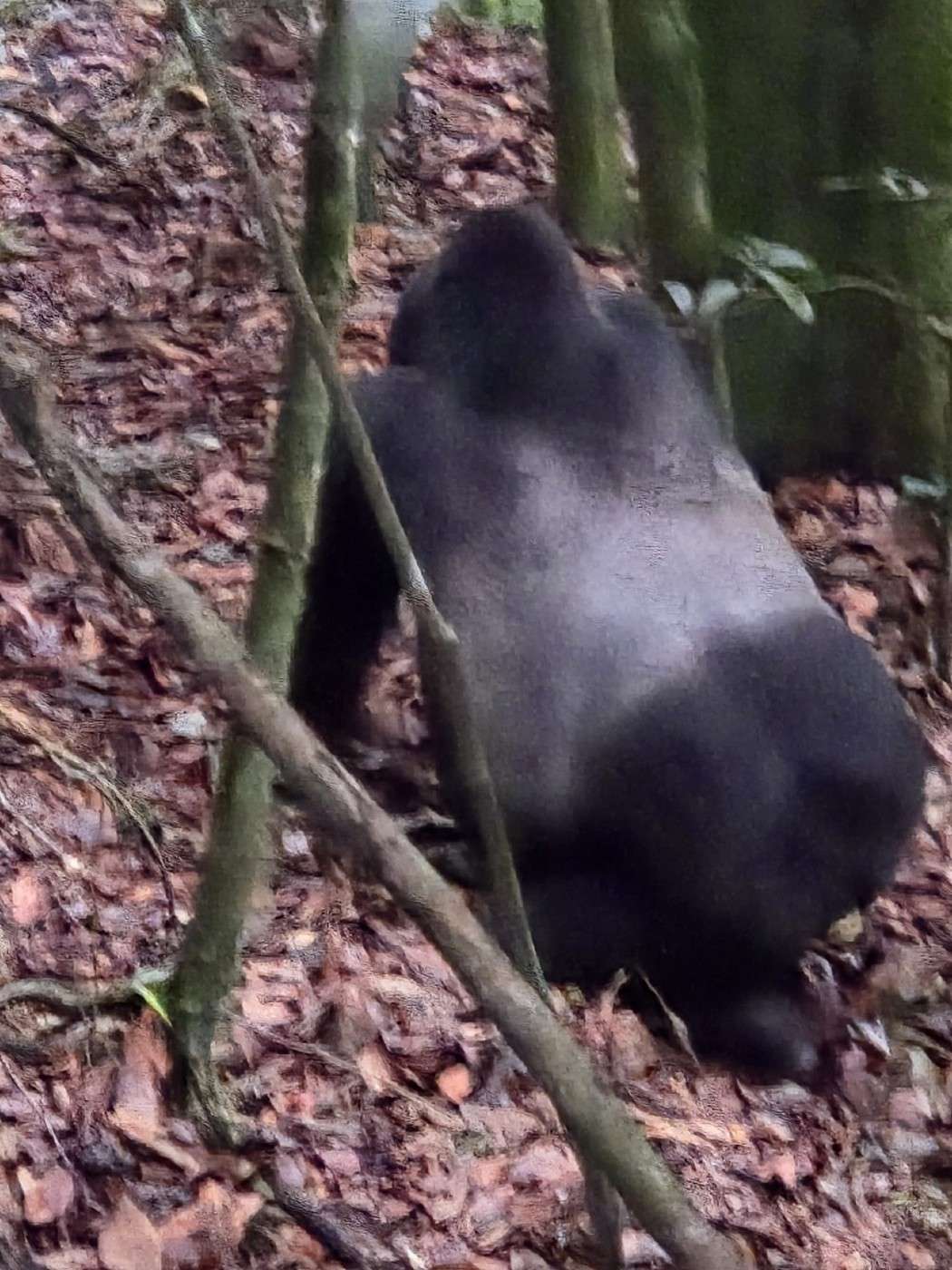
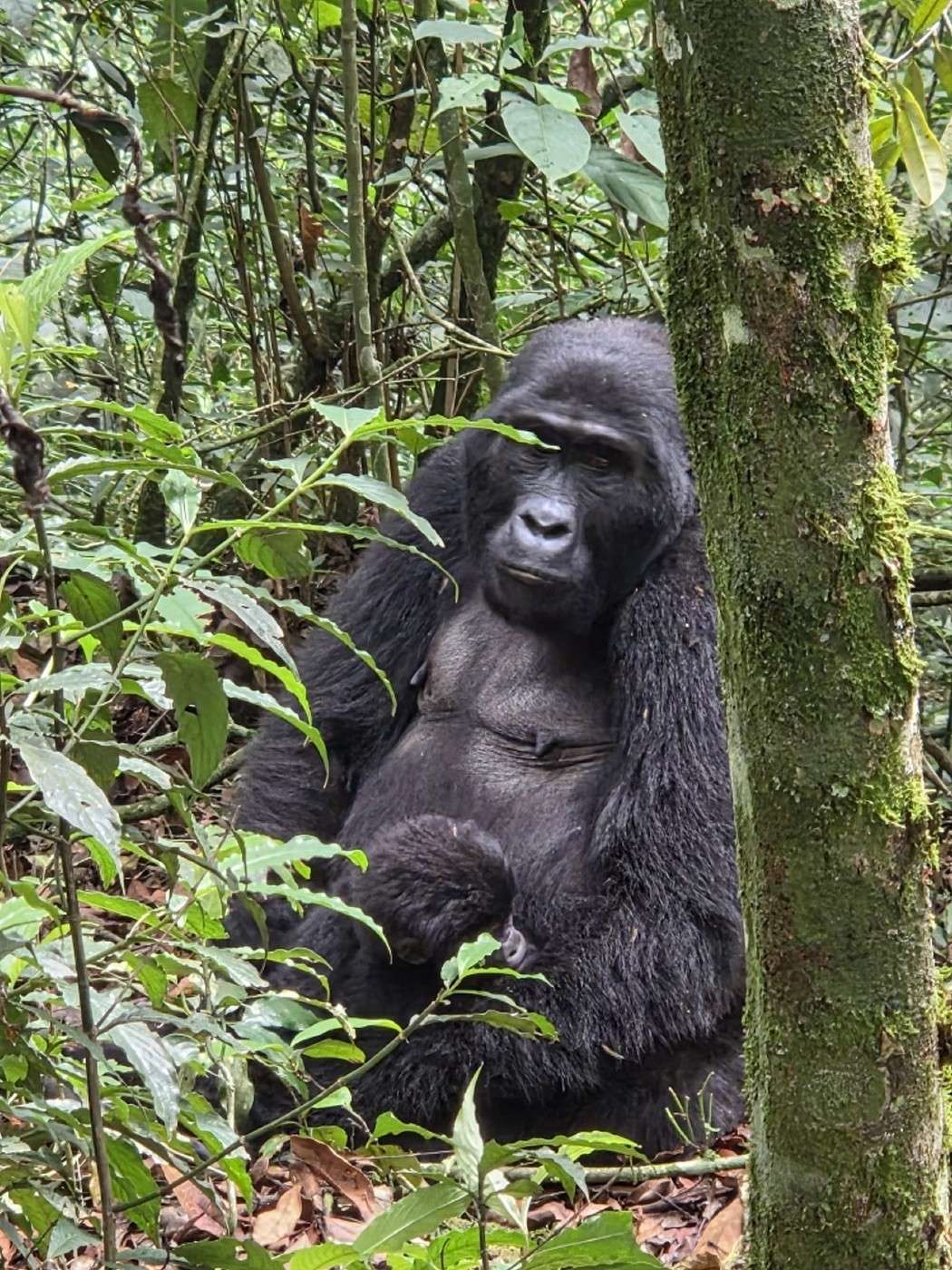
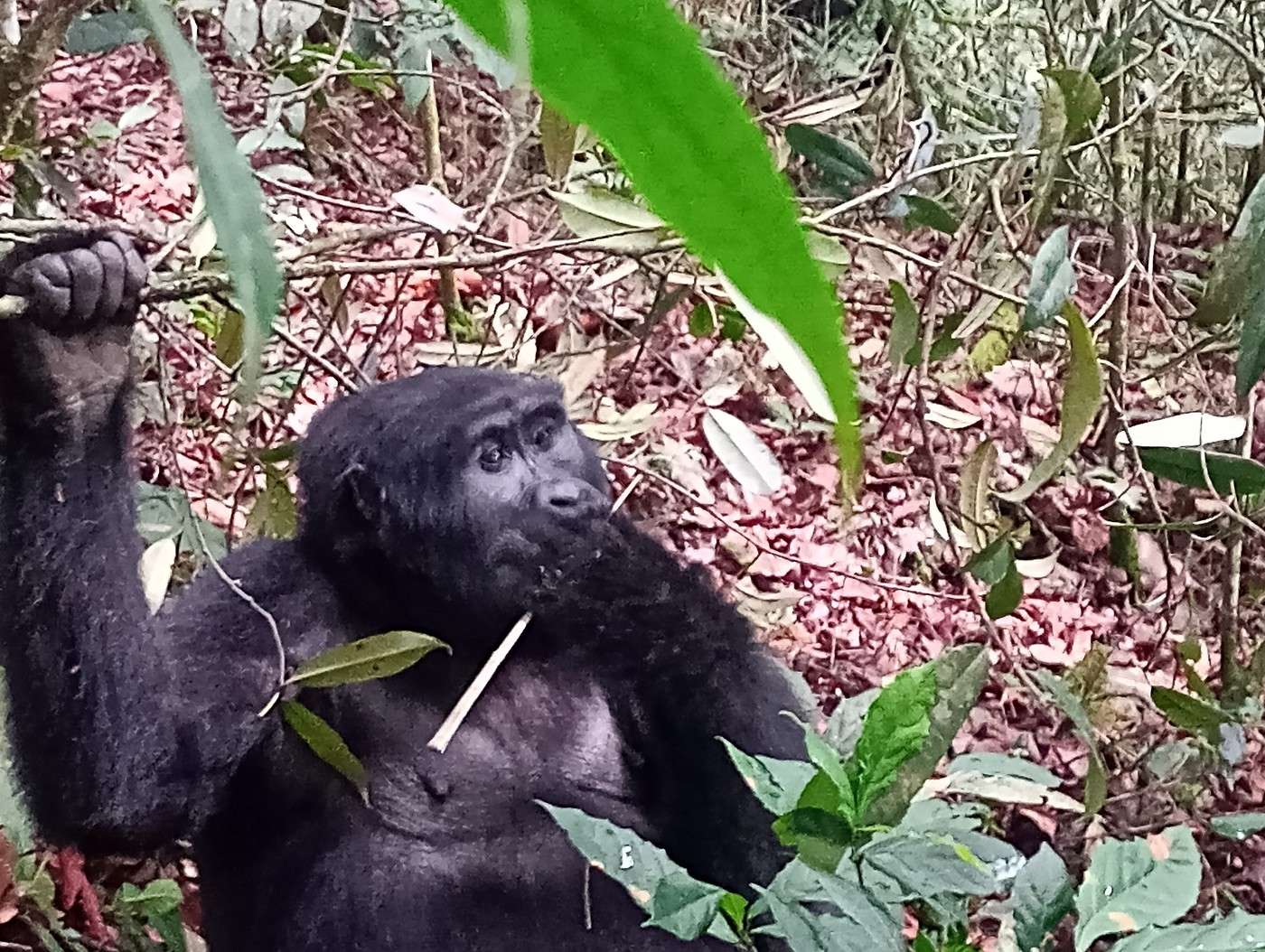
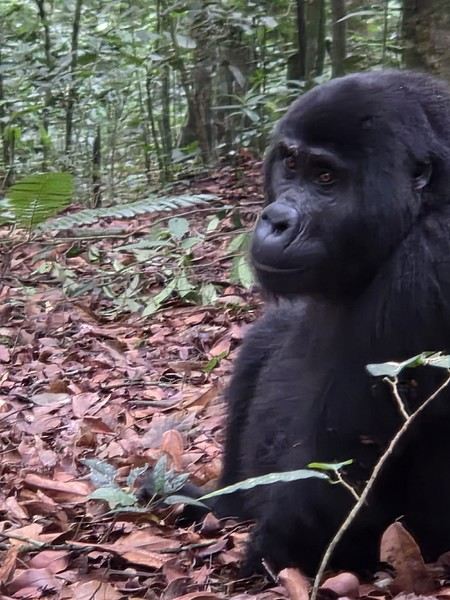
Yeah, right, Charles—there’s one above us climbing a tree, and two meters higher, the dominant male, the silverback, is lying down for a nap.
The nap doesn’t last long because he decides to move on. We follow the whole troop, and it’s a good thing—he stops on a flat, open spot, and that’s when the magic happens!
What an emotion!
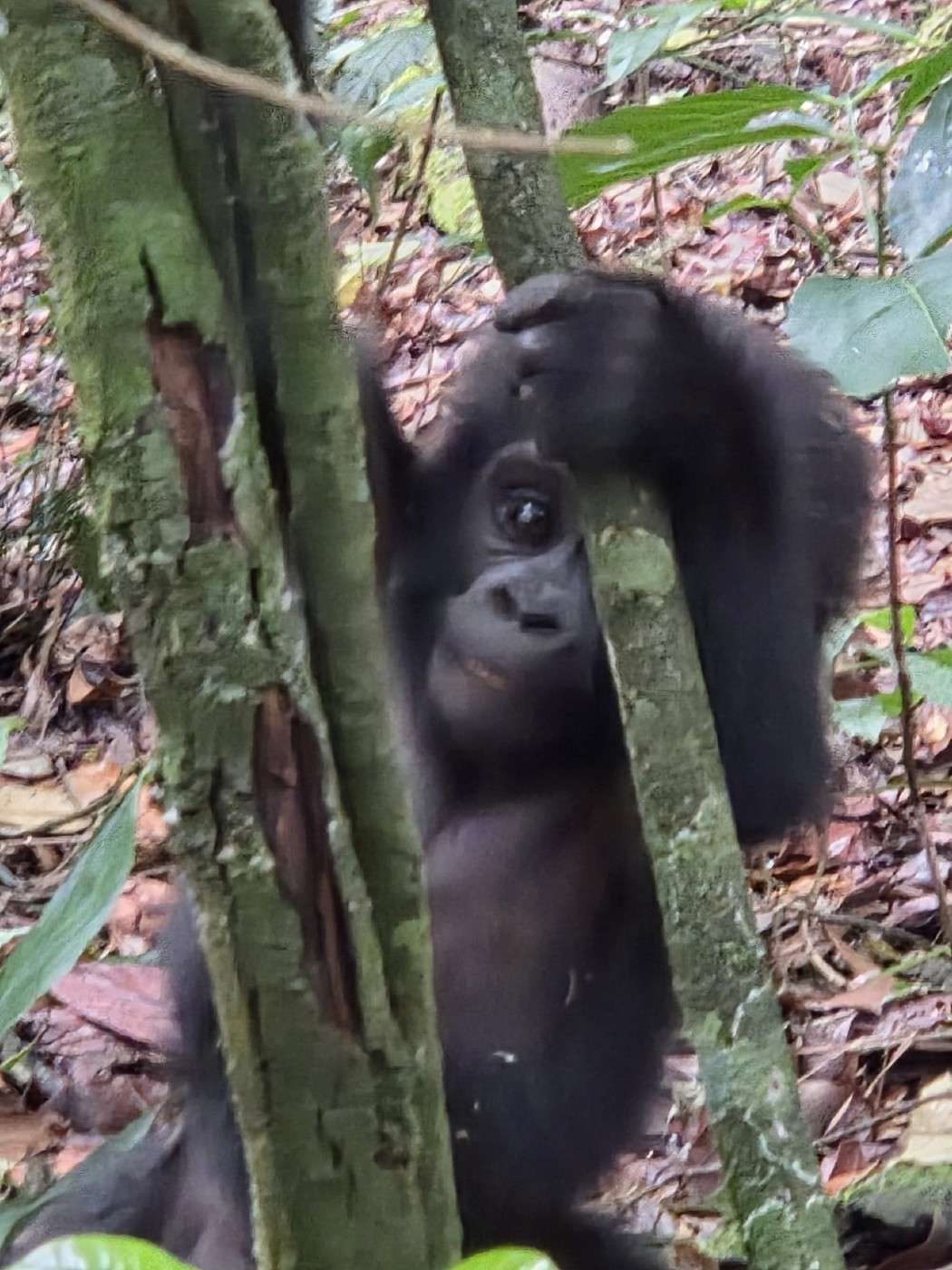
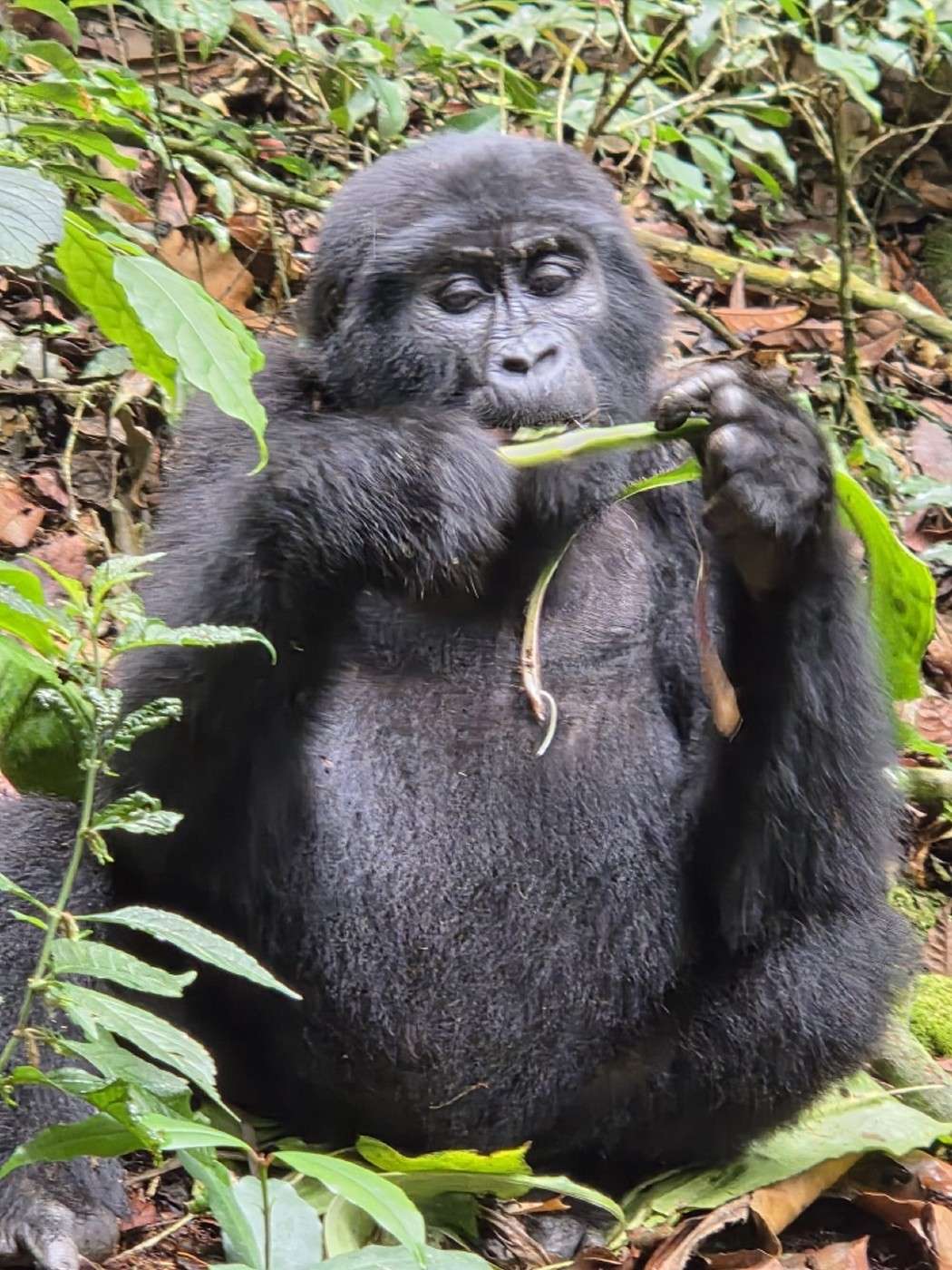
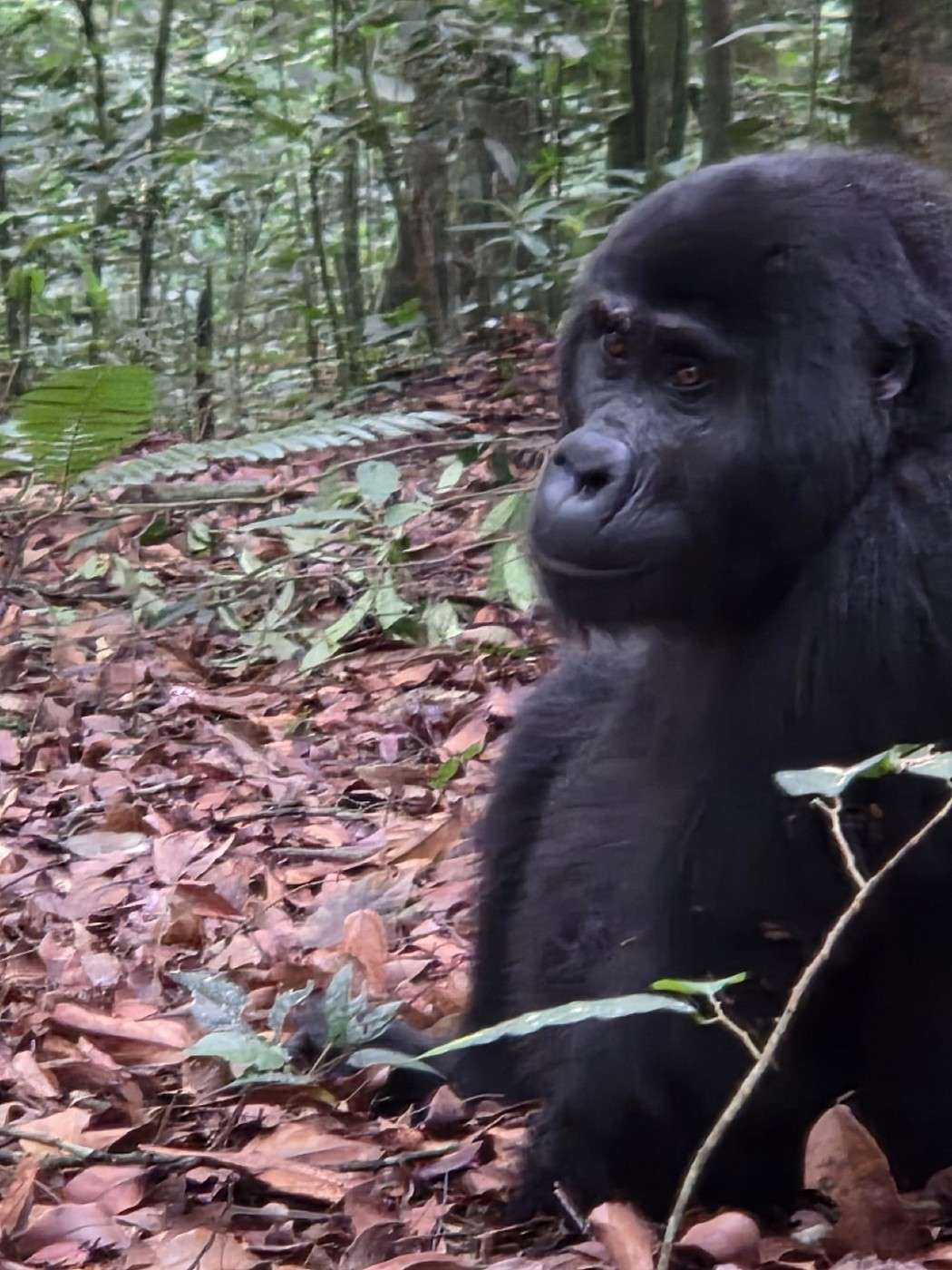
The family consists of the silverback, three females (one of whom is more like the grandmother—he doesn’t mate with her anymore), two teenagers, and a 4-week-old baby.
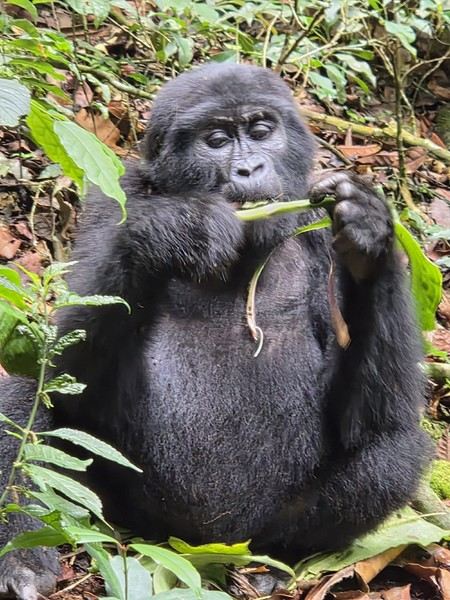
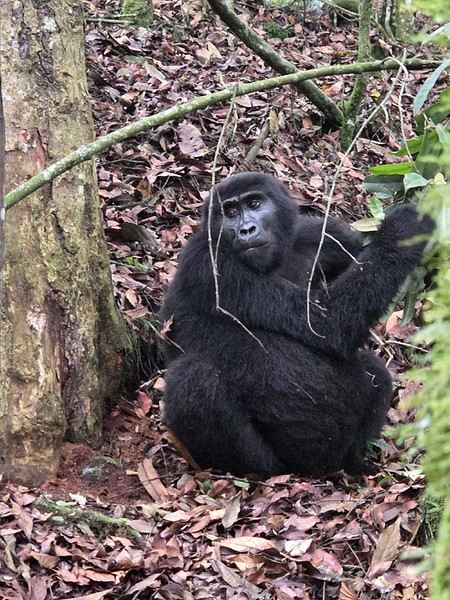
We spend an hour weaving between each member of the family. Personally, I sit for 10 minutes next to the dominant male, less than 1.5 meters away. One of the trackers suggested I stay in that spot, completely safe.
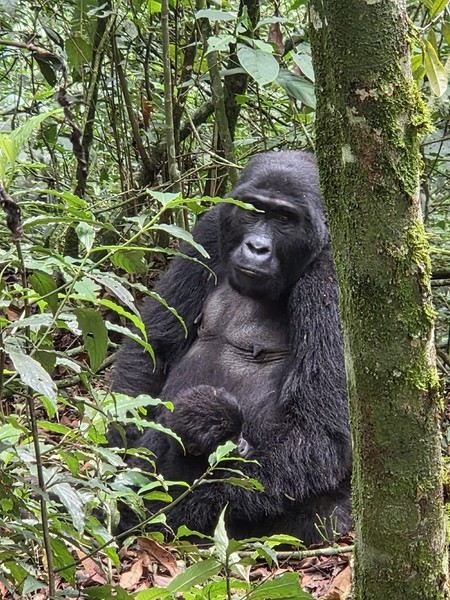
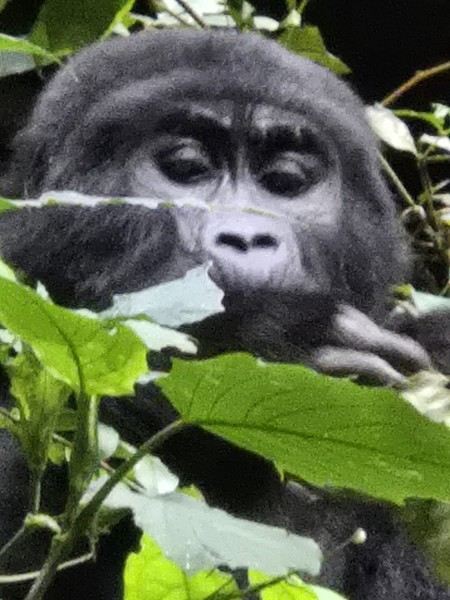
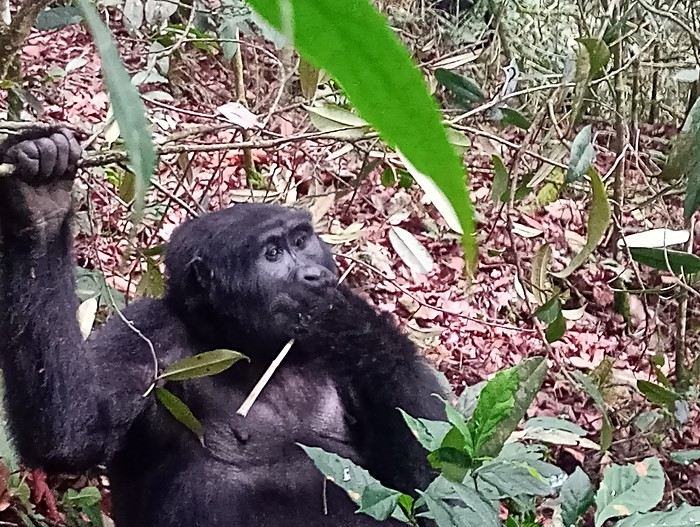
Wow! In my life, I never imagined I’d do this—have a conversation with a gorilla.
Meanwhile, the baby tries to get closer to my friend. The guide keeps telling her to step back, which she does, because it could be problematic. But the baby keeps insisting on approaching.
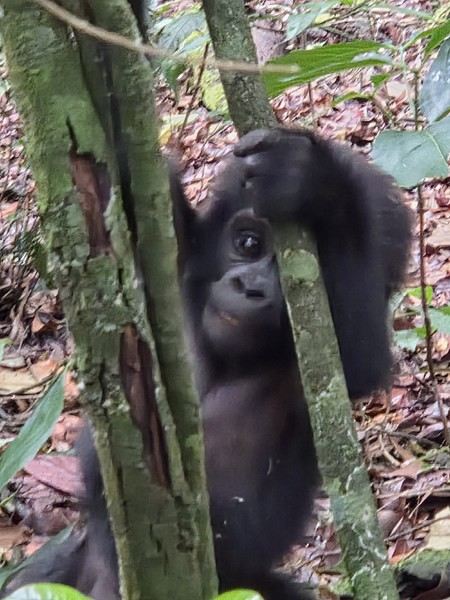
At one point, the male lets out a clear grunt, and one of the females goes to grab the baby and hold it. End of sequence!
The hour flies by because with the two teenagers, there’s always something happening. They weave between us without paying us any attention.
It’s time to leave them.
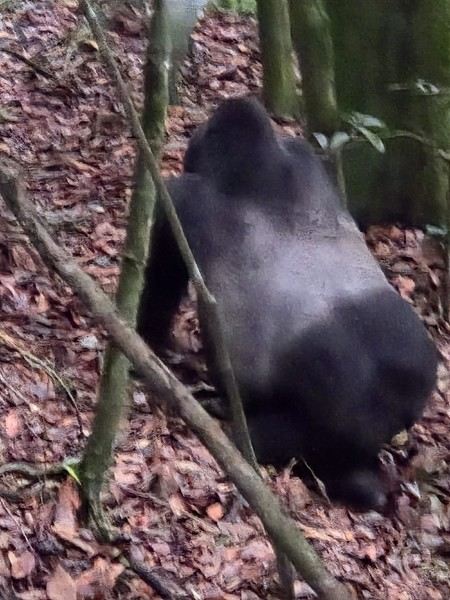
After one last look, we continue the descent and quickly find a trail that takes us almost to the bottom of the first tea plantation. In the end, we did two huge climbs, almost for nothing because they weren’t that far. But nature decides!
The last climb is tough on many of us. Even the guide right in front of me is really out of breath. We finally reach the village. There are benches where we have a snack, then return by 4x4 to the center for the traditional certificate ceremony.
We get back to the lodge at 4 PM. My dear wife was super worried because someone at the lodge told her we’d be back around 1 PM!!
We’re all dirty (yes, falling in the humid forest), so we quickly go take a shower.
Since we’re staying at the CTPH lodge (see Day 10), the holy grail of gorilla protection (that’s why rangers sleep here), an employee offers to show us the labs created by Gladys Kalema-Zikusoka.
He’s very proud of their work, which mostly involves collecting gorilla poop and analyzing it. We learn a lot about gorillas and the work of this organization.
Another part of their mission is to raise awareness among the local population about hygiene, contraception, healthcare, and respect for animals.
He shows us everything they do, and it’s really impressive what’s happening in this remote forest.
It’s time to head back to the lodge, have a great aperitif before dinner, and go to bed with our heads full of dreams.
The +++: The hour spent with the gorillas
The ++: The visit to the CTPH
The -: ....
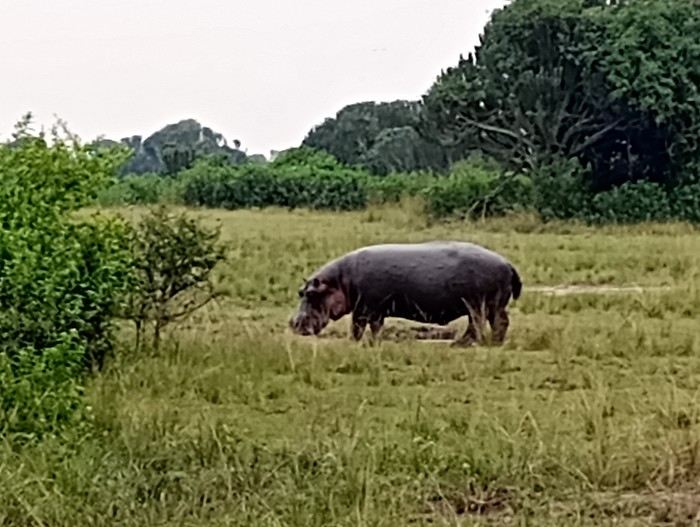
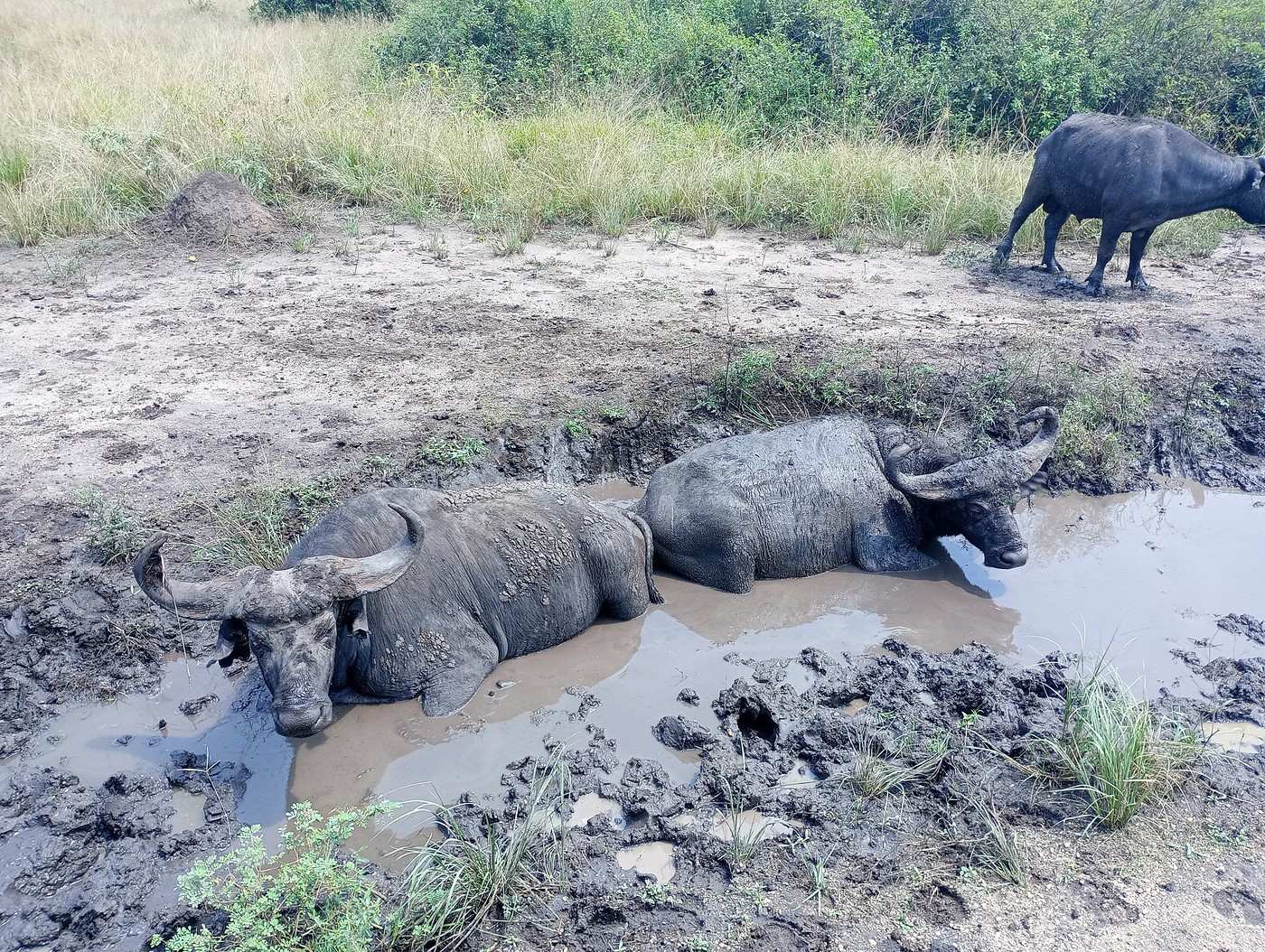
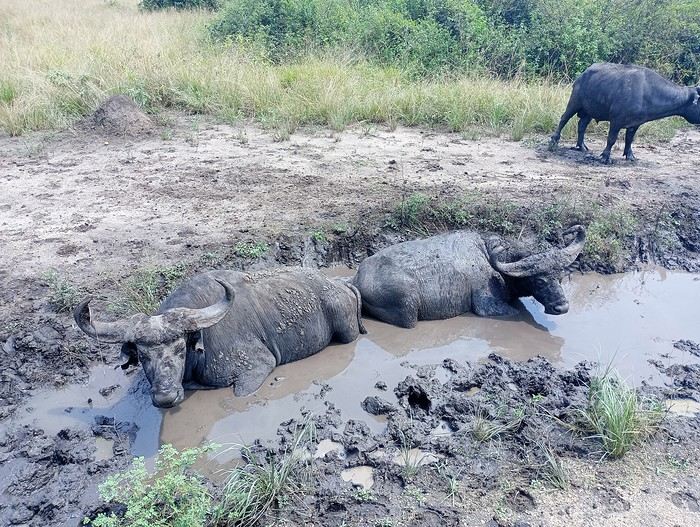 Buffalo bath
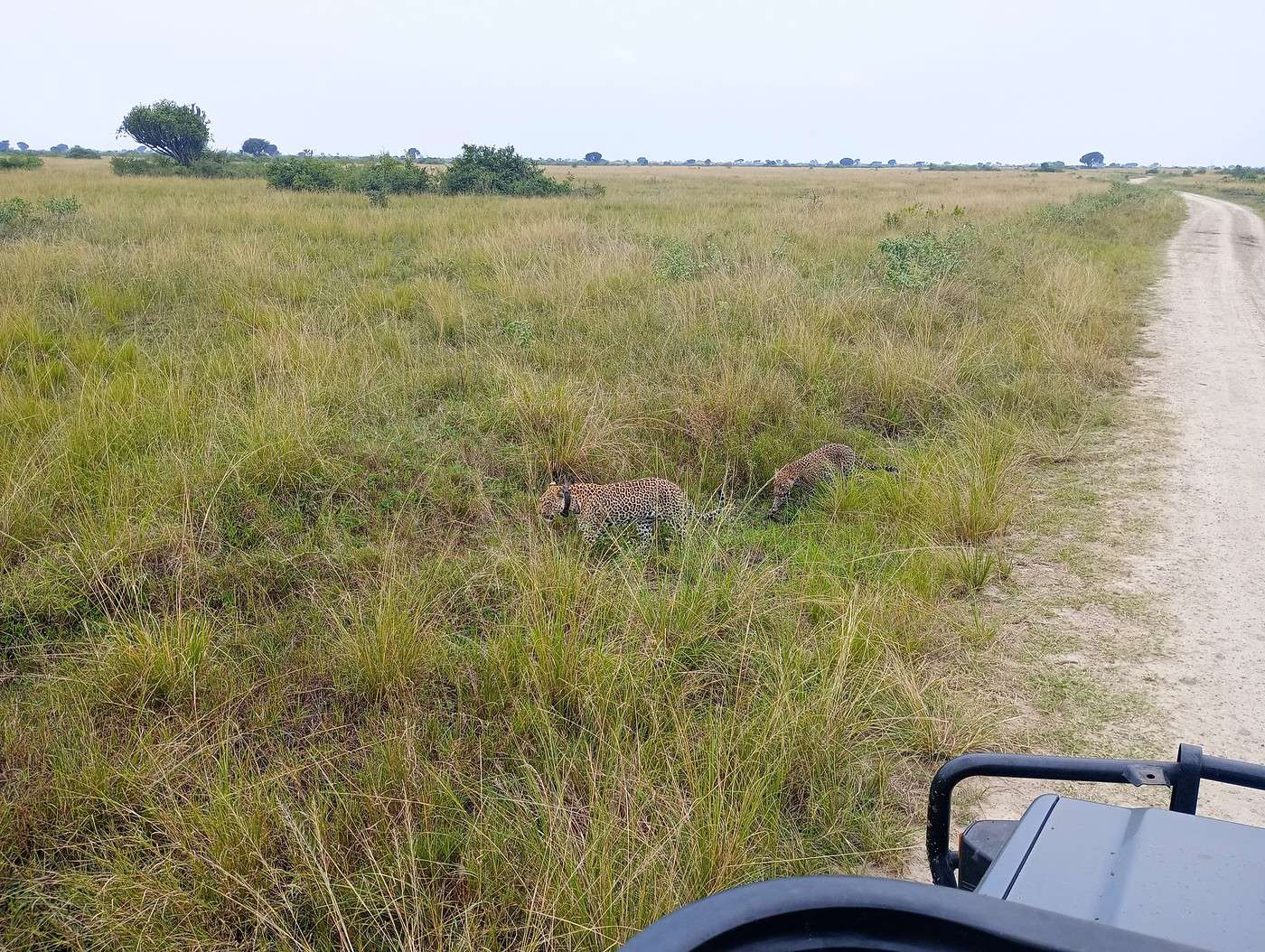
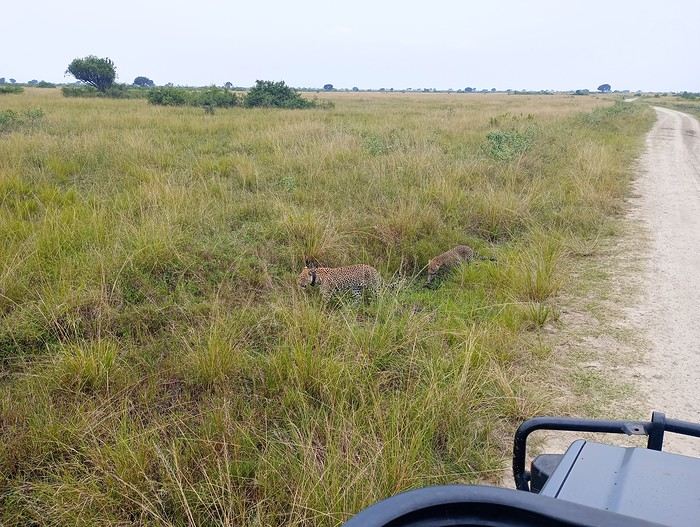 Spot them!!
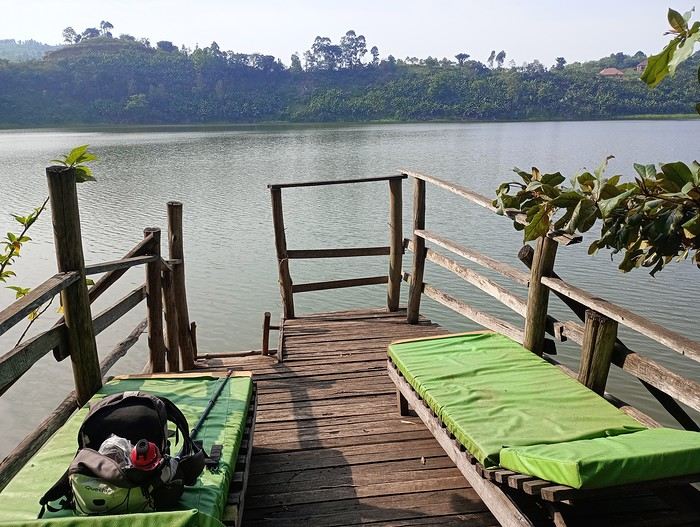 By the lake
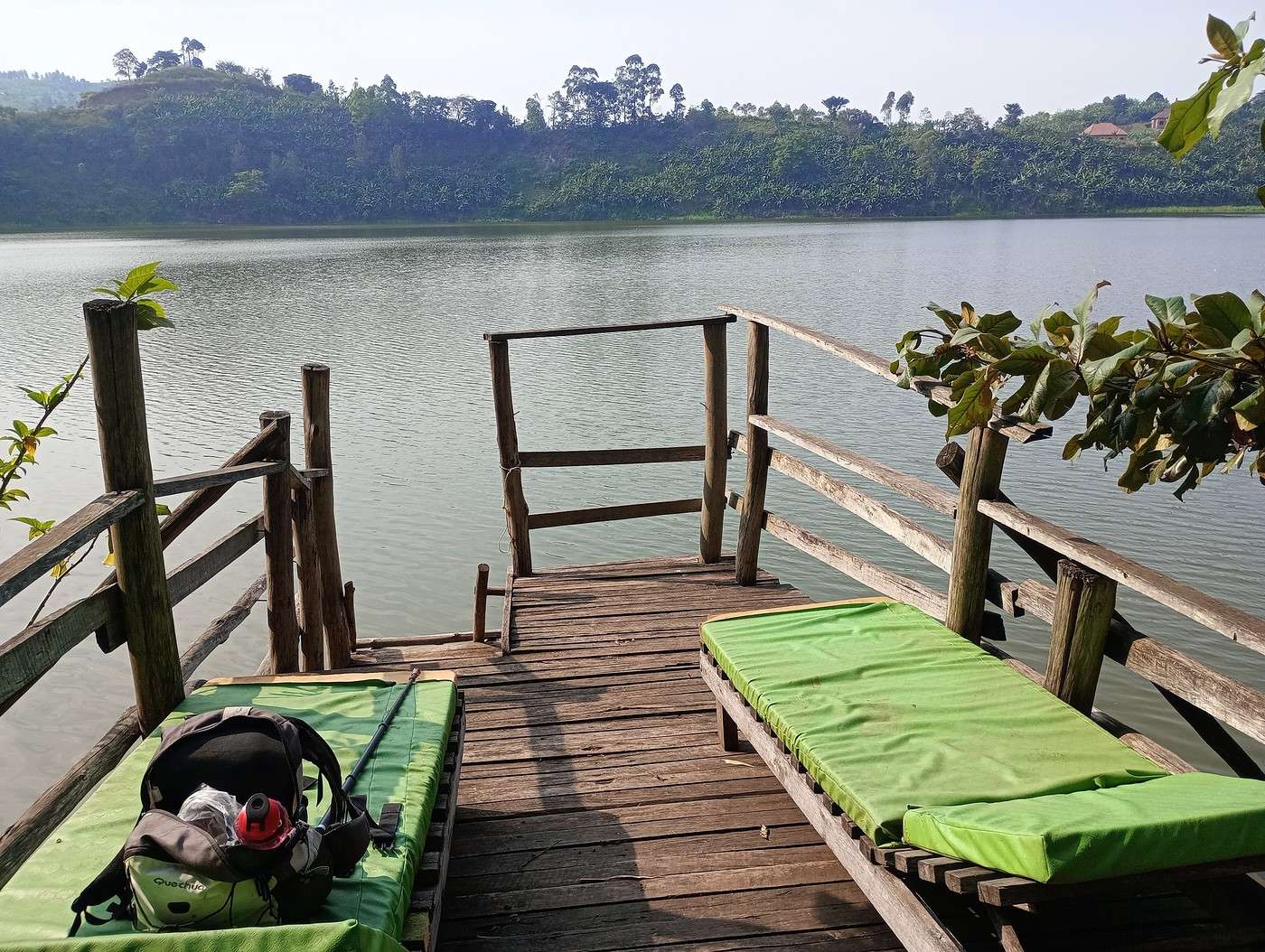
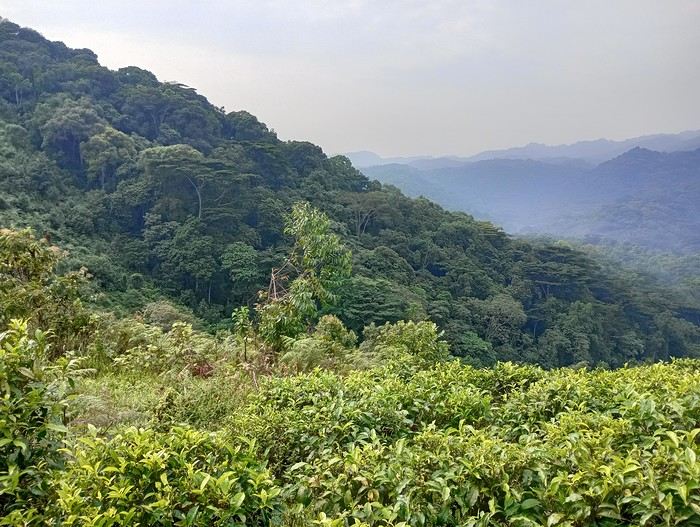 Morning view
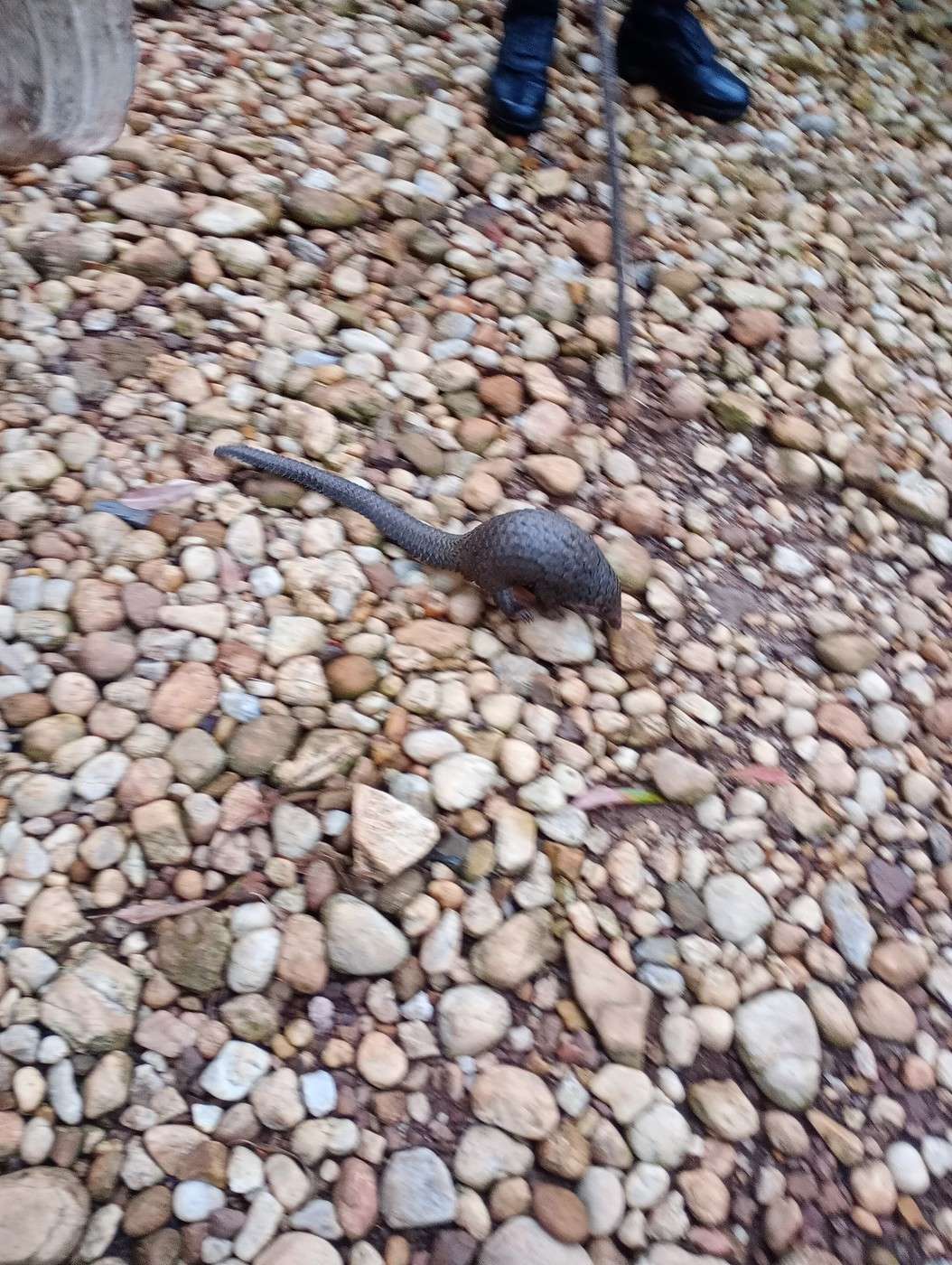
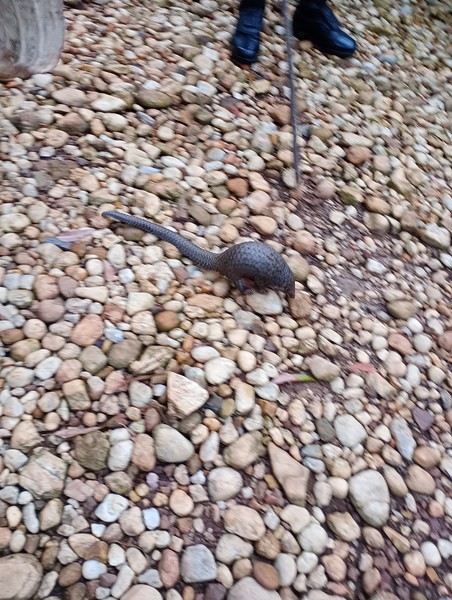 Pangolins are tiny