Day 8 - Karatsu continued and conclusion
We easily reach the city of Karatsu in 30 minutes, not without stopping at a konbini to grab some fried chicken since we hadn’t eaten lunch.
As mentioned earlier in the travel journal, the goal of coming to Karatsu was to attend a matsuri (festival): the Karatsu Kunchi. It takes place over three days, from November 2nd to 4th every year. It’s been around for over 400 years and celebrates the abundance of harvests.
The matsuri (festival) starts at 5:00 PM.
We weren’t sure exactly where it was happening, but we arrived in the area and finding a parking spot turned out to be a bit tricky. Several streets were closed due to the festival, many parking lots were full, and we couldn’t park at a supermarket without risking getting stuck when we needed to leave. We drove around for a while before spotting spaces under the railway tracks. There was no sign indicating the parking was paid, so—if you’ve read the previous entries—you know we’ve already had the rental car locked in a parking lot twice, and the "trauma" is still fresh. We didn’t want to end up in the same situation when we came back for the car. So, I flagged down two people passing by. Apparently, no problem. Well, we *hope* we made ourselves clear.
All that was left was to find where the matsuri was happening. We walked along the railway tracks. Other people were out on the street too, so I asked them. Surprised to see foreigners here, they were very welcoming and pointed us in the right direction. They were heading there too. The festival was starting at 5:00 PM, just 10 minutes away. We walked briskly, and a few minutes later, we spotted a crowd waiting for the show to begin.
We could tell our arrival didn’t go unnoticed. Two foreigners in Karatsu—it’s probably not an everyday sight. We felt people looking at us with curiosity in their eyes. Some, already in high spirits (maybe thanks to the biru—beer), talked to us, and we exchanged smiles.
After hesitating a bit about the best spot to watch the parade, we positioned ourselves—without realizing it—near the parade’s final stop, close to the station.
No matter where you stood, there were plenty of people there to enjoy the show.
The crowd was very family-oriented, but not exclusively. All generations were present.
What were we about to see?
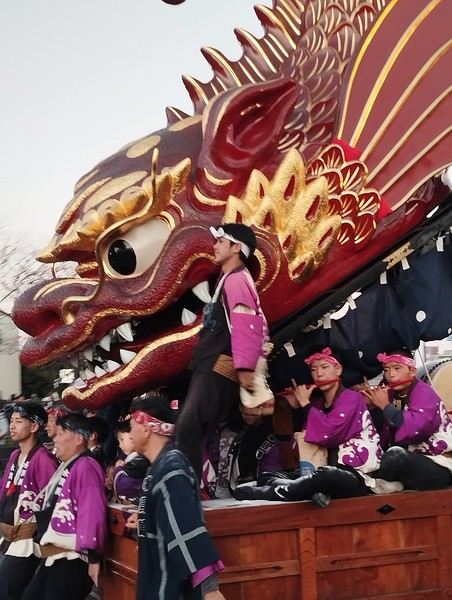
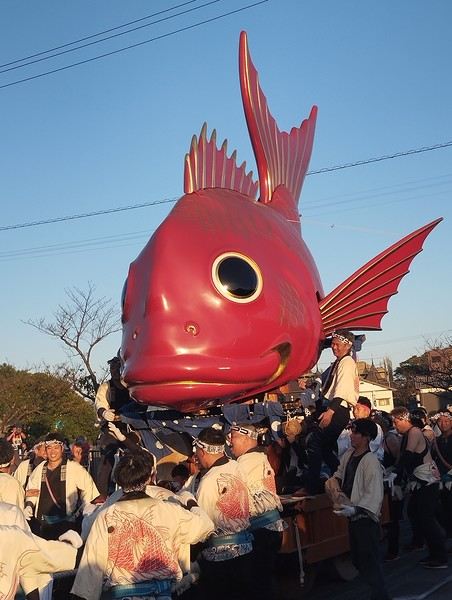
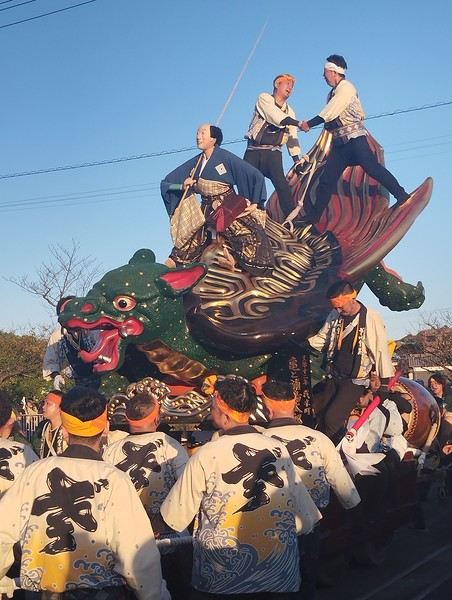
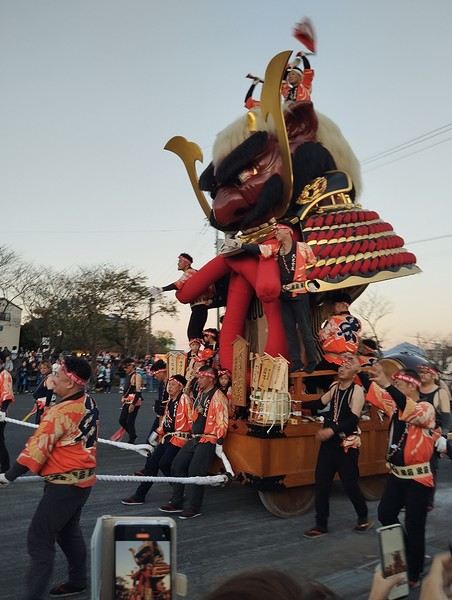
The Kanchi Matsuri is a 400-year-old festival where 14 large floats called "hikiyama" (meaning "mountains on wheels") parade through the streets over three days. Apparently, the second day is the best because the floats go to the beach.
The floats are made from lacquered wood, Japanese paper, bamboo panels, and gold or silver leaf. They stand 7 meters tall and weigh between 2 and 5 tons. They take the shape of mythological creatures, dragons, samurai helmets, and famous warriors. These floats were all built in the 19th century, with each one taking between 3 and 6 years to construct.
The 14 floats represent the 14 towns in the area.
The floats are pulled by locals (the "hikiko"), each wearing straw sandals and the tunic of their neighborhood. Each group parades with distinct colors.
The procession is set to the rhythm of Japanese drums and flutes while the hikiko pulling the floats chant in unison and with energy: "En-ya!, En-ya!, En-ya!" or "Yoy-sa, Yoy-sa!, Yoy-sa!" to celebrate the harvest’s abundance and business prosperity.
We witnessed a festival full of energy and good vibes. It was really enjoyable.
The floats were truly impressive in size and were beautiful, colorful moving works of art.
The hikiko pulled the floats with vigor and joyfully chanted to the gods: "En-Ya! En-ya!, En-ya!"
The drummers and hikiko played off each other, drawing the crowd into a festive and simple atmosphere! Here’s a mix of photos from the festival:
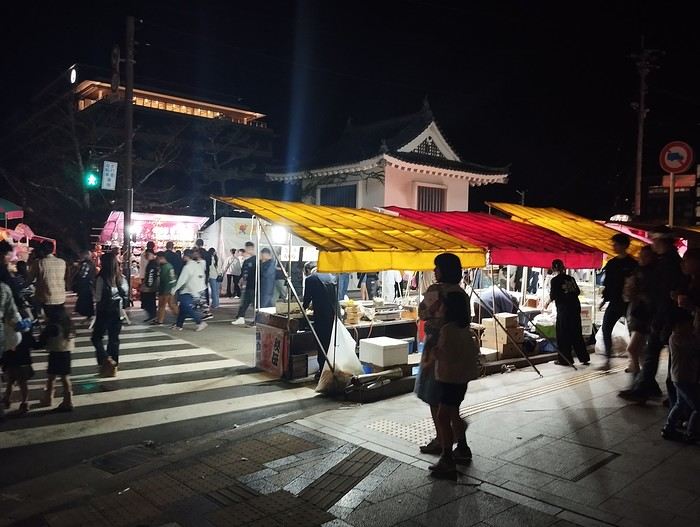
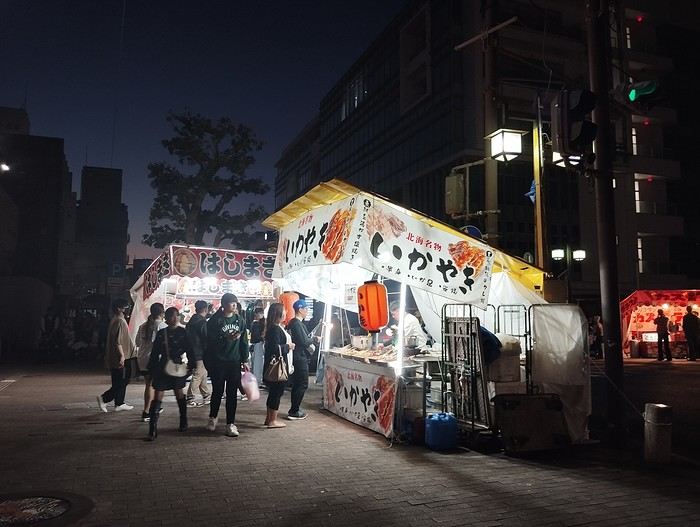
The matsuri lasts an hour, so starting at 6:00 PM, people head to the various street food stalls scattered around the city center.
The street energy shifts, and the different groups of hikiko return to their neighborhoods to celebrate together.
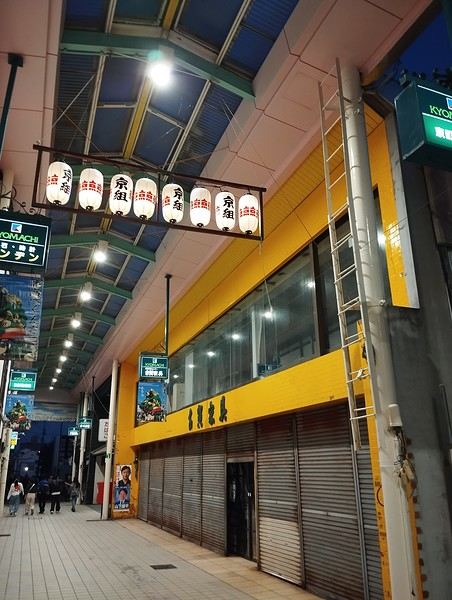
We weren’t hungry yet, but I needed to use the restroom, and it was dark. Since we couldn’t visit Karatsu (like the beach or the castle), we wandered through the alleys and shopping streets until we reached a small shopping center called Maizuru Shopping Plaza. The term "shopping center" seems exaggerated—it was more like a tiny mall inside a supermarket, part of which was closed.
During a quick break on one of the benches, we ran into a foreign couple. My French instinct made me say "bonjour" in French for no particular reason, and they responded in French too. So, we weren’t the only foreigners at this local festival. Even though we prefer interacting with locals, running into fellow countrymen is always nice, no matter the country. The exchange was limited to a "bonjour" and a smile.
We decided to explore the mall and supermarket.
On our way back down to the ground floor via the escalator, we ran into the French couple again. This time, we took the time to get to know each other and chat about our respective trips in this country. It was their second trip, and one of them had decided to learn Japanese after their trip last year. We took a quick souvenir photo, exchanged numbers to send it, and after an hour of chatting, it was time to continue our journey.
We’d been on the move a lot today and felt more like sitting down in a restaurant than grabbing quick street food, despite the pleasant atmosphere.
We walked around aimlessly but noticed that many restaurants were closed. After a while, seeing that we’d wandered into very quiet streets, I asked a "couple" where we could find a good, open restaurant. They asked what we wanted to eat: yakitori sounded good, but we were open to anything. The young man—clearly in a festive mood (he’d already had a few drinks)—thought of a restaurant. He called, but it was closed. They explained that most restaurants were closed or closing early (8:00–9:00 PM) because of the matsuri and the yatai (street food stalls). The couple offered to take us somewhere. It was a chance to chat with some very enthusiastic young people—helped by beer, it seemed. While the young man said hello to some people nearby, we continued talking with the young woman. She asked if we drank alcohol and then invited us to a party. We were up for it, but the young man was much less enthusiastic than her, so they backed out. No problem—the young woman gave me her girly business card, we took a souvenir photo, and she told us to have fun!
We decided to keep looking for a restaurant in other streets, some lively, some not, but all beautifully lit by lanterns. Given the time, it was tough—most places still open weren’t taking new customers. We eventually went back to the car, figuring we’d find something on the road or, worst case, stop at a konbini.
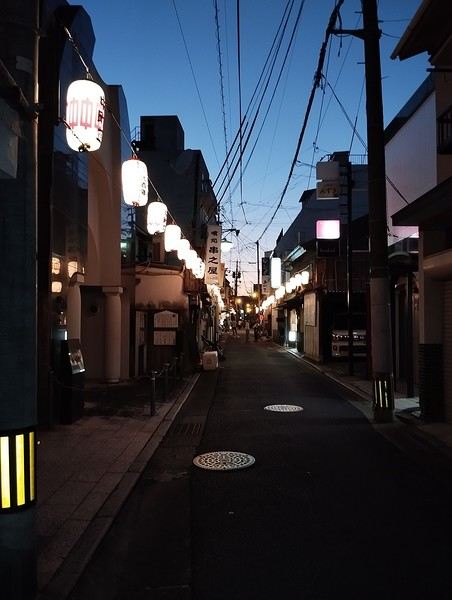
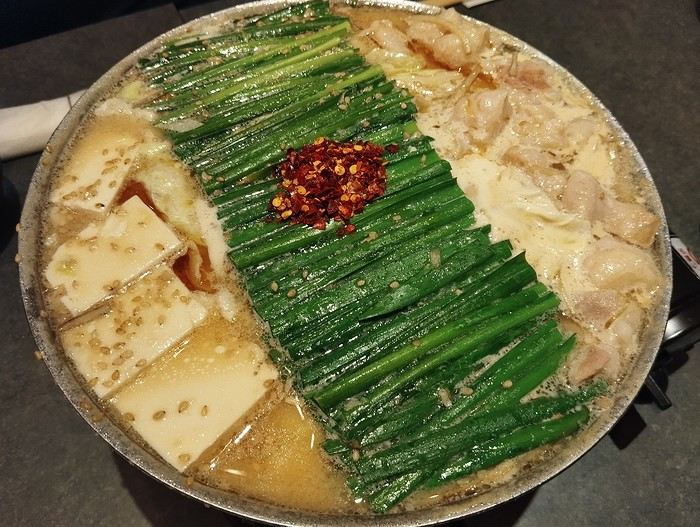
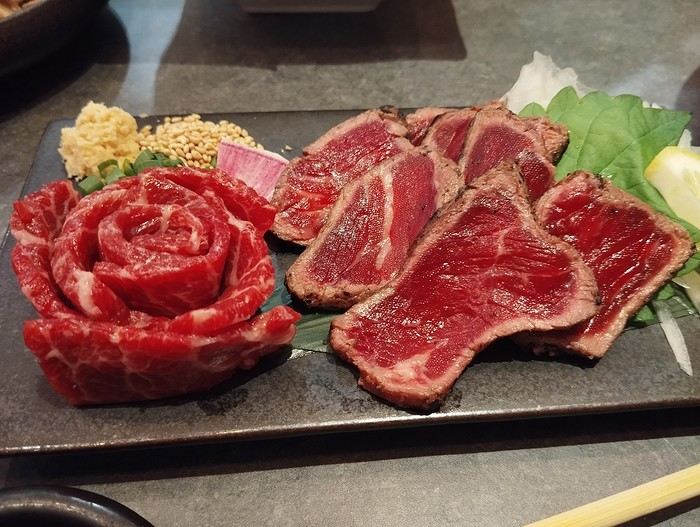
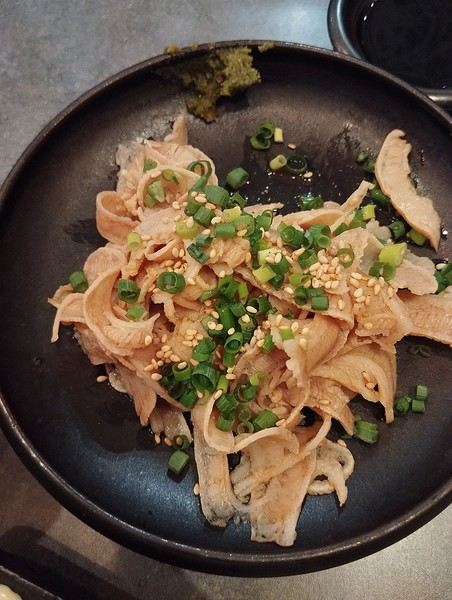
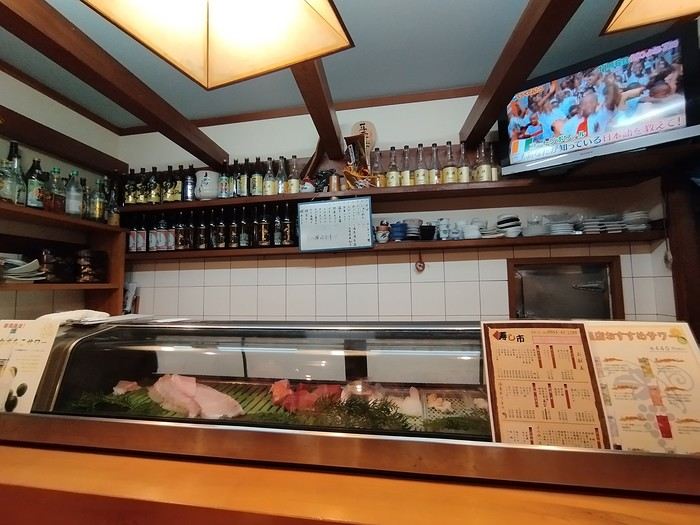
In the end, we stopped at a yakiniku place in a shopping area.
We were seated in a private room, which is always a nice touch at restaurants.
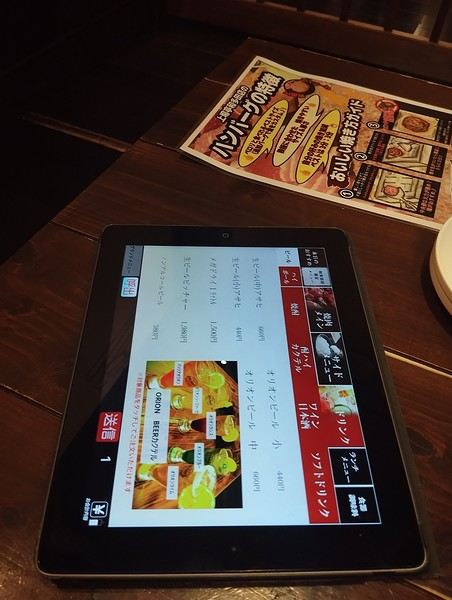
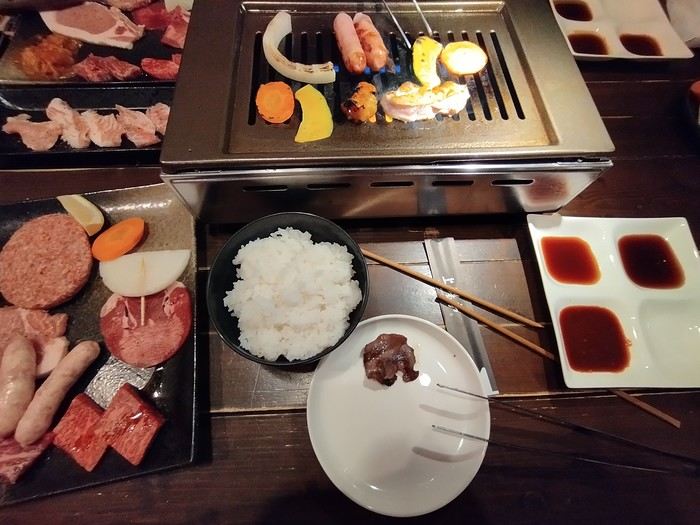
To order, everything was on a tablet written entirely in Japanese. There was no Wi-Fi, so two waitresses kindly helped us by translating the different pages and placing our order. The Japanese service was a delight. The yakiniku was basic, but it did the job of feeding us.
We drove back to our place in about an hour to an hour and a half.
To be continued: ARITA