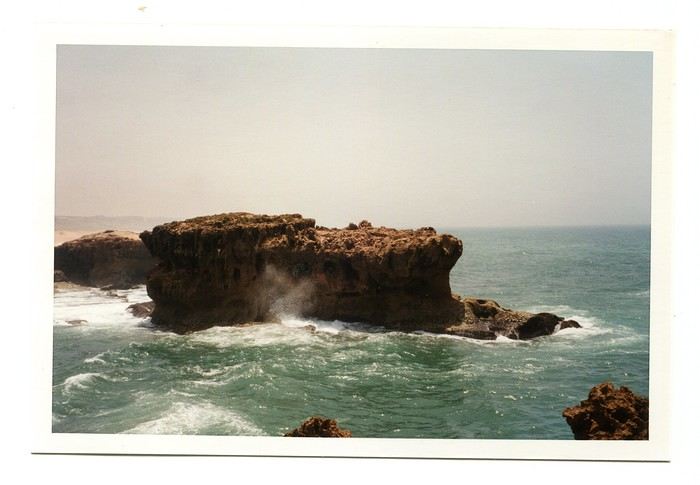
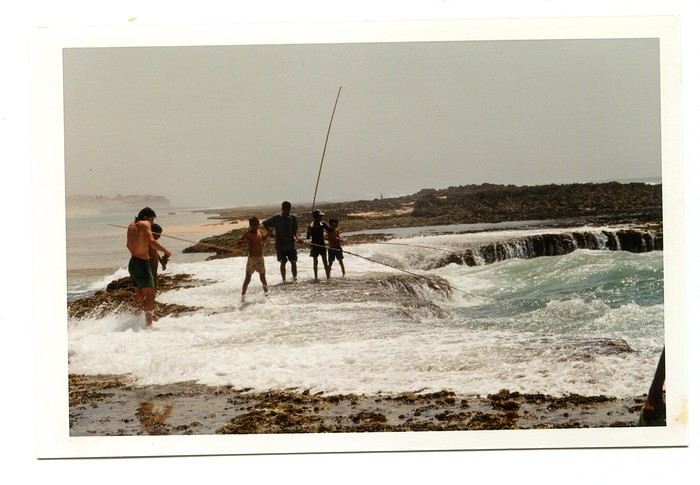
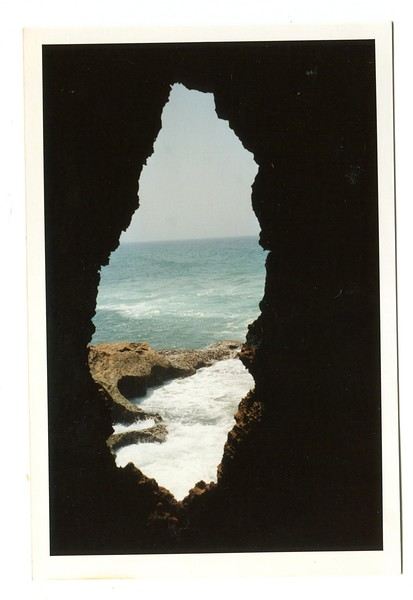
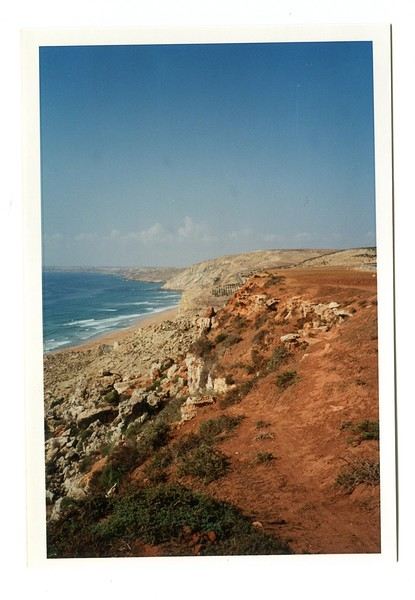
We liked it so much that we decided to go back the following year. This time, I was with Maggie, a German girl I’d met... well, in Germany, of course.
It all started with Yann, the little brother of a friend, and his half-French, half-Dutch girlfriend. They’d been nagging me for ages to take me to a techno club in Germany. They kept saying, "You’ll see, knowing you, we’re sure you’ll like it." Eventually, one fine evening, I caved—out of politeness and sheer exhaustion. Yann had a buddy who’d just come back from the Netherlands, where he’d done some shopping and stashed it all in the freezer. As soon as I got in the car, I was told to swallow one of those little pills with a half-moon drawn on it. Top-quality stuff, the kind the Gauls sometimes down to resist the invader. It didn’t take long—we weren’t even at the club yet when I told them I loved them. Only later did I realize what their knowing looks and exchanged smiles meant...
I’d initially had a prejudice against techno music, but I eventually understood that the evolution of modern music, which began in the 1950s with the electrification of guitars, had followed its course to its ultimate point: the fusion of human improvisation with machine capabilities. The result was ultimately very satisfying, as long as there was talent behind it.
Techno clubs had sprouted like mushrooms in German industrial zones. Later, we’d sometimes go to the Jailhouse in Achern, with resident DJs Peter Pan, Tandu, and a charming Indonesian woman whose nickname I can’t remember. That was high-class techno, real trance music—French legends like Laurent Garnier and even David Guetta could take a nap compared to DJs that talented.
But for that first time, we went to this nameless nightclub, sometimes called Blümchen ("little flower") or more often Abflug ("takeoff"). It was located in a large, one-story building on a massive airfield in Lahr, a site that had recently been occupied by Canadian forces stationed in Germany after the war. The place didn’t last long, though, because the staff and certain handpicked clients (no landing allowed!) had a habit of reopening after closing time and lining up long lines (not the airborne kind!) on the counters...
I remember our arrival in the parking lot perfectly—seeing so many cars parked with their doors open and young people dancing around them. I was impressed by the deep bass thumping from that cubic building, while I felt a mix of dizziness, physical well-being bordering on invulnerability, and a warmth pulsing in my stomach and head.
Once inside, once you start dancing, you don’t even think about stopping. From 11 PM to 4 or 5 AM, you lose all sense of time, frozen in... well, ecstasy, obviously.
Between the main dance floor and the restrooms, there was a large mirror. At some point during the night, I caught my own reflection. What a shock—feeling serene and optimistic, perfectly in sync with the hypnotic, almost tranquil rhythm, only to freeze in front of those dilated pupils and that serial-killer stare. A truly singular experience. "You scared me," is the phrase that fits the situation!
The most surprising part was rediscovering the sensations of my adolescence, as if the threads of time had suddenly sucked me backward...
A few weeks later, still at the same place, I sat on a bar stool next to a solitary woman. Older than most of the crowd, like me. The first words I said to her were, "You have a beautiful face." Instead of telling me off, she burst out laughing. Life really does what it wants with us!
A few months later, the three of us were walking on the tarmac of Marrakech Airport, but this time for a three-week stay. In the city, we quickly noticed a significant change compared to the previous year—one that would hold true throughout the trip: there was almost no harassment from locals trying to squeeze money out of us in one way or another.
At the time, Morocco was known for having one of the lowest return rates in the world. In travel industry jargon, that means vacationers who’d been to Morocco once rarely came back. No one likes to be hassled repeatedly.
The tourist police had been set up on June 19, 1995, so we’d just missed its positive influence the year before. In 1996, the situation had completely turned around: it was now possible to explore the country in peace. A few times, we noticed that when someone got a little too pushy, others would quickly step in to let them know it was better not to insist. Without understanding what was said, we deduced that if the police intervened, the penalties were probably pretty harsh...
To mix things up, I’d decided to bring some Kodak film along with my usual Fuji rolls, and I was a bit disappointed with the results, especially in low light. The colors were quite washed out, less vibrant. Now that all this gear has aged, it doesn’t matter much anymore, and at least I can present *something* in terms of illustrations for those brave enough to read this.
In Marrakech, we wandered around and visited a tourist shop that sold just about everything you could imagine bringing home. On a whim, I decided to buy a black onyx egg with white stripes. A pretty imposing decorative object, weighing three kilos—the kind of thing you don’t want to drop from a balcony in a pedestrian zone. After haggling, the price was ridiculously low. The enthusiastic young salesman was really disappointed when I told him I’d just arrived and wouldn’t be walking around with it all the time. He didn’t believe me at all when I promised to come back and pick it up at the end of my stay.
A little later, we managed to find a high-end pastry shop in the Jemaa el-Fna square. I don’t know who the owner was, but the pastries were of French quality—not overly sweet, either. I’ve got a major sweet tooth, especially for chocolate. I bought two and immediately knew I’d hit the jackpot. I was savoring the second one when Eric and Maggie said, "Alright, are we going?" I’d taken too long. Just then, a kid dressed like a beggar appeared in front of me. He didn’t say a word, but his look said it all. He was staring at my cake like he hadn’t eaten in a week. It broke my heart—I didn’t even think twice. I handed him the remaining three-quarters of my pastry, and he didn’t hesitate to stuff it into his mouth. Who knows, maybe he’d never tasted anything that good in his life. Even now, I regret not making the others wait so I could go back to the bakery and load him up with a mountain of pastries.
Wandering through the souks was pleasant and educational, but oh, how gratifying it was to watch the sunrise from a terrace and have breakfast there.


Maggie, who until then had only been to the Algarve—where she’d run into Iron Maiden members who’d bought a castle there—immediately adapted to local customs. I wasn’t too surprised when she wanted a henna tattoo during our visit to the Marrakech souk, but I didn’t think she’d want to buy a djellaba. Sure, the garment was gray—a neutral color—and, I can attest, soft and sensual to the touch. In fact, I found out a few days later that it was a luxury model women often wore at weddings, with a long undershirt beneath. During a walk through the city, I was even more surprised when all the locals stared at her with wide eyes, as if they’d never seen a woman before. Come on, she wasn’t the first Westerner to wear that kind of outfit. In a crowded alley, I thought there must be something special about it that drew so many looks. And then—stunned!
On each side, at hip level, there were slits at least ten centimeters long. I hadn’t noticed that. Most importantly—and I didn’t know this—Maggie wasn’t wearing *anything* underneath. Kids might have glimpsed part of her chest, while adults could see a portion of her stomach. "Maggie, everyone’s staring at you." Maggie was so comfortable in the heat that she didn’t take offense. Later, she didn’t wear it much in the city, or maybe just over a swimsuit. Let’s be grateful to all those locals who were shocked but didn’t openly show their disapproval!
I probably would’ve been a lot more shocked and worried if I’d known that years later, Iranian scholar Hajatosalem Kazem Sedighi would say: "Women who dress immodestly tempt men, corrupt their chastity, and spread adultery in society, which increases earthquakes."
Maggie was actually a pretty shy girl, which might seem paradoxical given how confident her people can be. She was often very refined, but that didn’t stop her from dropping the occasional blunt remark, like a Prussian helmet, such as: "Kein Schwanz ist so hart wie das Leben." A strikingly realistic quote, though a bit tricky to work into most conversations.