Back to the discussion

in Entre deux voyages › Carnets de voyage

Yet Another Travel Journal in this (Too) Familiar Rajasthan, But with Family and Kids (page 4 of 11)

Discussion started by Pagaljavab on 2025-08-30

201 replies

This thread has been translated into English.


Yet another travel journal in this (all too) familiar Rajasthan, but with family and kids

Pagaljavab · 2025-09-16 · Message 61 of 202

Thanks a lot! One of my writing goals was to highlight these stylistic contrasts, and I’m glad someone appreciates it—though I know it won’t be everyone’s cup of tea. It’s a style I fully embrace.

As for readability, that’s something I’ve been wondering about, so thanks for pointing it out. I started with the idea that paragraphs would be separated by a line break for each "phase of the day’s activities." It’s true that these phases are long and dense, but they’re coherent, and I have no intention of shortening them! That said, I can try breaking up the text *within* a paragraph—without adding extra line breaks—to separate sub-sections a bit more so they don’t look like such big blocks.

Thanks again for these really insightful comments.

Yet another travel journal in this (all-too) familiar Rajasthan, but with family and kids

Kate · 2025-09-16 · Message 62 of 202

I know some of you are reading in the shadows

Often, the quiet readers speak up at the end of the journal 🙂

Another travel journal from this (all too) familiar Rajasthan, but with family and kids

Pagaljavab · 2025-09-16 · Message 63 of 202

Day 5, July 28: Jaisalmer to Khuri "Immersed in a desert family and the passing caravan"

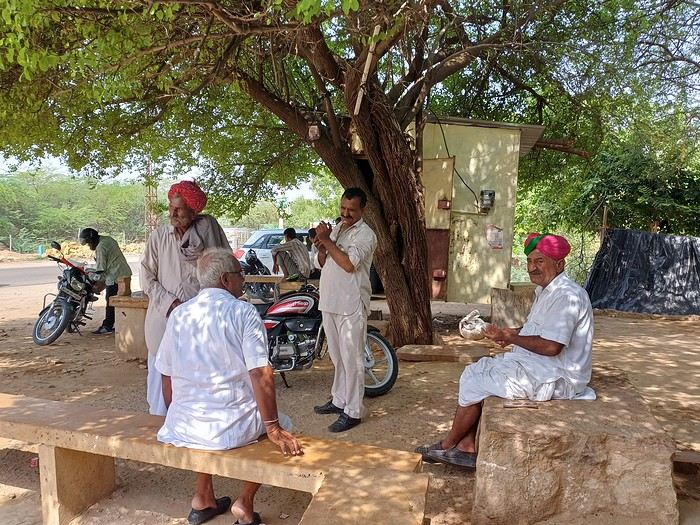
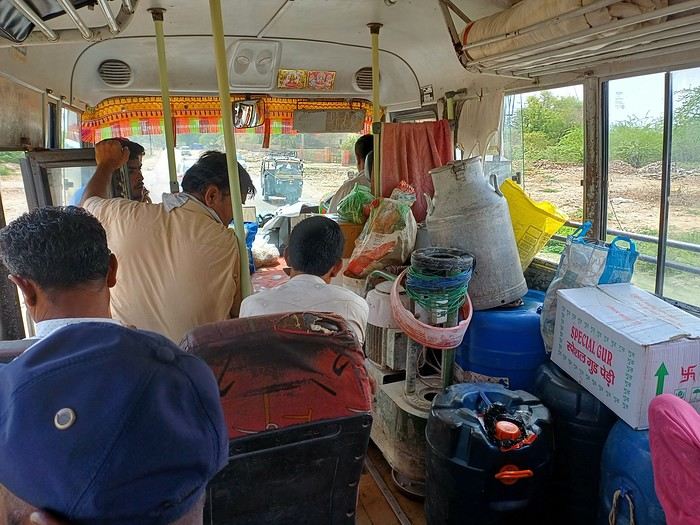
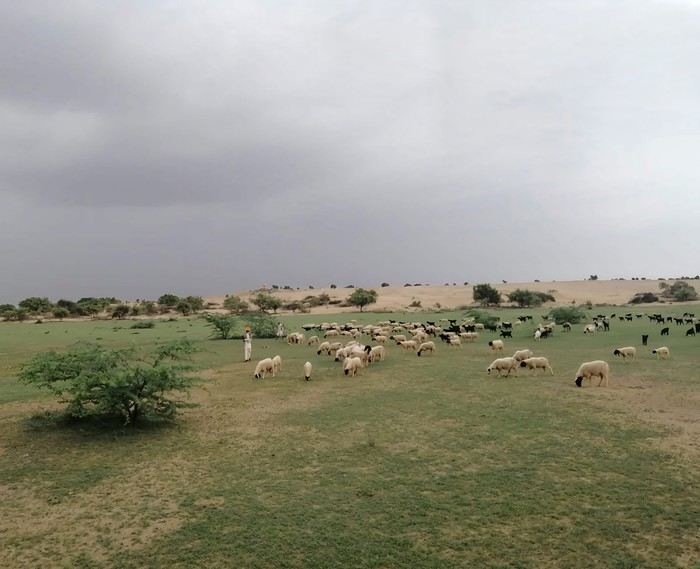
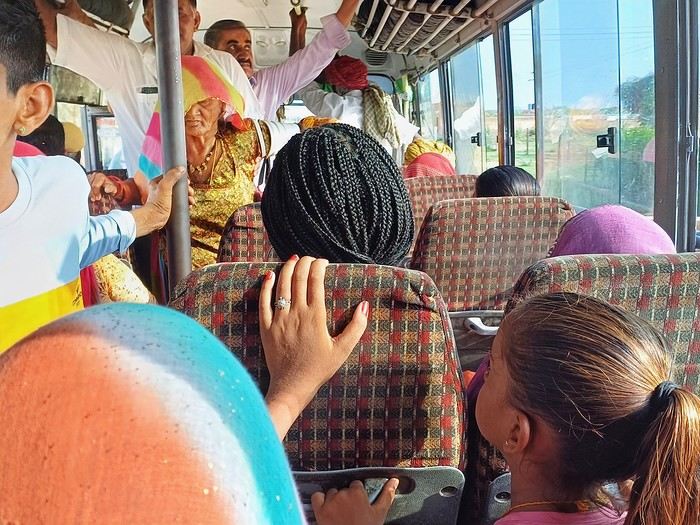
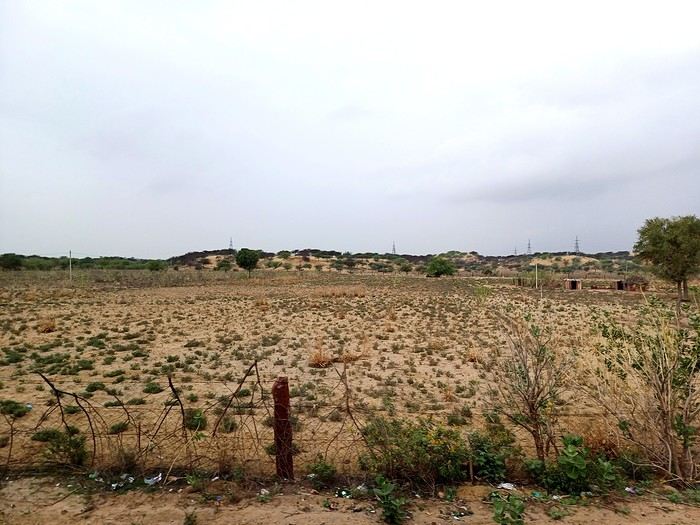
Our rikshāwālā picks us up from the hotel around 8 AM. We planned generously because there’s only one local bus connecting Khuri from Jaisalmer—apparently leaving around 8:30 AM, 9:30 AM, or 10:30 AM from the side of a road on the outskirts of Jaisalmer, according to local sources and the internet... Since the info is vague and local buses can be a bit loose with schedules, we’d rather not miss it. The rickshaw takes Gadisar Road, circles Gadisar Lake, and heads toward the south of the city. We gradually leave the urban area, and after a few minutes, the driver stops us by the side of a road where there’s a small stall selling chāy and snacks. No one’s around yet except the chāywālā, who confirms there *will* be a bus to Khuri around 10 AM—and it’s only 8:30 AM. There are a few benches and big rocks to sit on, so we take the chance to check our Lonely Planet guides and online sources, sip some chāy, while Kelyandre (and Théo, to a lesser extent) continues his experiments with Indian “Nutri-Score Z+” junk food: biscuits, chemical sodas, chips, and other weird snack foods. We watch the vehicles go by—one of Théo’s passions, especially since this isn’t a common sight for him in India. Almost every time something passes, he names it like a pro (he’s already memorized rickshaws) and asks us to identify the “unidentified rolling objects” he doesn’t recognize. Time passes, and more people start showing up. Some stop in the shade of the trees that double as a bus stop, while turbaned men begin their hushed conversations like an impromptu village council by the roadside. Finally, just before 10:30 AM, our bus arrives. We realize how crucial this single daily bus is for locals—it also doubles as a delivery vehicle for Khuri. People load goods into the storage compartment and wherever they can fit them: big sacks of rice, flour, sugar, and random appliances... Then we rush into the heap of metal like the other passengers and even manage to find seats. Needless to say, we’re the only non-Indians. The bus finally departs, and the conductor weaves through the crowd to collect fares (around 35 rupees per person, except for Théo, who, as always, doesn’t pay). It takes about an hour to cover the 40 kilometers between Jaisalmer and Khuri on a small desert road that reveals the beauty of the Thar landscapes: stretches of rocky or sandy soil, dry yet fertile with cacti, scraggly trees bearing desert berries and beans, and above all, endless rows of *babūl*—those small, thorny acacia shrubs no traveler can miss, as they literally blanket Rajasthan and beyond... Goats, cows, and camels dot the scenery. The bus stops to pick up villagers along the way or in front of a *Kṛiṣṇa* temple to let a few passengers off to honor the deity with offerings, while those left inside touch their faces in reverence toward the sacred dwelling. The people are incredibly kind to us, especially the kids. Kelyandre gets into the habit of falling asleep on the shoulders of our fellow passengers, who never seem bothered. Local bus rides are a true passion of mine—I scan every detail of the landscape, observing life or searching for the unexpected. A little *too* much, actually, because in the blink of an eye, I catch a horrifying glimpse: a dog hanging from a tree by the roadside. I’m so stunned by this fleeting vision that I almost wonder if I imagined it breaking the wonderful monotony of the Thar.

The village we’re heading to, Khuri, isn’t exactly the middle of nowhere. It’s actually quite well-known among travelers as the main alternative to the *very* (too) touristy village of Sam and its photogenic dunes—a must for most camel safaris and nights in “deluxe” desert camps, complete with folk music and dance performances by desert nomads like the *Langā*, *Māngaṇiyār*, *Bhopā*, and *Kālbeliyā*... Less touristy than Sam and thus a bit more authentic, Khuri was our final choice. First, because during our trip planning, we learned that these desert camps—though touristy in a not-so-great way—could’ve been a fun experience for the kids, but most are closed or don’t offer shows during monsoon season. Second, we found the option to stay with a local family in a place we’d only heard great things about: Badal Singh House. The place is run by Badal Singh, a former camel driver from the *Rājpūt* caste (as his name suggests), who offers stays in his home—he refuses to call it a guesthouse. You live *with* and *like* his family. He’s not tied to any tour operator and also offers independent camel safaris. Every guidebook and online review praises his simplicity and honesty. Prices match his ethos: 400 rupees per person, including a room, breakfast, and dinner; 150 rupees for lunch; and 500 rupees per person for a two-hour camel ride on Khuri’s dunes. Plus, Badal’s son was super responsive on WhatsApp, giving us all the info and taking our booking in a friendly way. Since planning this trip, Magali has had high hopes for this village stay and is *especially* excited to finally experience it!

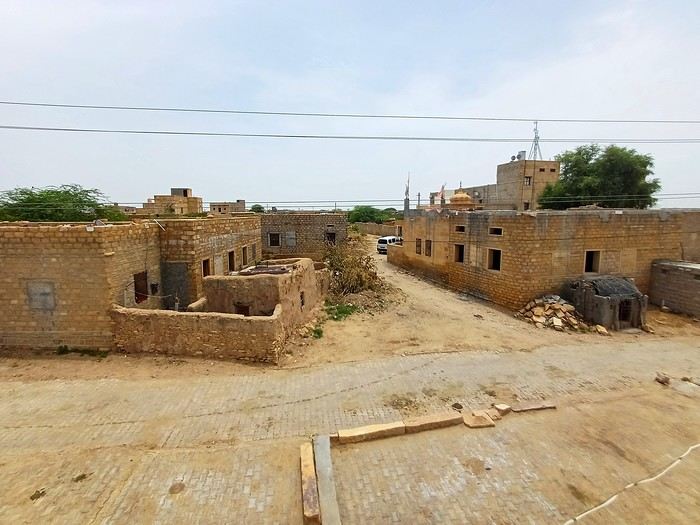
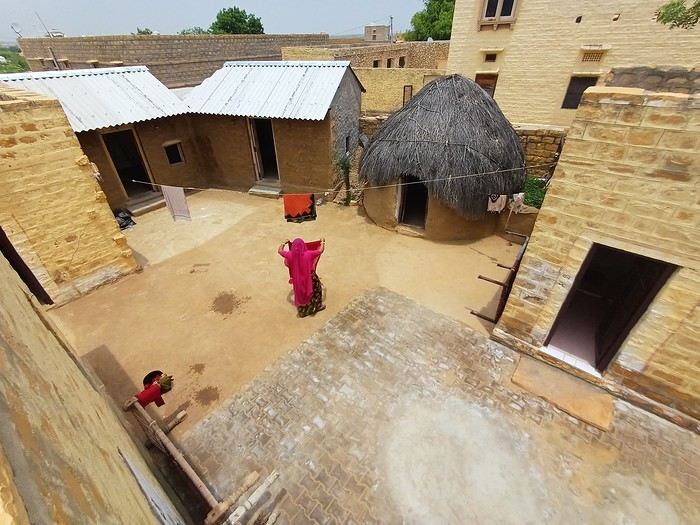
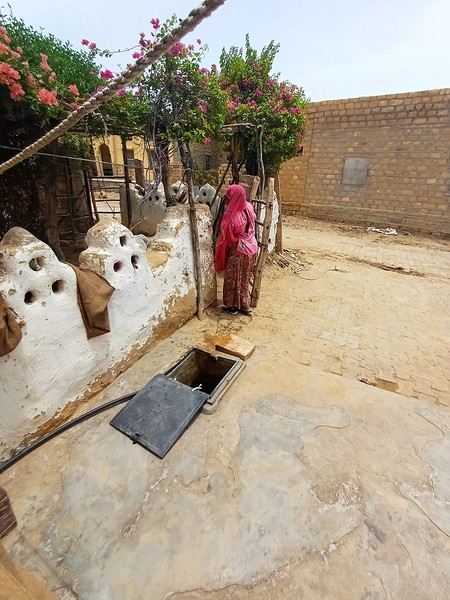
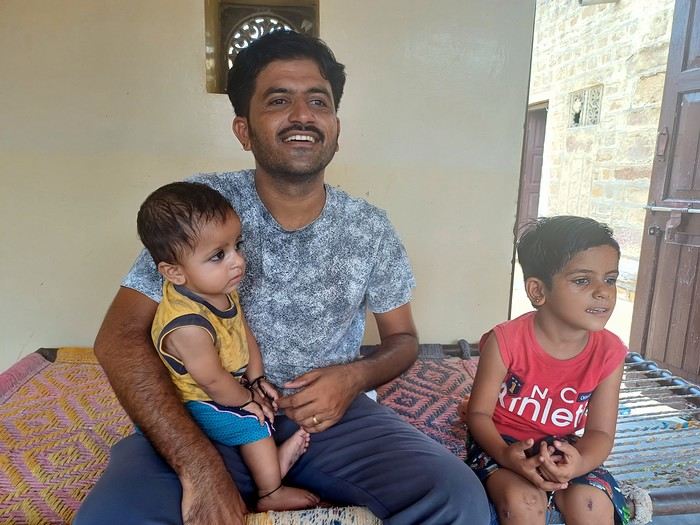
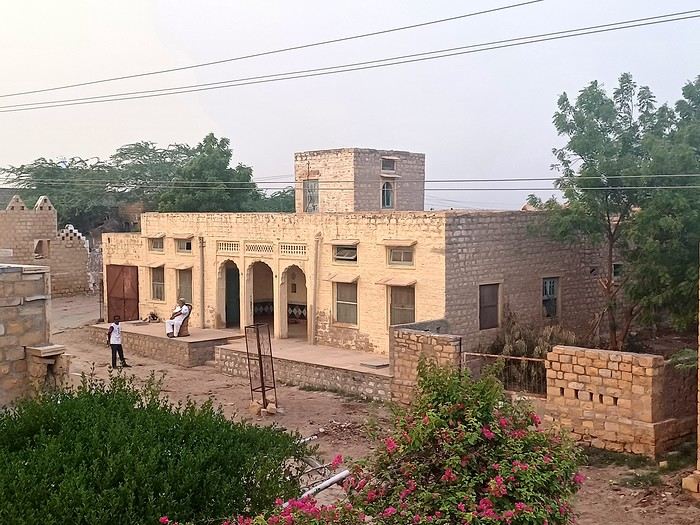
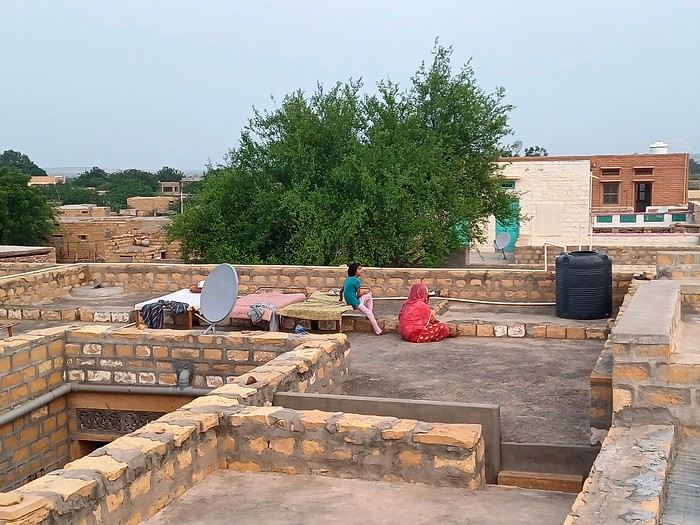
We reach Khuri, and the bus stops at a crossroads near a small kiosk that sells everything—probably the village’s only shop. Badal Singh’s son (whose name I’ve forgotten) has no trouble spotting us as we get off the bus and comes to greet us. We follow him down a dusty “main alley” on foot to his house. Khuri is a tiny village, all desert colors. The scorching heat makes the short walk tough—it’s supposed to hit 42°C this afternoon, with a feels-like of 48°C! We arrive at Badal’s home, and his son gives us a tour. It’s just like the neighbors’ houses: traditional brick homes with an inhabited roof, a courtyard covered in cow dung, a few mud huts (used when temperatures are milder), and a small goat pen. Behind the courtyard is the family’s living space. Rustic and authentic—exactly what we were looking for! We meet the women of the house—mother, daughters, daughter-in-law—busy with chores. Théo befriends Badal’s grandchildren, one slightly younger and the other a bit older. Magali had the great idea to bring small toy cars, pens, and mini Eiffel Towers to give to the kids. This sparks a few squabbles because Théo, who’s already developed a strong sense of ownership, isn’t about to let anyone take *his* toys from the pile—he defends them with authority. But the kids still play together well. For guests, there are two very basic rooms on either side of the entrance, with simple beds and stacked blankets, just a ceiling fan and a tiny, narrow bathroom with a bucket and a tub, plus squat toilets. Badal’s son invites us to use both rooms since there are no other guests today. He and the kids stay with us on the benches and chairs in the shade of the entrance porch, which faces the street, while the women of the house handle chores and come by to serve us a simple but delicious lunch: dāl, rice, chapātī, vegetables, kaḍhī (a kind of hollandaise-like sauce made from chickpea flour and spices), chhāchh (buttermilk), and a divine ker kā achar (desert berry pickle). We’re stuffed and happy!

We move on to the post-lunch siesta phase in deadly heat... The fan just blows fireballs, and we’re sweating out every drop of water in our bodies. The kids manage to nap a little, but not us. We finally meet Badal Singh, an old man whose aura matches his reputation—wisdom and simplicity that leave an immediate impression. A few moments later, a car pulls up blasting music in front of the house, and a group of very modern young Indians—guys in shirts, girls in tank tops and short shorts—gets out. They’re from the neighboring state of Madhya Pradesh and came straight here to book a camel safari for that evening. From the protective religious symbols in the car and the conversation I overhear, I gather they’re Muslim. I hear them ask Badal if they can “arrange” a meat meal instead of the vegetarian food offered by the devout family. While vegetarianism isn’t mandatory for all Hindus, it’s supposed to be for Brahmin castes (those in religious roles) and is highly valued among Hindus in general. In villages where religion plays a bigger role and animals are precious, vegetarianism is often the norm. Badal explains that the entire village is vegetarian, like the surrounding ones, and it’ll be impossible to provide meat. The young guy takes this as an invitation to negotiate (a common tactic in India when you want something special), as if trying to bribe a train conductor: “Come on, uncle, I’m sure we can *ARRANGE* this!” But Badal stands firm: “You don’t understand—we can’t find meat here. It’s not possible.” Not everything’s for sale in India... The youngsters drive off, probably to try their luck elsewhere. They come back later, though, and are very at ease with us—the girls play with the kids and don’t hesitate to come into our room to charge their phones. They’re suffering from the heat too. For an hour, we live like an extended family!

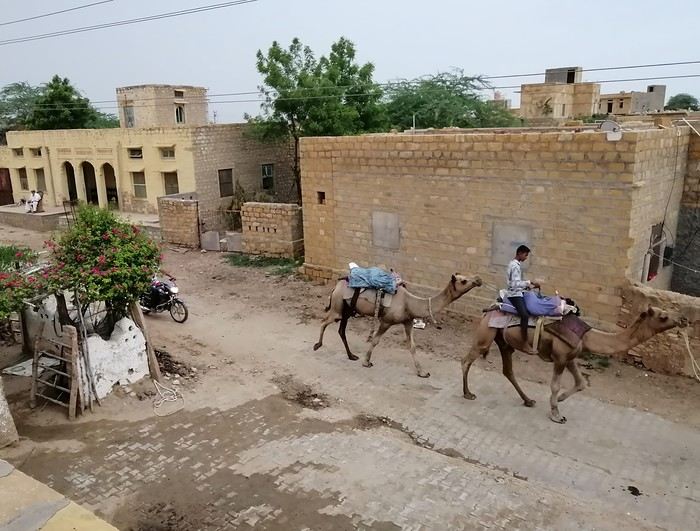
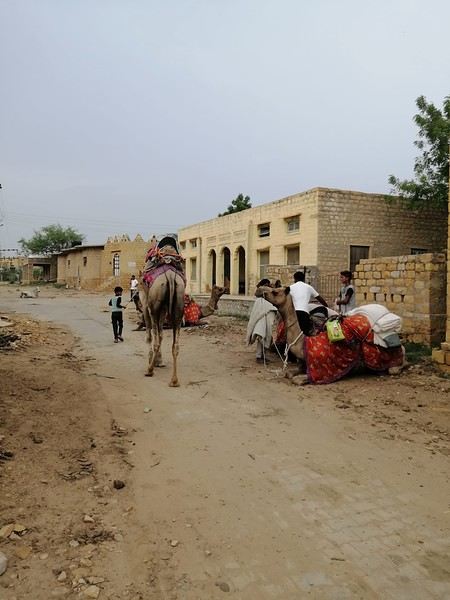
Then, in the late afternoon, the slow steps of heavy beasts and their bleating are heard in front of the house: the camels and their drivers arrive in a caravan.

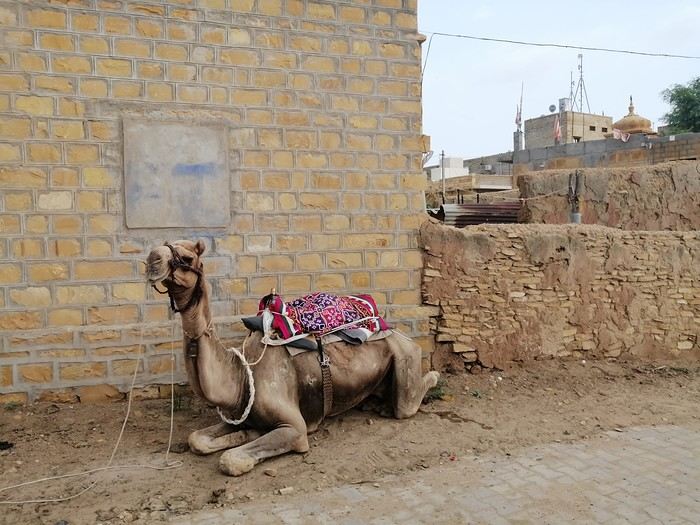
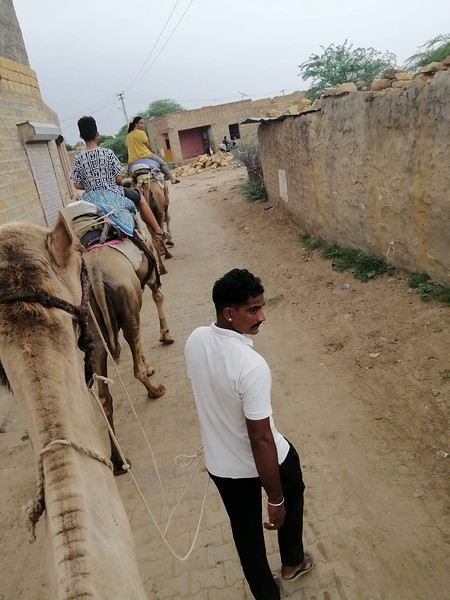
Our temporary housemates from Madhya Pradesh are called first and leave with a group of camel drivers. Then it’s our turn to mount our camels: Magali and Kelyandre each have their own, while Théo shares a saddle with me. Quite the experience for the others, who ride a camel for the first time—the rodeo-like moment when it stands up, and the brutal stretching of the adductors forced by the wide saddle. We try to stabilize ourselves, and off we go!

Another travel journal in this (all too) familiar Rajasthan, but with family and kids

Pagaljavab · 2025-09-16 · Message 64 of 202

Day 5, July 28: Khuri "Desert family immersion and the passing caravan" (continued) We pass through the last houses of the village where women are shaping cow-dung cakes that will be used as fuel or building material.

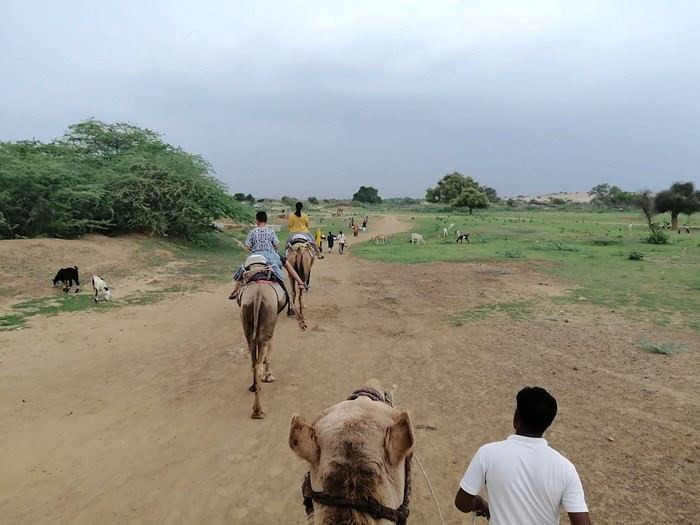
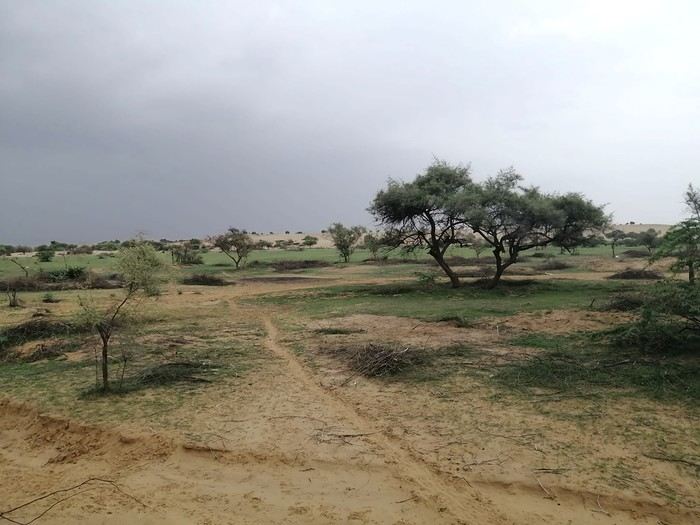
Miraculously, the wind picks up and the air cools down! Gradually, the desert landscape takes shape... First quite green where the lower-caste families live, a little apart from the village.

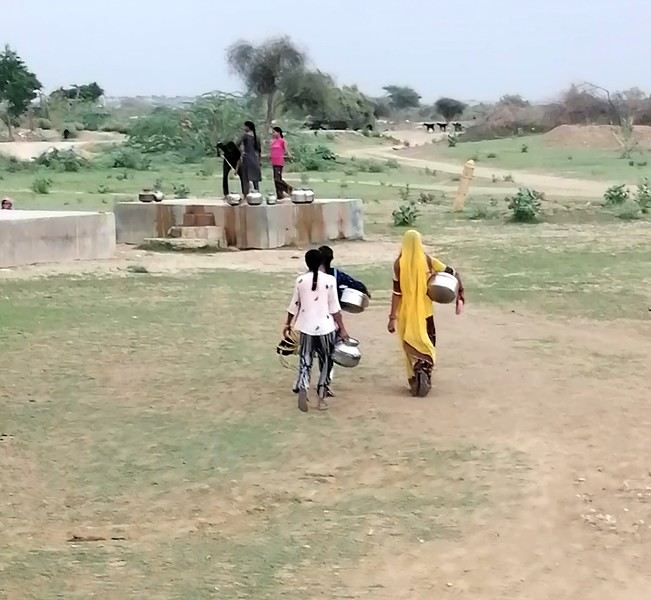
The sun sinks lower and lower, women in red saris fetch water from the well, and men graze their herds. The sky darkens, we hear thunder rumbling in the distance, and we start to wonder if we’ll get caught in the rain. But it never comes...


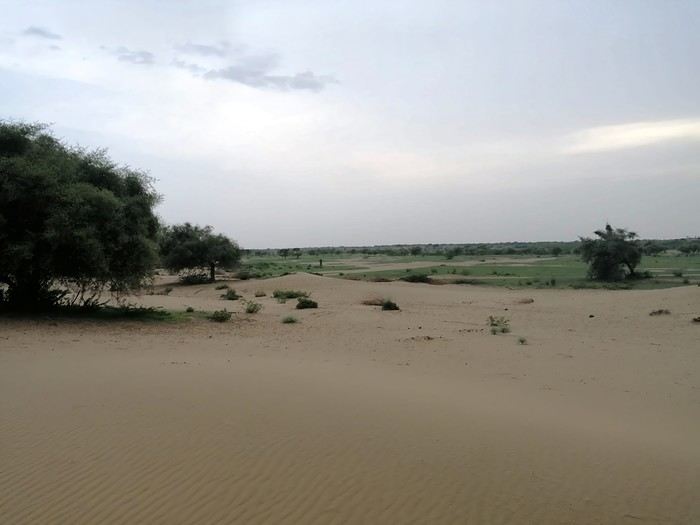
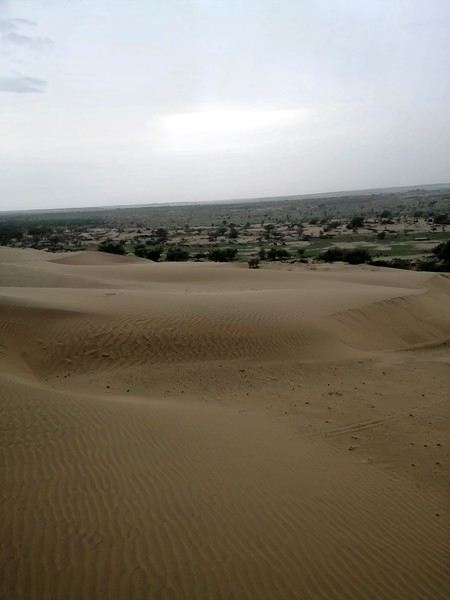
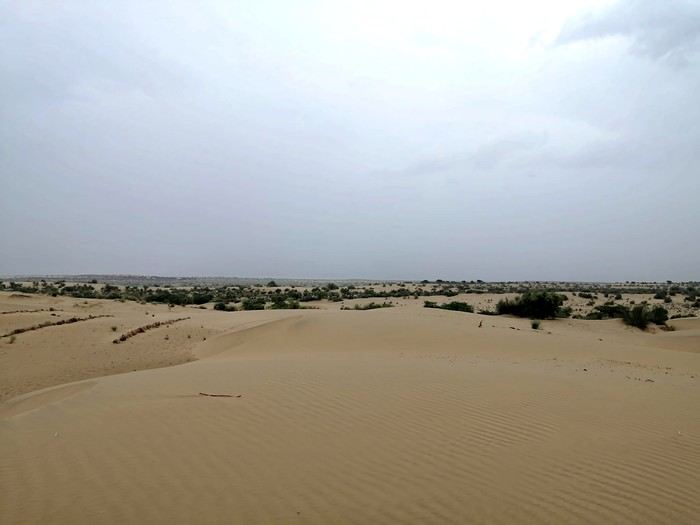
Behind me on the saddle with Théo in front, whom I have to wrap my arms around while holding the reins, I struggle in a slightly hunched position but eventually find my balance. Théo approves: “Dad, our camel is strong!” he keeps saying. And he’s right! The *babūl* trees thin out, and we reach the beautiful dunes of Khuri. Our camel drivers set up a photo session and invite us to explore the dunes on our own—perfect for admiring the vastness of the Thar Desert at dusk.


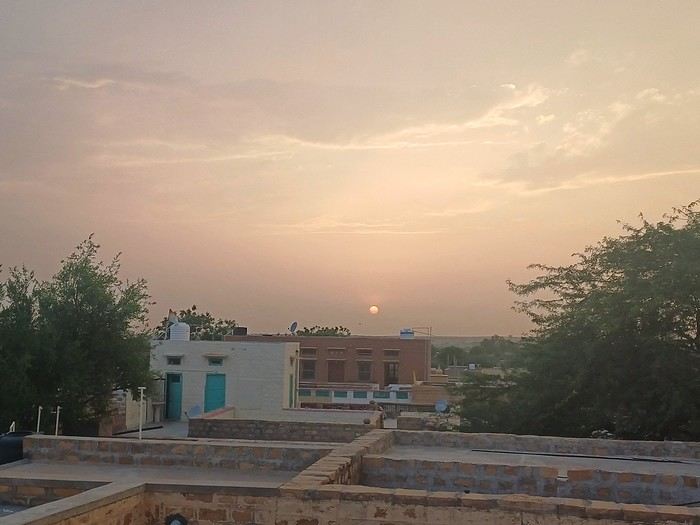
Suddenly, a curious kid appears out of nowhere, running down the dune where we’re standing, singing and playing his *kartāl*—two pairs of wooden pieces that make a castanet-like sound when clapped in the palms. I laugh because, during my first camel safari in the desert back in 2007, I was struck by how people would suddenly appear out of nowhere to sell you a Pepsi or other unexpected things. The boy quickly treats us to classic songs like *Gorband* (camel ornaments for big events) and the poignant *Kesariyā bālam padhāro mhāre desh* (“Saffron-haired beloved, welcome to my land”), which takes on a special resonance in this moment. We give him the few coins we have left in our pockets, and the curious kid dashes off down the dune, disappearing as quickly as he came. We head back to our camel drivers a few dunes away and retrace our steps toward the village. We dismount from our brave camels and give our drivers a well-deserved tip (100 rupees each)—they can’t believe it and quickly tuck the money into their pockets! We take a moment to collect ourselves and admire the last moments of the sunset from the rooftop.

Meanwhile, Magali applies for an internship in making *chapātī* with the women in the kitchen (accepted). She returns once the task is done, sweating profusely: mastering a flatbread takes skill, but she’s especially in awe of the women working in such scorching heat without seeming affected. Dinner arrives, similar to lunch but with the addition of a delicious *alū gobī* (potatoes and cabbage), simply spiced, and of course, the *bājrā kī roṭī* (millet flatbread) that Magali helped make. We feast once again. But the slight coolness we enjoyed during our ride fades as the evening heat sets in. We drink bottle after bottle of water until we drain the stock Badal’s son had left for us in the fridge and freezer. He kindly goes out to buy more from the small shop at the bus stop. Badal advises against sleeping in our room, which has become unbearable, and invites us to sleep on the mats with him. We lie down under the stars, chatting with Badal as he shares his story and that of the place he’s run for decades. But it’s still 37°C when we try to fall asleep, and we keep emptying bottles. Badal assures us we’d enjoy it more if we came back in another season. The thermometer won’t drop below 32°C, and we struggle to find sleep as the heat weighs on our bodies, nerves, and minds...

Another travel journal in this (all-too-familiar) Rajasthan, but with family and kids

Pagaljavab · 2025-09-22 · Message 65 of 202

Day 6, July 29: Khuri-Jaisalmer "The Desert’s Carcassonne and the Deluge"

I wake up at first light, clothes sticky with sweat. Even under the stars, the night was nearly torture. We tried to focus on the starry sky—so clear in this desert, far from city lights—or to play at spotting shooting stars, but nothing helped. I barely slept, and Magali had almost a sleepless night too. On top of the stifling heat, she was sharing the same mat with Théo, who tossed and turned all night. She kept getting jabbed by the metal bar that forms the side structure of the rustic bed... Of course, the dogs barked all night, calling back and forth from one neighborhood to another. Listening to them, you could almost picture where each one was barking from, where the others were answering, and where the echo was coming from even farther away... We spent the night rehydrating with water straight from the freezer. I know, you’re supposed to drink warm water in the desert, but let’s be real—those big gulps of icy water feel *so* good in the moment! Now, what’s left in the bottles has turned lukewarm-hot.

It’s 6 a.m. I hear some pastoral activity—mooing and the jingle of bells—right outside the house. Since all I want is to forget that furnace of a night, I get up to see life reborn from the top of the low wall. It’s Badal, dressed all in white, heading out to graze his calves.

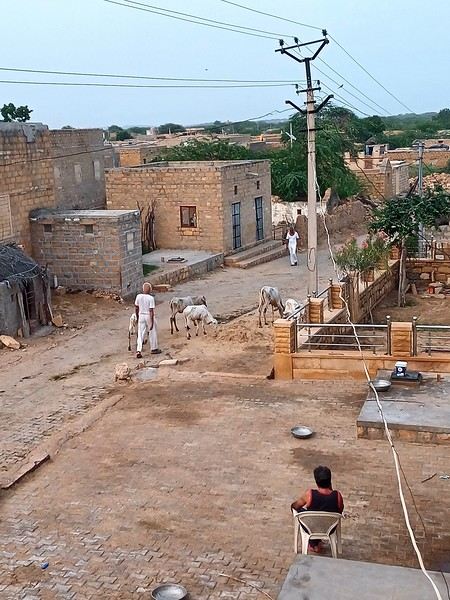
I watch the neighbors, who like us slept on their rooftops, starting to stir. The women begin their morning chores—laundry, breakfast... The rooftops are so close, almost touching, that it feels like this big network of small stone rectangles rising above the neighborhood is one giant, extended household.

Soft bhajans (popular Hindu devotional songs) drift gently through the morning air. Everyone wakes up little by little. The need to freshen up is urgent, and we take turns in the tiny bathroom downstairs for an exhilarating bucket wash with water warmed by the heatwave. The women of the house have whipped up one of my favorite Indian breakfasts—poha! This specialty from Madhya Pradesh and Maharashtra, also popular across much of western and northern India, is made of thin rice flakes sautéed with onions, green chilies, and turmeric (which gives the dish its yellow color), often topped with roasted peanuts, fresh coriander, and lemon juice. Perfect with a strong, sweet cup of chai! We don’t linger too long, though—we need to pack up. The first bus to Jaisalmer leaves at 8 a.m. from the same little kiosk at the entrance of Khuri. We thank Badal and his family warmly, who invite us to come back in a milder season. In total, we only pay 2700 rupees for full board and the camel safari. They clearly decided to treat us to the welcome lunch for the elderly woman (and the dozen or so bottles of water we guzzled like parched soil). Sure, the conditions are rustic and spartan, but despite the tough night, the experience was amazing—it was (almost) exactly what we wanted. For those who don’t get the chance otherwise, it’s a fantastic way to live *with* and *like* a family in rural India, in a setting as authentic as it gets. It’ll stay one of our best memories from this trip.

We head back down the “main street,” where the little bus is waiting. It leaves when full and retraces its route across the desert. Kelyandre falls back asleep, his head on his neighbor’s shoulder, and Magali’s braids still turn heads. This short minibus ride puts us in a great mood.

This time, it drops us off at the bus station—just steps from our hotel! We take the opportunity to book our bus tickets to Jodhpur for the next day at a private agency. It only costs around 1800 rupees (agency fee included) for two sleeper berths in an air-conditioned bus—more than enough for the four of us. Tickets in hand and the meet-up time set in front of the agency, we head back to our cozy Tokyo Palace to catch our breath. But not for too long—we’ve planned to visit the paid section of the fort this morning, meaning the royal palace.

Around 11 a.m., we feel ready to face the rising heat again. Even though the fort isn’t far on foot, we don’t have the energy to carry Théo in this heat, so we hail a rickshaw. It’s a very different day from the day before yesterday at the foot of the citadel—there are *way* more people. Granted, we’re arriving at the start of peak hours, but we don’t really have a choice... We run into our clingy “assigned” guide-tout, who, to my surprise, doesn’t insist too much and just nods when I tell him in Hindi—with a smile but firmly—that we don’t need a guide to visit the fort. We pass through the first gate, and after the large entrance courtyard, we climb the winding path that goes through three more gates before reaching the inhabited enclosure and the royal palace—a fortress that wasn’t easy to take!

We buy our tickets—250 rupees per foreigner over 5 years old—which include a high-quality audio guide in several languages, and start the visit.

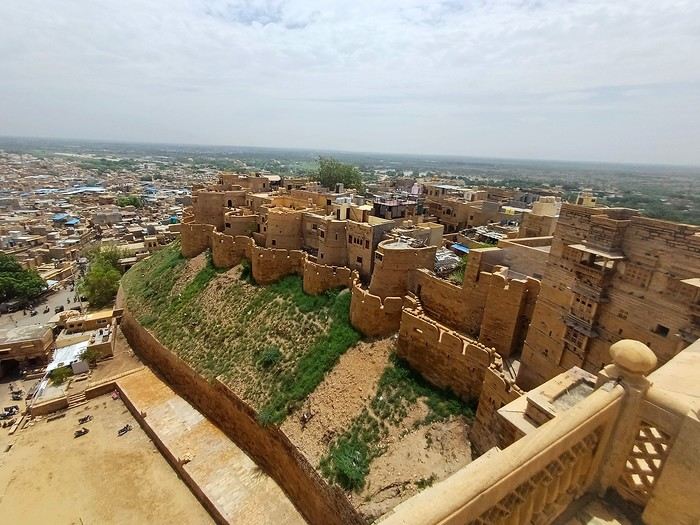
Jaisalmer Fort, also nicknamed *Sonār Qilā* (“Golden Fortress”) because of the yellow sandstone that makes up its walls, was founded in the 12th century by a *Rājpūt* chief of the Bhāṭī clan named Rāwal Jaisal, who gave the city its name. *Rājpūt* (“sons of kings”) is the name of the *Kṣatriya* (the great Hindu caste of kings, nobles, and warriors) in Rajasthan and parts of neighboring states. Each *Rājpūt* clan traces its lineage to one of three origins: solar, lunar, or fire. The Bhāṭī clan and the fort are thus representatives of the *chandravanśī*, the lunar lineage, and according to myth, are descendants of the hero and god Kṛṣṇa, an avatar of the great Viṣṇu, the great builder of the universe. More rationally, it’s likely that these warriors, originally from various Central Asian tribes, were legitimized by the Brahmins of the Vedic era—the religious sages of ancient India at the top of the Hindu caste hierarchy they themselves created—by artificially linking them to divine lineages. The walls and architecture of the fort bear the marks of this lunar lineage.


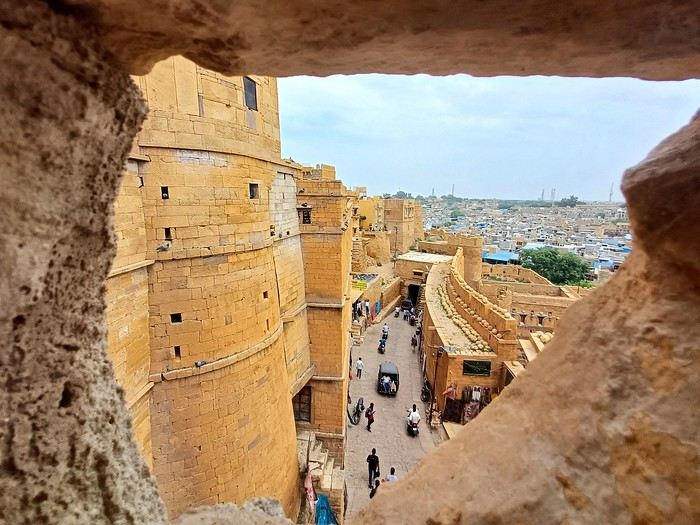
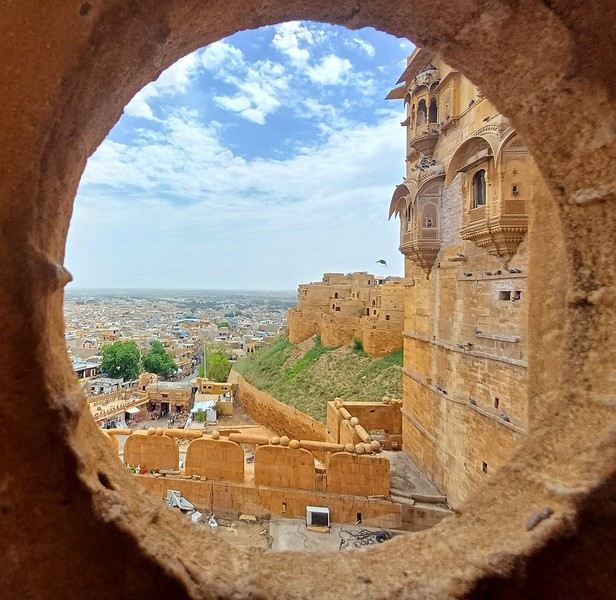
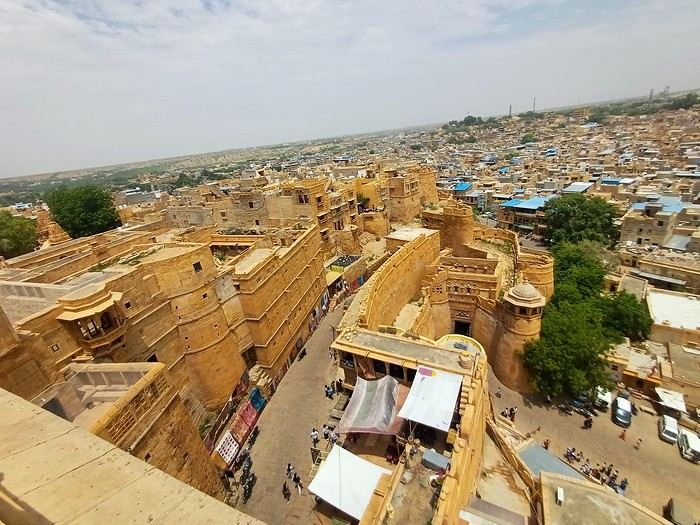
The fort’s ideal location on the Silk Road led to its prosperity. Originally, and for several centuries, the city was just the fortified enclosure before colonies of newcomers developed around it, eventually forming the current urban area. We walk along the ramparts, where arrow slits and other openings in the yellow walls offer great photo ops of the lower fort and the city—just as they once allowed guards to watch for raids by Afghan warlords or attacks by the powerful Mughal Empire’s army.

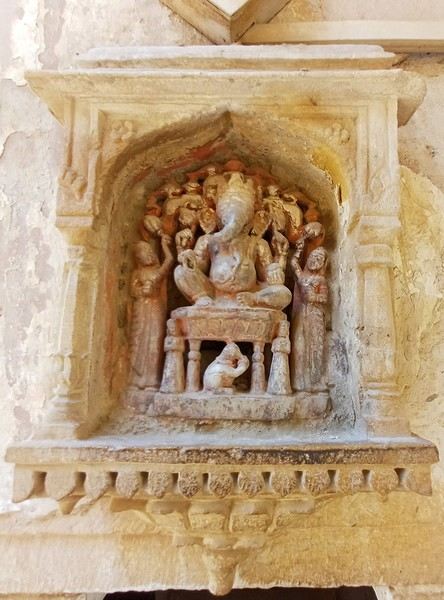
We love the open walkways with their beautiful frames, where Magali, dressed in one of her beautiful tribal Gujarat dresses bought in Ahmedabad, plays at being an Afro-Indian princess. We wander through thick, opaque walls, some intricately carved with deities and royal symbols, others perforated with latticework featuring delicate patterns that gave the walls “eyes and ears” to catch rumors and foil the plots that brewed within. https://voyageforum.com/images/posts/small/1758548566-9aDFRtcNFwEISmj.jpg

Yet another travel journal in this (all-too) familiar Rajasthan, but with family and kids

Pagaljavab · 2025-09-22 · Message 66 of 202

Day 6, July 29: Jaisalmer "The Desert’s Carcassonne and the Deluge" (continued)

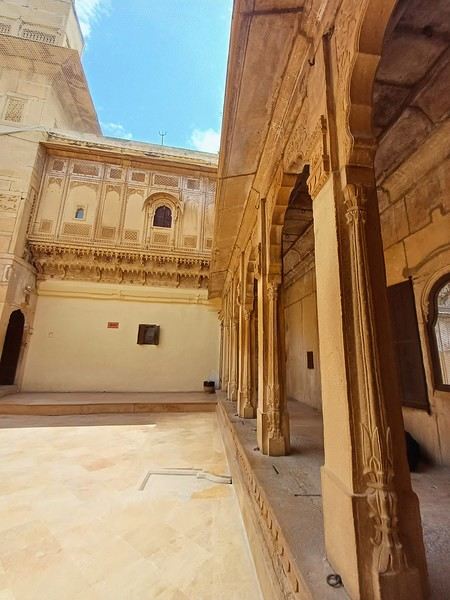
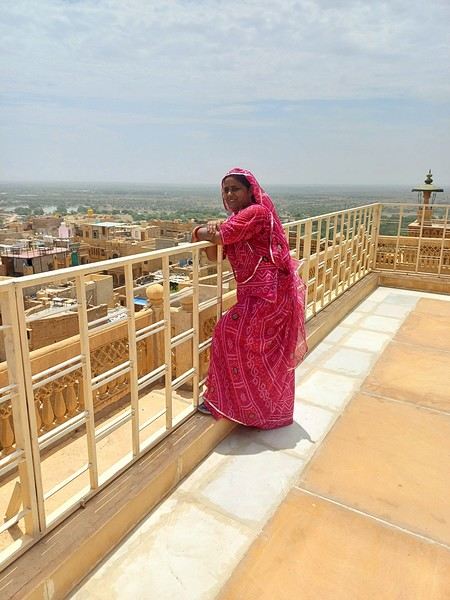
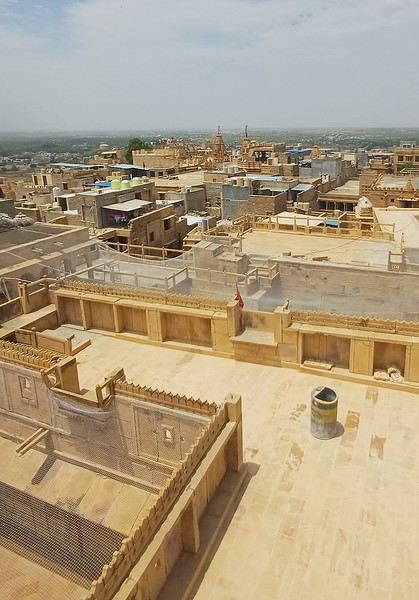
As we continue up to the fort, the latest imperial hall of the Rang Mahal ("Palace of Colors"), where the blend of Oriental and European styles—along with the collection of frilly palanquins favored by the last Maharajas—is a triumph of the most Indian kitsch! It’s in this hall that we strike up a conversation with a group of women from Jaisalmer (the term "domestic tourism" couldn’t be more fitting here). One of them, in a pink sari, takes a shine to Théo and has her photo taken with him, cuddling him while he cries and screams, scared of this stranger pressing her cheek against his—though she means him no harm. A tower at the top offers a breathtaking view of the entire fort and a 360-degree panoramic perspective of the city, its rooftops, and, on the horizon, the desert that surrounds it. "This is why I love my Jaisalmer!" the woman in the pink sari says proudly, walking part of the way with us as she takes in the view with sweeping arm gestures.


Even though I’ve visited this site three times now, I never get tired of it. With my audio guide in my ears, I almost feel like I’m back in the time of the Maharajas, at the heart of family intrigues or the danger of assaults and sieges that marked its history. This majestic fort more than deserves its UNESCO World Heritage status and the nickname "Desert’s Carcassonne."


But back to reality—the enchanting charm of this walk through the ages is sometimes broken by the heat, the approaching mealtime, or managing Théo, who needs to be carried, watched, or changed, which slightly breaks the spell. Not to mention that Magali and Kelyandre aren’t as into history and architecture as I am. There are still rooms, temples (especially the stunning Jain temple), and old havelis to see, but the visit is getting tough for the kids, and our little group has already soaked up the spirit and magic of the place, so we don’t feel obligated to finish. I’m not too frustrated since I’ve already seen it all, and when I think about it, it’s already amazing that the kids have experienced all this. On our way down the fort path, we run into our gypsy friends, the jewelry vendors. Magali thinks their pieces are beautiful and plans to leave with a few bracelets for herself and as gifts. She tries them on her wrists and ankles, and we negotiate the inflated prices they throw out with dubious arguments ("Okay for this one, but I can’t lower the price of that one—it’s pure silver!"). We wrap up the deal when the price works for everyone: not too high by Indian standards but slightly in their favor (and especially for the glue pot supervisor). Right after, we grab a rickshaw to our beloved Green Park Restaurant, where we once again enjoy the cool air and delicious Rajasthani cuisine. Finally, we head back to the hotel for a much-deserved break.

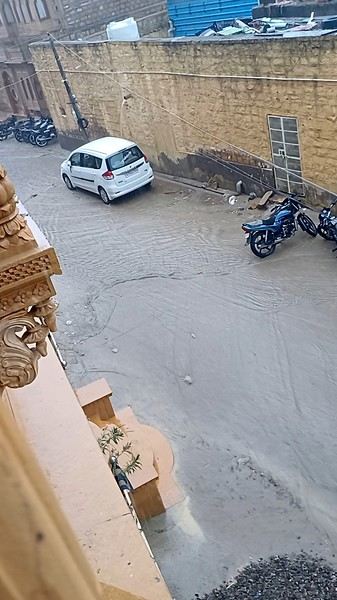
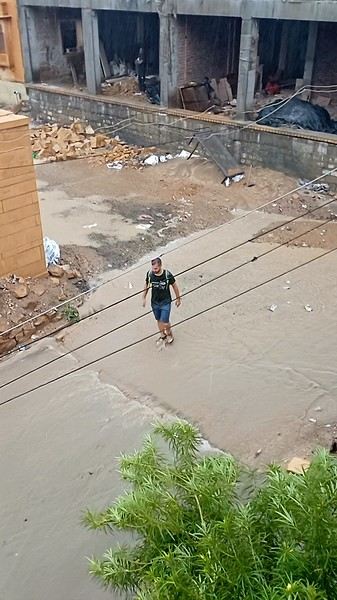
By mid-afternoon, the sky darkens. The day before, in the desert at Khuri, we’d heard there had been storms in the area and even a bit of rain in Jaisalmer, which is rare here, even during monsoon season. We quickly take advantage of the pool, whose water was being changed that morning with a huge pump. The new water isn’t crystal clear—slightly sandy (which doesn’t seem illogical)—but it’s a huge improvement over its state two days ago. There are other people there, French of course, who arrived in the meantime. After a few laps and a good cool-down, a few drops start to fall, and we head back to the room. Minutes later, a downpour begins, and from our window, we see a small river forming and starting to flood the street. A rare sight in Jaisalmer! In any case, it has the advantage of chasing away the heat and cooling the air.


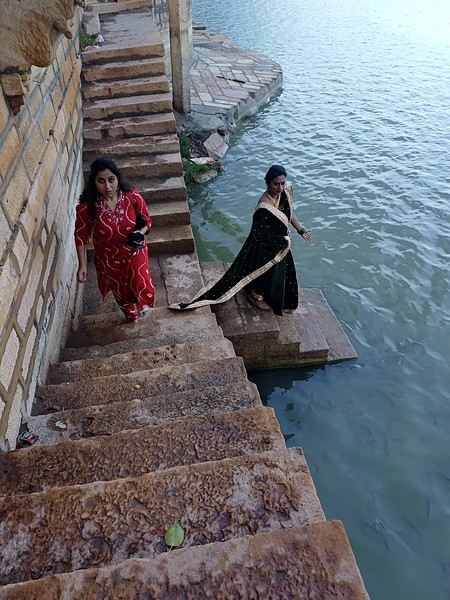
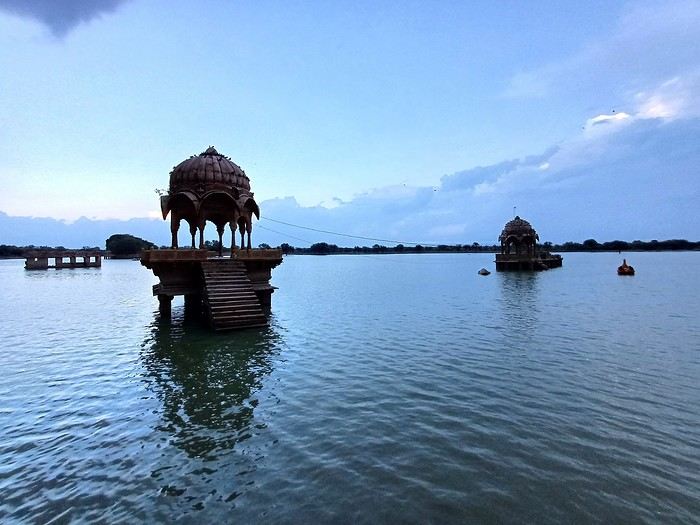
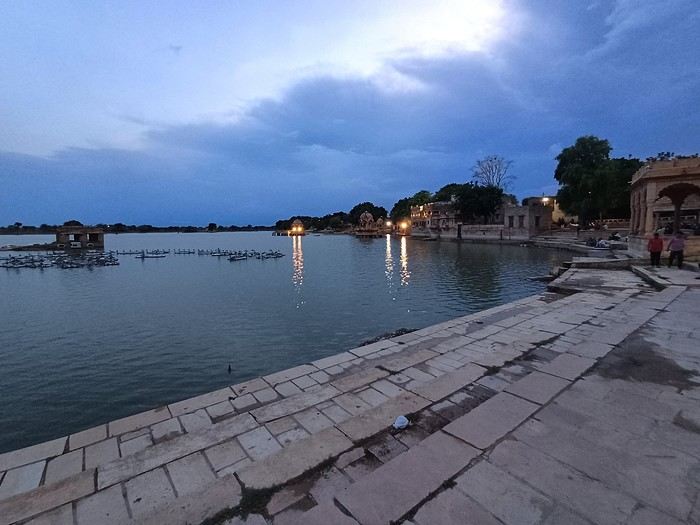
When the rain stops, we head out for our last outing to Gadisar Lake, a spot popular with both locals and tourists at sunset. This is something new for me—I’ve never really had the chance to visit it properly, just in passing. We find Gadisar Road partially flooded, resigned to soaking our flip-flops and sandals in the big muddy puddles left by the monsoon. After about fifteen minutes of walking, on the right, a path leads to the lake, surrounded by steps descending to the water’s edge (ghat), as there almost always are around water points in India, serving as both sewers and sacred Hindu sites. We stroll along the ghats and enjoy the air, which has become much fresher and more pleasant. Professional photographers and their models in elaborate saris walk the shores, scouting families and dressed-up couples who want to capture the moment. It’s an activity Indians love, and you see it in many tourist spots across the country.

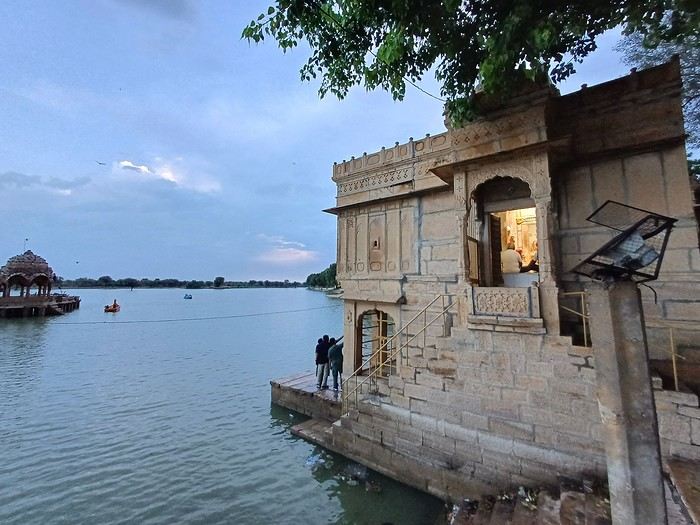
There are quite a few people posing against the enchanting backdrop of cenotaphs emerging from the lake, fading into the blue of the gathering night. From a temple with walls licked by the waves, a puja resounds—its chants, bells, and drums instilling that atmosphere of fervor so unique to India at the transition between day and night. This is the temple of Hingalaj Mata, the tutelary goddess (kuldevi) of Jaisalmer’s rulers and many families in the city. We join the devotees for a moment as they leave their final offerings and finish their prayers before the Brahmin priests close the sacred site. We particularly enjoy this twilight walk, but night is starting to take over.

Now we need to find a place to eat. We hesitate between the restaurant terrace by the lake or trying somewhere new. But we love the Green Park so much that we flag down a rickshaw to take us there again. The staff welcomes us like regulars (which we are), and we eat divinely well once more—though a bit lighter this evening after all those rich meals! To switch things up from the heavy spiced dishes in sauce, we even try their excellent pizzas. Back at the hotel, we pack up most of our things because tomorrow, our bus leaves early. It’s the next leg of our journey: Jodhpur. The kids fall asleep quickly, and so do we...

Ratings Jaisalmer 😊😊 Jaisalmer Fort 😊😊😊 Gadisar Lake 😊😊 Khuri and Badal Singh House + camel safari 😊😊😊

Hotel Tokyo Palace 😊😊😊 Green Park Restaurant 😊😊😊 Desert Boy's Dhani 😊😊

Yet another travel journal in this (all too) familiar Rajasthan, but with family and kids

Kate · 2025-09-23 · Message 67 of 202

To switch from the heavy spiced saucy dishes, we even tried their really good pizzas

Did Théo eat spicy food like you do? I’m amazed at how well-behaved this kid is, adapting to all sorts of conditions. Maybe there were some meltdowns you’re sparing us from, but still—what a funny little guy ;)

Yet another travel journal in this (all too) familiar Rajasthan, but with family and kids

Pagaljavab · 2025-09-23 · Message 68 of 202

Hi Kate

No, Théo wasn’t eating spicy food like we do! With his mom regularly cooking African dishes and me often making Indian or other "far-off" cuisines that are pretty spicy (we go through a *lot* of chili at home), he’s been used to eating this way since he started eating like us. But as he got older, he started feeling the effects of the spice. He can still handle mildly spiced dishes if they’re not too strong, but otherwise, he’ll let us know when it’s a bit too much. As I mentioned at the start of the journal, in India, we’d order him what little Indian kids eat: simple daal with just turmeric and butter, served with rice or chapaati (which he *loved*), and raita (yogurt with cucumber, onions, or sometimes tomato). He’d also eat pizza or a bit of our food if it wasn’t spicy. Otherwise, he adored cookies, cakes, ice cream, and lassis!

Of course, I can’t include every minor detail like "he cried for two minutes because we took the blue comfort blanket instead of the white one"—otherwise, each already-long entry would be even longer... But the journal is far from over, and the major events will be covered.

I mentioned this at the start too: - Théo’s been traveling with us since he was 2 months old. He *loves* it when we go away (sometimes he’s the one asking when he hears the word "vacation"), and by the time of the India trip, he’d already been to Brittany twice, crisscrossed France, and visited Norway on trips longer than a week. So this was pretty much a normal setup for him—just a *very* different environment! - At 2 years old, he was already so energetic and chatty during the trip, but he was much more subdued by the chaos and all the new things around him, which surprised us at first. Still, he was very observant. Since he was both inhibited and absorbed by what he saw, there weren’t any major meltdowns: he was just living his adventure. That said, he asked to be carried more than usual, a little bothered by the lack of sidewalks, the traffic, and the humid heat—which was *brutal* for our backs...

So overall, he was really well-behaved!

Yet another travel journal in this (too) familiar Rajasthan, but with family and kids

Jojoone1 · 2025-09-23 · Message 69 of 202

Taking them young is how you pass on the love of travel. I have fantastical memories of some trips that weren’t even that long ago, but the world seems so huge through a child’s eyes. Thanks for this really detailed travel journal... and well-seasoned 🙂

Yet another travel journal in this (all-too-familiar) Rajasthan, but with family and kids

Marien33 · 2025-09-24 · Message 70 of 202

Théo is an old, wise soul, no doubt about it!

Yet another travel journal in this (all-too-familiar) Rajasthan, but with family and kids

Pagaljavab · 2025-09-24 · Message 71 of 202

Thanks, Joël!

Yes, I’m making it hearty and spicy—something that’ll delight some and put off others.

I totally agree with you: travel, whether it’s to Brittany, Senegal, Norway, India, or the Cantal region, opens up new worlds of imagination for kids. I’ve noticed the impact on their language development, knowledge, and creativity is undeniable.

》》Marien 》》: not sure about the "old wise soul" part, but definitely wide awake!

Yet another travel journal in this (all-too) familiar Rajasthan, but with family and kids

Did0764 · 2025-09-24 · Message 72 of 202

Good evening, what a trip with this young Theo! Thanks to you, I’ve improved my knowledge of Indian cuisine by learning how to spell "poha" (I couldn’t find the accent on my phone) and also that it’s feminine... I love this breakfast. Best regards.

Yet another travel journal in this (too) familiar Rajasthan, but with family and kids

Pagaljavab · 2025-09-24 · Message 73 of 202

Oh, a connoisseur!

You’ve given me the chance to clarify a minor point that might raise questions for rare birds! You noticed I put Hindi and other Indian language words in italics and transcribed them using long vowels like ā, ī, ū and retroflex consonants like ṭ, ḍ, ṣ, etc. That’s the academic way Sanskrit and Indian studies scholars transcribe them. Since I’m a purist about it—and out of habit—I make the effort. This method is also the most precise in terms of sound accuracy. I admit it’s a bit overkill for a travel journal on VF, but it’s a professional deformation—I can’t help it!

There are other, more common ways to transcribe. Indians mostly use an English-based system, thanks to colonization. In Pakistan, it leans even more toward English sounds. But there are other methods too—some avoid English sounds and mark ā as *aa*, or even simpler versions that don’t mark long vowels or retroflex consonants at all.

So there’s no single correct spelling—it’s just a transcription choice, and I happen to use the most pretentious one. Oh well! 😄

*Poha* (or *pohā* for the Indianist pedants) is the exact sound-for-sound transcription of the word in Devanagari script: पोहा. But you might also see it written as *powa* or other variations. I’m not sure if *poha* is masculine or feminine in Hindi—probably masculine since it ends with a ā, though there are exceptions... I went with *la poha* because it just sounds better to my ear than *le poha*.

Yes, I love poha too and make it at home sometimes—it’s so easy and quick to prepare!

Yet another travel journal in this (too) familiar Rajasthan, but with family and kids

RichardXI · 2025-09-28 · Message 74 of 202

Hi Pagal,

Following Kate’s wise and sometimes insistent advice, I finally got around to reading your long-form travel journal. Since I’ve just read it in full—at least the part you’ve published so far—I won’t dwell on details or ask specific questions. Instead, I’ll share a few general thoughts and impressions.

First off, I really liked how you framed the idea of retrospective travel in your introduction—how it requires and encourages introspection. That’s exactly what I think too: while we obviously write a travel journal for others, we build it first and foremost for ourselves. I’m not as much of a "roots" traveler as you are, but in your descriptions of India, I often saw myself. You brought back so many memories and sensations from my three trips there.

Like how Indians, without even seeming to try, always manage to cut in line. Or that very Indian reality where the complications you expect never happen—or, on the contrary, they *do* happen, just not when you planned. I loved your account of the absurd complications during your endless trek to visit the Adalaj Stepwell from Ahmedabad. Adalaj—so far, yet so close!!! I also really enjoyed when you described that unique moment in India when evening falls. That strange atmosphere—"effervescent and peaceful," as you put it—steeped in spirituality.

Of course, like everyone who reads you, I was impressed by how you guide your little family through discovering the country. Part luxury guide, part attentive father and companion. A guide who strives to help everyone experience the best possible discovery—protective and reassuring at times, but also able to give each person, depending on their age, the autonomy needed for true immersion. I also like how you reinvigorate a sometimes lengthy narrative with beautiful literary flashes.

Anyway, I’m rambling a bit, and I don’t want to overanalyze your story. I’ll just say that, in the end, reading you made me feel like the fifth virtual member of your little group.

Can’t wait to read the rest! 😉

Yet another travel journal in this (all-too) familiar Rajasthan, but with family and kids

Pagaljavab · 2025-09-28 · Message 75 of 202

Dear fellow Audois compatriot,

Just as I was slowly getting back to this travel journal after a few intense workdays followed by a horrible weekend with tonsillitis that left me feeling like a zombie, I came across your very kind comment.

I'm glad Kate nagged you into reading this journal because I can tell you did so very carefully and thoughtfully. You picked up on the key passages that really matter to me. I don’t have much to add since you’ve perfectly captured the essence of it. What you mentioned makes me even happier because it’s exactly what I was aiming for.

I know it can sometimes be a bit long and tedious to read, but I don’t want to give up on this subjective, somewhat exhaustive style that tries to include as much as possible from the three other co-travelers (you know this challenge well). It’s already weighed down by my totally unapologetic, overblown style that alternates between very "Rough Guide/Lonely Planet"-style informative passages and pretentious scholarly and literary ambitions!

Thrilled to have taken you along in my rickshaw, in any case 😄

Not sure if the next part will come tonight, but soon.

Another travel journal in this (all too) familiar Rajasthan, but with family and kids

Pagaljavab · 2025-10-02 · Message 76 of 202

Day 7, July 30: Jaisalmer to Jodhpur "A wild dash and a bubble-like journey to bustling, traditional Jodhpur"

We wake up very early because our bus to Jodhpur leaves around 6:40 AM. I even set my phone alarm so carefully that I wake up naturally well before it goes off. I have time to shower and pack up to save time. That wakes Magali, who gets up and starts moving. The night before, we’d taken the time to check out and pack all our suitcases so we wouldn’t waste a second. The bus departure point in front of the agency on Gadisar Road is just a two-minute walk away, and we calmly but efficiently finish packing, wake the kids, and double-check we haven’t forgotten anything in the room. We leave feeling relaxed because we’d planned plenty of time to arrive early in case there was a problem.

We’re about to leave when I notice a missed call—brand new. I call the number back. Someone from the agency answers urgently, saying our bus is about to leave! They tell us to hurry. For a split second, I’m stunned—I don’t understand why the bus is leaving early. We’re on time; I’d checked the schedule online countless times. But I snap out of it immediately, and from that moment, everything happens in fast-forward: memories alternate between precise details and sequences blurred by the rapid succession of events. In this extreme emergency, my reptilian brain kicks in instantly and takes control. I explain the situation to Magali, who’s briefly stunned too before springing into action. I grab the two huge suitcases and the biggest backpack, Kelyandre takes the small suitcase and the rest of the backpacks, Magali carries Théo, and we race down the hotel stairs. Panic starts to set in when we see the entrance gate is locked! And our bad luck continues when we spot the two receptionists in a deep sleep—one on a bench, the other on the floor... I feel a little awkward but quickly go tap one on the shoulder. After a blank stare, he realizes he’s not dreaming anymore, and I explain that the gate is locked and our bus is about to leave. He gets up mechanically, like a robot set to fast-forward (I’ve noticed this ability many times in India, especially with night receptionists—they can sleep like babies in the most uncomfortable conditions and wake up instantly, ready to go, as if they’re always on alert in some corner of their mind). He grabs the key and opens the gate. Things are really off to a bad start... I barely have time to say thank you and goodbye before we rush down the little street toward Gadisar Road, suspended in time, thinking it’s probably too late. But loaded down like pack mules in single file, with me leading with my two 20-kilo suitcases, we’re on autopilot, keeping up the pace without questioning it. We cross Gadisar Road, braving the traffic danger—the only goal is to reach the agency across the street. No bus in sight... When we get to the other side, an employee (not the one from the day before) tells us the bus left a few minutes ago... and there isn’t another one anytime soon. We barely have time to feel desperate when a passing rikshāwālā slows down in the middle of the road at our level. With a hesitant but insistent look, he seems to be urging us to get in. Since he arrives at this crucial moment and seems to be trying to identify us, I don’t know if the agency called him specifically for us or if he’s just there by chance and was flagged down by our daring crossing. The urgency of the situation pushes that existential question out of my head—we’ll never know the answer anyway. I think the agency employee explains the situation to him in a few words, tells us to get in, and asks me to call the person from the agency who just tried to reach me. Without missing a beat, we’re already in the vehicle, which accelerates as fast as it can, swerving to avoid the various unidentified rolling or walking obstacles in our way. I hand my phone to the driver, who does his best but doesn’t seem very optimistic. With one hand, he zigzags through the morning traffic like a Formula 1 driver, and with the other, he calls the person. I understand he’s getting the bus conductor’s number. Every few seconds we’re stuck in traffic feels like an eternity and crushes our slim hopes... “Forget it, it’s over...” I mutter under my breath. He calls the bus right away. The conductor answers! I’m hanging on every word of their conversation, just like our little group is hanging on what I’m trying to translate for them. There’s noise, but I catch the gist... He’s trying to figure out where the bus is in relation to us. The conductor seems to be telling him to try to catch up but that he can’t stop to wait for us. The chase continues for a little while, and suddenly, our driver says, “It’s there!” We look ahead and spot the back of a private bus about twenty meters in front of us on the road, near the train station. It’s moving slowly but not stopping. Our incredible rikshāwālā accelerates, weaves through traffic, tries to call, and waves... Miracle: the bus stops—the driver saw us in the mirror! We get out, pull our gear from the trunk with the help of our savior, to whom I barely have time to express my deepest, most sincere gratitude, almost tearing up. He only wants 50 rupees. I give him 100, 150, or 200—I don’t even remember, whatever I can grab from my wallet in time. The conductor helps us load our suitcases into the luggage compartment and tells us to hurry and get on. We’re on the bus...

Still disoriented from the brief but intense time that’s just passed since we left the hotel room—maybe just over five minutes—we’re nevertheless happy and incredulous about our luck: we feel like we’ve been saved by a miracle. Our lucky star must have been shining on us. Where did that rickshaw driver come from? How did he manage to catch up to the bus? Whatever the reason, we’re now making our way down the crowded aisle with the conductor toward our berths in the already-moving vehicle.
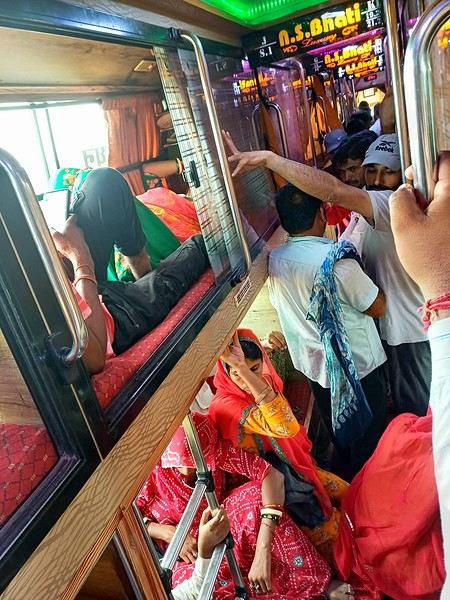
Another time, another set of concerns. When we were planning the trip, I raved to Magali about India’s sleeper buses, which she found pretty dubious: how could you fit berths in a bus, and how could it be practical? I tried to describe it: “There are open berths along the aisle on the bottom and others above, kind of like cabins you can close to have some privacy. The private buses are comfortable—you feel good in them, like in a bubble!” But no matter what I said, my words didn’t quite click in her mind, which remained skeptical about choosing this option... When we reach the back of the bus, Magali looks up at the famous “cabins.” We lift Théo up to put him in one, then the backpacks. She climbs up using the little metal ladder, followed by Kelyandre. Verdict: she’s immediately won over! “I didn’t imagine it like this at all! It’s great—why don’t we have this in France??” (Seriously, why *don’t* we have this in France?) She’s surprised by how much space there is—plenty for her and the two kids. “See, I told you!” I say from my berth across from hers. The quiet in our cabins contrasts with the intense moment we’ve just lived through. I grab my phone and try to make sense of what just happened, looking for the mistake. On Redbus, there *is* another bus from the same place, but the one we’re on, which left early, isn’t listed... I start to realize that despite my experience, I made a rookie mistake. The employee who sold us the tickets the day before had assured me it was the only private bus to Jodhpur at that time, so I thought it couldn’t be any other than the one on Redbus. I took the earlier time as a meeting time rather than a departure time. Since companies sometimes arrange things based on the number of travelers, I conclude that this one chartered a bus to replace the other... except it was scheduled earlier. I should’ve anticipated these Indian surprises—I know them well... But in the end, it doesn’t matter because this new, funny experience already amuses us, and if all goes well, we’ll arrive in Jodhpur earlier than planned. You never waste time in India, and there’s always a solution: just more good memories!

As the trip continues, I check my Lonely Planet and my phone for inspiration for the next stage. We occasionally switch cabins with Kelyandre, who—less sensitive than us to the contemplation of life scenes and the evocative landscapes of the Thar Desert passing by our windows—wants to hole up a bit to pass the time with video games.
Magali still can’t get over how comfortable these sleeper buses are! Plus, she realizes that being able to adjust the window opening provides natural, customizable air conditioning, which is more pleasant than the A/C. Not everyone is as lucky as we are—most passengers are sitting on the benches below, and some are even standing, squeezed in and holding onto the berth railings. At one point, a woman in a red sari sitting below our cabin gets motion sickness and starts vomiting (a pretty common scene in India) into a bag (less common...). Magali instinctively digs into one of our bags and suggests I offer her the cleaning wipes we kept from our Vistara flight and little packets of pān masālā, that fragrant mix of digestive spice seeds and sweet balls we’d saved from our visits to the Green Park Restaurant in Jaisalmer. The woman is grateful.

The bus roughly retraces the last part of the route we took by train a few days earlier, with a short stop in Pokhran (the radioactive city), where I quickly get out to stock up on burning chāy, biscuits, samosās, and other kachauḍī. A few kilometers later, I’m moved to pass near the temple of the god Pābūjī in Kolū and the little village of Kalau, which I reached a decade ago on the roof of a minibus, wandering through desert trails and hamlets while conducting an anthropology field study—one of my best memories from my ten trips to India... Our bus doesn’t linger, and before we know it, Jodhpur is getting closer. In the town of Dechū, where we don’t have time to get out, we grab the little plastic bags held out by street vendors who crowd under our window in a cacophony of things to sell. We hastily toss a 20-rupee bill into the air before the bus starts moving again. We open the little transparent packets of dāl kachauḍī, those little Rajasthani fried flour dumplings stuffed with spicy yellow lentils, which we enjoy in the quiet of our sleeper bubble: no restaurant, no matter how famous, could ever serve us better ones than these.

The first signs of suburban life appear in the semi-desert landscape: commercial and industrial buildings, makeshift camps for poor workers building road infrastructure, before entering Jodhpur’s urban area. At 10:45 AM, the bus finishes its journey at a bus station that’s more like a big gas station—not very close to, but not too far from, the historic center.
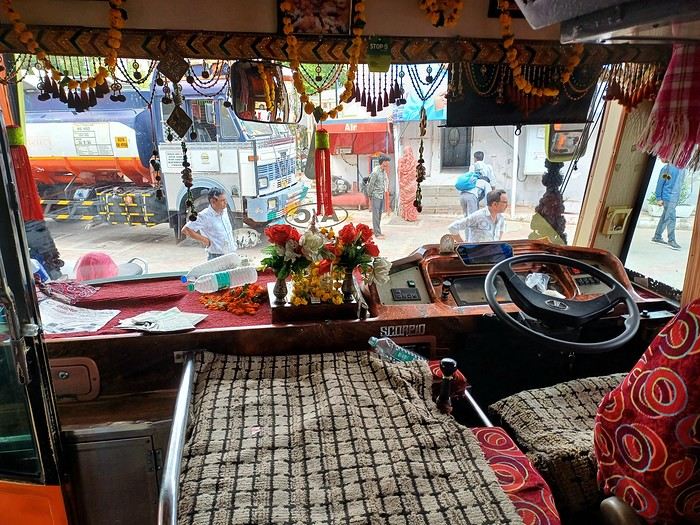
We’ve barely taken four hours, which is less than the five announced, but we didn’t see the time pass. The trip felt like it lasted two or three hours, since these sleeper buses let you lie down in peace, doing your own thing or watching the fleeting slices of life pass by your window—teaching you more about the country than visiting a hundred museums. As soon as we get our suitcases, a group of rickshaw drivers rushes toward us.
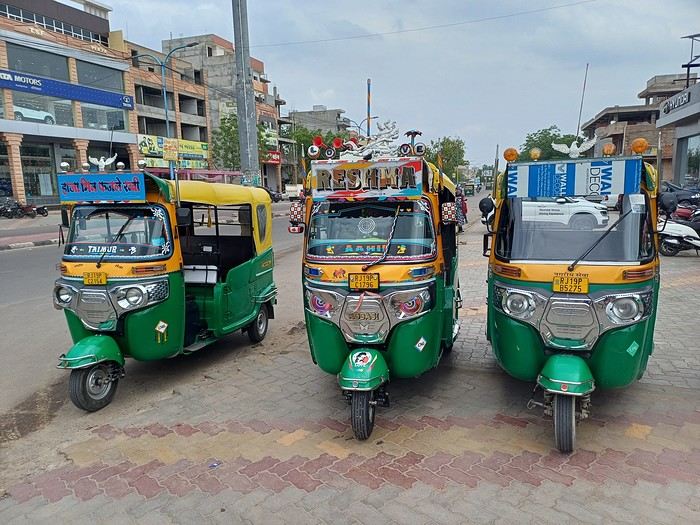
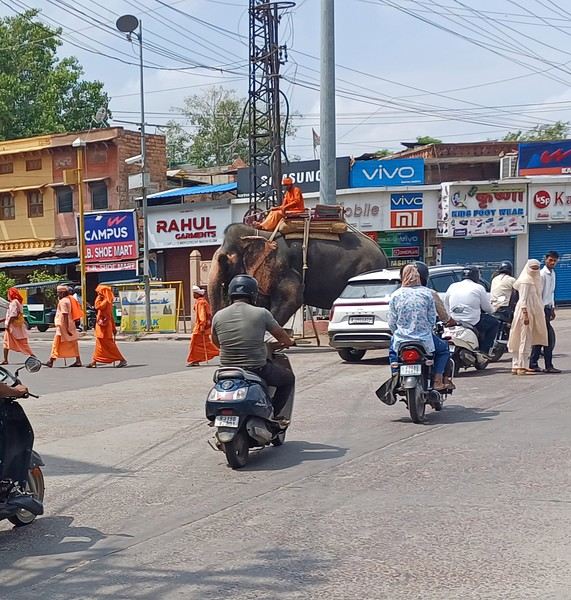
At the sight of this mismatched foreign family, they start making crazy offers. I negotiate hard because I remember that, more than anywhere else in Rajasthan, Jodhpur’s rikshāwāle are notorious—they quote high prices and refuse to go below a certain threshold. I immediately pull out my Hindi artillery, explaining that this is my fifth time in Jodhpur and I know the real prices. Everything still happens with laughter and good humor, ending with a price slashed to 150 rupees, which isn’t bad given the city’s “expensiveness” and the few kilometers to our hotel. One of the friendly drivers takes us. We cross the main roads, and in the middle of the traffic chaos, the fleeting sight of an elephant in the middle of the road makes me turn around suddenly: “Oh! An elephant!” I haven’t taken any hallucinogens, and it’s not pink anyway... I grab my phone and stick my hand out the window to try to frame it blindly... Magali has time to see it, but the kids, not quick enough this time, miss it.
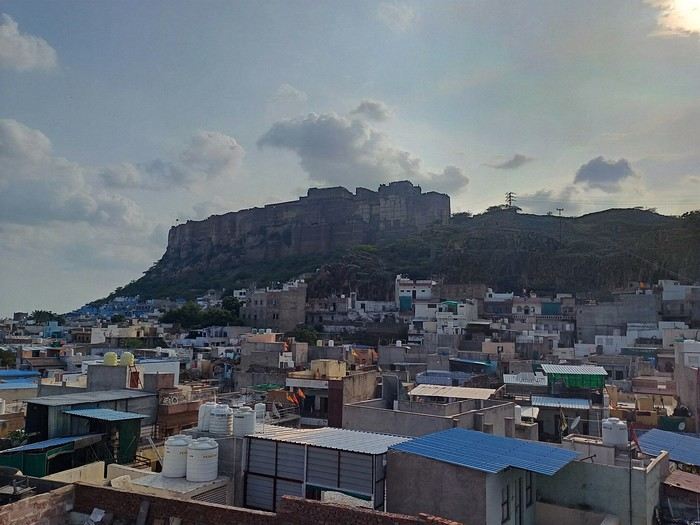
The rickshaw crosses the iconic Clock Tower Square (Ghaṇṭā Ghar), Jodhpur’s most famous market, with the imperial Mehrangarh Fort in the background, heading toward the old city’s alleys where our hotel is located. There it is—blue Jodhpur! The feeling of being in timeless India, right in the heart of Rajasthan’s second-largest city. After a few tight squeezes in the narrow alleys, forcing rickshaws and cars to back up and take detours, we arrive at the Jodhpur Heritage Haveli, where we’ve booked three nights—one of our “splurges” of the trip, at almost 5,300 rupees (49 €) per night. Yes, that’s fine, but for me, it’s almost unheard of (in India, of course). We’re welcomed by the Nepali manager and his family, whose commercial but still pleasant friendliness has taken over this authentic havelī turned charming hotel. The ground-floor courtyard is magnificent, and as is typical of a havelī, it opens up to the upper floors. After registering our passports and paying, an employee leads us to the top floor, where we discover a beautiful room with two beds, traditional decor, and—most importantly—windows with an incredible view of the fort! Magali, who has a greater appreciation for charming hotels than I do, is won over, just like Kelyandre. Wooden furniture, cozy traditional-patterned bedding, impeccable bathroom: it’s perfect. We check out the dizzying rooftop, which, like many competitors at the foot of the fort, offers a breathtaking panoramic view of the city.
For now, as with every arrival at a new stage, the priority is to freshen up and clean off the grime. And since it’s lunchtime anyway, I suggest to Magali that we go to Janta Sweet Home, a legendary institution in Jodhpur’s culinary scene—a street-food-style restaurant where I last went in 2007, during my first trip to India.

I suggest walking to soak up the city’s atmosphere. We wander through the blue alleys before emerging again at Ghaṇṭā Ghar, where Magali starts scouting for shopping. The sun is beating down. Théo walks a little but quickly asks to be carried after a few steps, still a bit wary of the traffic that doesn’t seem to follow any logic. We walk along the crowded sidewalks of Nai Sarak, a wide central avenue packed with all kinds of shops, at the end of which is our destination. Magali spots a fairly large Indian clothing store, Bhandani, whose colorful merchandise is beautifully displayed on mannequins by the roadside. A few dozen meters later, I don’t recognize the place from 2007, and Google Maps shows it on the other side of the big avenue, which we confirm. It’s now a modern building, quite different from the one I knew 17 years ago. As we walk in, the air conditioning’s coolness envelops us, reviving us. The ground floor is dedicated to takeout and sweets, so we head upstairs, where a welcoming waiter seats us at a large table with a view of Nai Sarak’s hustle and bustle. We look at the menu while the sweat stains on our clothes slowly disappear. The place’s concept is that you have to go order at a counter, leaving your name, before coming back to pick up your trays when your name is called over the microphone. The waiter is exceptionally hospitable, chatting with us, giving us advice, and making the ordering process easier. Then the “Misterrrr Maïkeul! Misterrrr Maïkeul!” calls over the microphone make everyone laugh every time my name is announced to pick up a tray, making me feel like a VIP. The menu is incredibly varied, with specialties from Jodhpur and Rajasthan, plus a plethora of snacks from northern, southern, or even globalized India, at very reasonable prices—slightly more expensive than street stands but much cheaper than the restaurants we’ve been to so far, with comparable quality... We try and share several small dishes while the amazing ice cream menu catches Kelyandre’s eye. The waiter continues to be attentive to us, as if we’re special guests, which has often been the case so far: the feeling that our family attracts the sympathy of Indians settles in my mind. Practical, comfortable, delicious, and affordable—we’re enchanted by the place. We promise to come back as we leave with slightly heavy stomachs... It’s too hard to walk back with Théo, so we take a rickshaw, which we can’t get to drop below 70 rupees (the price we’ll always pay, more or less, for a short city ride after initial offers of 100 or 150 rupees), while a little beggar tugs at our hands, repeating “chapātī, chapātī, chapātī...”. In ten minutes, we’re back at our havelī for our traditional afternoon nap.
Yet another travel journal in this (all-too-familiar) Rajasthan, but with family and kids

RichardXI · 2025-10-02 · Message 77 of 202

Now that’s a chase scene! Well done! 😉

Another travel journal in this (all too) familiar Rajasthan, but with family and kids

Pagaljavab · 2025-10-02 · Message 78 of 202

Day 7, July 30: Jodhpur "Wild ride and bubble journey to bustling, traditional Jodhpur (continued)"

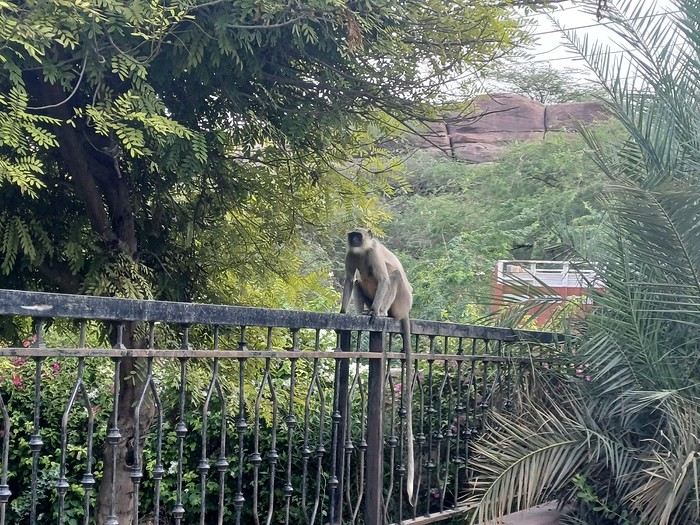
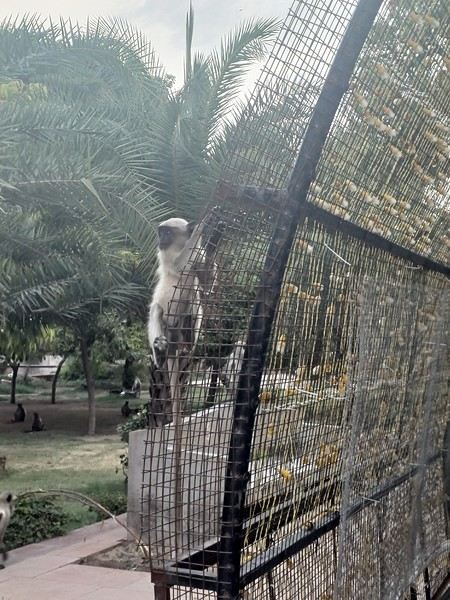
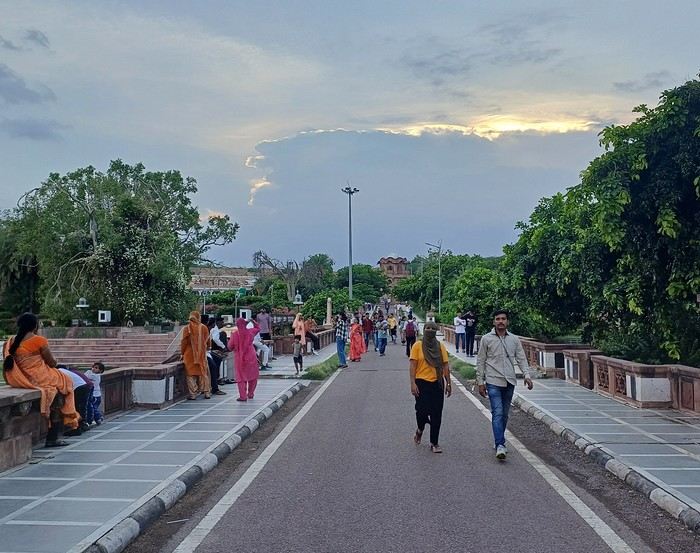
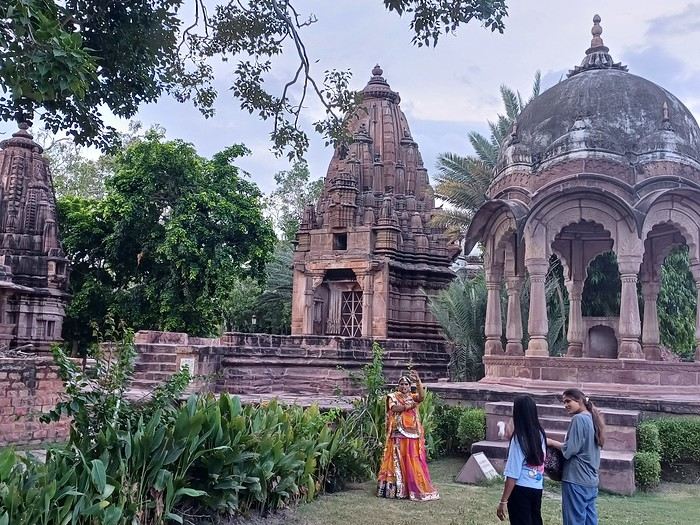
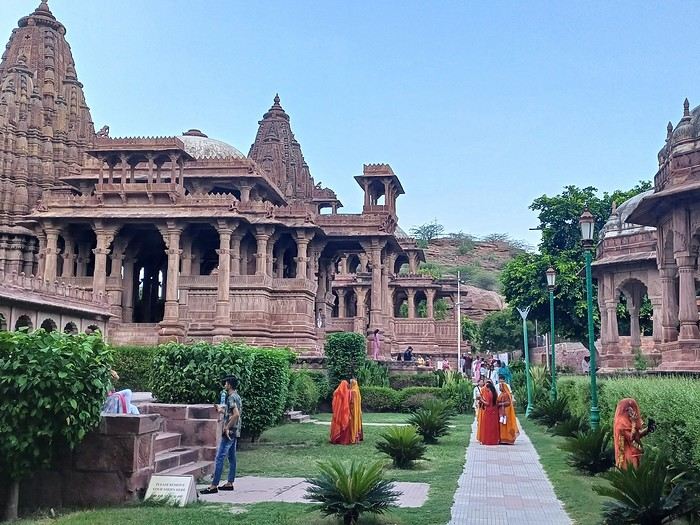
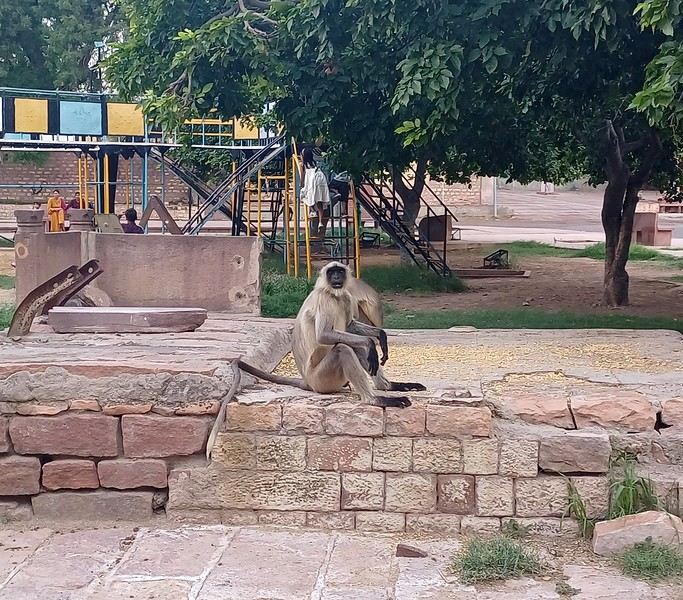
A much-needed digestive nap, and we head up to enjoy the view from the rooftop, where the heat has us guzzling lemon soda—the most effective drink I know against the heat: sparkling water, lemon, and sometimes a pinch of salt. Refreshing and thirst-quenching! It gives us a chance to admire the full view of Mehrangarh Fort in the fading light of the late afternoon. Earlier in the day, I’d suggested that, like the local families, we take advantage of the evening cool at Mandore Garden, a historic park located 9 kilometers from Jodhpur, in the village of Mandore, which was the ancient capital of the Maharajas of Jodhpur before they founded Mehrangarh in the 15th century on the hill overlooking the Blue City. With everything packed in our day bags, we head downstairs to negotiate a rickshaw. The driver offers us a round trip with a one-hour stop for 400 rupees. Deal done, we take the road that overlooks Jodhpur and heads toward Mandore. Kelyandre, who was starting to doubt my promise that there were monkeys everywhere in India, finally starts to believe me: numerous langurs jump in front of cars or into the trees along the roadside. After about twenty minutes, we arrive at the gates of Mandore Garden, where I hadn’t returned in 17 years because I’d had a bad experience due to beggars and touts who’d ruined my visit. Entry is free, but the kids really want to take the tourist mini-train (not too expensive) that goes around the park. After paying at the small kiosk at the entrance, we enter the park and wait for two passes to be able to board the toy train. No beggars or touts in sight... but dozens of langurs that impress Théo and Kelyandre. The tour is pleasant but anecdotal, taking a short route through the gardens and bringing us back to the starting point, where we begin the real visit on foot through the park’s wide paths. Families come to enjoy the last glimmers of the evening, and the langurs put on a show. The large gray-white monkeys, which Hindus venerate as representations of the monkey god Hanumān, literally swarm in these gardens, jumping and running in all directions, fighting, and clinging to everything they can, which amuses the kids (and scares them a little too). We walk along one of the main paths, lively and leading to the center of the park. This is where you can best see that Mandore Garden is the favorite spot for Jodhpur’s residents and Indian tourists to cool off in the evening. Along the path, there’s a paid sound-and-light show that we ultimately decide not to attend.

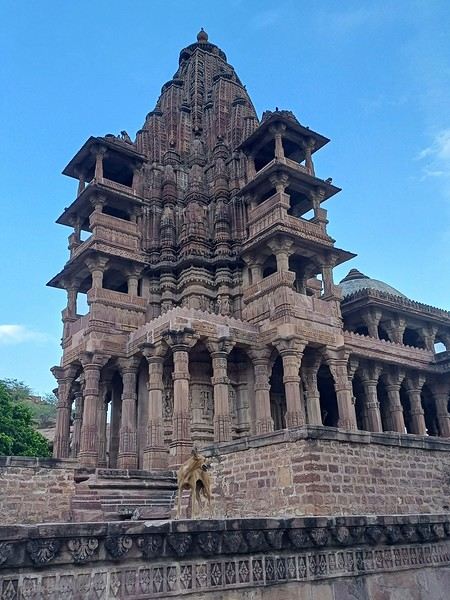
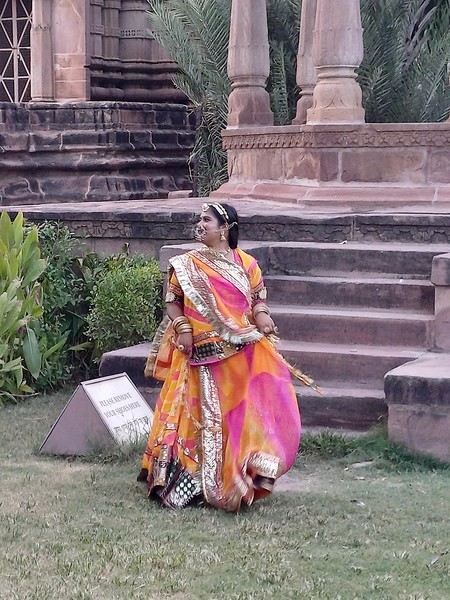
The park’s main historical interest lies in the beautiful royal cenotaphs and an 18th-century temple, when the former capital became the resting place of royal families. Their architecture is quite different from the chhatrī of the Jaisalmer region, as it wasn’t entirely inspired by Rajasthani craftsmanship but also by that of South India, which is evident in the upper parts. I wander among the buildings to admire the details. Of course, these cenotaphs serve as a luxurious backdrop for photos and selfies for Indians—couples, families, and those famous models posing for tourist photographers, whom I now recognize right away.

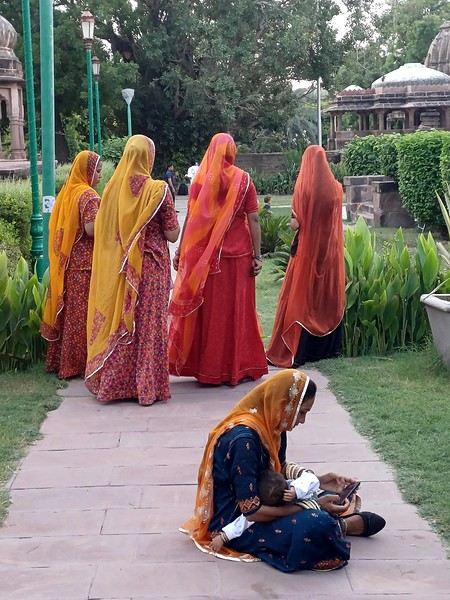
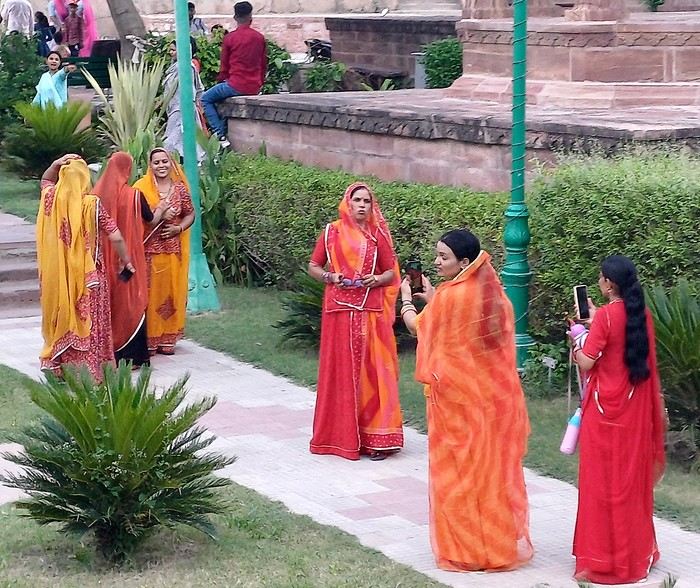
I particularly notice a group of Rajasthani women who I find very well-matched and photogenic.

The kids enjoy the few playground areas in the park, staying vigilant around the monkeys that guard them jealously...

There’s still another part of the gardens to visit, as well as a small hill that’s apparently the site of the old fort’s ruins, but it’s already time to meet our rikshāwālā who’s waiting as night falls. Magali and the kids loved Mandore Garden, and I ended up with an impression diametrically opposed to that of 2007. A lovely stroll and an interesting rediscovery in a new light for me.

Back at the hotel, we have dinner where the menu—both Indian and Nepali—encourages us to switch things up and try some momos, while Théo gets the same mild dāl as the owner’s little girl, who’s about the same age. We stay a while to watch the huge bats flying in front of the mysterious, illuminated fort. For the short day we spent there, Magali admits she likes Jodhpur even more than Jaisalmer. Before going to bed, we set up a game I’d imagined for Kelyandre before our trip. Since we didn’t know how he’d handle this overwhelming country, we thought it might help him follow a "thread of Ariadne" through the journey. Every evening before sleeping, we ask him questions about things we observed during the day. Each correct answer earns him rupees so that, in the end, he can buy something he likes. It encourages him to pay attention during visits, helps him engage more with Indian culture, and gives his trip more meaning. Then lights out in our very pretty room, under the mysterious rays of the impassive Mehrangarh Fort.

Yet another travel journal in this (all-too-familiar) Rajasthan, but with family and kids

Pagaljavab · 2025-10-04 · Message 79 of 202

Now that’s a chase scene! Way to go! Wink

Hats off to the rickshaw driver, especially! Yeah, a real desperate chase with a happy ending—one of the highlights of this trip!

I’ll take this chance to let everyone know that before continuing the journal, I just gave the previous episodes a quick dust-off by adding titles for each travel day and ratings for the places we visited at the end of each leg.

Yet another travel journal in this (all-too) familiar Rajasthan, but with family and kids

Marien33 · 2025-10-05 · Message 80 of 202

Without warning, we’re already in the vehicle, speeding up as much as it can while dodging the various unidentified rolling or walking obstacles in our way. I hand my phone to the driver, who’s doing his best but doesn’t look too optimistic. With one hand, he weaves his Formula 1 through the morning traffic, and with the other, he calls someone. I gather that the person on the other end gives him the bus controller’s number. Every few-second stop in traffic feels like an eternity and crushes our already slim hopes... “Forget it, it’s a lost cause...” I mutter under my breath. He calls the bus again right away. The controller answers! I’m hanging on every word of their conversation, just like my little group is hanging on what I’m trying to translate for them. There’s noise, but I catch the gist... He’s trying to figure out where the bus is in relation to us. The controller seems to tell him to try and catch up but that he can’t stop to wait for us. The chase continues for a little while, and suddenly, our driver says: “There it is!” We look ahead and spot the back of a private bus maybe twenty meters in front of us on the road, near the train station. It’s moving slowly but not stopping. Our incredible rickshaw driver accelerates, weaves through traffic, tries calling on the phone, waves his arms... Miracle: the bus stops—the driver saw us in the rearview mirror! I barely have time to express my deepest, most sincere gratitude, almost with tears in my eyes. He only wants 50 rupees. I give him 100, 150, or 200—I don’t even remember, just whatever I can grab from my wallet.
I really loved this moment because it reminded me of a very old “bad” memory that later turned into a “good” one. I went through the exact same situation during one of my first trips to India. I had just traveled overnight. I don’t remember where from or to anymore. But suddenly, at 5 AM, the *conductor*—that’s what they call in India (at least in the south) the person who hands out tickets and takes care of passengers—wakes me up abruptly to get off in the middle of nowhere, announcing that I’d arrived at my destination, even though I thought I still had at least another hour and a half. The bus had sped up and was early, and while I’d checked the time regularly, I hadn’t paid attention to the stops. I climb down from my bunk with my backpack and small suitcase, rushed by the man—like always during intermediate stops where passengers have to get off—without even having time to lace up my hiking shoes. And there I am, standing by the side of the road, dazed, my eyes still half-closed, my mind foggy from lack of sleep. And the bus takes off immediately, tires screeching. Then I realize that in his haste—and my dazed state—he forgot to open the luggage compartment and didn’t hand me my big suitcase. I shout to try and get someone’s attention, but the bus is already gone, and no one sees or hears me. I’m alone, lost, desperate, with no one to share my distress (at least you were with family to share the stress and emotion). And suddenly, in the first light of dawn, a rickshawallah appears out of nowhere and asks what’s wrong. “Don’t worry,” he says, “get in, we’ll catch up.” And off we go, racing like mad to chase down that hellish bus speeding away. No matter how much he honks—his horn is as loud as a truck’s!—the bus driver doesn’t seem to see or hear us... I’m sick with worry because, along with some essentials, my suitcase has all my vital medication, without which I’d be in danger. Turns out, the bus driver thought he was dealing with an angry rickshawallah and was speeding up to shake him off... To make a long story short, thanks to the quick thinking of the passengers—who we showed my bags and gestured to—the misunderstanding was cleared up, and the bus finally stopped. Like for you, the rickshawallah asked for a ridiculous price, and I gave him 4 or 5 times what he asked, thanking him almost with tears in my eyes... I’ll add that several times, in tough situations, instead of taking advantage of me by charging 4 or 5 times the price, service providers have actually been really fair and helpful in offering assistance.
VoyageForum — the largest community of French-speaking travellers.