Day 4, July 27: Jaisalmer
"Discovering the Golden and Fiery City"
We wake up gently in the daylight, a little after 6:30 AM. I call out to my crew and point toward the window of our compartment: the urban landscape of Ahmedabad, which we left almost twelve hours earlier, has given way to the arid yet green plains of the Thar Desert. We’re starry-eyed, feeling like we’ve entered a different country, a different journey. We’re truly in Rajasthan, entering directly through the gateway of the desert-like Mārwāṛ ("Land of Death"), while most travelers coming from Delhi logically start with the gentler Mewāṛ. Our carriage has emptied out quite a bit in the meantime. Many travelers get off at Ramdevra, a major pilgrimage site in Rajasthan where the temple of the highly revered divine hero Bābā Rāmdevjī is located. A few minutes later, the train briefly stops at Pokharan, a desert town famous for having been the site of nuclear tests in 1998 aimed at intimidating the Pakistani neighbor, and revered as a sacred place by some Hindu fundamentalists. I step onto the platform toward the only small shop open at 7 AM to grab some chāy and local biscuits before the train starts moving again almost immediately—because in India, trains restart very slowly, and people don’t rush to get back on when they see it leaving. We really enjoy this morning chāy, and the kids love the Indian biscuits you find in every train station, roadside stall, or small grocery store worth its salt: Parle-G ("G for genius," as the slogan next to the pure and angelic child on the packaging says—true, what a genius idea to make those little butter biscuits... oops, I mean "gluco-biscuits"!) or Hide & Seek with bourbon flavor (just "flavor," mind you) which wins their vote. For a good two hours, the Thar landscape rolls by—scrawny but green thorny bushes, occasional stretches of sand and dunes, villagers in vibrant clothing, and even a few chhatrī, those royal cenotaphs typical of Rajasthan... before we finally arrive in Jaisalmer. I was expecting a significant delay for such a long journey, which is routine in India, but the train arrives just a few minutes off schedule—a truly impressive performance. Everyone is absolutely enchanted by the Indian train, which has been a huge hit! We haul our heavy nomadic gear out of the air-conditioned carriage to experience the heat of Jaisalmer in July—and it’s only morning... From the platform, we spot the fort in the distance, a majestic citadel perched on its fragile mound of rubble above a twisted cluster of cubic houses, rising like an ochre mirage in the middle of the desert city.
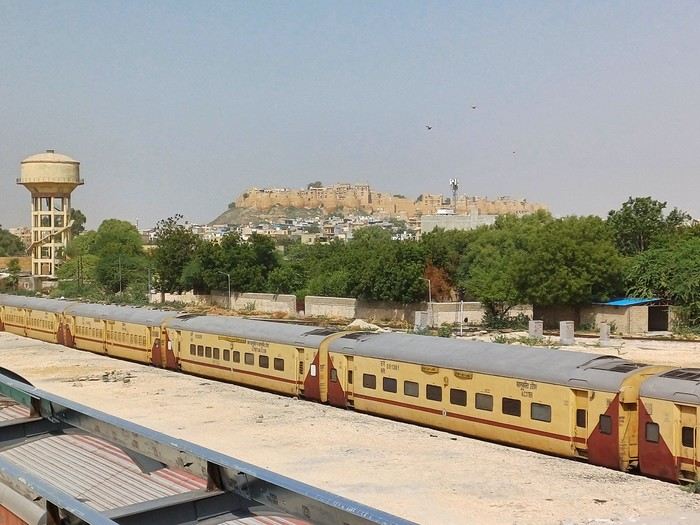
We carry our suitcases up the steps of the footbridge and arrive in front of the station, where a contrast with Ahmedabad strikes us: there are so many tourists! Travelers are almost forming a line in front of the station, while rikshāwālā, taxi drivers, and other touts swarm the crowd, asking for hotel names and quoting outrageously high prices. Some even speak a bit of French here and there. As usual, I don’t give in and manage to halve the price. It’s still more than it should be, but from a station in a tourist spot, the competition is united in not going below a certain floor price (which I think I’ve reached) for Western tourists. We mention the Hotel Tokyo Palace, located on a street near Gadisar Road, the main thoroughfare that forms the southern periphery of the old city. Among the plethora of accommodations available in Jaisalmer—many of which look alike and adopt that slightly tacky but charming style imitating the architecture of the havelī and the fort in a modern version—we booked this one by contacting the owner via WhatsApp. The hotel has a good reputation, known for its quality service (especially among Japanese and Asian clientele—the name doesn’t lie), its excellent food, and its pool, all at a price that seems almost too good to be true... Will there be a catch? The rickshaw pulls into a quiet street where hotels are under construction, unloads our luggage, and we enter the vast lobby of the Tokyo Palace, where we’re warmly welcomed by the owner and his team. We’ve booked a large deluxe room for four at just 1,850 rupees! Curiously, there’s almost no one in the establishment, and the owner offers us one of his suites for 2,500 rupees. But after visiting both, we stick with our first choice because the room already exceeds the comfort we expected: spotlessly clean, full of white sheets, blankets, and cushions with Rajasthani patterns, spacious, and beautifully decorated. A 21st-century Rājpūt room! How do they manage to maintain such a beautiful place with so few guests? It’s true that monsoon season is a low period, but still... On the other hand, this might explain the strong presence of touts in this city—otherwise, how would travelers discover them among so many options? We find a credible explanation for why we have such a nice hotel at such a low price: exotic Jaisalmer, even for Indian visitors, is a victim of its own success, and the competition is so fierce that prices have to drop to fill rooms. Either way, we appreciate the cool air conditioning, and after a night on the train, we each take turns freshening up in the fairly large bathroom. As we go down the wide stairs, we glance at the pool, which looks decent but turns out to have murky water with pigeon feathers and a dead bat floating in it... The owner explains that it’s due to the monsoon and that the water will be changed soon...
We set off on foot to conquer the fortress, climbing the alleys. What strikes us first in Jaisalmer is the sheer number of hotels—not to mention all the ones under construction. Fortunately, they all respect the colors and architectural style of the old city, almost entirely ochre, especially that of the havelī made of Jaisalmer’s yellow sandstone. These beautiful 19th-century homes were once (and often still are) inhabited by notables from princely Rājpūt castes or wealthy and pious merchant castes mārwāṛī. So, the slightly tacky style doesn’t clash with the older buildings. People greet us warmly from their doorsteps, as warmly as the scorching sun, and I exchange a few words in Hindi with them. I had memories of relentless touting during my previous visits in 2007 and 2014, so I’m pleasantly surprised by this disinterested welcome. Is it because we’re traveling as a family? I have a feeling it is—the kids are a hit, especially Théo with his blondish-reddish curls, and Magali with her African braids. We’ve only been walking for a few minutes, but the climb through the alleys is already making us sweat!
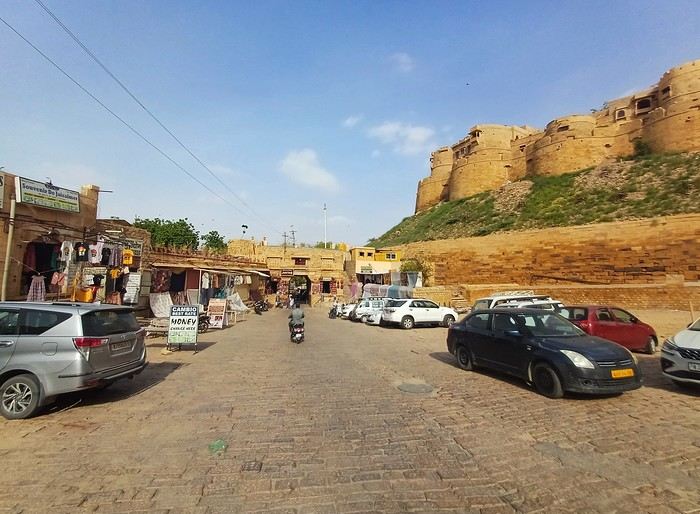
The atmosphere starts to change as we approach the fort, where tourist activity is concentrated, and we’re soon approached by touts. One of them, who heard us speaking, says: "I speak Fraaanch! I lived in Fraance, which city are you from?"... a line I’ve heard countless times from Rajasthani touts, often from gypsy and itinerant artist castes, who learn tourists’ languages to better hook them. Some of them have even actually lived in France for a few years, hosted by their French girlfriends while they’re married back home (true story). His jeans and plaid shirt don’t fool me: with his Rajasthani mustache and caste-specific jewelry, he’s a Bhopā—easy to imagine in a dhotī and turban, with his staff and goats grazing on the paths of the Thar. I try to make Magali understand that we should avoid engaging too much with his apparent friendliness and tempting references to France, because that’s the trap: he’s trying to create a connection so he won’t let us go so easily... And even though I have the experience to make it clear I don’t need his services, I know how time-consuming and draining it can be to shake them off! Sure enough, he sticks to us, offering a thousand services: tours of the fort and other city sites, restaurants, shops, etc... I tell him we haven’t planned any visits right away and don’t have time because we urgently need to exchange money, which is actually true since we’re running low. He fires back that he knows a clothing store at the fort’s entrance that exchanges money at a great rate because they take a very small commission. We don’t risk much by following him, and we’re free to refuse if it doesn’t suit us. Passing through the fort’s main gate, he introduces us to the owner of a small shop on the right. The rate is indeed very good: 1 € for 91 rupees, while the official rate is 92. Deal! We exchange a large sum that will last us almost the entire trip, and we take our time counting the bundles several times under the watchful eye of our desert gypsy, who observes the transaction from a distance. Everyone’s happy: we got a great exchange rate, and our sticky shadow, who won’t completely let us go, relaxes a bit because he earned a commission. He still offers to take us to see the gypsy women every Jaisalmer visitor has met, who sell jewelry and other tribal items further up the fort’s entrance. Again, we follow him because Magali isn’t against taking a look and bringing some back for herself and as gifts. I chat a bit with these Bhopā women, pastoral musicians of the Thar who, in the local caste system, traditionally serve the Rabārī camel herders (also called Rāīkā), for whom they play and sing the epic of the divine hero Pābūjī Rāṭhauḍ during performances that once lasted several days. I mention encounters with other bhopās I met during my previous stays in Rajasthan, whom they know well. Then Magali’s hair becomes the center of their attention: the mood turns friendly. Then we move on to negotiations, always under the sharp gaze of our companion, who tries to understand what we’re saying in French and intervenes somewhat authoritatively in mārwāṛī (the local dialect) to give them instructions. Clearly, they’re from the same family. Our new friends unsurprisingly quote outrageous prices for India, which we haggle over just as outrageously—a game that makes everyone laugh. Either way, we let them know we didn’t plan to buy anything today and that we’ll come back to visit the fort another time because we’re going to eat. Our buddy, of course, quickly suggests a restaurant near the fort, which we refuse because we’ve already spotted another one online that suits us, a bit away from the old city: the Green Park. He doesn’t give up and hails a rickshaw for us, giving the driver orders to take us to the Green Park as if he were the godfather of the fort’s touts, boasting that he negotiated the Indian price for us at 50 rupees—which, this time, isn’t far from the truth. He’s no longer too pushy about forcing other services on us: we’re tougher tourists than usual, and his commission has relaxed him a bit. Also, he doesn’t have time to waste and will move on to more innocent prey. He tells us to see him "next time."
The rickshaw leaves the fort’s vicinity, crosses the neighborhood of our hotel and Gadisar Road to take us a kilometer further to the entrance of a private alley leading to the Green Park restaurant. The area is quiet, slightly outside the city. The establishment faces a military building of the border forces because Jaisalmer is only 80 kilometers from the sworn enemy, Pakistan. The Green Park is once again that type of clean, air-conditioned, authentic, and affordable restaurant aimed at India’s upper-middle class that I particularly love—and which is definitely the category that suits us best, adults and kids alike. On average, it always costs us around 1,500–1,600 rupees for four without skimping on extras for high-quality dishes. We’re almost the only ones in the dining room, and we once again enjoy a wonderful welcome and exquisite cuisine: a Rajasthani thālī bringing together the region’s best specialties, dāl bāṭī chūrmā, another Rajasthani specialty of crispy bread balls dipped in dāl with crumbled sweets, the ever-present Kelyandre noodles, and Théo’s dāl khichṛī. Kelyandre even gets spoiled by the chef with a five-star ice cream scoop! We start walking back to the hotel, which isn’t too far, but the blazing sun, lack of shade, and Théo’s fatigue force us to (literally) disturb a rikshāwālā napping in his vehicle, who really doesn’t want to take us. He finally gives in for 40 rupees—a small price, but expensive for the one-minute ride it represents. An essential nap in the coolness of our cheap palace room, which even has window benches behind the curtains to lounge like Rājpūt princesses.
Around 4:30 PM, we set off again to visit Jaisalmer kā kilā (the fort). At this still scorching hour, activity around the site is almost at a standstill, and there aren’t even any touts bothering us—though we expected to run into the one who had latched onto us. As a Carcassonne native (among other things), I find that, for once, the tourist nickname "Desert Carcassonne" isn’t too far-fetched—you could imagine the famous medieval Cité of Aude under a *One Thousand and One Nights* spell, transplanted into the desert. The fragile 12th-century citadel, dangerously sinking over time due to human activity, has just had its twinning with Carcassonne officially announced barely two weeks ago, on August 30, 2025—a partnership strongly desired by the current Maharaja to strengthen exchanges in medieval city preservation. Like Carcassonne, Jaisalmer Fort is a living city, meaning it’s inhabited. Unfortunately, many of these homes are now hotels, shops, and restaurants that further threaten its slow erosion.
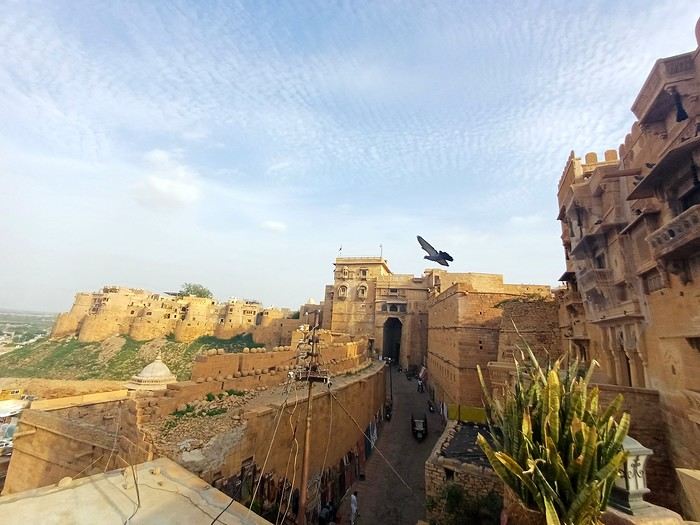
For today, we don’t want to visit the paid section and are content to explore the alleys at our own pace. Unlike its status as a living city, it feels more dead this afternoon: the interior is almost deserted, except for a few rare inhabitants and even rarer tourists we occasionally cross paths with—so much so that we wonder if we’ve stumbled upon a holiday or something. The fort is practically ours! We wander a bit through the alleys of beautiful houses, not all in good condition.

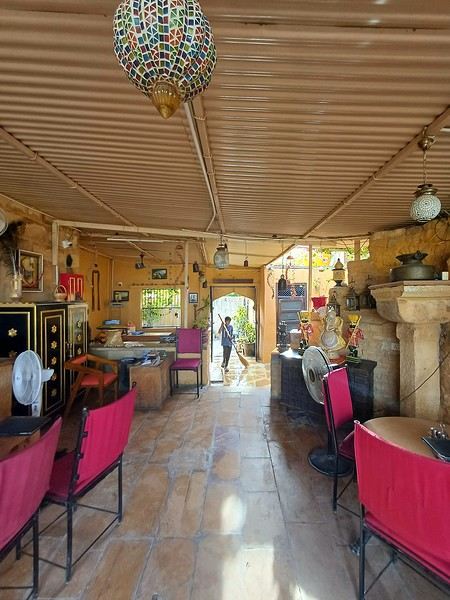
We’re (finally) approached by a woman in a sari who invites us into her shop. Not to pressure us into buying, she promises, but because she wants to talk to us. We’re glad we did because her story is fascinating: she’s a very committed and locally well-known feminist. She fights for women’s rights in India—a task that takes a lot of courage here—and her shop sells only handicrafts made by women from the region’s villages. In excellent English, she tells us how, against the grain of society, she chose her husband and resisted her in-laws’ disdain. I smile inwardly when she suddenly interrupts her life story with feminist slogans, raising her voice and fist, before returning to a normal tone—as if she’s experiencing brief, uncontrollable personality splits! And since she practices what she preaches, we see her husband, quite subdued, enter the shop without a word with their little girl, whom he’s just picked up from school, while she shares her militant thoughts and explains her association’s principles. Totally unusual for India! She shows us some beautiful items in her shop—fabrics, jewelry, bags, and other trinkets—explaining their context without pushing us to buy, which we wouldn’t do anyway because they’re expensive... Later, checking Lonely Planet, I realize it’s the Bellissima boutique, well-known and praised for its initiative. Satisfied with this unique encounter, we say goodbye. In search of coolness, we continue to the nearby Desert Café, which makes a good impression with its décor blending Rājpūt and Art Deco styles favored by the Maharajas of the early 20th century—a bit cozy with a beautiful view of the city from its rampart terrace.
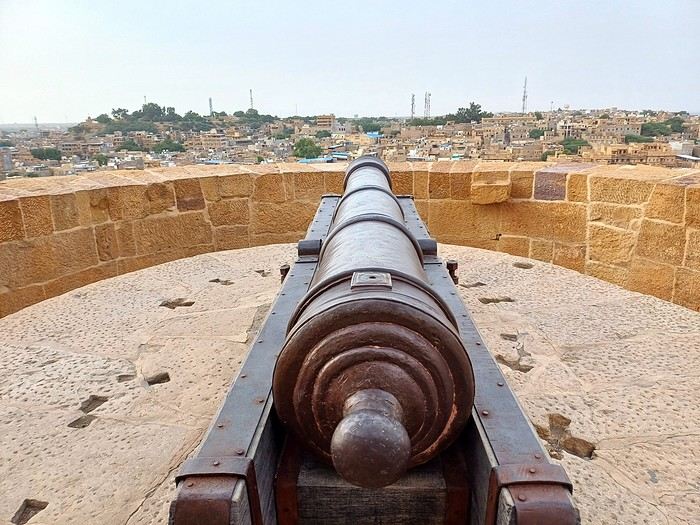
Then we end up at Cannon Point, a stretch of ramparts accessible by a rather dangerous stone staircase, especially for kids. This place gets its name from the cannons, perfect for striking poses and pretending to fire through the battlements for the kids, or admiring the towers, the fort’s rooftops, and another beautiful view of the city’s west side as the sunset begins.
On the way, near the exit, we visit Śrī Lakṣmī, goddess of wealth and First Lady of the great Viṣṇu, master of the cosmos’ construction—which is no small feat when you think about it. A few devotees perform their pūjā (ritual to the deity) at this crucial transition time between day and night, while kids play cricket, by far the nation’s most popular sport, in the adjacent street.
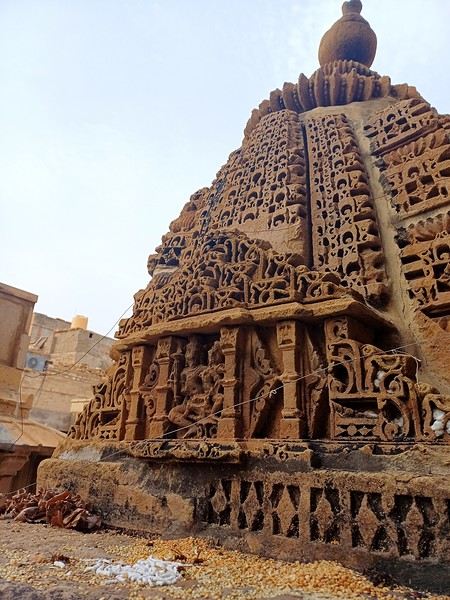
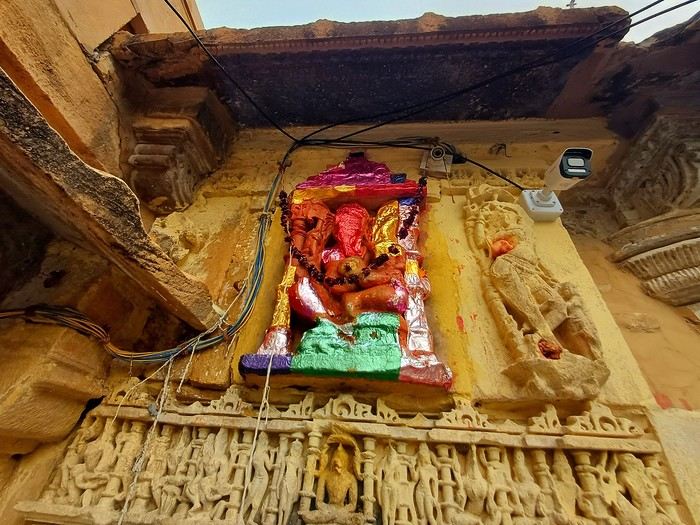
We finally leave the fort to take a stroll through the alleys outside the ramparts. A shop catches Magali’s eye where she’s spotted some beautiful scarves: the very friendly vendors set us up, and there follow many fittings and haggling sessions while Théo has fun diving into the soft cushions. Then, deal made, both parties agree on a very reasonable price. We then find a small shop to stock up on diapers, which are starting to run low—a good thing done, so we’re set for a few days. We push a bit further toward a havelī neighborhood.
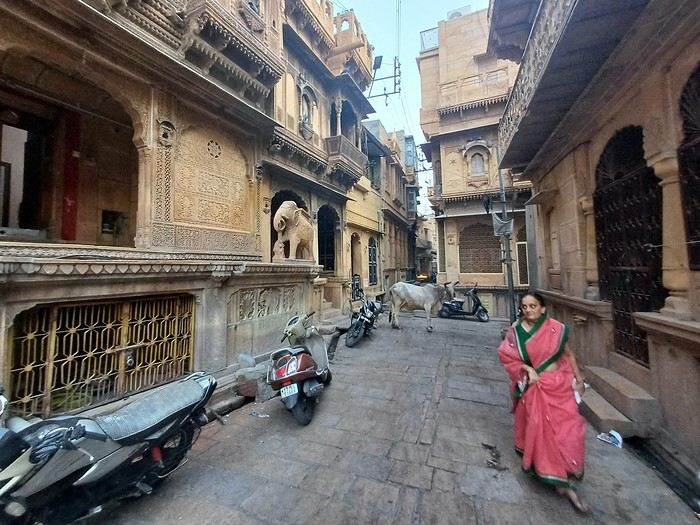
The last glimmers of daylight still illuminate the façade and finely carved windows of the five stories of Paṭwon kī havelī, which belonged to a family of wealthy and pious Jain merchants. Considered the most remarkable in Jaisalmer, it’s possible to visit its sumptuous interior, but not at this slightly late hour.
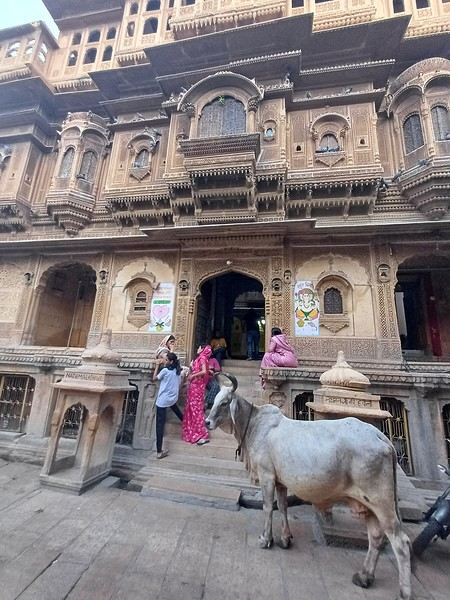
Since we won’t have time to come back, we admire its façade and meet a neighboring owner who comes to greet us: he owns a shop next to the famous mansion, but we explain that we’ve just made our purchases, which he good-naturedly admits were at a great price. That doesn’t stop him from having a very pleasant conversation with us about our respective lives. But night falls, and we hail a rickshaw to return to the Tokyo Palace. A short cool break before the owner tells us that his rooftop restaurant, which we’d read so much about, isn’t open in this low season. He recommends the well-known Desert Boy’s Dhani at the end of the street, where you can either eat on the floor on cushions indoors or by candlelight in the beautiful garden. We first choose the indoor option, but it’s unbearably hot without AC. So we switch to the garden. Despite the mosquitoes forcing us to break out our Odomos cream bought at a pharmacy in Ahmedabad airport (nothing’s more effective than this Indian brand), the meal is delicious. Magali tries kājū masālā (cashew curry, a Rajasthan specialty) again, which she enjoys, though it’s not as good as the one that blew her away at our beloved Ambrosia in Ahmedabad. We quickly head to the nearby bus station, where we ask the only small private agency still open for information on buses to Jodhpur, where we’re heading in two days. But for now, we need to go to Khuri, a desert village where we’ve booked a homestay with a short camel safari in the evening. The owner of the Tokyo Palace, who agreed to keep some of our luggage until we return, calls a rickshaw driver to drop us off at the bus stop. The appointment made, we return to our cozy cardboard havelī to recharge after this intense day. Tomorrow, the desert...






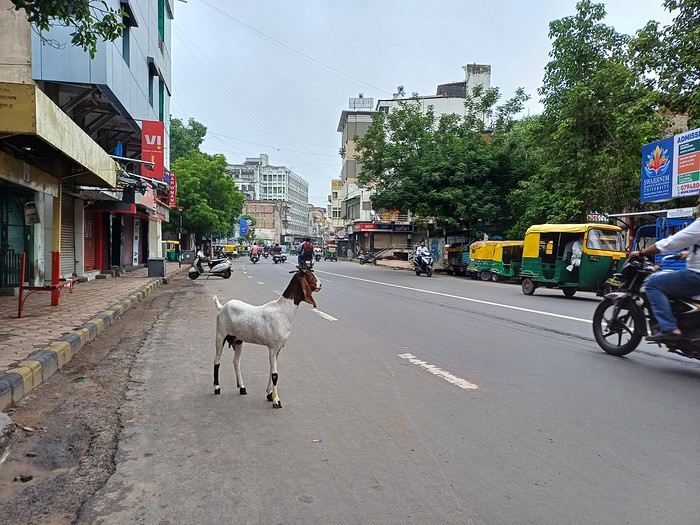
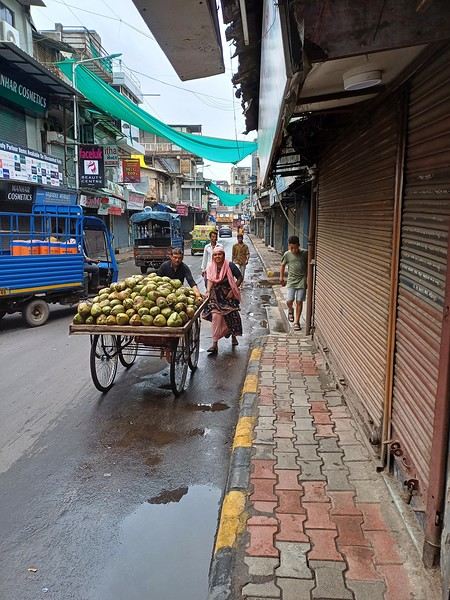
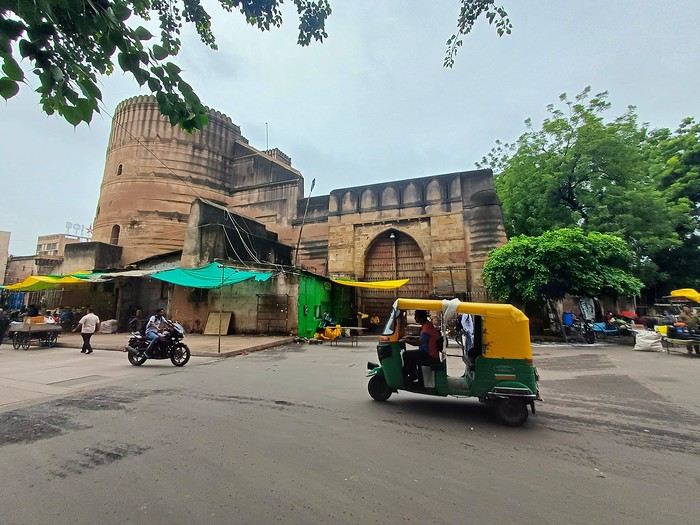
 We passed by the entrance of the Jama Masjid, one of the country’s largest mosques, dating back to the 15th century. I had already visited (and enjoyed) Ahmedabad ten years earlier, yet passing by the Great Mosque, I didn’t really recognize the place. That said, I have fond memories of it because, infinitely less crowded than Delhi’s, the ambiance is much freer and more peaceful. We kept its potential visit for later (which never happened). In this moment of discovery for my crew, we preferred to soak in the street scenes stress-free while drinking coconut water straight from the shell (40 rupees). It was still too early for India, and most shops remained closed, to the point that I barely recognized the bustling neighborhood I had crossed years before.
 We plunged into the colorful stalls, not knowing where to look first—there was so much beauty per square meter, and in this explosion for the eyes, we wanted to buy everything. As we wandered through different sections, Magali, who was looking for practical Indian outfits for the rest of the trip, browsed the shops and fell for two gorgeous kurtī, these traditional dresses, here with Kutch patterns. Kutch is a desert region bordering Pakistan and Rajasthan in northern Gujarat, renowned for the craftsmanship of its tribal populations. For sure, with one of the kurtī she put on right away and her African braids made for this trip, she’d be mistaken for a tribal! In fact, quite a few passersby, especially women, would literally freeze, stopping in their tracks with a bodily and ocular halt, punctuated by a low grumble in Gujarati at this mixed-race girl with long braided extensions—more often out of great surprise than rejection. It was only in Ahmedabad, upon arrival and return, that I noticed this kind of reaction. I’m not saying there weren’t reactions elsewhere, but certainly not the same ones.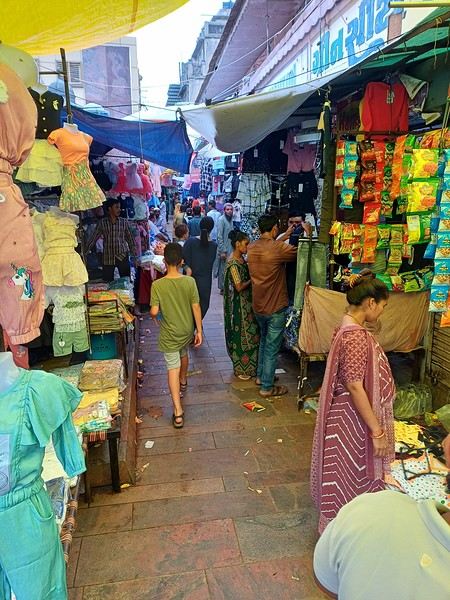

 To recover from our emotions and since it’s almost lunchtime, we look for a place to grab at least some chaat (quick food), but there are only two small shops in front of the monument’s entrance, and we have to settle for chips, ice cream, and small Amul-brand lassi cartons—the indispensable national dairy brand, which, like Tata or Birla, was founded by wealthy Gujarati industrialist families who played a major role in helping Nehru develop the country after independence. These 20-rupee lassi cartons are filling and safe: a blessing for Théo, who loves them and won’t risk getting sick.
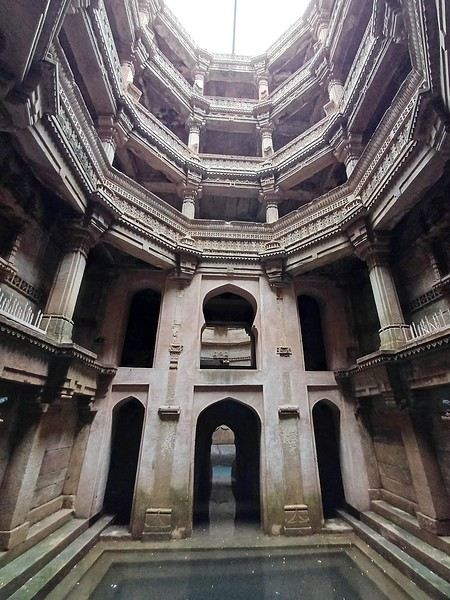
At the site’s entrance, we take a quick look at the small temple of the goddess Ambe Māta, then head to the ticket counter to buy our tickets (250 rupees for adult foreign visitors, free for kids). The Adalaj bāolī is one of those ornate stepwells typically found in western India, especially in the arid regions of Rajasthan or northern Gujarat, as they were used to store rainwater. This one was commissioned by a Hindu ruler in the late 15th century before a Muslim ruler, grandson of Sultan Ahmed Shah (founder of Ahmedabad, which logically means “Ahmed’s city”), invaded this neighboring kingdom. He married the defeated king’s daughter, who later allegedly committed suicide in the stepwell’s waters, according to legend... It’s absolutely stunning, with a distinctly Gujarati style blending Hindu, Jain, and Muslim influences.
To recover from our emotions and since it’s almost lunchtime, we look for a place to grab at least some chaat (quick food), but there are only two small shops in front of the monument’s entrance, and we have to settle for chips, ice cream, and small Amul-brand lassi cartons—the indispensable national dairy brand, which, like Tata or Birla, was founded by wealthy Gujarati industrialist families who played a major role in helping Nehru develop the country after independence. These 20-rupee lassi cartons are filling and safe: a blessing for Théo, who loves them and won’t risk getting sick.
At the site’s entrance, we take a quick look at the small temple of the goddess Ambe Māta, then head to the ticket counter to buy our tickets (250 rupees for adult foreign visitors, free for kids). The Adalaj bāolī is one of those ornate stepwells typically found in western India, especially in the arid regions of Rajasthan or northern Gujarat, as they were used to store rainwater. This one was commissioned by a Hindu ruler in the late 15th century before a Muslim ruler, grandson of Sultan Ahmed Shah (founder of Ahmedabad, which logically means “Ahmed’s city”), invaded this neighboring kingdom. He married the defeated king’s daughter, who later allegedly committed suicide in the stepwell’s waters, according to legend... It’s absolutely stunning, with a distinctly Gujarati style blending Hindu, Jain, and Muslim influences.

 These intricately carved pillars, like lace, form square lattice structures leading down to a large octagonal well accessible by steps.
 The murky waters and rays of light filtering through the top and cracks in the structure create a beautiful visual effect.
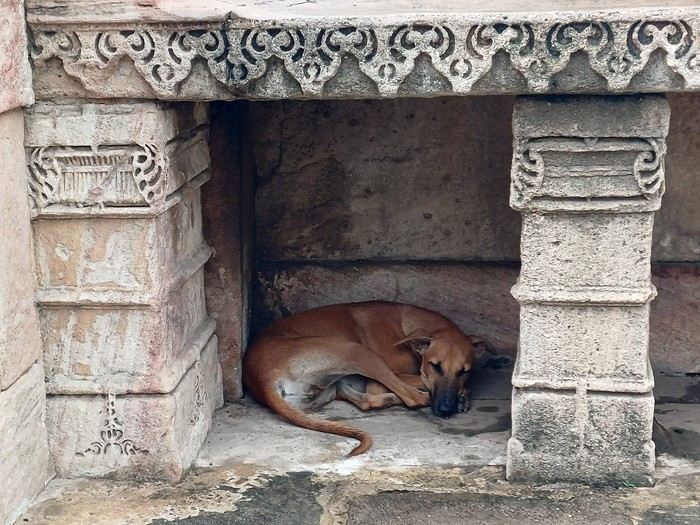
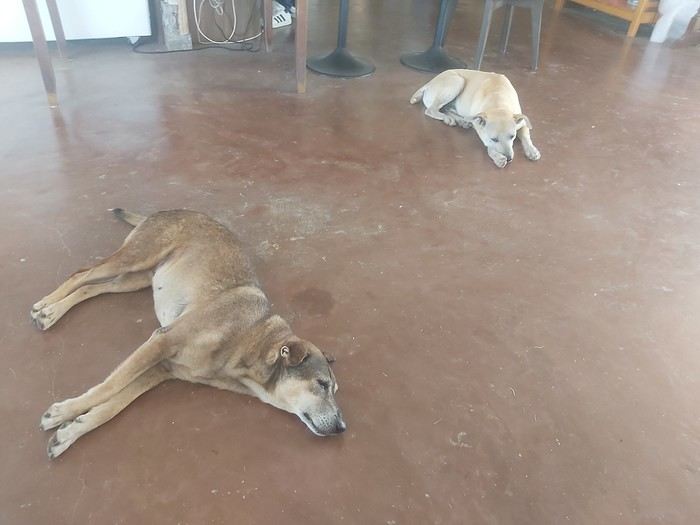
 Here and there, while exploring the nooks and crannies, I spot dogs curled up, asleep and undisturbed, in hidden corners of the monument or small alcoves sheltered from the sun and humans.
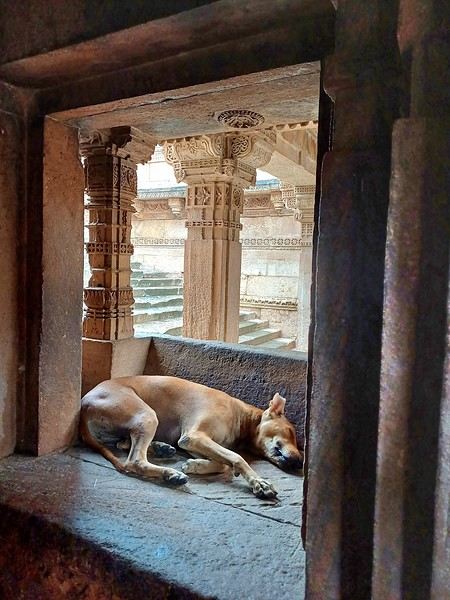 You can even walk on the roof (carefully) for an overview and admire other beautiful decorations. It’s all the more pleasant because the area around the stepwell is quiet, with flower-lined paths and large grassy areas to stroll, where Théo can eagerly watch gilahari (those little Indian squirrels) and big lizards scurrying along the stone walls, as well as an impressive banyan tree.
 Plus, there aren’t too many people, which is nice. There’s a small group of Asian tourists, which makes us realize we haven’t seen (or hardly any) foreign tourists since arriving in Ahmedabad. We take advantage of the very clean restrooms (rare enough to mention) at the back of the site and the benches to rest a bit.
 In no time, we’re back along the Sabarmati, turning by the grand Siddi Saiyyed Mosque before arriving at Laal Darwaza. We take a rickshaw that drops us off at our hotel, where our faithful guard is still on duty: he rushes to accompany us into the old elevator. Between the mishaps on the way there and the three buses on the way back, we’ve definitely taken the scenic route, but it’s made for a rich day full of stories and images that’ll stay with us.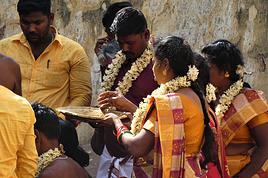
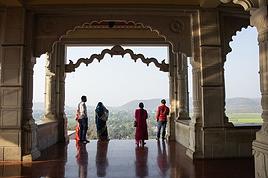
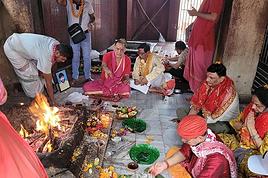
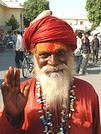
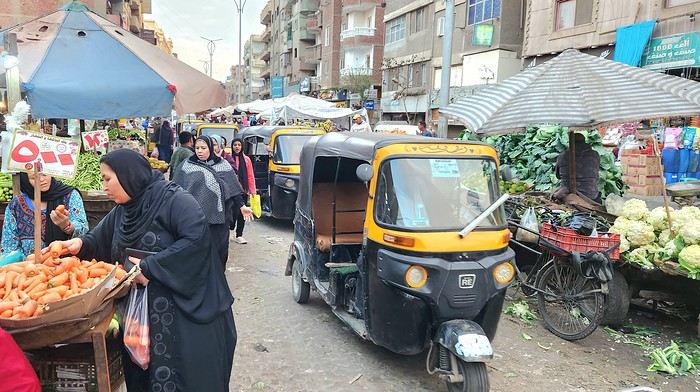
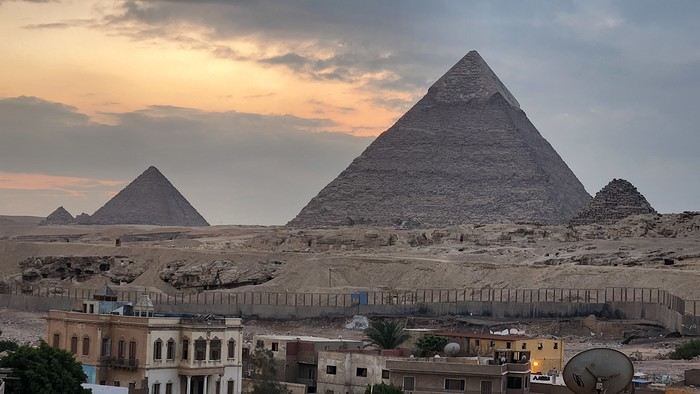
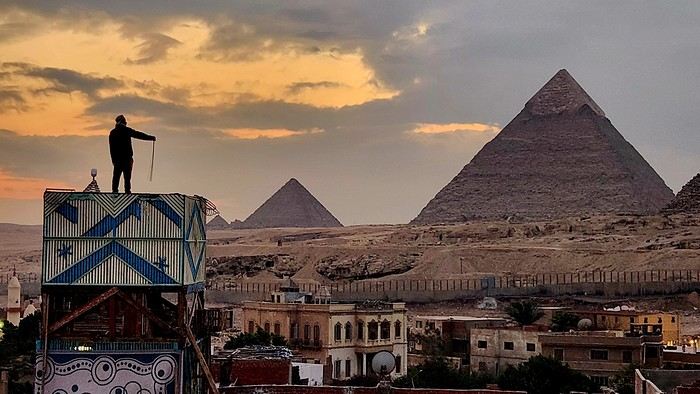
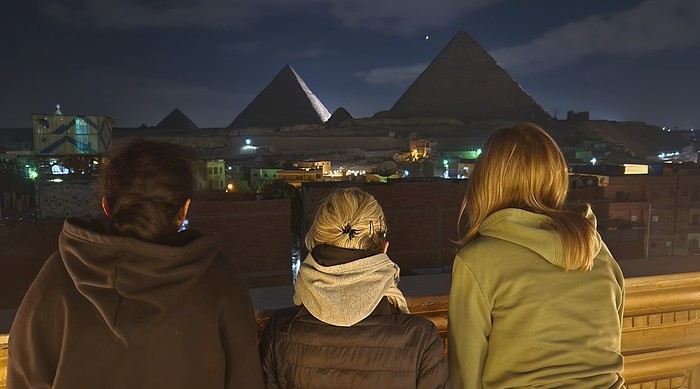




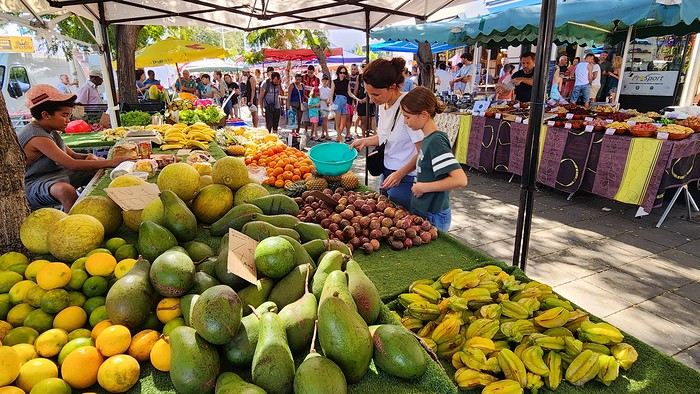
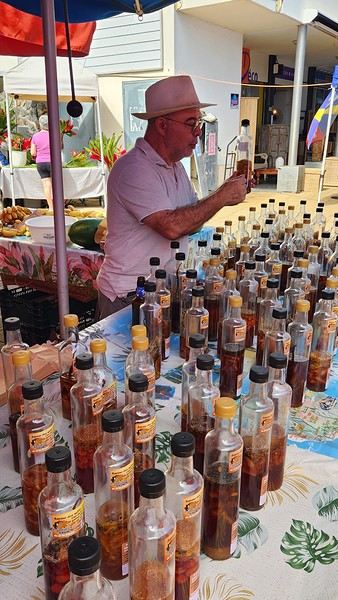
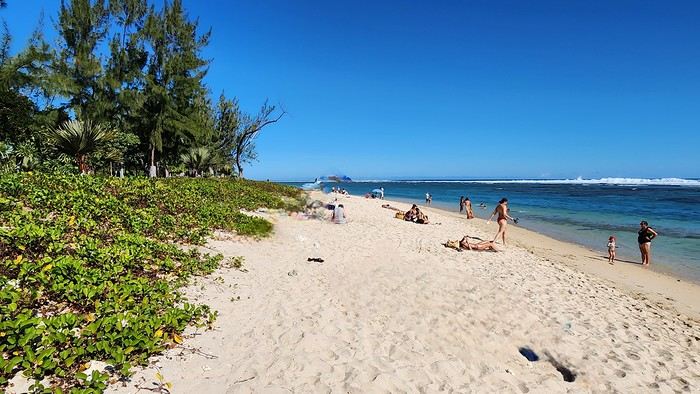

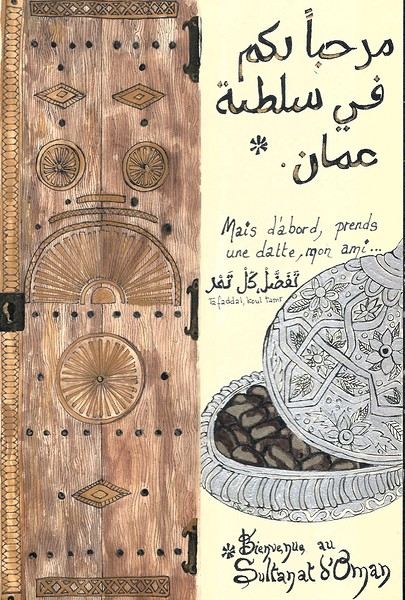 On the right, the "welcome marker"—those dates offered everywhere as a sign of hospitality. On the left, a tribute to those stunning doors worn by time, admired all over the old quarters, including the abandoned ones.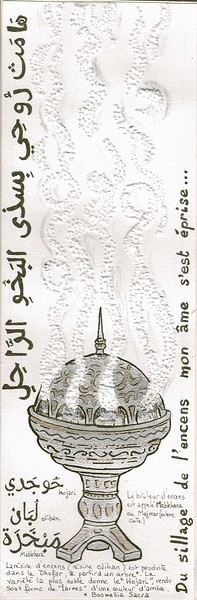
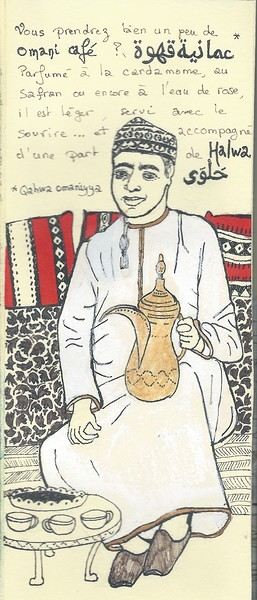 Hospitality will often lead you to accept a small coffee, an "Omani coffee," very light, subtly flavored with cardamom, maybe a touch of saffron, and occasionally rosewater.
Here, I’ve depicted a man in the common everyday attire of Omanis: the dishdasha, mostly white (during the week and daytime; colors are more common in the evening or on Fridays and Saturdays). While you’ll see some men dressed in Western clothes, they’re very few. The white dishdasha is truly the shared attire of all men. The dishdasha, which has no hood, is distinguished by a small pom-pom attached to the collar, the furakha, which is soaked in perfume. And believe me, Omanis go overboard with it! "It smells like the pom-pom" is an expression that’s now part of our shared language, my husband and I.
Another must of men’s attire is the kuma, a small round head covering, usually white with brightly colored patterns. The keffiyeh is also worn (but without the cord called an agal in Arab countries), and it’s mostly worn by those with roots in the desert, from what I understood.
And what about the women, you might ask? Some are veiled, some in full black (but not a burka—more like a chador + abaya), due to the influence of Saudi Arabia and the United Arab Emirates, whereas the traditional outfit used to be a layering of very colorful dresses. Most of the women we saw wore neutral clothing, a plain veil over their hair, but with their faces uncovered. We also saw many saris and colorful veils—don’t forget that 40% of the population consists of Indian, Nepalese, and Bangladeshi immigrants, who work a lot in tourism, hospitality, restaurants, services, and construction.
Just to clarify, as a tourist, there’s no pressure to wear a veil, and never any disapproving looks. Of course, you’ll save the mini shorts, plunging necklines, bare shoulders, and midriffs for the hotel terrace—but I’d say that’s the same for men and women, and with the sun being strong, it’s better for your skin too.
Here’s the introduction! In the next post, I’ll tell you about my itinerary, and we can dive in!
Hospitality will often lead you to accept a small coffee, an "Omani coffee," very light, subtly flavored with cardamom, maybe a touch of saffron, and occasionally rosewater.
Here, I’ve depicted a man in the common everyday attire of Omanis: the dishdasha, mostly white (during the week and daytime; colors are more common in the evening or on Fridays and Saturdays). While you’ll see some men dressed in Western clothes, they’re very few. The white dishdasha is truly the shared attire of all men. The dishdasha, which has no hood, is distinguished by a small pom-pom attached to the collar, the furakha, which is soaked in perfume. And believe me, Omanis go overboard with it! "It smells like the pom-pom" is an expression that’s now part of our shared language, my husband and I.
Another must of men’s attire is the kuma, a small round head covering, usually white with brightly colored patterns. The keffiyeh is also worn (but without the cord called an agal in Arab countries), and it’s mostly worn by those with roots in the desert, from what I understood.
And what about the women, you might ask? Some are veiled, some in full black (but not a burka—more like a chador + abaya), due to the influence of Saudi Arabia and the United Arab Emirates, whereas the traditional outfit used to be a layering of very colorful dresses. Most of the women we saw wore neutral clothing, a plain veil over their hair, but with their faces uncovered. We also saw many saris and colorful veils—don’t forget that 40% of the population consists of Indian, Nepalese, and Bangladeshi immigrants, who work a lot in tourism, hospitality, restaurants, services, and construction.
Just to clarify, as a tourist, there’s no pressure to wear a veil, and never any disapproving looks. Of course, you’ll save the mini shorts, plunging necklines, bare shoulders, and midriffs for the hotel terrace—but I’d say that’s the same for men and women, and with the sun being strong, it’s better for your skin too.
Here’s the introduction! In the next post, I’ll tell you about my itinerary, and we can dive in!





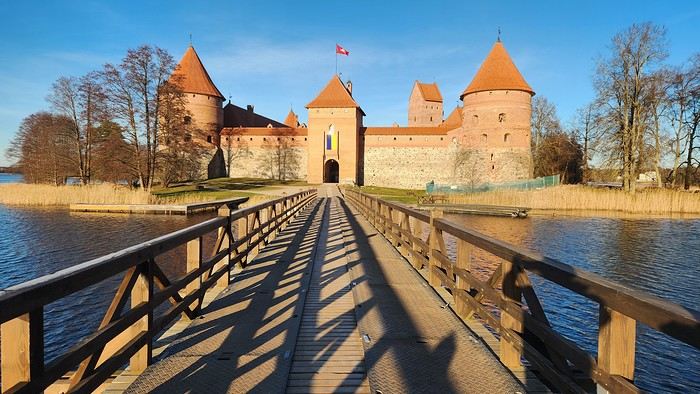
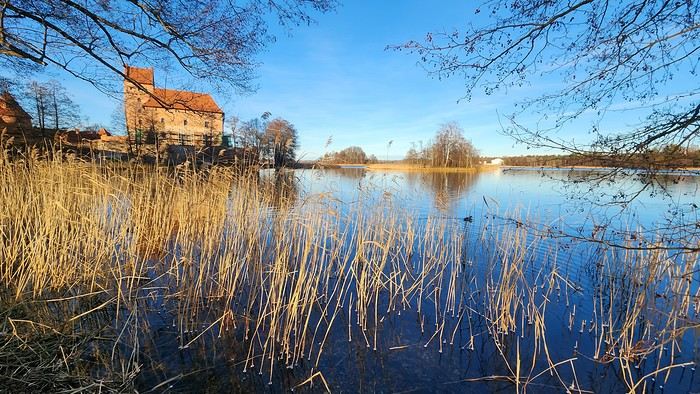
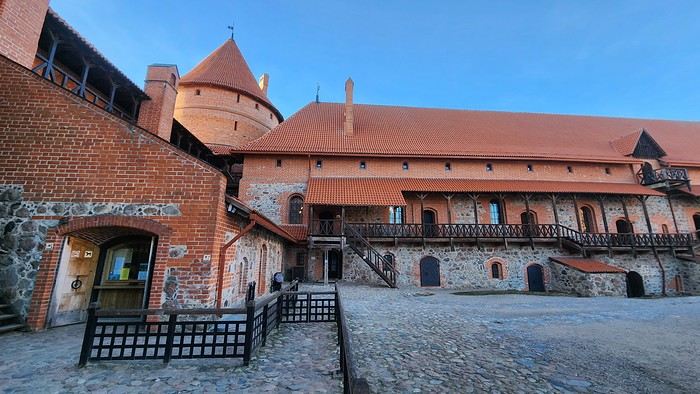
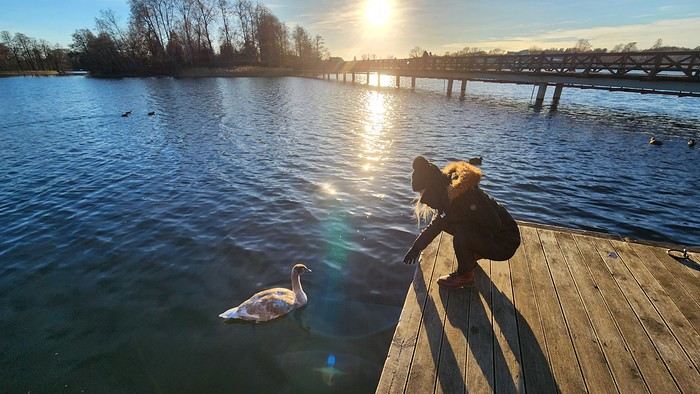


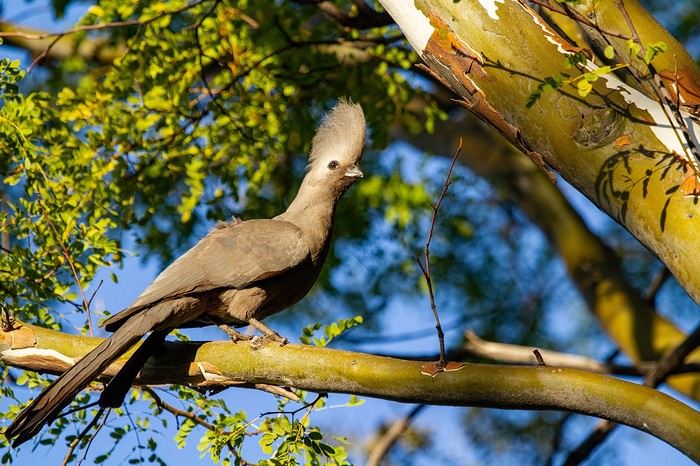
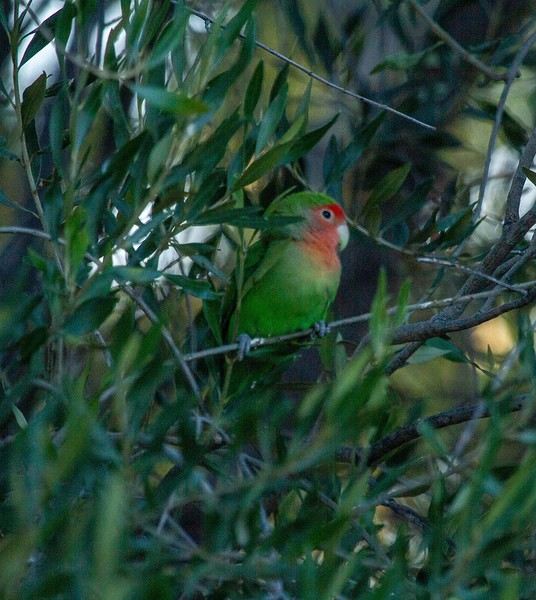

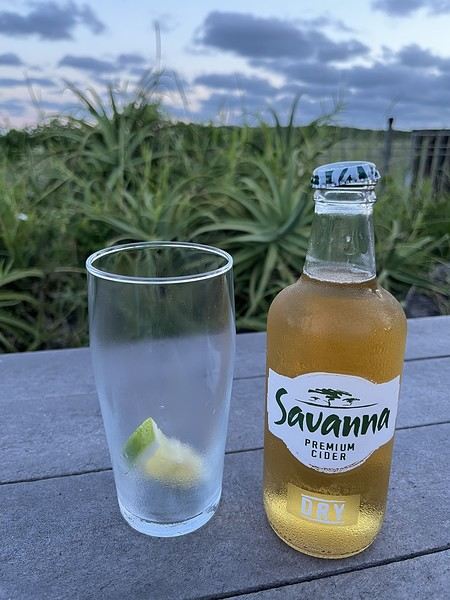

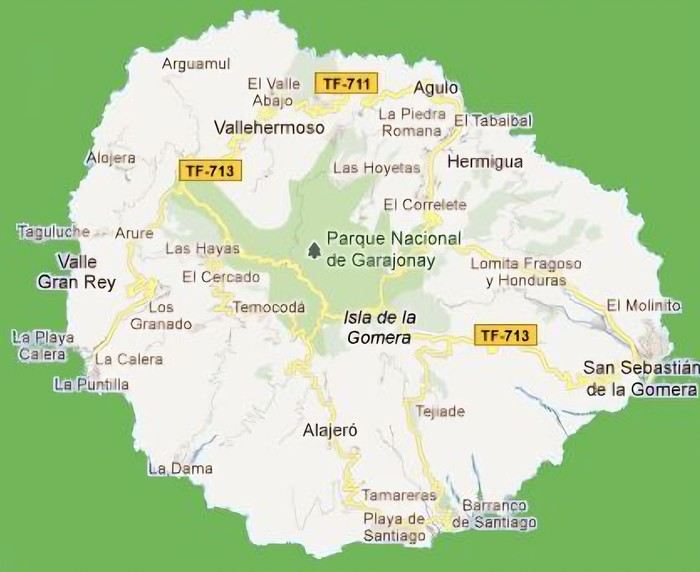 The large solidified magma massifs that shape the heart of the island have created a large depression more protected from the sun at its center, allowing the growth of a vast laurel forest, today grouped within the Garajonay National Park, La Gomera’s green lung, which has earned it the status of a World Biosphere Reserve. Its completely European appearance contrasts sharply with the rocky and tropical landscapes of the rest of the island. Thus, the climate varies greatly from one point to another on the island: in summer, you can quickly go from a dry and sunny valley at 35°C to a humid forest area at altitude at 18°C.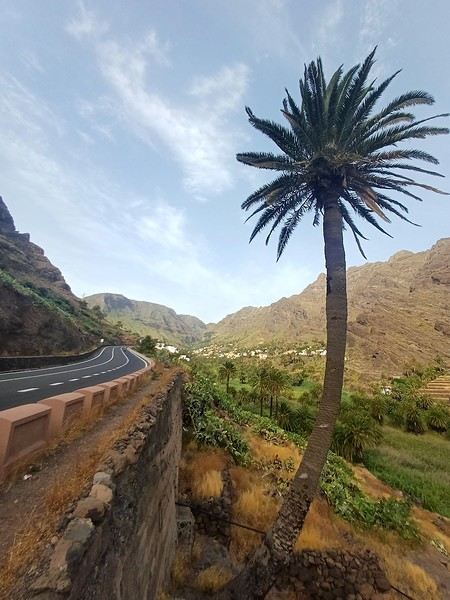
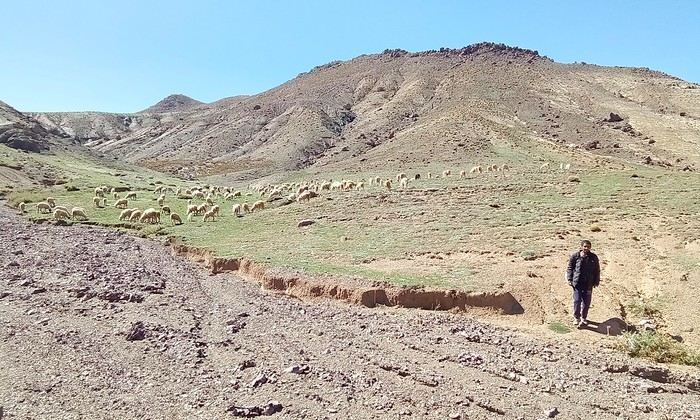
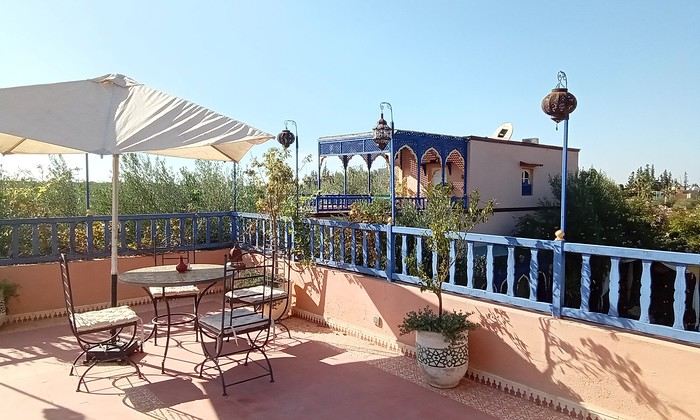
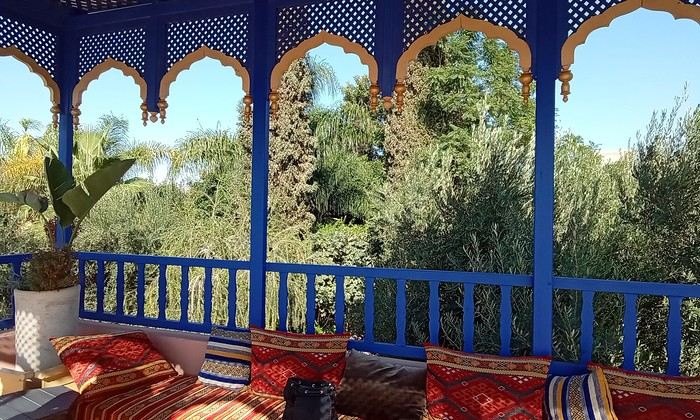 Last October, we landed in Marrakech to spend a few days with family exploring Morocco’s roads.
Transport: a rented Dacia.
Accommodations: small guesthouses.
Last October, we landed in Marrakech to spend a few days with family exploring Morocco’s roads.
Transport: a rented Dacia.
Accommodations: small guesthouses.
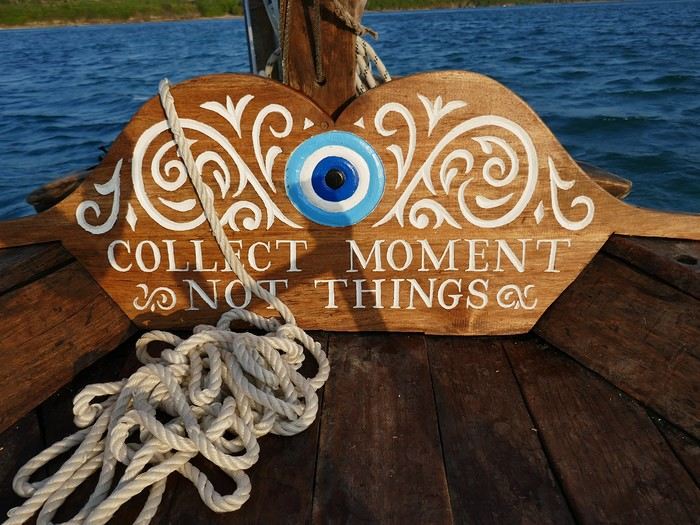
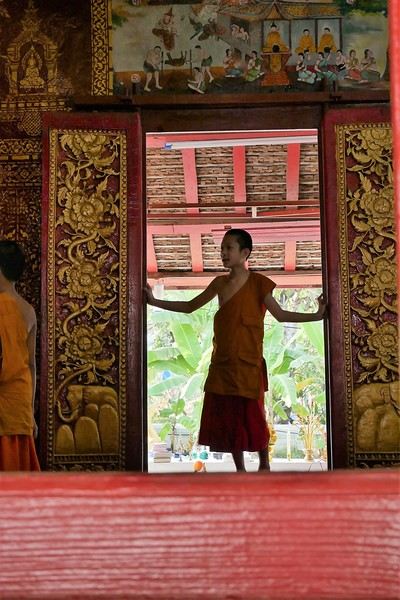 Come along, I'm taking you to this country where it's so nice to wander and slow down...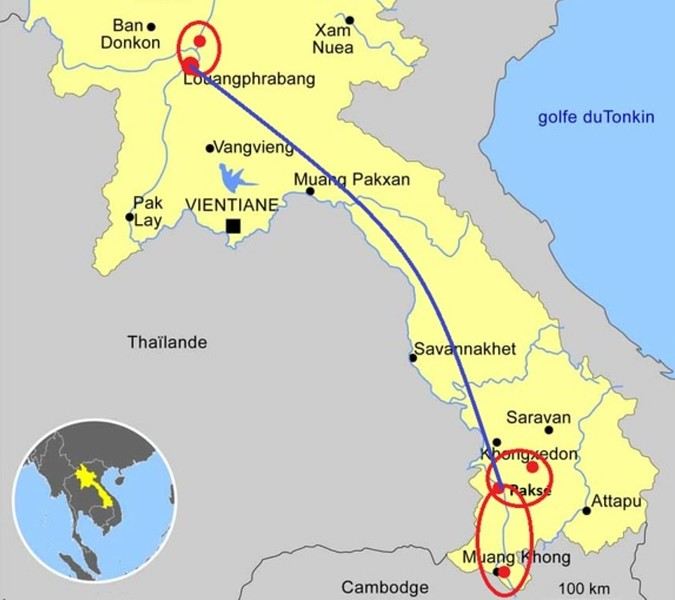
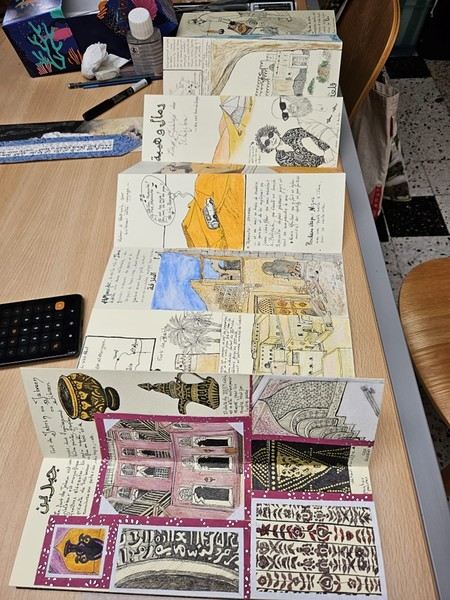
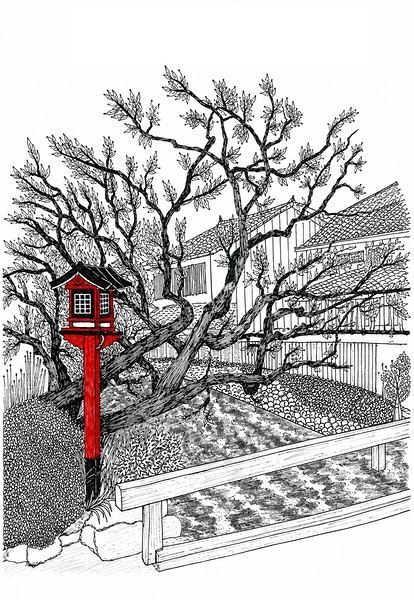 I’m inviting you on a stroll through my drawings—a completely subjective, far from exhaustive, and totally personal take, since it’s based on my own sketches. I put this travel journal together after returning in late 2024, mostly using felt-tip pens and pencils, with a few collages thrown in. I worked from our personal photos.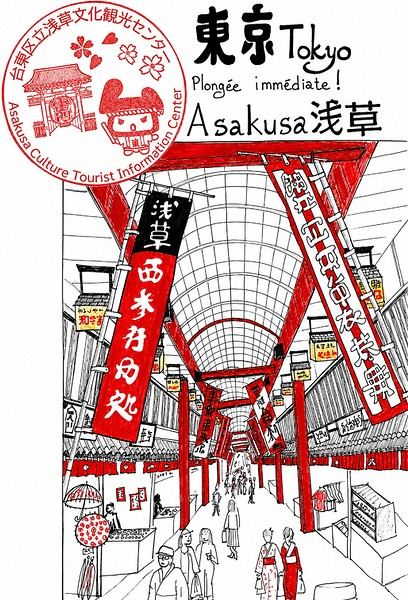
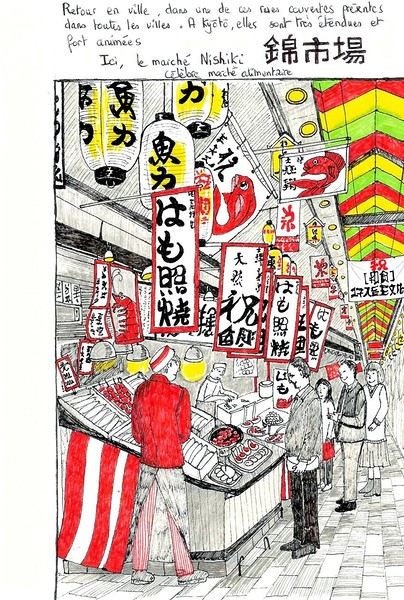
 And in Kyoto, Nishiki Market:

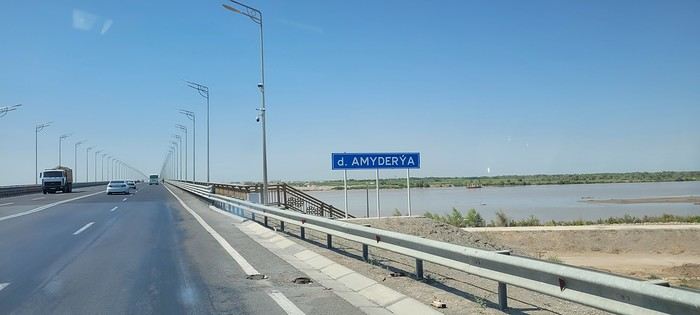
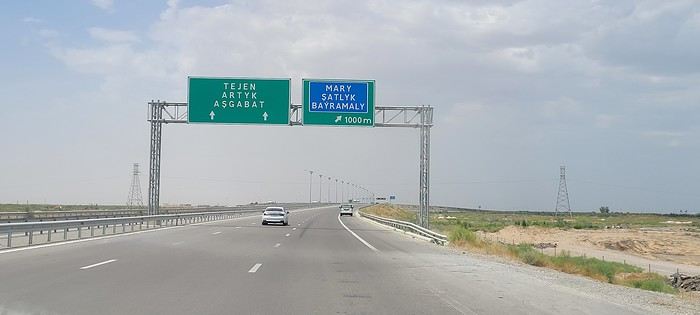
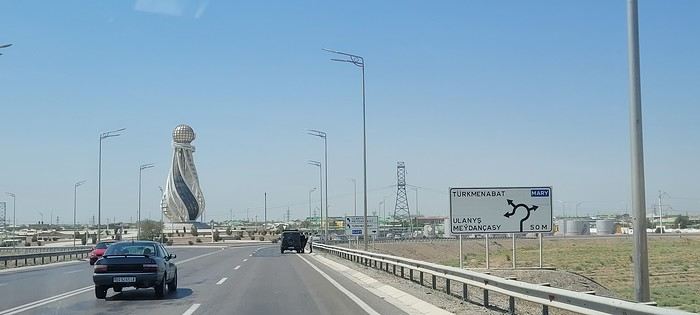
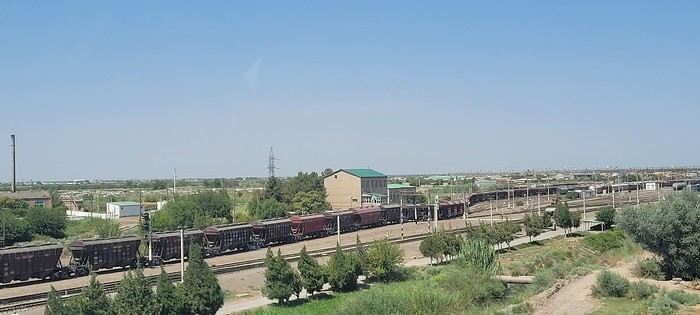
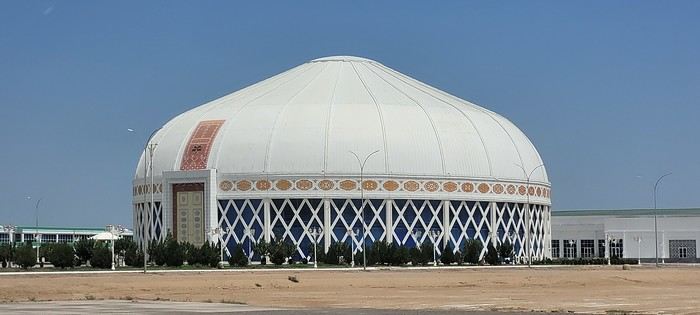
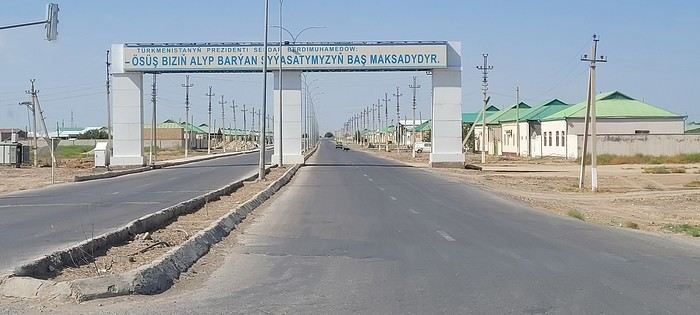
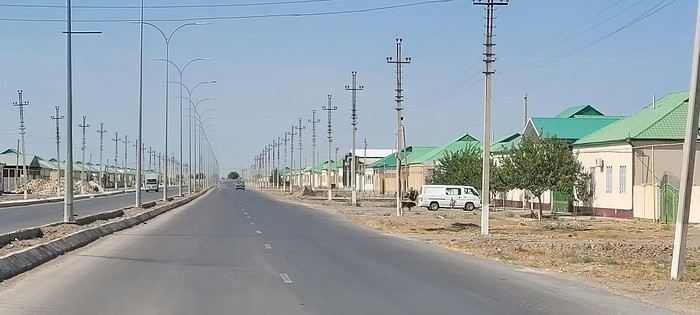 Roundabouts are particularly interesting because they feature emblems of Turkmen culture, like the dog, a carpet, the Ahal Teke horse, or Muslim symbols, even though the presence of Islamic artifacts is quite limited.


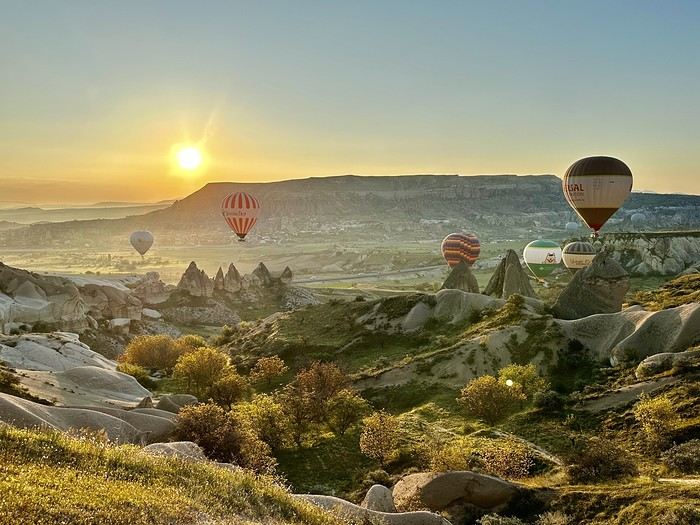 A little sneak peek?

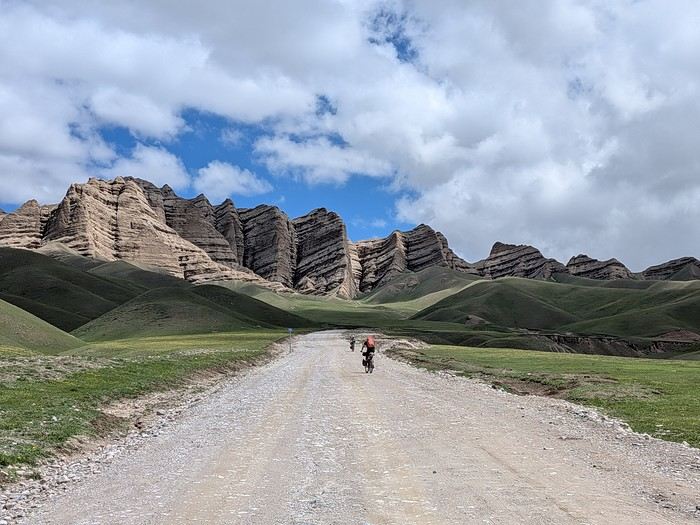
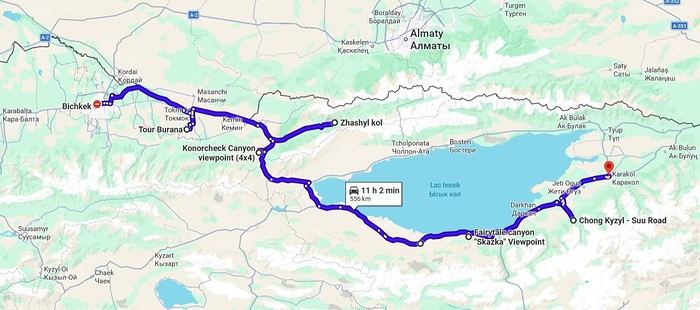
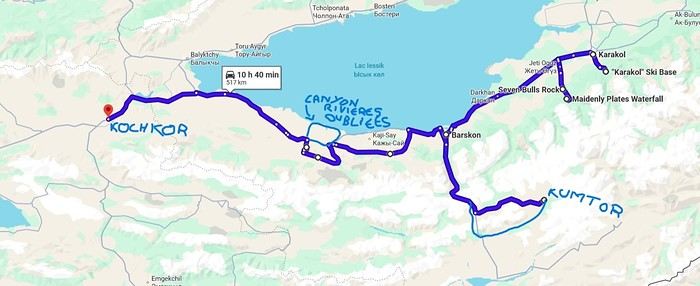
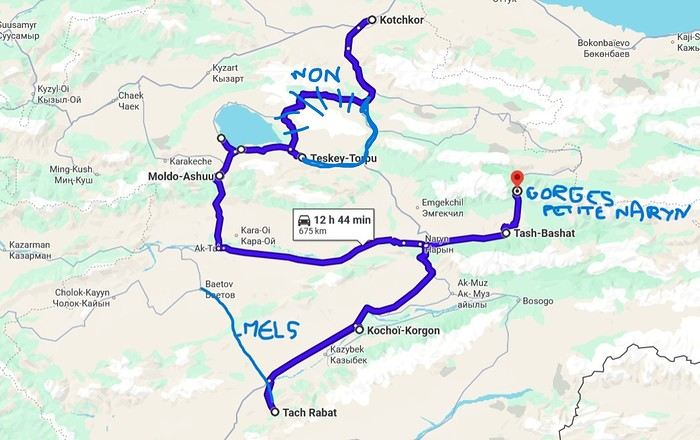
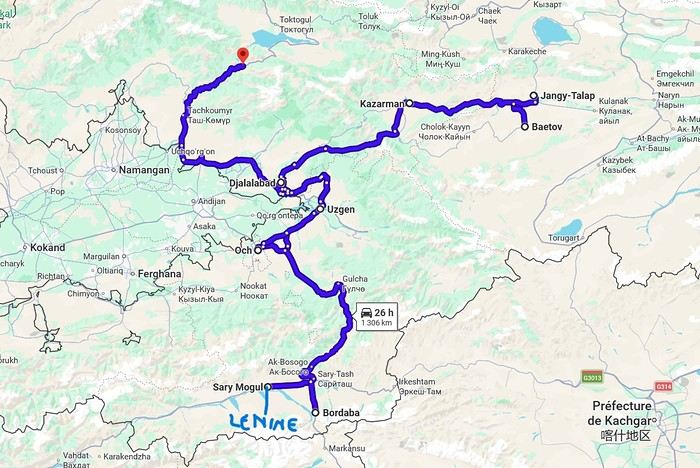



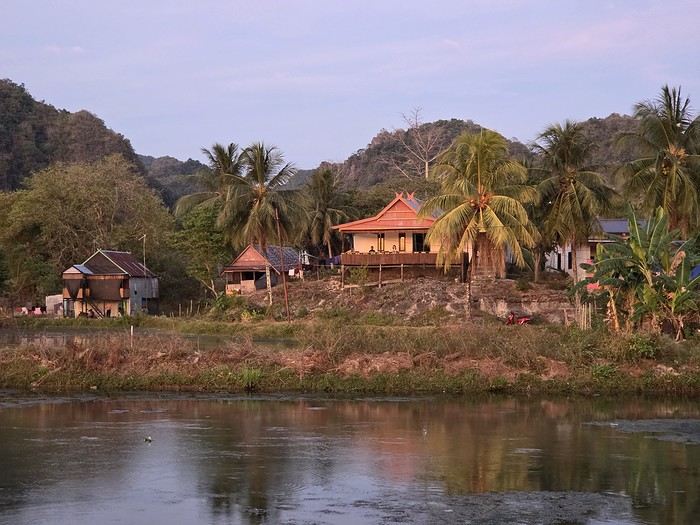
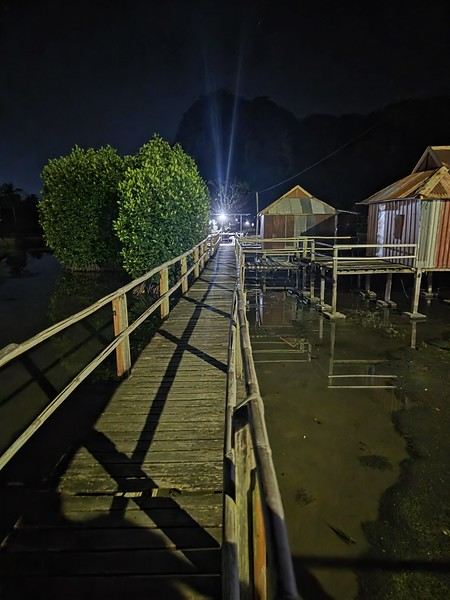
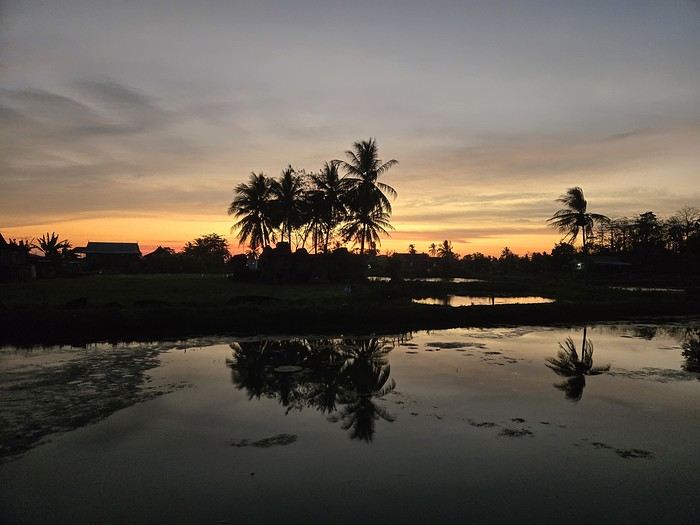
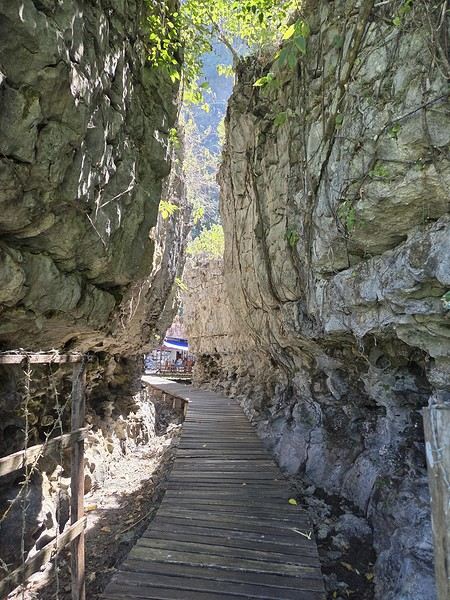
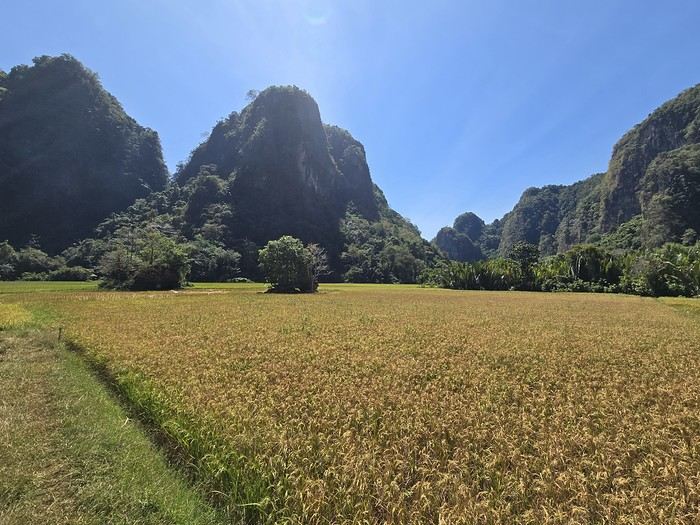
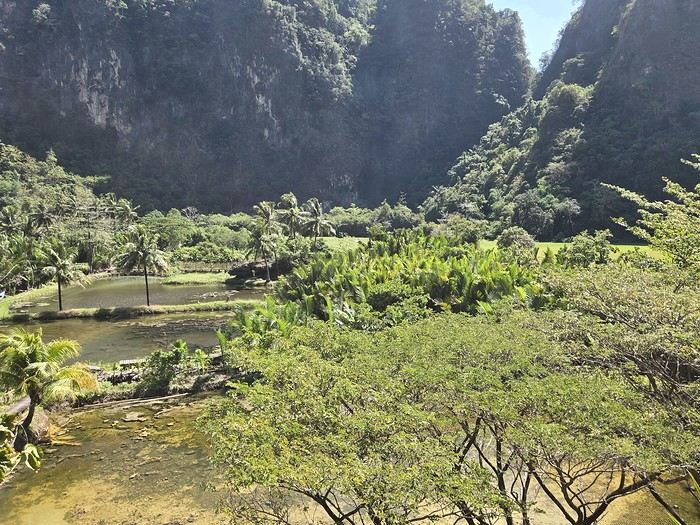
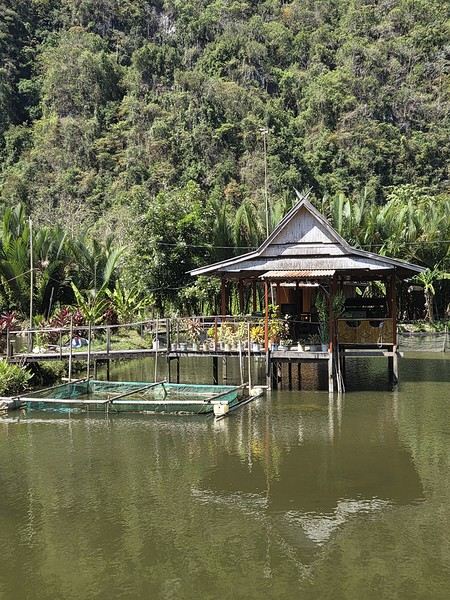
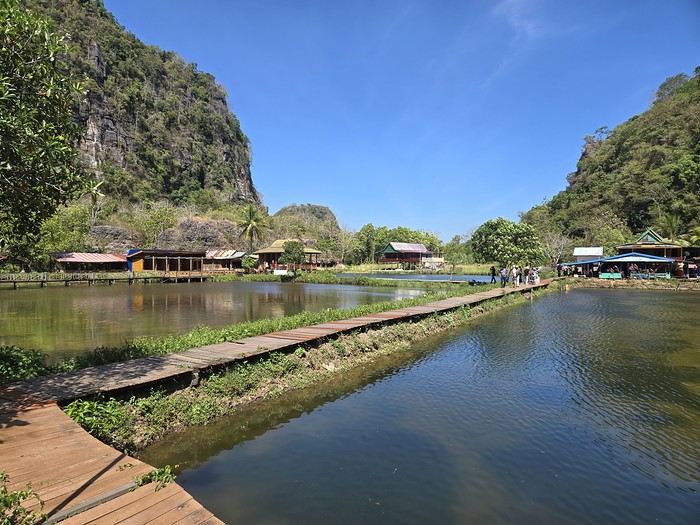
 The karst site:
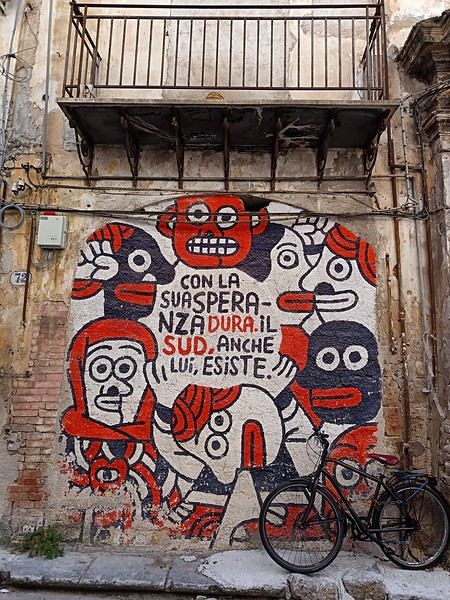 (In the heart of Albergheria, on a street every visitor walks down—lovely message from an unidentified artist)