Day 9, August 1st: Jodhpur
"A Chill Day in the Blue City"
Last night, the fort’s curse—whose energy radiates right behind our windows—struck again. We heard a thud, then a scream and Kelyandre’s cries, which woke us up. He usually has a restless sleep and tosses around a lot. At home, it rarely causes any issues, but in these big, high beds with thick, soft mattresses and no edge protection, he fell and his head hit the metal nightstand before landing on the floor... Thankfully, it was more scary than harmful! We got up in the morning for our last rooftop breakfast. For our final day in Jodhpur, we planned a more relaxed day. The program: wandering through the old city and doing some necessary—and fun—shopping.
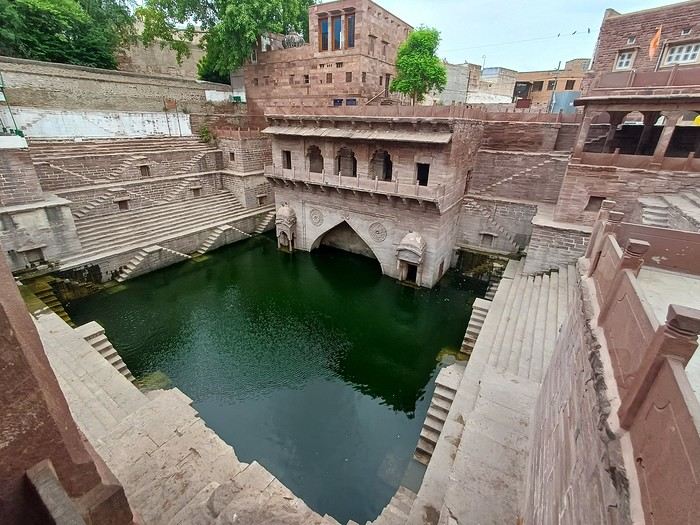
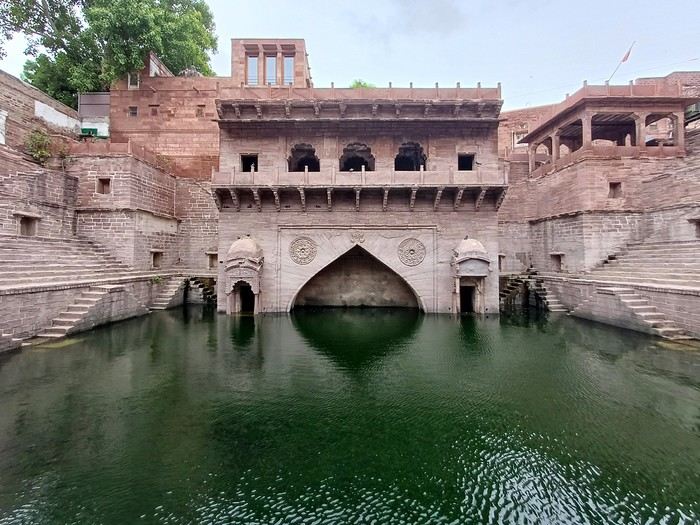
Just a short walk from the hotel, we first visited Tūrjī kā Jhālrā, a stunning stepwell in the heart of the Blue City, built in the mid-18th century. There wasn’t a soul in sight, so we took our time descending the somewhat pyramidal set of steps leading down to the basin. This allowed us to admire up close this architectural marvel, an rājpūt with intricately carved walls that vaguely resemble those of Mehrangarh.
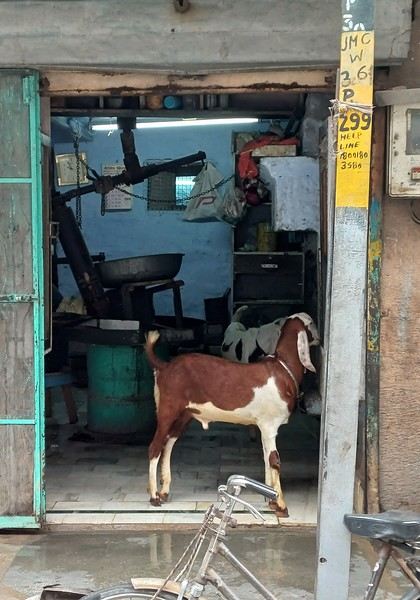
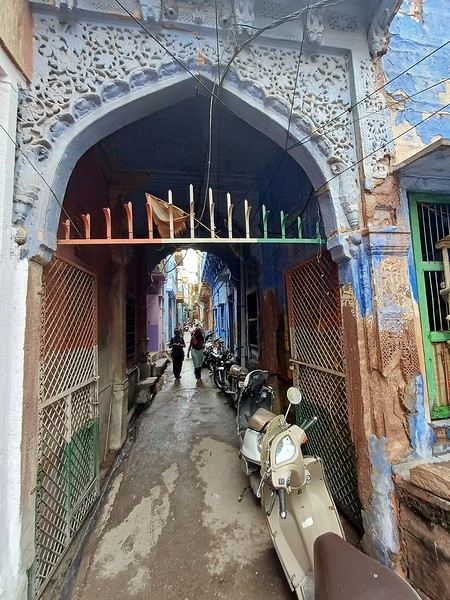
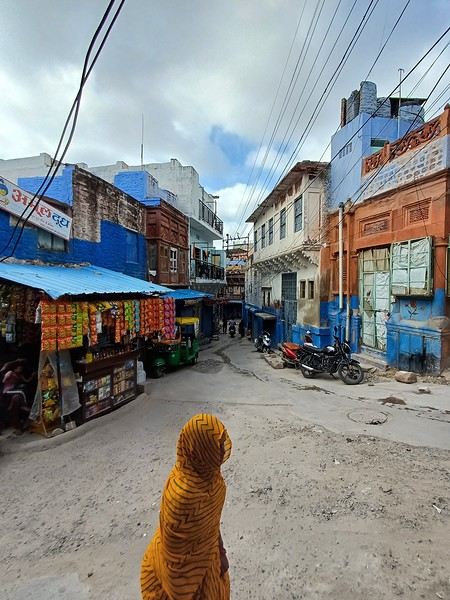
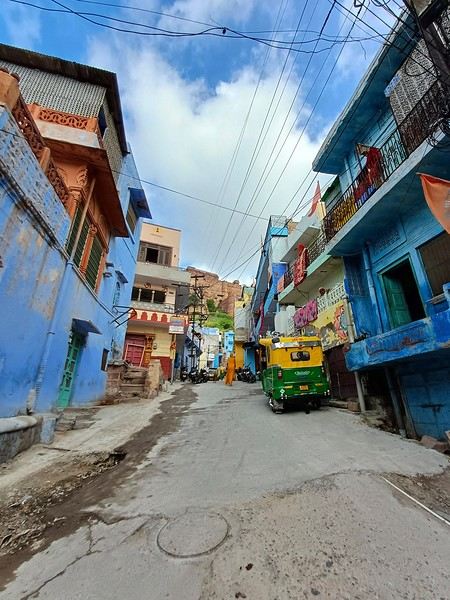
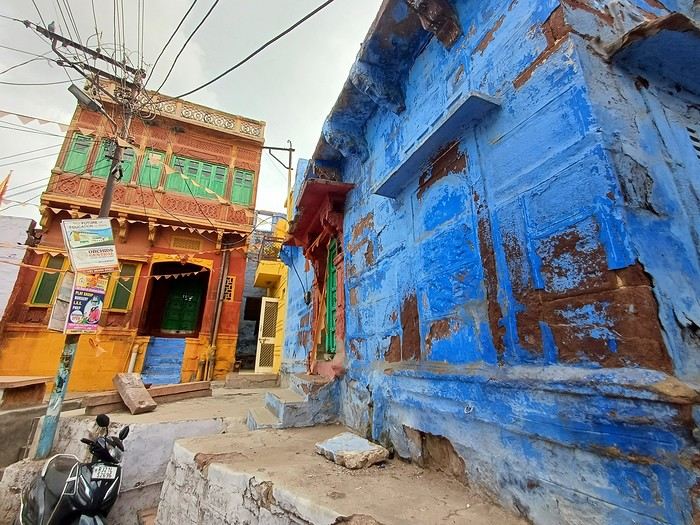
We then wandered through the blue alleys at random, where the residents—mostly from Brāhmaṇ castes, the highest in the Hindu socio-religious hierarchy—live with one foot in the 21st century and the other in a much older past. If it weren’t for the vehicles clogging the streets, the electrical installations, and the smartphones, you could almost feel like you’d traveled a few centuries back in time, seeing residents in traditional clothes, goats inside old buildings, and animal-drawn carts transporting various goods.
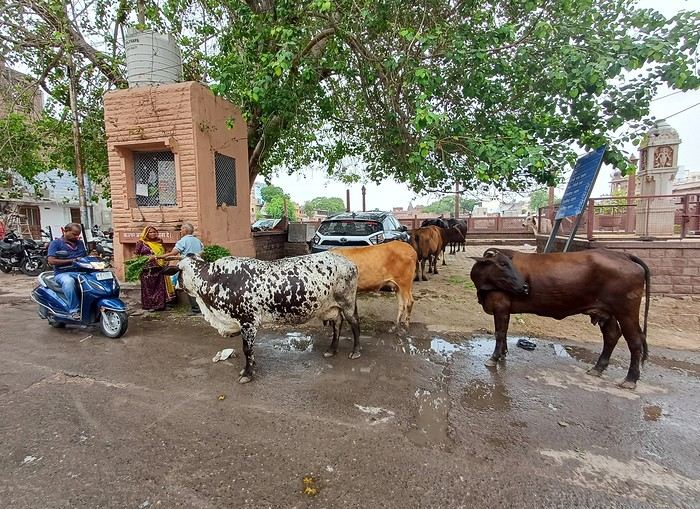
By the way, Kelyandre, who’s been incredibly lucky today, stepped right into a huge pile of fresh cow dung. We were a bit annoyed for him (literally covered in it) because we weren’t sure how to handle this unexpected situation. We considered going back to the hotel when I spotted a woman cleaning the front of her old house with a hose—it was divine intervention! I showed her Kelyandre’s foot and made it clear that her hose would be a lifesaver. Kelyandre placed his foot in the small gutter in front of the house while the kind woman rinsed off his cow dung-covered flip-flop. In seconds, his foot was wet but good as new! After all, cow dung is sacred to Hindus, just like their milk.
Among the morning’s essential errands, we bought some powdered milk, which we were running low on, at a small shop. I also had a 2000-rupee note left over from my 2018 trip to Tamil Nadu, which became obsolete after Prime Minister-Narendra Modi decided in 2023 to reprint new notes to combat the black market. Indians were asked to exchange their 500- and 1000-rupee notes, while the 2000-rupee note—created just eight years earlier—was completely phased out. Since the start of this trip, I’ve been trying to offload it, but it’s been refused every time, even though online sources say it’s still legal until summer 2025... Since Ahmedabad, I’ve been told to go to a State Bank of India branch (India’s largest bank). But here in Jodhpur, shopkeepers told me to go to the post office. First, I was sent to a small post office in the Blue City... which then directed me to a larger post office near the train station... which in turn sent me to a State Bank of India branch near Ghaṇṭā Ghar. The staff made me wait a long time, only to finally tell me the transaction wasn’t possible there... However, they gave me the address of a bill exchanger and his number. I left him a WhatsApp message and scheduled an afternoon meet-up.
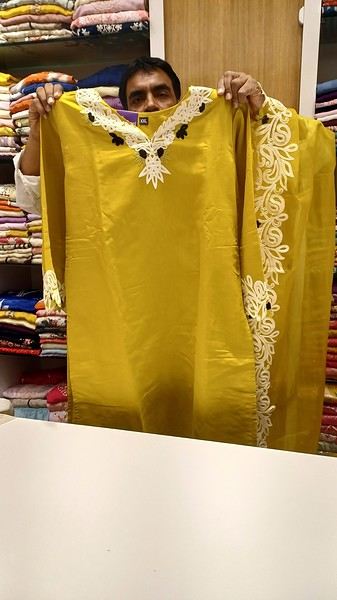
Far from annoying us, this gave us the chance to explore neighborhoods we didn’t know. Along the way, we passed by the big Bandhani clothing store where Magali finally caved and bought two beautiful Indian outfits that suit her perfectly. The prices were fixed, between 1500 and 2000 rupees each. My mom, who wanted me to bring her back a nice “Indian tunic,” gave me incomprehensible descriptions over the phone, and the salespeople kept pulling out kurtī after kurtī, whose photos I sent her via WhatsApp—none of which matched what she had in mind...
To wrap up this long morning of walking, we stopped again at Ghaṇṭā Ghar to grab a bite at Shri Mishrilal, another legendary spot in Jodhpur where people come to enjoy kachauḍī and other fried snacks, delicious Mārwāḍ pastries, and especially their famous mākhaniyā lassī, a thick lassi made with yogurt, cream, cashews, raisins, saffron, and rose water—a meal in itself! The place is super popular, the prices are great, and the small room is always packed.
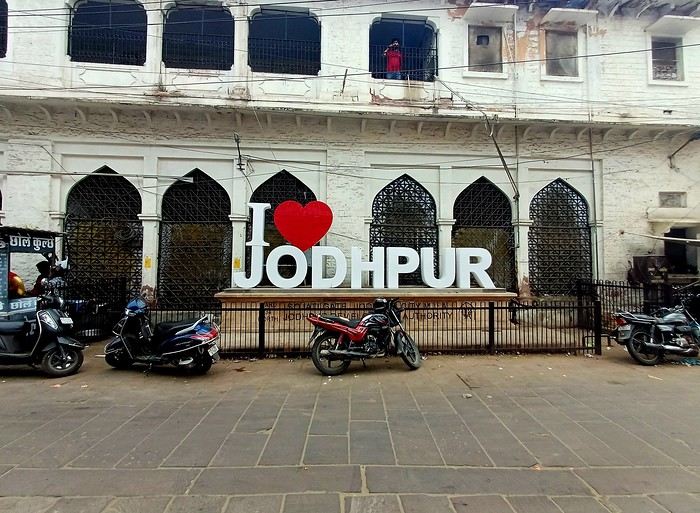
We returned to the hotel for a nap, stopping to buy water bottles, cookies, and bananas along the way. After a few minutes of rest, I left my crew to relax and headed out alone to meet the bill exchanger, whose name and address I had scribbled on a piece of paper: “Birla Ji Note Wala, Sojati Gate.” Sojati Gate is between Janta Sweet Home, where we’d eaten twice, and the train station. Without Théo, it took me less than fifteen minutes on foot to reach the restaurant. For the first time, I felt the rhythm and sensations of my solo travels again! I continued toward Sojati Gate, an old city gate in front of a small square with a sculpture that summed up our state of mind: “I love Jodhpur.”
I turned around, asked the nearby shopkeepers, but no one knew this Mr. Birla... I insisted, specifying that he was a “note wala” (literally “bill guy”). Finally, one of them caught on and led me to a small shop that wasn’t far at all. Mr. Birla, a charming old man who’d been waiting for me, welcomed me into the back of his shop. He explained that it had only been a short time since banks stopped exchanging old notes, but he knew financial networks where these bills could be reinjected or collectors who’d take them. I handed him my 2000-rupee note, and he gave me 1600 rupees in return. It’s better than nothing—it deepened my understanding of India and let me enjoy my last solo moments, taking a detour through a beautiful traditional neighborhood with bustling alleys before returning to Ghaṇṭā Ghar, the Blue City, and the hotel.
Magali and I started packing our suitcases because our train to Falna leaves at 6 AM tomorrow—it’s going to be a short night... We set off for our last meal at another Jodhpur institution, Vijay Restaurant, which is also in the old city, so not far to walk.
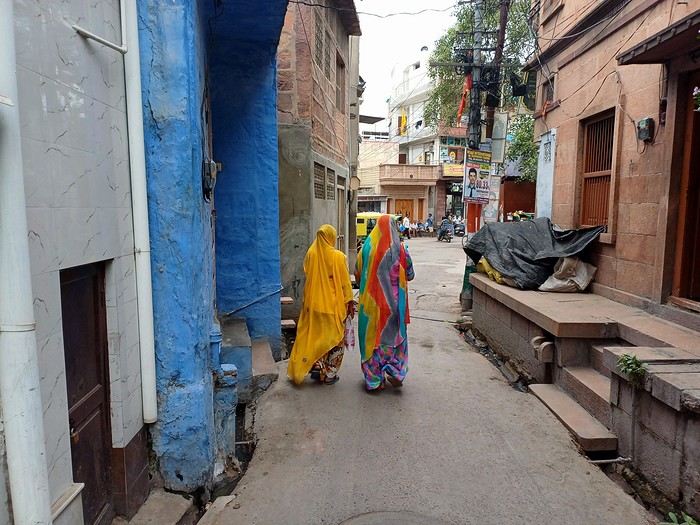
We took one last stroll through the blue alleys, and before eating, we visited the Kunj Bihārī Temple, a temple dedicated to Kriṣṇa that’s extremely popular in Jodhpur and nearly 250 years old. As the fading daylight made the temple lights sparkle, illuminating the whole street, we left our sandals at the bottom and climbed the steps barefoot to a large open courtyard surrounded by domes, with the main temple at its center.
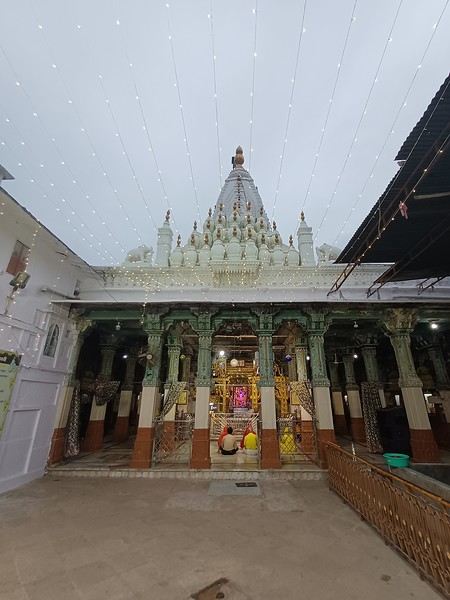
We explored the exterior while Théo ran around, and I explained to Magali and Kelyandre the meaning of the symbols and figures around us. Kelyandre soaked up the information to earn points in his scavenger hunt. For a moment, we were a bit stunned: as I was showing Magali a pictorial representation of Mīrā, a medieval Rajasthani poetess and saint revered across India for her unwavering devotion to Kriṣṇa, she told me that just minutes before, Théo had rushed up to her saying, “It’s Mīrā!” We wondered how that was possible, but before Magali could start imagining that Théo might be a reincarnation of Kriṣṇa, I guessed that a temple devotee must have taught him the name while Théo was staring at the image!
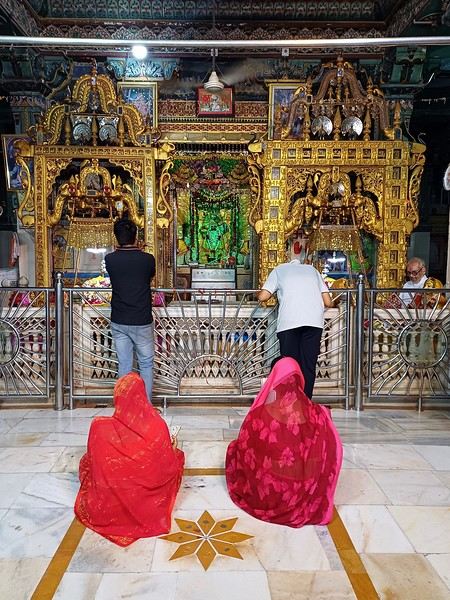
Nearby, a staircase led down to the edge of the courtyard, and a pujārī (a priest who performs temple rituals) greeted us and invited us downstairs to a small basement. It was a small temple dedicated to the great Shiva, aptly named Pātāleshwar, the God of the Underground. It’s common for other deities to have small sanctuaries in temples, as Hindu gods are always complementary: masculine and feminine, benevolent and wrathful, creators and destroyers... Hinduism is divided into two main currents, Shaivism and Vaishnavism (though it’s infinitely more complex than that), and in this temple dedicated to Vishnu’s most illustrious avatar, his brother-in-law Shiva has a space for his followers. Shiva is often represented as a liṅga, a phallic symbol representing passive masculine energy, which always emerges from a yonī, the vulva symbolizing active feminine energy (shakti). Together, they symbolize the totality of the cosmos and its creation. The ritual involves pouring water or milk over the liṅga, but the brāhmaṇ explained that during the monsoon season, this sanctuary’s particularity is that it sometimes gets flooded by rainwater, resulting in a natural pūjā. The priest then tied a red bracelet around my wrist, a sign that I’d completed the pūjā and was now protected by the deity. We thanked the priest and went back up to visit the Kriṣṇa temple, where a few devotees were prostrating themselves in prayer before a lavish altar, to the frenetic sound of bells. Throughout the temple, devotees were very welcoming, eager to explain things and chat a bit.
After this peaceful moment of reflection, we descended the steps and headed to Vijay Restaurant, just across the street. A waiter who spoke only Hindi seated us. The vibe was completely different here—it wasn’t one of our usual modern, air-conditioned family restaurants with an extensive menu, but a much simpler, more traditional eatery that suited the pious expectations of this very religious neighborhood. It serves high-quality vegetarian Rajasthani cuisine, and you can even order half-portions. We ordered various flatbreads (no rice here—it’s not a common side dish in Rajasthan), dāl dishes, panīr (cheese), and the famous gulāb jāmun masālā, the savory version of the famous dessert, which only exists here. I savored these less common recipes. Théo didn’t eat much—just some yogurt and bits of flatbread—and the others enjoyed it too, though they were a bit less enthusiastic than me. It was a tad too spicy for them, and they still preferred the family restaurants we usually frequented. I paid the modest bill, and we returned to the hotel for our last blue dreams under the influence of Mehrangarh Fort. Tomorrow, we’ll be in a completely different environment for what we’ve planned as one of the highlights of our trip: the Jawai Bandh leopard sanctuary, which already has us dreaming of nature and adventure.
Jodhpur 😃😃😃
Mehrangarh Fort 😃😃😃
Shops at Mehrangarh Fort 🤮
Ghanṭā Ghar Bazaar 😃😃
Mandore Garden 😃😃😃
Tūrji kā Jhalrā Stepwell
Jodhpur Heritage Haveli 😃😃😃
Janta Sweet Home Restaurant 😃😃😃
Shri Mishrilal Restaurant 😃😃😃
Vijay Restaurant 😃😃
Bandhani Designers 😃😃
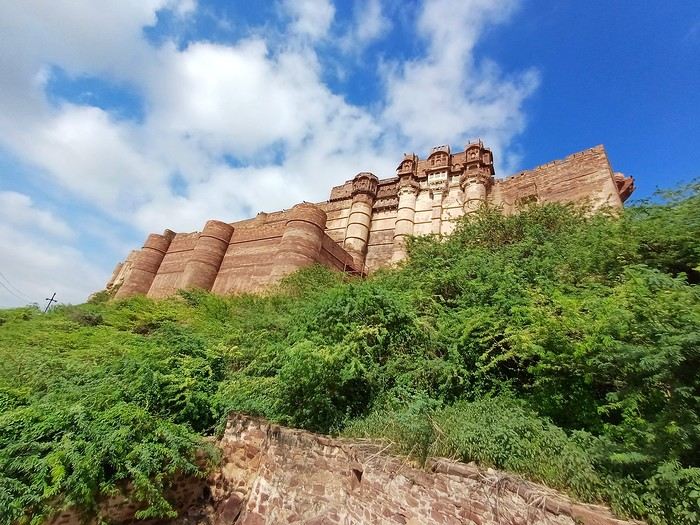
 The climb up to the fort isn’t very long, but it’s much harder to tackle than Jaisalmer’s!
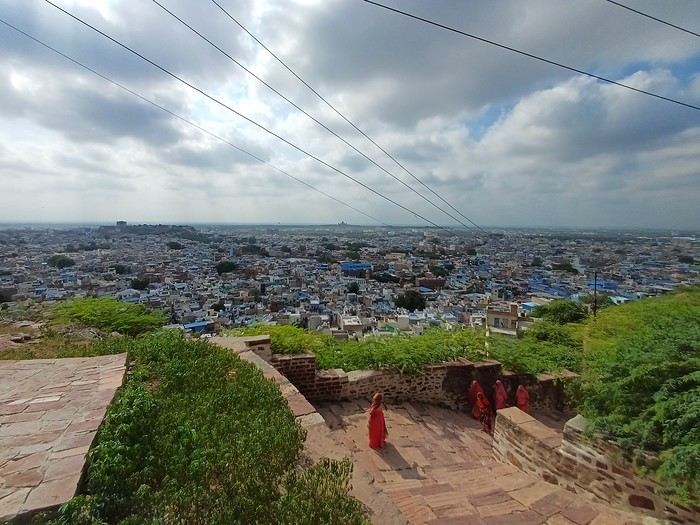 For once, Magali, wearing a Senegalese dress that could easily pass for Indian, takes the lead with the kids, encouraging Théo to walk a bit while I hang back to snap some photos.
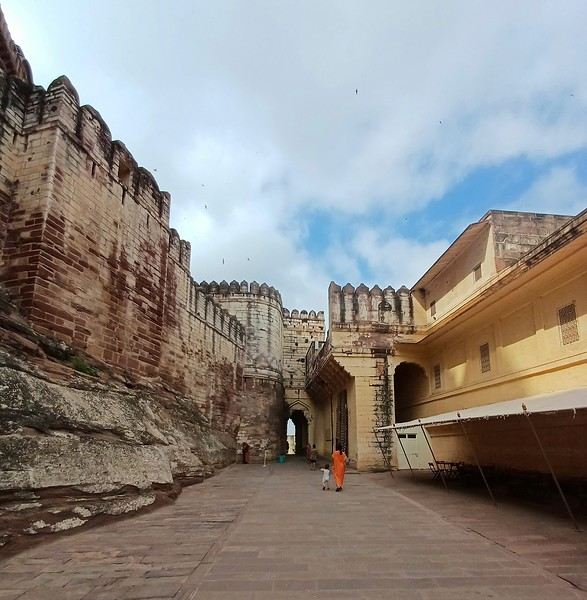 Just before reaching our destination, we cross a small courtyard on the way up where a Bhopā plays the rāvaṇhatthā on a beautiful rug. Having studied the topic, I expand a bit on what I already mentioned in the Jaisalmer section. This (lower) caste of itinerant musicians from Rajasthan, who serve the Rāikā camel herders, are ritually the only ones allowed to play this archaic one-stringed violin, accompanied by a drone string, while sympathetic strings resonate in its coconut-shell body (like the famous sitar), and bells on the metal-covered wooden neck jingle with the bow’s movement to mark the rhythm.
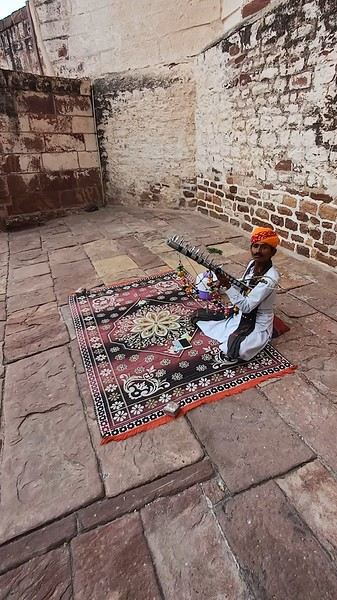 Once a year, the Bhopā play, dance, and recount the epic of Pābūjī Rāthauḍ, the divine sovereign, protector, and healer of camels and herds, for the Rāikā community. You might spot his depiction—always on horseback and armed—in a random alcove in the fort’s walls.
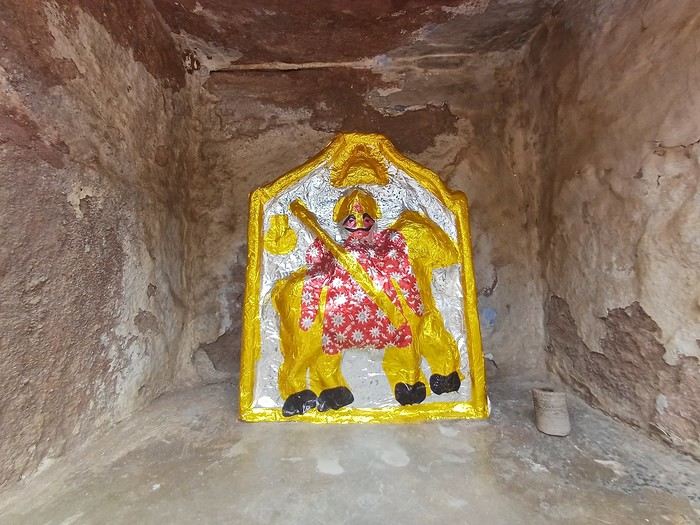 The ceremony at the Pābūjī temple in Kolū village, near where we passed by bus about a hundred kilometers from Jodhpur, can last several days. This long epic tale is a local variant of the Rāmāyaṇa, a fundamental Hindu myth. Hence the instrument’s name, meaning "Rāvaṇa’s hand," based on its shape and the name of the king and demon of Laṅkā in that epic. But in this India where young people, drawn to liberalization, social media, and a more mainstream Hinduism, are turning away from local traditions, the ritual is at risk of disappearing. Despite this decline, Pābūjī remains a major regional deity and a vivid figure in Rajasthan’s folklore.
For me, in the māyā (the world of illusion—that is, our real world), the sound of this instrument instantly evokes a daydream of goats grazing on the delicate leaves of babūl trees and their turbaned herders in the Thar Desert landscapes... I approach and strike up a conversation with the Bhopā, who’s surprised I know so much about his caste’s history and culture. I mention meeting another well-known Bhopā in Udaipur (whom he knows) who gave me a few rāvaṇhatthā lessons in Jagdish Temple Street during my first trip in 2007. He finally plays a beautiful piece that captivates Théo before we say goodbye and continue on our way. A brief but lovely encounter.
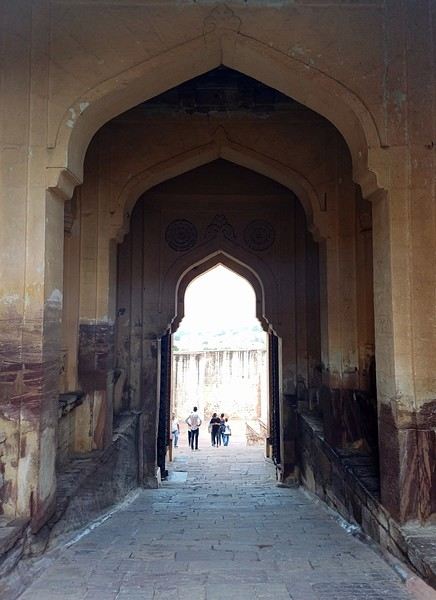
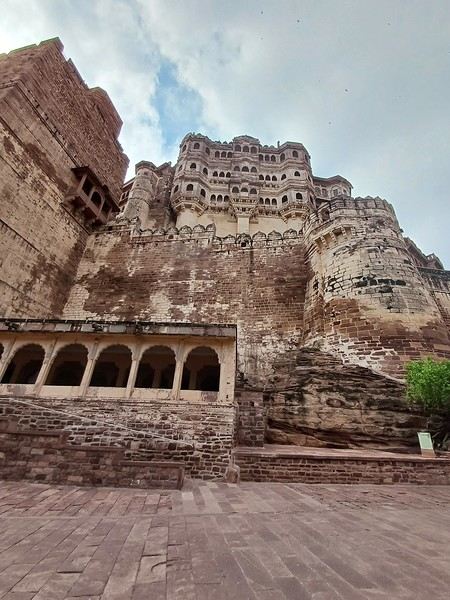 We pass through each gate, like mouths leading us deeper into the fortress, until we reach the heart where the ticket booth for the palaces is. "I am the soul of Rajasthan," the building seems to whisper to me.
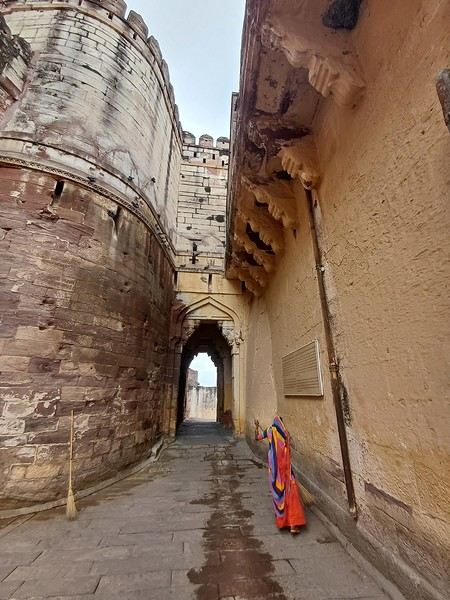
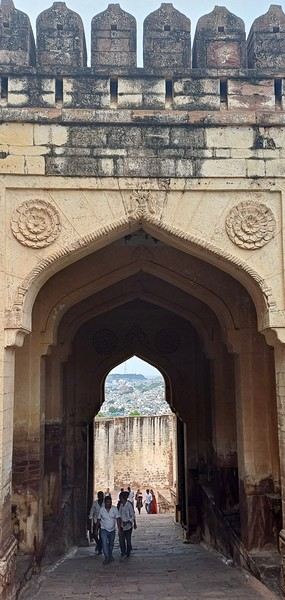


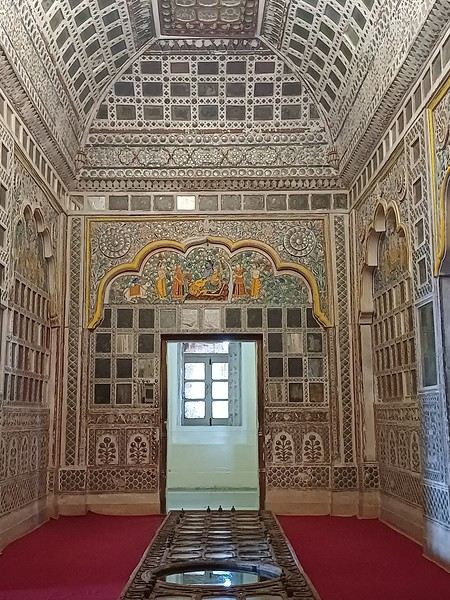
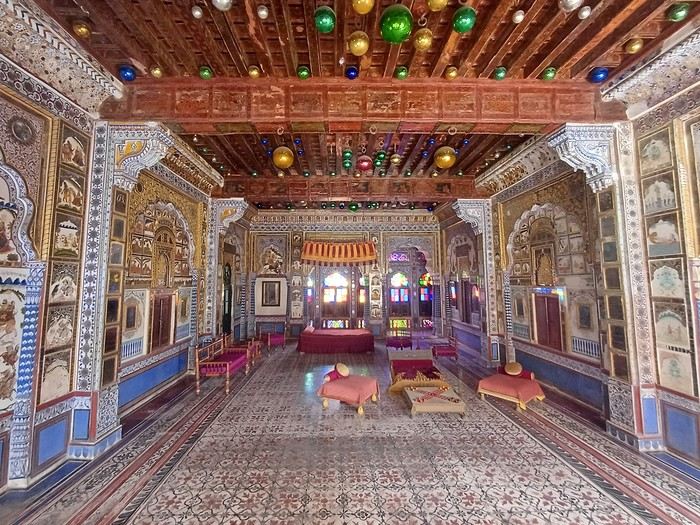
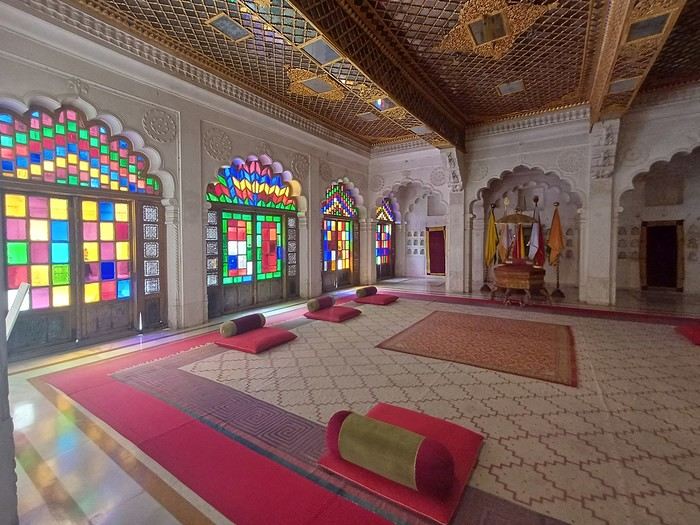 The route takes us through wonderful courtyards and alleys, where the sculptures in the windows and walls—especially in the *zenānā* (as its name accidentally suggests, the part of the palace reserved solely for... the ladies)—are of exceptionally fine detail.
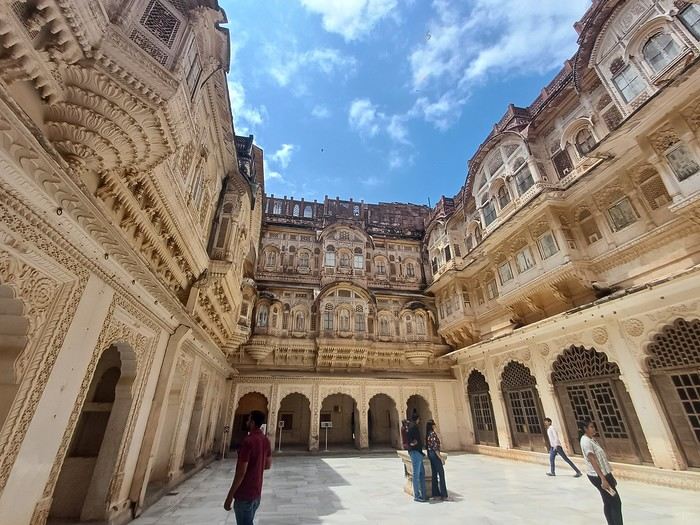
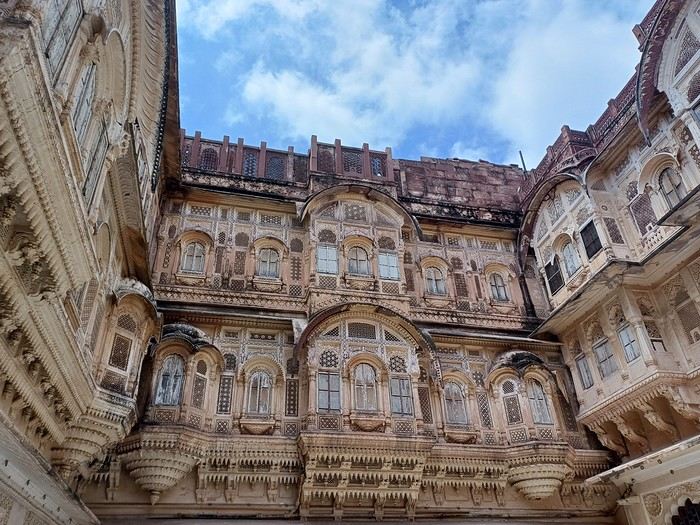 At the end of the visit, the museum is less essential, but medieval object enthusiasts will find plenty to admire in the weapons, costumes, paintings, and kitschy palanquins. I even have to chase after Théo, who slips past the security barrier and starts causing chaos in a room full of particularly frilly palanquins adorned with very Christian-looking cherubs—a testament to the late Maharajas’ admiration for European art. I get a mild scolding from the guard in military uniform: "Sorry sir, sorry..."
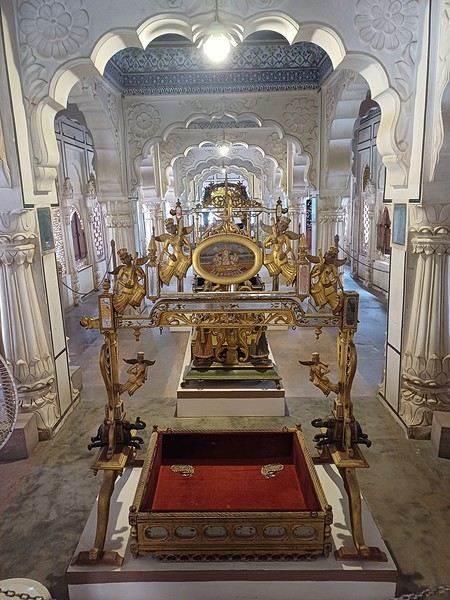
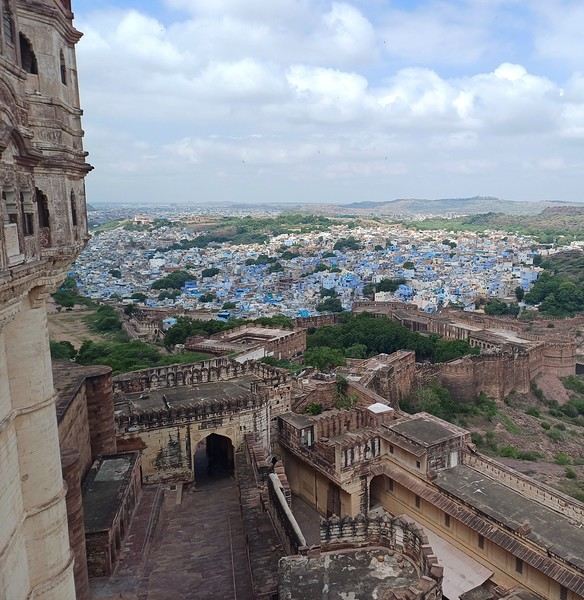
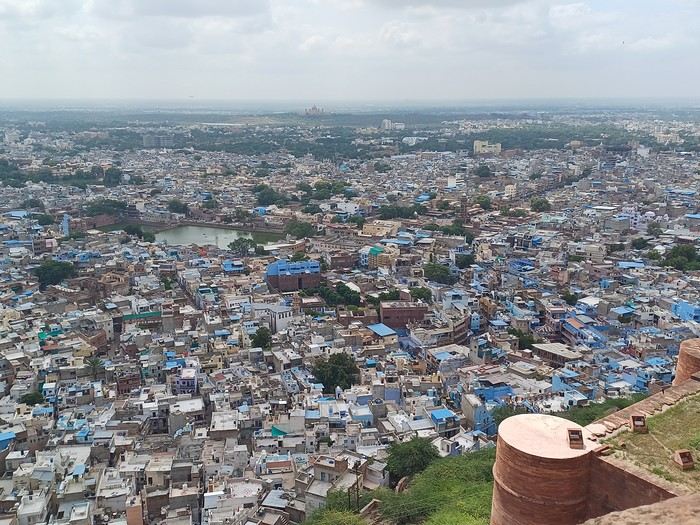
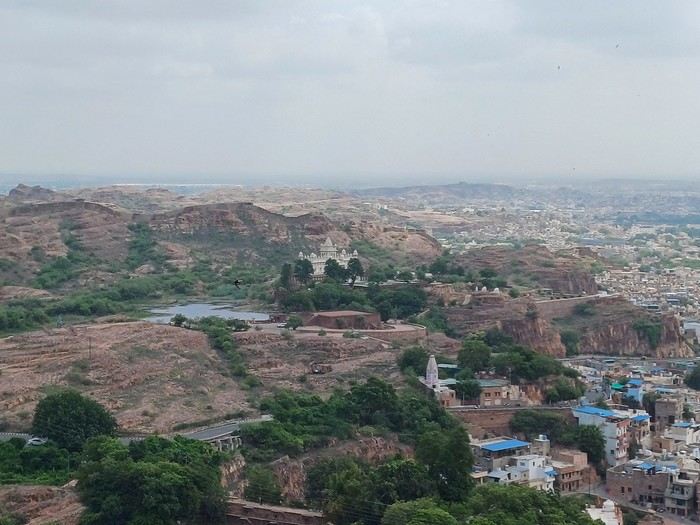 A final little encounter with an Indian family and their kids in the last courtyard, and the exit path inevitably takes us through the fort’s market, where the shops only sell approved, non-negotiable handicrafts. Magali can’t resist a beautiful yellow and blue scarf for 2,500 rupees, with the vendor assuring us it’s a rare piece we won’t find anywhere else but in the fort. We leave the place for good through the same gates we entered, still dazzled by the visit. Could Jodhpur truly be the soul of Rajasthan—the city that best encapsulates the spirit of the "Land of Kings" in all its facets?


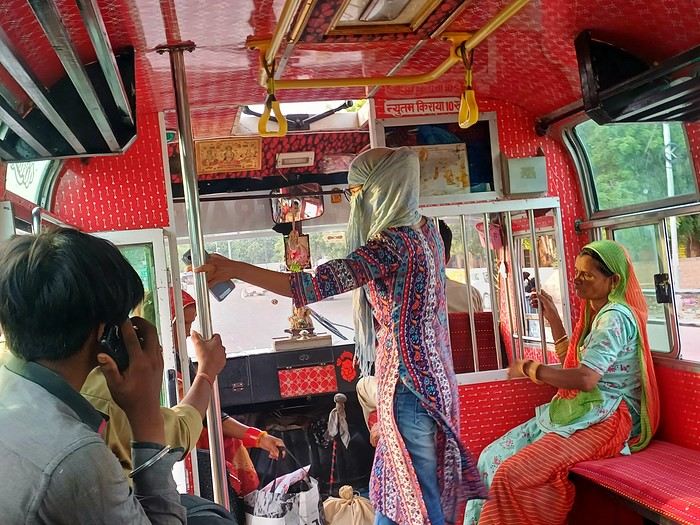
 Plus, it’s way cheaper and much more fun! Near Ghaṇṭā Ghar, we ask passersby where the stop for Mandore is. They tell us to take bus 1, which leaves at the junction of Ghaṇṭā Ghar and Nai Sarak. But in the end, we have to walk the whole avenue because the stop is near our beloved Janta Sweet Home, where a bus 1 is just leaving... We don’t wait long before another one arrives. There aren’t many people on board, which is nice, and we pay next to nothing for the four of us. However, the bus gets stuck in traffic, stops to refuel, hits a pedestrian (thankfully not seriously, but it requires a stop), and makes roadside stops—needless to say, it takes a bit longer than the rickshaw did yesterday... When it finally arrives, we realize it took an hour to cover the 9 kilometers. But we have time and enjoy being immersed in Indian life.
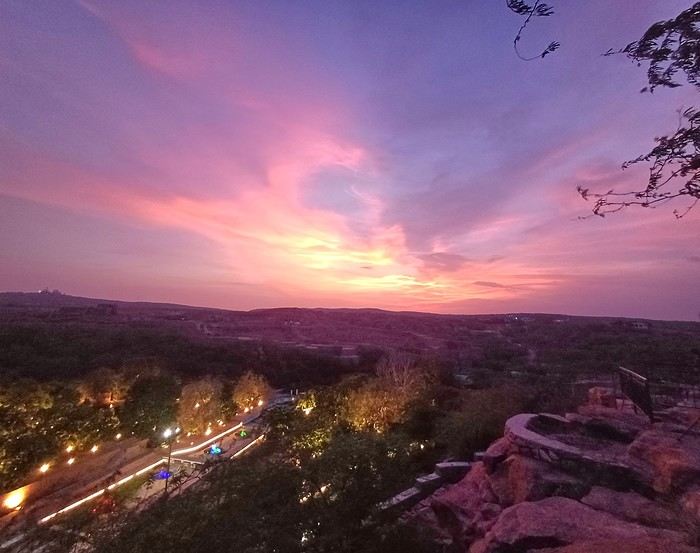
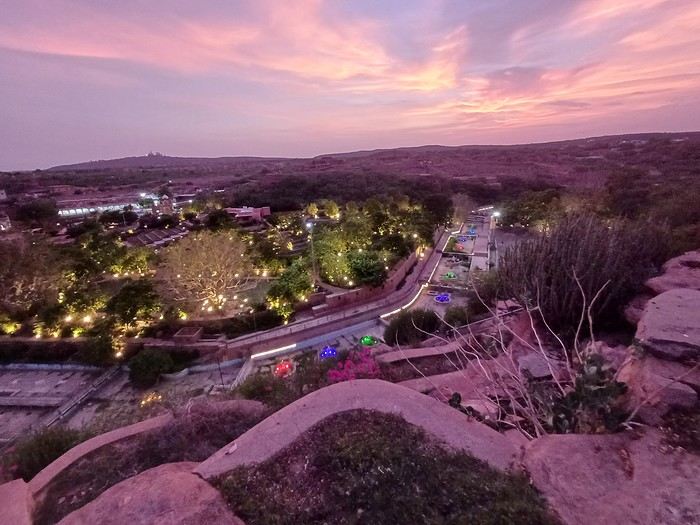
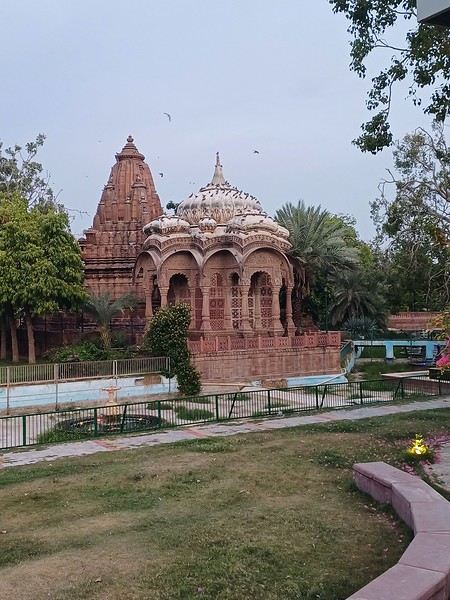 We venture deeper to explore the back section we couldn’t visit yesterday, all the way to the large lake at the end of the park. On our way back, we’re joined by Indian families, more numerous at this late hour. Colorful garlands light up along the paths and fountains as daylight fades. A steep path leads up the hill that once served as a lookout for the old Mandore fort, of which little remains... We grab sticks to fend off any aggressive monkeys and climb the few dozen steps to the summit, which serves as a sunset viewpoint (okay, that sounds too Québécois—I’ll say “sunset point” next time like everyone else). The sunset over the gardens in the last glimmers of daylight is stunning. In the background, there’s that indescribable mystical atmosphere of India transitioning between day and night, while ritual music echoes below.
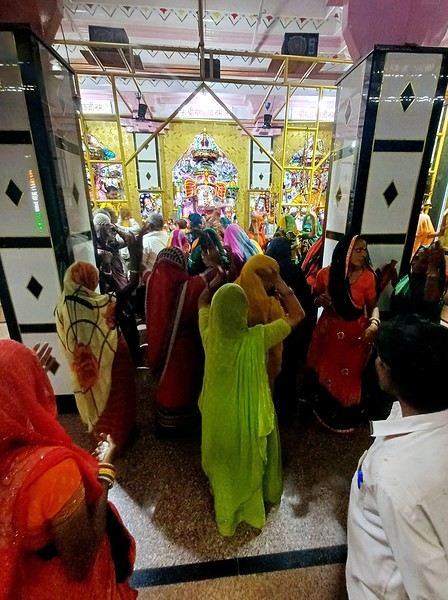
 We follow the sound of the music back down and realize it’s coming from Mandore Garden’s only temple, dedicated to the elephant god Gaṇesh, judging by the large effigy in the sanctuary’s center, where dozens of pilgrims dance in a trance, even on the entrance steps. I don’t know if it’s a special occasion or a regular ritual, but I blend into the crowd to take a few photos.