Back to the discussion

in Entre deux voyages › Carnets de voyage

Yet Another Travel Journal in this (Too) Familiar Rajasthan, But with Family and Kids (page 6 of 11)

Discussion started by Pagaljavab on 2025-08-30

201 replies

This thread has been translated into English.


Yet another travel journal in this (all too) familiar Rajasthan, but with family and kids

Pagaljavab · 2025-10-13 · Message 101 of 202

Feel free to jump in however you like! There are indeed many similarities between Greek and Indian thought, and quite a few historians and anthropologists suggest that intellectual exchanges between the two civilizations may have been lively. There are plenty of striking examples.

Another travel journal in this (all too) familiar Rajasthan, but with family and kids

Pagaljavab · 2025-10-18 · Message 102 of 202

Day 10, August 2nd: Jodhpur-Falna-Jawai Bandh. “On the trail of leopards, the Rajput gentleman, and the drama”

It’s 5 AM. We descend the steps of our haveli and open the gates. As planned, a rikshawala we met the day before near the hotel—who seemed reliable—is waiting for us in the street at the agreed time. This rather young Hindu man, with a pious appearance, speaks little but proves to be dependable and professional. As dawn breaks and urban activity slowly starts up, he navigates the blue alleys, drives down the main avenues, and drops us off in front of the old, beautiful brick building of Jodhpur’s railway station.

We head to the platform for a makeshift breakfast: chai, fruit, and various snacks. Then our train arrives. And not just any train—the Vande Bharat Express! This fast, clean, and modern train, introduced in 2019, consists entirely of air-conditioned carriages: AC Chair Car for the more “basic” option and the prestigious Executive Class. Automatic doors, compartments with immaculate tables, eco-friendly toilets with sensor taps, onboard Wi-Fi, digital travel information displays, power sockets... In every respect, it’s the antithesis of classic Indian trains. It’s the embodiment of “Shining India,” promoted and promised by the liberal reforms of the 2000s, and “Clean India” under Modi, all in one train. We booked it primarily because the schedule suited us, allowing us to reach Falna in under two hours—half the time a regular train would take. It was also an opportunity to experience these new Indian high-speed trains, a first for me (even after ten trips, there’s always something new, thankfully). We opted for the AC Chair class (600 rupees per person), which already exceeded our expectations and was light-years ahead of the comfort and modernity I’ve experienced on any other Indian train. Here, dusty aisles and benches give way to spotless, brand-new facilities; the usual crowds of ordinary people are replaced by small groups of well-dressed, upper-class families; street vendors and sweepers are swapped for uniformed servers and sanitation staff in sterile overalls; and the sense of closeness is replaced by a polite, slightly distant cohabitation. The silence and tranquility are only occasionally broken by the automatic door-closing signal, electronic announcements, the quarter-hourly visits from cleaning staff, or the servers offering complimentary chai and biscuits: the feeling of being in a clinic hurtling along at 150 km/h. For someone used to classic Indian trains, the Vande Bharat can almost feel unsettling at heart... We even get the impression that time passes more slowly. But even though I love my Sleeper Class, I’m not complaining: the experience is entertaining, enriching, and still comfortable! Though, what must the Executive Class be like?!

By the way, what are we even doing in Falna? And does anyone here even know Falna? No one? That’s normal... There’s nothing particularly special to do in this tiny town of 25,000 people, about 150 kilometers south of Jodhpur. Because in reality, it’s not our final destination: we’re heading to Jawai Bandh, which isn’t even a proper town. Jawai Bandh is an artificial lake formed by a dam on the Jawai River (hence its name, meaning “Jawai Dam”), construction of which began in 1946 under the orders of the Maharaja of Jodhpur, due to the recurring damage caused by monsoon floods. It’s also the largest dam in Rajasthan. It supplies most of the water resources for the Pali district, for both basic human needs and agriculture, as well as electricity.

At the edge of the arid Marwar and the gentler Mewar, Jawai Bandh—both a toponym and a broader territorial unit encompassing the villages around the lake—is geologically and climatically much closer to the latter. Its landscape of rocky formations dotted with thorny plants and succulents marks the entrance to the lower Aravalli mountain range, which divides Rajasthan into two distinct climatic regions.
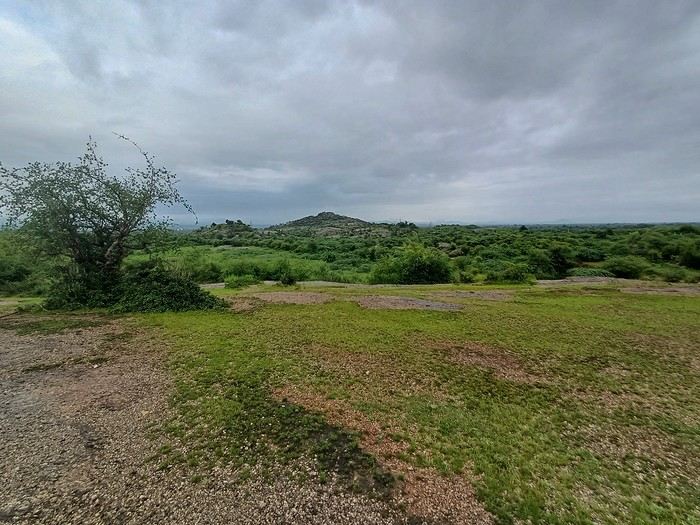
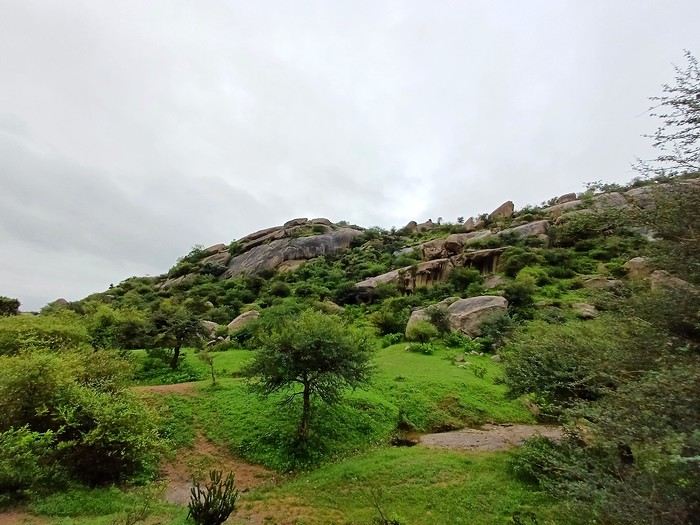
Over time, the lake and its surroundings have become a natural habitat for migratory birds, crocodiles, antelopes, and a diverse range of wildlife. But above all, one thing has drawn tourists to this remote spot in recent years: leopards. In the Jawai Bandh villages, locals claim they’ve always lived in peace with the leopards. And while these big cats help themselves to both wild game and the livestock of Raika herders, there hasn’t been a single recorded attack on humans. In fact—this *is* India, after all—the leopards are sacred here, and a small temple is even dedicated to them in a hillside cave. It’s said that villagers bringing offerings and the leopards coming to claim them cross paths there without any issues. Starting in 2010, Jawai Bandh, which had no tourist appeal until then, officially became a leopard conservation reserve—the largest in the world, apparently—and hotels, tented camps, and luxury resorts gradually sprang up around the lake to offer jeep safaris to discover the local wildlife, flora, and culture. Yet the site remains relatively unknown and spared from mass tourism.

After four visits to Rajasthan, I’d never heard of Jawai Bandh... It was during the planning of this trip that I stumbled upon the name while browsing the English version of the Lonely Planet website—curiously, it wasn’t mentioned at all in the print editions. I dug deeper, did my own research, and realized the reserve was halfway between Jodhpur and Udaipur, making it a potentially interesting stop between the two cities. I also learned that it wasn’t a closed reserve but a protected area around the lake where leopards live in a natural, open environment. Though the monsoon isn’t the best season to maximize your chances of coming face-to-face with these big cats, the vegetation is lusher. Ultimately, the idea of staying in the heart of rural Rajasthan to observe wildlife or visit villages seemed perfect for the kids. We quickly envisioned this stop as one of the highlights of our trip. Once we’d incorporated the location into our itinerary, we had to consider accommodation options. We did our research using Google Maps, clicking on all the lodgings listed around the lake. We ruled out the large hotel complexes, which not only charged exorbitant rates but also contributed to the dispossession of local farmers’ land. We also dismissed the cheaper guesthouses in nearby towns like Sheoganj and Sumerpur, which were a bit too far from the lake. In the end, we settled on tent resorts, campsites in the heart of nature with well-equipped tents. After contacting a few places via WhatsApp, it was Sukhdeo Singh Rathore, the owner of Bagheera Bagh Jawai, who stood out—he was the most responsive and friendly and offered us a much better deal than his competitors: 36,000 rupees (395 € at the time of the trip) all-inclusive for three nights in a large, air-conditioned deluxe tent right in the reserve, with a pool, breakfasts, lunches, snacks, dinners, and three jeep safaris included. Though 12,000 rupees per night was way above our usual budget, the complete package and the offer being significantly cheaper than competitors convinced us, and we didn’t look any further. Later, Sukhdeo even agreed to handle our train reservation between Ahmedabad and Jaisalmer for free, which we paid for via Western Union (only 3 € in fees) along with the 50% deposit for the booking. We stayed in touch in the months leading up to the trip, and Sukhdeo continued to provide us with the information we needed, including how to reach his camp by bus from Falna—though he’d also offered to pick us up by car. But the idea of taking another local bus seemed more appealing.
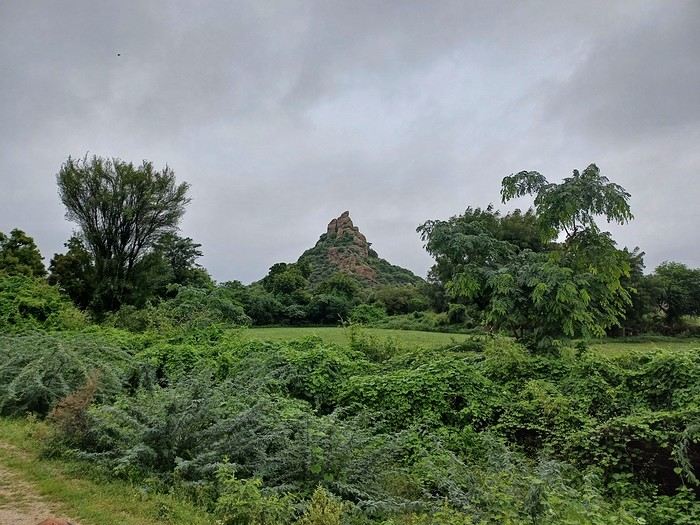
Right on time—well, about fifteen minutes late—our Vande Bharat Express arrives in Falna around 8:10 AM under a gray, slightly threatening sky. Not many of us get off... It’s true that there were stations closer to our final destination, mainly the one named “Jawai Bandh.” However, none of them are served by a fast train, and Falna isn’t *that* far from the lake, making the Vande Bharat-local bus combo ultimately less time-consuming.

We exit the station, and since there’s no RSRTC (Rajasthan State Road Transport Corporation) bus for our route, we look for the local Khalsa bus supposed to serve the village of Bera, near which our camp is located south of the lake. Online, I’d spotted a bus to Bera at 9:30 AM, but with rural buses, nothing is ever set in stone... We approach the few rickshaw drivers parked in front of the station, who inform us that a bus is leaving soon for Bera—at 8:30 AM! We’d planned to have breakfast in Falna and visit the two (reputedly beautiful) Jain temples in town to kill time, but we don’t dawdle and head down the tiny station street where the buses depart. It’s drizzling, but nothing too bothersome. Since we still have a few minutes, the end of the street is close, and we spot a small group of men bustling around a chaiwala boiling water, tea, milk, and spices in his large pot, we take a short break. We watch the scene of the main street of this small rural town waking up, where rickshaws, a few passersby, cows, and dogs parade along the slightly muddy road. We take the opportunity to confirm the bus to Bera with our chai companions, and they point us to the end of the street. They’re welcoming and chat with me a bit. Suddenly, Kelyandre urgently needs to use the bathroom, and the men point to the temple right next door. It’s the temple of Shitala Mata, goddess of smallpox (and many other nasty diseases), who inflicts or cures them depending on one’s karma. We follow our suitcases under the temple’s entrance porch and quickly ask for the restrooms, which are upstairs. This mismatched family with all their gear in this small-town temple at such an early hour is a bit out of place... A temple attendant approaches and asks us to sign the visitor list: we’re charged 10 rupees as a donation for using the toilets. The man is very friendly afterward and chats with us. Meanwhile, Kelyandre, who went upstairs, is taking a while... We start to worry as departure time approaches, wondering what he’s up to... I go up to check: he’d gotten a little lost looking for the restroom and is feeling a bit unwell...

With this little hiccup, we’re really cutting it close for the bus. We rush with our heavy gear to the end of the famous street... We try to find our vehicle, but a young man explains that earlier in the morning, heavy rains had cut off the small roads. Since he’s heading in the same direction, he invites us to follow him. He tells me we need to take a sawari (shared jeep). Still in the light rain, we load our suitcases into the back and settle into the jeep, which travels a few kilometers before stopping on the side of a larger road. The young man explains that we now need to take a bus that will drop us off about twenty kilometers away in the small town of Sheoganj, which, along with its twin Sumerpur (separated only by the Jawai River), forms the largest nearby settlement to Jawai Bandh. From there, a public bus will cover the next twenty kilometers to Bera. We wait a little under the shelter of the sawari, and a red private bus arrives immediately. We pay the fare (about 70 rupees total) and get off with our adorable guide, who’s made it his mission to get us to our destination safely. There’s plenty of space, and we settle in comfortably, paying about ten rupees per person to the chief conductor (the ticket inspector). Our guardian angel checks that we’re okay; I thank him warmly for his help, but he acts as if it’s all perfectly normal.

After a short ride, the bus crosses Sumerpur, passes over the Jawai River bridge, and drops us off at the tiny bus station in Sheoganj. We get off in the rain, which has intensified in the meantime. Our friend asks around a new small group of men gathered around a chaiwala’s pot: they point us to the minibus for Bera, which will leave in half an hour. We find a little shelter, and one of the men brings us chai! Finally, the driver gets on the bus. Then comes the rush to board the small, dusty vehicle. A little damp, I have to stand squeezed in with those who don’t have seats, but the ever-welcoming and kind villagers give up their spots for Magali and the kids. Kelyandre, once again, has no equal when it comes to falling asleep on his neighbors’ shoulders—but this time, it’s a beautiful village girl around his age, looking like a little pure princess, who, faced with this unexpected situation, pulls her ghunghat, the veil of her green sari, over her face and sits stiff as a board, trying to act like everything’s normal. A quirky scene I have no choice but to capture!
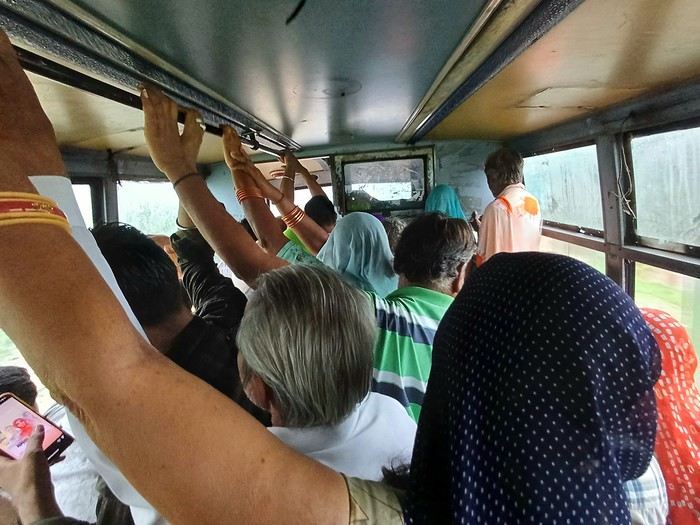
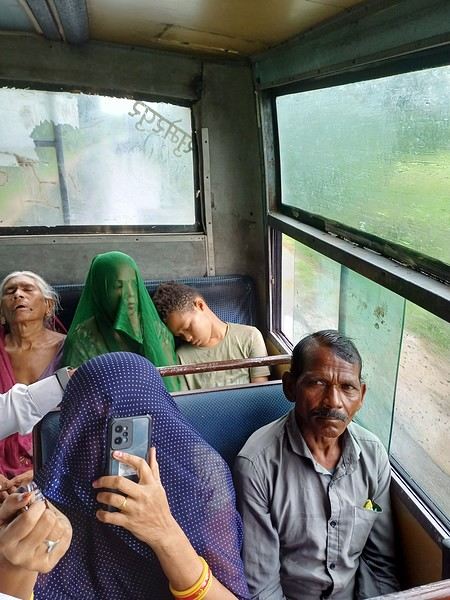
I stay in touch with Sukhdeo on WhatsApp to update him on our progress while checking Google Maps to track the bus’s route in real time. We follow the thorny, rocky expanses of Jawai Bandh, even passing near the small path leading to our camp—but unfortunately, we can’t stop... All in all, with the flooded country roads and numerous roadside stops, it takes us nearly an hour to finally reach Bera’s main street, which serves as the bus station. It’s still a little less time than if we’d taken a regular train to the nearest station. Our guardian angel tells us this is where we need to get off. We don’t know how to thank him for his help. Without hiding his immense kindness, he shows us, with total selflessness, that he was only fulfilling his dharma, his duty—to look after this couple of foreigners and their two young children wandering so oddly through the flooded lands of deepest Rajasthan in search of an alternative route to their holiday destination. Yes, we’re not just throwing around the overused phrase “off the beaten path.” Some might criticize us for needlessly seeking out complications and problems, given that our middle-class Western means instantly make us very wealthy in this country, which, despite what some say, is still largely mired on the long road to development. But our faces wouldn’t be so radiant now if we’d taken a taxi from Jodhpur or found a station right next to our destination. We wouldn’t have experienced the absolutely incredible welcome from all these villagers, who show us nothing but help and kindness in these battered buses against a savanna backdrop: that’s worth a thousand visits to the fabulous forts of Jaisalmer or Mehrangarh. And as we part ways, I regret not knowing more about this man, not being able to invite him for chai and chat about his life. But we get off here, and he continues on his way. We have to accept that our paths separate as they crossed, with no farewell other than empty thanks and a brief exchange of emotional, grateful glances that say more than words ever could...

Sukhdeo Singh Rathore has no trouble spotting us as we get off the bus! He helps us grab our large suitcases and loads them into the back of his new, air-conditioned car. He asks about our morning adventure, which we recount with laughter. We retrace a short stretch of the road we’d just taken by bus, then turn onto a dirt path turned muddy by the rain, lined with sparse but lush vegetation. Around 11 AM—nearly three hours after arriving in Falna and five hours after leaving Jodhpur—we finally reach Bagheera Bagh, the “Leopard’s Garden,” which we’d dreamed so much about. Under a cloudy sky with occasional breaks of sunshine, we discover the modest but sprawling property, consisting of four very large tents. Nearby, a pavilion shelters the kitchen and dining area, a small pool right next to the tables, and farther off, a little house that clearly serves as a storage and laundry room, a beautiful horse, a few ducks, geese, and chickens roaming freely, and all around, a 360-degree view of this unique landscape—lush, semi-desert, and rocky. We enter our enormous tent, which from the inside looks more like a large hotel room with a canvas exterior and local-folklore decor, complete with a spacious bathroom at the back. Plus, we’re alone, and it feels like the whole camp is ours. We’re immediately charmed by the place—it’s even better than we imagined!
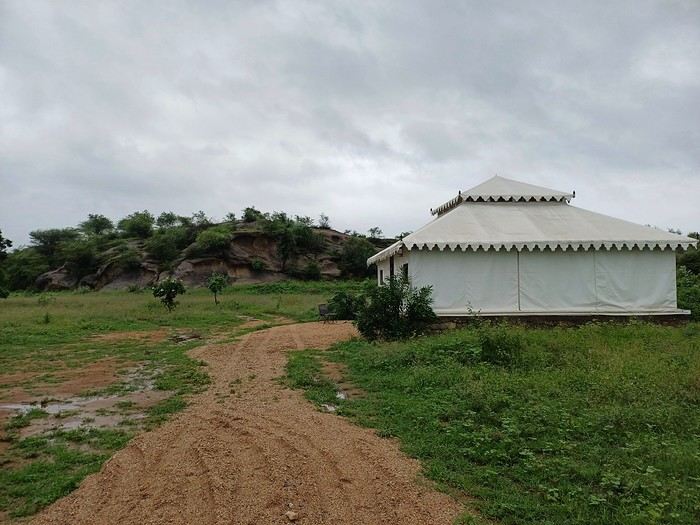
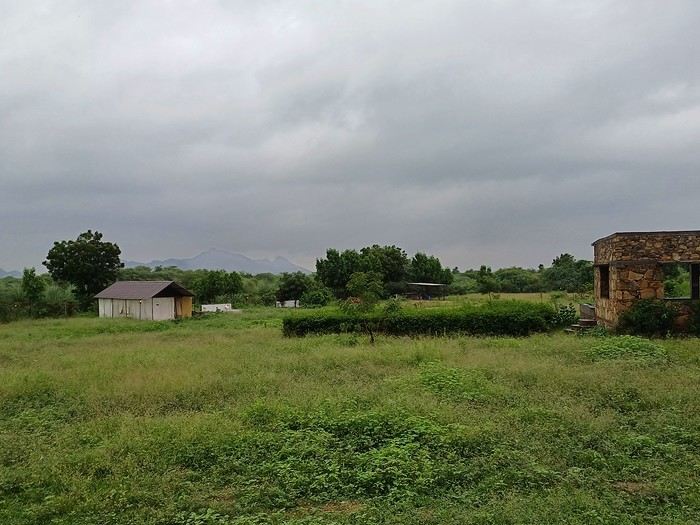
Sukhdeo leaves us to explore and says we can message him on WhatsApp if we need anything. Most of the time, he’s on the property, staying in one of the tents or busy with tasks alongside his two teenage employees. We can finally unpack and settle in, freshening up after this dusty, damp morning, when suddenly... problem... our combination lock suitcase won’t open. We try several times, but it doesn’t work. And this is our biggest bag, with most of our stuff inside... We think it might be jammed from being overstuffed and jostled in the various luggage holds this morning. We keep trying, but nothing works. We have to message Sukhdeo to ask if he can find a locksmith in a nearby village. It might cost us a bit for the trip, but we have no choice. Sukhdeo arrives about ten minutes later. He looks at the suitcase, asks for the code, tries to force it a little—no more luck than us. He calls a locksmith he knows in Bera, explains the situation, and sends photos. He follows the professional’s instructions over the phone, but still nothing. We’re really worried because a significant part of our lives is in that suitcase. Could it be the Mehrangarh curse following us again? Sukhdeo then has an idea and tries something: he resets the code, fiddles with the lock, and tries to force it a little. We’re helpless, hanging on his every move. He tries a few times, and suddenly—miracle—the suitcase opens! Another man who was just doing his dharma, but we’re infinitely grateful to him on this trip: we’d be ready to build him a temple! He modestly says he’s dealt with this issue before with tourists who had the same suitcase as us—he realized that when overloaded and jostled, the code simply shifts by one digit, so he tried the number above and below while forcing it a little. Of course, makes sense...

Of royal caste, as his clan name suggests, Sukhdeo Singh Rathore is a man in his early forties, tall and slim with a fine mustache. Combined with his unshakable, laid-back demeanor and affability rooted in his very being, he exudes both the air of a Rajput prince and a 19th-century British colonial administrator. Whether he speaks Hindi or English, he never wastes a word and speaks with a deferential tone without being obsequious, helpful without being servile, with businesslike courtesy that’s nonetheless sincere. One word seems to define him perfectly: a gentleman. He embodies it. After a quick cleanup and rest, with the rain finally stopped, we sit at a table under the pavilion. Sukhdeo asks if we’ll be eating vegetarian or non-vegetarian, and as always, we choose the former. While he prepares our meal with his two boys in the large kitchen with a counter open to the covered dining area, we enjoy the absolute tranquility of the place, perfect for relaxation. The three of them are excellent cooks and serve us a veritable feast of authentic Rajasthani specialties, arriving one after another: rice, different types of chapati, dal, aloo gobhi... and a delicious ker pickle, those small berries from the thorny bushes of Rajasthan. A delight! For an appetizer, we were treated to delicious raw tomatoes and cucumbers grown on the property. Théo, who’s been a bit picky since the start of the trip with these new eating habits and has been eating less than usual, insists on trying them. We know it could be risky, but it’s the first time he’s shown such enthusiasm for eating something, and the produce is entirely natural. So we give in...

We digest one of the best meals we’ve had since arriving with a good chai, and Sukhdeo gives us binoculars to scan the surroundings. He explains that if we look at the nearest hills, we might spot leopards near the caves where they live. For now, we don’t see anything except magnificent peacocks perched on the rocks and this fairly green plain, dotted with those striking volcanic granite formations so unique to Jawai Bandh. Then we go change into our swimsuits to try the pool next to the pavilion, which turns out to be very pleasant. Sukhdeo knows how to be discreet and step back when needed, making himself available when we require him. We chat a bit about our lives—I tell him about my travels in India and my brief study of his mythical ancestor, Pabuji Rathore, while he describes his daily life on this property he acquired and converted into a tent resort a few years ago, and his family back in Pali, the district headquarters about a hundred kilometers away. We then discuss our program: no safari planned today; he’d rather we rest a bit. We’ll have our first excursion tomorrow, another the day after, and we’ll see if we can fit in a third one later. However, we’re free to explore the grounds and the small rocky outcrop near the tents to admire the view and try to spot leopards from afar. There’s not much else to do but soak in the peaceful setting. We go rest a bit in the tent. But Magali notices that Théo isn’t his usual energetic self and reminds me that when he’s like this, he’s coming down with something...
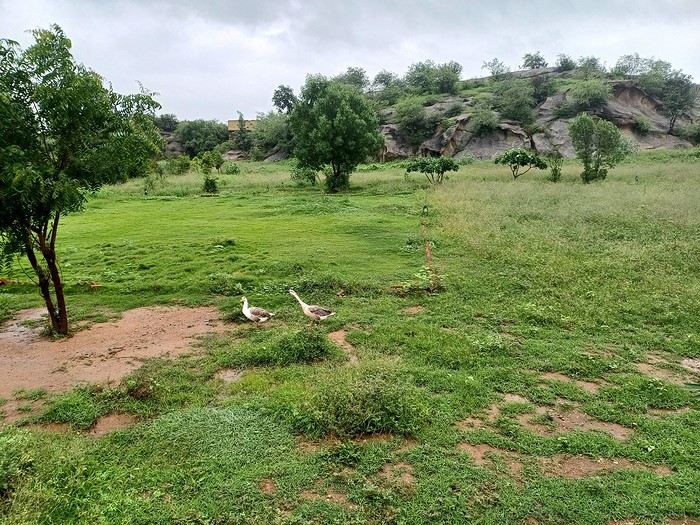
Indeed, he’s not feeling well and needs rest. He keeps complaining about his stomach. At one point, he ends up vomiting. And vomiting again, with diarrhea, non-stop. We try to get him to drink, with mixed success, as he doesn’t feel like it and throws up the water immediately... We give him the medicine we’d packed, knowing we might face this situation. But nothing helps... He keeps emptying himself from all sides. We hope it’s not too serious and don’t have many other options for now but to let him recover. This puts a bit of a damper on the idyllic atmosphere that had settled in.

That evening, we have another wonderful meal with new tent neighbors—a family from Mumbai who, in a quick stopover, did their safari in the afternoon and will spend the night here before leaving early the next day. Their guide told them he saw a leopard, and they think they spotted it with the binoculars but aren’t sure... But Théo is weak and not very hungry. We have the strange feeling of being in a perfect place while these curses keep raining down on us one after another, though we’ve managed to dodge them all so far... Night falls, and we return to our tent. We continue Kelyandre’s traditional “treasure hunt” with questions about the day’s events. Then we go to bed, hoping everything will be better tomorrow...

Yet another travel journal in this (all too) familiar Rajasthan, but with family and kids

Marien33 · 2025-10-20 · Message 103 of 202

Still as lively and interesting... Though for the young woman/girl in green, her cute little neighbor on the left is definitely better than the granny on the right 😉 well, it depends on taste... Combination locks—what a nightmare, I’ve dealt with those multiple times. And yeah, it’s often just one digit off, but you’ve got to figure out which one. It’s not always the last or the first... The last time this happened to me was right in Bangalore airport, where I absolutely needed something important inside, and we tried everything for hours. In the end, we had to break the suitcase open and tape it up pretty badly just to finish the last leg of the trip. Since then, no more combination locks—I prefer the good old key lock! !

Yet another travel journal in this (all-too) familiar Rajasthan, but with family and kids

Pagaljavab · 2025-10-21 · Message 104 of 202

Still, for the young woman/girl in green, her cute little neighbor on the left is better than the grandma on the right ;) well, it depends on taste...

There’s no accounting for taste, right!

The combination lock suitcase—what a nightmare! I’ve dealt with that several times. And yes, it’s often just one digit off, but you have to figure out which one. It’s not always the last or the first...

Luckily for us, it was only off by one digit, and we had someone clever enough to figure it out. Otherwise, we probably would’ve had to break it open—we were *this* close to doing just that.

Alright, more to come!

Yet another travel journal in this (all-too-familiar) Rajasthan, but with family and kids

RichardXI · 2025-10-21 · Message 105 of 202

More wonderful encounters! And it's true that your way of traveling really helps make them happen. I'm looking forward to the rest of your epic tale "in the land of leopards." But I wonder if you'll actually see any. Suspense...😉

Yet another travel journal in this (too) familiar Rajasthan, but with family and kids

Pagaljavab · 2025-10-21 · Message 106 of 202

Day 11, August 3: Jawai Bandh « Tracking leopards, the Rajput gentleman, and the drama » (continued)

We wake up to find Théo still not feeling well. He looks really pale, throws up as soon as he takes a sip of water, and keeps having diarrhea. Despite that, we head to the pavilion for a hearty breakfast, still divinely prepared by Sukhdeo and his two helpers. We try to get him to eat and drink a little, but he refuses to swallow anything and just complains about his stomachache... We briefly cross paths with the Mumbaikar family, who are leaving after their express safari. While Théo spends the morning resting in the tent, Kelyandre and I try to enjoy the camp a bit—taking a few dips in the pool or scanning for leopards with binoculars—but I’m still worried, even if I try to stay optimistic. We also take the time to hand-wash some laundry while giving the bulk of our clothes to the two young employees who handle the laundry service. At noon, our hosts prepare another feast, but Théo still refuses to eat and isn’t getting any better. It’s even becoming extremely difficult to get him to drink water. Our first safari, planned for mid-afternoon, is already compromised... By early afternoon, he seems weaker and barely speaks, only whispering a few words about his stomach hurting. We even notice he’s lost weight in such a short time... We give him the medicine we have and let him sleep. Since this remote countryside isn’t the best place to get sick, we ask Sukhdeo if there’s a good doctor nearby. He tells us the village of Bera has a small hospital where he can take us if needed.

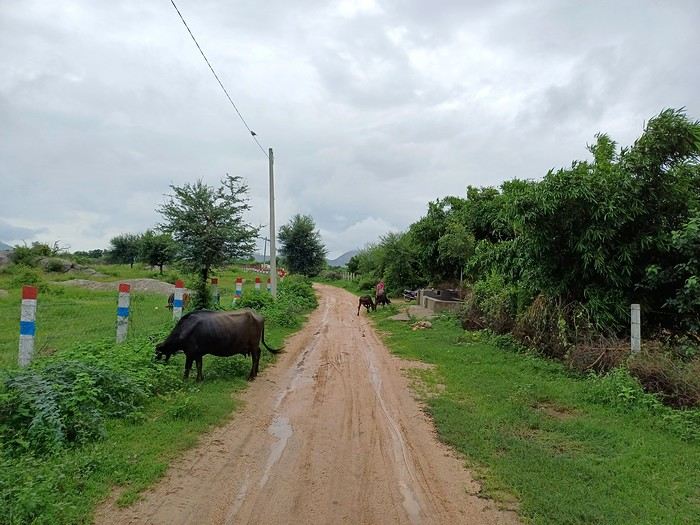
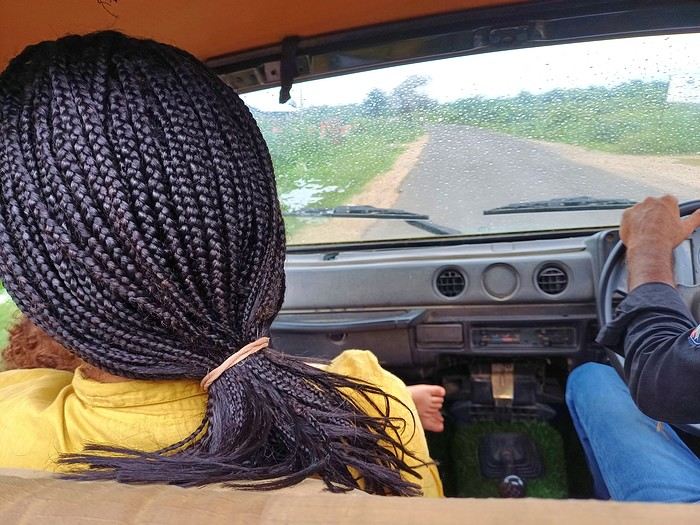
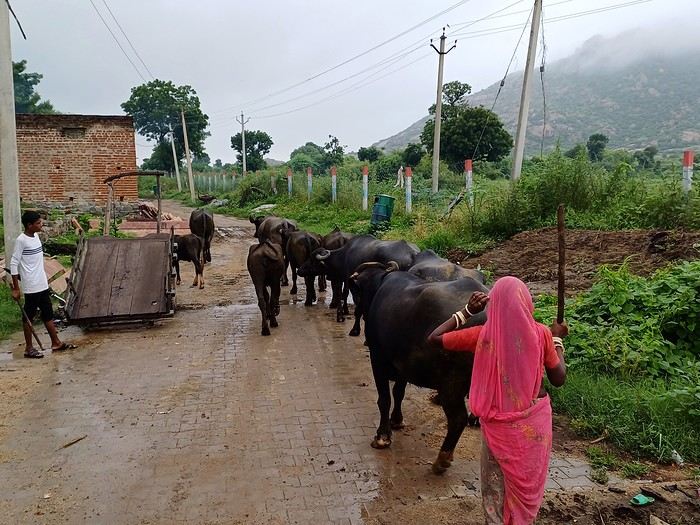
Around 4 PM, our jeep arrives as a few raindrops fall. The weather keeps alternating between heavy clouds and brief clearings all day. It’s actually quite pleasant—much cooler than at the start of our trip. Since the monsoon in Jaisalmer, the climate had already cooled a bit, but now that we’ve moved away from the heart of the Mārwāṛ, temperatures have become mild, and short rain showers are more frequent. I’ve never experienced such gentle weather in my five trips to Rajasthan. Eventually, Théo perks up a little, and we decide to go ahead with the safari. We warn our driver about the situation and agree that if the little one isn’t feeling well, we’ll cut the trip short. We bundle him up and get into the jeep. We keep a close eye on him but set aside our worries for a moment to embark on our leopard hunt. We leave the camp, and our vehicle hits the bumpy, waterlogged roads, often lined with buffaloes and cows grazing near the lush, green grass. Sometimes, large herds of goats led by Rāikā shepherds with sticks temporarily block our path before our jeep parts them like the Red Sea.
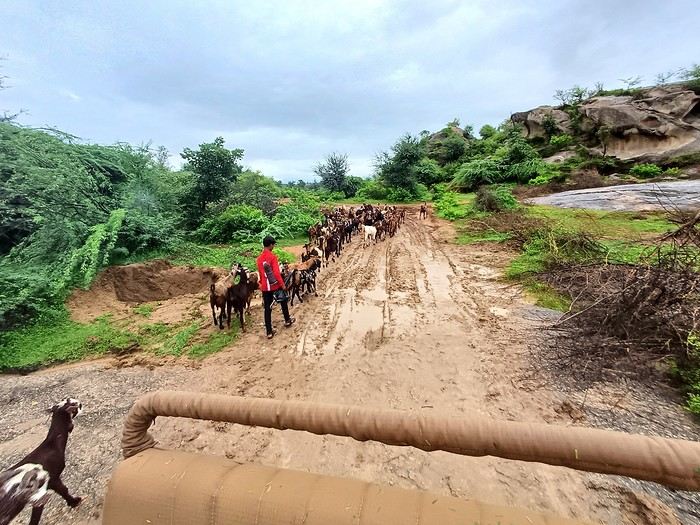
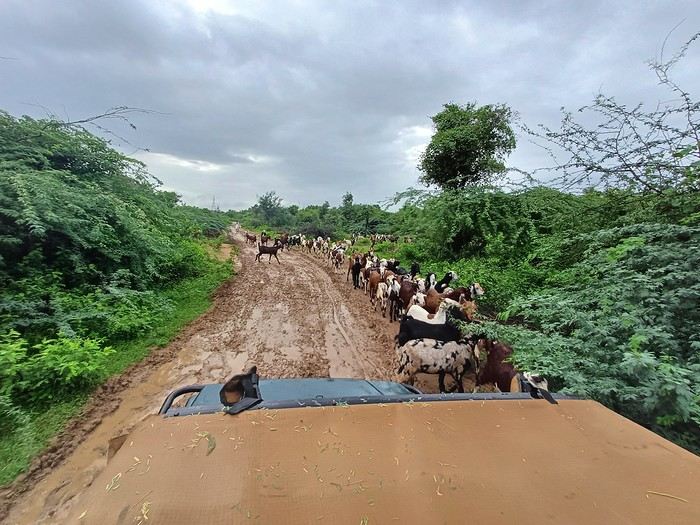
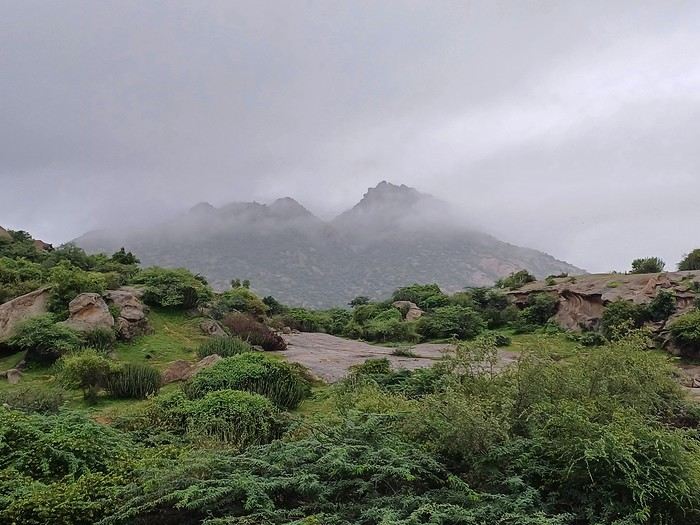
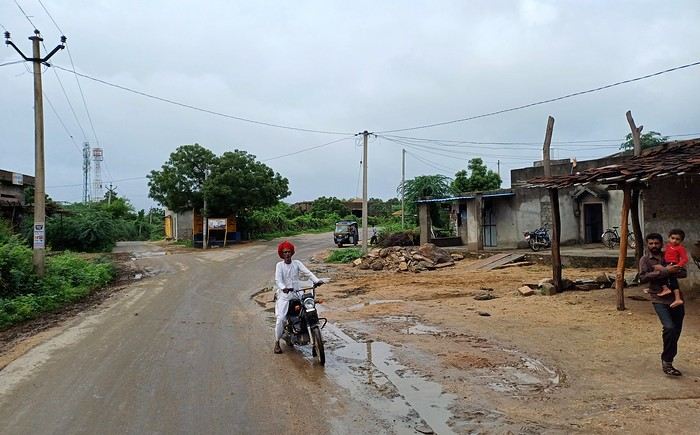
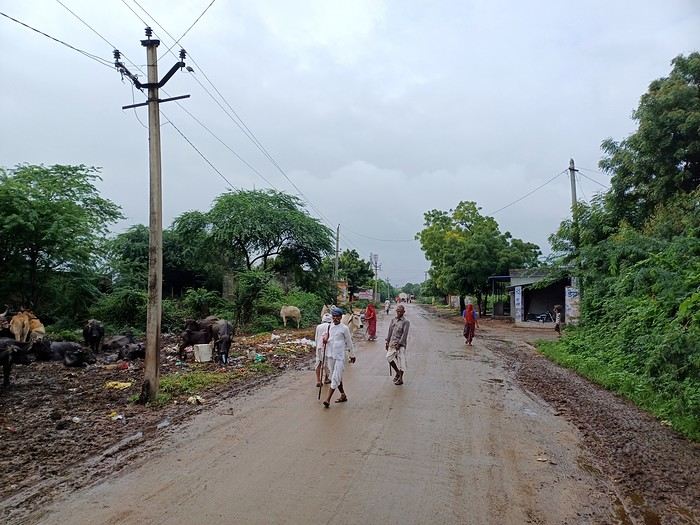
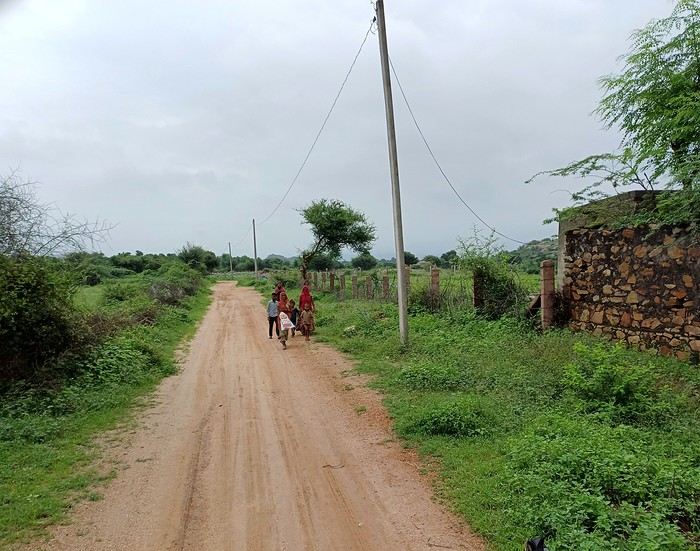
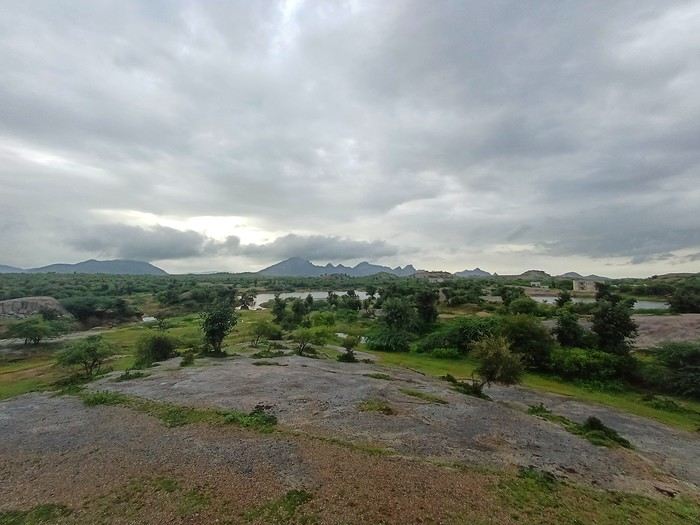
Before rejoining the main road that circles the lake, we pass through a few hamlets around Bera, quite secluded from civilization. The villagers seem to maintain a very traditional and modest rural lifestyle. As we venture deeper into the countryside, a break in the dark clouds and the now-retracted jeep roof reveal the stunning landscapes of hills and granite outcrops that carve the sky, plains, and reliefs of Jawai Bandh. We stop on a small hill offering a fabulous panorama. These spectacular views bring back our smiles, and Théo even reacts at times, especially when he spots animals or other surprising things that catch his attention. Though he’s not at his best, the leopard hunt keeps his enthusiasm and imagination somewhat alive.
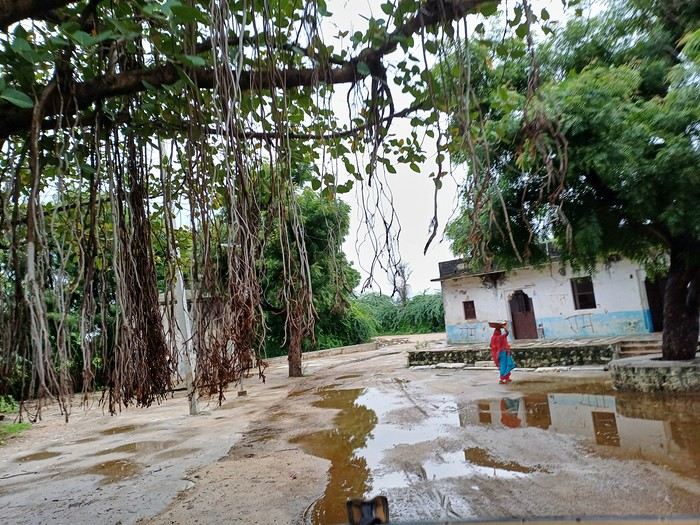
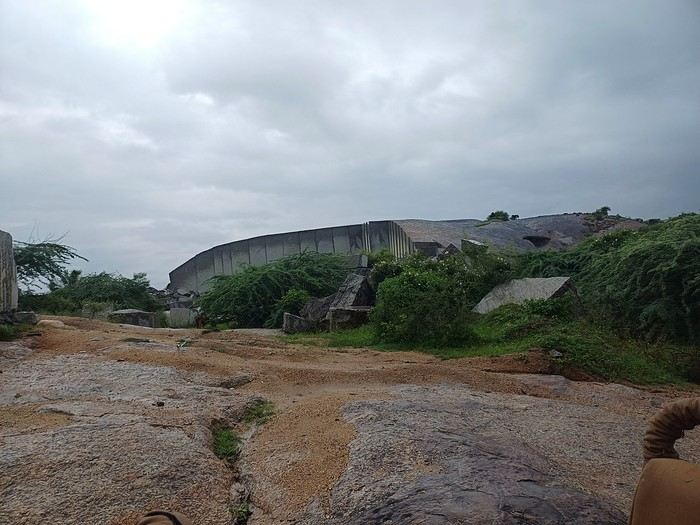
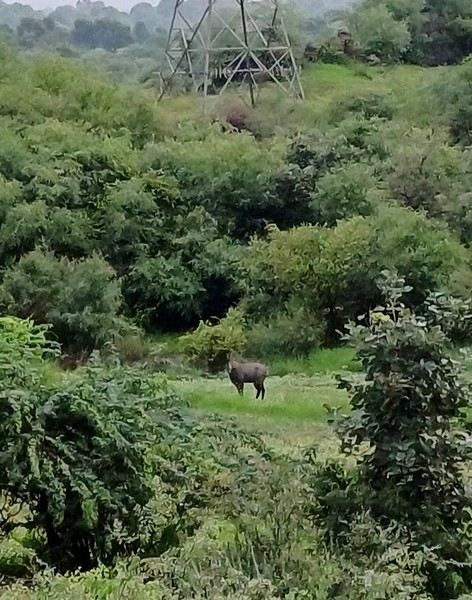
We now plunge into narrow, muddy, and bushy trails where birds take flight before our fearless metal boar that crushes everything in its path. From now on, the game is to duck as each clump of thorny babūl branches—overpopulated in the region—whips toward our heads, risking scratches (which happen occasionally). In this open-top jeep, we use the umbrella provided for light rain to shield ourselves from the sharp attacks. Théo is safe on Magali’s lap, but Kelyandre and I get snagged a few times. We weren’t expecting this thrill ride, which our driver seems to enjoy putting us through! Then the trail turns into a dead end. There’s a messy pile of large cut stones amid the vegetation, suggesting a dam under construction. Indeed, a little further on, there’s a structure resembling a dam carved into the rock. We must be near the lake’s shore and not far from the large dam, though the invasive flora blocks our view. This stop feels like just an appetizer before the main event. We take a quick photo and turn back. We return to a stretch of asphalt before diving back into the thick bushes. Our guide occasionally stops to scan the hills with his binoculars, searching for movement or signs of a spotted feline. Meanwhile, he calls his village informants, who seem to give him some tips while we take occasional photos. We start crossing paths with other competitors—mostly groups of Indian tourists packed into their jeeps—and it turns into both a race and a treasure hunt: each driver has their own intel, and they start following or trying to outpace each other to be the first on the scene. Our driver proves to be a true expert, even a virtuoso, at jeep driving, as he seems more skilled than the others we encounter. Sometimes, he skids in large puddles or revs the four-wheel drive to climb steep hills. It’s like a real rollercoaster ride at an amusement park! We make sure to hold onto Théo, whose smiles peek through despite the bumpy ride, even if he dozes off now and then from the seismic-level jolts. Impressed by his ease, we convince ourselves we can trust our man to lead us to victory. We pass through areas where cultivated land blends into the natural landscape, as the soil must be particularly rich in this region. Suddenly, he gets a solid lead and takes off again at full speed. Our 4x4 peels out, skids, bounces, and ricochets between sharp babūl and jagged rocks. Other drivers hesitate, searching for their route. Ours doesn’t care and blazes his own trail through the bush, even clearing new paths. He climbs rocky outcrops before descending them, tries to shake off followers or force oncoming vehicles to reverse, parks, grabs his binoculars, then peels out again... Honestly, we weren’t expecting such an adventure. It must be part of the show! Now, things are really heating up—everyone’s on the phone constantly: we’re apparently hot on the trail of a leopard on the opposite hill. Shepherds by the road point in a direction, and other jeeps follow while some pass in the opposite direction. Our driver tries to reach the spot by weaving between obstacles, then rejoins the paved road, gets out for a few minutes, and speeds off again into the savanna. At a bend, he swerves and defies gravity by making us climb a steep rocky slope in incredible jolts. We’re stunned and burst into nervous laughter. I thought only goats clinging to mountainsides could pull off such a feat! Several jeeps rush onto the hill, each fighting for a front-row spot, bumping bumpers or hurling insults. More arrive and try to park. This spectacle of vehicles lined up on this rounded rock, headlights, binoculars, and eyes all fixed on the same spot on the hill about a hundred meters away, looks like an odd open-air cinema. Off-season and in a supposedly quiet spot, we’re amazed by this parade of off-road vehicles packed with one-day adventurers! We wonder what it must be like in high season... Has Jawai Bandh become a bit "hype" since the info we gathered? Then, except for a few whispers, everything goes silent. Our guide scans the horizon with his binoculars, which he then passes to us. He whispers that there’s a leopard lying near a rock behind the vegetation. We each take a turn looking but see nothing... He takes the binoculars back, focuses, and hands them to me again, describing the area to observe, but I still don’t see anything... He seems sure of himself and a bit annoyed that we can’t spot the target. Around us, all eyes are fixed on the same spot. Yet, no one exclaims, “I see it, it’s there!” I look again and think I might see something... but no, I have to admit: I don’t see a leopard... I conclude it must have left or was never there. Suddenly, I spot a fairly large animal at the bottom of the hill. Several people in other jeeps seem to see it too. I zoom in! But what I see looks more like a horse or a large antelope. “It’s a nīlgāy,” the driver says... A nilgai in English, a type of antelope common in India. Disappointment quickly gives way to some interest in this steppe bovine that grazes and stares blankly at the silent army of jeeps facing it, seemingly thinking without fear: “What do these people want from me?” It doesn’t move an inch, giving us time to pass the binoculars around and capture the moment. It’s not the leopard we were tracking, sure, but the nīlgāy, literally “blue cow” due to its bluish-gray coat, is still a majestic animal, and we don’t begrudge this encounter. It occurs to me that it might have been used as bait for leopards, but I don’t dare voice that thought...
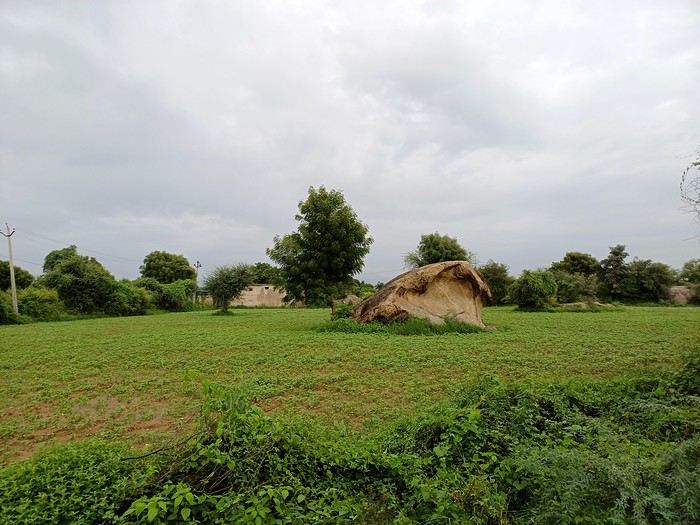
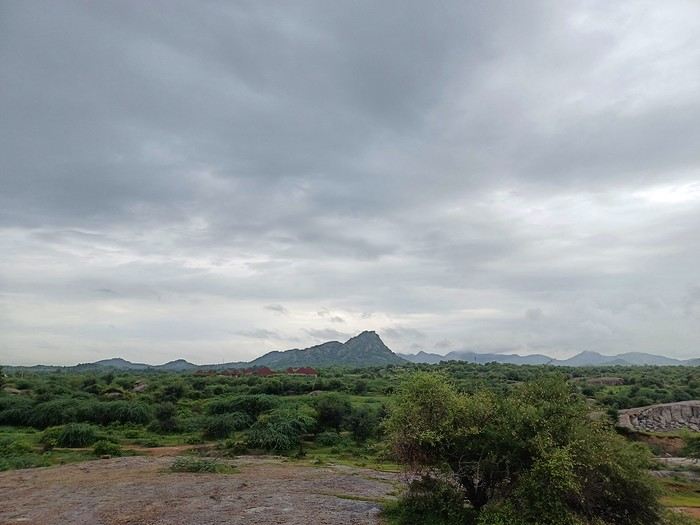
We realize, though, that there won’t be any leopards today. The jeeps descend the rock a bit sheepishly, engines roaring. To make up for it, our virtuoso driver gives us our money’s worth with a few more acrobatics before returning to the road and taking us back to Bagheera Bagh as night falls. Our minds are in a strange place. On one hand, we’re amazed by the stunning landscapes and the rodeo we just experienced, which alone justifies the visit even without a leopard. But at the same time, we’re troubled by Théo’s health, which we’re struggling to assess accurately.

We reunite with Sukhdeo, who asks about our discoveries and Théo’s condition. Though he showed some signs of improvement during the safari, he now seems quite weak. And while a delicious meal awaits us (the details of which escape me, probably due to the context), he still refuses to eat and has to be forced to drink a little. Sukhdeo advises us to let him rest and wait until tomorrow morning to see if we need to take him to Bera. We return to our tent, but after watching him helplessly vomit everything and delirious with fever, we call our host around 9 PM to take us to Bera’s hospital. He doesn’t hesitate for a second, calls the facility, and a few minutes later, we’re back on the trails at night before joining the paved road...

We arrive in Bera in about twenty minutes. Despite the pitch-black night and minimal lighting, we recognize the central street we took by bus, now completely deserted at this late hour. The hospital is nearby. It’s closed, but someone soon arrives to open the gate. It’s more of a small clinic, but for such a remote village, it seems surprisingly clean and modern—already reassuring, as we were expecting the worst... A nurse checks us in and has us fill out some forms. Then the doctor arrives and, after a few minutes, takes us to his office. He asks questions, performs some exams, and delivers his verdict: it’s an intestinal bacteria, that pesky amoeba that bothers travelers in India so often. But he assures us it’s not serious and will pass quickly with treatment. He prescribes an antibiotic, an anti-nausea medication, and juice boxes to make hydration easier. We’ll need to return for part of the treatment tomorrow morning. In the rush, I forgot to refill my wallet and don’t have enough cash to pay for the service (which, from memory, isn’t too expensive), but Sukhdeo lends us the money without hesitation. A little reassured, we leave. After a few minutes on the road, we’re back on the dirt path leading to the camp when suddenly, the headlights illuminate a wild boar darting right in front of our bumper and disappearing into the bushy darkness! I joke to Sukhdeo that we’ve just had our second safari of the day, which makes him break his usual imperturbable calm and laugh heartily. A little humor doesn’t hurt in these anxious circumstances, and we almost believe it.

Yet another travel journal in this (all-too-familiar) Rajasthan, but with family and kids

Kate · 2025-10-22 · Message 107 of 202

We understand, though, that there won’t be any leopards today

But are there really any? So, what are the chances of running into one? I read that the estimated population is around 721 individuals in Rajasthan. That’s a lot and a little at the same time…

Yet another travel journal in this (too) familiar Rajasthan, but with family and kids

Pagaljavab · 2025-10-22 · Message 108 of 202

It really is quite small for a large state like Rajasthan. But leopards are largely concentrated in this small Aravalli region.

Yes, there are indeed leopards at Jawai Bandh! The sanctuary is even renowned for it. There are only about sixty of them, but the area around the lake isn’t very large, and they live in caves that the guides know well. Villagers reportedly see them almost daily, and many travelers spot them. Compared to enclosed reserves, the fact that they’re "on good terms" with the villagers means they’re less skittish and more likely to show themselves. But the official claim that there’s a 90% chance of seeing a leopard at Jawai Bandh is obviously exaggerated...

Regardless of the leopards, it’s a stunning place.

Yet another travel journal in this (all-too) familiar Rajasthan, but with family and kids

Pagaljavab · 2025-10-22 · Message 109 of 202

Day 12, August 4: Jawai Bandh "On the trail of leopards, the Rajput gentleman, and the drama" (continued)

The next morning, we give Théo his medicine—he’s not really feeling any better. After breakfast, we have another safari planned, this one early in the morning, leaving at 7 a.m. We decide to go ahead with it since the medicine he took the day before seems to have had *some* effect, and there are moments when he seems just a little better. We agree with Sukhdeo and the jeep driver to take it easy, with the option to head back if things take a turn for the worse. We set off under overcast, misty skies, but it’s noticeably cooler than the day before as we head north of the lake, about ten kilometers away. We dig out our hoodies and vests, while Théo is bundled up snugly. We follow the main road that circles the lake. The natural beauty of Jawai Bandh in the mist isn’t any less stunning—if anything, it takes on an even more ethereal quality. After a few kilometers on the main road around the lake, we pass the monumental Jawai Dam, the largest in Rajasthan.
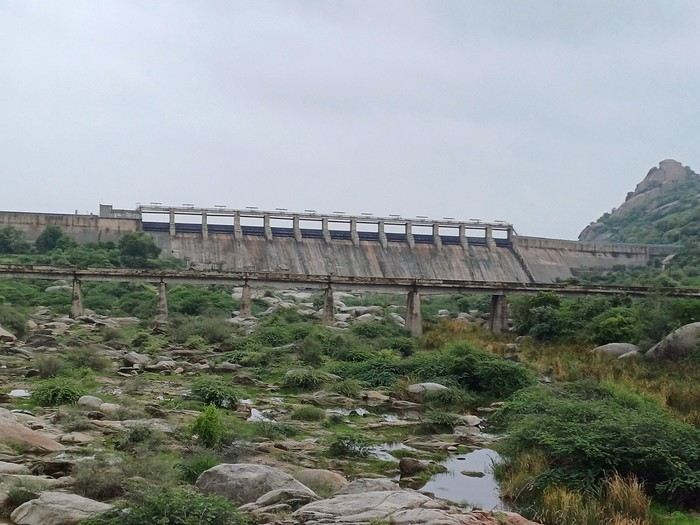
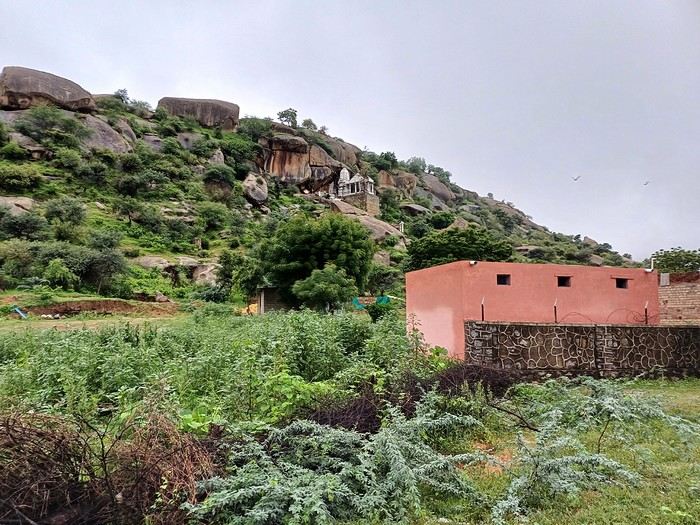
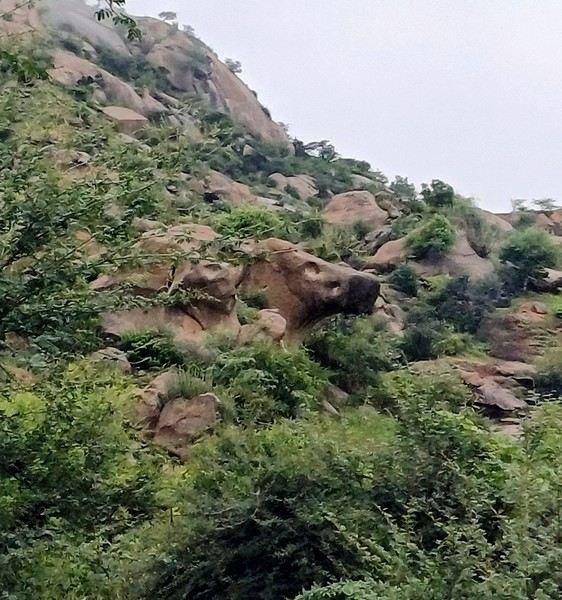
Further on, near the roads around the village of Balwana, we spot hills where small temples dedicated to local deities—always avatars of great cosmic gods—nestle in caves. The dark sky and fog give them a mystical air. For a split second while we’re driving, I think I see what looks like a cow’s head in a cluster of rocks by the roadside. I grab my camera and try to capture it to prove I wasn’t hallucinating. But no—I check the photo, and there it is: the snout and nostrils of a sacred cow, as real as can be, yet entirely natural, with no human intervention. India and its mysteries... This time, our guide takes us to a spot where we won’t run into the crowds from yesterday. The jeeps we pass are few and far between, and the competition from the day before is nowhere to be seen. With his phone in hand, searching for reliable tracks and scanning the caves in the hills with his binoculars (which he lets us borrow regularly), he’s much more cautious than yesterday—though he still pulls a few stunts to impress us a little. But still no sign of a leopard... We *are* surprised, though, by the large population of peacocks wandering through the sanctuary or letting out their piercing "piyaaaaaaaa" calls (or at least, that’s how Indians hear it—"piyā" means "darling") that echo through the silent valley. Here, the granite formations create towering, tiered cliffs that look like terraces. You have to squint or pull out the binoculars to spot the tiny Shiva temple perched at the top of the plateau, which I recognize thanks to the large trident planted near the white building, pointing toward the sky.
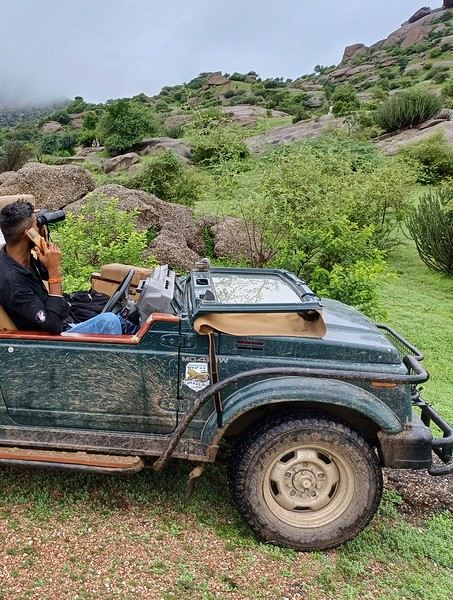
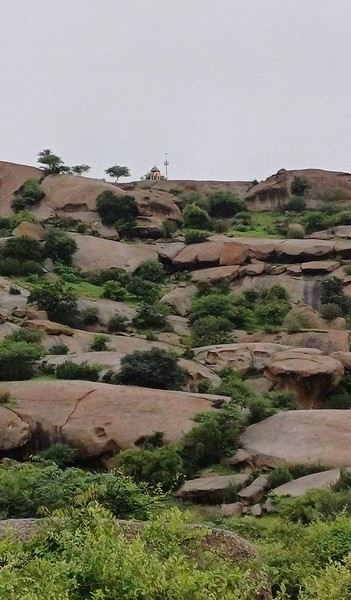
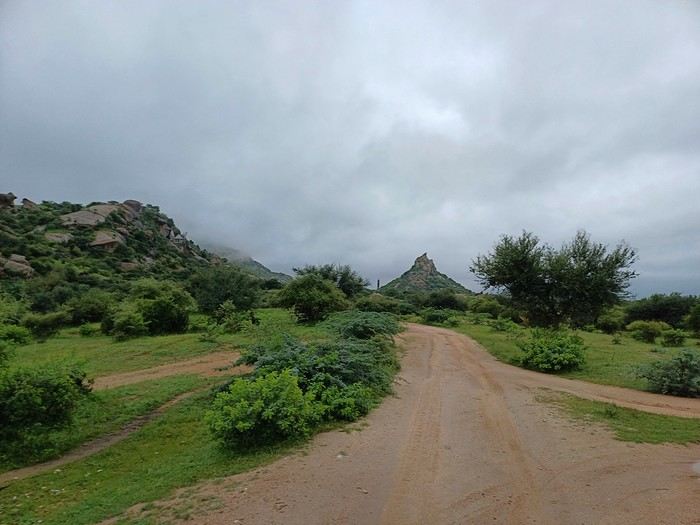
We stop now and then to take photos or visit a few temples tucked away in the hills. Well, *I* do—Magali is a bit unsettled and mostly prefers to keep Théo in the jeep, and Kelyandre, who’s like an emotional sponge, isn’t really up for it either... Despite our low spirits, there are moments when, overlooking the peaceful plains, we’re completely captivated by the scenery around us. We haven’t seen anything more beautiful on this trip so far. But no matter how much we explore the rugged terrain of Jawai Bandh, the leopards—the whole reason people come to this region—refuse to show themselves, even though we’ve heard it’s pretty easy to spot them (90% chance, according to local sources—yeah, right...). We’re now pretty sure we won’t see any. But in the end, it doesn’t really matter—we’re so in awe of these landscapes and the slices of rural life that exude such a unique atmosphere, one I haven’t encountered anywhere else in Rajasthan.


Yet another travel journal in this (too) familiar Rajasthan, but with family and kids

Pagaljavab · 2025-10-22 · Message 110 of 202

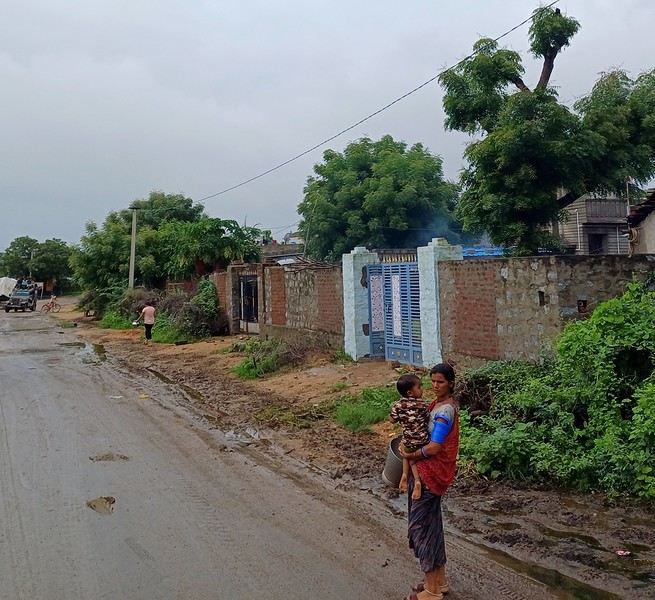
We pass through the small town of Bisalpur where we stop for a chai and a quick snack. To our great surprise, we even manage to find diapers in Théo’s size in a rustic little shop in this off-the-map village. On second thought, it might just be one of the most unusual things about this whole trip. I capture a few village scenes along the way.

The morning is quiet in terms of safari, but we still cross paths with a few jeeps—admittedly, a bit more packed than ours...
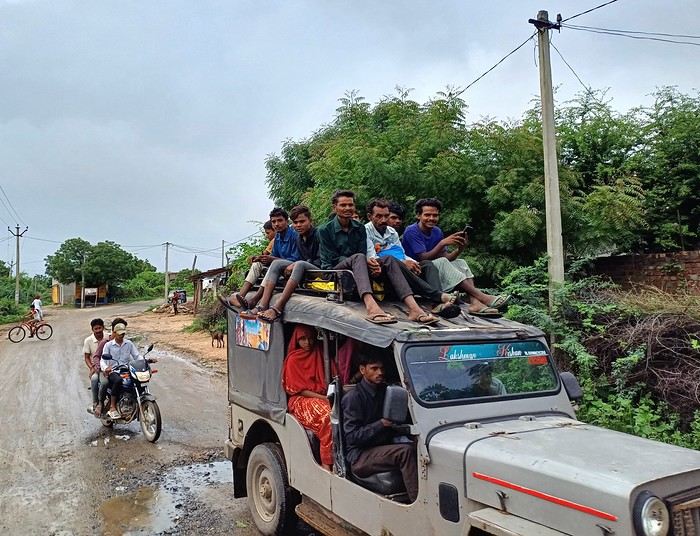
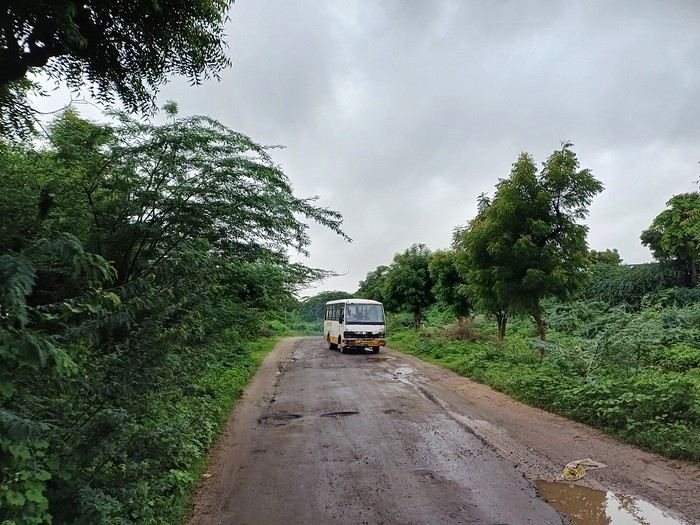
Our guide doesn’t say anything, but we understand he’s given up on tracking leopards. As we suspected, we turn back toward Bagheera Bagh, retracing the same villages and the same peripheral road.

After passing the dam, the weather starts to clear up. A few kilometers later, the driver pulls over by the side of the main road at a spot where there’s a small roadside stall in the middle of nowhere. We think he’s stopping to buy something, but instead, he asks a young man he seems to know well—probably a family member—to take the wheel and drive us back to camp. He’s been pretty friendly during these two safaris, but now he barely says goodbye... Does he feel like not showing us a leopard is a failure? Is he uncomfortable because Théo is sick? Did he suddenly develop some resentment toward us for a reason we don’t know? Or does he just have an emergency that forces him to leave us in a hurry? Either way, the goodbyes are abrupt, to say the least... His colleague takes us back safely, and we return to our familiar muddy paths, now bustling with shepherd castes.

Back at camp, we tell Sukhdeo we didn’t see any leopards but that we’re still amazed by the two jeep rides in this wonderful Jawai Bandh region. We already knew, but he explains that this isn’t the best season and that we should come back between November and March to increase our chances of spotting one. So, not anytime soon! I then ask if he’d be willing to take me to Bera one more time to buy some food better suited to Théo’s condition, like bananas, packaged lassis, and some snacks for everyone. He agrees, and we take the same road in the rain until we reach the village. We park near the small hospital from the day before, where I find a shop to stock up while Sukhdeo does some shopping of his own. Back at camp, a wonderful lunch is waiting for us. As with the other meals, we don’t remember the exact dishes: we just recall that the traditional Rajasthani cuisine was always delicious, but Théo being sick at the time has blurred our memory of the variety. We remember eating a mix of chapāti, often dāl, the classic rural ālū ghobī, a divine bhindi masālā (spicy okra), kaḍhī (a thick yogurt and chickpea flour sauce), as well as soups, pasta, homemade fries, fresh veggie platters, delicious achār (spicy pickled fruits and vegetables), and so many other vegetarian delights... Though we can’t identify them all, they were among the best culinary memories of our trip.

But our immediate concern is trying to find a solution for Théo. We try to pinpoint when he might have gotten sick. We think of the raw veggies he insisted on eating—even though they were fresh and from the property’s garden, they could still contain bacteria that our Western systems struggle with. About two hours after eating them, we noticed the first symptoms. That seems the most likely cause. But on reflection, incubation periods vary, and it could’ve happened at any point since we arrived. In India, it’s hard to know for sure what made you sick. Any restaurant—even high-end ones—even well-cooked food, a swim in a pool, or the hot, humid monsoon air that makes bacteria thrive everywhere... or maybe a combination of all of the above. Either way, it doesn’t solve our problem. We spend the afternoon taking care of Théo, trying to get him to drink and eat a little, with little success. The treatment doesn’t seem to be working. We’re getting more and more worried because he’s even weaker than yesterday and keeps getting sick. He usually speaks so well for a two-year-old, but now he’s whispering isolated words in a faint voice: “No, lie down...” He’s also lost a drastic amount of weight in just two days. He looks like a malnourished, frail little boy... We’re now certain he needs to be hospitalized soon—but not here. Magali starts wondering if coming to India with him was a good idea and if we should’ve waited until he was older. She keeps saying we should’ve gone to Brittany instead—we wouldn’t have had this problem...

I go under the pavilion to talk to Sukhdeo about the situation and the end of our stay. Originally, we’d considered going to our next stop, Udaipur, with a detour to the Jain temple of Ranakpur—one of the most beautiful of its kind—and the ancient walls of Kumbhalgarh Fort, the second-longest in the world (though still nowhere near the Great Wall of China). I explain that this is obviously no longer an option, as our goal now is to head straight to Udaipur to find a good hospital. We don’t even bring up the third safari that couldn’t be honored—it would’ve been inappropriate, and it seems he took my humorous remark about counting the trips to Bera seriously, which, given how things turned out, makes sense anyway. So, we need a taxi for tomorrow morning. With his usual calm, he assesses the urgency, grabs his calculator, and offers to drive us to Udaipur himself for 3900 rupees—just enough to cover the gas for the round trip. That’s almost half the price of a comfortable taxi for this distance. In ten trips to India, I’ve met few people who would’ve done the same... Then we settle the accounts with Sukhdeo: I pay him in cash the remaining 50% we owe for the stay, plus the advance for yesterday’s medical expenses, the laundry that’s still trying to dry in this humid air, and the trip to Udaipur. With his gentlemanly Rajput demeanor (I’m writing it like in old French books about India to highlight the nostalgic charm he inspires), he lets me know we’re even and that he’ll fulfill his mission to help us. He assures me he’s used to making trips between Jawai Bandh and Jodhpur or Udaipur, where his sister lives, and he’ll take the opportunity to visit her. There, everything’s planned. The day continues with packing our suitcases and taking care of Théo. We’re treated to another delicious meal. However, we’re already focused on the next day and don’t linger before heading to bed for our last night in the deluxe tent.

Jawai Bandh Nature Reserve 😊😊😊 Bagheera Bagh Jawai Tent Resort 😊😊😊 Jeep Safari 😊😊 Leopards 🐆😅 Bera Hospital 😕

Yet another travel journal in this (all too) familiar Rajasthan, but with family and kids

Did0764 · 2025-10-25 · Message 111 of 202

Hello, I was waiting for your return from Jawai Bandh. I assume Théo’s health improved quickly after the hospital visit. I would’ve been more than worried. I’ve reached my sixties and haven’t been sick in India since 2013—turns out I’d unknowingly drunk water from a well... Anyway, you’re not exactly making me want to return to Bera and the surrounding area. It’s not about not seeing leopards—I’ve always seen them up close and from a distance between November and April. It’s the number of jeeps joining the leopard search. Between 2006 and 2015, there were at most 3 or 4, including mine. I was often alone!

Back then, there were 2 accommodations run by the 2 thakurs of Bera—2 brothers who absolutely didn’t speak to each other. Quite the scene.

Besides that, I see the rural vibe is still the same. This corner of Rajasthan is still truly magical. Looking forward to the rest...

Yet another travel journal in this (all too) familiar Rajasthan, but with family and kids

Marien33 · 2025-10-25 · Message 112 of 202

We’re surprised, however, by the large population of peacocks roaming the sanctuary or crying out “piyaaaaaaaa” (at least, that’s how Indians hear the call—"piyā" meaning "darling") that echoes through the silent valley.

In French, it’s said they cry "Léon, Léooonnn..." I’ve got plenty of time to hear—and listen to—them every morning during my walks in “my little jungle,” where a real colony of peacocks has settled. And I don’t hear either “piyaaaaaaaa” or “Léon”... 😉 As you know, I just arrived yesterday, and starting tomorrow, I hope to reconnect with all the “little nothings” of my daily life in Kerala...

Reading about your guide’s behavior, I thought of another possibility you didn’t mention... And I’m surprised you didn’t consider it. A sudden fear of contagion and bringing some “filth” home, but also one of their superstitions—I experienced this exact thing a few years ago. People avoided me as if I carried the devil and risked bringing the evil eye into the family... The strange illness, the medications that didn’t work... It’s the devil... And it wasn’t a fear of contagion, but rather of “bringing bad luck.” You see what I mean...

Yet another travel journal in this (all too) familiar Rajasthan, but with family and kids

Pagaljavab · 2025-10-26 · Message 113 of 202

Here we are in Turkey, in Ankara, where we arrived yesterday. I’m still trying to keep up with this journal during our hotel breaks—especially since I’m starting this Turkish journal and I’d like to catch up on the Senegal one from last February and the Andorra one from this summer 😅

As you know, I just arrived yesterday, and starting tomorrow, I hope to reconnect with all the "Little Nothings" of my daily life in Kerala...

Hope you’ll share those soon! I love these "Little Nothings" that say so much.

Reading your guide’s attitude, I thought of another possibility you didn’t mention... And I’m surprised you didn’t consider it.

I totally get what you mean. I thought about it at the time. If that’s the case, I’m leaning more toward the idea of ritual pollution rather than microbial... Of course, like you, I’ve experienced being seen as an impure foreigner who brings the evil eye during my many travels in India—though rarely. More often, I’ve been treated like a demigod from countries that bring wealth and prosperity 😄 But still, this guide did two safaris with us without seeming bothered. Then he got out of the car after receiving a call from the owner of our camp, so I figured he just failed to show us leopards. But who knows...

Yet another travel journal in this (all too) familiar Rajasthan, but with family and kids

Marien33 · 2025-10-26 · Message 114 of 202

Funny, I was just writing to you! !😉

Yet another travel journal in this (all too) familiar Rajasthan, but with family and kids

Pagaljavab · 2025-10-26 · Message 115 of 202

Hello, I was waiting for your return from Jawai Bandh.

Thanks for being there, Didier!

I assume Théo’s health improved quickly after the hospital visit. I would’ve been more than worried.

To be continued in Udaipur... Yes, we were really worried at one point, especially when we didn’t see any improvement after visiting the clinic in Bera... Fortunately, we were well looked after by the owner of Bagheera Bagh Jawai, who’s a gem. The rest of the story will show that too...

I’ve reached my sixties and haven’t been sick in India since 2013. Without knowing, I’d drunk well water...

For my part, I was a bit sick toward the end of the trip, but nothing serious. Just India, you know... Otherwise, I haven’t really been sick in India since 2012, even though I’ve stayed in Rajasthan for quite a while, sometimes with locals and in remote places. But maybe I caught something in Delhi or elsewhere—who knows...

Anyway, you’re not exactly encouraging me to return to Bera and the surrounding area. [...] Back then, there were two accommodations run by the two thakurs of Bera—two brothers who didn’t speak to each other at all. Quite the farce.

In India, it’s pretty common for two brothers who don’t get along to each set up their own business, sometimes right next to each other. I’ve seen that happen several times 😄. The era you’re talking about seems to be over... Now, there must be around forty resorts (luxury hotels or tent camps) in the reserve. I’ve read in Indian articles that for a long time, villagers protested against the seizure of their lands and managed to limit the expansion of tourist infrastructure. But it seems that recently, the Almighty Dollar has won out, and the policy is now entirely focused on developing tourism in this high-potential sanctuary, with hotel lobbies using their influence to invest. It’s highly likely that in a few years, Jawai Bandh will be like any other Indian reserve, which would be a real shame...

For now, Jawai still has that aura of a hidden treasure, and it’s still worth it because the resorts aren’t very visible in the vastness of the sanctuary and don’t yet spoil the magical landscape, as you pointed out. It’s a unique place in Rajasthan. However, as you’ve read, there can be a lot of jeeps even off-season on weekends, which makes leopard spotting fun but a bit ridiculous... I wonder how anyone can hope to optimize their chances of seeing one with 20 jeeps driving around in all directions, making a racket!

Between 2006 and 2015, there were at most 3 or 4, including mine. I was often alone!

Lucky you—you experienced the golden age!

Yet another travel journal in this (too) familiar Rajasthan, but with family and kids

Marien33 · 2025-10-26 · Message 116 of 202

Here we are in Turkey, in Ankara, where we arrived yesterday. I’m still trying to keep up with this journal during our hotel breaks, especially since I’m starting this Turkish journal and I’d really like to not delay too much on the Senegal one from last February and the Andorra one from this summer 😅

Whoa! Have you caught the bug again? Or fallen back into the VF addiction? For me, it’s the opposite—I’m trying to wean myself off... This reminds me of someone who writes journals in a row... ;)

As you know, I just arrived yesterday, and starting tomorrow, I hope to reconnect with all the "Little Nothings" of my daily life in Kerala...

I hope you’ll share those soon! I love those "Little Nothings" that say so much!

I don’t know... But I do enjoy sharing my mundane daily life, which is the life I’m living here.

Plus, for me, it’s a way to stay in touch with virtual friends since I don’t have them in real life. Because sometimes it’s tough here being alone and without contact with non-Indians. But almost all my old reader-friends have left and haven’t come back to VF. But I also need to finish the Thailand journal I abandoned...

Another travel journal from this (all-too-familiar) Rajasthan, but with family and kids

Marien33 · 2025-10-26 · Message 117 of 202

In India, it’s pretty common for two brothers who don’t get along to each start their own business—sometimes right next to each other. I’ve seen this happen several times 😄

In *The Peacock Throne* (have you read it?), they even built a wall down the middle of the shop to split it in two. They turned it into two corridor-style shops, and customers have to pick a side and queue up outside—they can’t just walk in anymore... I’m going from memory here...

Another travel journal in this (too) familiar Rajasthan, but with family and kids

Did0764 · 2025-10-26 · Message 118 of 202

The two brothers shared the family "palace"; the older one first built a resort right next to the village, and his brother later opened rooms in the palace—obviously, the other one followed suit... A funny twist: I’ve been sharing safaris since 2013 with a friend from Toulouse who used to guide tourists in India. One evening, we ended up at the same spot in front of a female and her two cubs. We started chatting while waiting to spot them, and the two thakurs kept exchanging icy glances...

Yet another travel journal in this (too) familiar Rajasthan, but with family and kids

Solene40 · 2025-10-26 · Message 119 of 202

"Now you remind me of someone who writes travel journals in series... Wink"

I don’t know who it is, but I’m sending them kudos 😄. Thank goodness for travel journals to keep VF lively in 2025 (including yours and Pagaljavab’s 😊🤗)

Yet another travel journal in this (too) familiar Rajasthan, but with family and kids

Marien33 · 2025-10-27 · Message 120 of 202

"There you go, reminding me of someone who writes journals in series... Wink"

I don’t know who it is, but I applaud her 😄. Thank goodness travel journals are still keeping VF lively in 2025 (including yours and Pagaljavab’s 😄🤗)

Hey, it’s great to see you again, Christelle!!! Don’t worry, my comment was just a wink to Pagal (though no one calls him that anymore—too bad, I liked that username), who we’d talked to about our travel-journal binge and back-to-back trips. And I’m including us in that count, since we’re both already talking about new journals when we haven’t even finished the current one 🤦‍♂️ 😵 😄

VoyageForum — the largest community of French-speaking travellers.