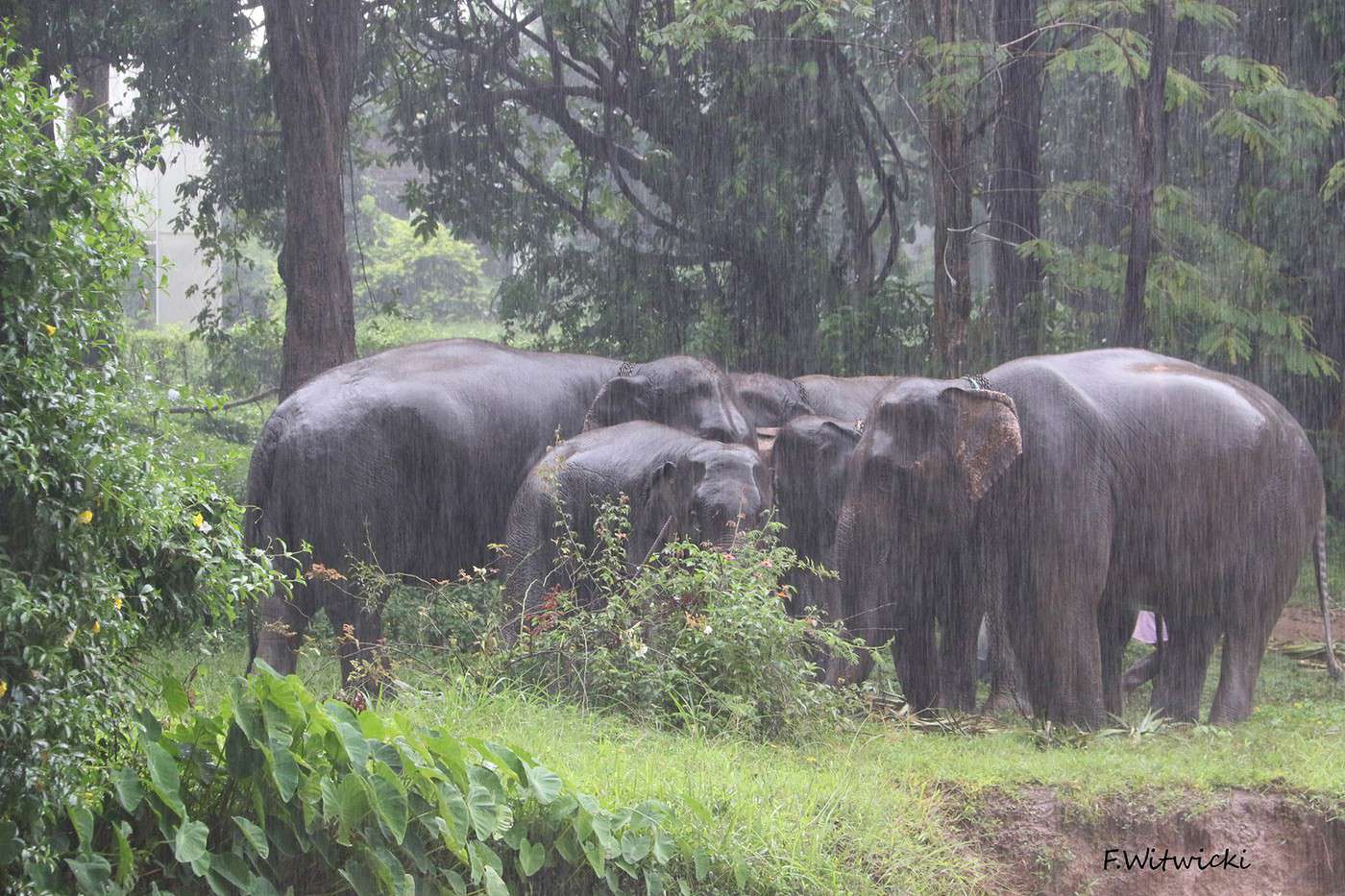
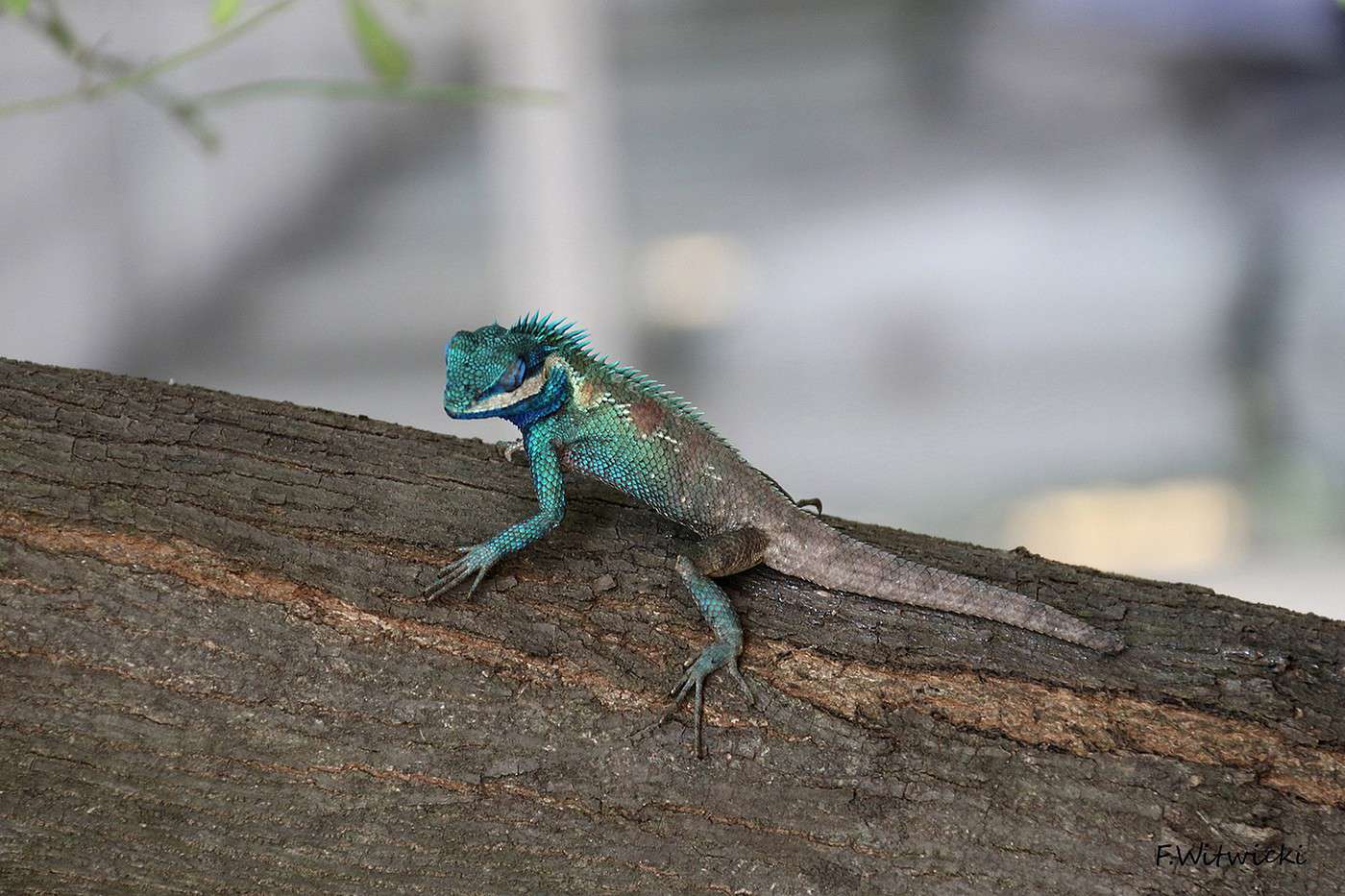
It rained all night, and it doesn’t look like it’s going to stop at daybreak. The mood is gloomy, and we’re a little worried about our meet-up with the pachyderms.
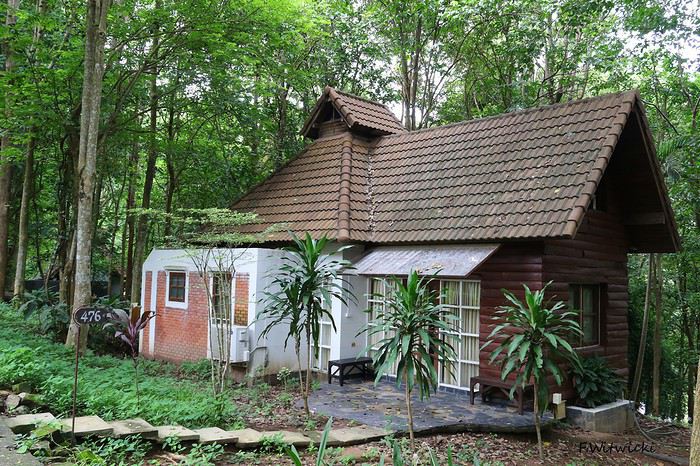
At the reception, Katie reassures us. Katie is one of the two American caretakers who work here year-round. This charming young woman explains that an employee has gone to check where the elephants are. When they’re let out of their enclosure, they roam freely across the vast property. Regularly, volunteers plant trees or plants in certain areas to provide food for them.
Once the elephants are located, we’re taken to join them. We’re clearly told we must stay in observer mode—don’t approach them, but let them come to us. No sudden noises, no flash.
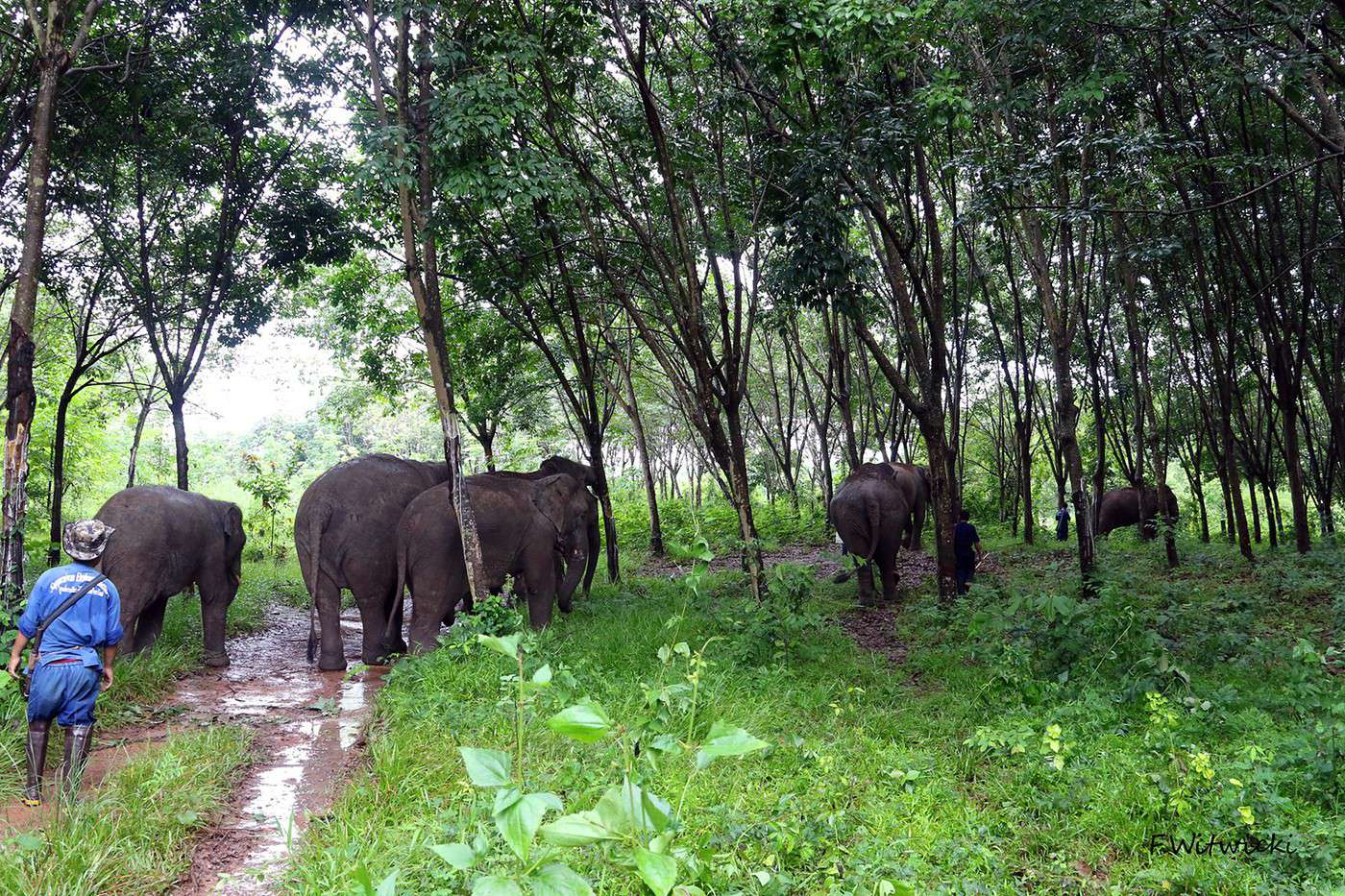
On-site, each mahout stays close to their elephant, just in case one of them is in a bad mood. The rain gets lighter and then stops after a few minutes. The only break in the weather today was for our first visit with the elephants—luck was on our side.
As soon as we arrive, one of them comes to sniff us, starting with Françoise. Phew, inspection passed!
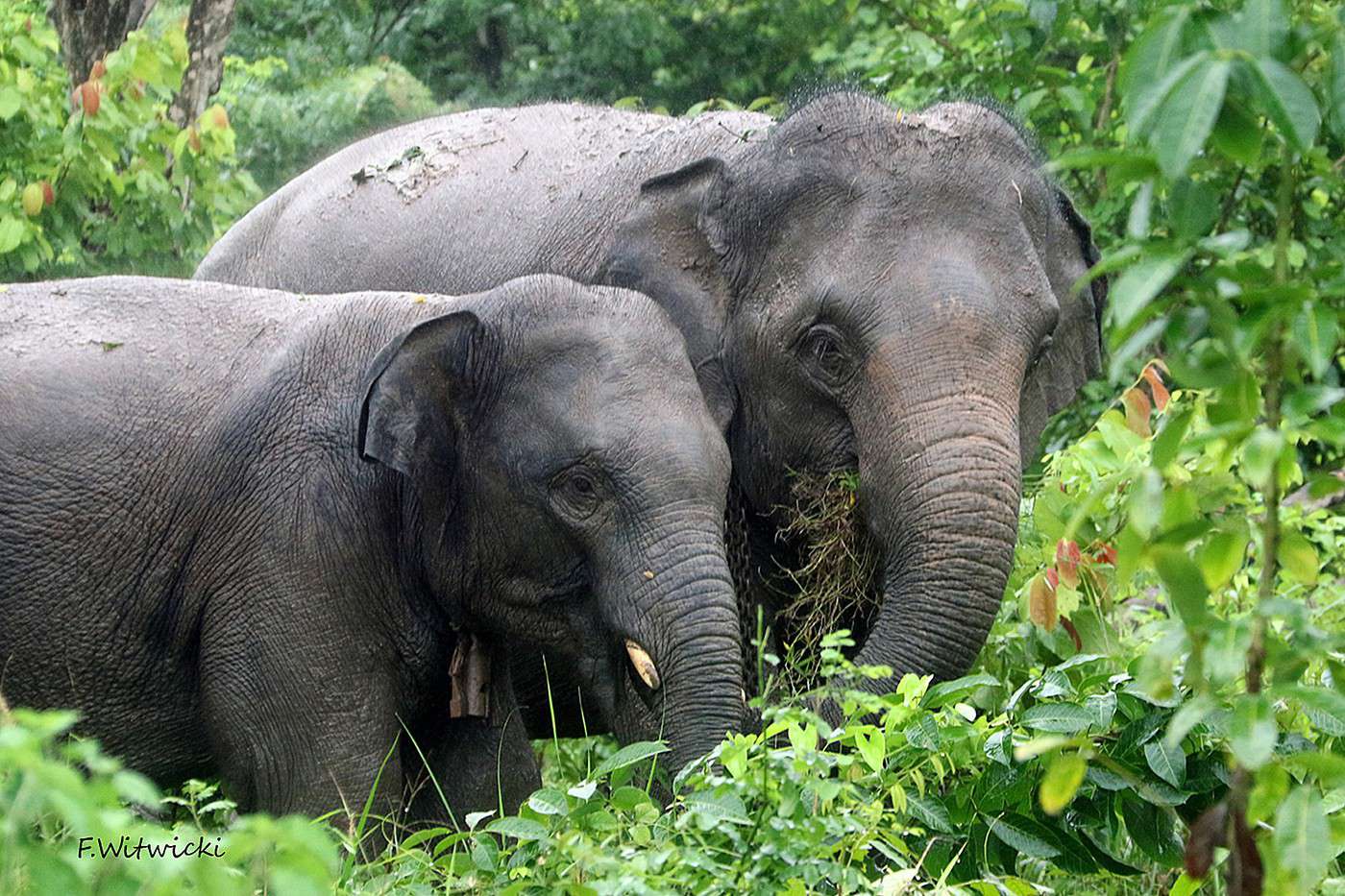
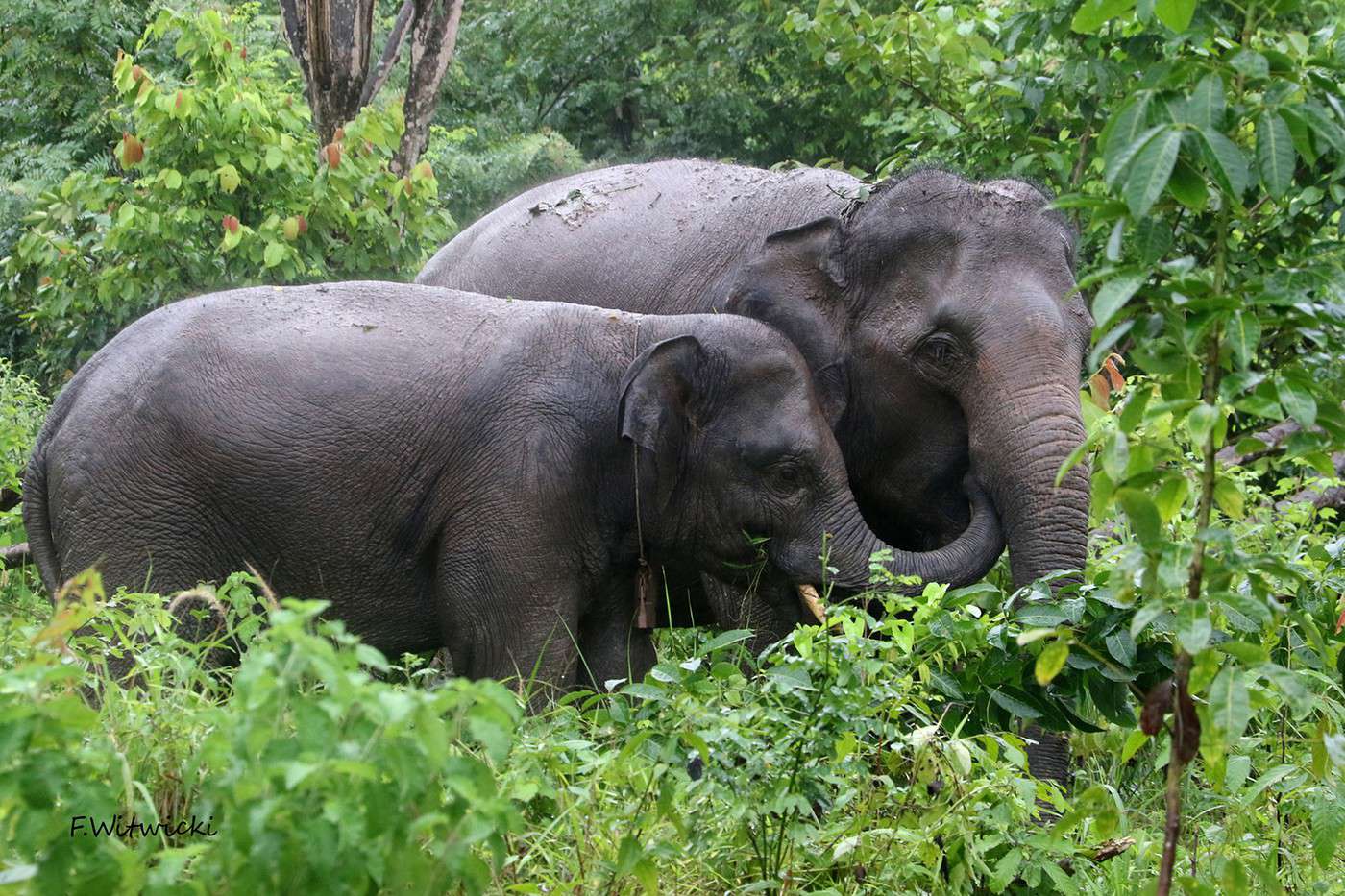
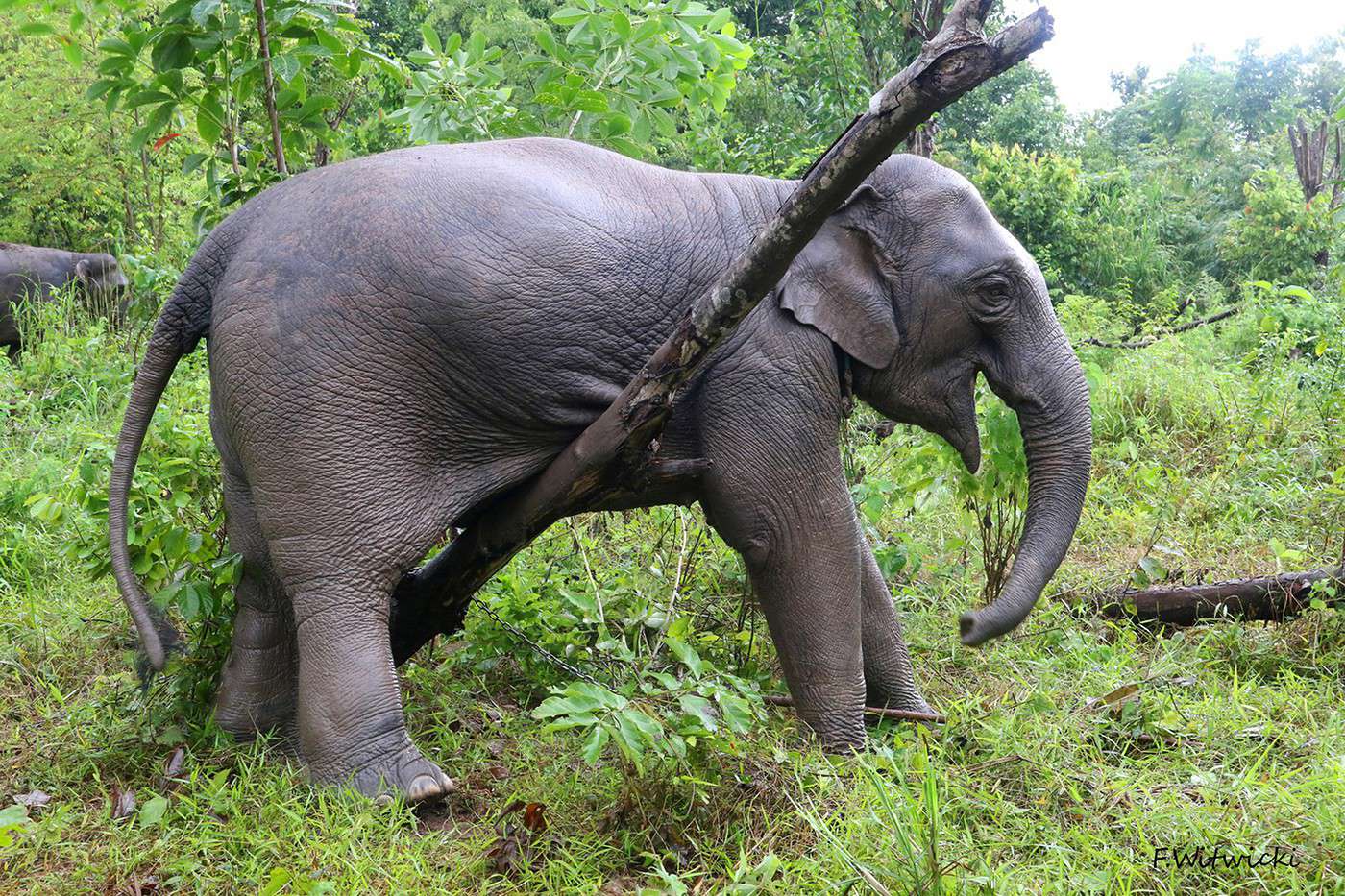
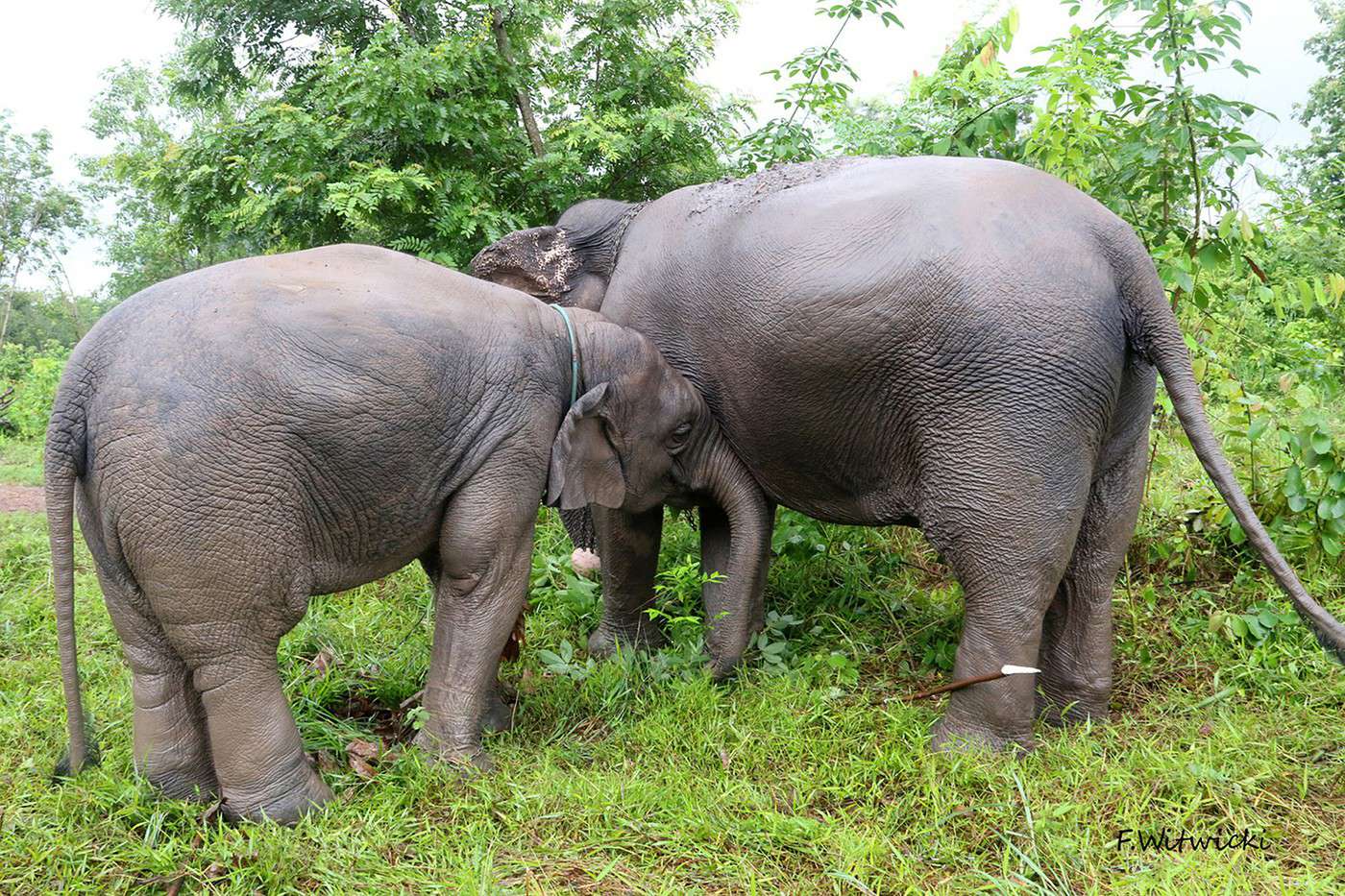
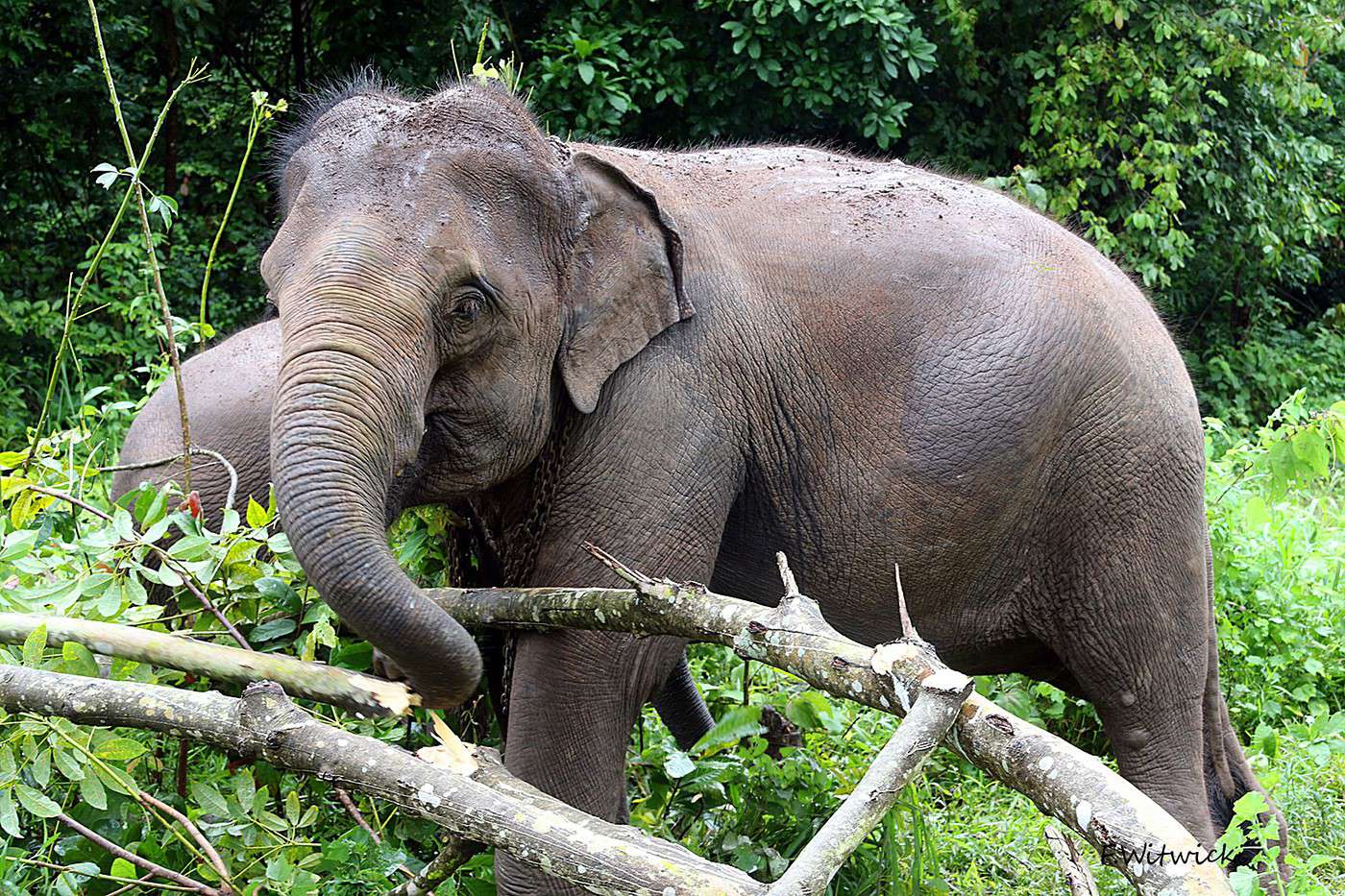
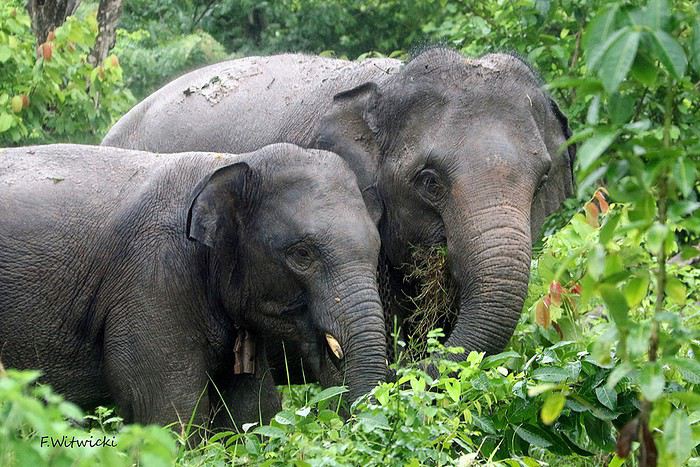
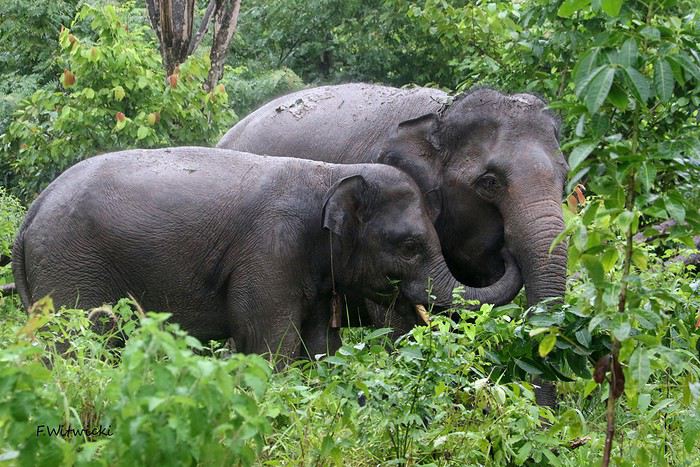
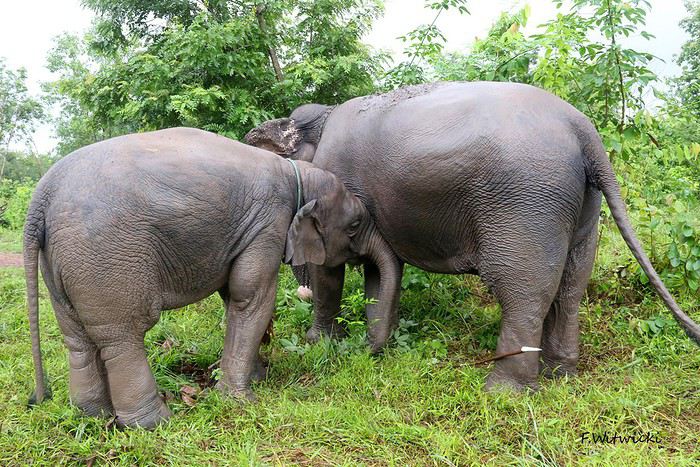
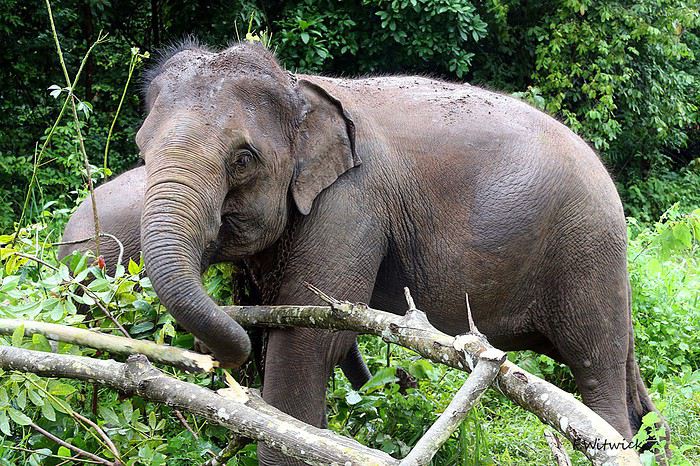
Out of the 13 elephants at the resort, 10 are here. We watch them tear up their food, shake it in the air, or slap it against their legs to clean and wring it out. They’re so close that we sometimes get splashed in the face. They flap their ears and wag their tails—that’s a good sign, meaning they’re happy. When they decide to walk past us, we step aside politely. It’s not that we’re scared—it’s just manners.
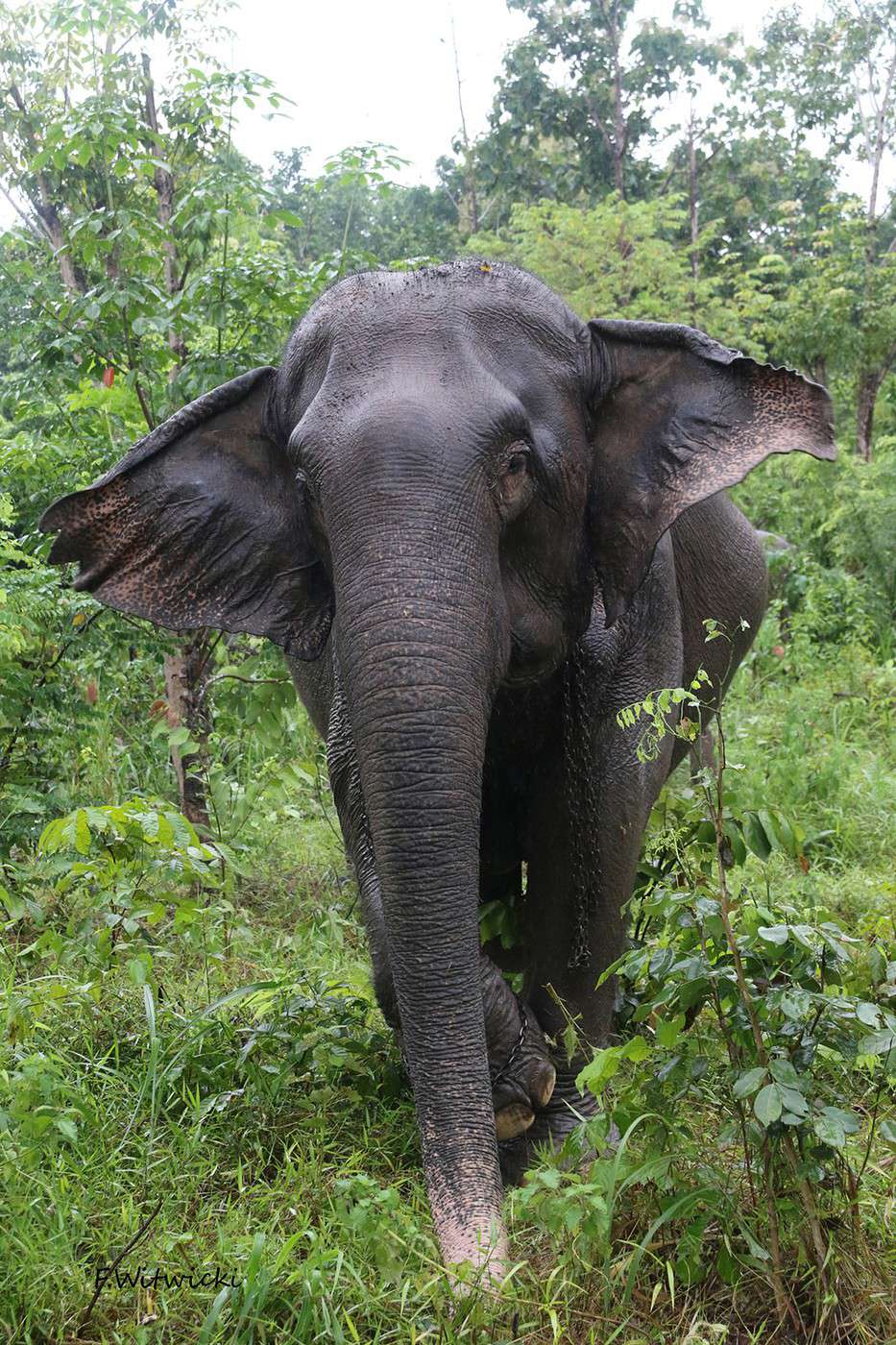
They drag their chains with them, and they won’t have any at all once funding is secured to build a fence around the entire property. For now, they still need to be kept from wandering into the surroundings, especially at night. Without the clinking of the chains, it would actually be harder to find them in this vast space. There’s one who’s smarter than the others—he knows how to undo his chains. One day, he took off and helped himself to a local farmer’s mango trees, and they had to compensate the farmer. So now, they’ve put a bell on him to keep track of where he’s wandering.
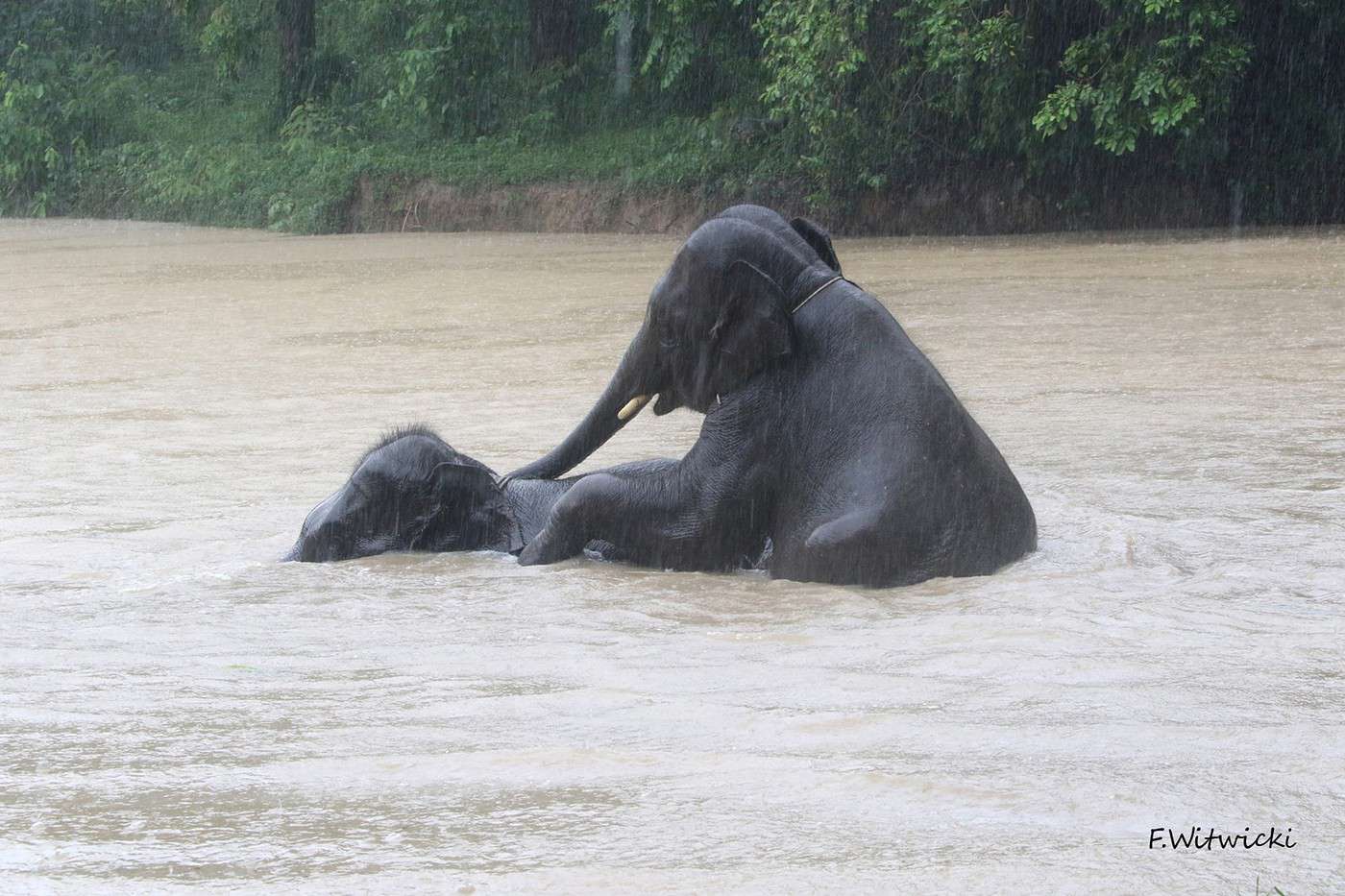
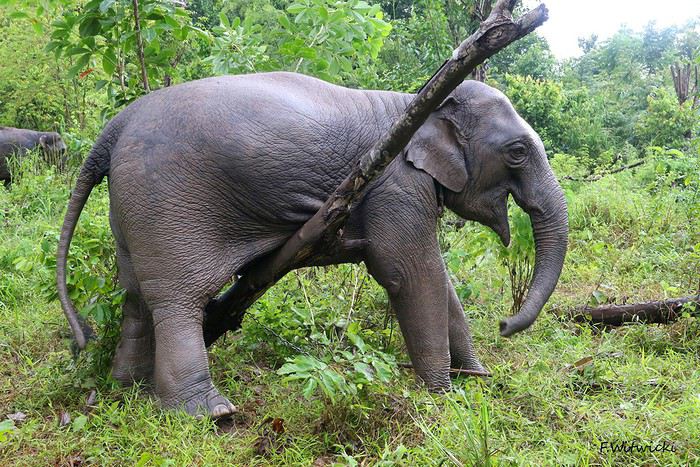
Before our fascinated eyes, they play, rub against trees, and pull up bushes whenever they feel like it. There’s also a young male practicing his moves, chasing after a female who isn’t having any of it.
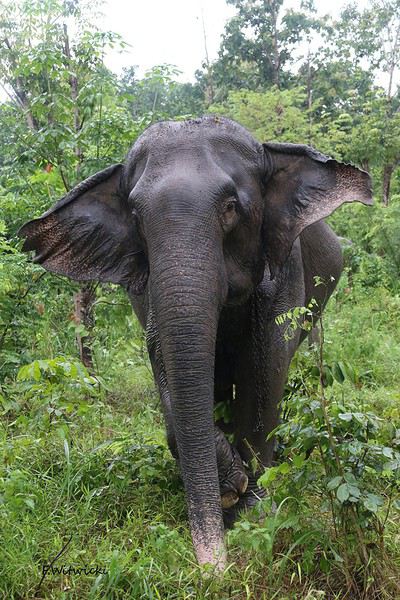
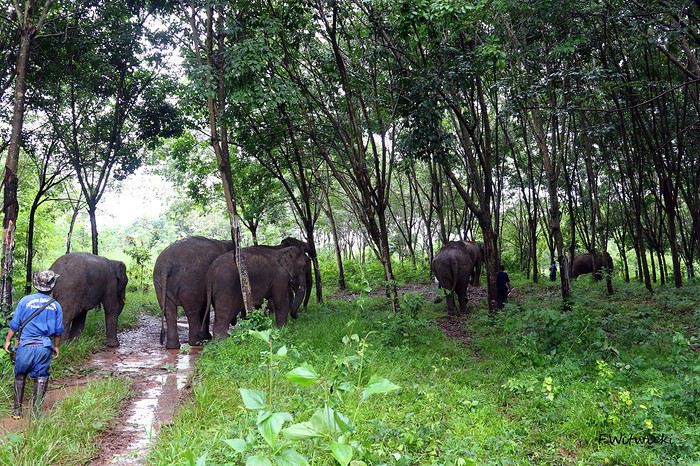
Two hours flew by without us even noticing. It’s time to bring everyone back to the shelter. The elephants walk ahead, and we follow. We assume it’s so they don’t step on us if we slow down.
Katie tells us that in the early afternoon, a bus of middle schoolers from various Asian countries will arrive—of course, we’ll be tempted to stick around.
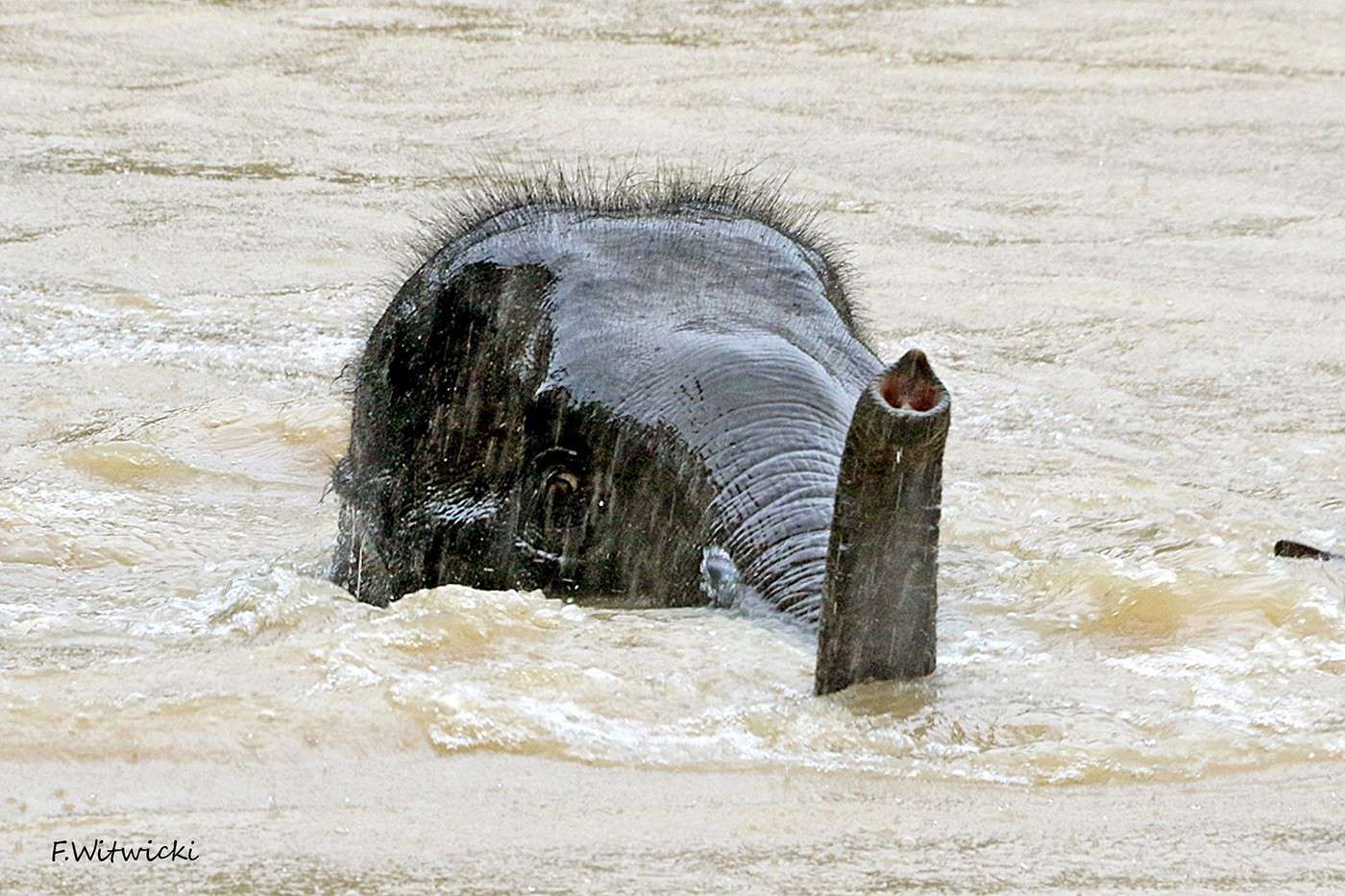
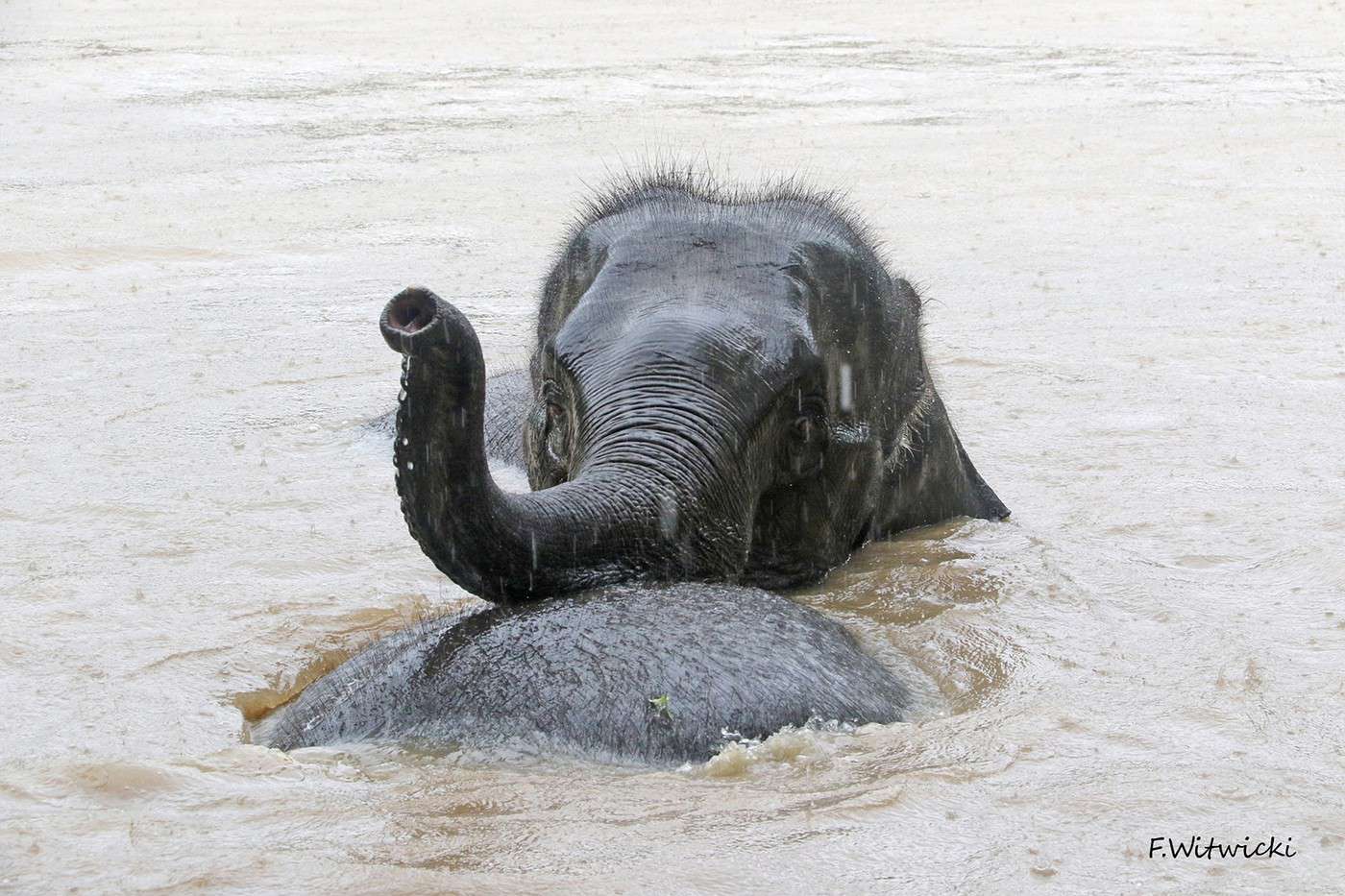
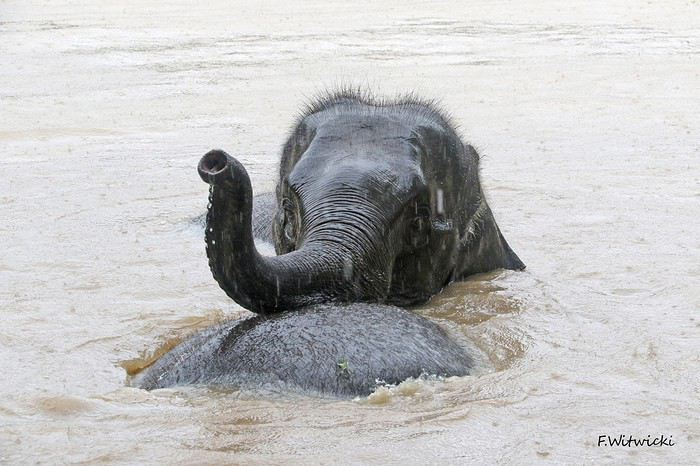
After a short informational talk, the elephants will be brought out to enjoy some treats and splash around in the watering hole.
Despite the rain picking up again, we decide to give it a try. The café by the pond is packed—there are photographers and a cameraman, and we might end up on TV!
Joel has the idea to ask Katie if we can join the mahouts by the pond, because between the rain and the café full of schoolkids, there’s no way we’d get any good shots. She doesn’t hesitate for a second and spontaneously decides to come with us. We’re in the front row, especially since some of the elephants decide to splash around and play right by the corner of the pond where we’re set up, under a simple shelter made of palm leaves. We completely forget about the rain—it actually suits these big guys perfectly.
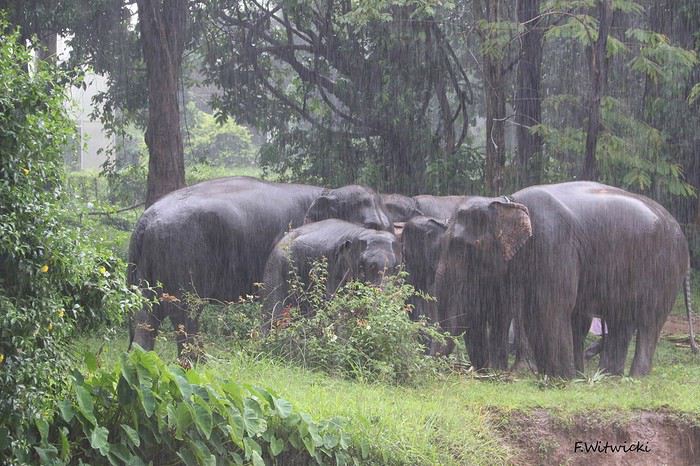
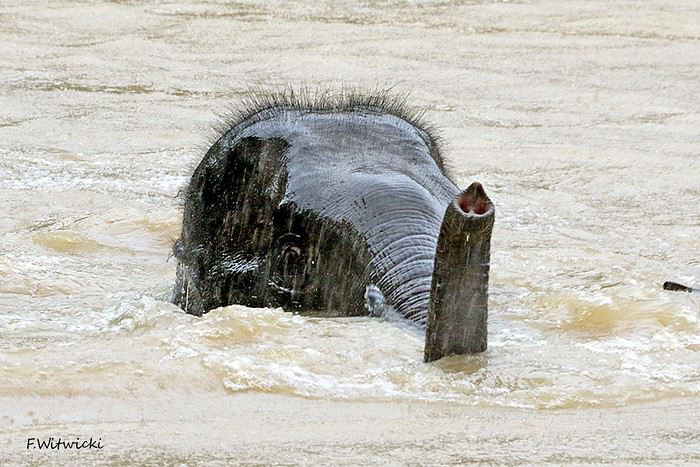
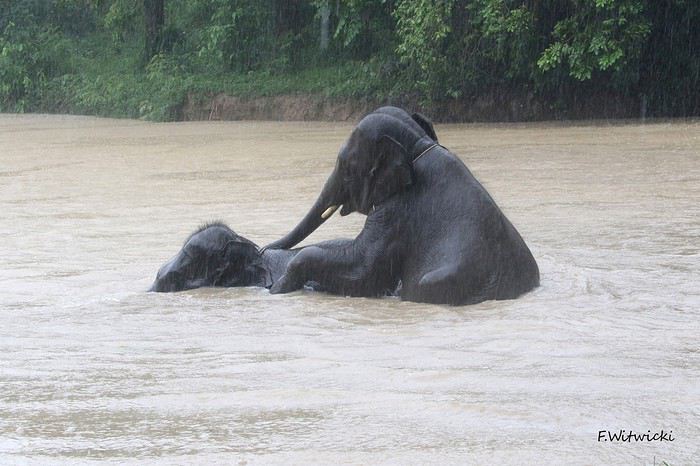
While Joel is filming, we hear Katie say, "I should film this too—my parents and friends would love to see it!"
That same evening, we get the idea to call Katie through reception.