Back to the discussion

in Entre deux voyages › Carnets de voyage

Yet Another Travel Journal in this (Too) Familiar Rajasthan, But with Family and Kids (page 8 of 11)

Discussion started by Pagaljavab on 2025-08-30

201 replies

This thread has been translated into English.


Yet another travel journal in this (all too) familiar Rajasthan, but with family and kids

Pagaljavab · 2025-11-28 · Message 141 of 202

Hi Anne,

Thank you so much for your encouragement! It’s really tough to make progress on my travel journal right now—between work, daily life, and unexpected events piling up on each other, I feel completely overwhelmed... Taking it bit by bit whenever I can, I’ve almost finished the second day of the hospital stay, so I might be able to post it tomorrow. I hope to pick up the pace for the rest and finish this journal someday! My passion for writing it is still just as strong, but time is already so scarce that carving out moments to write feels like a real struggle, no matter what some naysayers might say. Alright, back to it!

Yet another travel journal in this (too) familiar Rajasthan, but with family and kids

Pagaljavab · 2025-11-30 · Message 142 of 202

Day 14, August 6: Udaipur « The Indian hospital (ity) »

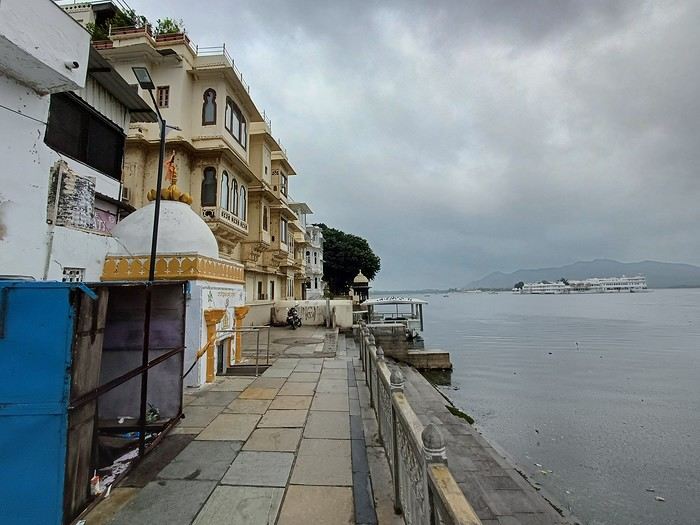
I wake up very early and receive a message from Magali around 6:30 AM with an update. She didn’t sleep well because the famous hospital staff parade kept going, even at night—someone passing by every half hour on average: cleaning, then security, then a midwife or a nurse... Théo had more bouts of diarrhea during the night, though they were less painful. He even drank a little boxed lassi, then a full bottle, which is actually a huge step forward. Magali thinks he seems a bit better, even if he still isn’t talking—unlike his usual chatty self at just two years old. She asks me to come early because she’s struggling to communicate with the nurses, who keep sending her to the pharmacy with new prescriptions. I also need to pick up a dropper, some Doliprane, a book, and Théo’s favorite stuffed animals, and if possible, some bananas to try to get him to eat a little. I shower and wake up Kelyandre, who gets ready quickly. First, I suggest we take a little walk to the ghats. I’ve always loved the morning activity and religious rituals by Lake Pichola, and I think it’ll help take our minds off things before heading back. We walk down the street to the bustling Gangaur Ghat... which, this time, is completely deserted and sad under the heavy, gloomy sky—a perfect reflection of our mood: a beautiful example of Baudelaire’s correspondence between the natural environment and mental state. We head back toward the Jagdish Temple to grab some chai and snacks before quickly hailing a rickshaw to the American hospital (renegotiated to 100 rupees, as usual—the inflated but capped fare for tourists who don’t budge). On the way, Magali texts me that Théo had a bowl of turmeric vermicelli for breakfast, which he devoured, saying with great emotion, “It’s so good!” It’s the first time he’s eaten anything in days *and* actually reacted like that—it’s a promising sign because we’re seeing a little bit of the Théo we know! Clearly, the IV treatment he’s been getting since yesterday is starting to work, and the progress is quick. Still, I need to get there fast because the nurses are harassing Magali about this pharmacy trip she doesn’t understand. As our rickshaw pulls up to the clinic entrance, Magali sends me on a mission to the basement to bring back more of that turmeric vermicelli Théo loved. Unfortunately, the canteen is only open during meal times. Oh well (or maybe just as well), we’ll never try that canteen...

While I take over in Théo’s room, Magali leaves right away with Kelyandre—she needs to shower and rest a bit in the comfort of the hotel. We’ll have to get used to this back-and-forth between the hotel and the hospital. Plus, it’s the first time Magali will have to navigate the Indian jungle alone with her minimal English, facing those shady rickshaw wallahs and other vultures always ready to scam the clueless tourist. I tell her to clearly ask for “Jagdish Mandir” (Jagdish Temple) and make her repeat it several times before they leave. Now it’s my turn to watch over Théo. The nurses come by and prescribe another mile-long list of medications. If this keeps happening several times a day, our hospital bills will skyrocket... For once, I ask them to fetch the meds themselves since I can’t leave Théo alone. Meanwhile, Magali texts me that she’s already having trouble with the rickshaw wallah she found... Even though she doesn’t know Udaipur, she notices he’s not taking the right route, despite her repeatedly saying, “Jagdish Mandir! Jagdish Mandir!” He drives along the lake and drops them off near a small park. She protests, trying to make him understand it’s not the Jagdish Temple with repeated “It’s not here,” but the driver doesn’t care—he demands his 100 rupees, makes them get out, and speeds off. I try to figure out how this happened but can’t... It’s only while writing this that I suspect he heard “Jag Mandir” (a small palace island on the lake) instead of “Jagdish Mandir.” Based on Magali’s description, he probably left them where you take boats to the island... I give Magali some advice but trust her to find her way. As they start walking toward the Jagdish Temple (since there’s no one around), they finally run into another rickshaw. She negotiates it down to 100 rupees, and this time, they reach the right place. She passed her first test as a resourceful (and not too gullible) tourist!

To unwind, they take the opportunity to visit Udaipur’s iconic temple dedicated to Vishnu, the great god of order and creation in the Hindu trimurti. Magali tells me they couldn’t see the deity because it wasn’t visible to devotees while the priests were “feeding” it. Still, they enjoyed a small musical ritual that they really liked. Afterward, between the Jagdish Temple and the hotel, they found a small Krishna temple—Krishna being Vishnu’s most famous avatar—which Magali recognized by his flute. A woman performed a puja for them, sprinkling water on their heads. Finally, they returned to the Red Pier nearby to rest, hand-wash some essential underwear that had piled up in the suitcase, and drop off the bulk of the laundry. Meanwhile, I keep watch over Théo and deal with the medical team, which isn’t always easy...

A little later, Magali and Kelyandre join me at the hospital. I take the chance to head down to the little grocery run by the sweet elderly couple we’ve been frequenting since yesterday. We stock up on cookies, ice cream, chilled sparkling water, chai, and other things—I drink some there or take it to go in a little plastic bag, as is the custom in India. They’re starting to recognize us and Kelyandre, and they’re happy to see us come by several times a day. When they spot us, they quickly wipe down the tables with a dirty rag (another classic Indian move). They ask why we’re here, gradually inquire about the little one’s health, and chat with me about this and that... These little tables by the roadside, near the pot where the chai is always brewing—first water, then crushed cardamom and ginger, black tea leaves, a splash of milk when the mix turns dark enough, sugar, and a few drops of some mysterious essence before the caramel-colored brew is strained and served in cups or poured into bags—become our regular break and social spot when we’ve had enough of the hospital’s oppressive atmosphere. For lunch, Magali and Kelyandre go back down to grab some samosa and pakora and bring some up for me. The couple must be wondering about this odd family that keeps coming in alternating pairs—a white man, a woman, and a mixed-race child, one with braids, the other with curly hair that fascinates them—though they clearly enjoy having us as regulars.

In the afternoon, it’s my turn to head out because I need to find cream for Théo’s diaper rash... The hospital prescribed one that’s making it worse—he seems to be having a bad reaction. On Google Maps, I spot an Ayurvedic shop less than a kilometer away. I set off on foot to find natural remedies and also to get some exercise and explore the neighborhood near the hospital. The beautiful houses with wrought-iron gates mostly display plaques for doctors with high-caste Brahmin or Jain names. I start imagining that our Dr. Janged (whom we’ve nicknamed Dr. Jain—I still haven’t explained why...) lives in one of these splendid villas. There are also big jewelry stores, wedding clothing and sari shops, clearly run by the same communities. Gold, metal, and gem work is indeed a noble and pure activity that has given certain castes of blacksmiths (like the Jangid/Jangi of Rajasthan) a status akin to Brahmins, or to Jains, who, though they claim not to be Hindu, are considered among the highest Brahmins and have influenced their most pious, austere, and pure practices. A large number of doctors naturally come from these castes, which hold knowledge and purity.

I pass a roundabout and finally find an alley lined with multi-story office complexes housing a bit of everything: law firms, real estate agencies, pharmacies, phone shops, various consultants... and the one with my Ayurvedic shop. A guard in uniform points me to a floor, but it’s not easy to find once inside. From the outside, the buildings look fairly clean, though old—like French suburban housing from the 60s-70s. But inside, it’s a maze of gray, dirty hallways where I hardly see anyone, giving the impression of an abandoned building or a creepy underground parking lot... I get another message from Magali asking me to try to find coconut oil or something with chamomile or lavender... First, I need to find the shop! There are stores and offices everywhere, most of them closed, with signs pointing in all directions. I go in circles, change floors several times, and risk taking the terrifying elevators, praying they don’t break down. After checking the address again, I finally figure out the building’s layout, and some men in suits (which clash with the surroundings) point me to what looks like a small office turned into a shop. There’s no one there, but an old man—maybe a maintenance worker—answers in Hindi that the owner will arrive in half an hour. It seems like my visit is a big deal, and he’s doing everything to keep me there. He calls the owner like his life depends on it to tell him a foreigner is at his shop. I decide to take a little walk and come back. A kind-looking man in his fifties greets me. I explain why I’m there. I was expecting a modern shop with tubes of ointment and jars of pure oils, but there are no products in sight... I quickly realize from his explanations that he’s an Ayurvedic doctor who makes his own little bottles of remedies! I know right away I won’t be buying anything—I didn’t come to buy questionable magic potions. Still, he passionately praises the incredible power of his concoctions. I think I’ll find what I need more easily in the tourist area, but I don’t want to offend him since he’s being nice. I tell him I don’t have money on me, that I need to ask my wife, and that I’ll come back later—some excuse to leave. I try to look convinced about the mix he suggests and make my escape, never to return! If I weren’t so fond of these experiences that always teach me something about this country I know so well, I’d probably say I wasted a lot of time for nothing—but that’s never the case. On the way back, I grab some really good chai at a little roadside stall where a group of older men strike up a friendly conversation. Even though the route wasn’t complicated, I somehow take a wrong turn and end up at Chetak Circle, the big intersection that connects to the old city. Though the hospital isn’t far, a rickshaw approaches me. Since it’s so hot, I give in and negotiate a cheaper fare than usual given the short distance.

In the late afternoon, we get a surprise visit. It’s Sukhdeo’s sister, Damayanti, with her husband and one of her daughters—they came to check on us! We’re so touched... Under these circumstances, we get to know each other a bit. She speaks excellent English. She’s a sports teacher and recently earned the title of “Doctor.” Her husband is in the military. She’s as lovely as her brother. She also passes on his apologies—he couldn’t stay with us because of work waiting for him in Jawai Bandh. We explain that he’s already done everything he could for us. They both ask about Théo’s health and look at the little one with compassion. She thinks Kelyandre is bored here and offers to take him to play with her son. We’re really moved by her offer, but Kelyandre doesn’t speak English and wouldn’t feel comfortable far from us in a country he doesn’t know, with strangers who don’t speak his language—which she understands. She also thinks our hospital food isn’t great and says she’ll bring us lunch tomorrow. Then they leave, telling us to meet them in the room at noon. We really owe this wonderful family big time.

This time, it’s my turn to spend the night with Théo while Magali and Kelyandre return to the hotel. In the evening, two nurses come to change the IV bags. They realize the catheter is poorly placed—something we’d pointed out earlier, but they hadn’t really listened. Ouch. Théo had just fallen asleep peacefully, and now he’s woken up for another unpleasant moment... Ripped from his sleep for another round of rough treatment, he screams and cries for a long time. It takes me a while to calm him down and get him back to sleep. The only silver lining is that the catheter is properly placed this time and shouldn’t move. I text Magali, who’s really down and furious at the medical team’s incompetence—so much so that she regrets choosing this clinic. She’s even starting to doubt the treatment’s effectiveness. I try to cheer her up a bit because, even with the hiccups and Théo’s suffering, he’s being well cared for, and his condition is improving after barely more than a day here. In the constant flow of people in and out of the room, a new little man in a white coat—looking stressed like he’s in an emergency—recites a formal, memorized line, asking if everything’s okay and if I have any complaints. I tell him everything’s fine and lie back down on my little bench after tucking Théo in under his blankets.

Yet another travel journal in this (all too) familiar Rajasthan, but with family and kids

Marien33 · 2025-11-30 · Message 143 of 202

Full marks for the review—it’s so vivid you feel like you’re there! And a little extra for me, having gone through a (too) long hospitalization in one of Kerala’s (supposedly) best hospitals. In everyday life, all these administrative complications and other hassles are particularly stressful, but when you’re seriously ill and unable to deal with them, it’s downright unbearable. And on top of that, you two weren’t even the ones hospitalized. Your story brought back my own experience.

Yet another travel journal in this (all too) familiar Rajasthan, but with family and kids

Yan55 · 2025-12-03 · Message 144 of 202

Yes, that must be really stressful... We're all hooked on this captivating story!!! Hang in there for what's next...

Yet another travel journal in this (all-too-familiar) Rajasthan, but with family and kids

Pagaljavab · 2025-12-03 · Message 145 of 202

More to come soon!

Yet another travel journal in this (too) familiar Rajasthan, but with family and kids

Marien33 · 2025-12-10 · Message 146 of 202

Hi Anne, You sent me a private message, but when I click "reply," it just spins and spins, and I CAN’T write a single word! You’re not the only one I’m having this issue with. I won’t make any unpleasant comments, but all these bugs on VF are really frustrating... So I’ll send you a private message to answer your questions as soon as I can. Sorry, Pagal, for being FORCED to go through your journal just to reply to a private message that isn’t even from you! 😤

Yet another travel journal in this (too) familiar Rajasthan, but with family and kids

Yan55 · 2025-12-10 · Message 147 of 202

Hi Marien, I sent you a private message to ask for information about destinations in Kerala since you live there. Usually, travelers tend to go to the south of the state, but I think you know the north well. So, I’m rewriting my request here as a public post, hoping you’ll see it! Sorry Pagal for invading your travel journal like this...

Yet another travel journal in this (all too) familiar Rajasthan, but with family and kids

Pagaljavab · 2025-12-10 · Message 148 of 202

At least you're adding content to my travel journal, which I'm really struggling to do right now! 😅

Yet another travel journal in this (all too) familiar Rajasthan, but with family and kids

Marien33 · 2025-12-10 · Message 149 of 202

At least you're adding content to my travel journal, something I've been struggling to do lately 😅

You took the words right out of my mouth! 🤯 But I wasn’t thinking of you...[;]

Yet another travel journal in this (too) familiar Rajasthan, but with family and kids

Jojoone1 · 2025-12-11 · Message 150 of 202

I’ll quickly revisit the leopard reserve. In recent years, we’ve seen two documentaries about it on French TV. Nowadays, many of these documentaries are made by German, British, or American teams and are broadcast worldwide. Once something makes it to TV, its confidential side is gone for good.

A little personal thought: when I read the passage about the "impure foreigners with the evil eye," I quietly thought they were pretty bold—both for "impure" and for "evil eye" (literally and figuratively, by the way). Let whoever understands, understand; I won’t elaborate further.

For young children, it would never have crossed my mind to take them to this kind of country, if only because many adults come back with illnesses some never fully recover from. I don’t quite feel the same way anymore since I’ve observed many families whose trips to Asia went smoothly and who handled it with complete serenity. Besides, I’ve known people who were kept in a bubble by their parents when they were young, and their bodies suffered from not being exposed to enough germs. Still, when a child that young shows strong and persistent symptoms, the only advice is for the family to act sooner than you did and pull out all the stops immediately. Lives have been lost in similar circumstances. Maybe you had reasons not to worry too much—we all depend on our genetic makeup, and perhaps your family’s is particularly robust. That said, it’s really brave and honest of you to have shared all these events in full. It stands in such stark contrast to those who only present the positive side of their stories.

So, we have at least two great "Indian" storytellers on this forum, and it’s truly a pleasure to read you both. A big thank you for sharing!

Another travel journal in this (too) familiar Rajasthan, but with family and kids

Pagaljavab · 2025-12-11 · Message 151 of 202

Thanks so much for your very relevant comment, Joël.

Currently, many of these reports are made by German, British, or American teams and end up being broadcast worldwide. Once something makes it to TV, its confidential side is gone.

Unfortunately, that’s true, and it’s even worse with social media. Jawai Bandh isn’t in paper guides yet, but it won’t be long.

A little personal thought: when I read the part about "impure foreigners with the evil eye," I quietly thought they were pretty bold—both for "impure" and "evil eye" (literally and figuratively, by the way). Let whoever wants to understand, understand—I won’t elaborate.

Actually, it’s a ritualistic question. In Hinduism, even though these religious rules are relaxing, the upper castes are obviously the purest, and at the bottom of the scale are the so-called untouchables and foreigners, especially if their skin is dark. Of course, all this has evolved over history, and we can be idealized as demigods, rejected as outcasts, or perceived indifferently. But some in rural populations, a bit closed off to modernity and globalization, still fear that our presence brings the evil eye. That said, it’s less common than before.

For young children, it would never have occurred to me to take them to this kind of country

Maybe you were right. I’ll talk about this in more detail at the end of the journal in the trip summary (if I ever finish it). In any case, if we did it, it’s because after doing a lot of research, we found no reason not to travel to India with a two-year-old.

I don’t quite feel the same way anymore because I’ve seen many families whose stay in Asia went well and who handled it calmly.

Exactly.

Besides, I’ve known people who were kept in a bubble by their parents when they were young, and their bodies suffered from not being exposed to enough germs.

I’ve noticed that too. And actually, since that incident, Théo has never had another gastrointestinal issue—neither in France, nor in Senegal or Turkey.

Still, when a child so young shows strong and persistent symptoms, you can only advise the family to act faster than you did and take immediate drastic measures. Lives have been lost in similar circumstances. Maybe you had reasons not to worry too much—we all depend on our genetic heritage, and perhaps your family’s is particularly resilient.

Yes, but I don’t think genetics play the biggest role here—it’s more about the living environment. As for taking him to the hospital sooner, we shouldn’t forget that (as I wrote) we sent him to a doctor very quickly, who immediately made the right diagnosis. The only issue was that he didn’t treat the dehydration. Two days later, he was already being cared for at the American Hospital in Udaipur, where one of the best pediatricians in Udaipur showed no concern and told us it was severe but classic. Maybe we could have taken him straight to a reputable hospital, that’s true. But we didn’t wait too long to react either.

That said, it’s really brave and honest of you to have recounted all these events in full. It stands out so much compared to those who only present their stories from a flattering angle.

Thanks for pointing that out! The main goal of this journal is to provide a reliable account for people who might want to travel to India with a very young child—something we found little of when preparing for this trip. So we have to tell things as they really happened; otherwise, it’s not a valuable experience or advice. We just want our experience to help people form their own opinions. And anyway, it’s my mindset to always write authentic journals because my goal isn’t to make people believe I had a perfect trip from start to finish. It’s to tell things as they happened to inform future travelers above all—and to spark discussions and debates, like here.

There you go, you managed to make me write a summary ahead of time!

Yet another travel journal in this (too) familiar Rajasthan, but with family and kids

Pagaljavab · 2025-12-14 · Message 152 of 202

Day 15, August 7: Udaipur « The Indian hospital (ity) » (continued)

Today is the first day of Teej, a major annual Hindu festival that honors the devotion and austerities of the goddess Pārvatī to win the heart of her husband, the great god Shiva. Simultaneously, it celebrates the arrival of the monsoon according to the Hindu calendar—a season of fertility and renewal, which is how it got its name, borrowed from a small red insect that appears during this period. For three days, women dress in particularly colorful saris, jewelry, and henna, fast in devotion to their husbands to wish them a long life (especially since being a widow in India is a ritual and social curse) or to hope for a good marriage. In the evening, they go to the temple to honor the powerful Pārvatī with offerings of flowers, fruits, pastries, songs, and dances in her glory. This festival was one of the reasons we scheduled these five days in Udaipur, as the Teej celebrations were described as quite popular when we were planning our trip. But it’s clear we’re off to a bad start to be able to attend.

In the end, Théo slept pretty well despite the brutal new incision in his vein the night before. I received a few worried messages from Magali overnight to make sure he was okay and well-covered so he wouldn’t catch a cold from the air conditioning in the room, which we keep turning up only for the nurses to lower it every time (you might know this Indian obsession with keeping rooms at 18°C when it’s 35°C or more outside—the best way to catch a sore throat). I only see the messages when I wake up at 6 a.m. and reply to reassure her that this second night went well. In the morning, the nutritionist visits to ask what meal I’d like for Théo. This new ritual in the constant stream of visitors is more pleasant than the others because it’s a sign his health is improving. She suggests boiled vegetables for vitamins and rehydration. I explain that yesterday, he really liked the turmeric vermicelli and the simple dāl with rice and yogurt. Those also seem like the least risky options for him, but I agree we should vary things a bit. I ask Théo, who answers in a still-weak voice that he’d prefer pasta or the dāl/rice. She recommends vegetables instead... On a completely different topic, she informs me she’s learned that the nurses have been asking us to fetch the medications ourselves from the hospital pharmacy since the beginning, which she seems quite unhappy about since it was supposed to be their job. She tells me to firmly refuse from now on. I’m both stunned (though not really surprised) and relieved to hear this—it’s been a huge hassle! But how were we supposed to know when we didn’t understand the system and the medical team asked us to do it ourselves? I think if she’s aware of this, why doesn’t she give them the order herself? She leaves, assuring me she’ll let them know. So we’ve been making all these trips back and forth, taking turns so someone could stay with Théo, and wasting so much time waiting at the pharmacy counter when it wasn’t even our responsibility! Nothing too surprising, though—even at the “American” hospital, we’re still in India. I tell myself the upside is that we’ve been able to control the cost of the medications we had to pay in cash for each prescription, which wouldn’t have been the case if the medical team had handled it—who knows what overcharging we would’ve found on the final bill...

Magali and Kelyandre, now experts at taking and negotiating rickshaws (almost) like seasoned India travelers, come to take their turn around 8 a.m. to relieve me. Magali asks me not to linger at the hotel because Sukhdeo’s sister is coming to bring food for Théo, and since she’s not very comfortable with English, she prefers I be there to receive her. I head down to the parking lot, where I immediately find a very friendly rikshāwālā who accepts the 100-rupee fare without hesitation. At the hotel, the ever-smiling and kind manager asks for news about the little one. I take advantage of this comfort, which we’ve barely used so far, to take a quick bath (yes, there’s even a bathtub!). I do notice, though, that the room is quite humid due to the season and its proximity to the pool.

I leave the hotel as quickly as possible to enjoy Udaipur a bit and reconnect with the feel of this city, which was my gateway to India seventeen years ago and which I’ve revisited many times since. I start nearby at the Jagdīsh Temple, where I have vivid memories that now seem almost surreal in hindsight. Without going into too much detail, during my first trip to India in 2007, I had joined someone who was doing a “Rajasthani dance and percussion” workshop with other artists inside the Udaipur palace. On the last day, their teacher—a fairly influential brāhmaṇ woman—had offered them the chance to dance on the stage set up in front of this most revered temple in the city for the immensely popular Kṛṣṇa festival. I arrived late and found myself stuck in the middle of a tightly packed crowd of hundreds of people literally going wild as these French women performed a short, simple choreography to an old Bollywood song, filmed by local television. I explained to some young men that I knew the girls on stage, and they lifted me over the crowd so I could climb over the barriers and join the VIP platform where I should’ve been if I’d been on time. I watched the rest of the festivities, including an astonishing human pyramid contest, sitting right next to the son of the last Mahārāṇā, the title of the Rājpūt rulers of Udaipur. In the electric atmosphere of that wonderful night, we were then invited to a special pūjā in the temple...
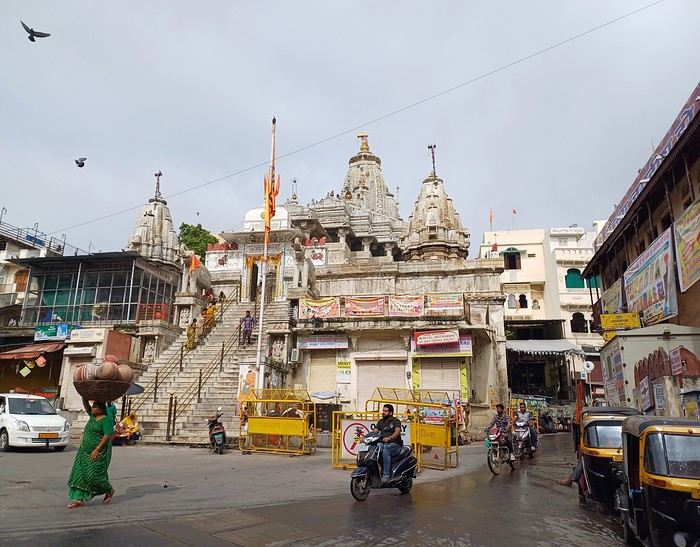
This early morning, those memories overlap on the same nearly empty square as I climb the thirty-two steps leading to the first maṇḍapa (pavilion) I’ve ascended so many times. The Jagdīsh Temple dates back to the 17th century and is dedicated to Viṣṇu in his form as Jagannāth, the “Lord of the Universe.” Its walls and bas-reliefs are covered with splendid sculptures of mythological scenes, some depicting postures from the Kāma Sūtra that would be considered risqué today.
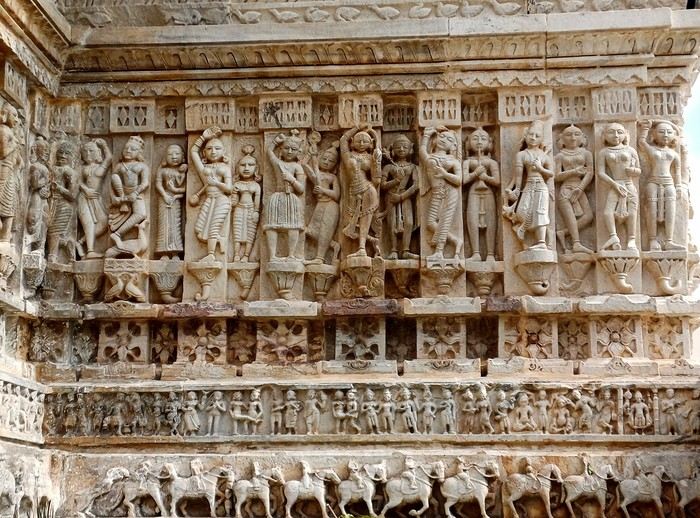
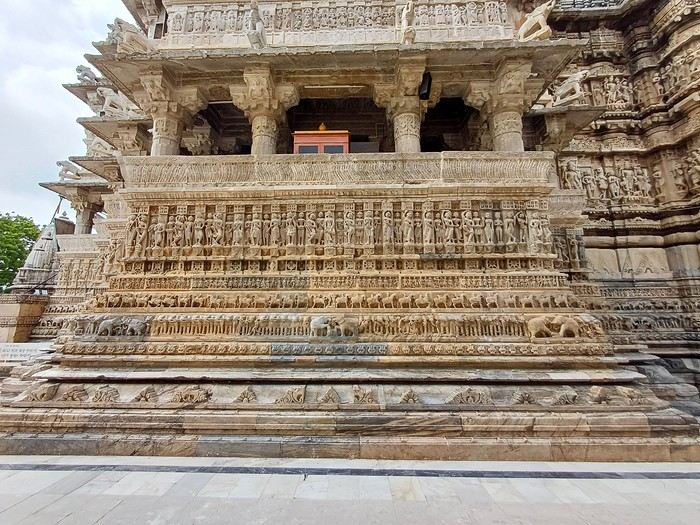

Its structure, studded with deities and mythological figures rising in pillars to the top, reminds me of the temples I visited in Tamil Nadu in 2018. Four chapels at each corner of the temple’s square enclosure are dedicated to other major Hindu deities: Shiva (Viṣṇu’s destructive alter ego), Gaṇesh (the elephant-headed son of Shiva who removes obstacles and brings prosperity), Sūrya (the ancient Vedic sun god), and Shakti (the divine feminine principle, the active force of the cosmos). At the top of the steps, a statue of the eagle god Garuda faces the main sanctuary of Viṣṇu, which is elevated on the second maṇḍapa. Inside, devotees sit in meditative pauses, gathered around a pūjā performed by the priest for the deity. I join them, sitting toward the back of the room, and try to take a photo—strictly forbidden in the most sacred temples. I’m scolded by some zealous young devotees but play the ignorant tourist card: they let it slide, and I delete the blurry shot anyway. During this visit, Magali texts me that she’s simultaneously participated in the pūjā of another god: the daily ceremonial visit from our “Dr. Jain” and his team. Great news: the tests are good, and Théo can be discharged tomorrow! He could’ve almost left today, but the doctor prefers not to take any risks and wants to be sure he’s 100% recovered. Magali is greatly relieved, and her grudges against the hospital are somewhat swept away! So are mine—the news lifts a huge weight off our shoulders. I finally start to see the rest of the trip differently. Théo recovered quickly, and this difficult ordeal is almost definitively behind us. We’ll finally be able to enjoy the little time we have left in Udaipur and end our journey as we began it. Well, not quite yet—we still have 24 hours to live through this curious experience of a hospital stay in India...
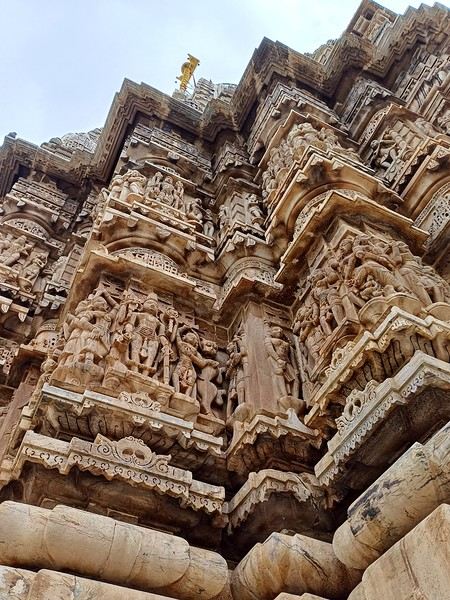
Unlike the other days, the weather is mild and sunny. In a good mood and with a lighter spirit, I decide to walk the 2.5 kilometers to the American hospital. On the temple square, the scene of donkeys loaded with heavy sacks of rubble, which they carry up the steep streets—a sight that struck me seventeen years ago—is exactly the same today. Walking down Jagdish Temple Road toward Ghāṇṭā Ghar (the Clock Tower, less remarkable than Jodhpur’s), I peacefully enjoy the lively street scenes of this busy commercial artery.
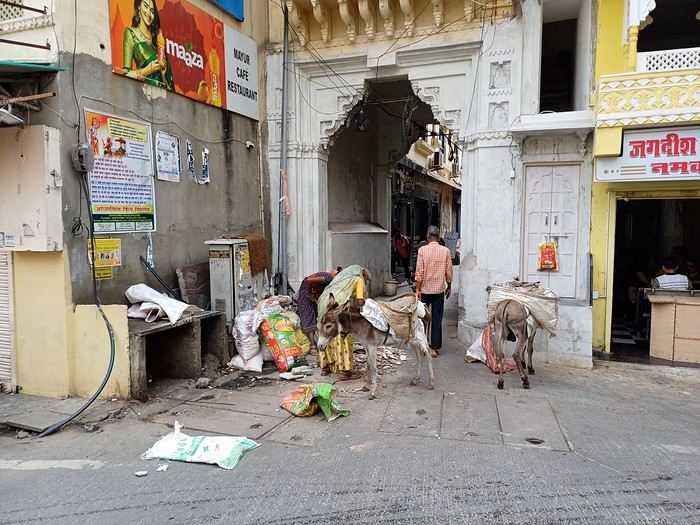
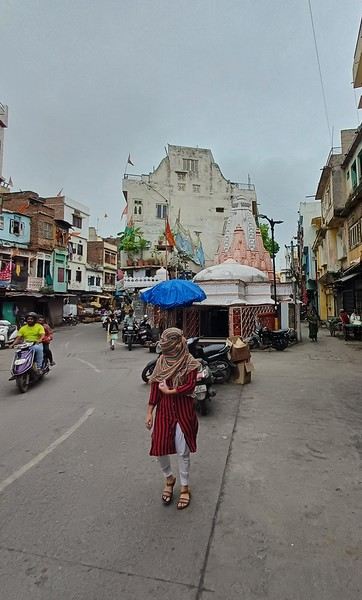
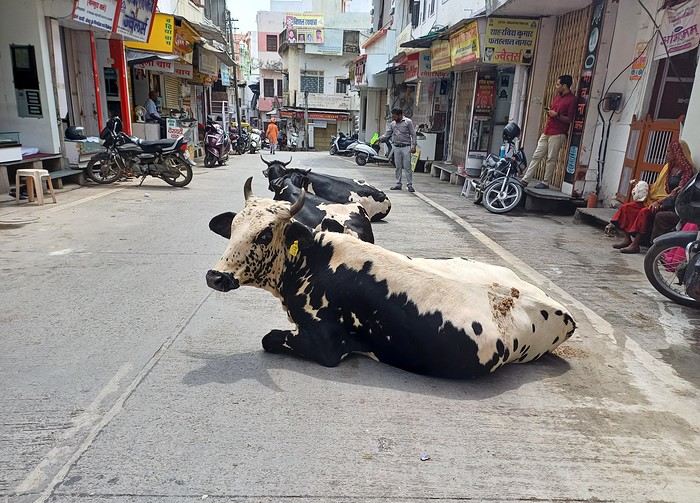
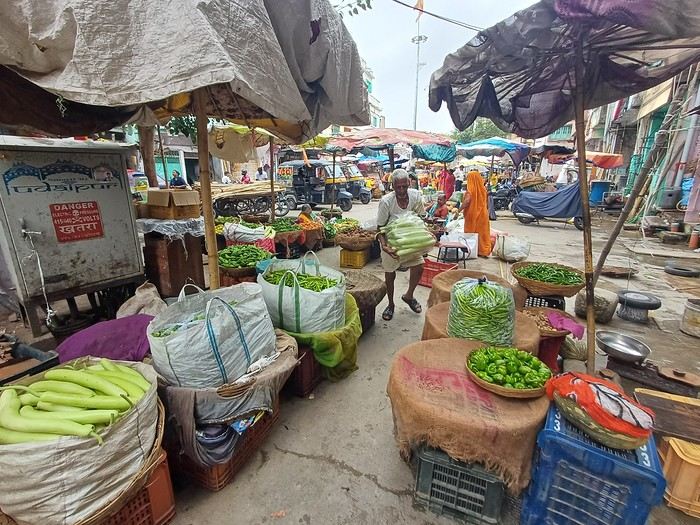
I keep an eye on both sides of the street because I’m looking for a tailor: the button on my shorts has been coming loose for a few days. I quickly find a small shop where a mustachioed man in his fifties is busy behind his sewing machine. Since he’s friendly and happy that I speak Hindi, he asks me lots of questions, offers me chāy served in a plastic pouch with small cups, and we start to hit it off. He does his job with great professionalism and tells me to pay what I want. I give him 50 rupees and say I’ll probably come back the next day because Magali and Kelyandre also have things to mend. He wishes me luck with the little one, and I continue down Sindhi Bazar, where there are no tourists left even though I’m still in the old city. I cross a particularly colorful vegetable market, which reminds me that beyond its (magnificent) historic quarter overrun with tourists, Udaipur remains a thoroughly authentic Indian city. I wander past pastry shops, street-food stalls, street scenes, and a strange dumping ground right in the middle of it all... At Delhi Gate roundabout, the old city gives way to wide, congested avenues leading to the new city districts. A different walking atmosphere sets in.
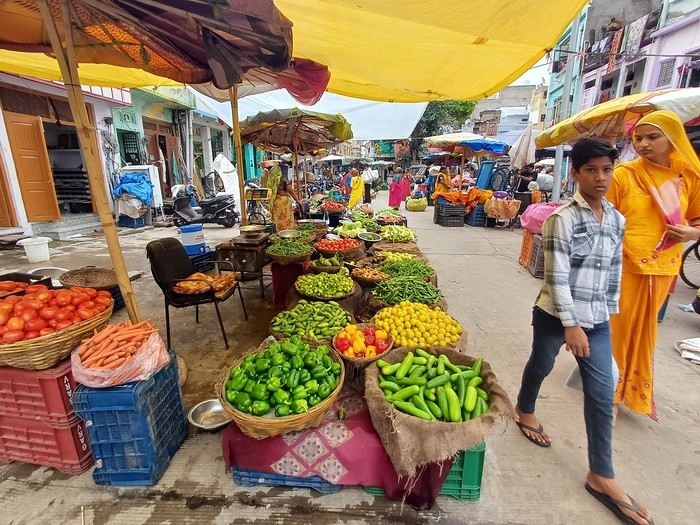
From the tailor’s, it only takes me about twenty minutes, taking my time, to reach the hospital by mid-morning. Just as I’ve barely stepped into the room, I have to go back down—I forgot to buy bananas, which Théo and all of us eat a lot of. Near the rickshaw parking lot, I go to the juice vendor who’s always there early in the morning, but he has almost every fruit available in India except bananas... He points me toward the residential neighborhood behind Residency Road, the main avenue in front of the hospital. I wander through the rather deserted alleys and get lost in the small residential lanes but can’t find anyone to ask. Finally, I find a chāywālā where I stop for a short break. He gives me directions, and after a few more minutes of walking through this almost “upscale” neighborhood, I finally spot, like a mirage, a banana cart and its owners—a very rustic, smiling couple quick to chat and joke. For 30 rupees, I get double the usual amount of bananas for 40 or 50! The heat is rising, and I have to retrace my steps to bring my haul back to the room.

When I return around noon, Sukhdeo’s sister is already there. She came alone this time. She’s prepared ālū gobhī and some delicious chapātī for Théo, which she brought in metal containers with plastic lids. Théo had just received his dāl and rice from the hospital, but I notice that combining everything makes a complete vegetarian thālī! We cut pieces of flatbread for Théo so he can pick up bits of potato and cabbage in front of Damayantī, who’s moved by the scene, just like us. She doesn’t stay long: we chat about this and that, she’s reassured to know Théo is being discharged, and we promise to stay in touch. We tell her we’ll have to find a way to return the containers she brought. Either way, we can never thank this incredible family enough for their help to the very end.

We’ve finished the meager leftovers of Théo’s food, but it’s not nearly enough for the three of us. We check the photos of the long Hindi menu on Google Maps for Swad Café, the small vegetarian ḍhābā that wasn’t very clean but which we liked on the first day, on the other side of Residency Road, across from the clinic. The food is as local as the prices: dishes are around 100 rupees, and the chapātī are 10 rupees. Magali is tempted by something not spicy, so following my advice, she decides on malāī koftā (vegetable and cheese balls in a creamy coconut sauce), and I go for chanā masālā (chickpea curry). I go back up, and we start unpacking the order. Magali tastes her malāī koftā but makes a face: it’s very sweet-salty, creamy, and not at all what she expected. We swap dishes. She finds mine very spicy but still more satisfying than hers. Since Kelyandre isn’t thrilled with what he sees, we make an exception to our promise never to buy anything from the crazy old man at the foot of the hospital who (intentionally or not) scammed us two days ago. It’s better if it’s not me who goes, so Magali heads down. When she starts placing her order with the doddering man, a young guy immediately steps in to handle it. It seems our little altercation got around! We’re the only foreigners in the whole hospital and its surroundings, and the employee must have connected Magali to last time’s incident. Another clash avoided! This time, nothing’s forgotten, and Kelyandre can enjoy his double-cheese veggie burger.

With little transition, I have to leave again quickly for the old city because I need to find a tailor for Magali’s torn kurtī and bring some wipes from the hotel for Théo. I also want to stop by a shop I spotted online on the way because a colleague asked me to bring back a spice mix for biryānī, and some Indian friends in Paris wanted a good bag of Mathaniyā red chilies, known among connoisseurs for their round, sweet taste and vibrant color. Since I like walking, I try the experience on foot again. But the shop doesn’t have what I need. While looking for my way, I realize I’m a bit lost. Then I see a rickshaw stop next to me, and the driver invites me to get in. I hesitate but climb in because I’ve lost some time. When I sit down, he asks if I recognize him: yes, it’s the rikshāwālā who took me from the hospital to the hotel this morning! He recognized me and stopped. What were the odds of running into the same driver, on the same day, at this exact time and place? After all, we encounter so many coincidences like this... Thinking I’d have better luck finding my spices at the market I crossed this morning, I ask him to drop me off at Sindhi Bazar, where I scout around or just wander past the stalls out of curiosity—there’s so much that’s tempting! After asking several vendors, I finally find a spice seller whose goods spill out into the street. He directs me to large jute sacks filled with the Mathaniyā chilies I was looking for. I tell him I’ll come back tomorrow to make my purchases, and he gives me his card.

After scouting, I head back to the hotel. After resting a bit, taking a good shower, gathering the things I came for, and dropping off our dirty laundry at the front desk, I realize I have some time to spare. With the accumulated stress and fatigue from all the back-and-forth, I let myself be tempted by the Ayurvedic massage parlor next to the hotel, Ayurvedic Body Shop, which has been catching my eye every time I pass. I push the door open and am greeted by a woman in her fifties who hands me a menu of services and specifies that it’s “man to man” only. I feel like telling her I know I’m not in Thailand and am familiar with the country’s customs. Even if things seem to be slowly changing due to globalization and social media, Indian propriety generally requires being massaged by someone of the same gender to avoid any sexual services (which completely denies—or pretends to deny—homosexuality). I imagine she has to take this precaution to avoid confusion with tourists used to Southeast Asia who might think it’s the same in India. Since I’m not one of them and only came for a classic Ayurvedic massage, it suits me just fine. There are several options, most between 1000 and 2000 rupees. I choose a one-hour session for 1500 rupees. The woman calls the masseur, who arrives quickly. Contrary to what the storefront suggests, the place is tiny, and the room is divided into small spaces separated by curtains. The service is in line with the vast majority of Ayurvedic massages I’ve had in India: the masseur communicates very little but is professional. I step back out onto the street feeling relaxed and at ease, my mind light.

Back in the room just seconds later, I get another message from Magali saying she has a stomachache, feels nauseous, and is occasionally shaking as if she’s cold (which really isn’t the case...). She thinks it’s the lunch from the ḍhābā that didn’t agree with her... It’s odd because I ate the same dishes as her and I’m fine. The problem with traveler’s diarrhea is that between immediate food poisoning and cases that incubate for two or three weeks, it’s hard to know exactly where or when it came from. Still, she blames her condition on that malāī koftā, just the thought of which gives her chills. It’s time for me to head back. I grab my things and go hail a rickshaw. Like what happened to Magali and Kelyandre the day before, the driver doesn’t take the usual route. I don’t know if he has an alternative route or if he’s just wrong, but it’s not the right direction for now... I keep a close eye on him, and when he starts heading toward the Chand Pole bridge leading to the other side of the lake, I immediately call out to remind him I’m going to the “GBH AMERICAN HOSPITAL”! He’s confused and says he mixed up the hospitals. Fortunately, the detour isn’t huge. He finally takes me to my destination and, recognizing his mistake, doesn’t ask for extra payment—a rare occurrence...

So it’s me again for this third and final night at the hospital because Magali still struggles to understand or make herself understood by the medical team. Kelyandre and she stay with Théo and me for about an hour. Then, like the pros they’ve become over the past two days, they head off to find a rickshaw to go to the hotel. Shortly after they leave, Théo’s meal tray arrives. More dāl and rice! It was really worth the nutritionist coming to ask what we wanted. But it’s fine—it’s a healthy and safe dish that he devours without leaving a single crumb. His belly is full! He even eyes the raw veggies, but despite his begging, it’s out of the question, and I have to stop him from grabbing them despite his protests. I’m actually surprised that, given the risks, the nutritionist included them on the menu... I settle the matter by eating them myself! I should be content with that tonight—I was counting on leftovers, so I’ll have to fast like the Teej devotees. Still, it’s great news that in such a short time, Théo has regained such a big appetite. And that’s not all: he’s started talking nonstop again, just like before. He’s fully recovered!
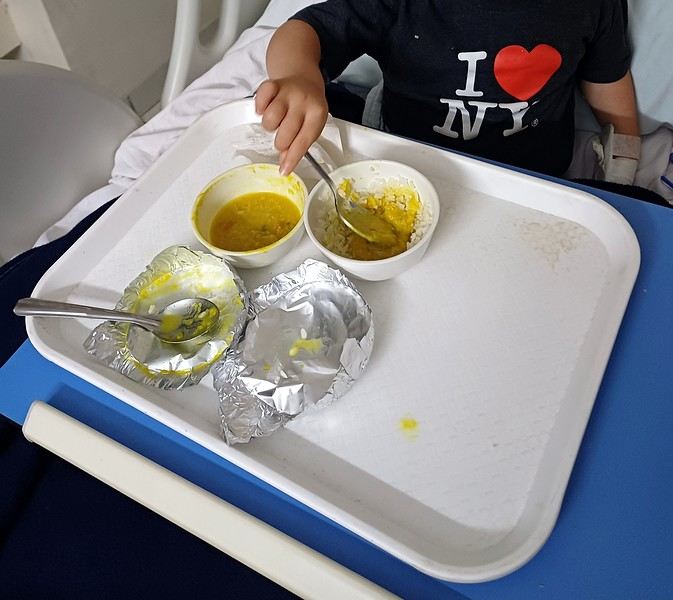


Meanwhile, things take a turn for the worse for Magali and Kelyandre... They’re still having rickshaw troubles... There aren’t any available in the parking lot. I text her that it’s very likely because of the Teej festivities. They walk down the avenue to try to flag one down, but all the vehicles are packed with people in colorful clothes. To make matters worse, Magali is feeling worse and worse. It takes them a good twenty minutes of waving by the roadside before one finally pulls over. It’s almost full, and the driver asks for 100 rupees, even though they should get a shared-ride discount. She’s not feeling well at all, he won’t lower the price, and she doesn’t argue much. All the other passengers are also heading to the Jagdīsh Temple, where the nighttime Teej rituals, which we’re experiencing in parallel instead of participating in, must be in full swing. As they get off near the sacred site, Kelyandre is hungry. They spot the Old Town Café, right across from our hotel—a very touristy and busy spot with a nice rooftop—where Kelyandre orders his favorite stir-fried noodles to go. The wait is long, and the smell of greasy food makes Magali even more nauseous. She can’t take it anymore. Finally, they’re served, and they quickly cross the street. She runs to the bathroom to throw up everything she’s eaten, then curls up under the covers, shivering abnormally from the cold...

Before I was informed of all these adventures, I take care of giving Théo his treatment before bed. In the late-night stream of visitors, I get the nurses, the cleaning staff, and again the stressed-looking guy who asks if I have any complaints. Magali, completely drained, texts me that I should’ve asked for a refund for the hospital staff’s incompetence!
Yet another travel journal in this (all-too) familiar Rajasthan, but with family and kids

Yan55 · 2025-12-15 · Message 153 of 202

Here’s a really detailed account! And a happy ending for your little boy... So glad, though one illness replaces another! Hope it wasn’t too serious for Magali... We loved Udaipur too—we attended the Gangaur festival there. It was something else!!!

Yet another travel journal in this (too) familiar Rajasthan, but with family and kids

Marien33 · 2025-12-16 · Message 154 of 202

I'm really frustrated, Michaël—I wrote you a long first reply that disappeared when I clicked on preview, which is supposed to save what was written. I didn’t have the energy to start all over again, so I wrote a shorter second reply, and the same thing happened when I clicked preview. It’s becoming absolutely unbearable to post on this forum. You’ll have to forgive me, but I’m really not doing this a third time.

Thanks so much for your very detailed account. I was telling you I was surprised you didn’t mention insurance, and I was expanding on that based on my own experience. Basically, you have to write two words—preferably just bland stuff—but as soon as you go into any detail, everything disappears.

All in all, I just spent over an hour reading and replying to you, and it was all for nothing in the end. It’s really discouraging to respond

Yet another travel journal in this (all too) familiar Rajasthan, but with family and kids

Pagaljavab · 2025-12-16 · Message 155 of 202

Just before you sent me that message earlier today, my reply to Anne had just disappeared under similar circumstances. Then I started drafting a response to you, which also vanished when I accidentally changed pages—by clicking "back," everything was lost.

I was telling you I was surprised you didn’t mention insurance, and I was expanding on my experience.

Oh, it’s coming in the next installment and in the wrap-up! Trust me, I haven’t finished talking about insurance yet.

Actually, you just need to write two words—preferably bland ones—but as soon as you elaborate a little, everything goes to hell.

So just write me, "Your trip to India looks amazing—all those beautiful colors are so inspiring!" I’ll take it 😄

Yet another travel journal in this (all-too) familiar Rajasthan, but with family and kids

Pagaljavab · 2025-12-16 · Message 156 of 202

Thanks for your dedication, Anne!

And a happy ending for your little boy...

Absolutely, it was such a relief when "Doctor Jain" told us he was going to be discharged. That said, we were already reassured when we arrived at the hospital and he told us it wasn’t anything too serious but that he’d still need two or three days in the hospital.

We really loved Udaipur too—we attended the Gangaur Festival there. It was something else!!!

Teej and the Gangaur Festival, very popular in Udaipur, are quite similar in theme and rituals—almost like twin celebrations—except Teej is more pan-Hindu, while Gangaur ka mela is typically Rajasthani. I can totally believe it must’ve been impressive. Without giving too much away, we unfortunately didn’t see much of Teej...

Yet another travel journal in this (all-too-familiar) Rajasthan, but with family and kids

Marien33 · 2026-02-06 · Message 157 of 202

Since no one’s stepping up, I’ll go for it... When’s the next part of this journal coming? You’re not gonna throw in the towel, are you? !

Yet another travel journal in this (all too) familiar Rajasthan, but with family and kids

Calaf · 2026-02-06 · Message 158 of 202

Hi Marien,

and thanks for "taking the plunge" for me—I didn’t dare... (darn education).

I hope and assume, from your latest messages, that your trip is going wonderfully and that you’ll tell us all about it, of course!!

Thanks to you and Pagal for keeping our "enchantment" alive...

Calaf

Yet another travel journal in this (all too) familiar Rajasthan, but with family and young kids

Pagaljavab · 2026-02-09 · Message 159 of 202

Hi Jean-Marie (and Calaf too),

You’re bringing this discussion back to life—one I was almost starting to forget! It’s true, I stopped writing that travel journal, and I don’t even remember when I last posted an entry... As I’ve said many times before, I’m increasingly short on time, and it was a real sacrifice (no matter what some idiot around here says) to even start such a project. At first, besides writing for myself, I thought it might help travelers who are hesitant about traveling with young kids. But it doesn’t seem to help anyone...

On one hand, is it really worth sacrificing precious time to write a journal that only interests a handful of people (sorry to those few!) when my time is already taken up by work, family (and, in a way, my country), and what little I have left is better spent resting? Or should I keep going for myself and those few readers? It’s a question I can’t answer, and time passing naturally pushes me toward one choice. Sometimes I think I should get back to it for the satisfaction of finishing what I started—especially since the end isn’t that far off. But other times...

Originally, I had the idea of writing journals about the trips that followed, but I’m now almost certain that won’t happen. The post-COVID torpor of this forum has somewhat discouraged me.

Thanks anyway for giving this thread a little jolt—you never know what might come of it.

Yet another travel journal in this (all too) familiar Rajasthan, but with family and kids

Kate · 2026-02-09 · Message 160 of 202

Hello!

I’ve thought about nudging you several times. When’s Season 2 coming? But I hesitated... Should I leave you alone, not pressure you, or just share how much I enjoyed reading you and stirring the pot a bit?

You’re the *number one* drama queen—the student has surpassed the master!

But I know perfectly well that writing a travel journal is a time-consuming pleasure. I also know that many readers stay silent. Sometimes, one of them reaches out months or even years later to tell me they were inspired by my adventures to plan their own trip.

Anyway, do what feels right—I’ll manage my frustration 🏴‍☠️😛

VoyageForum — the largest community of French-speaking travellers.