Back to the discussion

in Entre deux voyages › Carnets de voyage

Villages around Hazaribagh in West Bengal

Discussion started by Aleph240758 on 2026-07-28

54 replies

This thread has been translated into English.


Villages around Hazaribagh in West Bengal

Aleph240758 · 2026-07-28

Wednesday, April 1st

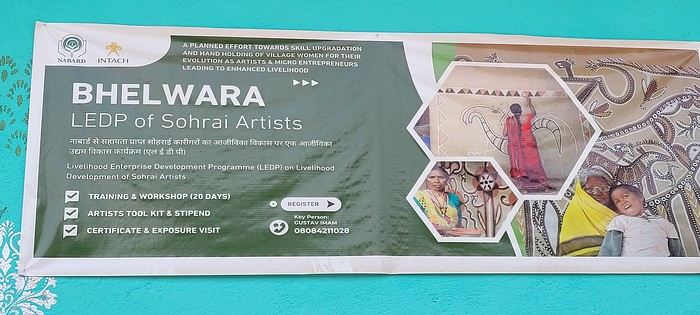
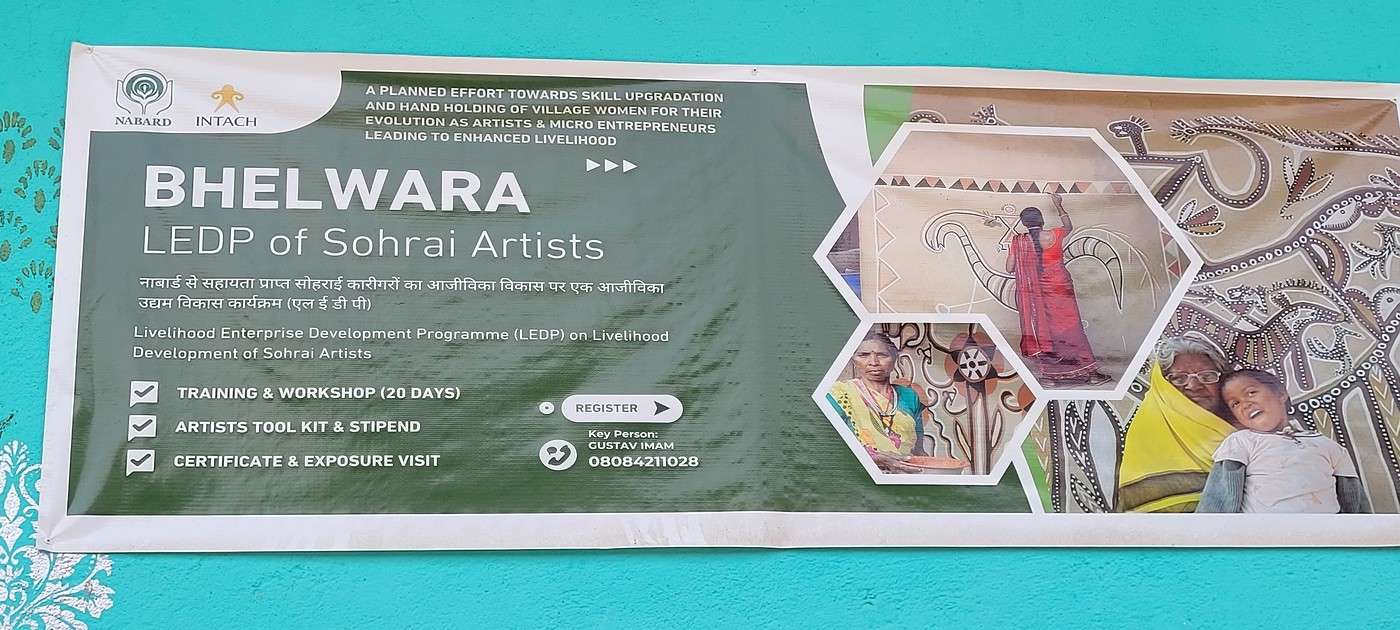
Hazaribagh I’ve got a meet-up with Adam Iman, a guide and painter. He picks me up from the hotel at 10 AM. Another traveler from Bangalore is supposed to join us, but while we wait for him to arrive, Adam takes me to see the paintings his mother and sister created at Hazaribagh station. The town became famous thanks to these murals, which can also be found in several surrounding villages. This art form has earned recognition and is now protected, a sign of its cultural importance. Once the visit is over, we go to pick up the other traveler and then head to our first village: Belwara, where Sohrai art is practiced. At the entrance, a sign proudly announces that we’re entering an artists’ village, where this art is created by women organized into micro-enterprises. Some even offer workshops for those who’d like to learn this tradition.


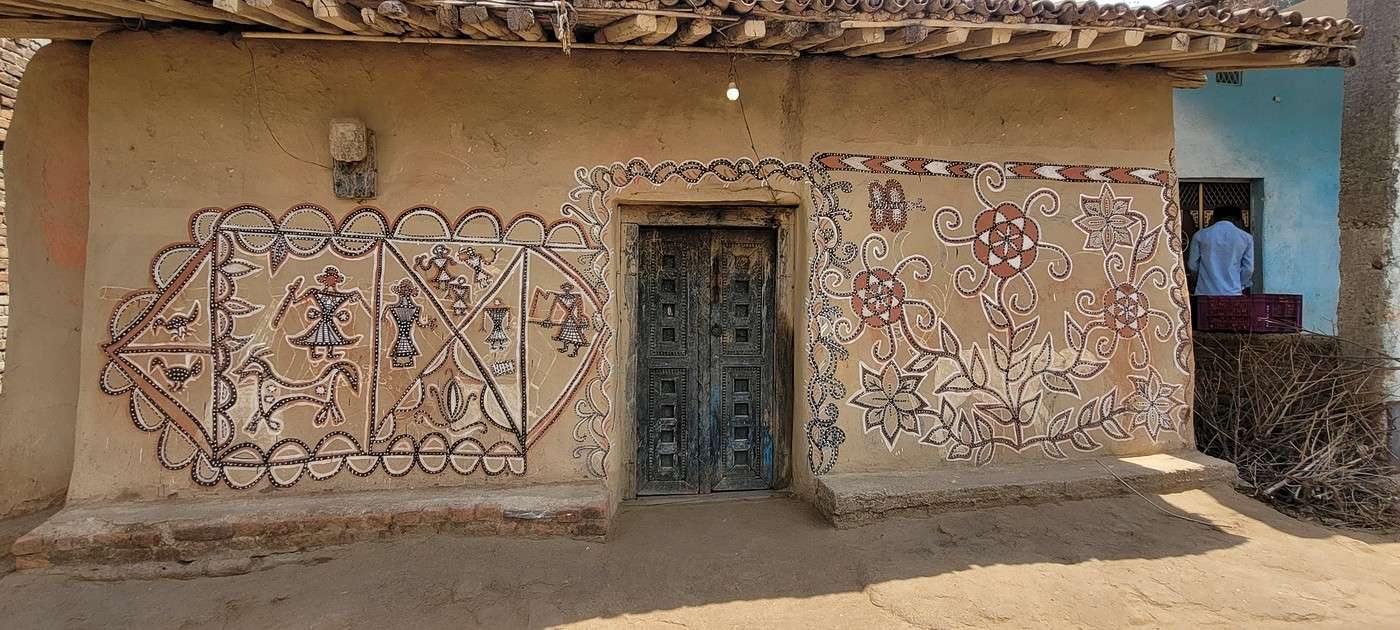
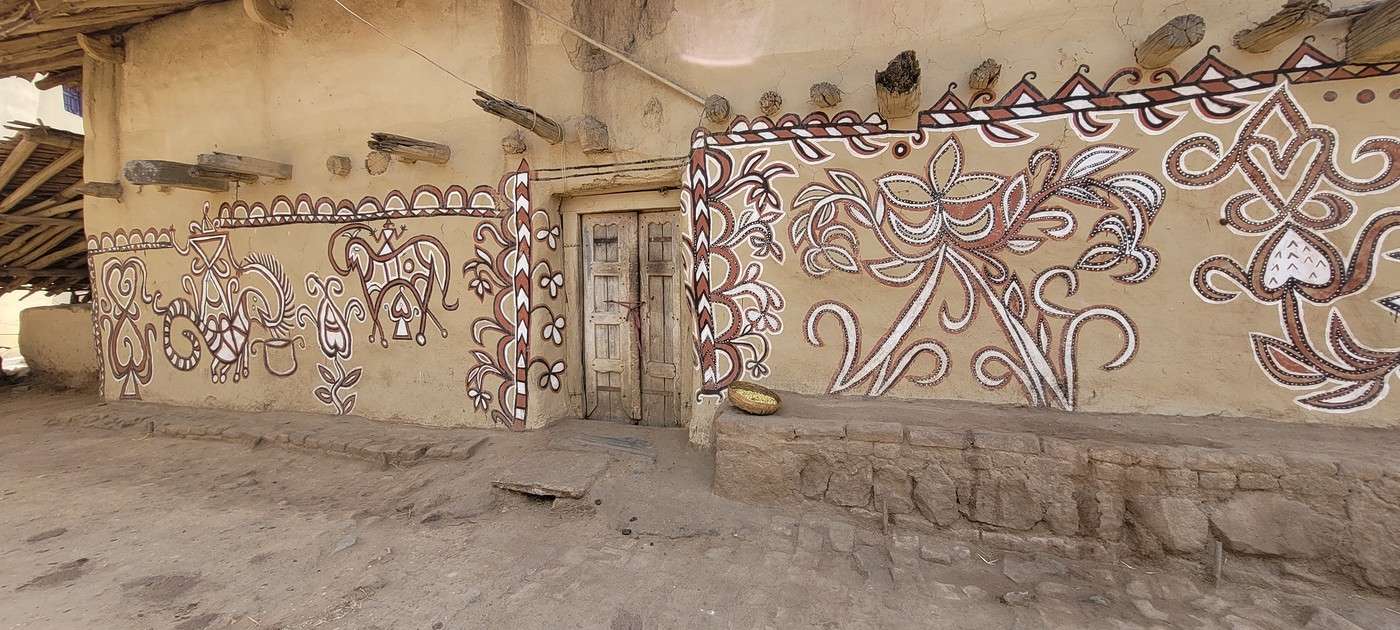
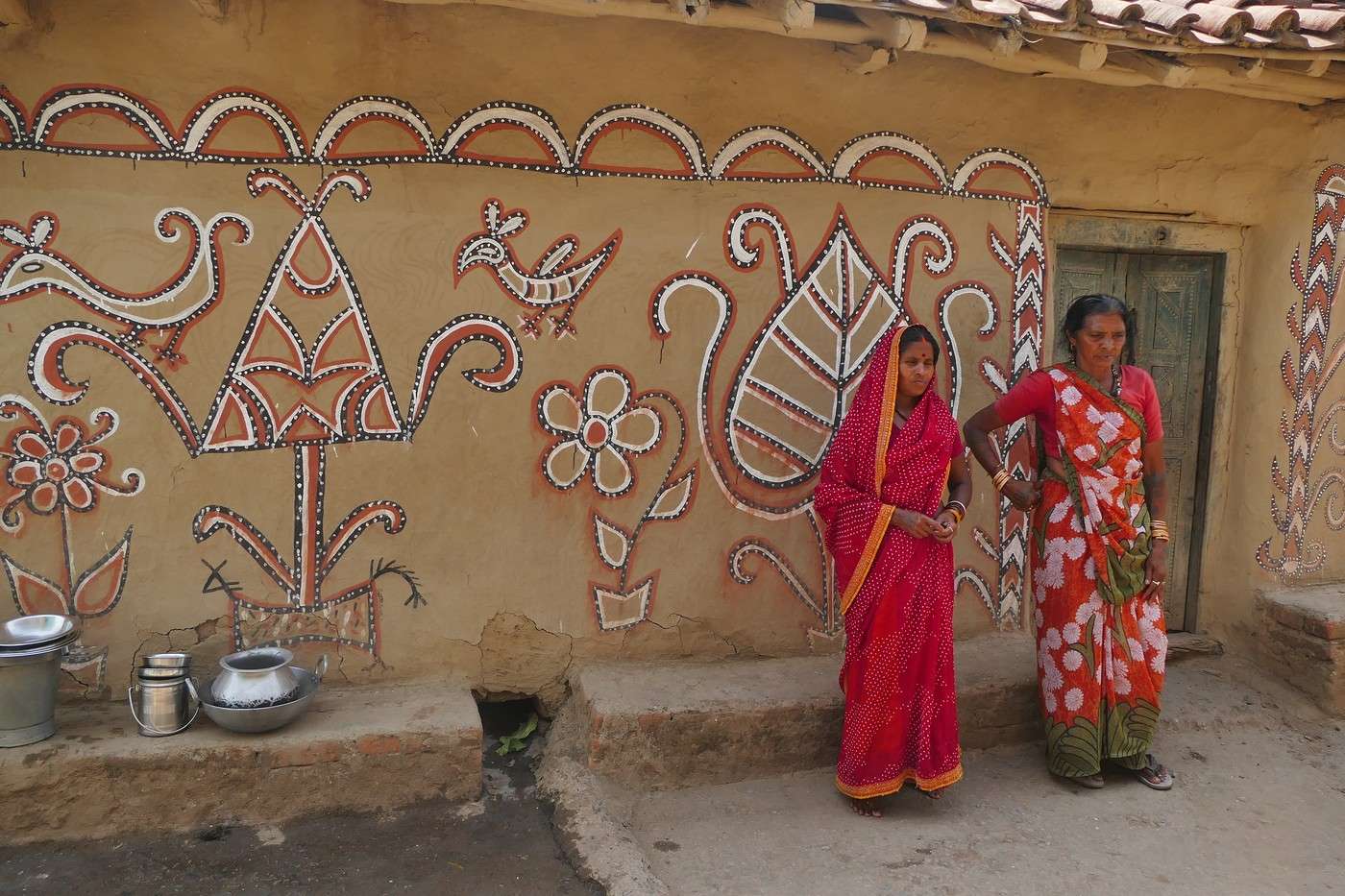
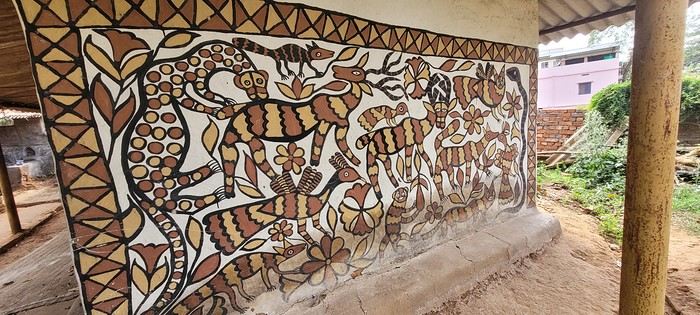
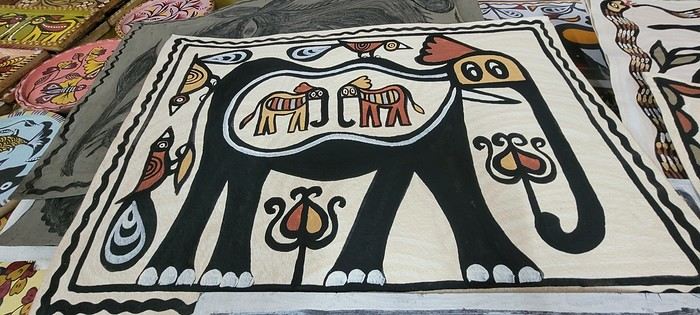
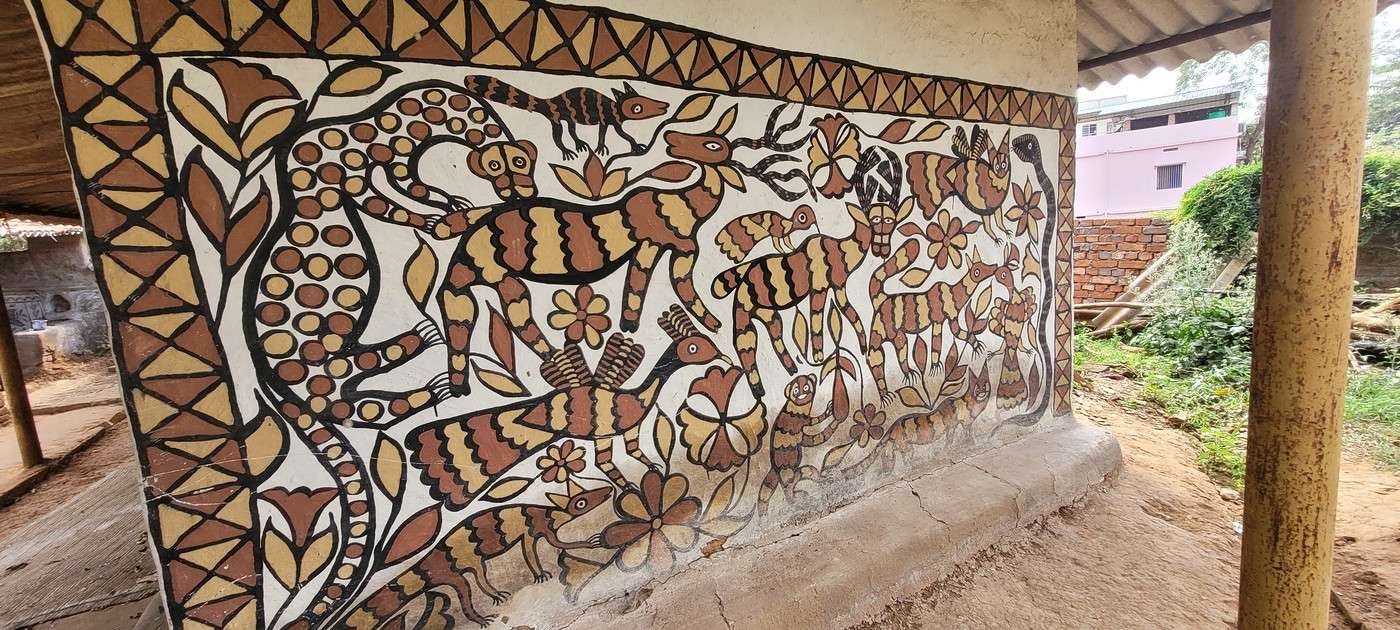
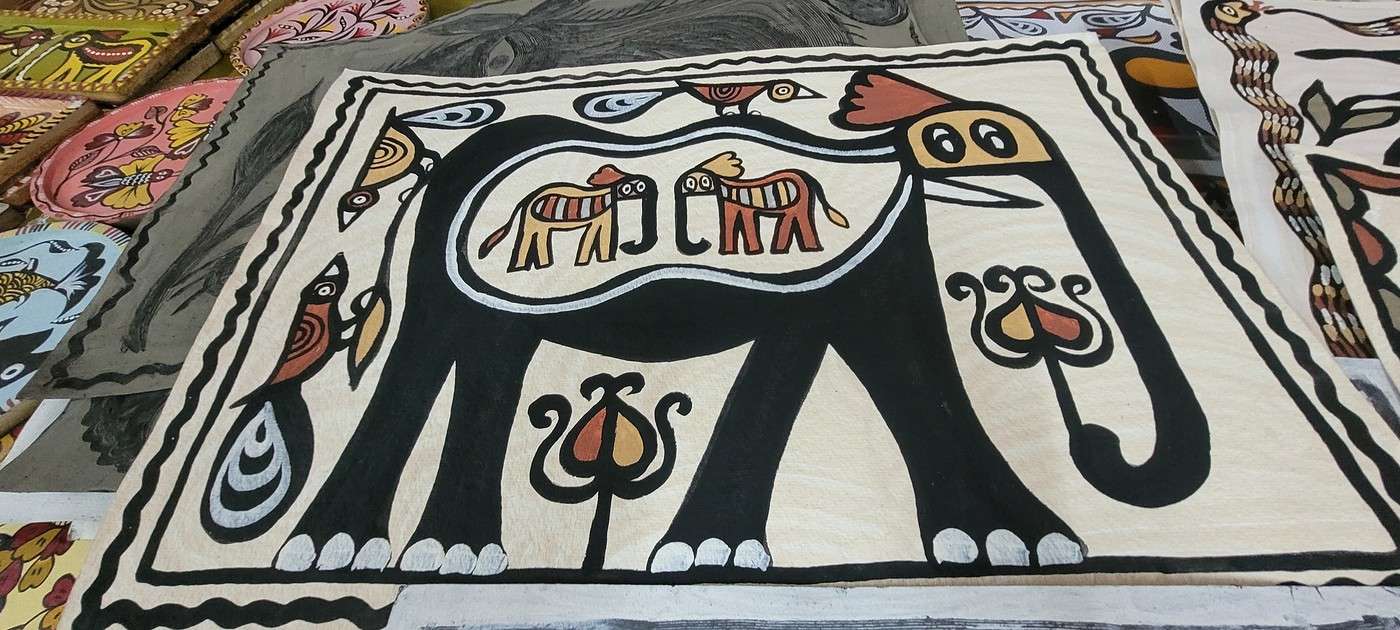
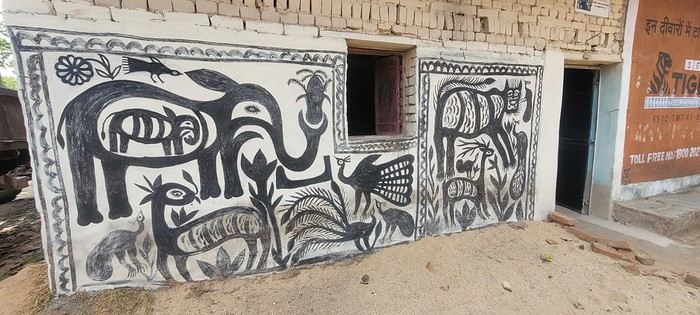
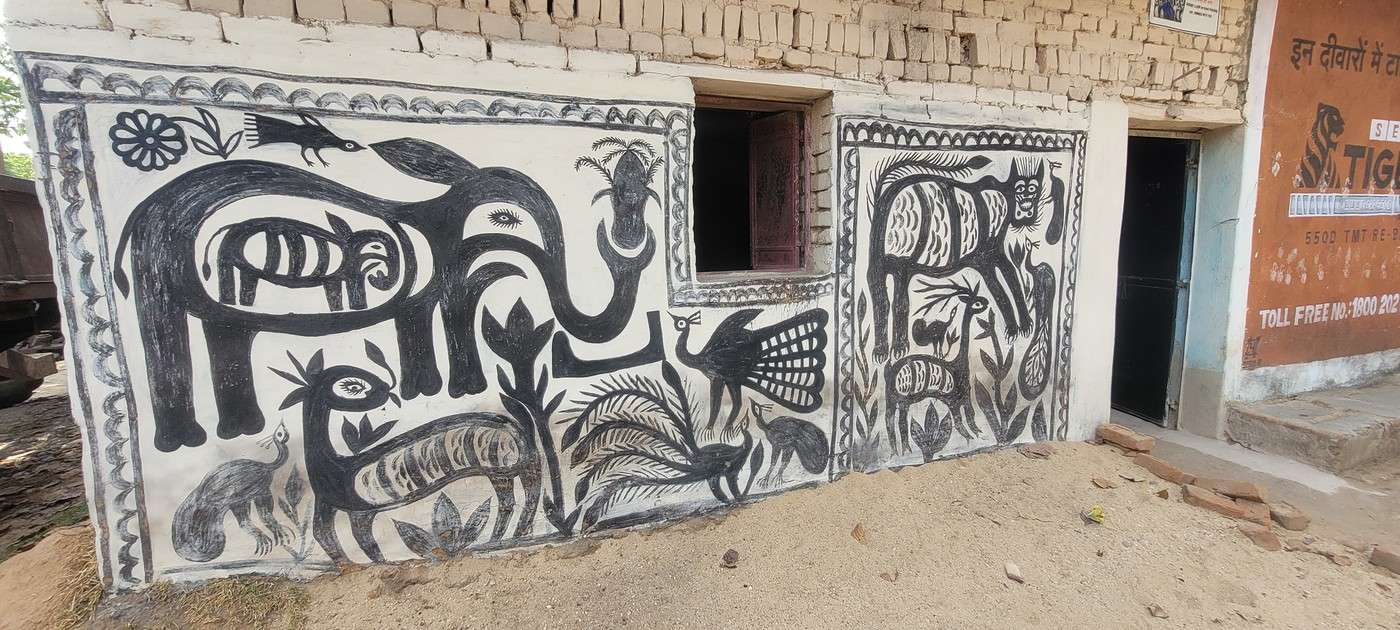
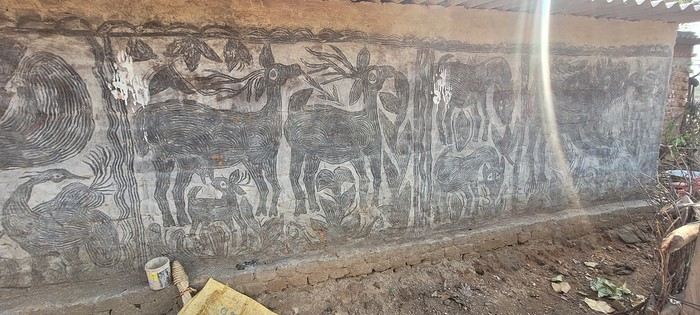
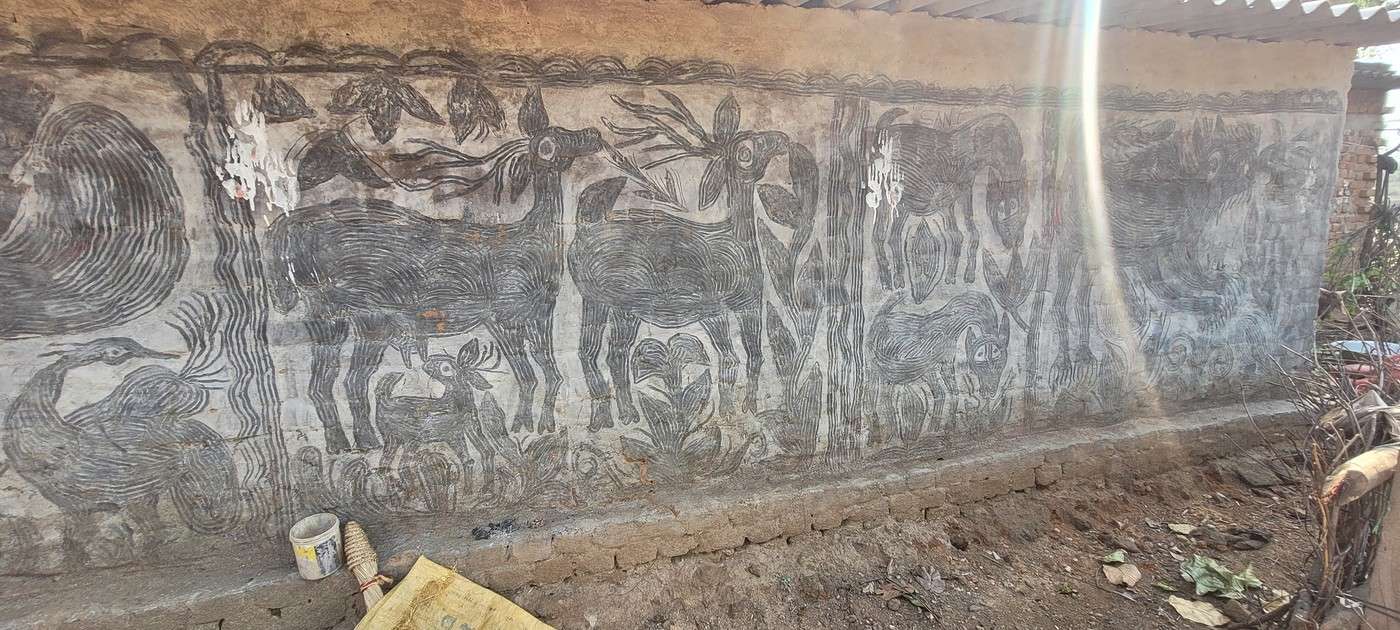
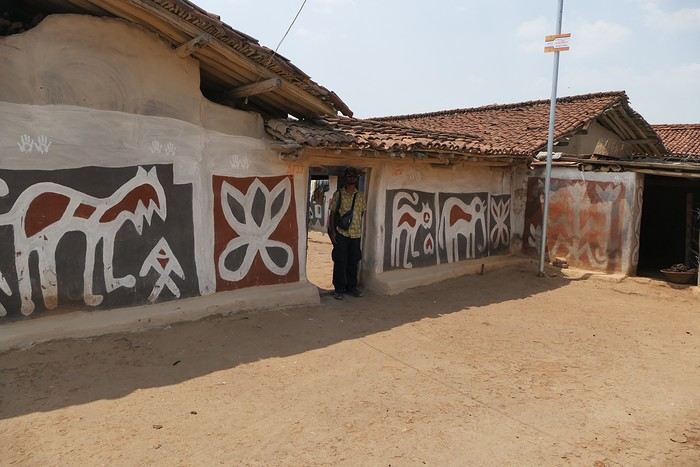
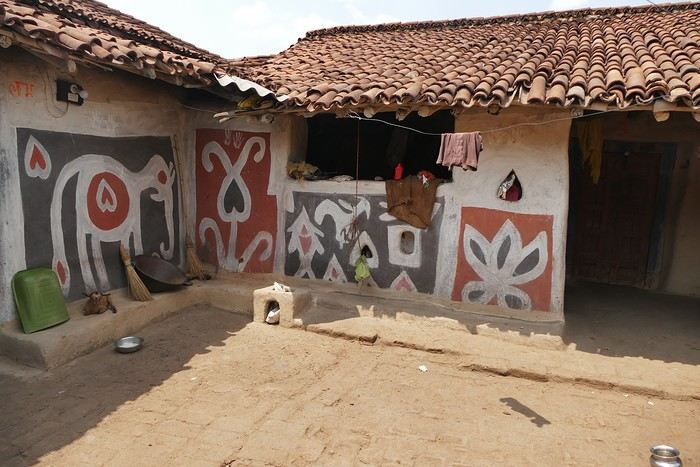
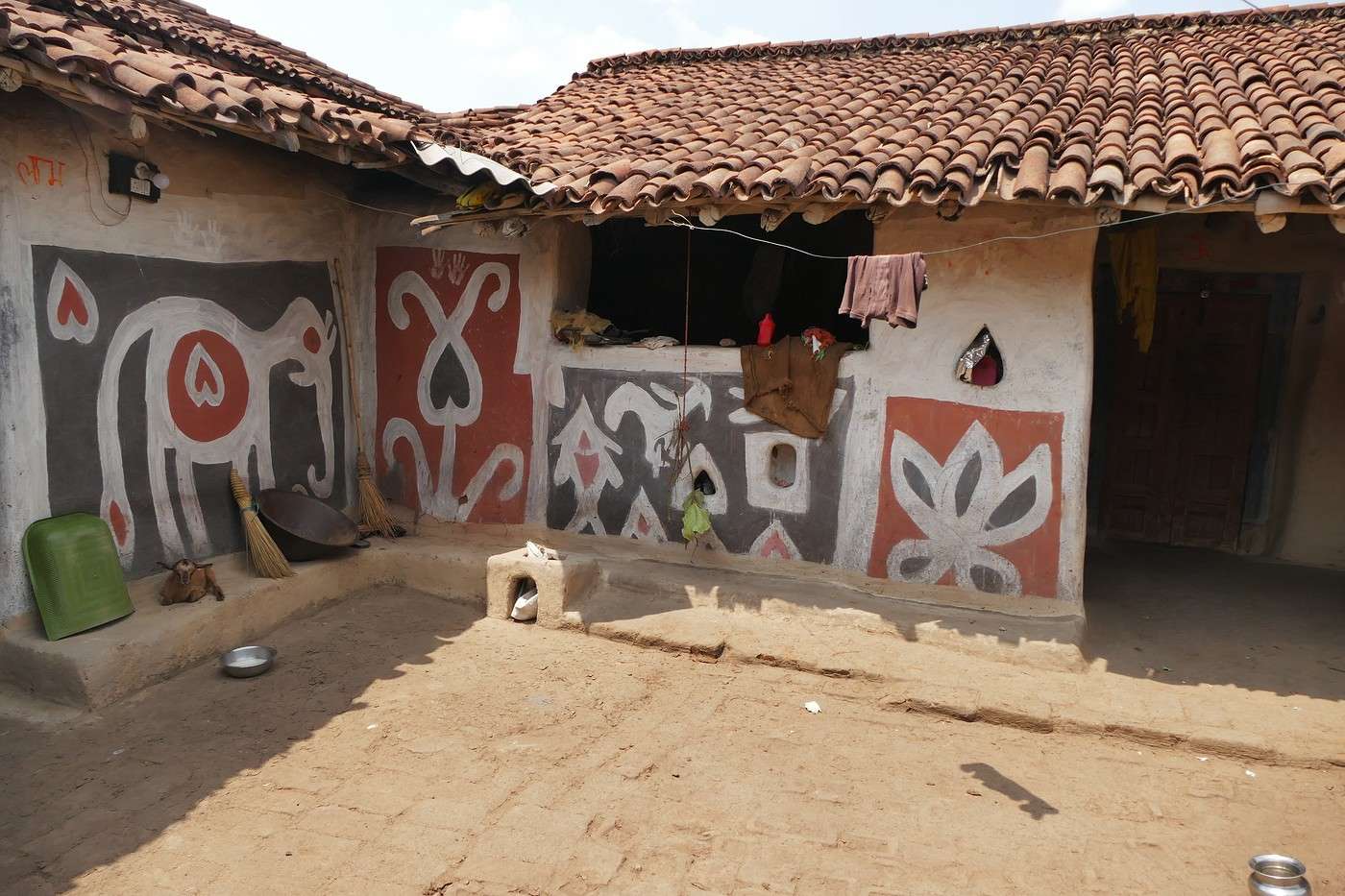
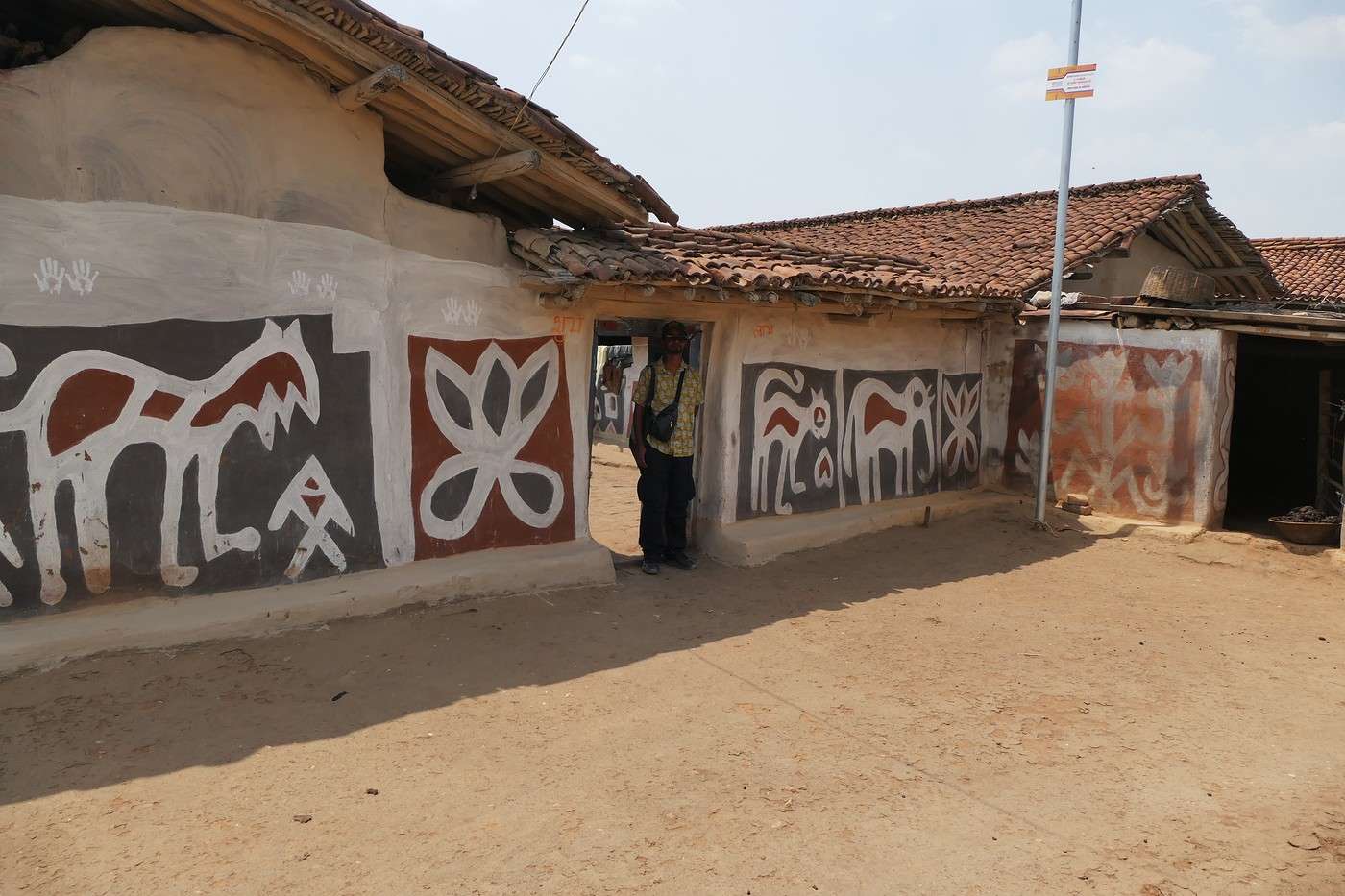
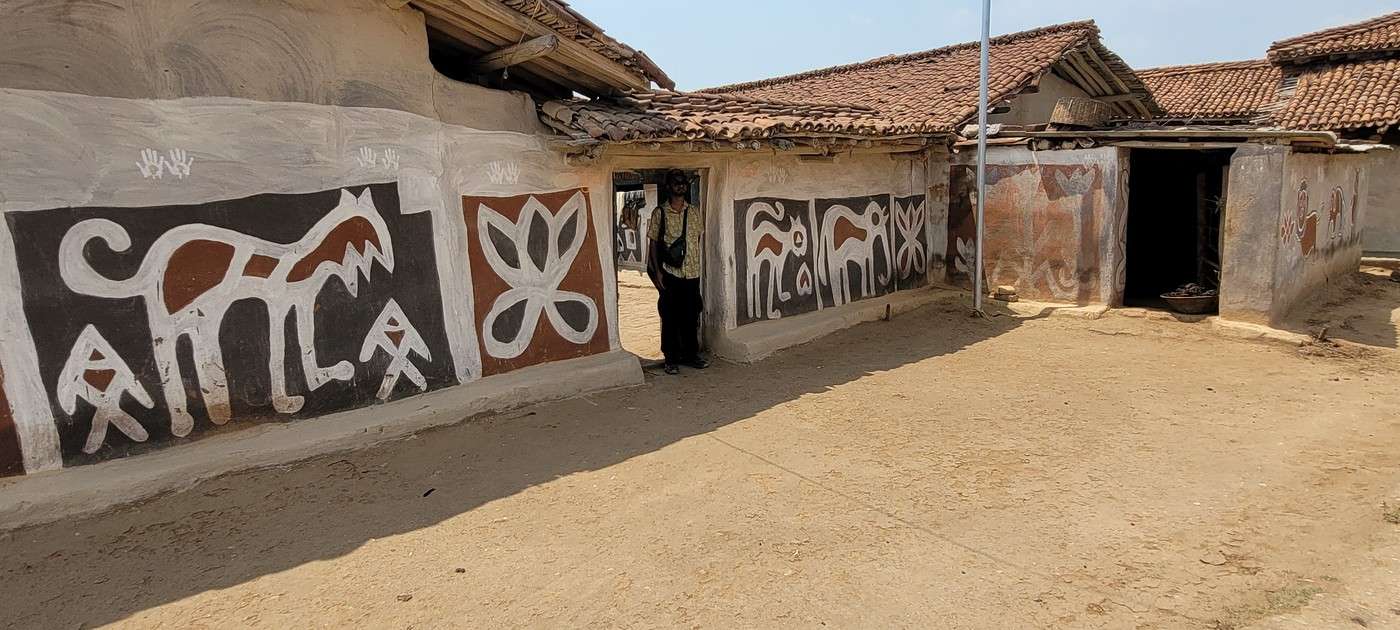
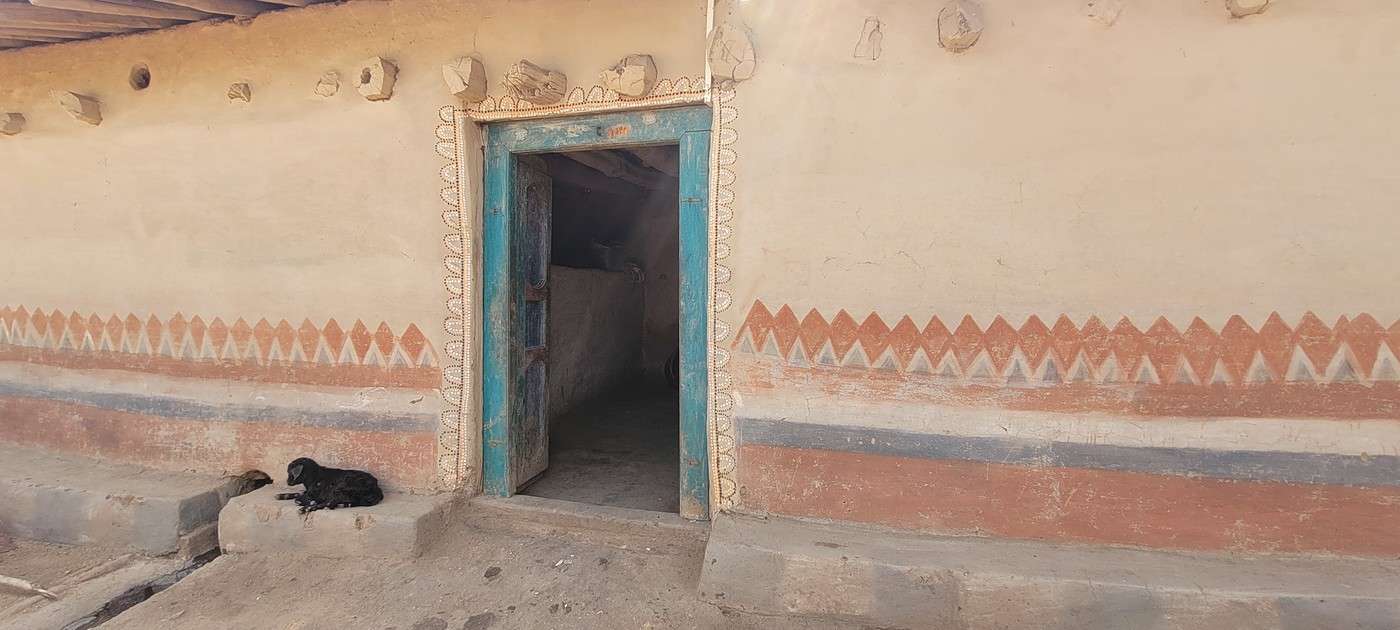
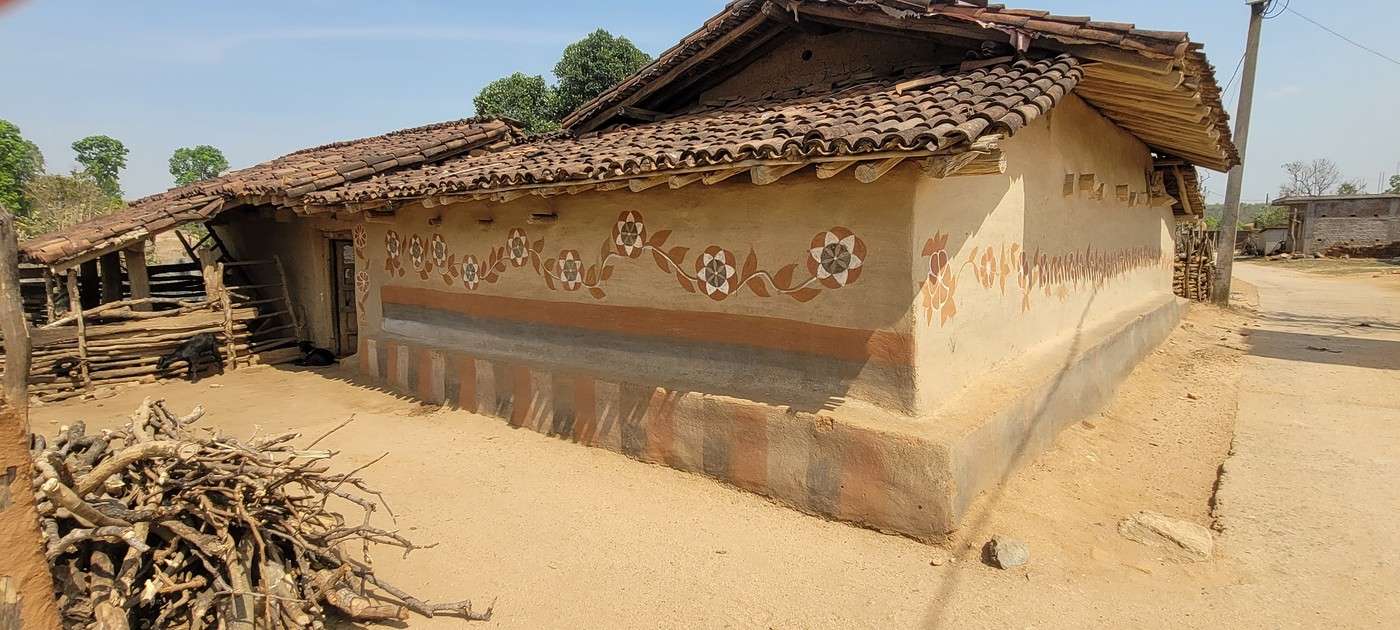
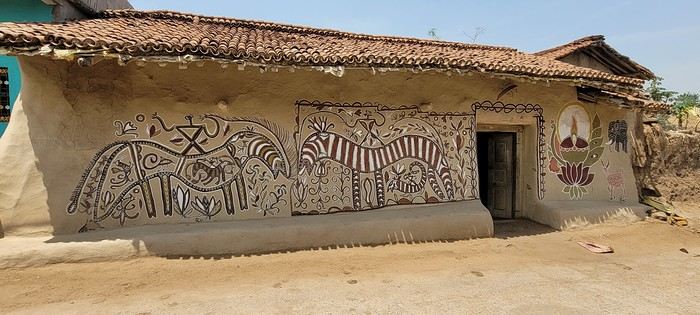
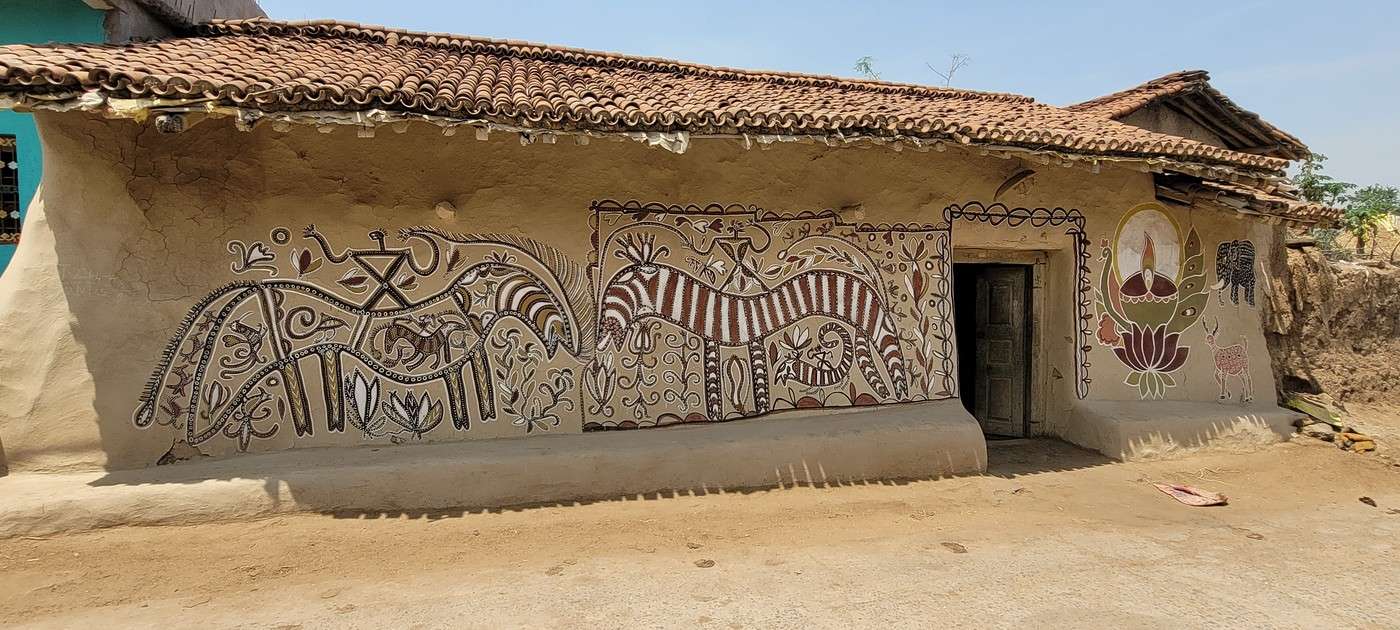
Sohrai art is tied to the harvest season, from October to mid-November. The motifs, in natural colors, celebrate fertility and abundance. The artists use pigments from the earth: red oxides, ochre, white kaolin, and black manganese. On the walls, you’ll see animals, fish, birds—all symbols of life and prosperity. As I look closer at the murals, I start to realize that each motif tells a story. Large animals like cows or bulls often take center stage. Their bodies are filled with intricate, almost hypnotic patterns. They symbolize wealth and prosperity for the household, as well as the deep respect for cattle, which are essential to daily life. On some facades, elephants stand out—massive and decorated with the same precision. They evoke quiet strength and protection. But it’s when I stop in front of one of the houses that I really take the time to look. The wall, a soft ochre, is entirely covered in murals. Two large animals stretch out on either side of the door, their elongated bodies fitting the length of the wall. Their silhouettes are filled with geometric patterns and incredibly fine curved lines, as if every space was patiently filled. Around them, stylized plants, flowers, and small decorative elements fill every gap. The door, dark and worn, becomes almost the silent center of the composition, framed by these living, protective forms. To the right, a more colorful motif catches the eye—a flower or a stylized lamp—like a touch of light on the earth. The whole thing gives an impression of perfect balance, between the rigor of the patterns and the freedom of the gesture.


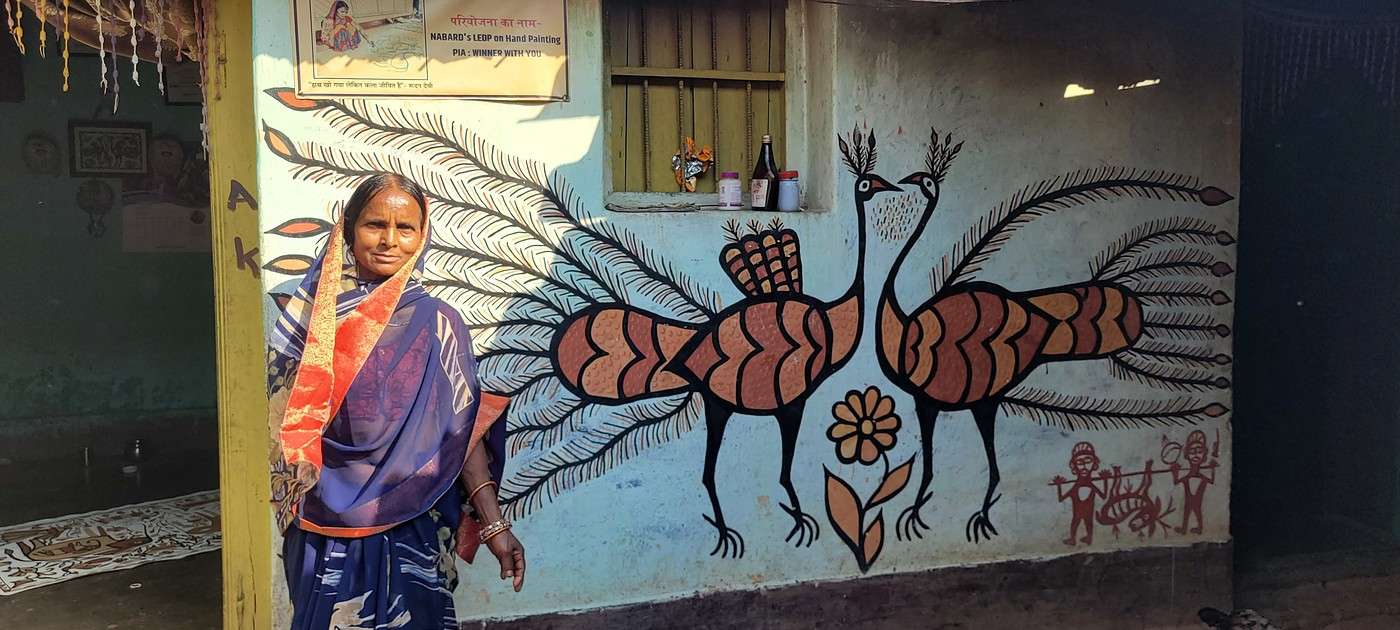
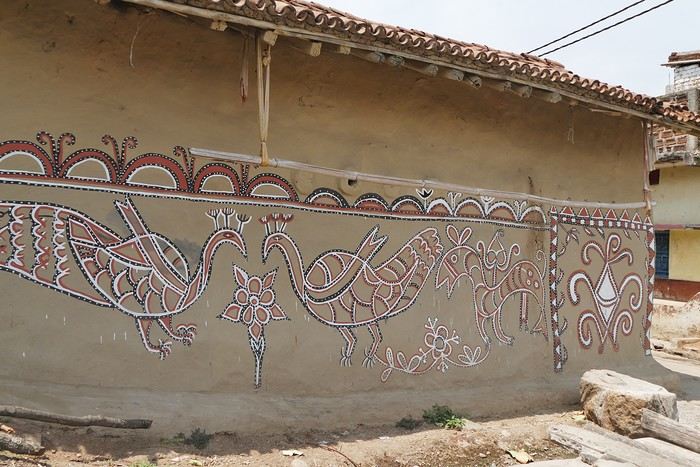
Elsewhere, birds and freer forms bring movement. Peacocks, recognizable by their stylized silhouettes, embody beauty and vitality, while fish symbolize water, fertility, and the continuity of life.
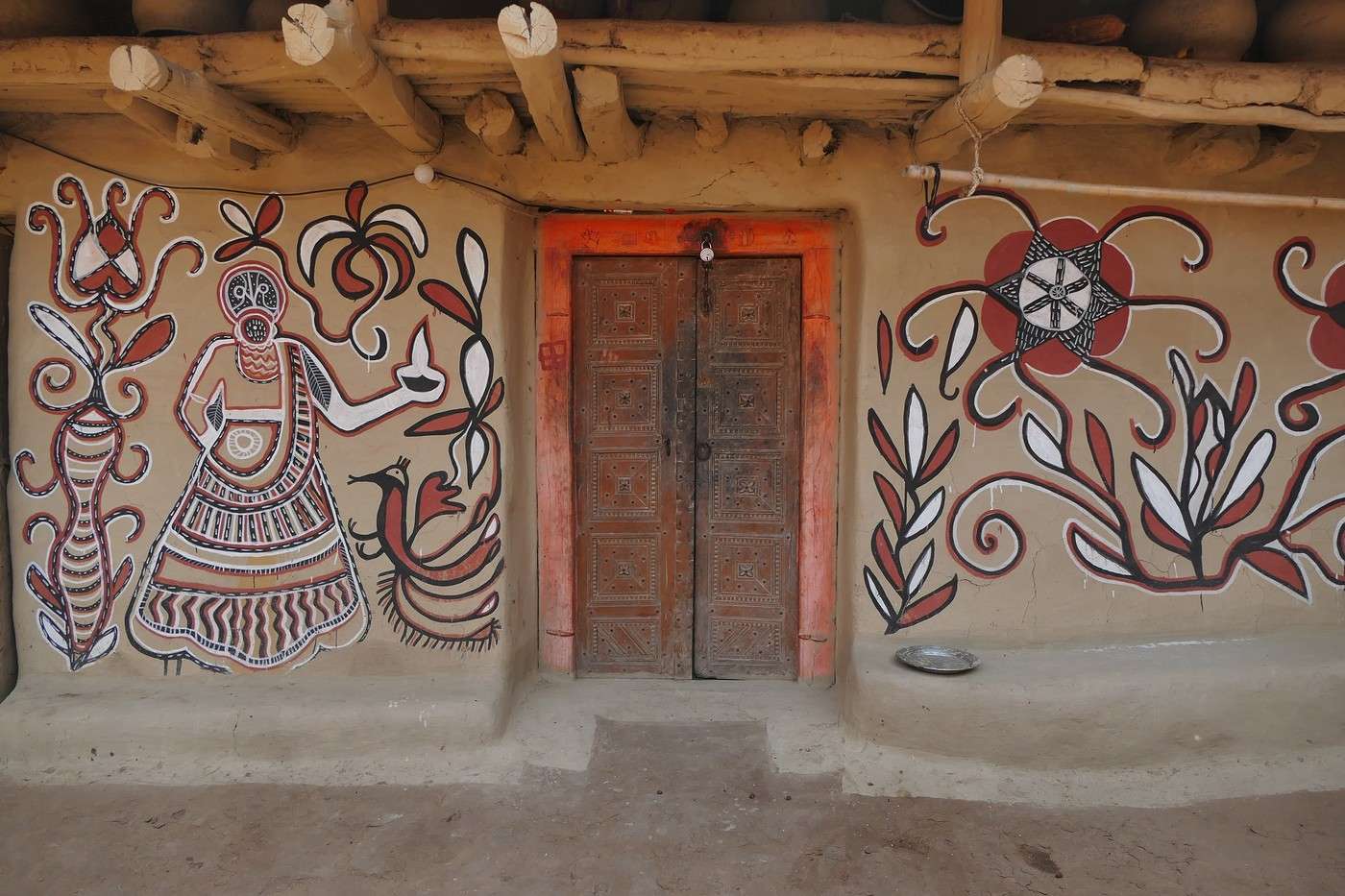
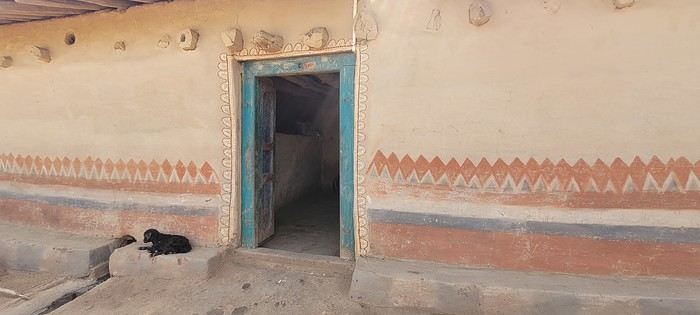
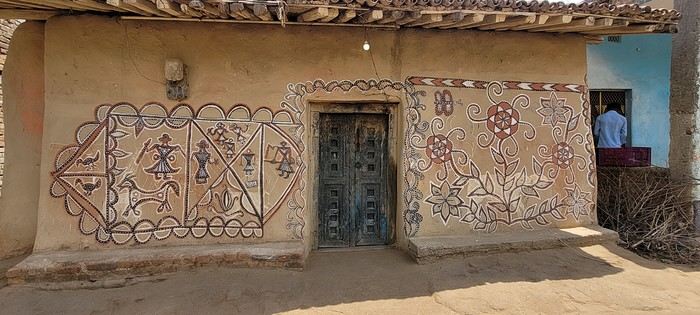
On some paintings, the scenes become almost narrative: you can make out figures, everyday gestures, like a memory of the village inscribed in the walls. The decorative frames around the doors aren’t left to chance either—they symbolically protect the house, like a boundary between the inside and the outside world.
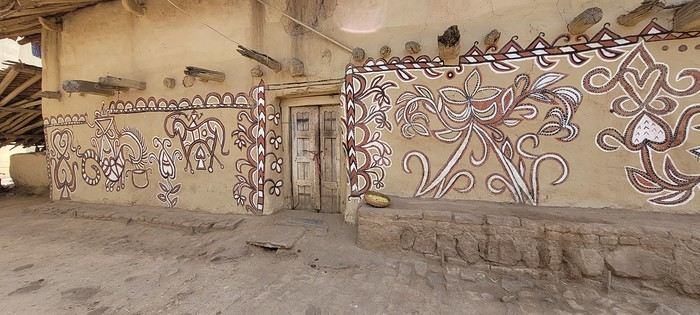
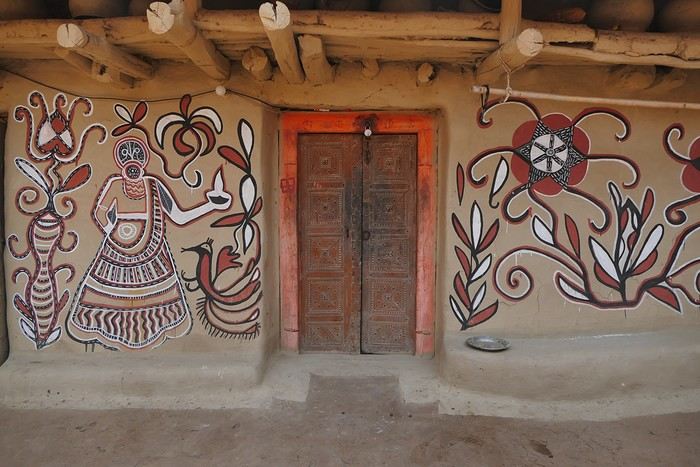


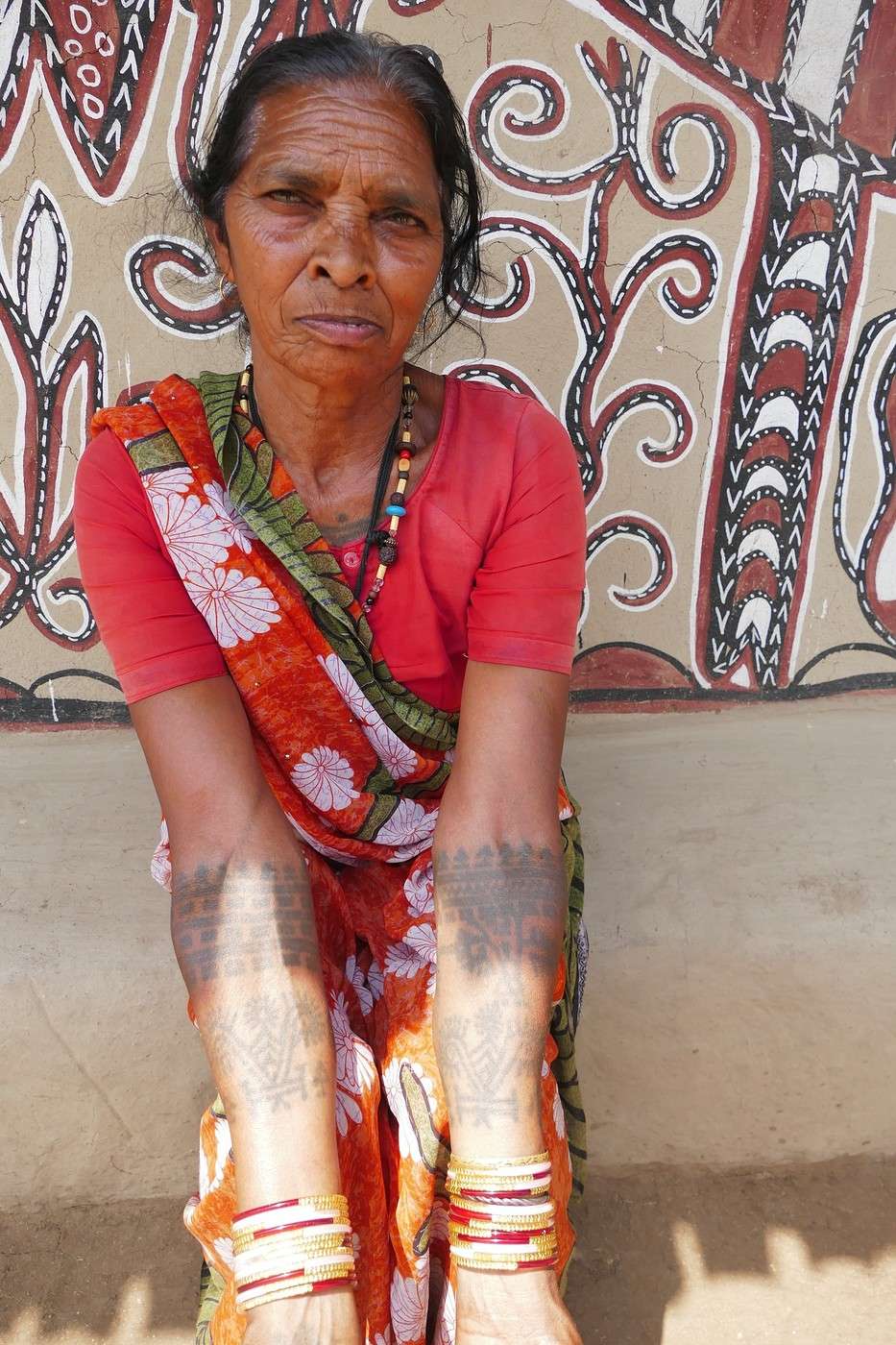
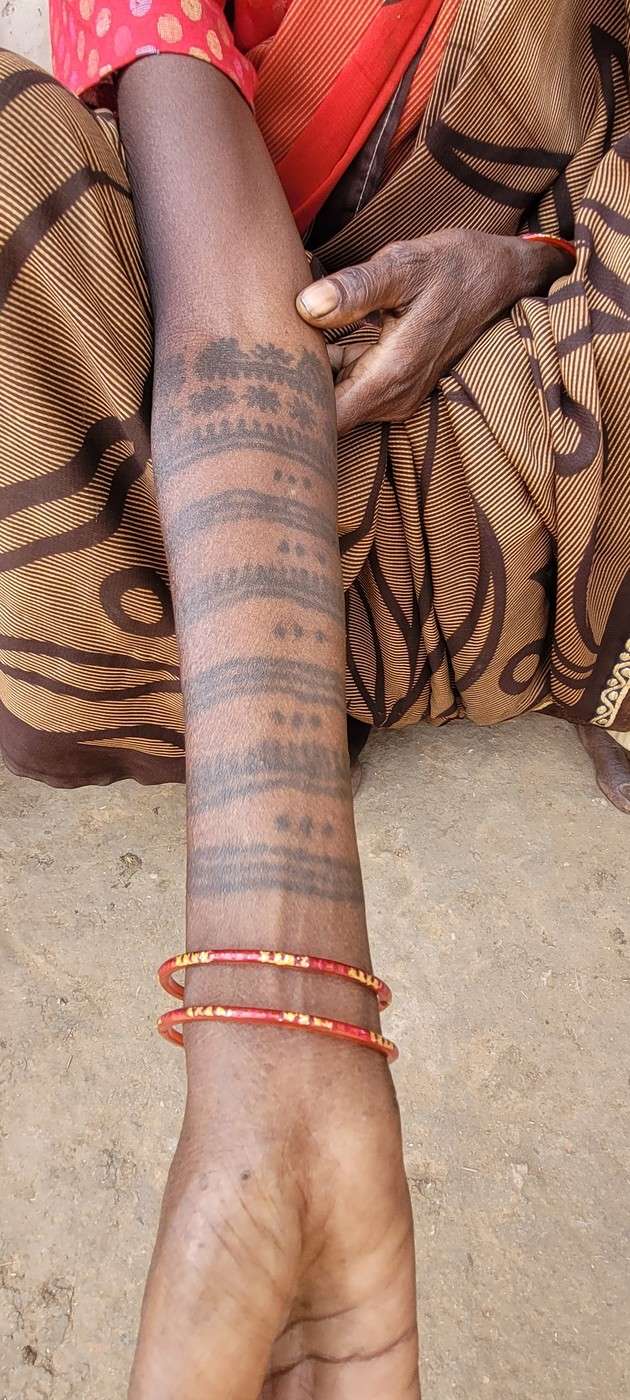
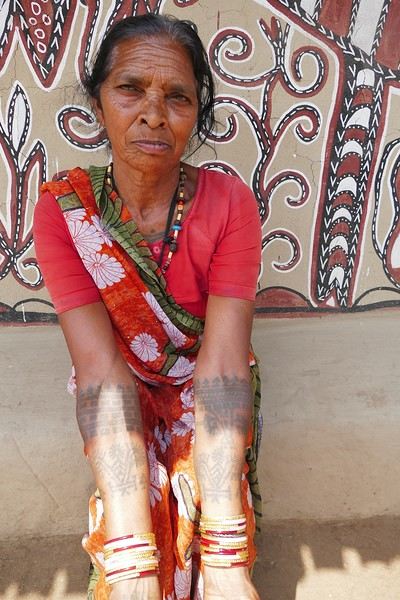
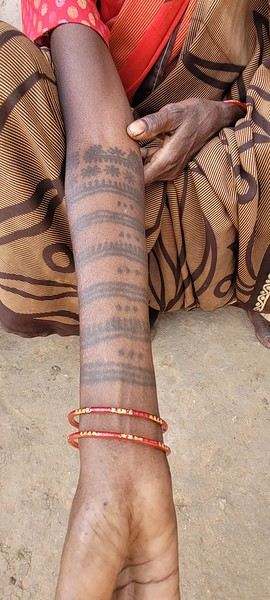
During the Sohrai festival, cattle are led into the jungle in the morning. Meanwhile, the women finish the *aripans*—these floor paintings—and continue the wall murals. Around noon, the animals return to the village, and the bulls’ horns are anointed with oil and vermilion in a gesture of gratitude, amid the vibrant colors adorning the houses. We visit several artists, including Parvat Devi, a well-known woman who has received many awards. Her arms are adorned with intriguing tattoos, which I’ll talk about in more detail later.


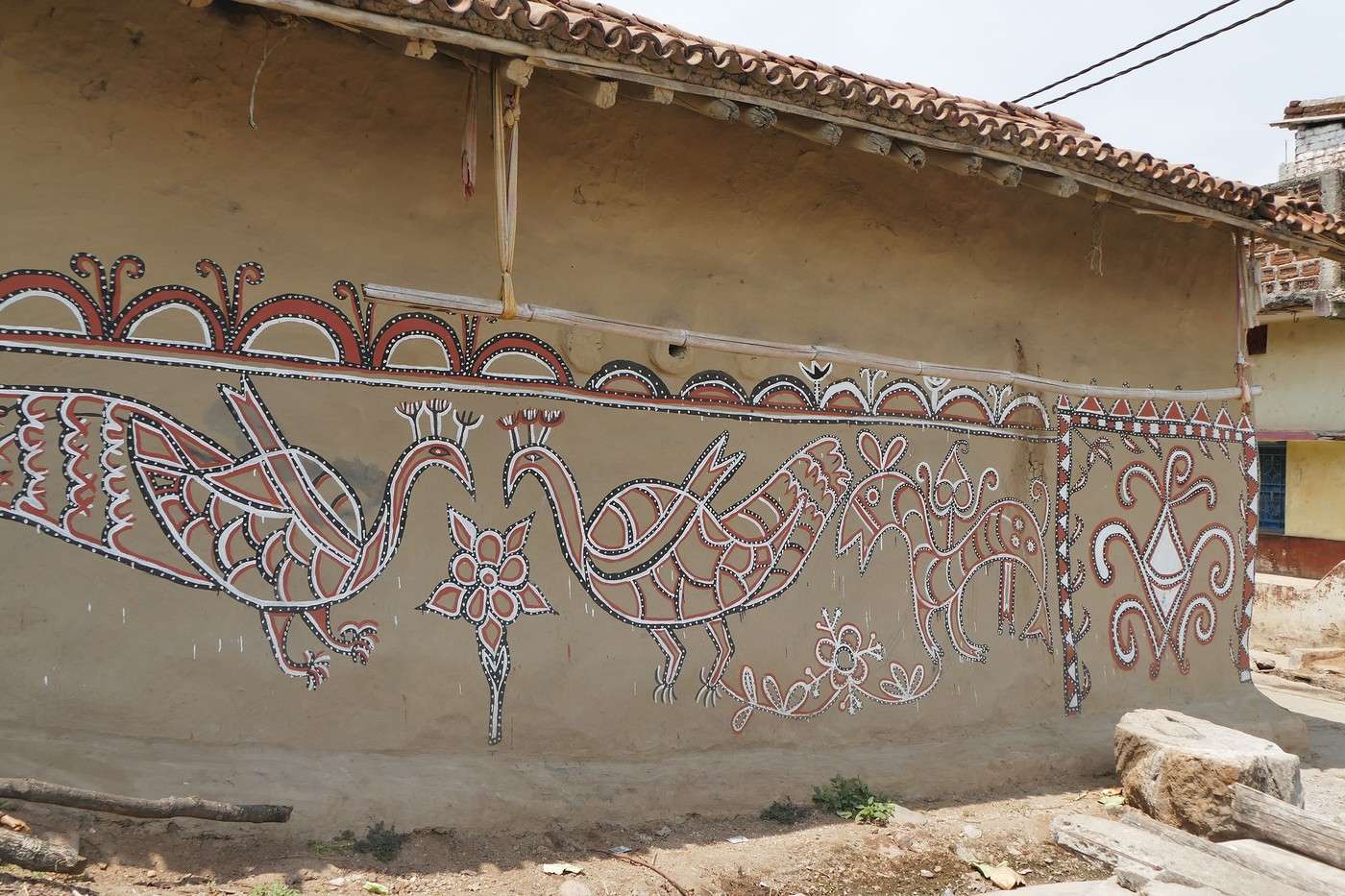
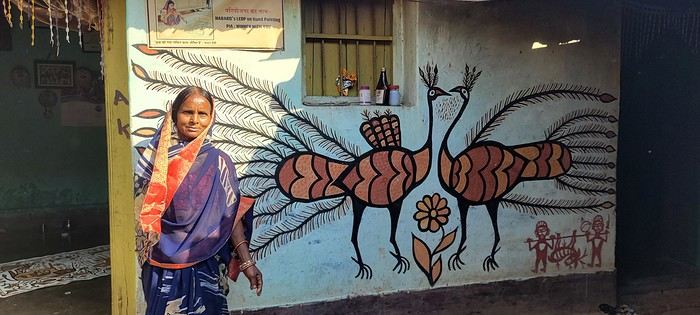
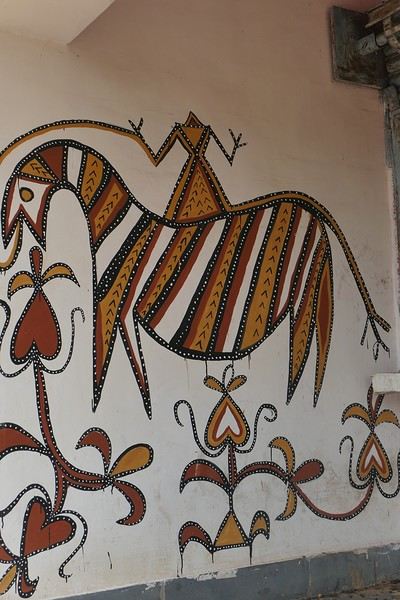
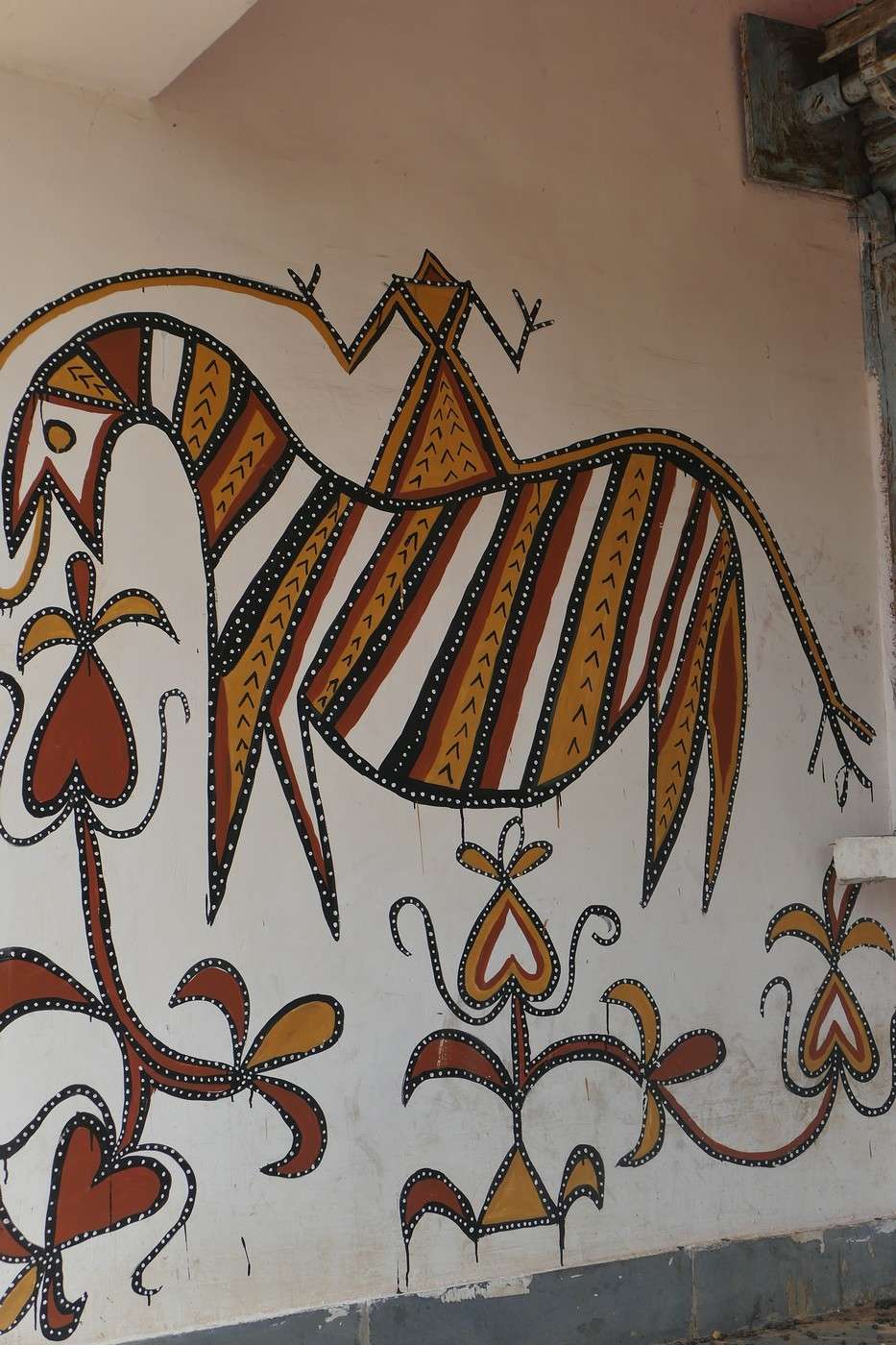
On another wall, the style changes completely. Here, no massive animals—just birds occupying the space, light and graceful, as if caught in mid-movement. Two silhouettes face each other, their long necks arched almost like mirrors, while their outstretched wings seem to vibrate with the patterns that compose them.
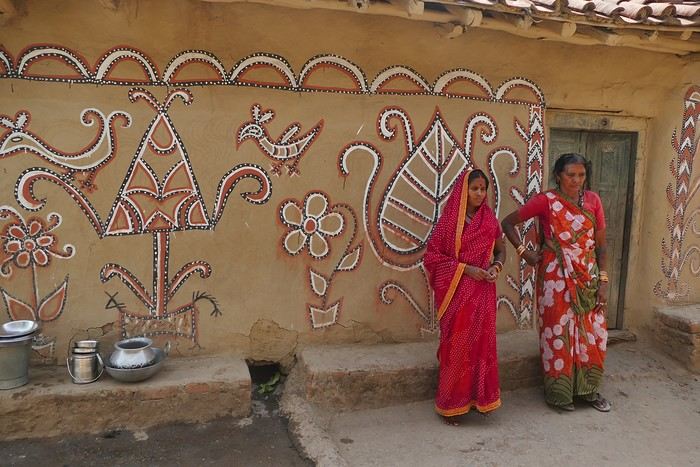


The design is more graphic, almost airy. The lines are smoother, more fluid, as if drawn in one confident stroke. The birds’ bodies aren’t solid—they’re filled with repetitive motifs like scales, stylized feathers, and spirals, giving a sense of continuous movement. Around them, everything comes to life: flowers burst open, arabesques swirl, and even the simplest shapes seem alive. What strikes me here is the sense of lightness. Where the large animals evoked stability and grounding, these birds bring something freer, almost joyful. They seem to embody movement, the circulation of life, like a breath flowing through the village.
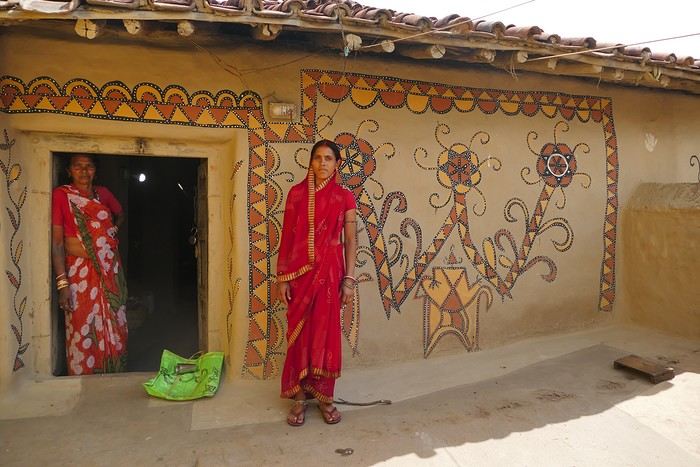


The colors remain the same—deep reds, intense blacks, and chalky white—but the rhythm is different. Faster, more spontaneous. As if each wall had its own personality, while still speaking the same language.

That’s probably why I’m so moved. I’d heard about these paintings from my friend Raja, and last year, I saw an exhibition in a village near my home. That first encounter made me want to come here. But seeing them in person is a whole different experience. These paintings are unique. This ancient art is passed down from mother to daughter, or mother-in-law to daughter-in-law, in a quiet, deeply living continuity. At first glance, it might seem almost childlike in its simplicity and pared-down forms. And yet, everything is thought out, balanced, mastered. Nothing is left to chance.
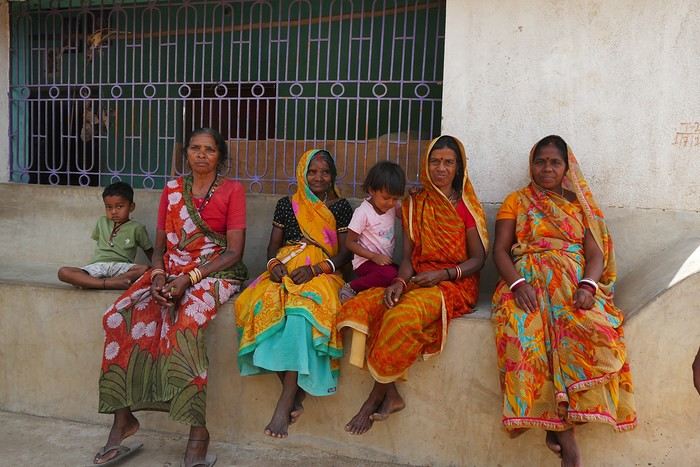


That apparent simplicity, combined with such rich symbolism, touches me deeply. There’s something sincere and essential in these walls—and that’s what moves me.
Villages around Hazaribagh in West Bengal

Aleph240758 · 2026-07-28

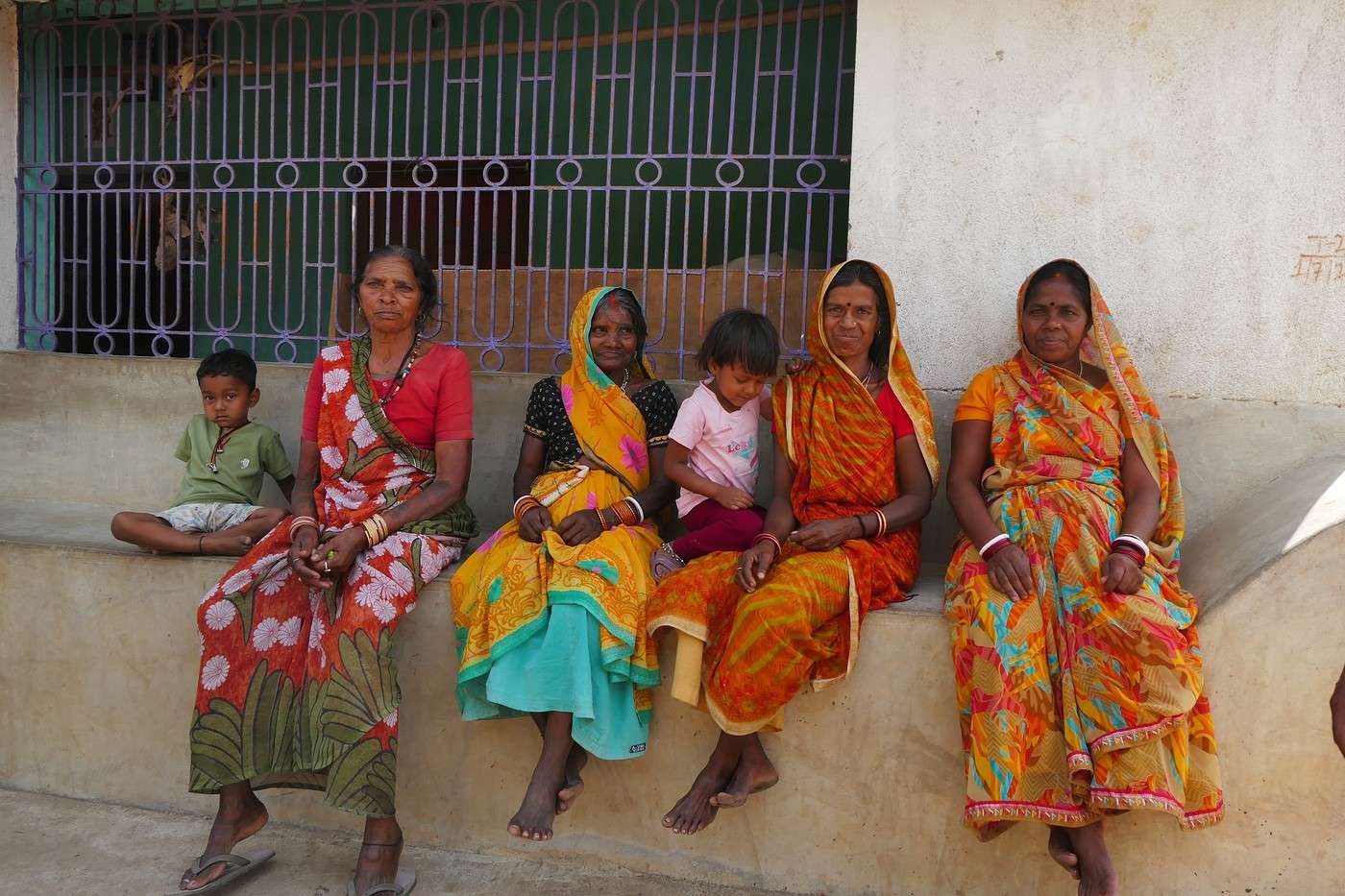
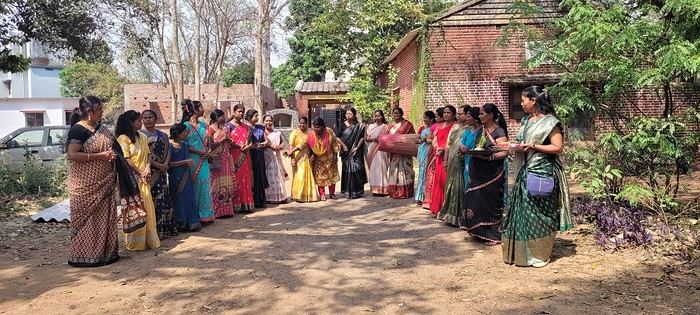
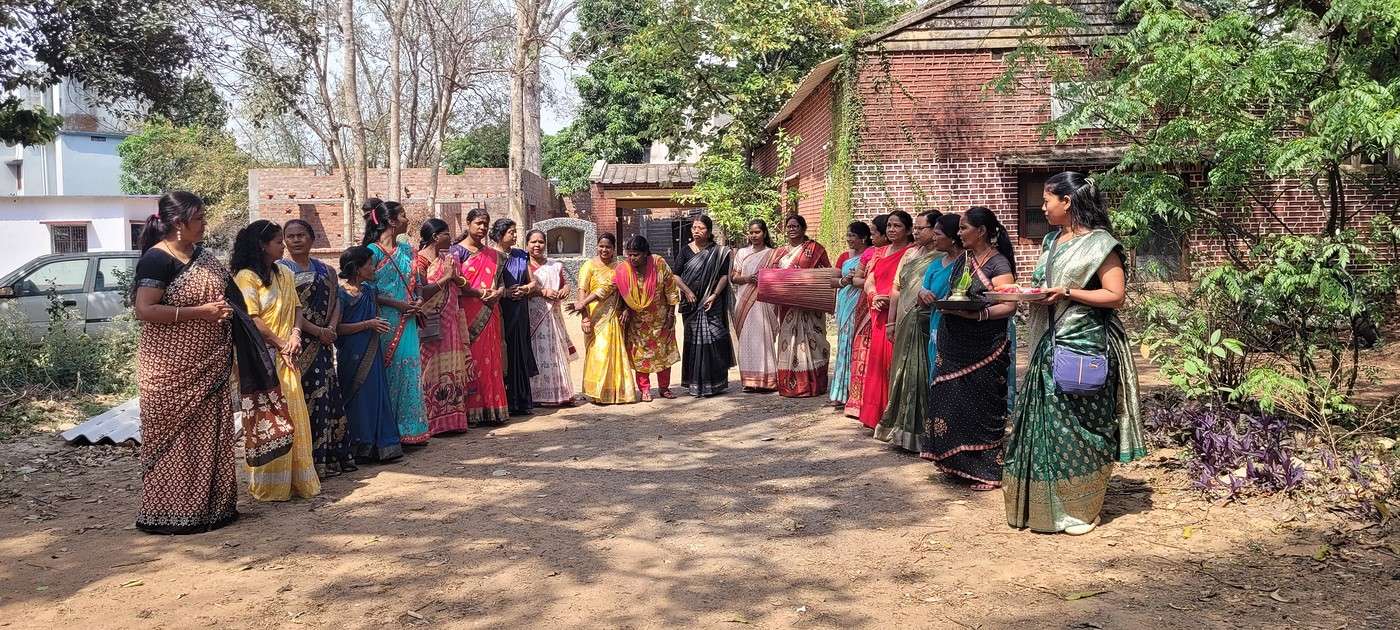
We're returning to Hazaribagh, and Adam takes us to his home. No sooner have we arrived than we're greeted by about twenty women who, with warm smiles, immediately start dancing to welcome us.


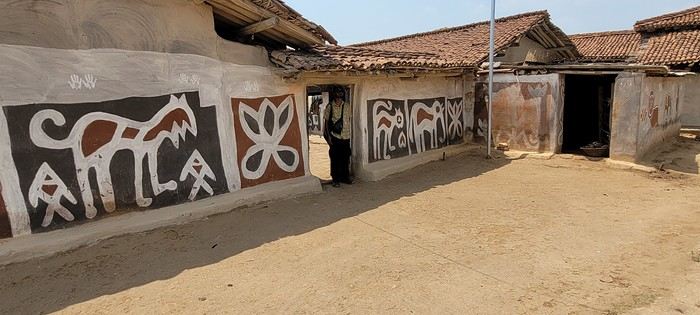
Even before entering, my eyes are drawn to the outer buildings of the house. Their walls are entirely covered in Sohrai paintings. On the facades, stylized animals—buffaloes, birds, felines—stand alongside human silhouettes and plant motifs. The shapes are both simple and powerful, the natural colors—ochres, blacks, and whites—giving the whole a striking harmony. These paintings seem to tell the story of life, nature, and beliefs in an ancestral language.


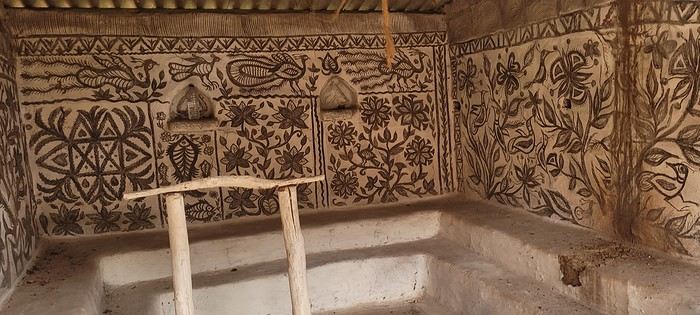
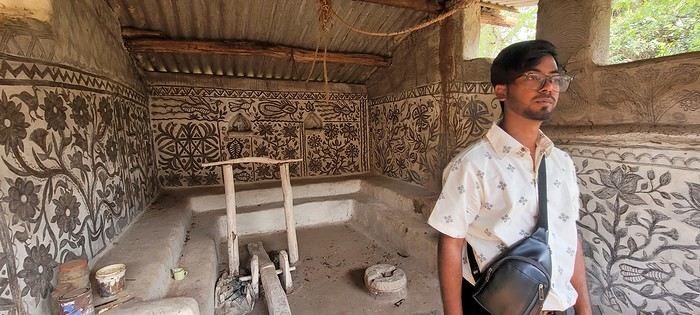
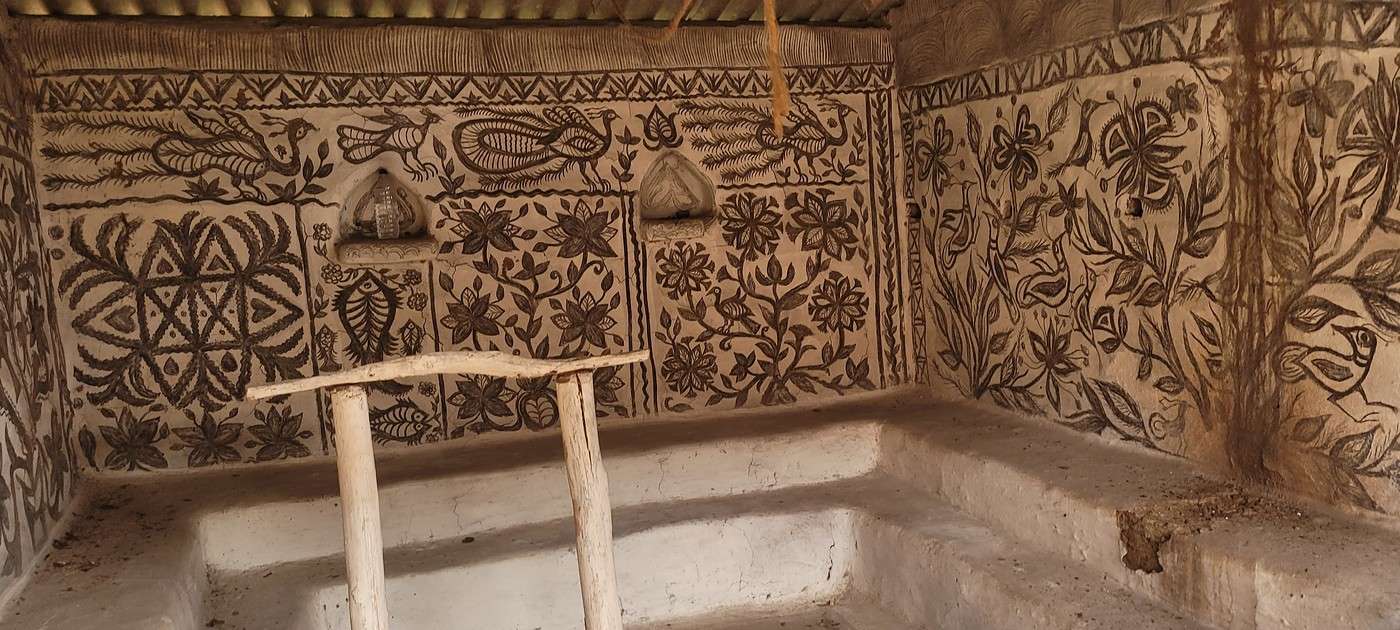
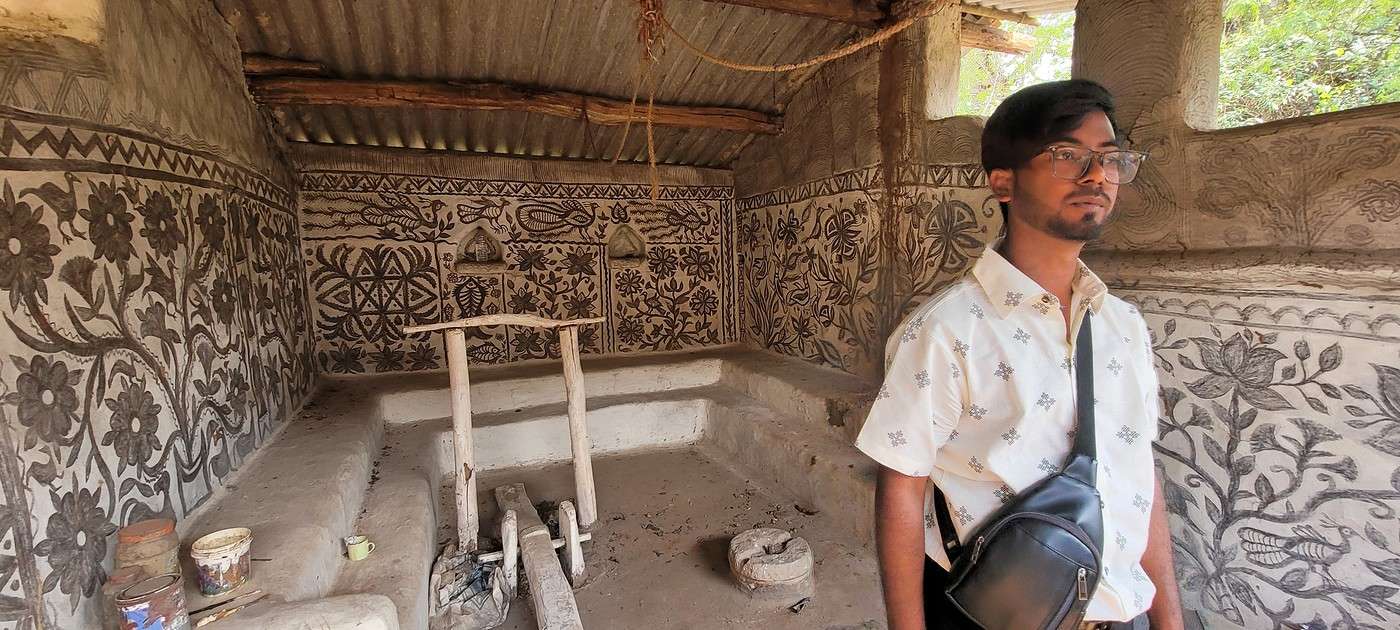
In another open room, the walls are also decorated, but with more geometric and floral patterns. The space, with its earthen benches and central hearth, exudes an atmosphere that’s both understated and deeply artistic. Even everyday places here become canvases for expression.


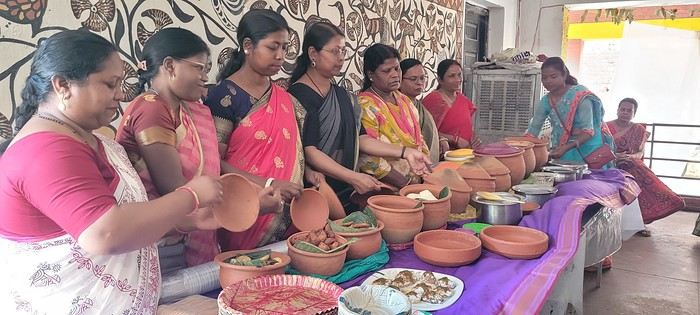
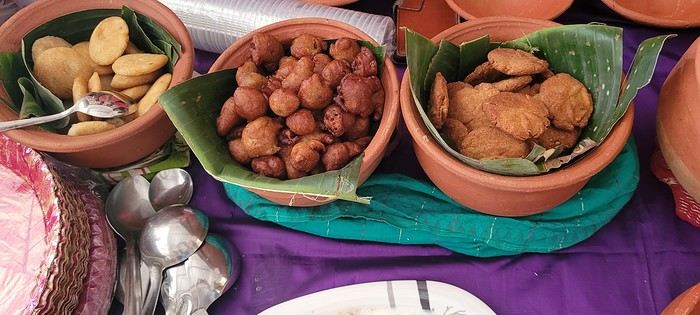
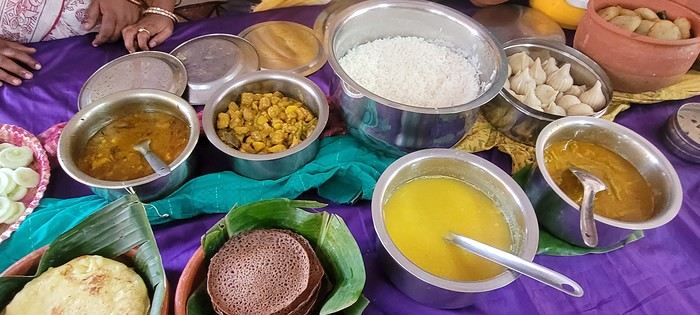
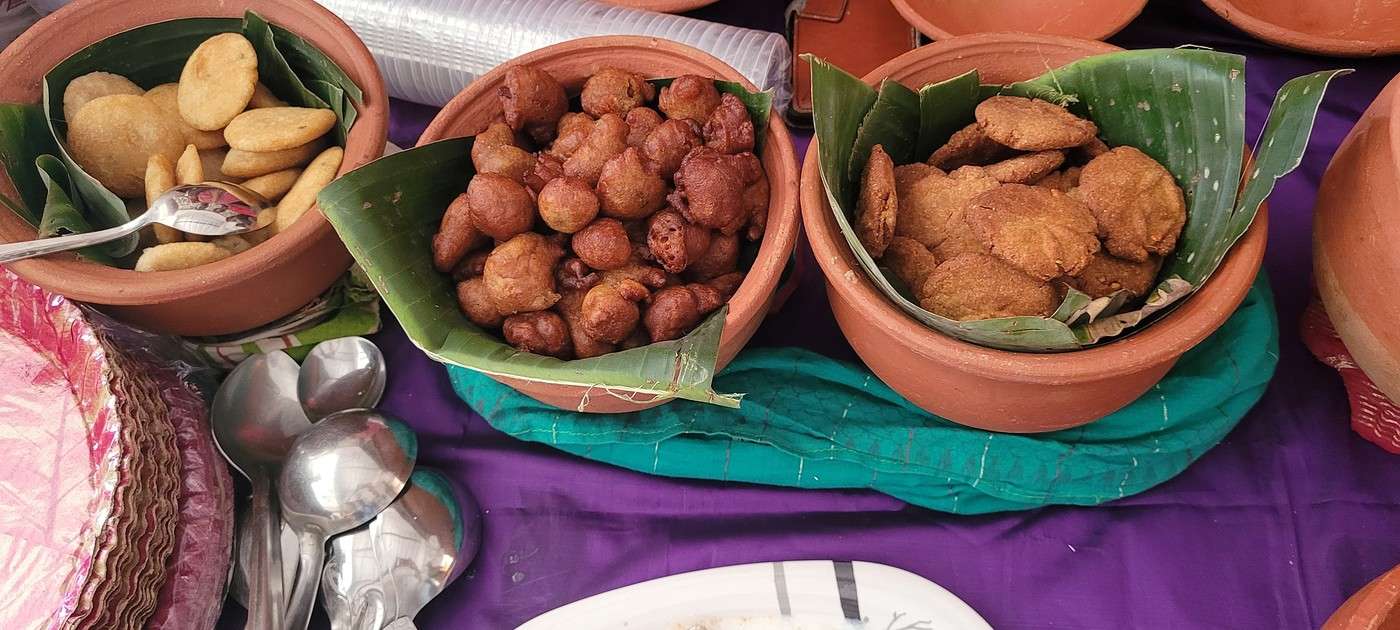
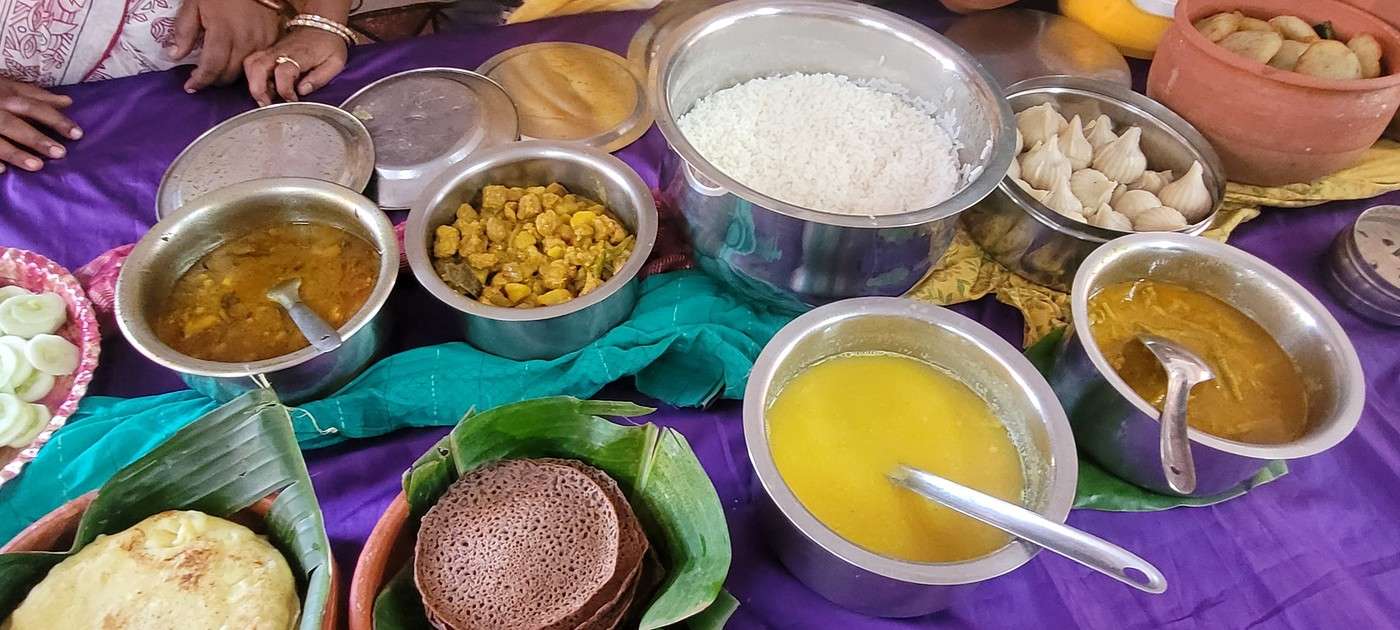
They spent the whole morning preparing a real feast of Jharkhand specialties. A large buffet is set up with a multitude of dishes in different colors and flavors. We’re invited to taste everything, and each discovery is a delightful surprise.


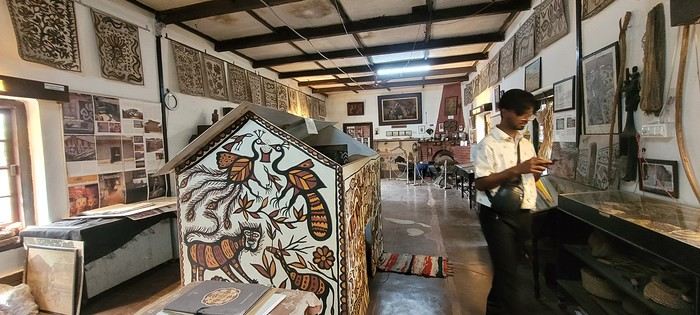
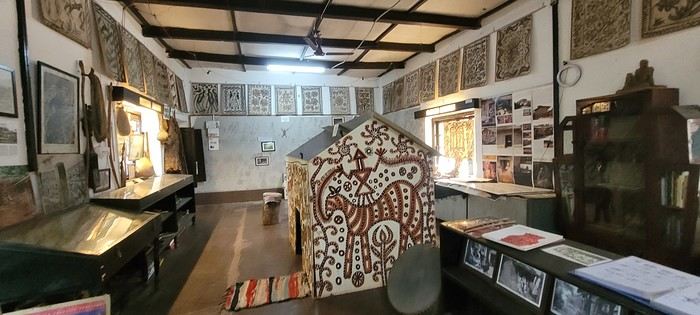
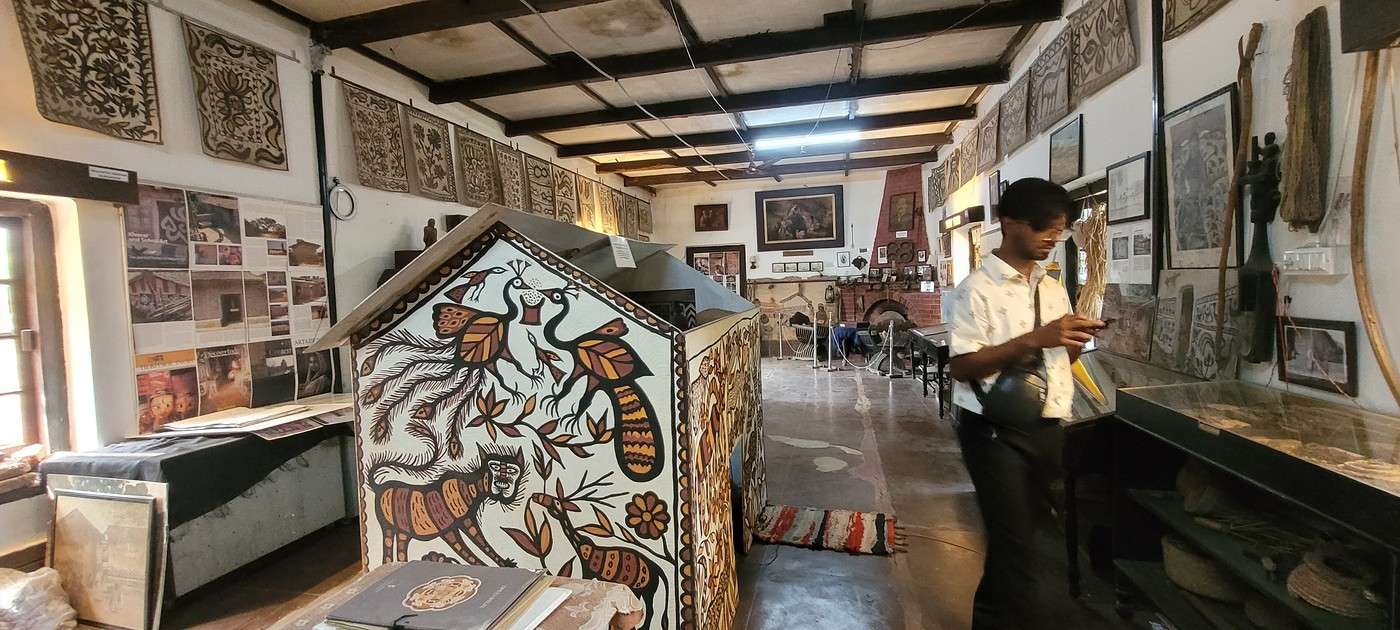
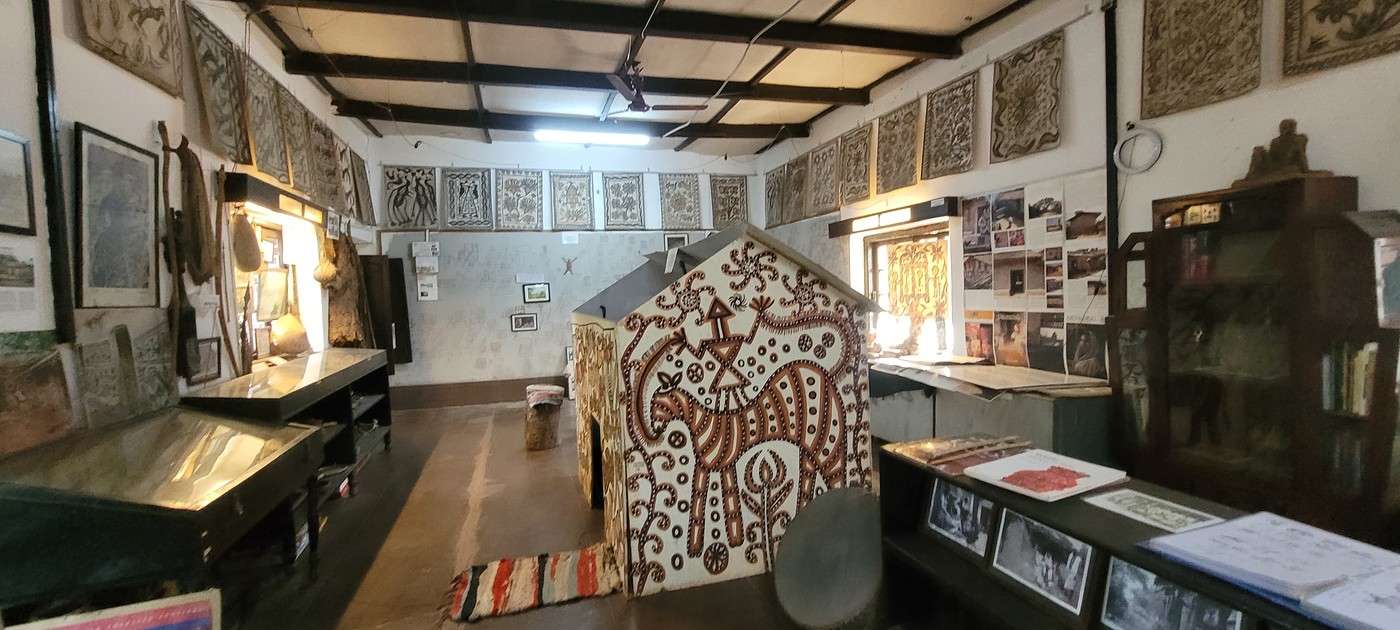
After this first tasting, Adam shows us the family museum adjoining the house. We enter a huge room, almost surprising in its size. The walls are covered with paintings and documents, and the space is filled with objects, souvenirs, and testimonies. We discover the legacy of his grandfather, who discovered the region’s rock caves, as well as that of his father, who dedicated his life to preserving this art. This place tells more than just a family story: it embodies a deep commitment to passing on and safeguarding a fragile heritage.


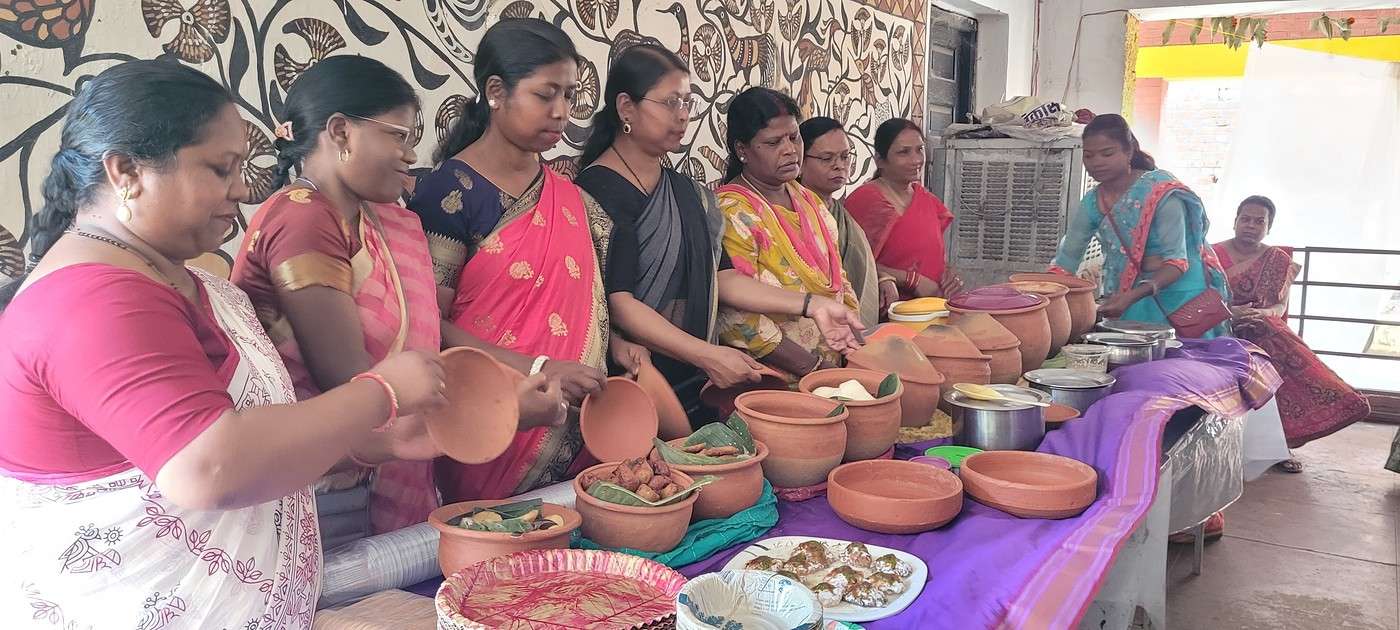
Then the meal continues with lunch. The women proudly present the large pots in which they cooked, and once again, we’re invited to taste everything. The dishes are numerous, flavorful, and incredibly generous. It’s a real treat, even if it becomes hard to do justice to all these preparations.


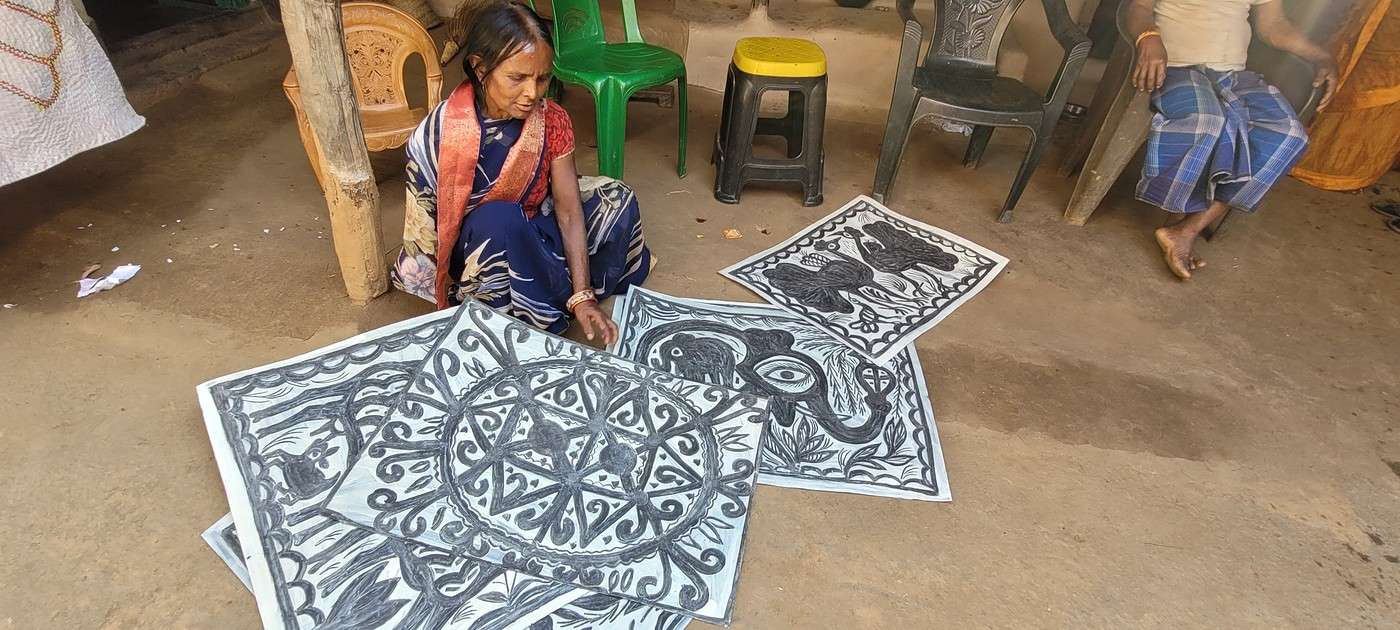
While we eat, the cooks sit a little apart to have their own meal, in a simple and peaceful atmosphere. After this almost gargantuan meal, it’s time to discover their paintings. They show us their works, all magnificent, with their traditional motifs and great artistic richness. Most, however, are very large, making them difficult to transport and frame once back in France.


Before we leave, the women start dancing again. This time, I join them. The moment is joyful, spontaneous, and full of emotion. I wish this moment of sharing could have lasted much longer. On the way back to the hotel, I then explore the neighborhood, still carried by this encounter and the beauty of these paintings that seem to extend life onto the walls.

Villages around Hazaribagh in West Bengal

Partirester · 2026-07-28

namaste !!

Thanks for this beautiful account, these images, these words—I’ll come back to look at them and read them again, more slowly. Those women, those murals, this invitation to travel, to meet, to share...!!! It makes me want to be there too, to soak it all in, and it reminds me of the mural paintings created by the women of Oualata in Mauritania.

I’ve decided to stop flying, but it’s hard to resist the longing you’ve inspired!

Villages around Hazaribagh in West Bengal

Aleph240758 · 2026-07-29

(I’ve decided to stop flying, but it’s hard to resist the urge you inspire)

Hi Christine,

I hope this travel journal gives you the urge to go back and visit this area. I don’t know if you read the first part, but I passed through two villages earlier—Amtoudi and Chirudih.

Thanks for following along!

Villages around Hazaribagh in West Bengal

Partirester · 2026-07-29

Hi Marie Jo, who knows, I might return to India one day. I spent 4 months volunteering in JAIPUR, JAISALMER, and traveled as far as Rishikesh and Manali. It’s true, you’re making me want to go back. You mentioned the village of Amtoudi—I know one in MOROCCO! I’ll keep reading your posts. Have a lovely day, Christine

Villages around Hazaribagh in West Bengal

Aleph240758 · 2026-07-29

You mentioned the village of Amtoudi—I know one in MOROCCO! I also know it for its beautiful granaries. Oops, I made a mistake here—it's Amadubi. 🙂

Villages around Hazaribagh in West Bengal

Partirester · 2026-07-29

🙂 I just discovered Amadubi here and it's gorgeous too!!! https://www.youtube.com/watch?v=ANc-qD1pU2Y

Villages around Hazaribagh to West Bengal

Aleph240758 · 2026-07-29

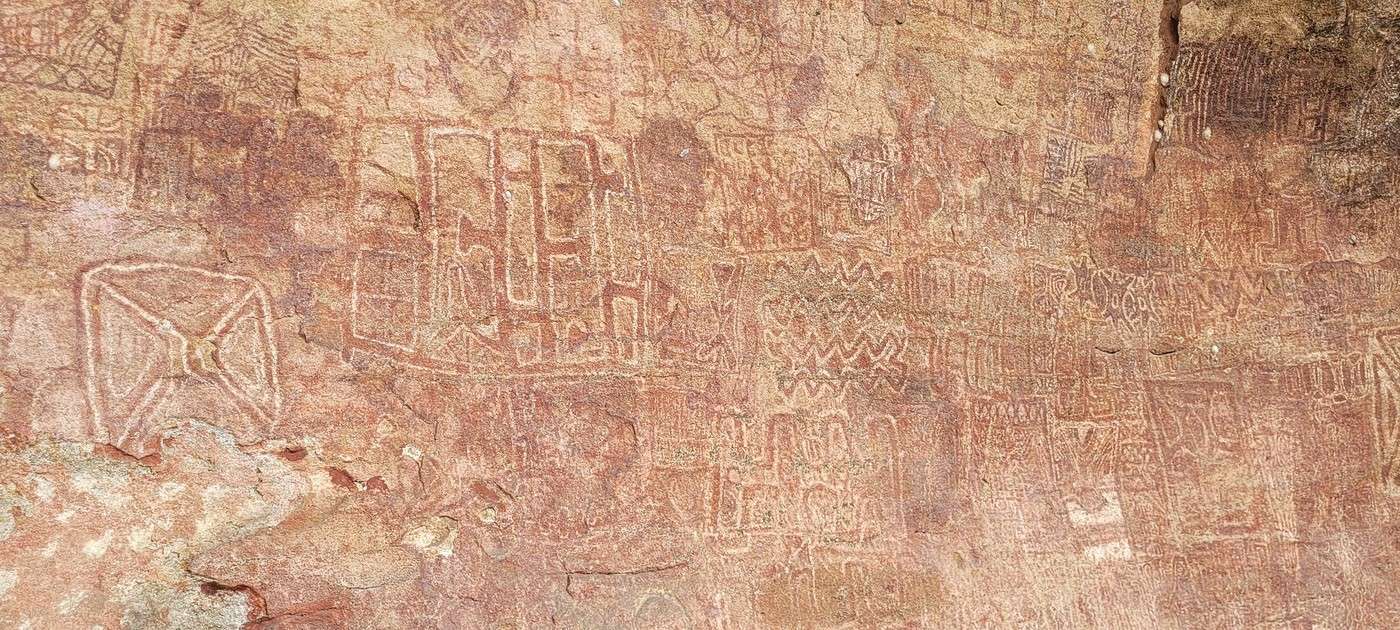
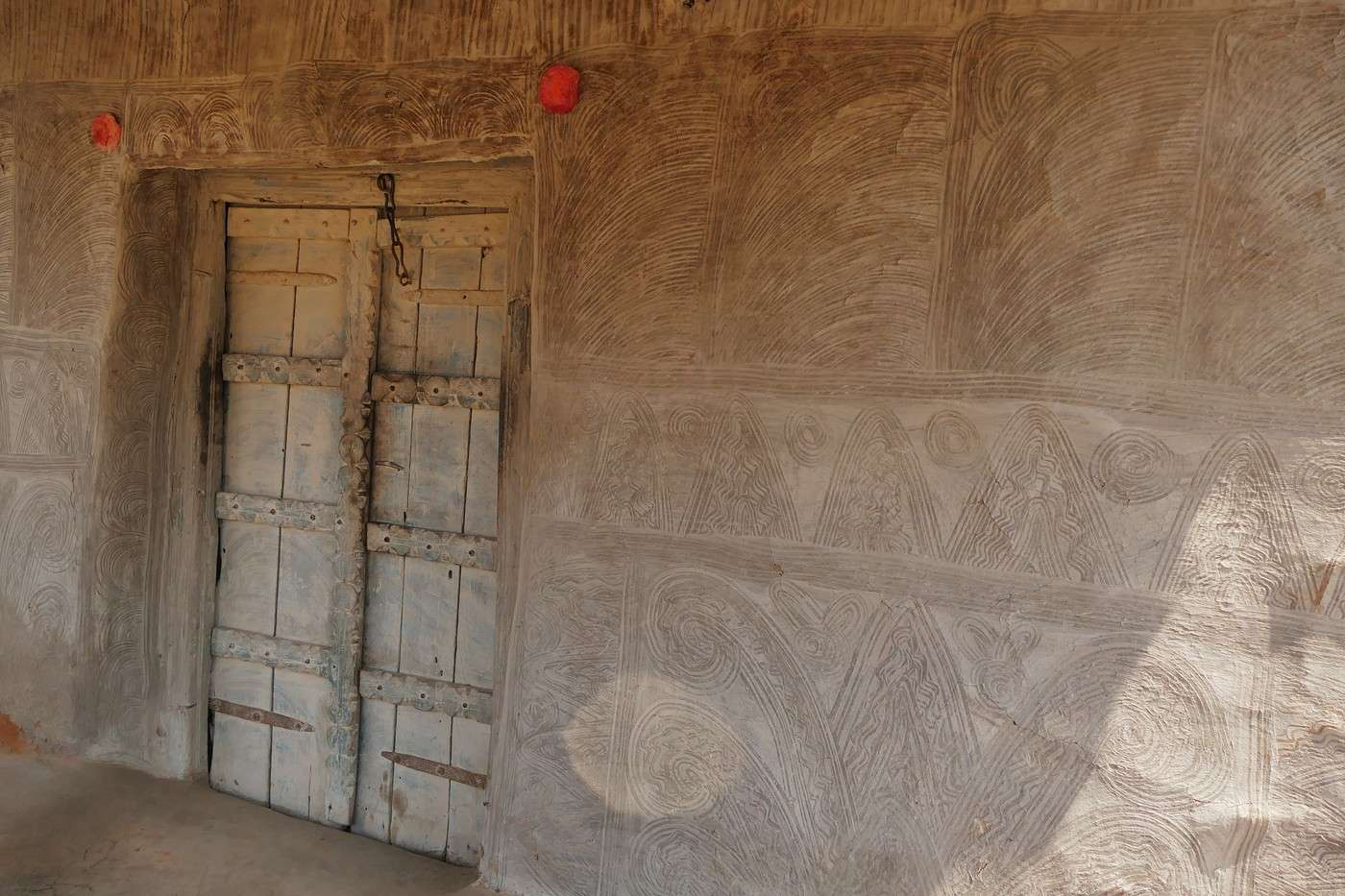
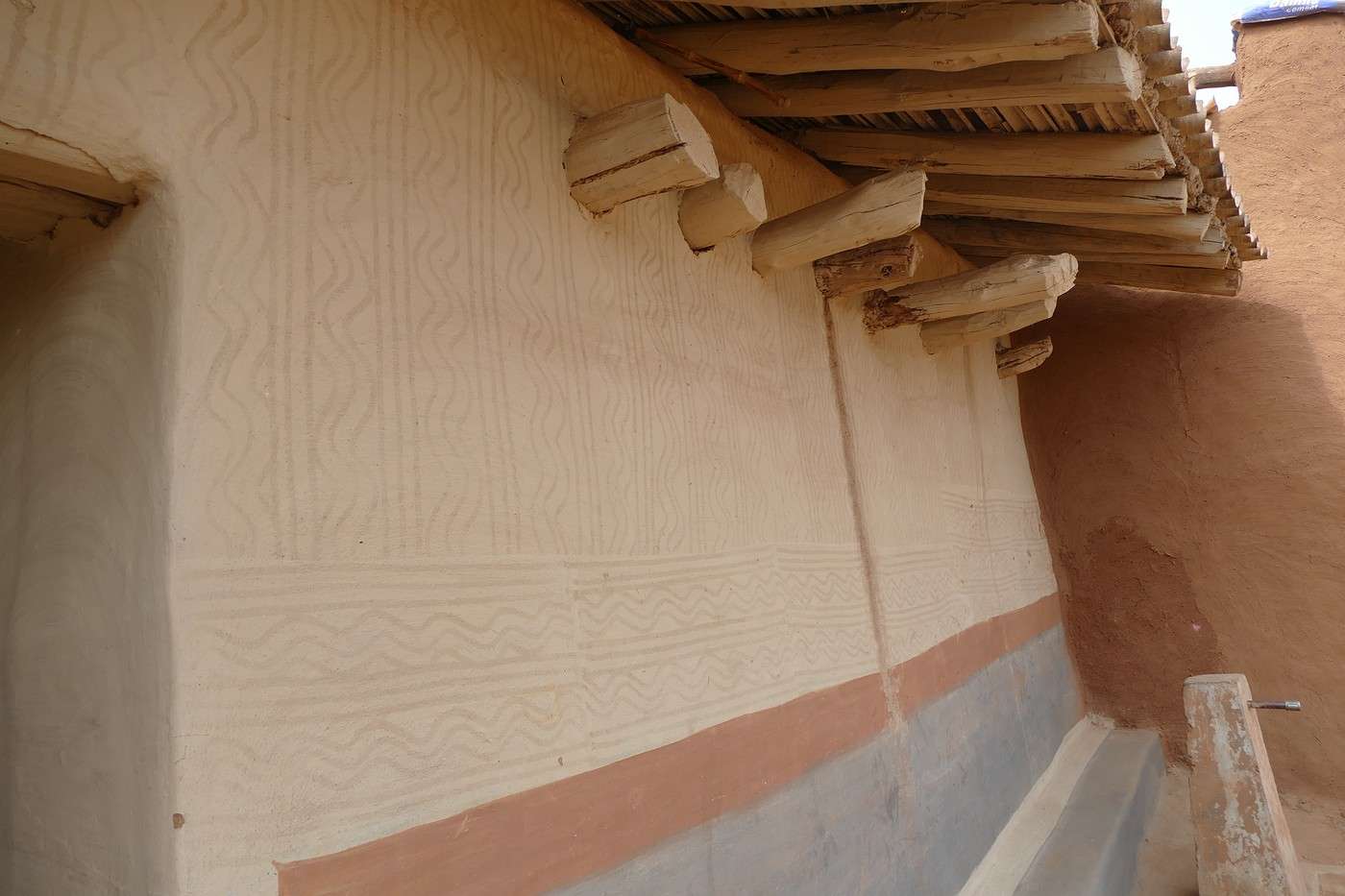
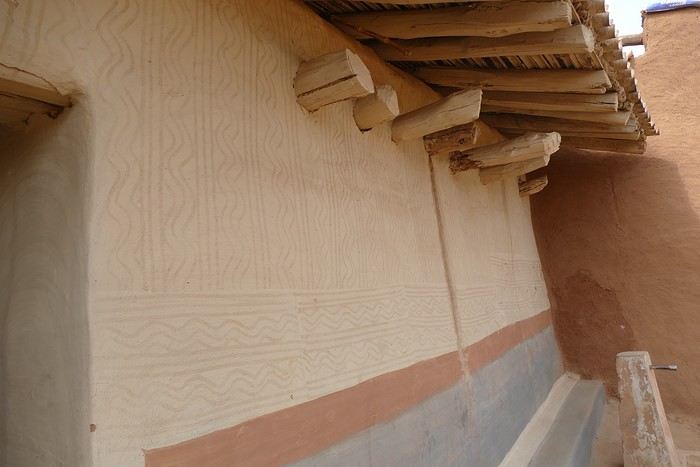
Thursday, April 2 Today, we set off to discover Khovar art, a monochrome art form deeply rooted in ancient traditions. These paintings are closely linked to the rock art of the Isko and Satpahar ranges and symbolize fertility, prosperity, and divine blessings. Khovar marks the start of the wedding season, which runs from January until the monsoon arrives in June. The word itself is evocative: “kho” locally means chamber or cave, and “var” refers to a married couple. These paintings once adorned nuptial chambers. Historical sources on the origin of Khovar are scarce, but historians draw a strong connection to the rock art of the Hazaribagh region, particularly at the Isko and Satpahar sites in the New Karanpura valley. Discovered in the 1990s, these rock shelters contain paintings dating back to the Mesochalcolithic period (around 7000 to 4000 BCE). The similarities between the motifs—geometric shapes, animal figures—and today’s murals reveal a striking continuity. These shelters, also called *khovar*, are considered ancient bridal chambers. The technique used is fascinating. A manganese-rich clay, almost black, is first applied to a prepared wall. Once dry, a layer of lighter clay—white kaolin (*charak maati*), cream-colored earth (*dhudhi maati*), or yellow ochre (*pila maati*)—is spread on top. While this layer is still wet, women scratch it with combs or their fingers to reveal the designs. Though this technique also exists in Sohrai art, Khovar stands out for its more limited palette and themes: forests, abstract shapes, local wildlife, and geometric patterns. Among the Kurmi, you’ll also find representations of female animals carrying their young and scenes of confrontation between humans and animals. But this art is now under threat. With traditional mud houses gradually being replaced by cement, the very medium of Khovar is disappearing. Communities also face pressure from large industrial projects. To preserve this heritage, some artists are adapting their techniques to paper and canvas. In 2019, Khovar and Sohrai paintings received the Geographical Indication label from the Indian government, an important recognition.


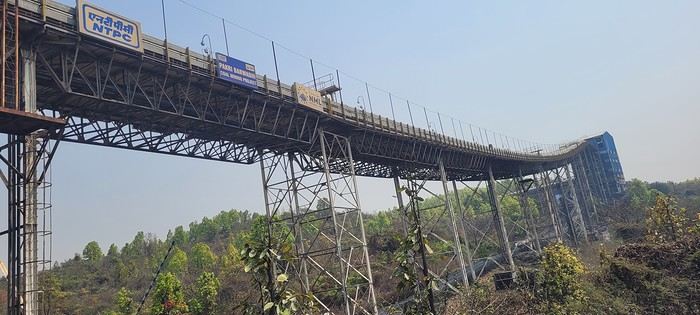
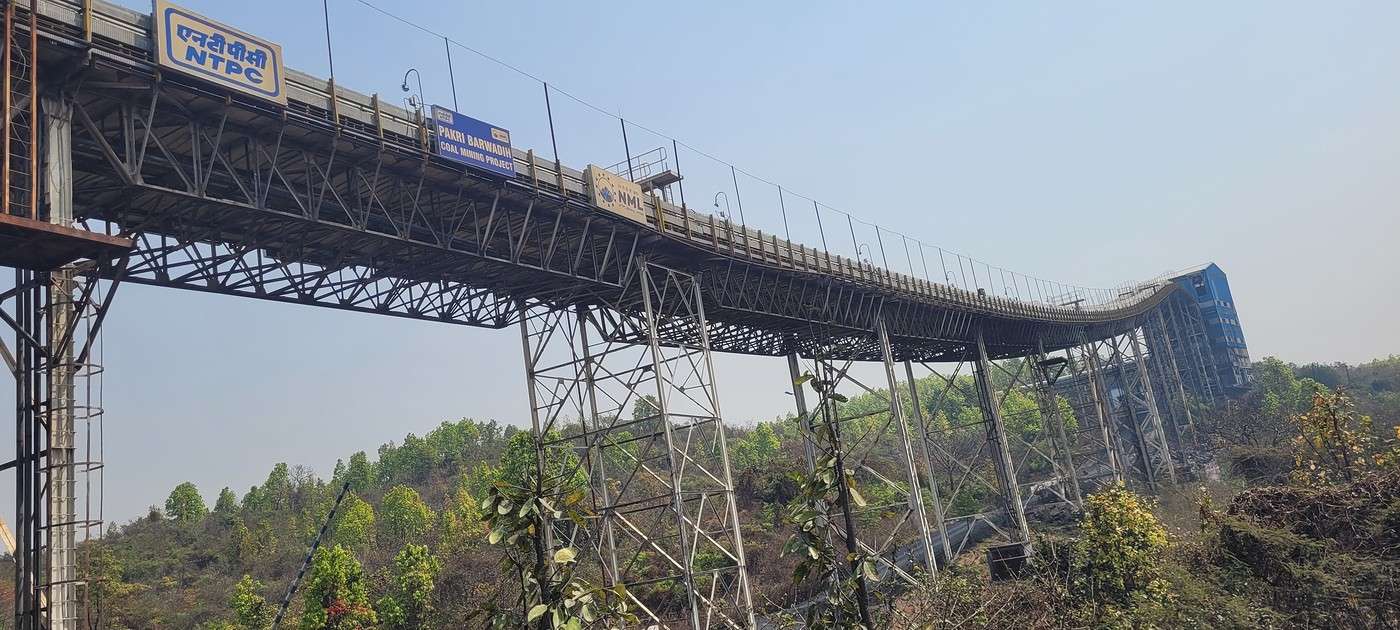
Along the way, we pass a massive coal mining operation. As far as the eye can see, installations transport the black material to a gigantic enterprise. Mountains of coal rise before us—a striking sight that leaves little doubt about the country’s energy future.


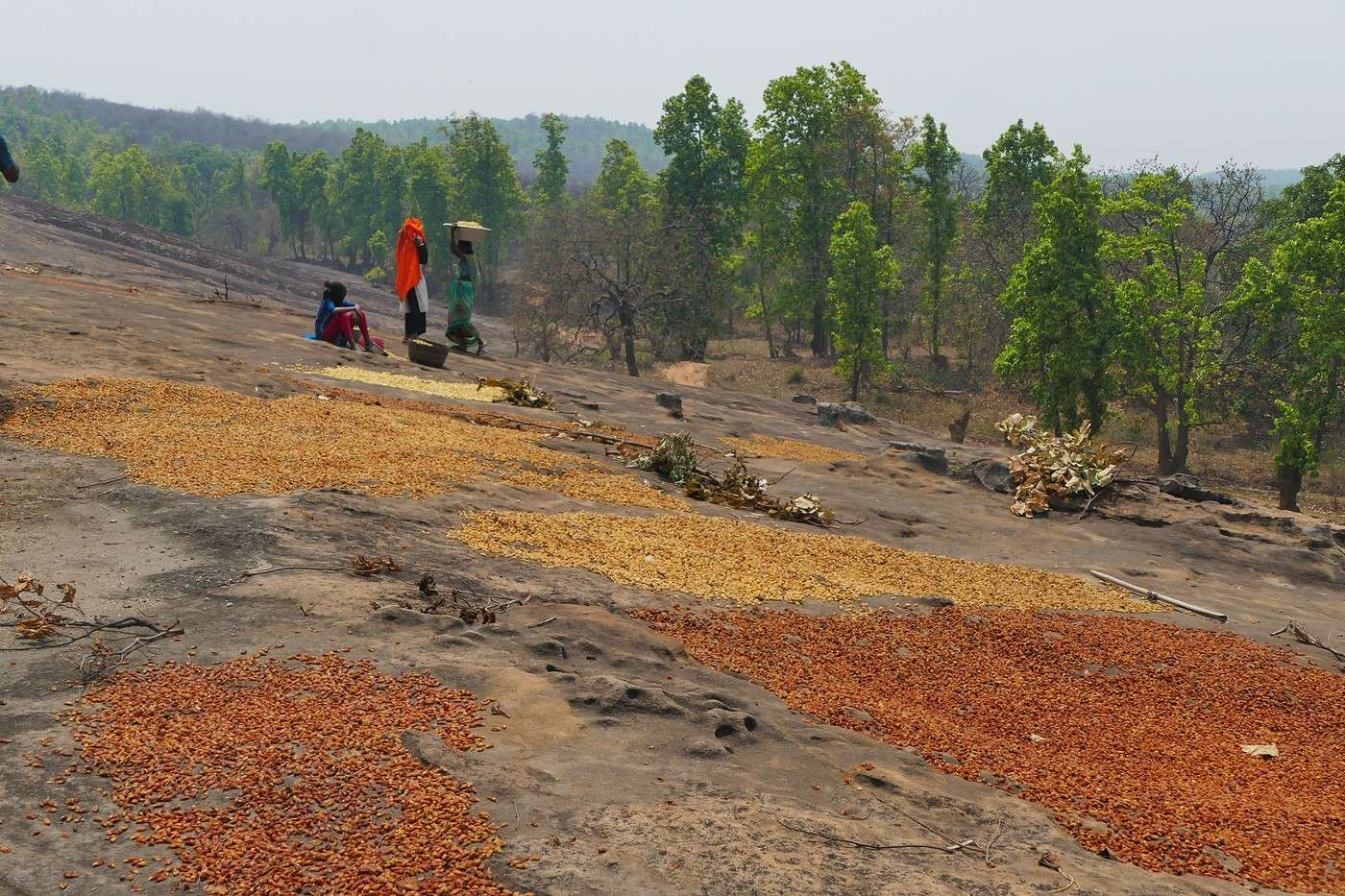
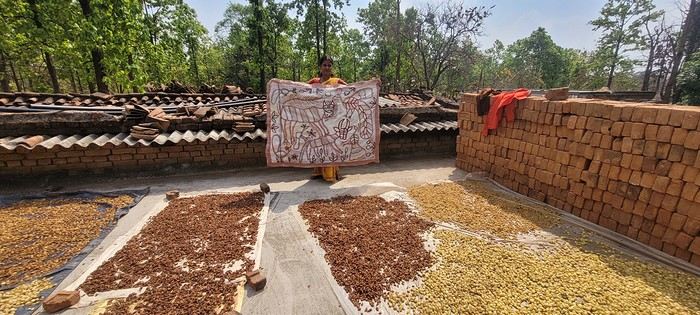
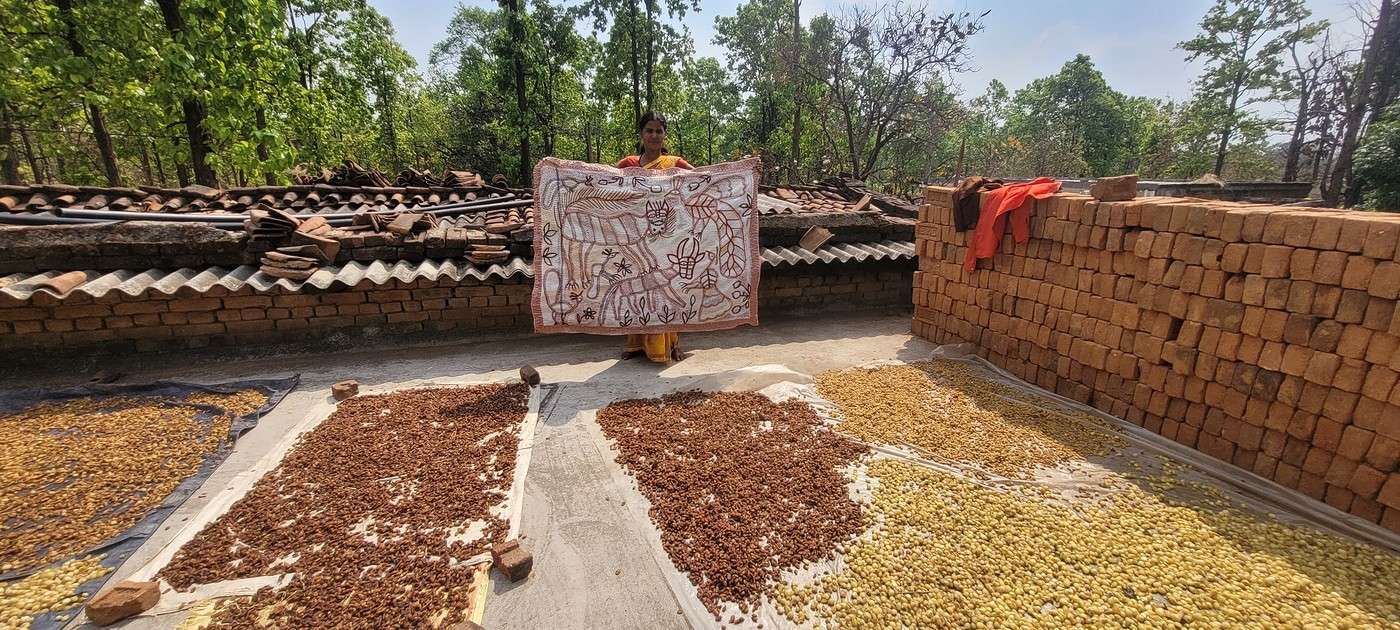
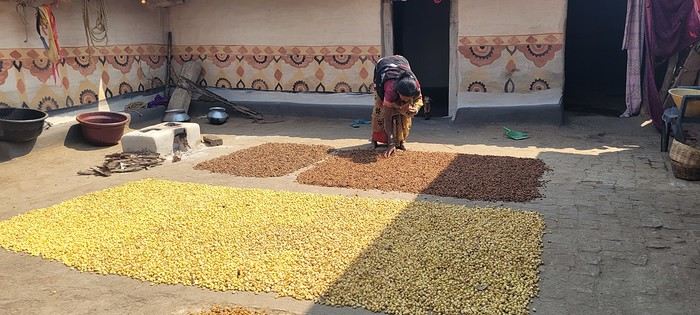
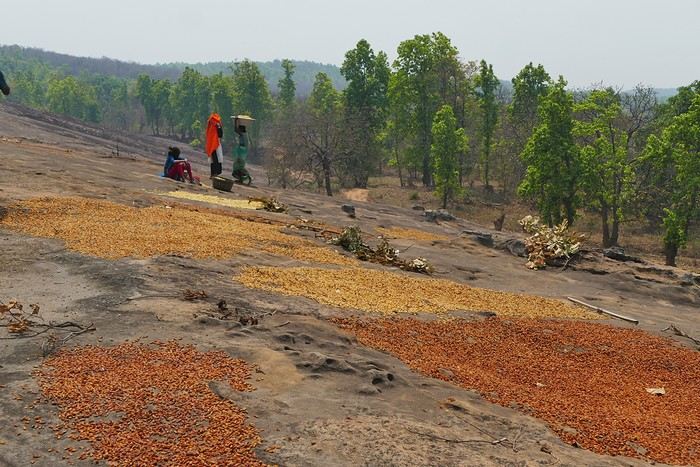
We continue toward the Isko caves. The site is surrounded by sal forests, and at the entrance, women are drying mahua flowers on the rocks. They’ll be used to make alcohol sold in markets, as well as for cooking and cosmetics.


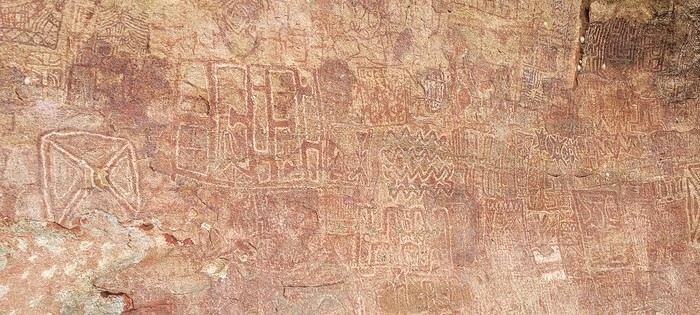
The Isko site, identified in the 1980s, only really caught researchers’ attention in the 1990s. Jesuit priest Tony Herbert was one of the first to highlight its importance, followed by studies from the Archaeological Survey of India. In 1991, ecologist Bulu Imam, Adam’s grandfather, helped bring these shelters to a wider audience. Analyses reveal several phases of human occupation. The oldest paintings, attributed to the Mesolithic period (8000–4000 BCE), depict simple geometric shapes and animals, reflecting the lifestyle of hunter-gatherers. Discoveries of stone and copper tools confirm continuous human presence. Yet the site isn’t protected, and the paintings are slowly fading away.


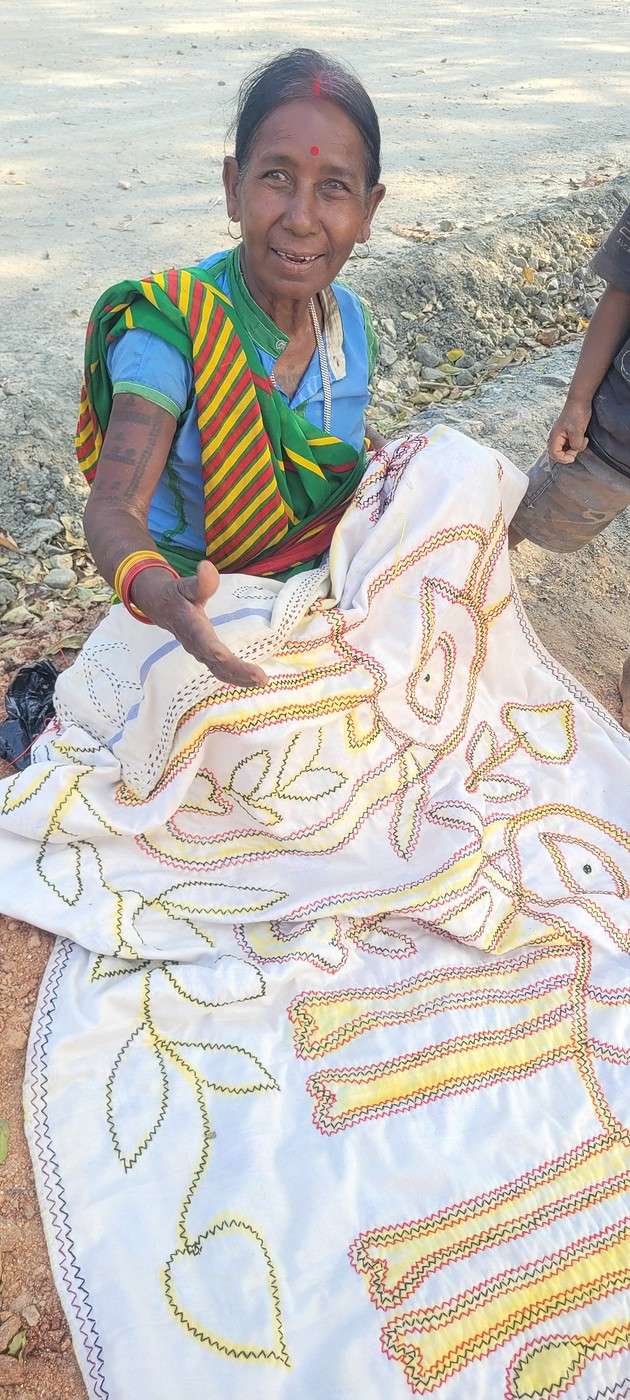
We then head to a village with painted houses before returning to Malo Devi’s home for lunch. I notice her tattooed arms again, covered in symbols. Some motifs immediately remind me of those I saw in the caves. The connection strikes me.


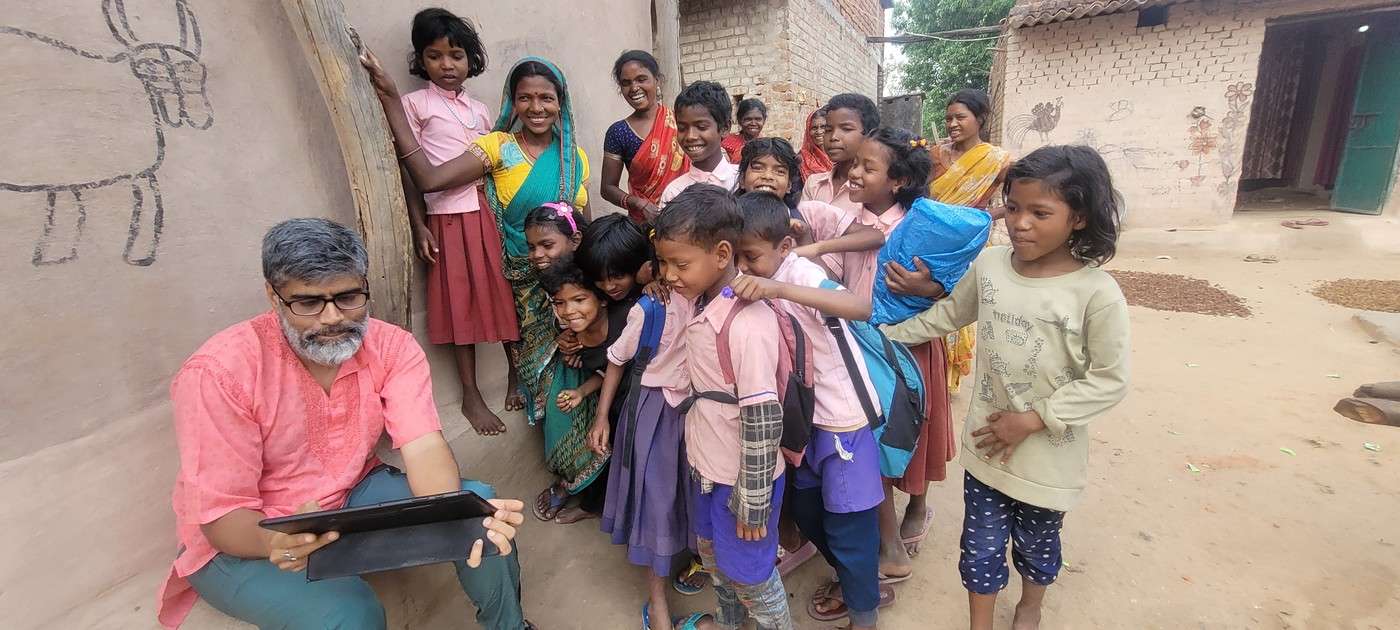
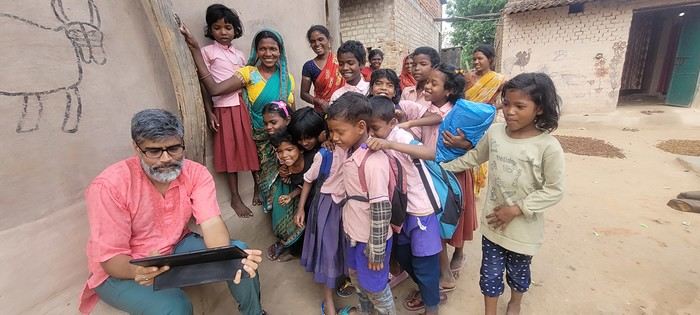
Adam explains their meaning. In the Isko rocks, these motifs—zigzags, circles, triangles, solar shapes—aren’t just decorative. They reflect an understanding of the world based on the elements: water, earth, fire, and ether. It’s a true visual cosmology, a way of mapping life, fertility, and the balance of the world. What’s remarkable here is the continuity of this language. You find it in Sohrai and Khovar paintings, passed down from mother to daughter. This memory isn’t written—it’s transmitted through gesture and repetition. It’s also inscribed on the body. *Godna*, the art of tattooing, repeats these same motifs. The body becomes a living memory. These tattoos mark important life stages, like puberty or marriage. They accompany the individual into the afterlife, according to some beliefs. So, from rocks to walls to skin, the same vocabulary endures. Women are its guardians, artists, and keepers of this tradition. As we leave the school, children come running toward us in cheerful excitement.


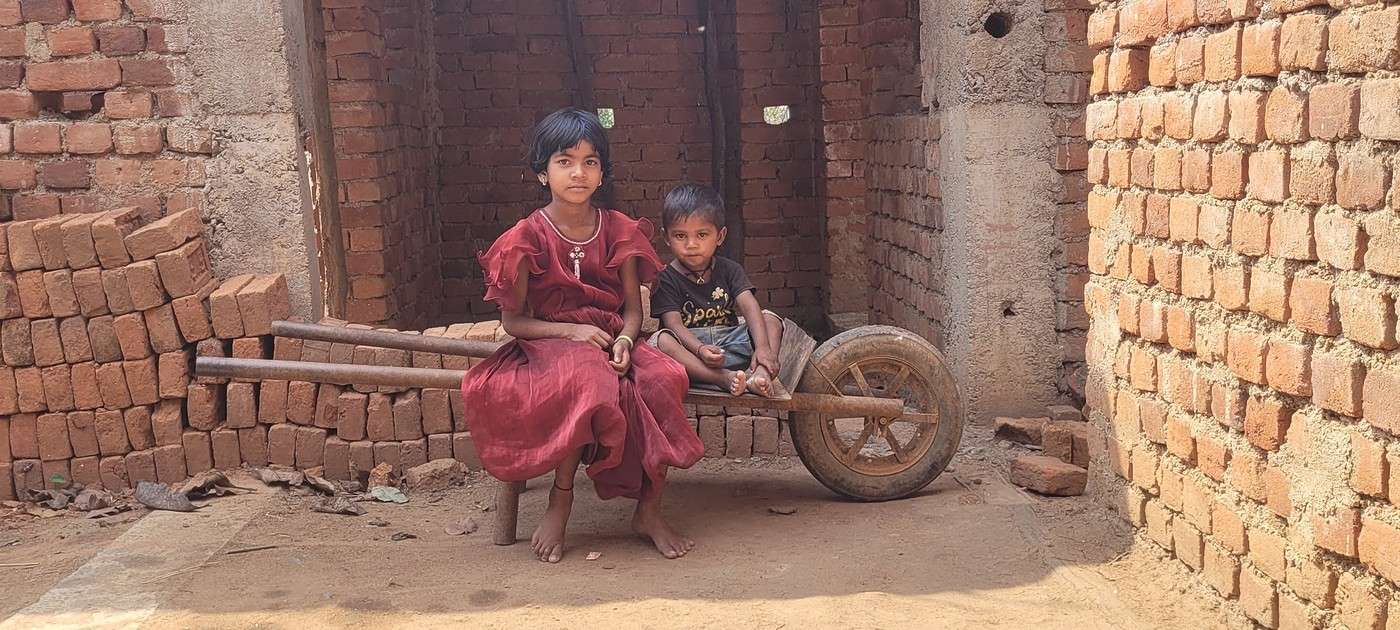
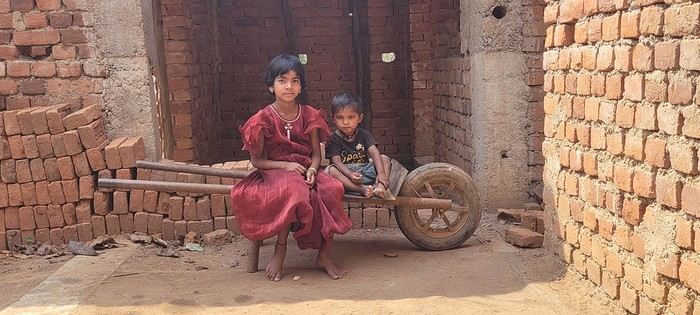
Malo Devi’s granddaughter plays with her brother, pushing him in a wheelbarrow. Her smile contrasts with a certain gravity in her gaze. She’s already learning to paint from her grandmother.


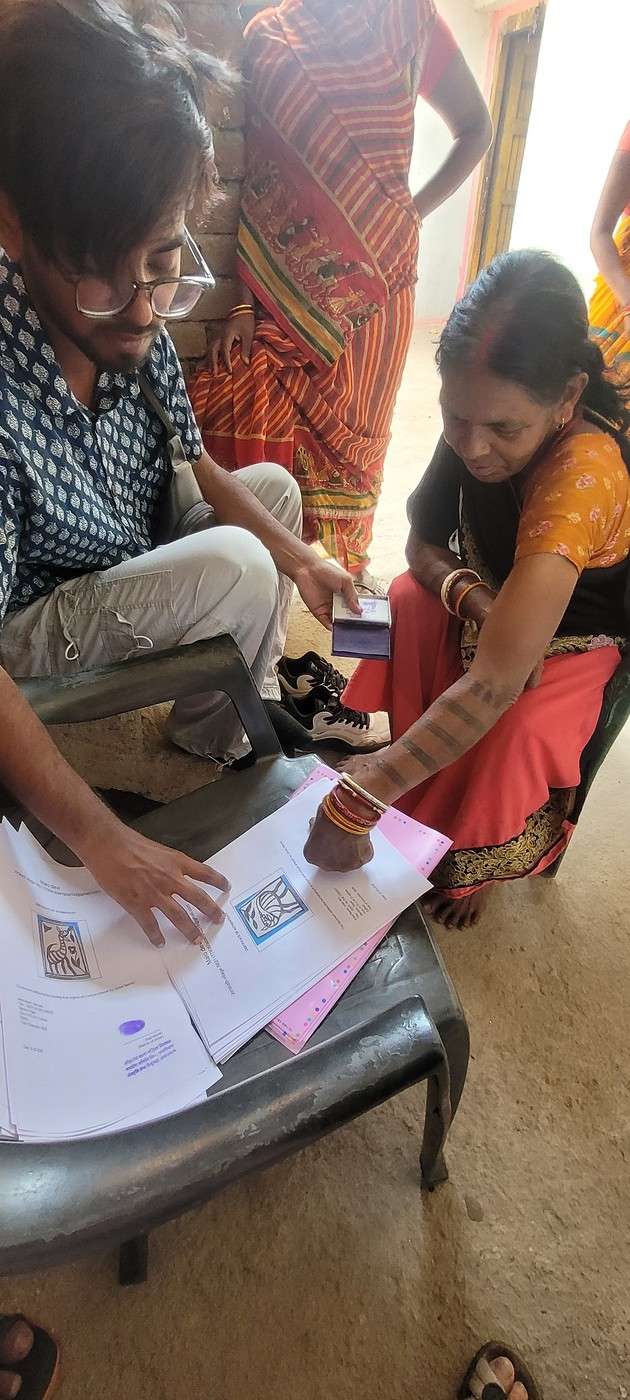
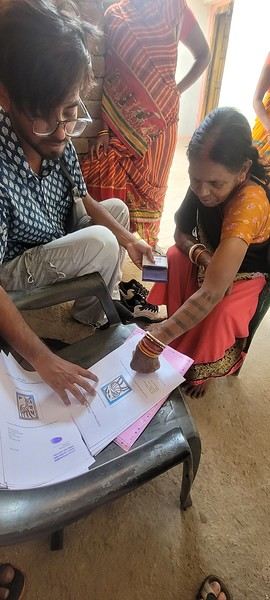
Lunch, made up of local specialties, is delicious. Some dishes remind me of yesterday’s meal. Before leaving, Adam asks them to sign their drawings to guarantee authenticity. They don’t know how to read or write; instead, each presses her fingerprint onto the paper as a silent but deeply personal signature. The gesture is simple, almost solemn, and repeated on every piece. Adam makes sure all the women we meet today leave their mark—a tangible trace of their work and identity.


Villages around Hazaribagh in West Bengal

Aleph240758 · 2026-07-29

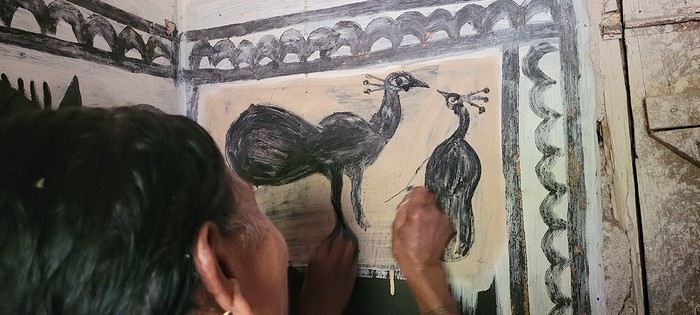
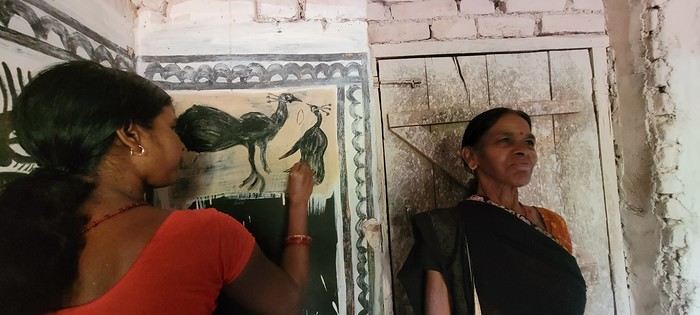
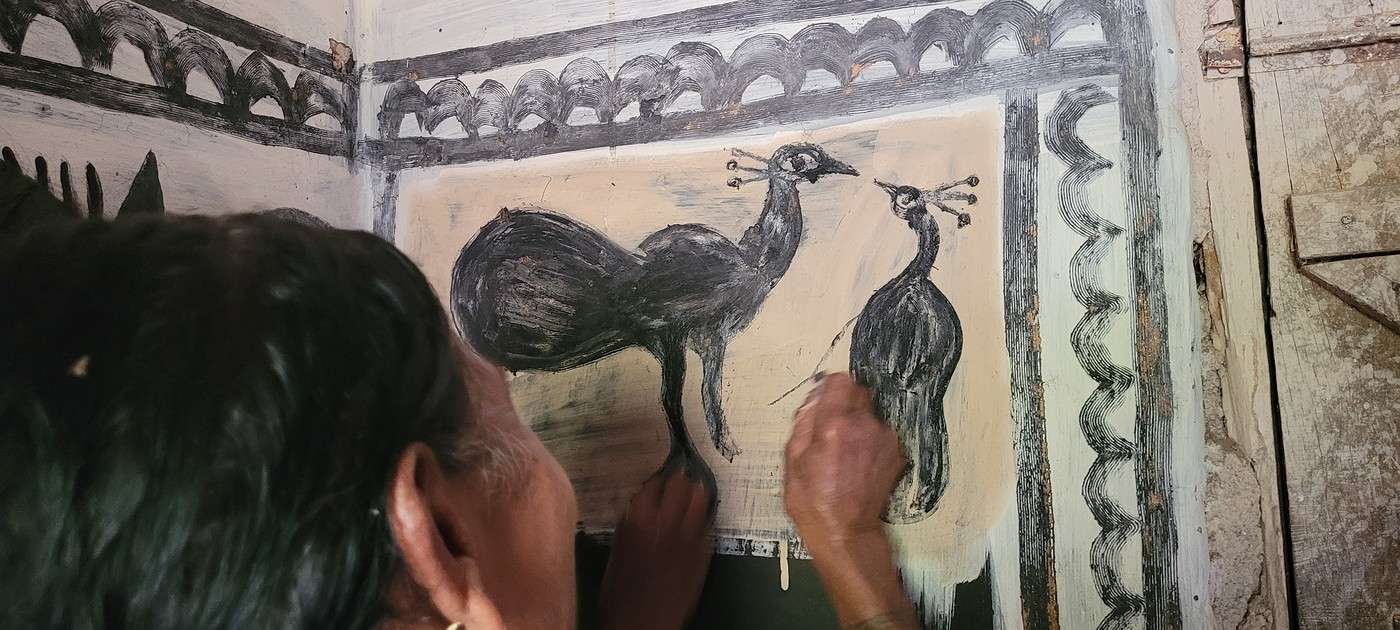
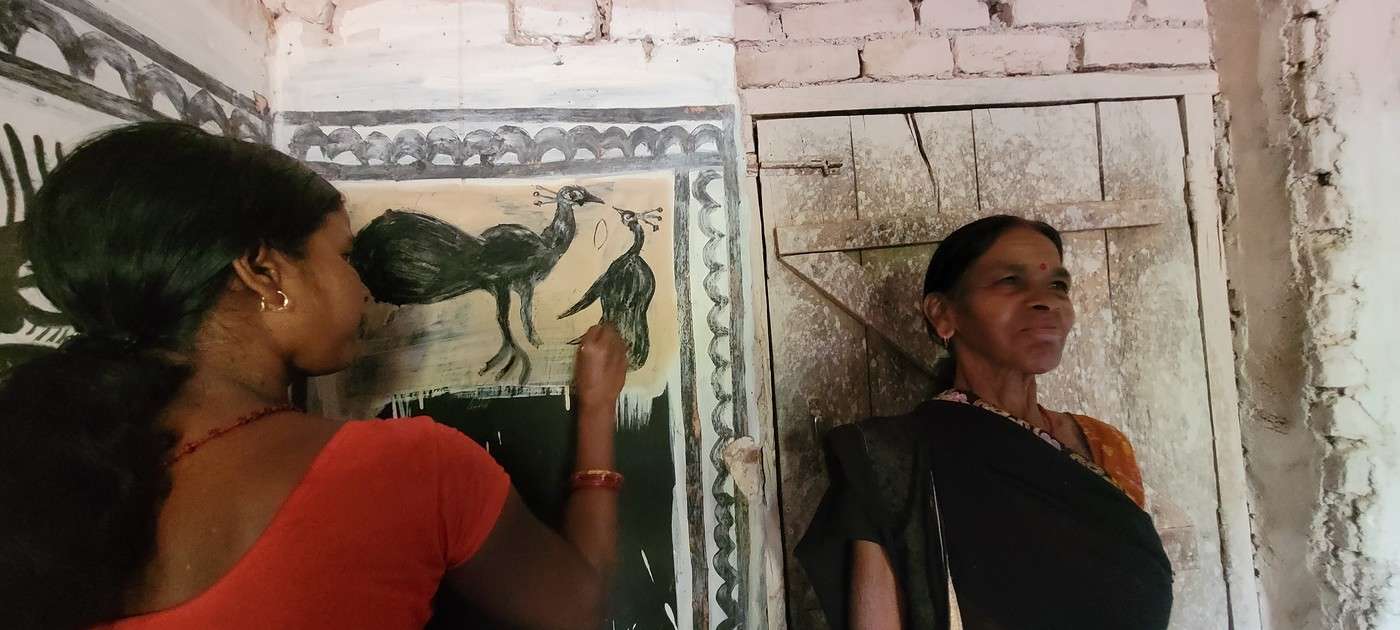
Before leaving, Malo Devi and her daughter-in-law give us a demonstration. On a wall, they wet the surface, apply a fresh layer of clay, then, without waiting for it to dry, start drawing with a comb. They work side by side, without consulting each other, yet the pattern takes shape with natural harmony. Little by little, a peacock appears: head, body, tail. Their movements cross without ever getting in each other’s way. Malo draws a second one, with astonishing precision. I realize once again how lucky I am to witness these moments.


We then visit another village.


An artist shows us her works on paper; I pick one that’s easy to slip into my bag.


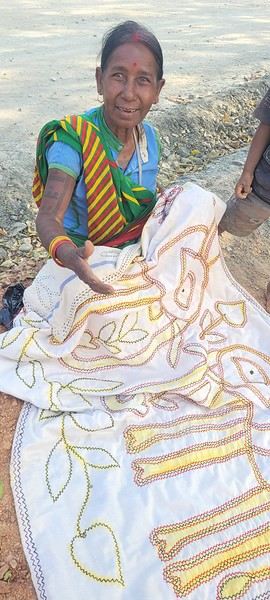
Another woman presents her embroideries, featuring the same motifs.


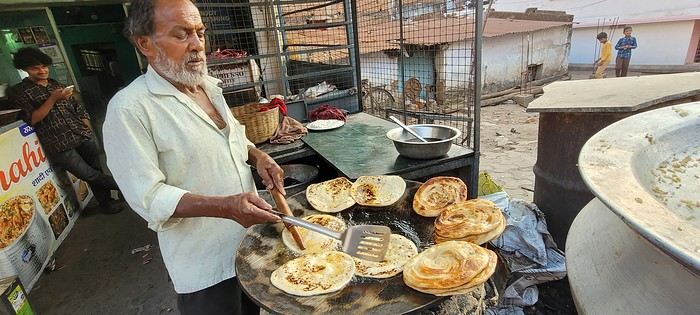
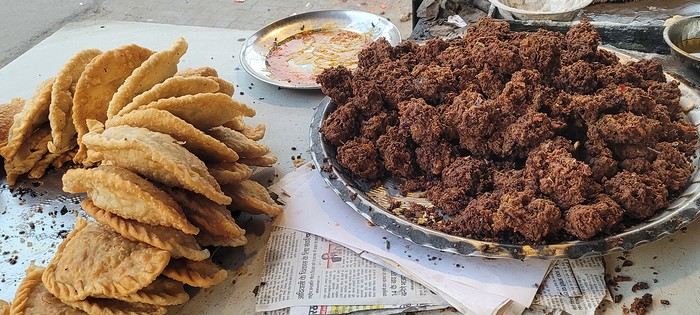
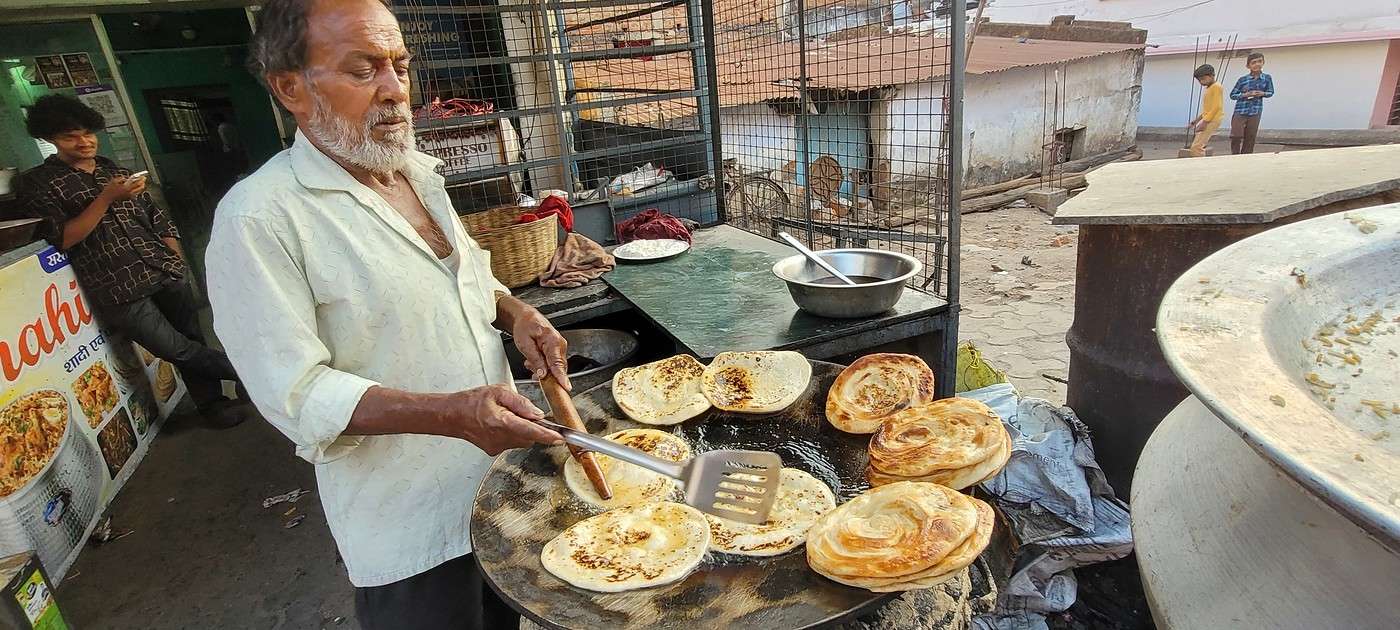
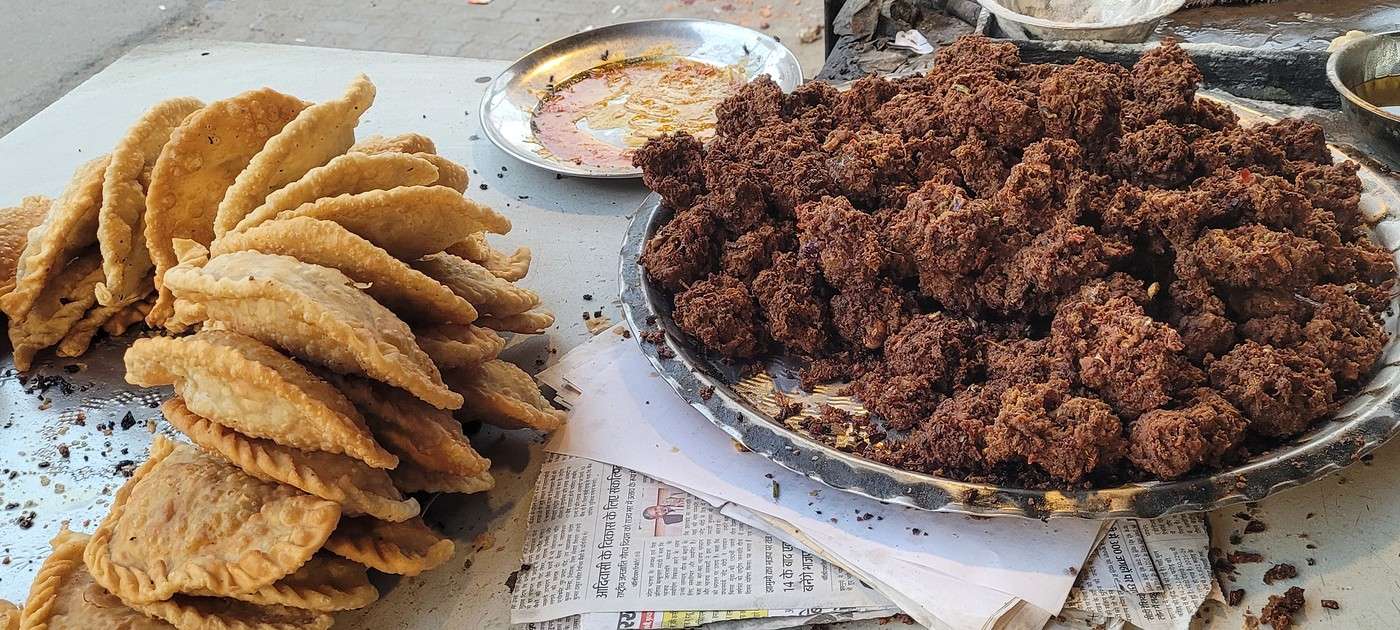
Back in Hazaribagh, I stroll through the hotel neighborhood. The cooks at the dhabas are already busy: parathas, samosas, pakoras… everything looks delicious, but it’s still too early to give in to temptation. I’ll come back tomorrow morning to buy some puris for my breakfast.


Villages around Hazaribagh in West Bengal

Aleph240758 · 2026-07-30

Friday, April 3 and Saturday, April 4 As we visit and listen to the explanations, the patterns painted on the walls are no longer just decorations. They tell a story, a world of beliefs where every shape has meaning, where every line extends an ancient memory. At first, I catch myself looking at these circles and spirals differently—what I had found so decorative. Adam explains that they’re among the first figures drawn by humans. The spiral, in particular, carries strong symbolism: it evokes the movement of life, its eternal renewal, evolution, and procreation. The concentric circles, meanwhile, form something like a labyrinth, depicting the journey of the fetus from conception to birth. Little by little, the walls become a language. The betel leaf, often paired with lotus stems and flowers, creates a powerful erotic metaphor. In the bridal chambers, its roots stretch out, discreet but present, like a reminder of the link between union and fertility.


Birds appear everywhere, painted with a freedom and variety that reflect the richness of the surrounding nature. They symbolize love, but so much more. A legend tells that the first man and woman were born from two bird eggs laid on grass planted by a god. Listening to this story, I realize the bird isn’t just a motif: it’s tied to the very birth of humanity, just as the tortoise is to the birth of the earth. The peacock, in particular, stands out brilliantly. A symbol of fertility, it’s omnipresent. I’m told its eggs are said to contain reptiles, proof of its mysterious power. In spring, before the monsoon, when villagers repair their mud houses, women paint peacocks to call for good harvests. The same bird also appears during funeral ceremonies, reminding us of the special link between the dead and the fertility of the fields.


The lotus, which I recognize immediately, belongs to the sacred realm. In the Adivasi imagination, it embodies the feminine principle, the cradle of creation. Some even say the world was created from a lotus leaf. Everywhere on the walls, its presence responds to that of bamboo, its masculine counterpart, in a silent balance. Some motifs, however, remain surprisingly pragmatic. The fish, always depicted vertically, as if standing on its tail, often appears near doors or hearths, sometimes accompanied by a kitchen ladle. Bulu Imam, Adam’s grandfather, found that it wasn’t painted for any particular symbolism but simply for its nutritional value—a familiar, almost everyday presence. Other figures, though, clearly belong to the sacred and protective. The tiger, powerful and silent, is a guardian deity of the village. The elephant, which we instinctively associate with Ganesh, carries a different story here. Adam tells me about Queen Rani, who rode an elephant from Badam Fort to the Isko River to bathe and drowned there. Since then, she’s often depicted riding her mount, as if the memory of that tragedy still lives on the walls.


I also notice zebus and cattle, already present in rock paintings but then depicted as wild. Today, they’re domesticated and celebrated during the Sohrai festival, at harvest time, as a tribute to fertility and abundance. Finally, the horse appears, often ridden by a male figure. Alongside the bull, it embodies vital energy, strength, and the prosperity of the home. It’s linked to Pashupati, the lord of animals, and symbolizes the sacred union of spouses.


Taking the time to listen and observe, I realize these paintings aren’t just beautiful. They’re alive. They speak of birth, desire, death, protection, and cycles. In their own way, they tell everything that connects humans to the earth and to time.


Villages around Hazaribagh in West Bengal

Aleph240758 · 2026-07-30

We’ll visit eight villages over the course of the day. From the very first stop, I realize each place has its own identity, its own way of telling the world’s story.

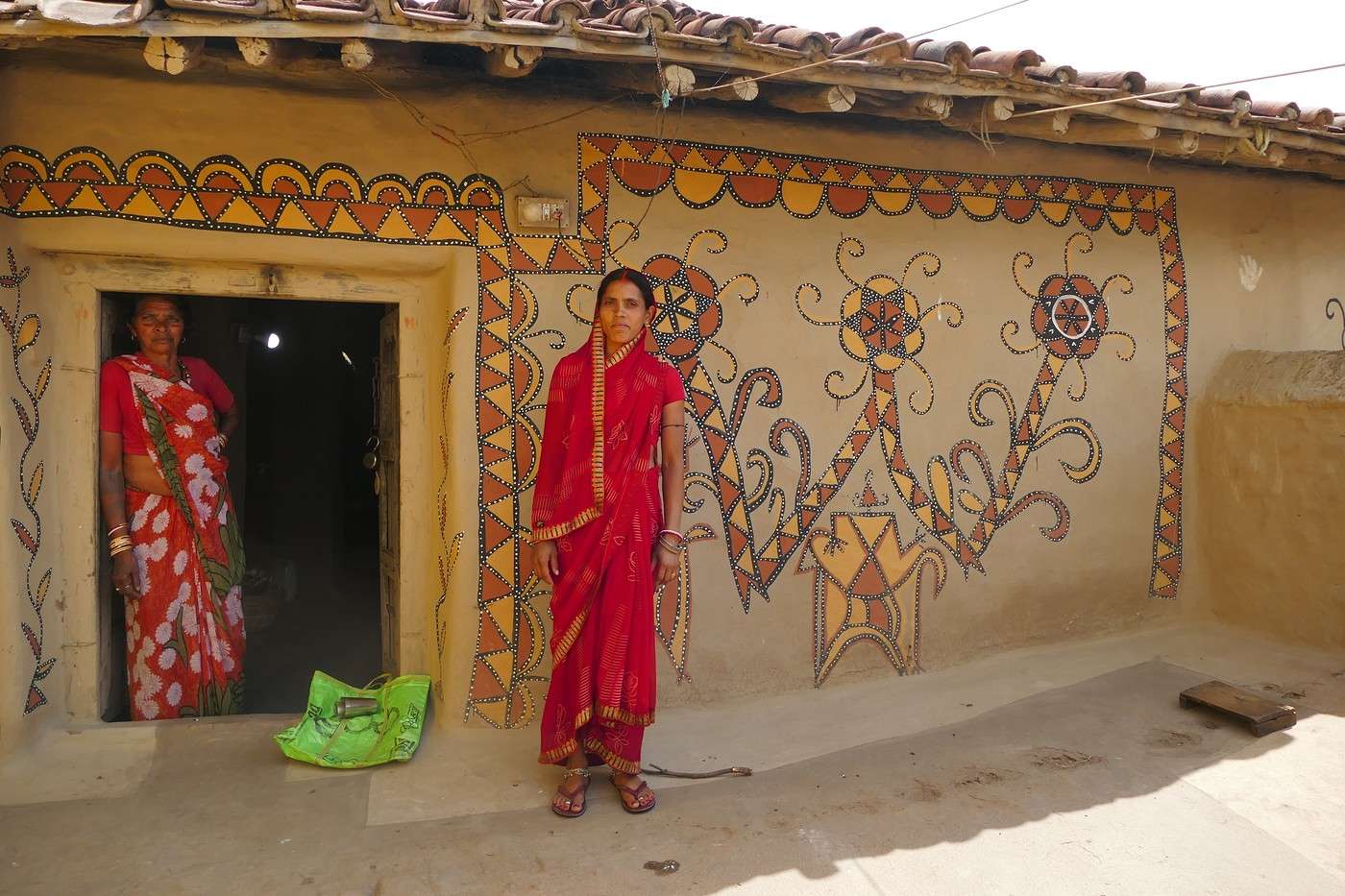
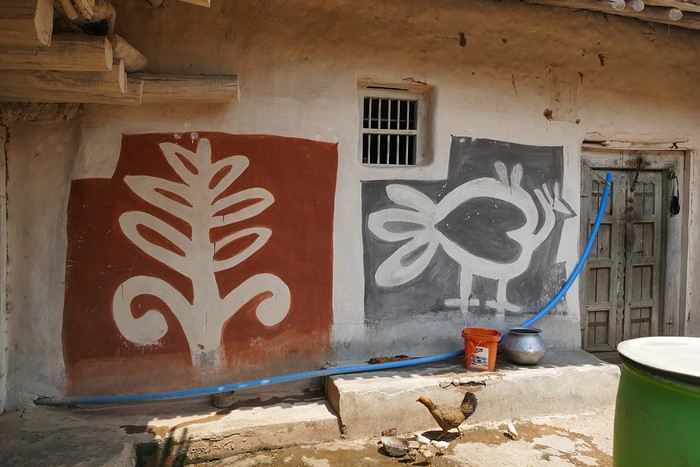
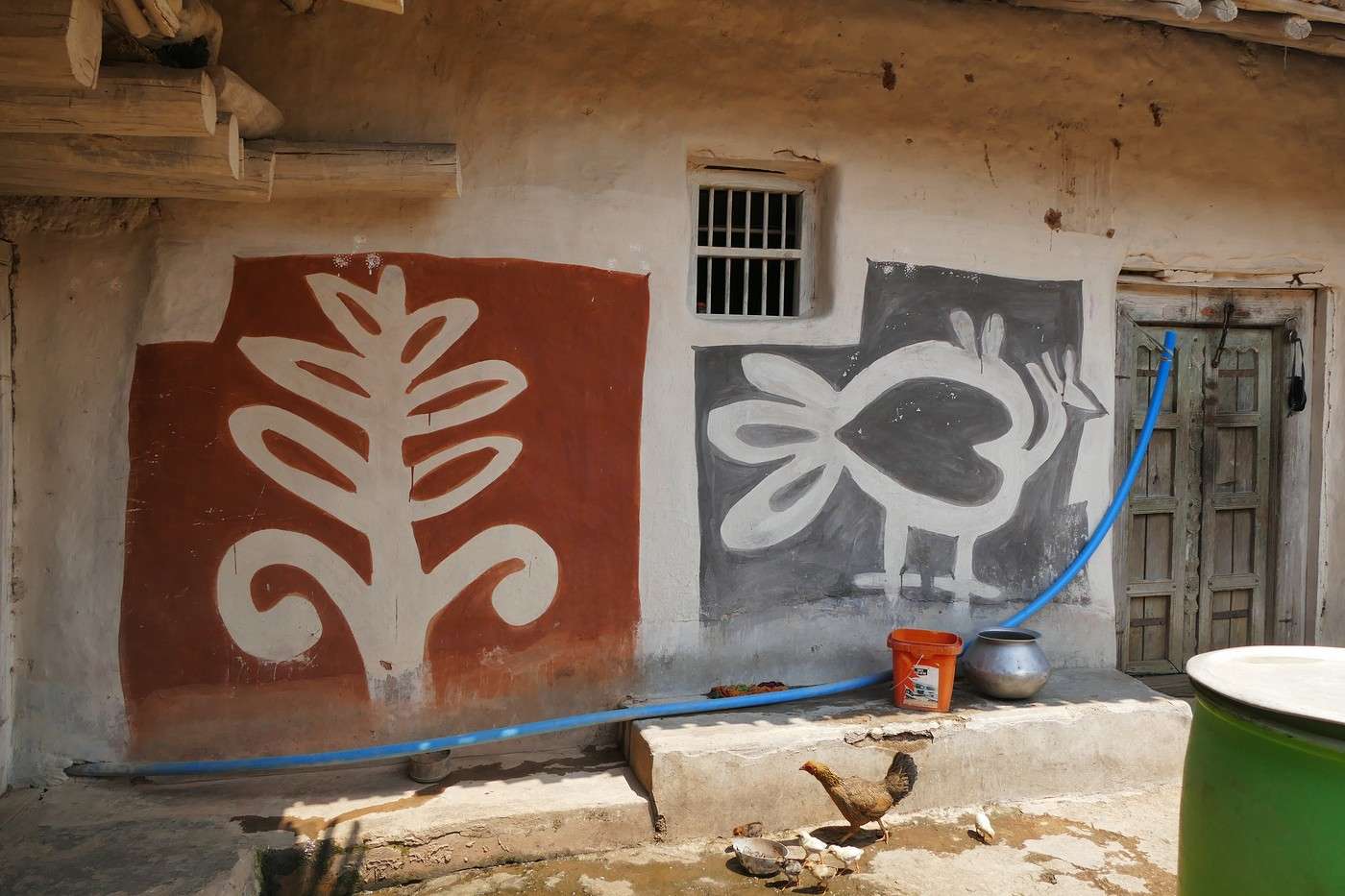
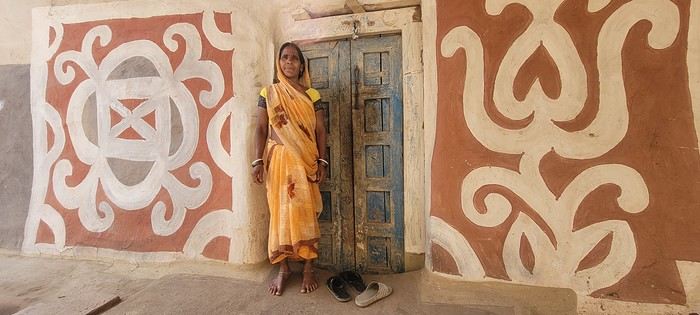
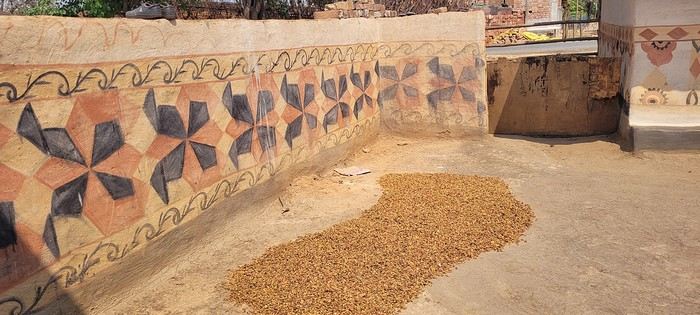
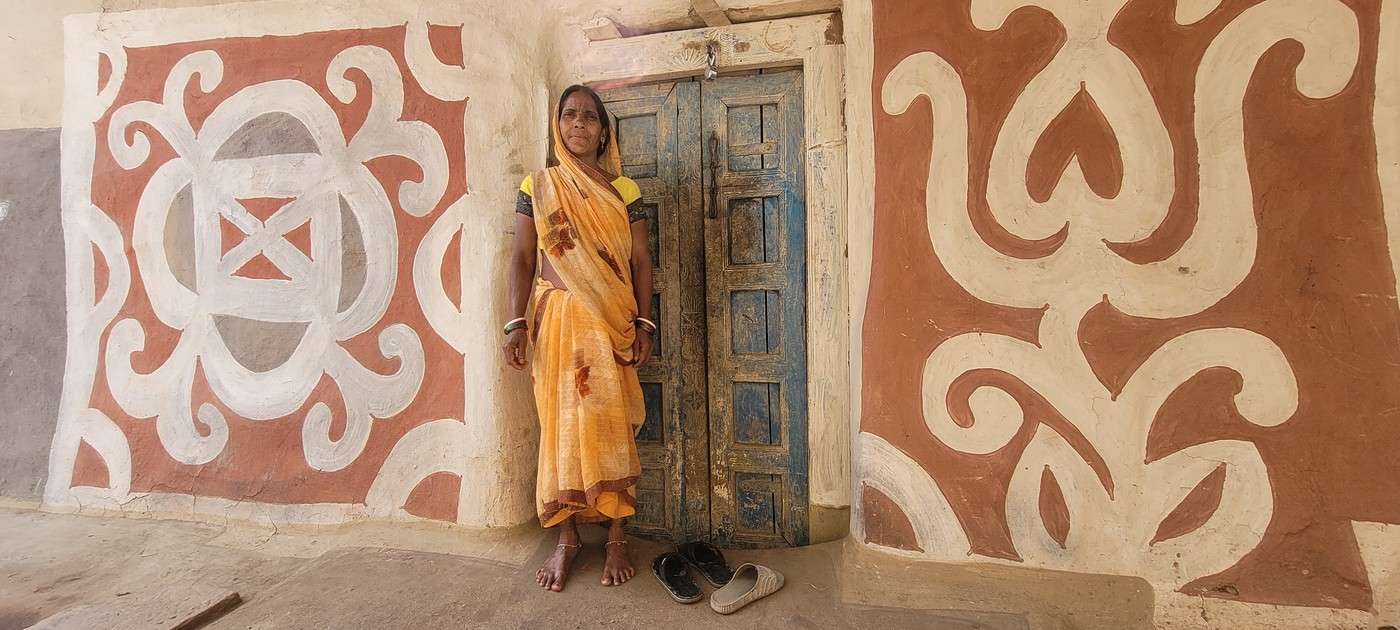
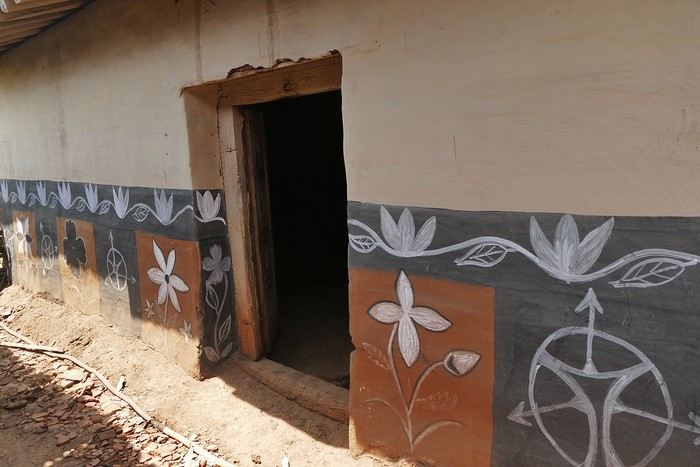
This first village specializes in Sohrai art. The wall panels immediately catch the eye: symmetrical, curvilinear patterns painted in white on a deep red ochre background. These abstract shapes, elegant and refined, evoke stylized lotus flowers or intertwined lifelines. Behind their graphic beauty, they carry a strong meaning: protection of the home, prosperity, and fertility of the household. In front of one of these murals, a woman artist stands, discreet but proud, like a guardian of this knowledge passed down from generation to generation.


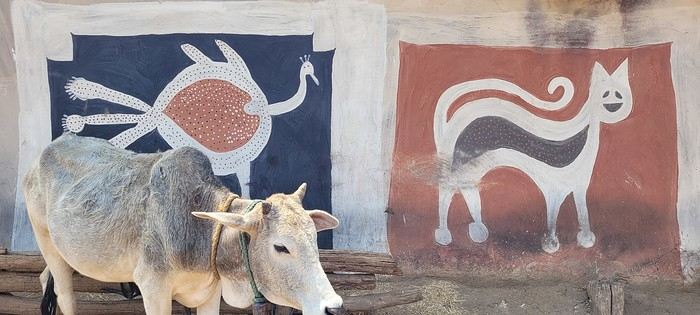
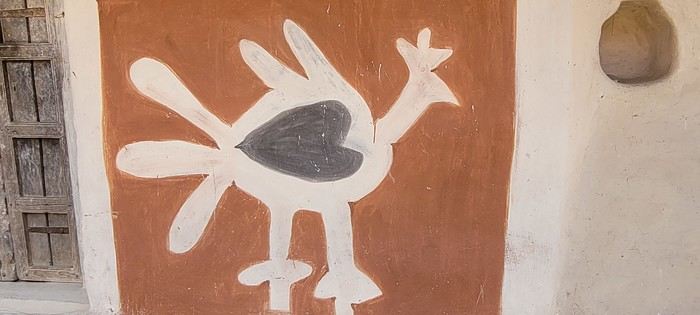
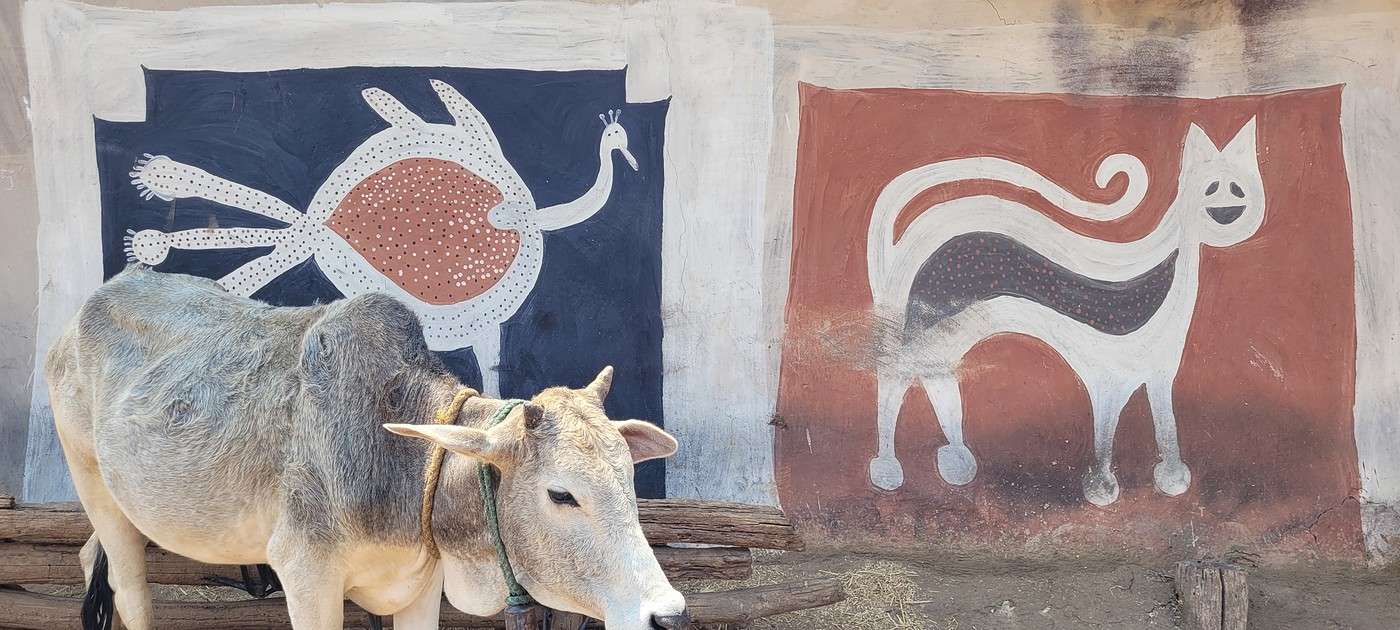
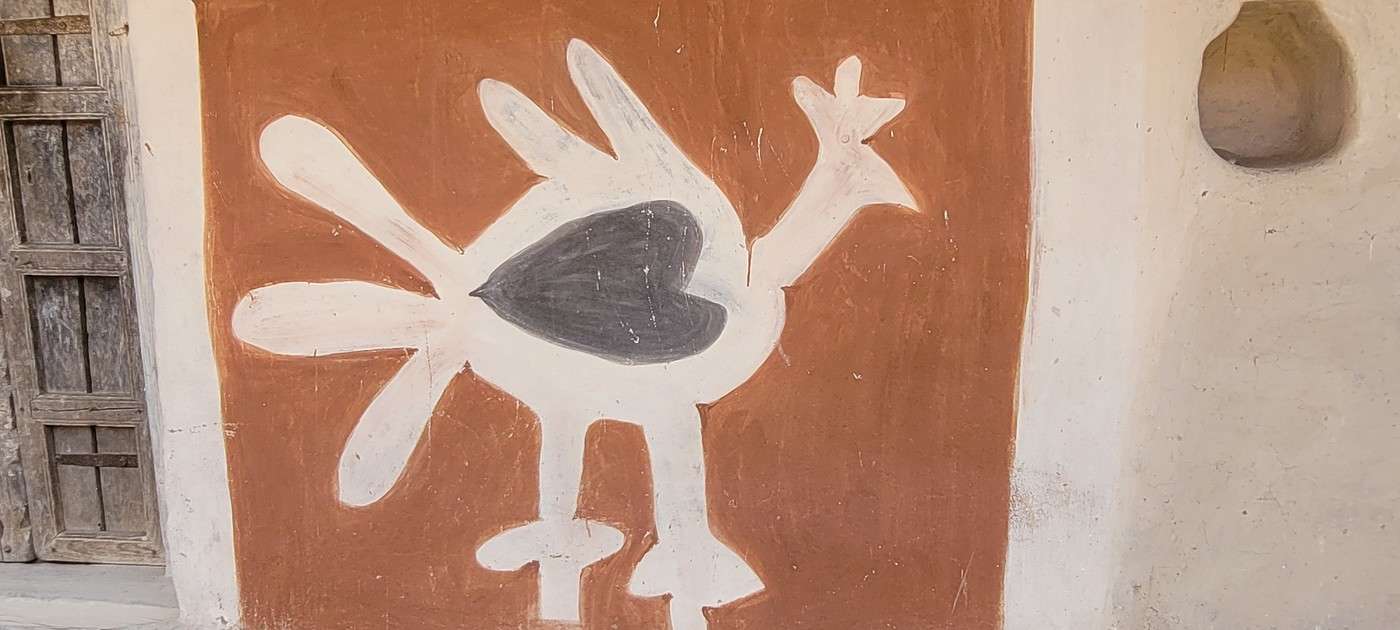
A little further on, another wall pays homage to wildlife and livestock. You can make out a large bird, perhaps a crane or a peacock, with rounded shapes, its body filled with dotted patterns, and beside it, a mammal resembling a feline. The bird, a central motif in Sohrai art, is depicted here with great simplicity: a black heart on its side, sturdy legs. It symbolizes both the connection to the natural world, freedom, and abundance. It’s said to be a messenger of rain, bringing good harvests to come.


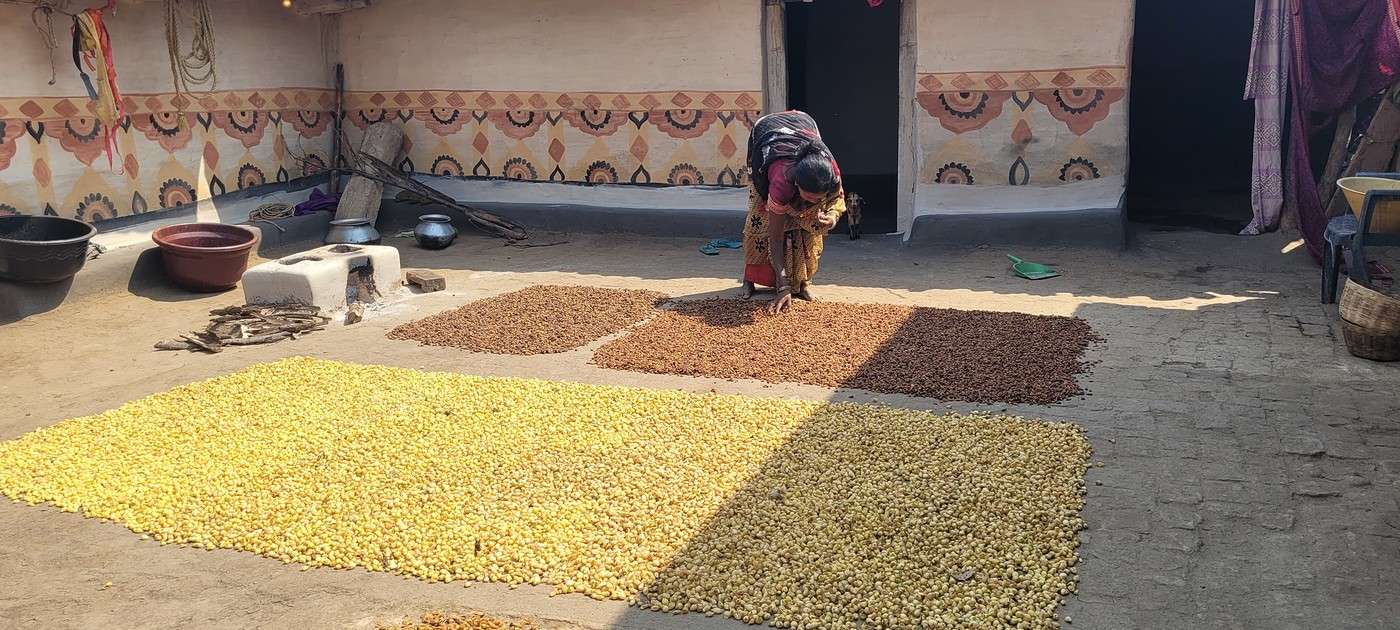
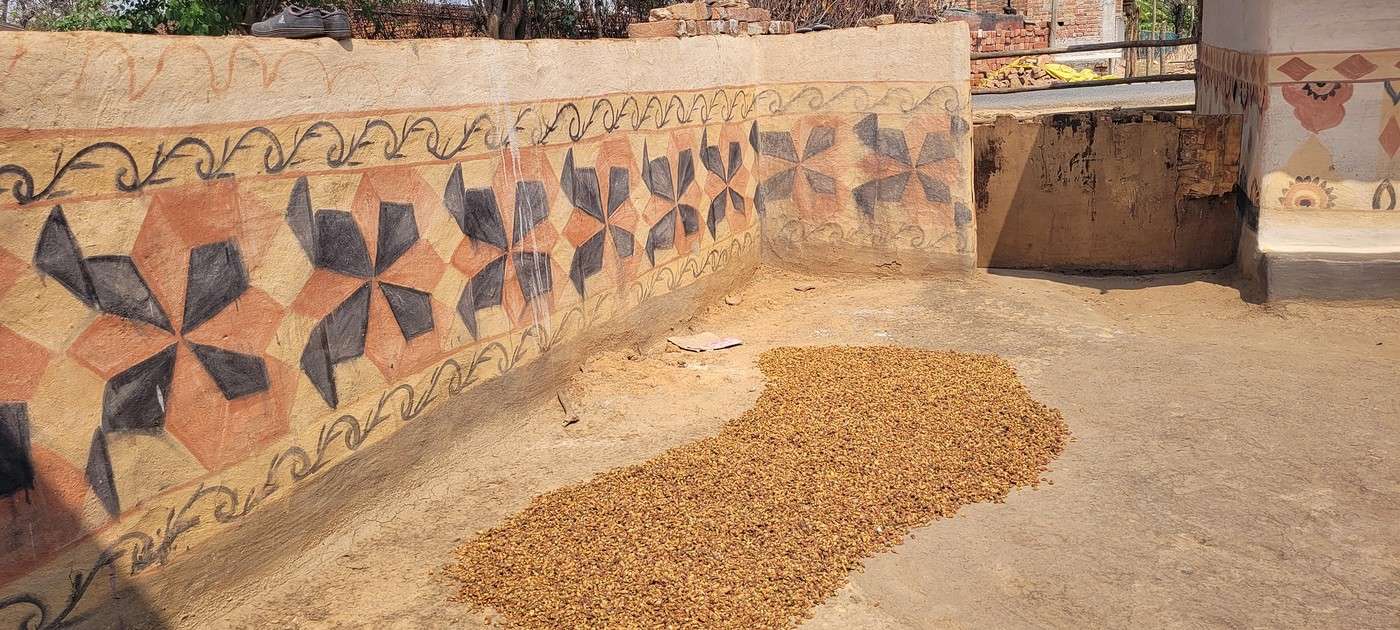
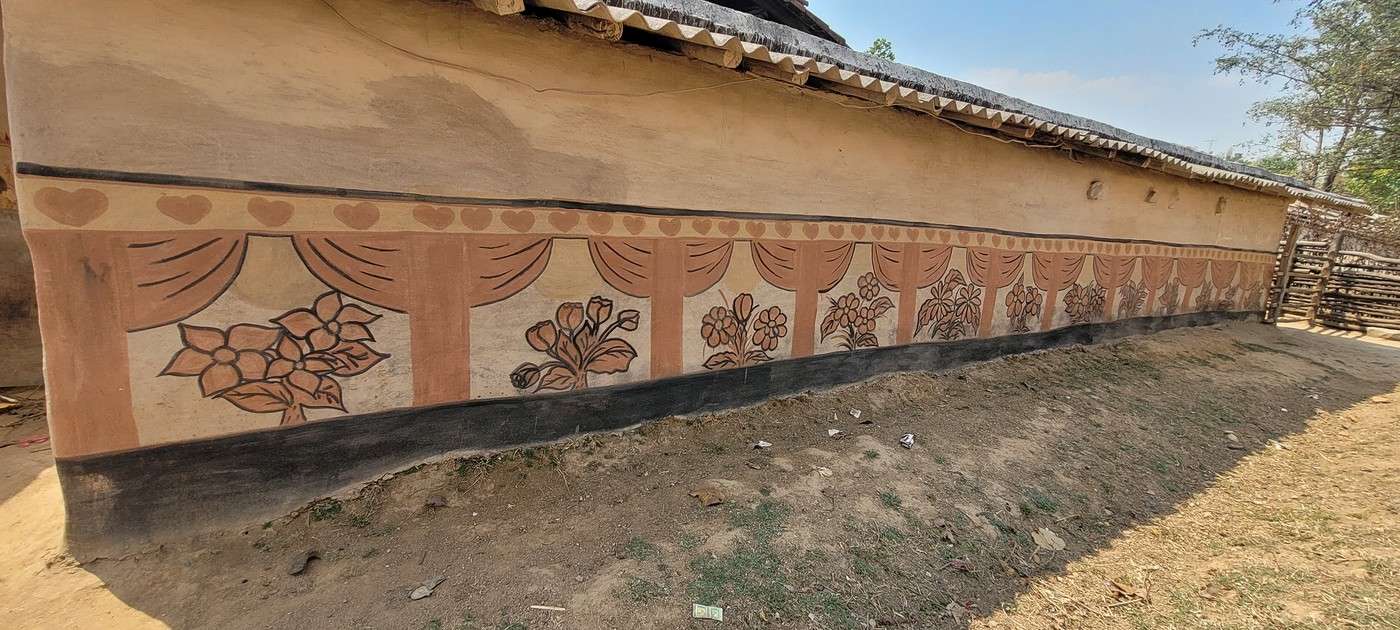
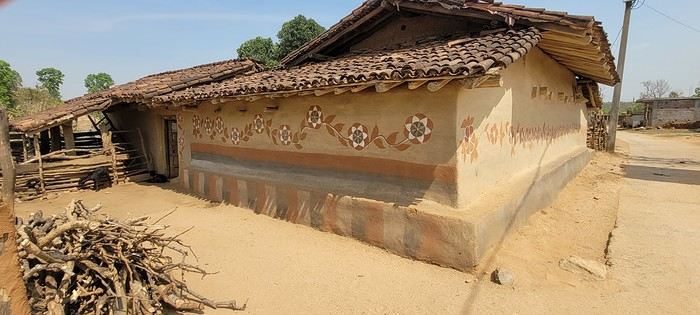
Stepping back a bit, the entire house appears as a work of art. A continuous frieze runs along the walls, alternating stylized animals—cows, bulls, guard dogs—and floral and geometric patterns. It’s a true open-air art gallery, alive and inhabited.


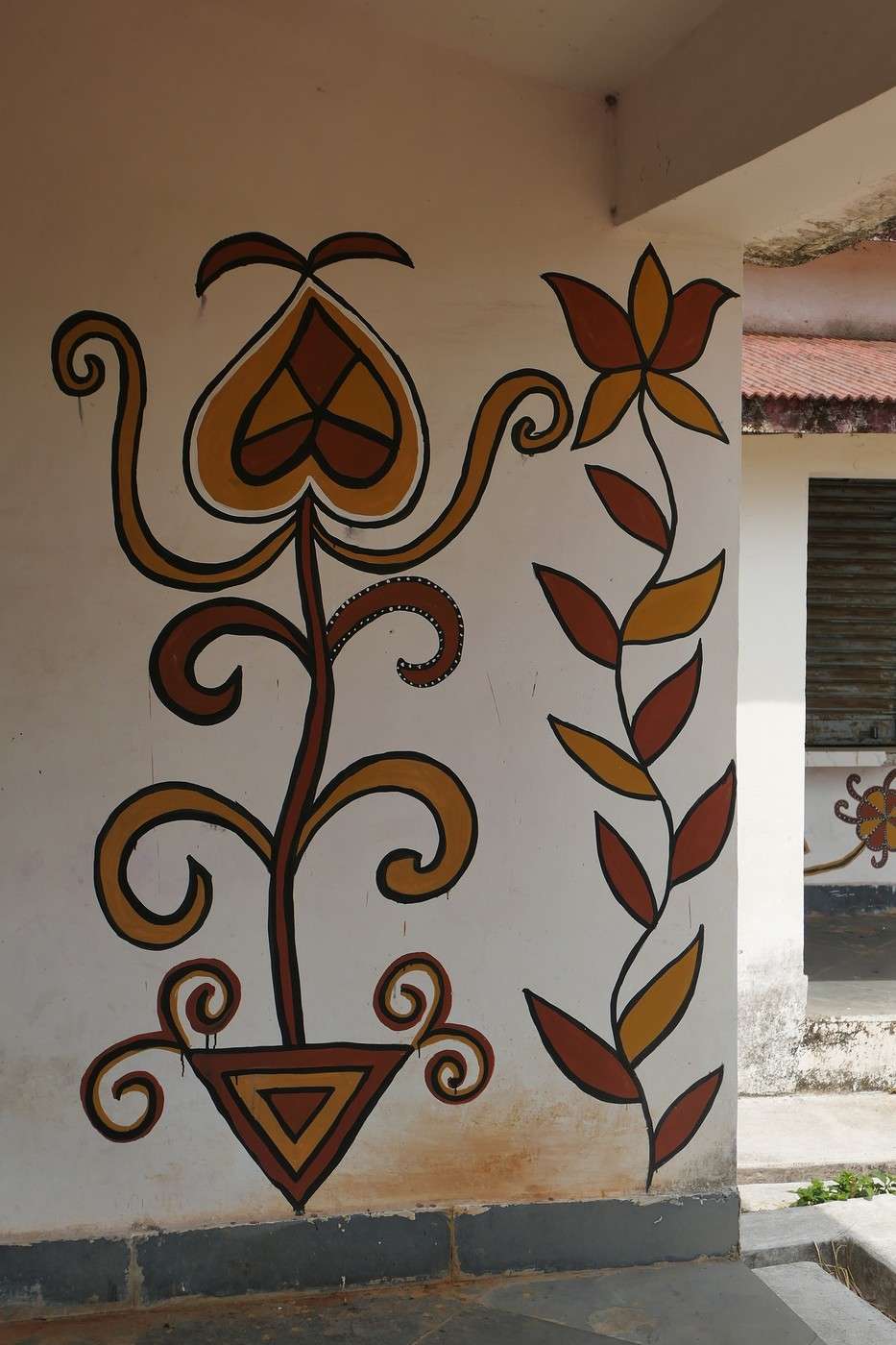
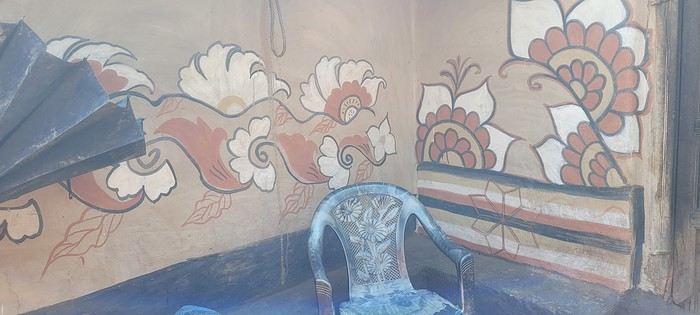
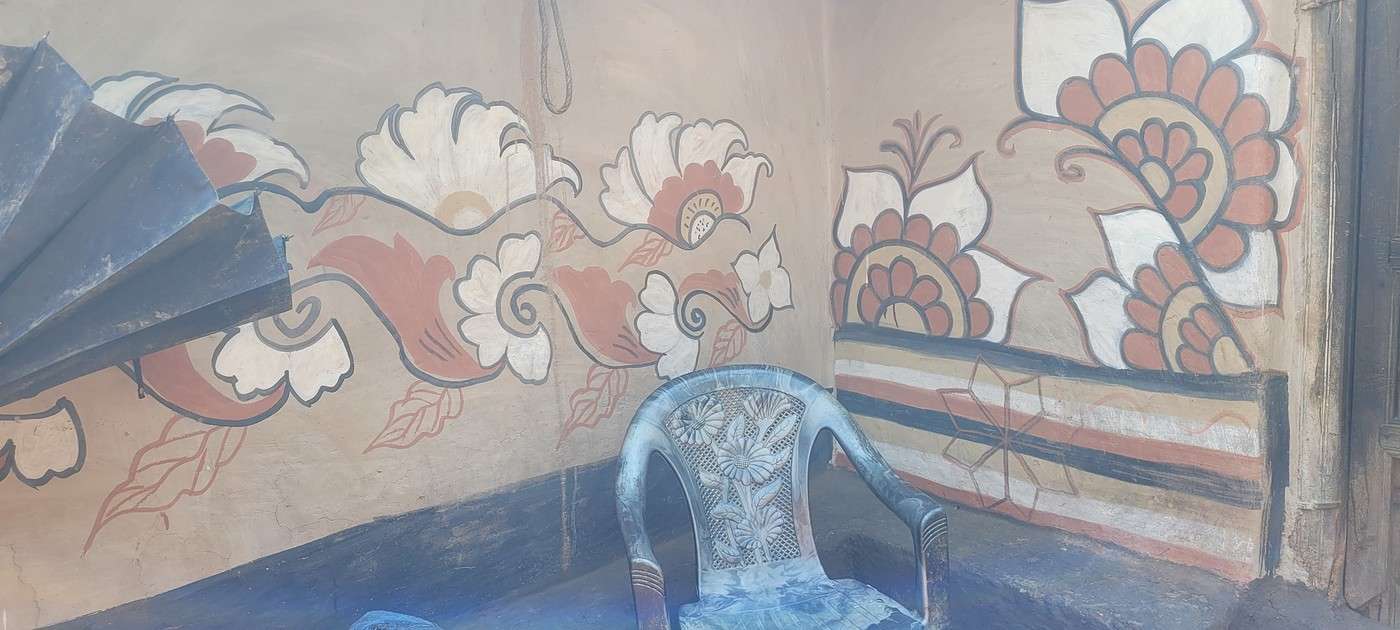
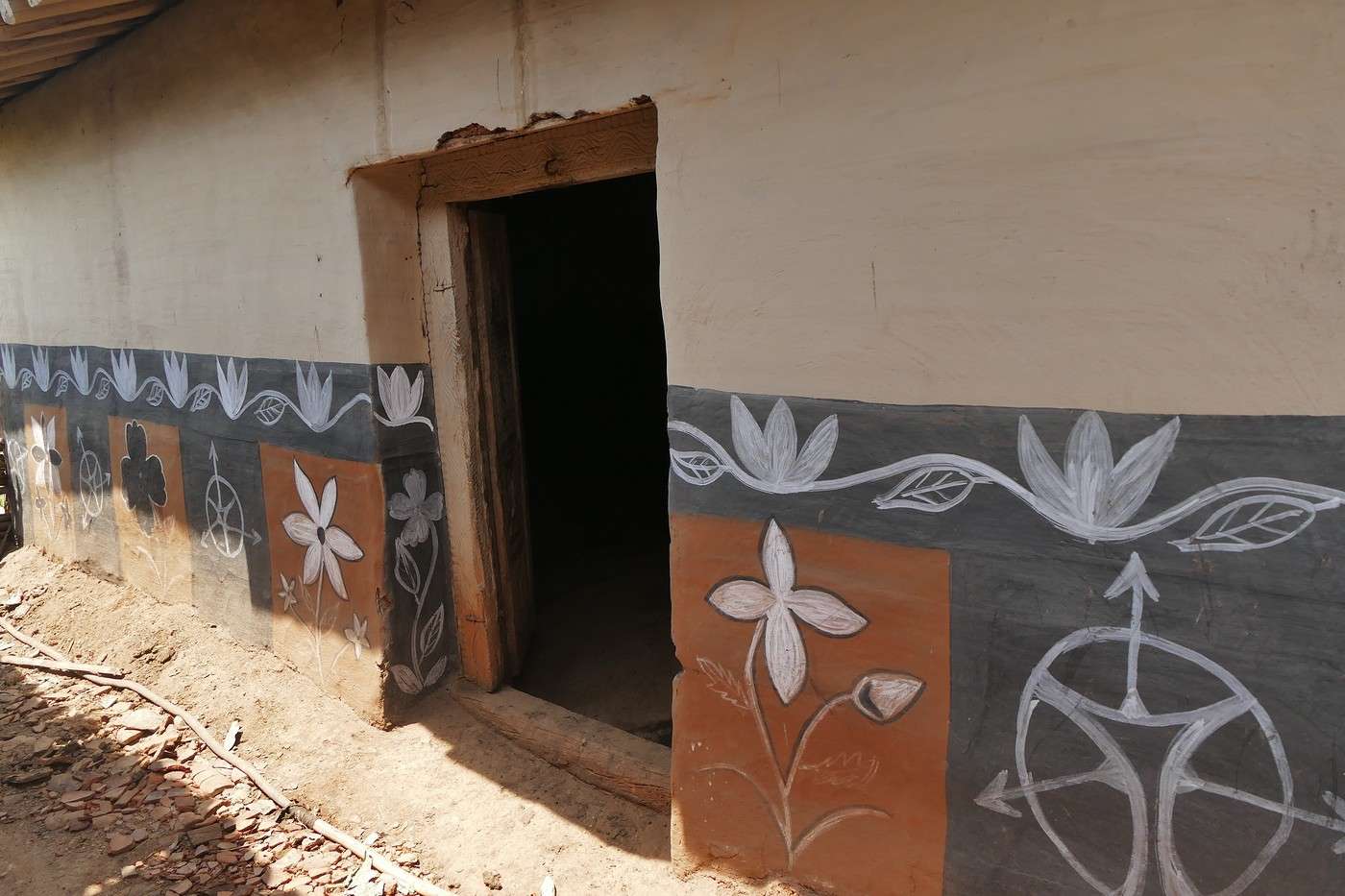
Then, as we move from village to village, I discover another universe: Santhal art. The contrast is striking. Here, colors dominate, shapes multiply, and scenes tell stories. Where Khovar is monochrome and nuptial, where Sohrai celebrates the earth and harvests, Santhal art is narrative, exuberant, and deeply rooted in daily life. The walls become stories: scenes of dance, hunting, representations of the clan and nature. Some images particularly stand out, like these symbolic unions between fish and birds, or these animal couples sharing the same head. Strange and fascinating images that reflect a cosmic harmony, a worldview where everything is connected. Santhal art goes beyond the walls of houses: it also extends to painted scrolls that recount myths, the afterlife, and festivals. Here, painting isn’t just decorative—it’s memory, transmission, and speech. Themes repeat, but always with infinite variations. Union and fertility appear through entwined human or animal couples, symbols of the clan’s continuity. The forest, ever-present, unfolds into trees, birds, and fish, embodying ancestral wisdom and respect for natural forces. I linger over certain motifs. Long flowering vines—the lata—snake across the walls. Large stylized flowers, close to the lotus or hibiscus, bloom there, connected by continuous waves. The vine symbolizes the continuity of life, growth, and the bonds between generations. The flowers, meanwhile, evoke joy, purity, and welcome.


Further on, inverted motifs and repeated semicircles create a sort of visual barrier, almost protective. The downward-pointing tips evoke the earth and feminine fertility, while the undulations recall the movement of water. At the center, the outdoor kitchen—the chulha—fits naturally into the composition. Here, art doesn’t separate from life: it frames daily gestures and essential activities.


Another motif catches my attention: a textured cross shape with four branches, evoking a wheel. They tell me it’s the chakra, the wheel of time and seasons. It symbolizes the eternal cycle of nature—sowing, harvests, monsoons—while above, wavy lines represent the sacred rivers, essential to life. Finally, some newer elements appear, signs of a subtle but real evolution. The art continues to live and adapt without ever breaking from its roots.


As we move from village to village, I realize these walls tell much more than artistic traditions. They speak of the deep connection between the inhabitants, nature, the seasons, and their ancestors. They turn every house into a story, every facade into a living memory.

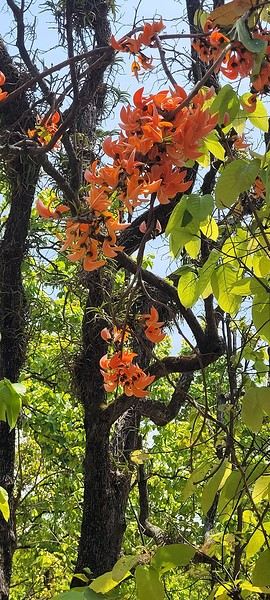
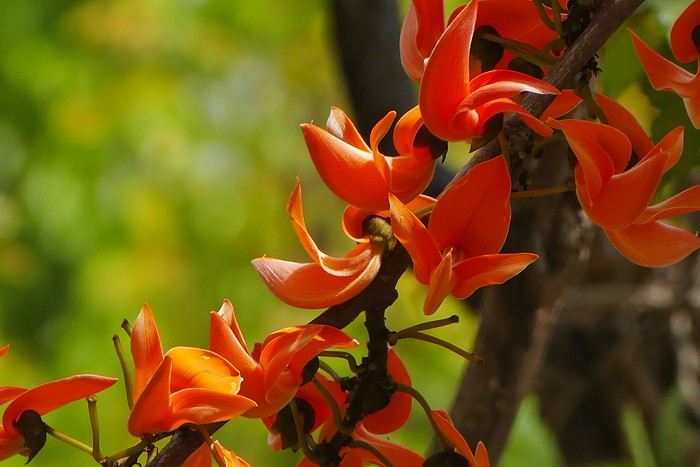
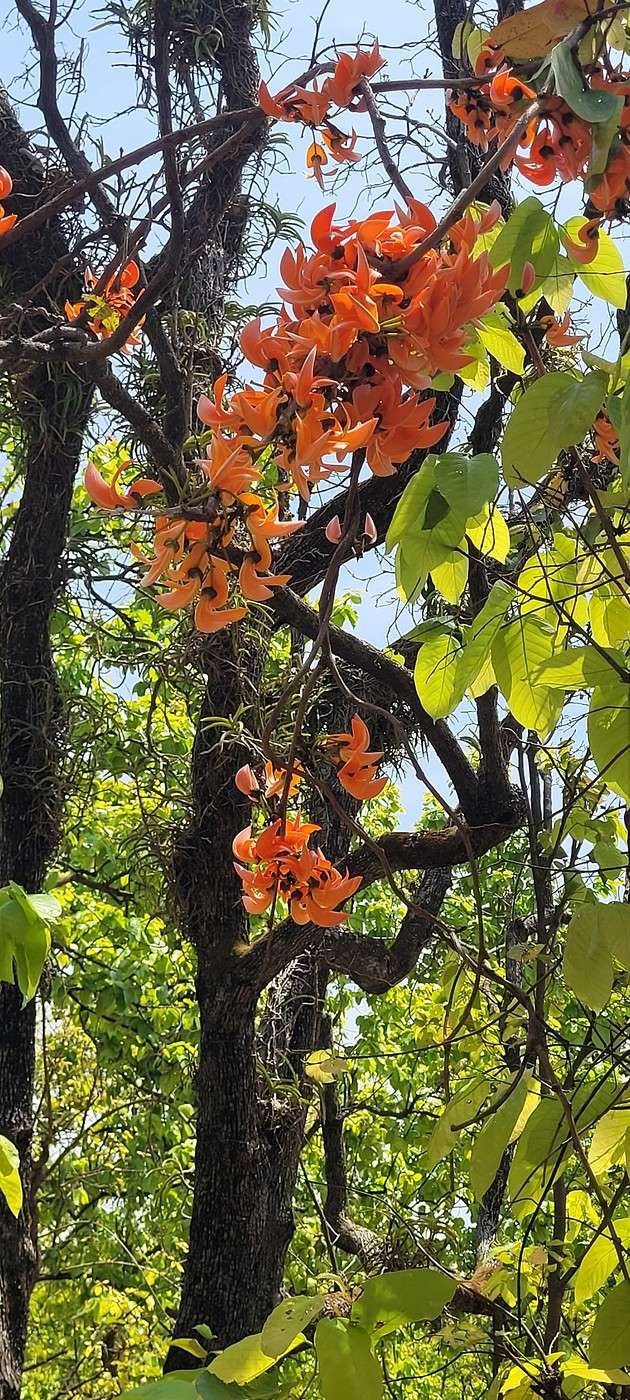
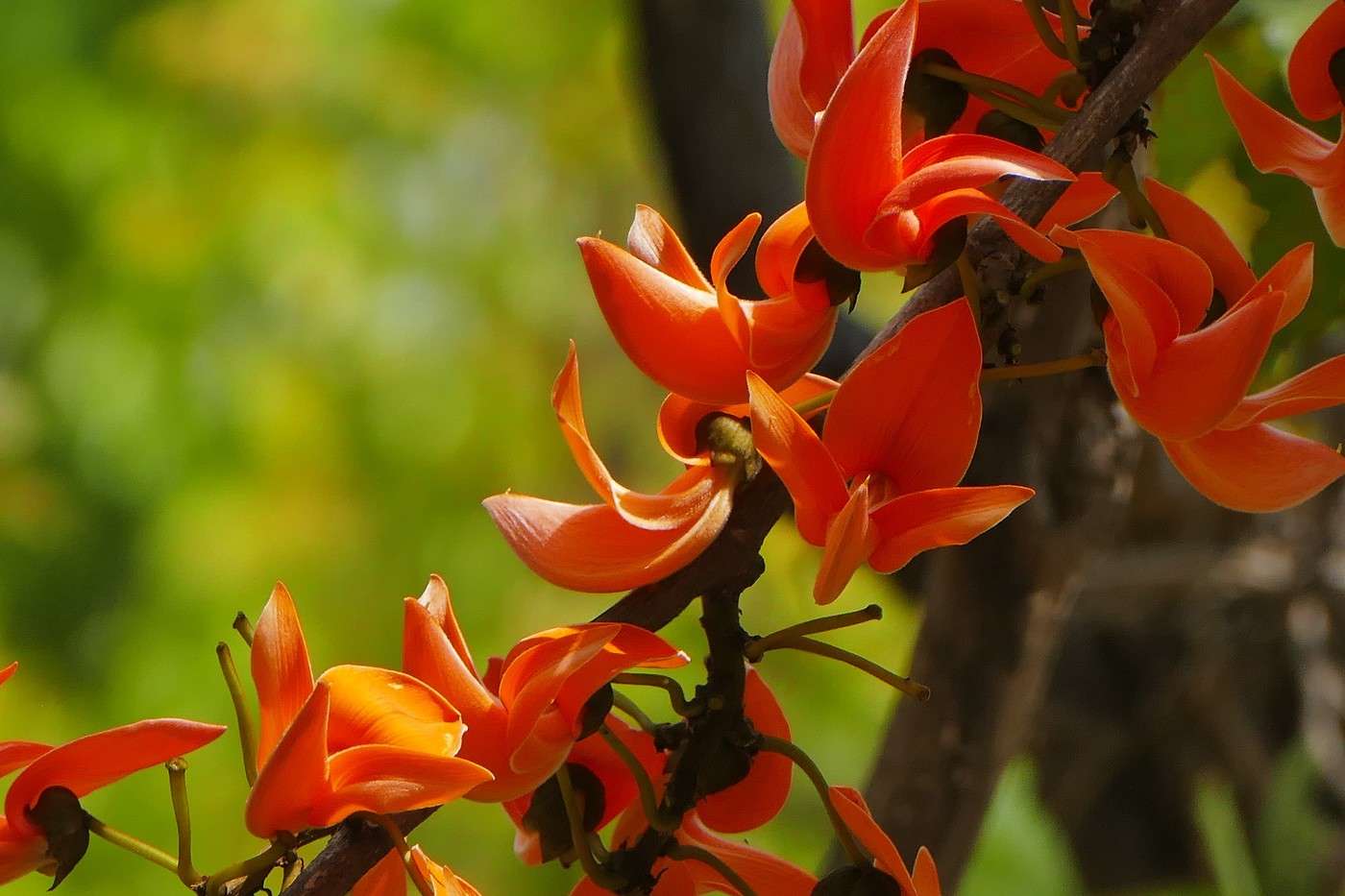
We take narrow paths to reach these villages lost in the middle of sal and blooming palash forests. The journey itself is already an immersion. The light filters through the foliage, and little by little, I understand that these trees aren’t just scenery—they’re an essential presence. For Adivasi communities, the tree is much more than a landscape element: it’s an ancestor, a provider of life, a sacred symbol. The sal tree, in particular, holds a special place. It’s the most sacred tree. While the mahua nourishes the body and the palash awakens the senses, the sal shelters the spirit. It embodies spirituality, cultural identity, and the tribe’s endurance. It’s said to symbolize moral uprightness, resilience, and the strength of the soul. Beside it, the mahua and palash trees rhythm daily, ritual, and artistic life. Mahua flowers, carefully gathered and dried in inner courtyards, are a symbol of abundance and resilience. They evoke nature’s generosity and the tribe’s ability to live in harmony with it, despite hardships. The palash, meanwhile, doesn’t go unnoticed. Its orange-red color literally sets the forest ablaze this season. It’s called the flame of the forest. The official flower of Jharkhand, it heralds spring, renewal, and the triumph of life over death. Where the mahua evokes grounding and protection of the home, the palash brings light, passion, and a joyful energy that permeates all of nature.


I think back to the paintings we’ve seen. When a Santhal woman paints her wall, nothing is left to chance: the mahua represents food, stability, and the memory of ancestors; the palash, meanwhile, infuses color, life, and the energy of natural cycles. The landscape becomes hilly, and in the distance, the first houses appear. They’re remarkably clean, as are the surroundings. Here, closeness to nature isn’t just a concept—it’s lived daily, with a strong awareness of the need to respect it. But I also notice a change. Since the first day, I’ve seen it from village to village: brick houses are gradually replacing earthen ones. And with them, the painted walls slowly disappear. Fewer surfaces to decorate, fewer visible traditions. An inevitable evolution, no doubt, but one that leaves a slight melancholy.


Villages around Hazaribagh in West Bengal

Aleph240758 · 2026-07-30

We’re stopping for lunch at a small restaurant—a simple break in the middle of this packed day—before hitting the road again toward other villages—villages even Adam hasn’t visited yet. I love that idea: moving toward the unknown, even for him. As soon as we arrive, I notice something different right away. The walls tell a different story. The friezes have changed. They don’t look like the ones we’ve seen so far.


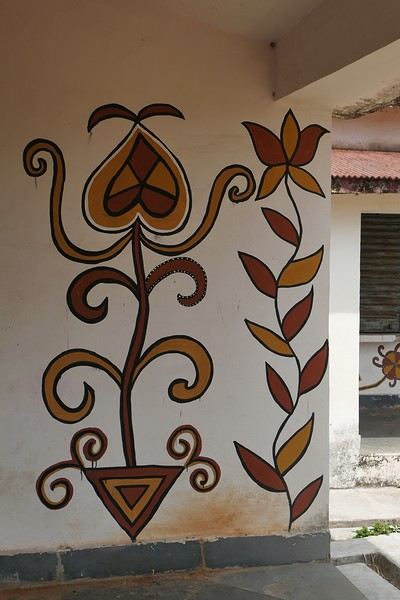
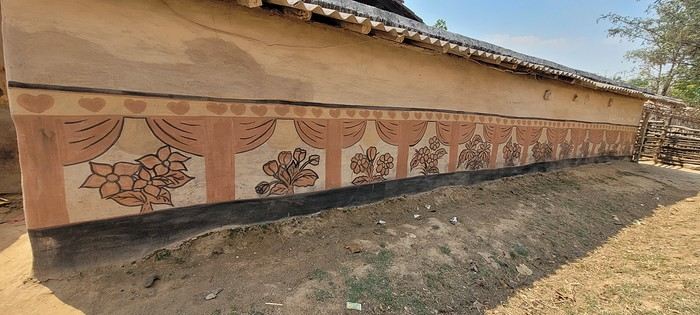
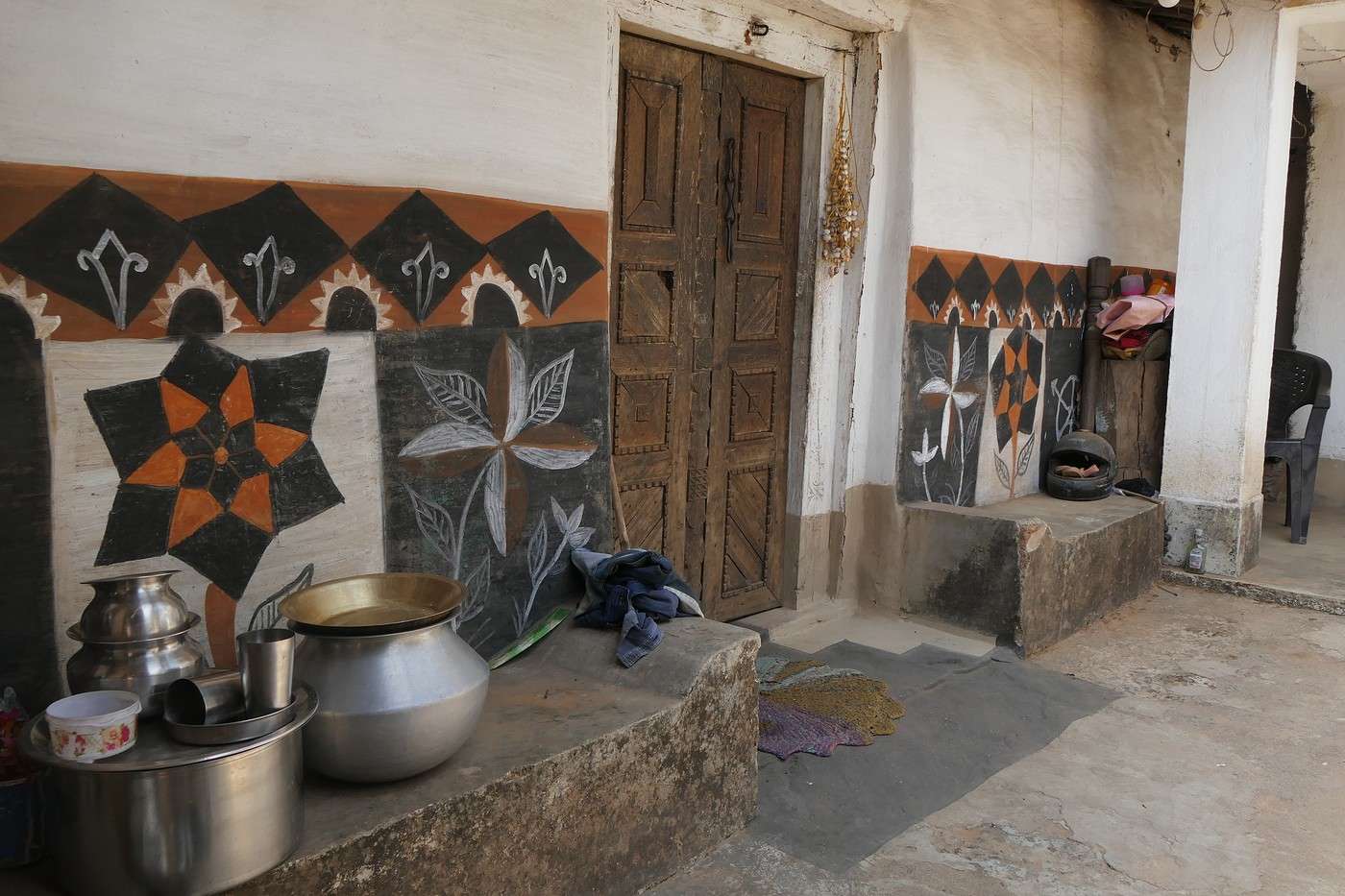
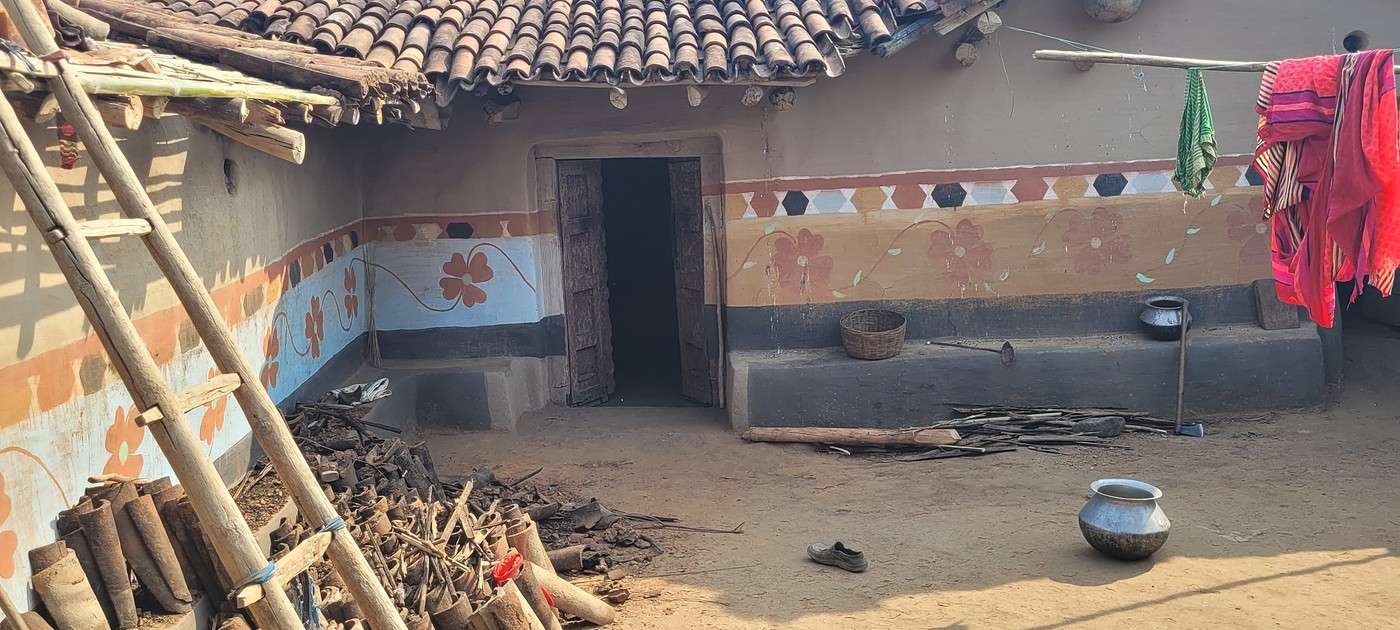
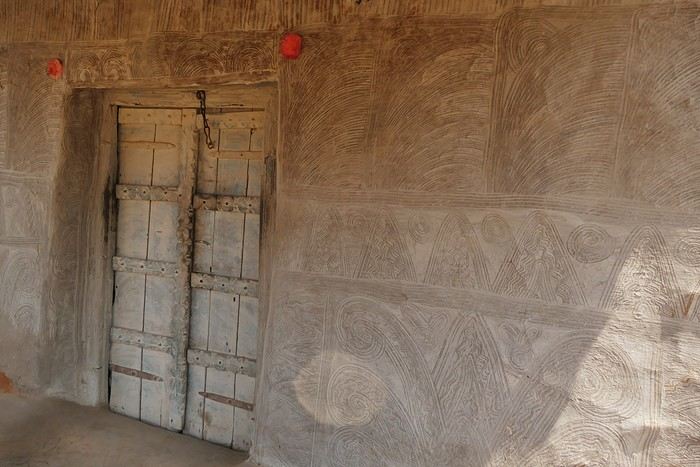
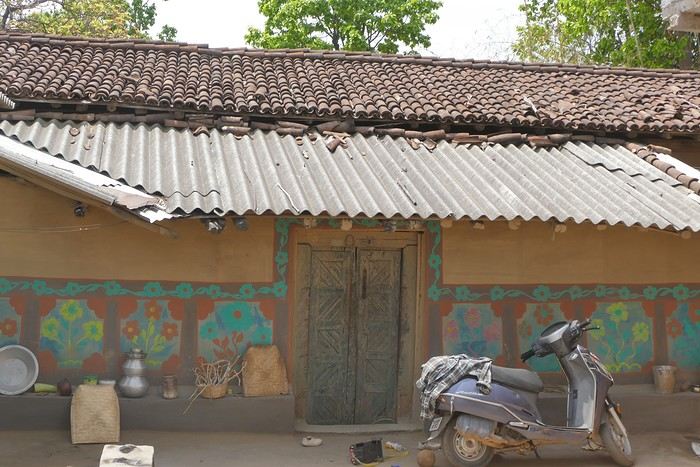
I stop in front of a first house, bathed in soft light. The wall, a warm ochre, is structured by wide painted bands that frame the facade carefully. Inside these bands, stylized flowers bloom, simple but expressive, with rounded, regular petals. The colors remain harmonious, without excess, as if each shade had been applied with restraint. At the center, an old wooden door draws the eye. It’s slightly worn, marked by time, and contrasts with the freshness of the paintings around it. All around, the patterns seem to form a symbolic protection, a kind of sacred threshold between inside and outside. The whole thing gives off an impression of instinctive balance, almost silent.


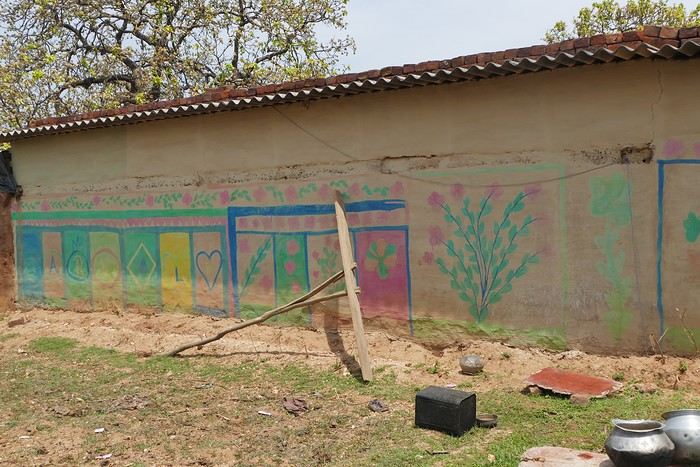
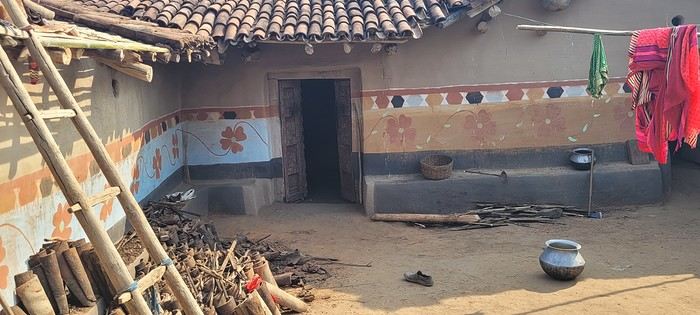
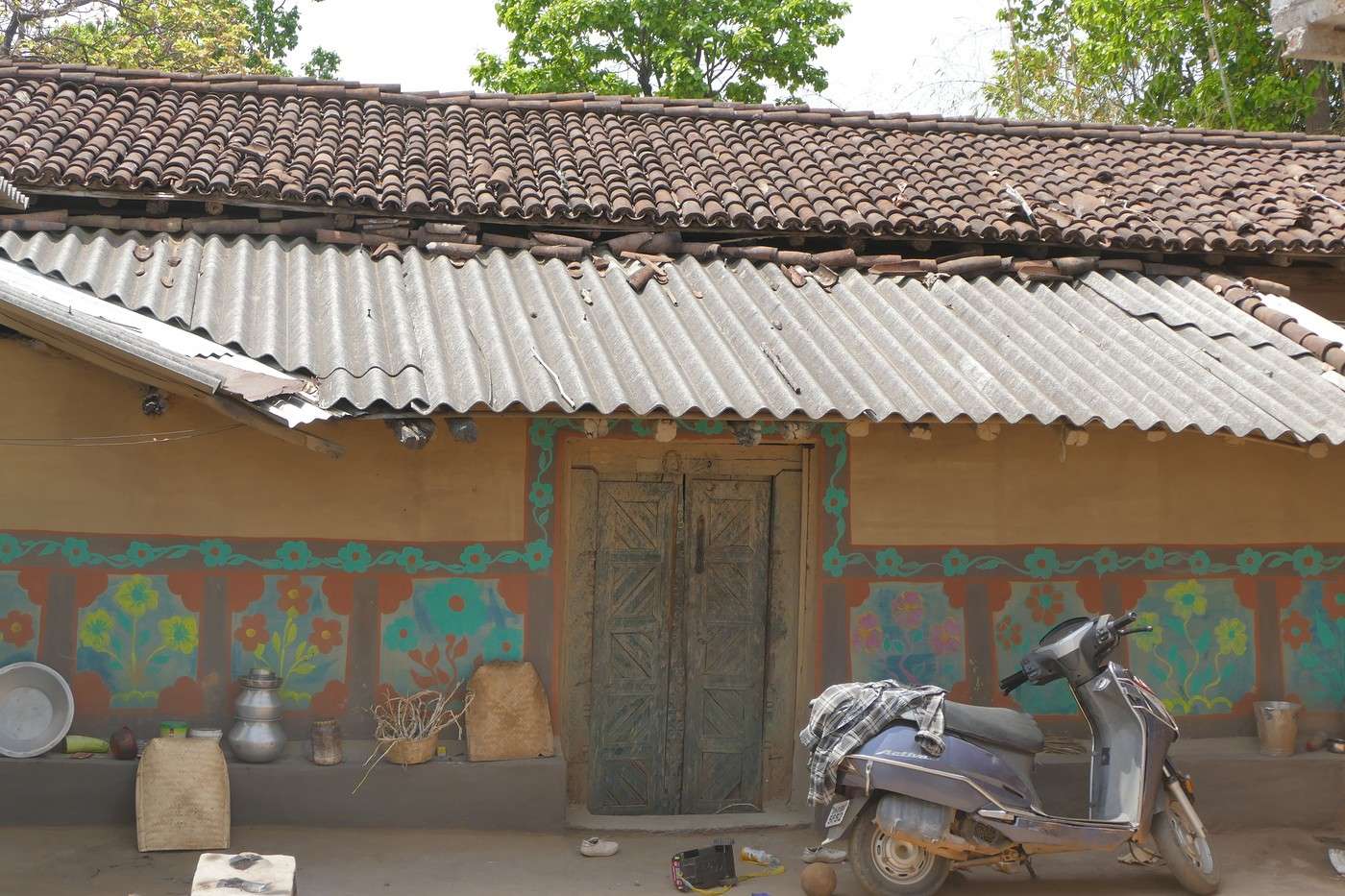
A little further on, another house has a very different presence. Here, the colors are bolder, more assertive. The wall is animated by a continuous frieze made up of successive panels. Each section is distinct, like a series of small juxtaposed paintings. You can see floral motifs, but also more pronounced geometric shapes, sometimes repetitive, creating a visual rhythm that’s almost musical. The shades—blues, greens, pinks—seem to interact with a certain boldness. At the foot of the wall, everyday life is right there: a few objects placed directly on the ground, utensils, and especially that scooter leaning against the facade, which anchors the scene in the present. This contrast between the mural art and modern objects gives the whole thing a very lively, almost familiar dimension.


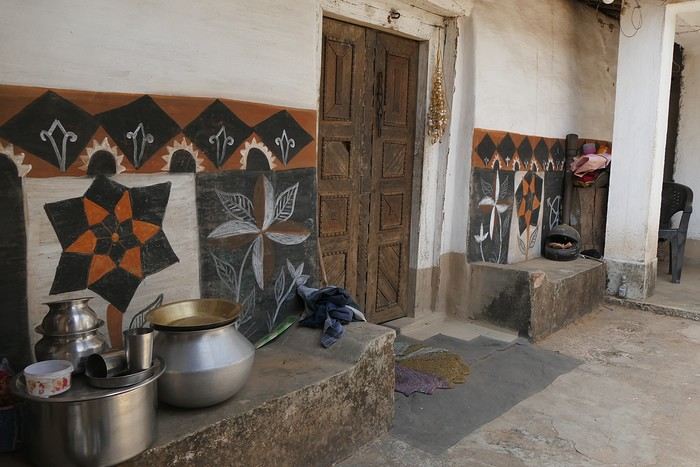
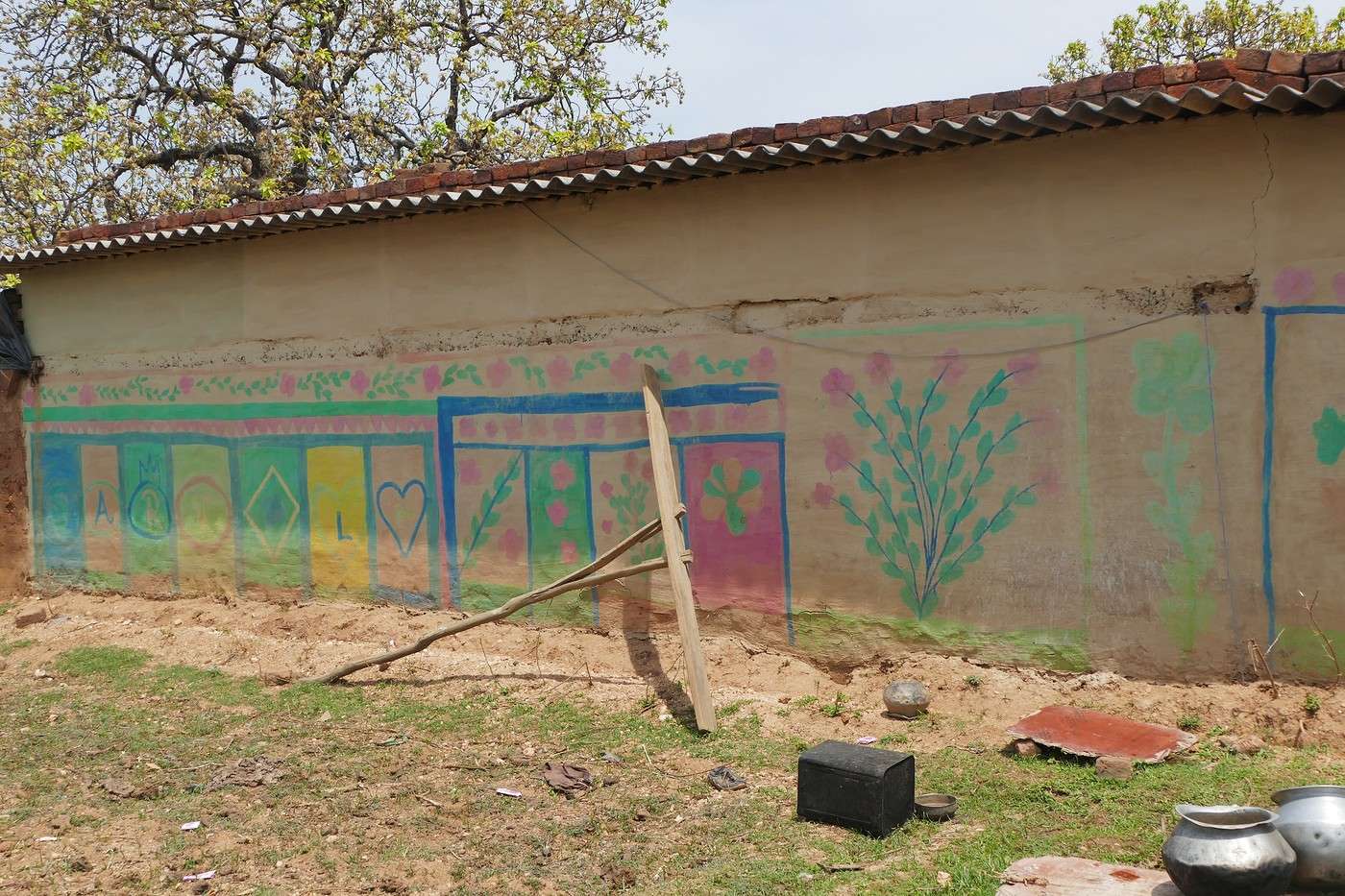
Further on, I discover a facade that intrigues me even more. The motifs here are more enigmatic, less immediately readable. They repeat with precision: structured geometric shapes, sometimes inverted, creating an almost hypnotic effect. The lines are sharp, the contours bold. You can sense a compositional intent, a precise organization of space. These symbols seem to follow their own logic, perhaps tied to a particular tradition or a more personal interpretation. Unlike the more spontaneous flowers on the other houses, everything here seems more codified, almost abstract. This gives the facade a different presence, more mysterious, as if it carried a language I don’t yet understand.


What strikes me as I move from house to house is this diversity within such a close territory. From one wall to the next, the styles change, the colors vary, the intentions shift. Each facade becomes a unique expression, a personal way of telling the world’s story.


I keep observing, paying attention to these details that gradually come together. Behind these new friezes, I sense influences, evolutions, maybe even a desire to experiment. And yet, despite these changes, something remains: that deep need to decorate, to protect, to tell stories. These walls, once again, speak. And I understand they’ll never stop doing so, as long as someone takes the time to look at them.


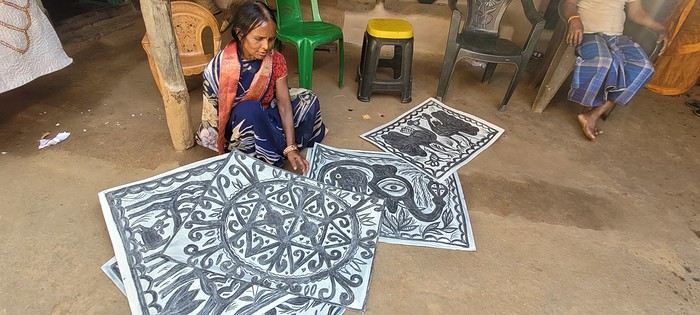
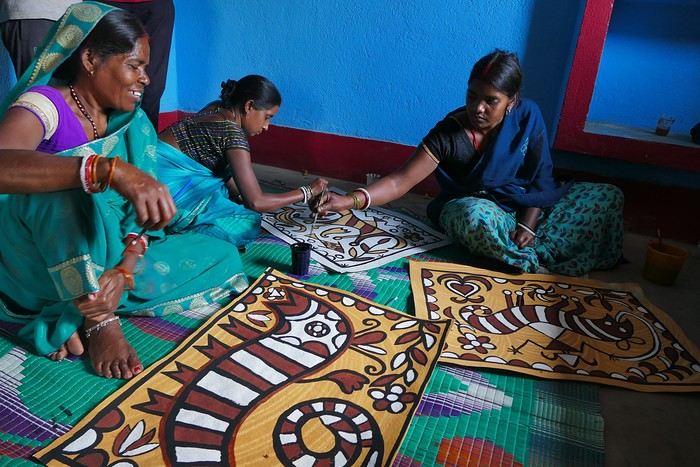
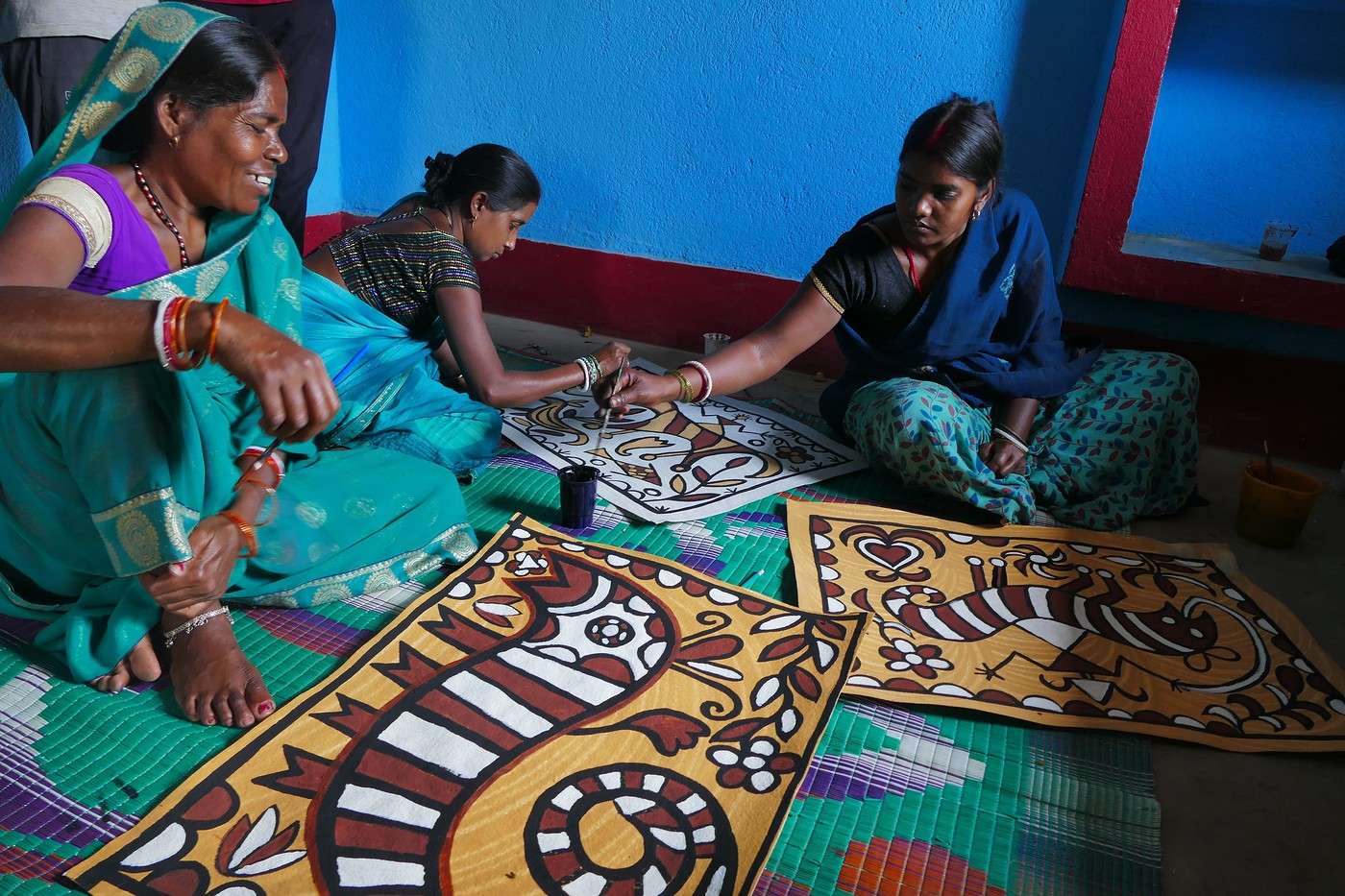
We stop by Devi’s place again. In one room, several women are sitting on the floor, gathered in a circle, focused on their work. In front of them, large sheets of drawing paper gradually come to life with familiar shapes: animals take form under their precise movements. The lines are confident, fluid, as if each movement were guided by an ancient memory.


I linger to watch them. There’s no staging, no effort to explain—just the calm of the work, the repetition of gestures, and that silent transmission passing from one to another. Time seems suspended. We stay there a long moment, almost without speaking, simply watching these figures come to life, continuing, in their own way, the paintings on the walls. Then it’s time to leave. My stay in Hazaribagh ends after this packed day, filled with colors, encounters, and discoveries. An unforgettable day, one I don’t even try to hold onto entirely—I already know it’ll stay with me, intact, like a gentle imprint I now carry in my heart.

Villages around Hazaribagh in West Bengal

Partirester · 2026-07-30

Thank you, Marie Jo, for this poetic, colorful, fragrant, joyful journey to the heart of these villages where it seems paradise has settled—at least through your eyes, your emotions, and the smiles of these women and their warm welcome. How could we not be marked for life? These symbolic paintings and this cosmology remind me of the Dogon country...

Villages around Hazaribagh in West Bengal

Aleph240758 · 2026-07-31

Thanks, Christine, for your comments. You’re the only one who chimed in—this topic’s never been covered before, so I guess people only care about the basics on this forum these days. 🙂 Anyway, I’ll finish the travel journal; I’ll have some great memories from it. 😉

Villages around Hazaribagh in West Bengal

Kola · 2026-07-31

If you no longer go out to meet the world, the world will come to you.

If you ignore its hidden wonders, remote places, tucked-away corners, and preserved traditions, they’ll burst forth here in vibrant colors and a thousand astonishing details—thanks to an intrepid and tireless traveler, Indomaniaque, who always returns to the same place without ever taking the same journey twice.

From this vast country so dear to your heart, you bring back a piece of its lesser-known history each time: meticulously documented stories, anecdotes, snapshots of life that come alive through your keen eye as a delicate anthropologist, and images... small, colorful fragments that slot into the previous ones, waiting for the next. Like the irregular pieces of a puzzle that doesn’t need to be finished to reveal the richness of its final design.

Villages around Hazaribagh in West Bengal

Calaf · 2026-07-31

Hello,

I’ve been following your wanderings through these little-known regions/states with great interest and joy.

You find artistic—and spiritual—wonders in the most remote places, far from any hustle and bustle, on the simplest of surfaces.

A huge thank you for introducing me to places, landscapes, and ways of life I never knew existed.

Calaf

Villages around Hazaribagh in West Bengal

Chris70 · 2026-07-31

Hi Marie Jo

I started writing a long message yesterday to tell you how amazing your posts about the Hazaribagh region are—both the photos and your writing—but the message glitched right before sending, just as I was fixing typos!

I’ve been following your travels closely, as you can probably guess, though I don’t reply often. I’m already excited to see these wonders for myself soon. Thanks for exploring this still-undocumented state for us.

Your trip isn’t over yet, so I can’t wait for your next post...

Villages around Hazaribagh in West Bengal

Chris70 · 2026-07-31

To add to the previous message, it’s clear you were deeply moved by your stay in Hazaribagh and would’ve happily extended your trip. Seeing those tribal houses in person—what a joy! What an emotion! I’ve admired two or three at the Bhopal museum, never imagining I’d get to wander among dozens in villages like you did. Maybe it was a completely different region of India because I think there are painted houses in many tribal areas. In Bhopal, women from various regions come back every two or three years to the Tribal Museum (it’s a gem, but you know that...) to repaint or redo the roofing, covering the walls with "cow dung." Some were there during one of my visits. I admired their skill without realizing the stories behind the designs.

Villages around Hazaribagh in West Bengal

Partirester · 2026-07-31

Hi Marie Jo, The VF members have woken up, and we all unanimously agree—your travel journal is STUNNING and takes us far from the ordinary, even if, in their own way, these worlds are extraordinary. Thank you for being the messenger of so much beauty and warmth...

Villages around Hazaribagh in West Bengal

Aleph240758 · 2026-07-31

Hello Marie Jo, the VF members have woken up, and we’re all unanimous— your travel journal is STUNNING and takes us far from the ordinary, even though, in their own way, these worlds are anything but ordinary. Thank you for being the messenger of so much warmth.

I’m sending a group message to thank you, Kola, Calaf, Chris70, and Partirester. I feel less alone😎 This place is so extraordinary and fascinating that I thought it was a shame—and sad—that no one seemed interested. Given how much time I spend devoted to it, it wasn’t exactly encouraging. Now I’m reassured—I can keep describing my discoveries.

Villages around Hazaribagh in West Bengal

Kate · 2026-07-31

I’m posting a group message to thank you, Kola, Calaf, Chris70, and Partirester. I feel less alone😎

I’m arriving too! I see this trip inspired your new avatar choice 😉

Villages around Hazaribagh in West Bengal

Aleph240758 · 2026-07-31

I'm on my way too! I see this trip inspired your new avatar choice [;) Hurry up😉 I wouldn't want to lose you. Yep, new avatar for a few months🙁

Villages around Hazaribagh in West Bengal

Partirester · 2026-07-31

Thanks, Marie Jo! Yes, keep making us dream... Especially since these women, whom you speak of so movingly, represent just a tiny part of what seems to bring them such unique serenity. You’ve really shone a light on them here—thank you so much!

Villages around Hazaribagh in West Bengal

Aleph240758 · 2026-08-01

Sunday, April 5 The night was exhausting. Like the night before, construction work started around 9 PM, but this time it went on all night. Impossible to get any sleep. The noise was infernal: circular saws, dull thuds... a continuous chaos. This time, I wasn’t going to let it slide. I needed to sleep. The reception was deserted, but I’d spotted where the receptionist was staying. I went and knocked loudly on his door. He assured me, in a not very convincing tone, that it would only last another half hour. Skeptical, I went back to my room. But the noise only got worse. I went back down. This time, he seemed to take the situation more seriously and made a call—probably to the hotel owner, who arrived quickly. He explained that the work was happening on the floor below and that he wasn’t responsible for it. Two hours later, the racket was still going. At the end of my rope, I went back to see them: I wanted a solution. Finally, they agreed to intervene and asked for the work to stop. Silence returned at last. I went back to my room and could finally fall asleep. At 6 AM, I left the hotel. Shashi, the driver, was already there to take me to the bus. He’s an excellent driver, both discreet and attentive. He’d been curiously interested in all the visits from the previous days. With Adam, they made a great team—complicit and efficient. While Adam explained the paintings and chatted with the women artists, Shashi took care of photographing and filming our visits. I really had a wonderful stay with them, and I hope to inspire other travelers to meet them. The day was dedicated to the trip to Santiniketan. Several buses were needed: a first change in Asansol, then in Durgapur, before arriving in Bolpur. From there, I took an auto-rickshaw to the homestay, located near the university. When I arrived, the owner seemed surprised: my reservation, made several months earlier, had been forgotten. Despite that, the welcome was warm. The room was simple but pleasant. I even had an entire floor to myself: a kitchen with a hot plate, a fridge, dishes, a living room, and a dining area. The house was very clean, comfortable, and at a very reasonable price.

Monday, April 6 Breakfast was included. The lady of the house brought me oil-soaked toast with an omelet. I couldn’t eat that. Seeing my hesitation, she kindly agreed to prepare a hard-boiled egg with toast, which was much more suited to my habits. Tea and coffee sachets were available, as well as filtered water. The house offered bikes for rent, and I rented one for the day. Before leaving, I had to test it in the driveway, then watch a very thorough demonstration of the lock. I even had to prove I understood how it worked before being allowed to leave. I rode along the university campus and passed by the Brahmamandir, an elegant and peaceful building.


A little further on, another circular building caught my eye: a coconut tree grew in its center, piercing through the roof—a surprising and poetic sight.


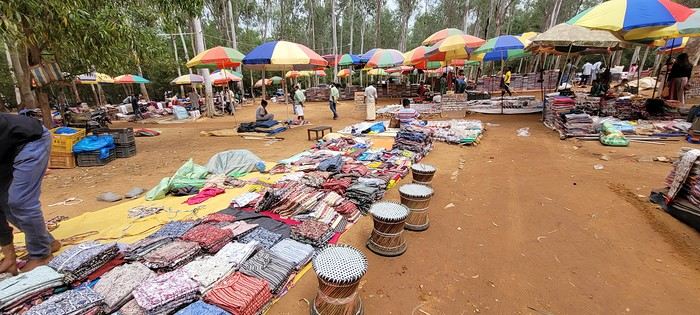
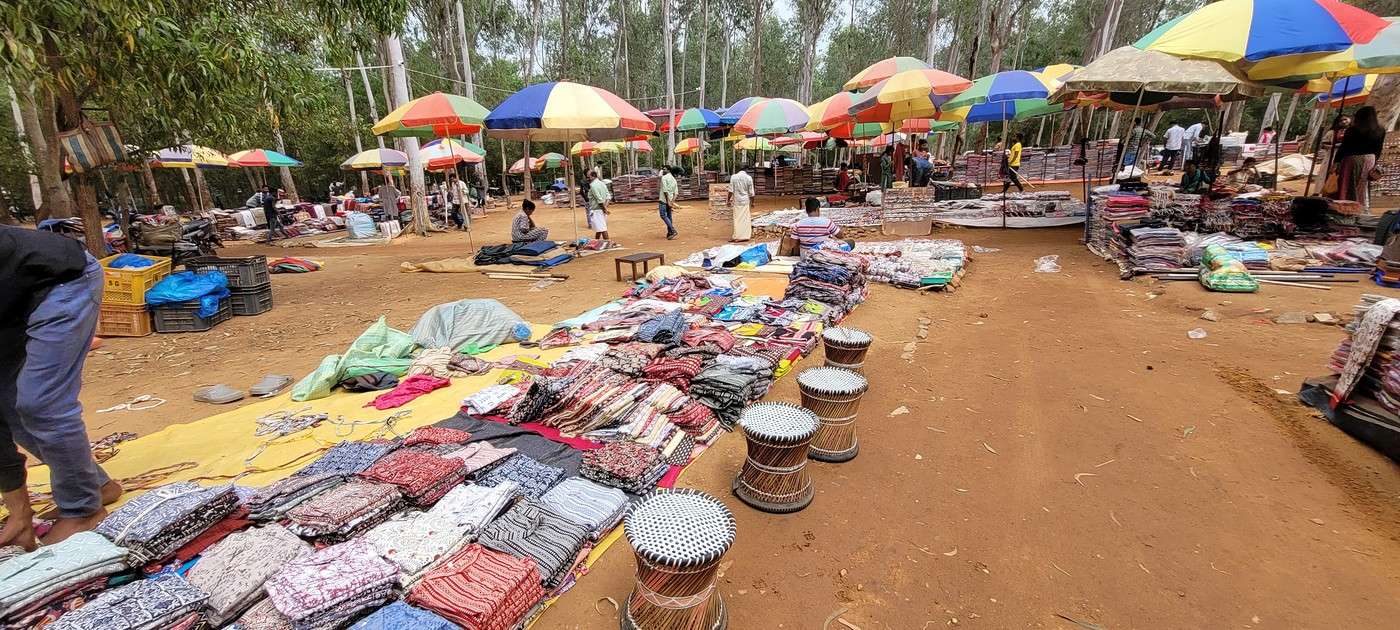
I continued on this road for about three kilometers to reach the Sonajhuri haat. The vendors were just setting up. Activity was still calm, but I knew it would pick up in the late afternoon, and I planned to come back. The market stretched along the road, in the heart of a sal forest. They sold saris, bags, clothes, decorative items... and you could also watch songs and dances by the Baul tribe.


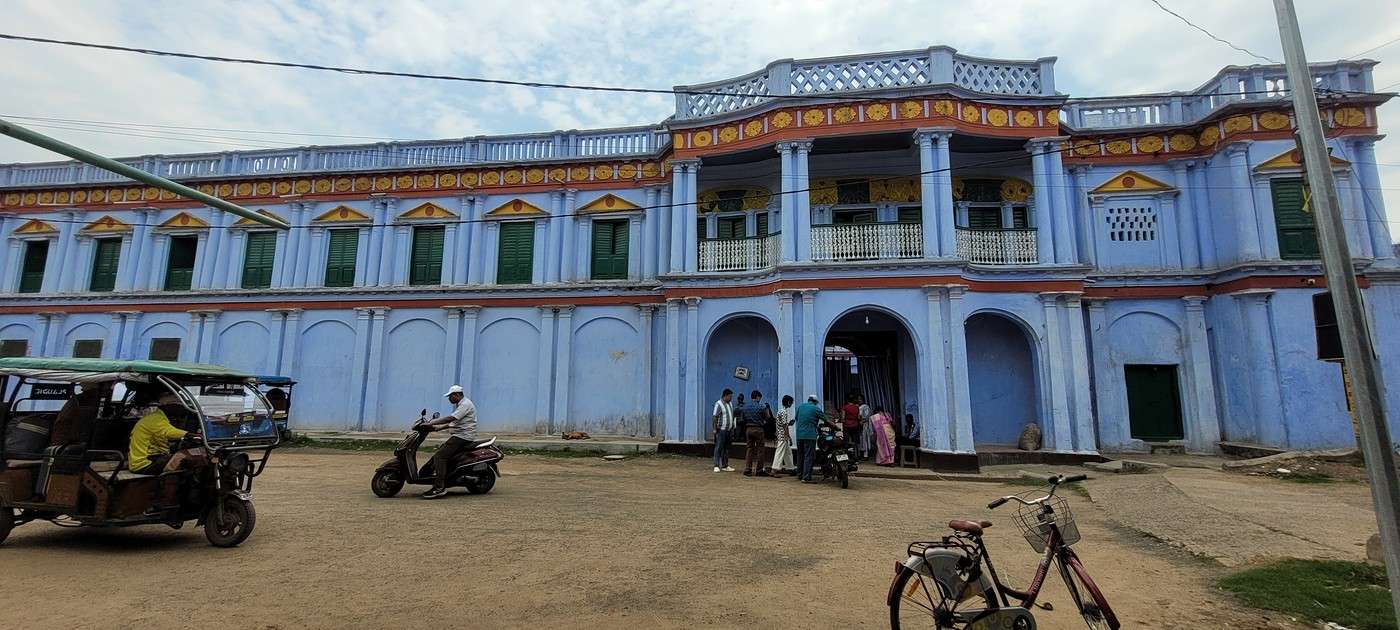
I carried on to Surul, on a quiet and pleasant road. I was pedaling peacefully when a motorcycle stopped beside me. A young couple called out to me curiously: where was I from, how old was I, where was I going... A few questions exchanged with smiles, then they thanked me warmly and left, clearly delighted by this brief encounter. It’s in these simple moments that I realize how unique this country can be. The Rajbari was easy to find. The building was immense and majestic, built by the Sakar family, wealthy merchants.


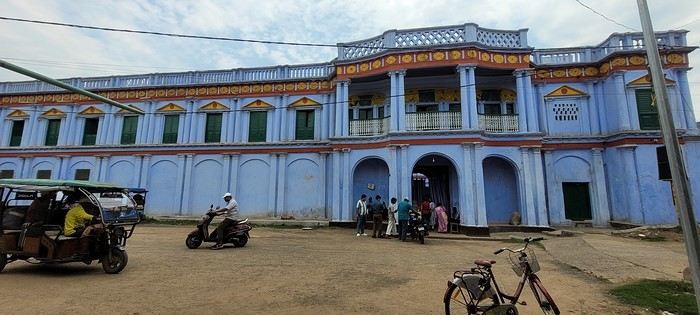
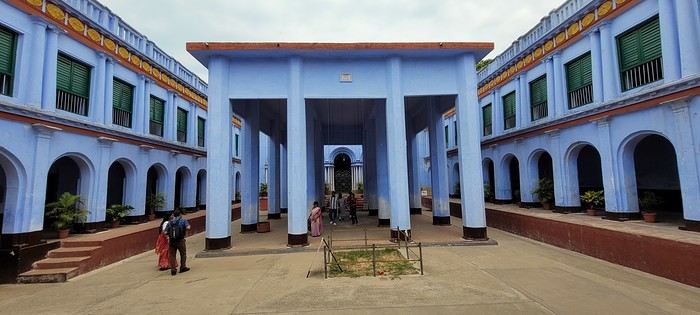
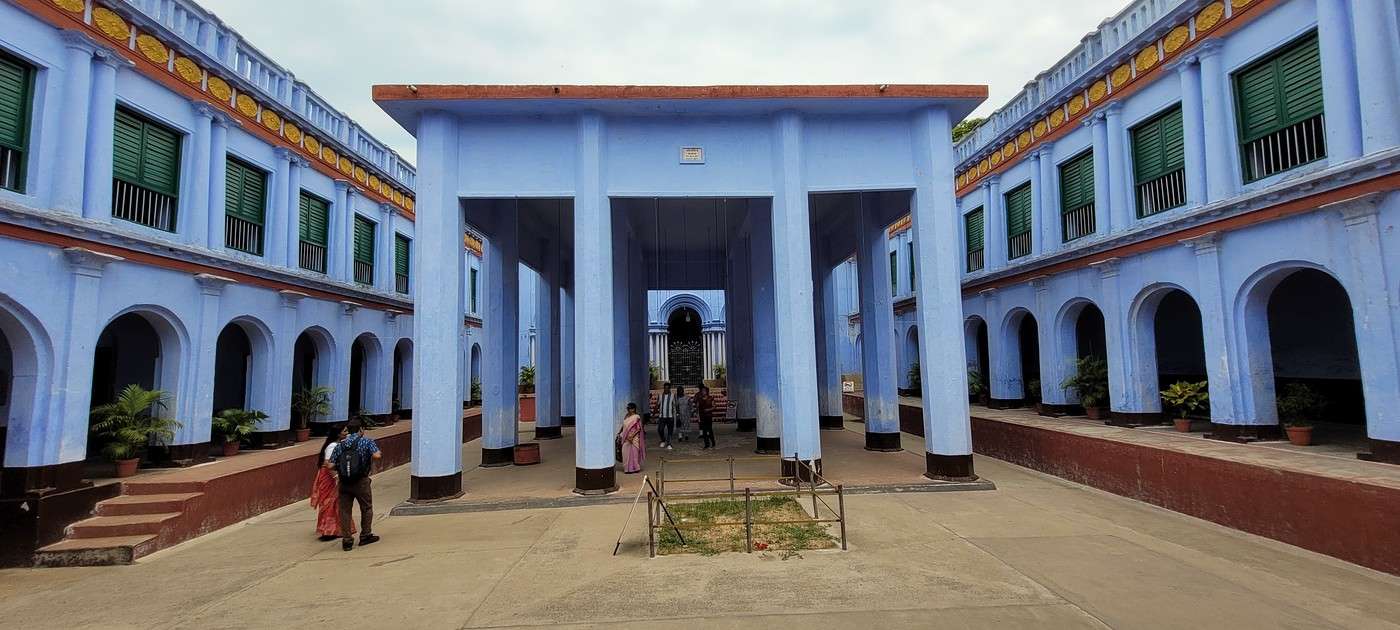
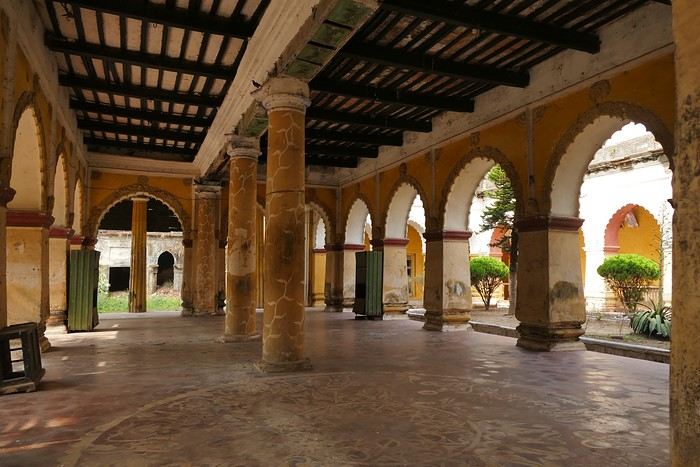
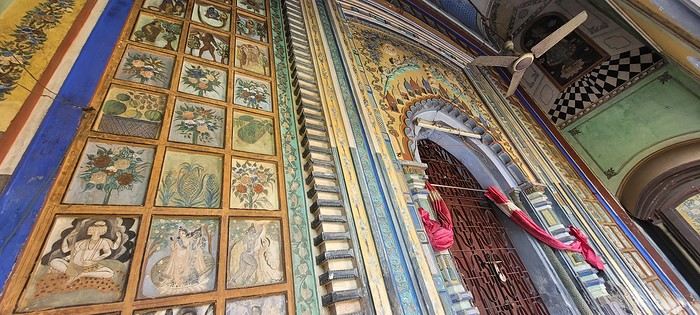
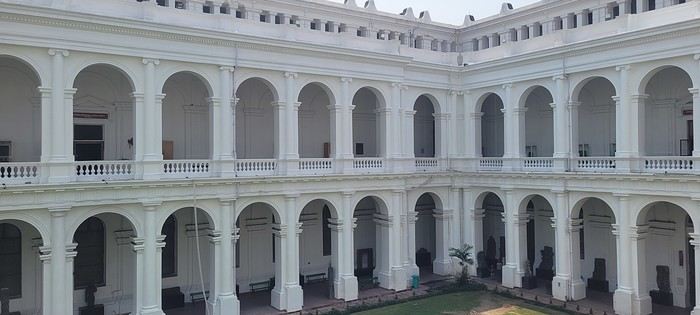
For a few rupees, you could enter and discover the inner courtyard, the Thakur Dalan, where Durga Puja celebrations take place. The courtyard, surrounded by pillars and arches, was bathed in bluish tones that gave it a soft and elegant atmosphere.


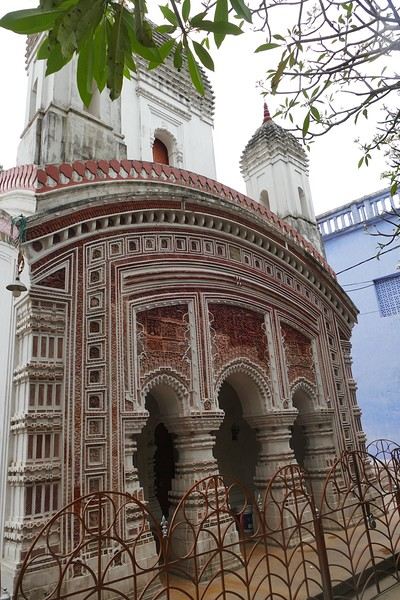
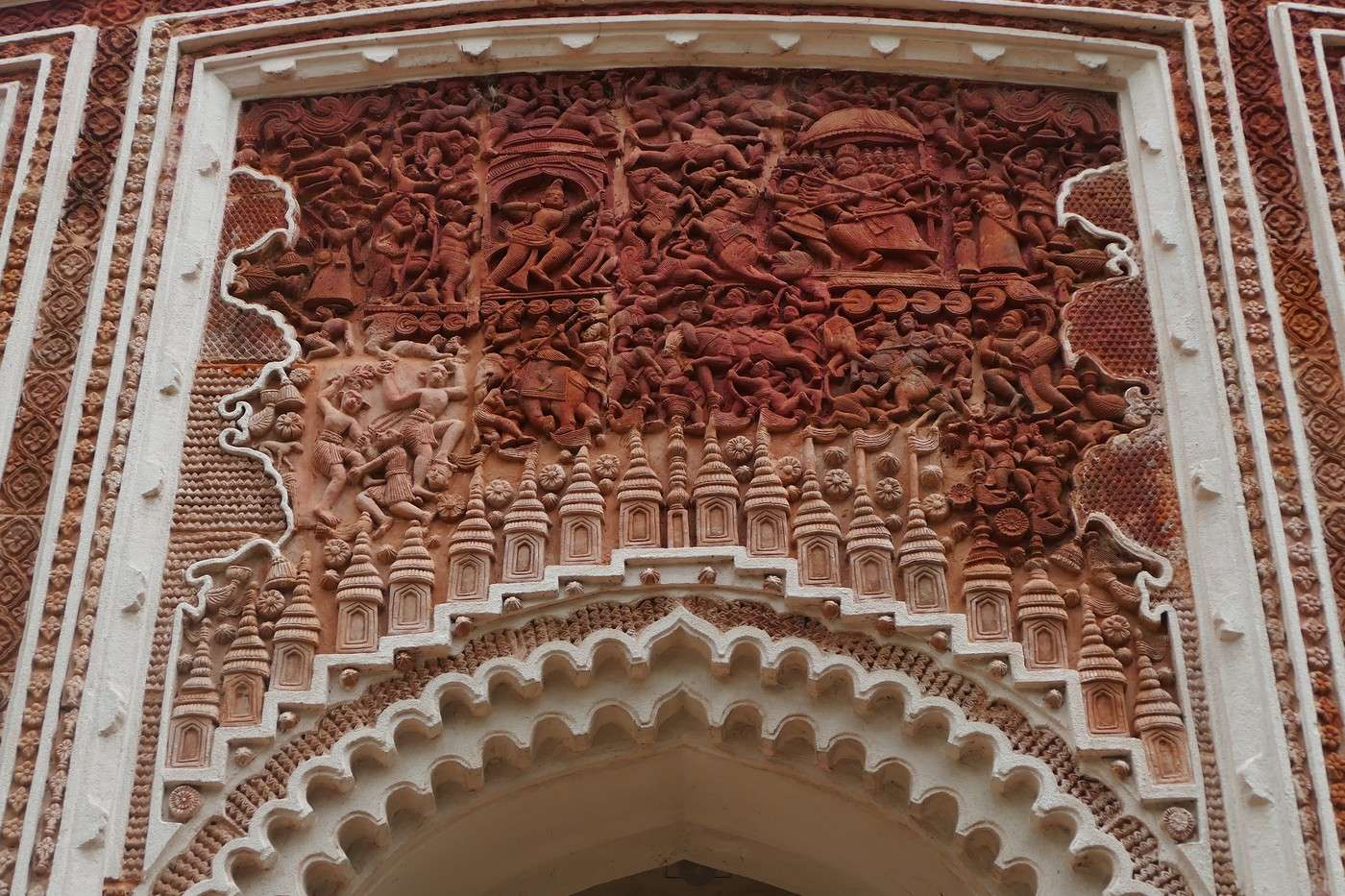
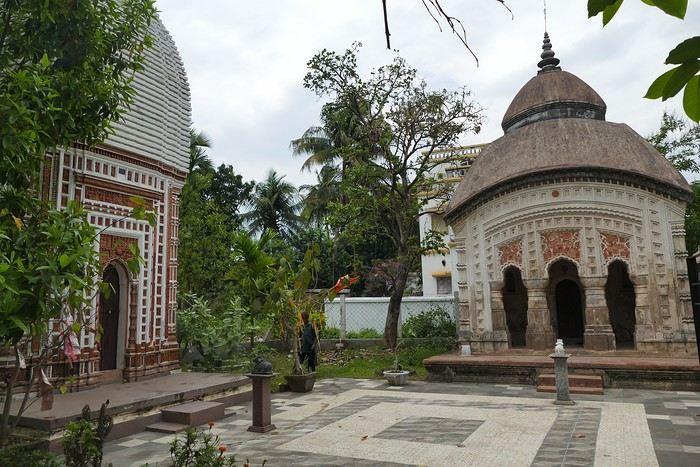
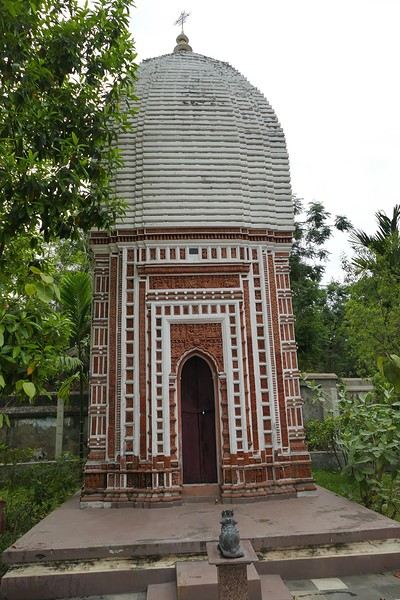
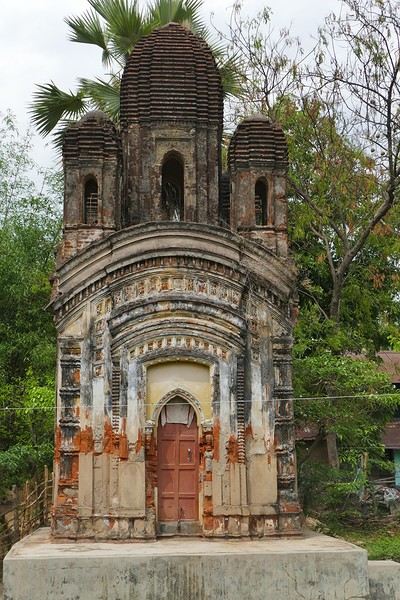
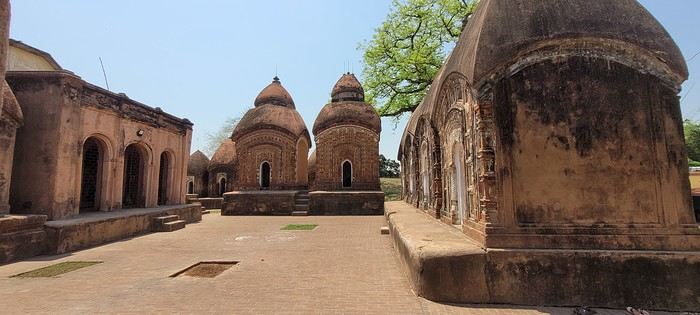
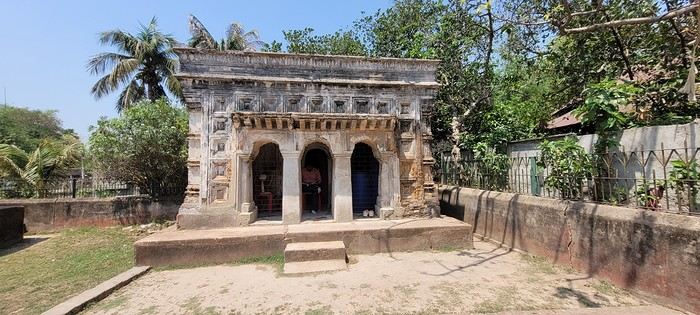
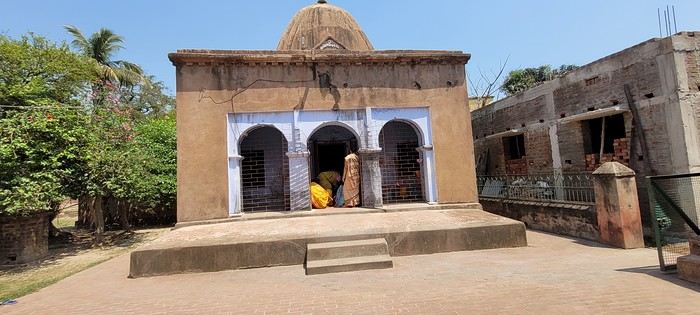
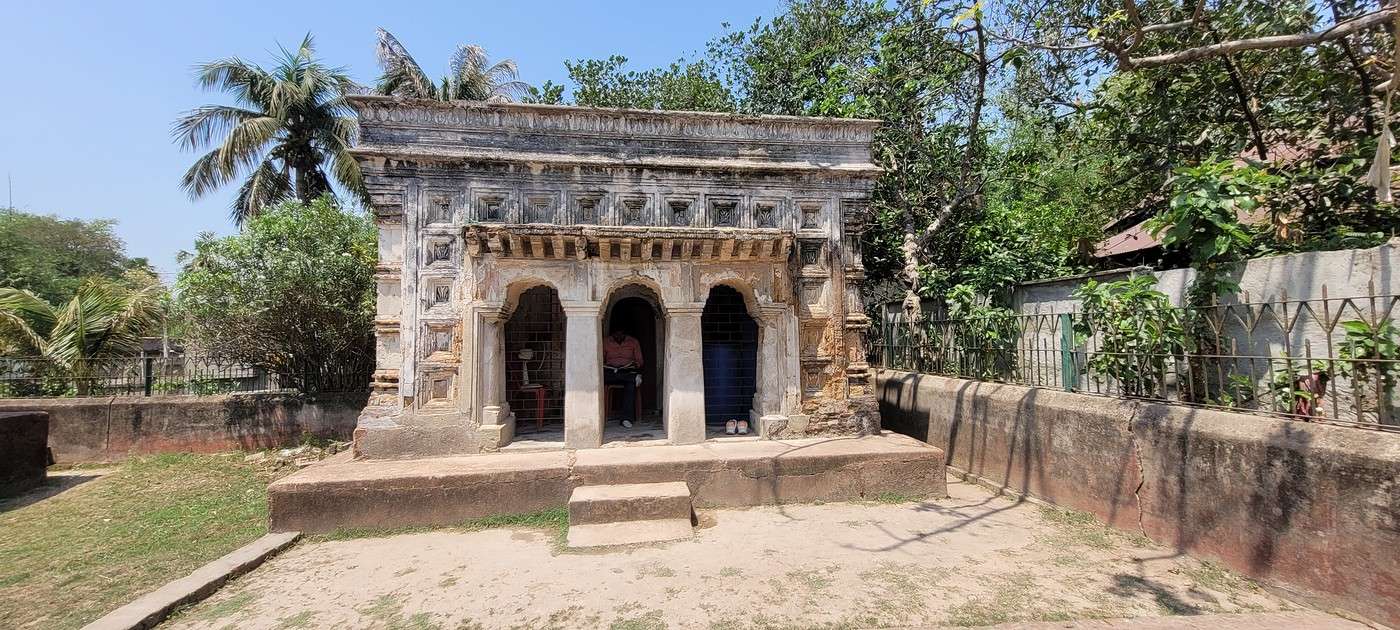
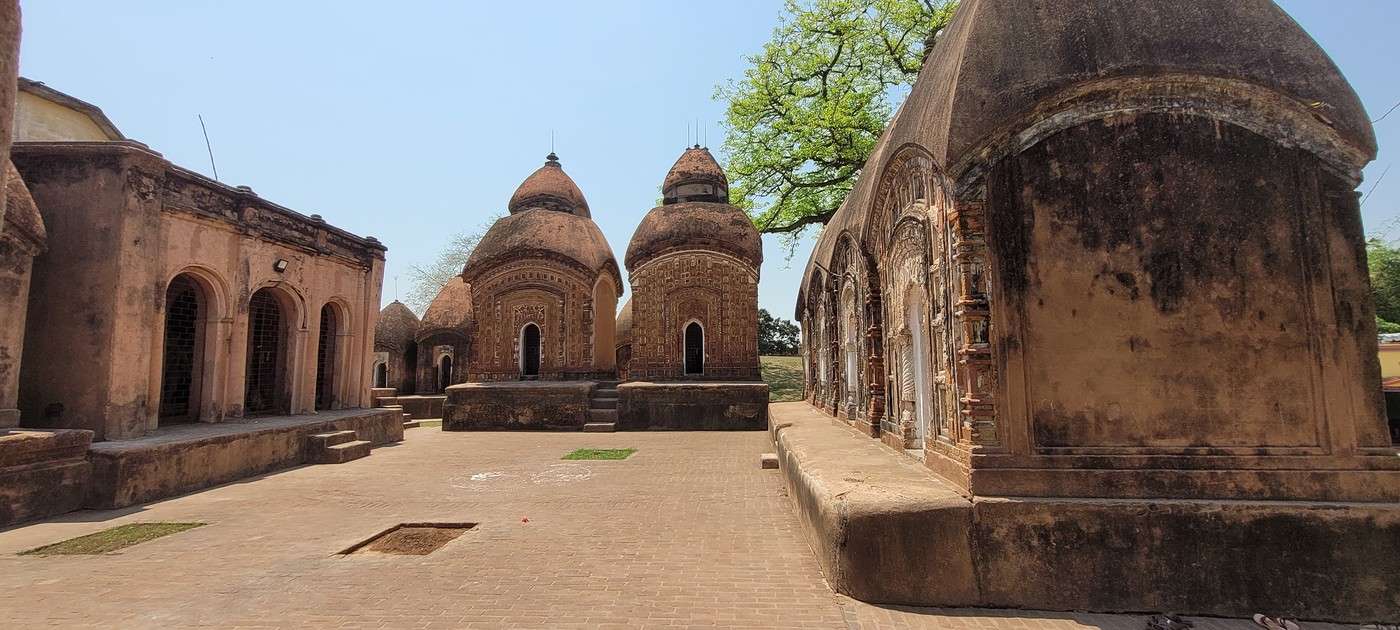
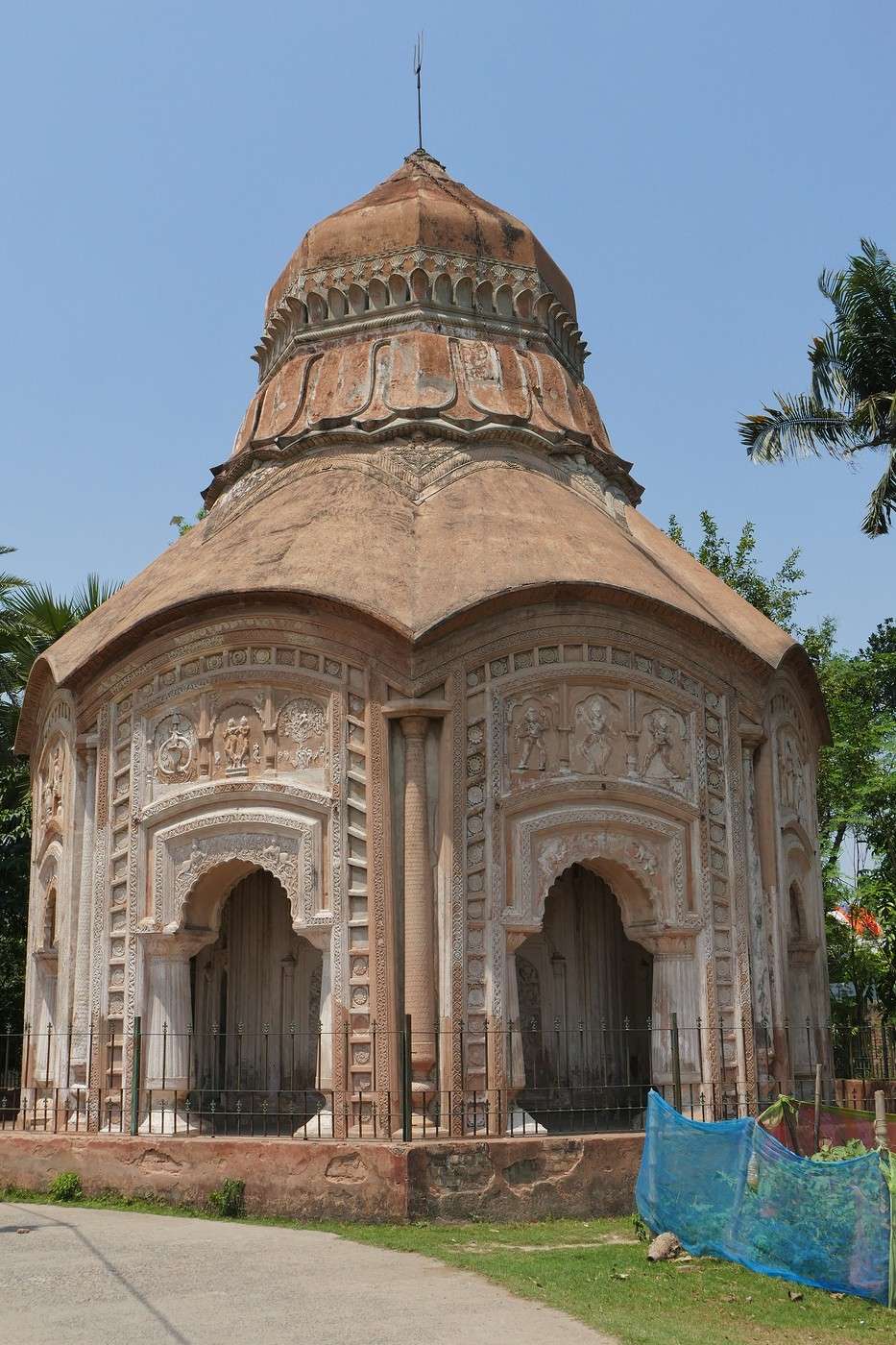
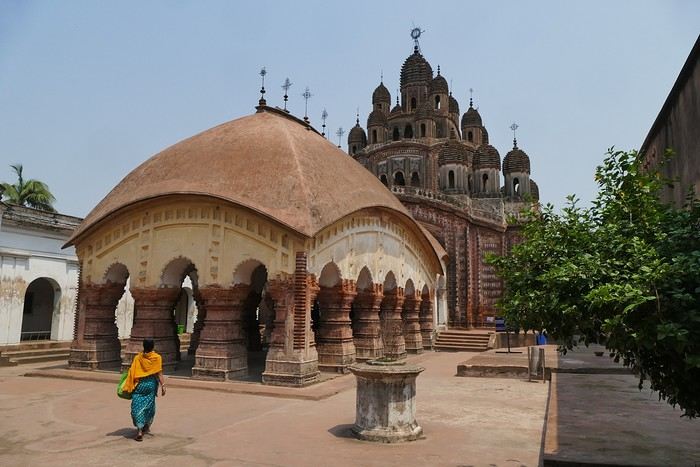
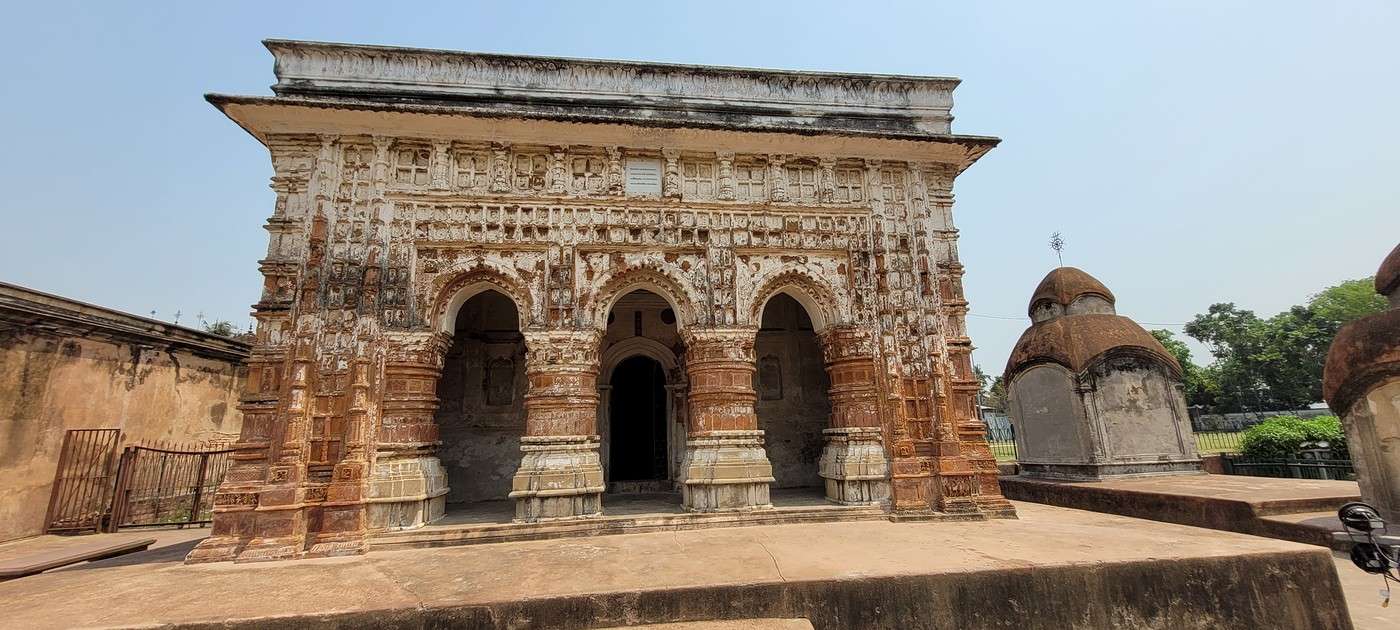
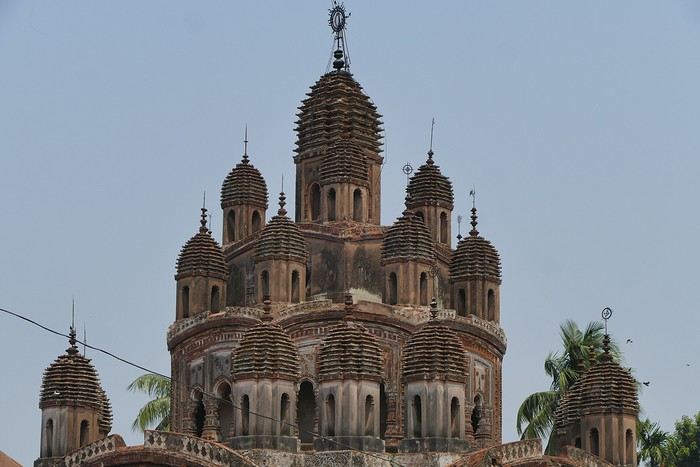
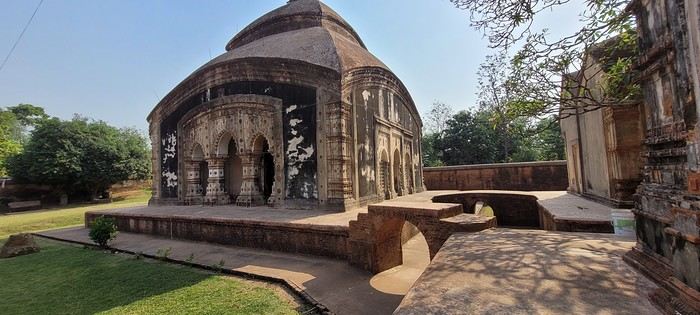
Outside the Rajbari, there were two temples. The Lakshmi Janarshan temple, with its five spires, immediately caught the eye. Its terracotta ornaments depicted scenes from the Ramayana. It had recently been restored by Muslim artists from Murshidabad, a beautiful example of artistic collaboration beyond religious traditions.


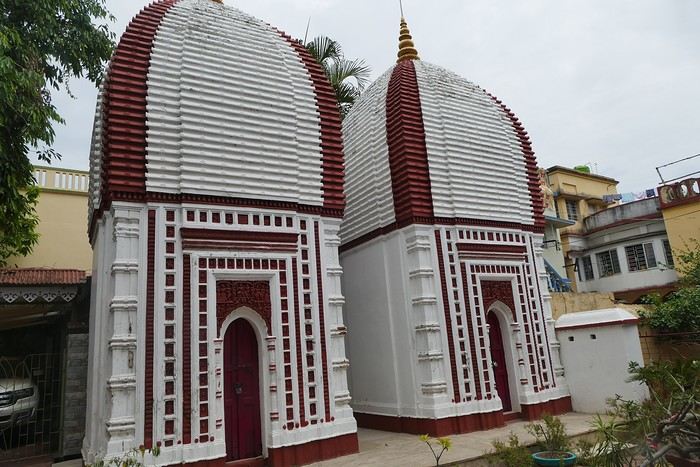
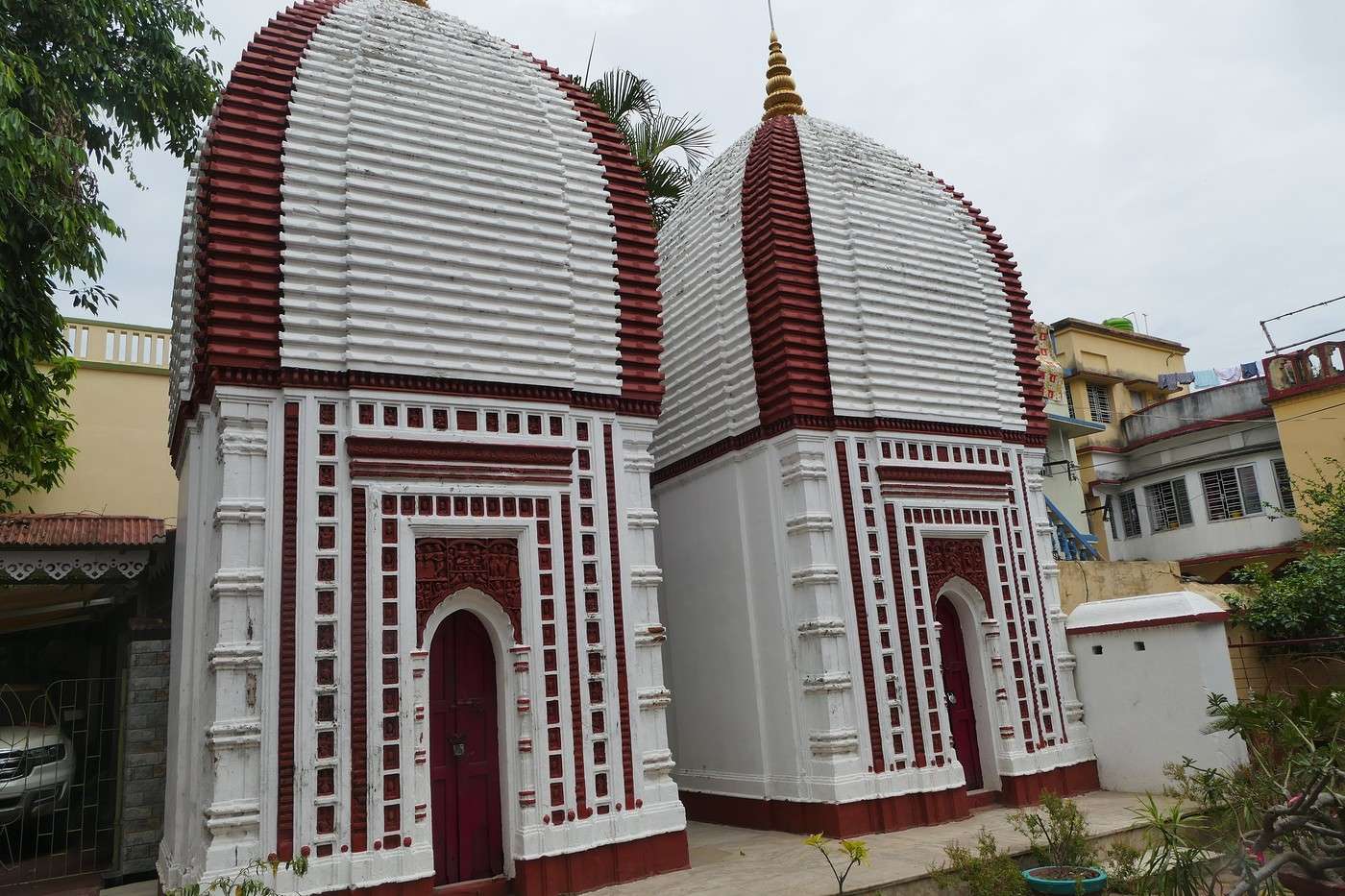
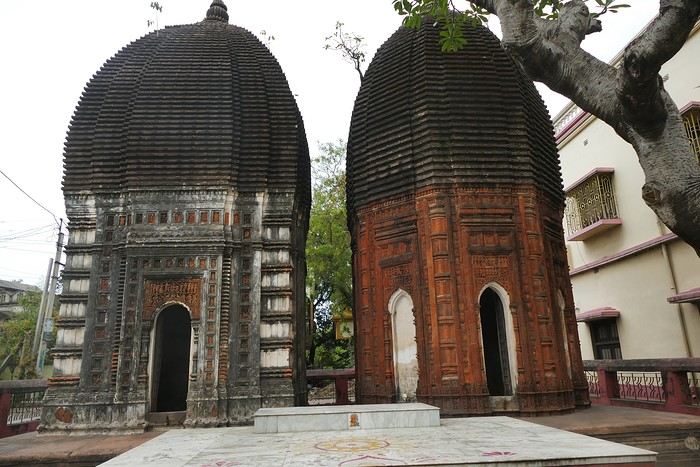
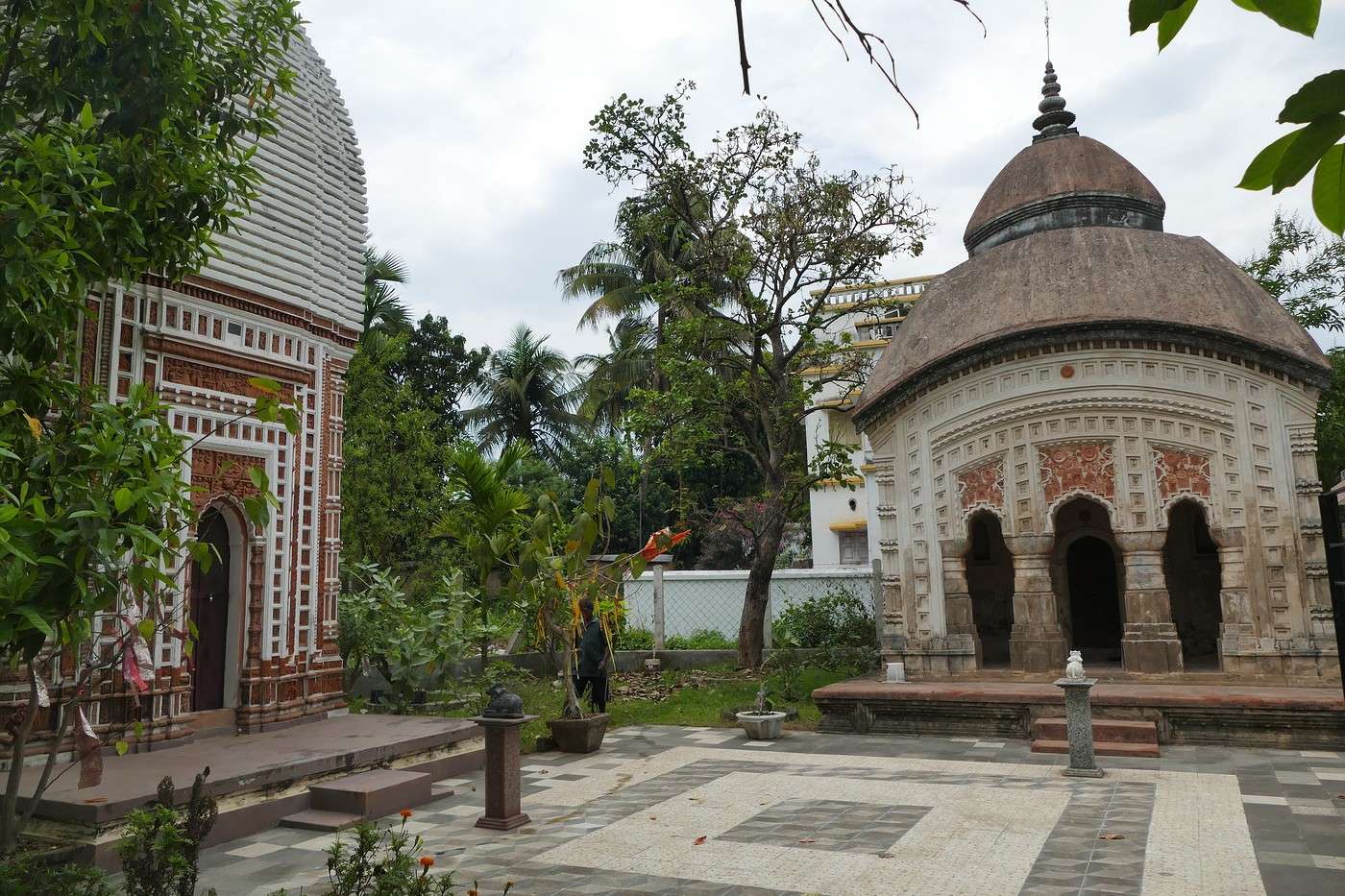
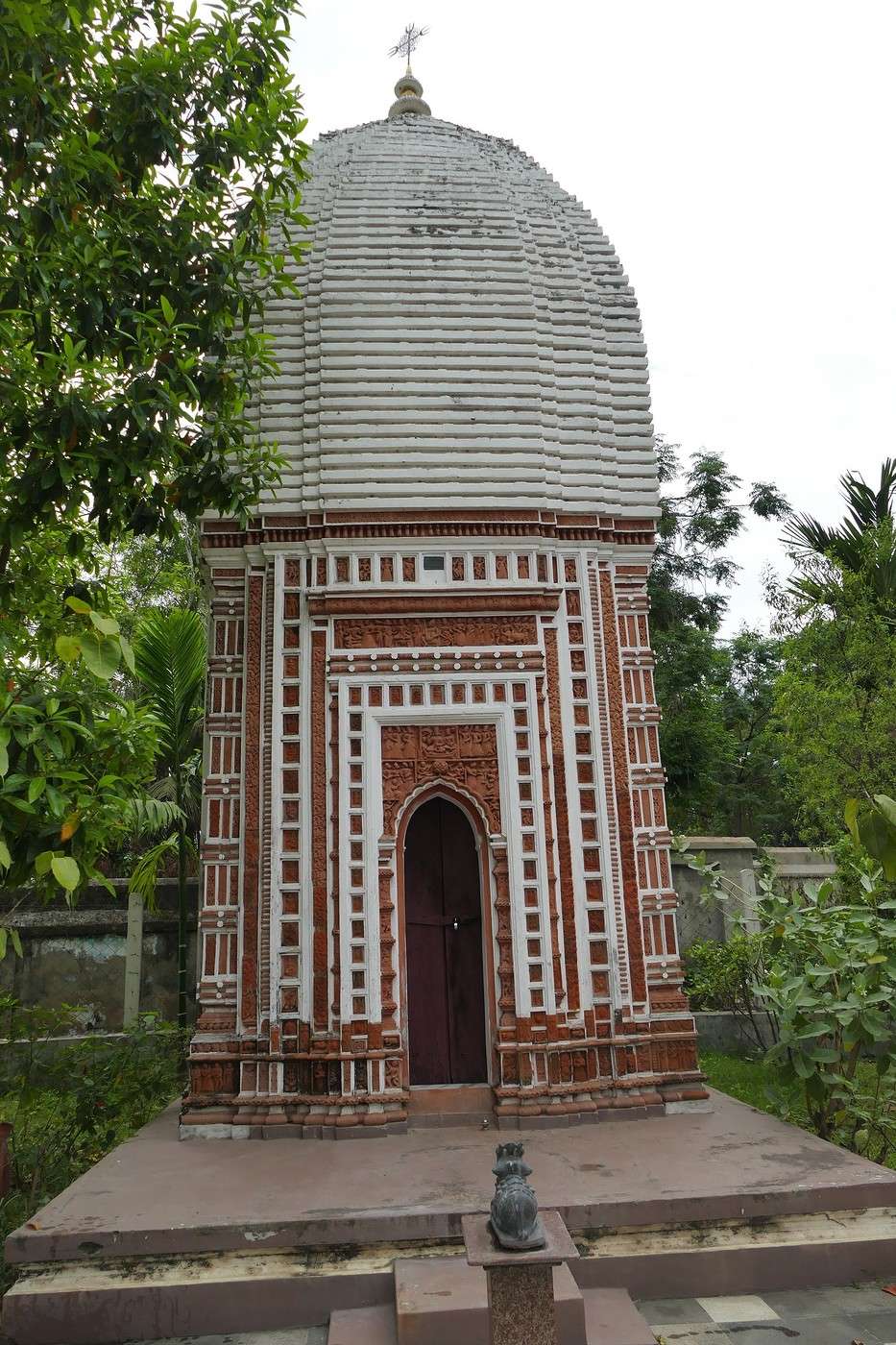
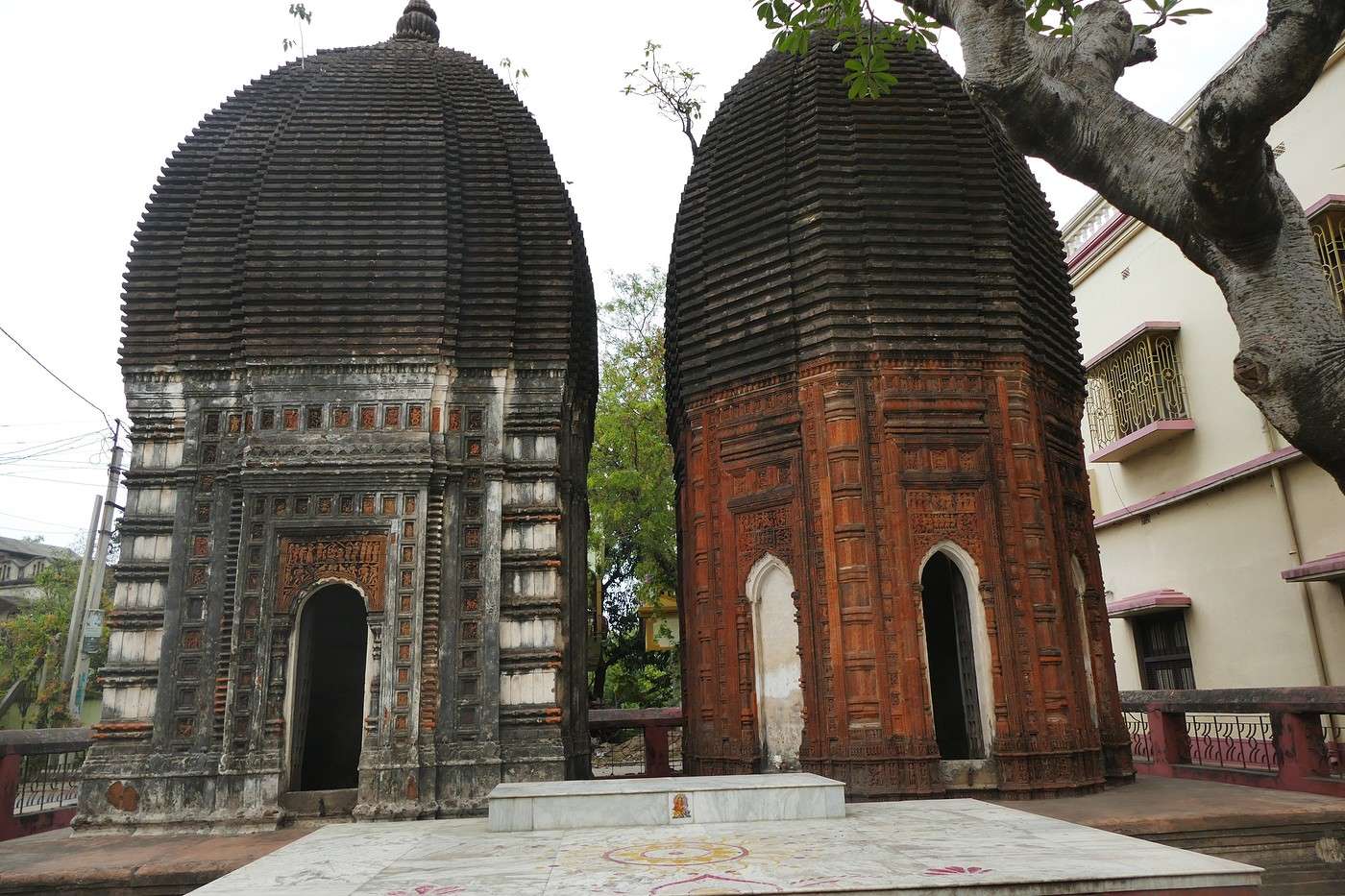
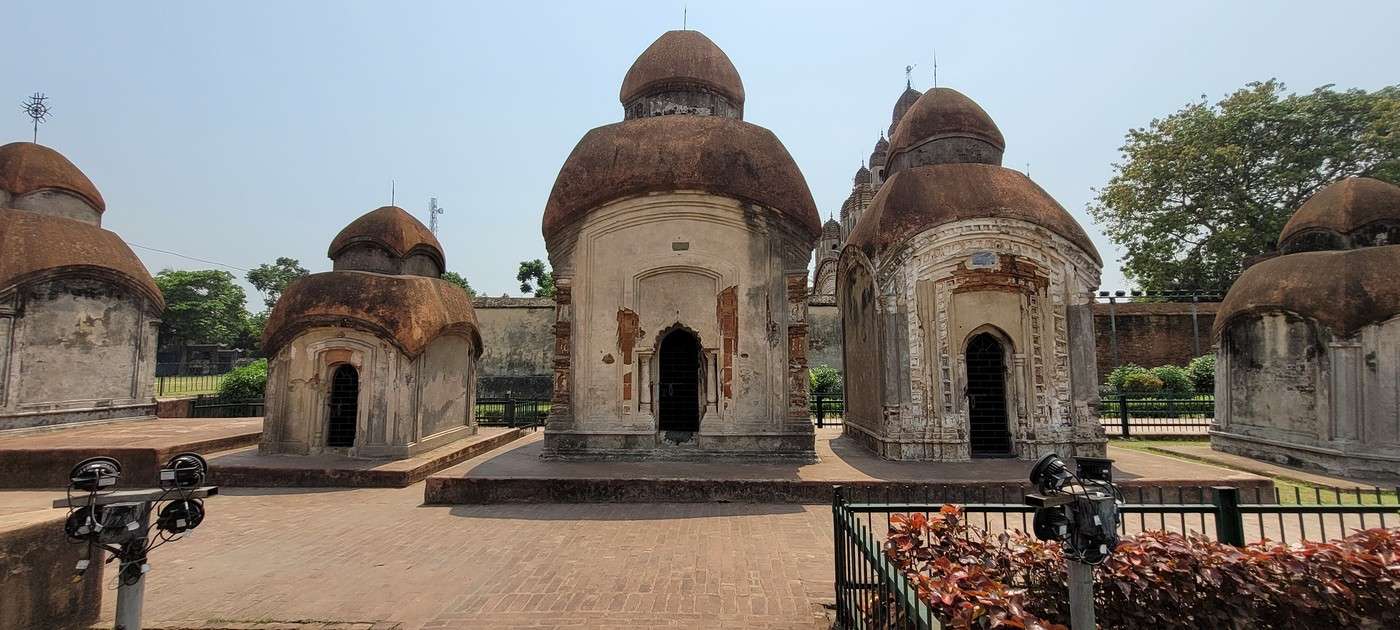
Nearby were the Shiva temples of Jora.

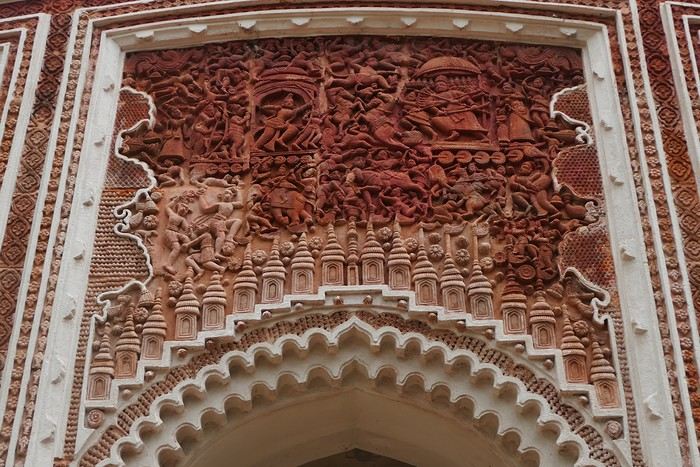
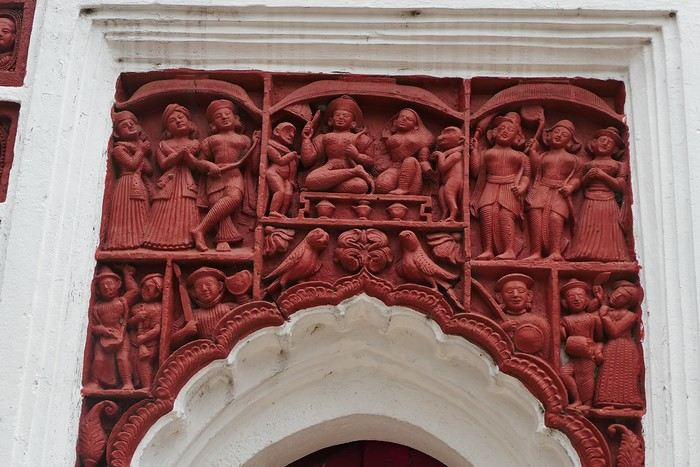
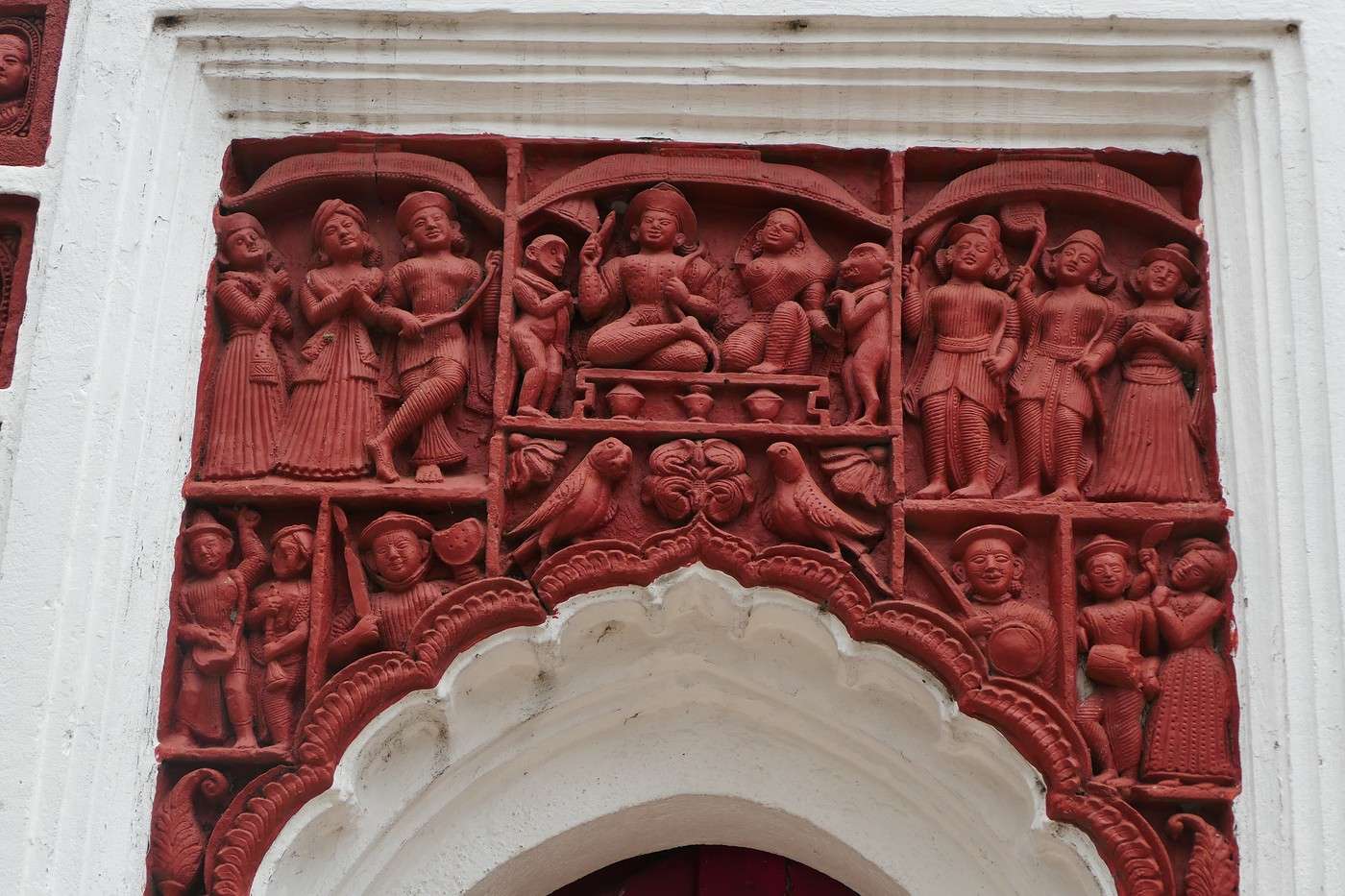
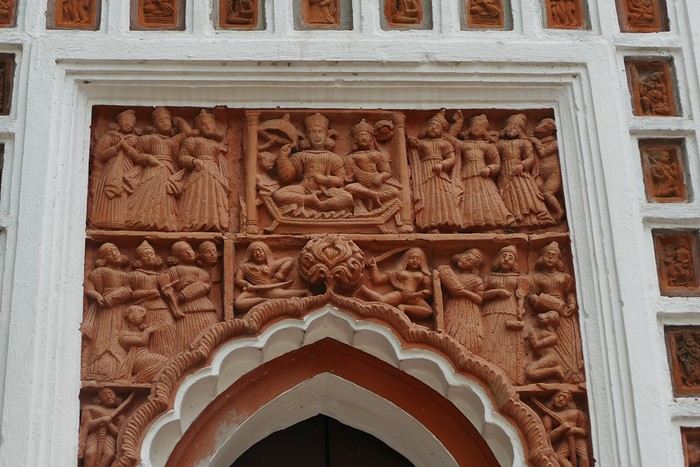
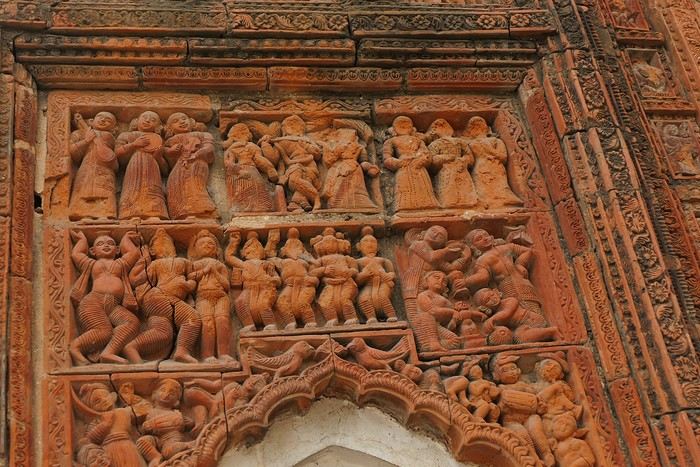
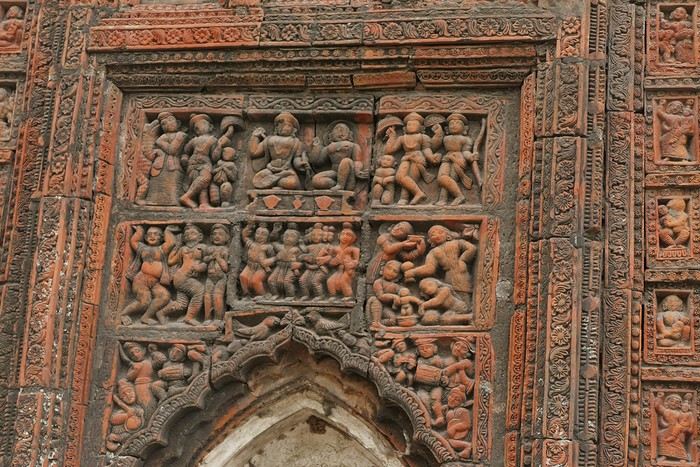
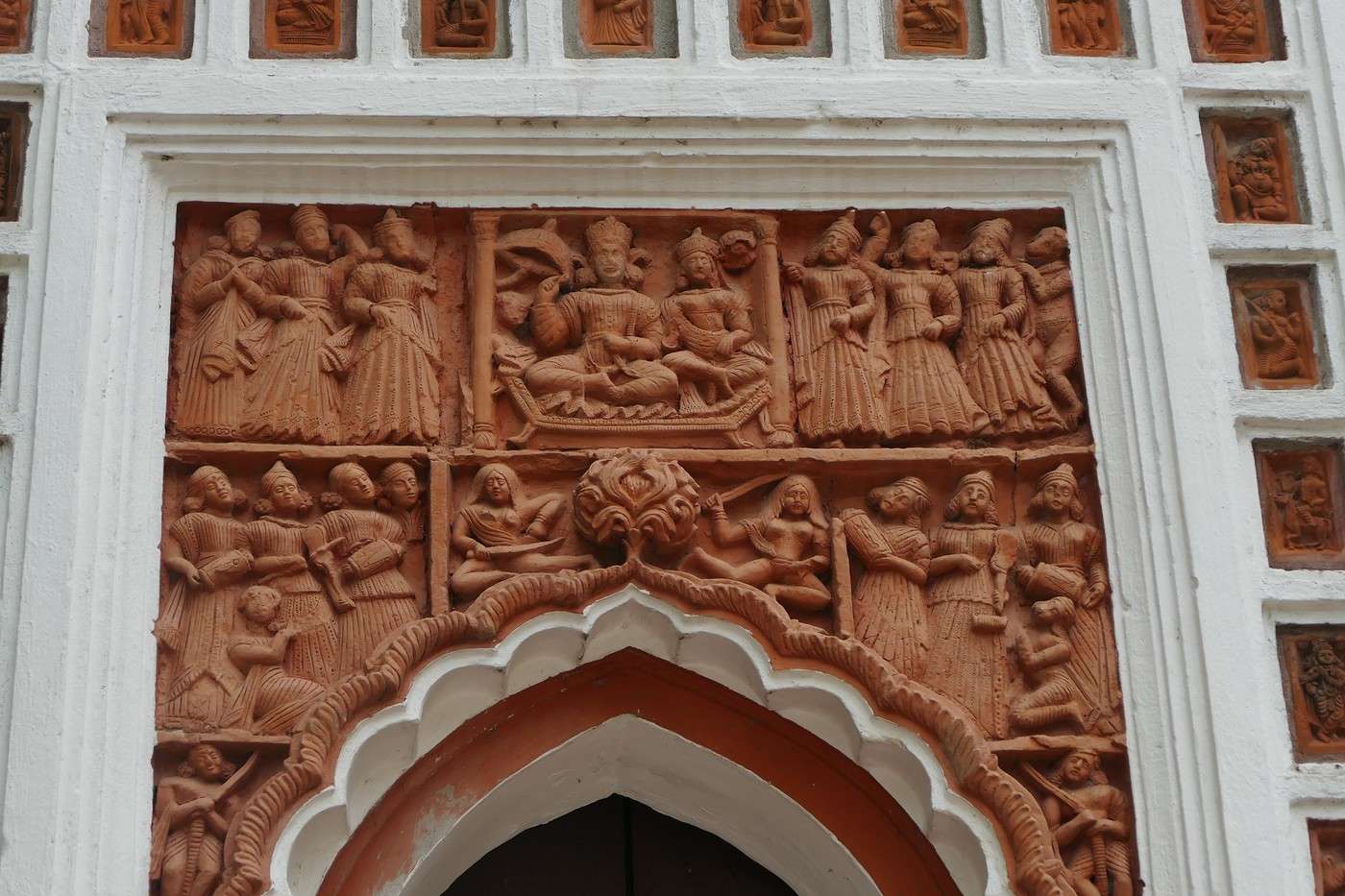
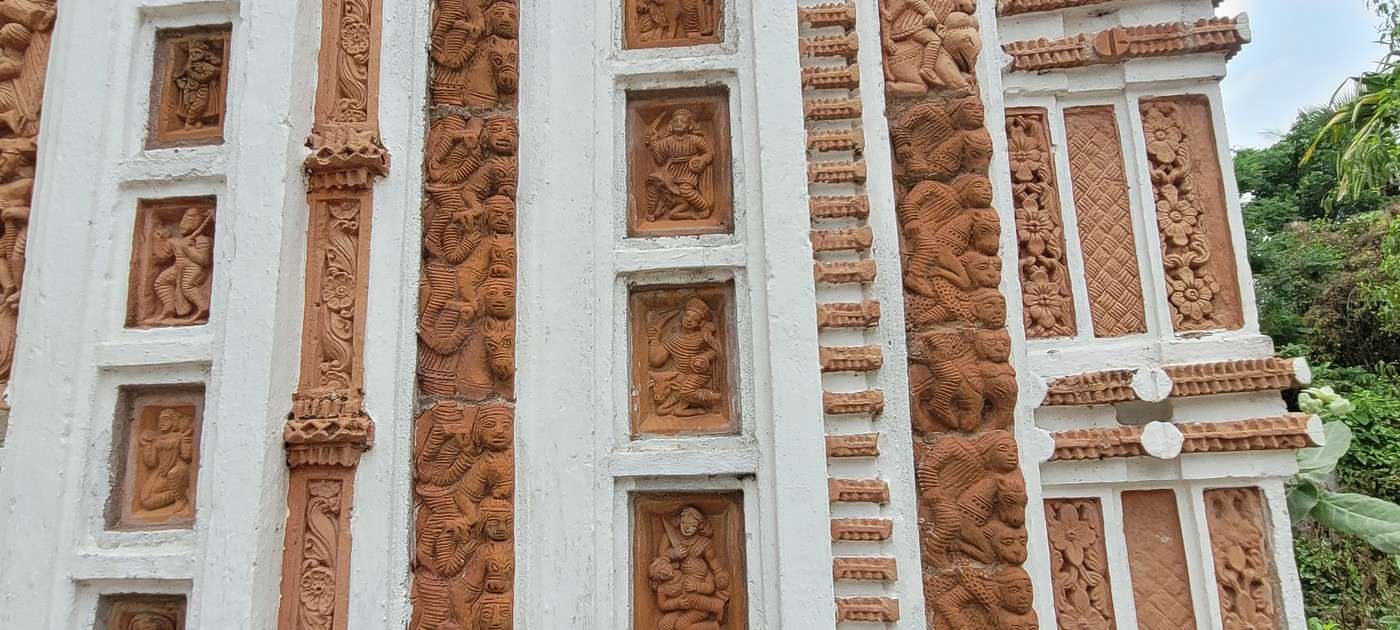
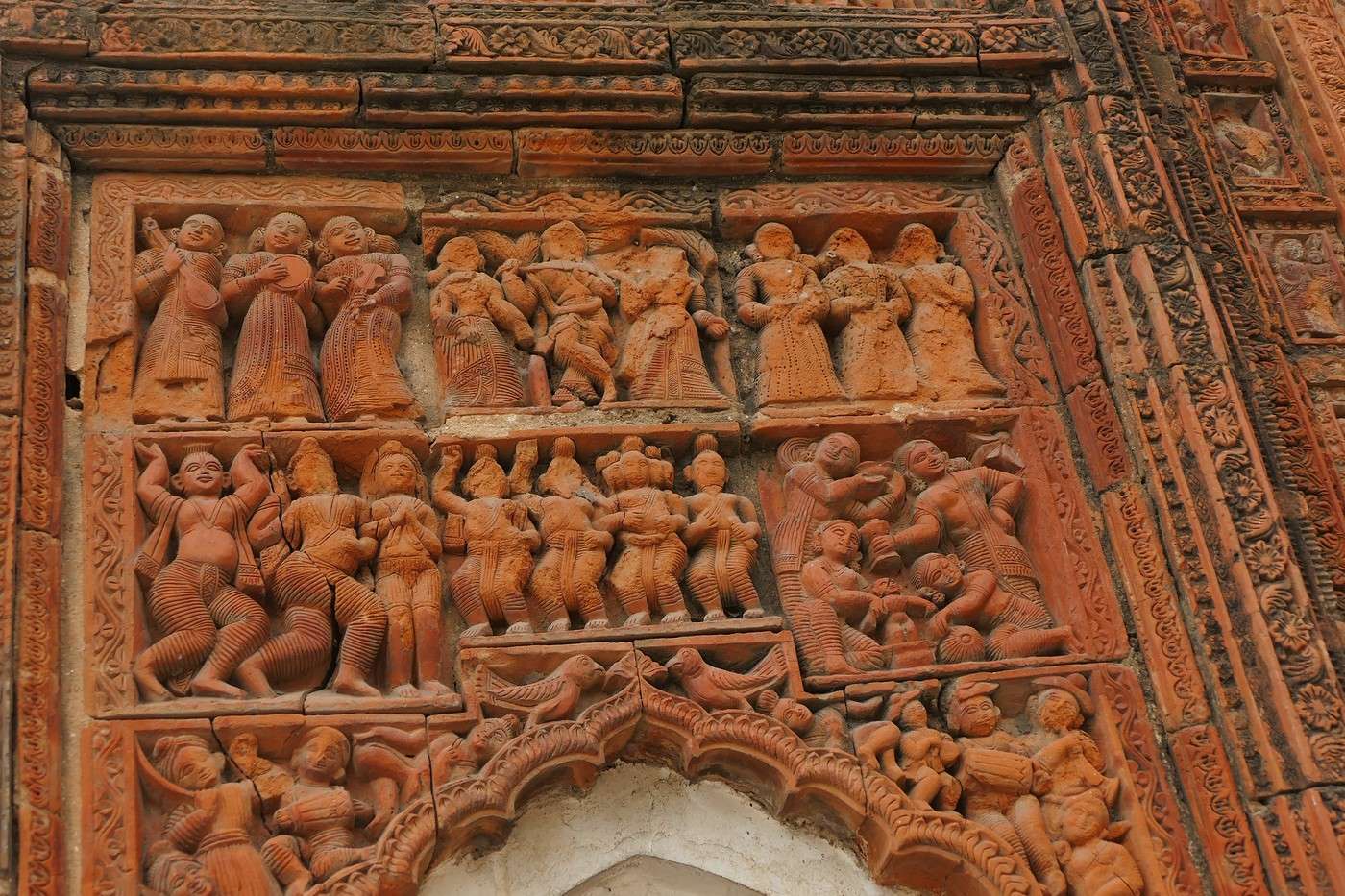
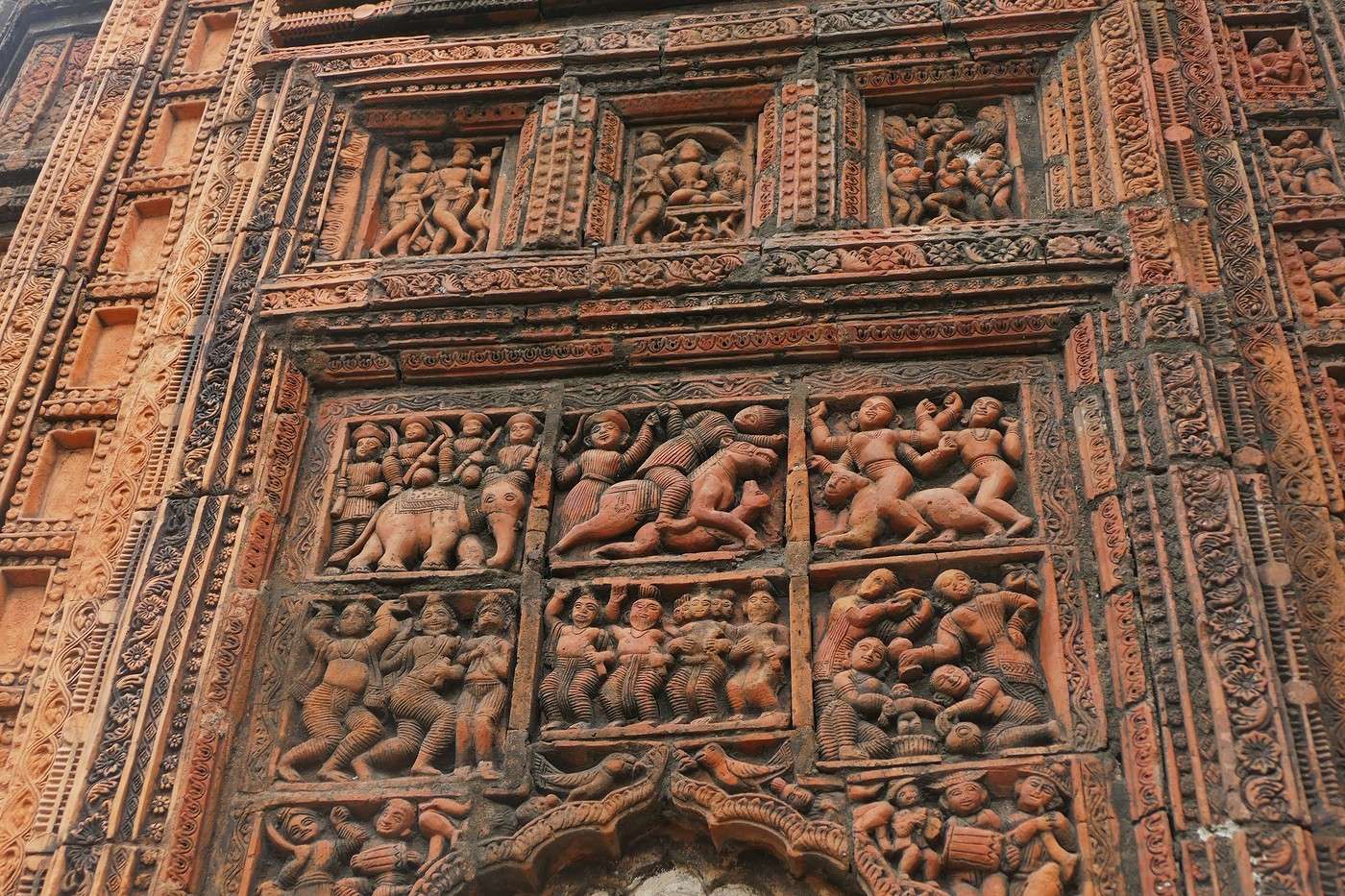
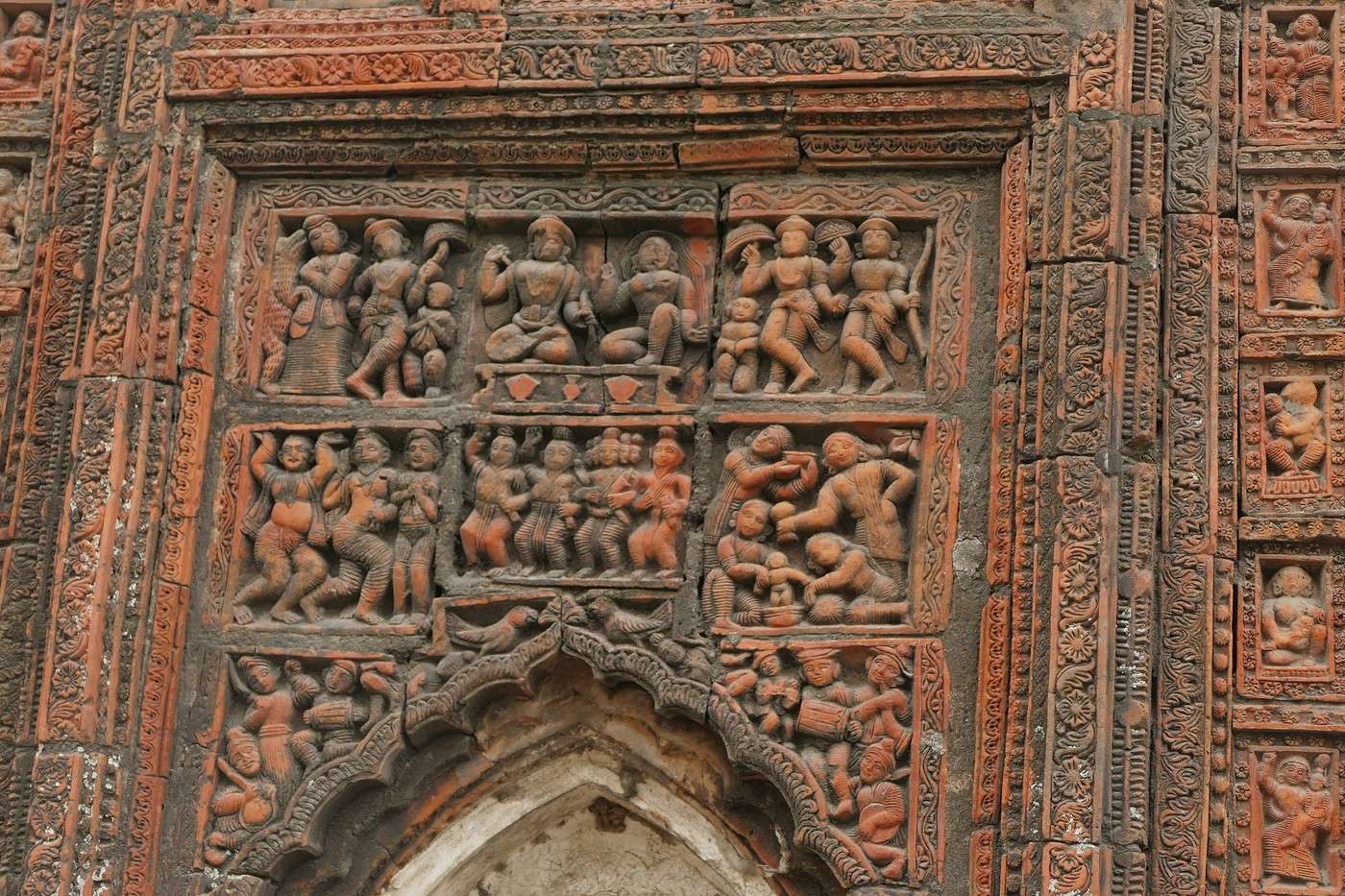
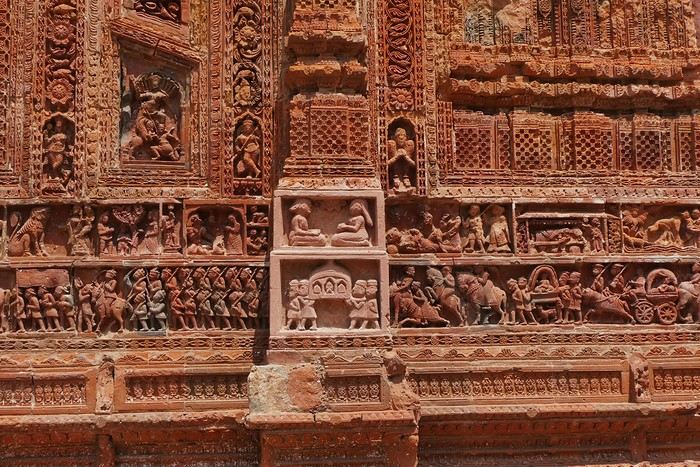
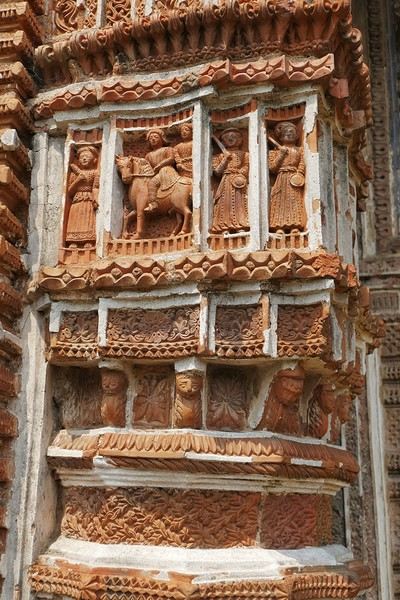
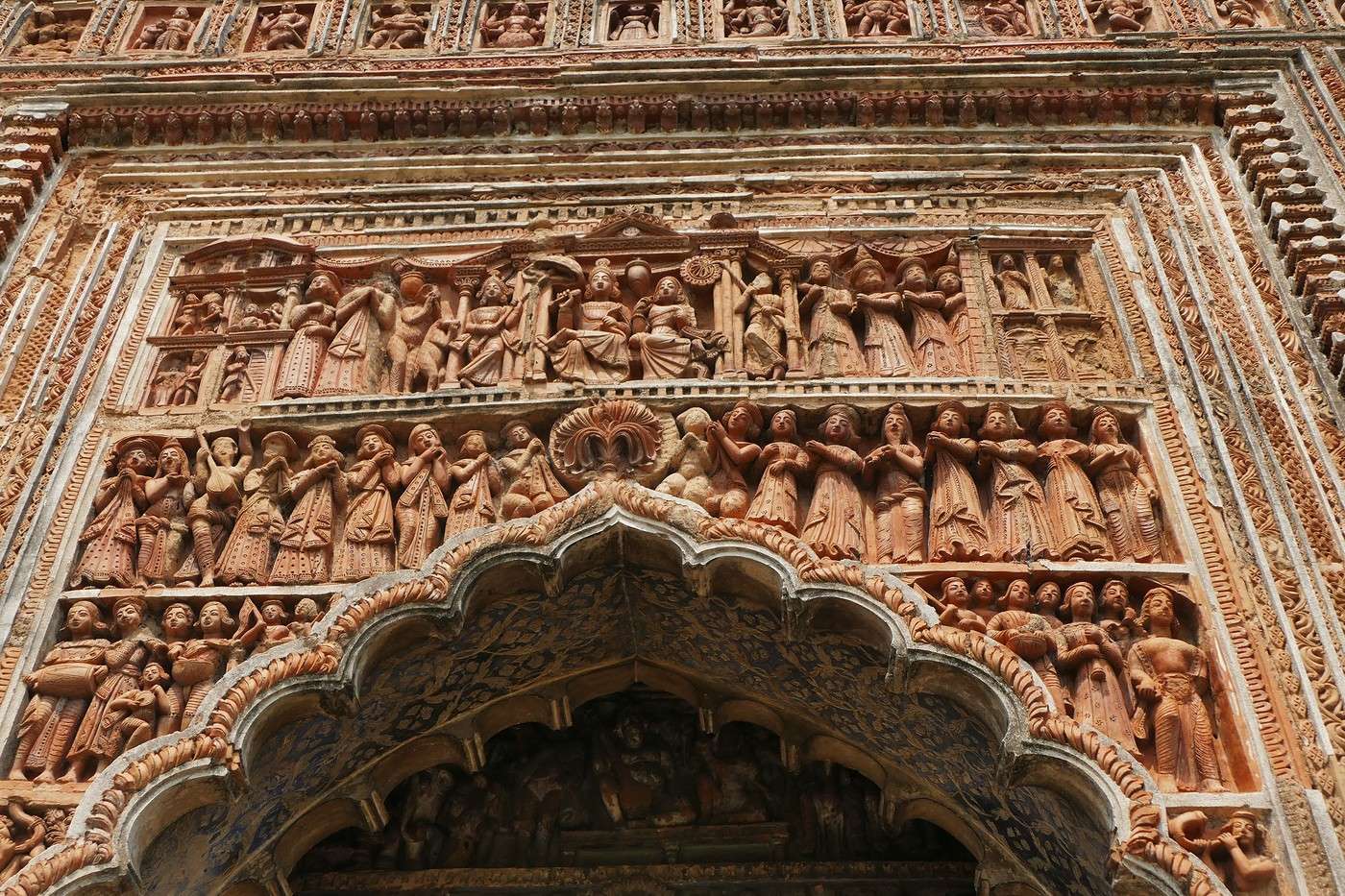
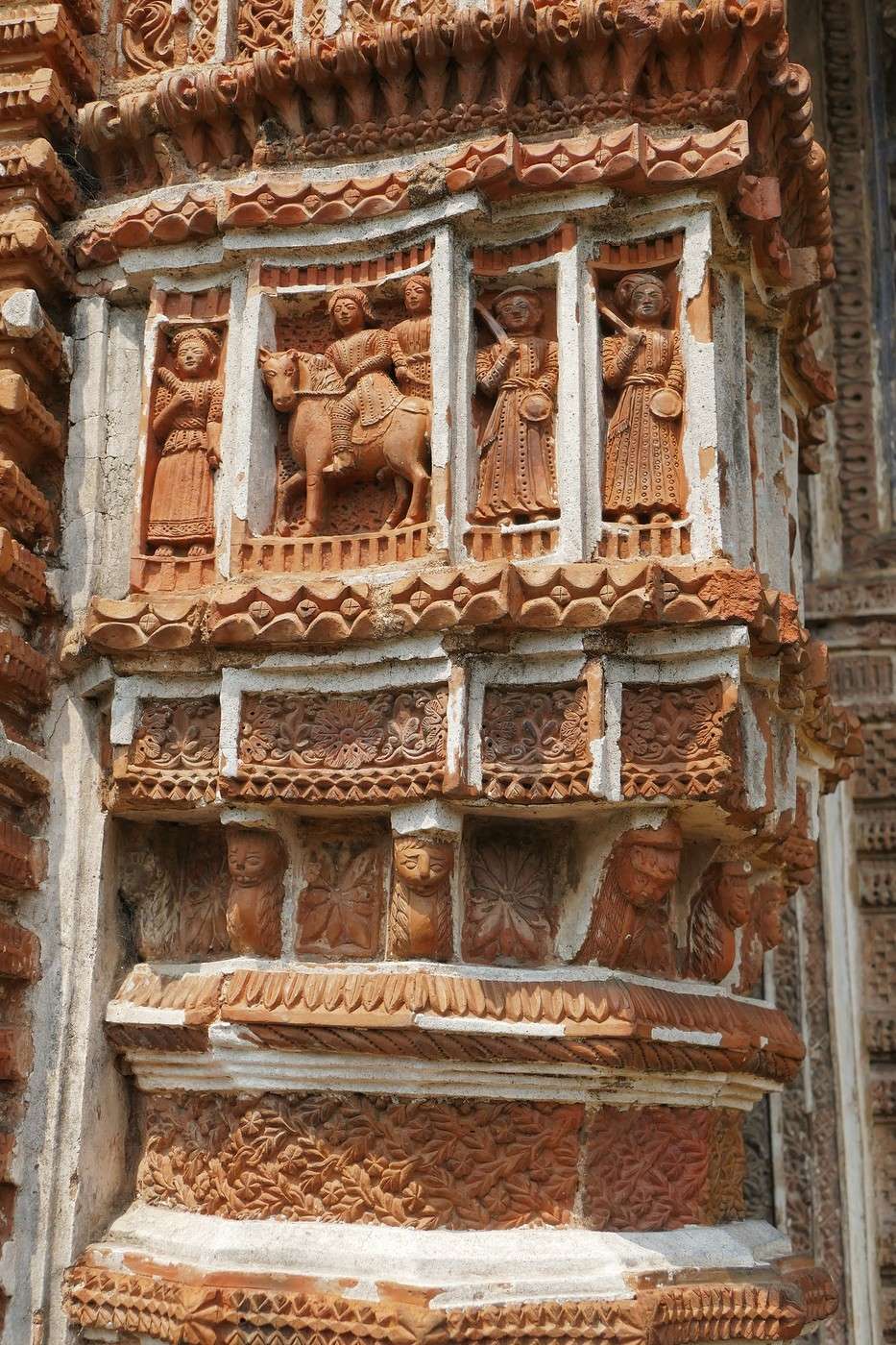
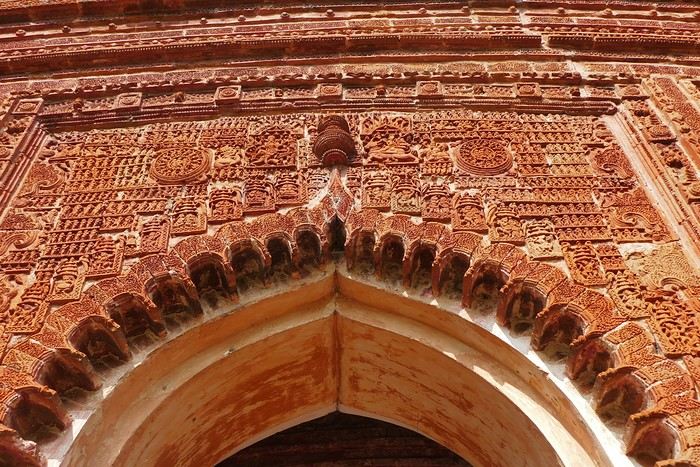
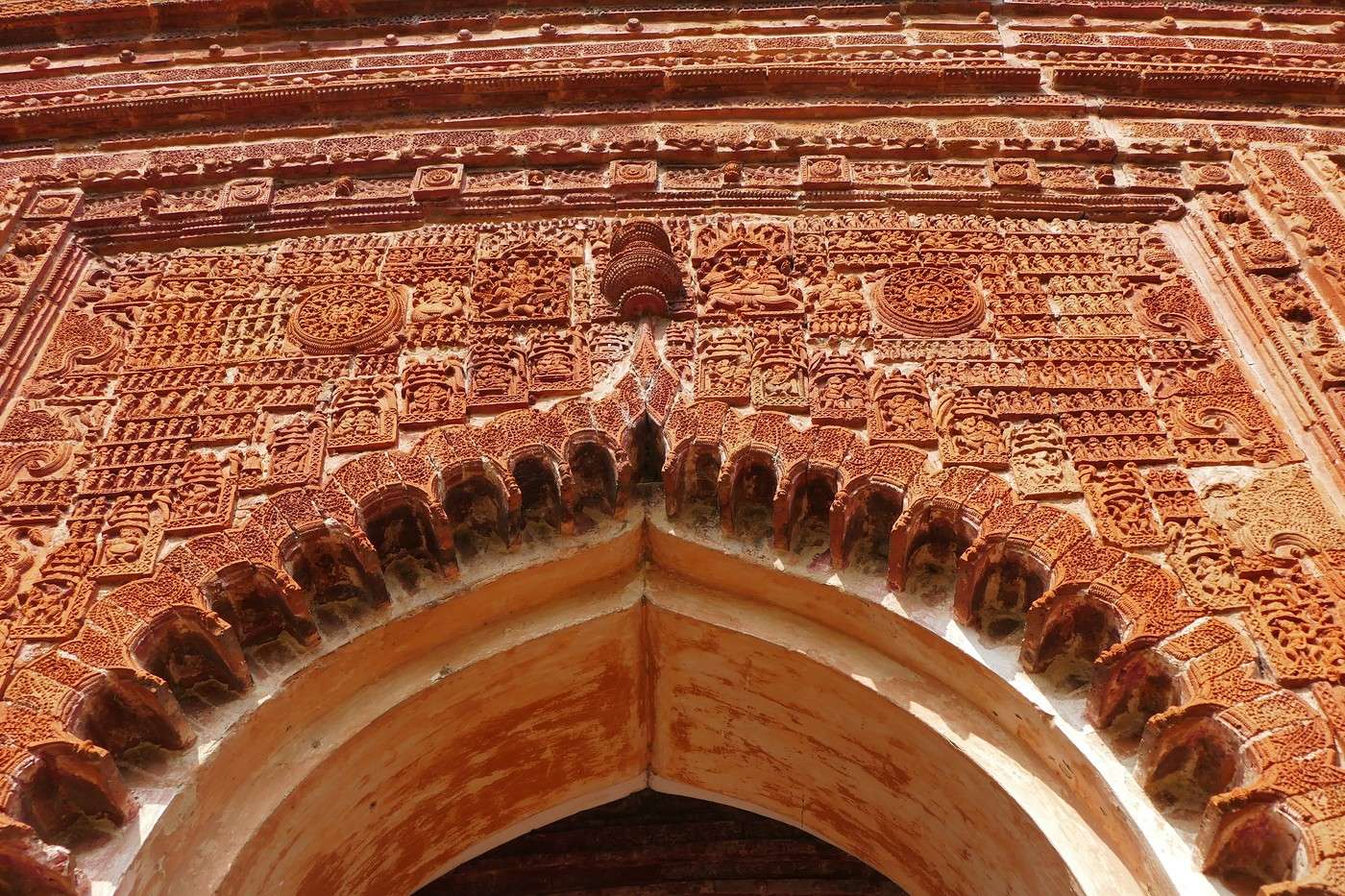
Above the arch, a terracotta panel caught my eye. The sculpted scenes unfolded like a living story: musicians, dancers, divine figures... In the center, two birds faced each other, framing a floral motif, a symbol of harmony. In these intricate reliefs, mythology and everyday life blended together, as if the sacred and the human world were one.


Villages around Hazaribagh in West Bengal

Aleph240758 · 2026-08-02

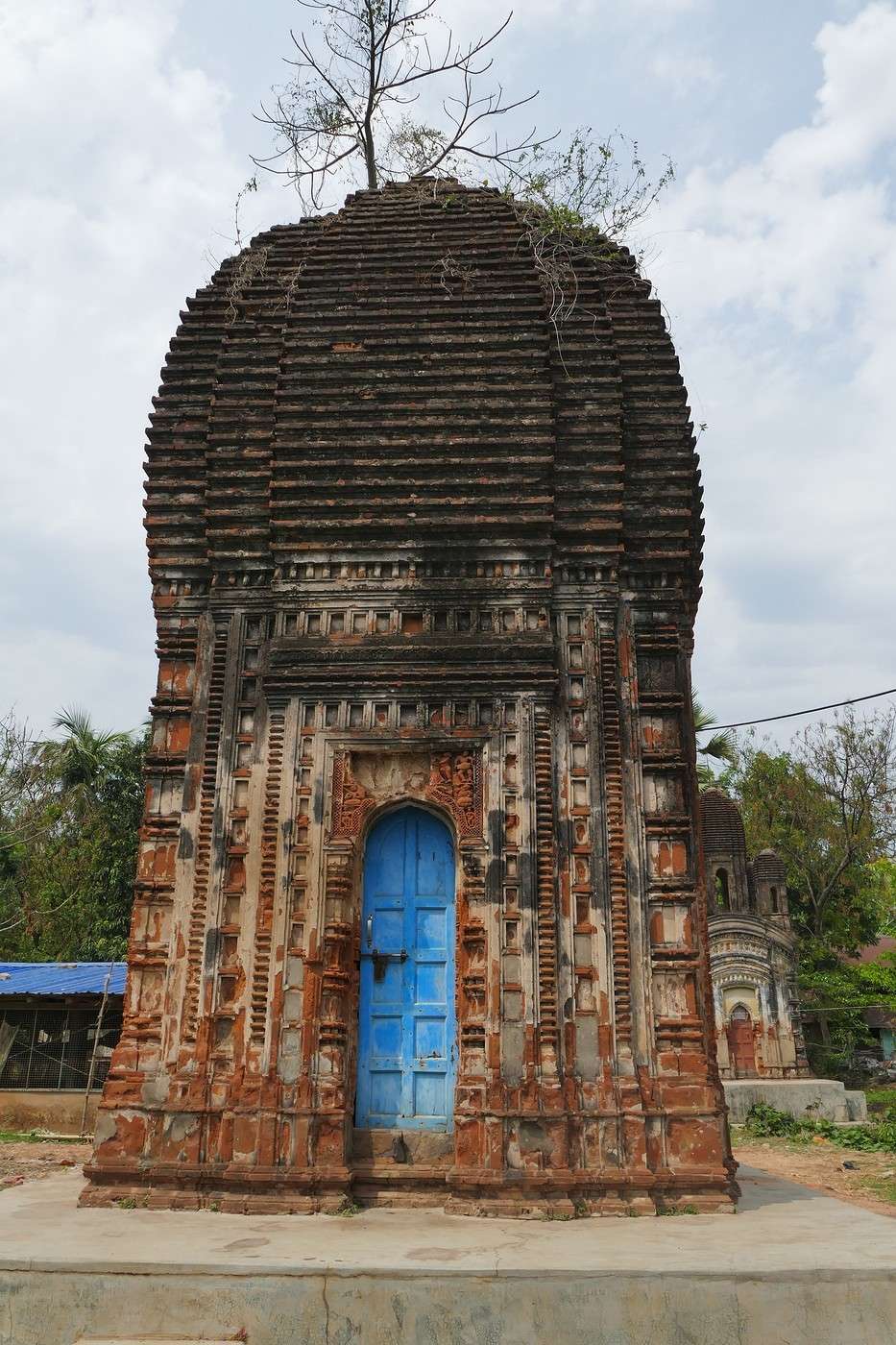
(continued) Then, as I ventured down a narrow alley, I discovered the temples of Pachim Para.


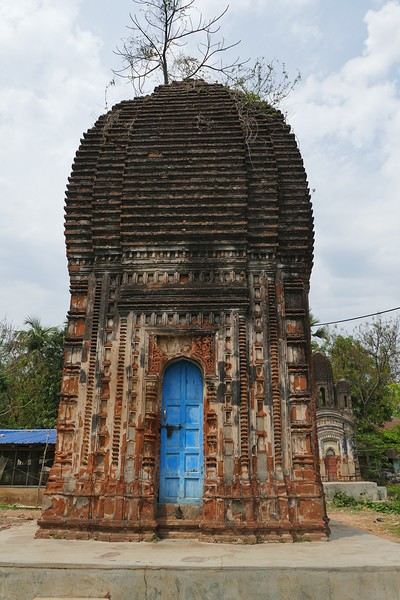
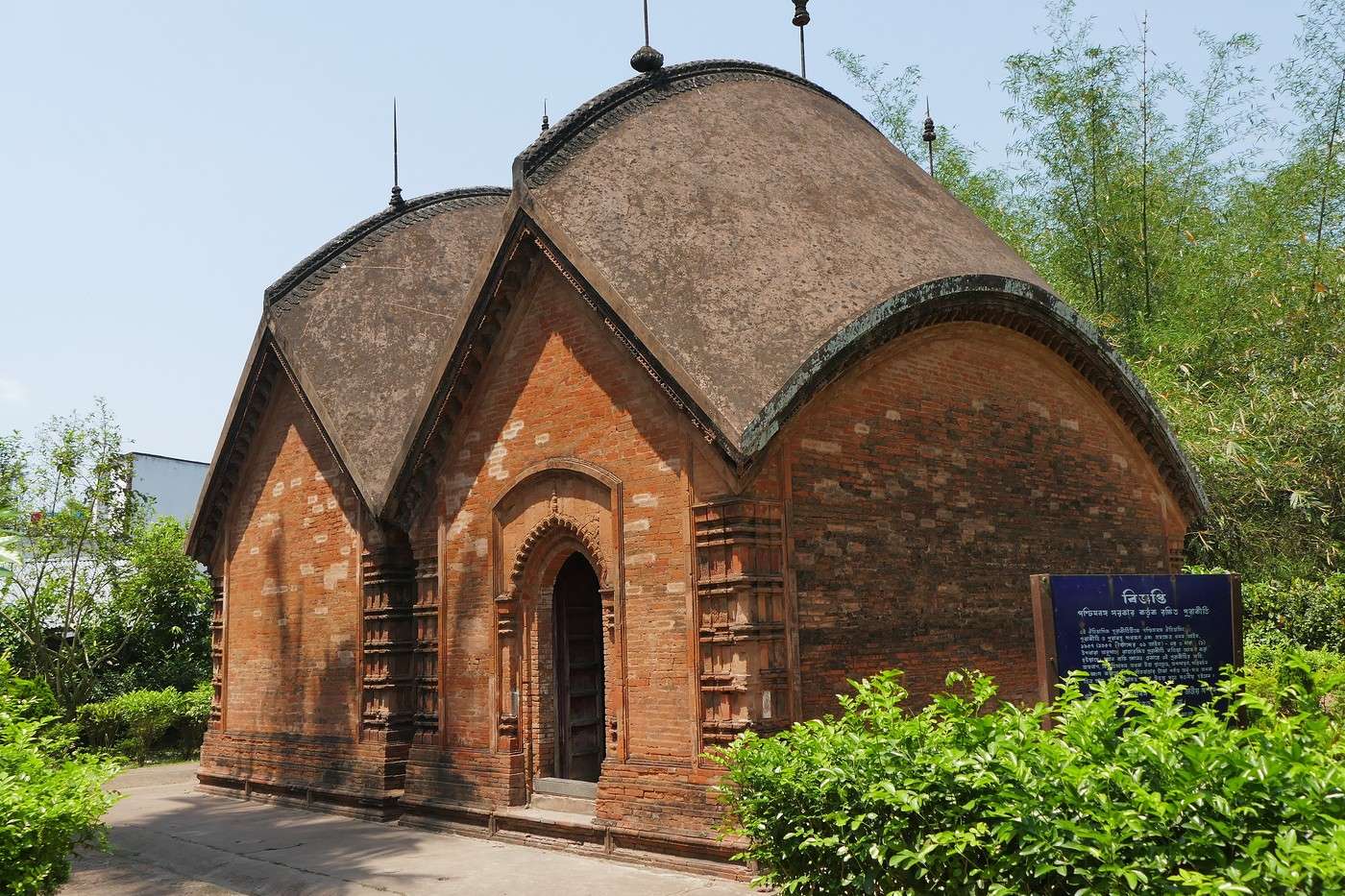
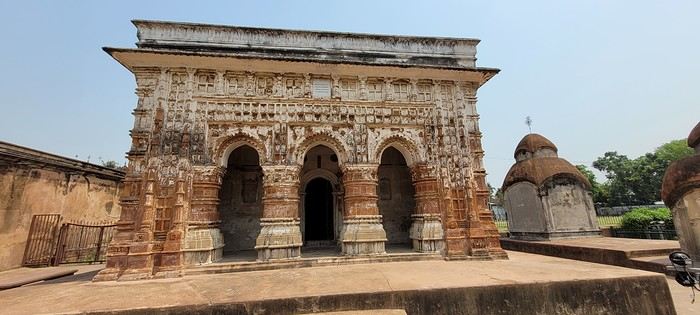
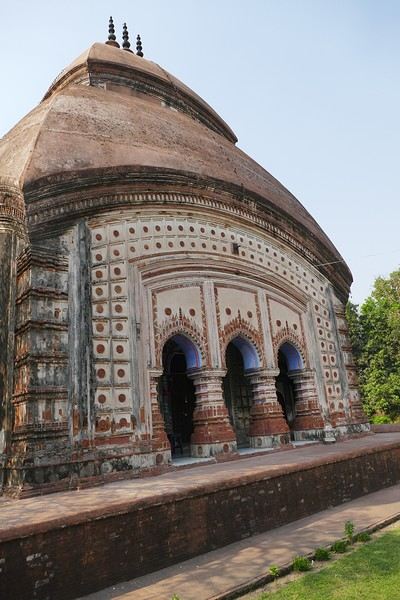
The Deul temple is particularly remarkable.


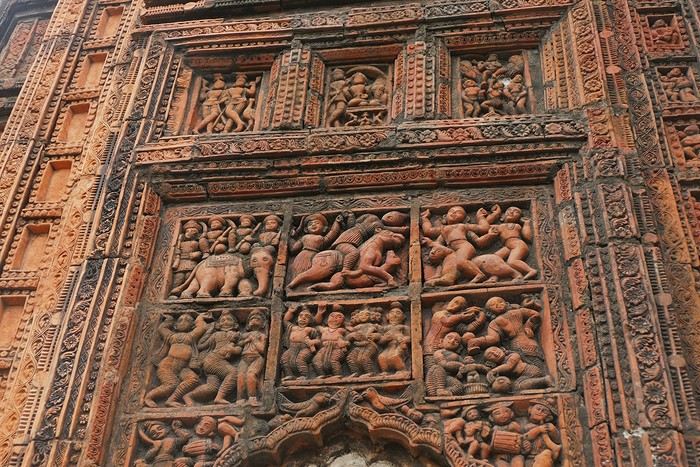
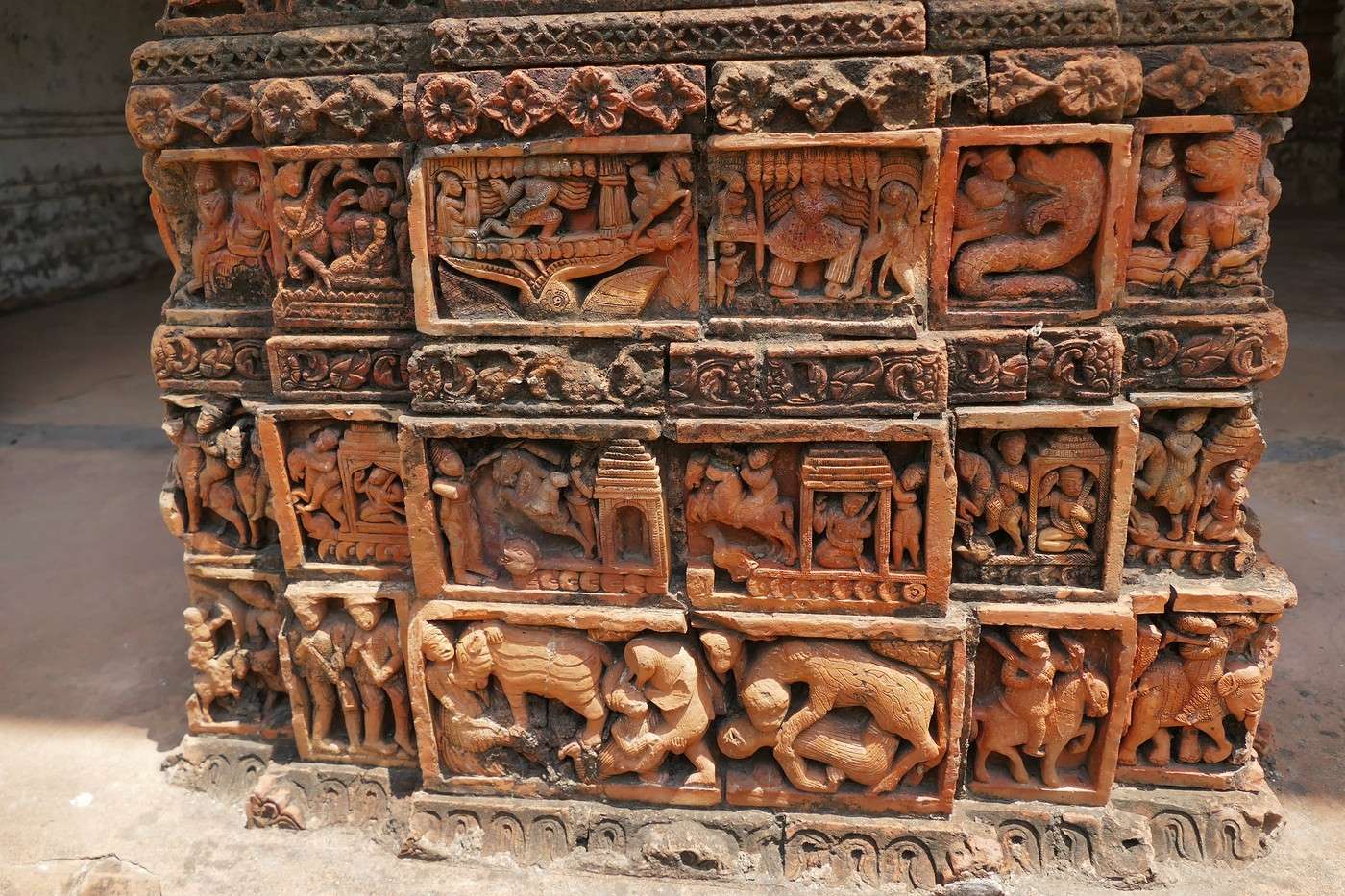
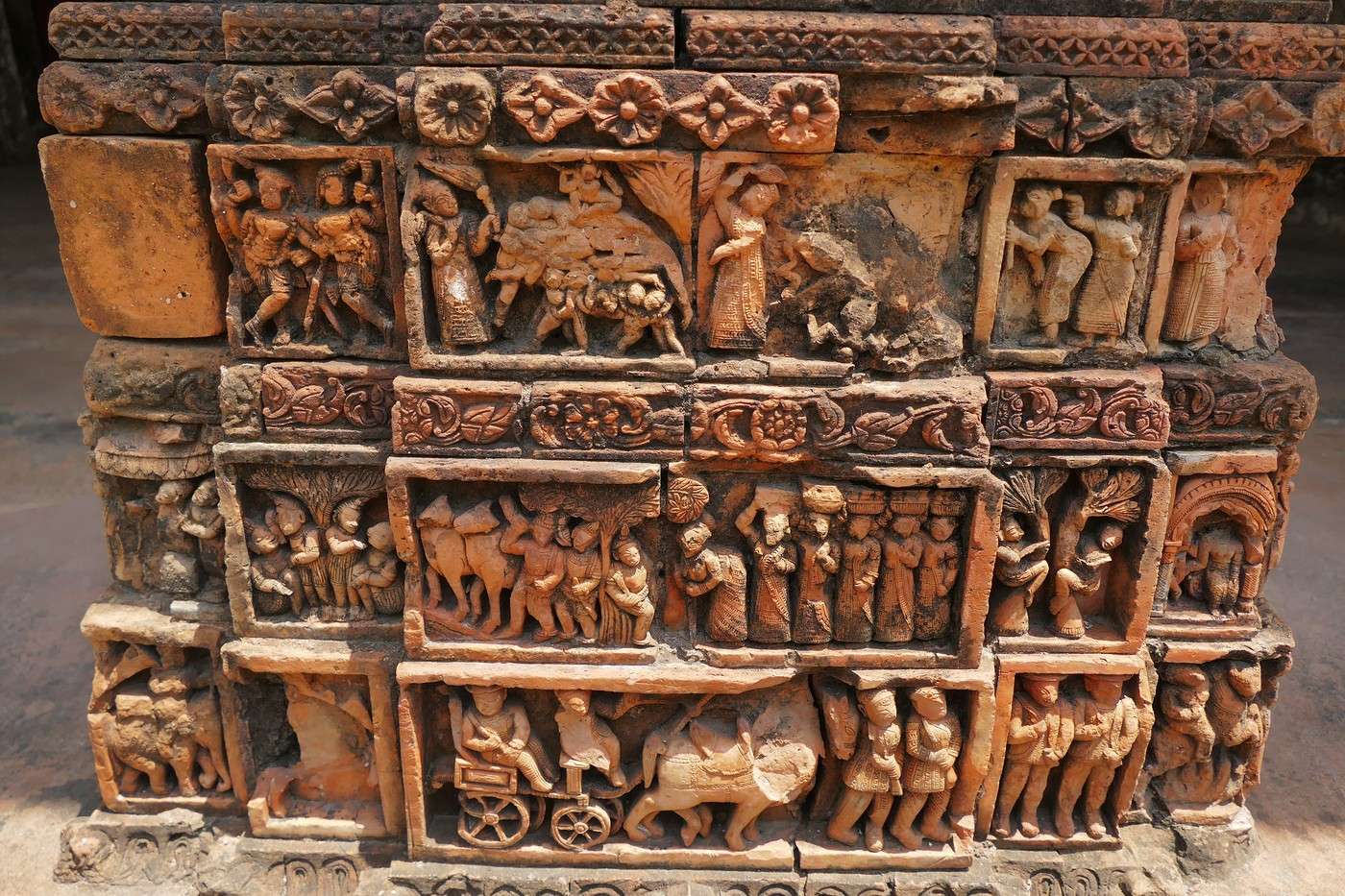
On one of the first panels, a central couple is surrounded by musicians and dancers in a lively scene that oscillates between mythological narrative and everyday life representation. The details are abundant, the gestures delicate, but the deities remain difficult to identify with certainty.


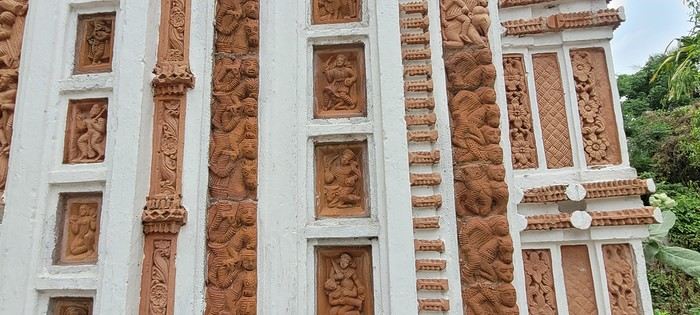
Further on, the walls are covered with more fragmented motifs: small figures, animals, faces, and floral ornaments follow one another like a meticulous patchwork. Each element seems to tell its own story, nestled within the architecture, bearing witness to patient craftsmanship and a remarkable sense of detail. Other panels illustrate daily life and mythological figures. A vertical frieze catches my attention: the mrityulata, the “vine of death.” It consists of a succession of human and animal figures, each seeming ready to attack the one below. This motif, repeated along the entire height of the temple, creates a simultaneously fascinating and unsettling impression.


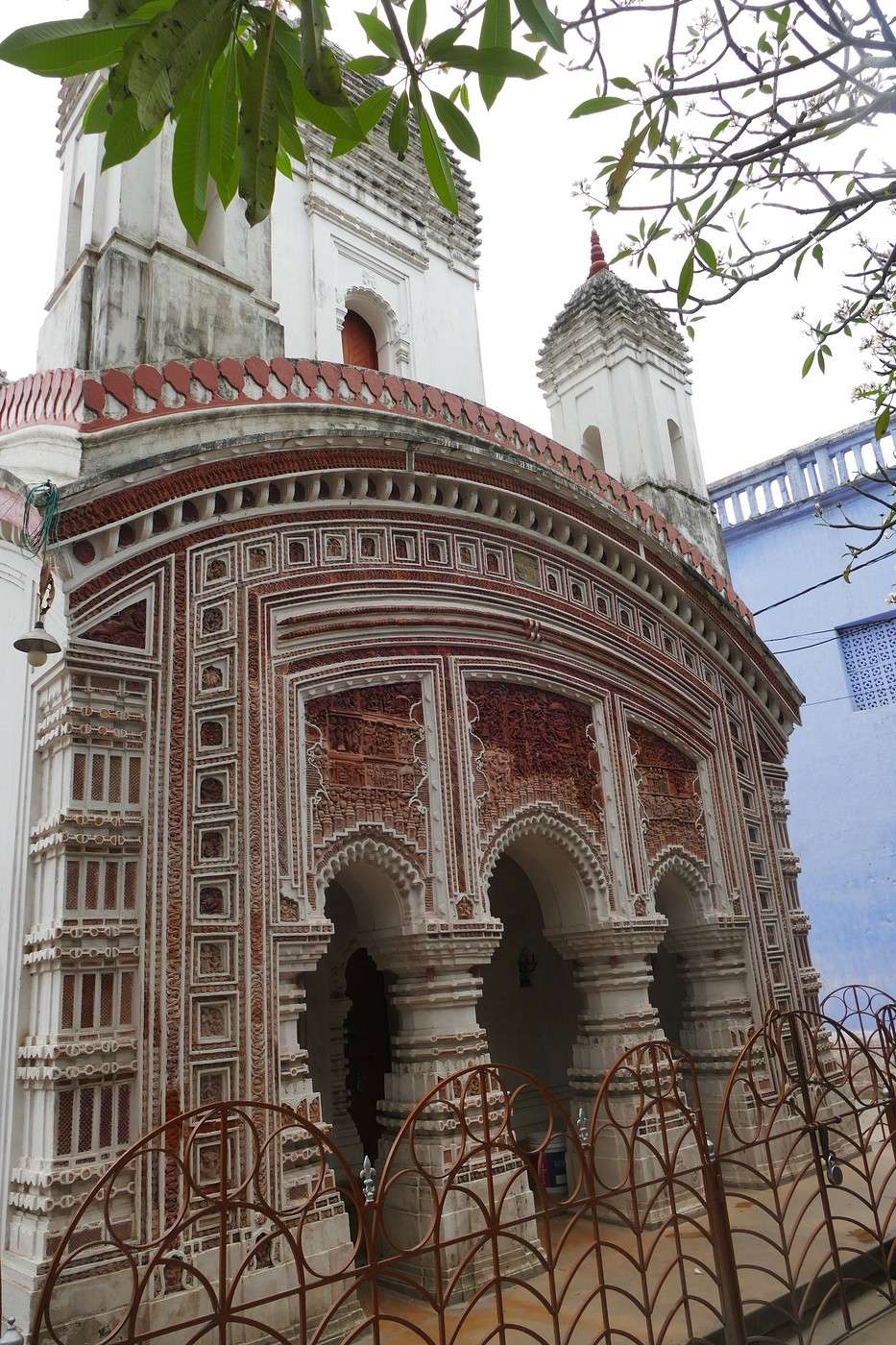
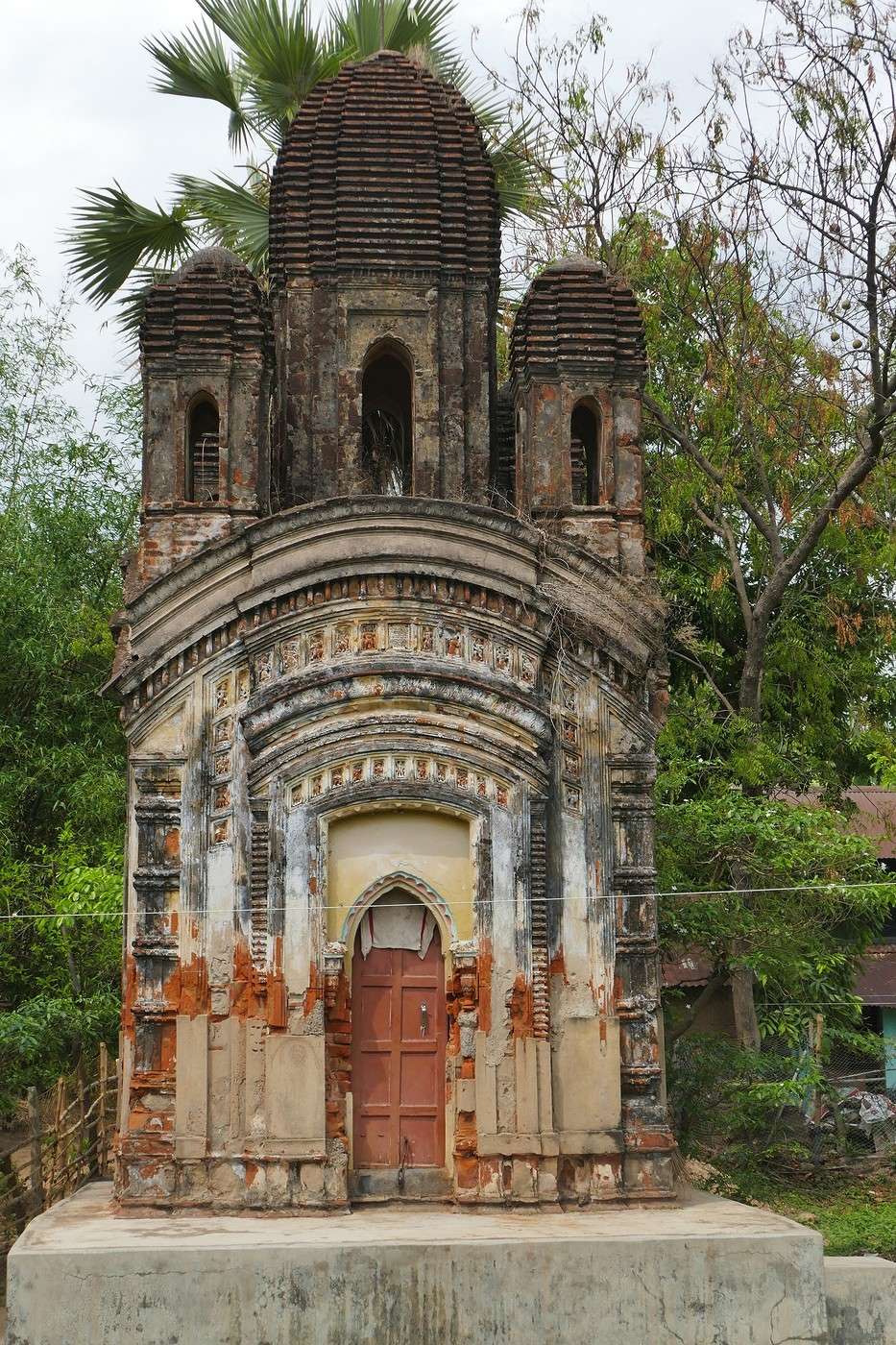
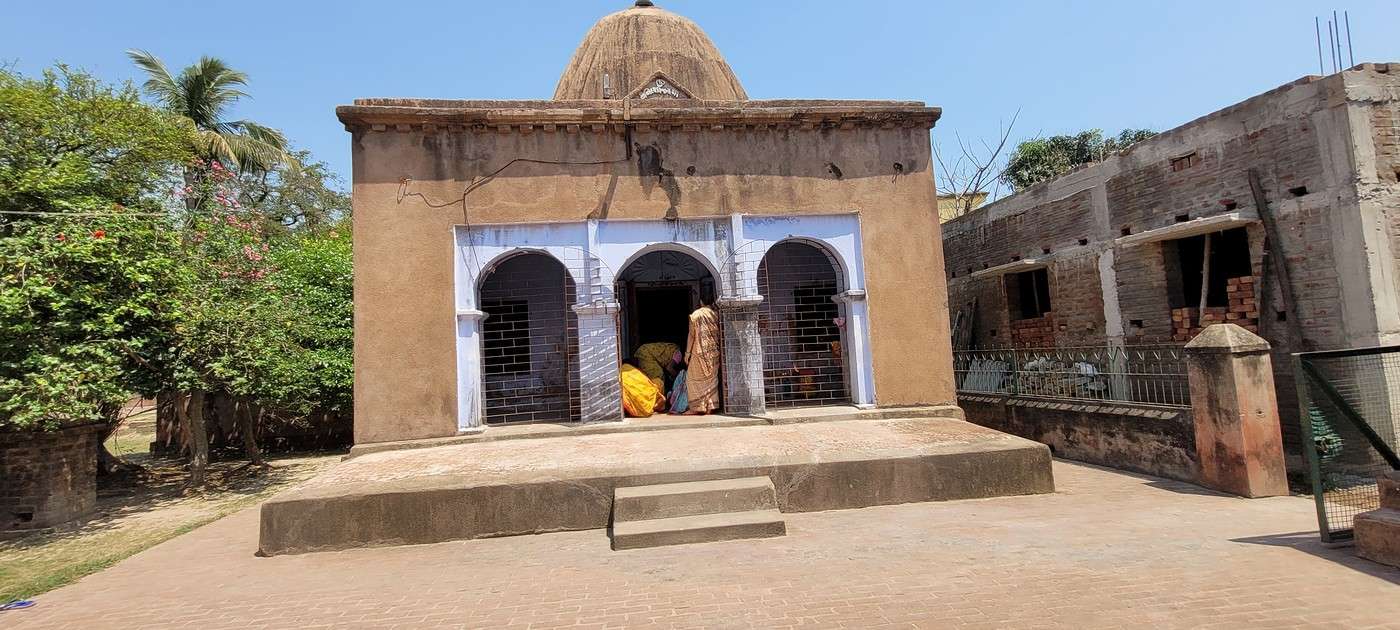
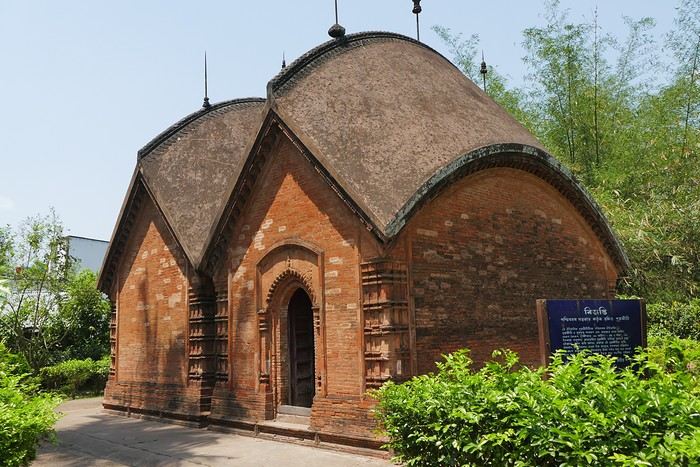
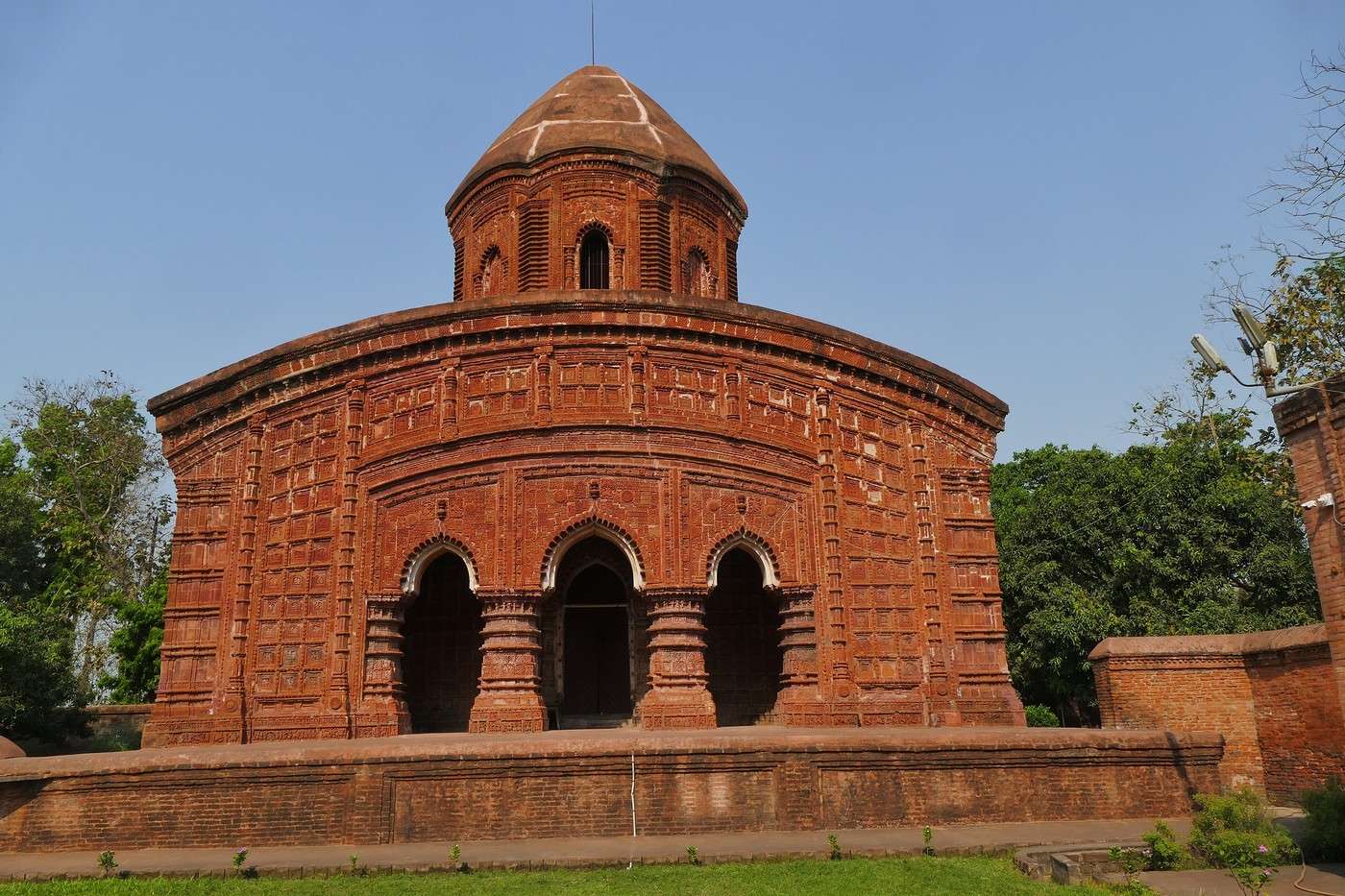
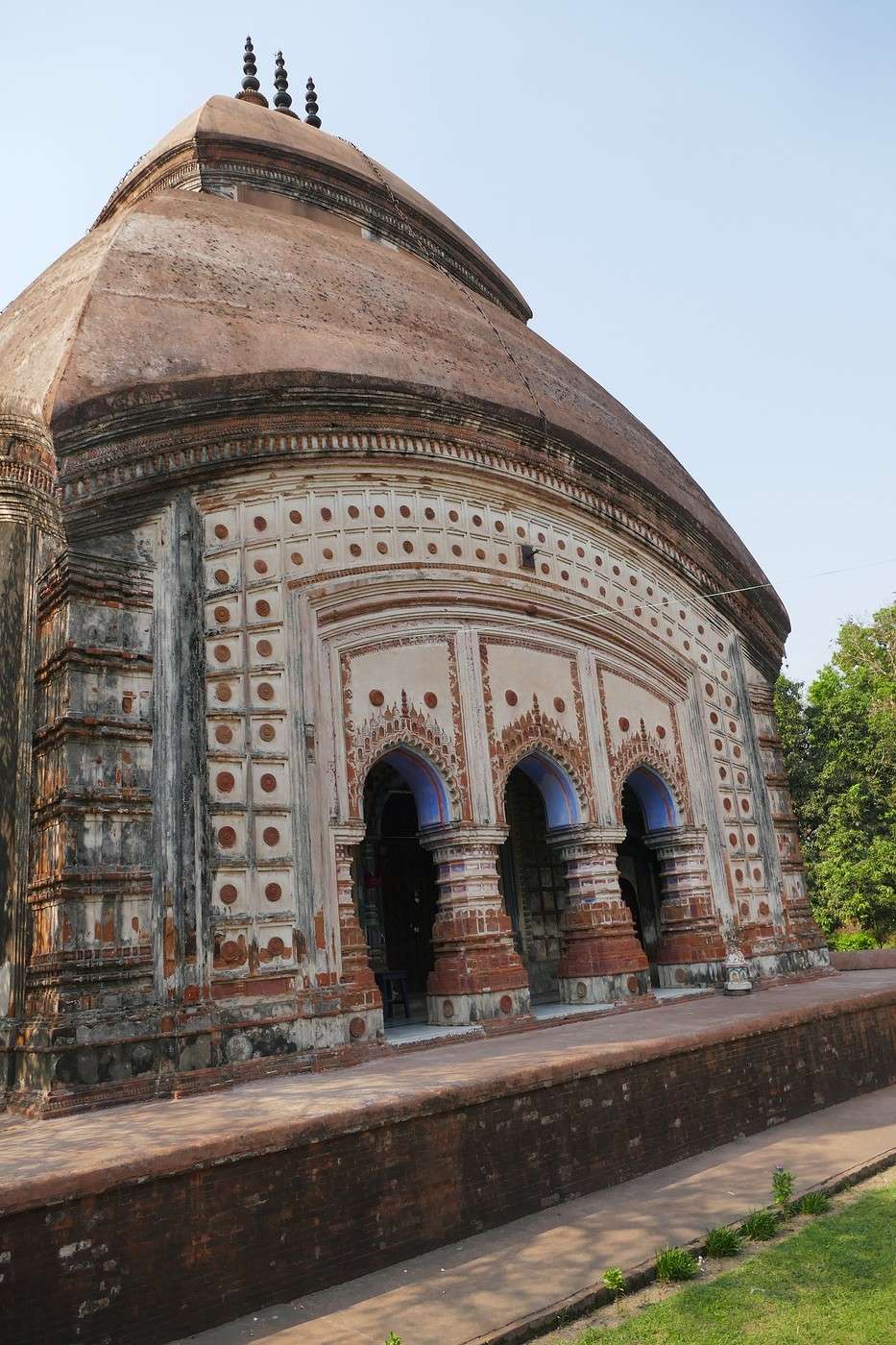
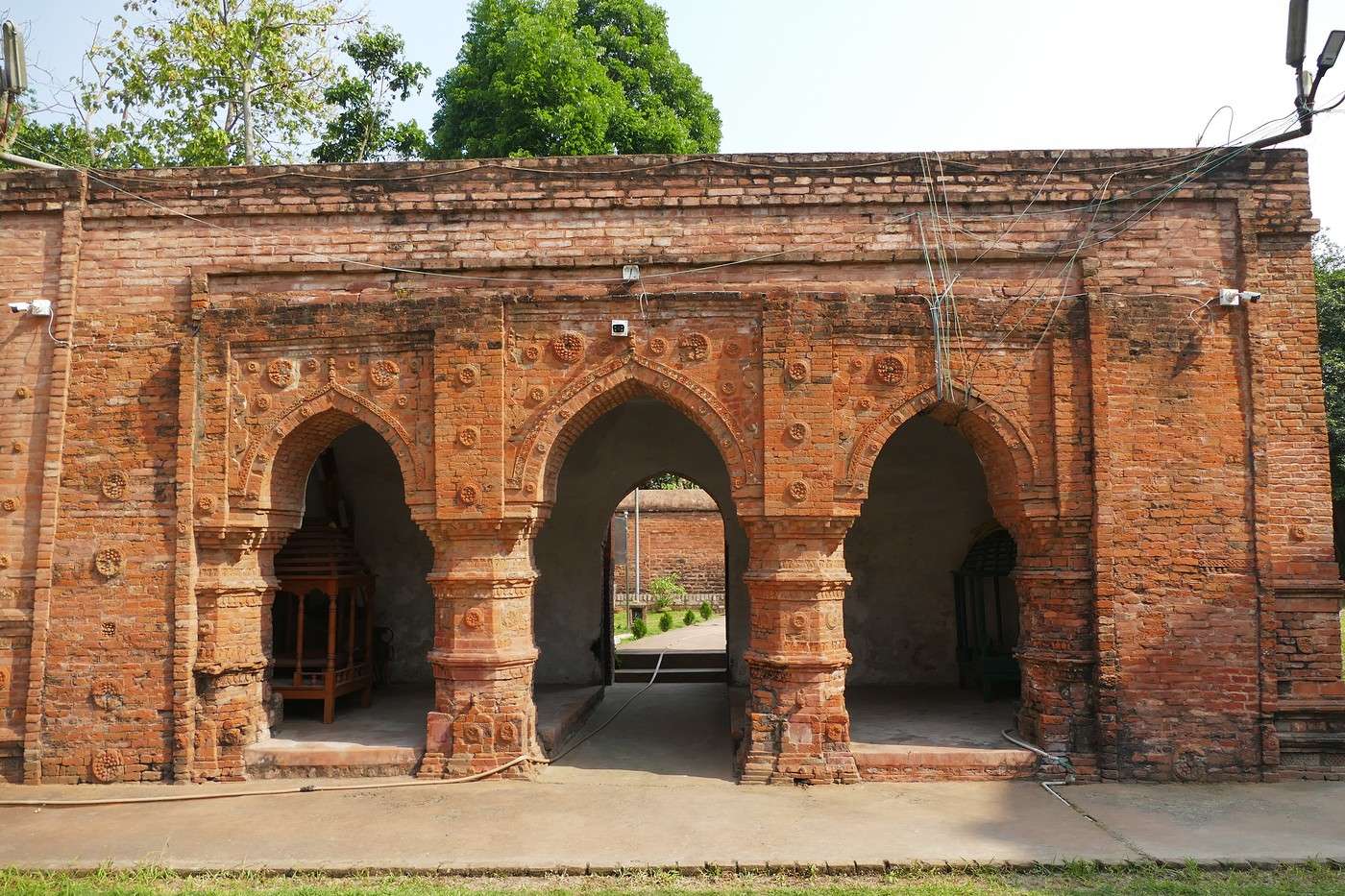
Next to it is the Aatchala temple, recognizable by its three-arched entrance. The central panel is adorned with floral and geometric motifs, more understated but just as elegant. I continue my visits and cycle to Supur. Upon arriving, I discover the Hattala temples, peacefully nestled in this quiet village.


I then head to the Shiva Jora temples, located on the main street.


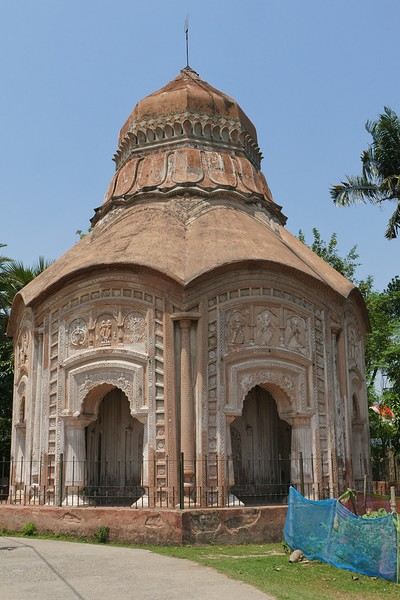
One of them, octagonal in shape, particularly catches my eye. Its eight facades are richly decorated: musicians, dancers, and soldiers unfold amidst floral and geometric designs. As is often the case here, every centimeter tells a story.


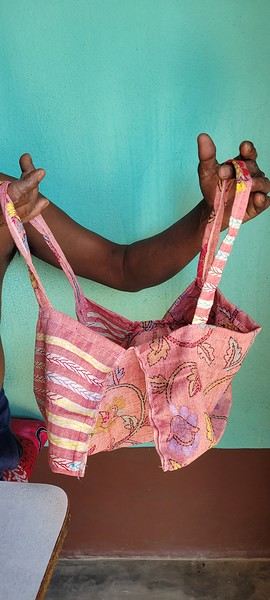
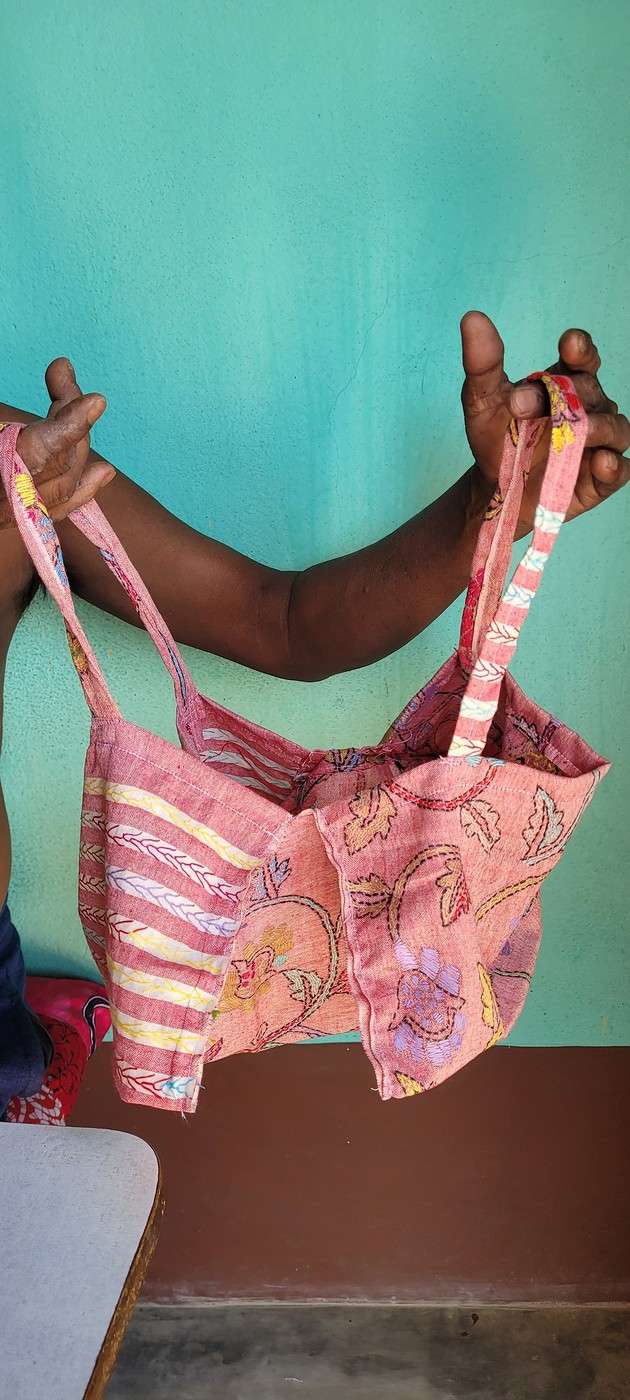
It’s time to head back. The market is about ten kilometers away. Halfway there, a sharp noise suddenly rings out, like a firecracker: the rear tire has just burst. I’m forced to push the bike under the scorching heat. I walk like this for nearly a kilometer, asking for directions several times. Each time, I’m told to keep going straight. I finally come across a small house. At first glance, there’s no one around, but a woman appears and calls someone. A man arrives and immediately gets to work. The diagnosis is clear: the inner tube has a huge hole. He offers to replace it but eventually agrees to repair it. It already bears several “bandages,” evidence of previous fixes. While examining the tire, he discovers it’s also seriously torn. I start to worry, but he remains perfectly calm. He cuts a large piece of inner tube and slips it inside the tire, then pulls out a large needle and thread and begins sewing the tire. I’d never seen anything like it. The repair costs me 100 rupees. I set off again, torn between admiration and concern, hoping this makeshift fix will hold until I get back. The tire is in very bad shape, and another puncture is still possible. In the end, I reach the market without incident. The atmosphere is now lively. I make a few purchases, including kanthas in the shape of scarves. Back at the house, the owners are away. I leave the bike: the repair held.

Villages around Hazaribagh in West Bengal

Aleph240758 · 2026-08-02

Tuesday, April 7th After breakfast, I go downstairs and see that the bike is back in the entrance. The owners didn’t notice anything unusual and didn’t say anything to me. Though, to be fair, the tire—already quite worn from so many ruts—probably needs replacing.
I take an autorickshaw to Bolpur, then a bus toward Nanoor. There, I visit the Chandidas Bhita temple complex: there are about fifteen temples within the grounds, but unfortunately, they’re in very poor condition. I quickly walk around them.


Right across from the temples, there’s a tailor’s shop—perfect, since I brought my khantas. I ask him to turn them into pie carriers: they’ll make great gifts when I get back.


A man approaches us and takes me to a woman who also sews khantas. She shows me a few designs, but I don’t find what I’m looking for. I head back to the bus station. While waiting for the bus to Bolpur, I enjoy a delicious yogurt. Back in Santiniketan, I walk to the market. I find the khanta sellers and show them my creations. They think they’re so well done that they take photos—maybe they’ll offer them for sale in the future. I’m still on the lookout for saris to turn into curtains for my niece, and here, the selection is endless. I leave with two saris and two more khantas. As soon as I get home, a storm breaks out. Later, I go out to buy two eggs, which I’ll cook tomorrow morning before I leave.
From villages around Hazaribagh to West Bengal

Aleph240758 · 2026-08-02

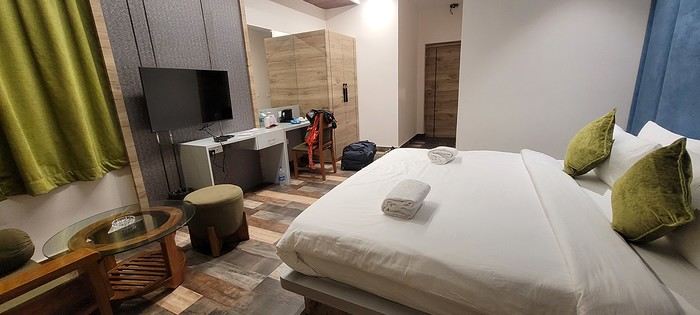
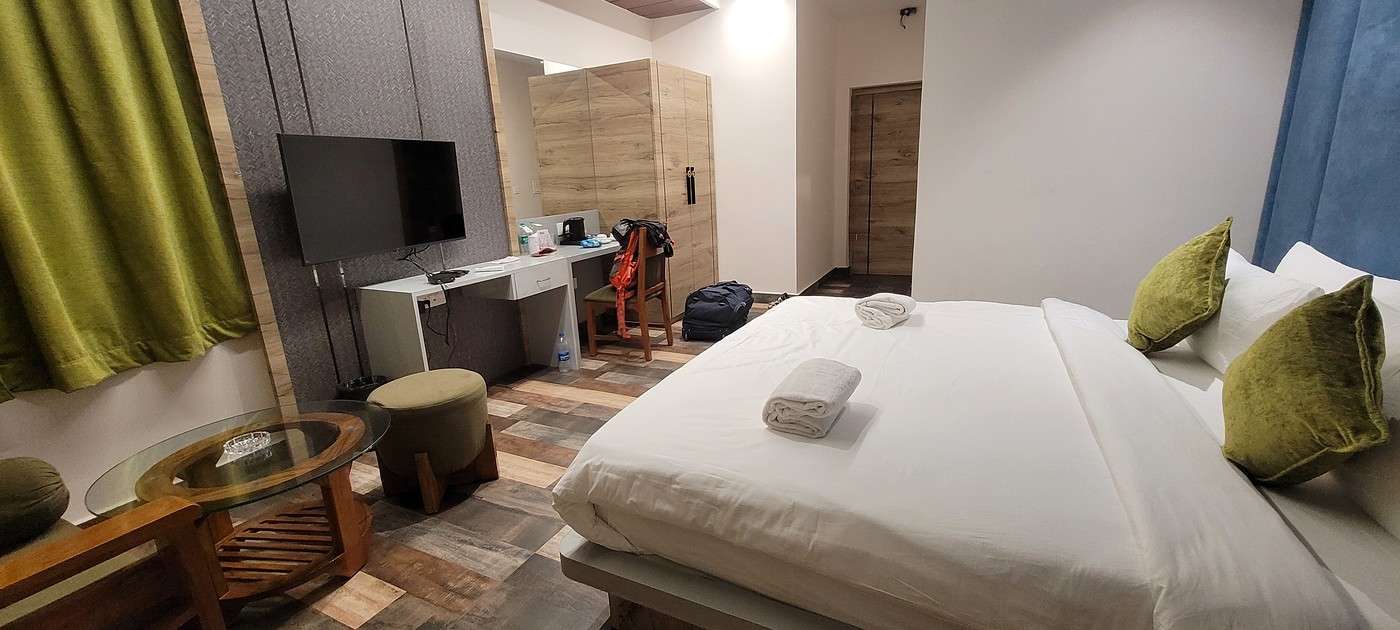
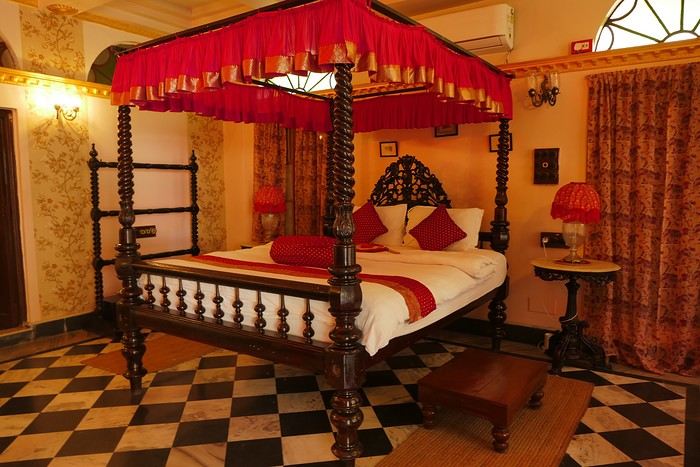
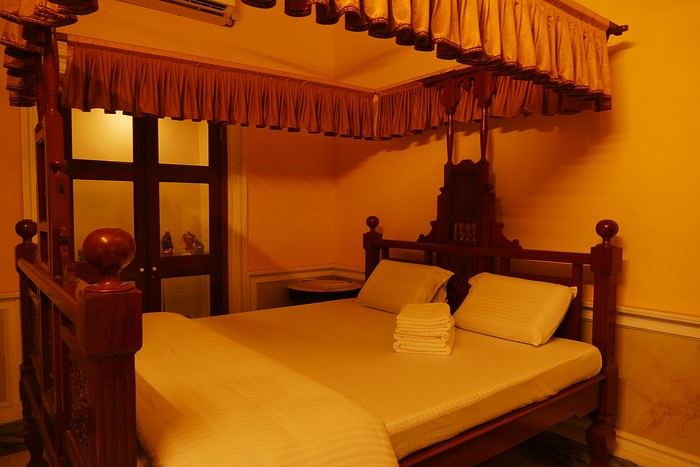
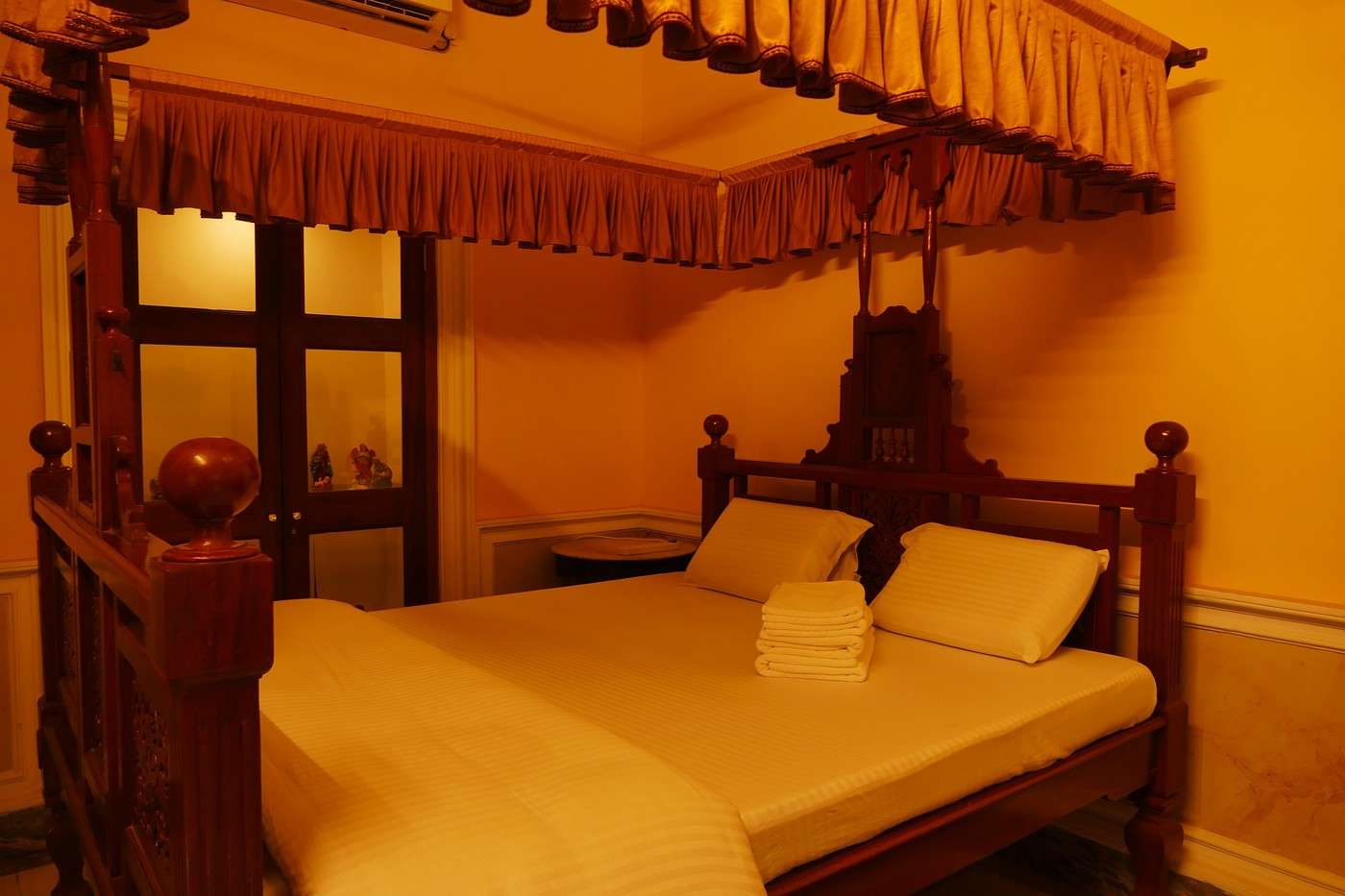
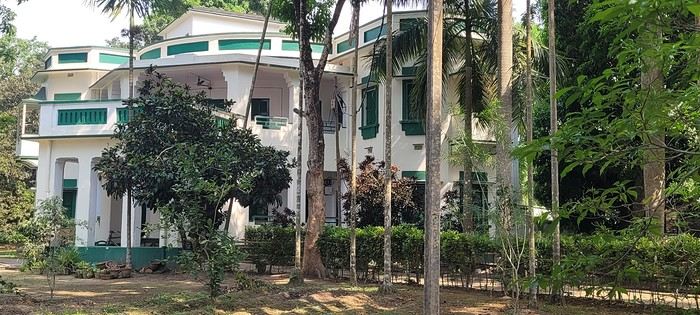
Wednesday, April 8 I take the bus at 11 AM to Burhanpur, then an auto to Murshidabad, where I arrive around 4 PM. I booked a room at the Mahfil-e-Motijheel. The hotel is new, the room is large and very comfortable. For 22 € including breakfast, it’s a real little luxury that feels great after several more basic stops. The staff is particularly helpful and friendly, which adds to the pleasure of the place.


The restaurant is in a pretty building in the heart of the hotel’s park. I have a very decent dinner there: tomato soup, eggplant, and ice cream. A simple but pleasant evening in a peaceful setting.

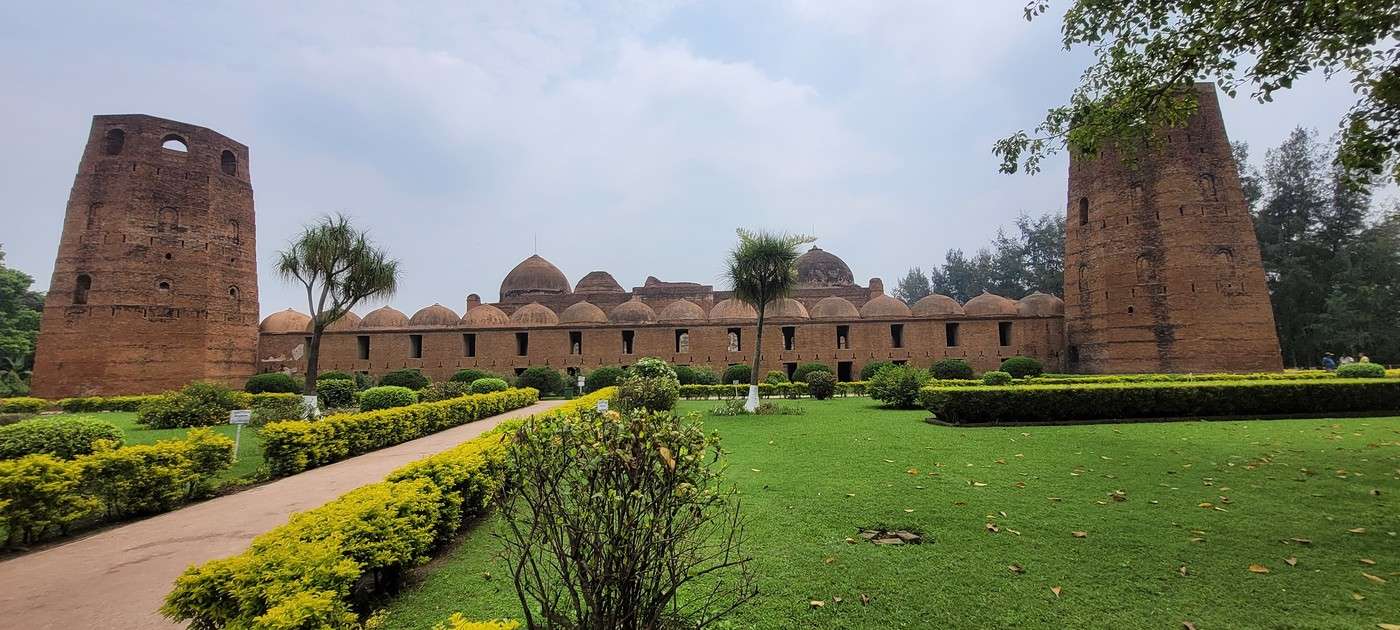
Thursday, April 9 Murshidabad is nicknamed the "Land of the Nawabs." A quote from Robert Clive after the Battle of Plassey perfectly illustrates the city’s importance at the time: "The city of Murshidabad is as extensive, populous, and rich as London, with this difference: some individuals in the former possess infinitely greater wealth than those in the latter. If the inhabitants had wanted to annihilate the Europeans, they could have done so with sticks and stones." Breakfast, included in the room price, is hearty and served à la carte: omelet, toast, butter, honey, yogurt, and fruit. Just what I needed to start the day before exploring the city. Yesterday, I had asked to rent a bike. After waiting until 10 AM, a kid shows up with a bicycle without brakes and with a bar in the middle… I decide to skip it and head out on foot. I start with the Katra Masjid, which has free entry.


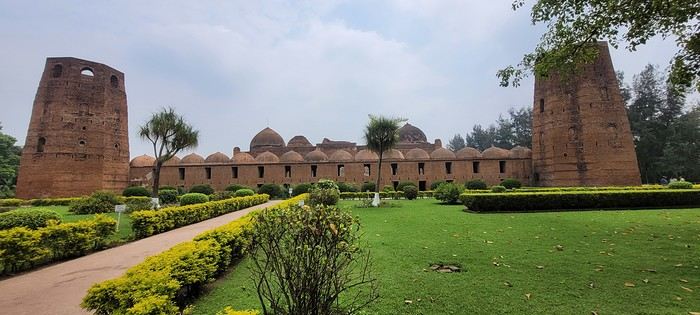
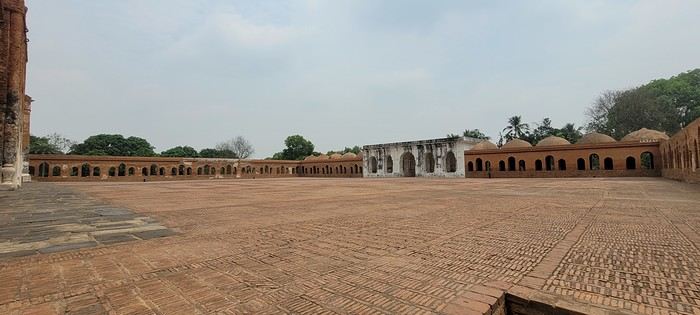
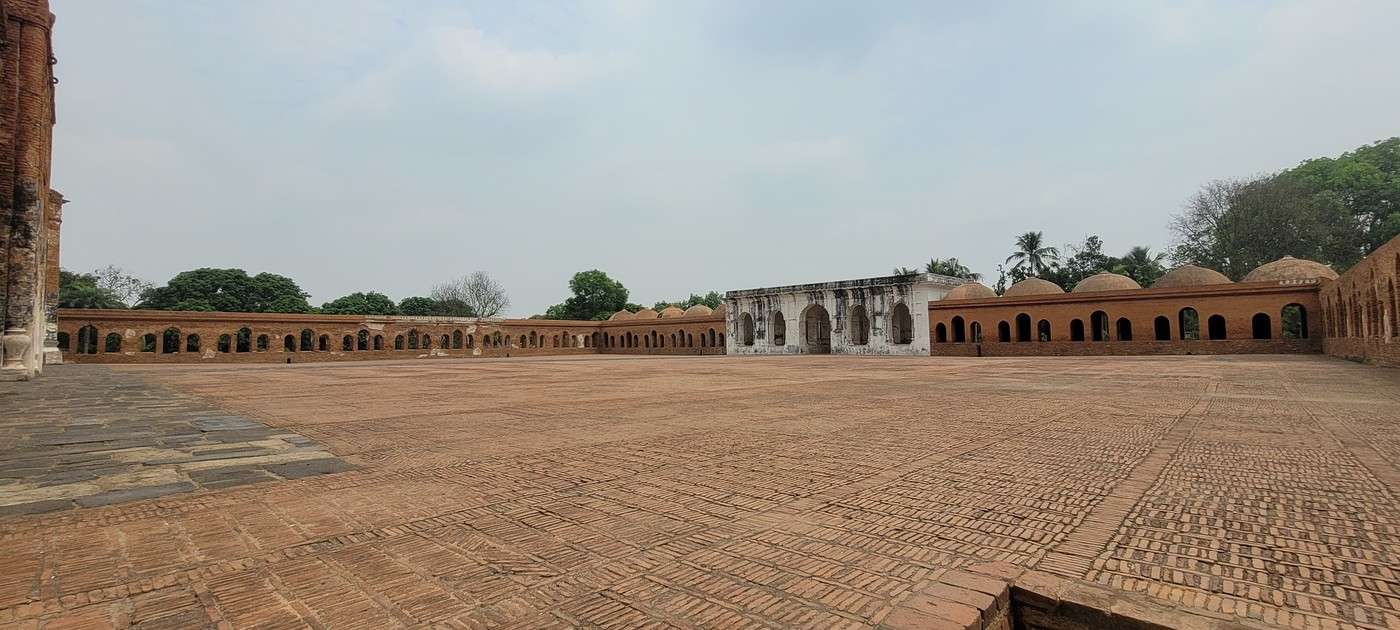
The mosque is magnificent, built with red baked bricks. Erected by Nawab Nazim Murshid Quli Khan between 1723 and 1734, it served as a mosque, mausoleum, and one of the largest caravanserais on the Indian subcontinent. Inspired by the Kaaba in Mecca, it stands on a vast square pedestal 54 meters wide, surrounded by rows of domed cells on two levels. These cells could accommodate about 700 Quran readers, while nearly 2,000 worshippers could pray within the enclosure.


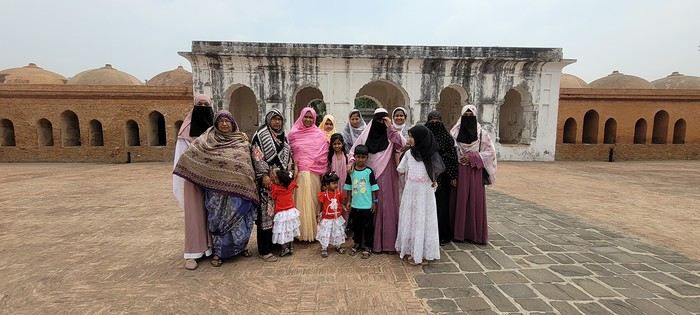
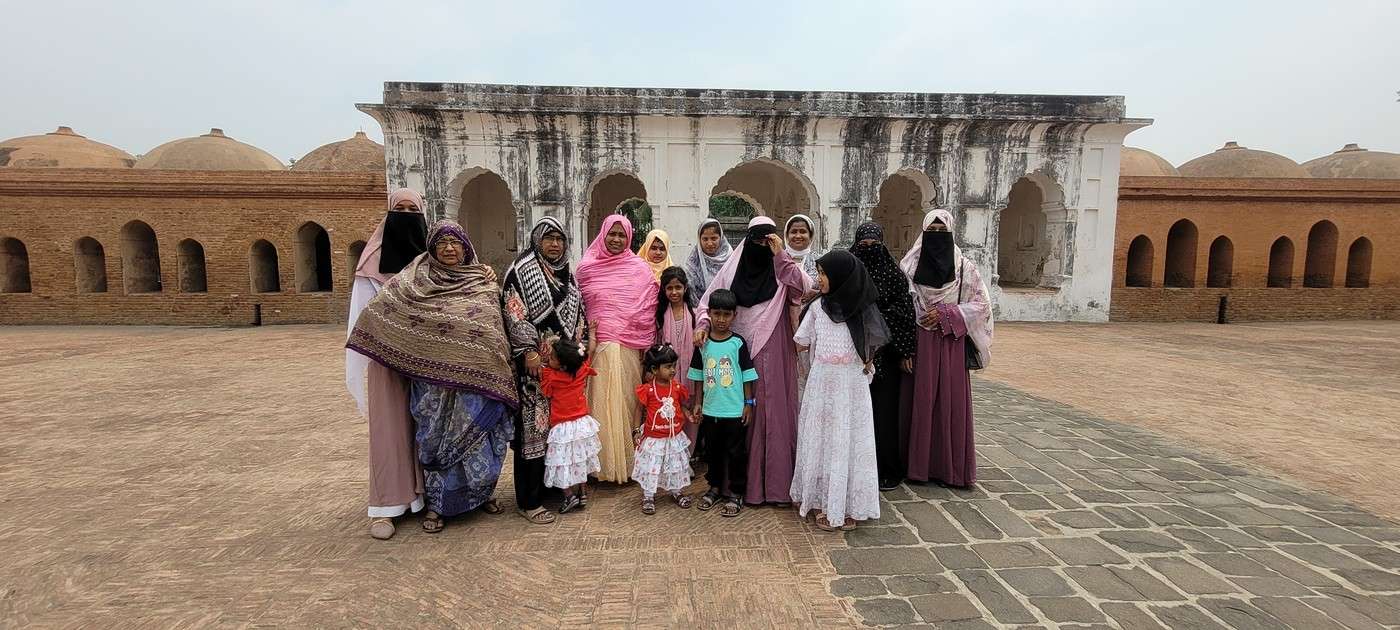
Some Indian tourists suddenly call out to me and rush over for a photo. We exchange a few smiles and take a bunch of selfies. Delighted, they quickly head off to continue their visit, leaving me with this spontaneous and joyful little moment—so common when traveling in India.


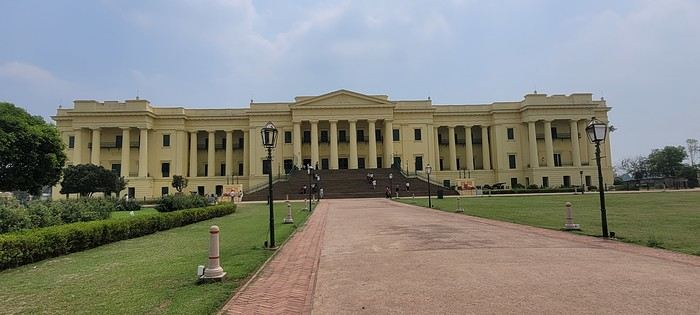
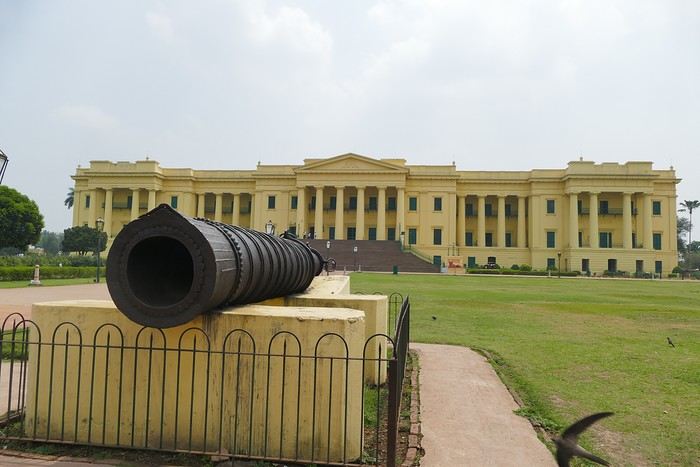
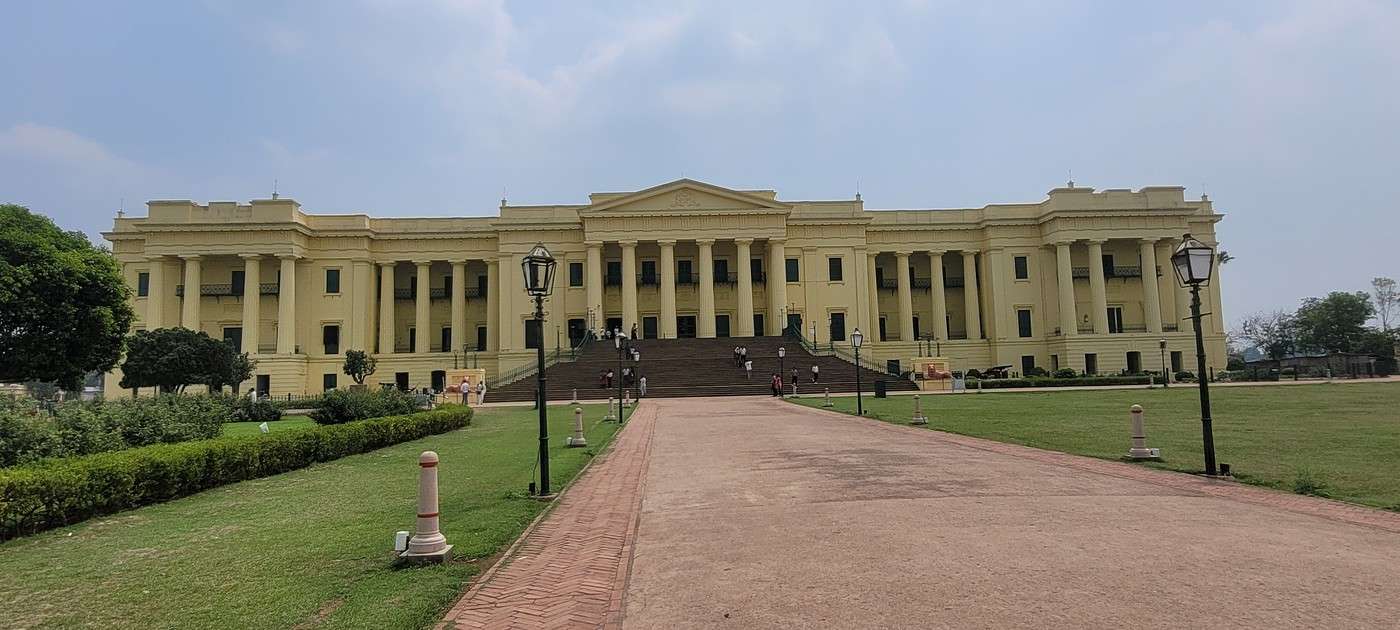
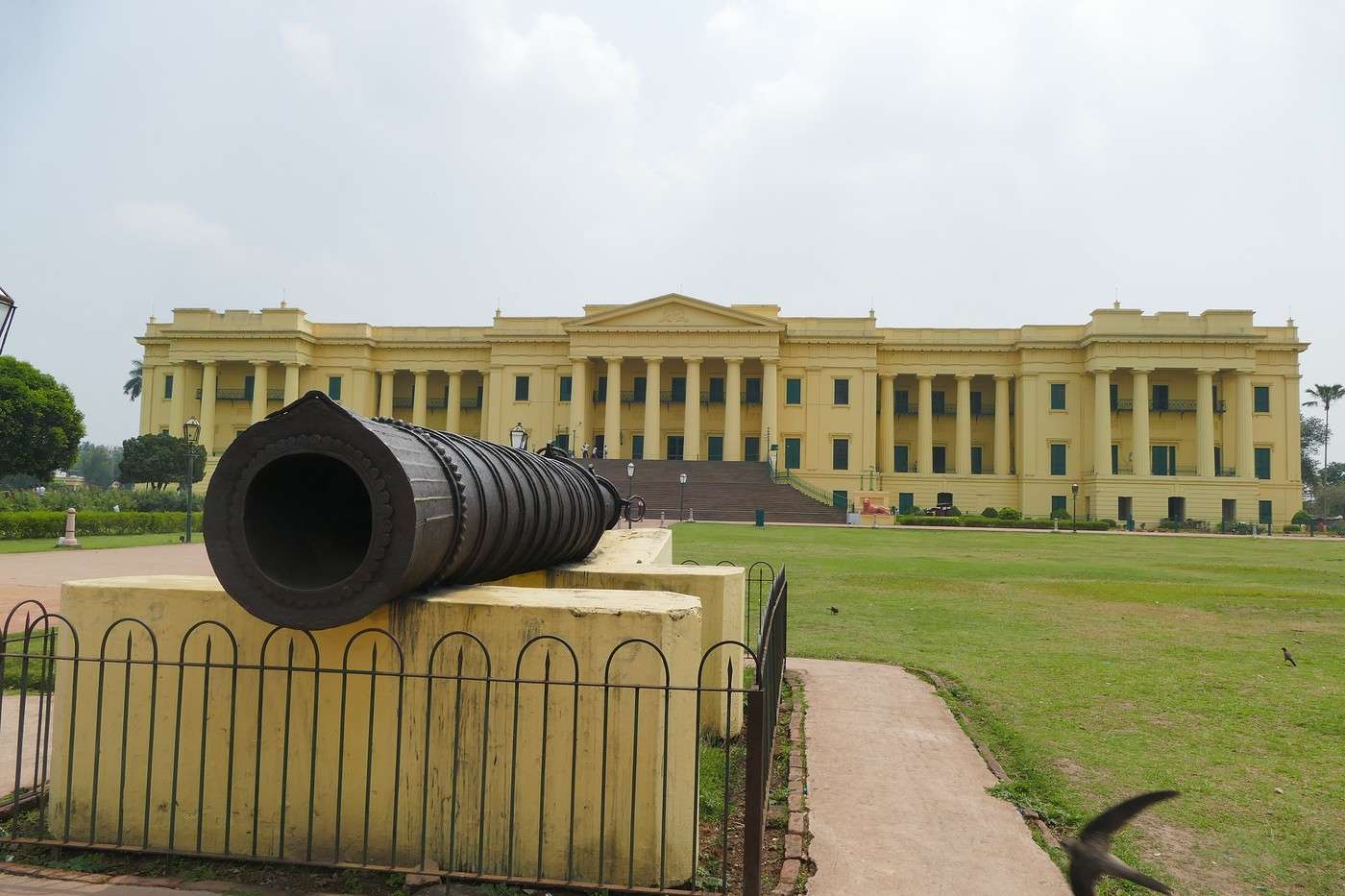
From the Katra, I take a small road lined with a vast mango plantation leading to the Fauti Mosque. It’s now in ruins, and it’s no longer possible to get close. I turn back. I then head to the Hazarduari Palace. Since it’s quite a distance, I take an auto. This palace is famous for its thousand doors: 900 are real, and the other 100 were added to deceive potential enemies. Entry costs 300 rupees.


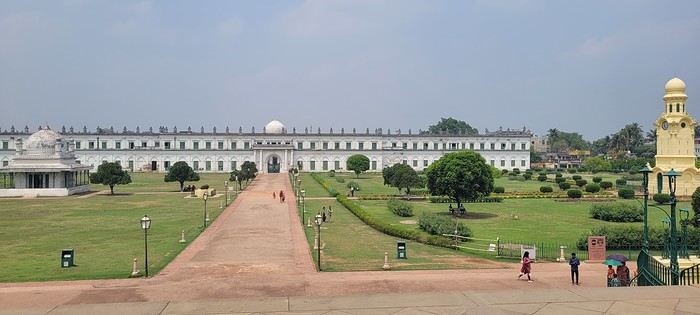
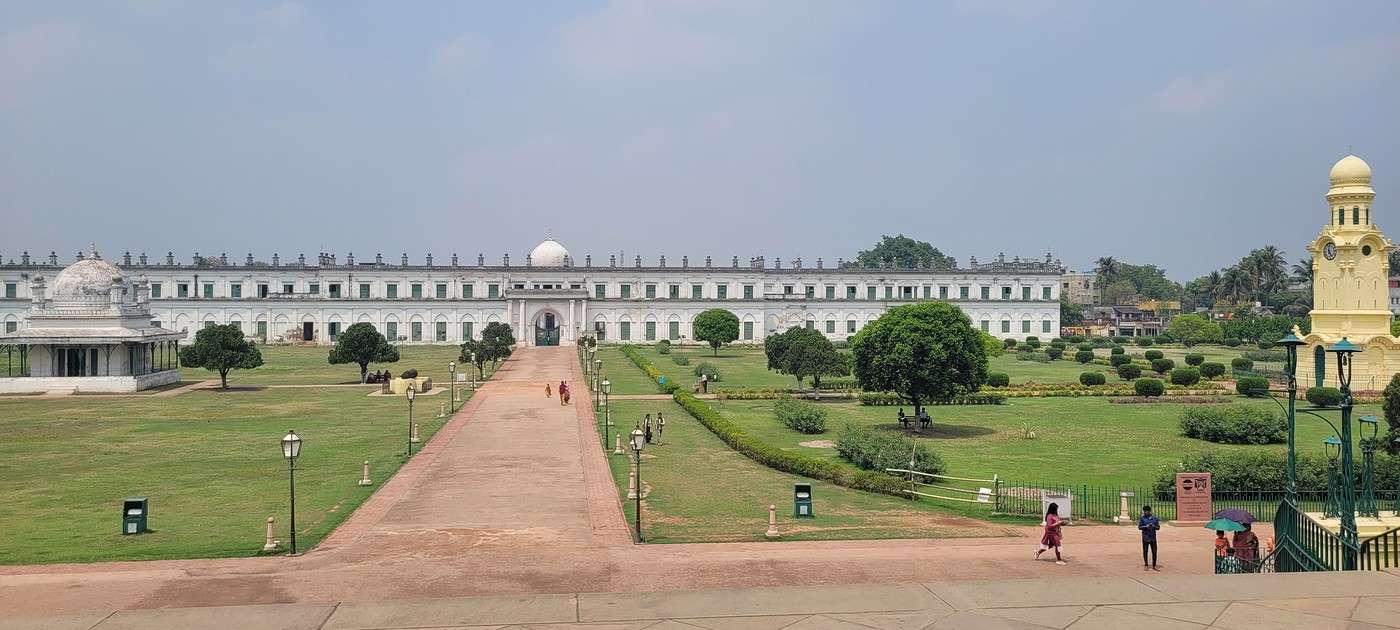
Photos are forbidden inside, where weapons, spears, tableware, and especially a huge chandelier in pink, yellow, and blue—absolutely stunning—are on display. It’s considered the second-largest in the world after the one in Buckingham Palace. The gardens within the grounds are very well maintained. Facing the palace stands the impressive Nizamat Imambara, whose monumental façade isn’t open for visits.


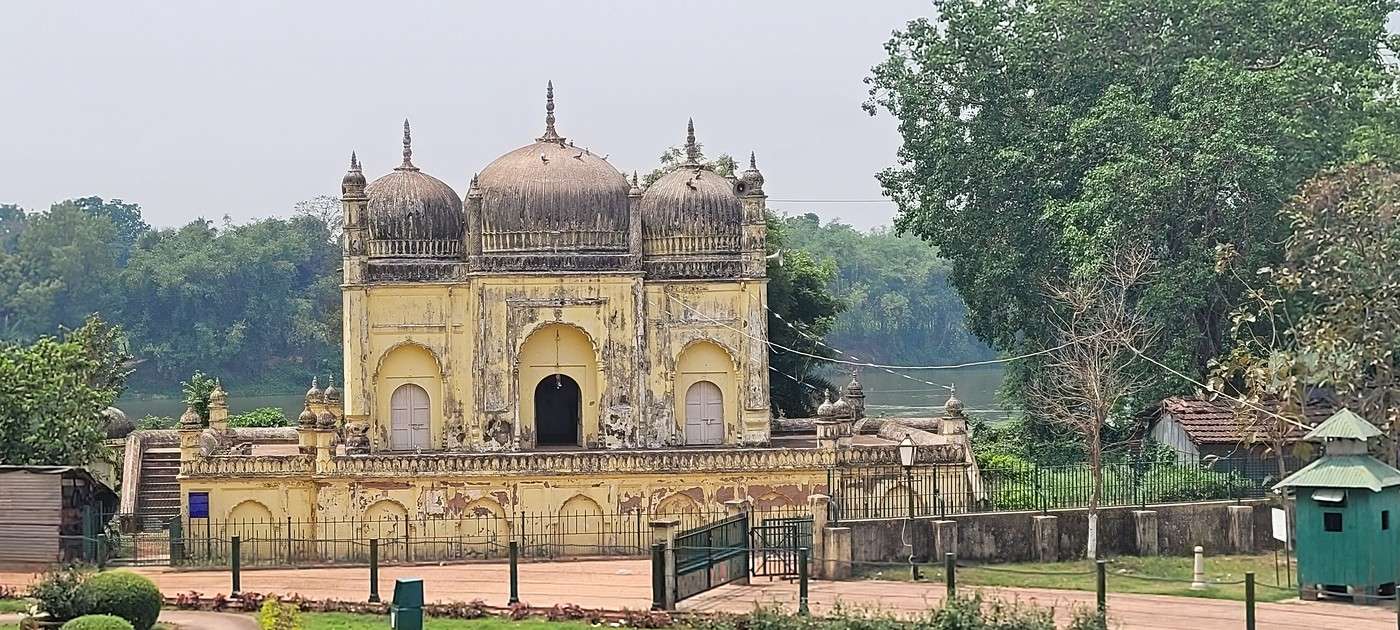
On one side is the Mosque of Medina, and a little further away, an enormous cannon weighing 7,657 kg. Legend has it that during a test firing, the supersonic boom was heard within a 16-kilometer radius, even causing premature births among some pregnant women.


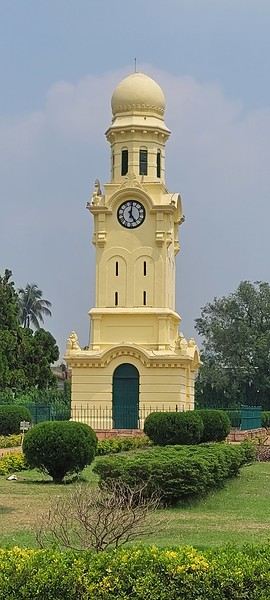
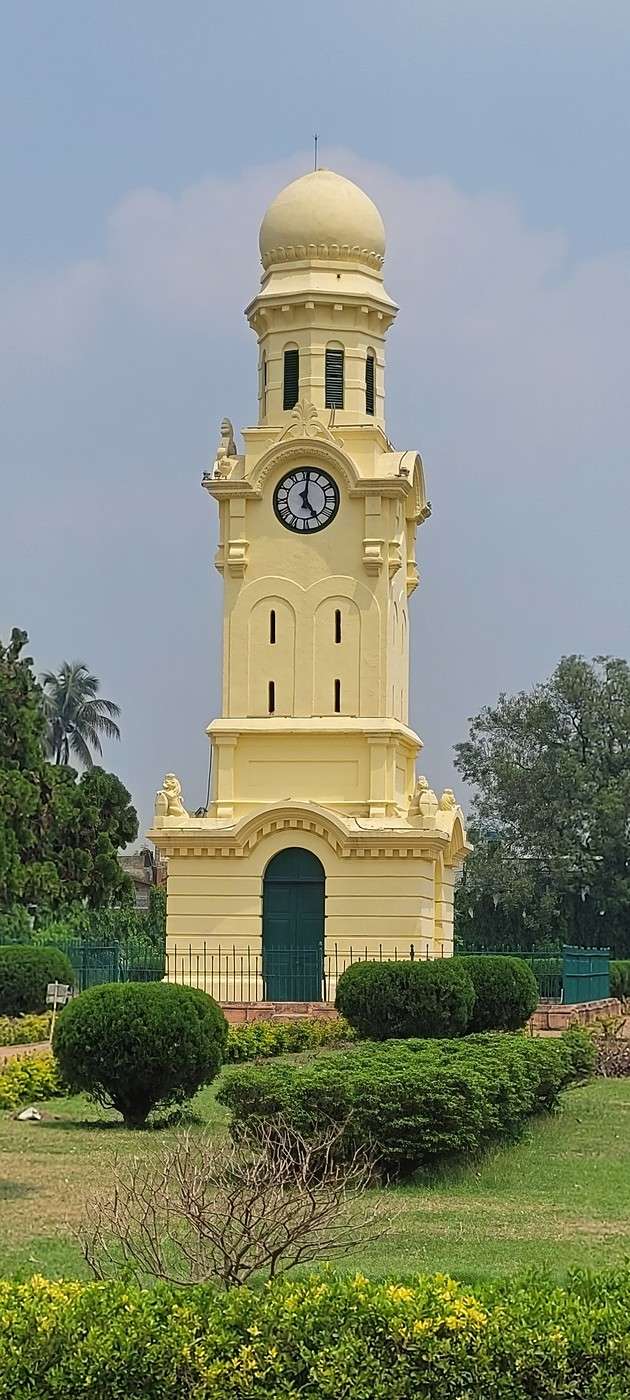
On the other side stands the clock tower.


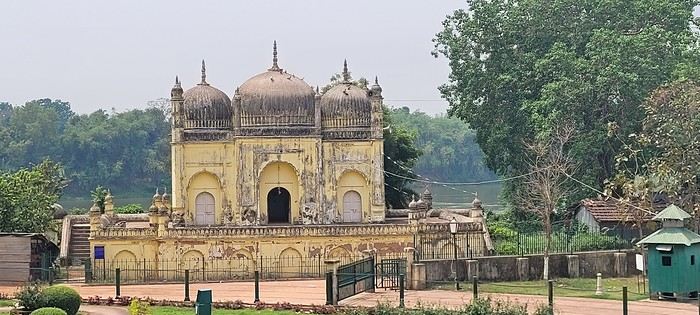
As for the Yellow Mosque, it’s on the other side of the road: you have to leave the grounds and go around to get close.

Villages around Hazaribagh in West Bengal

Partirester · 2026-08-02

Santiniketan! !!

Isn’t this the town founded by Rabindranath Tagore, my favorite poet? Did you find the lyrical offering within while biking around, or any of his poems scattered along the paths? Oh wow, this trip is making me so jealous… (Plus, there’s nothing lying around on the ground—is this really India, or did they clean everything up before you arrived?) Thanks, Marie Jo, for these beautiful photos…

Villages around Hazaribagh in West Bengal

Aleph240758 · 2026-08-03

Santiniketan! !!

Isn’t this the town founded by Rabindranath Tagore, my favorite poet?

Yes, it’s in Santiniketan that you’ll find Visva-Bharati University, created by Rabindranath Tagore. It has over 11,000 students. You can visit part of it, but I thought the price was excessive—I’d already been there 10 years ago and had visited it then. I haven’t read his poems. Santiniketan and the villages around Hazaribagh are indeed very clean. The cities in Jharkhand are very polluted—I wore a mask in the street.

Villages around Hazaribagh in West Bengal

Aleph240758 · 2026-08-03

I’m continuing my visits in Murshidabad.

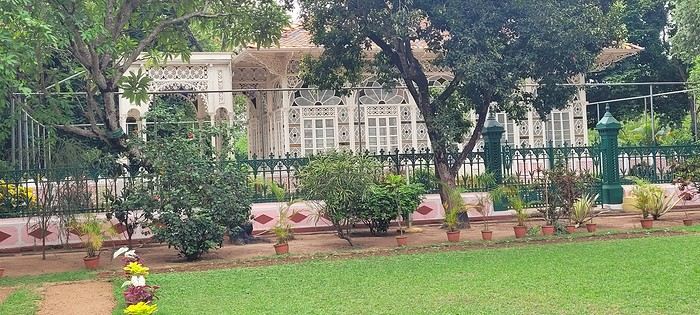
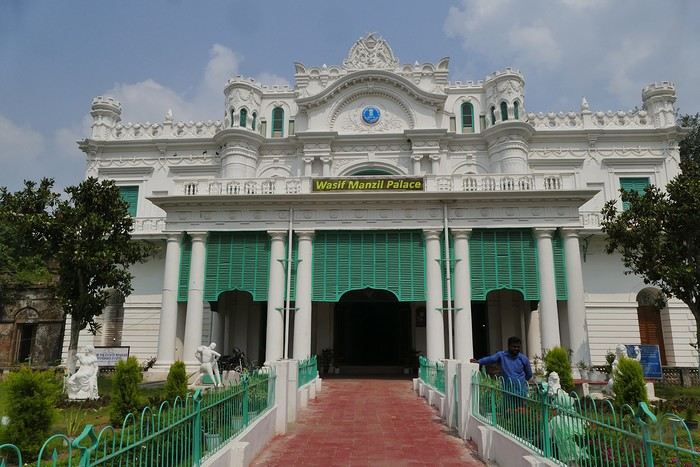
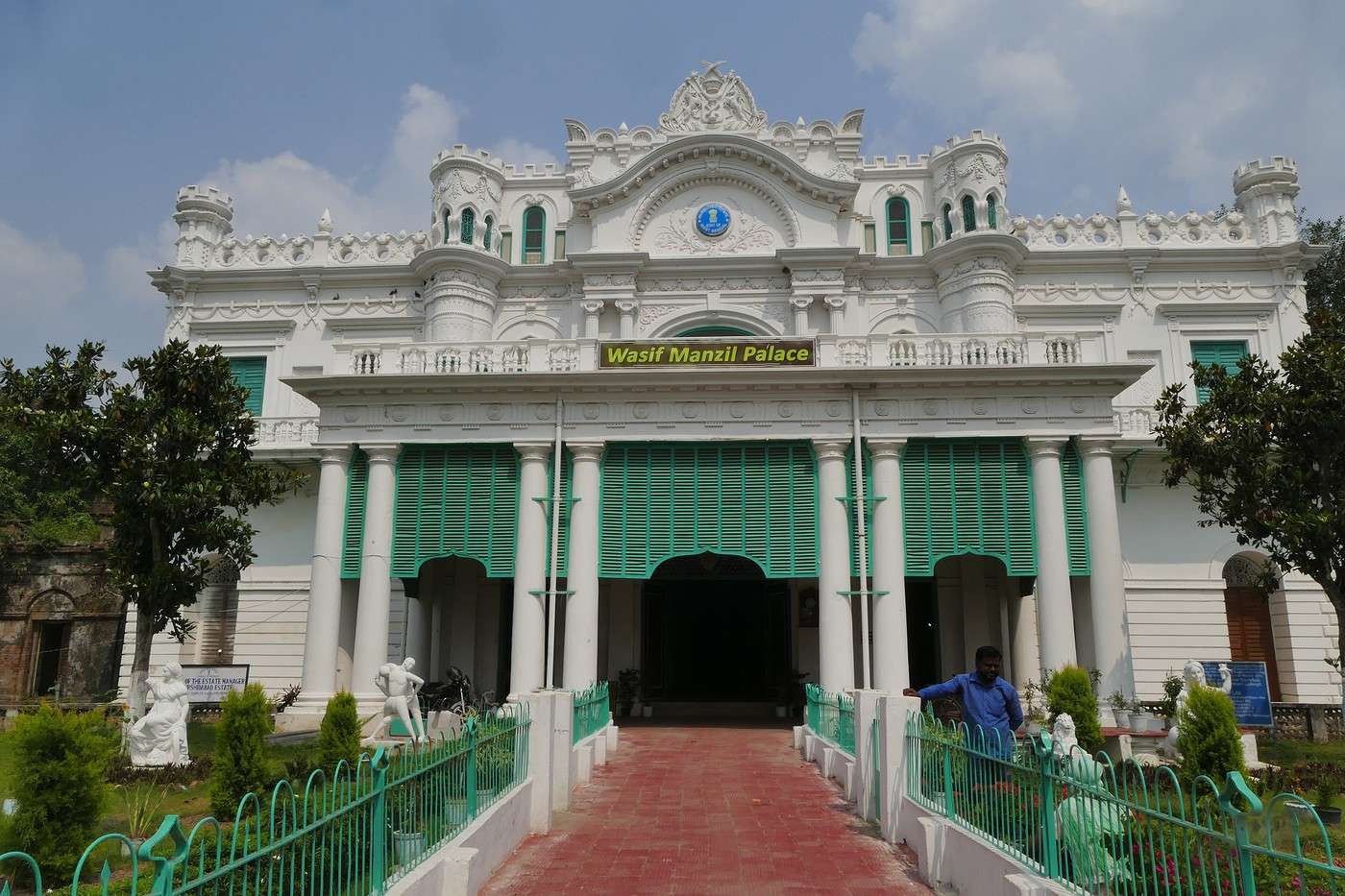
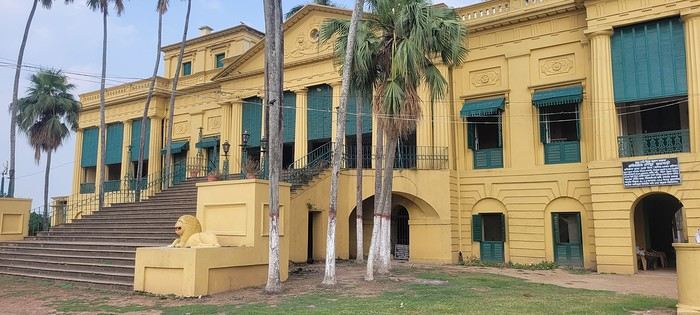
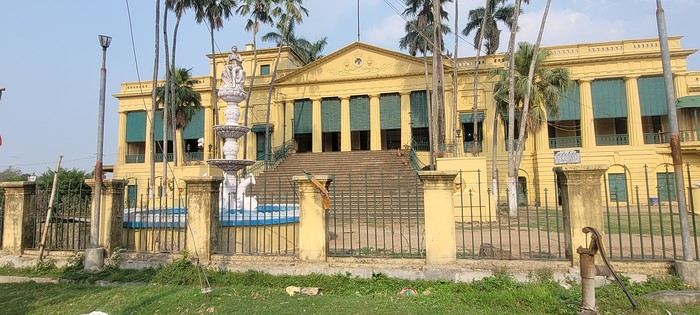
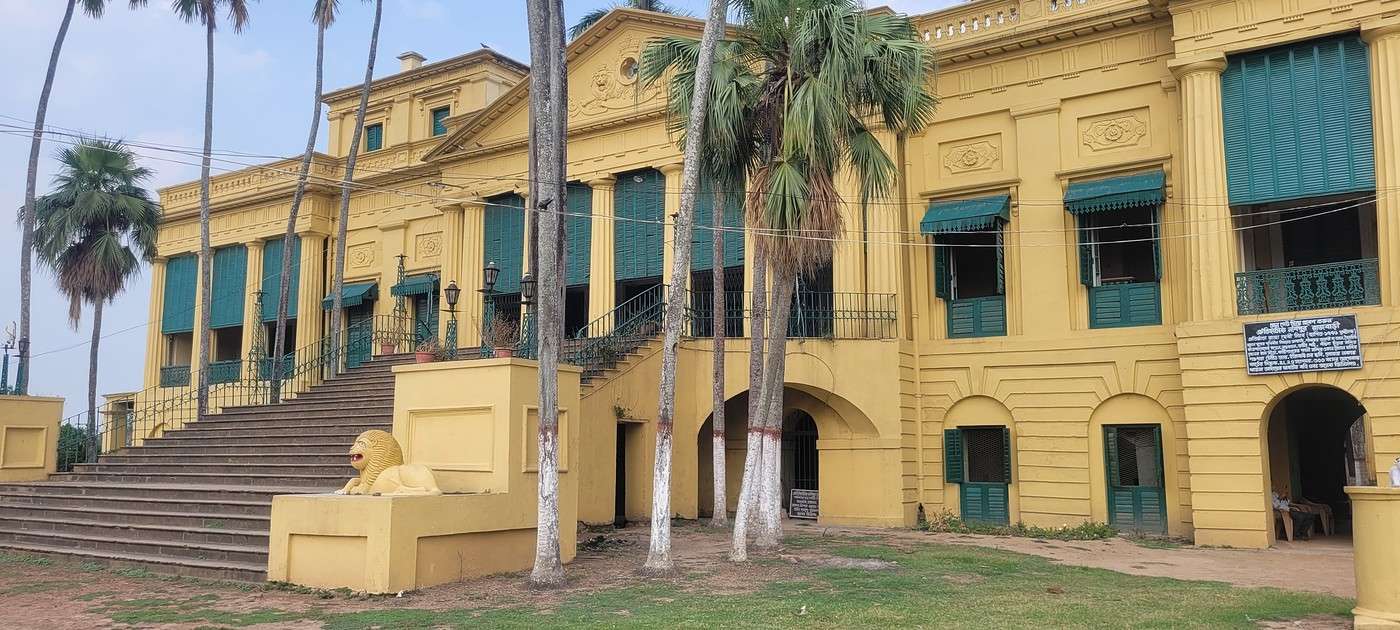
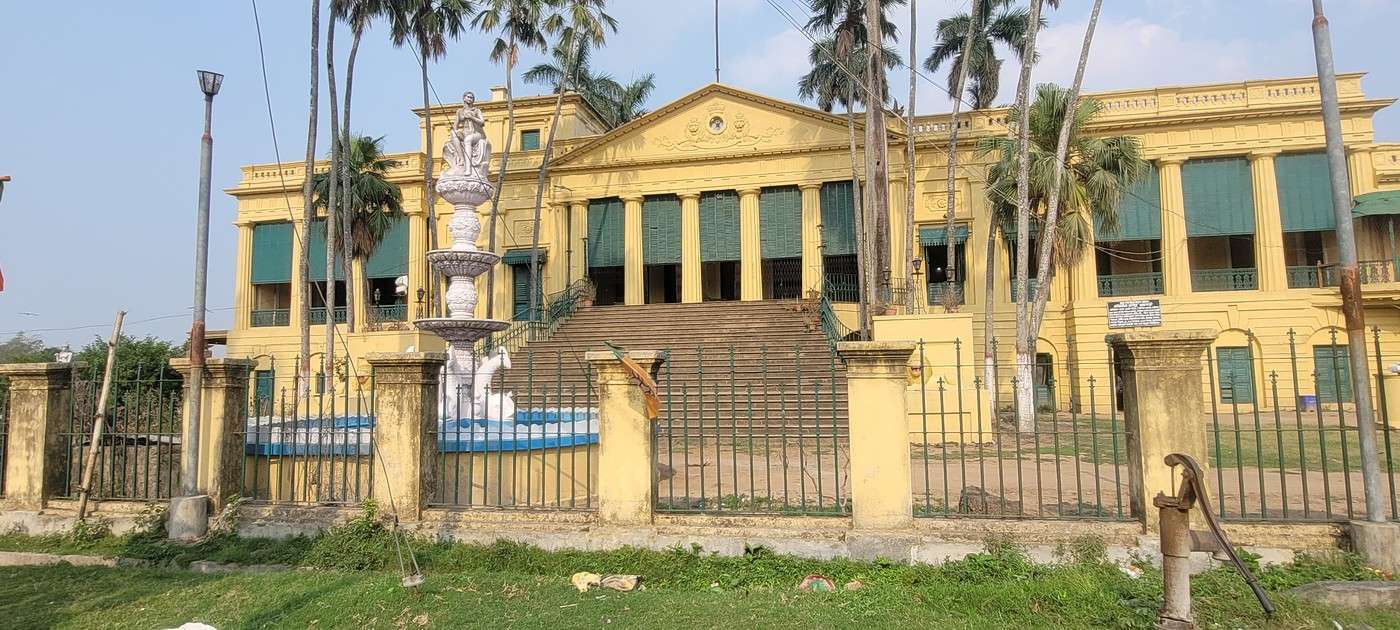
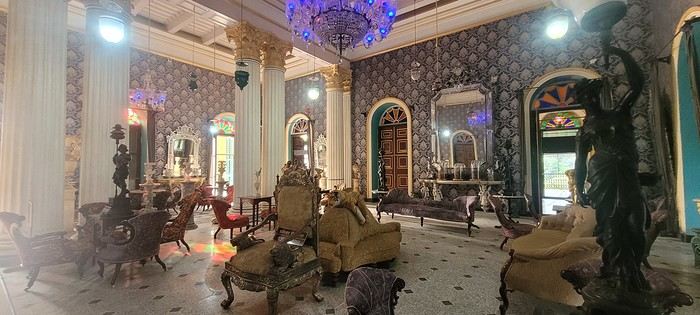
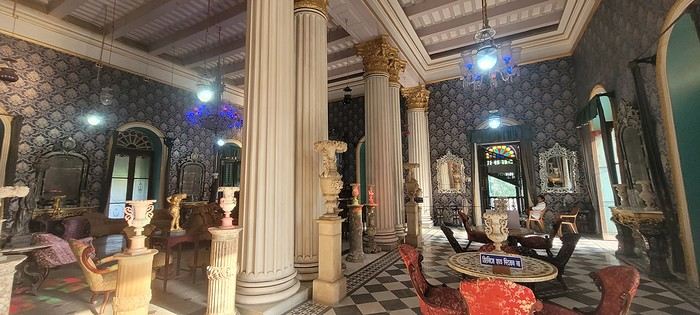
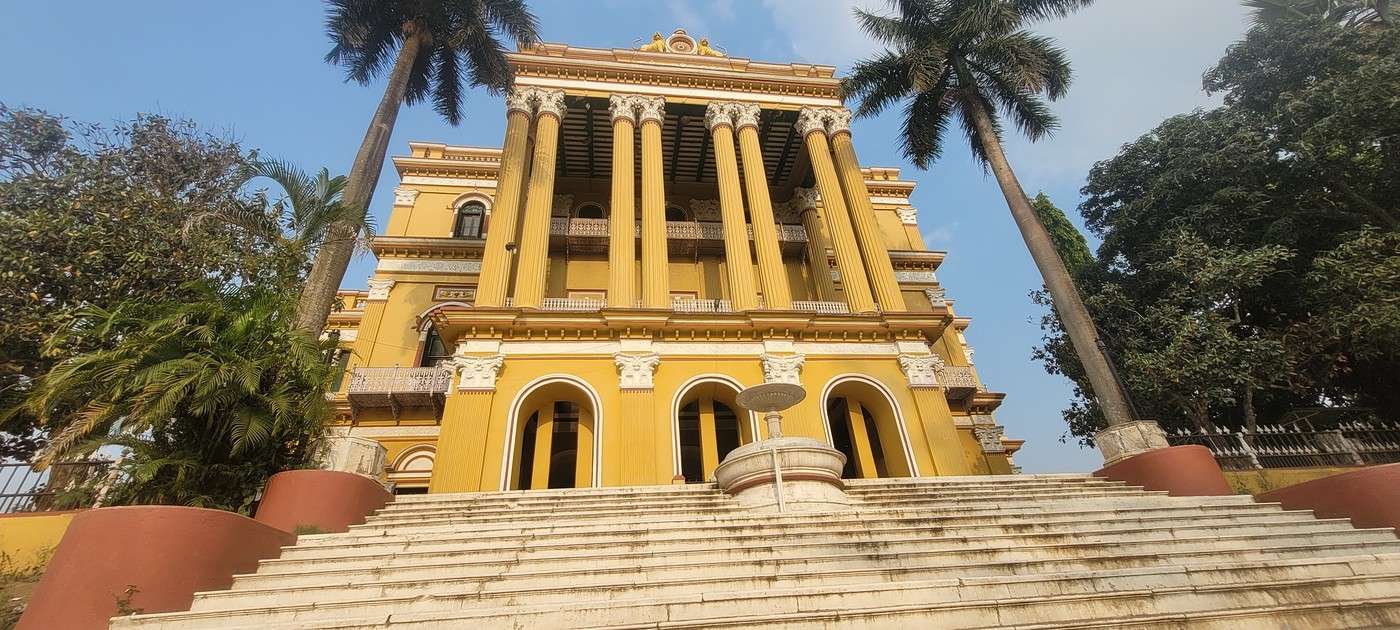
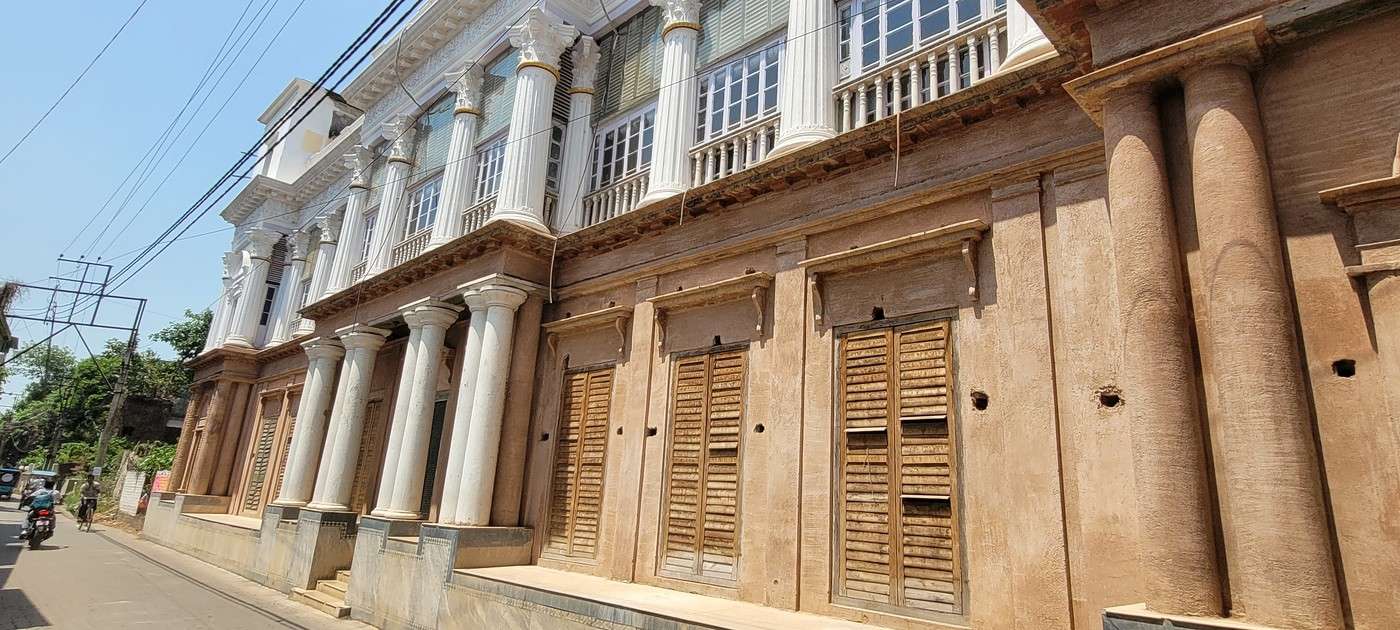
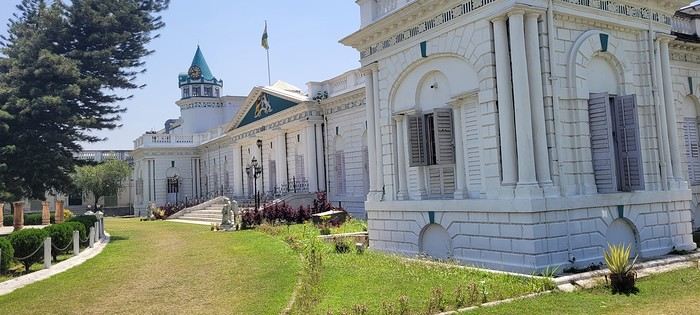
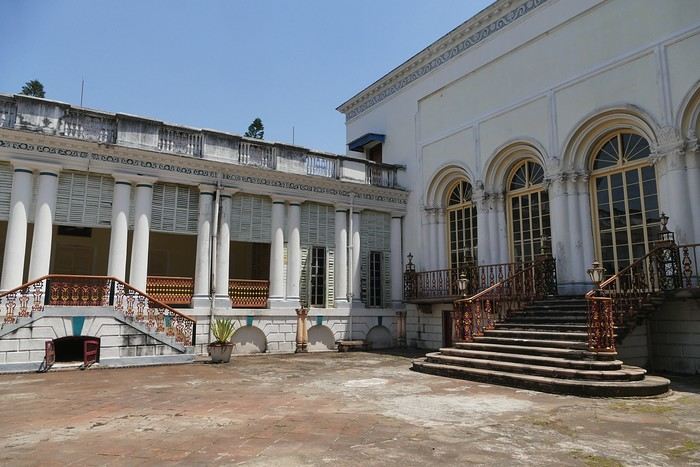
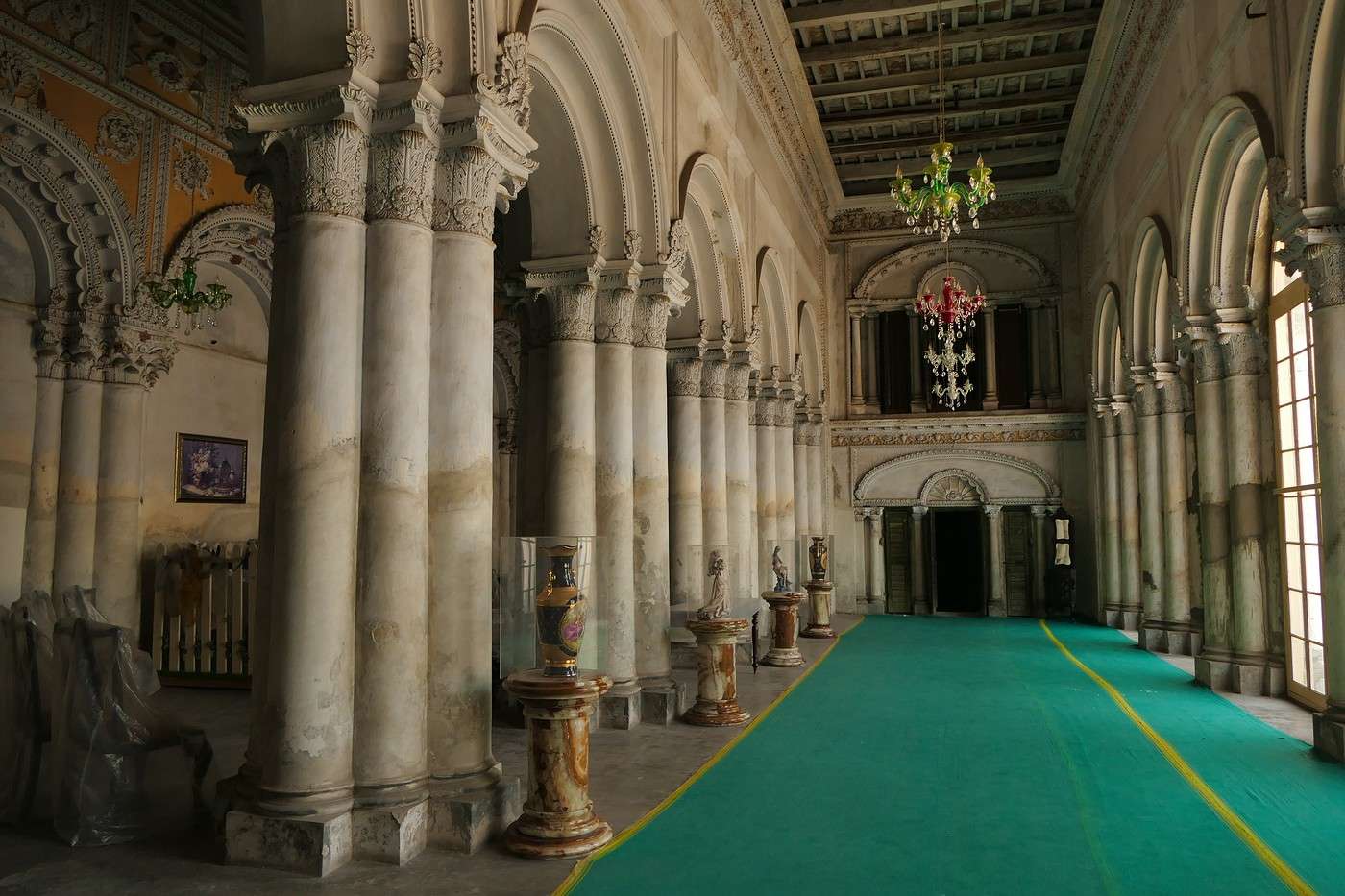
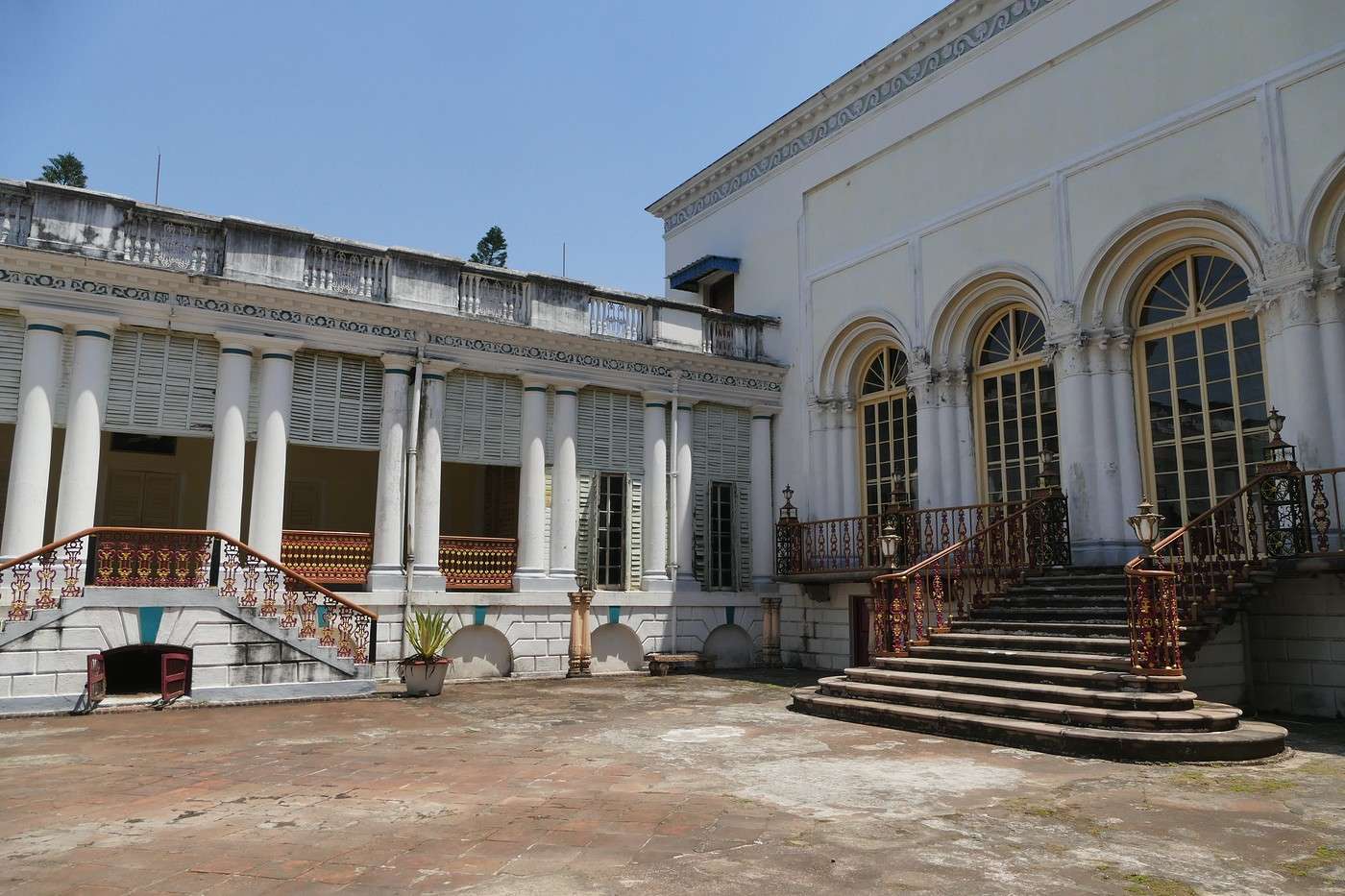
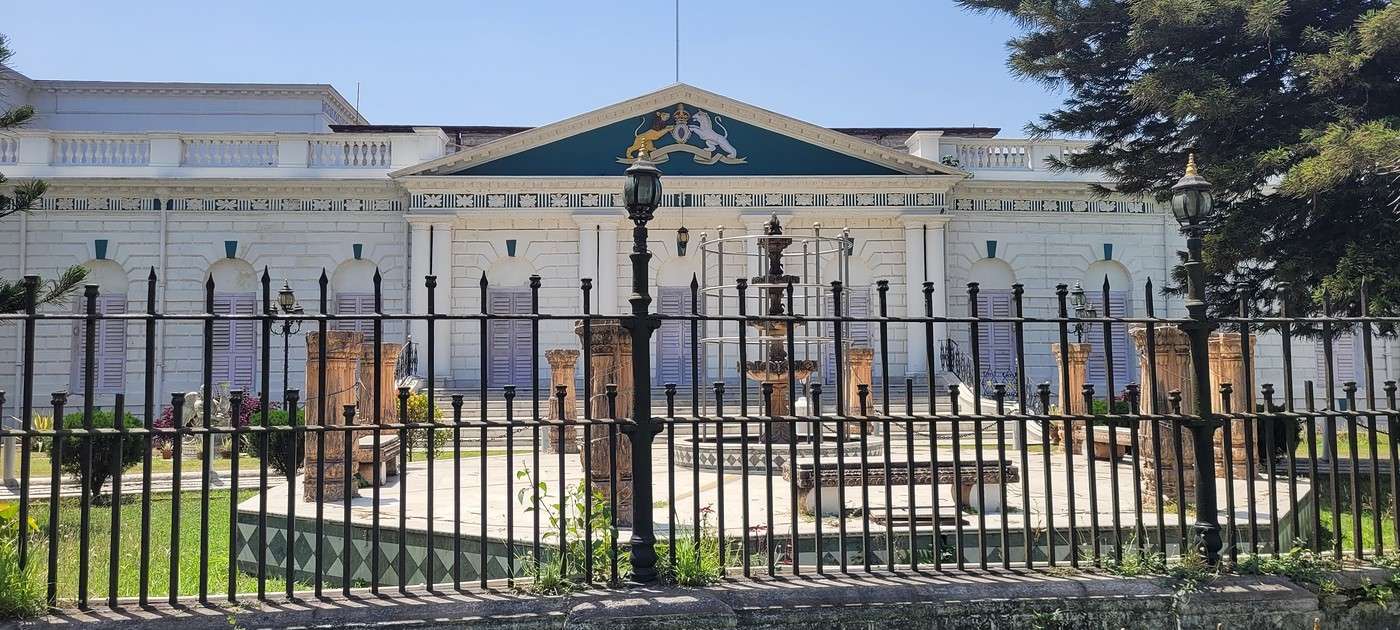
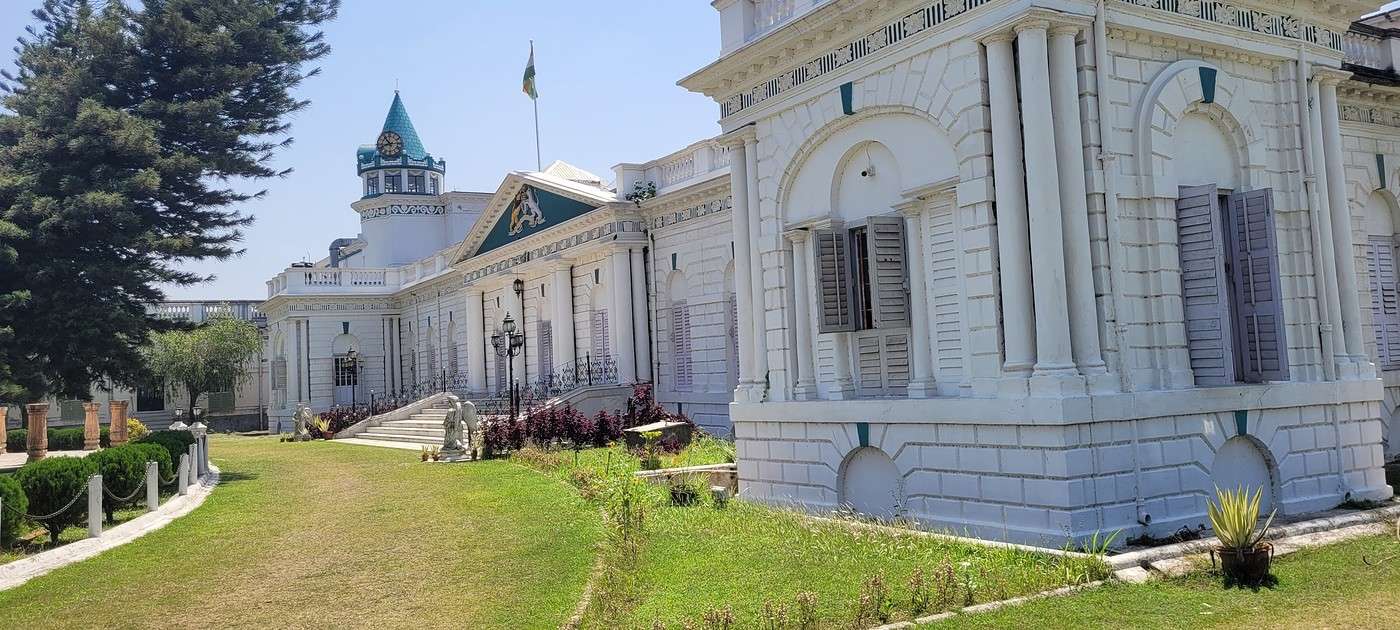
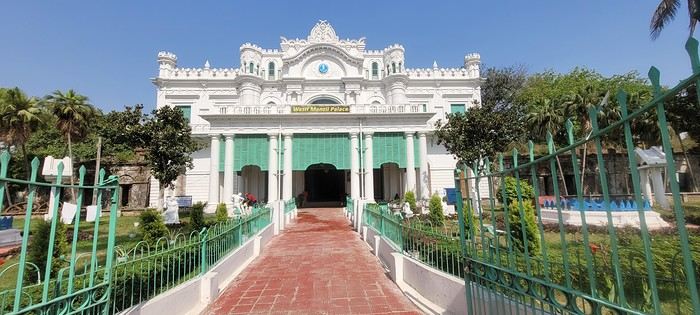
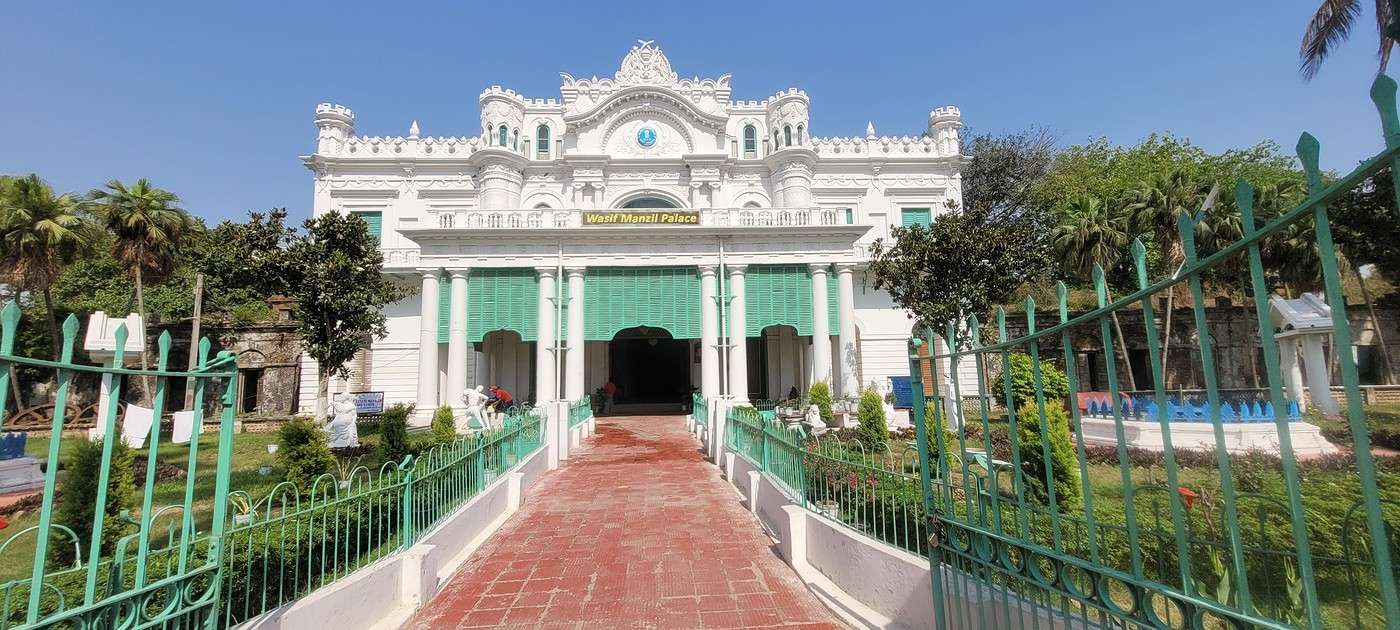
About 300 meters away stands another palace, the Wasif Manzil, also known as the New Palace. Its façade is elegant, almost refined, and its architecture—inspired by European neoclassical style—reflects the British colonial influence on the region at the time. The nawabs adopted this style to display their modernity and closeness to British power. However, the interior shows its age.


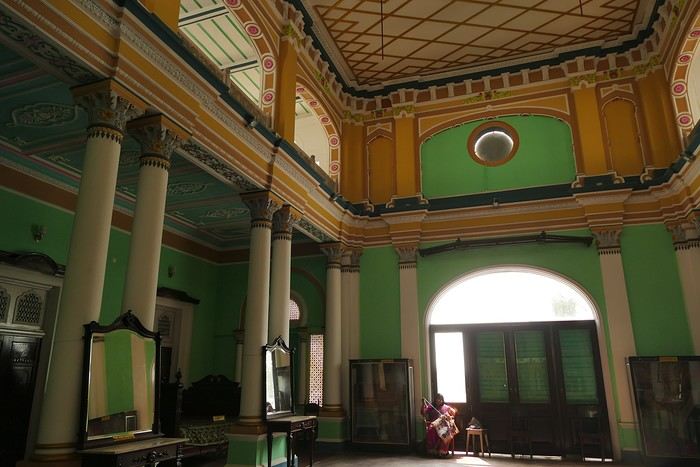
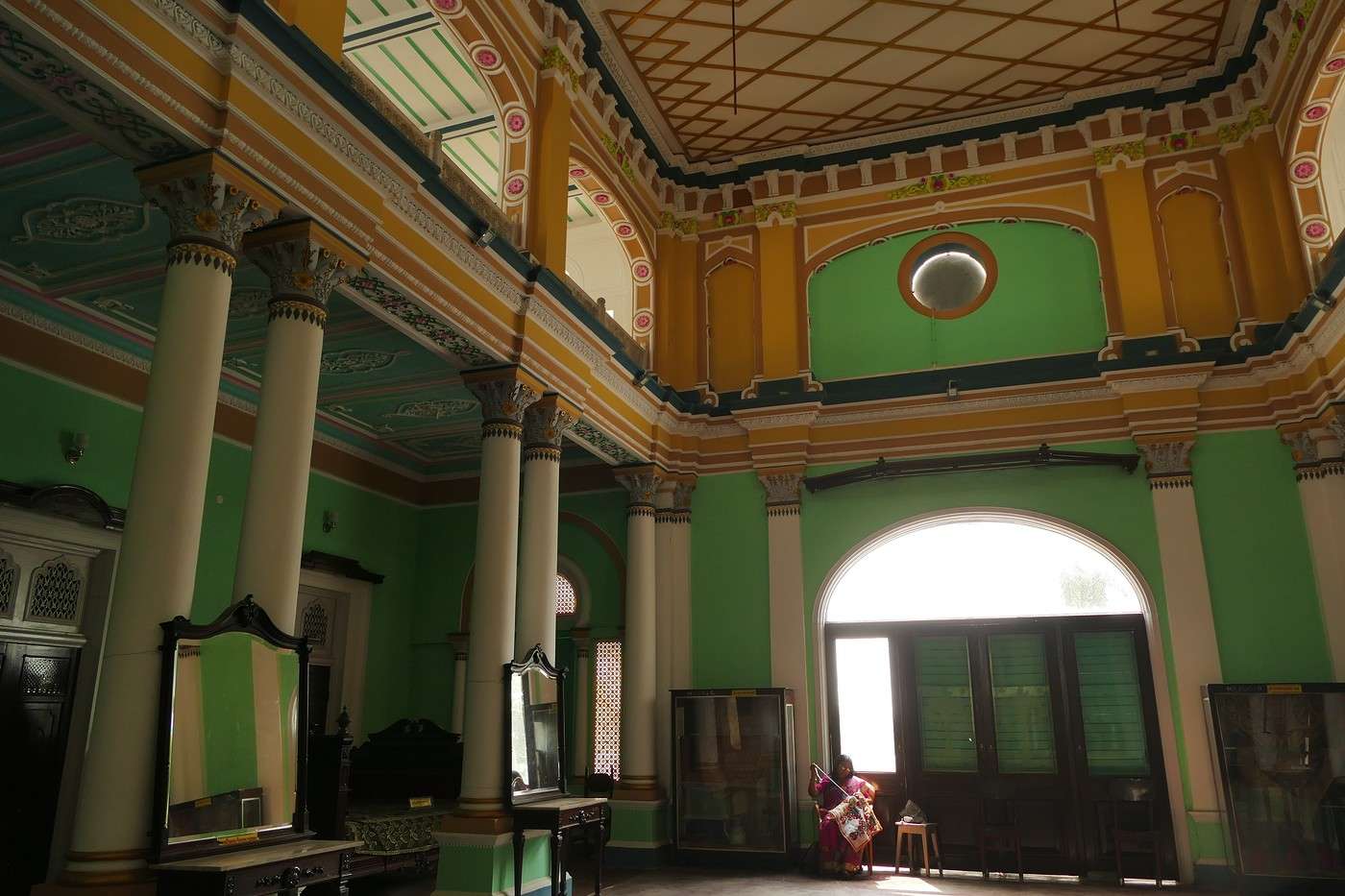
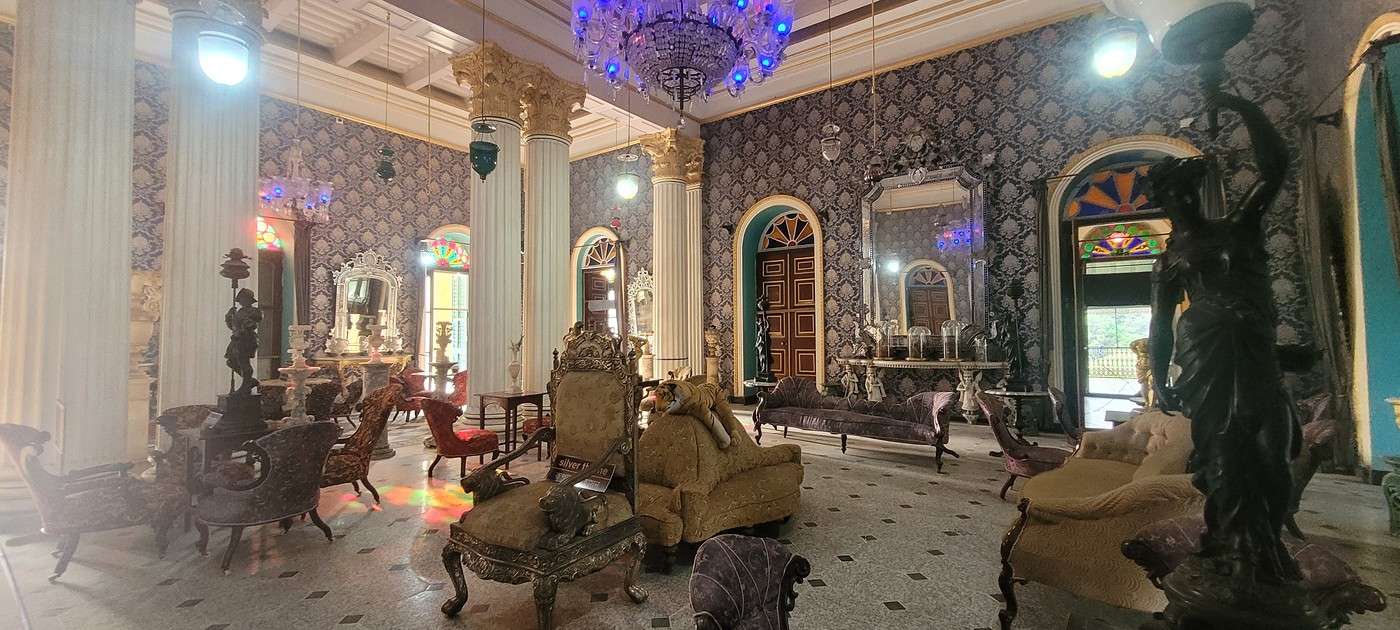
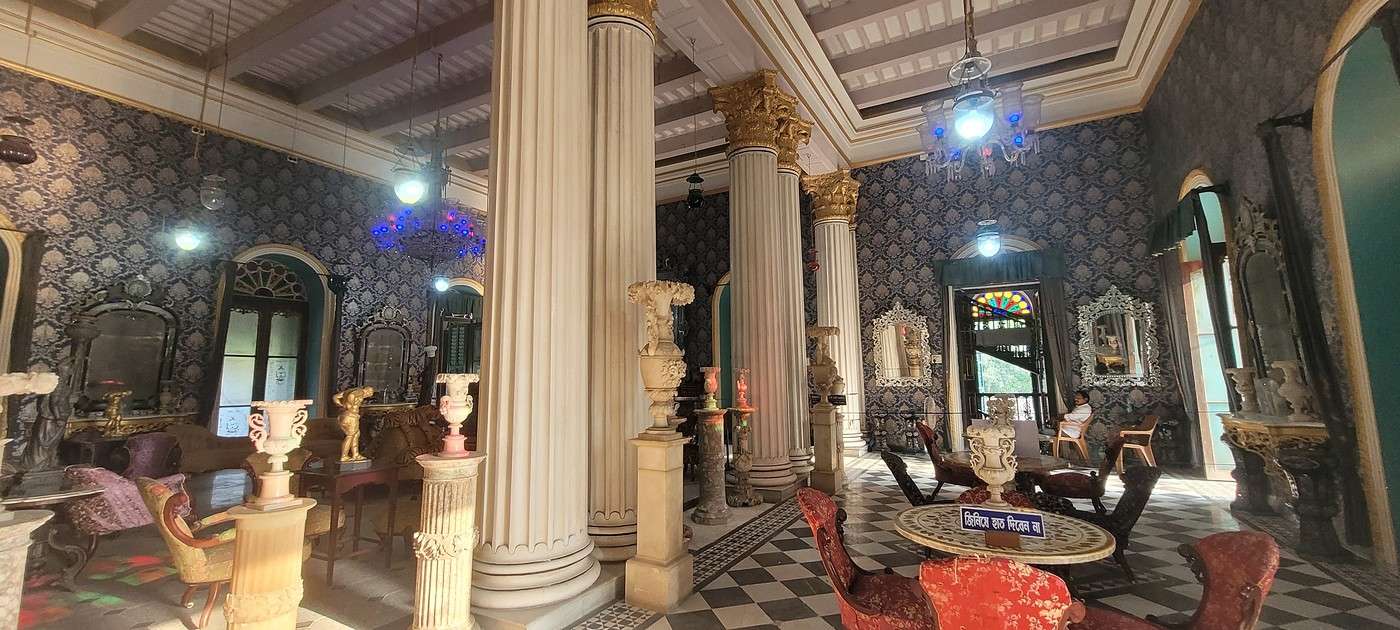
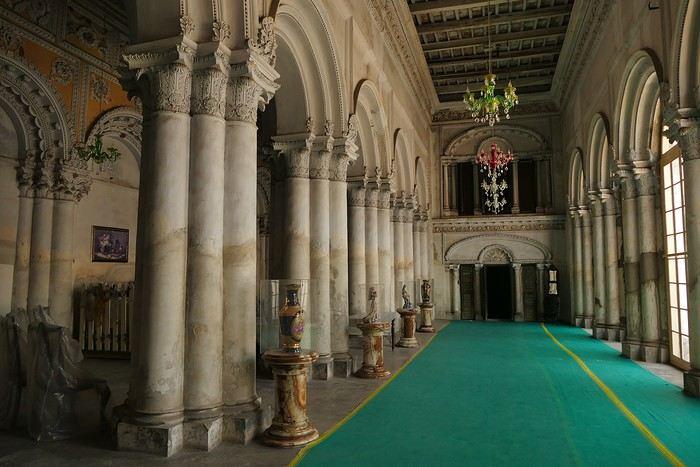
The large main hall, on the other hand, still holds an unexpected beauty. The walls, painted in water-green tones, contrast with the yellow and white moldings, and the finely decorated ceiling immediately draws the eye. Tall white columns structure the space and emphasize its verticality. Despite these refined elements, the room feels almost empty: a few display cases, dark furniture arranged along the walls, and bright light streaming in through the large door at the back, leaving part of the hall in semi-darkness. This light accentuates the sense of vast, almost abandoned space, where the past grandeur seems to have gently faded away.


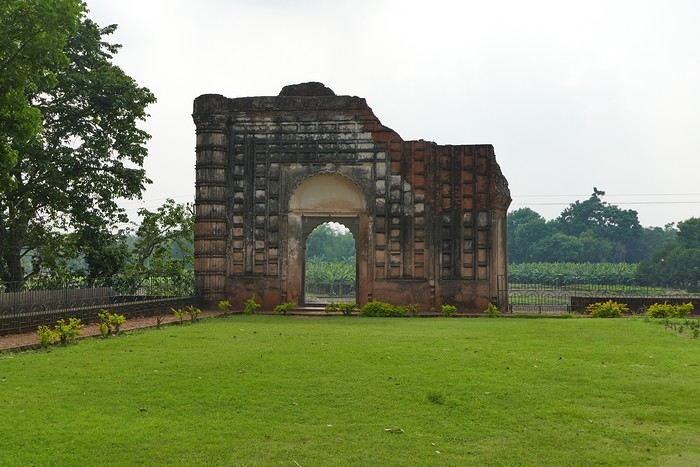
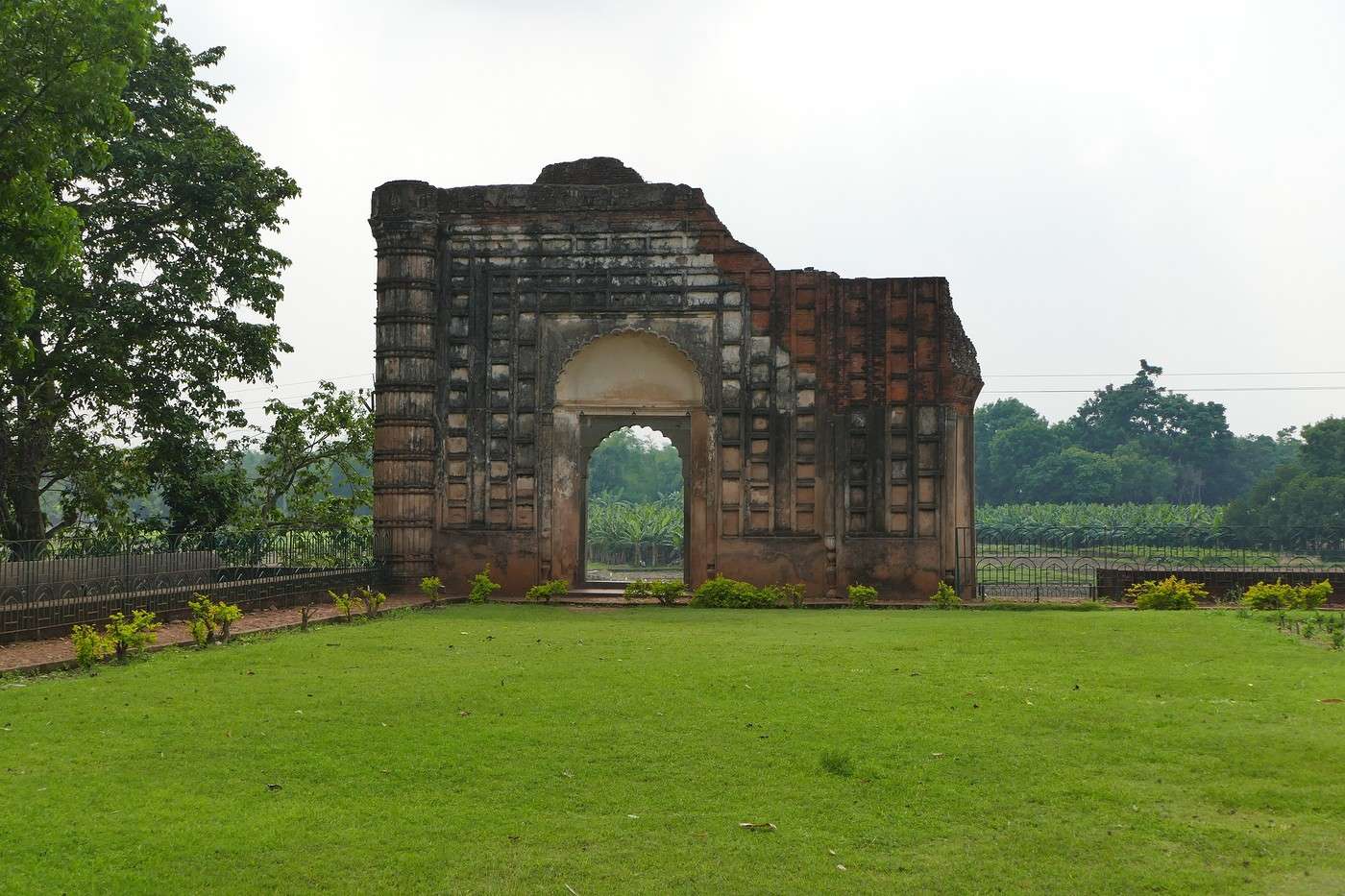
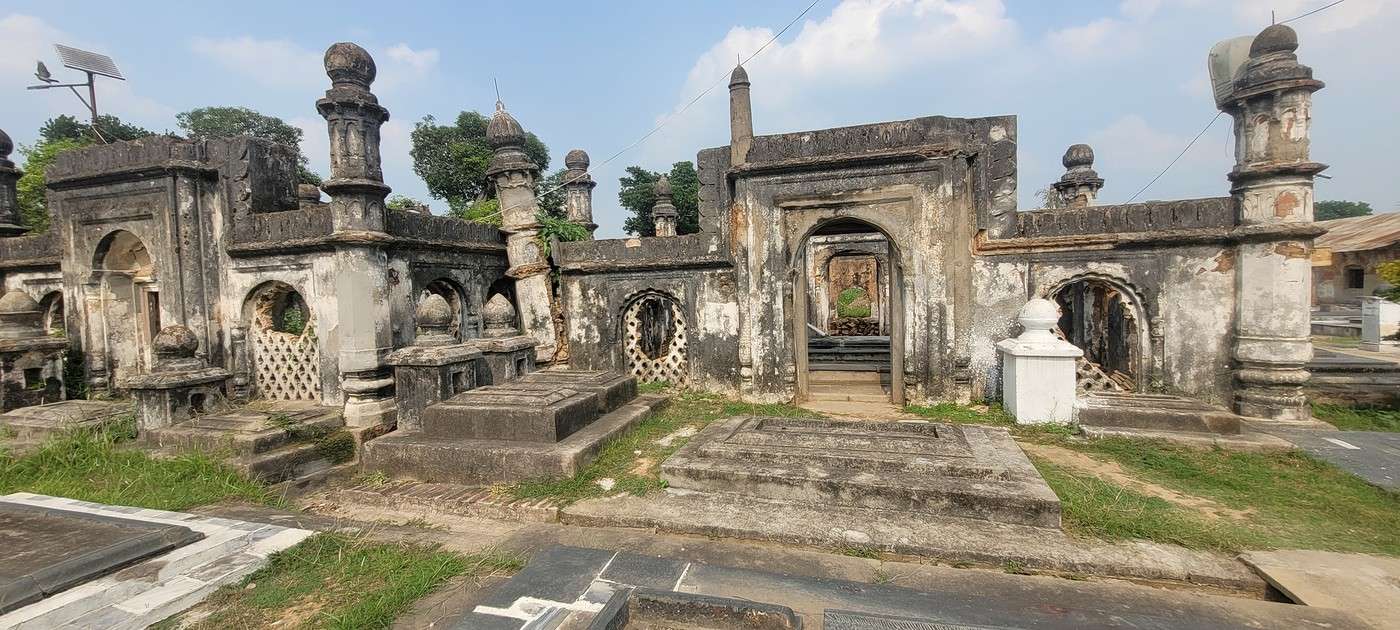
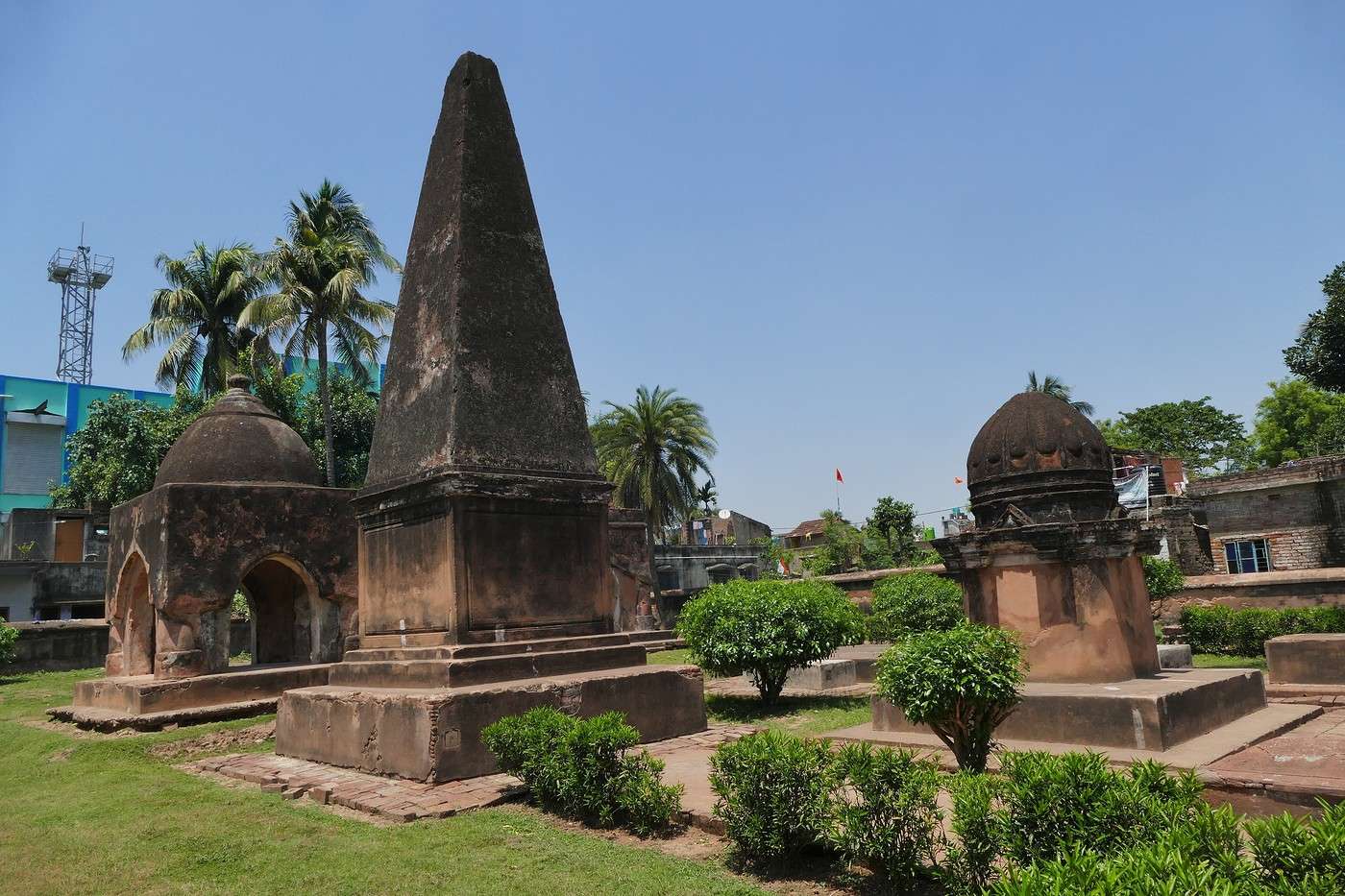
I continue to the tomb of Azimunissa Begum, of which only a door remains today. She is said to have been buried under a staircase, like her father. A local legend claims she was a cruel woman and that her husband had her buried alive. But it seems this is just a popular tale with no verified historical basis.


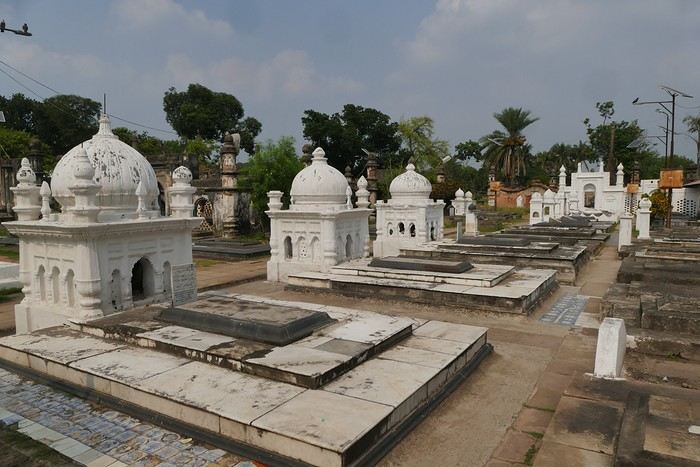
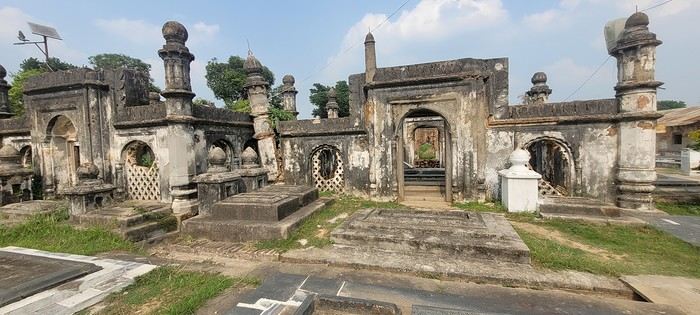
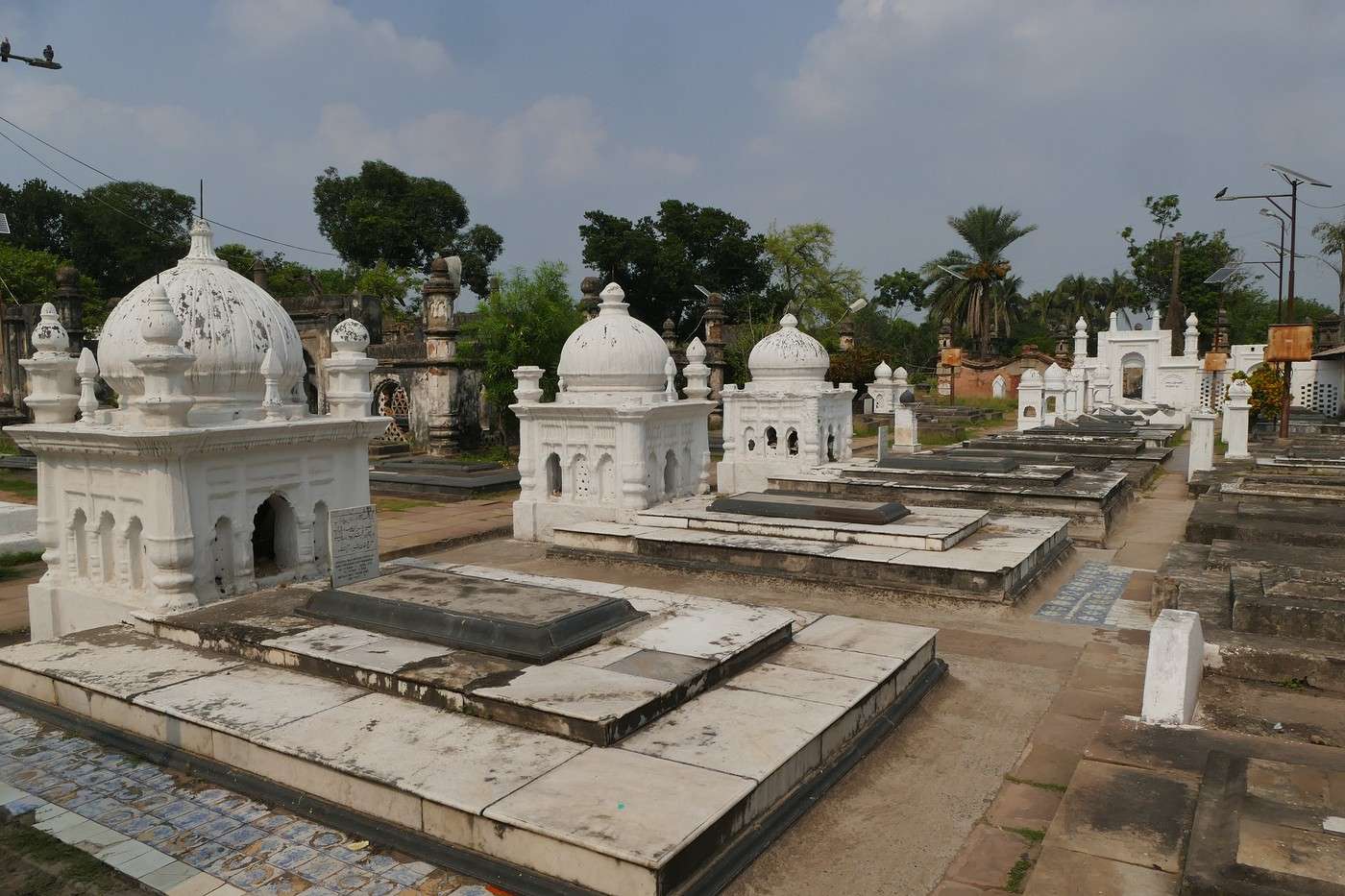
A little further on is the Jafarganj cemetery, enclosed by high walls, where the last Nawabs of Bengal rest. The atmosphere is peaceful, almost timeless. The eye is drawn to a striking contrast: the small, well-maintained white tombs appear better preserved than the larger ones, now in ruins, whose dilapidated state reinforces the sense of abandonment.


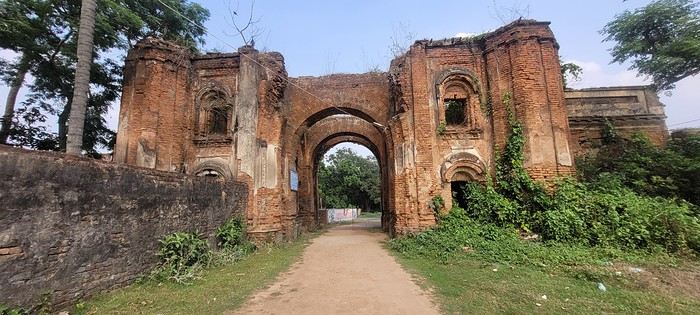
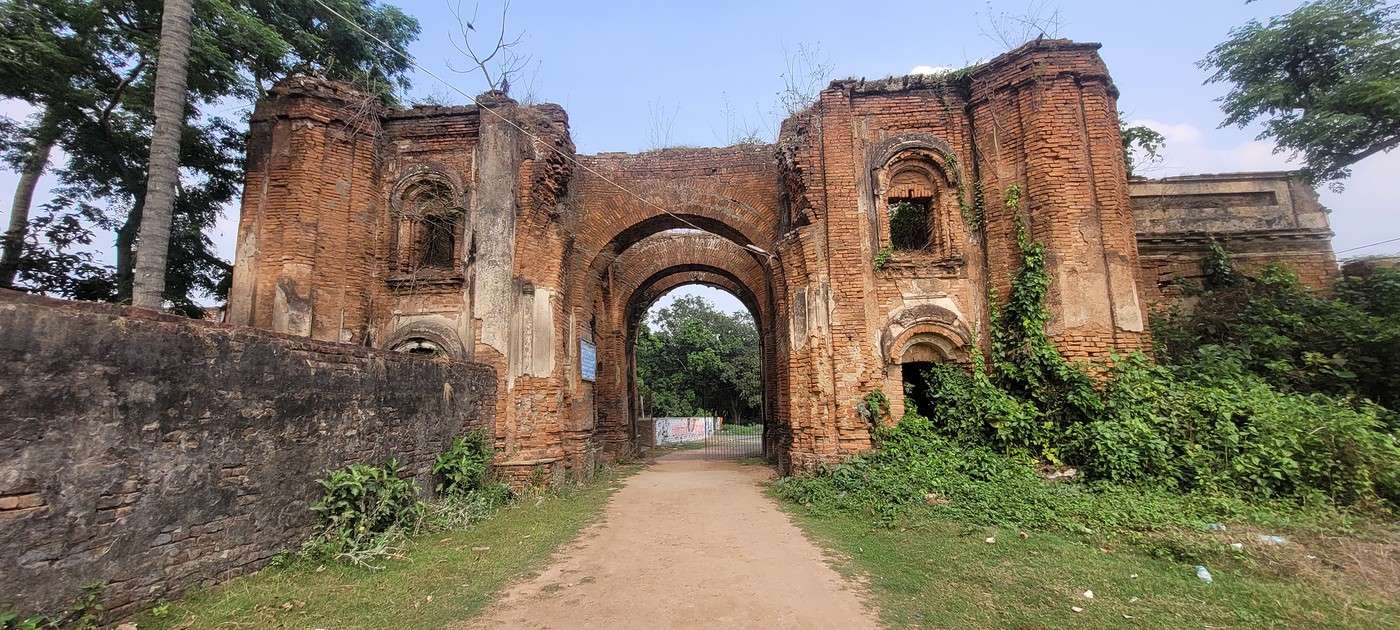
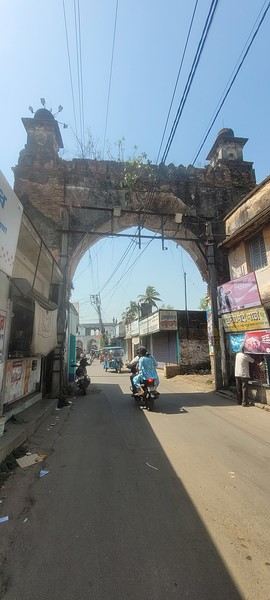
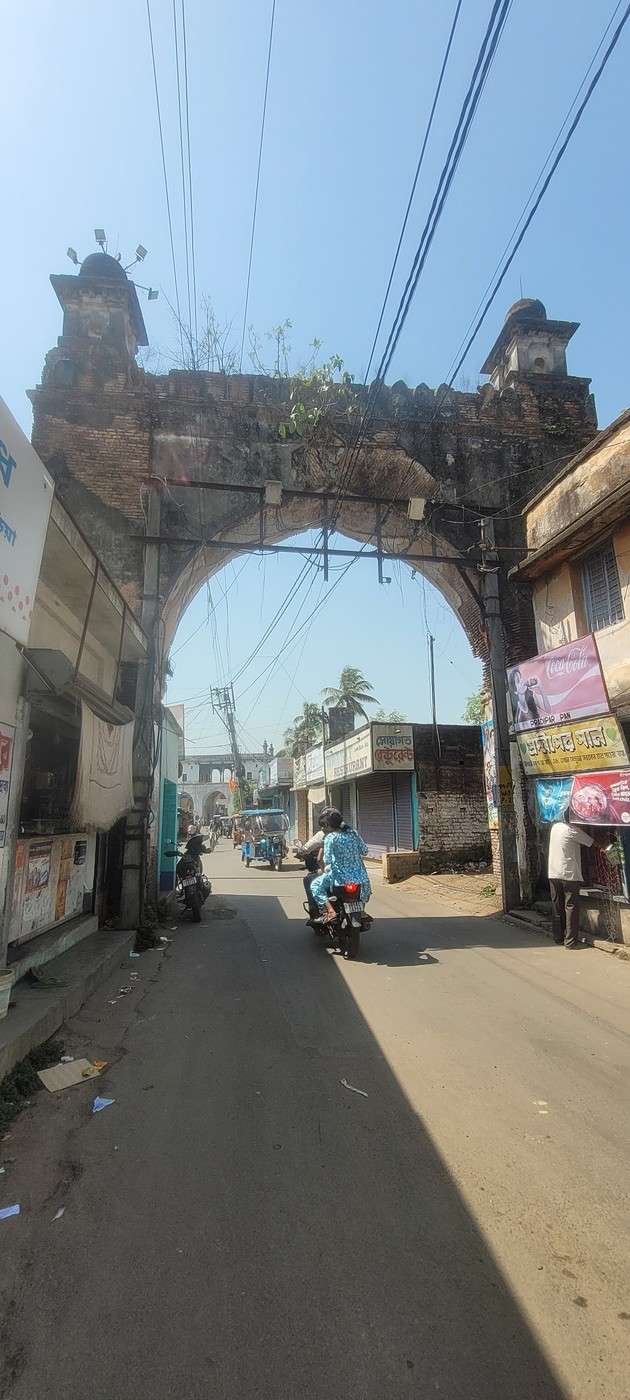
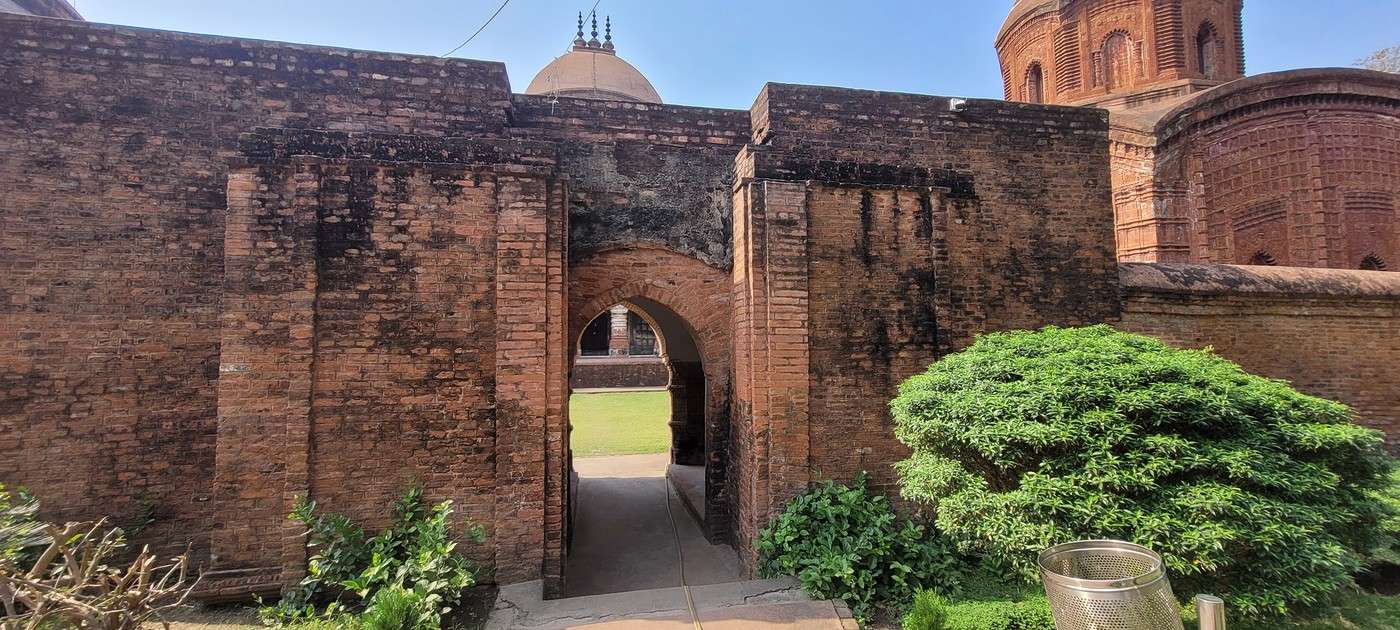
On the way back, I pass through Jiaganj, where a monumental gate catches my eye.


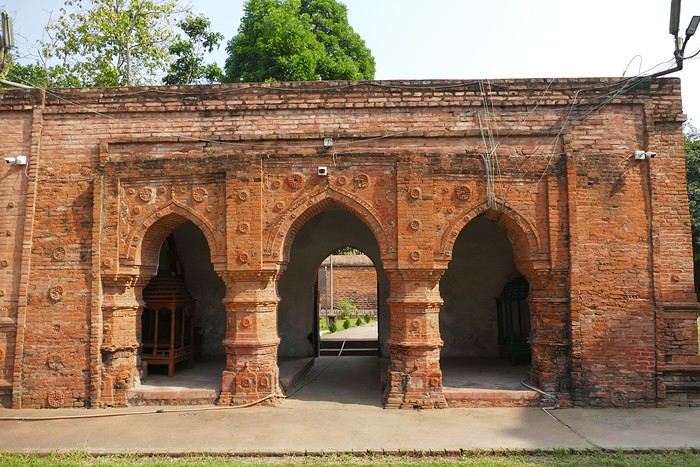
Massive and worn by time, it still stands, made of red bricks blackened and eroded. The stacked arches reveal a passage now sealed off, while vegetation creeps into the cracks, as if reclaiming the place. The walled-up openings and faded reliefs evoke a once-imposing structure, of which only this silent fragment remains. There’s something melancholic about this ruin, but also a great beauty.

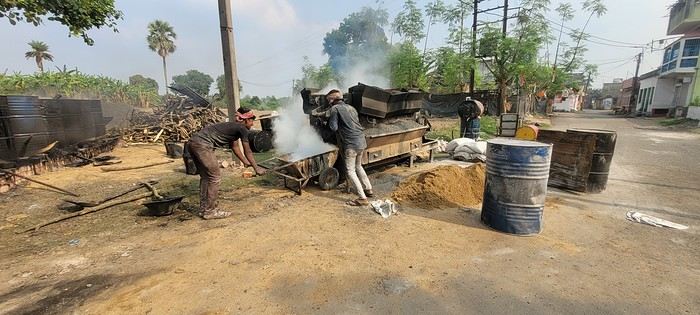
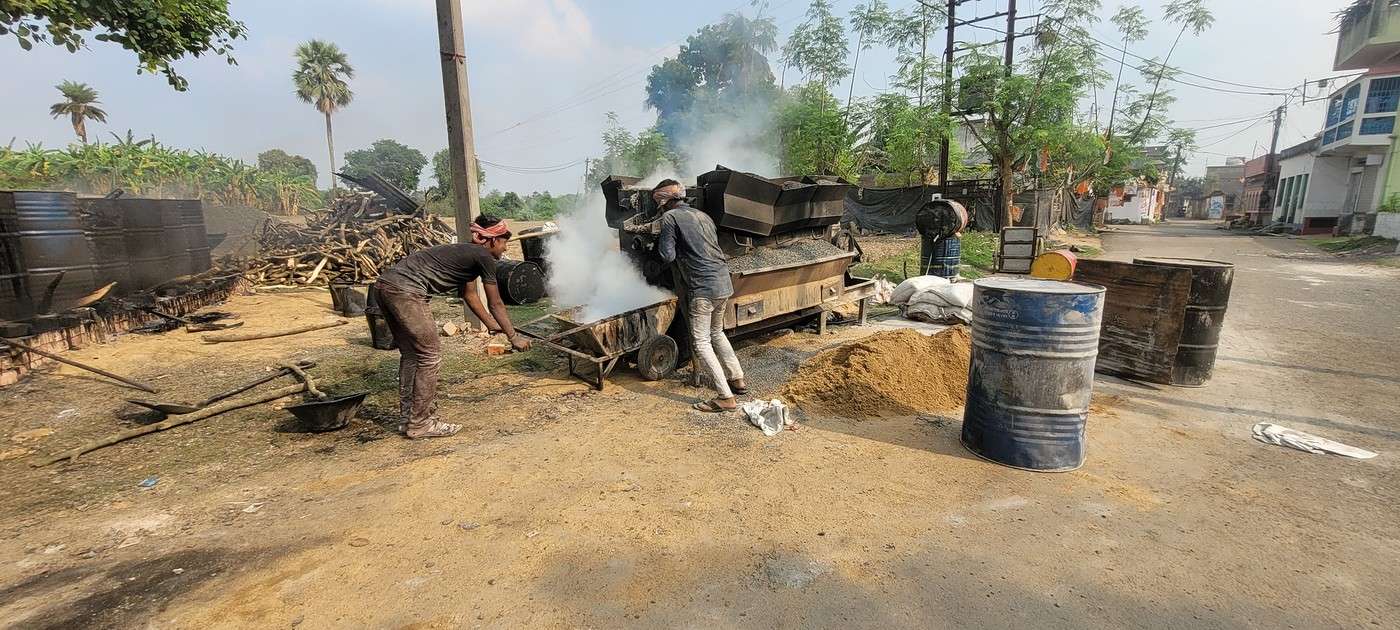
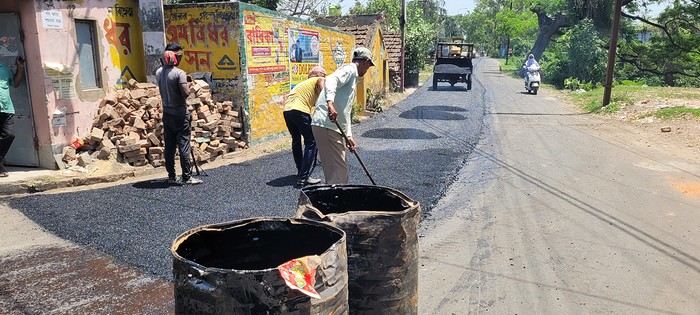
I continue along a road under construction.


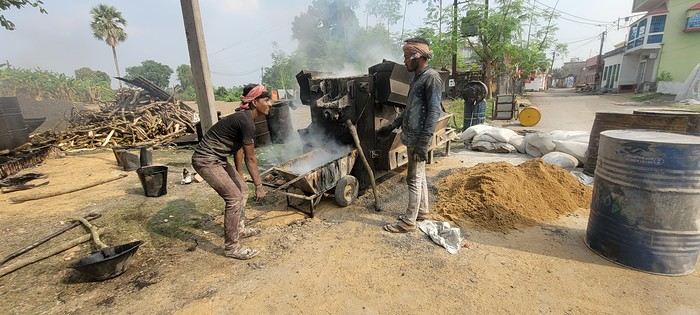
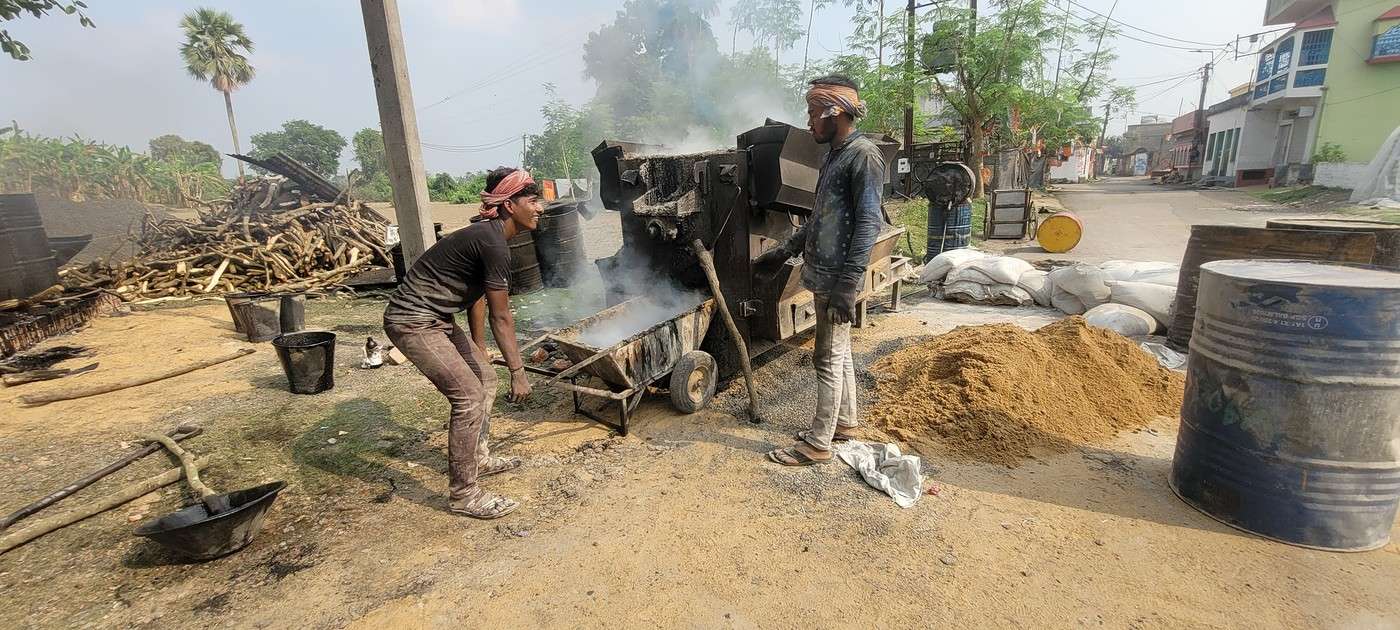
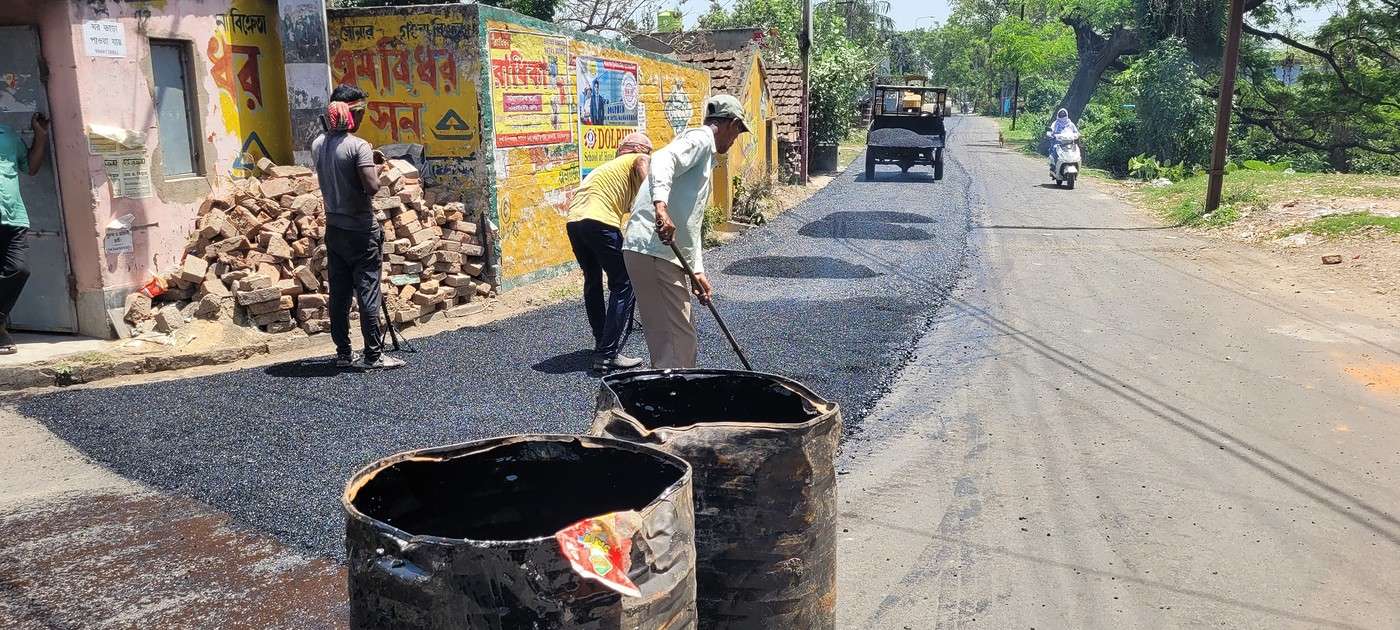
Here, the asphalt is still made using traditional methods. Two men work around a rudimentary machine, from which thick smoke billows. One lifts a heavy load of burning mixture while the other monitors the cooking process. Around them, piles of sand, drums, and stacked wood fuel the fire. The ground is covered in dust and gravel. The smell of hot tar mixes with the ambient heat, making the atmosphere almost stifling. Their movements are precise and repetitive, reflecting an empirical know-how. The scene is raw, almost archaic, yet perfectly mastered.


The contrast is striking: just steps away from the remnants of a prestigious past, life goes on with simple, almost timeless techniques.

Villages around Hazaribagh in West Bengal

Aleph240758 · 2026-08-03

Then comes the Nashipur Rajbari palace.


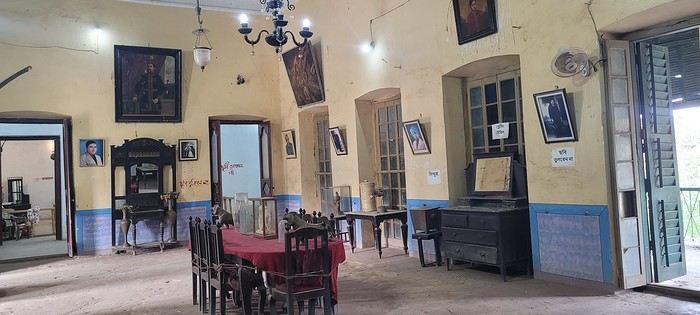
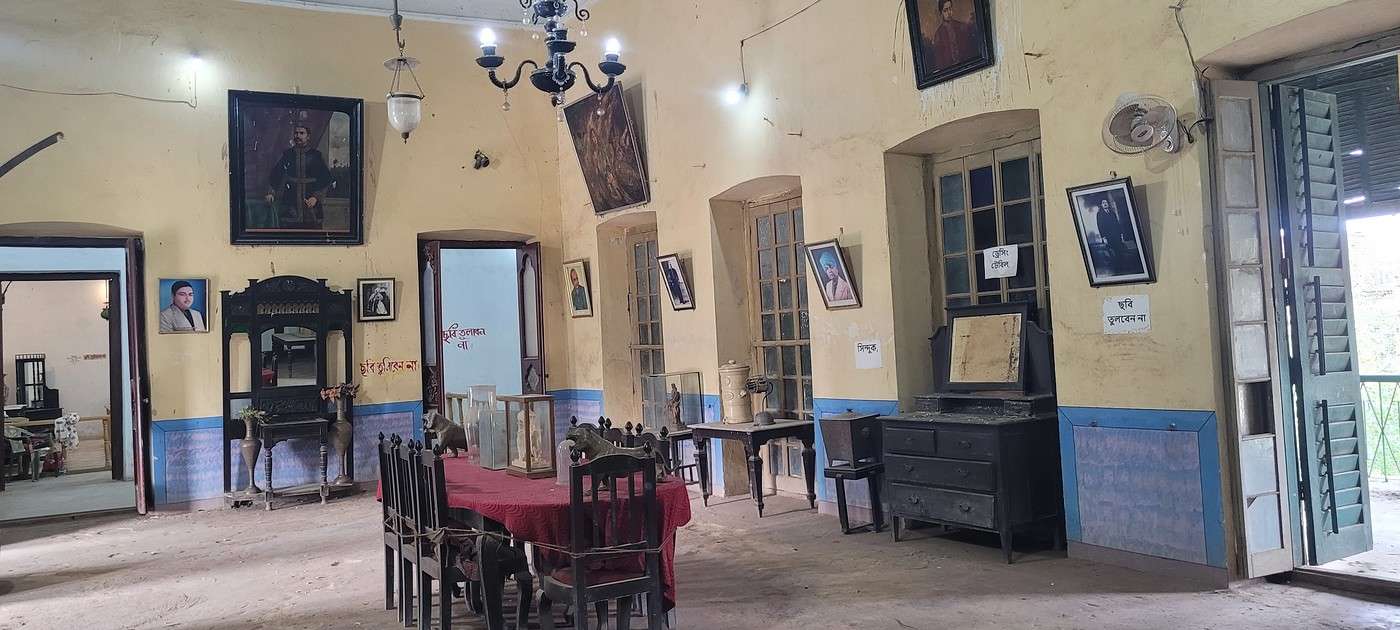
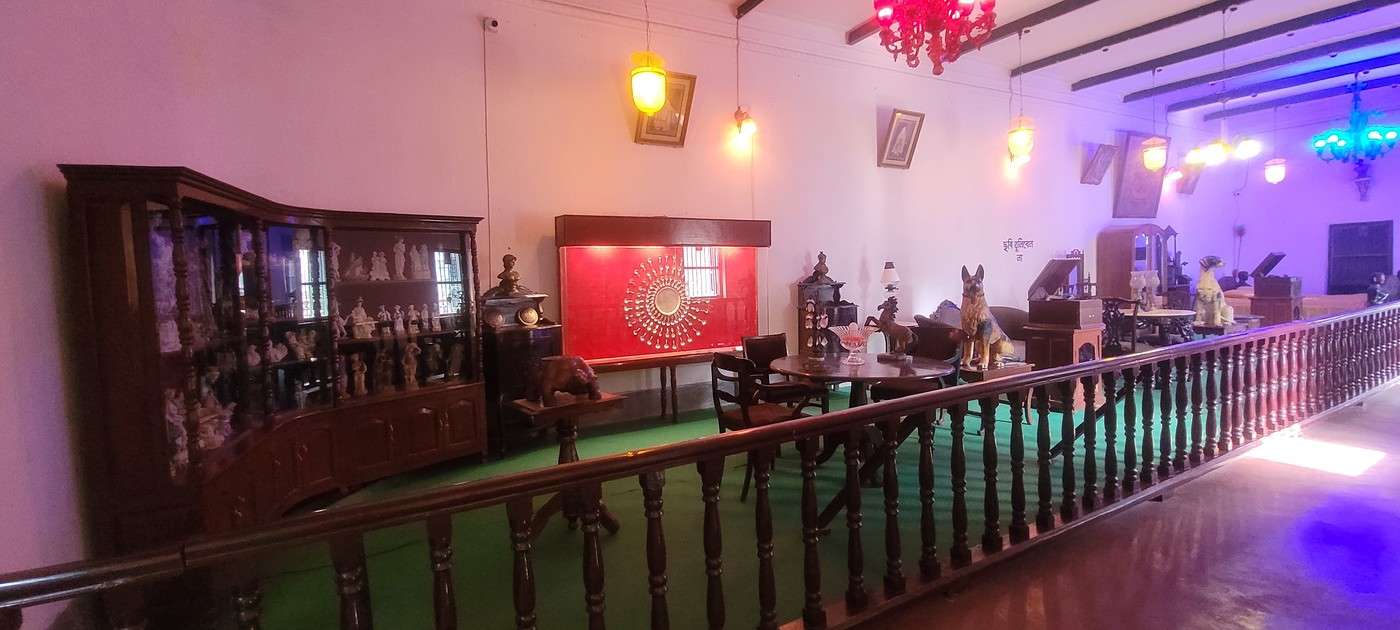
Photos are officially banned there, but I take advantage of the guards' absence to snap a few discreetly. Inside, the place is still furnished, but nothing is truly showcased: everything seems frozen in time, covered in a thick layer of dust that looks almost original. The large hall I walk through is the perfect example: a long table covered with a red cloth, surrounded by wooden chairs, sits in the center, as if ready to welcome guests who will never come. Around it, the furniture is scattered without order—a dark vanity, a dresser, a few display cases—while old portraits, some crooked, remain hung on the yellowed walls.


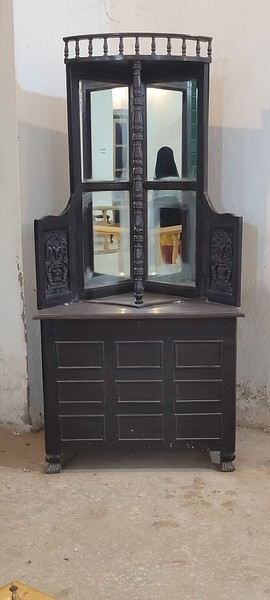
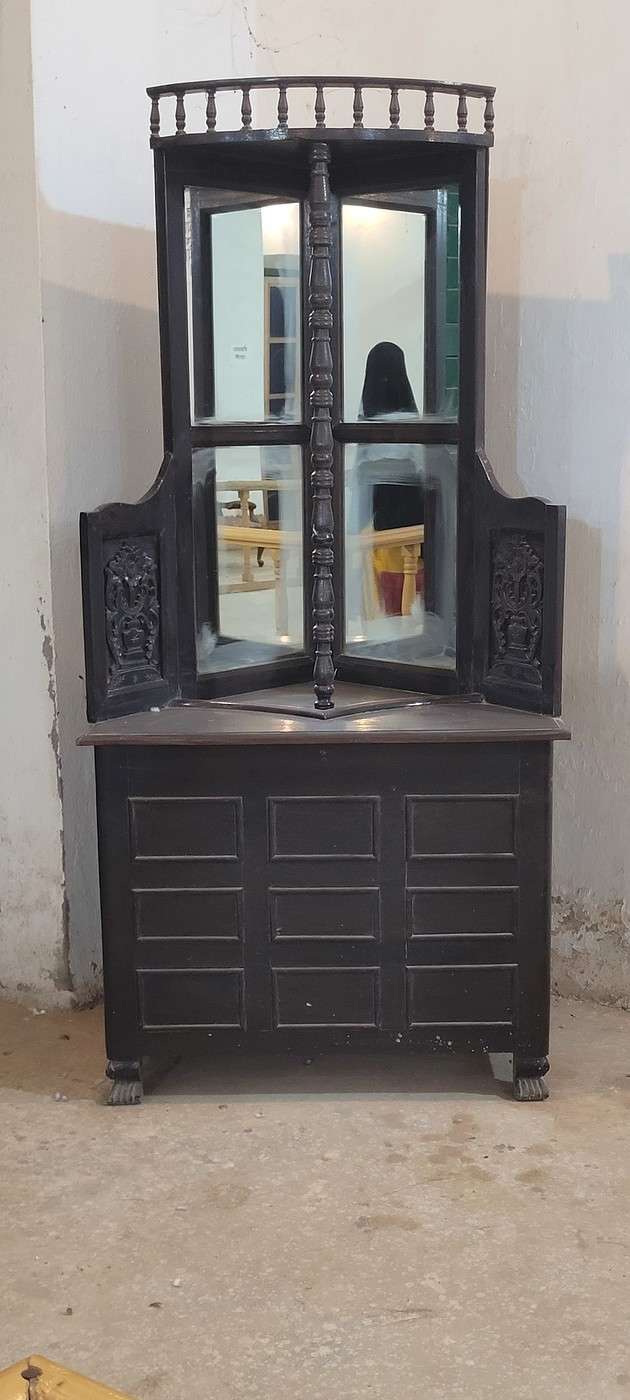
The eye is drawn to a mirrored cabinet, quite unique, allowing you to see yourself from different angles, like a game of reflections from another era.


Above, the hanging chandeliers and bare bulbs further accentuate this strange atmosphere, somewhere between abandonment and survival. The cracked walls bear the marks of time, and even the signs asking not to take photos seem forgotten, like everything else. The palace somewhat resembles Wasif Manzil, but the rooms here are less spectacular and much more dilapidated. This sense of abandonment is striking, and you can’t help but regret the lack of upkeep for these historically rich places.

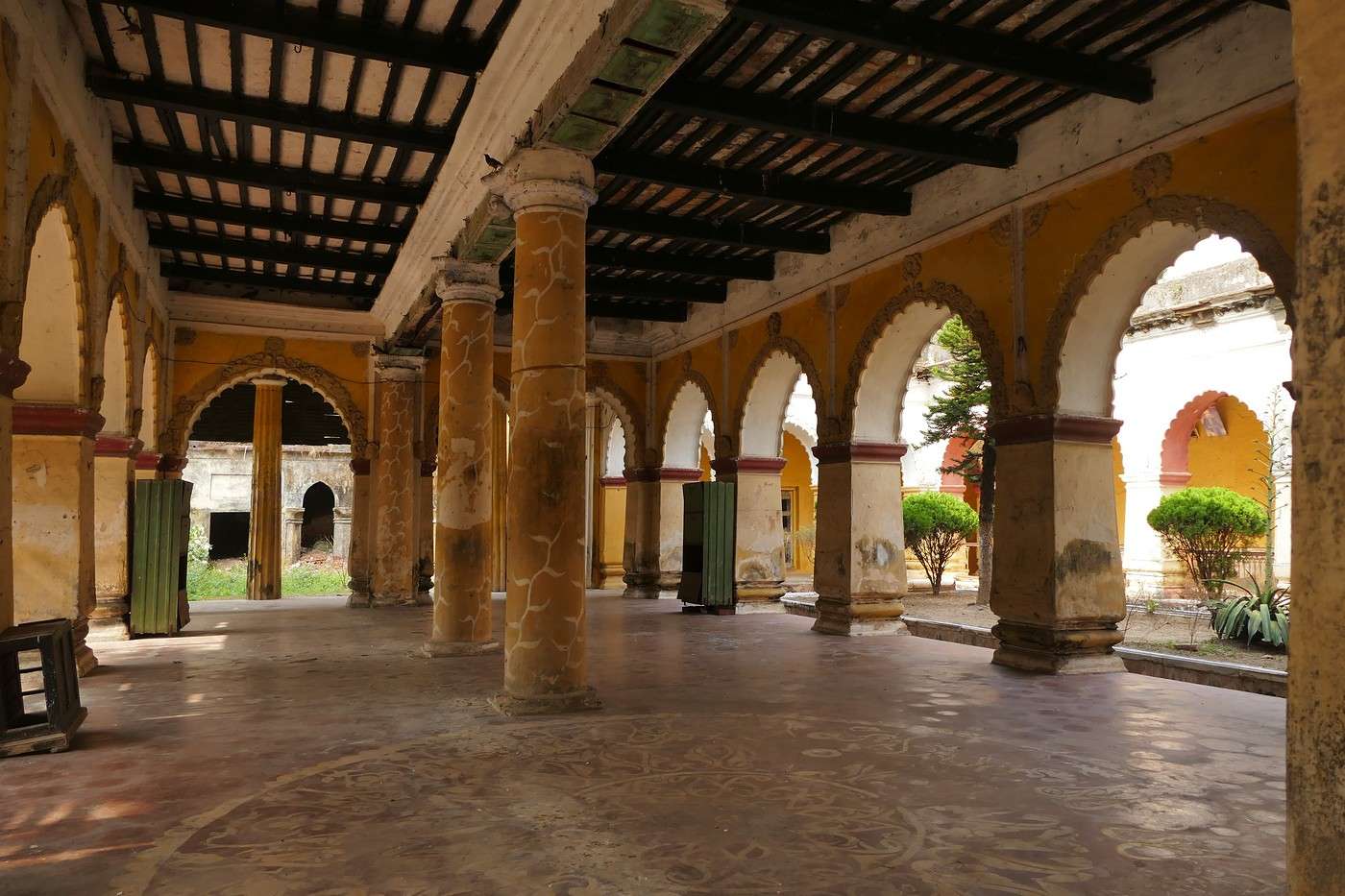
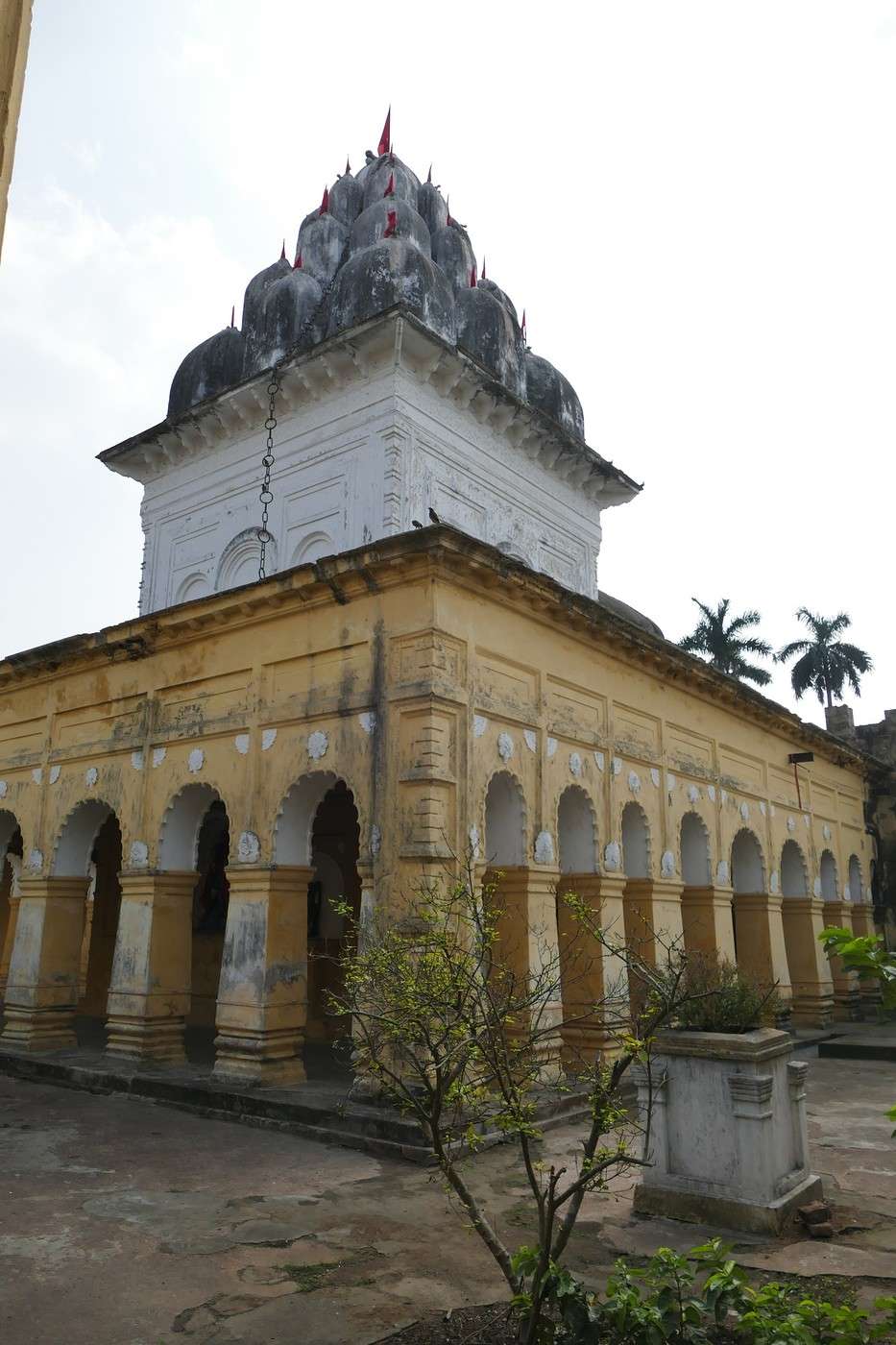
Outside, a large open hall borders the courtyard: an elegant gallery of arches and columns, likely intended for receptions.

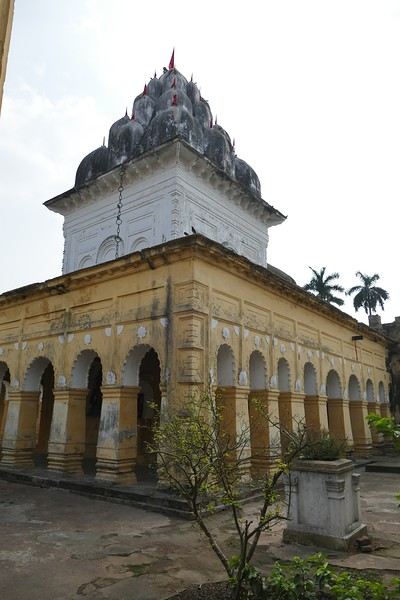
The arches, weathered by time with their yellow-orange hues, support a structure topped by a small temple whose whitewashed sacred part contrasts with the darkened domes crowned with red flags.


The whole ensemble, both majestic and weary, exudes a particular charm, somewhere between past beauty and slow decay.


Villages around Hazaribagh in West Bengal

Aleph240758 · 2026-08-04

(continued)

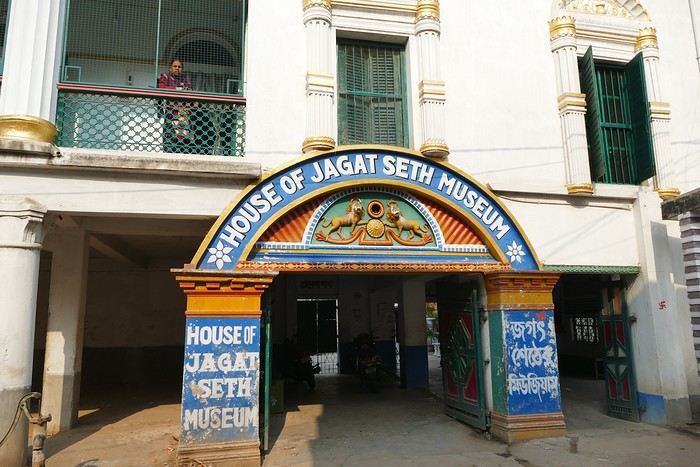
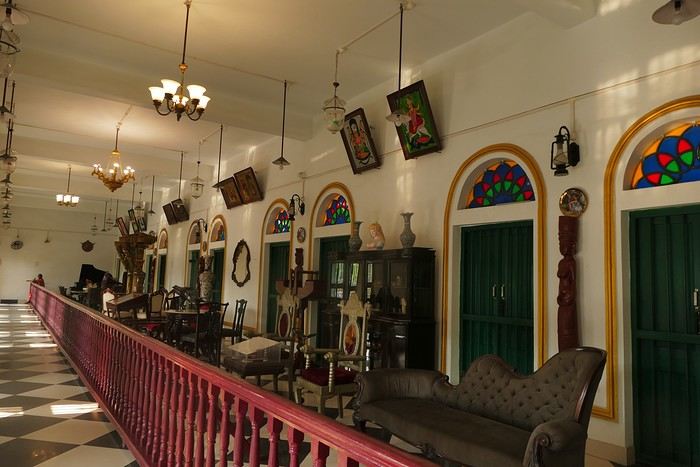
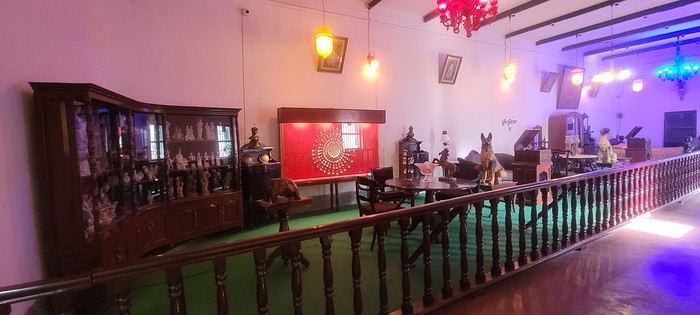
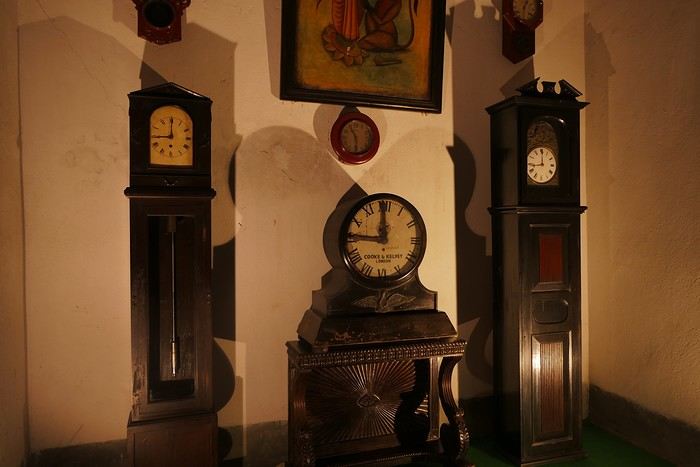
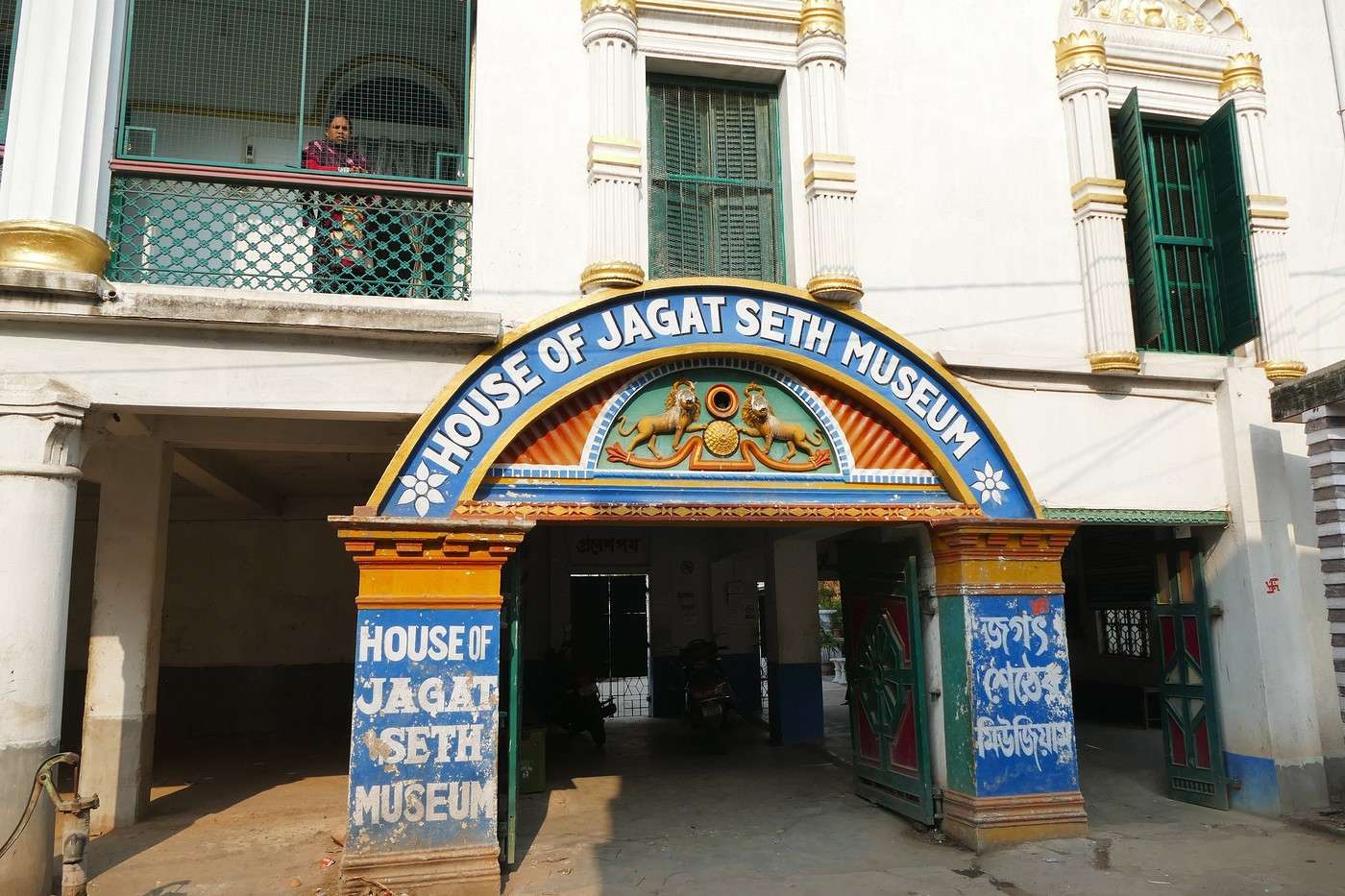
Next door is the Jagat Seth House museum, whose name means "banker to the world." Photos are, once again, forbidden inside, but I manage to take a few discreetly.


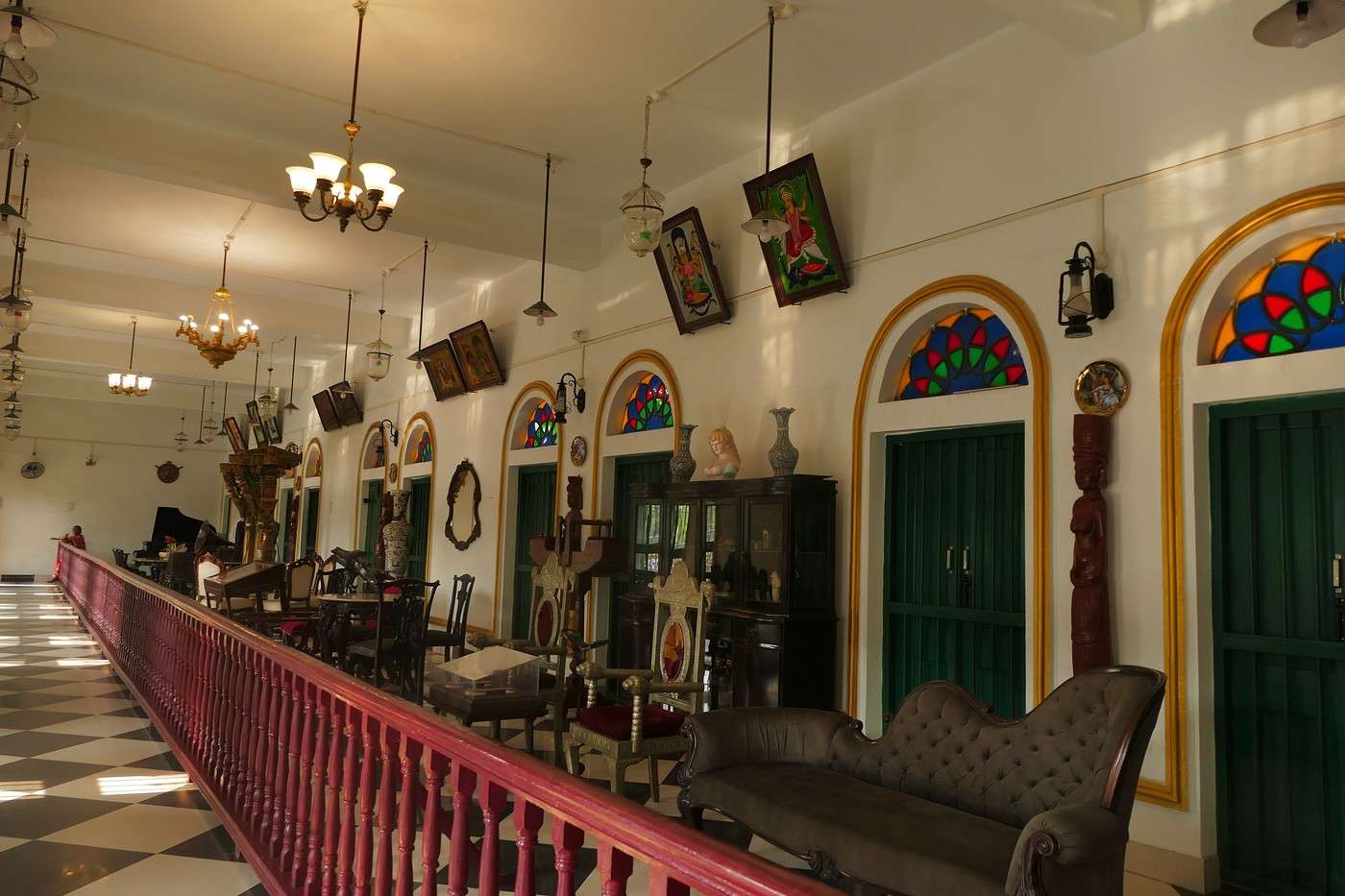
The rooms are richly decorated and display a wide variety of objects, reflecting the prosperity and refinement of this influential family.


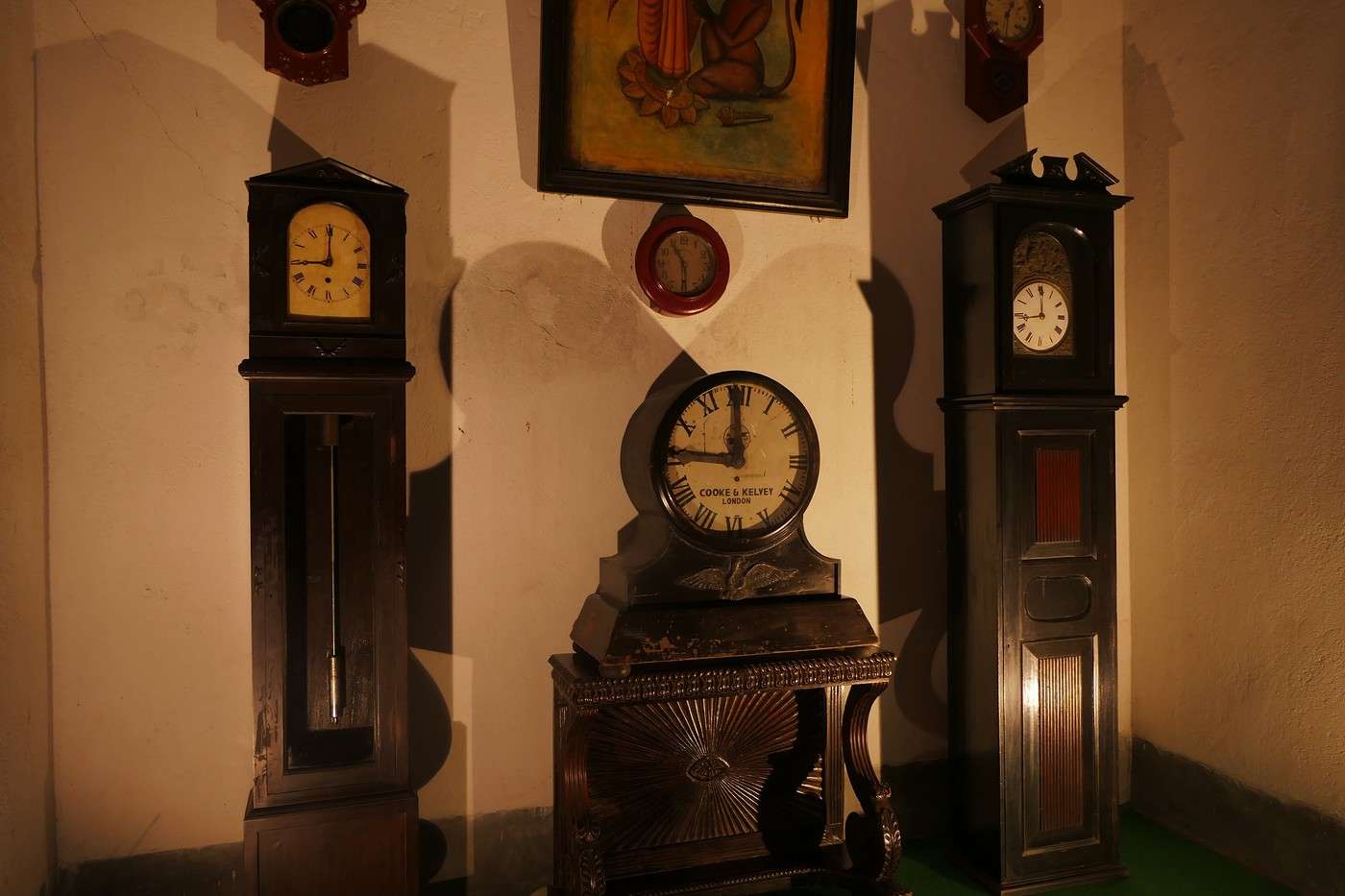
Among them, Comtoise-style clocks, surprisingly present here, catch my eye: an unexpected detail that speaks to the exchanges and influences from Europe.


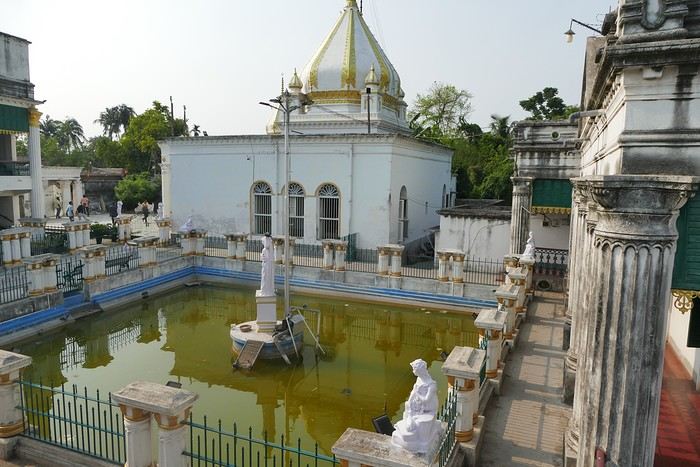
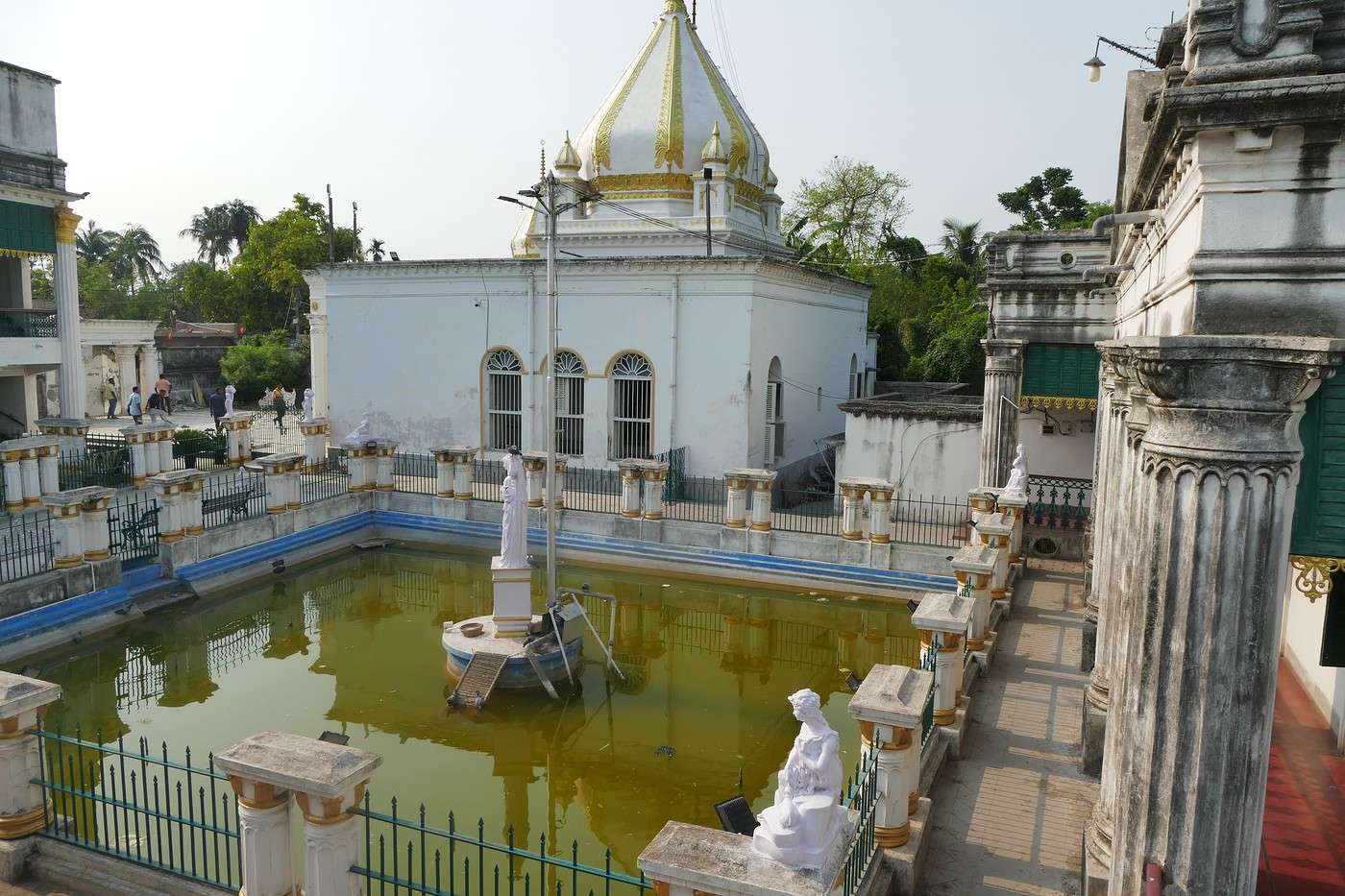
A secret tunnel, quite surprising, runs through the building; it once allowed its owner to stay protected or move around out of sight. Outside, a basin with a fountain adds a touch of serenity.

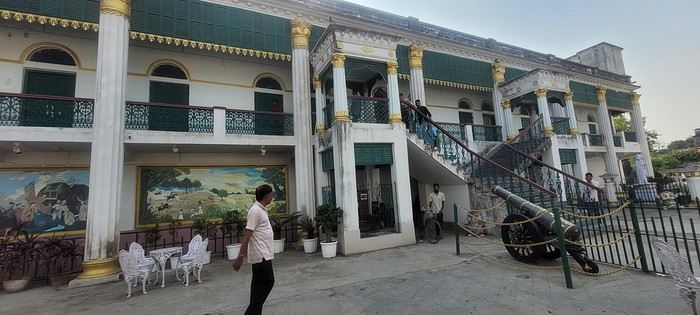
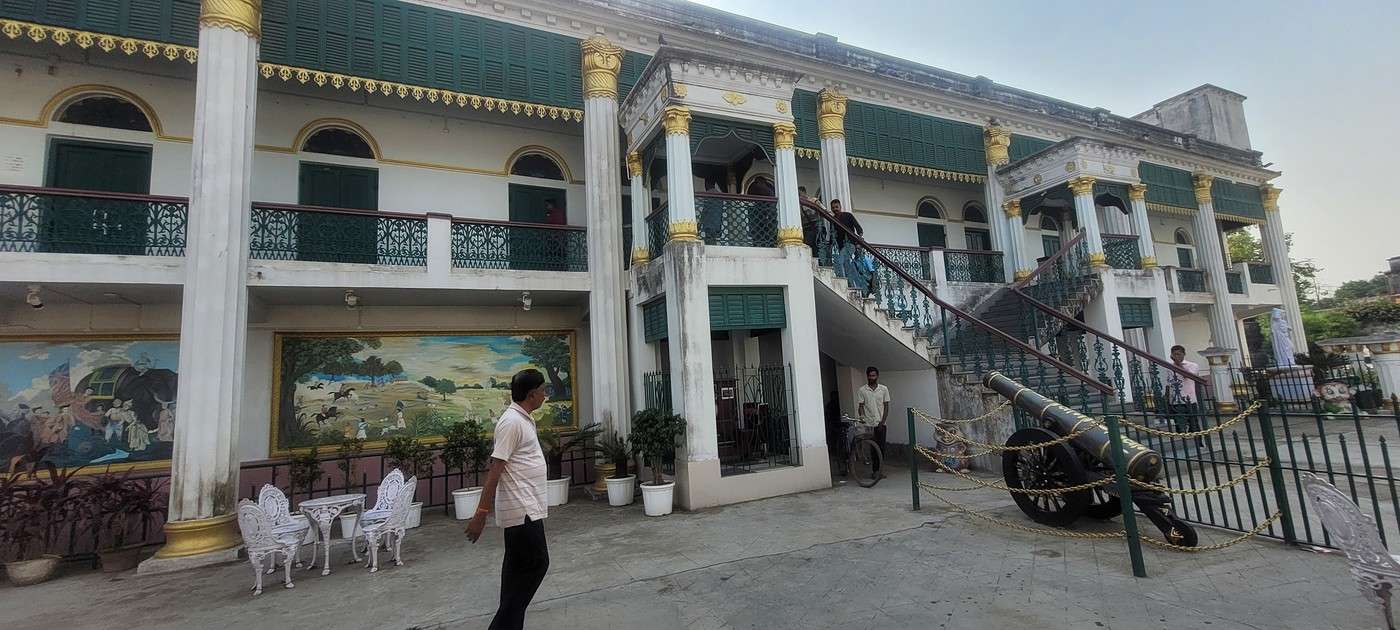
A cannon is displayed near the building, imposing with its tier, a reminder of the power and prestige of the place.

Villages around Hazaribagh to West Bengal

Aleph240758 · 2026-08-04

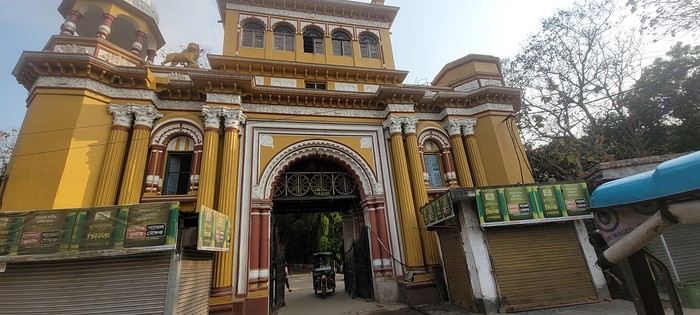
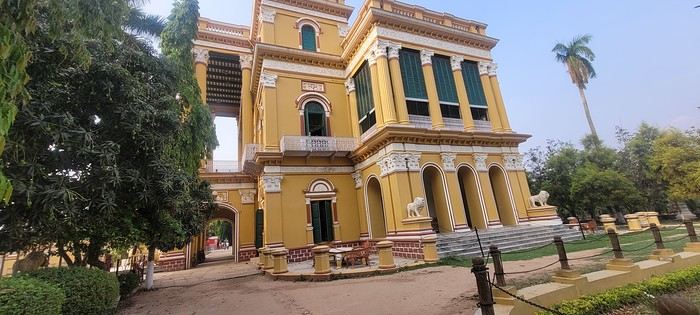
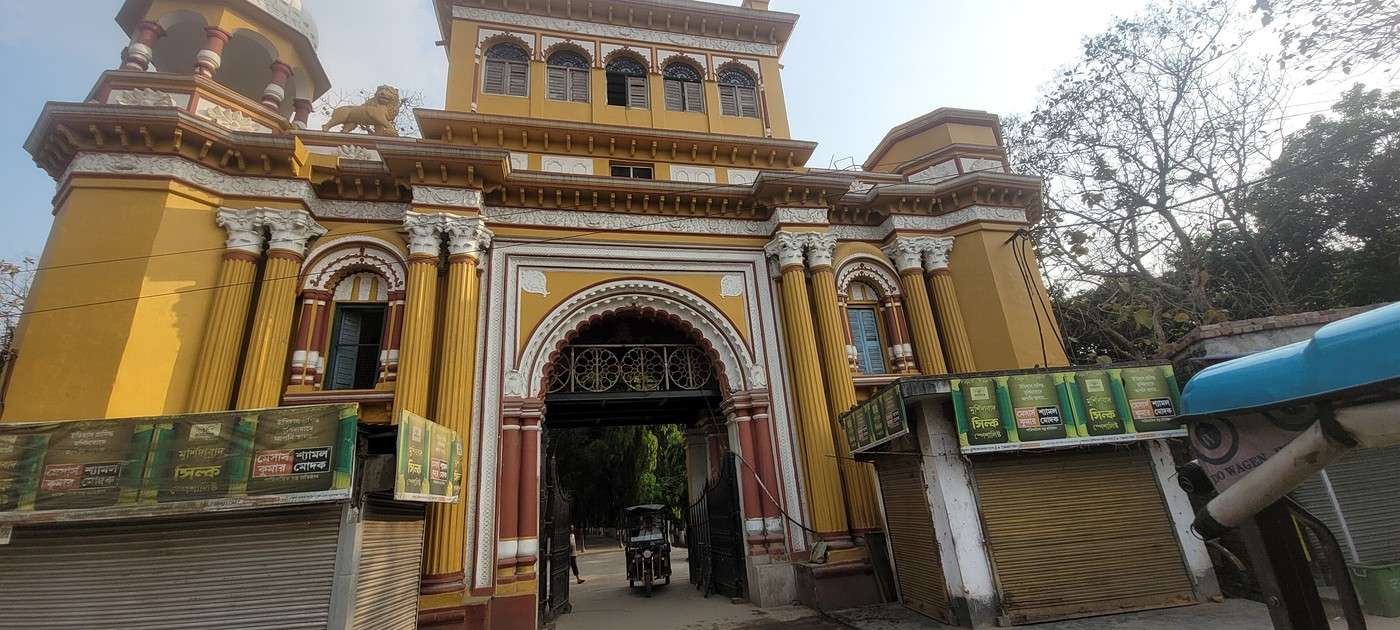
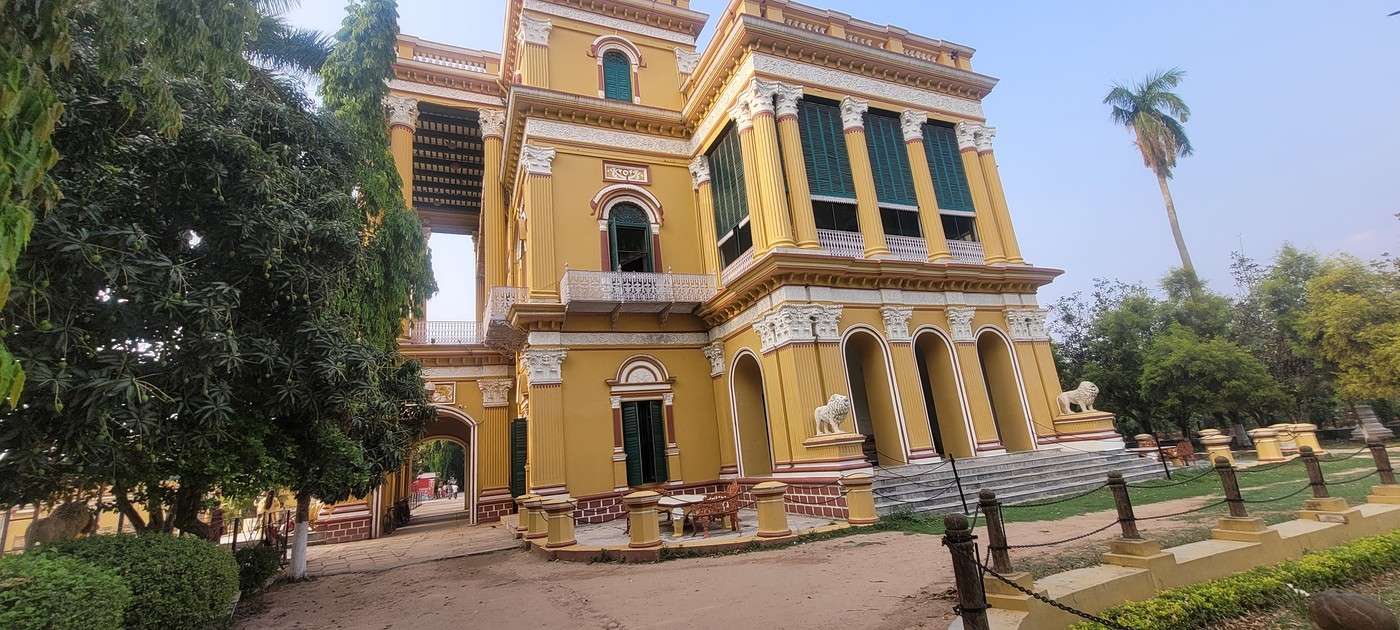
I continue on to Kathgola Palace, walking along a long avenue lined with magnificent trees. In Murshidabad, palaces are plentiful but often far apart from each other. Since I love exploring on foot, the day promises to be intense—I’ll probably break my walking record. As soon as you arrive, the tone is set: the monumental gate to the park is already grand, almost like a palace in its own right. It’s adorned with Corinthian columns and delicate floral stucco motifs, reflecting a strong European influence and a taste for refined ornamentation. It hints at the opulence and significance of the place even before you step inside.


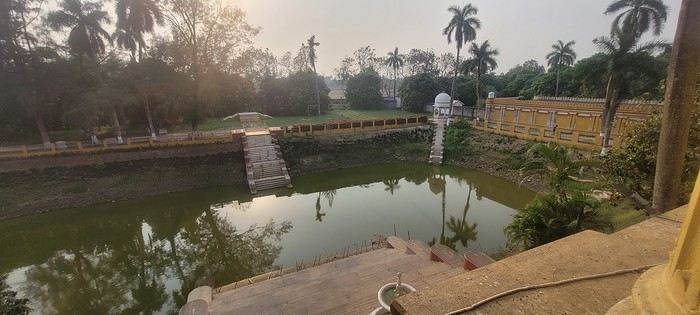
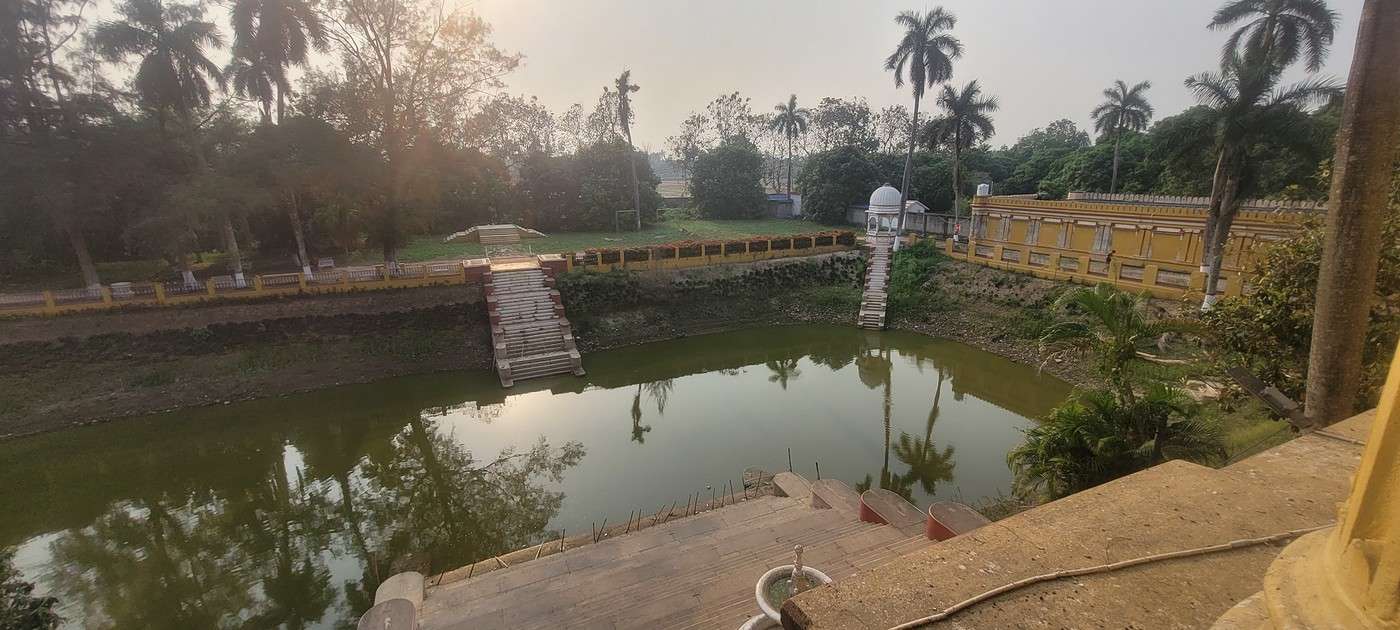
A large basin faces the palace, its elegant façade reflected in the water, adding even more majesty to the site.


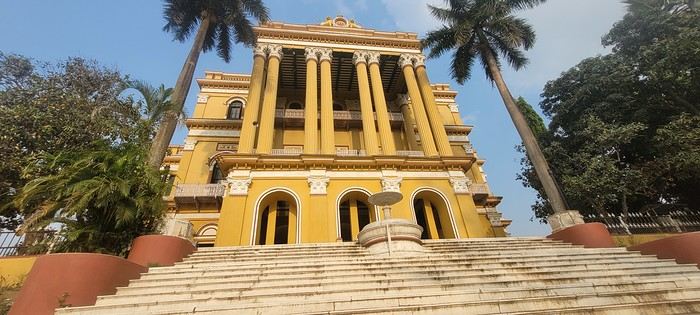
Built in the 19th century by a wealthy Jain merchant family, Kathgola Palace is a testament to Murshidabad’s commercial prosperity at the time, when it was still a major financial hub in Bengal. Its name, "Kathgola," means "wooden house," referring to the wood warehouses that contributed to its owners' wealth, along with the mention of a rose garden that once surrounded the estate.


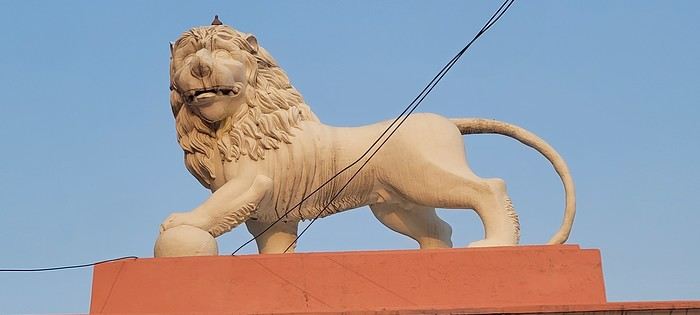
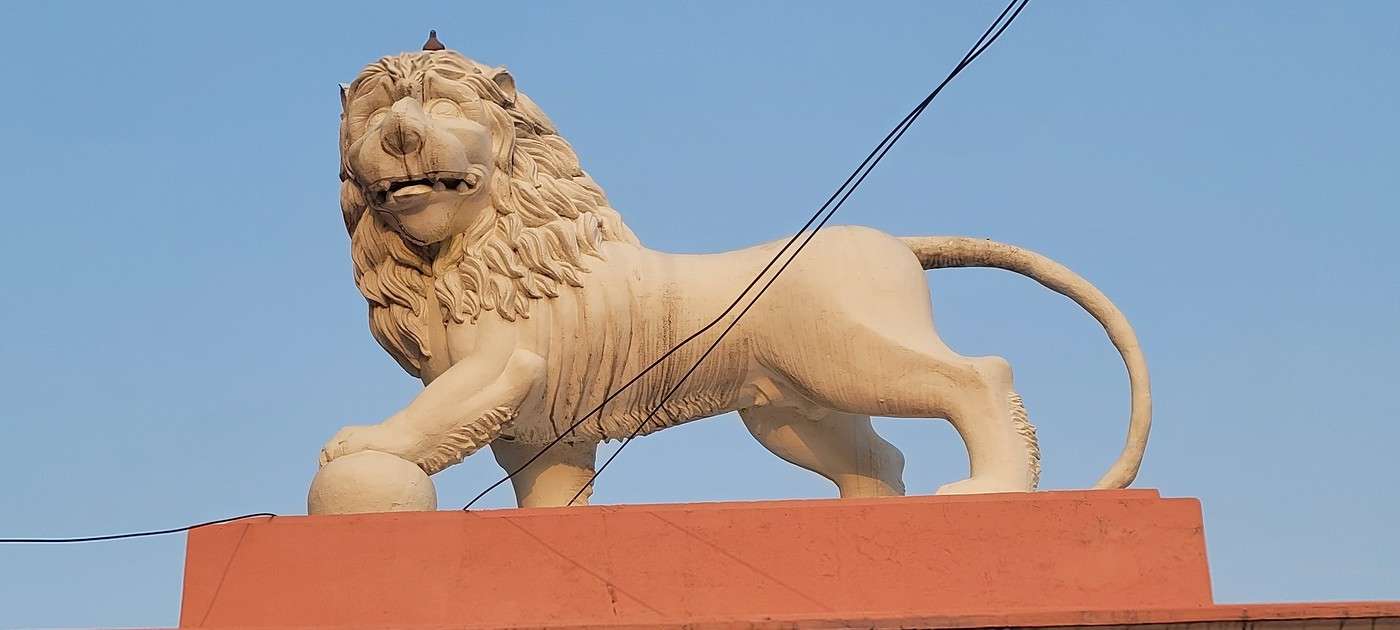
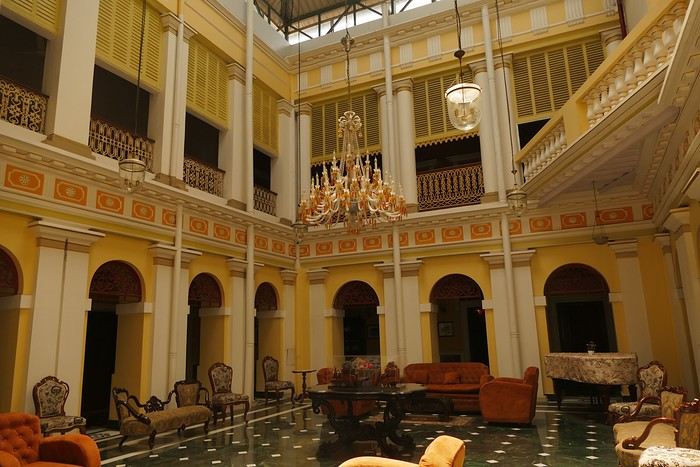
The four-story building features European-inspired architecture, blending neoclassical influences with local tastes. By the late 19th century, French architects contributed to its renovation, adding an even more Western touch, including lion statues that enhance the palace’s majestic appearance. Photos are prohibited inside, except in the grand hall on the upper floor, which is absolutely remarkable. This vast, richly decorated room reflects the refinement and luxury in which the owners lived. The monumental staircase, finely crafted, is also stunning and adds to the sense of grandeur.


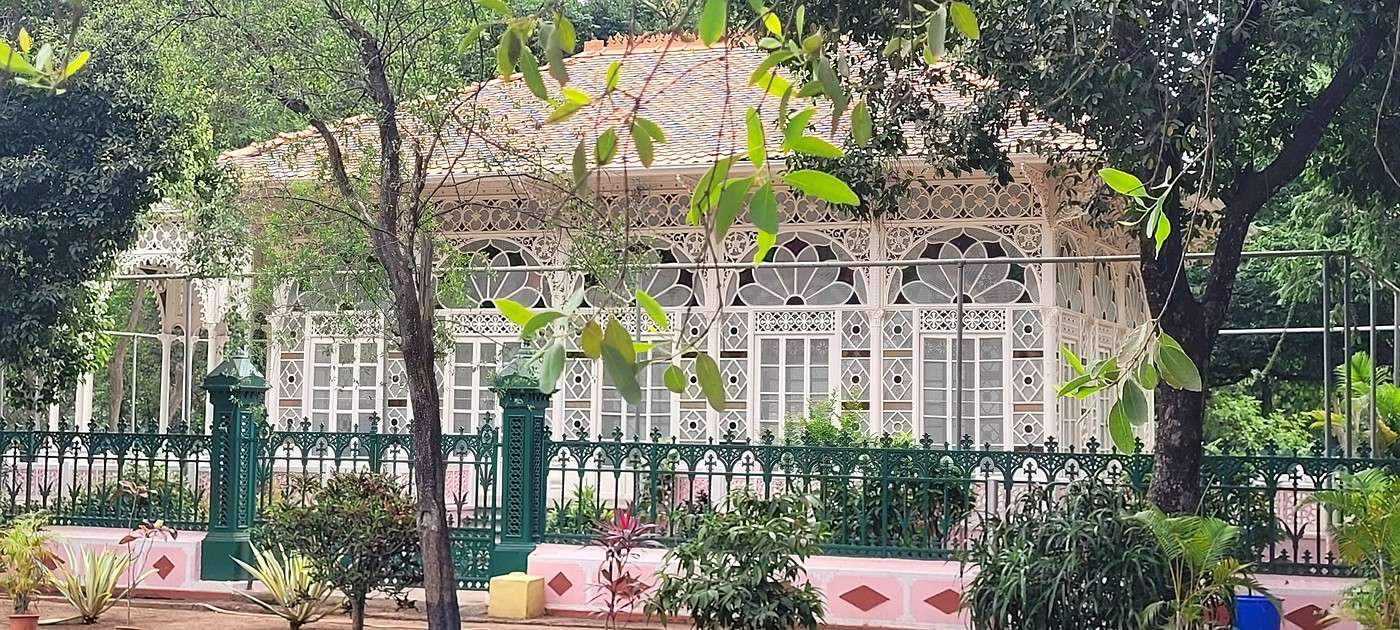
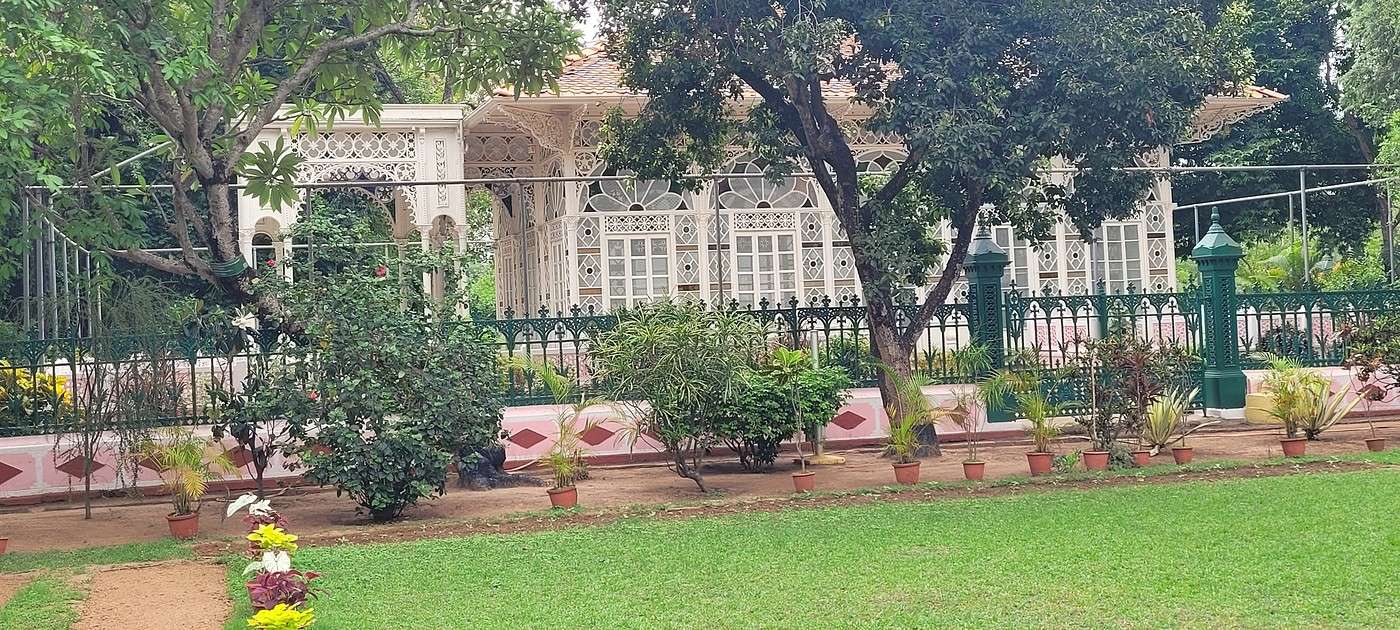
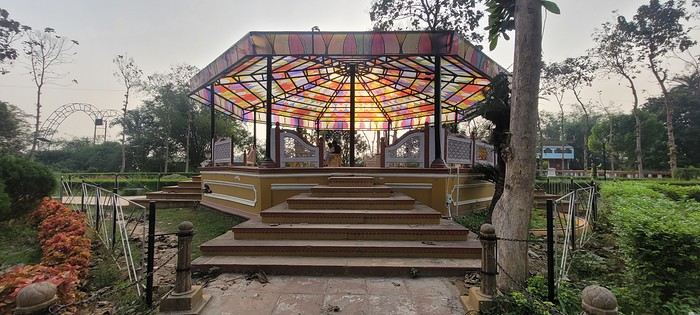
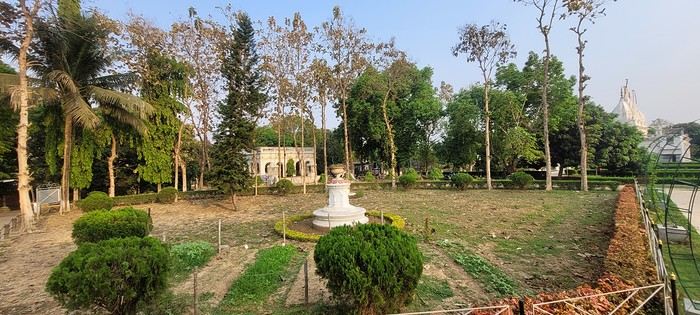
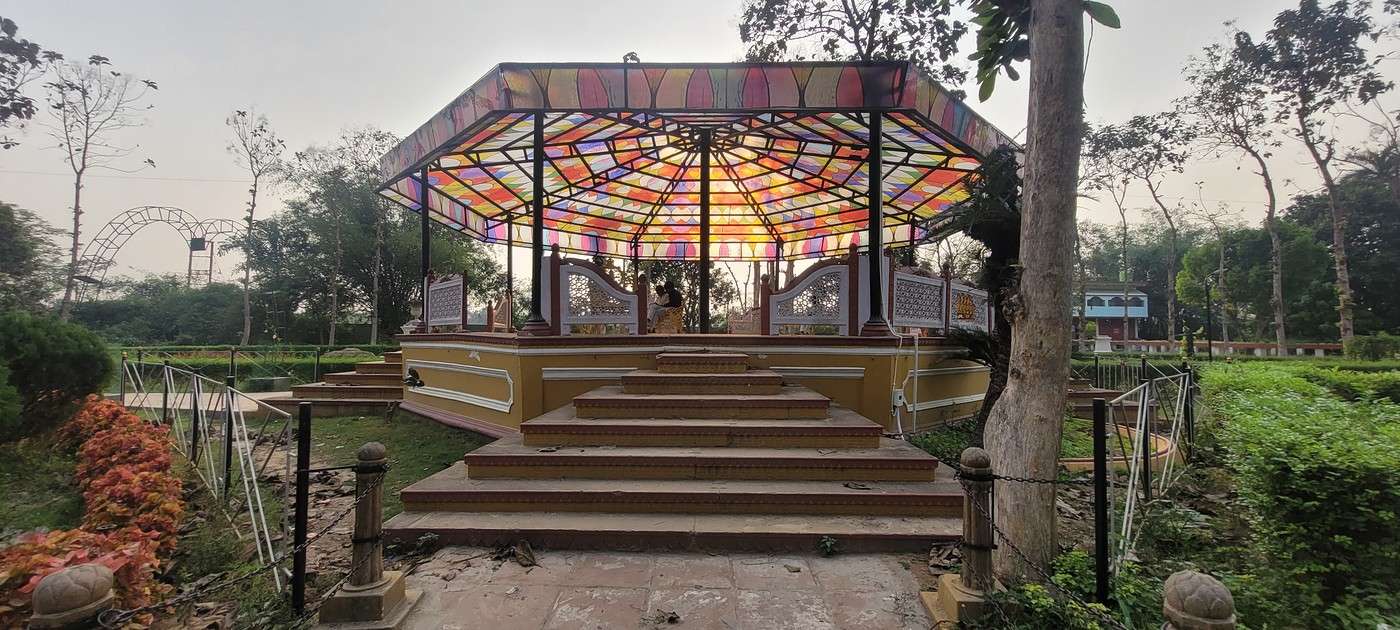
On the top floor, a large terrace offers a view of the entire estate. From here, you can take in the gardens, the basin, and the surroundings, providing a beautiful perspective on the harmony of the site. In the gardens, an elegant kiosk evokes the lifestyle of the era, when these spaces were used for strolls, gatherings, and moments of relaxation.


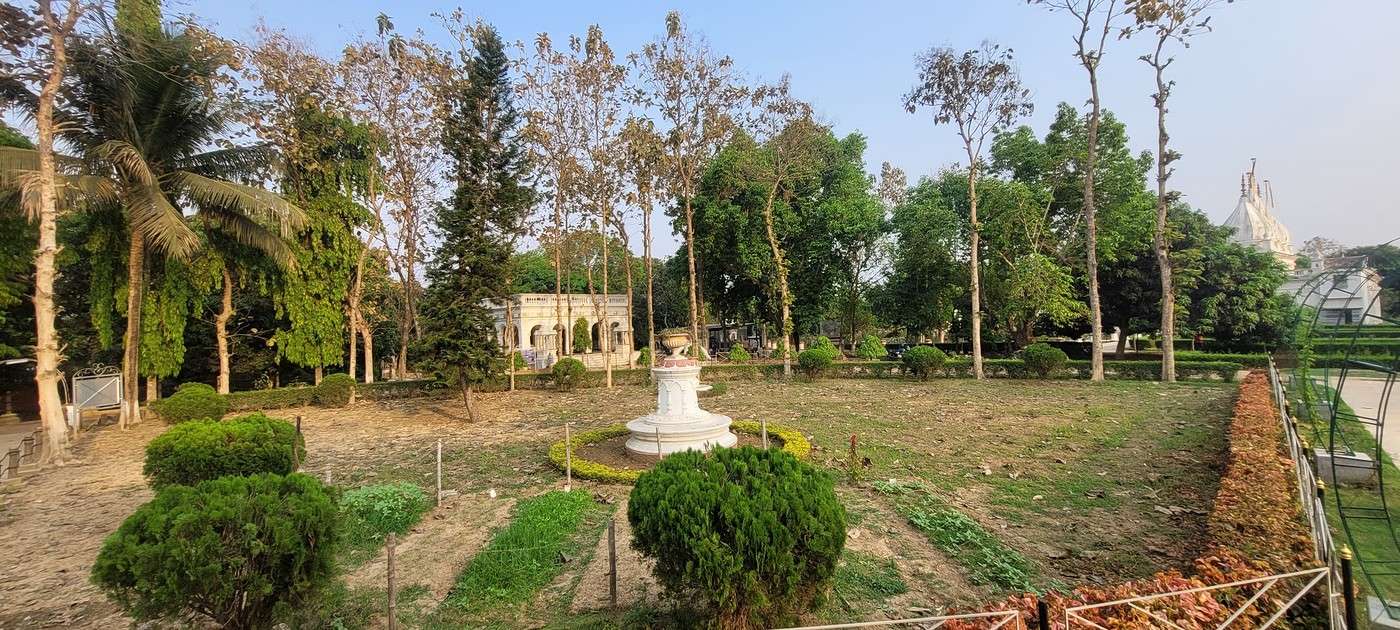
Under this kiosk, a few young people now rest while checking their phones, adding a contemporary touch to this historic place. From here, you can enjoy a view of the gardens, a fountain, and, in the distance, the Adinatha Temple, which stands out with its dazzling whiteness.


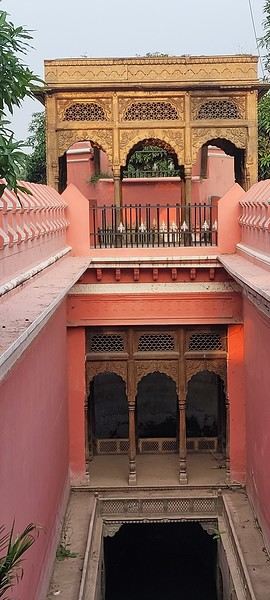
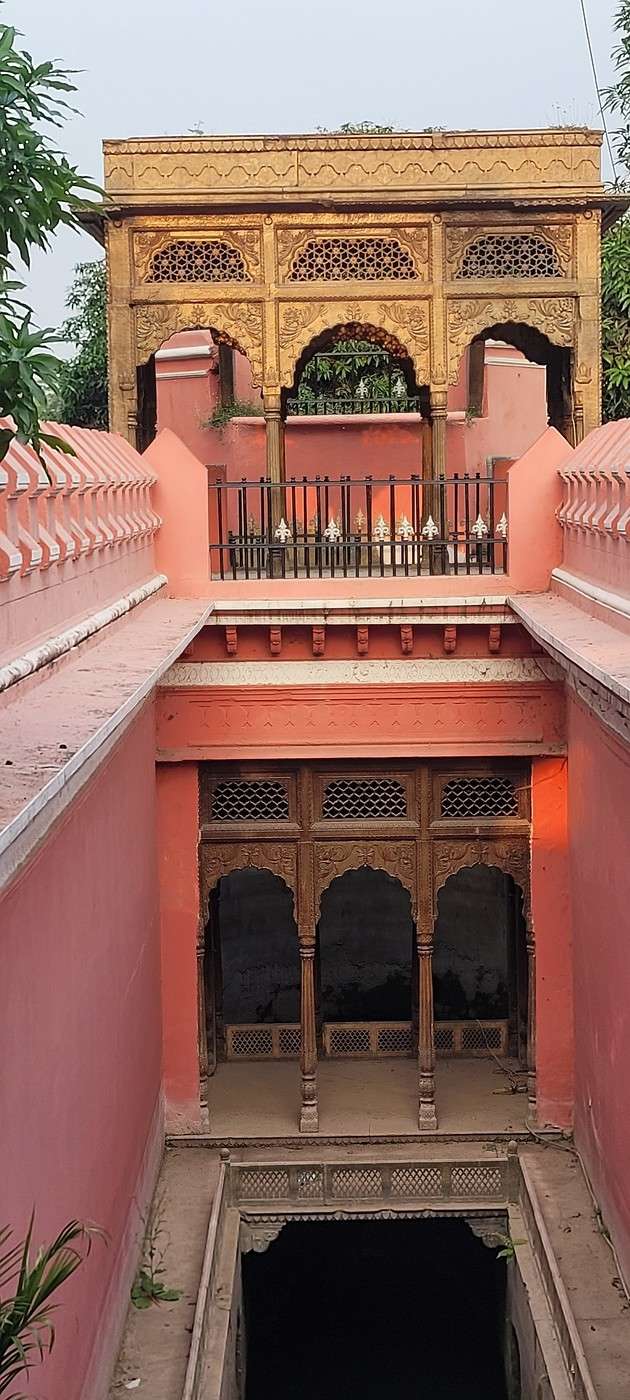
This Jain temple, dedicated to the first Tirthankara, reflects the religious affiliation of the palace’s patrons and the importance of this merchant community in Murshidabad’s history. Finally, a *baori*—an ancient stepwell typical of Indian architecture—completes the estate. The one at Kathgola Palace has a special story: it’s said to have filled with water after a flood from the Bhagirathi River, located on the opposite bank.


Beside the well, a statue carved from Italian marble adds another refined detail, illustrating once again the blend of Indian and European influences that characterize the estate. Victorian-style lions, fountains, and numerous decorative elements also reflect the British influence that shaped Murshidabad’s architecture in the 19th century.


Kathgola Palace thus reflects an era when wealthy Jain merchant families displayed their success by combining Indian traditions, local craftsmanship, and Western architectural trends that were very much in vogue at the time.


I’m really savoring this moment because I’ve fallen in love with this place. After all these discoveries, I take the time to wander around the estate a little longer, extending my visit until sunset. The light that envelops the gardens, the palace, and the basin creates a special atmosphere, almost timeless. But after such a long day of walking and exploring, I have to think about heading back. I’ll eventually take an auto to return to my hotel, which is quite far from the center.

Villages around Hazaribagh in West Bengal

Aleph240758 · 2026-08-04

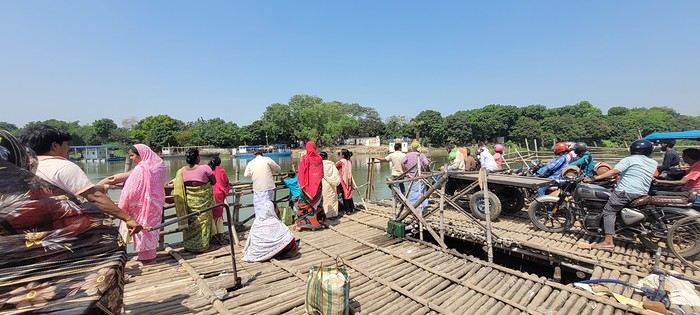
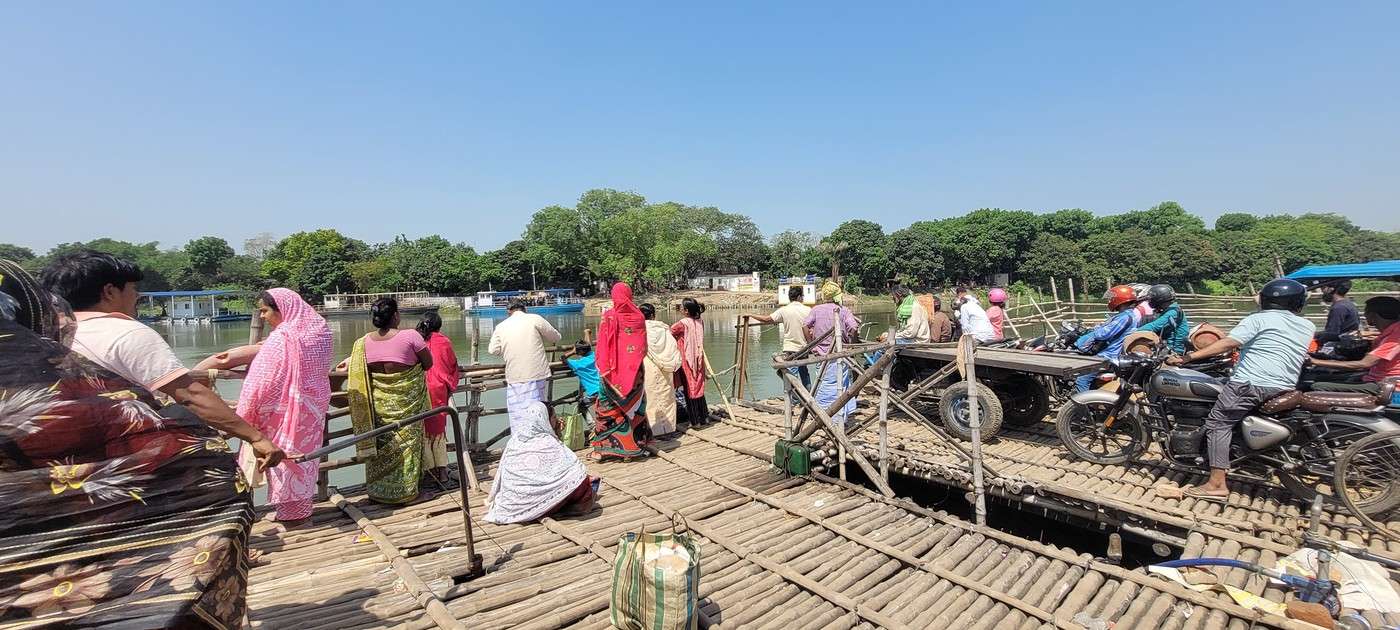
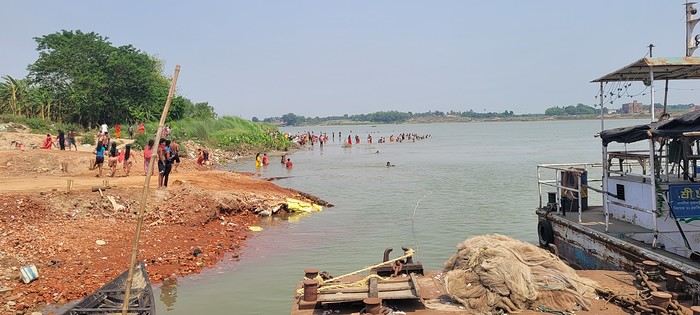
Friday, April 10. The temples of Baranagar Today, I set off to explore the temples of Baranagar, located on the other side of the Bhagirathi River, just a few kilometers from Murshidabad. I walk to the ferry landing. Along the way, a motorcyclist slows down beside me, curious to know which country I’m from and where I’m headed. When I explain my plan, he spontaneously offers to take me there. Once again, the kindness of the locals makes my travels easier. The river crossing is quick.


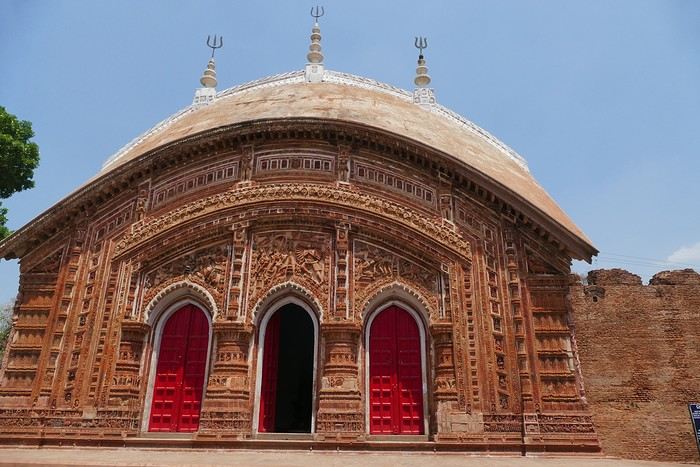
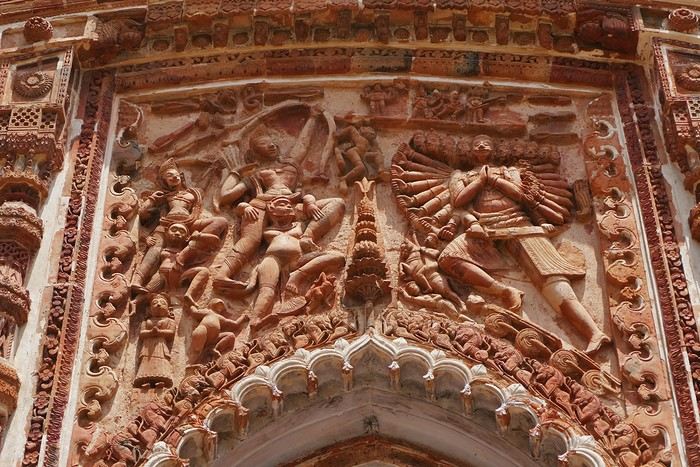
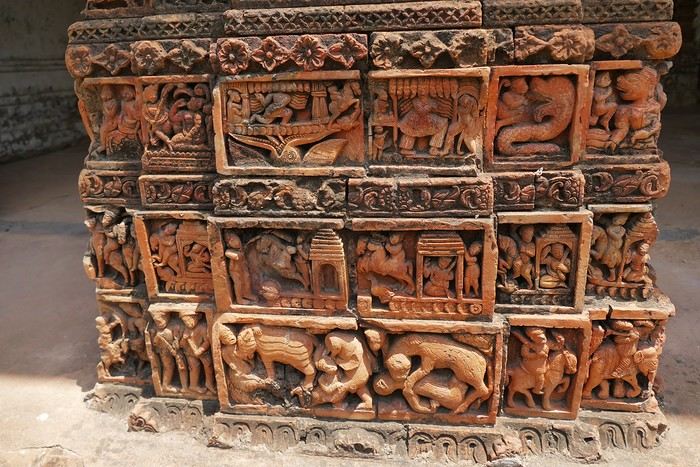
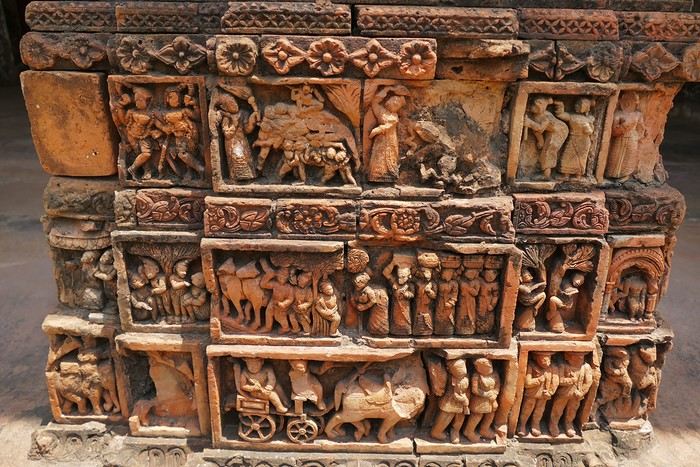
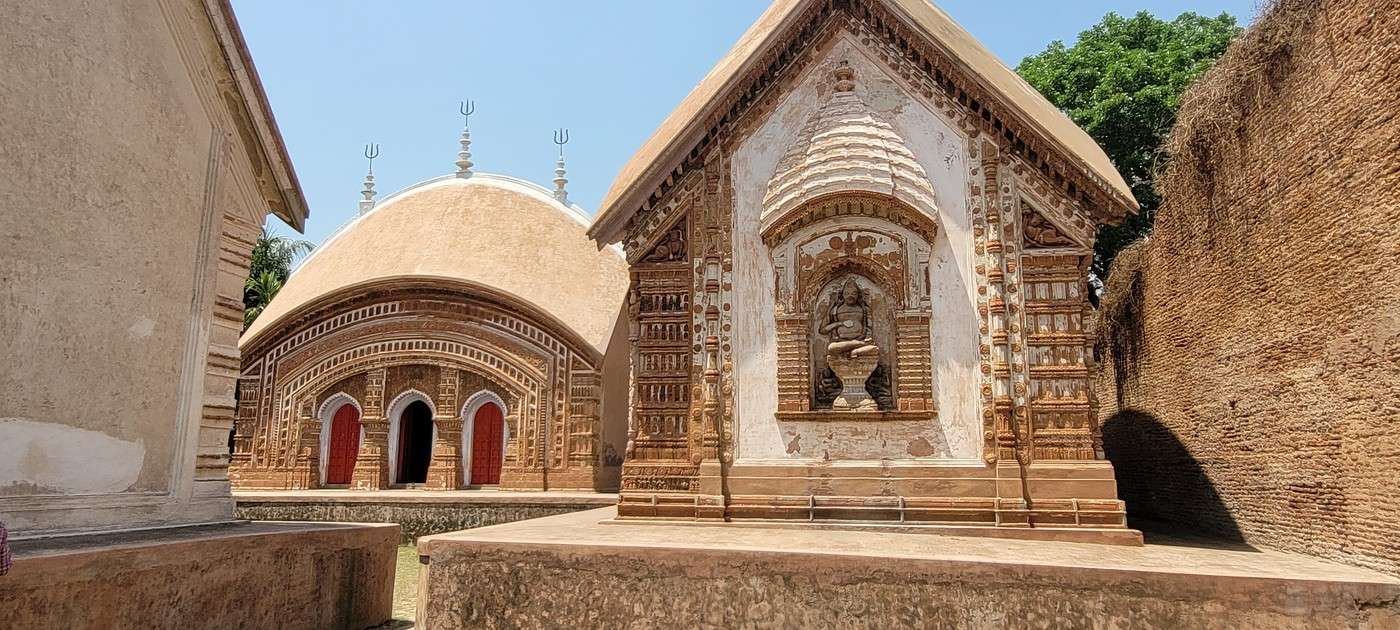
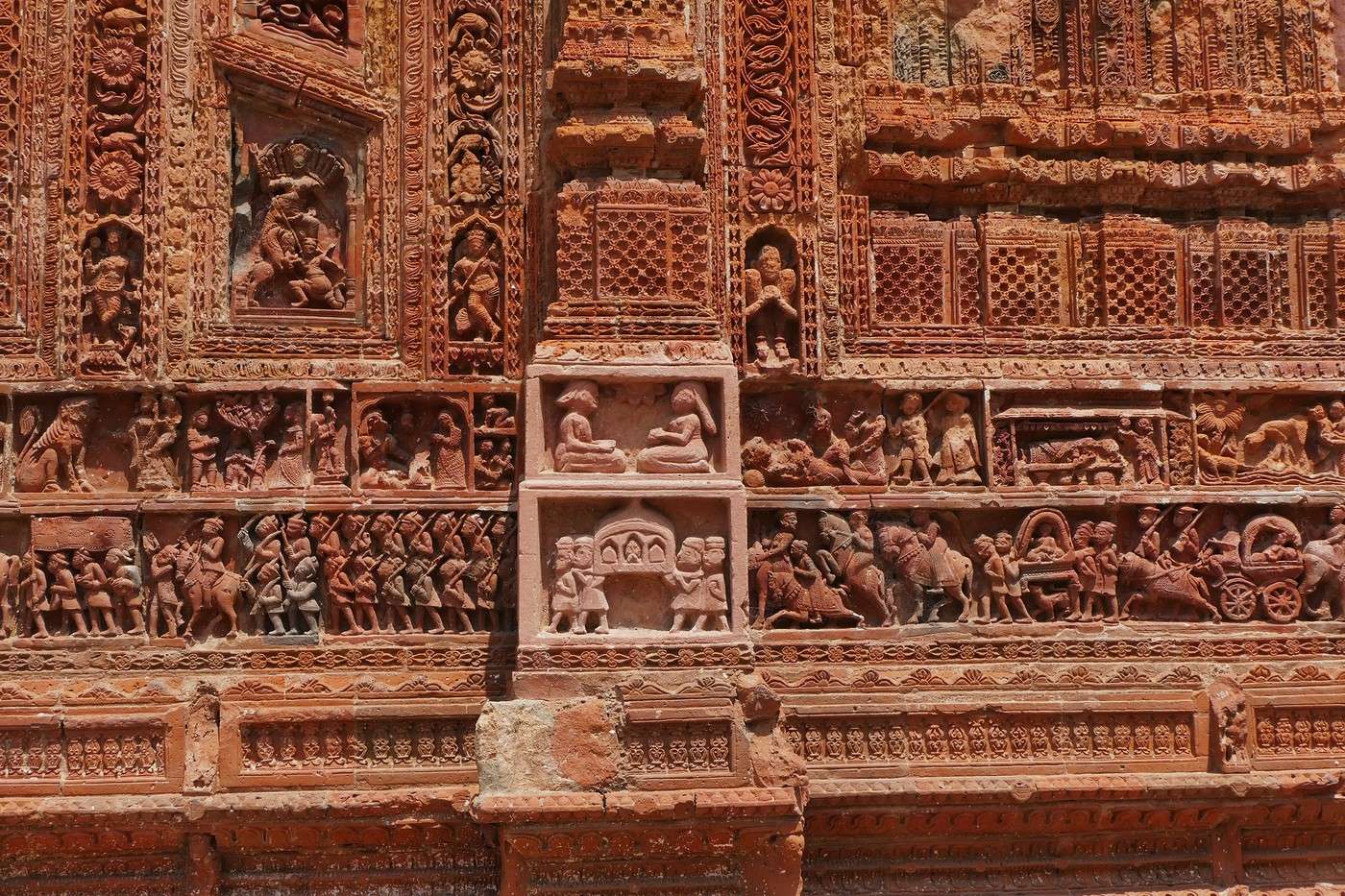
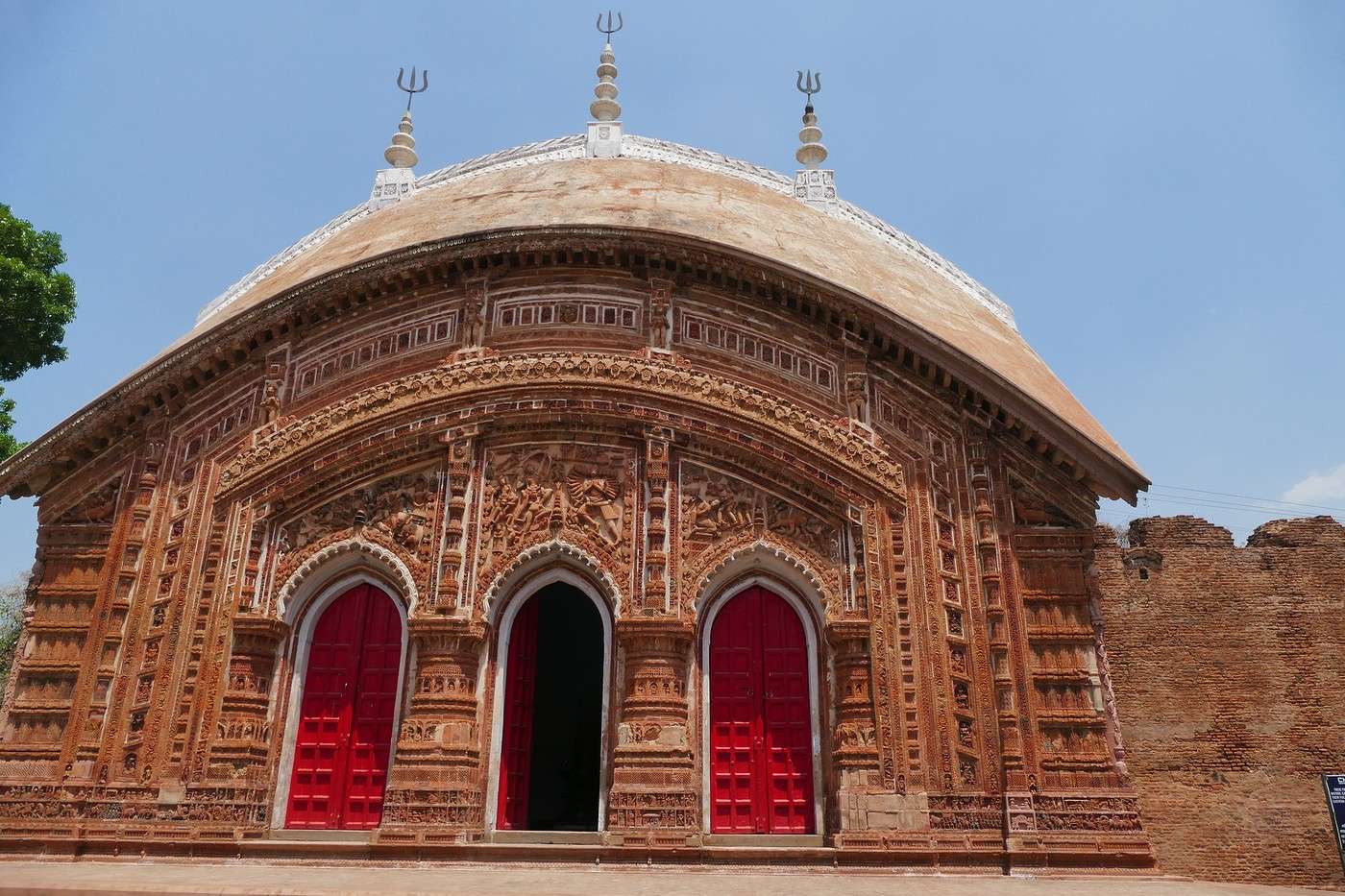
On the other side, several auto-rickshaws are waiting for travelers. I don’t have to wait long and quickly hop in to reach the temple complex. The village of Baranagar, near Azimganj, is home to a remarkable collection of terracotta temples built in the 18th century by Rani Bhabani, a wealthy zamindar (landowner) from Bengal and a great patron of religious architecture. The terracotta panels covering their facades depict both episodes from sacred texts and scenes from daily life at the time.


At the entrance to the site, the guard asks me to sign a register. He then accompanies me on the visit and tells me the history of these temples. Afterward, he leaves me to welcome an Indian couple. I can take my time, observe the details, and photograph the facades in peace. I also check out the explanations I found on a blog to better understand the scenes depicted.


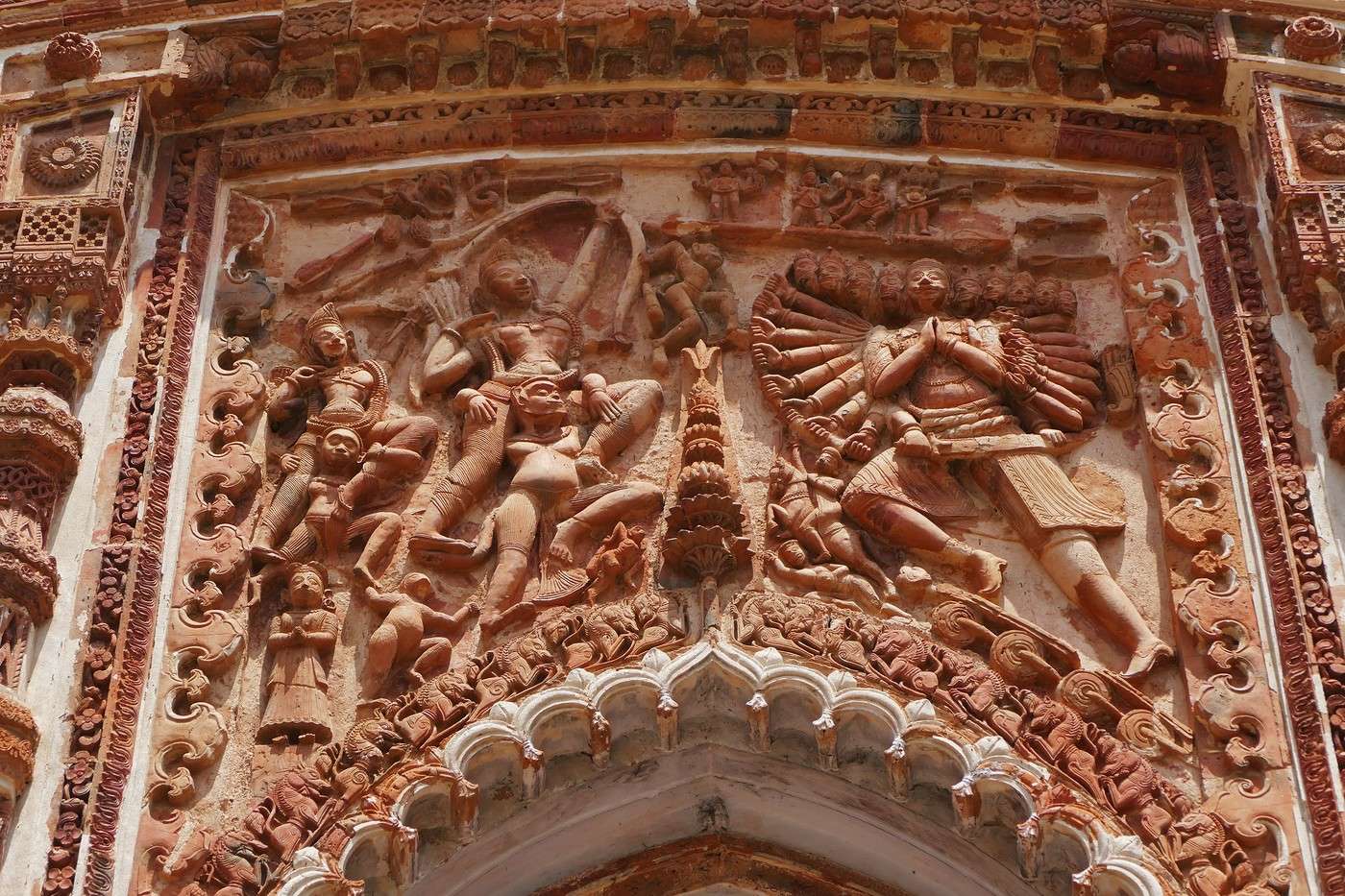
On one terracotta panel, I discover a depiction of Rama confronting Ravana, the ten-headed demon king, a famous episode from the Ramayana.

Other panels show scenes from daily life: people at work, musicians, animals, and even battle scenes. These small sculptures are true archives of 18th-century Bengali society.


A little further on is the hexagonal Bhabanisar Shiva temple, located by the roadside. Unfortunately, the gates are locked, and I can’t go inside.


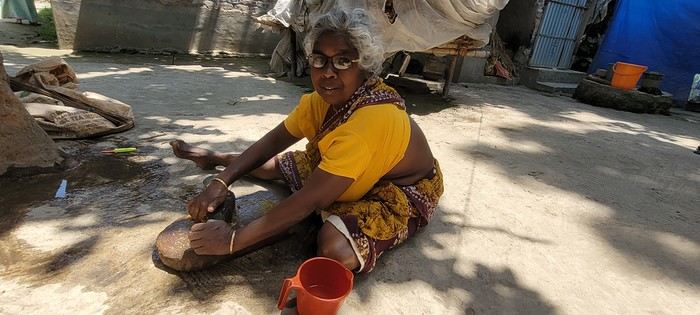
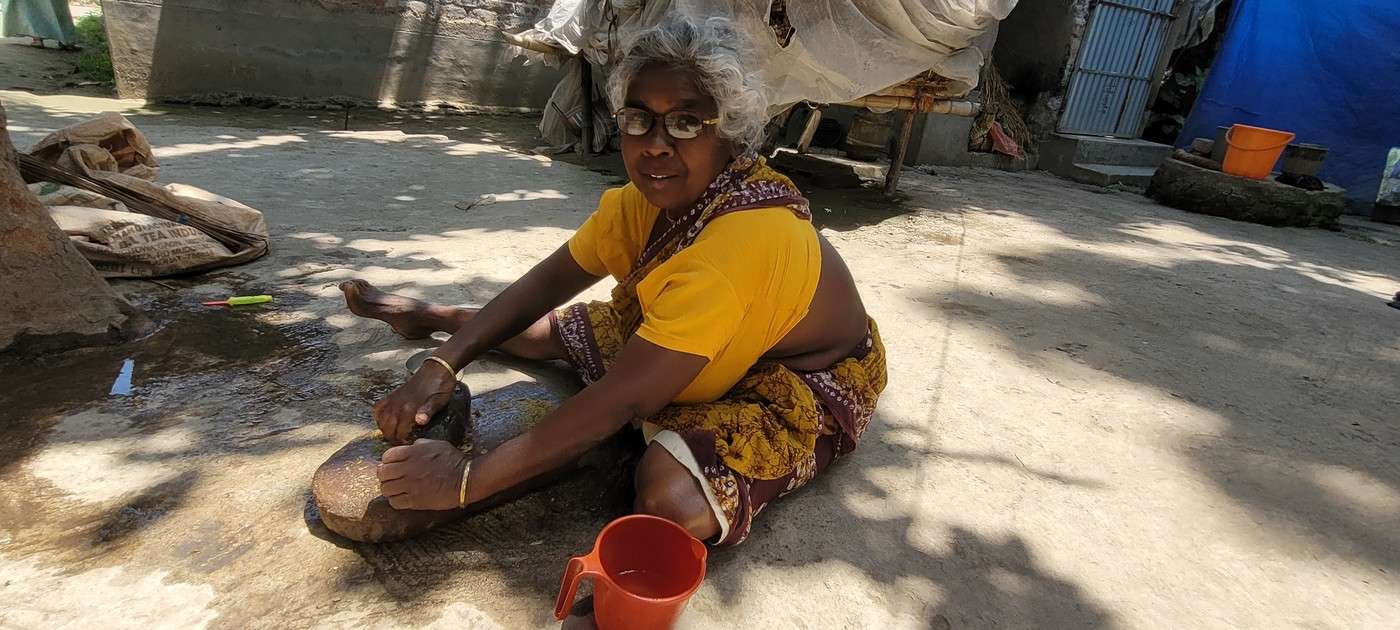
I try to walk around it anyway and end up in the courtyard of a neighboring house, where a woman is sitting on the ground grinding ginger. A simple scene of everyday life that contrasts with the ancient monuments I’ve just been admiring.


I head back to my auto-rickshaw, and we continue through the countryside in search of another temple: the Gangeshwar Jor Bangla. Isolated in a rural setting, it gives the impression of being made up of two adjoining sanctuaries, a characteristic architecture of the jor bangla style ("two joined houses").


Here too, the facades are adorned with numerous terracotta panels depicting various aspects of daily life, people, animals, and decorative motifs.


I end this visit with the feeling of having discovered a discreet but exceptional heritage. Far from the grand palaces of Murshidabad, these small village temples tell another story of Bengal—one of beliefs, craftsmen, and daily life etched in clay.

Villages around Hazaribagh in West Bengal

Aleph240758 · 2026-08-04

(continued)

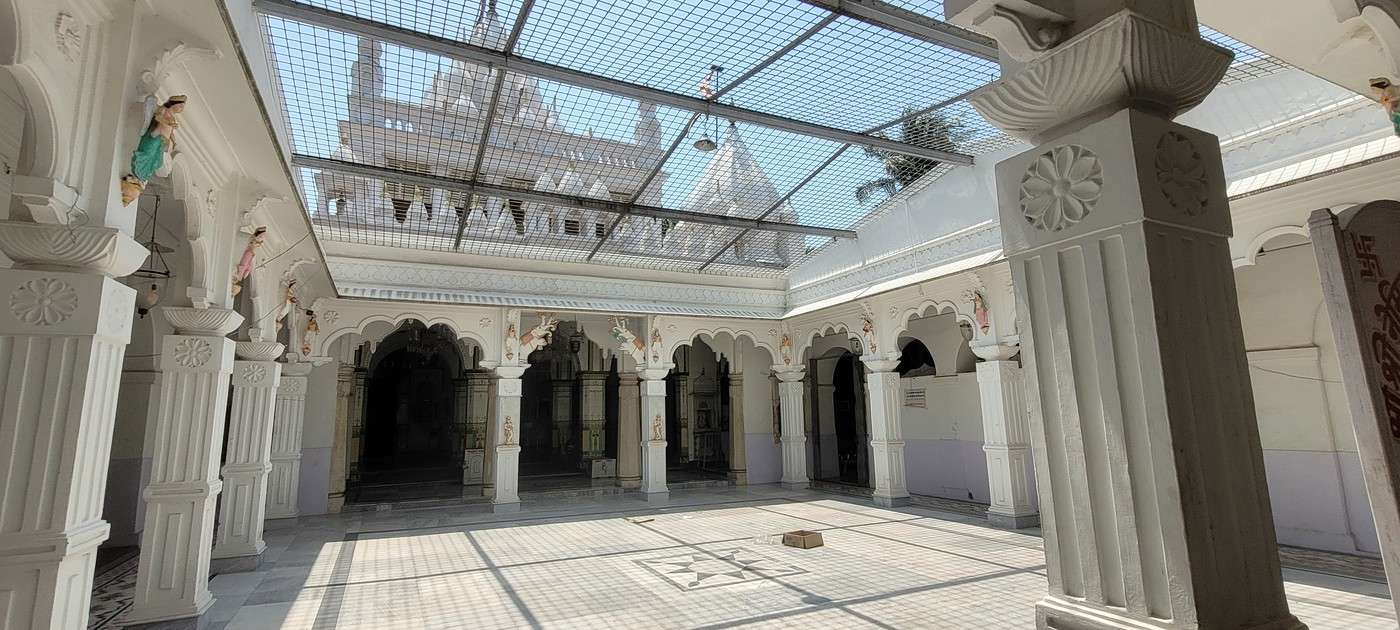
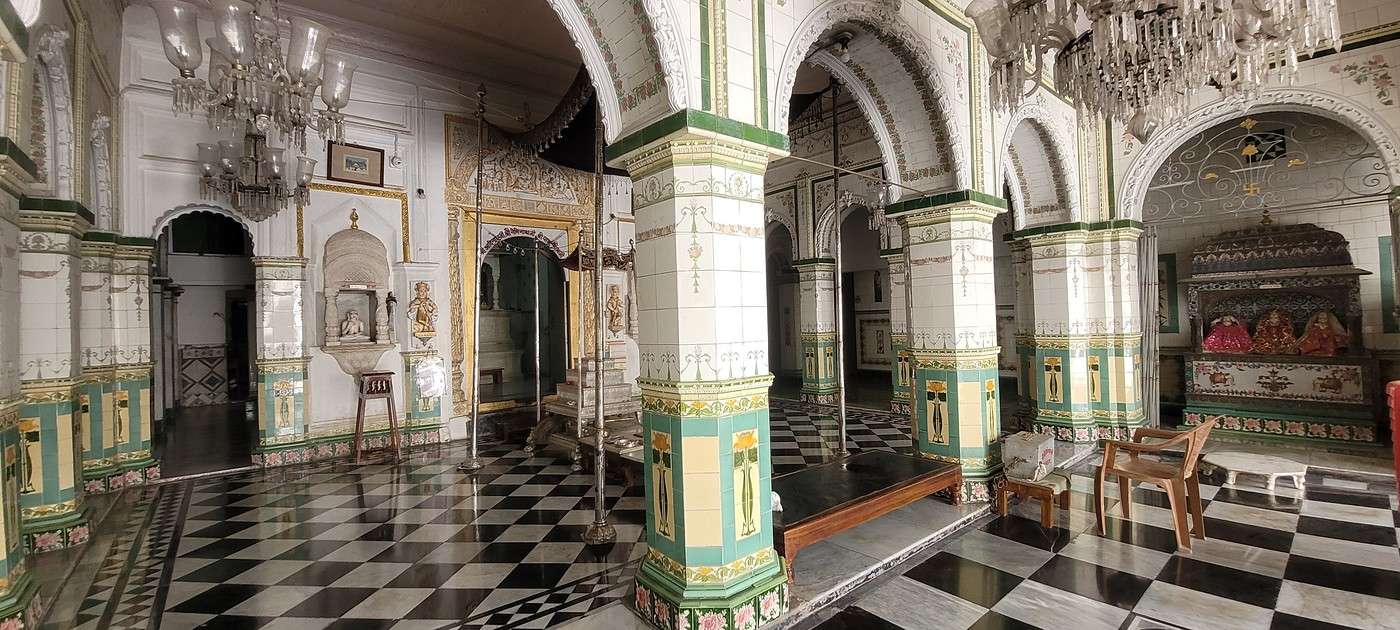
We return to Azimganj, where I make a final stop at the Jain temple Sambhavnathji, just before it closes.


The place is peaceful, and I take these last moments to explore the sanctuary before the doors close.


From there, I set off on foot in search of the old *havelis* that still bear witness to the past wealth of the Jain merchant families in the region.


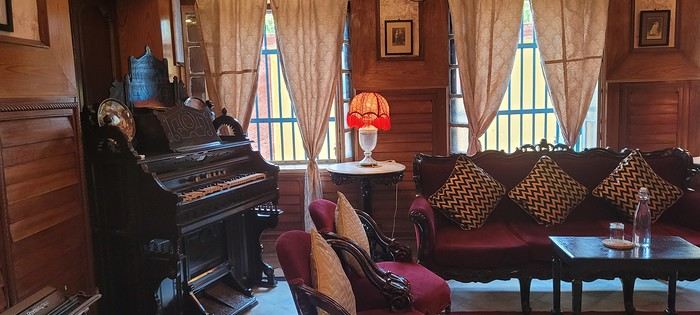
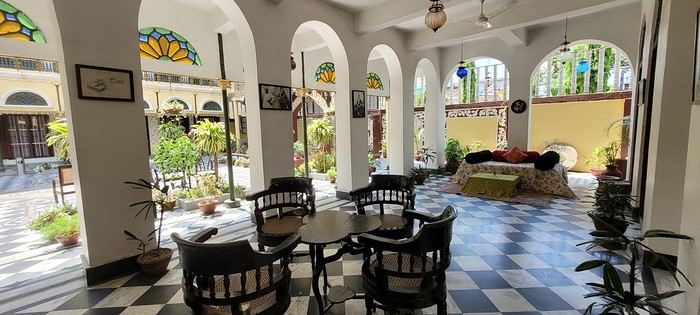
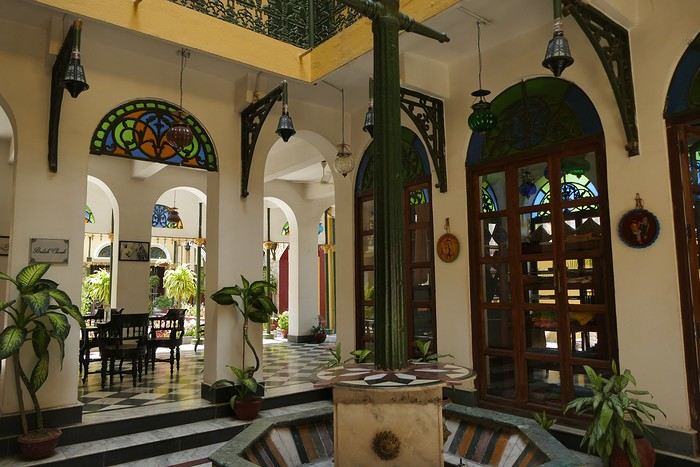
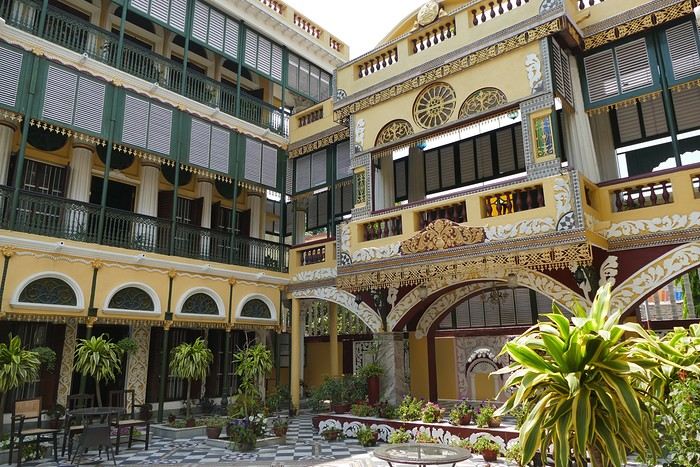
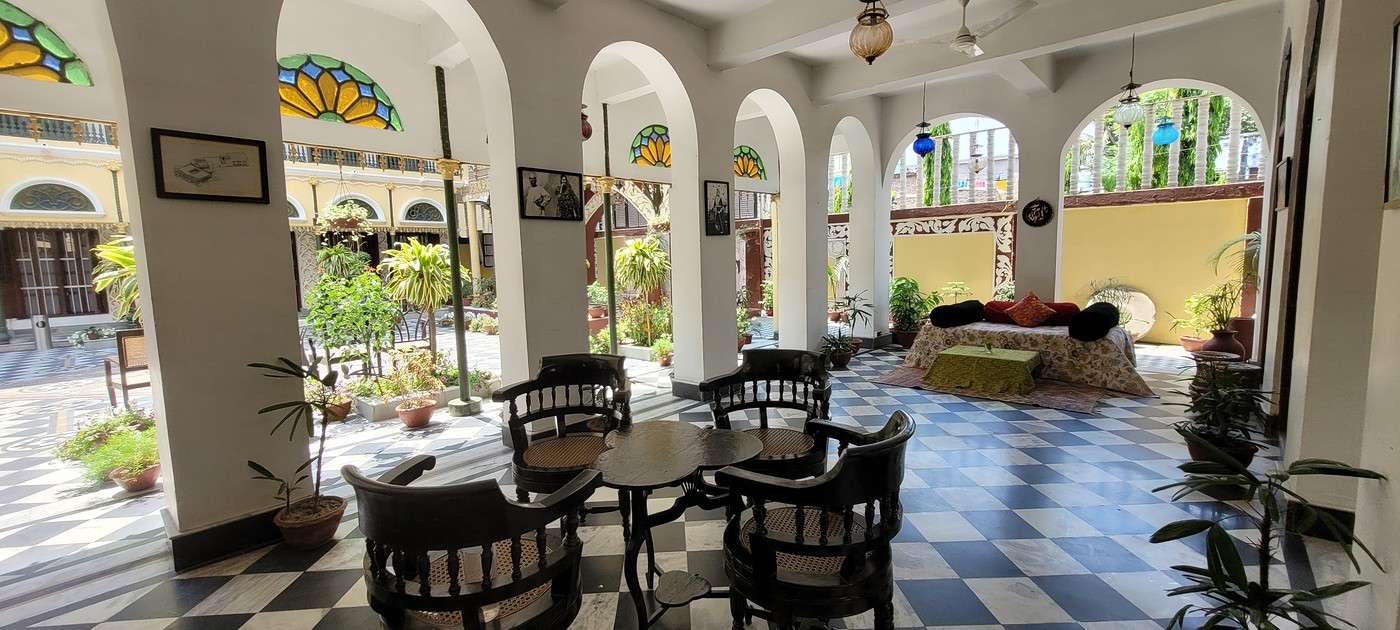
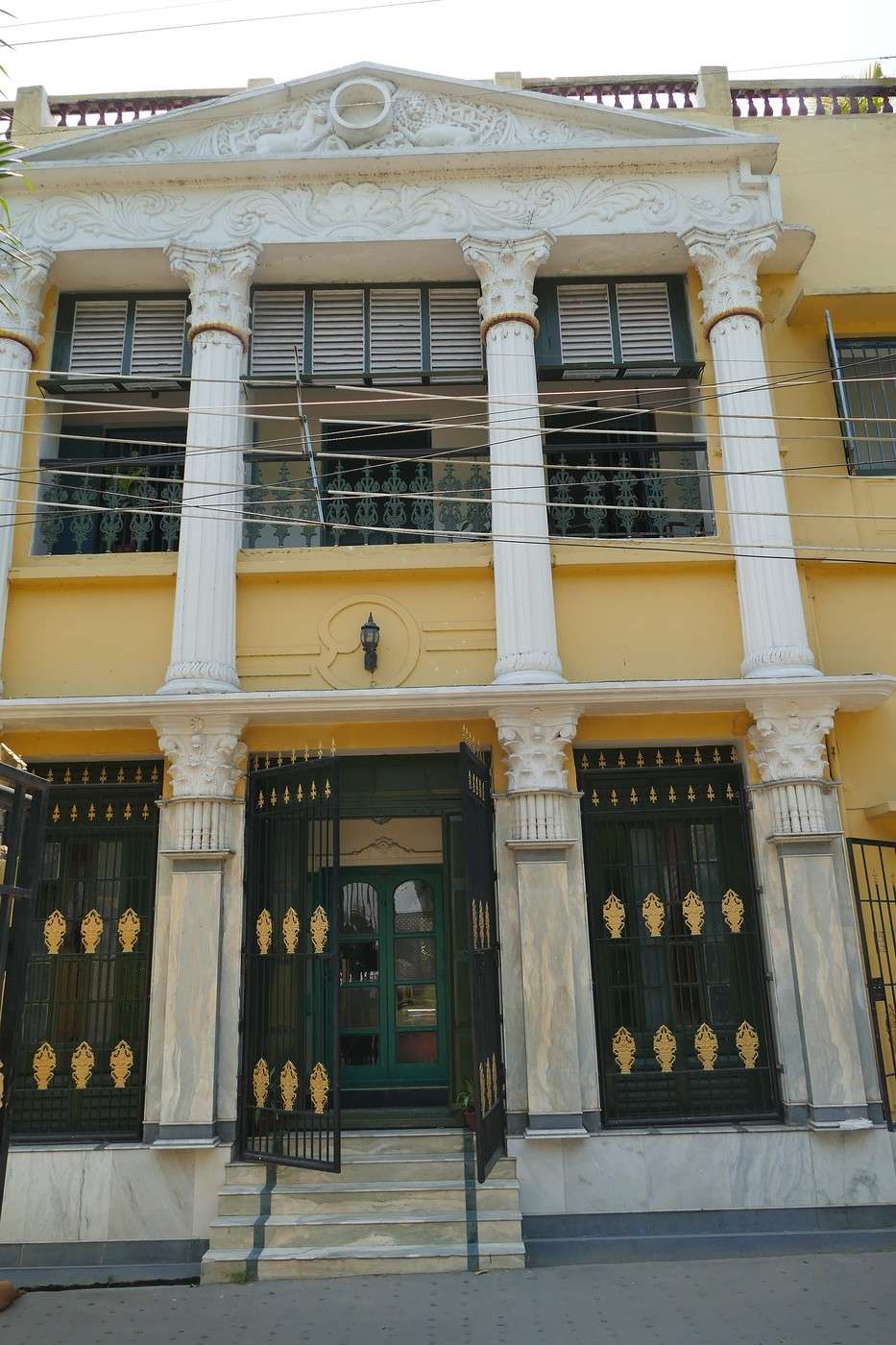
My walk ends in front of a charming house, the Bari Hotel. From the outside, the place doesn’t look like much, and I even wonder if I’ve arrived at the right spot.


I gather my courage and push the door open to ask if I can visit. A waitress invites me in and to sit down in a lounge.


A few moments later, another person brings me a cold drink. A man then comes to greet me and explains that a visit is possible—on the condition that I have lunch there, for 1500 rupees. I’m not hungry, and the price is too high for me, so I decline. Eventually, he kindly agrees to let me see just the ground floor.


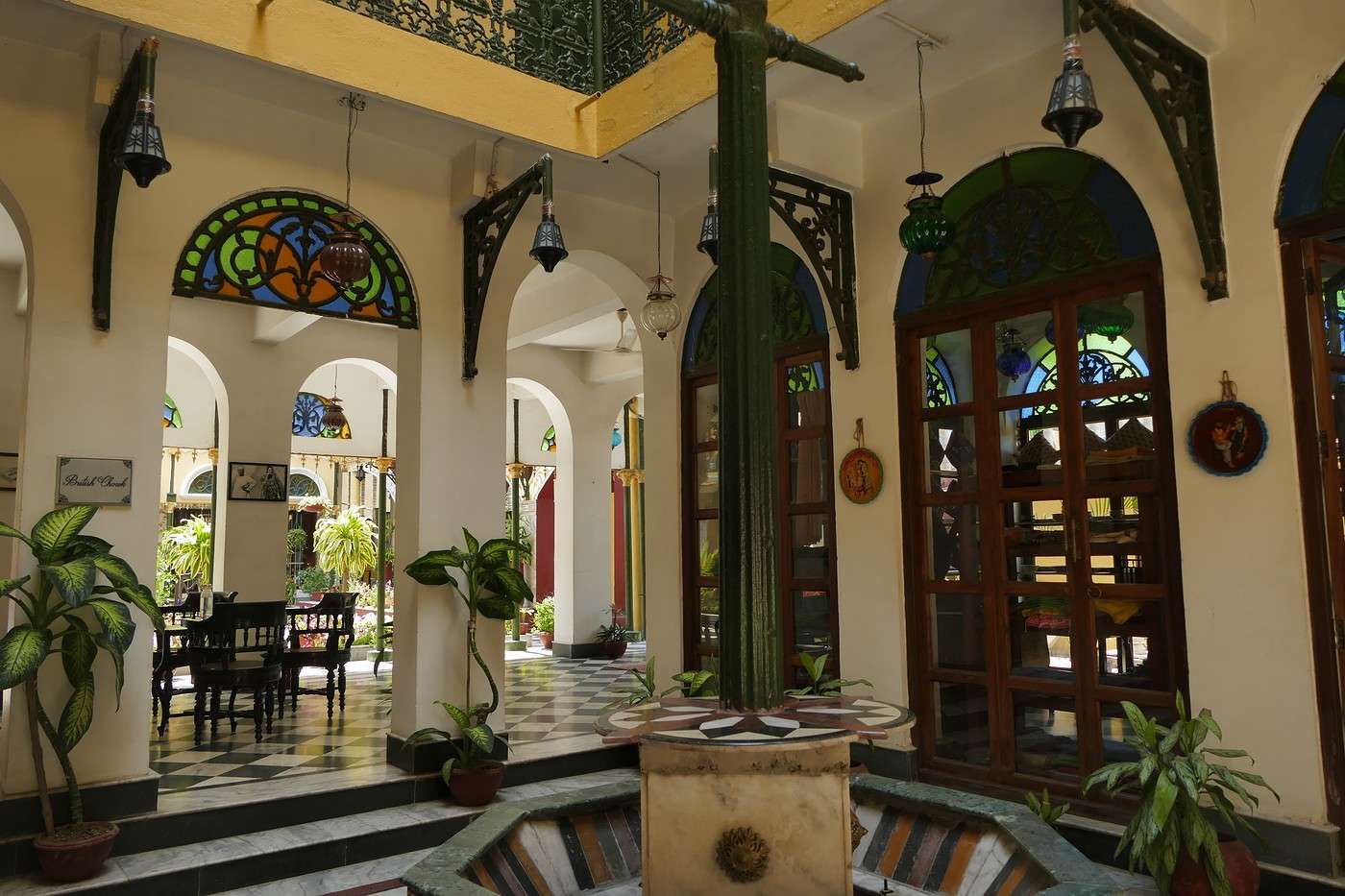
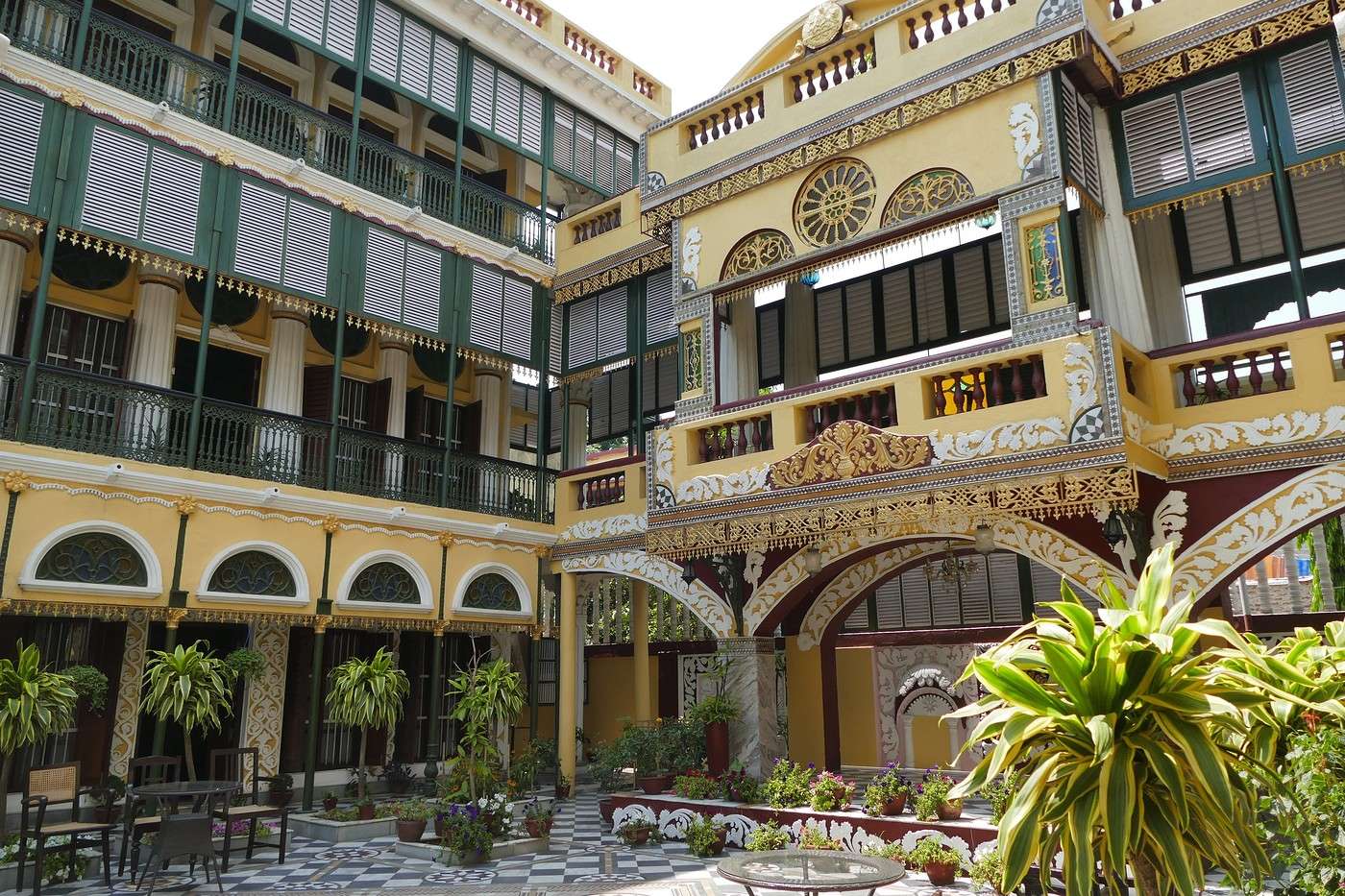
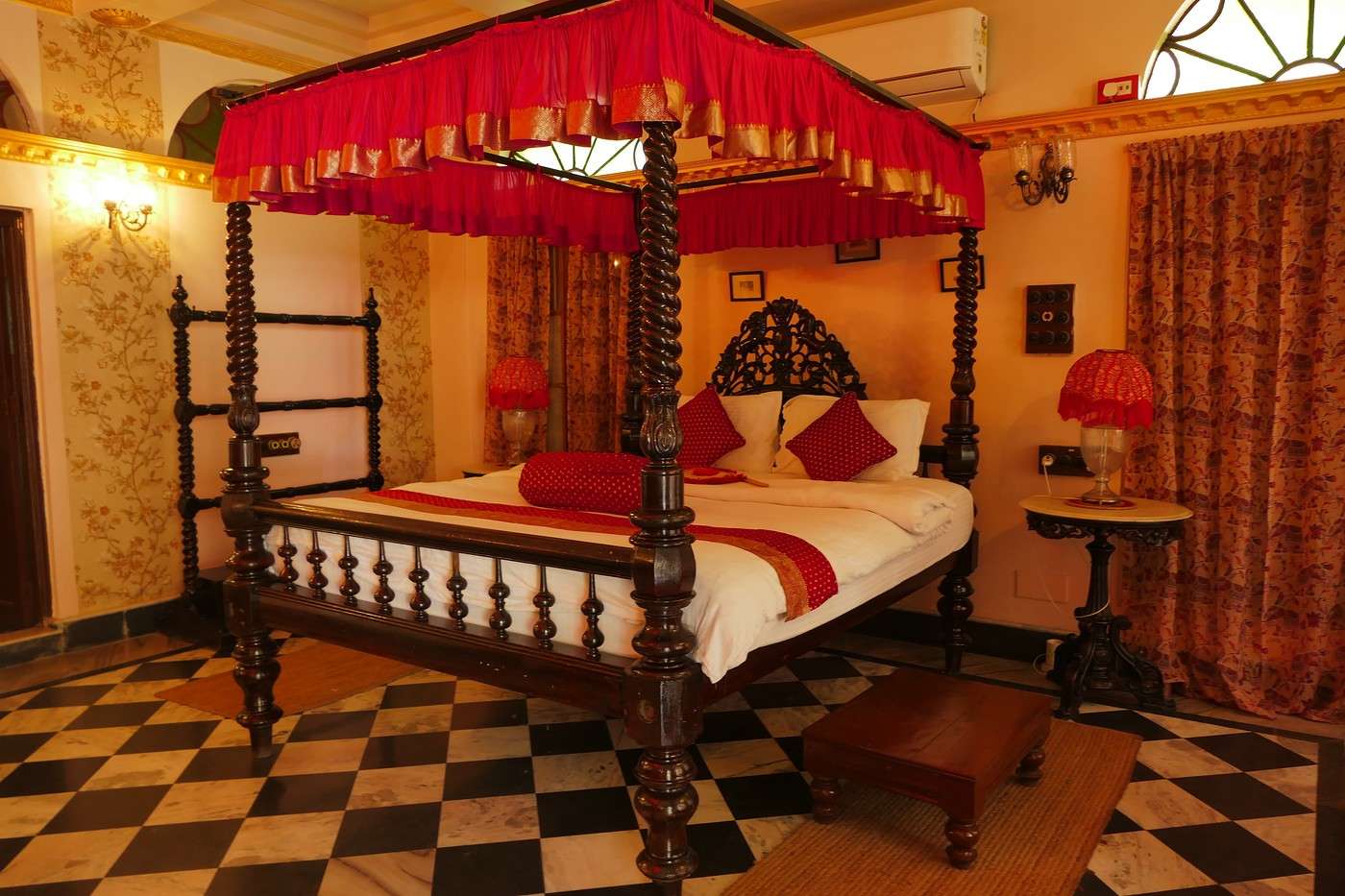
And what a surprise! Behind this unassuming façade lies an absolutely stunning place. The rooms are elegant, decorated with refinement, and you can sense the prestigious past of this residence.


I didn’t dare ask about the price of the rooms—probably beyond my budget—but this visit will remain a wonderful unexpected discovery.


Back in Murshidabad, I set off in search of a tailor for a few jobs. I end up spending a long time with him, explaining how to make curtains and pie bags. Communication isn’t always easy, but with a few gestures and a lot of goodwill, we manage to understand each other. He offers me *chai*, then a man and a woman join us to chat for a while. When it’s time to pay, he asks for a very modest amount. I decide to give him double, a gesture that touches him deeply. His friend seems to approve, and the three of us share a simple but warm moment. These small everyday exchanges are often the most beautiful memories of a trip. I then head back to the hotel. Elections are supposed to take place at the end of the month, and several people are already preparing flags. As I walk by, some insist on giving me one. I refuse sometimes, but their enthusiasm and eagerness to share this local moment with me make me smile. A little further on, I pass a house decorated for a wedding. People are sitting outside and spontaneously invite me to join them. Quickly, curiosity gives way to friendliness: I’m invited inside, introduced to the future bride and groom, and offered pastries.


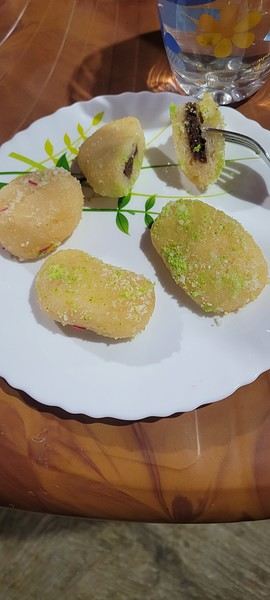
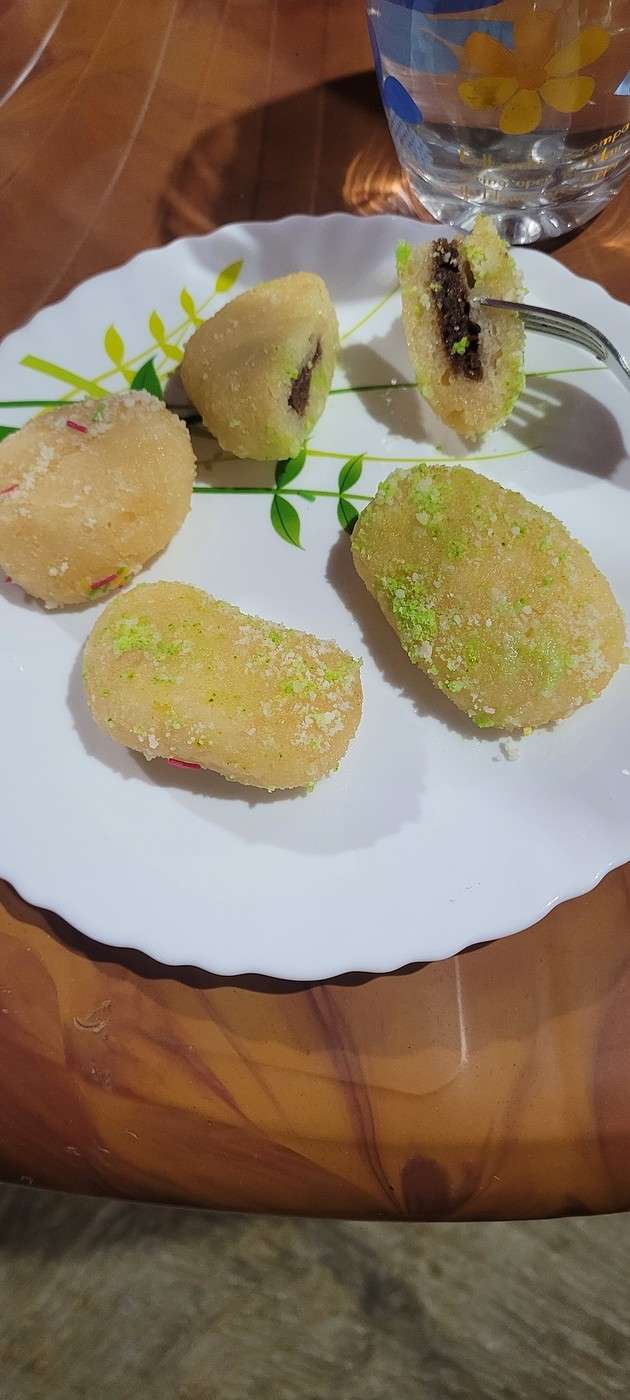
I can’t eat them all on the spot, so I ask if I can take a few with me. The woman then returns with an entire box full of cakes. Now I have dessert for several days! Once again, this day ends with an unexpected encounter, just like India knows how to offer so well. Beyond palaces and temples, it’s these moments of sharing, these smiles, and this spontaneous generosity that make travel so rich.
Villages around Hazaribagh to West Bengal

Aleph240758 · 2026-08-05

Saturday, April 11 Last day in Murshidabad. The hotel is located outside the city, on the road leading to Cossimbazar. I set off on foot along this quiet, almost deserted little road. At the end, I pass by a chicken farm: the chicks are piled on top of each other, a sight that really doesn’t make me want to eat any.


I look for a car, but as often happens, it’s a motorcyclist who stops. He offers to take me. I have to ride sidesaddle on the bike; at first, I’m not very reassured, but I eventually find the position quite comfortable. He drops me off two kilometers further on, at a crossroads, and flags down a driver who agrees to take me to the Roy Rajbari in Cossimbazar, now transformed into a charming hotel with a museum.


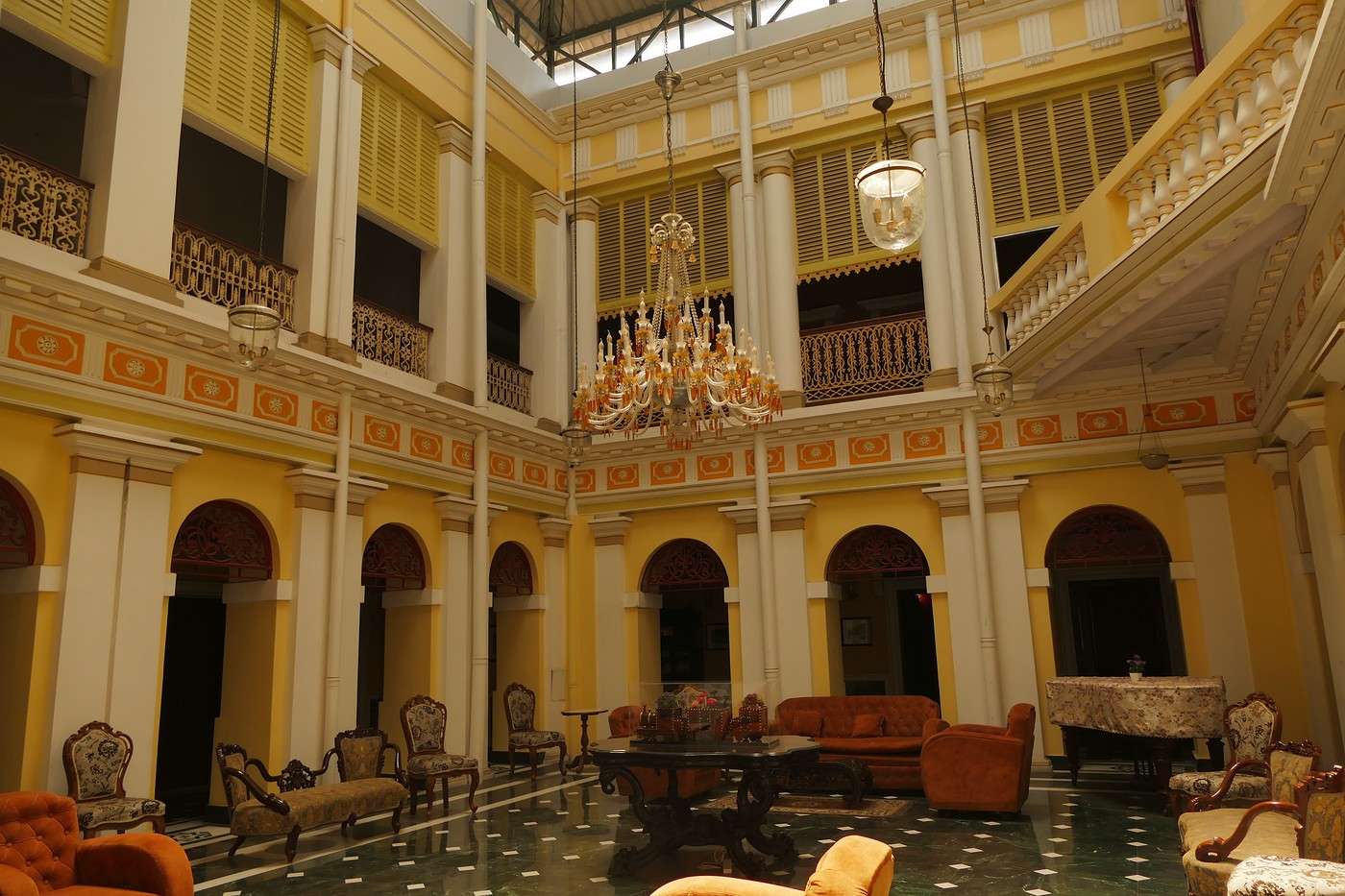
Part of this family home still belongs to the Roy family, who undertook its restoration themselves to create the Cossimbazar Palace. The white building is impressive, and the museum occupies the former residence.


The visit feels like a stroll through time: inner courtyards, ballrooms, long corridors… all the way to the temples of Durga and Chandi.

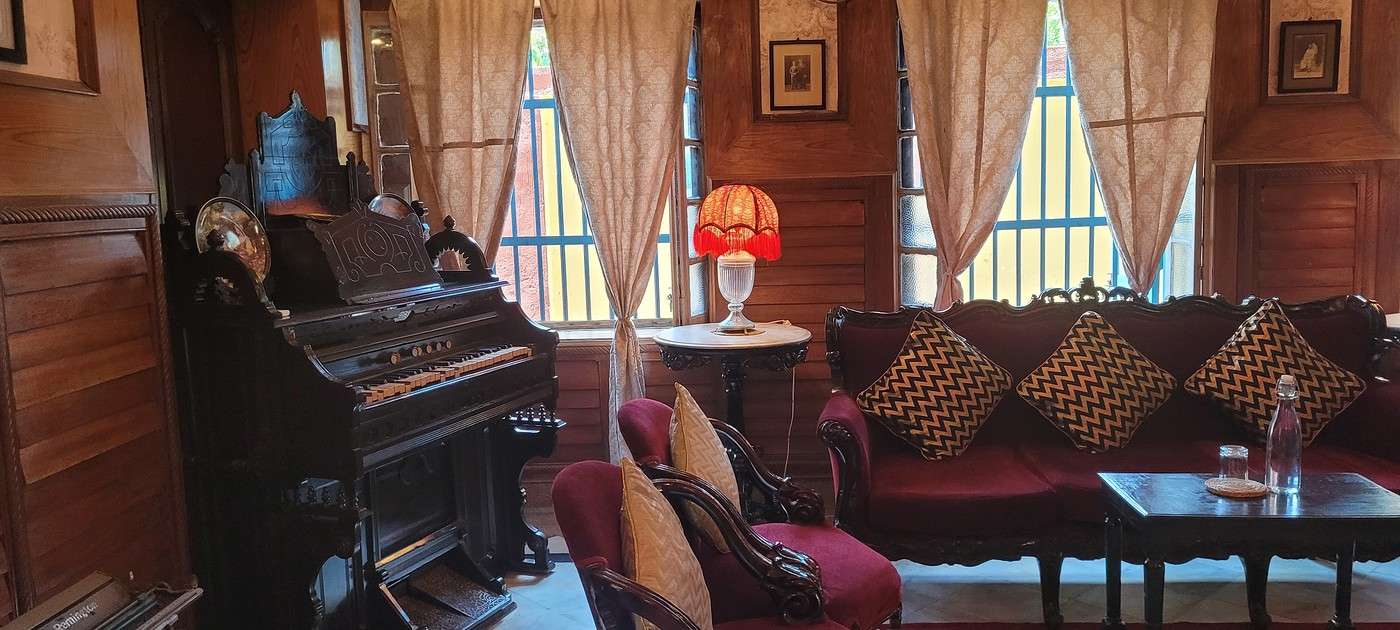
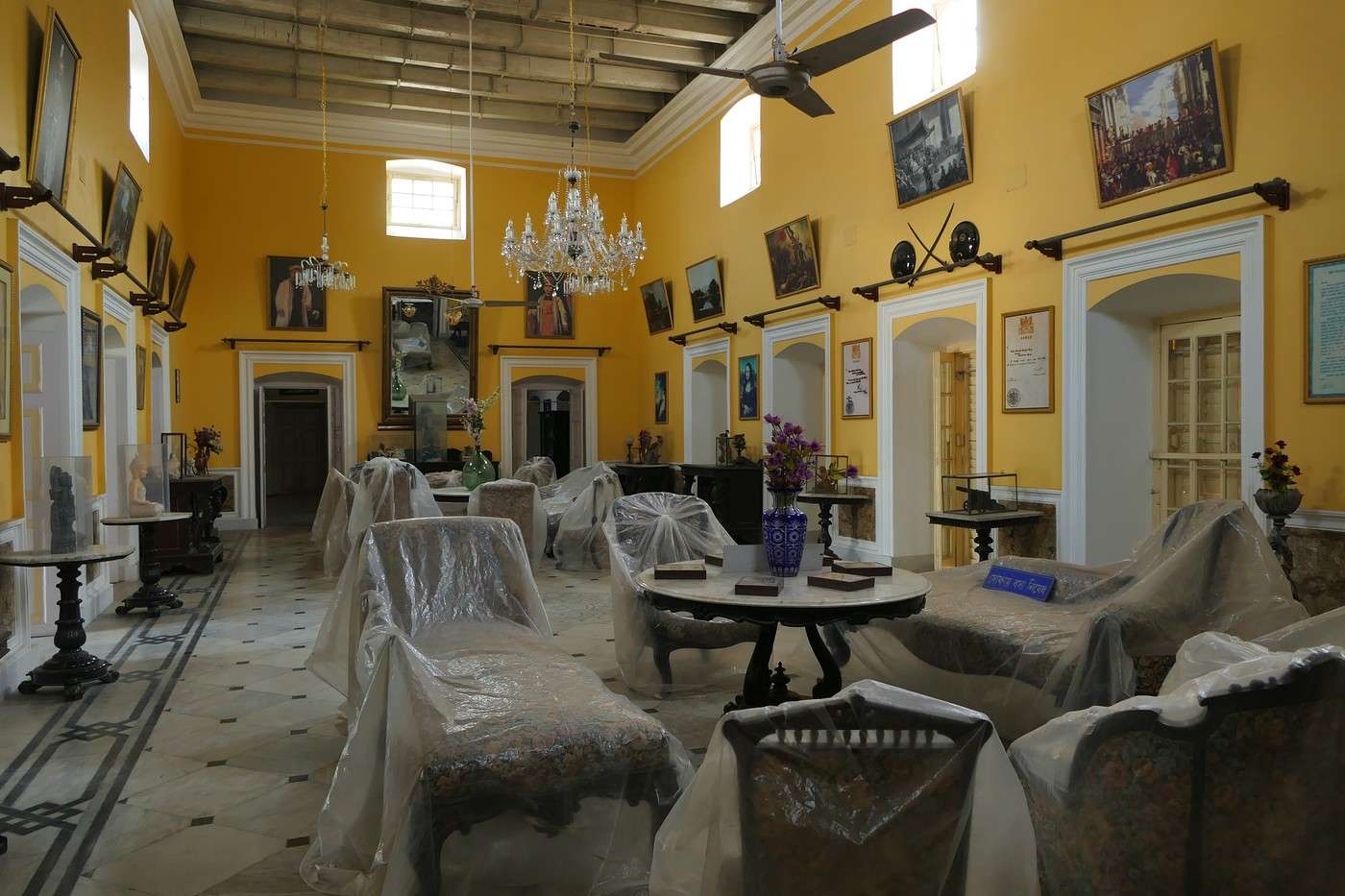
The rooms are furnished with Victorian furniture, the walls adorned with trophies, and heavy Belgian glass chandeliers hang from the ceiling. All the furniture is covered with clear plastic sheets, giving the whole place a strange, almost frozen atmosphere.


After the visit, I head to the hotel where I’m shown the inner courtyard and a room—71 € per night. Still, I’m a bit disappointed: I’d much preferred the visit the day before at the Bari Hotel, where the welcome had been much warmer. Here, since I was just passing through, I had to insist to get a quick look around.


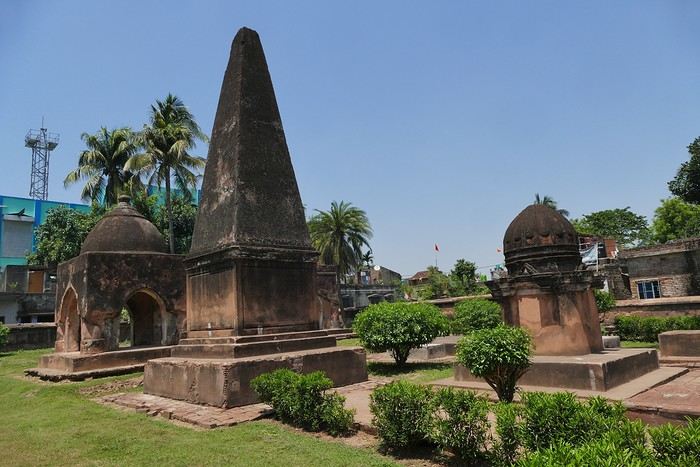
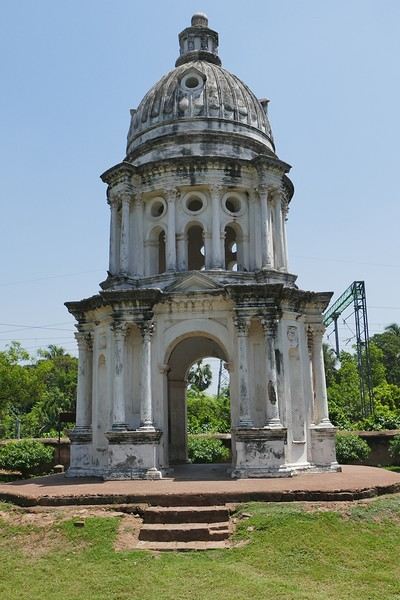
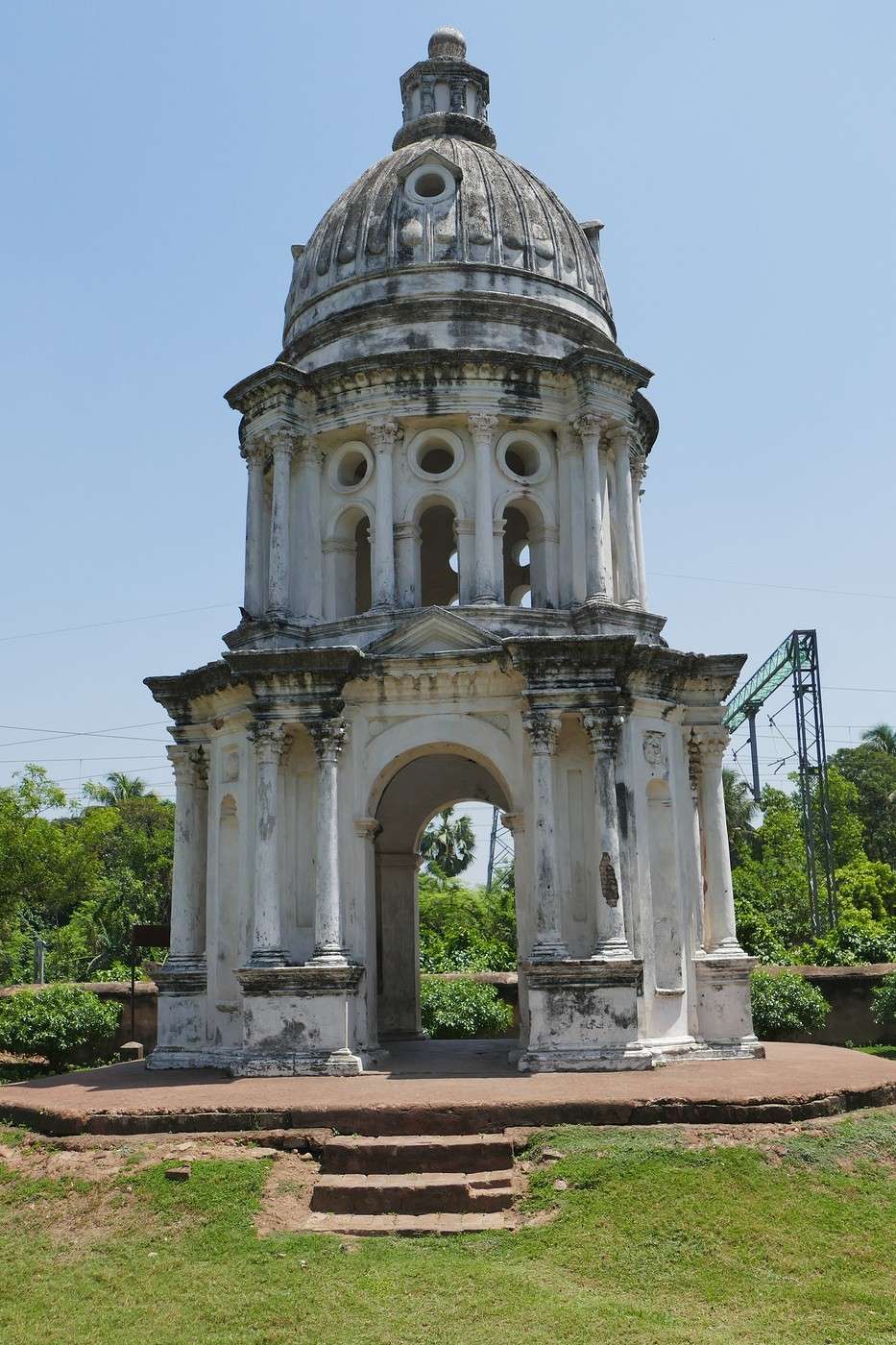
On the way back, I stop in front of a cemetery. A sign at the entrance reads: DUTCH CEMETERY. This cemetery is located on the site of the former Dutch trading post. According to François Bernier, a French physician and traveler who arrived in India in 1658 and served the Mughal prince Dara Shikoh, the site already existed in 1666 and employed between 700 and 800 men. It now houses 47 tombs, the oldest of which is that of Daniel Van Der Miyl, who died in 1721.


Villages around Hazaribagh in West Bengal

Aleph240758 · 2026-08-05

Back in Murshidabad, I set off one last time in search of the old city gates. The road here is also under repair: the asphalt is spread by hand, using simple rakes. What a job... A scene that feels almost timeless, giving me the impression of leaving a world where time flows differently.


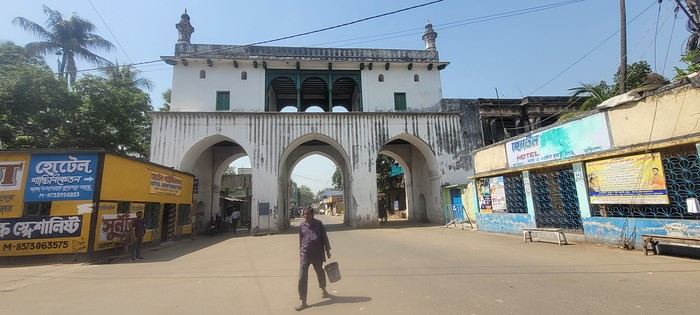
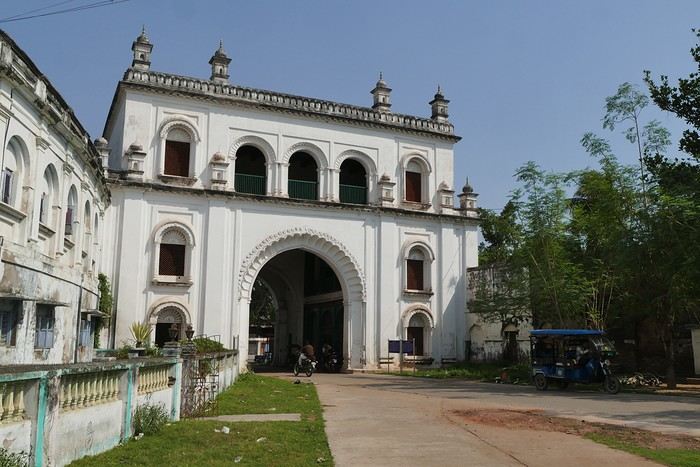
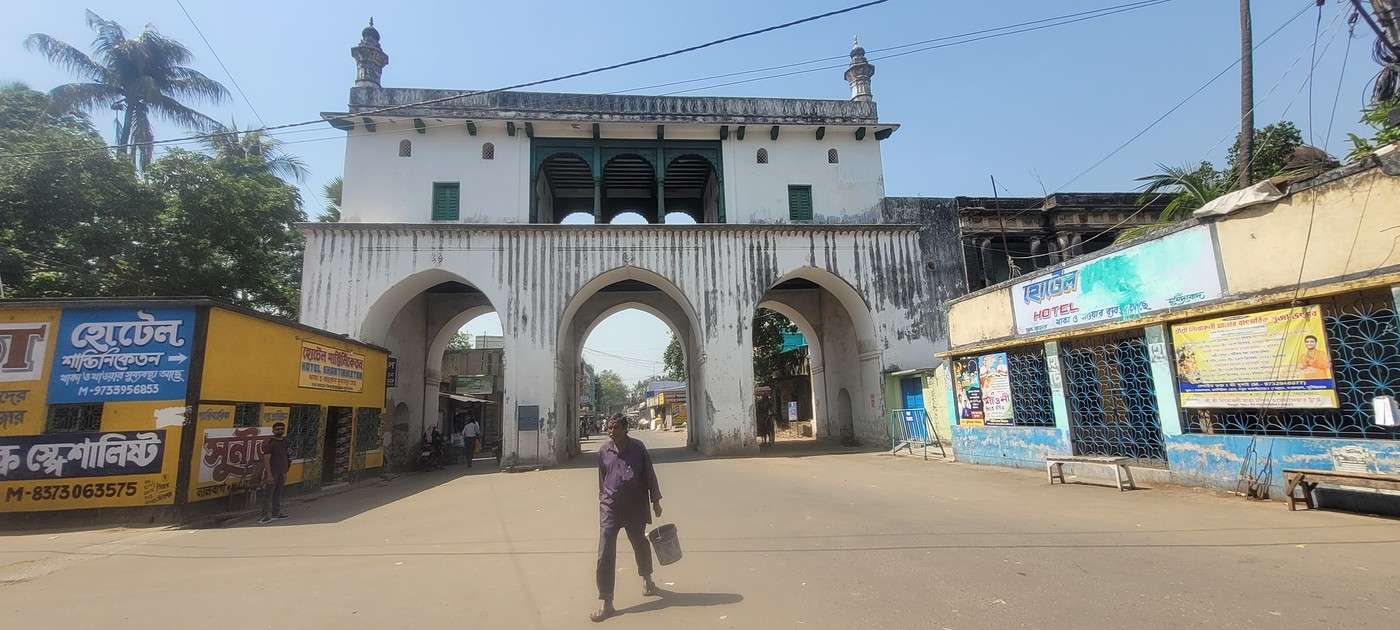
Before reaching the Tripolia Gate, I pass through the Chawk Bazaar Gate, an old fortified gate that still blends harmoniously into the urban landscape. It seems to bridge the past and present life, unobtrusive yet ever-present.


I then head toward the Tripolia Gate, formerly called Chawk Gate, a Mughal-style entrance that once led to the Kila Nizamat complex.


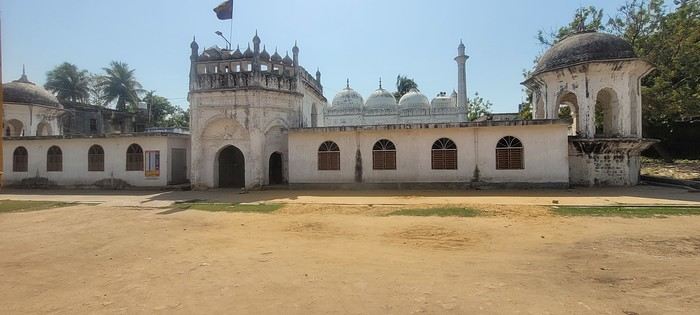
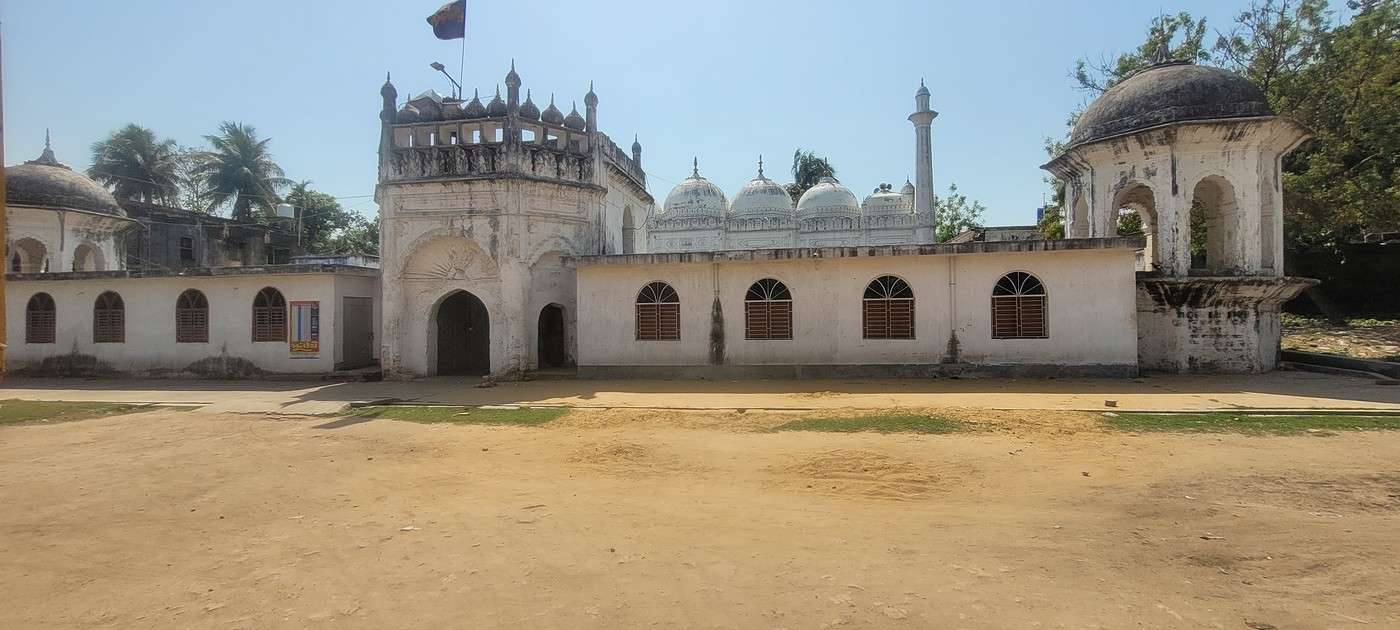
Nearby stands a large white mosque.


I pass by the Wasif Manzil again, with its beautiful European-inspired architecture. I can’t resist photographing it one last time, as if to preserve a clearer memory before leaving.


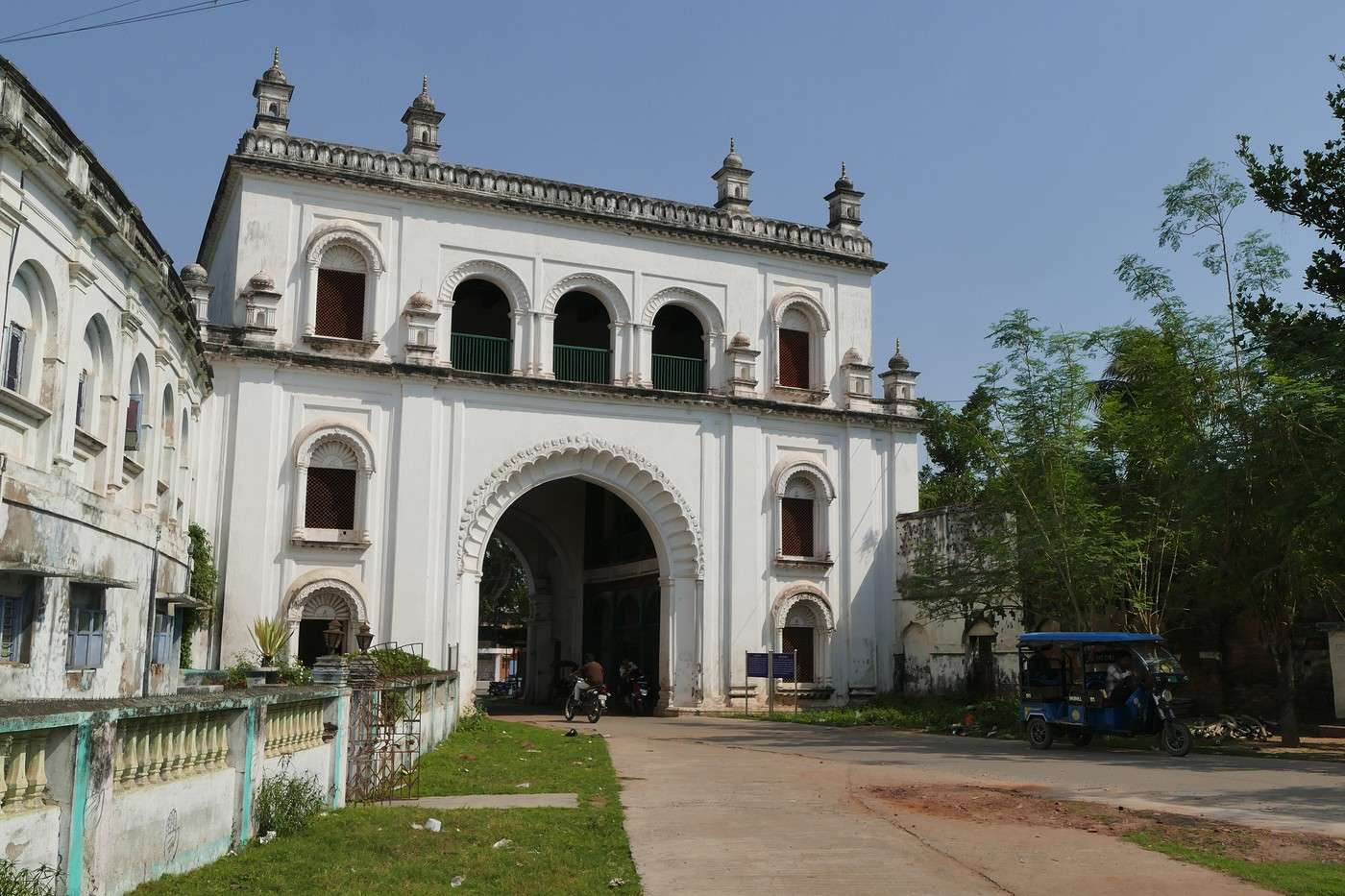
I continue to the southern gate, the Dakshin Darwaza, an imposing two-story brick structure. Up there, in the past, musicians in the Nahabat Khana would announce the arrival of visitors and troops. Today, the place seems silent, almost frozen, as if the echo of that music had faded with time.


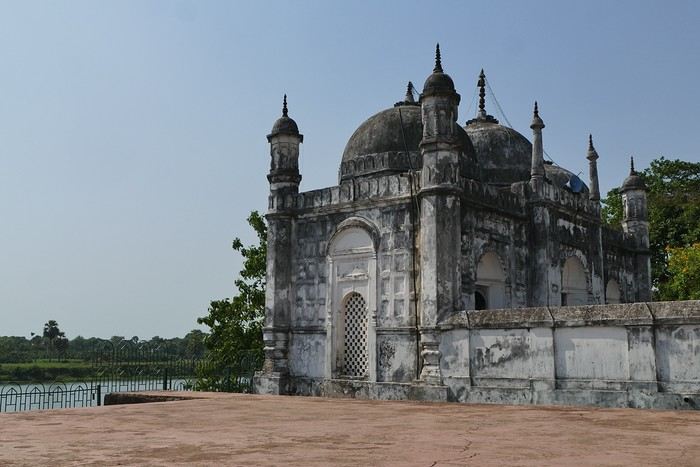
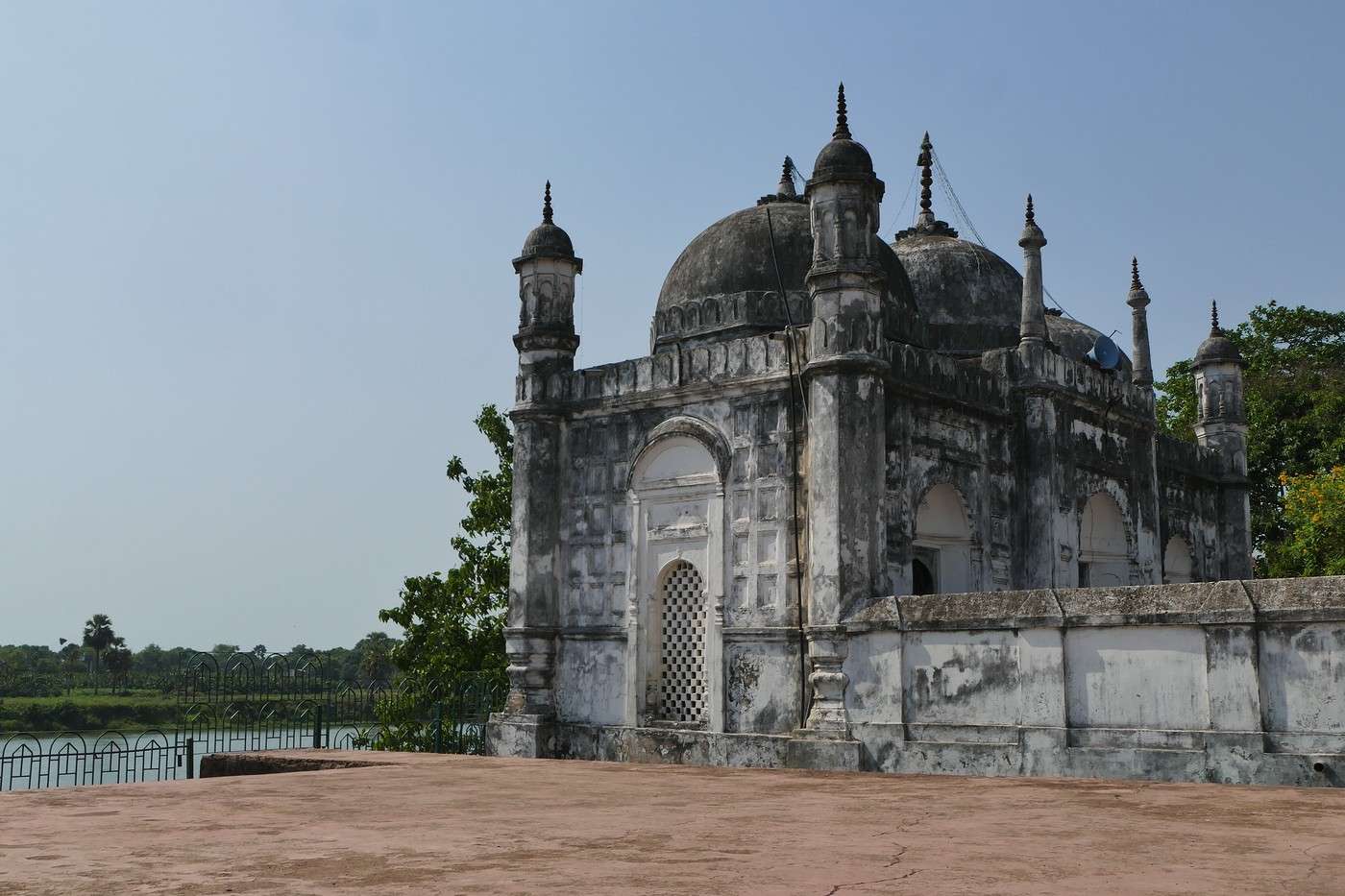
Nearby, by the riverside, a small white mosque, quite dilapidated, stands discreetly.


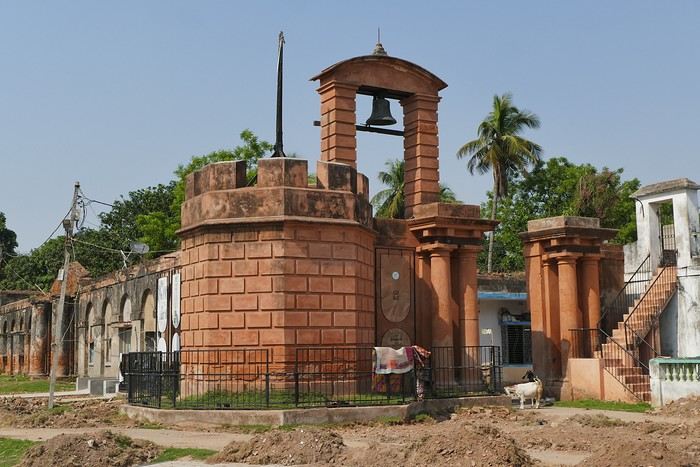
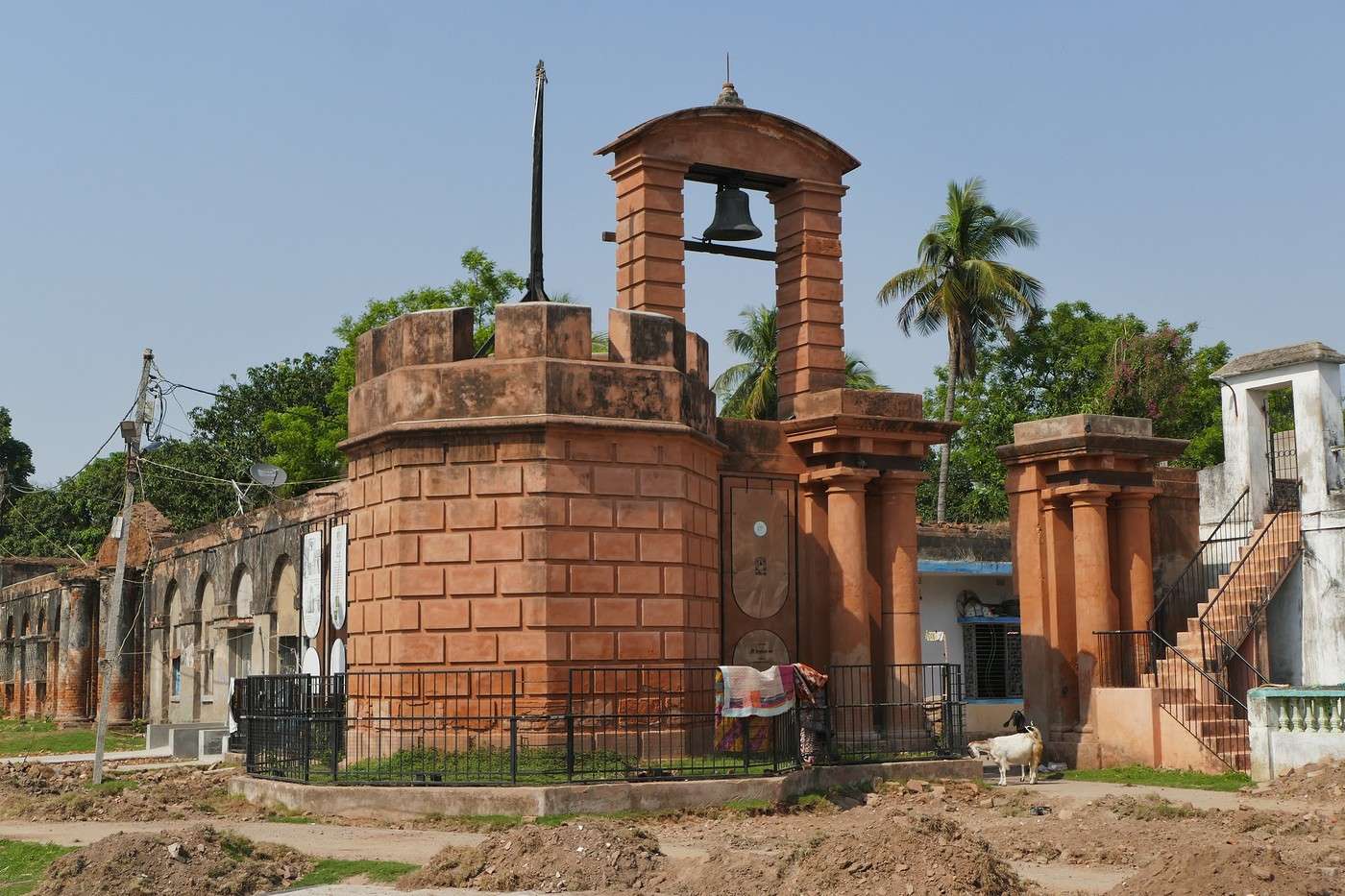
Across from it, the Ghanta Ghar of Kila Nizamat, an old clock tower, also evokes a bygone era when life was marked by the chime of the hours.


Everything seems to bear the mark of the past, as if Murshidabad were gently closing behind me. On my way back, I make one last detour through Motijheel Park, near the hotel. The shaded paths form a horseshoe around the lake, children play, and a few families stroll. I walk slowly, soaking in this peaceful atmosphere, aware that these are my final moments here. The day gently comes to an end, and with it, my stay in Murshidabad.

Villages around Hazaribagh in West Bengal

Deuxhavrais · 2026-08-05

What a joy to follow this trip off the beaten track, discovering this timeless India. We’ve traveled to India several times in recent years, but rarely like this. I’ll be eagerly following your travel journal. Didier

Villages around Hazaribagh in West Bengal

Gaura · 2026-08-05

I don’t have time to comment, but I’m following this travel journal just like the previous ones with great pleasure. It’s fascinating—I also admire the research effort that went into preparing such an off-the-beaten-path trip, as well as the narrator’s curious and kind-hearted mindset. 🙂

Villages around Hazaribagh in West Bengal

Aleph240758 · 2026-08-05

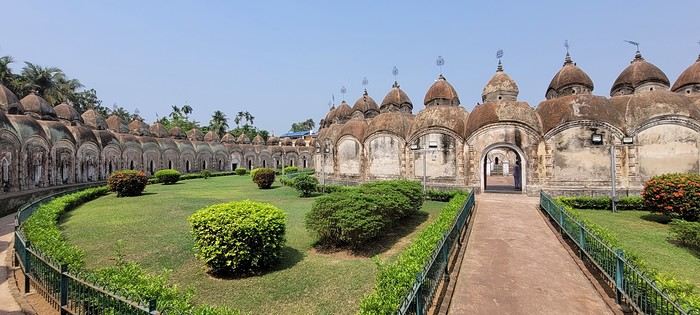
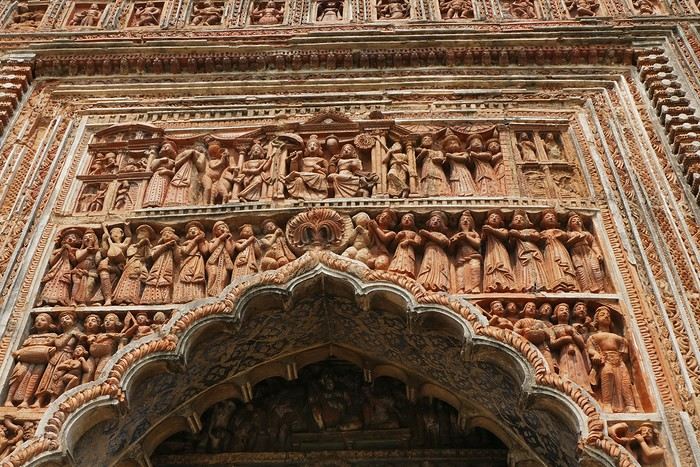
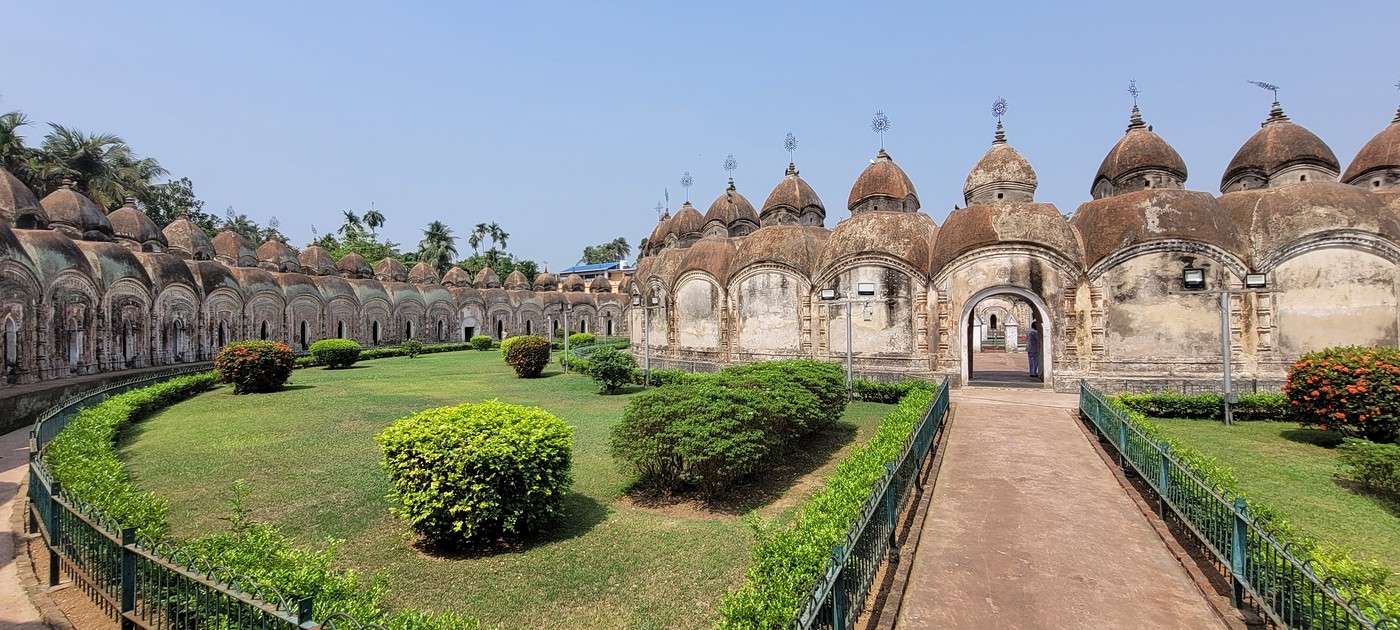
Sunday, April 12 and Monday, April 13Ambica Kalna, the temple town of Bengal I leave this hotel where I had a great stay. As soon as the restaurant opens, I have breakfast and then take an auto-rickshaw to Baharampur. From there, I catch a bus to Kalna. Upon arrival, near the bus parking, I spot a guesthouse. Since I hadn’t booked anything, I decide to stop there. The receptionist isn’t very friendly, the place is noisy, and not very inviting. Across the road is the hotel where I stayed ten years ago. They’ve since opened a restaurant there. I negotiate the room price; it’s very basic, but options are limited here, so I’ll make do. Once settled, I head out to stretch my legs in the neighborhood. Revisiting this town after so many years already brings back some memories. The next morning, after breakfast, I set off on foot to explore the temples located about three kilometers from the hotel. The walk lets me stroll through the town, observe daily life, and reach one of Bengal’s most beautiful religious sites at my own pace. The Nava Kailash Temples The Nava Kailash temples are exceptional. They consist of a circle of 108 shrines dedicated to Shiva, built in 1809. Their decorative panels depict scenes from the Ramayana and the Mahabharata, true stories carved in terracotta. The complex is organized into two concentric circles: 34 temples on the inside and 74 on the outside. Their architecture is intentionally simple, but each shrine houses a Shiva lingam, black or white, arranged alternately in a symbolic pattern.


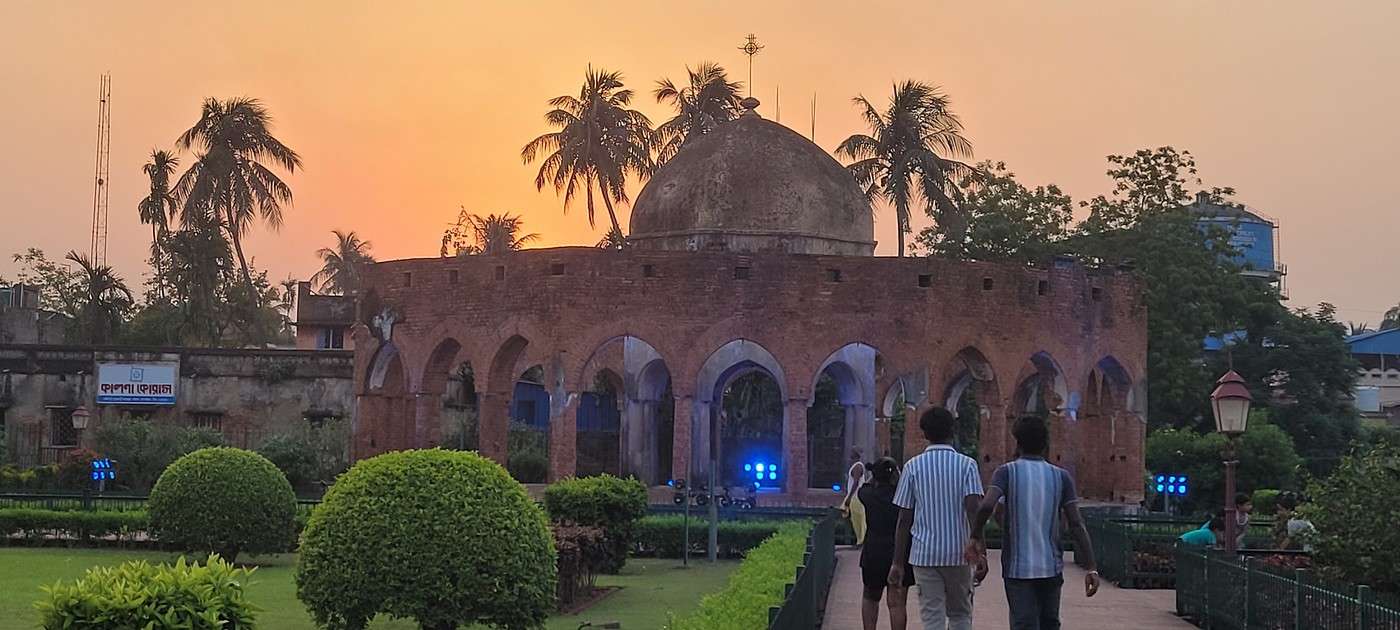
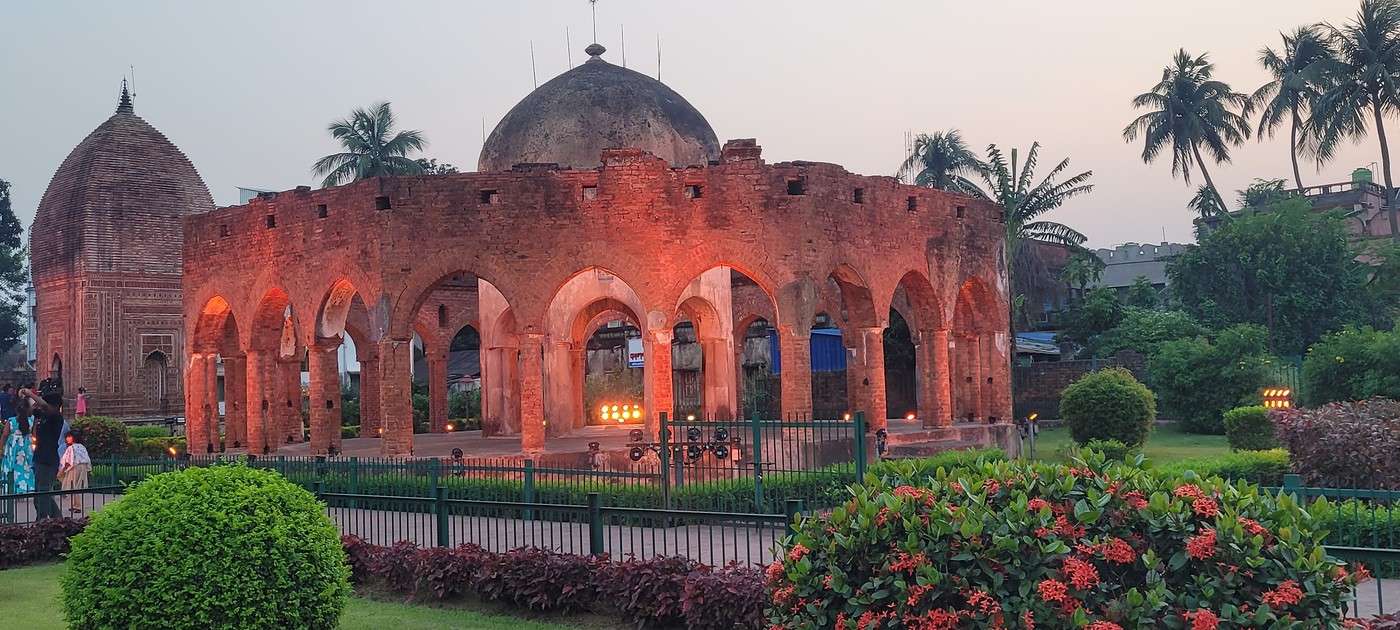
The number 108 holds sacred significance in several religions, including Hinduism, Buddhism, and Jainism. It represents deep spiritual symbolism: the 1 stands for unity; the 0 evokes emptiness, the stilling of thought, a pure and perfectly clear mind; the 8 symbolizes infinity. Thus, 108 represents the culmination of the spiritual journey: ecstasy, liberation, enlightenment, like the end of an inner voyage. The Rajbari Complex of Kalna Facing the 108 Shiv Mandir is the Rajbari complex of Kalna. As I cross the entrance, I’m once again amazed to discover this beautiful ensemble of temples surrounded by a well-maintained garden.


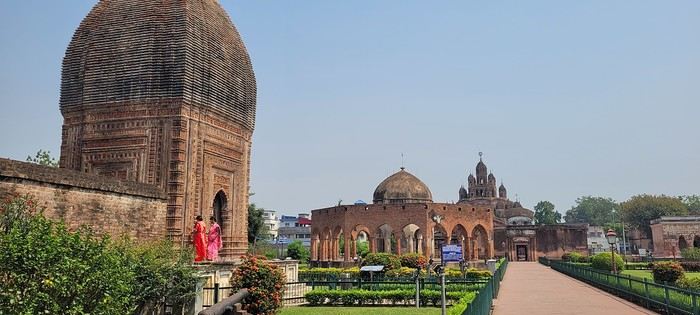
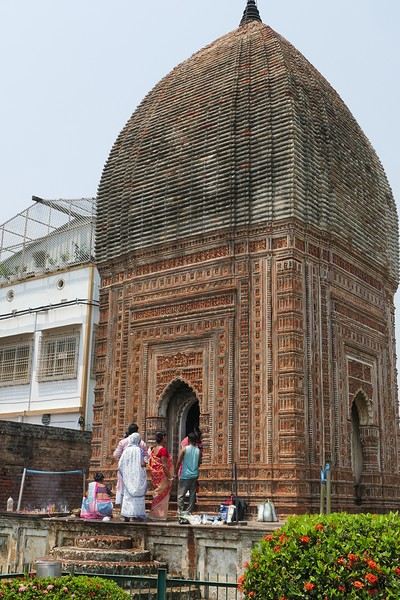
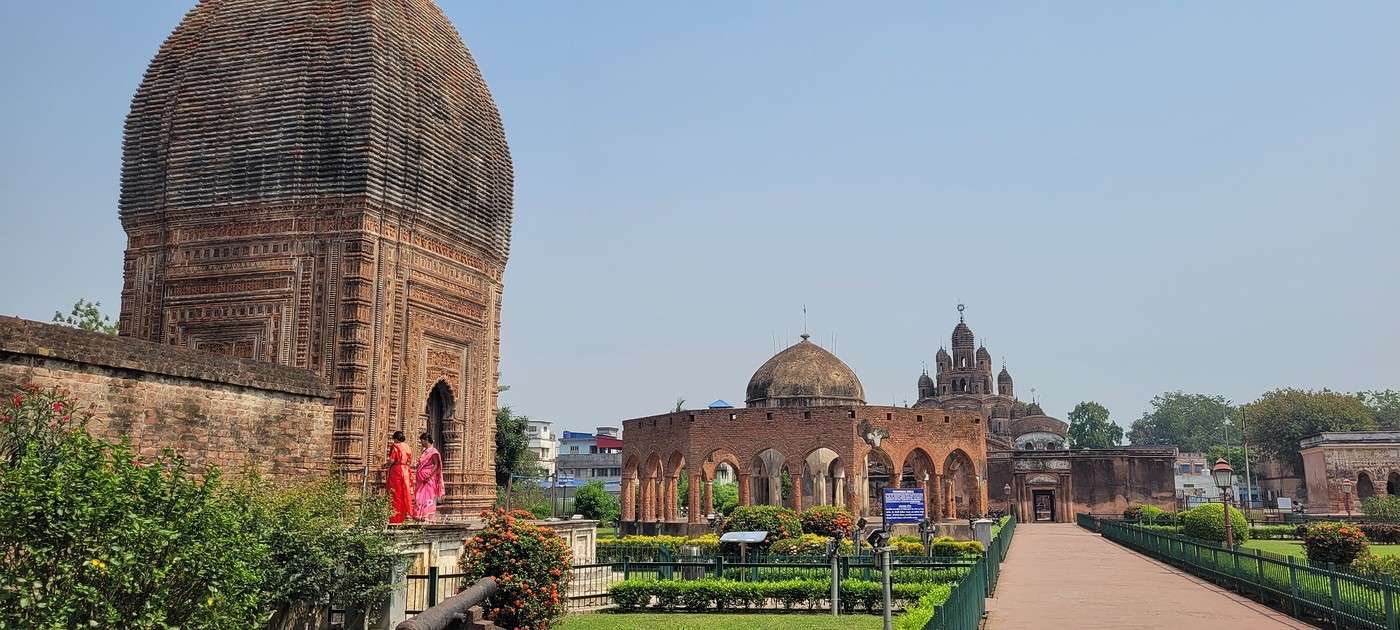
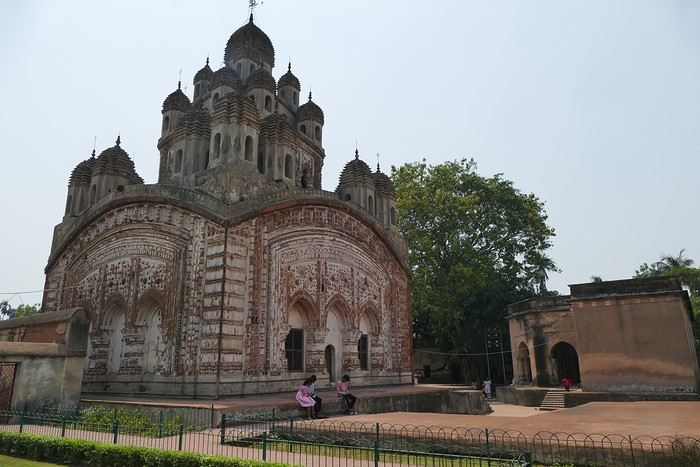
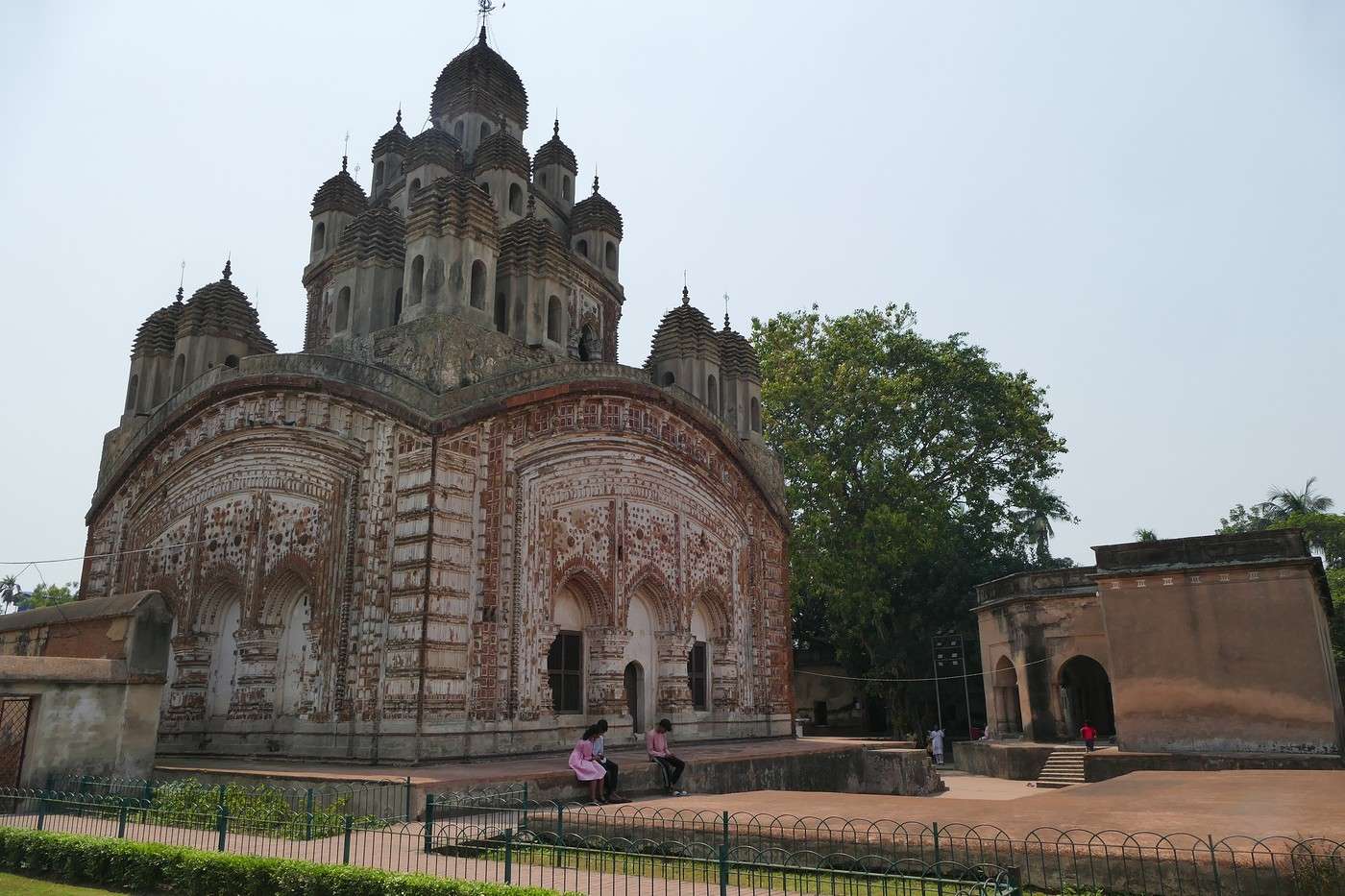
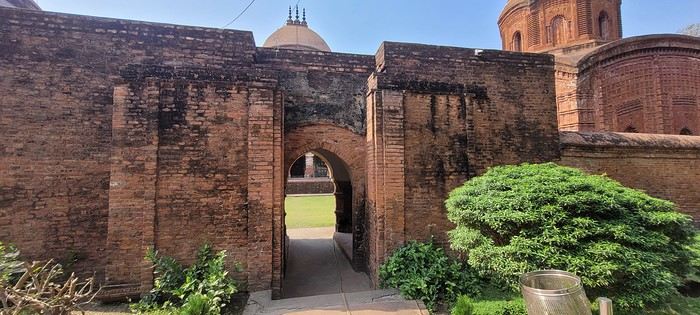
This is my second time here, but the emotion is the same as ten years ago. The place is still just as magnificent, peaceful, and harmonious. The first temple on the left is the Pratapeshwar.


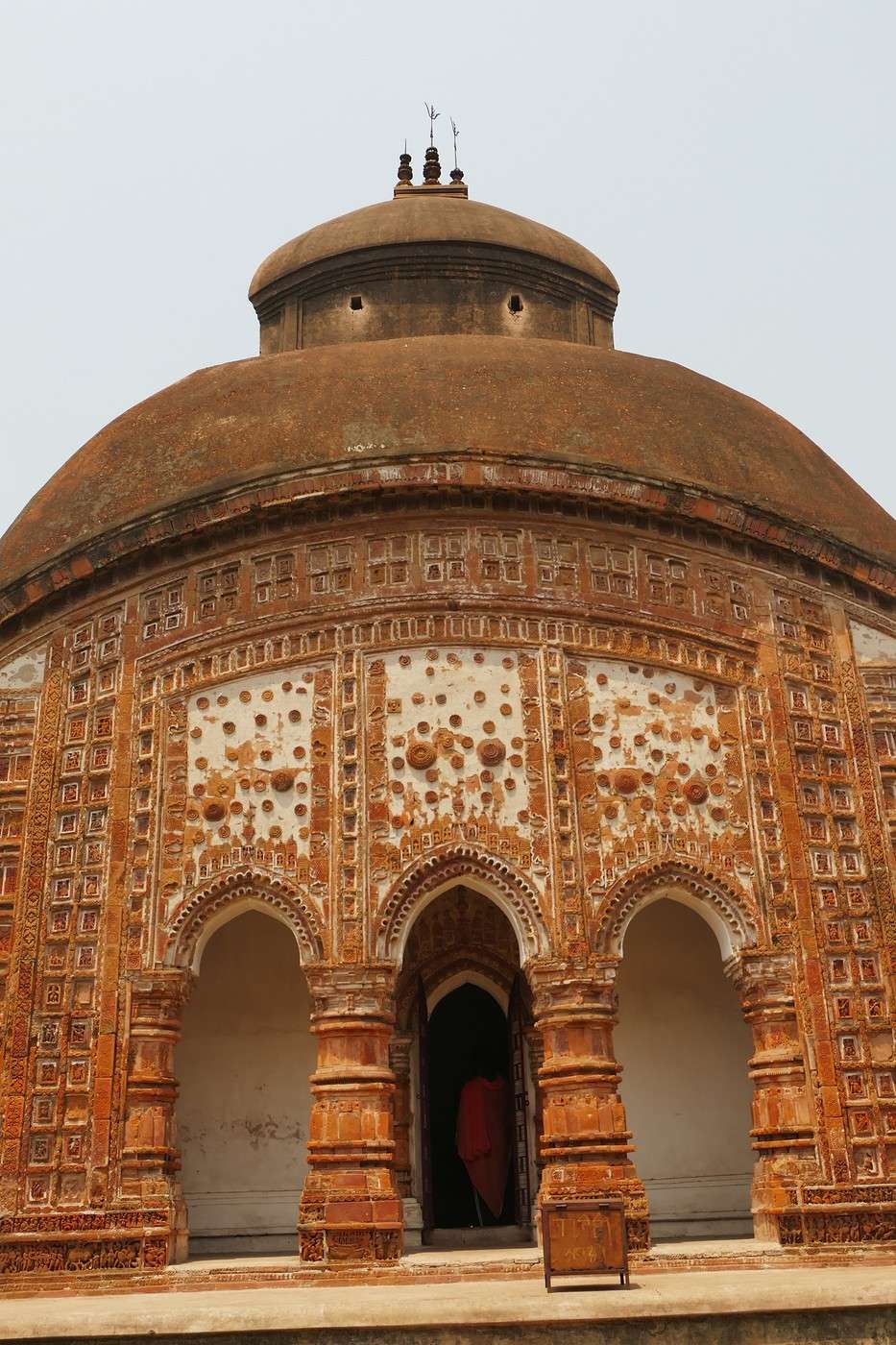
It features sculptures on all four sides and false doors on three sides, richly decorated.


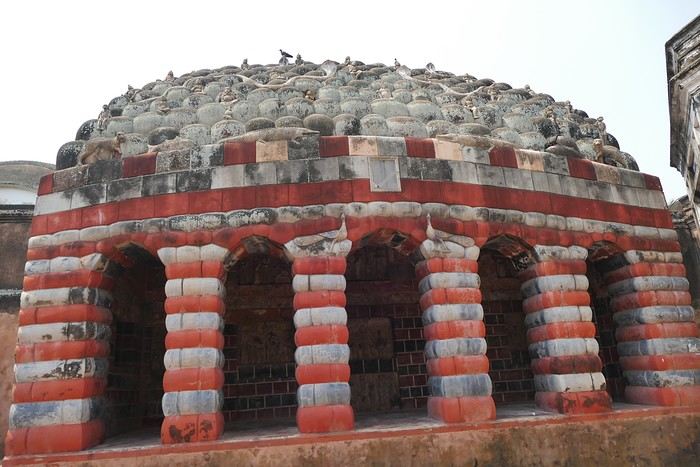
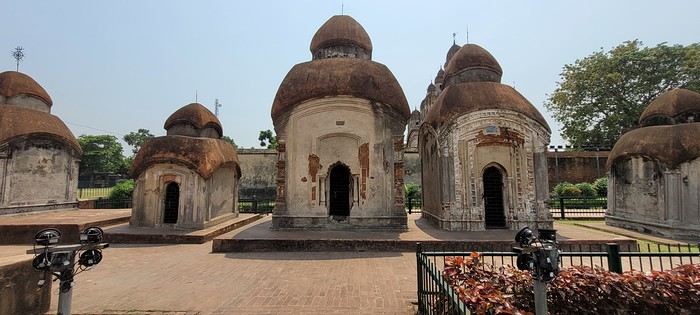
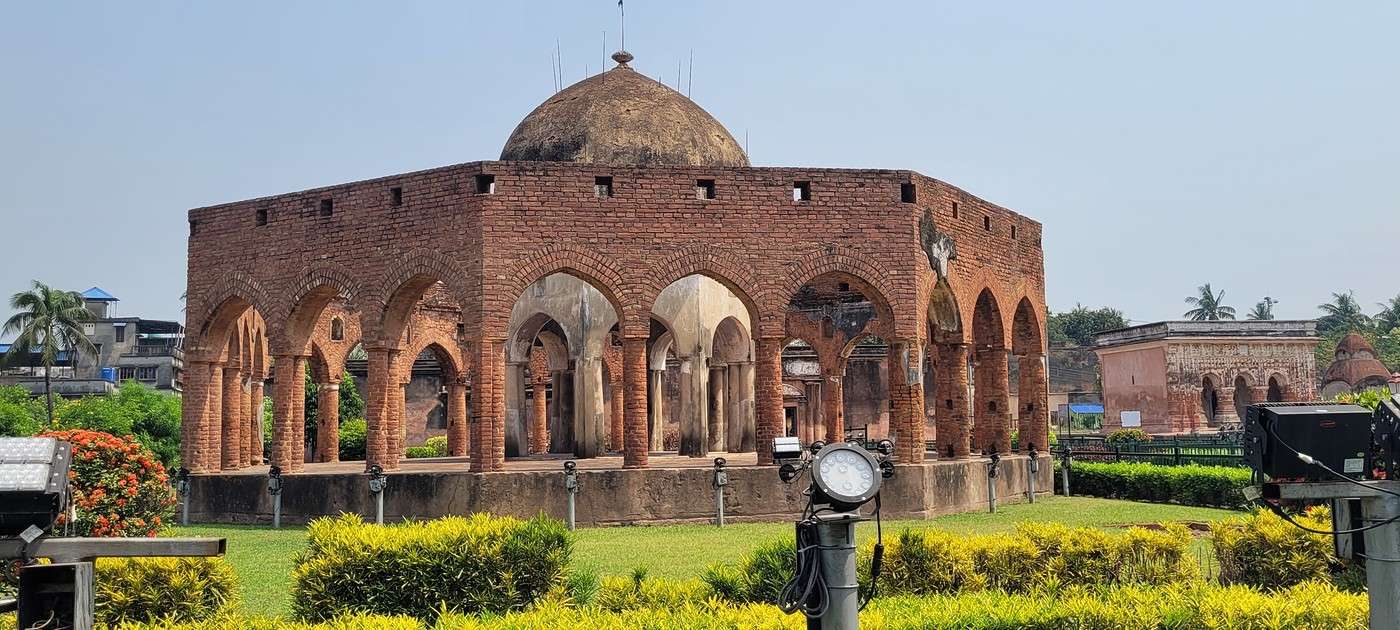
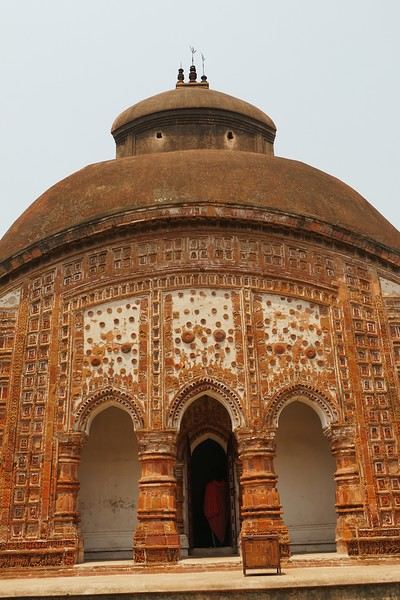
A few steps away is the Rasmancha, circular in shape, with its many openings. Its roof is now gone, revealing an elegant structure open to the sky.


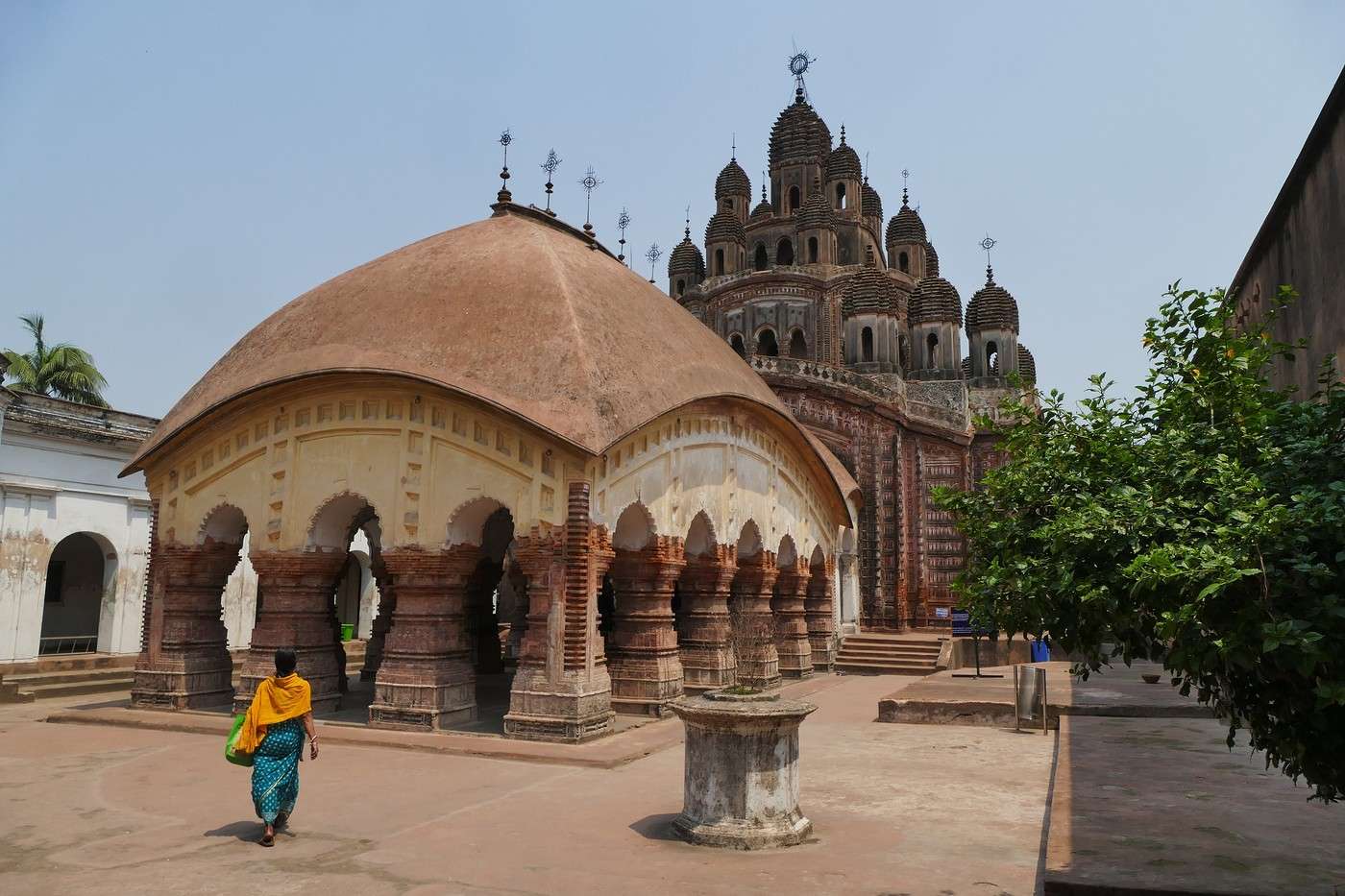
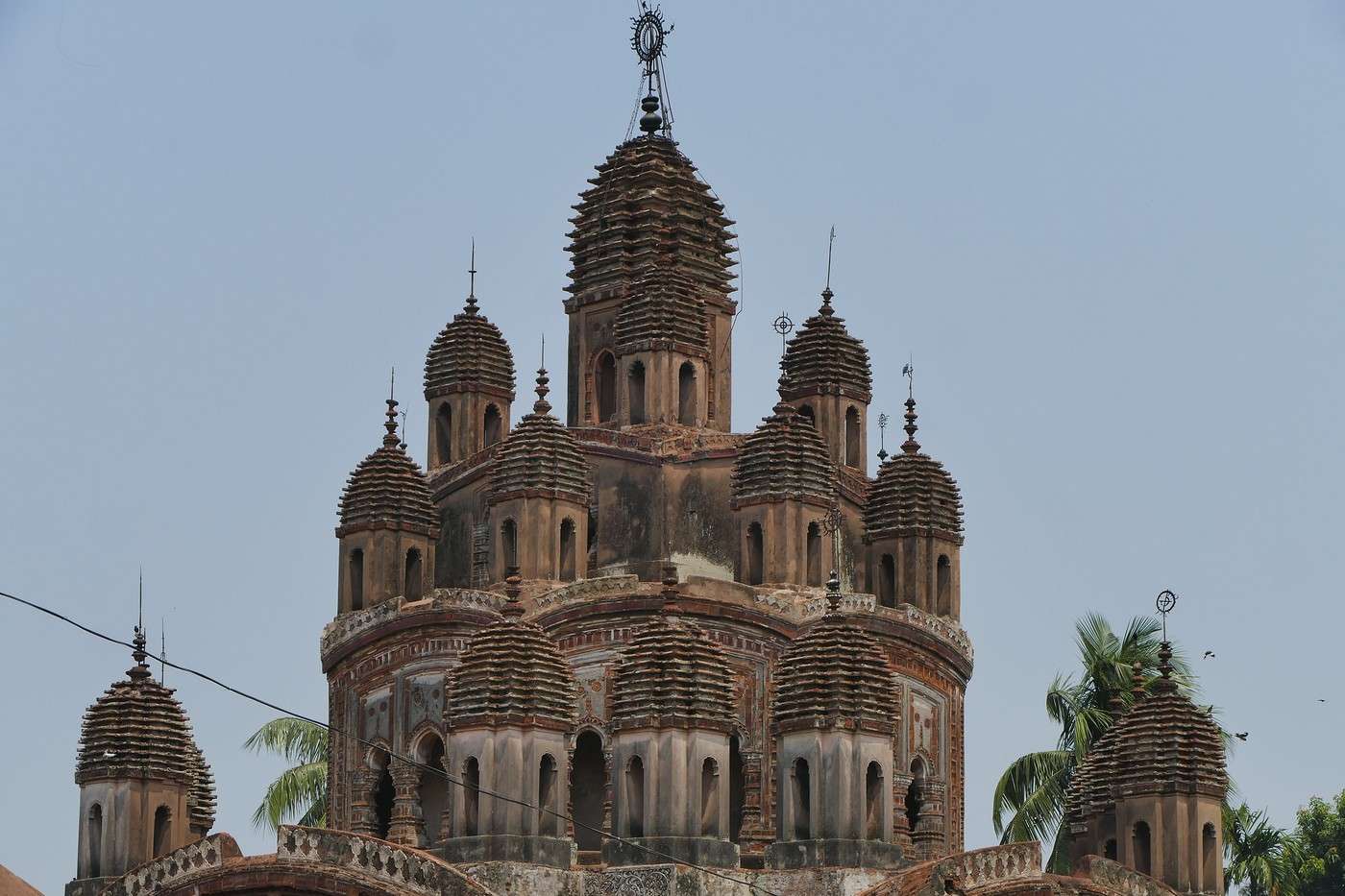
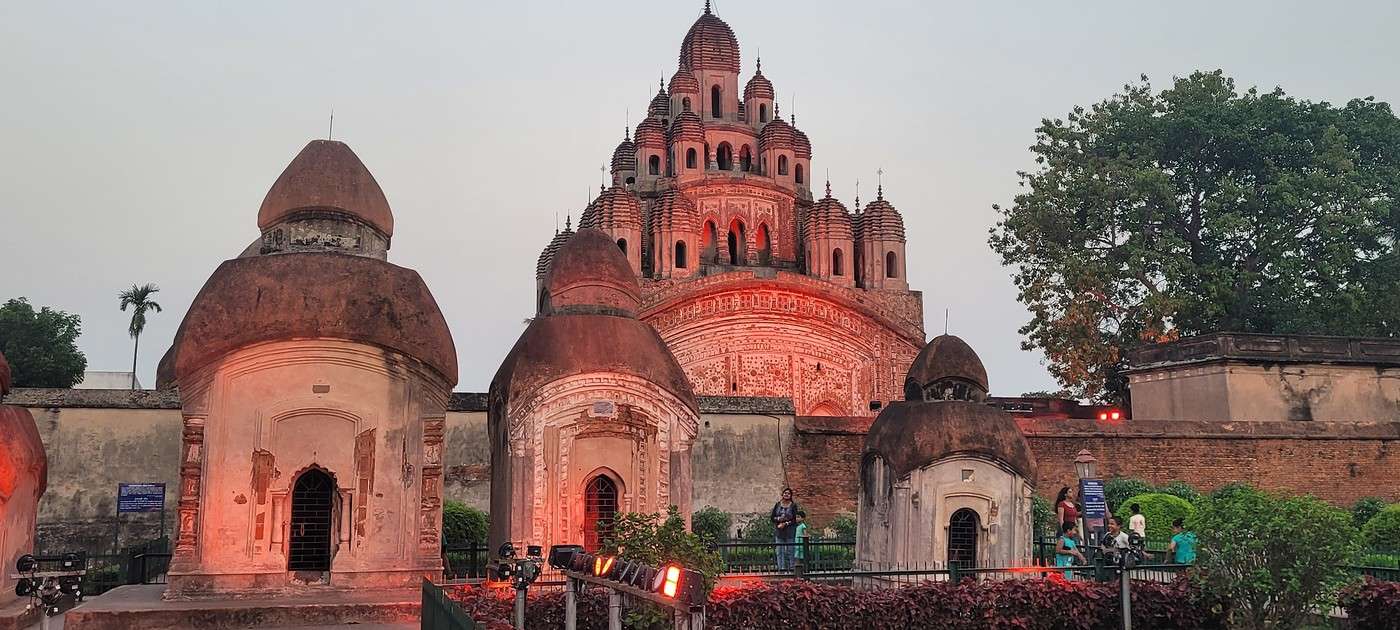
Next, you pass through a gate to reach the Lalji Temple, the oldest in the complex. It has 25 pinnacles spread across three levels. Its second floor, octagonal in shape, features a pinnacle at each of its eight corners.


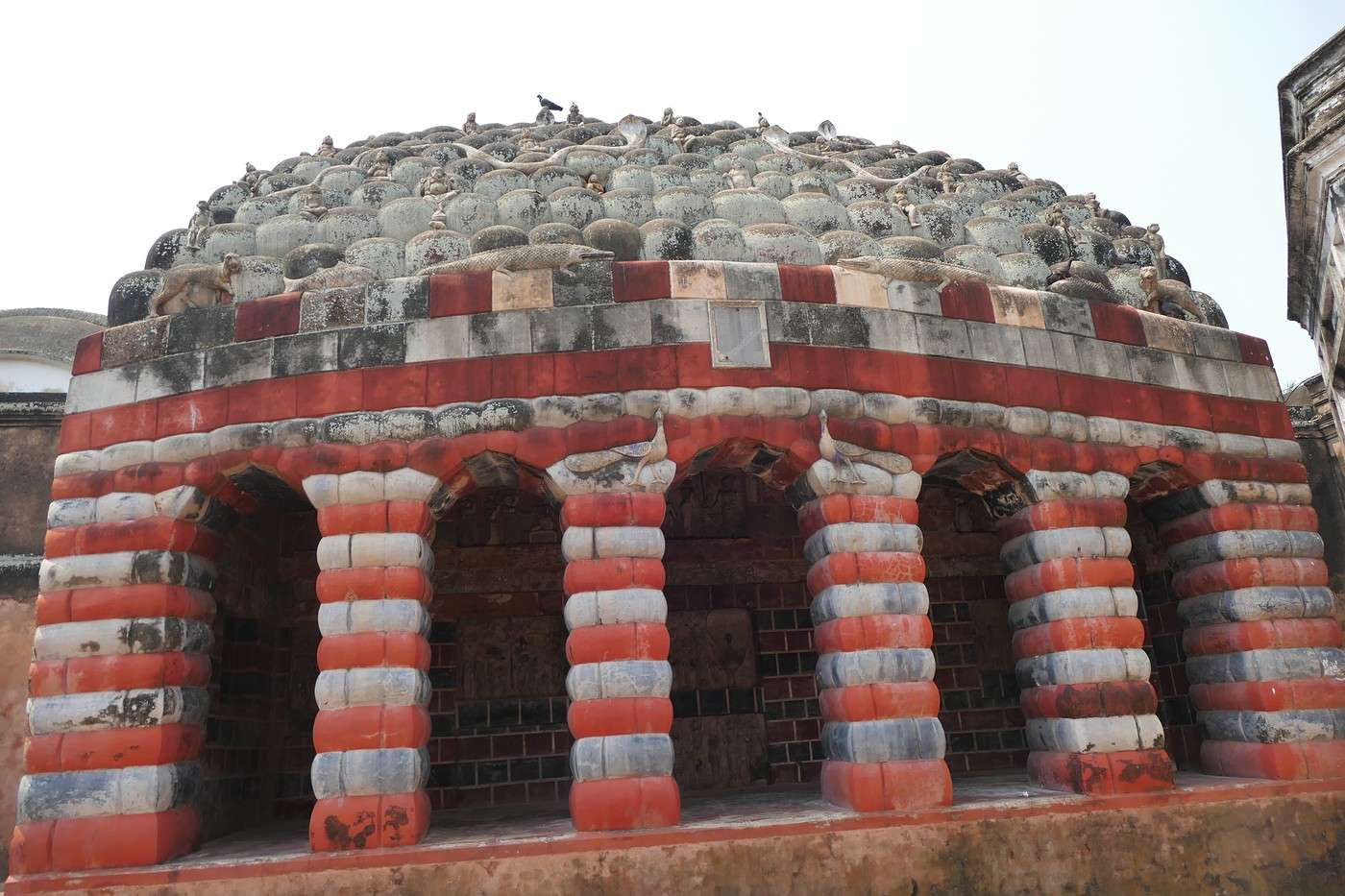
A little further on, the Giri Gobardhan Temple catches the eye with its sculptures of animals and human figures on its roof. It has four sloping roofs and once served as a gathering place for devotees.


Passing back through the gate on the right, I discover a flat-roofed temple


as well as the Pancharatna, a group of five small temples of varying sizes.


Villages around Hazaribagh in West Bengal

Aleph240758 · 2026-08-05

(continued)

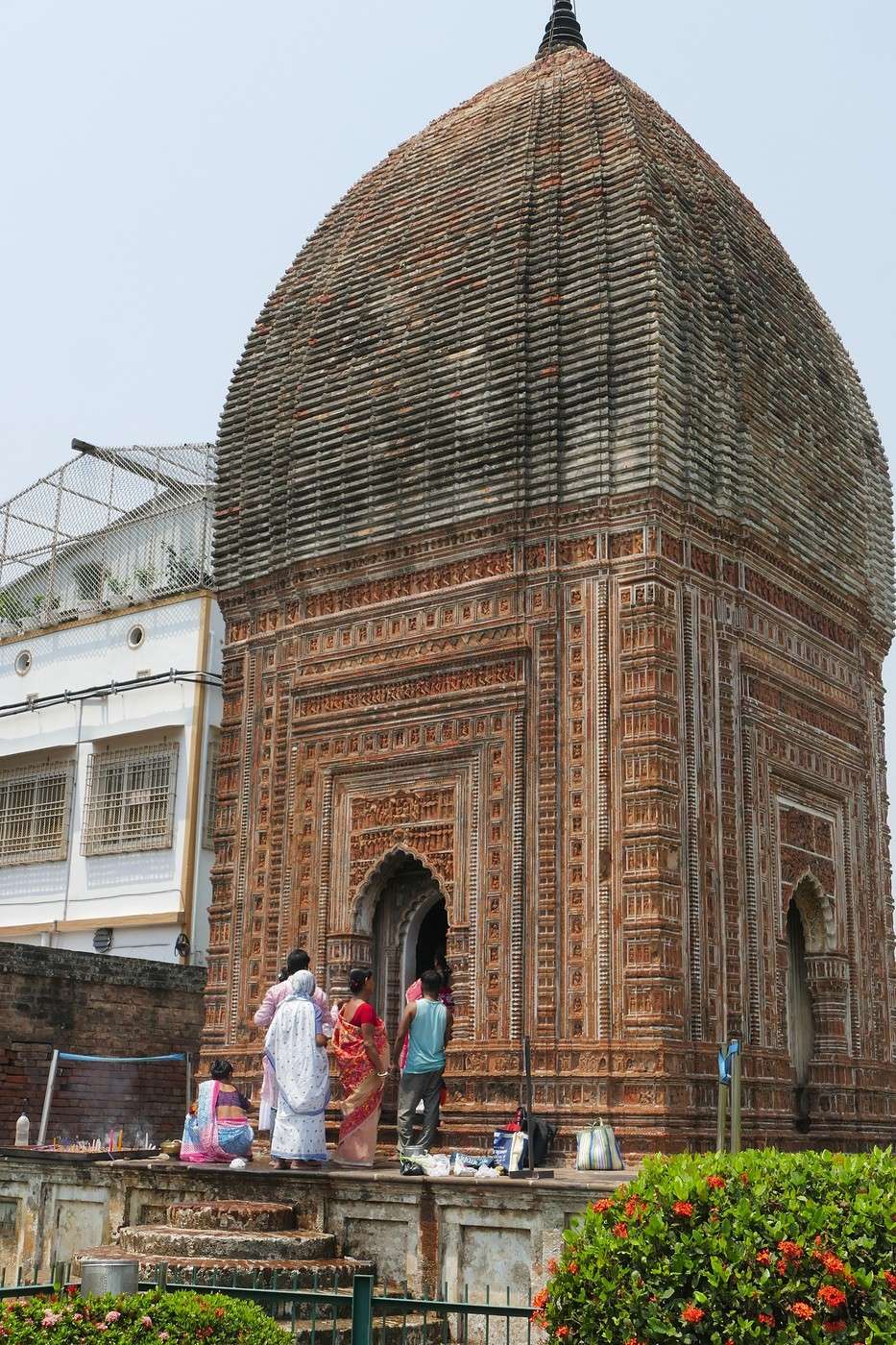
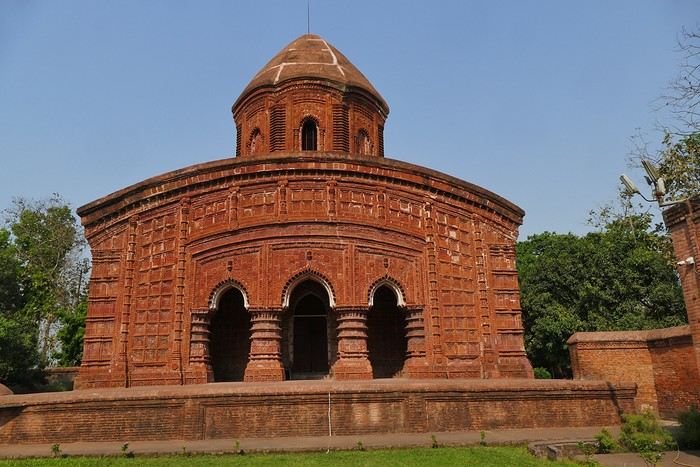
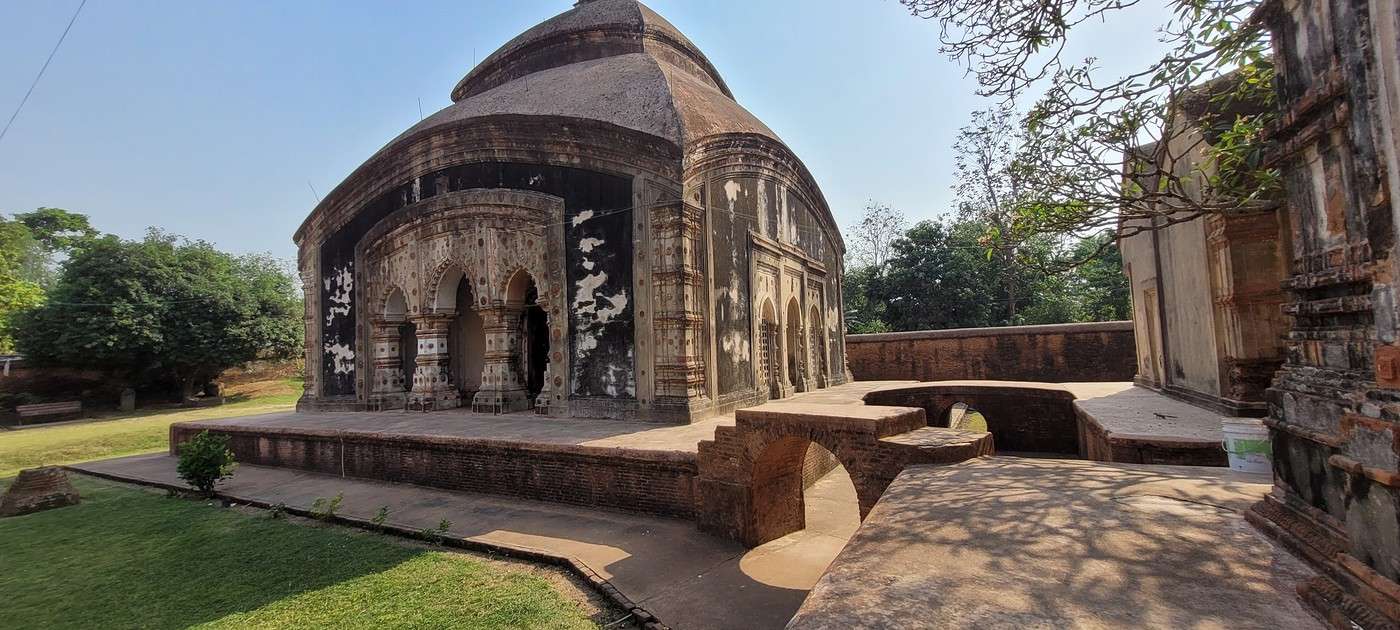
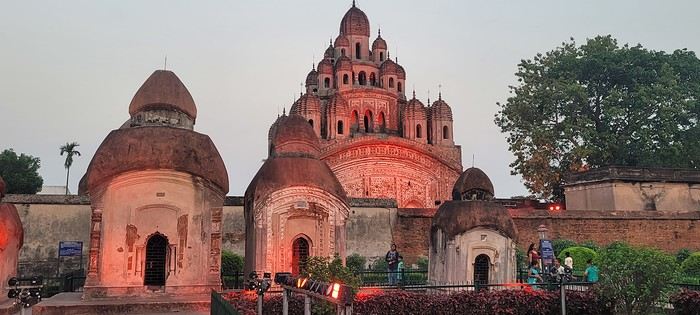
The path then winds around these buildings and leads to the majestic Krishnachandra temple. Its rich decorations, 25 spires, and three-arched entrances on each side make it one of the complex’s jewels. The main façade, particularly elaborate, reflects the refinement of the era.


Behind this temple stands a more discreet building, the Vijaya Vidyanath, whose façade is also adorned with beautiful decorations.


Outside the complex, other temples still exist, but I don’t linger there. After so many discoveries, I’d rather extend this moment in this peaceful garden where history still seems present.

Villages around Hazaribagh in West Bengal

Aleph240758 · 2026-08-05

(continued)

A day between Santipur and Guptipara After leaving the complex, I now need to find an auto to continue my explorations. Several drivers are waiting for customers, but none want to take me. So, I head toward the Nrisinghapur Ferry Ghat dock, and soon enough, an auto finally stops and agrees to drive me there.


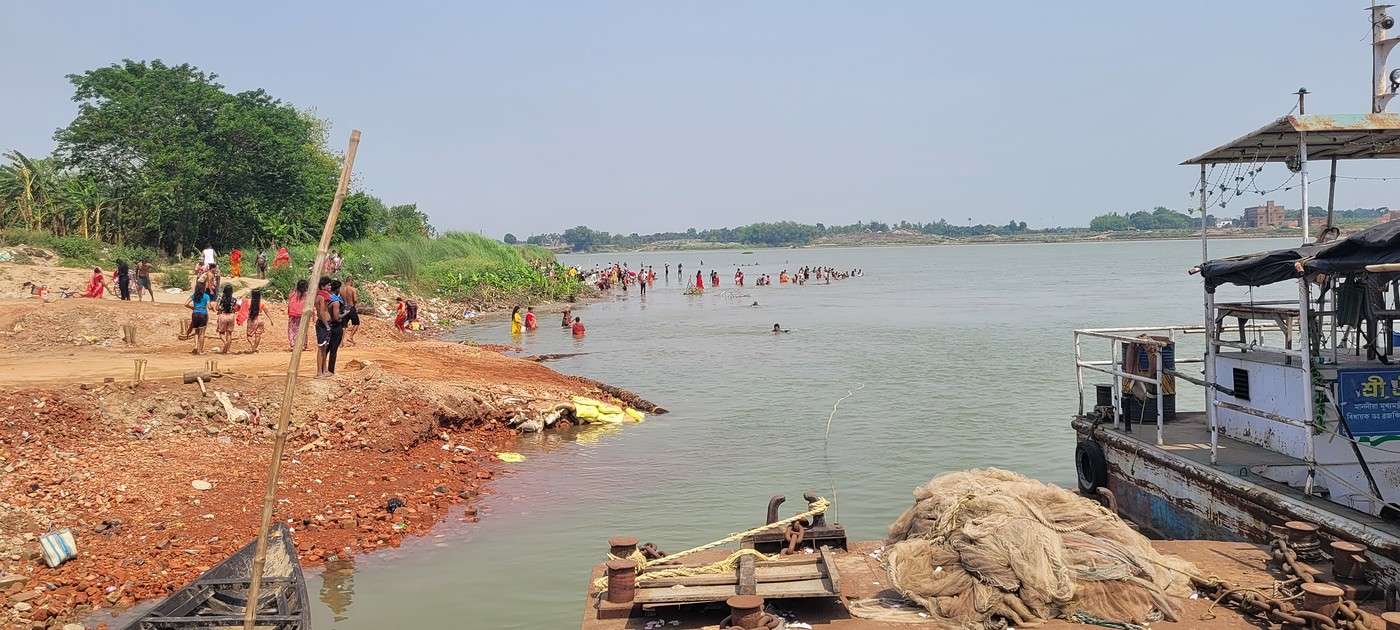
The river crossing is quick. These small ferries, numerous and regular, make it easy to reach the other bank and are part of the locals' daily life. From there, I take another auto to Santipur, a town famous for its sari market. The driver drops me off at the entrance of the town, near a market, but it’s not the one I’m looking for. I search for a long time for that famous building until a woman finally agrees to help me. She points out the place but tells me the market isn’t happening today. I’m disappointed, but you have to accept the unexpected when traveling. These little setbacks are part of the adventure too. I then take a tuk-tuk toward Guptipara. Along the way, we pass a sari shop, and I ask the driver to stop. We spend a good half-hour there, picking out two very affordable saris. The driver then drops me off at another dock. A quick crossing takes me near Guptipara. The boats are frequent and regular. A new auto is waiting for me on the other side and takes me to the Brindavan Chandra Math complex.

I’m alone visiting this place, which I had already discovered ten years ago and really loved. Seeing it again today gives me a special feeling: that of rediscovering a familiar place with a new perspective.


The complex consists of four temples. The Ramchandra Temple has magnificent sculptures on its façade, showcasing the richness of Bengal’s terracotta art.


The Brindavan Chandra Temple dominates the complex. Its exterior façade is relatively simple, but its charm lies mainly in the interior of the temple.


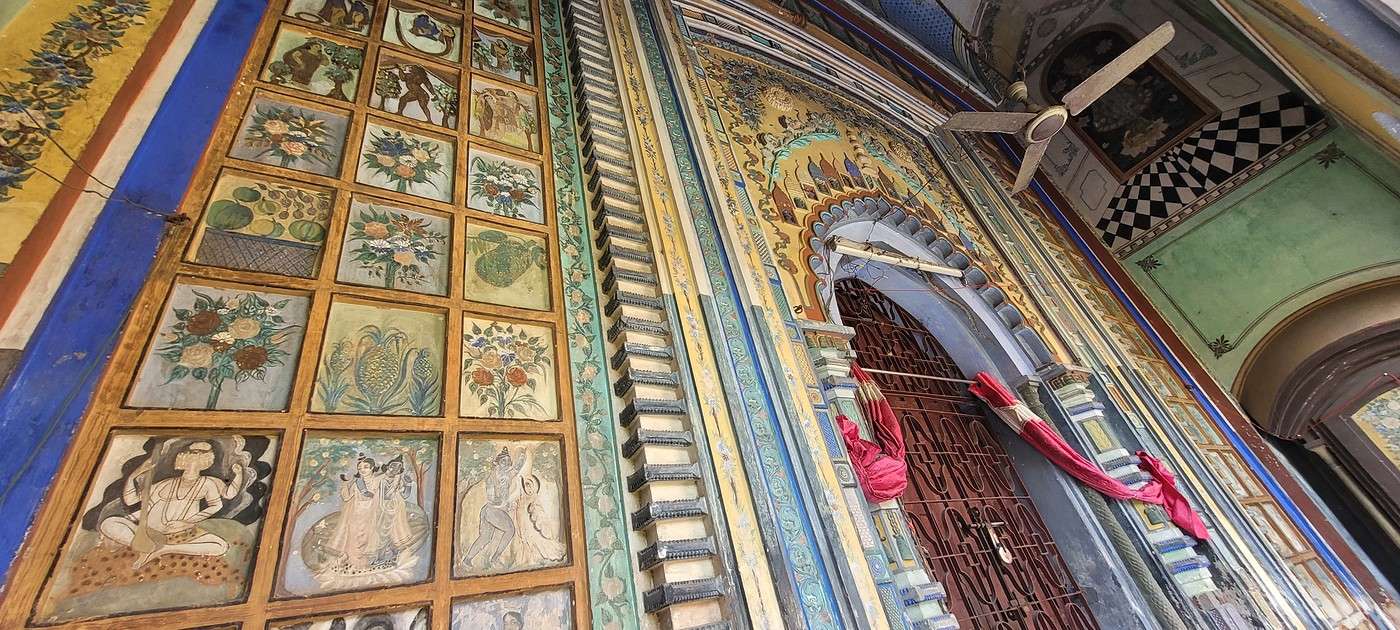
It’s always a wonder to step inside. The inner veranda and sanctuary are entirely adorned with frescoes, from the walls to the ceiling, featuring intricate floral patterns and mythological scenes.


The Chaitanya Temple is the smallest in the complex.


The Krishna Chandra Temple is decorated mainly around its three-arched entrance.


I also take the time to admire the elegant and imposing entrance gate of the complex. On the way back to the village, I pass by a large mansion surrounded by a well-kept park: the Sen Bari. The entrance gate is slightly open. I slip inside, looking for someone who might allow me to visit, but it’s a private property, and unfortunately, visits aren’t possible.


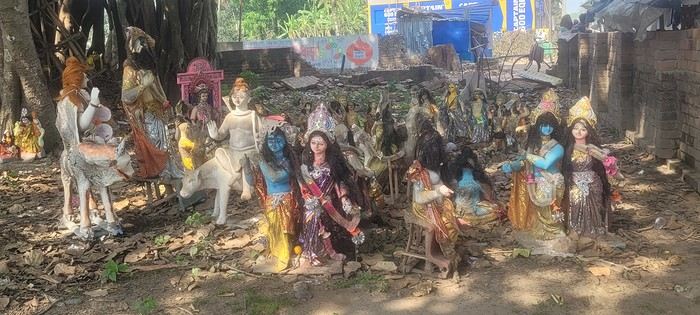
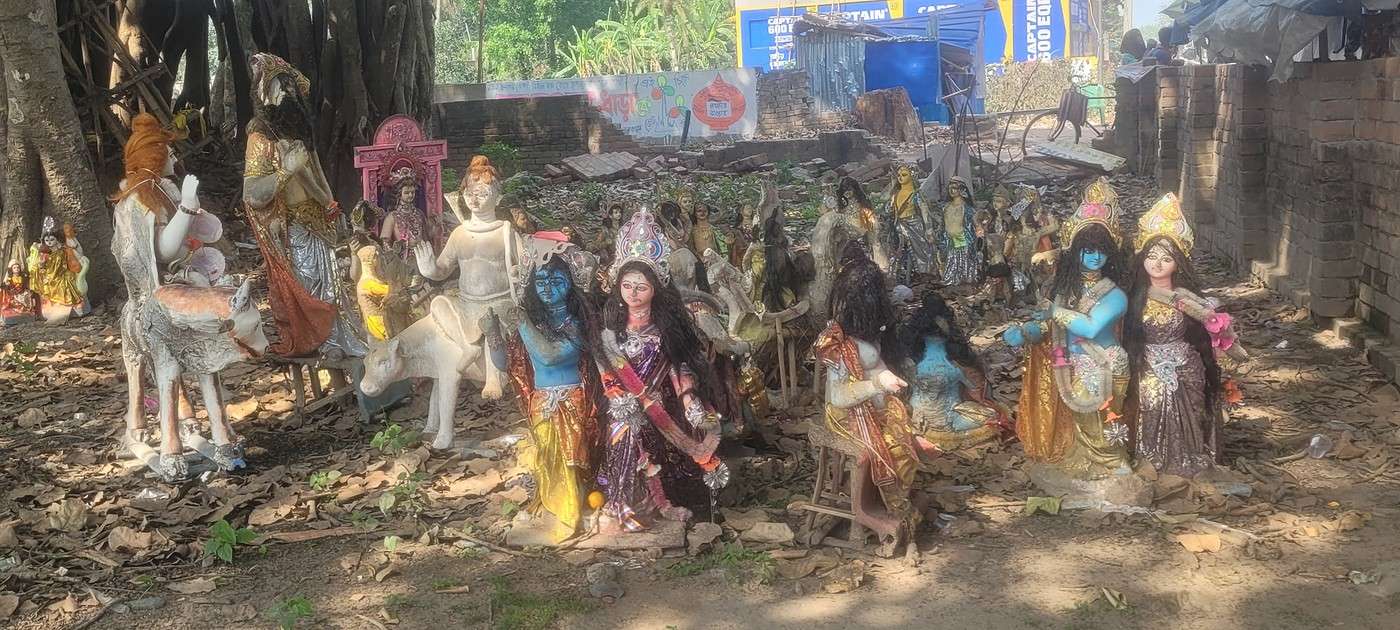
Right across the street is another temple where many devotees are gathered. I approach it. Inside, pujas are being performed in a serene atmosphere. Outside, at the foot of a tree, small statues have been placed as silent offerings.


I then return to Kalna by train.

Villages around Hazaribagh in West Bengal

Aleph240758 · 2026-08-05

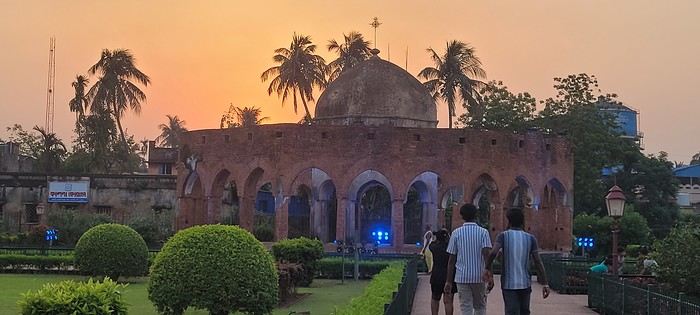
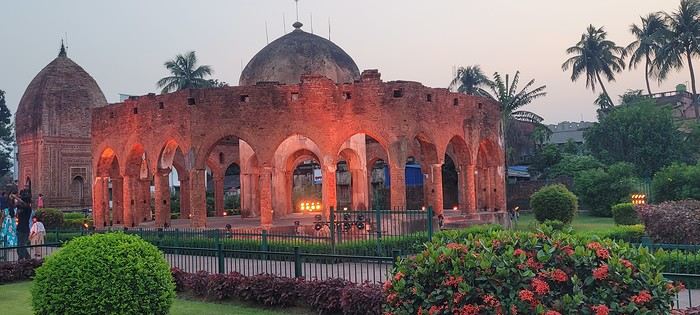
Back to Kalna The day isn’t over yet, though. I head back to the Rajbari complex to see the temples lit up at night. Night completely transforms the place. The lights highlight the reliefs on the facades, the delicate sculptures, and the temple silhouettes that seem to emerge differently in the darkness. After admiring them in daylight, seeing them illuminated like this offers a nearly magical experience.
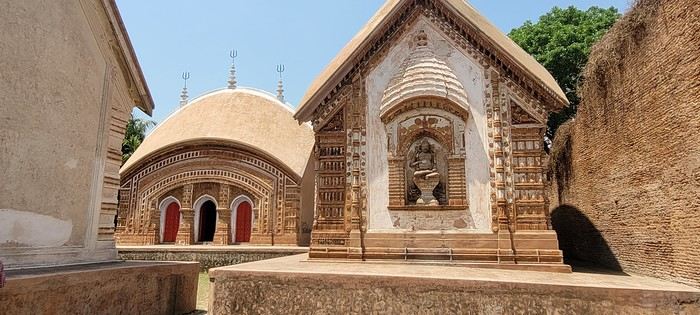


I savor this moment for a long time. It’s the perfect way to end this leg of the journey—and, in a way, this long trip through Jharkhand and West Bengal. Over the past few weeks, I’ve traveled through regions with very different identities: the tribal villages of Jharkhand, their ancestral traditions, the art of Sohrai and Khovar, and then West Bengal with its terracotta temples, forgotten palaces, artisans, and markets. Even though I’d already visited this region ten years ago, this new trip allowed me to discover it differently—with more time, more encounters, and a fresh perspective. Revisiting familiar places like Kalna or Guptipara gives them a special flavor: that of reunions, but also of rediscovery. Without having imagined it when I arrived, the 108 Shiva temples take on a special resonance. Their symbolism of fulfillment, liberation, and enlightenment seems to gently accompany the end of my journey. Tomorrow, I’ll leave Kalna for Kolkata, the final stop before heading home. But tonight, in front of these illuminated temples, I feel like I’m closing a beautiful travel chapter.

Villages around Hazaribagh in West Bengal

Aleph240758 · 2026-08-05

Thanks Didier, this travel journal is coming to an end, but did you read the first part, "New Discoveries from Perpignan to Ranchi," which is also interesting?

Villages around Hazaribagh in West Bengal

Aleph240758 · 2026-08-05

Thanks Noëlle, I know you follow all my travel journals. Preparing for this one wasn’t easy—I didn’t find a single blog about Jharkhand. I just drew inspiration from the few travel agencies that offer it. Hope this journal inspires other travelers; I already know two who are heading to Hazaribagh... not a bad start 😉

Villages around Hazaribagh in West Bengal

Aleph240758 · 2026-08-05

Back in Kolkata and the end of the trip I’m back in Kolkata and settling into Ichamati Guesthouse again, just like when I arrived. More than just a hotel room, I almost feel like I’m coming home: I’m back in the same room, the same familiar spots. Tonight, I’ll go back to my favorite restaurant, Mocambo, a nice way to wrap up this trip that had its ups and downs.


Some stops in Jharkhand didn’t amaze me as much as I’d hoped, but West Bengal remains a real revelation for me. I still don’t understand why this region is so overlooked by travelers. It has incredible architectural wealth, diverse landscapes, traditions that are still very much alive, and above all, a population that’s incredibly kind, always ready to chat and welcome you. I could come back to this part of India again and again—it’s so captivating. There are still so many places to discover, so many villages to explore. Last day before departure After breakfast, I check out of my room and leave my bag at the hotel entrance. I’m free until 4 PM before heading to the airport. Inside the hotel, the coolness is pleasant, but as soon as I step into the lobby, I feel the heat immediately. Outside, it’s heavy, humid, almost stifling. A typical Kolkata heat that I’m less enthusiastic about this time. I’m not a big fan of museums, but since this one is just a few hundred meters from the hotel, I decide to go, hoping to enjoy a bit of air conditioning and the coolness of the rooms. No luck: there’s almost no one there this morning, and the temperature isn’t much better inside.


I wander from room to room but can’t really get into it.

My mind is elsewhere. I think, without even meaning to, I’m already reflecting on these six weeks that flew by in the blink of an eye. Images come back in waves: Bishnupur, a place where I felt something special and where I’d love to return; the warm welcome in Naya and the stunning Patachitra paintings; the many markets I passed through over the days; the houses decorated with Sohrai paintings in the villages of Jharkhand; Santiniketan and my bike rides, including that infamous flat tire I won’t soon forget; Murshidabad, with its palaces and fascinating history; and finally, Kalna, with its temples that provided such a beautiful conclusion to the trip. These six weeks were rich, varied, sometimes surprising, sometimes more challenging, but always filled with discovery. So many encounters, landscapes, architectural gems, and unexpected moments… I almost have a tear in my eye. I decide to leave the museum pretty quickly and head to New Market.


At least there, I find Kolkata’s lively atmosphere again. I wander through the aisles one last time, intentionally getting lost in the familiar hustle and bustle, and make my final purchases before heading back to the hotel.


I ask if it would be possible to take a shower before I leave, but all the rooms are already booked. I’ll have to make do with a quick freshen-up at the sink in the entrance restroom… That’ll be my last moment of comfort before the long journey home. The final taxi arrives. A hotel staff member walks me to the parking lot. The last goodbyes are exchanged… This time, it’s really over—the trip is finished. All I hope for now is a smooth journey back. The flight to Dubai is on time, but the one to Barcelona ends up being an hour late. The bus that was supposed to take me to Perpignan won’t wait for me, but luckily the next one isn’t full, and I’ll finally be able to get home without any issues. All that’s left is to warmly thank everyone who followed these two travel journals. Your messages and encouragement accompanied me throughout this adventure. Now, it’s time to start preparing for the next trip… and yes, India again! This country always has something new to offer, even in regions I’ve already visited. That’s undoubtedly what makes it so endearing: the feeling that you’ll never truly be done with it.

Villages around Hazaribagh in West Bengal

Kate · 2026-08-05

I hope this travel journal will inspire other travelers

Even if it doesn’t inspire other travelers, this journal will leave an incredible mark. VoyageForum is lucky to have you as a member ;)

Villages around Hazaribagh in West Bengal

Aleph240758 · 2026-08-05

Even if it doesn’t inspire other travelers, this travel journal will leave an incredible mark. VoyageForum is lucky to have you as a member 😉

Thanks, Kate. Maybe it’ll give you some ideas for another trip. Now we just have to convince Richard 😉

Villages around Hazaribagh in West Bengal

Calaf · 2026-08-05

Hi Marie-Jo,

Unfortunately, I’m wrapping up this travel journal... if only you could have stayed longer!

A region unknown to me and a magnificent discovery of West Bengal... so many wonders in their simplicity. Here, no opulent architectural marble adorned with precious stones, but brick buildings with such beautiful, lively sculptures that touch the heart, move you, and are perfectly integrated into daily life.
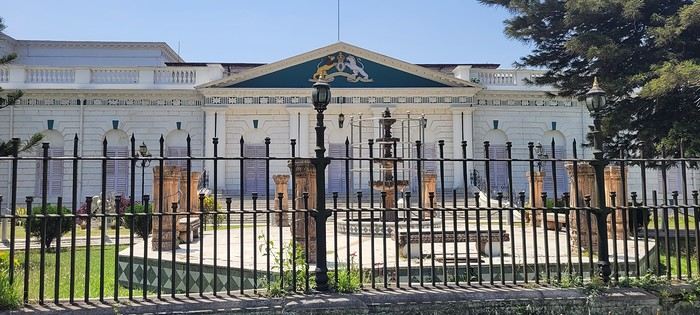
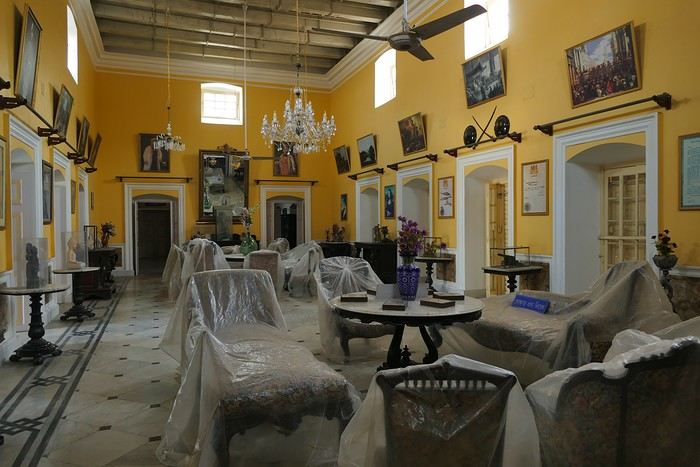
This is an art that some might call "modest"—like the MIAM in Sète—but to me, this sophisticated art speaks across the centuries.

Thank you sincerely for the time-consuming share.
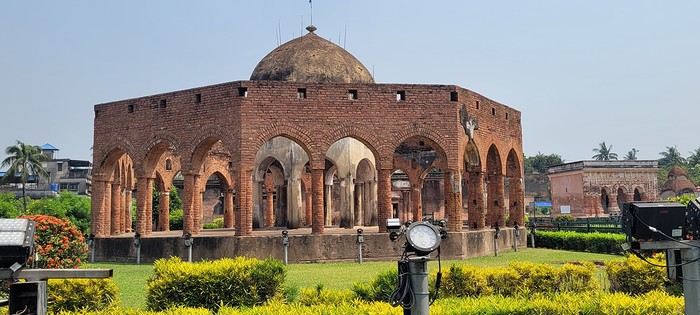
Alain

Villages around Hazaribagh in West Bengal

Aleph240758 · 2026-08-05

Thanks Alain! No worries, there’ll be more travel journals—several trips are already planned in my head, and I’ve gotta make them happen before 😉 They’ll be different but just as interesting, well, I hope so.😎

VoyageForum — the largest community of French-speaking travellers.