Back to the discussion

in Entre deux voyages › Carnets de voyage

Peru: A Childhood Dream Finally Fulfilled

Discussion started by Larri on 2026-08-10

68 replies

This thread has been translated into English.


Peru: A Childhood Dream Finally Fulfilled

Larri · 2026-08-10

Preamble

I could have titled my travel journal like Carmen: "Some trips are born twice." Indeed, we had considered this destination back in February 2020. However, an honest tour operator advised us against traveling at that time due to the climate. So, we gave up and opted for Guatemala instead (see "On the Mayan Lands" on this site).

So, why this title? When I was in primary school, over 65 years ago, the illustrations in my history books (Machu Picchu) and geography books (Lake Titicaca) made me dream, and those images stayed in my mind. It took until 2026 to finally make this dream come true!

We prepared our trip with Tout Pérou, a French-speaking "agency." Everything was handled via email and WhatsApp exchanges with our contact: Laurent, who was both competent, friendly, and full of good advice. For 200 €, Tout Pérou provided us with drivers and guides whenever we wanted, helped us buy our domestic flights (cheaper when purchased in Peru), booked shuttles between airports and hotels, and got us a discount on the train ride to Aguas Calientes, as well as on the buses between Chivay and Puno and between Puno and Cusco. In short, Laurent took care of all the logistics and the Machu Picchu tickets. It was up to us to book our hotels. Tout Pérou provided a list, but we weren’t obliged to follow it. Another advantage of the package: we didn’t have to pay in advance; we paid the service providers directly day by day.

We didn’t meet Laurent in person because he was on vacation in Europe. Before his departure, he gave us a briefing, provided a summary table with the entire program, the service providers, their phone numbers, their fees, the schedules, and gave us plenty of advice (money, exchange, safety, etc.). After returning at the end of our stay, he kept checking in on us.

Lastly, we had also gathered information from Arnaud Lagadec, who runs a hotel in Cusco and offers tours of the region. He gave us a lot of useful information. Another contact: Thomas Montaigne, very friendly, who runs an agency in Arequipa (Agence Pérou Exclusif).

Day 1 – Paris to Lima

Foreword I’ll share our trip without any pretension—I don’t have the talent of some contributors on this forum—and I’ll illustrate it with a few photos (taken with an ordinary smartphone). My comments are personal and only reflect my own views. So, please be kind! Feel free to comment on my story as you like, but let’s avoid pointless debates.

Even though we live in the south of the Paris region, true to our habits when the flight is in the morning, we chose to spend the night before our departure in a hotel near CDG and parked our car in a parking lot in Garches. This way, we avoid the stress that often comes with traveling around Paris (accidents, roadworks, traffic jams, etc.).

Check-in and border control went smoothly on that Sunday morning. Our Air France flight was uneventful. In Lima, border control took a particularly long time, and for the first time, we didn’t get an entry visa stamped in our passports.

As planned, a driver took us to the Miraflores district, where our hotel was located. We were surprised by the numerous signs about possible tsunamis, having forgotten that Peru is prone to such events and regularly experiences earthquakes. We’d see the consequences of these during our journey.

Exhausted from the early wake-up, the 13-hour flight, and the 7-hour time difference, we had dinner at the hotel before a restful night.

Note that this day was Peru’s presidential election day. As a result, we weren’t served beer—the sale of alcohol was banned that Sunday.
Peru: A childhood dream finally realized

Larri · 2026-08-11

Day 2 – Lima to Arequipa Originally, we had planned to visit Lima in the morning before taking our flight to Arequipa in the afternoon. Three days before our departure, we ultimately decided it was wiser to postpone this visit to the end of our trip, so we wouldn’t have to rush through it—getting around Lima is particularly time-consuming. Laurent effortlessly rearranged our itinerary without any issues.

Instead, we set off to find a currency exchange office. Our euros were exchanged at a great rate: 4.09 soles for 1 €.

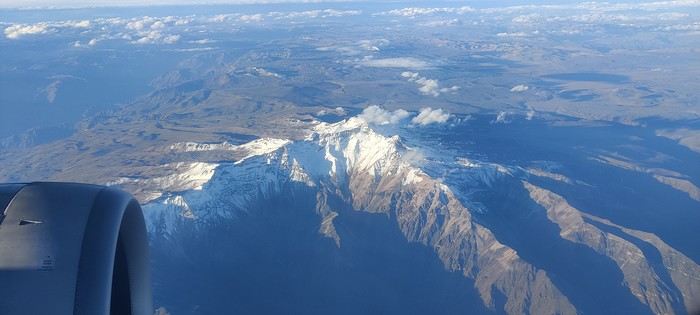
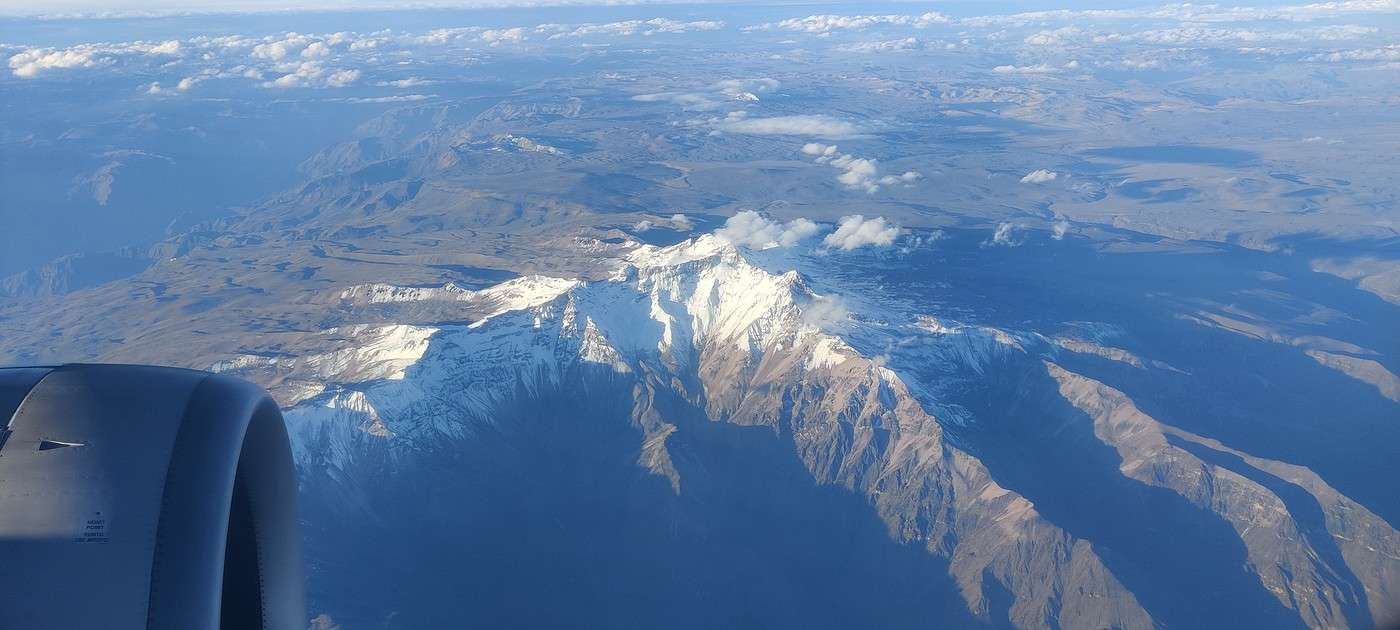
We had lunch at the hotel before heading to the airport. Security checks were quick here too. The LATAM flight went smoothly. From the plane, we flew over arid landscapes, almost devoid of vegetation. A few lightly snow-capped peaks appeared in the distance before landing in Arequipa.


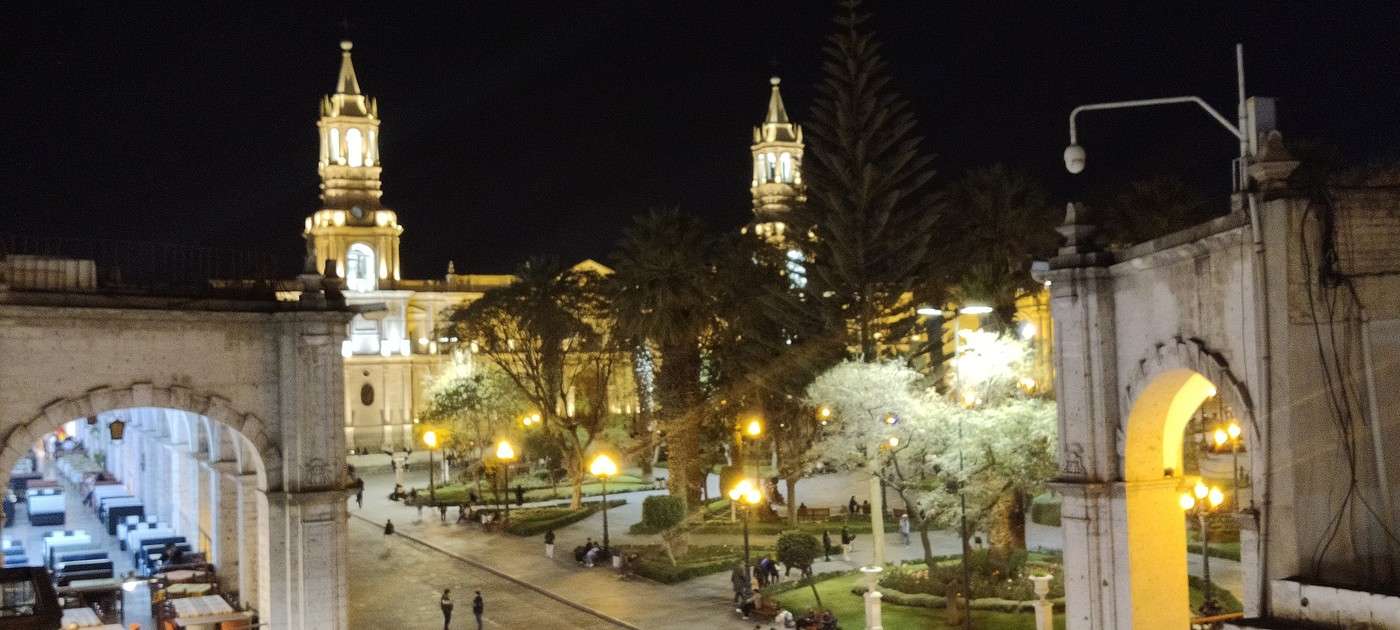
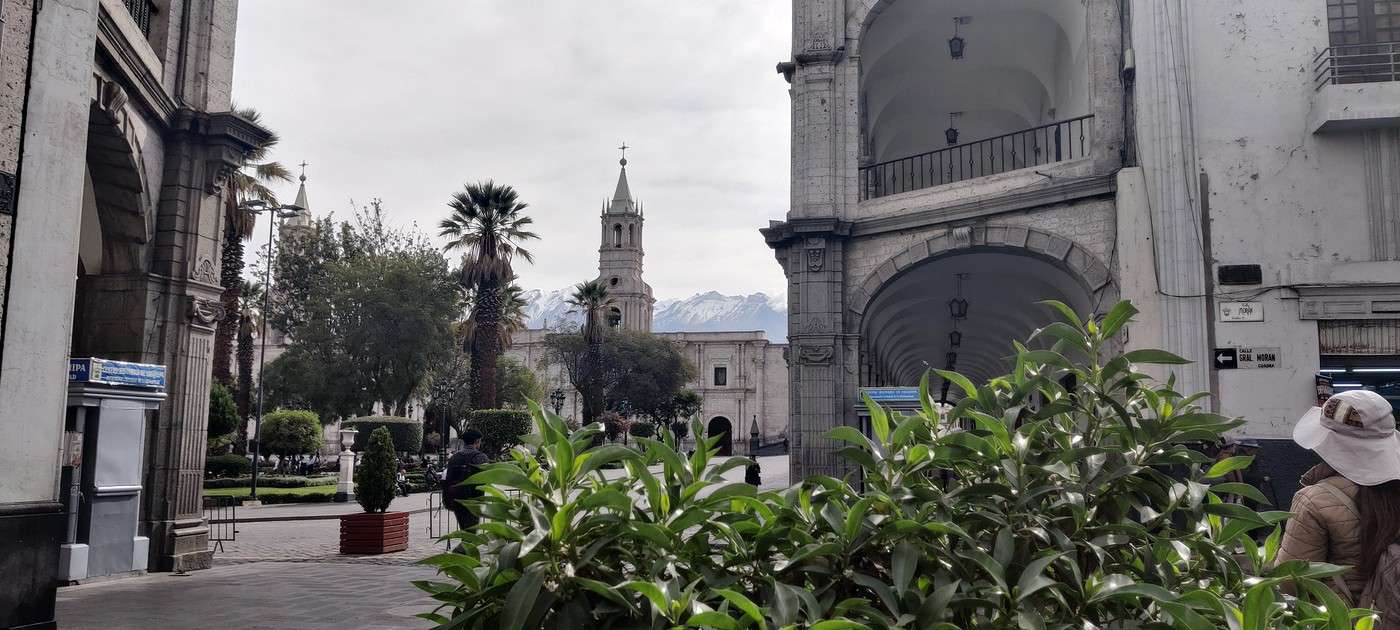
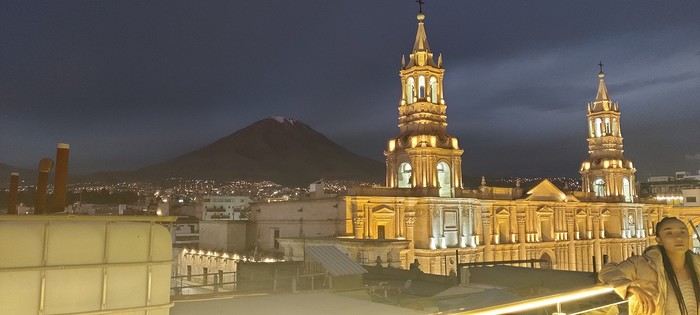
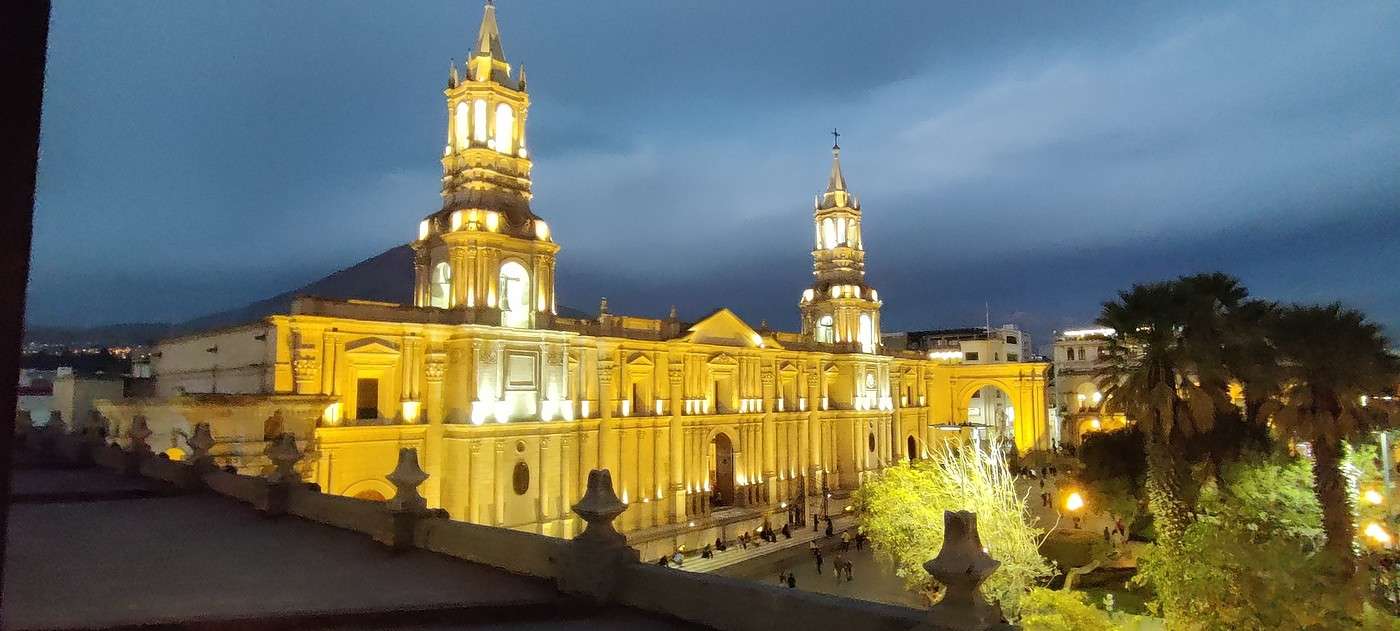
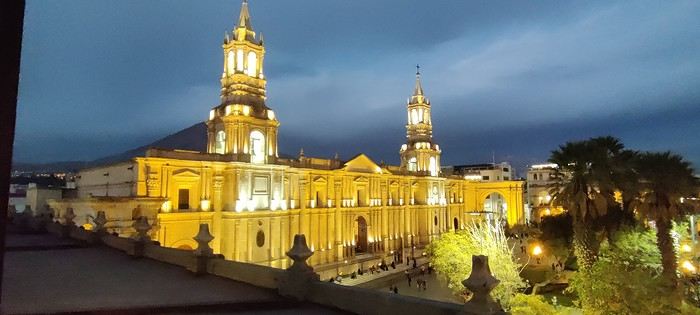
the cathedral seen from our hotel room We then met Rufio, the driver who would accompany us for three days. Right away, we hit it off—he was smiling, attentive, and his French was perfectly understandable, having learned it from his clients. This would make things much easier for us.
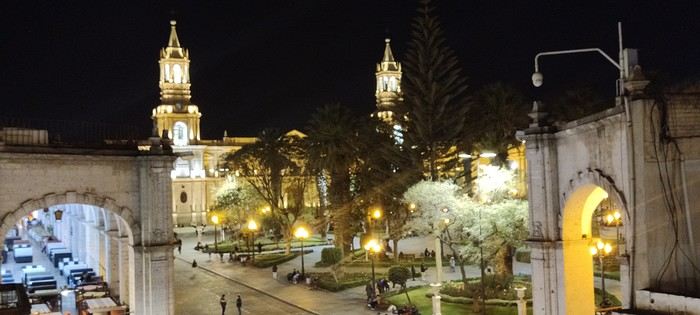
Our hotel was ideally located in a corner of the Plaza de Armas, close to the city’s main points of interest.


We saw this beautiful square for the first time at night.

Tonight, we dined at Zig Zag, a restaurant on the edge of Plaza San Francisco. The place was packed, so they offered us a pisco while we waited for a table. We enjoyed the famous "quartet of meats"—lamb, beef, alpaca, and chicken—cooked on volcanic stone. It was delicious.

Peru: A childhood dream finally realized

Larri · 2026-08-11

Day 3 – Visit to Arequipa’s city center

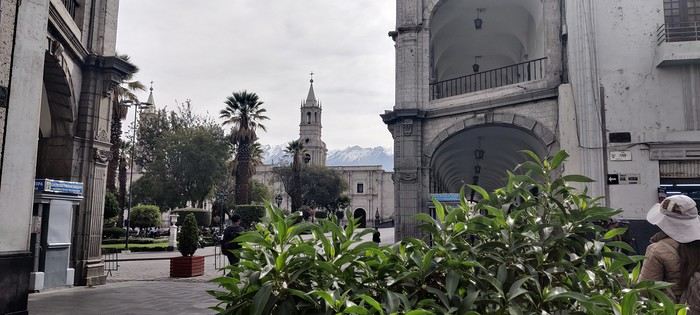
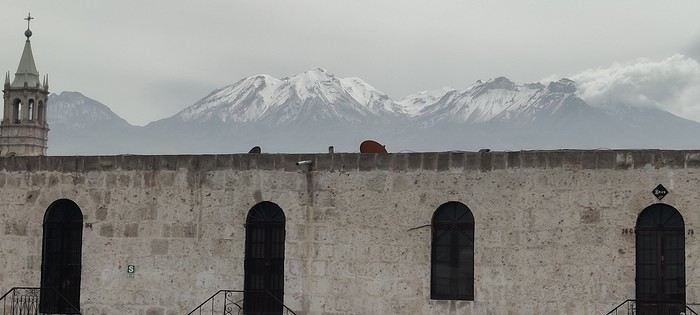
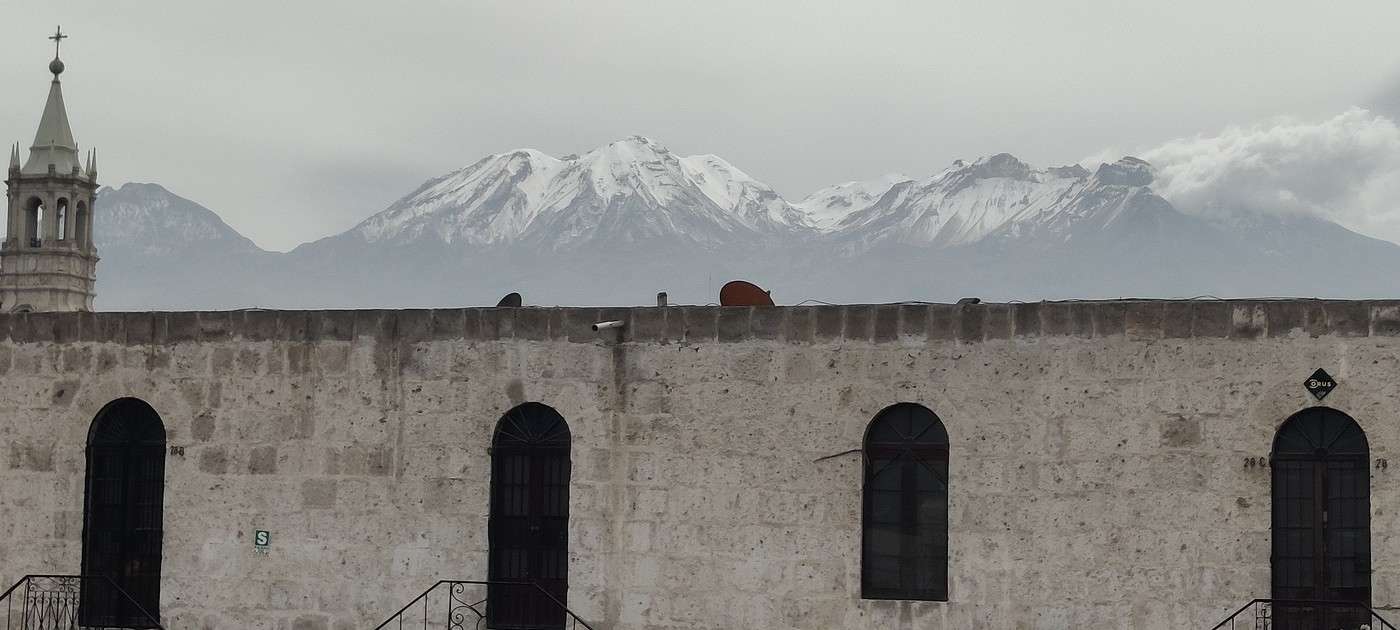
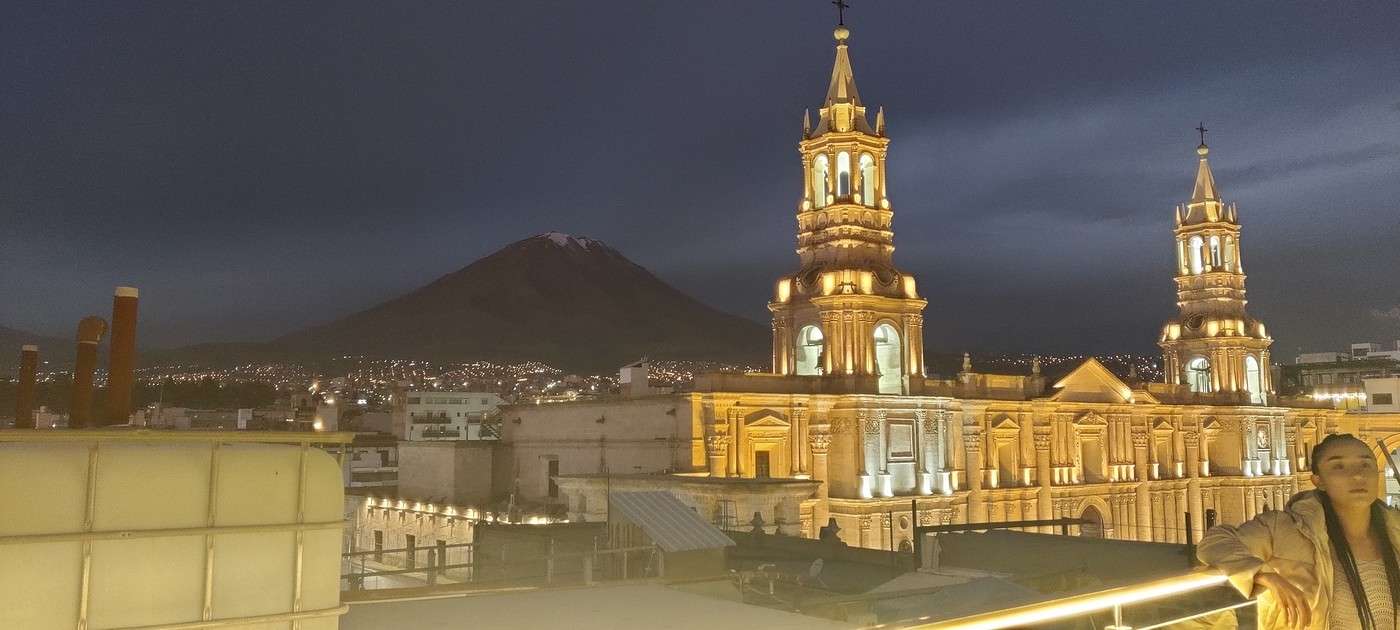
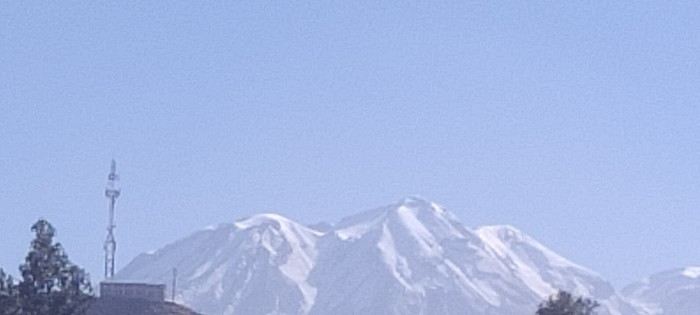
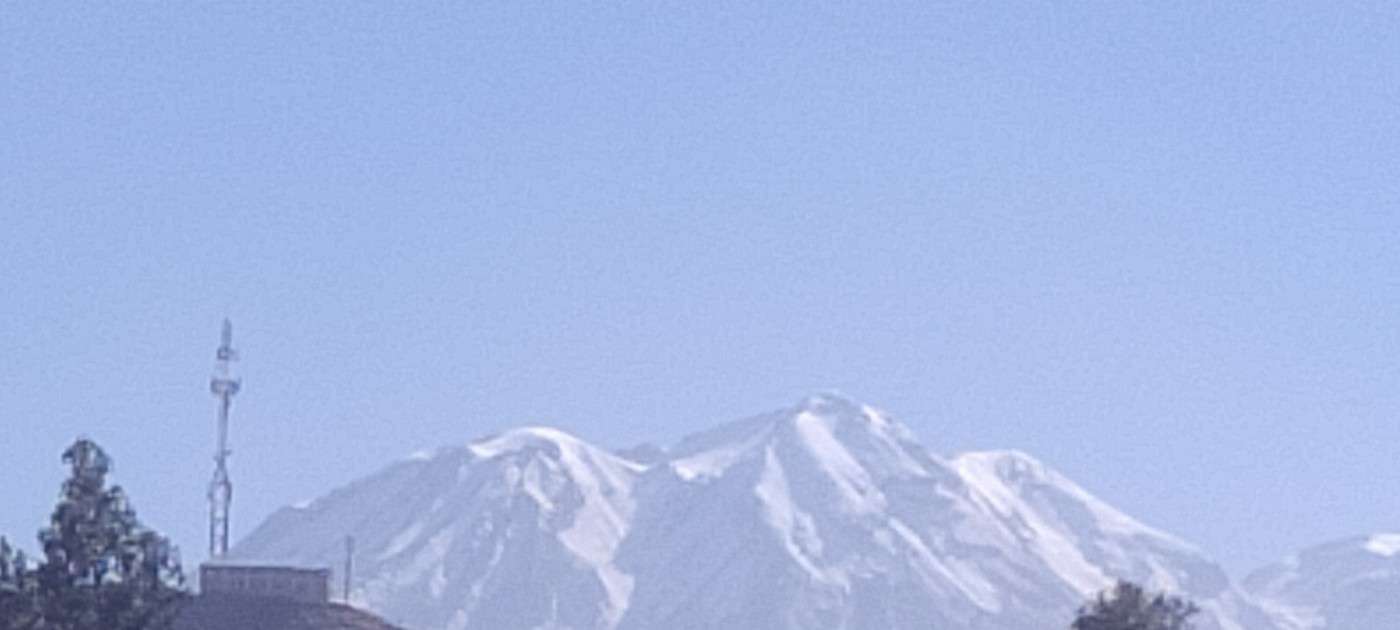
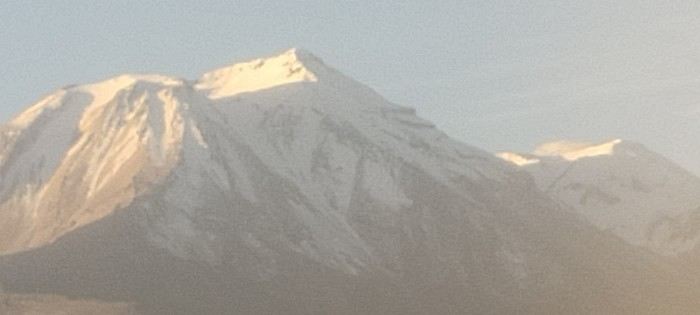
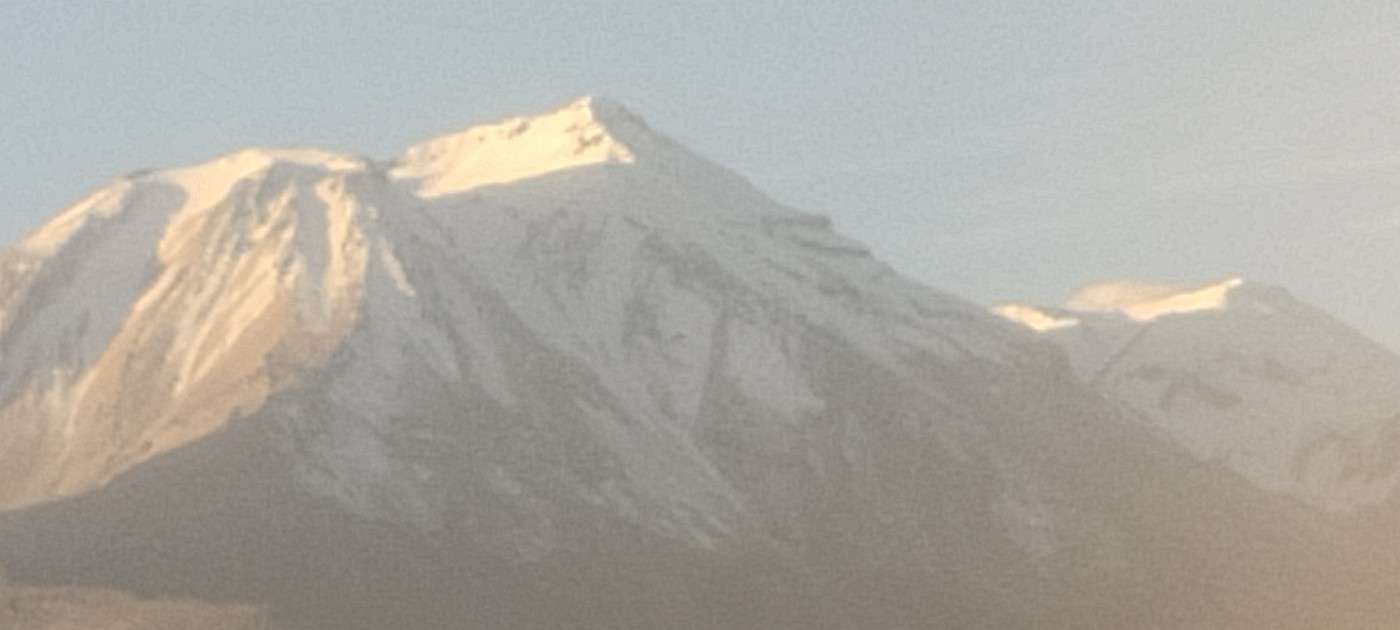
Today, we’re exploring the historic center of Arequipa, nicknamed the "White City" because of the extensive use of sillar, a white or pinkish volcanic rock used to build many of its structures. Our guide is quite a character. At 82 years old, Jorge speaks perfect French, which isn’t too surprising—he taught in France for many years and holds dual citizenship. Passionate about his work and a true scholar, he’s full of stories! His motto is clear: to illustrate and defend the cultural resistance and uniqueness of the Incas against the Spanish conquistadors. Against the backdrop of the snow-capped Misti volcano, we start at the Plaza de Armas, framed by the cathedral and three double rows of arcades.


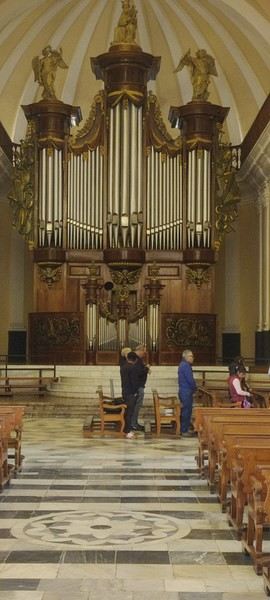
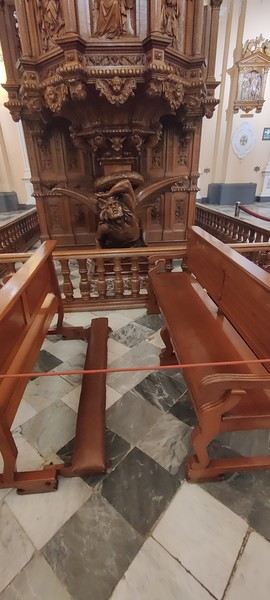
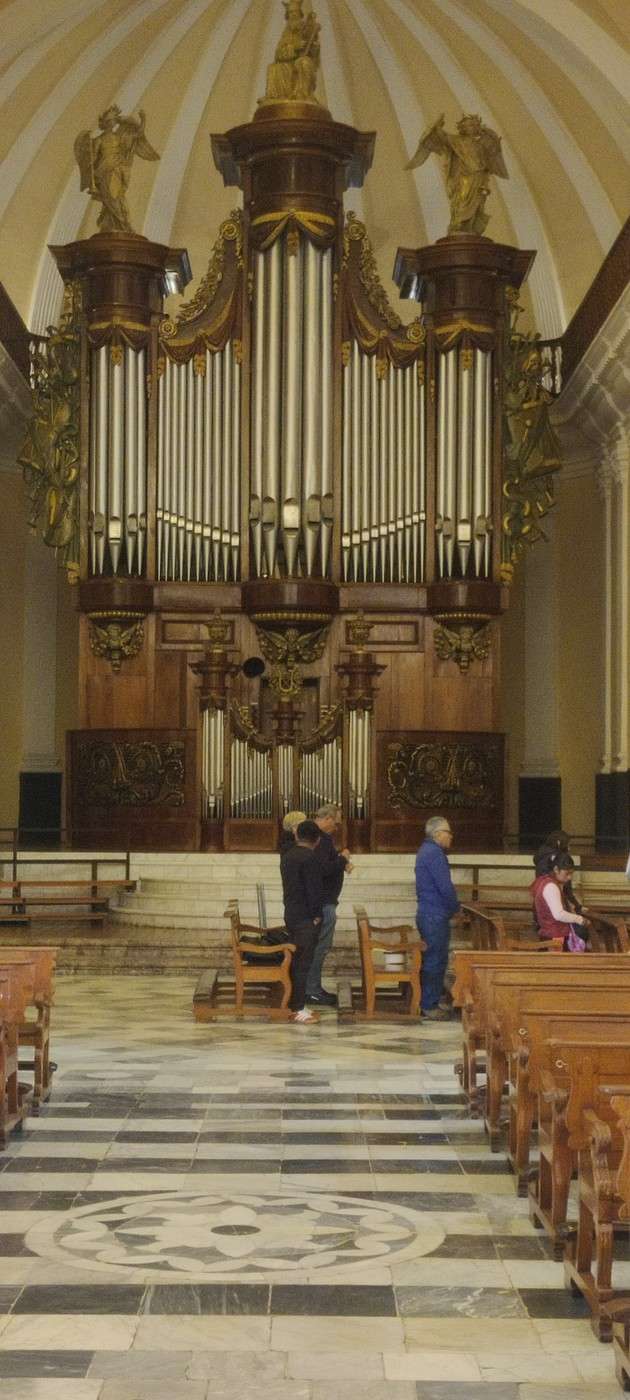
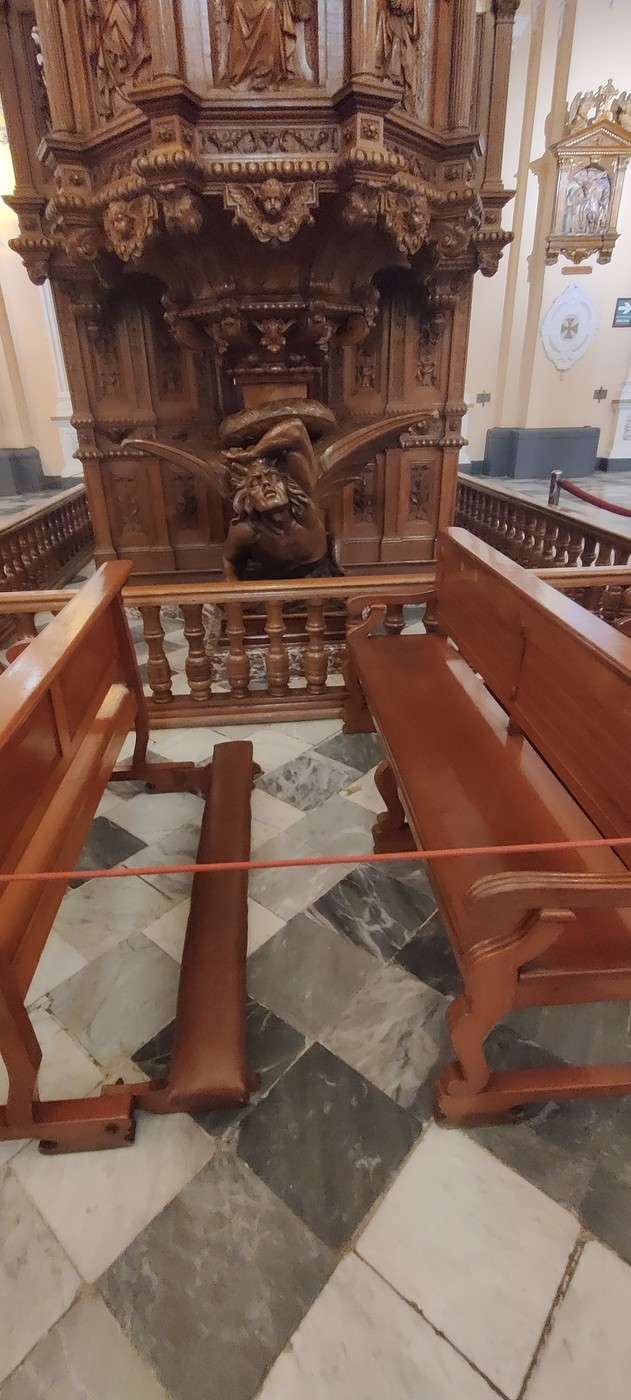
In the center, palm trees, flower beds, and a beautiful bronze fountain topped with a statue called the Tuturutu, which tradition says was the Inca’s official messenger. He was tasked with announcing the Inca’s arrival or alerting the population to important events using a trumpet. This lively square is also the stage for many demonstrations. Peruvians, like the French, seem to be perpetual protesters! We don’t linger long at the cathedral since services are underway. Still, our guide tells us about its tumultuous history. Destroyed by fire, it was rebuilt in 1844 before being severely damaged again by the 1868 earthquake and then reconstructed. It’s imposing, with a façade stretching 108 meters long. Inside, you’ll find an organ imported from Belgium, said to be one of the largest in South America, as well as a pulpit carved in France. The high altar seems relatively modest compared to others we’ll see throughout our trip.


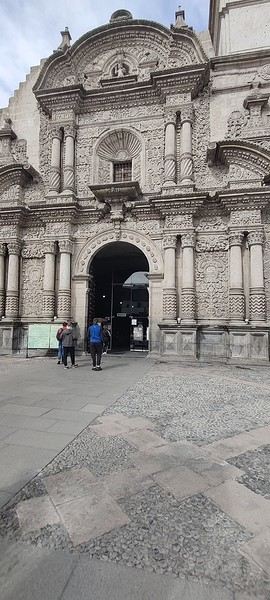
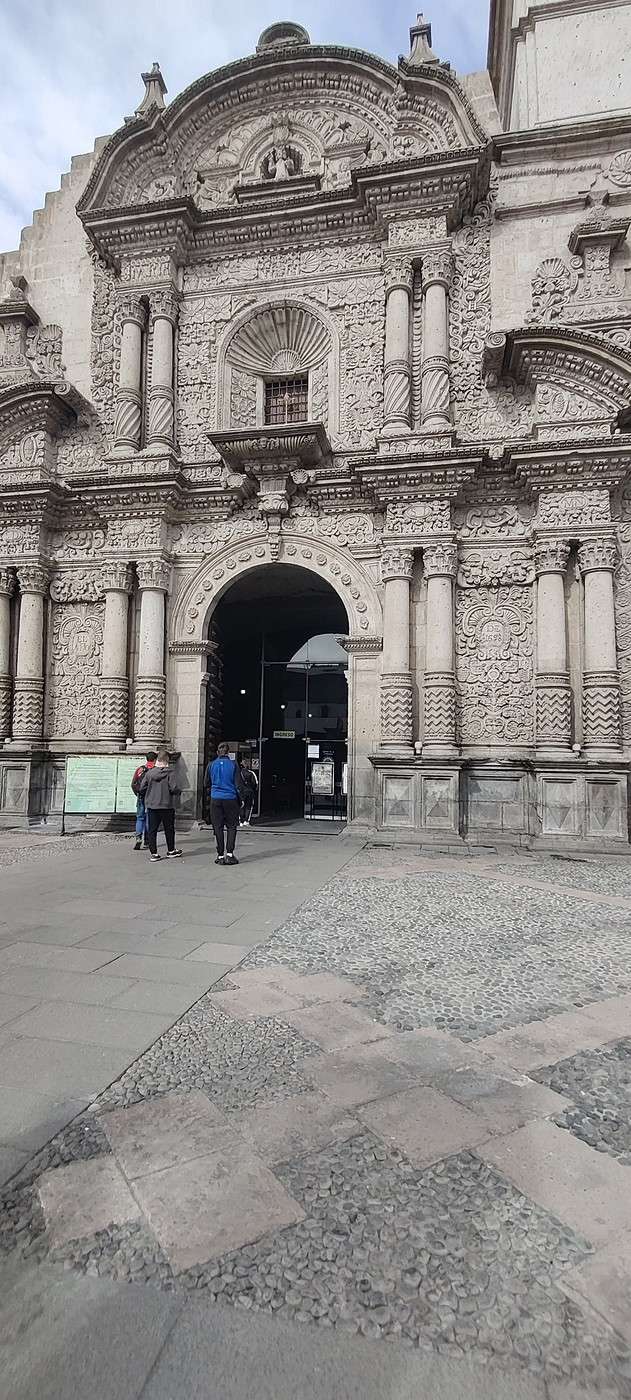
We head to a corner of the square to visit the Church of the Society of Jesus. It, too, has endured many earthquakes and been rebuilt several times. It’s considered a masterpiece of Andean Baroque architecture. Its façade, intricately carved from sillar, blends religious motifs with local culture: angels, serpents, pumas, corn, and even cocoa pods.


Inside, there are numerous sculptures and a gold-leaf altarpiece. Jorge points out a rather original Last Supper: Christ and the apostles are seated around an oval table, with a guinea pig, ears of corn, and local yellow peppers in front of them. One of the many quirks of the Cuzco School painters!

Next, we step into the San Ignacio Chapel, entirely covered in tropical-colored paintings: cherubs, flowers, plants, and multicolored birds fill the walls and vaults.

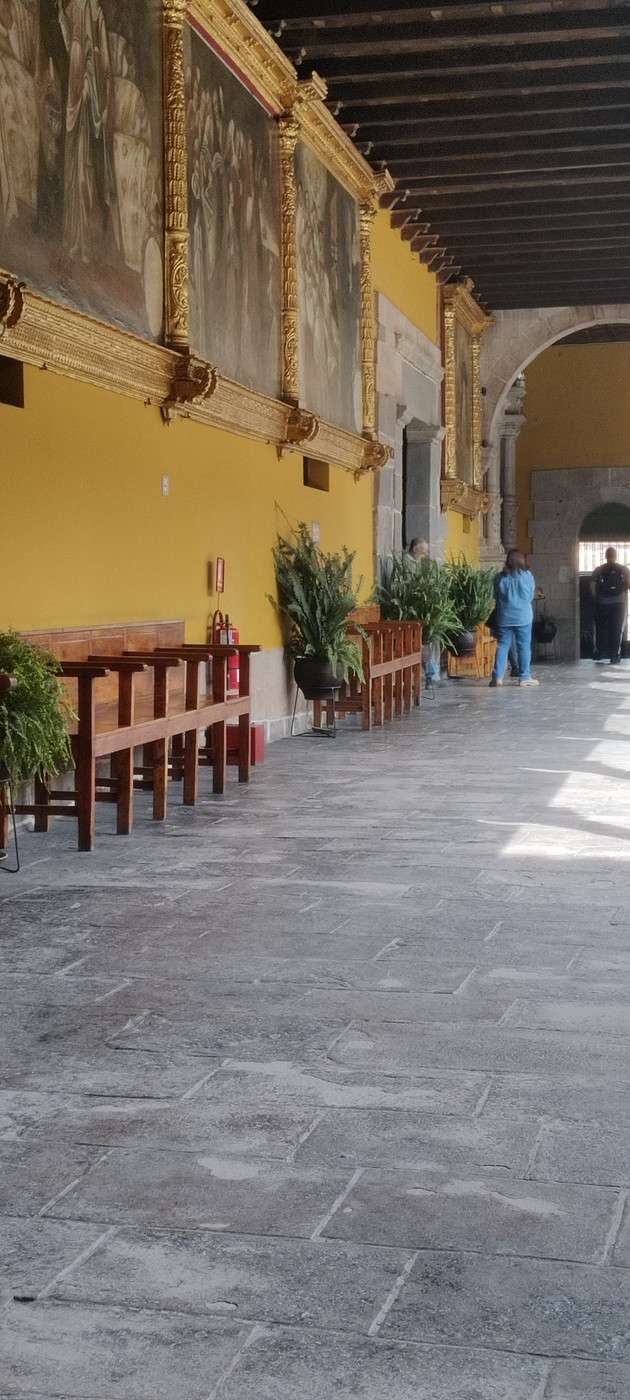
Then, we head to the stunning cloister, which also features Peruvian-inspired decor: fruits, flowers, and arabesques. The old arcades have been turned into a shopping gallery with souvenir shops, alpaca goods, and a café. From the terrace, the view of the three volcanoes surrounding the city—the Misti, Pichu Picchu, and Chachani—is spectacular.


Peru: A childhood dream finally realized

Larri · 2026-08-12

Continuing our visit of Arequipa’s city center

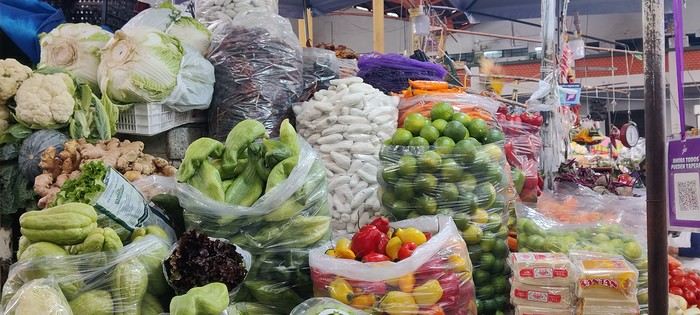
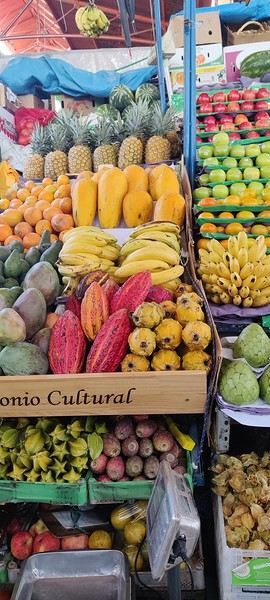
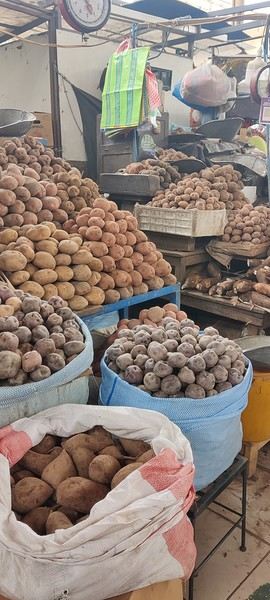
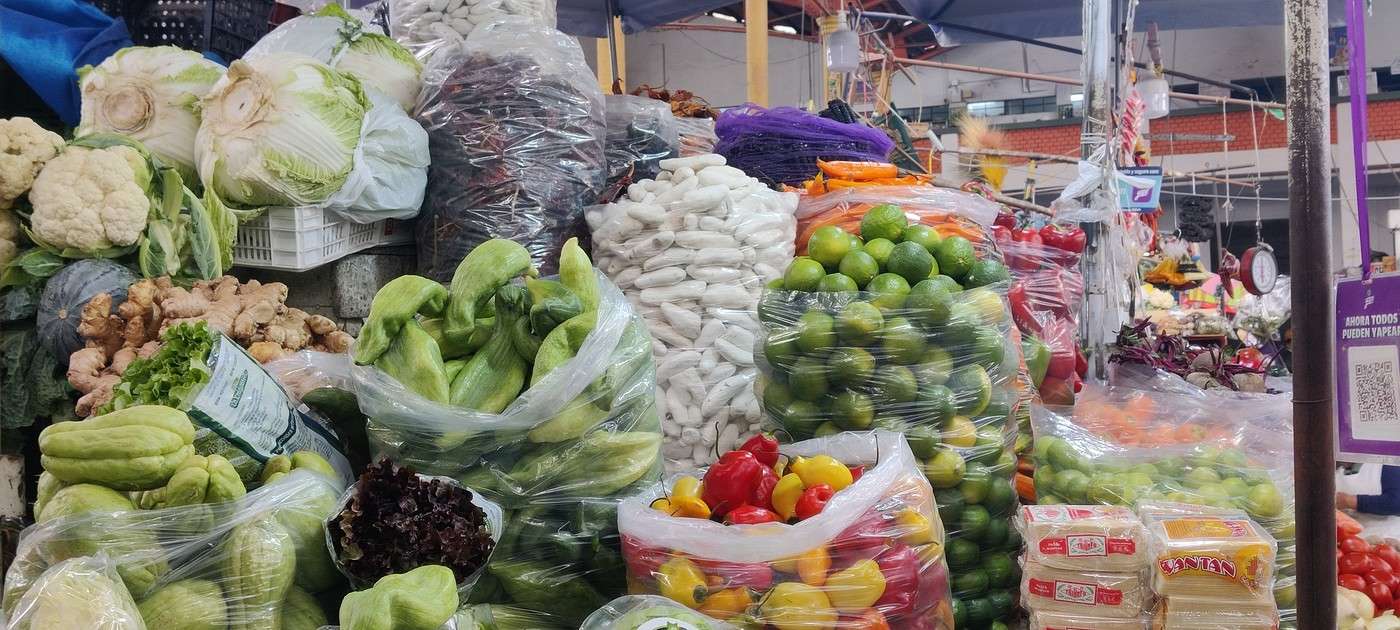
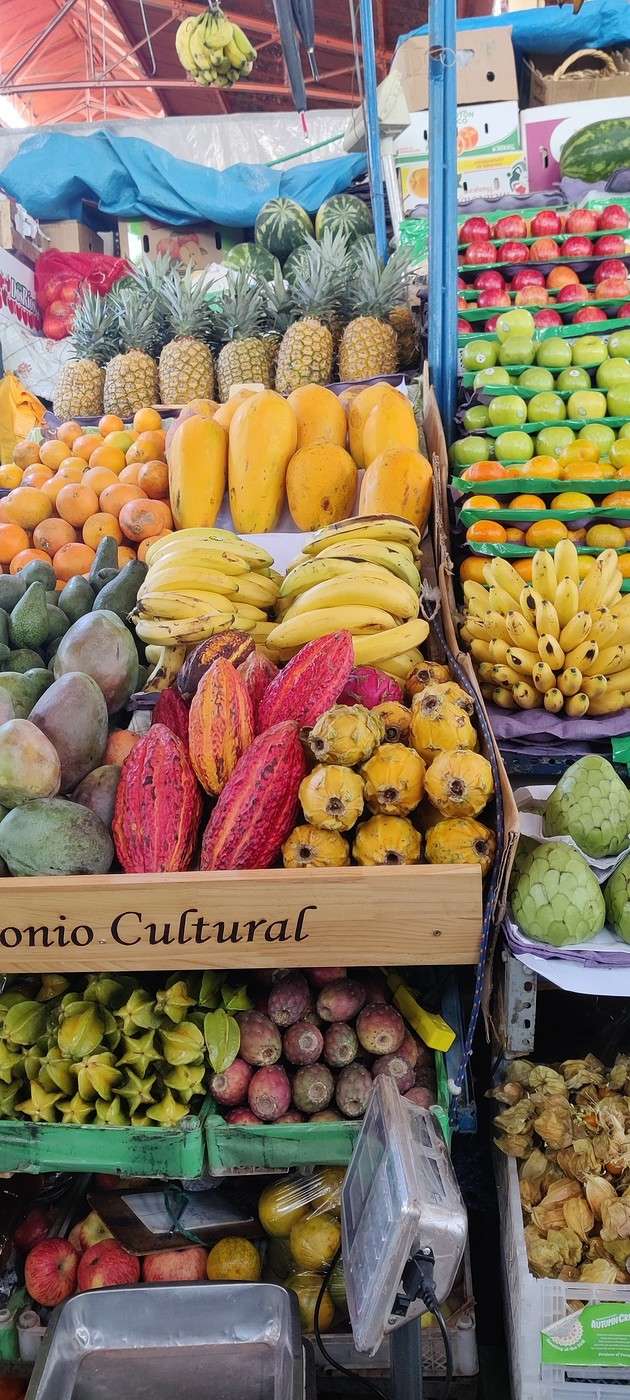
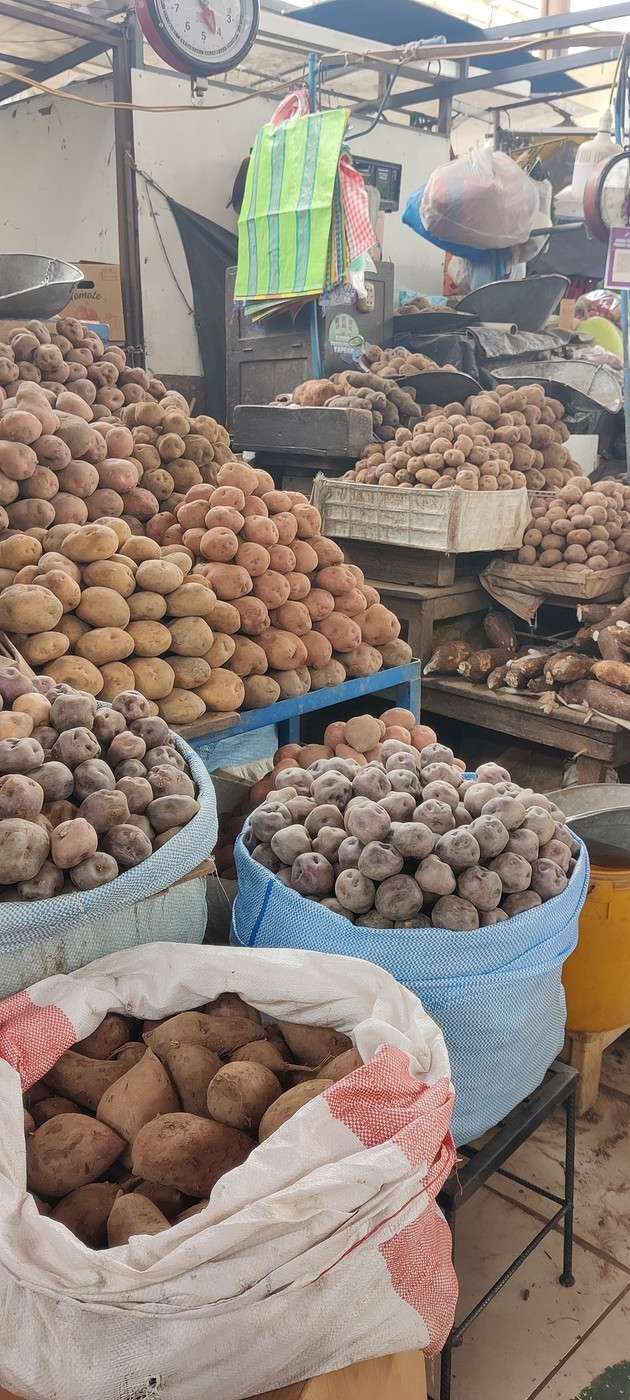
We then head to the market. Its metal structure is attributed to Gustave Eiffel’s workshops, which left several traces in the city. The staircase at the Zig Zag restaurant, where we had dinner the night before, is also said to be Eiffel’s work. The market is packed with goods. What strikes us most is the sheer variety of potatoes and the size of some fruits, especially the avocados and mangoes. We treat ourselves to a glass—or rather, a stein—of fresh fruit juice made to order. A real delight, and at a more than reasonable price.


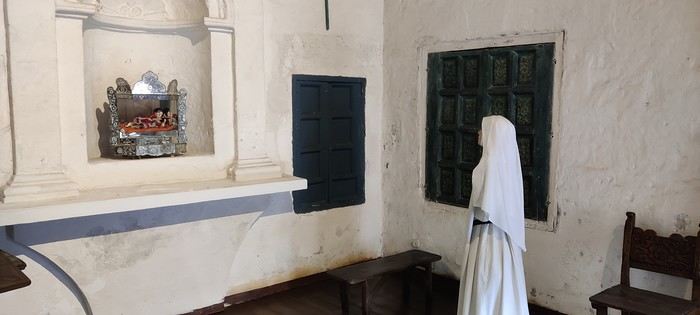
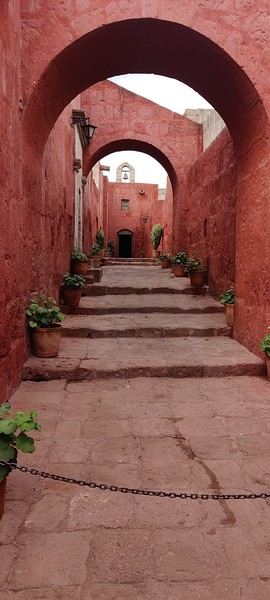
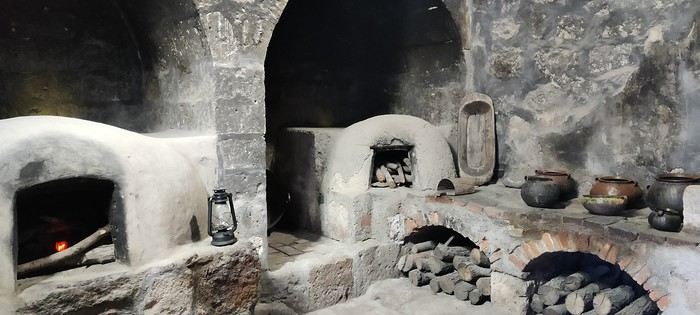
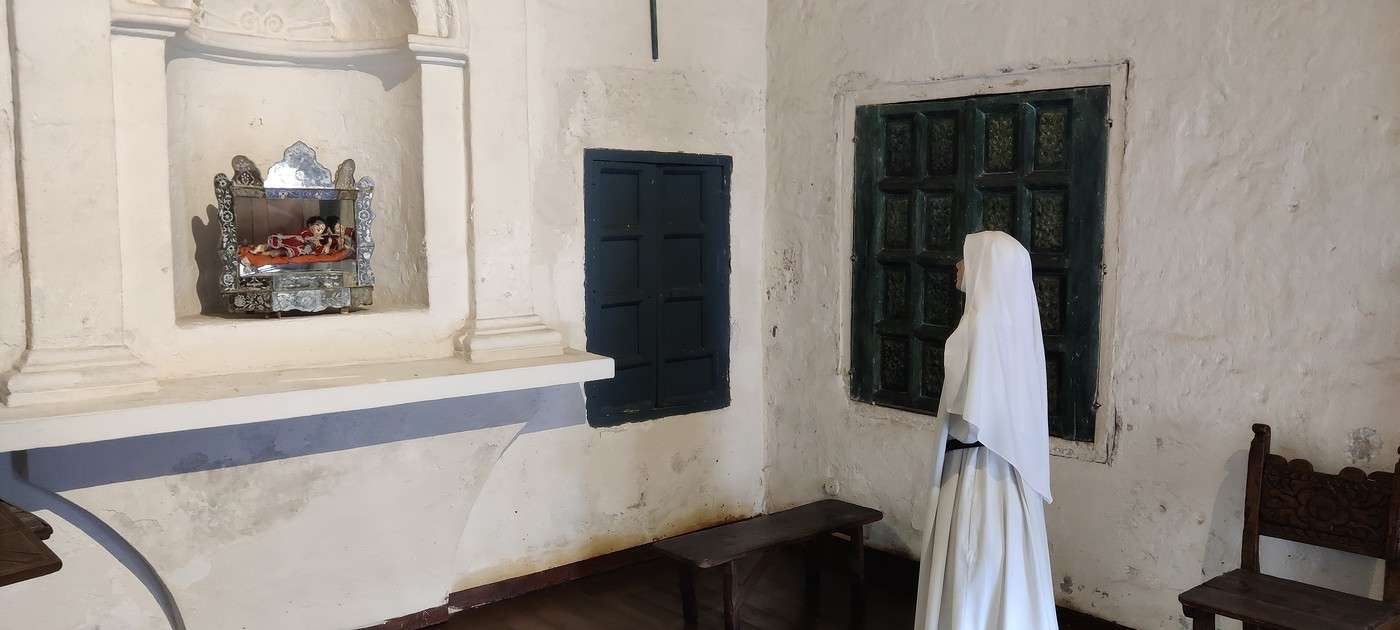
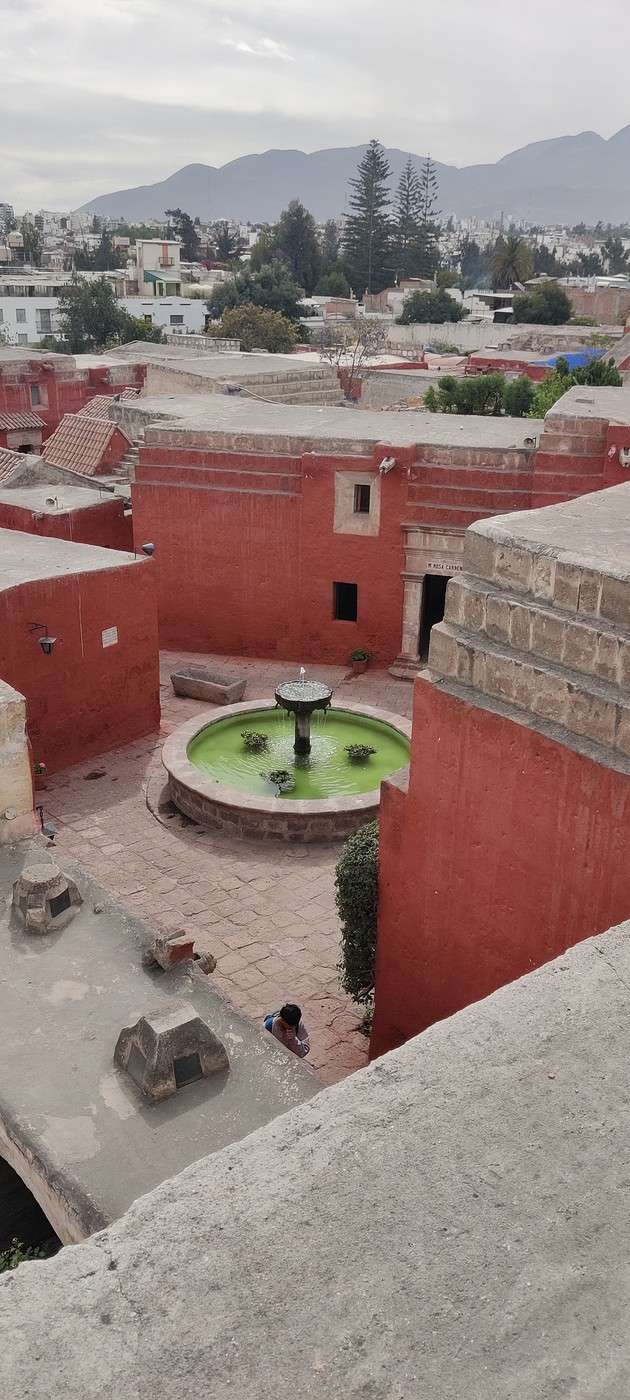
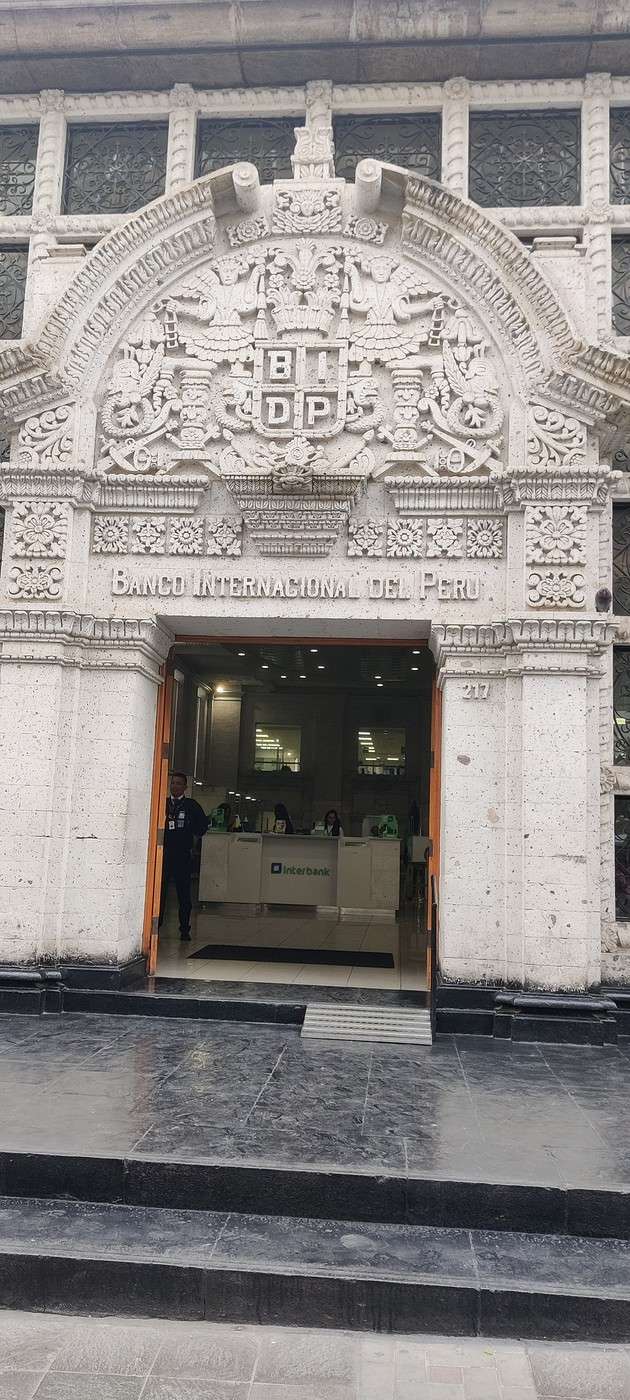
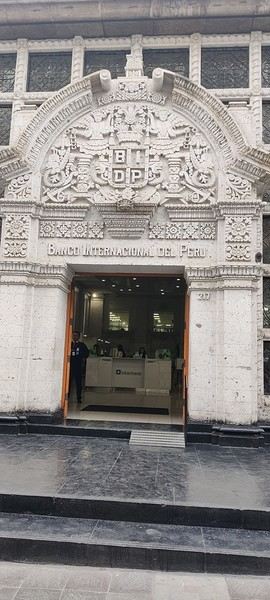
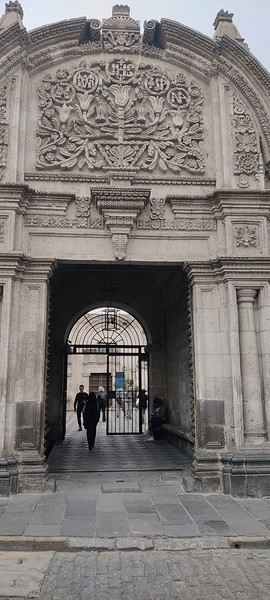
We also buy a pack of coca leaves to chew, said to help ease altitude sickness. Our guide, however, warns us about an important point: here, coca-based products are sold freely for permitted uses. But bringing them into France is illegal if they contain substances classified as narcotics. In other words, it’s best to leave the coca leaves, coca tea, or coca candies behind! He then takes us to the Santa Catalina Convent. Along the way, he points out several richly decorated façades. The banks, he notes with a touch of irony, have taken over some of the city’s most beautiful buildings. Since the convent has its own guides, Jorge leaves us temporarily to book a restaurant for lunch. The site covers an area of 20,500 m². It’s a real city within a city, complete with streets, squares, gardens, fountains, and cloisters. We learn it could house up to 450 nuns, along with servants and, at times, slaves. The monastery was mainly for women from wealthy Spanish-descended families, as the required dowry was high. The wealthiest nuns had private cells and could have several servants, while poorer women could enter without paying. The monastery is entirely built from *sillar*, the volcanic rock characteristic of Arequipa. We’re told the white stones come from Chachani, while the red ones are from Misti. The visit starts in the parlors, where nuns could receive their families under supervision and for a limited time. We then pass through the “arch of silence,” leading to the novices’ cloister. From there, nuns had to observe silence and dedicate their early years to work and prayer before taking their vows. They could still choose to leave the convent, though it risked bringing shame to their families.


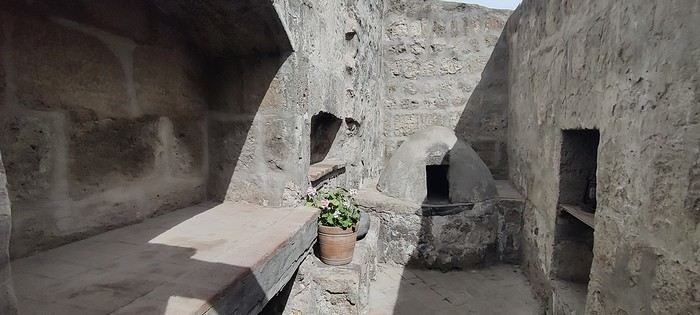
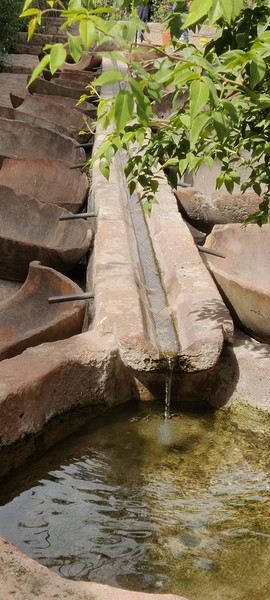
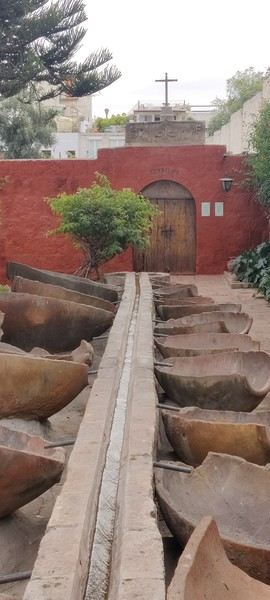
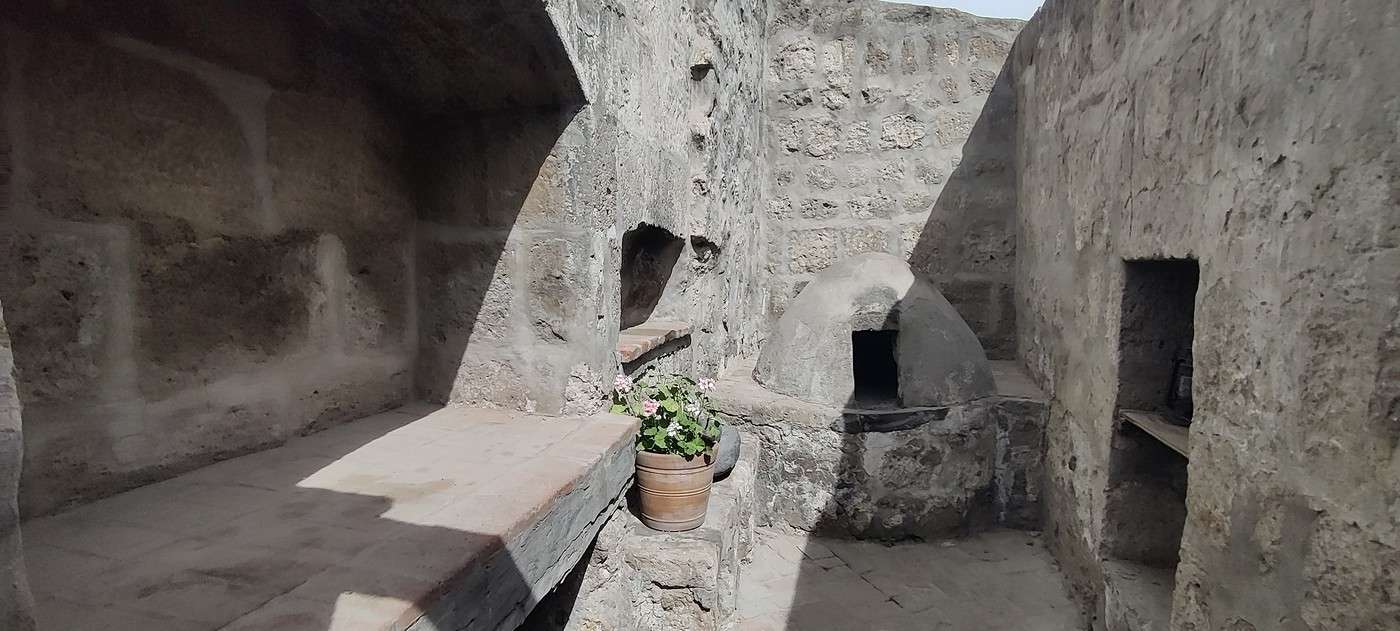
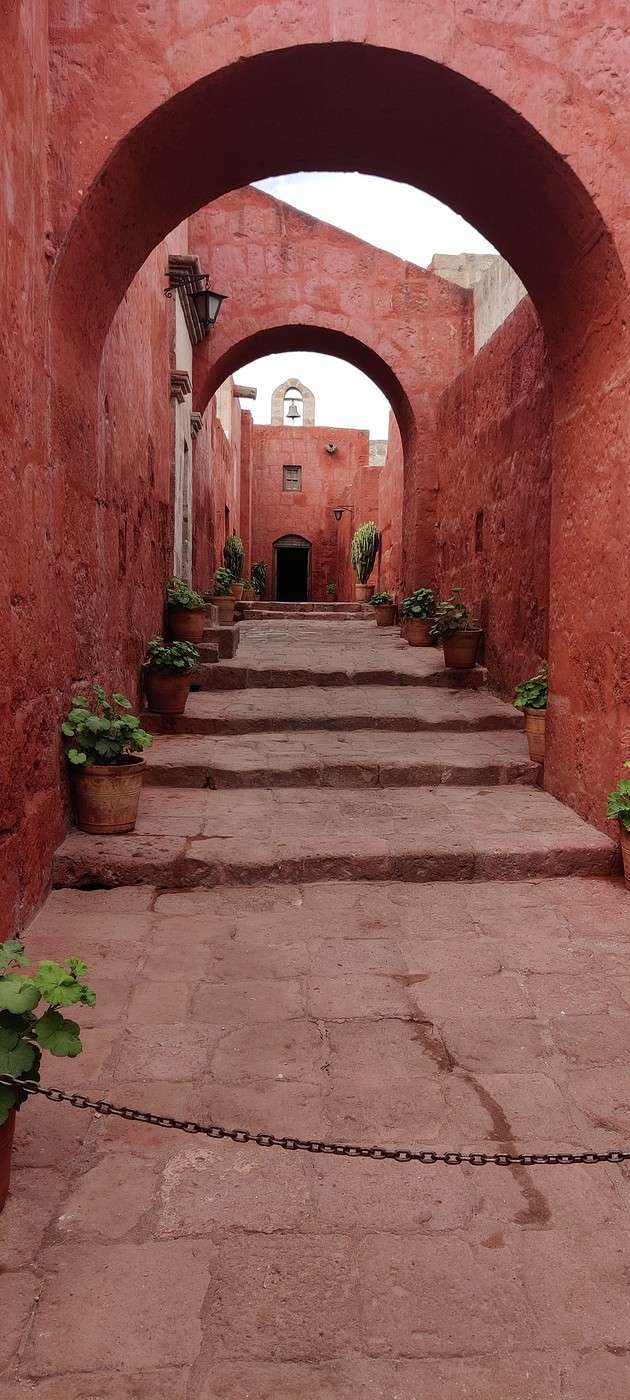
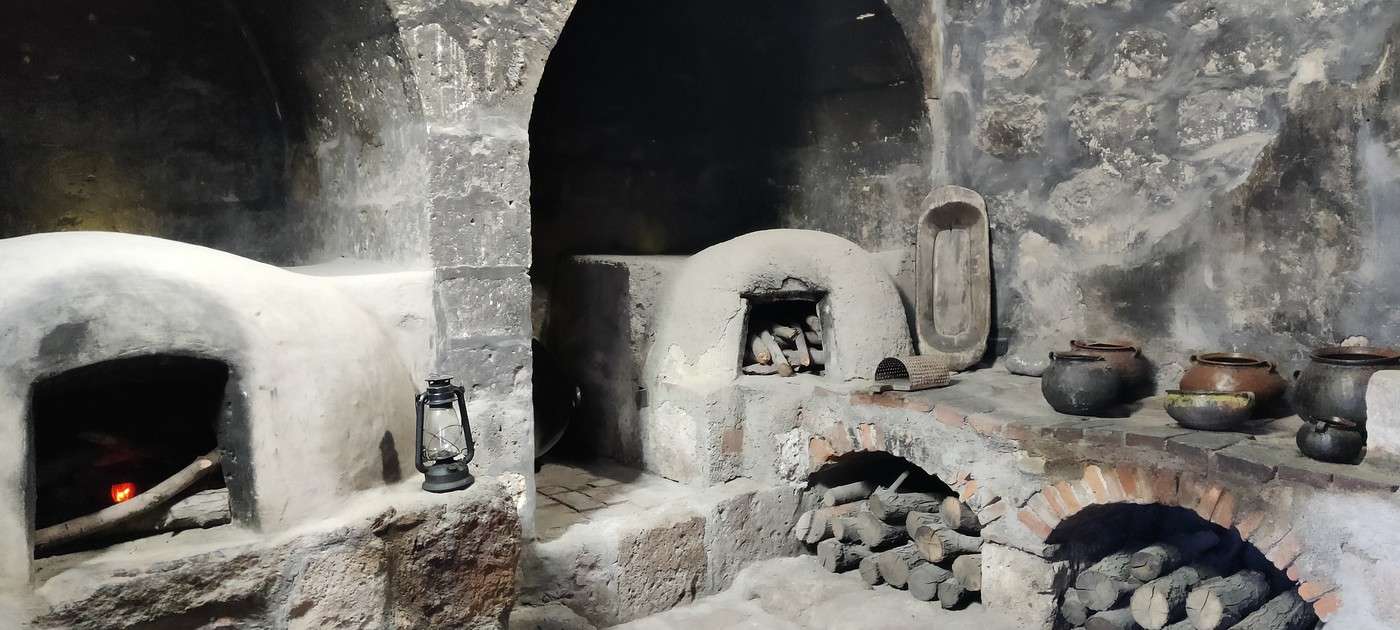
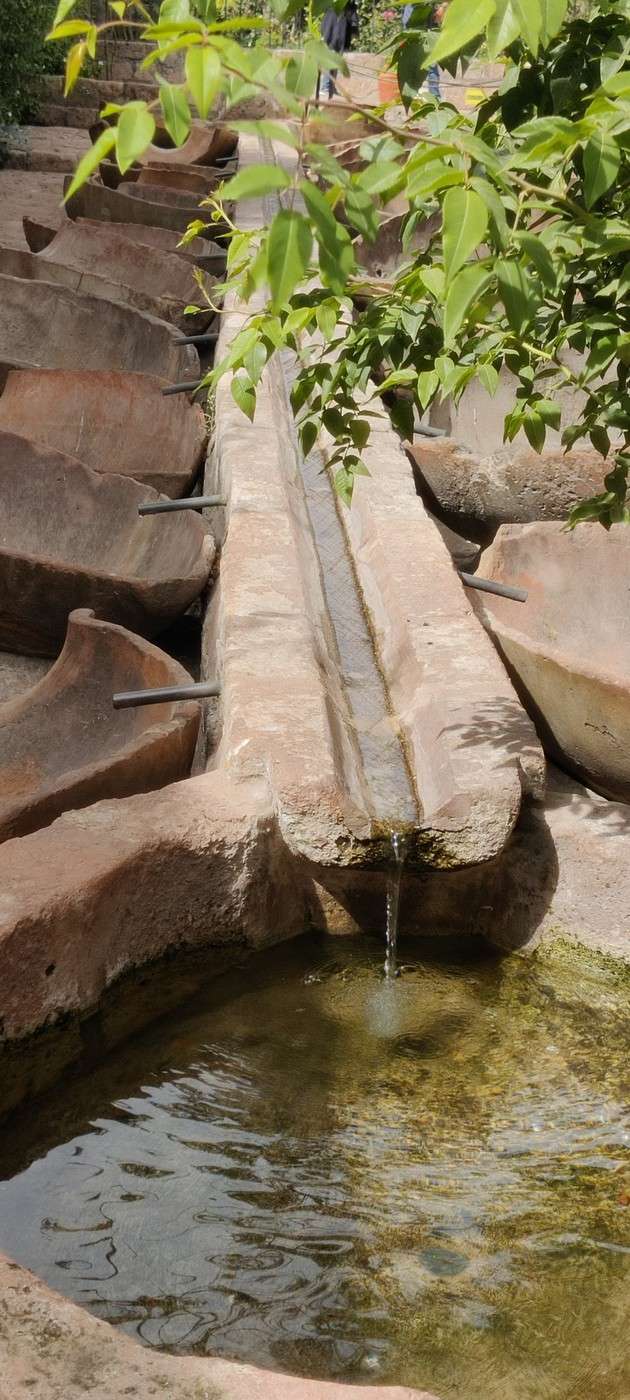
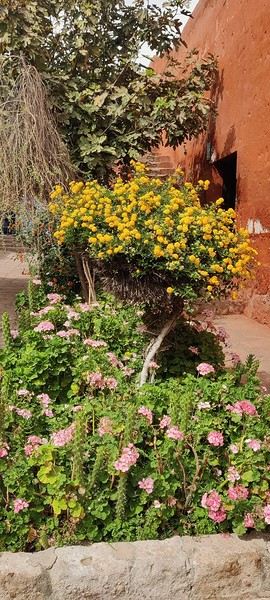
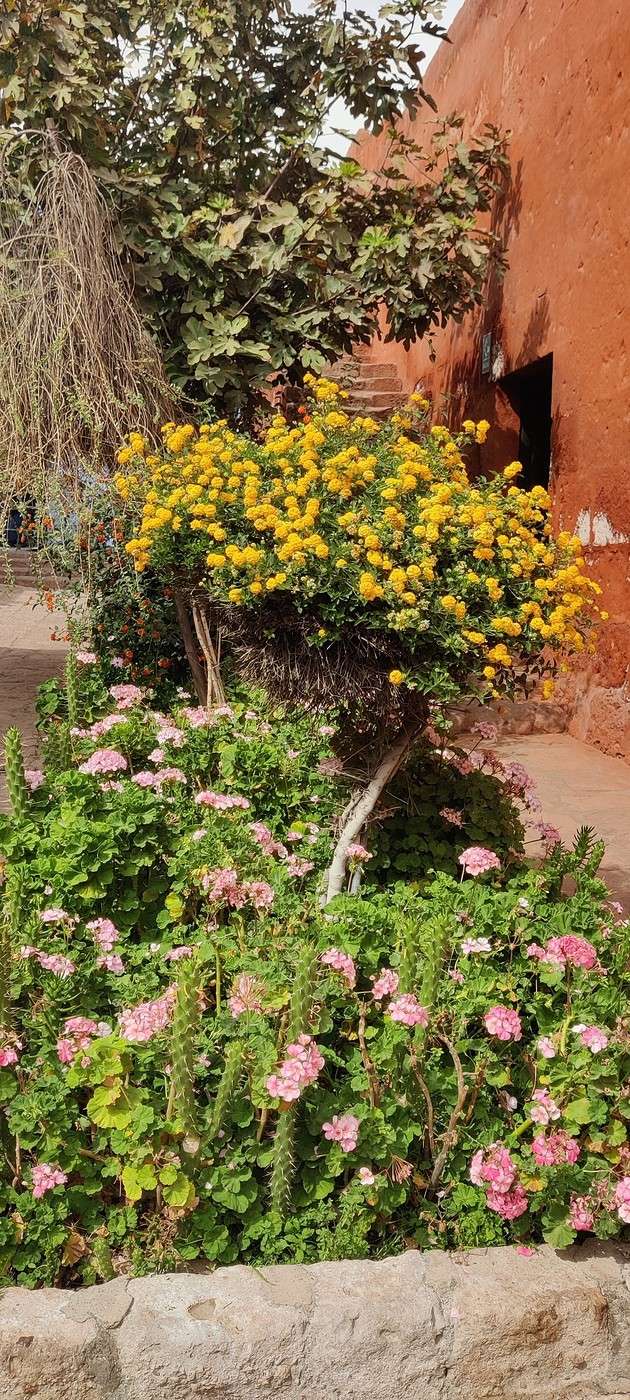
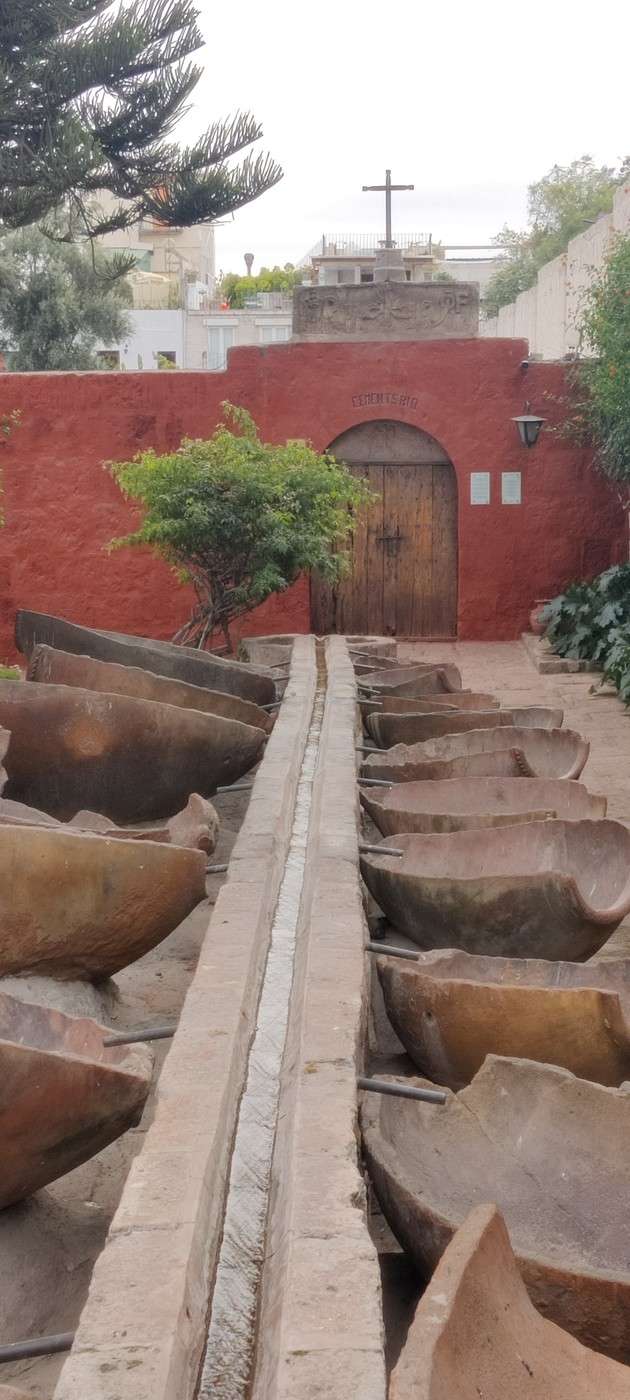
Next, we explore the former dormitory, now a pinacotheca showcasing paintings from the Cusco School, along with different kitchens and long, often flower-lined alleys named after Spanish cities or regions. Red and blue dominate everywhere. We’re told the paintings are regularly repainted, which keeps the monastery vibrantly colorful. The gardens are lush. The most unusual spot might be the laundry area: traditional basins are replaced by half-tubs fed by a clever water system.


All in all, a beautiful visit—both enjoyable and informative. We love wandering, even getting a little lost, in this massive complex of blue, white, and red.

We meet Jorge again at the traditional restaurant *La Victoria*, which he chose for us. He won’t be joining us for lunch, as he has another commitment. We dine on a lovely terrace. My wife orders “pig” and ends up facing a guinea pig split in half lengthwise. Not exactly what she expected! She overcomes her hesitation and gives it a try. The meat is fine, but the skin is overcooked and nearly inedible. For me, the octopus tentacles go down much more easily! We head back to the hotel, stopping to exchange some money for the coming days. The rate here is even better: 4.13 soles for 1 €. We won’t find a better deal!
Peru: A childhood dream finally realized

Larri · 2026-08-12

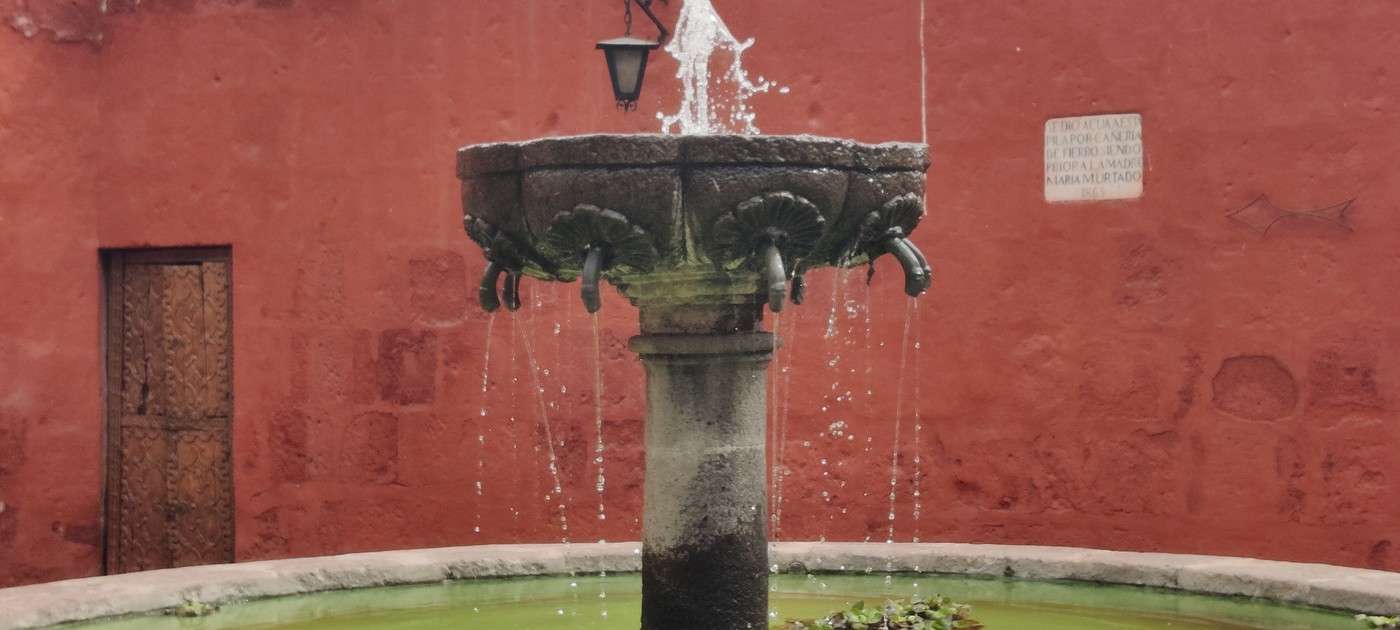
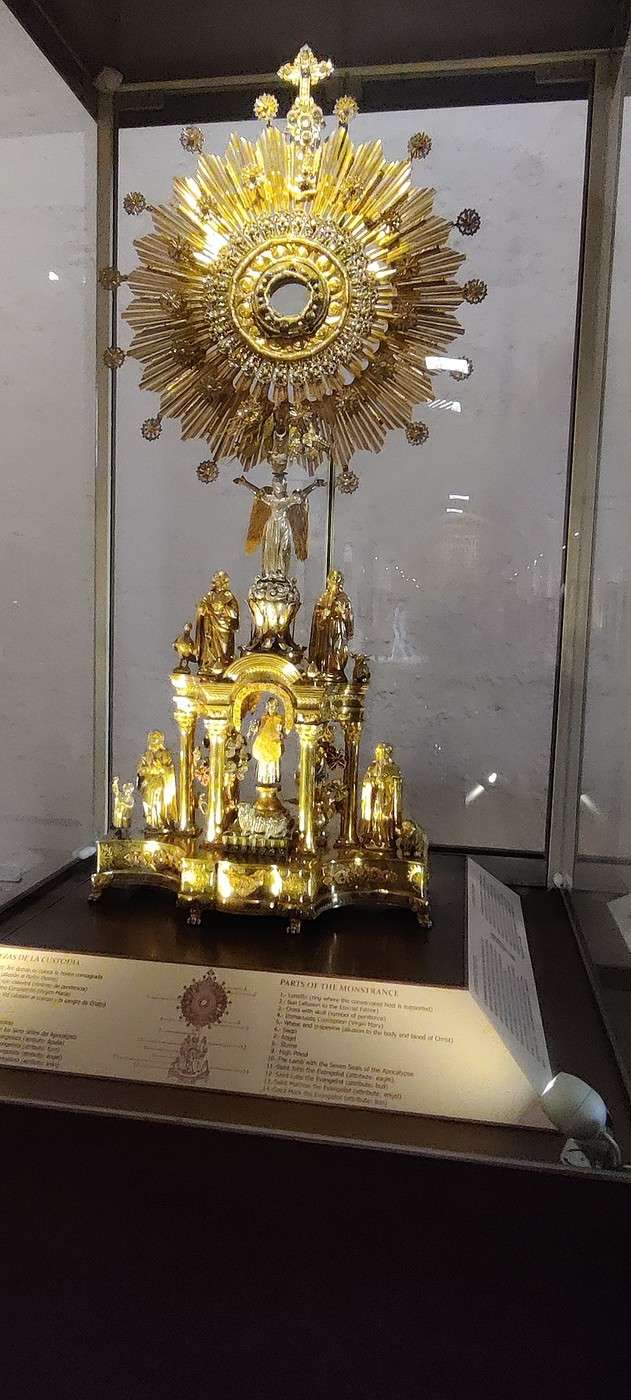
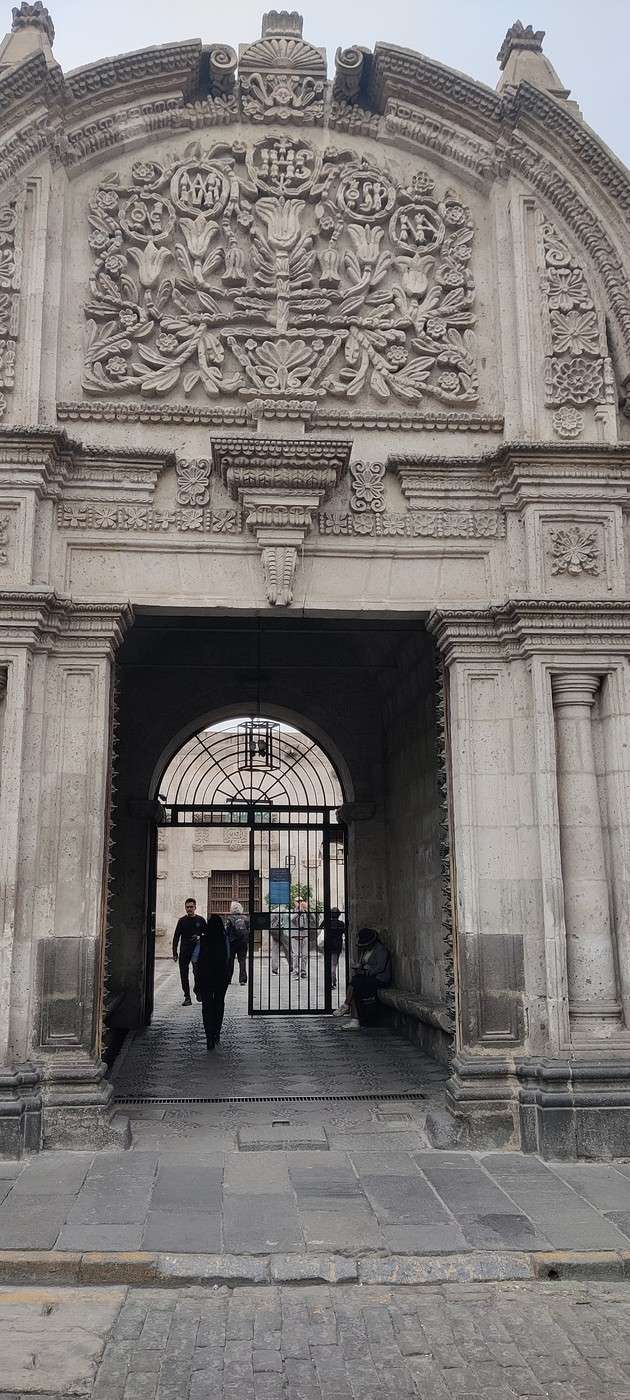
A few photos of the convent, the ornate facades, and the cathedral at night


Peru: A childhood dream finally fulfilled

Larri · 2026-08-12

J4 – Visit to Toro Muerto

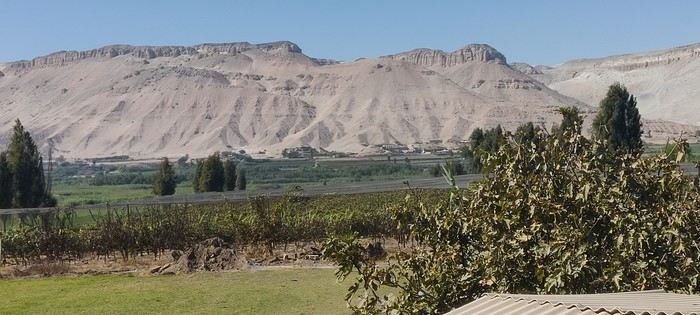
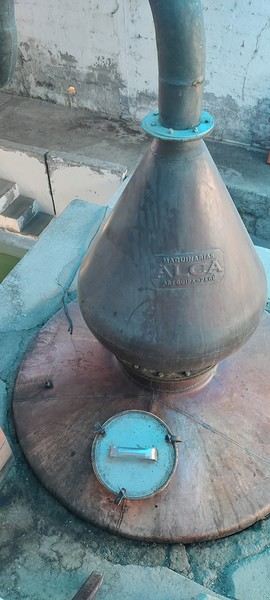
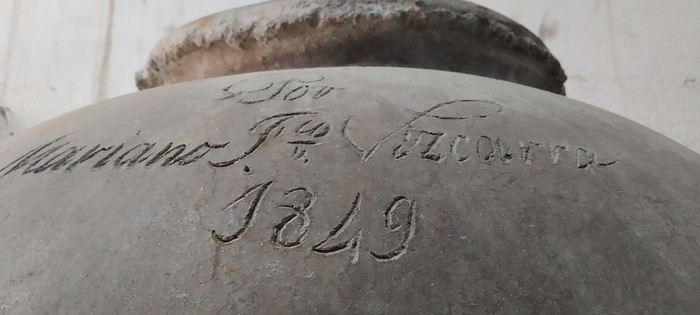
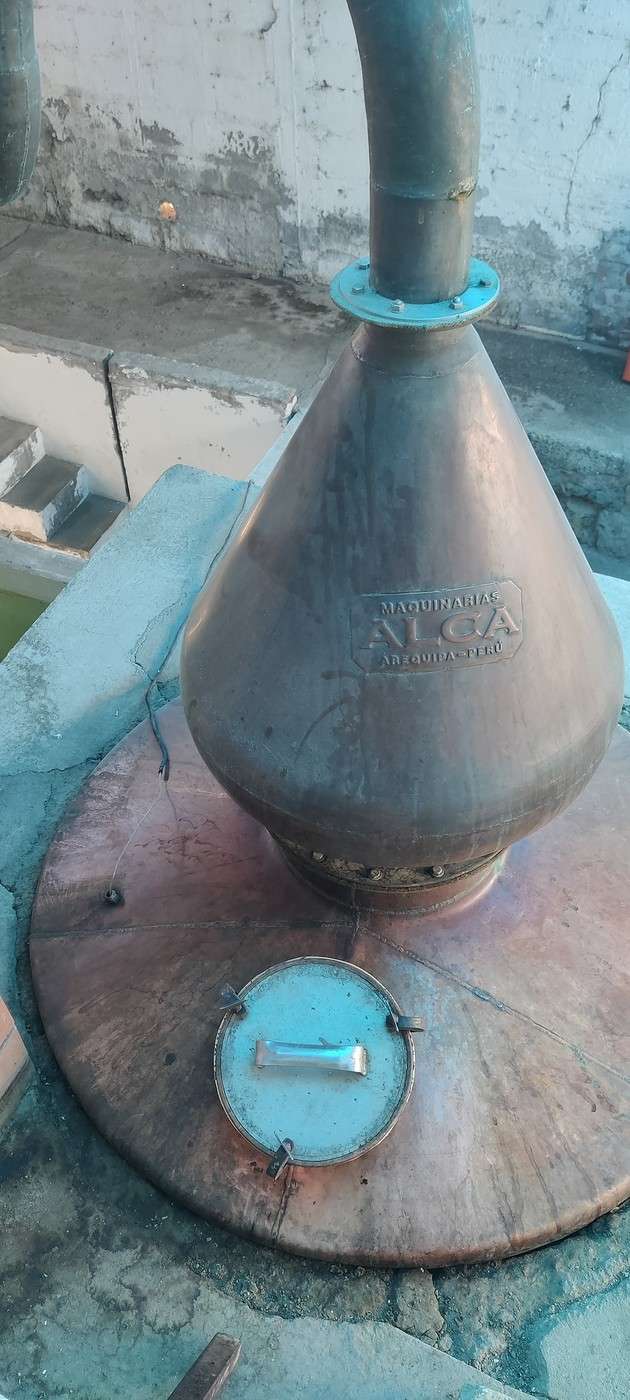
Today, our driver picks us up to take us to Toro Muerto, a renowned rock art site. This visit was suggested by Thomas from the Peru Exclusif agency. The site is located in the central part of the Majes River valley, in southern Peru. We quickly realize our driver isn’t used to going there. On the way, he asks if we want to stop at a vineyard that produces pisco and various wines. Nothing extraordinary, but the visit is time-consuming.


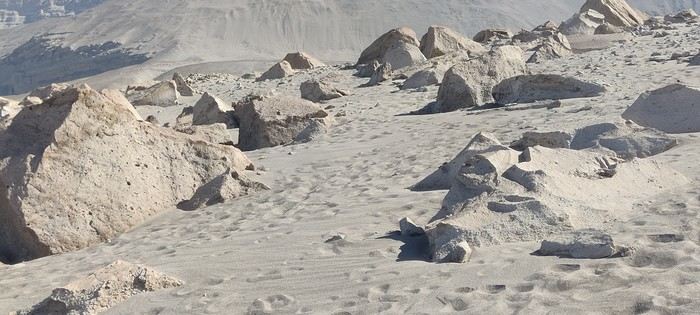
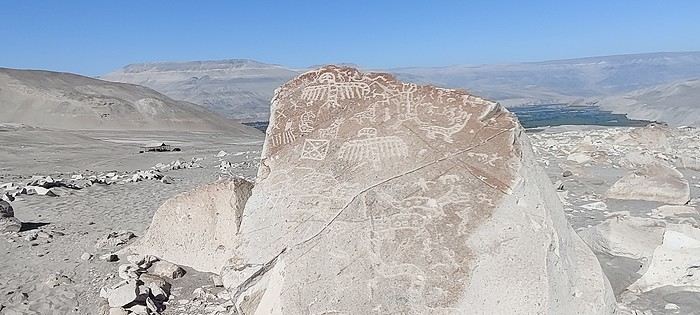
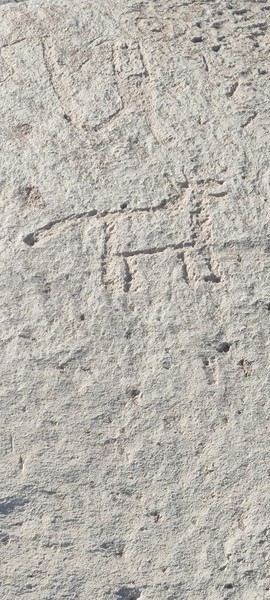
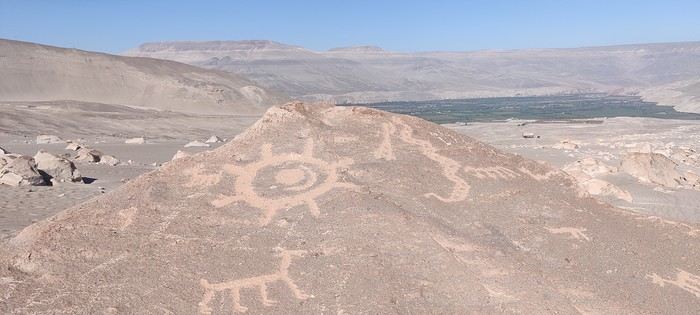
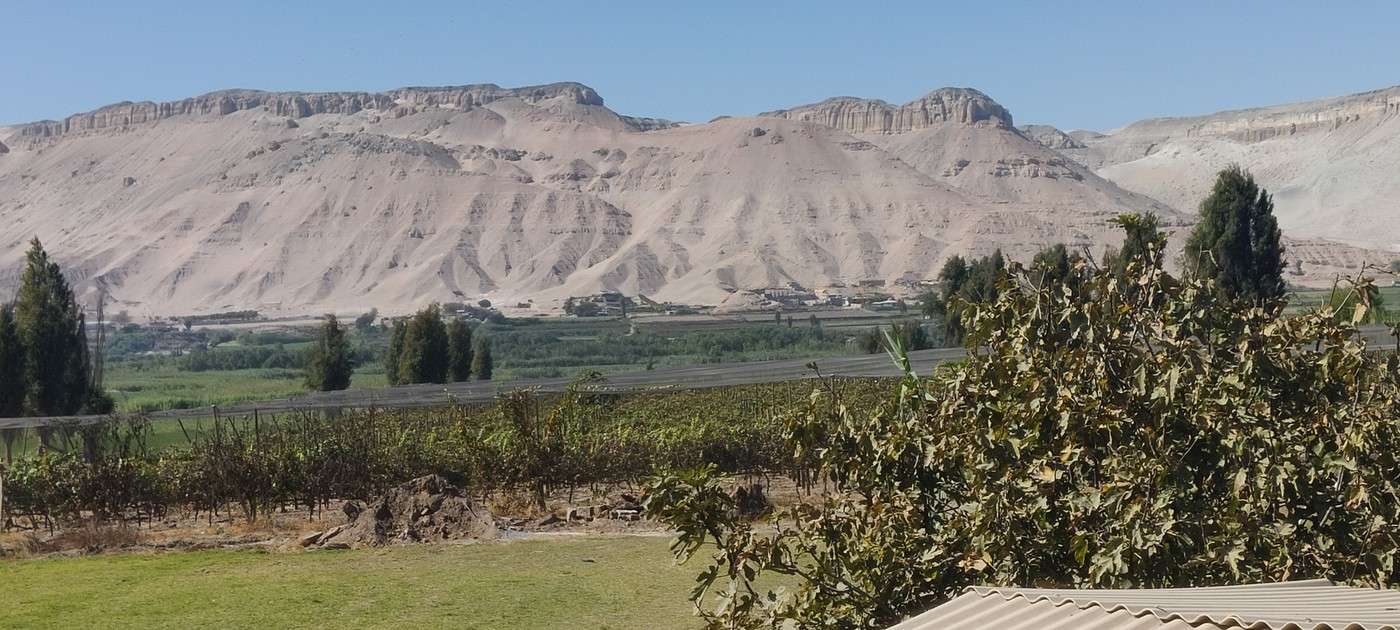
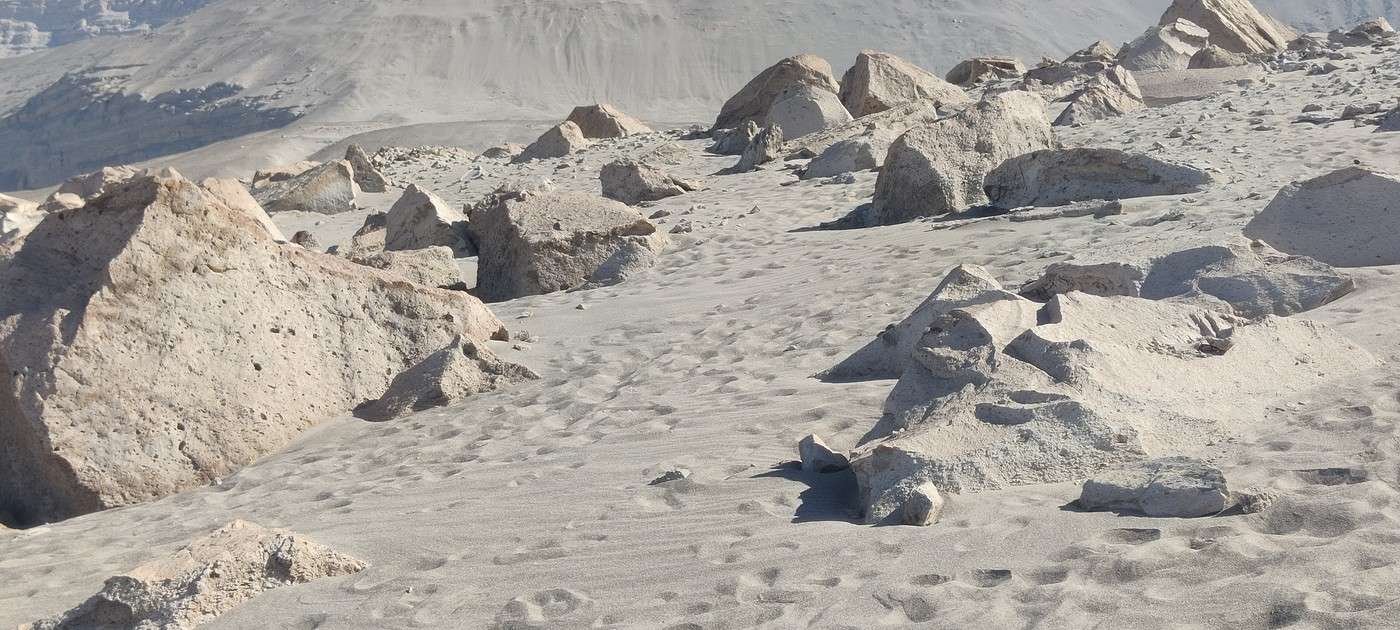
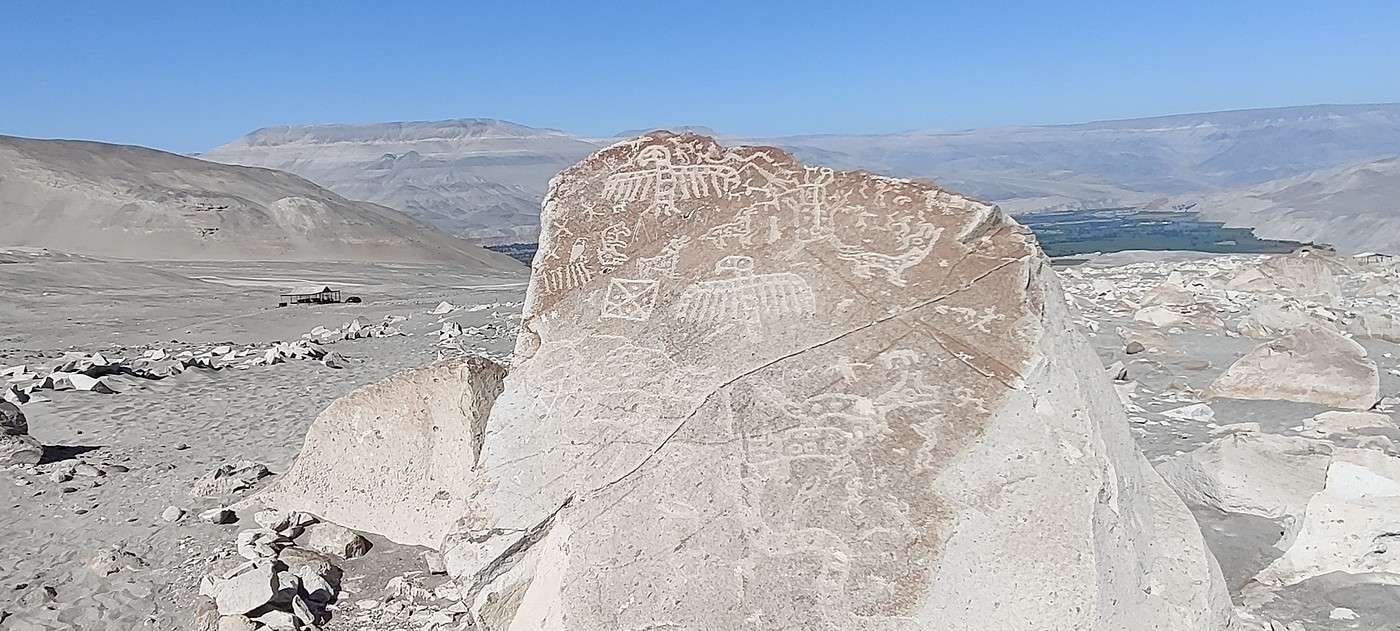
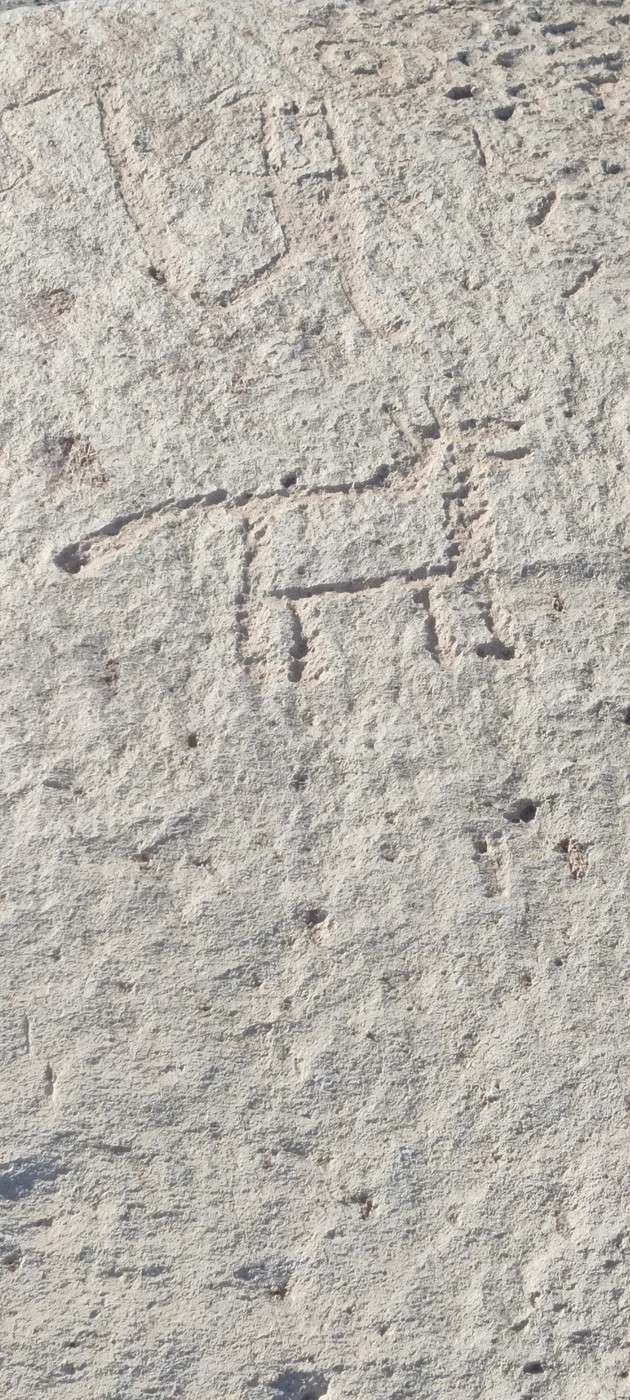
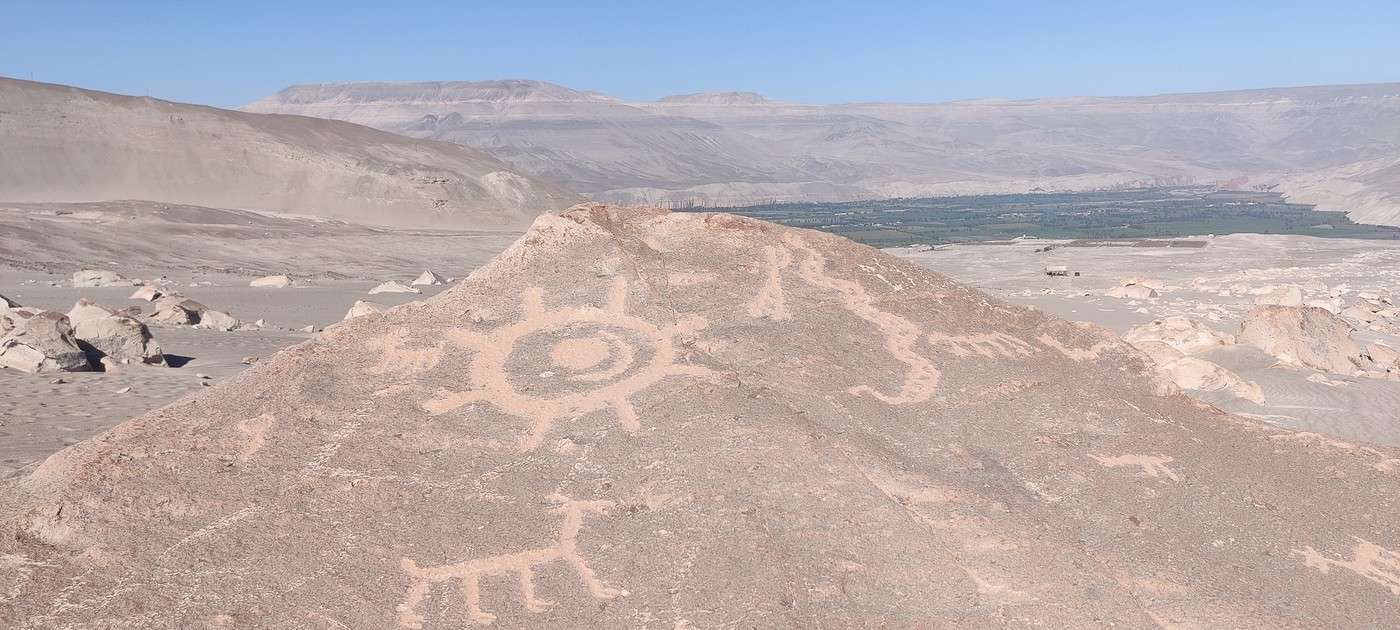
We continue the journey, taking part of the famous Pan-American Highway—a vast road network that, in principle, connects Alaska to the southern tip of South America. The traffic, mostly large trucks, is heavy. We turn off toward the southwest to reach the Majes Valley, about 170 km from Arequipa. Surrounded by towering arid cliffs, it’s a surprisingly green and fertile valley where vegetables, fruits, and vines are grown. We arrive around 1 p.m., after more than four hours on the road, in Querulpa, and get a bit lost trying to find the site entrance. There’s no one at the reception or on the site itself. In the distance, we see a moped speeding toward us through a cloud of dust—it’s the Ministry of Culture representative coming to collect the entrance fee! After paying, he invites us into a vast desert area to discover the famous petroglyphs, with nothing more than a "figure it out yourselves!" So there we are, in the middle of the desert under the scorching sun, surrounded by thousands of volcanic rocks featuring carvings of animals—camelids, felines, snakes, and all kinds of birds—as well as plants, humans, anthropomorphic figures, and geometric shapes, scattered over several square kilometers. Contrary to what we thought, these carvings weren’t just made by the Wari, who preceded the Incas. They were created by several populations that succeeded one another in the region, particularly during the Wari and Chuquibamba periods, up to the Inca era. Most of the carvings are roughly dated between 800 and 1500 CE. The site now has 2,600 officially inventoried carved rocks spread over a vast area. Under these conditions, it’s easy to see why it’s so hard to find your way! Without a guide, a map, or any signs, we wander around somewhat randomly in search of the most emblematic carvings.


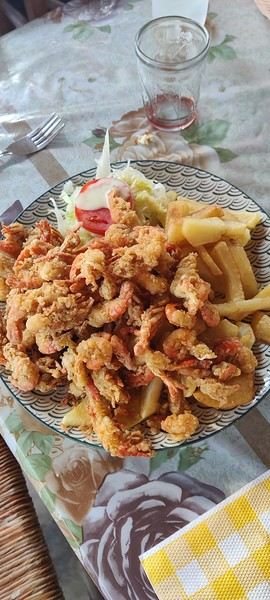
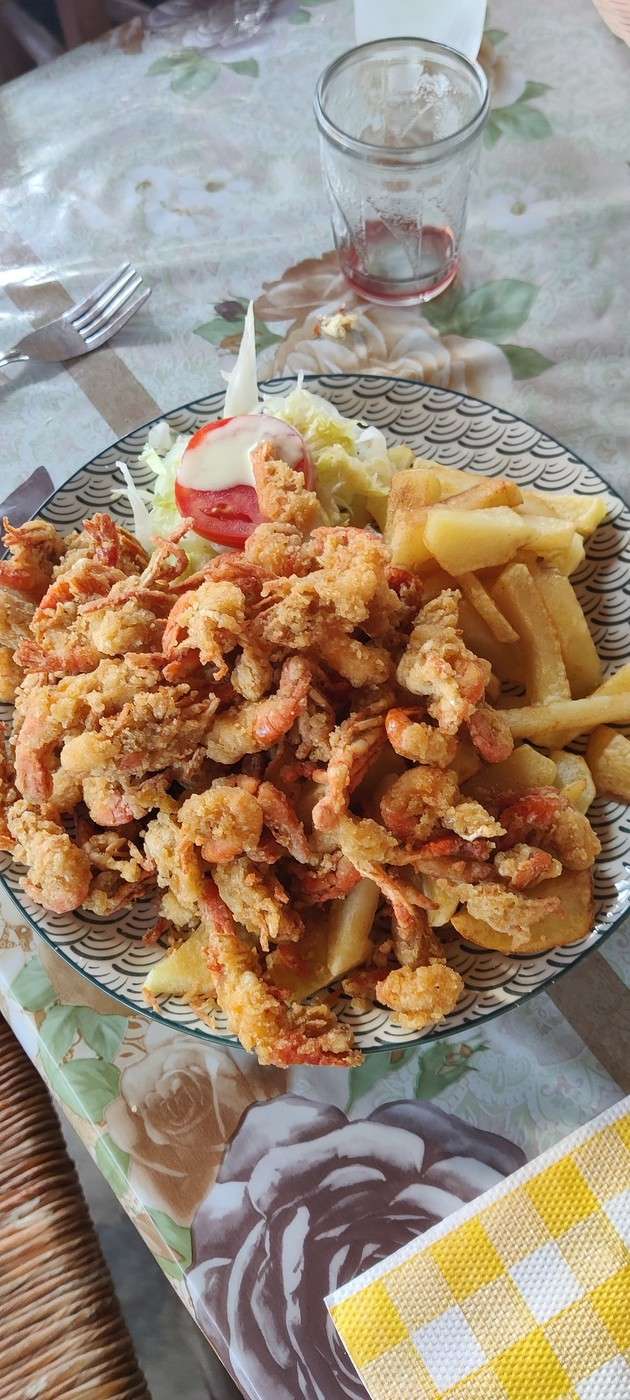
We leave dripping with sweat, feeling like we missed the best ones. It’s 2:30 p.m., and lunchtime. We head to the banks of the Majes River, where the famous river shrimp is caught, in search of a restaurant serving the renowned *Chupe de Camarones*!


It’s very filling and cheap, but let’s just say it wasn’t amazing. It’s past 4 p.m. when we leave the table to head to the site near Querulpa, where dinosaur footprints were discovered by chance in 2002. The Querulpa Chico site is particularly known for its tracks of large carnivorous dinosaurs. Big disappointment: the site closes at 4 p.m.! All that’s left is to head back to Arequipa. Night falls around 6 p.m., and it’s only at 8:30 p.m., in total darkness, that the driver drops us off at the hotel! He’s exhausted, and it’s understandable—we’ve been on the road for over twelve hours. Tonight, we’ll settle for some snacks for dinner. Day’s summary A lot of kilometers and fatigue for a visit that, in the end, was quite disappointing, mainly due to the lack of information. Toro Muerto is truly exceptional in its size and the number of carvings it holds. But without a guide, a map, or any signs to locate the most remarkable petroglyphs, it feels more like randomly searching for carved stones than discovering a major archaeological site. It’s easy to see why Toro Muerto isn’t part of the usual tourist circuits. In our opinion, the visit should be reserved for true rock art enthusiasts… or done with a guide who can take you directly to the most interesting carvings!

Peru: A Childhood Dream Finally Fulfilled

Larri · 2026-08-13

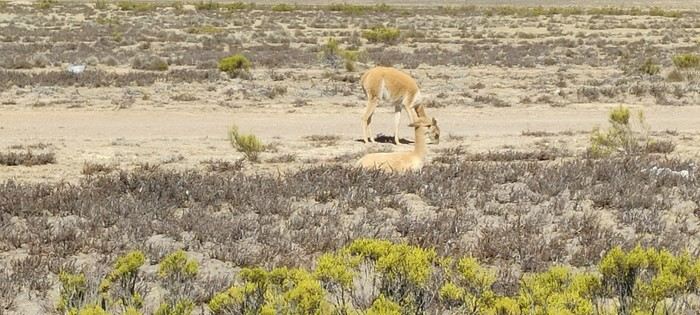
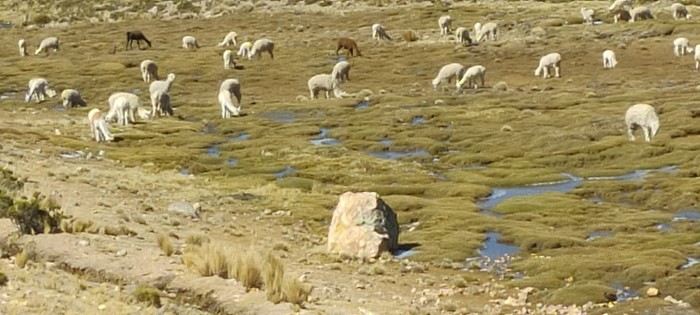
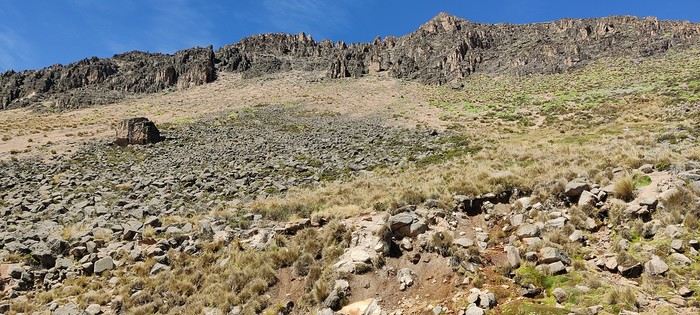
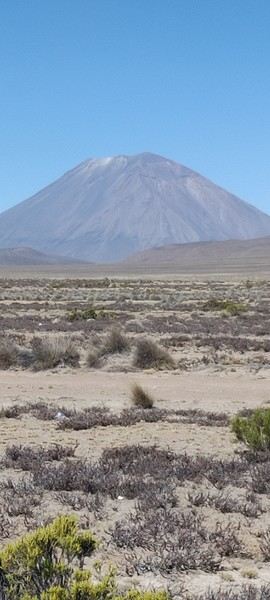
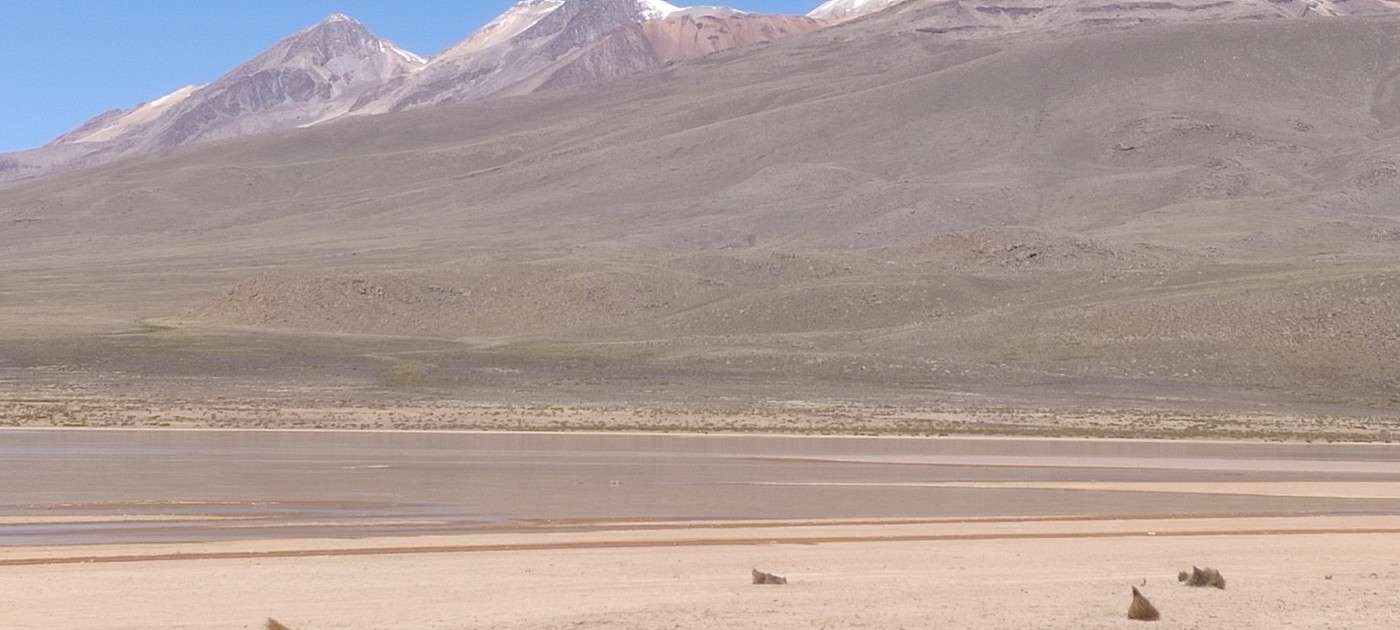
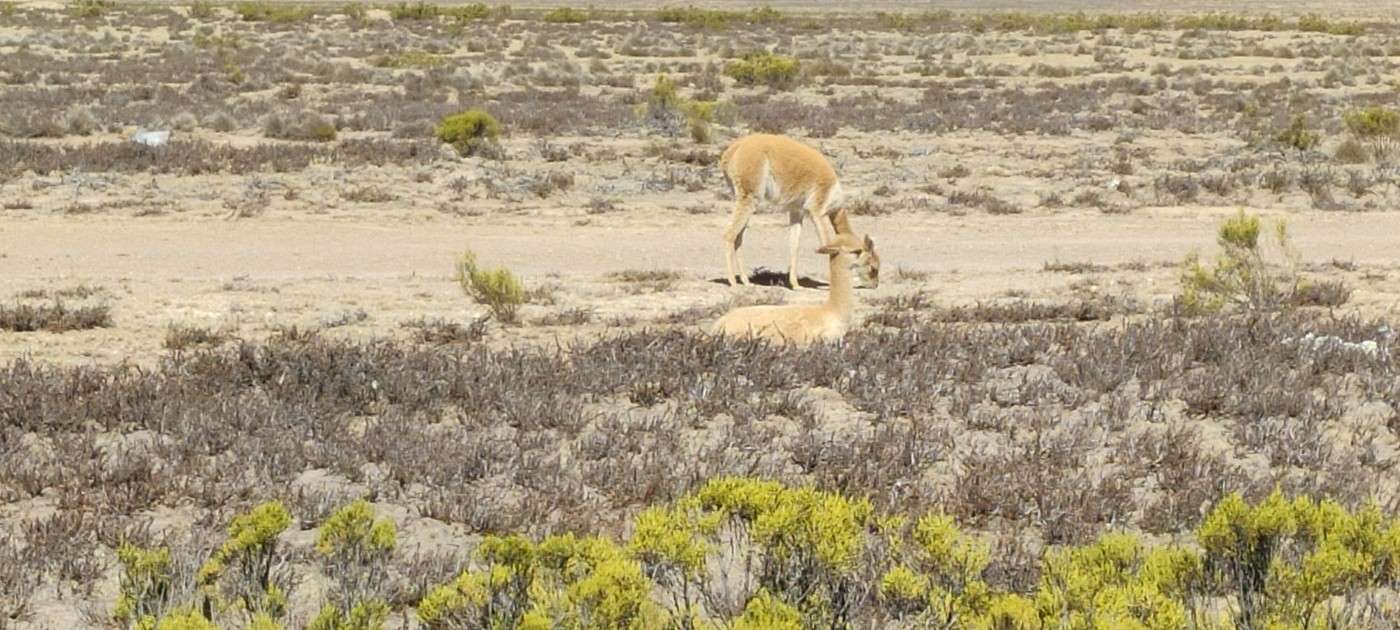
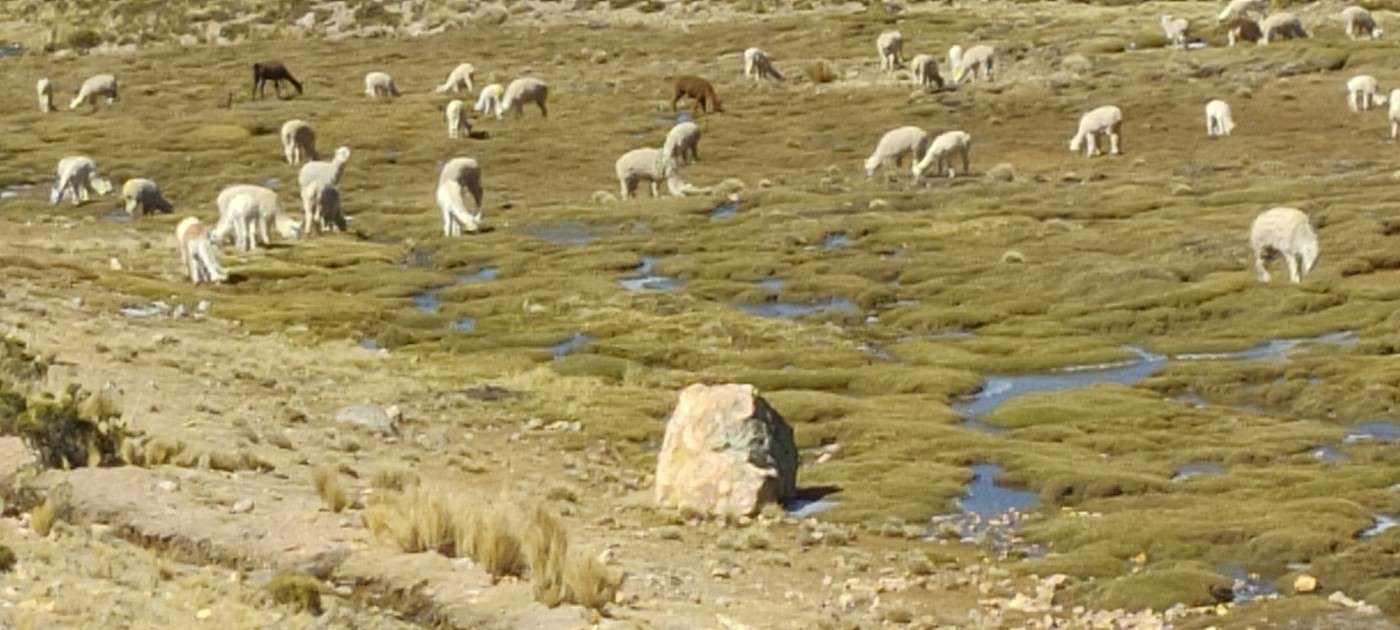
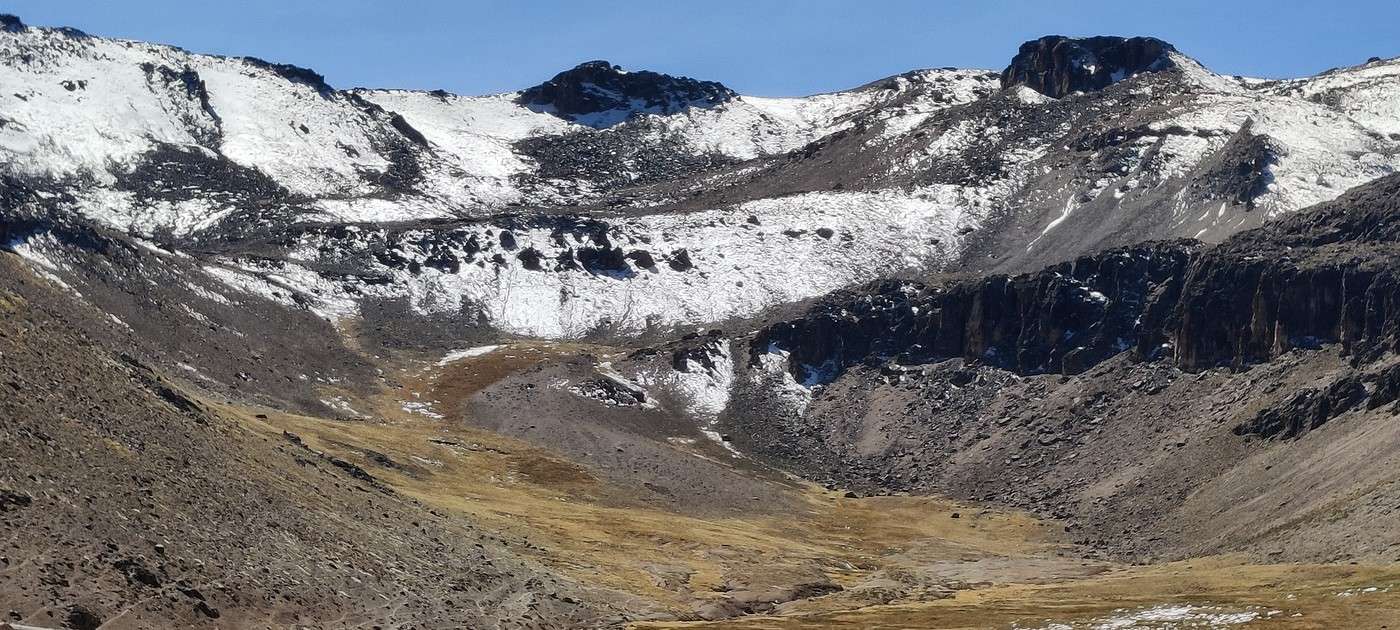
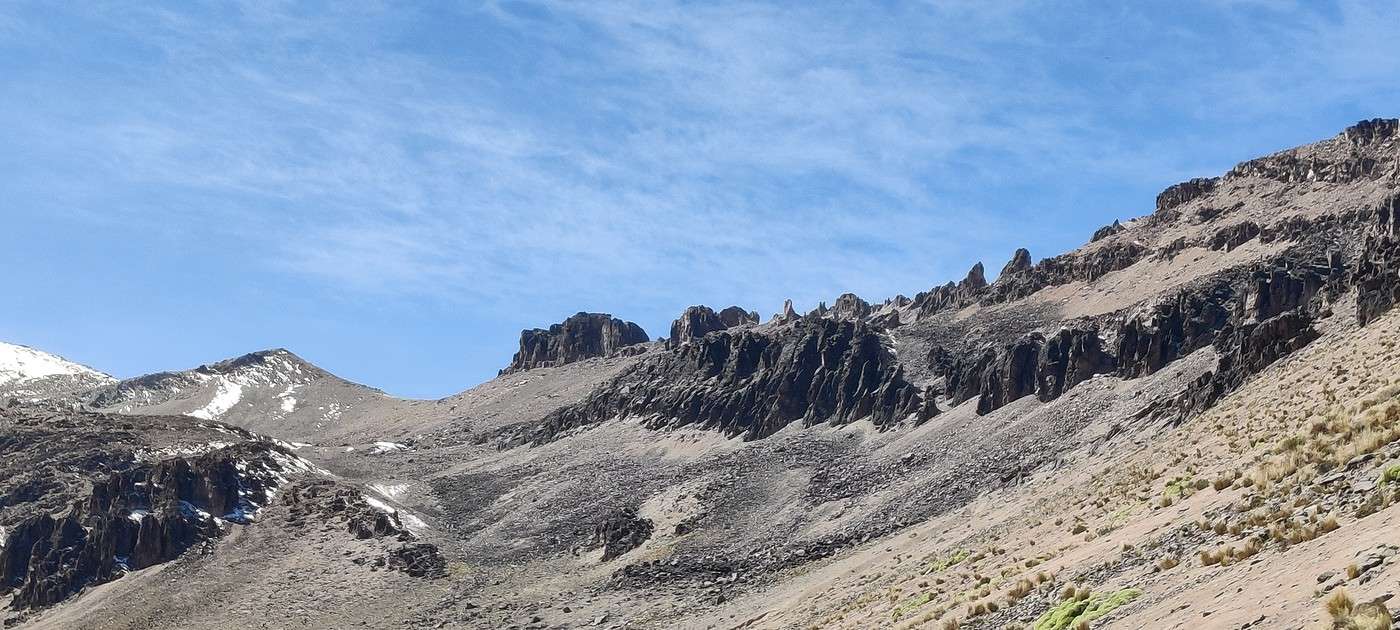
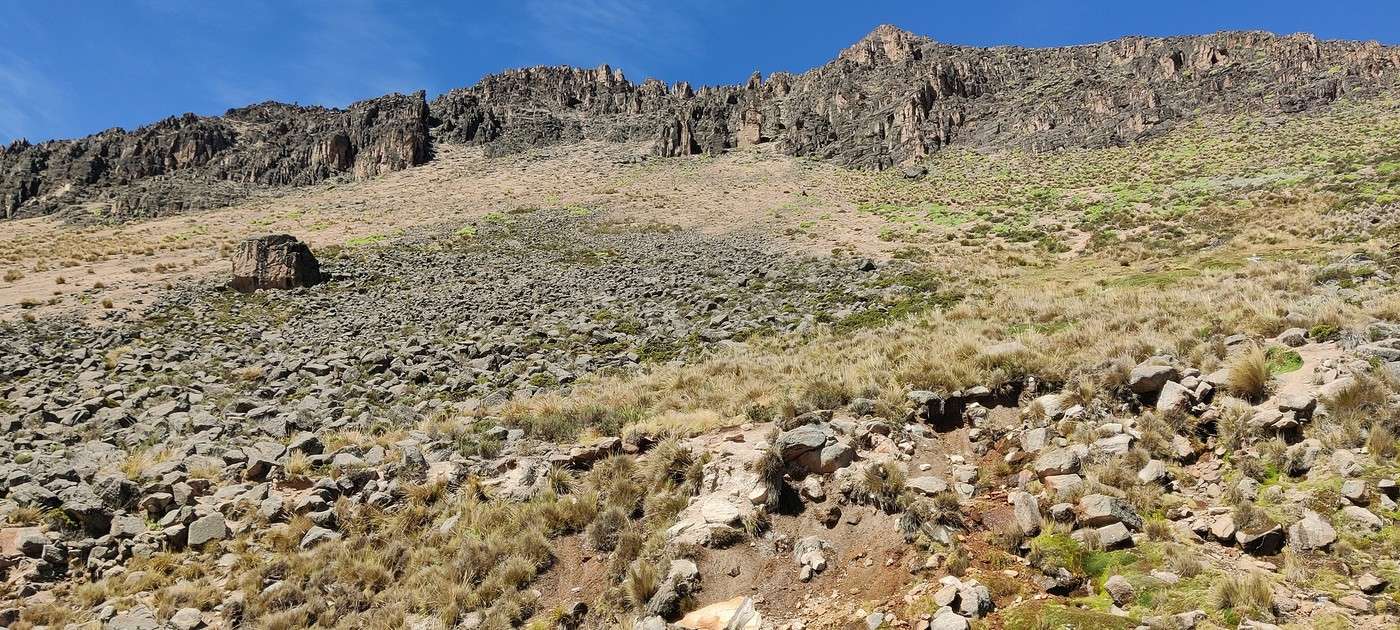
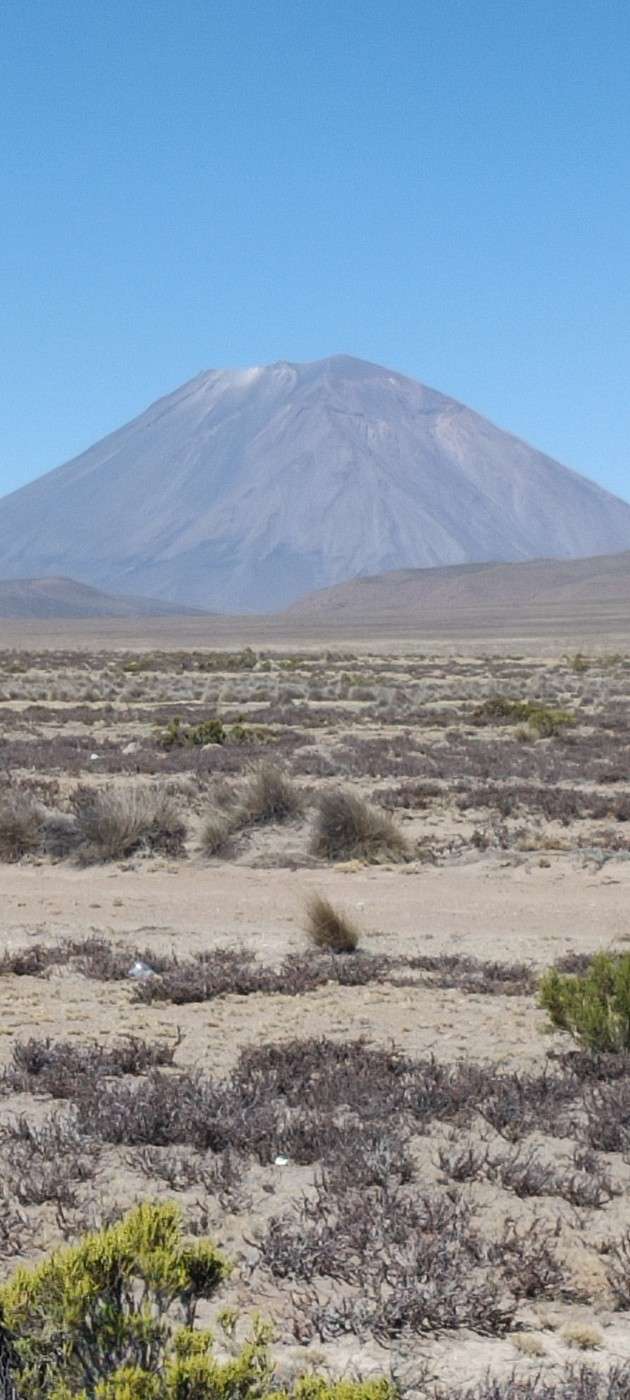
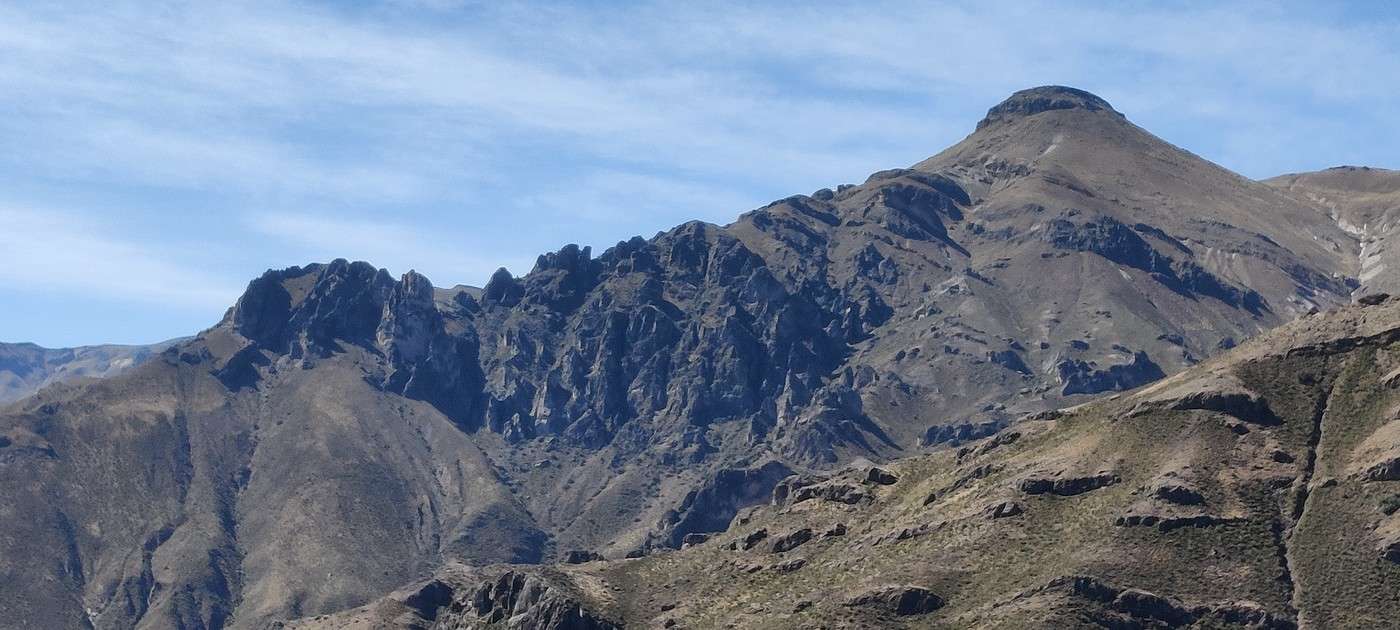
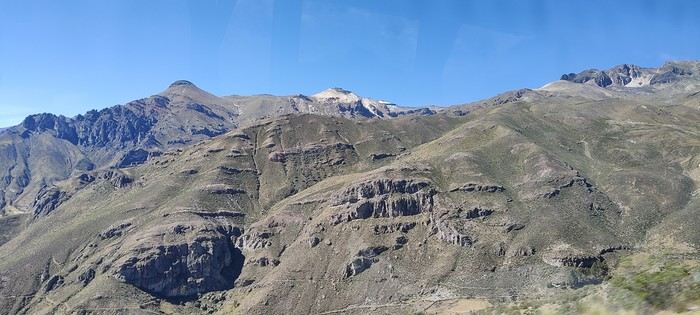
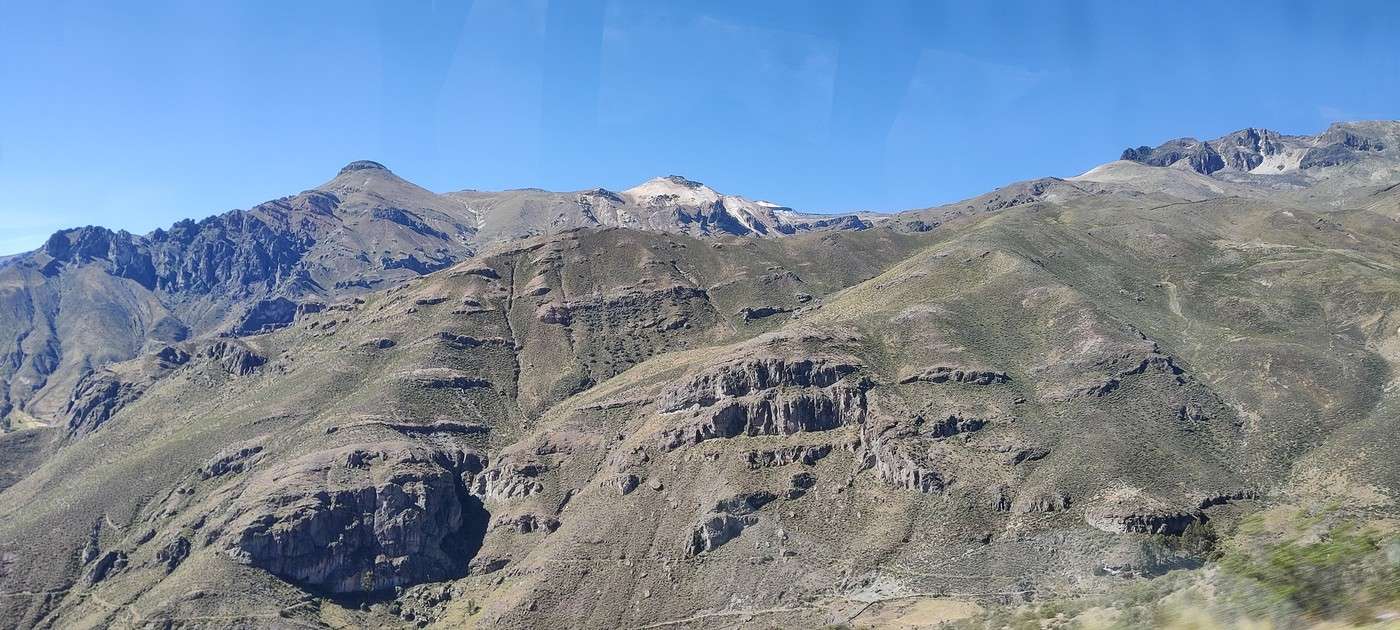
Day 5 – On the Way to Colca Canyon Despite the tough day before, Rulio is on time to drive us to Colca Canyon. We head northwest, skirting the Chachani volcano before crossing the Salinas and Aguada Blanca National Reserve. The road itself is an attraction, with its endless desert landscapes. It gives us the chance to spot our first vicuñas, as well as llamas and alpacas. We make a few stops to admire the scenery and take photos.


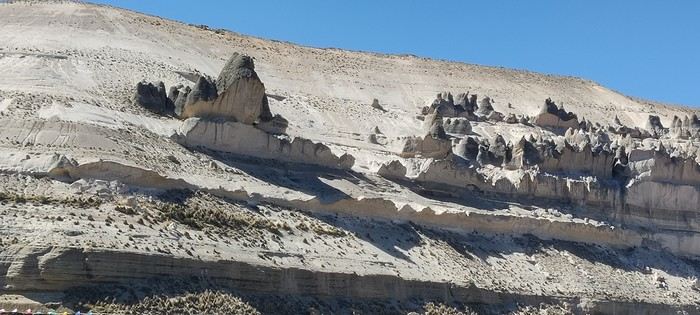
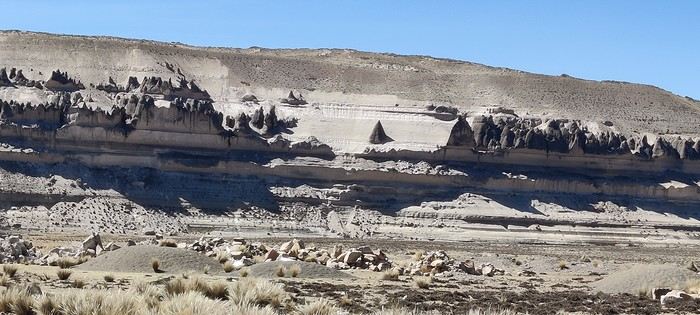
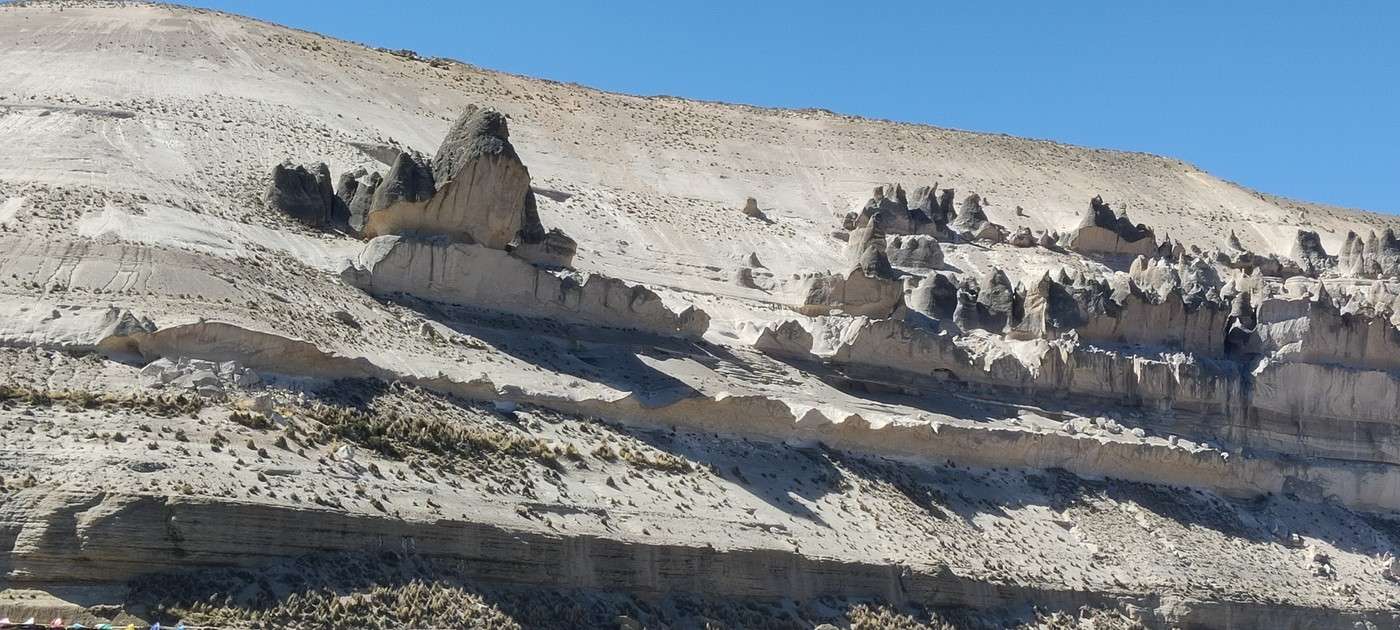
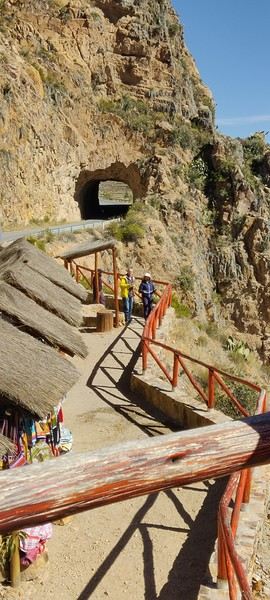
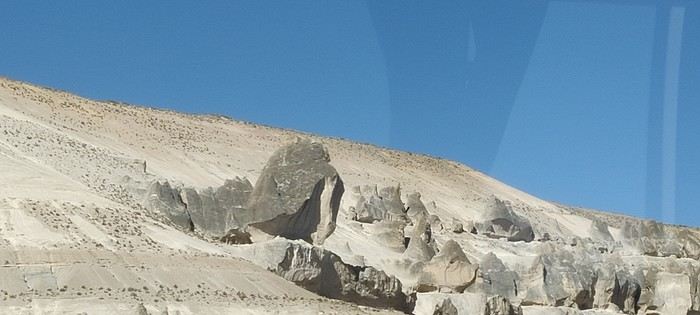
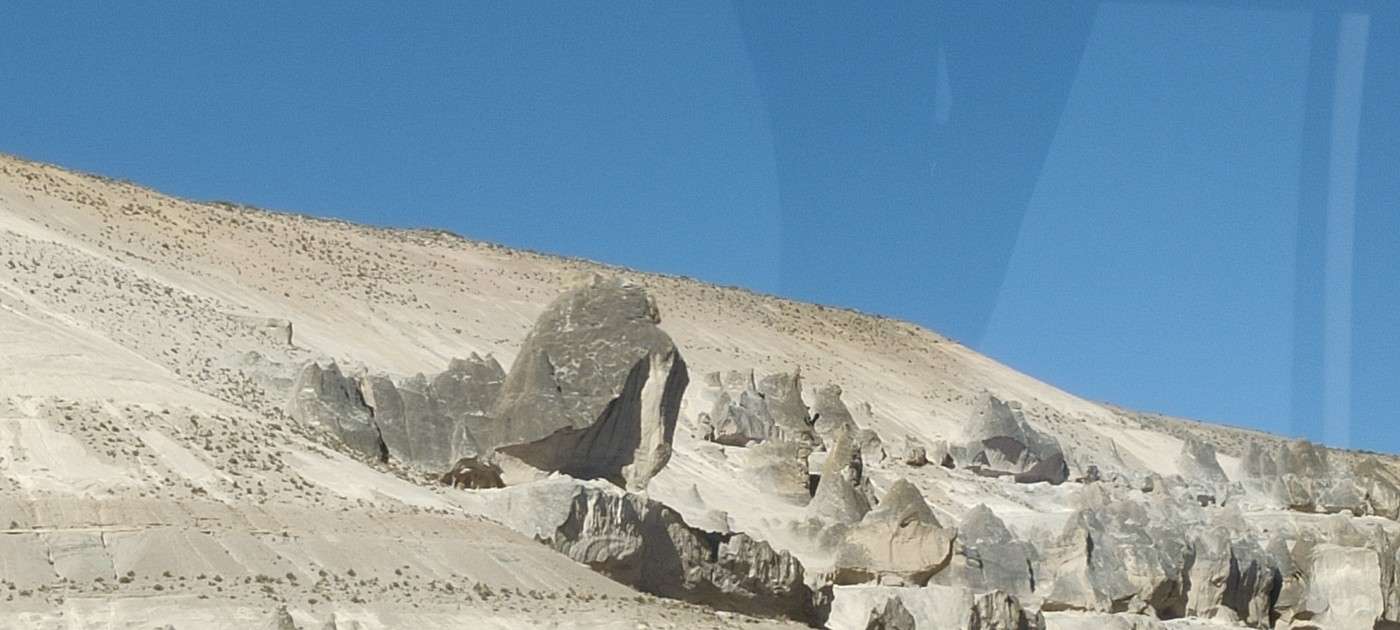
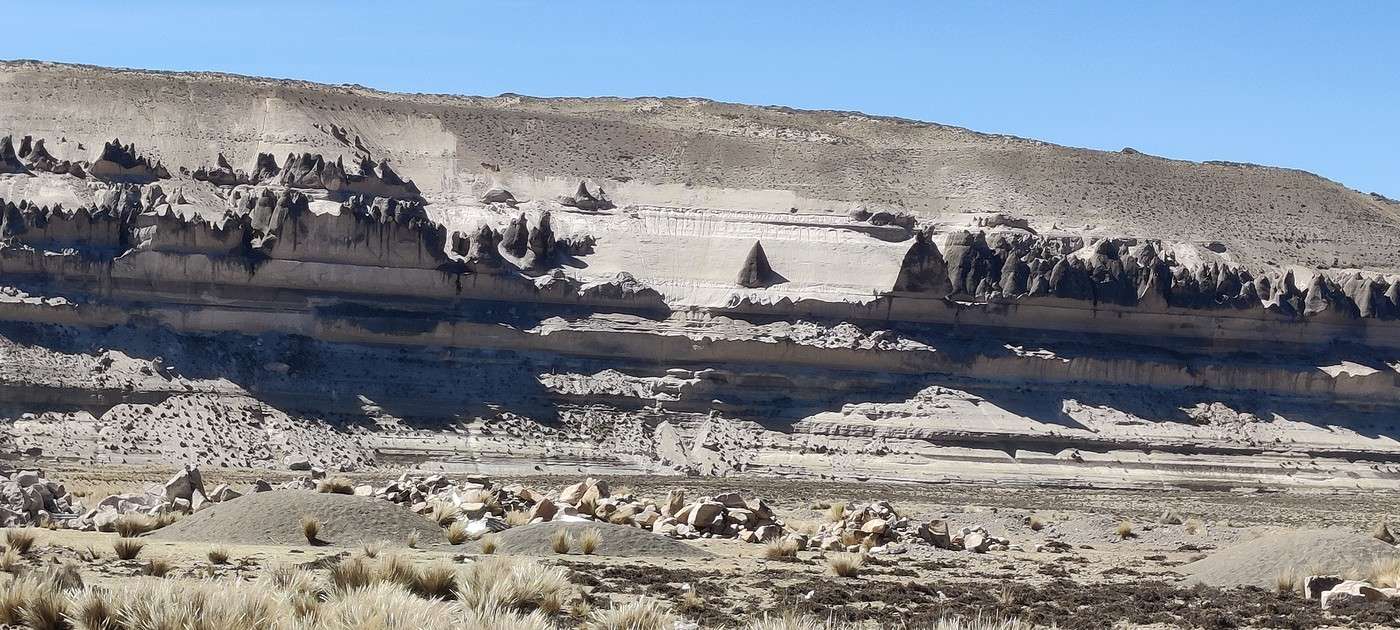
Our driver has us buy coca candies to prepare for the altitude. A little further on, in Patapampa, we’re offered coca leaf tea, presented as a way to combat altitude sickness. In the area, we can also see the Puruña stone forest, sculpted by erosion.

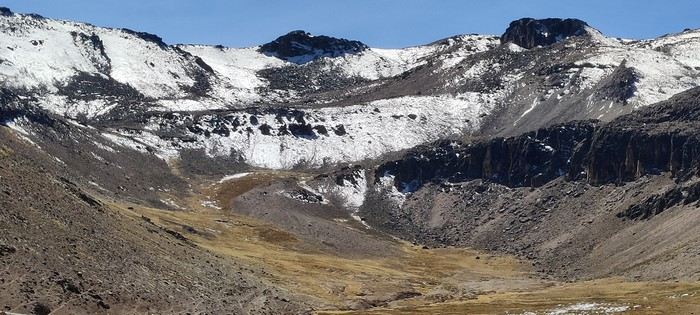
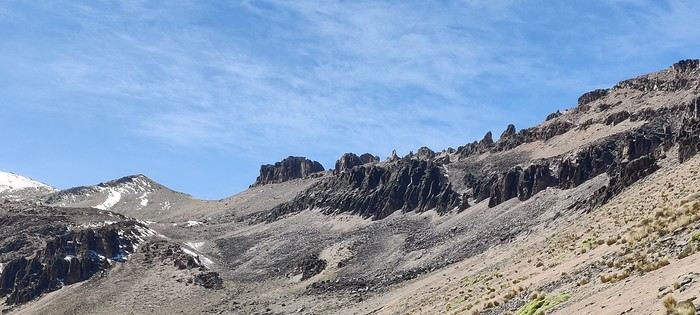
We continue to the Patapampa Pass, at 4,910 meters. The Volcano Viewpoint lives up to its name: it offers a remarkable view of the snow-capped peaks of Ampato (6,288 m), Sabancaya (5,976 m)—an active volcano—and Hualca Hualca (6,025 m). Further on, beyond the canyon, stands the Chila mountain range, home to Mismi, often considered the source of the Amazon.


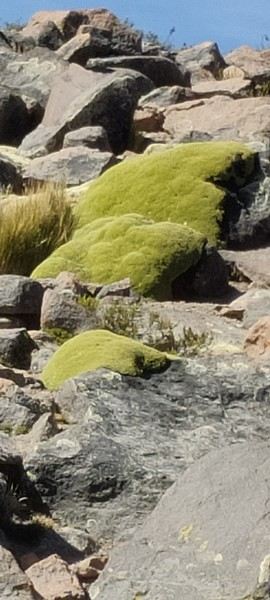
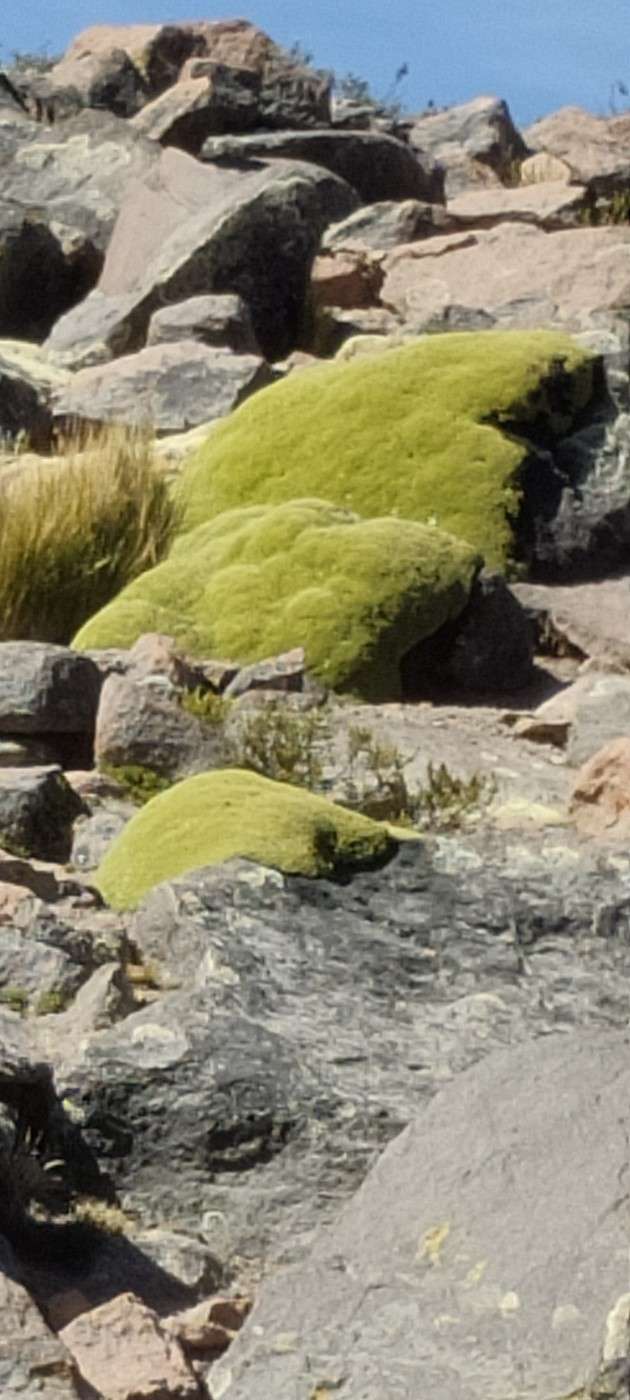
At this altitude, vegetation is scarce. One plant catches our attention: Azorella compacta. This perennial Andean plant is remarkably adapted to the cold, drought, and extreme temperature variations. It forms large, compact cushions in a nearly fluorescent green, hugging the terrain and sometimes blending into the rocks.


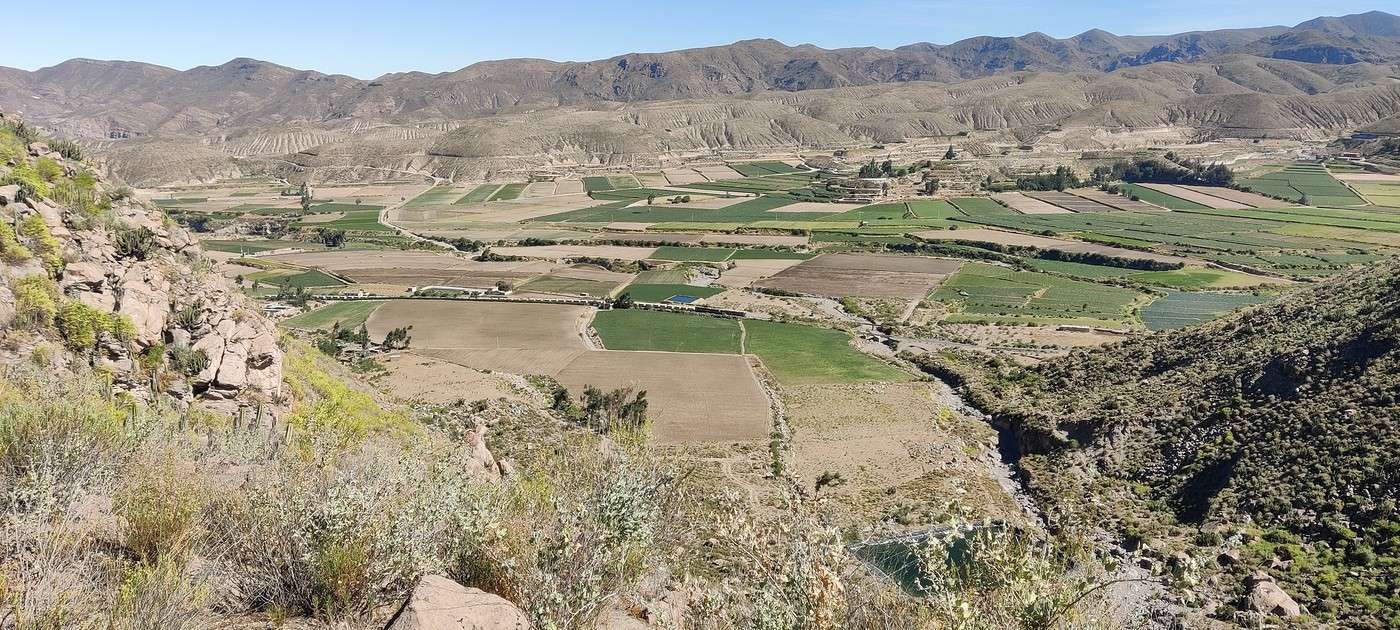
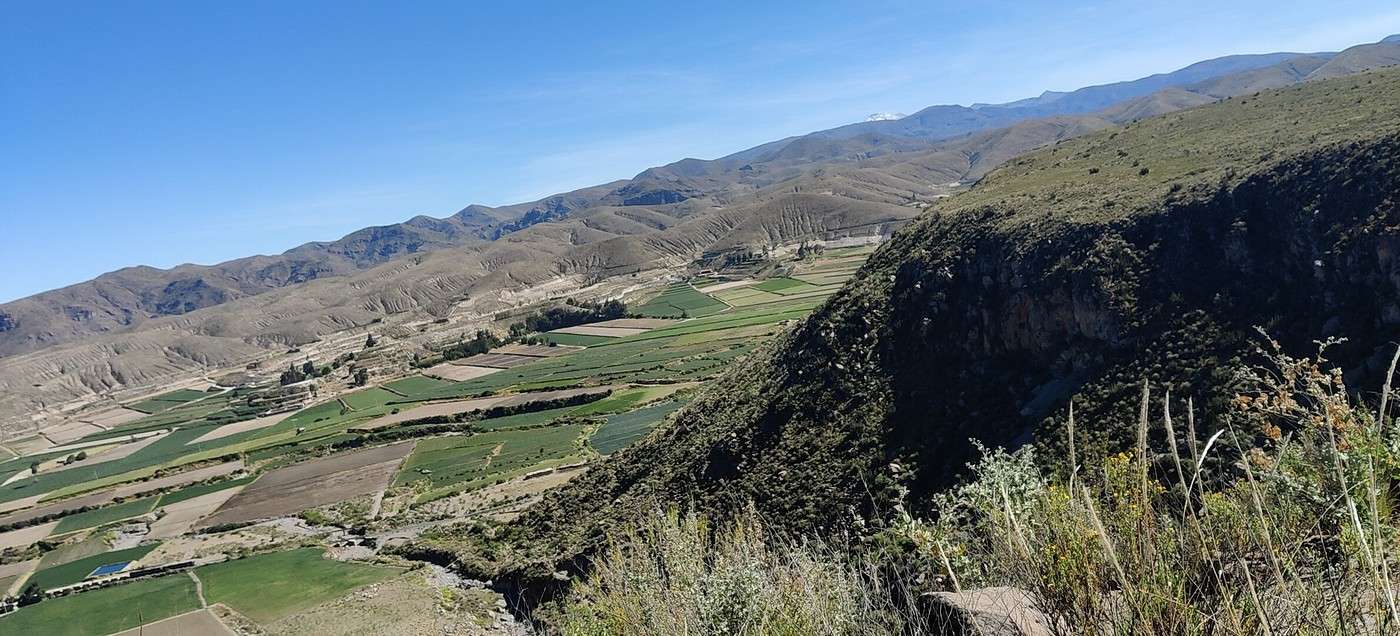
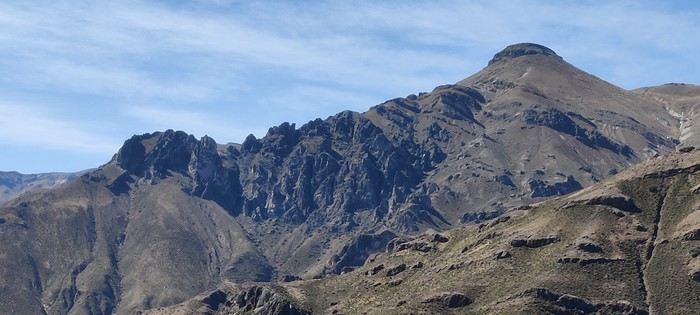
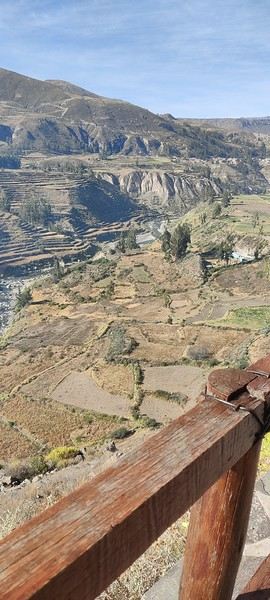
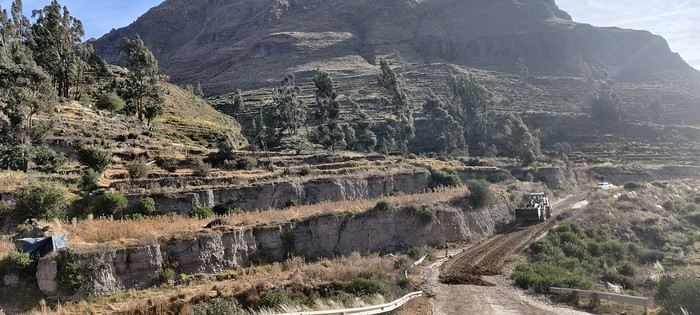
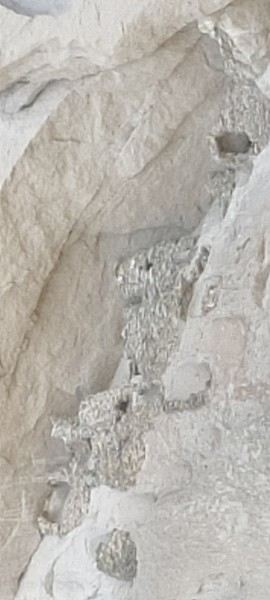
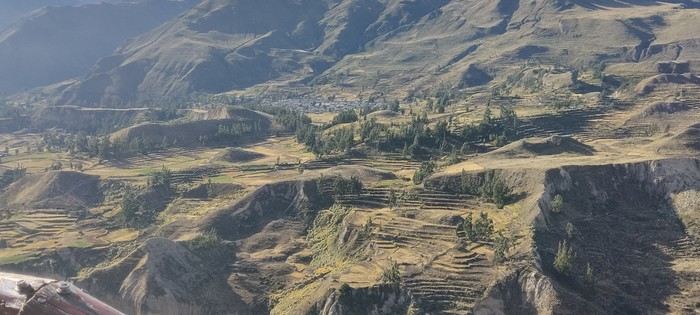
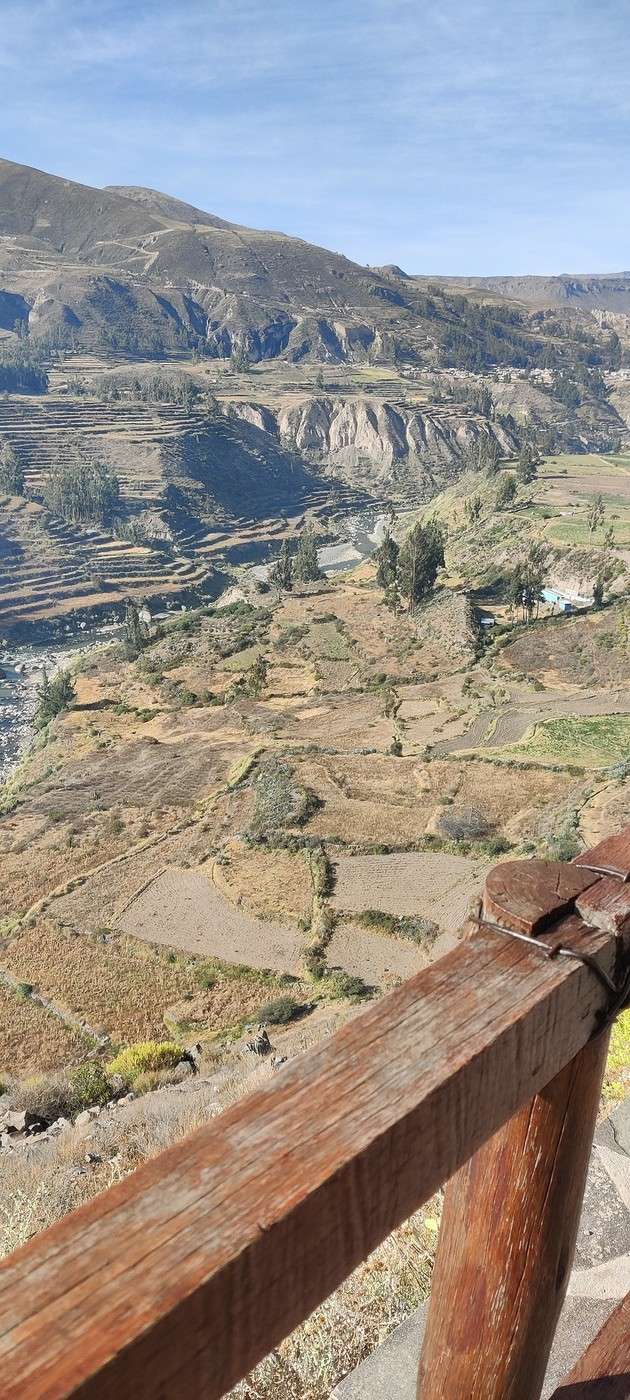
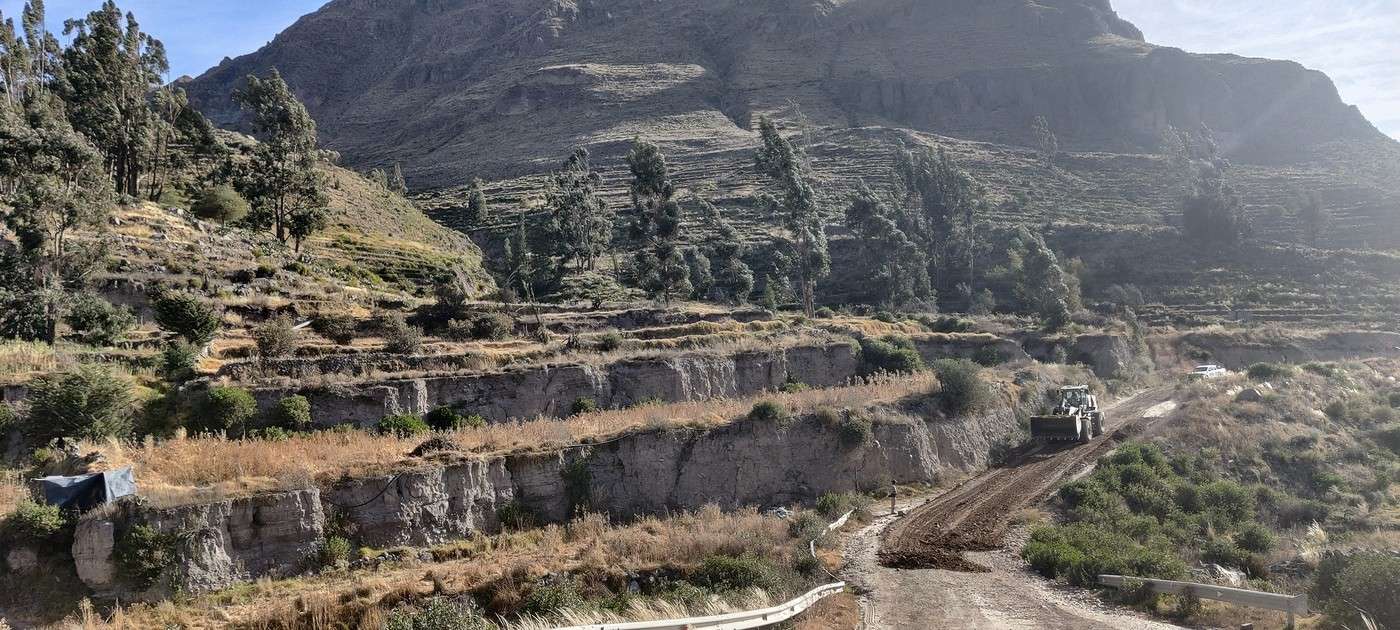
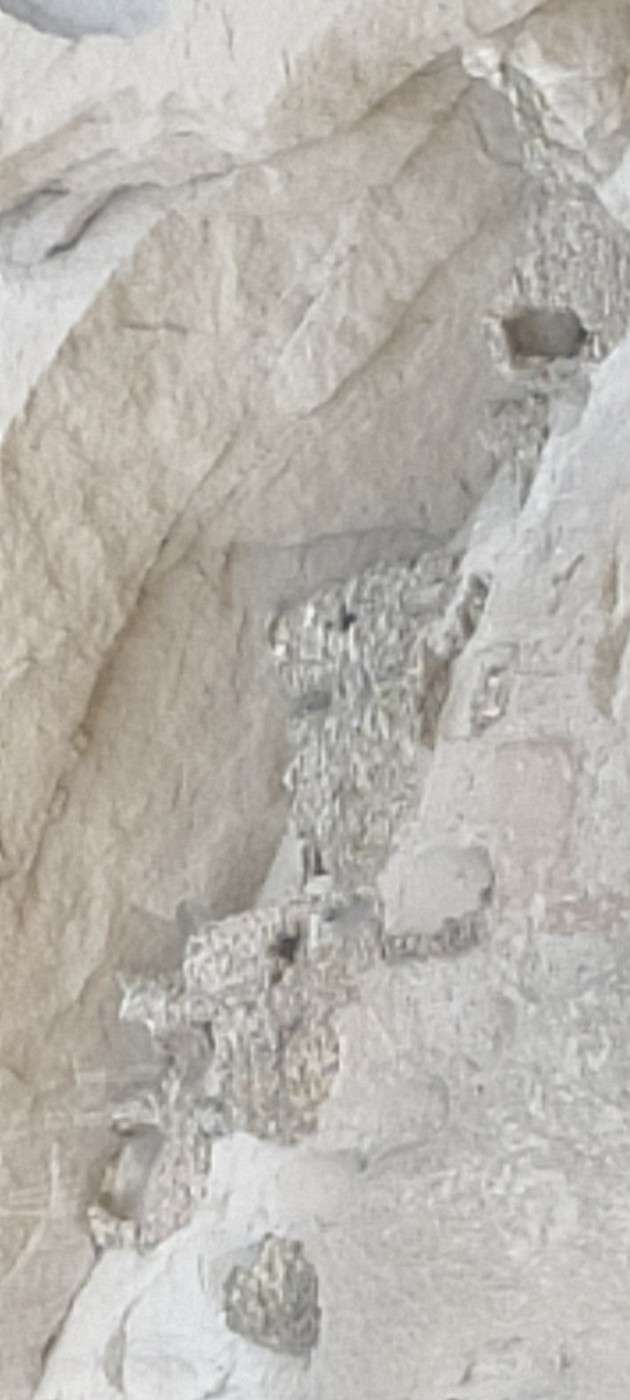
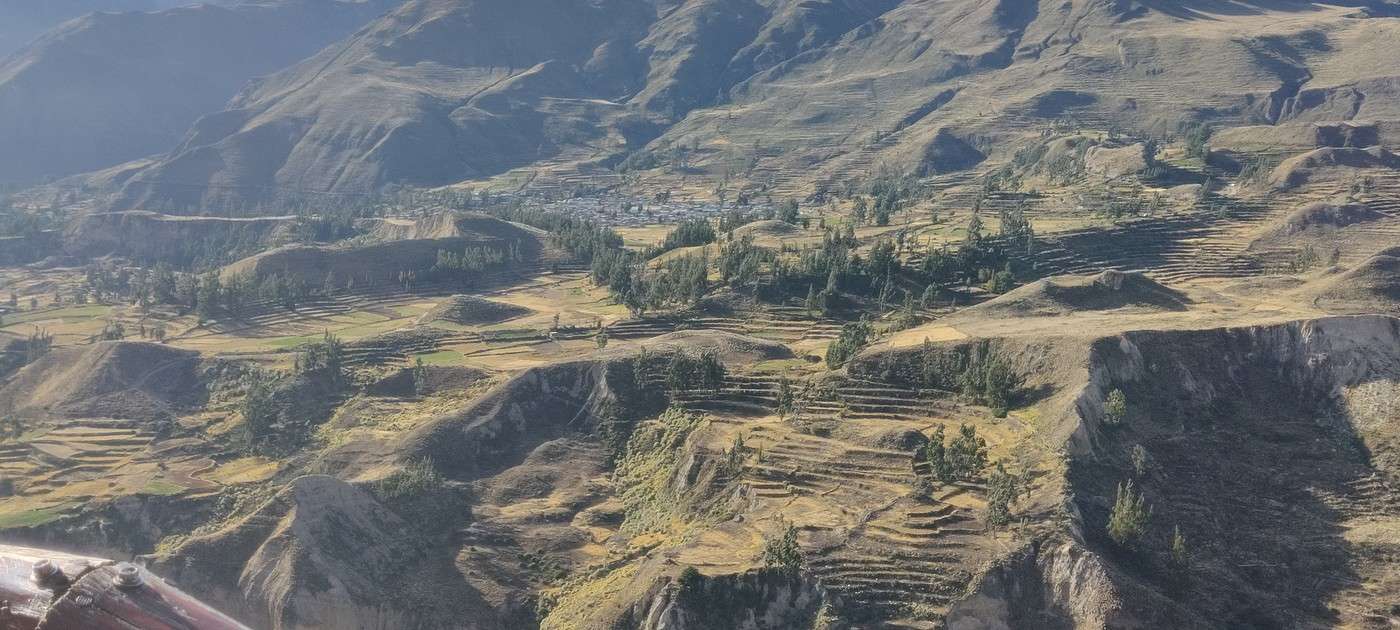
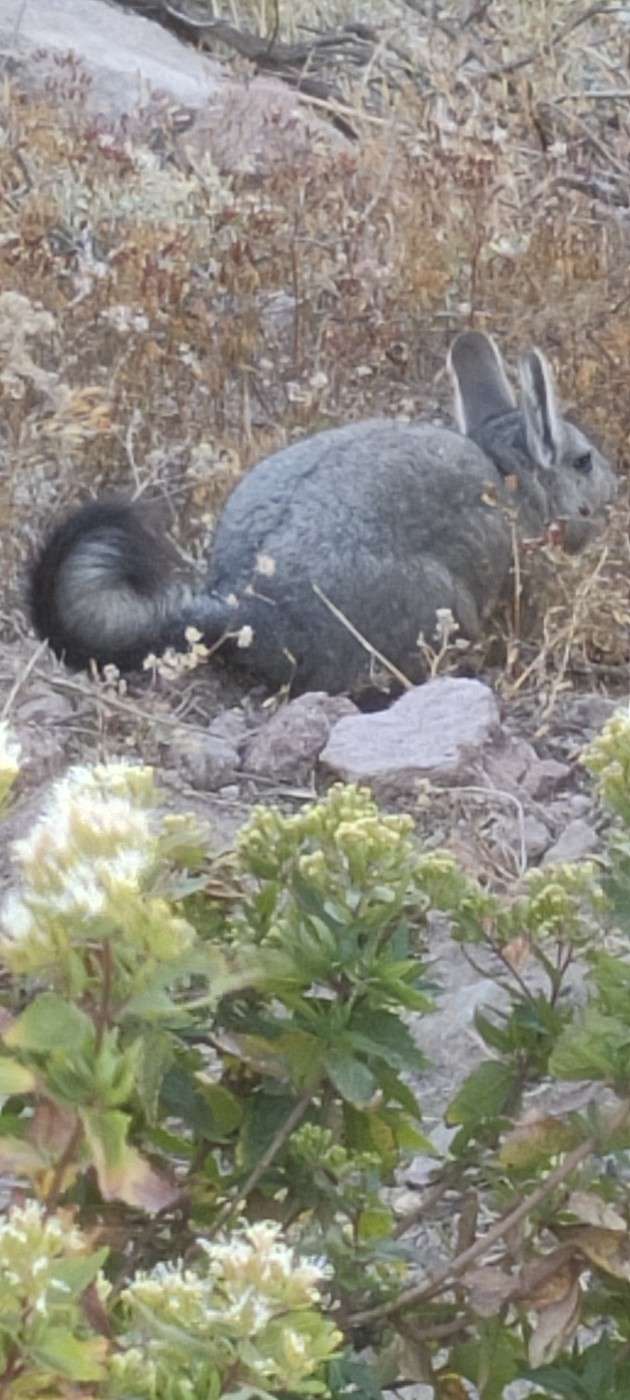
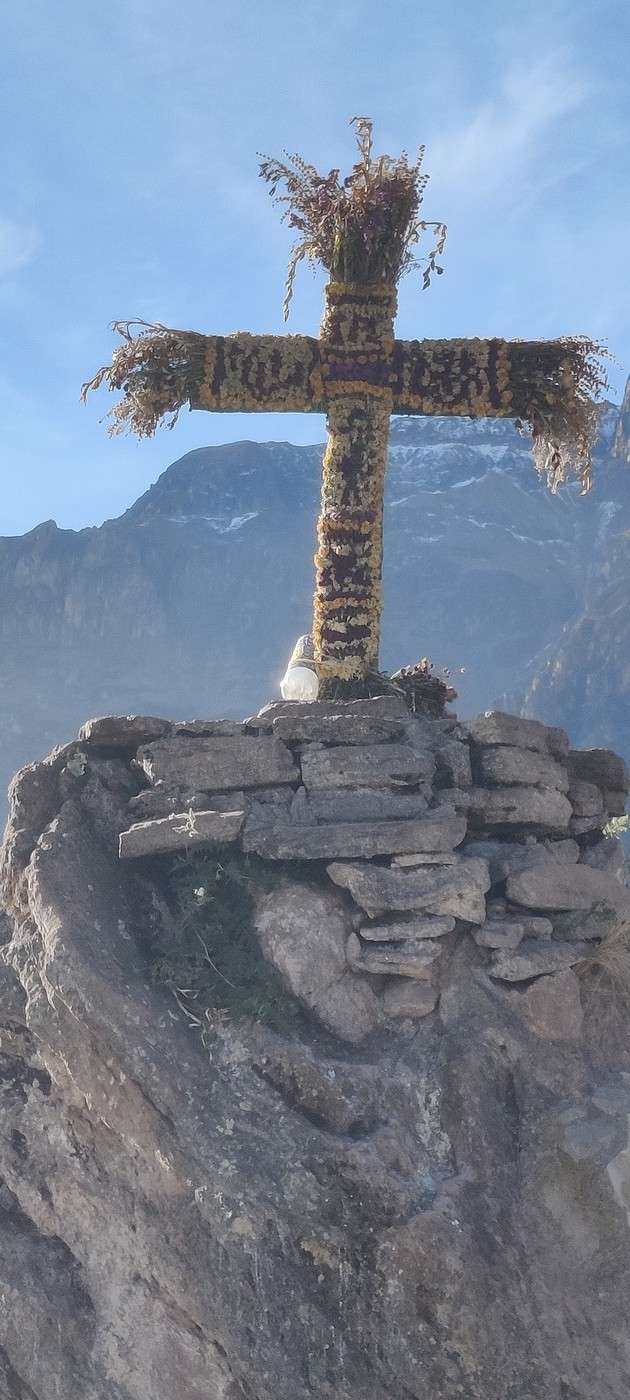
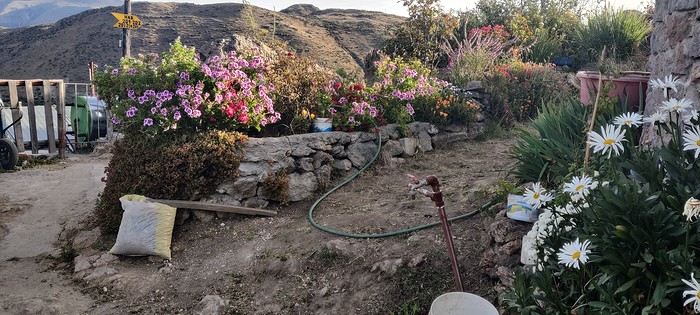
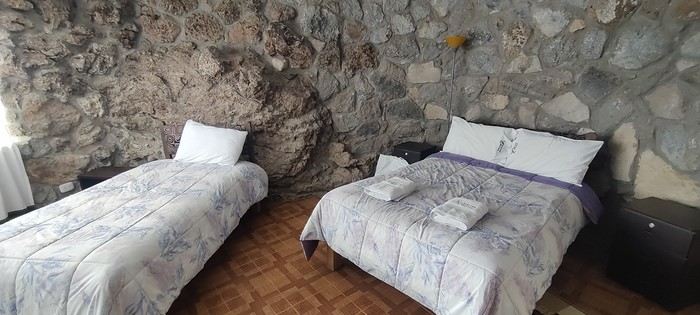
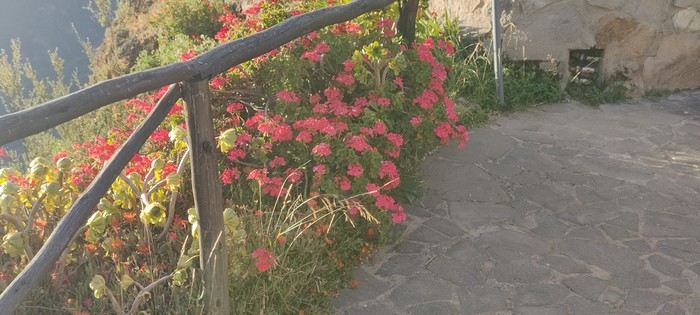
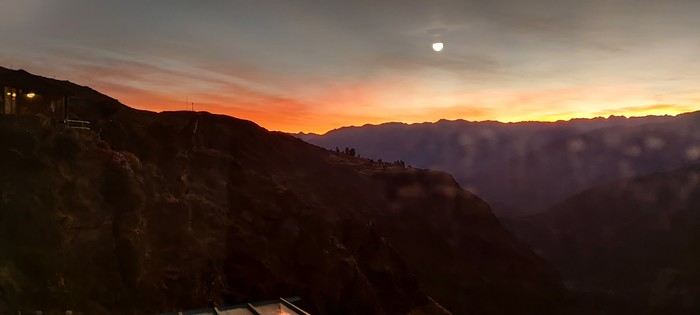
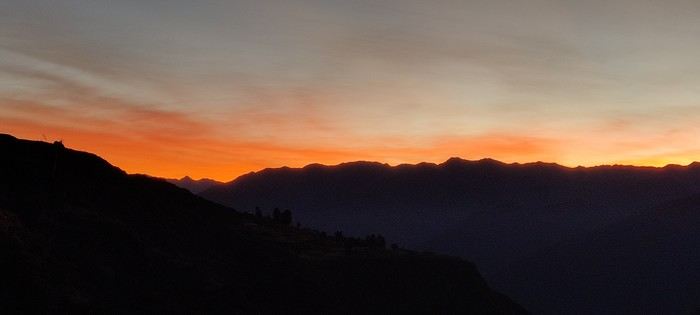
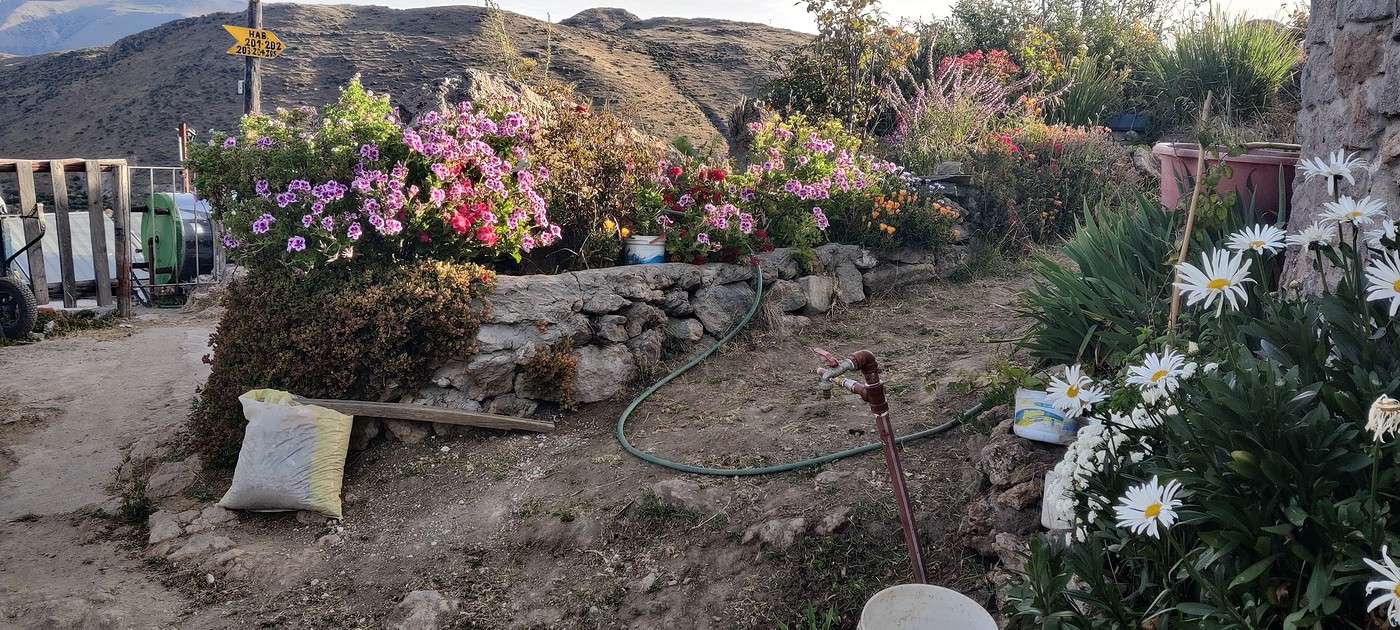
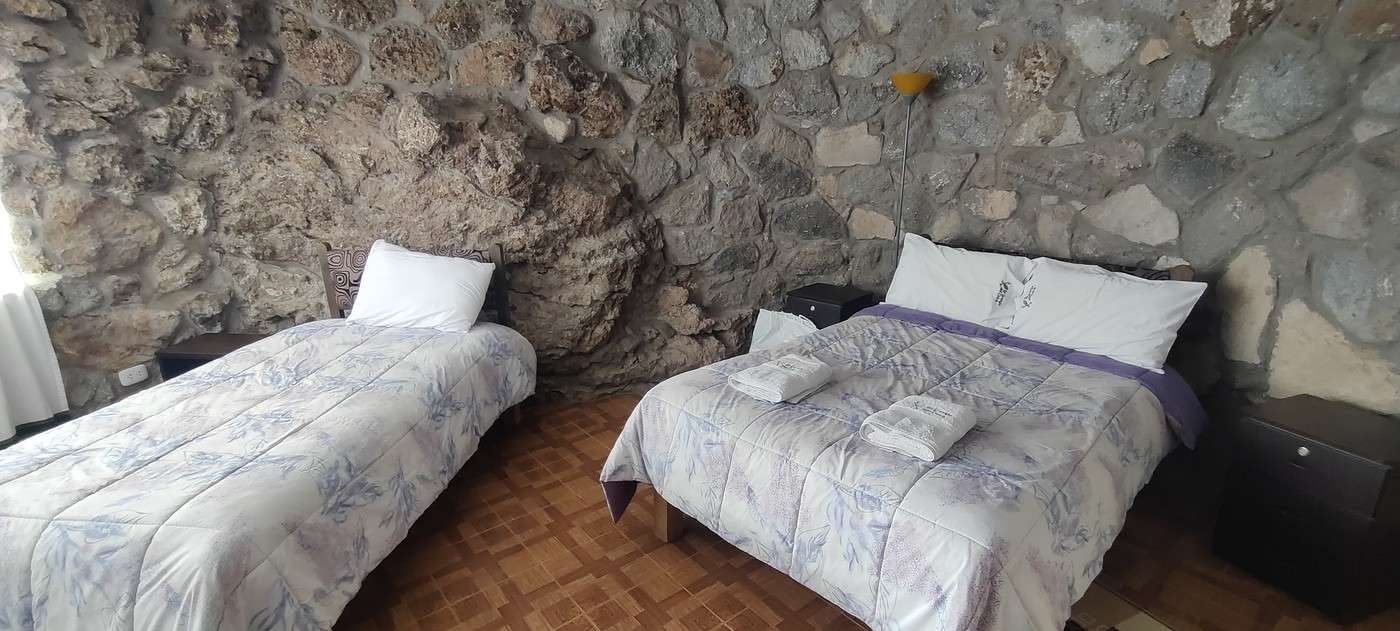
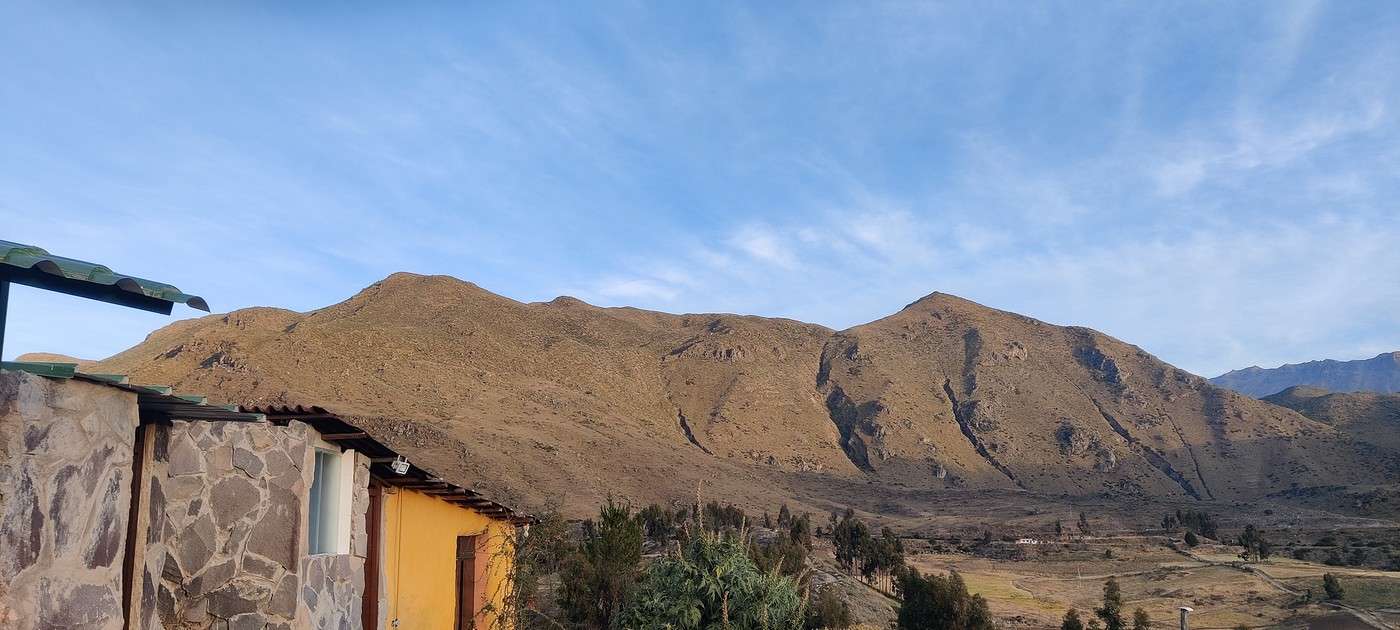
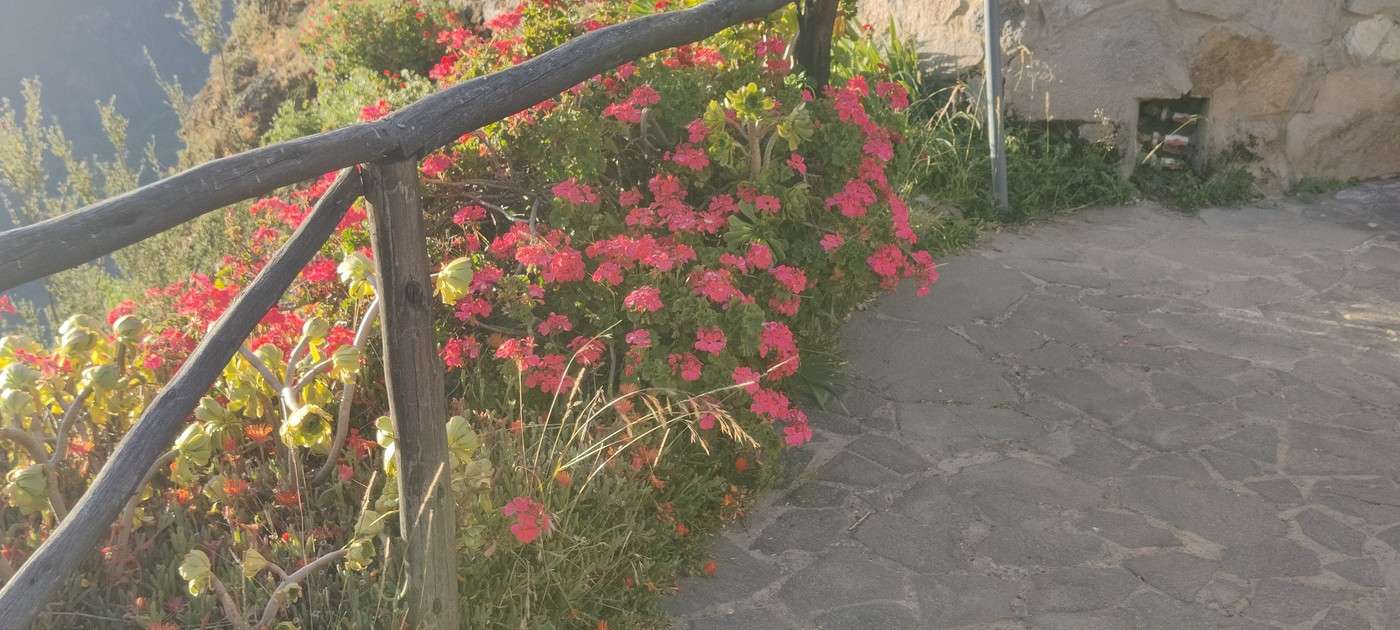
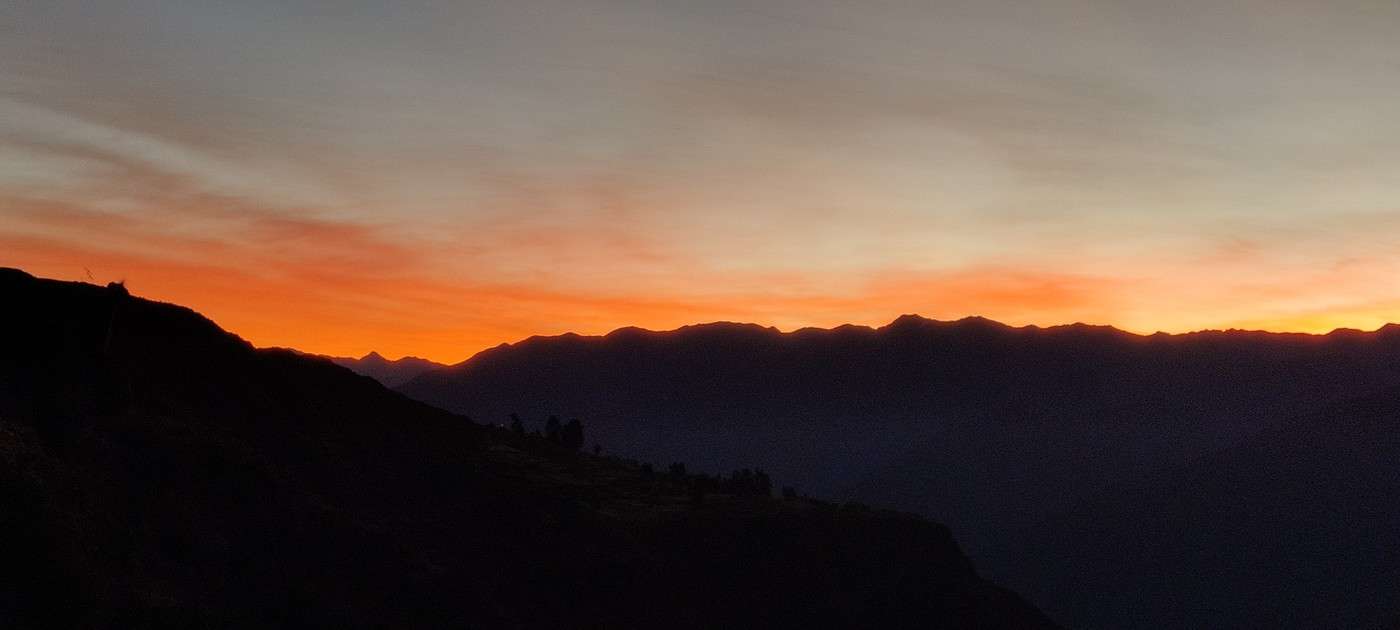
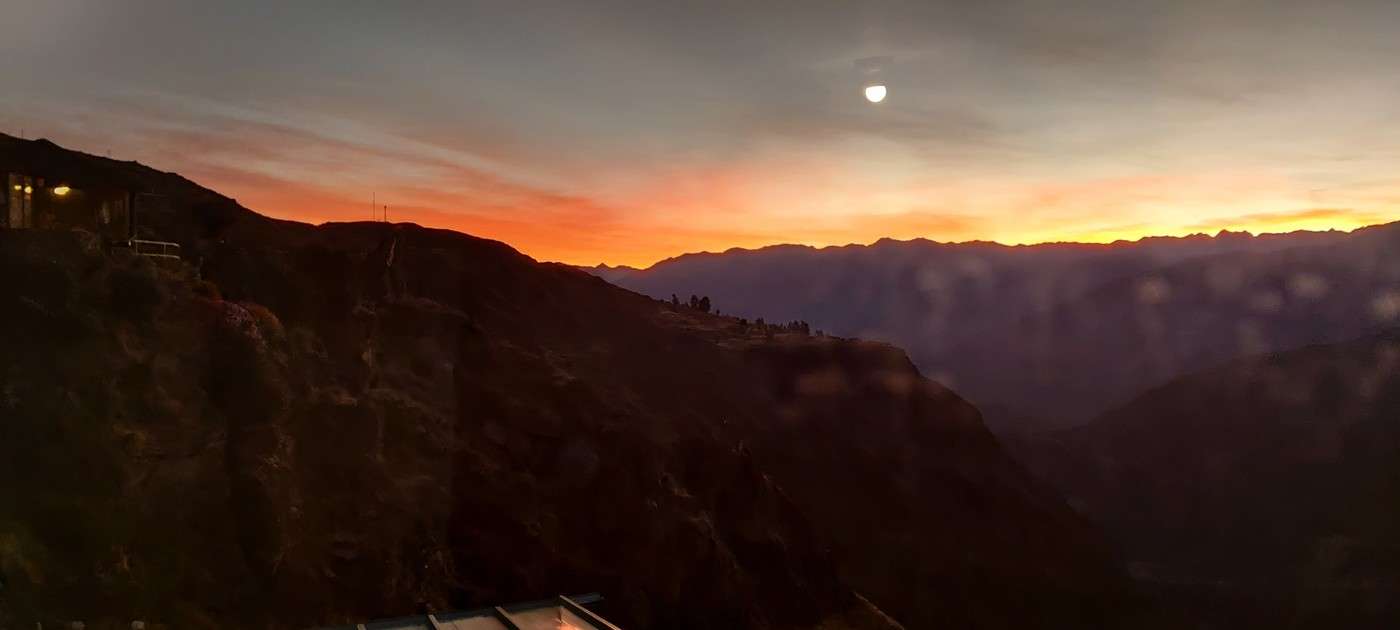
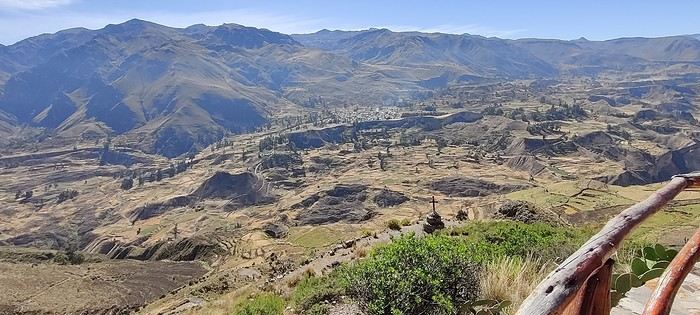
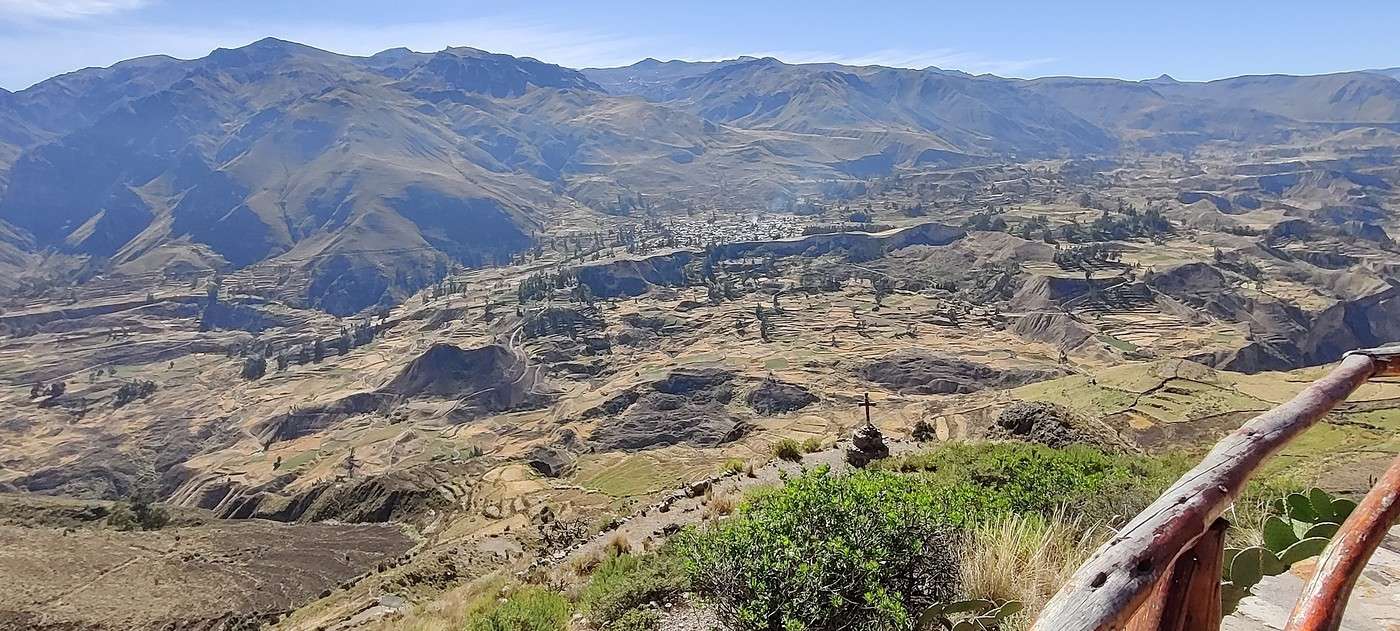
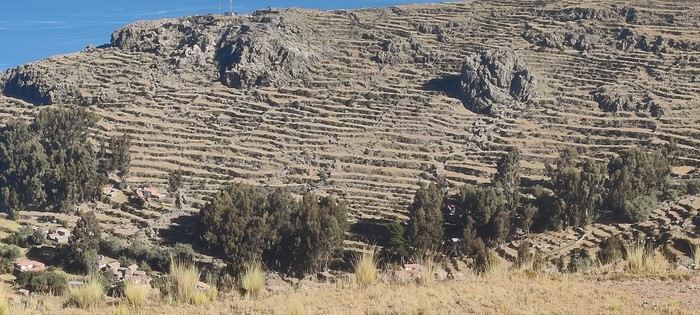
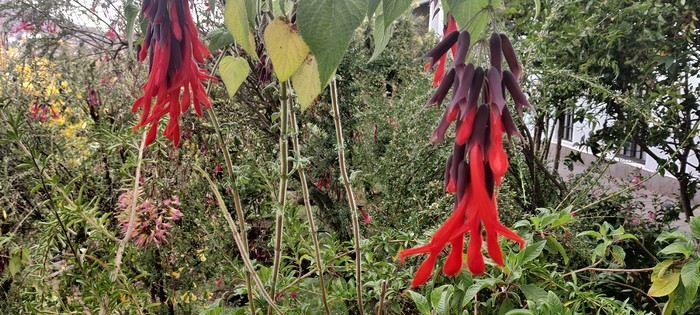
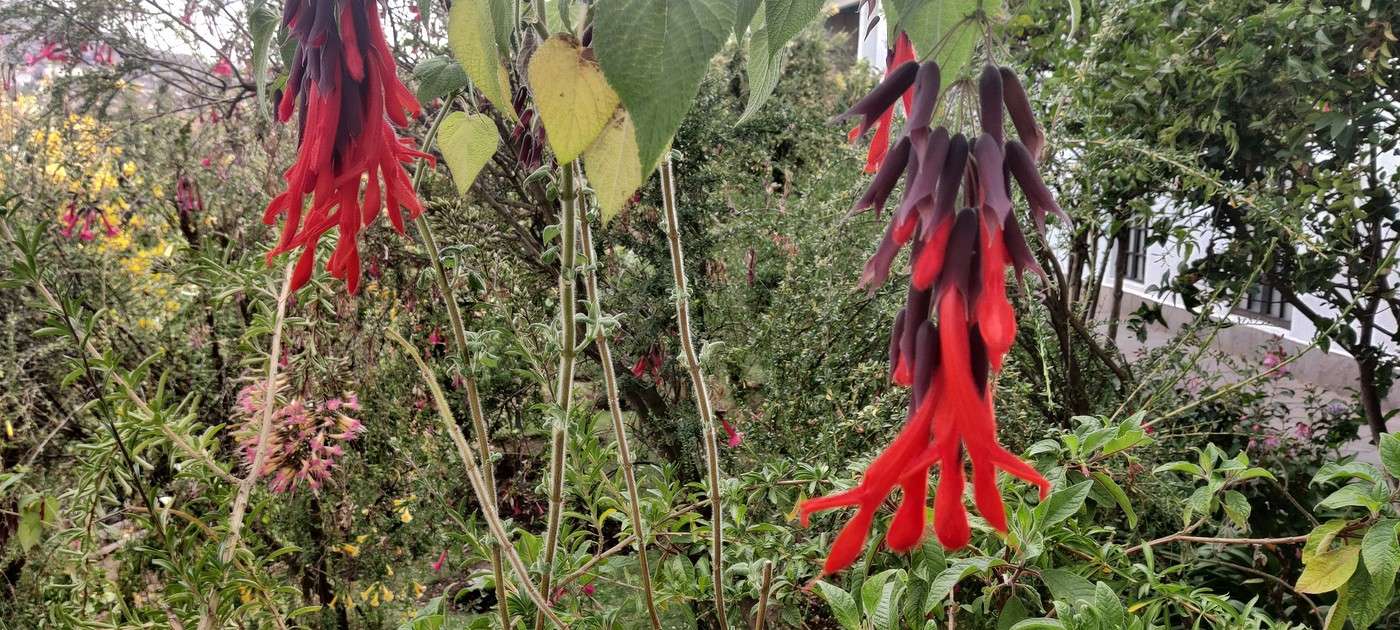
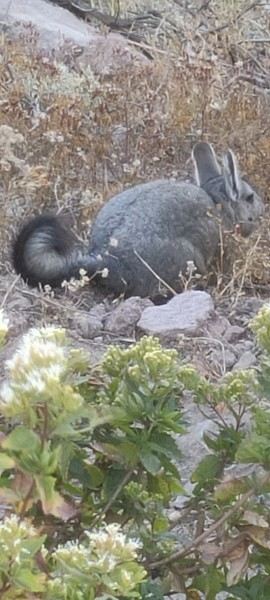
After the pass, we begin the descent toward Colca, ending with a breathtaking view of Chivay, the gateway to the valley. We stop for lunch at a restaurant offering a buffet at a bargain price. The food is decent, and a small folk orchestra provides Andean music for entertainment. We hit the road again toward the village of Yanque, located at about 3,400 meters. The change in scenery is spectacular: the valley is lush and contrasts sharply with the desert expanses we crossed in the morning. Here, the landscape bears the marks of centuries of agriculture. The terraced fields testify to the patient work of the people who shaped the slopes to make the most of every bit of land. Every nook seems to have been cultivated. We spot tiny plots, some perched on slopes that look nearly inaccessible. Today, some are gradually being abandoned in favor of larger, easier-to-farm fields. We pass through several small villages, some nestled in the valley bottom, others on the heights of the canyon we’re skirting on the left. As we drive, we truly grasp the scale of the canyon, with its steep slopes crisscrossed by zigzagging paths. For the uninitiated, Colca is often touted as one of the deepest canyons in the world. Its maximum depth is generally estimated at around 3,270 meters, far exceeding that of the Grand Canyon, which maxes out at just under 2,000 meters. However, it’s outdone by the Cotahuasi Canyon, also in the region, with a depth estimated at around 3,350 meters. While the Grand Canyon impresses with its vastness, mineral quality, and diversity of rock formations, Colca feels greener and often more open. So, despite the dizzying numbers, we don’t get the same sense of depth. Along the roadside, our driver points out ancient tombs carved into the rocks and surrounded by small stone walls. A little further on, we spot a vizcacha, a large Andean rodent closely related to the chinchilla. We then stop at the famous Cruz del Cóndor viewpoint. But we arrive too late to see the condors in flight: by this time, they’re gone, and even the tourists have left. We’ll have to catch the show another time. To avoid tiring our driver, who still has to return to Arequipa, we ultimately skip the hot springs and ask him to take us directly to our hotel, located about ten kilometers beyond Cruz del Cóndor. We arrive around 4:30 PM at La Granja de Colca hotel, built on the edge of the cliff. The view and setting are spectacular. The hotel has its own viewpoint, where we’re lucky enough to spot our first condors and enjoy the sunset. To complete the scene, the garden is in full bloom. We’re the only guests. Fortunately, the hotel has a good restaurant where we dine by the fireplace, a welcome warmth as the temperature drops quickly at this altitude. We then head back to our room, where some walls are actually part of the cliff’s rock face. We definitely don’t regret this choice of accommodation.

Peru: A childhood dream finally realized

Larri · 2026-08-13

On the road to Colca Canyon: a few photos


Peru: A childhood dream finally realized

Larri · 2026-08-13

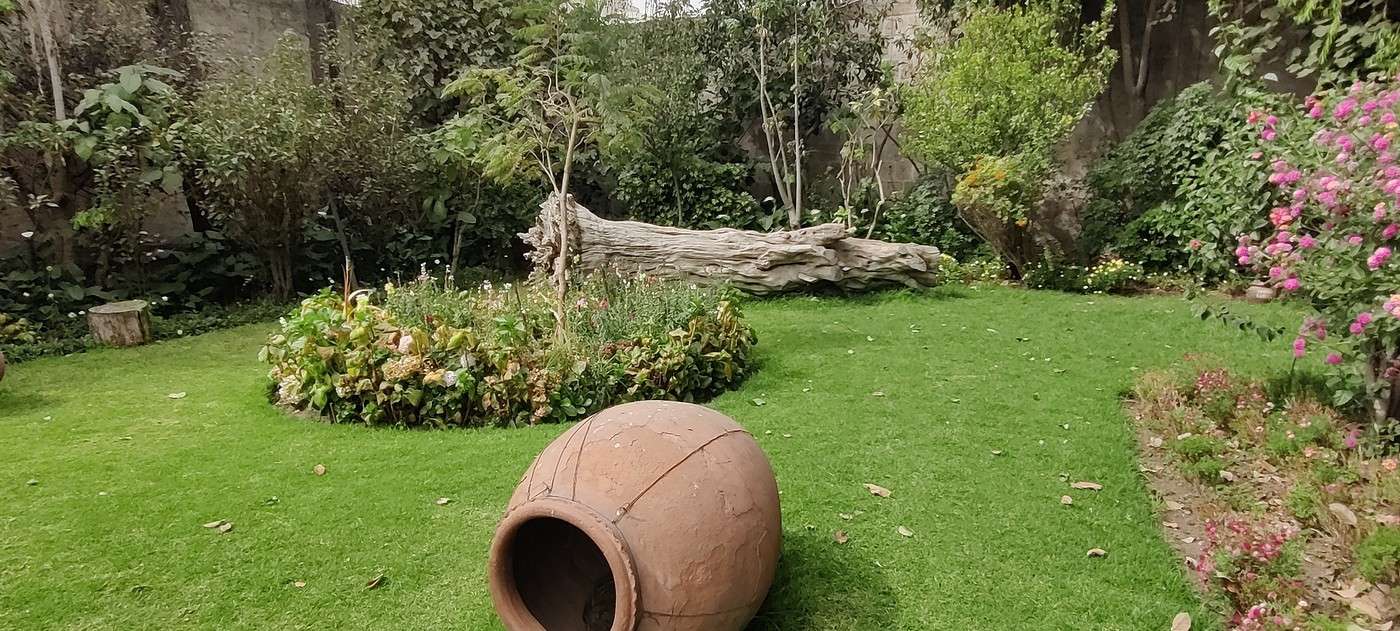
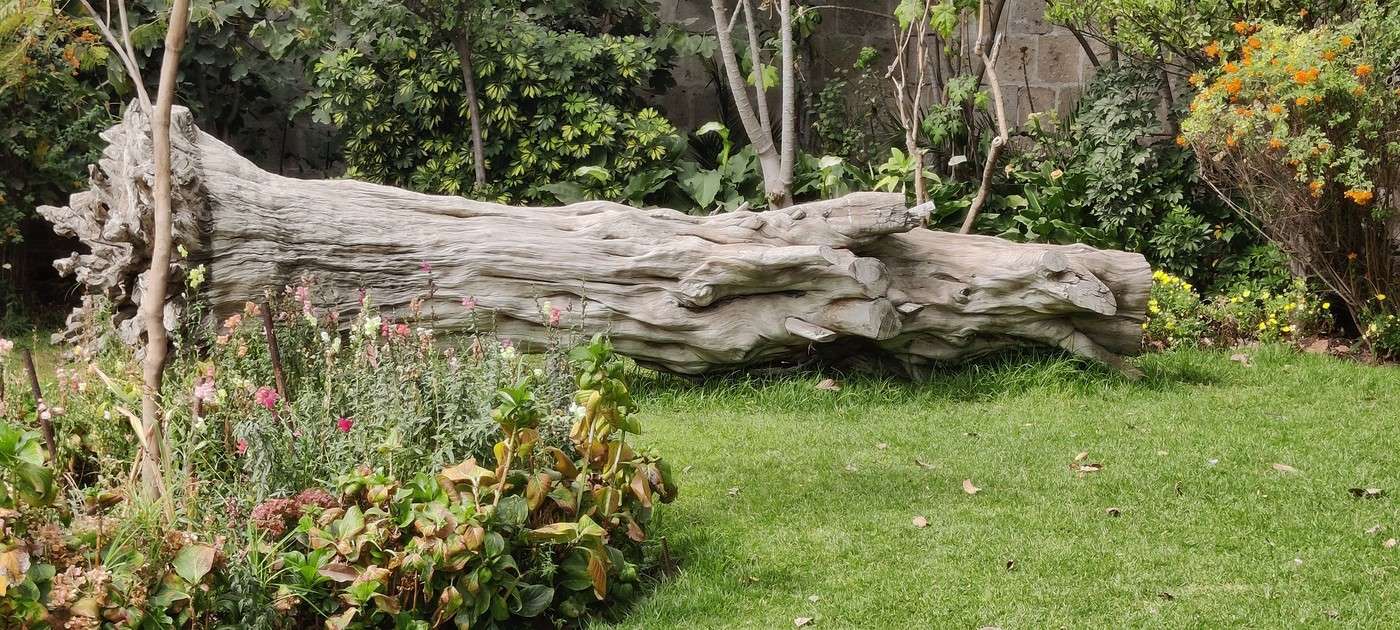
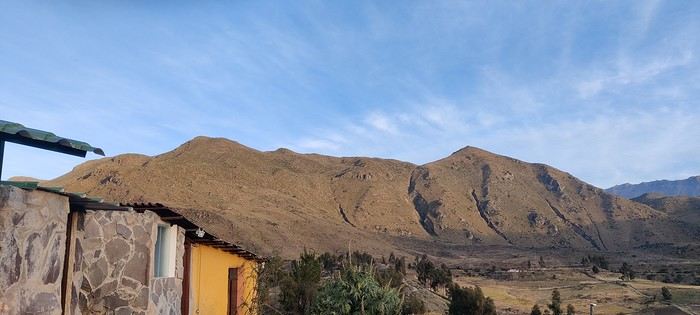
Photos around our hotel


Peru: A childhood dream finally realized

Larri · 2026-08-14

Day 6 – Colca Canyon, Chivay, then bus to Puno

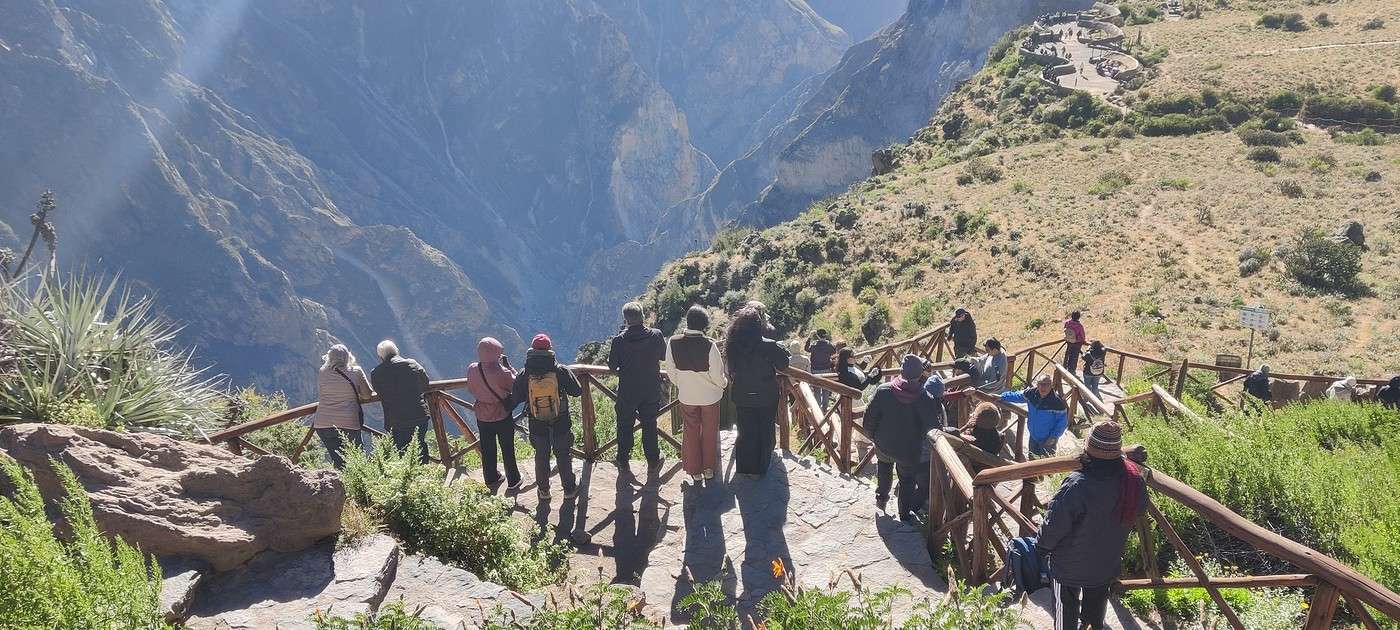
A new driver picks us up from the hotel. His mission: to take us back to Chivay with a few stops along the way. Our bus to Puno is scheduled for 1 PM. Since he’s early and has already driven an hour to get to us, we suggest he grab breakfast at the hotel before heading to the Cruz del Cóndor. It’s nothing like the day before! It feels like all the tourists have arranged to meet here. Parking is tough, and to reach the canyon’s edge, we have to push through a dense, noisy crowd.


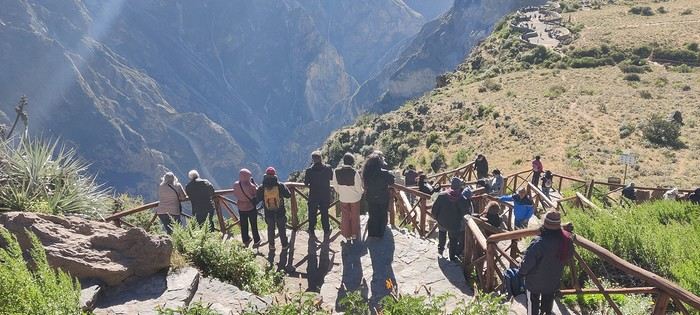
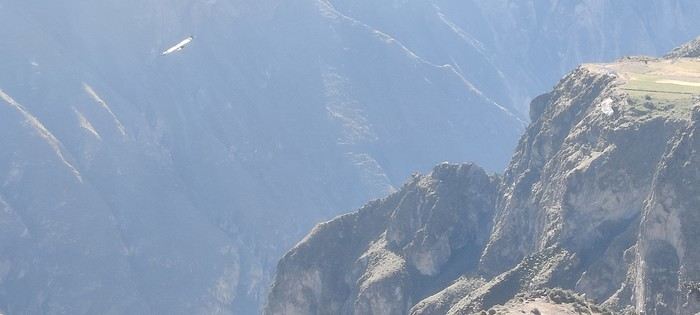
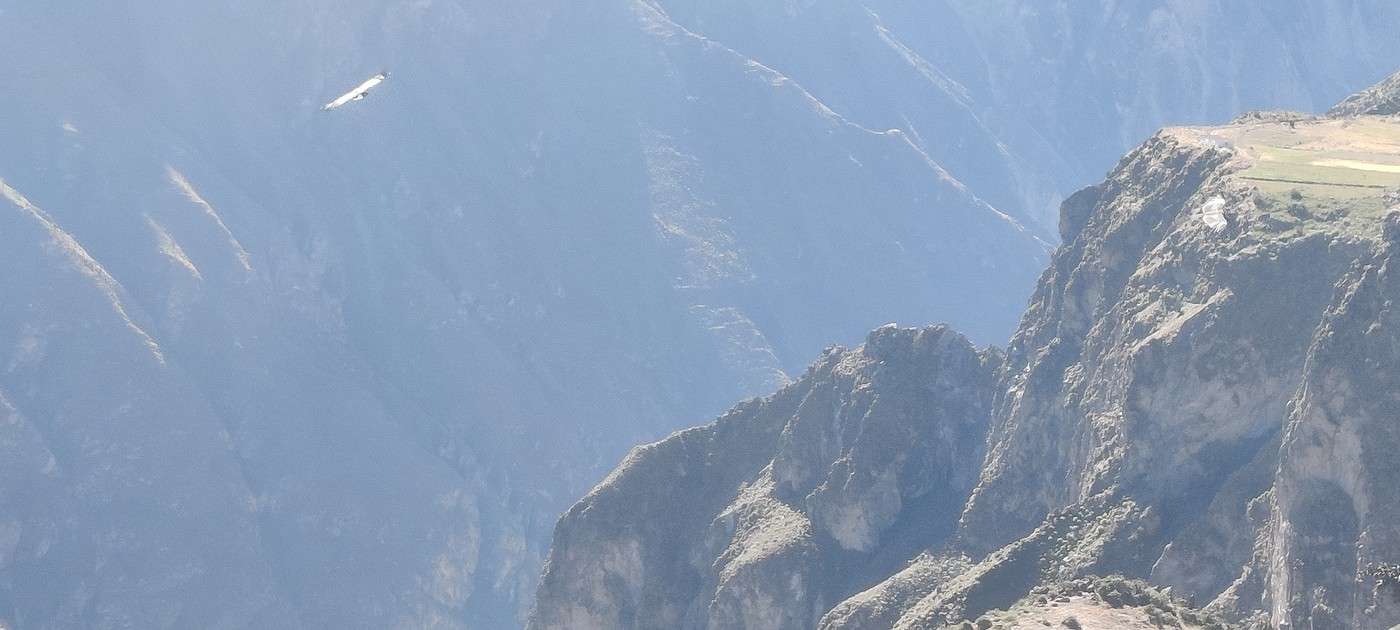
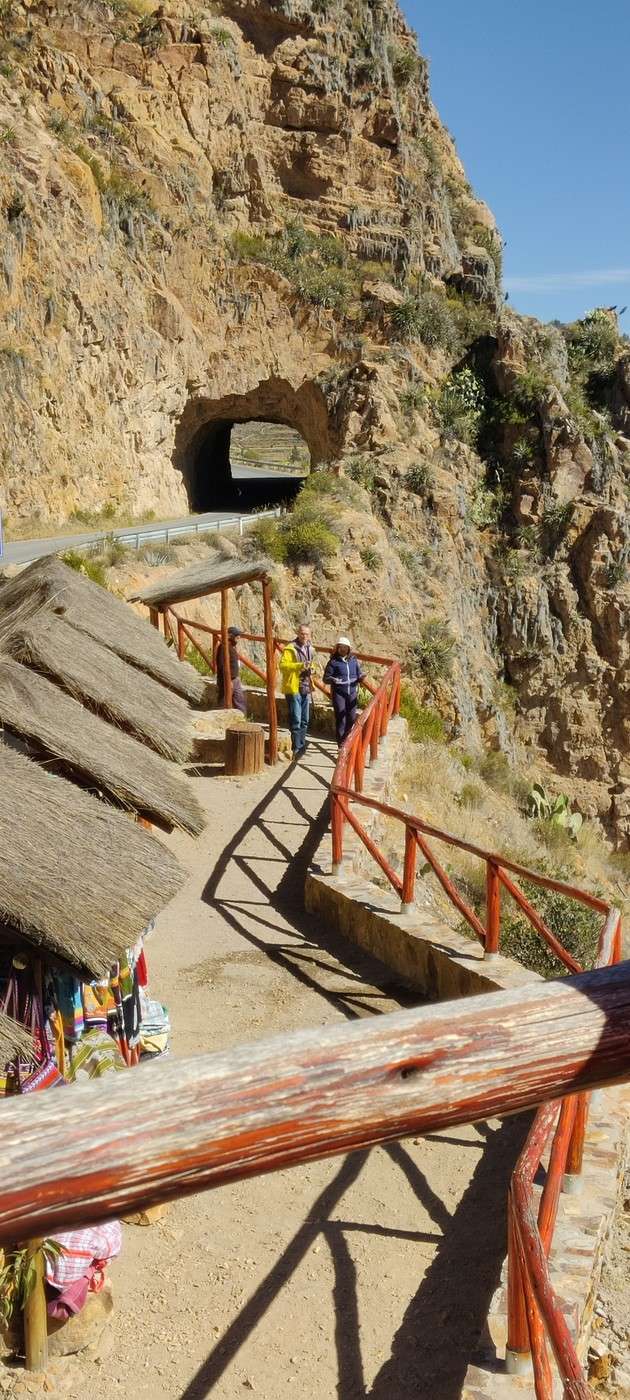
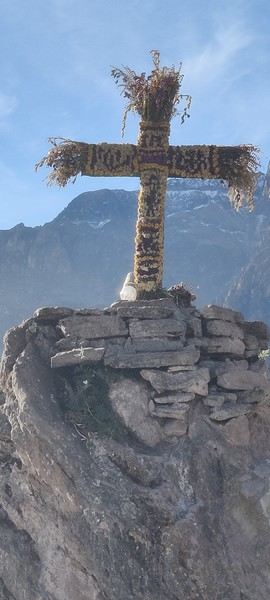
Most people seem more interested in selfies than the condors. As for the birds, we spot a few, but there’s no real show. The site is famous for condors riding the updrafts from the canyon. We get back in the vehicle, and our driver drops us off about two kilometers away at the Cruz del Cura viewpoint. He points out a trail: “Follow it to the viewpoint.” We do, and after a short walk, we find ourselves alone in the world, perched on the edge of the cliff with the Río Colca some 1,200 meters below. And then, the scene changes! Dozens of condors are here. Their flights are majestic, and some soar right over our heads. They’re hard to photograph, but it doesn’t matter—they’ll be etched in our memories for a long time. This is finally our real encounter with the Colca condors.


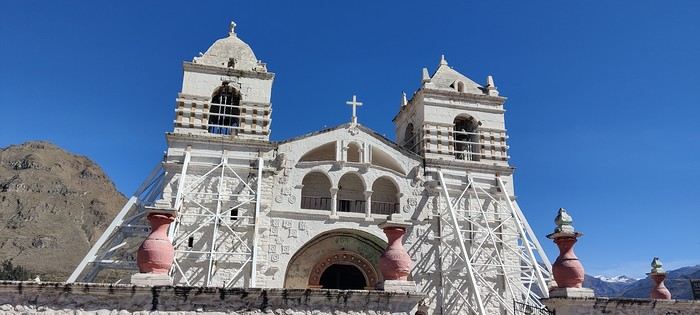
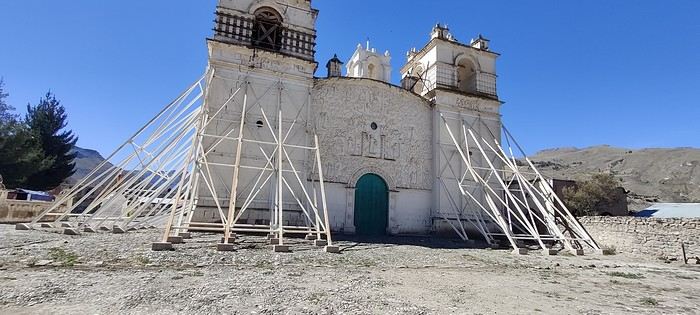
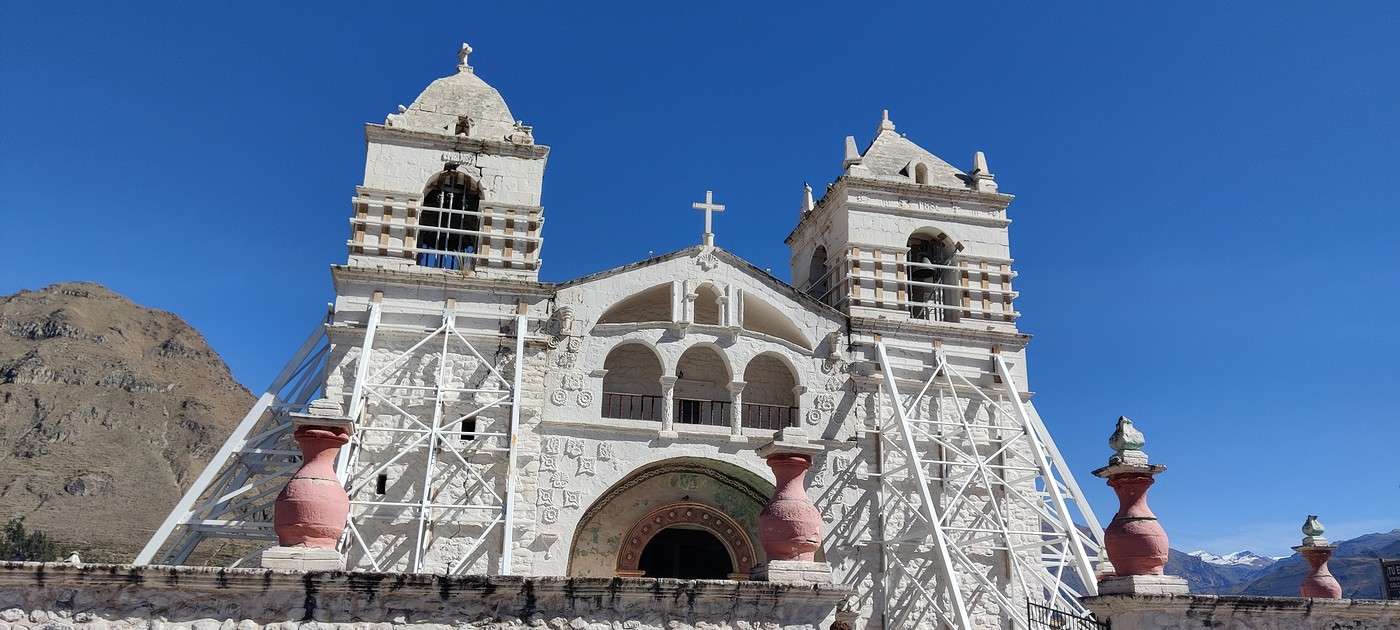
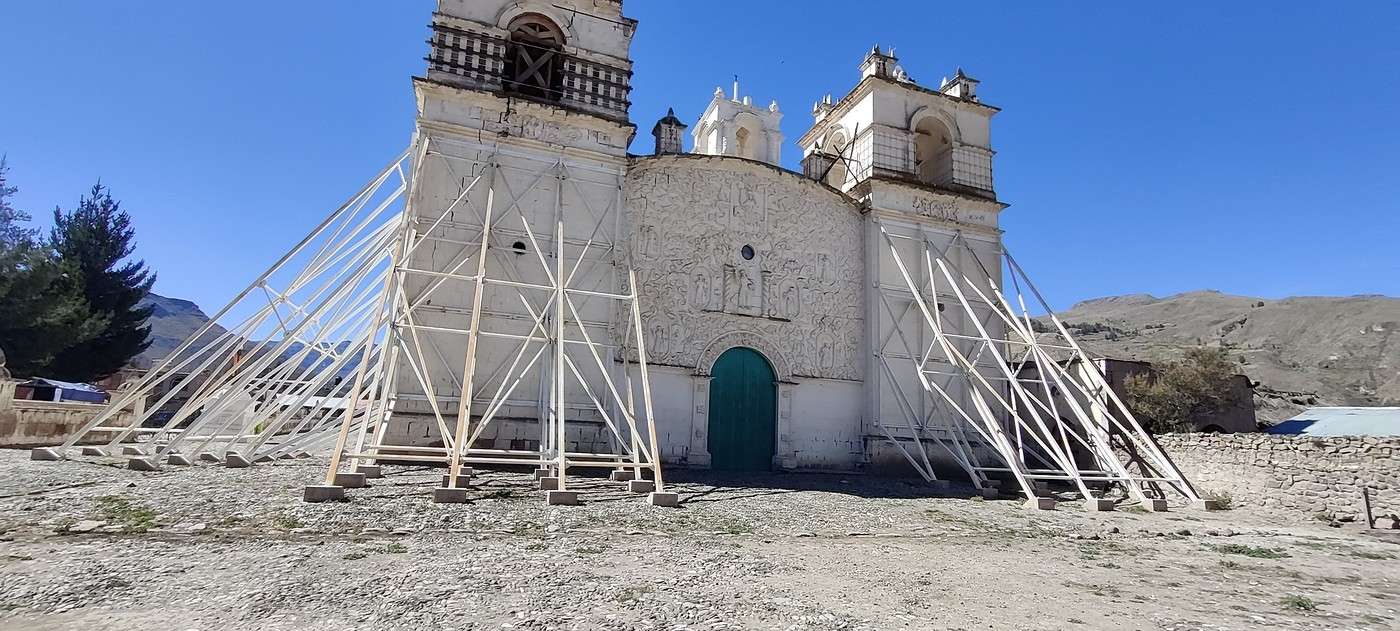
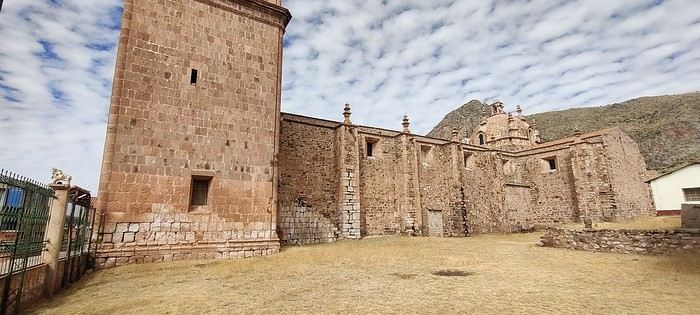
We continue toward the small village of Maca. The church’s bell towers are reinforced with buttresses—the building has suffered from the earthquakes that regularly hit the region. Inside, a massive metal framework is meant to prevent another collapse. The contrast between the old structure and these makeshift supports is striking.


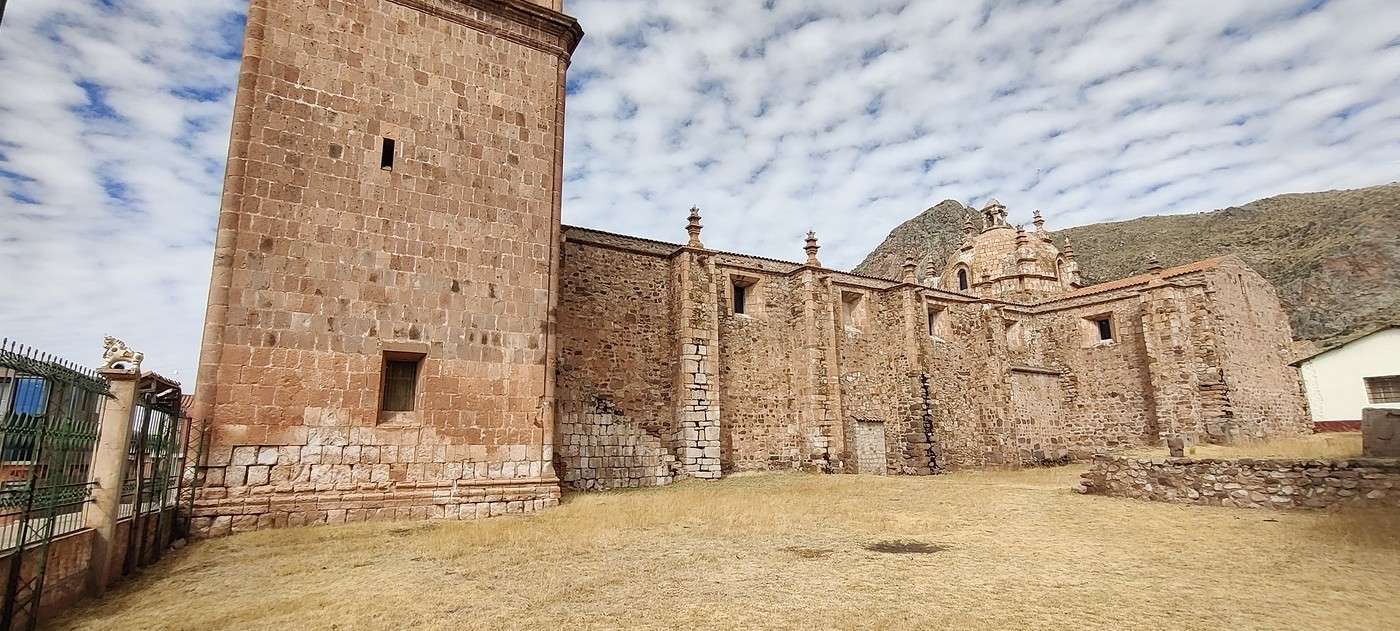
We can’t resist trying a local specialty, the “Colca Sour,” made with pisco and sancayo, a local cactus fruit. Not bad at all! Next stop: Yanque, a peaceful, dusty village dominated by the Sabancaya volcano. Still active, it’s a reminder that this region’s landscapes and architecture have been shaped by volcanic activity and earthquakes. Here too, the church bears the marks of tremors. The road gradually descends toward Chivay. We make a stop at the market and the main square. As elsewhere, a few dressed-up llamas wait for tourists looking for exotic photos. Our driver then takes us to a restaurant where we have a buffet lunch. He stays with us until we’re settled on the Cruz del Sur bus to Puno. The trip is long but far from monotonous. The bus stops several times so passengers can stretch their legs. We pass through Patapampa again and its stone forest, beautifully located at the crossroads of routes connecting Arequipa and Puno.


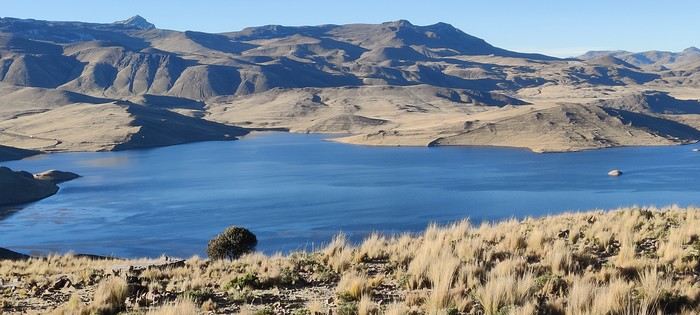
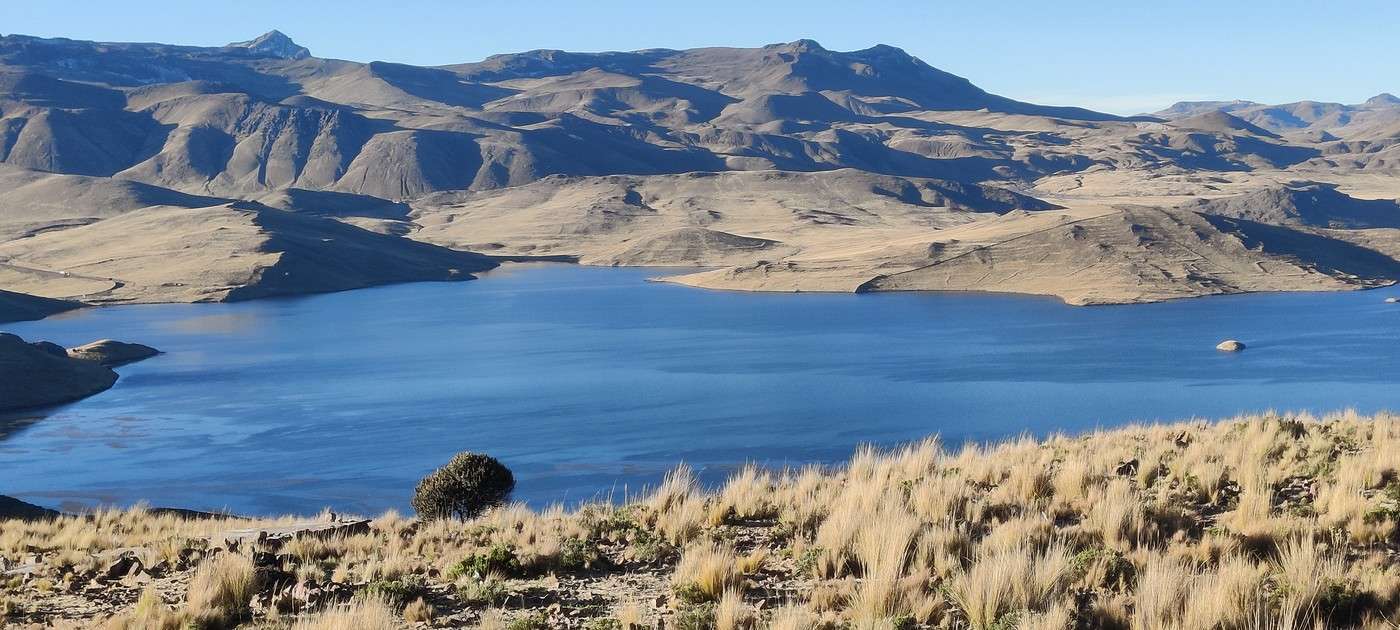
For a while, we follow the shores of Lake Lagunillas. The landscapes are stunning, but night falls quickly.


We admire our driver’s skill as he navigates the narrow streets of the villages we pass through. The bus drops us off in a peripheral neighborhood of Puno at 7:30 PM. Nice surprise: the company provides free shuttles to take travelers to their hotels. Ours is well located, just steps from the main square and its cathedral. Exhausted from the long day on the road and the altitude—Puno sits at about 3,800 meters—we settle for pizza before collapsing into a much-needed sleep.

Peru: A childhood dream finally realized

Holigirl · 2026-08-14

Hi Jean-Claude,

Thanks for this new Peruvian travel journal. I really love how you describe your feelings. The journal is packed with info for future travelers—it’s awesome! 🙂 Can’t wait to see what’s next!

Peru: A childhood dream finally realized

Larri · 2026-08-14

Hi there, and thanks for your message. I was starting to feel a little lonely. Your message is encouragement to keep going. If you're interested, I'll do a roundup of practical info at the end of my travel journal. More to come soon!

JC

Peru: a childhood dream finally realized

Holigirl · 2026-08-14

I'm interested 🙂 And not just a little!

Peru: a childhood dream finally realized

Muriel18 · 2026-08-15

I was starting to feel a little lonely.

It happens sometimes (often?) when not many people chime in on a travel journal... but that doesn’t mean no one’s reading 😉 Me too, I’m 😎

Just out of curiosity: does Coke really work for altitude sickness?

Peru: A Childhood Dream Finally Fulfilled

Larri · 2026-08-15

Hi Muriel,

Thanks for reading. Every message is encouragement to keep writing. To answer your question about Coca, it's hard to be certain. Personally, I think it's psychological. But since Peruvians use it, there must be some effect. I didn’t suffer from AMS (acute mountain sickness), but saying coca helped me is a stretch. My wife got sick around Lake Titicaca: 3 days at 3,900 m! We had Diamox but didn’t use it. On the other hand, exertion was tough at altitude—shortness of breath! I should add that we’re not particularly athletic, and we’re getting older. JC

Peru: A childhood dream finally realized

69Eric · 2026-08-15

Hi there, This is a destination I don’t know at all, so I’m keeping a low profile. But great photos, well-documented story—I’m following along! Have a good weekend!

Peru: A childhood dream finally realized

Larri · 2026-08-15

Thanks Eric,

More to come.

Peru: A childhood dream finally realized

Larri · 2026-08-15

Day 7 – Lake Titicaca, the Uros and Amantani Islands

A taciturn taxi driver takes us to Llachón to catch a private boat. We’ll barely hear a word from him during the hour and a half drive! When we arrive, he hands us over to the boat’s “captain.”


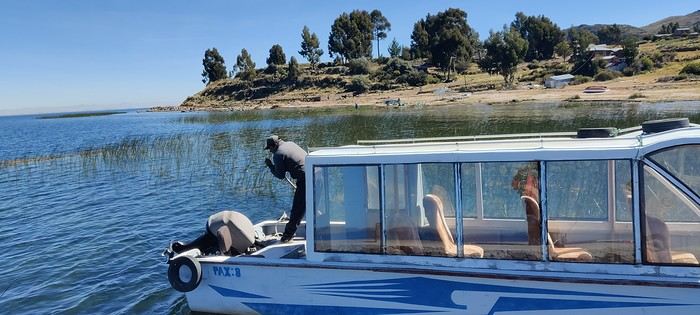
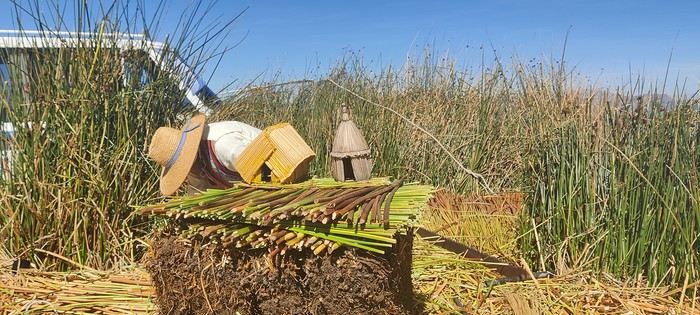
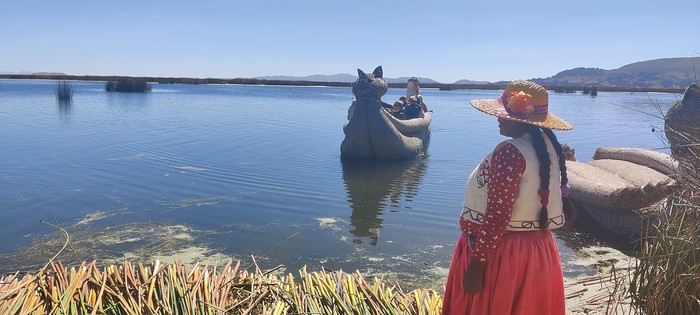
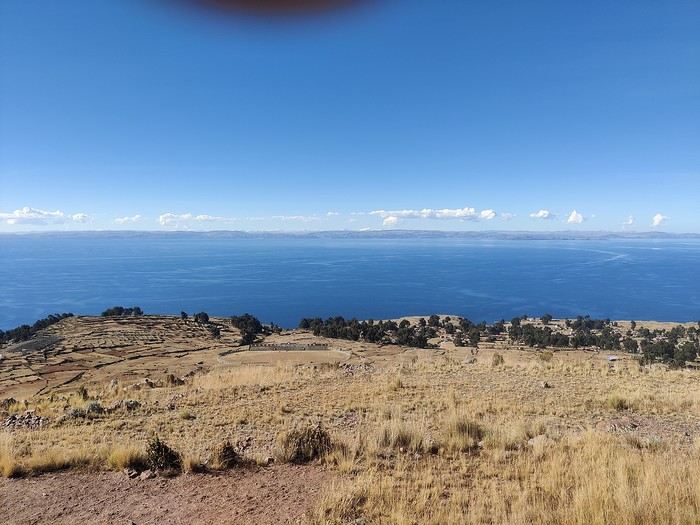
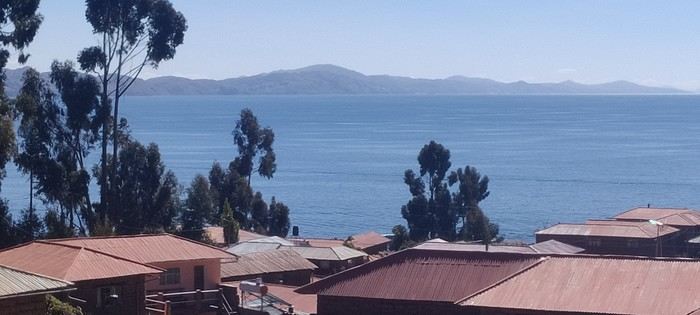
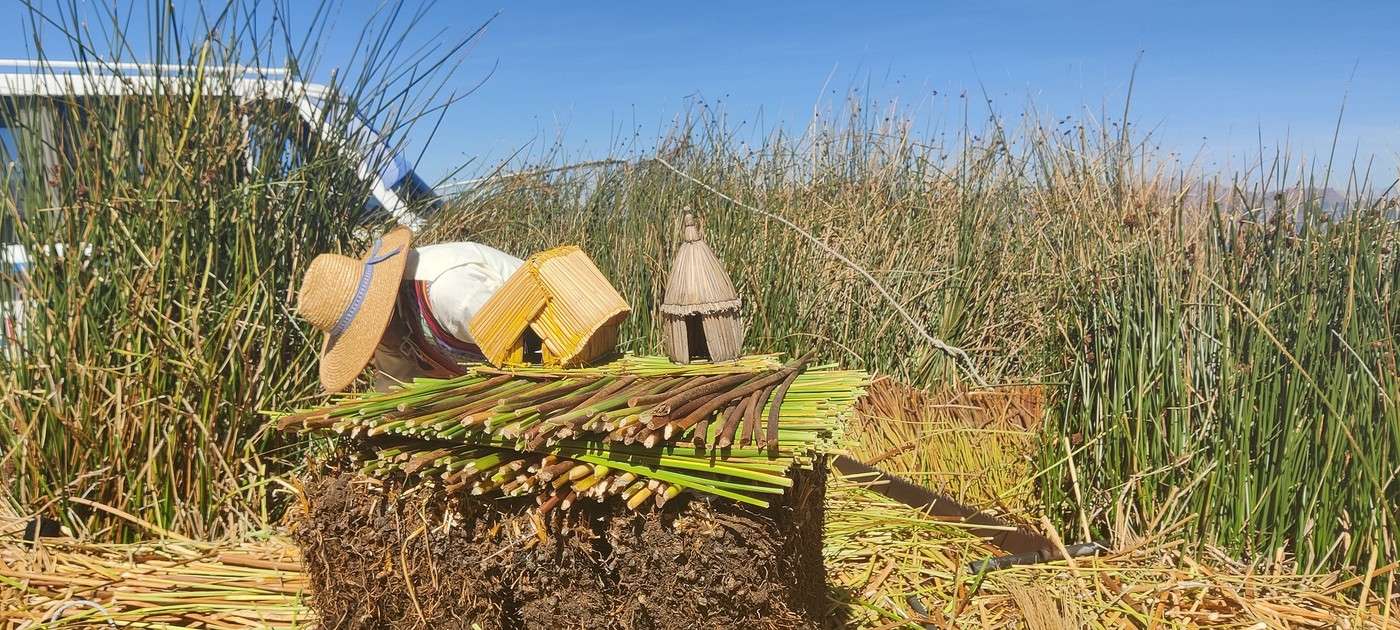
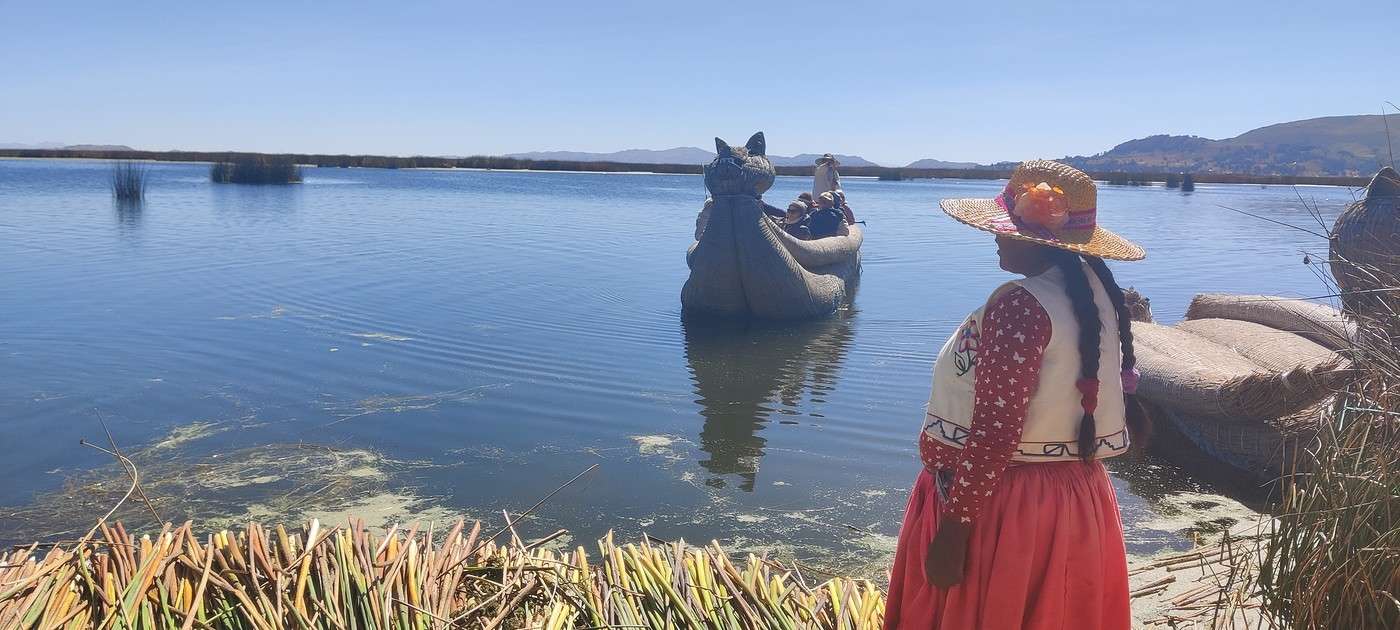
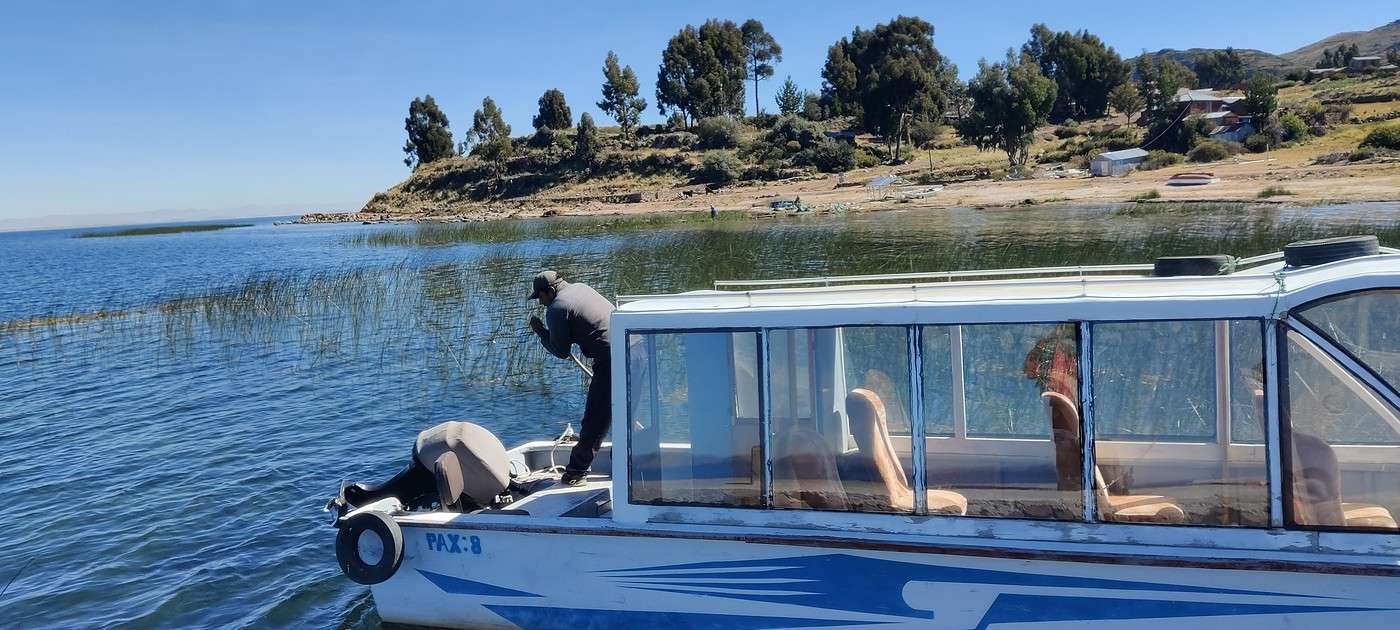
We sail for about an hour on the legendary Lake Titicaca. Straddling Peru and Bolivia at nearly 3,810 meters above sea level, it’s considered the highest navigable large lake in the world. It’s especially famous for its floating islands, built by the Uros people from totora, a reed that grows abundantly in the lake’s shallow waters. We land on one of these islands. Originally, the Uros developed this floating habitat to protect themselves from conquests and preserve their autonomy from other regional peoples. Today, the communities living on these islands keep the tradition alive, even though tourism has become a major part of their livelihood. The welcome is warm. The community leader, representing three families here, explains the construction technique using a model that shows the different steps. It’s very well done, educational, and informative. It all starts with harvesting the totora, which is then dried. This reed is used to build the islands, houses, and boats. You can even eat the tender part, which tastes a bit like bamboo shoots. The island’s base is made of blocks of roots and vegetable soil where the totora grows. The roots intertwine to form a compact mass. These blocks are then assembled and tied together to create a platform large enough to house several families. The whole structure is held in place and anchored with stakes. Once the structure is stabilized, several layers of dried totora reeds are arranged in a crisscross pattern. They form a thick insulating layer that protects against moisture. The total thickness can reach several meters.


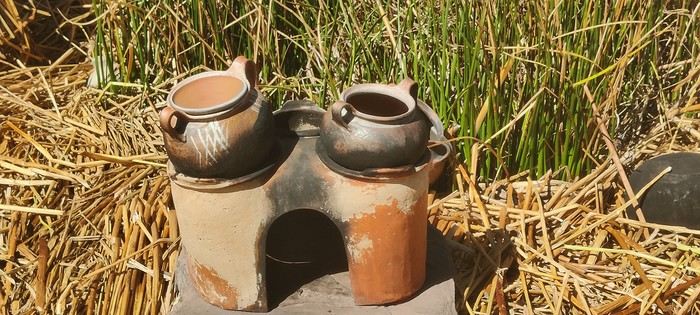
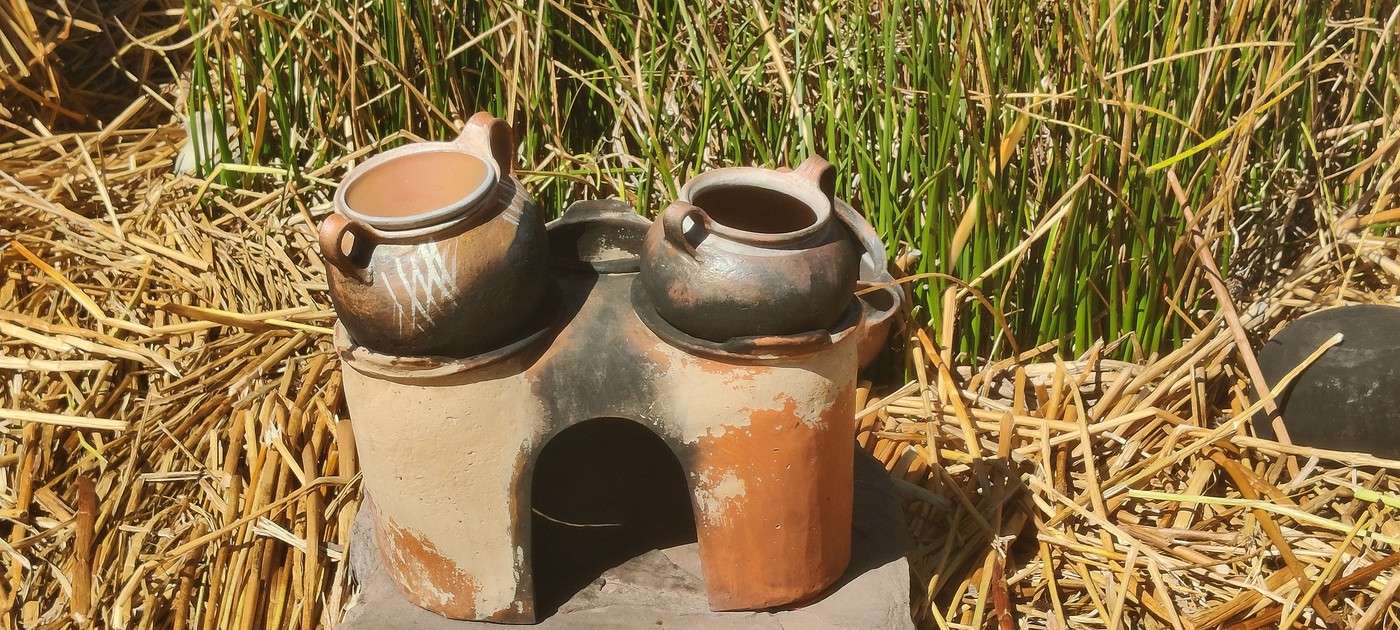
But the work never stops: the inhabitants regularly add new layers of reeds because those on the surface eventually decompose, and the island gradually sinks. After a few decades, an island usually needs to be rebuilt. The houses are typically one-room structures made mainly from totora. The “kitchen” is set up outside to minimize fire risks.


After the explanations, we’re shown the inside of a house and then offered a ride on a traditional boat.


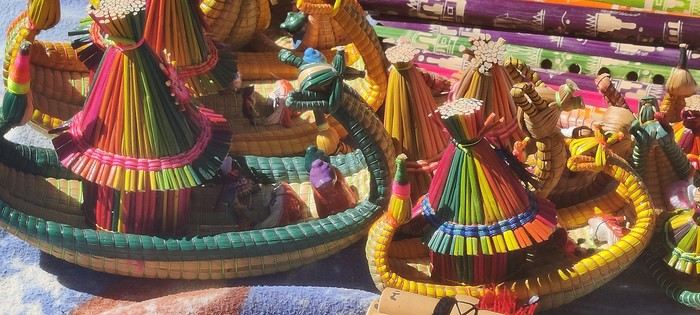
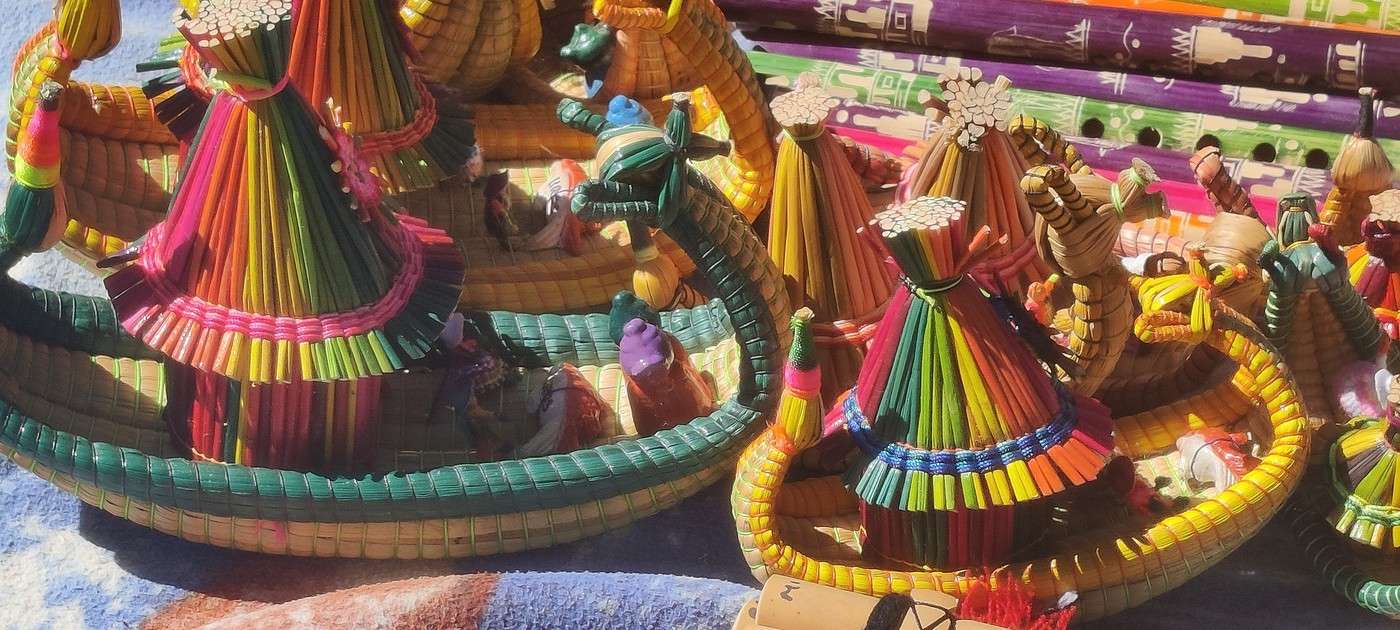
To supplement their income, the women in the community also make embroideries and small trinkets to sell to tourists.


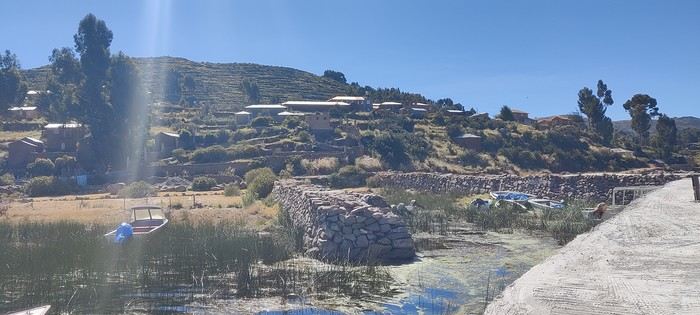
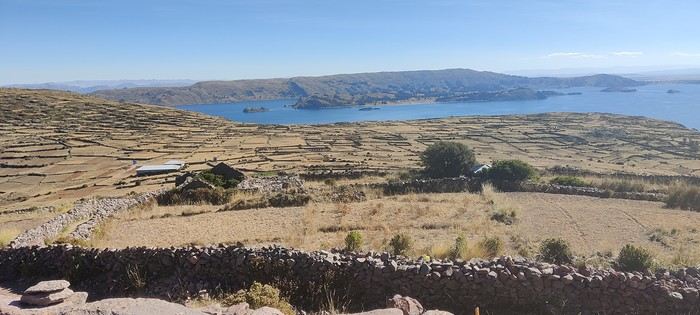
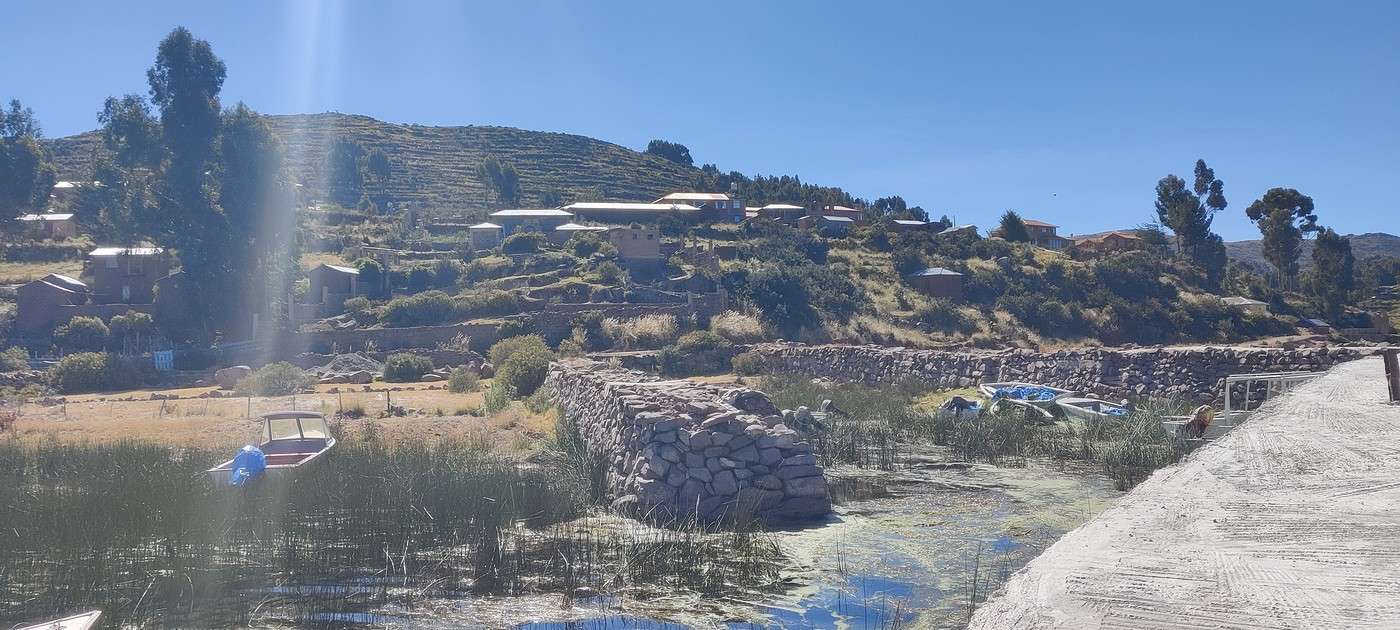
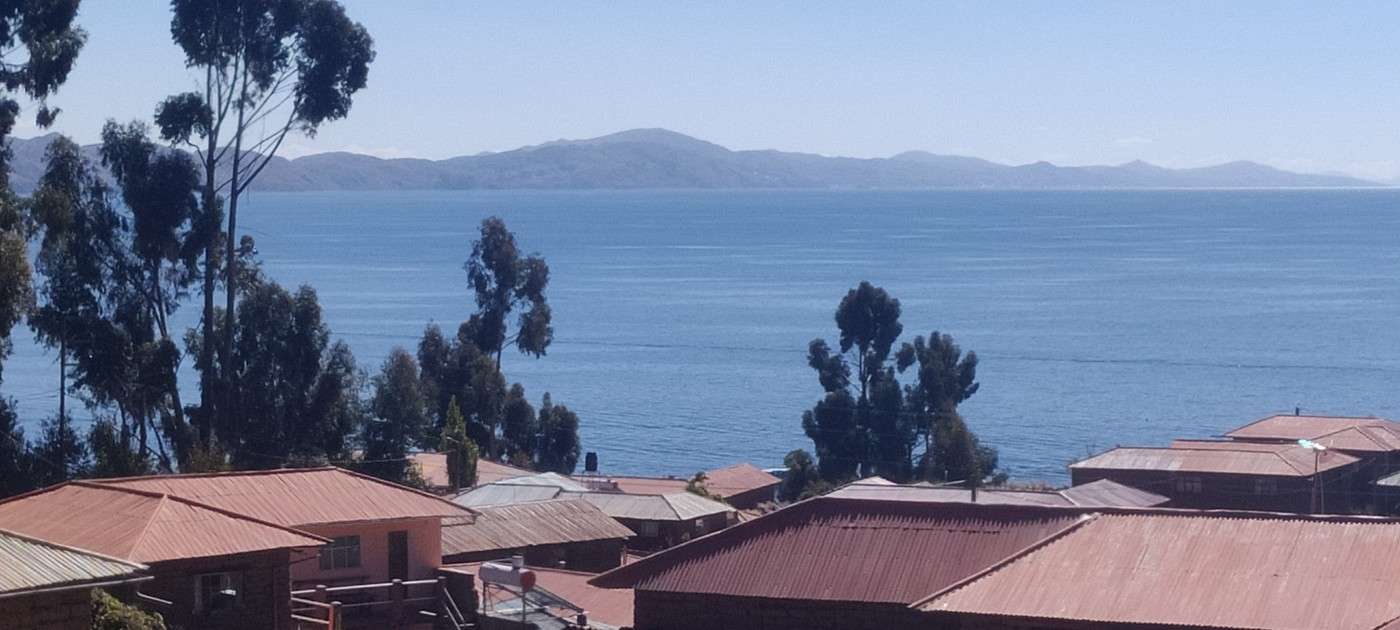
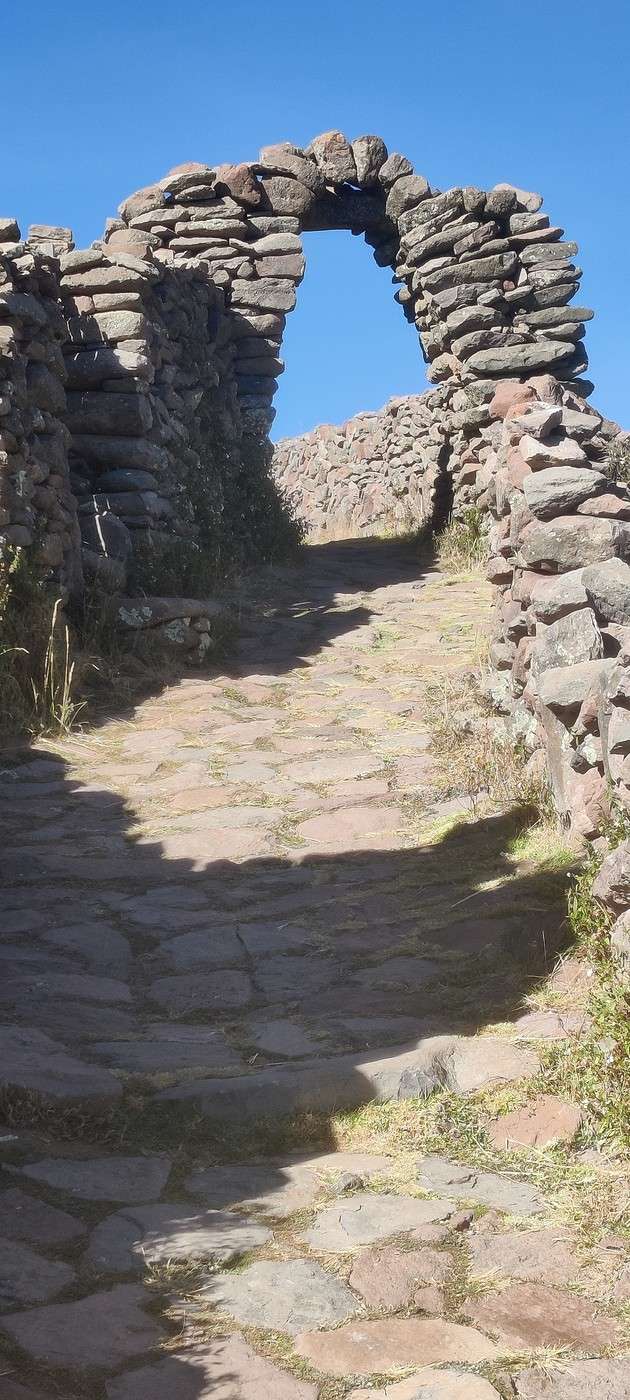
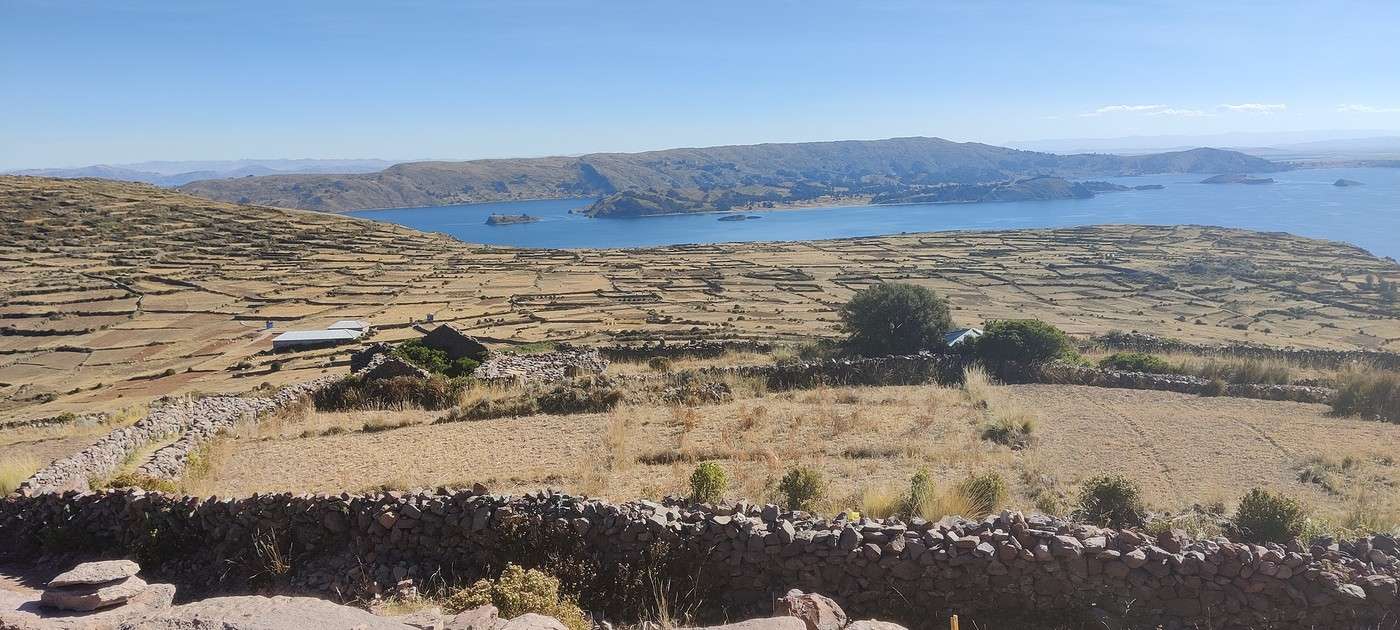
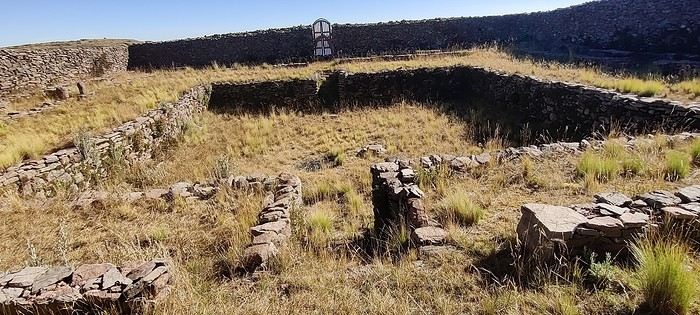
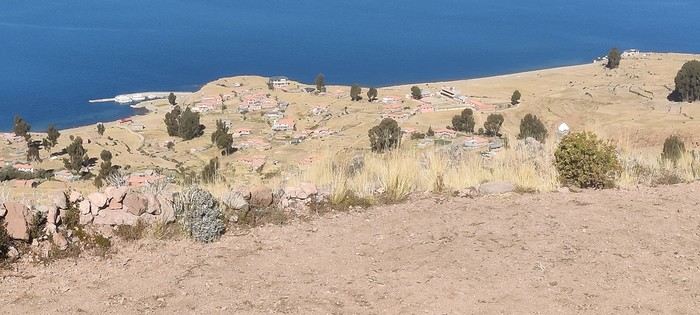
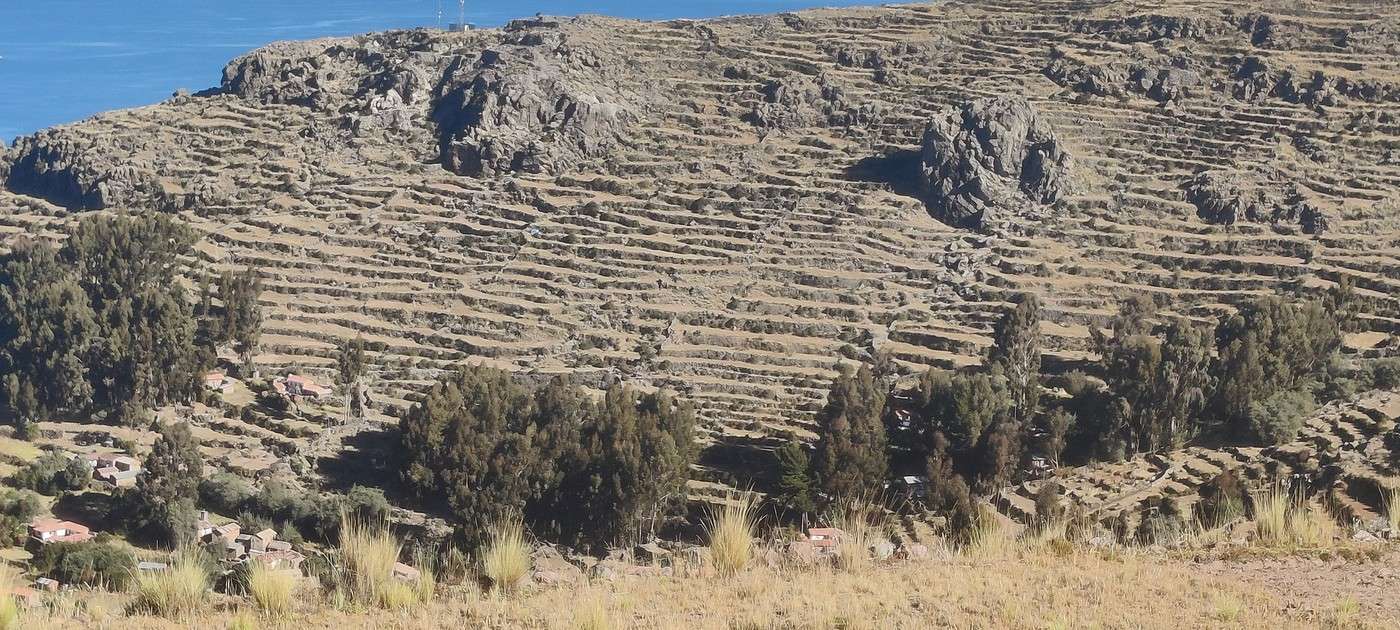
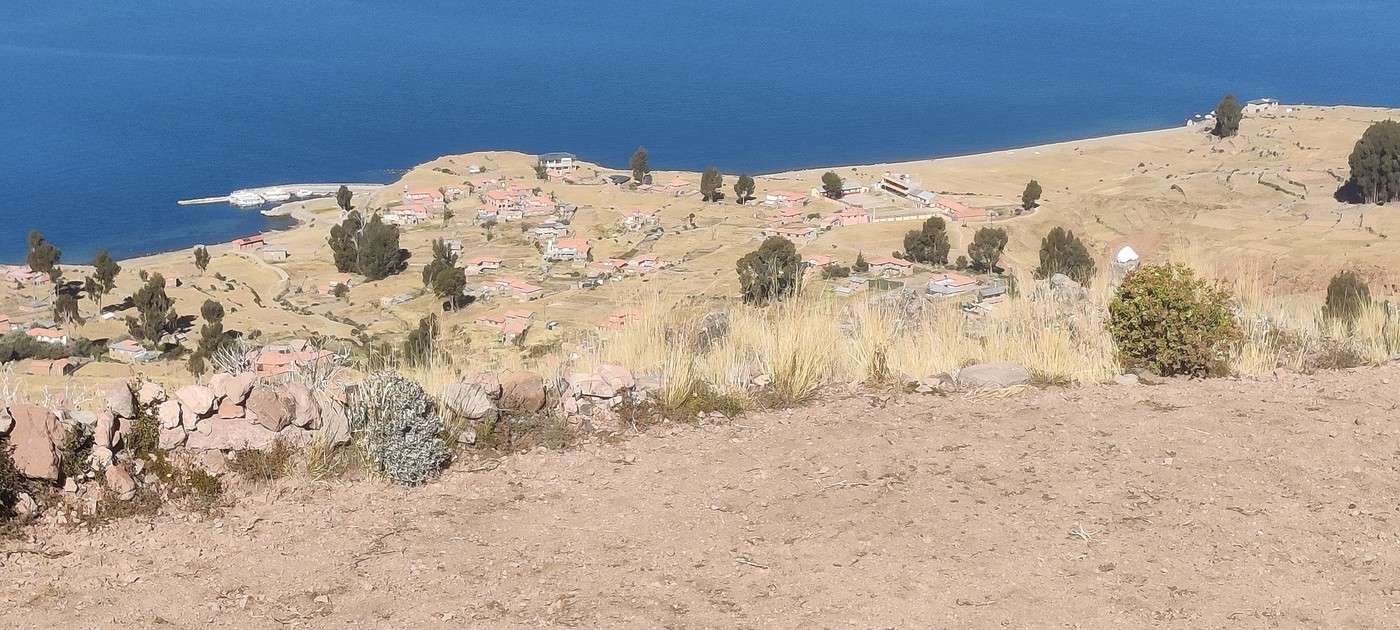
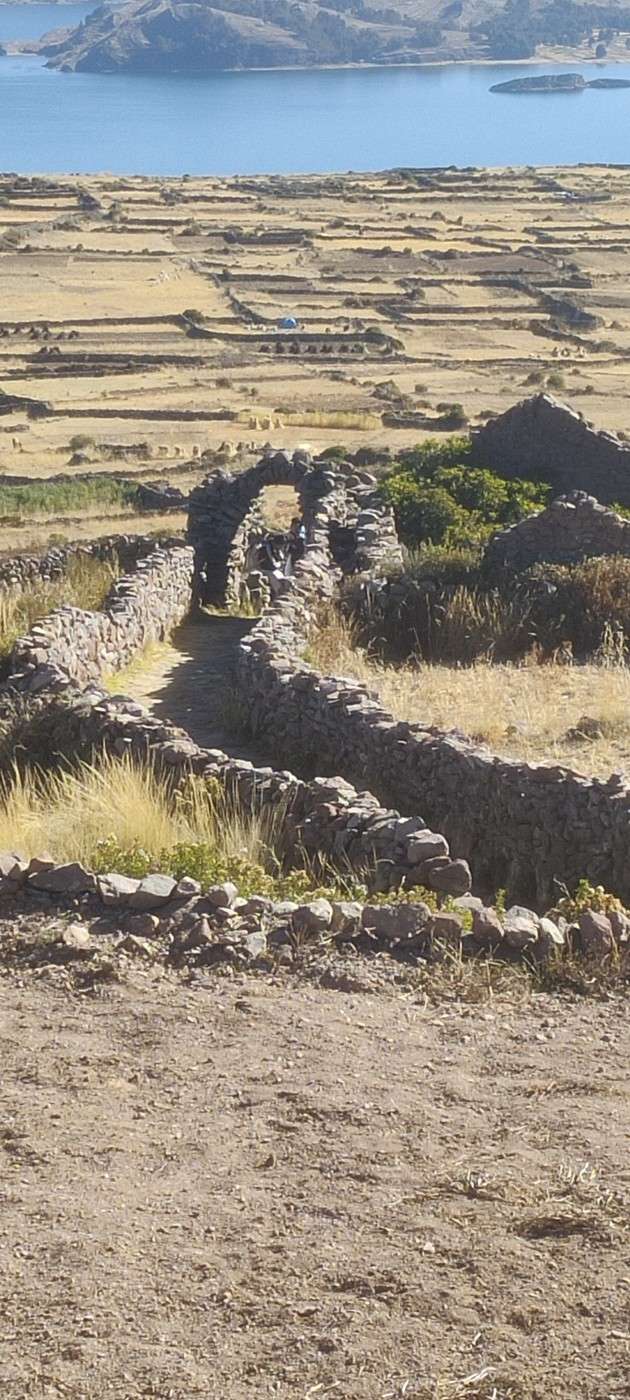
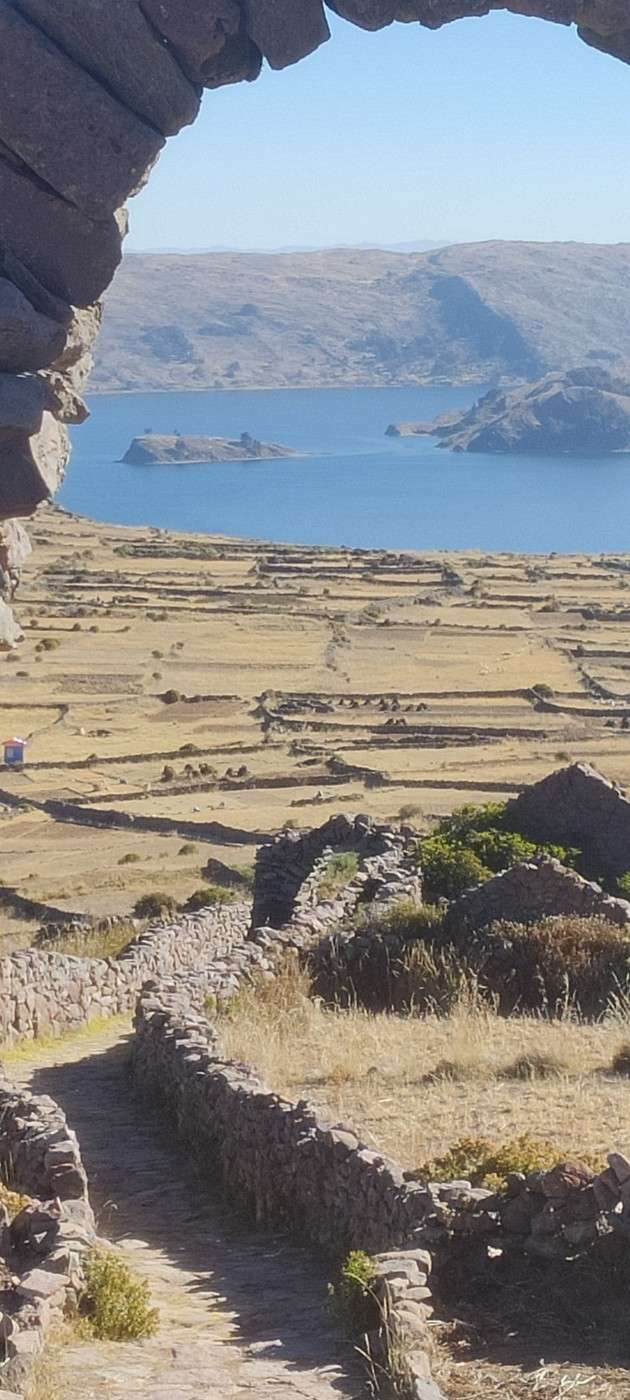
We board our boat again, heading toward Amantani Island. This is where we’ll spend the night at Ivan’s place. He meets us at the port and helps carry our backpacks up to his home. Let’s just say the climb is steep! We stop every twenty meters or so to catch our breath. His family—his wife Flavia and their two children—welcomes us with big smiles. Despite the language barrier, we manage to communicate. A good meal of soup and trout is served, and then we settle into our room, simple but clean. The family lives off their vegetable production, hosting tourists, and a small shop where they sell basic necessities, including pharmaceuticals. To fill our afternoon, Ivan offers to take us one by one on his motorcycle to the island’s heights. The peaks of Pachatata and Pachamama, rising above 4,000 meters, dominate the island. There’s no way we could’ve made it up on foot—it’s too steep! And when I say “at the summit,” that’s not entirely true. We still have to climb 200 meters to reach the sanctuary at the very top.


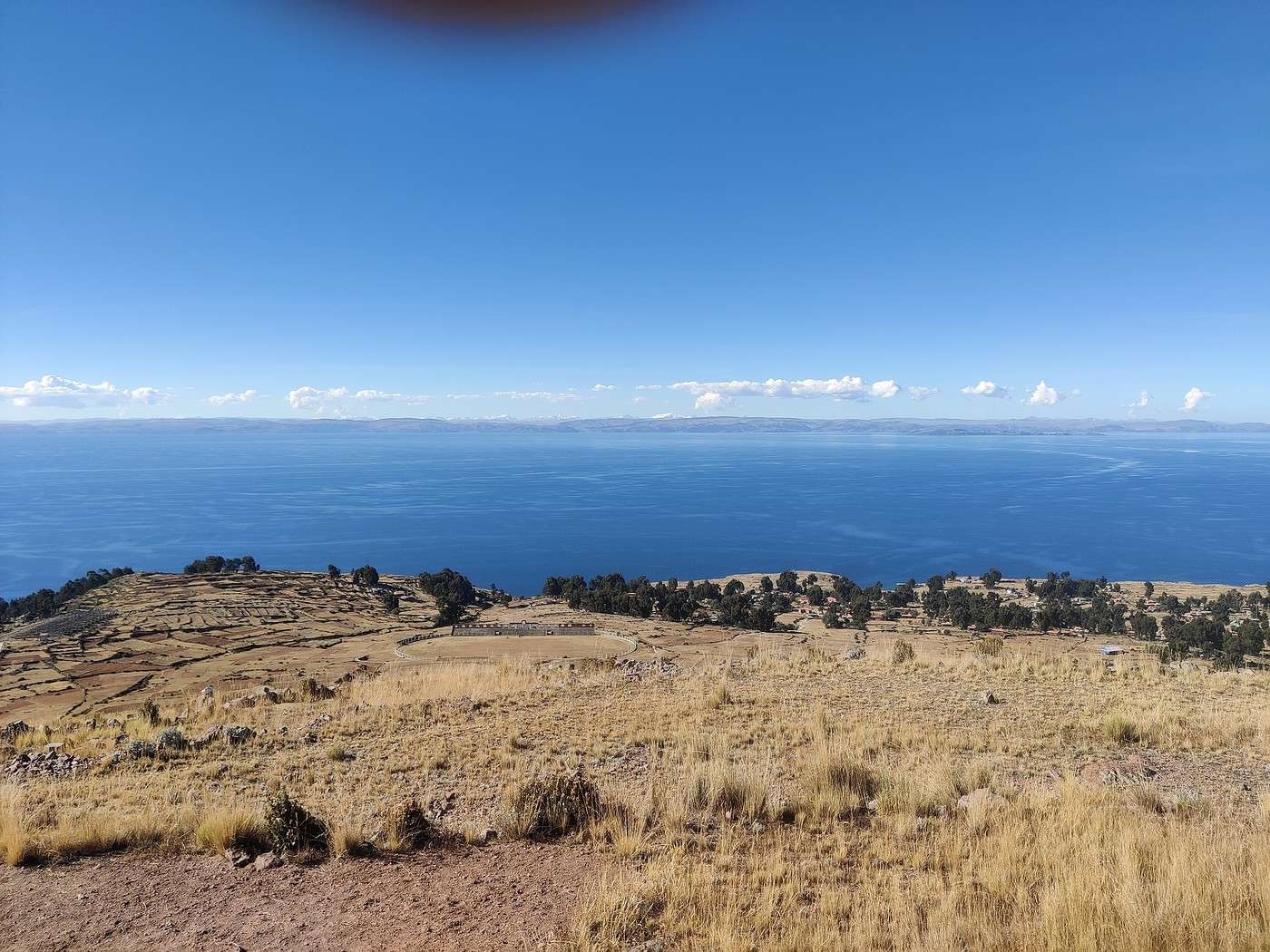
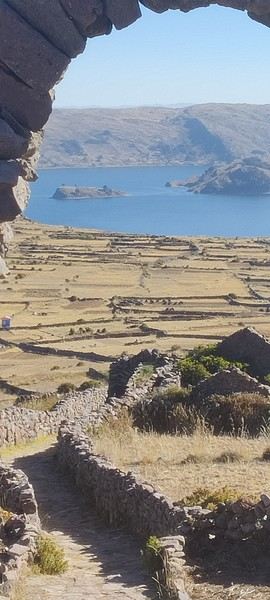
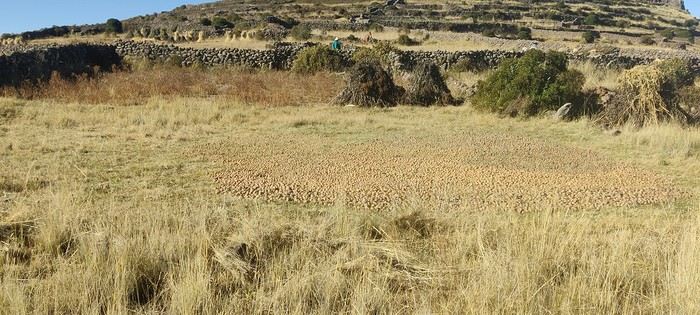
The effort is totally worth it. From up there, we have a 360° view of the lake, the surrounding islands, and the village below. It’s breathtaking. Farmers work in their small plots, growing quinoa and potatoes, and greet us with smiles as we pass. In the distance, we spot snow-capped peaks of the Andes. We start the long descent, stopping frequently to catch our breath. We pass by a soccer field, and I wonder how they can run at this altitude! We wander through the village streets for a bit. Ivan had told us: if you have trouble finding his house, just ask for “Ivan’s place”—everyone knows! A well-deserved rest on the sunny terrace before dinner, which is very frugal: soup followed by vegetables.


We head back to our room. It’s cold, and we struggle under the weight of five heavy blankets that restrict our movements. A night at over 4,000 meters above sea level: an experience we won’t soon forget.

Peru: A childhood dream finally realized

Larri · 2026-08-15

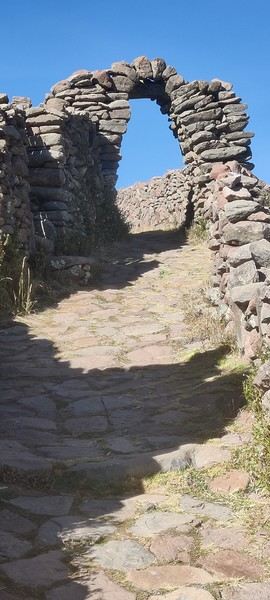
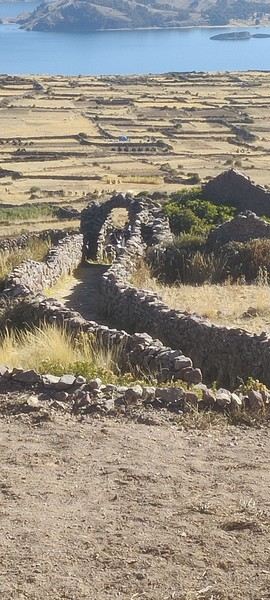
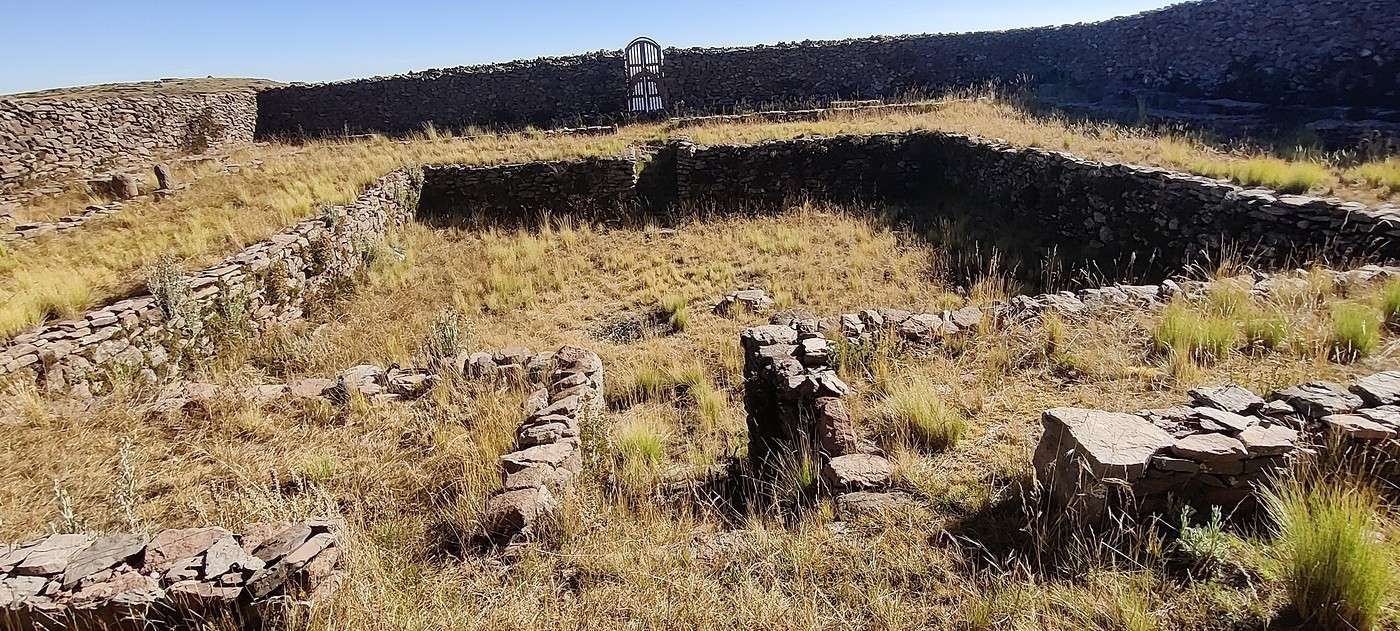
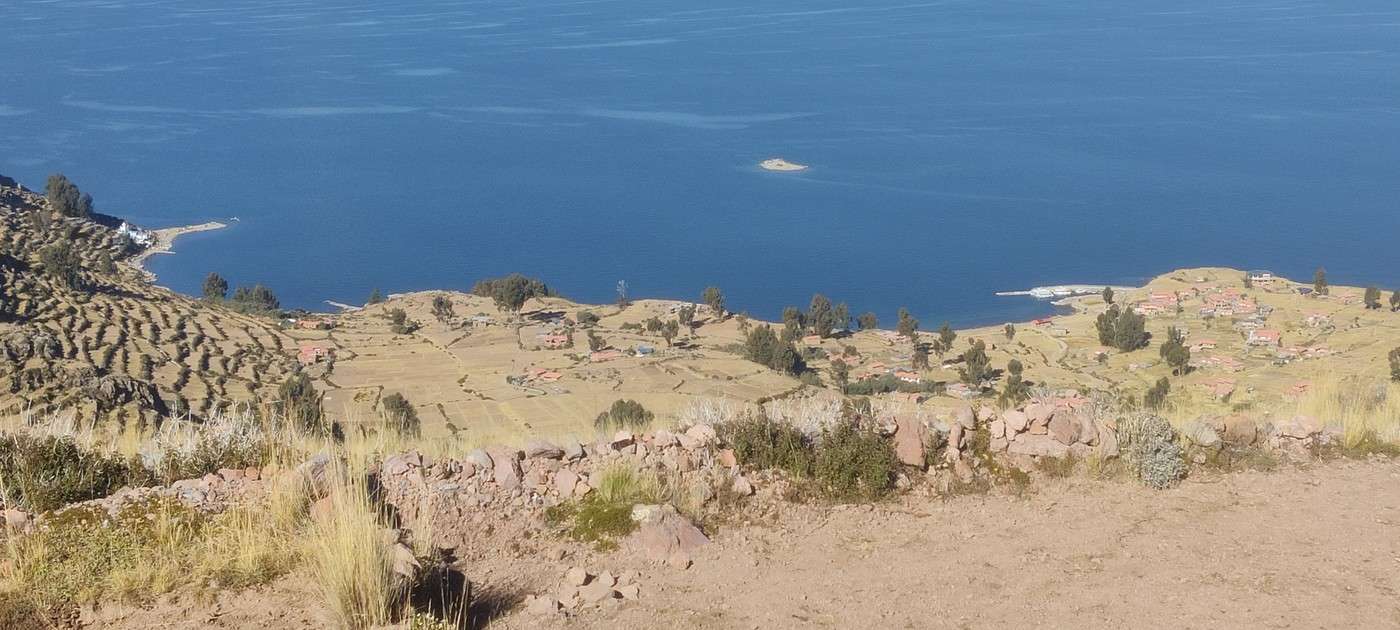
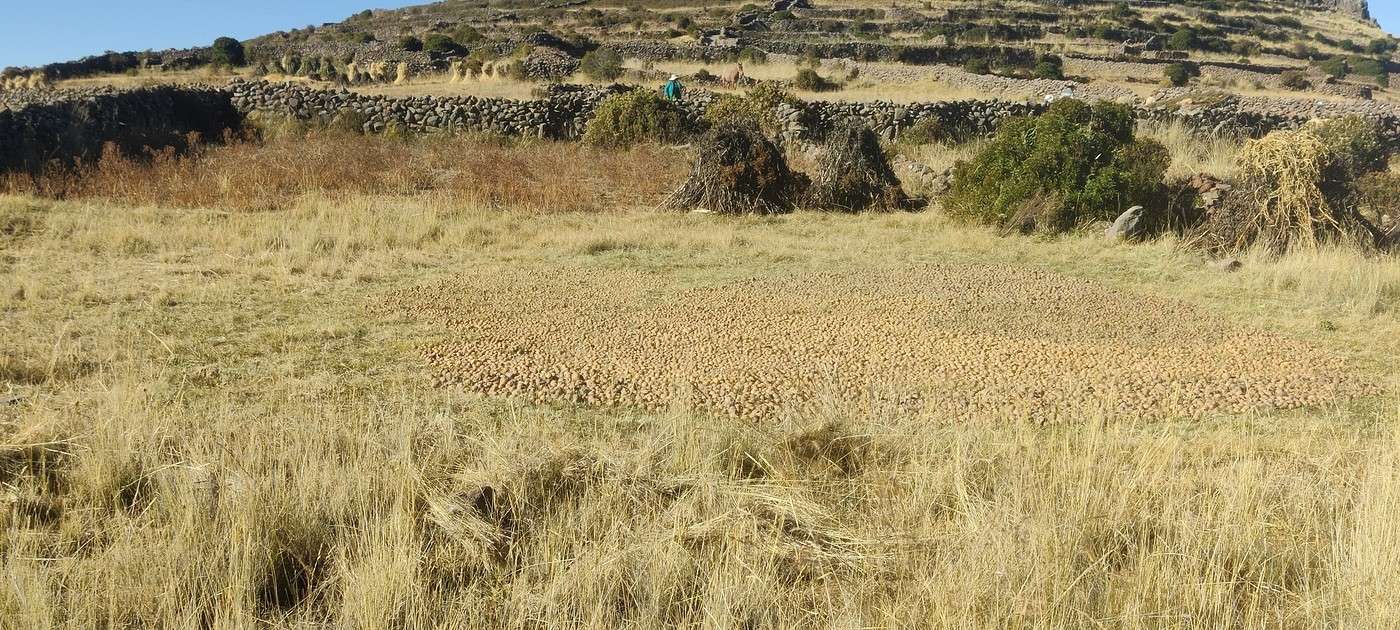
A few photos of Amantani: the sanctuary at the summit Views from the summit: Potato field:


The descent:

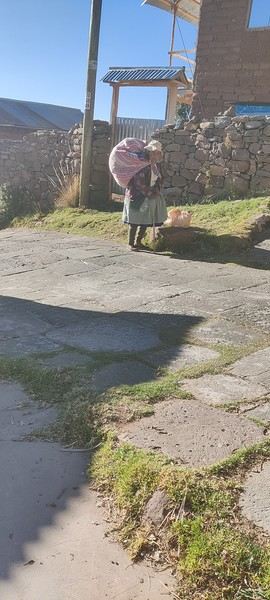
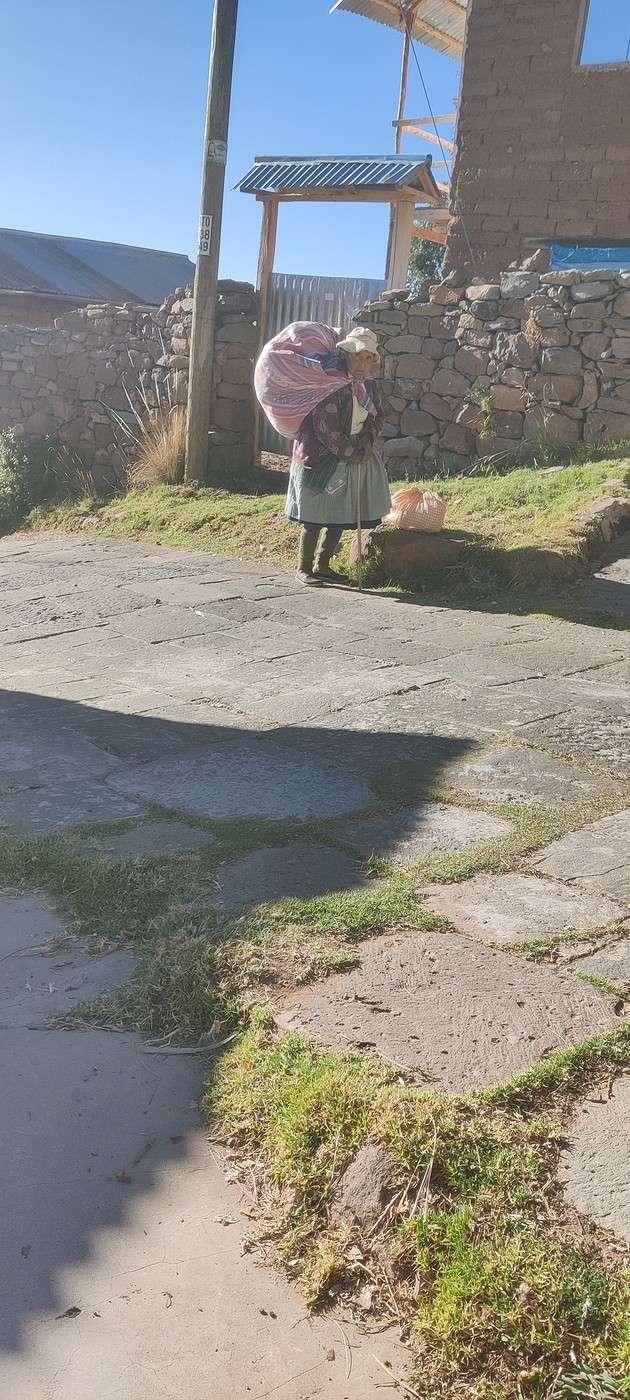
Everyday life scene:


J8 – Amantani, Taquile and return to Puno

Today, our day will be pretty relaxed. Flavia made us blinis for breakfast. Then Ivan takes us to the boat that will take us to Taquile Island before bringing us back to Puno. After an hour’s sail, we dock. The captain offers those who want to climb up to the village, stroll around a bit, have lunch there, and then descend to another dock. For our part, we decline: the climb is too steep, and my wife is starting to feel the effects of the altitude. So we wait about three hours before boarding the boat again toward the other dock. From there, we head to Puno, where we arrive around 3 PM. A taxi drops us off at the hotel. Getting some comfort feels good. Dinner at a restaurant, then a long sleep—tomorrow’s going to be a tough day!

Peru: A childhood dream finally realized

Larri · 2026-08-16

Day 9 – From Puno to Cusco: The Road of the Sun

The hotel serves a good breakfast starting at 5:30 AM, which lets us catch a taxi by 6 AM to reach the bus departure point. Inka Express had promised a comfortable vehicle. It’s a bit less so than expected, but still perfectly fine. The day ahead will be long on the famous "Road of the Sun."

As soon as we settle in, we’re given a small packed lunch for our midday meal. Cold and hot drinks are available throughout the trip, and the Wi-Fi is free. Four tourist stops are planned along the way, and our guide will also act as our escort.

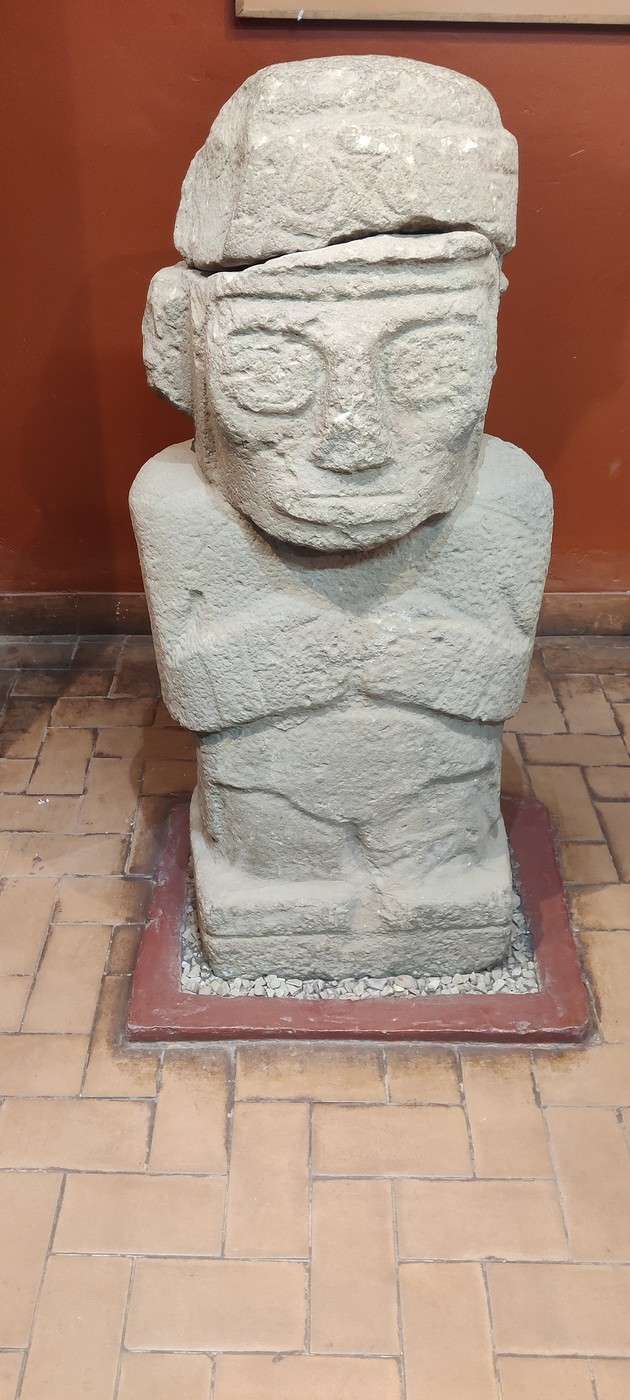
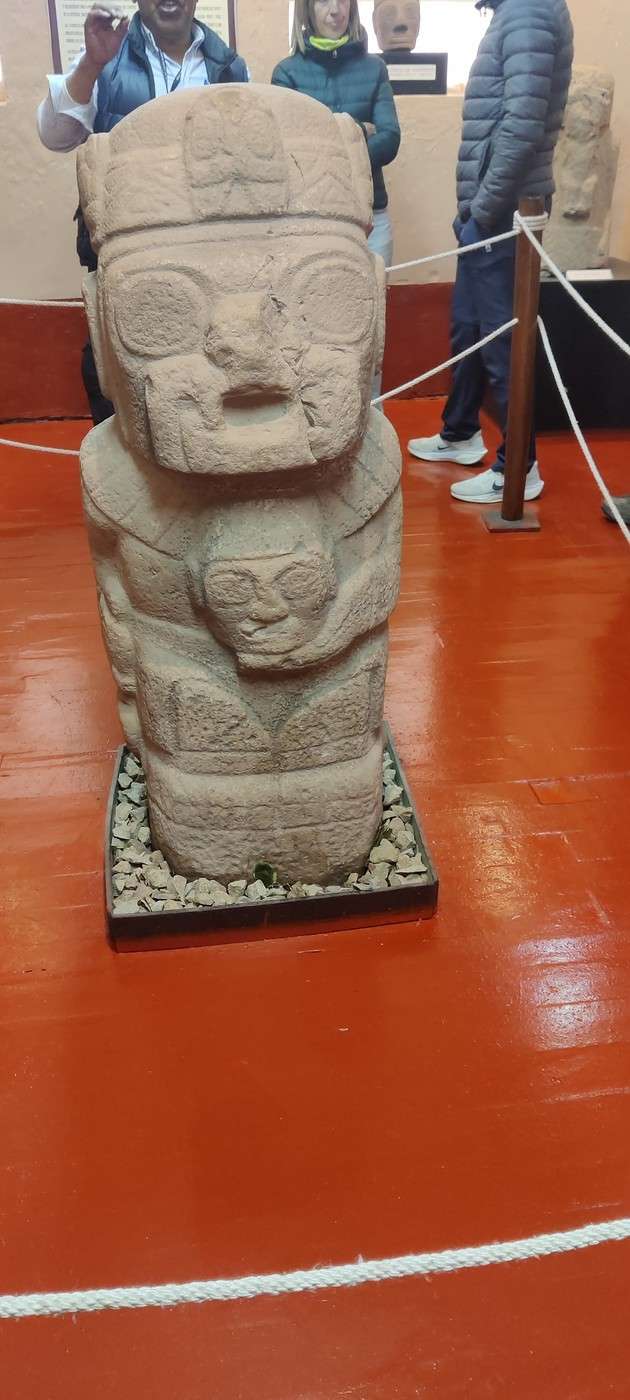
We start with the Pukara Museum, dedicated to this ancient pre-Inca civilization from the Lake Titicaca region. It’s a small museum with a few explanations—nothing mind-blowing. Another option is offered for those interested: a ceramics workshop.


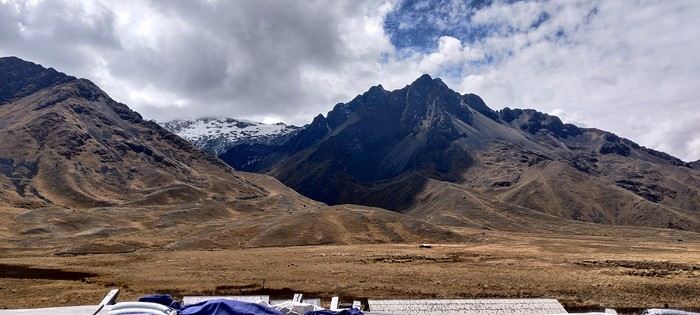
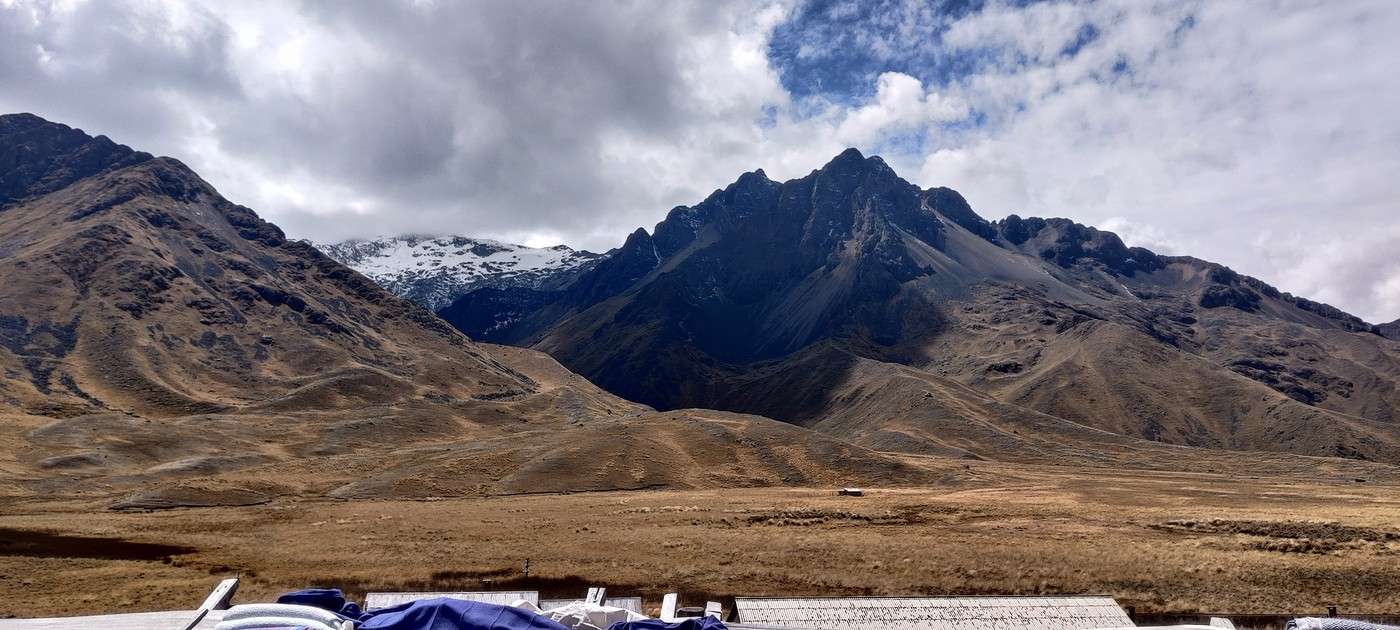
Next, we stop at La Raya Pass, at 4,335 meters above sea level. The view of the surrounding peaks is stunning, and the crisp mountain air is invigorating!


Around 1 PM, we have lunch at a typical buffet restaurant in Sicuani. My wife is suffering from acute mountain sickness today. Luckily, the bus is equipped with an oxygen bottle, which helps relieve her symptoms somewhat.

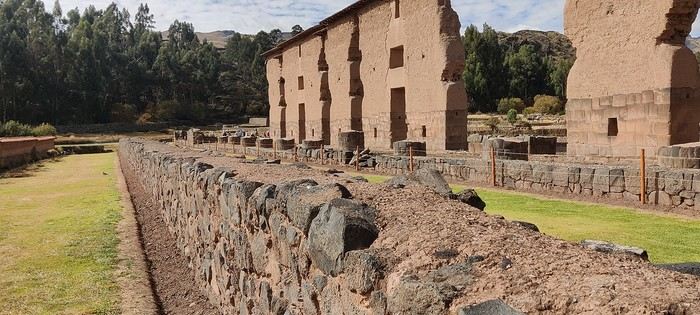
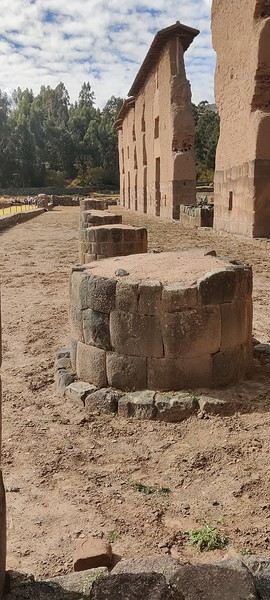
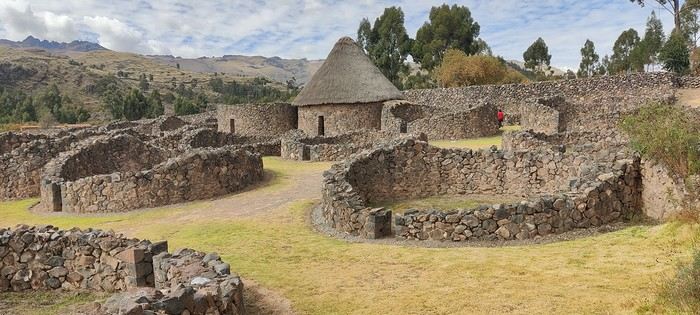
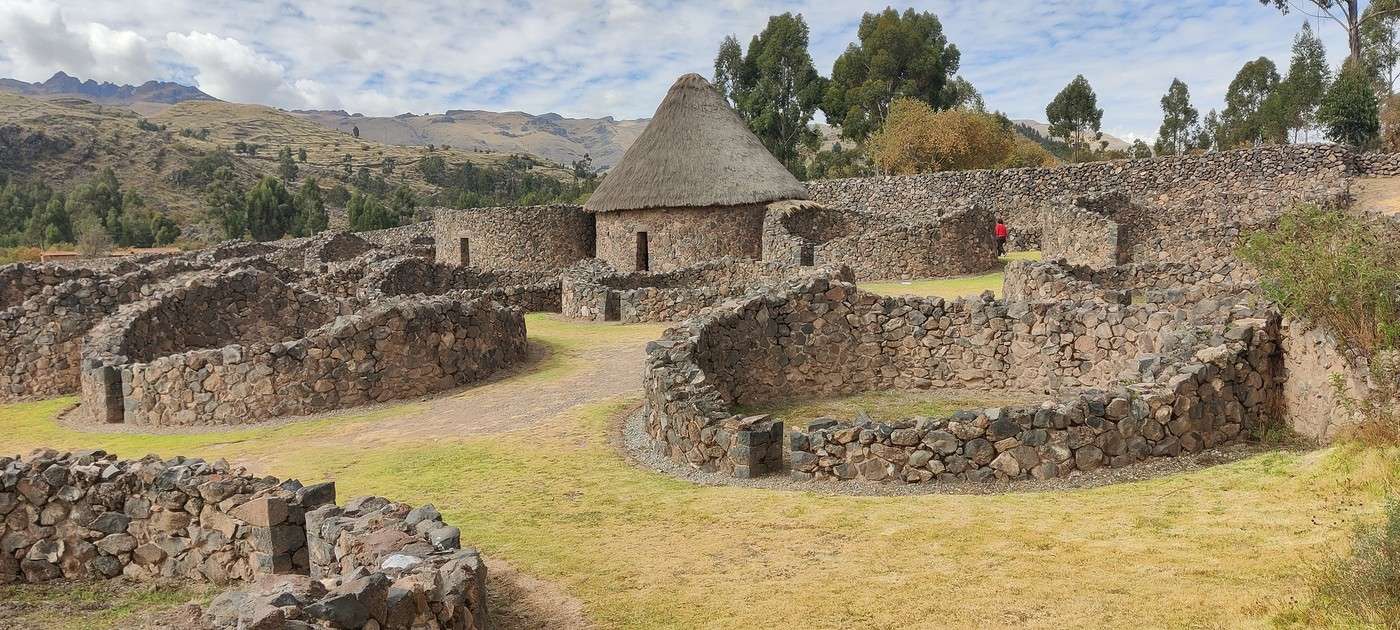
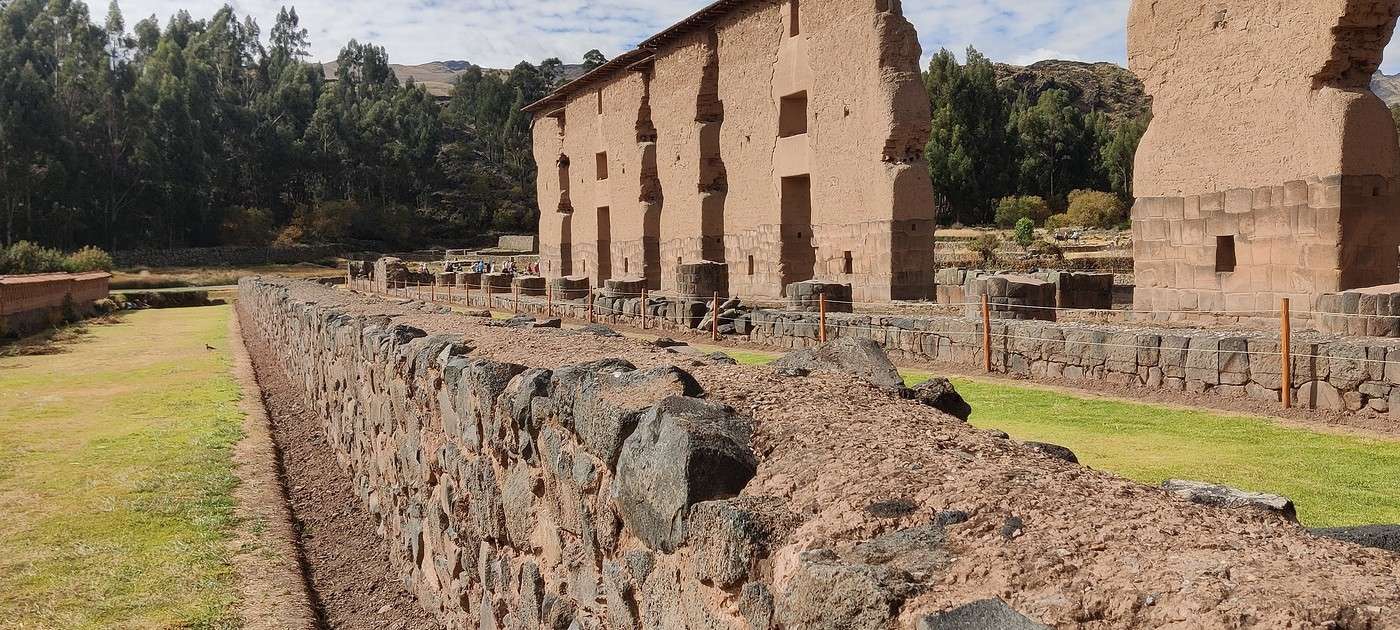
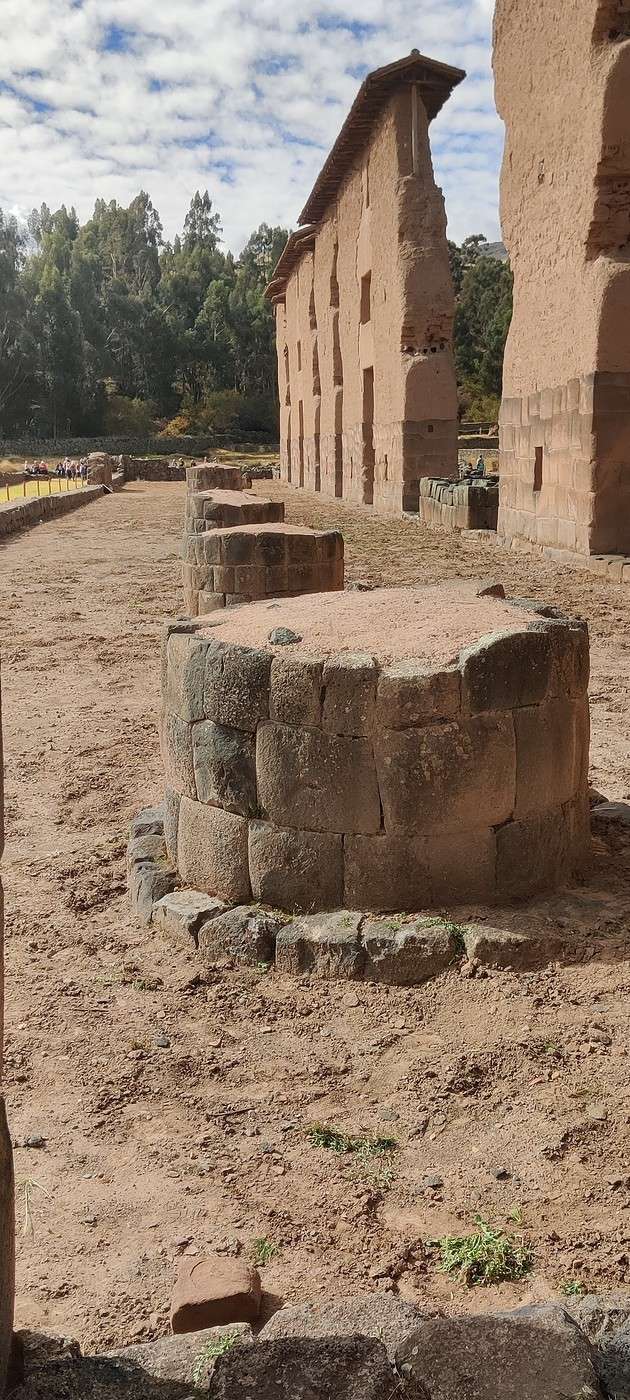
The next stop is the Raqchi archaeological complex. The visit is fascinating. The site is dominated by the monumental ruins of a temple dedicated to Wiracocha, the creator god in Inca mythology.

All that remains of the temple today is the spectacular central wall, which once reached a height of around 18 meters, according to some sources.


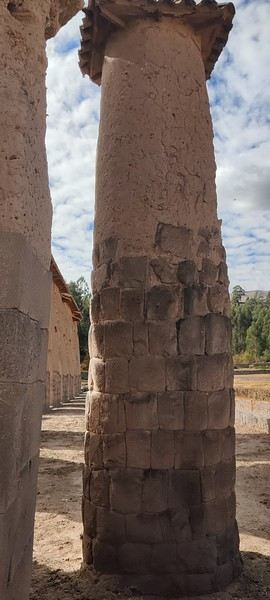
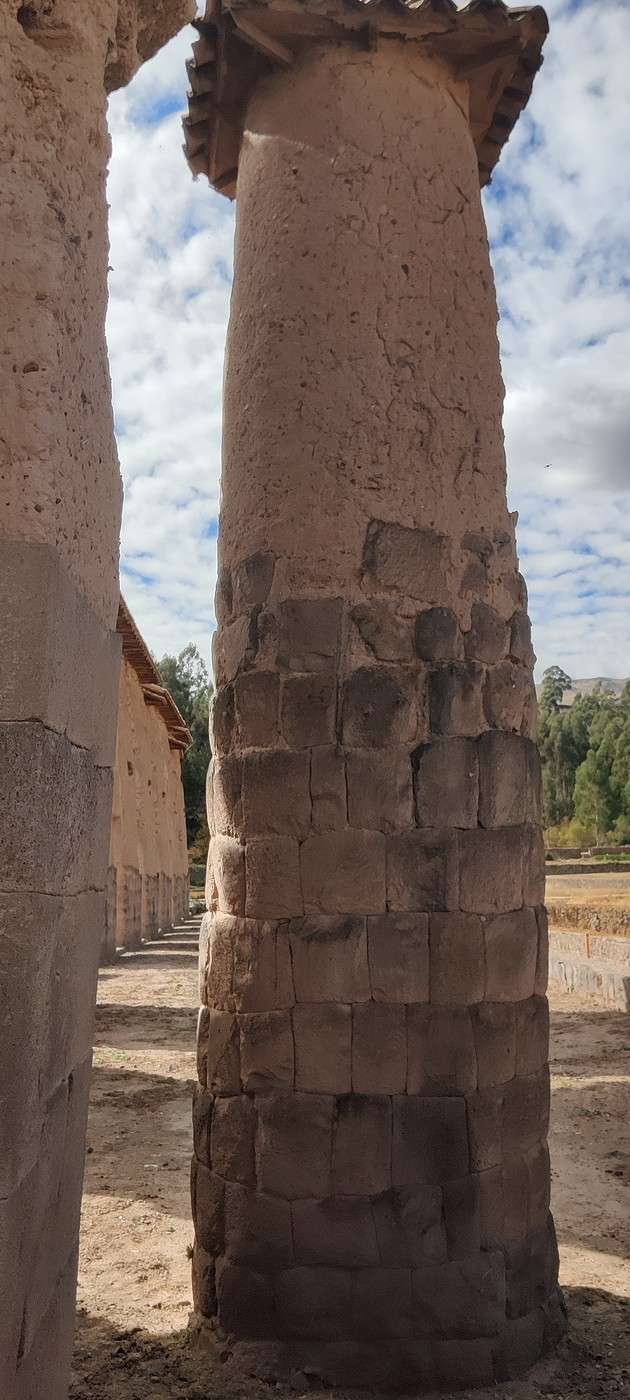
On either side stood two rows of eleven circular columns. The lower part was made of stone, and the upper part of adobe. They supported a massive double-pitched roof, now gone, which you have to imagine. The entire structure was truly monumental: the temple measured about 92 meters long by 25 meters wide. Around it were some 150 *colcas*—circular granaries for storing food—as well as fountains, baths, and dwellings.


The site had a religious function but also served economic and administrative purposes. The guide shows us reconstructions that help visualize the original scale of the complex.

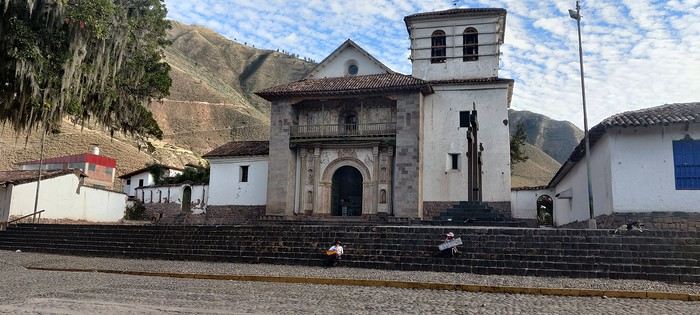
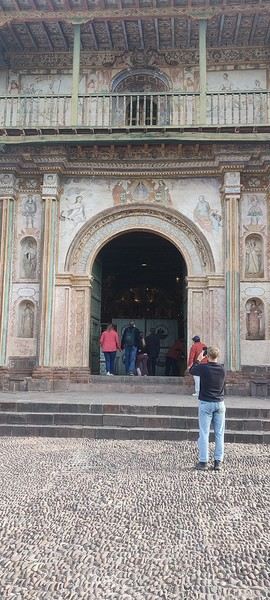
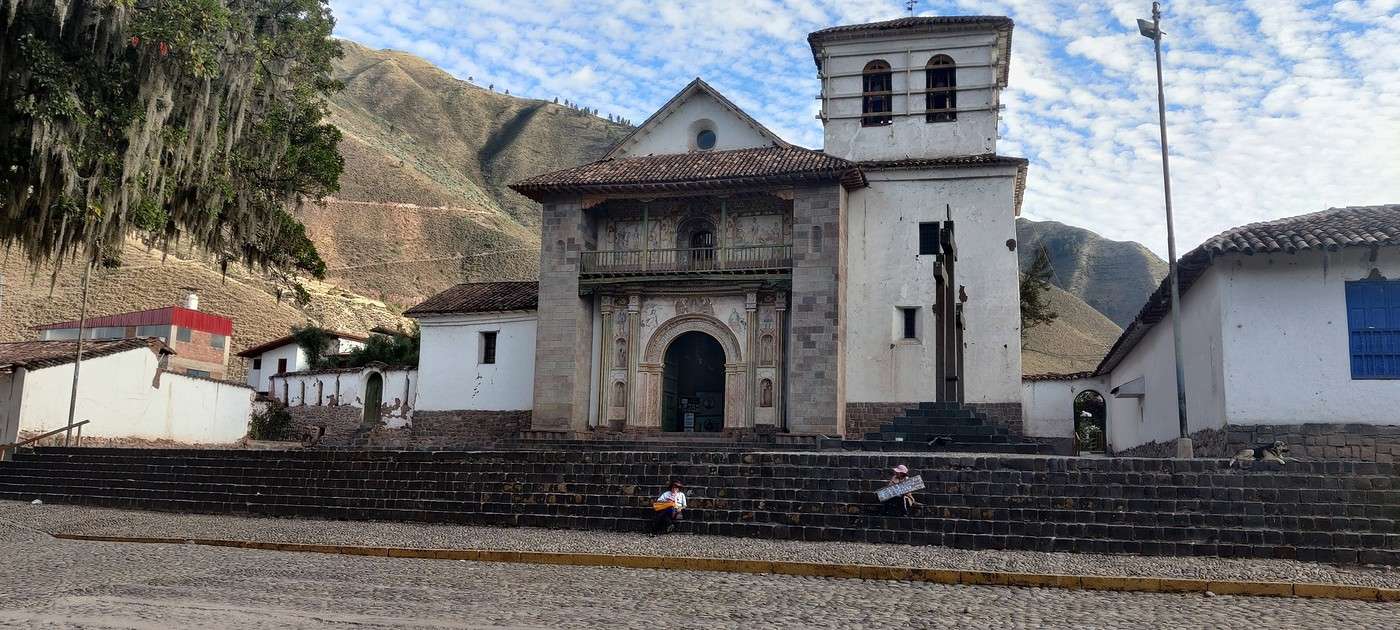
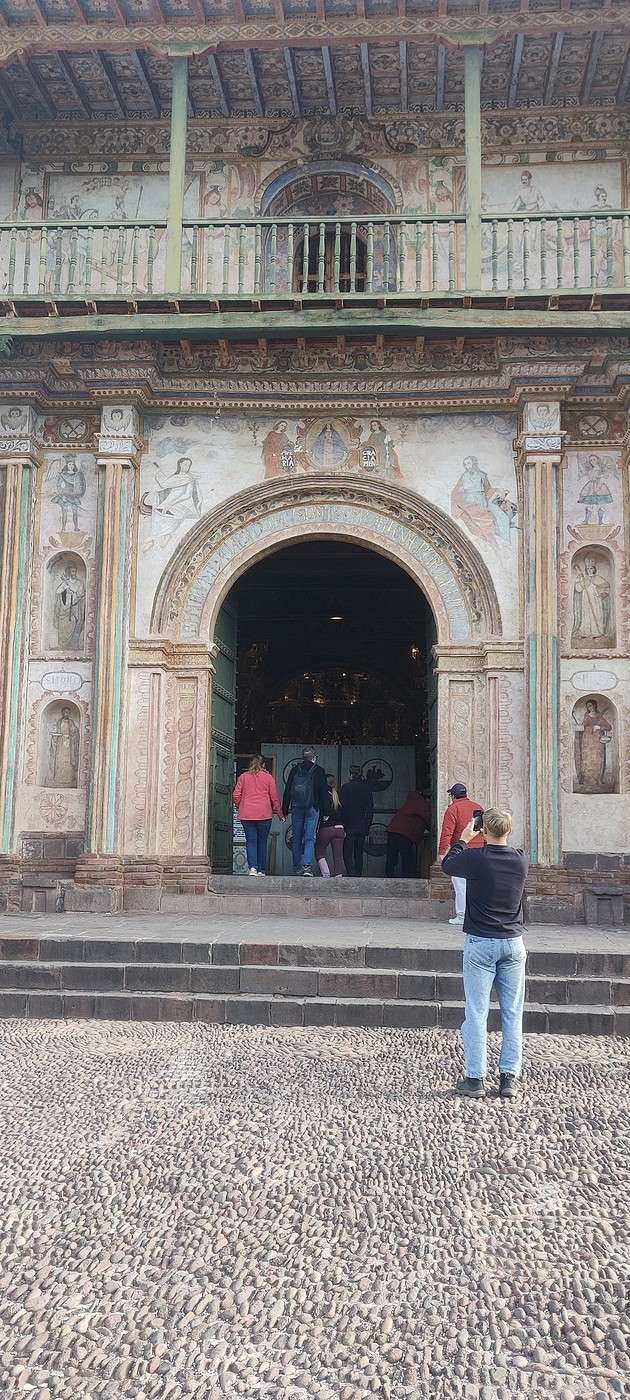
Finally, before reaching Cusco, we make one last stop at the Church of Saint Peter in Andahuaylillas, grandly nicknamed the "Sistine Chapel of the Andes." From the outside, this small church doesn’t look much different from the other religious buildings we’ve seen.


But as soon as you step inside, it’s a burst of color: frescoes, gold leaf, painted ceilings, intricately carved and gilded altarpieces... The contrast is striking. Sure, the comparison to the Sistine Chapel in Rome is a bit exaggerated, but the interior is still spectacular.

We don’t arrive in the outskirts of Cusco until 7:30 PM, due to road conditions, construction, and the various stops. That’s over twelve hours on the road! The "Road of the Sun" lives up to its name... but it’s a long journey!

The hotel sent a taxi to pick us up. We’re completely exhausted as we check into our room. To be honest, our first impression isn’t great. But over the next few days, we’ll grow to like it. It’s clean, the staff is friendly and helpful, the location is perfect—just 500 meters from the Plaza de Armas—with plenty of restaurants nearby. It’s quiet, and most importantly, the price is unbeatable: 25 € per night.

For our first meal in Cusco, we choose El Olivo—great choice! We’ll end up going back several times. The waiter even starts recognizing us and goes as far as offering us dessert. A lovely way to start our stay in Cusco.

Peru: A childhood dream finally realized

Larri · 2026-08-17

Day 10 – Exploring Cusco’s historic center

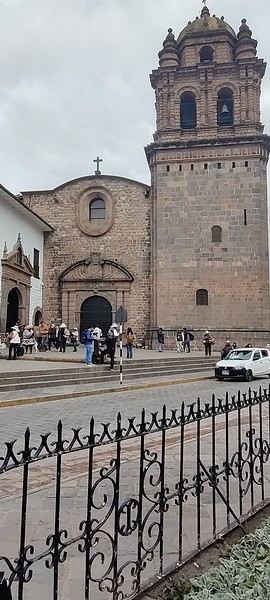
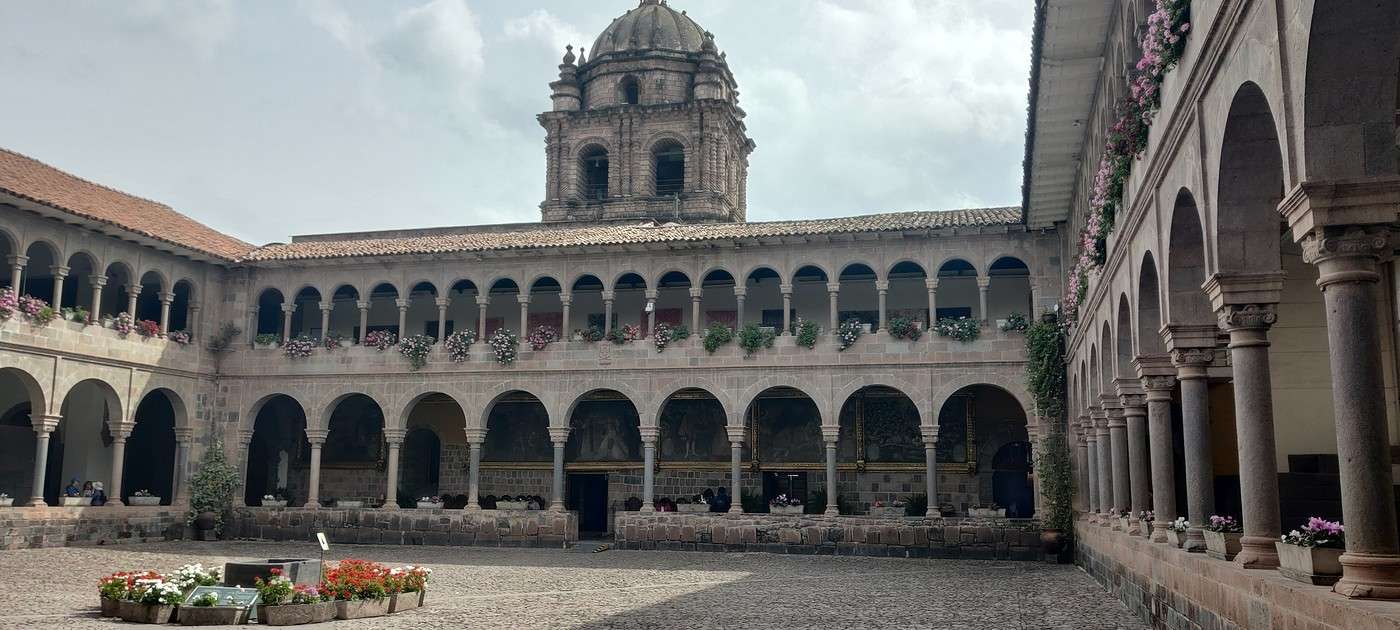
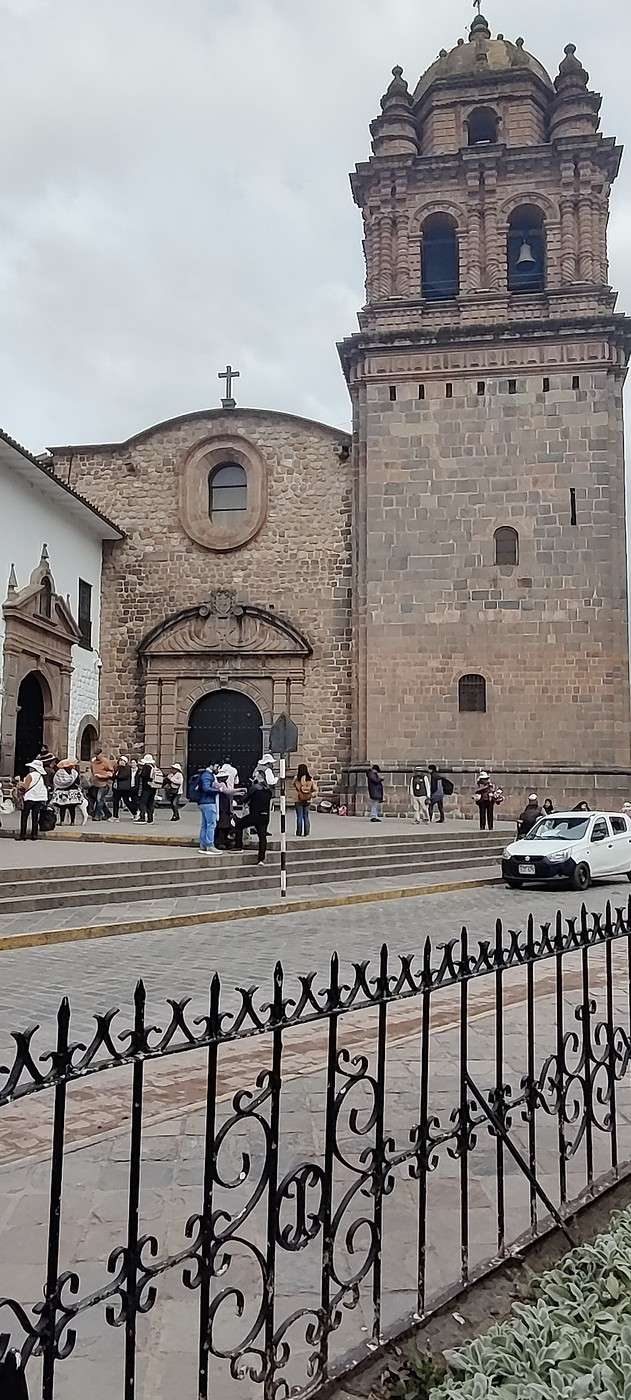
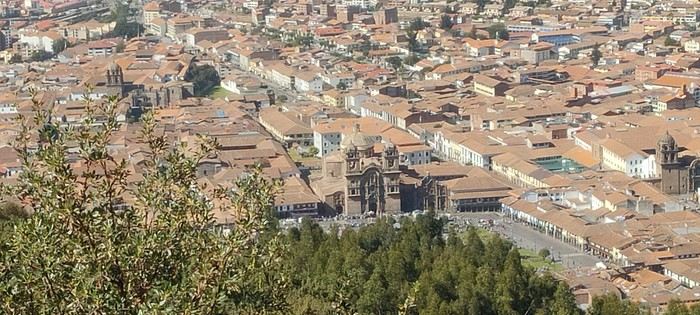
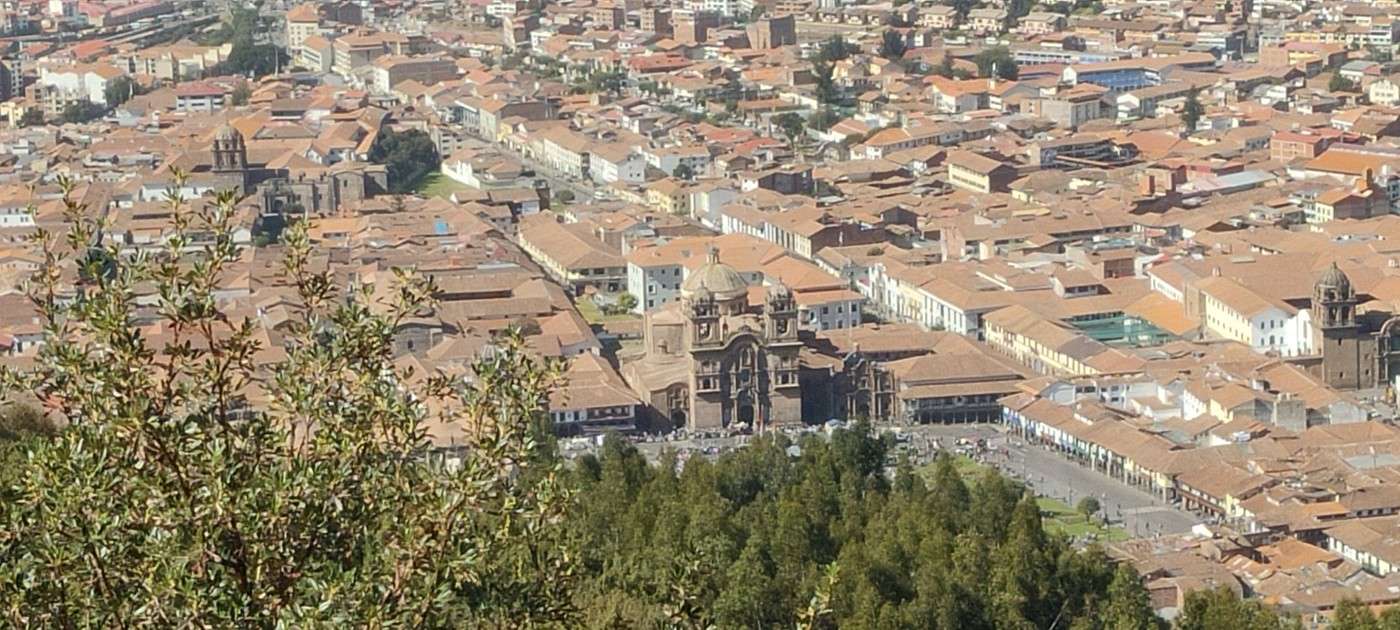
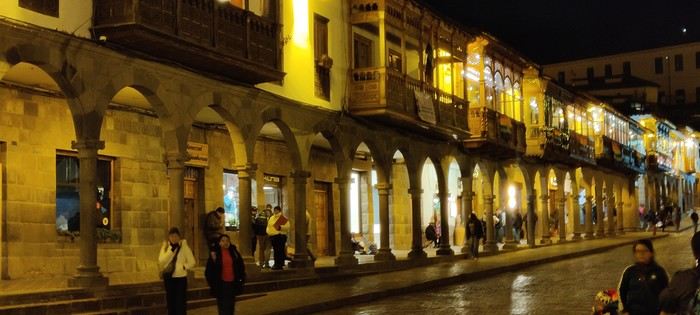
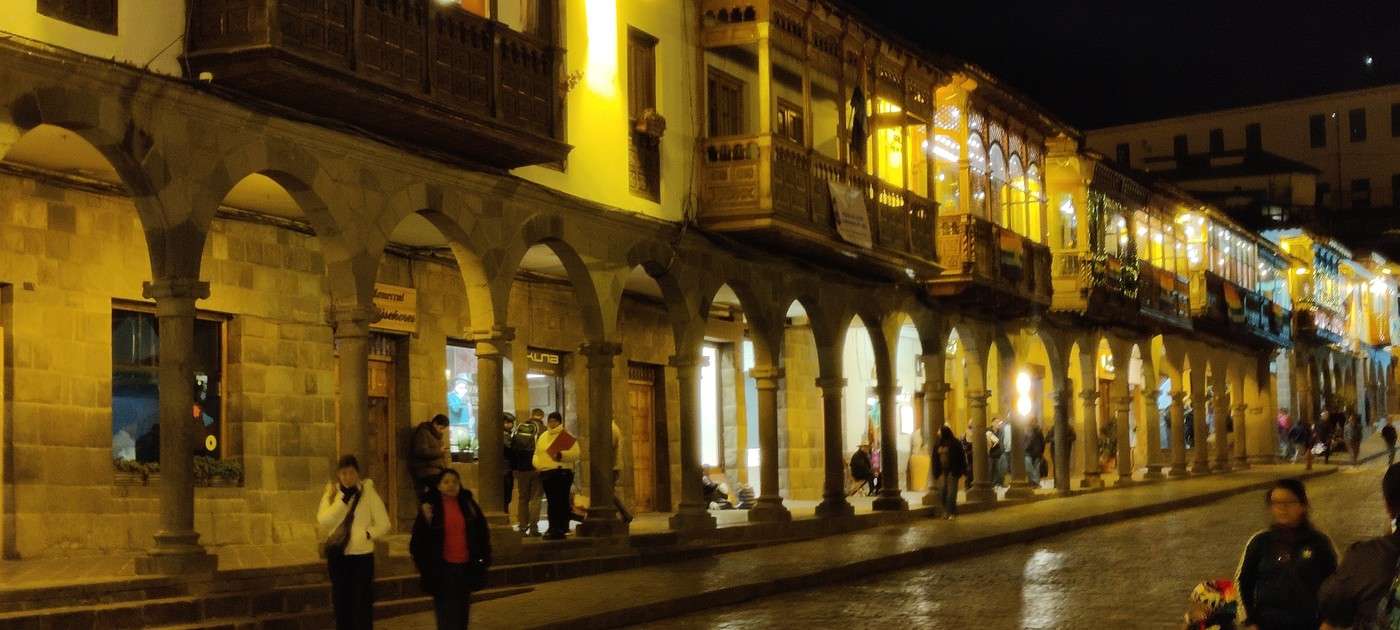
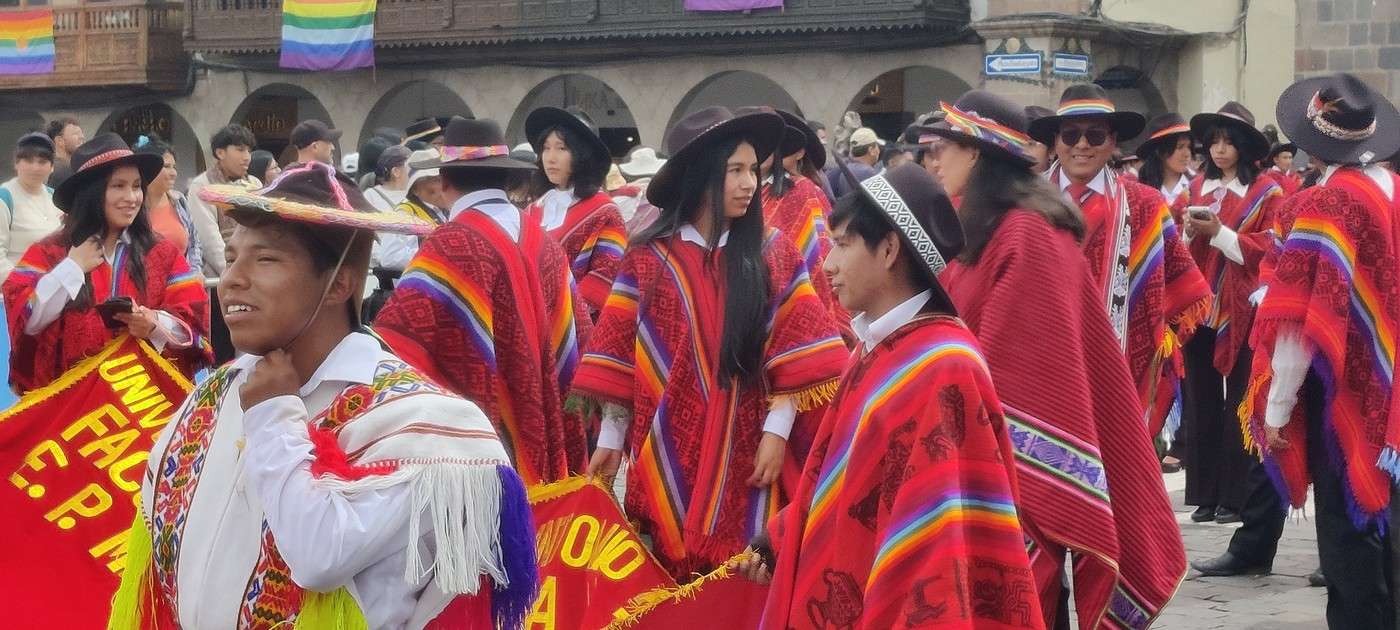
Today, we planned to visit Cusco’s historic center with Willi, a dynamic young guide with a strong Québécois accent he picked up during his studies in Canada. He’s passionate, knowledgeable, and funny—exactly the kind of guide you love. A quick word about the city. Cusco was the capital of the Inca Empire. Its name is traditionally interpreted as meaning "navel of the world" in Quechua. It boasts an extraordinary historical and cultural wealth, a blend of Inca and Spanish civilizations, with archaeological ruins and Hispanic architecture. This remarkable fusion earned it a spot on the UNESCO World Heritage list in 1983. The Plaza de Armas sits at the heart of the old city, with its arcades, colonial buildings, intricately carved wooden balconies, and sections of Inca-era walls. At its center stands a magnificent fountain topped with a bronze sculpture of Pachacútec, the ruler behind the expansion of the Inca Empire. The statue serves as a reminder of the Inca legacy. Surrounding the square are the imposing Cathedral of Our Lady of the Assumption and the Church of the Society of Jesus. Everywhere, Peruvian flags and Cusco’s multicolored flag flutter—so similar to the LGBT rainbow flag that you might mistake one for the other. But if you look closely, you’ll notice Cusco’s flag has seven colored stripes, while the LGBT rainbow flag has six. This June, Cusco celebrates the sun with Inti Raymi. Originating from Inca traditions, this festival was tied to the winter solstice in the Southern Hemisphere and honored Inti, the sun god, to ensure prosperity and good harvests. The modern celebration takes place every year on June 24th and marks the climax of a month-long festival in Cusco. Peruvians sing, dance, play music, and parade in vibrant processions. We’ll soak up this festive atmosphere throughout our stay in Cusco. That’s why the Plaza de Armas is always lively and often hard to access—numerous parades and events disrupt visits to religious sites. We’ll struggle, for example, to get into the cathedral. I’ll share more about these parades later—they’ll set the rhythm for all our days in Cusco. Next, we head to the Santo Domingo Convent.


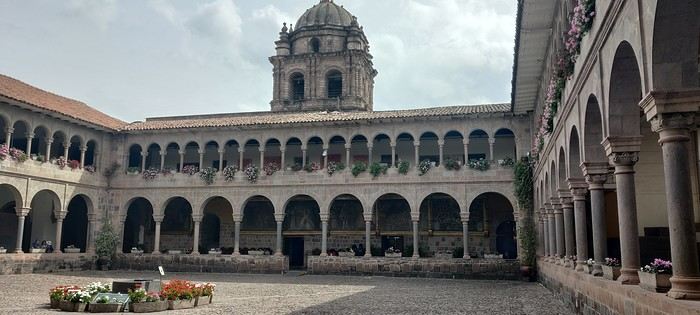
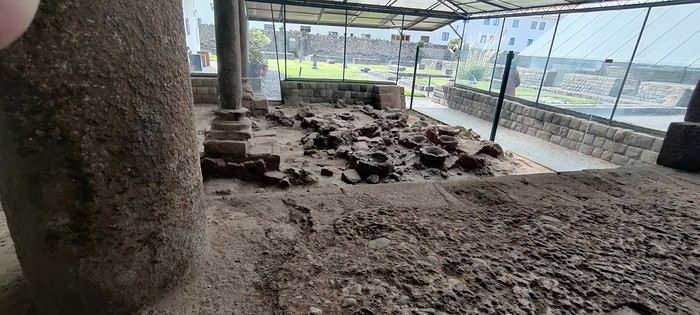
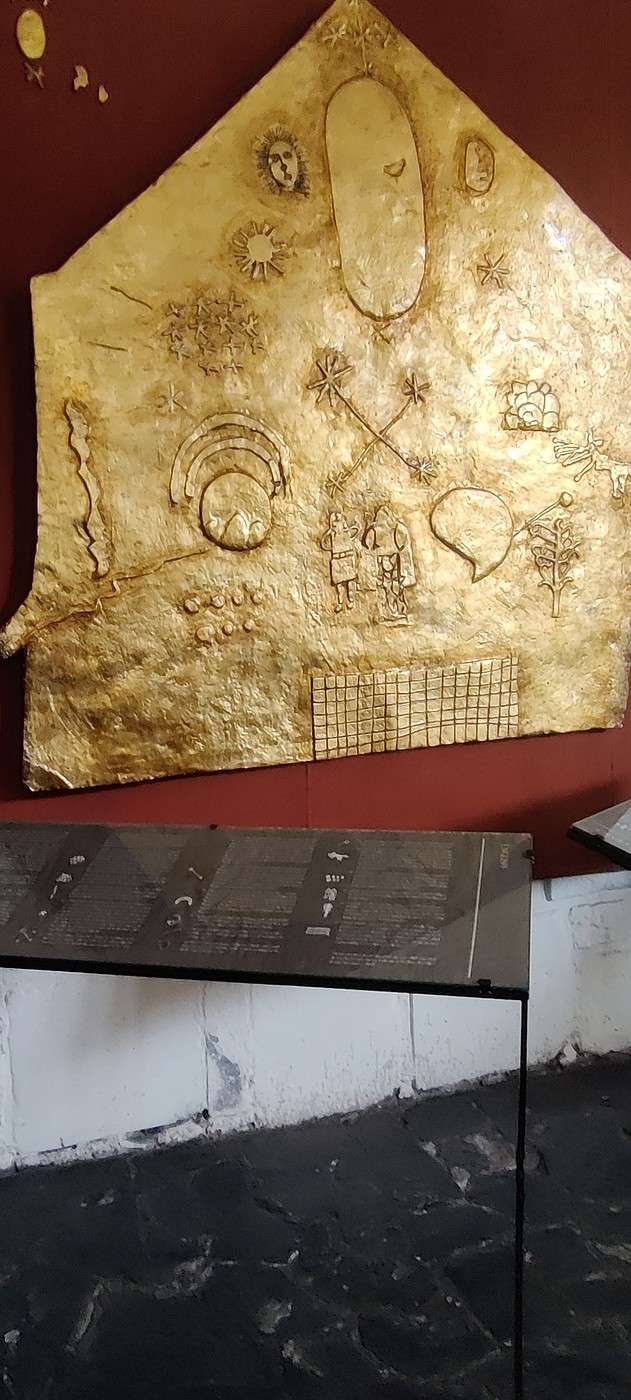
It was built on the site of the Temple of the Sun, Qoricancha in Quechua. After the Spanish conquest, much of the Inca temple was dismantled, and its materials were reused to construct the convent and church on its foundations. Remnants of the Inca walls were uncovered after earthquakes. Spanish chroniclers described the temple as a sumptuous building with walls covered in gold plates, symbolizing the power and wealth of the Incas and the sacredness of the site.


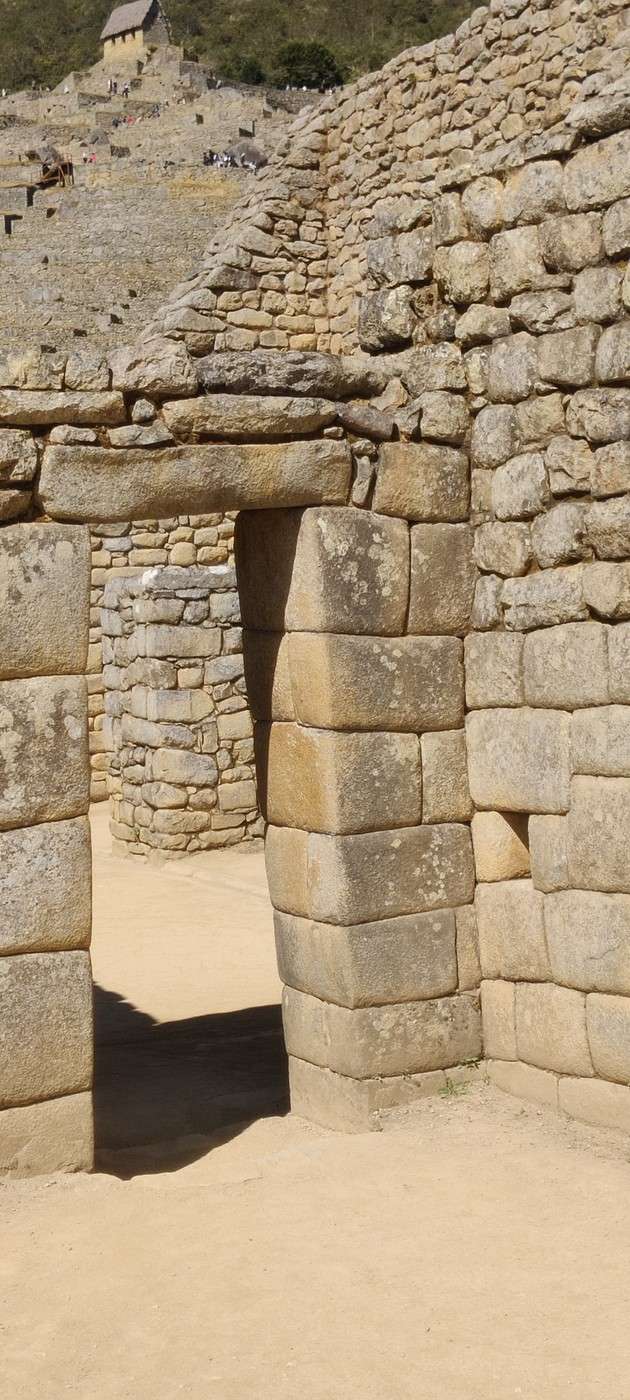
Here, you can see the incredible precision and ingenuity of the Incas in constructing buildings that withstand earthquakes better. Willi explains their beliefs, astronomical knowledge, calendar, and symbols. It’s fascinating, even if you don’t remember everything. This place alone embodies the entire history of Cusco: the splendor of the Inca capital, the Spanish conquest, and the layering of two civilizations. To wrap up, we discover the beautiful exotic garden overlooking the city.


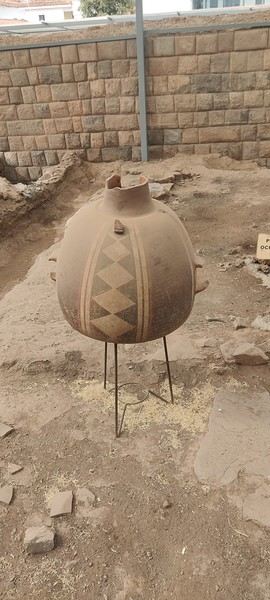
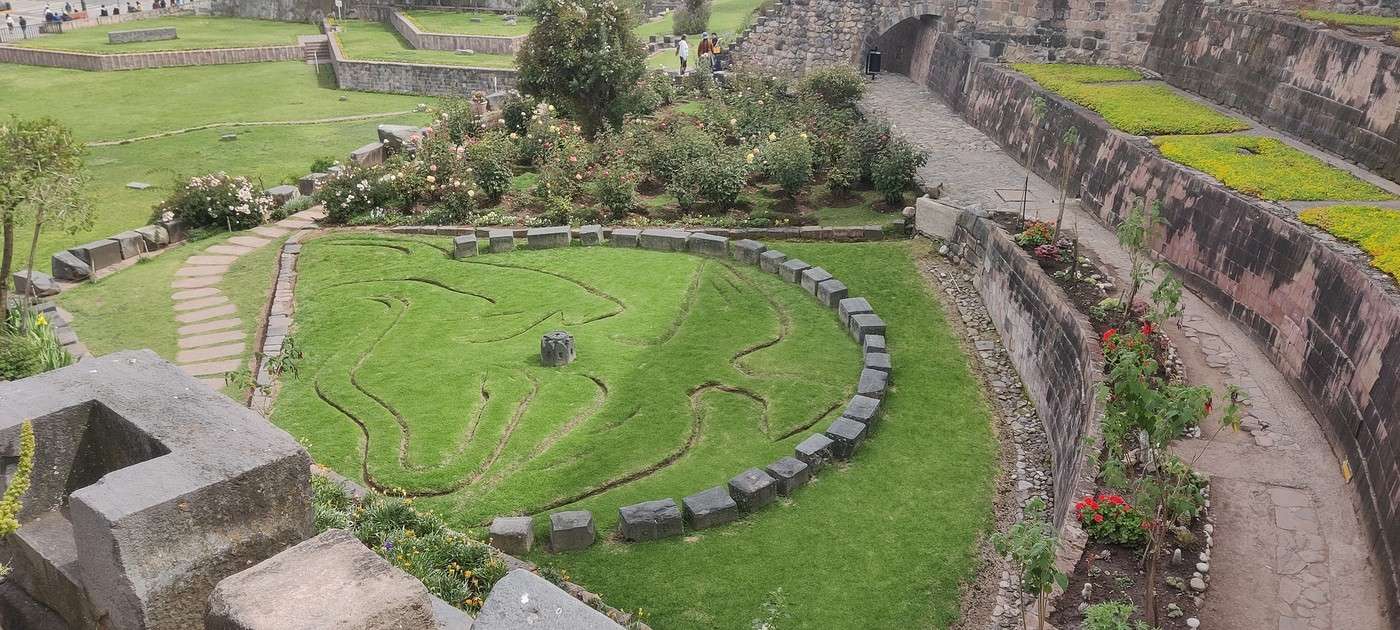
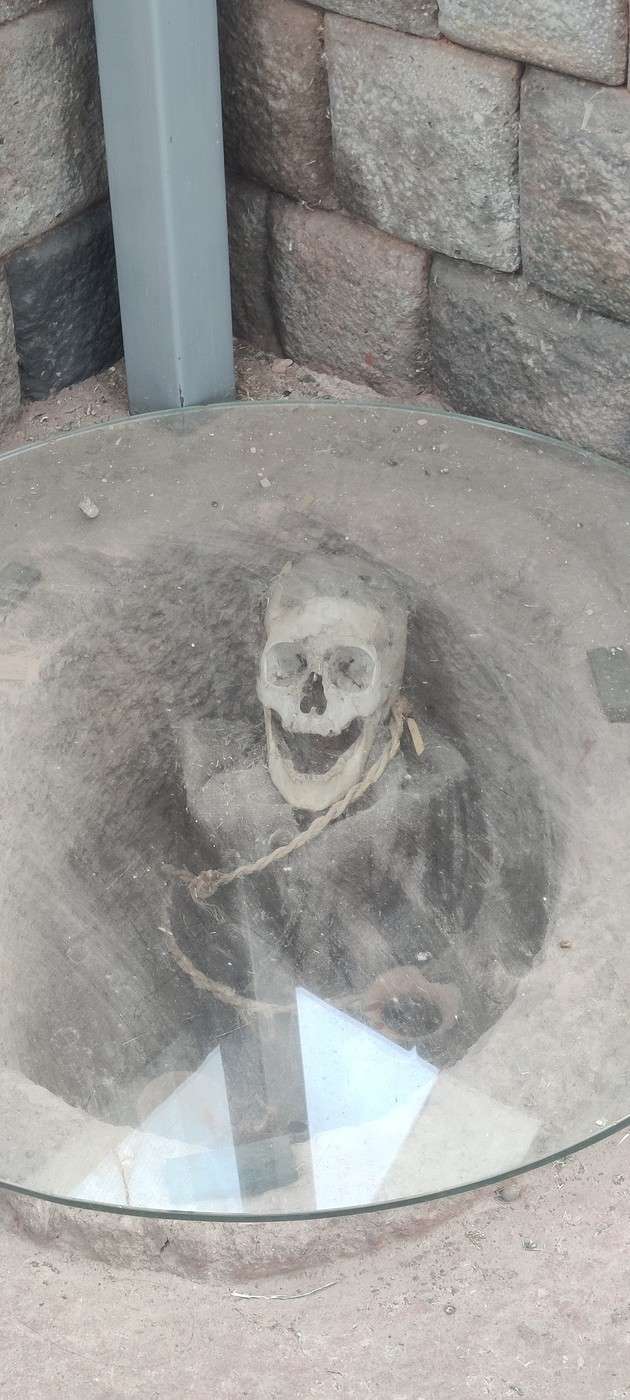
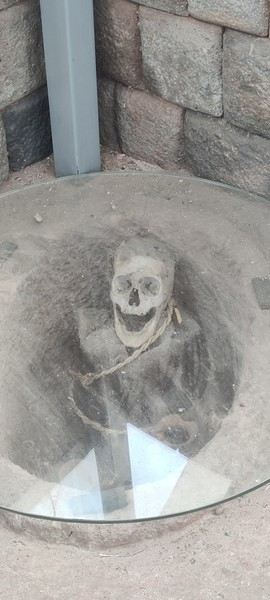
Willi then takes us to a site called "Kusicancha," an archaeological area in the heart of Cusco. It was once part of the Inca city, linked to a palace, and today appears as an open space surrounded by finely cut stone walls. Ongoing excavations have uncovered water channels, wells, inner courtyards, building foundations, and tombs. In one cavity, you can even see a mummy in the fetal position.


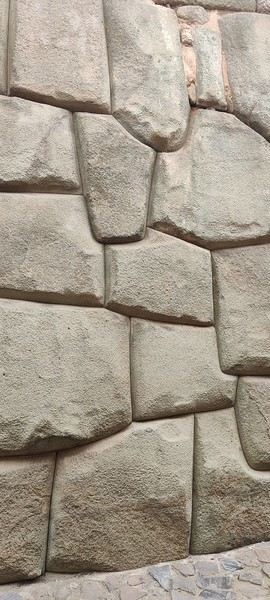
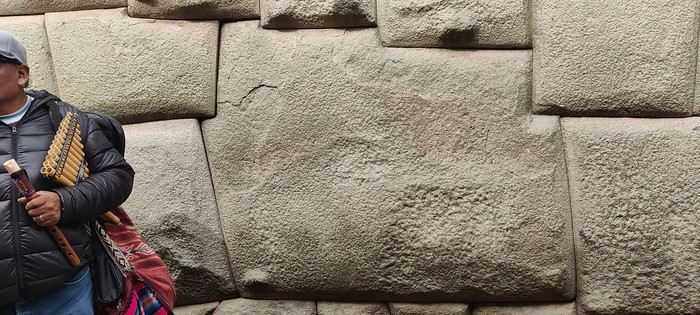
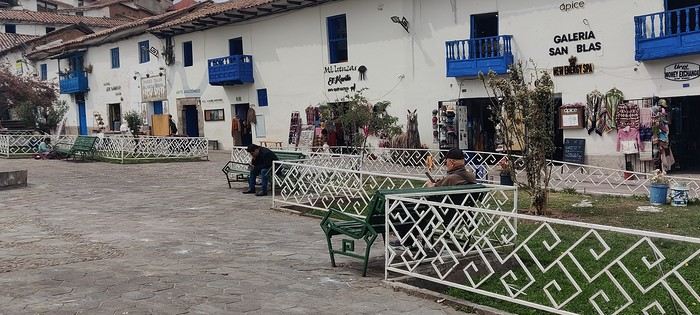
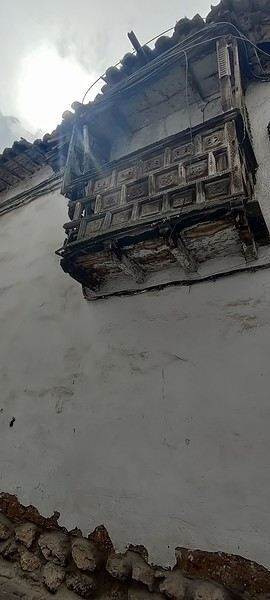
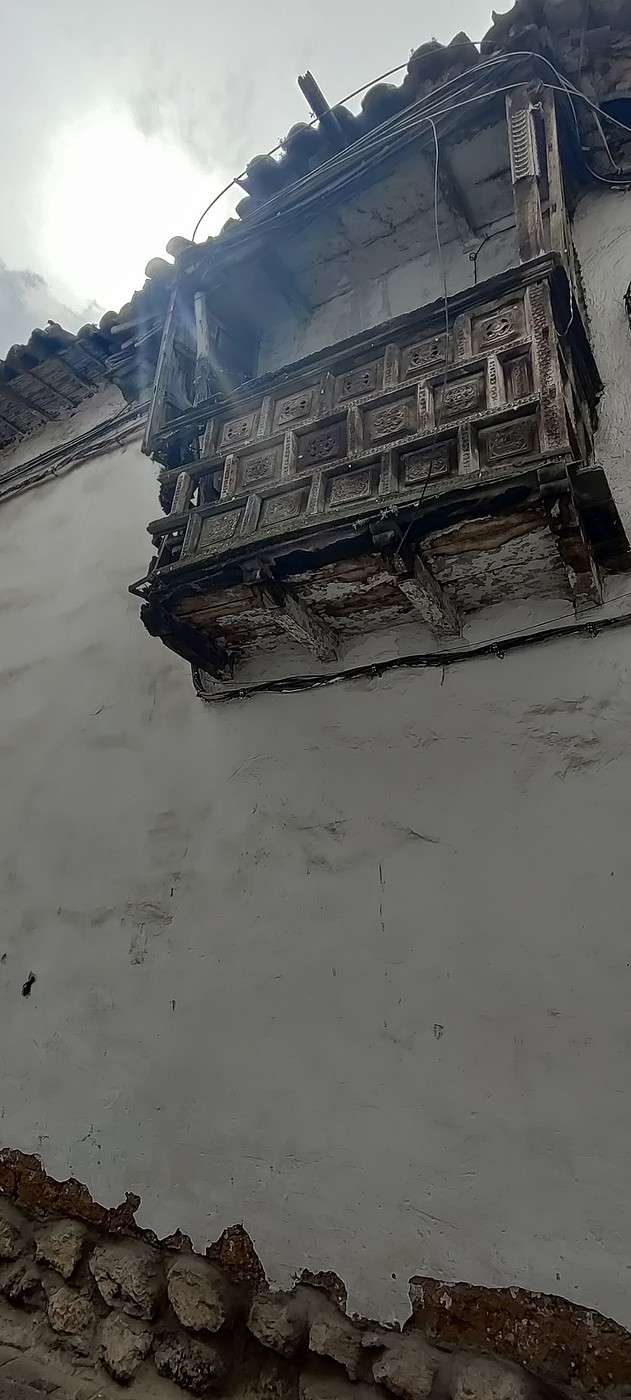
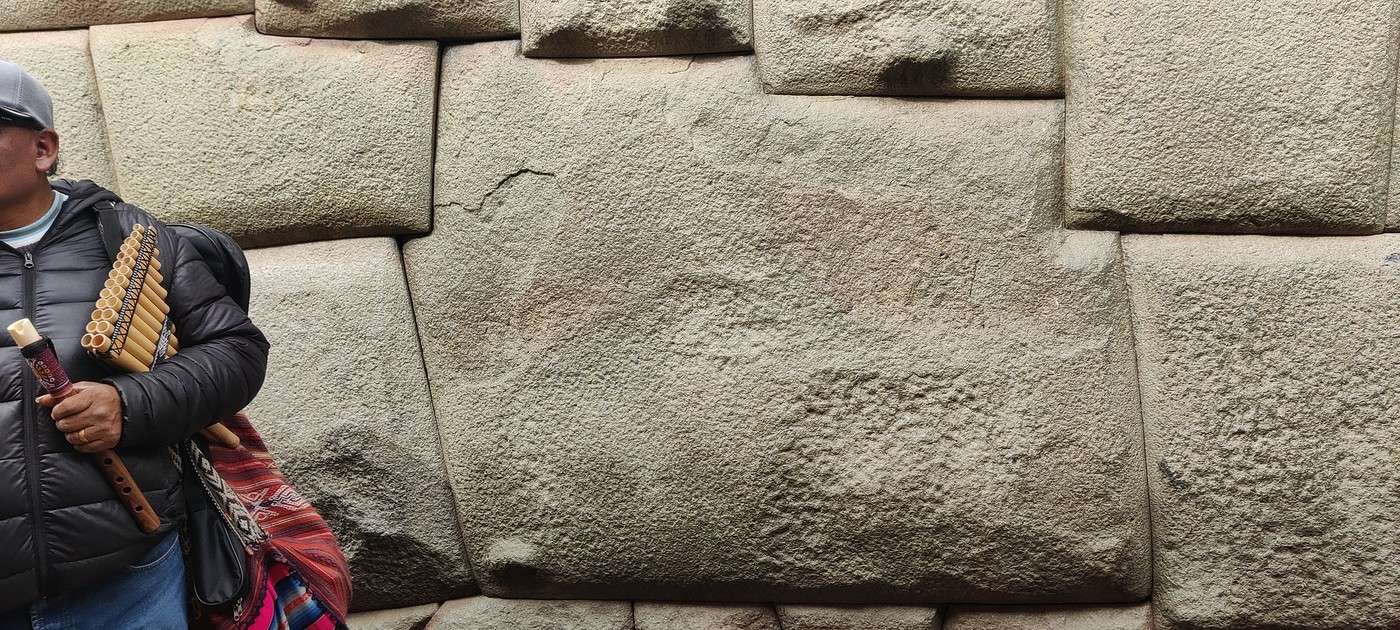
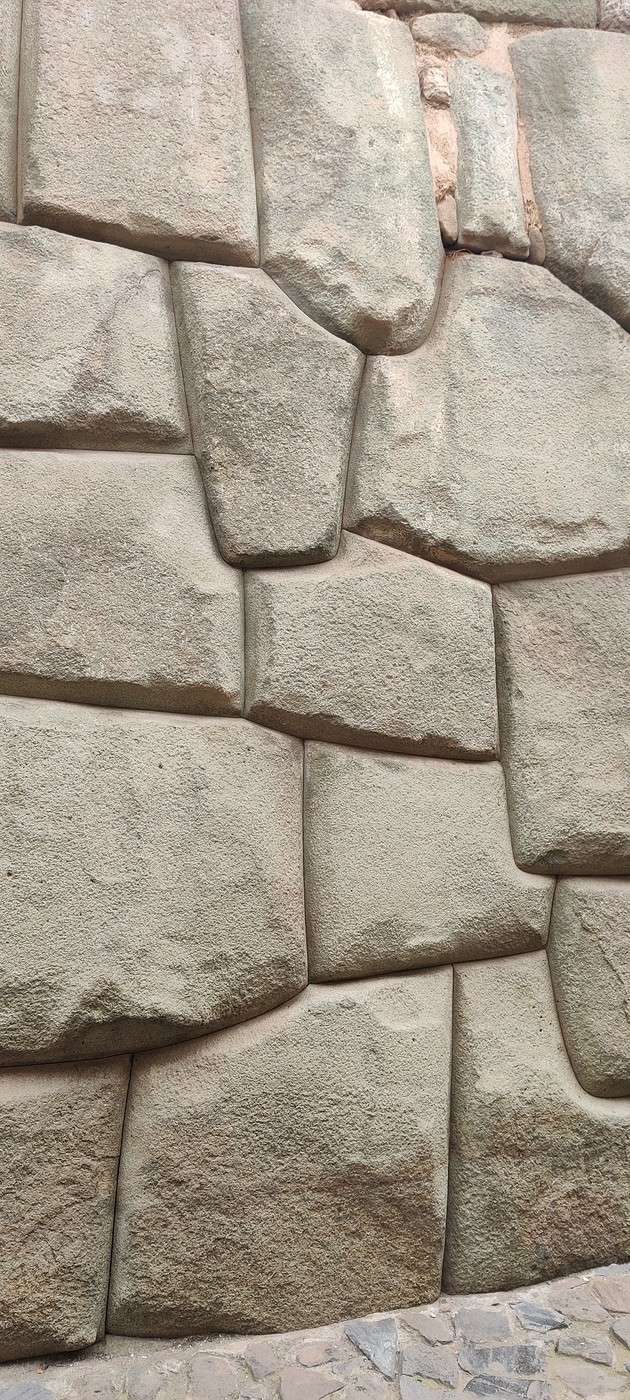
Next, we explore the San Blas neighborhood, with its shops, artisans, restaurants, market, and the famous Twelve-Angled Stone—a testament to the skill of Inca builders. The stone block was carved to fit perfectly with the surrounding stones, without mortar. It’s mind-blowing every time. Along the way, our guide explains the difference between Cusco’s many balconies. You’ll notice the closed, Andalusian-style balconies, a legacy of the Spanish era, designed for seeing without being seen, and the more recent open balconies, often featuring wrought iron. At the end of the tour—and at our request—Willi takes us to a typical Peruvian restaurant where we enjoy soup, a hearty meat dish with vegetables, and a drink—all for less than 5 € per person! He also gives us some sightseeing tips and recommends a few *picantarias*. Too bad he can’t join us for the next few days—he’s in high demand. The afternoon is already well underway. After a well-deserved nap, we set out to find a laundry. For 7 soles per kilo, we don’t hesitate to drop off all our dirty clothes. They’re returned to us 24 hours later, clean and neatly folded. We’ll take full advantage of this convenience and, for the first time, return from a trip with no dirty laundry! Tonight, we dine at a Japanese restaurant, Limo Peruano Nikkei, on the Plaza de Armas. We have the best sushi of our lives here. Plus, the service is worthy of a Michelin-starred restaurant. We’ll be back during our stay.

Peru: A childhood dream finally realized

Larri · 2026-08-17

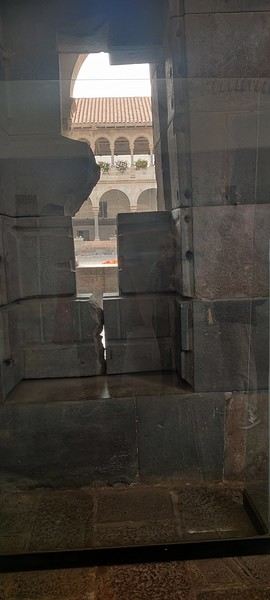
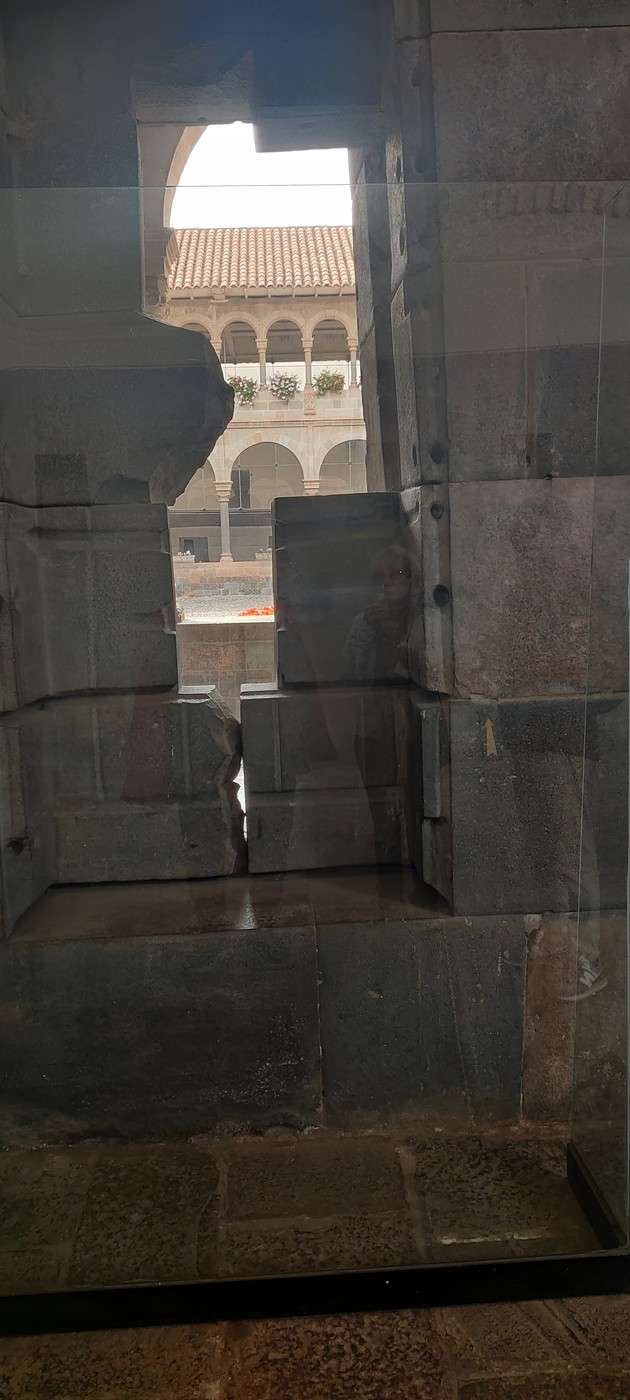
A few more photos of Cusco seen from the Santo Domingo cloister through a niche in the Temple of the Sun

Inca structures, with the famous twelve-angled stone in the second photo


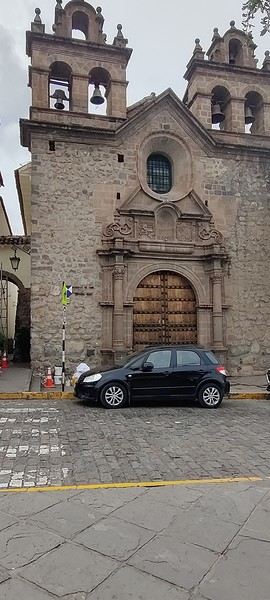
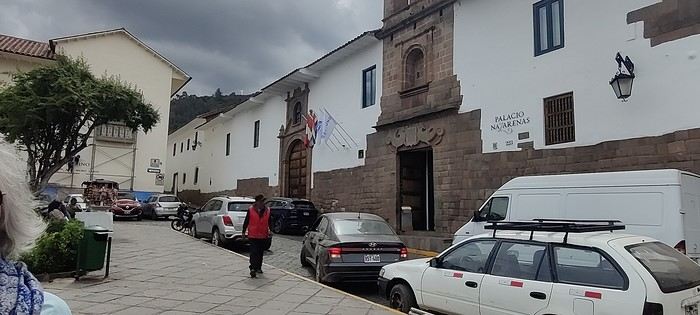
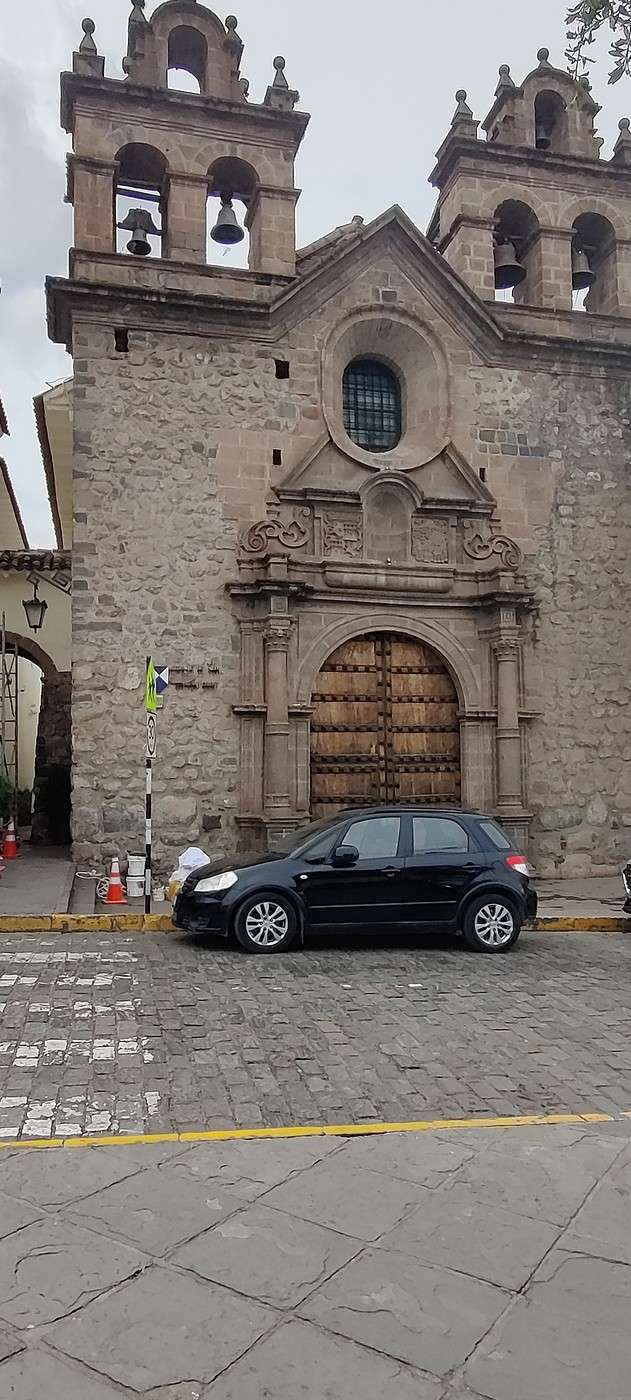
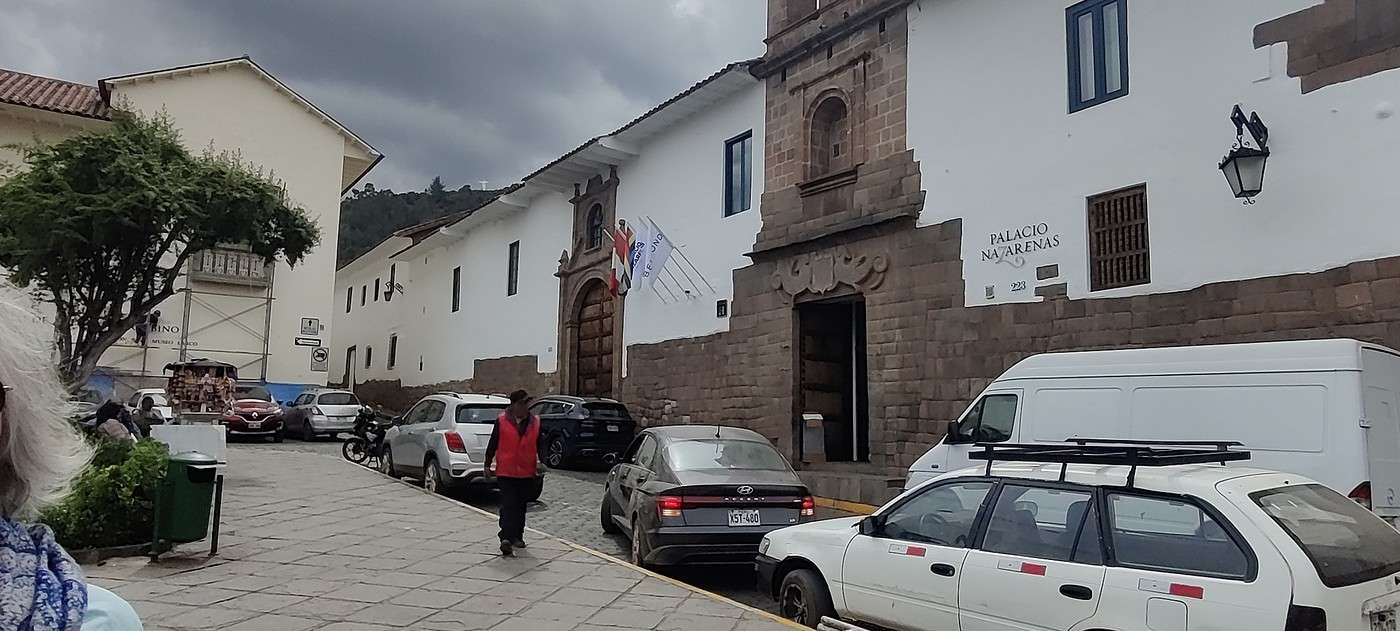
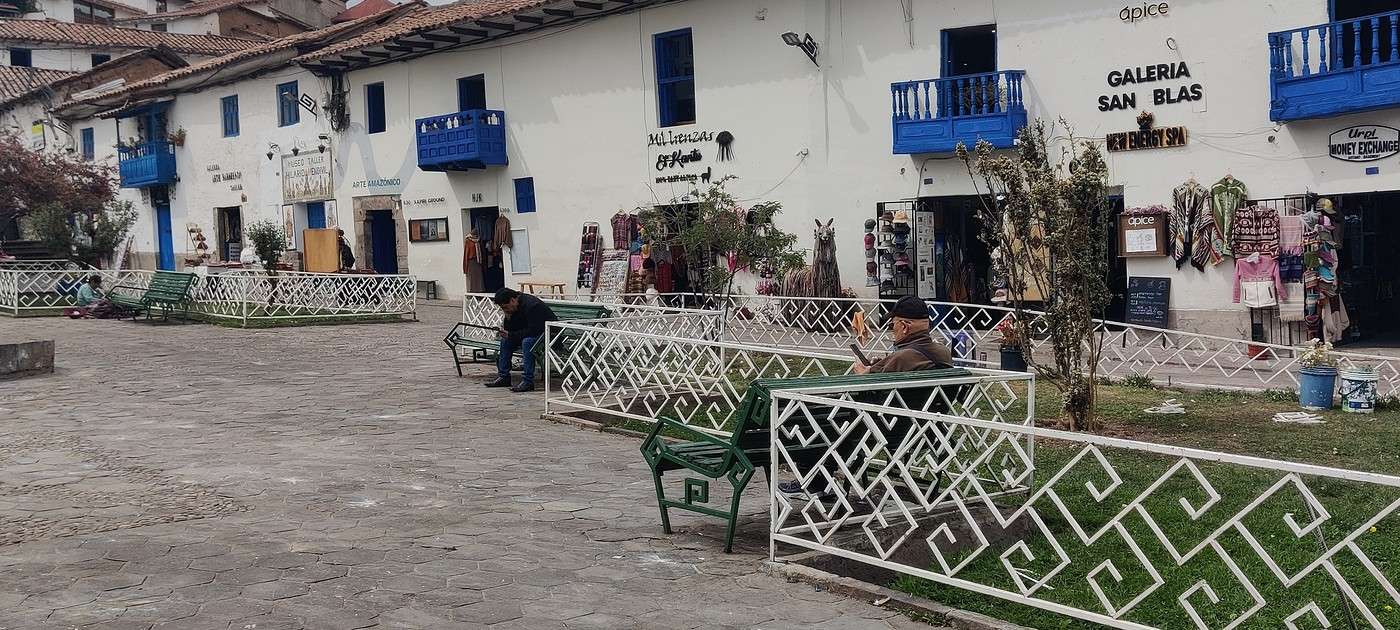
A picturesque alley in the San Blas neighborhood Saint Anthony Chapel on Plaza de las Nazarenas

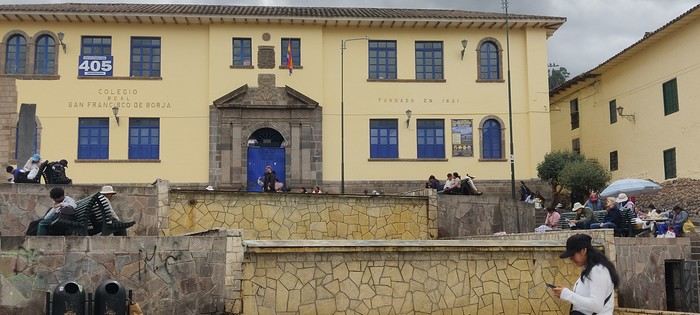
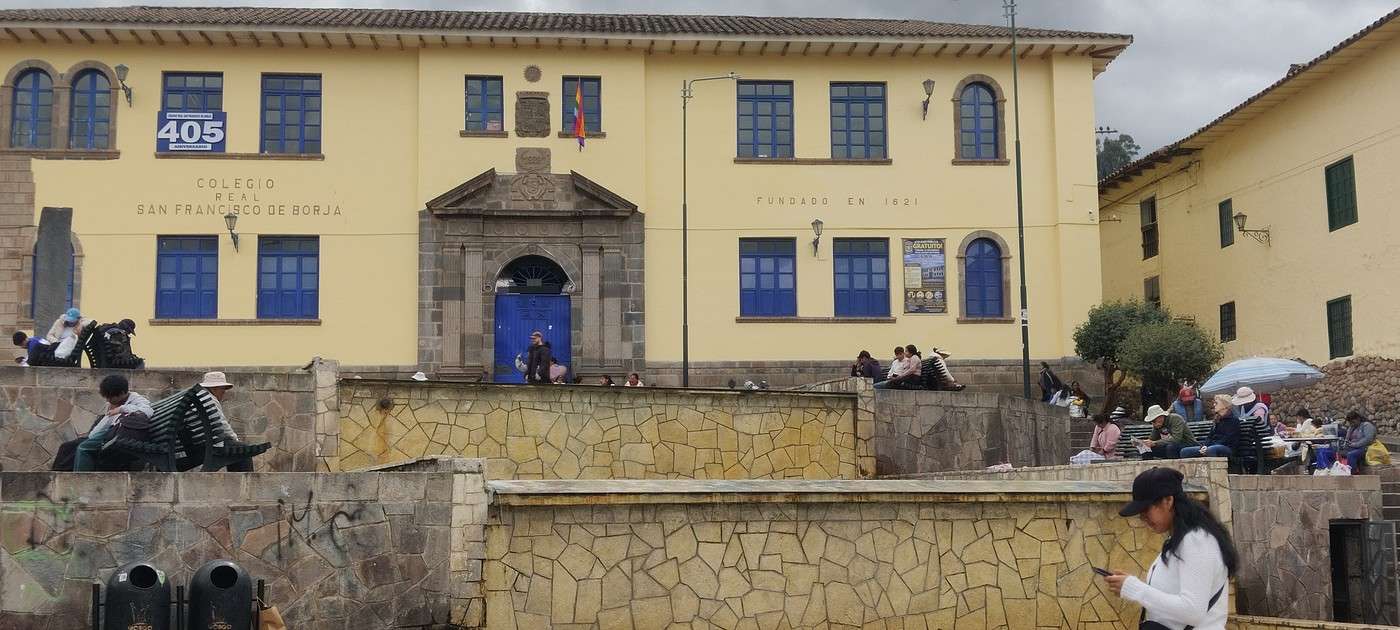
Royal College of San Francisco de Borja

An old balcony

Facade of the Nazarenas Palace

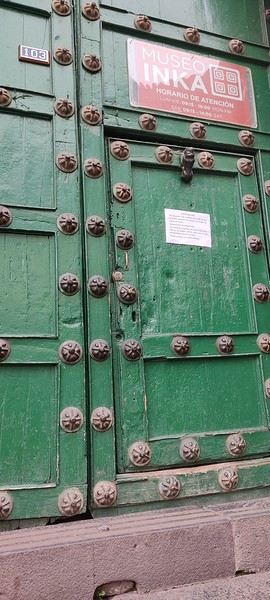
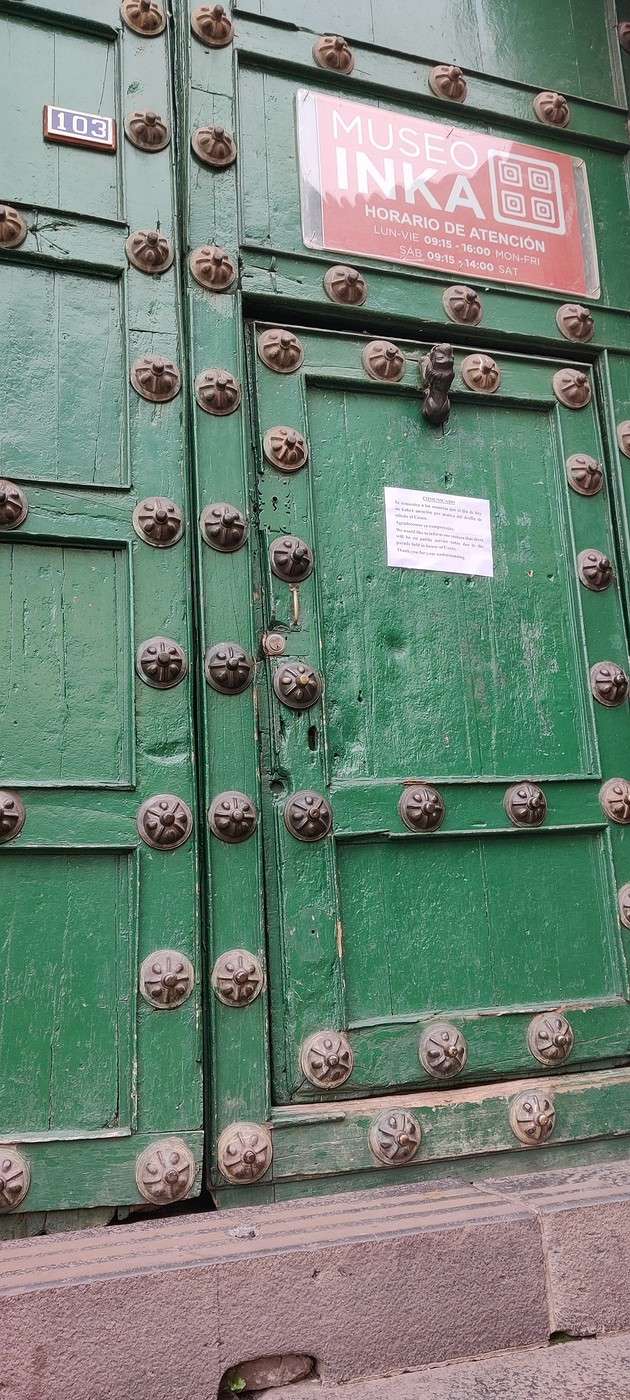
Door of the Inca Museum

Peru: A Childhood Dream Finally Fulfilled

Larri · 2026-08-21

Day 11 – Exploring the Southern Valley of Cusco

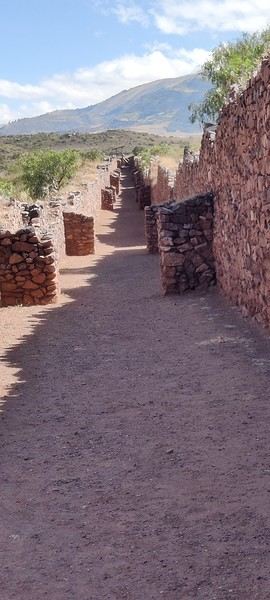
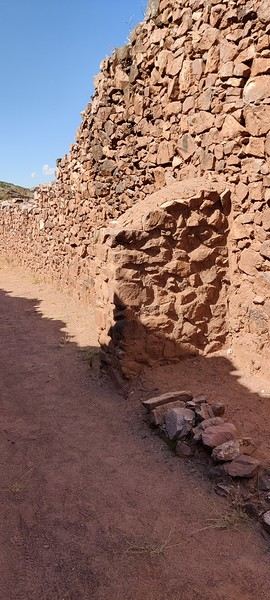
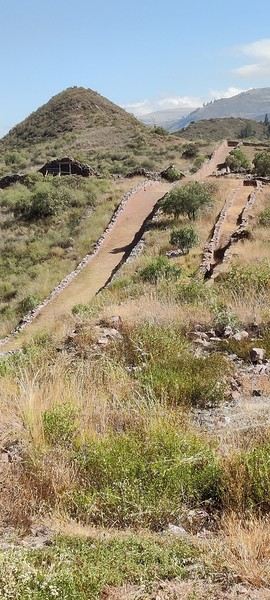
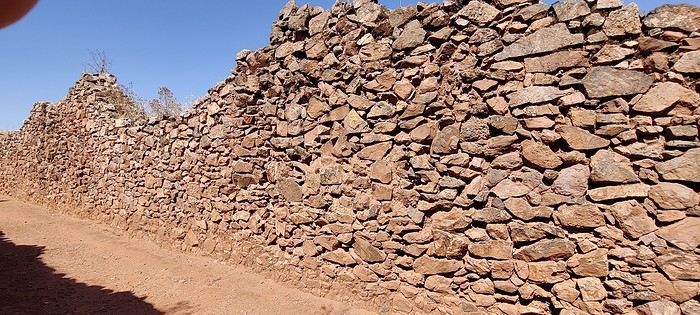
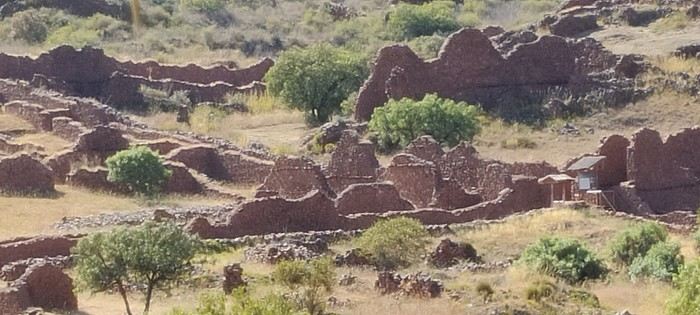
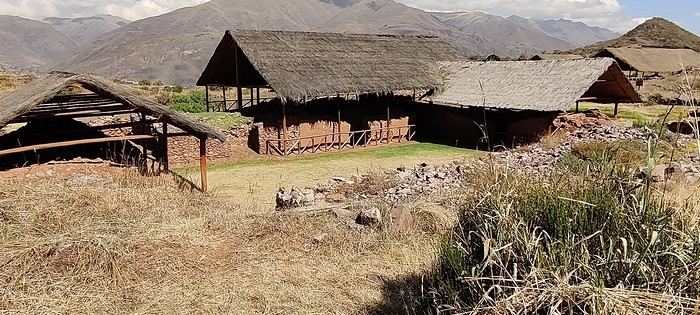
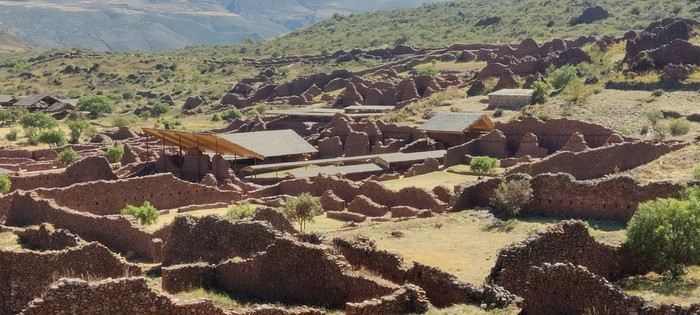
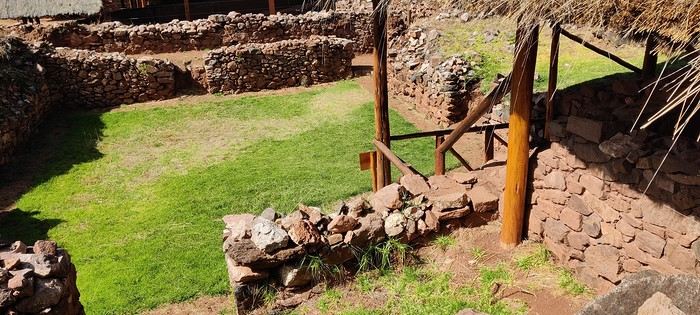
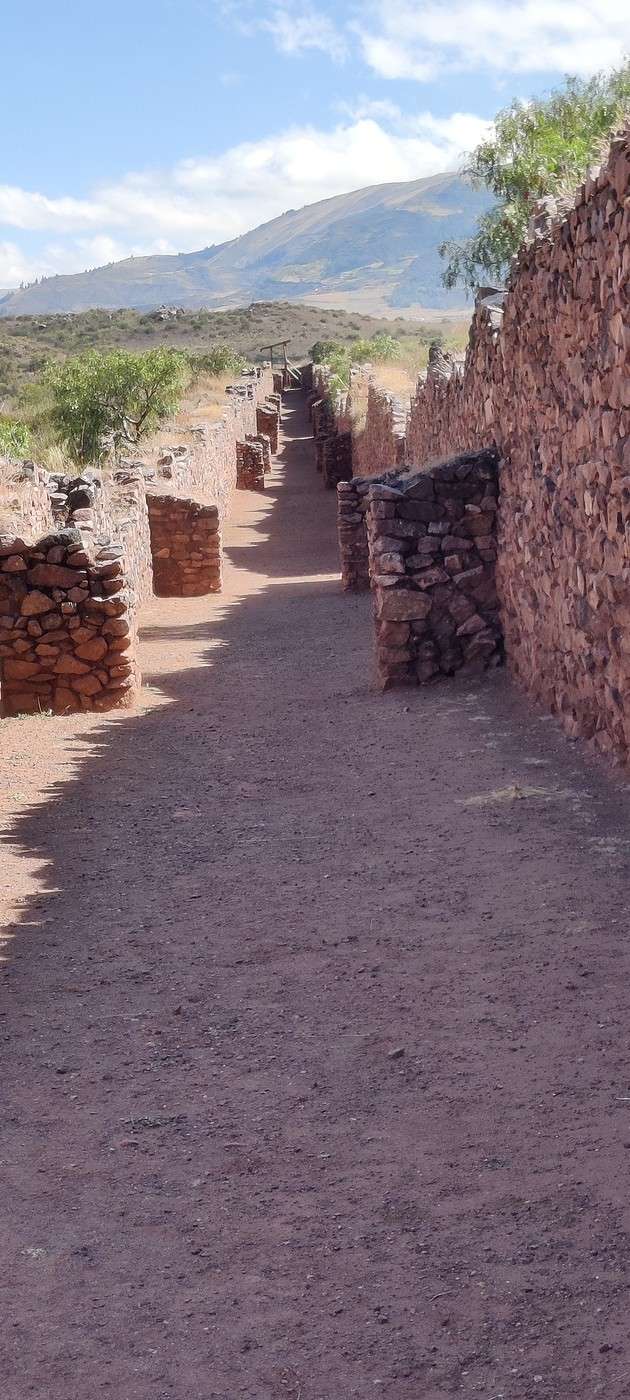
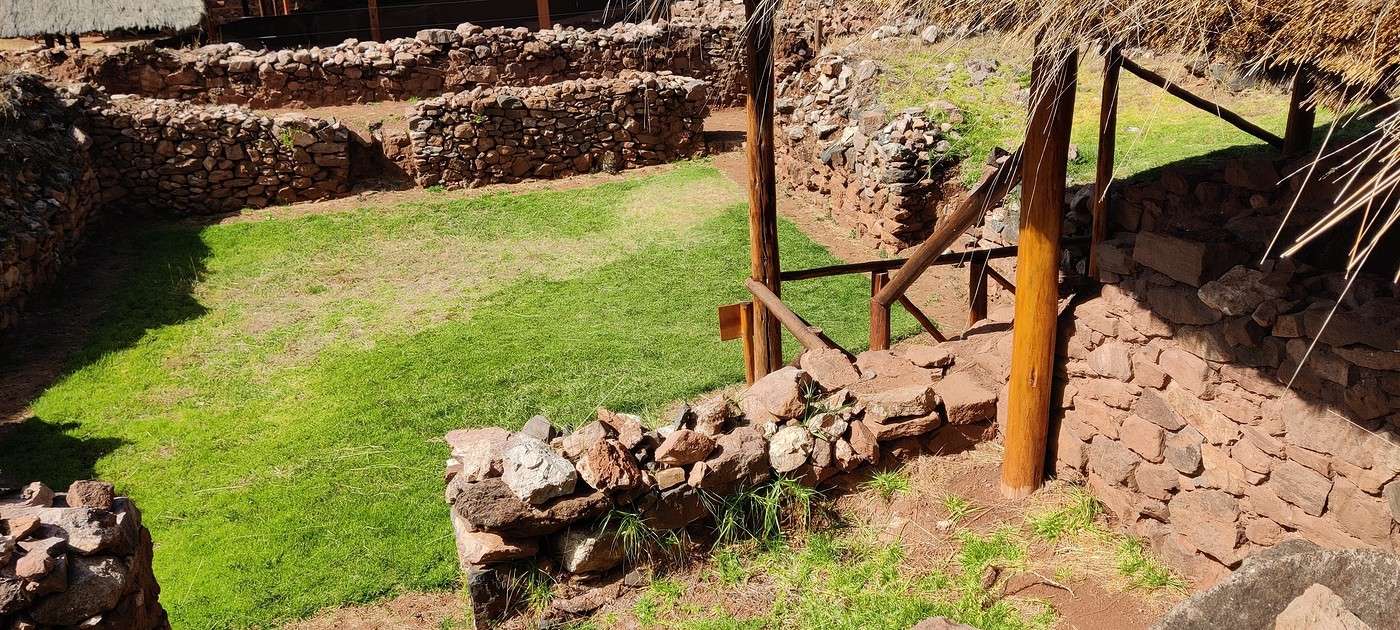
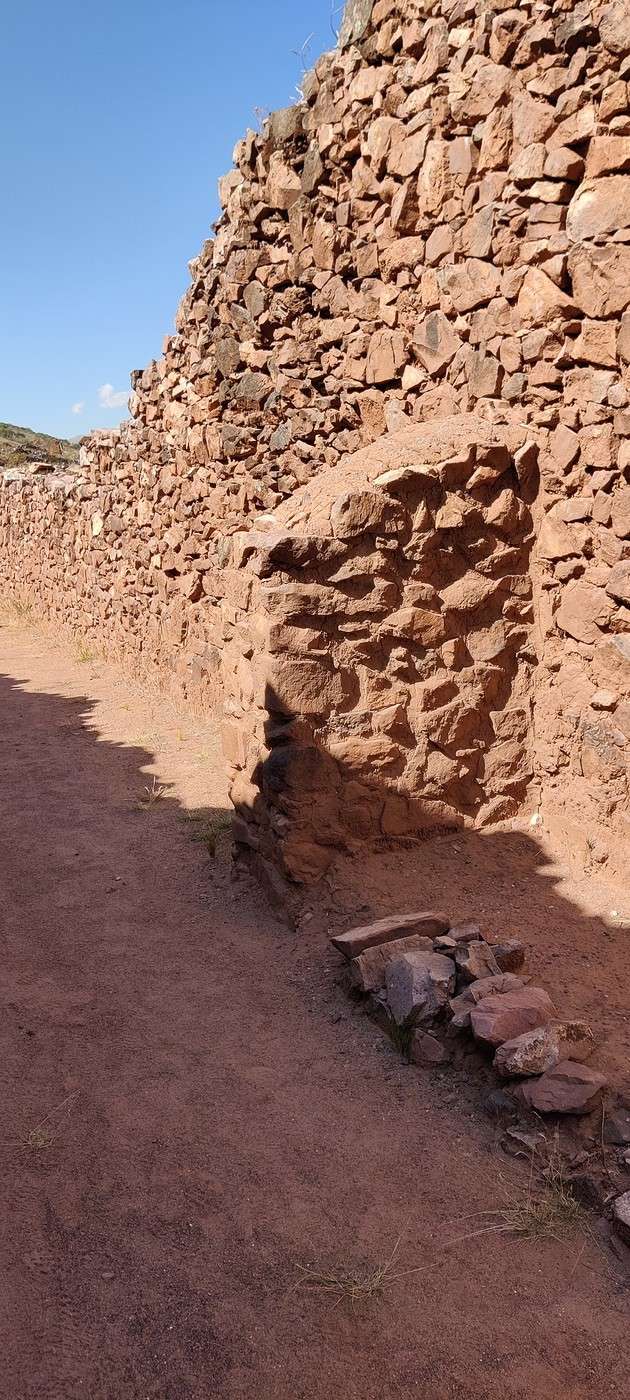
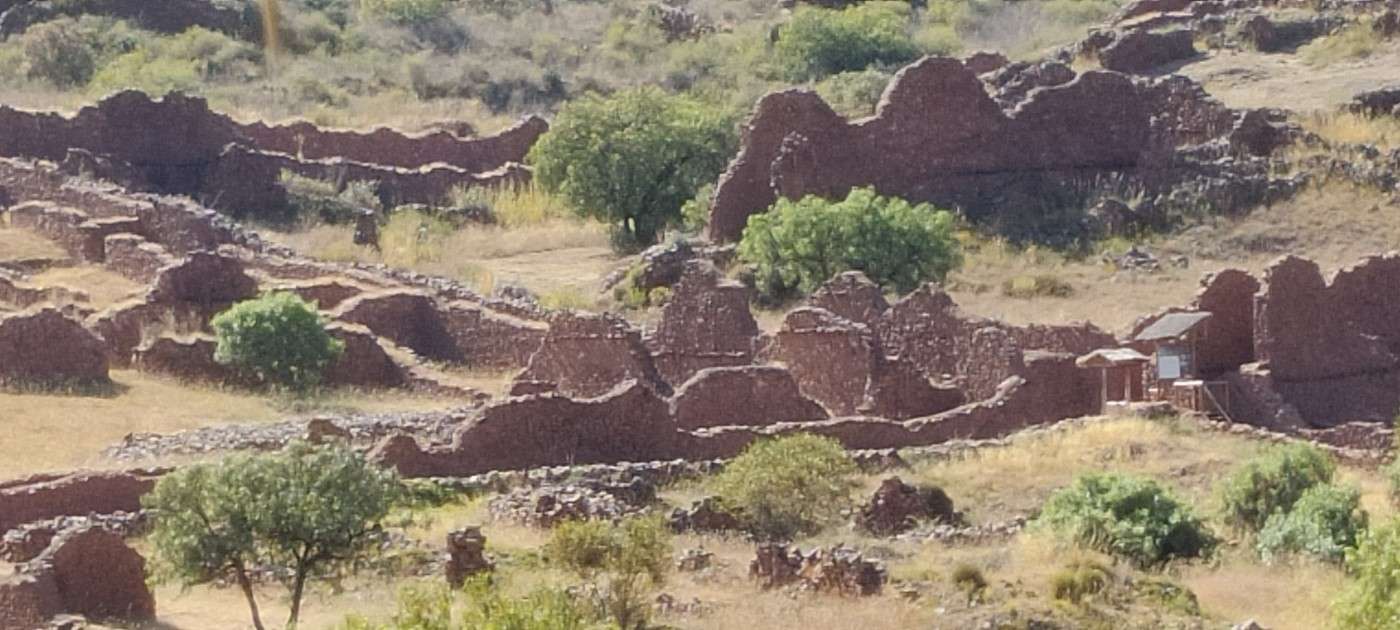
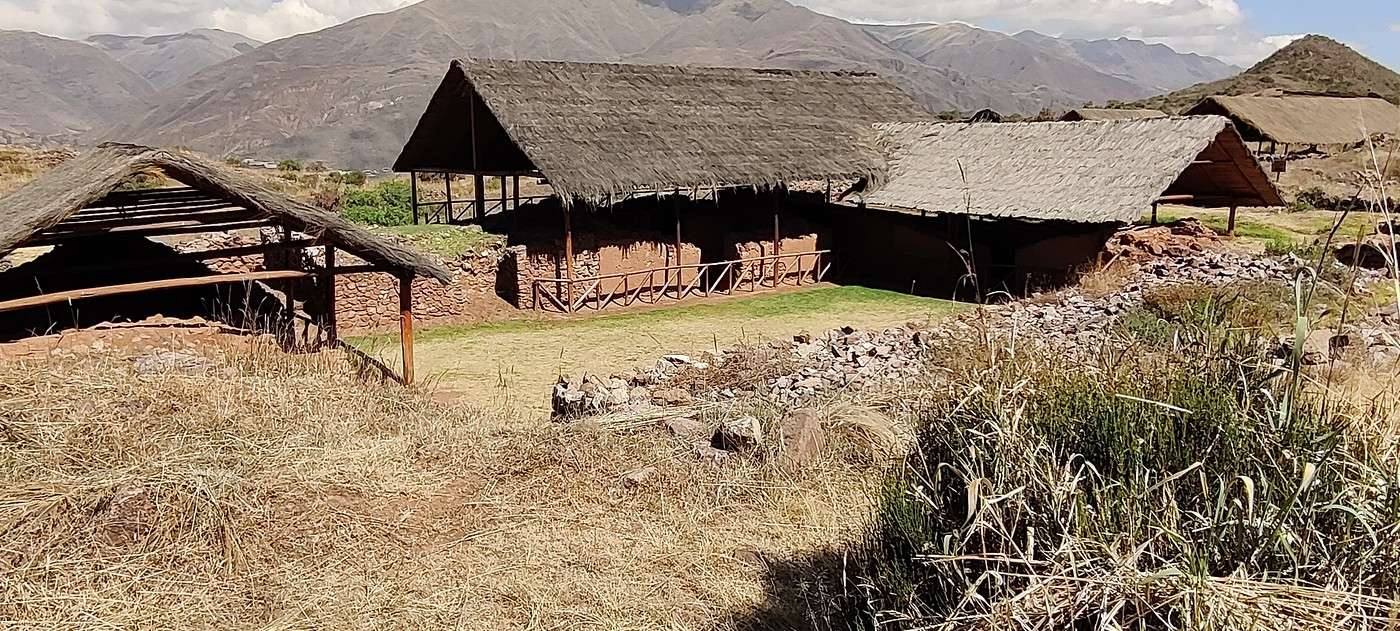
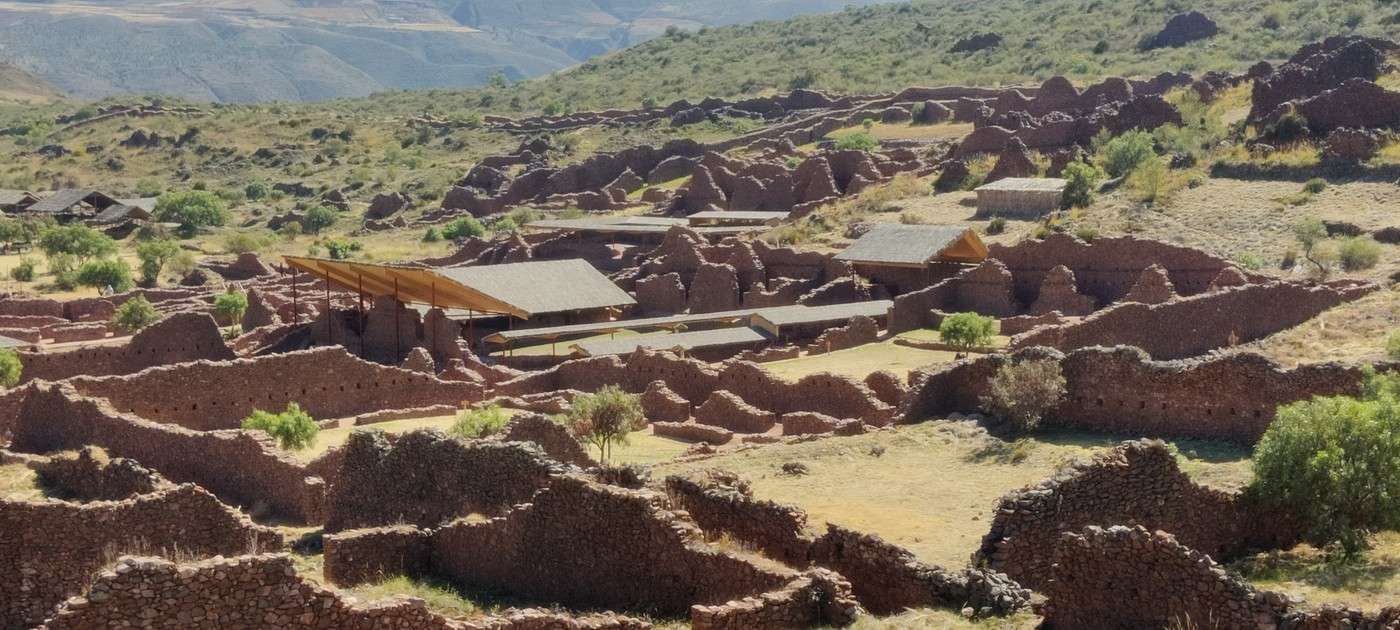
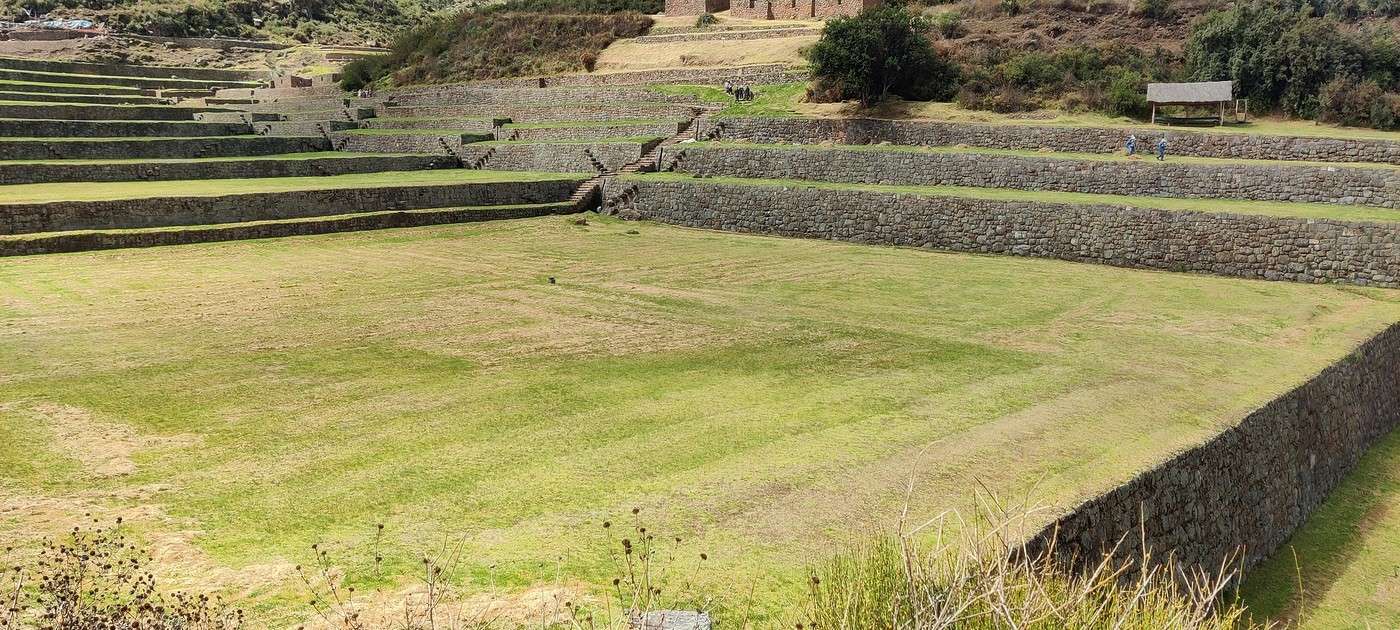
Today, we decided to explore the Southern Valley with Richard as our driver. We drove through the outskirts of Cusco, passed by the airport located within the city, and took the "gastronomy route." Why this name? Because each village we passed through has its own culinary specialty, its signature dish. One by one, we drove through: • Oropesa, known for making *chuta* bread—a round, slightly aniseed-flavored bread baked over a wood fire, • Saylla, famous for its crispy *chicharrón de cerdo* (fried pork), • Tipón, where guinea pig, the famous *cuy*, reigns supreme, • Lucre, known as the duck village, • And finally, Huacarpay, by the lagoon, offering Andean cuisine and trout. Our driver mentioned that Cusco locals often take weekend trips to these villages for lunch. But that’s not what we were after in this valley. Our goals were the pre-Inca city of Pikillacta and the terraces and canals of Tipón. While these sites are much less crowded than those in the Sacred Valley, they’re far from uninteresting. We followed the Huacarpay lagoon to reach Pikillacta, one of the most important cities of the Wari civilization, which dominated much of the Andes several centuries before the Incas. The city spans about 50 hectares and is surrounded by walls, with no fewer than 700 structures—some of which may have had up to three levels.


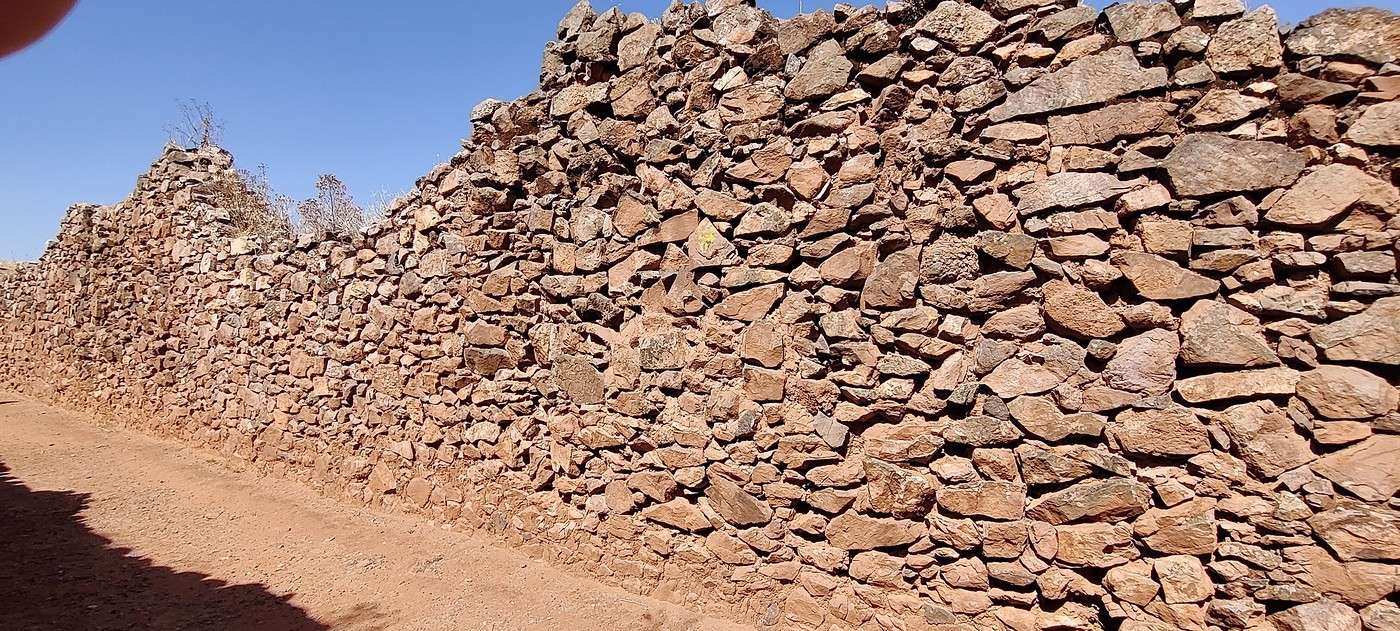
Unlike the Incas, who sought harmony with the landscape, the Wari adopted a much more rigorous urban plan, as evidenced by the straight streets and geometric layout of the city. Their construction techniques were also different: they primarily used roughly worked stones assembled with mortar, and their buildings had few openings. Pikillacta proves that large, organized cities existed in the Andes long before the Inca era. The city reached its peak between the 7th and 9th centuries before being gradually abandoned for reasons that are still debated.

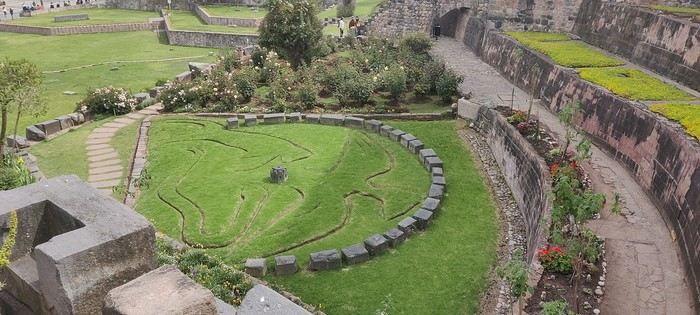
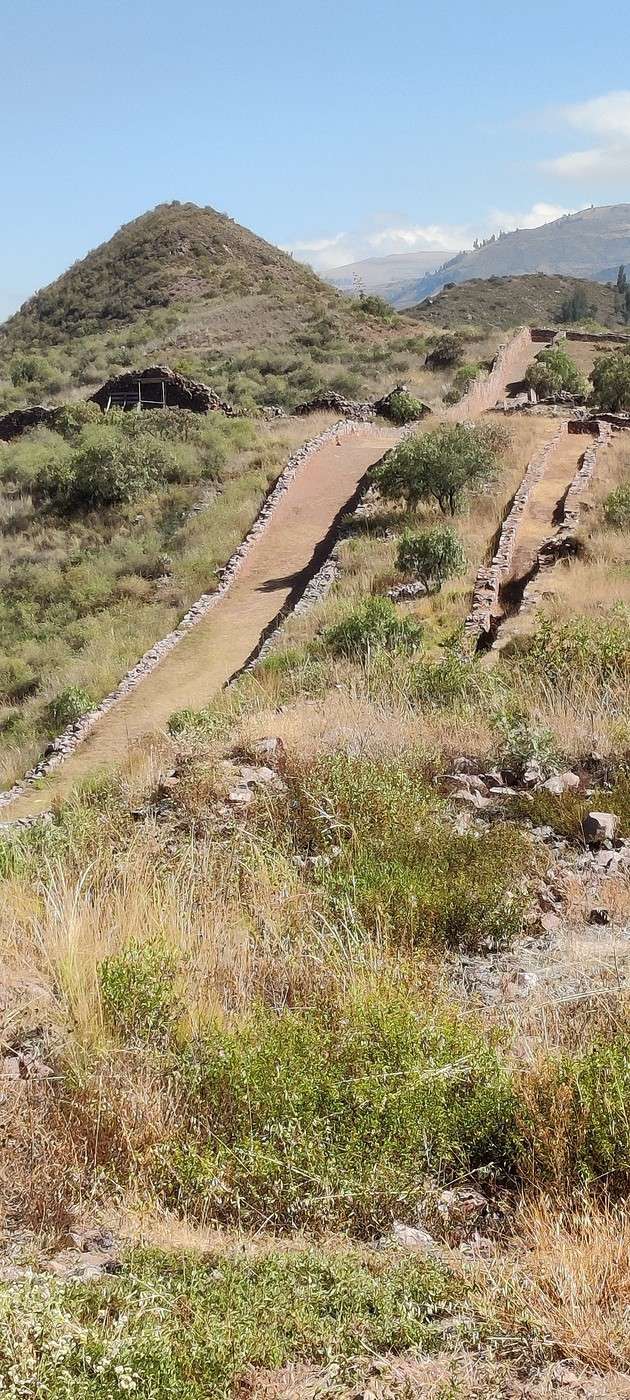
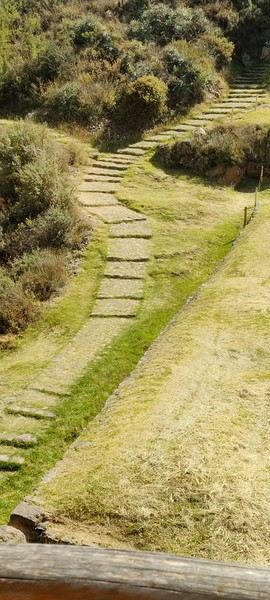
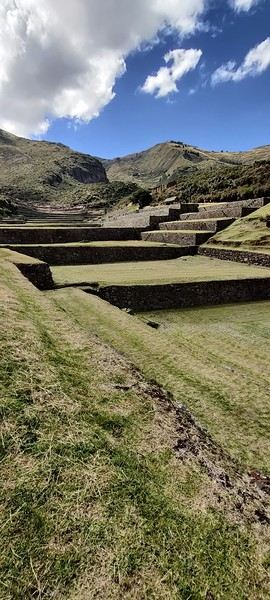
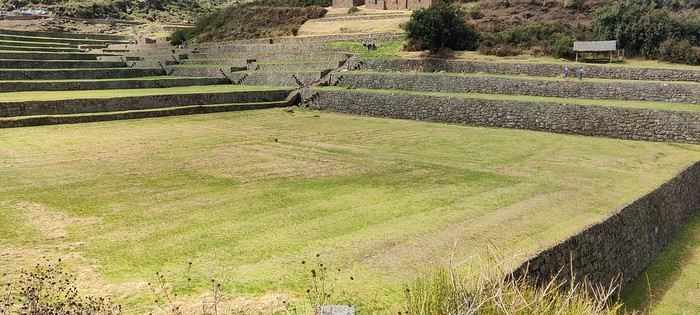
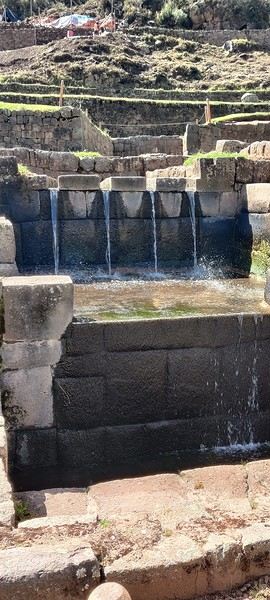
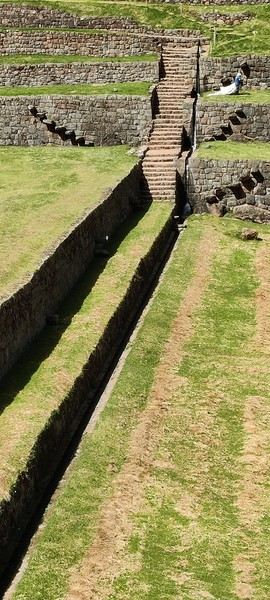
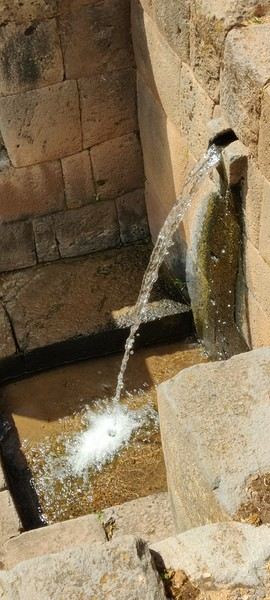
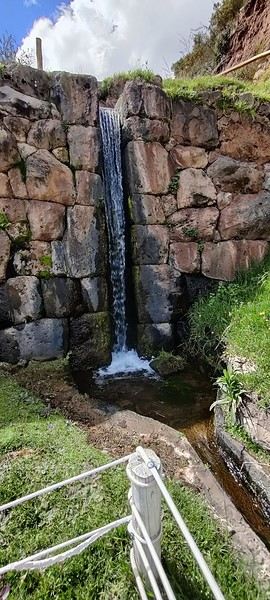
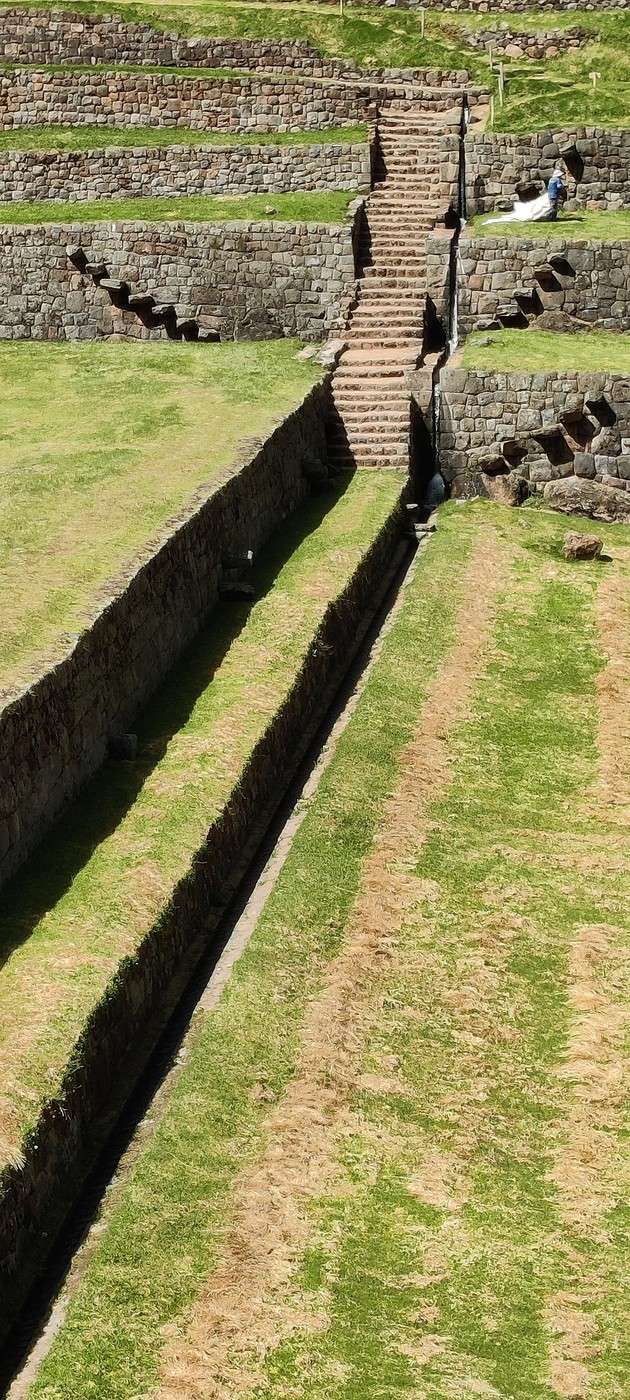
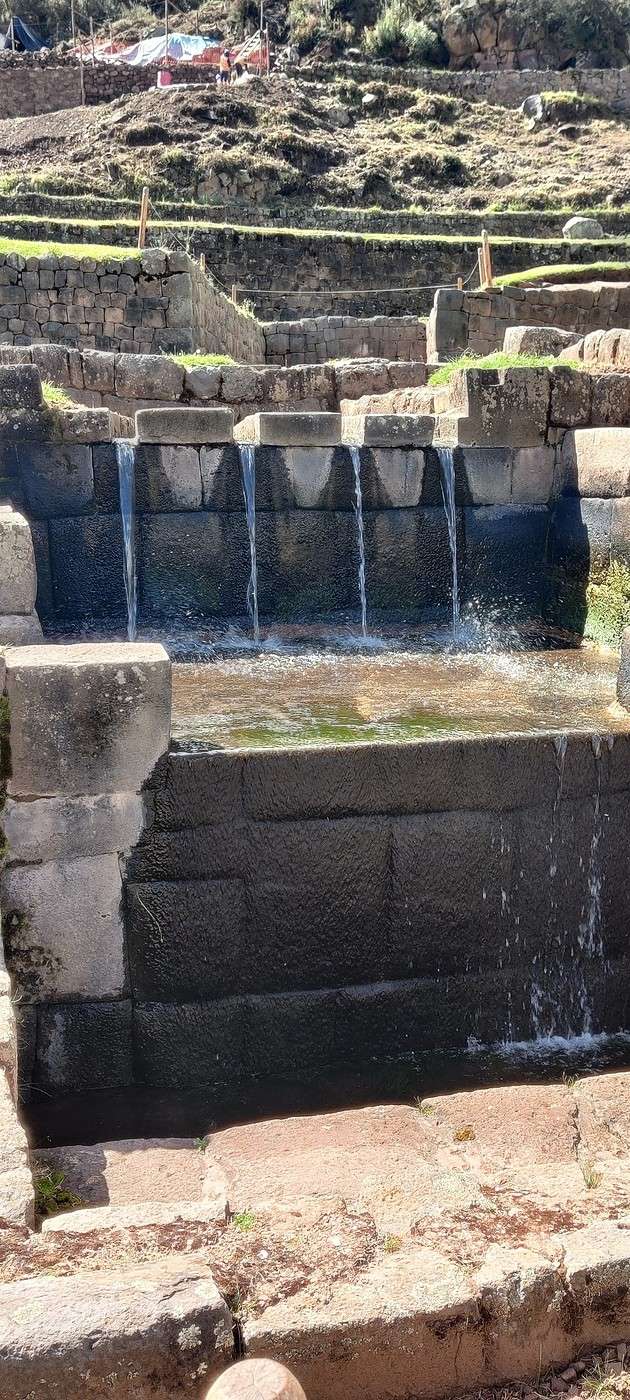
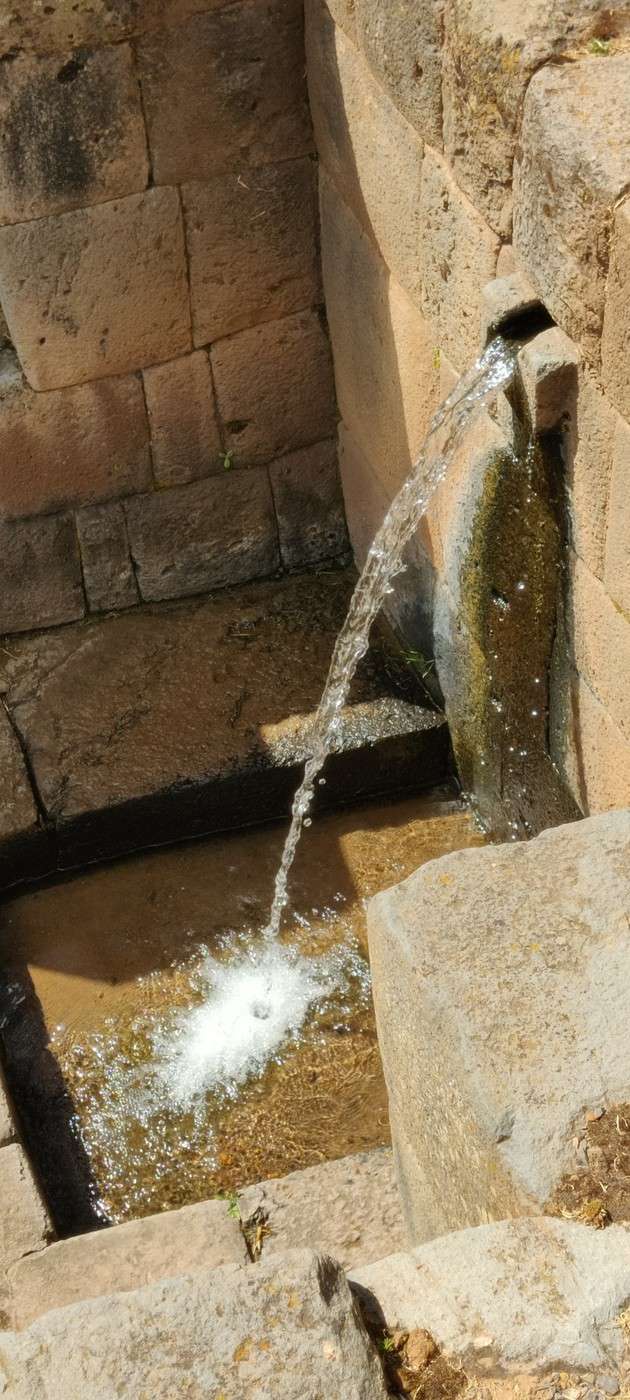
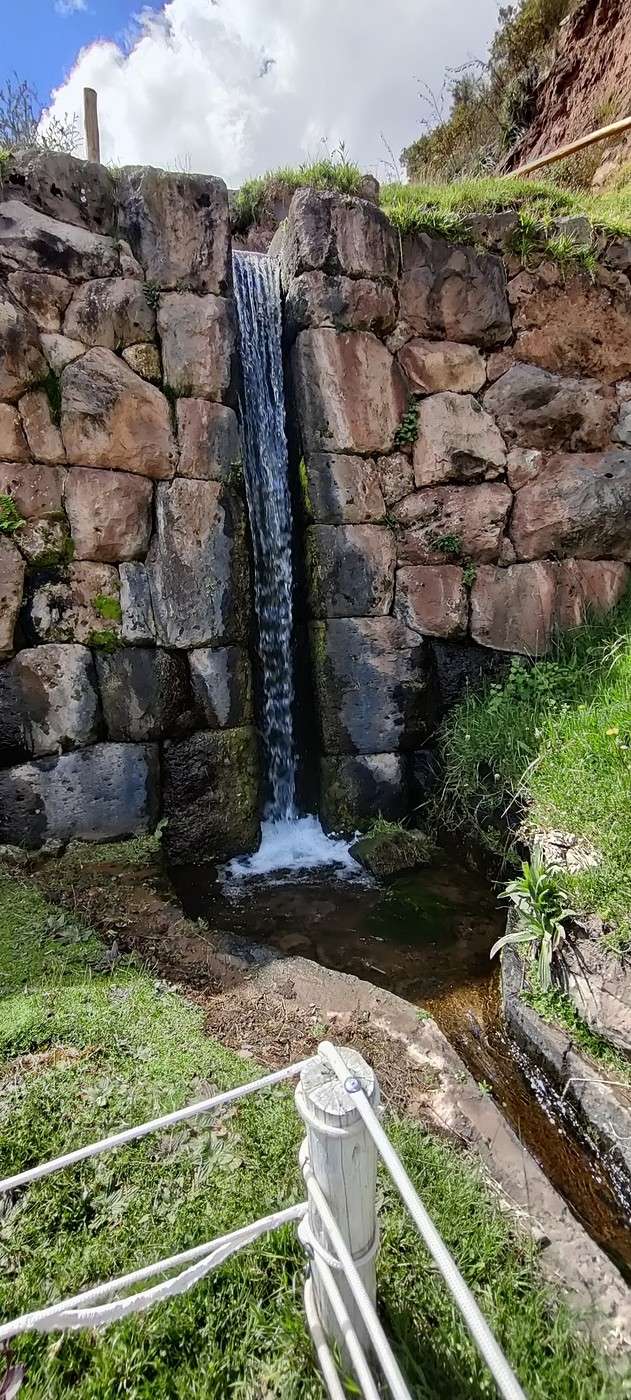
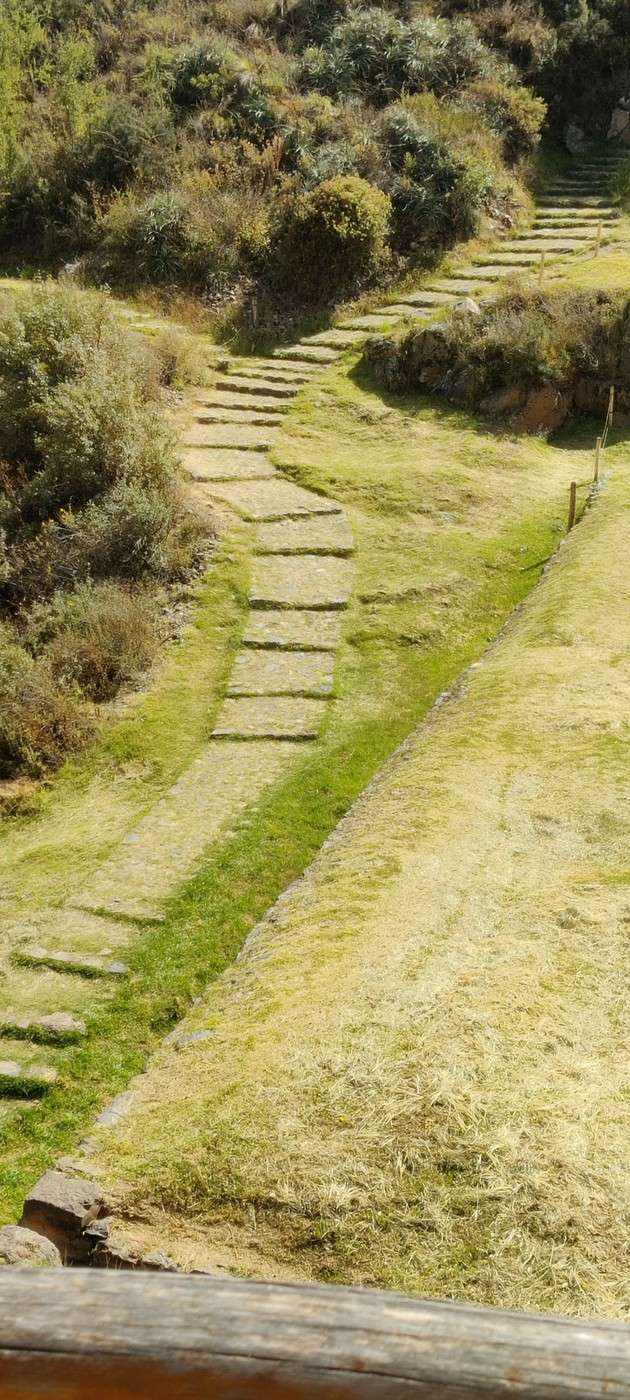
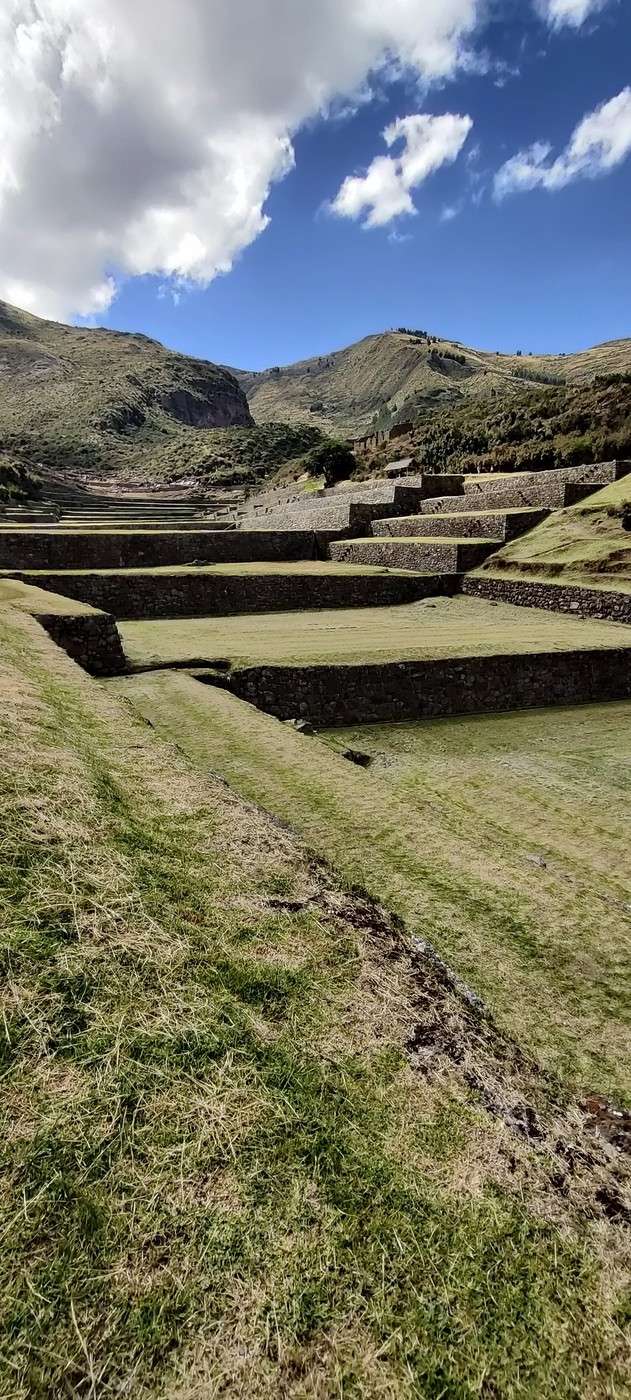
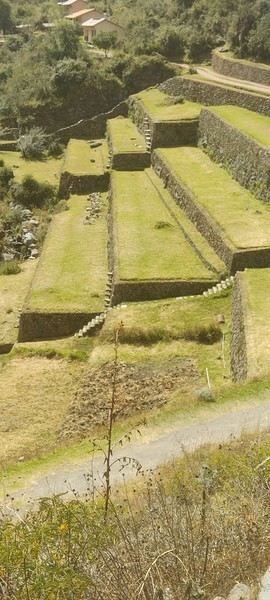
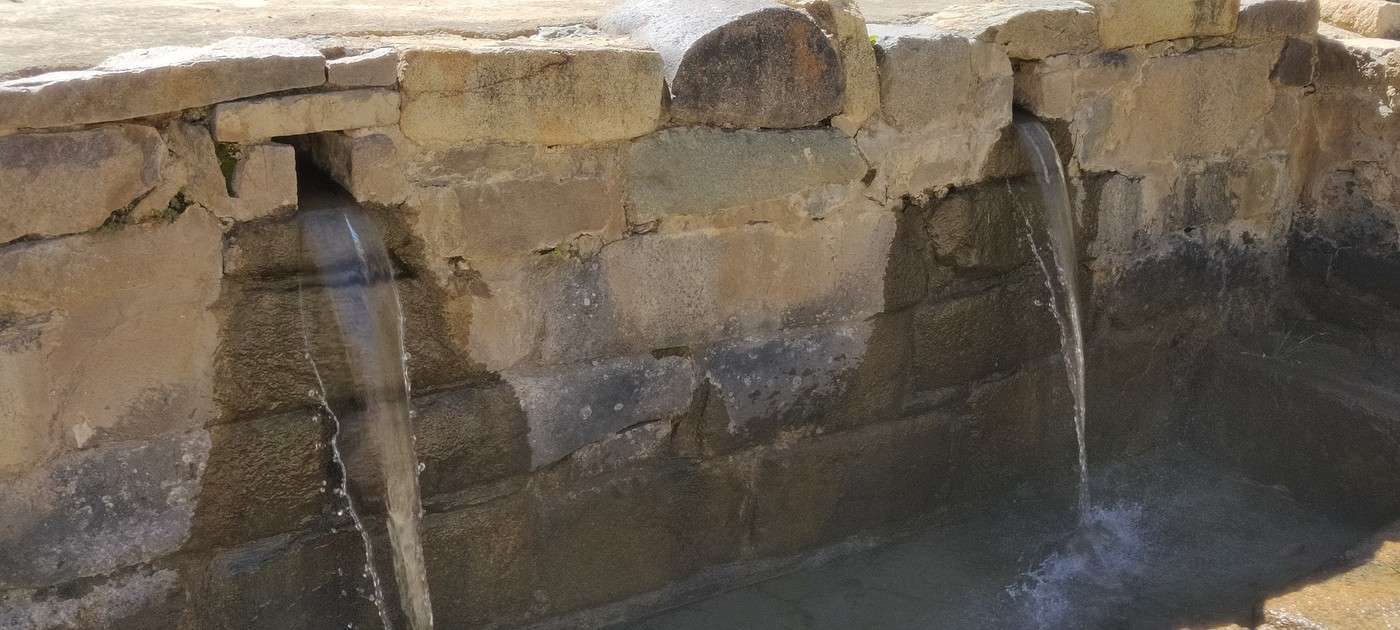
We wandered freely around this nearly empty site. We were actually surprised to find such an important city in almost complete tranquility. This peacefulness made the visit particularly enjoyable. Next, we headed to Tipón. On the heights overlooking the valley, the Incas demonstrated their remarkable mastery of hydraulic engineering. They captured water from natural springs and channeled it through a complex network of stone canals—some underground—to basins, fountains, and vast agricultural terraces. Some parts of this incredible hydraulic system still function today, nearly six centuries after their construction! Tipón was both an agricultural center and a ceremonial site where water played a key role. Though rarely visited, this archaeological complex is impressive and well worth lingering over. Once again, we were amazed by the Incas’ technical skill and their ability to integrate water, agriculture, and architecture into a single system. It’s in this same valley that you’ll find the famous "Sistine Chapel of the Andes" in Andahuaylillas. We returned to Cusco in the early afternoon and had lunch at a *picantaría*. The rest of the day was spent resting and strolling through Cusco before dinner at the restaurant Olivo.

Peru: A childhood dream finally realized

Larri · 2026-08-21

a few photos of Tipon:


Peru: A childhood dream finally realized

Larri · 2026-08-22

Day 12 – Visit to the Sacred Valley: Sacsayhuaman – Pisac – Moray

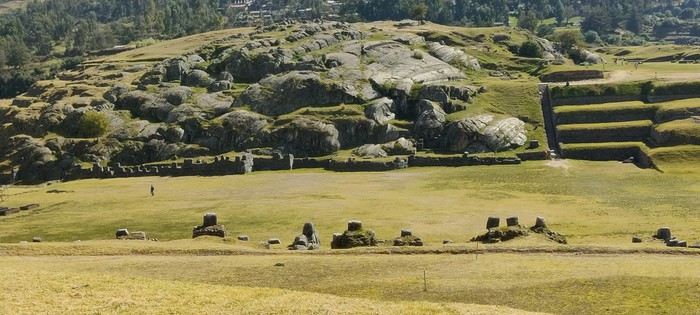
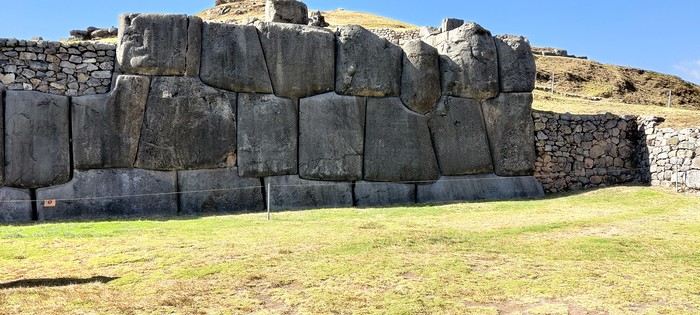
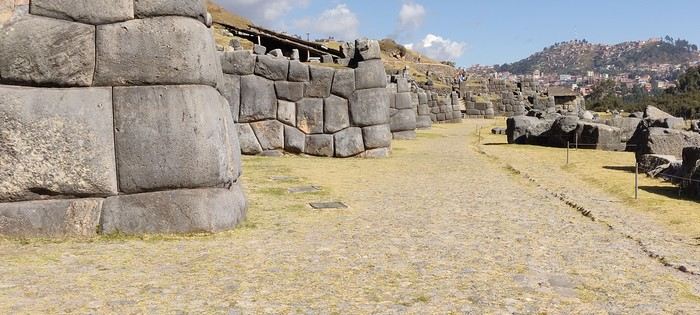
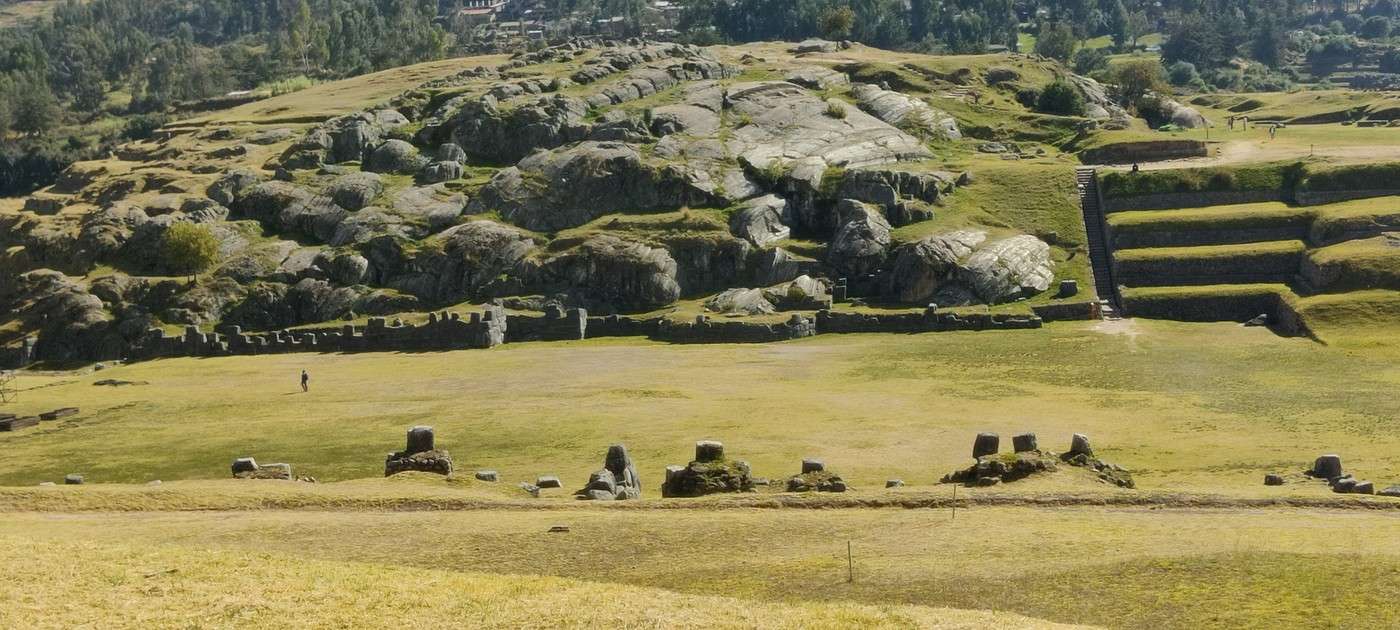
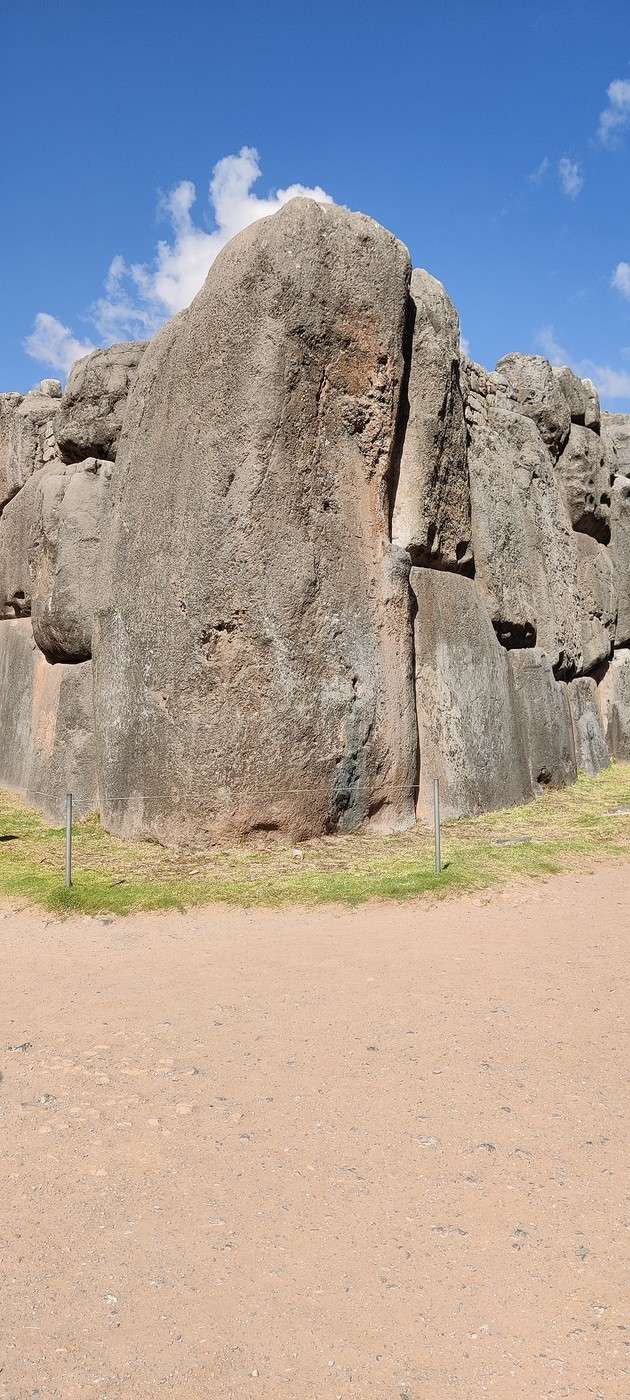
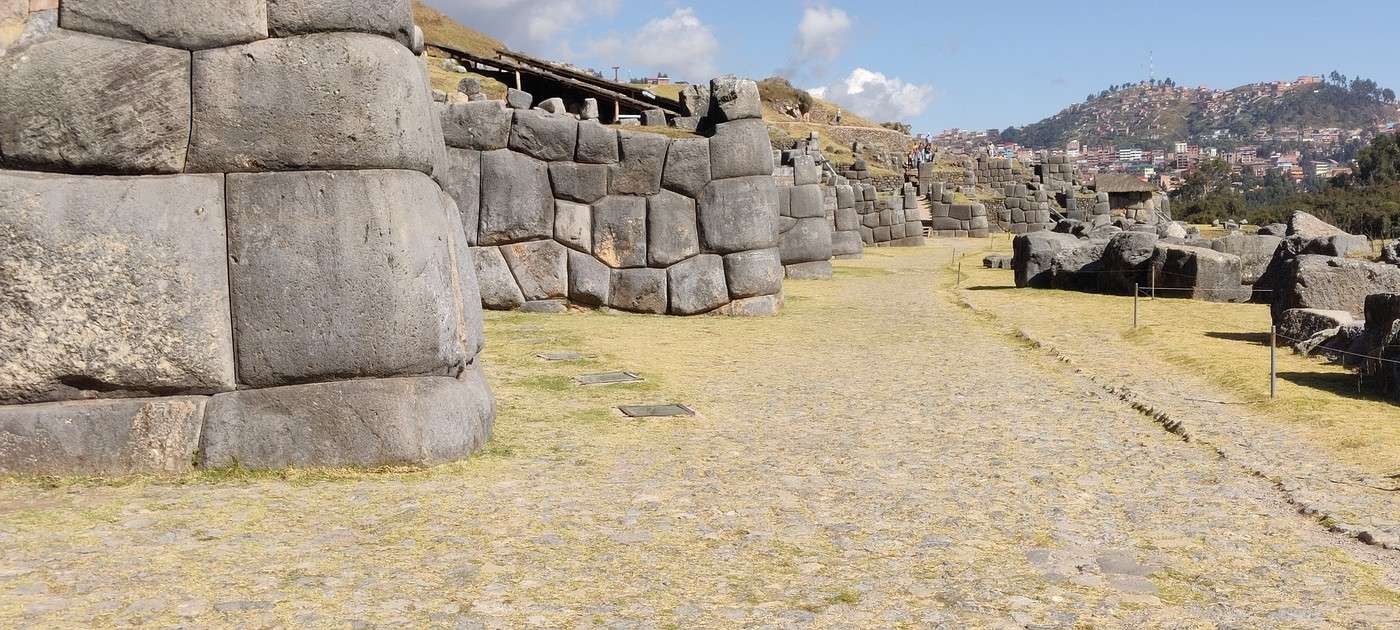
Off to part of the Sacred Valley. Richard is on time. He’s accompanied by a French-speaking guide whose name I unfortunately forgot. We don’t have a long drive—just about 2 km—to reach Sacsayhuaman. The bravest tourists walk there, taking about an hour from downtown Cusco. When you first see the site, it’s a visual knockout! You’re faced with a vast grassy expanse dotted with impressive Inca structures.

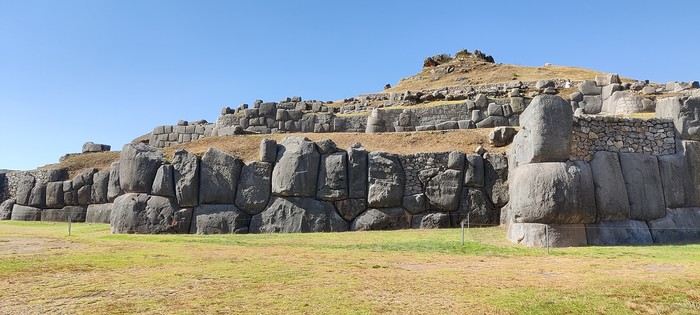
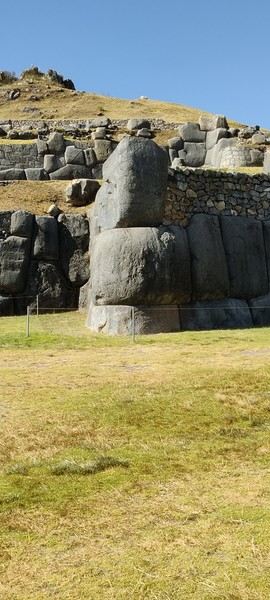
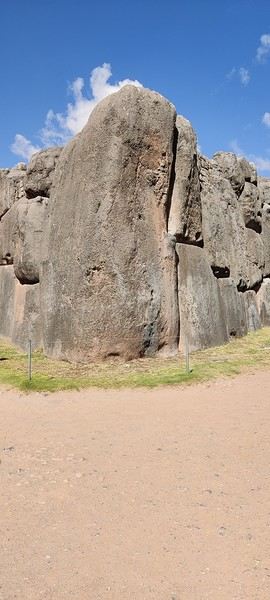
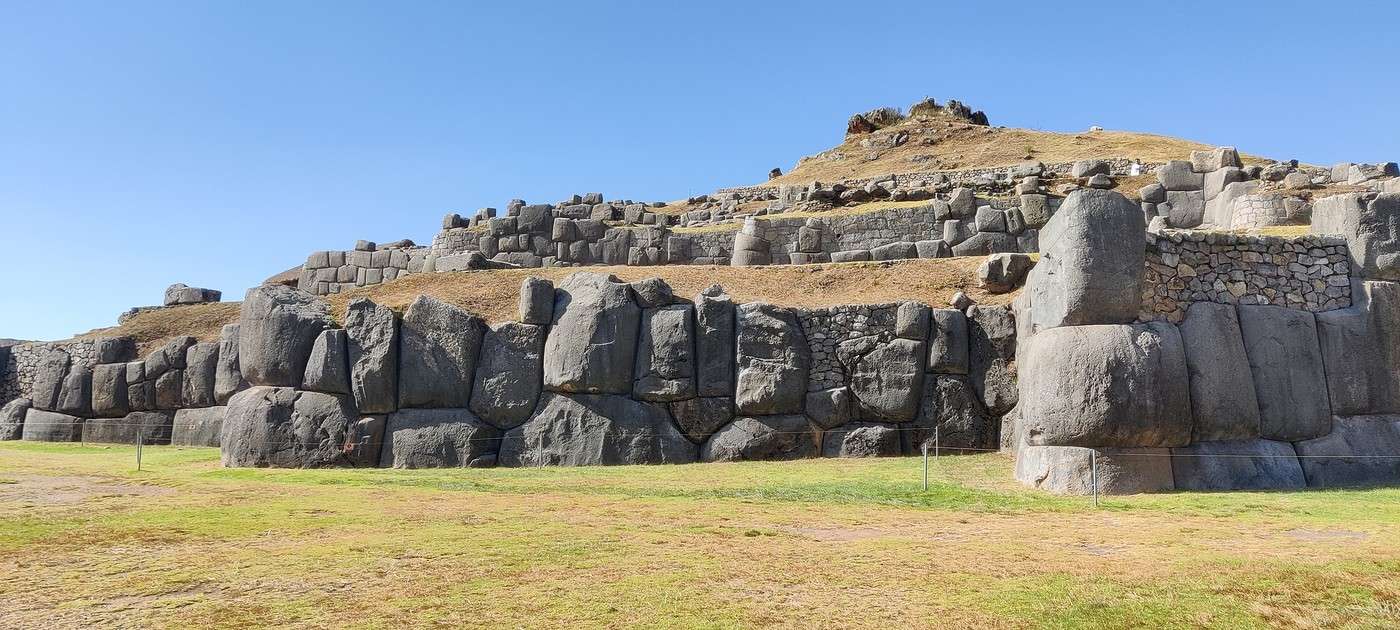
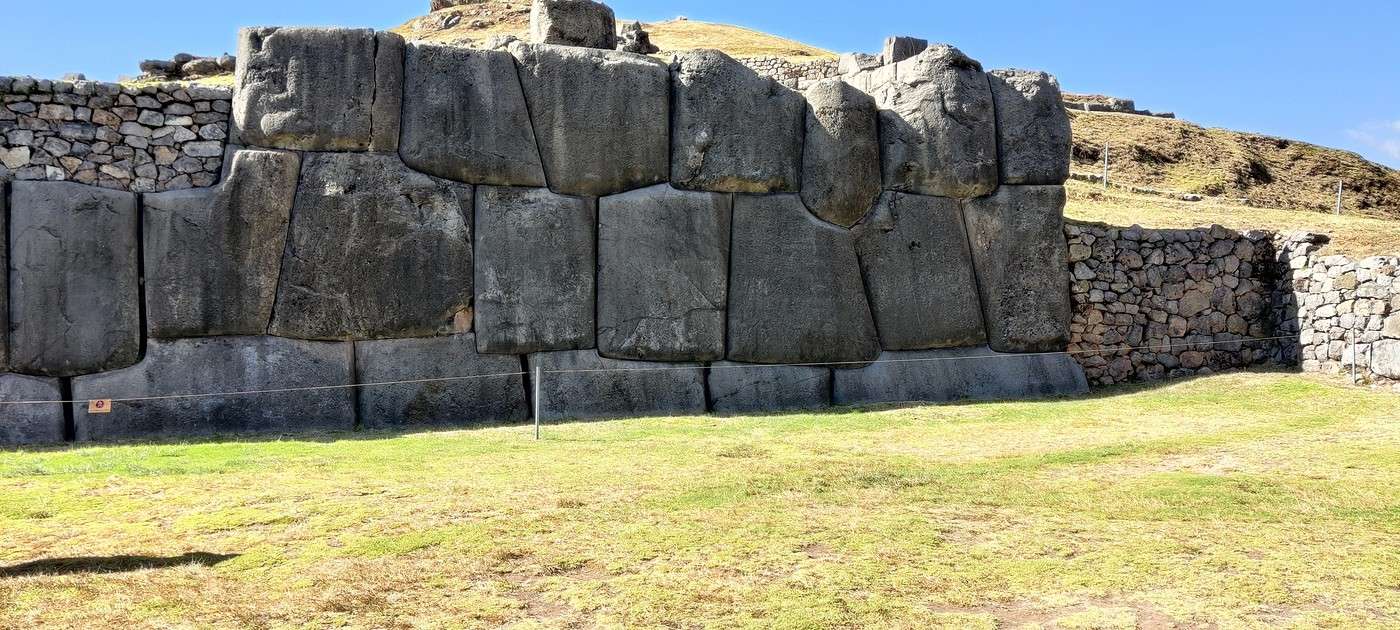
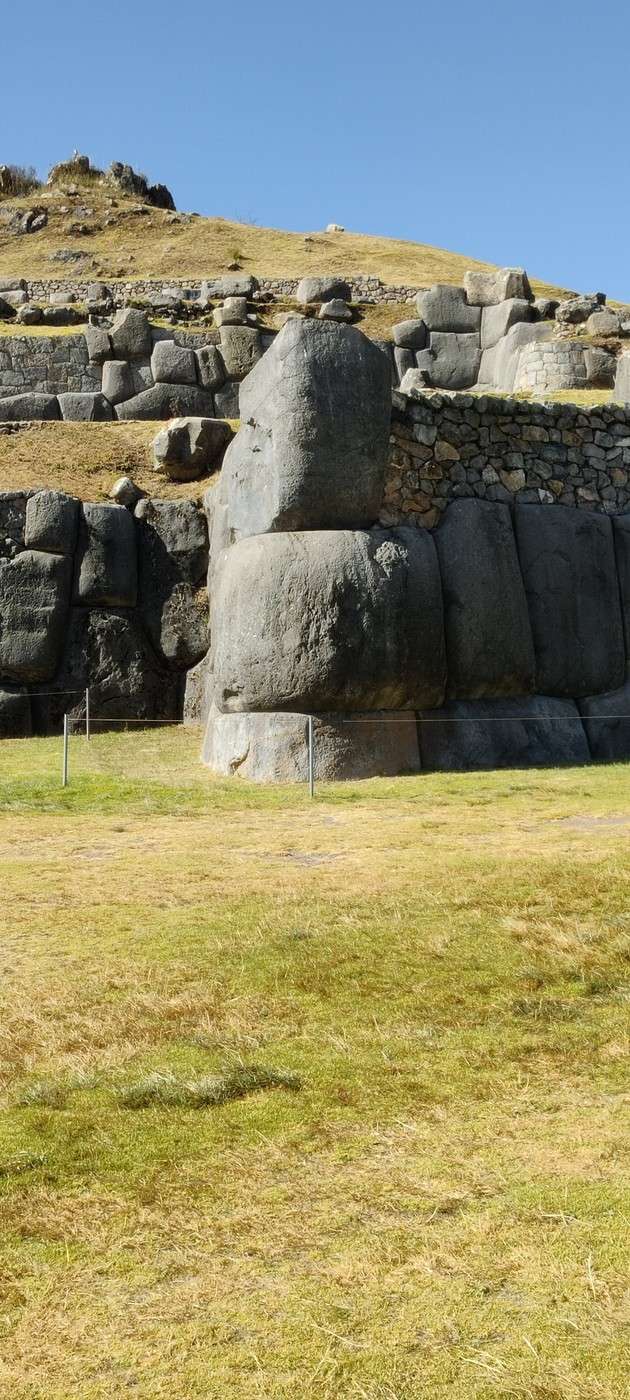
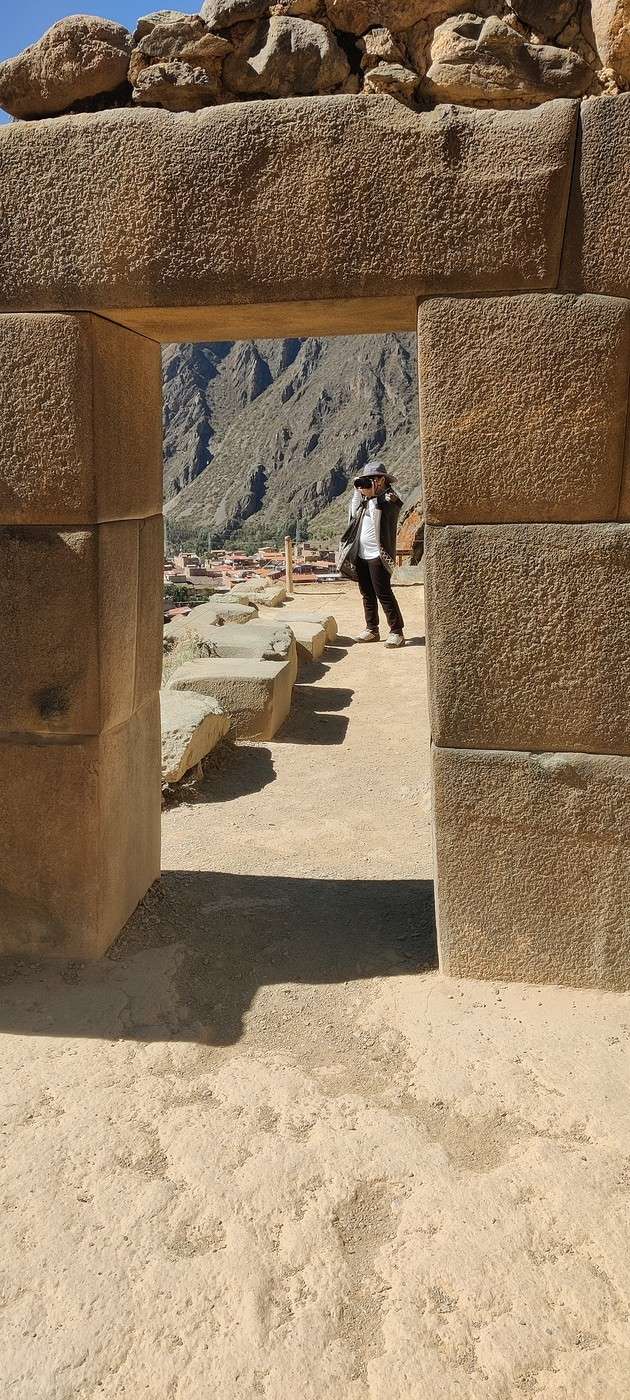
Construction began under Pachacútec’s reign and continued under his successors, reportedly involving thousands of workers from across the Empire. The Spanish later dismantled much of it to reuse the stones for building Cusco, leaving only the largest blocks they couldn’t move. Archaeologists still debate the site’s exact purpose: fortress or ceremonial space? Maybe both! Our eyes are drawn to the three spectacular parallel walls zigzagging for about 600 meters. This layout likely served a defensive purpose, allowing defenders to attack from multiple angles. The walls are made of massive stone blocks—some over 9 meters tall, with the heaviest estimated at dozens of tons, even up to 100 tons. They fit together perfectly.


You can’t help but be awed by the precision of these colossal structures, built without mortar or cement. How did the Incas manage to extract, transport, and fit such massive blocks with the tools they had, especially since they didn’t even use the wheel? The question remains unanswered. You’ll also notice three main trapezoidal-shaped gates, a hallmark of Inca architecture, along with the remains of three towers. Don’t overlook the drainage channels and aqueducts that carried water to reservoirs, the open spaces, terraces, and a network of passages and tunnels completing the site. From the top, you get a breathtaking view of Cusco.


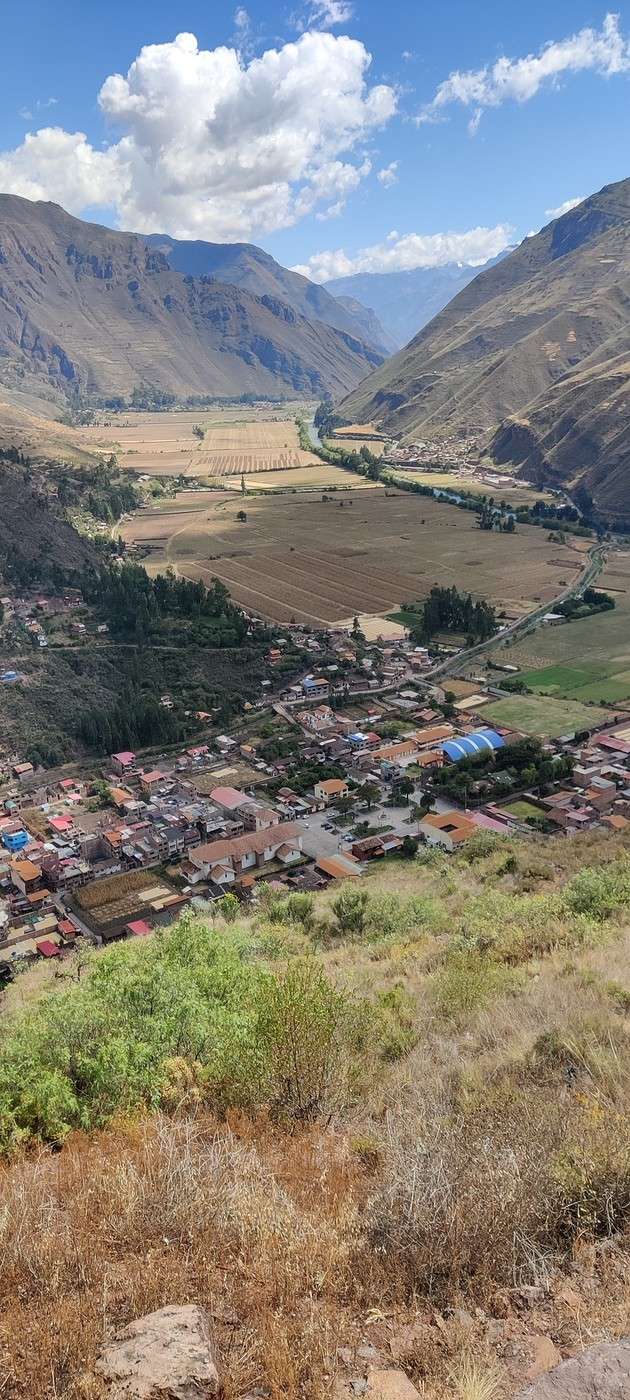
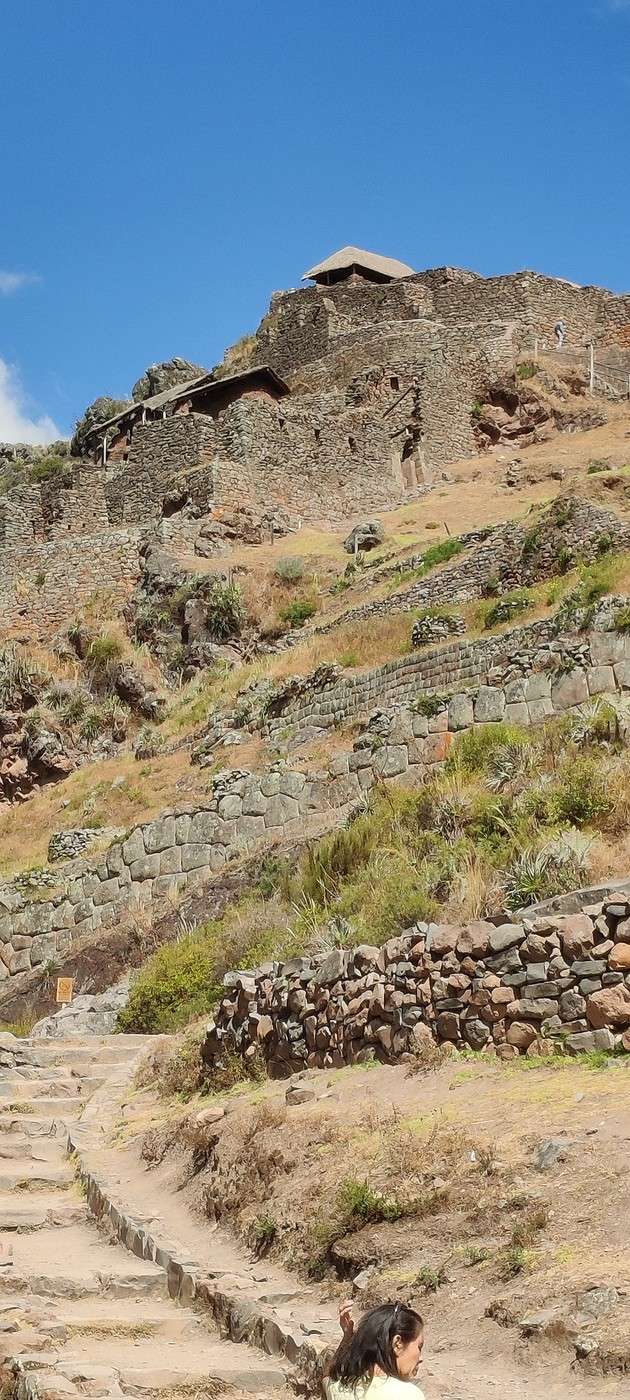
During our visit, they were setting up bleachers and stages on the grassy area for the Inti Raymi, the Festival of the Sun, scheduled for June 24th. Tens of thousands of people are expected. It really drives home how important this celebration is and why Cusco is so lively this time of year! Next, we head to Pisac. We drive through the Sacred Valley, a fertile corridor surrounded by mountains. The mild climate supports all kinds of crops and fruit trees. The archaeological site clings to the mountainside, overlooking the town and offering a stunning view of the Sacred Valley.


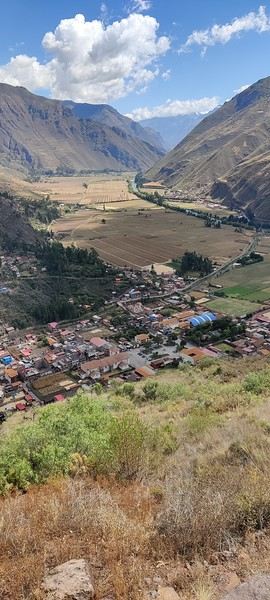
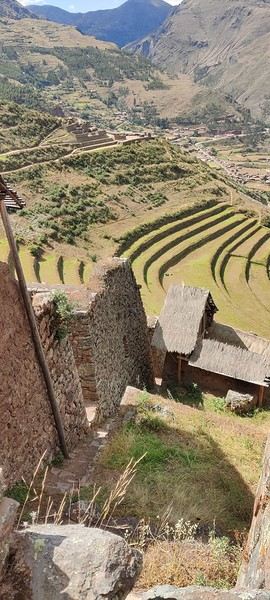
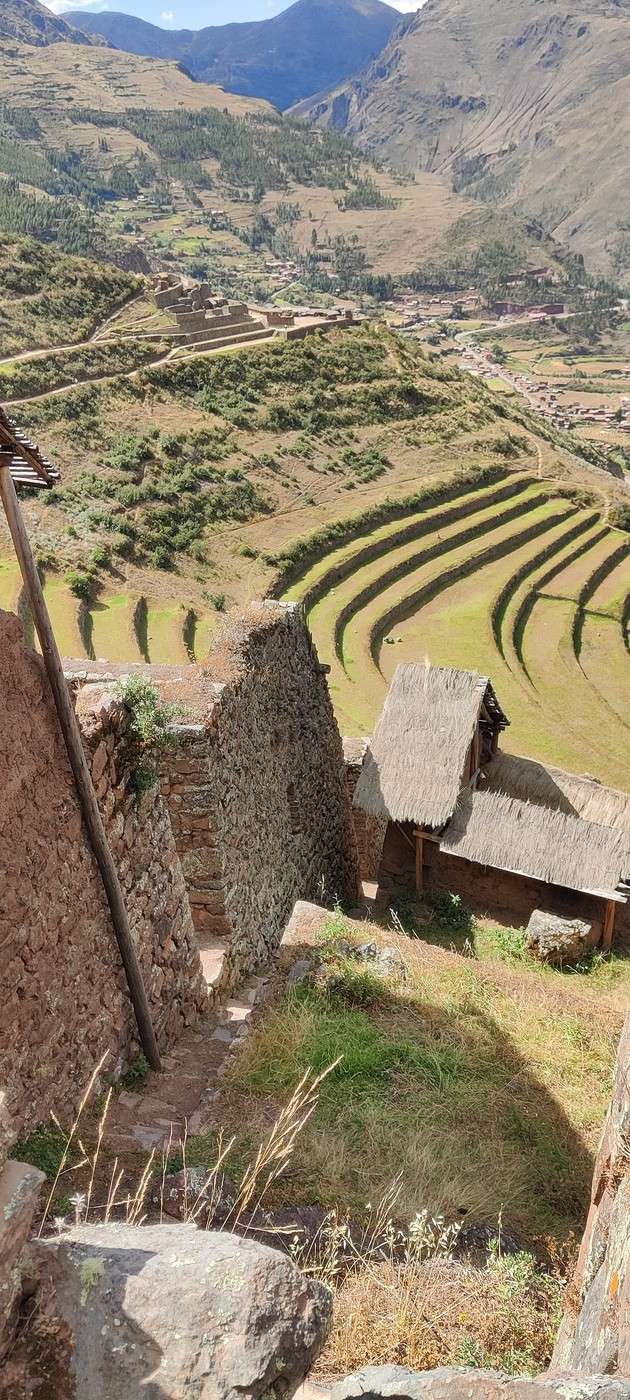
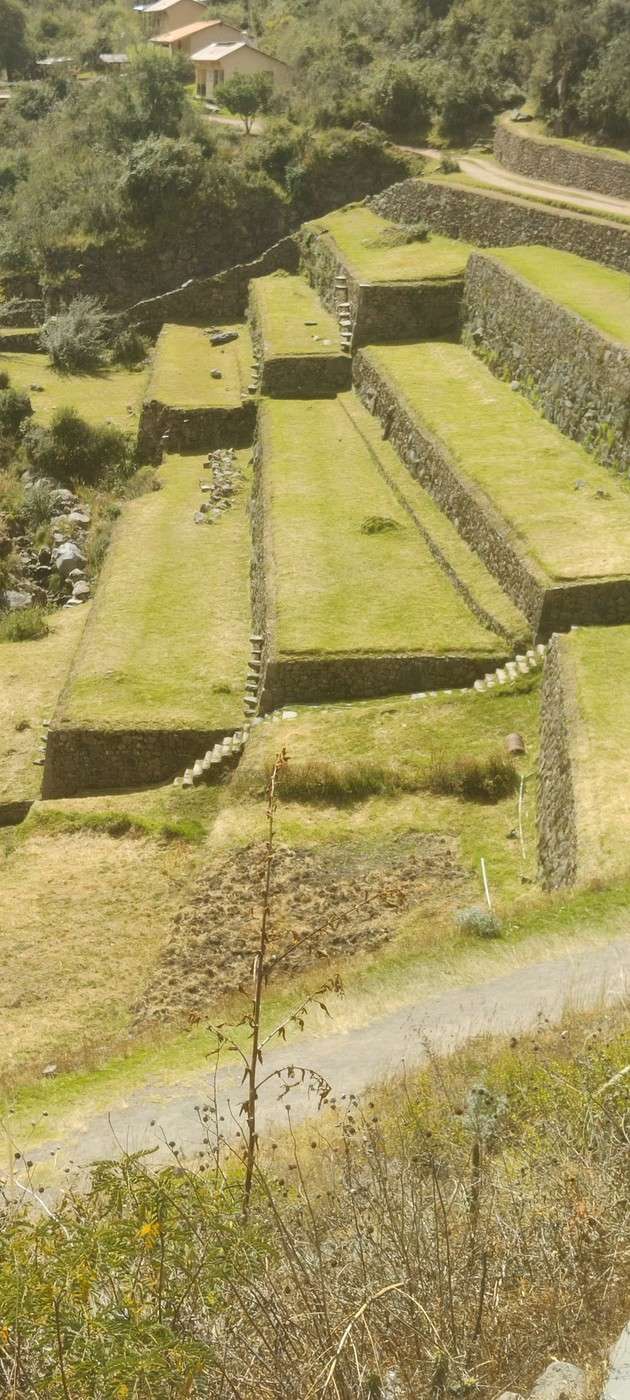
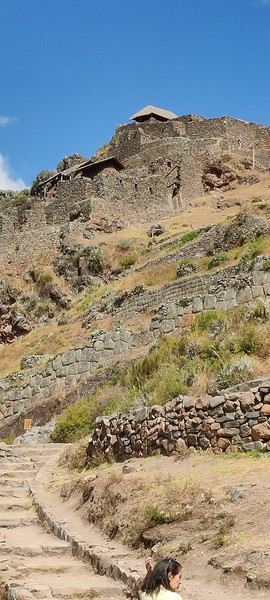
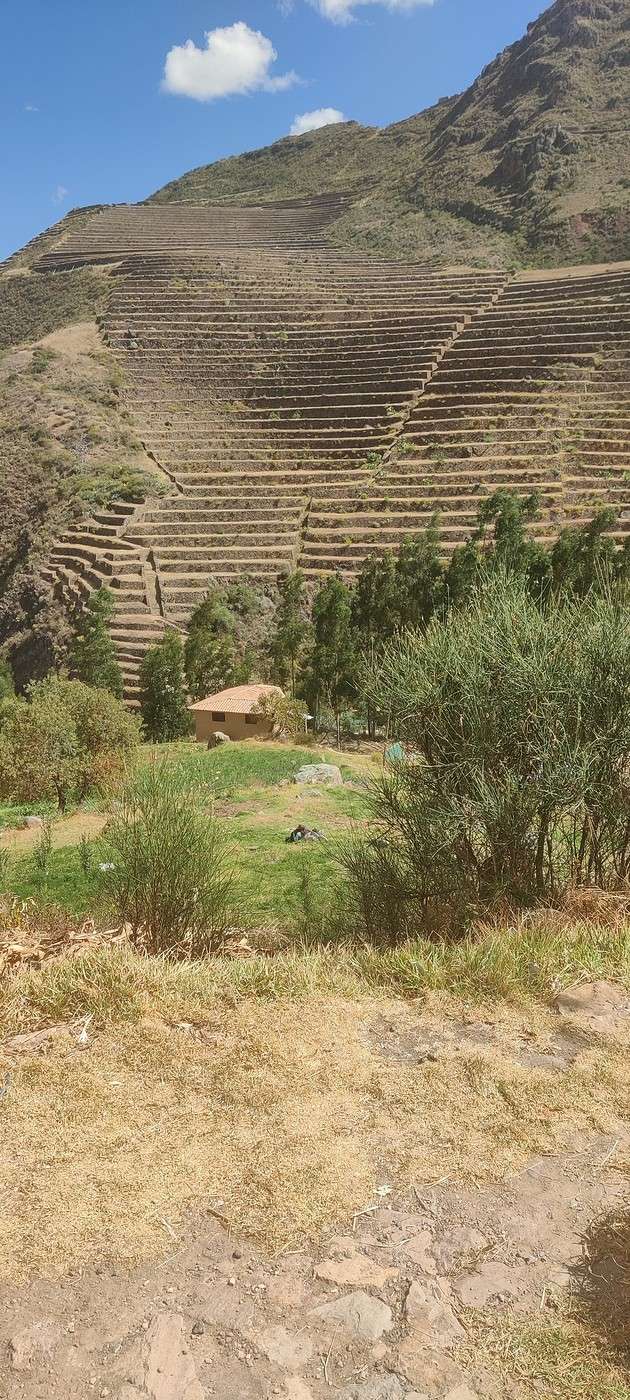
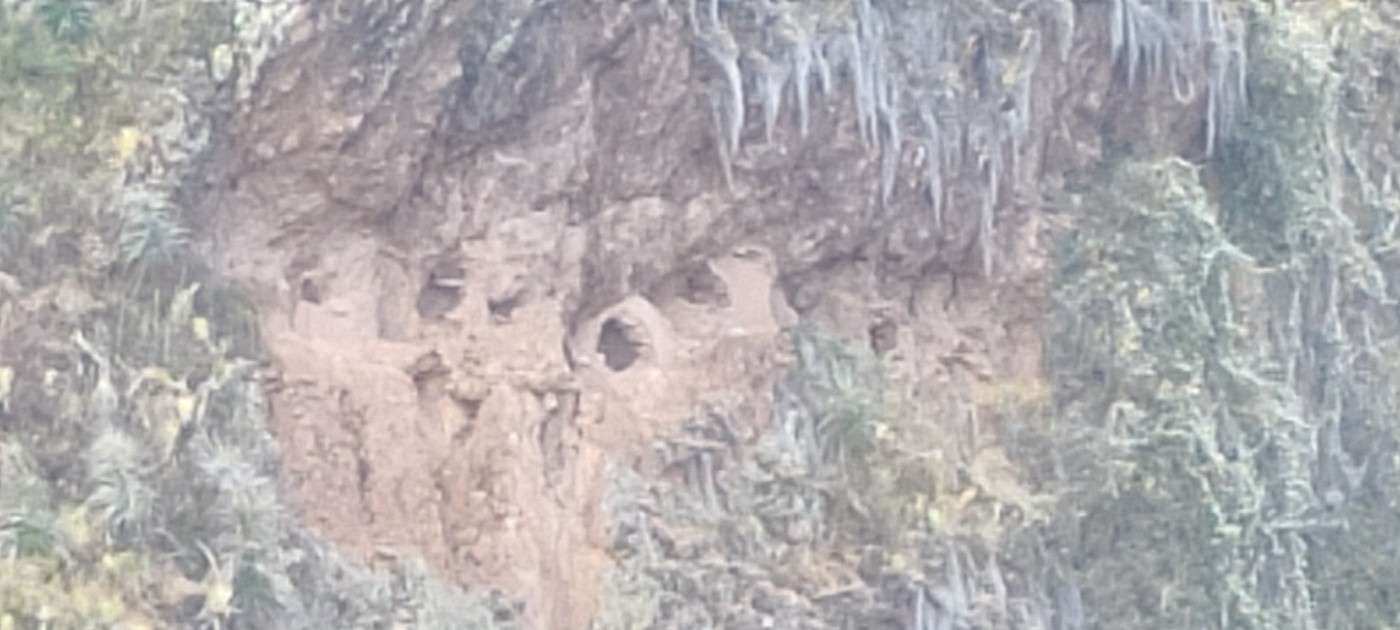
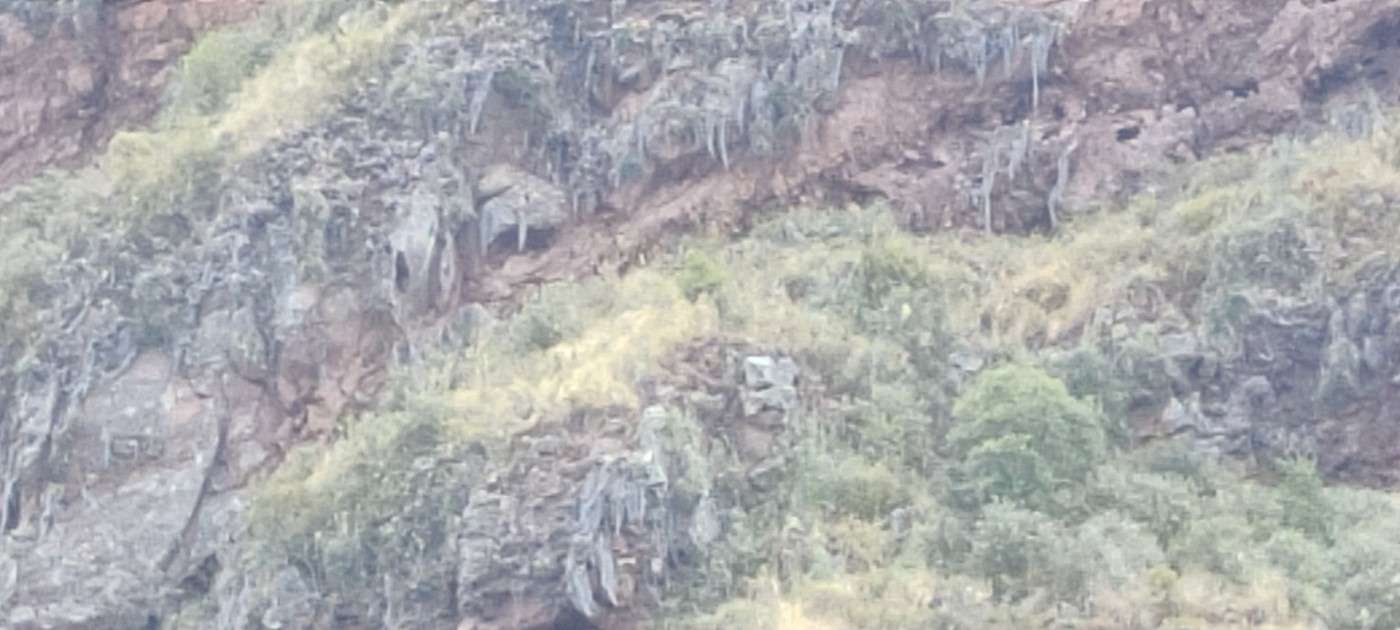
It’s said to have been founded by Pachacútec after his victory over local populations, mainly to monitor the valley’s entrance and routes to the Amazon region. This strategic role is evident from the defensive structures and watchtowers on the ridges. The site includes a citadel, a palace, and a ceremonial complex, all complemented by terraces that follow the natural contours and are irrigated by canals. These terraces were used to grow corn, quinoa, potatoes, and other crops while also preventing soil erosion. On the surrounding cliffs, you can spot an Inca cemetery with small funeral niches carved directly into the rock.


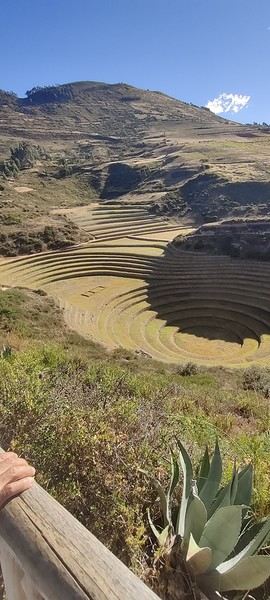
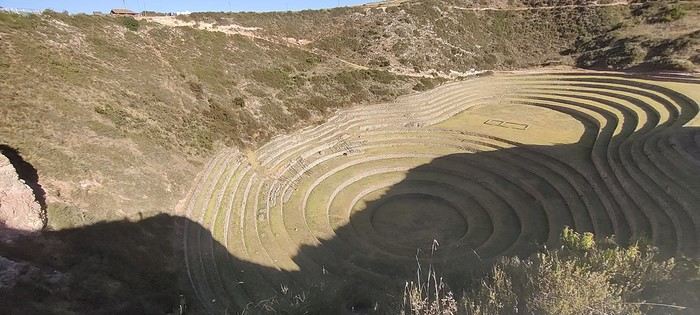
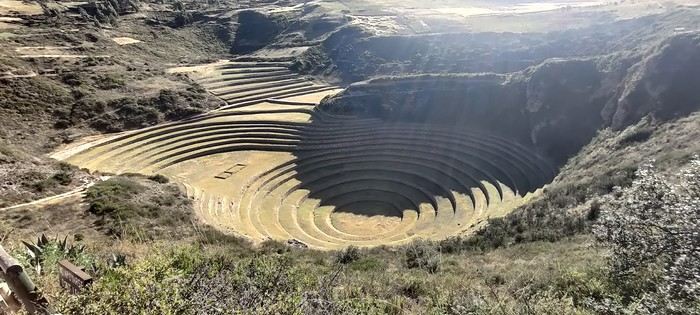
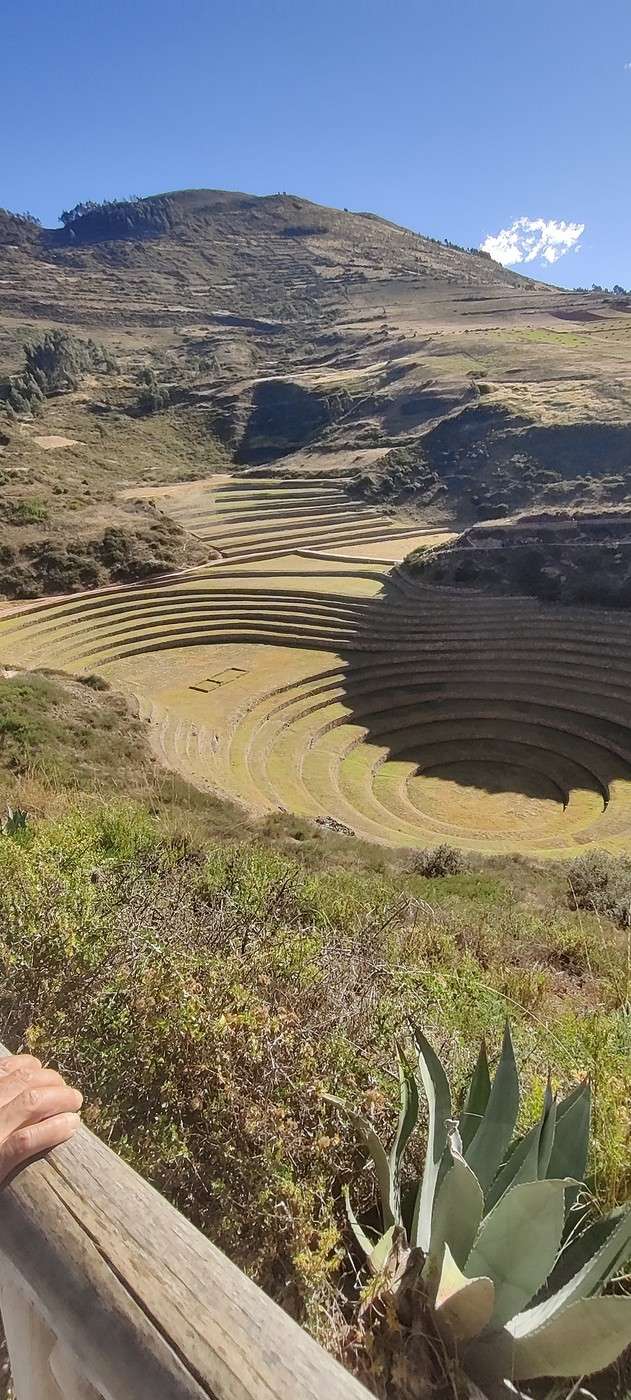
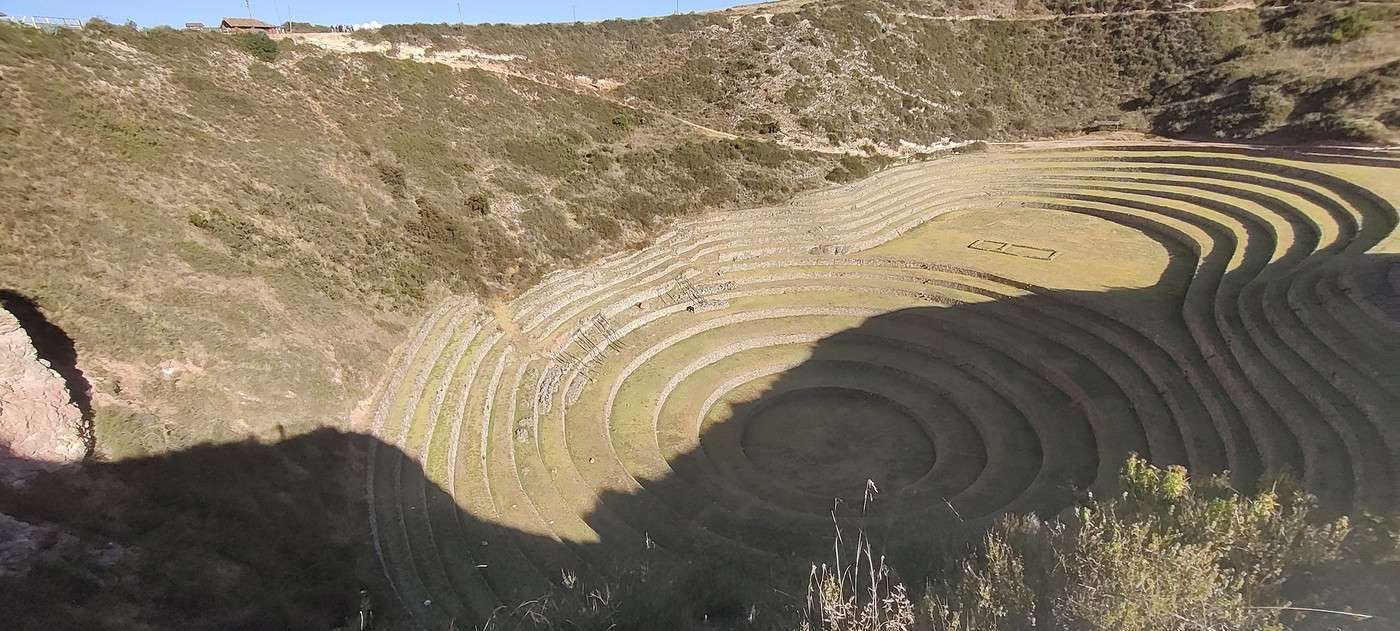
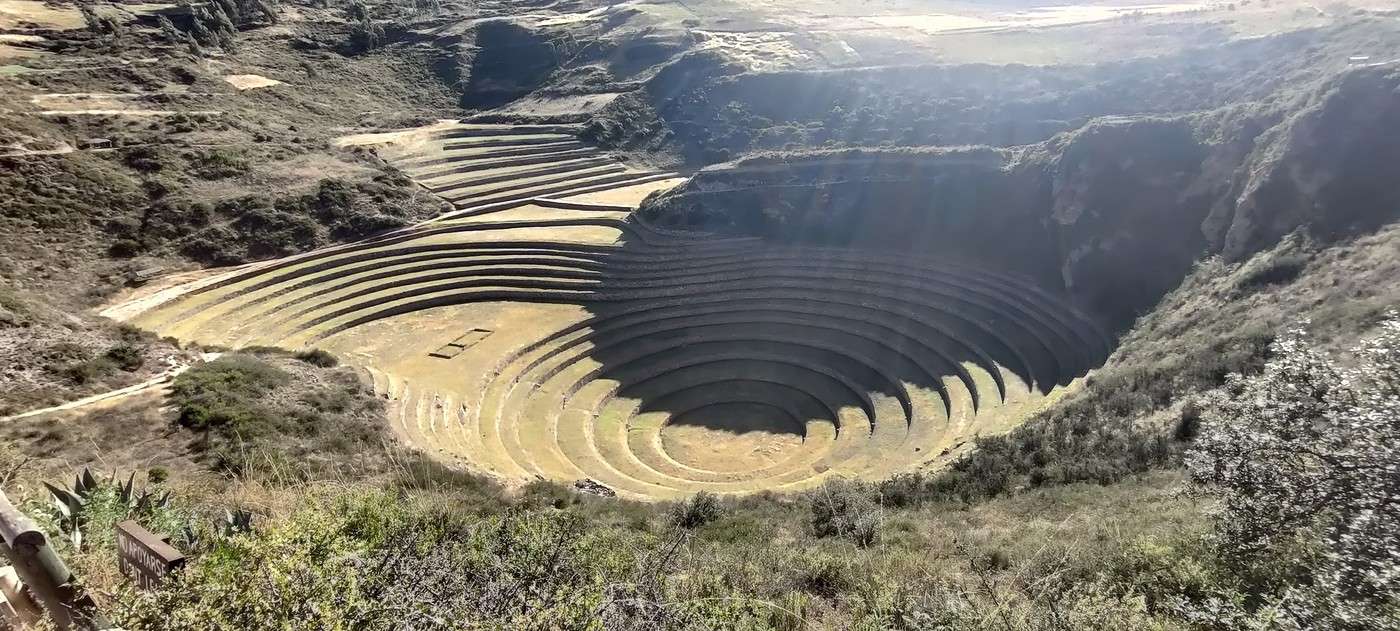
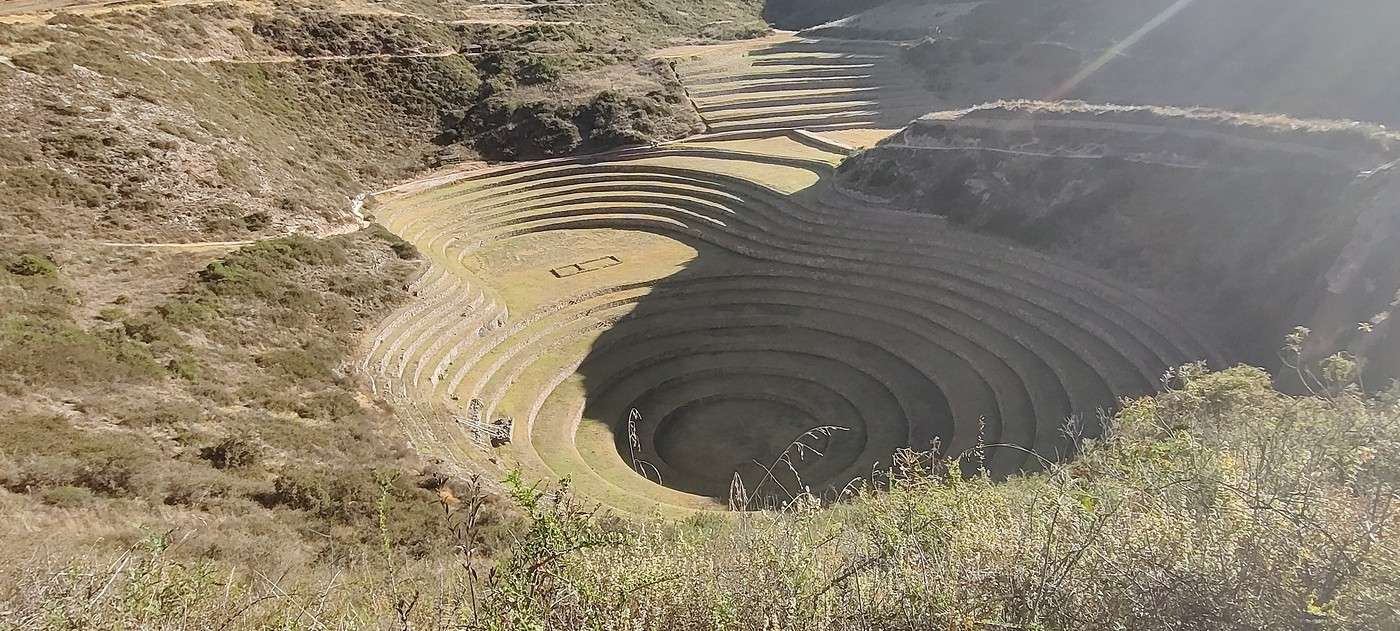
After lunch at a restaurant in Pisac, we don’t linger to visit its famous market. We still have a lot to see. Our next stop: Moray, famous for its circular terraces built into natural depressions shaped by the Incas. Three large sets of concentric terraces form giant amphitheaters. Each level is connected by stairs and canals for water distribution. Moray’s exact purpose is still debated. One long-standing theory suggests it was an agricultural laboratory. The different levels have slightly varying climates—temperature differences between the top and bottom create microclimates. The Incas may have used these variations to experiment with different crops or plant varieties before introducing them across the Empire. This interpretation is compelling, though archaeologists aren’t unanimous about the site’s exact function. One thing’s for sure: the irrigation mastery and terrace organization once again highlight the Incas’ remarkable agricultural and technical knowledge. A marked path lets you walk around and admire the different levels. We’re once more impressed by the precision of the construction and how seamlessly the site blends into its natural surroundings. After this long day, we return to Cusco. The narrow, steep streets of the city center are packed, and the noise from the festivities never stops. After the tranquility of Sacsayhuaman, Pisac, and Moray, the contrast is striking—Cusco seems to pulse with the rhythm of Inti Raymi, day and night.

Peru: A childhood dream finally realized

Larri · 2026-08-22

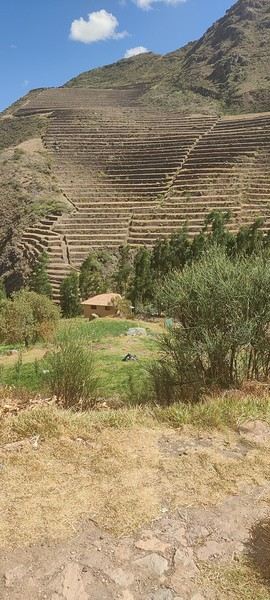
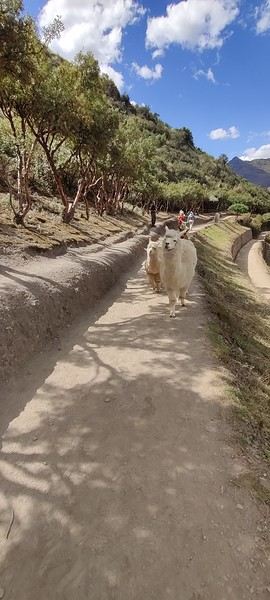
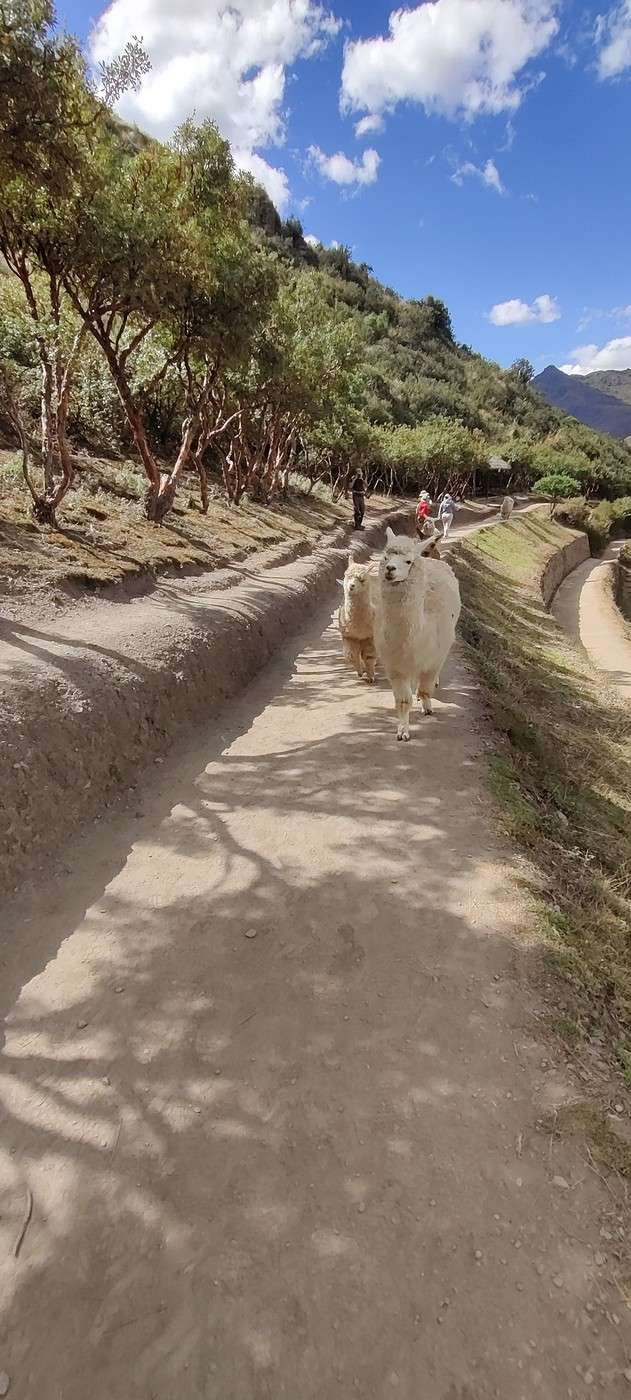
Photos of Pisac (continued) and Moray


Peru: A Childhood Dream Finally Realized

Larri · 2026-08-22

Day 13 – Chinchero, Maras, and Aguas Calientes

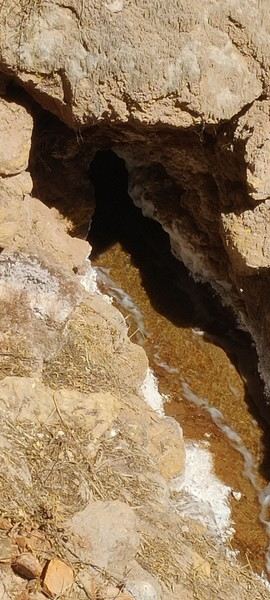
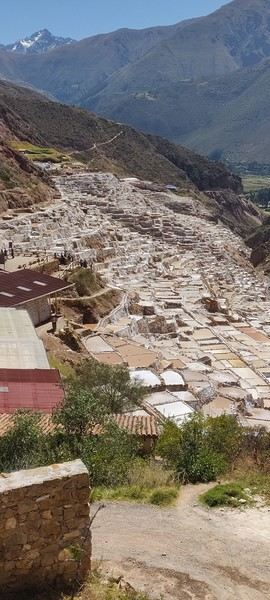
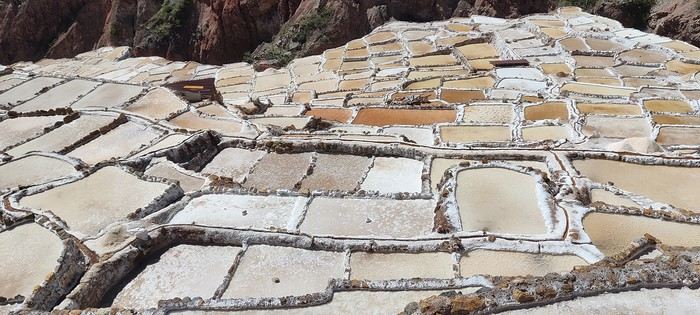
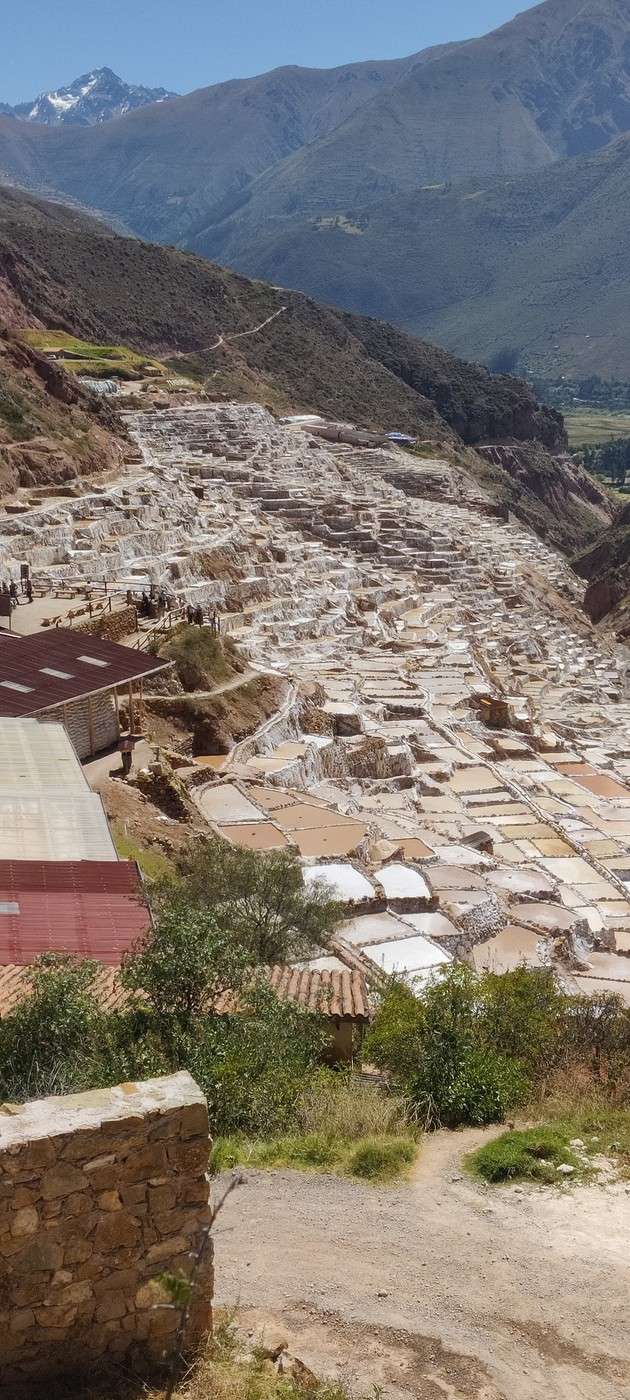
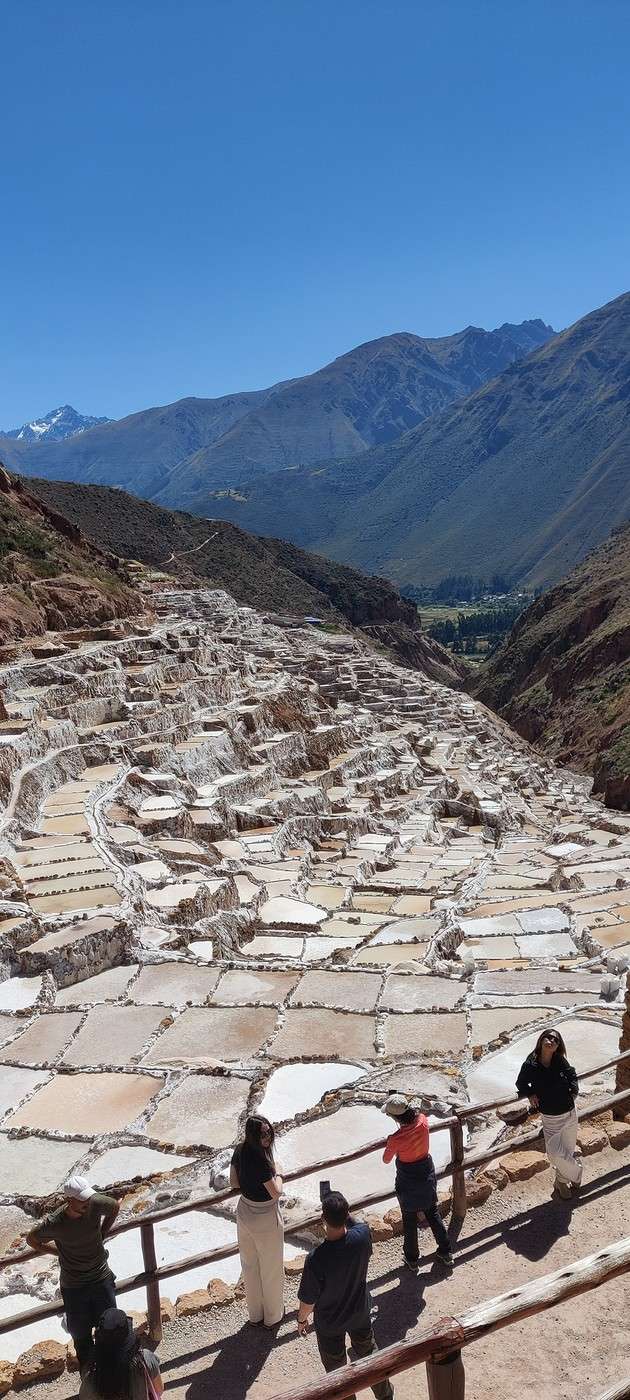
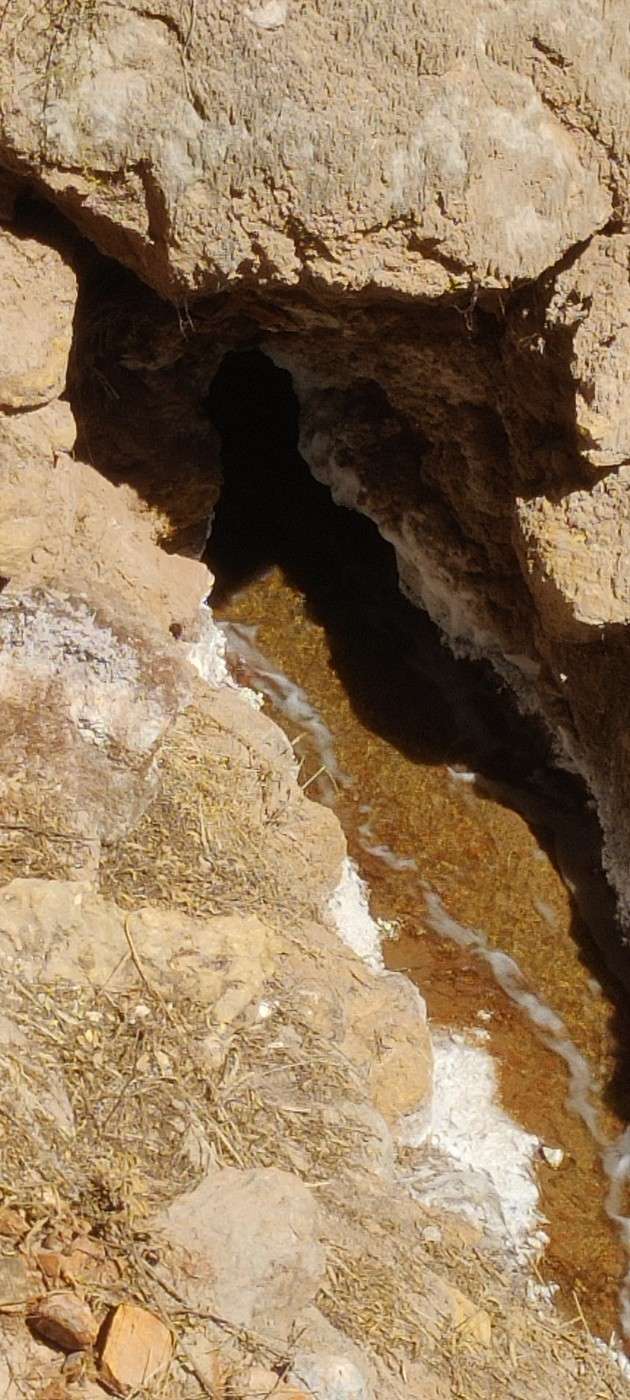
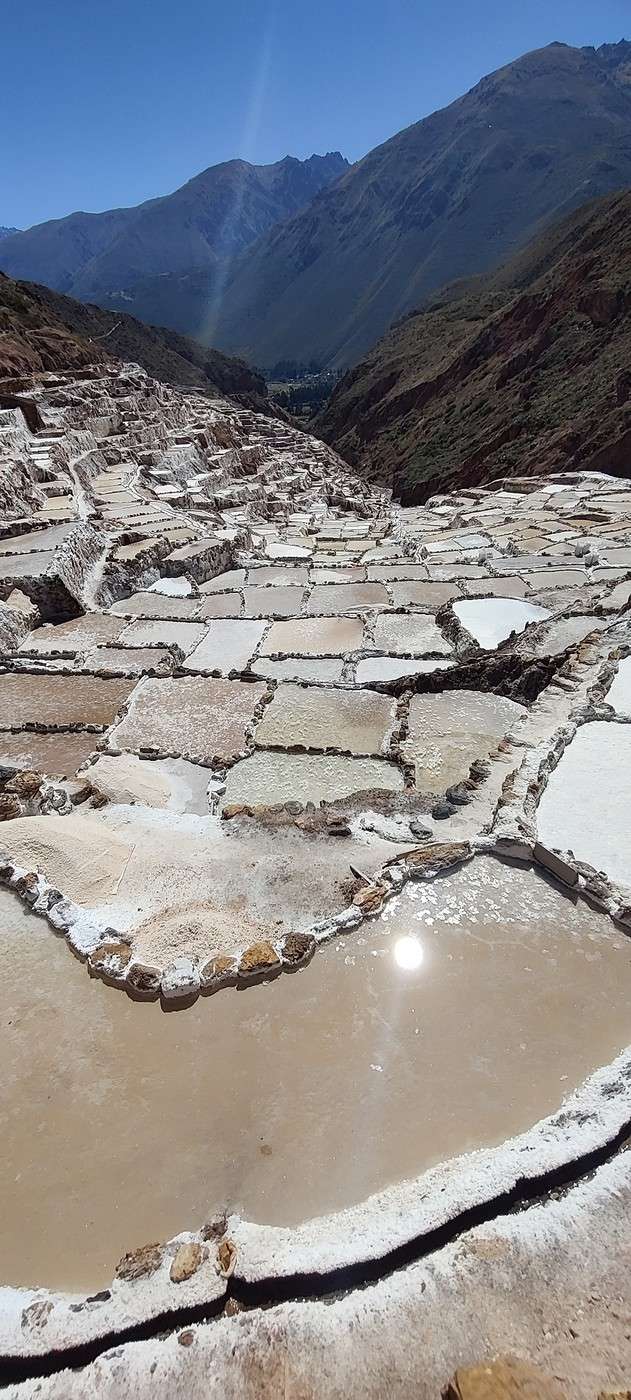
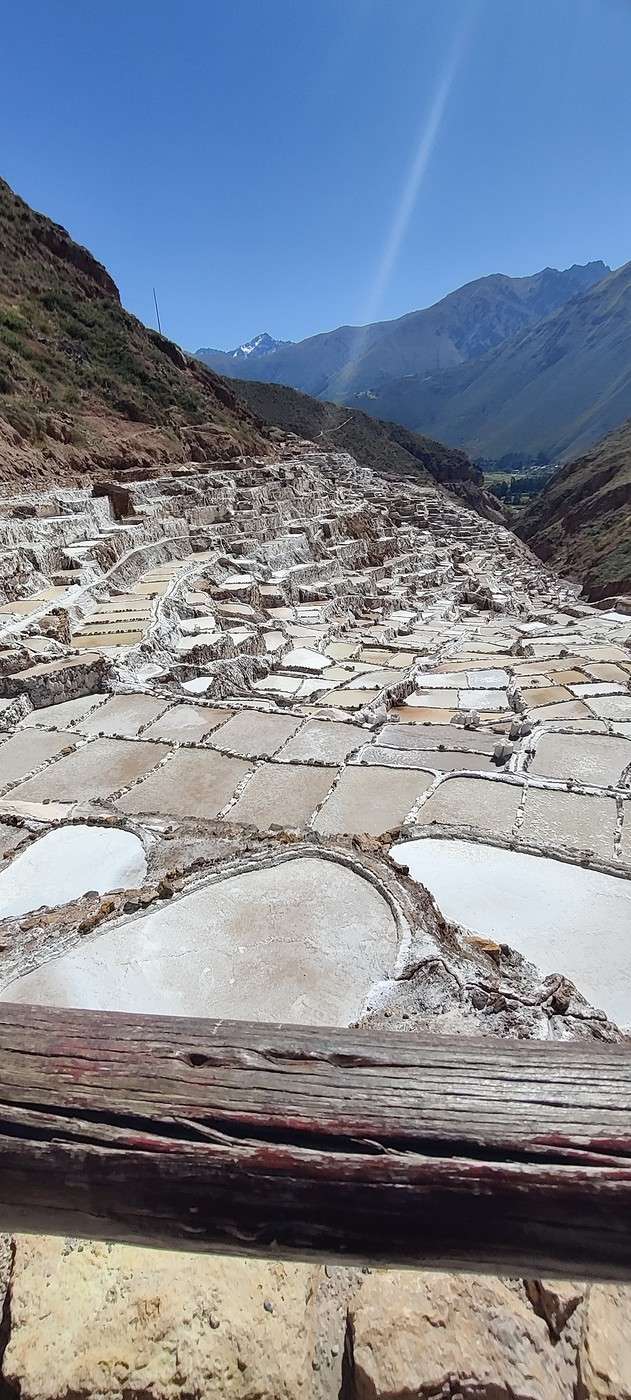
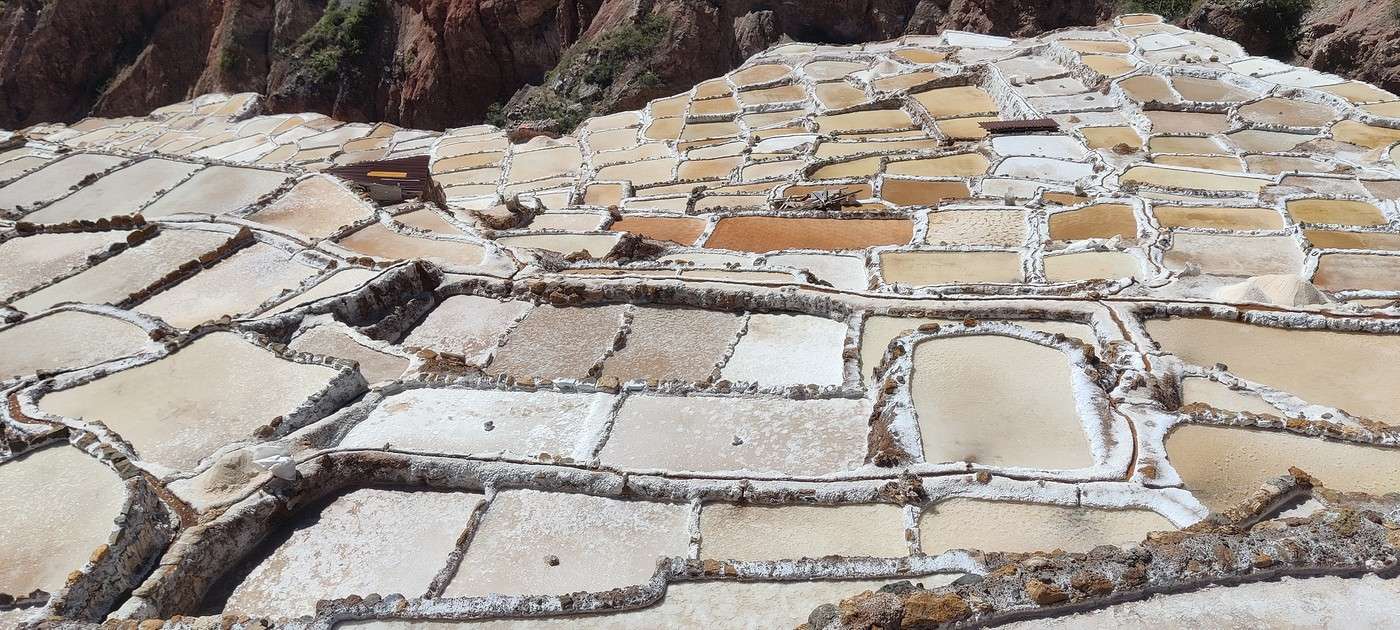
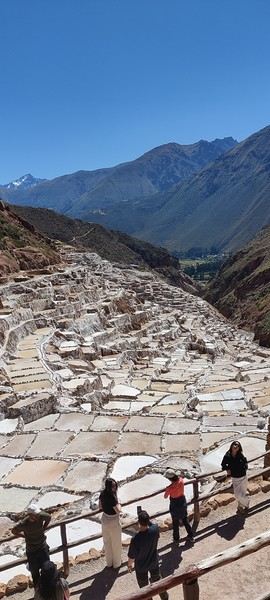
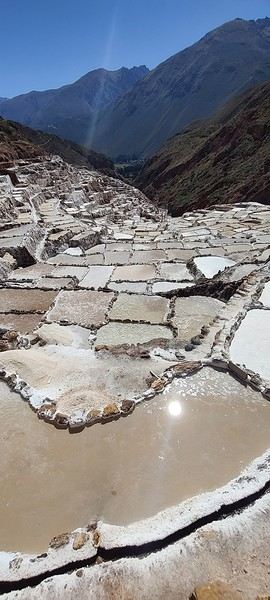
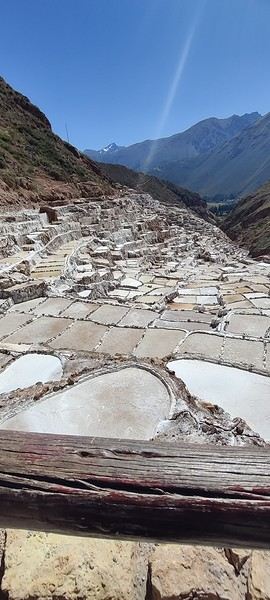
Let’s be honest, the visit to Chinchero didn’t leave me with an unforgettable memory. After weaving our way through the village’s shops, we arrived at the church of Chinchero. It doesn’t look like much from the outside, but the interior is stunning: fully painted walls, religious paintings, an intricately carved ceiling, and a gilded altar. Behind one side of the church, we discovered an archaeological site made up of terraces, canals, staircases, stone walls, and niches. The whole thing is a testament to the site’s importance during the Inca era. It’s worth noting that near Chinchero, construction on a new international airport is well underway. It’s eventually supposed to replace the one in Cusco and become the main air gateway to the region. During our trip, it was set to open in 2027, but the timeline has since been pushed back—Peruvian authorities now expect it to be operational in 2029. Next, we headed to the Maras salt mines. This isn’t an archaeological site but a natural curiosity and, above all, a remarkable example of traditional salt extraction in the Sacred Valley. The site has been in use since pre-Hispanic times and continues to this day. The pools are still managed by local communities, who pass down production techniques from generation to generation. Clinging to the mountainside and stretching down to the valley floor, the salt mines consist of thousands of pools. Official sources count around 4,500 of them. They’re fed by a natural saltwater spring, distributed through an ingenious network of small canals.


The water evaporates under the sun, leaving behind a layer of salt that’s harvested by hand. The salinity level, water quantity, and sunlight exposure give the pools different hues, making the place incredibly photogenic. No wonder the Salineras de Maras are one of the must-see sights in the Sacred Valley.


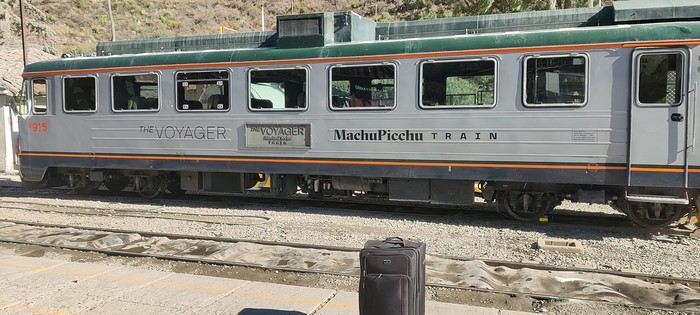
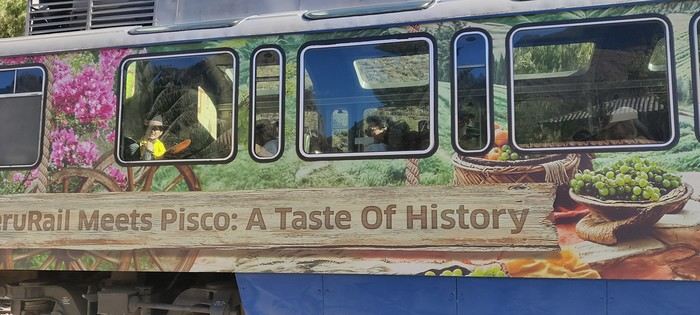
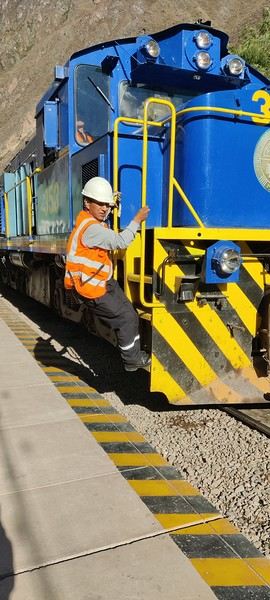
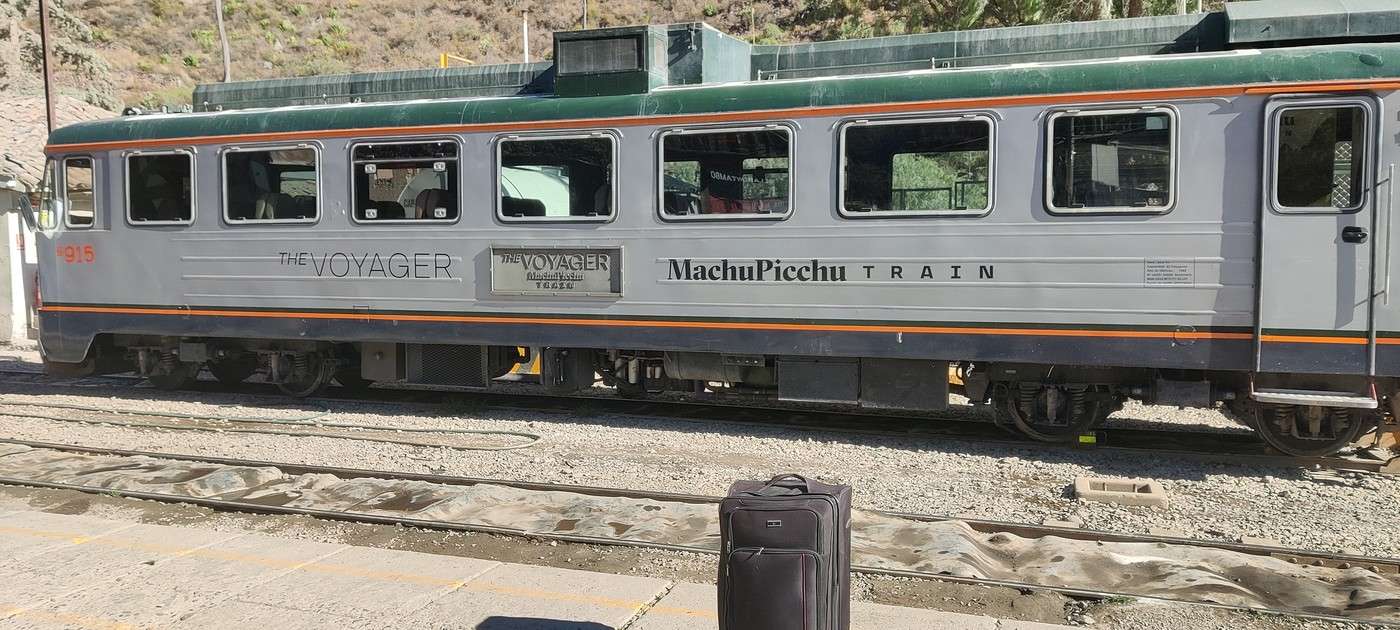
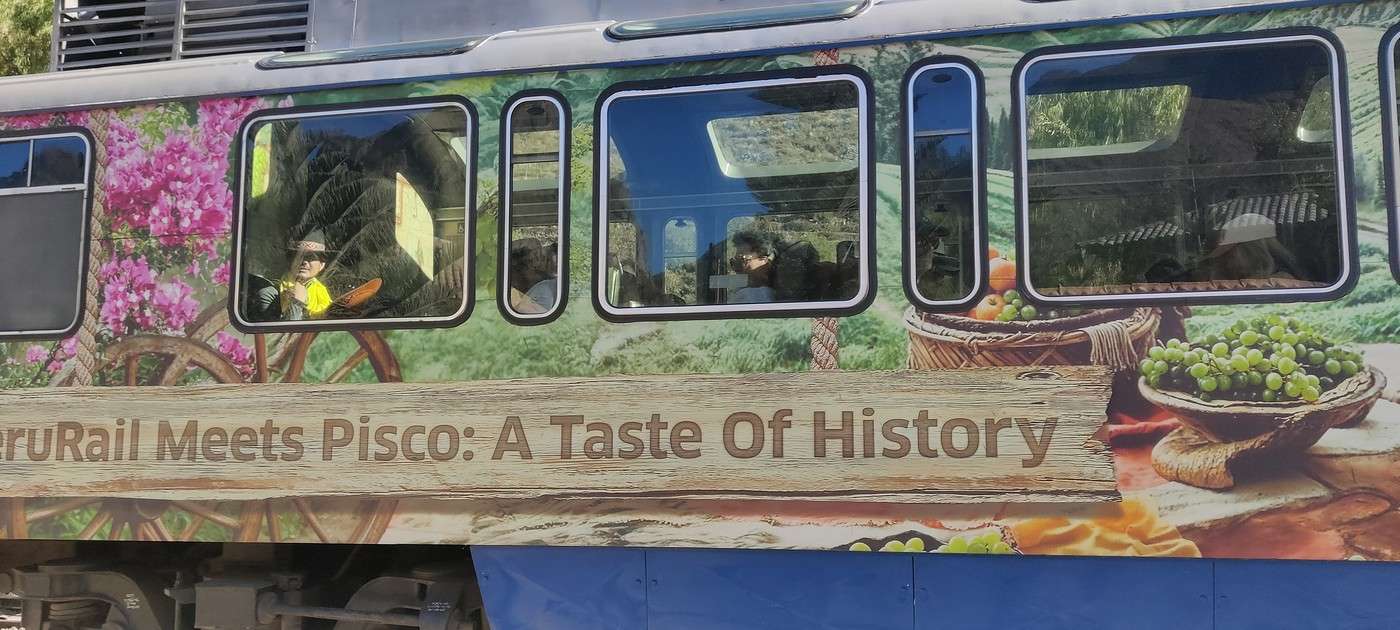
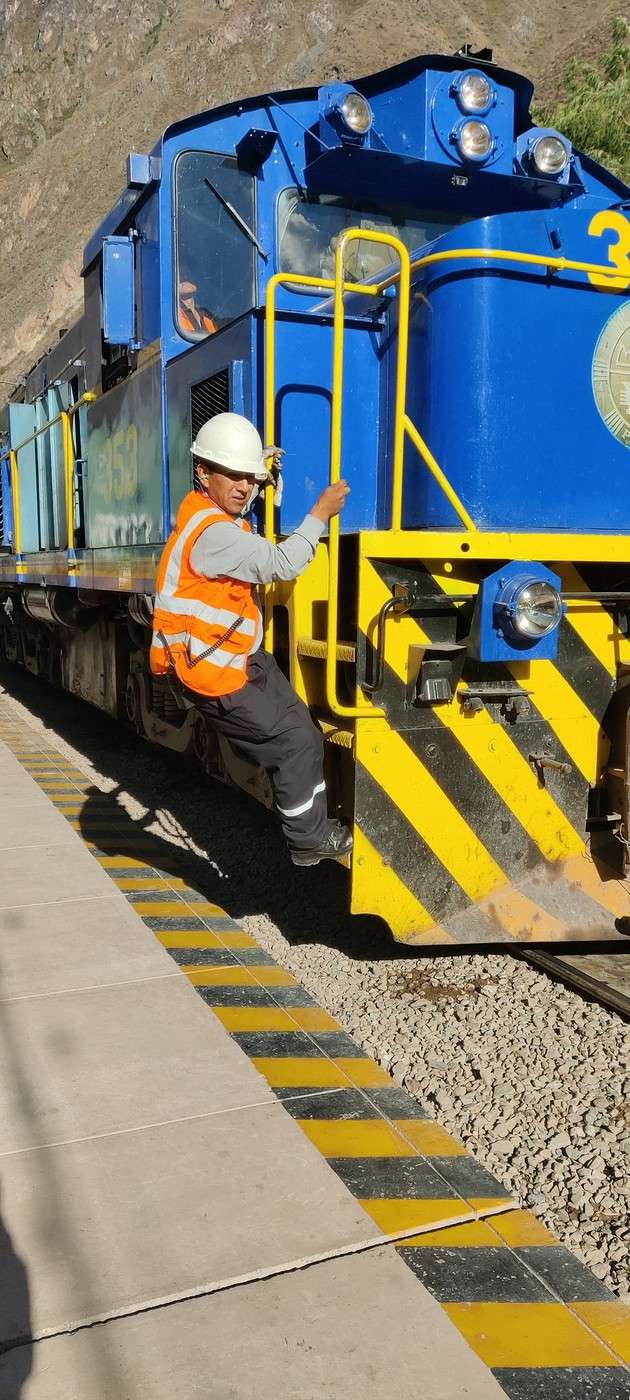
Note that due to some tourists’ behavior, it’s now forbidden to walk freely between the pools. You have to stick to the designated paths to protect this fragile system. Our train to Aguas Calientes was scheduled for 4 p.m., so we made our way to Ollantaytambo and its station. Richard dropped us off on the street leading there before heading back to Cusco. We used the remaining time to grab lunch at one of the many restaurants lining the road while we waited for our train. We then headed to the station. What a mess! At first, we couldn’t make sense of the organization, but boarding eventually went smoothly. While we waited, we checked out the locomotives and carriages—now almost legendary for travelers heading to Machu Picchu.


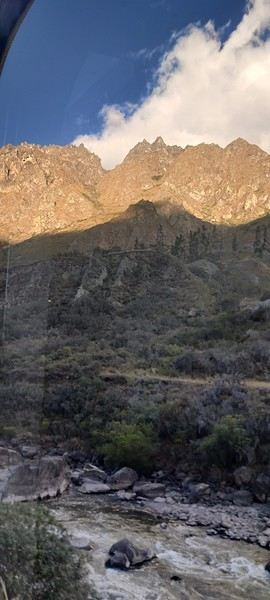
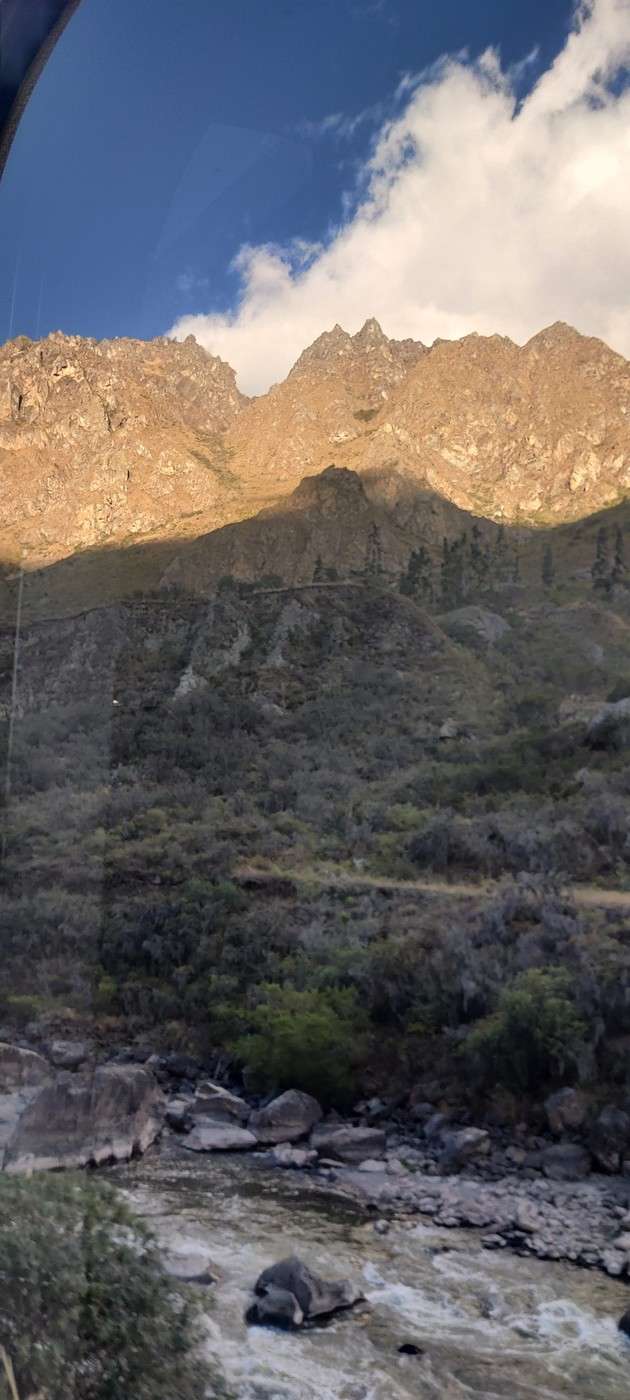
When the train started moving, we felt a little pang in our hearts—this time, we were *really* on our way to Machu Picchu. We followed the river, squeezed between the mountainsides, and crossed a valley that was still fairly open and fertile. The scenery was nice, but not as spectacular as we’d been led to believe. As we got closer to the end of the line, the river turned into a torrent, and the gorges narrowed.


The vegetation also became denser and more lush. We could tell we were entering a much more tropical environment, right at the edge of the Amazon rainforest. When we got off the train, we had no choice but to walk through a massive, sprawling market of shops aimed at tempting tourists. It was hard to avoid—the commercial maze seemed like part of the journey. Next, we explored Aguas Calientes, officially called Machupicchu Pueblo, nestled between the mountains and the Río Urubamba. The streets, often steep, were lined with restaurants, shops, and hotels. The whole town is geared toward visitors coming to see Machu Picchu. First, we looked for the ticket office for the buses the next day, then our hotel. Our choice turned out to be a good one: it was slightly below the center, away from the noise, and our room had a terrace overlooking the river. On the receptionist’s recommendation, we had dinner at Indio Feliz. The decor was unique, the food hearty and delicious, and the price seemed reasonable. We didn’t linger, though. Tomorrow’s wake-up call was early—the big moment of our trip was almost here.
Peru: A childhood dream finally realized

Holigirl · 2026-08-23

What a shame we can't wander freely through the salt flats anymore. But if it helps protect the site, it's a necessary trade-off. Can't wait to see if Machu Picchu lived up to its promises.

Peru: A childhood dream finally realized

Larri · 2026-08-23

Thanks for continuing to follow along. I’ll answer your question today or at the latest tomorrow!

Peru: A Childhood Dream Finally Fulfilled

Larri · 2026-08-23

J14 – Machu Picchu (1)

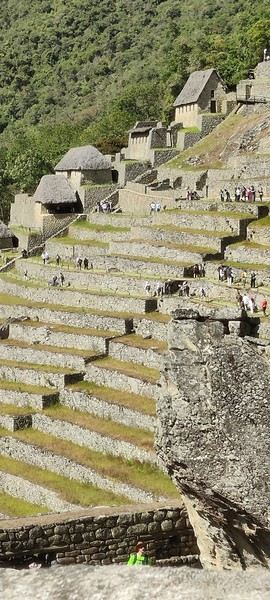
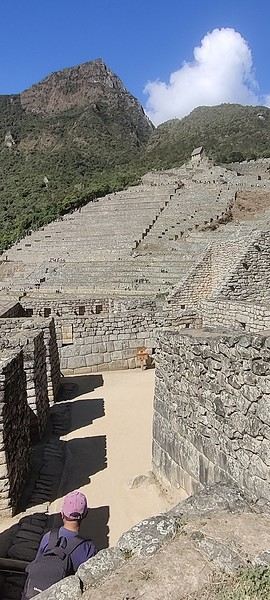
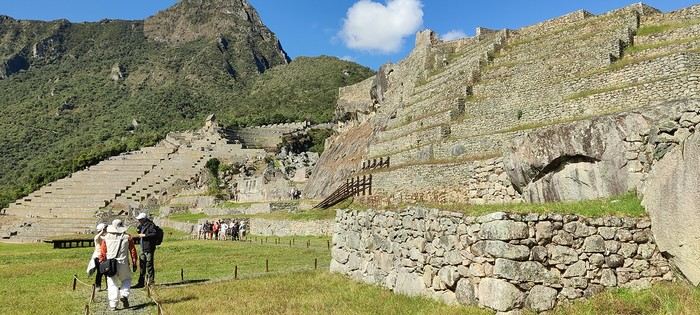
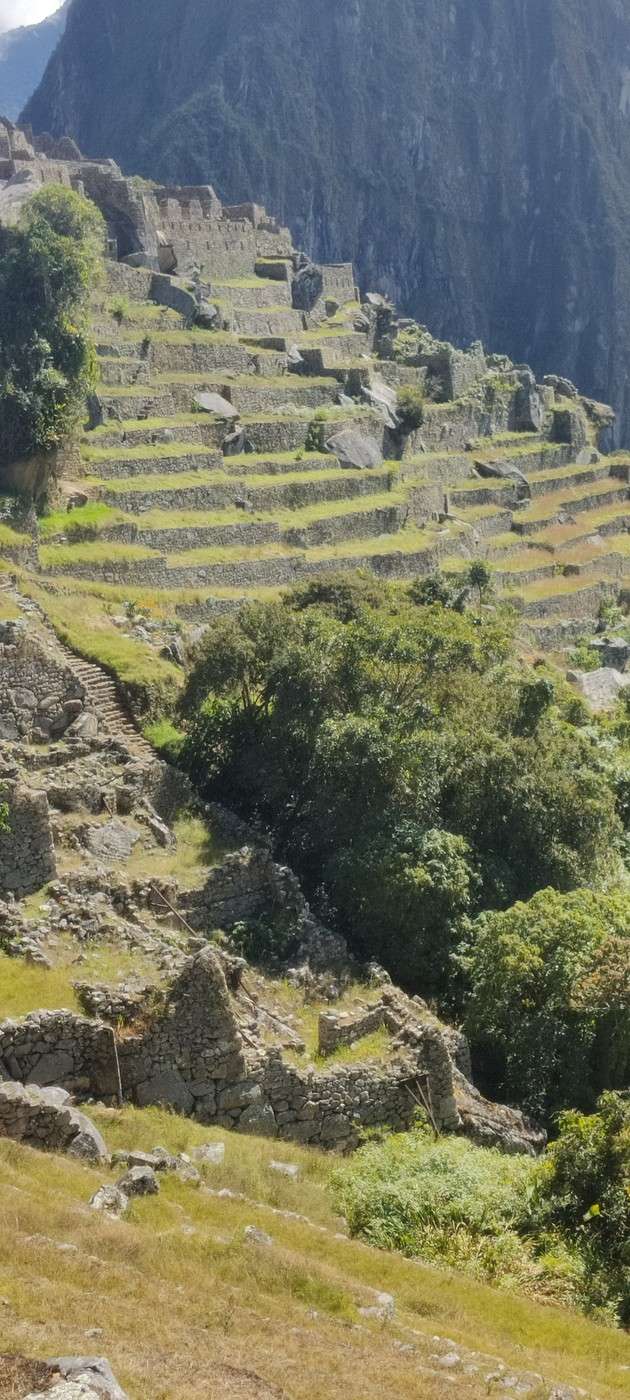
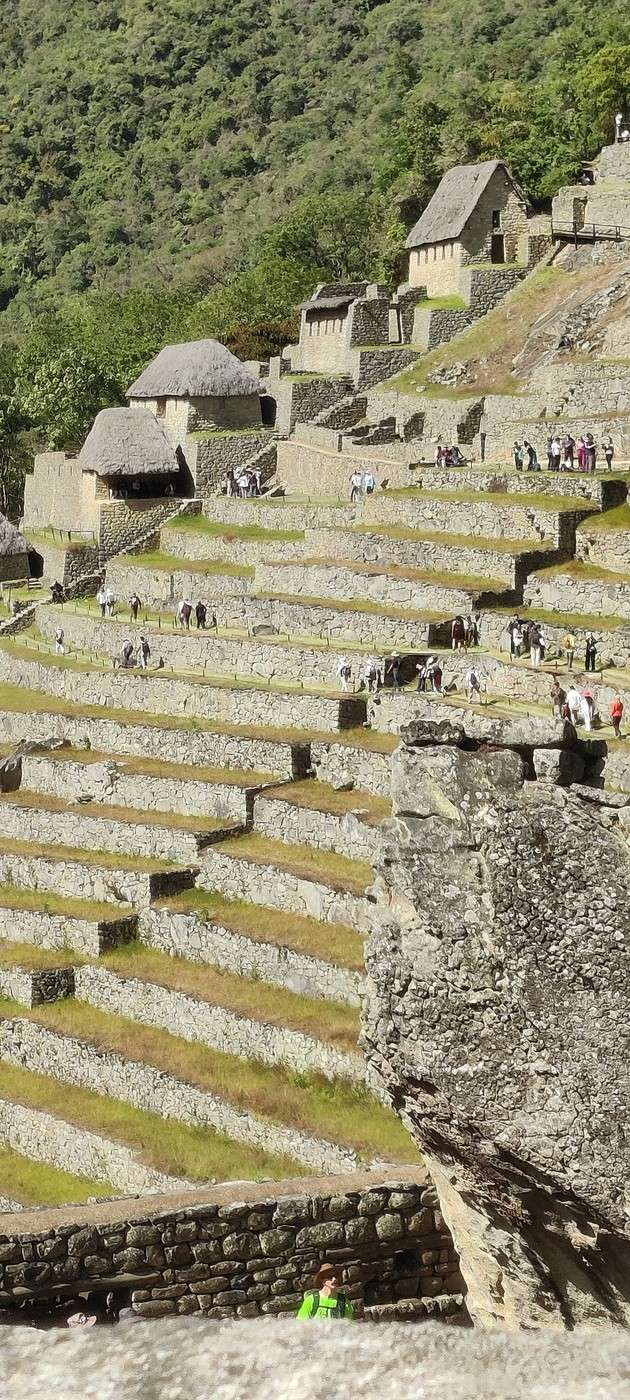
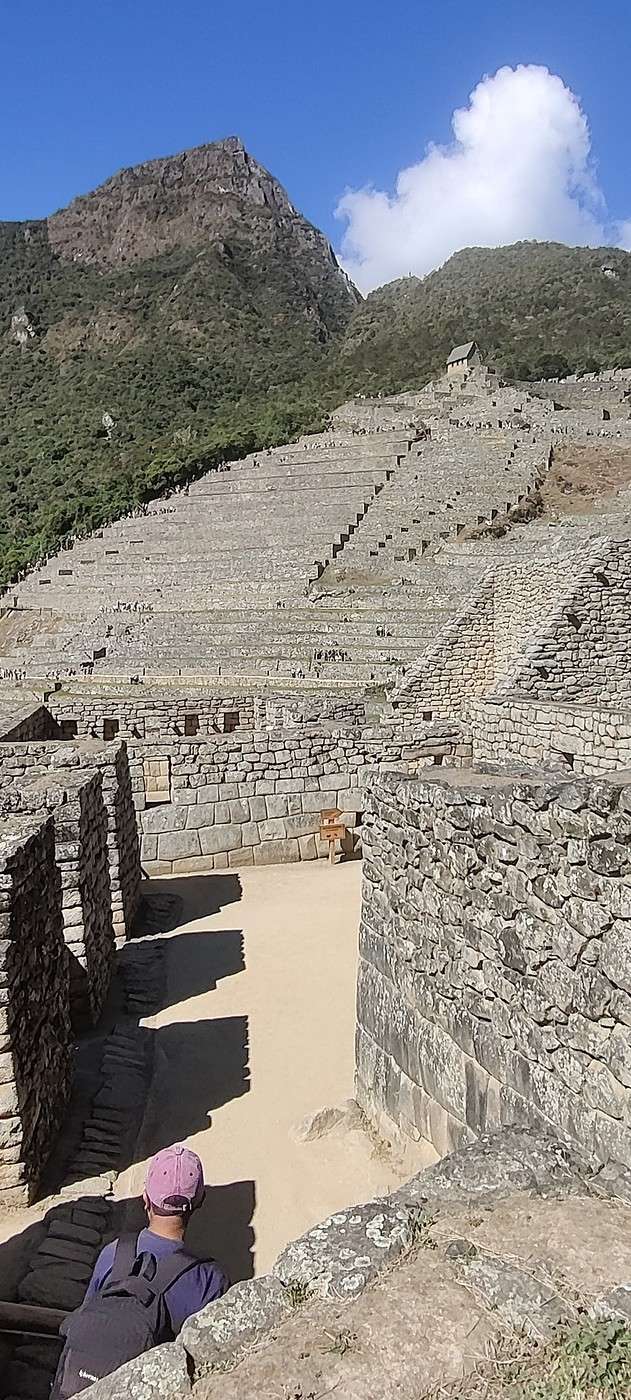
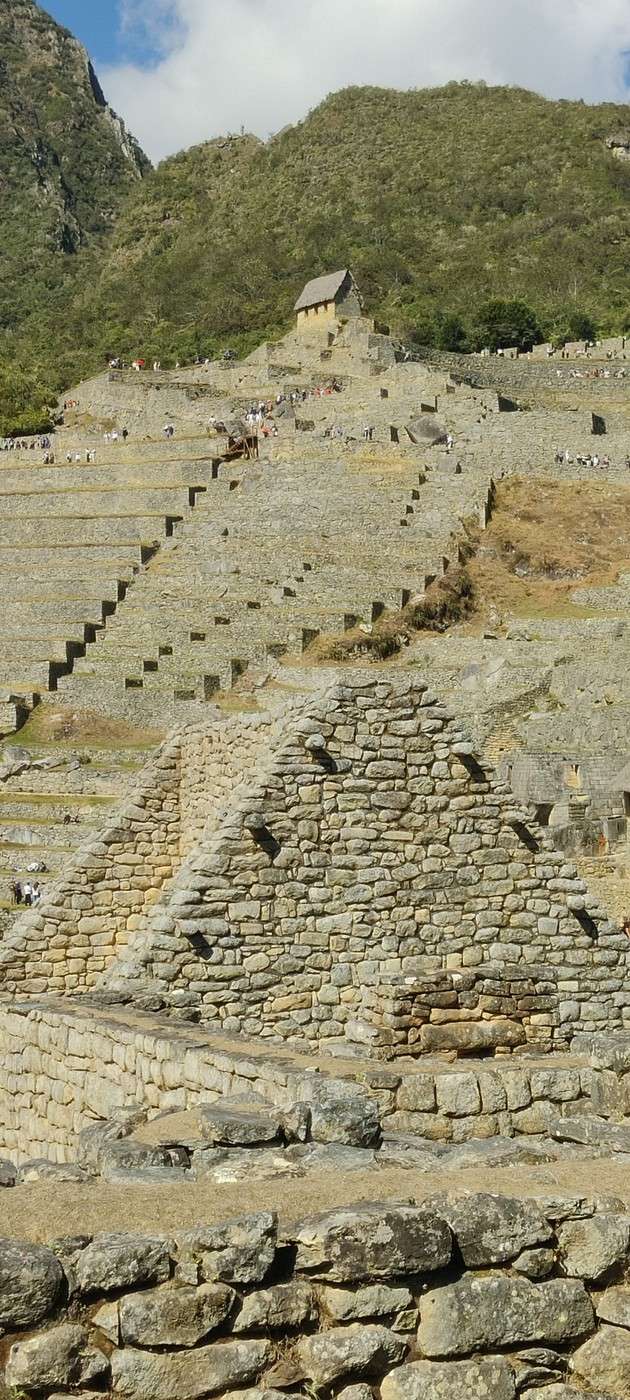
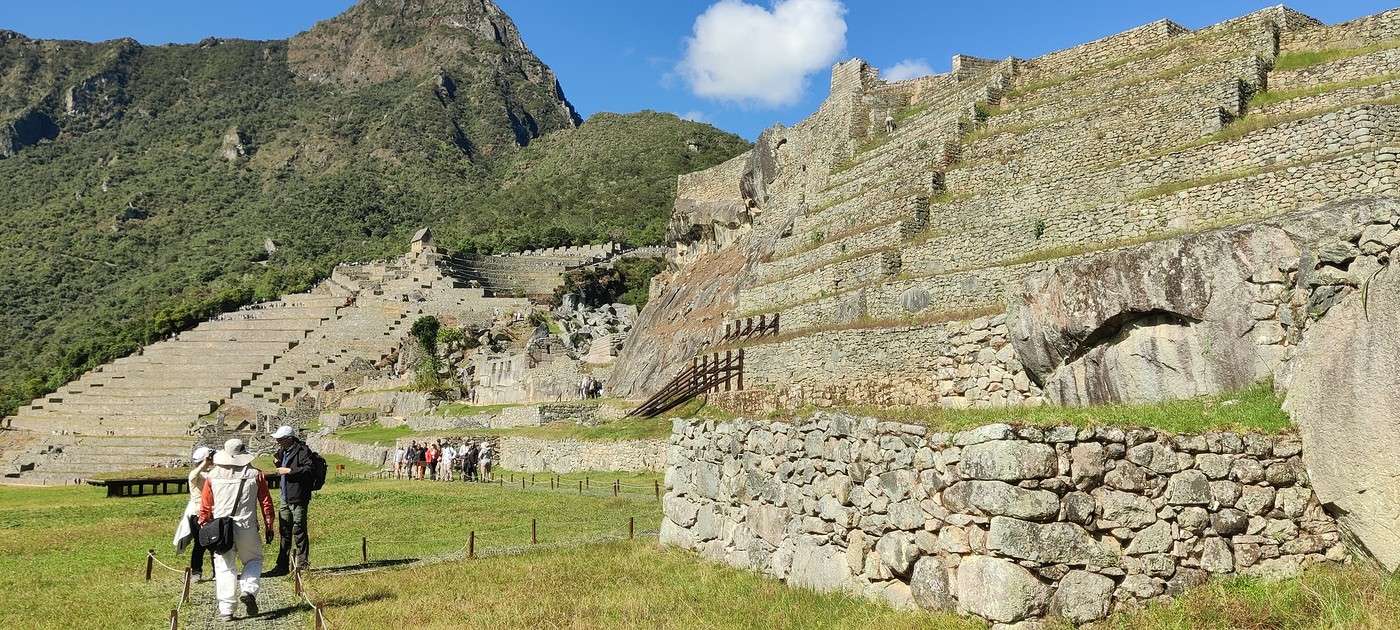
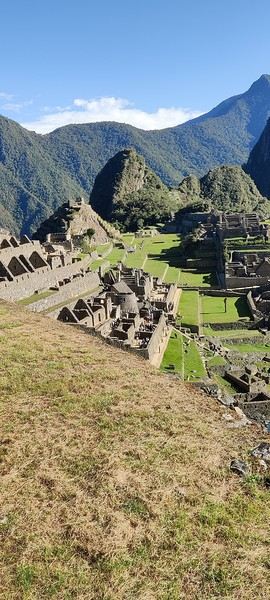
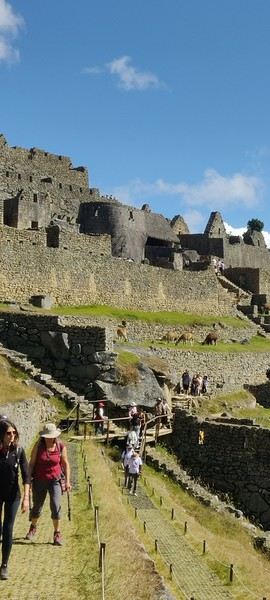
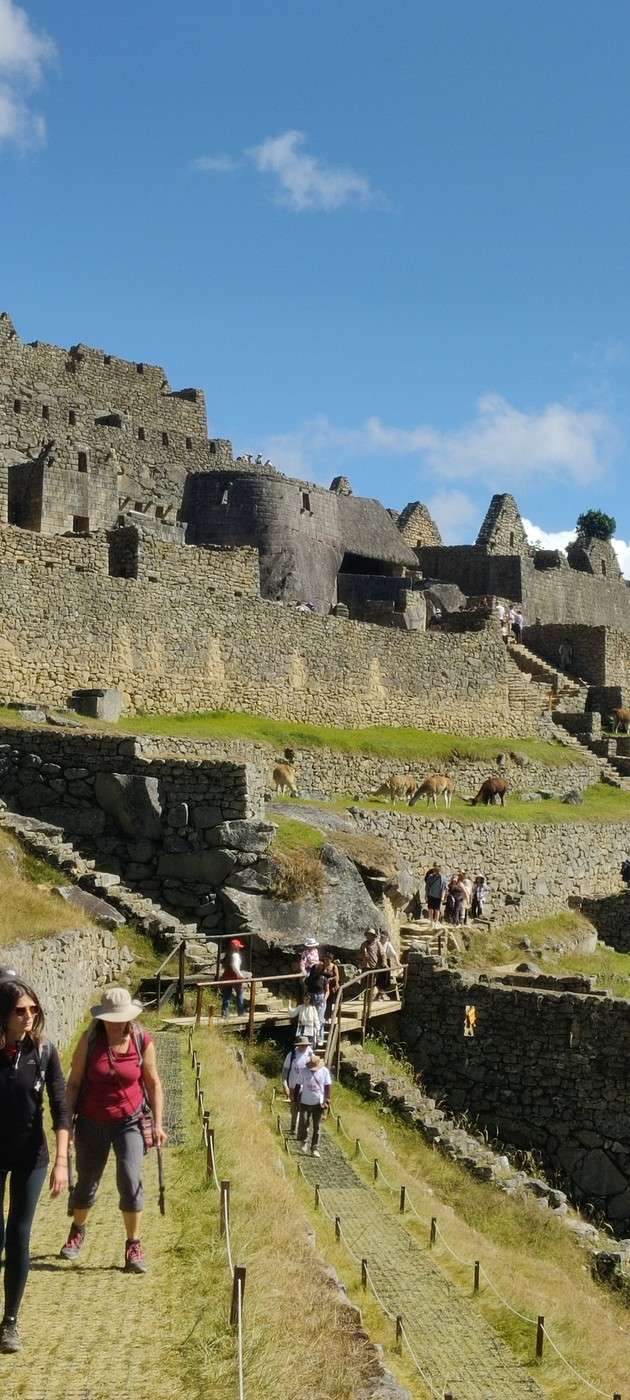
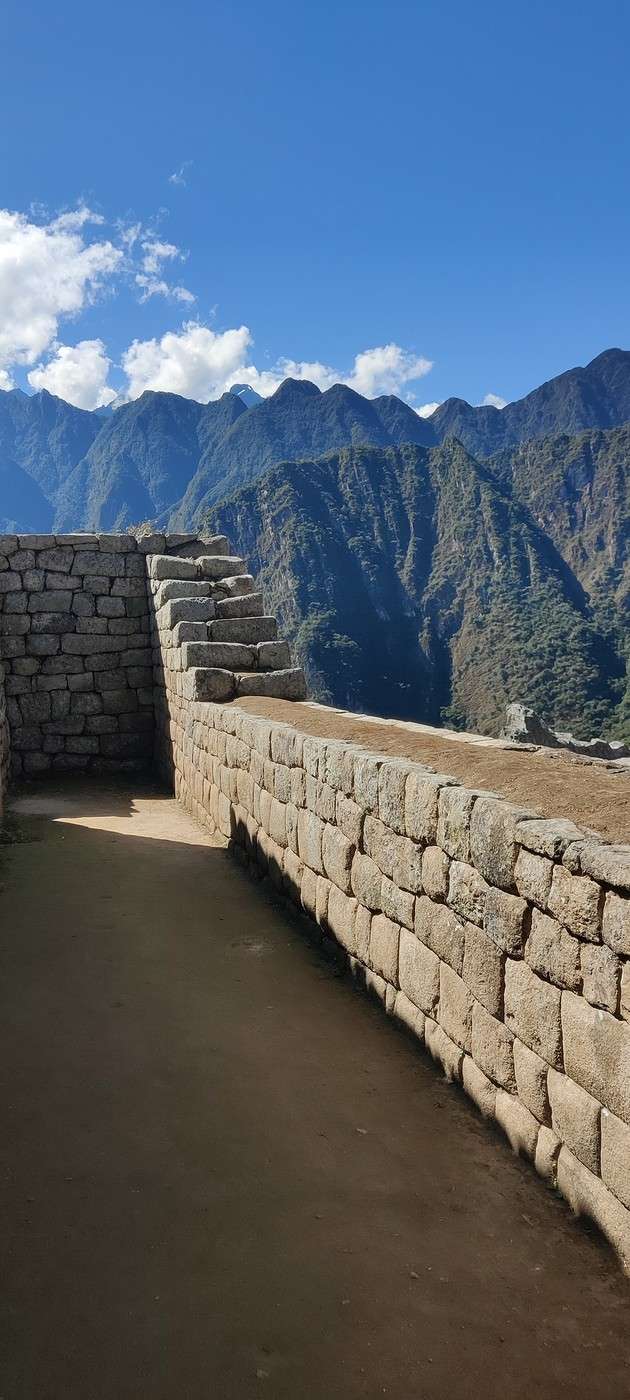
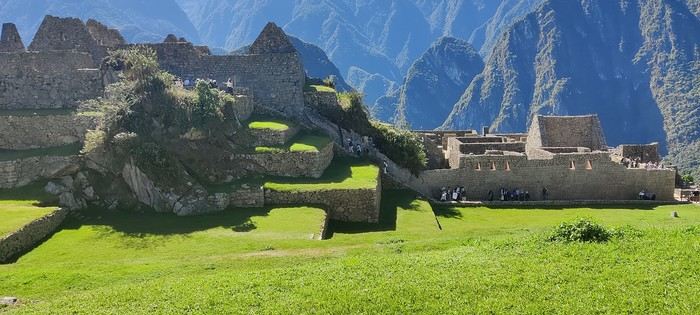
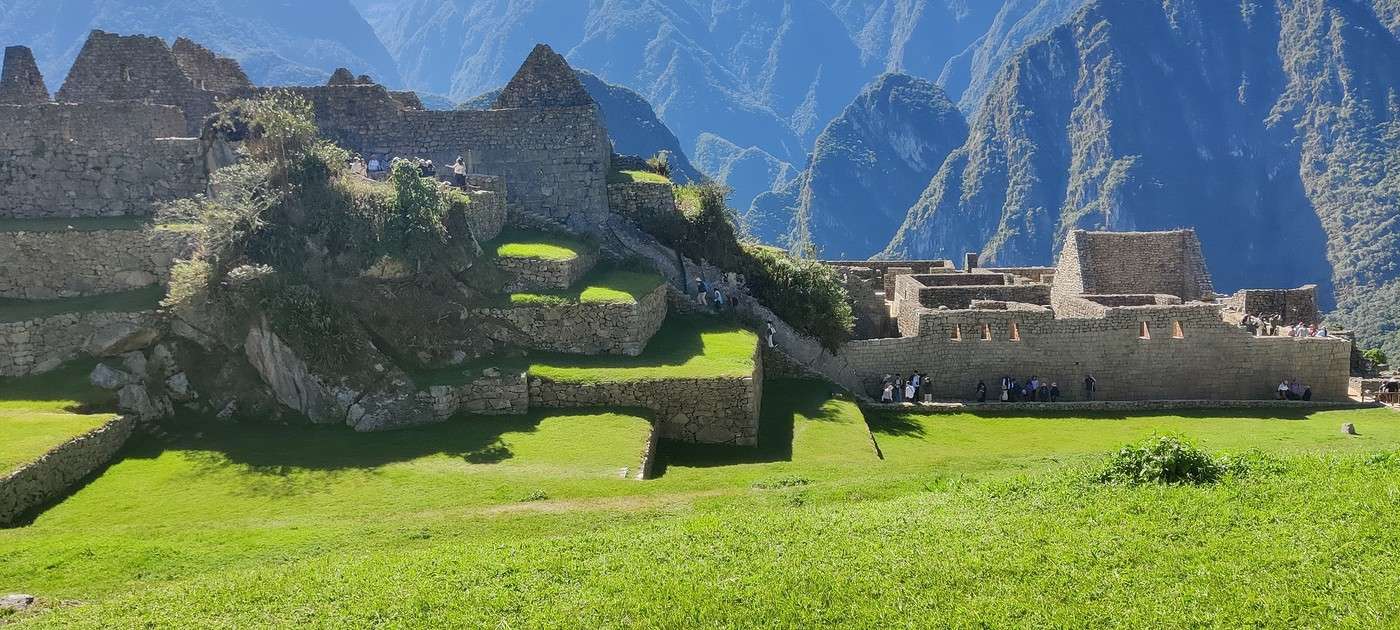
We’re meeting our guide at 8 a.m., which means we need to catch a bus around 7 a.m. The alarm goes off at 5:30 a.m. After a hearty breakfast, we head up the street toward the bus stop. The line is already long, and the buses are coming one after another at a frantic pace. Here too, everything seems improvised, but the ballet is carefully orchestrated. At each checkpoint, we have to show our ticket and passport. The road winds through the mountains amid lush vegetation. Between the bends, you can glimpse the trails that the bravest tourists take to reach Machu Picchu on foot. The crowd is packed into the square that serves as the terminus, and we struggle to find our guide. Following Laurent’s advice, we booked Circuit 2, now called “Classic Machupicchu,” which offers a fairly complete tour of the site. And there it is—the big moment has arrived. Welcome to Machu Picchu! Luckily, the weather is gorgeous, and the flow through the site remains relatively smooth despite the crowds. Let’s say it right away: the visit exceeded our expectations. It’s bigger and, above all, much more beautiful than we’d imagined. The site encapsulates and concentrates much of the Incas’ ingenuity. All the techniques we’d discovered during our trip seem to come together here, taken to an impressive level of perfection.

Our guide’s explanations It all started with the choice of location. This was likely the result of several considerations: • The sacred nature of the landscape, with the surrounding mountains, the *apus*, considered protective powers; • A rocky ridge offering a stable foundation for construction, with granite available right on site; • A location allowing for astronomical observations and markers; • The presence of a spring and a water supply system; • Finally, a site that was difficult to access, naturally protected by its terrain and particularly spectacular, making it suitable for a royal domain and a display of the Inca’s power.

Construction began in the 15th century, probably around 1450, under the reign of Pachacuti, though the exact function of the site and the precise circumstances of its construction are still debated. UNESCO describes it as a vast religious, ceremonial, astronomical, and agricultural complex built on a steep ridge.

The Incas focused especially on what isn’t visible. A significant part of the work was dedicated to preparing the terrain, building retaining walls, terraces, and drainage systems. Studies estimate that about 50 to 60% of the construction effort was devoted to these foundational, stabilization, and underground drainage works.

The reason: the terraces play a crucial role. They’re not just for agriculture—they also stabilize the slopes and drain water. Beneath the cultivated surfaces, layers of materials are arranged to facilitate drainage. A true engineering masterpiece, largely invisible to visitors.

This helps explain how, after nearly six centuries, the site has maintained remarkable stability in an environment prone to heavy rains, landslides, and earthquakes. The real genius of the Inca builders may lie less in the walls themselves than in everything designed beneath our feet to keep the whole structure standing.

All that was left, so to speak, was to build the temples, dwellings, agricultural terraces, and the water supply system. The latter includes a network of canals and fountains fed by a spring. Here again, the Incas demonstrated remarkable hydraulic expertise.


After these factual considerations, our guide shared a more debatable theory: several major archaeological sites around the world are supposedly arranged according to specific distances or alignments.

In my opinion, we can observe similarities between certain civilizations: the pyramids of Egypt find echoes, in very different forms, in the pyramids of Guatemala, Mexico, or Peru, particularly at Caral and Túcume. It’s also notable that many great monuments were built with consideration for the movements of the Sun or other celestial phenomena.

But jumping to the idea of a hidden order connecting great civilizations, suggesting they coordinated their constructions on a global scale, is a big leap that nothing currently supports. Architectural similarities can also be explained by common constraints: the pursuit of spectacular monumentality. Many great monuments were indeed built in alignment with the Sun’s path and certain astronomical phenomena.

Peru: A childhood dream finally realized

Larri · 2026-08-23

Day 14 – Machu Picchu (2)

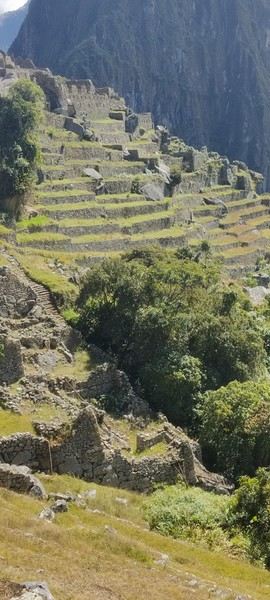
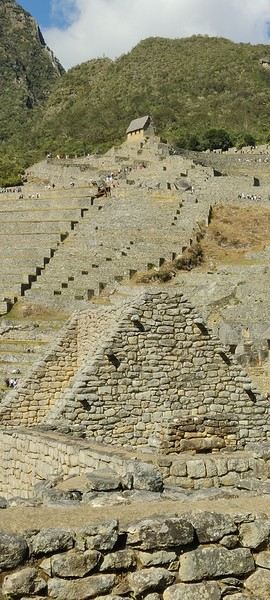
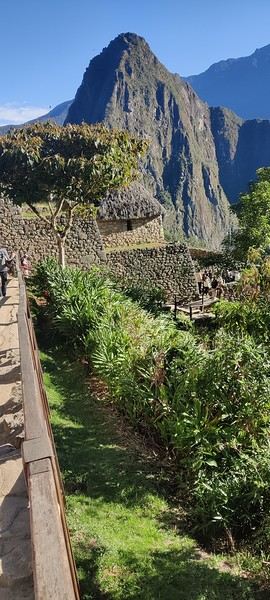
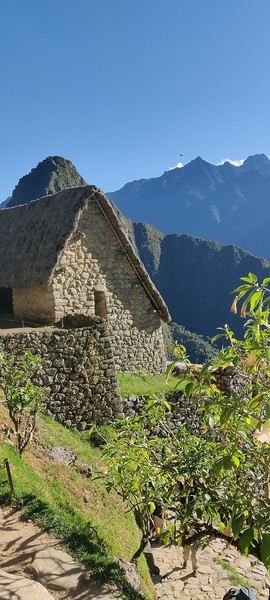
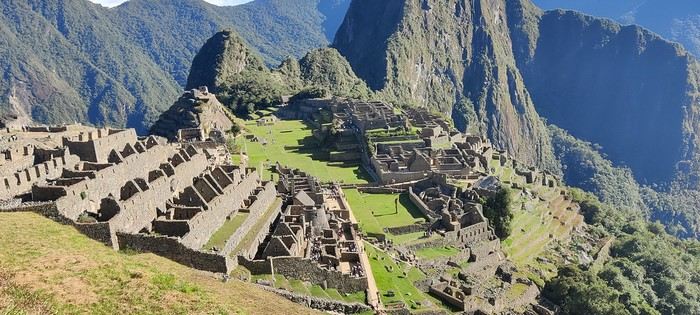
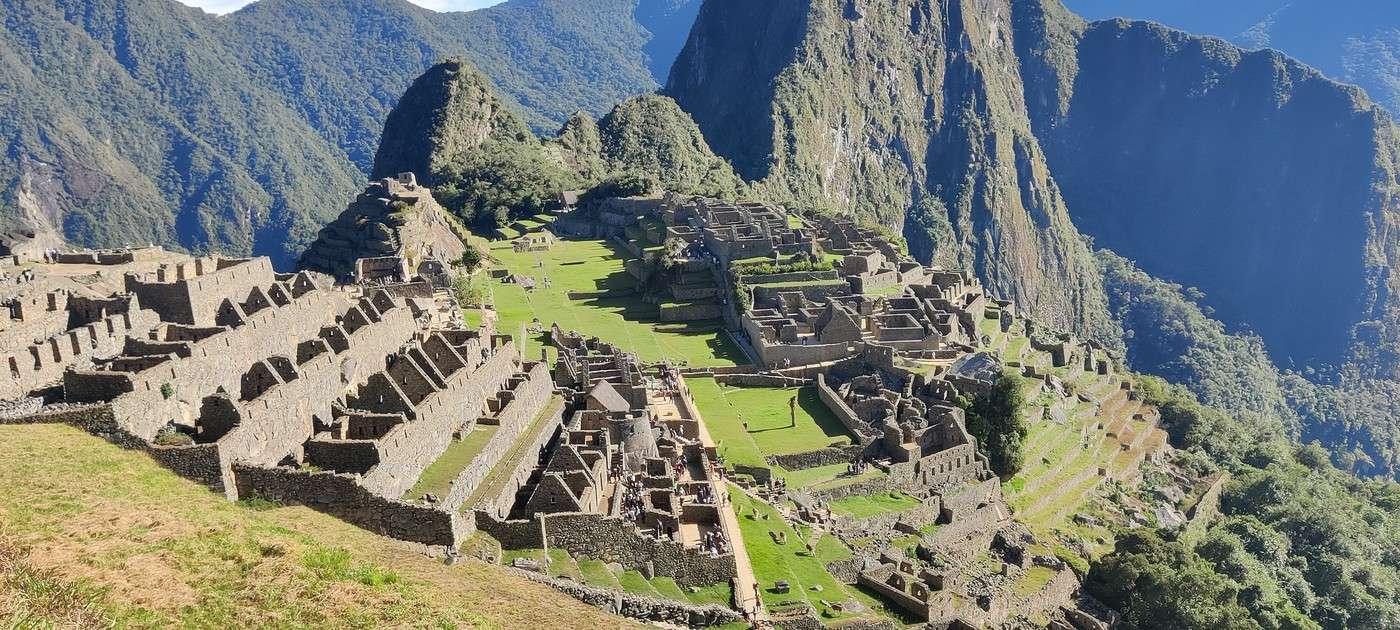
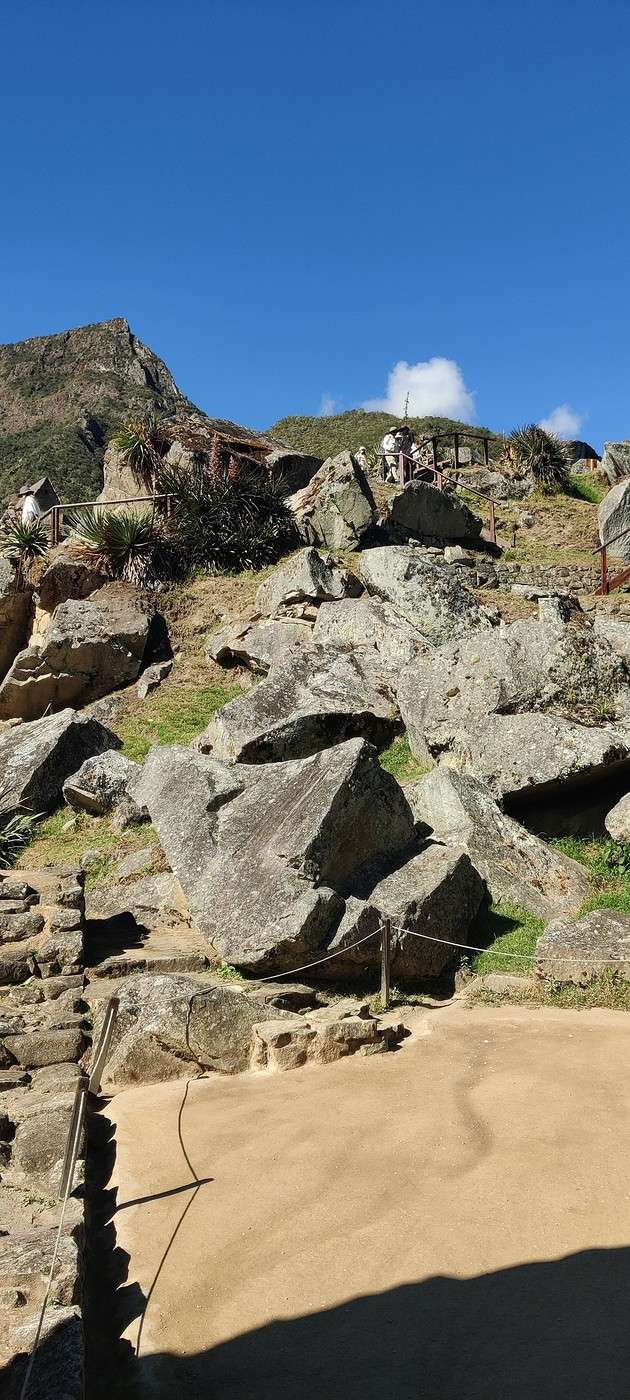
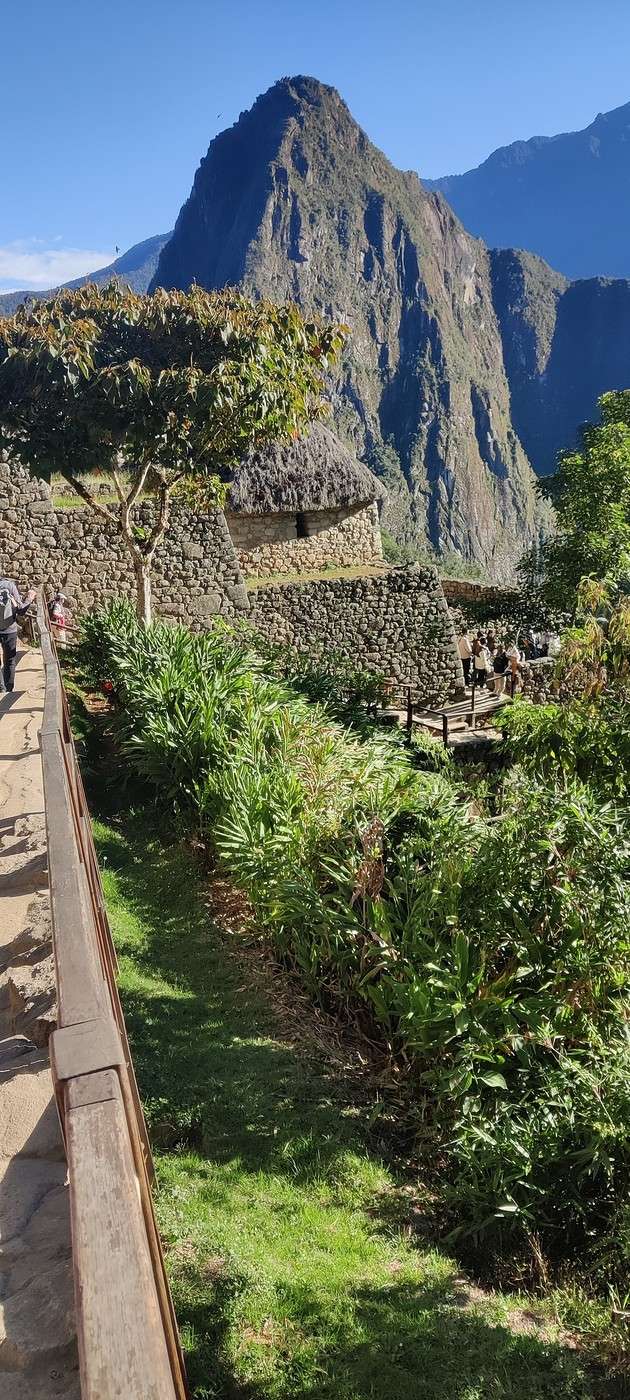
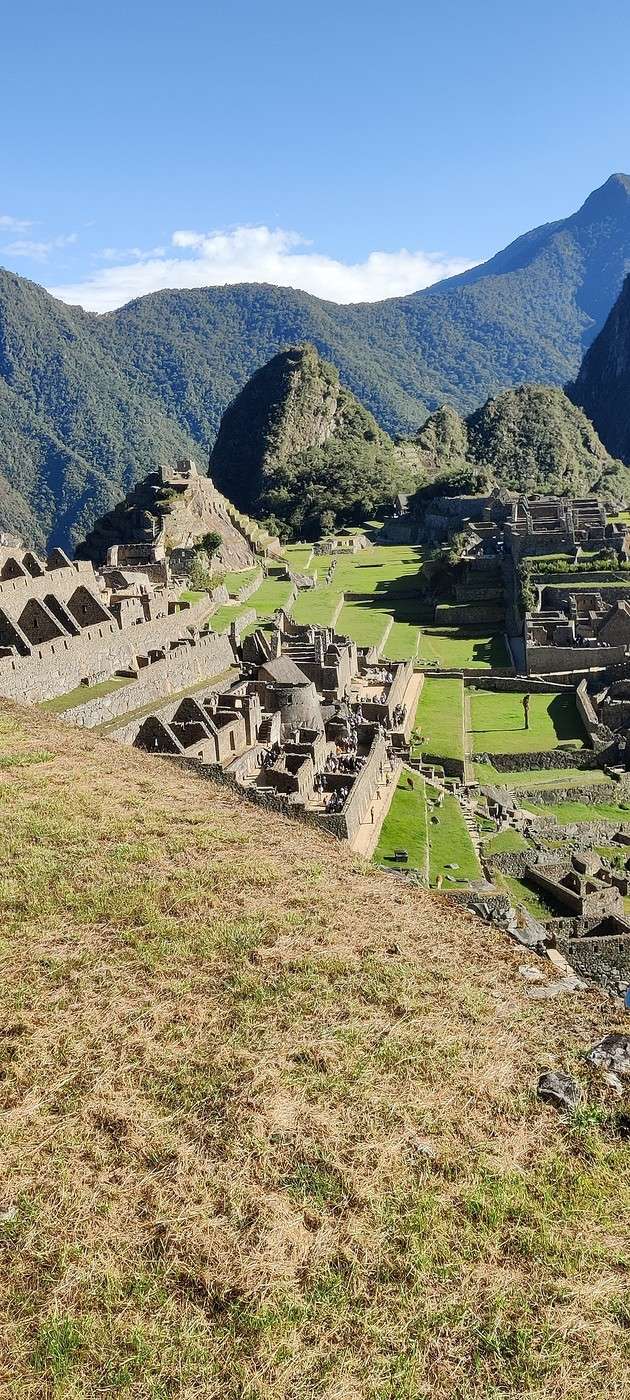
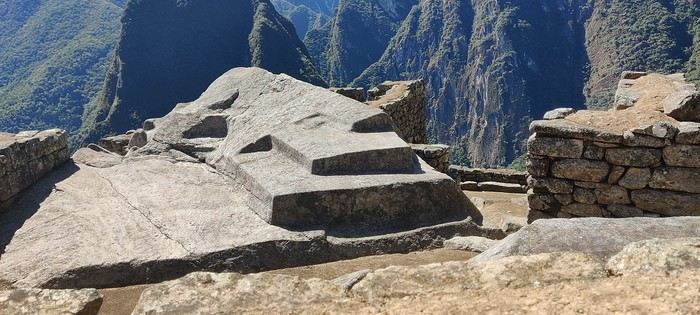
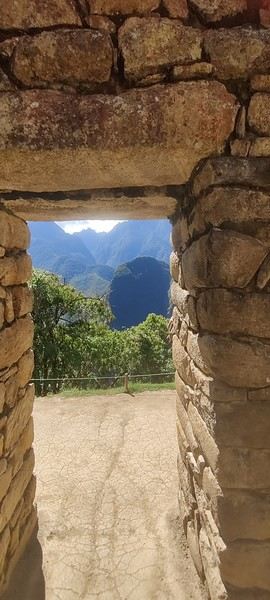
We start by climbing up to the guardian’s house, where we get an exceptional viewpoint over the entire site. This is where we take the famous panoramic and iconic photo of Machu Picchu.


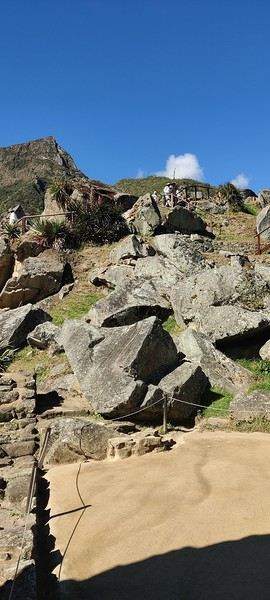
We then walk along the quarries where the Incas extracted some of the stones used for the constructions, before descending toward the heart of the city to explore the religious and residential sectors.


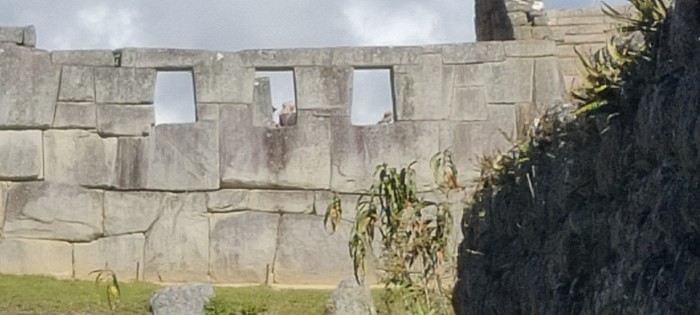
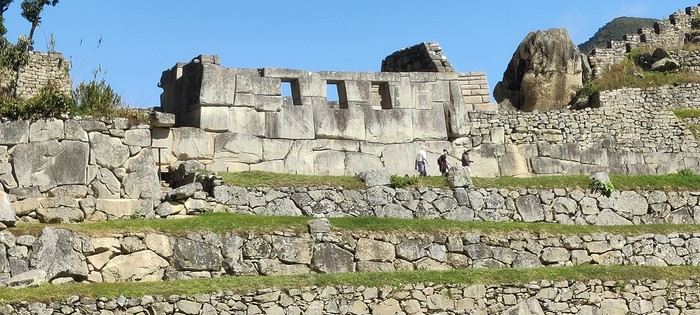
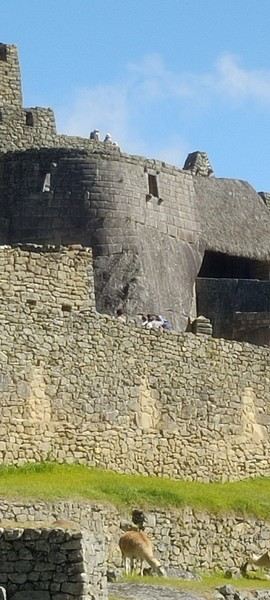
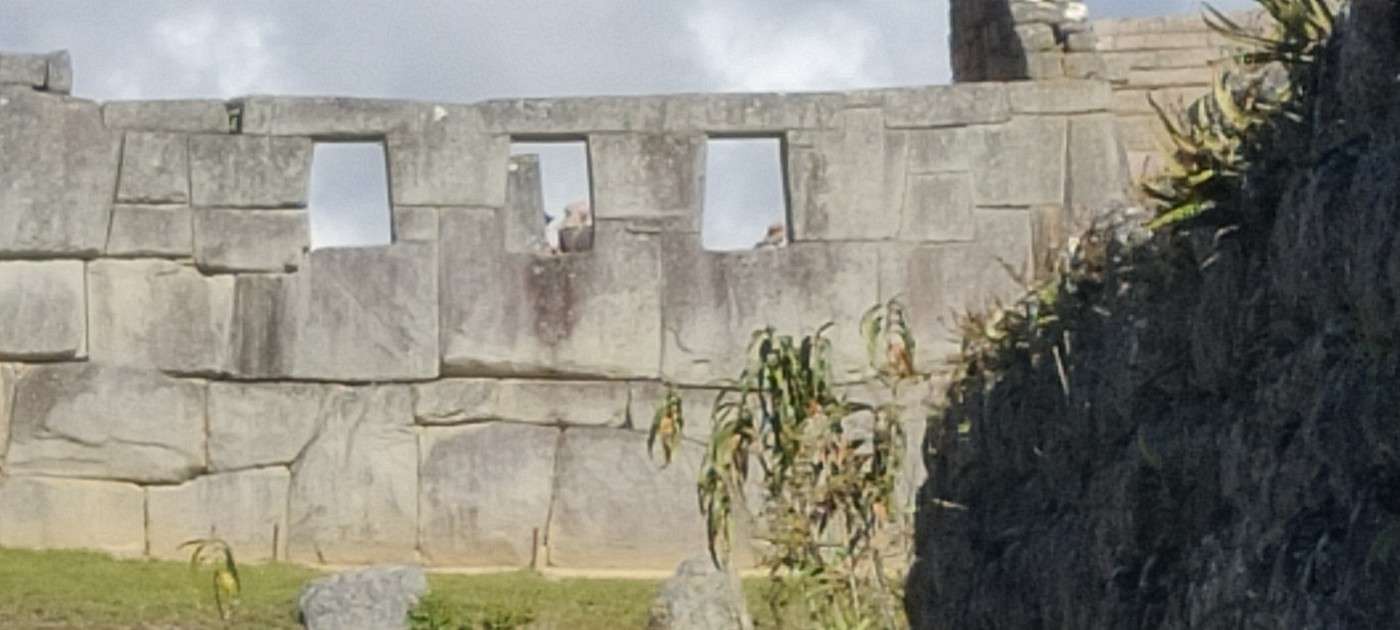
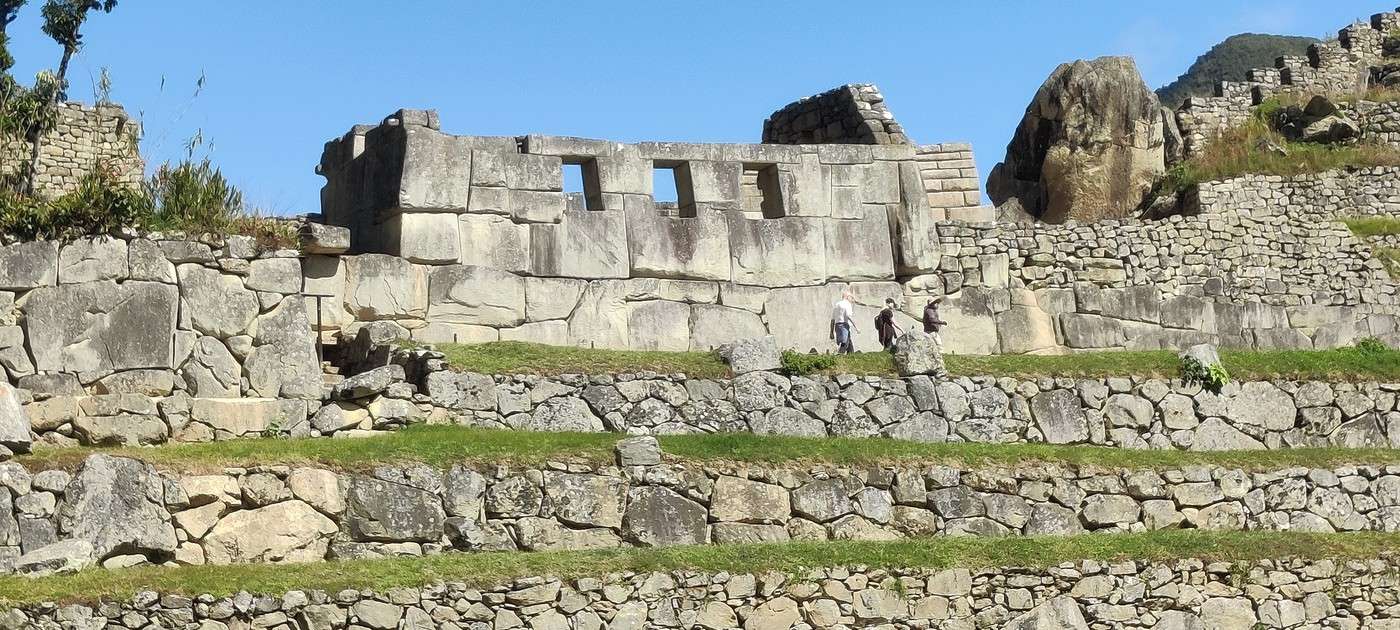
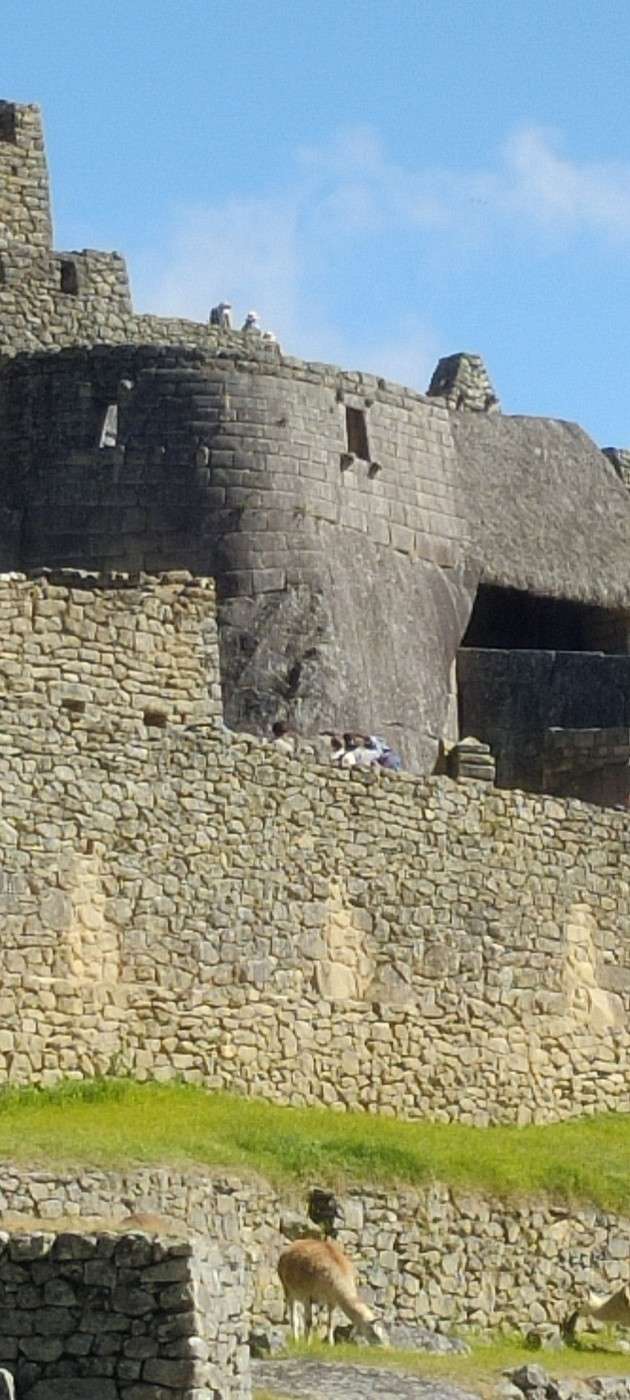
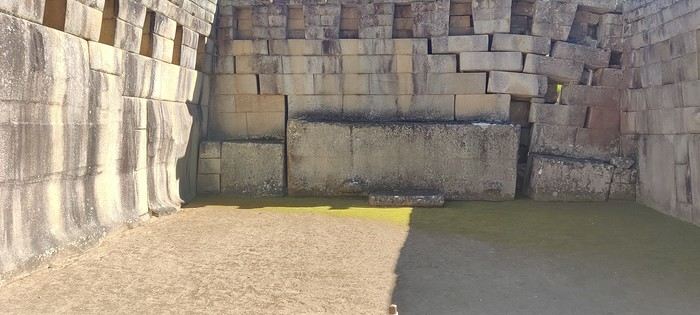
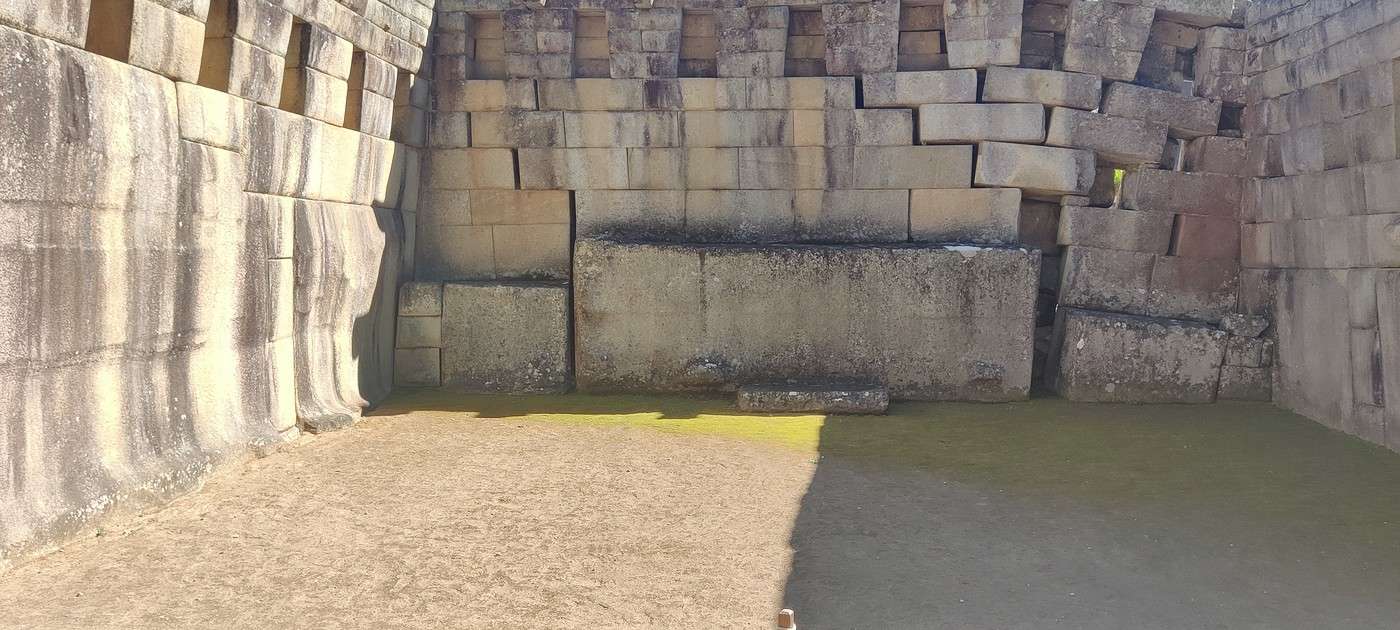
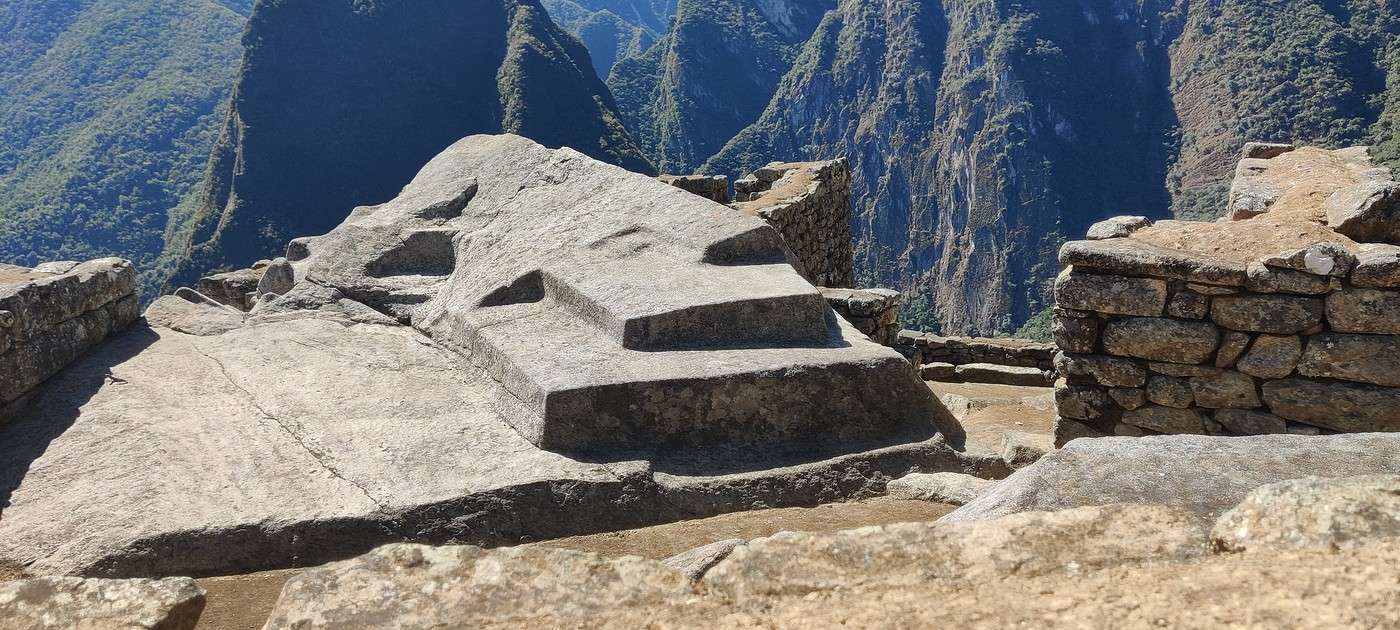
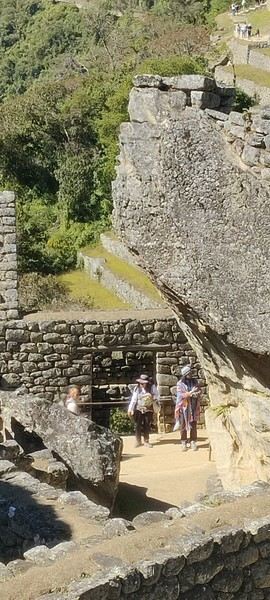
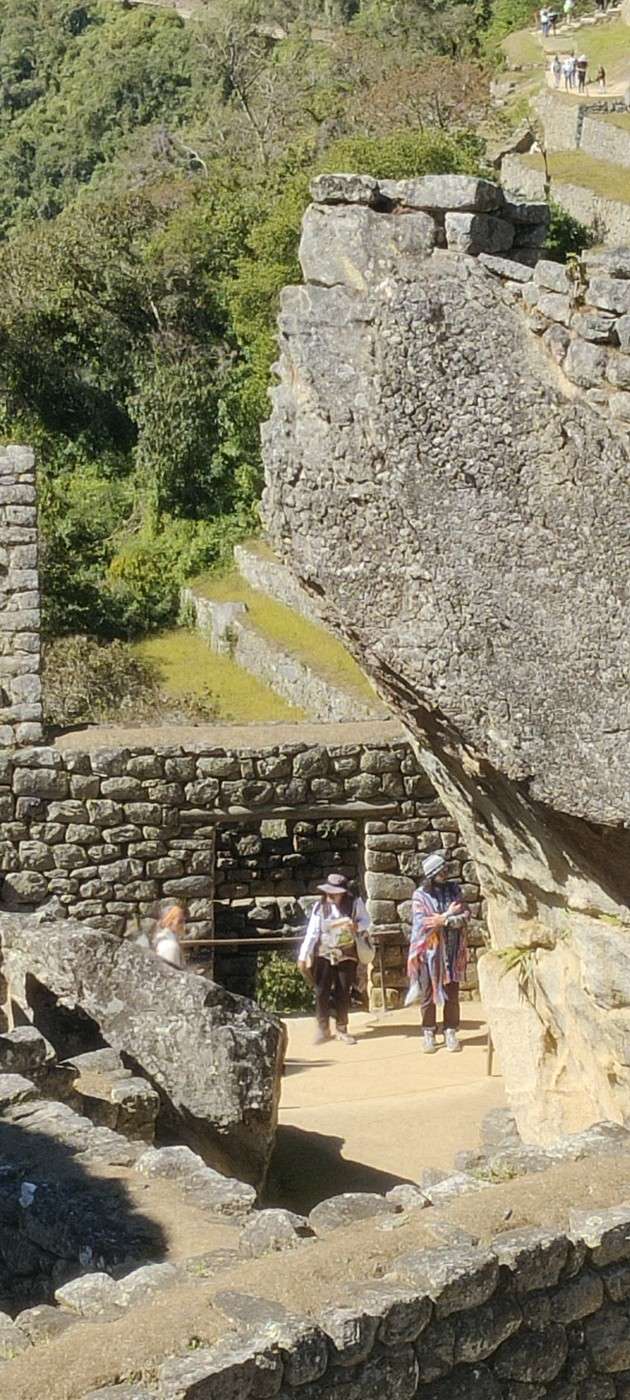
We cross the sacred square and discover the Temple of the Three Windows, then the Temple of the Sun, recognizable by its semi-circular shape. It’s built above a huge natural rock and features particularly refined architecture. Its orientation and design notably reflect the importance given to astronomical observations and the ritual calendar.


Peru: A childhood dream finally realized

Larri · 2026-08-24

Machu Picchu (3)

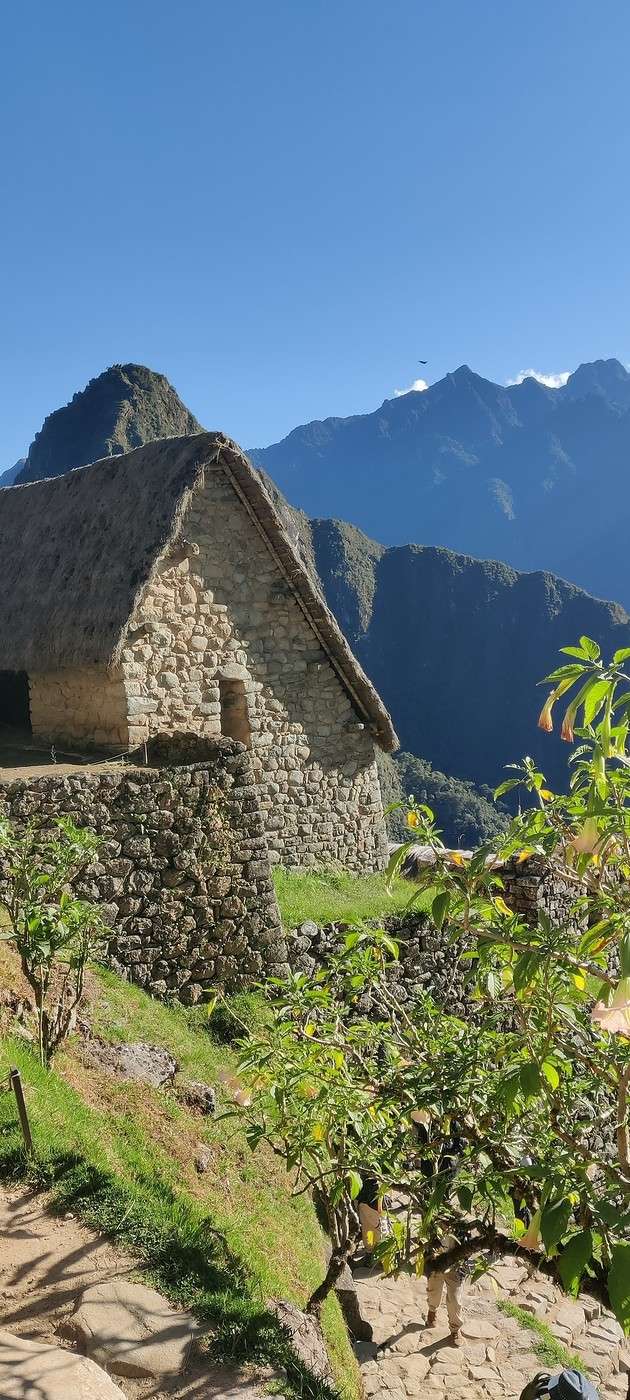
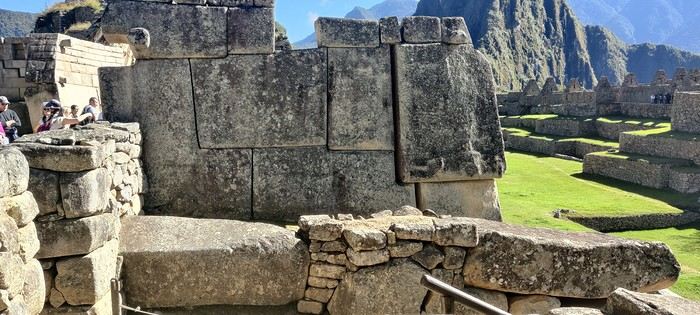
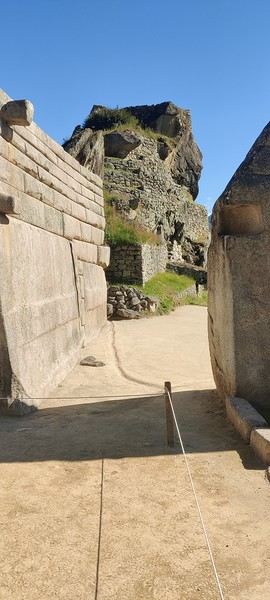
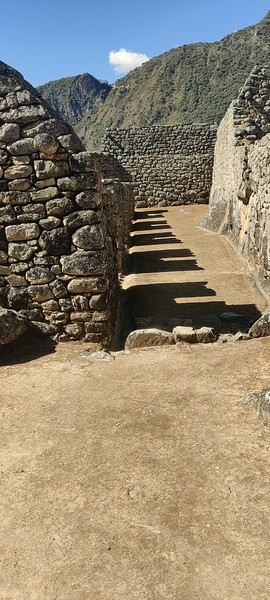
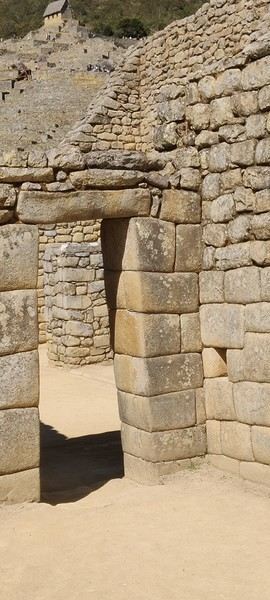
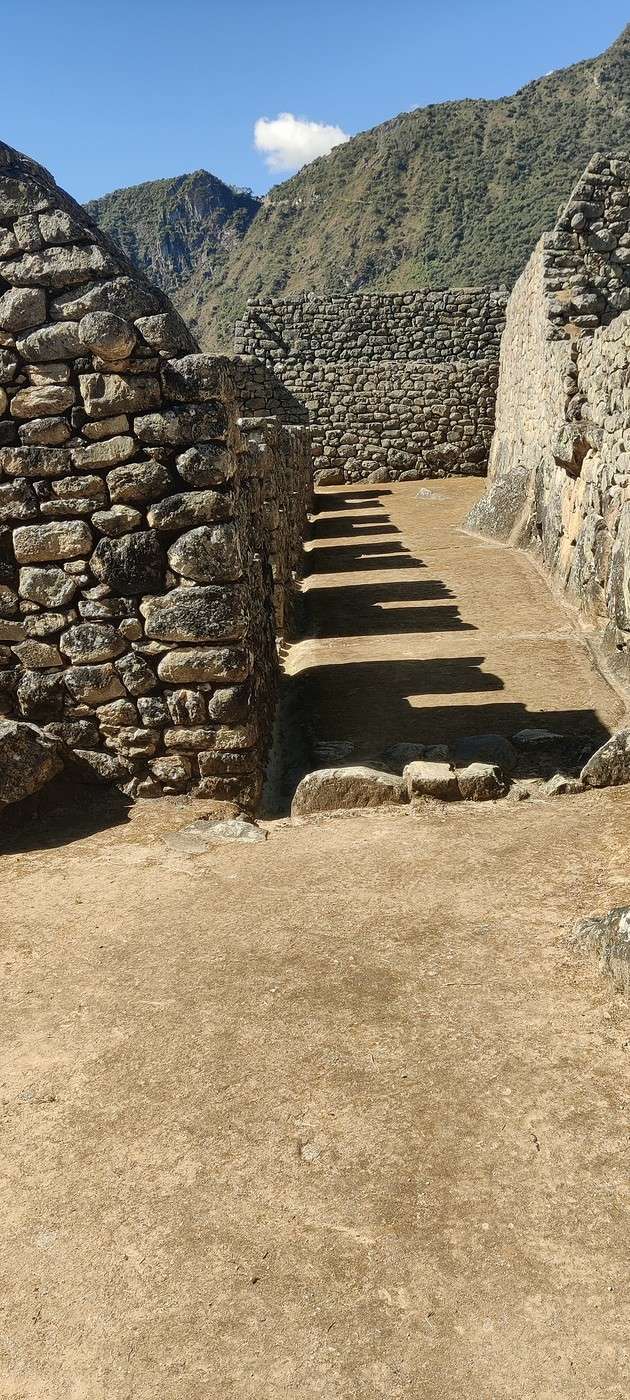
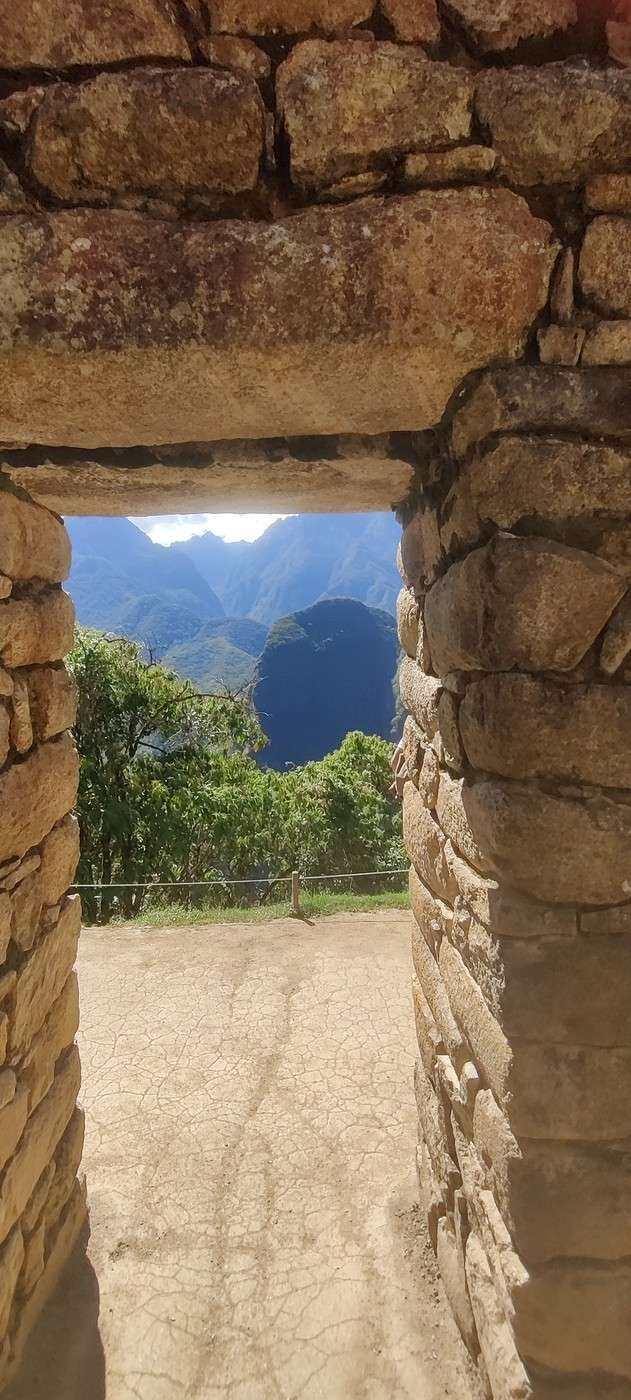
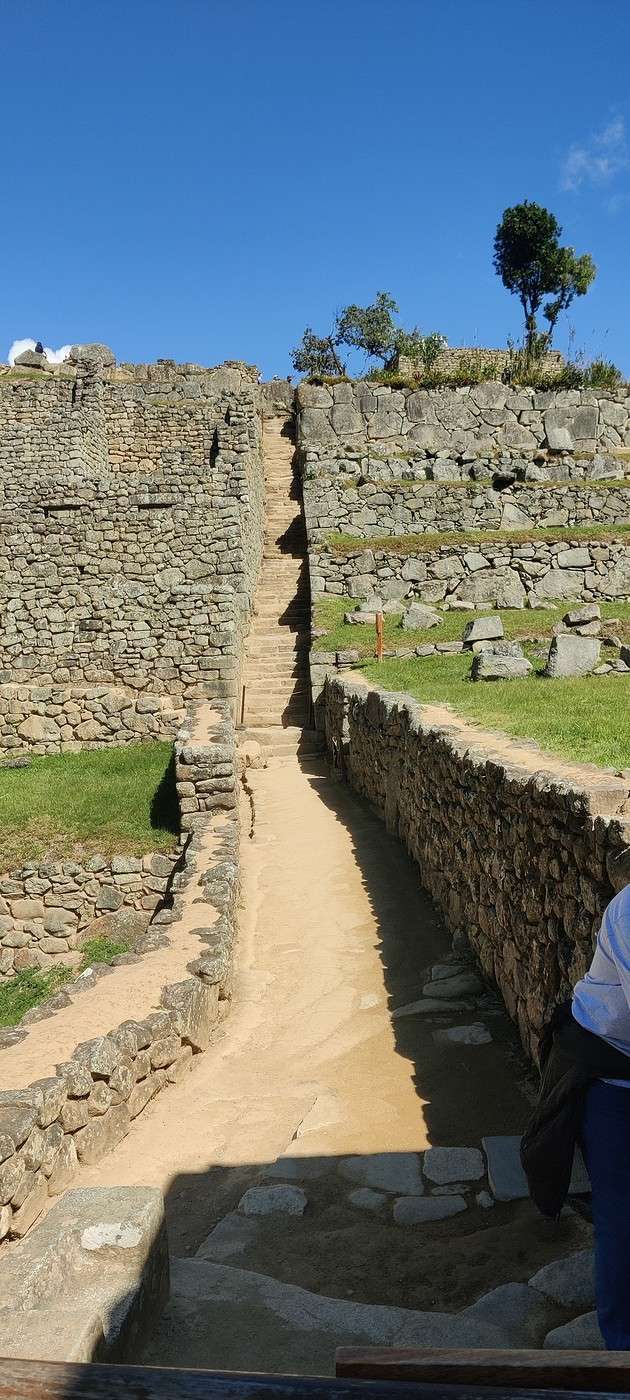
Everywhere, you notice how the buildings adapt to the terrain. The walls are slightly inclined inward, a feature that contributes to their stability. It’s easy to see why so many structures have withstood centuries and seismic movements.


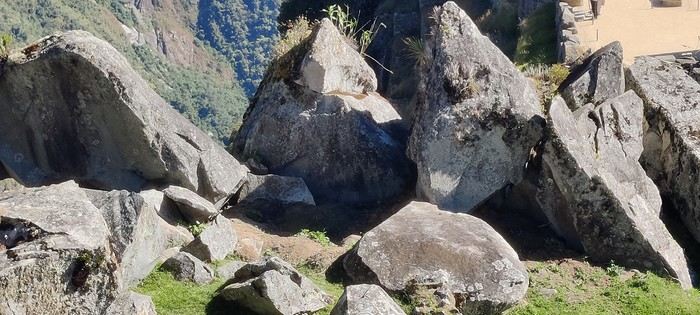
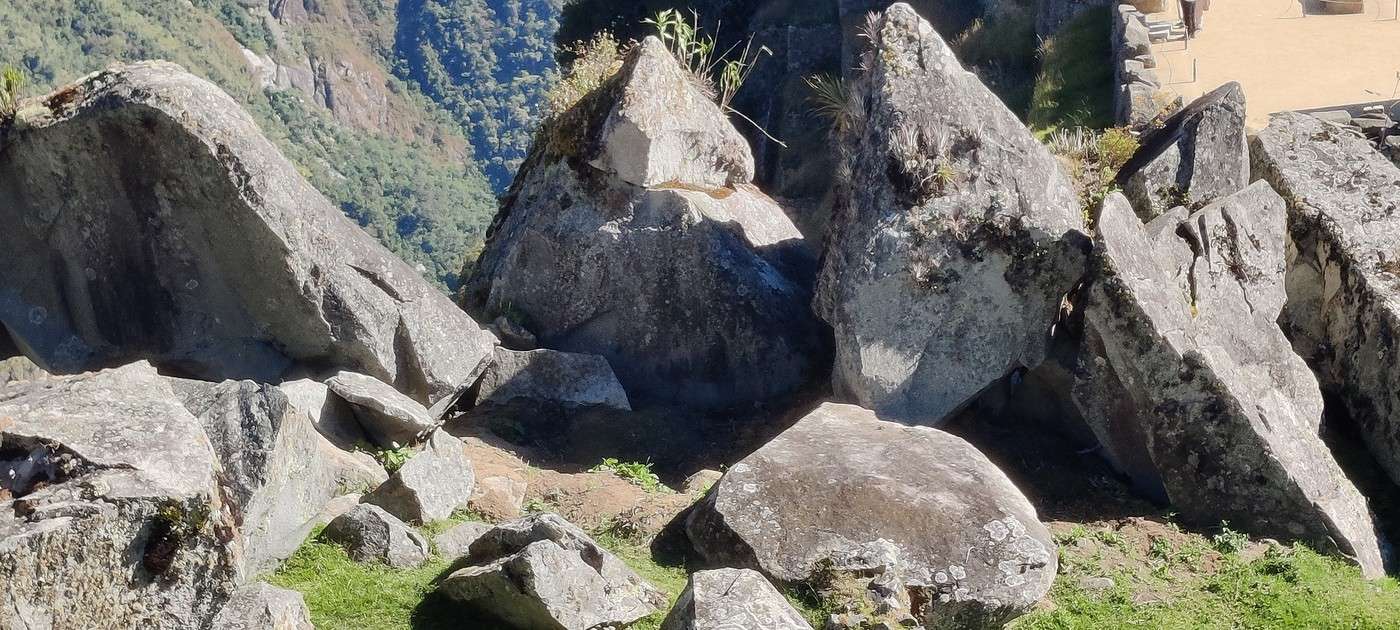
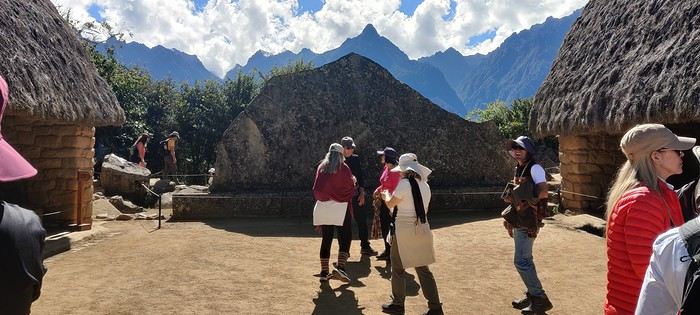
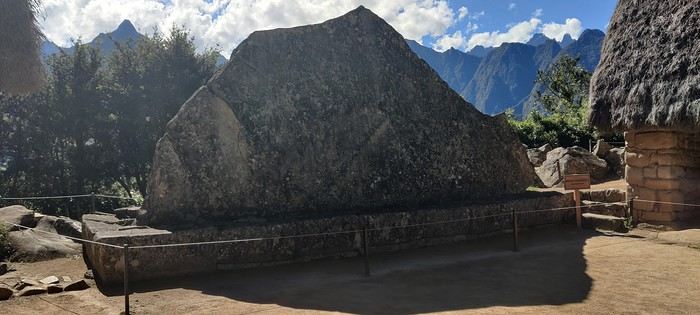
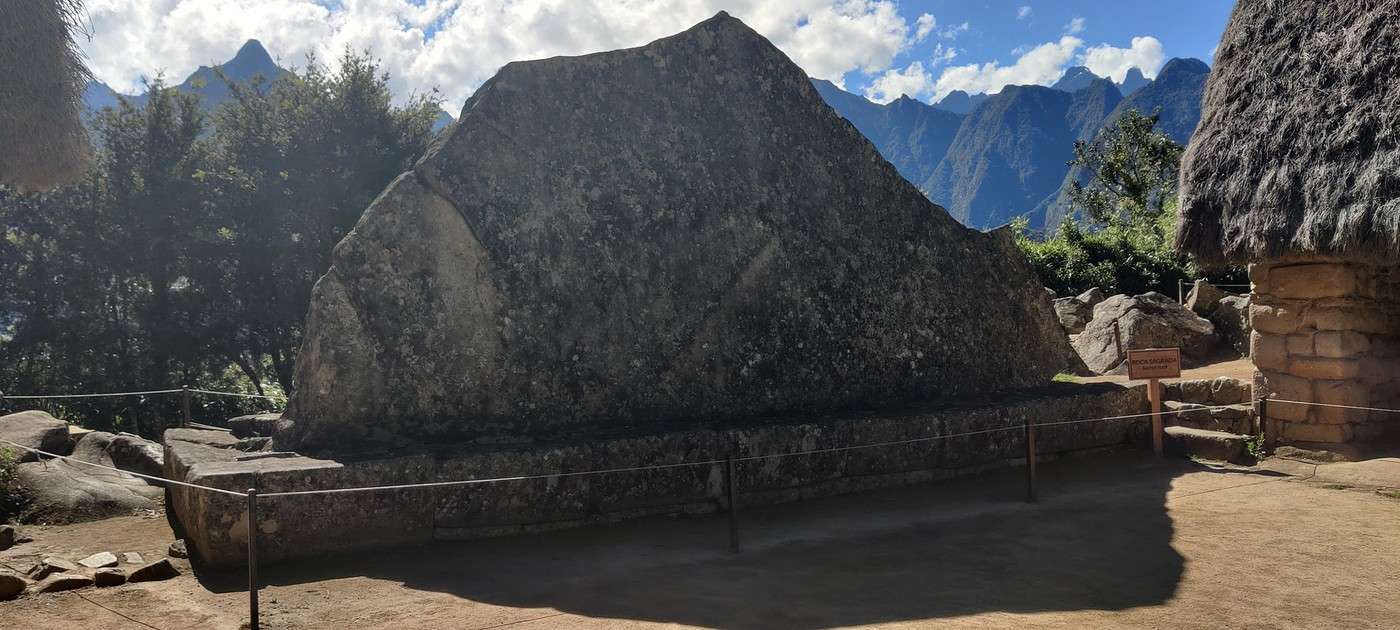
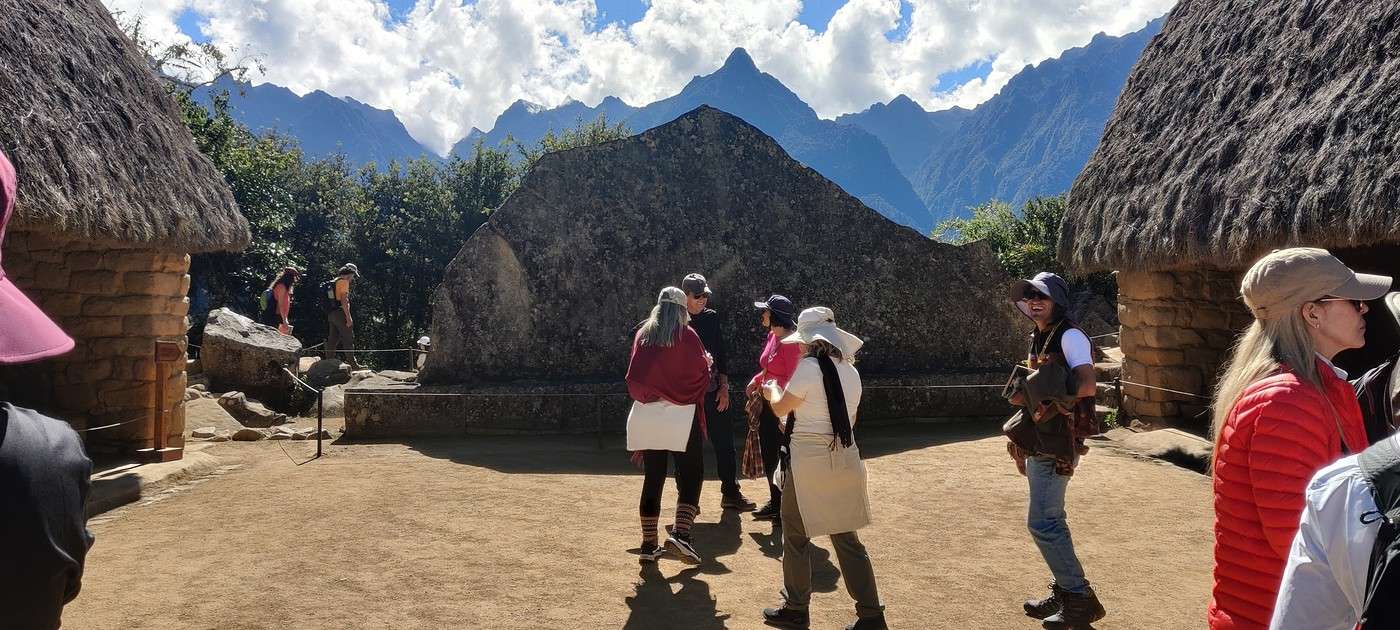
We pass by the sacred rock, a large block whose shape mirrors the mountain rising behind it. This relationship between the carved rocks and the surrounding landscape is particularly fascinating: for the Incas, some natural formations were themselves considered sacred. So the rock could be more than just a building material.


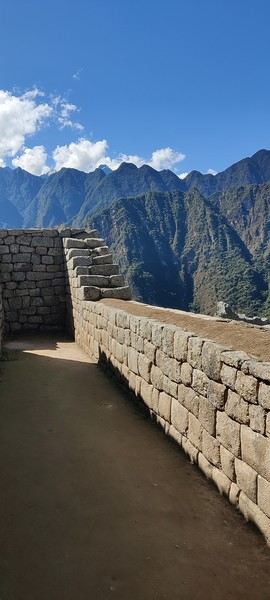
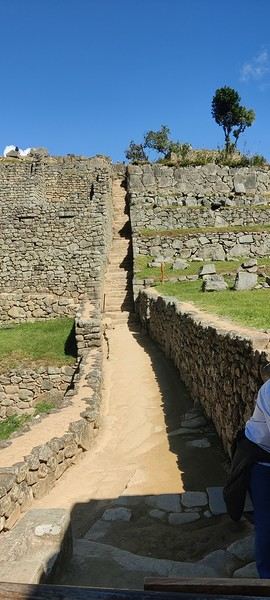
We then cross the agricultural terraces where a few llamas are grazing before heading toward the residential area and the exit. We wander through the ruins, explore this legendary place, and fully soak in the incredible opportunity of being here.

Peru: A childhood dream finally realized

Larri · 2026-08-24

Machu Picchu (4)

Later, a question crossed my mind: why, unlike other great civilizations, did the Incas not leave behind colossal statues or develop monumental sculpture comparable to that of the Egyptians or the Mayas? It certainly wasn’t due to a lack of technical skill. The Incas mastered stone carving and assembly perfectly. Their concept of beauty seems to have been expressed primarily through architecture: the precision of the assemblies, the geometry of the walls, and the integration of structures into the landscape. Religion likely provides another explanation. The sacred world of the Incas was deeply tied to the forces of nature: the Sun, the Earth, mountains, springs, and rocks. The *huacas*, sacred places or objects, could take many forms. Some were mountains, springs, or natural rocks. It wasn’t always necessary to represent a deity in human form—the landscape itself could embody the sacred. Maybe some of you can add other insights?
Visit summary It far exceeded my expectations. No matter how much you’ve read or seen documentaries about this site, the reality is so much more beautiful. You could write endlessly about the beauty of Machu Picchu. It’s a masterpiece of architecture, landscape integration, and engineering. Its UNESCO World Heritage status and reputation as one of the world’s wonders are well deserved. What more is there to say? Nothing, except that we were truly amazed by such a marvel.


Peru: A childhood dream finally come true

Larri · 2026-08-24

Day 14 – Back to Ollantaytambo

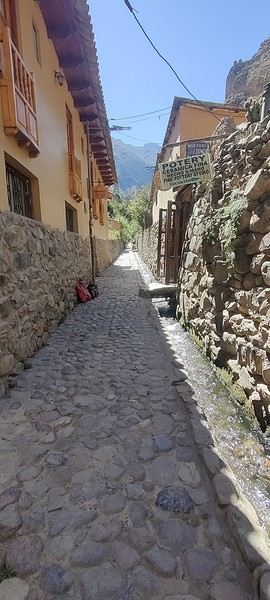
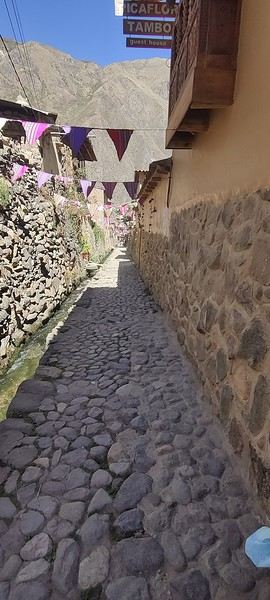
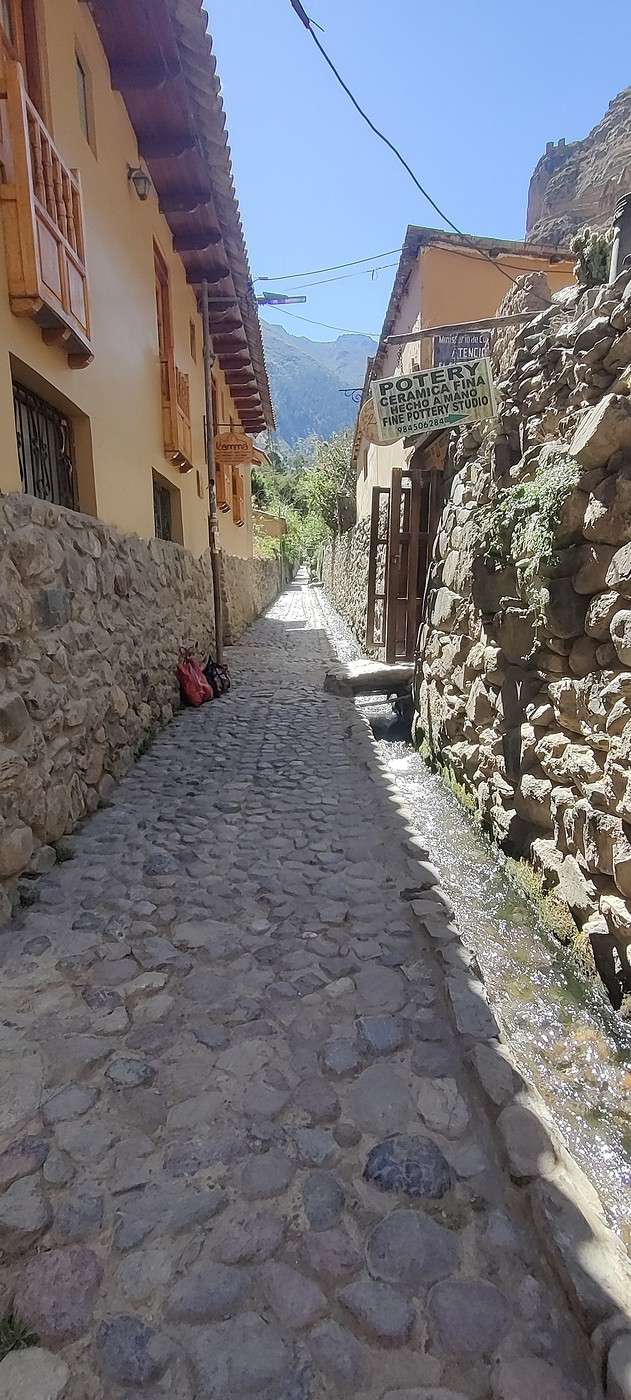
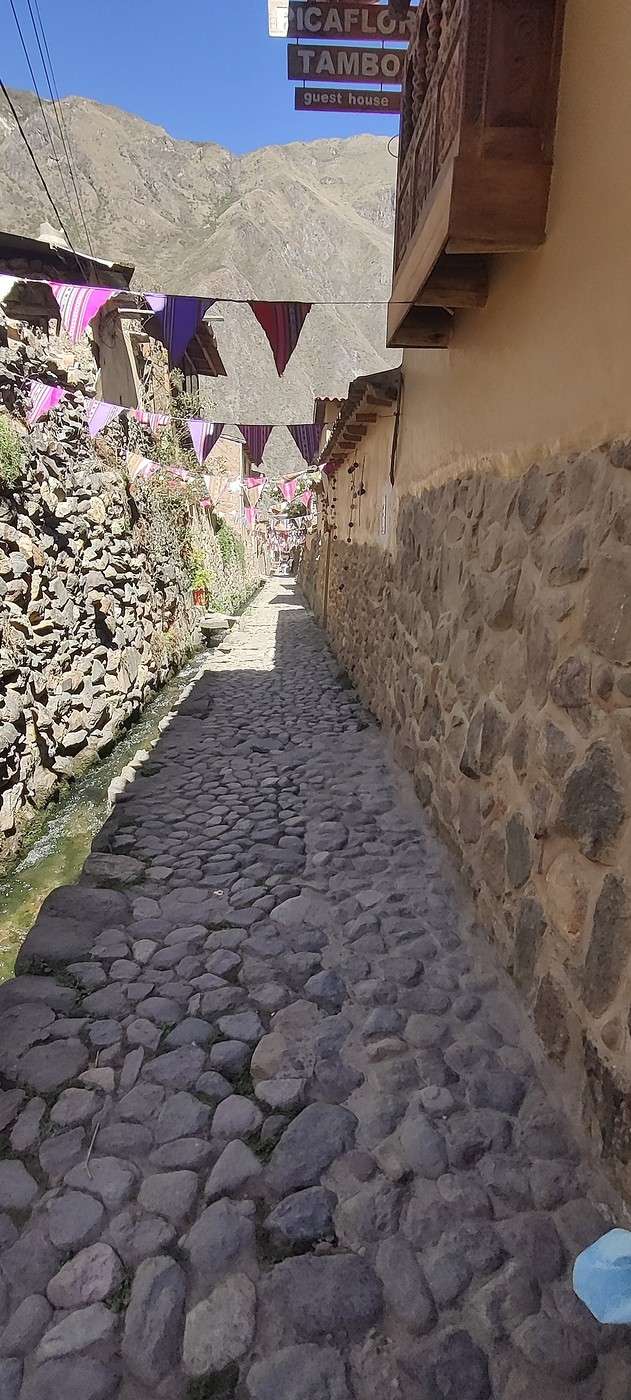
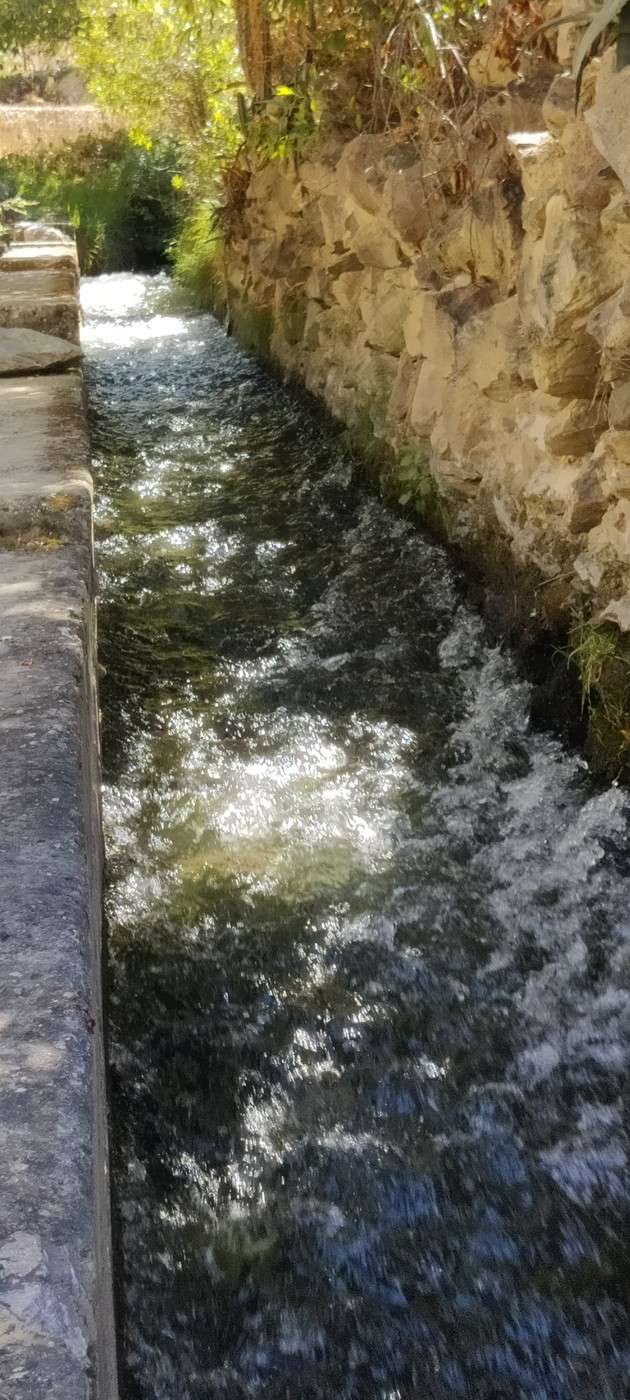
We really have to resign ourselves to leaving this magical place. The shuttle service makes it easy to reach Aguas Calientes quickly. The town is quieter in the early afternoon. We wander the streets looking for a restaurant, then take the train to Ollantaytambo. The village turns out to be charming with its central square and cobbled streets. It’s really worth taking the time to explore—there’s a special atmosphere in this remarkably well-preserved Inca village. We "get lost" in the little alleys and admire the canal system. Luckily, the Incas didn’t design these streets wide enough for cars to pass through!


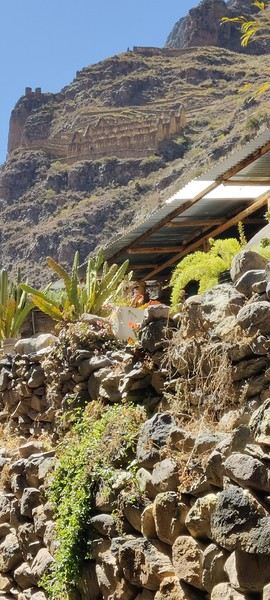
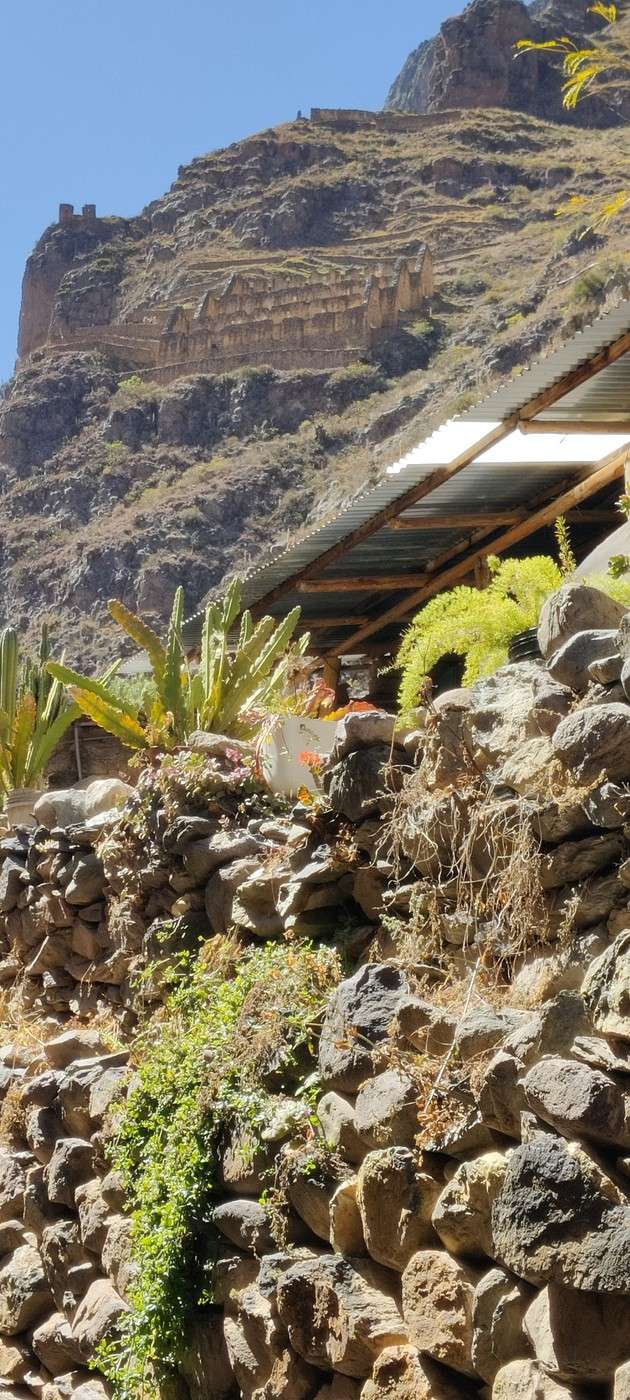
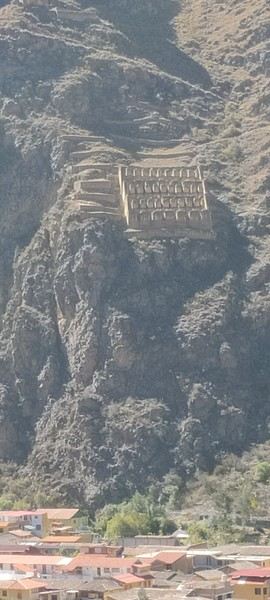
The water system designed in Inca times is still partly functional. It’s another example of the ingenuity and sustainability of Inca hydraulic engineering. As we walk through the streets, we’re lulled by the murmur of water. We head back to our lovely guesthouse, Picaflor Tambo, tucked away at the end of one of these alleys, not far from the central square. From our room, we have a great view of the Inca granaries clinging to the mountainside. The path to these ruins is just nearby.


Since the day’s been long and tiring, we take a little rest before setting out to find a good restaurant. We end up at Inka Nato Restaurante—great choice! What a day! It’ll stay in our memories for a long time.
Peru: A childhood dream finally realized

Larri · 2026-08-26

Day 15: Ollantaytambo and return to Cusco

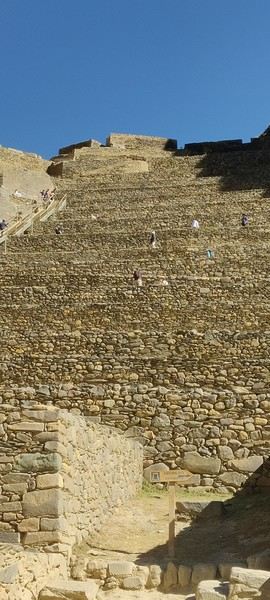
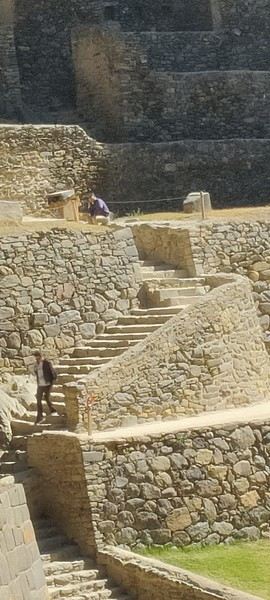
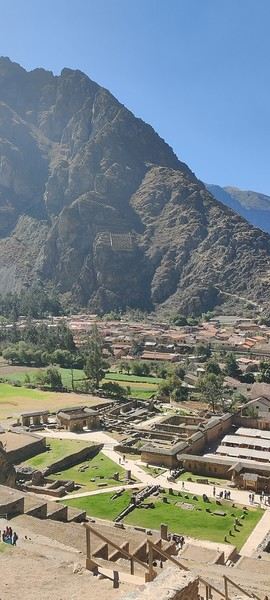
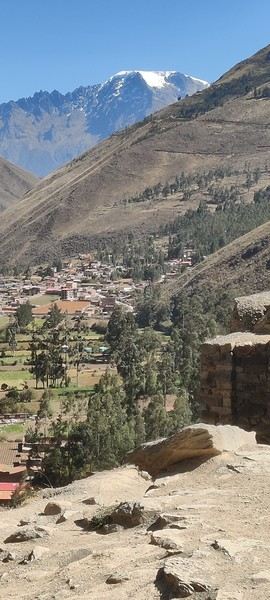
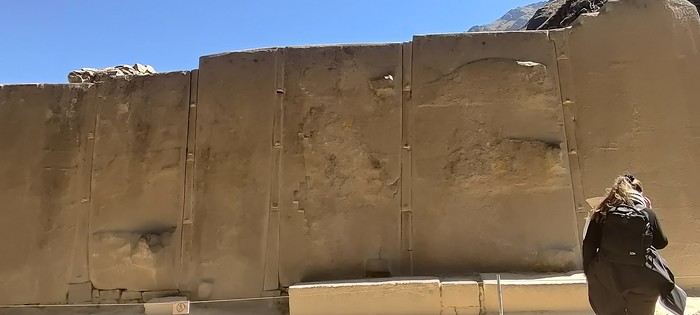
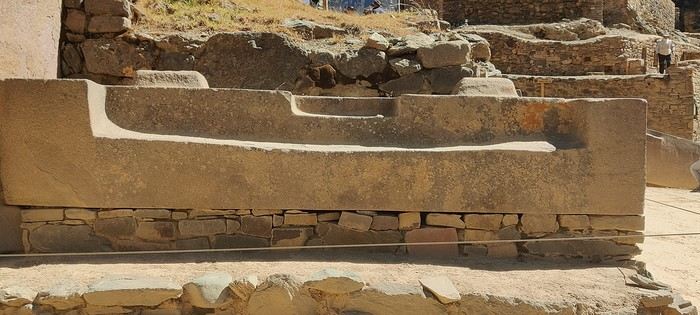
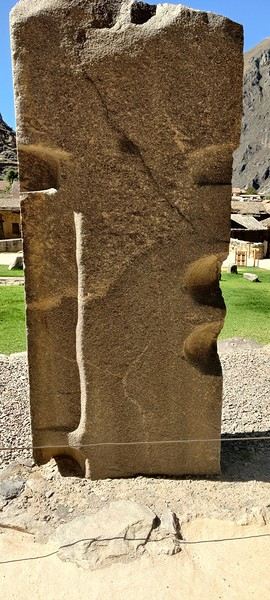
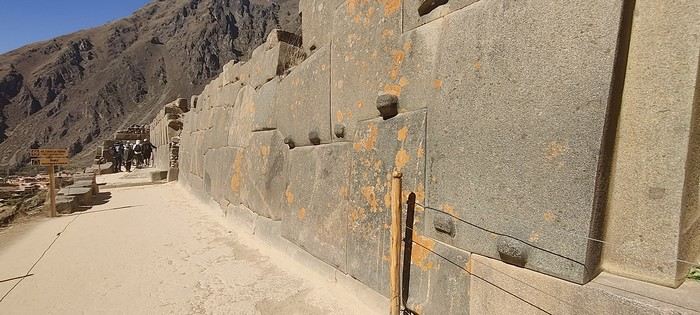
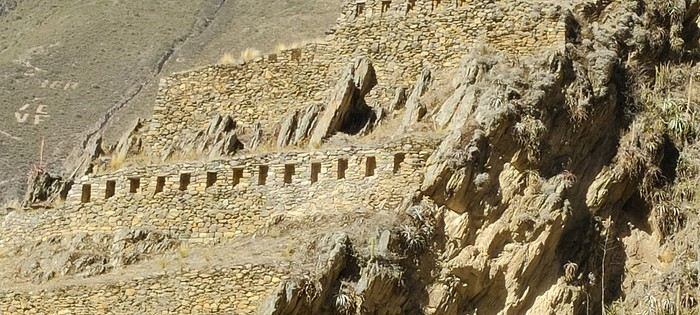
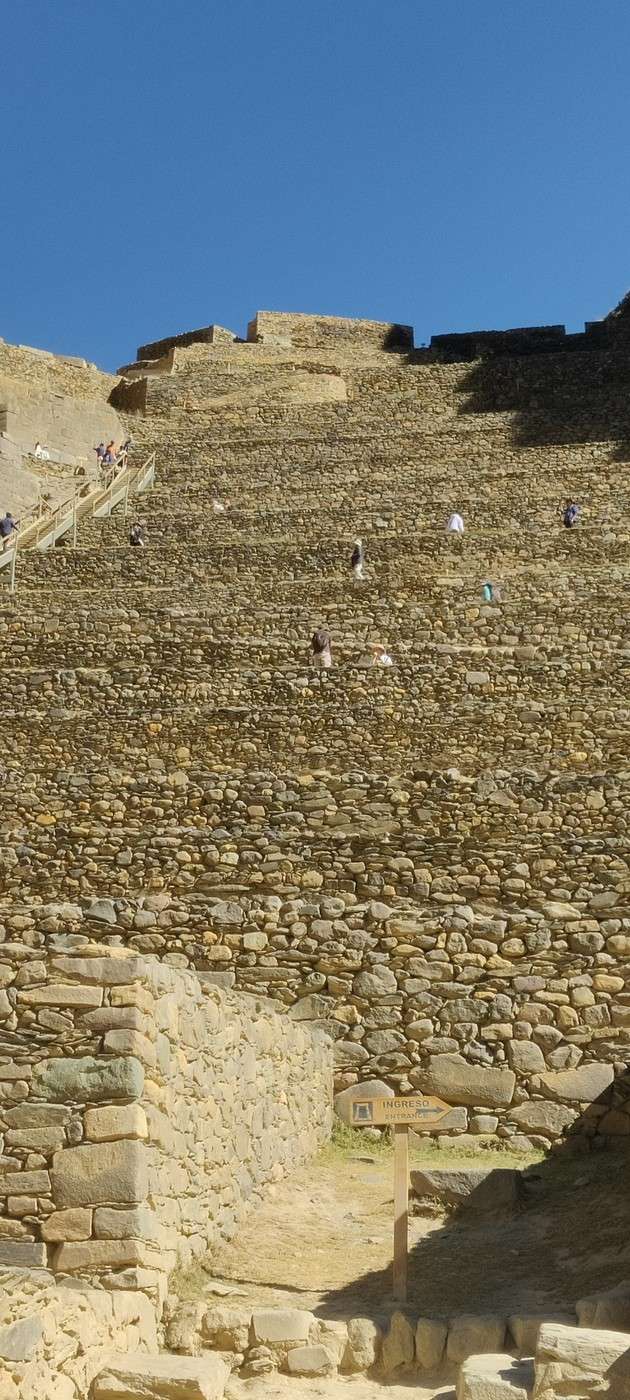
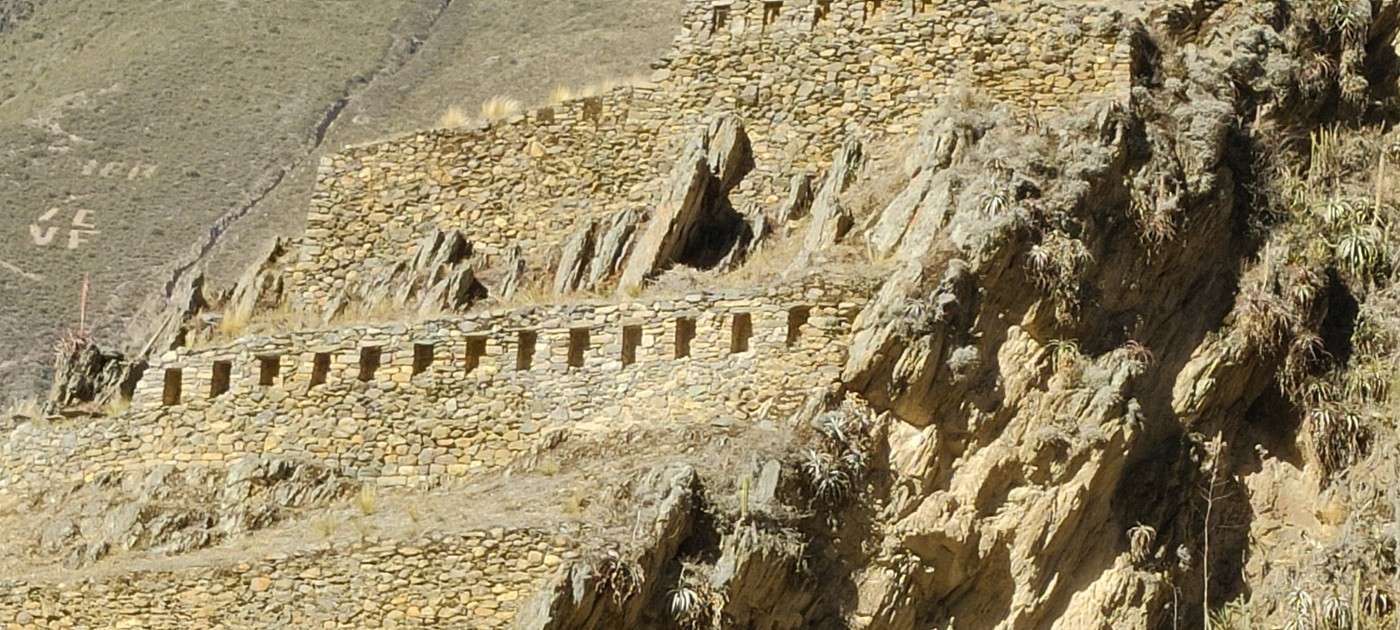
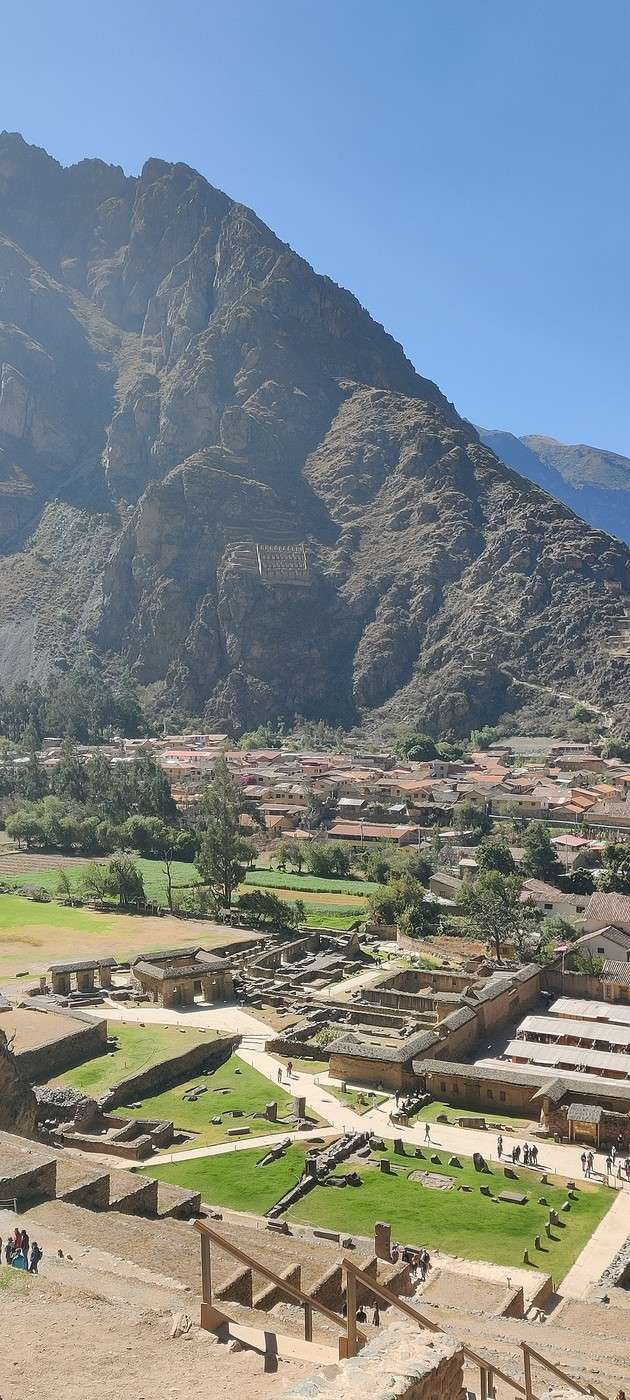
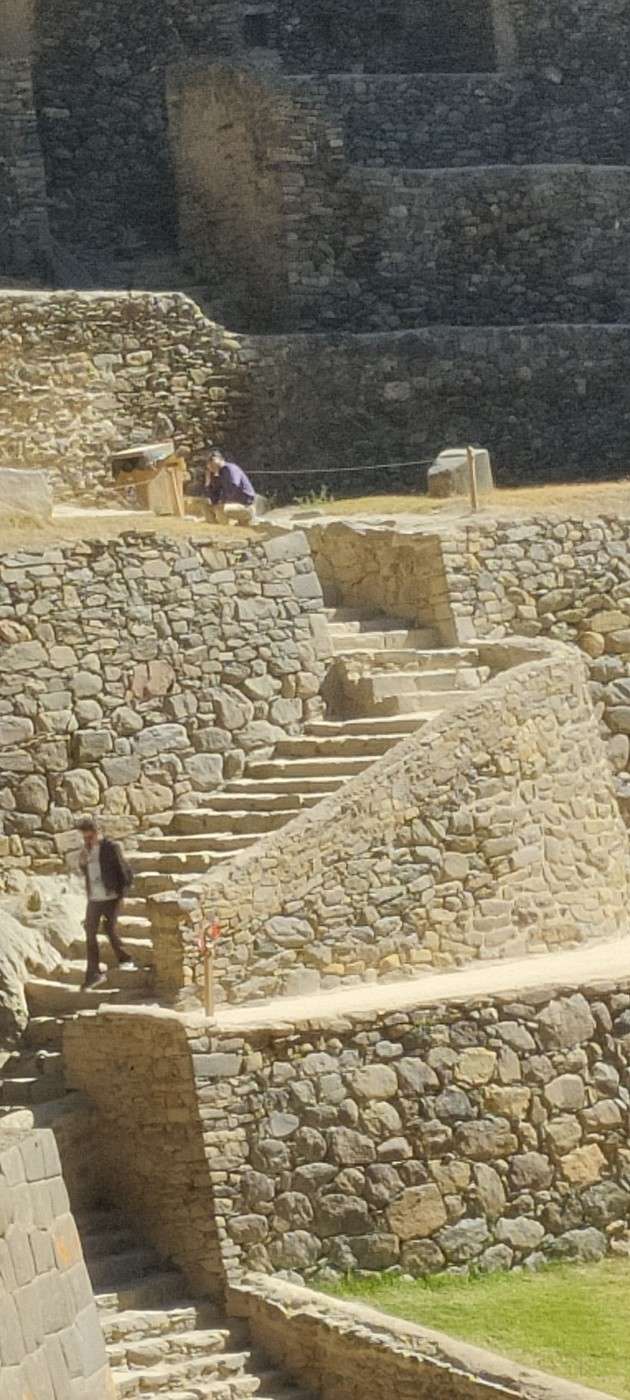
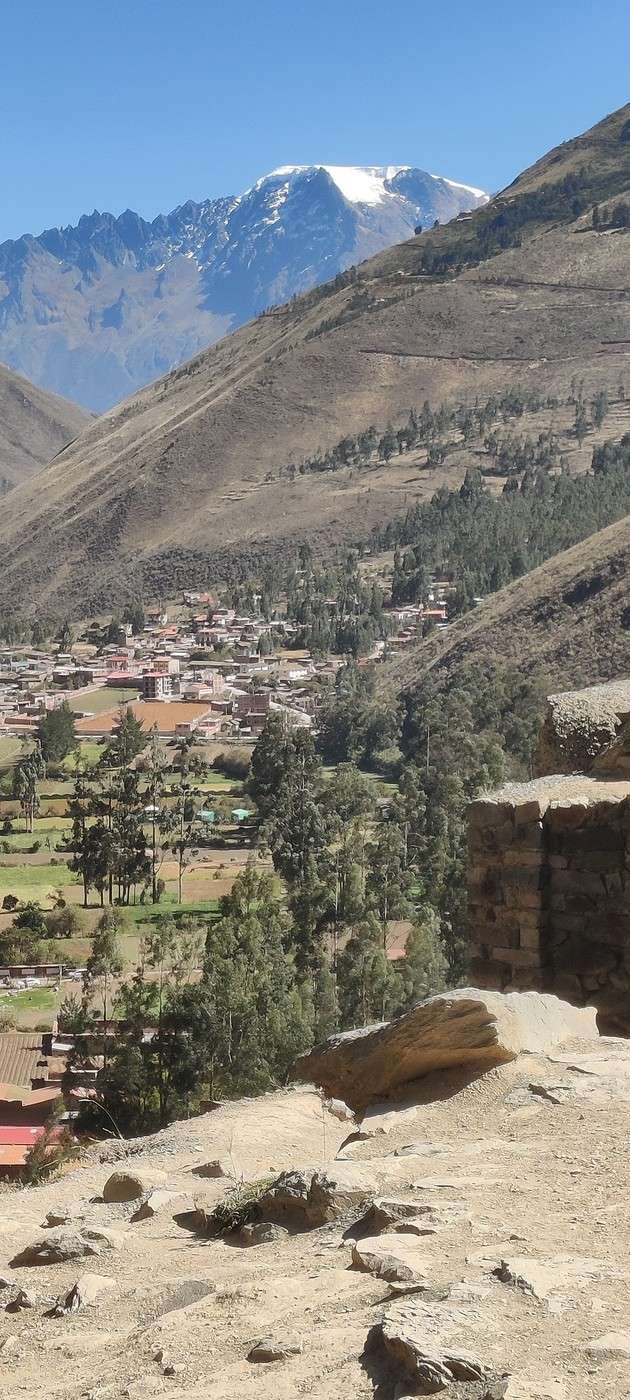
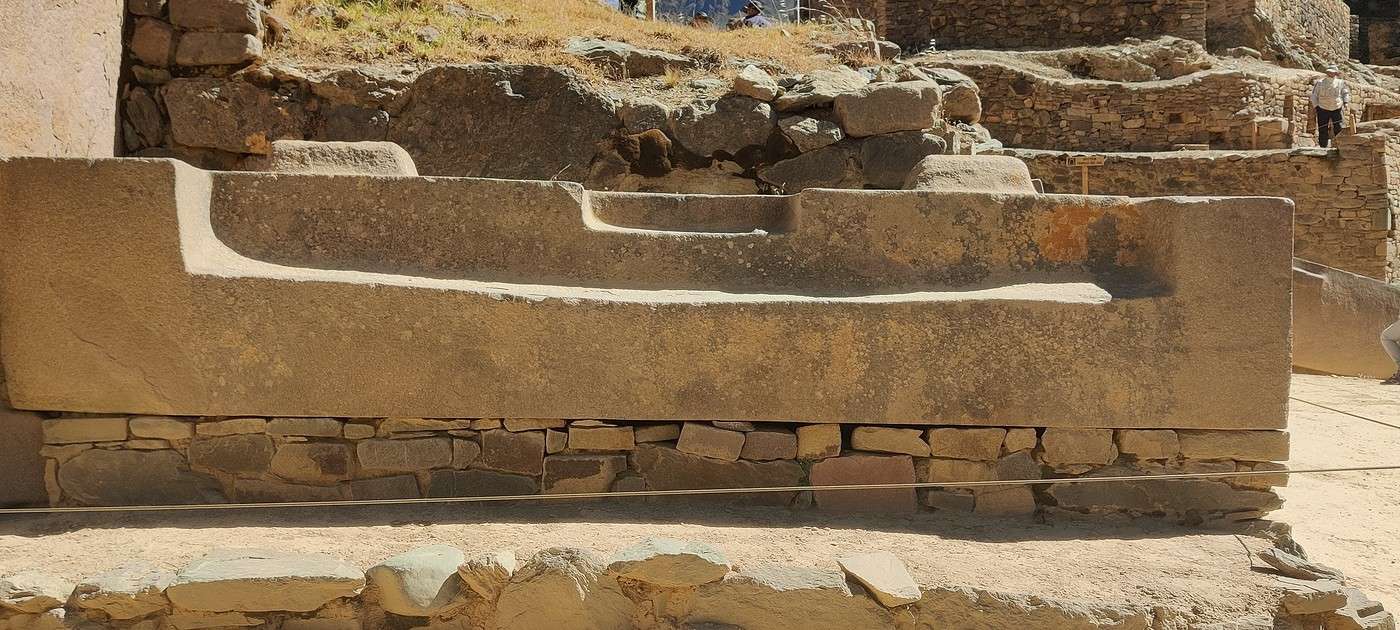
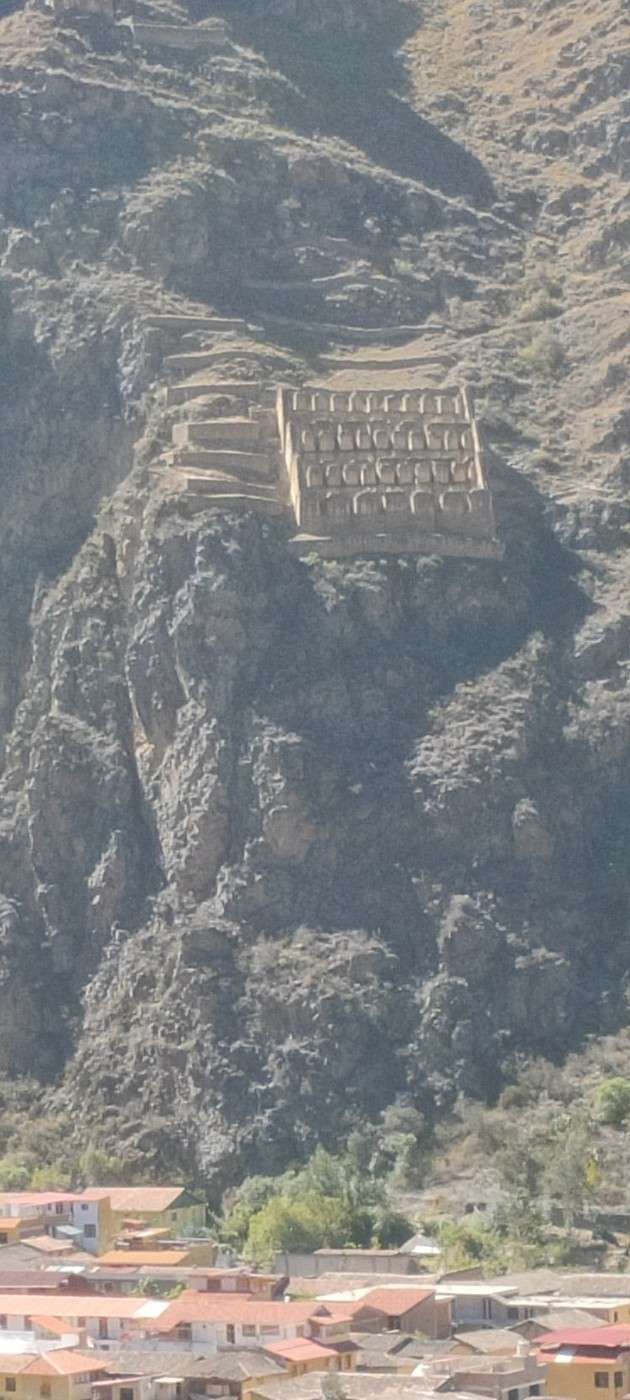
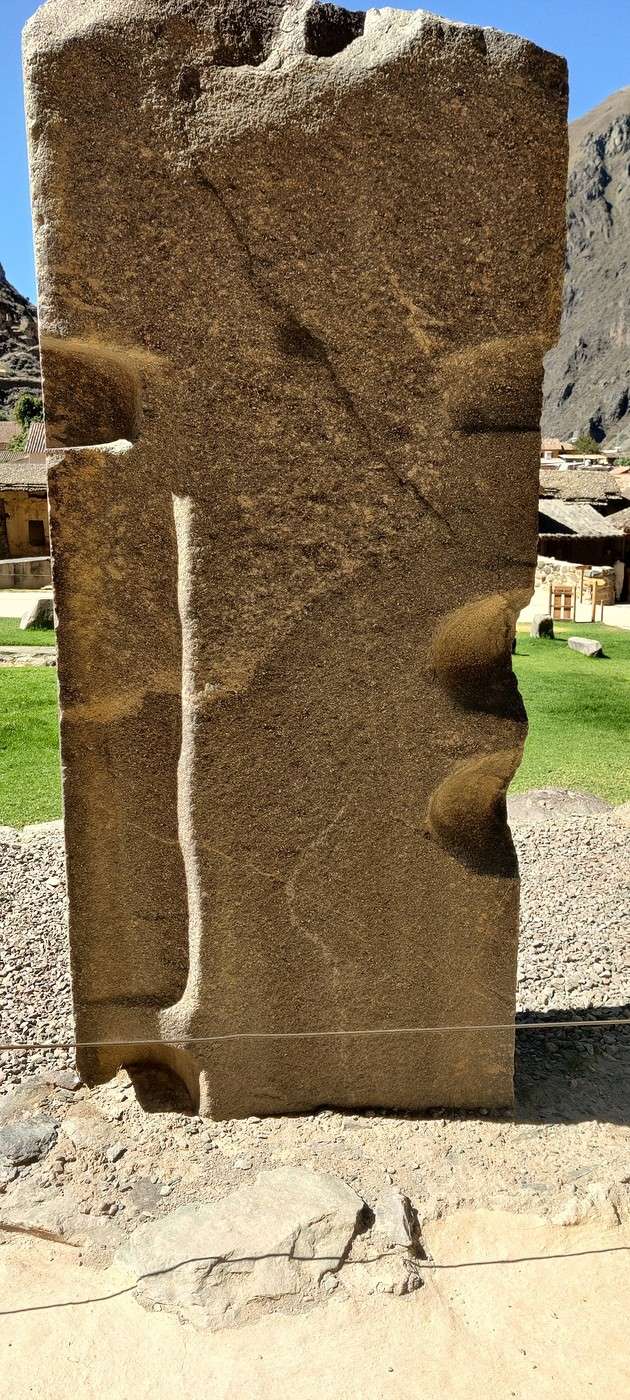
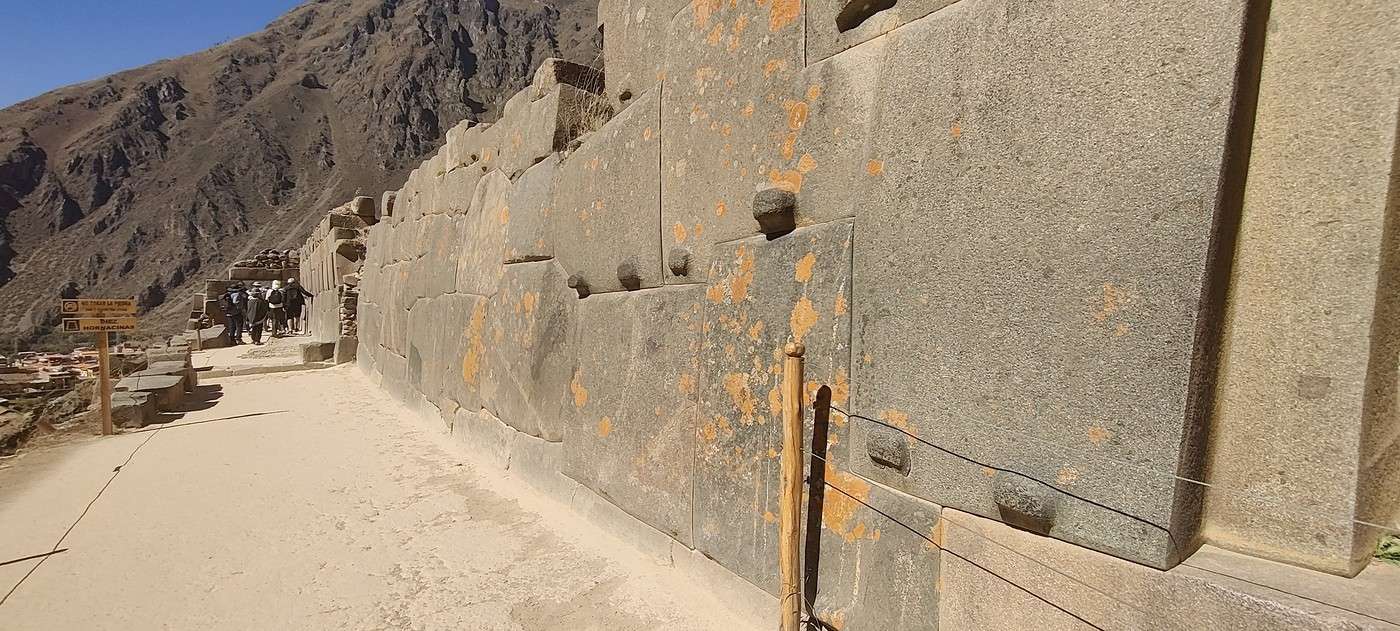
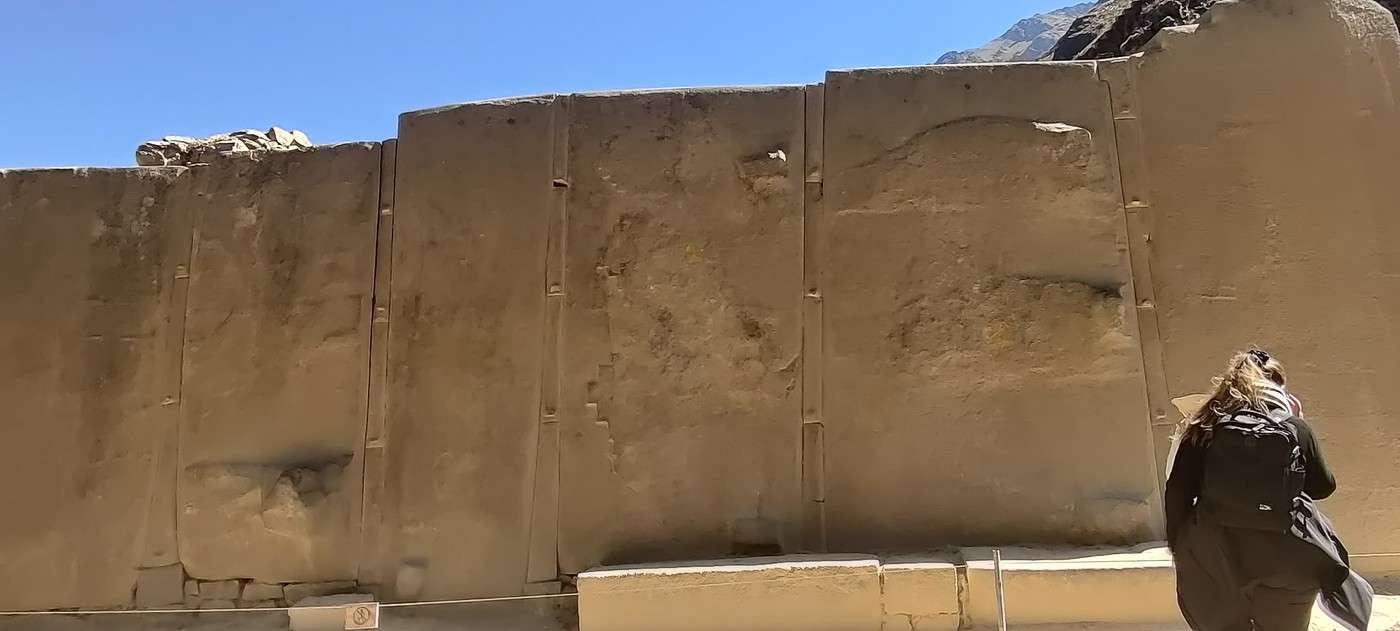
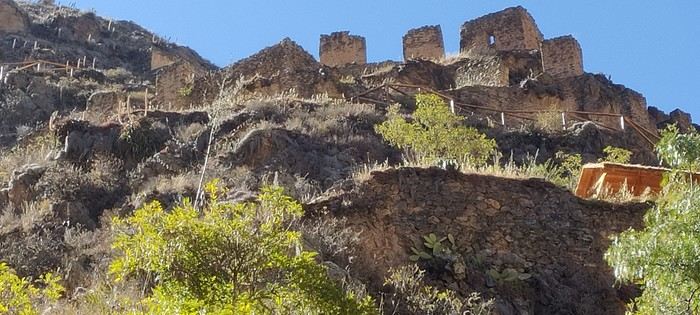
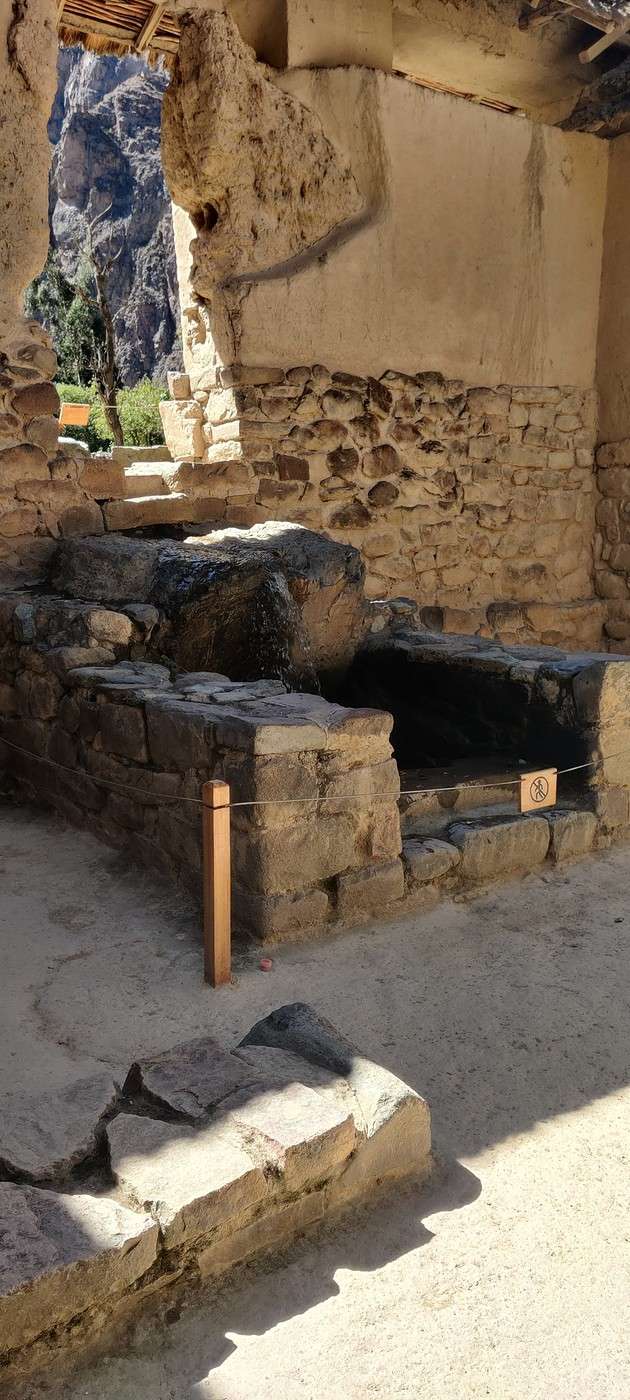
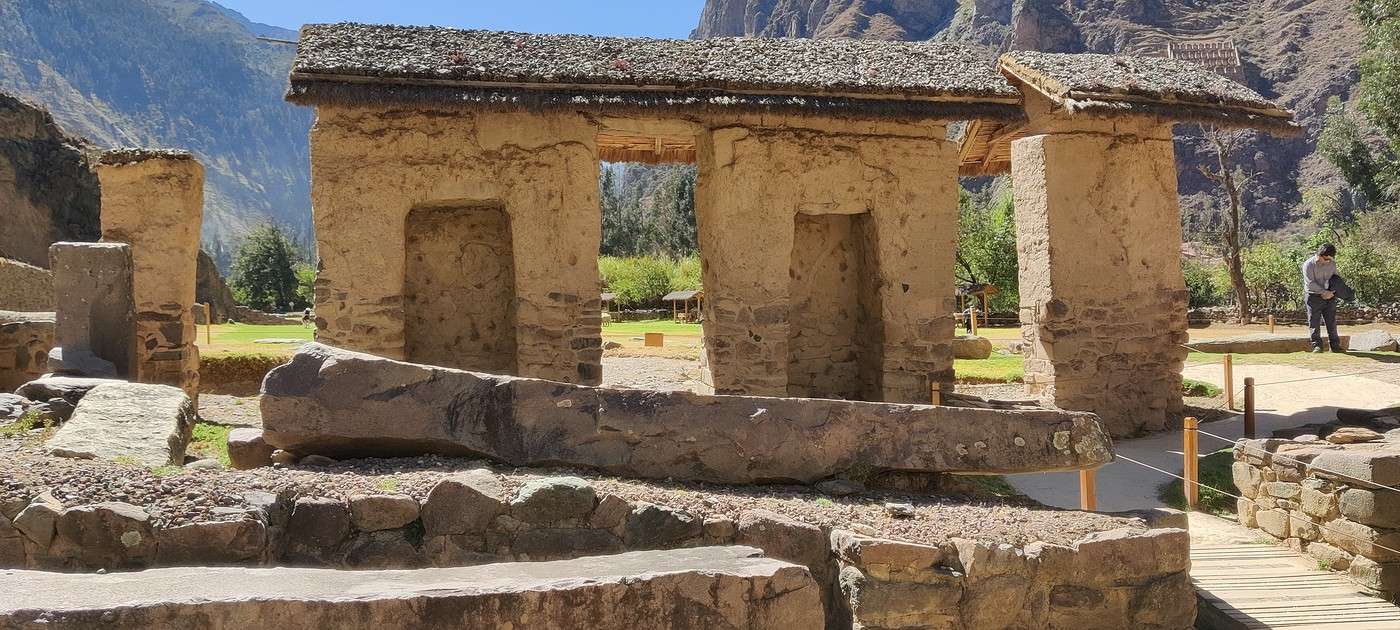
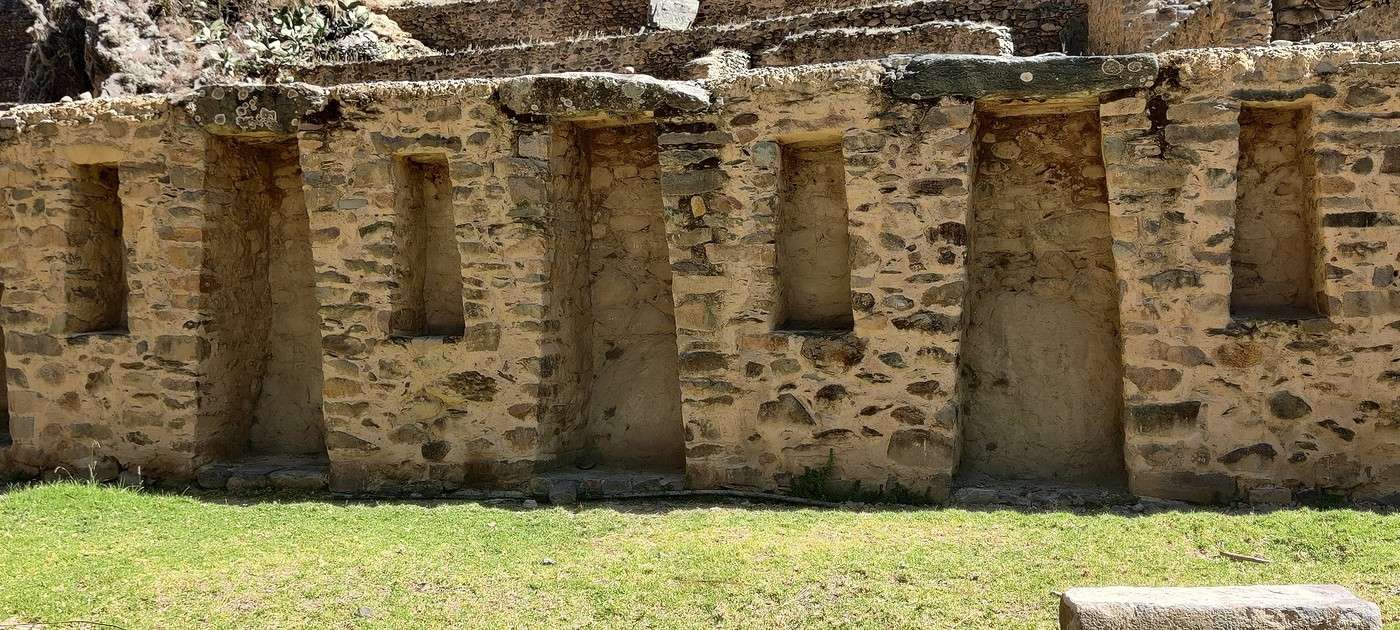
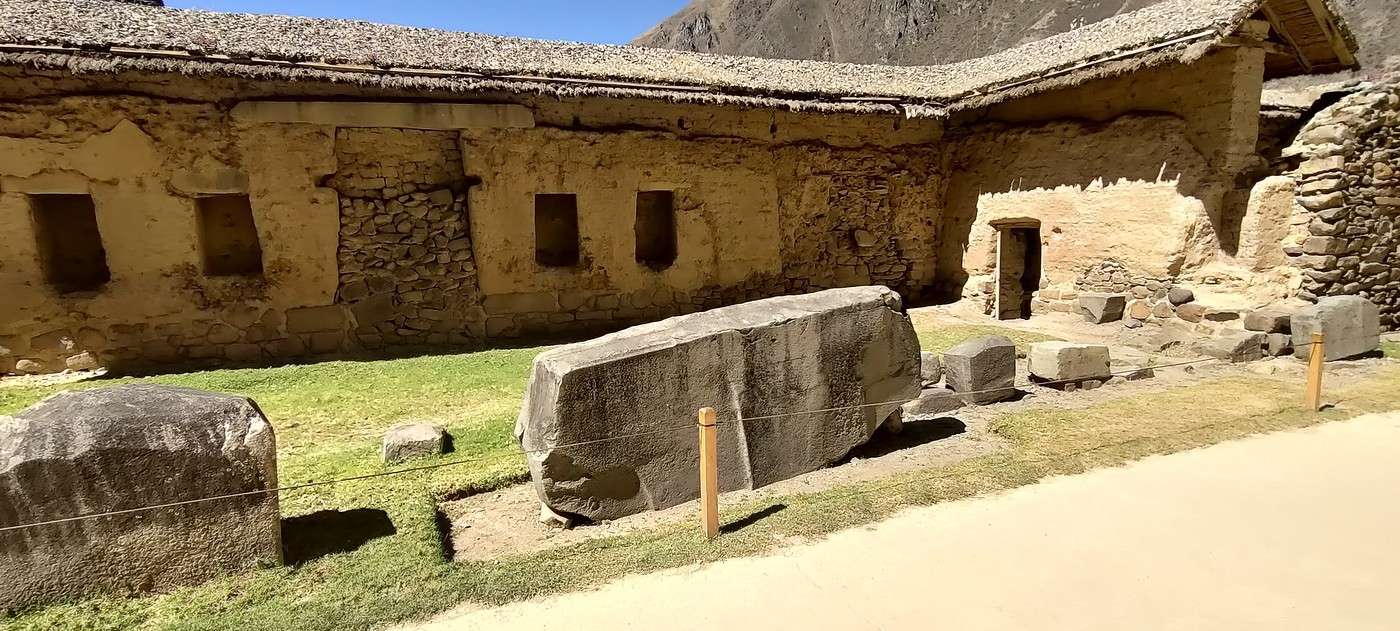
This morning, no early wake-up call. We enjoy the nice breakfast served to us, then head to the fortress. We decided to skip visiting the Pinkuylluna granaries to save our energy. Still, it’s worth mentioning: these are a set of four-story agricultural warehouses designed so that natural ventilation helps preserve the harvests. The site is free to access, but the path up is very steep. Ollantaytambo is best known for its impressive complex of terraces and structures towering above it. Historically, this citadel, built by Pachacútec on Wari-era foundations, protected the entrance to the Sacred Valley and monitored the route to Machu Picchu. The complex served as a strategic military stronghold, a religious center, and a major agricultural hub. It was the site of the Incas’ last great victory over the conquistadors in 1536. By flooding the plain, Emperor Manco Inca managed to resist the Spaniards’ initial assaults. He continued the fight against the conquistadors before ultimately being defeated elsewhere. The main access is via a monumental staircase leading to seventeen stacked terraces. From the bottom, reaching the top seems daunting—it’s so steep! But by taking it step by step and stopping on the terraces, the climb is actually quite manageable. These agricultural terraces served multiple purposes: farming at high altitudes, preventing erosion, managing runoff water, and stabilizing the mountainside. Trust me, the hundreds of steps are worth it. At the top, we take in the view of the Urubamba River, three valleys, and the Inca village below. On the opposite mountain, we spot the ancient warehouses clinging to the slope. Next, we discover the Temple of the Sun, made up of six monoliths of pink porphyry. The temple was left unfinished, as evidenced by the bumps still visible on the stones. These were used to secure lifting ropes and were never polished—a sign the construction was cut short.
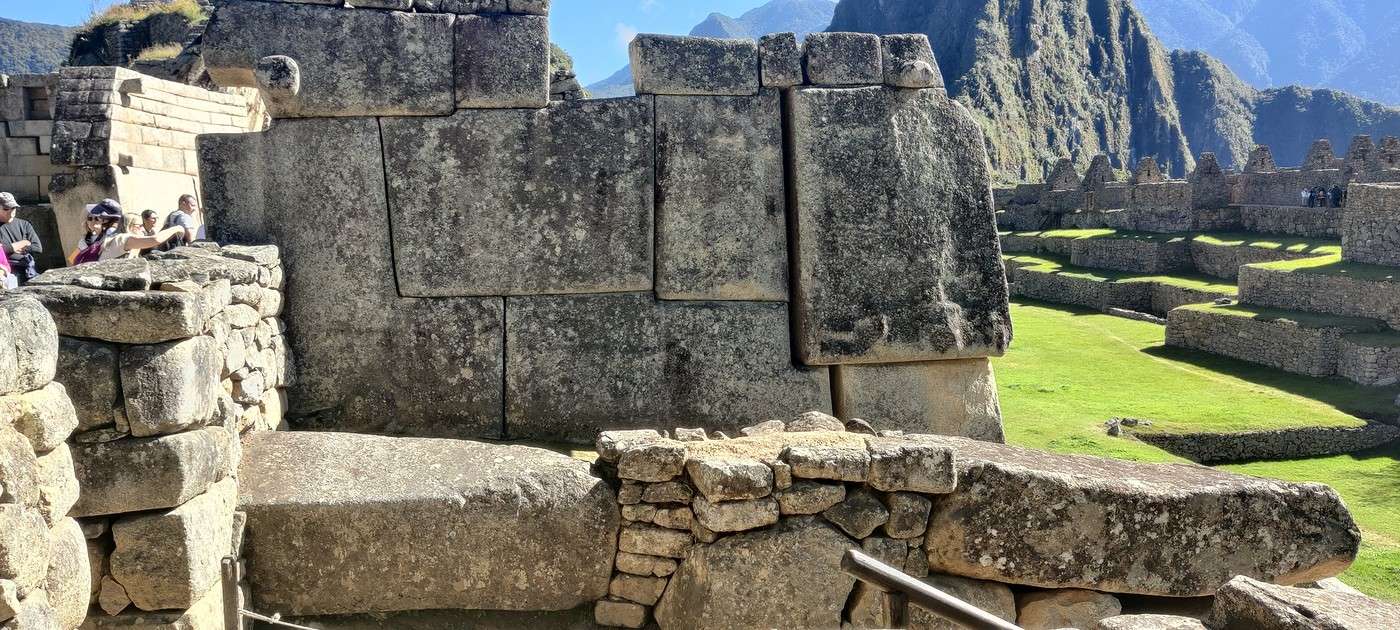
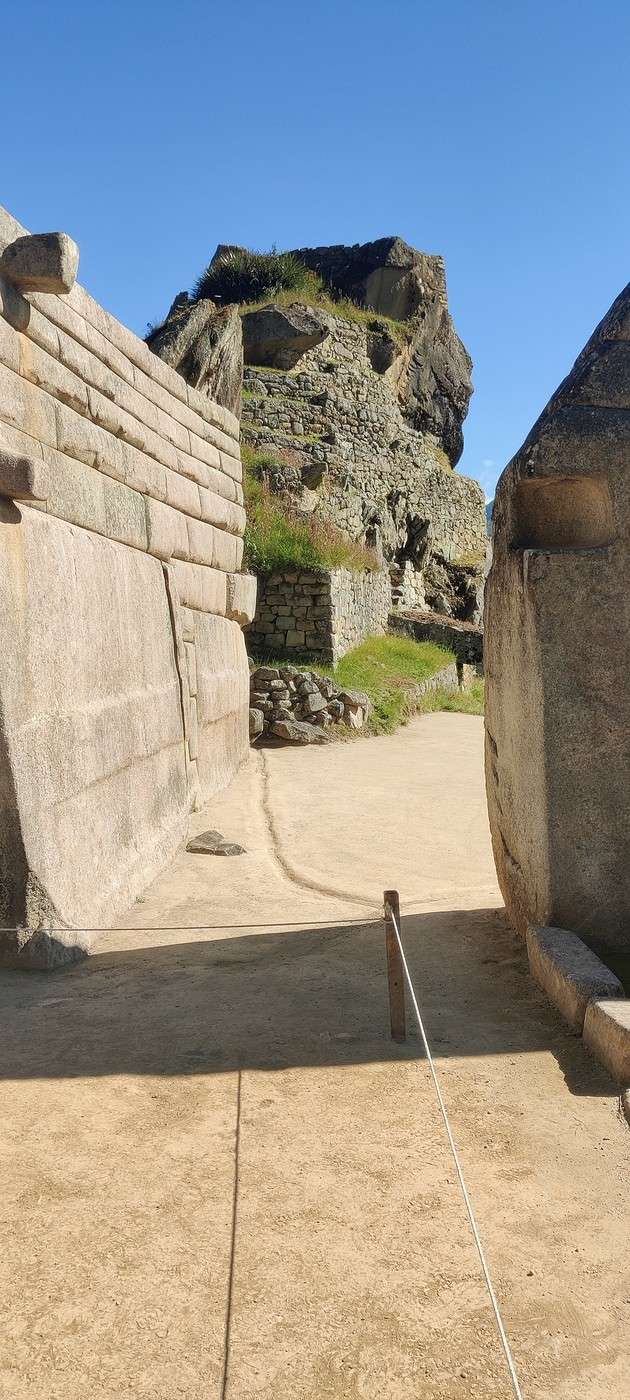


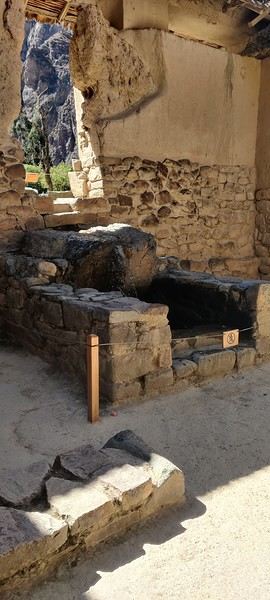
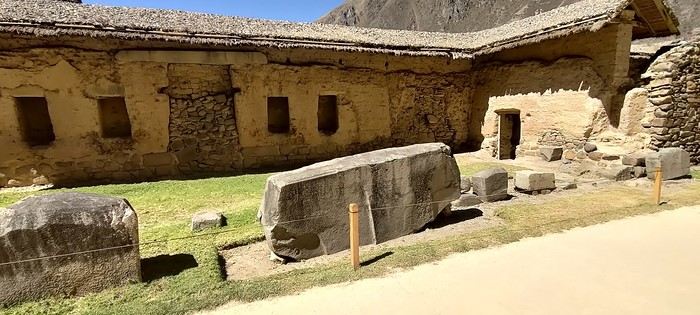
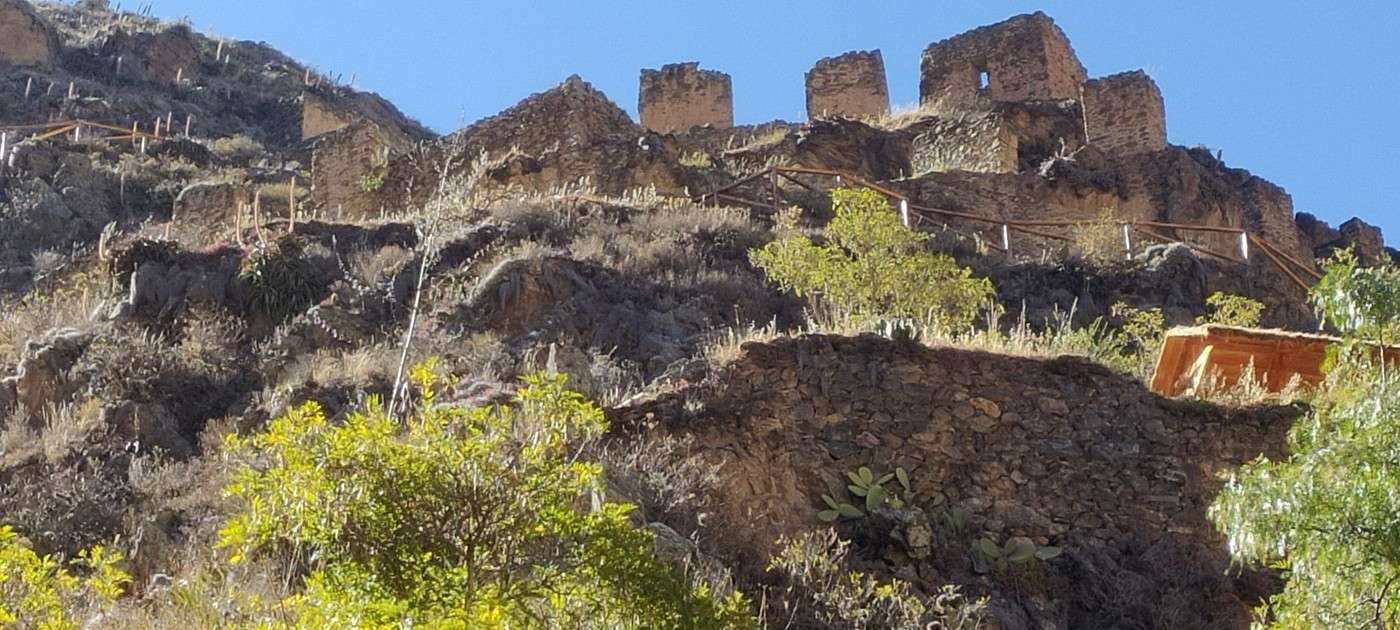
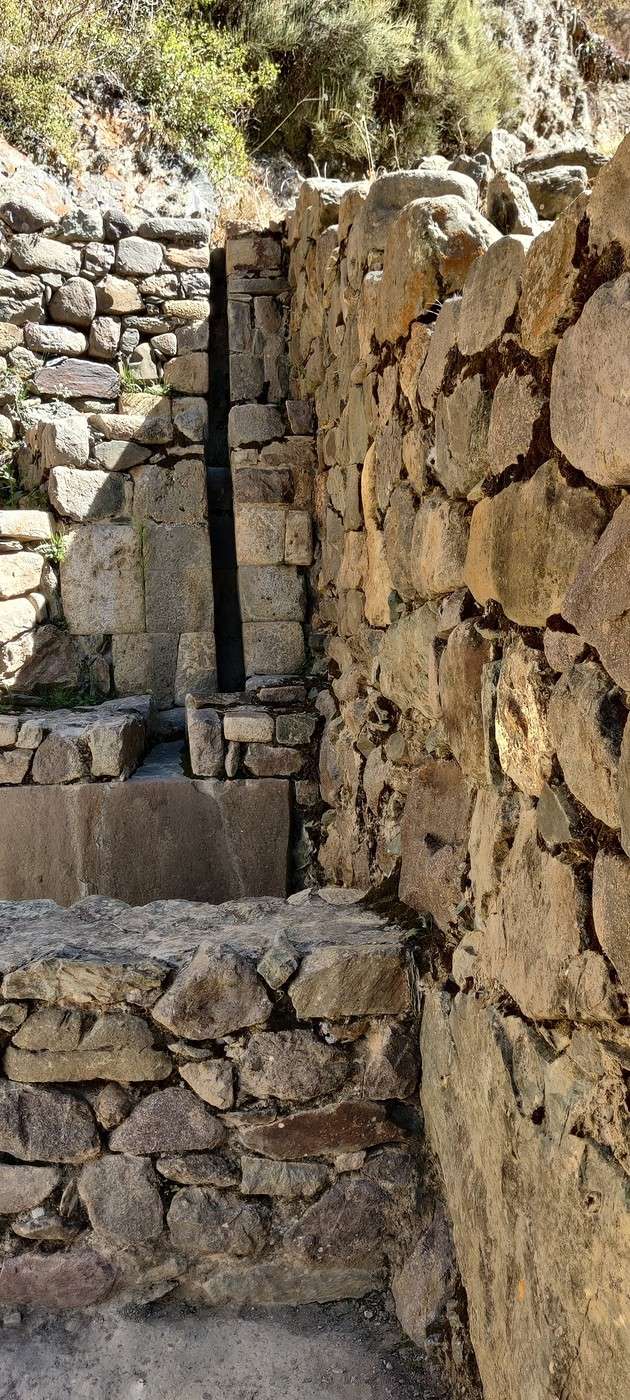
The stones came from the Cachicata quarry, about 6 km away on the opposite mountainside. Visible ramps were used to lower them into the valley. To cross the Urubamba, the Incas diverted part of its flow. Along the way, some stones—too heavy or damaged—were abandoned. Everything here gives the impression of a construction site abruptly interrupted by the arrival of the Spaniards. At the top, you’ll find the Temple of the Ten Niches and an unfinished monumental gate, further proof the work was halted. At the base of the hill, in a peaceful park, we admire the Temple of Water, the Ñusta Fountain (carved from a single block of stone and integrated into the temple), and various canals following the natural contours of the land. The whole system still functions today.

Ollantaytambo is a must-see in the Sacred Valley. The fortress isn’t its only draw—the town itself is worth exploring. Its layout, cobbled streets, stone walls, and houses built on ancient Inca foundations reflect the continuity between the town of yesterday and today. Its train station also makes it a starting point for many travelers, especially those hiking the famous Inca Trail. We have lunch in the village square while waiting for the driver to take us back to Cusco. On the way back, he takes a route we haven’t tried before. Along the road, we see many hitchhikers. He explains that since it’s Sunday, there’s no public transport, and people have no other choice but to hitch rides. One observation: these last two days have been amazing. To top it off, we dine once again at the Japanese restaurant.

Peru: A childhood dream finally realized

Larri · 2026-08-26

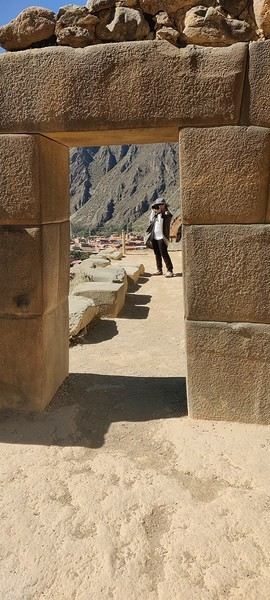
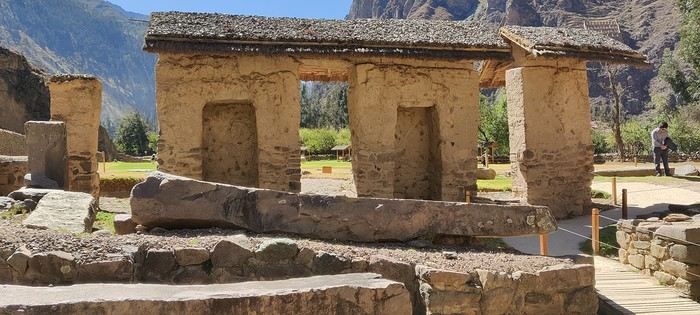
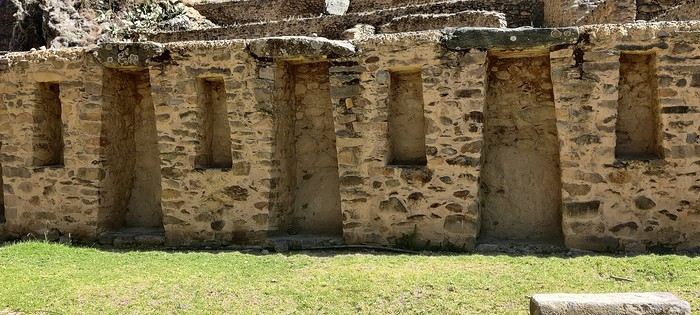
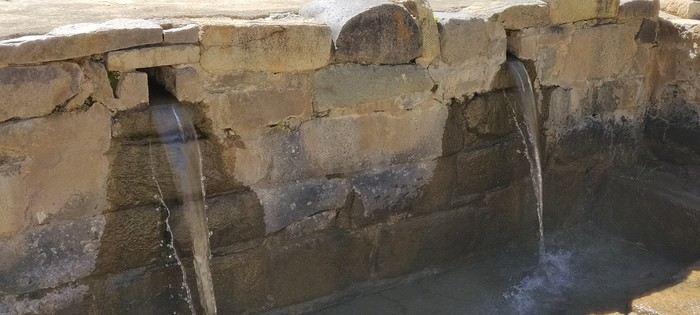
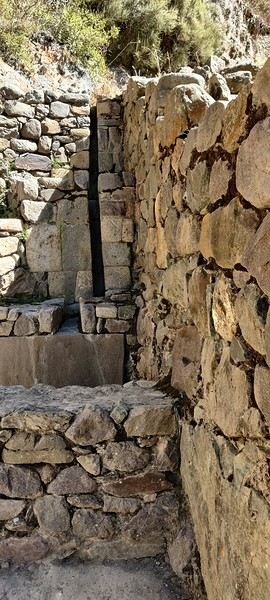
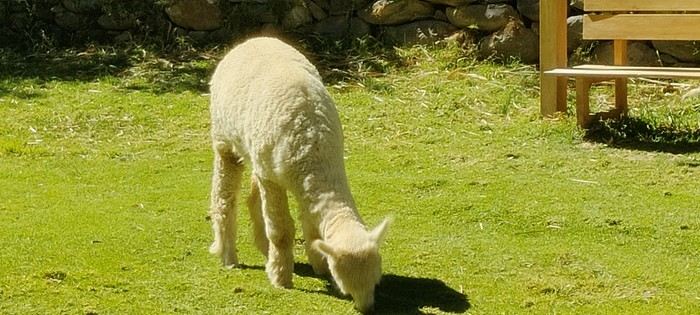
Ollantaytambo: a few random photos


Peru: A childhood dream finally realized

Holigirl · 2026-08-26

Two truly beautiful days with a perfectly blue sky. Thanks for all these details that teach us so much about this civilization. It’s impressive :)

Peru: A childhood dream finally realized

Larri · 2026-08-27

Hi Pascale,

Yes, those 2 days were amazing! We were spoiled by the weather. The good weather didn’t leave us during our entire stay. Not a drop of rain! Thanks for letting me know you’re around; at least this travel journal interests one person. It’s coming to an end.

Peru: A childhood dream finally come true

Larri · 2026-08-28

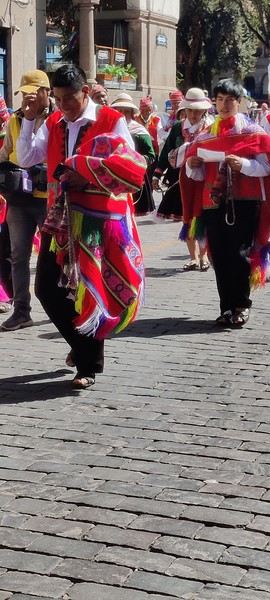
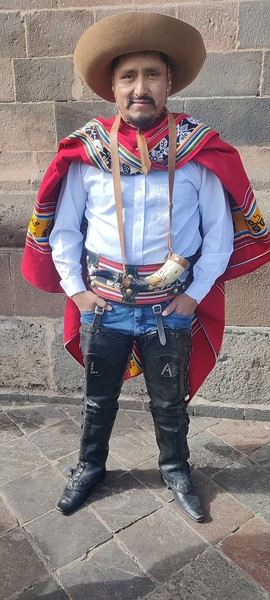
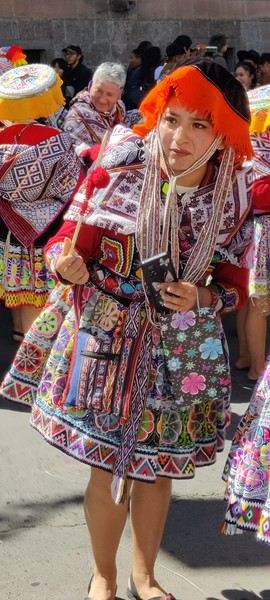
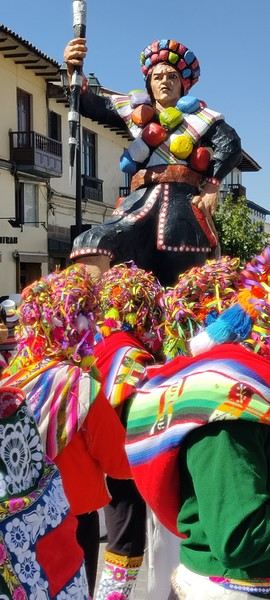
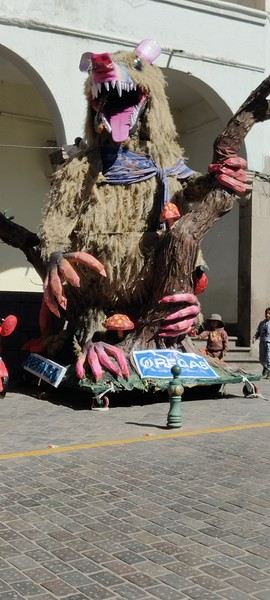
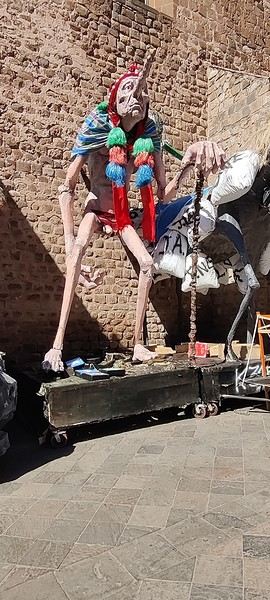
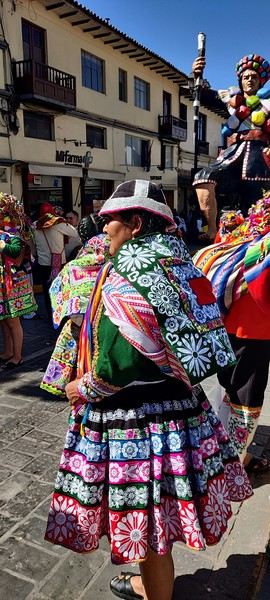
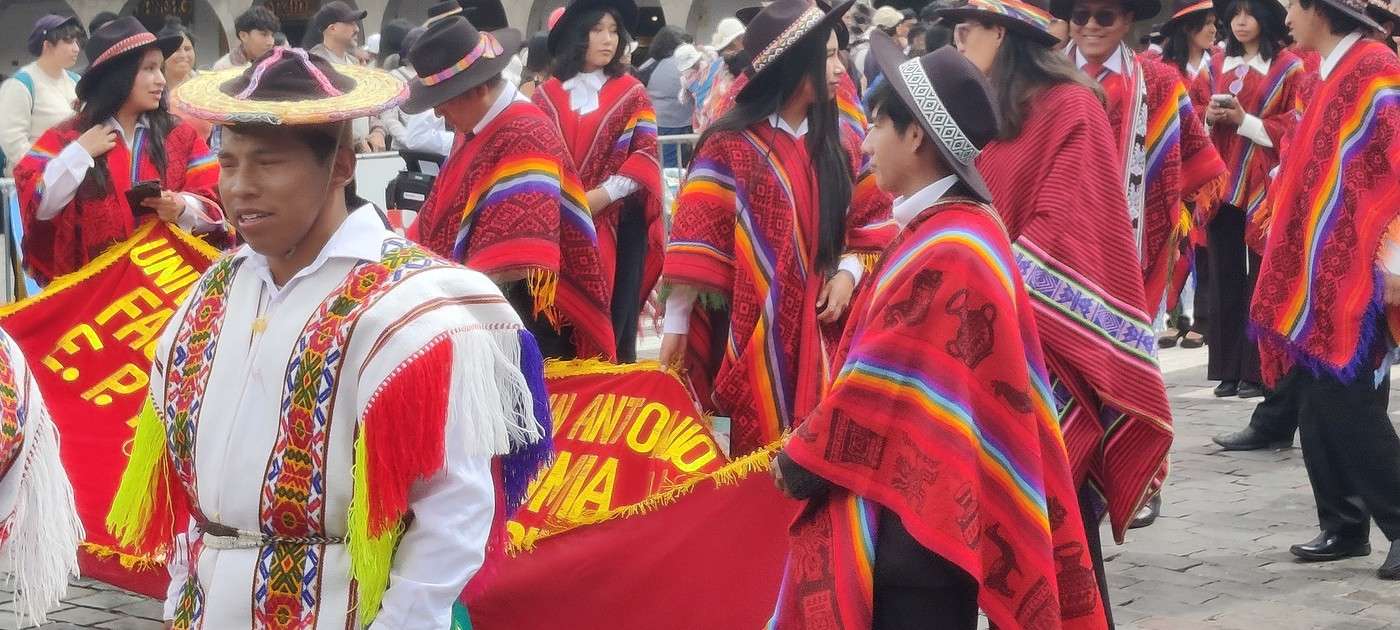
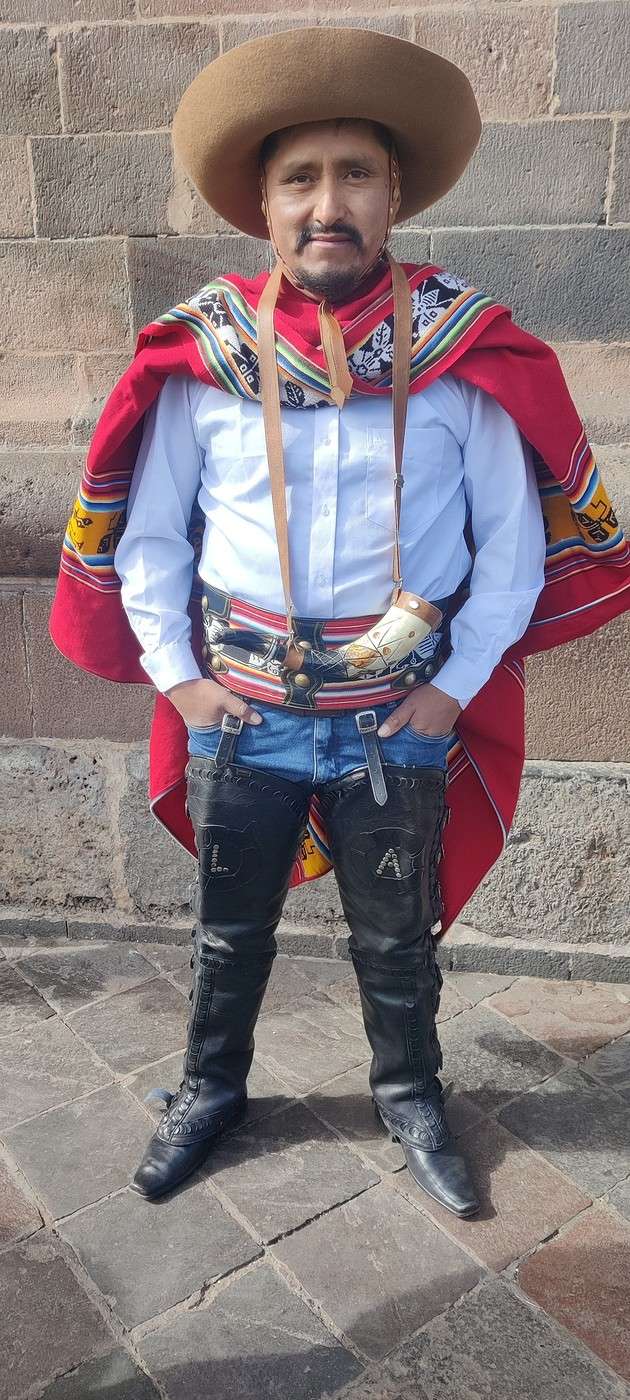
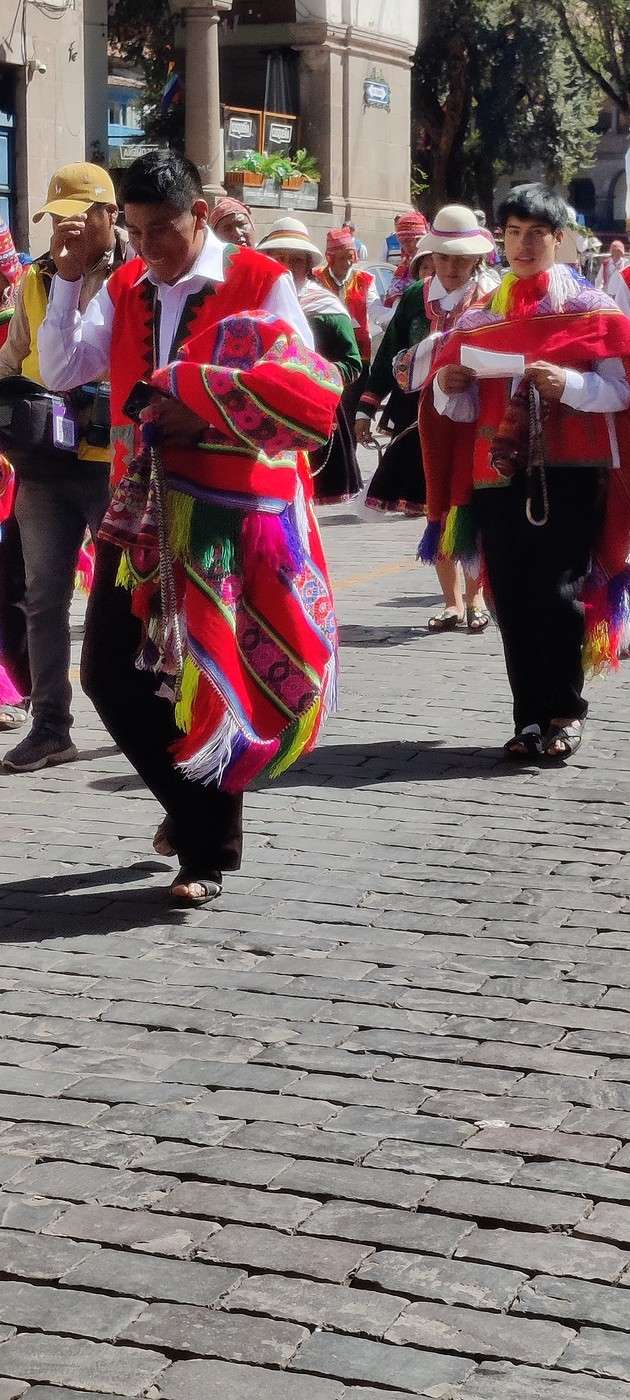
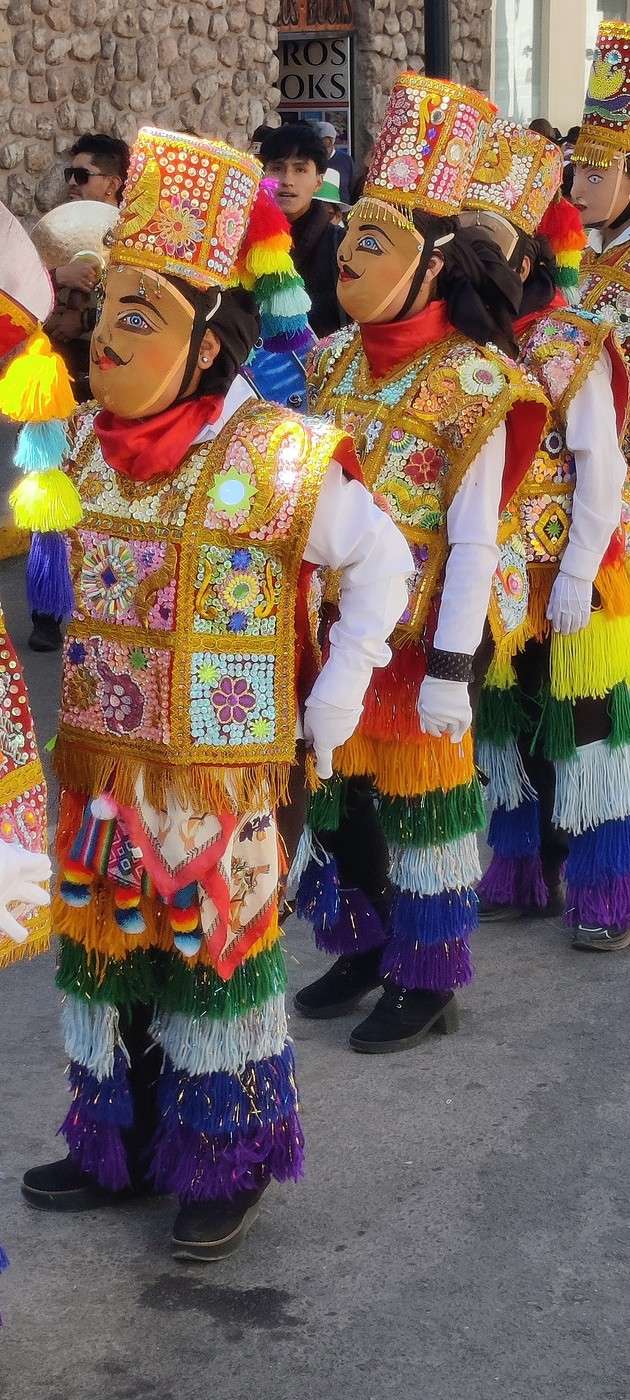
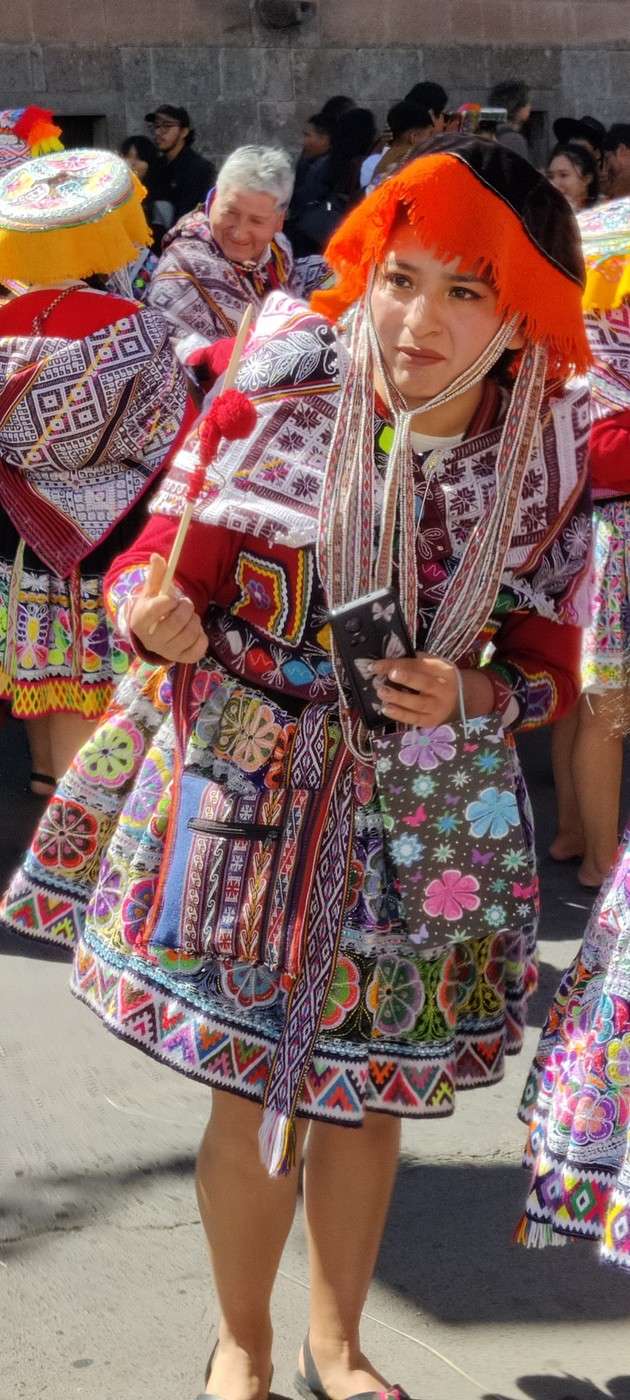
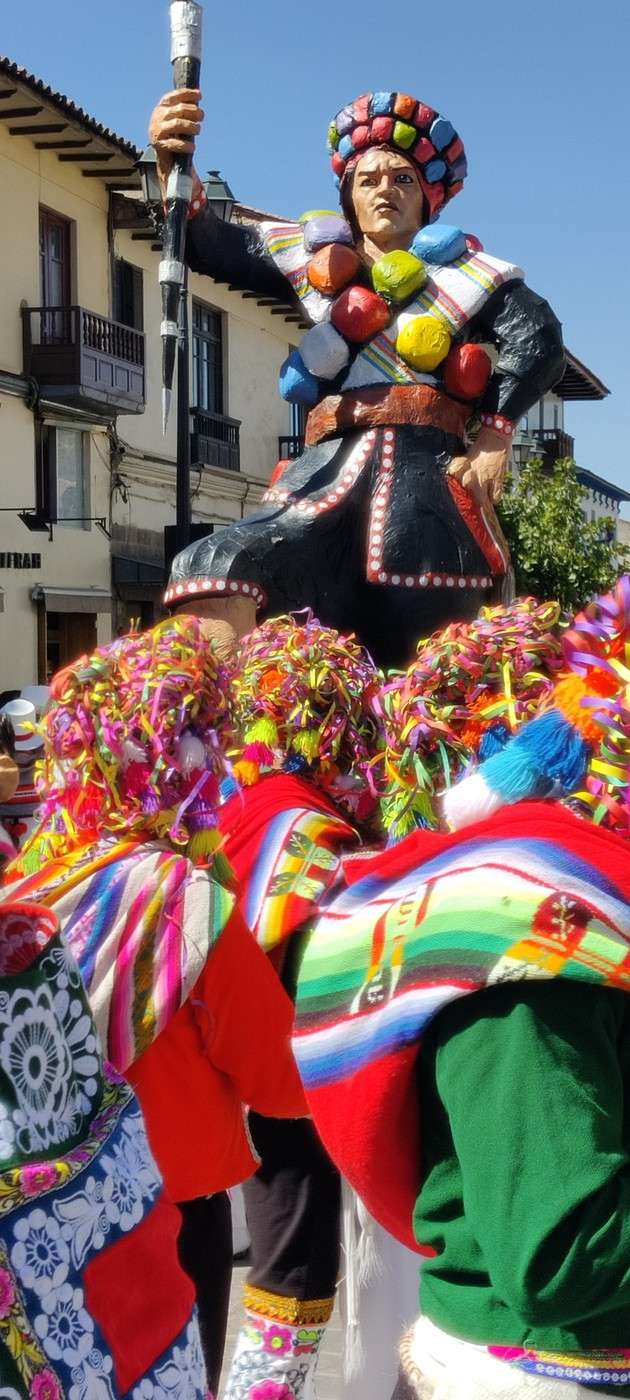
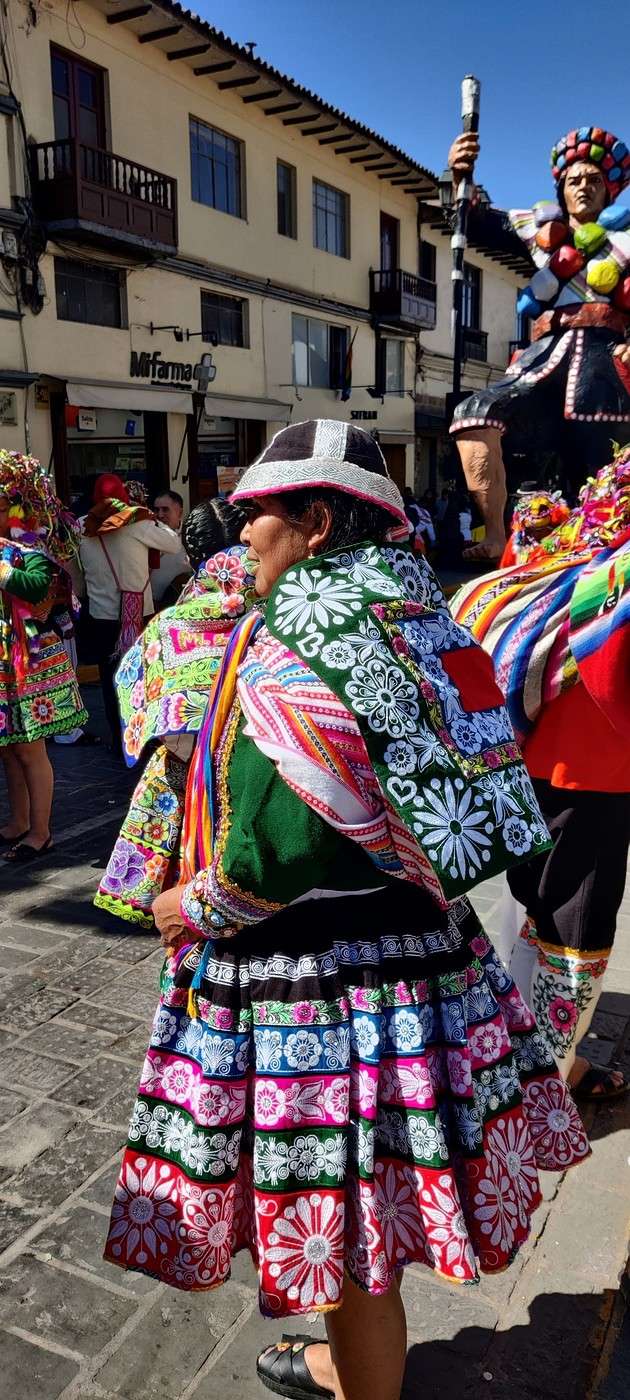
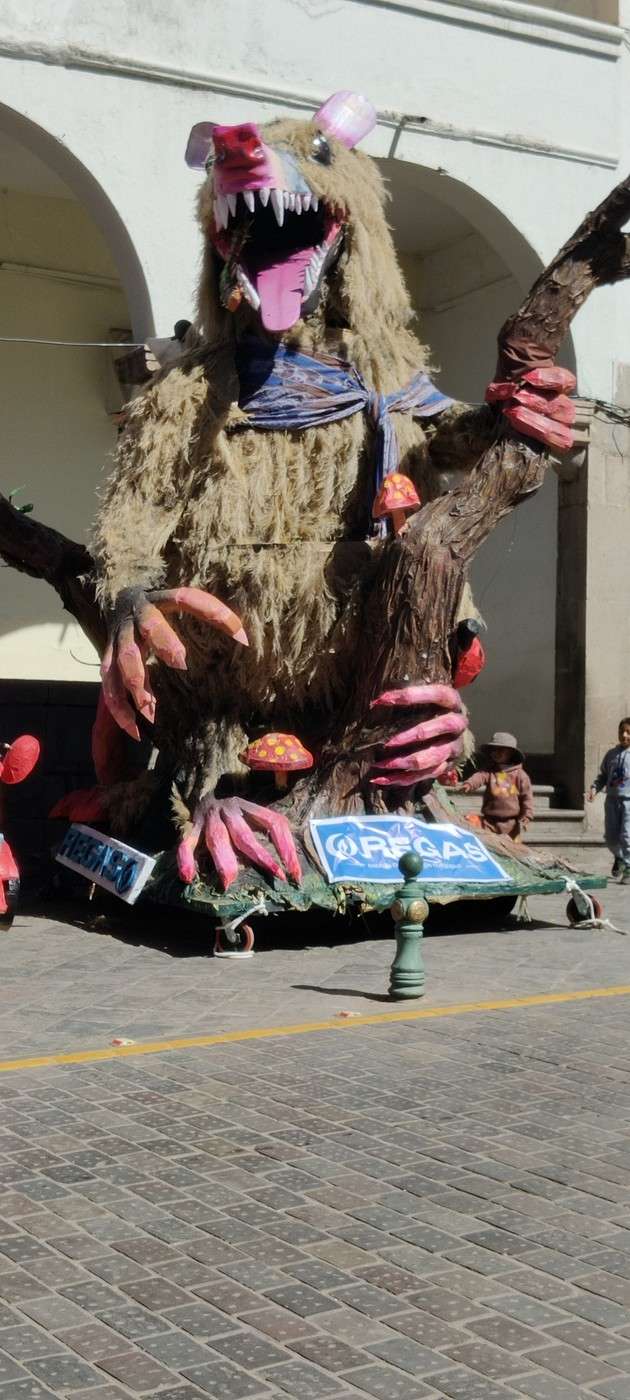
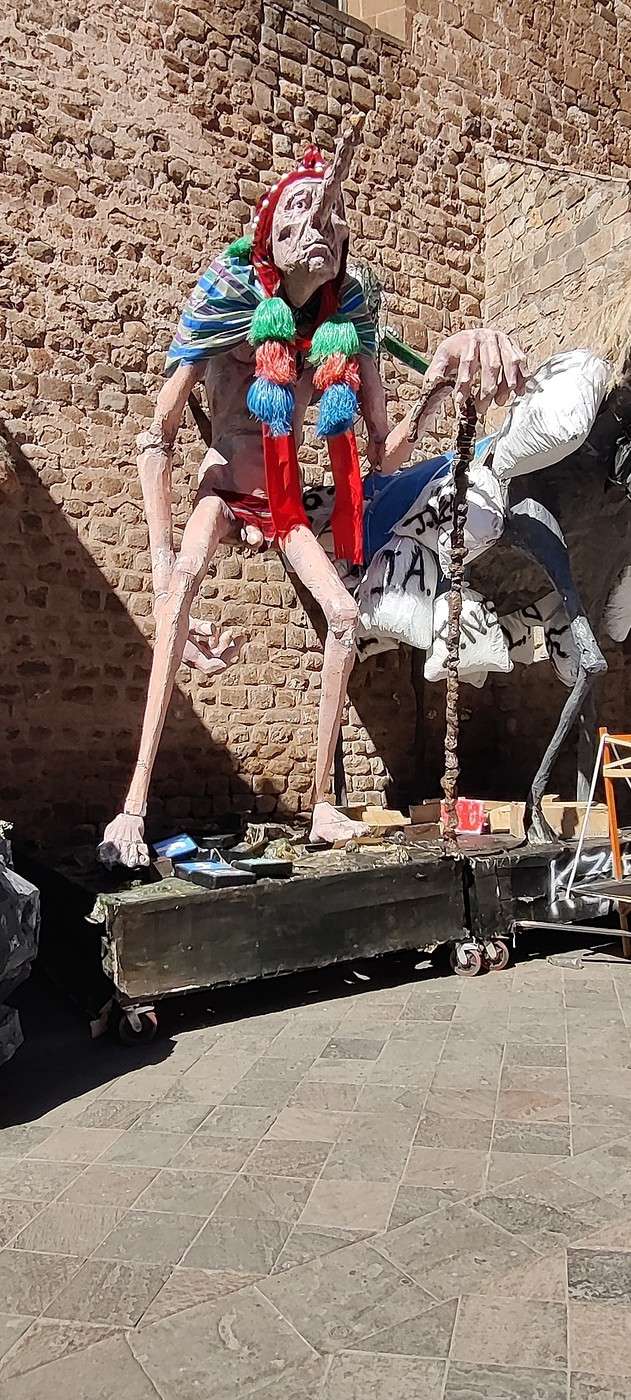
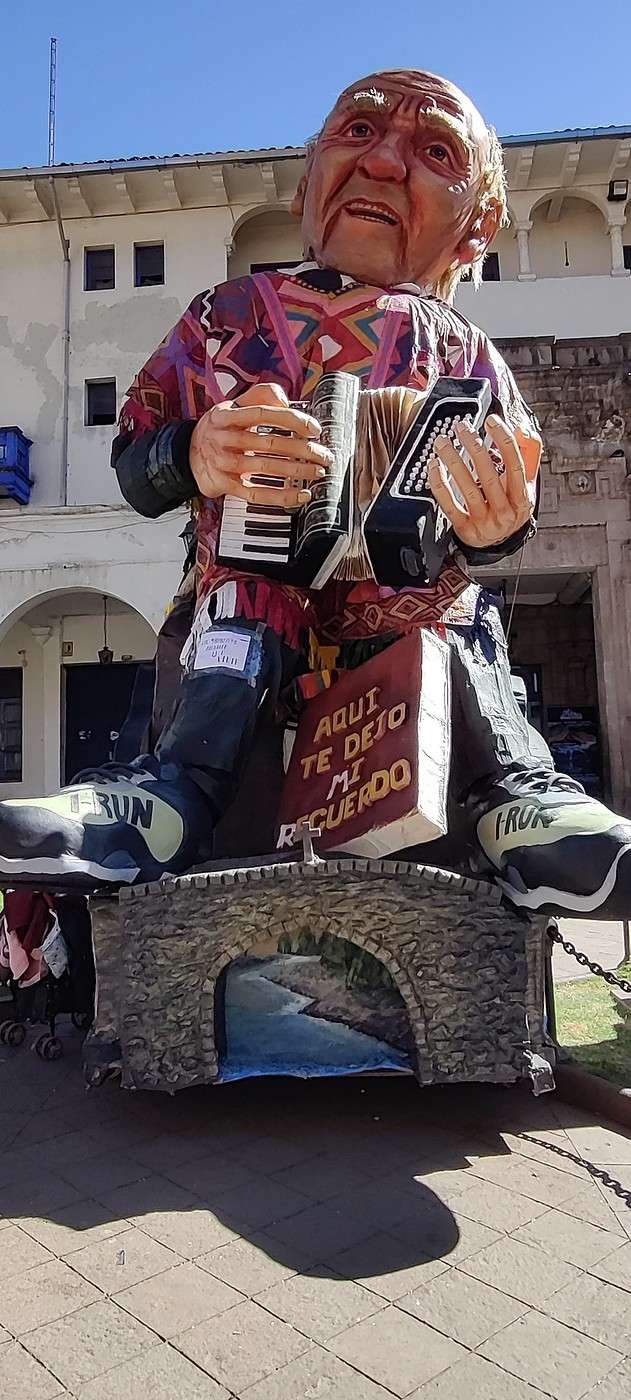
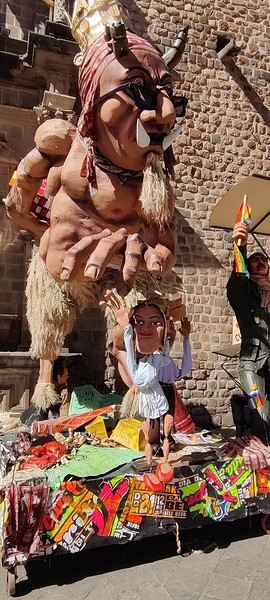
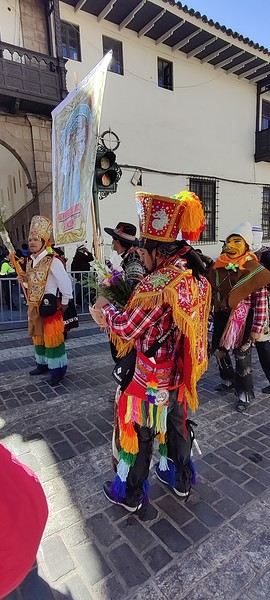
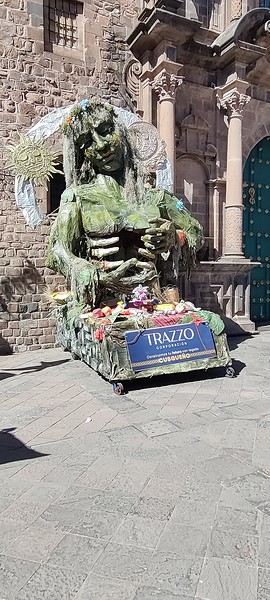
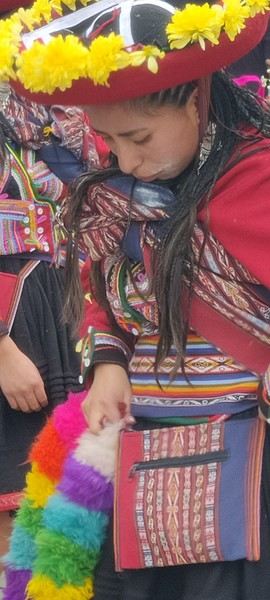
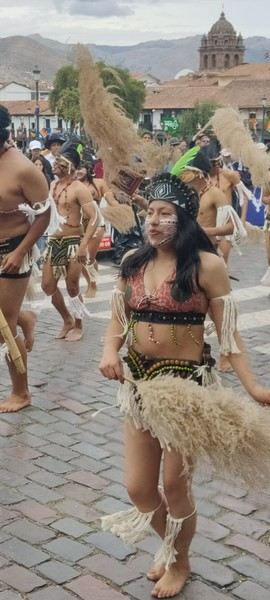
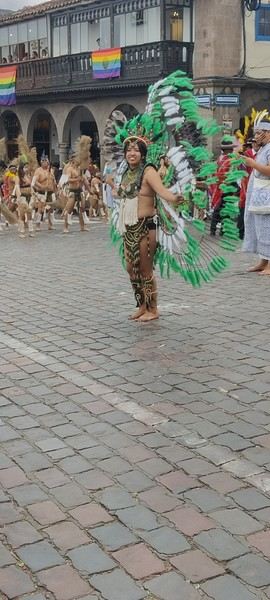
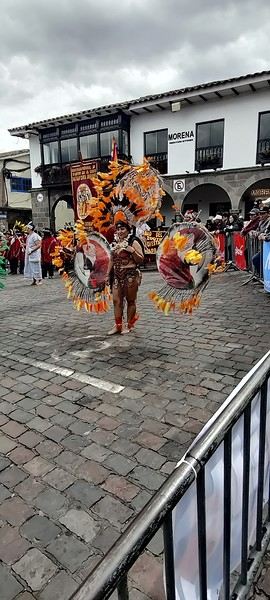
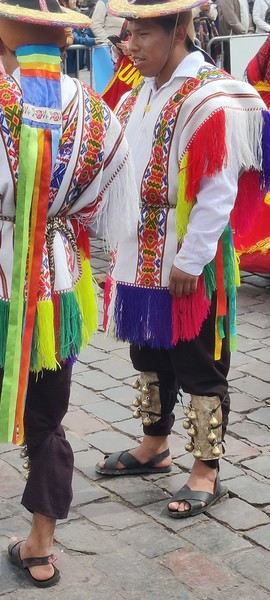
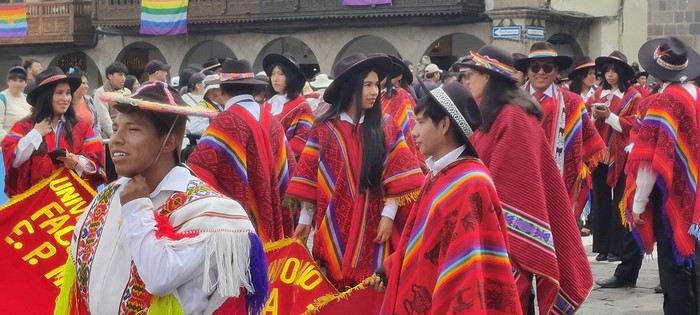
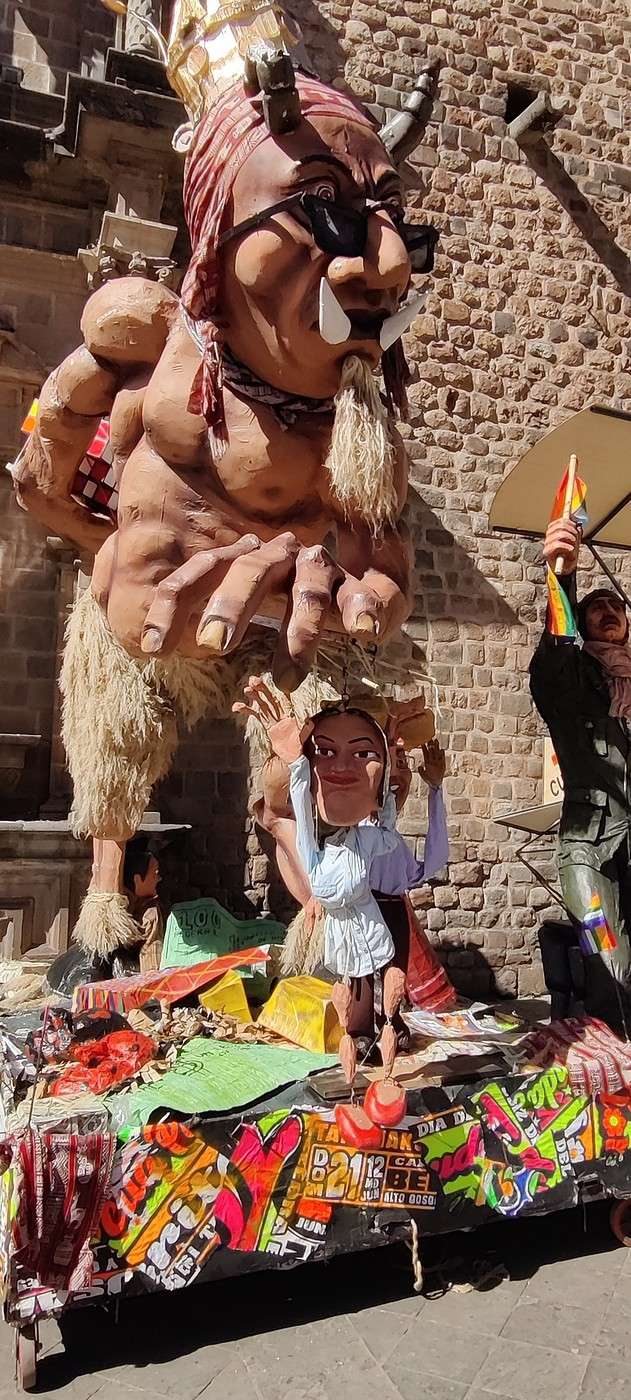
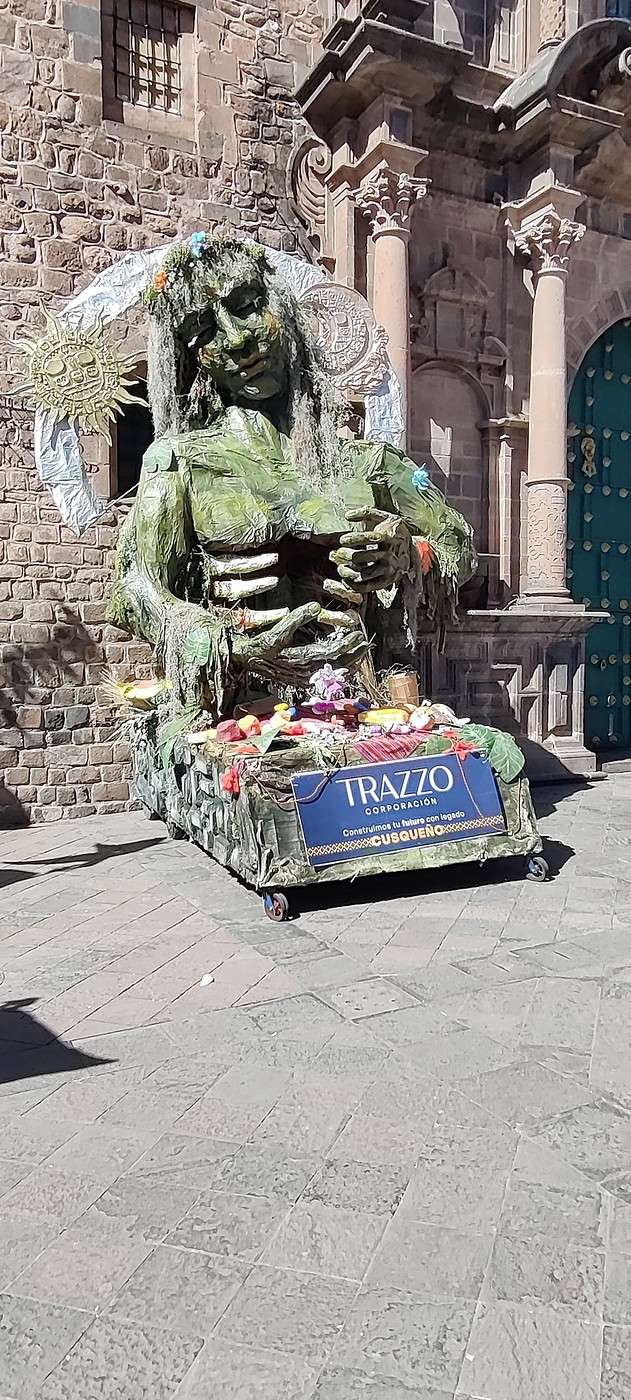
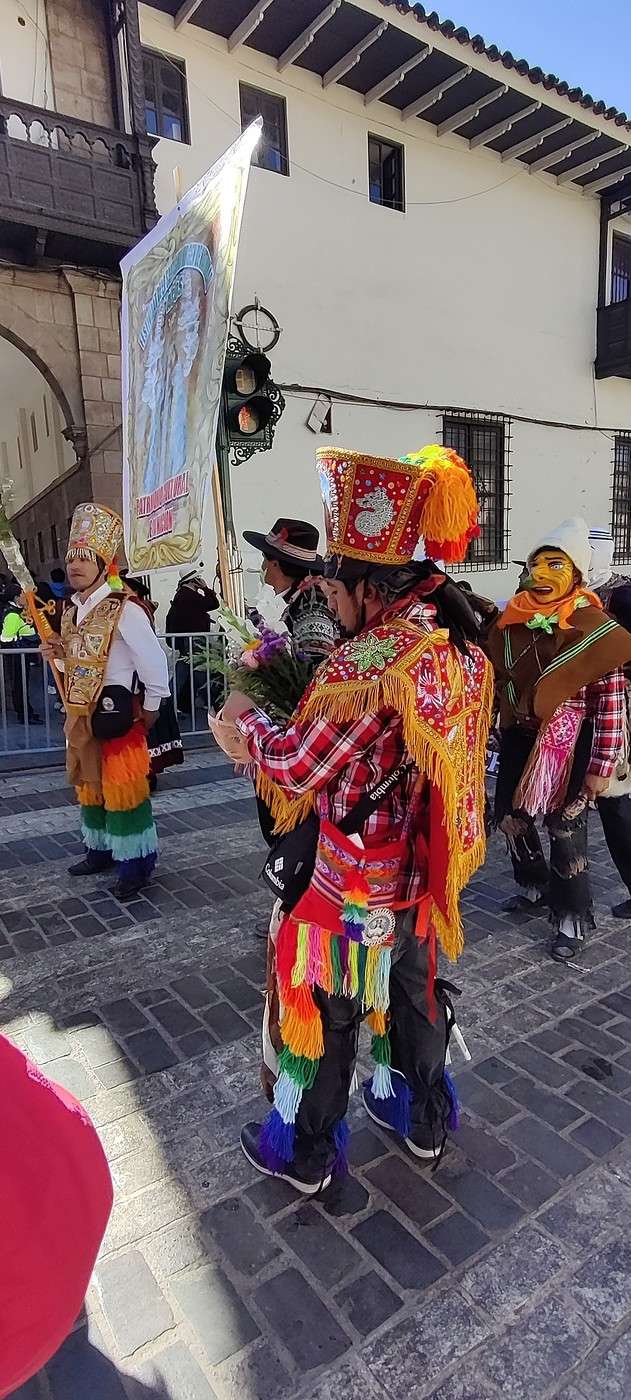
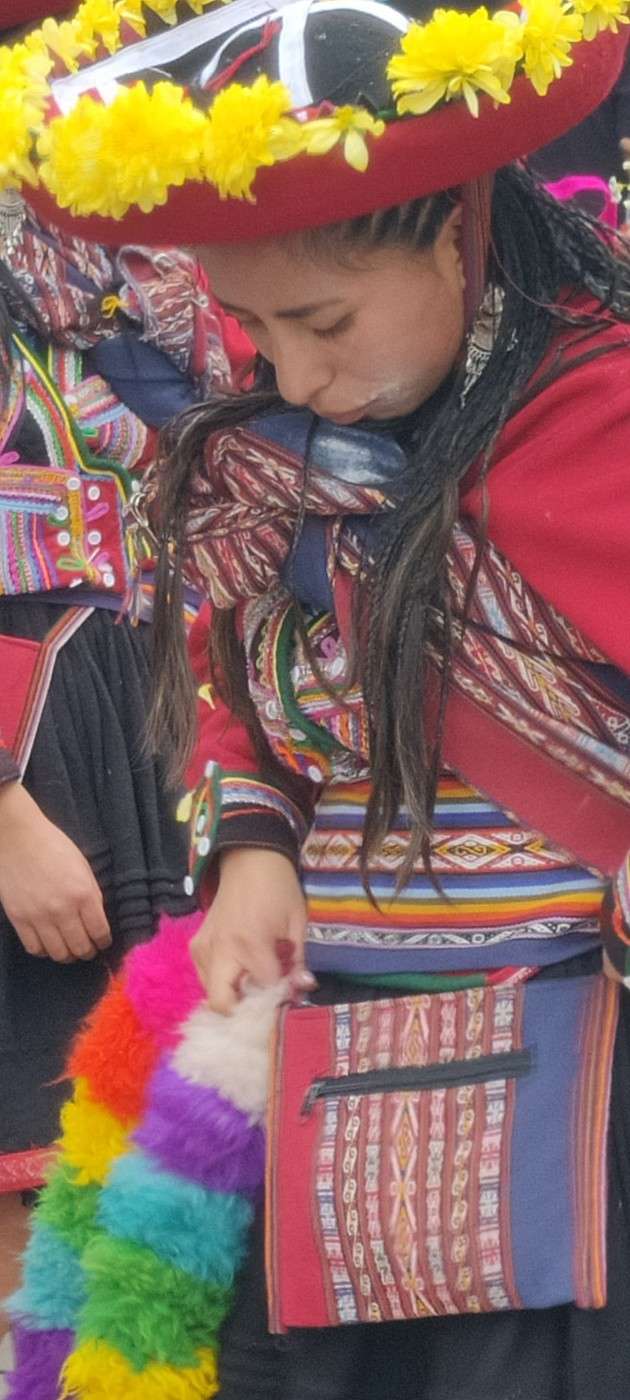
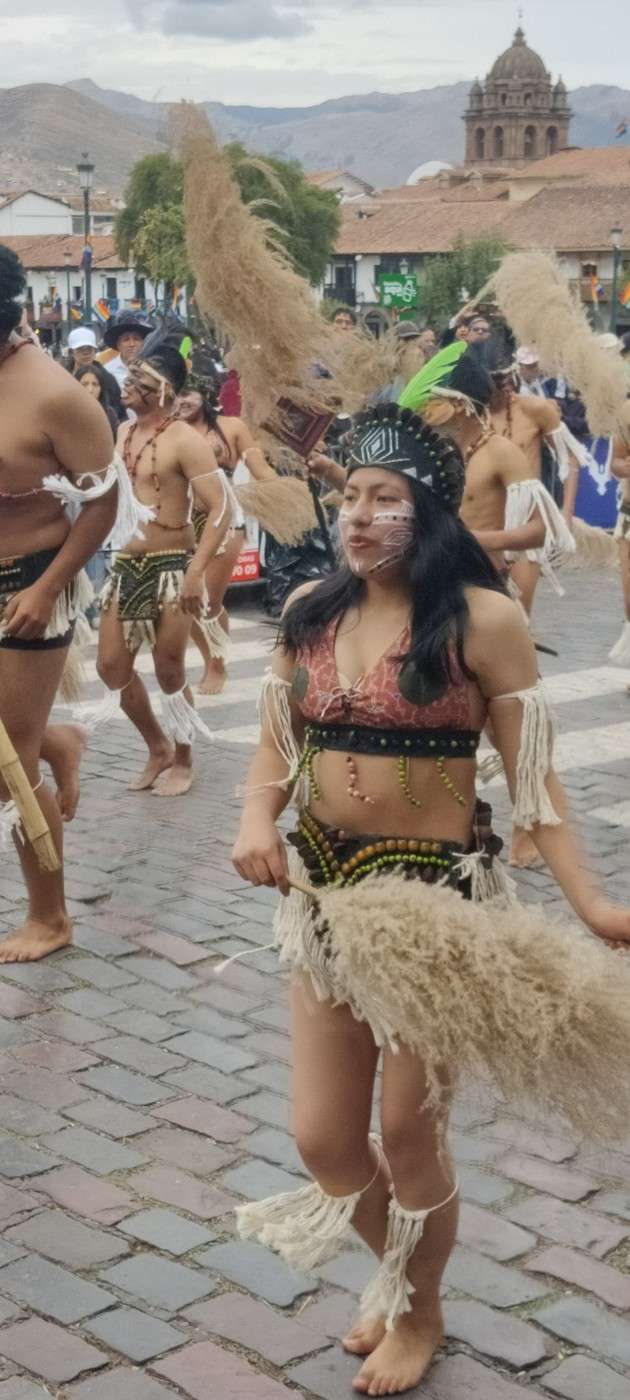
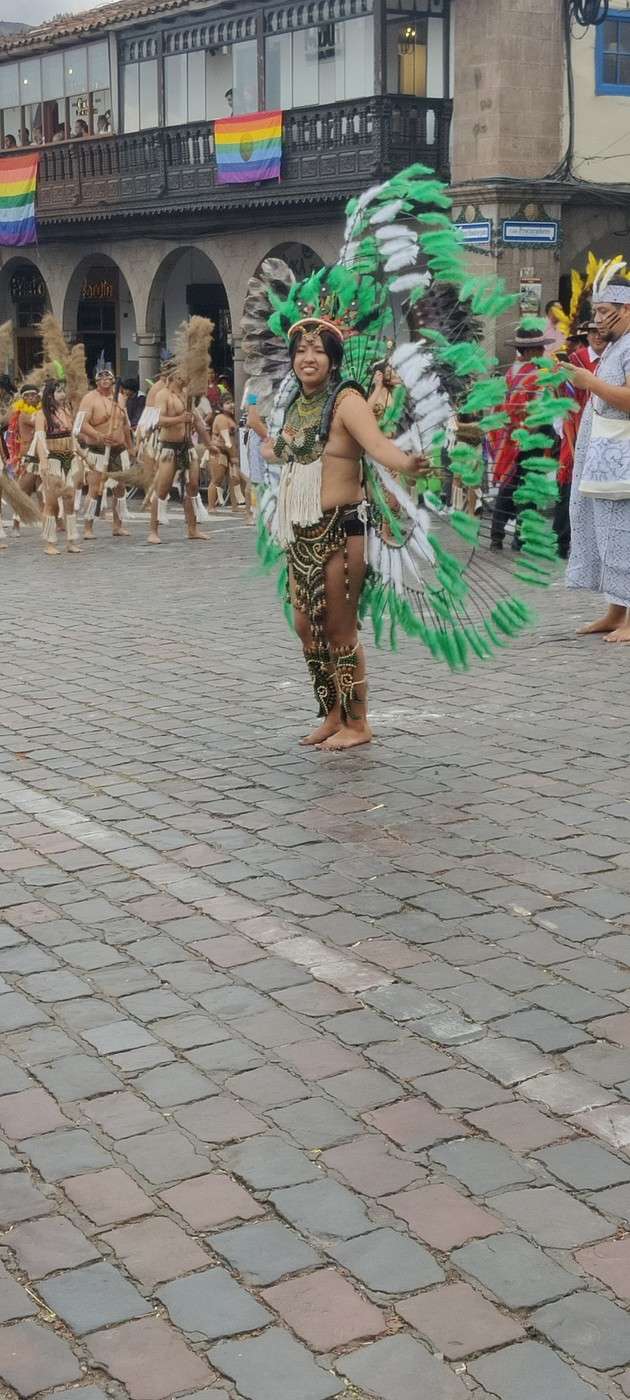
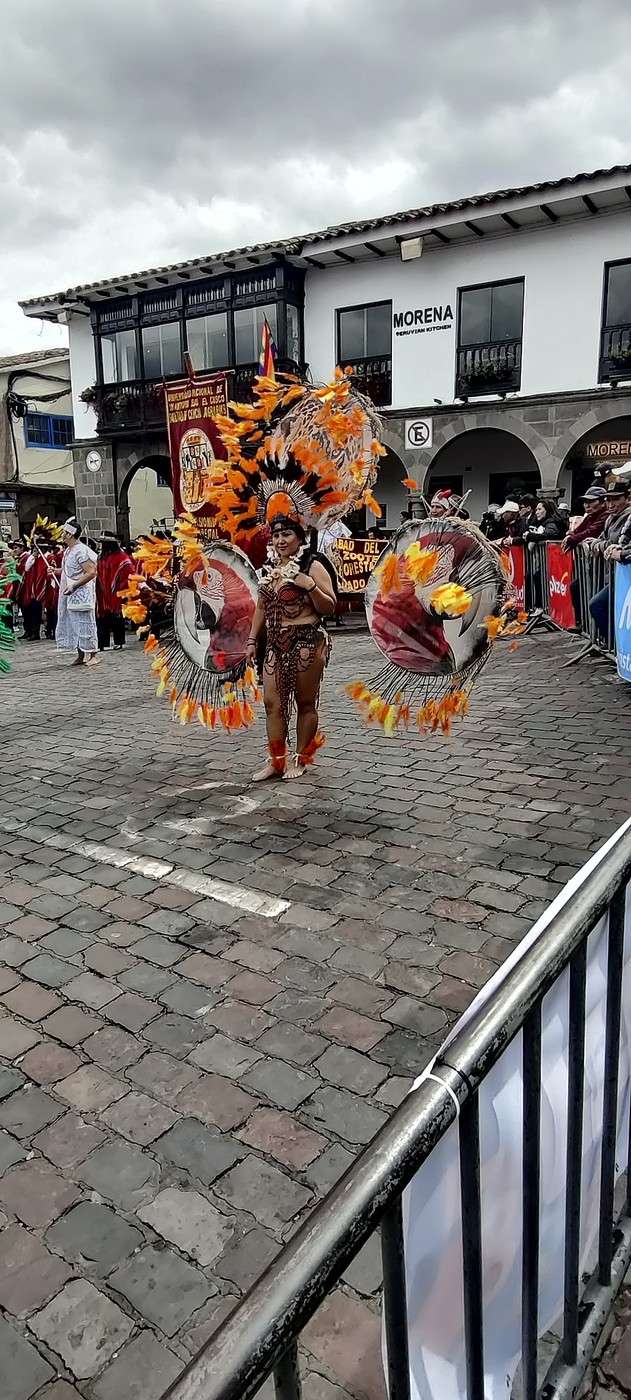
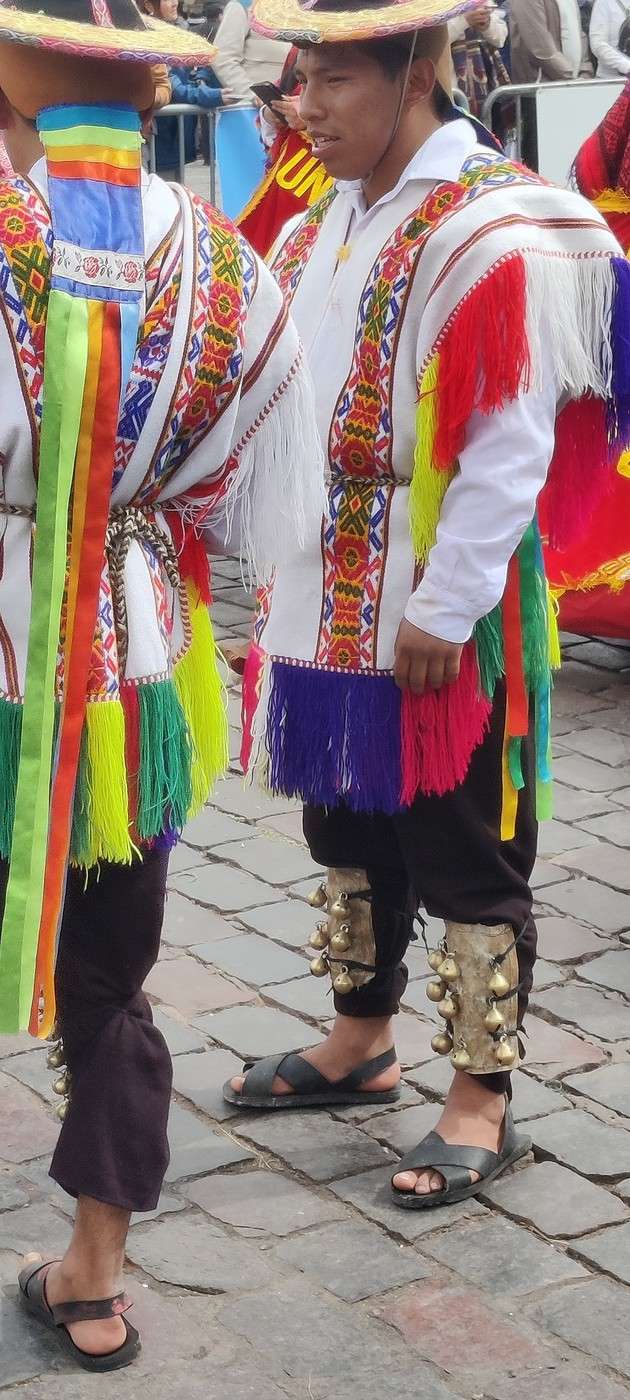
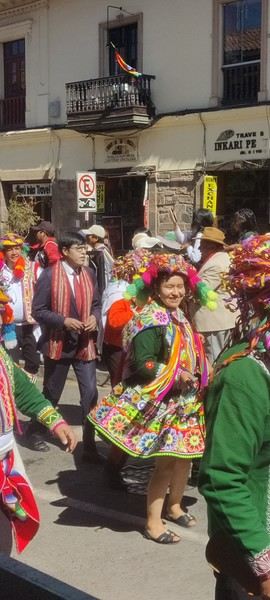
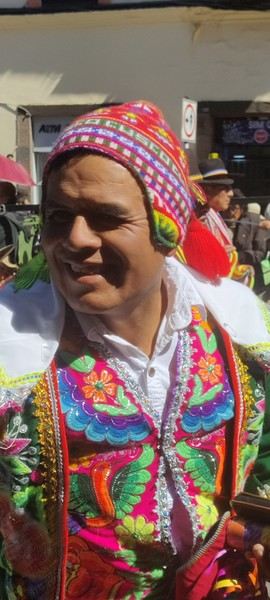
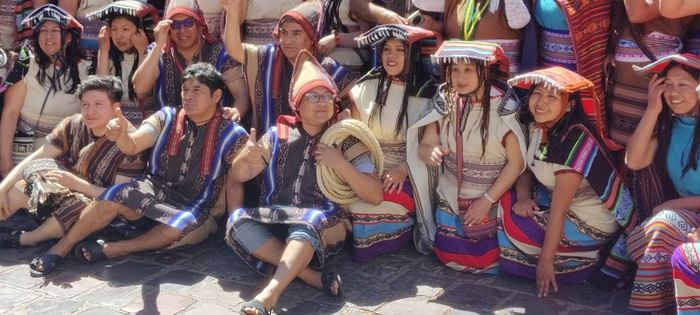
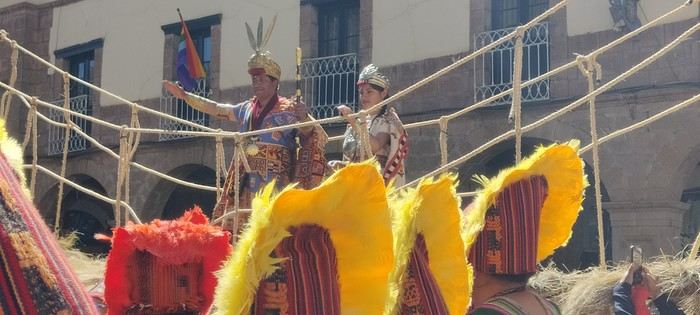
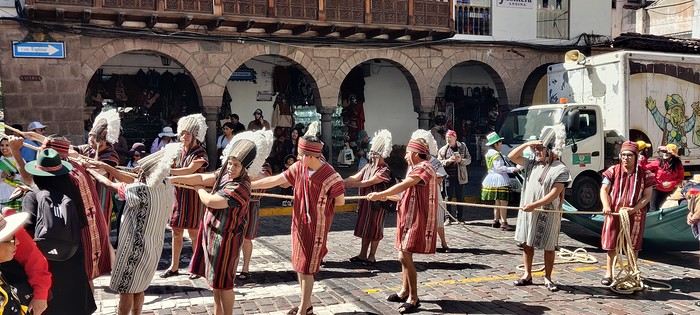
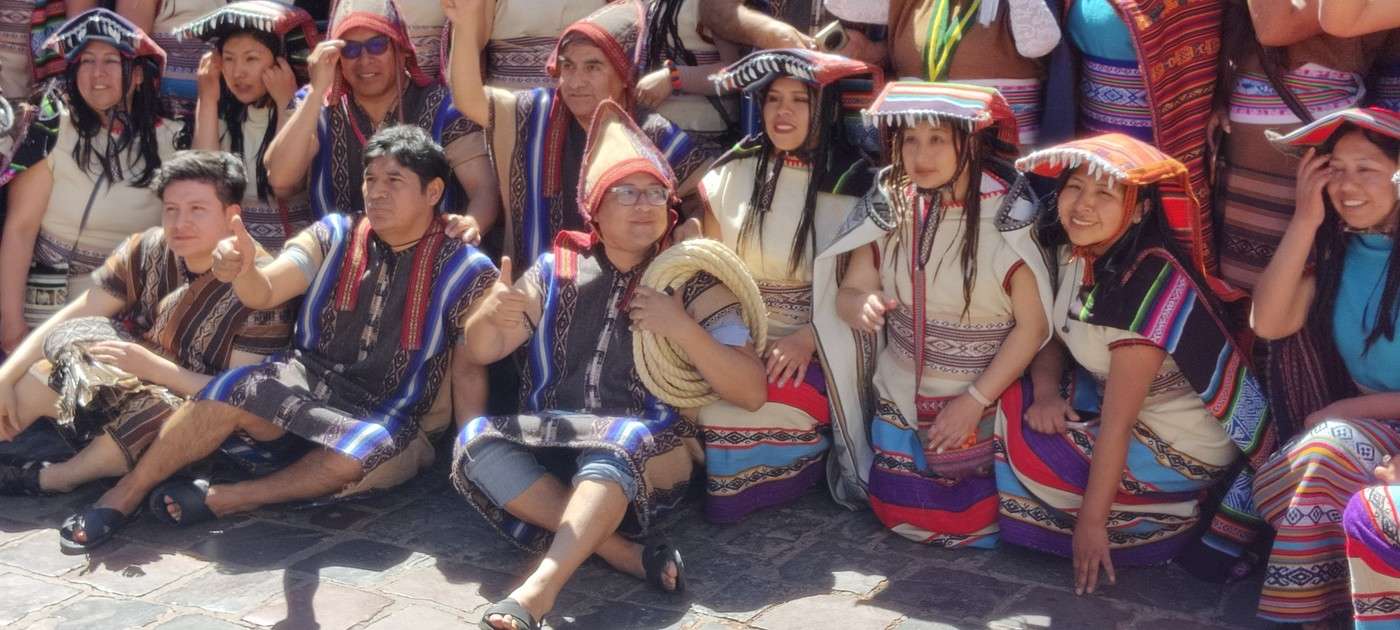
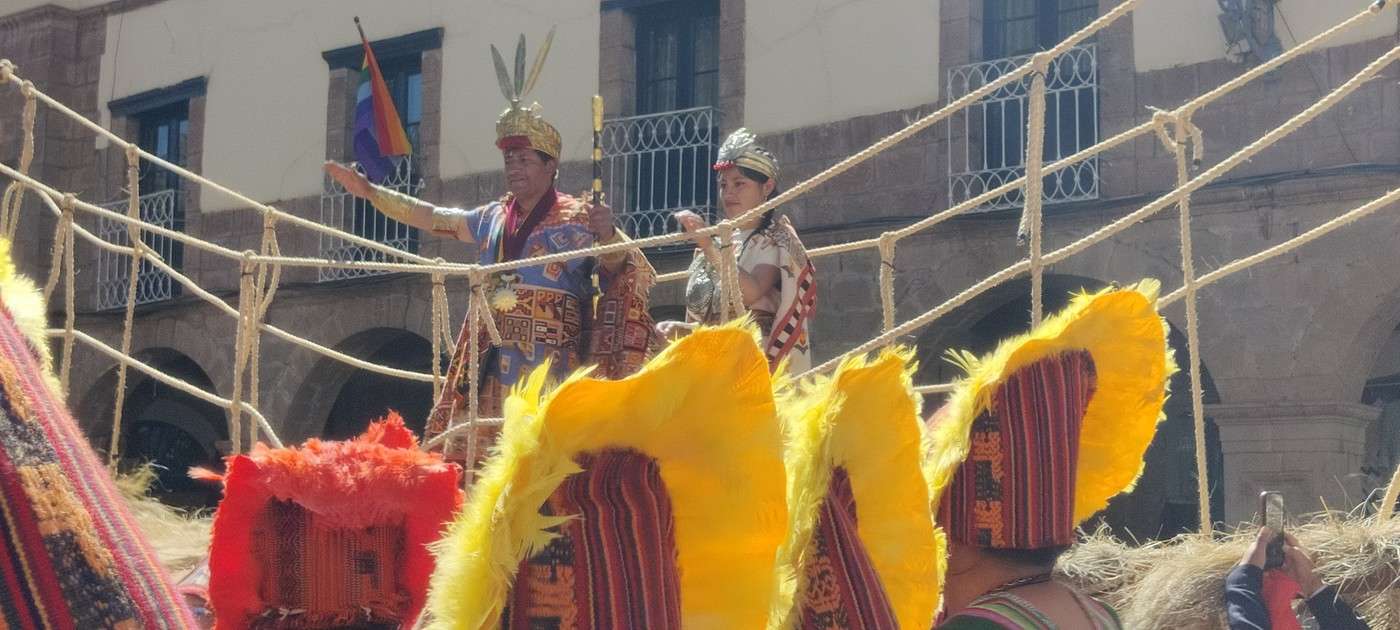
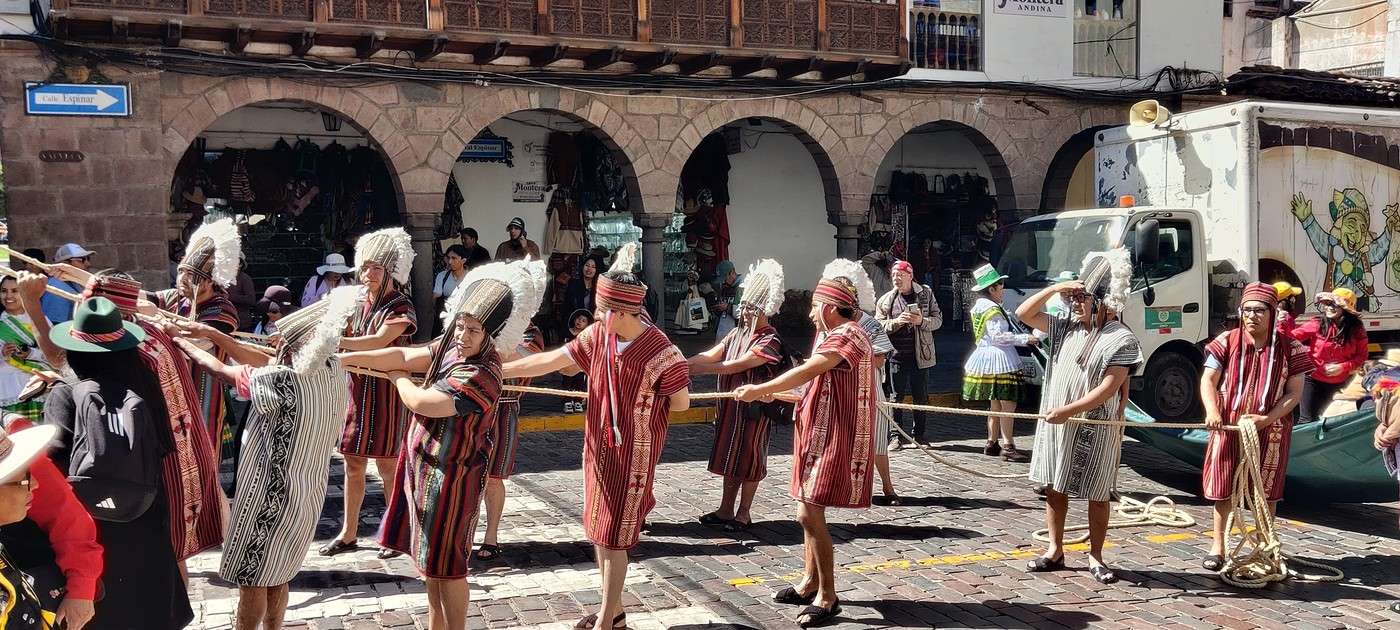
The Festival of the Sun in the streets of Cusco

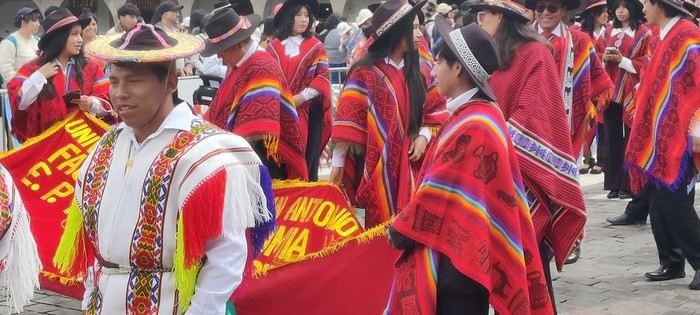
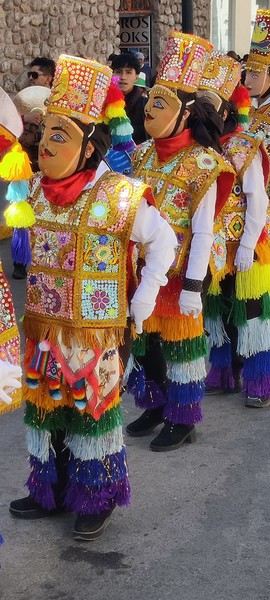
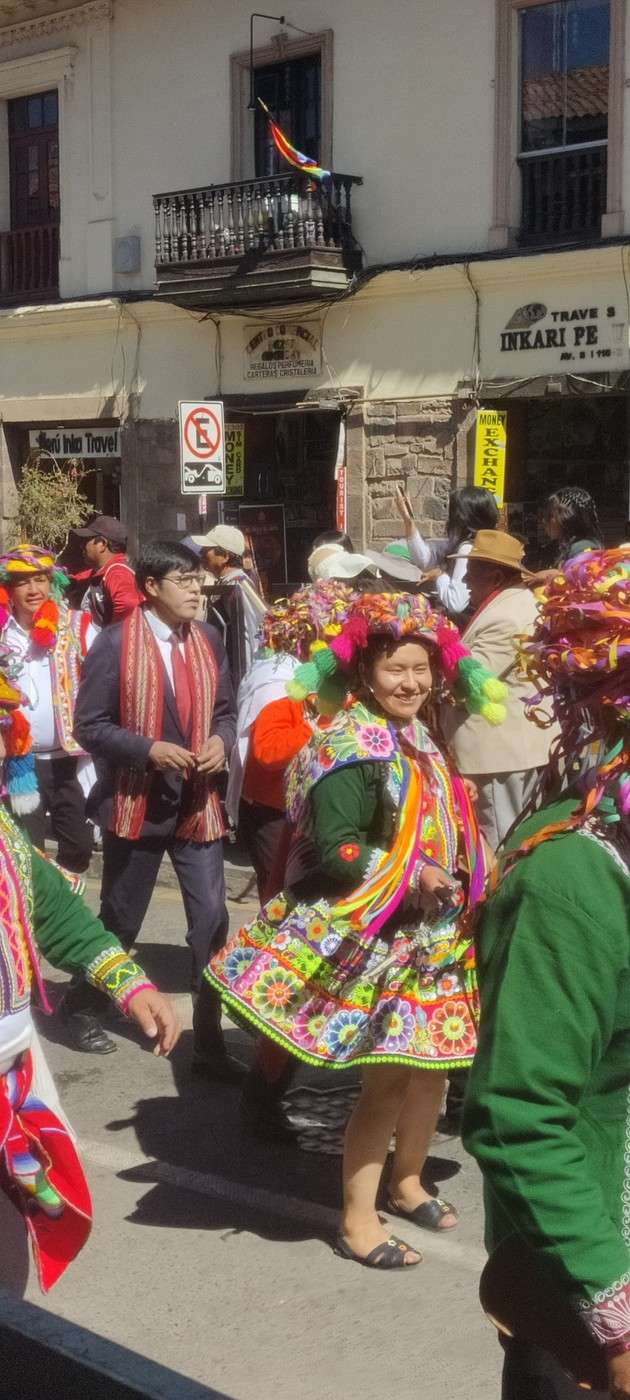
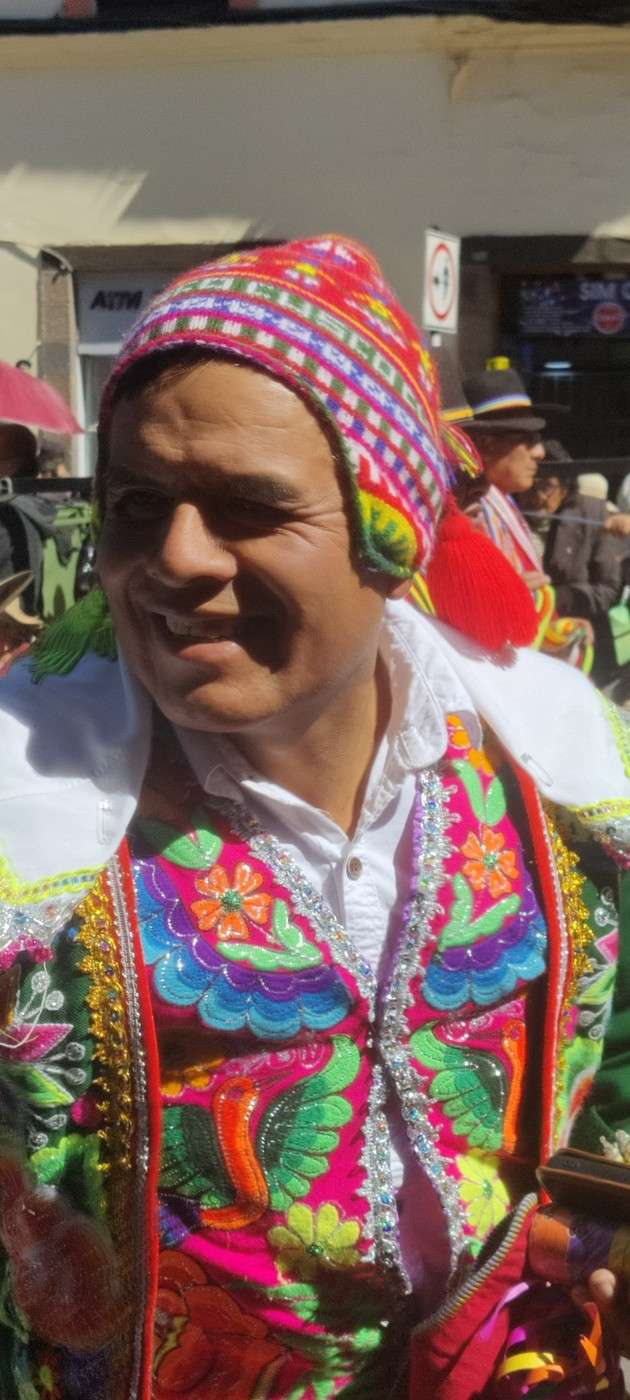
I’ve told you about the festivities that bring Cusco to life throughout June, culminating in the winter solstice ceremonies on June 24th. During this time, the city is in a constant buzz. Dances, folk parades, floats, and concerts follow one after another, all day and late into the night. Schools, villages, and different provinces compete with creativity: dazzling costumes, vibrant colors, music, and dances take over the streets and squares of Cusco. You can travel from one village to another without even leaving the main square! But don’t be fooled—these celebrations aren’t just a show for tourists. They reflect the region’s cultural richness and the Peruvians’ deep connection to their Andean identity and Inca heritage. When night falls, the costumes light up, and the music fills the streets, the spectacle becomes truly mesmerizing. But instead of long descriptions, the photos will give you a better sense of this vibrant festival.


Peru: A childhood dream finally realized

Larri · 2026-08-28

The Festival of the Sun in the streets of Cusco (continued)


Peru: a childhood dream finally come true

Holigirl · 2026-08-28

It's always a treat to be there for the festivities. Your photos are so vibrant. I’m the one who should thank you for your travel journal.

Quick question: there are tons of places to visit around Cusco. On the forum, travelers always use drivers to get there. Is renting a car just for Cusco and the surrounding area a bad idea? Did the driving seem dangerous to you?

Peru: A childhood dream finally realized

Larri · 2026-08-29

Hi Pascale,

There really are so many things to see around Cusco, beyond just the most famous sites—especially if you love history, and the landscapes are beautiful. As for renting a car, it’s possible, but the traffic is chaotic in the city, the streets are very narrow and steep, and I didn’t see any parking lots (though I wasn’t really looking!). Outside of Cusco, the roads are generally fine. Personally, I wouldn’t risk it!

Peru: a childhood dream finally realized

Muriel18 · 2026-08-30

at least this travel journal interests one person

No, no. More than one ;) Machu Picchu is still just as impressive even in photos, as are the Maras salt mines and the Moray terraces (which I didn’t know about before).

Peru: A childhood dream finally realized

Montagnard74 · 2026-08-30

Hello, It’s always a treat to revisit places we’ve loved, especially when it’s told so well and illustrated like this… A childhood dream is shared by more people than you think ;)

Peru: A childhood dream finally realized

Montagnard74 · 2026-08-30

Renting a car just for Cusco and the surrounding area—is it a bad idea? Did the driving seem dangerous?

It’s not a bad idea in itself, but there are so many private transport options or even collectivos at really low prices that the question becomes less relevant. Plus, the distances between sites aren’t huge, so renting a car is less appealing.

Peru: a childhood dream finally realized

Larri · 2026-08-30

Hi Bruno, Thanks for reading and for your comments. It feels good—you feel less alone. I say that, but like many, I read a lot of travel journals without chiming in. Larri

Peru: A childhood dream finally realized

Larri · 2026-08-30

Thanks Muriel, It’s true that around Cusco, there are plenty of lesser-known Inca sites that really deserve a visit.

Peru: A Childhood Dream Finally Fulfilled

Larri · 2026-08-30

Day 16 – Final Day in Cusco

Today, we didn’t plan anything—just a day to rest. We wandered around the city to do some shopping. The festivities are still in full swing.


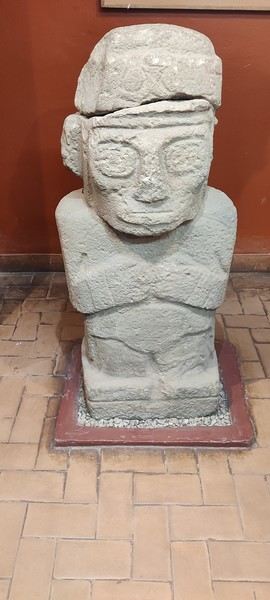
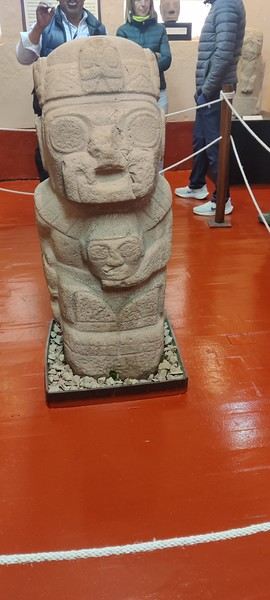
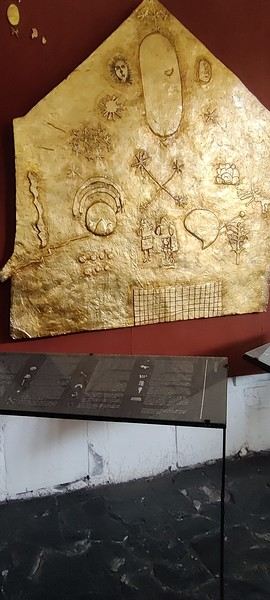
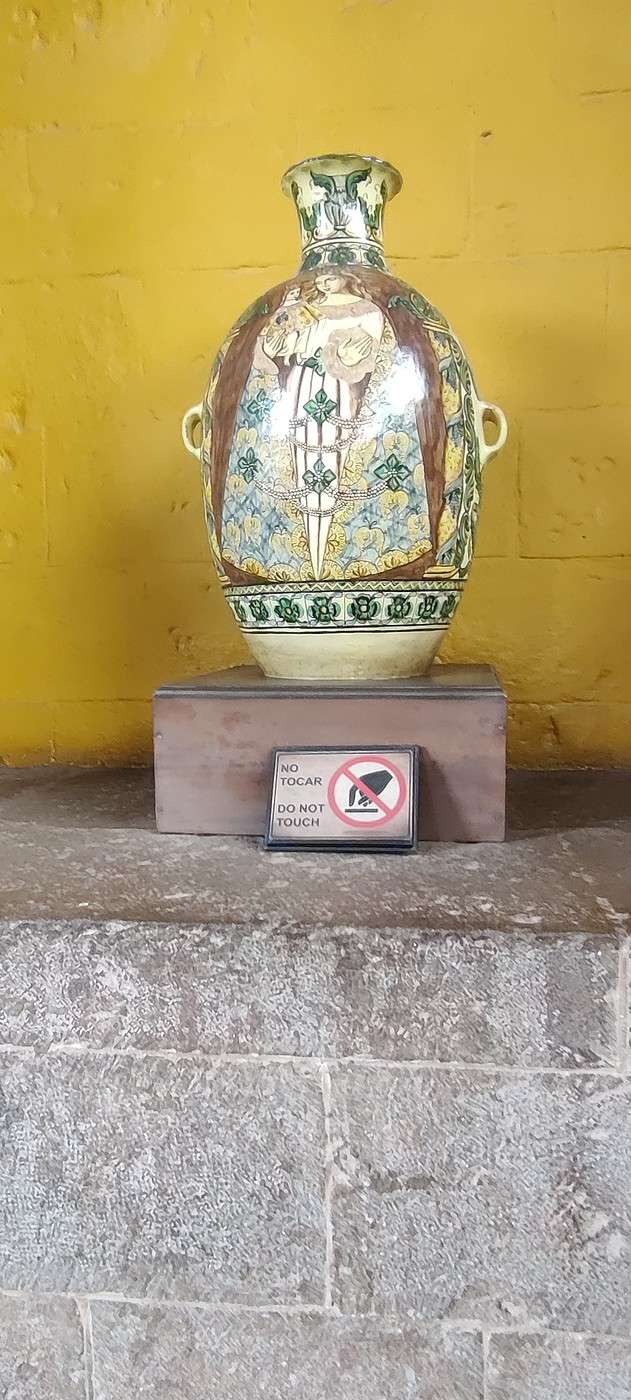
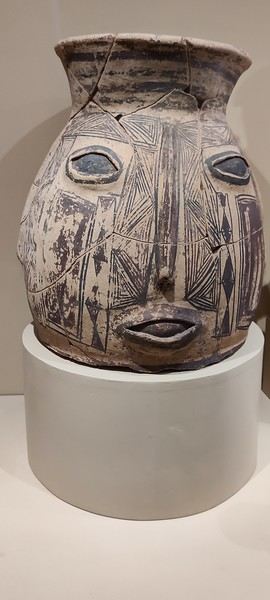
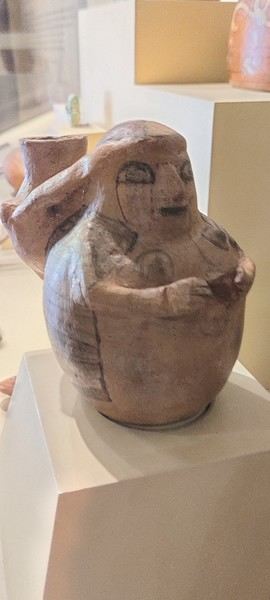
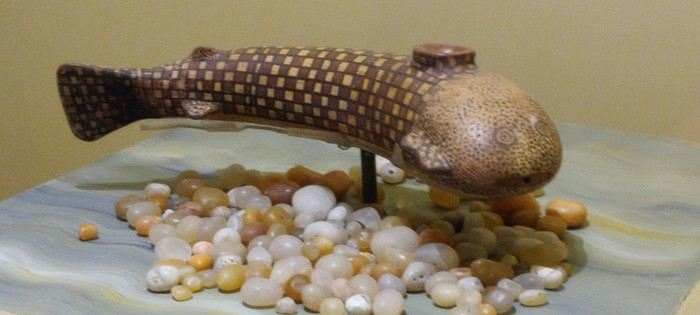
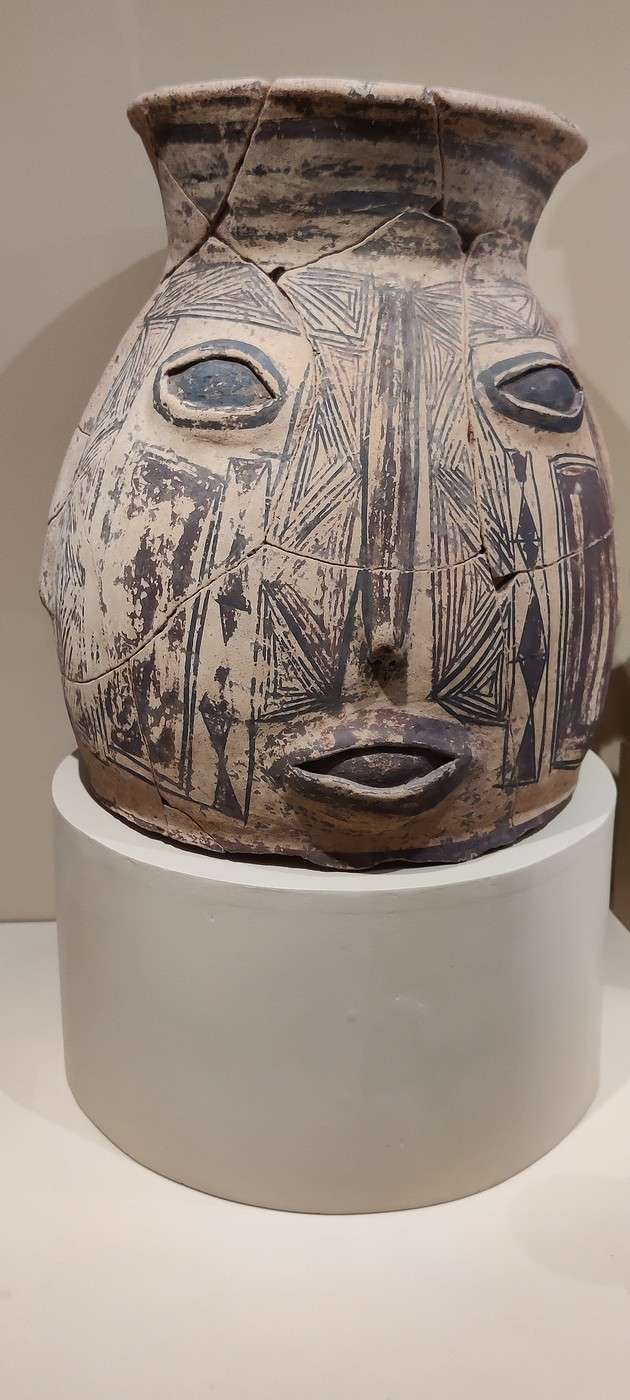
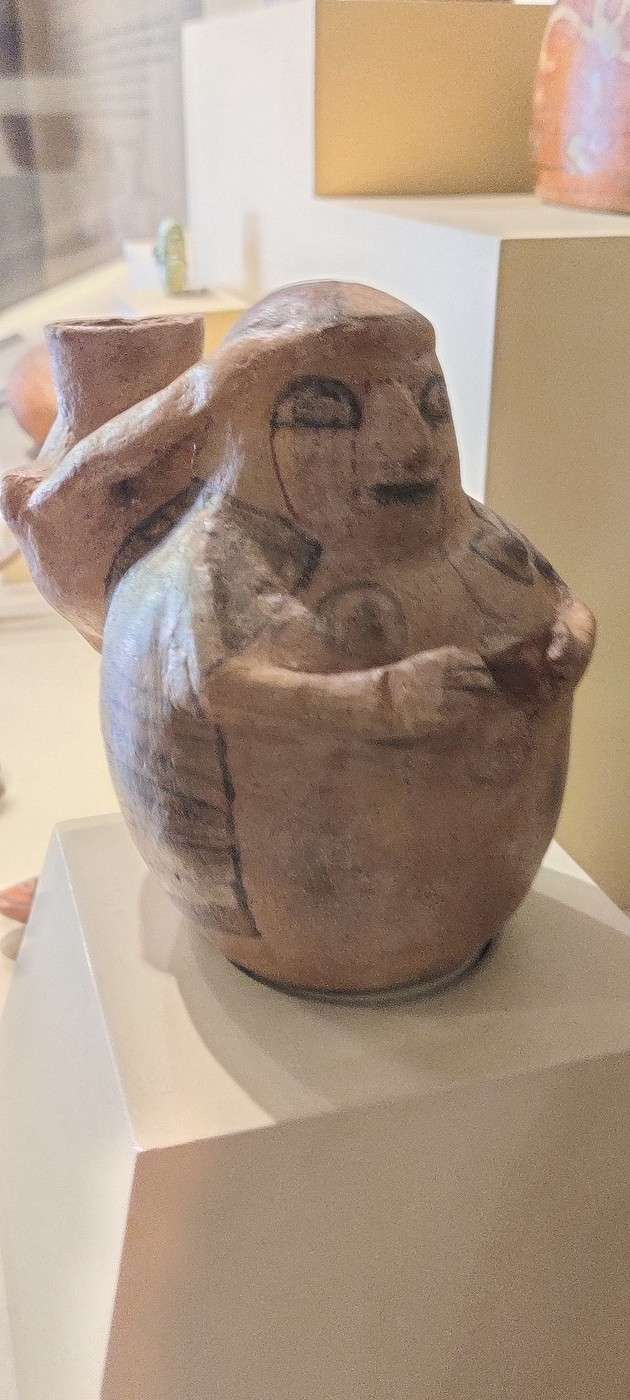
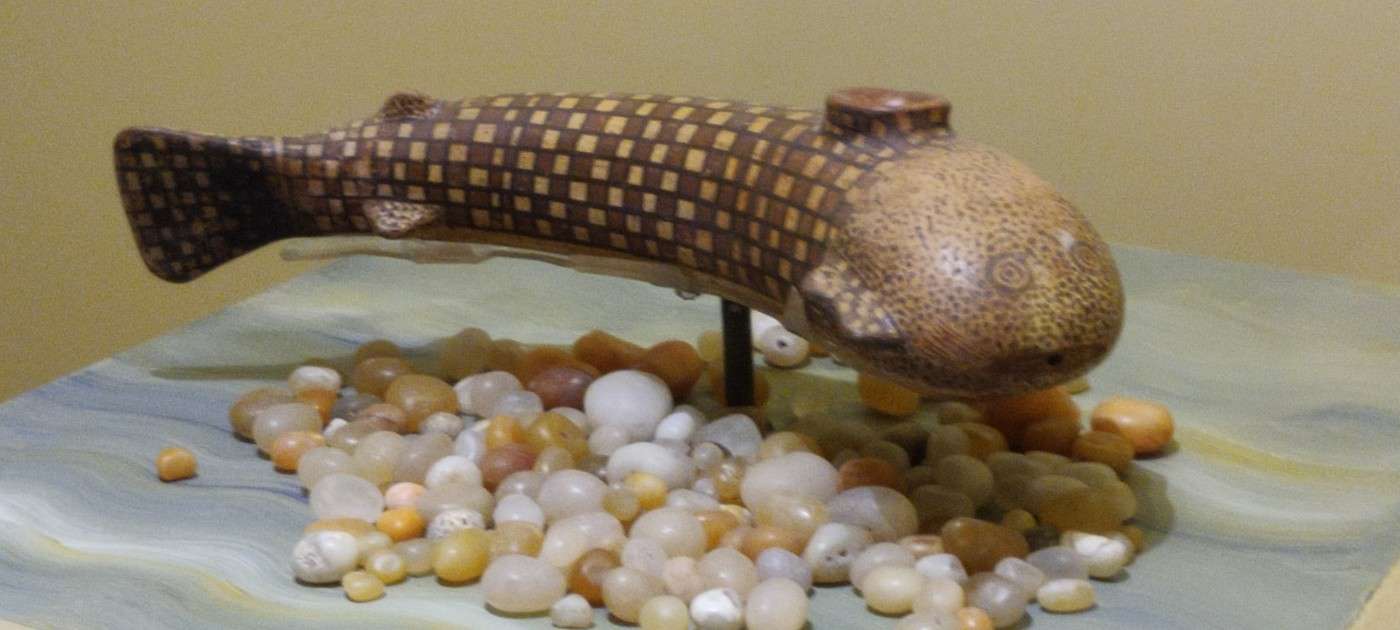
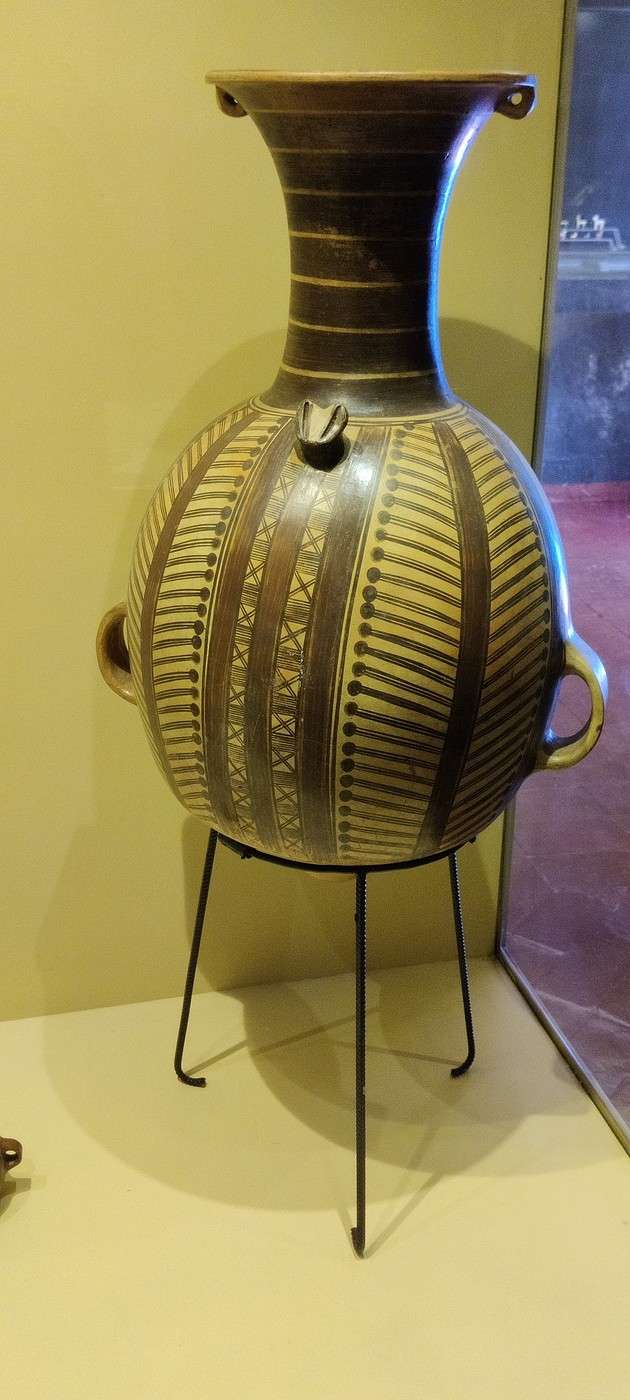
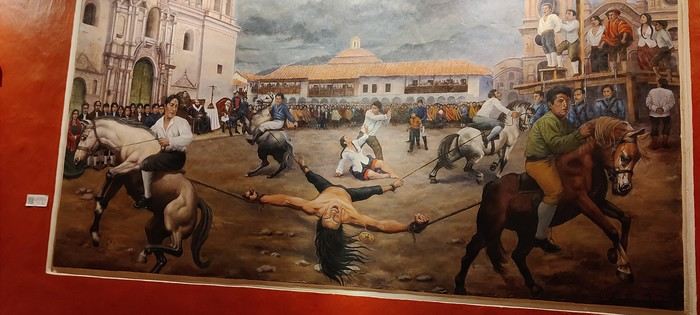
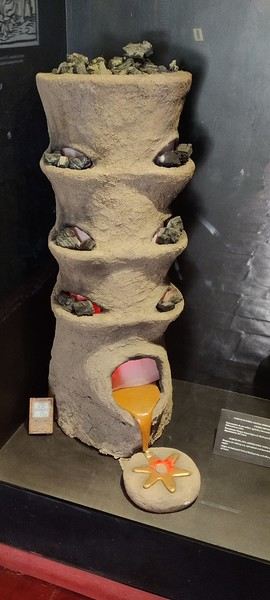
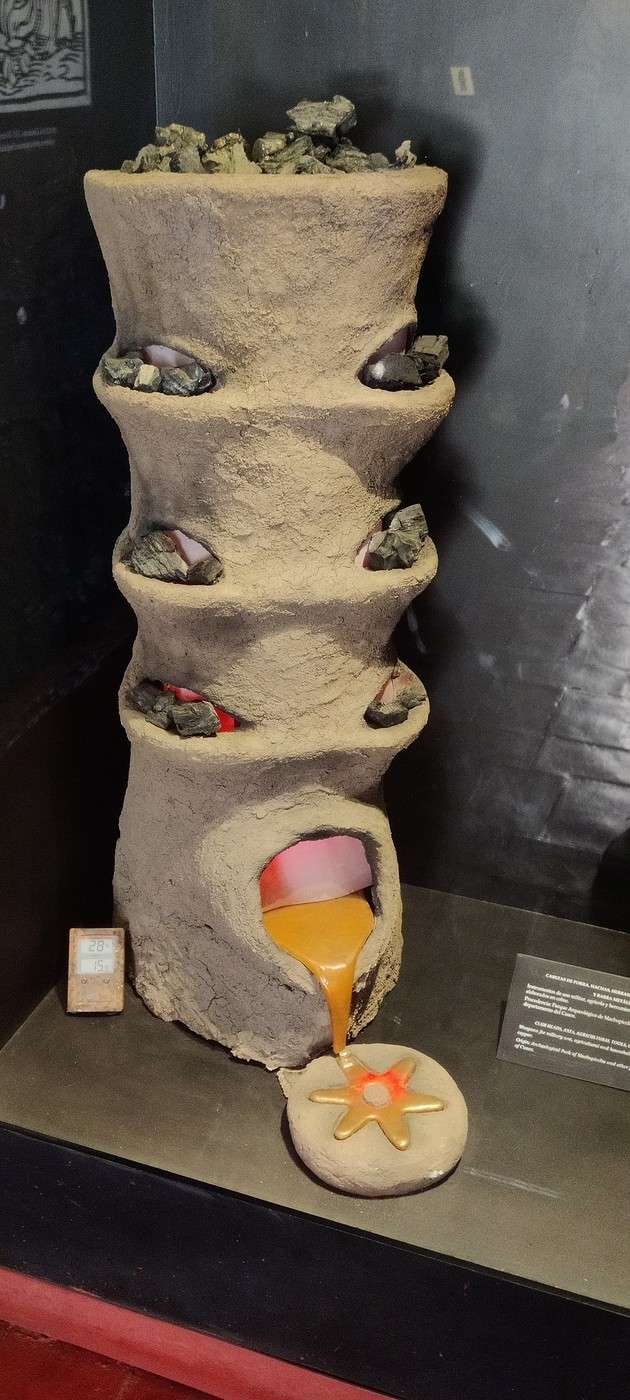
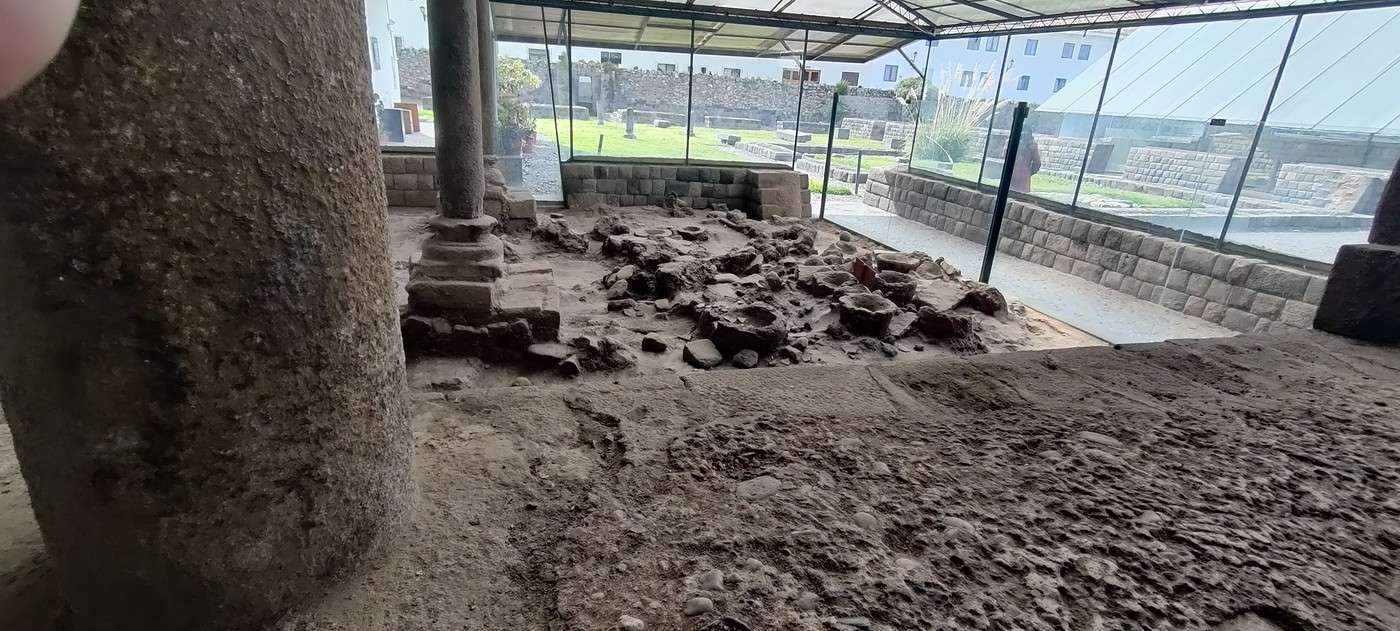
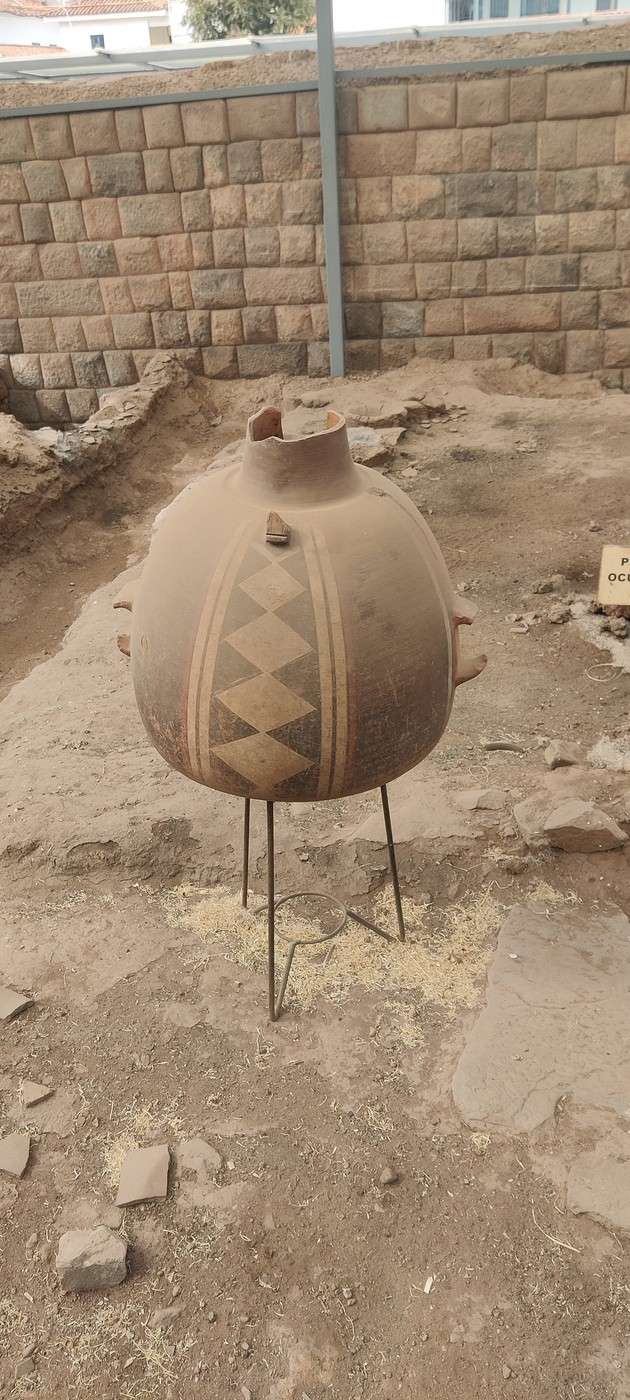
To make the most of our "boleto turístico," we set off to explore two museums recommended by one of our guides. First, we visited the small Qorikancha Museum, located beneath the esplanade of the Temple of the Sun. The entrance, leading to the basement, is made of stone in pure Inca style. The museum displays archaeological finds from the site: ceramics, stone and metal objects, mummies, and skulls that underwent trepanation, showcasing pre-Columbian medical practices. Models also help imagine what Qorikancha looked like before it was turned into a convent.


!

Peru: A childhood dream finally realized

Larri · 2026-08-30

J17 - Last day in Cusco (continued)

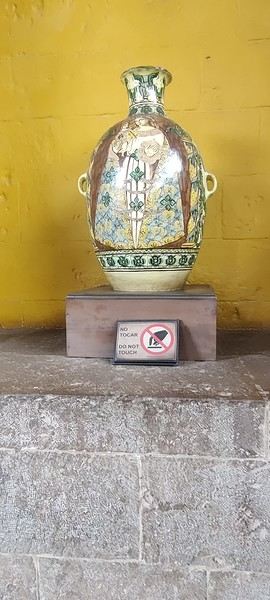
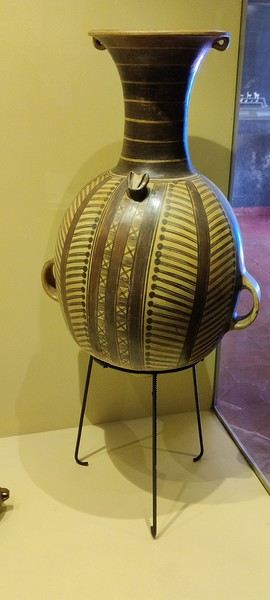
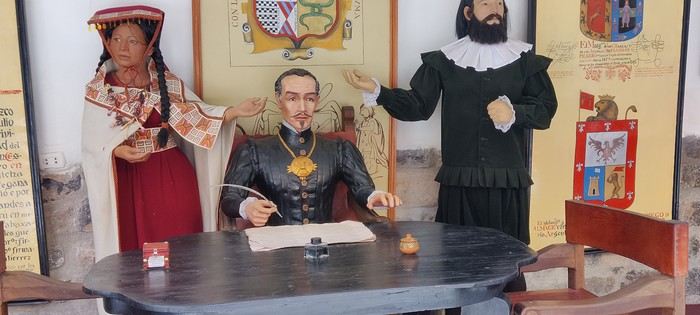
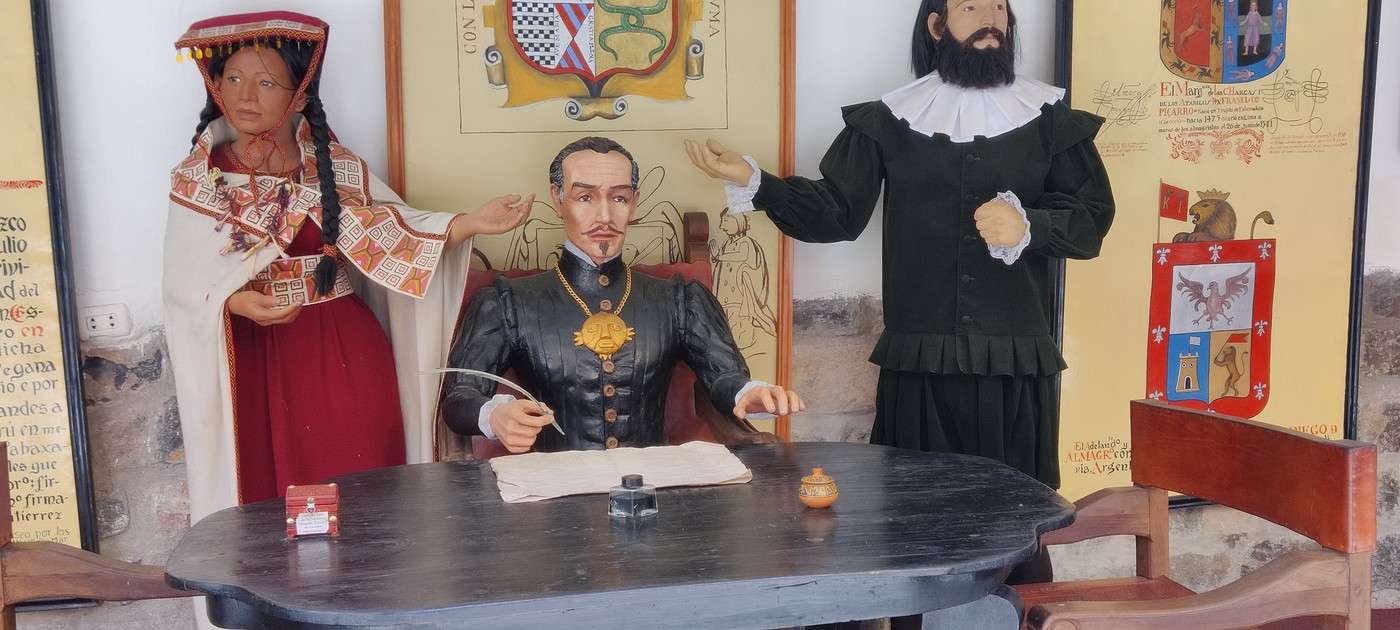
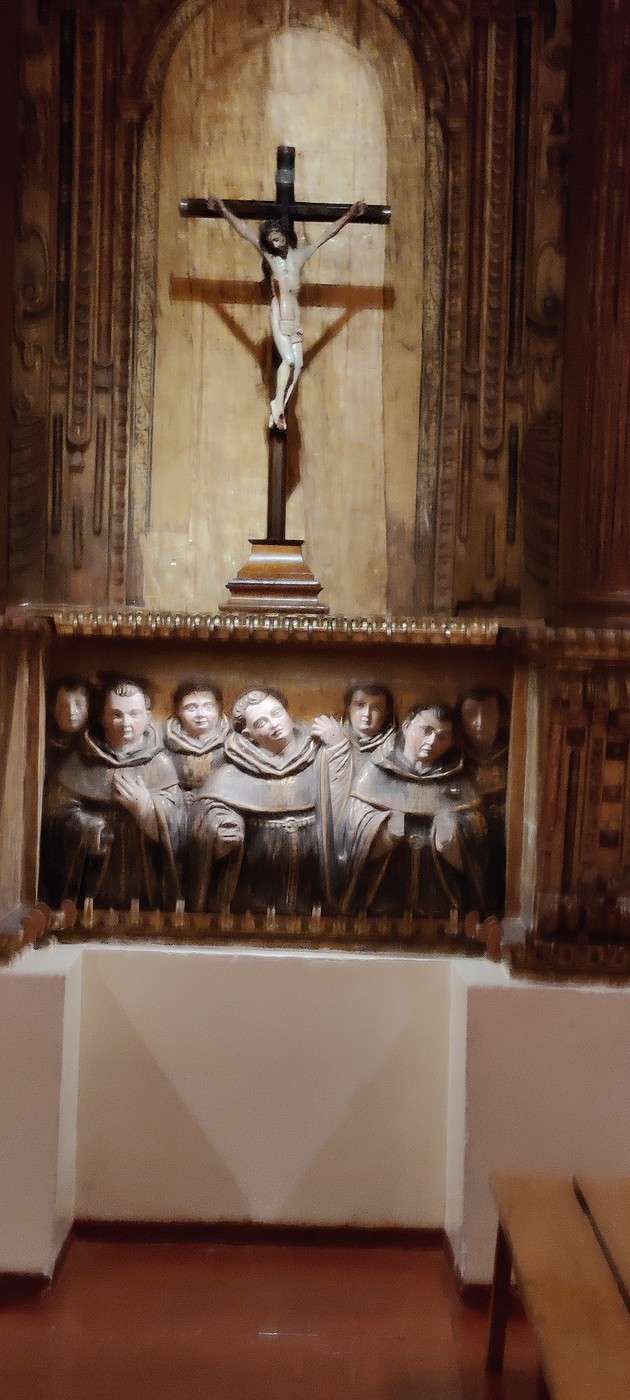
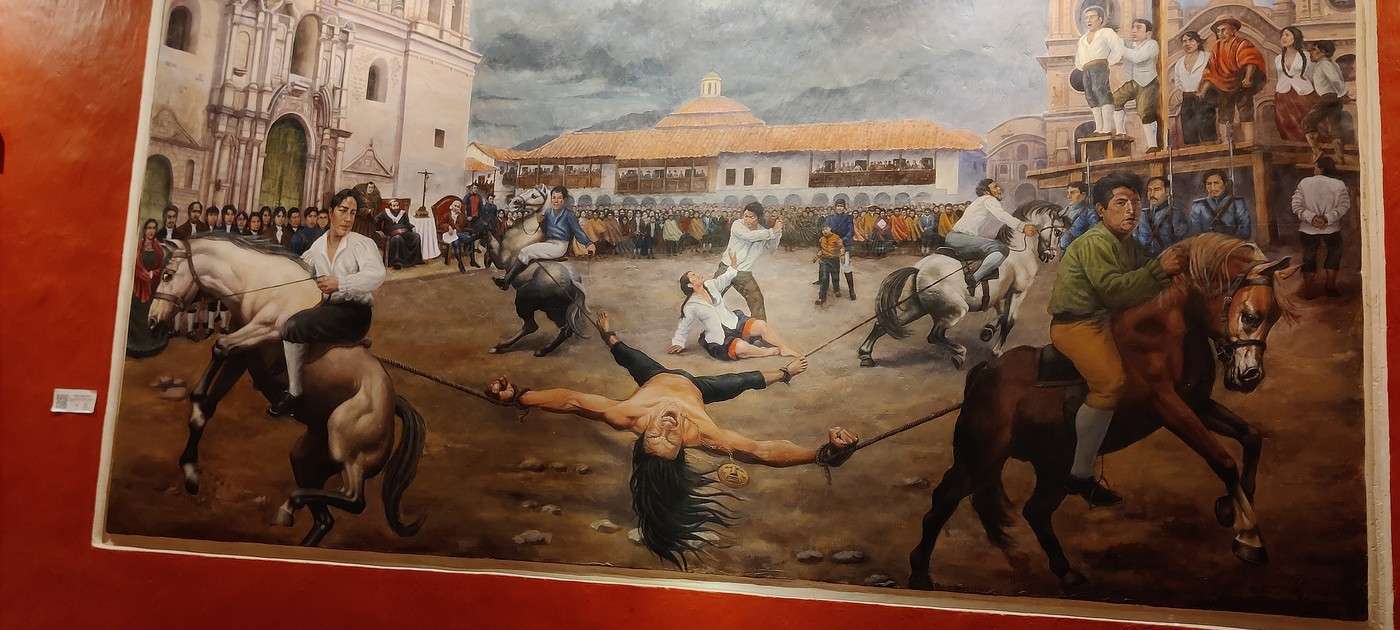
We continue with the Regional Historical Museum, housed in the beautiful home that once belonged to Inca Garcilaso de la Vega. The collections tell the story of the transition from pre-Inca and Inca worlds to the colonial era and the birth of a blended Cusco. Nothing spectacular, but some lovely ceramics, gold objects, and a few works from the Cusco School of painting.


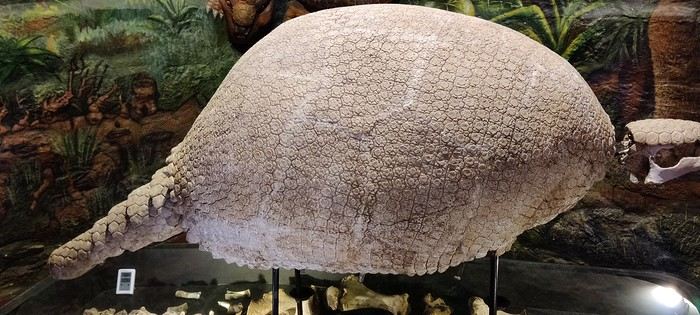
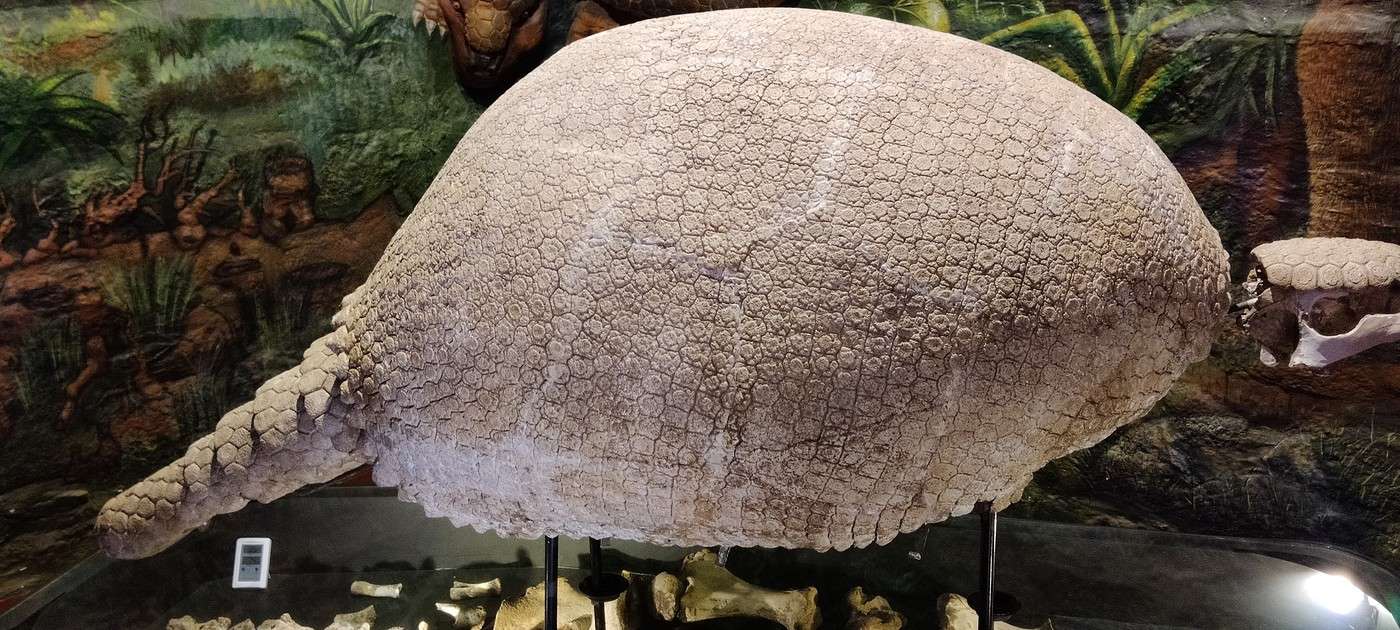
One curiosity catches our attention, though: a glyptodon fossil, a sort of prehistoric armadillo, an herbivore that lived in South America over 10,000 years ago.


Tonight, we dine at Carpe Diem. Not great. And to top it off, when it’s time to pay, our phone shows the bill was debited from our account, but the payment doesn’t appear on the restaurant’s end. The result: half an hour of back-and-forth trying to sort it out. A final evening in Cusco we could’ve done without!

Peru: A childhood dream finally realized

Larri · 2026-08-30

Day 17 – Back to Lima

The end is near. Following Tout Pérou’s advice—fearing possible afternoon flight cancellations due to weather or technical issues—we booked a late-morning flight.

We left Cusco with regret. We were settled on the plane, but it didn’t move. A technical problem was announced, and we were redirected to an airport parking area. We stayed there for over two hours before returning to a boarding gate and finally taking off. It felt like everything was conspiring to keep us in Cusco!

We managed to notify our driver about our significant delay. Our day was already well underway by the time we arrived at our hotel in the Miraflores district.

We had dinner at a seafood restaurant near the hotel.

VoyageForum — the largest community of French-speaking travellers.