in Entre deux voyages › Carnets de voyage
Faces and Landscapes of Senegal (Gorée, Saint-Louis) (page 1 of 4)
Discussion started by Fabhyène on 2018-07-28
78 replies
This thread has been translated into English.
Faces and Landscapes of Senegal (Gorée, Saint-Louis)
Fabhyène · 2018-07-28 · Message 1 of 79
Hello!
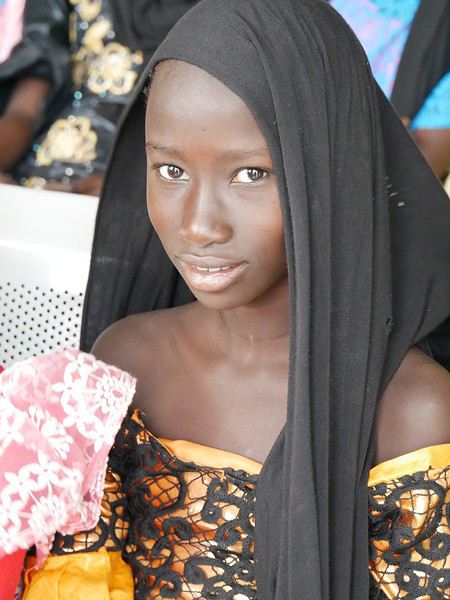
I invite you to share our wonderful discovery of Saint-Louis and its surroundings: Djoudj Park and the Langue de Barbarie... Daily life, heritage, landscapes, and wildlife (birds)...
We stayed in Senegal for 10 days in April/May 2018, specifically in Saint-Louis, Senegal, since we were there for the Jazz Festival held every year. But we took the opportunity to explore this country we didn’t know!
In this travel journal, you’ll find:
- A short stop in Gorée, which we visited before heading to Saint-Louis
- The different faces of Saint-Louis, especially the vibrant fishermen’s district
- Djoudj Park, with its many birds
- The Langue de Barbarie
... and much more!
Before going to Senegal, I did some research on this forum and others. So many strong opinions about Senegal—you either love it or hate it! If it hadn’t been for the festival, we might not have gone... What a shame that would’ve been, because we loved it!
Of course, I saw poverty, idleness, and litter, especially plastic bags—a global scourge. A bit of harassment from street vendors, especially at first when you don’t know how to deflect it and accidentally encourage it. The privileges of a social class and inequalities, though that’s something you encounter in many poor countries, not just in Africa.
But when I close my eyes and remember our trip, what stays with me is the youth, the beauty of so many boys and girls, the elegance of the women, and the sparkle in their eyes and smiles. The light and colors, the smell of grilled fish, the taste of freshly roasted peanuts and baobab fruit. The honking horns, the call of the muezzins, the music, the bursts of laughter.
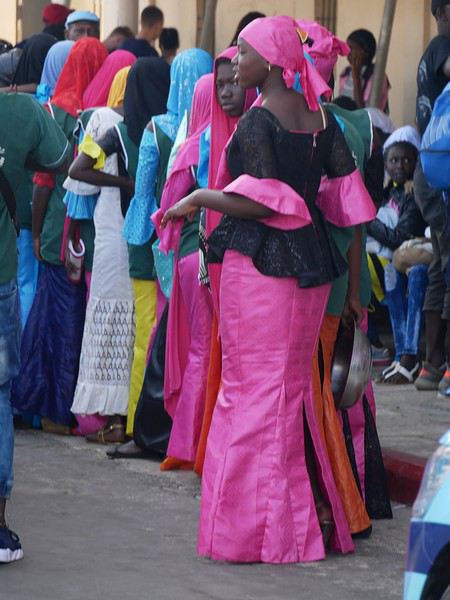
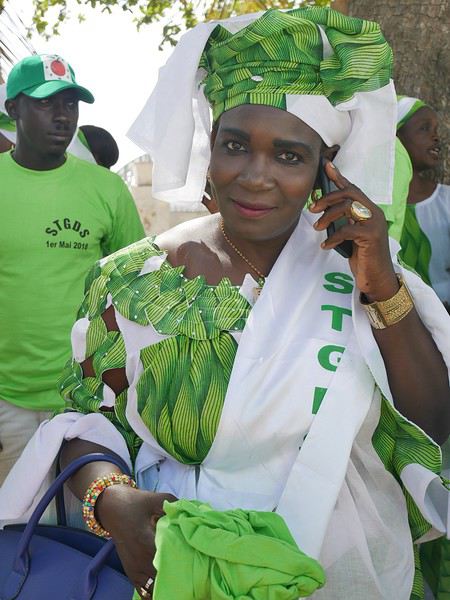
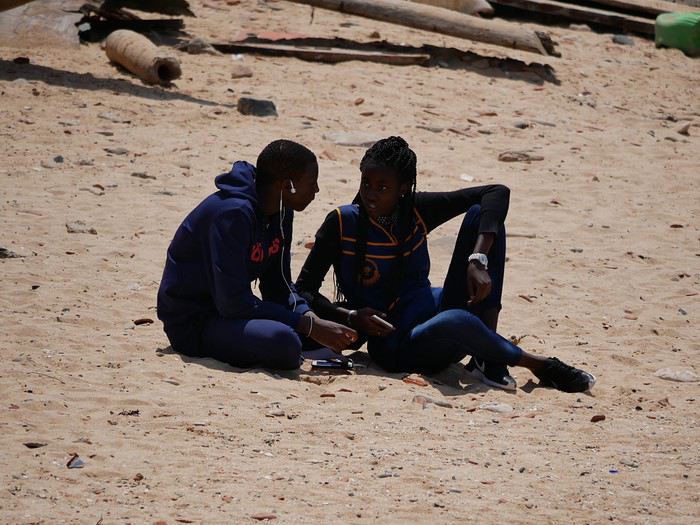
To be continued...
Faces and Landscapes of Senegal (Gorée, Saint-Louis)
Cambrousse · 2018-07-28 · Message 2 of 79
Beautiful photos.
I was also delighted to see the beauty of the women and sometimes compared their colorful clothes to flights of butterflies.
I haven’t seen such vibrant colors in robes and festive clothing anywhere else in West Africa—sometimes even in very small villages.
Bright yellow, red, orange, blue, green, pink. It pops and it’s gorgeous.
Thanks for sharing. I’ll keep reading you.
Faces and Landscapes of Senegal (Gorée, Saint Louis)
Fabhyène · 2018-07-28 · Message 3 of 79
Thanks, Cambrousse!
I saw on your profile that you’ve spent a lot of time in Benin—a country we’re really curious about. I might reach out again to learn more!
Best,
Faces and Landscapes of Senegal (Gorée, Saint-Louis)
Cambrousse · 2018-07-28 · Message 4 of 79
I’d be happy to! 🙂
Faces and Landscapes of Senegal (Gorée, Saint-Louis)
Fabhyène · 2018-07-28 · Message 5 of 79
Gorée Island
Before heading to Saint-Louis, we made the usual trip to Gorée Island, which I highly recommend.
At the ferry dock early in the morning, it's bustling. Entire classes of children and teenagers, all lined up...


. Tourists, of course, and many people who work on the island, like all those street vendors trying to make some money with trinkets and knick-knacks. They start chatting with tourists on the boat: "Hello, I'm Vanessa Paradis. What's your name? You'll come see me on the island and buy a necklace from me, okay?" Don’t say "okay" lightly... later on the island, she’ll recognize you among 100 people and remind you of your promise, and pretend to get upset if you don’t keep it...
The ferry leaves the port of Dakar and passes a few fishermen along the way.


The island is just a little over 4 km from the coast, so the crossing is quick.


The island is small, and the walk is very pleasant through streets lined with some beautiful colonial houses.


Climb up to the fort for a view of Dakar, watch the black kites soaring in the sky and diving for prey...

- Visit the House of Slaves, a moving symbolic site.


We now know that Gorée played only a minor role in the slave trade, and many of the figures presented at the museum, aiming to portray Gorée as the hub of the slave trade, are incorrect... But it doesn’t matter—the symbolic weight is strong, and it’s a memorial site dedicated to all the victims of an abomination that lasted for centuries and on which men, cities, and countries built their wealth.
During your walk on Gorée Island, you’ll likely be approached by souvenir vendors... if you follow the basic rule of not looking at the items or engaging in conversation if you don’t want to buy, and say so very clearly before turning away... you’ll be fine! I’ve seen much worse! That said, you can also buy something, taking your time to negotiate...


That’s all for Gorée—a charming excursion of a few hours...

Faces and Landscapes of Senegal (Gorée, Saint Louis)
Fabhyène · 2018-07-28 · Message 6 of 79
On the way to Saint Louis, Senegal
From Dakar to Saint Louis, just over 250 km, a 4- to 5-hour drive, passing through numerous villages. We want to arrive in Saint Louis before nightfall, so unfortunately, we don’t have time to stop... we watch small shops, workshops, and lively village centers flash by in the late afternoon.
Sorry, the photos aren’t very clear since they were taken on the go...


We stop at the foot of an ancient baobab tree... we’re told it’s 1,200 years old—it could be 600, 1,000, or even 2,000. Either way, you can’t help but wonder about all the stories it could tell... I press my ear against its trunk... but alas, I don’t hear its voice!


A group of kids comes running from who-knows-where, even though there’s no village in sight...


To be continued!!!
Faces and Landscapes of Senegal (Gorée, Saint Louis)
Fabhyène · 2018-07-29 · Message 7 of 79
Beautiful Saint Louis

Saint Louis is located on the Senegal River, near its mouth. The historic heart, featuring numerous colonial buildings that earned it UNESCO status (though there are currently concerns about maintaining this classification), is on Ndar Island, which you cross via the Faidherbe Bridge designed by Gustave Eiffel (the most common joke in Saint Louis: what’s the lightest bridge in the world? The Faidherbe Bridge... made of *herbe*... grass). Between the river and the ocean, a narrow strip of sand supports the fishermen’s district. This is the Langue de Barbarie, stretching about 20 kilometers south, part of which is now a national park... I’ll talk more about it in a future post.
In fact, Saint Louis offers at least three distinct faces:
- Ndar Island, gentle and tranquil, suave and languid, with its faded colonial buildings, shops, and a focus on tourism.
- The fishermen’s district, as the name suggests, is almost entirely dedicated to this central activity in Saint Louis. Unlike Ndar Island, this area is bustling with life, spicy and colorful.
- The mainland part, also teeming with activity, which we saw much less of, except when heading to the market.
Ndar Island is small—you can wander its streets without fear of getting lost. It’s very pleasant to explore randomly, strolling from north to south, from one side of the river to the other. You’ll get gently "hassled" by shopkeepers or street vendors in the 2 or 3 commercial streets near the center... but it’s all good-natured, and once you move away, it’s very peaceful.


I realize I don’t have many photos of the center... I have more of the side streets, with houses that are certainly faded but with such beautiful colors...


Some of these murals (or shop fronts) add to the city’s charm.


Not many photos of people, as they either don’t want to be photographed or expect payment... but I’m allowed to photograph goats and sheep for free!!!


You inevitably end up at the river... At first glance, the banks are shocking with their mountain of plastic bags—it’s truly a global scourge. That said, you still get swept up in the magic of the place...


TO BE CONTINUED: I’ve still got plenty more to show you if you’re interested!!!
Faces and Landscapes of Senegal (Gorée, Saint-Louis)
Songhai73 · 2018-07-30 · Message 8 of 79
Hi Fabienne,
thanks for this beautiful share!
First observation: the women!
I no longer take their photos, and especially, I no longer share them!
And unfortunately, I’m seeing more and more "veils" and black clothing. I’m not talking about the colorful scarves worn in the African style...
I fear a step backward for women’s freedom... like in Mali, for example!
Like in Morocco too, where there’s a return to obscurantism!
Second observation: plastic... increasing consumption of cheap Chinese goods and no education on sorting! Results: clogged drains, flooding (right now), rat proliferation, and diseases like cholera...
Third observation: we’re letting this amazing heritage of Saint-Louis go to waste—it’s so sad! Meanwhile, millions are being invested in a new city for the rich in Diamniadio (partly funded by China, Saudi Arabia...)
In the end, it’s the choice of the Senegalese people!
I hope my concerns are unfounded!
I can’t wait to see the rest!
francia
Faces and Landscapes of Senegal (Gorée, Saint Louis)
Fabhyène · 2018-07-30 · Message 9 of 79
Hi Francia, thanks for your encouragement!
I don’t have a point of comparison since it was my first time in Senegal. I saw relatively few women wearing black veils in Saint Louis, whereas I saw many more just passing through Dakar.
As for Saint Louis, I think things will change because the country doesn’t want to lose its UNESCO World Heritage status... but there’s still a lot of work to be done!
I’ll add to the thread!
Faces and Landscapes of Senegal (Gorée, Saint-Louis)
Fabhyène · 2018-07-30 · Message 10 of 79
As I mentioned to Songhai73, while I saw many black veils during our brief stay in Dakar, I hardly saw any in Saint-Louis.
So... let's talk a bit about elegance!

As I wrote in my introduction, I was struck by the beauty of the young people! But I was even more impressed by the elegance of many people, whether it was the women, who dress like queens to go to the market, or the men, especially the elders, for the end-of-day discussions.


The beauty of the pattern, the colors, the fabric, or the cut... but also the art of draping or throwing on a garment, all with a regal air, because elegance is also about posture and bearing!


In the photo below, you’ll be surprised to see all these women dressed magnificently in the same fabric... but look closely—every dress is different! In fact, it’s a group of women from the same union who came to march on May 1st.

To be continued: the fishermen’s district
Faces and Landscapes of Senegal (Gorée, Saint-Louis)
Cambrousse · 2018-07-30 · Message 11 of 79
Me neither—I never post portraits of women or children anymore.
I think it’s a habit we should adopt... we protect the image rights of our own children and ourselves, so why not those of these children and women?
I was most shocked by these displays of strict Islam in southern Burkina, northern Togo, and northern Benin. Women in black and baby girls on their mothers’ backs dressed the same way.
In that heat, it must feel like torture. The guys, though, always seem comfortable.
Faces and Landscapes of Senegal (Gorée, Saint Louis)
Fabhyène · 2018-07-30 · Message 12 of 79
Me neither, I never post portraits of women or children anymore.
I think it's a habit to get into... we protect the image rights of our own children and ourselves, so why not those of these children and women?
That's true, I can't say I haven't had these thoughts, but I haven't taken the leap yet. Portraits are one of the things I enjoy most in the travel journals I read or the documentaries I watch, so I haven't yet decided to remove them from my posts... 😐 I never post degrading or negative images involving people—that’s how I’m handling the issue for now at my level.
I’m still reflecting on it... but it won’t be for this travel journal yet!
Faces and Landscapes of Senegal (Gorée, Saint-Louis)
Cambrousse · 2018-07-30 · Message 13 of 79
Okay, but you know in France it can be completely illegal.
It's a form of protection... I'm not talking about protection for you, but for all those people whose images could be misused (like that of a snotty-nosed child, for example).
Faces and Landscapes of Senegal (Gorée, Saint-Louis)
Fabhyène · 2018-07-30 · Message 14 of 79
Cambrousse, I respect your point of view. I don’t want to get stuck in this discussion, and if one day the site’s charter asks us not to share photos of people, I’ll comply without any issue. Maybe you can advocate for that—I’ve checked out quite a few travel journals, and I’m not the only one doing this.
Faces and Landscapes of Senegal (Gorée, Saint-Louis)
Cambrousse · 2018-07-30 · Message 15 of 79
you're right, I just wanted to give some context.
your photos are beautiful.
Faces and Landscapes of Senegal (Gorée, Saint-Louis)
Bluequark · 2018-07-30 · Message 16 of 79
Hi,
Great travel journal, amazing photos. I love your pictures of people ;) and can't wait for the next part.
Faces and Landscapes of Senegal (Gorée, Saint Louis)
Fabhyène · 2018-07-30 · Message 17 of 79
Before getting to the fishermen’s district, a post dedicated to Talibé children

Talibés are young boys aged 5 to 15 who are sent by their families to learn the Quran with a Quranic teacher (called a marabout) in Quranic schools known as Daraas. These are the boys you see begging in the streets or gathered around appliance store windows watching soccer matches.
Often from very poor families, they end up cut off from their families and rarely receive a proper education. They live in unsanitary houses, often without water or electricity, and survive solely through begging, which they’re encouraged to do by those who exploit them. Talibés are not only easy victims but are also highly exposed to health problems. They grow up to be adults without guidance or education, suffering from various illnesses or even irreversible disabilities.
This is a massive phenomenon—there are said to be over 50,000 in Senegal, and possibly 15,000 in Saint Louis (unverified figures). Many voices are calling for these Daraas to be shut down, but it’s not that simple, as marabouts hold a very important place in Senegalese society.
In Saint Louis, we visited the association "Maison de la Gare", which offers daytime care for children who want it: activities, classes, and leisure time, as well as clothing, sanitation facilities, and medical care (a clinic). The association also maintains a dialogue with marabouts and raises awareness among the population. Vocational training can be provided to older children (sewing on machines, market gardening, etc.).
The "Maison de la Gare" intranet site describes its missions—you can easily find it and learn about their actions and activity reports.
Here are some photos of children at the center when we visited. Kids who were very proud of their classrooms and their creations (like pottery made with one of the teachers) and so happy to receive attention...


Next post: the fishermen’s district
Faces and landscapes of Senegal (Gorée, Saint Louis)
Songhai73 · 2018-07-30 · Message 18 of 79
I totally get your desire for photos of the women and men!
They’re stunning!
As for the Talibé children, I melt—they’re gorgeous... and black and white makes it even better!
I’ll have to draw inspiration from them because I have the same model at home—my 6-year-old Franco-Senegalese grandson... and when I look at him and think there are thousands like him in the streets of Senegal 😕, it always moves me deeply!
Some are lucky enough to have centers where they receive a little education, food, and care... but many have nothing!
Many are beaten, malnourished, or worse....
How can this country let ITS children live in such conditions!
The Marabouts are *very* influential with the leaders... they have the MONEY! The little Talibés must return to the Daara every day with a sum that enriches the marabouts!
It’s truly a disgrace for this country! I’m not afraid to say it, and I tell some Imams I know this to their faces! 😕
But for a first trip, you don’t really realize it—I know that well!
Maybe it’s just a drop in the bucket, but talking about it and sharing might help move the problem forward a little!
For Saint Louis, I hope things change, but I don’t believe it much anymore... not after all this time!
Anyway, I think your travel journal is amazing and inspiring!
It makes me want to visit this beautiful country—I should be there next January!
I’ll try to change my perspective!
francia
Faces and Landscapes of Senegal (Gorée, Saint-Louis)
Fabhyène · 2018-07-31 · Message 19 of 79
Hello Francia,
Optimism is often a weapon to avoid sinking into despair. And indignation is one to give yourself the strength not to resign and to take action. I don’t know if many people on the ground share your indignation or not—I’ve met too few people (apart from those I saw working in the association we visited, but they aren’t in a strategy of direct opposition to the marabouts, no doubt because of the influence you denounce). How strong is civil society in Senegal (outside the political and economic elites)? What is the power of public opinion, and what does it focus on? These are topics that, as a "whirlwind tourist," I couldn’t gauge at all, so I won’t venture into that territory... I just tried to keep my eyes wide open, to see the beautiful things without looking away from the bad ones.
I’m happy you’re enjoying reading my travel journal.
Another episode tonight, no doubt!
Faces and Landscapes of Senegal (Gorée, Saint-Louis)
Fabhyène · 2018-07-31 · Message 20 of 79
Guet Ndar, the fishermen's neighborhood

Between the island of Ndar and the ocean, you'll find a neighborhood bustling with life.

It developed on the narrow strip of sand between the river and the ocean. On the river side, hundreds of colorful pirogues are piled up.

It’s built around two north-south streets. The main artery of the neighborhood is lined with stalls and small shops, ending to the south at a square where the day’s catch is sold. All the vendors come here to stock up, and there’s a constant ballet of vehicles loaded with baskets of fish, in an incredible hustle and bustle...

Small streets branch off from the main road, leading on one side to the Senegal River and on the other to the ocean. Everywhere, permanent houses alternate with simple shacks in a haphazard development.


What strikes you first is the sheer number of people... This neighborhood is densely populated; fishermen often have very large families. In the late afternoon when we wandered through, everyone was out in the streets: men chatting among themselves, women, and above all, children—running around among chickens, goats, and sheep. It’s all running, laughing, and shouting in every corner! We stroll around, and no one pays much attention to us, except for the kids who greet us.


So many colors and contrasts—it’s a real fireworks display!
In the next post, we’ll head far from the city to the Djoudj National Bird Park!


