Hello,
My partner, who is Malagasy, would like to visit France (ideally in mid-August) and therefore apply for a short-stay visa (90 days).
I’ve heard that many applications are refused even when all the required documents are submitted, which is why I’m here—to get advice and guidance to be "almost" sure the application will be accepted.
I have a lot of questions, and your help would be invaluable to us.
She is 27 years old, has a passport with her current occupation listed as self-employed (she owns a "taxi-brousse" truck) and thus has a statistical card, a business license, and annual tax certificates. She started her business at the beginning of this year.
As for me, I am an adult with a disability. I receive disability benefits until May 2026. I’m in the process of professional reintegration and will start a job in a few days, likely on a fixed-term contract (CDD).
Here are my questions about the supporting documents to provide:
-Purpose of the trip/stay
Flight ticket reservation (round-trip) (the ticket should only be purchased once the visa is approved). Letter of commitment to return, written on plain paper. Any other document demonstrating potential family, economic, or material ties in the country of residence.
Confirmation of a booked organized trip or any other document outlining the planned itinerary.
I’ve been told that for the flight reservation, my partner just needs to go to Air Madagascar in Antananarivo and pay around 50,000 ariary to get this reservation. Given that the French short-stay visa takes between 15 to 45 days (I might be wrong) to be processed and approved, I wonder if the reservation will still be valid if the visa is approved late.
For the letter of commitment to return, I assume two sentences are enough, and what matters most are the documents proving ties to the country of residence (her economic activity). Do you think that will be sufficient?
And for the planned itinerary, since this isn’t an organized trip, what document could work? A handwritten letter explaining a few planned visits?
-Proof of residence in the country of origin
For employees: original work certificate, original leave certificate, last 3 payslips (or bank statements). For retirees: pensioner’s card and last 3 pension statements. For traders or entrepreneurs: professional registration, professional card, and recent bank statements.
For liberal professions: professional registration, professional card, and recent bank statements. For unemployed applicants and students: sponsorship letter and copies of the sponsor’s financial documents.
For this point, she can justify her self-employed status with the statistical card, business license, and annual tax certificates. As for bank statements, she deposits her earnings in cash into her bank account—will this be an issue during the application review?
-Financial resources
Bank account statements (last 3 months). Last 3 payslips or pension statements. Foreign currency allocation certificate, whose origin must be demonstrated (recent bank statement, savings account), issued by local banks or exchange offices (minimum 32.50 € per day if staying with a private individual or 65 € per day if staying in a hotel) or presentation of an international bank card with supporting account statement.
I need help with this point because I don’t fully understand what she needs to provide as a self-employed individual, especially since she doesn’t earn 32.50 € per day. I can obviously transfer money to cover this. So, overall, what documents should be provided for this section?
-Accommodation
Confirmed hotel reservation with the hotel’s phone number and reservation number / payment confirmation for stays longer than 1 month or original hosting attestation.
For this point, do I just need to write a handwritten letter stating that I will be hosting her? Then scan it and email it to her? Is that all?
-Travel medical insurance
Insurance certificate: must specify the amount and scope of coverage (30,000 € coverage / medical expenses and repatriation).
For this, I’ll opt for AXA Schengen insurance (low-cost). Any advice is still welcome...
I have one last question about the following point:
The short-stay visa allows you to stay for a maximum of 90 days for a continuous stay or multiple stays within the Schengen area over a 180-day period.
If we decide to leave the Schengen area during the stay (to visit the United Kingdom, for example), will the 90-day visa be paused and resume once we return to the Schengen area? And if so, can we plan a return ticket beyond the 3 months by justifying an exit/entry?
Thank you in advance for all your advice and suggestions. I may have forgotten some important points—feel free to let me know.
Best regards.
1,279 similar discussions in English
Hi there,
The Netherlands is one of the countries that hasn’t officially taken a position on accepting French ID cards with extended validity (+5 years). However, it seems to be tolerated, and it’s recommended to carry the explanatory notice about the law that extended the validity of ID cards—especially in case of a police check during your stay in the Netherlands. The main concern seems to be about legal status in the country. Air France (apparently) indicates that boarding is possible. Has anyone had experience traveling by plane under these conditions, and can someone confirm whether it’s possible to visit the Netherlands (by plane with Air France) with an expired French ID card (based on the date printed on it) but with validity extended by 5 years? It’s hard to get a definitive answer, which is why I’m asking fellow travelers for their experiences :) Thanks in advance for your feedback! Audrey
The Netherlands is one of the countries that hasn’t officially taken a position on accepting French ID cards with extended validity (+5 years). However, it seems to be tolerated, and it’s recommended to carry the explanatory notice about the law that extended the validity of ID cards—especially in case of a police check during your stay in the Netherlands. The main concern seems to be about legal status in the country. Air France (apparently) indicates that boarding is possible. Has anyone had experience traveling by plane under these conditions, and can someone confirm whether it’s possible to visit the Netherlands (by plane with Air France) with an expired French ID card (based on the date printed on it) but with validity extended by 5 years? It’s hard to get a definitive answer, which is why I’m asking fellow travelers for their experiences :) Thanks in advance for your feedback! Audrey
The context:
The urge to return to the USA, to explore a new part of the country. I don’t need much convincing to go back to Uncle Sam’s land. My wife’s on board too.
So, off we go for my 9th trip to the USA! (I didn’t take notes, so this is from memory)
Day 1: The departure: Flight with two layovers. I usually avoid layovers in the US before the final destination because of immigration. This time, my flight was Lyon/Munich, then Munich/Chicago, and finally Chicago/New Orleans. The layover in Chicago was 3 hours, and since I’d been through this airport twice before and found it super efficient both times, I wasn’t too worried when I booked my tickets—especially with Lufthansa. Unfortunately, there were several flight changes before departure, the last one leaving us with only a 2h14 layover in Chicago. I called Lufthansa to check if that would be enough, and they told me immigration in Chicago takes about an hour and 45 minutes (according to their calculations). So, I left feeling confident. A 15-minute delay leaving Lyon, then a 1-hour delay leaving Munich—now I’m starting to worry. When we arrived in Chicago, we rushed, cut in line, and made it to immigration. And then—an impossible queue. Game over, we missed our last flight. Of course, Lufthansa rebooked us for the next morning, arriving around 10 AM, and booked us a hotel. I found someone to call Alamo in New Orleans to make sure my rental car would still be there. Everything’s sorted—except our luggage, which we have no idea where it is! My little worry is that we land at 9:45 AM the next morning, and we’ve booked a tour at 11 AM at Laura Plantation, which is about an hour’s drive away! Wait and see…
The +: We're back in the USA The -: Once again, flight delays
Hi everyone,
As an anthropologist, I’m planning to move to Rabat in the coming months, partly to give my career a new sense of purpose.
In that context, do you happen to have any advice or names of organizations/associations you could share to help me shape my job-search strategy?
I’m also considering—if the opportunity arises—starting a training program or beginning a *Validation des Acquis de l’Expérience* (VAE) to become a specialized educator. Do you think it’s better to complete this program in Morocco or to obtain my VAE in France?
Looking forward to your feedback, and thanks in advance.
Best regards,
Ludivine
Hi everyone,
I’m planning to spend about 9 days in Sweden (round trip to Stockholm) in July (without a car, most likely). We’d like to spend 4 or 5 days in Stockholm to really enjoy it. For the rest of the trip, I’m struggling to find good ideas. I’ve seen the Gullmar Fjord or small towns like Kjallbacka or Lysekil, or even the Bohuslän cliffs, but on various travel sites, they don’t mention whether it’s easy to get around, if there are excursions, or what transport options are available. Do you have any suggestions for where to stay for 3 days (outside a big city) with easy transport? Thanks for your help.
Dominique
Another fresh travel journal!
The context: For my 60th birthday, I had planned to take my family (kids + partners) for a week in Gran Canaria, at an all-inclusive hotel, but with the firm intention of exploring and hiking. The deal was to meet up at least in the evenings to spend time together, if my pace didn’t suit them. Personally, I’m not into beaches and lazing around, but my daughter-in-law is pretty cool. We were going to be together, do what we liked, and all would be well. Unfortunately, five days before departure, my mother-in-law passed away, and of course, we had to cancel everything. I was able to get a refund for a lot of things, including the hotel despite missing the free cancellation deadline (really cool of them), and I got a one-year credit for the full price of the flight tickets. So, we tried to plan the same thing for my kids, but with their schedules, we couldn’t find a date. I had to find a destination served by Iberia, far enough to use up my credit. We don’t know the Caribbean, we needed sun and a bit of rest, so the Dominican Republic won out. But no way were we going to mess up by staying in an all-inclusive hotel and only visiting the island’s paradise beaches… (we’ll get back to that). So, as usual, I put together a little road trip with a rental car.
Here we go!!!!
Day 1: Crossing the Atlantic Super early departure for Lyon-Saint Exupéry Airport. A 3-hour layover in Madrid (my wife’s had enough of flight delays, so I played it safe). Flight to Santo Domingo without any issues. The luggage arrived, the driver I’d booked was there, everything went smoothly. We got to our hotel in the Zona Colonial around 4 PM. Bad luck—it’s on a cute little square where there was supposed to be neighborhood activity in the evening. It’s completely under construction! Too bad! We decided to head to the Malecón, a sort of local Promenade des Anglais, except there are no English people. It’s nice, safe, spacious, and by the ocean. We walked for a while, and as happy hour rolled around, I started my training as an intern in rum-based cocktails. A mojito, classic, but it’s amazing to be sipping the drink in the warmth, right by the big blue. On the way back to the hotel, we grabbed some bananas, ate them in the room, and then bedtime.
The plus: We actually left! The minus: There isn’t one
Hello,
A few months ago, I posted a message in the Southern Africa section about a family trip in July/August. In the end, since I had too much trouble deciding on the destination and procrastinated too much with the planning 😎, I changed my mind and we’re going for a completely different trip—to Madagascar, a country we already know a bit since we’ve traveled there several times for 4 to 6 months each time, though our last visit was back in 2012!
The tickets are booked: 19 days on the ground (excluding arrival and departure days in Tana), spanning July and August.
We’re not looking to rack up landscapes (and kilometers). The kids really want to see lots of animals, while we mostly want to show them what daily life is like in Malagasy villages. So ideally, we’d like a trip split into two parts: - For 8/10 days, a hiking portion. The idea isn’t to do a tough trek in very remote areas but rather to walk from one village to another. Let’s say 3-4 hours a day. And when we arrive in each village, we’d have time to explore a bit, chat with the locals, let our kids play with the village children, etc. Stay with locals when possible. Move to a new village every day or every 2-3 days. - A few days visiting 1 or 2 national parks (with lemurs if possible to keep everyone happy!) - With the inevitable travel days, we’ll quickly hit 19 days.
Does this kind of trip sound doable (and fun) to you? Do you know of any villages that would fit our hiking plans?
I don’t have a preferred region yet, except that very dry landscapes appeal to me less. My real love from past trips was the highlands and their bright green rice paddies against red earth, but I’m a bit worried about the cold at this time of year.
After my initial research (thanks to this forum), I get the impression that the Ambalavao/Ambohimahamasina area might meet our criteria. I saw there are "accueil paysan" (farm stays) in that area, which could match what we’re looking for and would let us visit Andringitra National Park and Ranomafana on the way there or back.
But I’m open to all your more original ideas!
For logistical questions (transport, guides, accommodations, etc.), I’ll tackle those later—it’ll depend on the area we choose.
Thanks in advance for your suggestions
Another trip planned during Covid. Actually, for 2020, I had three trips booked, with tickets purchased and everything.
This one to Uzbekistan was planned for April 2020. We postponed it to April 2021, but it was canceled again, and we couldn’t reschedule for April 2022 because our friends who were coming with us were busy. So, we chose summer, knowing the temperatures would likely be very high.
We left as a group of five: a couple we usually travel with and one of their friends, whom I knew. She was traveling alone and had dreamed of this trip but didn’t want to go by herself.
For organization, we went through an agency to handle the train tickets and our trip to the Aral Sea. It’s not my usual style, but back in 2020, we were already in touch with them, and they were very understanding during the two cancellations. It wasn’t easy, given the economic crisis Covid caused, especially in Uzbekistan.
Again, I’m writing this travel journal from memory since I didn’t take any notes. (It’s good to give your brain a workout now and then!)
Day 1: Off to Tashkent
We flew in the afternoon to Istanbul, had a 2-hour-15-minute layover in Turkey, and then took an overnight flight to arrive early in the morning in Tashkent. Problem (again): just before taking off from Saint-Exupéry, the plane had an issue with the landing gear. We waited two hours, and after a few hammer and wrench adjustments, we finally took off. Of course, by the time we arrived in Istanbul, it was a mad dash through the airport to catch our connecting flight. We landed at 7:30 AM in Tashkent, and of the five suitcases in our little group, two were missing (one of ours and the solo traveler’s). Big problem because we were leaving at 2:30 PM by train for the Aral Sea, and we wouldn’t be near an airport again for three days. Plus, at the small airport in the Uzbek capital, no one spoke English (or French, or the Ardèche dialect). Fortunately, we had booked a guide for a quick morning tour of the capital. We had seven hours to kill, and it seemed smart to do it this way (and yes, sometimes we do think ahead). With him speaking English and, more importantly, Uzbek, the delivery of our suitcases was arranged.
So, we set off to explore the capital. It’s very Soviet in design—wide avenues and ugly buildings.
We visited the Khasti Imam historical complex (first name to pronounce at your own risk—there will be plenty more during the trip). Lots of "oohs" and "aahs" about how beautiful it was, but in the end, compared to what we saw later, it was really just small potatoes.
We checked out Chorsu Bazaar, the city’s large covered market. The guide was friendly and gave us plenty of tips for the rest of the trip. He suggested a restaurant, which we accepted, so we could get familiar with local customs. The good thing was, it didn’t seem like a tourist trap.
Next, we headed to the train station because our train was at 2:30 PM. The guide left us, and then another problem arose. While going through security, one of the staff made it clear that our train was canceled and our ticket needed to be changed to the train leaving around 8:20 PM. Heatwave moment (it was 38°C). Our issue was that we were supposed to arrive in Nukus (our destination) at 6:00 AM and take a minibus for a round trip to Moynaq and the Aral Sea (four hours each way). The plan was to spend 2-3 hours there and return, so a 10-11-hour timeline. Leaving at 6:00 AM made it doable, but with the train now leaving at 8:20 PM, we’d arrive in Nukus at noon, which messed up the rest of the plan.
I was fuming at the agency (I really don’t like using agencies), so I called the local contact, who quickly sent our guide back (because trying to communicate, change tickets, and get information was tough).
I asked the manager to find us flight tickets to make up for the delay, but nothing—zilch—was possible. We were stuck! My buddy and I were determined to get to Moynaq, but the women in the group were less motivated.
No choice but to board the train for an overnight journey. We had a cabin for two (and our friend had one to herself). Big scare at first—no AC, and it felt like 150°. They told us it would work once the train started moving, which it did. A frugal meal in the dining car (spaghetti with meat—the only dish on offer) and we had a good night’s sleep.
The +: Finally, we’re here! The -: A lot of hassles to start the trip
Hello,
I need some advice because I can't decide on an itinerary. We're going to join our son around September 20th, who's spending a year in Canada on a working holiday visa. I did the classic Quebec loop over 30 years ago, so I’m ruling out the Saguenay Fjord and Lac Saint-Jean right away. Here are the stops (overnights) I’ve tentatively planned:
D1-2-3: Quebec City D4: Malbaie Gorges National Park via Routes 360 and 362 D5: Malbaie Gorges National Park (fishing and canoeing) D6: Tadoussac (walks and whale watching from the shore, hiking up to Cap du Bon Désir) D7: Whale-watching zodiac excursion – ferry – Bic National Park D8: Bic National Park D9: Carleton-sur-Mer via the Matapedia Valley D10: Percé D11: Percé (Bonaventure Island excursion) D12: Forillon National Park D13: Forillon National Park D14: Sainte-Anne-des-Monts via Route 132 D15: Sainte-Anne-des-Monts (Gaspésie National Park) D16: Kamouraska D17: Quebec City D18-19-20: Montreal
I feel like one night in Tadoussac is too short. Wouldn’t it be better to add another night there and only spend one night in Sainte-Anne-des-Monts, skipping Gaspésie National Park? Just to clarify, we love nature and hiking but limit ourselves to about 10 km per day.
Also, I’m wondering about the distances (even though I tried to keep them reasonable), the short stops (max 2 nights except in Quebec City and Montreal, so not much time to settle in), and the weather in Gaspésie in late September-October (my husband doesn’t handle the cold well). Maybe it’d be better to only go as far as Bic National Park, then head back, and add more nights at Malbaie Gorges National Park (I didn’t stay in a park on my first trip, and my son, who got his fishing license, would be proud to bring us dinner 😊), Tadoussac, and maybe around Bic/Rimouski?
One last detail: the plan is to land in Quebec City, rent a car on D4, return it on D17, and take the train or bus to Montreal the next day, where we’ll catch our flight 4 days later. This is to cut down on rental costs and avoid having a car in Quebec City.
Thanks for reading this far—I hope I can count on your advice! 😊
Claire
Who among you has explored northern Italy along the Mediterranean, in Liguria?
I’m dreaming of cycling there from Nice, crossing through villages like Menton, Ventimiglia, Dolceacqua, Apricale, Monte Ceppo, Triora, Ponte di Nava, Ormea, Garessio, Ceva, Mondovì, and Cuneo.
Beyond that, it’s the route toward Queyras in France via the Col dell’Agnello, on the slopes of Monte Viso.
A few questions for those who know the area: Is it interesting by bike? Is the road surface decent? Is car traffic low, or at least manageable?
We had this plan back in 2009 as part of a Nice-Rome crossing, but we ended up doing it differently. I might get to revisit it this summer (solo this time, not on a tandem like we usually do).
Looking forward to your thoughts and comments!
I just got a mind-blowing response. I wanted to book 2 back-to-back cruises in the French West Indies on the Renaissance—arriving in Guadeloupe on December 23, 2025, and returning from Martinique (the end-of-cruise city) on January 13, 2026.
And guess what? It’s impossible because they’re pre-packaged deals. The only solution is to book just one cruise—not two in a row. It’s UNBELIEVABLE.
CFC, the French cruise company—well, no. It’s actually CAC, an English cruise company with "civil servants" wearing blinders.
I’ve never seen anything like this. I’ve often combined two back-to-back cruises without any issues, but those were on "bare" ships. All they had to do was get me to Guadeloupe with the first cruise and have me depart with the second cruise’s start. It’s easy to book plane seats!
For the record, last year I did two back-to-back cruises in the Mediterranean, spending Christmas and New Year’s on the same ship.
Handing control over to the English wasn’t a good solution.
Oh well, I’ll find somewhere else with more open-minded people.
Hello everyone!
Booked the cruise a year in advance for a departure from Rio on April 5th.
Air France flight to Rio on April 3rd, arriving at the Windsor Plaza hotel, very well located just 300 meters from Copacabana Beach, with a pool on the 15th floor offering a view of Rio.
The next morning, a behind-the-scenes visit to Rio’s Carnival—there were still some floats not yet dismantled and a little samba session. At noon, lunch on Copacabana Beach, which was deserted due to rain and gray skies all day.
Saturday, April 5th, boarding the *Marina*—still raining :( To get around Rio, we used Uber, which was really cheap—5 euros for a 15-minute ride, while taxis cost double... Arrived at the cruise terminal, boarding was very quick as usual with Oceania. The cabins would be ready around 3 PM, with luggage at the cabin door. We had booked an inside cabin. Despite numerous offers from Oceania to upgrade (with a supplement, of course), we stuck with our first choice. It’s worth noting that at least 200 cabins remained unoccupied—about 800 passengers for this transatlantic crossing... Last September, since the cruise wasn’t filling up well, Oceania lowered the price by 1,000 euros per person for an inside cabin—a great deal for us, as they adjusted the rate downward when we asked.
For this cruise, weekends and drinks at the table were included—champagne, wine, beer...—plus an onboard credit that’s now only for excursions (before, it was more flexible—another downgrade, lol).
Headed to the Terrace Café for our first meal, and what a surprise when we saw the changes... No more staff mixing your chosen salad, and way fewer options: big bowls of salad, trays of potato salad, beets, lentils—I don’t remember seeing that before—thin slices of cold cuts and cheese. On the meat side, not much choice and lower quality. Desserts also had fewer options. Well, we’ll make up for it at Jacques on the first night ;) The menu hasn’t changed much—it’s still top-notch. The seasoning is average, but it’s a safe bet.
A little note on the 15-day cruise: we ate at 11 different restaurants—3 at Jacques, 3 at Polo Grill, 3 at Toscana, and 2 at Red Ginger. Not bad for two weeks ;) A French officer invited us to Toscana, which was really nice of her. Polo Grill is still amazing—I’d rank it second after Jacques, with Toscana third and Red Ginger last. I think since the ship wasn’t full, it was easier to get into these restaurants ;)
The staff was, as always, excellent. There were 3 French employees on the *Marina*: 1 waiter at Jacques, 1 manager at Wave, and 1 officer in the offices.
In the afternoon, Tea Time had way fewer pastry choices than before... Cost-cutting seems to be happening at every level. We met people who used to stay in Penthouse Suites—before, they got a bottle of champagne in their suite every night, but since January, it’s been Prosecco instead... Just a small example of Oceania’s cost reductions. At the Terrace Café in the evening, there was no more lobster on this cruise :(
Still, the value for money on this cruise was excellent given the price we paid per person. This transatlantic crossing had 4 stops in Brazil, 1 in the Cape Verde Islands, then Dakar in Senegal, and ended in the Canary Islands.
Mich74
Hi everyone,
I’m a newbie to this forum, passionate about wildlife, the landscapes of East Africa, and Tanzania in particular. This June 2024 trip/safari is our 7th visit to Tanzania and our 5th in the south, which has drawn us more than the north ever since we discovered it in 2015.
In 2024, the entrance fees for the reserves and services have gone up again since our last visit. I chose to return first to Mikumi Reserve, which was the very first one we visited in the south. Then, we’ll head to Selous (J. Nyerere N. P.) as usual. Initially, we wanted to spend 2/3 days on Mafia Island at the end of the trip, but it made the total cost too high, so we gave up... We usually go to Ruaha and Selous, but I wanted to mix it up a bit—also to save some money...
As for the timing, June is a new experience for us. I thought it might be interesting to come just after the lodges reopen... hoping for some great wildlife encounters??
The trip starts in Marseille with our first flight on Ethiopian Airlines to Addis Ababa, then continues to Dar es Salaam, where we’ll finally set foot on Tanzanian soil again.
In Addis... "our" A-350.
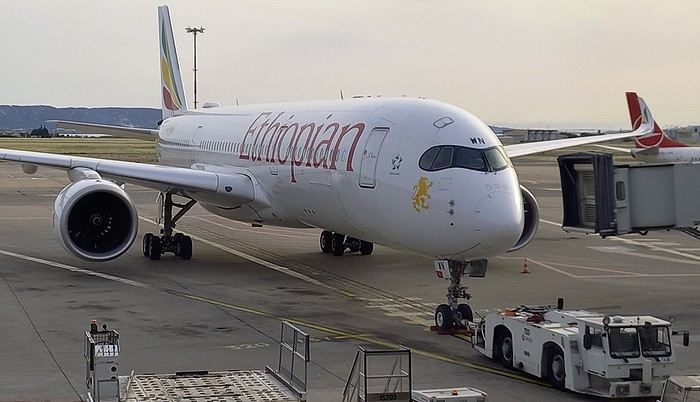
.....
After arriving in Dar, we spent one night at a hotel near the airport. The next morning, we headed to the domestic flights terminal, which hasn’t changed in years.
By mid-morning, we boarded a Cessna 208B Caravan with Safari Air Link, heading to the Kikoboga bush airstrip in Mikumi, which we reached 45 minutes later. Fun fact: the pilot was the same one as on our return flight two years ago.
Welcome on board:
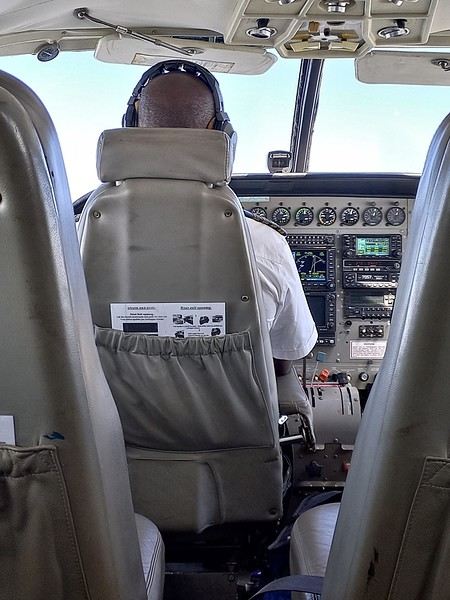
Of course, a driver/guide team from our chosen lodge was waiting for us upon arrival:
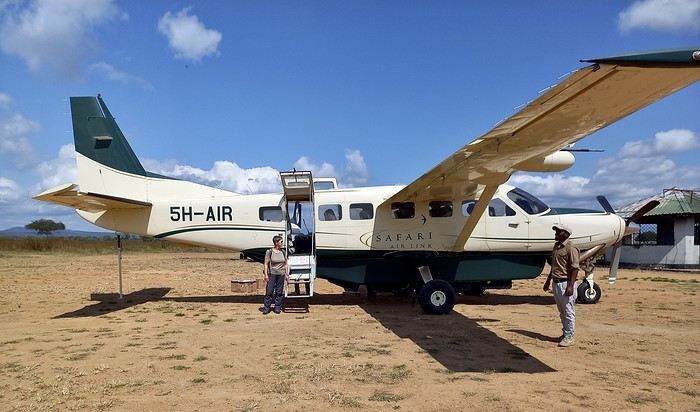
I was surprised to see so many aircraft parked there... even twin-engine Embraer Brasilias?? As a fan of vintage planes, I loved it...
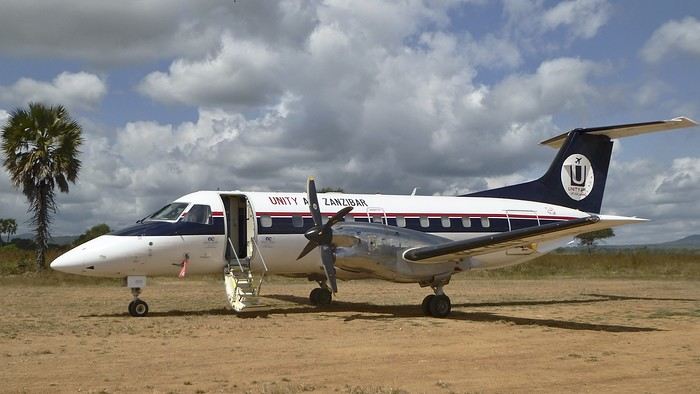
On the other hand, the light was incredibly harsh.....!! Our guides only speak English. We knew that in advance. In the south, it’s very rare to find someone who speaks French. This’ll force us to dig into our high school English memories... from 60 years ago... at least.
It’s noon, and we head toward the lodge. Near the airstrip, next to the Mikumi rangers’ base, there are quite a few herbivores. They find a bit more peace here—the big cats don’t venture this way...
Our first encounter was a group of Masai giraffes.
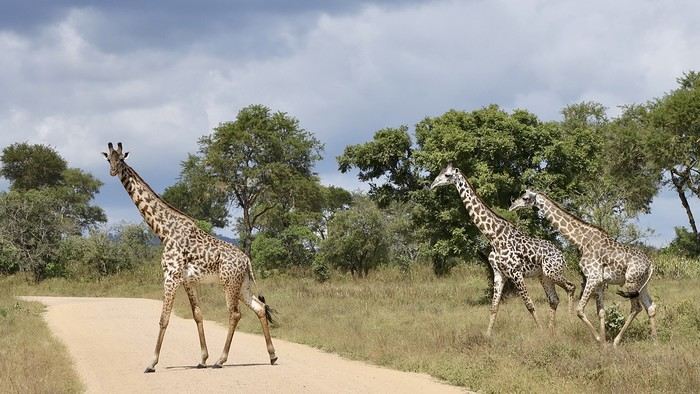
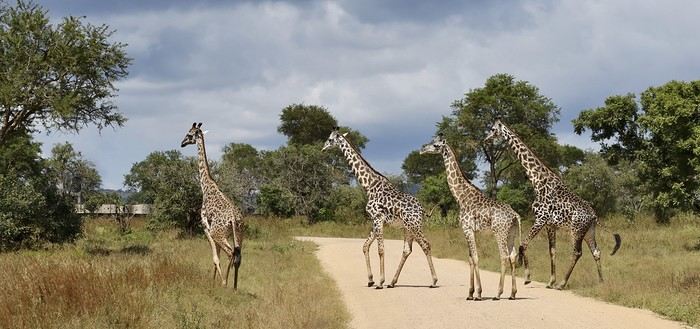
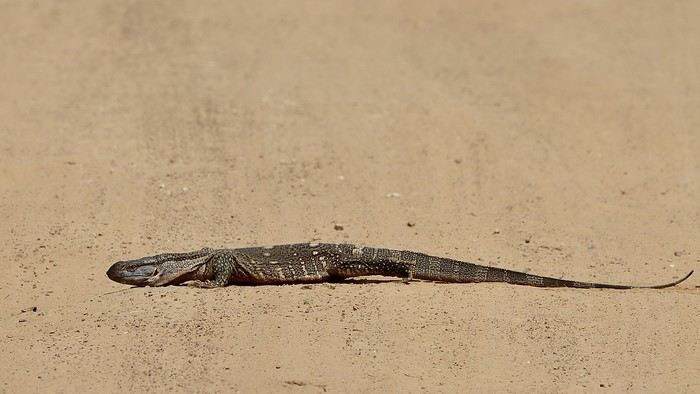
Rarer (for us), a savanna monitor lizard basking in the sun right in the middle of the track...??
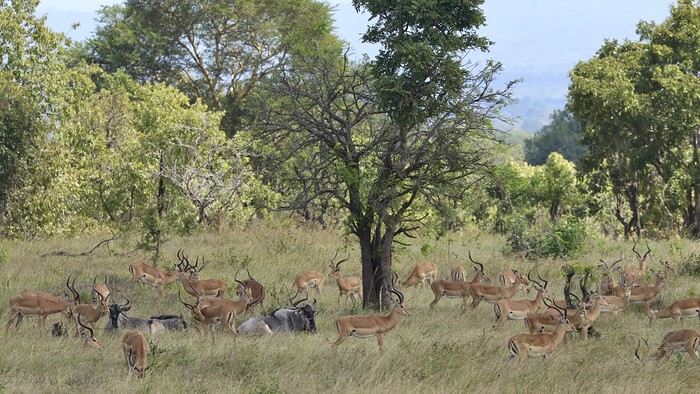
A large gathering of impalas (mostly males) along with a few blue wildebeest:

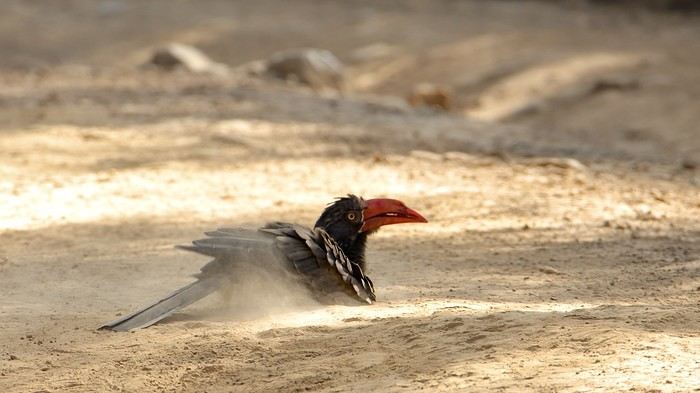
Also unusual: a African crowned hornbill taking a dust bath in the middle of the track...!!
When it comes to identifying mammals or birds, I don’t know everything... so I might make mistakes. Please forgive me. I’m counting on my friend Blesl’s active participation... 😉
...
I’m a newbie to this forum, passionate about wildlife, the landscapes of East Africa, and Tanzania in particular. This June 2024 trip/safari is our 7th visit to Tanzania and our 5th in the south, which has drawn us more than the north ever since we discovered it in 2015.
In 2024, the entrance fees for the reserves and services have gone up again since our last visit. I chose to return first to Mikumi Reserve, which was the very first one we visited in the south. Then, we’ll head to Selous (J. Nyerere N. P.) as usual. Initially, we wanted to spend 2/3 days on Mafia Island at the end of the trip, but it made the total cost too high, so we gave up... We usually go to Ruaha and Selous, but I wanted to mix it up a bit—also to save some money...
As for the timing, June is a new experience for us. I thought it might be interesting to come just after the lodges reopen... hoping for some great wildlife encounters??
The trip starts in Marseille with our first flight on Ethiopian Airlines to Addis Ababa, then continues to Dar es Salaam, where we’ll finally set foot on Tanzanian soil again.
In Addis... "our" A-350.
.....
After arriving in Dar, we spent one night at a hotel near the airport. The next morning, we headed to the domestic flights terminal, which hasn’t changed in years.
By mid-morning, we boarded a Cessna 208B Caravan with Safari Air Link, heading to the Kikoboga bush airstrip in Mikumi, which we reached 45 minutes later. Fun fact: the pilot was the same one as on our return flight two years ago.
Welcome on board:
Of course, a driver/guide team from our chosen lodge was waiting for us upon arrival:
I was surprised to see so many aircraft parked there... even twin-engine Embraer Brasilias?? As a fan of vintage planes, I loved it...
On the other hand, the light was incredibly harsh.....!! Our guides only speak English. We knew that in advance. In the south, it’s very rare to find someone who speaks French. This’ll force us to dig into our high school English memories... from 60 years ago... at least.
It’s noon, and we head toward the lodge. Near the airstrip, next to the Mikumi rangers’ base, there are quite a few herbivores. They find a bit more peace here—the big cats don’t venture this way...
Our first encounter was a group of Masai giraffes.
Rarer (for us), a savanna monitor lizard basking in the sun right in the middle of the track...??
A large gathering of impalas (mostly males) along with a few blue wildebeest:
Also unusual: a African crowned hornbill taking a dust bath in the middle of the track...!!
When it comes to identifying mammals or birds, I don’t know everything... so I might make mistakes. Please forgive me. I’m counting on my friend Blesl’s active participation... 😉
...
Hi everyone,
We’re back from our vacation in Uzbekistan with our kids—a wonderful trip with amazing memories! I’m sharing our itinerary and a few tips.
**Khiva + Aral Sea (3 days)**
- Arrived in Urgench at 5 AM on Saturday - Transferred to Khiva and spent the day exploring the city (that’s enough time). Among other sights, we struggled to find the Tash Khauli harem—it’s totally worth it! - Sunday: headed to Moynaq (the ship graveyard of the Aral Sea). On the way, we stopped to visit two fortresses in the desert—there are about fifty in varying states of repair. Really beautiful, especially Ayaz-Kala. We continued to Moynaq on a rough road (4-hour drive). - Monday: visited the ship graveyard and the small museum. There isn’t much to see, but we thought it was worth it to understand the consequences of human activity—a real eye-opener. It’s true that it’s a long drive, so you’ll have to decide for yourselves. On the way back to Nukus, we stopped to visit the Mizdakhan necropolis (worth it, even if it doesn’t compare to Bukhara or Samarkand’s buildings—it’s no match for them ;-)) - Evening: flight to Tashkent (saved us a day of travel to get to Bukhara from Khiva)
**Ferghana Valley (3 days)**
- Tuesday morning: left Tashkent by train to reach Margilan by noon. - Tuesday afternoon and Wednesday: visited Margilan’s market, silk/ceramic workshops, and dutar-making (a traditional two-stringed, bulging violin). Arrived in Kokand in the evening. - Thursday: explored Kokand (the palace is worth it) - Summary: Margilan and Fergana aren’t very pretty—only the workshops are interesting. Don’t miss Kokand. This leg could’ve been done in 2 days. - Left Kokand by overnight train to Bukhara (note on overnight trains: *very* small cabins—but for us, overnight train rides are a must ;-)!)
**Bukhara (3 days)**
- Arrived Friday morning: 3 days there—perfect for seeing (and revisiting) everything at our own pace. - Hired a French-speaking guide for one day—really helpful for understanding the history and politics, and getting a better grasp of Uzbekistan.
**Toward Lake Aydar Kul (2 days)**
- Left Monday morning by car for the lake. On the way, stopped at a renowned ceramicist’s workshop and to see Neolithic petroglyphs. Note on the petroglyphs: there’s apparently a 3 km walk to see quite a few, but we skipped it due to time—we regret it! For the kids, it was like a treasure hunt, searching for the petroglyphs among the rocks—they loved it. - Arrived in the evening at a yurt camp with traditional music. The yurts were fun, but we ate in a very Westernized restaurant with way too many tourist groups for our taste. - The next day: a 2-hour camel ride in the desert to see plants and animals. We saw a few things, but it wasn’t very interesting unless you’re going from point A to point B. Then left the camp for Lake Aydar Kul—we ate at a lakeside restaurant, but it was pointless. There must be nice spots, but this one was a bust. - Drove to Samarkand (4 hours)
**Samarkand (2 days)**
- Wednesday–Thursday: explored this stunning city. Two days are enough to see everything, but three would’ve been better to take more time to wander and revisit certain spots. - Another day with a French-speaking guide—we confirm it’s worth it!
**Urgut (1 day)**
- Friday: 1.5 hours from Samarkand, in the mountains. AMAZING! A 3-hour hike in the mountains with a guide (you can do longer). We stayed in a guesthouse—so peaceful, with the sound of the stream and mountain views. It deserves 2 days. - Left by train that evening for Tashkent
**Tashkent (2 days)**
- Saturday: visited Chorsu Market (incredible—even though we’d been to several markets, Tashkent’s is wild), the TV Tower (for the view, but not much else), and lunch at The Plov Center (at the base of the tower)—a plov factory, so cool! You can see the kitchens, it’s insane! Spent a relaxed afternoon on Broadway: a park with ping-pong tables, archery, ice cream stands—great with the kids. - Sunday: Chimgan—took the cable car at a ski resort (no snow this time of year), had a picnic at the top of the mountain—nice. - Evening: off to Tashkent Airport and goodbye, Uzbekistan!
**A few tips:**
- In cities, *must* download Yandex Go—super practical, fast, and cheap for getting around. - We bought a Ucell SIM card: 80 GB of data for 50,000 sums (around 3 €). We put it in an old phone and connected our two phones to it—so handy! - Uzbeks are *so* nice, welcoming, and helpful. - Thank you, Google Translate—few people speak English. - The beds are hard… I think it’s an Uzbek thing!! - Guesthouses: between 50 and 70 € per night for the four of us. Comfortable enough, private bathroom, but not luxury. - Meals: we mostly looked for Uzbek restaurants without tourists. Around 200,000 sums per meal (about 15 €). If you add wine, it adds up fast—one glass of wine = the price of a dish. - Don’t hesitate to buy from markets for picnics (samsa, dried cheese balls, fruits and veggies, bread). You can even taste before buying. Some good (and not-so-good) discoveries ;) - Everything is very clean: the streets, the cities, the accommodations.
**Special thanks to our organizer, Sardor (fluent in French):**
I contacted him by email before we left; he optimized the program we’d planned. He set us up with French-speaking guides and handled all the transport and activities outside the four main cities. Super available via WhatsApp and phone while we were there. All the drivers/guides were *very* punctual. DM me if you need his info.
There you go. Sorry for the long post, but I looked for some of this info before we left—I figured it might help someone.
Happy travels in Uzbekistan! We’ll remember this trip for a long time!
Hi there,
I’m currently in Hoi An—I hadn’t set foot here for 8 years. The city has already changed a lot, with lots of construction, and even in the old town, along one side of the riverbank, there are huge residential buildings going up that take away some of the charm of this place. But the worst part is the overtourism—it’s impossible to walk across the famous bridge in the middle of the canal in the evening because it’s so packed with people. There’s also a new trend: massage parlors have opened in the old town and around the city. I was shocked—people call out to you or even grab your arm on the sidewalk, and it’s everywhere. Bangkok and Phuket might start shaking—Hanoi’s the same way.
Anyway, let’s talk about the dual pricing specifically for non-Vietnamese tourists. We went to a restaurant near our hotel last night, and they gave us an English menu—okay, fine! But I noticed the table next to us, where Vietnamese tourists had a different menu. Weird! I asked to see the same menu as my neighbors, but the waitress refused, saying it was in Vietnamese and we wouldn’t understand. I insisted, and she finally agreed. Surprise!!! The prices on the two menus were different, with the English one up to 50% more expensive. I asked why, and she got flustered, telling me to just order from the Vietnamese menu, which I translated with my phone to see the local prices. I mentioned this to the hotel this morning, and the receptionist told me to go to restaurants where prices are displayed at the entrance to avoid getting ripped off. I just bought fresh bread this morning, and it was the same thing—the little loaf costs 4000 dong for Vietnamese people and 5000 dong for non-Vietnamese. It’s not a huge difference, but this way of doing things isn’t right. At supermarkets like VinMart+, prices are displayed, so there’s no surprise or dual pricing there.
Hi,
I’m planning a long weekend in Porto soon with 4 other adults, and I’d love some info about the rechargeable Andante card for public transport. Since we’ll be traveling across different zones, I’m thinking of getting the single-trip rechargeable option. When we buy it, do we *have* to purchase just one trip for a specific zone, or can we buy multiple trips for the same zone—or even one for one zone and another for a different zone? Also, how do we go about recharging it?
Otherwise, is the Andante Tour 72-hour card a better deal? The catch is we’ll need to get to the airport on the 4th day, and it won’t be valid anymore by then.
Thanks for your tips!
Otherwise, is the Andante Tour 72-hour card a better deal? The catch is we’ll need to get to the airport on the 4th day, and it won’t be valid anymore by then.
Thanks for your tips!
I’m turning 65 and I’ve had enough! Enough of France that no longer feels like my France, enough of our societies that are too civilized, too globalized, too complicated...
I’d love to find a little quiet corner to spend my final years.
A beautiful, warm spot where dogs can still run freely, where social media doesn’t matter, where money isn’t supposedly the key to happiness, where there aren’t 10,000 people per square meter, no cars, no noise!
Just a tiny garden, a cabin, a stretch of beach nearby, kind and smiling people, a little café to hang out in, and good fruit that still tastes like something...
I mean, I’m not asking for the moon here, am I?
I don’t need much, right?
Who’s got some good ideas for me?
I already know it’s not in Europe, not in the United States, not in Australia, and probably not in Africa.
Can’t wait to read your suggestions! =D
Chiffonnade
Hi,
I was wondering if any of you have dealt with a death. Does the Gold card reimburse the full cost of the trip, please?
Hello,
We’re leaving in November 2025 for a stay of more than 60 days in Khao Lak and need to apply for a 30-day extension on-site to be allowed to stay nearly 90 days. Should we declare the flight ticket dates (November 13, 2025, to February 9, 2026) directly on the electronic form (if it’s applied from May 1st) before leaving, at the risk of being denied entry (over 60 days), or declare 60 days and quickly apply for a 30-day extension once there? Are flight tickets checked upon arrival (Phuket) or earlier on the electronic entry request? I remember that the arrival check is quite "serious" and after 18 hours of travel, you’re pretty impressionable! Thanks for your help, Best, Bruno.
We’re leaving in November 2025 for a stay of more than 60 days in Khao Lak and need to apply for a 30-day extension on-site to be allowed to stay nearly 90 days. Should we declare the flight ticket dates (November 13, 2025, to February 9, 2026) directly on the electronic form (if it’s applied from May 1st) before leaving, at the risk of being denied entry (over 60 days), or declare 60 days and quickly apply for a 30-day extension once there? Are flight tickets checked upon arrival (Phuket) or earlier on the electronic entry request? I remember that the arrival check is quite "serious" and after 18 hours of travel, you’re pretty impressionable! Thanks for your help, Best, Bruno.
We just got back from a nearly 3-week trip to Costa Rica in March. For the occasion, we used EVANEOS to plan our trip based on our preferences.
After some setbacks with ADOBE RENT-A-CAR—they refused the Visa Premier card and forced us to pay for extra insurance (which is usually covered by the Visa Premier)—we finally set off to explore the country.
Observation: Apart from nature, wildlife, and flora, there isn’t much else to see, but it’s so beautiful! Some people criticize the country as insignificant, with bland food and unwelcoming locals. I think those people didn’t really explore—maybe they stayed in their hotel near the beach (UVITA?) without venturing out. Otherwise, there wouldn’t be so many Europeans living in Costa Rica who don’t even consider going back to their home countries.
For our part, we found Costa Ricans very kind and welcoming. It’s often said they’re thieves, but personally, we left a small suitcase in a restaurant. When we returned after driving 20 km round trip, the staff were trying to find our phone number to contact us. I think it’s like anywhere—even in France, I’d tell tourists not to leave anything in their car to avoid… well, you know.
Food: Traditional dishes, fish plates (tilapia was excellent), and especially ceviche (around 15 € per person)—really good—and lobster (around 30 to 35 € per person), all served with fruit batidos (around 3 € per person).
Car: We had a 2-wheel-drive vehicle, which kept us from visiting some sites that require a 4x4, like Boruca, the town of artisan masks. Some lodges are also only accessible via rough, rocky trails that are tough to navigate in a regular car. Don’t hesitate to insist on a 4x4.
Keep in mind that driving fast in Costa Rica isn’t possible. Some roads are in poor condition, and there are often unmarked speed bumps that are much worse than the ones in France. You’ll average about 50 to 60 km/h on a leg of the trip.
I also recommend bringing a road map to cross-check the routes suggested by Waze or Google Maps. Sometimes, these apps will send you down completely wrecked roads to save time! A paper map will help you verify the road type. It’s better to drive an extra 20 km than to get stuck on a rocky path.
- San José to Barra de Pacuare (much less crowded than Tortuguero). Sea turtles are still rare this time of year. Via the canals, we spotted howler monkeys, sloths, and birds, and on land, we saw venomous spiders, poisonous frogs, and a leatherback turtle conservation site.
Explored a primary tropical forest with its many species of flora and fauna (monkeys, snakes, sloths, toucans, raccoons, etc.).
- Barra de Pacuare to Cahuita: Explored Cahuita National Park (howler monkeys, capuchin monkeys, raccoons, sloths, blue crabs, leaf-cutter ants, etc.) and walked along the trail by Puerto Viejo’s beach.
- Cahuita to Bambú: Visited the Bribri tribe and their customs. This isn’t a tourist trap—it’s a deep immersion into a community living almost self-sufficiently. To get there, you take a motorized canoe for over an hour. But be warned:
1 - The restroom cleanliness leaves a lot to be desired
2 - There’s no hot water
3 - A waterfall hike is offered. The first two-thirds are fine, but the last third is very dangerous, especially if it’s rained, even with sneakers. You need sturdy shoes. Our guide turned back halfway…
- Bambú to Sarapiquí:
- La Fortuna: Explored the Mistico Park tropical forest. A 3+ km trail lets you discover animals and lush vegetation. Sixteen suspension bridges, some up to 45 meters high, offer stunning views of the canopy.
Walked around Arenal Volcano: Big disappointment for seeing lava flows. After 2 km, a viewpoint shows vegetation that’s taken over—only a few volcanic rocks hint at the 1968 eruption.
- La Fortuna to Carara: Spotted crocodiles at the Tarcoles Bridge.
- Carara to Uvita: Relaxed. Uvita is a small tourist town with nothing particularly original, but it’s the place to try CEVICHE, a typical dish of raw fish “cooked” in lime juice. Delicious! We recommend Mestizo for very affordable prices.
- Osa to Corcovado National Park: This park is gorgeous. You’ll see all four monkey species, tapirs, scarlet macaws, etc.
From Drake Bay, it takes about 1 hour 15 to 1 hour 30 to cross to the park. After navigating the mangroves, the boat heads into open sea until reaching the beach, where you’ll wade ashore (water up to your thighs—bring shoes for the slippery rocks).
National Geographic called the park a "jewel of humanity" that must be preserved at all costs due to its incredible biodiversity. The park represents 3% of the world’s biodiversity. You can observe countless monkeys (all four species are present), crocodiles, tapirs, and scarlet macaws.
Our guided hike with a French-speaking guide lasted 4 hours before returning by boat to the lodge.
WARNING: There’s strict control at the park entrance:
- No plastic bottles
- No knives
- No plastic items
- No bare feet. Closed-toe shoes are required (in addition to a pair for the boat)
- Osa to Zona de los Santos: This is the coffee region and home to the quetzal, a stunning but hard-to-spot bird that’s also Guatemala’s symbol. Paraíso Quetzal Lodge has a platform with a spotting scope to try to see the bird in the forest. CAUTION: This beautiful lodge is at 2,650 meters altitude. The rooms have incredible forest views, but it’s VERY VERY cold!
- Zona de los Santos to San José: Detour to Irazú Volcano. WARNING: Buy tickets before arriving. The staff kindly bought them for us via their phone. Small disappointment: The crater lake hasn’t existed for years! The ads are misleading about this.
- San José: A city we found uninteresting.
Hi, the situation is complicated...
My son would like to marry his girlfriend (married to a Filipino in the Philippines but separated for 14 years), who is from the Philippines... but... what complicates things is that she lives in Switzerland illegally—her visa expired after a divorce from a Swiss national, and she received a deportation order in 2022 but never left.
Just to clarify, she’s been working in Switzerland for 10 years and pays Swiss taxes...
Recently, she reapplied for a work visa to request residency rights so she could marry my son, but they refused, and she’s already received an order to leave the country... What can we do? We don’t know who to turn to
Hello everyone,
Not long ago, I used to travel as a couple, but my husband has since passed away, and I’ve decided to set off again. The trip I took to Cambodia in January 2025 did me a world of good.
I’m now considering Thailand, a destination we never included in our plans because even 15 years ago, people said it was too touristy. Still, I’m thinking about the itinerary below, but I don’t feel up to arranging buses, trains, or guides on my own while I’m there. I’m looking for one or more drivers and have been in touch with an agency, but their offers are just copy-paste group tours that I don’t want.
So, if you have any contacts, experiences, or advice, I’d be so grateful if you’d share them with me. Here’s my rough plan:
Arrival in Bangkok
Ayutthaya (2 nights)
Kanchanaburi (2 or 3 nights)
Sangkhlaburi/Sai Yok (3 nights)
Sukhothai (2 nights)
Lampang (I’ve planned 3 nights, but that might be a bit much—it depends on what time I arrive in the city)
Chiang Mai
Chiang Dao
Pai
Chiang Rai
I was thinking about the Mae Hong Son loop—thoughts?
What do you think about staying overnight at the Golden Triangle?
When I look online, of course, I can find agencies that organize tours to national parks, etc.
I’m retired but in great physical shape. I’d rather go hiking than sit in hot springs with crowds of tourists who’ve all arranged meet-ups. I don’t want to spend a day at an elephant camp, and I don’t want to visit Karen villages.
I’d love to hear your advice.
Thank you all,
Hi everyone,
I’ve got a big project in northern Vietnam—discovering the most beautiful rice terraces before the harvest...
I’m planning to leave around September 15th until October 15th, then spend 15 days exploring the two bays, Lan Ha and Ha Long. In total, 45 days without a visa...
I’m traveling solo and very independent.
But is it possible to do this kind of trip using local trains and buses?
My plan is to leave Hanoi for Nghia Lo (2 days), then Mu Cang Chai (4 days), Sapa (4 days), Bac Ha (2 days), Ha Giang... Hoang Su Phi, then do the Meo Vac loop, Dong Van, etc., to see those stunning karst peaks before heading back to Hanoi.
In my research, I haven’t found any buses or vans going from Hanoi to Nghia Lo, even though it’s super popular for its rice terrace landscapes....
I don’t want a daily driver, but I’m thinking I could use moto-taxis to get around locally once I’m there....
What do you think?
These rice terraces are a dream for me, along with the markets and all the different ethnic groups, not to mention those spectacular rocky peaks...
Is the itinerary too ambitious? I’ve got time on my side.
Do you have any solutions? I’ve browsed the forum a lot, but the discussions are 5 or 6 years old, and I think things have changed since then.
Thanks for your help planning this adventure!
 Hello everyone!
This trip dates back to late 2021, but since Voyage Forum reopened for writing, I haven’t seen many travel journals about Tanzania, so I decided to repost this one, which I originally shared on another well-known travelers’ site—even though I prefer Voyage Forum’s user experience.
It’s also a chance for me to relive this exhilarating trip... So, if you’re up for it, let me take you on a classic adventure: Tarangire - Ngorongoro - Serengeti, plus a little bonus—the small Arusha Park.
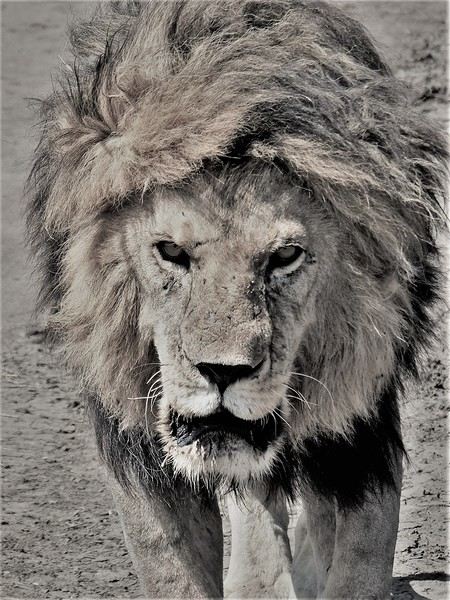
First off, yes, as the title of this journal suggests, we were lucky enough to spot *tons* of lions. The power they exude is incredible, even if most of the time they just look like big cats napping or strolling around. But lock eyes with one, and you’ll be glad you’re in the jeep.
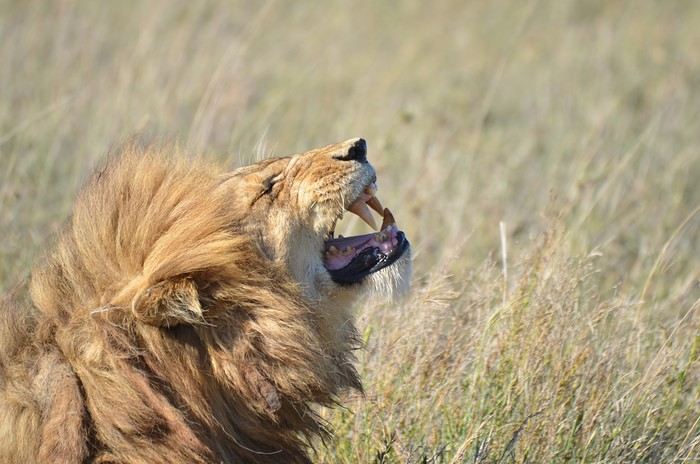
But let’s not forget the rest of the wildlife—and the landscapes, which are absolutely stunning, with those iconic tree silhouettes.
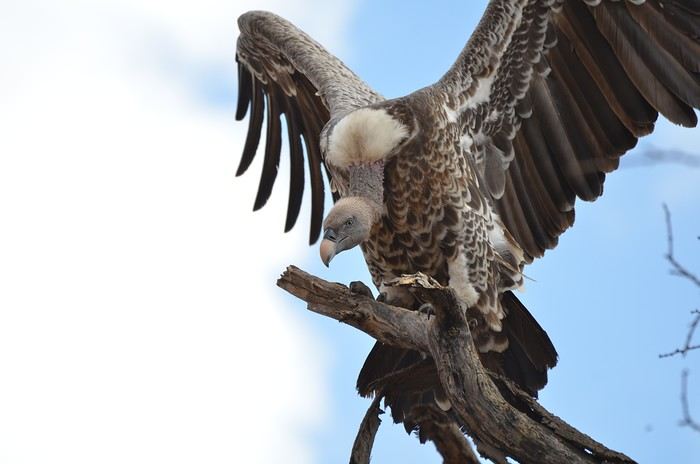

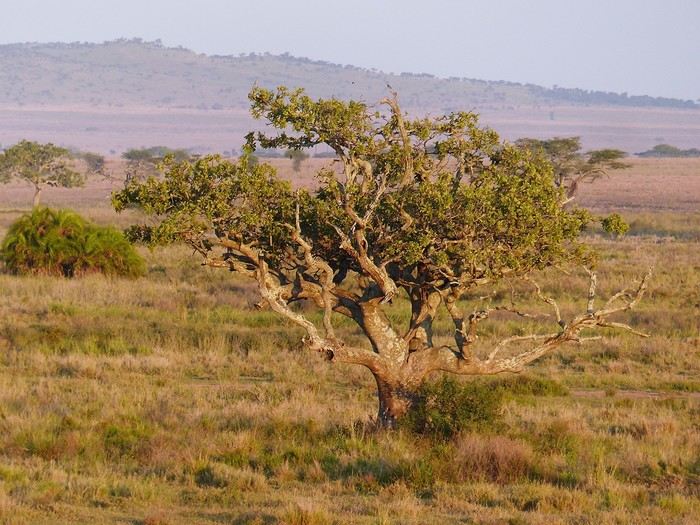
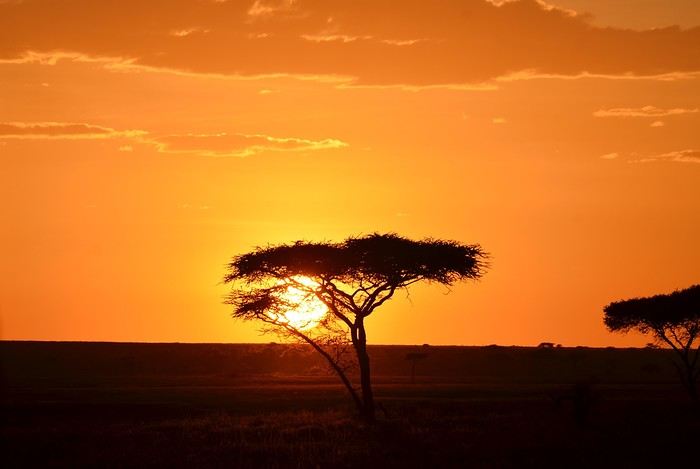
I remember before leaving, I was a little worried I wouldn’t feel that same sense of wonder I’d experienced two years earlier in Botswana (see my travel journal). That fear was unfounded—the magic worked its charm once again! Note: Since we had limited time, we focused our trip entirely on safari, so this journal is 100% animals and landscapes—and 0% Maasai. Next post: TARANGIRE
Hi,
Currently in Thailand, I was supposed to return to Bangkok to apply for a visa at the Indonesian consulate. Given the state of emergency in Bangkok following the earthquake, I’m looking for a way to apply for my 2-month tourist visa (renewable once) online. I only have about 10 days left before my Thai visa expires.
Can anyone give me the correct website address and let me know the required documents and procedures?
Thanks in advance
Hi there,
I’m facing a rather unusual issue with SAUDI AIRLINES.
I booked a flight to Jakarta with a layover in Jeddah for July directly on their website on February 25th, paying for our three tickets via PAYPAL.
I quickly received confirmation that my flight was booked and our e-tickets were issued.
However, after several days, I noticed we were never charged for the tickets, and I saw on our PayPal account that the payment authorization was still pending.
At first, I chalked it up to cross-border or banking delays… but since I use PayPal often and the debit from my bank account is usually almost immediate, I called PayPal. They told me that neither they nor I had anything more to do: when a transaction is paid using their solution, the payment is systematically validated by the seller before the transaction (an automated process, I imagine). However, PayPal confirmed that SAUDI hadn’t done this and that they had a month to do so, otherwise the transaction would be canceled by PAYPAL and SAUDI wouldn’t receive the funds. There must have been a technical glitch because normally, I shouldn’t have received the tickets until they had received the payment.
Given the reviews I’ve read about their customer service, I’m worried they might cancel our tickets without notice once they realize their mistake—or that they’ll ask us to pay the amount at that point (since the closer we get to the date, the higher the price goes).
So, I’ve been trying to contact them nonstop via their app (I’ve submitted about 10 tickets), I’ve called them, messaged them on Messenger and Instagram, and so far, I haven’t gotten any response. Either they don’t read my message to the end and just reply that the flight is confirmed + resend the tickets, or more recently, they tell me the issue is being handled by another department. We tried calling them again on Saturday, but no luck—the French-speaking agents were always busy. On Messenger, they keep asking for the secret code sent by SMS at the start of the conversation, but of course, I never receive anything even though my number is correctly registered in my SAUDI account.
I don’t know what else to do, and I’m not sure if I’m right to worry they might cancel our tickets.
I’m afraid this could jeopardize our dream trip, for which I’ve already booked hotels and activities… and we were really looking forward to it.
I hope you can shed some light on this?
Thanks for taking the time to read this
Hi everyone,
We (two adults, 74 and 70 years old) had already shared a travel journal about our first trip to the Philippines in February/March 2019 on this forum (https://voyageforum.com/v.f?post=9377175;search_string=carnet%20philippines). We had visited Manila, the Banaue rice terraces, Sagada, the Visayas (Bohol, Siquijor, Dumaguette), and on our way back to Luzon, the Taal volcano before returning to France. Delighted by this trip, organized by the French-speaking agency Alizé, we decided to further explore this beautiful country, this time focusing on Coron and Palawan.
Before writing this journal, I should mention that these are personal comments and don’t reflect any differing opinions. Without any literary or photographic talent, I’ll stick to the facts and share a few details about the visits, hotels, and restaurants.
Preparations
We decided to return in mid-January 2025 and consulted three French-speaking tour operators to create a trip based on our wishes (places to visit, type of accommodation) and budget. Comparing three operators helped us weigh their advice and make our choices. Only our first operator respected the budget, a second came close, and the third proposed a slightly more upscale trip. In the end, we chose the agency from our first trip. Our discussions helped refine our itinerary, and when we reviewed it point by point, the document provided was perfect, full of great tips. The most debated point was a 3-day, 2-night cruise between Coron and Palawan. We were tempted but worried about being the only "older" travelers among younger people and feared two uncomfortable nights. Reassured by our tour operator, we finally opted for this "exploration." We’ll come back to that later. Once the choice was made and dates set, we booked our international flights with Cathay Pacific for 750 € per person, which offers the best schedules (short layovers) at an acceptable price for flights arriving in Cebu. Our trip started on February 25 and returned to Paris on March 15.
International flights
The round-trip flights went smoothly. Cathay does the job well, without frills. The service quality seems to have slightly declined compared to our previous trips with them. Hong Kong Airport is huge but very practical. Note that not all airlines serve Cebu. Recommendation: Fill out your Philippine entry form within 72 hours before your flight. This can prevent issues with the airline (possible boarding refusal) and saves a lot of time upon arrival (see the Philippine embassy website).
Domestic flights
For our two domestic flights—Cebu to Coron and Puerto Princesa to Cebu—our tour operator chose Philippine Airlines and their propeller planes. No problems there.
Day 1: We landed around 12 PM (local time) after 17 hours of travel. A driver was waiting for us at the airport exit and took us to our hotel, intentionally chosen near the airport (Mandaue, about 10 minutes away) to help us recover and get a good night’s sleep before our early morning domestic flight the next day. The Mayoo Hotel, reasonably priced, was perfect for this. Large, beautiful room in a new building—clean, comfortable, with a spa. We could relax by the pool on the 16th floor and enjoy the city view. The breakfast was exceptional, and the staff was smiling, attentive, and helpful. An ATM in the lobby allowed for withdrawals. However, the hotel is in a neighborhood with nothing to see or do. We dined at the Korean restaurant K-GOGI across from the hotel—a real attraction and a great discovery.
Day 2: After a restful night, we were driven to the airport around 6:30 AM for an 8:10 AM flight from Cebu to Busuanga (Coron).
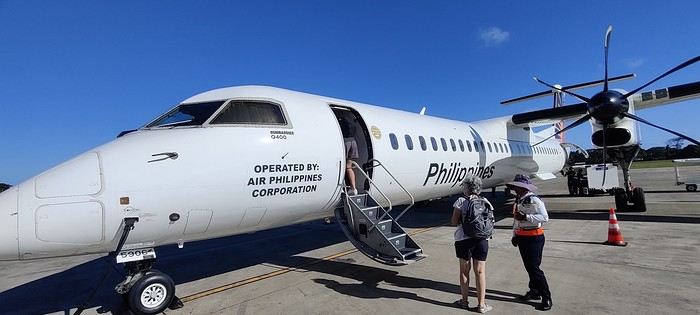
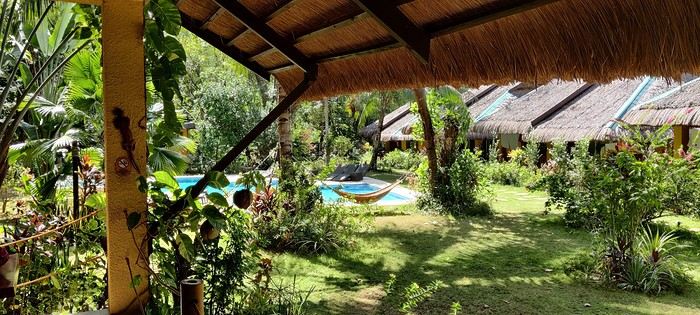
The flight was uneventful. Upon arrival, we paid 200 pesos per person for the Coron tourist fee before a 40-minute transfer to our hotel: Natura Resort, located outside the city in a secluded spot. The setting is stunning—a beautifully maintained tropical garden, a pleasant pool, and the option to book massages. The cottages are tropical-style with thatched roofs, simple and unpretentious.
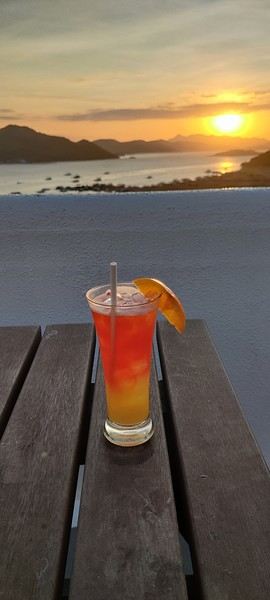
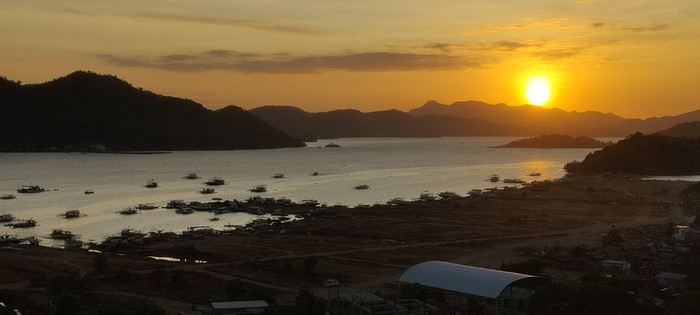
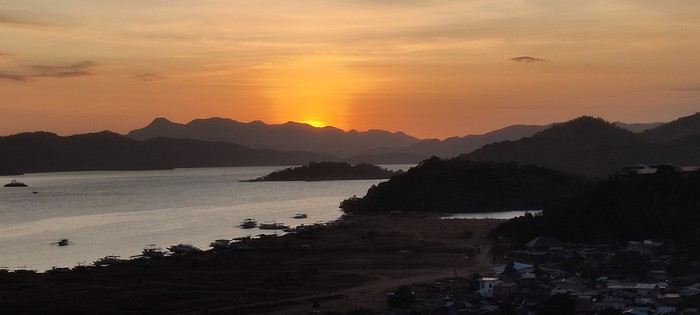
The owner, who speaks French, told us that given the heat and our ages, climbing the 721 steps to the top of Mount Tapyas wasn’t necessary. She gave us a few rooftop recommendations to watch the sunset over Coron Bay. After a good swim in the pool and a meal at the resort’s pleasant restaurant, we hired a tricycle to go into town. We were told it costs 150 pesos one way, and depending on the return time, it could exceed 250 pesos. But our driver gave us his WhatsApp number and charged the same price regardless of the time. He just earned two days’ worth of customers. He dropped us off at the port where bangkas (local boats) gather for day trips. It was the end of the day, so there was a rush. A few shops around the port sold waterproof bags for marine excursions at reasonable prices (compared to back home), after some bargaining. We wandered the town’s alleys looking for the Top Hotel, whose rooftop is famous. Indeed, it’s perfectly located to admire the sunset and enjoy a refreshing drink.
We dined nearby at a small Chinese restaurant, then just had to call our driver to head back. The night wasn’t entirely restful—our hotel had a soundtrack of all the countryside animals, and it seemed they had no set bedtime! :
Preparations
We decided to return in mid-January 2025 and consulted three French-speaking tour operators to create a trip based on our wishes (places to visit, type of accommodation) and budget. Comparing three operators helped us weigh their advice and make our choices. Only our first operator respected the budget, a second came close, and the third proposed a slightly more upscale trip. In the end, we chose the agency from our first trip. Our discussions helped refine our itinerary, and when we reviewed it point by point, the document provided was perfect, full of great tips. The most debated point was a 3-day, 2-night cruise between Coron and Palawan. We were tempted but worried about being the only "older" travelers among younger people and feared two uncomfortable nights. Reassured by our tour operator, we finally opted for this "exploration." We’ll come back to that later. Once the choice was made and dates set, we booked our international flights with Cathay Pacific for 750 € per person, which offers the best schedules (short layovers) at an acceptable price for flights arriving in Cebu. Our trip started on February 25 and returned to Paris on March 15.
International flights
The round-trip flights went smoothly. Cathay does the job well, without frills. The service quality seems to have slightly declined compared to our previous trips with them. Hong Kong Airport is huge but very practical. Note that not all airlines serve Cebu. Recommendation: Fill out your Philippine entry form within 72 hours before your flight. This can prevent issues with the airline (possible boarding refusal) and saves a lot of time upon arrival (see the Philippine embassy website).
Domestic flights
For our two domestic flights—Cebu to Coron and Puerto Princesa to Cebu—our tour operator chose Philippine Airlines and their propeller planes. No problems there.
Day 1: We landed around 12 PM (local time) after 17 hours of travel. A driver was waiting for us at the airport exit and took us to our hotel, intentionally chosen near the airport (Mandaue, about 10 minutes away) to help us recover and get a good night’s sleep before our early morning domestic flight the next day. The Mayoo Hotel, reasonably priced, was perfect for this. Large, beautiful room in a new building—clean, comfortable, with a spa. We could relax by the pool on the 16th floor and enjoy the city view. The breakfast was exceptional, and the staff was smiling, attentive, and helpful. An ATM in the lobby allowed for withdrawals. However, the hotel is in a neighborhood with nothing to see or do. We dined at the Korean restaurant K-GOGI across from the hotel—a real attraction and a great discovery.
Day 2: After a restful night, we were driven to the airport around 6:30 AM for an 8:10 AM flight from Cebu to Busuanga (Coron).
The flight was uneventful. Upon arrival, we paid 200 pesos per person for the Coron tourist fee before a 40-minute transfer to our hotel: Natura Resort, located outside the city in a secluded spot. The setting is stunning—a beautifully maintained tropical garden, a pleasant pool, and the option to book massages. The cottages are tropical-style with thatched roofs, simple and unpretentious.
The owner, who speaks French, told us that given the heat and our ages, climbing the 721 steps to the top of Mount Tapyas wasn’t necessary. She gave us a few rooftop recommendations to watch the sunset over Coron Bay. After a good swim in the pool and a meal at the resort’s pleasant restaurant, we hired a tricycle to go into town. We were told it costs 150 pesos one way, and depending on the return time, it could exceed 250 pesos. But our driver gave us his WhatsApp number and charged the same price regardless of the time. He just earned two days’ worth of customers. He dropped us off at the port where bangkas (local boats) gather for day trips. It was the end of the day, so there was a rush. A few shops around the port sold waterproof bags for marine excursions at reasonable prices (compared to back home), after some bargaining. We wandered the town’s alleys looking for the Top Hotel, whose rooftop is famous. Indeed, it’s perfectly located to admire the sunset and enjoy a refreshing drink.
We dined nearby at a small Chinese restaurant, then just had to call our driver to head back. The night wasn’t entirely restful—our hotel had a soundtrack of all the countryside animals, and it seemed they had no set bedtime! :
Hi there, I made my bungalow reservations in Kruger Park through Sanparks. I’ve sent several emails but never gotten a response from them. It’s not possible to reach them via WhatsApp, and calling them costs an arm and a leg 😱. Have you had the same experience with Sanparks? Their website is pretty well done—they boast about giving the best care to questions people ask them, but when it comes to email responses... it’s a ghost town 😕
Dear members of this forum,
*With the pandemic, travel guides were replaced by cookbooks. With lockdown, there’s no need for the *Guía del Trotamundos*—the cookbook is gospel, and your daily life turns into a *Spaghetti Western*. It’s no longer about good and bad actors but good and bad fats. And for a few extra pinches of salt. To the tune of Ennio Morricone, it’s hard to diagnose pastalogy—sorry, the pathology—you’re suffering from. Italy, now confined, and pasta—no more aimless gondola rides on Venice’s canals or *Dolce Vita* weekends in Rome. The beauty of the soul blends with minestrone preparation.
*With the pandemic, Professor Didier Raoult became the new Christ-like figure; like the Indira Gandhi of medicine, like Moses showing the way to the people across the Dead Sea, for tormented souls, the value of a medical prescription doesn’t wait for the years to pass. And plexiglass reigned over the world.
*With the pandemic and gender theory, in particular, pushing us to become androgynous, hermaphroditic beings—*patatras*—the Colossi of Rhodes we are waver because of a tiny nuisance.
*Phew, the pandemic has receded... but watch out for a new swine flu pandemic, because on this forum, it’ll be followed by long-winded rants. Political/historical revisionism with such a pandemic—Fidel Castro wouldn’t have been able to invade the *Bahía de los Cochinos*. And that’s where his comrade Ernesto *Che* Guevara becomes a perfect scam. A fierce opponent of capitalist ideology, yet many clothing sellers got rich selling T-shirts with his face on them.
*Neutrality and the Helvetic underground. Last summer, I found myself passing the *Chalet Gaillard* deep in the *Forêt du Risoux* in the Jura, then crossing the border into the Canton of Vaud on foot. My disappointment was great: no sign indicating we were in neutral territory. And what kind of neutrality are we talking about? Since neutrality is an abstract concept. It’s like those visitors eager to see Calais who, spotting the sign for the *Pas-de-Calais* department, turn around on the road.
*There’s always a traveler quick to recommend a local guide. I know an excellent guide named Michel who lives in Cairo—Michel of Cairo. He has a truck and takes you to see the pharaoh’s ruins by truck. Still, be careful—good guides aren’t that common, because there are only eight Cairenes.
*The mix between large mammals and humans. Or how infantilism rules the world. The ultimate quest for happiness is petting rhinos in Nepal—we’ll confirm if this kind of animal is visible on the streets of Sauraha, a town near Chitwan National Park. The downside of this animal? It takes up too much space as a pet—better to raise a Yorkshire terrier in your modest apartment.
*I’m tired of recurring topics like, *‘Do I have time for my connection at New York airport?’* Aren’t you? There’s the discussion about *Gare de Lyon Part-Dieu*—*Gare de Lyon Part-Dieu*, God bless you. In the name of the Father, the taxman, and the Holy Spirit, don’t miss your connection. *Gare de Lyon-Part-Dieu*—apparently, a great French actor, Gérard de Part-Dieu, was born there. If you think you’ll miss your connection, just get rich and fly private. The working masses of the *lumpenproletariat*—they dare everything, that’s how you recognize them.
*Experts in non-events: learning that some members don’t like Spanish-speaking countries because, supposedly, the people are too loud. That’s it, I’m not going to China anymore—too many stairs on the Great Wall. So, too bad, I’m not going. It’s like two people crossing paths—one asks, *‘Going fishing?’* and the other says no. These experts are probably natives of Arles, because with people like that, it’s *l’Arlésienne*...
*The art of taking selfies at every turn. You’d think it’s an ancient practice, almost an anthropological ritual—everything suggests it dates back to prehistoric times. Back in the days of the Lascaux caves, instead of photographing the meal they were about to eat (it’s crazy how many food photos we see on this forum, especially in travel journals), prehistoric men and women could only make cave paintings. From there, it’s only a small step to conclude that cave art was nothing more than the menu served in caves that doubled as *Buffalo Grills* long before the chain existed. By the way, if you want to visit the caves, ask for a guide named Josiane. When it comes to parietal art skills, Josiane beats Lascaux... (Only the French on this forum will get that one.)
*Mythology of an object: the suitcase (a nod to Mr. Éric Libiot, whose columns I enjoy) An object that gets lost during a flight, especially during a transfer at an airport. And it’s stuffed to the brim with clothes and other useless items, like Mickey Mouse slippers. You’re in despair: when going through customs, the officers find those slightly risqué photos hidden in your laundry, taken at Cap d’Agde on a naturist beach. The suitcase is an object that makes noise when rolling because of its wheels—you’re quickly spotted.
*Hurry up and visit New York while you still can. Because of *Woke* ideology, more and more statues are being torn down, and the Statue of Liberty will likely meet the same fate. *Queer* culture isn’t everyone’s cup of tea.
*The Dead Poets Society I admired the beautiful photos of Venice, and *click*—I check the new discussions when I come across one where Mr. J.M.B. offers money loans. This person probably works at the Ministry of Finance and risks loosening the purse strings of your wallets.
*Toward the independence of New Caledonia: will we call it *Nouvelle Nouvelle-Calédonie*? From what I know, Chinese authorities want to settle there and invest; apparently, they want to send (fake) tourists—facsimiles of real travelers. So, it’ll be hard to separate the wheat from the chaff (the *ivraie* tourists).
*There’s a topic about hitchhiking in Scotland: apparently, Scots are very welcoming people. I imagine arriving at Aberdeen Airport to a typical welcoming committee—men in kilts and a bagpiper playing. Just like arriving in Papeete, where you’re greeted with flower leis—*Aloha! (Jacta Est)*. To attract tourists, Scottish cities will end up installing whisky vending machines.
*Eskimo pies banned for sale because of *cancel culture*—you can’t go to Iqaluit anymore. Panicked, ice cream manufacturers had to revise their *packaging*—sorry for the anglicism. Because of *cancel culture*, we can no longer say *Eskimo* without it being pejorative. The identity of the Arctic people of the same name takes a hit—it’s crazy how *bien-pensance* wreaks havoc in our minds... We can’t even bite into a chocolate *Eskimo* pie anymore.
*Diplomatic tensions between France and Australia: and there goes the submarine sale project, canceled. Given that the cost of these machines is a fifth of Australia’s public finances budget, it’s tough to pay in didgeridoos and kangaroo skins.
Thanks for reading, and see you soon for more chronicles.
Hi everyone,
As a senior woman, I’m planning a solo trip to Uzbekistan this time. I arrive in Urgench on April 18 and leave from Tashkent on May 9, so 3 weeks. 1 - Aral Sea: I’d like to start there. Has anyone had a recent experience to share? Depending on your feedback, I’ll decide whether to go or not—my whole itinerary shifts based on that! 2 - What’s the best way to get around between cities? The train seems preferable, but booking and paying from France is complicated… and I’d have to plan everything in advance 😕 3 - Has anyone gone directly from Samarkand to Fergana? If so, by what transport? Or is it mandatory to go through Tashkent? 4 - Any tips for the most frequent and reliable transport in the Fergana Valley? 5 - I’d also love recommendations for accommodations (hostels, guesthouses) and nice restaurants in the country!
Feel free to share whatever advice you can… Thanks so much in advance! 😉