Discussions similar to: Mise jour générale post 2022 Russie
FR

5 similar discussions in English

Practical aspects spring 2026: border to Murmansk, to Pskov, SIM cards, internet.
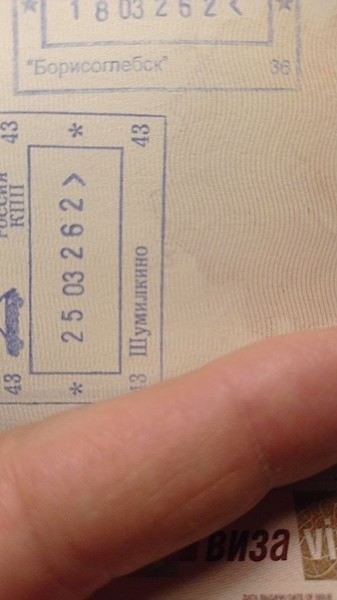
I took a few days to get some fresh air outside the Schengen-NATO prison. Between March 18, 2026, and March 25, 2026, as shown by the passport stamps:


Borisoglebsk is the Russian border checkpoint after Kirkenes, on the road to Murmansk.

Kirkenes is a tiny town with a correspondingly small airport. Nothing has changed there: the minibuses to Murmansk wait on the right as you exit the airport. They’re synchronized with the two daily flights from Oslo—the SAS around 11:00 AM and Norwegian around 11:30 AM. They stop in Kirkenes at the corner of the Scandic for an hour, where other passengers can board, then head straight to the nearby border.

This is the least hassle Frontex/Schengen border. The Norwegian agent quickly scans your passport, and that’s it. No customs, since Norway is Schengen but not in the EU. On the Russian side, there’s a passport check and a quick customs inspection. All in all, crossing both the Norwegian and Russian checkpoints takes about 15 minutes.

A paper visa is required; e-visas aren’t accepted.

Two companies run the route: Avto Ekspress and Borodin: https://ae51.ru/routes/kirkenes-murmansk/ https://borodinbus.com/

The one-way fare is 5,500 ₽. You can either buy it online in rubles with a MIR card or make a formal reservation and pay in NOK cash to the driver. I took Borodin, and the price in NOK was much more expensive than in ₽.

=========================

On March 25, I left from Pskov via the Estonian border post at Luhaama. I spent three days in Murmansk, flew to St. Petersburg (SPB), stayed there for two days, then took an evening train to Pskov.

Since the end of February—and reportedly until the end of May—the Estonians have restricted the opening hours of the two border crossings near Pskov: Koidula (Pechory on the Russian side) and Luhaama (Izborsk on the Russian side). They’re closed at night between 7:00 PM and 7:00 AM. Right now, there’s a bus from Pskov at 7:00 AM to the border. It drops you off at the end of the road where truckers—many Kazakh and Serbian—are parked on the side. You finish the rest on foot to the barrier, where there’s a quick initial check for Ukrainian stamps in passports. Then you walk to the customs building, followed by passport control at the kiosk for motorists. After that, it’s a 500-meter walk to the Estonian checkpoint. At the moment, things seem calmer. Passport control is quick. The usual silly questions in English: "Where were you? Where are you going?" I just gave my most clueless smile: "Sorry, I don’t understand." Yeah, right—I don’t speak English, especially not at an Estonian border with a French passport. If they’re in a mood, though... A very quick bag inspection. Once you exit the Estonian post, walk to the bus stop sign by the road where another coach takes you to Riga.

The catch: in my case, last Wednesday, there were two passengers (Russians) with old Ukrainian stamps in their passports. The bus from the Estonian post to Riga was supposed to leave around 9:30 AM. We ended up leaving around noon after the two were grilled by the FSB. Since it was a weekday outside of holidays, the bus was half-empty. The fuller the bus and the more people with Ukrainian stamps, the worse the nightmare. Don’t book a same-day flight from Riga. I had a flight at 6:00 PM, so it worked out.

=============

The Kirkenes-Murmansk route is still clearly the easiest and fastest. But it’s not the most convenient since it’s way up north.

Next, I’d say the Gdansk-Kaliningrad route in the middle of the week. Avoid weekends and holiday departures/returns.

Avoid the Narva-Ivangorod route during Christmas, Easter, May 9, and *all* summer.

==============

About flights from Murmansk to St. Petersburg: prices are good. I bought my ticket the day before departure on Rossiya for 7,500 ₽, including 10 kg of luggage + a handbag.
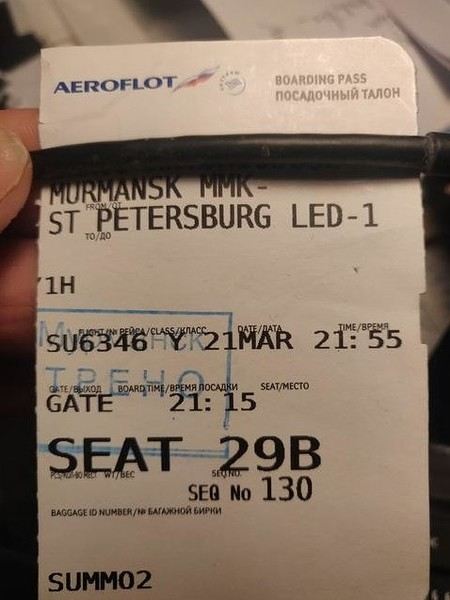


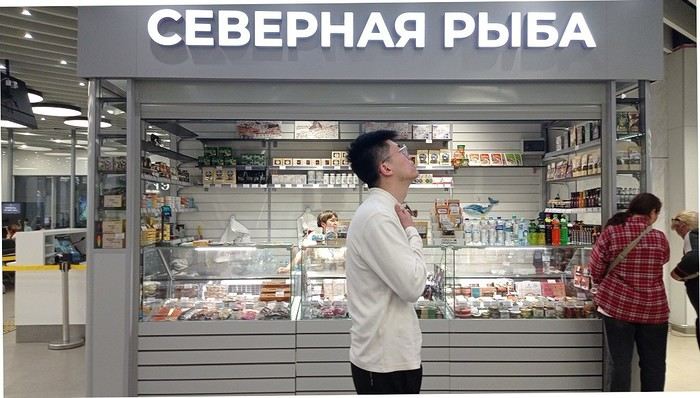
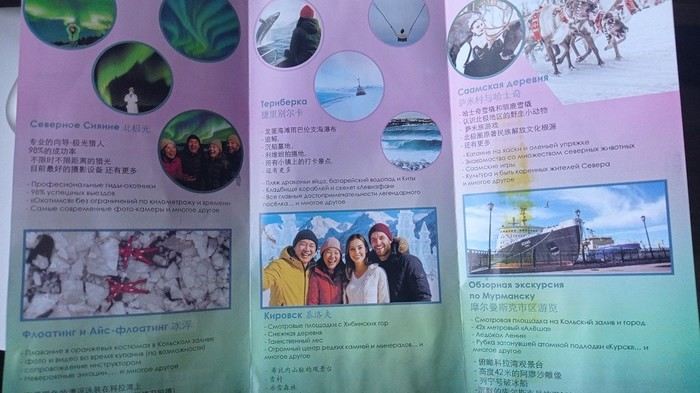
It’s the tail end of the northern lights season, and there were still crowds of Chinese tourists.


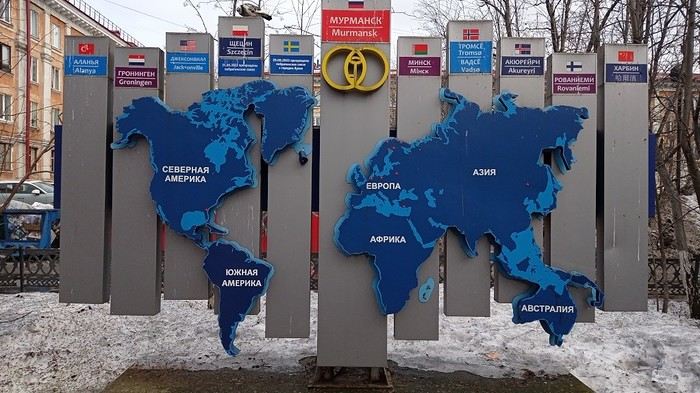
By the way, Murmansk is twinned with Harbin:


Chinese tourists are the largest foreign group, followed by Indians, then a mix of others from the Far East, Turks, Arabs, etc. Brochures are bilingual—Russian and Chinese:


============================

But let’s talk practical stuff. --

My domestic SIM card was restricted for SMS and internet for 24 hours. After that, if you want to keep using SMS, don’t turn off your phone—restarting triggers another 24-hour purgatory.

My Russian SIM cards (Megafon, MTS, Beeline) were activated as soon as I logged into their respective apps with my credentials.

Internet --

Telegram is heavily slowed down by authorities. To use it, you need to connect through proxy servers, which you load into the latest version of the app. Traffic is then rerouted internally within Telegram to servers outside Russia (Germany, Poland, Sweden, etc.). You can find these proxies on various channels. One is ChatVPN—check their website too.

For general internet use, like browsing the web, VPNs that work right now use the VLESS protocol. You can find several on Telegram by searching "VPN." A few free days, then payment in rubles or crypto.

Rozkomnadzor’s team are experts at this, so things can change. It’s a constant cat-and-mouse game.

Pskov is a special case. The city is near Estonia and has a large military base. Depending on NATO drone swarms launched from the Baltics, Wi-Fi can be completely suspended except for the most essential mobile apps. The drone swarms use the 4G network, and the powerful electronic jamming and drone suppression systems cause periods without Wi-Fi—including in hotels. Wired connections aren’t affected.
Open
Currency searches by Estonians in Narva and fines
Estonians have become real pests at the Narva border control.

EER is the Estonian public radio and television service. They have a website, err.ee, with a section in Russian. The other day, on 26.06.2026, in Narva, a Swedish citizen was asked if she had any foreign currency. She mentioned $1,800 USD and 4,400 RUB. However, she was searched, and 21,000 SEK were found in her underwear (!) Here’s what the article says: "They eventually discovered 21,000 Swedish kronor" Maybe the stash seemed suspicious... She tried to backpedal, meaning to return to Estonia with the Swedish kronor, but was fined 280 €:

https://rus.err.ee/1610037940/tamozhenniki-v-narve-oshtrafovali-grazhdanku-shvecii-pytavshujusja-pronesti-v-nizhnem-bele-krony

Earlier this year, on 10.03.2026, a German citizen had 1,820 € found in the lining of her coat. She was denied entry and also fined 480 €.

https://rus.err.ee/1609962977/grazhdanka-germanii-pytalas-provezti-nalichnye-cherez-granicu-v-narve-no-byla-oshtrafovana

Bottom line: if you need to carry cash to exchange, only take USD—and make sure it’s brand new...
Open
5 days in Saint Petersburg in May 2019
Hello there!


Here’s the recap of a little week we spent as a couple in Saint Petersburg in early May 2019, just before the *annus horribilis* of Covid. Since then, there’s also been the war in Ukraine, which has made things quite complicated, but tourist stays in Russia are still possible (see the discussion thread for the post-2022 situation). Looking back, early May was a bit too soon in the season—the trees were just starting to bud, and the wind was pretty chilly. It’s better to go at the end of May to enjoy the gardens.

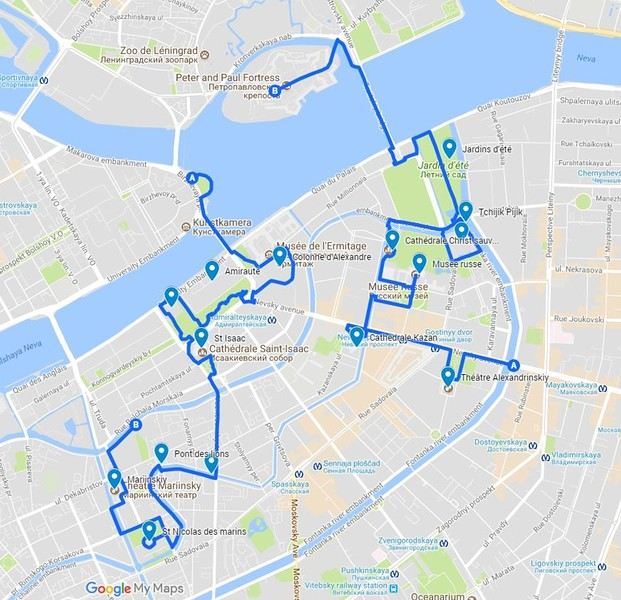
Below is our 5-day itinerary. I’d brought along the inevitable Lonely Planet and the Blue Guide to Saint Petersburg, just to get a basic understanding of the architecture of the buildings I’d be admiring. I’d prepared two complementary routes on G**gle Maps in advance to cover the essentials of the city center in two days. That left the other days completely free for the big highlights: the Hermitage Museum and Peterhof Palace. We tried to adapt based on the weather, visiting Peterhof and its gardens on what was *supposed* to be the nicest day. We’d saved the Hermitage for a day when the weather was really bad, but in the end, we had more or less the same weather every day (sunny but windy and chilly).

Itinerary:

Day 1: City center north of Nevsky Prospect, up to the fortress (Route 1 on the map) Day 2: Peterhof Day 3: City center south of Nevsky Prospect up to Mariinsky (Route 2) Day 4: Canal boat tour during the day + nighttime boat ride on the Neva Day 5: Hermitage

Evening activities:

On the 3rd day, we saw an opera at the Mariinsky I, On the 4th day, we saw a ballet at the Mariinsky II, then headed back to the embankments at half past midnight for a nighttime cruise on the Neva—magical!

Open
Eternal Russia! A deep dive into rural, provincial, and everyday Russia...
Hello 😏

Four trips to Russia in our little camper van have allowed us to meet ordinary Russians, those who live far from the Westernized elites of the country's major western cities.

Even with our few words of Russian, we clearly understood what we were so often told: Russia is not just Moscow or St. Petersburg.

This post doesn’t claim to address the sociological realities of this magnificent country. More modestly, it aims to take you on a visual journey to discover the three fundamentals that shape Russian identity: rural life, religion, and patriotism.

VoyageForum allows 20 photos per post, so we’ll stick to this selection. They were taken during our fourth road trip, in April and May 2019.

RURAL LIFE

For this dive into rural Russia, we deliberately left the paved roads to take small dirt tracks and country lanes.

We traveled through the oblasts of Ulyanovsk (Ульяновск), Nizhny Novgorod (Нижний Новгород), and the Republic of Mordovia (Республика Мордовия).

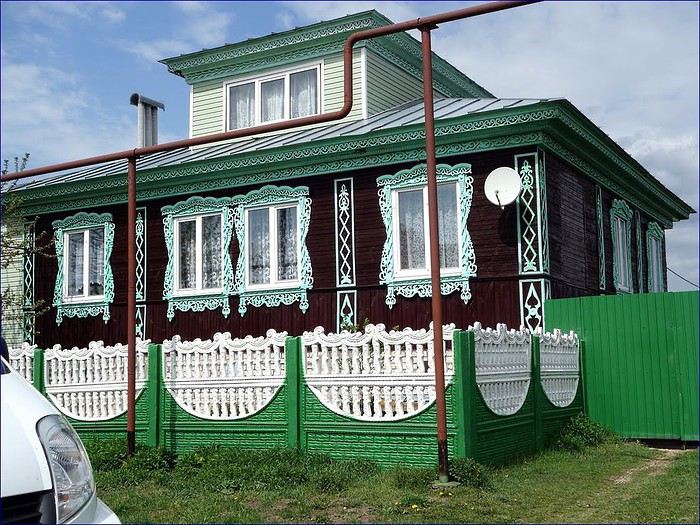
1. We leave the main road to enter the first villages. Very quickly, we find these splendid homes that make up the historical heritage of rural Russia.


2. A little further on, we enter a village where time seems to have stood still. A single street, izbas on either side, small plots of land behind, a few wells for water...


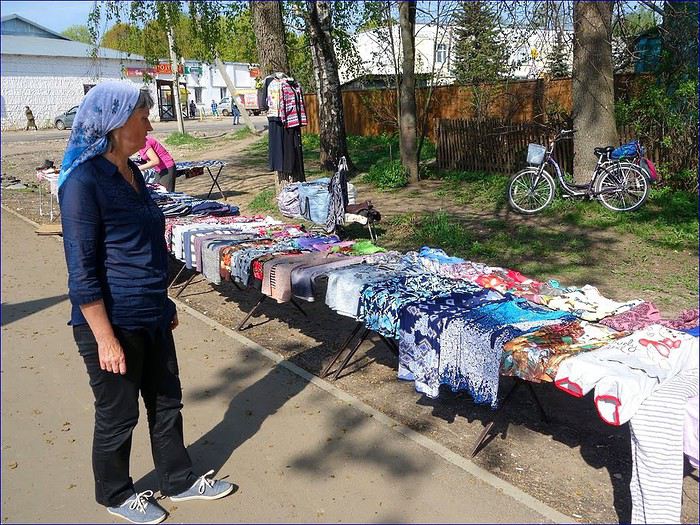
3. Shopping in rural Russia isn’t like GUM! Here, no luxury boutiques—vendors set up right by the roadside!


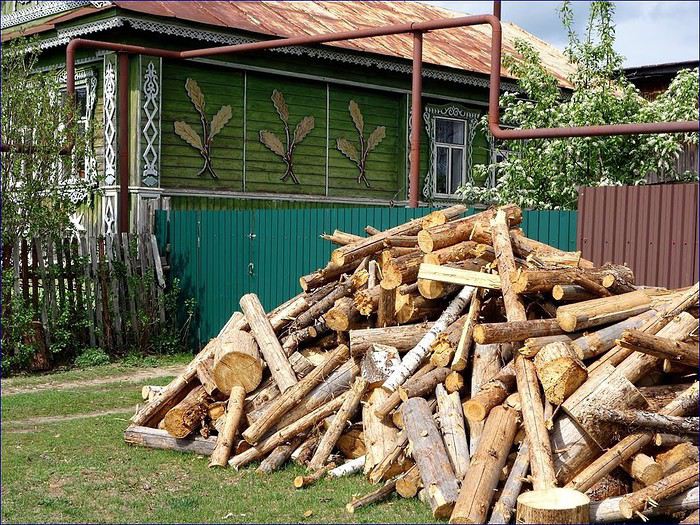
4. In another village, with a few words of Russian, I ask the owner of this house why he’s bringing in firewood in spring. From what I understood, you shouldn’t wait for autumn when everyone needs it and prices go up.


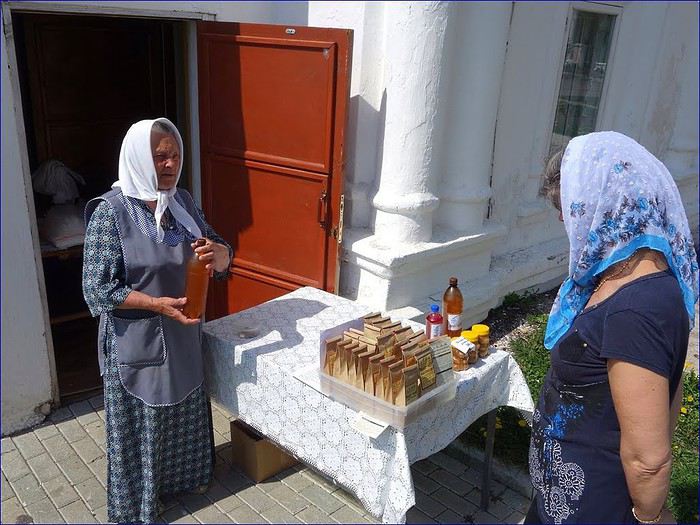
5. In the Nizhny Novgorod Oblast, we stop near a small church that the parishioners show us around. To thank them, Sylvie buys them fruit juice and delicious honey cakes. Generously, the priest gives us permission to sleep in the parking lot!


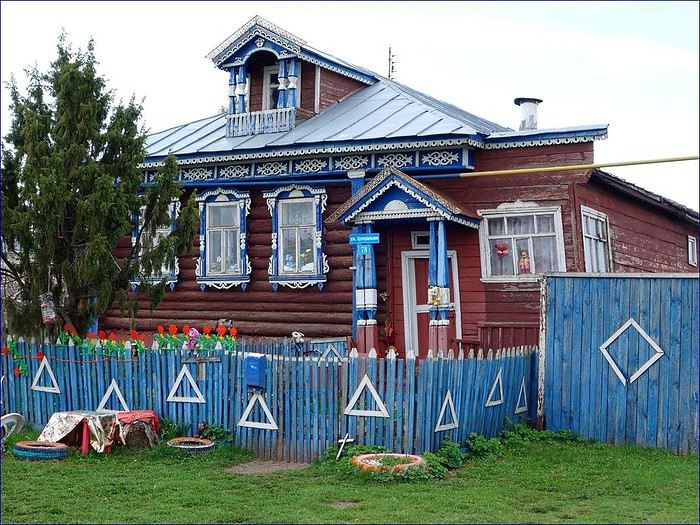
6. The next day, wandering rural roads, we admire this house for a long time, with its traditional wooden figurines behind the windows.


7. We hit the road again toward a small town where, of course, they sell local fish. We know Russians are the biggest consumers of freshwater fish in the world. And here, we’re in the central Volga basin with its dozens of tributaries!


RELIGION

A few years ago, we visited the Makaryevo Monastery. That’s where we learned about the Saint Seraphimo convent for nuns. It was hard to find, on the border of the Republic of Mordovia and the Nizhny Novgorod Oblast.

We discovered a place of pilgrimage, a space for religious expression, authentic, popular, and very Russian—where nuns, believers, and (most importantly) no tourists mix! Just 500 km from Moscow and the Golden Ring, the monastery mainly welcomes groups and families staying in the huge pilgrim house.

We’d only planned a quick visit but ended up staying two full days! Thanks to the staff for letting us park and sleep in the pilgrims’ parking lot.

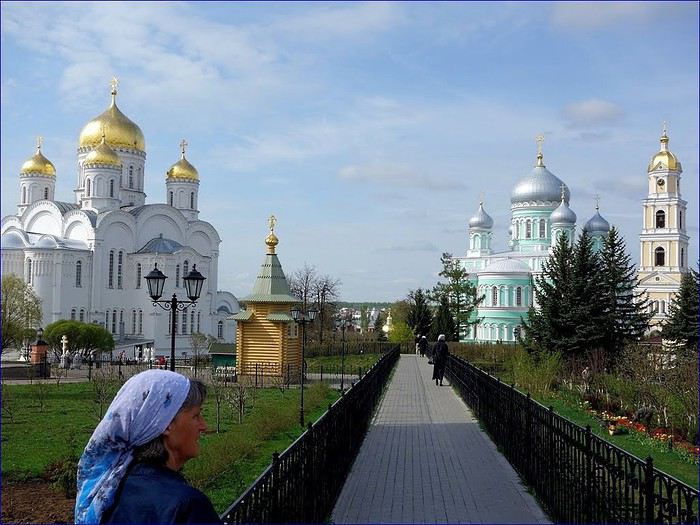
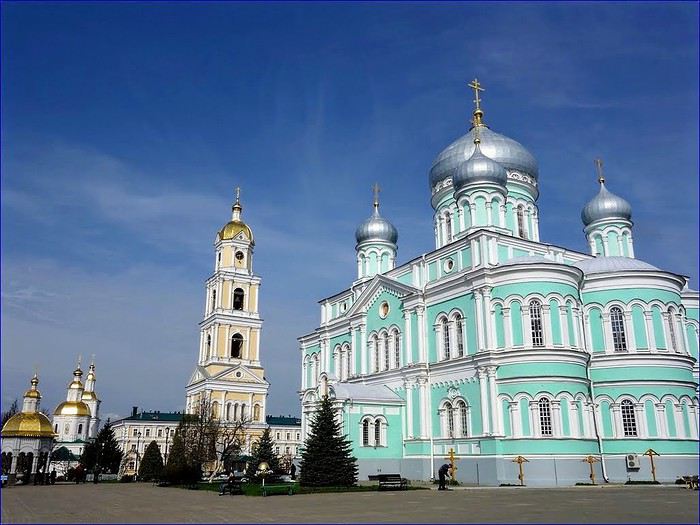
8. The site is much larger than we imagined. Over several hectares, religious buildings, the nuns’ living quarters, visitor accommodations, and schools all coexist...


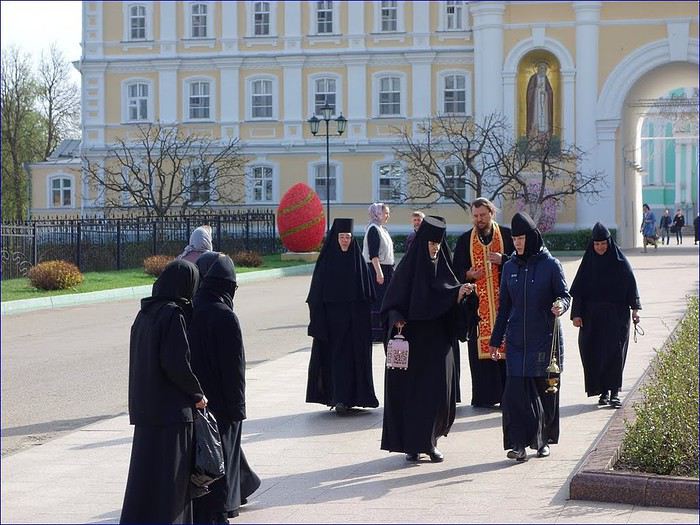
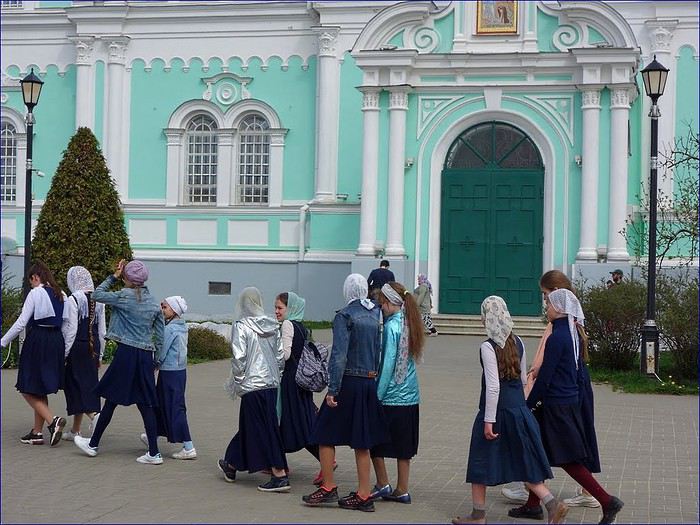
9. For two days, we mixed with kind religious figures and pilgrims—welcoming even to non-Orthodox folks like us!


10. But what really stood out was the presence of groups of young people. We were also struck by how young the religious figures we met were.


11. The next morning, having slept in the pilgrims’ parking lot, we were the first visitors. It was a special moment to walk the grounds alone.


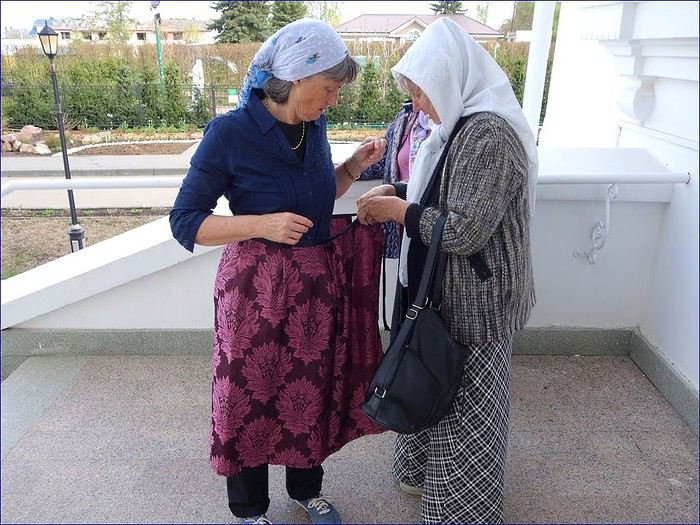
12. That morning was marked by an unlikely event. Sylvie chats with a nun who speaks English. Perhaps touched that we’d driven from France, she offers Sylvie a private tour. She asks two parishioners to dress her and grants her the privilege of seeing the sacred places closed to the public. Me? I got nothing—I was left outside!


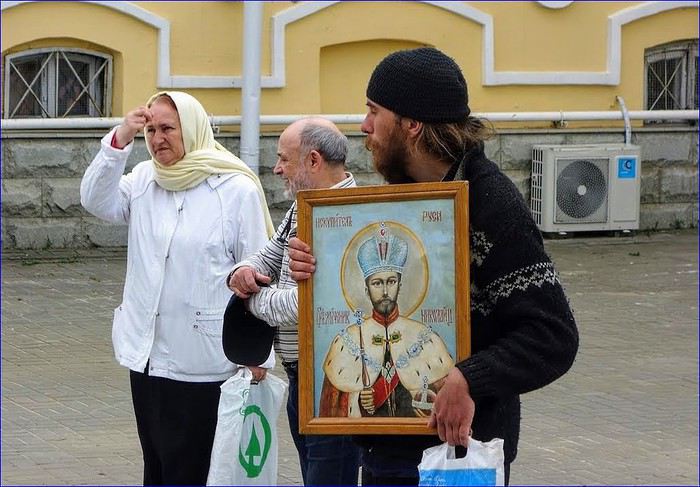
13. I take the chance to observe pilgrims in prayer. I meet a small group of believers gathered around a portrait of Nicholas II, praying for him.


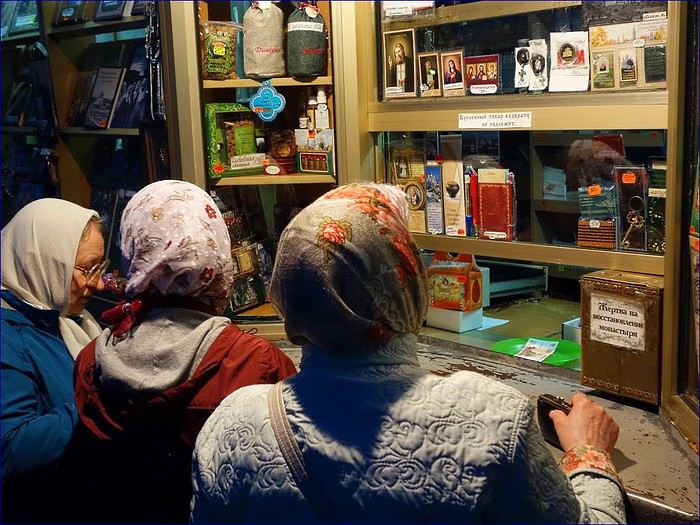
14. In the evening, after dinner, we attend the last service of the day. Until the site closes, we mingle with the *babushkas* buying icons, sacred images, and religious objects blessed by the priest—for just a few rubles.


PATRIOTISM

May 9, 1945, is the day Germany signed its surrender in Berlin. In Russia, it’s celebrated as День Победы—Victory Day. As we know, the Soviet Union paid the heaviest price: nearly 22 million dead. Not a single Russian family was spared.

We wanted to share this special moment, but far from the official ceremonies of the military parade on Red Square. We chose a provincial city, 180 km east of Moscow.

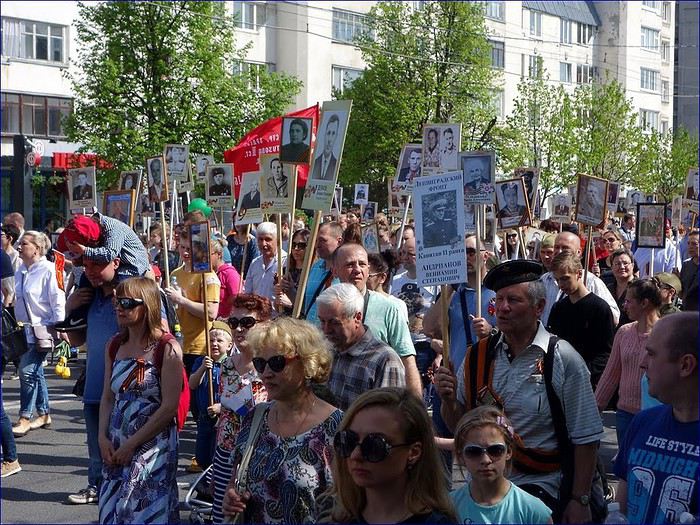
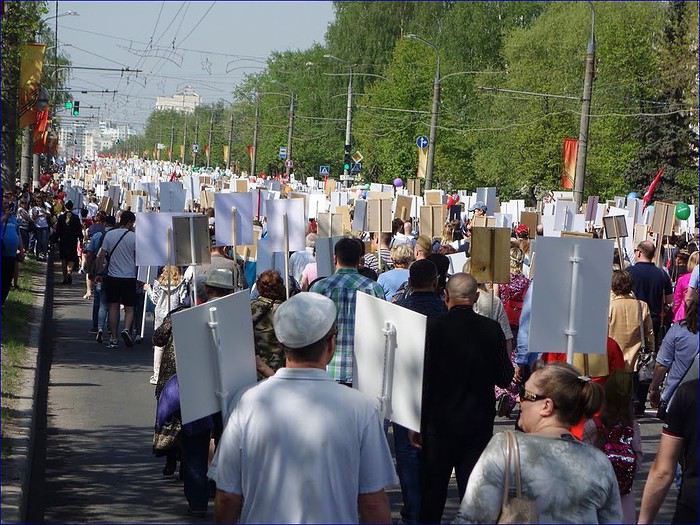
15. By 10 a.m., the crowd starts gathering downtown. Right away, what stands out is the family makeup of the procession.


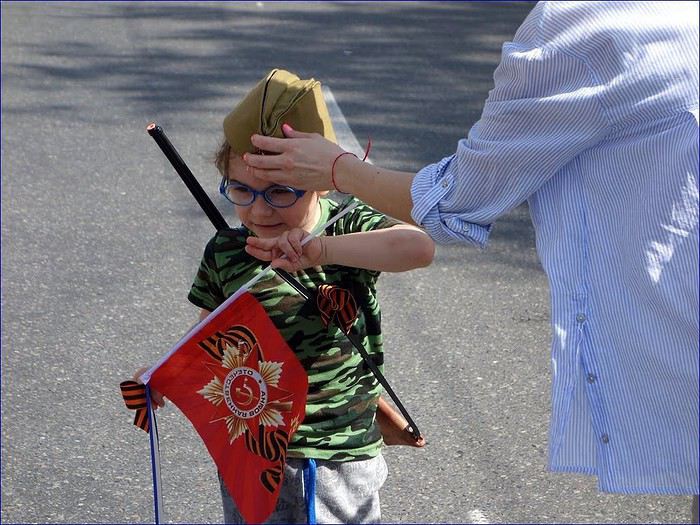
16. We walk among the families, like this mom adjusting her daughter’s cap. The atmosphere is a mix of solemnity and reflection, punctuated by the joyful laughter of children.


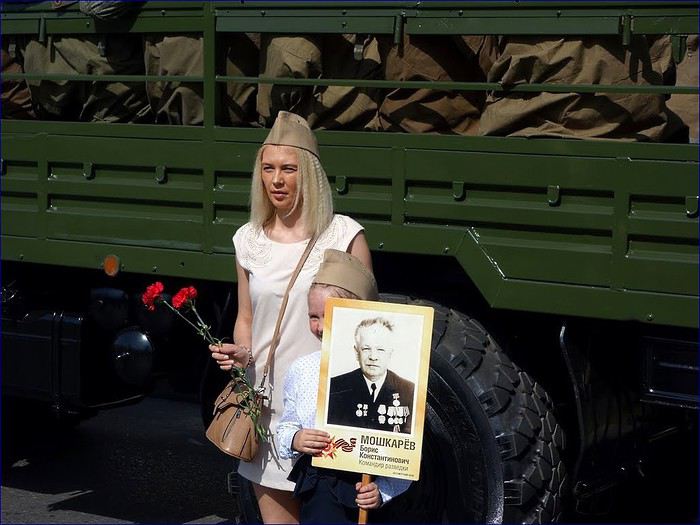
17. This mother and daughter pose behind a portrait of their grandfather.


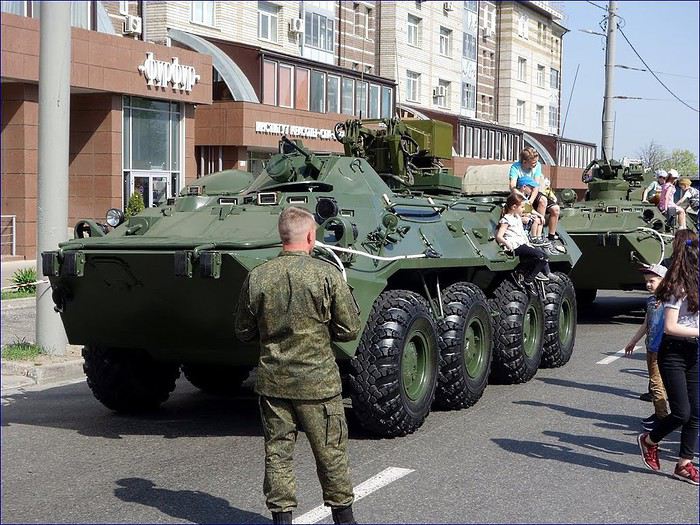
18. I spend a long time watching how patient and helpful the soldiers are. They lift kids onto the vehicles, make sure they don’t slip, then hand them back to their parents.


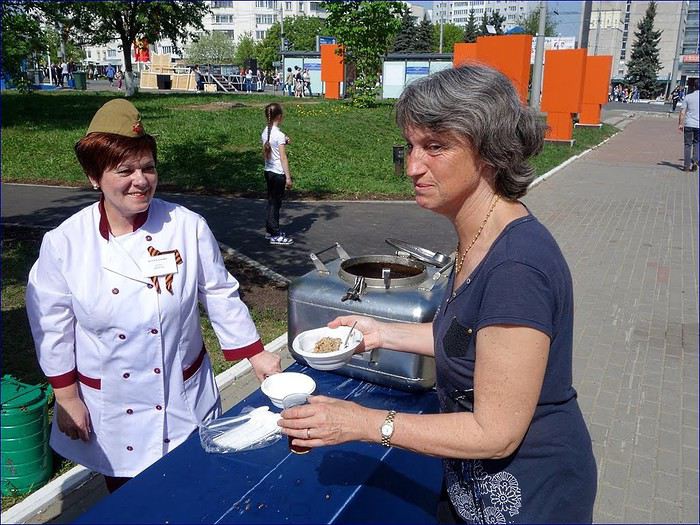
19. Around noon, we’re introduced to a tradition we didn’t know about. On May 9, in some cities, neighborhood committees made up of volunteers offer meals and drinks to participants. So we have lunch with families—parents, kids, and grandparents—all surprised we came from France.


20. By afternoon, the crowd has grown dense, with a procession stretching over 2 km! We stay until the end of the day, impressed by this authentic, popular demonstration of Russians’ attachment to the Motherland.


That’s all 😏

The full story is online here: ETERNAL RUSSIA.

Those who want to discover the world through the eyes of a plumber’s little van can check out Trafic Life.

Best regards,

Sylvie & Bernard
Open
Requirements for travel to Russia and Mongolia
Hi there, I’m planning a trip to Russia and Mongolia, starting from France. Crossing the border at Poland/Belarus or Georgia/Russia—other borders seem either closed or complicated. Tourist visas for 3 months with multiple entries. Do you have any info on Russian companies that cover a 4x4 vehicle for 3 months, and what prices in rubles or euros you’ve paid?

Which bank did you use for expenses? (EuroMastercard and Visa cards no longer work.)

Regarding Russian SIM cards, a new system called "Gosuslugi" has been introduced. How long did it take you to get one, and what steps did you follow?

Thanks
Open

You might also like