Hey everyone!
So, I'm in the middle of planning a 3-week road trip, and of course, I have a ton of questions. But first, maybe I should start with the basics:
When: July 5–28, 2025.
Who: 4 people (2 teens and 2 adults).
How: Flight tickets already booked (LH and United).
Where (overnights):
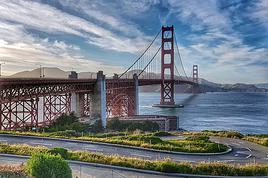
07/05: Arrival in SF. Night in SF.
07/06: SF.
07/07: SF.
07/08: Early departure? for Yosemite (Mariposa) – question 1.
07/09: Yosemite.
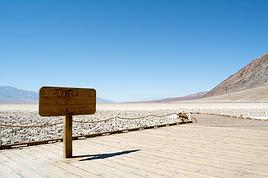
07/10: Mammoth Lake? (Accommodation in the area? Or somewhere else like 2 nights in Death Valley?) – question 2.
07/11: Death Valley.
07/12: LV.
07/13: LV.
07/14: Zion.
07/15: Bryce Canyon.
07/16: Bryce Canyon.
07/17: Moab.
07/18: Moab.
07/19: Moab.
07/20: Monument Valley.
07/21: Page.
07/22: Grand Canyon (better to stay 2 nights in Page or Grand Canyon?) – question 3.
07/23: Grand Canyon.
07/24: Kingman.
07/25: LA.
07/26: LA.
07/27: LA.
07/28: Return to France.
And question 4: For the car rental, I think it’s better to pick it up right when we arrive (to save time). But once we get to LA, should we drop it off at the airport or earlier to avoid being stuck with it (and paying extra for parking)? (We’re staying near Venice Beach for now.)
Anyway, if you spot any other inconsistencies, let me know! But I think it should work—I’ve already read 5 or 6 travel journals, so I’m feeling pretty set. :)
Right now, I’m deep into researching the rental car. I’m tempted to go for the Tahoe, but I’m not sure which site to use... So far, it’s hovering around 2000 €—quite the budget!
Hi there,
Alright, here’s my own road book for 3 weeks (late June – mid-July 2025) — looking forward to your feedback!
We’re not hikers or hardcore adventurers, so I’ve focused the itinerary on what we consider the essentials. We’re flying into SF and out of Las Vegas (because of airfare prices!) and also because I’m skipping Yosemite (doesn’t really tempt us). I’m planning a day trip to Death Valley from LV (been there before — it lets you see the highlights, and that was enough for me at the time). We’re not going as far as Canyon de Chelly — already done, and it didn’t really wow me. Just to note, this is pretty similar to a trip I’ve done before that worked well for us, but I’m open to tweaking it based on your suggestions. The duration (23 days) isn’t flexible — even one extra day sends the ticket prices skyrocketing.
Here’s what it looks like: Day 1: Arrival in SF Day 2 – Day 4: SF Day 5: Monterey (the Aquarium and the bay) – Overnight in Monterey Day 6 – Day 7: Drive down Highway 1 to Los Angeles – Overnight Day 6, e.g., in St. Simeon or nearby, and Day 7 in LA Day 8 – Day 9: LA (possibly an extra day) – Overnights in LA Day 10: Drive to Kingman and sightseeing – Overnight in Kingman Day 11: Drive to Grand Canyon and start exploring GC – Overnight in Tusayan Day 12: Explore GC – Overnight in Tusayan Day 13: Drive to Monument Valley and visit – Overnight nearby (Mexican Hat, Kayenta, etc.) Day 14: More sightseeing in the area (Valley of the Gods, Gooseneck Park) and drive to Mesa Verde – Overnight in Cortez Day 15: Visit Mesa Verde – Overnight in Cortez Day 16: Drive to Page and sightseeing – Overnight in Page Day 17: Antelope Canyon, Horseshoe Bend – Overnight in Page Day 18: Drive to Bryce Canyon NP and start exploring Bryce – Overnight in the area! Day 19: Explore Bryce => Question: It’s a 2.5-hour drive from Page to Bryce. If we leave early, can we see the highlights of Bryce on Day 18 and skip Day 19? I’ll admit, I don’t remember much (it was back in 2009!) Day 20: Drive to Las Vegas with stops along the way (a quick detour to Zion just to say we’ve been, Valley of Fire) – Overnight in LV Day 21: LV; Cirque du Soleil show in the evening – Overnight in LV Day 22: Day trip to Death Valley (or a lazy day and outlet shopping!) – Overnight in LV Day 23: Flight back at 4:10 PM, which still gives us time to enjoy the morning.
What do you think? Best regards,
Alright, here’s my own road book for 3 weeks (late June – mid-July 2025) — looking forward to your feedback!
We’re not hikers or hardcore adventurers, so I’ve focused the itinerary on what we consider the essentials. We’re flying into SF and out of Las Vegas (because of airfare prices!) and also because I’m skipping Yosemite (doesn’t really tempt us). I’m planning a day trip to Death Valley from LV (been there before — it lets you see the highlights, and that was enough for me at the time). We’re not going as far as Canyon de Chelly — already done, and it didn’t really wow me. Just to note, this is pretty similar to a trip I’ve done before that worked well for us, but I’m open to tweaking it based on your suggestions. The duration (23 days) isn’t flexible — even one extra day sends the ticket prices skyrocketing.
Here’s what it looks like: Day 1: Arrival in SF Day 2 – Day 4: SF Day 5: Monterey (the Aquarium and the bay) – Overnight in Monterey Day 6 – Day 7: Drive down Highway 1 to Los Angeles – Overnight Day 6, e.g., in St. Simeon or nearby, and Day 7 in LA Day 8 – Day 9: LA (possibly an extra day) – Overnights in LA Day 10: Drive to Kingman and sightseeing – Overnight in Kingman Day 11: Drive to Grand Canyon and start exploring GC – Overnight in Tusayan Day 12: Explore GC – Overnight in Tusayan Day 13: Drive to Monument Valley and visit – Overnight nearby (Mexican Hat, Kayenta, etc.) Day 14: More sightseeing in the area (Valley of the Gods, Gooseneck Park) and drive to Mesa Verde – Overnight in Cortez Day 15: Visit Mesa Verde – Overnight in Cortez Day 16: Drive to Page and sightseeing – Overnight in Page Day 17: Antelope Canyon, Horseshoe Bend – Overnight in Page Day 18: Drive to Bryce Canyon NP and start exploring Bryce – Overnight in the area! Day 19: Explore Bryce => Question: It’s a 2.5-hour drive from Page to Bryce. If we leave early, can we see the highlights of Bryce on Day 18 and skip Day 19? I’ll admit, I don’t remember much (it was back in 2009!) Day 20: Drive to Las Vegas with stops along the way (a quick detour to Zion just to say we’ve been, Valley of Fire) – Overnight in LV Day 21: LV; Cirque du Soleil show in the evening – Overnight in LV Day 22: Day trip to Death Valley (or a lazy day and outlet shopping!) – Overnight in LV Day 23: Flight back at 4:10 PM, which still gives us time to enjoy the morning.
What do you think? Best regards,
Hello! The itinerary is pretty much set for August 2026. Yeah, I know it’s gonna be *super* hot. But it’s the only time we can get away.
So, here’s the plan: Montpellier-CDG-Dallas.
Stay from July 31 to August 26, 2026: Car rental – check, Hotels – check, Itinerary – almost check, Photo gear – check, Budget – check, 🤪 Meal planning – meh, we’ll see... Walmart, of course, for the cooler when we arrive.
And now, without too much detail...
Fort Worth: The Longhorns and the Stockyards; JR’s ranch (for the missus); Medal of Honor Museum – Arlington.
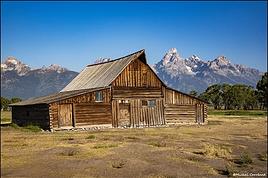
Houston and NASA Space Center: See the Gulf of Mexico/America.
San Antonio and the missions.
Fort Stockton for an overnight stop.
El Paso via Guadalupe Mountains: El Paso and White Sands.
Tucson and the Pima Air & Space Museum: Tombstone, Bisbee.
Phoenix:
Still working on the program.
Sedona: Round trip around the area via Flagstaff and Williams, or the Grand Canyon (already done) – we’ll decide on the spot.
Albuquerque: Santa Fe, Turquoise Trail, Los Alamos.
Amarillo via Route 66: Old Route 66 in the city; Big Texas Ranch Steak 😏.
Dallas: JFK Museum; Perot Museum; West End district.
And through it all – the road, the road, and more road!!!
We’ll adapt day by day based on our mental and physical state (we’re not exactly spring chickens).
Return to France: Dallas-Montpellier via CDG.
Cheers!
So, here’s the plan: Montpellier-CDG-Dallas.
Stay from July 31 to August 26, 2026: Car rental – check, Hotels – check, Itinerary – almost check, Photo gear – check, Budget – check, 🤪 Meal planning – meh, we’ll see... Walmart, of course, for the cooler when we arrive.
And now, without too much detail...
Fort Worth: The Longhorns and the Stockyards; JR’s ranch (for the missus); Medal of Honor Museum – Arlington.
Houston and NASA Space Center: See the Gulf of Mexico/America.
San Antonio and the missions.
Fort Stockton for an overnight stop.
El Paso via Guadalupe Mountains: El Paso and White Sands.
Tucson and the Pima Air & Space Museum: Tombstone, Bisbee.
Phoenix:
Still working on the program.
Sedona: Round trip around the area via Flagstaff and Williams, or the Grand Canyon (already done) – we’ll decide on the spot.
Albuquerque: Santa Fe, Turquoise Trail, Los Alamos.
Amarillo via Route 66: Old Route 66 in the city; Big Texas Ranch Steak 😏.
Dallas: JFK Museum; Perot Museum; West End district.
And through it all – the road, the road, and more road!!!
We’ll adapt day by day based on our mental and physical state (we’re not exactly spring chickens).
Return to France: Dallas-Montpellier via CDG.
Cheers!
Hello Everyone!!
Is this American West dream finally going to come true? Illness and the loss of loved ones have forced us to cancel this trip several times over the past few years...
Here’s the rough outline I’m sharing with you—feel free to give constructive feedback!!
From April 20, 2025, to May 5, 2025, that’s 14 days on-site excluding flights.
D20: Flight from Lyon to Phoenix, night in Phoenix L21: Phoenix (visit the zoo, city, Apache Trail? The road is apparently closed??) night in Sedona M22: Sedona, night in Sedona M23: Depart for GC, visit GC, night in GC (no accommodation booked yet, same goes for the following visits) J24: Drive to MV, visit MV, night in Mexican Hat or? V25: End of MV, drive to Page, night in Page S26: Page—Antelope Canyon, Horseshoe Bend, Lake Powell, night in Page D27: Drive to Bryce, visit Bryce, night? L28: End of Bryce, depart for Zion (I’m wondering if it’s worth visiting Zion at the end of April—since the park is at high altitude, is there a risk of snow? Temperatures?) If we skip Zion, could we plan 2 days for Arches before heading to Bryce? Night in Springdale if Zion, otherwise drive to Valley of Fire, night? M29: Valley of Fire, then drive to LV, night in LV M30: Morning in LV, then drive to Death Valley, night in Furnace Creek? J1: Visit Death Valley, return to LV, night in LV And then we have 3 days left... where should we add them? More time in Arches and Zion? An extra day in Sedona? In Page? We’re not big hikers, so we won’t spend more than a day in each park.
Just to clarify: passports and ESTA are all set!!
Thanks for your advice! Best regards, Christophe
Is this American West dream finally going to come true? Illness and the loss of loved ones have forced us to cancel this trip several times over the past few years...
Here’s the rough outline I’m sharing with you—feel free to give constructive feedback!!
From April 20, 2025, to May 5, 2025, that’s 14 days on-site excluding flights.
D20: Flight from Lyon to Phoenix, night in Phoenix L21: Phoenix (visit the zoo, city, Apache Trail? The road is apparently closed??) night in Sedona M22: Sedona, night in Sedona M23: Depart for GC, visit GC, night in GC (no accommodation booked yet, same goes for the following visits) J24: Drive to MV, visit MV, night in Mexican Hat or? V25: End of MV, drive to Page, night in Page S26: Page—Antelope Canyon, Horseshoe Bend, Lake Powell, night in Page D27: Drive to Bryce, visit Bryce, night? L28: End of Bryce, depart for Zion (I’m wondering if it’s worth visiting Zion at the end of April—since the park is at high altitude, is there a risk of snow? Temperatures?) If we skip Zion, could we plan 2 days for Arches before heading to Bryce? Night in Springdale if Zion, otherwise drive to Valley of Fire, night? M29: Valley of Fire, then drive to LV, night in LV M30: Morning in LV, then drive to Death Valley, night in Furnace Creek? J1: Visit Death Valley, return to LV, night in LV And then we have 3 days left... where should we add them? More time in Arches and Zion? An extra day in Sedona? In Page? We’re not big hikers, so we won’t spend more than a day in each park.
Just to clarify: passports and ESTA are all set!!
Thanks for your advice! Best regards, Christophe
Hello, here’s a totally subjective recap of our 15-day road trip between Colorado and New Mexico, from late September to mid-October.
Our main interests are culture, museums, and landscapes—no hiking or trails for us. Personally, I’m pretty contemplative, and luckily, there’s always something to see out there! We’re pretty used to the US; we’ve been going there often for a long time (let’s just say we’re not exactly young anymore).
Budget: Even though we don’t set a strict budget beforehand, we try to keep costs as low as possible. This time, we managed to spend around 4000 € for two, all included. To do this: avoid expensive accommodations, staying between 60 and 120 € per night with an average of 90 €/night, mixing Airbnb and motels. And skip the “real” restaurants, which are pretty pricey in the US: sandwiches for lunch, takeout or cooking in the Airbnb in the evening. We shop at Sprouts or Whole Foods—organic-style chains that are pricier than Walmart but better. In the evenings, Sprouts has discounts on items that didn’t sell during the day. Also, avoid toll roads, paid parking, and overly expensive attractions or sites. The dispensary budget is separate…
Route: Denver/Colorado Springs/Alamosa/Raton/Santa Fe/Cuba/Cortez/Grand Junction/Glenwood Springs/Denver This wasn’t too planned in advance—we booked a few nights upon arrival and went with the flow. Flight from CDG to Denver with AF/Delta, car rental at Dollar for a standard SUV. The guy at the Dollar counter upsold me on extra insurance for flat tires (and since I knew we’d be off-roading, I took it). Without telling me, he upgraded me to a Jeep Sahara 4X4 Hybrid. Nice.
Listening to the news upon arrival, the anchor announced, “It’s officially fall now.” We hadn’t really thought about that before leaving, but yeah—it’s the time when the trees turn fluorescent yellow and red. Amazing.
Colorado Springs: Garden of the Gods is a free park with paved trails winding through red/orange rock formations. Magical at sunrise—groups of deer roam around, along with birds and rabbits. It’s small but wow! Didn’t try the Manitou Incline in Manitou Springs, a staircase with thousands of steps going straight up the mountain. Impressive from the bottom, but the parking is paid, which is a downside for those willing to tackle it. The Cog Railway goes up to the summit of Pikes Peak—around $100 when we were there. No thanks. And of course, the parking is paid too. For fans, Maggie’s Farm dispensary is great.
On Route 24, Eleven Mile Canyon Recreation Area is fly-fishing paradise—just like in the movie *A River Runs Through It*. Entry is $11, and a trail follows the river at the bottom of the canyon to the dam. Dozens of people in waders are in the water, casting their lines over and over. You can see the salmon in the clear water, and we had a picnic in the sun, imagining Brad Pitt catching a fish.
Buena Vista: A cute little tourist town with an Outdoor Fair that day—some pretty impressive vehicles for sale, set up for mountain living (like Juniper outfitting a RAM).
Alamosa: The closest town to Great Sand Dunes National Park, crossed by the Rio Grande (and let’s be real—it’s more of a stream than a river!). Park access was free because it was National Park Day. A park with massive dunes—climbing them is pretty exhausting, with lots of wind and sinking sand. Glad we didn’t do it in summer; I can’t imagine how tough it’d be in the heat. It’s a bit deceptive: it looks easy to get to the top of a dune, but it’s really not. The campsites were nice, and it was busy that weekend. We passed the “Point of No Return,” a sandy trail winding through the hills and connecting to Route 559 from above. Didn’t go all the way, but it’s possible the entrance is free from that side. However, you need a 4X4 with good ground clearance. After 1 or 2 km on the trail, you’re alone between the dunes and hills—hardly anyone around. But tricky to turn around or pass other vehicles; the trail isn’t wide. We crossed paths with a Hanomag (registered in the Netherlands—impressive!) coming down without stopping, or risking getting stuck.
On the way out, we took the small Route 403, which quickly turns into a trail crossing the mountain. Entire sections of forest were turning fluorescent yellow with patches of green and red—an incredible sight.
Raton: A small town that probably peaked in the late 19th century and has been in slow decline ever since. The Raton Pass Motor Inn is the kind of place that makes the US legendary—entirely 50s and 60s decor, really well done. I had the Betty Page room—too cool. Felt like we were on Route 66. Even better.
Santa Fe: A small city with no high-rises—almost all low-rise buildings, many in adobe, blending perfectly into the landscape. The old downtown is touristy but nice, with its plaza and church. There’s a really cool vibe—we loved it. For drinks, the bar at the top of La Fonda Hotel was packed for sunset, with a diverse crowd. Not overpriced for the location. SITE Santa Fe is a contemporary art space near the train station. It’s free, and the temporary exhibit was really good—high quality. Museum Hill is, as the name suggests, where several museums are located. We visited the Museum of Indian Art and Culture—great if you’re into “First Nations” history. Saw The Dandy Warhols at The Bridge—an outdoor venue, one of the last concerts of the season before winter makes it too cold. Oddly, there was no bag check, just an ID required (even though it was obvious we were over 21!). Tickets were reasonable, around $30 (concerts in the US can be crazy expensive). The band was good, with fewer than 300 people in front. A sign at the bar warned: Don’t forget you’re at 1,500 meters—alcohol hits harder up here!
Albuquerque: A sprawling city with an old historic center that feels a bit like Disneyland—too perfect for my taste. The real highlight is the Sandia Peak Tramway, which goes up to the old ski resort above the city. Tickets are around $35, and it’s worth it—the ride over the canyons is pretty wild. The ski resort is a bit abandoned; apparently, like elsewhere, there’s no snow anymore. I asked several people about the lack of snow, and the answer was always the same: “It’s cyclical.” Okay then. We arrived for the start of the International Balloon Fiesta (one of the world’s largest hot-air balloon gatherings), hoping to see hundreds of balloons in the sky. Nope—windy today, so no one took off. Bummer.
Las Vegas: New Mexico has its own Las Vegas, but it’s nothing like the other one—a sleepy little town with a perfectly preserved 19th-century Historic Plaza Hotel, brick buildings, and vintage streetlights. Everything is so well-preserved it’s often used as a filming location. NM attracts a lot of productions thanks to tax incentives and its Western landscapes—and it’s cheaper than California! That day, a huge Texas flag was flying in the wind: they were filming the second season of *Ransom Canyon* for Netflix in the town center. If we’d been dressed more “Western,” we could’ve been extras.
Jemez Springs: Its Jemez Hot Springs is super cute—several thermal pools at different temperatures, a New Age vibe. The pools are surrounded by big rocks, and you’re asked to speak softly. A place where you could spend hours. $50 for two hours for two.
Los Alamos: A town made legendary by the bomb, the movie, etc. Heads up: It’s still a research center, and to cross part of the town, you need to show ID. No stopping or taking photos allowed. Other than the Oppenheimer House (currently closed—only the neighboring house is open to visitors), there’s not much to see. There’s a replica of the camp entrance, but it’s been turned into restrooms.
Georgia O’Keeffe Trail (American painter, 1887–1986): Her museum in Santa Fe is pretty good, even if they don’t have tons of works. Entry is $20. Her house in Abiquiu is open for visits, but it’s way overpriced at $65. So we skipped it. You can get an idea of it by stopping at the Welcome Center on Route 84. Further down the same road, Ghost Ranch is worth a visit—beautiful setting, free to enter, with trails to explore and a great atmosphere.
Chaco Culture National Historical Park: A pretty isolated park—25 km of trails to get there, with only a small section paved. The road is decent except for the last few kilometers, which have potholes. I can’t imagine it being accessible after rain, though that doesn’t happen often! This park, in the middle of a desert plain with a few canyons, is one of the rare places where you can find multi-story structures from pre-Columbian civilizations—so, before the “current” tribes. But cruel disappointment: it’s been shut down for a few days. We met a Native ranger—tall, with long hair—who explained that even though he wasn’t being paid, he was still guarding the park and had closed all access to the sites. Darn. Turned around and headed back down the trail.
Same story in the next town, Aztec (a funny name, right?): Aztec Ruins National Monument was closed too.
We passed Ship Rock, the Navajo’s sacred mountain—really impressive. Couldn’t find a trail to get closer, but it’s better from a distance anyway! The town of Shiprock itself is pretty depressing—poor living conditions for some Natives, with rundown mobile homes and piles of junk cars.
Stopped in Cortez to visit Mesa Verde National Park. Ate at Denny’s—hadn’t been there in ages (though it’s the kind of place I should feel at home in!). The customers all looked like they’d stepped out of *The Addams Family*—a little creepy. Or funny, depending on your perspective. For Mesa Verde, after discussing it on this forum with the honorable member Caussat (who didn’t find it that amazing), we were on the fence. Problem solved: it was closed too. Back on the road.
Durango: Really nice with its Main Ave and its shops, cafés—touristy but with local life. Famous for its tourist train to Silverton, but we didn’t do it—way too expensive. Choice between a steam locomotive or diesel (which belches black, stinky smoke—yuck). The diesel should be replaced with electric as soon as they get the funds.
Million Dollar Highway: The road winds through the mountains, and every turn (and there are a lot) is breathtaking—unbelievable landscapes with fluorescent yellow, green, and snow-capped mountains. Just wow.
Silverton: A Western town nestled between two mountains, preserved in its original state despite the tourists arriving by train. Around it, abandoned mines and old wooden ties—must’ve been tough for the 19th-century miners.
Grand Junction: The city is surrounded by giant mesas—pretty impressive. The old downtown is *too* clean—almost sterile.
Colorado National Monument: Just outside the city, a winding road climbs between stunning canyons, with sweeping views of the valley. Entry was free that day due to the shutdown.
Route 330, which we took to get back to the highway, passes through a place called “Cowboy Country”—and it’s true. We saw guys in Stetsons with huge pickups, the road turned into a trail with cows wandering on it, and we had to honk to get them to move. The trail to I-70 was full of potholes—the 4X4 came in handy. Had a picnic by Vega Reservoir: the booth at the entrance was empty, but people left cash in envelopes for camping fees. Anyone passing by could’ve taken it, but it’s an example of US trust and honesty!
Glenwood Springs: A small town famous for its hot springs pool—they claim it’s the largest in the world. I don’t know about that, but it has a great look. Unfortunately, it was closed for maintenance those days! Blew our budget by staying at the Hotel Colorado, a huge 1893 building with a real atmosphere in its grand lobby and fake fireplaces. Fire pits in front of wooden chairs in the garden with mountain views—just really great.
Aspen: The billionaires’ ski resort, but surprisingly, parking was free for 2 hours. Rare to see a place for the super-rich that doesn’t scream “not for you” (like Palm Beach, for example). A former mining town completely redone, every shop occupied by a luxury brand. There’s even a thrift shop run by sweet retirees—funny as hell. Two ski lifts to start directly with your skis, but we didn’t see the price—they were still closed. Lots of houses that aren’t huge but are cute, though looking at real estate prices made us think, “Is there an extra zero on that listing?” A 6-bedroom villa for $52 million? Wow. The mountains around are gorgeous—no wonder it became what it is.
Another fancy resort nearby: Vail, more modern in its construction. The restaurants opted for a “Schwarzwald” decor—kind of odd.
Denver: Nothing really stood out for us in this city, except the Design Museum—the Kirkland, where a local painter collected furniture and supplies from Arts and Crafts to Postmodern. Just really great. Entry is included with a visit to the Denver Art Museum, which has diverse collections—from Impressionism (they have a Manet, a Van Gogh, a Cézanne, several Sisleys) to photography. The best part for me was the “Ancient Americas” totems—huge, impressive wooden sculptures, painted, the kind you’re more used to seeing in Polynesia or Easter Island. Personally, I didn’t know Natives made them too. That’s what museums are for!
Back at the airport, where I had to tag my own luggage (you have to do everything yourself with these US airlines). The tag said SLC/CDG! But we were supposed to connect through JFK. Turns out, they’d put us on a DEN/SLC/CDG flight without telling us. In the end, we gained 30 minutes on our original arrival time in Paris!
There you go—hope this inspires other travelers! !
Our main interests are culture, museums, and landscapes—no hiking or trails for us. Personally, I’m pretty contemplative, and luckily, there’s always something to see out there! We’re pretty used to the US; we’ve been going there often for a long time (let’s just say we’re not exactly young anymore).
Budget: Even though we don’t set a strict budget beforehand, we try to keep costs as low as possible. This time, we managed to spend around 4000 € for two, all included. To do this: avoid expensive accommodations, staying between 60 and 120 € per night with an average of 90 €/night, mixing Airbnb and motels. And skip the “real” restaurants, which are pretty pricey in the US: sandwiches for lunch, takeout or cooking in the Airbnb in the evening. We shop at Sprouts or Whole Foods—organic-style chains that are pricier than Walmart but better. In the evenings, Sprouts has discounts on items that didn’t sell during the day. Also, avoid toll roads, paid parking, and overly expensive attractions or sites. The dispensary budget is separate…
Route: Denver/Colorado Springs/Alamosa/Raton/Santa Fe/Cuba/Cortez/Grand Junction/Glenwood Springs/Denver This wasn’t too planned in advance—we booked a few nights upon arrival and went with the flow. Flight from CDG to Denver with AF/Delta, car rental at Dollar for a standard SUV. The guy at the Dollar counter upsold me on extra insurance for flat tires (and since I knew we’d be off-roading, I took it). Without telling me, he upgraded me to a Jeep Sahara 4X4 Hybrid. Nice.
Listening to the news upon arrival, the anchor announced, “It’s officially fall now.” We hadn’t really thought about that before leaving, but yeah—it’s the time when the trees turn fluorescent yellow and red. Amazing.
Colorado Springs: Garden of the Gods is a free park with paved trails winding through red/orange rock formations. Magical at sunrise—groups of deer roam around, along with birds and rabbits. It’s small but wow! Didn’t try the Manitou Incline in Manitou Springs, a staircase with thousands of steps going straight up the mountain. Impressive from the bottom, but the parking is paid, which is a downside for those willing to tackle it. The Cog Railway goes up to the summit of Pikes Peak—around $100 when we were there. No thanks. And of course, the parking is paid too. For fans, Maggie’s Farm dispensary is great.
On Route 24, Eleven Mile Canyon Recreation Area is fly-fishing paradise—just like in the movie *A River Runs Through It*. Entry is $11, and a trail follows the river at the bottom of the canyon to the dam. Dozens of people in waders are in the water, casting their lines over and over. You can see the salmon in the clear water, and we had a picnic in the sun, imagining Brad Pitt catching a fish.
Buena Vista: A cute little tourist town with an Outdoor Fair that day—some pretty impressive vehicles for sale, set up for mountain living (like Juniper outfitting a RAM).
Alamosa: The closest town to Great Sand Dunes National Park, crossed by the Rio Grande (and let’s be real—it’s more of a stream than a river!). Park access was free because it was National Park Day. A park with massive dunes—climbing them is pretty exhausting, with lots of wind and sinking sand. Glad we didn’t do it in summer; I can’t imagine how tough it’d be in the heat. It’s a bit deceptive: it looks easy to get to the top of a dune, but it’s really not. The campsites were nice, and it was busy that weekend. We passed the “Point of No Return,” a sandy trail winding through the hills and connecting to Route 559 from above. Didn’t go all the way, but it’s possible the entrance is free from that side. However, you need a 4X4 with good ground clearance. After 1 or 2 km on the trail, you’re alone between the dunes and hills—hardly anyone around. But tricky to turn around or pass other vehicles; the trail isn’t wide. We crossed paths with a Hanomag (registered in the Netherlands—impressive!) coming down without stopping, or risking getting stuck.
On the way out, we took the small Route 403, which quickly turns into a trail crossing the mountain. Entire sections of forest were turning fluorescent yellow with patches of green and red—an incredible sight.
Raton: A small town that probably peaked in the late 19th century and has been in slow decline ever since. The Raton Pass Motor Inn is the kind of place that makes the US legendary—entirely 50s and 60s decor, really well done. I had the Betty Page room—too cool. Felt like we were on Route 66. Even better.
Santa Fe: A small city with no high-rises—almost all low-rise buildings, many in adobe, blending perfectly into the landscape. The old downtown is touristy but nice, with its plaza and church. There’s a really cool vibe—we loved it. For drinks, the bar at the top of La Fonda Hotel was packed for sunset, with a diverse crowd. Not overpriced for the location. SITE Santa Fe is a contemporary art space near the train station. It’s free, and the temporary exhibit was really good—high quality. Museum Hill is, as the name suggests, where several museums are located. We visited the Museum of Indian Art and Culture—great if you’re into “First Nations” history. Saw The Dandy Warhols at The Bridge—an outdoor venue, one of the last concerts of the season before winter makes it too cold. Oddly, there was no bag check, just an ID required (even though it was obvious we were over 21!). Tickets were reasonable, around $30 (concerts in the US can be crazy expensive). The band was good, with fewer than 300 people in front. A sign at the bar warned: Don’t forget you’re at 1,500 meters—alcohol hits harder up here!
Albuquerque: A sprawling city with an old historic center that feels a bit like Disneyland—too perfect for my taste. The real highlight is the Sandia Peak Tramway, which goes up to the old ski resort above the city. Tickets are around $35, and it’s worth it—the ride over the canyons is pretty wild. The ski resort is a bit abandoned; apparently, like elsewhere, there’s no snow anymore. I asked several people about the lack of snow, and the answer was always the same: “It’s cyclical.” Okay then. We arrived for the start of the International Balloon Fiesta (one of the world’s largest hot-air balloon gatherings), hoping to see hundreds of balloons in the sky. Nope—windy today, so no one took off. Bummer.
Las Vegas: New Mexico has its own Las Vegas, but it’s nothing like the other one—a sleepy little town with a perfectly preserved 19th-century Historic Plaza Hotel, brick buildings, and vintage streetlights. Everything is so well-preserved it’s often used as a filming location. NM attracts a lot of productions thanks to tax incentives and its Western landscapes—and it’s cheaper than California! That day, a huge Texas flag was flying in the wind: they were filming the second season of *Ransom Canyon* for Netflix in the town center. If we’d been dressed more “Western,” we could’ve been extras.
Jemez Springs: Its Jemez Hot Springs is super cute—several thermal pools at different temperatures, a New Age vibe. The pools are surrounded by big rocks, and you’re asked to speak softly. A place where you could spend hours. $50 for two hours for two.
Los Alamos: A town made legendary by the bomb, the movie, etc. Heads up: It’s still a research center, and to cross part of the town, you need to show ID. No stopping or taking photos allowed. Other than the Oppenheimer House (currently closed—only the neighboring house is open to visitors), there’s not much to see. There’s a replica of the camp entrance, but it’s been turned into restrooms.
Georgia O’Keeffe Trail (American painter, 1887–1986): Her museum in Santa Fe is pretty good, even if they don’t have tons of works. Entry is $20. Her house in Abiquiu is open for visits, but it’s way overpriced at $65. So we skipped it. You can get an idea of it by stopping at the Welcome Center on Route 84. Further down the same road, Ghost Ranch is worth a visit—beautiful setting, free to enter, with trails to explore and a great atmosphere.
Chaco Culture National Historical Park: A pretty isolated park—25 km of trails to get there, with only a small section paved. The road is decent except for the last few kilometers, which have potholes. I can’t imagine it being accessible after rain, though that doesn’t happen often! This park, in the middle of a desert plain with a few canyons, is one of the rare places where you can find multi-story structures from pre-Columbian civilizations—so, before the “current” tribes. But cruel disappointment: it’s been shut down for a few days. We met a Native ranger—tall, with long hair—who explained that even though he wasn’t being paid, he was still guarding the park and had closed all access to the sites. Darn. Turned around and headed back down the trail.
Same story in the next town, Aztec (a funny name, right?): Aztec Ruins National Monument was closed too.
We passed Ship Rock, the Navajo’s sacred mountain—really impressive. Couldn’t find a trail to get closer, but it’s better from a distance anyway! The town of Shiprock itself is pretty depressing—poor living conditions for some Natives, with rundown mobile homes and piles of junk cars.
Stopped in Cortez to visit Mesa Verde National Park. Ate at Denny’s—hadn’t been there in ages (though it’s the kind of place I should feel at home in!). The customers all looked like they’d stepped out of *The Addams Family*—a little creepy. Or funny, depending on your perspective. For Mesa Verde, after discussing it on this forum with the honorable member Caussat (who didn’t find it that amazing), we were on the fence. Problem solved: it was closed too. Back on the road.
Durango: Really nice with its Main Ave and its shops, cafés—touristy but with local life. Famous for its tourist train to Silverton, but we didn’t do it—way too expensive. Choice between a steam locomotive or diesel (which belches black, stinky smoke—yuck). The diesel should be replaced with electric as soon as they get the funds.
Million Dollar Highway: The road winds through the mountains, and every turn (and there are a lot) is breathtaking—unbelievable landscapes with fluorescent yellow, green, and snow-capped mountains. Just wow.
Silverton: A Western town nestled between two mountains, preserved in its original state despite the tourists arriving by train. Around it, abandoned mines and old wooden ties—must’ve been tough for the 19th-century miners.
Grand Junction: The city is surrounded by giant mesas—pretty impressive. The old downtown is *too* clean—almost sterile.
Colorado National Monument: Just outside the city, a winding road climbs between stunning canyons, with sweeping views of the valley. Entry was free that day due to the shutdown.
Route 330, which we took to get back to the highway, passes through a place called “Cowboy Country”—and it’s true. We saw guys in Stetsons with huge pickups, the road turned into a trail with cows wandering on it, and we had to honk to get them to move. The trail to I-70 was full of potholes—the 4X4 came in handy. Had a picnic by Vega Reservoir: the booth at the entrance was empty, but people left cash in envelopes for camping fees. Anyone passing by could’ve taken it, but it’s an example of US trust and honesty!
Glenwood Springs: A small town famous for its hot springs pool—they claim it’s the largest in the world. I don’t know about that, but it has a great look. Unfortunately, it was closed for maintenance those days! Blew our budget by staying at the Hotel Colorado, a huge 1893 building with a real atmosphere in its grand lobby and fake fireplaces. Fire pits in front of wooden chairs in the garden with mountain views—just really great.
Aspen: The billionaires’ ski resort, but surprisingly, parking was free for 2 hours. Rare to see a place for the super-rich that doesn’t scream “not for you” (like Palm Beach, for example). A former mining town completely redone, every shop occupied by a luxury brand. There’s even a thrift shop run by sweet retirees—funny as hell. Two ski lifts to start directly with your skis, but we didn’t see the price—they were still closed. Lots of houses that aren’t huge but are cute, though looking at real estate prices made us think, “Is there an extra zero on that listing?” A 6-bedroom villa for $52 million? Wow. The mountains around are gorgeous—no wonder it became what it is.
Another fancy resort nearby: Vail, more modern in its construction. The restaurants opted for a “Schwarzwald” decor—kind of odd.
Denver: Nothing really stood out for us in this city, except the Design Museum—the Kirkland, where a local painter collected furniture and supplies from Arts and Crafts to Postmodern. Just really great. Entry is included with a visit to the Denver Art Museum, which has diverse collections—from Impressionism (they have a Manet, a Van Gogh, a Cézanne, several Sisleys) to photography. The best part for me was the “Ancient Americas” totems—huge, impressive wooden sculptures, painted, the kind you’re more used to seeing in Polynesia or Easter Island. Personally, I didn’t know Natives made them too. That’s what museums are for!
Back at the airport, where I had to tag my own luggage (you have to do everything yourself with these US airlines). The tag said SLC/CDG! But we were supposed to connect through JFK. Turns out, they’d put us on a DEN/SLC/CDG flight without telling us. In the end, we gained 30 minutes on our original arrival time in Paris!
There you go—hope this inspires other travelers! !
Hello,
I’ve already gone through some threads dating back to 2010, but opinions are pretty mixed...
What’s the verdict in 2025?
- We’re arriving for a 15-day trip on Friday, June 13, theoretically at 1:05 PM (AF22).
- Rental car (Toyota RAV4) booked with Alamo ("requested" starting at 2:30 PM).
- Room reserved at the Best Western Desert Villa Inn in Barstow (check-in "6/7 PM" listed...) that same evening.
Does this seem reasonably doable to those familiar with the area, for a couple in their seventies, or would it be better to stop sooner (but where?)—even if it means extending the drive to Williams the next day? 😕...
Thanks for your advice!
Hi everyone,
We’re planning to head to Québec on June 11th (departing from CDG) and return around July 3rd, leaving from Toronto—so about 3 weeks there, traveling by rental car.
We’re thinking of stopping in Ottawa to visit a friend.
We’d love to see the "must-see" spots, but not *too* many, along with nature, parks, some short hikes, canoeing, a seaplane ride, and wrapping up with Niagara Falls.
Do you think we can fit all that into the time we have?
What are the spots you’d recommend not missing along our route?
Is a short trip to Gaspésie at the start of our trip worth considering?
Anyway, as you’ve probably guessed, we’re still in the early planning stages and aren’t quite sure how to organize everything 🤪
Thanks in advance for your thoughts and advice!
Hi everyone! 🙂
Just a quick question about King Canyon and Sequoia National Park.
Before our night in Miramonte, we plan to visit King Canyon. The next stop will be two nights in Three Rivers to explore Sequoia National Park. I wanted to go all the way to Roaring River Falls on the King Canyon Scenic Byway and then turn back to head to Miramonte. Since we’re coming from Oakhurst, Google Maps says it’s 300 km and 5 hours of driving. Since we also want to hike to see the sequoias (Big Stump Area and Grand Grove) before tackling the King Canyon Scenic Byway, the timing’s going to be tight. How far do you recommend going before turning back to miss as few points of interest as possible on the King Canyon Scenic Byway? Thanks for your advice, and have a great evening!
Marcalamar 🙂
Hi there. I'm shocked by the price of the Upper Antelope Canyon tour—$175 for less than an hour… You might say, "if you can’t afford it…" But the real question is whether it’s really worth it, because $350 for two makes me feel like I’m getting ripped off. For those who’ve done both Lower and Upper, can you tell me if the price difference is really justified? Thanks
Hi,
we’re planning to visit Bryce and Zion from Page—what order do you think works best?
Given our schedule, we’ll be leaving Page on a Sunday early afternoon.
We were thinking of heading to Bryce first (are there a lot of "photo stops"?) to spend the night there. We’ve got a slight preference for Bryce as our first road trip stop and were planning to spend all day Monday there. Is that too much time for Bryce?
Then on Tuesday, we’d like to get closer to Zion, drive through it, and head back to Vegas—is that doable? What else could we fit in that day with a return to Las Vegas?
Thanks in advance for your tips!
Hi everyone,
I’m planning to visit Monument Valley next Saturday after 3 days at the Grand Canyon. I saw on navajonationparks.org that some roads can be tricky during rainy periods. Is anyone there right now who could tell me what the road conditions are like in the park and whether it’s impassable with a regular rental car?
Thanks so much in advance,
Ruby
Hi everyone,
We’re heading to the Pacific Northwest (USA) and Western Canada this summer. We’ve made some progress planning, but we still have a few questions.
Our trip is mostly nature-focused—hiking, wildlife spotting (ideally bears, orcas/whales, otters, etc.), mountains, forests—and a few days in cities, though we’re not big on museums.
We’re looking at flying into Seattle (cheaper than Vancouver), then renting a car and staying in Airbnbs.
A few years ago, we traveled through eastern Canada/USA (Halifax/Montréal/Boston/Halifax) and ended up driving *way* too much and switching accommodations too often. This time, we’d like to settle in a bit more.
Here’s our current plan:
- 2 nights in Seattle to avoid hitting the road right after the flight. One day for a quick city visit, then we’ll leave early after the second night. -> Heading to Olympic National Park from the south.
- 4 nights near Olympic National Park, likely around Forks. -> Then to Port Angeles and a ferry to Vancouver Island via Victoria (maybe 1 night there).
- 7 nights in Port Alberni, which seems like a central base for exploring Vancouver Island (Tofino, Pacific Rim, Cathedral Grove, etc.). We really want to enjoy the area without constantly packing and unpacking.
The issue is, that brings us to 13–14 nights, and we’d like to spend 2 in Vancouver.
We’re wondering if we should head farther north on the island and add a few more days, or reduce our stay in Port Alberni to explore the north as well.
After that, we’d have about a week left. We’re considering a detour near the Canadian Rockies, then slowly making our way back to Seattle via North Cascades National Park.
Anyway, we’d love your input on all this!
Thanks for your suggestions,
Emilie and Thomas
We’re heading to the Pacific Northwest (USA) and Western Canada this summer. We’ve made some progress planning, but we still have a few questions.
Our trip is mostly nature-focused—hiking, wildlife spotting (ideally bears, orcas/whales, otters, etc.), mountains, forests—and a few days in cities, though we’re not big on museums.
We’re looking at flying into Seattle (cheaper than Vancouver), then renting a car and staying in Airbnbs.
A few years ago, we traveled through eastern Canada/USA (Halifax/Montréal/Boston/Halifax) and ended up driving *way* too much and switching accommodations too often. This time, we’d like to settle in a bit more.
Here’s our current plan:
- 2 nights in Seattle to avoid hitting the road right after the flight. One day for a quick city visit, then we’ll leave early after the second night. -> Heading to Olympic National Park from the south.
- 4 nights near Olympic National Park, likely around Forks. -> Then to Port Angeles and a ferry to Vancouver Island via Victoria (maybe 1 night there).
- 7 nights in Port Alberni, which seems like a central base for exploring Vancouver Island (Tofino, Pacific Rim, Cathedral Grove, etc.). We really want to enjoy the area without constantly packing and unpacking.
The issue is, that brings us to 13–14 nights, and we’d like to spend 2 in Vancouver.
We’re wondering if we should head farther north on the island and add a few more days, or reduce our stay in Port Alberni to explore the north as well.
After that, we’d have about a week left. We’re considering a detour near the Canadian Rockies, then slowly making our way back to Seattle via North Cascades National Park.
Anyway, we’d love your input on all this!
Thanks for your suggestions,
Emilie and Thomas
Hi everyone!
First time for me in the States from March 24 to April 7, 2025—only 15 days, so choices have to be made. I want to explore part of the West, but obviously planning the route is the trickiest part, so here’s what I’ve come up with and where I have doubts:
-Leaving Paris for LA
1 or 2 nights to visit
-Heading to Vegas, where one couple would go by motorcycle (they’re fans and want the thrill of Route 66) and another by plane (I won’t linger here either—1 or 2 days max!)
Then, Lake Powell, Monument Valley, Grand Canyon, all by rental car for everyone, so the motorcycle gets returned in Vegas.
Now here’s where it gets tricky: either I continue the road trip through the big parks to finish in San Francisco (but it doesn’t seem like the best time—might be too cold), or I head down to San Diego for the return flight. But which itinerary? Kingman, Joshua Tree, Palm Springs, and San Diego—does that make sense? Is it better to go back to Vegas to take a plane or drive the whole way?
So many questions—your help and advice would be super welcome! Thanks in advance, Anne from Périgord Noir
Now here’s where it gets tricky: either I continue the road trip through the big parks to finish in San Francisco (but it doesn’t seem like the best time—might be too cold), or I head down to San Diego for the return flight. But which itinerary? Kingman, Joshua Tree, Palm Springs, and San Diego—does that make sense? Is it better to go back to Vegas to take a plane or drive the whole way?
So many questions—your help and advice would be super welcome! Thanks in advance, Anne from Périgord Noir
Hi everyone!
After years of hoping, waiting, planning, then changing, saving, and searching for the best possible route... we're FINALLY off this summer for a 5-week road trip in the West.
I had planned a trip to Colorado in 2021 but canceled due to COVID, so with time passing and my eldest’s high school graduation approaching fast, I figured it was now or never!
Anyway, the itinerary has been modified and extended to please everyone (I’m no longer the only one making decisions!!)
Here’s our final route: Day 1 - 7/12/2026 - Brussels / Los Angeles Day 2 - 7/13/2026 - Los Angeles Day 3 - 7/14/2026 - Los Angeles Day 4 - 7/15/2026 - Los Angeles Day 5 - 7/16/2026 - Los Angeles Day 6 - 7/17/2026 - Los Angeles / Kingman Day 7 - 7/18/2026 - Kingman / Grand Canyon Day 8 - 7/19/2026 - Grand Canyon / Page Day 9 - 7/20/2026 - Page Day 10 - 7/21/2026 - Page / Monument Valley Day 11 - 7/22/2026 - Monument Valley / Durango Day 12 - 7/23/2026 - Durango Day 13 - 7/24/2026 - Durango Day 14 - 7/25/2026 - Durango Day 15 - 7/26/2026 - Durango / Glenwood Springs Day 16 - 7/27/2026 - Glenwood Springs Day 17 - 7/28/2026 - Glenwood Springs / Moab Day 18 - 7/29/2026 - Moab Day 19 - 7/30/2026 - Moab Day 20 - 7/31/2026 - Moab Day 21 - 8/1/2026 - Moab Day 22 - 8/2/2026 - Moab / Vernal Day 23 - 8/3/2026 - Vernal / Grand Teton Day 24 - 8/4/2026 - Grand Teton Day 25 - 8/5/2026 - Grand Teton / Cody Day 26 - 8/6/2026 - Cody / Yellowstone Day 27 - 8/7/2026 - Yellowstone Day 28 - 8/8/2026 - Yellowstone Day 29 - 8/9/2026 - Yellowstone Day 30 - 8/10/2026 - Yellowstone / Salt Lake City Day 31 - 8/11/2026 - Salt Lake City / Bryce Canyon Day 32 - 8/12/2026 - Bryce Canyon / Zion Day 33 - 8/13/2026 - Zion Day 34 - 8/14/2026 - Zion Day 35 - 8/15/2026 - Zion / Las Vegas Day 36 - 8/16/2026 - Las Vegas Day 37 - 8/17/2026 - Las Vegas / Los Angeles Day 38 - 8/18/2026 - Los Angeles Day 39 - 8/19/2026 - Los Angeles / Brussels Day 40 - 8/20/2026 - Brussels / Home
We’ll be alternating between house swaps, motels, and campgrounds. I’ve booked all the accommodations (except the campground at Bryce since sunset bookings open only 14 days in advance) and the first activities, as well as the most touristy ones.
I’m currently putting together my day-by-day roadbook and having some trouble planning certain days, like in LA or Las Vegas. Choosing hikes isn’t easy either—it’s tough to decide!
We’re really excited but could definitely use your help with choices and optimizations!!
I had planned a trip to Colorado in 2021 but canceled due to COVID, so with time passing and my eldest’s high school graduation approaching fast, I figured it was now or never!
Anyway, the itinerary has been modified and extended to please everyone (I’m no longer the only one making decisions!!)
Here’s our final route: Day 1 - 7/12/2026 - Brussels / Los Angeles Day 2 - 7/13/2026 - Los Angeles Day 3 - 7/14/2026 - Los Angeles Day 4 - 7/15/2026 - Los Angeles Day 5 - 7/16/2026 - Los Angeles Day 6 - 7/17/2026 - Los Angeles / Kingman Day 7 - 7/18/2026 - Kingman / Grand Canyon Day 8 - 7/19/2026 - Grand Canyon / Page Day 9 - 7/20/2026 - Page Day 10 - 7/21/2026 - Page / Monument Valley Day 11 - 7/22/2026 - Monument Valley / Durango Day 12 - 7/23/2026 - Durango Day 13 - 7/24/2026 - Durango Day 14 - 7/25/2026 - Durango Day 15 - 7/26/2026 - Durango / Glenwood Springs Day 16 - 7/27/2026 - Glenwood Springs Day 17 - 7/28/2026 - Glenwood Springs / Moab Day 18 - 7/29/2026 - Moab Day 19 - 7/30/2026 - Moab Day 20 - 7/31/2026 - Moab Day 21 - 8/1/2026 - Moab Day 22 - 8/2/2026 - Moab / Vernal Day 23 - 8/3/2026 - Vernal / Grand Teton Day 24 - 8/4/2026 - Grand Teton Day 25 - 8/5/2026 - Grand Teton / Cody Day 26 - 8/6/2026 - Cody / Yellowstone Day 27 - 8/7/2026 - Yellowstone Day 28 - 8/8/2026 - Yellowstone Day 29 - 8/9/2026 - Yellowstone Day 30 - 8/10/2026 - Yellowstone / Salt Lake City Day 31 - 8/11/2026 - Salt Lake City / Bryce Canyon Day 32 - 8/12/2026 - Bryce Canyon / Zion Day 33 - 8/13/2026 - Zion Day 34 - 8/14/2026 - Zion Day 35 - 8/15/2026 - Zion / Las Vegas Day 36 - 8/16/2026 - Las Vegas Day 37 - 8/17/2026 - Las Vegas / Los Angeles Day 38 - 8/18/2026 - Los Angeles Day 39 - 8/19/2026 - Los Angeles / Brussels Day 40 - 8/20/2026 - Brussels / Home
We’ll be alternating between house swaps, motels, and campgrounds. I’ve booked all the accommodations (except the campground at Bryce since sunset bookings open only 14 days in advance) and the first activities, as well as the most touristy ones.
I’m currently putting together my day-by-day roadbook and having some trouble planning certain days, like in LA or Las Vegas. Choosing hikes isn’t easy either—it’s tough to decide!
We’re really excited but could definitely use your help with choices and optimizations!!
Hi everyone,
I’m planning a trip to Canada this fall. I have 19 days total. The trip will start in Quebec, then continue to Gaspésie, New Brunswick, and finally Nova Scotia. I’ve already mapped out my itinerary, and it only leaves me with 3 days (including the departure day) in Nova Scotia. We’ll be flying out of Halifax for the return. That’s really not much time—just enough to see Halifax and the surrounding area.
I’d love to hear your thoughts: would it be better to cut some days from Gaspésie or New Brunswick to have more time in Nova Scotia? Do you think I’d be missing out by not spending more time in the region?
Thanks in advance to anyone who’s visited these parts and takes the time to reply.
I’m planning a trip to Canada this fall. I have 19 days total. The trip will start in Quebec, then continue to Gaspésie, New Brunswick, and finally Nova Scotia. I’ve already mapped out my itinerary, and it only leaves me with 3 days (including the departure day) in Nova Scotia. We’ll be flying out of Halifax for the return. That’s really not much time—just enough to see Halifax and the surrounding area.
I’d love to hear your thoughts: would it be better to cut some days from Gaspésie or New Brunswick to have more time in Nova Scotia? Do you think I’d be missing out by not spending more time in the region?
Thanks in advance to anyone who’s visited these parts and takes the time to reply.
Hi everyone,
We’re thinking of heading back to the US but we’re still debating the itinerary. We’d love to revisit New York, but after that...? We’ve already explored the East Coast without making it down to Florida. So we’re wondering if we should go there. New Orleans has been catching our eye, and Memphis with its blues-rock vibe is also really appealing. A road trip that would start on the East Coast and head inland/mid-country. Any suggestions?
Or... we’re even considering stretching all the way to the West Coast: - Passing through LA, which we’d ultimately skipped on our West Coast trip, but maybe it’s not the best time to go with all those wildfires that have devastated iconic spots... - Or heading north to Washington and/or Oregon states, or closer, Montana.
Anyway, I’d love to hear your thoughts on what kind of loop we could do in 4 weeks... Given that in 2023, we spent nearly 6 weeks in the West, covering San Francisco, Yosemite, Death Valley, Mammoth Lake, Monument Valley, Grand Canyon, Page and its surroundings, Arches, Canyonlands, Grand Teton, Yellowstone, Zion, Bryce, and Las Vegas.
On that note, I have to give a big shout-out to Thibaut, aka ITAT, for his time and invaluable advice in planning that West Coast trip. Since then, I’ve really enjoyed taking the time to share tips about places I’ve visited! Speaking of which, don’t hesitate to PM me for West Coast advice! Otherwise, I’ll be sharing a recap of that trip in a travel journal—currently in Word—that I’ll post on the forum later. For those interested, I also made a video montage (with clickable chapters in the description) of those 5 weeks here: https://www.youtube.com/watch?v=Wx8d4ommhv4. Just a heads-up: the Bodie videos aren’t mine (my GoPro died), and the grass was completely green when we passed through, unlike in the video.
Looking forward to your suggestions! !
We’re thinking of heading back to the US but we’re still debating the itinerary. We’d love to revisit New York, but after that...? We’ve already explored the East Coast without making it down to Florida. So we’re wondering if we should go there. New Orleans has been catching our eye, and Memphis with its blues-rock vibe is also really appealing. A road trip that would start on the East Coast and head inland/mid-country. Any suggestions?
Or... we’re even considering stretching all the way to the West Coast: - Passing through LA, which we’d ultimately skipped on our West Coast trip, but maybe it’s not the best time to go with all those wildfires that have devastated iconic spots... - Or heading north to Washington and/or Oregon states, or closer, Montana.
Anyway, I’d love to hear your thoughts on what kind of loop we could do in 4 weeks... Given that in 2023, we spent nearly 6 weeks in the West, covering San Francisco, Yosemite, Death Valley, Mammoth Lake, Monument Valley, Grand Canyon, Page and its surroundings, Arches, Canyonlands, Grand Teton, Yellowstone, Zion, Bryce, and Las Vegas.
On that note, I have to give a big shout-out to Thibaut, aka ITAT, for his time and invaluable advice in planning that West Coast trip. Since then, I’ve really enjoyed taking the time to share tips about places I’ve visited! Speaking of which, don’t hesitate to PM me for West Coast advice! Otherwise, I’ll be sharing a recap of that trip in a travel journal—currently in Word—that I’ll post on the forum later. For those interested, I also made a video montage (with clickable chapters in the description) of those 5 weeks here: https://www.youtube.com/watch?v=Wx8d4ommhv4. Just a heads-up: the Bodie videos aren’t mine (my GoPro died), and the grass was completely green when we passed through, unlike in the video.
Looking forward to your suggestions! !
Good evening, everyone! 🙂
Just a few last questions to wrap up our Lake Tahoe visit plans.
**Parking:** We’d like to walk to Eagle Falls and then Eagle Lake. I’ve spotted two parking lots that seem close to each other and give access to the trailhead. Where and how do we pay for entry to Emerald Bay State Park and Inspiration Point?
**Viewpoints on the East Side:** Are most of the viewpoints (Balancing Rock, Granite Cave, Bonsai Rock, etc.) right by the road, or do you have to hike to reach them?
**Donner Memorial State Park:** Is it worth making a detour to Truckee to visit this park and the Truckee historic downtown?
Thanks in advance for your tips! 🙂
**Parking:** We’d like to walk to Eagle Falls and then Eagle Lake. I’ve spotted two parking lots that seem close to each other and give access to the trailhead. Where and how do we pay for entry to Emerald Bay State Park and Inspiration Point?
**Viewpoints on the East Side:** Are most of the viewpoints (Balancing Rock, Granite Cave, Bonsai Rock, etc.) right by the road, or do you have to hike to reach them?
**Donner Memorial State Park:** Is it worth making a detour to Truckee to visit this park and the Truckee historic downtown?
Thanks in advance for your tips! 🙂
Hi there,
We’re doing two loops:
from SLC to Grand Tetons/Yellowstone from 06/25 to 06/26 (June 1–8)
and another in Utah from 06/25 to 06/26 (June 8–16).
We’ve already been to these areas and are filling in gaps from previous trips—especially in Utah with Capitol Reef, Kanab (including White Pocket—we’ve already done North and South Coyote Buttes), Wahweap Hoodoos, The Narrows, and a few other little treats.
Renting an AWD SUV from Rugged Rentals and bringing a sat phone for the gravel roads.
I use a Revolut card for payments to avoid hefty foreign-exchange fees, but I’m wondering how much cash we should bring for 15 days.
Thanks for your input! Louis
We’ve already been to these areas and are filling in gaps from previous trips—especially in Utah with Capitol Reef, Kanab (including White Pocket—we’ve already done North and South Coyote Buttes), Wahweap Hoodoos, The Narrows, and a few other little treats.
Renting an AWD SUV from Rugged Rentals and bringing a sat phone for the gravel roads.
I use a Revolut card for payments to avoid hefty foreign-exchange fees, but I’m wondering how much cash we should bring for 15 days.
Thanks for your input! Louis
Hello,
After our first trip to the West, we’d love to go back to see other must-see spots!
The stay would be from May 11 to 20, 2026—it’s short, but hey...
M11: Lyon to Las Vegas (overnight in Vegas) T12: Route 66 – overnight in Grand Canyon (GC) W13: Visit GC – overnight in Page Th14: Visit Antelope Canyon / Horseshoe Bend – overnight in Monument Valley (MV) F15: Visit MV – overnight in Moab Sa16: Visit Arches / Dead Horse Point – overnight in Bryce Su17: Visit Bryce – overnight in Zion M18: Visit Zion / Valley of Fire – overnight in Vegas Tu19: Return flight
What do you think? Could we add one more night somewhere? We’re not big hikers, so we’ll mostly explore the parks using shuttles.
Also, we’re all set—passports are good. Do you think one classic Visa card and one premium Visa card will be enough for coverage?
Thanks so much for your feedback, and happy holidays!
Christophe
After our first trip to the West, we’d love to go back to see other must-see spots!
The stay would be from May 11 to 20, 2026—it’s short, but hey...
M11: Lyon to Las Vegas (overnight in Vegas) T12: Route 66 – overnight in Grand Canyon (GC) W13: Visit GC – overnight in Page Th14: Visit Antelope Canyon / Horseshoe Bend – overnight in Monument Valley (MV) F15: Visit MV – overnight in Moab Sa16: Visit Arches / Dead Horse Point – overnight in Bryce Su17: Visit Bryce – overnight in Zion M18: Visit Zion / Valley of Fire – overnight in Vegas Tu19: Return flight
What do you think? Could we add one more night somewhere? We’re not big hikers, so we’ll mostly explore the parks using shuttles.
Also, we’re all set—passports are good. Do you think one classic Visa card and one premium Visa card will be enough for coverage?
Thanks so much for your feedback, and happy holidays!
Christophe
Hi there,
We’re planning a family road trip (kids aged 10 and 15) over 23 days between San Francisco and Portland (Northern California and Oregon). It’ll be a loop. We want to take our time with hikes but also enjoy the cities to relax a bit (Portland / SF).
Here’s our itinerary—I’d love your thoughts on the places we’ve picked, suggestions for stops along the way, and whether this route is doable given the distances (especially Tahoe Lake to Crater Lake and Crater Lake to Portland):
Day 1: Arrive in San Francisco midday, head to Yosemite (3 nights). Day 1/2: Yosemite Valley / Glacier Point, etc. Day 3: Tioga Road with a stop at Mono Lake (1 night in Bridgeport). Day 4: Bodie in the morning, then drive to North Lake Tahoe (2 nights in North Lake Tahoe). Day 5: Lake Tahoe. Day 6: Long drive to Crater Lake via Burney Falls? (2 nights in Fort Klamath). Day 7: Crater Lake. Day 8: Drive to Portland via Bend (4 nights in Portland). Days 9–11: Portland + Columbia Gorge. Day 12: Portland to Newport via Highway 101: Cannon Beach/Tillamook (1 night in Newport). Day 13: Newport to Golden Beach via Florence/Oregon Dunes (1 night in Golden Beach). Day 14: Drive to Jedediah Smith Redwood State Park (3 nights near Crescent City). Days 15–16: Redwood National Park (Fern Canyon / Avenue of the Giants, etc.). Day 17: Drive along the coast via Eureka / Fort Bragg (1 night in Willits). Day 18: Drive to San Francisco via Napa Valley (5 nights in SF). Days 19–22: San Francisco. Day 23: Departure.
Everything’s booked but still flexible, so I can adjust if needed.
Thanks in advance!
We’re planning a family road trip (kids aged 10 and 15) over 23 days between San Francisco and Portland (Northern California and Oregon). It’ll be a loop. We want to take our time with hikes but also enjoy the cities to relax a bit (Portland / SF).
Here’s our itinerary—I’d love your thoughts on the places we’ve picked, suggestions for stops along the way, and whether this route is doable given the distances (especially Tahoe Lake to Crater Lake and Crater Lake to Portland):
Day 1: Arrive in San Francisco midday, head to Yosemite (3 nights). Day 1/2: Yosemite Valley / Glacier Point, etc. Day 3: Tioga Road with a stop at Mono Lake (1 night in Bridgeport). Day 4: Bodie in the morning, then drive to North Lake Tahoe (2 nights in North Lake Tahoe). Day 5: Lake Tahoe. Day 6: Long drive to Crater Lake via Burney Falls? (2 nights in Fort Klamath). Day 7: Crater Lake. Day 8: Drive to Portland via Bend (4 nights in Portland). Days 9–11: Portland + Columbia Gorge. Day 12: Portland to Newport via Highway 101: Cannon Beach/Tillamook (1 night in Newport). Day 13: Newport to Golden Beach via Florence/Oregon Dunes (1 night in Golden Beach). Day 14: Drive to Jedediah Smith Redwood State Park (3 nights near Crescent City). Days 15–16: Redwood National Park (Fern Canyon / Avenue of the Giants, etc.). Day 17: Drive along the coast via Eureka / Fort Bragg (1 night in Willits). Day 18: Drive to San Francisco via Napa Valley (5 nights in SF). Days 19–22: San Francisco. Day 23: Departure.
Everything’s booked but still flexible, so I can adjust if needed.
Thanks in advance!
Hello.
I’d like to travel along I-15N from San Diego to Las Vegas with my mom, who’s 67. We’ve explored Northern California and the California Coast over the past two years and now want to continue through the desert.
There are several attractions along the way: - Mormon Rocks - Desert Discovery Center and visit the Old Woman meteorite - Joshua Tree National Park - Mojave Desert - Mojave National Preserve - Anza-Borrego Desert State Park - Silverwood Lake
My mom has back issues that prevent her from hiking or walking on trails with elevation changes. Is it possible to visit these places by car, or are the routes flat enough?
I’d love for her to experience the desert with an itinerary adapted to her condition. I’m also open to other points of interest that aren’t mentioned. We have 3-4 days for the trip, so we’re not in a rush—just want to explore.
Thanks so much. The trip would be in fall 2026
There are several attractions along the way: - Mormon Rocks - Desert Discovery Center and visit the Old Woman meteorite - Joshua Tree National Park - Mojave Desert - Mojave National Preserve - Anza-Borrego Desert State Park - Silverwood Lake
My mom has back issues that prevent her from hiking or walking on trails with elevation changes. Is it possible to visit these places by car, or are the routes flat enough?
I’d love for her to experience the desert with an itinerary adapted to her condition. I’m also open to other points of interest that aren’t mentioned. We have 3-4 days for the trip, so we’re not in a rush—just want to explore.
Thanks so much. The trip would be in fall 2026
Hey everyone!
We just finished 9 days in the American West and wanted to share our experience because we had an amazing time.
I know some of you might ask, why use an agency? Honestly, we didn’t really feel like doing all the driving and planning, especially since we didn’t know the area at all. And since our English isn’t great, having French-speaking guides was a big comfort.
We found Emmanuelle and Isabelle, and wow, they were fantastic. It was just the two of us with them, so it was a truly VIP, ultra-personalized experience. They treated us like royalty from start to finish. These two live in Las Vegas and know the region like the back of their hand. They told us they’ve spent over 15 years exploring every corner of the American West, and it really shows. Their knowledge of geology, park history, and local anecdotes is just impressive. It’s nothing like someone reciting a memorized script. They answer all your questions and really adapt to what you want to see or do.
What we really loved: the vehicle was super comfortable, and the little details made a difference—like snacks and even a homemade cake! Though, to be fair, we devoured the cake right away, so that counts.
Since they know the sites inside out, they took us at the right times to avoid crowds. So we could enjoy peaceful picnics at Grand Canyon viewpoints without being packed in with 200 people. Plus, on top of the must-see spots, they showed us some hidden gems that were absolutely stunning—places we never would’ve found on our own. They’re true locals who know all the best tips.
The service was really personalized. They adapted to our pace and preferences, and we could stop whenever we wanted to take photos. It’s the luxury of being in a small private group—you’re not just a number on a big bus. In short, we really felt like we were traveling with friends rather than professional guides. Everything’s included in the price (hotel pickup, meals, park entries, etc.), so the value for money is fair.
We loved it so much that we’re already planning to come back next year to explore other areas with them. I think we’ve caught the American West bug—it’s all we can think about, and we can’t wait to return.
If you’re looking for a French-speaking tour with real personalized service and guides who know the region like no one else, we highly recommend them. We had unforgettable moments. They also design road trips for those who don’t want a guide. And they handled our hotel reservations in Las Vegas too. If you want genuine advice from friendly locals, we’re giving them a 200% recommendation!
We just finished 9 days in the American West and wanted to share our experience because we had an amazing time.
I know some of you might ask, why use an agency? Honestly, we didn’t really feel like doing all the driving and planning, especially since we didn’t know the area at all. And since our English isn’t great, having French-speaking guides was a big comfort.
We found Emmanuelle and Isabelle, and wow, they were fantastic. It was just the two of us with them, so it was a truly VIP, ultra-personalized experience. They treated us like royalty from start to finish. These two live in Las Vegas and know the region like the back of their hand. They told us they’ve spent over 15 years exploring every corner of the American West, and it really shows. Their knowledge of geology, park history, and local anecdotes is just impressive. It’s nothing like someone reciting a memorized script. They answer all your questions and really adapt to what you want to see or do.
What we really loved: the vehicle was super comfortable, and the little details made a difference—like snacks and even a homemade cake! Though, to be fair, we devoured the cake right away, so that counts.
Since they know the sites inside out, they took us at the right times to avoid crowds. So we could enjoy peaceful picnics at Grand Canyon viewpoints without being packed in with 200 people. Plus, on top of the must-see spots, they showed us some hidden gems that were absolutely stunning—places we never would’ve found on our own. They’re true locals who know all the best tips.
The service was really personalized. They adapted to our pace and preferences, and we could stop whenever we wanted to take photos. It’s the luxury of being in a small private group—you’re not just a number on a big bus. In short, we really felt like we were traveling with friends rather than professional guides. Everything’s included in the price (hotel pickup, meals, park entries, etc.), so the value for money is fair.
We loved it so much that we’re already planning to come back next year to explore other areas with them. I think we’ve caught the American West bug—it’s all we can think about, and we can’t wait to return.
If you’re looking for a French-speaking tour with real personalized service and guides who know the region like no one else, we highly recommend them. We had unforgettable moments. They also design road trips for those who don’t want a guide. And they handled our hotel reservations in Las Vegas too. If you want genuine advice from friendly locals, we’re giving them a 200% recommendation!
Hi everyone,
Let me introduce myself. I’m 45 and traveling with my husband and my daughter, who’ll be 17 soon. We’re used to road-trip-style vacations, in the US or elsewhere. This will be our 5th trip to the US. We’ve already visited several states: New York, Massachusetts, Rhode Island, Washington DC, Florida, Wyoming, South Dakota, California, Utah, Nevada, and Arizona. I’d like to plan another trip starting from Denver to Colorado and New Mexico, which we haven’t explored yet, with a stop in a part of Arizona we haven’t visited before. So, I’d love to hear your thoughts on this itinerary if you’re familiar with the area. We’ll be traveling in the summer of 2026—admittedly not the best time for this route, but it’s the only time we can all get away for long enough. I’m also tied to the dates for Cheyenne Frontier Days, which we want to attend at the start of the trip. Thanks in advance for your input!
Day 1: Departure from Frankfurt > Arrival in Denver around 3 PM. Night in Denver
Day 2: Denver > Cheyenne Quick visit to Denver Drive to Cheyenne in the late afternoon 2-hour drive Night in Cheyenne Day 3: Cheyenne Frontier Days Night in Cheyenne
Day 4: Cheyenne > Estes Park (Rocky Mountains) Frontier Days during the day. Departure in the late afternoon for Estes Park 2-hour drive Night in Estes Park
Day 5: Hiking in the Rocky Mountains Nights in Estes Park
Day 6: Estes Park > Glenwood Springs We’ll take the day to drive the scenic route and stop at various viewpoints. Night in Glenwood Springs
Day 7: Glenwood Springs Hiking the Hanging Lake Trail + relaxing in the hot springs Night in Glenwood Springs
Day 8: Glenwood Springs > Montrose Visit Colorado NM along the way 3.5-hour drive Night in Montrose
Day 9: Black Canyon Night in Montrose
Day 10: Montrose > Farmington Visit Durango (without taking the train), Ouray, or Silverton along the way? 3.5-hour drive Night in Farmington
Day 11: Farmington > Chinle Bisti Badlands until early afternoon 3-hour drive Night in Chinle
Day 12: Chinle > Sedona Canyon de Chelly in the morning 4-hour drive Night in Sedona
Day 13 - 14: Hiking in Sedona Nights in Sedona
Day 15: Sedona > Tucson Saguaro West Park 3.5-hour drive Night at a ranch in Tucson
Day 16 - 17: Tucson City visit in the morning + ranch activities in the afternoon Nights at a ranch in Tucson
Day 18: > Wilcox Chiricahua NP 1-hour drive Night in Wilcox
Day 19: Wilcox > Alamogordo White Sands in the late afternoon 4.5-hour drive Night in Alamogordo
Day 20: Alamogordo > Carlsbad White Sands in the morning Bat viewing in the evening at Carlsbad 4.5-hour drive Night in Carlsbad
Day 21: Carlsbad > Albuquerque Cave visit in the morning Quick stop in Roswell 4.25-hour drive Night in Albuquerque Day 22: Albuquerque > Santa Fe Visit Albuquerque 1-hour drive Night in Santa Fe
Day 23: Santa Fe Kasha Katuwe Tent Rocks in the morning Visit Santa Fe in the afternoon Night in Santa Fe
Day 24: Santa Fe Bandelier in the morning Visit Santa Fe in the afternoon Night in Santa Fe
Day 25: Santa Fe > Alamosa Taos Pueblo along the way Great Sand Dunes in the late afternoon Zapata Falls Night in Alamosa
Day 26: Alamosa > Denver 4-hour drive Departure around 7 PM
Looking forward to your suggestions, corrections, and feedback!
Let me introduce myself. I’m 45 and traveling with my husband and my daughter, who’ll be 17 soon. We’re used to road-trip-style vacations, in the US or elsewhere. This will be our 5th trip to the US. We’ve already visited several states: New York, Massachusetts, Rhode Island, Washington DC, Florida, Wyoming, South Dakota, California, Utah, Nevada, and Arizona. I’d like to plan another trip starting from Denver to Colorado and New Mexico, which we haven’t explored yet, with a stop in a part of Arizona we haven’t visited before. So, I’d love to hear your thoughts on this itinerary if you’re familiar with the area. We’ll be traveling in the summer of 2026—admittedly not the best time for this route, but it’s the only time we can all get away for long enough. I’m also tied to the dates for Cheyenne Frontier Days, which we want to attend at the start of the trip. Thanks in advance for your input!
Day 1: Departure from Frankfurt > Arrival in Denver around 3 PM. Night in Denver
Day 2: Denver > Cheyenne Quick visit to Denver Drive to Cheyenne in the late afternoon 2-hour drive Night in Cheyenne Day 3: Cheyenne Frontier Days Night in Cheyenne
Day 4: Cheyenne > Estes Park (Rocky Mountains) Frontier Days during the day. Departure in the late afternoon for Estes Park 2-hour drive Night in Estes Park
Day 5: Hiking in the Rocky Mountains Nights in Estes Park
Day 6: Estes Park > Glenwood Springs We’ll take the day to drive the scenic route and stop at various viewpoints. Night in Glenwood Springs
Day 7: Glenwood Springs Hiking the Hanging Lake Trail + relaxing in the hot springs Night in Glenwood Springs
Day 8: Glenwood Springs > Montrose Visit Colorado NM along the way 3.5-hour drive Night in Montrose
Day 9: Black Canyon Night in Montrose
Day 10: Montrose > Farmington Visit Durango (without taking the train), Ouray, or Silverton along the way? 3.5-hour drive Night in Farmington
Day 11: Farmington > Chinle Bisti Badlands until early afternoon 3-hour drive Night in Chinle
Day 12: Chinle > Sedona Canyon de Chelly in the morning 4-hour drive Night in Sedona
Day 13 - 14: Hiking in Sedona Nights in Sedona
Day 15: Sedona > Tucson Saguaro West Park 3.5-hour drive Night at a ranch in Tucson
Day 16 - 17: Tucson City visit in the morning + ranch activities in the afternoon Nights at a ranch in Tucson
Day 18: > Wilcox Chiricahua NP 1-hour drive Night in Wilcox
Day 19: Wilcox > Alamogordo White Sands in the late afternoon 4.5-hour drive Night in Alamogordo
Day 20: Alamogordo > Carlsbad White Sands in the morning Bat viewing in the evening at Carlsbad 4.5-hour drive Night in Carlsbad
Day 21: Carlsbad > Albuquerque Cave visit in the morning Quick stop in Roswell 4.25-hour drive Night in Albuquerque Day 22: Albuquerque > Santa Fe Visit Albuquerque 1-hour drive Night in Santa Fe
Day 23: Santa Fe Kasha Katuwe Tent Rocks in the morning Visit Santa Fe in the afternoon Night in Santa Fe
Day 24: Santa Fe Bandelier in the morning Visit Santa Fe in the afternoon Night in Santa Fe
Day 25: Santa Fe > Alamosa Taos Pueblo along the way Great Sand Dunes in the late afternoon Zapata Falls Night in Alamosa
Day 26: Alamosa > Denver 4-hour drive Departure around 7 PM
Looking forward to your suggestions, corrections, and feedback!
We’d like to do the California coast in two weeks this September.
Two adults, rental car, and Airbnb.
First time except for San Francisco, where we’re starting a cruise.
Is San Francisco-Los Angeles-San Diego doable?
If not, what are the must-sees?
Thanks! !
Hi everyone,
After already exploring the West, which was amazing, I’ve got a new plan—I’d like to visit Texas and Tennessee.
I want to start in Las Vegas, revisit Monument Valley, and head toward Dallas, stopping in Albuquerque and other cool spots along the way.
Then, I’ll leave Dallas for Nashville, with several stops in between—any suggestions on where to go?
Do you think 20 days is enough for this trip?
Thanks for your input!
Hi everyone,
Here’s the itinerary I’ve planned for this summer. I’d love to get your thoughts and recommendations on it. We’ll be 2 adults and a 15-year-old teen.
11/07 Calgary - arrival around 9 PM 12/07 Calgary - exploring the city 13/07 Calgary : Stampede 14/07 (Canmore) Banff - Kananaskis Valley - Town of Canmore - Banff Centre - Upper Hot Spring (pool) 15/07 Banff - Johnston Canyon - Lake Louise - Moraine Lake 16/07 Banff - Banff Gondola with ridge walk (1 km) - Lake Minnewanka 17/07 Yoho (Field) - Herbert Lake - Yoho Valley Road (before Field) - Field - Natural Bridge - Emerald Lake + hike to Takakkaw Falls - night at The Crossing 18/07 Jasper - Icefields Parkway - Herbert Lake - Bow Lake - Peyto Lake viewpoint (15 min from the parking lot) - Saskatchewan River Crossing - Columbia Icefield with the Skywalk - Sunwapta Falls - Goat and Glacier Lookout - Athabasca Falls 19/07 Jasper - Maligne Valley - Medicine Lake - Maligne Lake 20/07 Jasper - Whistlers Peak - Miette Hot Springs 21/07 Wells Gray - Yellowhead Highway 22/07 Wells Gray - Helmcken Falls - Dawson Falls - Spahats Falls - Clearwater Lake 23/07 Hat Creek Ranch 24/07 Whistler 25/07 Whistler 26/07 Nanaimo - Sea to Sky Highway - 1.5-hour ferry 27/07 Nanaimo - North Coast - Rathtrevor Beach Provincial Park - Old Country Market - Goats on Roof - McMillan Provincial Park - Cathedral Grove 28/07 Victoria - Kinsol Trestle - Malahat Skywalk 29/07 Victoria - whale watching 30/07 Victoria - Inner Harbour - Chinatown - Fisherman’s Wharf floating houses 31/07 Vancouver - 3-hour ferry 01/08 Vancouver 02/08 Departure
We’re being really careful not to spend more than 3 to 4 hours driving between stops. We want to take our time. Thanks for your input....
Here’s the itinerary I’ve planned for this summer. I’d love to get your thoughts and recommendations on it. We’ll be 2 adults and a 15-year-old teen.
11/07 Calgary - arrival around 9 PM 12/07 Calgary - exploring the city 13/07 Calgary : Stampede 14/07 (Canmore) Banff - Kananaskis Valley - Town of Canmore - Banff Centre - Upper Hot Spring (pool) 15/07 Banff - Johnston Canyon - Lake Louise - Moraine Lake 16/07 Banff - Banff Gondola with ridge walk (1 km) - Lake Minnewanka 17/07 Yoho (Field) - Herbert Lake - Yoho Valley Road (before Field) - Field - Natural Bridge - Emerald Lake + hike to Takakkaw Falls - night at The Crossing 18/07 Jasper - Icefields Parkway - Herbert Lake - Bow Lake - Peyto Lake viewpoint (15 min from the parking lot) - Saskatchewan River Crossing - Columbia Icefield with the Skywalk - Sunwapta Falls - Goat and Glacier Lookout - Athabasca Falls 19/07 Jasper - Maligne Valley - Medicine Lake - Maligne Lake 20/07 Jasper - Whistlers Peak - Miette Hot Springs 21/07 Wells Gray - Yellowhead Highway 22/07 Wells Gray - Helmcken Falls - Dawson Falls - Spahats Falls - Clearwater Lake 23/07 Hat Creek Ranch 24/07 Whistler 25/07 Whistler 26/07 Nanaimo - Sea to Sky Highway - 1.5-hour ferry 27/07 Nanaimo - North Coast - Rathtrevor Beach Provincial Park - Old Country Market - Goats on Roof - McMillan Provincial Park - Cathedral Grove 28/07 Victoria - Kinsol Trestle - Malahat Skywalk 29/07 Victoria - whale watching 30/07 Victoria - Inner Harbour - Chinatown - Fisherman’s Wharf floating houses 31/07 Vancouver - 3-hour ferry 01/08 Vancouver 02/08 Departure
We’re being really careful not to spend more than 3 to 4 hours driving between stops. We want to take our time. Thanks for your input....
Route 66 in 30 days
From Chicago to Los Angeles with a few stops at sites near the route: a total of 6,800 km. Total trip cost: 8,600 € all-inclusive—flights, car rental, gas, meals (raw veggies and fruit for lunch, fast food in the evening), hotels, and little knick-knacks picked up here and there. British Airways flights from Basel-Mulhouse Midsize car from Dollar via AutoEurope. No issues on return. Accommodations booked through Booking
First off, we met really friendly people all along the way. Most attractions are free, and you can easily walk into bars, hotels, and gas stations without buying anything—though you might get kicked out.
The original Route 66 no longer exists in its entirety. Only sections remain, and signage varies by state. Plus, the route has changed over time. But with a good map or GPS, you can figure it out. I used the CoPilot app, which lets you download all the world’s maps for a small fee—so no data issues abroad. I’d noted the GPS coordinates of places to visit during my trip prep, which came in handy.
Along the route, you’ll find old gas stations, vintage motels (some renovated, some not) with their retro signs. The most famous is Bagdad Café. There are also tons of beautiful murals and the Muffler Men.
Chicago is an amazing city. We stayed for 2 days. The best move is to pick a hotel near a Blues Line metro station—it takes you straight from the airport to your hotel, then to downtown. At the end of the trip, the metro takes you back to the airport to pick up your rental car. The 72-hour pass is super convenient. Must-sees in Chicago: John Hancock Center (skip the Tilt option—it’s a rip-off), the Chicago Riverwalk all the way to Merchandise Mart, Picasso and Calder statues, The Bean and its reflections, and don’t miss the signs marking the start/end of Route 66.
Here’s a non-exhaustive list of things that surprised or delighted us (aside from major sites like Petrified Forest): - Joliet and its prison tied to the *Blues Brothers* story - Gardner and its jail cells - Abraham Lincoln’s tomb in Springfield - Country Classic Cars in Staunton (39.03066, -89.75145): a used car lot with everything from Ford Model Ts to classic American cars. You can walk freely through the three hangars - Old Chain of Rocks Bridge (38.76062, -90.47978) - St. Louis with its Gateway Arch and City Garden (full of sculptures and free to enter) - Philipsburg and its candy factory - Springfield: Bass Pro Shop outdoor store (37.179, -93.296) - Carthage: The Precious Moments Chapel (37.113, -94.345) - Foyil: Ed Galloway’s Totem Park - Tulsa: Harley Davidson dealership (36.111, -95.885) - Oklahoma City: Stockyards City—one of the trip’s highlights. Cattle auctions are wild; plan ahead for open days/hours (35.456, -97.552) - Centennial Land Run Monument (35.461, -97.504) - Amarillo: VW Slug Bug Ranch (35.191, -101.985) - Cadillac Ranch (35.191, -101.985) - Palo Duro Canyon State Park - Bandelier - El Morro, NM - Canyon de Chelly (detour) - Little Painted Desert (35.157608, -110.47105) - Winslow: *Standin’ on the Corner* (Eagles) - Oatman and its burros - Las Vegas: two days, one spent at Valley of the Fire and Red Rock Canyon. Pick a hotel near Fremont Avenue for nightlife - Rainbow Basin Area (35.012369, -117.03858) - The Bottle Tree Ranch (34.69113, -117.34206) - The Justice Private Automotive Collection in Duarte (34.13830, -117.94591) - Los Angeles: 4 days. Start at Griffith Observatory for a city overview and the Hollywood sign. Don’t forget to see the end of Route 66 in Santa Monica. Venice is worth a visit for a more authentic vibe. Check out the Walt Disney Concert Hall and surrounding buildings for the architecture. Distances are huge. We mixed driving with the metro. Avoid the Interstates—they’re packed with traffic and frequent jams. Stick to parallel roads
From Chicago to Los Angeles with a few stops at sites near the route: a total of 6,800 km. Total trip cost: 8,600 € all-inclusive—flights, car rental, gas, meals (raw veggies and fruit for lunch, fast food in the evening), hotels, and little knick-knacks picked up here and there. British Airways flights from Basel-Mulhouse Midsize car from Dollar via AutoEurope. No issues on return. Accommodations booked through Booking
First off, we met really friendly people all along the way. Most attractions are free, and you can easily walk into bars, hotels, and gas stations without buying anything—though you might get kicked out.
The original Route 66 no longer exists in its entirety. Only sections remain, and signage varies by state. Plus, the route has changed over time. But with a good map or GPS, you can figure it out. I used the CoPilot app, which lets you download all the world’s maps for a small fee—so no data issues abroad. I’d noted the GPS coordinates of places to visit during my trip prep, which came in handy.
Along the route, you’ll find old gas stations, vintage motels (some renovated, some not) with their retro signs. The most famous is Bagdad Café. There are also tons of beautiful murals and the Muffler Men.
Chicago is an amazing city. We stayed for 2 days. The best move is to pick a hotel near a Blues Line metro station—it takes you straight from the airport to your hotel, then to downtown. At the end of the trip, the metro takes you back to the airport to pick up your rental car. The 72-hour pass is super convenient. Must-sees in Chicago: John Hancock Center (skip the Tilt option—it’s a rip-off), the Chicago Riverwalk all the way to Merchandise Mart, Picasso and Calder statues, The Bean and its reflections, and don’t miss the signs marking the start/end of Route 66.
Here’s a non-exhaustive list of things that surprised or delighted us (aside from major sites like Petrified Forest): - Joliet and its prison tied to the *Blues Brothers* story - Gardner and its jail cells - Abraham Lincoln’s tomb in Springfield - Country Classic Cars in Staunton (39.03066, -89.75145): a used car lot with everything from Ford Model Ts to classic American cars. You can walk freely through the three hangars - Old Chain of Rocks Bridge (38.76062, -90.47978) - St. Louis with its Gateway Arch and City Garden (full of sculptures and free to enter) - Philipsburg and its candy factory - Springfield: Bass Pro Shop outdoor store (37.179, -93.296) - Carthage: The Precious Moments Chapel (37.113, -94.345) - Foyil: Ed Galloway’s Totem Park - Tulsa: Harley Davidson dealership (36.111, -95.885) - Oklahoma City: Stockyards City—one of the trip’s highlights. Cattle auctions are wild; plan ahead for open days/hours (35.456, -97.552) - Centennial Land Run Monument (35.461, -97.504) - Amarillo: VW Slug Bug Ranch (35.191, -101.985) - Cadillac Ranch (35.191, -101.985) - Palo Duro Canyon State Park - Bandelier - El Morro, NM - Canyon de Chelly (detour) - Little Painted Desert (35.157608, -110.47105) - Winslow: *Standin’ on the Corner* (Eagles) - Oatman and its burros - Las Vegas: two days, one spent at Valley of the Fire and Red Rock Canyon. Pick a hotel near Fremont Avenue for nightlife - Rainbow Basin Area (35.012369, -117.03858) - The Bottle Tree Ranch (34.69113, -117.34206) - The Justice Private Automotive Collection in Duarte (34.13830, -117.94591) - Los Angeles: 4 days. Start at Griffith Observatory for a city overview and the Hollywood sign. Don’t forget to see the end of Route 66 in Santa Monica. Venice is worth a visit for a more authentic vibe. Check out the Walt Disney Concert Hall and surrounding buildings for the architecture. Distances are huge. We mixed driving with the metro. Avoid the Interstates—they’re packed with traffic and frequent jams. Stick to parallel roads
After days of reading, I've put together the following route... the issue is that we can't find many travelers who've done this exact itinerary. We've already done a road trip on the West Coast.
My round-trip ticket to New Orleans is booked—it's my home base.
What do you think? Too much time spent in some stops, not enough in others? Could I get your thoughts?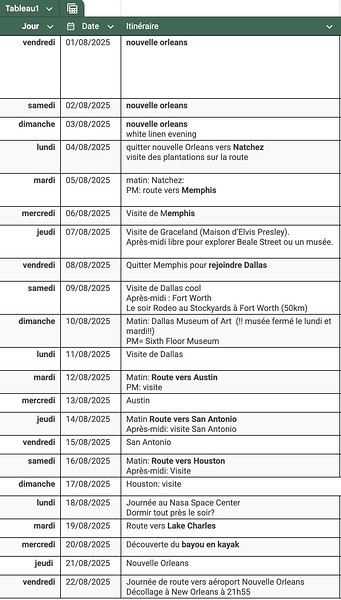
My round-trip ticket to New Orleans is booked—it's my home base.
What do you think? Too much time spent in some stops, not enough in others? Could I get your thoughts?
Hi there,
We decided this week to use our miles for a trip to Phoenix. We're putting our itinerary together in a hurry, and it's not coming together at all. I'd really appreciate some help if possible, please.
Back in 2007, we did a classic trip: LA, Joshua Tree, Grand Canyon, Monument Valley, Bryce, Zion, Las Vegas, Yosemite, and San Francisco. This time, we only have two weeks and don’t want to rush from one place to another...
(*-sites not yet visited) Arriving in Phoenix tomorrow morning - Monday the 14th - and leaving for Paris on Monday the 29th. - 14/09: Phoenix* - 2 nights to recover from the trip > Heard Museum, Botanical Garden, Downtown... - 16th: Flagstaff* (Montezuma Castle and Tuzigoot Nat. Monument along the way) - 17th-20th: 3 nights at Grand Canyon - Maswik And here’s where it starts getting really messy: - 21st, 22nd... Monument Valley - 23rd... Canyon de Chelly* - 24th, 25th: Petrified Forest, Painted Desert* - 26th-27th: Sedona* - lots of hiking options - 28th: Evening in Phoenix, flight at 3 PM
If Monument Valley isn’t very doable this week because of rain, maybe it’d be better to go somewhere else, like straight to Canyon de Chelly, or even completely different—Zion (great hikes), Valley of Fire, Las Vegas, a night somewhere to break up the drive, Sedona, and then depart from Phoenix. Since this trip is last-minute, we’re a bit disorganized and would really appreciate any advice. Aside from Phoenix and the Grand Canyon, we haven’t booked any hotels yet, so it’s still flexible.
Thanks so much in advance!! Ruby
Back in 2007, we did a classic trip: LA, Joshua Tree, Grand Canyon, Monument Valley, Bryce, Zion, Las Vegas, Yosemite, and San Francisco. This time, we only have two weeks and don’t want to rush from one place to another...
(*-sites not yet visited) Arriving in Phoenix tomorrow morning - Monday the 14th - and leaving for Paris on Monday the 29th. - 14/09: Phoenix* - 2 nights to recover from the trip > Heard Museum, Botanical Garden, Downtown... - 16th: Flagstaff* (Montezuma Castle and Tuzigoot Nat. Monument along the way) - 17th-20th: 3 nights at Grand Canyon - Maswik And here’s where it starts getting really messy: - 21st, 22nd... Monument Valley - 23rd... Canyon de Chelly* - 24th, 25th: Petrified Forest, Painted Desert* - 26th-27th: Sedona* - lots of hiking options - 28th: Evening in Phoenix, flight at 3 PM
If Monument Valley isn’t very doable this week because of rain, maybe it’d be better to go somewhere else, like straight to Canyon de Chelly, or even completely different—Zion (great hikes), Valley of Fire, Las Vegas, a night somewhere to break up the drive, Sedona, and then depart from Phoenix. Since this trip is last-minute, we’re a bit disorganized and would really appreciate any advice. Aside from Phoenix and the Grand Canyon, we haven’t booked any hotels yet, so it’s still flexible.
Thanks so much in advance!! Ruby
Hello, if the off-the-beaten-path enthusiasts are still around 😉, I’d love some info on tackling these trails. I’m not super familiar with the rules, risks, or what to expect—I’m looking for firsthand experience from folks who’ve done it on their own once or multiple times.