Hello everyone,
So happy to be back on this Forum!
We’re heading off on another cruise—our 7th—after a 5-year break...
We’ll be leaving from Venice on April 26th with stops in Kotor, Mykonos, Santorini, and Ancona.
Could you help me plan the stops by sharing tips, tricks, and advice?
For those who already know me, you know we prefer not to take the cruise line’s excursions but instead organize everything ourselves.
Thanks in advance to everyone, and looking forward to chatting with you all!
29 similar discussions in English
Beyond Athens' iconic sites and Santorini's popular beaches, Greece reveals its hidden treasures to those who dare venture off the beaten path. FairMoove travel agency offers eco-responsible stays in Greece for an authentic experience at the heart of Hellenic traditions.
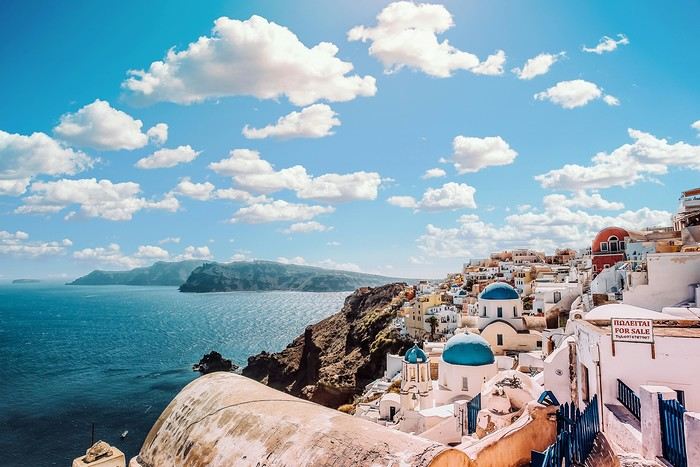
Authentic Peloponnese: A Land of Living Traditions
The Peloponnese peninsula is home to traditional villages where time seems to have stood still. In Dimitsana, perched in the Arcadian mountains, locals keep centuries-old traditions alive in their craft workshops. The cobbled streets echo with the sound of traditional looms, where artisans still create textiles using age-old methods.
In the Mani region, ancient stone towers tell the story of an untamed land. Local families welcome you into their traditional homes to share their culinary art: olive oil preparation, olive bread making, and dolmades crafted according to recipes passed down through generations. The Unknown Islands: Preserved Jewels of the Aegean Sea
Far from Mykonos' hustle and bustle, Ikaria island reveals its longevity secrets. This blue island, known for its inhabitants' exceptional lifespan, invites you to discover a unique way of life. Join the panigiria, traditional festivals where the entire community gathers to dance, sing, and share local dishes prepared in large communal ovens.
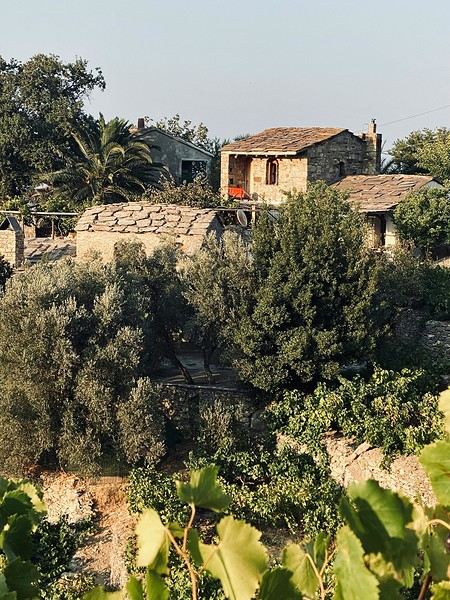
On Lemnos island, fishermen introduce you to their traditional sustainable fishing techniques. The ancient salt pans, still in operation, bear witness to ancestral know-how. In family-run tavernas by the harbor, taste thallasomelo, a unique sea honey produced by bees foraging on wild thyme from coastal cliffs. Greek Macedonia: A Living Heritage
In the northern mountains, the villages of Zagoria preserve their characteristic stone architecture. Eighteenth-century arched bridges still span deep gorges, showcasing a unique construction art. Locals invite you to discover medicinal herb gathering and traditional herbal tea preparation, knowledge passed down through generations.
In Nymfaio, a village perched at 1,350 meters altitude, ecotourism initiatives help preserve the natural habitat of brown bears. Traditional stone guesthouses offer an ideal base for exploring the region and observing wildlife in its natural environment. Agritourism and Authentic Rural Life
Traditional farms in Thessaly open their doors to travelers eager to discover sustainable agriculture. Participate in the autumn olive harvest, traditional feta cheese making, or the cultivation of aromatic herbs that flavor Greek cuisine. These experiences not only support the local economy but also help preserve ancestral farming practices.
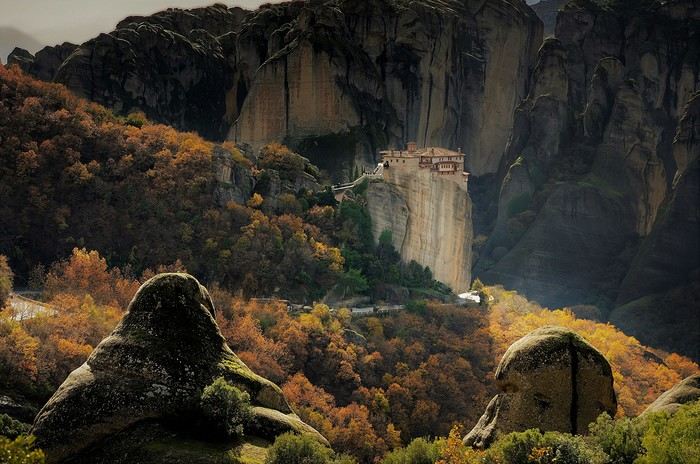
Traditional Festivals and Local Celebrations
The Greek calendar is marked by authentic celebrations that vary by region. In Pelion, the Goat Carnival transforms villages into living theater stages, where pagan traditions blend with Christian folklore. On Syros, the rebetiko festival lets you discover this UNESCO-listed music in its original context. Sustainable Initiatives and Heritage Preservation
Many Greek communities are committed to sustainable tourism projects. On Thirassia, Santorini's lesser-known neighbor, a traditional troglodyte house rehabilitation project allows visitors to stay in authentic dwellings while contributing to architectural heritage preservation. Supporting Local Communities
Women's cooperatives, particularly active in rural areas, offer traditional craft workshops. In Arnaia, Chalkidiki, learn to weave on traditional looms or prepare preserves using age-old methods. These initiatives help women maintain economic independence while preserving local traditions.
For more responsible tourism, many accommodations adopt eco-friendly practices. Using local products, sustainable water management, and solar energy production are among the initiatives that help preserve places' authenticity while respecting the environment.
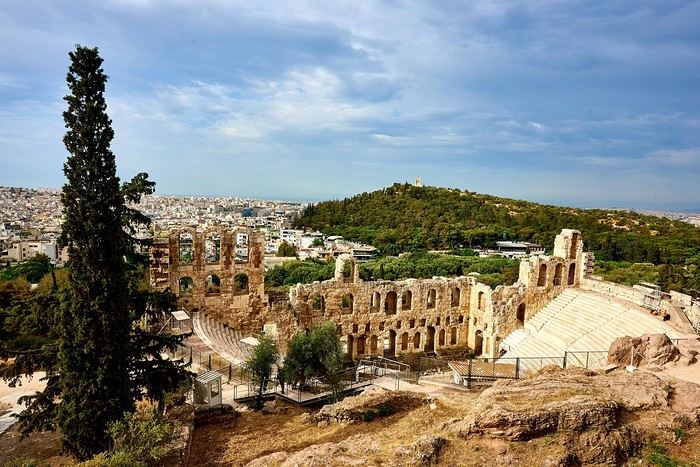
Tips for an Authentic Trip
To discover the real Greece, choose off-season stays from October to April. Milder temperatures and fewer crowds allow for more authentic encounters with locals. Opt for small family-run guesthouses and host tables that offer true immersion in local culture.
Greece's regions thus invite you to discover another facet of this millennia-old country, far from tourist clichés. Each village, each island, each mountain holds authentic treasures waiting to be discovered by travelers who respect traditions and the environment.
Authentic Peloponnese: A Land of Living Traditions
The Peloponnese peninsula is home to traditional villages where time seems to have stood still. In Dimitsana, perched in the Arcadian mountains, locals keep centuries-old traditions alive in their craft workshops. The cobbled streets echo with the sound of traditional looms, where artisans still create textiles using age-old methods.
In the Mani region, ancient stone towers tell the story of an untamed land. Local families welcome you into their traditional homes to share their culinary art: olive oil preparation, olive bread making, and dolmades crafted according to recipes passed down through generations. The Unknown Islands: Preserved Jewels of the Aegean Sea
Far from Mykonos' hustle and bustle, Ikaria island reveals its longevity secrets. This blue island, known for its inhabitants' exceptional lifespan, invites you to discover a unique way of life. Join the panigiria, traditional festivals where the entire community gathers to dance, sing, and share local dishes prepared in large communal ovens.
On Lemnos island, fishermen introduce you to their traditional sustainable fishing techniques. The ancient salt pans, still in operation, bear witness to ancestral know-how. In family-run tavernas by the harbor, taste thallasomelo, a unique sea honey produced by bees foraging on wild thyme from coastal cliffs. Greek Macedonia: A Living Heritage
In the northern mountains, the villages of Zagoria preserve their characteristic stone architecture. Eighteenth-century arched bridges still span deep gorges, showcasing a unique construction art. Locals invite you to discover medicinal herb gathering and traditional herbal tea preparation, knowledge passed down through generations.
In Nymfaio, a village perched at 1,350 meters altitude, ecotourism initiatives help preserve the natural habitat of brown bears. Traditional stone guesthouses offer an ideal base for exploring the region and observing wildlife in its natural environment. Agritourism and Authentic Rural Life
Traditional farms in Thessaly open their doors to travelers eager to discover sustainable agriculture. Participate in the autumn olive harvest, traditional feta cheese making, or the cultivation of aromatic herbs that flavor Greek cuisine. These experiences not only support the local economy but also help preserve ancestral farming practices.
Traditional Festivals and Local Celebrations
The Greek calendar is marked by authentic celebrations that vary by region. In Pelion, the Goat Carnival transforms villages into living theater stages, where pagan traditions blend with Christian folklore. On Syros, the rebetiko festival lets you discover this UNESCO-listed music in its original context. Sustainable Initiatives and Heritage Preservation
Many Greek communities are committed to sustainable tourism projects. On Thirassia, Santorini's lesser-known neighbor, a traditional troglodyte house rehabilitation project allows visitors to stay in authentic dwellings while contributing to architectural heritage preservation. Supporting Local Communities
Women's cooperatives, particularly active in rural areas, offer traditional craft workshops. In Arnaia, Chalkidiki, learn to weave on traditional looms or prepare preserves using age-old methods. These initiatives help women maintain economic independence while preserving local traditions.
For more responsible tourism, many accommodations adopt eco-friendly practices. Using local products, sustainable water management, and solar energy production are among the initiatives that help preserve places' authenticity while respecting the environment.
Tips for an Authentic Trip
To discover the real Greece, choose off-season stays from October to April. Milder temperatures and fewer crowds allow for more authentic encounters with locals. Opt for small family-run guesthouses and host tables that offer true immersion in local culture.
Greece's regions thus invite you to discover another facet of this millennia-old country, far from tourist clichés. Each village, each island, each mountain holds authentic treasures waiting to be discovered by travelers who respect traditions and the environment.
We’re a Canadian couple, both 77, and we’re already planning our vacation for fall 2027.
Timeframe: mid-September to mid-October... dates are flexible, and we might stay even longer.
Initially, I had planned this itinerary:
Athens (3), Naxos (4), Paros (4), Santorini (4), then a flight to Istanbul (7–10 days!!). This would let us maximize our flights and experience another culture.
That’s a lot of ferries, though... I’ve already cut out Milos.
Our second option would be to stay 2 x 15 days on two different islands, but I’d still keep Istanbul as our next destination... or maybe 30 days on one island that offers the chance to take day trips to other islands where the ferry ride is no more than 2 to 2.5 hours. For example, Naxos to Paros only takes 30 minutes. We could return the same evening or stay overnight.
Naxos seems like the best option!!!
For Istanbul, of course we want to do a day cruise on the Bosphorus and see Hagia Sophia. If we stay 6–7 days, what would be the other main attractions? Are there any points of interest we can reach by local bus?
Our second option would be to stay 2 x 15 days on two different islands, but I’d still keep Istanbul as our next destination... or maybe 30 days on one island that offers the chance to take day trips to other islands where the ferry ride is no more than 2 to 2.5 hours. For example, Naxos to Paros only takes 30 minutes. We could return the same evening or stay overnight.
Naxos seems like the best option!!!
For Istanbul, of course we want to do a day cruise on the Bosphorus and see Hagia Sophia. If we stay 6–7 days, what would be the other main attractions? Are there any points of interest we can reach by local bus?
Hi there,
My partner and I are planning to visit Paros from June 4th to 11th, 2025.
I’ve been reading a lot of conflicting things, so I’m a bit confused.
Does Paros feel more like St. Tropez or Porto-Vecchio—overcrowded, too built-up, and has it lost its authentic charm?
Are umbrella and sunbed prices on the beach still reasonable?
Thanks so much for your input—we’re thinking of heading there in early June with my partner.
Hi everyone, I’m really torn.
I’m planning a trip for my girlfriend and I can’t decide between these three European cities: Athens, Lisbon, and Valencia.
I’m eagerly waiting for your replies—help me out!!😅😅
Hi there,
I’ve planned a trip to Santorini and Amorgos in mid-April for two weeks, and I bought my flight ticket just before the seismic tremors started. Now I’m torn between going or canceling my trip. I’d love to know what the situation is like on the ground for tourists. I’ve read that half the residents have left the island and there’s a staff shortage. I’m wondering if hotels, restaurants, shops, buses, and taxis are operating normally? Also, I’d planned to do some hikes, especially along the cliffs, but I’ve read that some areas are now advised against or even off-limits due to risk of collapse. If anyone has visited Santorini or Amorgos recently, I’d love to hear your experiences. Thanks!
Hello!
I’m going on my very first cruise in September 2025.
Departure from Civitavecchia—
Mykonos - Santorini - Kusadasi...
A few questions: Apart from Ephesus, Naples, and Pompeii, I’m pretty much heading into the unknown for Santorini and Mykonos. I’ve been following some of your posts about Santorini—thank you for those! What do you recommend for Mykonos? I’ll be spending 3 days in Rome before the cruise. At the end of the cruise, I don’t plan to return to Rome. Could you tell me what transport to take from Civitavecchia to Fiumicino Airport? Thanks so much! 🙂 Françoise
Departure from Civitavecchia—
Mykonos - Santorini - Kusadasi...
A few questions: Apart from Ephesus, Naples, and Pompeii, I’m pretty much heading into the unknown for Santorini and Mykonos. I’ve been following some of your posts about Santorini—thank you for those! What do you recommend for Mykonos? I’ll be spending 3 days in Rome before the cruise. At the end of the cruise, I don’t plan to return to Rome. Could you tell me what transport to take from Civitavecchia to Fiumicino Airport? Thanks so much! 🙂 Françoise
Hi everyone! Is there a bus that connects Santorini Airport to the port on the island? Is it direct, or do you have to change buses at the bus station?
Thanks for your tips on this! 🙂
Hi everyone, do you have any suggestions for a night in Santorini? I’ll be in transit at the end of June, coming from Amorgos to catch my flight back to Lyon the next morning. If possible, what are the transport options to get from the port and then to the airport the following day? Thanks in advance!
Hi there, we’re heading to the Cyclades from June 23 to July 9. We’ll arrive in Santorini and leave from Mykonos. We’re thinking of visiting these islands: Folegandros, Milos, Sifnos, Tinos, and Mykonos. Do you think it’s better to book the ferries now (which site do you recommend for booking?) or can we buy the tickets on the spot? Also, do you have any suggestions for accommodation under 100 €/night on each of these islands? Thanks in advance!
Hi there
I hope you're starting this new year with your head full of travel memories or plans!!
I’d love to spend a week in July on a Greek island with my 8-year-old son. I’m totally in love with Amorgos, but not all the beaches are accessible for him. I’ve been to Santorini and Naxos before and don’t want to go back. Would you have an island to recommend that’s not too crowded 😕, with a few accessible beaches and where we won’t have to fight to get around or park?
Have a great day Christelle
I hope you're starting this new year with your head full of travel memories or plans!!
I’d love to spend a week in July on a Greek island with my 8-year-old son. I’m totally in love with Amorgos, but not all the beaches are accessible for him. I’ve been to Santorini and Naxos before and don’t want to go back. Would you have an island to recommend that’s not too crowded 😕, with a few accessible beaches and where we won’t have to fight to get around or park?
Have a great day Christelle
Hi there,
We want to go to Greece in May. I have no idea how to plan our 10-day trip. Athens is a must, but after that, I'm lost. We're looking for unusual spots that aren't necessarily touristy but still want to hit the must-see places. We're skipping Santorini given the current events.
Thanks so much in advance for your help—it was already super useful for New York!
The Cyclades attract a lot (a LOT) of people in the summer, and it's not always clear how to visit them.
For our first family trip to the Cyclades (in 2016), we took a route that seems great for discovering the islands: - Flight Paris / Santorini (Transavia) - 3 nights in Santorini - Ferry Santorini / Milos - 4 nights in Milos - Ferry Milos / Sifnos - 4 nights in Sifnos - Ferry Sifnos / Athens - 3 nights in Athens - Flight Athens / Paris
Santorini is the postcard image of the Cyclades... but not really any beaches for kids. My tip: you should stay in Oia because it's really "the spot" on the island. We chose the Pension "The Flower": simple but very well located and with a pool for the kids. Another tip: rent a car as soon as you arrive at the airport because the island is vast.
Our favorite moment: Oia around 6:00 AM, a paradise for photographers. It’s nothing like the daytime, or especially the evening when all the crowds rush in for the famous "sunset." Another favorite, the hike between Fira and Oia, 10 km, 4 hours of walking with extraordinary views (especially around Imerovigli). For the rest, we toured the island—it’s nice but nothing to marvel at.
After a 2.5-hour ferry ride, we arrived in Milos, home of the famous Venus de Milo. This is our favorite island in the Cyclades (though we haven’t seen them all!). In the port of Adamantas, we stayed at the Liogerma Hotel (very well located near the port).
Our favorite experience: the boat tour around the island (and swimming at Kleftiko). Absolutely a must-do, but book it as soon as you arrive because it’s often fully booked for the next two days.
I also recommend renting a car to explore this island. Other favorites: the incredible fishing village of Klima with its colorful boat houses, the rocks of Sarakiniko (best in the morning sun), the beach at Tsigrado (with its ladder access through the rocks), Plaka, the caves of Papafragas, the waters of Firopotamos, and Fyriplaka...
Just a 1-hour ferry ride, and you’re already in Sifnos. A small island with a bus network that means you don’t need to rent a vehicle. We stayed in Kamares (Hotel Afroditi).
Sifnos has charming villages typical of the Cyclades (Kastro, Apollonia), beautiful chapels (Chrisopigi, the Church of the Seven Martyrs...), and lovely beaches (Cherronissos, Platis Galios...). Our favorite: hiking around Faros and the Chrisopigi Monastery.
A 3-hour ferry ride takes you back to the port of Piraeus to visit Athens: the Acropolis, its museums, and the Plaka district. A little favorite of ours: the Archaeological Museum, slightly off the tourist trail... With this route, you’ll see the diversity of the Cyclades and Athens without wasting too much time on ferries.
PS: We also did the loop Mykonos / Paros / Amorgos / Mykonos, but that’s a good idea... for a second trip ;)
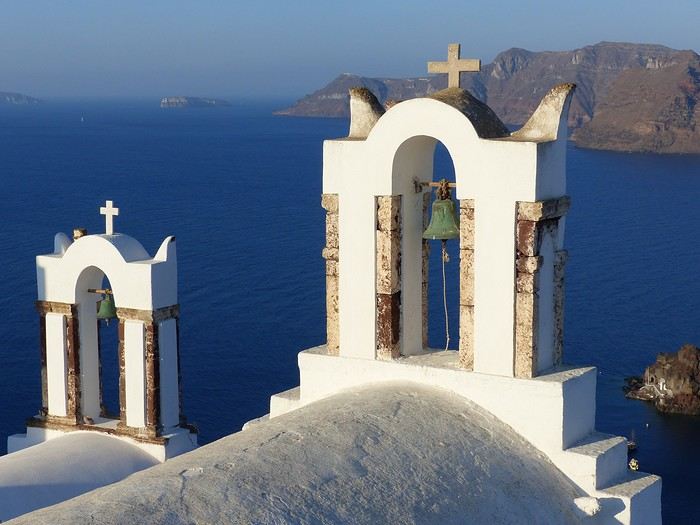
For our first family trip to the Cyclades (in 2016), we took a route that seems great for discovering the islands: - Flight Paris / Santorini (Transavia) - 3 nights in Santorini - Ferry Santorini / Milos - 4 nights in Milos - Ferry Milos / Sifnos - 4 nights in Sifnos - Ferry Sifnos / Athens - 3 nights in Athens - Flight Athens / Paris
Santorini is the postcard image of the Cyclades... but not really any beaches for kids. My tip: you should stay in Oia because it's really "the spot" on the island. We chose the Pension "The Flower": simple but very well located and with a pool for the kids. Another tip: rent a car as soon as you arrive at the airport because the island is vast.
Our favorite moment: Oia around 6:00 AM, a paradise for photographers. It’s nothing like the daytime, or especially the evening when all the crowds rush in for the famous "sunset." Another favorite, the hike between Fira and Oia, 10 km, 4 hours of walking with extraordinary views (especially around Imerovigli). For the rest, we toured the island—it’s nice but nothing to marvel at.
After a 2.5-hour ferry ride, we arrived in Milos, home of the famous Venus de Milo. This is our favorite island in the Cyclades (though we haven’t seen them all!). In the port of Adamantas, we stayed at the Liogerma Hotel (very well located near the port).
Our favorite experience: the boat tour around the island (and swimming at Kleftiko). Absolutely a must-do, but book it as soon as you arrive because it’s often fully booked for the next two days.
I also recommend renting a car to explore this island. Other favorites: the incredible fishing village of Klima with its colorful boat houses, the rocks of Sarakiniko (best in the morning sun), the beach at Tsigrado (with its ladder access through the rocks), Plaka, the caves of Papafragas, the waters of Firopotamos, and Fyriplaka...
Just a 1-hour ferry ride, and you’re already in Sifnos. A small island with a bus network that means you don’t need to rent a vehicle. We stayed in Kamares (Hotel Afroditi).
Sifnos has charming villages typical of the Cyclades (Kastro, Apollonia), beautiful chapels (Chrisopigi, the Church of the Seven Martyrs...), and lovely beaches (Cherronissos, Platis Galios...). Our favorite: hiking around Faros and the Chrisopigi Monastery.
A 3-hour ferry ride takes you back to the port of Piraeus to visit Athens: the Acropolis, its museums, and the Plaka district. A little favorite of ours: the Archaeological Museum, slightly off the tourist trail... With this route, you’ll see the diversity of the Cyclades and Athens without wasting too much time on ferries.
PS: We also did the loop Mykonos / Paros / Amorgos / Mykonos, but that’s a good idea... for a second trip ;)
We’ve only been to Crete in Greece before, so this trip is new to us—but planning the itinerary isn’t easy because we have to make choices. We’d love to hear from those in the know about the following plan:
Day 1: flight to Athens, then flight to Milos
3 days in Milos,
4 days in Sifnos,
3 days in Paros,
Final 3 days in Athens.
Should we book ferry tickets between the islands in March in advance, or can we wait until the last minute?
Same question for accommodations on these different islands.
Finally, on the 3 islands we’ve chosen, is renting a car essential, or are the buses enough?
Thanks for your help!
Hi everyone,
For about twenty years now, we’ve been regularly visiting the Cyclades to enjoy some rest, sunshine, the sea, scooter rides, lovely tavernas, and the hospitality of the Greeks (around fifteen trips in total).
This September, my partner and I have decided to return to Ikaria, the island where we spent a few days in Agios Kirykos and Therma.
This year, we’ll be arriving in Evdilos and would love some tips on the southern coast of Evdilos and the central part of the island—places that are doable by scooter (max 20 to 30 km round trip).
For those interested, we’d be happy to share our experiences from Tinos, Syros, Amorgos, Ikaria, Fourni, the Small Cyclades, and, from longer ago, Santorini, Paros, Anti-Paros, and Naxos.
Happy travels to all
Hi everyone!
Blue skies (lots of them), whitewashed villages with steep alleyways, hundreds of churches, and... thousands of stairs? Welcome to the Cyclades! 🙂
We’d been dreaming about this for a while, but in July-August—with the crowds—no way! Now that I can travel outside school holidays, the Cyclades are back on the agenda. And so begins a loooong period of planning and second-guessing, with countless itinerary changes: the Cyclades, yes, but which ones? I was fixated on Folegandros (we won’t be going after all) and really wanted to visit Delos. So, for this first trip, it’ll be: Mykonos (and Delos)-Naxos-Amorgos-Santorini.
Saturday 24/05: Departure from Orly on a Transavia flight, arriving in Mykonos in the late afternoon. We found a hotel that offers free transfers (pretty rare and not insignificant—it’s 25 € each way for just a few kilometers 😠) and at a reasonable price (83 € per night for B&B). Time for dinner already: Greek salad and souvlaki (we’re in Greece, right?)
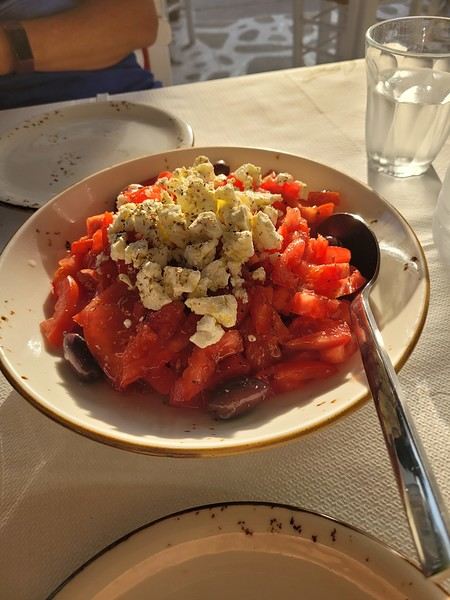 (Okay, this is actually a dakos with Naxos cheese, but I don’t have a photo of a Greek salad 😏).
Blue skies (lots of them), whitewashed villages with steep alleyways, hundreds of churches, and... thousands of stairs? Welcome to the Cyclades! 🙂
We’d been dreaming about this for a while, but in July-August—with the crowds—no way! Now that I can travel outside school holidays, the Cyclades are back on the agenda. And so begins a loooong period of planning and second-guessing, with countless itinerary changes: the Cyclades, yes, but which ones? I was fixated on Folegandros (we won’t be going after all) and really wanted to visit Delos. So, for this first trip, it’ll be: Mykonos (and Delos)-Naxos-Amorgos-Santorini.
Saturday 24/05: Departure from Orly on a Transavia flight, arriving in Mykonos in the late afternoon. We found a hotel that offers free transfers (pretty rare and not insignificant—it’s 25 € each way for just a few kilometers 😠) and at a reasonable price (83 € per night for B&B). Time for dinner already: Greek salad and souvlaki (we’re in Greece, right?)
(Okay, this is actually a dakos with Naxos cheese, but I don’t have a photo of a Greek salad 😏).Hello,
I’ll be in Greece with my two daughters, aged 10 and 13, from July 6th to 27th.
I’ve planned a route that seems fairly coherent, but I’d love to hear your thoughts:
J1 – Arrive in Athens in the afternoon and head straight to Corinth for the night J2 – Relax (beach) and visit Corinth or nearby – night in Corinth J3 – Mycenae + Epidaurus + Nafplio – night in Nafplio J4 – Mystras + Olympia – night in Olympia J5 – Delphi – night in Delphi J6 – Meteora (monasteries and more) – night in Kalambaka J7 – Meteora (nature walk) – night in Athens J8 – Explore Athens – night in Athens J9 – Explore Athens – night in Athens J10 – Ferry to Santorini + visit – night in Santorini J11 – Amorgos or another island – night in Amorgos J12 – Amorgos or another island – night in Amorgos J13 – Amorgos or another island – night in Amorgos J14 – Naxos – night in Naxos J15 – Naxos – night in Naxos J16 – Naxos – night in Naxos J17 – Paros – night in Paros J18 – Paros – night in Paros J19 – Paros – night in Paros J20 – Paros – night in Paros J21 – Ferry from Paros to Athens (is this possible?) – night in Athens J22 – Departure late morning
I’d like to know if there’s a town in the Peloponnese where we can stay and visit everything from there—I’d prefer not to change hotels every night. Are there any stops I can skip? Any must-see additions? I’d love to find pools or beaches to cool off at the end of the day—with the heat and the kids, we’ll need to refresh after sightseeing! For the Cyclades, I’m thinking of spending just an afternoon and evening in Santorini before moving on. I’m looking for authentic, quiet, beautiful islands with few tourists and nice beaches. Should I book all our rooms before leaving, or can we improvise a little? Thanks for your tips!
J1 – Arrive in Athens in the afternoon and head straight to Corinth for the night J2 – Relax (beach) and visit Corinth or nearby – night in Corinth J3 – Mycenae + Epidaurus + Nafplio – night in Nafplio J4 – Mystras + Olympia – night in Olympia J5 – Delphi – night in Delphi J6 – Meteora (monasteries and more) – night in Kalambaka J7 – Meteora (nature walk) – night in Athens J8 – Explore Athens – night in Athens J9 – Explore Athens – night in Athens J10 – Ferry to Santorini + visit – night in Santorini J11 – Amorgos or another island – night in Amorgos J12 – Amorgos or another island – night in Amorgos J13 – Amorgos or another island – night in Amorgos J14 – Naxos – night in Naxos J15 – Naxos – night in Naxos J16 – Naxos – night in Naxos J17 – Paros – night in Paros J18 – Paros – night in Paros J19 – Paros – night in Paros J20 – Paros – night in Paros J21 – Ferry from Paros to Athens (is this possible?) – night in Athens J22 – Departure late morning
I’d like to know if there’s a town in the Peloponnese where we can stay and visit everything from there—I’d prefer not to change hotels every night. Are there any stops I can skip? Any must-see additions? I’d love to find pools or beaches to cool off at the end of the day—with the heat and the kids, we’ll need to refresh after sightseeing! For the Cyclades, I’m thinking of spending just an afternoon and evening in Santorini before moving on. I’m looking for authentic, quiet, beautiful islands with few tourists and nice beaches. Should I book all our rooms before leaving, or can we improvise a little? Thanks for your tips!
Hi everyone on the travel forum.
We’re heading to the Cyclades on May 15th for about a month and we’re debating whether to rent a car on each of the islands we’re visiting. Naxos, Andros, Tinos, Paros, and Santorini—we’ll be staying around 5 days on each. Everything’s booked except for the potential car rental. In your opinion, is it essential, or are public transport options good enough for all or some of these islands? Which companies are the most reliable, and which ones should we avoid (we’ve already had bad experiences with companies that weren’t always very professional). Thanks for your advice!
Planning Corsica, Sardinia, Sicily, and Greece for autumn 2025
Hi lovely community,
I need your help for the last part of our trip to Greece next June. We’ll be in Thessaloniki and need to drive to Athens (485 km) in the same day. We’d like to stop for lunch—where should we go??
Please, we need ideas and suggestions!
Thanks everyone
Hello,
Who among us hasn’t dreamed of having a ticket to Tahiti, Bora Bora, or the Marquesas in their pocket—preferably a one-way ticket to “paradise”?
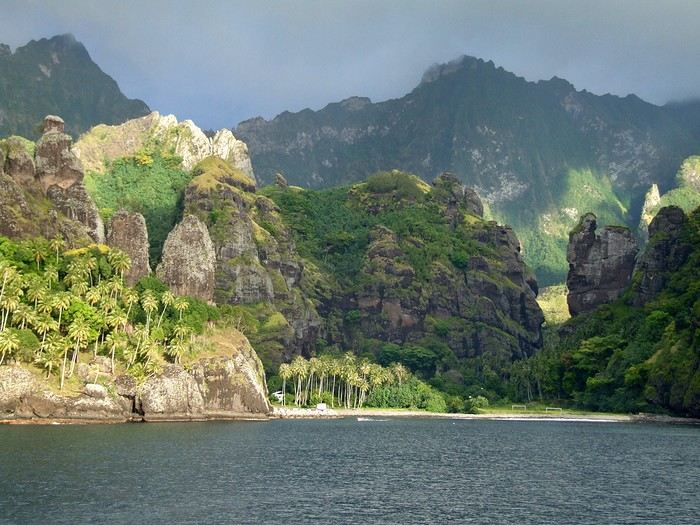 Idyllic landscape of a dream island, but difficult to access: the Bay of Virgins in Fatu Hiva, Marquesas Islands
Among the values conveyed by literature, tourism, and advertising is the quest for “elsewhere,” for a change of scenery, in the truest sense of the word—that is, the need to leave one’s country. This need for otherness, for difference, is projected onto dreamlike, idealized, even mythicized places. In our imaginary world, the island is often that place.
Yet we forget that islands have also been ideal prisons. The examples are numerous: Elba and Saint Helena, Alcatraz and Poulo Condor, If and Yeu, the Devil’s Islands and Leros. The latter, located in Greece in the Dodecanese, hosted a sinister forced labor camp during the colonels’ dictatorship as well as a psychiatric hospital. Despite the beauty of its bay, tourism has remained marginal there due to its bad reputation, unlike the neighboring island of Patmos.
I’d like to share a selection of about a dozen islands from across the world’s seas and oceans. For dreaming...
°°°°°°°°°°°°°°°
SANTORINI
July 27, 1967
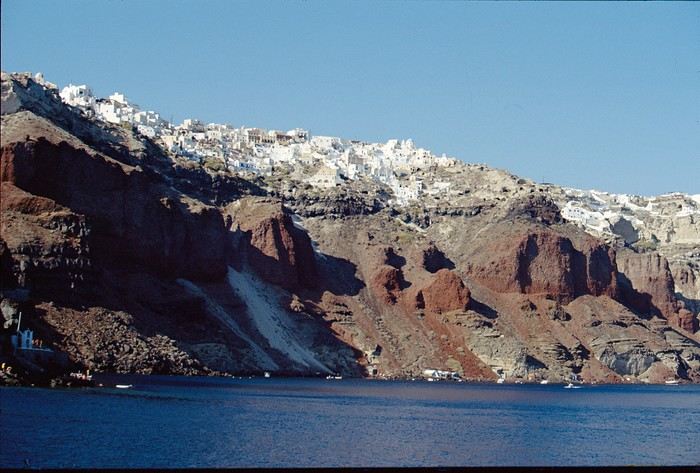
At dawn, the ferry from Agios Nikolaos (Crete) enters the immense caldera of Santorini. From the ship’s deck, Rainer, my travel companion, and I are left in awe by the sight of these towering, multicolored cliffs looming over us. We disembark and begin the steep climb on foot via the winding mule path up to the village of Fira, the capital perched above the cliff. Though it’s still very early, we head to the youth hostel. There wasn’t a soul in the alleys that morning—or rather, there were only cats! I have a fond memory of that encounter with Santorini: a sensory shock, a breathtaking volcanic site, a harmony of blue, ochre-red, and white. A welcoming island, as it was traditional to welcome the xénou, an island that hadn’t yet fully recovered from the terrible 1956 earthquake, a Cycladic architectural marvel where local life was still preserved.
It’s easy to see why, in antiquity, the island was named Kallisté (καλλίστη), “the most beautiful,” as it’s nearly impossible to resist gazing at this landscape shaped by tectonic forces. Indeed, a massive volcanic cataclysm—the Minoan eruption—shaped this scenery in the 17th century BCE, creating a caldera that was quickly filled by the sea. The enormous tsunamis that followed reached Crete, leading to the disappearance of the Minoan civilization.
A cliffside path along the caldera leads us to the peaceful village of Oia, at the northern tip of the island. Blue-domed churches and flower-filled villages with whitewashed houses line the way. This walk is a continuous marvel, offering splendid views of the caldera and the neighboring islands formed by the breakup of the ancient volcano (Thirissa, Nea Kameni). Oia is a large, picturesque village, like Fira perched on the cliff’s edge, which was severely damaged by the 1956 earthquake, and its scars are still visible. Its cave-like houses with vaulted roofs haven’t yet been turned into luxury hotels or shops. Absolute tranquility reigns here.
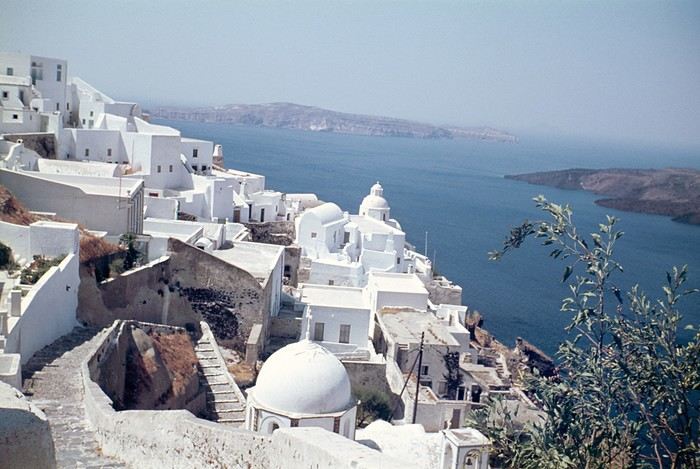 Oia in 1967—a peaceful village overlooking the caldera. But where are the pools and trendy bars?
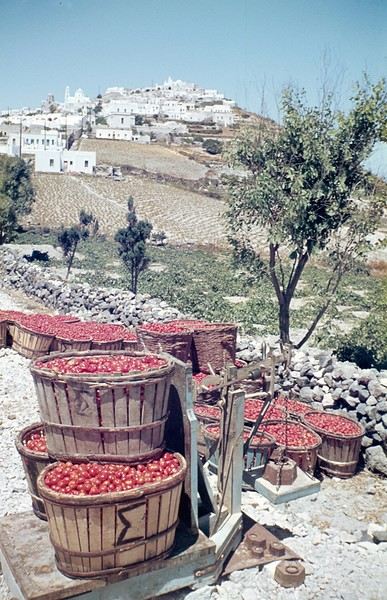
A lush countryside covered in olive trees and vineyards welcomes us for a pleasant hike, interrupted by the kindness of a friendly islander who gives us a lift in his truck for a few kilometers. He’s off to harvest his tomatoes, which he grows at the foot of Pyrgos Hill. The delicious little cherry tomato of Santorini earned an EU Protected Designation of Origin (PDO) in 2013. We climb up to the village of Pyrgos, perched on a hill and dominated by the elegant bell tower of its church. Finally, we reach the black sand beach of Kamari on the island’s eastern coast to enjoy a swim.
{...} To be continued

°°°°°°°°°°°°°°°°°
RAIVAVAE (French Polynesia)
November 15, 2007
Éléonore from Pension Tama welcomes us with traditional flower leis, as if she’d been waiting for old friends she hadn’t seen in ages. The small airport terminal is lively, the atmosphere warm—people hugging, rejoicing in reunions, all under kilos of flowers. Then, just as quickly, the place empties until the next flight... in a few days.
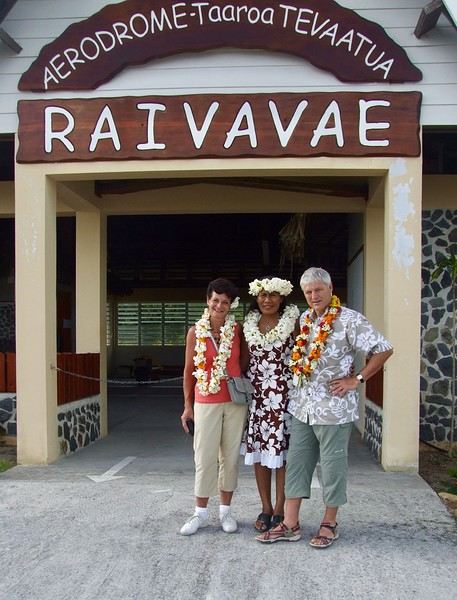
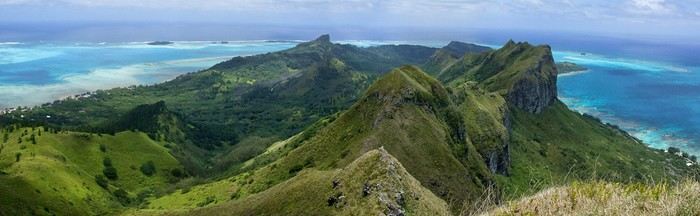
In the Austral Islands, a ninety-minute flight from Tahiti, Raivavae is a world away from the frenetic pace of Papeete or the tourist crowds of the Leeward Islands. The true paradise of the South Seas can still be savored here—it’s a bit like Bora Bora half a century ago. Our first feeling upon arriving on this island is wonder, with smiles that could melt even the gloomiest among us, landscapes so stunning they take your breath away, and above all, a sense of disorientation and fulfillment. Picture a mountainous island, about ten kilometers by three and a half, encircled by a coral reef and wild motu, cradling a lagoon with shades of blue that would make Bora Bora green with envy.
The roughly one thousand inhabitants of Raivavae are spread across four villages around the island. Children are everywhere, as is typical in Polynesia, and they greet you with open, genuine smiles. Here, ancestral values have survived progress. The predominantly Protestant population is very devout, as evidenced by the several temples built across the island. Religious fervor sets the rhythm of daily life. Sundays are reserved for worship and Sunday school (catechism). Work is forbidden on that day, and tourist activities are suspended. These rules are strict and respected.
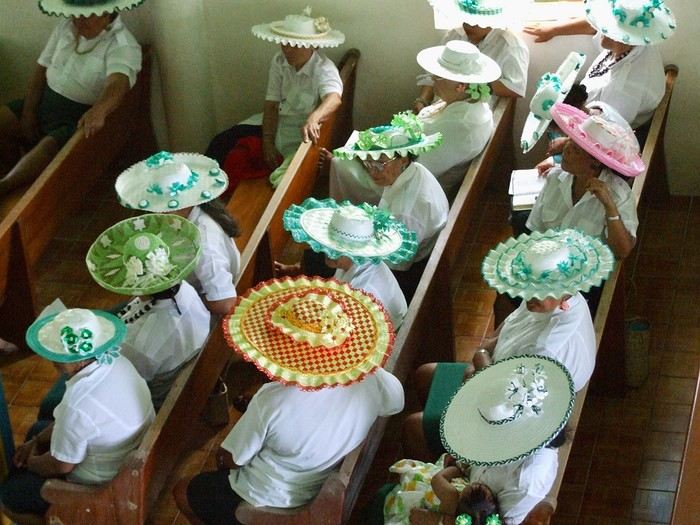 Hat contest for the worship celebration
Yet a sense of resignation is ever-present. The people of Raivavae know they are—and will remain—isolated. Despite the construction of an airstrip in 2004 and a few weekly flights to Tahiti and its nearest neighbor, Tubuai (200 km away), the island remains on the fringes of the world. One painful aspect is the separation of children from their parents when they leave for middle school in Tubuai starting in fifth grade. Television brings daily images of a world the islanders will likely never know, but one they often aspire to.
We are privileged. We have the pristine white-sand beaches of the motu and some of the most beautiful bays in Polynesia all to ourselves. The jewel in the crown, the island’s emblematic spot, is the “motu-pool,” about twenty minutes by boat. A natural, exquisite basin with crystal-clear water, gradients of blue, and white sand. And best of all, there’s almost no one there. In fact, lounging on the beach is frowned upon, especially for young women. Religion looks very unfavorably on sunbathing and lazing around. And yet, everything here leans toward that philosophy of life.
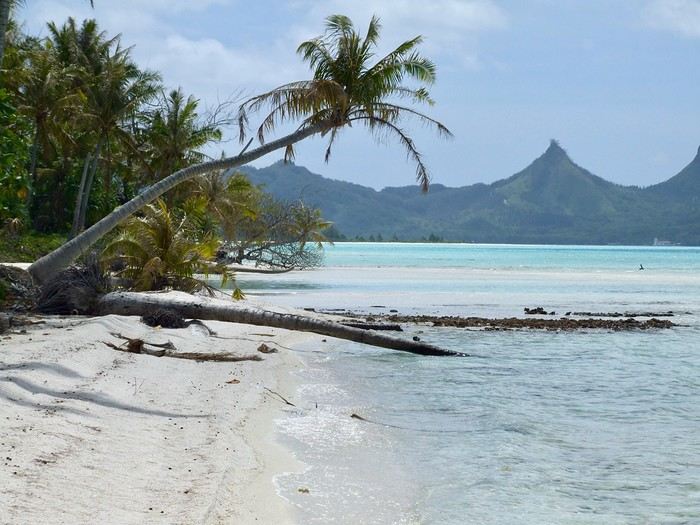
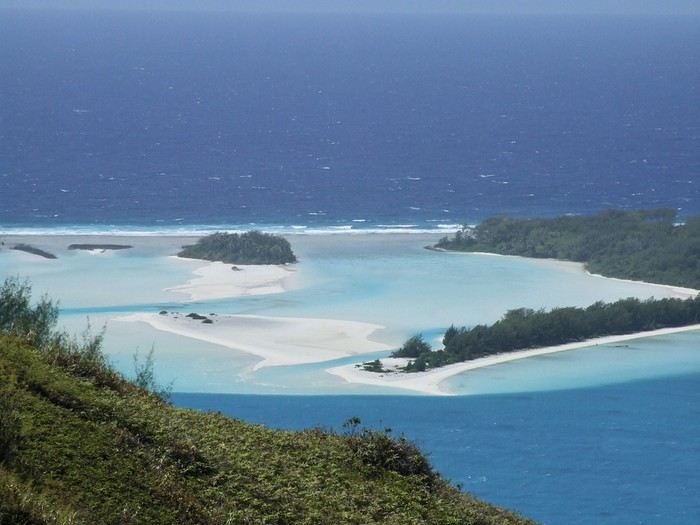 The "motu-pool"
{...} To be continued
Who among us hasn’t dreamed of having a ticket to Tahiti, Bora Bora, or the Marquesas in their pocket—preferably a one-way ticket to “paradise”?
Idyllic landscape of a dream island, but difficult to access: the Bay of Virgins in Fatu Hiva, Marquesas IslandsAmong the values conveyed by literature, tourism, and advertising is the quest for “elsewhere,” for a change of scenery, in the truest sense of the word—that is, the need to leave one’s country. This need for otherness, for difference, is projected onto dreamlike, idealized, even mythicized places. In our imaginary world, the island is often that place.
Yet we forget that islands have also been ideal prisons. The examples are numerous: Elba and Saint Helena, Alcatraz and Poulo Condor, If and Yeu, the Devil’s Islands and Leros. The latter, located in Greece in the Dodecanese, hosted a sinister forced labor camp during the colonels’ dictatorship as well as a psychiatric hospital. Despite the beauty of its bay, tourism has remained marginal there due to its bad reputation, unlike the neighboring island of Patmos.
I’d like to share a selection of about a dozen islands from across the world’s seas and oceans. For dreaming...
°°°°°°°°°°°°°°°
SANTORINI
July 27, 1967
At dawn, the ferry from Agios Nikolaos (Crete) enters the immense caldera of Santorini. From the ship’s deck, Rainer, my travel companion, and I are left in awe by the sight of these towering, multicolored cliffs looming over us. We disembark and begin the steep climb on foot via the winding mule path up to the village of Fira, the capital perched above the cliff. Though it’s still very early, we head to the youth hostel. There wasn’t a soul in the alleys that morning—or rather, there were only cats! I have a fond memory of that encounter with Santorini: a sensory shock, a breathtaking volcanic site, a harmony of blue, ochre-red, and white. A welcoming island, as it was traditional to welcome the xénou, an island that hadn’t yet fully recovered from the terrible 1956 earthquake, a Cycladic architectural marvel where local life was still preserved.
It’s easy to see why, in antiquity, the island was named Kallisté (καλλίστη), “the most beautiful,” as it’s nearly impossible to resist gazing at this landscape shaped by tectonic forces. Indeed, a massive volcanic cataclysm—the Minoan eruption—shaped this scenery in the 17th century BCE, creating a caldera that was quickly filled by the sea. The enormous tsunamis that followed reached Crete, leading to the disappearance of the Minoan civilization.
A cliffside path along the caldera leads us to the peaceful village of Oia, at the northern tip of the island. Blue-domed churches and flower-filled villages with whitewashed houses line the way. This walk is a continuous marvel, offering splendid views of the caldera and the neighboring islands formed by the breakup of the ancient volcano (Thirissa, Nea Kameni). Oia is a large, picturesque village, like Fira perched on the cliff’s edge, which was severely damaged by the 1956 earthquake, and its scars are still visible. Its cave-like houses with vaulted roofs haven’t yet been turned into luxury hotels or shops. Absolute tranquility reigns here.
Oia in 1967—a peaceful village overlooking the caldera. But where are the pools and trendy bars?A lush countryside covered in olive trees and vineyards welcomes us for a pleasant hike, interrupted by the kindness of a friendly islander who gives us a lift in his truck for a few kilometers. He’s off to harvest his tomatoes, which he grows at the foot of Pyrgos Hill. The delicious little cherry tomato of Santorini earned an EU Protected Designation of Origin (PDO) in 2013. We climb up to the village of Pyrgos, perched on a hill and dominated by the elegant bell tower of its church. Finally, we reach the black sand beach of Kamari on the island’s eastern coast to enjoy a swim.
{...} To be continued
°°°°°°°°°°°°°°°°°
RAIVAVAE (French Polynesia)
November 15, 2007
Éléonore from Pension Tama welcomes us with traditional flower leis, as if she’d been waiting for old friends she hadn’t seen in ages. The small airport terminal is lively, the atmosphere warm—people hugging, rejoicing in reunions, all under kilos of flowers. Then, just as quickly, the place empties until the next flight... in a few days.
In the Austral Islands, a ninety-minute flight from Tahiti, Raivavae is a world away from the frenetic pace of Papeete or the tourist crowds of the Leeward Islands. The true paradise of the South Seas can still be savored here—it’s a bit like Bora Bora half a century ago. Our first feeling upon arriving on this island is wonder, with smiles that could melt even the gloomiest among us, landscapes so stunning they take your breath away, and above all, a sense of disorientation and fulfillment. Picture a mountainous island, about ten kilometers by three and a half, encircled by a coral reef and wild motu, cradling a lagoon with shades of blue that would make Bora Bora green with envy.
The roughly one thousand inhabitants of Raivavae are spread across four villages around the island. Children are everywhere, as is typical in Polynesia, and they greet you with open, genuine smiles. Here, ancestral values have survived progress. The predominantly Protestant population is very devout, as evidenced by the several temples built across the island. Religious fervor sets the rhythm of daily life. Sundays are reserved for worship and Sunday school (catechism). Work is forbidden on that day, and tourist activities are suspended. These rules are strict and respected.
Hat contest for the worship celebrationYet a sense of resignation is ever-present. The people of Raivavae know they are—and will remain—isolated. Despite the construction of an airstrip in 2004 and a few weekly flights to Tahiti and its nearest neighbor, Tubuai (200 km away), the island remains on the fringes of the world. One painful aspect is the separation of children from their parents when they leave for middle school in Tubuai starting in fifth grade. Television brings daily images of a world the islanders will likely never know, but one they often aspire to.
We are privileged. We have the pristine white-sand beaches of the motu and some of the most beautiful bays in Polynesia all to ourselves. The jewel in the crown, the island’s emblematic spot, is the “motu-pool,” about twenty minutes by boat. A natural, exquisite basin with crystal-clear water, gradients of blue, and white sand. And best of all, there’s almost no one there. In fact, lounging on the beach is frowned upon, especially for young women. Religion looks very unfavorably on sunbathing and lazing around. And yet, everything here leans toward that philosophy of life.
The "motu-pool"{...} To be continued
Hi there,
I’m heading to Athens alone for a week from November 27th to December 4th. I want to visit Athens and Santorini. I’m not sure how feasible this route (Athens-Santorini-Athens) is—I don’t know the country or the distances. Is it doable and realistic to visit both in one week? If it’s possible, is it better to take a flight or a ferry from Athens to Santorini? Where’s the best place to stay to make the most of my time? Would you recommend "Athens Backpackers"? Thanks in advance for your help!
Hi there.
I’m looking for a solo trip to Greece or its islands very soon—hotels or resorts that are wheelchair-accessible, with adapted rooms and bathrooms.
I’d love to soak up the Greek atmosphere and eat well.
Any recommendations would be especially welcome.
Lupeta.
Hi there,
I’m planning a 3-week trip to Greece in July with my two daughters, aged 10 and 13.
After looking into it, I’m thinking of spending about ten days on the mainland and another ten in the Cyclades.
I’d like to avoid tourist traps but still hit a few must-see spots.
Could you share your best tips for renting a car on the mainland and what the budget might look like?
I’m all ears for any great tips (accommodation, activities with my girls, areas to avoid).
What’s a rough estimate for the total budget, all-inclusive?
Just to give you an idea, we’re experienced travelers who’ve already done a round-the-world trip.
We’re pretty adventurous, even though it’s a vacation—though we won’t be staying in no-frills hostels either!
Thanks! :)
Hi everyone. I’m really torn between Tenerife and Rhodes for the week of April 12–19. I’m worried Rhodes might still be a bit chilly in mid-April, and I’m afraid there won’t be much to do in Tenerife?
I’d love to see beautiful sights—whether it’s towns or landscapes—but also lounge by the pool in shorts (or even a swimsuit if possible??). What do you recommend?
Will it be possible to swim in the pool at either (or both) of these destinations?
Thanks for your help!
I’d love to see beautiful sights—whether it’s towns or landscapes—but also lounge by the pool in shorts (or even a swimsuit if possible??). What do you recommend?
Will it be possible to swim in the pool at either (or both) of these destinations?
Thanks for your help!
Hello,
We’ve finally decided on which Cycladic island to visit...
My partner and I are planning our first trip to Greece for June 2025. We’re leaving France for 15 days.
Here’s our itinerary, and I’d love your feedback on whether it’s doable, plus any other suggestions...
Arrival in Athens for 2 nights =
- Visiting the Acropolis, Parthenon, Theatre of Dionysus, Archaeological Museum, Syntagma Square for the changing of the guard, and strolling through the Plaka neighborhood...
4 nights in Nafplio
- To explore the town of Nafplio, the Theatre of Epidaurus, Mycenae, and Olympia
Then off to Milos for 7/8 nights (it was so hard to pick just one island). I’m considering flying from Athens with Olympic Air.
Is it worth doing a guided tour of the Acropolis or the other sites?
I’m open to all your tips.
Thanks so much.
Hi there,
Our first trip to Greece as a couple. We're planning to spend 7 days in Greece from August 30th to September 5th. We'll reserve 2 days for Athens at the end of the trip. For the remaining 5 days, we want to visit an island—any recommendations? Thanks for your tips and details, we really appreciate it.
Hi everyone,
Here’s a little account of our two-week family trip (with two boys aged 7 and 10) to Corfu. I hope it helps other travelers! We chose Corfu because there are direct flights from Paris, and we were looking for a destination where it’d be easy to swim with the kids. We were there from August 14 to 28.
Since I wasn’t sure about the distances and had read quite a bit about Greek driving and the state of the roads, I decided to split the trip into three parts: Corfu Town, the North, and the South.
Corfu Town (3 nights) Day 1: We landed in the late afternoon. Booked three nights via Booking on the edge of the old town (Sueno Garden Apartment), which is walkable from the airport—no need to rent a car for the first few days or stay in Corfu Town. First evening in the old town, dinner at Pane e Souvlaki on Dimarchiou Square. Touristy, but good vibes.
Day 2: Visited the Old Fort. Nice for the Church of St. George, which looks like an ancient Greek temple, and especially for the 360° view from the top. By 11 a.m., the sun was already beating down. Left the fort and strolled through the People’s Gardens. Lunch at Mouragia a bit further away, then backtracked to let the kids swim at Faliraki Bathing Beach.
Day 3: We took bus line 2A from Spinada (in front of the Old Fort) to the end of the runway (stop ΚΑΛΟΚΑΙΡΙ Ε). Poorly signposted when you’re at the top—you have to go down via the bar. Not well set up, which is a shame. The Panagia Vlacherna Monastery is pretty on its little island, but don’t turn around—the landings are impressive. Returned via the 2A with a stop at Mon Repos Beach, where the kids loved jumping off the pier.
North (6 nights) Day 4: Headed to Sidari, rented a small Fiat Panda from Europcar—no issues with this rental company (I booked late, so it’s probably possible to find cheaper). We’d also booked via Booking at Blue Dreams Apartment, just south of Sidari. A family-run hotel with a nice pool, we had a great stay (it’s just been taken over by Belgians who speak French). We wandered around Sidari to the Canal d’Amour. Not easy to access—you have to walk through all the bars, and the tiny beach is pretty dirty. Still, it’s fun for a swim and exploring the cave.
Day 5: Quick breakfast to be at Cap Drastis by 9 a.m. Parked at the top, but there’s very little space (we couldn’t park on the way back), and it’s a dirt road. The signs saying “To the sea” actually lead to a boat dock for a cape tour. You only see the cape from above, not below. A bit of a letdown, but since it was early and no one was down there yet, we treated ourselves to a quick swim. Brunch back in Sidari at Eviva—I recommend it: not Greek at all, but high quality. Agios Stefanos in the late afternoon after the heat. The port is awful (dirty and uninteresting), but there’s a swimming spot just before the beach, near the old port (park above, by the church). No one was there—great moment with the kids.
Day 6: Left around 9 a.m. for Mount Pantokrator. A bit of a climb at the end in the Fiat Panda—it’s steep! The road is long, but I think it’s worth it for the lunar landscape at the top, the monastery-antenna, and the 360° view. Then down to Kassiopi (we paid 5 euros for the Kassiopi Car Park—I think it’s the best option, as there’s no big free parking like in Sidari) and a swim at Paralia Mpataria (small but nice). Really relaxing in the late afternoon. Walked around the peninsula and saw several dolphin pods with amazing jumps. Unforgettable. Kassiopi is more family-friendly than Sidari and has more charm (Sidari has none, so that’s easy!).
Day 7: Morning off at the hotel, then afternoon at Paralia Kalamaki for the inflatable playground the kids had spotted on the way back from Kassiopi. 10 euros per person for an hour, not many people around 4 p.m., and we had a blast. Shallow sandy beach. Not much marine life, but safe for young kids. Note: free freshwater shower. Dinner at Nikos Family Restaurant in Roda. Great welcome and atmosphere. The stifado and soutzoukakia were delicious, and the Greek desserts were amazing too. Next door, at Roda Park restaurant, there was a Greek party with traditional dancing and plaster plate-smashing. Even though we didn’t eat there, everyone was invited to join in the street—it was fun. Probably touristy, but pretty spontaneous, and it was a good time.
Day 8: I’d booked two dives in Paleokastritsa with Achilleon Diving Center, directly via WhatsApp. Great international vibe, two easy but interesting dives (a barracuda school and a “cow” nudibranch at Colovri Reefs, cool crevasses and holes at Donald’s Place). In the afternoon, we visited the Paleokastritsa Monastery (well-maintained, pretty nice) and spent some time at the beach (very crowded).
Day 9: Day off—we enjoyed the hotel pool and went to Olea next door to buy a small olive wood souvenir. Note that the old man who works the wood doesn’t have many fingers left…
South (5 nights) Day 10: Headed to Lefkimmi. Stopped at Achilleion on the way. I knew from reviews that only the gardens were accessible, but I think it’s worth it, even at 7 euros. We passed by the French military cemetery nearby (nothing special, poorly signposted but quiet and peaceful) and ate at Elia Tavern right next door: super good, best calamari of the trip. We’d booked our accommodation at Villa Rosa South Corfu, a bit outside Lefkimmi, near Alikes. Pretty isolated, but the beach is a 3-minute walk away, right next to the old salt pans. On the way, we saw a poster (use Google Lens to translate) for a local festival near Linia. We went that evening: barbecue, concert, and local dancing. Lots of people, but only locals—it was a great time.
Day 11: Short “hike” to Arkoudilas. We parked at the exit of Kavos, just before The Rose Tree restaurant. Some people drive all the way to the beach, but it’s very rocky. We followed the “Monastery” path to see Cape Asprokavos and the ruins of the monastery nearby. To avoid backtracking, we continued through the woods after the monastery to reach Arkoudilas Beach. Nice shaded walk, but dusty road. Dinner at Agali on the Potami Canal (friendly family vibe, but long wait).
Day 12: Boat trip to Sivota with Pegasus. A wooden boat, human-sized. Crowded, but not cramped. Two swimming stops (Blue Lagoon in the morning and a beach in the afternoon) and a 2-hour stop at noon in Sivota. We knew it’d be touristy, but the vibe was good, with some dancing on the way back. Not too many people at the swimming stops.
Day 13: Kouris Museum in Lefkimmi. Okay, don’t go for the history—the guide cracks more jokes than gives rational explanations. Still, we laughed a lot and had a great time. Lunch at The Village on the main road: very fresh, very good. Perfect homemade dip platter. Not the best location since it’s right on the road, but it’s worth it. Free ice cream for the kids, super-friendly owner. Fresh ratatouille (finally, some veggies!). Afternoon at Paralia Issos. View of Korission Lagoon and a walk through the sand dunes, a bit like the Sahara in places (hard to do before 5 p.m., even 6 p.m., because of the heat).
Day 14: I’d booked a visit/tasting at Pontiglio Winery. Short tour of the small site and tasting of the 4 wines produced there: 2 whites, 1 red, 1 rosé. Fresh homemade snacks, fruit for the kids, great welcome. Then to Paralia Kanoula Beach. Mikro Nisi Bar, sunbeds at 20 euros—expensive. But a nice beach with some rocks, so a bit of marine life. We saw octopuses while snorkeling with the kids—great moment.
Honest take on Corfu The island is dirty—not just at the garbage sites, which aren’t collected often enough and overflow constantly, but everywhere. Not a single square meter without cigarette butts, even if you get off the main paths. Stray cats everywhere, wasps everywhere, sewage smells often.
The natural heritage is stunning but ruined by private encroachment on the coastline. Bars and restaurants take over the land right up to the sea. I’d only been to Santorini and Paros about ten years ago, and I don’t remember it being like this at all. Maybe the Cyclades are different now. From talking to a few tourists here and there, it seems Crete is better managed. We still had a good vacation, even if it was sometimes hard to overlook the dirtiness.
Here’s a little account of our two-week family trip (with two boys aged 7 and 10) to Corfu. I hope it helps other travelers! We chose Corfu because there are direct flights from Paris, and we were looking for a destination where it’d be easy to swim with the kids. We were there from August 14 to 28.
Since I wasn’t sure about the distances and had read quite a bit about Greek driving and the state of the roads, I decided to split the trip into three parts: Corfu Town, the North, and the South.
Corfu Town (3 nights) Day 1: We landed in the late afternoon. Booked three nights via Booking on the edge of the old town (Sueno Garden Apartment), which is walkable from the airport—no need to rent a car for the first few days or stay in Corfu Town. First evening in the old town, dinner at Pane e Souvlaki on Dimarchiou Square. Touristy, but good vibes.
Day 2: Visited the Old Fort. Nice for the Church of St. George, which looks like an ancient Greek temple, and especially for the 360° view from the top. By 11 a.m., the sun was already beating down. Left the fort and strolled through the People’s Gardens. Lunch at Mouragia a bit further away, then backtracked to let the kids swim at Faliraki Bathing Beach.
Day 3: We took bus line 2A from Spinada (in front of the Old Fort) to the end of the runway (stop ΚΑΛΟΚΑΙΡΙ Ε). Poorly signposted when you’re at the top—you have to go down via the bar. Not well set up, which is a shame. The Panagia Vlacherna Monastery is pretty on its little island, but don’t turn around—the landings are impressive. Returned via the 2A with a stop at Mon Repos Beach, where the kids loved jumping off the pier.
North (6 nights) Day 4: Headed to Sidari, rented a small Fiat Panda from Europcar—no issues with this rental company (I booked late, so it’s probably possible to find cheaper). We’d also booked via Booking at Blue Dreams Apartment, just south of Sidari. A family-run hotel with a nice pool, we had a great stay (it’s just been taken over by Belgians who speak French). We wandered around Sidari to the Canal d’Amour. Not easy to access—you have to walk through all the bars, and the tiny beach is pretty dirty. Still, it’s fun for a swim and exploring the cave.
Day 5: Quick breakfast to be at Cap Drastis by 9 a.m. Parked at the top, but there’s very little space (we couldn’t park on the way back), and it’s a dirt road. The signs saying “To the sea” actually lead to a boat dock for a cape tour. You only see the cape from above, not below. A bit of a letdown, but since it was early and no one was down there yet, we treated ourselves to a quick swim. Brunch back in Sidari at Eviva—I recommend it: not Greek at all, but high quality. Agios Stefanos in the late afternoon after the heat. The port is awful (dirty and uninteresting), but there’s a swimming spot just before the beach, near the old port (park above, by the church). No one was there—great moment with the kids.
Day 6: Left around 9 a.m. for Mount Pantokrator. A bit of a climb at the end in the Fiat Panda—it’s steep! The road is long, but I think it’s worth it for the lunar landscape at the top, the monastery-antenna, and the 360° view. Then down to Kassiopi (we paid 5 euros for the Kassiopi Car Park—I think it’s the best option, as there’s no big free parking like in Sidari) and a swim at Paralia Mpataria (small but nice). Really relaxing in the late afternoon. Walked around the peninsula and saw several dolphin pods with amazing jumps. Unforgettable. Kassiopi is more family-friendly than Sidari and has more charm (Sidari has none, so that’s easy!).
Day 7: Morning off at the hotel, then afternoon at Paralia Kalamaki for the inflatable playground the kids had spotted on the way back from Kassiopi. 10 euros per person for an hour, not many people around 4 p.m., and we had a blast. Shallow sandy beach. Not much marine life, but safe for young kids. Note: free freshwater shower. Dinner at Nikos Family Restaurant in Roda. Great welcome and atmosphere. The stifado and soutzoukakia were delicious, and the Greek desserts were amazing too. Next door, at Roda Park restaurant, there was a Greek party with traditional dancing and plaster plate-smashing. Even though we didn’t eat there, everyone was invited to join in the street—it was fun. Probably touristy, but pretty spontaneous, and it was a good time.
Day 8: I’d booked two dives in Paleokastritsa with Achilleon Diving Center, directly via WhatsApp. Great international vibe, two easy but interesting dives (a barracuda school and a “cow” nudibranch at Colovri Reefs, cool crevasses and holes at Donald’s Place). In the afternoon, we visited the Paleokastritsa Monastery (well-maintained, pretty nice) and spent some time at the beach (very crowded).
Day 9: Day off—we enjoyed the hotel pool and went to Olea next door to buy a small olive wood souvenir. Note that the old man who works the wood doesn’t have many fingers left…
South (5 nights) Day 10: Headed to Lefkimmi. Stopped at Achilleion on the way. I knew from reviews that only the gardens were accessible, but I think it’s worth it, even at 7 euros. We passed by the French military cemetery nearby (nothing special, poorly signposted but quiet and peaceful) and ate at Elia Tavern right next door: super good, best calamari of the trip. We’d booked our accommodation at Villa Rosa South Corfu, a bit outside Lefkimmi, near Alikes. Pretty isolated, but the beach is a 3-minute walk away, right next to the old salt pans. On the way, we saw a poster (use Google Lens to translate) for a local festival near Linia. We went that evening: barbecue, concert, and local dancing. Lots of people, but only locals—it was a great time.
Day 11: Short “hike” to Arkoudilas. We parked at the exit of Kavos, just before The Rose Tree restaurant. Some people drive all the way to the beach, but it’s very rocky. We followed the “Monastery” path to see Cape Asprokavos and the ruins of the monastery nearby. To avoid backtracking, we continued through the woods after the monastery to reach Arkoudilas Beach. Nice shaded walk, but dusty road. Dinner at Agali on the Potami Canal (friendly family vibe, but long wait).
Day 12: Boat trip to Sivota with Pegasus. A wooden boat, human-sized. Crowded, but not cramped. Two swimming stops (Blue Lagoon in the morning and a beach in the afternoon) and a 2-hour stop at noon in Sivota. We knew it’d be touristy, but the vibe was good, with some dancing on the way back. Not too many people at the swimming stops.
Day 13: Kouris Museum in Lefkimmi. Okay, don’t go for the history—the guide cracks more jokes than gives rational explanations. Still, we laughed a lot and had a great time. Lunch at The Village on the main road: very fresh, very good. Perfect homemade dip platter. Not the best location since it’s right on the road, but it’s worth it. Free ice cream for the kids, super-friendly owner. Fresh ratatouille (finally, some veggies!). Afternoon at Paralia Issos. View of Korission Lagoon and a walk through the sand dunes, a bit like the Sahara in places (hard to do before 5 p.m., even 6 p.m., because of the heat).
Day 14: I’d booked a visit/tasting at Pontiglio Winery. Short tour of the small site and tasting of the 4 wines produced there: 2 whites, 1 red, 1 rosé. Fresh homemade snacks, fruit for the kids, great welcome. Then to Paralia Kanoula Beach. Mikro Nisi Bar, sunbeds at 20 euros—expensive. But a nice beach with some rocks, so a bit of marine life. We saw octopuses while snorkeling with the kids—great moment.
Honest take on Corfu The island is dirty—not just at the garbage sites, which aren’t collected often enough and overflow constantly, but everywhere. Not a single square meter without cigarette butts, even if you get off the main paths. Stray cats everywhere, wasps everywhere, sewage smells often.
The natural heritage is stunning but ruined by private encroachment on the coastline. Bars and restaurants take over the land right up to the sea. I’d only been to Santorini and Paros about ten years ago, and I don’t remember it being like this at all. Maybe the Cyclades are different now. From talking to a few tourists here and there, it seems Crete is better managed. We still had a good vacation, even if it was sometimes hard to overlook the dirtiness.
Hi
Does anyone know if there’s a direct ferry from Ios to Amorgos in September?
Thanks😄
Does anyone know if there’s a direct ferry from Ios to Amorgos in September?
Thanks😄