Hi everyone,
We’re a couple with an 8-year-old daughter, and we’d love to head to the islands this summer (late July to early August) for 15 days to enjoy the beaches, beautiful landscapes, snorkeling, and see sea turtles.
We’re torn between Mauritius and Guadeloupe (where we went about ten years ago as a "just the two of us" couple).
We’ve read a few things about both destinations:
- About Mauritius: July and August are during the southern winter, so temperatures are cooler, and the water isn’t always very warm (it’s all relative, though!). On the east coast, it can be quite windy and therefore cooler.
- About Guadeloupe: July and August are the rainy season, but the rain is mostly at night and in the morning. That means warm, sunny days with nice warm water!
Of course, it’s impossible to predict the weather six months in advance, but we’d love to hear your thoughts on these destinations.
Thanks in advance for your feedback,
Gaëlle and Laurent (and Emma!)
29 similar discussions in English
Hi everyone, okay, here’s the scoop: I’ve been dealing with a pretty serious illness, but I’m determined to recover by the end of this year. I want to take my partner and my two little ones (7 and 4 years old) for a ten-day vacation in February 2026 or April 2026. The goal? To help them forget this tough year—let’s be honest—and give us all (and yes, I deserve it too 😉) some fantastic holidays.
Considering the budget for round-trip flights, cost of living on-site (hotel with pool and beach, all-inclusive or half-board meals), and food quality, which would you choose between Mauritius, Cuba, or the Dominican Republic? Heads up—I’ve been a globetrotter in another life, and all-inclusive hotels aren’t usually my thing, but this time, it’s different: I need REST and a family-friendly vacation. Of course, we’ll still do some excursions and sightseeing, so the scenery matters, but I’m really looking for the best value for money between flights, hotels, and a change of scenery :) Is Cuba too Americanized / full of junk food in the hotels?
Any family-focused travel agencies you’d recommend?
Thanks for sharing your experiences—I know this is a long message, but hopefully, it’ll keep the advice focused 😎 And thanks for this forum 😇
Hi dear Voyage Forum community,
So glad this precious forum still exists!
I’d love some advice on choosing a Christmas destination for a trip with my partner and our two kids, aged 10 and 12.
We’re looking for a place where we can enjoy great, easy snorkeling with the kids—ideally from the beach or in shallow water.
And if possible, a beautiful spot to explore, with nature, hikes, and a more laid-back, backpacker-friendly vibe than big resorts or mass tourism.
A "reasonable" flight time and not too much jet lag would be ideal!
I’ve been considering Mauritius, Zanzibar (plus possibly Tanzania), Martinique, or Guadeloupe—but maybe you have other suggestions or thoughts on these options?
Thanks in advance for your insights!
Hi, I’m traveling to Mauritius with my kids from Réunion. My kids only have national ID cards that still show our old address in mainland France. What do we need to show at the airport as proof of residence in Réunion to travel with just an ID card?
Thanks—this is pretty urgent since we leave next week!
Thanks—this is pretty urgent since we leave next week!
Hello everyone,
We’re a small family from the south of France, with a 2-year-old little boy, and we’re dreaming of starting a new adventure abroad by opening our own business. For now, we haven’t chosen a specific destination yet.
We mainly speak French, with a basic level of Spanish and English, and we’re ready to improve these two languages if needed. We’re looking for a multicultural, safe country with quality healthcare and good schools accessible for our son. We’d also love a pleasant place with a mild climate where life is good.
Our idea is to travel to different countries to explore, compare, and refine our project. We’d be really happy to read your tips, experiences, or anecdotes if you’ve already undertaken a similar project or if you know key points to anticipate.
Thanks in advance for your shares and help—it would really help us move forward with our project! 😄
Hi everyone, I’m heading to Madagascar in December 2025 and I’d like to know the one-way fare without checked baggage—just cabin luggage—from Tamatave/Toamasina to Saint-Denis on Réunion Island, please. Also, how many days a week are there connections, and how long does the trip take? Thanks!
I’d also like to know about the route between Réunion Island and Mauritius: where does it depart from, how much does it cost, and on which days are there connections? Thanks in advance!
Best regards,
I’d also like to know about the route between Réunion Island and Mauritius: where does it depart from, how much does it cost, and on which days are there connections? Thanks in advance!
Best regards,
Planning for retirement! Where? How? Why there? Current home: Réunion Island > it's great. Though a bit too crowded on this island... And the future looks way too expensive to live reasonably without spending too much. So, exploring the Indian Ocean. Your ideas are welcome! ;-) A bit of Bali, a touch of Rodrigues, a few weeks in Mauritius, summers in Nosy Be, and winters in Réunion. In a camper van... maybe.
Hi everyone,
So glad to be back on this amazing peer-to-peer travel forum!
I used to keep travel journals after trips, but I’ve switched to video—here are two from our 2024 and 2025 travels.
If you have any questions about rentals (car, hotels, excursions, etc.), don’t hesitate to ask!
Mauritius is a fantastic island where I dream of retiring one day.
https://www.youtube.com/watch?v=CcaugcfGLX0
https://www.youtube.com/watch?v=il9Ee-nvCSk
https://www.youtube.com/watch?v=CcaugcfGLX0
https://www.youtube.com/watch?v=il9Ee-nvCSk
Single 48-year-old man looking for a female travel companion (ages 35-50) to travel between August 10th and 24th (dates are flexible).
🗺️ Either in Sète (where I have a pied-à-terre) or anywhere else in the world as long as there’s sunshine!
I’m a laid-back, cheerful, and respectful guy. Just looking for a chill vibe, no pressure.
No groups, no forced flirting—just the desire to share some great moments together.
👋 If the idea appeals to you, drop me a message!
The recipe for the cocktail: endless beaches, a dazzling palette of colors, some breathtaking hikes, and excellent cuisine...
For the tasting, follow along in the pages of this travel journal! 😉
Don’t forget your hiking shoes, a swimsuit, sunscreen, but also a sweater, your driver’s license, and your credit card...
Just over 11 hours of flight, and we’ll be setting foot on Mauritian soil!
For the tasting, follow along in the pages of this travel journal! 😉
Don’t forget your hiking shoes, a swimsuit, sunscreen, but also a sweater, your driver’s license, and your credit card...
Just over 11 hours of flight, and we’ll be setting foot on Mauritian soil!
Calm, composed, reflective, dreamy, intuitive, joyful—I feel like (especially in winter) colors and warm seas, shared moments to savor the soul of the world. Why not also the rest of the time in Europe, France, Italy, and other regions of the world? For example, to bathe in gorges with clear waters, marvel at landscapes, taste the harmony of a village, a city (Florence…), a culture…
Currently, I’m finishing writing a novel. I’m also looking for partners for the "Human Source" project I’m developing. It’s about collecting and sharing stories of human transformations, moments of awareness, and offering tools to feel guided through these changes. I also love speaking English.
Let’s chat a bit here, then on WhatsApp or by phone, and then meet somewhere in France for 1 or 2 days. If we click, we can organize a short 4- to 5-day trip somewhere not too far, and maybe then continue on to bigger travels. Interests: - Writing, Reading, Songwriting, Awareness, Dream Symbolism, Wonder, Gentle Joy, Sense of Beauty, English, Various topics on human knowledge, Taking the time to live things fully, Sea, Sun
** I’m not into trekking or sports, but more into leisurely walks, taking my time, and peaceful discovery**
Hi everyone,
My partner and I are heading to Mauritius at the end of October (Tamarin Bay), and one of our wishes is to find a great small-group excursion out at sea to meet dolphins. I’m looking for a provider that’s respectful of the animals and gives us a fun, discovery-filled day. I’ve heard a lot about Amistad on this site—what do you think? Do you have any tried-and-tested alternatives to suggest? Thanks so much!
My partner and I are heading to Mauritius at the end of October (Tamarin Bay), and one of our wishes is to find a great small-group excursion out at sea to meet dolphins. I’m looking for a provider that’s respectful of the animals and gives us a fun, discovery-filled day. I’ve heard a lot about Amistad on this site—what do you think? Do you have any tried-and-tested alternatives to suggest? Thanks so much!
This is the excursion we shouldn’t have done in Mauritius.
We did it with The Friendly Dodo, but from what I saw, it’s the same with most agencies.
Departure at 6 a.m. (even though the sun rises at 7 a.m. in August). Why? Because there’s only one well-known spot where the dolphins are, and all the agencies race to get there first. For 45 to 60 minutes, it’s just straight-line navigation to the spot. No one’s looking for dolphins—we’re just speeding there in silence, full throttle. Once we arrive, there are already 5-6 boats. The dolphins are there, sure. The boats fight for the best position, cutting off the dolphins’ path, and then—go, go, go—everyone jumps in. Not a single instruction is given on how to approach the dolphins respectfully. Result: everyone jumps in at the same time from 3 boats, creating a huge splash, and rushes toward the dolphins. Outcome: faced with this chaos, the dolphins dive, and you can’t see them from the boat anymore. The swimmers who are right in their path might see them pass below for a few seconds at best. Everyone climbs back onto the boats, and as soon as the dolphins resurface, the same cycle starts all over again. After 5 or 6 jumps like this (3 of which I didn’t even see the dolphins), it’s back to the port the same way we came. Not a single explanation is given during the entire excursion about the dolphins themselves or how to approach them. Safety-wise, I didn’t feel comfortable either with all the boats fighting for position. I bumped into another boat (no pain) while swimming, and I wasn’t reassured about the propellers. With all this circus, my daughters didn’t even want to get in the water. The problem is, when you stay on the boat, you don’t get much out of it either—because as soon as the dolphins resurface, everyone jumps in haphazardly and scares them off again. Having done the same kind of outing in Réunion, I can confirm it’s nothing like this (much better organized and ultimately much more rewarding in Réunion).
Under these conditions, this is an activity we never should’ve done! !
hi, who can give me some tips on big-game fishing with a local fisherman?
thanks
Hi there!! We’ll be on vacation in Mauritius from March 18 to 29 and have booked a private outing to swim with dolphins on March 25. The price for this outing is 430 € whether there are 2 or 4 of us. Right now, it’s just the two of us, and we’d be up for sharing this experience with two other people (which would bring the price down to about 110 € per person). The provider is okay with this.
We chose this option because the providers are usually very respectful of the animals. It also lets us leave early (5:30 AM) to be the first to see the dolphins before the horde of more "touristy" boats arrives (around 7:30 AM) and swarms the animals. (I’ve experienced this—and really didn’t enjoy it—in Malaysia with turtles, and I don’t want to go through that again.) The outing lasts 3 hours (60 to 90 minutes with the dolphins, then a snorkeling spot, then Crystal Rock).
If you're interested...
See you soon! !
Hello,
Who among us hasn’t dreamed of having a ticket to Tahiti, Bora Bora, or the Marquesas in their pocket—preferably a one-way ticket to “paradise”?
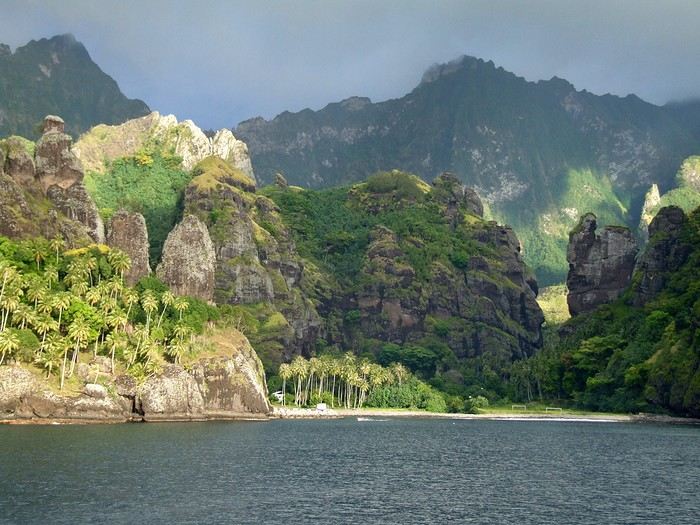 Idyllic landscape of a dream island, but difficult to access: the Bay of Virgins in Fatu Hiva, Marquesas Islands
Among the values conveyed by literature, tourism, and advertising is the quest for “elsewhere,” for a change of scenery, in the truest sense of the word—that is, the need to leave one’s country. This need for otherness, for difference, is projected onto dreamlike, idealized, even mythicized places. In our imaginary world, the island is often that place.
Yet we forget that islands have also been ideal prisons. The examples are numerous: Elba and Saint Helena, Alcatraz and Poulo Condor, If and Yeu, the Devil’s Islands and Leros. The latter, located in Greece in the Dodecanese, hosted a sinister forced labor camp during the colonels’ dictatorship as well as a psychiatric hospital. Despite the beauty of its bay, tourism has remained marginal there due to its bad reputation, unlike the neighboring island of Patmos.
I’d like to share a selection of about a dozen islands from across the world’s seas and oceans. For dreaming...
°°°°°°°°°°°°°°°
SANTORINI
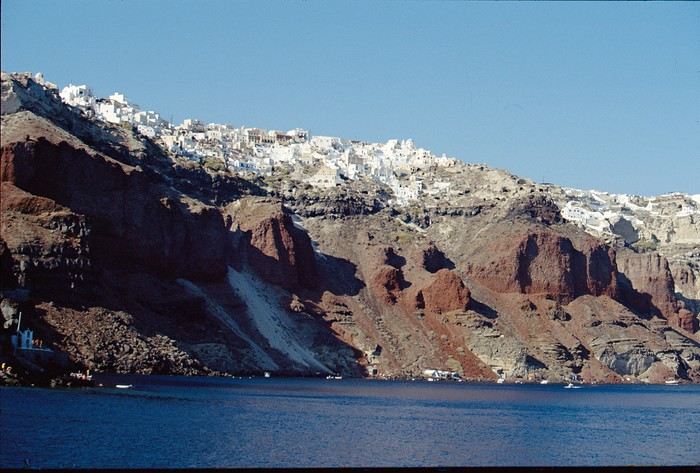
July 27, 1967
At dawn, the ferry from Agios Nikolaos (Crete) enters the immense caldera of Santorini. From the ship’s deck, Rainer, my travel companion, and I are left in awe by the sight of these towering, multicolored cliffs looming over us. We disembark and begin the steep climb on foot via the winding mule path up to the village of Fira, the capital perched above the cliff. Though it’s still very early, we head to the youth hostel. There wasn’t a soul in the alleys that morning—or rather, there were only cats! I have a fond memory of that encounter with Santorini: a sensory shock, a breathtaking volcanic site, a harmony of blue, ochre-red, and white. A welcoming island, as it was traditional to welcome the xénou, an island that hadn’t yet fully recovered from the terrible 1956 earthquake, a Cycladic architectural marvel where local life was still preserved.
It’s easy to see why, in antiquity, the island was named Kallisté (καλλίστη), “the most beautiful,” as it’s nearly impossible to resist gazing at this landscape shaped by tectonic forces. Indeed, a massive volcanic cataclysm—the Minoan eruption—shaped this scenery in the 17th century BCE, creating a caldera that was quickly filled by the sea. The enormous tsunamis that followed reached Crete, leading to the disappearance of the Minoan civilization.
A cliffside path along the caldera leads us to the peaceful village of Oia, at the northern tip of the island. Blue-domed churches and flower-filled villages with whitewashed houses line the way. This walk is a continuous marvel, offering splendid views of the caldera and the neighboring islands formed by the breakup of the ancient volcano (Thirissa, Nea Kameni). Oia is a large, picturesque village, like Fira perched on the cliff’s edge, which was severely damaged by the 1956 earthquake, and its scars are still visible. Its cave-like houses with vaulted roofs haven’t yet been turned into luxury hotels or shops. Absolute tranquility reigns here.
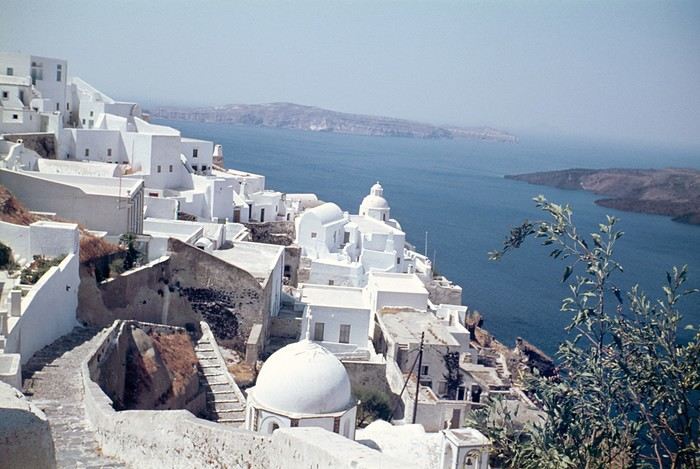 Oia in 1967—a peaceful village overlooking the caldera. But where are the pools and trendy bars?
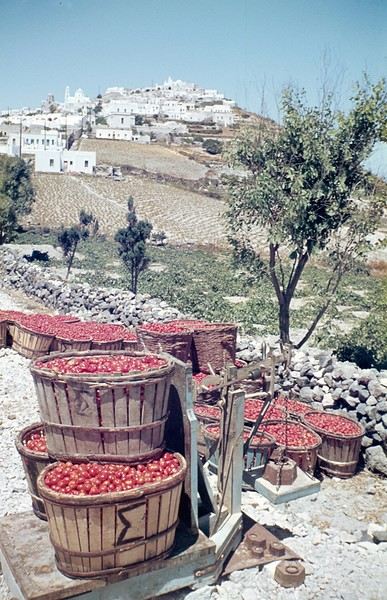
A lush countryside covered in olive trees and vineyards welcomes us for a pleasant hike, interrupted by the kindness of a friendly islander who gives us a lift in his truck for a few kilometers. He’s off to harvest his tomatoes, which he grows at the foot of Pyrgos Hill. The delicious little cherry tomato of Santorini earned an EU Protected Designation of Origin (PDO) in 2013. We climb up to the village of Pyrgos, perched on a hill and dominated by the elegant bell tower of its church. Finally, we reach the black sand beach of Kamari on the island’s eastern coast to enjoy a swim.
{...} To be continued

°°°°°°°°°°°°°°°°°
RAIVAVAE (French Polynesia)
November 15, 2007
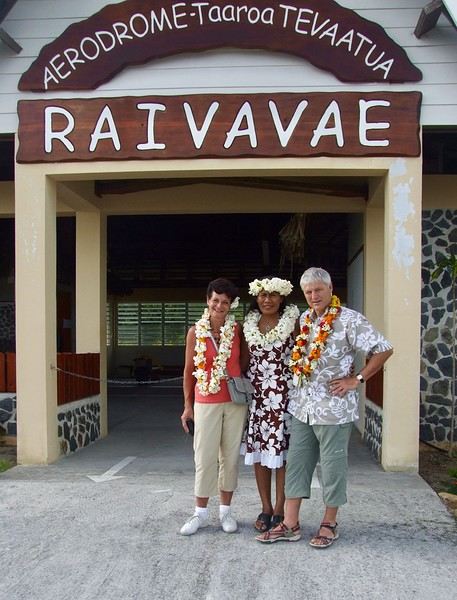
Éléonore from Pension Tama welcomes us with traditional flower leis, as if she’d been waiting for old friends she hadn’t seen in ages. The small airport terminal is lively, the atmosphere warm—people hugging, rejoicing in reunions, all under kilos of flowers. Then, just as quickly, the place empties until the next flight... in a few days.
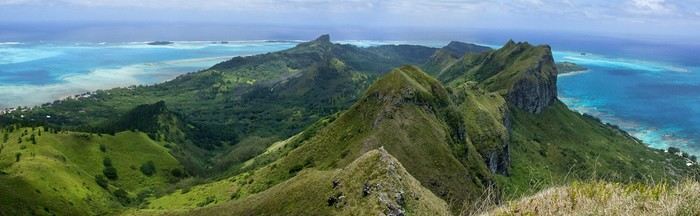
In the Austral Islands, a ninety-minute flight from Tahiti, Raivavae is a world away from the frenetic pace of Papeete or the tourist crowds of the Leeward Islands. The true paradise of the South Seas can still be savored here—it’s a bit like Bora Bora half a century ago. Our first feeling upon arriving on this island is wonder, with smiles that could melt even the gloomiest among us, landscapes so stunning they take your breath away, and above all, a sense of disorientation and fulfillment. Picture a mountainous island, about ten kilometers by three and a half, encircled by a coral reef and wild motu, cradling a lagoon with shades of blue that would make Bora Bora green with envy.
The roughly one thousand inhabitants of Raivavae are spread across four villages around the island. Children are everywhere, as is typical in Polynesia, and they greet you with open, genuine smiles. Here, ancestral values have survived progress. The predominantly Protestant population is very devout, as evidenced by the several temples built across the island. Religious fervor sets the rhythm of daily life. Sundays are reserved for worship and Sunday school (catechism). Work is forbidden on that day, and tourist activities are suspended. These rules are strict and respected.
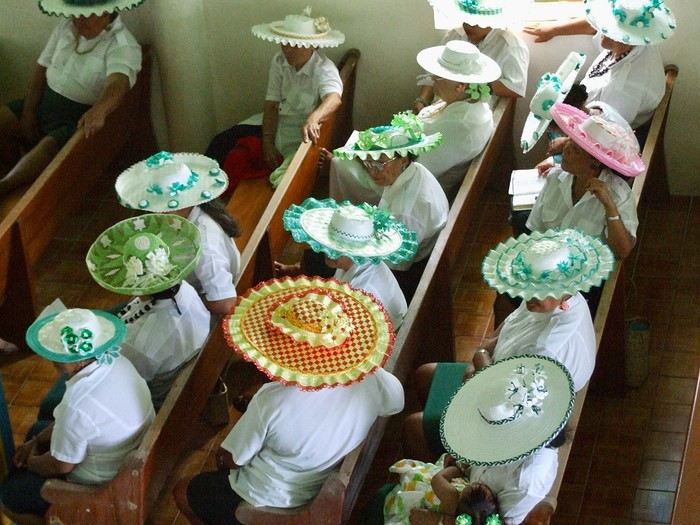 Hat contest for the worship celebration
Yet a sense of resignation is ever-present. The people of Raivavae know they are—and will remain—isolated. Despite the construction of an airstrip in 2004 and a few weekly flights to Tahiti and its nearest neighbor, Tubuai (200 km away), the island remains on the fringes of the world. One painful aspect is the separation of children from their parents when they leave for middle school in Tubuai starting in fifth grade. Television brings daily images of a world the islanders will likely never know, but one they often aspire to.
We are privileged. We have the pristine white-sand beaches of the motu and some of the most beautiful bays in Polynesia all to ourselves. The jewel in the crown, the island’s emblematic spot, is the “motu-pool,” about twenty minutes by boat. A natural, exquisite basin with crystal-clear water, gradients of blue, and white sand. And best of all, there’s almost no one there. In fact, lounging on the beach is frowned upon, especially for young women. Religion looks very unfavorably on sunbathing and lazing around. And yet, everything here leans toward that philosophy of life.
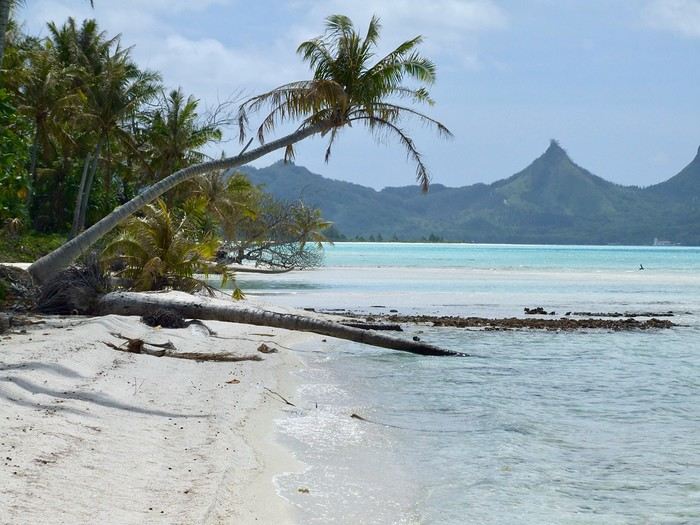
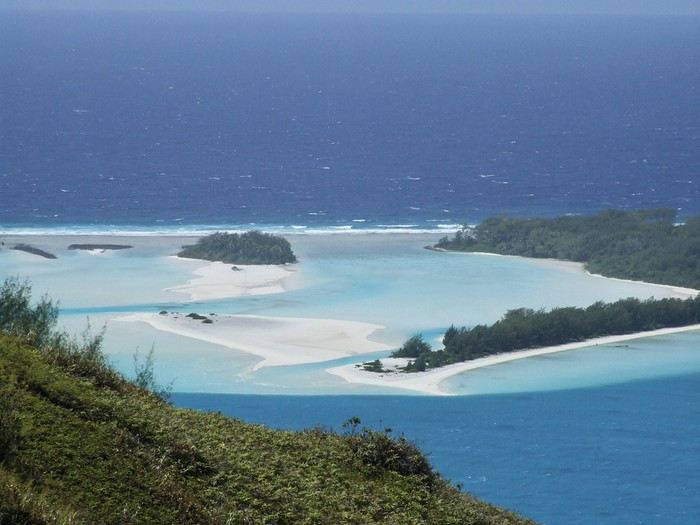 The "motu-pool"
{...} To be continued
Who among us hasn’t dreamed of having a ticket to Tahiti, Bora Bora, or the Marquesas in their pocket—preferably a one-way ticket to “paradise”?
Idyllic landscape of a dream island, but difficult to access: the Bay of Virgins in Fatu Hiva, Marquesas IslandsAmong the values conveyed by literature, tourism, and advertising is the quest for “elsewhere,” for a change of scenery, in the truest sense of the word—that is, the need to leave one’s country. This need for otherness, for difference, is projected onto dreamlike, idealized, even mythicized places. In our imaginary world, the island is often that place.
Yet we forget that islands have also been ideal prisons. The examples are numerous: Elba and Saint Helena, Alcatraz and Poulo Condor, If and Yeu, the Devil’s Islands and Leros. The latter, located in Greece in the Dodecanese, hosted a sinister forced labor camp during the colonels’ dictatorship as well as a psychiatric hospital. Despite the beauty of its bay, tourism has remained marginal there due to its bad reputation, unlike the neighboring island of Patmos.
I’d like to share a selection of about a dozen islands from across the world’s seas and oceans. For dreaming...
°°°°°°°°°°°°°°°
SANTORINI
July 27, 1967
At dawn, the ferry from Agios Nikolaos (Crete) enters the immense caldera of Santorini. From the ship’s deck, Rainer, my travel companion, and I are left in awe by the sight of these towering, multicolored cliffs looming over us. We disembark and begin the steep climb on foot via the winding mule path up to the village of Fira, the capital perched above the cliff. Though it’s still very early, we head to the youth hostel. There wasn’t a soul in the alleys that morning—or rather, there were only cats! I have a fond memory of that encounter with Santorini: a sensory shock, a breathtaking volcanic site, a harmony of blue, ochre-red, and white. A welcoming island, as it was traditional to welcome the xénou, an island that hadn’t yet fully recovered from the terrible 1956 earthquake, a Cycladic architectural marvel where local life was still preserved.
It’s easy to see why, in antiquity, the island was named Kallisté (καλλίστη), “the most beautiful,” as it’s nearly impossible to resist gazing at this landscape shaped by tectonic forces. Indeed, a massive volcanic cataclysm—the Minoan eruption—shaped this scenery in the 17th century BCE, creating a caldera that was quickly filled by the sea. The enormous tsunamis that followed reached Crete, leading to the disappearance of the Minoan civilization.
A cliffside path along the caldera leads us to the peaceful village of Oia, at the northern tip of the island. Blue-domed churches and flower-filled villages with whitewashed houses line the way. This walk is a continuous marvel, offering splendid views of the caldera and the neighboring islands formed by the breakup of the ancient volcano (Thirissa, Nea Kameni). Oia is a large, picturesque village, like Fira perched on the cliff’s edge, which was severely damaged by the 1956 earthquake, and its scars are still visible. Its cave-like houses with vaulted roofs haven’t yet been turned into luxury hotels or shops. Absolute tranquility reigns here.
Oia in 1967—a peaceful village overlooking the caldera. But where are the pools and trendy bars?A lush countryside covered in olive trees and vineyards welcomes us for a pleasant hike, interrupted by the kindness of a friendly islander who gives us a lift in his truck for a few kilometers. He’s off to harvest his tomatoes, which he grows at the foot of Pyrgos Hill. The delicious little cherry tomato of Santorini earned an EU Protected Designation of Origin (PDO) in 2013. We climb up to the village of Pyrgos, perched on a hill and dominated by the elegant bell tower of its church. Finally, we reach the black sand beach of Kamari on the island’s eastern coast to enjoy a swim.
{...} To be continued
°°°°°°°°°°°°°°°°°
RAIVAVAE (French Polynesia)
November 15, 2007
Éléonore from Pension Tama welcomes us with traditional flower leis, as if she’d been waiting for old friends she hadn’t seen in ages. The small airport terminal is lively, the atmosphere warm—people hugging, rejoicing in reunions, all under kilos of flowers. Then, just as quickly, the place empties until the next flight... in a few days.
In the Austral Islands, a ninety-minute flight from Tahiti, Raivavae is a world away from the frenetic pace of Papeete or the tourist crowds of the Leeward Islands. The true paradise of the South Seas can still be savored here—it’s a bit like Bora Bora half a century ago. Our first feeling upon arriving on this island is wonder, with smiles that could melt even the gloomiest among us, landscapes so stunning they take your breath away, and above all, a sense of disorientation and fulfillment. Picture a mountainous island, about ten kilometers by three and a half, encircled by a coral reef and wild motu, cradling a lagoon with shades of blue that would make Bora Bora green with envy.
The roughly one thousand inhabitants of Raivavae are spread across four villages around the island. Children are everywhere, as is typical in Polynesia, and they greet you with open, genuine smiles. Here, ancestral values have survived progress. The predominantly Protestant population is very devout, as evidenced by the several temples built across the island. Religious fervor sets the rhythm of daily life. Sundays are reserved for worship and Sunday school (catechism). Work is forbidden on that day, and tourist activities are suspended. These rules are strict and respected.
Hat contest for the worship celebrationYet a sense of resignation is ever-present. The people of Raivavae know they are—and will remain—isolated. Despite the construction of an airstrip in 2004 and a few weekly flights to Tahiti and its nearest neighbor, Tubuai (200 km away), the island remains on the fringes of the world. One painful aspect is the separation of children from their parents when they leave for middle school in Tubuai starting in fifth grade. Television brings daily images of a world the islanders will likely never know, but one they often aspire to.
We are privileged. We have the pristine white-sand beaches of the motu and some of the most beautiful bays in Polynesia all to ourselves. The jewel in the crown, the island’s emblematic spot, is the “motu-pool,” about twenty minutes by boat. A natural, exquisite basin with crystal-clear water, gradients of blue, and white sand. And best of all, there’s almost no one there. In fact, lounging on the beach is frowned upon, especially for young women. Religion looks very unfavorably on sunbathing and lazing around. And yet, everything here leans toward that philosophy of life.
The "motu-pool"{...} To be continued
From one lagoon to another or from one island to another… From Blue Bay to Le Morne Brabant or from Île aux Aigrettes to Île aux Bénitiers.
In this travel journal, I invite you on a journey through the south of Mauritius—a region undoubtedly less known than the busy shores of the beach resorts, yet it’s an enchanting, authentic, and charming Mauritius that unfolds along this route.

Blue Bay, now there’s a place name that immediately sets the tone… obviously, blue is the dominant shade of this lagoon. Here, you’d almost want to add an “s” to the word *blue*, so many are the shades of blue in this bay. From the matte turquoise of the early morning, where the mangroves on the shore are reflected in the lagoon’s depths, to the translucent light blue of midday—most stunning when the sun is at its zenith. Then there’s the deep navy blue of late afternoon, as the last rays of sunlight add golden touches to the ripples.


What a joy to admire this landscape with all its tones—they shift with the angle of the sun, the presence of clouds, or even the underwater terrain (light sand or coral). How could anyone ever tire of such paradise-like sights! Let’s set the scene a little more. This lagoon is one of the largest on Mauritius, and luckily, its shores remain preserved. There are no unsightly buildings along its edges—just a few pavilions from a luxury hotel, partially hidden by *filaos* (a type of tropical pine) and coconut palms. Across the way lies the quiet village and beach of Blue Bay.

For the rest, nature reigns supreme here, with lush greenery (palm trees, *filaos*, and mangroves) alternating with light sandy beaches dotted with black rocks. The lagoon’s entrance is protected by a coral barrier, where waves from the Indian Ocean crash, forming a frothy edge that outlines the horizon. And as if this setting weren’t already idyllic enough, there’s also an island floating on these impossibly beautiful blue waters: Île des Deux Cocos. This private tropical haven has just one structure—a house with striking Moorish-style architecture. Renting it would cost a fortune, I can only imagine… so let’s just admire this dreamy landscape from afar.

Even though the lagoon’s waters are astonishingly clear, to see the tropical fish and coral, you’ll need to explore either by glass-bottom boat (the view is a bit blurry and distorted) or—much better—by snorkeling. There, you swim in the middle of a real aquarium… without any walls. The wonder is guaranteed! I’ll admit that during my (too short) snorkeling session, I didn’t see all the species in this lagoon—far from it! Apparently, there are over 72 different kinds.


But I did spot and admire some elegant angelfish, colorful parrotfish with their shimmering scales, and especially schools of striped fish—the famous sergeant majors. These two Mauritians, seen from behind with their legs in the water, have another way of interacting with the bay’s fish—they’re teasing them with fishing lines and hooks.


Exploring the lagoon can be nicely rounded out with a kayak trip. With just a few paddle strokes, I’m almost in the middle of the bay. There, during a pause, my gaze wavers between admiring the stunning surroundings and peering at the underwater world through the crystal-clear waters. Look! A few fish dart near my kayak… before quickly hiding in the coral crevices. A little farther on, near the lagoon’s shores, I now glide along the mangroves and their tangled roots—another fascinating aspect of the area to discover.

A lagoon so rich in sights and aesthetic emotions quickly makes you feel like you’ve arrived at the gates of paradise. As my thoughts drift with each stroke of the paddle, the peaceful silence of the lagoon is suddenly shattered by a growing noise… a passenger plane flies overhead before landing on a runway near the island’s airport, which is close to the lagoon. Okay, you’ve got to admit—that’s really the only detail in this environment that brings you back to reality. Can paradise truly exist on Earth? Still, luckily, takeoffs and landings aren’t *too* frequent!

Twilight comes quickly in subtropical regions—it’s now the blue hour over the blue lagoon. From Île des Deux Cocos, a few notes of rhythmic music drift over, accompanied by colorful lights. The evening will be festive well into the night…

………………………………………………………………
After the lagoon and its sea baths, it’s time for a *bain de foule*—we’re now in town. The main city in the south, with its 16,000 inhabitants, Mahébourg is even Mauritius’ second-largest urban area. Its vibe is nothing like the hustle (and traffic jams) of the capital, Port Louis. Here, no tall buildings—just residences, houses, shacks, and shops that give off the charming, laid-back atmosphere of a provincial tropical town.

You’ll encounter the crowd a little later at the central market. It’s Monday morning, a busy day, but the morning is just beginning, and some aisles of the covered market are still sparse.

Under these colorful tarps, stalls overflow with mounds of vegetables and fruits. Here, tomatoes in bulk; there, pyramids of eggplants… Farther on, fruit displays: watermelons, pineapples, bananas, and lychees—the first of the season, a vendor tells me. It all looks so appetizing! We continue our visit, weaving between crate carriers, vendors, and busy housewives feeling, weighing, and comparing the produce… before finally buying their groceries. Baskets fill up as conversations flow in a relaxed but somewhat noisy atmosphere.

Near the exit, stalls line up with Indo-Mauritian specialties. Here, the air smells of deep-fried goodness. The displays are piled high with samoussas and dholl puris—those famous flatbreads made with lentil flour and stuffed with spiced vegetables. There are also some eggplant fritters… The sight of all these local treats makes me want to try them, even if it all looks a bit (okay, *very*) greasy. Let’s grab some for our midday picnic! On the other hand, I’ll pass on the chili cakes, even though the vendor kindly offers them. I’m not used to that local *piquant* heat!

Leaving the market, we take a random street—this one’s particularly crowded and busy. It leads to another covered market, this one for clothes. Here, stalls overflow with colorful fabrics and saris, as well as T-shirts, jeans, and caps…

Near the Chaux River, just before the bridge leading to a working-class neighborhood on the outskirts, stands the old lavoir. It seems like a relic from the past—its basins are completely dry, and the place is deserted. No one is scrubbing, beating, or wringing out laundry. Either Monday isn’t laundry day here, or washing machines have replaced the *lavandières* (laundry women)?
A large community of Indian origin lives in Mahébourg, and of course, they have their places of worship, like this Hindu temple at the city’s entrance, decorated with colors and deities.

--
To be continued in the next post: the Hindu festival of Diwali, Île aux Aigrettes, the rocky cliffs of the South…
Blue Bay, now there’s a place name that immediately sets the tone… obviously, blue is the dominant shade of this lagoon. Here, you’d almost want to add an “s” to the word *blue*, so many are the shades of blue in this bay. From the matte turquoise of the early morning, where the mangroves on the shore are reflected in the lagoon’s depths, to the translucent light blue of midday—most stunning when the sun is at its zenith. Then there’s the deep navy blue of late afternoon, as the last rays of sunlight add golden touches to the ripples.
What a joy to admire this landscape with all its tones—they shift with the angle of the sun, the presence of clouds, or even the underwater terrain (light sand or coral). How could anyone ever tire of such paradise-like sights! Let’s set the scene a little more. This lagoon is one of the largest on Mauritius, and luckily, its shores remain preserved. There are no unsightly buildings along its edges—just a few pavilions from a luxury hotel, partially hidden by *filaos* (a type of tropical pine) and coconut palms. Across the way lies the quiet village and beach of Blue Bay.
For the rest, nature reigns supreme here, with lush greenery (palm trees, *filaos*, and mangroves) alternating with light sandy beaches dotted with black rocks. The lagoon’s entrance is protected by a coral barrier, where waves from the Indian Ocean crash, forming a frothy edge that outlines the horizon. And as if this setting weren’t already idyllic enough, there’s also an island floating on these impossibly beautiful blue waters: Île des Deux Cocos. This private tropical haven has just one structure—a house with striking Moorish-style architecture. Renting it would cost a fortune, I can only imagine… so let’s just admire this dreamy landscape from afar.
Even though the lagoon’s waters are astonishingly clear, to see the tropical fish and coral, you’ll need to explore either by glass-bottom boat (the view is a bit blurry and distorted) or—much better—by snorkeling. There, you swim in the middle of a real aquarium… without any walls. The wonder is guaranteed! I’ll admit that during my (too short) snorkeling session, I didn’t see all the species in this lagoon—far from it! Apparently, there are over 72 different kinds.
But I did spot and admire some elegant angelfish, colorful parrotfish with their shimmering scales, and especially schools of striped fish—the famous sergeant majors. These two Mauritians, seen from behind with their legs in the water, have another way of interacting with the bay’s fish—they’re teasing them with fishing lines and hooks.
Exploring the lagoon can be nicely rounded out with a kayak trip. With just a few paddle strokes, I’m almost in the middle of the bay. There, during a pause, my gaze wavers between admiring the stunning surroundings and peering at the underwater world through the crystal-clear waters. Look! A few fish dart near my kayak… before quickly hiding in the coral crevices. A little farther on, near the lagoon’s shores, I now glide along the mangroves and their tangled roots—another fascinating aspect of the area to discover.
A lagoon so rich in sights and aesthetic emotions quickly makes you feel like you’ve arrived at the gates of paradise. As my thoughts drift with each stroke of the paddle, the peaceful silence of the lagoon is suddenly shattered by a growing noise… a passenger plane flies overhead before landing on a runway near the island’s airport, which is close to the lagoon. Okay, you’ve got to admit—that’s really the only detail in this environment that brings you back to reality. Can paradise truly exist on Earth? Still, luckily, takeoffs and landings aren’t *too* frequent!
Twilight comes quickly in subtropical regions—it’s now the blue hour over the blue lagoon. From Île des Deux Cocos, a few notes of rhythmic music drift over, accompanied by colorful lights. The evening will be festive well into the night…
………………………………………………………………
After the lagoon and its sea baths, it’s time for a *bain de foule*—we’re now in town. The main city in the south, with its 16,000 inhabitants, Mahébourg is even Mauritius’ second-largest urban area. Its vibe is nothing like the hustle (and traffic jams) of the capital, Port Louis. Here, no tall buildings—just residences, houses, shacks, and shops that give off the charming, laid-back atmosphere of a provincial tropical town.
You’ll encounter the crowd a little later at the central market. It’s Monday morning, a busy day, but the morning is just beginning, and some aisles of the covered market are still sparse.
Under these colorful tarps, stalls overflow with mounds of vegetables and fruits. Here, tomatoes in bulk; there, pyramids of eggplants… Farther on, fruit displays: watermelons, pineapples, bananas, and lychees—the first of the season, a vendor tells me. It all looks so appetizing! We continue our visit, weaving between crate carriers, vendors, and busy housewives feeling, weighing, and comparing the produce… before finally buying their groceries. Baskets fill up as conversations flow in a relaxed but somewhat noisy atmosphere.
Near the exit, stalls line up with Indo-Mauritian specialties. Here, the air smells of deep-fried goodness. The displays are piled high with samoussas and dholl puris—those famous flatbreads made with lentil flour and stuffed with spiced vegetables. There are also some eggplant fritters… The sight of all these local treats makes me want to try them, even if it all looks a bit (okay, *very*) greasy. Let’s grab some for our midday picnic! On the other hand, I’ll pass on the chili cakes, even though the vendor kindly offers them. I’m not used to that local *piquant* heat!
Leaving the market, we take a random street—this one’s particularly crowded and busy. It leads to another covered market, this one for clothes. Here, stalls overflow with colorful fabrics and saris, as well as T-shirts, jeans, and caps…
Near the Chaux River, just before the bridge leading to a working-class neighborhood on the outskirts, stands the old lavoir. It seems like a relic from the past—its basins are completely dry, and the place is deserted. No one is scrubbing, beating, or wringing out laundry. Either Monday isn’t laundry day here, or washing machines have replaced the *lavandières* (laundry women)?
A large community of Indian origin lives in Mahébourg, and of course, they have their places of worship, like this Hindu temple at the city’s entrance, decorated with colors and deities.
--
To be continued in the next post: the Hindu festival of Diwali, Île aux Aigrettes, the rocky cliffs of the South…
Bad news: starting October 2025, the Mauritian tourism ministry is introducing a new tax of 3 € per night per traveler, on top of the existing 55 € fee. This could make other destinations like Madagascar—where no tourism tax is charged—more appealing.
Hello!
My wife and I (Quebecers, 63 years old, retired, celebrating our 45 years together this year, including 20 years of marriage) have chosen to mark the occasion with a trip to Dubai, Réunion, and Mauritius (4 days in Dubai, then 24 days on the islands).
We have a lot of experience planning road trips (scouting routes, visits, hotels, and restaurants of interest), but we travel without reservations to keep the freedom to follow our instincts and tips we get on the spot. We’re moderately active physically and prefer the countryside and beaches over big cities. Our only fixed dates: arrival in Réunion on October 5th and departure from Mauritius on October 29th.
After lots of reading and with the help of an AI (super useful for drafting a first outline!), here’s a possible itinerary framework. Nothing is set in stone—I’d love your suggestions, comments, and thoughts on what’s worth adding or avoiding. Are the proposed bases optimal? Also, if you have recommendations for hotels (mid-range budget of 100–200 euros per night), restaurants, etc., I’m all ears! ;-)
Thanks! 😊
🌴 Réunion (October 5–13, 9 days) Base 1 – Saint-Gilles / L’Hermitage (October 5–8, 3 nights) Oct 5 (Sun): Settle in, relax at L’Hermitage beach. Oct 6 (Mon): Saint-Paul market (morning), beach + sunset at Boucan Canot. Oct 7 (Tue): Excursion to Maïdo (view of Mafate), return via Saint-Leu (Stella Matutina). Oct 8 (Wed): Beach + dolphin/whale-watching boat trip.
Base 2 – Cilaos (October 8–10, 2 nights) Oct 9 (Thu): Route des 400 virages, stroll through the village and Roche Merveilleuse. Oct 10 (Fri): Hike to Bras Rouge (3–4h) or the Chapelle canyon. Creole inn evening.
Base 3 – Plaine des Cafres / Bourg-Murat (October 10–13, 3 nights) Oct 11 (Sat): Road to the volcano → Plaine des Sables → Piton de la Fournaise. Oct 12 (Sun): Wild south coast at Cap Méchant, lava flows, Jardin Parfums, Grande Anse beach. Oct 13 (Mon): Relaxed morning, flight from Réunion to Mauritius.
🏝️ Mauritius (October 13–29, 16 days) Base 1 – Grand Baie / Pereybère (October 13–18, 5 nights) Oct 13 (Mon): Settle in, swim at Mont Choisy. Oct 14 (Tue): Boat excursion to Île Plate & Coin de Mire. Oct 15 (Wed): Pamplemousses Garden + L’Aventure du Sucre. Evening in Grand Baie. Oct 16 (Thu): Trou aux Biches beach, snorkeling. Oct 17 (Fri): Free day, relaxation/shopping.
Base 2 – Flic-en-Flac / Tamarin (October 18–23, 5 nights) Oct 18 (Sat): Drive to the west, settle in, beach. Oct 19 (Sun): Dolphin excursion in Tamarin, relax in the afternoon. Oct 20 (Mon): Chamarel: Terres 7 Couleurs + rum distillery. Oct 21 (Tue): Black River Gorges (hike + waterfalls). Oct 22 (Wed): Snorkeling + sunset.
Base 3 – Belle Mare / Trou d’Eau Douce (October 23–26, 3 nights) Oct 23 (Thu): Settle in, Belle Mare beach. Oct 24 (Fri): Catamaran excursion to Île aux Cerfs. Oct 25 (Sat): Flacq market (morning), beach in the afternoon.
Base 4 – Mahébourg / Blue Bay (October 26–29, 3 nights) Oct 26 (Sun): Settle in, snorkeling at Blue Bay Marine Park. Oct 27 (Mon): Pointe d’Esny + Île aux Aigrettes. Oct 28 (Tue): Free beach day + Mahébourg village. Oct 29 (Wed): Morning swim, return flight at 4 PM (airport is 15 min away).
Hi there,
I bought a ticket for a flight from Toulouse to Mauritius through the Go to Gate agency. The flight leaves Toulouse with Air France, then has a layover in Paris before continuing to Mauritius with Air Mauritius.
Unfortunately, I made a typo in my partner’s name. The travel agency won’t correct it, even though Air Mauritius doesn’t see a problem—but they won’t send an email to authorize the change either. They say it’s up to Go to Gate to handle it.
Just so you know, the airline can’t modify the name themselves; according to them, it’s Go to Gate’s responsibility to make the change.
What should I do? Thanks so much!
What should I do? Thanks so much!
Hi everyone,
I’m happy to be back on the forum, and to be honest, I’ve missed being able to share with this amazing community 😛
I’m starting to plan a trip for September 2025 with my wife. I’d love to discover Mauritius, and I’ve begun reading the forum posts.
Can you tell me if September is a good time to visit Mauritius?
I’ll admit we’re still hesitating—our ideas are Mauritius or Bali.
We’re in our sixties, not high-level athletes, but we travel quite a bit. We don’t like changing hotels every day; instead, we prefer to explore around a central base. If we need to move to better enjoy the trip, no more than twice, I think.
So, I’m looking for a good compromise for accommodation. I’m also looking for a guide to get an idea of pricing and options, but most of all, I’d love to hear from people who’ve already stayed there during this period and get tips on finding places to stay.
Thanks for your help—I’ll now go read the various posts about Mauritius 😉
Hi there,
For my layover in Mauritius on the way to Rodrigues, I need to collect my luggage and go through Corsair checks again since they don’t have a codeshare with Air Mauritius.
How much time should I allow?
I’d love to hear from a traveler who’s been through this.
Have a great day!
Hey everyone,
After a crazy intense work year, we’re heading off soon to relax for a week in Mauritius.
It’s great to unwind, but it’d be a shame to just lie around on a sun lounger the whole time.
So I grabbed my favorite (little) travel guide, the Lonely Planet, a few days ago, and the picture it paints isn’t exactly inspiring. Word for word: - Pamplemousses Garden: “more or less well-maintained, it’s lost its former glory” - Île aux Cerfs: tourists “flock there in crowds” - Blue Bay Marine Park: “some now call it a morning cemetery” (given the state of the coral garden) - Le Morne Peninsula: “big hotel chains have taken over the beaches”
Not sure what to make of all this :/
We're looking for transportation options for Mauritius for 15 days and for 6 people.
Is there a taxi that can take us (6 people plus luggage) from the airport to Bain Boeuf?
(Where can we find a 9-seater rental car?)
After that, we'd like to rent a car for 6 people for the rest of the stay. For the return trip, we'd need the same taxi to take us back to the airport.
Thanks for the info!
Ch
Ch
Hi everyone, we’re planning a trip to Réunion for 6 nights and Mauritius for 7 nights in March 2027. I’m starting to look into it now. We’re not hikers, so I’d love to hear your thoughts!
Should we book flights and small hotels separately, or go for a flight-and-stay package? We don’t want to blow our budget (around 2800 € per person). Thanks! Gigi
Should we book flights and small hotels separately, or go for a flight-and-stay package? We don’t want to blow our budget (around 2800 € per person). Thanks! Gigi
Hi there,
My flight ticket to Mauritius is booked, and my accommodations are all set.
The plan: relaxation, hiking, and swimming...😛
I’m looking for hiking ideas anywhere on the island (I’ll have a car). Nothing over 15 km round trip and a maximum of 500 m elevation gain. (A little more if it’s an exceptional hike.)
I’m also searching for beaches where I can do some snorkeling without needing to take a boat or join an excursion.
I’ve seen that sea kayaking tours are available. Is it possible to just rent a kayak, and which spots on the island are best for easy kayaking?
If you have other suggestions (villages, viewpoints, etc.) for independent excursions, I’m all ears!😉
Thanks🙂
Over ten years ago, we took a cruise on the Costa ROMANTICA. Since then, we’ve never had the pleasure of finding another company for a cruise in the Indian Ocean with stops in Réunion, Mauritius, the Seychelles, and Madagascar. I recently discovered on this site that the German company AIDA offers the exact same cruise in December! But we don’t speak German and don’t know this company at all.
Thanks if you can give us any insights about the ship *Stella* and the quality of their services
Hi there, we’re heading to Mauritius in December-January.
The question is: what should we visit first?
Thanks for your tips!
JP
Thanks for your tips!
JP
Hi everyone,
After finishing the season (gîte on the Compostela trail), it’s our turn to hike! We’re heading to Réunion for 6 weeks, then Mauritius, and maybe Rodrigues. We leave on November 5th.
What are the must-do hikes, starting with easy ones to get our legs back in shape (yep, 7 months of inactivity!) and then a bit more challenging, but most importantly, no risk of vertigo. Sorry, that’s just how it is—can’t do it 😅.
As for gîtes, should we book a few days in advance, or do we need to plan now?
And what about transport? Should we rent a vehicle instead?
We’d love any tips you have. Thanks!
Philippe and Corinne