I’m finally getting around to writing about this 20-day trip to southern Italy: we didn’t travel this summer, and luckily, we found beautiful light and dreamy weather there at the end of September.
First, here’s the context of the trip: we’re both "confirmed seniors" but still curious and alert enough to enjoy the itinerary we’d imagined! We wanted a mix of discoveries—culture, cities, and nature—with guaranteed sunshine and the occasional short hike...
We’re flying to Naples, round-trip, because the flight times work better for us. We rented a car online, picked it up at the airport (details to come... and it won’t be the highlight of the trip!), and booked our hotels in advance.
A quick overview of the itinerary: leaving Naples on September 15th, early in the morning, we’ll drive straight across the boot of Italy to Bari.
After 11 days in Puglia, we’ll head back toward our starting point, taking our time: Matera in Basilicata, Maratea by the sea, and finally Paestum with its incredible temples.
Day 1: Brussels-Naples flight (Brussels Airlines) went smoothly; it landed an hour early, and we were thrilled, thinking we could use that time for a quick visit or two...
Everything went well until we left the airport. We took the shuttle to the car rental offices, and at first glance, we realized this wouldn’t be smooth sailing!!!
In front of every office (they’re side by side), there were already lines and kids sitting on suitcases—everyone looked exhausted...
We resigned ourselves to waiting: nothing moved until tempers flared at the counters, and two people nearly came to blows. Things sped up a little, and after 2 (two...) hours of waiting, we finally got our chariot: a black Fiat Tipo, dirty, with a few dents and scratches that we made sure to note in the contract... but it ran!
Off to Bari, then: no time for sightseeing along the way!
From there, we headed straight to our hotel in the countryside near Polignano a Mare.
A recurring detail: this happened constantly during our travels.
We’d installed our own GPS, fully updated...
In recent years, many dirt roads have become drivable, and lots of hotels and hostels have opened in the outskirts of towns. It was extremely rare for our ‘guide’ to recognize the street—let alone the number—we entered.
Often, we got by calling the hotel reception: it might seem like a small thing, but it happened so often it became frustrating.
In hindsight, it seems like without Google Maps, we’d have been lost!
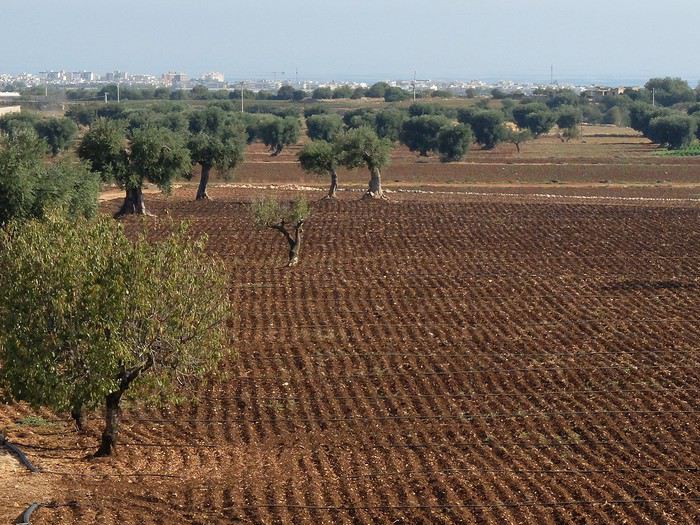
Anyway, we were beautifully settled, with a terrace overlooking olive groves and the sea in the distance: all was well.
I’ll be traveling to Tuscany with my family (my wife and two kids, aged 6 and 8) from April 26 to May 5. Here’s a rough draft of our potential itinerary—I’d love to hear your thoughts and suggestions so I can tweak and improve it. We haven’t finalized our accommodations yet, but they’ll likely be near Florence (2 nights), Lucca (2 nights), Monteriggioni (2 nights), Pienza, Montalcino, and Greve in Chianti.
- April 26:
o Arrival in Florence around 12:00 PM
- April 27:
o Florence
- April 28:
o Florence – Pistoia – Lucca
- April 29:
o Lucca – Pisa – Lucca
- April 30:
o Lucca – Volterra – San Gimignano – Monteriggioni
- May 1:
o Monteriggioni – Siena – Monteriggioni
- May 2:
o Monteriggioni – Abbey of Santa Maria di Monte Oliveto – Baccoleno – Castelmuzio – Chapel of Madonna di Vitaleta (San Quirico d’Orcia) – Pienza
- May 3:
o Pienza – Montepulciano – Montichiello – Abbey of Sant’Antimo – Bagno Vignoni Thermal Baths – Montalcino
- May 4:
o Montalcino – Castellina in Chianti – Radda in Chianti – Badia a Coltibuono – Volpaia – Montefioralle – Greve in Chianti
- May 5:
o Greve in Chianti – Florence airport
So happy the forum reopened last October!!!
I’ve started reading again (posts, travel journals) and chiming in on a few discussions. Now I’m stepping it up by writing a new travel journal—I’ve already posted a few between 2018 and 2020.
My latest trip was to Italy from August 27 to September 26, 2024.
As the title says, it was a wander through Tuscany in parts of the region that aren’t the most visited.
No Firenze-Siena-Pisa trilogy, no San Gimignano; there’ll be a quick detour into Siena, but I’ll skip the best-known sights. That choice, plus traveling in September, should help dodge overtourism. It worked out—crowds were light, sometimes very light, the whole way.
Here’s the practical rundown:
- a long trip outside peak season (ah, retirees!)
- solo camping (caravan)
- a mix of activities (hiking, mountain biking, sightseeing) in places that aren’t always packed with tourists. Still, I don’t feel like I ended up in some hidden-away spots.
Not sure if this will draw any readers.
DAY 1: Tuesday, August 27, 2024
The heat was intense on the drive in across the plain; two big storms—more rain and hail than lightning and thunder—threw the weather off, the first near Imola, the second on the four-lane road up the Savio valley. I left the Cesena-Roma four-lane at the Verghereto exit and climbed up to Balze (1,100 meters). The campsite is even higher (1,200 meters), in the forest near the source of the Tevere (Tiber).
Staying up here will cut down on driving for the first part of the trip: a route through the Appennino (Apennines) on the border between Toscana and Emilia-Romagna.
The temperature was surprisingly mild for the altitude, the air thick with moisture by late afternoon.
I drove back down from the campsite to Balze (2 km on the road) to grab groceries (it’s doable) and scout tomorrow’s hike.
.
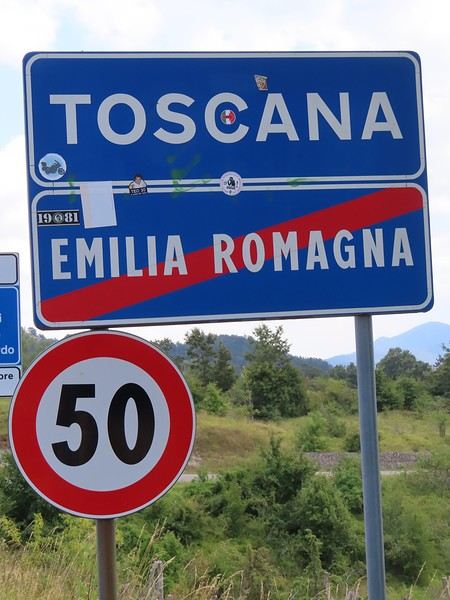
The endpoint of the planned hike is just a few meters from this sign (the trail crosses this road about 3 km from Balze). I realized Balze and the source of the Tevere (Tiber) are actually in Emilia-Romagna, not Toscana. I always thought the Tevere (Tiber), which flows toward Roma (Tyrrhenian side), started in Toscana!
I’ll come back to this quirk in Day 3’s write-up.
Hi everyone!
We’re so excited to be heading to Italy for the first time this April with our two kids for a week. We’ve booked our round-trip flight, and we’ll be arriving and departing from Pisa.
Our rough plan so far includes visiting Pisa, taking the train to Florence, and exploring the Cinque Terre. Last night, a friend also suggested adding Siena to the list.
Our kids are 12 and 9 and are used to walking, but we’re not looking to rush around too much. We’d love any advice, especially about accommodation. Should we stay in Pisa and take day trips by train, or split our nights between a couple of different places?
We’re just starting our research, so any tips would be amazing! 😉
Thanks in advance!
I own a camper van (an old "Traffic" model) and would like to travel to Italy this summer with my kids (8 and 11 years old). I haven’t planned the route yet because I’m pretty open about the region (the lakes? Amalfi Coast? Tuscany?) and the dates (July or August, probably around 3 weeks).
We’re used to road-tripping, but we were a group of four before, so this will be our first time as a trio!
I’d love to find other camper van or van travelers to join us for extra safety and to share the adventure.
The title might surprise you, but you’ll understand my point of view.
1/ MEAL STRUCTURE
I’m talking about the standard meal, not the one for those who have to budget for financial reasons (generally fewer in northern and central Italy than in France, but more in the south, which makes up 35% of Italy—Eurostat figures), nor for those (mostly women) watching their figure.
The tradition (once the meal of the well-off, widespread among the general population in the 1950s) starts with soup or pasta (or rice, gnocchi, ravioli, lasagna)—this is the *primo piatto*.
Next comes meat or another animal-based product (fish, cured meats, eggs, etc.)—the *secondo piatto*, which can be replaced by cooked vegetables (the only known example in France: eggplant parmesan).
If the meat dish doesn’t already include vegetables, one is served. Salads, whether green or tomato-based, are side dishes, not starters.
The meal ends with dessert—no difference from French habits: cheese, fruit, or sweets.
*Antipasti* (appetizers) are reserved for festive meals or receptions and are served *in addition* to the main courses at the start.
4 practices unknown in France:
- If the menu includes pasta and ham, you start with the pasta.
- If the menu includes pasta with a meat sauce and fish, you start with the pasta too.
- Pasta is never a side dish for meat.
- It’s not unusual for Italians to start with pasta in a meat sauce and then have a meat dish—most do this several times a week.
Modern adaptations:
- People eat pasta less often (on average 5 times a week, according to recent figures) and soups, which are being replaced by *antipasti*.
- The main meal is now mostly dinner, so it’s much heartier, while lunch isn’t usually eaten at home.
2/ THE CUISINE
What do we know in France? Pizza, pasta Bolognese, carbonara, arrabbiata, ravioli, and lasagna. Fried scampi, Milanese or Bolognese cutlets, carpaccio, and finally tiramisu.
In short, a few basic dishes, but nothing of the gastronomy—whether regional traditions or high-end restaurants.
2 anecdotes:
**Bolognese sauce**
In Italy, the most common homemade sauce is a meat-and-tomato-based sauce called *ragù* (pronounced *ragoo*). Every region, even every town and family, as well as every restaurant, has its own recipe. *Ragù alla bolognese* is just one of these countless *ragù*—and no one in France knows the real recipe (I can share it with those interested). The name *bolognese* given abroad to any *ragù* comes from a canned sauce manufacturer who once branded their product that way. Until the early 1960s, it was called *sauce à la viande* (meat sauce).
**Pizza**
Before World War II, it was practically unknown north of Rome.
Today, Italy is one of the countries where it’s eaten the least (twice as much in France, four times as much in Germany).
Hi there,
We’re planning a trip for October to visit Naples (6 nights) and the Amalfi Coast (5 nights). We’ve already got the historic center and the Lapis Museum in Naples, Pompeii, Herculaneum, Procida, Sorrento, and Ravello on our list. Any suggestions, addresses, or tips?
Thanks for your help.
That’s what we hear more than 9 times out of 10... This region is actually little-known, or at least only its Adriatic coastline, just below Rimini, rings a bell.
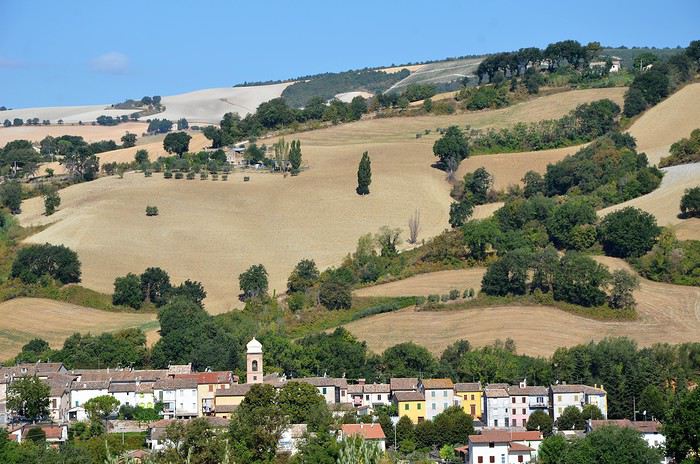
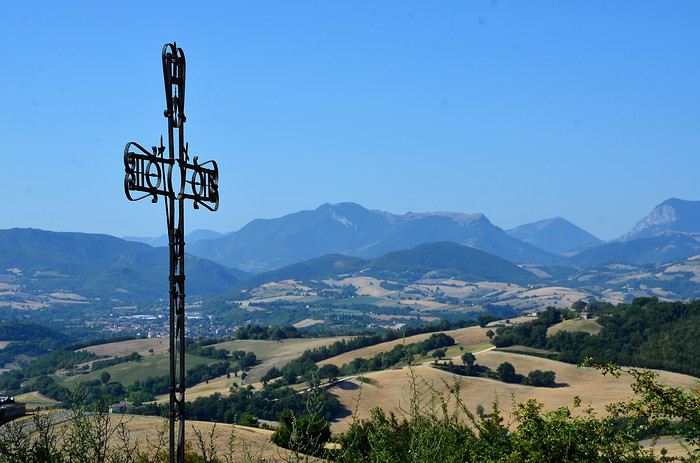
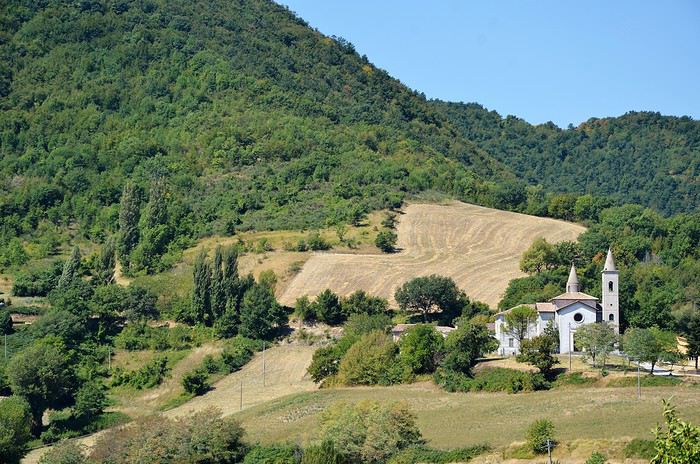
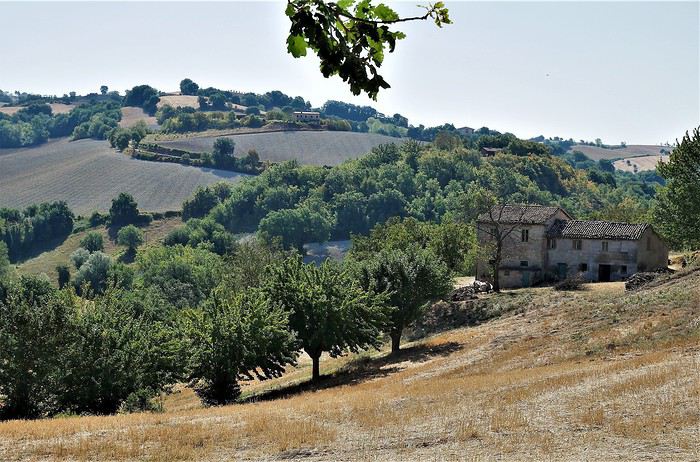
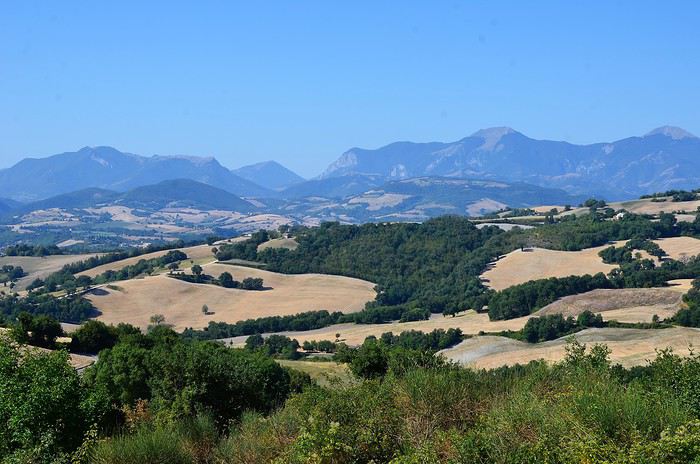
Yet it’s a beautiful region, bordered to the east by the Adriatic Sea and to the west by the Apennine Mountains, with thousands of hills in between—many topped with charming little villages. A very rural area, quite affordable, starting to showcase its heritage, and not yet overrun by tourists... so what are you waiting for?
The distances look short, but the roads are long: aside from the fairly fast routes running from the hinterland down to the coast, following the paths of small rivers that rise in the Apennines and flow into the Adriatic, all the other roads—especially the cross-country ones—wind and twist. They reveal stunning landscapes at every turn but also force you to adjust your sense of time.
We stayed in two different spots, each about 30 or 40 km from the coast—first in the north of Le Marche, near Fossombrone, at Isola di Fano, and then in the south, at Montalto delle Marche.
Since this region is still a bit "under the radar," I had some trouble finding information while planning the trip... So this travel journal aims to introduce you to the region through photos and share a few tips along the way.
June 2024.
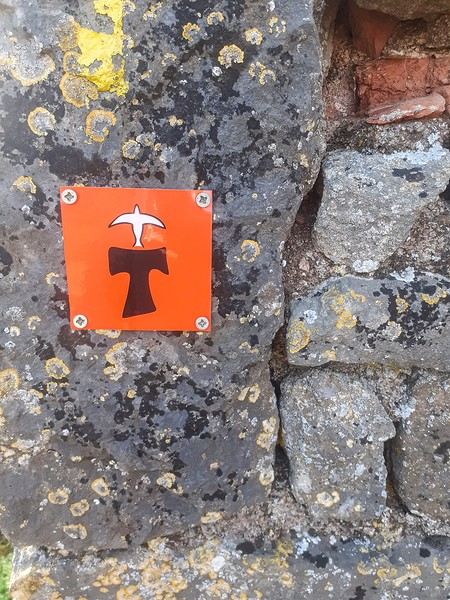
While hiking with my brother on the GR 36 Tour du Morvan, I catch sight now and then of strange rectangular markers fixed to tree trunks. Against a bright orange background, a deep black Greek tau topped with a white dove. My first encounter with the Assisi Way.
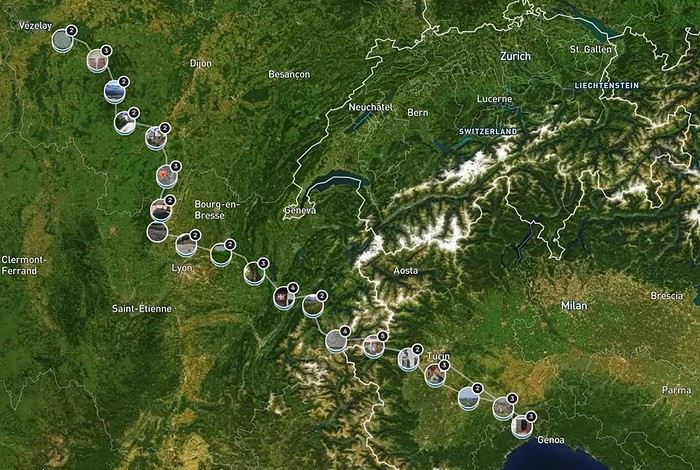
The Way of St. Francis: a pilgrimage route linking Vézelay in Burgundy to Assisi in Italy, covering nearly 1,800 km.
It felt like an obvious next step—I immediately knew I’d take it on, attempt the adventure solo.
In the months that followed, I talked about my project to everyone—family, friends, my partner. An avalanche of comments, more or less the same but varying depending on each person’s character and life experiences. But deep down, it all boiled down to one legitimate question: why?
And the answers?
Hesitant, awkward, partial, even confused. I quickly realized they weren’t so easy to find. It was as if my project seemed more like a whim, a kind of intimate caprice, rather than a well-thought-out plan.
Of course, I knew the reasons that pushed me to leave—you always have to give some. Loved ones need to understand to feel reassured, and that’s understandable.
But I fear that when I list them, they’ll sound like the same old checklist anyone embarking on this kind of journey might give.
Of all the reasons I could mention, I’ll highlight just one here: the call of the road, the solo adventure that brings a powerful sense of freedom.
A bit like Monsieur Seguin’s goat, who from her comfortable pen gazes longingly at the unconstrained horizon of the mountain.
But if I’m being honest, I think I didn’t really know what I was looking for—or, more importantly, what I’d find. Deep down, when I reflect on it, one word keeps coming up that explains nothing and everything at once: desire.
Now well past sixty, I know that when I ask myself who I am or where I’m going, two things bring me fully back to myself: hiking and writing.
And my intention was also to anchor this adventure through words, day by day. Writing down my feelings, emotions, discoveries, and reflections each evening. The famous travel journal that grounds the daily experience in reality.
When I discovered the app "Polarstep," which was initially just meant to keep my loved ones updated and reassured, inform them of my progress, and maintain a connection, I found an opportunity to do it a little differently than usual.
No retrospective notes polished up after returning, but spontaneous writing—recounting everything that crossed my mind during the day and publishing it immediately. A journey lived in real time.
This text is the exact transcription of my daily writings. Rereading them, I didn’t change a thing—just corrected a few mistakes and tweaked some awkward phrasing here and there. Short texts, fitting the format imposed by this kind of app. Writing as if addressing others.
Now, all that was left was to walk.
April 18, 2026 – Vézelay.
After wrapping up our travel journal on Java (link below), we’re now diving into our recent adventure in Puglia! Happy reading...
Off we go on an adventure in Java (and a bit of Bali) | Travel journal > Indonesia | Voyage Forum
Day 1 - October 19
When you tell your friends and family you’re itching to escape to the other side of the planet to mingle with the Mongols, you can usually expect a barrage of questionable jokes and terrible puns. For this new adventure, it’s a different destination but the same old story—this time, we’re visiting the "pouilleux" (the "scruffy" ones). We’re taking off straight for Puglia! If you need a cheat sheet to remember where this oddly named place is on a world map, just think of it this way: Puglia is the maiden name on the ID card of the heel of the Italian boot! Personally, I prefer to remember it as the land of creamy burrata, the smell of focaccia fresh from the oven, orecchiette shaped by mamas, golden olive oil that shines like the sun (which beams down here 300 days a year), amaretto that makes you happy, and those famous trulli—those little hobbit-like dry-stone houses straight out of a movie set...
But I’ll stop spoiling the rest of our trip and focus on a factual rundown of this first Puglian day. So, are you joining us on this new adventure beyond our Gallic borders? Either way, Sasha (my youngest) and Luna (Flo’s daughter) didn’t need much convincing to stick with us and keep up the pace!
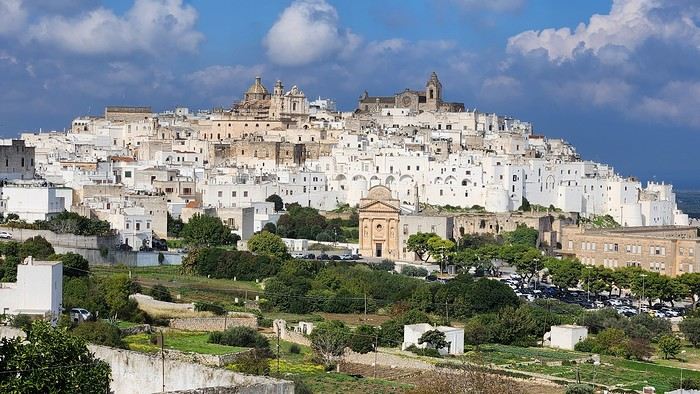
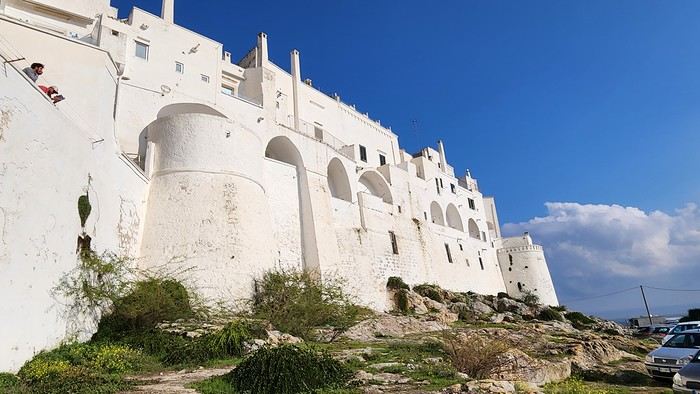
Our plane drops our little crew in Bari, the site of a famously tragic battle lost in 1991. But revenge is sweet! After renting a motorized carriage, we escape the landing zone and head to our military base of operations: Ostuni, a strategic little town where we’ll set up camp for the next four days. Why Ostuni? First, for its central location, which lets us explore a region packed with must-see gems. Second, for its vibe and beauty, which have earned it quite the reputation. Perched high on a hill, the *città bianca* (the "White City") lives up to its nickname. It literally dazzles visitors. The reason? The whitewashed facades of its houses, a testament to the region’s rich architectural heritage.
We arrived late last night, so only the two bravest soldiers volunteered to scout ahead at dawn, while the younger recruits stayed behind—for now. But not for long! After the first wave of streets and the next round of exploration, headquarters made the inevitable call to retreat. Reinforcements were needed! A few strategic errands, a breakfast ration, and our battalion marched in tight formation, flag held high, to conquer Ostuni the White! *Charge!* In my squadron leader’s memoirs, I’ll write that I didn’t expect Ostuni to put up such a fight. What I thought would take two hours to conquer turned into a humbling experience—we could only bow in respect to its beauty, its relentless charm. The alleys are whiter, more labyrinthine, narrower, and more photogenic than the last. *Veni, vidi, vici*—but what an entrance, my troops!
Hi there, I live in Quebec and I’m planning a trip to Italy. We’re thinking of visiting Rome, Florence, Venice, and Tuscany. Here are a few questions I haven’t been able to find clear answers to online. If anyone can help, I’d really appreciate it—thanks in advance!
- There are different City Passes for Rome. I’ve found the differences between them, but whenever I try to simulate a purchase, I’m always redirected to another site like Tiquet. Is there an official Tourism Office website for these?
- Is it easy to get around Tuscany by public transport, especially in the Chianti region?
- For guided tours (or not), which company do you prefer? Get Your Guide? Viator?
Looking forward to your recommendations—thanks again!
Hello Voyage Forum members.
For my wife’s birthday and her 64th year, I’d love to plan a two-week road trip with her—using our own car—preferably avoiding overly touristy spots, so off the beaten path where possible. That said, we wouldn’t mind stopping at must-see places along the way. The trip would cover Emilia-Romagna and/or Tuscany if combining both regions is doable in that timeframe, with the option for some hikes during the period. We’re looking at late November 2026. I’d prioritize the most authentic accommodations, ideally with breakfast included, without exceeding 100 € per night if that’s possible. So, stays like private rooms in hostels or homestays would be perfect.
Based on these details, I’d really appreciate any recent tips or insights from Voyage Forum members to help me plan this surprise anniversary trip.
I’m planning a trip around Italy using only trains or public transport in October (hoping the weather stays nice!).
I’d obviously like to see some tourist destinations, but I also want to get off the beaten path a bit, and I’m hoping to find some help here? I don’t plan to linger too long in the cities.
Starting in the north, I’d like to visit Lake Como or Lake Orta, pass through the Cinque Terre for some hiking, spend a few days in Naples and Rome, then head down to Sicily.
I'd love some destination suggestions for a road trip from Nice to Livorno by car, including the routes, tolls to cross, distance, and estimated travel time. We're planning a 5-day trip, with 2 nights near Nice, 1 night along the way, and finally 2 nights in Livorno. There are 4 of us in a rental car, and we'd like to stay in either an apartment, a mobile home near the sea, or a campsite. Our budget isn't too extravagant!!!! We want to visit the Promenade des Anglais, and I've heard Menton is really interesting. Once we reach Livorno, we'll take the ferry to Corsica for 12 days with the same rental car. We're planning to leave the last week of May and the first two weeks of June 2026, so around 17-18 days total.
Thanks
This year, we booked a rental in Colonno, Italy, by Lake Como.
Everything was going well until my wife wanted to see Milan... Out of 11 days, why not spend a day there, even though I’m not really a "city" person?
Then I discovered ZTLs (Zona a Traffico Limitato)...
A 90 € fine if you’re unlucky enough to drive into one, and another 90 € if you drive out...
While I was looking for info on where to park without risking a fine in Milan (any tips?), I found out that Como also has a ZTL. (Any parking advice there too?)
My question is: is there a map showing all the cities with ZTLs?
Because if it means getting hit with hundreds of euros in fines 9 months later... 😕
The more I look for info, the more I come across unsettling stories... Like people who pass a ZTL sign, turn around immediately, and still get hit with two 90 € fines in 3 minutes...
I don’t want to ruin the vacation over a small mistake...
After a pretty disastrous weather-wise trip to Gran Canaria, we’re hoping this time the sun will shine in Puglia.
It’s not a sure thing, though—the weather’s been awful all over Europe in early May.
For those who’d like to (re)read the story without the digressions, it’s here.
Saturday, May 16:
This time we’re flying out of Charleroi (Brussels South): the ticket prices, flight times, and proximity all worked for us.
The airport (Ryanair) was recently renovated... but it’s still not very well organized. There are hardly any seats in the boarding areas, and... the restrooms cost money!!!
The flight goes smoothly, though, and we land in Bari a little late.
We quickly pick up our rental car, a very local-looking Pandina (even more so than the Fiat 500 in this region), and hit the Italian roads... and their unique driving quirks (like the fact that the countless road signs along the streets and in towns are purely decorative 😏, and that Italian cars don’t have turn signals 😮... except for rental cars).
About an hour later, we arrive at our first accommodation, right in the middle of the countryside near Monopoli.
The owner isn’t there, but they’ve left us a ton of info via messages and even turned on the space heater, which is a nice touch.
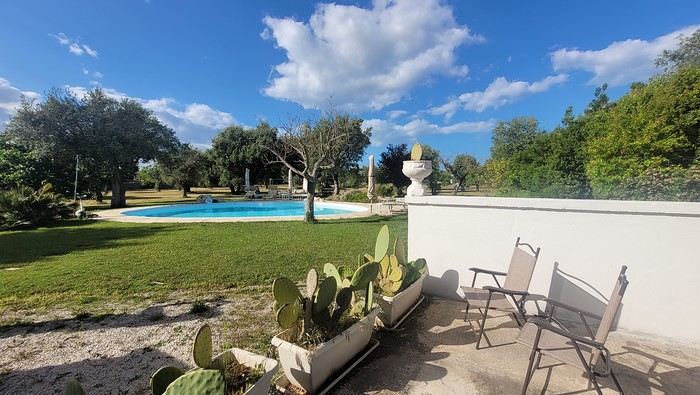
We explore the property:
And the next morning before breakfast, its immediate surroundings:
Sunday, May 17:
After our "seaside" experience in Gran Canaria last weekend (packed with people and locals), we decide to start inland.
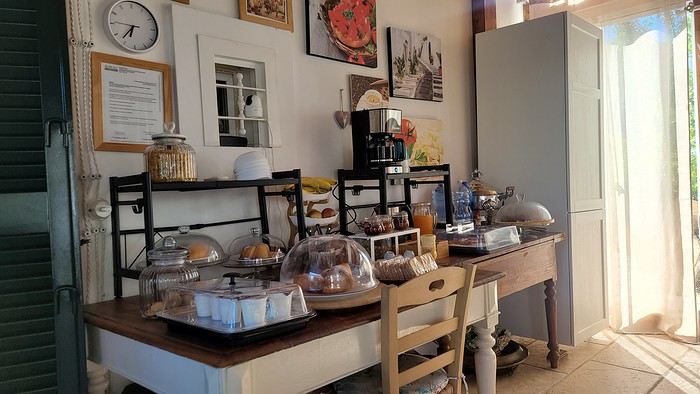
After a hearty breakfast,
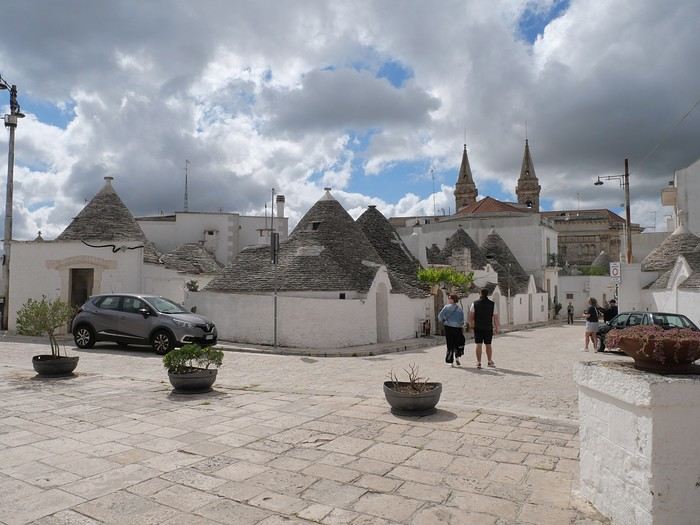
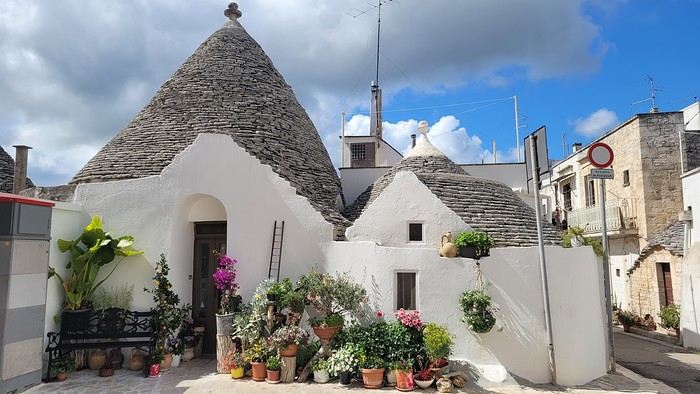
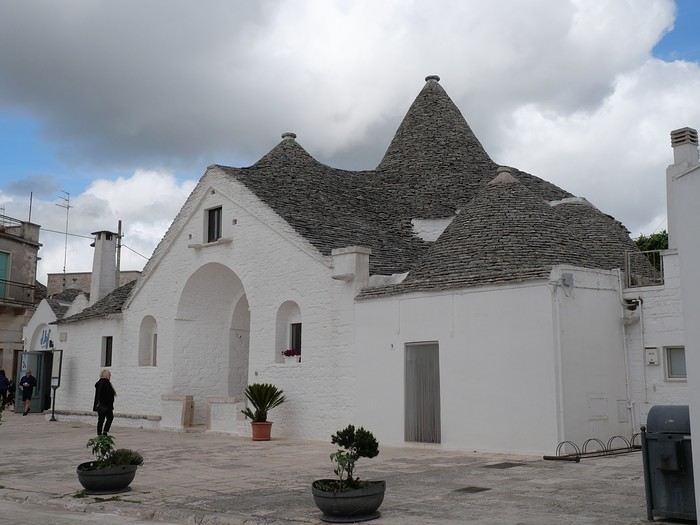
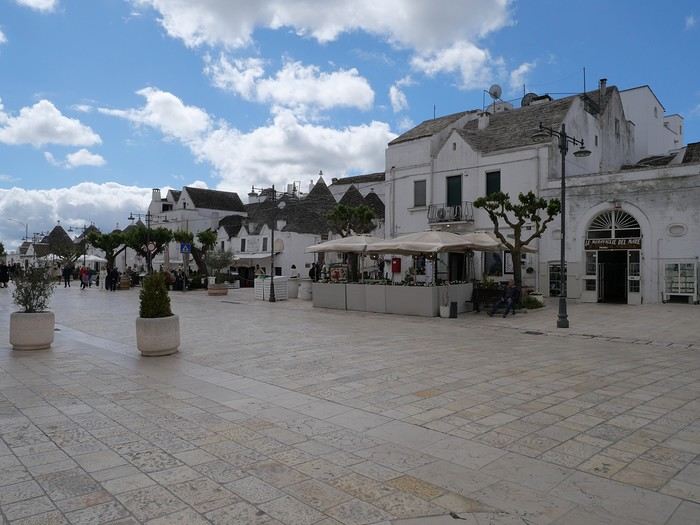
we head toward Alberobello, a super touristy village famous for its trulli—those stone houses with conical roofs.
We easily find a free parking spot on a street near the Aia Piccola district, where some trulli are still lived in year-round.
We almost immediately come across the Trullo Sovrano (the only two-story one), which you can visit (but we skip it—it’s opening time, and there’s already a line).
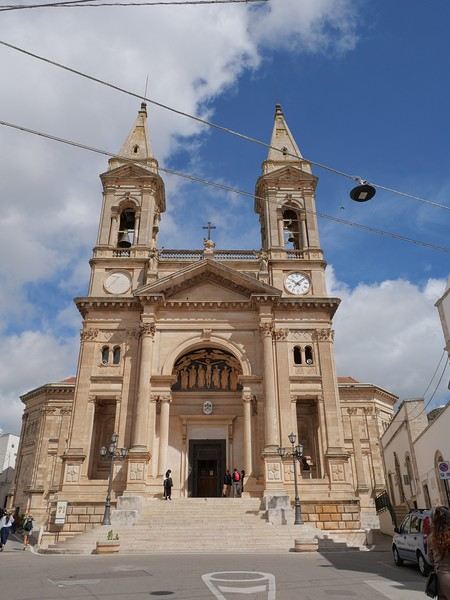
From there, we head down toward the Basilica of Cosma e Damiano... but we don’t go in because there’s a mass.
Now we’re on the main Piazza del Popolo, which connects the two districts of Alberobello: Rione Aia Piccola and Rione Monti, the more touristy one.
It was the start of winter; I was freezing, and the mood wasn’t exactly joyful—Ukraine, 49.3...
So I self-medicated: a week in Italy to hear laughter and that melodic language, and of course, to immerse myself in beauty for a while.
I was looking for a destination: Florence. The choice was biased because I wanted to revisit *Primavera* and *The Birth of Venus*.
Then came the choice of airline: Vueling flies directly to Florence, but you’ve got to know how to handle Vueling—sometimes you make it to your destination, sometimes you’re left at the gate. It’s not expensive, but that’s about all it’s worth. Best to know their rules of the game. Plus, Vueling leaves from Orly, which is super easy to get to by metro.
The gods were with me that day—Vueling actually got me to Florence. On arrival, the temperature was better than forecast, and I knew the days were slightly longer in Italy (and shorter in Stockholm). And the Italian language was floating in the air...
I took the new tram that takes you to the heart of the city, near the great "cheesecake" that’s said to mark the superiority of the Renaissance over Europe’s sublime Gothic cathedrals. I walked around the big pastry and turned onto *my* street, Via dei Servi. Along the way, I stewed over my guilt for not admiring the sublime *Duomo*; I hoped no police had detected my rebellious, deviant mindset.
I’d chosen a hotel on the stunning Piazza della Santissima Annunziata—I’ll even share its name, that’s the VF spirit: it’s the Hotel Due Fontane.
And that’s the real point of this post: until Easter, you can treat yourself to a room in a very charming hotel for around 60 €, breakfast buffet included! To do this, book on Booking.com and make it clear you’ll return the next day with a new reservation at that price. You’ll have left your things in the luggage room to move into a new room in the evening. I didn’t have to play that game since the reception gave me a long-term stay at a reduced rate.
The next day, the kind barista drew a perfect, beautiful flower on my cappuccino. That man was the smile and good cheer of Italy.
Florence had more to offer, and this time I wasn’t being picky like I was with the big white pastry: I had a date with *Primavera* and Venus. Off to the Uffizi; the weather was decent, much warmer than Paris, and the girls were laughing.
Arriving at the Uffizi: had I bought a skip-the-line ticket? What for? I walked in subito and even got the winter discount rate. You’ll agree that when visiting a museum, it doesn’t matter if it’s hot or not. When I got to Botticelli’s room, I love being alone—I have the illusion of owning two of the most beautiful paintings in the world. There was one tourist there that day. We admired *Primavera* and *The Birth of Venus* without getting in each other’s way; those young women painted so long ago show such beauty and radiate such elegance, especially in their faces.
I hesitated about going to the Accademia, but David is worth a revisit. If a skip-the-line ticket is ever needed, it’s here. But no! I walked in subito! Usually, women don’t openly show their attraction, but you might hear "He’s cute" about a man. Around David, it’s amusing to see they’re not immune to the sight.
Off to the Medici Chapels; entrance subita. I felt humbled by the princes’ munificence and the master’s works.
Then it was time for a stroll—maybe a Mannerist painting at Santa Felicita (oh, miracle, it was open), or playing the game of comparing the two crucifixes, including Donatello’s, sipping a Spritz in a little bar with a view of the Ponte Vecchio, wandering Via Roma in the evening among the cheerful crowd and shops decked out for Christmas. Seeing the Church of Santa Maria del Carmine for its frescoes and the Italian Pantheon at Santa Croce (Napoleon’s first girlfriend is buried there). Italy, land of frescoes!
Every evening, until I exhausted my pasta card, I enjoyed spaghetti on *my* Via dei Servi.
The point of this post: you can visit Florence at a very low cost, without impossible queues, and without tourist pressure, in reasonably warm weather until Easter. In May, the Due Fontane charges 220 to 250 €! For the rest, I may have rambled a bit.
PS: Vueling stranded me on the way back; my punishment was staying an extra day in this incredibly welcoming city.
As mentioned in the title, this will be a trip around Tuscany in parts that aren’t the region’s most visited.
No Florence-Siena-Pisa trilogy, no San Gimignano; there’ll be a quick stop in Siena, but without visiting the most famous sites. This choice, plus traveling in September, should help avoid overtourism.
Hi, I'm looking for info on Tuscany with the idea of taking a family vacation at the end of August, but we're not into cities or crowds. We're more into wild nature, beaches, and hiking... I've heard about southern Tuscany—is it too urbanized? Where else should we look? Thanks so much
Our trip to Puglia left a bitter taste—between the trash, privatized beaches, and relentless heat.
But on our way home, a short stop in Tuscany reconciled us with Italy.
This new summer, we’ve decided to add this beautiful region to our itinerary!
As usual for relatively nearby destinations, we’ll be driving via the Col de la Lombarde on the way there and Mont Cenis Pass on the way back.
A chance to kill two birds with one stone: one trip, multiple landscapes crossed.
For our Tuscan stay, we’ve chosen a house tucked away in the Chianti vineyards.
Peace and quiet, barely disturbed by the occasional wild boar or deer!
You’ve probably gathered that we won’t be sightseeing fanatics, even if classics like Siena, Florence, San Gimignano, Pisa, and the Abbey of Saint Michael of the Cluse are on the agenda.
You can find the details of our journey beyond the Alps here.
Happy reading!
And if you have any questions or comments, don’t hesitate!
Hi there, we’re heading to Tuscany in the second half of August with two kids (8 and 6 years old).
We’ve zeroed in on the area around Siena and Florence for now.
I’m looking for recommendations on places to stay and things to see that are great for families.
Also, just to add, we’ll be traveling by train and plan to rent a car once we’re there—any tips on car rental companies?
I’ve been to Corsica once (Bonifacio) and Italy once (Tuscany), and I have great memories of both. I’d love to go back to one of these places, but this time on a road trip (with my car).
I enjoy walking (nothing too intense like 8-hour hikes), wandering around nature or cities at random, local crafts and specialties, a little beach time, lots of food and culinary discoveries, meeting people, music, and dancing (Latin).
This is the first time I’m posting here to find a travel buddy—up until now, I’ve mostly traveled solo or met up with friends already on location. It could be a great way to share the experience. I’m open to some planning to outline the itinerary, but also leaving room to adjust based on what feels good in the moment or any opportunities that come up. So, I’m thinking of booking accommodations last-minute sometimes—Airbnb, guesthouses, hotels, camping, etc.
Everything’s on the table, and I’d love to chat about it.
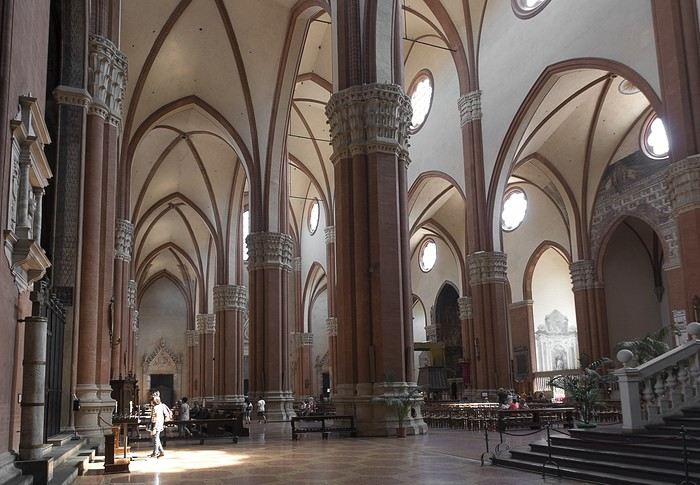
Since I didn’t have time to write a proper travel journal, I thought I’d share a few photos of Bologna—a really lovely city I discovered in 2017 while stopping on my way to Tuscany.
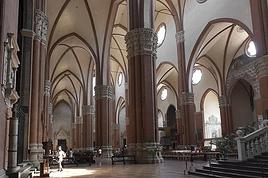
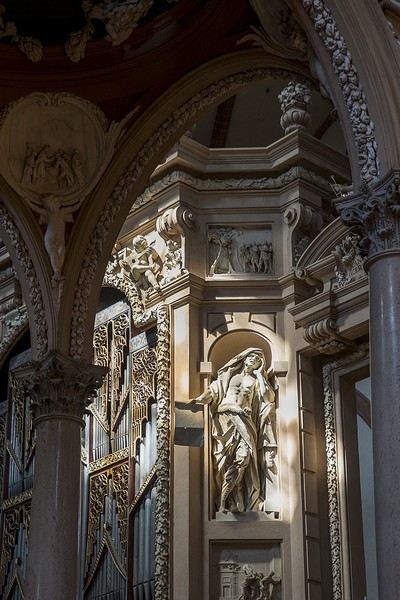
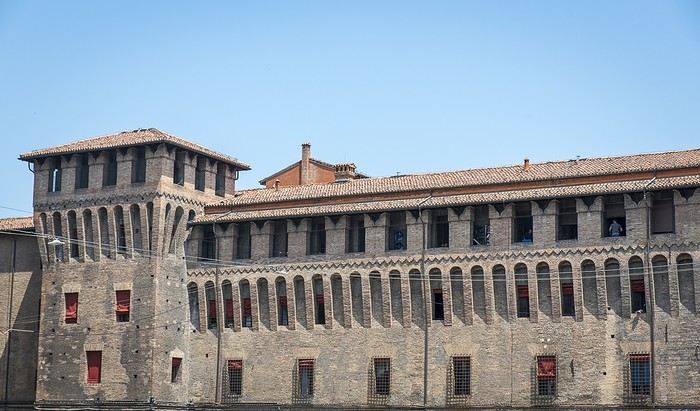
Around Piazza Maggiore, which was packed with a stage and chairs for a show, stands the Basilica of San Petronio, massive and Gothic in style, with an unfinished façade (a common sight in Italy).
Another building near the square:
But Bologna’s real charm lies in its porticoes, which were added to the UNESCO World Heritage list in 2021: 62 km of arcades running along buildings, letting you walk sheltered from the sun or rain. Back in 1288, the city required houses to include private arcades for public use. In the city center, you can stroll under 32 km of porticoes in all sorts of styles—some plain, some ornate—with a strong presence of red tones.
Hi there,
This is my first time traveling to Italy, and I’m planning to go by car.
From what I’ve read, parking is tough in cities like Florence.
I’m looking for a small town not too far from Florence where I can stay and park my car, then take the train to visit Florence.
Any ideas or suggestions?
Thanks in advance
Hey there, beautiful and diverse travel community,
With just one day left (if that!) before I arrive in Florence for a quick getaway, I’m throwing this message into the (Mediterranean) sea in the hope of walking a few steps (wearing out my shoes?) alongside a fellow traveler eager to soak up the scents of Florence—a still-vibrant relic of the Renaissance era. It’d be a sensory awakening without which we’d miss the very essence of discovering lands we too rarely consider.
Open-mindedness, tolerance, a touch of madness (big or small), and Difference are all welcome—even actively sought after!
To keep it simple and less psychedelic, here are the key points of my autumn trip to Tuscany:
- Arriving in Florence on the morning of Friday, October 9th
- Leaving on Sunday evening, October 11th, to head back to my native Bouches-du-Rhône.
That leaves just under three full days to soak up the intensity of Florence and the historical heritage of this famously romantic city.
- Since I booked this trip last-minute, I’ll be staying in a youth hostel for both nights.
- My sightseeing plans are flexible but will definitely include museums, gardens, and squares/fountains. I fell in love with the Villa Medici in Rome during a previous trip in 2025, so I’d love to continue in that vein.
I didn’t mention it earlier, but I’m traveling solo. I’m 38 years old, but with fewer stardust particles than light-years of flight hours under my belt.
I speak Shakespeare’s language moderately well (but compared to my Spanish, it could be worse!) and can handle Cervantes’ language well enough that I’m not terrified of tackling Italy with nothing but Don Quixote’s idioms as my linguistic weapons! Luckily, with my basic grasp of Molière’s language, I might just avoid the Devil and dream of Olympus and the Colosseum (or Olympique de Marseille and Michael Olisé ⚽).
To anyone interested in making this early autumn anything but dull: let’s connect!
If I come off as too much, I’ll dial it back—no need to play the tough guy or pull a Sylvester Stallone act if we cross paths. Otherwise, I might end up annoying you to the point of cracking (like a cricket?) or wearing you down (like the cicada—"igual"?), and I’d really rather not end up... alone (thankfully, I don’t have a clone). ;-)
Ciaooo bello/a(s)
Reachable via private message or phone during the day to gauge compatibility.
Florence: "I think, therefore I (follow) you." Italy, you haunt me, so I’m diving in!
LaurENT, take me as I am or leave me
Hello, We’re heading to Italy for five weeks next spring. It’ll be our first trip there. We’d love to see some must-see spots and beautiful countryside regions. Our main transport will be trains, and sometimes buses to reach smaller villages. We’re less interested in the mountains and lakes in the north. We’ll try to stay 4–5 days in some places and explore the surrounding area by train or bus. Any suggestions for planning our trip? Itineraries and must-sees! Thanks
Hi,
I’m planning my trip to La Spezia and I’m struggling to find nice places to visit besides the Cinque Terre and Portovenere.
Budget: Mid-range
NO hiking
 That’s what we hear more than 9 times out of 10... This region is actually little-known, or at least only its Adriatic coastline, just below Rimini, rings a bell.

 But Bologna’s real charm lies in its porticoes, which were added to the UNESCO World Heritage list in 2021: 62 km of arcades running along buildings, letting you walk sheltered from the sun or rain. Back in 1288, the city required houses to include private arcades for public use. In the city center, you can stroll under 32 km of porticoes in all sorts of styles—some plain, some ornate—with a strong presence of red tones.