Hi,
we’re planning to travel through Patagonia (Chile and Argentina) in February and March 2027.
From a seasonal and weather perspective, at that time of year and with hiking as our main activity, is it better to explore Patagonia from south to north or the other way around?
Thanks in advance.
Anne Marie
2,114 similar discussions in English
Hello,
At the beginning of June, we’ll be spending a few days in Sardinia. We’ve decided to return via a detour through Corsica and want to make the crossing from Santa Teresa di Gallura to Bonifacio (2 people and 1 car). There are currently two companies, Moby Lines and Ichnusa Lines, that operate this route. Unfortunately, we don’t know either of them at all. The prices and crossing times are pretty much the same, and we’d like to choose the most reliable one (punctuality/risk of cancellation for a booked crossing) and, if possible, the more comfortable of the two. Could you share your thoughts on either company to help us decide? Thanks in advance for your replies.
Have a great day.
Hi,
I made a flight reservation on Booking, but my reservation hasn't been confirmed and is still pending confirmation by the airline. It's been almost a full day now, and I haven't heard anything—I'm waiting for I don't even know what response... Will my reservation be canceled? In the meantime, I can't book another flight in case I end up paying twice... Has this ever happened to anyone? What should I do?
Discover everything you can do during a three-week road trip between Sydney and Cairns on Australia’s east coast. All the steps for a memorable journey.
3-week road trip between Sydney and Cairns: itinerary tips A three-week stay in Australia is the perfect amount of time to explore part of the country. Just a part, because the territory is so vast that you could spend months there without seeing it all. For a first trip to this Oceanic country, the route between Sydney and Cairns is a classic. It offers a glimpse of what makes so many travelers dream, with legendary beaches, vibrant cities, tropical forests, paradise islands, and the unmissable Great Barrier Reef. This route along the East Coast alternates between natural landscapes and urban atmosphere, scenic roads, and relaxing days. Here’s a realistic itinerary designed for three weeks, with balanced stops and time to enjoy without feeling rushed.
Days 1 to 3 – Sydney, first steps in Australia Even before setting foot on Australian soil, travelers must have a valid passport and a visa. Australia doesn’t mess around with entry formalities, so it’s best to take care of this in advance. To apply for a tourist visa, the site aus-visa.org guides travelers step by step. Once this formality is sorted, it’s time to focus on the most exciting part: the trip itself. Arriving in Sydney is often a memorable step. You discover one of Australia’s most iconic cities and immediately feel far from Europe. The first few days are for adjusting to the time difference while exploring the city’s landmarks. There’s the Opera House, of course, but also the Harbour Bridge, which dominates the bay and gives Sydney its instantly recognizable silhouette. During these three days in Sydney, you can head to Circular Quay to take a ferry to Manly, just for the pleasure of crossing the bay and admiring the city from the water. You can also walk along Bondi Beach or lay out your towel, depending on the time of year. The coastal walk between Bondi and Coogee offers a spectacular view of the Australian coast. Of course, you won’t want to miss strolling through The Rocks district to soak up the buzz of the capital of New South Wales.
Days 4 to 6 – From Sydney to Byron Bay, the road trip begins The road trip kicks off heading north. The Pacific Highway unfolds its kilometers between the ocean and eucalyptus forests. You quickly realize that driving in Australia is a unique experience. Sure, the distances are long, but the landscapes make every stretch enjoyable. A first stop in Port Macquarie or Coffs Harbour lets you rest while discovering wild beaches. Then comes Byron Bay, the beach town often described as Australia’s surfing and alternative lifestyle capital. After Sydney, the vibe slows down. You wake up early to watch the sunrise near the lighthouse, then spend your days swimming, trying surfing, and exploring the tropical hinterland. You can also hike in nearby national parks to discover hidden waterfalls in the heart of wild landscapes. You might plan to spend one night in Byron Bay before hitting the road again, but it’s so nice that you end up staying for three days.
Days 7 to 9 – Gold Coast and Sunshine Coast, between modernity and nature Heading toward the Gold Coast, the contrast is striking again. Here, skyscrapers line the beach, and you stroll along wide avenues. The vibe is more urban. Surfers Paradise is another ideal stop for surfing. You can also enjoy a lively nightlife. Those who prefer tranquility can relax in Burleigh Heads, known for its beautiful beach and more local atmosphere. The hinterland also holds surprises. The lush forests of Springbrook National Park and its waterfalls remind you that Australia’s nature is everywhere, even near big cities. As you head up to the Sunshine Coast, we recommend stopping in Noosa to discover its elegant houses, peaceful beaches, and national park bordering the ocean. The coastal trails reveal exceptional marine landscapes. The locals’ hospitality is also remarkable.
Days 10 to 12 – Fraser Island, adventure on sand Get ready for a magical moment! From Hervey Bay, you board a ferry to Fraser Island—or K’gari—the world’s largest sand island. Once there, you drive a 4x4 on the beach and discover raw, almost surreal landscapes. Lake McKenzie, with its impressively clear water and dazzling white sand, remains one of the trip’s most memorable highlights. You swim, walk barefoot, observe dingoes from a distance, and feel a rare sense of isolation. It’s as if you’re far from civilization. After two intense days, you hit the road north again. The distances get longer, but the excitement grows as you approach the Whitsundays.
Days 13 to 15 – The Whitsundays, a giant postcard Airlie Beach is the gateway to the Whitsundays, a group of islands 55 km off the coast of Queensland. The water turns turquoise, lush green islands emerge on the horizon, and the sand at Whitehaven Beach looks too white to be real. What to do in the archipelago? Well, snorkel for hours over the coral, swim in secluded coves, and spend peaceful evenings watching the sunset. For those who love discovering hidden spots, head to Cedar Creek Falls for a picnic and a refreshing swim. These days at sea often rank among travelers’ favorite moments. You’ll understand why once you’re there.
Days 16 to 18 – Mission Beach, the tropical break After the magical moments in the Whitsundays, Mission Beach offers a quieter pause. Here, you enjoy a long palm-fringed beach and an almost intimate atmosphere. It’s the perfect spot between Sydney and Cairns to take time to do nothing. That means walking along the water at sunrise, then exploring the surroundings between tropical forest and isolated backroads. Thrill-seekers, however, can skydive over the beach. It’s a uniquely Australian experience that offers plenty of wow moments. This stop marks the entry into North Queensland’s tropical region, where many more wonders await travelers.
Days 19 to 21 – Cairns, the Great Barrier Reef, and the ancient rainforest Cairns is a city in Australia that’s loved for its lively markets, cafés, and beautiful beaches. It’s also the gateway to one of the world’s natural jewels: the Great Barrier Reef. A boat excursion lets you dive or snorkel over colorful reefs. Seeing the coral and fish in this crystal-clear water leaves a lasting impression. But you’ll also discover another wonder with the poetic name of Daintree Rainforest. It’s one of the oldest tropical forests on the planet. Walking under its dense canopy lets you feel the power of nature preserved in its original state. At Cape Tribulation, the forest meets the ocean in a spectacular setting. This end of the trip is packed with emotion.
Traveling from Sydney to Cairns in three weeks means exploring a contrasting and exotic Australia. You start in a dynamic metropolis, cross endless beaches, sail between paradise islands, and finish in an ancient tropical forest. Often, as soon as you’re back, you’re already thinking about returning.
Hello everyone,
I’m reaching out to you because I’m planning our next big trip (Japan is really tempting us for the autumn!) and I have to admit, I’m feeling a bit overwhelmed.
My husband and I have always loved traveling, and at 75, we have no intention of stopping... But I find that everything’s getting so complicated. I try to be "modern" by booking online, but as soon as there’s a problem, we hit a wall.
A friend nearly missed her departure last year because of a visa issue that wasn’t explained properly on a website... and no one to call for help, just automated messages.
It makes me a little nervous to be alone in front of a screen so far away, especially since at our age, we like knowing there’s real support if our health takes a turn while we’re there.
Anyway, I’m tired of seeing my file passed from one person to another without ever having the same contact... Do you know of any small, trustworthy agencies or people who still work the "old-fashioned" way and really look after their clients? I love my independence, but I need a real face behind my project.
Thanks in advance for your advice, and I look forward to reading your replies, Catherine
Hi there,
I’ve been wanting to do this for several years, and this year’s the one. Next September, I’ll be trekking in Tusheti (Georgia), from Omalo to Shatili. Of course, I won’t be renting a vehicle that’d just sit unused. No problem getting to Pshaveli, but from there to Omalo, it’s a dirt road (still the case?) There must be some form of public transport since there are so many guesthouses, and not all travelers come in a 4x4. If any of you have been to Omalo, could you confirm that these shared transports exist and how often they run?
I’ve been wanting to do this for several years, and this year’s the one. Next September, I’ll be trekking in Tusheti (Georgia), from Omalo to Shatili. Of course, I won’t be renting a vehicle that’d just sit unused. No problem getting to Pshaveli, but from there to Omalo, it’s a dirt road (still the case?) There must be some form of public transport since there are so many guesthouses, and not all travelers come in a 4x4. If any of you have been to Omalo, could you confirm that these shared transports exist and how often they run?
Eight months after our vacation in Croatia, Europcar took 1,611.25 € from us... yes, you read that right—1,611.25 €!! At first, we thought it was a credit card scam, but after a little investigation and the documents sent by the rental company (which had the wrong email address), it turned out the city of Dubrovnik had hit us with this huge fine. Following the GPS on June 9, 2025, we were simply heading to our accommodation with parking on Zagrebačka Street. This one-way, busy street has been off-limits to vehicles without a pass issued by local authorities since June 2, 2025. There’s a checkpoint at the entrance with license plate scanning, but the signs announcing the zone are in Croatian! Our landlord didn’t warn us and hadn’t registered our plate with the authorities, as recommended on the city’s website. The result? A prohibitive fine for both the vehicle and the driver. On top of that, the rules say you only have 8 days to appeal... super convenient when you’re on a road trip abroad and no one flags the issue when you return the car a few days later. This is a real blow for us, but more importantly, it’s a massive tourist scam set up by the city of Dubrovnik. 🙁
Hello,
We’re a family of four with two teens aged 16 and 18. We’re heading to Thailand this summer. We’ll arrive in Bangkok and plan to take a flight to Luang Prabang.
I’ve seen there are some great visits and excursions to do (temples, markets, waterfalls) and maybe even venture a bit north to places like Nong Khiaw, Muang Xay, Muang Ngoy, or Oudom Xay.
But I’ve also heard about the Bokeo region with the Gibbon Experience.
Since we won’t be able to do everything, I’d love to hear about your experiences, impressions, and advice on the two options I’m considering, especially since we’ll be meeting family in Chiang Mai, Thailand, afterward.
Option 1: A loop from Luang Prabang heading slightly north, then a flight from Luang Prabang to Chiang Mai.
Option 2: A few days in Luang Prabang, exploring within a few dozen kilometers around, then heading to Bokeo province for the 2-day/1-night Gibbon Experience. For this option, I saw on Rome2Rio that it’s possible to book a ferry trip on the Mekong from Luang Prabang to Huay Xay—they mention about 8 hours. But is that realistic? What type of boat is it? Then, to get to Chiang Mai, there aren’t many options—bus or minivan—but how does crossing the border work?
Finally, for those of you who’ve been to Laos in August, what was the weather like? We’ve already visited Thailand, Vietnam, and Cambodia during the same period over the past four years and weren’t really bothered by bad weather.
Thanks for your feedback! Best regards, Aurélien
Hi fellow travelers,
We’re planning our first trip to Iceland.
We’re considering renting a 4x4 where we could sleep from time to time.
My question is: What’s the current regulation in Iceland? Which areas allow sleeping in your vehicle, and where is it prohibited (requiring you to stay in campgrounds)?
In June, is it possible to find spots without having booked in advance?
Sergio
Hi there,
To get to Rome from a small village near Cambrai, what are the different transport options for 4 people, including 2 seniors?
Thanks in advance!
Cloclo
Hi,
We’d like to know if it’s easy to visit the Sarmych-Sai gorges from Bukhara as a day trip. Do homestays and hotels offer this?
Thanks
Hello everyone,
A message to warn potential customers of "Go Voyages" about my recent experience.
I left from Geneva for Colombo on December 18, 2025, with a round-trip business-class ticket purchased on Go Voyages, with Etihad Airways, and a layover in Abu Dhabi. Access to the business lounge was denied (I have a 7-hour layover both ways), and I had to pay $160 to get in, despite having a business-class boarding pass.
I’m currently in Sri Lanka, and for a month now, I’ve been trying to get an explanation for this refusal and to find out if I’ll be denied access again on my return on March 12, 2026.
After two calls to the priority line of the "Prime" service I subscribed to (a paid subscription, of course), which is supposed to assist me 24/7 during my trip, after about ten emails that only led to being redirected to links like Opodo, then eDreams (an inaccessible site), and then other links that just sent me in circles... it’s absolutely insane, all this just to answer a fairly simple question: why wasn’t I informed about this potential refusal by Etihad when I made my purchase? All Go Voyages would need to do is contact the airline to resolve this quickly... but no!!! After a month, ten emails, the last response was: contact the airline directly!!! Which, of course, redirected me back to Go Voyages!!
Completely unacceptable! The "Prime" service from Go Voyages is a total scam—completely ineffective, with customer service nowhere to be found. My issue isn’t life-or-death, but imagine a more serious situation where you’d need quick assistance... don’t count on "Go Voyages" to help you at all!! You’d likely be pretty disappointed!! My advice: RUN from this agency, which is headquartered in Spain and owns Opodo, eDreams, and Go Voyages.
I'm starting a new travel journal in Italy.
It's about a month-long trip (from September 3, 2025, to October 4, 2025), or rather a part of it. This section matches the title: an opera festival in Verona (one evening) and the Dolomites in the Veneto region.
I'm posting the part of the trip I think will interest French-speaking readers the most (since this is where I saw the most French travelers).
Here’s a quick summary:
- Trip in September 2025
- Solo travel with camping (caravan)
- Small geographic area: besides Verona, the surroundings of the Marmolada massif and Cortina d'Ampezzo.
- Main but not exclusive activity: hiking.
Since I have limited internet access where I am now, I’ll be writing slowly. Here we go!
Day 1: Thursday, September 4, 2025
I arrived in Veneto under the sun and with warm weather. I drove to Verona and tried to find a spot at the campsite (Verona Village) located south of the city. Unfortunately, it was full. Booking on the website was mandatory, but when I tried to reserve a few days ago, the site never moved from the "reservation" step to the "payment" step (I don’t know why—it’s always like that in these cases). I found another solution over the phone; the drive from southern Verona to the northeast was a bit long, but I finally settled at the "Oro Verde" campsite. It’s an "agricampeggio" (farm camping or rural campsite) on the outskirts of the city, and its name (green gold) suggests they produce olives there. Since it wasn’t late, I biked to the Adige River, following the recommended route into the city.
Hi everyone,
We’re planning to travel from Mongolia to China in July 2026 via the land border. I know there’s a visa exemption for French citizens in China, but I think I read that if you’re coming from Mongolia, you need a visa.
Has anyone got any info on this?
Thanks!
Séverine
Hi there,
We're planning a full week in Iceland in April. Given the short timeframe to prepare, I’m asking for some help on the forum.
We’re considering renting a camper van to be more independent with our travel. - Is this really a good idea at this time of year due to weather conditions (cold nights, poor road conditions, etc.)? - Can we just "park" anywhere for the night to sleep, or do we absolutely have to go to a campsite? What are the approximate rates for a van with 2 people? Do we need to book in advance? - If this mode of transport is recommended, do you have any good places to rent one?
Iceland is still a big island with lots of points of interest, so I think it’ll be tough to see everything in 8 days. - Are there parts of the island we should prioritize in April? We like hiking (nothing too long—6 or 7 hours is out of the question) and unique landscapes. - Are some sites inaccessible at this time of year? - Is Reykjavik worth stopping for a day or two?
Thanks in advance for your answers!
Jeff
Hi everyone! We’re planning a trip to Belgium, but I’m a bit confused about the LEZs! My car is new (purchased July 2025), hybrid petrol, and the registration certificate says Euro 6. Normally, I shouldn’t need to register for the LEZs in Ghent, Antwerp, or Brussels, right? But do I still need to register as a vehicle coming from France? Thanks for clarifying!
Best, Christophe
Best, Christophe
Hi everyone, I’m writing here because I’m really torn—I want to go on a trip. A vacation? 10 to 12 days, maybe 14 days. Starting March 14th. I’m in a wheelchair but completely independent. I was thinking of going to Martinique, but apparently, the hotels aren’t all-inclusive, which might be a hassle. If you have any advice, that’d be great. Otherwise, I was considering Mexico—a long-time dream. At an all-inclusive hotel with accessibility on one level (since I’m independent but in a wheelchair). Do you know of any nice, budget-friendly hotels with activities in Mexico? Or Zanzibar is also an option for me, same idea.
Thanks in advance for your help! If you have any tips, that would be amazing so I can finally make up my mind and plan my trip without too much stress. I’m looking ahead so I have plenty of time. Feel free to ask questions if you’d like. Thanks for your feedback, have a great evening!
Thanks in advance for your help! If you have any tips, that would be amazing so I can finally make up my mind and plan my trip without too much stress. I’m looking ahead so I have plenty of time. Feel free to ask questions if you’d like. Thanks for your feedback, have a great evening!
Hi everyone,
We’ve noticed some issues with sending out the newsletters. For those of you who are subscribed, could you let us know if you didn’t receive the one for December 2025? The January newsletter will be sent out this week, so if you don’t get it, please let us know as well.
Thanks for your cooperation. The VF team.
Hi there,
Does anyone know when I should buy flight tickets to Laos in July and return in August to get the best price?
Can you exchange euros in Laos?
Is it easy to get around Laos using public transportation?
Do I need to book accommodation in advance?
Can you go hiking without a guide?
Thanks in advance for your tips to help me prepare for my trip! Nolwenn
Hey everyone,
Every year, we love escaping the autumn season—I really can’t stand it—by heading somewhere sunny during the All Saints' holiday.
This year, we were thinking of Mauritius... We’d found a place to stay, but after digging deeper, I realized it’s 40% cheaper in July. And the flights with Emirates aren’t more expensive in the summer, even though it’s peak season for them, compared to October.
Yet, after checking a bunch of sites, I don’t get the impression the weather is bad there in July—maybe just a *tiny* bit less hot than in October, but nothing major... So we’re tempted to go this summer after all.
This big price jump for All Saints' compared to summer is a mystery to me... Did I miss something?
If you’ve got any firsthand experience traveling to Mauritius in July or early August, I’d love to hear about it.
Thanks
Hi there,
I’m looking for a ski resort in the Massif Central for a family trip—two adults and three kids (ages 4, 5, and 6)—for a week between late February and early March.
The main goal is to introduce my kids to skiing, so I’m looking for a resort that’s really "family-friendly." But honestly, almost every resort (Super-Besse, Mont-Dore, Lioran, etc.) claims to be family-friendly, so I’m not sure which one to choose. Plus, it’s not always easy to check the location of accommodations on booking sites.
For what I have in mind, we don’t need 30 km of slopes. What would be ideal, though, is a resort that’s mostly pedestrian-friendly, with lodging within a reasonable distance from the base of the slopes and a ski school available.
I’ve read some things here about places like "Chalmazel-Jeansagnière," but the thread is a bit old.
Any recommendations?
Thanks so much for your help!
Best,
deb75
Hello, if the off-the-beaten-path enthusiasts are still around 😉, I’d love some info on tackling these trails. I’m not super familiar with the rules, risks, or what to expect—I’m looking for firsthand experience from folks who’ve done it on their own once or multiple times.
Hi there,
I’m thinking of heading to Siem Reap and Angkor in about two weeks. Can anyone tell me if it’s safe given the border issues? Haven’t seen anything recent in the news. Thanks!
Paul
I’m thinking of heading to Siem Reap and Angkor in about two weeks. Can anyone tell me if it’s safe given the border issues? Haven’t seen anything recent in the news. Thanks!
Paul
The consulate tells me my French residence permit needs to be valid for at least 6 months after I leave Egypt, but my permit will only be valid for 5 months and a few days by my departure date from Egypt.
Is it still doable to get a visa on arrival (at the airport)?
Thanks in advance to anyone who can answer me.
Hi,
We’re planning to go to Bohol from El Nido (Airswift flight from El Nido to Cebu, then ferry to Bohol).
I can’t find any info about the checked baggage price for the flight. The airfare to Cebu includes a 7 kg carry-on. Does anyone know about checked luggage?
Thanks in advance
Hi there,
We're heading to Thailand with our two kids (9 years old) for two weeks next February (2026). We plan to rent a car to stay independent and explore a bit off the beaten path. Still, we'd like to spend 1 or 2 nights on a nice, quiet island—just for some relaxation and especially snorkeling (even though I know it's not the best country for beautiful corals).
I've read dozens of forum pages and travel journals, but I'm still overwhelmed and can't decide where to go for a peaceful paradise-like beach with good snorkeling opportunities. We don’t need comfort—Robinson Crusoe-style camping or hammock nights work perfectly for us. No electricity or signal is totally fine. We just don’t want to pay 1000 € for a family of four to go to the Surin Islands, even if they do look like paradise.
Any suggestions?
hi
After reading quite a few posts and buying a guidebook, I’m still struggling to finalize my suitcase.
Given that we’ll be visiting both islands during our road trip and suitcases aren’t exactly expandable,
I’ve noted that temperatures can be changeable—but should I pack more winter clothes than summer ones?
Thanks for your help
Hi there,
We’re spending a week in Andalusia in April, starting with 2 days in Seville, then Córdoba, Granada, and Ronda.
We’re thinking of renting a car the morning we leave Seville and returning it at the airport on the last day.
Do you know which downtown rental spot is the easiest for quickly getting out of the city? Or maybe it’s simpler to rent at the airport and leave the car in a parking lot for the first 2 days? Thanks in advance for your help!
Amandine
Do you know which downtown rental spot is the easiest for quickly getting out of the city? Or maybe it’s simpler to rent at the airport and leave the car in a parking lot for the first 2 days? Thanks in advance for your help!
Amandine
Hi everyone.
Even though my blog has been online for nearly 18 years, I wanted to tweak the navigation a bit. The homepage still features a selection of "miscellaneous" photos on various wildlife subjects I’ve photographed or trips I’ve taken. https://www.toucan-photo.com/fr/
Toucan’s photos
From each photo, you can navigate to the selection for that country, a specific category (birds, night skies, etc.), or the year the photo was taken.
And of course, from the main menu, you can access an interactive map with articles or different selections from the site, all plotted on a map.
What do you think? Does the map work properly for you? Any navigation issues on smartphones and/or tablets?
Thanks in advance for your feedback
I’m sharing our three-week trip to Japan from late October to mid-November 2025. There were four of us—my partner and a couple of friends.
I’ve traveled often with my friend Christian (Bolivia, Argentina, Costa Rica, Namibia, Laos), but this time our partners joined us.
The rough itinerary:
Arrival in Tokyo. Visiting Shinjuku/Shibuya districts + day trip to Kamakura
5 days in the Japanese Alps, from Matsumoto to Kanazawa (via Kamikochi, Hirayu Onsen, and Takayama)
5 days in Kyoto
Nara, Osaka, Koyasan
Return to Tokyo (Asakusa district), with a day trip to Nikko
We booked our flights well in advance (9 months ahead): the flight cost 1086 € per person. Compared to over 2000 € if we’d booked for the same dates just 3 months prior.
For accommodations, we mostly used Booking.com. The onsen was booked via Japanican, and in Kyoto, we stayed in an Airbnb.
We also made 5 train reservations a month in advance on Klook or directly on the train’s website.
Day 1: Departure from Brussels (October 24, 2025) Early morning takeoff at 6 AM to Munich (1.5-hour layover) with Lufthansa, then a 12-hour flight with ANA, arriving the next morning at 7 AM at Tokyo Haneda.
Day 2: Arrival in Tokyo Airport formalities were quick. The eSIM we bought before leaving activated as soon as we landed (10 GB plan with Saily—more than enough for our mobile internet needs, mainly Google Maps and Google Translate). We’d received 4 ICOCA cards from our neighbors, which we loaded with 15000 ¥ each. We took the Keihin train, then the Yamanote Line. It’s easy to navigate since everything is in English, and each station is announced on scrolling displays in English too.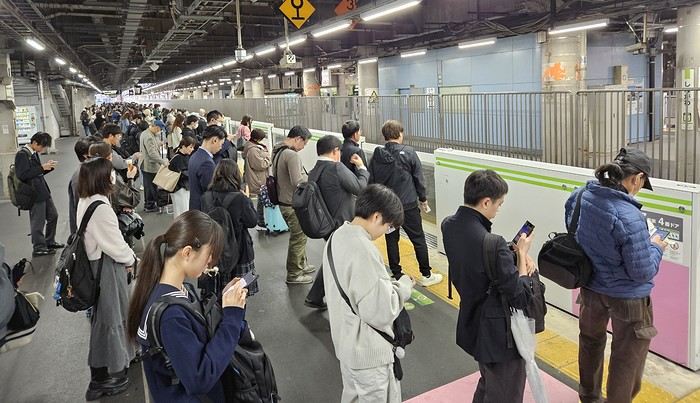
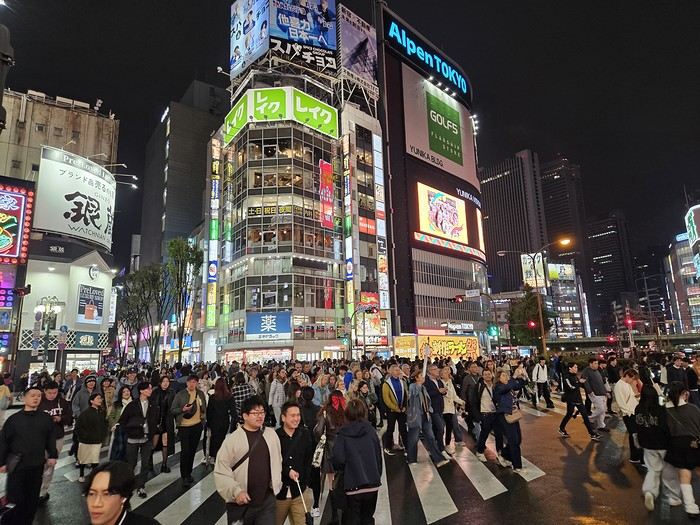
We got off the Yamanote Line at the station just after Shinjuku because it’s easier to exit that massive station with our luggage. So we ended up in Shin-Okubo, right in the Korean district. A 10-minute walk took us to Villa Fontaine Hotel. A great hotel, well-located north of the Kabukichō district. The room even seemed bigger than we’d expected.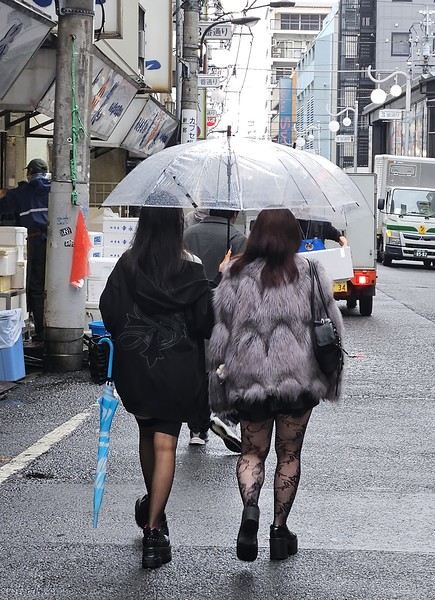
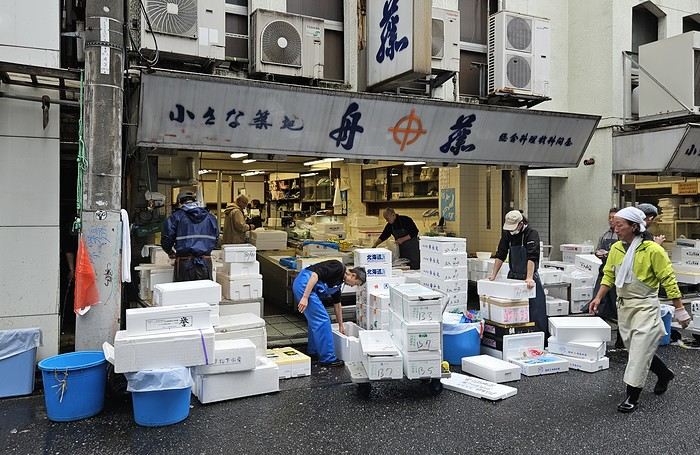 It was 15°C, but it rained—and kept raining on and off all day. Belgian weather, basically.
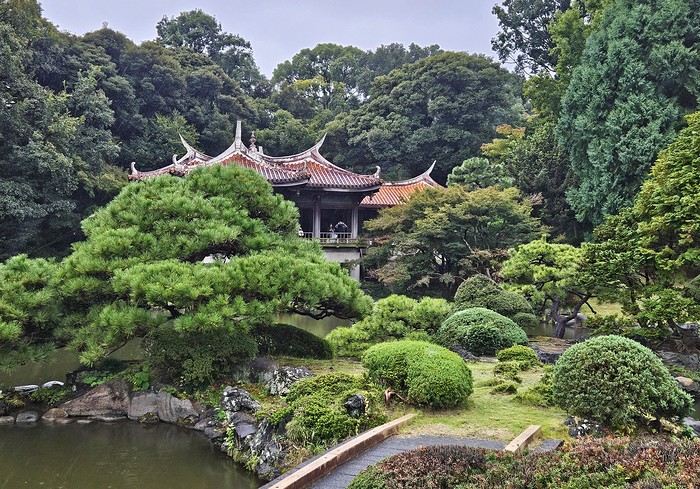
We went for a walk in Shinjuku Gyoen Park. Not as pretty in the rain, but the big greenhouse was interesting.
Then our first ramen (hearty and for 1000 ¥—pretty much the price of all our ramen during the trip). We headed back to the hotel since check-in was after 3 PM. Shower and relax before going out for dinner. Dinner was barbecue at Shichirin Yakiniku Anan (1700 ¥ each—good and cheap). Ordering via tablet wasn’t easy, but luckily it was in English.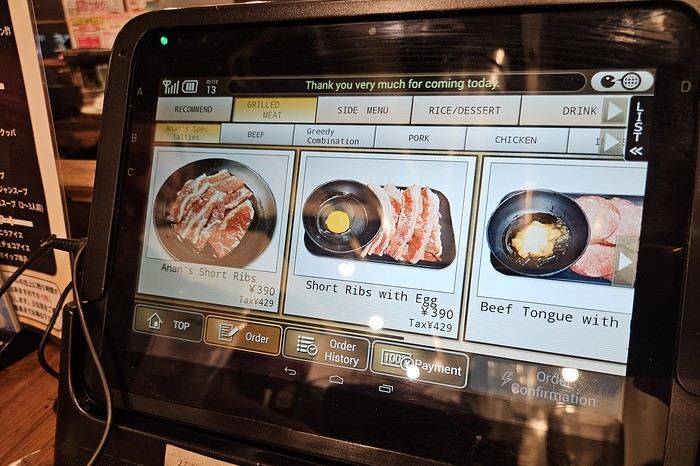
We ended the evening with a stroll through Kabukichō before a well-deserved sleep.
Day 1: Departure from Brussels (October 24, 2025) Early morning takeoff at 6 AM to Munich (1.5-hour layover) with Lufthansa, then a 12-hour flight with ANA, arriving the next morning at 7 AM at Tokyo Haneda.
Day 2: Arrival in Tokyo Airport formalities were quick. The eSIM we bought before leaving activated as soon as we landed (10 GB plan with Saily—more than enough for our mobile internet needs, mainly Google Maps and Google Translate). We’d received 4 ICOCA cards from our neighbors, which we loaded with 15000 ¥ each. We took the Keihin train, then the Yamanote Line. It’s easy to navigate since everything is in English, and each station is announced on scrolling displays in English too.
We got off the Yamanote Line at the station just after Shinjuku because it’s easier to exit that massive station with our luggage. So we ended up in Shin-Okubo, right in the Korean district. A 10-minute walk took us to Villa Fontaine Hotel. A great hotel, well-located north of the Kabukichō district. The room even seemed bigger than we’d expected.
It was 15°C, but it rained—and kept raining on and off all day. Belgian weather, basically.
We went for a walk in Shinjuku Gyoen Park. Not as pretty in the rain, but the big greenhouse was interesting.
Then our first ramen (hearty and for 1000 ¥—pretty much the price of all our ramen during the trip). We headed back to the hotel since check-in was after 3 PM. Shower and relax before going out for dinner. Dinner was barbecue at Shichirin Yakiniku Anan (1700 ¥ each—good and cheap). Ordering via tablet wasn’t easy, but luckily it was in English.
We ended the evening with a stroll through Kabukichō before a well-deserved sleep.