Discussions Cagiva took part in
15 results on this page.
More options
Many results are in French, the community’s main language. English translations are added over time.
Search results
The North Cape by 4x4 in the Snow
Our trip lasted a month, from March 10 to April 10, 2024, and was done aboard our Land Rover Defender 110. For those interested, our 4x4 is equipped with mountain-approved 3PMFSF all-terrain tires (non-studded), a removable electric winch that can be attached to either the front or rear of the vehicle, two sand recovery boards, and we bring two pairs of snow chains. We sleep in our Land Rover, which is equipped with a diesel-powered independent heater, a small fridge, and has a layout that allows the dinette to be converted into a bed.
Starting from the Paris region, we crossed Belgium and Germany, took the ferry from Travemünde in northern Germany to Helsinki, followed the Russian border up to northern Finland, then headed into Norway all the way to the North Cape before returning via Norway, taking the ferry from Larvik in Norway to Hirtshals in Denmark, then passing through Germany and Belgium on our way back to France.
Tonight, March 10, 2024, we’ll be sleeping at our daughter’s place in the North.
Tuesday, March 11, we’ll cross Belgium and then enter Germany, where we’ll camp in Bremen.
Wednesday, March 12, we’ll have a quick visit to Bremen in the morning. We had planned to visit Lübeck, but some electrical issues with the car delayed us, so we head straight to the German port of Travemünde, where we’re set to embark at 11:30 PM to cross the Baltic Sea and arrive in Helsinki after 31 hours of sailing (one-way cabin ticket cost: 850 €—quite expensive since we booked last minute).
On the ferry, there are mostly semi-trucks and only a few campervans and passenger cars. The boat is quiet, and the Baltic Sea is calm.
About two hours before arriving in Helsinki, we hear noise along the hull. Surprise—looking out the porthole, we realize we’re sailing on frozen sea ice!
Thursday, March 14, we arrive at the port of Helsinki at 9:30 AM. Disembarking takes a while. As soon as we’re out, we head straight to Rastila Camping (cost: 27 €), about ten kilometers east of Helsinki. Then we go to a Land Rover garage to fix our headlight switch, which stopped working (a real hassle in Finland since you have to drive with low beams on at all times).
After the repair, we visit the stunning Temppeliaukio Church, which is built underground.
On our way back to the campsite, we stop at the supermarket for supplies. Prices are similar to France, except for imported products.
We settle into our snowy campsite spot.
Crossing the Salma Plateau by 4x4
Hi there,
I’ll be in Oman in early March 2025. I’ve rented a 4x4 to reach the Oman Sea coast from Ibra. I’ve seen two options on Oman Off Road:
The OOR 30 route via Wadi Kabbah, Wadi Bani Jabir to Qalhat.
Combine the OOR 30 and OOR 28 routes via the Salma Plateau to Tiwi or Fins.
Can anyone advise me on the current condition of the tracks? For option 2, is it better to head down to Tiwi or Fins? Can this trip be done in one day? Thanks in advance to those who can share some great tips!
Best regards.
Khiva to Bukhara: car or train?
Good evening,
The question on my mind is in the title: is it better to go from Khiva to Bukhara by train or by car?
I love traveling by train (though I’ll have the chance to take it between Bukhara and Samarkand, and then from there to the capital). I’m curious about Uzbek roads, but the excursions I’ve planned will let me satisfy that curiosity over shorter distances than the 500 km of this trip.
I’ve read on this forum that the road can be grueling, though those posts are a bit dated now. I’ve also read (on Advantour—reliable?) that the train connection isn’t daily. For the past few days, the national railway website has only shown me blank pages—I can’t check anything. I *did* spot a train leaving Khiva at 11 AM and arriving in Bukhara at 6 PM this summer, though...
Any recent experiences to share about either option?
Catherine
What to do in Uzbekistan beyond the 3 museum cities?
Hi everyone, happy to be back on VF!
I’ll be in Uzbekistan this coming April and will of course visit the three classics—Samarkand, Bukhara, and Khiva. However, I’d also love to get out of these cities to explore the Uzbek countryside and experience its nature. Mountains, steppes, etc. Ideally, with some great hikes passing through villages. Any spots you’d recommend? Thanks in advance
Solo woman in Uzbekistan
Hello everyone, after our trip was canceled due to COVID, I’ve decided to travel alone at 66 since my husband is no longer healthy enough to join me. I speak a little English and, while I’m taking this trip as a challenge, I’ll admit it stresses me out a bit. I’ll be leaving in May for 3 weeks. If it’s easy to plan the route and accommodations with Airbnb, I’m a little worried about transportation. Do you think it’s better to hire a guide for visiting the cities? I’d love all your tips. Corinne
À la recherche des aurores boréales (Norvège)
Depuis quelque temps avec ma femme, nous caressions le projet de retourner voir des aurores boréales. Nous en avions déjà vu lors de nos deux derniers voyages hivernaux en Islande mais l‘envie d’en revoir nous poussait à repartir.
Nous aurions voulu partir en hiver mais cela nous aurait obligés à coucher à l’hôtel, ce qui aurait lourdement grevé notre budget.
La période favorable pour voir des aurores boréales en Scandinavie s’étalant de septembre à mars, nous décidons de partir en septembre car cela nous permettra de coucher dans le lit aménagé à l’arrière de notre Land Rover Defender.
Samedi 15 septembre 2019
Le plein est fait. Le Land est bourré de provisions (cela fera autant de moins à acheter sur place) . Direction la Norvège. Départ vers 15h. Ce soir, nous ferons une étape dans le Nord pour passer voir notre fille. 100 km après notre départ de la région parisienne, le moteur du Land se met soudainement en mode dégradé. Nous plafonnons à 80 km/h. L’idée que notre voyage s’arrête là nous effleure l’esprit. On s’arrête sur le bas-côté pendant 10 mn et ouf, le moteur se remet à fonctionner normalement. On repart comme si de rien n’était. Nous n’empruntons pas les autoroutes payantes car nous ne sommes pas pressés. Arrivée dans le Nord vers 19h.
Dimanche 15 septembre 2019
Après une bonne nuit, nous partons en fin de matinée et traversons la Belgique via Charleroi et Liège. Puis nous passons en Allemagne via Aix-la-Chapelle, Duisbourg, Munster, Brême et Hambourg. Nous dormons sur une aire d’autoroute au nord d’Hambourg. Nous avons parcouru 1.000 km depuis Paris.
Lundi 16 septembre 2019
Prix du gazole sur l’autoroute allemande : 1,32 €/l Sur l’autoroute, le Land fait encore des siennes. Le moteur se remet en mode dégradé. On applique la même méthode que précédemment, à savoir, arrêt de 10 mn et ça repart normalement. Il ne faudrait pas que cela se reproduise trop souvent.
Nous franchissons la frontière danoise et arrivons au port d’Hirshals au nord du Danemark en début d’après-midi. Le vent d’ouest souffle en tempête. Cela promet pour la traversée vers la Norvège. Prix du gazole : 11,49 DNK (1,52 €) N’ayant pas réservé la traversée, nous nous rendons au bureau de Fjord Line. Prix annoncés : 205 € pour le jour même et 405 € pour le lendemain !
Nous cherchons un passage meilleur marché sur internet et réservons un billet pour Kristiansand chez Colour Line à 145 € pour le lendemain à 12h15.
Nous allons au camping d’Hirtshals en bordure de mer. La mer est démontée et il y a des wind surfers et des kite surfers qui en profitent. Particularité de cette plage, les autos peuvent y rouler.
Prix du camping 173 DNK (23 €). Bien équipé avec cuisine comprenant four, micro ondes et feux à gaz douche chaude payante avec carte. Emplacements sur pelouse délimités par des haies qui protègent du vent. Ce camping ferme fin septembre.
Mardi 17 septembre 2019
Nous embarquons sur le bateau de Colour Line à 12h15 . Heureusement, le vent s'est calmé. Nous débarquons au sud de la Norvège à Kristiansand à 15h30. Il fait un temps magnifique. Nous allons au centre ville pour retirer de l’argent au distributeur (pas beaucoup de distributeurs de billets en ville, il faut un peu chercher).
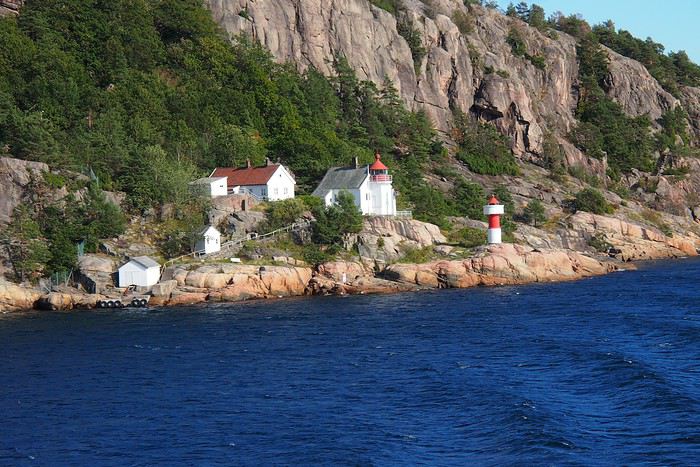
Nous prenons la direction de Lindesnes au sud-ouest de Kristiansand. Nous dormons sur le parking du phare de Lindesnes où le camping est autorisé moyennant 100 NOK (10 €). Cet endroit est le point le plus au sud de la Norvège. Beau temps mais très venté. Nous avons parcouru 1600 km depuis notre départ.
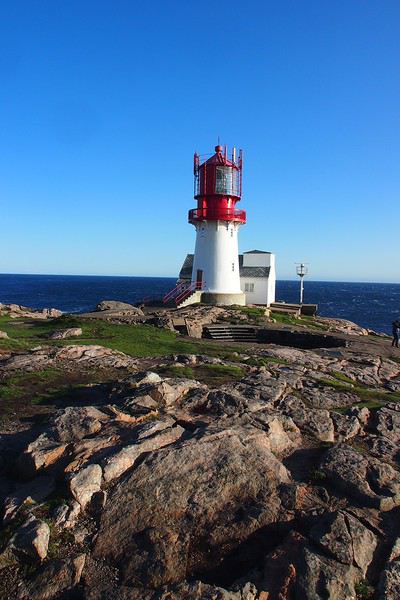
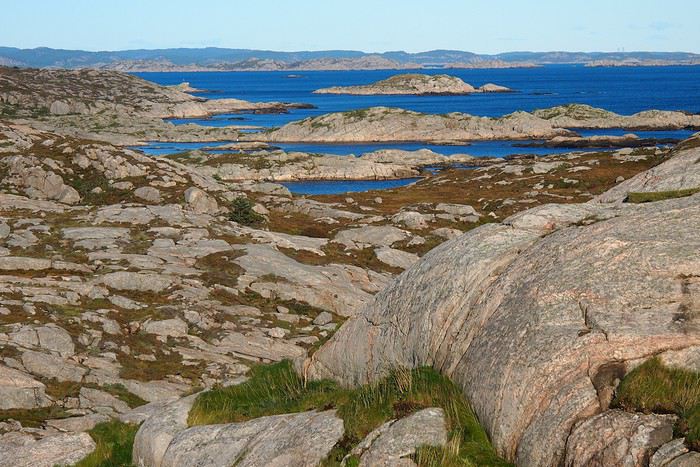
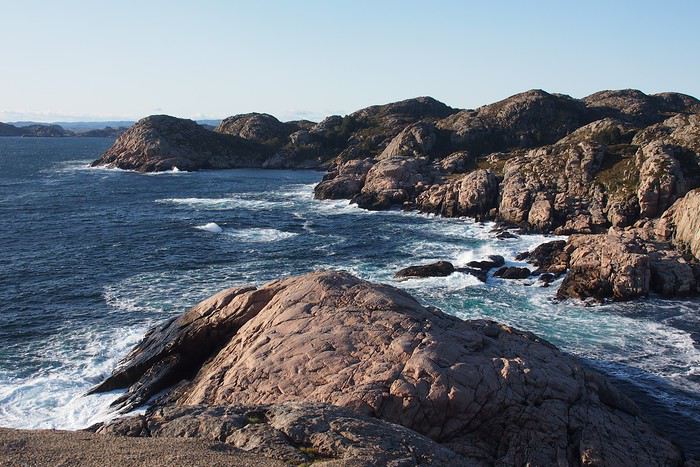
Mercredi 18 septembre 2019
Ce matin, nous suivons la côte sud en passant par Flekkefjord, Egersund jusqu’à Sandnes. Nous empruntons notre premier ferry à Lauvik pour franchir le Hosfjorden. Prix : 119 NOK
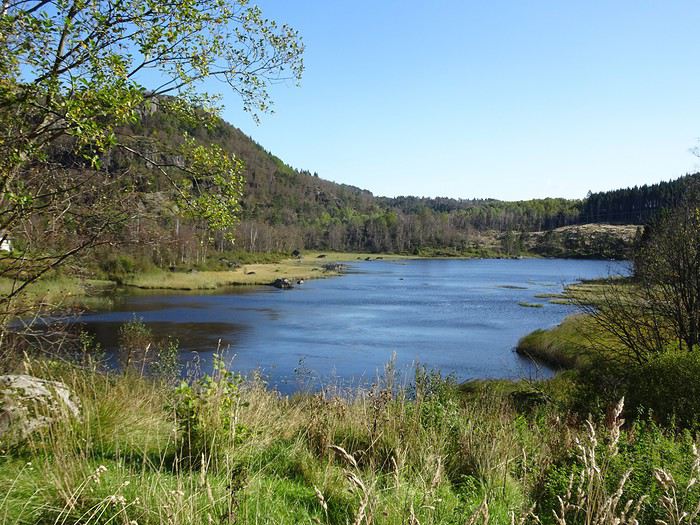
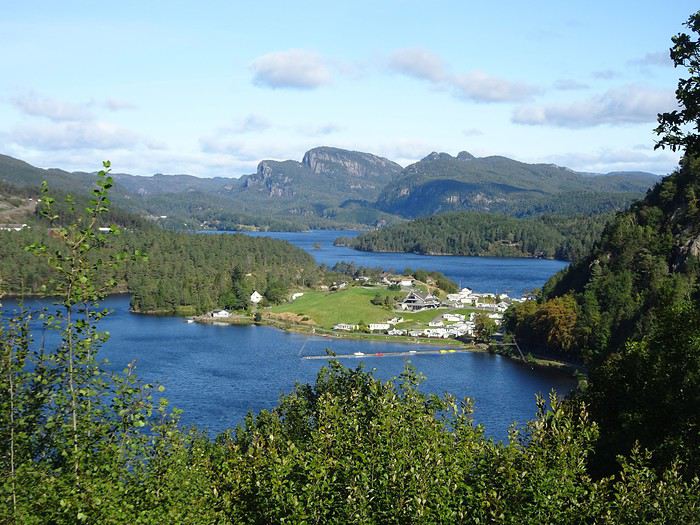
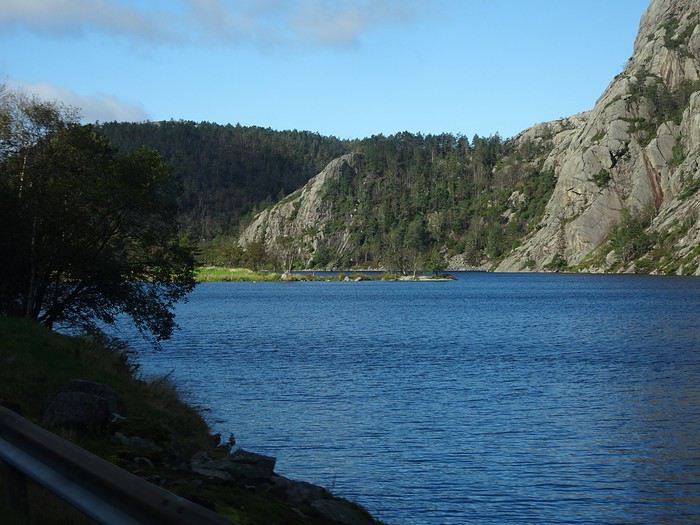
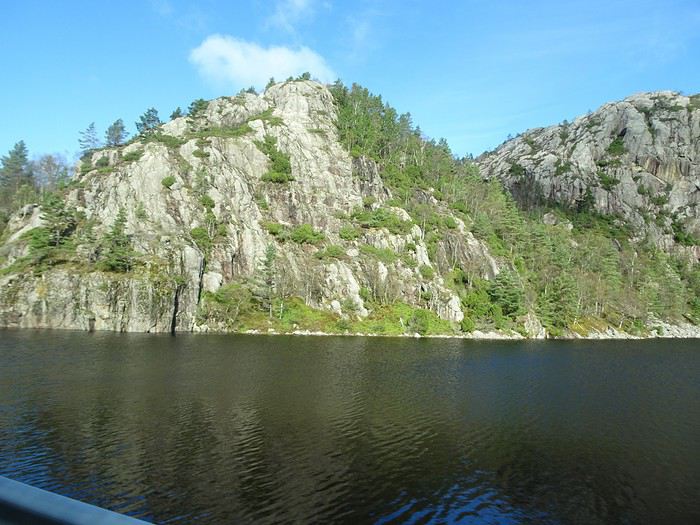
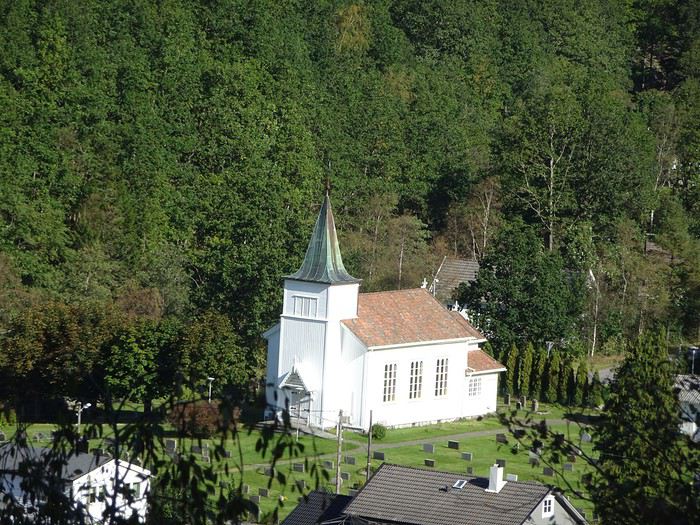
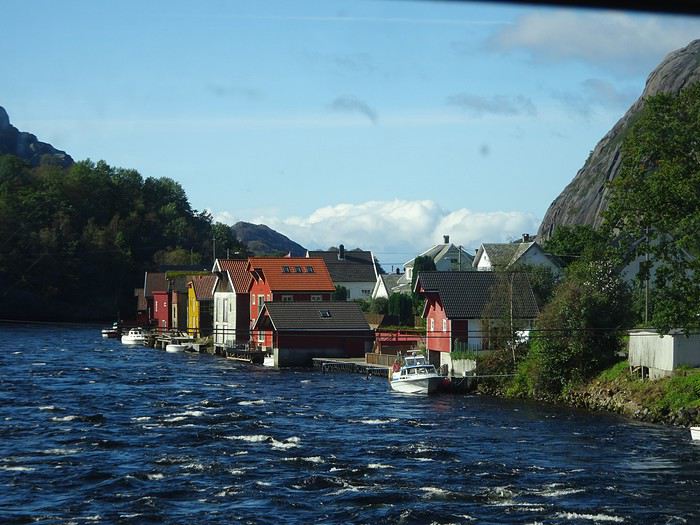
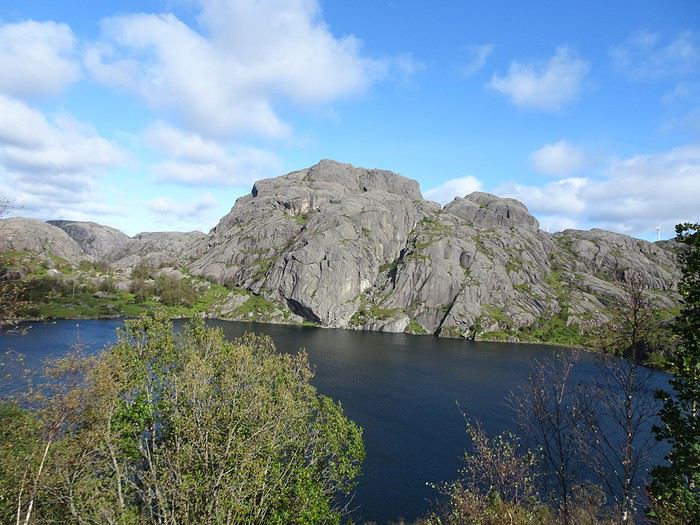
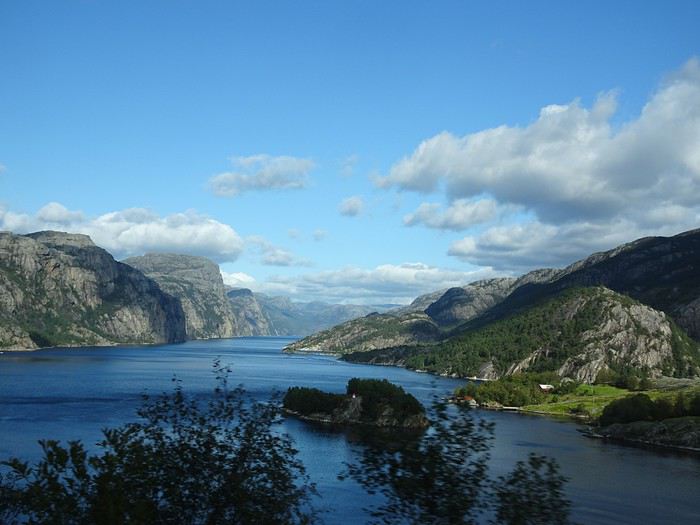
Nous sommes surpris par le grand nombre de véhicules électriques qui circulent en Norvège dont un bon nombre de Tesla. Il y a des bornes de recharge un peu partout, dans les stations service bien sûr mais aussi devant des hôtels, sur des parkings municipaux. La Norvège a une avance phénoménale dans ce domaine sur notre pays.
Il y a également un certain nombre de routes à péage qui ne sont pas des autoroutes notamment à l’approche des villes. Ce péage se fait en passant sous un portique automatique. Pour les véhicules étrangers, il paraît que nous recevons la facture à domicile mais au moment où je rédige ce carnet soit 6 mois après notre voyage, toujours pas de nouvelles.
Nous nous rendons sur le parking du Prekestolen où le prix de 250 NOK nous dissuade de nous arrêter. Nous y sommes déjà allés une trentaine d’années en arrière et nous n’avons pas de regret de ne pas y retourner . Nous cherchons un endroit pour bivouaquer mais dans cette zone très touristique, impossible de trouver un endroit .Nous poursuivons sur la route 13 vers le nord et nous arrêtons au camping de Vatne prix : 20 €. Comme toujours, camping super équipé avec cuisine et douche chauffées. Aujourd’hui étape de 290 km.
Samedi 15 septembre 2019
Le plein est fait. Le Land est bourré de provisions (cela fera autant de moins à acheter sur place) . Direction la Norvège. Départ vers 15h. Ce soir, nous ferons une étape dans le Nord pour passer voir notre fille. 100 km après notre départ de la région parisienne, le moteur du Land se met soudainement en mode dégradé. Nous plafonnons à 80 km/h. L’idée que notre voyage s’arrête là nous effleure l’esprit. On s’arrête sur le bas-côté pendant 10 mn et ouf, le moteur se remet à fonctionner normalement. On repart comme si de rien n’était. Nous n’empruntons pas les autoroutes payantes car nous ne sommes pas pressés. Arrivée dans le Nord vers 19h.
Dimanche 15 septembre 2019
Après une bonne nuit, nous partons en fin de matinée et traversons la Belgique via Charleroi et Liège. Puis nous passons en Allemagne via Aix-la-Chapelle, Duisbourg, Munster, Brême et Hambourg. Nous dormons sur une aire d’autoroute au nord d’Hambourg. Nous avons parcouru 1.000 km depuis Paris.
Lundi 16 septembre 2019
Prix du gazole sur l’autoroute allemande : 1,32 €/l Sur l’autoroute, le Land fait encore des siennes. Le moteur se remet en mode dégradé. On applique la même méthode que précédemment, à savoir, arrêt de 10 mn et ça repart normalement. Il ne faudrait pas que cela se reproduise trop souvent.
Nous franchissons la frontière danoise et arrivons au port d’Hirshals au nord du Danemark en début d’après-midi. Le vent d’ouest souffle en tempête. Cela promet pour la traversée vers la Norvège. Prix du gazole : 11,49 DNK (1,52 €) N’ayant pas réservé la traversée, nous nous rendons au bureau de Fjord Line. Prix annoncés : 205 € pour le jour même et 405 € pour le lendemain !
Nous cherchons un passage meilleur marché sur internet et réservons un billet pour Kristiansand chez Colour Line à 145 € pour le lendemain à 12h15.
Nous allons au camping d’Hirtshals en bordure de mer. La mer est démontée et il y a des wind surfers et des kite surfers qui en profitent. Particularité de cette plage, les autos peuvent y rouler.
Prix du camping 173 DNK (23 €). Bien équipé avec cuisine comprenant four, micro ondes et feux à gaz douche chaude payante avec carte. Emplacements sur pelouse délimités par des haies qui protègent du vent. Ce camping ferme fin septembre.
Mardi 17 septembre 2019
Nous embarquons sur le bateau de Colour Line à 12h15 . Heureusement, le vent s'est calmé. Nous débarquons au sud de la Norvège à Kristiansand à 15h30. Il fait un temps magnifique. Nous allons au centre ville pour retirer de l’argent au distributeur (pas beaucoup de distributeurs de billets en ville, il faut un peu chercher).
Nous prenons la direction de Lindesnes au sud-ouest de Kristiansand. Nous dormons sur le parking du phare de Lindesnes où le camping est autorisé moyennant 100 NOK (10 €). Cet endroit est le point le plus au sud de la Norvège. Beau temps mais très venté. Nous avons parcouru 1600 km depuis notre départ.
Mercredi 18 septembre 2019
Ce matin, nous suivons la côte sud en passant par Flekkefjord, Egersund jusqu’à Sandnes. Nous empruntons notre premier ferry à Lauvik pour franchir le Hosfjorden. Prix : 119 NOK
Nous sommes surpris par le grand nombre de véhicules électriques qui circulent en Norvège dont un bon nombre de Tesla. Il y a des bornes de recharge un peu partout, dans les stations service bien sûr mais aussi devant des hôtels, sur des parkings municipaux. La Norvège a une avance phénoménale dans ce domaine sur notre pays.
Il y a également un certain nombre de routes à péage qui ne sont pas des autoroutes notamment à l’approche des villes. Ce péage se fait en passant sous un portique automatique. Pour les véhicules étrangers, il paraît que nous recevons la facture à domicile mais au moment où je rédige ce carnet soit 6 mois après notre voyage, toujours pas de nouvelles.
Nous nous rendons sur le parking du Prekestolen où le prix de 250 NOK nous dissuade de nous arrêter. Nous y sommes déjà allés une trentaine d’années en arrière et nous n’avons pas de regret de ne pas y retourner . Nous cherchons un endroit pour bivouaquer mais dans cette zone très touristique, impossible de trouver un endroit .Nous poursuivons sur la route 13 vers le nord et nous arrêtons au camping de Vatne prix : 20 €. Comme toujours, camping super équipé avec cuisine et douche chauffées. Aujourd’hui étape de 290 km.
17 jours à Abu Dhabi et Oman en camping/hôtel
Bonjour
Je profite du confinement pour faire un compte rendu de notre voyage qui s’est déroulé du 14 janvier au 1er février 2020.
Ci-dessous notre itinéraire : 14 janvier vol Paris – Abu Dhabi 15 janvier visite Abu Dhabi Vol Abu Dhabi – Mascate 16 janvier Mascate 17 janvier Wadi As Sahtan 18 janvier Wadi Mistall 19 janvier Wadi Bani Awf, Wadi Tanuf, Nizwa 20 janvier Nizwa 21 janvier El Hamra, Misfah, Jabal Shams 22 janvier Jabal Shams, Jabal Al Akdar 23 janvier Plateau de Sayq, Wadi Bani Habib 24 janvier Wadi Bani Khalid, Wahiba Sands 25 janvier Sur, Ras Al Jinz 26 janvier Sur, Jabal Bani Jabir 27 janvier Wadi Tiwi, Wadi Ash Shab, Fins 28 janvier Plateau de Salma, Umq Al RubaKh 29 janvier Wadi Al Arbiyyin, Wadi Dayqak 30 janvier As Sifah, Mutrah 31 janvier Mascate 1er Février vol Abu Dhabi – Paris
Quelques infos pratiques : Budget : avion 560 € par personne par Etihad Airways Location 4x4 : 1.077 € pour 16 jours par Thrifty (Toyota Fortuner 2,7 l essence auto) Carburant : 0,50 € le litre d’essence octane 91 Consommation : entre 12,5 l sur route à 18 l sur piste Restaurant : 3/5 € au coffee shop jusqu’à 10/15 € au restaurant Hôtel : 120 € à Abu Dhabi, 50/70 € à Oman Kilométrage parcouru : 2.500 km Change : 1 € = 3,783 AED (dirham Emirati) 1 OMR (Rial Omanais) =2,39 €
Mardi 14 janvier 2020
Départ de la maison à 6h00. Grève des transports oblige, nous allons à l’aéroport en voiture et nous réservons un parking longue durée à Roissy CDG . Notre vol Etihad sur Airbus A380 pour Abu Dhabi décolle à 10h30 et atterrit à 19h30 (16h30 heure française). Nous avons réservé une navette (40 €) au City Seasons Al Hamra Hotel où nous passerons la nuit. Après 45 mn de route, nous atteignons l’hôtel qui nous surclasse dans une immense suite. Premières impressions. Beaucoup de gros 4x4 V8 dans la circulation et ville comportant des gratte-ciels récents et semblant posée au milieu de nulle part. Larges autoroutes très éclairées de nuit.
Mercredi 15 janvier 2020
Pas d’eau chaude et coupure d’électricité ce matin à l’hôtel. Bon petit déj. Nous appelons un taxi (20 AED) qui nous dépose au musée du Louvre en 15 mn. Prix entrée au Louvre : prix normal 63 AED et 31,50 AED pour les + 65 ans (attention réduc non affichée à la billetterie). Très beau musée situé en bord de mer.
Nous passons deux heures dans ce lieu dont la majorité des œuvres exposées sont prêtées par les grands musées français. Il y a aussi des œuvres achetées par les Emirats.


Au loin, on aperçoit la Sky Line d’Abu Dhabi.

Nous reprenons un taxi qui nous ramène à notre hôtel où nous avons laissé nos bagages puis un autre taxi (prix 37 AED) pour nous rendre à la grande mosquée Cheikh Zayed. L’accès à la mosquée se fait par un souterrain où on peut laisser ses bagages dans une consigne. Cette mosquée édifiée en 2007, immense et magnifique, d’un blanc éblouissant peut contenir jusqu’à 40.000 personnes.


En fin d’après-midi, nous hélons un taxi qui nous emmène à l’aéroport (prix 44 AED). A noter que les taxis ont un compteur, donc pas de possibilité de facturer un prix trop élevé. Nous dînons au Burger King de l’aéroport.
Notre vol Etihad pour Mascate décolle à 21h25. Durée 1 h. Nous récupérons sans encombre notre Toyota Fortuner 4x4 chez Thrifty à Mascate où nous devons laisser un dépôt de garantie de 500 OMR par carte bancaire. Nous nous rendons au Muscat Gate Hotel près de l’aéroport où nous avons réservé 2 nuits (55 € la nuit). Hôtel au très bon rapport qualité/prix.
Ci-dessous notre itinéraire : 14 janvier vol Paris – Abu Dhabi 15 janvier visite Abu Dhabi Vol Abu Dhabi – Mascate 16 janvier Mascate 17 janvier Wadi As Sahtan 18 janvier Wadi Mistall 19 janvier Wadi Bani Awf, Wadi Tanuf, Nizwa 20 janvier Nizwa 21 janvier El Hamra, Misfah, Jabal Shams 22 janvier Jabal Shams, Jabal Al Akdar 23 janvier Plateau de Sayq, Wadi Bani Habib 24 janvier Wadi Bani Khalid, Wahiba Sands 25 janvier Sur, Ras Al Jinz 26 janvier Sur, Jabal Bani Jabir 27 janvier Wadi Tiwi, Wadi Ash Shab, Fins 28 janvier Plateau de Salma, Umq Al RubaKh 29 janvier Wadi Al Arbiyyin, Wadi Dayqak 30 janvier As Sifah, Mutrah 31 janvier Mascate 1er Février vol Abu Dhabi – Paris
Quelques infos pratiques : Budget : avion 560 € par personne par Etihad Airways Location 4x4 : 1.077 € pour 16 jours par Thrifty (Toyota Fortuner 2,7 l essence auto) Carburant : 0,50 € le litre d’essence octane 91 Consommation : entre 12,5 l sur route à 18 l sur piste Restaurant : 3/5 € au coffee shop jusqu’à 10/15 € au restaurant Hôtel : 120 € à Abu Dhabi, 50/70 € à Oman Kilométrage parcouru : 2.500 km Change : 1 € = 3,783 AED (dirham Emirati) 1 OMR (Rial Omanais) =2,39 €
Mardi 14 janvier 2020
Départ de la maison à 6h00. Grève des transports oblige, nous allons à l’aéroport en voiture et nous réservons un parking longue durée à Roissy CDG . Notre vol Etihad sur Airbus A380 pour Abu Dhabi décolle à 10h30 et atterrit à 19h30 (16h30 heure française). Nous avons réservé une navette (40 €) au City Seasons Al Hamra Hotel où nous passerons la nuit. Après 45 mn de route, nous atteignons l’hôtel qui nous surclasse dans une immense suite. Premières impressions. Beaucoup de gros 4x4 V8 dans la circulation et ville comportant des gratte-ciels récents et semblant posée au milieu de nulle part. Larges autoroutes très éclairées de nuit.
Mercredi 15 janvier 2020
Pas d’eau chaude et coupure d’électricité ce matin à l’hôtel. Bon petit déj. Nous appelons un taxi (20 AED) qui nous dépose au musée du Louvre en 15 mn. Prix entrée au Louvre : prix normal 63 AED et 31,50 AED pour les + 65 ans (attention réduc non affichée à la billetterie). Très beau musée situé en bord de mer.
Nous passons deux heures dans ce lieu dont la majorité des œuvres exposées sont prêtées par les grands musées français. Il y a aussi des œuvres achetées par les Emirats.
Au loin, on aperçoit la Sky Line d’Abu Dhabi.
Nous reprenons un taxi qui nous ramène à notre hôtel où nous avons laissé nos bagages puis un autre taxi (prix 37 AED) pour nous rendre à la grande mosquée Cheikh Zayed. L’accès à la mosquée se fait par un souterrain où on peut laisser ses bagages dans une consigne. Cette mosquée édifiée en 2007, immense et magnifique, d’un blanc éblouissant peut contenir jusqu’à 40.000 personnes.
En fin d’après-midi, nous hélons un taxi qui nous emmène à l’aéroport (prix 44 AED). A noter que les taxis ont un compteur, donc pas de possibilité de facturer un prix trop élevé. Nous dînons au Burger King de l’aéroport.
Notre vol Etihad pour Mascate décolle à 21h25. Durée 1 h. Nous récupérons sans encombre notre Toyota Fortuner 4x4 chez Thrifty à Mascate où nous devons laisser un dépôt de garantie de 500 OMR par carte bancaire. Nous nous rendons au Muscat Gate Hotel près de l’aéroport où nous avons réservé 2 nuits (55 € la nuit). Hôtel au très bon rapport qualité/prix.
Self-drive in southwestern Uganda, February 2020
Since I used this forum a lot to prepare our trip, here’s a little feedback from our 15-day self-drive adventure in southwestern Uganda.
For those who have questions, don’t hesitate! I’ll do my best to answer them 😉
We’d already traveled quite a bit in South Africa and once in Namibia, always self-driving. When the idea of visiting Uganda came up, we debated—especially me 😛—whether to go solo or with a guide. My husband quickly convinced me to do it self-drive, so I started planning and organizing the trip accordingly. We began preparations and bookings in June 2019 for a trip scheduled during the first two weeks of February 2020. We deliberately chose to explore just a small part of Uganda and take our time. We traveled as a group of four, with our oldest son and his partner.
Here’s our itinerary: - February 1: Departure from Brussels, arrival and overnight in Entebbe - February 2: Drive to Lake Mburo and overnight there - February 3: Drive to Lake Bunyonyi and overnight there - February 4: Boat ride on the lake, then departure for Kisoro. Overnight there - February 5: Trek in Mount Mgahinga National Park for the youngsters. Overnight in Kisoro - February 6: Drive to Bwindi Impenetrable Forest. Overnight in Rushaga - February 7: Gorilla tracking in Rushaga. Overnight in Rushaga - February 8: Drive to Queen Elizabeth National Park – Southern sector – Overnight on the park’s edge - February 9: Morning in the southern sector of the park, then crossing to the northern part – Short safari in the late afternoon – Overnight by the Kazinga Channel - February 10: Safari and boat cruise – Second night on site - February 11: Drive to Kibale Forest – Overnight there - February 12: Chimpanzee tracking in the morning – Bigodi swamps in the afternoon – Second night there - February 13: Scenic drive to see the crater lakes + walk at Lake Nkuruba Nature Reserve – Third night there - February 14: Return to Entebbe - February 15: Morning boat ride in the Mabamba swamps – Afternoon by Lake Victoria and midnight flight to Brussels. That’s the broad outline of our trip.
We fell in love with this country: the people, the kids shouting "muzungu," the colors, the landscapes, the wildlife... But we were also saddened by the poverty in some villages and the child labor, especially in "quarries."
I’ll try to post a day-by-day account if it interests anyone.
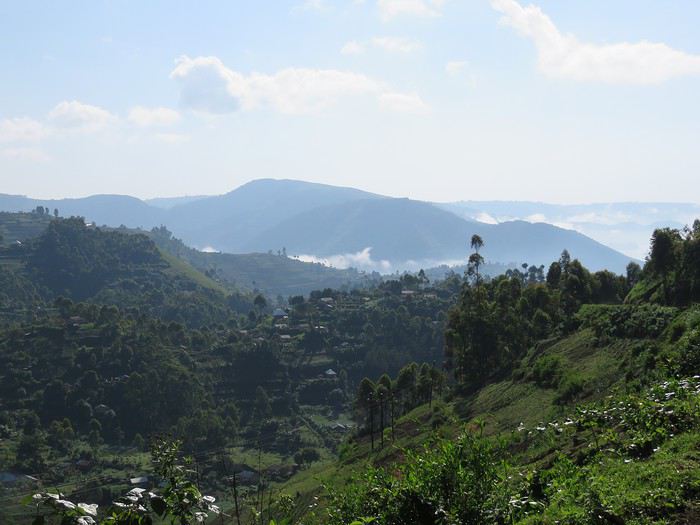
We’d already traveled quite a bit in South Africa and once in Namibia, always self-driving. When the idea of visiting Uganda came up, we debated—especially me 😛—whether to go solo or with a guide. My husband quickly convinced me to do it self-drive, so I started planning and organizing the trip accordingly. We began preparations and bookings in June 2019 for a trip scheduled during the first two weeks of February 2020. We deliberately chose to explore just a small part of Uganda and take our time. We traveled as a group of four, with our oldest son and his partner.
Here’s our itinerary: - February 1: Departure from Brussels, arrival and overnight in Entebbe - February 2: Drive to Lake Mburo and overnight there - February 3: Drive to Lake Bunyonyi and overnight there - February 4: Boat ride on the lake, then departure for Kisoro. Overnight there - February 5: Trek in Mount Mgahinga National Park for the youngsters. Overnight in Kisoro - February 6: Drive to Bwindi Impenetrable Forest. Overnight in Rushaga - February 7: Gorilla tracking in Rushaga. Overnight in Rushaga - February 8: Drive to Queen Elizabeth National Park – Southern sector – Overnight on the park’s edge - February 9: Morning in the southern sector of the park, then crossing to the northern part – Short safari in the late afternoon – Overnight by the Kazinga Channel - February 10: Safari and boat cruise – Second night on site - February 11: Drive to Kibale Forest – Overnight there - February 12: Chimpanzee tracking in the morning – Bigodi swamps in the afternoon – Second night there - February 13: Scenic drive to see the crater lakes + walk at Lake Nkuruba Nature Reserve – Third night there - February 14: Return to Entebbe - February 15: Morning boat ride in the Mabamba swamps – Afternoon by Lake Victoria and midnight flight to Brussels. That’s the broad outline of our trip.
We fell in love with this country: the people, the kids shouting "muzungu," the colors, the landscapes, the wildlife... But we were also saddened by the poverty in some villages and the child labor, especially in "quarries."
I’ll try to post a day-by-day account if it interests anyone.
Oman, le pays des Mille moins Une Merveilles
Bonjour à tous,
Petit clin d'oeil au carnet d'Isabelle (Rouquine 38) quant au choix du titre 😉.
Pourquoi "mille moins une"? Tout simplement parce qu'en 10 jours, on en voit moins qu'en 14 et qu'en berline on en voit (un peu) moins qu'en 4x4. Exit donc le Dhofar et le Jebel Akhdar. Pour ce qui est des 999 autres merveilles, c'est pas faute de ne pas vous avoir prévenus: il va y avoir des redites!
C'est parti.... Muriel
Four weeks in Botswana
Saturday, September 22, 2018
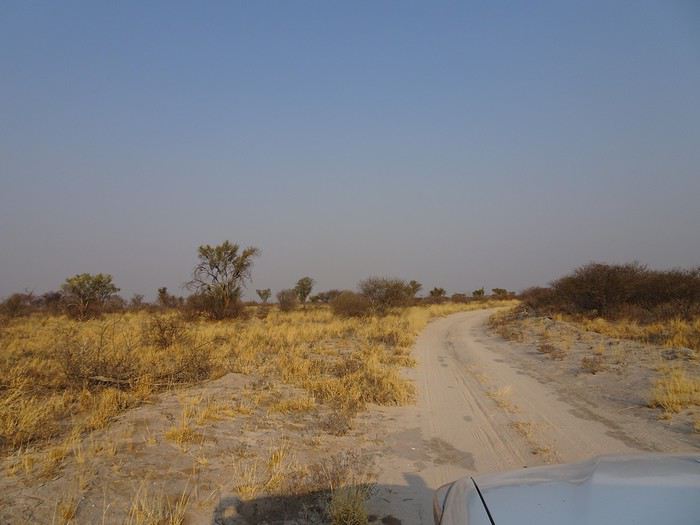
This morning, we woke up at dawn at 6:00 AM. Headed to Letlhakeng, the last town where we could fill up on fuel before starting our crossing of the Kalahari. Our consumption since Johannesburg has been 11L/100 km. We took the direction of Khutse Game Reserve, whose entrance is about a hundred kilometers north of Letlhakeng. Access is via a gravel road along which we saw magnificent pink trees.
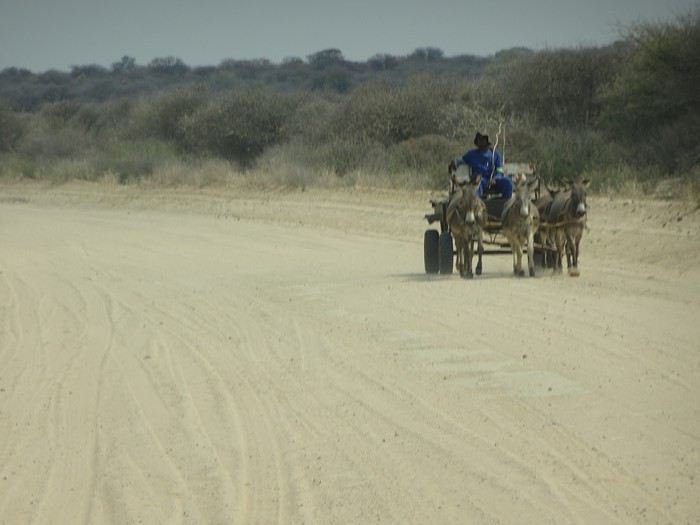
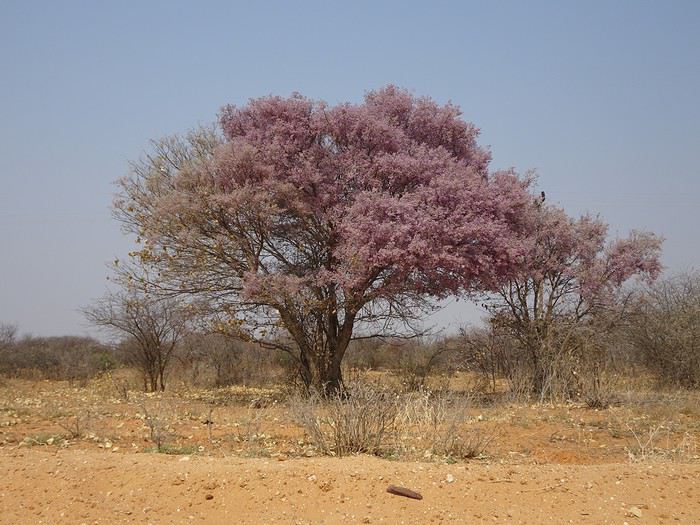
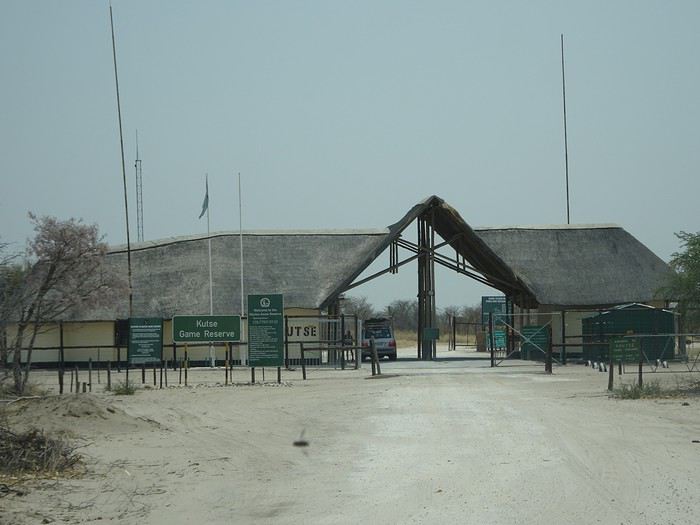
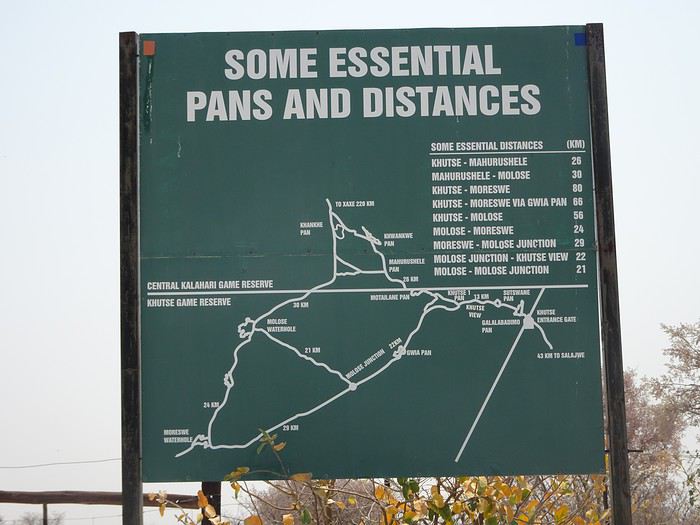
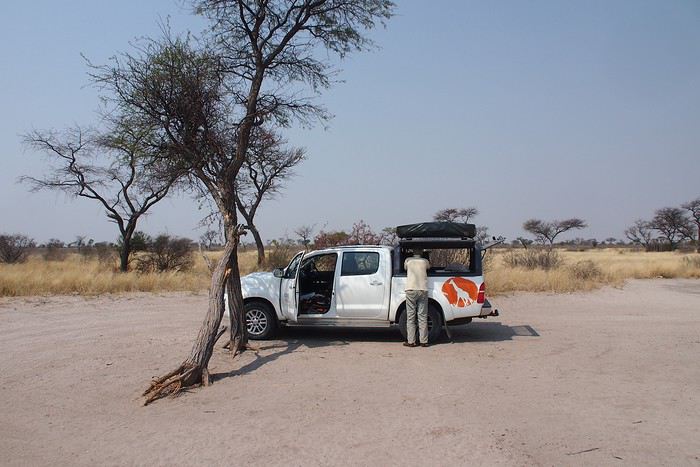
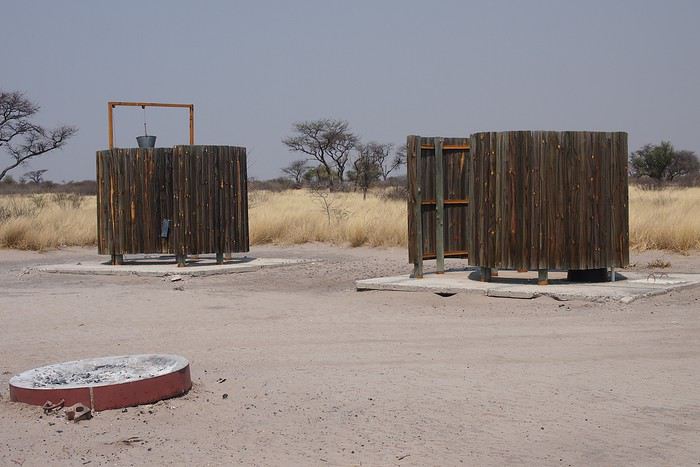
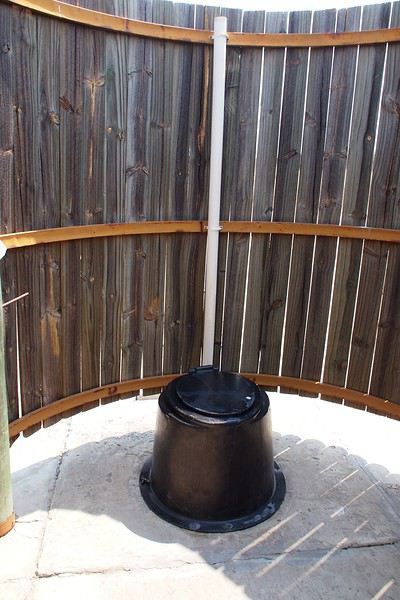
At Khutse Gate, we registered in the entry log and paid the access fees for 6 days: 120 Pulas/day/person and 50 Pulas/day/vehicle. Our stays at the Xaka and Deception Valley campsites had been reserved by our tour operator but not paid, contrary to what they’d told us. So we settled the 2 unpaid days of camping at 30 Pulas/day/person. The park rangers informed us that the southern triangle of Khutse Game Reserve, with its tip at Moreswe Pan, had burned. Note that these two campsites are government-run, which explains the low prices. Private campsites cost ten to fifteen times more. We headed to Khutse campsite, site 5. To enter the parks, you must have a reservation either at a lodge or a campsite. Since the number of spots in the campsites is limited, this means you have to book well in advance. We ate the salad we’d prepared the night before at our campsite. It was very hot—39°C. We made a round trip to Khankhe Pan. On the track, we encountered three South African cars, one of which was stuck in the sand and blocking the way. We helped push the car to get it unstuck. We saw very few animals at Khankhe Pan. We returned to the campsite, which has dry toilets and a shower you have to supply with your own water. We tried out the shower.
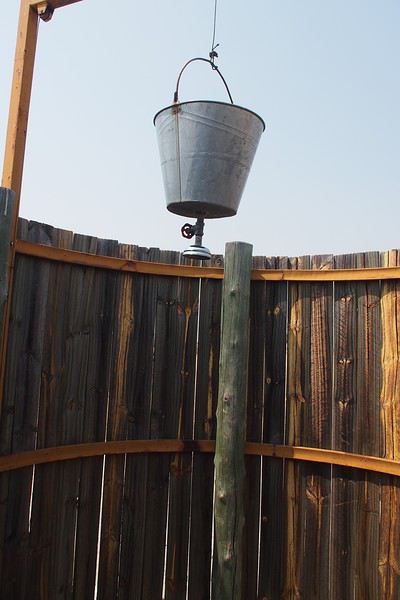
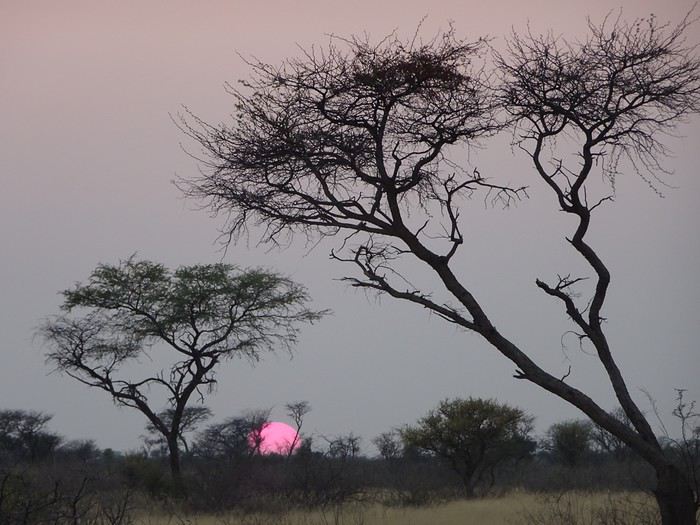
We witnessed our first Kalahari sunset. These sunsets are unmatched, and that didn’t change throughout the trip.
During the trip, we followed the solar rhythm—waking up at 6:00 AM, having dinner at sunset around 6:30 PM, and retiring to our tents by 8:30 PM.
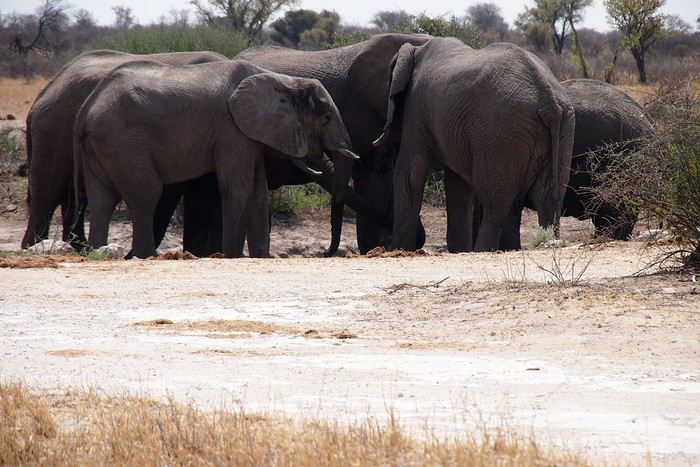
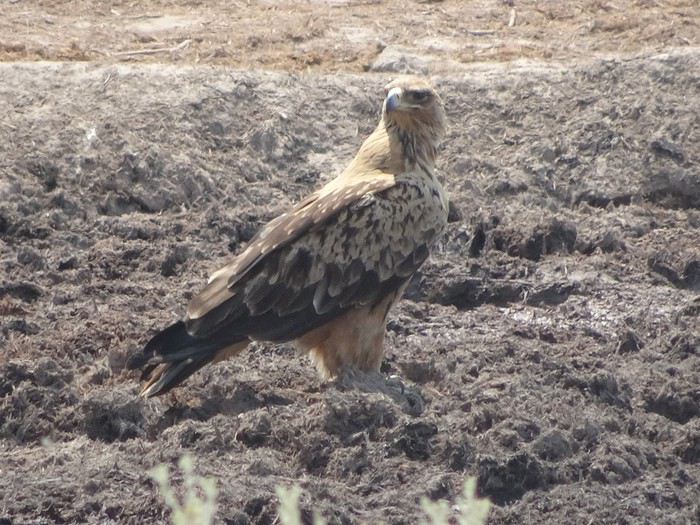
Sunday, September 23, 2018 Up at 6:00 AM. It was 15°C. We were cold last night. Tonight, we’ll use blankets in addition to our sleeping bags. We headed southwest and, past Gwian Pan, turned northwest toward the Molose waterhole, where we saw our first elephants and our first raptor. Indeed, on the track leading to the Molose waterhole, we could see the traces of the massive fire that had ravaged the southern part of Khutse, as the park rangers had warned us.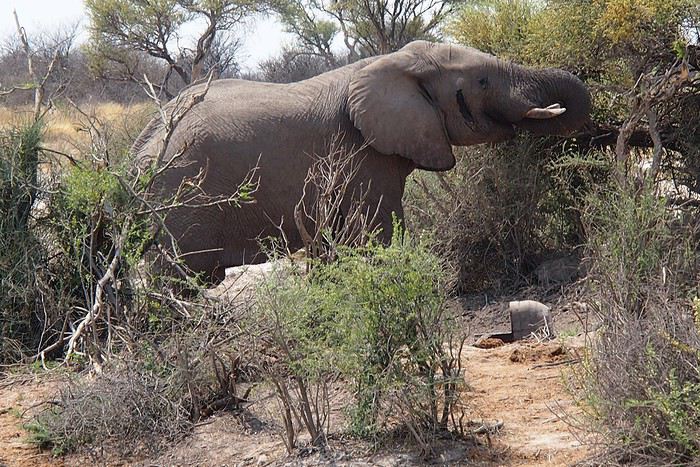
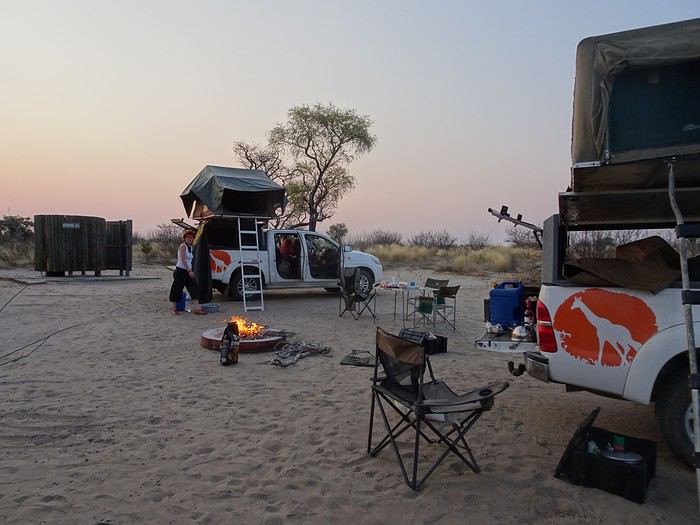
Our first braai at Khankhe campsite.
At Khutse Gate, we registered in the entry log and paid the access fees for 6 days: 120 Pulas/day/person and 50 Pulas/day/vehicle. Our stays at the Xaka and Deception Valley campsites had been reserved by our tour operator but not paid, contrary to what they’d told us. So we settled the 2 unpaid days of camping at 30 Pulas/day/person. The park rangers informed us that the southern triangle of Khutse Game Reserve, with its tip at Moreswe Pan, had burned. Note that these two campsites are government-run, which explains the low prices. Private campsites cost ten to fifteen times more. We headed to Khutse campsite, site 5. To enter the parks, you must have a reservation either at a lodge or a campsite. Since the number of spots in the campsites is limited, this means you have to book well in advance. We ate the salad we’d prepared the night before at our campsite. It was very hot—39°C. We made a round trip to Khankhe Pan. On the track, we encountered three South African cars, one of which was stuck in the sand and blocking the way. We helped push the car to get it unstuck. We saw very few animals at Khankhe Pan. We returned to the campsite, which has dry toilets and a shower you have to supply with your own water. We tried out the shower.
We witnessed our first Kalahari sunset. These sunsets are unmatched, and that didn’t change throughout the trip.
During the trip, we followed the solar rhythm—waking up at 6:00 AM, having dinner at sunset around 6:30 PM, and retiring to our tents by 8:30 PM.
Sunday, September 23, 2018 Up at 6:00 AM. It was 15°C. We were cold last night. Tonight, we’ll use blankets in addition to our sleeping bags. We headed southwest and, past Gwian Pan, turned northwest toward the Molose waterhole, where we saw our first elephants and our first raptor. Indeed, on the track leading to the Molose waterhole, we could see the traces of the massive fire that had ravaged the southern part of Khutse, as the park rangers had warned us.
Our first braai at Khankhe campsite.
Voyager en Islande en hiver
Bonjour,
Mon épouse rêve d'aller en Islande en Hivers. Sans jeux de mot, je ne suis pas très chaud. En fait ce n'est pas tellement le froid qui me .....fait froid dans le dos, mais plutôt la luminosité. je ne voudrais passer mon séjour dans la nuit avec une lampe torche.
Quel est votre avis?
Autre question, svp?: Si on arrive à me convaincre de partir en hivers, là-bas, quel est le meilleur moyen de transport pour visiter ce pays?
Si vous êtes un inconditionnel de l'Islande en hivers, merci de me faire partager vos avis. Pour ceux qui seraient contre, j'espère aussi vos arguments
Merci par avance
Qacha's Nek Pass en 4x2 (Lesotho)
Bonjour 😉
J'ai organisé un circuit pour fin octobre de cette année; nous rentrons au Lesotho à Maseru et nous en sortons à Qacha's Nek. J'aurai un "faux" 4x4, un Toyota Fortuner mais 4x2. J'ai entendu dire que le Qacha's Nek pass pouvait être impraticable à certains moments. Est ce vrai ? Je risque quoi réellement ? Depuis que j'ai lu ceci j'ai peur que ce soient les 20 kilomètres qui cassent le voyage. Merci d'avance pour vos avis éclairés 🙂
4x4 ou SUV en Namibie?
Bonjour
J'organise un autotour en namibie et l'gence qui m'aide me porpose un Qashqai SUV. Est ce suffisant? Vaut-il mieux un 4X4?
Merci!
Parcours de Ruacana Falls à Epupa Falls en 4x4 (Namibie)
Bonjour
Quelqu'un connaît-il l'état de la piste D3700 qui suit la rivière Kunene de Ruacana Falls à Epupa Falls?
Combien de temps faut-il prévoir pour faire le parcours en 4x4 en mai/juin?
Merci d'avance pour votre aide
Islande: location de voiture en hiver
Bonjour tout le monde,
mon mari et moi partons en Islande (pour la 1ère fois) du 9 au 22 février 2017 ! Nous avons acheté nos billets d'avion fin septembre avec Wow Air. Nous sommes en train de lire le Lonely Planet, les forums sur l'Islande et d'essayer de faire un itinéraire. Pas évident, nous verrons plus tard, quand ce sera plus avancé...
Nous souhaitons réserver notre voiture prochainement pour avoir des tarifs compétitifs. Nous avons été sur ce site très bien fait et avons comparé les différents loueurs : www.islande24.fr/...tion-en-Islande.html
Le hic, c'est que nous nous demandons si nous devons prendre un 4x4 ou non ? En effet, ce sera l'hiver et nous n'irons donc pas sur les routes F. Car si le 4x4 ne s'impose pas, nous avons trouvé des tarifs TRES intéressants chez Sixt : Chevrolet Spark, 5 portes, boîte manuelle, 4 personnes, 2 bagages à main Pneus hiver inclus = ça veut dire pneus neige ??? (je suis novice, désolée, mais je vois dans les conditions de Sixt que les pneus neiges sont en supplément à 10€/jour et ça ne m'étonnerait pas de la part d'un loueur de jouer sur cette subtilité...) Tarif : * Soit 268,27€ (pour 1300km soit 100km/jour; € 0,38/Kilomètre supplémentaire) * Soit 320,81 € (en km illimités) Aucune assurance mais nousavons une carte visa 1er J'ai bien compris aussi que l'agence était à 10min à pied.
Ou alors chez Reykjavik Auto, bonne côte de retour : Toyota Auris 2016 mais surtout DIESEL, pour 371 Euros Par contre, aucune indication nulle part s'il y a des pneus neige, si les km sont en illimités etc.
Vos avis svp avant de réserver ?
Merci pour votre aide !
Sabrina