Discussions Fanindia took part in
6 results on this page.
More options
Search results
Eurocity train: luggage limits and frequency
Hi,
We're taking the train between Brussels - Rotterdam - Amsterdam, likely an Eurocity. I'm wondering if there's a limit on luggage (number of suitcases and size).
Another question: on the Rotterdam -> Brussels route, it seems there aren't any trains on Saturday afternoons. Do trains run frequently on Saturdays and maybe Sundays in the Netherlands?
Thanks in advance for your replies! :)
General 2022+ Update for Russia
This forum was closed for a long time after COVID, then due to its sale by the previous owner. Since 2022, there have been notable changes for Russia. It became possible to travel to Russia as a tourist again after COVID restrictions ended in summer 2022. But before that, in March 2022, the EU and member countries cut air links with Russia, as well as train lines. They also cut Russian banks off from the Euro-American banking network—meaning cards and wire transfers.
EU-based insurers stopped offering policies for Russia. The Green Card for cars in Russia was also discontinued. Then the EU abolished the simplified visa regime agreement with Russia. All in all, a summary of the current practical aspects would be helpful.
I’ve been traveling to Russia regularly for about twenty years, and after the long COVID break, I resumed in autumn 2022.
Visa
The usual paper visa is much more expensive. On one hand, because the previous regime was scrapped, and on the other, because invitations for multi-entry visas are pricier. A single-entry 30-day visa costs 80 €. The multi-entry one is 240 €. To be sure you’ll get a 12-month multi-entry, it’s best to buy a telex invitation from the MID (Russian Ministry of Foreign Affairs), though there are few resellers. Prices vary depending on the seller.
E-visas are now available for Schengen passport holders. A big simplification for trips up to 16 days within a 60-day validity period. You can apply from 40 days up to 5 days before your desired date. Issued in up to four days. The site is https://evisa.kdmid.ru/ Cost: 50 €. Processed through an Emirati bank (United Arab Emirates).
Medical Insurance
Medical insurance with repatriation is required to get a visa. So you’ll need to buy a policy. This brings up payment methods. If you’re already familiar with Russia and have a Russian bank account, you can pay with your Russian card. Otherwise, you’ll have to buy from a site that accepts payments via a Belarusian bank—which means your bank must work with Belarus—or go through https://goingrus.com/fr/insurance
Transport from the EU
Minibus (marshrutka) from Kirkenes (Norway) to Murmansk. Schedules are coordinated with flights from Oslo, which arrive between 11:00 and 12:00. They wait on the right as you exit the airport. Some are chartered by groups and leave directly, but may have space—ask the driver. Otherwise, two companies run the route, with a stop in town at the corner of the Scandic, where they depart around 14:00 or 15:00. Payment in cash (NOK or RUB) to the driver. Main operator: https://borodinbus.com Bus from Tallinn (Estonia) to St. Petersburg. The border crossing is on the Narva River. The Russian road checkpoint has been closed since January 2024 for construction expected to last 2.5 years, so reopening is possible in summer 2026. In the meantime, it’s a two-bus journey: Tallinn-Narva, then walk across the bridge between the Estonian and Russian checkpoints at Ivangorod, followed by another bus. Several companies: Luxexpress, Ecolines, Baltic Shuttle, Anniston, СКСавто. Bus from Riga to Pskov or St. Petersburg (final destination). Departs from Riga’s bus station (behind the train station) daily between 18:00 and 19:00. Arrives in Pskov between 01:00 and 02:00 (Russian time). Company: СКСавто. There’s another bus around 21:00 with Ecolines, but it’s longer, with a long stop at the border. Bus from Gdańsk to Kaliningrad. Several buses per day. From the PKS bus station, behind Gdańsk’s central station, on the other side of the boulevard. From Kaliningrad, a 1-hour flight to St. Petersburg costs around 5000 RUB.
Basically, unless you’re planning to go to Murmansk and the Kola Peninsula—and possibly from Murmansk, flights to Arkhangelsk, then Nenetsia (Naryan-Mar), etc.—the three main crossing points with airports are Tallinn, Riga, and Gdańsk.
The Gdańsk-Kaliningrad bus is the fastest, and the ticket to St. Petersburg is very reasonable.
The Narva-Ivangorod route is the riskiest in terms of potential queues and crossing time. Holiday periods are especially risky. Last mid-June, I took a 14:00 bus from Tallinn. I’d bought a single-berth compartment on the Grand Express St. Petersburg-Moscow train, leaving at 23:00, with the idea of a good night’s rest before a Moscow-Magadan flight. A 7-hour queue at the border meant I arrived at St. Petersburg’s bus station at 23:00—missed the train, had to book a room, and spent time finding a reasonably priced flight to Moscow the next day for the same airport as my Magadan flight.
The Riga-Pskov route is a bit long but relaxed. If you get off in Pskov, you can still get decent sleep between 02:00 and 12:00. The Oktyabrskaya Hotel is cheap. I’ve also stopped in Izborsk. You ask the driver when boarding in Riga. The stop is on the federal highway—cross the road, and the main inn is 200m away. You can explore the medieval site the next morning before taking a bus to Pskov (30 km).
From Pskov, there are fast regional Lastochka trains—three or four per day—to St. Petersburg, taking 3.5 hours. Very comfortable and affordable. Also, two daily flights with Azimuth to Moscow-Vnukovo from 5000 RUB. A one-hour flight. It’s a section of Pskov’s military airfield, just a few kilometers from the city center.
Money
Cash. The EU issued a nonsensical decree: a ban on importing EU currency (euros, zloty, kroner, forints, etc.) except for personal travel use. This doesn’t make sense because as a citizen of a eurozone country, you *have* to have euros—cash or electronic (card). You can’t travel without them. The stipulation about a limit for personal use is absurd because personal use can mean anything from a hostel bed to a luxury hotel room, plus transport (flight tickets, train tickets in Russia), restaurants, etc. Estonian customs officers ask about this at the border when leaving. They ask in Estonian, then Russian, then English, depending. Since I cross with a French passport, I just say, "Sorry, I don’t understand," no matter what. Then they ask with a questioning look, "Euro?" and I shake my head. I haven’t been searched, but they do ask to glance in your bag. Russians with large suitcases often get checked. Cards and phone apps: if you have a Russian bank account.
Telephony and Internet
Roaming works but is pricey. Okay for calls and SMS, but very expensive for data. In that case, use an e-SIM with your home carrier if your phone supports it. Otherwise, look into prepaid rechargeable SIMs in Russia for data only—like SIM cards for mobile modems.
Russian SIM: Since this year (2025), as of March, it’s mandatory to be registered in the EBS (Unified Biometric System) to buy a SIM card. For a non-resident foreigner, this means first registering for a SNILS at an MFC (Multifunctional Center)—also called "My Documents." The SNILS is the pension center, which doesn’t require residency. After getting your SNILS number and certificate, you register on the public services portal, Gosuslugi. Finally, you register in the EBS system (voice sample—you read numbers—and a biometric facial photo).
Personal Car
The Green Card no longer covers Russia, and neither do EU-based insurers. But third-party liability insurance (OSAGO) is mandatory. Since the closure of the Russian checkpoint at Ivangorod for construction and the Finnish border closure, the routes are from Kirkenes in Norway, the Estonia-Pskov route, and—since the Belarus-Russia joint visa this year—the Belarus route, e.g., Poland-Terespol-Brest or Lithuania-Belarus. No OSAGO sales if you cross via Kirkenes. I didn’t see any at Shumilkino, the Russian checkpoint after Estonia toward Pskov. If you have a Russian card, you can buy online, of course. Otherwise, pay in cash on-site at certain company offices (specific forms aren’t available at all agencies) or online by paying to a third-party account outside Russia—with added fees.
Past trips, future travels
My passion for travel
Travel is an endless source of wonder and discovery for me. It lets me escape the everyday and immerse myself in different cultures, varied landscapes, and unique ways of life. Every destination is an invitation to learn and grow, while fueling an insatiable curiosity.
The types of trips I love I’m especially drawn to trips that combine adventure and cultural immersion. I love discovering places off the beaten path, where authenticity takes precedence over mass tourism. Whether it’s trekking through isolated mountains, exploring historic cities, or staying in remote villages, every trip is a chance to step out of my comfort zone and embrace the world’s diversity.
I also prioritize trips that let me deepen my knowledge in a particular area, like gastronomy, history, or art. Exchanges with locals—whether sharing a meal or taking part in traditional events—are essential to making the experience rich and meaningful.
Trips I’ve taken Among the memorable trips I’ve done, some have been turning points in how I see the world. My journey through the Austrian Alps, for example, didn’t just offer spectacular landscapes—it also let me discover Austrian culture in all its diversity, from festivals to music to cuisine.
I’ve also had the chance to visit more exotic destinations, like Southeast Asia, where I immersed myself in fascinating cultures, learned ancient practices, and met people whose life philosophies really inspired me.
Future travels Looking ahead, I dream of going to Latin America to explore its vibrant cultures and breathtaking landscapes. A road trip through Peru, Bolivia, and Chile is one of my long-term travel goals. I’d also love to discover the Pacific Islands and maybe even take part in volunteer projects with local communities.
I hope my future travels will keep pushing my limits while letting me meet people who share this passion for travel and connection.
Any info about Kollegal and Tiruvannamalai? India
Hi there,
I’m thinking of heading to Tamil Nadu and Karnataka in early 2026.
Two places I’m curious about: Tiruvannamalai (Tamil Nadu) and Kollegal (Karnataka).
For Tiruvannamalai, I’ve already found quite a bit of info on this forum, but the most recent posts are from 2018. Has anyone been there more recently? My plan is to stay for about a week, book a guesthouse, visit the big Shiva temple, Ramana Maharshi’s ashram, and the caves in the mountain. Any other spots in this town you’d recommend? Would you happen to know a nice guesthouse (preferably around 1500 rupees, doesn’t need to be near the ashram)?
As for Kollegal, I’m not finding much info. And I’m stuck on this permit issue for staying in the town. Can anyone fill me in?
Thanks for your help!
Here and there... my walks in the land of pralines, couques, and gosettes..
Hello,
It often happens that we're asked what to visit in Belgium. And the answers usually point to Bruges, Ghent, Antwerp, and Brussels—and rightly so, as these cities are well worth visiting ;). However, Belgium, though small, isn’t just limited to these four cities.
I live in one of them (Brussels), enjoy spending time in the other three, but I’d like to highlight some lesser-known spots that could add to the trip for those who want to see a bit more or something different. Between trips, I like exploring one or two corners of the country where I live.
Hence the idea for a travel journal of walks.
Most of the places I’ll talk about can be visited as a day trip from Brussels, whether by public transport or car.
In chronological order of the topics covered:
- The Gileppe Dam (Liège province) - message 2, page 1 - The Domaine de La Hulpe (Walloon Brabant) - message 3, page 1 - Mechelen (Antwerp province) - message 4, page 1 - The coast - message 5, page 1 - The Westhoek, from De Panne - message 6, page 1 - The Zwin, from Knokke - message 7, page 1 - Lier (between Mechelen and Antwerp) - message 8, page 1 - Mons (Hainaut) - message 9, page 1 - The Florenville region - message 12, page 1 - The East Cantons - message 13, page 1 - Dinant - message 18, page 1 - The Japanese garden in Hasselt - message 24, page 2 - Leuven - message 29, page 2 - Louvain-la-Neuve - message 32, page 2 - Ostend - message 42 (page 3) and message 166 (page 9) - The floralies of Groot-Bijgaarden - message 43, page 3 - Halle Forest - message 44, page 3 - Pralines - message 54, page 3 - Charleroi - message 68, page 4 - Namur - message 92, page 5 - Le Bois du Cazier (Marcinelle) - message 95, page 5 - Couques and gosettes - message 96, page 5 - Liège - message 99, page 5 - Tournai - message 115, page 6 - Oudenaarde - message 121, page 7 - Meise Botanical Garden - message 124, page 7 - Tongeren - message 125, page 7 - Beersel Castle (Flemish Brabant) - message 126, page 7 - Brussels in lockdown (messages 150 and 154, page 8) - Notre-Dame à la Rose Hospital in Lessines (messages 161 and 162, page 9) - Westende (message 167, page 9) I’ll keep updating this list as the journal progresses...
Istanbul Trip in 2014 (Full Story)
ISTANBUL STAY in 2014 - (Full story)
dFrom Monday, March 10, 2014, to Sunday, March 16, 2014.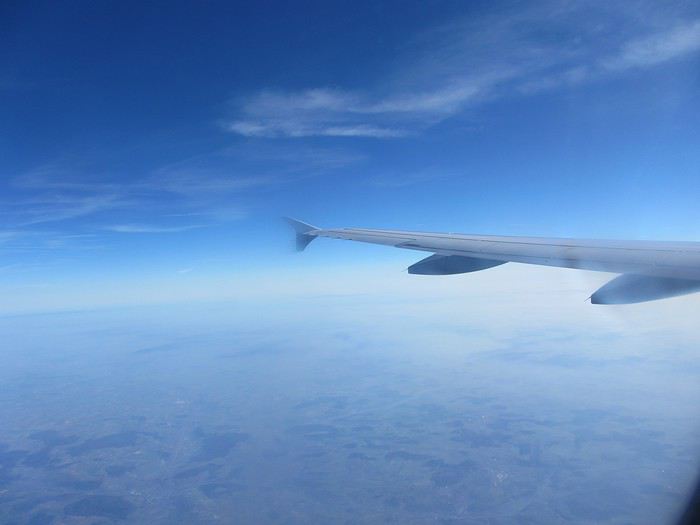
After my first trip to Istanbul in 1979 by motorcycle (Honda Gold Wing), where I stayed for about ten days at a campsite very close to Istanbul, I wanted to revisit this city that had already charmed me back in 1979.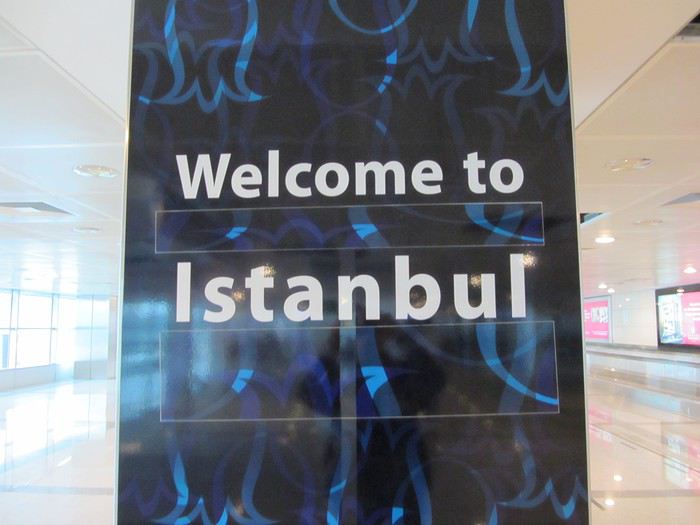
Our flight from Lyon (6:45 AM) wasn’t direct. Basically, we left home at 3:00 AM, and it takes us about 1 to 1.25 hours to get to Lyon Saint-Exupéry Airport. I always leave a little extra time in case of bad weather (snow) or a flat tire. Our flight departed Lyon on time, heading to Frankfurt with an arrival at 8:15 AM, and a connecting flight to Istanbul at 9:05 AM. Needless to say, you can’t dawdle in the airport to get to your gate—Frankfurt Airport is huge compared to Lyon’s. After a 2-hour, 55-minute flight, we landed at Istanbul Atatürk Airport, followed by a good hour of waiting to clear customs and immigration.
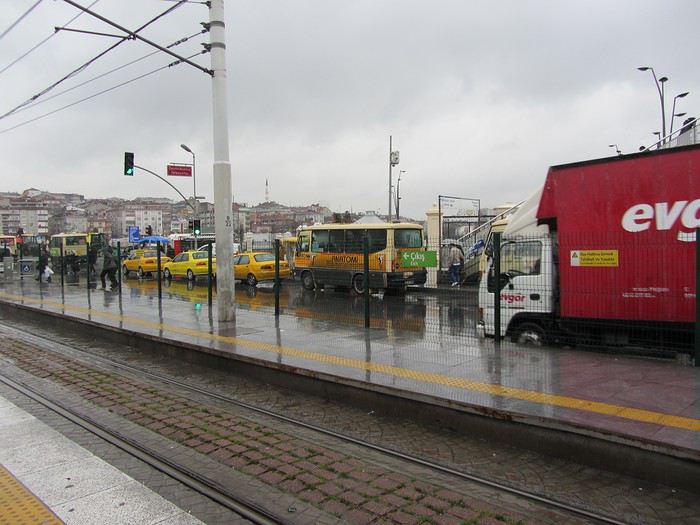
To get to our hotel from the airport, we took the metro and then the tram. When we travel in big cities, I always bring my TomTom GPS, which is super helpful for knowing which station to get off at to be as close as possible to the hotel.
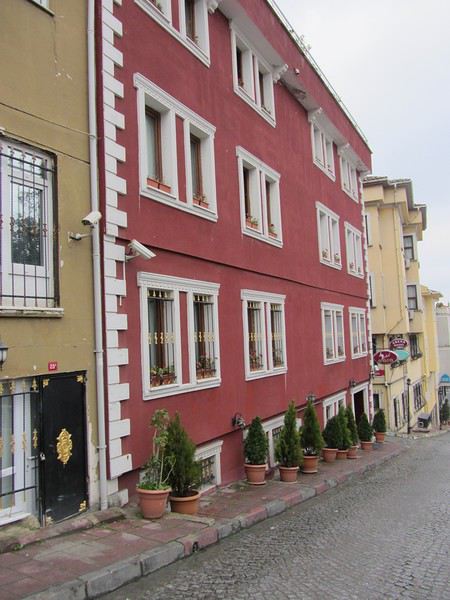
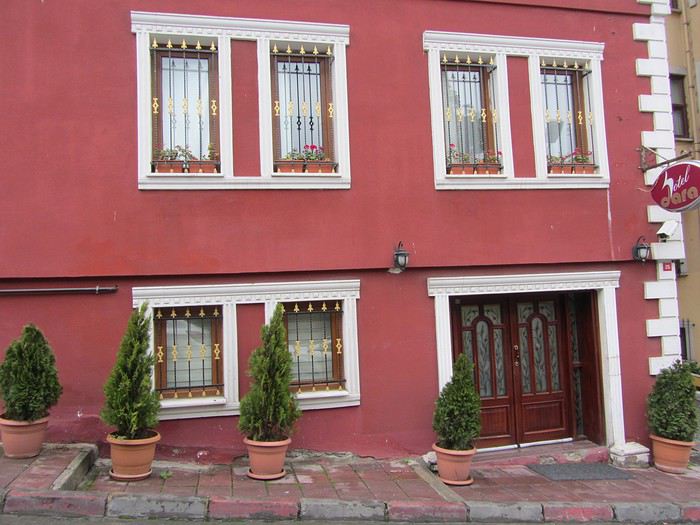
And here it is—our little hotel, "Hotel DARA," just a 5- to 10-minute walk from the Blue Mosque and right next to one of the many entrances to the Grand Bazaar.
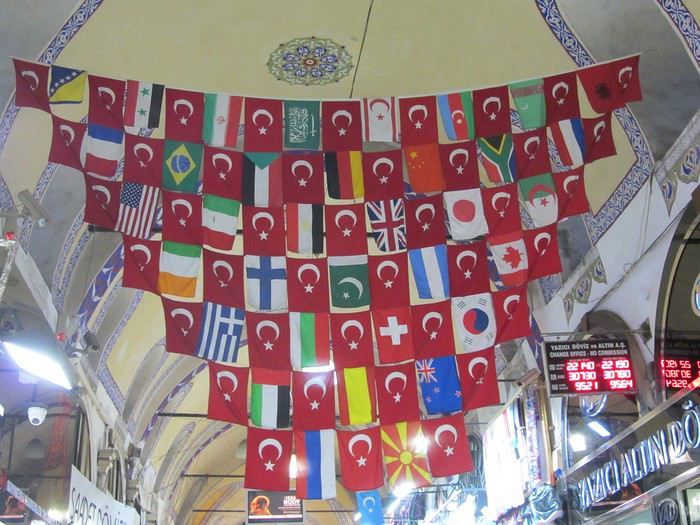
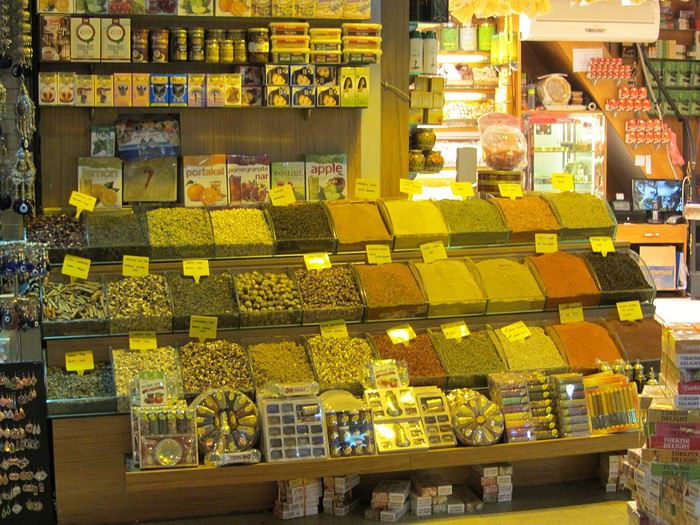
Speaking of which, when we arrived in Istanbul in the rain, once we got our room, we headed straight to the Grand Bazaar to take shelter from the downpour.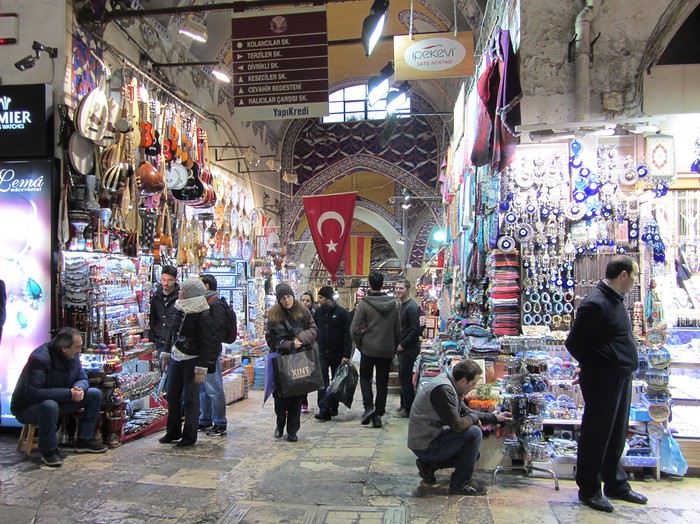 Located along 58 indoor streets accessible through 18 gates, it’s home to 4,000 shops. It’s right in the heart of the city.
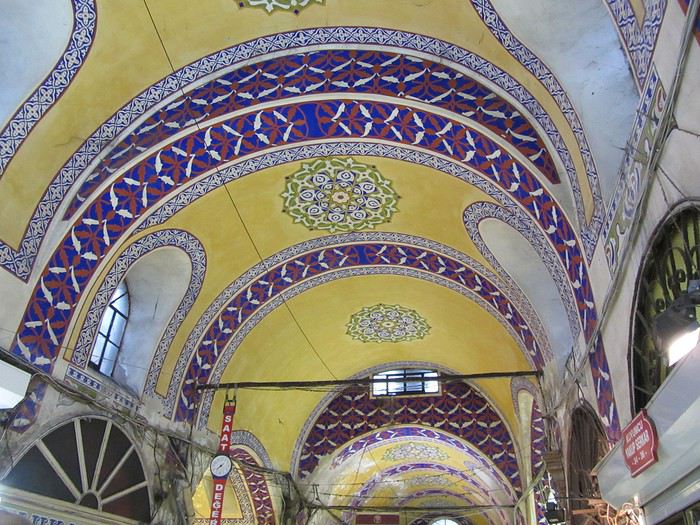
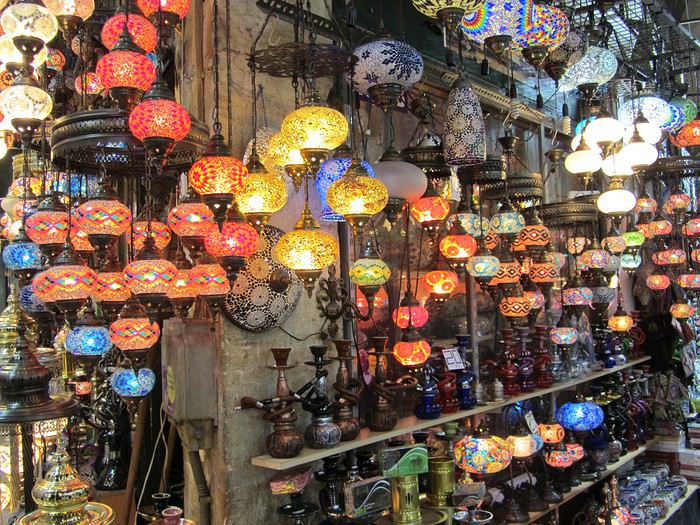
Like all bazaars, it’s organized into sections, each grouping a certain type of craft: jewelry, carpets, textiles, mosaics, silverware...
And when we left the Grand Bazaar, surprise—the rain had stopped, and the sun and a bright blue sky had returned.
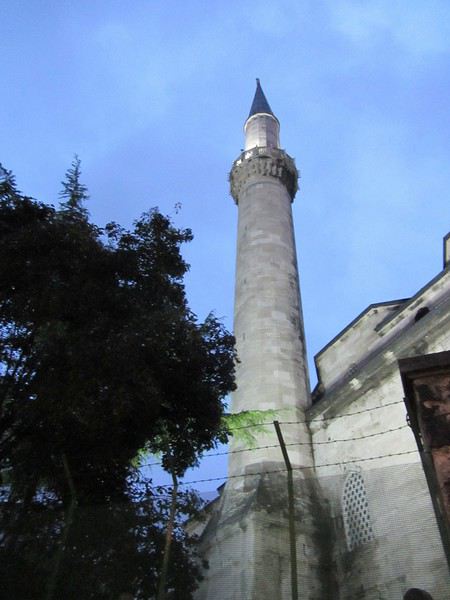
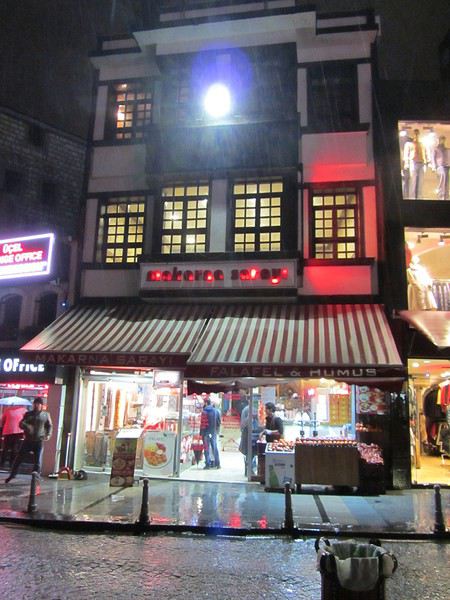
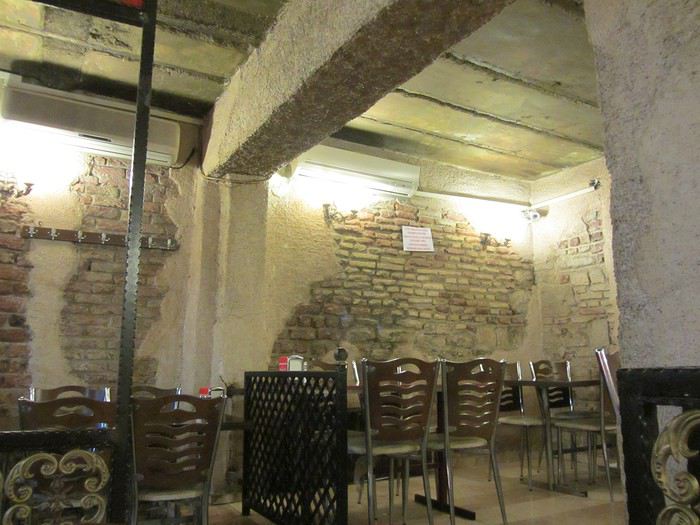
And here’s the restaurant we went to every evening during our stay—a cozy spot with varied dishes, friendly staff, and not too expensive, with a mostly local crowd.
Tuesday, March 11.
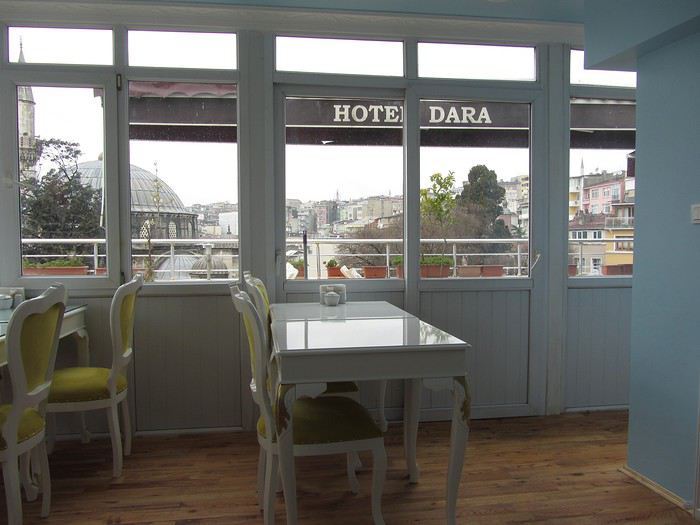
Disappointment this morning—the blue sky didn’t last. We woke up to gray skies and a light rain, so we couldn’t have breakfast on the rooftop terrace of our hotel, where the view is amazing.
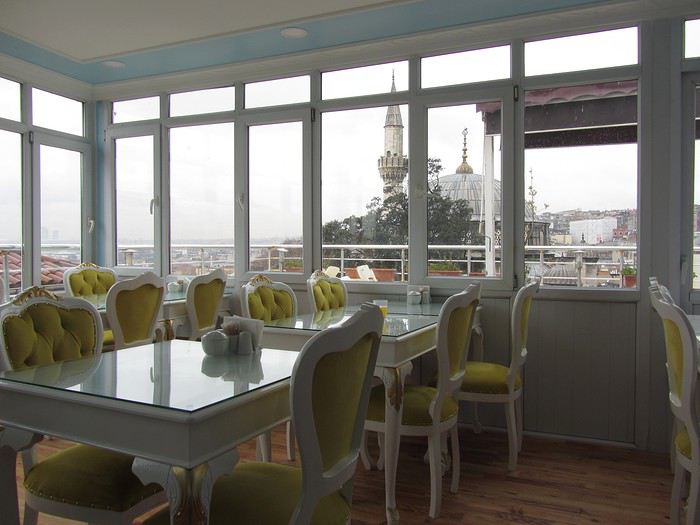
The breakfast was hearty and great, with both sweet and savory options, and a server who immediately hit it off with my partner, even though she didn’t speak a word of French. My partner got a kiss every morning.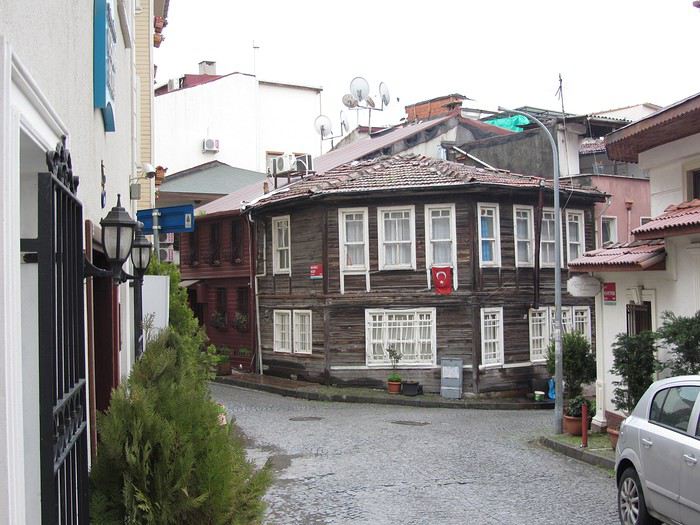
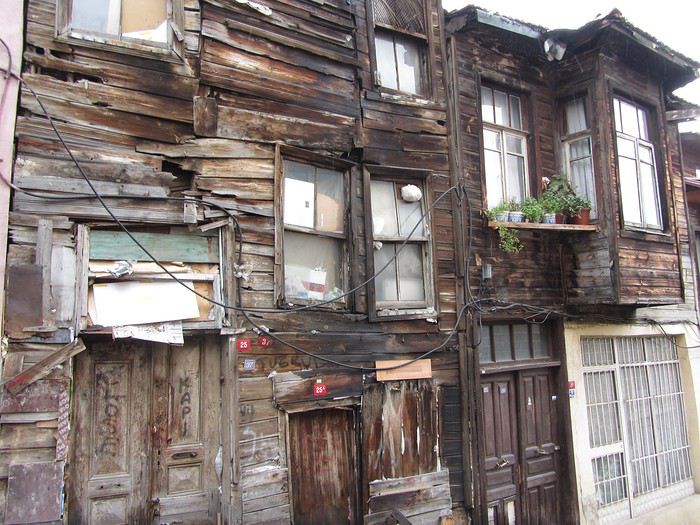
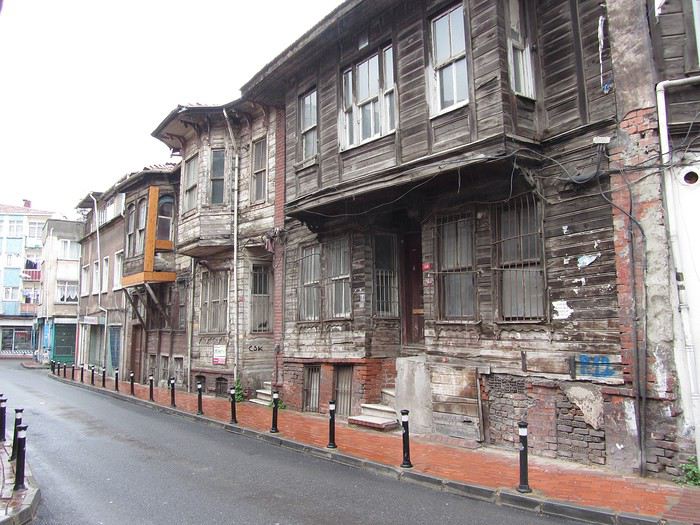
We wandered around the neighborhood below our hotel, an area with the few remaining wooden houses. In 1979, I remember there were many more, but now they’re either falling into ruin or being torn down for more modern buildings.
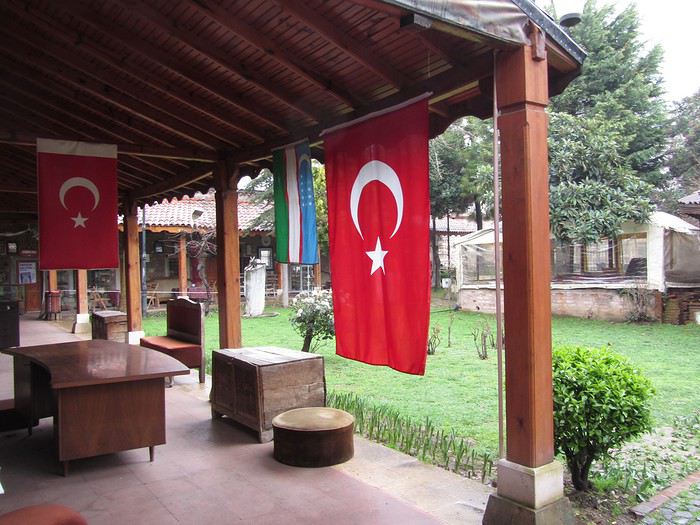
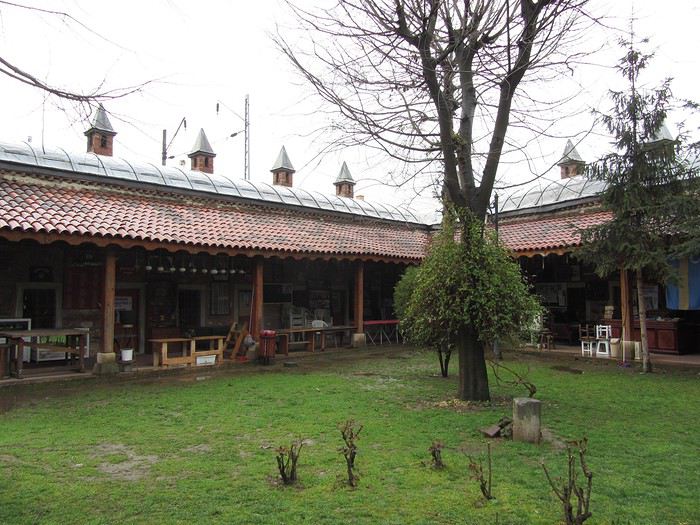
The Little Hagia Sophia Mosque. Küçük Ayasofya
dFrom Monday, March 10, 2014, to Sunday, March 16, 2014.
After my first trip to Istanbul in 1979 by motorcycle (Honda Gold Wing), where I stayed for about ten days at a campsite very close to Istanbul, I wanted to revisit this city that had already charmed me back in 1979.
Our flight from Lyon (6:45 AM) wasn’t direct. Basically, we left home at 3:00 AM, and it takes us about 1 to 1.25 hours to get to Lyon Saint-Exupéry Airport. I always leave a little extra time in case of bad weather (snow) or a flat tire. Our flight departed Lyon on time, heading to Frankfurt with an arrival at 8:15 AM, and a connecting flight to Istanbul at 9:05 AM. Needless to say, you can’t dawdle in the airport to get to your gate—Frankfurt Airport is huge compared to Lyon’s. After a 2-hour, 55-minute flight, we landed at Istanbul Atatürk Airport, followed by a good hour of waiting to clear customs and immigration.
To get to our hotel from the airport, we took the metro and then the tram. When we travel in big cities, I always bring my TomTom GPS, which is super helpful for knowing which station to get off at to be as close as possible to the hotel.
And here it is—our little hotel, "Hotel DARA," just a 5- to 10-minute walk from the Blue Mosque and right next to one of the many entrances to the Grand Bazaar.
Speaking of which, when we arrived in Istanbul in the rain, once we got our room, we headed straight to the Grand Bazaar to take shelter from the downpour.
Located along 58 indoor streets accessible through 18 gates, it’s home to 4,000 shops. It’s right in the heart of the city.Like all bazaars, it’s organized into sections, each grouping a certain type of craft: jewelry, carpets, textiles, mosaics, silverware...
And when we left the Grand Bazaar, surprise—the rain had stopped, and the sun and a bright blue sky had returned.
And here’s the restaurant we went to every evening during our stay—a cozy spot with varied dishes, friendly staff, and not too expensive, with a mostly local crowd.
Tuesday, March 11.
Disappointment this morning—the blue sky didn’t last. We woke up to gray skies and a light rain, so we couldn’t have breakfast on the rooftop terrace of our hotel, where the view is amazing.
The breakfast was hearty and great, with both sweet and savory options, and a server who immediately hit it off with my partner, even though she didn’t speak a word of French. My partner got a kiss every morning.
We wandered around the neighborhood below our hotel, an area with the few remaining wooden houses. In 1979, I remember there were many more, but now they’re either falling into ruin or being torn down for more modern buildings.
The Little Hagia Sophia Mosque. Küçük Ayasofya