Posts by Larsay
About 9,717 results.
More options
Search results
Where to stay in Phu Quoc for a week?
His name is Christophe. Also sells excellent coffee, tea, and other treats, with a sea-view terrace
Where to stay in Phu Quoc for a week?
This really captures the atmosphere. I should mention that Kim’s husband, a pastry chef, sells amazing croissants and brioches under the shop name *Au Bon Pain*, on Hang Hung Dao.
Where to stay in Phu Quoc for a week?
My travel notes:
Continue along the road to reach the village of Ganh Dau; in the right-hand bend leading to the village, have lunch at the excellent large seafood restaurant on the left. In the village, on your left, a beautiful success by Ms. Kim of Phu Quoc Kim 1 in Duong Dong, the Phu Quoc Kim 2 Beach Resort, with a small building of standard rooms and lovely beach bungalows; for me, it’s the most desirable on the island.
Continue along the road to reach the village of Ganh Dau; in the right-hand bend leading to the village, have lunch at the excellent large seafood restaurant on the left. In the village, on your left, a beautiful success by Ms. Kim of Phu Quoc Kim 1 in Duong Dong, the Phu Quoc Kim 2 Beach Resort, with a small building of standard rooms and lovely beach bungalows; for me, it’s the most desirable on the island.
Where to stay in Phu Quoc for a week?
Forgot to mention: it’s on Trung Hang Dao Street in Dong Da
Where to stay in Phu Quoc for a week?
Very French-speaking Phu Quoc Kim 1
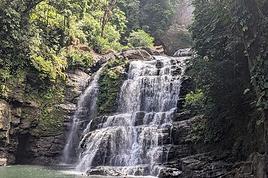
Ban Gioc Waterfalls (Vietnam)
What floods? There were some, but nothing catastrophic (not in Tam Coc or Hoa Lu either; I really wonder where you’re getting this info!). These kinds of things can happen in September-October in the central region. NO risk of landslides to worry about! !
Is March a good time to visit northern Vietnam?
Hi there,
You sent me a private message, but I couldn’t open it—could you repost it publicly? March is starting to be okay, but it’s still chilly in the northern mountains. A light sweater and wool socks are a must!
You sent me a private message, but I couldn’t open it—could you repost it publicly? March is starting to be okay, but it’s still chilly in the northern mountains. A light sweater and wool socks are a must!
Renting a scooter in Saigon and returning it in Hoi An
It's possible, but really long, with endless hours of driving through a landscape with no interest at all. Overnight train or a Saigon-Danang flight
Ban Gioc Waterfalls (Vietnam)
I doubt you’ll find a car with a driver in Trùng Khánh, a small non-touristy town. Rent in Cao Bằng instead and head down to the excellent 3-star JEANNE hotel (she was Chartron’s nurse). There are several Gioc hotels, including a 3-star one; no need to book ahead—few people spend a night in Ban Gioc since it’s easy to visit in a day with lunch by the falls.
For reference, here’s a reminder of the terrible events of late October 1950:
THE BATTLE OF ROUTE COLONIALE 4
Route Coloniale 4 (RC 4), now Highway 4A from Lạng Sơn to Cao Bằng and 4B from Lạng Sơn to the coast, was a super-strategic road because it runs along the entire Chinese border between the Gulf of Tonkin and Cao Bằng in the northeast, including the three “gates” to China: Móng Cái, Lạng Sơn, and Cao Bằng. This partly explains why, in 1979, the Chinese suddenly bombed and leveled these three cities—plus Lào Cai, the fourth “gate”—before invading the north and suffering a humiliating defeat (50,000 dead and over 400 tanks destroyed).
Many tourists travel from Lạng Sơn to Cao Bằng without knowing—or at all—what happened there in 1950. Yet October 7, 1950, should be a major date in modern history: for the first time, a colonized people in rebellion inflicted a bloody defeat on a colonizing army, which, for France, foreshadowed the inevitable conclusion—delayed by four years due to the stupidity of the governments at the time: Điện Biên Phủ. In fact, the Indochina War was lost at Đông Khê in October 1950.
THE PLAYERS:
On the Asian side: Hồ Chí Minh and Giáp, who had been hiding in the limestone mountains of the northeast since 1941, Viet Minh groups with nothing, and Mao, who was pushing Chiang Kai-shek’s troops back to the Vietnamese border.
On the French side: a government that only cared about Indochina for the billions it brought in, mainly in Vietnam, with big corporations exploiting the three countries (Banque d’Indochine, Brasseries et Glacières d’Indochine, Michelin—rubber plantations—the import-export and maritime shipping companies, etc.), blocking all reforms to keep lining their pockets, and an Expeditionary Corps, the best troops in the world at the time, including the Legion, paratroopers, and Moroccan tabors, led by commanders who would later become famous: Bigeard, Jeanpierre, Trinquier, Faulques, Ponchardier (yes, the brother of the future author of the *Série Noire* novels *Le Gorille*), Élie de Saint Marc, Charton, etc., veterans of Leclerc’s 2nd Armored Division and de Lattre’s 1st Army. Unfortunately for them, this incredible military force was led by a complete incompetent, a protégé of Marshal Juin, General Carpentier, whom de Lattre had fired for incompetence in 1944. This hothead refused to learn about the terrain—crucial in a war like this—or the troops: that was the job of his subordinates. He stayed in his Saigon office, writing glowing reports to the government claiming everything was improving (how history repeats itself; these were the same lies told by U.S. generals during the Vietnam War, with the same results). In fact, just before the disaster, this incompetent told the government he “had the situation well in hand and could likely send troops back to France soon.” The result of his ineptitude: by 1950, he had rarely set foot in Tonkin, except for brief staff meetings, and he refused to listen to the field officers—and French intelligence—who knew exactly what was really happening.
THE SETTING
The northeast is a maze of limestone peaks and deep canyons or valleys, all covered in jungle, riddled with caves, and crisscrossed by a labyrinth of small roads and trails. From Lạng Sơn to Đông Khê, halfway between Lạng Sơn and Cao Bằng, the road follows a valley lined with cultivated hills and has no particularly dangerous spots. From Đông Khê onward, it’s a death trap: the road winds from one pass to another along the river, with limestone cliffs covered in jungle on either side and the river below to the right. Any maneuver is impossible. A small mountain cannon in a cave overlooking the road—and there are hundreds—could destroy the lead and rear trucks of a convoy, and *boom*, no more convoy. Giáp knew this well, but Carpentier didn’t at all, since he’d never been there and refused to listen to the many officers who predicted a catastrophe and recommended evacuating all the posts between Cao Bằng and the impregnable Lạng Sơn before the Viet Minh grew too strong.
THE PRELUDE
In early 1950, Mao’s troops reached the Vietnamese border, pushing back Chiang Kai-shek’s forces in northern Tonkin, which the French managed to disarm, and in northern Thailand, where they settled in the Golden Triangle. In addition to tea plantations, they organized the opium trade, controlling 80% of global production in the 1960s–80s. Mao had now taken over the massive American arms depots and camps in Yunnan, where he invited Giáp to train entire divisions, armed and trained by his generals. French intelligence, no less competent than others, was fully aware of the situation and informed the General Staff, which did nothing except send the Legion to Cao Bằng (the famous 2nd BEP under the command of a legendary warrior, Colonel Charton) and to posts along RC 4, including the main ones: Thất Khê, Na Cham, and Đông Khê (plus smaller ones at the top of each pass). Now well-equipped and trained, the Viet Minh constantly harassed the posts to “get their bearings.” In 1950, some supply convoys lost up to 90% of their trucks between Đông Khê and Cao Bằng.
THE DISASTER
On May 25, 1950, the warning shot: the Viet Minh’s elite 308th Division seized Đông Khê and cut RC 4 in two. The French command was surprised (though intelligence had warned them) to discover that the Viet Minh now had entire, well-equipped divisions. On May 27, the paratroopers of the 3rd BCCP jumped directly onto Đông Khê and recaptured it. On September 15, the Viet Minh took the town back, and it was never retaken. Carpentier decided to evacuate RC 4 between Cao Bằng and Lạng Sơn, which could have been done by airlift, but—ever the genius—he decided it would be done… by road. His plan was for the paratroopers to retake Đông Khê a second time, for a column led by Colonel Lepage to move up the road from Lạng Sơn and link up with the column evacuating Cao Bằng, and for everyone to return calmly to Lạng Sơn. The whole plan hinged on the French retaking Đông Khê.
Charton left Cao Bằng, taking all the civilians with him—which largely explains the evacuation’s failure, and he knew it but refused to abandon them to a certain fate. Of course, nothing went as planned: Despite their heroism, the paratroopers of the 1st BEP couldn’t retake Đông Khê—so RC 4 was still cut off. Lepage’s column was sliced up by the Viet Minh and ended up in a basin south of Đông Khê, at Cốc Xá, hemmed in by sheer cliffs on one side and jungle-covered mountains on the other. Learning that Đông Khê was still in Viet Minh hands, the command—still safely in Lạng Sơn—ordered Charton to take an isolated jungle trail, the Quảng Liêt trail, which bypassed Đông Khê. When he reached the town’s level, as a good soldier, he had everyone climb the ridges overlooking the basin, but Lepage sent desperate distress calls, so Charton also brought his troops down into the Cốc Xá basin to try to rescue him. It was the rendezvous of death: On October 7, 1950, both columns were annihilated at Cốc Xá. The toll: 2,000 French soldiers dead and 3,000 prisoners, fewer than 1,000 of whom were recovered when de Lattre arrived—mostly North Africans, now well-indoctrinated in anti-colonial warfare. The others died of starvation and disease in the Viet Minh’s terrible camps, which Hélie de Saint Marc, who experienced both, said were worse than Nazi concentration camps. Only about a hundred men escaped the trap and managed to reach Thất Khê after days of wandering in the jungle.
THE SHAME
After the disaster, total shame and panic among the French. Though Lạng Sơn was impregnable, the garrison commander, Colonel Constans, decided to abandon it “by surprise,” so he didn’t blow up the huge forts surrounding the city or the massive depots, which were so enormous that they supplied an entire Giáp division for a year. Panic also set in in Hanoi, which the French began evacuating. De Lattre, appointed Commander of the Expeditionary Corps and Governor-General of Indochina, saved the situation in three bloody battles: Vĩnh Yên west of Hanoi, Mạo Khê to the north, and Ninh Bình to the south. But as of October 7, 1950, the Indochina War was lost. Giáp now controlled the entire northeast, from which soldiers (including many Chinese technicians and even troops) and, most importantly, motorized supply convoys instead of porters could move freely all the way to Điện Biên Phủ.
Nothing remains of the large French post at Đông Khê except a small blockhouse made of rubble and a few ammunition bunkers. However, a fantastic walk takes you to Hồ Chí Minh and Giáp’s headquarters during the Battle of RC 4, located in the village of Đức Long. To get there, continue down the street in front of the fort and go straight to the village. At the end of the road, a small sign points left to a path; take it and you’ll enter a maze of concrete trails with caves everywhere—that’s the famous HQ. The yellow stilt house was where Giáp and HCM slept; walk around it and climb the steps. The caves are scattered to the right and left. Return to the road and continue left to reach a small, interesting museum about the October 1950 battle.
The Cốc Xá basin south of Đông Khê
Unforgettable day! Take RC 4 toward Cao Bằng; at a roundabout, turn left onto the old RC 4 and climb the Nguộm Kim Pass, site of the most terrible ambushes on the “Bloody Road.” The views are breathtaking. At the kilometer marker “Cao Bằng 32 km” (there are two houses on the right and one on the left), take a small road to the left (make sure you take the right one by simply asking for “Cốc Xá,” pronounced *Coc Sa*). This road quickly turns into a trail; keep going until you can’t drive any farther in a 4x4. You’re in an idyllic valley with, from left to right, the famous limestone cliffs of Cốc Xá that trapped the French, the trail, a small river, rice paddies, and wooded hills. In the small Tay village, there’s a house-grocery-bar on the left; you have two choices: walk 4 km to the foot of the Cốc Xá cliff where the French were “trapped,” or ask the shopkeeper to call some motorbikes. The local young people, smiling and knowledgeable about the battle’s history, are happy to make 100,000 ₫ per bike (we went by motorbike and walked back—it’s so beautiful, including the Tay women transplanting rice).
If you want to spend a night in Đông Khê, the only decent hotel is the Mai Hiền at the town’s entrance, and the only decent restaurant is the Nhà Hàng Bảo Văn in the town center.
Renting a scooter in Saigon and returning it in Hoi An
Pretty much impossible for two reasons: rental companies want scooters returned to where they were picked up. They’d have to ship it back by train, which would cost you a fortune. More importantly, it’s a really long and uninteresting journey. The best thing to do is take an overnight train or a flight to Danang + a 34 km taxi ride to Hoi An. No need for a scooter in Hoi An—you can explore the city on foot and take an organized tour to the Cham ruins at My Son (Pink Cloud agency on Tran Hung Dao St).
If you send me your email at jaybeebacon@gmail.com, I’ll send you my super detailed travel notes on the Dalat region and Hoi An area.
If you send me your email at jaybeebacon@gmail.com, I’ll send you my super detailed travel notes on the Dalat region and Hoi An area.
The Extraordinary Painted Houses Village of Tam Thanh near Hoi An
Not sure if I’ve already posted this, so here it is again!
https://hiddenhoian.com/travel/tam-thanh-mural-village/
Imagine a peaceful coastal fishing village completely transformed by artists who worked their magic on the walls of 100 residential houses. That’s the remarkable story of the Tam Thanh mural village in Quang Nam province. Once similar to many other coastal villages in the area, it now firmly stands out on the tourist map for day trips from Hoi An. In the summer of 2016, Tam Thanh was selected by a joint Korean-Vietnamese project called “Art For A Better Community.” The village was chosen to be their blank canvas, inspired by the success of mural villages in Korea. The project aimed to make Tam Thanh the first painted village of its kind in Vietnam. The team included five Korean artists and seven Vietnamese artists, along with local volunteers. Their goal was to show Vietnamese people that art could be part of everyday life, no matter their place in society. The effort began with about three weeks of wall washing, followed by painting the walls of over 100 residents’ homes. The project was a success, and the village came alive with the paintings. The entire village is now a breathtaking gallery just waiting to be explored. The murals capture the life and soul of the village, from young children playing to fishermen in the ocean. A mix of fantastic pieces offers stunning backdrops for photos. The painted art around the town hasn’t just had a visual impact—it’s also had a social one. The village was chosen not only for the layout of the houses but also to contribute to economic development opportunities in Tam Thanh. Tourists now visit the once-overlooked village, creating more income for locals and making it a successful “art for a cause” project. For example, one entrepreneurial resident who owned a small local café invested 000,000 VND (390 USD) in a sugarcane press a week before the paintings were completed. Sugarcane juice vendors then multiplied with the growth of tourism (5,000 VND - 0.20 USD). Walking down the village’s single street, it’s common to find locals selling refreshments and handmade crafts. In one house in particular, a tailor and his family are painted on an outer wall with incredible detail. The family started selling tote bags decorated by their young daughter. The price for the bags is 100,000 VND (4 USD). If you’re looking for a way to support the village’s economy, this is it. Since there’s no middleman here, you can be sure your money goes directly to the community. You can have lunch at a house with a terrace right by the beach at the edge of the village.
How to Get There Route No. 1: Cross the large Cua Đai bridge. Once you’ve crossed it, continue toward Duong 129/Duong Ven Bien. Stay on this road for 33 kilometers. Upside: this route has light traffic, no traffic lights, and no trucks or buses. It’s a great direct route to the village but offers little to see along the way. You’ll eventually reach a crossroads. Turn right toward Tam Ky town, while the left will take you toward the Tam Thanh mural village. Stay on Route 608 as it turns twice before reaching a bridge. Cross the bridge, and you’ll arrive at Thanh Nien Road. Finally, turn right to reach the village. This route takes about an hour. Use your best judgment. For reference, it costs about 5,000 VND (0.20 USD) to park a motorbike.
Route #2: Cross the large Cua Đai bridge. Once you’ve crossed it, continue toward Duong 129/Duong Ven Bien. Stay on this road for 12 kilometers, then turn left onto Route 613, where you’ll continue for 1.5 kilometers until you reach Thanh Nien Road. Finally, turn right and drive 23 kilometers to the painted village. For most of the trip, taking Thanh Nien Road will take you through a much more local part of the region. The journey takes about an hour and a half.
Accommodation on the Ha Giang loop
Monday’s list is excellent, except for Ha Giang. Here are my notes on 5 tours in Dong Van:
Ha Giang is a pretty town, but not very interesting. For accommodation, the best place used to be the Truong Xuan (Ha Giang Resort), 5 km from Ha Giang center on the road to Dong Van. It’s bad now, so stay in the Thai village of Than Tha, at Mr. WIN’s lovely guesthouse (03 64 86 67 66), with its varnished wooden bungalows + terrace offering a great view and excellent meals served by Mr. and Mrs. Win’s adorable daughter. Booking is essential. If it’s full, try Mr. Cây’s beautiful house—it has the big advantage of a pool (though the view isn’t as nice). Reservation: 09 79 75 94 67.
Ha Giang is a pretty town, but not very interesting. For accommodation, the best place used to be the Truong Xuan (Ha Giang Resort), 5 km from Ha Giang center on the road to Dong Van. It’s bad now, so stay in the Thai village of Than Tha, at Mr. WIN’s lovely guesthouse (03 64 86 67 66), with its varnished wooden bungalows + terrace offering a great view and excellent meals served by Mr. and Mrs. Win’s adorable daughter. Booking is essential. If it’s full, try Mr. Cây’s beautiful house—it has the big advantage of a pool (though the view isn’t as nice). Reservation: 09 79 75 94 67.
Visiting northern Laos with a driver from Luang Prabang
Northern Laos, very mountainous, is stunning. Head to NONG KIAW. Here are my travel notes on the subject:
NONG KIAW
A must-do! I did it from Luang Prabang on a rented scooter. 140 km of a pretty dull road, but it’s good except for a 30 km stretch that’s quite battered by Chinese trucks working on a big dam (another one!). My advice: unless you’re doing a loop, go by bus and explore the village on foot or by bike. If you go by scooter, don’t be surprised if you don’t see any signs or kilometer markers labeled "Nong Kiaw," because the town is officially called Muang Ngoi, even though the village of Muang Ngoi shown on maps is an hour by boat north of Nong Kiaw—the markers say "M. Ngoi."
The setting in Nong Kiaw is beautiful. A small town on the Nam Ou River, surrounded by tall limestone peaks and cliffs (the highest mountain reaches 1,700 m). There are plenty of guesthouses, most on the other side of the bridge built by the Chinese in 1973. I chose the right bank to stay at the Nam Ou River Lodge (a small dirt path just south of the school, then left). Impeccable rooms at 100,000 kips with a shared balcony overlooking the river, plus a huge terrace. The owner, Mr. Mang, also runs a top-notch travel agency (just before the bridge at the corner of the main road and the one along the river), Nong Kiaw Adventure Tours, which I recommend for excursions since it’s the only locally born operator (fluent English). At the right bank corner of the bridge, Sendao Chittavaong GH is great value, with woven bamboo garden bungalows (fan only) at 80,000 kips and concrete bungalows with AC and a river-view terrace at 100,000 kips. For those with a bigger budget, on the left bank side of the bridge, the Nam Ou River Lodge has elegant overwater bungalows and a restaurant with a river-view terrace. $55 per night, but only $35 in low season. For food, Coco Bar, on the right at the entrance of town, is good but not very traditional, or Alex, traditional, on the other side of the bridge, then right in the middle of the small houses.
Nong Kiaw is a paradise for nature walks. Classic programs in the area combine boat trips, trekking with visits to Khmu villages (pronounced "kamou"), waterfalls, and caves, plus kayaking. The most popular program—a fantastic day trip—is the boat ride up to Muang Ngoi (1 hour of stunning scenery), visiting the Sop Jam weaving village, then trekking, and returning by boat or kayak (the kayak return takes about 2.5 hours). Departure at 8:30 AM, usual return at 5 PM. 370,000 kips per person, with discounts for groups. Another very popular option is the same itinerary over 2 days with an overnight stay in a guesthouse. There are also 3- and 4-day programs. Mr. Mang can arrange all of this easily. Actually, I had rented a scooter because I planned to continue along the Nam Ou to Muang Ngoi and beyond, but the road is so badly damaged that even locals don’t venture there (I tried it for 3 km—it was hell!).
Medication for 60 days in Thailand
Exactly, luggage is never searched. Put medications in your checked baggage, NOT in your carry-on. That said, there are high-quality pharmacies in Bangkok, and two of the best hospitals. Thailand’s hospital industry is so good that many foreign patients come here for treatment. In Bangkok, two world-class hospitals, Bumrungrad and Samitivej. There are so many foreign visitors that both hospitals have large teams of translators for all major languages.
Trip to Vietnam with Salaun Agency
Also, as already mentioned, you’re paying two commissions—one to Salaun and one to the Vietnamese agency.
Trip to Vietnam with Salaun Agency
I did NOT say it was a bad TO, but that it’s better to go through a Vietnamese agency. Salaun offers tours in all countries—I really doubt their employees are able to answer questions about any specific country. That’s what I’m criticizing.
Traveling to Vietnam with Salaun Agency
NEVER arrange a trip to Vietnam with a French operator. They outsource to a Vietnamese agency, so you end up paying two commissions—one for the French agency and one for the Vietnamese one. Contact a Vietnamese agency directly instead.
Help with 21-day Vietnam itinerary with teens
August is a hot month everywhere, obviously less so in the mountains. Sapa is exceptional and requires at least 2 days. DO NOT take the overnight train, especially with young kids—you sleep very poorly and arrive around 5:30 AM in Lao Cai, plus an hour by minibus. Instead, take the excellent direct Hanoi-Sapa express day bus the day before (5-hour trip including lunch, instead of about 10 hours by train).
For accommodation, I highly recommend the excellent 2-star PHUONG NAM on Fan Si Pan Road. +84 21 43 87 12 86, email phuongnamhotelsapa@gmail.com, and have your meals at Little Sapa, 5 Dông Loi Street.
For accommodation, I highly recommend the excellent 2-star PHUONG NAM on Fan Si Pan Road. +84 21 43 87 12 86, email phuongnamhotelsapa@gmail.com, and have your meals at Little Sapa, 5 Dông Loi Street.
Inserting photos
Thanks my friend
Link showcasing the painted houses of Tam Thanh, Hoi An (Vietnam)
One day, Langsuan was bitten by a cobra.
What do you think happened next?
It was the snake that died.