Posts by Valmichel86
About 439 results.
More options
Search results
Trip in April and May in Italy - by train: what circuit suggestions?
Good evening,
I’ll give you two suggestions for historic cities with "beautiful countryside regions" nearby where you can stay for 4 to 7 days while exploring the surrounding area. This is in central Italy;
1- Siena (Tuscany). To the south, you have the 'Crete Senesi' and, a little further away, the 'Val d'Orcia'. Tuscany bus lines (not exclusive) Line 109: Siena - San Giovanni d'Asso. The stretch from Taverne d'Arbia to Asciano (an interesting small town) and then to San Giovanni d'Asso is scenic for almost its entire length—these are the 'Crete Senesi'.
Line 112: Siena - Buonconvento - Pienza (then Montepulciano). I believe this is the only line that travels through San Quirico d'Orcia to Pienza in the heart of the Val d'Orcia.
I hope you’re aware that a bus won’t stop where you find the countryside particularly beautiful, and that a car or a mountain bike (for small loops of 10 to 20 km) are better ways to get around these rural areas than trains or buses. In the travel journal I published on Tuscany, there’s a section on the surroundings of Siena (the last week or so); it might give you an idea of the landscapes of the 'Crete Senesi', among other things.
2- Perugia (Umbria). To the east, you have the city of Assisi and its site on the slopes of Monte Subasio, and to the west, Lake Trasimeno. Busitalia Umbria bus lines
Line E007 for Assisi.
Lines E016, E017, E018, and E020 to reach Lake Trasimeno. There, you’ll find the towns or villages of Passignano sul Trasimeno, Tuoro sul Trasimeno, Castiglione del Lago, Tavernelle da Panicale, and Panicale. Some of them are part of the "Borghi più belli d'Italia" (Italy’s most beautiful villages) club, while others are departure (or arrival) points for boat lines on the lake to the islands.
Still in central Italy, there are "beautiful countryside regions" around the cities of Urbino and Ascoli Piceno, both in the Marche region. However, these are smaller cities, the countryside areas aren’t as well-known as the ones mentioned above, and I have no idea about the extra-urban bus lines around these towns.
September 2026 Photo Contest Thread: "The Street as a Livelihood"
Here we go (not enough pixels on what I could recover).
September 2026 Photo Contest Thread: "The Street as a Livelihood"
Yes.
My memory led me to the Flemish painters, and that’s how I rediscovered the work,
while searching with the painter’s name and beggars.
After a few tries, I found it—including Jérôme Bosch.
September 2026 Photo Contest Thread: "The Street as a Livelihood"
I’m revisiting the reporting issue. I’ve read message 160 in the thread several times—it was posted by VoyageForum.
"We receive between 2 and 3 reports per day for this thread.
Should we close it?"
That must be an unusually high number for VoyageForum to feel the need to inform members and ask the question (you could say they’re concerned about the situation and letting everyone know). Given how many views the posts in this thread get, it’s clear there aren’t many readers outside the contest. So these reports are coming from people who regularly participate in the contest and are flooding moderation with reports to force a decision! A coordinated effort? Or one person who’s practically unhinged, submitting report after report (2 to 3 a day)?
September 2026 Photo Contest Thread: "The Street as a Livelihood"
Good evening,
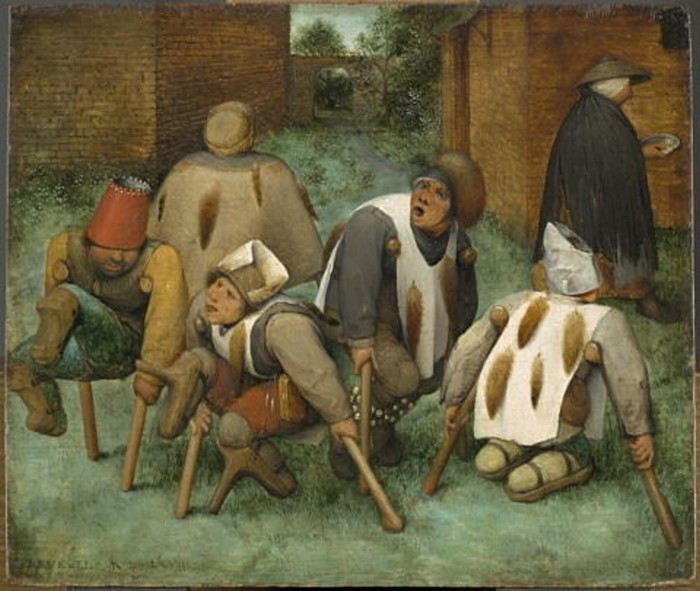
that photo of the disabled beggars jogged something in my visual memory. I knew it wasn’t a photograph (I see far fewer of those than paintings when I travel), so it could only be a painting I’d seen in a museum or a fairly traditional art exhibition.
I finally remembered—it was last year at an exhibition in Lille.
The painting is called:
*The Beggars* or *The Cripples*.
It was painted in:
1568
by:
Pieter Brueghel, known as "the Elder" or "the Old."
It belongs to:
The Louvre Museum.
To see it:
- Go to the website www.collections.louvre.fr
- In the collections search, type Pieter Brueghel
- You’ll see 174 works over 9 pages; you’ll find it on page 3, row 3.
I’ll try to post it in this thread if I manage to figure out the internet.
It might be interesting to see how a well-known 16th-century painter tackled the subject. I don’t think any potential flagger has anything left to hope for if they flagged it to get it censored.
I’ll try to post it in this thread if I manage to figure out the internet.
It might be interesting to see how a well-known 16th-century painter tackled the subject. I don’t think any potential flagger has anything left to hope for if they flagged it to get it censored.
September 2026 Photo Contest Thread: "The Street as a Livelihood"
All of this is quite bothersome and not insignificant.
It’s clear we can’t do anything about moderation decisions—they always come out of the blue.
But the contest is self-organized, and the organizer should, in a case like this (where a photo is removed), be able to do something. Yet it was the photo of participant Pagaljavab that was taken down from the contest he himself organized. Pagaljavab reposted his photo in the discussion thread (in my opinion, he did the right thing). Did he do anything in the contest thread? No, of course not—since he was both the organizer and the participant involved. He couldn’t have acted differently. At the very least, in the contest thread, voters should have been informed that a photo had been removed (you can participate and vote without checking the discussion thread—I’ve done that some months, just not this one). We could also consider mentioning where the removed photo is visible, if it is (message 128 in the discussion thread in this case). I mean: write it in the contest thread. In my opinion, it would make sense for the organizer not to be allowed to participate in the contest: you win, you organize, you participate again the following month.
Personally, I voted considering that the contest photos included those in the contest thread plus the one from message 128 in the discussion thread.
September 2026 Photo Contest Theme: "The Street as a Livelihood"
Here’s my vote:
3 points: Pagaljavab photo3 Udaipur India
2 points: Xrctn photo2 Cali Colombia
1 point: Xrctn photo3 Utrecht Netherlands
Also a shout-out to Gaura photo2 New Delhi India
Also a shout-out to Gaura photo2 New Delhi India
Where to stay in the Cinque Terre?
I don’t think it makes much difference in terms of feasibility.
Here’s an idea: Pick the hikes you want to do and write them down. Count how many times a village is a starting or ending point. Choose the village with the highest score. This works well if you’re taking the train (moving between villages isn’t scenic—just tunnels). It might not be ideal if you’re set on specific boat routes (for the views). In that case, treat those specific routes like hikes and pick the village with the highest score. You’ll probably want to stay at the "hub" of your activities.
Here’s an idea: Pick the hikes you want to do and write them down. Count how many times a village is a starting or ending point. Choose the village with the highest score. This works well if you’re taking the train (moving between villages isn’t scenic—just tunnels). It might not be ideal if you’re set on specific boat routes (for the views). In that case, treat those specific routes like hikes and pick the village with the highest score. You’ll probably want to stay at the "hub" of your activities.
Off-the-beaten-path recommendations for a 15-day Emilia Romagna/Tuscany trip in late November?
Good evening,
late reply.
I published a "off-the-beaten-path" travel journal about part of Tuscany. You can still check out the kind of places to visit. But that’s about it, because if I went there in late November, I wouldn’t do anything like in the journal.
1-I’d stick to the main art cities: the most famous and most visited ones, because at this time of year, I could enjoy them with fewer crowds.
2- I wouldn’t include too many: 6 is too many, 4 is good (for example). If you include too many, you’ll have to change accommodation every 2 or 3 days. That prevents a "flexible" organization.
I’d pick the ones that appeal to me the most and visit them in some detail (not just a quick stop).
3- I’d choose accommodations in the city (downtown or outskirts) with included parking, not countryside lodgings. Getting to the city will take time (short days) and cost at least 12 to 14 € per day to factor into the accommodation price for comparison (unless you’re an expert at finding free parking).
4- I wouldn’t book any visits (museums, monuments) in advance: keep it flexible. If you want to see something outside the city where you’re staying (for example, a villa if you’re in Florence) in November, do it when the weather’s nice, so decide as late as possible (with near-certain weather forecasts). Impossible if the day is locked in by tickets bought in advance.
5- If you plan "off-the-beaten-path visits," double-check opening days and hours; I’m convinced some places are only open on Saturdays and Sundays (or Friday-Saturday-Sunday) in November.
This is just my take on traveling in late November. If it helps, great!
This is just my take on traveling in late November. If it helps, great!
September 2026 Photo Contest Thread: "The Street as a Livelihood"
Great idea, this approach, Christelle.
Acrobatics, juggling, clown performances... Street circus arts: definitely worth entering in the contest.
September 2026 Photo Contest Thread: "The Street as a Livelihood"
Good evening,
I’m not sulking, but I don’t have anything to submit for this theme. With fewer photos from fewer countries than other members, that doesn’t surprise me (and it’d be the same for other themes).
If I’d spent September taking 2 or 3 photos for this contest, I know exactly what I would’ve tried to capture: street theater, right in line with Pagaljavab’s theme, in my opinion—if it’s done by professionals (not amateurs: that’s what *earning a living* means).
I would’ve tried two shots:
1. Very low-budget, an improvised scene in a street corner or square, with the audience just a few meters from the performers.
2. At the other end of the spectrum, a big-budget spectacle—I’m thinking of the Royal De Luxe company, famous for creating "giants" or "city machines."
The economics of this activity often rely on more than just money from the public: funding from cities, etc. For example, Royal De Luxe’s shows are always free for spectators (yet the performers and crew *do* earn a living from street performances).
This is a call: I haven’t seen any street theater photos. A few for other arts—music, painting. If anyone wants to—and can—tackle the theme this way... there’s still a week left.
This is a call: I haven’t seen any street theater photos. A few for other arts—music, painting. If anyone wants to—and can—tackle the theme this way... there’s still a week left.
August 2026 Photo Contest Theme: Religious Buildings
Hi,
I’m rushing to vote because I’ll have limited connectivity during the voting days.
3 points for Una Milanese photo3: the Kalon Mosque in Bukhara.
2 points for Muriel18 photo1: one of the many Orthodox churches in Mystras.
1 point for Envallis photo3: Hanoi Cathedral by night.
Envallis’s photo for third place was up against 4ecofuel photo1: the Lausikala Chapel in Wallis.
3 points for Una Milanese photo3: the Kalon Mosque in Bukhara.
2 points for Muriel18 photo1: one of the many Orthodox churches in Mystras.
1 point for Envallis photo3: Hanoi Cathedral by night.
Envallis’s photo for third place was up against 4ecofuel photo1: the Lausikala Chapel in Wallis.
Discussion on the August photo contest theme: religious buildings
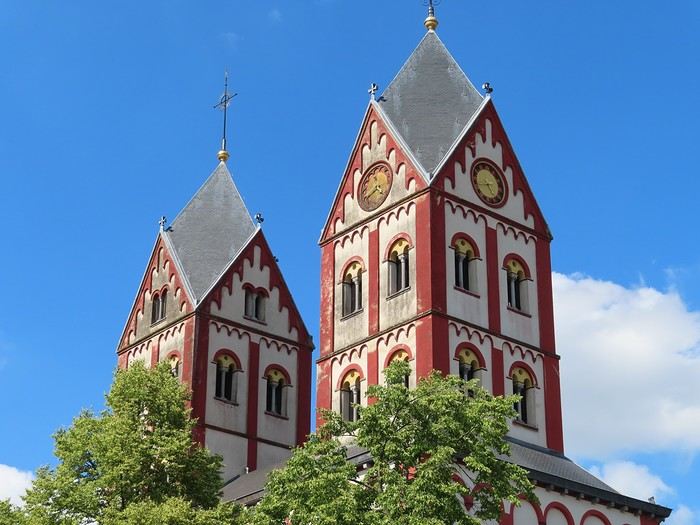
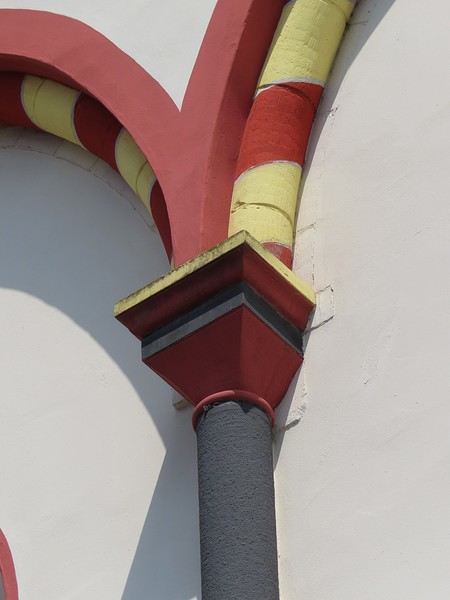
This is the Collegiate Church of Saint Bartholomew in Liège (Belgium): the two towers and a detail.
11th and 12th century, so Romanesque. I read on-site that it’s "Mosan art or style." A restoration was done in the 2000s to restore the building’s original polychromy. I haven’t seen anything similar elsewhere, but in these valleys (Meuse, Rhine) at the crossroads of Belgium, Germany, and the Netherlands, I’ve only been to Liège.
August 2026 Photo Contest Theme: Religious Buildings
Photo 3: France, Bourgogne Franche-Comté, Haute-Saône
The Notre Dame du Haut chapel in Ronchamp, a work by Le Corbusier (1955)
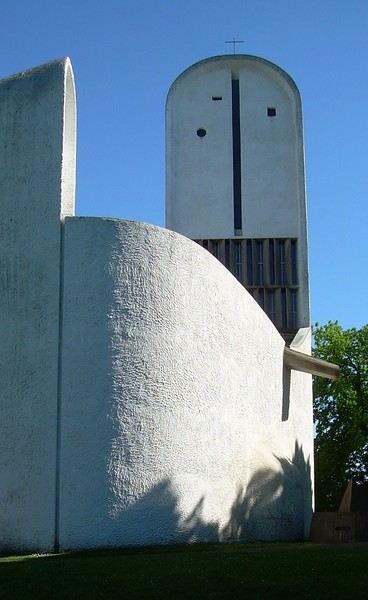
The Notre Dame du Haut chapel in Ronchamp, a work by Le Corbusier (1955)
Is there a route to cycle across Italy before boarding for Sicily?
Hi,
The EuroVelo 7, as mentioned by another member, seems like a good option.
You mentioned in the previous discussion that you’re starting from Vienna.
Here’s what I’d suggest:
1- Get to Turin or Cuneo (crossing from France into Italy)
2- Follow the "Ciclovia del Po" (Po River cycle path); it’ll intersect with EuroVelo 7.
3- Follow EuroVelo 7 with two options:
a- all the way to Sicily
or
b- in Lazio, branch off to Civitavecchia and take a ferry from Civitavecchia to Palermo.
Best time: spring or autumn.
Best time: spring or autumn.
August 2026 Photo Contest Theme: Religious Buildings
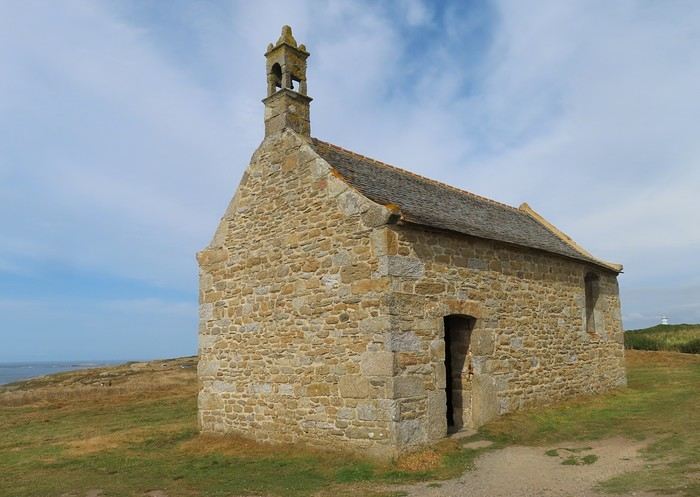
PHOTO 2 France, Brittany, Finistère
Saint Samson Chapel in Landunvez, inseparable from its surroundings: the sea, the moor, and a navigational marker.
August 2026 Photo Contest Theme: Religious Buildings
Photo 1: Spain, Andalusia, Seville: the Giralda (detail)
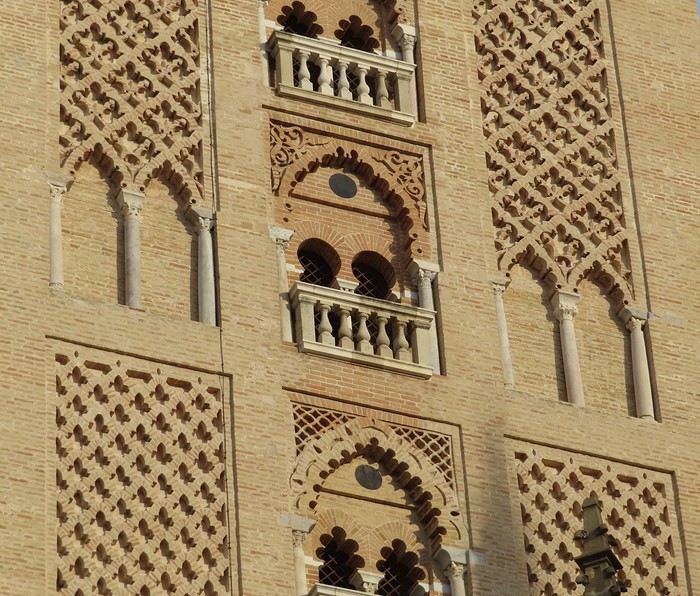
The Giralda, the famous bell tower of Seville Cathedral, is a former minaret. The photo was taken from the Courtyard of the Oranges.
The Giralda, the famous bell tower of Seville Cathedral, is a former minaret. The photo was taken from the Courtyard of the Oranges.
Discussion: World's Bridges July 2026
Hi Noëlle,
I suggested the asymmetrical bridge you mentioned in post 147.
This bridge is located in Italy (Tuscany region).
It’s called the Ponte della Maddalena (or Devil’s Bridge) and spans the Serchio River.
The Serchio is the river that flows through Lucca. To get to the bridge, follow the Serchio upstream from Lucca; you’ll end up in a valley wedged between the Apuan Alps and the Apennines. This small region (valley + mountains) is called Garfagnana: that’s where it is, in the municipality of Borgo a Mozzano.
This should encourage you to go see it, given your fondness for Tuscany.
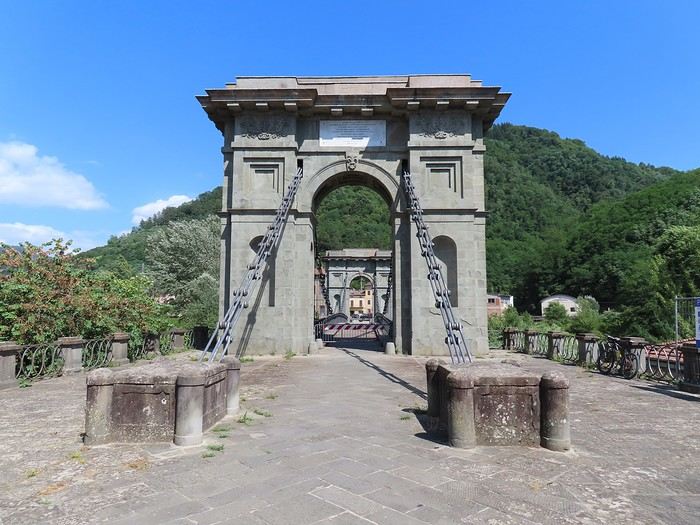
If you do, you can kill two birds with one stone: the bridge I submitted in the photo contest (photo 3, post 38) is located about 10 km from the previous one, on the Lima River, a tributary of the Serchio. It’s a historic bridge, one of the first suspension bridges in Italy, called the Ponte delle Catene (Chain Bridge).
I’ve seen suspension bridges before (the classic elements are there), but I was surprised by the materials used.
The piers. They’re made of stone with a "prestigious" design: triumphal arches. (I’d only seen concrete or metal before.)
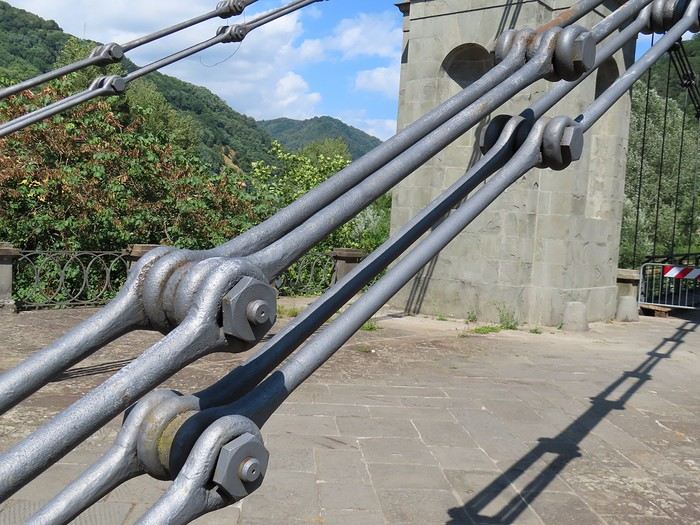
The "cables." They’re not cables but chains made of wrought iron, crafted with astonishing care. In my opinion, steel cable manufacturing wasn’t mastered at the time, so these chains represent the bridge’s technical feat. (I’d only seen steel cables before.)
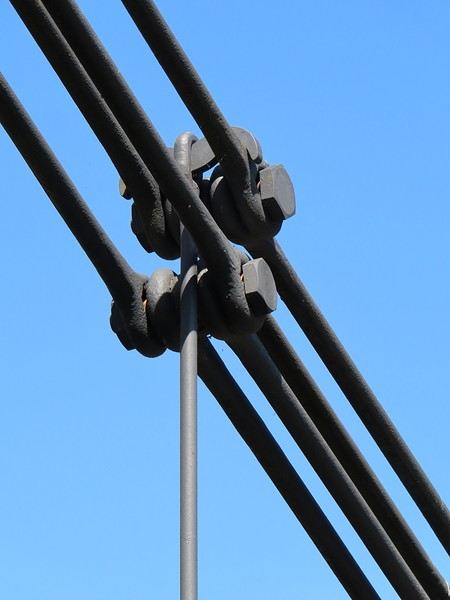
I won’t say anything about the suspenders.
The deck is wooden. You can see this clearly in the contest photo. Minimal deck weight? That probably stopped once metal or concrete beams became common. (I’d only seen metal or concrete before.)
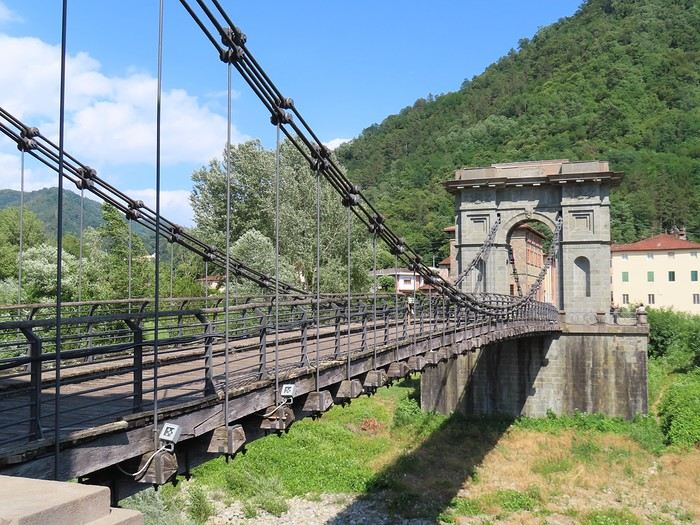
This bridge really interested me: it’s "listed," meaning it must be preserved for its heritage value in the history of engineering. I’ve strayed far from the photography aspect to focus on the bridge’s construction....
This should encourage you to go see it, given your fondness for Tuscany.
If you do, you can kill two birds with one stone: the bridge I submitted in the photo contest (photo 3, post 38) is located about 10 km from the previous one, on the Lima River, a tributary of the Serchio. It’s a historic bridge, one of the first suspension bridges in Italy, called the Ponte delle Catene (Chain Bridge).
I’ve seen suspension bridges before (the classic elements are there), but I was surprised by the materials used.
The piers. They’re made of stone with a "prestigious" design: triumphal arches. (I’d only seen concrete or metal before.)
The "cables." They’re not cables but chains made of wrought iron, crafted with astonishing care. In my opinion, steel cable manufacturing wasn’t mastered at the time, so these chains represent the bridge’s technical feat. (I’d only seen steel cables before.)
I won’t say anything about the suspenders.
The deck is wooden. You can see this clearly in the contest photo. Minimal deck weight? That probably stopped once metal or concrete beams became common. (I’d only seen metal or concrete before.)
This bridge really interested me: it’s "listed," meaning it must be preserved for its heritage value in the history of engineering. I’ve strayed far from the photography aspect to focus on the bridge’s construction....
July 2026 Photo Contest Theme: Bridges of the World
Good evening,
my votes:
3 points for Gaura – photo 1: Pont Alexandre III, Paris The water level draws the eye to the bridge (and to its function); the sunlight also draws the eye to the bridge (almost miraculously).
2 points for Kate – photo 3: Footbridge in Roses, Spain Bright backlighting; it’s the simplicity that stands out.
1 point for Attila – photo 3: Bridge over a crevasse, Norway A rudimentary bridge; an almost abstract photo that motivates my vote.
Opinions on first family trip to France itinerary
Hi Delphjne,
My reply focuses on one specific point: the day trip to Geneva.
Over the past ten years, I’ve spent about six months in winter near Les Rousses.
As a skier, I’ve regularly gone—under sunny skies—to La Dôle, a Jura peak overlooking Lake Geneva (Léman).
Out of at least 40 trips, I’ve seen the lake only twice; the rest of the time, we saw a ceiling of clouds with the occasional plane emerging from (or disappearing into) them (Geneva Airport). The running joke was, “Down there, they won’t be seeing the sun today.”
If you’re heading to Geneva for the scenery, January seems like a very risky bet.
If you’re going for other reasons (historical interest, museums, shopping), don’t let my comment—or the potential cloud cover—deter you.
Have a great winter trip to the mainland.
Have a great winter trip to the mainland.