Results for "Madagascar"
About 9,955 results.
More options
Many results are in French, the community’s main language. English translations are added over time.
Search results
What itinerary for three weeks in Madagascar this summer?
Hi there,
I’m planning a 22-day trip to Madagascar this July.
And I could really use some advice 😊
Here’s what I’m sure about: Spending a few days in Nosy Be so my daughter can complete her Open Water certification—so I’m thinking 4 or 5 days there. I think Diego Suarez, Montagne d’Ambre, and Ankarana would suit what we like to do and have the advantage of being close to Nosy Be.
Now, the parts I’m unsure about, especially because of travel times:
My daughters really want to see whales. Is it possible around Nosy Be, or is Sainte Marie *the* must-visit spot? And what’s the weather like at that time of year? If we choose Sainte Marie, maybe do the Pangalanes Canal? Or is the route from Diego to Sainte Marie via the Vanilla Road a must-do?
Another option could be exploring the east with the Tsiribihina River and the Avenue of the Baobabs in Morondava.
Thanks in advance for your tips!
And I could really use some advice 😊
Here’s what I’m sure about: Spending a few days in Nosy Be so my daughter can complete her Open Water certification—so I’m thinking 4 or 5 days there. I think Diego Suarez, Montagne d’Ambre, and Ankarana would suit what we like to do and have the advantage of being close to Nosy Be.
Now, the parts I’m unsure about, especially because of travel times:
My daughters really want to see whales. Is it possible around Nosy Be, or is Sainte Marie *the* must-visit spot? And what’s the weather like at that time of year? If we choose Sainte Marie, maybe do the Pangalanes Canal? Or is the route from Diego to Sainte Marie via the Vanilla Road a must-do?
Another option could be exploring the east with the Tsiribihina River and the Avenue of the Baobabs in Morondava.
Thanks in advance for your tips!
Airlines for Madagascar
It’s been over 10 years since I last went to Madagascar. Back then, I flew Corsair from Paris.
I’m planning to go back in September 2025.
I’ve heard about Air Austral...
Air France: the issue is the flight arrives in the evening at Ivato.
What do you recommend?
Which airlines fly from Paris to Tana?
Thanks for the help!
Trains and ferries in Madagascar
Hi there
I’m heading to Madagascar soon and I’m looking for two pieces of info:
- Is there a passenger train between Tananarive and Tamatave?
- Are there maritime connections again between Madagascar and the Comoros from Majunga? If so, can you buy ferry tickets online?
Thanks
Laurent
One-way ticket to Madagascar
Hi there,
My wife is from Madagascar (we currently live in France), and she wants to move back permanently. Can we buy a one-way ticket for her flight?
Looking forward to your reply, Eric
My wife is from Madagascar (we currently live in France), and she wants to move back permanently. Can we buy a one-way ticket for her flight?
Looking forward to your reply, Eric
Nothing’s stopping you from going to Ampefy (Madagascar)
During these three big weeks in Madagascar, one week in Sainte Marie, a few days for a little loop in the west/south, and the rest in Tana.
This loop I’m talking about covers an area I’d never taken the time to visit before. A recent road in good condition, the chance to pass through beautiful highland landscapes, and a few free days made it the perfect opportunity. Destination: Ampefy, west of Tana via the RN1, then a turn south onto the recently rehabilitated RN43 to reach Antsirabe before heading back to Tana. Four days planned—perfect, since an extra day wouldn’t have been a problem given all the activities in Ampefy.
First day: a relaxed and fairly late departure for Ampefy. We weren’t in a rush and took our time. Traffic leaving Tana to get back on the RN1 cost us the head start we had on our original schedule. An hour and a half bumper-to-bumper with the *buxis*, inching painfully toward the roundabout and then the bridge that acts as a bottleneck—we dove in like all our fellow sufferers. It’s not our everyday reality, and we were early, so no big deal, but man, it’s long and slow. Once past that obstacle, traffic flowed smoothly, and the road was good (all the way to Ampefy). We moved through highland landscapes, bustling villages full of activity, and countless agricultural supply shops—clear proof, if any were needed, that we were crossing a prime farming region. Around Arivonimamo, we passed through a forest with a Mediterranean vibe: a single-species forest of stout little trees with glossy, elongated light-green leaves—these are *tapia*. An endemic tree in Madagascar, and a pretty unique forest as a result (you can see them elsewhere, like between Antsirabe and Ambositra). There are efforts to protect it from illegal logging because the wood is fire-resistant, which helps shield the forest from wildfires. Beyond its biodiversity value, the *tapia* hosts silkworms, giving it economic and cultural importance.
As we kept going, we started spotting a lake and mountains with the rounded shapes typical of extinct volcanoes worn down by time and the elements. We were approaching Lake Itasy and, by extension, Ampefy. We stopped at a *hotely* for a plate of *tongon’kisoa*—pig’s trotters caramelized by cooking, with thick, flavorful skin—along with the obligatory portion of rice, which we took the time to drizzle with cooking juices to make it a bit more appetizing. Full, we turned left to reach Ampefy and our hotel. The landscape was dotted with collapsed, dormant volcanic cones, and suddenly, the view opened up onto the lake. Shallow and expansive, we followed it, losing sight of it now and then before finding it again in Ampefy itself, which we entered after crossing the Lily, a beautiful river that drains the lake. Lots of hotels and restaurants, with plenty of options at all price points. We chose the *Farihy*, about 5 km past Ampefy. A gorgeous spot by the lake, with a pool and lovely bungalows—some with picture windows overlooking the lake. Really nice. In the evening, a drink and some *sak sak* for aperitif on the terrace. It wasn’t warm, there was a lot of wind, and a storm was brewing. Off to bed quickly to start the next day’s visits.
After buying some lychees—we hadn’t seen many this year, and these were fresh from the field, picked in Ampefy—we headed to the Lily Falls. Well signposted, with a paved road in great condition, we stopped at the kiosk for the entrance fee and parking (1 euro for one *vahiny* and 10 cents for one Malagasy). We set off down the path and quickly reached the first waterfall, then continued for maybe 1 km on a well-marked trail to the second. A guide led us to the third, which is harder to spot and isn’t actually on the Lily itself. Beautiful countryside scenery: fishermen straight out of *Tom Sawyer*, straw hats on their heads, lying down with one foot hooked to a fragile bamboo rod, their line dipping into the calm river. Men preparing rice paddies with their *angady*, women transplanting rice, bent over the water. At some points, we walked along the dikes between paddies almost ready for harvest. It’s peaceful and beautiful when you’re strolling or fishing, but working the paddies is grueling, especially under that beating sun. A really nice walk—2 hours and a bit, going at a leisurely pace. A guide isn’t mandatory; only the entrance fee is. We took one because it provides a bit of work and puts money in the hands of locals, giving them more incentive to protect the site. But you can easily skip it, like most people do. Lots of visitors since it was the weekend—Tananarivians with family or groups of young people, scout groups organized under their chaperones’ direction. Very few foreign tourists, though—that’s a general observation. It’s great to see this growth in domestic tourism, giving Malagasy people the chance to discover their own country and allowing those in the sector to rely less on foreign visitors, who’ve been scarce for years.
Next, we headed to the "geysers" (which aren’t actually geysers, but whatever). We had to go back to the RN1, head toward Tsiroanomandidy, and a few kilometers later, a well-marked sign and a newly paved track led us to a pretty site. Again, lots of people, another kiosk, more fees to pay, and guides available. This time, we skipped the guide. A downpour caught us in front of the "geysers," so we took shelter under a little shop, grabbing an ice cream and some drinks. We didn’t stay long—we weren’t interested in a massage or a dip in the thermal water. The countryside and barren mountain landscapes were stunning on the way back to the hotel. We noticed you could go paragliding right in front of the bungalow, so we booked a session for the next morning. After eating at the *Auberge* in the town center (it was good), we headed back to the hotel to turn in early. Once again, a storm rolled in during the afternoon, and the temperature dropped significantly.
The next morning, around 8 a.m., we walked to the takeoff zone near the hotel. Towed by a small boat, we took off for a flight over the lake and the volcanic domes before landing back at the same spot. Two companies handle this. I’m no expert, but it seemed safe and well-organized.
To be continued...
First day: a relaxed and fairly late departure for Ampefy. We weren’t in a rush and took our time. Traffic leaving Tana to get back on the RN1 cost us the head start we had on our original schedule. An hour and a half bumper-to-bumper with the *buxis*, inching painfully toward the roundabout and then the bridge that acts as a bottleneck—we dove in like all our fellow sufferers. It’s not our everyday reality, and we were early, so no big deal, but man, it’s long and slow. Once past that obstacle, traffic flowed smoothly, and the road was good (all the way to Ampefy). We moved through highland landscapes, bustling villages full of activity, and countless agricultural supply shops—clear proof, if any were needed, that we were crossing a prime farming region. Around Arivonimamo, we passed through a forest with a Mediterranean vibe: a single-species forest of stout little trees with glossy, elongated light-green leaves—these are *tapia*. An endemic tree in Madagascar, and a pretty unique forest as a result (you can see them elsewhere, like between Antsirabe and Ambositra). There are efforts to protect it from illegal logging because the wood is fire-resistant, which helps shield the forest from wildfires. Beyond its biodiversity value, the *tapia* hosts silkworms, giving it economic and cultural importance.
As we kept going, we started spotting a lake and mountains with the rounded shapes typical of extinct volcanoes worn down by time and the elements. We were approaching Lake Itasy and, by extension, Ampefy. We stopped at a *hotely* for a plate of *tongon’kisoa*—pig’s trotters caramelized by cooking, with thick, flavorful skin—along with the obligatory portion of rice, which we took the time to drizzle with cooking juices to make it a bit more appetizing. Full, we turned left to reach Ampefy and our hotel. The landscape was dotted with collapsed, dormant volcanic cones, and suddenly, the view opened up onto the lake. Shallow and expansive, we followed it, losing sight of it now and then before finding it again in Ampefy itself, which we entered after crossing the Lily, a beautiful river that drains the lake. Lots of hotels and restaurants, with plenty of options at all price points. We chose the *Farihy*, about 5 km past Ampefy. A gorgeous spot by the lake, with a pool and lovely bungalows—some with picture windows overlooking the lake. Really nice. In the evening, a drink and some *sak sak* for aperitif on the terrace. It wasn’t warm, there was a lot of wind, and a storm was brewing. Off to bed quickly to start the next day’s visits.
After buying some lychees—we hadn’t seen many this year, and these were fresh from the field, picked in Ampefy—we headed to the Lily Falls. Well signposted, with a paved road in great condition, we stopped at the kiosk for the entrance fee and parking (1 euro for one *vahiny* and 10 cents for one Malagasy). We set off down the path and quickly reached the first waterfall, then continued for maybe 1 km on a well-marked trail to the second. A guide led us to the third, which is harder to spot and isn’t actually on the Lily itself. Beautiful countryside scenery: fishermen straight out of *Tom Sawyer*, straw hats on their heads, lying down with one foot hooked to a fragile bamboo rod, their line dipping into the calm river. Men preparing rice paddies with their *angady*, women transplanting rice, bent over the water. At some points, we walked along the dikes between paddies almost ready for harvest. It’s peaceful and beautiful when you’re strolling or fishing, but working the paddies is grueling, especially under that beating sun. A really nice walk—2 hours and a bit, going at a leisurely pace. A guide isn’t mandatory; only the entrance fee is. We took one because it provides a bit of work and puts money in the hands of locals, giving them more incentive to protect the site. But you can easily skip it, like most people do. Lots of visitors since it was the weekend—Tananarivians with family or groups of young people, scout groups organized under their chaperones’ direction. Very few foreign tourists, though—that’s a general observation. It’s great to see this growth in domestic tourism, giving Malagasy people the chance to discover their own country and allowing those in the sector to rely less on foreign visitors, who’ve been scarce for years.
Next, we headed to the "geysers" (which aren’t actually geysers, but whatever). We had to go back to the RN1, head toward Tsiroanomandidy, and a few kilometers later, a well-marked sign and a newly paved track led us to a pretty site. Again, lots of people, another kiosk, more fees to pay, and guides available. This time, we skipped the guide. A downpour caught us in front of the "geysers," so we took shelter under a little shop, grabbing an ice cream and some drinks. We didn’t stay long—we weren’t interested in a massage or a dip in the thermal water. The countryside and barren mountain landscapes were stunning on the way back to the hotel. We noticed you could go paragliding right in front of the bungalow, so we booked a session for the next morning. After eating at the *Auberge* in the town center (it was good), we headed back to the hotel to turn in early. Once again, a storm rolled in during the afternoon, and the temperature dropped significantly.
The next morning, around 8 a.m., we walked to the takeoff zone near the hotel. Towed by a small boat, we took off for a flight over the lake and the volcanic domes before landing back at the same spot. Two companies handle this. I’m no expert, but it seemed safe and well-organized.
To be continued...
Mora Mora in Boraha, One Week on a Little Malagasy Polynesian Vibe
Just back from a week on Nosy Boraha, better known as Île Sainte-Marie. Mostly on Île aux Nattes, actually, at the very south of the island—literally just a few hundred meters from Sainte-Marie’s airport. Far east of Madagascar, and if you keep going straight, you’ll hit Australia.
We flew in through that airport to avoid a long, rough road trip before and after Tamatave, plus a boat ride that could be short or long (boat time was inversely proportional to the bus ride to the port for the Sainte-Marie ferry). No issues with Tsaradia—departures and returns were on time, service was impeccable, and the ATR plane was smooth. Too bad the prices are so high. We managed a change due to a delayed Kenya Airways flight.
First, we stayed in the northern half, on the west coast of the island, at Natiora Green Lodge. The place is absolutely stunning—a little cove opening onto a small bay dotted with rocky outcrops under lush vegetation. The bungalows are practically on the beach, in a gorgeous, forested setting alive with birdsong. It’s the perfect spot for a pirate crew and just begs for daydreaming. No reef barrier, so it gets deep pretty quickly, but the rocks have healthy coral and plenty of small fish. Great snorkeling—we even saw a turtle. Really, really nice. The only downside is that it’s a bit far from the island’s center and kinda isolated, so eating anywhere but the hotel or going for a walk without a rental car or tuk-tuk is tricky. Not impossible, but harder than if you’re somewhere livelier.
Next, we moved to Île aux Nattes at Baboo Village, which overlooks the channel between Nosy Boraha and Nosy Nato. The bungalows are right on the water, nicely and simply decorated, with a restaurant and terrace right next door. You get to the hotel directly by pirogue from Sainte-Marie’s "embarcadère"—it takes 2-3 minutes, or a little longer if the motor’s acting up. The owner is super friendly and welcoming, with a relaxed, "family/friendly" vibe. There are often a few lemurs in the hotel’s park, adding life to the place, and the vegetation is beautiful once again. The path that circles the island starts right at the hotel entrance, making it easy to reach the island’s dock and the different beaches on the west, east, or even south. Several restaurants are within walking distance, and nothing’s far by pirogue anyway. You can also find the island’s "center" with a few small shops for basic supplies or a meal at a hotely. Since there’s no electricity on the island, the generator at the hotel runs from 6 PM to 10 PM, but you can charge your phone anytime by leaving it at reception. Kayaks are free to use and great for exploring—the whole island is doable, even if you’re not an expert. Just take your time. The upside of Île aux Nattes and Sainte-Marie’s east coast is the reef barrier and lagoon (unlike the west side), which means those gorgeous water colors, accessible coral, and shallow swimming spots. The only downside of Baboo for me, since I love snorkeling, is its location right on the channel. Personally, I prefer the south side of Île aux Nattes (near the Aurora) or the east side (like Kintana) for the lagoon views and easier snorkeling (though my wife didn’t agree). But as I said, those spots are still super easy to reach from Baboo. The west side’s okay, but I like it less—except for the view of Madagascar and the sunset. Again, totally subjective.
On Sainte-Marie, we didn’t try any restaurants other than Natiora’s. Not a ton of options, but it was fine. We weren’t fans of Chez Nono in Baie d’Ampanihy—overpriced for the tiny portions. Sure, the crab was good, but there was so little of it for the price. A bit of a rip-off, since crabs are everywhere and can’t cost much for Nono. On Île aux Nattes, there are plenty of little restaurants. We tried three—Chez Adelaide, La Buvette, and Coco Sud—and every time, we had fish or seafood, and it was always good and generous, with great achards. Prices were very reasonable.
Of course, we soaked up the time, the light, the beauty of the place, the sounds, the smells... just chilling in full *tranquillou billou* mode.
We also did some activities. Snorkeling—I’ll come back to it. In 2019, I thought it was a disaster, with no nice spots and really disappointing. This year, I jumped in everywhere I could and tested spots I’d spotted on Maps or during my last trip. And it was *really* good. Mostly on Île aux Nattes: the south side near the sacred islet, west in front of Kintana, west north of the channel (especially the sand islets), and on Sainte-Marie at Natiora’s rocks. Lots of healthy coral and plenty of fish typical of the area. If you’re into big fish, this isn’t the place, but if you love coral and little critters, it’s awesome. Snorkeling outside the reef was disappointing again, and diving was too. Unless you get lucky, it’s not worth it, in my opinion.
The tour of Île aux Nattes with a meal included was great—perfect for taking breaks whenever you find a pretty spot to snorkel or just relax on a nice beach.
A trip to the sand islets was also really fun. You can’t stay long because it gets super hot, and you’re at the mercy of the tides. There’s a good flock of terns that probably nest there. The coral reefs on the east side of the islet are gorgeous. Really, really nice. Plus, the islets themselves are just stunning.
We chose to go to Ampanihy via the lagoon, hugging the shore—it’s beautiful, with amazing colors, a wilder coastline than the west, and views of seaweed farms. It’s a long trip, though, and at Ampanihy, there’s a pretty beach (but there are tons elsewhere) and a nice mangrove. Maybe it’s better to go by road to the bay and take a boat to explore the lagoon and stop somewhere without going all the way to Ampanihy, saving yourself 2 hours of boat time round-trip. Once there, you can take a little pirogue tour to the beach and through the mangrove. The way we did it, the trip wasn’t essential. As I said, Chez Nono was disappointing—bring a picnic or try Chez Samson instead.
Of course, we visited the pirate cemetery, a place I love even though there’s not much left to see—just a few graves, unfortunately, and some vandalism. The site is still magical, though, and you can let your thoughts drift with La Buse and William Kidd, who passed through here.
We organized all our outings with Crépin, who runs two small boats with his brother. We met him totally by chance, but we don’t regret it. We could adjust the trips based on what we wanted—where to stop or which spot to visit next—and Crépin handled the meals. Prices were super affordable for a full day. I can share his number if you want. We didn’t try anyone else, but I’m sure there are other great operators—I just can’t compare or recommend.
Good prep for anyone looking for an alternative to Nosy Be. Way fewer activities, sure, but also way fewer people and a really nice vibe on Sainte-Marie in general, and Île aux Nattes in particular. The beaches are more beautiful than Nosy Be’s, and there’s a reef and lagoon (it *is* the pirate island, after all). And in whale season, well, the whales.
All in all, a great place to stay for a trip.
We flew in through that airport to avoid a long, rough road trip before and after Tamatave, plus a boat ride that could be short or long (boat time was inversely proportional to the bus ride to the port for the Sainte-Marie ferry). No issues with Tsaradia—departures and returns were on time, service was impeccable, and the ATR plane was smooth. Too bad the prices are so high. We managed a change due to a delayed Kenya Airways flight.
First, we stayed in the northern half, on the west coast of the island, at Natiora Green Lodge. The place is absolutely stunning—a little cove opening onto a small bay dotted with rocky outcrops under lush vegetation. The bungalows are practically on the beach, in a gorgeous, forested setting alive with birdsong. It’s the perfect spot for a pirate crew and just begs for daydreaming. No reef barrier, so it gets deep pretty quickly, but the rocks have healthy coral and plenty of small fish. Great snorkeling—we even saw a turtle. Really, really nice. The only downside is that it’s a bit far from the island’s center and kinda isolated, so eating anywhere but the hotel or going for a walk without a rental car or tuk-tuk is tricky. Not impossible, but harder than if you’re somewhere livelier.
Next, we moved to Île aux Nattes at Baboo Village, which overlooks the channel between Nosy Boraha and Nosy Nato. The bungalows are right on the water, nicely and simply decorated, with a restaurant and terrace right next door. You get to the hotel directly by pirogue from Sainte-Marie’s "embarcadère"—it takes 2-3 minutes, or a little longer if the motor’s acting up. The owner is super friendly and welcoming, with a relaxed, "family/friendly" vibe. There are often a few lemurs in the hotel’s park, adding life to the place, and the vegetation is beautiful once again. The path that circles the island starts right at the hotel entrance, making it easy to reach the island’s dock and the different beaches on the west, east, or even south. Several restaurants are within walking distance, and nothing’s far by pirogue anyway. You can also find the island’s "center" with a few small shops for basic supplies or a meal at a hotely. Since there’s no electricity on the island, the generator at the hotel runs from 6 PM to 10 PM, but you can charge your phone anytime by leaving it at reception. Kayaks are free to use and great for exploring—the whole island is doable, even if you’re not an expert. Just take your time. The upside of Île aux Nattes and Sainte-Marie’s east coast is the reef barrier and lagoon (unlike the west side), which means those gorgeous water colors, accessible coral, and shallow swimming spots. The only downside of Baboo for me, since I love snorkeling, is its location right on the channel. Personally, I prefer the south side of Île aux Nattes (near the Aurora) or the east side (like Kintana) for the lagoon views and easier snorkeling (though my wife didn’t agree). But as I said, those spots are still super easy to reach from Baboo. The west side’s okay, but I like it less—except for the view of Madagascar and the sunset. Again, totally subjective.
On Sainte-Marie, we didn’t try any restaurants other than Natiora’s. Not a ton of options, but it was fine. We weren’t fans of Chez Nono in Baie d’Ampanihy—overpriced for the tiny portions. Sure, the crab was good, but there was so little of it for the price. A bit of a rip-off, since crabs are everywhere and can’t cost much for Nono. On Île aux Nattes, there are plenty of little restaurants. We tried three—Chez Adelaide, La Buvette, and Coco Sud—and every time, we had fish or seafood, and it was always good and generous, with great achards. Prices were very reasonable.
Of course, we soaked up the time, the light, the beauty of the place, the sounds, the smells... just chilling in full *tranquillou billou* mode.
We also did some activities. Snorkeling—I’ll come back to it. In 2019, I thought it was a disaster, with no nice spots and really disappointing. This year, I jumped in everywhere I could and tested spots I’d spotted on Maps or during my last trip. And it was *really* good. Mostly on Île aux Nattes: the south side near the sacred islet, west in front of Kintana, west north of the channel (especially the sand islets), and on Sainte-Marie at Natiora’s rocks. Lots of healthy coral and plenty of fish typical of the area. If you’re into big fish, this isn’t the place, but if you love coral and little critters, it’s awesome. Snorkeling outside the reef was disappointing again, and diving was too. Unless you get lucky, it’s not worth it, in my opinion.
The tour of Île aux Nattes with a meal included was great—perfect for taking breaks whenever you find a pretty spot to snorkel or just relax on a nice beach.
A trip to the sand islets was also really fun. You can’t stay long because it gets super hot, and you’re at the mercy of the tides. There’s a good flock of terns that probably nest there. The coral reefs on the east side of the islet are gorgeous. Really, really nice. Plus, the islets themselves are just stunning.
We chose to go to Ampanihy via the lagoon, hugging the shore—it’s beautiful, with amazing colors, a wilder coastline than the west, and views of seaweed farms. It’s a long trip, though, and at Ampanihy, there’s a pretty beach (but there are tons elsewhere) and a nice mangrove. Maybe it’s better to go by road to the bay and take a boat to explore the lagoon and stop somewhere without going all the way to Ampanihy, saving yourself 2 hours of boat time round-trip. Once there, you can take a little pirogue tour to the beach and through the mangrove. The way we did it, the trip wasn’t essential. As I said, Chez Nono was disappointing—bring a picnic or try Chez Samson instead.
Of course, we visited the pirate cemetery, a place I love even though there’s not much left to see—just a few graves, unfortunately, and some vandalism. The site is still magical, though, and you can let your thoughts drift with La Buse and William Kidd, who passed through here.
We organized all our outings with Crépin, who runs two small boats with his brother. We met him totally by chance, but we don’t regret it. We could adjust the trips based on what we wanted—where to stop or which spot to visit next—and Crépin handled the meals. Prices were super affordable for a full day. I can share his number if you want. We didn’t try anyone else, but I’m sure there are other great operators—I just can’t compare or recommend.
Good prep for anyone looking for an alternative to Nosy Be. Way fewer activities, sure, but also way fewer people and a really nice vibe on Sainte-Marie in general, and Île aux Nattes in particular. The beaches are more beautiful than Nosy Be’s, and there’s a reef and lagoon (it *is* the pirate island, after all). And in whale season, well, the whales.
All in all, a great place to stay for a trip.
Route from Manakara to Fort Dauphin via RN 12 (ferry + 10 track)
Hi everyone, I’m stopping just giving advice on new topics to others and leading by example.
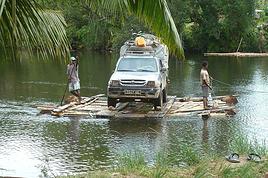
Here’s a quick recap of my Manakara–Fort Dauphin route via the ferry + 10 track (RN12). The road is changing: bridges are being built, some sections are being paved.
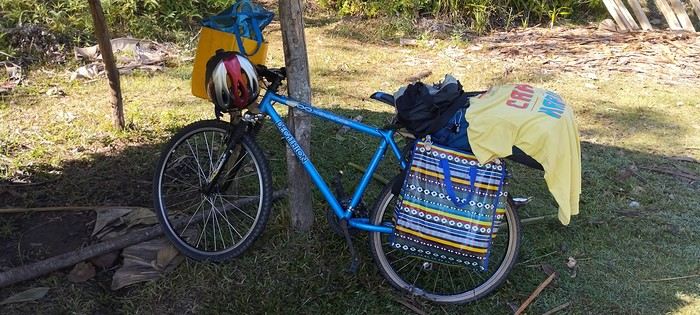
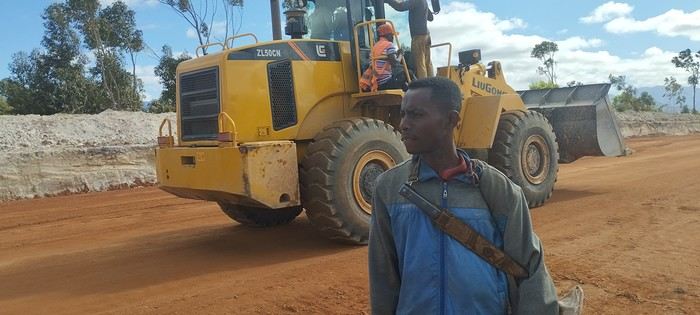 By bike, it’s doable, though some sandy stretches are still pretty tough if you’re as overloaded as I was... Left Manakara’s Hôtel Les Délices on the 11th with my pretty beat-up blue bike...
Evening of the 11th: Ivohipeno Hôtel La Source.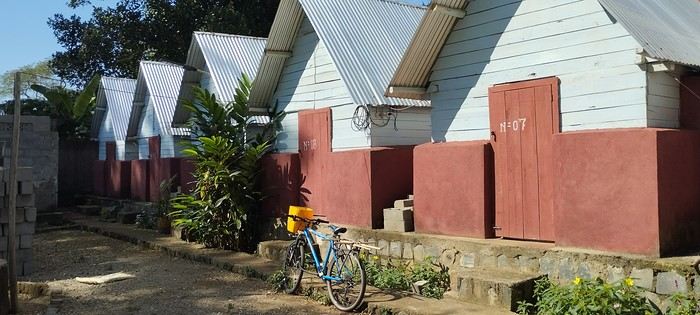
12th–15th: Farafangana’s must-visit Hôtel Concombre Masqué, bike prep. 16th: Vangaindrano—Hôtel Chez Huguette was full, so I went to Tropic Hôtel, which is nice even with plumbing issues. Did my shopping since it’s the last real town. 17th: Chez Flavienne—her real job is singer/dancer, and she has cute little bungalows before the village of... I never found it on GPS or maps. A bit basic but welcoming, with Flavienne taking great care of me. 18th: Manombondro—the "friends’ spot," yikes, avoid! The restaurant’s okay, but the room is really rough: sketchy shower, the room opens right onto the main road where all the 4x4s gather. Good for tips, but better to sleep elsewhere...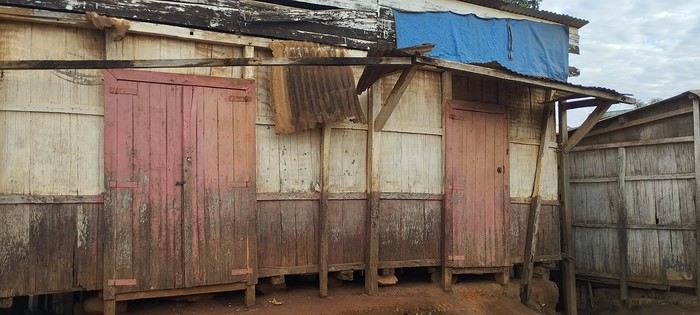
20th: Taking one of the many alternative tracks, I got lost and camped under my tent less than 5 km from Sandravinany. 21st: Sandravinany—first day at Mamie Louise’s, average hotel. Vesslasse, the manager, is great. 22nd: The next day, I went back to the fisherman’s cabin I’d thought was closed the day before—awesome! Perfect location with a lagoon view.
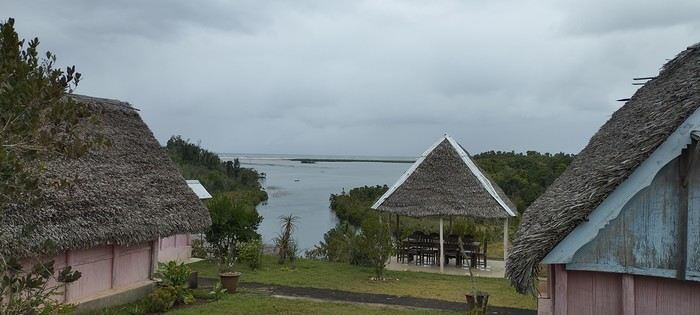
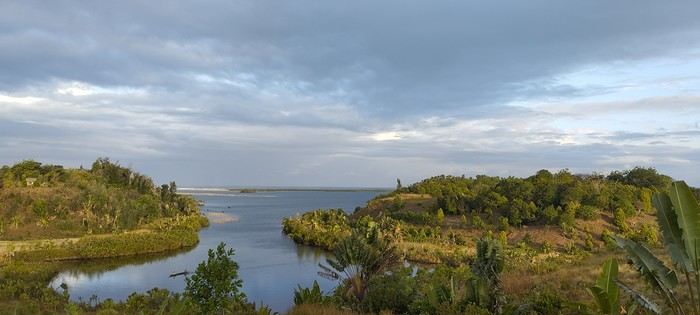
Vesslasse stops by regularly to offer his services—he knows everyone, is efficient, and super friendly. I treated myself to a few days of contemplative relaxation before taking a pirogue toward the coastal track on the morning of the 25th—big mistake! Hardly anyone around to ask for directions, so I got lost multiple times, did a bunch of backtracking, and dealt with a lot of sand... Check out this YouTube video: From Sandravinany to the Sand Track 25th: Maroroy—chez Louisette, can’t miss it: right after the ferry, by the water, super relaxing. By the water, super relaxing. 26th: Manantenina—the very nice (and for me, too expensive) bungalows of Jean-Philippe were full, so I stayed at Hôtel Le Bleu, small bungalows with a restaurant on the main road. 27th: Sainte Luce—I got a ride from a UNICEF 4x4, so I *had* to stay at Hôtel Vah’inn—expensive but right on the water, with a pool table and good food. 28th: Fort Dauphin—Hôtel Nepenthes: central (steep climb to get there!) but nice bungalows.
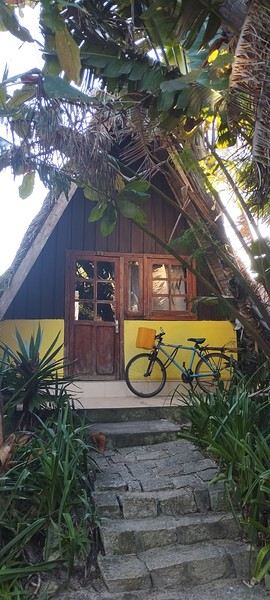
Fort Dauphin has plenty of very affordable hotels. After that, I headed back to Tulear in a shared 4x4 (Godzilla)—two pretty grueling days, but the driver was really nice.

You can find all the details of this adventure and many others in my book, but I’m not allowed to talk about it on the forum... Too bad. A video of this route That’s it—I’ll post about other tracks I did that same year in other threads. Have a great day!
By bike, it’s doable, though some sandy stretches are still pretty tough if you’re as overloaded as I was... Left Manakara’s Hôtel Les Délices on the 11th with my pretty beat-up blue bike...
Evening of the 11th: Ivohipeno Hôtel La Source.
12th–15th: Farafangana’s must-visit Hôtel Concombre Masqué, bike prep. 16th: Vangaindrano—Hôtel Chez Huguette was full, so I went to Tropic Hôtel, which is nice even with plumbing issues. Did my shopping since it’s the last real town. 17th: Chez Flavienne—her real job is singer/dancer, and she has cute little bungalows before the village of... I never found it on GPS or maps. A bit basic but welcoming, with Flavienne taking great care of me. 18th: Manombondro—the "friends’ spot," yikes, avoid! The restaurant’s okay, but the room is really rough: sketchy shower, the room opens right onto the main road where all the 4x4s gather. Good for tips, but better to sleep elsewhere...
20th: Taking one of the many alternative tracks, I got lost and camped under my tent less than 5 km from Sandravinany. 21st: Sandravinany—first day at Mamie Louise’s, average hotel. Vesslasse, the manager, is great. 22nd: The next day, I went back to the fisherman’s cabin I’d thought was closed the day before—awesome! Perfect location with a lagoon view.
Vesslasse stops by regularly to offer his services—he knows everyone, is efficient, and super friendly. I treated myself to a few days of contemplative relaxation before taking a pirogue toward the coastal track on the morning of the 25th—big mistake! Hardly anyone around to ask for directions, so I got lost multiple times, did a bunch of backtracking, and dealt with a lot of sand... Check out this YouTube video: From Sandravinany to the Sand Track 25th: Maroroy—chez Louisette, can’t miss it: right after the ferry, by the water, super relaxing. By the water, super relaxing. 26th: Manantenina—the very nice (and for me, too expensive) bungalows of Jean-Philippe were full, so I stayed at Hôtel Le Bleu, small bungalows with a restaurant on the main road. 27th: Sainte Luce—I got a ride from a UNICEF 4x4, so I *had* to stay at Hôtel Vah’inn—expensive but right on the water, with a pool table and good food. 28th: Fort Dauphin—Hôtel Nepenthes: central (steep climb to get there!) but nice bungalows.
Fort Dauphin has plenty of very affordable hotels. After that, I headed back to Tulear in a shared 4x4 (Godzilla)—two pretty grueling days, but the driver was really nice.
You can find all the details of this adventure and many others in my book, but I’m not allowed to talk about it on the forum... Too bad. A video of this route That’s it—I’ll post about other tracks I did that same year in other threads. Have a great day!
Bush taxi from Tamatave to Nosy Be - Hell Ville (Madagascar)
Hi, I'd like to know if there's a bush taxi from TAMATAVE TO NOSY-BE HELL VILLE (an island), and if so, which company should I take?
Thanks in advance for your answers ;)
Morondava
Hi everyone,
I noticed the forum could use more recommendations for visiting Madagascar, so I thought I’d share my experience.
I arrived on the Big Island last March. I moved there as part of a contract with a friend who started a tech business. A quick note about Madagascar: this country is full of talent. The young people are incredibly ambitious, dynamic, and creative.
After visiting some of the more well-known tourist spots like Mahajanga (Majunga) and Toamasina (Tamatave), the place that really stood out to me was Morondava, in the southwest of the island.
To get there, we left Tananarive (Antananarivo) in the evening, heading to Antsirabe, where we spent the night. By the way, Antsirabe is worth lingering in—it’s a charming town with lots of pleasant spots, and you’ll often run into French travelers there.
The next day, we left at 4:00 AM for Morondava. Our goal was to arrive around 3:00 PM, driving at a relaxed pace to enjoy the scenery. We stopped in Miandrivazo for lunch—there, the tilapia and grilled prawns are a must.
Before Miandrivazo, the road isn’t great (like many roads in Madagascar, unfortunately), but the stunning landscapes more than make up for it. The vegetation, typical of African savannas, is fascinating. However, bushfires—unfortunately common on the island—leave visible scars on the scenery.
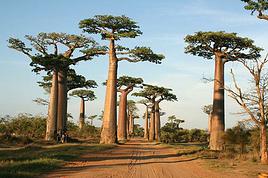
About 50 kilometers from Morondava, near Mahabo, the magic begins: majestic baobabs line the road, and the sunset turns this scene into a real postcard. It’s a moment I’ll never forget.
Once there, we stayed near Nosy Kely. It was very hot, but the warmth of the locals, the Sakalava, and their incredible culinary skills quickly made us forget the heat. The seafood and fish are prepared with impressive mastery… so good!
I’d love to recommend some great spots, but I’d rather not accidentally promote anything here. What I *can* say is that Morondava is absolutely worth the detour, if only for its unique atmosphere and breathtaking landscapes.
The next day, we set off to explore the famous Avenue of the Baobabs. This place is simply mind-blowing, one of a kind. As the name suggests, it’s an avenue lined with giant baobabs, with a dusty red-dirt road running through the middle. The whole scene has an almost mystical vibe.
We were planning to visit the Tsingy de Bemaraha on the fly, but it turned out to be too ambitious. According to our guide, we would’ve had to cross two rivers, at Belo and Bekopaka, which would’ve taken a lot more time. That’ll definitely be my next big adventure in Madagascar.
If you get the chance, I’d recommend going even farther than the Avenue of the Baobabs—about two hours by road. There, you can catch a glimpse of a real baobab forest in the distance. Some friends in another car were lucky enough to go, and their stories made me dream. They experienced a magical moment, one of those things you have to see to believe.
I’m no travel journal expert, but I hope this little glimpse inspires you to discover this little slice of paradise in Madagascar.
I noticed the forum could use more recommendations for visiting Madagascar, so I thought I’d share my experience.
I arrived on the Big Island last March. I moved there as part of a contract with a friend who started a tech business. A quick note about Madagascar: this country is full of talent. The young people are incredibly ambitious, dynamic, and creative.
After visiting some of the more well-known tourist spots like Mahajanga (Majunga) and Toamasina (Tamatave), the place that really stood out to me was Morondava, in the southwest of the island.
To get there, we left Tananarive (Antananarivo) in the evening, heading to Antsirabe, where we spent the night. By the way, Antsirabe is worth lingering in—it’s a charming town with lots of pleasant spots, and you’ll often run into French travelers there.
The next day, we left at 4:00 AM for Morondava. Our goal was to arrive around 3:00 PM, driving at a relaxed pace to enjoy the scenery. We stopped in Miandrivazo for lunch—there, the tilapia and grilled prawns are a must.
Before Miandrivazo, the road isn’t great (like many roads in Madagascar, unfortunately), but the stunning landscapes more than make up for it. The vegetation, typical of African savannas, is fascinating. However, bushfires—unfortunately common on the island—leave visible scars on the scenery.
About 50 kilometers from Morondava, near Mahabo, the magic begins: majestic baobabs line the road, and the sunset turns this scene into a real postcard. It’s a moment I’ll never forget.
Once there, we stayed near Nosy Kely. It was very hot, but the warmth of the locals, the Sakalava, and their incredible culinary skills quickly made us forget the heat. The seafood and fish are prepared with impressive mastery… so good!
I’d love to recommend some great spots, but I’d rather not accidentally promote anything here. What I *can* say is that Morondava is absolutely worth the detour, if only for its unique atmosphere and breathtaking landscapes.
The next day, we set off to explore the famous Avenue of the Baobabs. This place is simply mind-blowing, one of a kind. As the name suggests, it’s an avenue lined with giant baobabs, with a dusty red-dirt road running through the middle. The whole scene has an almost mystical vibe.
We were planning to visit the Tsingy de Bemaraha on the fly, but it turned out to be too ambitious. According to our guide, we would’ve had to cross two rivers, at Belo and Bekopaka, which would’ve taken a lot more time. That’ll definitely be my next big adventure in Madagascar.
If you get the chance, I’d recommend going even farther than the Avenue of the Baobabs—about two hours by road. There, you can catch a glimpse of a real baobab forest in the distance. Some friends in another car were lucky enough to go, and their stories made me dream. They experienced a magical moment, one of those things you have to see to believe.
I’m no travel journal expert, but I hope this little glimpse inspires you to discover this little slice of paradise in Madagascar.
10-day trip to Madagascar and Nosy Be
Hi there,
I’m looking for information about the island of Madagascar and Nosy Be. I’d like to spend 10 days there in February. Could you recommend some hotels and must-see places? Is it better to rent a car or a motorbike? What budget should I plan for? We’ll be a group of 4 people.
Thanks in advance for your tips!
I’m looking for information about the island of Madagascar and Nosy Be. I’d like to spend 10 days there in February. Could you recommend some hotels and must-see places? Is it better to rent a car or a motorbike? What budget should I plan for? We’ll be a group of 4 people.
Thanks in advance for your tips!
3-Week Road Trip in Madagascar
Hello,
We’re arriving in Tana, the capital, by plane on the morning of May 22nd after an overnight flight.
Does any forum member know this Malagasy driver-guide: Haja Rasolondraibe?
The itinerary below might change or evolve—23 days might not be enough.
We’ll visit the central region (the highlands: Antsirabe, Atoetra and a Zafimaniry village, Lake Andrianina) and the unmissable west (Kirindy, the Avenue of the Baobabs, the Tsingy de Bamaraha, and a fishing village). Then back to Tana.
After that, we’ll head east of Tana to Ambohimanga, Andasibe, near Tamatave, Ankanin'ny, Mahambo, and Île Sainte-Marie if time allows. Not sure yet. Then back to Tana.
This driver-guide with a 4x4 charges 70 € per day, including food and accommodation. Excluding fuel.
If any members can recommend other driver-guides with a 4x4 and more reliable vehicles in good condition (since we don’t want to travel at night), I’d be interested.
Thanks in advance.
evad.tebo
Small issue with the contest
Hi,
I can't seem to sign up for the trip to Madagascar contest? It keeps saying "an error occurred." Has anyone else run into the same problem?
Thanks
Contest: A trip for two to Madagascar!
Hi everyone.
I just joined this site and I’m trying to enter the contest, but no luck!
For those who managed to do it, could you tell me how you did it? I followed all the instructions 😏
Thanks
Looking for this hotel bar on Île Sainte-Marie
My daughter and three of her friends went to Île Sainte-Marie, Madagascar. I haven’t heard from them in two days. Could you please tell me if you know this bar and hotel? This is the last photo she sent me, and I’d like to get in touch with them... thanks so much
Ended - Win an exceptional trip for two to Madagascar to explore the marine life!
Hi everyone,
To celebrate the reopening of VoyageForum and its acquisition by MyAtlas Group with you, we’re proudly teaming up with VoyagesPirates and Dune Travel to give you a unique chance to win an unforgettable trip to Madagascar! 🙂
Dive into the turquoise waters of Nosy Be, explore Lokobé Park, and swim alongside sea turtles at Nosy Sakatia in an idyllic setting! 🙂
This trip for two people will take place in June 2025 and is worth 3,500 €!
What’s included:
A round-trip flight from France for two people Airport-lodge transfers 7 nights with breakfast at the stunning DUNE lodge in Nosy Be A day trip to Lokobé Park A Discover Scuba Diving package to explore the marine life A snorkeling day at Nosy Sakatia to meet sea turtles
How to enter?
Sign up for free on VoyagePirates by clicking here. Deadline: November 30, 2024, until 11:59 PM. Conditions: You must be 18 or older and able to take the flight departing from and arriving in Paris, Lyon, or Marseille.
A lucky winner will be drawn the week following the contest closing.
Terms and conditions:
General conditions Privacy policy
Good luck to everyone! 🙂
Best regards,
The VoyageForum Team MyAtlas Group
https://www.youtube.com/watch?v=lU410WUm-KQ
MyAtlas is the leading site for creating travel journals, offering you the chance to turn your memories into high-quality photo books. It’s the perfect way to preserve your adventures and relive the emotion and beauty of your amazing trips on every page. MyAtlas Group acquired VoyageForum in June 2024 (click here for more details).
VoyagesPirates is a go-to resource for travel deals. Every day, the site offers the best hotel, flight, and vacation package deals at attractive prices. If you want to travel on a budget, it’s one of the major players you shouldn’t miss!
Dune Travel, experts in travel and diving, invites you to experience something unique! Try scuba diving and discover the wonders of the underwater world.
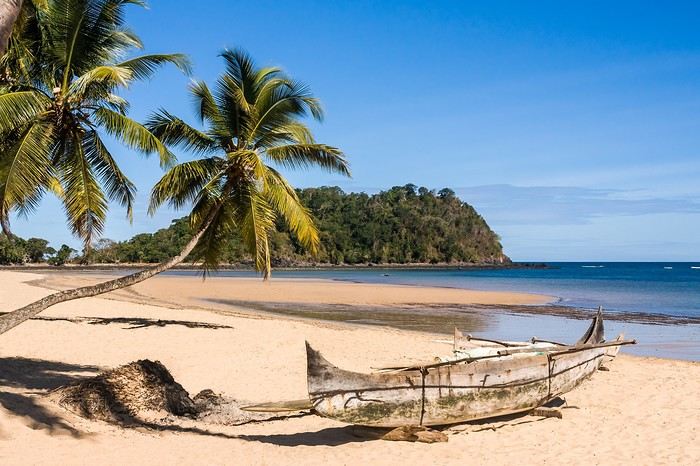
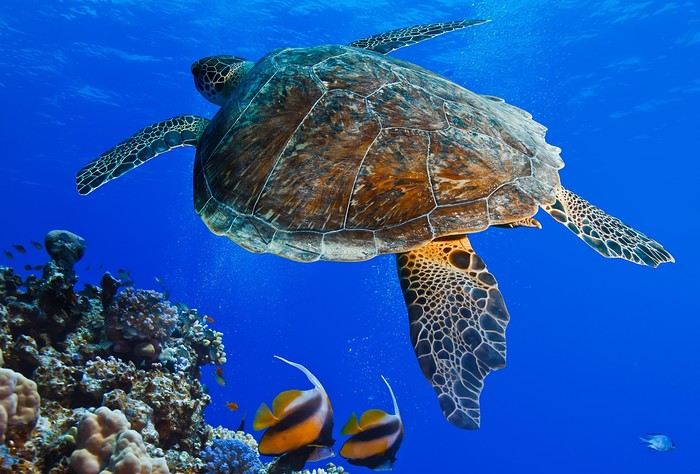
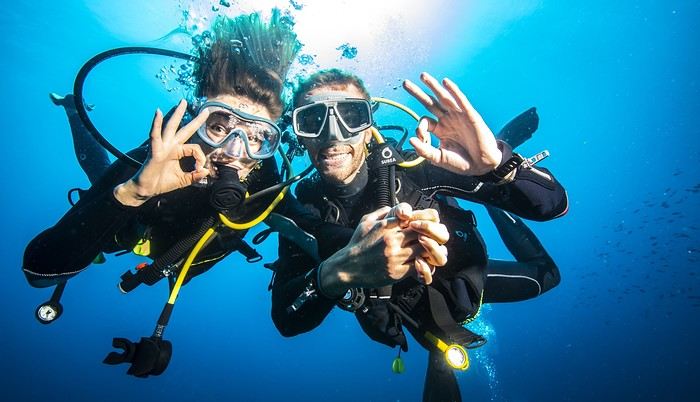 © Guillaume Ruoppolo - Dune
To celebrate the reopening of VoyageForum and its acquisition by MyAtlas Group with you, we’re proudly teaming up with VoyagesPirates and Dune Travel to give you a unique chance to win an unforgettable trip to Madagascar! 🙂
Dive into the turquoise waters of Nosy Be, explore Lokobé Park, and swim alongside sea turtles at Nosy Sakatia in an idyllic setting! 🙂
This trip for two people will take place in June 2025 and is worth 3,500 €!
What’s included:
A round-trip flight from France for two people Airport-lodge transfers 7 nights with breakfast at the stunning DUNE lodge in Nosy Be A day trip to Lokobé Park A Discover Scuba Diving package to explore the marine life A snorkeling day at Nosy Sakatia to meet sea turtles
How to enter?
Sign up for free on VoyagePirates by clicking here. Deadline: November 30, 2024, until 11:59 PM. Conditions: You must be 18 or older and able to take the flight departing from and arriving in Paris, Lyon, or Marseille.
A lucky winner will be drawn the week following the contest closing.
Terms and conditions:
General conditions Privacy policy
Good luck to everyone! 🙂
Best regards,
The VoyageForum Team MyAtlas Group
https://www.youtube.com/watch?v=lU410WUm-KQ
MyAtlas is the leading site for creating travel journals, offering you the chance to turn your memories into high-quality photo books. It’s the perfect way to preserve your adventures and relive the emotion and beauty of your amazing trips on every page. MyAtlas Group acquired VoyageForum in June 2024 (click here for more details).
VoyagesPirates is a go-to resource for travel deals. Every day, the site offers the best hotel, flight, and vacation package deals at attractive prices. If you want to travel on a budget, it’s one of the major players you shouldn’t miss!
Dune Travel, experts in travel and diving, invites you to experience something unique! Try scuba diving and discover the wonders of the underwater world.
© Guillaume Ruoppolo - DuneResuming discussions and returning to Madagascar
Oh, the good news—the site is back up after such a long closure. I think many of us were really missing it, though some have moved on to other forums like Routard.
Hopefully, activity will pick up little by little. Travel habits have probably changed post-Covid, and some regulars won’t be coming back for all sorts of reasons.
But for the rest of us, the forum is here for travel journals and pre-trip questions. Anyway…
Back to the main point: my last trip to Madagascar was a while ago now—about a year—on the High Plateaus during the austral winter. It was really chilly, and to be honest, my feelings were mixed between the joy of returning to Madagascar and the sadness of seeing the state of the country. The infrastructure is crumbling, and the population is sinking into poverty at unprecedented levels. The country’s closure likely had immeasurable consequences, compounded by destructive cyclones. Even secondary cities have seen large numbers of rural people arriving in search of work, while some rural areas barely allow survival. I’ve never felt such despair over the situation in 20 years.
From Tana to Fianar, it was nothing but heartbreaking observations. Probably made worse by the drizzle and cold typical of that season in the region.
In a few weeks, I’m planning to return to the High Plateaus and also Sainte Marie. On that note, a few questions: has anyone stayed at Samaria Cosy Lodge, and what did you think of it? On Île aux Nattes, which hotel would you recommend for a few peaceful days, ideally on the coast best suited for snorkeling?
Thanks in advance
Back to the main point: my last trip to Madagascar was a while ago now—about a year—on the High Plateaus during the austral winter. It was really chilly, and to be honest, my feelings were mixed between the joy of returning to Madagascar and the sadness of seeing the state of the country. The infrastructure is crumbling, and the population is sinking into poverty at unprecedented levels. The country’s closure likely had immeasurable consequences, compounded by destructive cyclones. Even secondary cities have seen large numbers of rural people arriving in search of work, while some rural areas barely allow survival. I’ve never felt such despair over the situation in 20 years.
From Tana to Fianar, it was nothing but heartbreaking observations. Probably made worse by the drizzle and cold typical of that season in the region.
In a few weeks, I’m planning to return to the High Plateaus and also Sainte Marie. On that note, a few questions: has anyone stayed at Samaria Cosy Lodge, and what did you think of it? On Île aux Nattes, which hotel would you recommend for a few peaceful days, ideally on the coast best suited for snorkeling?
Thanks in advance
Transférer un 4x4 par bateau à Madagascar
Bonjour à tous et merci d'être là pour les autres!
J'envisage de venir vivre de longues périodes à Madagascar et je souhaite avoir sur place un 4X4 pour pouvoir me déplacer facilement.
J'aimerais en savoir plus sur les transfert de véhicule par bateau, en container ou pas et sur le coût.
Comment font la majorité des expats dans ce Pays?
Merci!
Merci!
À voir/à faire en 10 jours à Madagascar?
bonjour,
l'été 2021, après 10 jours de rando à la réunion, j'aimerais passer au moins 10 jours à Mada, que me conseillez vous de voir, dans quelles parties de l'ile, quel moyen de locomotion, quels hébergements, à prix raisonnables, merci de tous vos bons tuyaux
Vols vers Madagascar
quand les avions voleront-ils vers madagascar
Voyage en famille à Madagascar hors coins touristiques
bonjour j aimerai partir en voyage a madagsacar avec ma femme et mes enfants
j aimerai decouvrir et leur faire decouvrir ces joli paysages MAIS AUSSI les endroits locaux les lieux moins touristiques et aussi les coins defavorisés , en effet voir des endroits ou la richesse n est pas la car j aimerai avec mes enfants faire des dons d affaires et de fournitures scolaires , montrer a mes enfants comment ils vivent labas
si quel qu un pourai m aiguiller m indiquer
merci beaucoup