Results for "Liberia"
About 4,830 results.
More options
Many results are in French, the community’s main language. English translations are added over time.
Search results
June 2026 Photo Contest Theme: Such a Beautiful Landscape
Hello,
It might not be very original, but I see it hasn’t been suggested—or at least not for a very long time. I’d like to invite you to discover the beauty of the great outdoors through landscape photos. Whether they’re desert, sea, countryside, or mountain scenes—with or without other elements (people, buildings, animals, etc.)—they should make us want to dive right in without hesitation.
To participate: Photo submissions until Wednesday, June 24 at 11:59 PM You can post up to 3 photos, numbered and shared in separate messages, along with a short description of the place and the story behind it.
To vote: from Thursday, June 25 at 12:01 AM to Monday, June 29 at 11:59 PM After the deadline, it’s too late!
Please include the photo number, username, and the points awarded: Photo #1 = 3 pts Photo #2 = 2 pts Photo #3 = 1 pt
All VF members can vote (even those who didn’t submit photos). In case of a tie for first place, the winning photo will be the one with the most first-place votes, then second-place votes! The lucky winner will get to organize July 2026’s photo contest.
For discussions about the theme, it’s here: Discussion thread for June 2026’s theme: Such a Beautiful Landscape
Good luck to everyone!
Philippe
Chumphon, Thailand: Doi Tapang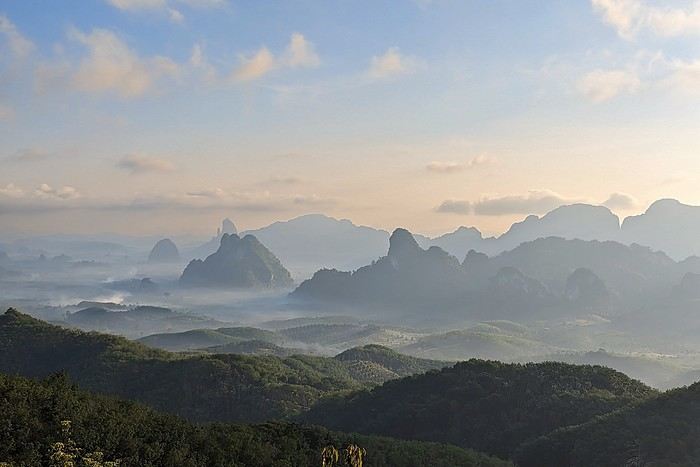
It might not be very original, but I see it hasn’t been suggested—or at least not for a very long time. I’d like to invite you to discover the beauty of the great outdoors through landscape photos. Whether they’re desert, sea, countryside, or mountain scenes—with or without other elements (people, buildings, animals, etc.)—they should make us want to dive right in without hesitation.
To participate: Photo submissions until Wednesday, June 24 at 11:59 PM You can post up to 3 photos, numbered and shared in separate messages, along with a short description of the place and the story behind it.
To vote: from Thursday, June 25 at 12:01 AM to Monday, June 29 at 11:59 PM After the deadline, it’s too late!
Please include the photo number, username, and the points awarded: Photo #1 = 3 pts Photo #2 = 2 pts Photo #3 = 1 pt
All VF members can vote (even those who didn’t submit photos). In case of a tie for first place, the winning photo will be the one with the most first-place votes, then second-place votes! The lucky winner will get to organize July 2026’s photo contest.
For discussions about the theme, it’s here: Discussion thread for June 2026’s theme: Such a Beautiful Landscape
Good luck to everyone!
Philippe
Chumphon, Thailand: Doi Tapang
"Glory": an Animal Farm for Zimbabwe—and the world
"400 pages of verbal pyrotechnics and animal magic" — The Times
"Bulawayo leans into exaggeration and irony to tell hard truths. *Glory* is jam-packed with comedy and farce, poking fun at an autocratic regime while illustrating the absurdity and surreal nature of a police state." — The Guardian
The cruelty and savagery of Zimbabwe’s (and Africa’s in general) "powerful animals"
Zimbabwean author NoViolet Bulawayo has written a novel that illustrates better than any documentary the complexity of colonial legacy. In doing so, she revisits George Orwell’s Animal Farm. Her novel *Glory* is a political satire about Zimbabwe—and it’s brimming with humor.
For thirty years, Zimbabwe has been stagnating under Robert Mugabe’s presidency. Human rights violations, corruption, and international sanctions have kept the population mired in poverty and oppression, while the regime exploits the meager earnings of the economy. As the 2017 elections approach, a power struggle erupts over the succession of the very elderly Father of the Nation (Mugabe). On the streets, people hope for long-awaited reforms; the people feel their moment has come.
And indeed, the army ousts Mugabe and his wife—"with her Gucci heels" (p.32)—who was positioning herself for the presidency. Hopes are dashed, however. The generals install former vice-president Emmerson Mnangagwa in power; the regime merely changes faces, but the problems remain the same.
In the novel, the country is called "Jidada, with a -da and another -da" (p.1); there’s no mistaking that this fictional state is Zimbabwe.
For *Glory*, her second novel, NoViolet Bulawayo invents a whole series of codes whose strength lies precisely in how easy they are to decipher. Like George Orwell’s Animal Farm, the characters populating Bulawayo’s universe aren’t humans but horses, goats, or crocodiles with all-too-human traits. Mugabe and Mnangagwa are horses, the spiritual leader is a pig, the soldiers are all bloodthirsty dogs, while the populace consists of goats, chickens, donkeys, and cats. The shift to the animal world serves only to better grasp the laws of despotism—and to ridicule real-life models. On one hand, the animals are humanized: they tweet, torture, travel in private jets. On the other, their greed, stupidity, and brutality stem from their animal nature.
It’s the old trick of fable: dressing men in animal disguises to make them easier to recognize. That’s how Orwell, in Animal Farm, traced how the promise of liberation from the Russian Revolution turned into Stalinist terror. In his 1945 fable, George Orwell describes how the animals of a farm drive out their farmer to organize the exploitation themselves, collectively. For a time, they truly taste freedom, but a clique of pigs ends up taking control. The central figures of the Soviet story—Stalin, Trotsky, Molotov—were easily recognizable.
Yet Bulawayo departs sharply from Orwell. She’s less concerned with precision and the force of argument than with satirical exaggeration. The deposed president is a senile old man who believes he can control even the sun’s course. The new stallion in power is a greedy debaucher. His soldiers sniff respectfully at his tail and backside.
In Bulawayo’s *Glory*, things are more complicated, but her novel also tells of a failed, incomplete liberation. In the author’s Animal Farm, Jidada, the colonial exploiters are followed by new forms of oppression. Because the former liberators become tyrants themselves. And because global power dynamics persist in neocolonial structures.
Wouldn’t that be enough to fuel a deeply depressing narrative? No—Bulawayo turns it into a blazing satire, full of wit and uncompromising criticism of power, a thread running through contemporary (not just) Zimbabwean history. The old warhorses in NoViolet Bulawayo’s Jidada, who continue to act as pack leaders, are easily recognizable as caricatures of the longtime dictator Robert Mugabe and his successor, current president Emmerson Mnangagwa.
The plot kicks off in high gear with independence day festivities. From the crack of dawn, everyone waits on Jidada Square for the Old Horse, the Father of the Nation and former liberator, whose reign "was nearing all of—not one, not two, not three, but four solid decades" (p.1). Everywhere, the colors of the Jidada Party shine; everywhere, true supporters cheer. Even the scorching sun plays its part: "At this point the sun, upon seeing arrive the leader who was decreed by God himself to rule and rule and keep ruling, a leader who'd in turn decreed the very sun to head his cheerleading squad, took a deep, deep breath and thoroughly blazed to impress" (p.2).
Finally, the Old Horse’s luxury carriage approaches "with the slowness of a hearse" (p.2), and "hoping to catch a glimpse of the legendary Father of the Nation," which causes "the animals fell over themselves like intoxicated frogs" (p.2). The sovereign’s speech is delayed a moment longer: "what I really want is a nap," groans the Old Horse as he takes his seat with such care "like his backside was made of expensive porcelain" (p.6).
Meanwhile, Bulawayo parades his entourage: the president’s wife (who earns her doctorate at Jidada University faster than "you could say diss, for dissertation. Tholukuthi it was as easy as ordering from a KFC drive-through, or perhaps even easier being that it was cheaper than KFC; it in fact cost her nothing and the degree actually came with a zero-calorie Diet Coke and a purple straw" (p.41), and she’s now known as Dr Sweet Mother. The cabinet includes "the Minister of the Revolution, the Minister of Corruption, the Minister of Order, the Minister of Things, the Minister of Nothing, the Minister of Propaganda, the Minister of Homophobic Affairs, the Minister of Disinformation and the Minister of Looting" (p.9). And of course the vice-president, who will soon become interim president when the Old Horse finally kicks the bucket—and then settle in as the new long-term president, who in the novel is called Tuvius Delight Shasha, or "Tuvy" for short (p.253), none other than Emmerson Mnangagwa. It’s him Bulawayo reserves her most merciless character description for.
"New Dispensation" (p.109) is Tuvy’s slogan for Jidada, and he loves repeating it so much he even named his parrot after it ("So inspired was Tuvy by the realisation that he rechristened his new pet parrot with the name New Dispensation—tholukuthi the bird having been acquired explicitly for the purposes of tweeting eulogies and accordingly glorifying the Saviour throughout the airs and skies of the nation. Tuvy then went on to hire a lecturer in English from the University of Jidada to teach New Dispensation to say the phrase 'New Dispensation'" p.110). But Tuvy’s Zimbabwe remains a nation without free, fair, and credible elections ("#freefairncredibleelection" p.161), and the promised equal treatment applies only insofar as Zimbabweans now queue up without discrimination in endless lines—and everyone is as poor as the next in the "queuenation" (p.283). Except for the powerful. They can "yes, tholukuthi, her immeasurable riches theirs to take. And take they did—
just take—take—take—take—take—take—take—take—take—take—take—take—take—take—take—take—take—take—take—take—take—take—take—take—take—take—take" (p.249-250).
In short: Bulawayo brilliantly depicts how former independence fighters become exploiters themselves. And how the country threatens to suffocate under the weight of corruption and repression. But she also literally stages the polyphony with which the people oppose imposed obedience to the official line.
Controversial online discussions keep interrupting the narrative—dialogues and social threads (see photo below) that Bulawayo masterfully integrates. From a literary standpoint, it’s a brilliant idea. And it shows, above all, that the author’s sympathy—so likeable—goes to all those who refuse to let their dream of true freedom be stolen, not even by the corrupt elites of their own country.
In the book’s acknowledgments, the first tribute goes to "The Jidadas of the world, clamouring for freedom on many fronts—A luta continua." (p.401) This reflects the realization that, not only in Jidada-Zimbabwe but in many other corners of the world, the end of colonial domination is still far from meaning the freedom hoped for by the vast majority of people. But it also means, more broadly, that this freedom must be won "on many fronts" (see above), both domestically and geopolitically.
That’s precisely what *Glory* so vividly highlights: how complex the project behind the term "postcolonialism" really is. With *Glory*, Bulawayo also delivers a scathing critique of the persistence of colonial mindsets in the West.
In the novel, the murder of George Floyd, racist police violence, and white-supremacist ideology in Trump’s United States perfectly illustrate the persistence of racism. It’s especially in the final chapters that Bulawayo lets Jidada’s inhabitants explicitly and unflinchingly criticize a neocolonial world order:
"It was not lost on us how the West, which loved to 'save' Africa and announce every action to the whole world, did so with one limb while manipulating, looting and fleecing us with the rest of its limbs so that more money in fact poured out of the continent than trickled in." (p.376)
"It was no mistake that multinational corporations yearly reaped and shipped colossal profits from Africa back to their countries as had been the case during colonial times. Even the sticks and stones would tell you that the African earth at any given time howled and shook and heaved from the extraction of its precious minerals that rarely benefited its own miserable children." (p.376)
"(...) we vowed to wage yet another war for Africa's second Liberation from neocolonial oppression. From exploitation. From plunder. From Western dominion. From indignity. From Abuse. We wanted real freedom. We wanted greedy, thieving paws off our wealth. We wanted Justice. We wanted a new world; we wanted a brand-new world so much we didn't sleep a wink that night." (p.377)
The Jidadas of this world must fight two enemies: Western neocolonialism and the autocratic instrumentalization of that argument; the persistence of Western racism and the populist appropriation of that humiliation by tyrants from their own ranks. Neither of these obstacles to freedom diminishes the historical and current guilt of the other. But the path to postcolonial liberation must overcome all these forms of oppression. After all, the colonizers didn’t bequeath democracies to formerly dominated nations, but instability and the principles of oppression and exploitation—which the so-called liberators have also internalized. Yet the fact that a satirical novel can capture the complexity of historical relationships while remaining, despite all the darkness of the subject, hilarious—well, that’s truly astonishing.
Finally, *Glory* ties into a major trauma in Zimbabwe’s post-independence history: the so-called Gukurahundi massacres. Between 1983 and 1987, tens of thousands of civilians were murdered by Mugabe’s bloody henchmen, most of them Ndebele. The State Security Minister and head of secret services at the time? You guessed it—Emmerson Mnangagwa.
When *Glory* turns to the massacres, the novel’s tone shifts completely. The story is now told through the narrative of the goat called Destiny, who, like NoViolet Bulawayo herself, left her home country at 18 for the United States and only returned after 13 years. In the book, the city of Bulawayo becomes a village where Destiny retraces her family’s history—and learns that part of it was also brutally murdered during the massacres.
The abuse of power and life under a dictatorship, dispossession, and a fiercely proud awareness of the psychological wounds and emotional vulnerability of a uprooted and disenfranchised people who had to forge a new language—a new set of names—to express their lived experiences are at the heart of this wonderful Zimbabwean author’s literary work, NoViolet Bulawayo. Shortly after her studies, she was already writing short stories about postcolonial power dynamics in Africa. But her playful, masterful, and often unconventional approach to language also plays a key role in her work. With virtuosity, she shifts from cynical images of power-obsessed elites to compassionate descriptions of the people’s suffering, ending with a hopeful sermon on courage—the courage to break free from fear and thus gain the strength for change ("And every one of them understood that whatever they heard within those hearts was the new national anthem, tholukuthi an anthem that spoke of the kind of glory that burns eternal and glows with living light." p.400). This novel is a genuine pleasure to read. And it’s exceptional. Good, African...
Book info (original English and German translation):
NoViolet Bulawayo. Glory. Chatto & Windus, 2022. NoViolet Bulawayo. Glory. Suhrkamp, 2023.
Hery
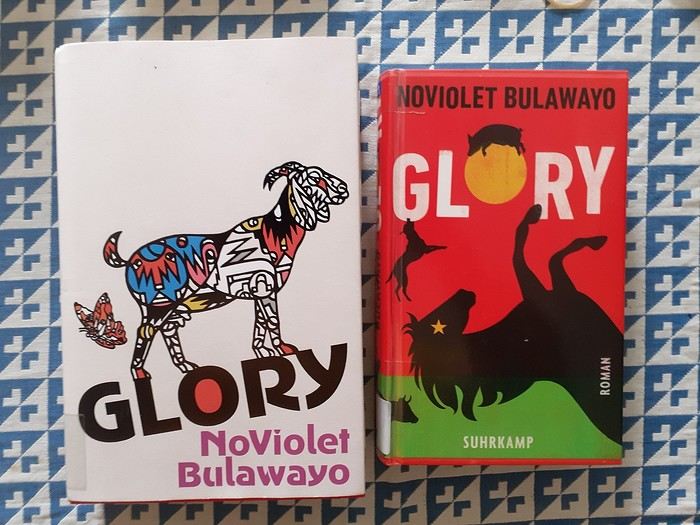 The books (in English, in German)
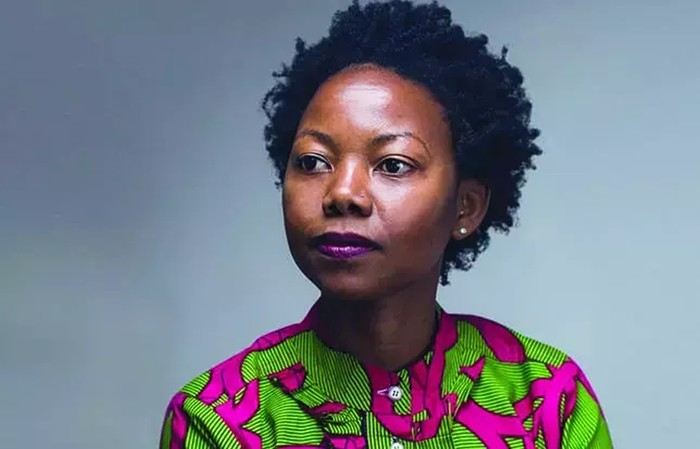 Author NoViolet Bulawayo, Zimbabwe
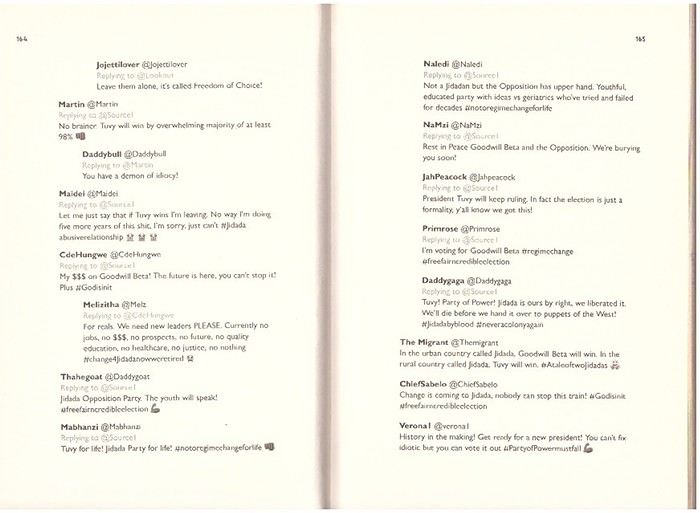 Threads (p.164-165)
"Bulawayo leans into exaggeration and irony to tell hard truths. *Glory* is jam-packed with comedy and farce, poking fun at an autocratic regime while illustrating the absurdity and surreal nature of a police state." — The Guardian
The cruelty and savagery of Zimbabwe’s (and Africa’s in general) "powerful animals"
Zimbabwean author NoViolet Bulawayo has written a novel that illustrates better than any documentary the complexity of colonial legacy. In doing so, she revisits George Orwell’s Animal Farm. Her novel *Glory* is a political satire about Zimbabwe—and it’s brimming with humor.
For thirty years, Zimbabwe has been stagnating under Robert Mugabe’s presidency. Human rights violations, corruption, and international sanctions have kept the population mired in poverty and oppression, while the regime exploits the meager earnings of the economy. As the 2017 elections approach, a power struggle erupts over the succession of the very elderly Father of the Nation (Mugabe). On the streets, people hope for long-awaited reforms; the people feel their moment has come.
And indeed, the army ousts Mugabe and his wife—"with her Gucci heels" (p.32)—who was positioning herself for the presidency. Hopes are dashed, however. The generals install former vice-president Emmerson Mnangagwa in power; the regime merely changes faces, but the problems remain the same.
In the novel, the country is called "Jidada, with a -da and another -da" (p.1); there’s no mistaking that this fictional state is Zimbabwe.
For *Glory*, her second novel, NoViolet Bulawayo invents a whole series of codes whose strength lies precisely in how easy they are to decipher. Like George Orwell’s Animal Farm, the characters populating Bulawayo’s universe aren’t humans but horses, goats, or crocodiles with all-too-human traits. Mugabe and Mnangagwa are horses, the spiritual leader is a pig, the soldiers are all bloodthirsty dogs, while the populace consists of goats, chickens, donkeys, and cats. The shift to the animal world serves only to better grasp the laws of despotism—and to ridicule real-life models. On one hand, the animals are humanized: they tweet, torture, travel in private jets. On the other, their greed, stupidity, and brutality stem from their animal nature.
It’s the old trick of fable: dressing men in animal disguises to make them easier to recognize. That’s how Orwell, in Animal Farm, traced how the promise of liberation from the Russian Revolution turned into Stalinist terror. In his 1945 fable, George Orwell describes how the animals of a farm drive out their farmer to organize the exploitation themselves, collectively. For a time, they truly taste freedom, but a clique of pigs ends up taking control. The central figures of the Soviet story—Stalin, Trotsky, Molotov—were easily recognizable.
Yet Bulawayo departs sharply from Orwell. She’s less concerned with precision and the force of argument than with satirical exaggeration. The deposed president is a senile old man who believes he can control even the sun’s course. The new stallion in power is a greedy debaucher. His soldiers sniff respectfully at his tail and backside.
In Bulawayo’s *Glory*, things are more complicated, but her novel also tells of a failed, incomplete liberation. In the author’s Animal Farm, Jidada, the colonial exploiters are followed by new forms of oppression. Because the former liberators become tyrants themselves. And because global power dynamics persist in neocolonial structures.
Wouldn’t that be enough to fuel a deeply depressing narrative? No—Bulawayo turns it into a blazing satire, full of wit and uncompromising criticism of power, a thread running through contemporary (not just) Zimbabwean history. The old warhorses in NoViolet Bulawayo’s Jidada, who continue to act as pack leaders, are easily recognizable as caricatures of the longtime dictator Robert Mugabe and his successor, current president Emmerson Mnangagwa.
The plot kicks off in high gear with independence day festivities. From the crack of dawn, everyone waits on Jidada Square for the Old Horse, the Father of the Nation and former liberator, whose reign "was nearing all of—not one, not two, not three, but four solid decades" (p.1). Everywhere, the colors of the Jidada Party shine; everywhere, true supporters cheer. Even the scorching sun plays its part: "At this point the sun, upon seeing arrive the leader who was decreed by God himself to rule and rule and keep ruling, a leader who'd in turn decreed the very sun to head his cheerleading squad, took a deep, deep breath and thoroughly blazed to impress" (p.2).
Finally, the Old Horse’s luxury carriage approaches "with the slowness of a hearse" (p.2), and "hoping to catch a glimpse of the legendary Father of the Nation," which causes "the animals fell over themselves like intoxicated frogs" (p.2). The sovereign’s speech is delayed a moment longer: "what I really want is a nap," groans the Old Horse as he takes his seat with such care "like his backside was made of expensive porcelain" (p.6).
Meanwhile, Bulawayo parades his entourage: the president’s wife (who earns her doctorate at Jidada University faster than "you could say diss, for dissertation. Tholukuthi it was as easy as ordering from a KFC drive-through, or perhaps even easier being that it was cheaper than KFC; it in fact cost her nothing and the degree actually came with a zero-calorie Diet Coke and a purple straw" (p.41), and she’s now known as Dr Sweet Mother. The cabinet includes "the Minister of the Revolution, the Minister of Corruption, the Minister of Order, the Minister of Things, the Minister of Nothing, the Minister of Propaganda, the Minister of Homophobic Affairs, the Minister of Disinformation and the Minister of Looting" (p.9). And of course the vice-president, who will soon become interim president when the Old Horse finally kicks the bucket—and then settle in as the new long-term president, who in the novel is called Tuvius Delight Shasha, or "Tuvy" for short (p.253), none other than Emmerson Mnangagwa. It’s him Bulawayo reserves her most merciless character description for.
"New Dispensation" (p.109) is Tuvy’s slogan for Jidada, and he loves repeating it so much he even named his parrot after it ("So inspired was Tuvy by the realisation that he rechristened his new pet parrot with the name New Dispensation—tholukuthi the bird having been acquired explicitly for the purposes of tweeting eulogies and accordingly glorifying the Saviour throughout the airs and skies of the nation. Tuvy then went on to hire a lecturer in English from the University of Jidada to teach New Dispensation to say the phrase 'New Dispensation'" p.110). But Tuvy’s Zimbabwe remains a nation without free, fair, and credible elections ("#freefairncredibleelection" p.161), and the promised equal treatment applies only insofar as Zimbabweans now queue up without discrimination in endless lines—and everyone is as poor as the next in the "queuenation" (p.283). Except for the powerful. They can "yes, tholukuthi, her immeasurable riches theirs to take. And take they did—
just take—take—take—take—take—take—take—take—take—take—take—take—take—take—take—take—take—take—take—take—take—take—take—take—take—take—take" (p.249-250).
In short: Bulawayo brilliantly depicts how former independence fighters become exploiters themselves. And how the country threatens to suffocate under the weight of corruption and repression. But she also literally stages the polyphony with which the people oppose imposed obedience to the official line.
Controversial online discussions keep interrupting the narrative—dialogues and social threads (see photo below) that Bulawayo masterfully integrates. From a literary standpoint, it’s a brilliant idea. And it shows, above all, that the author’s sympathy—so likeable—goes to all those who refuse to let their dream of true freedom be stolen, not even by the corrupt elites of their own country.
In the book’s acknowledgments, the first tribute goes to "The Jidadas of the world, clamouring for freedom on many fronts—A luta continua." (p.401) This reflects the realization that, not only in Jidada-Zimbabwe but in many other corners of the world, the end of colonial domination is still far from meaning the freedom hoped for by the vast majority of people. But it also means, more broadly, that this freedom must be won "on many fronts" (see above), both domestically and geopolitically.
That’s precisely what *Glory* so vividly highlights: how complex the project behind the term "postcolonialism" really is. With *Glory*, Bulawayo also delivers a scathing critique of the persistence of colonial mindsets in the West.
In the novel, the murder of George Floyd, racist police violence, and white-supremacist ideology in Trump’s United States perfectly illustrate the persistence of racism. It’s especially in the final chapters that Bulawayo lets Jidada’s inhabitants explicitly and unflinchingly criticize a neocolonial world order:
"It was not lost on us how the West, which loved to 'save' Africa and announce every action to the whole world, did so with one limb while manipulating, looting and fleecing us with the rest of its limbs so that more money in fact poured out of the continent than trickled in." (p.376)
"It was no mistake that multinational corporations yearly reaped and shipped colossal profits from Africa back to their countries as had been the case during colonial times. Even the sticks and stones would tell you that the African earth at any given time howled and shook and heaved from the extraction of its precious minerals that rarely benefited its own miserable children." (p.376)
"(...) we vowed to wage yet another war for Africa's second Liberation from neocolonial oppression. From exploitation. From plunder. From Western dominion. From indignity. From Abuse. We wanted real freedom. We wanted greedy, thieving paws off our wealth. We wanted Justice. We wanted a new world; we wanted a brand-new world so much we didn't sleep a wink that night." (p.377)
The Jidadas of this world must fight two enemies: Western neocolonialism and the autocratic instrumentalization of that argument; the persistence of Western racism and the populist appropriation of that humiliation by tyrants from their own ranks. Neither of these obstacles to freedom diminishes the historical and current guilt of the other. But the path to postcolonial liberation must overcome all these forms of oppression. After all, the colonizers didn’t bequeath democracies to formerly dominated nations, but instability and the principles of oppression and exploitation—which the so-called liberators have also internalized. Yet the fact that a satirical novel can capture the complexity of historical relationships while remaining, despite all the darkness of the subject, hilarious—well, that’s truly astonishing.
Finally, *Glory* ties into a major trauma in Zimbabwe’s post-independence history: the so-called Gukurahundi massacres. Between 1983 and 1987, tens of thousands of civilians were murdered by Mugabe’s bloody henchmen, most of them Ndebele. The State Security Minister and head of secret services at the time? You guessed it—Emmerson Mnangagwa.
When *Glory* turns to the massacres, the novel’s tone shifts completely. The story is now told through the narrative of the goat called Destiny, who, like NoViolet Bulawayo herself, left her home country at 18 for the United States and only returned after 13 years. In the book, the city of Bulawayo becomes a village where Destiny retraces her family’s history—and learns that part of it was also brutally murdered during the massacres.
The abuse of power and life under a dictatorship, dispossession, and a fiercely proud awareness of the psychological wounds and emotional vulnerability of a uprooted and disenfranchised people who had to forge a new language—a new set of names—to express their lived experiences are at the heart of this wonderful Zimbabwean author’s literary work, NoViolet Bulawayo. Shortly after her studies, she was already writing short stories about postcolonial power dynamics in Africa. But her playful, masterful, and often unconventional approach to language also plays a key role in her work. With virtuosity, she shifts from cynical images of power-obsessed elites to compassionate descriptions of the people’s suffering, ending with a hopeful sermon on courage—the courage to break free from fear and thus gain the strength for change ("And every one of them understood that whatever they heard within those hearts was the new national anthem, tholukuthi an anthem that spoke of the kind of glory that burns eternal and glows with living light." p.400). This novel is a genuine pleasure to read. And it’s exceptional. Good, African...
Book info (original English and German translation):
NoViolet Bulawayo. Glory. Chatto & Windus, 2022. NoViolet Bulawayo. Glory. Suhrkamp, 2023.
Hery
The books (in English, in German)
Author NoViolet Bulawayo, Zimbabwe
Threads (p.164-165)Family Itinerary Feedback: Chiang Mai - Krabi/Railay - Bangkok
hi fellow travelers,
I'm "finalizing" a trip with my adventurous family (wife + 3 kids aged 16, 14, and 8) for this Easter break in Thailand (we'll be there from 04/19 to 05/01).
I'm going through the site and wanted to thank you all for the tips and insights you share on the forum. They're really valuable. But boy, it's tough to sketch out an itinerary
Of course, my backpacking route might be debatable, but I'm trying to target this path to get a first taste of the country's different "facets" and keep everyone in the family happy 😛
For this first trip, we're sticking to the classics and planning to explore a different side of the Land of Smiles in the future:
- arrival in BKK at 4 PM on 04/19 ==> leaving the same day at 7 PM for Chiang Mai (I "hesitated" with the 5:30 PM flight but was worried we wouldn't have enough time to switch from British AW to Thai Airways + airport fees + baggage + customs, etc. )
- from 04/20 to 04/23 ==> Chiang Mai with the main highlights (we've picked: Doi Suthep, Wat Pha Lat, elephant sanctuary, Doi Inthanon, the old city, Wat Chedi, Wat Phra Singh).
==> For the elephant sanctuary: any recommendations? Morning or afternoon visit?
==> It might seem ambitious, but we're considering a day trip to Chiang Rai—though it's not a must. Yes, we know it means ~6 hours of travel in one day.
- direct flight on the morning of 04/24 to Krabi ==> Railay - Phang Nga ==> this part isn't finalized yet (we won't stay in Krabi).
For those who've been there, which part of the south would be best weather-wise during this period?
We'd stay in the south until 04/28 and take a 8 PM flight to BKK.
- BKK on 04/29, 04/30, and part of 05/01 before our flight to London at 11 PM.
We'll hit the must-see/classic spots there.
If you have time to share some insights, I'd really appreciate it.
Thanks a million to everyone!
Hédi.
I'm "finalizing" a trip with my adventurous family (wife + 3 kids aged 16, 14, and 8) for this Easter break in Thailand (we'll be there from 04/19 to 05/01).
I'm going through the site and wanted to thank you all for the tips and insights you share on the forum. They're really valuable. But boy, it's tough to sketch out an itinerary
Of course, my backpacking route might be debatable, but I'm trying to target this path to get a first taste of the country's different "facets" and keep everyone in the family happy 😛
For this first trip, we're sticking to the classics and planning to explore a different side of the Land of Smiles in the future:
- arrival in BKK at 4 PM on 04/19 ==> leaving the same day at 7 PM for Chiang Mai (I "hesitated" with the 5:30 PM flight but was worried we wouldn't have enough time to switch from British AW to Thai Airways + airport fees + baggage + customs, etc. )
- from 04/20 to 04/23 ==> Chiang Mai with the main highlights (we've picked: Doi Suthep, Wat Pha Lat, elephant sanctuary, Doi Inthanon, the old city, Wat Chedi, Wat Phra Singh).
==> For the elephant sanctuary: any recommendations? Morning or afternoon visit?
==> It might seem ambitious, but we're considering a day trip to Chiang Rai—though it's not a must. Yes, we know it means ~6 hours of travel in one day.
- direct flight on the morning of 04/24 to Krabi ==> Railay - Phang Nga ==> this part isn't finalized yet (we won't stay in Krabi).
For those who've been there, which part of the south would be best weather-wise during this period?
We'd stay in the south until 04/28 and take a 8 PM flight to BKK.
- BKK on 04/29, 04/30, and part of 05/01 before our flight to London at 11 PM.
We'll hit the must-see/classic spots there.
If you have time to share some insights, I'd really appreciate it.
Thanks a million to everyone!
Hédi.
Should we really travel to the U.S. and support authoritarian drift?
I’ve visited the U.S. four times myself, including two long road trips. The last one was just this past August...
I won’t be going back. I already felt guilty last August, but recent policies have finally convinced me: the humiliation of Zelensky, authoritarian excesses, Gestapo-like methods for detaining people of foreign origin, the murder of innocent people (a mother shot dead), corruption, insane "tariffs," skyrocketing healthcare costs for Americans, the abduction of foreign figures to secure oil, the requirement to disclose social media accounts, and now... threats and blackmail to forcibly take Greenland—a region that belongs to Denmark and thus the European Union!
The reality is that simply posting this could get me denied entry to the U.S.!
In this context, I just can’t keep spending money there. I loved my trips, but there are so many other countries with stunning landscapes to explore.
So I get why you’d want to travel there. I did, and I loved it. But once a country no longer respects any of the values that made us love it, why go?
How can we even consider traveling to a country that threatens to take one of our territories by force?
I won’t be going back. I already felt guilty last August, but recent policies have finally convinced me: the humiliation of Zelensky, authoritarian excesses, Gestapo-like methods for detaining people of foreign origin, the murder of innocent people (a mother shot dead), corruption, insane "tariffs," skyrocketing healthcare costs for Americans, the abduction of foreign figures to secure oil, the requirement to disclose social media accounts, and now... threats and blackmail to forcibly take Greenland—a region that belongs to Denmark and thus the European Union!
The reality is that simply posting this could get me denied entry to the U.S.!
In this context, I just can’t keep spending money there. I loved my trips, but there are so many other countries with stunning landscapes to explore.
So I get why you’d want to travel there. I did, and I loved it. But once a country no longer respects any of the values that made us love it, why go?
How can we even consider traveling to a country that threatens to take one of our territories by force?
World Gardens and Parks – November 2025 Photo Contest
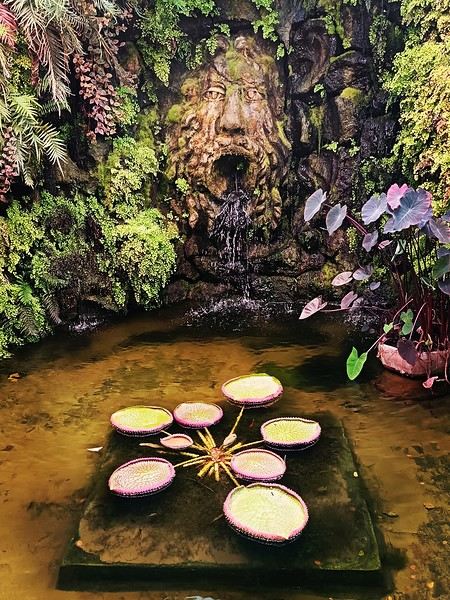
Good evening everyone,
So, it’s settled—the first idea (this book about the lush garden of a New York state parsonage, "this garden obsessed with the love this man had for his late wife." Reverend Cheney musically noting all the birdsongs, the water droplets in the watering can, the wind rushing through cloaks at the end of the 19th century) will be the theme.
Garden: A plot of land, usually enclosed, attached or not to a dwelling, planted with useful or ornamental vegetation.
So, private gardens, vegetable patches, herb gardens, botanical gardens, winter gardens with their lush greenhouses, the "hortus conclusus" of cloisters evoking the Garden of Eden, public gardens, and their extension into parks are all welcome. I’m sure I’ve forgotten some...
Photos can be posted until Monday, November 24 at midnight, following the usual rules: one per message, numbered from 1 to 3, with the location of the shot and, if you’d like, a few details.
Voting, where you explicitly assign 3 to 1 points to your top 3 photos, will take place from Tuesday, November 25 at 12:01 AM until Sunday, November 30 at midnight. The results will be announced on December 1.
Your turn! 😉
Catherine
PS: This thread is reserved for contest photos. For all other photos and conversations under the trees by the fountains, it’s here.
Moving near Aix-en-Provence
Hi everyone,
I’m looking for info on villages around Aix, like Fuveau, Bouc-Bel-Air, or even Éguilles and Venelles? We’re a couple with a child living in the Paris region, and I’ll be relocating to Aix-en-Provence in spring 2026. We’d love to swap our apartment for a house with a pool within 20-30 minutes max of central Aix, with a budget of around 650k €.
In terms of climate and geography, I’ve read that Aix is in a basin where it can get really hot. What about the surrounding villages that are a bit more elevated, like Venelles? Is it just as stifling?
For a family, which area would you recommend?
Thanks in advance for your replies!
I’m looking for info on villages around Aix, like Fuveau, Bouc-Bel-Air, or even Éguilles and Venelles? We’re a couple with a child living in the Paris region, and I’ll be relocating to Aix-en-Provence in spring 2026. We’d love to swap our apartment for a house with a pool within 20-30 minutes max of central Aix, with a budget of around 650k €.
In terms of climate and geography, I’ve read that Aix is in a basin where it can get really hot. What about the surrounding villages that are a bit more elevated, like Venelles? Is it just as stifling?
For a family, which area would you recommend?
Thanks in advance for your replies!
One-week trip to Friuli Venezia Giulia - Italy
Hello,
I’m planning a trip for about ten people—seniors—to Friuli Venezia Giulia in September 2026.
Day 1 – We’ll likely arrive in Treviso and head first to UDINE for two nights. Day 2 – Morning in Udine, then an afternoon visit to Cividale del Friuli. Travel by local train. Day 3 – We’ll leave for a quick visit to Gorizia before heading to TRIESTE for one night. Day 4 – Visit Trieste and Miramare. At the end of the day, take the train to Cervignano, then a local bus to Grado. Stay in Grado for three nights. Day 5 – Explore central Grado and take a boat tour to the island of Barbana. Day 6 – Relaxation day in Grado (as requested by the participants). Day 7 – Visit Aquileia and possibly Palmanova.
Day 8 – Return to the airport or maybe a quick detour to Venice. For the three days in Grado and the surrounding area, I was thinking of hiring a small bus with a driver. It seems like it’d be simpler—what do you think? Any ideas or suggestions? Thanks for your feedback! MADAPOLAM
Day 1 – We’ll likely arrive in Treviso and head first to UDINE for two nights. Day 2 – Morning in Udine, then an afternoon visit to Cividale del Friuli. Travel by local train. Day 3 – We’ll leave for a quick visit to Gorizia before heading to TRIESTE for one night. Day 4 – Visit Trieste and Miramare. At the end of the day, take the train to Cervignano, then a local bus to Grado. Stay in Grado for three nights. Day 5 – Explore central Grado and take a boat tour to the island of Barbana. Day 6 – Relaxation day in Grado (as requested by the participants). Day 7 – Visit Aquileia and possibly Palmanova.
Day 8 – Return to the airport or maybe a quick detour to Venice. For the three days in Grado and the surrounding area, I was thinking of hiring a small bus with a driver. It seems like it’d be simpler—what do you think? Any ideas or suggestions? Thanks for your feedback! MADAPOLAM
Lake Bourget: The Parachuting Nightmare
If you're walking around the southern part of Lake Bourget, you can't escape the noise from a parachuting club's planes. A group of climate skeptics actually takes off in small, very noisy aircraft every 15 minutes over a Natura 2000 classified area. They don’t seem to face any restrictions—neither for noise nor for greenhouse gas emissions. They occupy the airspace without paying fuel taxes or providing carbon compensation to local municipalities or environmental preservation associations, apparently. It sounds surreal, but it’s very real in such an important location.
90-Day Tourist Visa for France for a Malagasy National
Hello,
My partner, who is Malagasy, would like to visit France (ideally in mid-August) and therefore apply for a short-stay visa (90 days).
I’ve heard that many applications are refused even when all the required documents are submitted, which is why I’m here—to get advice and guidance to be "almost" sure the application will be accepted.
I have a lot of questions, and your help would be invaluable to us.
She is 27 years old, has a passport with her current occupation listed as self-employed (she owns a "taxi-brousse" truck) and thus has a statistical card, a business license, and annual tax certificates. She started her business at the beginning of this year.
As for me, I am an adult with a disability. I receive disability benefits until May 2026. I’m in the process of professional reintegration and will start a job in a few days, likely on a fixed-term contract (CDD).
Here are my questions about the supporting documents to provide:
-Purpose of the trip/stay
Flight ticket reservation (round-trip) (the ticket should only be purchased once the visa is approved). Letter of commitment to return, written on plain paper. Any other document demonstrating potential family, economic, or material ties in the country of residence. Confirmation of a booked organized trip or any other document outlining the planned itinerary.
I’ve been told that for the flight reservation, my partner just needs to go to Air Madagascar in Antananarivo and pay around 50,000 ariary to get this reservation. Given that the French short-stay visa takes between 15 to 45 days (I might be wrong) to be processed and approved, I wonder if the reservation will still be valid if the visa is approved late. For the letter of commitment to return, I assume two sentences are enough, and what matters most are the documents proving ties to the country of residence (her economic activity). Do you think that will be sufficient? And for the planned itinerary, since this isn’t an organized trip, what document could work? A handwritten letter explaining a few planned visits?
-Proof of residence in the country of origin
For employees: original work certificate, original leave certificate, last 3 payslips (or bank statements). For retirees: pensioner’s card and last 3 pension statements. For traders or entrepreneurs: professional registration, professional card, and recent bank statements.
For liberal professions: professional registration, professional card, and recent bank statements. For unemployed applicants and students: sponsorship letter and copies of the sponsor’s financial documents.
For this point, she can justify her self-employed status with the statistical card, business license, and annual tax certificates. As for bank statements, she deposits her earnings in cash into her bank account—will this be an issue during the application review?
-Financial resources
Bank account statements (last 3 months). Last 3 payslips or pension statements. Foreign currency allocation certificate, whose origin must be demonstrated (recent bank statement, savings account), issued by local banks or exchange offices (minimum 32.50 € per day if staying with a private individual or 65 € per day if staying in a hotel) or presentation of an international bank card with supporting account statement.
I need help with this point because I don’t fully understand what she needs to provide as a self-employed individual, especially since she doesn’t earn 32.50 € per day. I can obviously transfer money to cover this. So, overall, what documents should be provided for this section?
-Accommodation
Confirmed hotel reservation with the hotel’s phone number and reservation number / payment confirmation for stays longer than 1 month or original hosting attestation.
For this point, do I just need to write a handwritten letter stating that I will be hosting her? Then scan it and email it to her? Is that all?
-Travel medical insurance
Insurance certificate: must specify the amount and scope of coverage (30,000 € coverage / medical expenses and repatriation).
For this, I’ll opt for AXA Schengen insurance (low-cost). Any advice is still welcome...
I have one last question about the following point:
The short-stay visa allows you to stay for a maximum of 90 days for a continuous stay or multiple stays within the Schengen area over a 180-day period.
If we decide to leave the Schengen area during the stay (to visit the United Kingdom, for example), will the 90-day visa be paused and resume once we return to the Schengen area? And if so, can we plan a return ticket beyond the 3 months by justifying an exit/entry?
Thank you in advance for all your advice and suggestions. I may have forgotten some important points—feel free to let me know.
Best regards.
She is 27 years old, has a passport with her current occupation listed as self-employed (she owns a "taxi-brousse" truck) and thus has a statistical card, a business license, and annual tax certificates. She started her business at the beginning of this year.
As for me, I am an adult with a disability. I receive disability benefits until May 2026. I’m in the process of professional reintegration and will start a job in a few days, likely on a fixed-term contract (CDD).
Here are my questions about the supporting documents to provide:
-Purpose of the trip/stay
Flight ticket reservation (round-trip) (the ticket should only be purchased once the visa is approved). Letter of commitment to return, written on plain paper. Any other document demonstrating potential family, economic, or material ties in the country of residence. Confirmation of a booked organized trip or any other document outlining the planned itinerary.
I’ve been told that for the flight reservation, my partner just needs to go to Air Madagascar in Antananarivo and pay around 50,000 ariary to get this reservation. Given that the French short-stay visa takes between 15 to 45 days (I might be wrong) to be processed and approved, I wonder if the reservation will still be valid if the visa is approved late. For the letter of commitment to return, I assume two sentences are enough, and what matters most are the documents proving ties to the country of residence (her economic activity). Do you think that will be sufficient? And for the planned itinerary, since this isn’t an organized trip, what document could work? A handwritten letter explaining a few planned visits?
-Proof of residence in the country of origin
For employees: original work certificate, original leave certificate, last 3 payslips (or bank statements). For retirees: pensioner’s card and last 3 pension statements. For traders or entrepreneurs: professional registration, professional card, and recent bank statements.
For liberal professions: professional registration, professional card, and recent bank statements. For unemployed applicants and students: sponsorship letter and copies of the sponsor’s financial documents.
For this point, she can justify her self-employed status with the statistical card, business license, and annual tax certificates. As for bank statements, she deposits her earnings in cash into her bank account—will this be an issue during the application review?
-Financial resources
Bank account statements (last 3 months). Last 3 payslips or pension statements. Foreign currency allocation certificate, whose origin must be demonstrated (recent bank statement, savings account), issued by local banks or exchange offices (minimum 32.50 € per day if staying with a private individual or 65 € per day if staying in a hotel) or presentation of an international bank card with supporting account statement.
I need help with this point because I don’t fully understand what she needs to provide as a self-employed individual, especially since she doesn’t earn 32.50 € per day. I can obviously transfer money to cover this. So, overall, what documents should be provided for this section?
-Accommodation
Confirmed hotel reservation with the hotel’s phone number and reservation number / payment confirmation for stays longer than 1 month or original hosting attestation.
For this point, do I just need to write a handwritten letter stating that I will be hosting her? Then scan it and email it to her? Is that all?
-Travel medical insurance
Insurance certificate: must specify the amount and scope of coverage (30,000 € coverage / medical expenses and repatriation).
For this, I’ll opt for AXA Schengen insurance (low-cost). Any advice is still welcome...
I have one last question about the following point:
The short-stay visa allows you to stay for a maximum of 90 days for a continuous stay or multiple stays within the Schengen area over a 180-day period.
If we decide to leave the Schengen area during the stay (to visit the United Kingdom, for example), will the 90-day visa be paused and resume once we return to the Schengen area? And if so, can we plan a return ticket beyond the 3 months by justifying an exit/entry?
Thank you in advance for all your advice and suggestions. I may have forgotten some important points—feel free to let me know.
Best regards.
Greenland: America or Europe
Hello
Would it be possible to categorize Greenland under Northern Europe given the context? I don’t think Greenlanders would appreciate being associated that way right now. Thanks a lot
Would it be possible to categorize Greenland under Northern Europe given the context? I don’t think Greenlanders would appreciate being associated that way right now. Thanks a lot
A trip to Australia: the Northern Territory.
Thursday, November 2, 2023
Lake Argyle – Katherine
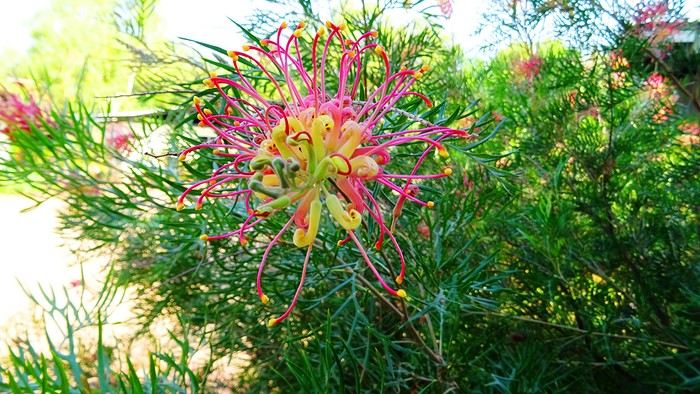
We had a great time. Now we’ve got to pay the price. We’re down one stop before Katherine. Gotta do the whole trip in one go—6 hours of driving. Let’s go! We’re a bit low on fuel with only 300 kilometers of range. The only station at the lake doesn’t open until 9 a.m., and the next (and only) one is 227 kilometers away… Should we risk it? Except for a magnificent frilled-neck lizard darting across the road on its big hind legs and an emu quickly disappearing into the bush, we didn’t see much. Oh—there was also a donkey, lost and panicked in the middle of the road… A quiet road with some beautiful scenery,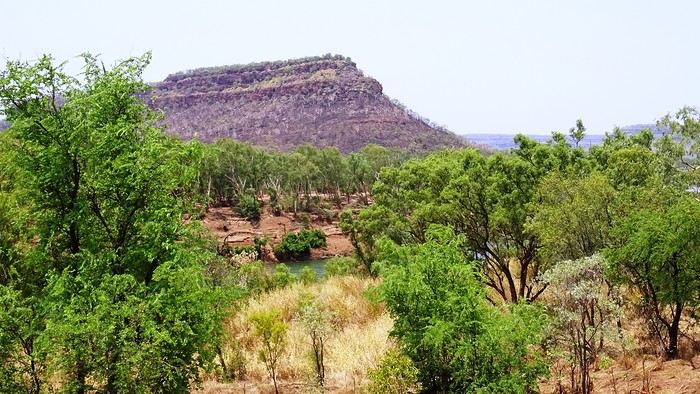 some worrying bushfires
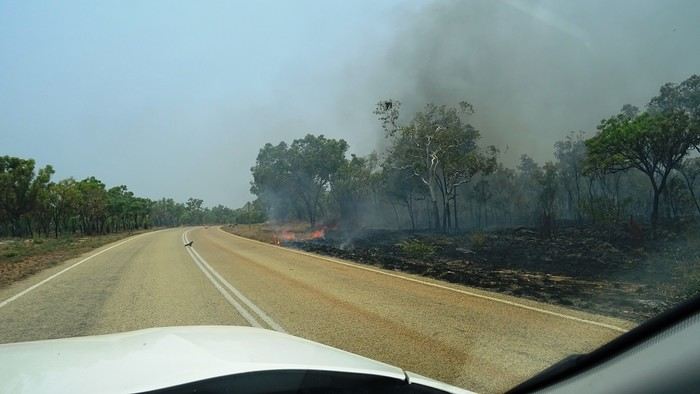
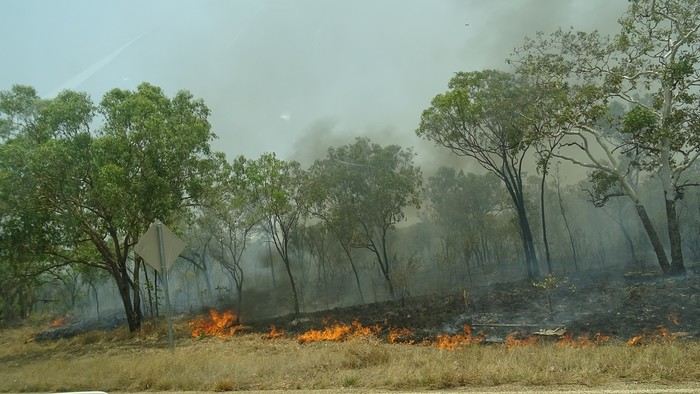 and a few opportunities to stop for a "warrior’s rest" (never go beyond the first second of the thought that starts drifting off the road…)
We cross an invisible border as we enter the Northern Territory, which comes with consequences—we immediately lose an hour and a half by changing time zones. The speed limit goes from 110 to 130.
and a few opportunities to stop for a "warrior’s rest" (never go beyond the first second of the thought that starts drifting off the road…)
We cross an invisible border as we enter the Northern Territory, which comes with consequences—we immediately lose an hour and a half by changing time zones. The speed limit goes from 110 to 130.
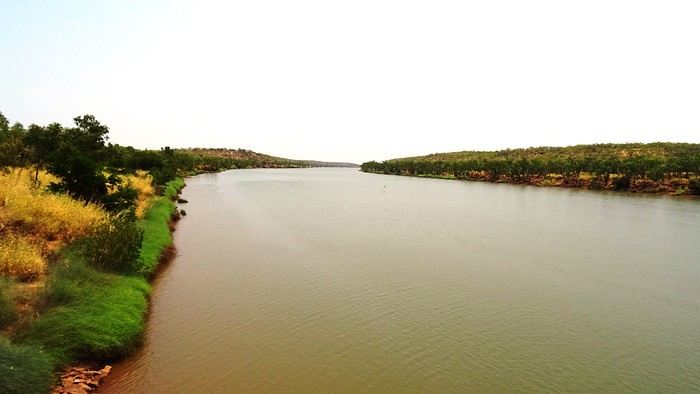
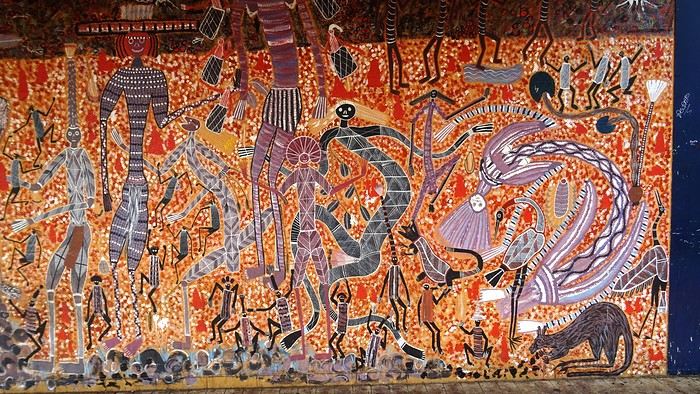
We arrive at the self check-in in Katherine. As usual, we’re a little taken aback at first. The noise, for starters. There’s a group rehearsing, it seems. We go check it out. We pass through the doors separating "The Stuart" from the adjoining bar and stumble upon what feels like collective hysteria. Turns out, it’s a concert. Aboriginal musicians completely fired up by some incredible music! There are just three of them, but they’re delivering a wall of sound that reminds us of South Africa’s finest neo-techno with a trance-like vibe. The crowd is wild! They’re singing in unison, screaming with joy. We get gently kicked out by security because we’re carrying our groceries, and they’re not having it. We promise ourselves we’ll come back once we’ve put them away in our little fridge.
Then we land. We end up finding plenty of nice things. It’s very possible we’ll like this place!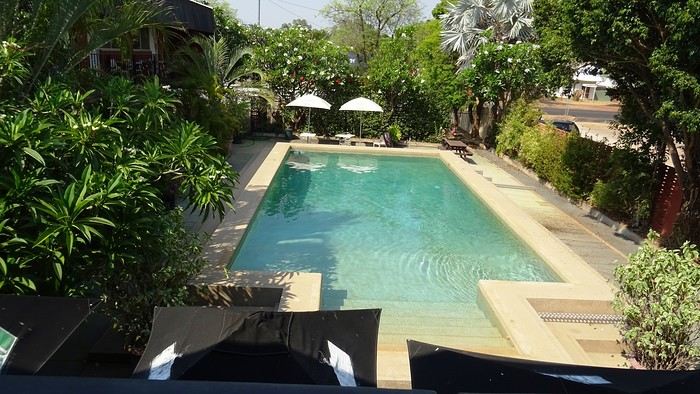
 We head back to enjoy our post-battle Happy Hour.
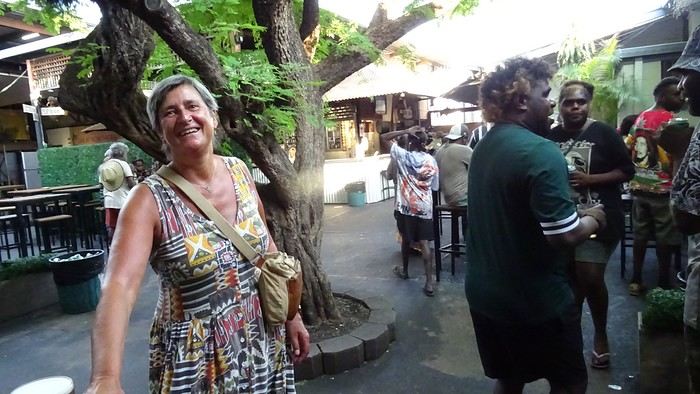 The concert’s over, but the crowd’s still riding the high. It’s indescribable. People are shouting across the room, screaming just for the fun of it—men and women alike. There’s pool, some beat-up arcade games being shaken like coconut trees. Dom and I feel like anthropologists. We’re pretty blown away. It’s epic! And the beer’s half the price it is elsewhere! We’ll definitely be back—that’s for sure!
We give up on finding a restaurant. Not sure they even exist, at least not this season. So, we’ve got a microwave—we eat at home on our little terrace, with a musical accompaniment from a massive orchestra of birds.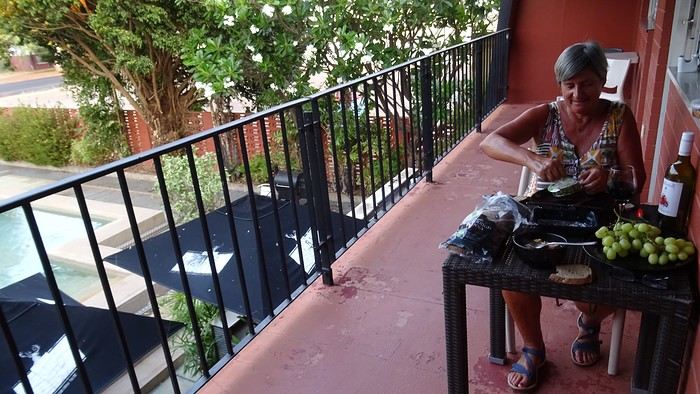 It sounds amazing!
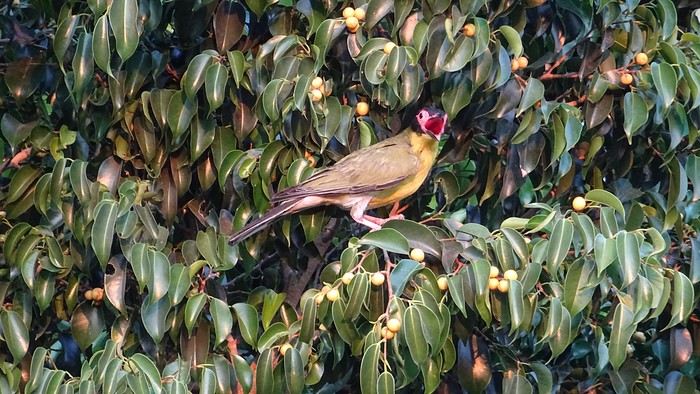
We had a great time. Now we’ve got to pay the price. We’re down one stop before Katherine. Gotta do the whole trip in one go—6 hours of driving. Let’s go! We’re a bit low on fuel with only 300 kilometers of range. The only station at the lake doesn’t open until 9 a.m., and the next (and only) one is 227 kilometers away… Should we risk it? Except for a magnificent frilled-neck lizard darting across the road on its big hind legs and an emu quickly disappearing into the bush, we didn’t see much. Oh—there was also a donkey, lost and panicked in the middle of the road… A quiet road with some beautiful scenery,
some worrying bushfires
and a few opportunities to stop for a "warrior’s rest" (never go beyond the first second of the thought that starts drifting off the road…)
We cross an invisible border as we enter the Northern Territory, which comes with consequences—we immediately lose an hour and a half by changing time zones. The speed limit goes from 110 to 130.
We arrive at the self check-in in Katherine. As usual, we’re a little taken aback at first. The noise, for starters. There’s a group rehearsing, it seems. We go check it out. We pass through the doors separating "The Stuart" from the adjoining bar and stumble upon what feels like collective hysteria. Turns out, it’s a concert. Aboriginal musicians completely fired up by some incredible music! There are just three of them, but they’re delivering a wall of sound that reminds us of South Africa’s finest neo-techno with a trance-like vibe. The crowd is wild! They’re singing in unison, screaming with joy. We get gently kicked out by security because we’re carrying our groceries, and they’re not having it. We promise ourselves we’ll come back once we’ve put them away in our little fridge.
Then we land. We end up finding plenty of nice things. It’s very possible we’ll like this place!
We head back to enjoy our post-battle Happy Hour.
The concert’s over, but the crowd’s still riding the high. It’s indescribable. People are shouting across the room, screaming just for the fun of it—men and women alike. There’s pool, some beat-up arcade games being shaken like coconut trees. Dom and I feel like anthropologists. We’re pretty blown away. It’s epic! And the beer’s half the price it is elsewhere! We’ll definitely be back—that’s for sure!We give up on finding a restaurant. Not sure they even exist, at least not this season. So, we’ve got a microwave—we eat at home on our little terrace, with a musical accompaniment from a massive orchestra of birds.
It sounds amazing!
Choosing a Museum Pass for Istanbul
Hi everyone,
In spring 2025, we’re planning a 10-day trip to Istanbul.
There are several museum passes (PASS) available. I’m torn between the Istanbul Welcome Card, Istanbul E-pass, and Istanbul Museum Pass.
We’ll be visiting Topkapi, Hagia Sophia, Galata Tower, etc...
Based on your experiences, which of these passes would you recommend?
Thanks so much!
Resuming discussions and returning to Madagascar
Oh, the good news—the site is back up after such a long closure. I think many of us were really missing it, though some have moved on to other forums like Routard.
Hopefully, activity will pick up little by little. Travel habits have probably changed post-Covid, and some regulars won’t be coming back for all sorts of reasons.
But for the rest of us, the forum is here for travel journals and pre-trip questions. Anyway…
Back to the main point: my last trip to Madagascar was a while ago now—about a year—on the High Plateaus during the austral winter. It was really chilly, and to be honest, my feelings were mixed between the joy of returning to Madagascar and the sadness of seeing the state of the country. The infrastructure is crumbling, and the population is sinking into poverty at unprecedented levels. The country’s closure likely had immeasurable consequences, compounded by destructive cyclones. Even secondary cities have seen large numbers of rural people arriving in search of work, while some rural areas barely allow survival. I’ve never felt such despair over the situation in 20 years.
From Tana to Fianar, it was nothing but heartbreaking observations. Probably made worse by the drizzle and cold typical of that season in the region.
In a few weeks, I’m planning to return to the High Plateaus and also Sainte Marie. On that note, a few questions: has anyone stayed at Samaria Cosy Lodge, and what did you think of it? On Île aux Nattes, which hotel would you recommend for a few peaceful days, ideally on the coast best suited for snorkeling?
Thanks in advance
Back to the main point: my last trip to Madagascar was a while ago now—about a year—on the High Plateaus during the austral winter. It was really chilly, and to be honest, my feelings were mixed between the joy of returning to Madagascar and the sadness of seeing the state of the country. The infrastructure is crumbling, and the population is sinking into poverty at unprecedented levels. The country’s closure likely had immeasurable consequences, compounded by destructive cyclones. Even secondary cities have seen large numbers of rural people arriving in search of work, while some rural areas barely allow survival. I’ve never felt such despair over the situation in 20 years.
From Tana to Fianar, it was nothing but heartbreaking observations. Probably made worse by the drizzle and cold typical of that season in the region.
In a few weeks, I’m planning to return to the High Plateaus and also Sainte Marie. On that note, a few questions: has anyone stayed at Samaria Cosy Lodge, and what did you think of it? On Île aux Nattes, which hotel would you recommend for a few peaceful days, ideally on the coast best suited for snorkeling?
Thanks in advance
Thaïlande: un cas de contamination locale détecté
voilà l'article
https://www.thailande-fr.com/actu/106807-la-thailande-enregistre-un-nouveau-cas-de-transmission-locale-de-covid-19?utm_medium=onesignal#axzz6X3bNPcBq
ou alors il y a des étrangers "illégaux" qui ont réussi à rentrer dans le pays du côté de pataya bref mystère...par la mer n'importe qui peux arriver sur le sol thai..et reste planqué sans être découvert... (nous avons la connaissance de cas comme ça) le pays est grand ils ne peuvent pas tout surveiller par terre / mer... faut arrêter de nous prendre pour des andouilles
bon et bien croisons les doigts du coup ils vont bien voir que ce n'est pas que des étrangers qui contaminent les pays et donc faudrait espérer qu'ils ouvrent les portent du pays en exigeant une bonne assurance pour le covid, le port des masques dans les lieus publics en visitant et que la vie continue au lieu de couler des milliers d'agences et d'hôtels!!!
https://www.thailande-fr.com/actu/106807-la-thailande-enregistre-un-nouveau-cas-de-transmission-locale-de-covid-19?utm_medium=onesignal#axzz6X3bNPcBq
ou alors il y a des étrangers "illégaux" qui ont réussi à rentrer dans le pays du côté de pataya bref mystère...par la mer n'importe qui peux arriver sur le sol thai..et reste planqué sans être découvert... (nous avons la connaissance de cas comme ça) le pays est grand ils ne peuvent pas tout surveiller par terre / mer... faut arrêter de nous prendre pour des andouilles
bon et bien croisons les doigts du coup ils vont bien voir que ce n'est pas que des étrangers qui contaminent les pays et donc faudrait espérer qu'ils ouvrent les portent du pays en exigeant une bonne assurance pour le covid, le port des masques dans les lieus publics en visitant et que la vie continue au lieu de couler des milliers d'agences et d'hôtels!!!
Disparition de France Ô
J'ai réalisé aujourd'hui que la chaine France O allait s'arrêter.
J'en suis extrêmement triste et en colère contre les gens qui ont pris cette décision.
C'était la seule chaîne de France Télévision que j'aimais regarder, la seule qui montrait une culture riche dans ce pays de nos jours (la musique, la littérature).
Il parait qu'on ne va rien perdre et qu'elle va enrichir les autres chaines du service public.
Je pense au contraire que ses sujets seront dilués à dose homéopatique et qu'il ne sera plus possible de s'en imprégner.
Annulation croisière Costa 2020
Bonjour à tous,
Nous avions réservé en fin d'année une croisiere costa pour cet été
Debut mars pour raisons perso nous avons annulé notre croisiere et avons donc reçu un net à nous rembourser avec 50 EUR de penalites par personne. Pendant 2 mois aucune nouvelle , ni mail rien. En mai on a encore reçu un doc avec encore un net à rembourser et les pénalités. Sans virement on a donc écrit au service client, qui ne veut rien entendre se basant sur le décret rétroactif alors que ce décret précisé que Costa aurait du nous informer au plus tard un mois après la parution de ce décret d'un avoir. N'ayant pas fait cela nous demandons donc un remboursement et pas un avoir. Depuis les échanges avec le service client sont de plus en plus tendus et ils nous ont répondu qu'il clôturé notre dossier et que notre avoir partirai de juillet 2020 !! Nous sommes très déçus et choqués de ce comportement
Certains d'entre vous ont ils eu les mêmes problèmes ?
Merci pour vos réponses
Pays basque, nouvelles mesures à partir du lundi 17 août
Hola 😉
Le gouvernement espagnol ayant décidé de laisser à chaque région autonome (17) le soin de déterminer les mesures à prendre pour évider la propagation du coronavirus, c'est donc demain (lundi 17/08) que nous devrions connaître ces décisions, même si nous savons d'ores et déjà que rien de "spectaculaire" n'est dans les tuyaux !!
Pour le pays basque (là ou je suis) il se murmure que l'essentiel résidera dans la manière d'appliquer et de faire respecter ces mesures.
Deux particulièrement seront sans doute confirmée pour l'une et nouvelle pour l'autre. Confirmation du port du masque obligatoire dans TOUS les lieux publics, quelle que soit l'affluence (rues, places, marchés, transports, magasins, etc...)
La deuxième mesure si elle est confirmée sera une nouveauté : interdiction totale de fumer dans les lieux publics (les mêmes que précédents)
Les services de sécurité, municipaux, provinciaux ou nationaux seront chargés du contrôle du respect de ces règles, et la grande différence sera que le temps de la bienveillance à l'égard des contrevenants semble appartenir au passé, ce sera directement la sanction pécuniaire !!
Pour la prochaine rentrée scolaire ou universitaire, le port du masque sera obligatoire à tous moments, à l'extérieur comme à l'intérieur des salles de cours ou des amphis. Cette obligation de porter un masque s'applique à tous dés l'âge de 11 ans.
Bien sûr, seront également reprécisées les règles de distanciation.
Toujours selon "radio-couloirs", un re-confinement n'est pas à l'ordre du jour, du moins pour l'immédiat avenir !! Mais si la propagation du virus s'amplifie, l'autorité politique autonome n'hésitera pas à revenir à cette mesure si lourde de conséquences.
Dernier "potin du jour", il ne semble pas qu'une quelconque restriction de la circulation à la frontière avec la France soit envisagée.
Voilà ce qui se raconte du côté des services du Lehendakari (président de la communauté autonome du pays basque). Ceci n'est valable que pour le pays basque !!
Chaque région autonome a la liberté d'énoncer les mesures qu'elle jugerait utiles, sans que Madrid n'intervienne. Même si la majorité des décisions évoquées seront vraisemblablement prises par toutes les régions, il ne serait pas surprenant que certaines de ces autonomies, en fonction de leurs situations particulières, annoncent des mesures plus "sévères" pour les unes ou plus "libérales" pour d'autres !! Demain, Lundi 17 Août, nous devrions être fixés quel que soit le coin d'Espagne qui nous intéresse.
Cette procédure de délégation totale aux régions, de la prise de décisions pour enrayer la pandémie, fait suite au "torrent" de critiques qu'avait subi les gouvernement central à l'occasion des mesures adoptées, au moment du déclenchement de l'épidémie au printemps dernier. Ces critiques étaient plus souvent fondées sur des arguments "politico-politicien", la plupart du temps bien éloignés de la réalité sanitaire des régions. C'est pour cela que le gouvernement de Pedro Sanchez a adopté ce modus operandi, afin de mettre chaque région, donc les différents partis politiques qui les dirigent, devant leurs responsabilités en leur coupant la possibilité de se retrancher derrière le centralisme étatique!!!
Mañana sabremos como van a comernos !! Vivos o cocidos ... 😄 Hasta luego 😎
Le gouvernement espagnol ayant décidé de laisser à chaque région autonome (17) le soin de déterminer les mesures à prendre pour évider la propagation du coronavirus, c'est donc demain (lundi 17/08) que nous devrions connaître ces décisions, même si nous savons d'ores et déjà que rien de "spectaculaire" n'est dans les tuyaux !!
Pour le pays basque (là ou je suis) il se murmure que l'essentiel résidera dans la manière d'appliquer et de faire respecter ces mesures.
Deux particulièrement seront sans doute confirmée pour l'une et nouvelle pour l'autre. Confirmation du port du masque obligatoire dans TOUS les lieux publics, quelle que soit l'affluence (rues, places, marchés, transports, magasins, etc...)
La deuxième mesure si elle est confirmée sera une nouveauté : interdiction totale de fumer dans les lieux publics (les mêmes que précédents)
Les services de sécurité, municipaux, provinciaux ou nationaux seront chargés du contrôle du respect de ces règles, et la grande différence sera que le temps de la bienveillance à l'égard des contrevenants semble appartenir au passé, ce sera directement la sanction pécuniaire !!
Pour la prochaine rentrée scolaire ou universitaire, le port du masque sera obligatoire à tous moments, à l'extérieur comme à l'intérieur des salles de cours ou des amphis. Cette obligation de porter un masque s'applique à tous dés l'âge de 11 ans.
Bien sûr, seront également reprécisées les règles de distanciation.
Toujours selon "radio-couloirs", un re-confinement n'est pas à l'ordre du jour, du moins pour l'immédiat avenir !! Mais si la propagation du virus s'amplifie, l'autorité politique autonome n'hésitera pas à revenir à cette mesure si lourde de conséquences.
Dernier "potin du jour", il ne semble pas qu'une quelconque restriction de la circulation à la frontière avec la France soit envisagée.
Voilà ce qui se raconte du côté des services du Lehendakari (président de la communauté autonome du pays basque). Ceci n'est valable que pour le pays basque !!
Chaque région autonome a la liberté d'énoncer les mesures qu'elle jugerait utiles, sans que Madrid n'intervienne. Même si la majorité des décisions évoquées seront vraisemblablement prises par toutes les régions, il ne serait pas surprenant que certaines de ces autonomies, en fonction de leurs situations particulières, annoncent des mesures plus "sévères" pour les unes ou plus "libérales" pour d'autres !! Demain, Lundi 17 Août, nous devrions être fixés quel que soit le coin d'Espagne qui nous intéresse.
Cette procédure de délégation totale aux régions, de la prise de décisions pour enrayer la pandémie, fait suite au "torrent" de critiques qu'avait subi les gouvernement central à l'occasion des mesures adoptées, au moment du déclenchement de l'épidémie au printemps dernier. Ces critiques étaient plus souvent fondées sur des arguments "politico-politicien", la plupart du temps bien éloignés de la réalité sanitaire des régions. C'est pour cela que le gouvernement de Pedro Sanchez a adopté ce modus operandi, afin de mettre chaque région, donc les différents partis politiques qui les dirigent, devant leurs responsabilités en leur coupant la possibilité de se retrancher derrière le centralisme étatique!!!
Mañana sabremos como van a comernos !! Vivos o cocidos ... 😄 Hasta luego 😎
Le pont San Giorgio (ex pont Morandi) à Gênes sera inauguré le 3 août
En l'état actuel des choses, le pont est terminé, il sera inauguré le 3 août et on pourra le franchir en voiture dès le 5 août...
Voyage France - Crète, départ prévu le 29 juin et pas de vols avant le 1er juillet
Bonjour,
J'ai besoin de votre avis SVP. Avec ma femme et mes enfants nous avons réservé un voyage de 12 jours dans un hôtel en tout inclus, il y a plusieurs mois de ça (départ de Nantes). Le départ est prévu pour le 29/06, le gouvernement Grec annonce apparemment que pas de vol vers la Crète avant le 01/07, mais c'est pas pour autant que la société avec qui j'ai pris le voyage l'annule. Mais, toutes les nuits en automatique, il y a une demande pour la fin du versement du voyage, que je ne souhaite pas verser sans savoir si je pars car après ça ne sera pas un remboursement mais un avoir sur 18 mois (j'en ai pas envie car j'ai déjà un autre voyage de prévu et réservé pour l'année prochaine).
J'aimerai avoir votre avis, si j'ai une chance de partir là bas ? Si non, avez-vous une estimation de la date à laquelle je pourrai être fixé ?
Merci d'avance pour vos réponses, cette situation commence à être bien stressante.
J'ai besoin de votre avis SVP. Avec ma femme et mes enfants nous avons réservé un voyage de 12 jours dans un hôtel en tout inclus, il y a plusieurs mois de ça (départ de Nantes). Le départ est prévu pour le 29/06, le gouvernement Grec annonce apparemment que pas de vol vers la Crète avant le 01/07, mais c'est pas pour autant que la société avec qui j'ai pris le voyage l'annule. Mais, toutes les nuits en automatique, il y a une demande pour la fin du versement du voyage, que je ne souhaite pas verser sans savoir si je pars car après ça ne sera pas un remboursement mais un avoir sur 18 mois (j'en ai pas envie car j'ai déjà un autre voyage de prévu et réservé pour l'année prochaine).
J'aimerai avoir votre avis, si j'ai une chance de partir là bas ? Si non, avez-vous une estimation de la date à laquelle je pourrai être fixé ?
Merci d'avance pour vos réponses, cette situation commence à être bien stressante.
30ème anniversaire de la mort de Luigi Nono (Italie)
« Luigi Nono : un nom. Une œuvre musicale. La musique d’un nom. Le nom d’une musique » (Edmond Jabès, poète et ami de L.N.)
En souvenir d’un grand compositeur
Ses œuvres sont provocantes et tout de même destinées au peuple : le compositeur Luigi Nono est l’un des plus grands représentants de l’avant-garde d’après-guerre, qui a donné des impulsions importantes pour la Nouvelle Musique. Le 8 mai 1990, il est décédé dans sa ville natale, Venise. Trop tôt...
Depuis les années 50 – la grande époque de la musique d’avant-garde se forgeant essentiellement à Darmstadt et Donaueschingen –, Luigi Nono fait sans aucun doute partie des compositeurs les plus importants de l’histoire de la musique contemporaine (avec Pierre Boulez, Karlheinz Stockhausen, Luciano Berio, György Ligeti, etc.). Désigné comme le compositeur le plus politisé de sa génération, Nono et sa musique ont été le carrefour des débats esthétiques et idéologiqes les plus importants : musique et politique, texte et musique, signification textuelle et sémantique musicale, technique sérielle et expression artistique, technologie moderne et idéologies, les problèmes essentiels de la musique sont fortement remis en question. Estimé par les professionnels de la musique contemporaine, utilisé et de la même façon abusé pour des enjeux politiques, Nono reste une figure énigmatique extrêmement attrayante, trop peu comprise par ses contemporains, et ce fait est encore valable même trois décennies après sa mort...
Luigi Nono reconnaît très tôt la parenté entre les musiques des différentes époques et les arts : son grand-père était peintre, son oncle Urbano sculpteur. Au Conservatoire de Venise, Nono entre en contact avec la musique vocale polyphonique de la Renaissance. De plus, la Seconde Ecole de Vienne (Schönberg, Berg, Webern) et des compositeurs comme Strawinsky et Bartók ont également une influence énorme sur lui dès le début. Etudiant des Cours d‘été internationaux de Darmstadt, il s’associe à des étudiants d’Arnold Schönberg. En 1955, une fille de Schönberg, Nuria, devient son épouse.
Ses œuvres des années 50-70 peuvent être considérées en fonction de leur inscription dans une idéologie marxiste et gramscienne (Il canto sospeso / Canti per 13 / La terra e la compagna / Varianti), et on rencontre les thèmes qui préoccupaient la Gauche européenne à l’époque : la guerre d’Algérie (Intolleranza), l’assassinat de Malcolm X (Contrappunto dialettico alla mente), la guerre de Vietnam (Siamo la gioventù del Vietnam), le mai 1968 (Musica-Manifesto n.1 : Un volto, del mare – Non consumiamo Marx), le Holocaust (Ricorda cosa ti hanno fatto in Auschwitz), des mouvements de libération en Amérique du Sud (Como una ola de fuerza et luz), le monde du travail au capitalisme (La fabbrica illuminata) etc.
Dans la deuxieme moitié des années 70, Nono change lui-même le cap : des œuvres comme Con Luigi Dallapiccola (1979), le quatuor à cordes Fragments: Silence, A Diotima (1979-80) ou le deuxième journal polonais Quando stanno morendo (1981) dépassent même les attentes de ceux qui ne le soupçonnent pas d’être un "compositeur engagé", étant d’abord perplexes face à un Luigi Nono changé aussi bien sur les plans humain que compositionnel, jugeant les quelques idées d’autrefois obsolètes et démodées et exigeant absolument de "mettre l'imagination autant que possible en avant".
La période artistique de Nono qui suit et dure jusqu’à sa mort, est en particulier marquée par une seule œuvre monumentale, Prometeo. Tragedia dell’ascolto, un drame qui ne se passe que dans et avec les sons, un drame entre la musique et les auditeurs. Pour le compositeur, ce "Prométhée", basé sur un collage de textes fragmentés qui vont d’Äschylus jusqu’à Walter Benjamin, en passant par Goethe, Rilke, Hölderlin et Nietzsche, et cela en italien, grec et allemand, ce Prométhée donc correspond à "un voyage d’une île à une autre île", à un labyrinthe dans lequel les chemins se croisent et se perdent. Prométhée incarne la situation humaine actuelle : "L’homme et la loi, l’homme et sa recherche continuelle de l’inconnu, l’homme et la construction des nouvelles lois et leur transgression. Prométhée, c’est l’homme avec son éternelle soif de nouvelles terres et de nouvelles frontières. C’est la révolte contre la restauration qui empêche l’arrivée des temps nouveaux" (Luigi Nono).
Fondazione Archivio Luigi Nono
Voici mes "charts Nono" (pas dans cet ordre, mais tout à recommander vivement !) :
i) Il canto sospeso* : Barbara Bonney, Susanne Otto, Marek Torzewski, Rundfunkchor Berlin, Berliner Philharmoniker, Dir. Claudio Abbado (Sony) ii) Polifonica – Monodia – Ritmica / Canti per 13 / Canciones a Guiomar : Angelika Luz, United Voices, Ensemble UnitedBerlin, Dir. Peter Hirsch (Wergo) iii) Como una ola de fuerza y de luz / …sofferte onde serene… / Contrappunto dialettico alla mente : Slavka Taskova, Maurizio Pollini, Sinfonieorchester des Bayerischen Rundfunks, Dir. Claudio Abbado (Deutsche Grammophon) iv) Prometeo. Tragedia dell’ascolto : Ingrid Ade-Jesemann, Susanne Otto, Helena Rasker, Peter Hall, Solistenchor Freiburg, Ensemble Modern, EdHSS, Dir. André Richard, Ingo Metzmacher, Peter Rundel (EMI Classics) v) La fabbrica illuminata / Ha venido, Canciones para Silva / Ricorda cosa ti hanno fatto in Auschwitz : Carla Henius, Barbara Miller, Kinderchor des Piccolo Teatro, Chor des RAI Mailand, Schola Cantorum Stuttgart (Wergo) vi) Al gran sole carico d’amore : Claudia Barainsky, Maraile Lichdi, Melinda Liebermann, Staatsopernchor und Staatsorchester Stuttgart, Dir. Lothar Zagrosek (Teldec/Warner) vii) Fragmente: Stille – An Diotima : Arditti String Quartet (Montaigne)
Hery
https://www.youtube.com/watch?v=58YmocJewH0
*Il canto sospeso est une cantate pour soprano, contralto, ténor, chœur et orchestre, écrite entre 1955 et 1956, à partir d’extraits de lettres de condamnés à mort de la résistance européenne.
En souvenir d’un grand compositeur
Ses œuvres sont provocantes et tout de même destinées au peuple : le compositeur Luigi Nono est l’un des plus grands représentants de l’avant-garde d’après-guerre, qui a donné des impulsions importantes pour la Nouvelle Musique. Le 8 mai 1990, il est décédé dans sa ville natale, Venise. Trop tôt...
Depuis les années 50 – la grande époque de la musique d’avant-garde se forgeant essentiellement à Darmstadt et Donaueschingen –, Luigi Nono fait sans aucun doute partie des compositeurs les plus importants de l’histoire de la musique contemporaine (avec Pierre Boulez, Karlheinz Stockhausen, Luciano Berio, György Ligeti, etc.). Désigné comme le compositeur le plus politisé de sa génération, Nono et sa musique ont été le carrefour des débats esthétiques et idéologiqes les plus importants : musique et politique, texte et musique, signification textuelle et sémantique musicale, technique sérielle et expression artistique, technologie moderne et idéologies, les problèmes essentiels de la musique sont fortement remis en question. Estimé par les professionnels de la musique contemporaine, utilisé et de la même façon abusé pour des enjeux politiques, Nono reste une figure énigmatique extrêmement attrayante, trop peu comprise par ses contemporains, et ce fait est encore valable même trois décennies après sa mort...
Luigi Nono reconnaît très tôt la parenté entre les musiques des différentes époques et les arts : son grand-père était peintre, son oncle Urbano sculpteur. Au Conservatoire de Venise, Nono entre en contact avec la musique vocale polyphonique de la Renaissance. De plus, la Seconde Ecole de Vienne (Schönberg, Berg, Webern) et des compositeurs comme Strawinsky et Bartók ont également une influence énorme sur lui dès le début. Etudiant des Cours d‘été internationaux de Darmstadt, il s’associe à des étudiants d’Arnold Schönberg. En 1955, une fille de Schönberg, Nuria, devient son épouse.
Ses œuvres des années 50-70 peuvent être considérées en fonction de leur inscription dans une idéologie marxiste et gramscienne (Il canto sospeso / Canti per 13 / La terra e la compagna / Varianti), et on rencontre les thèmes qui préoccupaient la Gauche européenne à l’époque : la guerre d’Algérie (Intolleranza), l’assassinat de Malcolm X (Contrappunto dialettico alla mente), la guerre de Vietnam (Siamo la gioventù del Vietnam), le mai 1968 (Musica-Manifesto n.1 : Un volto, del mare – Non consumiamo Marx), le Holocaust (Ricorda cosa ti hanno fatto in Auschwitz), des mouvements de libération en Amérique du Sud (Como una ola de fuerza et luz), le monde du travail au capitalisme (La fabbrica illuminata) etc.
Dans la deuxieme moitié des années 70, Nono change lui-même le cap : des œuvres comme Con Luigi Dallapiccola (1979), le quatuor à cordes Fragments: Silence, A Diotima (1979-80) ou le deuxième journal polonais Quando stanno morendo (1981) dépassent même les attentes de ceux qui ne le soupçonnent pas d’être un "compositeur engagé", étant d’abord perplexes face à un Luigi Nono changé aussi bien sur les plans humain que compositionnel, jugeant les quelques idées d’autrefois obsolètes et démodées et exigeant absolument de "mettre l'imagination autant que possible en avant".
La période artistique de Nono qui suit et dure jusqu’à sa mort, est en particulier marquée par une seule œuvre monumentale, Prometeo. Tragedia dell’ascolto, un drame qui ne se passe que dans et avec les sons, un drame entre la musique et les auditeurs. Pour le compositeur, ce "Prométhée", basé sur un collage de textes fragmentés qui vont d’Äschylus jusqu’à Walter Benjamin, en passant par Goethe, Rilke, Hölderlin et Nietzsche, et cela en italien, grec et allemand, ce Prométhée donc correspond à "un voyage d’une île à une autre île", à un labyrinthe dans lequel les chemins se croisent et se perdent. Prométhée incarne la situation humaine actuelle : "L’homme et la loi, l’homme et sa recherche continuelle de l’inconnu, l’homme et la construction des nouvelles lois et leur transgression. Prométhée, c’est l’homme avec son éternelle soif de nouvelles terres et de nouvelles frontières. C’est la révolte contre la restauration qui empêche l’arrivée des temps nouveaux" (Luigi Nono).
Fondazione Archivio Luigi Nono
Voici mes "charts Nono" (pas dans cet ordre, mais tout à recommander vivement !) :
i) Il canto sospeso* : Barbara Bonney, Susanne Otto, Marek Torzewski, Rundfunkchor Berlin, Berliner Philharmoniker, Dir. Claudio Abbado (Sony) ii) Polifonica – Monodia – Ritmica / Canti per 13 / Canciones a Guiomar : Angelika Luz, United Voices, Ensemble UnitedBerlin, Dir. Peter Hirsch (Wergo) iii) Como una ola de fuerza y de luz / …sofferte onde serene… / Contrappunto dialettico alla mente : Slavka Taskova, Maurizio Pollini, Sinfonieorchester des Bayerischen Rundfunks, Dir. Claudio Abbado (Deutsche Grammophon) iv) Prometeo. Tragedia dell’ascolto : Ingrid Ade-Jesemann, Susanne Otto, Helena Rasker, Peter Hall, Solistenchor Freiburg, Ensemble Modern, EdHSS, Dir. André Richard, Ingo Metzmacher, Peter Rundel (EMI Classics) v) La fabbrica illuminata / Ha venido, Canciones para Silva / Ricorda cosa ti hanno fatto in Auschwitz : Carla Henius, Barbara Miller, Kinderchor des Piccolo Teatro, Chor des RAI Mailand, Schola Cantorum Stuttgart (Wergo) vi) Al gran sole carico d’amore : Claudia Barainsky, Maraile Lichdi, Melinda Liebermann, Staatsopernchor und Staatsorchester Stuttgart, Dir. Lothar Zagrosek (Teldec/Warner) vii) Fragmente: Stille – An Diotima : Arditti String Quartet (Montaigne)
Hery
https://www.youtube.com/watch?v=58YmocJewH0
*Il canto sospeso est une cantate pour soprano, contralto, ténor, chœur et orchestre, écrite entre 1955 et 1956, à partir d’extraits de lettres de condamnés à mort de la résistance européenne.