Results for "vin+|+123+>+221"
13383 results found.
Villa Tortuga Varadero English translation pending
😉 Quelqu'un connait cette hotel? C, est un 3 etoiles est-ce bien ?
Merci Jacynthe
Merci Jacynthe
5 years on the road by motorcycle
Hello everyone! ✌️
I just realized I’ve been registered on VoyageForum since... March 28, 2012 😊. Yet, I’ve barely participated until now.
August 1, 2026, will mark a somewhat special milestone: 5 years on the road.
We left Switzerland on August 1, 2021 with a simple idea: let chance decide our direction. We placed a bottle of wine on a world map, spun it... and it chose our first destination.
A year later, when we arrived in Morocco, we faced a new choice: continue toward Africa or head to Asia. This time, a tarot card game made the decision. Since then, we’ve tried to keep this journey as open to the unexpected as possible.
Today, that adds up to about 120,000 km, 46 countries, and over 1,800 days on the road—mostly by motorcycle, but also by sailboat, train, bus, hitchhiking, or on foot when adventure calls.
Our guiding thread isn’t just the motorcycle, but service exchanges. Instead of simply passing through countries, we try to stop regularly to lend a hand to the people we meet. So far, that’s about 600 days of volunteering.
Over the years, we’ve:
renovated a house in Croatia made earth bricks in the Moroccan desert helped sail a boat through the Greek islands looked after houses, dogs, horses, a camel... and lots of other animals worked at a street art festival in Morocco created videos for local associations and projects worked the grape harvest on the Tibetan plateau been accredited as "media" for the World Nomad Games in Central Asia
Some of the moments that have stuck with us the most include six months in China, a night spent on the Great Wall, the Pamir Highway, the Silk Road, three months in Taiwan, and the incredible encounters in the mountains of Central Asia.
We travel on Falkor, our lucky dragon—a 2014 BMW F800GS that’s been with us since the start and is starting to have some great stories of its own.
While we share our adventure on Instagram, Polarsteps, and YouTube, that’s not why we’re here. The forum’s rules about promotion are clear, and I totally get them. If I’m finally taking the time to write, it’s mostly because after five years on the road, I thought our experience might be useful to other travelers.
Happy to chat about:
preparing for a long motorcycle trip visas and borders the Silk Road and Central Asia riding in China (with or without a motorcycle) volunteering and service exchanges while traveling gear, daily life on the road... or just the unexpected moments that make long-term travel so special
Looking forward to swapping stories and hearing about your adventures too! 😊 Greetings from Thailand, and happy to chat! ✌️
Vincent, Nathalia & Falkor
I just realized I’ve been registered on VoyageForum since... March 28, 2012 😊. Yet, I’ve barely participated until now.
August 1, 2026, will mark a somewhat special milestone: 5 years on the road.
We left Switzerland on August 1, 2021 with a simple idea: let chance decide our direction. We placed a bottle of wine on a world map, spun it... and it chose our first destination.
A year later, when we arrived in Morocco, we faced a new choice: continue toward Africa or head to Asia. This time, a tarot card game made the decision. Since then, we’ve tried to keep this journey as open to the unexpected as possible.
Today, that adds up to about 120,000 km, 46 countries, and over 1,800 days on the road—mostly by motorcycle, but also by sailboat, train, bus, hitchhiking, or on foot when adventure calls.
Our guiding thread isn’t just the motorcycle, but service exchanges. Instead of simply passing through countries, we try to stop regularly to lend a hand to the people we meet. So far, that’s about 600 days of volunteering.
Over the years, we’ve:
renovated a house in Croatia made earth bricks in the Moroccan desert helped sail a boat through the Greek islands looked after houses, dogs, horses, a camel... and lots of other animals worked at a street art festival in Morocco created videos for local associations and projects worked the grape harvest on the Tibetan plateau been accredited as "media" for the World Nomad Games in Central Asia
Some of the moments that have stuck with us the most include six months in China, a night spent on the Great Wall, the Pamir Highway, the Silk Road, three months in Taiwan, and the incredible encounters in the mountains of Central Asia.
We travel on Falkor, our lucky dragon—a 2014 BMW F800GS that’s been with us since the start and is starting to have some great stories of its own.
While we share our adventure on Instagram, Polarsteps, and YouTube, that’s not why we’re here. The forum’s rules about promotion are clear, and I totally get them. If I’m finally taking the time to write, it’s mostly because after five years on the road, I thought our experience might be useful to other travelers.
Happy to chat about:
preparing for a long motorcycle trip visas and borders the Silk Road and Central Asia riding in China (with or without a motorcycle) volunteering and service exchanges while traveling gear, daily life on the road... or just the unexpected moments that make long-term travel so special
Looking forward to swapping stories and hearing about your adventures too! 😊 Greetings from Thailand, and happy to chat! ✌️
Vincent, Nathalia & Falkor
Romantic weekend in Italy between April and May: what should we prioritize?
I'd love to organize a romantic weekend in Italy.
What do you recommend?
What do you recommend?
Camping recommendations in Cape Town and around
Hi there,
We’ll be traveling in January 2027 in a 4x4 with a rooftop tent with our three kids, from Johannesburg to Cape Town. We’ve already booked several campsites in national parks (Golden Gate / Mountain Zebra / Addo Elephant / Garden Route).
We still need to reserve the stretch between De Hoop Nature Reserve and Cape Town. Any suggestions?
We’d love to stay around Cape Town for 5 days to explore the wine route, the peninsula, and do some hikes in Table Mountain.
Any camping recommendations? Or, on the contrary, places to avoid?
Also, we have 2 nights left near Wilderness National Park / Knysna. Any recommendations? Thanks so much for your help!
Also, we have 2 nights left near Wilderness National Park / Knysna. Any recommendations? Thanks so much for your help!
Trip feedback: Armenia with an 8-month-old baby
5 days in Armenia with an 8-month-old baby
Hi everyone,
I wanted to share our experience after a 5-day trip to Armenia with my wife and our 8-month-old baby.
It’s a destination that’s still relatively unknown, but it’s really worth the trip, especially if you enjoy cultural, spiritual, historical, and human-centered travel.
We were looking for a change of scenery but not too complicated with a baby—and easy to organize (even though our travel agency helped us a lot, thanks to them! 😊). In the end, Armenia was a wonderful surprise. It’s not a "postcard-perfect" destination. It’s a raw, mountainous, ancient country with real depth.
And most importantly: Armenians *love* children.
That’s probably what surprised us the most. In restaurants, waitresses, owners, or even other customers would naturally come over to play with our baby, hold them for a few minutes, smile at them, or keep them entertained while we ate. It wasn’t intrusive. It was very natural, very family-oriented. You can tell that children have a real place in society. For parents traveling with a baby, it’s honestly a pleasure.
Day 1 — Yerevan
We started with Yerevan, a pleasant capital that’s quite easy to explore with a child.
The city isn’t huge. You can stroll around Republic Square, visit cafés, discover markets, and walk at a relaxed pace.
With a baby, it’s pretty practical: you can easily take breaks, return to the hotel, or go back out in the evening. The vibe is laid-back, family-friendly, and we felt safe.
In the evening, Yerevan is very lively. The restaurants are welcoming, and almost everywhere, our baby drew smiles.
Day 2 — Etchmiadzin and Khor Virap
On the second day, we headed to Etchmiadzin, the spiritual heart of Armenia. It’s an important place for understanding the country and its Christian identity.
Then, we visited Khor Virap, facing Mount Ararat.
It’s probably one of the most striking places on the trip. The monastery, the plain, the distant Ararat—everything is visually and symbolically powerful.
With a baby, you just need to plan a relaxed pace, avoid rushing, and take your time.
Day 3 — Garni and Geghard
The third day was one of our favorites.
We visited the Temple of Garni, very different from the monasteries, with a stunning setting in the mountains.
Then we went to Geghard, a monastery partially carved into the rock.
The atmosphere is incredible. It’s quiet, mineral, almost timeless. Even if you’re not very religious, you feel something.
With a child, the visit goes well, but again, it’s best not to overload the day. The key is to keep a flexible pace.
Day 4 — Noravank
On the fourth day, we headed to Noravank.
The road itself is an experience: dry landscapes, mountains, red rocks, valleys. The monastery is surrounded by impressive cliffs.
It’s one of the most beautiful sites we saw in Armenia.
You really get the sense that Armenian monasteries were built in impossible places—between sky, stone, and mountain.
Along the way, you can also pass through the Areni region, known for its wine. With a baby, we mostly prioritized simple breaks, relaxed meals, and uncompressed travel times.
Day 5 — Lake Sevan and return to Yerevan
For the last day, we went to Lake Sevan.
The lake is vast, bright, and surrounded by mountains. The Sevanavank Monastery, up high, offers a beautiful view.
It’s a gentler stop, perfect for ending the trip.
Then we returned to Yerevan for a final dinner. Once again, the welcome in restaurants stood out. In Armenia, traveling with a baby isn’t seen as a hassle. On the contrary, people spontaneously come up to the child.
Our overall impression
In 5 days, you obviously don’t see all of Armenia. To reach Tatev, Dilijan, Haghpat, or Sanahin, you’d need more like 7 to 10 days.
But for a first visit, 5 days are enough to feel the essence: Yerevan, the major monasteries, Mount Ararat, the landscapes, the Christian history, and the Armenian hospitality.
What we loved most:
- the kindness of people toward our baby; - the very family-friendly atmosphere; - the monasteries in incredible landscapes; - the view of Mount Ararat from Khor Virap; - the atmosphere of Geghard; - the cliffs of Noravank; - the food; - the feeling of safety; - the fact that the country is still relatively untouched by mass tourism.
What to know when traveling with a baby:
- distances can be longer than expected; - some roads are mountainous; - avoid overloading the day; - it’s better to have a driver or a car; - plan for breaks, water, diapers, baby meals; - a stroller isn’t always practical on ancient sites; - a baby carrier can be very useful.
Recommended 5-day itinerary
For a first trip, I’d suggest:
Day 1: Yerevan Day 2: Etchmiadzin + Khor Virap Day 3: Garni + Geghard Day 4: Noravank + Areni Day 5: Sevan + return to Yerevan
It’s balanced, not too tiring, and gives a great first impression of the country.
Conclusion
Armenia is a wonderful destination with a baby, as long as you travel slowly and don’t try to see everything.
What touched us most, beyond the landscapes and monasteries, was the attitude toward children. There, you feel that babies are welcomed with real tenderness. In restaurants, people naturally helped us, played with our child, and gave us a few minutes to breathe.
That’s rare, and it makes a big difference in the travel experience.
Armenia isn’t a destination you consume quickly. It’s a country that you *feel*.
For those who love cultural, spiritual, historical, family, and human-centered travel, I highly recommend it.
Hi everyone,
I wanted to share our experience after a 5-day trip to Armenia with my wife and our 8-month-old baby.
It’s a destination that’s still relatively unknown, but it’s really worth the trip, especially if you enjoy cultural, spiritual, historical, and human-centered travel.
We were looking for a change of scenery but not too complicated with a baby—and easy to organize (even though our travel agency helped us a lot, thanks to them! 😊). In the end, Armenia was a wonderful surprise. It’s not a "postcard-perfect" destination. It’s a raw, mountainous, ancient country with real depth.
And most importantly: Armenians *love* children.
That’s probably what surprised us the most. In restaurants, waitresses, owners, or even other customers would naturally come over to play with our baby, hold them for a few minutes, smile at them, or keep them entertained while we ate. It wasn’t intrusive. It was very natural, very family-oriented. You can tell that children have a real place in society. For parents traveling with a baby, it’s honestly a pleasure.
Day 1 — Yerevan
We started with Yerevan, a pleasant capital that’s quite easy to explore with a child.
The city isn’t huge. You can stroll around Republic Square, visit cafés, discover markets, and walk at a relaxed pace.
With a baby, it’s pretty practical: you can easily take breaks, return to the hotel, or go back out in the evening. The vibe is laid-back, family-friendly, and we felt safe.
In the evening, Yerevan is very lively. The restaurants are welcoming, and almost everywhere, our baby drew smiles.
Day 2 — Etchmiadzin and Khor Virap
On the second day, we headed to Etchmiadzin, the spiritual heart of Armenia. It’s an important place for understanding the country and its Christian identity.
Then, we visited Khor Virap, facing Mount Ararat.
It’s probably one of the most striking places on the trip. The monastery, the plain, the distant Ararat—everything is visually and symbolically powerful.
With a baby, you just need to plan a relaxed pace, avoid rushing, and take your time.
Day 3 — Garni and Geghard
The third day was one of our favorites.
We visited the Temple of Garni, very different from the monasteries, with a stunning setting in the mountains.
Then we went to Geghard, a monastery partially carved into the rock.
The atmosphere is incredible. It’s quiet, mineral, almost timeless. Even if you’re not very religious, you feel something.
With a child, the visit goes well, but again, it’s best not to overload the day. The key is to keep a flexible pace.
Day 4 — Noravank
On the fourth day, we headed to Noravank.
The road itself is an experience: dry landscapes, mountains, red rocks, valleys. The monastery is surrounded by impressive cliffs.
It’s one of the most beautiful sites we saw in Armenia.
You really get the sense that Armenian monasteries were built in impossible places—between sky, stone, and mountain.
Along the way, you can also pass through the Areni region, known for its wine. With a baby, we mostly prioritized simple breaks, relaxed meals, and uncompressed travel times.
Day 5 — Lake Sevan and return to Yerevan
For the last day, we went to Lake Sevan.
The lake is vast, bright, and surrounded by mountains. The Sevanavank Monastery, up high, offers a beautiful view.
It’s a gentler stop, perfect for ending the trip.
Then we returned to Yerevan for a final dinner. Once again, the welcome in restaurants stood out. In Armenia, traveling with a baby isn’t seen as a hassle. On the contrary, people spontaneously come up to the child.
Our overall impression
In 5 days, you obviously don’t see all of Armenia. To reach Tatev, Dilijan, Haghpat, or Sanahin, you’d need more like 7 to 10 days.
But for a first visit, 5 days are enough to feel the essence: Yerevan, the major monasteries, Mount Ararat, the landscapes, the Christian history, and the Armenian hospitality.
What we loved most:
- the kindness of people toward our baby; - the very family-friendly atmosphere; - the monasteries in incredible landscapes; - the view of Mount Ararat from Khor Virap; - the atmosphere of Geghard; - the cliffs of Noravank; - the food; - the feeling of safety; - the fact that the country is still relatively untouched by mass tourism.
What to know when traveling with a baby:
- distances can be longer than expected; - some roads are mountainous; - avoid overloading the day; - it’s better to have a driver or a car; - plan for breaks, water, diapers, baby meals; - a stroller isn’t always practical on ancient sites; - a baby carrier can be very useful.
Recommended 5-day itinerary
For a first trip, I’d suggest:
Day 1: Yerevan Day 2: Etchmiadzin + Khor Virap Day 3: Garni + Geghard Day 4: Noravank + Areni Day 5: Sevan + return to Yerevan
It’s balanced, not too tiring, and gives a great first impression of the country.
Conclusion
Armenia is a wonderful destination with a baby, as long as you travel slowly and don’t try to see everything.
What touched us most, beyond the landscapes and monasteries, was the attitude toward children. There, you feel that babies are welcomed with real tenderness. In restaurants, people naturally helped us, played with our child, and gave us a few minutes to breathe.
That’s rare, and it makes a big difference in the travel experience.
Armenia isn’t a destination you consume quickly. It’s a country that you *feel*.
For those who love cultural, spiritual, historical, family, and human-centered travel, I highly recommend it.
Transport and accommodations on the northern shore of Lake Titicaca
A few friends and I are planning to explore the northern shore of Lake Titicaca, making stops using local buses or collectivos. The route starts in Huancane, passes through places like Moho and Conima (on the Peruvian side), then crosses the border and continues into Bolivia via spots like Escoma, Ancoraines, Achacachi, and Huarina. I can’t find any info on transportation between these towns. It also seems there are no listed hotels or other types of accommodations.
Personally, I’ve already visited several places on the southern shore of the lake.
Questions: Is this less touristy route along the northern shore—compared to the southern route via Unguyo and Copacabana—worth it? Are there buses that cover the northern shore in both Peru and Bolivia? What accommodations do you know of along this route? Alternatively, is it possible to rent a car in Puno to circle the entire lake, and which reliable agencies would you recommend? Thanks for your suggestions! 😉
Personally, I’ve already visited several places on the southern shore of the lake.
Questions: Is this less touristy route along the northern shore—compared to the southern route via Unguyo and Copacabana—worth it? Are there buses that cover the northern shore in both Peru and Bolivia? What accommodations do you know of along this route? Alternatively, is it possible to rent a car in Puno to circle the entire lake, and which reliable agencies would you recommend? Thanks for your suggestions! 😉
Traveling Against the Grain in 2026: 8 Alternatives to Overcrowded Destinations
In 2026, traveling becomes a choice. While the same destinations are buckling under mass tourism, there are still preserved alternatives, often just a few hours away from the beaten path. This guide doesn’t ban any countries but suggests different practices and destinations that still breathe.
Here are 8 experiences to reinvent for better travel this year.
1. Tanzania: Swap the jeep safari for a walking safari The classic: Setting off to see the "Big Five" and the vast savanna from a 4x4. Why rethink this: You don’t go to see wild animals just to end up in a traffic jam of Toyota Land Cruisers. The noise of engines and exhaust fumes stress the wildlife. Some observation points look like parking lots. The alternative: A walking safari in the Ngorongoro Highlands or the Serengeti, accompanied by Maasai guides. On foot, your senses sharpen: it’s an immersion that a car window blocks.
Practical tip: Opt for mobile bush camps rather than fixed lodges. Look into walking safaris that include bivouacs.
2. India: Skip Kerala’s houseboats for kayaking on secret lagoons The classic: Cruising the famous Backwaters in a houseboat. Why rethink this: Houseboats pollute and destroy the fragile ecosystem of the lagoons. Overcrowding in Alleppey drains the experience of its magic. Not to mention the noise of the engines. The alternative: Munroe Island or Valiyaparamba by canoe or kayak. These northern lagoons remain preserved. You can organize trips with local fishermen, spend a day with families from the area, and sleep in the heart of biodiversity instead of floating resorts.
Good to know: The famous Kettuvallams (houseboats) aren’t that old. Originally, they were rice transport barges. It was only in the 1990s that someone had the idea to add rooms. Authenticity is sometimes a marketing invention!
3. Portugal: Forget Lisbon and the Algarve for the Alentejo The classic: The charm of Lisbon’s azulejos and the golden beaches of the Algarve. Why rethink this: Lisbon is suffocating under Airbnbs, and the Algarve has become a forest of umbrellas and tourist complexes. The Portuguese soul is fading under mass tourism. The alternative: The Alentejo region, between Lisbon and the Algarve. Stay in a *Herdade* (traditional farm), taste amphora wine, and explore wild beaches where cliffs replace concrete. This is Portugal at a slower pace—the one with white villages and endless plains.
Good to know: The Alentejo is the world’s largest cork producer. Cork oaks are harvested only once every 9 years. It’s a region that sets its own rhythm, slow and respectful of nature.
4. Indonesia: Less Bali, more Sulawesi, Java, or Lombok The classic: Spirituality, rice terraces, and Bali’s beaches. Why rethink this: Between water shortages, "spiritual" traffic jams in Ubud, and beaches turned into clubs, Bali needs a break. The island is suffocating. The alternative: Sulawesi for the ancestral rites of the Toraja people, Java for the lunar volcanoes of the East and lost temples, or Lombok for a quieter version of Bali. You’ll rediscover Indonesia’s wild origins.
Good to know: Bali is the only predominantly Hindu island in the world’s largest Muslim country. Exploring Java or Sulawesi reveals a cultural diversity that Bali’s tourist bubble often overshadows.
5. South Korea: Shorten Seoul for Gyeongju and Suncheon Bay The classic: Futuristic modernity and K-Culture in Seoul. Why rethink this: Seoul is experiencing the "Kyoto effect." Historic neighborhoods like Bukchon are closing streets to protect residents’ privacy from the influx of tourists in rented hanboks. The alternative: Gyeongju and Suncheon Bay in the authentic south. Between Gyeongju’s millennia-old temples (the ancient capital) and Suncheon’s biosphere reserve, you’ll discover the real Korea—without the lines.
Good to know: Gyeongju is often called "the museum without walls." You’ll find tumuli (royal tombs shaped like grassy hills) right in the middle of the modern city. Ancient history coexists with the present.
6. Thailand: Escape Bangkok and the southern islands for Isan The classic: Bangkok, then off to Phuket, Phi Phi, or Koh Samui. Why rethink this: The southern islands are suffocating: marine pollution, crowded beaches, authenticity diluted in standardized resorts. The experience feels more like Ibiza than traditional Thailand. The alternative: The Northeast (Isan), the unknown region. Forgotten Khmer temples, authentic villages, colorful local markets, and preserved nature in parks like Phu Kradueng. Few Westerners, lots of authenticity.
Good to know: Isan makes up a third of Thailand but receives less than 5% of tourists. Yet it’s the birthplace of authentic Thai cuisine and preserved traditions. Prices are also two to three times lower.
7. Peru: Skip Machu Picchu for Kuelap and northern Peru The classic: Machu Picchu and the Sacred Valley. Why rethink this: Strict quotas, mandatory bookings months in advance, sky-high prices, and timed tourist flows. The experience has become administrative before it’s spiritual. The alternative: Northern Peru with Kuelap, the "Machu Picchu of the north" without the crowds. The Gocta Canyon, the Chachapoyas region, and lesser-known but equally fascinating pre-Inca cultures. The modern cable car makes access easy without the hordes.
Good to know: Kuelap is larger and older than Machu Picchu but receives 100 times fewer visitors. Its cyclopean walls reach 20 meters high, and the fortress remains shrouded in mystery.
8. Iceland: Ditch the Golden Circle for the northern fjords The classic: The Iceland tour via the Ring Road and the famous Golden Circle. Why rethink this: The Ring Road has become a single-file line of rental vans. Iconic sites (Golden Circle, Solheimasandur plane wreck, Reynisfjara Beach) are saturated, turning the quest for Icelandic solitude into a crowded parking lot experience. The alternative: The Tröllaskagi Peninsula and the northern fjords. Forget the clock to rediscover the Iceland of the sagas. This is the kingdom of mountains plunging into the sea, secret hot springs accessible only on foot, and fjords where silence reigns.
Good to know: In Iceland, you don’t "own" nature—you borrow it. Over 50% of Icelanders still believe in the existence of *Huldufólk* (the hidden people), elves who live in the rocks. To catch a glimpse of them, they say, you must leave the noise of Route 1’s engines and learn to listen to the silence of the fjords.
1. Tanzania: Swap the jeep safari for a walking safari The classic: Setting off to see the "Big Five" and the vast savanna from a 4x4. Why rethink this: You don’t go to see wild animals just to end up in a traffic jam of Toyota Land Cruisers. The noise of engines and exhaust fumes stress the wildlife. Some observation points look like parking lots. The alternative: A walking safari in the Ngorongoro Highlands or the Serengeti, accompanied by Maasai guides. On foot, your senses sharpen: it’s an immersion that a car window blocks.
Practical tip: Opt for mobile bush camps rather than fixed lodges. Look into walking safaris that include bivouacs.
2. India: Skip Kerala’s houseboats for kayaking on secret lagoons The classic: Cruising the famous Backwaters in a houseboat. Why rethink this: Houseboats pollute and destroy the fragile ecosystem of the lagoons. Overcrowding in Alleppey drains the experience of its magic. Not to mention the noise of the engines. The alternative: Munroe Island or Valiyaparamba by canoe or kayak. These northern lagoons remain preserved. You can organize trips with local fishermen, spend a day with families from the area, and sleep in the heart of biodiversity instead of floating resorts.
Good to know: The famous Kettuvallams (houseboats) aren’t that old. Originally, they were rice transport barges. It was only in the 1990s that someone had the idea to add rooms. Authenticity is sometimes a marketing invention!
3. Portugal: Forget Lisbon and the Algarve for the Alentejo The classic: The charm of Lisbon’s azulejos and the golden beaches of the Algarve. Why rethink this: Lisbon is suffocating under Airbnbs, and the Algarve has become a forest of umbrellas and tourist complexes. The Portuguese soul is fading under mass tourism. The alternative: The Alentejo region, between Lisbon and the Algarve. Stay in a *Herdade* (traditional farm), taste amphora wine, and explore wild beaches where cliffs replace concrete. This is Portugal at a slower pace—the one with white villages and endless plains.
Good to know: The Alentejo is the world’s largest cork producer. Cork oaks are harvested only once every 9 years. It’s a region that sets its own rhythm, slow and respectful of nature.
4. Indonesia: Less Bali, more Sulawesi, Java, or Lombok The classic: Spirituality, rice terraces, and Bali’s beaches. Why rethink this: Between water shortages, "spiritual" traffic jams in Ubud, and beaches turned into clubs, Bali needs a break. The island is suffocating. The alternative: Sulawesi for the ancestral rites of the Toraja people, Java for the lunar volcanoes of the East and lost temples, or Lombok for a quieter version of Bali. You’ll rediscover Indonesia’s wild origins.
Good to know: Bali is the only predominantly Hindu island in the world’s largest Muslim country. Exploring Java or Sulawesi reveals a cultural diversity that Bali’s tourist bubble often overshadows.
5. South Korea: Shorten Seoul for Gyeongju and Suncheon Bay The classic: Futuristic modernity and K-Culture in Seoul. Why rethink this: Seoul is experiencing the "Kyoto effect." Historic neighborhoods like Bukchon are closing streets to protect residents’ privacy from the influx of tourists in rented hanboks. The alternative: Gyeongju and Suncheon Bay in the authentic south. Between Gyeongju’s millennia-old temples (the ancient capital) and Suncheon’s biosphere reserve, you’ll discover the real Korea—without the lines.
Good to know: Gyeongju is often called "the museum without walls." You’ll find tumuli (royal tombs shaped like grassy hills) right in the middle of the modern city. Ancient history coexists with the present.
6. Thailand: Escape Bangkok and the southern islands for Isan The classic: Bangkok, then off to Phuket, Phi Phi, or Koh Samui. Why rethink this: The southern islands are suffocating: marine pollution, crowded beaches, authenticity diluted in standardized resorts. The experience feels more like Ibiza than traditional Thailand. The alternative: The Northeast (Isan), the unknown region. Forgotten Khmer temples, authentic villages, colorful local markets, and preserved nature in parks like Phu Kradueng. Few Westerners, lots of authenticity.
Good to know: Isan makes up a third of Thailand but receives less than 5% of tourists. Yet it’s the birthplace of authentic Thai cuisine and preserved traditions. Prices are also two to three times lower.
7. Peru: Skip Machu Picchu for Kuelap and northern Peru The classic: Machu Picchu and the Sacred Valley. Why rethink this: Strict quotas, mandatory bookings months in advance, sky-high prices, and timed tourist flows. The experience has become administrative before it’s spiritual. The alternative: Northern Peru with Kuelap, the "Machu Picchu of the north" without the crowds. The Gocta Canyon, the Chachapoyas region, and lesser-known but equally fascinating pre-Inca cultures. The modern cable car makes access easy without the hordes.
Good to know: Kuelap is larger and older than Machu Picchu but receives 100 times fewer visitors. Its cyclopean walls reach 20 meters high, and the fortress remains shrouded in mystery.
8. Iceland: Ditch the Golden Circle for the northern fjords The classic: The Iceland tour via the Ring Road and the famous Golden Circle. Why rethink this: The Ring Road has become a single-file line of rental vans. Iconic sites (Golden Circle, Solheimasandur plane wreck, Reynisfjara Beach) are saturated, turning the quest for Icelandic solitude into a crowded parking lot experience. The alternative: The Tröllaskagi Peninsula and the northern fjords. Forget the clock to rediscover the Iceland of the sagas. This is the kingdom of mountains plunging into the sea, secret hot springs accessible only on foot, and fjords where silence reigns.
Good to know: In Iceland, you don’t "own" nature—you borrow it. Over 50% of Icelanders still believe in the existence of *Huldufólk* (the hidden people), elves who live in the rocks. To catch a glimpse of them, they say, you must leave the noise of Route 1’s engines and learn to listen to the silence of the fjords.
All-Inclusive Stay on Roatan Island
HENRY MORGAN HOTEL AND BEACH RESORT
Transfer (half an hour) from the airport to the hotel by minibus. We drop off our suitcases at the airport exit. They are loaded onto another vehicle and transported directly to the hotel, where we pick them up upon arrival.
We’re given our wristbands, two key cards for our room, a remote for the TV, a remote for the air conditioning (ours was already in the room), and a document with a detailed site map and information on restaurant, bar, and other service hours. Reception is open 24 hours.
We got room F3, located on the ground floor of a two-story building. It’s very well situated since it’s in the central part of the resort.
The room has two large beds with super comfortable mattresses, two nightstands, a coffee table with two chairs, two wardrobes, and plenty of storage space.
There’s also a large flat-screen TV. Netflix is included free of charge by the hotel—no subscription required. The safe is also provided at no extra cost.
There’s a mini-fridge, and the housekeeper provides bottles of water. However, it’s suggested to refill the bottles at the water stations by the bar, which we did several times.
The bathroom has a shower, toilet, sink with storage space, a large mirror, a towel rack, a hairdryer, soap, shampoo, and several rolls of toilet paper.
The hot water temperature in the shower varied during our stay. The air conditioning works perfectly.
We have a terrace with a chair and two hammocks.
The room uses 110 volts, and there are a few power outlets in the room.
The buffet restaurant is air-conditioned and open from 7 AM to 10 AM for breakfast, 12 PM to 3 PM for lunch, and 6 PM to 8:30 PM for dinner.
The buffet selection is very varied, and the food is delicious. The wine, both white and red, tastes great. The service is exceptional.
There’s also an à la carte restaurant ($), the Gastro Bar & Winery, open from 11 AM to 10 PM. We didn’t go there.
There’s a snack bar open from 11 AM to 1 PM and 3 PM to 5 PM, but I can’t comment on it since we didn’t visit.
We only went to the lobby bar near the showroom, which is open from 9:30 AM to 11 PM. The staff is very friendly, and the service is excellent.
Beer is served in cans but poured into a glass, and a wide variety of cocktails is available.
Beach towels are placed in our room upon arrival. There’s a kiosk near the main pool where you can exchange them.
There are two pools on-site. Many lounge chairs are arranged around both pools. If you prefer tranquility, I suggest heading to the pool between blocks A and B.
This hotel is located on the stunning public West Bay Beach, which is long and very pretty. It’s great for walking, and the sea color is remarkable.
There are plenty of lounge chairs on the beach, but there’s very little space between them.
There’s a long coral reef near the beach where you can observe beautiful corals and several species of tropical fish, lobsters, squid, leopard rays, turtles, etc. You’ll get a glimpse of these in an upcoming video.
Activities are offered throughout the day, but we didn’t really participate. I can’t comment on them, but the entertainment team seems very dynamic.
During our stay, there was only one evening dance show. Other days featured activities like bingo, karaoke, and games.
We didn’t go to the nightclub.
Wi-Fi is available for free throughout the resort. There are two networks you can connect to, and the passwords are listed in the brochure given to you upon arrival.
There’s also a gym, a spa ($), a boutique ($), and a winery ($).
Check-out is at 11 AM. If you lose or damage equipment or misplace key cards, you’ll be charged fees.
https://youtu.be/_KOCUQbZvsc
Transfer (half an hour) from the airport to the hotel by minibus. We drop off our suitcases at the airport exit. They are loaded onto another vehicle and transported directly to the hotel, where we pick them up upon arrival.
We’re given our wristbands, two key cards for our room, a remote for the TV, a remote for the air conditioning (ours was already in the room), and a document with a detailed site map and information on restaurant, bar, and other service hours. Reception is open 24 hours.
We got room F3, located on the ground floor of a two-story building. It’s very well situated since it’s in the central part of the resort.
The room has two large beds with super comfortable mattresses, two nightstands, a coffee table with two chairs, two wardrobes, and plenty of storage space.
There’s also a large flat-screen TV. Netflix is included free of charge by the hotel—no subscription required. The safe is also provided at no extra cost.
There’s a mini-fridge, and the housekeeper provides bottles of water. However, it’s suggested to refill the bottles at the water stations by the bar, which we did several times.
The bathroom has a shower, toilet, sink with storage space, a large mirror, a towel rack, a hairdryer, soap, shampoo, and several rolls of toilet paper.
The hot water temperature in the shower varied during our stay. The air conditioning works perfectly.
We have a terrace with a chair and two hammocks.
The room uses 110 volts, and there are a few power outlets in the room.
The buffet restaurant is air-conditioned and open from 7 AM to 10 AM for breakfast, 12 PM to 3 PM for lunch, and 6 PM to 8:30 PM for dinner.
The buffet selection is very varied, and the food is delicious. The wine, both white and red, tastes great. The service is exceptional.
There’s also an à la carte restaurant ($), the Gastro Bar & Winery, open from 11 AM to 10 PM. We didn’t go there.
There’s a snack bar open from 11 AM to 1 PM and 3 PM to 5 PM, but I can’t comment on it since we didn’t visit.
We only went to the lobby bar near the showroom, which is open from 9:30 AM to 11 PM. The staff is very friendly, and the service is excellent.
Beer is served in cans but poured into a glass, and a wide variety of cocktails is available.
Beach towels are placed in our room upon arrival. There’s a kiosk near the main pool where you can exchange them.
There are two pools on-site. Many lounge chairs are arranged around both pools. If you prefer tranquility, I suggest heading to the pool between blocks A and B.
This hotel is located on the stunning public West Bay Beach, which is long and very pretty. It’s great for walking, and the sea color is remarkable.
There are plenty of lounge chairs on the beach, but there’s very little space between them.
There’s a long coral reef near the beach where you can observe beautiful corals and several species of tropical fish, lobsters, squid, leopard rays, turtles, etc. You’ll get a glimpse of these in an upcoming video.
Activities are offered throughout the day, but we didn’t really participate. I can’t comment on them, but the entertainment team seems very dynamic.
During our stay, there was only one evening dance show. Other days featured activities like bingo, karaoke, and games.
We didn’t go to the nightclub.
Wi-Fi is available for free throughout the resort. There are two networks you can connect to, and the passwords are listed in the brochure given to you upon arrival.
There’s also a gym, a spa ($), a boutique ($), and a winery ($).
Check-out is at 11 AM. If you lose or damage equipment or misplace key cards, you’ll be charged fees.
https://youtu.be/_KOCUQbZvsc
Looking for information for a travel project in Georgia and Armenia
Hey everyone!
A comeback after so many years... but my question is simple:
"Has anyone wandered around these two countries recently? (The posts and travel journals I’ve read are a bit dated.) I’m planning a trip for late spring—one I had mapped out for 2023 but never got to do.
For any info on transportation, border crossings, cost of living, and interesting hostel/GH addresses, thanks in advance! 😉
Your tips and recommendations for a trip through southern Morocco
Hello VF friends!
We’re planning to leave Marrakesh by rental car—this will be our second trip to Morocco. While we want to revisit some places, we also hope to explore new regions. Here’s the start of our itinerary, which could take 2 to 3 weeks. We don’t want to cover too many kilometers each day.
- Depart Marrakech for Essaouira, stopping to visit the Inzerki beehive. We’ll stay 3 nights in Essaouira to explore the city and the surrounding area. - Head toward Tamanar or that region for another 3 nights, exploring on a star-shaped route. We’d like to see the Paradise Valley and the coast. Not really keen on stopping in Agadir.
We’ve been to Tafraoute before, but I’d love to see some *greniers* (granaries) again, so we’re considering 1 or 2 nights there.
- Tiznit for 2 nights, making our way to Plage Blanche. - Guelmin and the Tighmert oasis for 2 nights. - Tata for 2 nights, visiting Akka Iguane and other villages.
After that, we’ll head east.
We’d love to hear about your experiences, great tips, and recommendations!
Thanks so much, and happy holidays!
- Depart Marrakech for Essaouira, stopping to visit the Inzerki beehive. We’ll stay 3 nights in Essaouira to explore the city and the surrounding area. - Head toward Tamanar or that region for another 3 nights, exploring on a star-shaped route. We’d like to see the Paradise Valley and the coast. Not really keen on stopping in Agadir.
We’ve been to Tafraoute before, but I’d love to see some *greniers* (granaries) again, so we’re considering 1 or 2 nights there.
- Tiznit for 2 nights, making our way to Plage Blanche. - Guelmin and the Tighmert oasis for 2 nights. - Tata for 2 nights, visiting Akka Iguane and other villages.
After that, we’ll head east.
We’d love to hear about your experiences, great tips, and recommendations!
Thanks so much, and happy holidays!
Where to stay on Gran Canaria to explore the island?
Hi there,
I’m planning a trip from Gran Canaria to El Hierro to Tenerife at the end of winter.
My current dilemma is where to book accommodations on Gran Canaria.
We’re planning to stay 7 nights on the island, and our goal is to hike, drive along small roads, discover a few villages, and admire some beaches (just for the views, not for swimming!).
Since the island is quite rugged, the journeys can be long even if the distances are short. I’d like to avoid driving 2 hours every morning and evening to reach the area we want to explore...
I’m thinking of splitting the 7 nights into 4 somewhere and 3 elsewhere.
But where? It seems the center and the northwest might be the best options.
Any advice, given that I’m mainly looking for peace and quiet, a beautiful view, a secluded spot, or a quiet village?
Thanks! :)
I’m planning a trip from Gran Canaria to El Hierro to Tenerife at the end of winter.
My current dilemma is where to book accommodations on Gran Canaria.
We’re planning to stay 7 nights on the island, and our goal is to hike, drive along small roads, discover a few villages, and admire some beaches (just for the views, not for swimming!).
Since the island is quite rugged, the journeys can be long even if the distances are short. I’d like to avoid driving 2 hours every morning and evening to reach the area we want to explore...
I’m thinking of splitting the 7 nights into 4 somewhere and 3 elsewhere.
But where? It seems the center and the northwest might be the best options.
Any advice, given that I’m mainly looking for peace and quiet, a beautiful view, a secluded spot, or a quiet village?
Thanks! :)
Travelers Are No Longer Privileged Customers
Hi everyone,
Accepting the rules everywhere has become the norm, and customer service keeps getting worse and worse.
Who’s to blame? All those who comply without a fuss, even though you’re paying full price everywhere. What used to be normal (good service) has now become the exception.
Example: Hotels and their overly strict rules (rules that, personally, I successfully bend almost every time) 😄.
We pay for a room for 24 hours, not 12-15 hours.
How many times have I arrived at my hotel around noon after exhausting flights, asked for my reserved room, and been told that rooms are only available from 3 or 4 PM? Unacceptable (especially since we often have to check out by 10-11 AM—just as unacceptable).
“Miss, I’m really tired from my trip. Could you make a small effort? I’m sure several rooms are ready by now.”
The response? “It’s the rule. Come back at 4 PM.” 😒
Of course, I get that the front-desk clerk is just blindly following orders (or overdoing it).
I stay calm and ask her to fetch her supervisor (who shows up right away, probably afraid of a scene). I explain with my best "puppy-dog eyes," and—bingo—10 minutes later, I’ve got my room (I’ll spare you the comments from my fellow travelers calling me a rude, uneducated nightmare).
I’m thrilled because they’ll be waiting around for 4 hours 😏.
It’s the same everywhere—restaurants (especially in France), where you arrive at 9:05 PM and are told they’re no longer serving because the chef has finished and turned off the ovens. (Do you really need an oven and 2 hours to make an English breakfast or a cheese platter with good wine?) And then some restaurant owners complain about not meeting their targets—pfft. The list goes on, and I don’t have all the complaints about service providers fresh in my mind (feel free to add yours if you agree). Otherwise, keep bowing your heads—I won’t change the world, but I’ll never accept being told I’m too demanding. It’s the people who let things slide (the majority) who have no standards left, to the detriment of service quality for everyone 😏.
Slovak travel journal
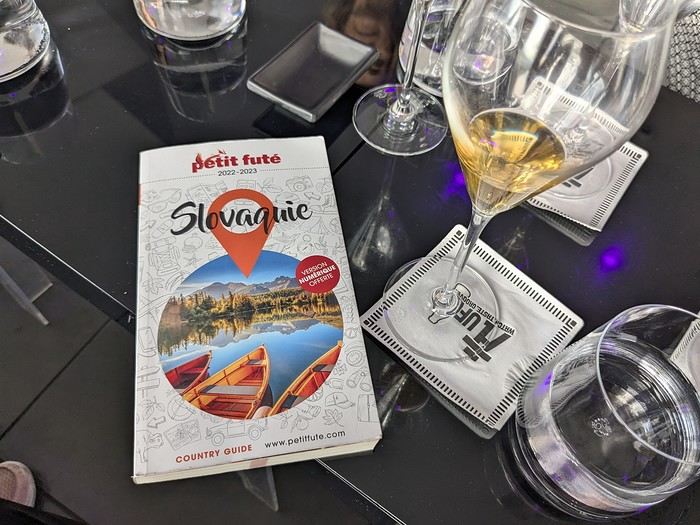
Hello and welcome aboard this travel journal.
We’re heading to Slovakia together!
 Why this country?
After visiting Hungary, Slovenia, Romania, and Poland in recent years, I’ve fallen in love with Eastern European countries. I adore the Slavic soul, its Austro-Hungarian villages, the gentle landscapes, the Carpathian Mountains, and that slightly mysterious atmosphere.
Slovakia evokes a certain imagination with its deep forests, medieval castles, and cobbled villages.
After seeing photos of the High Tatras—especially Lake Štrbské Pleso and Spiš Castle—I thought, "Let’s do it! We’re going!"
So, will Slovakia live up to what I imagine?
We’ll find out together.
We decided to travel as a group of six (five adults and a six-year-old child), by car (we needed two).
Here’s the day-by-day itinerary for this family trip, which started with a 3-day stay in Vienna (see the dedicated travel journal):
Why this country?
After visiting Hungary, Slovenia, Romania, and Poland in recent years, I’ve fallen in love with Eastern European countries. I adore the Slavic soul, its Austro-Hungarian villages, the gentle landscapes, the Carpathian Mountains, and that slightly mysterious atmosphere.
Slovakia evokes a certain imagination with its deep forests, medieval castles, and cobbled villages.
After seeing photos of the High Tatras—especially Lake Štrbské Pleso and Spiš Castle—I thought, "Let’s do it! We’re going!"
So, will Slovakia live up to what I imagine?
We’ll find out together.
We decided to travel as a group of six (five adults and a six-year-old child), by car (we needed two).
Here’s the day-by-day itinerary for this family trip, which started with a 3-day stay in Vienna (see the dedicated travel journal):
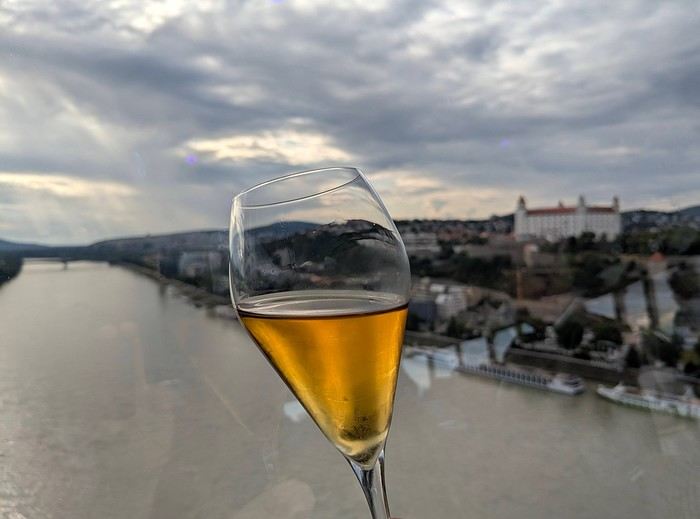
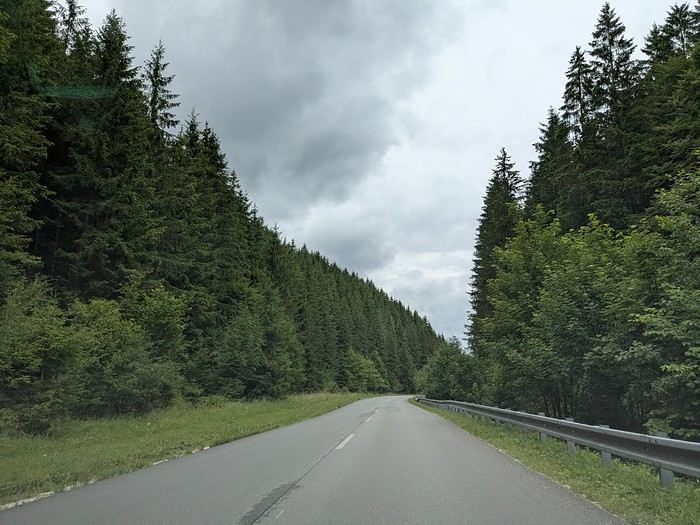
The itinerary: Day 1: Drive from Vienna to Banská Štiavnica and visit the town, then drive to Handlová Day 2: Bojnice Castle, the village of Čičmany, and a walk in the treetops at Bojnice, return to Handlová Day 3: Depart for Orava, visit Orava Castle and the Orava Skansen, drive to Veľký Slavkov Day 4: Visit Slovak Paradise—its gorges, lakes, and ice cave—overnight in Veľký Slavkov Day 5: Visit Bardejov, the "Death Road," wooden churches, and Ľubovňa Castle, overnight in Veľký Slavkov Day 6: Walks and hikes in the High Tatras, Lake Štrbské Pleso, Solisko summit, treetop walk in Ždiar, overnight in Veľký Slavkov Day 7: Drive to Košice, visit Spiš Castle, Tokaj wine route in Veľká Trňa, overnight in Košice Day 8: Visit Košice, overnight in Košice Day 9: Drive to Bratislava, stop at the Aragonite Cave in the Slovak Karst, overnight in Bratislava Day 10: Visit Bratislava, overnight stay Day 11 and 12: Return to France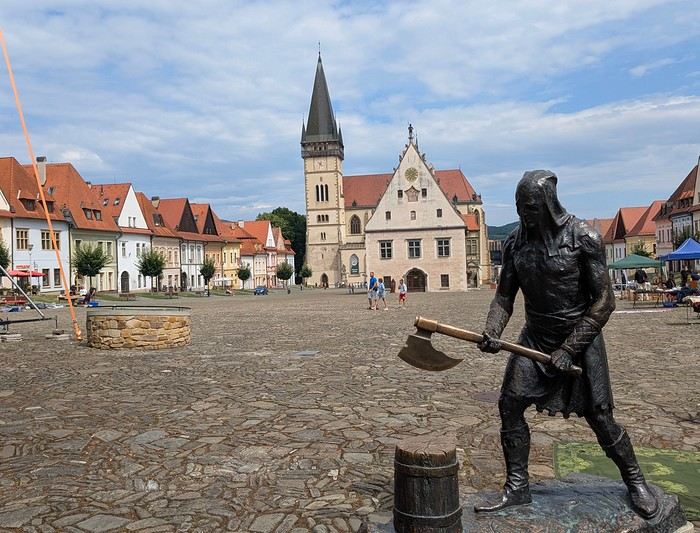
Budget: I’m giving prices for 2 adults / 1 child. Slovakia is more expensive than it seems, and some expenses shouldn’t be underestimated. Transportation: Tolls and gas from France: 500 € round trip Slovak vignette for one month: 17.10 € Gas is fixed at 1.49 € per liter (E10) Parking at sites (all paid by the day, even in the most remote villages, even if you stay for just an hour). Payment is often required in cash upon arrival: total 63 € We didn’t pay at Spiš (we arrived before the cashier) or Ľubovňa (we arrived after the cashier left). Parking at Orava Village was free. In Košice and Bratislava, we parked for free at our accommodations. Public transport in Bratislava and Košice: 1-1.2 € for a bus ticket. Vending machines are available at some stops; otherwise, buy via SMS (Slovak phones only) or official sales points.
Accommodation: We mostly chose houses so we could cook ourselves and save on food. I’ve rated our satisfaction with these accommodations from 1 to 5 stars. Padua: DC Hotel: 1 night, 77 € ***** Handlová: Chata Remata: 2 nights, 120 € ***** Veľký Slavkov: Aplend: 4 nights, 220 € ** Košice: Luxury Old Town Loft 320m²: 2 nights, 120 € ***** Bratislava: Hotel Viktor: 2 nights, 138 € *** Brescia: Hotel Antica Fonte: 1 night, 82 € ***** Total: 757 €
Food: Groceries at Lidl for 5 meals for 3: 100 € (really cheap) Restaurants: 10-15 € per dish, ice cream 1-2.4 € per scoop, crêpes 8-12 €, a glass of wine 6-10 €... total: 500 €
Visits: There are discounts for seniors and children, which is great. We spent nearly 600 € in total, which is a lot. However, it’s a cultural destination with many castles, museums, caves, wine cellars, and nature activities: cable cars, canopy walks, paid hikes (Slovak Paradise gorges)... In the end, this trip to Slovakia cost nearly 2500 € for 3. We also need to add the Vienna portion to that. Now, here’s the day-by-day account of this beautiful journey.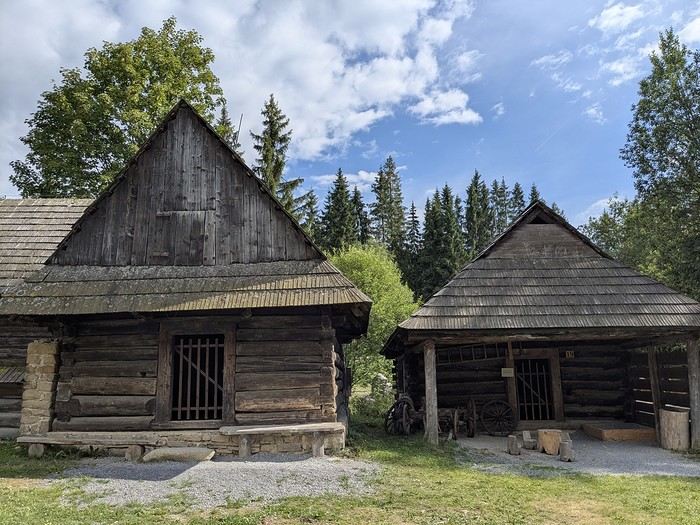
Why this country?
After visiting Hungary, Slovenia, Romania, and Poland in recent years, I’ve fallen in love with Eastern European countries. I adore the Slavic soul, its Austro-Hungarian villages, the gentle landscapes, the Carpathian Mountains, and that slightly mysterious atmosphere.
Slovakia evokes a certain imagination with its deep forests, medieval castles, and cobbled villages.
After seeing photos of the High Tatras—especially Lake Štrbské Pleso and Spiš Castle—I thought, "Let’s do it! We’re going!"
So, will Slovakia live up to what I imagine?
We’ll find out together.
We decided to travel as a group of six (five adults and a six-year-old child), by car (we needed two).
Here’s the day-by-day itinerary for this family trip, which started with a 3-day stay in Vienna (see the dedicated travel journal):
The itinerary: Day 1: Drive from Vienna to Banská Štiavnica and visit the town, then drive to Handlová Day 2: Bojnice Castle, the village of Čičmany, and a walk in the treetops at Bojnice, return to Handlová Day 3: Depart for Orava, visit Orava Castle and the Orava Skansen, drive to Veľký Slavkov Day 4: Visit Slovak Paradise—its gorges, lakes, and ice cave—overnight in Veľký Slavkov Day 5: Visit Bardejov, the "Death Road," wooden churches, and Ľubovňa Castle, overnight in Veľký Slavkov Day 6: Walks and hikes in the High Tatras, Lake Štrbské Pleso, Solisko summit, treetop walk in Ždiar, overnight in Veľký Slavkov Day 7: Drive to Košice, visit Spiš Castle, Tokaj wine route in Veľká Trňa, overnight in Košice Day 8: Visit Košice, overnight in Košice Day 9: Drive to Bratislava, stop at the Aragonite Cave in the Slovak Karst, overnight in Bratislava Day 10: Visit Bratislava, overnight stay Day 11 and 12: Return to France
Budget: I’m giving prices for 2 adults / 1 child. Slovakia is more expensive than it seems, and some expenses shouldn’t be underestimated. Transportation: Tolls and gas from France: 500 € round trip Slovak vignette for one month: 17.10 € Gas is fixed at 1.49 € per liter (E10) Parking at sites (all paid by the day, even in the most remote villages, even if you stay for just an hour). Payment is often required in cash upon arrival: total 63 € We didn’t pay at Spiš (we arrived before the cashier) or Ľubovňa (we arrived after the cashier left). Parking at Orava Village was free. In Košice and Bratislava, we parked for free at our accommodations. Public transport in Bratislava and Košice: 1-1.2 € for a bus ticket. Vending machines are available at some stops; otherwise, buy via SMS (Slovak phones only) or official sales points.
Accommodation: We mostly chose houses so we could cook ourselves and save on food. I’ve rated our satisfaction with these accommodations from 1 to 5 stars. Padua: DC Hotel: 1 night, 77 € ***** Handlová: Chata Remata: 2 nights, 120 € ***** Veľký Slavkov: Aplend: 4 nights, 220 € ** Košice: Luxury Old Town Loft 320m²: 2 nights, 120 € ***** Bratislava: Hotel Viktor: 2 nights, 138 € *** Brescia: Hotel Antica Fonte: 1 night, 82 € ***** Total: 757 €
Food: Groceries at Lidl for 5 meals for 3: 100 € (really cheap) Restaurants: 10-15 € per dish, ice cream 1-2.4 € per scoop, crêpes 8-12 €, a glass of wine 6-10 €... total: 500 €
Visits: There are discounts for seniors and children, which is great. We spent nearly 600 € in total, which is a lot. However, it’s a cultural destination with many castles, museums, caves, wine cellars, and nature activities: cable cars, canopy walks, paid hikes (Slovak Paradise gorges)... In the end, this trip to Slovakia cost nearly 2500 € for 3. We also need to add the Vienna portion to that. Now, here’s the day-by-day account of this beautiful journey.
What are your best foodie spots in Montreal?
Hi everyone,
I’m heading back to Montreal in early November after several years away. I’m so excited! I won’t be staying long, but I’ll have time to wander and explore.
I’d love to get your recommendations for great things to eat—restaurants, bakeries, all kinds of food. I’m open to all your suggestions and addresses. I’ll definitely hit up the market. And eat bagels, of course.
I’ll probably stay in the Quartier des Spectacles, but I’ll definitely be getting around the city.
Thanks in advance!
I’m heading back to Montreal in early November after several years away. I’m so excited! I won’t be staying long, but I’ll have time to wander and explore.
I’d love to get your recommendations for great things to eat—restaurants, bakeries, all kinds of food. I’m open to all your suggestions and addresses. I’ll definitely hit up the market. And eat bagels, of course.
I’ll probably stay in the Quartier des Spectacles, but I’ll definitely be getting around the city.
Thanks in advance!
Your thoughts on our 3-week Quebec road trip
We’re heading out for 3 weeks and just bought our flight tickets;
3 days in Montreal
2 days in La Mauricie Park
drive down Route 155 to Lac Saint-Jean
2 days in Tadoussac
ferry to Gaspésie—planning to stay 6/7 days there
Charlevoix region for 3 days
Quebec City for 2 days
Back to Montreal
If you’ve got any great tips, I’d love to hear them—accommodation, activities (seaplane, bears, whales), parks. We’re traveling with our kids, aged 20 and 23,
If you’ve got any great tips, I’d love to hear them—accommodation, activities (seaplane, bears, whales), parks. We’re traveling with our kids, aged 20 and 23,
Safari itinerary in Kruger Park and surrounding areas
Hi everyone,
I’m sharing the following itinerary for your experienced eyes 😏—I’m finalizing it for Kruger Park and two camps outside the park. We’re starting in the north, entering through Phalabowa Gate to head to Shingwedzi:
Shingwedzi Camp: 2 nights, sunrise drive Mopani Camp: 2 nights, morning walk and night drive Olifants Camp: 2 nights, morning walk Satara: 1 night, sunset drive Manyeleti Game Reserve: 1 night at Buffelshoek Lions Rock Luxury Tented Camp: 2 nights
Did I pick the right sunrise and sunset drives? Thanks in advance for your feedback and experiences! 😎
Shingwedzi Camp: 2 nights, sunrise drive Mopani Camp: 2 nights, morning walk and night drive Olifants Camp: 2 nights, morning walk Satara: 1 night, sunset drive Manyeleti Game Reserve: 1 night at Buffelshoek Lions Rock Luxury Tented Camp: 2 nights
Did I pick the right sunrise and sunset drives? Thanks in advance for your feedback and experiences! 😎
What budget should I plan for outings in Phuket?
Hi everyone, I hope you're doing well!
Just a quick question—I wanted to know, excluding accommodation and flight tickets, just for leisure activities and food on the spot,
I go out a lot so I’d like to know what the costs are for a budget that includes some outings, drinks, eating (local food), and a few massages (local massages).
Could those of you who know share some prices, please?
Do you think a budget of 100 € per day is reasonable?
I’ve read in some places that it’s more than enough, and in others that it’s really tight 😕
I hope I won’t have to watch every penny 😅
I’m staying for two months, from May 27th to the end of July.
15 days in Texas in October 2022
Ah! This trip to Texas, postponed so many times because of Covid. I wanted to discover this state, but not in the summer due to the temperatures.
I’ll try to dig into my memories since I didn’t take any notes.
Day 1: Departure
Early morning flight from Lyon to Frankfurt (I often fly with Lufthansa). We only have a 50-minute layover, but I trust German organization—it’s not just talk, since it took us only 30 minutes to get to the boarding gate. Arriving in Houston, we’re excited because it’s been 3 years since we last visited the USA, and we’ve missed it.
Everything goes smoothly with the formalities and the car rental, so 1.5 hours after landing, I park near Sam Houston Park to start our discovery. The park is pretty, clean, and has the unique feature of housing some well-preserved Victorian houses. The sun is shining, and it’s always fun to see old wooden houses surrounded by gleaming skyscrapers. A quick drive to the Rothko Chapel, which is dedicated to all faiths. There are also modern artworks in an annex building and outside. Then we head to Pasadena to reach our hotel and go to bed since we’ve been awake for a while!
Hotel: A classic Days Inn. It’s standard, but the beds are comfortable, and it’s a quiet place. The + of the day: We're back in the USA The -: Nothing
Day 2: NASA and then Galveston
Of course, we wake up super early. A quick trip to the nearby Walmart for the usual small purchases. Surprise—I can’t buy a bottle of California white wine because in Texas, there are set hours for buying alcohol. Talk about a bummer for my apéro! Next, we head to Kemah, a small, hyper-touristy port where everything is kitschy but clean and nice. It’s a bit overdone, but since NASA doesn’t open until 10 AM and it’s still early, we might as well enjoy the good weather in a pleasant spot.
We arrive at the NASA Houston center without any issues. It’s smaller than the one in Florida and organized a bit differently. There are trains that take passengers to the different sites, but you need to get tickets (included in the price), and once you’ve finished visiting one site, you have to return to the center to get a ticket for another. Not very practical.
We choose to visit the training center and the rockets, skipping the control room, which, based on the photos, looks like the one at Cape Canaveral. The training center is a cool place because it’s still in use. Engineers are working on machines and computers. We don’t see any astronauts training, but we see the space chair, the shuttle’s robotic arm, and lots of gadgets—this hangar is like Gyro Gearloose’s or Doc’s domain!
Next, we head to the rocket hangar, featuring the Saturn V, the same one as at Cape Canaveral. Finally, we wrap up our tour by returning to the center, where a Boeing 747 with a shuttle attached to its back dominates the outside. We can visit the shuttle, and we don’t miss the chance.
A few exhibits inside complete the experience and satisfy our thirst for knowledge. I love the space exploration era, and gotta say, the Americans do it right. Then we drive to Galveston, about 100 km away. Why Galveston? It’s by the sea, so swimming in late October isn’t unpleasant, and there’s a neighborhood called East End Historic District filled with stunning Victorian houses, each more beautiful than the last. Plus, it’s Halloween season, so the decorations are over the top! They really go all out!
Madame takes a swim, but I find the water too cold for my taste. Apéro (they didn’t trick me twice—I had time to go back to another Walmart!) Dinner + bedtime
Hotel: A classic Quality Inn. No issues. The +: NASA, even if it’s smaller than Cape Canaveral The -: I would’ve preferred the water in the Gulf of Mexico to be a bit warmer
Day 1: Departure
Early morning flight from Lyon to Frankfurt (I often fly with Lufthansa). We only have a 50-minute layover, but I trust German organization—it’s not just talk, since it took us only 30 minutes to get to the boarding gate. Arriving in Houston, we’re excited because it’s been 3 years since we last visited the USA, and we’ve missed it.
Everything goes smoothly with the formalities and the car rental, so 1.5 hours after landing, I park near Sam Houston Park to start our discovery. The park is pretty, clean, and has the unique feature of housing some well-preserved Victorian houses. The sun is shining, and it’s always fun to see old wooden houses surrounded by gleaming skyscrapers. A quick drive to the Rothko Chapel, which is dedicated to all faiths. There are also modern artworks in an annex building and outside. Then we head to Pasadena to reach our hotel and go to bed since we’ve been awake for a while!
Hotel: A classic Days Inn. It’s standard, but the beds are comfortable, and it’s a quiet place. The + of the day: We're back in the USA The -: Nothing
Day 2: NASA and then Galveston
Of course, we wake up super early. A quick trip to the nearby Walmart for the usual small purchases. Surprise—I can’t buy a bottle of California white wine because in Texas, there are set hours for buying alcohol. Talk about a bummer for my apéro! Next, we head to Kemah, a small, hyper-touristy port where everything is kitschy but clean and nice. It’s a bit overdone, but since NASA doesn’t open until 10 AM and it’s still early, we might as well enjoy the good weather in a pleasant spot.
We arrive at the NASA Houston center without any issues. It’s smaller than the one in Florida and organized a bit differently. There are trains that take passengers to the different sites, but you need to get tickets (included in the price), and once you’ve finished visiting one site, you have to return to the center to get a ticket for another. Not very practical.
We choose to visit the training center and the rockets, skipping the control room, which, based on the photos, looks like the one at Cape Canaveral. The training center is a cool place because it’s still in use. Engineers are working on machines and computers. We don’t see any astronauts training, but we see the space chair, the shuttle’s robotic arm, and lots of gadgets—this hangar is like Gyro Gearloose’s or Doc’s domain!
Next, we head to the rocket hangar, featuring the Saturn V, the same one as at Cape Canaveral. Finally, we wrap up our tour by returning to the center, where a Boeing 747 with a shuttle attached to its back dominates the outside. We can visit the shuttle, and we don’t miss the chance.
A few exhibits inside complete the experience and satisfy our thirst for knowledge. I love the space exploration era, and gotta say, the Americans do it right. Then we drive to Galveston, about 100 km away. Why Galveston? It’s by the sea, so swimming in late October isn’t unpleasant, and there’s a neighborhood called East End Historic District filled with stunning Victorian houses, each more beautiful than the last. Plus, it’s Halloween season, so the decorations are over the top! They really go all out!
Madame takes a swim, but I find the water too cold for my taste. Apéro (they didn’t trick me twice—I had time to go back to another Walmart!) Dinner + bedtime
Hotel: A classic Quality Inn. No issues. The +: NASA, even if it’s smaller than Cape Canaveral The -: I would’ve preferred the water in the Gulf of Mexico to be a bit warmer
Itinerary and tips after our 2-week family trip to Uzbekistan
Hi everyone,
We’re back from our vacation in Uzbekistan with our kids—a wonderful trip with amazing memories! I’m sharing our itinerary and a few tips.
**Khiva + Aral Sea (3 days)**
- Arrived in Urgench at 5 AM on Saturday - Transferred to Khiva and spent the day exploring the city (that’s enough time). Among other sights, we struggled to find the Tash Khauli harem—it’s totally worth it! - Sunday: headed to Moynaq (the ship graveyard of the Aral Sea). On the way, we stopped to visit two fortresses in the desert—there are about fifty in varying states of repair. Really beautiful, especially Ayaz-Kala. We continued to Moynaq on a rough road (4-hour drive). - Monday: visited the ship graveyard and the small museum. There isn’t much to see, but we thought it was worth it to understand the consequences of human activity—a real eye-opener. It’s true that it’s a long drive, so you’ll have to decide for yourselves. On the way back to Nukus, we stopped to visit the Mizdakhan necropolis (worth it, even if it doesn’t compare to Bukhara or Samarkand’s buildings—it’s no match for them ;-)) - Evening: flight to Tashkent (saved us a day of travel to get to Bukhara from Khiva)
**Ferghana Valley (3 days)**
- Tuesday morning: left Tashkent by train to reach Margilan by noon. - Tuesday afternoon and Wednesday: visited Margilan’s market, silk/ceramic workshops, and dutar-making (a traditional two-stringed, bulging violin). Arrived in Kokand in the evening. - Thursday: explored Kokand (the palace is worth it) - Summary: Margilan and Fergana aren’t very pretty—only the workshops are interesting. Don’t miss Kokand. This leg could’ve been done in 2 days. - Left Kokand by overnight train to Bukhara (note on overnight trains: *very* small cabins—but for us, overnight train rides are a must ;-)!)
**Bukhara (3 days)**
- Arrived Friday morning: 3 days there—perfect for seeing (and revisiting) everything at our own pace. - Hired a French-speaking guide for one day—really helpful for understanding the history and politics, and getting a better grasp of Uzbekistan.
**Toward Lake Aydar Kul (2 days)**
- Left Monday morning by car for the lake. On the way, stopped at a renowned ceramicist’s workshop and to see Neolithic petroglyphs. Note on the petroglyphs: there’s apparently a 3 km walk to see quite a few, but we skipped it due to time—we regret it! For the kids, it was like a treasure hunt, searching for the petroglyphs among the rocks—they loved it. - Arrived in the evening at a yurt camp with traditional music. The yurts were fun, but we ate in a very Westernized restaurant with way too many tourist groups for our taste. - The next day: a 2-hour camel ride in the desert to see plants and animals. We saw a few things, but it wasn’t very interesting unless you’re going from point A to point B. Then left the camp for Lake Aydar Kul—we ate at a lakeside restaurant, but it was pointless. There must be nice spots, but this one was a bust. - Drove to Samarkand (4 hours)
**Samarkand (2 days)**
- Wednesday–Thursday: explored this stunning city. Two days are enough to see everything, but three would’ve been better to take more time to wander and revisit certain spots. - Another day with a French-speaking guide—we confirm it’s worth it!
**Urgut (1 day)**
- Friday: 1.5 hours from Samarkand, in the mountains. AMAZING! A 3-hour hike in the mountains with a guide (you can do longer). We stayed in a guesthouse—so peaceful, with the sound of the stream and mountain views. It deserves 2 days. - Left by train that evening for Tashkent
**Tashkent (2 days)**
- Saturday: visited Chorsu Market (incredible—even though we’d been to several markets, Tashkent’s is wild), the TV Tower (for the view, but not much else), and lunch at The Plov Center (at the base of the tower)—a plov factory, so cool! You can see the kitchens, it’s insane! Spent a relaxed afternoon on Broadway: a park with ping-pong tables, archery, ice cream stands—great with the kids. - Sunday: Chimgan—took the cable car at a ski resort (no snow this time of year), had a picnic at the top of the mountain—nice. - Evening: off to Tashkent Airport and goodbye, Uzbekistan!
**A few tips:**
- In cities, *must* download Yandex Go—super practical, fast, and cheap for getting around. - We bought a Ucell SIM card: 80 GB of data for 50,000 sums (around 3 €). We put it in an old phone and connected our two phones to it—so handy! - Uzbeks are *so* nice, welcoming, and helpful. - Thank you, Google Translate—few people speak English. - The beds are hard… I think it’s an Uzbek thing!! - Guesthouses: between 50 and 70 € per night for the four of us. Comfortable enough, private bathroom, but not luxury. - Meals: we mostly looked for Uzbek restaurants without tourists. Around 200,000 sums per meal (about 15 €). If you add wine, it adds up fast—one glass of wine = the price of a dish. - Don’t hesitate to buy from markets for picnics (samsa, dried cheese balls, fruits and veggies, bread). You can even taste before buying. Some good (and not-so-good) discoveries ;) - Everything is very clean: the streets, the cities, the accommodations.
**Special thanks to our organizer, Sardor (fluent in French):**
I contacted him by email before we left; he optimized the program we’d planned. He set us up with French-speaking guides and handled all the transport and activities outside the four main cities. Super available via WhatsApp and phone while we were there. All the drivers/guides were *very* punctual. DM me if you need his info.
There you go. Sorry for the long post, but I looked for some of this info before we left—I figured it might help someone.
Happy travels in Uzbekistan! We’ll remember this trip for a long time!
We’re back from our vacation in Uzbekistan with our kids—a wonderful trip with amazing memories! I’m sharing our itinerary and a few tips.
**Khiva + Aral Sea (3 days)**
- Arrived in Urgench at 5 AM on Saturday - Transferred to Khiva and spent the day exploring the city (that’s enough time). Among other sights, we struggled to find the Tash Khauli harem—it’s totally worth it! - Sunday: headed to Moynaq (the ship graveyard of the Aral Sea). On the way, we stopped to visit two fortresses in the desert—there are about fifty in varying states of repair. Really beautiful, especially Ayaz-Kala. We continued to Moynaq on a rough road (4-hour drive). - Monday: visited the ship graveyard and the small museum. There isn’t much to see, but we thought it was worth it to understand the consequences of human activity—a real eye-opener. It’s true that it’s a long drive, so you’ll have to decide for yourselves. On the way back to Nukus, we stopped to visit the Mizdakhan necropolis (worth it, even if it doesn’t compare to Bukhara or Samarkand’s buildings—it’s no match for them ;-)) - Evening: flight to Tashkent (saved us a day of travel to get to Bukhara from Khiva)
**Ferghana Valley (3 days)**
- Tuesday morning: left Tashkent by train to reach Margilan by noon. - Tuesday afternoon and Wednesday: visited Margilan’s market, silk/ceramic workshops, and dutar-making (a traditional two-stringed, bulging violin). Arrived in Kokand in the evening. - Thursday: explored Kokand (the palace is worth it) - Summary: Margilan and Fergana aren’t very pretty—only the workshops are interesting. Don’t miss Kokand. This leg could’ve been done in 2 days. - Left Kokand by overnight train to Bukhara (note on overnight trains: *very* small cabins—but for us, overnight train rides are a must ;-)!)
**Bukhara (3 days)**
- Arrived Friday morning: 3 days there—perfect for seeing (and revisiting) everything at our own pace. - Hired a French-speaking guide for one day—really helpful for understanding the history and politics, and getting a better grasp of Uzbekistan.
**Toward Lake Aydar Kul (2 days)**
- Left Monday morning by car for the lake. On the way, stopped at a renowned ceramicist’s workshop and to see Neolithic petroglyphs. Note on the petroglyphs: there’s apparently a 3 km walk to see quite a few, but we skipped it due to time—we regret it! For the kids, it was like a treasure hunt, searching for the petroglyphs among the rocks—they loved it. - Arrived in the evening at a yurt camp with traditional music. The yurts were fun, but we ate in a very Westernized restaurant with way too many tourist groups for our taste. - The next day: a 2-hour camel ride in the desert to see plants and animals. We saw a few things, but it wasn’t very interesting unless you’re going from point A to point B. Then left the camp for Lake Aydar Kul—we ate at a lakeside restaurant, but it was pointless. There must be nice spots, but this one was a bust. - Drove to Samarkand (4 hours)
**Samarkand (2 days)**
- Wednesday–Thursday: explored this stunning city. Two days are enough to see everything, but three would’ve been better to take more time to wander and revisit certain spots. - Another day with a French-speaking guide—we confirm it’s worth it!
**Urgut (1 day)**
- Friday: 1.5 hours from Samarkand, in the mountains. AMAZING! A 3-hour hike in the mountains with a guide (you can do longer). We stayed in a guesthouse—so peaceful, with the sound of the stream and mountain views. It deserves 2 days. - Left by train that evening for Tashkent
**Tashkent (2 days)**
- Saturday: visited Chorsu Market (incredible—even though we’d been to several markets, Tashkent’s is wild), the TV Tower (for the view, but not much else), and lunch at The Plov Center (at the base of the tower)—a plov factory, so cool! You can see the kitchens, it’s insane! Spent a relaxed afternoon on Broadway: a park with ping-pong tables, archery, ice cream stands—great with the kids. - Sunday: Chimgan—took the cable car at a ski resort (no snow this time of year), had a picnic at the top of the mountain—nice. - Evening: off to Tashkent Airport and goodbye, Uzbekistan!
**A few tips:**
- In cities, *must* download Yandex Go—super practical, fast, and cheap for getting around. - We bought a Ucell SIM card: 80 GB of data for 50,000 sums (around 3 €). We put it in an old phone and connected our two phones to it—so handy! - Uzbeks are *so* nice, welcoming, and helpful. - Thank you, Google Translate—few people speak English. - The beds are hard… I think it’s an Uzbek thing!! - Guesthouses: between 50 and 70 € per night for the four of us. Comfortable enough, private bathroom, but not luxury. - Meals: we mostly looked for Uzbek restaurants without tourists. Around 200,000 sums per meal (about 15 €). If you add wine, it adds up fast—one glass of wine = the price of a dish. - Don’t hesitate to buy from markets for picnics (samsa, dried cheese balls, fruits and veggies, bread). You can even taste before buying. Some good (and not-so-good) discoveries ;) - Everything is very clean: the streets, the cities, the accommodations.
**Special thanks to our organizer, Sardor (fluent in French):**
I contacted him by email before we left; he optimized the program we’d planned. He set us up with French-speaking guides and handled all the transport and activities outside the four main cities. Super available via WhatsApp and phone while we were there. All the drivers/guides were *very* punctual. DM me if you need his info.
There you go. Sorry for the long post, but I looked for some of this info before we left—I figured it might help someone.
Happy travels in Uzbekistan! We’ll remember this trip for a long time!
Question about Go Round tickets for excursions with the Costa Smeralda
Hi everyone! We’ve booked a cruise on the Costa Smeralda for early November 2025 (ports of call: Barcelona, Cagliari, Naples, Civitavecchia-Rome, Genoa). This is our first cruise, so I need your help for some sightseeing tips. I checked Costa’s website for excursions, but the prices are pretty steep! I saw that it’s possible to get a Costa Go Round ticket with multiple stops—this seems really practical for some destinations. Has anyone tried it? How does it work? Is it useful for seeing several sites in the city? If you have any tips for sightseeing without blowing our budget for 3 people, I’d love to hear them. Thanks so much! :)
Egypt trip review - April 2025
We just got back from a trip to Egypt: 2 days in Cairo, then a week on the Nile with a cruise through a tour operator.
An incredible discovery of the Pyramids of Cairo—such an emotional moment! Then a wonderful stroll along the Nile, where we leisurely soaked in the "life" along this river.
An exceptional guide who transported us back less than 4,000–5,000 years BC...
But here’s the thing—because there’s often a "BUT"—the flip side is discovering a *very* polluted country! Even on the Nile, the number of boats is staggering (I went barefoot on the boat one day, and by the end of the day, my feet were black with soot?).
In Cairo, with nearly 20 million inhabitants, there’s trash everywhere (except around the airport and villa areas). We even saw a dead cow with stray dogs eating its "innards"—but no one seemed bothered! By the way, there are *tons* of wild dogs in Egypt and very few... cats!
One day after our arrival, we had to pay our entry visa to the guide on the bus—and *only* in cash? 95 EUROS???? A disgrace, since the visa price is $25 (as stated on the visa stamp)... Someone needs to explain where that money goes???
The excursions (optional ones) are *five times* more expensive than the posted rates for tourists. There are two prices: one for Egyptians (which makes sense, given an average salary of 360 euros/month). On top of that, the cruise manager asked us to pay half in cash and half by card (we refused and paid everything in cash). First time I’ve ever seen that payment method for excursions—where *does* the money go?...
During a stop in Aswan, we wanted to visit the Nubian Museum (amazing!). We took a carriage, and before leaving, we agreed on a round-trip price of 20 euros for 4 people to take us to the museum. It was all good with the driver—who called himself "Michel" and his poor horse, Rambo. On the way back, of course, he caused a scene, demanding *much* more... We refused and gave him the 20 euros we’d agreed on. But then, as if by chance, this same carriage driver stopped for a man who asked us to exchange two 20-euro bills and 10 one-euro coins for a 50-euro bill. I pulled out my 50-euro note while talking to Michel, and the other guy claimed I’d given him a 10-euro bill?? He handed me the bill—so you get the scam!
So, be *very* careful with carriage drivers and their "colleagues"!
Drinks on board are outrageously priced—a simple beer (Stella) costs 5 euros, and the wine is undrinkable...
Tips are expected in euros—they won’t accept Egyptian pounds... and of course, you’re constantly harassed to exchange 5-euro or 10-euro bills, or even more! They end up with tons of coins, so we did it at first, but after a while, it’s just not possible—they insist way too much!
I’ll stop here—it’s already quite long. So, a mixed-feelings trip overall...
philippe
philippe
Discover the 10 Must-See Spots in Sardinia
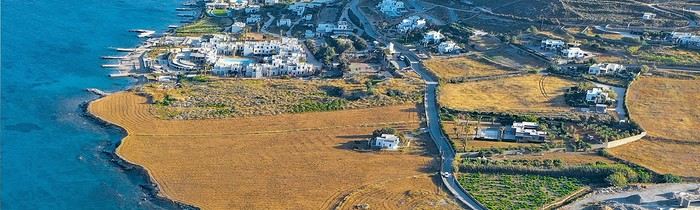
If you're dreaming of idyllic beaches and picturesque villages, you're in the right place! Known for its crystal-clear waters, millennia-old traditions, and preserved nature, Sardinia captivates travelers seeking a change of scenery. Here, you can enjoy a spectacular coastline, but also discover the authentic heart of the island, with its wild mountains and history-laden towns. Visiting Sardinia means taking the time to let yourself be lulled by the song of cicadas and the scent of the maquis. Escape to Sardinia with an all-inclusive stay at a 5-star hotel, allowing you to get away from it all.
To help you plan your itinerary, here’s an overview of ten must-see spots and a few off-the-beaten-path escapes.
Cagliari, the vibrant capital
Often the first point of contact with the island, Cagliari charms with its historic center, dominated by the medieval Castello district. Stroll through the narrow streets to reach the Santa Maria Cathedral, then climb up to the Saint-Remy Bastion, where the view of the city and the sea is well worth the effort. Be sure to visit the San Benedetto market, where stalls of cheeses, cured meats, and fish reflect Sardinia’s culinary diversity.
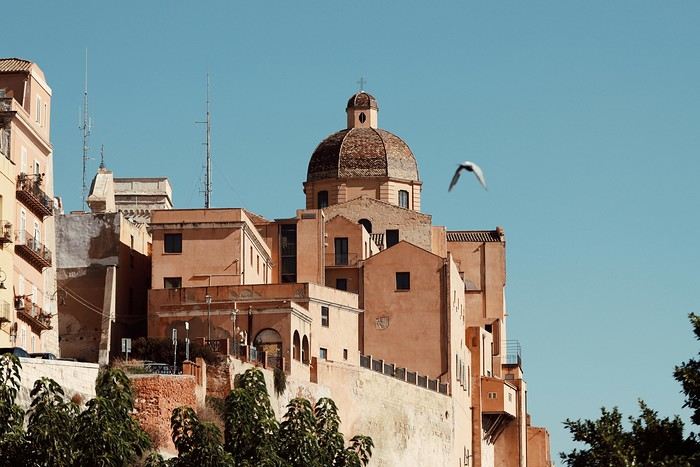
Villasimius, fine sand and turquoise waters
Less than an hour’s drive from Cagliari, the Villasimius area is famous for its dreamy beaches, including Porto Giunco and Simius Beach. The white sand contrasts beautifully with the crystal-clear blue of the sea—a postcard-perfect setting. Diving enthusiasts will be delighted, while hikers can explore Capo Carbonara, a protected area home to pink flamingos.
Costa Smeralda, the glamorous side of the island
Renowned for its prestigious seaside resorts, the Costa Smeralda attracts yachts and lively evenings. Porto Cervo, its iconic port, draws travelers from around the world. Don’t worry—if you venture a little off the beaten path, you’ll find small, wild coves and trails lined with umbrella pines. A stop at a local wine bar to taste a glass of vermentino is highly recommended, if only to admire the view.
The La Maddalena Archipelago, a marine gem
In the northeast, this national marine park comprises several islands with stunning beaches. La Maddalena, the main island, charms with its colorful houses and lively port. Offshore, wonders like Spargi Island or the famous Pink Beach of Budelli await visitors. It’s best to dedicate a full day—or more—to exploring this paradise by boat.
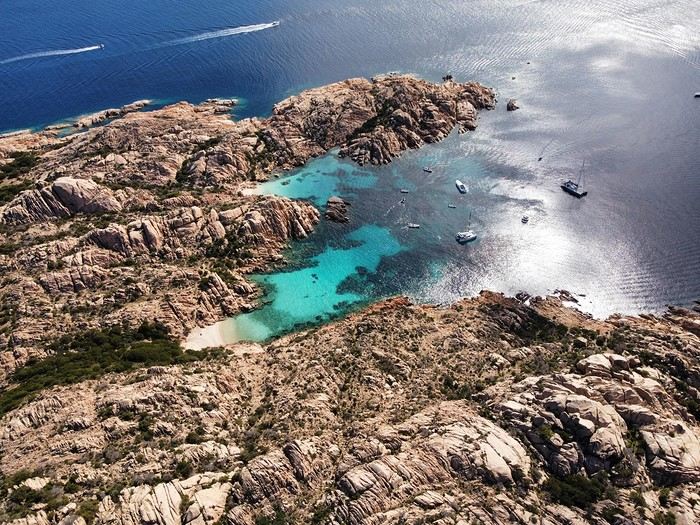
Alghero, the Catalan city
On the northwest coast, Alghero reveals a historic center encircled by ramparts, where the Catalan influence is still strong. Walk along the fortifications to watch the sunset, then sample the local cuisine, focused on seafood and wine. A short drive away, Neptune’s Grotto is a spectacular site: you can reach it via a staircase of 654 steps carved into the cliff or by boat for a more romantic approach.
Bosa, a painting under the open sky
Heading south along the coast from Alghero, you’ll reach Bosa, one of Sardinia’s most charming villages. Its colorful houses line the Temo River, overlooked by the Serravalle Castle. Wander the streets, admiring the vibrant facades, then settle into a small restaurant to taste the famous bottarga. The atmosphere is peaceful—this is la dolce vita.
The Piscinas Dunes, a desert by the sea
Head southwest to discover Piscinas, a natural site where sand dunes evoke a desert. Between sparse vegetation and turquoise sea, the contrast is simply stunning. The beaches, rarely crowded, offer a soothing tranquility. A perfect spot for lovers of wild landscapes, far from the hustle and bustle of seaside resorts.
Su Nuraxi di Barumini, a prehistoric relic
You can’t truly understand Sardinian history without mentioning the nuraghes, mysterious stone towers left by the Nuragic civilization. In Barumini, you can explore Su Nuraxi, the most famous, a UNESCO World Heritage site. Its millennia-old architecture and vast complex make it a must-visit for anyone wanting to delve into the island’s past.
Orgosolo and the mountainous interior
To experience the deep soul of Sardinia, head to the Supramonte massif. Orgosolo, once a bandit hideout, is known for its mural paintings adorning house facades. These artworks tell the local history, social struggles, and Sardinian pride. The surrounding nature is breathtaking: forests, canyons, and panoramic views invite you to hike.
The Gulf of Orosei, dreamy coves
Finally, it’s hard to miss the beaches of the Gulf of Orosei. Cala Luna, Cala Mariolu, and Cala Goloritzé are among the most beautiful in the Mediterranean. Accessible by boat or on foot, each reveals transparent waters perfect for diving. Time seems to stand still in these wild landscapes, immersing you in the charm of a preserved Sardinia. From its sandy beaches to its rugged mountains, the island offers a stunning array of scenery. Far beyond the Costa Smeralda, Sardinia is full of hidden corners where nature reigns supreme and traditions are still very much alive. Once there, let yourself be swept up by the Sardinian dolce vita, savor its generous cuisine, and soak in its legends.
Happy travels!
Authentic Spain: Immersing Yourself in Regional Diversity
Beyond the traditional tourist circuits, Spain reveals its true essence through its lesser-known regions and preserved traditions. For a unique and authentic experience, we invite you to explore the hidden facets of this fascinating country. You can check out FairMoove’s offers, an eco-responsible and authentic travel agency.
The Hidden Gems of Rural Andalusia
Far from the well-trodden paths of Seville and Granada, the white villages of Andalusia transport you to a timeless Spain. In Ronda, perched on its vertiginous cliffs, the cobbled streets tell centuries of history. In the intimacy of Mijas, artisans keep age-old traditions alive in their workshops, open to curious visitors.
Master potters introduce you to their ancestral craft, sharing techniques passed down through generations. In family-run taverns, tapas are enjoyed to the rhythm of conversations with locals, revealing jealously guarded recipes. Come evening, local flamenco schools open their doors, letting you discover the deep soul of Andalusia through its traditional dances. A Sensory Journey: The Wine Route
The wine regions of Rioja and Ribera del Duero invite you to a truly "non-touristy" authentic experience. In these family-run estates, often centuries old, winemakers share their passion with characteristic generosity. Tours of historic cellars reveal the secrets of traditional winemaking, while guided tastings awaken your senses to the subtleties of local grape varieties.
During harvest season, you can join in the grape picking alongside local families, continuing age-old traditions. Meals shared in the vineyards become moments of conviviality where the wine tells the story of the terroir. Some estates even offer blending workshops where you create your own cuvée under the expert guidance of enologists. From Lively Markets to Traditional Farms: Authentic Gastronomy
In Catalonia, local markets are true theaters of daily life. Beyond Barcelona’s La Boqueria, the markets in Catalan villages offer a more intimate experience. Producers share the stories behind their products—organic vegetables, artisanal cheeses, and traditional cured meats.
In the Balearic Islands, *fincas* turned into agritourism spots keep centuries-old agricultural traditions alive. In Mallorca, join the olive harvest and oil production using ancestral methods. In Menorca, cheesemakers introduce you to the crafting of the famous Mahón-Menorca PDO cheese, a skill passed down through generations.
The Vibrant Soul of Spain’s Autonomous Regions
Each of Spain’s autonomous regions proudly cultivates its unique identity. In Galicia, Celtic traditions blend harmoniously with age-old pilgrimages. Traditional fishing ports welcome you to discover the secrets of sustainable fishing, while local festivities celebrate ancestral legends.
The Basque Country surprises with its ancient language and world-renowned gastronomy. In *txokos*—traditional gastronomic societies—you’ll explore Basque cuisine alongside locals. Local festivals, like Valencia’s Fallas or Seville’s Feria de Abril, immerse you in the excitement of Spanish popular traditions. Community-Based Tourism: A Rewarding Human Experience
Extremadura, a pioneer in community-based tourism, offers homestays that redefine travel. These initiatives not only support the local economy directly but also create authentic connections with communities. You’ll take part in seasonal agricultural work, learn traditional farming and livestock techniques, and share daily life with the families hosting you.
Community-based tourism projects also extend to preserving cultural heritage. Join efforts to restore historic monuments, rehabilitate traditional hiking trails, or pass on endangered artisanal skills.
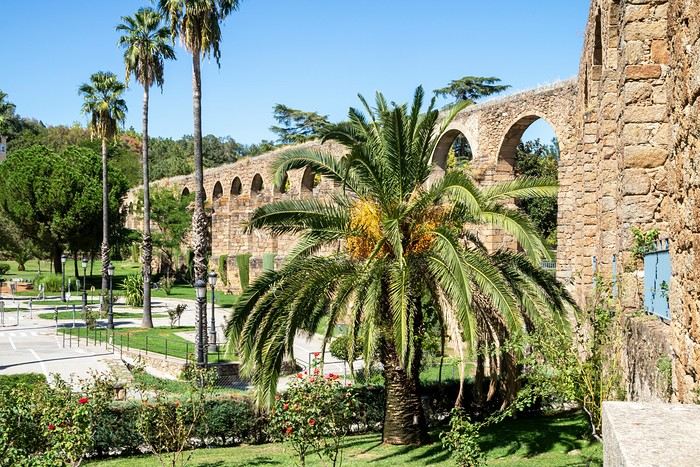
Responsible Travel to Preserve Authenticity
This immersive approach to travel in Spain helps preserve local traditions and promote sustainable development in communities. By choosing these authentic experiences, you actively contribute to keeping Spain’s cultural heritage alive while enjoying unique moments far from mass tourism. The income generated directly supports local preservation initiatives and the passing down of traditional knowledge. Positive Impact on Local Communities
Authentic tourism allows communities to keep their traditions alive while adapting to modern challenges. Younger generations find new opportunities to carry on ancestral skills, while visitors leave enriched by unforgettable experiences and encounters.
Spain’s regions invite you to discover their differences and similarities, creating a fascinating cultural mosaic where every stone tells a unique story. Each trip becomes an opportunity to learn, share, and support local initiatives that keep authentic Spain alive while preserving its heritage for future generations.
The Hidden Gems of Rural Andalusia
Far from the well-trodden paths of Seville and Granada, the white villages of Andalusia transport you to a timeless Spain. In Ronda, perched on its vertiginous cliffs, the cobbled streets tell centuries of history. In the intimacy of Mijas, artisans keep age-old traditions alive in their workshops, open to curious visitors.
Master potters introduce you to their ancestral craft, sharing techniques passed down through generations. In family-run taverns, tapas are enjoyed to the rhythm of conversations with locals, revealing jealously guarded recipes. Come evening, local flamenco schools open their doors, letting you discover the deep soul of Andalusia through its traditional dances. A Sensory Journey: The Wine Route
The wine regions of Rioja and Ribera del Duero invite you to a truly "non-touristy" authentic experience. In these family-run estates, often centuries old, winemakers share their passion with characteristic generosity. Tours of historic cellars reveal the secrets of traditional winemaking, while guided tastings awaken your senses to the subtleties of local grape varieties.
During harvest season, you can join in the grape picking alongside local families, continuing age-old traditions. Meals shared in the vineyards become moments of conviviality where the wine tells the story of the terroir. Some estates even offer blending workshops where you create your own cuvée under the expert guidance of enologists. From Lively Markets to Traditional Farms: Authentic Gastronomy
In Catalonia, local markets are true theaters of daily life. Beyond Barcelona’s La Boqueria, the markets in Catalan villages offer a more intimate experience. Producers share the stories behind their products—organic vegetables, artisanal cheeses, and traditional cured meats.
In the Balearic Islands, *fincas* turned into agritourism spots keep centuries-old agricultural traditions alive. In Mallorca, join the olive harvest and oil production using ancestral methods. In Menorca, cheesemakers introduce you to the crafting of the famous Mahón-Menorca PDO cheese, a skill passed down through generations.
The Vibrant Soul of Spain’s Autonomous Regions
Each of Spain’s autonomous regions proudly cultivates its unique identity. In Galicia, Celtic traditions blend harmoniously with age-old pilgrimages. Traditional fishing ports welcome you to discover the secrets of sustainable fishing, while local festivities celebrate ancestral legends.
The Basque Country surprises with its ancient language and world-renowned gastronomy. In *txokos*—traditional gastronomic societies—you’ll explore Basque cuisine alongside locals. Local festivals, like Valencia’s Fallas or Seville’s Feria de Abril, immerse you in the excitement of Spanish popular traditions. Community-Based Tourism: A Rewarding Human Experience
Extremadura, a pioneer in community-based tourism, offers homestays that redefine travel. These initiatives not only support the local economy directly but also create authentic connections with communities. You’ll take part in seasonal agricultural work, learn traditional farming and livestock techniques, and share daily life with the families hosting you.
Community-based tourism projects also extend to preserving cultural heritage. Join efforts to restore historic monuments, rehabilitate traditional hiking trails, or pass on endangered artisanal skills.
Responsible Travel to Preserve Authenticity
This immersive approach to travel in Spain helps preserve local traditions and promote sustainable development in communities. By choosing these authentic experiences, you actively contribute to keeping Spain’s cultural heritage alive while enjoying unique moments far from mass tourism. The income generated directly supports local preservation initiatives and the passing down of traditional knowledge. Positive Impact on Local Communities
Authentic tourism allows communities to keep their traditions alive while adapting to modern challenges. Younger generations find new opportunities to carry on ancestral skills, while visitors leave enriched by unforgettable experiences and encounters.
Spain’s regions invite you to discover their differences and similarities, creating a fascinating cultural mosaic where every stone tells a unique story. Each trip becomes an opportunity to learn, share, and support local initiatives that keep authentic Spain alive while preserving its heritage for future generations.
Homestays in Russia
Hi everyone!
Any idea what the current situation is like for homestays in Russia? Any recent firsthand experiences?
Thanks in advance! :)
The 8 Most Beautiful Hikes to Do in Réunion Island
Réunion Island, this paradise in the Indian Ocean, is a must-visit destination for hiking enthusiasts. With its active volcanoes, majestic cirques, and impressive peaks, there’s plenty to delight nature and adventure lovers. This article takes you on a journey to discover the eight most beautiful hikes the island has to offer. Lace up your hiking boots—let’s go!
1- Piton des Neiges: The Summit of Réunion
Piton des Neiges is the highest point on Réunion Island at 3,070 meters. It’s an iconic hike that attracts a large number of hikers every year. Climbing Piton des Neiges is like stepping into a unique atmosphere where volcanic landscapes blend with lush vegetation.
The hike usually starts from the picturesque village of Cilaos. It takes about six hours to reach the summit, so good physical condition is a must. Once at the top, you’ll be rewarded with a breathtaking panoramic view of the entire island. A simple flight from Paris to Saint-Denis and you’re ready for this stunning adventure.
Here are a few tips:
Bring warm clothes—it can get very cold at the summit. Pack enough water and food. Start before dawn to catch the sunrise from the summit.
2- Piton de la Fournaise: A Volcanic Walk
You can’t visit Réunion without stopping by Piton de la Fournaise, one of the world’s most active volcanoes. The hike usually begins at Pas de Bellecombe, accessible after a winding road that already offers spectacular views. The well-marked trail first takes you through lunar landscapes to the Enclos Fouqué, then continues toward the Dolomieu crater. Frequent eruptions often change the scenery, making each visit unique. Piton de la Fournaise is a grand natural spectacle you won’t want to miss during your trip.
Here are a few tips:
Check the volcano’s current activity before heading out. Wear sturdy shoes for walking on solidified lava. Always bring maps or a GPS, as signs may be damaged by eruptions.
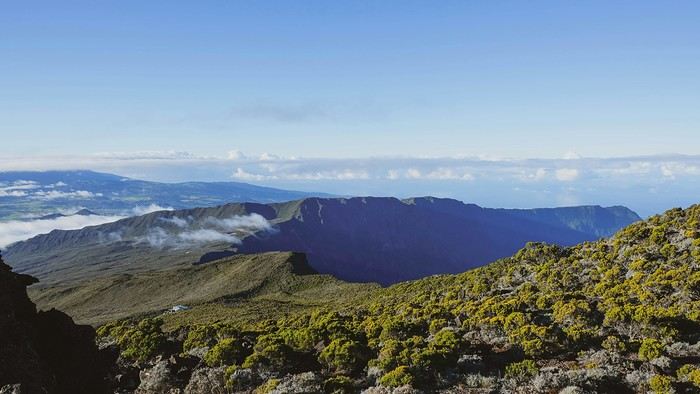
3- Cirque de Mafate: In the Heart of Nature
Accessible only on foot or by helicopter, the Cirque de Mafate is a true paradise for hikers. This isolated area offers a multitude of trails leading to authentic villages, stunning viewpoints, and untouched nature. The Sentier Scout is one of the most popular routes for exploring Mafate. It starts at Le Bélier, passes through the Col des Bœufs, and then descends into the cirque. Get ready to be amazed by the enchanting panoramas and majestic peaks along the way. It’s a full immersion into the tranquility of Mafate.
Here are a few tips:
Wear good hiking shoes, as some sections can be steep. Book your nights in a gîte in advance if you’re planning a multi-day hike. Respect the environment and locals by taking all your trash with you.
4- Cirque de Cilaos: Between Mountains and Vineyards
The Cirque de Cilaos, with its waterfalls and lush forests, also offers magnificent hiking opportunities. One of the most remarkable trails leads to Grand Bénare, the island’s third-highest peak.
The hike usually starts from the Plateau des Chênes. This moderate-difficulty hike takes about five hours to reach the summit. Once there, you’ll be treated to a breathtaking view of the Cirque de Cilaos and Piton des Neiges.
Here are a few tips:
Start early to avoid clouds that can quickly envelop the summit. Don’t forget your camera to capture the stunning landscapes. Visit the vineyards of Cilaos after your hike to taste local wine.
5- Cirque de Salazie: The Valley of Waterfalls
Known for its humid climate, the Cirque de Salazie is filled with impressive waterfalls and lush tropical forests. One of the most popular hikes leads to the Trou de Fer.
The trail starts in Hell-Bourg, ranked among France’s most beautiful villages. After a few hours of hiking through primary forest, you’ll reach a viewpoint offering an incredible view of the Trou de Fer’s abyss and its dizzying waterfalls.
Here are a few tips:
Wear waterproof and mosquito-repellent clothing. Bring a headlamp and compass, as fog can make the trail hard to follow. Check trail conditions before heading out, especially after heavy rain.
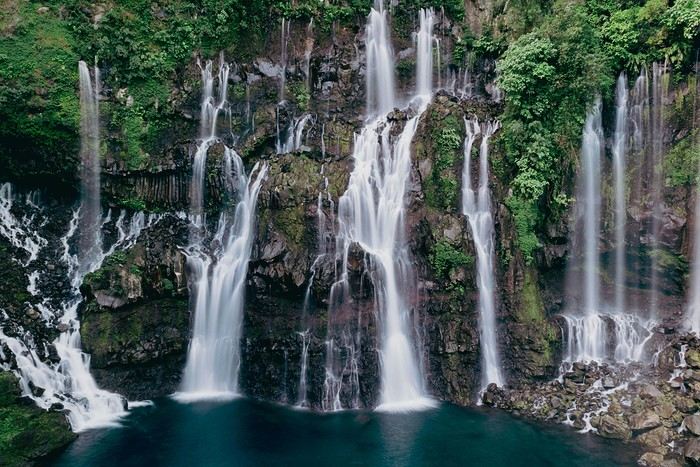
6- Grand Bénare: A Stunning Panorama
Grand Bénare offers a spectacular hike that’s a must-do on Réunion Island. Starting from the well-known viewpoint of Maïdo, the challenging yet rewarding ascent leads to the summit.
Over about ten kilometers of climbing through varied vegetation, the summit reveals a breathtaking panorama of the three cirques—Mafate, Cilaos, and Salazie. It’s a true feast for the eyes and a memorable experience for mountain lovers.
Here are a few tips:
Go when the weather is clear to fully enjoy the view from the summit. Wear good hiking shoes and bring trekking poles to make the climb easier. Don’t underestimate the duration—prepare physically for this long hike.
7- Roche Écrite: Biodiversity at Altitude
Located between the Cirque de Salazie and the Cirque de Mafate, Roche Écrite offers a hike that lets you discover exceptional flora and fauna. The hike often starts at Le Colorado, near Saint-Denis, the island’s capital.
After several hours of walking through tropical forests and varied landscapes, you’ll reach the summit at 2,276 meters. From there, you can enjoy a spectacular view of the two adjacent cirques and even spot Piton des Neiges in the distance. A must for adventurers and budding biologists.
Here are a few tips:
Check the weather forecast before heading out, as conditions can change quickly at altitude. Bring binoculars to observe endemic birds and other wildlife. Take regular breaks to soak in the scenery and recharge your energy.
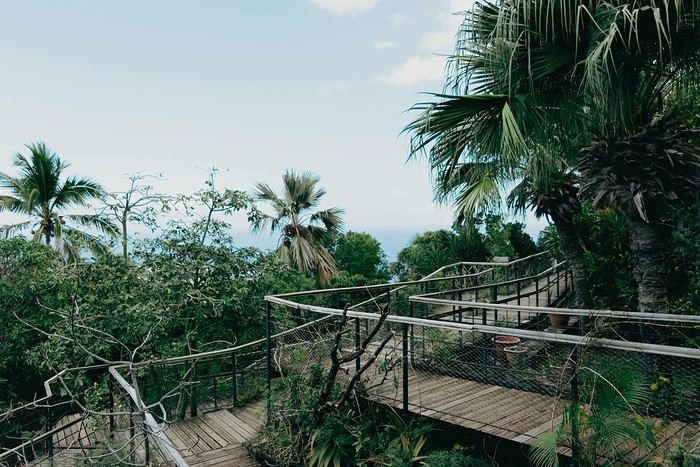
8- Col des Bœufs: The Gateway to Mafate
Col des Bœufs is another popular starting point for accessing the Cirque de Mafate. This comfortable hike offers beautiful views along the way and leads to picturesque villages like Marla and La Nouvelle.
The trail starts gently from the Col des Bœufs parking lot, climbing slightly before revealing a panoramic view of Mafate. Perfect for a relaxed day hike, this route is suitable for all levels of hikers.
Here are a few tips:
Bring a picnic to enjoy a lunch break with a view. Start early to avoid crowds and the afternoon heat. Check local bus schedules to avoid any surprises at the end of your hike.
In conclusion, Réunion Island offers a multitude of exceptional hikes that let you discover breathtaking landscapes—volcanoes, cirques, tropical forests, and waterfalls. Whether you’re a beginner or an experienced hiker, the island will amaze you with the diversity of its trails. Get ready for unforgettable adventures in the heart of preserved nature while admiring the unique beauty of this volcanic island.
1- Piton des Neiges: The Summit of Réunion
Piton des Neiges is the highest point on Réunion Island at 3,070 meters. It’s an iconic hike that attracts a large number of hikers every year. Climbing Piton des Neiges is like stepping into a unique atmosphere where volcanic landscapes blend with lush vegetation.
The hike usually starts from the picturesque village of Cilaos. It takes about six hours to reach the summit, so good physical condition is a must. Once at the top, you’ll be rewarded with a breathtaking panoramic view of the entire island. A simple flight from Paris to Saint-Denis and you’re ready for this stunning adventure.
Here are a few tips:
Bring warm clothes—it can get very cold at the summit. Pack enough water and food. Start before dawn to catch the sunrise from the summit.
2- Piton de la Fournaise: A Volcanic Walk
You can’t visit Réunion without stopping by Piton de la Fournaise, one of the world’s most active volcanoes. The hike usually begins at Pas de Bellecombe, accessible after a winding road that already offers spectacular views. The well-marked trail first takes you through lunar landscapes to the Enclos Fouqué, then continues toward the Dolomieu crater. Frequent eruptions often change the scenery, making each visit unique. Piton de la Fournaise is a grand natural spectacle you won’t want to miss during your trip.
Here are a few tips:
Check the volcano’s current activity before heading out. Wear sturdy shoes for walking on solidified lava. Always bring maps or a GPS, as signs may be damaged by eruptions.
3- Cirque de Mafate: In the Heart of Nature
Accessible only on foot or by helicopter, the Cirque de Mafate is a true paradise for hikers. This isolated area offers a multitude of trails leading to authentic villages, stunning viewpoints, and untouched nature. The Sentier Scout is one of the most popular routes for exploring Mafate. It starts at Le Bélier, passes through the Col des Bœufs, and then descends into the cirque. Get ready to be amazed by the enchanting panoramas and majestic peaks along the way. It’s a full immersion into the tranquility of Mafate.
Here are a few tips:
Wear good hiking shoes, as some sections can be steep. Book your nights in a gîte in advance if you’re planning a multi-day hike. Respect the environment and locals by taking all your trash with you.
4- Cirque de Cilaos: Between Mountains and Vineyards
The Cirque de Cilaos, with its waterfalls and lush forests, also offers magnificent hiking opportunities. One of the most remarkable trails leads to Grand Bénare, the island’s third-highest peak.
The hike usually starts from the Plateau des Chênes. This moderate-difficulty hike takes about five hours to reach the summit. Once there, you’ll be treated to a breathtaking view of the Cirque de Cilaos and Piton des Neiges.
Here are a few tips:
Start early to avoid clouds that can quickly envelop the summit. Don’t forget your camera to capture the stunning landscapes. Visit the vineyards of Cilaos after your hike to taste local wine.
5- Cirque de Salazie: The Valley of Waterfalls
Known for its humid climate, the Cirque de Salazie is filled with impressive waterfalls and lush tropical forests. One of the most popular hikes leads to the Trou de Fer.
The trail starts in Hell-Bourg, ranked among France’s most beautiful villages. After a few hours of hiking through primary forest, you’ll reach a viewpoint offering an incredible view of the Trou de Fer’s abyss and its dizzying waterfalls.
Here are a few tips:
Wear waterproof and mosquito-repellent clothing. Bring a headlamp and compass, as fog can make the trail hard to follow. Check trail conditions before heading out, especially after heavy rain.
6- Grand Bénare: A Stunning Panorama
Grand Bénare offers a spectacular hike that’s a must-do on Réunion Island. Starting from the well-known viewpoint of Maïdo, the challenging yet rewarding ascent leads to the summit.
Over about ten kilometers of climbing through varied vegetation, the summit reveals a breathtaking panorama of the three cirques—Mafate, Cilaos, and Salazie. It’s a true feast for the eyes and a memorable experience for mountain lovers.
Here are a few tips:
Go when the weather is clear to fully enjoy the view from the summit. Wear good hiking shoes and bring trekking poles to make the climb easier. Don’t underestimate the duration—prepare physically for this long hike.
7- Roche Écrite: Biodiversity at Altitude
Located between the Cirque de Salazie and the Cirque de Mafate, Roche Écrite offers a hike that lets you discover exceptional flora and fauna. The hike often starts at Le Colorado, near Saint-Denis, the island’s capital.
After several hours of walking through tropical forests and varied landscapes, you’ll reach the summit at 2,276 meters. From there, you can enjoy a spectacular view of the two adjacent cirques and even spot Piton des Neiges in the distance. A must for adventurers and budding biologists.
Here are a few tips:
Check the weather forecast before heading out, as conditions can change quickly at altitude. Bring binoculars to observe endemic birds and other wildlife. Take regular breaks to soak in the scenery and recharge your energy.
8- Col des Bœufs: The Gateway to Mafate
Col des Bœufs is another popular starting point for accessing the Cirque de Mafate. This comfortable hike offers beautiful views along the way and leads to picturesque villages like Marla and La Nouvelle.
The trail starts gently from the Col des Bœufs parking lot, climbing slightly before revealing a panoramic view of Mafate. Perfect for a relaxed day hike, this route is suitable for all levels of hikers.
Here are a few tips:
Bring a picnic to enjoy a lunch break with a view. Start early to avoid crowds and the afternoon heat. Check local bus schedules to avoid any surprises at the end of your hike.
In conclusion, Réunion Island offers a multitude of exceptional hikes that let you discover breathtaking landscapes—volcanoes, cirques, tropical forests, and waterfalls. Whether you’re a beginner or an experienced hiker, the island will amaze you with the diversity of its trails. Get ready for unforgettable adventures in the heart of preserved nature while admiring the unique beauty of this volcanic island.
New Year's Day in Italy
As planned every year for quite some time now, here we are in Italy on the Ligurian Coast to spend a few days and celebrate New Year's 2024/2025.
Our base is in the charming town of Rapallo, between Genoa and La Spezia. We're right on the coast, with our hotel offering a sea view and access to the beach.
Not far from Rapallo, you can find, besides the Cinque Terre, Portofino, Santa Margherita Ligure, Chiavari, and others like Carrara and even Pisa. In short, there's plenty to do.
Five days there with so-so weather, and crowds but nothing overwhelming.
For the trip between home and our base, we're using an electric vehicle. It's manageable without any issues. The hotel has outlets, and otherwise, there are charging points all over Italy. And just to note, Tesla chargers are the best in terms of cost and charging speed.
There you have it.
Once we arrived on Sunday, December 29th, it was time to go for a walk, book a restaurant for Monday evening, and finalize the itinerary.
On Monday the 30th, we were lucky enough to see a beautiful sunrise from our window.

And the town of Rapallo in the early morning!
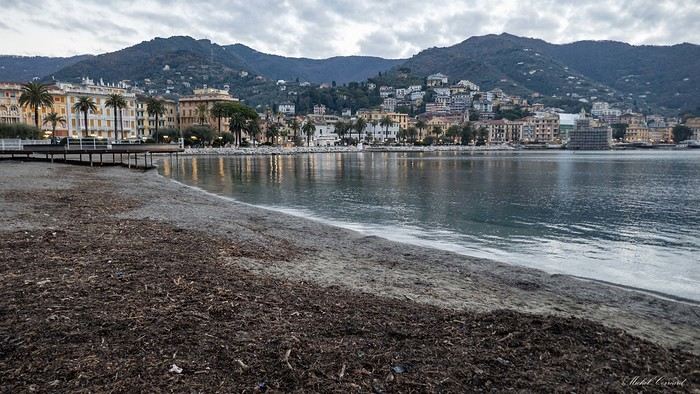
Our base is in the charming town of Rapallo, between Genoa and La Spezia. We're right on the coast, with our hotel offering a sea view and access to the beach.
Not far from Rapallo, you can find, besides the Cinque Terre, Portofino, Santa Margherita Ligure, Chiavari, and others like Carrara and even Pisa. In short, there's plenty to do.
Five days there with so-so weather, and crowds but nothing overwhelming.
For the trip between home and our base, we're using an electric vehicle. It's manageable without any issues. The hotel has outlets, and otherwise, there are charging points all over Italy. And just to note, Tesla chargers are the best in terms of cost and charging speed.
There you have it.
Once we arrived on Sunday, December 29th, it was time to go for a walk, book a restaurant for Monday evening, and finalize the itinerary.
On Monday the 30th, we were lucky enough to see a beautiful sunrise from our window.
And the town of Rapallo in the early morning!
Exploring California's major coastal cities in two weeks
We’d like to do the California coast in two weeks this September.
Two adults, rental car, and Airbnb.
First time except for San Francisco, where we’re starting a cruise.
Is San Francisco-Los Angeles-San Diego doable?
If not, what are the must-sees?
Thanks! !
Under Antalya's Sky (Turkey)
Saturday, November 9, 2024
We left the house in the late morning, heading to the nearby airport parking lot, shuttle, formalities, and a quiet flight on a half-empty plane. Three hours eastward, we arrived in pitch-black night. Like everywhere in the world, we entered the city by crossing a vast, garish commercial zone, then the roads turned into streets, then alleys. Eventually, our driver had to stop to move poorly parked scooters so his oversized minibus could pass. We arrived in the middle of the old town, in a huge old house. We’re thrilled. The neighborhood is lively, full of atmosphere. Hungry and exhausted, we ate (very well) at the hotel restaurant, then strolled around. First impressions are promising!
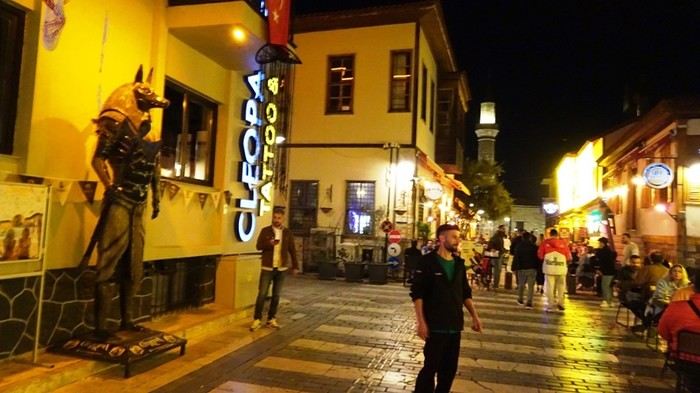
Sunday, November 10, 2024 Antalya In this part of the world, there are some quirks that don’t always suit us infidels! Here in Antalya, the religious influence is still pretty light. You can drink freely, girls can save a lot on fabric—it’s all good, no one’s gonna say anything. But there’s the muezzin. That lanky guy who belts out his tune five times a day from the top of his minaret didn’t spare us this morning. Just a heads-up, we’ve got a two-hour time difference, and this guy starts his serenade at 4 AM, right in the middle of the night. That’s early!
Anyway, we recover, have breakfast, and realize that in terms of revered figures, Atatürk doesn’t take a backseat to the prophet responsible for our nighttime disturbances. We’d already been surprised by how ubiquitous his portrait is, but on the restaurant terrace, we see it’s a full-blown cult. There’s a little altar with rose petals under his portrait. First thing in the morning, the staff lines up to pay their respects, then sings a stirring hymn while some customers stand, hand on heart.
Right after breakfast, we set off like explorers through the old town. It’s incredible how many walls, monuments, and statues have survived from the glorious Greek and Roman eras. Back then, they built things to last!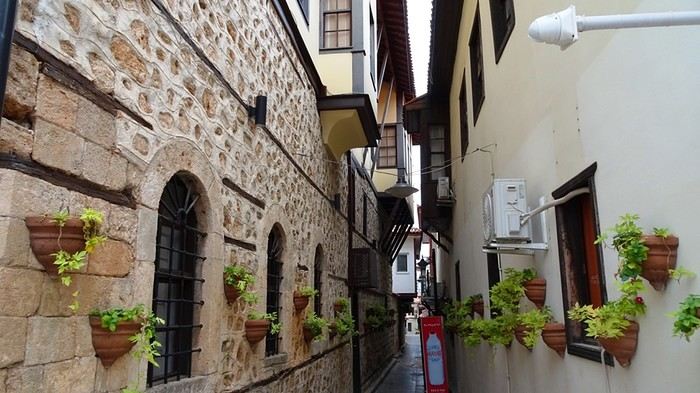
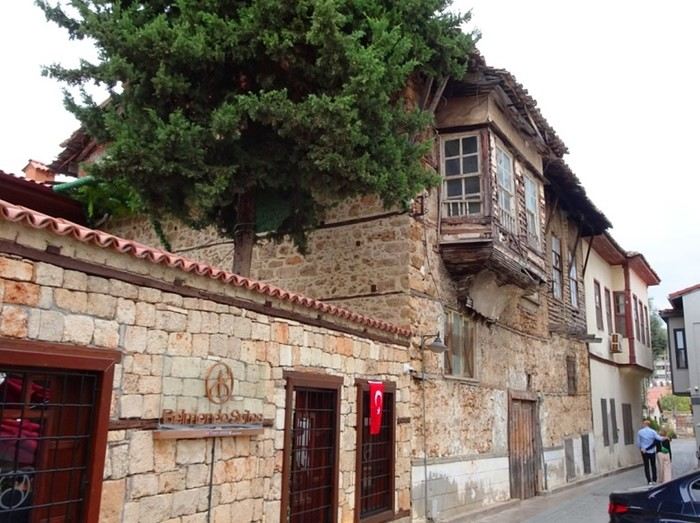

Sunday, November 10, 2024 Antalya In this part of the world, there are some quirks that don’t always suit us infidels! Here in Antalya, the religious influence is still pretty light. You can drink freely, girls can save a lot on fabric—it’s all good, no one’s gonna say anything. But there’s the muezzin. That lanky guy who belts out his tune five times a day from the top of his minaret didn’t spare us this morning. Just a heads-up, we’ve got a two-hour time difference, and this guy starts his serenade at 4 AM, right in the middle of the night. That’s early!
Anyway, we recover, have breakfast, and realize that in terms of revered figures, Atatürk doesn’t take a backseat to the prophet responsible for our nighttime disturbances. We’d already been surprised by how ubiquitous his portrait is, but on the restaurant terrace, we see it’s a full-blown cult. There’s a little altar with rose petals under his portrait. First thing in the morning, the staff lines up to pay their respects, then sings a stirring hymn while some customers stand, hand on heart.
Right after breakfast, we set off like explorers through the old town. It’s incredible how many walls, monuments, and statues have survived from the glorious Greek and Roman eras. Back then, they built things to last!
Review of my visit to Angkor
SIEM REAP
You can now rent scooters just about everywhere in Siem Reap, but at rip-off prices—$15–18 a day instead of $5–10 like everywhere else in Indochina. The best options are tuk-tuks or, even better, electric bikes ($12, but with a 50 km range, so they won’t let you go to Banteay Srei or the River of a Thousand Lingas in the Kulen Massif, which are too far). **WARNING:** Wear a helmet, or they *will* catch you. Scooters are banned from going from SR to the stunning temple of Koh Ker in the northeast and continuing to Battambang; no idea why!
My favorite little hotel in Siem Reap? The Neth Socheata, tucked in an alley off Thnou St near the market—lovely rooms, and the owner speaks great English. Then there’s the Ivy Guesthouse with its little garden, but it’s “always full,” according to the owner. For something upscale but still affordable, a fantastic spot is the Pavillon Indochine, tucked away on a quiet side street on the way to the airport—elegant, with incredible attention to decor, a terrace restaurant, garden, pool, etc. Everything you’d want for $70 including breakfast. I also spotted a hostel for backpackers, the Angkor Thom Hostel, with small 6-bed dorms for $4 with a fan or $6 with AC (18 Wat Bo St).
Food-wise, it’s all amazing! Pub Street has turned into a noise nightmare, with speakers blasting what’s supposed to be music but is just *boom, boom, boom, boom, boom*—run away, even though the pizzas at the Italian place Il Forno are really good. The famous and excellent Tigre de Papier has changed its name to Paper Tiger and is still just as good (lunch only, though, because across the street there’s a huge bar blasting *boom boom boom*, so you won’t be able to hear each other during dinner). On the other hand, the Italian-Cambodian El Toro on Pub Street is perfect, with fantastic pizzas and divine lasagna (go to the first-floor dining room—there’s a big bar across the street blasting *boom boom boom*, but at least you can still talk). Due to the lack of customers during COVID, all the French restaurants—Barrio (three times alas!), Les Deux Sœurs, Le Bel Air, and Le Mozart—have closed. The only one left is L’Olivier, which is pricey. I also discovered a great Moroccan restaurant (though run by a Sudanese man and his French wife), Le Tajine, on Strung Thmei St, 09 68 89 78 27. **WARNING:** For tagines and couscous, you need to order at least in the morning; wine and beer are fine. To get there, turn at the corner of the Cineplex behind the big market at the start of Sivatha Boulevard.
I finally went to the Khmer dance show. Beautiful dancers and dances, but **EAT BEFORE OR AFTER**—the meal is so awful that most Westerners leave it on their plates.
THE ANGKOR TEMPLES Use the excellent *Routard Cambodia* guide. Just a few tips: - Start with the pre-Angkorian Roluos group, 15 km before Siem Reap on the road to PP—it’s the “ancestor” of the temples.
- To avoid the big crowds at Angkor Wat, Bayon, and Ta Prohm, go between noon and 2 PM when everyone’s having lunch. - Speaking of lunch, the crowds flock to the hundred or so mediocre food stalls on the left side of Angkor Wat. Instead, head to Angkor Thom after the stunning Pre Rup temples, all the way to the small Sras Srang basin. Along the basin, there are several restaurants with terraces offering first-floor views of the water, and no crowds. Afterward, cross to the other side of the basin—you’ll end up in the countryside with charming villages where locals seem to live as they did during the temples’ golden age (at its peak, the population was estimated at 600,000–800,000, making it the largest city in the world. The theory for the abandonment is water shortages caused by overpopulation).
- I climbed Phnom Bakheng for the famous sunset, but the crowd was so ridiculous that instead of seeing the temple at sunset, you just see the heads and shoulders around you.
- There are tons of small temples that most people skip, and they’re missing out. My favorites: Thommanon, Neak Pean, Ta Som, and especially Pre Rup, an amazing brick complex with 14 towers.
**Big disappointment:** You can no longer climb to the first floor of Bayon, where you used to stand magically among the giant head statues. So, admire the beautiful bas-reliefs on the outside, but there’s no point going inside—you’ll just see a dark, square corridor with nothing interesting.
ANGKOR FURTHER AFIELD The wonderful Banteay Srei temple. A gem! I couldn’t find the bas-relief stolen by Malraux in the 1920s (fun fact: what he was doing in Indochina—stealing a bas-relief to sell for a fortune in France to cover his massive gambling debts on the stock market, where he ruined his very wealthy American wife—was an open secret. But the French authorities in Saigon, who hated him for his leftist views, decided to let him do it and catch him red-handed, which worked perfectly. He avoided jail only because all the leftist intellectuals in Saint-Germain, Sartre, Beauvoir, and co. cried scandal—though the real scandal was the looting).
30 km of excellent paved road further north, a great spot: the Kulen Massif and the River of a Thousand Lingas (at one point, you’ll come to a T-junction—turn left). Along the road at the foot of the massif, on your right, there’s a great restaurant, Bourey Sovann (where the food is excellent). The trail to the river starts just before it on the left. **Warning:** There are two sites for the River of a Thousand Lingas. One is accessible via a private road, so there’s a $20 toll, and you need to arrive before 11 AM because the road is narrow and traffic flows downhill after that. You’ll end up in a site full of shops, snack stalls, and two good restaurants, including one by a beautiful waterfall. However, the thousand lingas aren’t as spectacular there.
Banteay Srei + the River of a Thousand Lingas makes for a fantastic day. **WARNING:** You used to be able to go to the river and waterfall by scooter or tuk-tuk, but it’s now forbidden. So **go by taxi**—otherwise, you’ll be hiking 12 km round trip up a steep trail.
If you leave Siem Reap early, you can even add Beng Mealea temple on the way back, making a triangular route: SR-BS-Khulen-BM-SR (or the reverse).
If you have time, visit Banteay Samré temple, 10 km west of the Angkor Thom complex. A lovely site with very few visitors.
I’ve never been to the famous Preah Khan on a hill overlooking Thailand. There’s a big dispute between the two countries—the Thais insist the temple belongs to them because the entrance is in their country. There have been serious clashes in the recent past, and landmines are still abundant off the marked paths. They even claim the entire Siem Reap province is theirs and should be returned, arguing it was Thai in the past. It takes two days (6–7 hours each way), with an overnight stay in the nearby village (small hotels and one luxury option with a garden and pool, but it’s expensive).
TONLE SAP People talk about “floating villages,” but that’s a big mistake—these are actually villages of astonishing stilt houses, 4 meters high or more, due to the lake’s major floods. The most famous is Chong Khneas, which I skipped because it’s packed with tourists. Instead, I really liked Kampong Phluk, which is much quieter. To get there, continue on the road past the Roluos group until you reach a parking lot with pirogues lined up. They’ll take you down the river, stop at this amazing village for a walk, and then take you to the Tonle Sap, a true inland sea. At one point, you’ll pass through a flooded forest that you can explore by small boat. At the junction of the river and the Tonle Sap, and on the lake itself, there are floating restaurants where the food is great. Note that in the dry season, you can reach the village by scooter.
BACK TO PHNOM PENH AND ON TO SOUTHERN VIETNAM Since I’d planned at least 15 days in the Mekong Delta between Chau Doc and Saigon, I skipped Battambang, etc. With no desire to endure the dusty road from SR to PP again, I simply loaded my bike onto a bus with the great company Rith Monty (book at their office in SR on the small square at the start of Sivatha Boulevard—$10 for the bike and $6 for me), also known as Paramount. Their buses stop on 136 St right in the middle of PP. I’ll also mention the excellent Giant Ibis, with big modern buses that always leave on time—unlike the others.
I spent the night in PP, and the next morning took the fast boat from PP to Chau Doc with Hang Chau Tourist (buying the ticket the day before is recommended—$25—either at your hotel or the port, and they’ll pick you up at your hotel by tuk-tuk to take you to the port). Departure from PP at noon, arrival in Chau Doc around 4 PM. The boat is great—comfortable and fast. A crew member takes your passports for Cambodian exit formalities, and you handle Vietnamese immigration yourself—it all takes 15–20 minutes. The route isn’t on the Mekong but on the Bassac River to the border, then a wide north-south canal to Chau Doc (the arrival is really nice). In the Chau Doc-PP direction, the boat leaves Chau Doc at 7:30 AM.
My favorite little hotel in Siem Reap? The Neth Socheata, tucked in an alley off Thnou St near the market—lovely rooms, and the owner speaks great English. Then there’s the Ivy Guesthouse with its little garden, but it’s “always full,” according to the owner. For something upscale but still affordable, a fantastic spot is the Pavillon Indochine, tucked away on a quiet side street on the way to the airport—elegant, with incredible attention to decor, a terrace restaurant, garden, pool, etc. Everything you’d want for $70 including breakfast. I also spotted a hostel for backpackers, the Angkor Thom Hostel, with small 6-bed dorms for $4 with a fan or $6 with AC (18 Wat Bo St).
Food-wise, it’s all amazing! Pub Street has turned into a noise nightmare, with speakers blasting what’s supposed to be music but is just *boom, boom, boom, boom, boom*—run away, even though the pizzas at the Italian place Il Forno are really good. The famous and excellent Tigre de Papier has changed its name to Paper Tiger and is still just as good (lunch only, though, because across the street there’s a huge bar blasting *boom boom boom*, so you won’t be able to hear each other during dinner). On the other hand, the Italian-Cambodian El Toro on Pub Street is perfect, with fantastic pizzas and divine lasagna (go to the first-floor dining room—there’s a big bar across the street blasting *boom boom boom*, but at least you can still talk). Due to the lack of customers during COVID, all the French restaurants—Barrio (three times alas!), Les Deux Sœurs, Le Bel Air, and Le Mozart—have closed. The only one left is L’Olivier, which is pricey. I also discovered a great Moroccan restaurant (though run by a Sudanese man and his French wife), Le Tajine, on Strung Thmei St, 09 68 89 78 27. **WARNING:** For tagines and couscous, you need to order at least in the morning; wine and beer are fine. To get there, turn at the corner of the Cineplex behind the big market at the start of Sivatha Boulevard.
I finally went to the Khmer dance show. Beautiful dancers and dances, but **EAT BEFORE OR AFTER**—the meal is so awful that most Westerners leave it on their plates.
THE ANGKOR TEMPLES Use the excellent *Routard Cambodia* guide. Just a few tips: - Start with the pre-Angkorian Roluos group, 15 km before Siem Reap on the road to PP—it’s the “ancestor” of the temples.
- To avoid the big crowds at Angkor Wat, Bayon, and Ta Prohm, go between noon and 2 PM when everyone’s having lunch. - Speaking of lunch, the crowds flock to the hundred or so mediocre food stalls on the left side of Angkor Wat. Instead, head to Angkor Thom after the stunning Pre Rup temples, all the way to the small Sras Srang basin. Along the basin, there are several restaurants with terraces offering first-floor views of the water, and no crowds. Afterward, cross to the other side of the basin—you’ll end up in the countryside with charming villages where locals seem to live as they did during the temples’ golden age (at its peak, the population was estimated at 600,000–800,000, making it the largest city in the world. The theory for the abandonment is water shortages caused by overpopulation).
- I climbed Phnom Bakheng for the famous sunset, but the crowd was so ridiculous that instead of seeing the temple at sunset, you just see the heads and shoulders around you.
- There are tons of small temples that most people skip, and they’re missing out. My favorites: Thommanon, Neak Pean, Ta Som, and especially Pre Rup, an amazing brick complex with 14 towers.
**Big disappointment:** You can no longer climb to the first floor of Bayon, where you used to stand magically among the giant head statues. So, admire the beautiful bas-reliefs on the outside, but there’s no point going inside—you’ll just see a dark, square corridor with nothing interesting.
ANGKOR FURTHER AFIELD The wonderful Banteay Srei temple. A gem! I couldn’t find the bas-relief stolen by Malraux in the 1920s (fun fact: what he was doing in Indochina—stealing a bas-relief to sell for a fortune in France to cover his massive gambling debts on the stock market, where he ruined his very wealthy American wife—was an open secret. But the French authorities in Saigon, who hated him for his leftist views, decided to let him do it and catch him red-handed, which worked perfectly. He avoided jail only because all the leftist intellectuals in Saint-Germain, Sartre, Beauvoir, and co. cried scandal—though the real scandal was the looting).
30 km of excellent paved road further north, a great spot: the Kulen Massif and the River of a Thousand Lingas (at one point, you’ll come to a T-junction—turn left). Along the road at the foot of the massif, on your right, there’s a great restaurant, Bourey Sovann (where the food is excellent). The trail to the river starts just before it on the left. **Warning:** There are two sites for the River of a Thousand Lingas. One is accessible via a private road, so there’s a $20 toll, and you need to arrive before 11 AM because the road is narrow and traffic flows downhill after that. You’ll end up in a site full of shops, snack stalls, and two good restaurants, including one by a beautiful waterfall. However, the thousand lingas aren’t as spectacular there.
Banteay Srei + the River of a Thousand Lingas makes for a fantastic day. **WARNING:** You used to be able to go to the river and waterfall by scooter or tuk-tuk, but it’s now forbidden. So **go by taxi**—otherwise, you’ll be hiking 12 km round trip up a steep trail.
If you leave Siem Reap early, you can even add Beng Mealea temple on the way back, making a triangular route: SR-BS-Khulen-BM-SR (or the reverse).
If you have time, visit Banteay Samré temple, 10 km west of the Angkor Thom complex. A lovely site with very few visitors.
I’ve never been to the famous Preah Khan on a hill overlooking Thailand. There’s a big dispute between the two countries—the Thais insist the temple belongs to them because the entrance is in their country. There have been serious clashes in the recent past, and landmines are still abundant off the marked paths. They even claim the entire Siem Reap province is theirs and should be returned, arguing it was Thai in the past. It takes two days (6–7 hours each way), with an overnight stay in the nearby village (small hotels and one luxury option with a garden and pool, but it’s expensive).
TONLE SAP People talk about “floating villages,” but that’s a big mistake—these are actually villages of astonishing stilt houses, 4 meters high or more, due to the lake’s major floods. The most famous is Chong Khneas, which I skipped because it’s packed with tourists. Instead, I really liked Kampong Phluk, which is much quieter. To get there, continue on the road past the Roluos group until you reach a parking lot with pirogues lined up. They’ll take you down the river, stop at this amazing village for a walk, and then take you to the Tonle Sap, a true inland sea. At one point, you’ll pass through a flooded forest that you can explore by small boat. At the junction of the river and the Tonle Sap, and on the lake itself, there are floating restaurants where the food is great. Note that in the dry season, you can reach the village by scooter.
BACK TO PHNOM PENH AND ON TO SOUTHERN VIETNAM Since I’d planned at least 15 days in the Mekong Delta between Chau Doc and Saigon, I skipped Battambang, etc. With no desire to endure the dusty road from SR to PP again, I simply loaded my bike onto a bus with the great company Rith Monty (book at their office in SR on the small square at the start of Sivatha Boulevard—$10 for the bike and $6 for me), also known as Paramount. Their buses stop on 136 St right in the middle of PP. I’ll also mention the excellent Giant Ibis, with big modern buses that always leave on time—unlike the others.
I spent the night in PP, and the next morning took the fast boat from PP to Chau Doc with Hang Chau Tourist (buying the ticket the day before is recommended—$25—either at your hotel or the port, and they’ll pick you up at your hotel by tuk-tuk to take you to the port). Departure from PP at noon, arrival in Chau Doc around 4 PM. The boat is great—comfortable and fast. A crew member takes your passports for Cambodian exit formalities, and you handle Vietnamese immigration yourself—it all takes 15–20 minutes. The route isn’t on the Mekong but on the Bassac River to the border, then a wide north-south canal to Chau Doc (the arrival is really nice). In the Chau Doc-PP direction, the boat leaves Chau Doc at 7:30 AM.
Biking around the world: all our bike routes as a tandem
For map lovers, bike routes, cycle touring all over the planet, and long-haul trips...
I had fun compiling in one place ALL the routes my partner and I have biked across the planet since 1996: Quebec far and wide, of course, but also Canada, the USA (crossed completely by bike 3 times), Mexico, and all the way to Ushuaia—basically the entire Americas.
In Europe, the Balkans, Turkey; and more recently (2024: Taiwan, Korea, and 4 months in Japan!) You can check out a global map with all the routes by continent, more detailed maps by country, and others that focus on a region, like the Balkans in Eastern Europe. In short, there’s something for everyone!
I’ve included 3 photos here, but the originals (via the link above) let you zoom in infinitely. Plus, many of my routes are represented by lines with a different color for each day of biking. Hope some of you enjoy browsing through all this as much as I enjoyed compiling it. Until the snow comes, skiing... and spring!
https://www.crazyguyonabike.com/doc/TDM_en_Tandem_Trajets_Maps
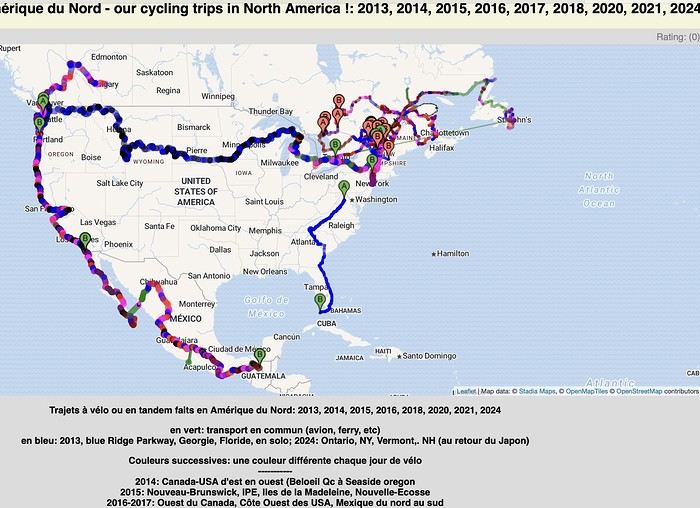
I had fun compiling in one place ALL the routes my partner and I have biked across the planet since 1996: Quebec far and wide, of course, but also Canada, the USA (crossed completely by bike 3 times), Mexico, and all the way to Ushuaia—basically the entire Americas.
In Europe, the Balkans, Turkey; and more recently (2024: Taiwan, Korea, and 4 months in Japan!) You can check out a global map with all the routes by continent, more detailed maps by country, and others that focus on a region, like the Balkans in Eastern Europe. In short, there’s something for everyone!
I’ve included 3 photos here, but the originals (via the link above) let you zoom in infinitely. Plus, many of my routes are represented by lines with a different color for each day of biking. Hope some of you enjoy browsing through all this as much as I enjoyed compiling it. Until the snow comes, skiing... and spring!
https://www.crazyguyonabike.com/doc/TDM_en_Tandem_Trajets_Maps