Results for "The+Wave+|+3+>+99"
44548 results found.
Insolite? English translation pending
A l'approche du nouvelle an chinois, nous relevons de plus nombreux dons en faveur des chiens abandonnes sur Bangkok :
The foundation's president of Handicapped Animals Foundation in Bangkok, Sataporn Deepa, said Thai people have donated more money to the foundation for the strays hoping it would bring them good luck and prosperity in the Year of the Dog. REUTERS/Chaiwat Subprasom
😮
The foundation's president of Handicapped Animals Foundation in Bangkok, Sataporn Deepa, said Thai people have donated more money to the foundation for the strays hoping it would bring them good luck and prosperity in the Year of the Dog. REUTERS/Chaiwat Subprasom
😮
Hôtel Canto del Sol à Puerto Vallarta English translation pending
Coucou,
Je voudrais savoir comment est l'hôtel Canto del Sol à Puerto Vallarta??? Je suis déjà allée au Las Palmas by the sea qui n'est pas trop loin et j'ai vu que cet hôtel(Canto des Sol) était très beau, mais est-ce qu'il y a de l'ambiance et est-ce que la bouffe est bonne? J'attends des nouvelles là-dessus!
Heidi
Je voudrais savoir comment est l'hôtel Canto del Sol à Puerto Vallarta??? Je suis déjà allée au Las Palmas by the sea qui n'est pas trop loin et j'ai vu que cet hôtel(Canto des Sol) était très beau, mais est-ce qu'il y a de l'ambiance et est-ce que la bouffe est bonne? J'attends des nouvelles là-dessus!
Heidi
Bon "guide" (livre) pour le Tibet English translation pending
quand vous voyagez au Thibet, le mieux est d'oublier son LP a la maison !
par contre, un excellent bouquin : "Mapping the Tibetan world" publie par Kotan publishing
il couvre le TAR mais aussi les contrees tibetaines du qinghai, gansu, sichuan et yunnan, ainsi que celles du bhutan, ladak, zanskar, nepal
ce sont donc 3 bouquins en 1 ! ils listent tout, memes les obscures villages, et est tres recent, indiquant transports, hebergements sans insister sur le must touristique a voir dans le coin. Listing exhaustif plus qu'un guide touristique a la LP
une excellent e carte avec noms en chinois-anglais et tibetain pour les gros bourgs : "World mapping project" chez "Reise know-how", collection allemande, parfait pour moi, autostop, rando-trek sans LP
une excellent e carte avec noms en chinois-anglais et tibetain pour les gros bourgs : "World mapping project" chez "Reise know-how", collection allemande, parfait pour moi, autostop, rando-trek sans LP
Compagnie désservant Dubai/Abu Dhabi? (Emirats Arabes Unis) English translation pending
hello, je cherche les coordonnees de la cie d'hydravion qui dessert dubai / abou dhabi merci
Votre avis sur hôtels à Bangkok English translation pending
Bonjour!
J'ai sélectionné 3 hotels à Bangkok pres de siam square, et j'aimerais avoir vos opinions...
The twin towers hotel Manhattan Hotel Mandarin Hotel
Lequel de ces 3 est le mieux?? J'attends vos réponses!
Merci Valérie😉
Lequel de ces 3 est le mieux?? J'attends vos réponses!
Merci Valérie😉
Amateurs de thés vert English translation pending
Bonjour,
Lors d'un séjours au Népal et en Inde du nord, j'ai découvert de thé CHAÏ. Miam. Aujourd'hui je suis une amatrice de thés fin artisanal de toute sorte, si possible certifié bio et équitable. J'aimerais en importer une certaine quantité au Québec. Est-ce que quelqu'un aurait de l'info ou des contacts ?
Merci !
Caro
Lors d'un séjours au Népal et en Inde du nord, j'ai découvert de thé CHAÏ. Miam. Aujourd'hui je suis une amatrice de thés fin artisanal de toute sorte, si possible certifié bio et équitable. J'aimerais en importer une certaine quantité au Québec. Est-ce que quelqu'un aurait de l'info ou des contacts ?
Merci !
Caro
suite du cury vert thai. keng kiao wan. ( photo) English translation pending
suite ......... << i did this thai traditionnal .dich, , for say thanks you to a french punk on this vf that he like very much thai food .. >>>
and of course thank to you all's .. that are looking .. ( pleas do the same whise your country dich .??? )
my name is cloe ... and the pic where thaken by my husbant ..
and of course thank to you all's .. that are looking .. ( pleas do the same whise your country dich .??? )
my name is cloe ... and the pic where thaken by my husbant ..
Hotel Partir Pas Cher en Malaisie?? English translation pending
Bonjour à tous,
Nous souhaitons partir en Malaisie. Nous avons vu sur "Partir pas cher" le THE LANAI LANGKAWI BEACH RESORT 3* mais ca ne me parait pas cher pour etre vrai donc si vous connaissez j'aimerais avoir vos avis.
Départ le 25 mars quel temps fait-il ? La région est comment ? On m'a dit que l'Est est plus beau que l'Ouest est-ce vrai ? J'aimerais bien faire l'ile de Tioman mais vu que cet hotel est a l'Ouest en une journée cela me parait impossible non ?
Quel temps fait-il fin mars ?
Merci a tous de vos réponses
Nous souhaitons partir en Malaisie. Nous avons vu sur "Partir pas cher" le THE LANAI LANGKAWI BEACH RESORT 3* mais ca ne me parait pas cher pour etre vrai donc si vous connaissez j'aimerais avoir vos avis.
Départ le 25 mars quel temps fait-il ? La région est comment ? On m'a dit que l'Est est plus beau que l'Ouest est-ce vrai ? J'aimerais bien faire l'ile de Tioman mais vu que cet hotel est a l'Ouest en une journée cela me parait impossible non ?
Quel temps fait-il fin mars ?
Merci a tous de vos réponses
Cartes de débit à Varadero English translation pending
Bonjour à tous,
Je pars bientôt à la fin février à Varadero à l'Hôtel The Beaches.
J'aimerais savoir s'il est possible d'utiliser nos cartes de débit canadiennes à varadero et/ou à l'hôtel ??
Y a t'il des frais particuliers et de combien ?
Merci pour toute informations sur le sujet ...
Je pars bientôt à la fin février à Varadero à l'Hôtel The Beaches.
J'aimerais savoir s'il est possible d'utiliser nos cartes de débit canadiennes à varadero et/ou à l'hôtel ??
Y a t'il des frais particuliers et de combien ?
Merci pour toute informations sur le sujet ...
Visiter l'Angleterre English translation pending
Hello friends,
I'm a teacher of english as a foreign language, i feel the need to be in an english speaking country especially England so as to know more about this language and improve it through practice. I'm planning to visit it in August but i need to know how much it costs (i'm from morocco) how to get a visa, what places to visit....
Thank you in advance
I'm a teacher of english as a foreign language, i feel the need to be in an english speaking country especially England so as to know more about this language and improve it through practice. I'm planning to visit it in August but i need to know how much it costs (i'm from morocco) how to get a visa, what places to visit....
Thank you in advance
Visa russe: voucher, invitation, itinéraire English translation pending
bon, je récapitule, il me faut :
1) une invitation, à se procurer par un hotel sur place pour économiser des soussous ; the question izzz faut-il obligatoirement passer son séjour entier dans cet hotel, ou est-il possible de poursuivre son voyage ailleurs, autre hotel, autre ville ?
2) et si je me taille en solo, comment joindre un OVIR à chaque étape ?
3) je ne parviens pas à trouver nulle part une définition claire du "VOUCHER" !!! kézako et comment l'obtenir ?
4) enfin, il semble nécessaire de prévoir un itinéraire précis ! que se passe t'il si l'on en dévie ? et faut-il absolument une réservation dans un hotel à touriste pour chaque étape ??
le hic, c'est que j'aimerais bien éviter de donner des centaines d'euros à action-visa et consors qui coute les yeux de la tête, décourage les voyageurs et garder mes soussous pour là-bas...
merci pour vos informations !! sourire-
tom
1) une invitation, à se procurer par un hotel sur place pour économiser des soussous ; the question izzz faut-il obligatoirement passer son séjour entier dans cet hotel, ou est-il possible de poursuivre son voyage ailleurs, autre hotel, autre ville ?
2) et si je me taille en solo, comment joindre un OVIR à chaque étape ?
3) je ne parviens pas à trouver nulle part une définition claire du "VOUCHER" !!! kézako et comment l'obtenir ?
4) enfin, il semble nécessaire de prévoir un itinéraire précis ! que se passe t'il si l'on en dévie ? et faut-il absolument une réservation dans un hotel à touriste pour chaque étape ??
le hic, c'est que j'aimerais bien éviter de donner des centaines d'euros à action-visa et consors qui coute les yeux de la tête, décourage les voyageurs et garder mes soussous pour là-bas...
merci pour vos informations !! sourire-
tom
Livres sur la Birmanie English translation pending
J'ai lu recemment l'Accordeur de Piano (Mason), beau mais pas un peu triste, et The Land of Green Ghosts (Pascal Thwe), archi recommande, c'est superbe!! et ecrit par un Birman (Padang)
Est-ce quelqu'un a d'autres recommandations?
Merci
Pam
Est-ce quelqu'un a d'autres recommandations?
Merci
Pam
Finale France-Brésil 1998: où étiez-vous? English translation pending
en voyant le post de la miss sur un match de foot en bolivie, je me suis rappelé THE MATCH que l'on soit fan de foot (ce qui mon cas) ou alergique a ce sport (mais qu'on a quand méme regarder le match)
chaque francais se rapelle tres précisément ou il etait se soir la.
alors je vais commencer par lraconter ma soirée a hanoi, et tous ceux qui voudrons apres
hanoi 12 juillet 98
le match est a 2 h du matin
nous avons choisi un bar "branché" qui retransmet le match sur ecran géant, nous somme une cinquantaine francais et 3 brésiliens, une vingtaine de vietnamien pro bresilien.
les hymnes!!pour la 1er et seul fois de ma vie je chante la marseillaise, nous sommes tous les mains sur les épaules concient que cette soirée sera magique.
le match débute
1er buttttttttttttttttt le délire !!!!!
2eme but de zizou, les bouchon volent !!!!!
mi temps, je sort dehors il est 3 h du mat et la ville est en effervécences (les vietnamien sont sans aucun doute les plus passioné de foot avec les sud américains).
je m'assoie sur les marche de la cathédrale le temps de me remettre de mes émotions, des enfant jouent au foot (que des zizou bien sur)
il est temps de voir la 2eme mi temps
les minutes passent qui nous rapproche du bonheur!!derniere action le ballon qui remonte, tout les monde est debout;il va marquer, il va marquer........................buttttttttttttttttttttttttttttttttt
le délire complet dans le bar, tous le monde s'embrasse, tous le monde s'arrose, c'est incroyable.
le match est fini!! la coupe est a nous et la télé s'eteind
pour la 1ere fois depuis notre départ de france 23 mois plus tot (nous etions ds un tdm a vélo)je regrettede ne pas etre en france
mais a peine le match fini que c'est du délire dans les rues d'hanoi, il est 4 h du matin et tous le monde est ds la rue, nous sommes au bord du lac (ds le centre) lorsque nous tombons sur une fanfare de jeunes francais, tous le monde danse et cri
tous a l'ambassade!!!il est 5 h du mat lorsque nous arrivons devant les grilles 2/300 francais mélé de vietnamien danse font la chenille, c'est du délire!!la police n'as jamais vu ca
il est 6h du mat lorsqu'un de nous lance, tous a l'alliance!!!nous debarquons a une centaine devant l'alliance ou une soirée vip sur carton d'invitation etait donner, sans trop de résistance nous rentrons et finissons les petits four, je passe derriere le bar et ouvre la pompe a biere (rassurer vous c'est nos impots qui régalais!!!)tournée générale tant que la pompe débite
il est 7 h lorsqu'on sort de la, le jour se léve sur hanoi, tous au lac!!!, et c'est repartis ;la joyeuse troupe (une centaine de personnes repart en direction du lac) ;les gens nous applaudisent, certain se jete direct dans le lac, la fievre n'est pas retomber!!!
8 h du mat, c'est l'heure d'aller se coucher, une journée commence lorsque nous nous couchon la téte en féte.
ce soir la j'avais ma famille a st etienne, des potes a tahiti, san francisco, lhassa.
et vous vous etiez ou ?
c'etais comment ?
chaque francais se rapelle tres précisément ou il etait se soir la.
alors je vais commencer par lraconter ma soirée a hanoi, et tous ceux qui voudrons apres
hanoi 12 juillet 98
le match est a 2 h du matin
nous avons choisi un bar "branché" qui retransmet le match sur ecran géant, nous somme une cinquantaine francais et 3 brésiliens, une vingtaine de vietnamien pro bresilien.
les hymnes!!pour la 1er et seul fois de ma vie je chante la marseillaise, nous sommes tous les mains sur les épaules concient que cette soirée sera magique.
le match débute
1er buttttttttttttttttt le délire !!!!!
2eme but de zizou, les bouchon volent !!!!!
mi temps, je sort dehors il est 3 h du mat et la ville est en effervécences (les vietnamien sont sans aucun doute les plus passioné de foot avec les sud américains).
je m'assoie sur les marche de la cathédrale le temps de me remettre de mes émotions, des enfant jouent au foot (que des zizou bien sur)
il est temps de voir la 2eme mi temps
les minutes passent qui nous rapproche du bonheur!!derniere action le ballon qui remonte, tout les monde est debout;il va marquer, il va marquer........................buttttttttttttttttttttttttttttttttt
le délire complet dans le bar, tous le monde s'embrasse, tous le monde s'arrose, c'est incroyable.
le match est fini!! la coupe est a nous et la télé s'eteind
pour la 1ere fois depuis notre départ de france 23 mois plus tot (nous etions ds un tdm a vélo)je regrettede ne pas etre en france
mais a peine le match fini que c'est du délire dans les rues d'hanoi, il est 4 h du matin et tous le monde est ds la rue, nous sommes au bord du lac (ds le centre) lorsque nous tombons sur une fanfare de jeunes francais, tous le monde danse et cri
tous a l'ambassade!!!il est 5 h du mat lorsque nous arrivons devant les grilles 2/300 francais mélé de vietnamien danse font la chenille, c'est du délire!!la police n'as jamais vu ca
il est 6h du mat lorsqu'un de nous lance, tous a l'alliance!!!nous debarquons a une centaine devant l'alliance ou une soirée vip sur carton d'invitation etait donner, sans trop de résistance nous rentrons et finissons les petits four, je passe derriere le bar et ouvre la pompe a biere (rassurer vous c'est nos impots qui régalais!!!)tournée générale tant que la pompe débite
il est 7 h lorsqu'on sort de la, le jour se léve sur hanoi, tous au lac!!!, et c'est repartis ;la joyeuse troupe (une centaine de personnes repart en direction du lac) ;les gens nous applaudisent, certain se jete direct dans le lac, la fievre n'est pas retomber!!!
8 h du mat, c'est l'heure d'aller se coucher, une journée commence lorsque nous nous couchon la téte en féte.
ce soir la j'avais ma famille a st etienne, des potes a tahiti, san francisco, lhassa.
et vous vous etiez ou ?
c'etais comment ?
J'tiens plus en place... English translation pending
Peter Gabriel à fond, je danse toute seule dans mon p'tit chez moi... (Jump in the water, come on baby jump in with me)
Je vais au jardin, observe la coccinelle se promenant sur une feuille de myosotis, regarde les jonquilles (dont j'ai planté les bulbes en octobre dernier) s'épanouissants au soleil. Donne plein de câlins à ma Kali enceinte (qui veut un chaton dans deux mois??? 😉)
1er jour de l'année ou la température grimpe jusqu'a 20°c... J'ai installé mon hamac, et fait une petite sieste pour bien commencé la journée. Mais après je sais pas combien de cafés, je suis réveillée et excitée comme une puce...
Le tel sonne... Une ex collègue expatriée au sud de l'Espagne " Quand viens tu me dire bonjour??? Tu me manques!!!" "En juin, promis!!!"
J'ai écrit la lettre au chef du personnel demandant 6 mois de pause carrière de dec 04 à mai 05, pour 6 mois au soleil d'Asie 😎
Dans qques heures, ma meilleure amie viendra me chercher pour m'inviter à un resto thaï ce soir.
Je pète les plombs de bonheur!!!
Jour J - 11!!! Je tiens plus... Encore 10 fois dormir.
J'ai mon ticket d'avion, mon nouveau passeport, demain j'irai à l'ambassade pour le visa.
Encore 10 X dormir puis... CHALLO INDIAAAA!!!!!!!
J'tiens plus...
Africa: A Heartfelt Love for a Continent
“When the Whites came to Africa, we had the land and they had the Bible. They taught us to pray with our eyes closed: when we opened them, the Whites had the land and we had the Bible.” Jomo Kenyatta (p.7)
The Maggi cube, an unchallenged hegemony, and so much more
“The hopeless continent,” headlined The Economist, a British magazine, in July 2000 about Africa. Eleven years later, the same magazine headlined “Africa rising” instead. Images of Africa in the prosperous North constantly oscillate between apocalyptic scenarios and enthusiastic projections. A key issue with such images lies in the generalization they entail. If you look at the continent, considerable contrasts emerge depending on space and time. It’s no surprise that a region of the world encompassing such diverse ecological zones, maintaining such varied ties with other continents, comprising nearly fifty nation-states in sub-Saharan Africa alone, and characterized by a great diversity of languages, belief systems, and historical paths, doesn’t share a single destiny.
And yet, for many people outside Africa, as well as for many Africans, the continent constitutes a single entity, defined by criteria such as skin color, a colonial past, poverty, and the art of survival. Until now, these perspectives were generally accompanied by the idea that Africa had to—or should have—followed a single path together, sometimes called development, sometimes modernization, sometimes liberation, then a market economy. None of these paths delivered on their promises.
The two writers Alain Mabanckou and Abdourahman Waberi—one from Congo, the other raised in Djibouti, both long settled in France and now professors at renowned North American universities (Los Angeles, Washington)—have had enough of pessimistic scenarios: “We are aware that Africa is in the world and the world is in Africa. The same goes for all other continents, as our destinies are inextricably linked for better or worse. We refuse to see Africa as a reservoir of misfortunes or a continent cursed by atavistic misfortune and characterized by ethnic conflicts. [...] It’s this passionate flame we wanted to capture in a book [...] a kind of stroll through African cultures, without any demands, each letter of the alphabet leading us to a notion, a practice, a concept, a moment in history, literature, painting, politics, economics, cuisine, etc.” (p.10-11). Africa, they write, is on the verge of “imposing a signature, a style, a way of being in the world and in relation to the rest of the world.” (p.11) To put words to the continent’s diversity and dynamism, the two authors created a “rambling ABC,” a kind of portrait—or more precisely, a mythography—that lets you see and feel the pulse of a vast continent whose cultural power is unfolding before our eyes. Once marginalized or even mocked, the voice and importance of the Continent in global affairs are now undeniable” (p.11), containing over a hundred entries, mostly concise, written in a relaxed and casual style. The optimistic, even exuberant tone is set from the brief introduction. The duo of authors wants to “sing a love song to the cultures of our continent, to its inhabitants past and present, to its exceptional resources and its spectacular globalization despite a certain pollution that still clouds our skies due to the unmatched duration of dictatorships in some of our regions.” (p.12) In doing so, they don’t want to be too distracted by today’s Afewerki-Biya-Bongo-Déby & Co. ...
Of course, you’ll find tributes to great precursors like Frantz Fanon (“[...] it was a love story and admiration that wasn’t dimmed by the four decades separating his birth from ours. Let’s add that we were born while the native of Fort-de-France had left the world’s stage four years earlier, in the prime of life” p.141), Mongo Beti (“You must read and reread Mongo Beti, a genius who used his fame to support often just causes in Africa, like defending oppressed groups. His place is already in History. His oppressors, like the dictators Ahmadou Ahidjo and Paul Biya, can’t compete in the same category” p.64), the Malian Amadou Hampâté Bâ
(“Posterity remembers him mainly as an tireless defender of African cultures. His plea for the collection and preservation of traditional African knowledge remains a major event for all men and women of good will. One day in 1960, at the UNESCO podium, the native of Bandiagara sounded the alarm: ‘[...] Since we’ve admitted that the humanity of each people is the heritage of all humanity, if African traditions aren’t collected in time and written down, they’ll one day be missing from the universal archives of humanity.’” p.51),
Kwame Nkrumah, “one of the founders of Pan-Africanism, father of Ghana’s independence” (p.239), as well as the historian Cheikh Anta Diop, the writer, poet, and politician Aimé Césaire, and the economist and thinker Samir Amin, but also very warm tributes to certain contemporary African intellectuals like Souleymane Bachir Diagne and Achille Mbembe
(“A few years ago, in dominant economic circles, a rumor often resurfaced, usually disguised as a cold and scientifically proven analysis: Africa is useless. It’s a burden for the rest of the human community. With its 2% share in world trade, it would disappear from stock market radars without anyone noticing. So? Maybe it’ll be pulled up by other continents. Wanting to surpass itself is a crazy bet for Africans, they concluded. Arrogant or clueless, President Nicolas Sarkozy declared before an audience of students and teachers at Cheikh Anta Diop University in Dakar: ‘The African man hasn’t entered history enough [...] He only knows the eternal repetition of time marked by the endless repetition of the same gestures and words.’ That was in 2007. For decades, armed only with reason, an intellectual often steps up to debunk prejudices, lazy readings, and dishonest frameworks used as false fronts by those who, like Nicolas Sarkozy or former journalist Stephen Smith, out of ignorance, contempt, or condescension, distort African reality. This intellectual is none other than the historian and political scientist Achille Mbembe. This heir of Frantz Fanon, Amílcar Cabral, Jean-Marc Ela, and Fabien Eboussi-Boulaga was born in 1957 in Cameroon, in the Bassa region. Marked early by the upheavals of a fratricidal war, Achille Mbembe became the guardian of the memory of martyrs. After brilliant studies in Paris, he went on to teach at the best American universities, but the call of the Continent was stronger than anything else. In Dakar, he once directed CODESRIA (Council for the Development of Social Science Research in Africa) before joining the University of the Witwatersrand in Johannesburg, South Africa. Even though the author of *Critique of Black Reason* (Éditions La Découverte, 2015) spends a few months at Duke University in North Carolina, his observation post remains South Africa. From Johannesburg, Achille Mbembe scrutinizes Africa and the whole world. A lucid observer with an elegant and generous pen, Achille Mbembe knows how to blend big and small history: ‘I was born one day in July, as the month was drawing to a close. It was 1957, in that part of Africa recently named ‘Cameroon,’ a memory of the wonder that seized Portuguese sailors in the 15th century when, sailing up the river near Douala, they couldn’t help but note the presence of a multitude of crustaceans, and named it *Rio dos Camarões*, meaning ‘River of Shrimp.’ I grew up in the shadow of this nameless land, since, in a way, the name it bears is only the product of someone else’s astonishment: a lexical mistake, if you will.’ From this mistake or wound, he made leaven, a springboard to compose a rich work, recognized worldwide. To denounce barriers and barbarians too. But that’s not enough. Among his peers in circles of thought and action, Achille Mbembe passionately and consistently defends human dignity and the beauty of the world. In doing so, he fulfills the mission Frantz Fanon entrusted to him.” (p.227-229),
as well as entries dedicated to lesser-known artists and intellectuals, like the French journalist and activist Rokhaya Diallo, daughter of Senegalese and Gambian parents, or the Ethiopian filmmaker Haile Gerima, who has long lived in the United States. Other names from politics, sports, music, art, and literature: Kofi Annan, p.36; Barack Obama, p.243; Thomas Sankara, p.277; Ousmane Sow, p.285; Yambo Ouologuem, p.250; Léopold Sédar Senghor, p.282; Muhammad Ali, p.30; Nuruddin Farah, p.146; Salif Keita, p.203; Ahmadou Kourouma, p.206; Ngũgĩ wa Thiong’o, p.236; Winnie Mandela, p.224; Kylian Mbappé, p.226 ...
The authors, who resolutely commit to a “mythography” (p.11) of Africa, also pay special attention to local social movements, cultural events, and aspects of daily life. *Y’en a marre*, “which also meant ‘we’re fed up with sitting on our hands’” (p.320-321), emerged about a decade ago in Senegal as a citizen movement of peaceful resistance and symbolizes, the authors emphasize, the fact that African youth are increasingly fed up “with the political circus deployed in Africa since independence, as our parents would say, ‘since the White man left’...” (p.321). A full entry is dedicated to the Maggi bouillon cube, which has flooded African markets for about forty years and enjoys immense popularity (“It’s everywhere in Africa, from Dakar to Djibouti, and from Tangier to Cape Town. It’s in every pot, every stew. Little hands put it in every sauce, every local or adapted dish. An unchallenged hegemony! You’ll find it in diasporas too. The culinary strolls in Paris, in the [...] neighborhood” p.90). Critics blame it not only for impoverishing the aromatic diversity of local dishes but also for being harmful to health. And yet, “he poorest Africans, those who eat only once a day, a few spoonfuls of white beans and a ball of *foufou*, for example, are the most fervent users of the magic cube.” (p.92-93)
For *fonio*, “the new trendy cereal. [...] From the millet family, fonio is probably the oldest cereal cultivated in West Africa, and mainly in its sub-Saharan part, for millennia. [...] Easy to grow, water-efficient, fonio grows everywhere except on clay soils. Long neglected because it was considered the poor man’s crop, fonio is now a source of pride for the farmers who cultivate it and cherish it like the apple of their eye” (p.156-157), the authors immediately offer a detailed recipe, letting the reader know that “e can’t resist sharing this fonio with chicken recipe from Mali with you:
Ingredients: 1 chicken 3 large ripe red tomatoes 4 tbsp tomato paste 4 large onions 1 garlic clove 1/2 cup oil 2 Maggi cubes or salt 2 large carrots 1 turnip 1 large cabbage 2 large potatoes 1 celery stalk 1 packet pre-cooked fonio 4 okra (or okra powder) salt, pepper
Preparation: 1. Prepare the sauce: wash and cut the chicken. Peel the onions, garlic, and vegetables. 2. In a pot, fry the chicken pieces. 3. Dice the onions, tomatoes, carrots, and turnip very small and add them to the pot. 4. Add the tomato paste, salt, and pepper. 5. Simmer for 15 min, then add 2 L of water and the cooked chicken pieces. 6. Simmer for 30 min, then add the crushed garlic and celery, plus the cabbage cut into 4 and the potatoes cut in half. 7. Prepare the fonio: cover it with warm water, let it rest for 15 min, and cook it over low heat. 8. In a small pot, boil the okra and crush them. 9. Mix the crushed okra with the cooked fonio, then salt. Serve hot.” (p.158-159)
The comedy *Black Mic Mac*, released in French theaters in 1986 and addressing France’s increasingly restrictive immigration policy at the time, also gets an entry, as do *Tintin in the Congo*, the popular comic, and *Jip’s Café* (“[...] a little Africa in the heart of Paris, with passersby stopping to admire the ‘ambianceurs’ on the dance floor or attend the cultural events offered by the place” (p.194), an African establishment in Paris that Alain Mabanckou already immortalized in one of his novels.
The duo of authors also tackles thorny subjects like jihadism (p.119), the Rwandan genocide (p.272), the CFA franc (p.82), and dictatorship (p.110). While the two strike the right tone here, many entries leave a slightly bitter taste. Two examples: why doesn’t the text on Barack Obama mention the great disappointment of many people in Africa, who expected more from the African policy of the first U.S. president with African roots than just occasional warm words? Why do the comments on Winnie Mandela gloss over the fact that she was a highly controversial icon of the anti-apartheid movement due to her involvement in kidnappings, acts of torture, and murders of alleged apartheid collaborators? Instead, there’s a compassion that brings tears to the eyes: “She was often reduced to a secondary role, the wife of a great man” or “When victory came, she didn’t taste its fruits. Divorced, isolated. She would never be a ‘first lady’ in an evening gown, posing before a bed of chrysanthemums. They’d keep her far from the circles of power” (p.224-225). At this point, I would’ve liked the authors to take a slightly more critical stance...
That said, these “weaknesses” (if you can call them that) shouldn’t overshadow the book as a whole. It remains an informative, sometimes very entertaining, and often even original work in its own way.
Book information (the original French and the German translation):
Alain Mabanckou/Abdourahman Waberi. Dictionnaire enjoué des cultures africaines. Fayard, 2019. Alain Mabanckou/Abdourahman Waberi. Der Puls Afrikas. Eine Liebeserklärung von A bis Z. Reclam, 2022.
Hery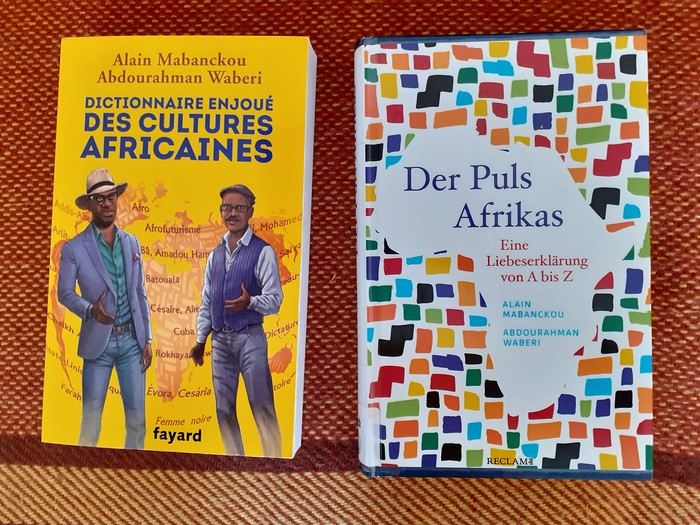
The Maggi cube, an unchallenged hegemony, and so much more
“The hopeless continent,” headlined The Economist, a British magazine, in July 2000 about Africa. Eleven years later, the same magazine headlined “Africa rising” instead. Images of Africa in the prosperous North constantly oscillate between apocalyptic scenarios and enthusiastic projections. A key issue with such images lies in the generalization they entail. If you look at the continent, considerable contrasts emerge depending on space and time. It’s no surprise that a region of the world encompassing such diverse ecological zones, maintaining such varied ties with other continents, comprising nearly fifty nation-states in sub-Saharan Africa alone, and characterized by a great diversity of languages, belief systems, and historical paths, doesn’t share a single destiny.
And yet, for many people outside Africa, as well as for many Africans, the continent constitutes a single entity, defined by criteria such as skin color, a colonial past, poverty, and the art of survival. Until now, these perspectives were generally accompanied by the idea that Africa had to—or should have—followed a single path together, sometimes called development, sometimes modernization, sometimes liberation, then a market economy. None of these paths delivered on their promises.
The two writers Alain Mabanckou and Abdourahman Waberi—one from Congo, the other raised in Djibouti, both long settled in France and now professors at renowned North American universities (Los Angeles, Washington)—have had enough of pessimistic scenarios: “We are aware that Africa is in the world and the world is in Africa. The same goes for all other continents, as our destinies are inextricably linked for better or worse. We refuse to see Africa as a reservoir of misfortunes or a continent cursed by atavistic misfortune and characterized by ethnic conflicts. [...] It’s this passionate flame we wanted to capture in a book [...] a kind of stroll through African cultures, without any demands, each letter of the alphabet leading us to a notion, a practice, a concept, a moment in history, literature, painting, politics, economics, cuisine, etc.” (p.10-11). Africa, they write, is on the verge of “imposing a signature, a style, a way of being in the world and in relation to the rest of the world.” (p.11) To put words to the continent’s diversity and dynamism, the two authors created a “rambling ABC,” a kind of portrait—or more precisely, a mythography—that lets you see and feel the pulse of a vast continent whose cultural power is unfolding before our eyes. Once marginalized or even mocked, the voice and importance of the Continent in global affairs are now undeniable” (p.11), containing over a hundred entries, mostly concise, written in a relaxed and casual style. The optimistic, even exuberant tone is set from the brief introduction. The duo of authors wants to “sing a love song to the cultures of our continent, to its inhabitants past and present, to its exceptional resources and its spectacular globalization despite a certain pollution that still clouds our skies due to the unmatched duration of dictatorships in some of our regions.” (p.12) In doing so, they don’t want to be too distracted by today’s Afewerki-Biya-Bongo-Déby & Co. ...
Of course, you’ll find tributes to great precursors like Frantz Fanon (“[...] it was a love story and admiration that wasn’t dimmed by the four decades separating his birth from ours. Let’s add that we were born while the native of Fort-de-France had left the world’s stage four years earlier, in the prime of life” p.141), Mongo Beti (“You must read and reread Mongo Beti, a genius who used his fame to support often just causes in Africa, like defending oppressed groups. His place is already in History. His oppressors, like the dictators Ahmadou Ahidjo and Paul Biya, can’t compete in the same category” p.64), the Malian Amadou Hampâté Bâ
(“Posterity remembers him mainly as an tireless defender of African cultures. His plea for the collection and preservation of traditional African knowledge remains a major event for all men and women of good will. One day in 1960, at the UNESCO podium, the native of Bandiagara sounded the alarm: ‘[...] Since we’ve admitted that the humanity of each people is the heritage of all humanity, if African traditions aren’t collected in time and written down, they’ll one day be missing from the universal archives of humanity.’” p.51),
Kwame Nkrumah, “one of the founders of Pan-Africanism, father of Ghana’s independence” (p.239), as well as the historian Cheikh Anta Diop, the writer, poet, and politician Aimé Césaire, and the economist and thinker Samir Amin, but also very warm tributes to certain contemporary African intellectuals like Souleymane Bachir Diagne and Achille Mbembe
(“A few years ago, in dominant economic circles, a rumor often resurfaced, usually disguised as a cold and scientifically proven analysis: Africa is useless. It’s a burden for the rest of the human community. With its 2% share in world trade, it would disappear from stock market radars without anyone noticing. So? Maybe it’ll be pulled up by other continents. Wanting to surpass itself is a crazy bet for Africans, they concluded. Arrogant or clueless, President Nicolas Sarkozy declared before an audience of students and teachers at Cheikh Anta Diop University in Dakar: ‘The African man hasn’t entered history enough [...] He only knows the eternal repetition of time marked by the endless repetition of the same gestures and words.’ That was in 2007. For decades, armed only with reason, an intellectual often steps up to debunk prejudices, lazy readings, and dishonest frameworks used as false fronts by those who, like Nicolas Sarkozy or former journalist Stephen Smith, out of ignorance, contempt, or condescension, distort African reality. This intellectual is none other than the historian and political scientist Achille Mbembe. This heir of Frantz Fanon, Amílcar Cabral, Jean-Marc Ela, and Fabien Eboussi-Boulaga was born in 1957 in Cameroon, in the Bassa region. Marked early by the upheavals of a fratricidal war, Achille Mbembe became the guardian of the memory of martyrs. After brilliant studies in Paris, he went on to teach at the best American universities, but the call of the Continent was stronger than anything else. In Dakar, he once directed CODESRIA (Council for the Development of Social Science Research in Africa) before joining the University of the Witwatersrand in Johannesburg, South Africa. Even though the author of *Critique of Black Reason* (Éditions La Découverte, 2015) spends a few months at Duke University in North Carolina, his observation post remains South Africa. From Johannesburg, Achille Mbembe scrutinizes Africa and the whole world. A lucid observer with an elegant and generous pen, Achille Mbembe knows how to blend big and small history: ‘I was born one day in July, as the month was drawing to a close. It was 1957, in that part of Africa recently named ‘Cameroon,’ a memory of the wonder that seized Portuguese sailors in the 15th century when, sailing up the river near Douala, they couldn’t help but note the presence of a multitude of crustaceans, and named it *Rio dos Camarões*, meaning ‘River of Shrimp.’ I grew up in the shadow of this nameless land, since, in a way, the name it bears is only the product of someone else’s astonishment: a lexical mistake, if you will.’ From this mistake or wound, he made leaven, a springboard to compose a rich work, recognized worldwide. To denounce barriers and barbarians too. But that’s not enough. Among his peers in circles of thought and action, Achille Mbembe passionately and consistently defends human dignity and the beauty of the world. In doing so, he fulfills the mission Frantz Fanon entrusted to him.” (p.227-229),
as well as entries dedicated to lesser-known artists and intellectuals, like the French journalist and activist Rokhaya Diallo, daughter of Senegalese and Gambian parents, or the Ethiopian filmmaker Haile Gerima, who has long lived in the United States. Other names from politics, sports, music, art, and literature: Kofi Annan, p.36; Barack Obama, p.243; Thomas Sankara, p.277; Ousmane Sow, p.285; Yambo Ouologuem, p.250; Léopold Sédar Senghor, p.282; Muhammad Ali, p.30; Nuruddin Farah, p.146; Salif Keita, p.203; Ahmadou Kourouma, p.206; Ngũgĩ wa Thiong’o, p.236; Winnie Mandela, p.224; Kylian Mbappé, p.226 ...
The authors, who resolutely commit to a “mythography” (p.11) of Africa, also pay special attention to local social movements, cultural events, and aspects of daily life. *Y’en a marre*, “which also meant ‘we’re fed up with sitting on our hands’” (p.320-321), emerged about a decade ago in Senegal as a citizen movement of peaceful resistance and symbolizes, the authors emphasize, the fact that African youth are increasingly fed up “with the political circus deployed in Africa since independence, as our parents would say, ‘since the White man left’...” (p.321). A full entry is dedicated to the Maggi bouillon cube, which has flooded African markets for about forty years and enjoys immense popularity (“It’s everywhere in Africa, from Dakar to Djibouti, and from Tangier to Cape Town. It’s in every pot, every stew. Little hands put it in every sauce, every local or adapted dish. An unchallenged hegemony! You’ll find it in diasporas too. The culinary strolls in Paris, in the [...] neighborhood” p.90). Critics blame it not only for impoverishing the aromatic diversity of local dishes but also for being harmful to health. And yet, “he poorest Africans, those who eat only once a day, a few spoonfuls of white beans and a ball of *foufou*, for example, are the most fervent users of the magic cube.” (p.92-93)
For *fonio*, “the new trendy cereal. [...] From the millet family, fonio is probably the oldest cereal cultivated in West Africa, and mainly in its sub-Saharan part, for millennia. [...] Easy to grow, water-efficient, fonio grows everywhere except on clay soils. Long neglected because it was considered the poor man’s crop, fonio is now a source of pride for the farmers who cultivate it and cherish it like the apple of their eye” (p.156-157), the authors immediately offer a detailed recipe, letting the reader know that “e can’t resist sharing this fonio with chicken recipe from Mali with you:
Ingredients: 1 chicken 3 large ripe red tomatoes 4 tbsp tomato paste 4 large onions 1 garlic clove 1/2 cup oil 2 Maggi cubes or salt 2 large carrots 1 turnip 1 large cabbage 2 large potatoes 1 celery stalk 1 packet pre-cooked fonio 4 okra (or okra powder) salt, pepper
Preparation: 1. Prepare the sauce: wash and cut the chicken. Peel the onions, garlic, and vegetables. 2. In a pot, fry the chicken pieces. 3. Dice the onions, tomatoes, carrots, and turnip very small and add them to the pot. 4. Add the tomato paste, salt, and pepper. 5. Simmer for 15 min, then add 2 L of water and the cooked chicken pieces. 6. Simmer for 30 min, then add the crushed garlic and celery, plus the cabbage cut into 4 and the potatoes cut in half. 7. Prepare the fonio: cover it with warm water, let it rest for 15 min, and cook it over low heat. 8. In a small pot, boil the okra and crush them. 9. Mix the crushed okra with the cooked fonio, then salt. Serve hot.” (p.158-159)
The comedy *Black Mic Mac*, released in French theaters in 1986 and addressing France’s increasingly restrictive immigration policy at the time, also gets an entry, as do *Tintin in the Congo*, the popular comic, and *Jip’s Café* (“[...] a little Africa in the heart of Paris, with passersby stopping to admire the ‘ambianceurs’ on the dance floor or attend the cultural events offered by the place” (p.194), an African establishment in Paris that Alain Mabanckou already immortalized in one of his novels.
The duo of authors also tackles thorny subjects like jihadism (p.119), the Rwandan genocide (p.272), the CFA franc (p.82), and dictatorship (p.110). While the two strike the right tone here, many entries leave a slightly bitter taste. Two examples: why doesn’t the text on Barack Obama mention the great disappointment of many people in Africa, who expected more from the African policy of the first U.S. president with African roots than just occasional warm words? Why do the comments on Winnie Mandela gloss over the fact that she was a highly controversial icon of the anti-apartheid movement due to her involvement in kidnappings, acts of torture, and murders of alleged apartheid collaborators? Instead, there’s a compassion that brings tears to the eyes: “She was often reduced to a secondary role, the wife of a great man” or “When victory came, she didn’t taste its fruits. Divorced, isolated. She would never be a ‘first lady’ in an evening gown, posing before a bed of chrysanthemums. They’d keep her far from the circles of power” (p.224-225). At this point, I would’ve liked the authors to take a slightly more critical stance...
That said, these “weaknesses” (if you can call them that) shouldn’t overshadow the book as a whole. It remains an informative, sometimes very entertaining, and often even original work in its own way.
Book information (the original French and the German translation):
Alain Mabanckou/Abdourahman Waberi. Dictionnaire enjoué des cultures africaines. Fayard, 2019. Alain Mabanckou/Abdourahman Waberi. Der Puls Afrikas. Eine Liebeserklärung von A bis Z. Reclam, 2022.
Hery
Morocco: How to travel while staying on a budget?
A lot of people find it important to stick to their budget when traveling—not to skimp, but to visit as many places as possible since traveling is their hobby.
In this post, I want to share some tips for those coming to Morocco who want their trip to be budget-friendly.
1. Prebook everything: hotels or riads, car rentals, or tours. If you book these in advance, it’ll make your life easier. You won’t have to deal with hagglers or people trying to overcharge you for services that are available online for free. Use platforms like Booking, Expedia, carsrental.ma, Airbnb, and other booking services to get this done properly.
2. Exchange your money to Moroccan dirhams as soon as you land. 1 € is always a little over 10 dirhams, but many people get charged as if it were exactly 10 dirhams per euro.
3. When visiting an old site or the old medina, avoid talking to vendors and shop owners—they’re really good at getting your attention and making you overpay for things.
4. Ask your tour guide to buy things for you. Yes, they do get a commission, but you’ll probably pay way more if you buy something yourself that they can get cheaply.
5. Walk everywhere. You don’t need a taxi for every little trip. Pick a good location and walk—most Moroccan cities are safe during normal hours.
6. Buy your food, drinks, etc., from supermarkets at normal prices. They can’t overcharge you since they scan every product.
I think that’s it for now.
Take care
In this post, I want to share some tips for those coming to Morocco who want their trip to be budget-friendly.
1. Prebook everything: hotels or riads, car rentals, or tours. If you book these in advance, it’ll make your life easier. You won’t have to deal with hagglers or people trying to overcharge you for services that are available online for free. Use platforms like Booking, Expedia, carsrental.ma, Airbnb, and other booking services to get this done properly.
2. Exchange your money to Moroccan dirhams as soon as you land. 1 € is always a little over 10 dirhams, but many people get charged as if it were exactly 10 dirhams per euro.
3. When visiting an old site or the old medina, avoid talking to vendors and shop owners—they’re really good at getting your attention and making you overpay for things.
4. Ask your tour guide to buy things for you. Yes, they do get a commission, but you’ll probably pay way more if you buy something yourself that they can get cheaply.
5. Walk everywhere. You don’t need a taxi for every little trip. Pick a good location and walk—most Moroccan cities are safe during normal hours.
6. Buy your food, drinks, etc., from supermarkets at normal prices. They can’t overcharge you since they scan every product.
I think that’s it for now.
Take care
Booking a train via the IRCTC website
Hi there,
I can’t seem to complete the payment for my trip on the IRCTC (Indian Railways) site. No matter which payment method I choose, my Visa card isn’t accepted. Has anyone here managed to do it, and if so, could you share the method you used? Thanks in advance! Charlie
I can’t seem to complete the payment for my trip on the IRCTC (Indian Railways) site. No matter which payment method I choose, my Visa card isn’t accepted. Has anyone here managed to do it, and if so, could you share the method you used? Thanks in advance! Charlie
Our Trip to Rajasthan
Hello,
We recently went to Rajasthan.
For the duration, I’d recommend about 3 weeks if you can, so you can explore the region at a relaxed pace.
We also wanted to experience "the real Indian life," and our driver showed us small markets, little temples, and his village near Ranakpur in the Marwar region.
For your info, here are some hotels where we stayed—there’s a huge hotel scene in Rajasthan. No need to book in advance; day by day works really well. You arrive, visit, and if you don’t like it, you just move on—it’s no problem in India. No upfront payment, and you can even negotiate on the spot with this approach, which gives you flexibility with your itinerary.
Here are some hotels we stayed at:
Madhuban in Jaipur (Haveli house) and also in Jaipur, the Khandela Haveli, which we preferred
In Jodhpur, the Kuchaman Haveli
In Ranakpur (Ranakpur Hill Resort) with a great pool
Bikaner: Hotel Laxmi Niwas
Udaipur: Hotel Savroopvilas
Jaisalmer: Hotel Rang Mahal
Here’s the itinerary we followed over nearly three weeks:
1 - When we arrived in Delhi, we headed straight north to Nawalgarh and Mandawa (towns with Havelis = painted houses). Along the way, we stopped in Jhunjhunu to see the Rani Sati Temple. We slept in Mandawa (we arrived in the evening and explored the next morning).
2 - Then we drove to Bikaner (Junagarh Fort, but if you have to choose, the forts in Jodhpur and Jaipur are more interesting in our opinion). After that, we took the road to Deshnoke (temple with sacred rats) and before that, we saw a small temple on the way with white rats. In Deshnoke, the rats move freely among people. We’re not too squeamish, so it was fine. Anyway, it was interesting to see.
3 - Next, we headed to Pushkar, where we took a camel ride (you have to negotiate the price; it varies depending on the camel’s quality, the saddle, and its decoration). One to two hours is more than enough. There’s always someone riding with you on the camel (at least that’s how it was for us). There are also things to see along the way.
4 - From Pushkar, we went to Jodhpur (Mehrangarh Fort, Clock Tower, Jaswant Thada). From Jodhpur, we visited villages (including our driver’s village, which was ideal for connecting with locals, having tea, and exploring the village with part of the community tagging along—I think we went into almost every house). We also did a train safari in the hills. Then Ranakpur (splendid Jain temple, Adinath Temple). With a bit of luck, you might spot Raikas, nomadic herders. Then Kumbhalgarh Fort, and after that, Udaipur. Along the way, we spent the night in a very small town called Jojawar at the Rawla Jojawar hotel, owned by the former Maharaja. A wonderful memory.
5 - In Udaipur (City Palace; Monsoon Palace = depends on the weather—if it’s not clear, you won’t see much, but if it is, the view is stunning).
6 - On the way to Jaipur: Sas-Bahu Temple; then in Jaipur: City Palace, Jantar Mantar, Hawa Mahal (Palace of the Winds), the Hanuman Temple, etc.
7 - Heading toward Agra, the Galta Valley with lots of monkeys. We finished with Fatehpur Sikri and then Agra. Agra is *very* touristy, so people are less friendly and can be pushy about selling things or offering their services as guides. You have to stay polite but firm and not let them sweet-talk you. Hotels are also pricier and there’s not always much choice. For the Taj Mahal (closed on Fridays), go very early in the morning when it opens. It’s best to arrive the evening before and spend the night at a hotel before visiting. Inside the Taj Mahal site, it’s already calmer. After that, we visited Akbar’s mausoleum (in Sikandra, near Agra) and the so-called "Baby Taj" (in Agra). For the Taj, I’ve heard they’re doing renovations, but it’s still a must-see.
8 - In Delhi, if you still have time, check out the Jama Masjid mosque and Mahatma Gandhi’s tomb. Also see Humayun’s Mausoleum (in the Nizamuddin East neighborhood).
In Jaisalmer (spend a night in the dunes after a camel ride), Chittorgarh, Bundi, Ranthambore Park, Orchha, and Khajuraho. Actually, you’ll have to make choices, or you’ll spend your whole vacation traveling. The average driving speed is about 50–60 km/h.
Our other trips in India: Gujarat (we love it and have been twice), Himachal Pradesh, Punjab, and also Haridwar and Varanasi. In the south, Kerala, Tamil Nadu, and Karnataka.
In some cities, we visited with a local guide (about two hours), and some spoke French or English.
One last thing that comes to mind: if you go to Jaisalmer, check out Gadi Sagar Lake. Also worth seeing: the Demoiselle Cranes in Kichan, not far from Jodhpur. These are thousands of common cranes that migrate near the region’s lakes during the winter months. A beautiful ornithological spectacle. And Kichan or Keechan.
Happy trip planning!
Jean
Feedback on Blyde River Canyon itinerary
Hi everyone,
Before entering Kruger Park, we’re planning a stop in Graskop on the way from Johannesburg, then spending two nights at Hippomoon Lodge.
I’ve mapped out the following route for a single day between Graskop and Hippomoon Lodge, but I’m wondering if it’s a bit too packed?😐
Visit the Blyde River Canyon in a full day – approx. 180 km / 2h40 drive, leaving Graskop at 8:30 AM:
- Graskop Gorge Lift on the R533 towards Hazyview
- The Pinnacle Rock
- Lisbon / God’s Window / Berlin Falls
- Lunch at The Chubby Pig
- Treur River
- Bourkes Luck, Farm, Moramelo, Uitspanning (33 km from Graskop Gorge Lift)
- Bourke’s Luck Potholes
- Three Rondavels viewpoint
- ???Hike starting from Blyde Canyon: A Forever Resort / the guinea fowl trail / Lower viewpoint
- Entry to Swadini for a Boat Cruise on the Blyde River (boat excursion in the Blyde Canyon)
- Blyde Dam boat cruise
- Drive to Hippomoon Lodge to arrive around 5:00 PM
Thanks in advance for your feedback and experiences!😎
Choosing between Royal Caribbean, NCL, or Celebrity
Hi everyone,
After several cruises with Italian companies (MSC and Costa), we want to try something different. We’ve roughly selected the same itinerary (the Greek islands, Croatia) and we’re torn between three ships: the Voyager of the Seas, the NCL Breakaway, and the Celebrity Ascent.
In your opinion, which one should we choose? Note that we’ll either be in an interior or ocean-view cabin at best, since balconies are way too expensive for our budget. We’re also looking for activities for our teens (13 and 15 years old)—shows, entertainment—and most importantly, something that sets these ships apart from MSC and Costa.
Thanks in advance!
Hiking passes for Red Rock State Park in Sedona
Hi everyone! 🙂
A little request for help from those who’ve stayed in Sedona—we’ll have almost 3 full days there. I’ve done some research on different sites, but I’m still confused.
It seems that some spots require, in addition to the America the Beautiful Pass (which we’ll already have from the start of our road trip), the Red Rock Day Pass since they’re within Red Rock State Park. This would be for park and parking lot maintenance.
Here are the hikes we’re eyeing: Boynton Canyon, Devil’s Bridge, Birthday Cave, Airport Mesa, Chapel of the Holy Cross, Cathedral Rock, Bell Rock, and Crescent Moon Ranch.
We won’t be able to do all of them—we’ll have to choose 🤔 and cut some 😢.
On top of that, there are the two scenic drives: Red Rock Scenic Byway and Oak Creek Scenic Drive.
Does the America the Beautiful Pass cover everything, or do we also need the Red Rock Day Pass? And if we do, which hikes require it?
Thanks for your answers, and have a great afternoon! marcalamar 🙂
A little request for help from those who’ve stayed in Sedona—we’ll have almost 3 full days there. I’ve done some research on different sites, but I’m still confused.
It seems that some spots require, in addition to the America the Beautiful Pass (which we’ll already have from the start of our road trip), the Red Rock Day Pass since they’re within Red Rock State Park. This would be for park and parking lot maintenance.
Here are the hikes we’re eyeing: Boynton Canyon, Devil’s Bridge, Birthday Cave, Airport Mesa, Chapel of the Holy Cross, Cathedral Rock, Bell Rock, and Crescent Moon Ranch.
We won’t be able to do all of them—we’ll have to choose 🤔 and cut some 😢.
On top of that, there are the two scenic drives: Red Rock Scenic Byway and Oak Creek Scenic Drive.
Does the America the Beautiful Pass cover everything, or do we also need the Red Rock Day Pass? And if we do, which hikes require it?
Thanks for your answers, and have a great afternoon! marcalamar 🙂
Kahnawake Pow Wow – July 12 & 13 in Montreal
Hi everyone,
This Saturday, July 12, and Sunday, July 13, the Kahnawake Pow Wow will take place (on the South Shore of Montreal).
For those interested, here are the details:
Echoes Of A Proud Nation Pow-Wow – Renewing Our Spirits Through The Power Of The Drum
Bring hats and water, as there isn’t much shade on the site..... But it’s definitely worth checking out 😛
Bring hats and water, as there isn’t much shade on the site..... But it’s definitely worth checking out 😛
Singapore Airlines Pricing
Hi everyone!
It feels really strange to be back on Voyage Forum after such a long time.
A quick question for the pricing experts out here 😉
I’ve been running some simulations for a Singapore Airlines flight, and I found THE perfect one for me! But here’s the thing: the simulation for 1 passenger is 978 €, and for 2 passengers, it jumps to 2,208 €. Where do those extra 252 € come from?
Yeah, I know I could book two separate reservations...
Thanks for your insights...
A quick question for the pricing experts out here 😉
I’ve been running some simulations for a Singapore Airlines flight, and I found THE perfect one for me! But here’s the thing: the simulation for 1 passenger is 978 €, and for 2 passengers, it jumps to 2,208 €. Where do those extra 252 € come from?
Yeah, I know I could book two separate reservations...
Thanks for your insights...
Camera Fee at Tadoba Andhari Tiger Reserve, India
Hi,
Does anyone have recent info on the camera fee amount at Tadoba-Moharli? We spent 8 days there in the second half of February, and the local tour operator (The Wild Cat Eyes) collected 2000 rupees per camera per safari without any receipt—totaling 240,000 rupees (~265 €) for 12 safaris (9 in core zones and 3 in buffer zones). The signs at the park entrance listed 250 rupees, and the tour operator ignored our requests for an official park receipt.
Thanks in advance! Pk
Does anyone have recent info on the camera fee amount at Tadoba-Moharli? We spent 8 days there in the second half of February, and the local tour operator (The Wild Cat Eyes) collected 2000 rupees per camera per safari without any receipt—totaling 240,000 rupees (~265 €) for 12 safaris (9 in core zones and 3 in buffer zones). The signs at the park entrance listed 250 rupees, and the tour operator ignored our requests for an official park receipt.
Thanks in advance! Pk
Back from Western Australia
Hi everyone,
We’re just back from a nearly 6-week trip to Western Australia. 4x4 style. Lots of accommodation and a few nights under canvas. Highlights of the trip: The Bungle Bungles, The Gibb River Road, Karinjini NP, Mt Augustus NP, Millstream NP, The Ningaloo Reef, Kalbarri, The Pinnacles... For anyone thinking of a trip to this part of the world—or just curious—here are the links to my two recent travel journals:
First part of the trip https://www.myatlas.com/anneclaire95/symphonie-de-couleurs-en-australie-occidentale
Second part of the trip https://www.myatlas.com/anneclaire95/symphonie-de-couleurs-en-australie-occidentale-2
Happy reading! 🙂
We’re just back from a nearly 6-week trip to Western Australia. 4x4 style. Lots of accommodation and a few nights under canvas. Highlights of the trip: The Bungle Bungles, The Gibb River Road, Karinjini NP, Mt Augustus NP, Millstream NP, The Ningaloo Reef, Kalbarri, The Pinnacles... For anyone thinking of a trip to this part of the world—or just curious—here are the links to my two recent travel journals:
First part of the trip https://www.myatlas.com/anneclaire95/symphonie-de-couleurs-en-australie-occidentale
Second part of the trip https://www.myatlas.com/anneclaire95/symphonie-de-couleurs-en-australie-occidentale-2
Happy reading! 🙂
Abdulrazak Gurnah, an author with a unique journey and identity (Tanzania)
(A belated tribute on this forum)
Abdulrazak Gurnah, an author with a unique journey and identity (Tanzania)
Big surprise in Stockholm: the 2021 Nobel Prize in Literature was awarded to novelist Abdulrazak Gurnah. The Tanzanian author, who writes in English, is best known for his novels Paradise (1994) and By the Sea (2001). He was recognized for his "uncompromising and compassionate portrayal of the effects of colonialism and the fate of refugees caught between cultures and continents", according to the Nobel Committee.His work moves away from "stereotypical descriptions and opens our eyes to a culturally diverse East Africa that is little known in many parts of the world".
Gurnah is the first African author since 2003 to win the prestigious prize, and the fifth from the African continent overall—following Wole Soyinka (1986), Naguib Mahfouz (1988), Nadine Gordimer (1991), and J.M. Coetzee (2003). Once again, the prize passed over Kenyan Ngugi wa Thiong’o, who has long been among the favorites for the award.
Born in Zanzibar (now part of Tanzania) in 1948, Abdulrazak Gurnah grew up in an Arab family originally from Yemen. He sought refuge in the UK in the late 1960s, a few years after independence, at a time when the Muslim minority there was being persecuted. He wasn’t able to return to Zanzibar until 1984.
Since 1987, he has published around ten novels and several short stories in English (his native language is Swahili). None have become bestsellers, but his body of work as a whole offers a different perspective on issues like immigration and cultural diversity. His work sheds light on the effects of colonialism, exile, and the plight of refugees, "speaking" of his love for Africa and his fight against neocolonialism. Though Gurnah’s stories aren’t explicitly autobiographical, they’re inspired by his life as an immigrant in the UK.
Gurnah was also a professor of English and postcolonial literature at the University of Kent in Canterbury until his recent retirement.
Does this award bring more attention to African literature? Who knows? At the very least, it might give it a boost. If African literature is less visible in the West, it’s partly because it isn’t widely accessible: Gurnah is rarely translated into French or German, and not at all into Arabic.
In Tanzania and its Zanzibar archipelago, he’s being celebrated with joy. "This means a lot for Zanzibar’s struggle for self-determination," says Ismail Jussa, a literary critic from Zanzibar. "It helps put Zanzibar back on the map." The Swedish Committee acknowledged that his work has helped understand "the divisions caused by colonialists, but also the heartbreak of being torn between the homeland one comes from and the life of exile one is forced into."
By the Sea. Bloomsbury Publishing, 2001 (Fr.: Près de la Mer. Galaade Éd., 2006)
Paradise. Bloomsbury Publishing, 1994/2004 (Fr.: Paradis. Motifs, 1999)
Desertion. Bloomsbury Publishing, 2005 (Fr.: Adieu Zanzibar. Galaade Éd., 2009)
Afterlives. Bloomsbury Publishing, 2020 (Fr.: Les vies d’après. Denoël, 2023)
Hery
Abdulrazak Gurnah, an author with a unique journey and identity (Tanzania)
Big surprise in Stockholm: the 2021 Nobel Prize in Literature was awarded to novelist Abdulrazak Gurnah. The Tanzanian author, who writes in English, is best known for his novels Paradise (1994) and By the Sea (2001). He was recognized for his "uncompromising and compassionate portrayal of the effects of colonialism and the fate of refugees caught between cultures and continents", according to the Nobel Committee.His work moves away from "stereotypical descriptions and opens our eyes to a culturally diverse East Africa that is little known in many parts of the world".
Gurnah is the first African author since 2003 to win the prestigious prize, and the fifth from the African continent overall—following Wole Soyinka (1986), Naguib Mahfouz (1988), Nadine Gordimer (1991), and J.M. Coetzee (2003). Once again, the prize passed over Kenyan Ngugi wa Thiong’o, who has long been among the favorites for the award.
Born in Zanzibar (now part of Tanzania) in 1948, Abdulrazak Gurnah grew up in an Arab family originally from Yemen. He sought refuge in the UK in the late 1960s, a few years after independence, at a time when the Muslim minority there was being persecuted. He wasn’t able to return to Zanzibar until 1984.
Since 1987, he has published around ten novels and several short stories in English (his native language is Swahili). None have become bestsellers, but his body of work as a whole offers a different perspective on issues like immigration and cultural diversity. His work sheds light on the effects of colonialism, exile, and the plight of refugees, "speaking" of his love for Africa and his fight against neocolonialism. Though Gurnah’s stories aren’t explicitly autobiographical, they’re inspired by his life as an immigrant in the UK.
Gurnah was also a professor of English and postcolonial literature at the University of Kent in Canterbury until his recent retirement.
Does this award bring more attention to African literature? Who knows? At the very least, it might give it a boost. If African literature is less visible in the West, it’s partly because it isn’t widely accessible: Gurnah is rarely translated into French or German, and not at all into Arabic.
In Tanzania and its Zanzibar archipelago, he’s being celebrated with joy. "This means a lot for Zanzibar’s struggle for self-determination," says Ismail Jussa, a literary critic from Zanzibar. "It helps put Zanzibar back on the map." The Swedish Committee acknowledged that his work has helped understand "the divisions caused by colonialists, but also the heartbreak of being torn between the homeland one comes from and the life of exile one is forced into."
By the Sea. Bloomsbury Publishing, 2001 (Fr.: Près de la Mer. Galaade Éd., 2006)
Paradise. Bloomsbury Publishing, 1994/2004 (Fr.: Paradis. Motifs, 1999)
Desertion. Bloomsbury Publishing, 2005 (Fr.: Adieu Zanzibar. Galaade Éd., 2009)
Afterlives. Bloomsbury Publishing, 2020 (Fr.: Les vies d’après. Denoël, 2023)
Hery
Bike Circuit for the Téléthon (Faverges)
Generous cyclists at the téléthon
Sure, it’s not a bike trip in the traditional sense—
more like a "journey around my room" and rock around the clocks (in Faverges)
on Saturday, November 30, 2024.
Just a way to take part in the téléthon, add my little stone to the building, and... get the bikes out.
No big trips, but a peek at the Viuz church (a remarkable Romanesque church) and the *hourd* in Faverges.
Plus, it’s on the route of the Seyssel-Annecy bike path: Faverges–Albertville–Grenoble–Valence.
http://cbandiera.free.fr/telethon/reportages/2024/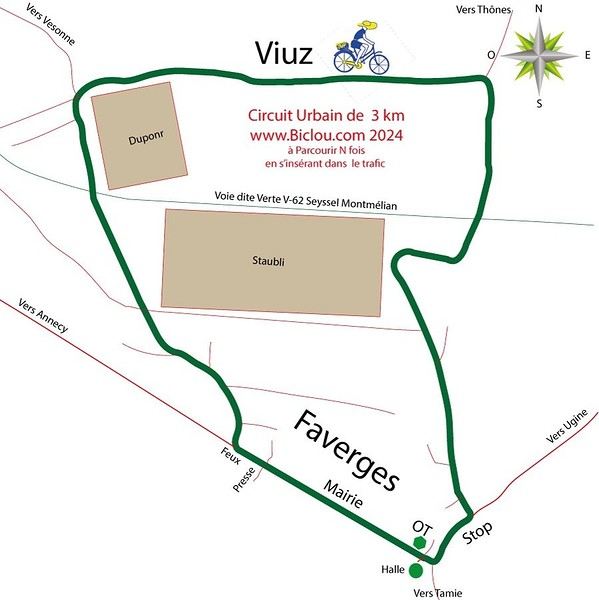
http://cbandiera.free.fr/telethon/reportages/2024/
3-Week West USA Road Trip Itinerary
Hi there,
Alright, here’s my own road book for 3 weeks (late June – mid-July 2025) — looking forward to your feedback!
We’re not hikers or hardcore adventurers, so I’ve focused the itinerary on what we consider the essentials. We’re flying into SF and out of Las Vegas (because of airfare prices!) and also because I’m skipping Yosemite (doesn’t really tempt us). I’m planning a day trip to Death Valley from LV (been there before — it lets you see the highlights, and that was enough for me at the time). We’re not going as far as Canyon de Chelly — already done, and it didn’t really wow me. Just to note, this is pretty similar to a trip I’ve done before that worked well for us, but I’m open to tweaking it based on your suggestions. The duration (23 days) isn’t flexible — even one extra day sends the ticket prices skyrocketing.
Here’s what it looks like: Day 1: Arrival in SF Day 2 – Day 4: SF Day 5: Monterey (the Aquarium and the bay) – Overnight in Monterey Day 6 – Day 7: Drive down Highway 1 to Los Angeles – Overnight Day 6, e.g., in St. Simeon or nearby, and Day 7 in LA Day 8 – Day 9: LA (possibly an extra day) – Overnights in LA Day 10: Drive to Kingman and sightseeing – Overnight in Kingman Day 11: Drive to Grand Canyon and start exploring GC – Overnight in Tusayan Day 12: Explore GC – Overnight in Tusayan Day 13: Drive to Monument Valley and visit – Overnight nearby (Mexican Hat, Kayenta, etc.) Day 14: More sightseeing in the area (Valley of the Gods, Gooseneck Park) and drive to Mesa Verde – Overnight in Cortez Day 15: Visit Mesa Verde – Overnight in Cortez Day 16: Drive to Page and sightseeing – Overnight in Page Day 17: Antelope Canyon, Horseshoe Bend – Overnight in Page Day 18: Drive to Bryce Canyon NP and start exploring Bryce – Overnight in the area! Day 19: Explore Bryce => Question: It’s a 2.5-hour drive from Page to Bryce. If we leave early, can we see the highlights of Bryce on Day 18 and skip Day 19? I’ll admit, I don’t remember much (it was back in 2009!) Day 20: Drive to Las Vegas with stops along the way (a quick detour to Zion just to say we’ve been, Valley of Fire) – Overnight in LV Day 21: LV; Cirque du Soleil show in the evening – Overnight in LV Day 22: Day trip to Death Valley (or a lazy day and outlet shopping!) – Overnight in LV Day 23: Flight back at 4:10 PM, which still gives us time to enjoy the morning.
What do you think? Best regards,
Alright, here’s my own road book for 3 weeks (late June – mid-July 2025) — looking forward to your feedback!
We’re not hikers or hardcore adventurers, so I’ve focused the itinerary on what we consider the essentials. We’re flying into SF and out of Las Vegas (because of airfare prices!) and also because I’m skipping Yosemite (doesn’t really tempt us). I’m planning a day trip to Death Valley from LV (been there before — it lets you see the highlights, and that was enough for me at the time). We’re not going as far as Canyon de Chelly — already done, and it didn’t really wow me. Just to note, this is pretty similar to a trip I’ve done before that worked well for us, but I’m open to tweaking it based on your suggestions. The duration (23 days) isn’t flexible — even one extra day sends the ticket prices skyrocketing.
Here’s what it looks like: Day 1: Arrival in SF Day 2 – Day 4: SF Day 5: Monterey (the Aquarium and the bay) – Overnight in Monterey Day 6 – Day 7: Drive down Highway 1 to Los Angeles – Overnight Day 6, e.g., in St. Simeon or nearby, and Day 7 in LA Day 8 – Day 9: LA (possibly an extra day) – Overnights in LA Day 10: Drive to Kingman and sightseeing – Overnight in Kingman Day 11: Drive to Grand Canyon and start exploring GC – Overnight in Tusayan Day 12: Explore GC – Overnight in Tusayan Day 13: Drive to Monument Valley and visit – Overnight nearby (Mexican Hat, Kayenta, etc.) Day 14: More sightseeing in the area (Valley of the Gods, Gooseneck Park) and drive to Mesa Verde – Overnight in Cortez Day 15: Visit Mesa Verde – Overnight in Cortez Day 16: Drive to Page and sightseeing – Overnight in Page Day 17: Antelope Canyon, Horseshoe Bend – Overnight in Page Day 18: Drive to Bryce Canyon NP and start exploring Bryce – Overnight in the area! Day 19: Explore Bryce => Question: It’s a 2.5-hour drive from Page to Bryce. If we leave early, can we see the highlights of Bryce on Day 18 and skip Day 19? I’ll admit, I don’t remember much (it was back in 2009!) Day 20: Drive to Las Vegas with stops along the way (a quick detour to Zion just to say we’ve been, Valley of Fire) – Overnight in LV Day 21: LV; Cirque du Soleil show in the evening – Overnight in LV Day 22: Day trip to Death Valley (or a lazy day and outlet shopping!) – Overnight in LV Day 23: Flight back at 4:10 PM, which still gives us time to enjoy the morning.
What do you think? Best regards,
Disparition de Keith Tippett (Grande-Bretagne) English translation pending
« With his mutton-chop sideburns and penchant for countrymen’s tweed jackets, waistcoats and collarless shirts, Keith Tippett suggested a quirky Edwardian gentleman farmer more than an experimental music firebrand. » (John Fordham, The Guardian, juin 2020)
Entre jazz libre et rock progressif
Un grand nom du jazz britannique vient de disparaître. En juin, le compositeur, improvisateur et pianiste anglais Keith Tippett est mort à l’âge de 72 ans. Curieux de tous les styles et tous les genres, infatigable à la quête de nouvelles expériences musicales, il est une figure pionnière de la scène anglaise de jazz libre depuis le début des années 70. Mais il se fait surtout connaître pour avoir fondé le méga-orchestre CENTIPEDE, comprenant une cinquantaine de musiciens, et par sa participation à trois albums du groupe de rock progressif KING CRIMSON. Sa discographie est immense...
Né à Bristol en 1947, Keith Tippett étudie le piano et l’orgue d’église et forme son premier groupe quand il est adolescent. En 1967, il s‘installe à la capitale britannique, la date qui équivaut au début de sa vie musicale professionnelle. Déjà sa première formation, le KEITH TIPPETT GROUP, un sextet comprenant notamment le saxophoniste Elton Dean, le trompettiste Mark Charig et le tromboniste Nick Evans, atteint un certain degré de notorité. Le groupe enregistre deux disques de jazz-rock qui font date, You are here...I am There en 1970, et Dedicated to You, but You weren’t Listening en 1971, auquel participe aussi Robert Wyatt, entre autres. A cette époque également, Keith Tippett collabore à la chanteuse Shelag McDonald et effectue plusieurs sessions de King Crimson où il laisse son imparable touche pianistique : faut écouter p.ex. la pièce Cat Food ou aussi Lizard, really great !)...
En 1970 de même, Keith Tippett fonde un orchestre hors du commun comprenant d’une cinquantaine de musiciens issus des scènes jazz et rock britannique, CENTIPEDE, laissant un double album, Septober Energy, qui reste unique en son genre : une composition déclinée en quatre parties, chacune faisant intervenir les musiciens soit en solo, en duos, en trios, en quartets, en orchestre complet, mélangeant et mariant différents styles – jazz, classique, rock, free music, etc. Peu de temps après, Keith Tippett crée une autre formation, OVARY LODGE, avec le contrebassiste Roy Babington, le batteur Frank Perry et – plus tard – le bassiste sud-africain, Harry Miller. Sa femme, la vocaliste et percussionniste Julie Tippetts (née Driscoll) y participe également : qui ne se souvient pas d‘une voix soul, celle de Julie, accompagnée du groupe Brian Auger & The Trinity ayant eu plusieurs hits à l‘époque : This Wheel‘s on Fire, Road to Cairo, Season of the Witch... Ce quartet s’oriente vers une musique entièrement improvisée, au croisement du free et de la musique contemporaire, préfigurant même l’ambient.
En 1976, Keith Tippett joue en duo avec un autre pianiste britannique, Stan Tracey, et en 1978, il forme sa deuxième grande formation, ARK, un big-band de 22 musiciens, cette fois issu du jazz et des musiques improvisées, se déplaçant musicalement entre Charles Mingus et Sun Ra. Cette grande formation comprend notamment des membres d’OVARY LODGE et du Chris McGregor’s Brotherhood of Breath, n’ayant enregistré, tout comme CENTIPEDE, qu’un seul double album, Frames (Music for an Imaginary Film). Par la suite, le pianiste crée d’autres formations orchestrales qui, même sans avoir dépassé le nombre de participants d’ARK et de CENTIPEDE, témoigne d’une densité et d’un foisonnement musicaux tout aussi impressionnants, comme le KEITH TIPPETT SEPTET, le KEITH TIPPETT TAPESTRY ORCHESTRA, VIVE LA BLACK et le KEITH TIPPETT OCTET. En somme, une carrière musicale qui présente diverses formes musicalement assez contrastées...
A l’opposé de ces grandes formations, le fécond talent pianistique de Keith Tippett s’exprime également sous la stricte forme du solo piano, une démarche qu’il initie à partir des années 80 avec le double album The Unlonely Raindancer et qu’il développe dans les décennies suivantes au sein de sa série de disques solistes Mujician I, II, III (August Air) et IV (Live in Piacenza) et dans d’autres albums comme The Dartington Concert, Friday the 13th et Live in Triest. Ce sont tous des albums qui illustrent toute l’amplitude créative de Keith Tippett sur le piano, rayonnant d’un lyrisme brûlant, d’un souffle vital et d’une inventivité infaillible, souvent le traitant d’un "piano préparé à la John Cage" (le son des cordes étant modifié par des pièces de bois et autres objets). MUJICIAN devient aussi le nom de l’un des groupes les plus éloquents du pianiste, un quartet improvisé d’harmonie intuitive, avec le saxophoniste Paul Dunmall, inspiré de Coltrane, le virtuose de basse, Paul Rogers, et le batteur Tony Levin...
Au cours de sa longue carrière, Keith Tippett multiplie les rencontres musicales sous plusieurs formes, en duos, en trios, etc. etc., et participe, de la même façon, dans différentes formations d‘amis musiciens, dont Elton Dean (Quartet, Quintet, Ninesense), Harry Miller (Isipingo), le violoniste de King Crimson, David Cross (Low Flying Aircraft), le bassiste de Soft Machine, Hugh Hopper (Hopper-Dean-Tippett-Gallivan), Paul Dunmall ou en duo avec le pianiste Howard Riley, le saxophoniste Andy Sheppard, ou encore avec sa femme Julie, avec laquelle il enregistre plusieurs albums (Couple in Spirit). En 2000, il écrit une musique pour un quartet à cordes contemporain, le Kreutzer Strings Quartet (Linuckea. Let The Music Speak).
Toute sa vie (musicale), Keith Tippett a la vision idéaliste que les gens qui écoutent de la musique entrent dans un espace sacré. Il envisage d'atteindre ses objectifs humanistes et musicaux sans tout compromis. Sa classe pianistique, ses compétences artistiques ne sont pas toujours reconnues et la reconnaissance que son travail mérite ne lui est pas toujours témoignée. A cet égard, Keith Tippett n’est certainement pas le seul. En Grande-Bretagne et ailleurs, on ne traite pas toujours les trésors nationaux comme il faut. En tout cas, Keith Tippett en est un...
Quel que soient les projets musicaux dans lesquels il s’investit, Keith Tippett laisse des traces immanquables et remarquées, avec son jeu de piano aussi endiablé que raffiné, fécond et innovant, son swing habité et hypnotique. Par sa mort, la musique du XXe siècle perd l’un de ses plus inspirés serviteurs. Les traces qu’il laisse, en Grande-Bretagne et ailleurs, sont profondes et durables, mes souvenirs de plusieurs concerts que j’ai pu voir – en particulier à Berlin – restent inoubliables : THANK YOU, KEITH TIPPETT !!!
Hery

(Keith Tippett et sa femme Julie : © Frank Schindelbeck)
https://www.youtube.com/watch?v=JW2qdrPBikA
(Keith Tippett solo, live in Italy)
Entre jazz libre et rock progressif
Un grand nom du jazz britannique vient de disparaître. En juin, le compositeur, improvisateur et pianiste anglais Keith Tippett est mort à l’âge de 72 ans. Curieux de tous les styles et tous les genres, infatigable à la quête de nouvelles expériences musicales, il est une figure pionnière de la scène anglaise de jazz libre depuis le début des années 70. Mais il se fait surtout connaître pour avoir fondé le méga-orchestre CENTIPEDE, comprenant une cinquantaine de musiciens, et par sa participation à trois albums du groupe de rock progressif KING CRIMSON. Sa discographie est immense...
Né à Bristol en 1947, Keith Tippett étudie le piano et l’orgue d’église et forme son premier groupe quand il est adolescent. En 1967, il s‘installe à la capitale britannique, la date qui équivaut au début de sa vie musicale professionnelle. Déjà sa première formation, le KEITH TIPPETT GROUP, un sextet comprenant notamment le saxophoniste Elton Dean, le trompettiste Mark Charig et le tromboniste Nick Evans, atteint un certain degré de notorité. Le groupe enregistre deux disques de jazz-rock qui font date, You are here...I am There en 1970, et Dedicated to You, but You weren’t Listening en 1971, auquel participe aussi Robert Wyatt, entre autres. A cette époque également, Keith Tippett collabore à la chanteuse Shelag McDonald et effectue plusieurs sessions de King Crimson où il laisse son imparable touche pianistique : faut écouter p.ex. la pièce Cat Food ou aussi Lizard, really great !)...
En 1970 de même, Keith Tippett fonde un orchestre hors du commun comprenant d’une cinquantaine de musiciens issus des scènes jazz et rock britannique, CENTIPEDE, laissant un double album, Septober Energy, qui reste unique en son genre : une composition déclinée en quatre parties, chacune faisant intervenir les musiciens soit en solo, en duos, en trios, en quartets, en orchestre complet, mélangeant et mariant différents styles – jazz, classique, rock, free music, etc. Peu de temps après, Keith Tippett crée une autre formation, OVARY LODGE, avec le contrebassiste Roy Babington, le batteur Frank Perry et – plus tard – le bassiste sud-africain, Harry Miller. Sa femme, la vocaliste et percussionniste Julie Tippetts (née Driscoll) y participe également : qui ne se souvient pas d‘une voix soul, celle de Julie, accompagnée du groupe Brian Auger & The Trinity ayant eu plusieurs hits à l‘époque : This Wheel‘s on Fire, Road to Cairo, Season of the Witch... Ce quartet s’oriente vers une musique entièrement improvisée, au croisement du free et de la musique contemporaire, préfigurant même l’ambient.
En 1976, Keith Tippett joue en duo avec un autre pianiste britannique, Stan Tracey, et en 1978, il forme sa deuxième grande formation, ARK, un big-band de 22 musiciens, cette fois issu du jazz et des musiques improvisées, se déplaçant musicalement entre Charles Mingus et Sun Ra. Cette grande formation comprend notamment des membres d’OVARY LODGE et du Chris McGregor’s Brotherhood of Breath, n’ayant enregistré, tout comme CENTIPEDE, qu’un seul double album, Frames (Music for an Imaginary Film). Par la suite, le pianiste crée d’autres formations orchestrales qui, même sans avoir dépassé le nombre de participants d’ARK et de CENTIPEDE, témoigne d’une densité et d’un foisonnement musicaux tout aussi impressionnants, comme le KEITH TIPPETT SEPTET, le KEITH TIPPETT TAPESTRY ORCHESTRA, VIVE LA BLACK et le KEITH TIPPETT OCTET. En somme, une carrière musicale qui présente diverses formes musicalement assez contrastées...
A l’opposé de ces grandes formations, le fécond talent pianistique de Keith Tippett s’exprime également sous la stricte forme du solo piano, une démarche qu’il initie à partir des années 80 avec le double album The Unlonely Raindancer et qu’il développe dans les décennies suivantes au sein de sa série de disques solistes Mujician I, II, III (August Air) et IV (Live in Piacenza) et dans d’autres albums comme The Dartington Concert, Friday the 13th et Live in Triest. Ce sont tous des albums qui illustrent toute l’amplitude créative de Keith Tippett sur le piano, rayonnant d’un lyrisme brûlant, d’un souffle vital et d’une inventivité infaillible, souvent le traitant d’un "piano préparé à la John Cage" (le son des cordes étant modifié par des pièces de bois et autres objets). MUJICIAN devient aussi le nom de l’un des groupes les plus éloquents du pianiste, un quartet improvisé d’harmonie intuitive, avec le saxophoniste Paul Dunmall, inspiré de Coltrane, le virtuose de basse, Paul Rogers, et le batteur Tony Levin...
Au cours de sa longue carrière, Keith Tippett multiplie les rencontres musicales sous plusieurs formes, en duos, en trios, etc. etc., et participe, de la même façon, dans différentes formations d‘amis musiciens, dont Elton Dean (Quartet, Quintet, Ninesense), Harry Miller (Isipingo), le violoniste de King Crimson, David Cross (Low Flying Aircraft), le bassiste de Soft Machine, Hugh Hopper (Hopper-Dean-Tippett-Gallivan), Paul Dunmall ou en duo avec le pianiste Howard Riley, le saxophoniste Andy Sheppard, ou encore avec sa femme Julie, avec laquelle il enregistre plusieurs albums (Couple in Spirit). En 2000, il écrit une musique pour un quartet à cordes contemporain, le Kreutzer Strings Quartet (Linuckea. Let The Music Speak).
Toute sa vie (musicale), Keith Tippett a la vision idéaliste que les gens qui écoutent de la musique entrent dans un espace sacré. Il envisage d'atteindre ses objectifs humanistes et musicaux sans tout compromis. Sa classe pianistique, ses compétences artistiques ne sont pas toujours reconnues et la reconnaissance que son travail mérite ne lui est pas toujours témoignée. A cet égard, Keith Tippett n’est certainement pas le seul. En Grande-Bretagne et ailleurs, on ne traite pas toujours les trésors nationaux comme il faut. En tout cas, Keith Tippett en est un...
Quel que soient les projets musicaux dans lesquels il s’investit, Keith Tippett laisse des traces immanquables et remarquées, avec son jeu de piano aussi endiablé que raffiné, fécond et innovant, son swing habité et hypnotique. Par sa mort, la musique du XXe siècle perd l’un de ses plus inspirés serviteurs. Les traces qu’il laisse, en Grande-Bretagne et ailleurs, sont profondes et durables, mes souvenirs de plusieurs concerts que j’ai pu voir – en particulier à Berlin – restent inoubliables : THANK YOU, KEITH TIPPETT !!!
Hery
(Keith Tippett et sa femme Julie : © Frank Schindelbeck)
https://www.youtube.com/watch?v=JW2qdrPBikA
(Keith Tippett solo, live in Italy)
Annulation Peru Rail et remboursement English translation pending
Bonjour a tous,
Qui d'entre-vous sait si Peru Rail rembourse si le train est annulé?
Merci pour vos infos