Results for "safari+ou+gorille+|+121+>+75"
10242 results found.
Voyage d'étude Mexique English translation pending
Nous sommes une classe de 22 pour un voyage d'étude au Mexique . Etant en licence de manager en grande distribution nous aimerions savoir si il y a des grandes surfaces du style de champion ( ou autre), des parcs animaliers et des endroits ou il ya des productions végétales ( horticulture...). Notre formation comprend 3 options (alimentaire, jardinerie et animalerie) et nous devons réaliser des visites pour les 3. Nous avons cherché sur internet mais nous ne trouvons rien, par ailleurs nous attendons une réponse de l'ambassade.
Merci a ceux qui connaissent et qui peuvent nous aider. 😛
Merci a ceux qui connaissent et qui peuvent nous aider. 😛
Taita discovery center au Kenya? English translation pending
qui connait cette adresse, et qui a déjà effectué des séjours là bas ?
le programme semble très interessant, je me demande si la réalité est à la hauteur de ce qui est proposé...
Merci pour les infos !
Excursions sur Punta Cana et Santo Domingo English translation pending
je recherche des temoignagnes de personnes qui ont fait des excursions au depart de punta cana ou santo domingo.qu'avez vous fait?vos impressions?leurs coûts.?où les avez vous acheté(TO ou autre)?merci d'avance
nat😉
Notre plans pour les Seychelles English translation pending
Salut
Ce site est vraiment pratique. J'ai déjà eu plusieurs info et mêmes des photos super par Xavier (merci) mais il n'avait pas séjourné à la même période que nous y allons et n'avait pas expérimenté personnellement les hôtels. Alors si quelqu'un parmi vous est allé aux Seychelles en juin ou est resté à un des hôtels suivants vos commentaires seront grandement appréciés.
Je pars aux Seychelles les deux premières semaines de juin 2005. Rien n'est encore réservé mais voici notre plan :
4 jours sur Mahé au Beachcomber en demie-pension 6 jours sur Praslin à la Vanille en demie-pension 4 jours sur la Digue à L'Océan en demie-pension
But du voyage : repos, isolement, apnée et plongée. On ne veut pas être aux endroits les plus touristiques même si les foules ne semblent pas exister aux Seychelles. Nous louerons une voiture à Mahé et Praslin et probablement un vélo à la Digue. Nous aimons beaucoup marcher. Nous avons prévu faire des excursions sur les îles voisines à partir de Praslin et la Digue. Et prendre un scenic tour en hélicoptère. Nous terminerons notre voyage par un safari de 3 jours au Kenya.
Que pensez-vous de ce plan? Connaissez-vous les hôtels? En avez-vous d'autres à nous proposer? Pour les îles avoisinantes y a-t-il des locaux qui offrent de meilleurs tours que d'autres?
En ce qui concerne les algues, est-ce vrai que Praslin est couverte d'algues à cette période de l'année? Est-ce seulement Grand Anse.
Merci d'avance pour toutes informations.
Isabelle
Ce site est vraiment pratique. J'ai déjà eu plusieurs info et mêmes des photos super par Xavier (merci) mais il n'avait pas séjourné à la même période que nous y allons et n'avait pas expérimenté personnellement les hôtels. Alors si quelqu'un parmi vous est allé aux Seychelles en juin ou est resté à un des hôtels suivants vos commentaires seront grandement appréciés.
Je pars aux Seychelles les deux premières semaines de juin 2005. Rien n'est encore réservé mais voici notre plan :
4 jours sur Mahé au Beachcomber en demie-pension 6 jours sur Praslin à la Vanille en demie-pension 4 jours sur la Digue à L'Océan en demie-pension
But du voyage : repos, isolement, apnée et plongée. On ne veut pas être aux endroits les plus touristiques même si les foules ne semblent pas exister aux Seychelles. Nous louerons une voiture à Mahé et Praslin et probablement un vélo à la Digue. Nous aimons beaucoup marcher. Nous avons prévu faire des excursions sur les îles voisines à partir de Praslin et la Digue. Et prendre un scenic tour en hélicoptère. Nous terminerons notre voyage par un safari de 3 jours au Kenya.
Que pensez-vous de ce plan? Connaissez-vous les hôtels? En avez-vous d'autres à nous proposer? Pour les îles avoisinantes y a-t-il des locaux qui offrent de meilleurs tours que d'autres?
En ce qui concerne les algues, est-ce vrai que Praslin est couverte d'algues à cette période de l'année? Est-ce seulement Grand Anse.
Merci d'avance pour toutes informations.
Isabelle
Région du Maputaland en Afrique du Sud English translation pending
Bonjour,
Dans 15 jours, je pars dans le Maputaland. Quelqu'un connait-il cette région ? Quelles sont les visites ou activités à faire absolument ? Y-a-t-il des petits hôtels sympa et pas trop chers ?
Merci pour vos réponses.
Sécurité à Margarita English translation pending
Salut chers voyageurs. Je pars pour l'Ile de Margarita au début janvier05; pour une semaine de ¨tout inclus¨ au LTI Costa Caribee. J'ai beaucoup entendu parler de la situation là-bas et des risques possible... Qu'en pensez-vous? Ce danger est-il présent même dans les complexes hoteliers de ce genre? Les excursions Safari en Jeep et en bateau (activités guidées) sont-elles risquées ou il n'y a aucun danger de visiter les lieux et se balader le jour? J'avoue que ça m'inquiètes ben gros; je suis aller sur le site de l'Ambassade Canadienne et ce n'est pas très rassurant...
Merci mille fois de vos précieuses infos... 🙂
Merci mille fois de vos précieuses infos... 🙂
Vos infos sur le Sri Lanka et les Maldives English translation pending
C'est simple je veux tout savoir sur le Srilanka et les Maldives :
Srilanka : Agences de voyages (Meilleures qualités prix) ou billet d'avion ?
Quels circuits, combien de temps est-il nécessaire pour tout voir, ne rien omettre, ne rien louper, tout absorber....
Les transports internes, existent-ils des guides qui parlent note difficile langue. Je ferais l'effort si nous partons durant l'hiver 2005 d'apprendre l'Anglais, mais pour le moment ce n'est pas le cas😕
Les Maldives, 😮😮😮 pures merveilles de la nature que dire, je vous laisse avec plaisir me guider sur les meilleures îles : bungalows pilotis, spots aquatiques les plus féériques...
Raccontez moi vos séjours, vos plus belles expériences, les situations, endroits qui vous ont le plus marqués.
Grâce à vous je vais me bercer à mes rêves. MERCI à vous tous.
__
"Le bonheur appartient à ce qui croient en la beauté de leurs rêves" ma maxime
Srilanka : Agences de voyages (Meilleures qualités prix) ou billet d'avion ?
Quels circuits, combien de temps est-il nécessaire pour tout voir, ne rien omettre, ne rien louper, tout absorber....
Les transports internes, existent-ils des guides qui parlent note difficile langue. Je ferais l'effort si nous partons durant l'hiver 2005 d'apprendre l'Anglais, mais pour le moment ce n'est pas le cas😕
Les Maldives, 😮😮😮 pures merveilles de la nature que dire, je vous laisse avec plaisir me guider sur les meilleures îles : bungalows pilotis, spots aquatiques les plus féériques...
Raccontez moi vos séjours, vos plus belles expériences, les situations, endroits qui vous ont le plus marqués.
Grâce à vous je vais me bercer à mes rêves. MERCI à vous tous.
__
"Le bonheur appartient à ce qui croient en la beauté de leurs rêves" ma maxime
Nepal - Chitwan Parc - Combien de temps? English translation pending
Bonjour tout le monde,
Je serai au Népal au mois de novembre et nous partons quelques jours pour le Chitwan National Parc. Beaucoup de "formule" sont possibles. Est-ce que 2 jours sur place sont suffisants ou est-ce qu'au contraire 4 jours 3 nuits est le mieux?
Merci d'avance pour vos réponses
biboute 😉
Je serai au Népal au mois de novembre et nous partons quelques jours pour le Chitwan National Parc. Beaucoup de "formule" sont possibles. Est-ce que 2 jours sur place sont suffisants ou est-ce qu'au contraire 4 jours 3 nuits est le mieux?
Merci d'avance pour vos réponses
biboute 😉
Conseils sur Zanzibar et la Tanzanie English translation pending
Bonjour à tous !
Je suis nouvelle sur ce forum sur lequel je suis tombée par hasard en cherchant des infos sur les hotels du nord Tanzanie et de Zanzibar pour mon futur voyage de noces. Nous avons prévu un safari privé en passant par Amboseli, Manyara, Serengeti et Ngorogonro puis une semaine à Zanzibar. Si certains d'entre vous ont déjà fait ce voyage et que vous avez des conseils à me donner je suis preneuse. Nous avons pour l'instant pris les lodges de la chaine Serena, le Tembo hotel à Stone town et le Blue Bay sur la côté est de Zanzibar.
D'autre part, j'aimerai savoir quelles sont les choses à faire ou à voir absolument sur Zanzibar. Est-ce que quelqu'un est déjà allé nager avec les dauphins ? si oui cela vaut-il le coût et pour quel coût 😉 ?
Merci d'avance à tous de vos tuyaux !! 🙂
Carine
Je suis nouvelle sur ce forum sur lequel je suis tombée par hasard en cherchant des infos sur les hotels du nord Tanzanie et de Zanzibar pour mon futur voyage de noces. Nous avons prévu un safari privé en passant par Amboseli, Manyara, Serengeti et Ngorogonro puis une semaine à Zanzibar. Si certains d'entre vous ont déjà fait ce voyage et que vous avez des conseils à me donner je suis preneuse. Nous avons pour l'instant pris les lodges de la chaine Serena, le Tembo hotel à Stone town et le Blue Bay sur la côté est de Zanzibar.
D'autre part, j'aimerai savoir quelles sont les choses à faire ou à voir absolument sur Zanzibar. Est-ce que quelqu'un est déjà allé nager avec les dauphins ? si oui cela vaut-il le coût et pour quel coût 😉 ?
Merci d'avance à tous de vos tuyaux !! 🙂
Carine
Retour de l'hôtel Reina Cumayasa English translation pending
Franchement, dans les brochures Switch, il y a à prendre et à laisser. Là c'est vraiment de la pub mensongère. Je m'explique. Je reviens du Reina Cumayasa où j'ai passé une semaine.
La plage: Elle est nulle, c'est une toute petite crique aménagée qui donne sur le bras du fleuve Cumayasa. L'eau est verte boueuse, ça donne pas du tout envie de se baigner. Surtout quand tu viens pour voir la mer des caraibes, verte transparente comme tu peux l'avoir à Punta Cana, Bavaro ou Bayahibé.
La piscine: A première vue, elle est pas mal, mais elle est peinte à la peinture à l'eau. Oui, quand tu sors, tu as les pieds bleus, original non?
La restauration: Si tu aimes la mortadelle en entrée, ça va, parce que tu en auras tous les jours. Les plats sont toujours les mêmes, pas vraiment typiques d'ailleurs, et c'est franchement pas terrible. Un soir, j'ai trouvé un cafard dans un gateau. Le vin est en carafe, coupé à l'eau... Un jour, ils ont paumé la clef du restaurant qui ouvre à 7h, ils l'ont retrouvé qu'à 8h, les gens qui partaient en safari sont tous partis le ventre vide, sympa non?
L'animation: Ils sont 2 animateurs, aucun ne parle français alors que la clientèle est 100% française. Il y en a un qui est franchement pas aidé, disons, limité en neurones, et l'autre qui est gentil, mais c'est pas franchement un animateur.
Le personnel: Très gentil, souriant, mais pas formé, ni compétent. Et de plus, comme il n'y a pas vraiment de hiérarchie ou d'encadrement, ils font ce qu'ils veulent, et ce qu'ils peuvent, donc on peut pas vraiment leur en vouloir. Le matin, tu demandes un thé et un café, ils vont faire un aller retour pour aller chercher le café, un deuxième aller retour pour l'eau chaude, au troisième aller retour, tu as le sachet de thé. C'est un exemple parmi tant d'autres...
Le bar : Il y a un serveur pour tout l’hôtel, donc il ne faut pas être pressé pour avoir son cocktail, mais après tout, on est au rythme caribéen…. Mais il ne faut pas non plus mettre ses coudes sur le bar, parce qu’il ne passe jamais l’éponge sur le bar, d’ailleurs, je n’ai pas vu d’éponge, peut être que ça n’existe pas dans l’hôtel. Et puis, des fois, tu ne peux pas avoir de Pina Colada ou de cocktails sophistiqués parce que le shaker ne marche plus. Et les cocktails se suivent et ne se ressemblent pas, tu peux demander 3 fois le même, tu auras 3 fois un cocktail différent…
Le ménage : J’avais dans mon sac des stimorols qui étaient un peu collés au fond du sac à cause de l’humidité. J’avais donc fait un petit tas poubelle sur la table de nuit avec des papiers déchirés à jeter, des cheveux… Ils sont restés là 3 jours. Le troisième jour, j’ai jeté le tas poubelle, mais je n’avais pas d’éponge, et ça collait. Je pensais que les femmes de ménage passeraient l’éponge. Mais non. Je me suis rendue compte qu’elles ne changeaient pas non plus les draps, mais se contentaient de faire le lit et de changer les serviettes. Bien qu’un jour, elles aient même oublié de remettre les serviettes. Nous avons dû appeler la réception après la douche pour leur demander de nous les amener, elles ont mis environ 30 minutes à arriver dans la chambre. On s’est séchés au paréo.
Les chambres : Il n’y a pas une personne qui ait eu dans l’hôtel une chambre où tout fonctionnait. Pour certains c’était la clim, pour d’autres la chasse d’eau, pour d’autres, c’était pas d’eau chaude, ou pas de sèche cheveux. Pour nous, c’était odeur d’égout permanente et il pleuvait dans la chambre quand il pleuvait dehors. L’eau rentrait par les murs. D’ailleurs, il y a des problèmes de fuite partout, au bar, au bureau des switch, dans les chambres, il suffit de lever la tête pour s’en rendre compte. Et encore nous n’avions pris qu’une chambre standard, mais pour ceux qui étaient en ambassadeur ou en président, même combat. Tout est tellement humide à l’intérieur de l’hôtel que rien ne sèche. Si vous comptez faire des lessives, il faudra sécher au sèche cheveux si vous avez la chance qu’il marche..
La situation géographique: On ne peut pas dire que l’hôtel soit bien placé. Entre La Romana et San Pedro. Si encore on pouvait se déplacer en gua-gua, (ils ne sont pas chers, et bien sympas), ça irait. Mais le problème, est que l’hôtel est situé à 6km de la route. Et que pour sortir, tu n’as que les taxis de l’hôtel qui en profitent et qui te font payer 10 fois le prix, parce qu’ils savent que tu es coincé et que tu n’as pas le choix. Alors là encore, Switch s’en met plein les poches, parce que si tu veux bouger, tu es obligé de prendre leurs excursions (entre 50 et 100 dollars pour chaque). Bref, t’as intérêt à prendre des dollars avec toi si tu veux visiter un peu le pays…
Voilà, j'avais envie de vous faire partager un peu ma semaine en République Dominicaine. C'est un super pays, les gens là-bas sont adorables, mais surtout, n'allez pas au Reina Cumayasa avec Switch !!!
La plage: Elle est nulle, c'est une toute petite crique aménagée qui donne sur le bras du fleuve Cumayasa. L'eau est verte boueuse, ça donne pas du tout envie de se baigner. Surtout quand tu viens pour voir la mer des caraibes, verte transparente comme tu peux l'avoir à Punta Cana, Bavaro ou Bayahibé.
La piscine: A première vue, elle est pas mal, mais elle est peinte à la peinture à l'eau. Oui, quand tu sors, tu as les pieds bleus, original non?
La restauration: Si tu aimes la mortadelle en entrée, ça va, parce que tu en auras tous les jours. Les plats sont toujours les mêmes, pas vraiment typiques d'ailleurs, et c'est franchement pas terrible. Un soir, j'ai trouvé un cafard dans un gateau. Le vin est en carafe, coupé à l'eau... Un jour, ils ont paumé la clef du restaurant qui ouvre à 7h, ils l'ont retrouvé qu'à 8h, les gens qui partaient en safari sont tous partis le ventre vide, sympa non?
L'animation: Ils sont 2 animateurs, aucun ne parle français alors que la clientèle est 100% française. Il y en a un qui est franchement pas aidé, disons, limité en neurones, et l'autre qui est gentil, mais c'est pas franchement un animateur.
Le personnel: Très gentil, souriant, mais pas formé, ni compétent. Et de plus, comme il n'y a pas vraiment de hiérarchie ou d'encadrement, ils font ce qu'ils veulent, et ce qu'ils peuvent, donc on peut pas vraiment leur en vouloir. Le matin, tu demandes un thé et un café, ils vont faire un aller retour pour aller chercher le café, un deuxième aller retour pour l'eau chaude, au troisième aller retour, tu as le sachet de thé. C'est un exemple parmi tant d'autres...
Le bar : Il y a un serveur pour tout l’hôtel, donc il ne faut pas être pressé pour avoir son cocktail, mais après tout, on est au rythme caribéen…. Mais il ne faut pas non plus mettre ses coudes sur le bar, parce qu’il ne passe jamais l’éponge sur le bar, d’ailleurs, je n’ai pas vu d’éponge, peut être que ça n’existe pas dans l’hôtel. Et puis, des fois, tu ne peux pas avoir de Pina Colada ou de cocktails sophistiqués parce que le shaker ne marche plus. Et les cocktails se suivent et ne se ressemblent pas, tu peux demander 3 fois le même, tu auras 3 fois un cocktail différent…
Le ménage : J’avais dans mon sac des stimorols qui étaient un peu collés au fond du sac à cause de l’humidité. J’avais donc fait un petit tas poubelle sur la table de nuit avec des papiers déchirés à jeter, des cheveux… Ils sont restés là 3 jours. Le troisième jour, j’ai jeté le tas poubelle, mais je n’avais pas d’éponge, et ça collait. Je pensais que les femmes de ménage passeraient l’éponge. Mais non. Je me suis rendue compte qu’elles ne changeaient pas non plus les draps, mais se contentaient de faire le lit et de changer les serviettes. Bien qu’un jour, elles aient même oublié de remettre les serviettes. Nous avons dû appeler la réception après la douche pour leur demander de nous les amener, elles ont mis environ 30 minutes à arriver dans la chambre. On s’est séchés au paréo.
Les chambres : Il n’y a pas une personne qui ait eu dans l’hôtel une chambre où tout fonctionnait. Pour certains c’était la clim, pour d’autres la chasse d’eau, pour d’autres, c’était pas d’eau chaude, ou pas de sèche cheveux. Pour nous, c’était odeur d’égout permanente et il pleuvait dans la chambre quand il pleuvait dehors. L’eau rentrait par les murs. D’ailleurs, il y a des problèmes de fuite partout, au bar, au bureau des switch, dans les chambres, il suffit de lever la tête pour s’en rendre compte. Et encore nous n’avions pris qu’une chambre standard, mais pour ceux qui étaient en ambassadeur ou en président, même combat. Tout est tellement humide à l’intérieur de l’hôtel que rien ne sèche. Si vous comptez faire des lessives, il faudra sécher au sèche cheveux si vous avez la chance qu’il marche..
La situation géographique: On ne peut pas dire que l’hôtel soit bien placé. Entre La Romana et San Pedro. Si encore on pouvait se déplacer en gua-gua, (ils ne sont pas chers, et bien sympas), ça irait. Mais le problème, est que l’hôtel est situé à 6km de la route. Et que pour sortir, tu n’as que les taxis de l’hôtel qui en profitent et qui te font payer 10 fois le prix, parce qu’ils savent que tu es coincé et que tu n’as pas le choix. Alors là encore, Switch s’en met plein les poches, parce que si tu veux bouger, tu es obligé de prendre leurs excursions (entre 50 et 100 dollars pour chaque). Bref, t’as intérêt à prendre des dollars avec toi si tu veux visiter un peu le pays…
Voilà, j'avais envie de vous faire partager un peu ma semaine en République Dominicaine. C'est un super pays, les gens là-bas sont adorables, mais surtout, n'allez pas au Reina Cumayasa avec Switch !!!
IGUAZU Hôtel? English translation pending
🙂Salut,
Je reviens vers vous une nouvelle fois. Notre voyage est presque bouclé pour cet été : BA, Salta ; il nous manque l'hôtel sur Iguazu. L'hôtel Residencial Lilian est déjà complet !
Merci encore. JD
Je reviens vers vous une nouvelle fois. Notre voyage est presque bouclé pour cet été : BA, Salta ; il nous manque l'hôtel sur Iguazu. L'hôtel Residencial Lilian est déjà complet !
Merci encore. JD
Voyage en Namibie et Botswana avec Guerba English translation pending
Salut !
Je prévois de partir en Afrique (Namibie et Botswana) entre mi-aout et mi-septembre. Etant donné que je voyage seule et que je ne connais pas l'Afrique, j'ai trouvé la solution de prendre un safari version camping afin de rester dans un budget acceptable, ce qui semble très difficile au Botswana. J'ai trouvé chez Guerba un circuit qui me semble bien : départ de Cape Town, traversée de la Namibie (Orange river, Fish river canyon, Sossusleiv, Cape cross...), Parc Etosha, traversée du désert Kalahari, delta de l'Okavango, Parc Chobe et les chutes Victoria.Le tout sur 4 semaines pour env. 1600 Euros.
Connaissez-vous ce TO Guerba? Et que pensez-vous du circuit en lui-même pour 4 semaines?
Merci de vos conseils et bons voyages 🙂
Véro.
Je prévois de partir en Afrique (Namibie et Botswana) entre mi-aout et mi-septembre. Etant donné que je voyage seule et que je ne connais pas l'Afrique, j'ai trouvé la solution de prendre un safari version camping afin de rester dans un budget acceptable, ce qui semble très difficile au Botswana. J'ai trouvé chez Guerba un circuit qui me semble bien : départ de Cape Town, traversée de la Namibie (Orange river, Fish river canyon, Sossusleiv, Cape cross...), Parc Etosha, traversée du désert Kalahari, delta de l'Okavango, Parc Chobe et les chutes Victoria.Le tout sur 4 semaines pour env. 1600 Euros.
Connaissez-vous ce TO Guerba? Et que pensez-vous du circuit en lui-même pour 4 semaines?
Merci de vos conseils et bons voyages 🙂
Véro.
Tour Opérateur en Tanzanie? English translation pending
Est ce que quelqu'un connait le T.O basé à arusha SHIDOLYA ? en effet nous envisageons de partir avec eux et ils sont très compétitifs par rapport à tout ce que j'ai vu MERCI
Quel hôtel pour Cuba et République Dominicaine? English translation pending
J'aimerais avoir 2 a 3 hotels que vous me suggereriez pour le mois de fevrier a cuba ou en republique.Merci je suis vraiment indecis🙁
Hébergement et excursions au Costa Rica English translation pending
😎😎😎 Recherchons des conseils pour logis (casas, hostels, etc.) et endroits (paradisiaques) à visiter au Costa Rica : Départ le 11 janvier 2004 au 1er février 04. Est-ce que quelqu'un aurait des tips pour des trips (ex. Safari, voyage en mer, les incontournables pour débutants en SURF !????😏 )
Muchas Gracias Todos 😉
Muchas Gracias Todos 😉
Votre avis mon itinéaire en Afrique du Sud English translation pending
😉 Bonjour à tous,
Ca y est ... On est décidé (entre ce choix cornélien : Kenya ou Afrique du Sud) ... Ce sera South Africa.
Nous avons vu un circuit qui nous paraît attrayant ... votre avis ... Sera le bienvenu.
Circuit 16 jours.
Entre janvier et mars 04 (votre avis sur la période nous interesse beaucoup) Johannesburg : (possibilité d'aller à Gold Reef City ?) Pretoria Parc Kruger (Parc + Parc de Blyde River - Pilgrim's rest) Swaziland Damazulu Parc Hluhluwe Bergville Drakensberg (le parc Royal du Natal) Port Elisabeth (Mossel Bay - Oudthoorn - Nature's Valley - Outeniqua choo-Tjoe train - Featherberd Island) Cape Town (Swellendam - La route des vins - Montagne de la table et le cap de bonne espérance)Ensuite retour ... (Ben! Oui!)
Le circuit peut être précédé par un passage au Zimbabwe (mais alors c'est 20 jours) : Harare Parc National de Matobo Victoria FallsVos expériences sont les bienvenues ...
PS : est-ce qu'au cap ... Il ya moyen d'aller voir les requins ?
Merci et à bientôt, j'espère.
Ca y est ... On est décidé (entre ce choix cornélien : Kenya ou Afrique du Sud) ... Ce sera South Africa.
Nous avons vu un circuit qui nous paraît attrayant ... votre avis ... Sera le bienvenu.
Circuit 16 jours.
Entre janvier et mars 04 (votre avis sur la période nous interesse beaucoup) Johannesburg : (possibilité d'aller à Gold Reef City ?) Pretoria Parc Kruger (Parc + Parc de Blyde River - Pilgrim's rest) Swaziland Damazulu Parc Hluhluwe Bergville Drakensberg (le parc Royal du Natal) Port Elisabeth (Mossel Bay - Oudthoorn - Nature's Valley - Outeniqua choo-Tjoe train - Featherberd Island) Cape Town (Swellendam - La route des vins - Montagne de la table et le cap de bonne espérance)Ensuite retour ... (Ben! Oui!)
Le circuit peut être précédé par un passage au Zimbabwe (mais alors c'est 20 jours) : Harare Parc National de Matobo Victoria FallsVos expériences sont les bienvenues ...
PS : est-ce qu'au cap ... Il ya moyen d'aller voir les requins ?
Merci et à bientôt, j'espère.
Off on an adventure in Namibia!
April 11 – Day 1
It was winter, a winter with beautiful weather, A season that only exists in the southwest of America, I remember very well what I told you that morning A month ago... A century ago, an eternity ago... We’ll go... wherever you want, whenever you want...
Well, yeah, back from our adventure in our enchanting American West just a month ago, we’re already taking a bite out of one of its lesser-known competitors. "Flo, if you had to pick just one reason to justify your love for the U.S., what would it be?" The greasy, dripping burgers? No, I don’t think I’m going out on a limb by saying it’d be the wide-open spaces... And that’s exactly what our new quest is taking us to—a land on the other side of the globe where the horizon also seems endless, where silence tastes like salty wind and sand, where freedom is measured in kilometers of desert tracks, where the GPS is mostly there to confirm you’re lost in the middle of nowhere... Add to that magic formula the fact that you’ll see more zebras, giraffes, wildebeest, and elephants than people per square kilometer, and you can imagine us setting foot in Southern Africa for the first time, more precisely at the small airport in Windhoek, capital of... of...? Brush up on your geography, damn it! We’re landing in Namibia!!!
To be honest, Namibian landscapes have been flirting with me for ages. So how did I resist this island of temptation for so long? First, the budget. Let’s just say that for the same amount of effort (and kidneys), the bank lets you choose two other adventures almost anywhere else on the planet. Then there were my girls. Yeah, back then, they were too little to dose up on Malarone, the only malaria remedy at the time... Long story short, ten years later, all the planets have aligned. First, I won the Euromillions! Well, almost... Let’s just say my girls are now old enough... not to take Malarone, but to stop following me on all my adventures! Jackpot! "Flo, how about a little two-person caprice, just the two of us, tackling the Namibian tracks?"
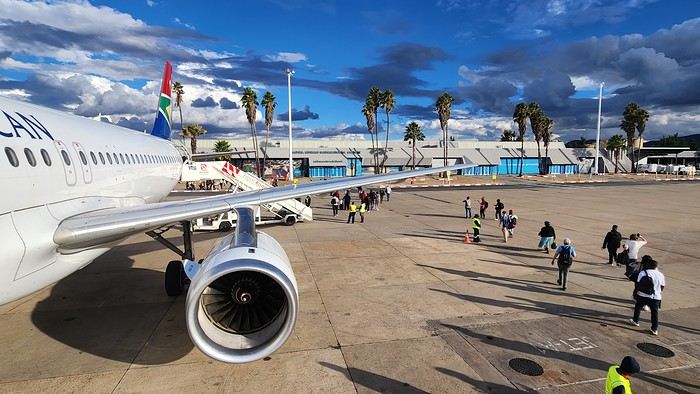
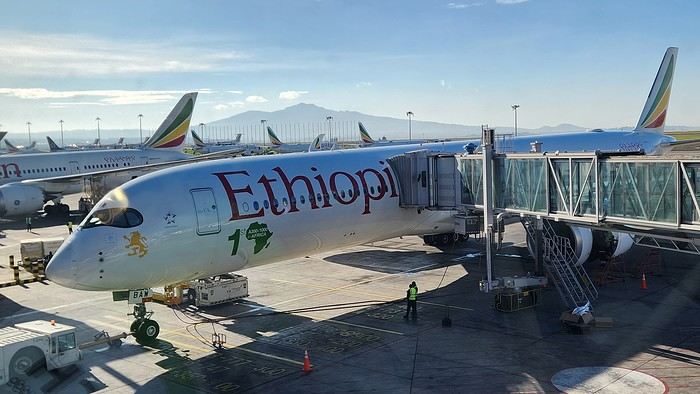
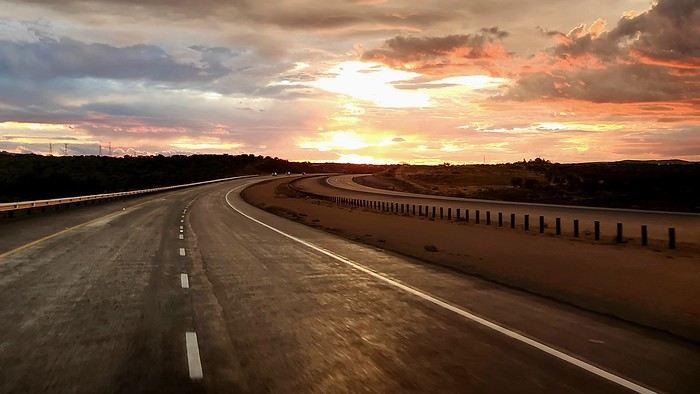
As we landed on the runway, first wow effect: The horizon is immense. It’s flat as can be, incredibly flat... So much flat space! Did I mention it was flat?... Looking into the distance, it feels like your gaze could circle the Earth without hitting a single obstacle—until you end up staring at your own backside. "Oh, what a nice view!" Well, it’s the first time I’ve seen my butt from this angle! Touching moment... Sorry, I’m rambling—must be the exhaustion from the three-flight marathon we just powered through via Ethiopia and South Africa... And yet, no time to philosophize about my anatomy. As usual, we want to rack up our first kilometers to be front and center at dawn tomorrow. After wrapping up the tedious Namibian immigration formalities and meeting the 4x4 that’ll be our companion day and night for the next fifteen days, we’re off! We’re not exactly fresh, but we’re ready to tackle the next five hundred kilometers in night mode, cruise control set due south! Just outside Windhoek, the local wildlife—a jackal—welcomes us with a smile: "Welcome to Namibia!" That’s what it said! Honest... Okay, first endless straight road, first flaming sunset, first corrugated dirt track, first Milky Way with zero light pollution... You get it—it’s definitely the day of firsts... First night camping, too, in the big trunk of our Toyota Fortuner parked by the side of the track... The real adventure, the kind that smells under the arms, can finally begin...
It was winter, a winter with beautiful weather, A season that only exists in the southwest of America, I remember very well what I told you that morning A month ago... A century ago, an eternity ago... We’ll go... wherever you want, whenever you want...
Well, yeah, back from our adventure in our enchanting American West just a month ago, we’re already taking a bite out of one of its lesser-known competitors. "Flo, if you had to pick just one reason to justify your love for the U.S., what would it be?" The greasy, dripping burgers? No, I don’t think I’m going out on a limb by saying it’d be the wide-open spaces... And that’s exactly what our new quest is taking us to—a land on the other side of the globe where the horizon also seems endless, where silence tastes like salty wind and sand, where freedom is measured in kilometers of desert tracks, where the GPS is mostly there to confirm you’re lost in the middle of nowhere... Add to that magic formula the fact that you’ll see more zebras, giraffes, wildebeest, and elephants than people per square kilometer, and you can imagine us setting foot in Southern Africa for the first time, more precisely at the small airport in Windhoek, capital of... of...? Brush up on your geography, damn it! We’re landing in Namibia!!!
To be honest, Namibian landscapes have been flirting with me for ages. So how did I resist this island of temptation for so long? First, the budget. Let’s just say that for the same amount of effort (and kidneys), the bank lets you choose two other adventures almost anywhere else on the planet. Then there were my girls. Yeah, back then, they were too little to dose up on Malarone, the only malaria remedy at the time... Long story short, ten years later, all the planets have aligned. First, I won the Euromillions! Well, almost... Let’s just say my girls are now old enough... not to take Malarone, but to stop following me on all my adventures! Jackpot! "Flo, how about a little two-person caprice, just the two of us, tackling the Namibian tracks?"
As we landed on the runway, first wow effect: The horizon is immense. It’s flat as can be, incredibly flat... So much flat space! Did I mention it was flat?... Looking into the distance, it feels like your gaze could circle the Earth without hitting a single obstacle—until you end up staring at your own backside. "Oh, what a nice view!" Well, it’s the first time I’ve seen my butt from this angle! Touching moment... Sorry, I’m rambling—must be the exhaustion from the three-flight marathon we just powered through via Ethiopia and South Africa... And yet, no time to philosophize about my anatomy. As usual, we want to rack up our first kilometers to be front and center at dawn tomorrow. After wrapping up the tedious Namibian immigration formalities and meeting the 4x4 that’ll be our companion day and night for the next fifteen days, we’re off! We’re not exactly fresh, but we’re ready to tackle the next five hundred kilometers in night mode, cruise control set due south! Just outside Windhoek, the local wildlife—a jackal—welcomes us with a smile: "Welcome to Namibia!" That’s what it said! Honest... Okay, first endless straight road, first flaming sunset, first corrugated dirt track, first Milky Way with zero light pollution... You get it—it’s definitely the day of firsts... First night camping, too, in the big trunk of our Toyota Fortuner parked by the side of the track... The real adventure, the kind that smells under the arms, can finally begin...
June 2026 Photo Contest Theme: Such a Beautiful Landscape
Hello,
It might not be very original, but I see it hasn’t been suggested—or at least not for a very long time. I’d like to invite you to discover the beauty of the great outdoors through landscape photos. Whether they’re desert, sea, countryside, or mountain scenes—with or without other elements (people, buildings, animals, etc.)—they should make us want to dive right in without hesitation.
To participate: Photo submissions until Wednesday, June 24 at 11:59 PM You can post up to 3 photos, numbered and shared in separate messages, along with a short description of the place and the story behind it.
To vote: from Thursday, June 25 at 12:01 AM to Monday, June 29 at 11:59 PM After the deadline, it’s too late!
Please include the photo number, username, and the points awarded: Photo #1 = 3 pts Photo #2 = 2 pts Photo #3 = 1 pt
All VF members can vote (even those who didn’t submit photos). In case of a tie for first place, the winning photo will be the one with the most first-place votes, then second-place votes! The lucky winner will get to organize July 2026’s photo contest.
For discussions about the theme, it’s here: Discussion thread for June 2026’s theme: Such a Beautiful Landscape
Good luck to everyone!
Philippe
Chumphon, Thailand: Doi Tapang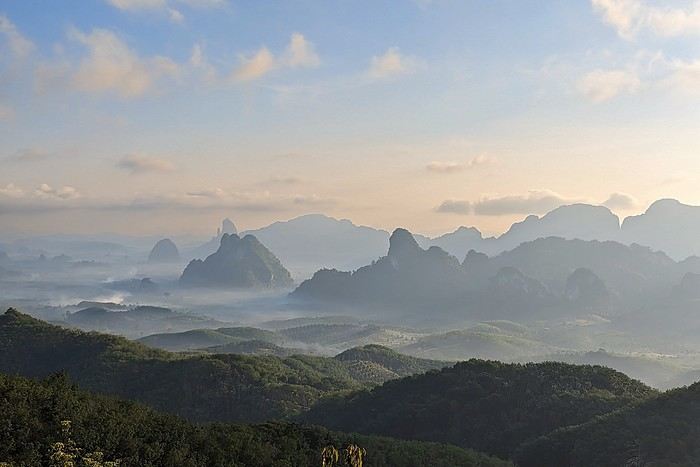
It might not be very original, but I see it hasn’t been suggested—or at least not for a very long time. I’d like to invite you to discover the beauty of the great outdoors through landscape photos. Whether they’re desert, sea, countryside, or mountain scenes—with or without other elements (people, buildings, animals, etc.)—they should make us want to dive right in without hesitation.
To participate: Photo submissions until Wednesday, June 24 at 11:59 PM You can post up to 3 photos, numbered and shared in separate messages, along with a short description of the place and the story behind it.
To vote: from Thursday, June 25 at 12:01 AM to Monday, June 29 at 11:59 PM After the deadline, it’s too late!
Please include the photo number, username, and the points awarded: Photo #1 = 3 pts Photo #2 = 2 pts Photo #3 = 1 pt
All VF members can vote (even those who didn’t submit photos). In case of a tie for first place, the winning photo will be the one with the most first-place votes, then second-place votes! The lucky winner will get to organize July 2026’s photo contest.
For discussions about the theme, it’s here: Discussion thread for June 2026’s theme: Such a Beautiful Landscape
Good luck to everyone!
Philippe
Chumphon, Thailand: Doi Tapang
B2 Visa: Visa card refusal for payment
I filled out the B2 form to apply for a visa, created an account on Atvis to pay the visa fees and schedule a meet-up, but every time I try to pay with my Boursobank Visa 1st card, they refuse the payment with a message telling me to check my details (address), even though everything is correct. Does anyone know why this is happening, or maybe they don’t accept Visa cards? Are you aware of this?
Thanks for your feedback!
Elisabeth
Love at First Sight in Kenya
Hello,
After several years, I’ve finally decided to repost a travel journal on the forum. We returned a few weeks ago from an incredible trip to Kenya, and it’s reignited my desire to share our emotions in the face of these animals.
Kenya wasn’t originally a priority for us in terms of safari—we had the impression it was too touristy. So, we started with other destinations: Namibia, Tanzania, Botswana, and South Africa. But as I did more research, especially on the forum (thanks in part to Sylvie’s many trips), I eventually convinced myself that Kenya could be magnificent, as long as we chose our itinerary carefully and avoided peak seasons.
We ended up going in January, from the 17th to the 31st. We worked with a travel agency (TP) that crafted a custom itinerary for us: Samburu-Ol Pejeta-Naivasha-Maji Moto-Maasai Mara-Diani. They partnered with a local French-speaking agency, and everything was perfectly organized. Our trip exceeded all our expectations, and none of it would’ve been as amazing without our guide, Alfred. He accompanied us for 10 days and was a fantastic travel companion—professional, respectful of the animals, and always in good spirits. We formed a great bond with him in such a short time.
- **January 17th** After meeting up with Juliette and Charlotte in Rennes the night before, we left at 4 AM for Roissy Charles de Gaulle Airport. The thick fog made the drive pretty rough, but we arrived safely around 7:45 AM. A Blue Valet driver was waiting to take our car. Check-in went smoothly, and we waited patiently for our 10:40 AM flight. Unfortunately, despite boarding on time, a passenger was missing, and we had to find a replacement last minute. Then, another passenger who had checked in and dropped off their luggage wasn’t on the plane, so they had to unload their bags. After a long period of uncertainty and spotty communication from the crew, we finally took off over an hour late.
We arrived in Nairobi in the late afternoon, 45 minutes behind schedule. The administrative formalities were endless—it took nearly 1.5 hours from landing to leaving the airport with our luggage. When we stepped out, Alfred, our guide, was waiting with a big smile and drove us to the Eka Hotel, not far from the airport. Exhausted from the long journey, we fell asleep quickly.
- **January 18th** Alfred met us at 7 AM for a long drive to Samburu Reserve. We had a peaceful night, unlike the girls, who barely slept because their neighbors were talking loudly all night. Things even escalated when Charlotte started shouting insults to get them to quiet down, but it didn’t work.
It was Sunday, so traffic around Nairobi and along the route was light. Aside from a quick "technical stop," we drove straight through and arrived in Samburu after just under 6 hours. Because of the lower altitude (around 1,000m on average), it was hot—over 30°C in mid-January.
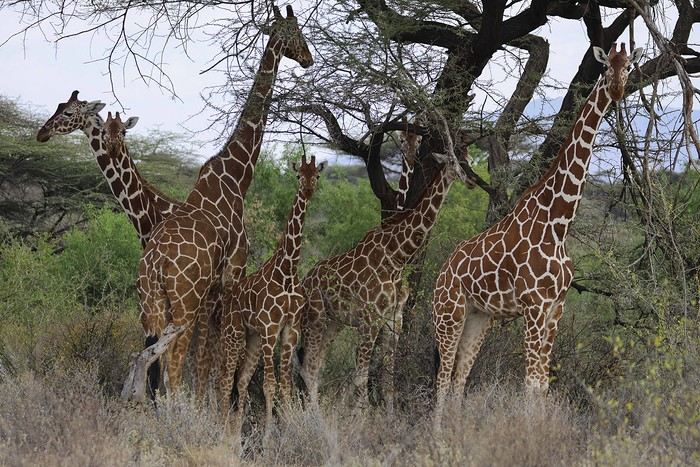
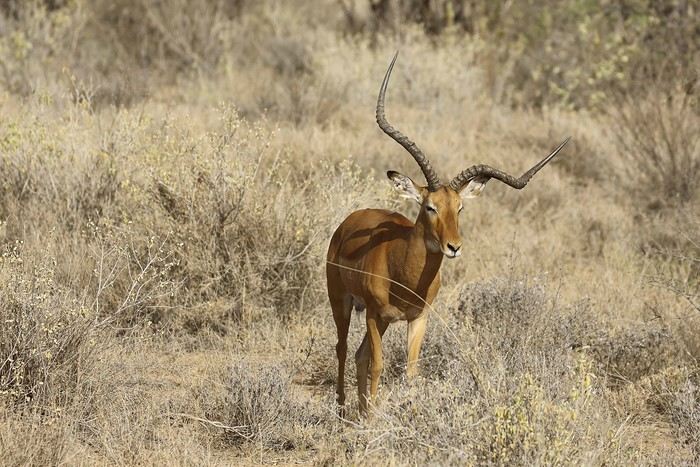
As soon as we entered the reserve, we spotted some impalas and quickly came across one of the region’s endemic species: the reticulated giraffe, which is absolutely stunning.
While heading to our camp for lunch, Alfred crossed paths with another vehicle and learned that a leopard was nearby. We started searching, and a few minutes later, Anny spotted a shape in a tree—it was our leopard!
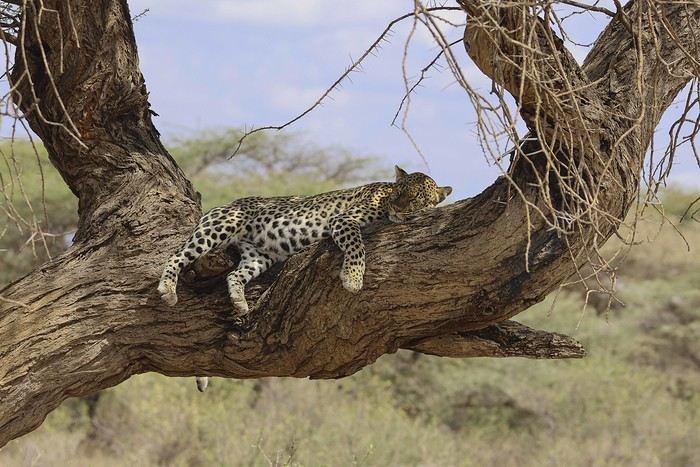
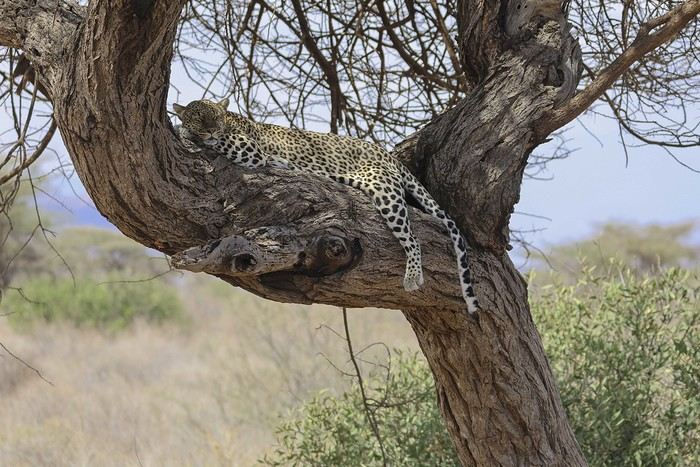
There were actually two of them—a mother and her adolescent. The young one was perched high in the tree, in the shade. We got to observe them for a good half-hour in excellent conditions, with just one other vehicle nearby.
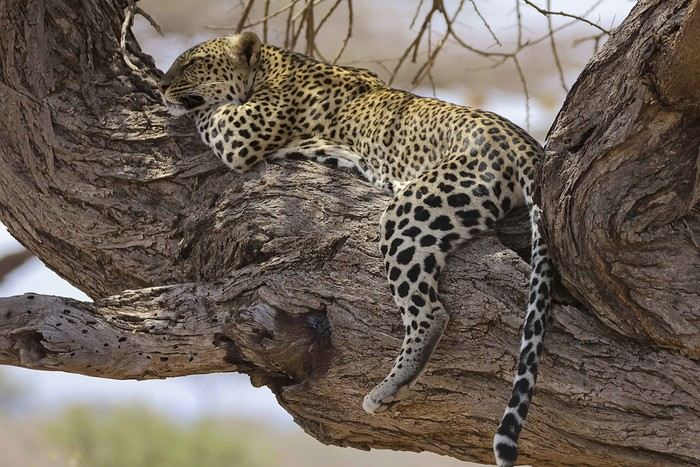
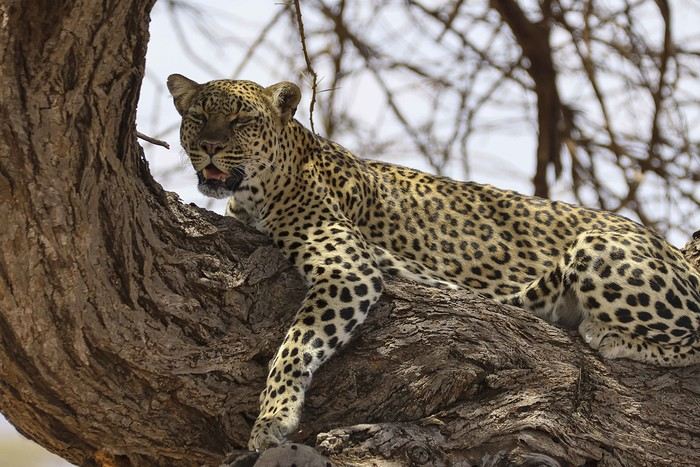
Alfred also noticed that the mother had hidden prey (a gerenuk gazelle) in the vegetation, away from prying eyes.
It was time to head to our camp, the Ashnil Samburu Camp, located in the Buffalo Springs area, by the river, in an idyllic setting surrounded by the region’s typical vegetation.
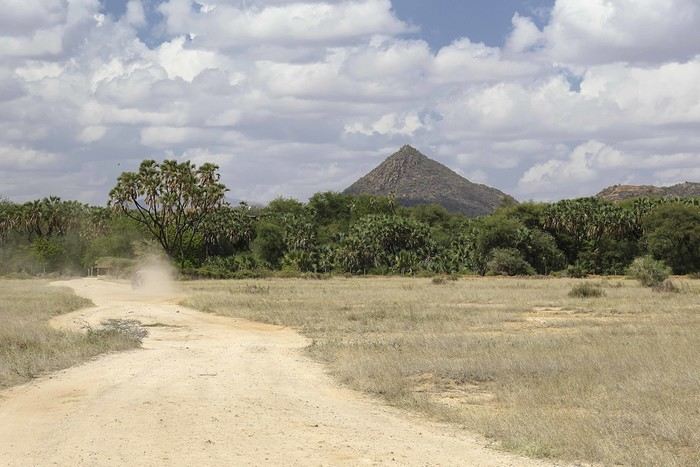
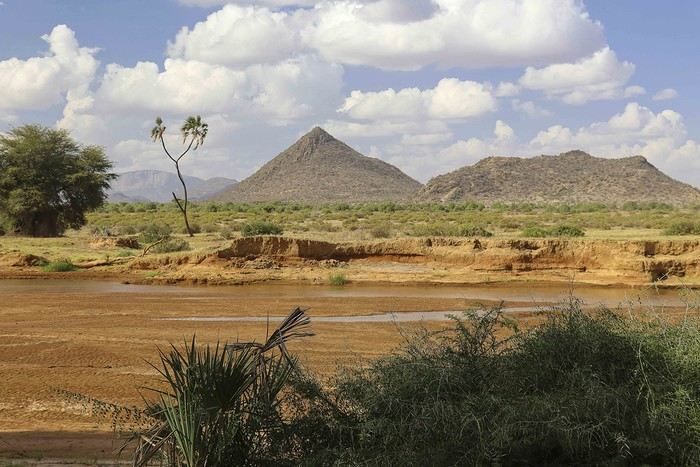
The welcome was fantastic—we immediately felt at home, and that feeling lasted throughout our 3-day stay in the reserve. It was 2 PM, but no one rushed us to the table. Our waitress, Sheila, who took care of us the whole time, was as lovely as the rest of the team. Barely seated, we were invited to watch an elephant passing right by the camp, in front of the restaurant. This trip was off to a great start!
After lunch, we relaxed by the pool. Monkeys, especially vervets, were everywhere, and a camp employee was assigned to keep an eye on them and shoo them away if needed (especially the baboons).
A little before 4 PM, we met up with Alfred for our first game drive. Just outside the camp, a few elephants were in the valley near the river.
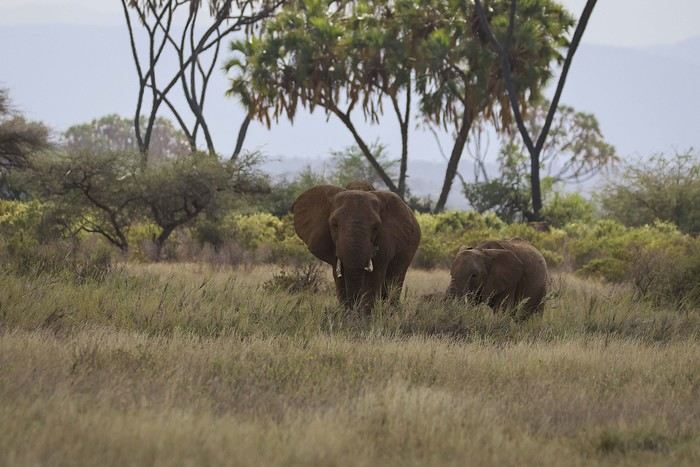
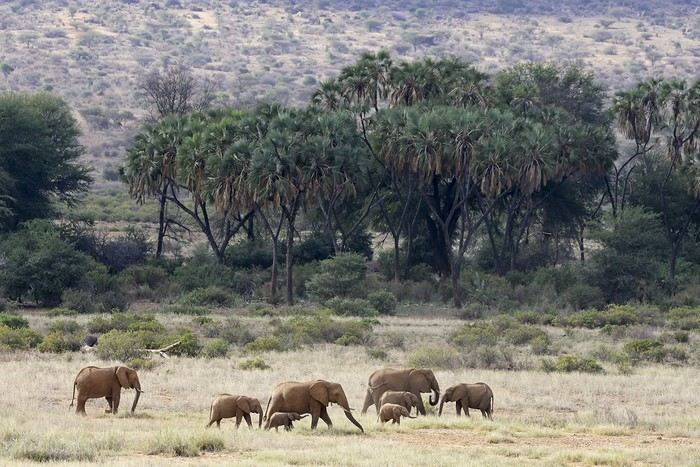
We’d see them in the same area almost every day. We also spotted some gazelles.
After several years, I’ve finally decided to repost a travel journal on the forum. We returned a few weeks ago from an incredible trip to Kenya, and it’s reignited my desire to share our emotions in the face of these animals.
Kenya wasn’t originally a priority for us in terms of safari—we had the impression it was too touristy. So, we started with other destinations: Namibia, Tanzania, Botswana, and South Africa. But as I did more research, especially on the forum (thanks in part to Sylvie’s many trips), I eventually convinced myself that Kenya could be magnificent, as long as we chose our itinerary carefully and avoided peak seasons.
We ended up going in January, from the 17th to the 31st. We worked with a travel agency (TP) that crafted a custom itinerary for us: Samburu-Ol Pejeta-Naivasha-Maji Moto-Maasai Mara-Diani. They partnered with a local French-speaking agency, and everything was perfectly organized. Our trip exceeded all our expectations, and none of it would’ve been as amazing without our guide, Alfred. He accompanied us for 10 days and was a fantastic travel companion—professional, respectful of the animals, and always in good spirits. We formed a great bond with him in such a short time.
- **January 17th** After meeting up with Juliette and Charlotte in Rennes the night before, we left at 4 AM for Roissy Charles de Gaulle Airport. The thick fog made the drive pretty rough, but we arrived safely around 7:45 AM. A Blue Valet driver was waiting to take our car. Check-in went smoothly, and we waited patiently for our 10:40 AM flight. Unfortunately, despite boarding on time, a passenger was missing, and we had to find a replacement last minute. Then, another passenger who had checked in and dropped off their luggage wasn’t on the plane, so they had to unload their bags. After a long period of uncertainty and spotty communication from the crew, we finally took off over an hour late.
We arrived in Nairobi in the late afternoon, 45 minutes behind schedule. The administrative formalities were endless—it took nearly 1.5 hours from landing to leaving the airport with our luggage. When we stepped out, Alfred, our guide, was waiting with a big smile and drove us to the Eka Hotel, not far from the airport. Exhausted from the long journey, we fell asleep quickly.
- **January 18th** Alfred met us at 7 AM for a long drive to Samburu Reserve. We had a peaceful night, unlike the girls, who barely slept because their neighbors were talking loudly all night. Things even escalated when Charlotte started shouting insults to get them to quiet down, but it didn’t work.
It was Sunday, so traffic around Nairobi and along the route was light. Aside from a quick "technical stop," we drove straight through and arrived in Samburu after just under 6 hours. Because of the lower altitude (around 1,000m on average), it was hot—over 30°C in mid-January.
As soon as we entered the reserve, we spotted some impalas and quickly came across one of the region’s endemic species: the reticulated giraffe, which is absolutely stunning.
While heading to our camp for lunch, Alfred crossed paths with another vehicle and learned that a leopard was nearby. We started searching, and a few minutes later, Anny spotted a shape in a tree—it was our leopard!
There were actually two of them—a mother and her adolescent. The young one was perched high in the tree, in the shade. We got to observe them for a good half-hour in excellent conditions, with just one other vehicle nearby.
Alfred also noticed that the mother had hidden prey (a gerenuk gazelle) in the vegetation, away from prying eyes.
It was time to head to our camp, the Ashnil Samburu Camp, located in the Buffalo Springs area, by the river, in an idyllic setting surrounded by the region’s typical vegetation.
The welcome was fantastic—we immediately felt at home, and that feeling lasted throughout our 3-day stay in the reserve. It was 2 PM, but no one rushed us to the table. Our waitress, Sheila, who took care of us the whole time, was as lovely as the rest of the team. Barely seated, we were invited to watch an elephant passing right by the camp, in front of the restaurant. This trip was off to a great start!
After lunch, we relaxed by the pool. Monkeys, especially vervets, were everywhere, and a camp employee was assigned to keep an eye on them and shoo them away if needed (especially the baboons).
A little before 4 PM, we met up with Alfred for our first game drive. Just outside the camp, a few elephants were in the valley near the river.
We’d see them in the same area almost every day. We also spotted some gazelles.
Traveling Against the Grain in 2026: 8 Alternatives to Overcrowded Destinations
In 2026, traveling becomes a choice. While the same destinations are buckling under mass tourism, there are still preserved alternatives, often just a few hours away from the beaten path. This guide doesn’t ban any countries but suggests different practices and destinations that still breathe.
Here are 8 experiences to reinvent for better travel this year.
1. Tanzania: Swap the jeep safari for a walking safari The classic: Setting off to see the "Big Five" and the vast savanna from a 4x4. Why rethink this: You don’t go to see wild animals just to end up in a traffic jam of Toyota Land Cruisers. The noise of engines and exhaust fumes stress the wildlife. Some observation points look like parking lots. The alternative: A walking safari in the Ngorongoro Highlands or the Serengeti, accompanied by Maasai guides. On foot, your senses sharpen: it’s an immersion that a car window blocks.
Practical tip: Opt for mobile bush camps rather than fixed lodges. Look into walking safaris that include bivouacs.
2. India: Skip Kerala’s houseboats for kayaking on secret lagoons The classic: Cruising the famous Backwaters in a houseboat. Why rethink this: Houseboats pollute and destroy the fragile ecosystem of the lagoons. Overcrowding in Alleppey drains the experience of its magic. Not to mention the noise of the engines. The alternative: Munroe Island or Valiyaparamba by canoe or kayak. These northern lagoons remain preserved. You can organize trips with local fishermen, spend a day with families from the area, and sleep in the heart of biodiversity instead of floating resorts.
Good to know: The famous Kettuvallams (houseboats) aren’t that old. Originally, they were rice transport barges. It was only in the 1990s that someone had the idea to add rooms. Authenticity is sometimes a marketing invention!
3. Portugal: Forget Lisbon and the Algarve for the Alentejo The classic: The charm of Lisbon’s azulejos and the golden beaches of the Algarve. Why rethink this: Lisbon is suffocating under Airbnbs, and the Algarve has become a forest of umbrellas and tourist complexes. The Portuguese soul is fading under mass tourism. The alternative: The Alentejo region, between Lisbon and the Algarve. Stay in a *Herdade* (traditional farm), taste amphora wine, and explore wild beaches where cliffs replace concrete. This is Portugal at a slower pace—the one with white villages and endless plains.
Good to know: The Alentejo is the world’s largest cork producer. Cork oaks are harvested only once every 9 years. It’s a region that sets its own rhythm, slow and respectful of nature.
4. Indonesia: Less Bali, more Sulawesi, Java, or Lombok The classic: Spirituality, rice terraces, and Bali’s beaches. Why rethink this: Between water shortages, "spiritual" traffic jams in Ubud, and beaches turned into clubs, Bali needs a break. The island is suffocating. The alternative: Sulawesi for the ancestral rites of the Toraja people, Java for the lunar volcanoes of the East and lost temples, or Lombok for a quieter version of Bali. You’ll rediscover Indonesia’s wild origins.
Good to know: Bali is the only predominantly Hindu island in the world’s largest Muslim country. Exploring Java or Sulawesi reveals a cultural diversity that Bali’s tourist bubble often overshadows.
5. South Korea: Shorten Seoul for Gyeongju and Suncheon Bay The classic: Futuristic modernity and K-Culture in Seoul. Why rethink this: Seoul is experiencing the "Kyoto effect." Historic neighborhoods like Bukchon are closing streets to protect residents’ privacy from the influx of tourists in rented hanboks. The alternative: Gyeongju and Suncheon Bay in the authentic south. Between Gyeongju’s millennia-old temples (the ancient capital) and Suncheon’s biosphere reserve, you’ll discover the real Korea—without the lines.
Good to know: Gyeongju is often called "the museum without walls." You’ll find tumuli (royal tombs shaped like grassy hills) right in the middle of the modern city. Ancient history coexists with the present.
6. Thailand: Escape Bangkok and the southern islands for Isan The classic: Bangkok, then off to Phuket, Phi Phi, or Koh Samui. Why rethink this: The southern islands are suffocating: marine pollution, crowded beaches, authenticity diluted in standardized resorts. The experience feels more like Ibiza than traditional Thailand. The alternative: The Northeast (Isan), the unknown region. Forgotten Khmer temples, authentic villages, colorful local markets, and preserved nature in parks like Phu Kradueng. Few Westerners, lots of authenticity.
Good to know: Isan makes up a third of Thailand but receives less than 5% of tourists. Yet it’s the birthplace of authentic Thai cuisine and preserved traditions. Prices are also two to three times lower.
7. Peru: Skip Machu Picchu for Kuelap and northern Peru The classic: Machu Picchu and the Sacred Valley. Why rethink this: Strict quotas, mandatory bookings months in advance, sky-high prices, and timed tourist flows. The experience has become administrative before it’s spiritual. The alternative: Northern Peru with Kuelap, the "Machu Picchu of the north" without the crowds. The Gocta Canyon, the Chachapoyas region, and lesser-known but equally fascinating pre-Inca cultures. The modern cable car makes access easy without the hordes.
Good to know: Kuelap is larger and older than Machu Picchu but receives 100 times fewer visitors. Its cyclopean walls reach 20 meters high, and the fortress remains shrouded in mystery.
8. Iceland: Ditch the Golden Circle for the northern fjords The classic: The Iceland tour via the Ring Road and the famous Golden Circle. Why rethink this: The Ring Road has become a single-file line of rental vans. Iconic sites (Golden Circle, Solheimasandur plane wreck, Reynisfjara Beach) are saturated, turning the quest for Icelandic solitude into a crowded parking lot experience. The alternative: The Tröllaskagi Peninsula and the northern fjords. Forget the clock to rediscover the Iceland of the sagas. This is the kingdom of mountains plunging into the sea, secret hot springs accessible only on foot, and fjords where silence reigns.
Good to know: In Iceland, you don’t "own" nature—you borrow it. Over 50% of Icelanders still believe in the existence of *Huldufólk* (the hidden people), elves who live in the rocks. To catch a glimpse of them, they say, you must leave the noise of Route 1’s engines and learn to listen to the silence of the fjords.
1. Tanzania: Swap the jeep safari for a walking safari The classic: Setting off to see the "Big Five" and the vast savanna from a 4x4. Why rethink this: You don’t go to see wild animals just to end up in a traffic jam of Toyota Land Cruisers. The noise of engines and exhaust fumes stress the wildlife. Some observation points look like parking lots. The alternative: A walking safari in the Ngorongoro Highlands or the Serengeti, accompanied by Maasai guides. On foot, your senses sharpen: it’s an immersion that a car window blocks.
Practical tip: Opt for mobile bush camps rather than fixed lodges. Look into walking safaris that include bivouacs.
2. India: Skip Kerala’s houseboats for kayaking on secret lagoons The classic: Cruising the famous Backwaters in a houseboat. Why rethink this: Houseboats pollute and destroy the fragile ecosystem of the lagoons. Overcrowding in Alleppey drains the experience of its magic. Not to mention the noise of the engines. The alternative: Munroe Island or Valiyaparamba by canoe or kayak. These northern lagoons remain preserved. You can organize trips with local fishermen, spend a day with families from the area, and sleep in the heart of biodiversity instead of floating resorts.
Good to know: The famous Kettuvallams (houseboats) aren’t that old. Originally, they were rice transport barges. It was only in the 1990s that someone had the idea to add rooms. Authenticity is sometimes a marketing invention!
3. Portugal: Forget Lisbon and the Algarve for the Alentejo The classic: The charm of Lisbon’s azulejos and the golden beaches of the Algarve. Why rethink this: Lisbon is suffocating under Airbnbs, and the Algarve has become a forest of umbrellas and tourist complexes. The Portuguese soul is fading under mass tourism. The alternative: The Alentejo region, between Lisbon and the Algarve. Stay in a *Herdade* (traditional farm), taste amphora wine, and explore wild beaches where cliffs replace concrete. This is Portugal at a slower pace—the one with white villages and endless plains.
Good to know: The Alentejo is the world’s largest cork producer. Cork oaks are harvested only once every 9 years. It’s a region that sets its own rhythm, slow and respectful of nature.
4. Indonesia: Less Bali, more Sulawesi, Java, or Lombok The classic: Spirituality, rice terraces, and Bali’s beaches. Why rethink this: Between water shortages, "spiritual" traffic jams in Ubud, and beaches turned into clubs, Bali needs a break. The island is suffocating. The alternative: Sulawesi for the ancestral rites of the Toraja people, Java for the lunar volcanoes of the East and lost temples, or Lombok for a quieter version of Bali. You’ll rediscover Indonesia’s wild origins.
Good to know: Bali is the only predominantly Hindu island in the world’s largest Muslim country. Exploring Java or Sulawesi reveals a cultural diversity that Bali’s tourist bubble often overshadows.
5. South Korea: Shorten Seoul for Gyeongju and Suncheon Bay The classic: Futuristic modernity and K-Culture in Seoul. Why rethink this: Seoul is experiencing the "Kyoto effect." Historic neighborhoods like Bukchon are closing streets to protect residents’ privacy from the influx of tourists in rented hanboks. The alternative: Gyeongju and Suncheon Bay in the authentic south. Between Gyeongju’s millennia-old temples (the ancient capital) and Suncheon’s biosphere reserve, you’ll discover the real Korea—without the lines.
Good to know: Gyeongju is often called "the museum without walls." You’ll find tumuli (royal tombs shaped like grassy hills) right in the middle of the modern city. Ancient history coexists with the present.
6. Thailand: Escape Bangkok and the southern islands for Isan The classic: Bangkok, then off to Phuket, Phi Phi, or Koh Samui. Why rethink this: The southern islands are suffocating: marine pollution, crowded beaches, authenticity diluted in standardized resorts. The experience feels more like Ibiza than traditional Thailand. The alternative: The Northeast (Isan), the unknown region. Forgotten Khmer temples, authentic villages, colorful local markets, and preserved nature in parks like Phu Kradueng. Few Westerners, lots of authenticity.
Good to know: Isan makes up a third of Thailand but receives less than 5% of tourists. Yet it’s the birthplace of authentic Thai cuisine and preserved traditions. Prices are also two to three times lower.
7. Peru: Skip Machu Picchu for Kuelap and northern Peru The classic: Machu Picchu and the Sacred Valley. Why rethink this: Strict quotas, mandatory bookings months in advance, sky-high prices, and timed tourist flows. The experience has become administrative before it’s spiritual. The alternative: Northern Peru with Kuelap, the "Machu Picchu of the north" without the crowds. The Gocta Canyon, the Chachapoyas region, and lesser-known but equally fascinating pre-Inca cultures. The modern cable car makes access easy without the hordes.
Good to know: Kuelap is larger and older than Machu Picchu but receives 100 times fewer visitors. Its cyclopean walls reach 20 meters high, and the fortress remains shrouded in mystery.
8. Iceland: Ditch the Golden Circle for the northern fjords The classic: The Iceland tour via the Ring Road and the famous Golden Circle. Why rethink this: The Ring Road has become a single-file line of rental vans. Iconic sites (Golden Circle, Solheimasandur plane wreck, Reynisfjara Beach) are saturated, turning the quest for Icelandic solitude into a crowded parking lot experience. The alternative: The Tröllaskagi Peninsula and the northern fjords. Forget the clock to rediscover the Iceland of the sagas. This is the kingdom of mountains plunging into the sea, secret hot springs accessible only on foot, and fjords where silence reigns.
Good to know: In Iceland, you don’t "own" nature—you borrow it. Over 50% of Icelanders still believe in the existence of *Huldufólk* (the hidden people), elves who live in the rocks. To catch a glimpse of them, they say, you must leave the noise of Route 1’s engines and learn to listen to the silence of the fjords.
Travel tips and activities in Kota Kinabalu
Hi there,
I’d love to get your thoughts and advice/tips for my trip to Malaysia.
I’m heading to Malaysia for 20 days starting in mid-August with three other people.
My plan was to go straight to Kota Kinabalu. I’d like to go rafting (if you have any agencies to recommend, I’m all ears), climb Mount Kota Kinabalu (is it worth it? And again, if you have an agency in mind), and check out the night market (I’m not entirely sure what it’s like).
After that, I’d head to Sandakan (not sure how yet) and do a little 3-day, 2-night safari.
Then from Sandakan (still not sure how), go to Tawau to visit Sipadan for some diving.
And then head back home.
Nothing’s set in stone yet—I’m open to tons of suggestions. I feel like I could do more. I’d seen Taman Negara jungle, but it’s way off the route, so I’m not sure if it’s doable. I’d also love to find other interesting diving spots.
Thanks in advance for your help!
I’d love to get your thoughts and advice/tips for my trip to Malaysia.
I’m heading to Malaysia for 20 days starting in mid-August with three other people.
My plan was to go straight to Kota Kinabalu. I’d like to go rafting (if you have any agencies to recommend, I’m all ears), climb Mount Kota Kinabalu (is it worth it? And again, if you have an agency in mind), and check out the night market (I’m not entirely sure what it’s like).
After that, I’d head to Sandakan (not sure how yet) and do a little 3-day, 2-night safari.
Then from Sandakan (still not sure how), go to Tawau to visit Sipadan for some diving.
And then head back home.
Nothing’s set in stone yet—I’m open to tons of suggestions. I feel like I could do more. I’d seen Taman Negara jungle, but it’s way off the route, so I’m not sure if it’s doable. I’d also love to find other interesting diving spots.
Thanks in advance for your help!
3-week Sri Lanka itinerary with three kids
Hi there!
I’m planning a trip with my wife and our three kids (ages 9, 6, and 3) from April 16 to May 6.
I’ve started sketching out the itinerary, trying to alternate between visits, hikes, safaris, and downtime. I want to keep the pace relaxed given the kids’ ages.
Could you let me know what you think of this route? I removed Nuwara Eliya, which I had originally planned before Ella, to cut down on stops. I was also wondering if I should break up the Arugam Bay to Colombo leg with an overnight in Galle, since it’s a long drive.
Thanks in advance for your feedback!
Day 1 – 04/16: Wilpattu Arrival at the airport (08:00) + transfer to Wilpattu (180 km, 4–5 h) + afternoon safari Overnight: Wilpattu Day 2 – 04/17: Wilpattu Morning & afternoon safari Overnight: Wilpattu Day 3 – 04/18: Trincomalee Transfer Wilpattu → Trincomalee (200 km, 4–5 h) + beach relaxation Overnight: Trincomalee Day 4 – 04/19: Trincomalee Nilaveli Beach Overnight: Trincomalee Day 5 – 04/20: Trincomalee Pigeon Island snorkeling Overnight: Trincomalee Day 6 – 04/21: Trincomalee Fort Frederick & relaxation Overnight: Trincomalee Day 7 – 04/22: Sigiriya Transfer Trincomalee → Sigiriya (120 km, ~3 h) + visit to Dambulla Overnight: Sigiriya Day 8 – 04/23: Sigiriya Sigiriya Rock Overnight: Sigiriya Day 9 – 04/24: Sigiriya Minneriya safari Overnight: Sigiriya Day 10 – 04/25: Sigiriya Polonnaruwa & village tour Overnight: Sigiriya Day 11 – 04/26: Ella Transfer Sigiriya → Ella (230 km, 5–6 h) + rest Overnight: Ella Day 12 – 04/27: Ella Little Adam’s Peak & Nine Arches Bridge Overnight: Ella Day 13 – 04/28: Ella Ella Rock Overnight: Ella Day 14 – 04/29: Ella Tea Factory & relaxation Overnight: Ella Day 15 – 04/30: Yala Transfer Ella → Yala (110 km, 2–3 h) + afternoon safari Overnight: Yala Day 16 – 05/01: Arugam Bay Transfer Yala → Arugam Bay (80 km, 2.5–3 h) + beach time Overnight: Arugam Bay Day 17 – 05/02: Arugam Bay Surfing & relaxation Overnight: Arugam Bay Day 18 – 05/03: Arugam Bay Local exploration Overnight: Arugam Bay Day 19 – 05/04: Colombo Transfer Arugam Bay → Colombo (320 km, 7–8 h) + rest Overnight: Colombo Day 20 – 05/05: Colombo City tour & shopping Overnight: Colombo Day 21 – 05/06: Colombo Morning return flight from Colombo
Day 1 – 04/16: Wilpattu Arrival at the airport (08:00) + transfer to Wilpattu (180 km, 4–5 h) + afternoon safari Overnight: Wilpattu Day 2 – 04/17: Wilpattu Morning & afternoon safari Overnight: Wilpattu Day 3 – 04/18: Trincomalee Transfer Wilpattu → Trincomalee (200 km, 4–5 h) + beach relaxation Overnight: Trincomalee Day 4 – 04/19: Trincomalee Nilaveli Beach Overnight: Trincomalee Day 5 – 04/20: Trincomalee Pigeon Island snorkeling Overnight: Trincomalee Day 6 – 04/21: Trincomalee Fort Frederick & relaxation Overnight: Trincomalee Day 7 – 04/22: Sigiriya Transfer Trincomalee → Sigiriya (120 km, ~3 h) + visit to Dambulla Overnight: Sigiriya Day 8 – 04/23: Sigiriya Sigiriya Rock Overnight: Sigiriya Day 9 – 04/24: Sigiriya Minneriya safari Overnight: Sigiriya Day 10 – 04/25: Sigiriya Polonnaruwa & village tour Overnight: Sigiriya Day 11 – 04/26: Ella Transfer Sigiriya → Ella (230 km, 5–6 h) + rest Overnight: Ella Day 12 – 04/27: Ella Little Adam’s Peak & Nine Arches Bridge Overnight: Ella Day 13 – 04/28: Ella Ella Rock Overnight: Ella Day 14 – 04/29: Ella Tea Factory & relaxation Overnight: Ella Day 15 – 04/30: Yala Transfer Ella → Yala (110 km, 2–3 h) + afternoon safari Overnight: Yala Day 16 – 05/01: Arugam Bay Transfer Yala → Arugam Bay (80 km, 2.5–3 h) + beach time Overnight: Arugam Bay Day 17 – 05/02: Arugam Bay Surfing & relaxation Overnight: Arugam Bay Day 18 – 05/03: Arugam Bay Local exploration Overnight: Arugam Bay Day 19 – 05/04: Colombo Transfer Arugam Bay → Colombo (320 km, 7–8 h) + rest Overnight: Colombo Day 20 – 05/05: Colombo City tour & shopping Overnight: Colombo Day 21 – 05/06: Colombo Morning return flight from Colombo
Your reviews on the travel agency Tanzanisa Specialist
Hi there, we’re planning a trip for two couples in October 2025—ideally to Tanzania and Zanzibar for a safari circuit and 2 to 3 nights in Zanzibar.
If anyone has already traveled with Tanzanisa Specialist, Comptoir des Voyages, or another agency, we’d love to hear about your experience or any tips you might have.
Thanks everyone!
Thanks everyone!
Back from a 3-week trip to South Africa and Mozambique
Hi everyone,
We’ve just returned from a 3-week trip to South Africa:
2 weeks in Kruger Park, Manyeleti, and White River
5 days in Vilankulo
1 day in Johannesburg
If you have any questions or are planning your trip, don’t hesitate! 🙂
Our Trip to Rajasthan
Hello,
We recently went to Rajasthan.
For the duration, I’d recommend about 3 weeks if you can, so you can explore the region at a relaxed pace.
We also wanted to experience "the real Indian life," and our driver showed us small markets, little temples, and his village near Ranakpur in the Marwar region.
For your info, here are some hotels where we stayed—there’s a huge hotel scene in Rajasthan. No need to book in advance; day by day works really well. You arrive, visit, and if you don’t like it, you just move on—it’s no problem in India. No upfront payment, and you can even negotiate on the spot with this approach, which gives you flexibility with your itinerary.
Here are some hotels we stayed at:
Madhuban in Jaipur (Haveli house) and also in Jaipur, the Khandela Haveli, which we preferred
In Jodhpur, the Kuchaman Haveli
In Ranakpur (Ranakpur Hill Resort) with a great pool
Bikaner: Hotel Laxmi Niwas
Udaipur: Hotel Savroopvilas
Jaisalmer: Hotel Rang Mahal
Here’s the itinerary we followed over nearly three weeks:
1 - When we arrived in Delhi, we headed straight north to Nawalgarh and Mandawa (towns with Havelis = painted houses). Along the way, we stopped in Jhunjhunu to see the Rani Sati Temple. We slept in Mandawa (we arrived in the evening and explored the next morning).
2 - Then we drove to Bikaner (Junagarh Fort, but if you have to choose, the forts in Jodhpur and Jaipur are more interesting in our opinion). After that, we took the road to Deshnoke (temple with sacred rats) and before that, we saw a small temple on the way with white rats. In Deshnoke, the rats move freely among people. We’re not too squeamish, so it was fine. Anyway, it was interesting to see.
3 - Next, we headed to Pushkar, where we took a camel ride (you have to negotiate the price; it varies depending on the camel’s quality, the saddle, and its decoration). One to two hours is more than enough. There’s always someone riding with you on the camel (at least that’s how it was for us). There are also things to see along the way.
4 - From Pushkar, we went to Jodhpur (Mehrangarh Fort, Clock Tower, Jaswant Thada). From Jodhpur, we visited villages (including our driver’s village, which was ideal for connecting with locals, having tea, and exploring the village with part of the community tagging along—I think we went into almost every house). We also did a train safari in the hills. Then Ranakpur (splendid Jain temple, Adinath Temple). With a bit of luck, you might spot Raikas, nomadic herders. Then Kumbhalgarh Fort, and after that, Udaipur. Along the way, we spent the night in a very small town called Jojawar at the Rawla Jojawar hotel, owned by the former Maharaja. A wonderful memory.
5 - In Udaipur (City Palace; Monsoon Palace = depends on the weather—if it’s not clear, you won’t see much, but if it is, the view is stunning).
6 - On the way to Jaipur: Sas-Bahu Temple; then in Jaipur: City Palace, Jantar Mantar, Hawa Mahal (Palace of the Winds), the Hanuman Temple, etc.
7 - Heading toward Agra, the Galta Valley with lots of monkeys. We finished with Fatehpur Sikri and then Agra. Agra is *very* touristy, so people are less friendly and can be pushy about selling things or offering their services as guides. You have to stay polite but firm and not let them sweet-talk you. Hotels are also pricier and there’s not always much choice. For the Taj Mahal (closed on Fridays), go very early in the morning when it opens. It’s best to arrive the evening before and spend the night at a hotel before visiting. Inside the Taj Mahal site, it’s already calmer. After that, we visited Akbar’s mausoleum (in Sikandra, near Agra) and the so-called "Baby Taj" (in Agra). For the Taj, I’ve heard they’re doing renovations, but it’s still a must-see.
8 - In Delhi, if you still have time, check out the Jama Masjid mosque and Mahatma Gandhi’s tomb. Also see Humayun’s Mausoleum (in the Nizamuddin East neighborhood).
In Jaisalmer (spend a night in the dunes after a camel ride), Chittorgarh, Bundi, Ranthambore Park, Orchha, and Khajuraho. Actually, you’ll have to make choices, or you’ll spend your whole vacation traveling. The average driving speed is about 50–60 km/h.
Our other trips in India: Gujarat (we love it and have been twice), Himachal Pradesh, Punjab, and also Haridwar and Varanasi. In the south, Kerala, Tamil Nadu, and Karnataka.
In some cities, we visited with a local guide (about two hours), and some spoke French or English.
One last thing that comes to mind: if you go to Jaisalmer, check out Gadi Sagar Lake. Also worth seeing: the Demoiselle Cranes in Kichan, not far from Jodhpur. These are thousands of common cranes that migrate near the region’s lakes during the winter months. A beautiful ornithological spectacle. And Kichan or Keechan.
Happy trip planning!
Jean
Disembarkation time at Johannesburg Airport
Hi,
We arrive in Johannesburg (Tambo) at 8:30 in the morning. Do you think we’ll have enough time to catch the 10:30 flight to Hoedspruit, or is it better to play it safe and take the next one at 11:40? The earlier flight would work better for us, but what if the plane is delayed 😕? Plus, we have to collect checked baggage!
Thanks for your feedback and experiences!
Danyèle
Best time to visit Isimangaliso?
Hi there,
We arrived in St Lucia today and started with a classic boat excursion to see the hippos. It was amazing!
Tomorrow, we're heading to Isimangaliso up to Cape Vidal. Quick question: what time do you recommend going?
Thanks so much!
Have a great evening! !
What to do in Tokyo for 2 days?
Hi there,
We’ll be in Tokyo for two full days (not counting the arrival and departure days), while waiting to board a cruise in Japan.
We’ll be staying right next to the port of Yokohama. Are there any agencies offering guided tours of the city? Any other suggestions?
Thanks
We’ll be in Tokyo for two full days (not counting the arrival and departure days), while waiting to board a cruise in Japan.
We’ll be staying right next to the port of Yokohama. Are there any agencies offering guided tours of the city? Any other suggestions?
Thanks
Looking for a driver for a 15-day Namibia road trip
Hi there,
I’m looking for a driver who can take my 77-year-old parents on a classic 15-day road trip.
Windhoek - Okonjima - Etosha - Khorixas - Swakopmund - Sesriem - Mariental
Having done this route myself last year, I didn’t see the point of joining an organized tour, and my parents are seasoned travelers but no longer feel 100% comfortable driving on rough roads with the risk of a flat tire or sandstorm (we didn’t encounter either, but it’s a 50/50 chance).
In Asia, this kind of arrangement is super easy to organize, but I get the feeling it’s less straightforward to find this type of service in Namibia.
The 4x4 rental would be handled through an agency in Windhoek (Safari Car Rental—great experience).
We’d book nights in lodges or hotels directly (no camping).
Thanks in advance for any tips or recommendations!