Results for "Route+Napoléon+|+127"
167757 results found.
Chine: Conseils sur la route de la soie (Kashgar-Pekin) English translation pending
🤪 🤪 🤪
nous preparons gros voyage sur la route de la soie a partir de l'ouzbekistan jusqu'a pekin pendant plusieurs mois.
nous aurions besoin de conseils et d'impressions en tous genres surtout sur la partie chinoise:de kashgar à pekin et de facon generale sur le xingkiang (nord ouest) et aussi sur le tibet .
merci d'avance
nous preparons gros voyage sur la route de la soie a partir de l'ouzbekistan jusqu'a pekin pendant plusieurs mois.
nous aurions besoin de conseils et d'impressions en tous genres surtout sur la partie chinoise:de kashgar à pekin et de facon generale sur le xingkiang (nord ouest) et aussi sur le tibet .
merci d'avance
Inde-Népal par la route? English translation pending
Bonjour,
Début Février je pars avec un pote direction Delhi pour un voyage de 6 mois en Asie et en Amérique Latine. Notre programme pour l'Asie est de démarrer en Inde Delhi puis de rejoindre le népal par la route (je sais qu'on peut le faire par la route et le train) cependant j'aimerai savoir si quelqu'un qui a deja fait ce chemin peut me donner des precision sur la durée de ce voyage et le prix du transport. Ensuite nous allons visiter le népal et éventuellement le Tibet mais je crois savoir qu'il est chaud de ce rendre au Tibet en ce moment mais chaud ne veut pas dire impossible .
Ensuite la prochaine destination devrait etre le laos (encore une fois si quelqu'un a deja fait Nepal-Laos par la terre je suis tres preneur) puis vietnam et cambodge. bref nous sommes tres desireux de rentrer en contact avec des gens qui ont vécu des expériences dans ce genre pour pleins de renseignements (lieux à voir absolument... choses à prendre avant le départ... Visas... etc...) Merci d'avance à vous tous...
Ensuite la prochaine destination devrait etre le laos (encore une fois si quelqu'un a deja fait Nepal-Laos par la terre je suis tres preneur) puis vietnam et cambodge. bref nous sommes tres desireux de rentrer en contact avec des gens qui ont vécu des expériences dans ce genre pour pleins de renseignements (lieux à voir absolument... choses à prendre avant le départ... Visas... etc...) Merci d'avance à vous tous...
5 years on the road by motorcycle
Hello everyone! ✌️
I just realized I’ve been registered on VoyageForum since... March 28, 2012 😊. Yet, I’ve barely participated until now.
August 1, 2026, will mark a somewhat special milestone: 5 years on the road.
We left Switzerland on August 1, 2021 with a simple idea: let chance decide our direction. We placed a bottle of wine on a world map, spun it... and it chose our first destination.
A year later, when we arrived in Morocco, we faced a new choice: continue toward Africa or head to Asia. This time, a tarot card game made the decision. Since then, we’ve tried to keep this journey as open to the unexpected as possible.
Today, that adds up to about 120,000 km, 46 countries, and over 1,800 days on the road—mostly by motorcycle, but also by sailboat, train, bus, hitchhiking, or on foot when adventure calls.
Our guiding thread isn’t just the motorcycle, but service exchanges. Instead of simply passing through countries, we try to stop regularly to lend a hand to the people we meet. So far, that’s about 600 days of volunteering.
Over the years, we’ve:
renovated a house in Croatia made earth bricks in the Moroccan desert helped sail a boat through the Greek islands looked after houses, dogs, horses, a camel... and lots of other animals worked at a street art festival in Morocco created videos for local associations and projects worked the grape harvest on the Tibetan plateau been accredited as "media" for the World Nomad Games in Central Asia
Some of the moments that have stuck with us the most include six months in China, a night spent on the Great Wall, the Pamir Highway, the Silk Road, three months in Taiwan, and the incredible encounters in the mountains of Central Asia.
We travel on Falkor, our lucky dragon—a 2014 BMW F800GS that’s been with us since the start and is starting to have some great stories of its own.
While we share our adventure on Instagram, Polarsteps, and YouTube, that’s not why we’re here. The forum’s rules about promotion are clear, and I totally get them. If I’m finally taking the time to write, it’s mostly because after five years on the road, I thought our experience might be useful to other travelers.
Happy to chat about:
preparing for a long motorcycle trip visas and borders the Silk Road and Central Asia riding in China (with or without a motorcycle) volunteering and service exchanges while traveling gear, daily life on the road... or just the unexpected moments that make long-term travel so special
Looking forward to swapping stories and hearing about your adventures too! 😊 Greetings from Thailand, and happy to chat! ✌️
Vincent, Nathalia & Falkor
I just realized I’ve been registered on VoyageForum since... March 28, 2012 😊. Yet, I’ve barely participated until now.
August 1, 2026, will mark a somewhat special milestone: 5 years on the road.
We left Switzerland on August 1, 2021 with a simple idea: let chance decide our direction. We placed a bottle of wine on a world map, spun it... and it chose our first destination.
A year later, when we arrived in Morocco, we faced a new choice: continue toward Africa or head to Asia. This time, a tarot card game made the decision. Since then, we’ve tried to keep this journey as open to the unexpected as possible.
Today, that adds up to about 120,000 km, 46 countries, and over 1,800 days on the road—mostly by motorcycle, but also by sailboat, train, bus, hitchhiking, or on foot when adventure calls.
Our guiding thread isn’t just the motorcycle, but service exchanges. Instead of simply passing through countries, we try to stop regularly to lend a hand to the people we meet. So far, that’s about 600 days of volunteering.
Over the years, we’ve:
renovated a house in Croatia made earth bricks in the Moroccan desert helped sail a boat through the Greek islands looked after houses, dogs, horses, a camel... and lots of other animals worked at a street art festival in Morocco created videos for local associations and projects worked the grape harvest on the Tibetan plateau been accredited as "media" for the World Nomad Games in Central Asia
Some of the moments that have stuck with us the most include six months in China, a night spent on the Great Wall, the Pamir Highway, the Silk Road, three months in Taiwan, and the incredible encounters in the mountains of Central Asia.
We travel on Falkor, our lucky dragon—a 2014 BMW F800GS that’s been with us since the start and is starting to have some great stories of its own.
While we share our adventure on Instagram, Polarsteps, and YouTube, that’s not why we’re here. The forum’s rules about promotion are clear, and I totally get them. If I’m finally taking the time to write, it’s mostly because after five years on the road, I thought our experience might be useful to other travelers.
Happy to chat about:
preparing for a long motorcycle trip visas and borders the Silk Road and Central Asia riding in China (with or without a motorcycle) volunteering and service exchanges while traveling gear, daily life on the road... or just the unexpected moments that make long-term travel so special
Looking forward to swapping stories and hearing about your adventures too! 😊 Greetings from Thailand, and happy to chat! ✌️
Vincent, Nathalia & Falkor
Sharing excursion to the Trollstigen (Trolls' Road) with stop in Molde on September 16 – MSC Preziosa
Hi there,
We’re looking for a group of people available to share an excursion to the Trollstigen (Trolls’ Road). We’ve contacted a local provider who’s offering us the following rates: - 6,325 NOK for 4 people - 6,874 NOK for 5 to 8 people
Don’t hesitate to get in touch if you’d like to discuss! Happy planning to everyone! !
We’re looking for a group of people available to share an excursion to the Trollstigen (Trolls’ Road). We’ve contacted a local provider who’s offering us the following rates: - 6,325 NOK for 4 people - 6,874 NOK for 5 to 8 people
Don’t hesitate to get in touch if you’d like to discuss! Happy planning to everyone! !
Biking adventure: on the Durance cycle route
Coming soon:
https://www.Biclou.com/parcours/durance/
Starting from Faverges: 900 km over 9 days
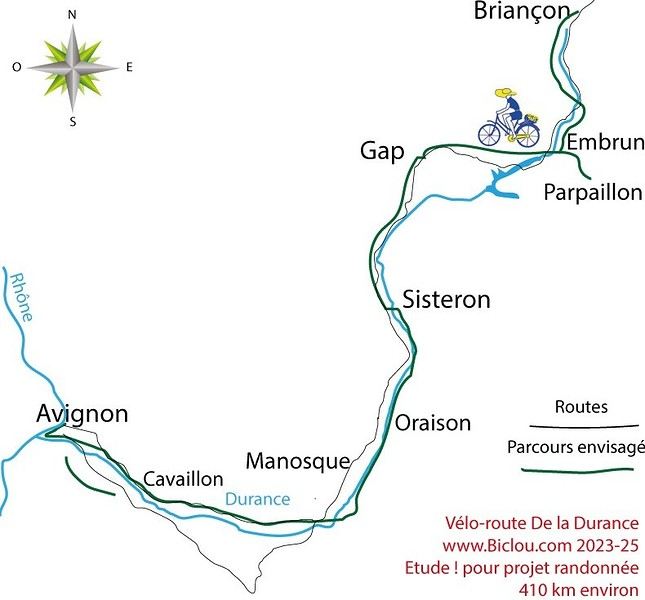
Here’s the detailed Durance route starting from Briançon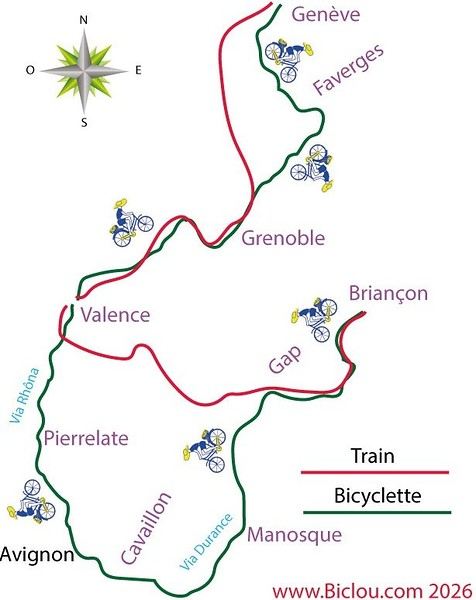
Here’s the detailed Durance route starting from Briançon
Vilanculos-Beira route: road conditions or possible public transport?
Hi there, we’ll be in Mozambique in early December 2026 and we’d like to travel from Vilanculos to Beira by car or bus to reach Beira airport. After that, we’re planning to visit Gorongosa National Park before flying back to France from Beira. From what we’ve heard, the road to Beira is tricky, especially at this time of year (start of the rainy season). Could anyone share their thoughts or suggest a solution? Thanks so much for your help!
Anne
Traffic conditions on the Louang Namtha–Houei Sai road for cycling across
Hi there,
Coming from Laos (*), I’m planning to enter Thailand by bike via the Fourth Thai–Lao Friendship Bridge.
Before this bridge was built, I’d already cycled the road from Louang Namtha to Houei Sai and crossed the river by boat to reach Thailand.
At the time, the condition of that road was impeccable, and most importantly, traffic was light.
So I’m wondering if anyone who’s taken it recently can tell me whether traffic has increased since the bridge opened.
Thanks in advance!
(*) I’m currently cycling in China (Yunnan)
Coming from Laos (*), I’m planning to enter Thailand by bike via the Fourth Thai–Lao Friendship Bridge.
Before this bridge was built, I’d already cycled the road from Louang Namtha to Houei Sai and crossed the river by boat to reach Thailand.
At the time, the condition of that road was impeccable, and most importantly, traffic was light.
So I’m wondering if anyone who’s taken it recently can tell me whether traffic has increased since the bridge opened.
Thanks in advance!
(*) I’m currently cycling in China (Yunnan)
Driving to India via Turkey, Georgia, Armenia, Azerbaijan, and the Silk Road
hello fellow travelers
For my golden years, I'd like to drive to India in my 508. I want to avoid Iran and Pakistan. Instead, I’m thinking of going through Turkey, Georgia, Armenia, Azerbaijan, then taking the ferry from Baku to Türkmenbaşy in Turkmenistan, followed by the Silk Road through Central Asia—Uzbekistan and Kyrgyzstan.
After that, China? I’ve seen that some travelers manage to drive through China with their own vehicle... Then Tibet, Nepal, and India... But things get tricky with the Himalayan crossing. I’ve checked on Google—it looks tough.
Any tips or info on these routes? Thanks
After that, China? I’ve seen that some travelers manage to drive through China with their own vehicle... Then Tibet, Nepal, and India... But things get tricky with the Himalayan crossing. I’ve checked on Google—it looks tough.
Any tips or info on these routes? Thanks
Trip Report: Silk Road Journey in China
Hi everyone,
This trip report covers a journey along the Silk Road in China (see detailed description below) undertaken in October 2025. The goal isn’t to recount the trip but to provide information that might help those who want to take a similar journey. Much of the information is valid for any trip to China.
Who we are: a retired couple, aged 63 and 65 (age gives discounts on entry to various sites and museums in China, which is why I won’t list prices here—I don’t know them, but you can easily find them online). We’re used to traveling independently. We speak English, which is the only foreign language spoken in China, though by very few people. I speak and read a little Chinese, which helped, but you can easily get by without it (without any English at all, I think it would be more difficult).
Period: We arrived just after "Golden Week," when all of China is on vacation, and after the summer, when schools are out, so we encountered very few tourists (99.99% of whom were Chinese). Our experience with booking visits in advance (which we didn’t need to do) isn’t representative for those who want to travel in the summer! The October-November period was perfect for our trip—it wasn’t too hot or too cold (one day of snow on the Tibetan Plateau), though it was only a few degrees on the Tibetan part, with altitudes between 2,000 and 3,000 meters. The trees were beautifully colored.
General remarks: Everyone we dealt with was very kind and perfectly honest. If you order a meal without really understanding what to do and the person modifies your order, trust them—the result is what you need. If a taxi driver signals that they’ll wait for you to finish your visit and pick you up afterward, trust them. It means there aren’t many taxis where you are, and it’ll be more convenient. For prices at street vendors, we always found the right ballpark, and sometimes they even added a little extra to please us. A taxi driver treated us to lunch, and an employee drove us back to the hotel after a visit because there were no taxis. If you struggle to buy a ticket online because there’s no counter, someone will come to help. People even spontaneously ask if everything’s okay and if you need anything.
Everywhere we went was very clean, including restrooms (trains, stations, hotels, museums, tourist sites) and streets. The old stereotypes about this no longer apply.
The trip can be challenging for those who have difficulty walking. The distances to cover on foot in stations, to access sites, and within the sites themselves can sometimes be really long.
We used the Lonely Planet guide in English (published at the end of August 2025) a little for preparation, but mostly relied on the internet.
Before leaving: No visa is needed for French citizens for stays under 30 days. You get a stamp on your passport upon arrival and departure, and the formalities themselves are very quick in both directions (excluding any potential queues). Just a photo and fingerprints upon arrival, and welcome to China’s facial recognition system.
Money: All your payments (see below) will go through your Visa card—there will be hundreds, including many payments of 20 cents to a few euros. So, you need an international option that allows unlimited card transactions. Since cash is rarely needed, the allowed number of ATM withdrawals can be low. We made 3 withdrawals totaling 800 € for a month and could have managed with just 2. The exchange rate charged on our Visa card was 12 € for 100 RMB (yuan).
Install the following apps on your smartphone before leaving (otherwise, you’ll only have access to the Chinese versions, if available): - Alipay, which is used to pay everywhere in China (details below). You need to link it to your credit card, then provide proof of identity by uploading a passport photo and completing a facial recognition session. Alipay gives access to Didi (China’s Uber), public transport (metro/bus), and can also translate phrases. - WeChat (Weixin in Chinese, pronounced *weishin*), which is also used for payments but also replaces WhatsApp. Unfortunately, to activate your account, you need someone who already has WeChat to sponsor you (preferably a Chinese person). We asked someone at our first accommodations to do this—no problem. By sharing your WeChat number with accommodations, they can send you messages that are automatically translated, and you can communicate with people thanks to the translation (translation to French is very poor; it’s much better in English, but unfortunately, WeChat detects your phone’s language). Alipay and WeChat are accepted almost everywhere, but some places only accept WeChat. - Amap, the international version of Baidu Maps, which replaces Google Maps (not at all up-to-date in China). The English names of hotels often have little to do with the Chinese names except for a phonetic resemblance. To find them on Amap, it’s best to copy the Chinese name found on your Trip reservation under "show address in Chinese." - A VPN. We had CyberGhost, which didn’t work, but according to other travelers, NordVPN and Windscribe do. Without a VPN, you can’t access Google services, on WhatsApp you can send and receive text but not photos, and you can’t send or receive emails on Gmail addresses. We managed without a VPN by using Firefox as a browser and Bing as a search engine. - Trip, for booking trains and accommodations, and buying some tickets. It’s the equivalent of Booking for accommodations, but Booking has very few listings in China, while Trip has hundreds in every city. Most hotels and trains are exchangeable and refundable until the day before, with no or minimal fees.
You don’t need contactless (NFC) payment on your phone. Either you scan a barcode and enter the amount to pay, or you display a barcode, and they scan it with a scanner, and the amount is deducted directly.
Upon arrival: - Buy a Chinese SIM card: 100 RMB for 300 GB of data and several hours of talk time (we didn’t use it). Set the Chinese number as a reference on Alipay, WeChat, and Amap. - Find someone to sponsor you on WeChat.
Transportation: - **Plane**: China Eastern, Paris-Canton then Canton-Urumqi on the way out, and Xian-Canton then Canton-Paris on the way back. International flights were smooth, but the schedules for the two domestic flights were changed. It was fine on the way out because we had some leeway, but on the way back, we were notified the morning of that our flight was canceled and replaced with one that didn’t allow for the connection. We called and changed to an earlier flight (I think we were lucky to find available seats). - **Train**: Most long distances were covered by high-speed trains (called D or G in China) at 240 or 300 km/h. Second class is perfect—just as comfortable and clean as our TGVs. The only advantage of first class is the wider seats for larger people, but the downside is that seats are often booked in advance and thus less available. You can book trains long in advance on Trip, but they only go on sale in China 15 days before departure, so that’s when you’ll know if you have a ticket. Initially, we booked first class, but there were no seats available on the day, so we ended up booking everything in second class, which was perfect. There’s no paper ticket—if you’ve bought one, you go to the station, show your passport, and enter. You do the same to access the platform 15 minutes before the train, and that’s it. Our train was canceled twice, but no problem—we went to the ticket counter, got a refund, and were offered a replacement. It didn’t delay us by more than an hour (maybe it would be harder in peak season). For prices, check Trip.com, but it’s significantly cheaper than in France. - **Bus**: We took the bus between Xining and Tongren, Tongren to Xiahe, and Hezuo to Lanzhou—about 3 hours each time for 200 km, 6 € per person, and departures were right on time. - **Taxi**: For trips between the station and hotel, or hotel and visits. If you take a Didi via the Alipay app, you activate your location, enter your destination, and it offers several taxis. You accept, and you get the car’s license plate and its real-time position on the map. When you get in, the driver often asks for the last four digits of your phone number to confirm. Otherwise, you go to the taxi stand outside the station. The price per kilometer is around 20 cents, so for a 30 km trip from the station to the hotel, you’ll pay about 6 €. We never tried to save more by taking local buses, but since the metro in Xian costs 25 cents per trip, it’s probably in the same ballpark. Amap provides public transport routes like Google Maps. - **Driver**: We hired a taxi/driver for the day several times for sightseeing. Prices ranged from 350 to 1,000 RMB (the most expensive was arranged through the Sofitel Xining concierge) for trips ranging from a few hours to a full day, sometimes covering over 300 km (see the detailed trip description).
Accommodations: All booked in advance on Trip, but several were changed during the trip. Off-season, there were no issues. We mostly stayed in upscale places, but in China, that means 50 to 60 € per night in the most central or convenient neighborhood. Note: Almost all hotels have a 5/5 rating on Trip, but it seems the Chinese avoid giving lower ratings to be polite. So, you have to read the comments to realize that in France, we might have given a 2 or 3!
Food: At the table, you’re served hot water or a hot infusion, presumably made with purified water. We never got sick from drinking it, but don’t drink tap water. Purified or mineral water is easy to find.
In restaurants, you can manage by pointing to the dish you want from another diner, on the wall where there are photos, or on the menu with pictures. The food in the region isn’t often spicy, and people usually ask or signal before adding the red spicy sauce, so you should be able to handle it if you don’t like chili at all.
The "fake old quarters" in several cities are great places to find all kinds of restaurants (see detailed trip below).
Like Google Maps, Amap can show you nearby restaurants.
Shopping: For dried fruits, buy them in Turfan—you won’t find the same variety and quality even in Xian. Generally, if you like something, buy it. If you wait, you might not find it outside the region where you are.
In Xian, there’s a "Tea City" where you can find all kinds of tea (from cheap to very expensive).
The trip in more detail: I won’t dwell on the beauty or interest of the sites here since that’s a matter of personal taste. However, I will do so for lesser-known places to give an idea to those who might be interested.
For many sites, there are shuttles (sometimes not included in the ticket price but costing around 1 €) that take you to the interesting spots. We always took them—it saves you from walking past countless shops or along uninteresting paths.
- **Urumqi**: We spent only one night there, arriving in the middle of the afternoon and leaving the next morning. We stayed at the Dana Hotel in the bazaar. Given the size of the city, it’s a good option because I don’t think there are many other interesting places. The bazaar is brand new and not at all "typical" (Turfan’s bazaar is infinitely more interesting), but the dining area is very nice.
- **Turfan**: Stayed at the New Dap Hostel, which was great. The neighborhood is nice, not far from the city, and easy to find food. The museum is closed until 2026 (Amap provides museum hours and closures). We took a day trip (for the two of us) with a driver to the Bezeklik Caves, Flaming Mountains, the abandoned city of Gaochang, the Tuyuk Village Museum, and the Emin Minaret for 500 RMB from 9 AM to 8 PM (arranged by the hostel). The landscape during the excursion was quite fabulous. We also visited the Karez Museum and the abandoned city of Jiaohe on our own the next day. At this time of year, the sun sets around 6 PM, and there’s often haze after 5 PM, so for Jiaohe, for example, which takes about 3 hours to visit, it’s best to be there by 1 or 2 PM at the latest.
The Dahua Market area is perfect for dried fruits (including the famous grapes), and you can eat there among locals in their traditional costumes. Next to it, there are buildings full of shops selling made-in-China items—it kept us busy for a good half-day, if not more.
- **Dunhuang**: Stayed in a guesthouse near the dunes—the city center isn’t far but seems quite artificial. Visited the dunes, with a ticket valid for 3 days. Lots of Chinese tourists—very typical and interesting from an ethnological perspective 😊. We got up early one morning to climb the highest dune, just beyond the one everyone goes to. It’s a bit long and tiring, but the view is worth it. Visited the Mogao Caves, buying the ticket on-site (no chance in season without booking in advance). We met two other French people and got a French-speaking guide (by pretending not to understand English). It was really worth it—a group of 4 instead of 20, and they took their time (2 hours) for the visit. We took a day trip to the Yulin Caves (2.5 hours by road and 160 km one way) with a driver for 350 RMB. We liked it a lot, but if the Mogao Caves are enough for you, it’s not very different.
- **Jiayuguan**: Stayed in a city-center hotel. Visited the Wei and Jin tombs (actually just one)—that’s where we were told the taxi should wait to take us back to the city. We went down into a crypt with lots of decorated bricks from the 3rd century. We really liked it, but it’s not as spectacular as the fort if you’re not a fan. Visited the Jiayuguan Fort and, with the same ticket, climbed a small section of the Great Wall 10 km away. Plan at least 3 good hours for all this—there’s plenty to see.
- **Zhangye**: Stayed at The Silk Road Travelers Hostel, rustic but very nice and organizes excursions. Visited the Danxia (colored mountains)—just as spectacular as the photos. You can easily spend 3 hours there, so plan to finish before sunset to avoid the haze (you can always stay longer for the sunset if the weather’s nice). The next day, visited the Mati Si Temple in the cliff. The 10,000 Buddha Caves are under renovation, but the setting and the main temple are well worth the visit (the paths through the cliff tunnels must be hellish in peak season). You can probably organize these two excursions yourself by asking any taxi driver. Also visited the Giant Buddha Temple in the city center—really worth it.
- **Xining**: Stayed in a city-center hotel. Visited the Tibetan Medicine Museum to see the world’s largest thangka (1 km long), made over 40 years by renowned artists. It’s absolutely magnificent, on par with the virtuosity (but over 1 km) of the thangkas painted by famous artists in Xiahe (see below). Hired a female taxi driver for the day to visit Kumbum Monastery (Ta’er Si in Chinese) and the Danxia area in Guide, 50 km beyond the monastery. It’s less spectacular than Zhangye’s Danxia, but we really liked it (including the journey’s landscape). The next day, visited the old Ming-era Qutan Monastery—no visitors, with beautiful murals (half under renovation). Accessible by train to Haidong or Ledu, then a taxi. Xining’s mosque is of no interest, but there’s a pedestrian street with food stalls nearby that’s very nice.
- **Tongren**: Stayed near the main monastery. Visited Longwu Monastery (several hours), with lots of nice shops along the street leading to it. Then visited Wutun Monastery, which is less lively but beautiful and close to thangka workshops. You can go in and watch the painters at work. For a thangka made by a renowned artist, count about a year of work for 1 m² and around 10,000 €.
- **Xiahe**: Stayed in a city-center hotel. Visited Labrang Monastery—very nice but not as much as Tongren’s because many halls were closed. I think it’s better to go in season and take an English-guided tour (but it’s still worth the trip, even off-season).
- **Langmusi**: Took a taxi, but you can also take a bus (though very early in the morning and longer). Particularly beautiful for us because we woke up to bright sunshine and 5 cm of snow everywhere. Visited the two temples (really nice) and did the classic hike in the gorges starting at the Fairy Cave. For those interested, we continued along the canyon path, and after the meadow where marmots are clearly visible in summer, we climbed toward a pass on the left at 3,800 meters. The view of Langmusi and, above all, the vast grasslands and distant mountains was fabulous (3 hours round trip from the temple). You could probably reach the 4,000-meter summit by continuing up the valley instead of turning left, but according to guides, it’s better to count 7 hours round trip (no technical difficulty). You can leave Langmusi by bus, but off-season, you first have to take a taxi to a stop outside the city and wait for the bus. We didn’t try and took a taxi to Hezuo instead.
Note on this region: A high-speed train is under construction from Xining to Langmusi and beyond (never seen such an impressive construction site!). When it’s operational (in one or two years, I think), access to the area will be revolutionized, and perhaps some of the charm will be lost.
- **Hezuo**: Stopped on the way from Langmusi to Lanzhou. Visited the Milarepa Pagoda, entirely destroyed during the Cultural Revolution and since rebuilt. We liked it since we were passing through, but it doesn’t necessarily justify a long detour.
- **Lanzhou**: Reached by one of the many buses from Hezuo. Stayed in the "fake old quarter," which is extremely pleasant, especially in the evening with restaurants, groups of Chinese women dancing to loud music, etc. Visited Bingling Si with a driver, 120 km away—the landscape and site are absolutely magnificent, with no one around at our time of year. Visited the Gansu Museum (where the famous Flying Horse is, but it’s a replica). We bought the ticket on entry, but in season, you probably need to book in advance.
- **Yinchuan**: Stayed in the city center. A city we discovered by chance in the Lonely Planet—worth it if you have time. On the way, we stopped for a few hours in Zhongwei, where there’s an incredible Taoist temple (I’ll let you be surprised). Visited the Western Xia tombs—we took the short option, which visits Tomb 3. We think the others are similar but less impressive. The surrounding landscape and site are quite spectacular. Visited the film sets (really fun if you like Chinese movies), the short but interesting Ningxia Museum, and finally the modern art museum. The architecture is avant-garde, and there are some beautiful works (we like it, but it’s far from the center—hire a driver who waits, or you might have to wait for an employee to offer a ride back).
- **Tianshui**: Stayed in the suburbs, but you should find a hotel near the "fake old quarter" between the Fu Xi Temples and the Taoist temple—it’s a very nice area, and the two temples (especially the Taoist one) are within walking distance. Visited the Maijishan Caves—the ticket includes the shuttle to get there. Took a taxi from Lanzhou for about 10 € in 45 minutes. We found these caves fabulous.
- **Xi’an**: Stayed 500 meters from the Bell Tower at Hantang Inn—very convenient. We’d been before, so we didn’t revisit the Terracotta Army. The calligraphy district is worth it, as is the Muslim Quarter, though it’s very touristy. The area indicated on the Lonely Planet’s walking tour near the old fruit and vegetable market isn’t very interesting. To buy tea, you can go to the Northwest International Tea City, with dozens of shops. We chose one at random, tasted, and bought various teas. There’s everything from cheap to extremely expensive, but you can find reasonable prices even in seemingly luxurious shops. Along the street north of this area, there are large stores with tons of Chinese goods selling dishes, wedding items, etc. We spent hours there. In the city center, there are only malls with more or less international brands.
- **Longmen Grottoes**: Visited as a round trip by high-speed train from Xian—1 hour 15 minutes to Longmen’s high-speed train station, and the site entrance is 15 minutes by taxi.
We didn’t go to Mount Hua Shan, but there’s a high-speed train station nearby, and there were people on the train who were clearly going there. So, you can probably do this excursion in a day from Xian as well.
Conclusion: We hope this report makes you want to go or helps you if you’re already planning to. If you have questions that you can’t find the answer to by searching properly online and we can answer, don’t hesitate.
This trip report covers a journey along the Silk Road in China (see detailed description below) undertaken in October 2025. The goal isn’t to recount the trip but to provide information that might help those who want to take a similar journey. Much of the information is valid for any trip to China.
Who we are: a retired couple, aged 63 and 65 (age gives discounts on entry to various sites and museums in China, which is why I won’t list prices here—I don’t know them, but you can easily find them online). We’re used to traveling independently. We speak English, which is the only foreign language spoken in China, though by very few people. I speak and read a little Chinese, which helped, but you can easily get by without it (without any English at all, I think it would be more difficult).
Period: We arrived just after "Golden Week," when all of China is on vacation, and after the summer, when schools are out, so we encountered very few tourists (99.99% of whom were Chinese). Our experience with booking visits in advance (which we didn’t need to do) isn’t representative for those who want to travel in the summer! The October-November period was perfect for our trip—it wasn’t too hot or too cold (one day of snow on the Tibetan Plateau), though it was only a few degrees on the Tibetan part, with altitudes between 2,000 and 3,000 meters. The trees were beautifully colored.
General remarks: Everyone we dealt with was very kind and perfectly honest. If you order a meal without really understanding what to do and the person modifies your order, trust them—the result is what you need. If a taxi driver signals that they’ll wait for you to finish your visit and pick you up afterward, trust them. It means there aren’t many taxis where you are, and it’ll be more convenient. For prices at street vendors, we always found the right ballpark, and sometimes they even added a little extra to please us. A taxi driver treated us to lunch, and an employee drove us back to the hotel after a visit because there were no taxis. If you struggle to buy a ticket online because there’s no counter, someone will come to help. People even spontaneously ask if everything’s okay and if you need anything.
Everywhere we went was very clean, including restrooms (trains, stations, hotels, museums, tourist sites) and streets. The old stereotypes about this no longer apply.
The trip can be challenging for those who have difficulty walking. The distances to cover on foot in stations, to access sites, and within the sites themselves can sometimes be really long.
We used the Lonely Planet guide in English (published at the end of August 2025) a little for preparation, but mostly relied on the internet.
Before leaving: No visa is needed for French citizens for stays under 30 days. You get a stamp on your passport upon arrival and departure, and the formalities themselves are very quick in both directions (excluding any potential queues). Just a photo and fingerprints upon arrival, and welcome to China’s facial recognition system.
Money: All your payments (see below) will go through your Visa card—there will be hundreds, including many payments of 20 cents to a few euros. So, you need an international option that allows unlimited card transactions. Since cash is rarely needed, the allowed number of ATM withdrawals can be low. We made 3 withdrawals totaling 800 € for a month and could have managed with just 2. The exchange rate charged on our Visa card was 12 € for 100 RMB (yuan).
Install the following apps on your smartphone before leaving (otherwise, you’ll only have access to the Chinese versions, if available): - Alipay, which is used to pay everywhere in China (details below). You need to link it to your credit card, then provide proof of identity by uploading a passport photo and completing a facial recognition session. Alipay gives access to Didi (China’s Uber), public transport (metro/bus), and can also translate phrases. - WeChat (Weixin in Chinese, pronounced *weishin*), which is also used for payments but also replaces WhatsApp. Unfortunately, to activate your account, you need someone who already has WeChat to sponsor you (preferably a Chinese person). We asked someone at our first accommodations to do this—no problem. By sharing your WeChat number with accommodations, they can send you messages that are automatically translated, and you can communicate with people thanks to the translation (translation to French is very poor; it’s much better in English, but unfortunately, WeChat detects your phone’s language). Alipay and WeChat are accepted almost everywhere, but some places only accept WeChat. - Amap, the international version of Baidu Maps, which replaces Google Maps (not at all up-to-date in China). The English names of hotels often have little to do with the Chinese names except for a phonetic resemblance. To find them on Amap, it’s best to copy the Chinese name found on your Trip reservation under "show address in Chinese." - A VPN. We had CyberGhost, which didn’t work, but according to other travelers, NordVPN and Windscribe do. Without a VPN, you can’t access Google services, on WhatsApp you can send and receive text but not photos, and you can’t send or receive emails on Gmail addresses. We managed without a VPN by using Firefox as a browser and Bing as a search engine. - Trip, for booking trains and accommodations, and buying some tickets. It’s the equivalent of Booking for accommodations, but Booking has very few listings in China, while Trip has hundreds in every city. Most hotels and trains are exchangeable and refundable until the day before, with no or minimal fees.
You don’t need contactless (NFC) payment on your phone. Either you scan a barcode and enter the amount to pay, or you display a barcode, and they scan it with a scanner, and the amount is deducted directly.
Upon arrival: - Buy a Chinese SIM card: 100 RMB for 300 GB of data and several hours of talk time (we didn’t use it). Set the Chinese number as a reference on Alipay, WeChat, and Amap. - Find someone to sponsor you on WeChat.
Transportation: - **Plane**: China Eastern, Paris-Canton then Canton-Urumqi on the way out, and Xian-Canton then Canton-Paris on the way back. International flights were smooth, but the schedules for the two domestic flights were changed. It was fine on the way out because we had some leeway, but on the way back, we were notified the morning of that our flight was canceled and replaced with one that didn’t allow for the connection. We called and changed to an earlier flight (I think we were lucky to find available seats). - **Train**: Most long distances were covered by high-speed trains (called D or G in China) at 240 or 300 km/h. Second class is perfect—just as comfortable and clean as our TGVs. The only advantage of first class is the wider seats for larger people, but the downside is that seats are often booked in advance and thus less available. You can book trains long in advance on Trip, but they only go on sale in China 15 days before departure, so that’s when you’ll know if you have a ticket. Initially, we booked first class, but there were no seats available on the day, so we ended up booking everything in second class, which was perfect. There’s no paper ticket—if you’ve bought one, you go to the station, show your passport, and enter. You do the same to access the platform 15 minutes before the train, and that’s it. Our train was canceled twice, but no problem—we went to the ticket counter, got a refund, and were offered a replacement. It didn’t delay us by more than an hour (maybe it would be harder in peak season). For prices, check Trip.com, but it’s significantly cheaper than in France. - **Bus**: We took the bus between Xining and Tongren, Tongren to Xiahe, and Hezuo to Lanzhou—about 3 hours each time for 200 km, 6 € per person, and departures were right on time. - **Taxi**: For trips between the station and hotel, or hotel and visits. If you take a Didi via the Alipay app, you activate your location, enter your destination, and it offers several taxis. You accept, and you get the car’s license plate and its real-time position on the map. When you get in, the driver often asks for the last four digits of your phone number to confirm. Otherwise, you go to the taxi stand outside the station. The price per kilometer is around 20 cents, so for a 30 km trip from the station to the hotel, you’ll pay about 6 €. We never tried to save more by taking local buses, but since the metro in Xian costs 25 cents per trip, it’s probably in the same ballpark. Amap provides public transport routes like Google Maps. - **Driver**: We hired a taxi/driver for the day several times for sightseeing. Prices ranged from 350 to 1,000 RMB (the most expensive was arranged through the Sofitel Xining concierge) for trips ranging from a few hours to a full day, sometimes covering over 300 km (see the detailed trip description).
Accommodations: All booked in advance on Trip, but several were changed during the trip. Off-season, there were no issues. We mostly stayed in upscale places, but in China, that means 50 to 60 € per night in the most central or convenient neighborhood. Note: Almost all hotels have a 5/5 rating on Trip, but it seems the Chinese avoid giving lower ratings to be polite. So, you have to read the comments to realize that in France, we might have given a 2 or 3!
Food: At the table, you’re served hot water or a hot infusion, presumably made with purified water. We never got sick from drinking it, but don’t drink tap water. Purified or mineral water is easy to find.
In restaurants, you can manage by pointing to the dish you want from another diner, on the wall where there are photos, or on the menu with pictures. The food in the region isn’t often spicy, and people usually ask or signal before adding the red spicy sauce, so you should be able to handle it if you don’t like chili at all.
The "fake old quarters" in several cities are great places to find all kinds of restaurants (see detailed trip below).
Like Google Maps, Amap can show you nearby restaurants.
Shopping: For dried fruits, buy them in Turfan—you won’t find the same variety and quality even in Xian. Generally, if you like something, buy it. If you wait, you might not find it outside the region where you are.
In Xian, there’s a "Tea City" where you can find all kinds of tea (from cheap to very expensive).
The trip in more detail: I won’t dwell on the beauty or interest of the sites here since that’s a matter of personal taste. However, I will do so for lesser-known places to give an idea to those who might be interested.
For many sites, there are shuttles (sometimes not included in the ticket price but costing around 1 €) that take you to the interesting spots. We always took them—it saves you from walking past countless shops or along uninteresting paths.
- **Urumqi**: We spent only one night there, arriving in the middle of the afternoon and leaving the next morning. We stayed at the Dana Hotel in the bazaar. Given the size of the city, it’s a good option because I don’t think there are many other interesting places. The bazaar is brand new and not at all "typical" (Turfan’s bazaar is infinitely more interesting), but the dining area is very nice.
- **Turfan**: Stayed at the New Dap Hostel, which was great. The neighborhood is nice, not far from the city, and easy to find food. The museum is closed until 2026 (Amap provides museum hours and closures). We took a day trip (for the two of us) with a driver to the Bezeklik Caves, Flaming Mountains, the abandoned city of Gaochang, the Tuyuk Village Museum, and the Emin Minaret for 500 RMB from 9 AM to 8 PM (arranged by the hostel). The landscape during the excursion was quite fabulous. We also visited the Karez Museum and the abandoned city of Jiaohe on our own the next day. At this time of year, the sun sets around 6 PM, and there’s often haze after 5 PM, so for Jiaohe, for example, which takes about 3 hours to visit, it’s best to be there by 1 or 2 PM at the latest.
The Dahua Market area is perfect for dried fruits (including the famous grapes), and you can eat there among locals in their traditional costumes. Next to it, there are buildings full of shops selling made-in-China items—it kept us busy for a good half-day, if not more.
- **Dunhuang**: Stayed in a guesthouse near the dunes—the city center isn’t far but seems quite artificial. Visited the dunes, with a ticket valid for 3 days. Lots of Chinese tourists—very typical and interesting from an ethnological perspective 😊. We got up early one morning to climb the highest dune, just beyond the one everyone goes to. It’s a bit long and tiring, but the view is worth it. Visited the Mogao Caves, buying the ticket on-site (no chance in season without booking in advance). We met two other French people and got a French-speaking guide (by pretending not to understand English). It was really worth it—a group of 4 instead of 20, and they took their time (2 hours) for the visit. We took a day trip to the Yulin Caves (2.5 hours by road and 160 km one way) with a driver for 350 RMB. We liked it a lot, but if the Mogao Caves are enough for you, it’s not very different.
- **Jiayuguan**: Stayed in a city-center hotel. Visited the Wei and Jin tombs (actually just one)—that’s where we were told the taxi should wait to take us back to the city. We went down into a crypt with lots of decorated bricks from the 3rd century. We really liked it, but it’s not as spectacular as the fort if you’re not a fan. Visited the Jiayuguan Fort and, with the same ticket, climbed a small section of the Great Wall 10 km away. Plan at least 3 good hours for all this—there’s plenty to see.
- **Zhangye**: Stayed at The Silk Road Travelers Hostel, rustic but very nice and organizes excursions. Visited the Danxia (colored mountains)—just as spectacular as the photos. You can easily spend 3 hours there, so plan to finish before sunset to avoid the haze (you can always stay longer for the sunset if the weather’s nice). The next day, visited the Mati Si Temple in the cliff. The 10,000 Buddha Caves are under renovation, but the setting and the main temple are well worth the visit (the paths through the cliff tunnels must be hellish in peak season). You can probably organize these two excursions yourself by asking any taxi driver. Also visited the Giant Buddha Temple in the city center—really worth it.
- **Xining**: Stayed in a city-center hotel. Visited the Tibetan Medicine Museum to see the world’s largest thangka (1 km long), made over 40 years by renowned artists. It’s absolutely magnificent, on par with the virtuosity (but over 1 km) of the thangkas painted by famous artists in Xiahe (see below). Hired a female taxi driver for the day to visit Kumbum Monastery (Ta’er Si in Chinese) and the Danxia area in Guide, 50 km beyond the monastery. It’s less spectacular than Zhangye’s Danxia, but we really liked it (including the journey’s landscape). The next day, visited the old Ming-era Qutan Monastery—no visitors, with beautiful murals (half under renovation). Accessible by train to Haidong or Ledu, then a taxi. Xining’s mosque is of no interest, but there’s a pedestrian street with food stalls nearby that’s very nice.
- **Tongren**: Stayed near the main monastery. Visited Longwu Monastery (several hours), with lots of nice shops along the street leading to it. Then visited Wutun Monastery, which is less lively but beautiful and close to thangka workshops. You can go in and watch the painters at work. For a thangka made by a renowned artist, count about a year of work for 1 m² and around 10,000 €.
- **Xiahe**: Stayed in a city-center hotel. Visited Labrang Monastery—very nice but not as much as Tongren’s because many halls were closed. I think it’s better to go in season and take an English-guided tour (but it’s still worth the trip, even off-season).
- **Langmusi**: Took a taxi, but you can also take a bus (though very early in the morning and longer). Particularly beautiful for us because we woke up to bright sunshine and 5 cm of snow everywhere. Visited the two temples (really nice) and did the classic hike in the gorges starting at the Fairy Cave. For those interested, we continued along the canyon path, and after the meadow where marmots are clearly visible in summer, we climbed toward a pass on the left at 3,800 meters. The view of Langmusi and, above all, the vast grasslands and distant mountains was fabulous (3 hours round trip from the temple). You could probably reach the 4,000-meter summit by continuing up the valley instead of turning left, but according to guides, it’s better to count 7 hours round trip (no technical difficulty). You can leave Langmusi by bus, but off-season, you first have to take a taxi to a stop outside the city and wait for the bus. We didn’t try and took a taxi to Hezuo instead.
Note on this region: A high-speed train is under construction from Xining to Langmusi and beyond (never seen such an impressive construction site!). When it’s operational (in one or two years, I think), access to the area will be revolutionized, and perhaps some of the charm will be lost.
- **Hezuo**: Stopped on the way from Langmusi to Lanzhou. Visited the Milarepa Pagoda, entirely destroyed during the Cultural Revolution and since rebuilt. We liked it since we were passing through, but it doesn’t necessarily justify a long detour.
- **Lanzhou**: Reached by one of the many buses from Hezuo. Stayed in the "fake old quarter," which is extremely pleasant, especially in the evening with restaurants, groups of Chinese women dancing to loud music, etc. Visited Bingling Si with a driver, 120 km away—the landscape and site are absolutely magnificent, with no one around at our time of year. Visited the Gansu Museum (where the famous Flying Horse is, but it’s a replica). We bought the ticket on entry, but in season, you probably need to book in advance.
- **Yinchuan**: Stayed in the city center. A city we discovered by chance in the Lonely Planet—worth it if you have time. On the way, we stopped for a few hours in Zhongwei, where there’s an incredible Taoist temple (I’ll let you be surprised). Visited the Western Xia tombs—we took the short option, which visits Tomb 3. We think the others are similar but less impressive. The surrounding landscape and site are quite spectacular. Visited the film sets (really fun if you like Chinese movies), the short but interesting Ningxia Museum, and finally the modern art museum. The architecture is avant-garde, and there are some beautiful works (we like it, but it’s far from the center—hire a driver who waits, or you might have to wait for an employee to offer a ride back).
- **Tianshui**: Stayed in the suburbs, but you should find a hotel near the "fake old quarter" between the Fu Xi Temples and the Taoist temple—it’s a very nice area, and the two temples (especially the Taoist one) are within walking distance. Visited the Maijishan Caves—the ticket includes the shuttle to get there. Took a taxi from Lanzhou for about 10 € in 45 minutes. We found these caves fabulous.
- **Xi’an**: Stayed 500 meters from the Bell Tower at Hantang Inn—very convenient. We’d been before, so we didn’t revisit the Terracotta Army. The calligraphy district is worth it, as is the Muslim Quarter, though it’s very touristy. The area indicated on the Lonely Planet’s walking tour near the old fruit and vegetable market isn’t very interesting. To buy tea, you can go to the Northwest International Tea City, with dozens of shops. We chose one at random, tasted, and bought various teas. There’s everything from cheap to extremely expensive, but you can find reasonable prices even in seemingly luxurious shops. Along the street north of this area, there are large stores with tons of Chinese goods selling dishes, wedding items, etc. We spent hours there. In the city center, there are only malls with more or less international brands.
- **Longmen Grottoes**: Visited as a round trip by high-speed train from Xian—1 hour 15 minutes to Longmen’s high-speed train station, and the site entrance is 15 minutes by taxi.
We didn’t go to Mount Hua Shan, but there’s a high-speed train station nearby, and there were people on the train who were clearly going there. So, you can probably do this excursion in a day from Xian as well.
Conclusion: We hope this report makes you want to go or helps you if you’re already planning to. If you have questions that you can’t find the answer to by searching properly online and we can answer, don’t hesitate.
Where to stay on the Route des Crêtes hike?
Hi everyone,
Here’s my dilemma:
I’m planning a hike between Le Bonhomme and the Gîte des 3 Fours at the Col de la Schlucht.
Between the two, I need a hostel, a gîte, or a farm inn for Wednesday, September 10th.
My gîte at the pass is only open on Thursday, so I need a stop between Le Bonhomme and the pass.
On Wednesday, everything’s closed—no half-board, nothing at all.
Would you have any solutions? I’ve already called the tourist office, and they confirmed there’s no possibility.
No tent—it’s too heavy for me at my age.
Thanks for your ideas!
Where to stay on the Haute Route des Pyrénées from Embalse de Baserca to Parzan?
Hi there,
I’m planning a short trek on the Haute Route des Pyrénées from Embalse de Baserca lake to Parzan.
I’ve seen there are cabins along the route. Do you know if it’s possible to sleep in them? On the other hand, in Parzan, apart from a hotel, I can’t find anything else. And the hotel requires a minimum of 2 nights, whereas I only want to stay for one. So, do you know where to stay in Parzan?
I’ve seen there are cabins along the route. Do you know if it’s possible to sleep in them? On the other hand, in Parzan, apart from a hotel, I can’t find anything else. And the hotel requires a minimum of 2 nights, whereas I only want to stay for one. So, do you know where to stay in Parzan?
January trip plan - Cape Town area & Garden Route
Hi there,
We did a trip to South Africa in August 2023 and at the time, we regretted not being able to make the most of the Cape Town area because of the weather.
So we’re thinking of going back during the right season in early 2026 for 2 weeks, but I’m struggling a bit to plan the itinerary.
We’d like to spend a few days on safari, but options are somewhat limited in this (large) geographic area since it’s not the right season for KTP, and Addo Elephant Park doesn’t seem like the best choice. Are there any interesting private reserves in this area?
Otherwise, we’re considering starting with a few days in Madikwe from Johannesburg, then about ten days from Cape Town.
For those 10 days, do you have any suggestions that go beyond the classic Garden Route? We’ve heard good things about the Cederberg, but after that, I’m struggling to put together something coherent.
Thanks for your suggestions!
Jacques
Roswell to Tucumcari leg: Route 66 conditions
Hi everyone! 🙂
We’re on the Roswell–Tucumcari leg. We’ll go through Fort Sumner. After visiting, there are two ways to reach Tucumcari:
Take US 84 to Santa Rosa, see its Blue Hole, then the almost ghost towns on the historic Route 66 (Cuervo, Newkirk, and Montoya). We won’t visit the Route 66 auto museum (we’ll do the one in Tucumcari). The other option is to take 252 and then 209.
The next day, we plan to head to our next stop in Las Vegas (the one in NM) by going up the Mesalands Scenic Byway (104).
Is the detour to Santa Rosa worth it? Are the historic Route 66 sections drivable?
Thanks for your tips! Marcalamar 🙂
We’re on the Roswell–Tucumcari leg. We’ll go through Fort Sumner. After visiting, there are two ways to reach Tucumcari:
Take US 84 to Santa Rosa, see its Blue Hole, then the almost ghost towns on the historic Route 66 (Cuervo, Newkirk, and Montoya). We won’t visit the Route 66 auto museum (we’ll do the one in Tucumcari). The other option is to take 252 and then 209.
The next day, we plan to head to our next stop in Las Vegas (the one in NM) by going up the Mesalands Scenic Byway (104).
Is the detour to Santa Rosa worth it? Are the historic Route 66 sections drivable?
Thanks for your tips! Marcalamar 🙂
40-Day Journey Along the Silk Road: Looking for 4 Travel Companions
Retired Franco-Brazilian academic couple living in Brazil. We’ll be traveling for 40 days along the Silk Road, from Beijing (arriving on 08/31/25) to Samarkand (returning to Brazil via Europe on 10/9/25), also passing through Kyrgyzstan. We’re looking for up to 4 other people to share the trip and costs—around 5500 € per person, all-inclusive except for international flights.
Road trip to the United Arab Emirates from France
I'm planning to drive to the UAE by road, going through Iraq. Has anyone done this and can give me some info? Specifically about the border crossings Turkey/Iraq and Iraq/Kuwait.
Possible stops on the Dakar route?
Hey riders (or not) 😉
For those who’ve already done it and know the route, could you tell me where to make stops (hotels, guesthouses) between Laayoune and Nouakchott, for example? And what’s the minimum range needed to get between two gas stations? Thanks and have a great day
Riding the Transamazonian by motorcycle: road conditions?
Hi there,
I’m planning to ride from Manaus to Lábrea via Humaitá and then continue along the Transamazonian from Lábrea to João Pessoa by motorcycle. I’m looking for recent info on the condition of this route (paved sections, dirt tracks, etc.). Thanks for any tips you can share!
I’m planning to ride from Manaus to Lábrea via Humaitá and then continue along the Transamazonian from Lábrea to João Pessoa by motorcycle. I’m looking for recent info on the condition of this route (paved sections, dirt tracks, etc.). Thanks for any tips you can share!
République Dominicaine: au fil de la route... et autres souvenirs English translation pending
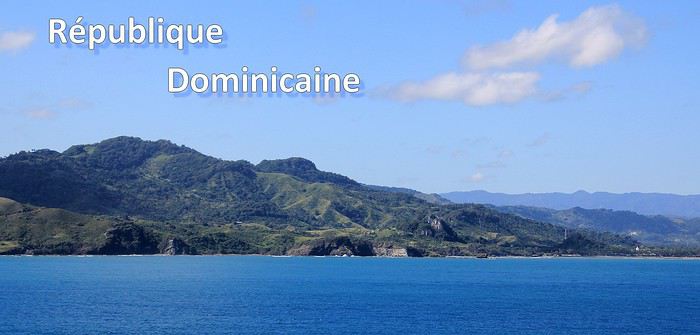
Ce sont mes derniers souvenirs de voyage à l'étranger, c'était avant … avant que la pandémie de la Covid-19 ne s'abatte sur notre planète et contrarie (en autre !) nos désirs de voyages loin de chez nous. Un récit à propos d'une dernière escale dans les Caraïbes, elle date du début mars et c'était donc en République Dominicaine. Ce carnet aborde principalement le souvenir d'une échappée le long d'une « route » hors des sentiers battus, dans le nord de l'île. Une région bien moins fréquentée et donc moins connue que les très courus sites balnéaires de cette grande île tropicale. Un récit qui est également l'occasion pour moi de partager dans une seconde partie quelques autres souvenirs de voyage en Rep. Dom. Ils sont un peu plus anciens et concernent quelques uns des incontournables sites à visiter de la destination.
--
L'escale approche. Peu à peu, la côte se fait plus nette, le soleil a fait disparaître la nébulosité et la plage d'Amber Cove apparaît dans toute sa beauté.
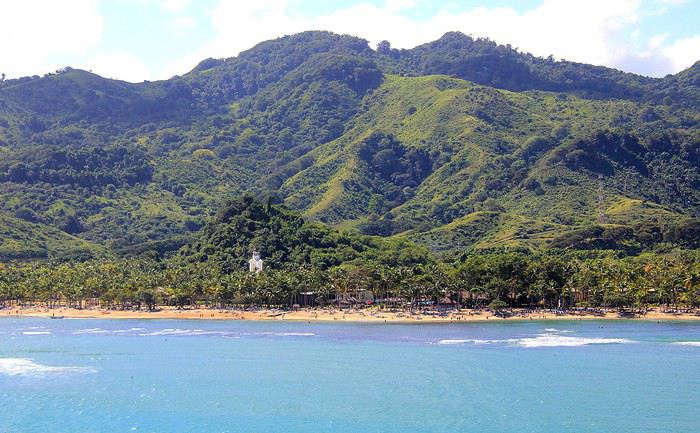
Le trio qui fait le charme des îles tropicales est bien présent sous nos yeux : des eaux bleues, du sable clair bordé d'une palmeraie et un versant verdoyant qui en impose en surplomb du rivage. Un coquet clocher aux tonalités jaune et rose bonbon émerge au-dessus de cette étendue de palmes. Pour afficher la nationalité de l'île, les couleurs sont hissées haut. On reconnaît les carrés rouge et bleu séparés d'une croix blanche du drapeau de la République Dominicaine.
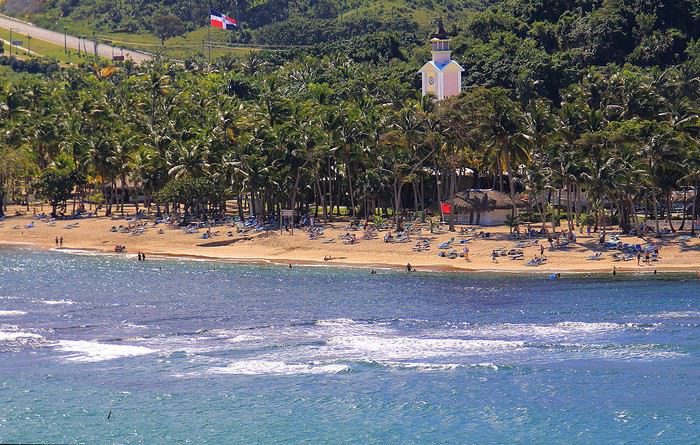
Nous sommes précisément sur la côte nord de l'île, dans la région de l'ancienne ville coloniale espagnole de Puerto Plata.
Un dernier coup d’œil sur la jolie baie encadrée de promontoires rocheux en fond de décor et bordée d'une langue de terre au vert lumineux qui défile juste sous nos yeux.
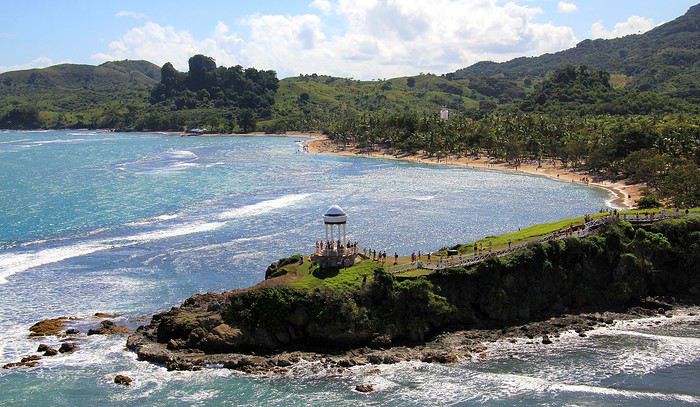
A peine débarqués du navire, on embarque à nouveau … mais sur un tout autre moyen de transport, finie la navigation, on prend place maintenant sur un drôle de véhicule hybride. Un genre de machine à grosses roues, dans un style intermédiaire entre camion et bus d'aventures tout-terrain. De simples banquettes font offices de sièges, quant aux dossiers et aux montants métalliques, ils sont tous rembourrés et capitonnés … On le comprend vite, la route, enfin la piste qui s'annonce pour cette virée risque d'être chaotique. Pas de doute, il ne doit pas s'agir d'un long ruban de bitume très tranquille !
Pour l'instant nous traversons la paisible petite ville de Maimon. Une agglomération sans grand intérêt si ce n'est d'avoir un aperçu de la vie quotidienne locale. Des enfants bruyants jouent dans la cour de l'école et quelques habitantes font leurs achats dans les boutiques, la plupart sont de simples maisons/cases comme d'ailleurs beaucoup d'habitations. En voici deux exemples assez représentatifs du style de l'habitat local. Une simple maison recouverte de tôles ondulées mais dont les murs extérieurs sont agrémentés d'une teinte bleutée. C'est un aspect des plus courants dans la petite cité.
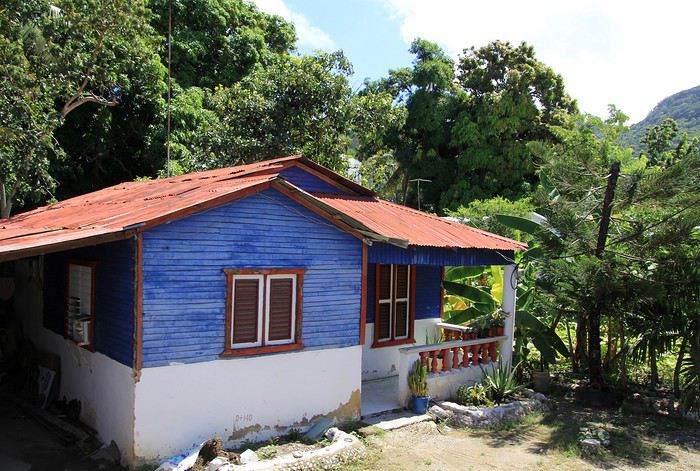
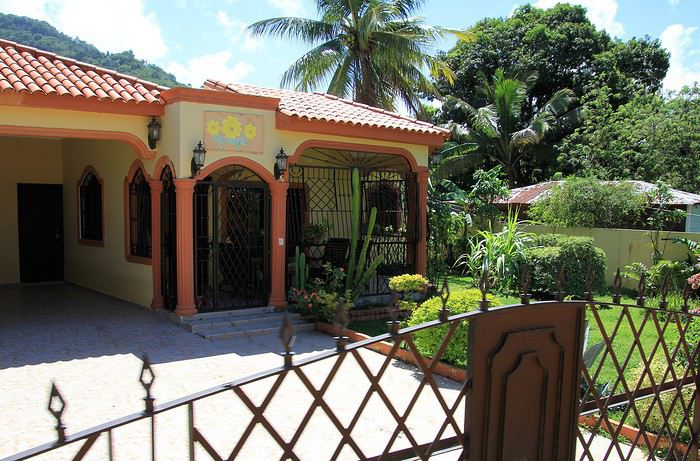
Plus loin, nous passons devant une maison un peu plus cossue : un propret jardinet et des grilles ouvragées entourent cette demeure plus élaborée et dont on imagine le meilleur confort intérieur.
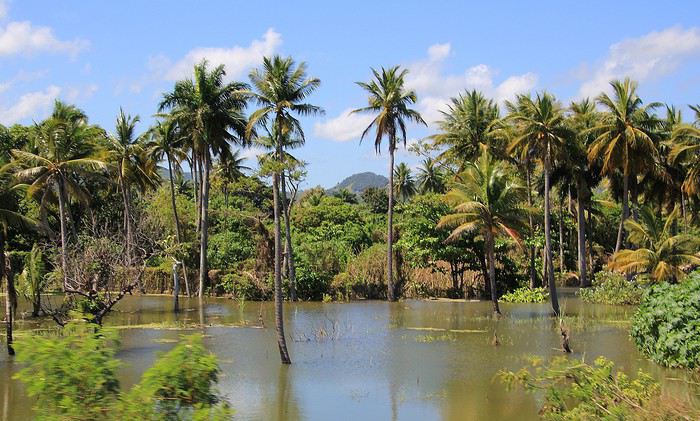
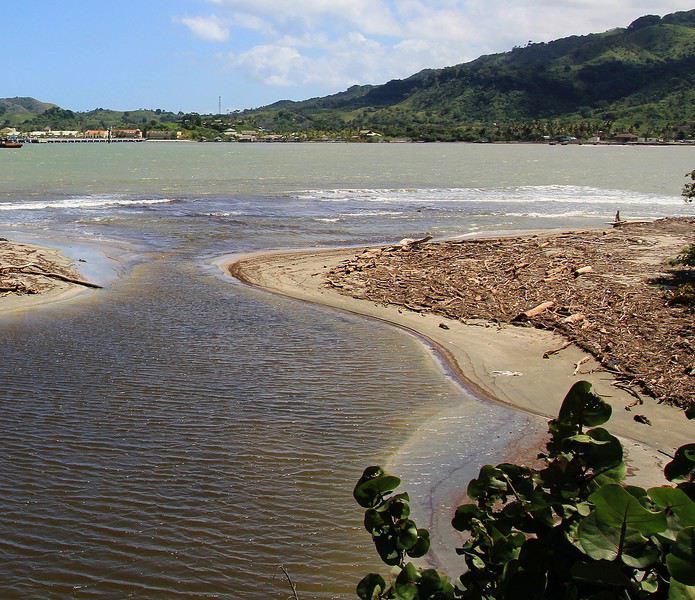
Passons la périphérie urbaine, place à la campagne. On le constate dès le début du trajet, les terrains aux abords de la voie sont détrempés voire inondés. Le chauffeur, sympa, nous informe que de récentes et fortes intempéries ont quelque peu endommagé la piste que nous devons emprunter … Au fond de cette baie, le courant et les torrents ont charrié des quantités de branchages, certains sont encore là, amassés au bord du rivage bordé de mangrove.
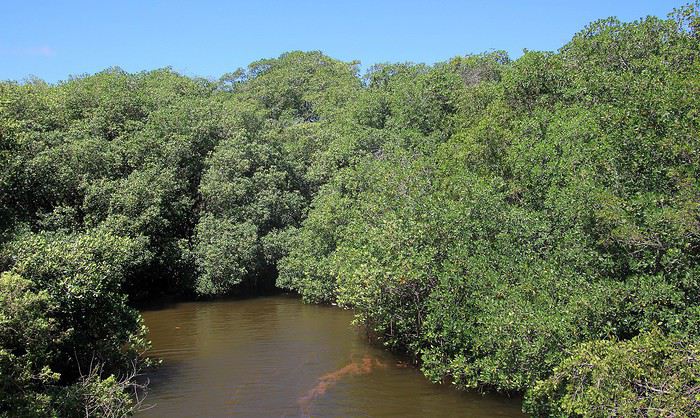
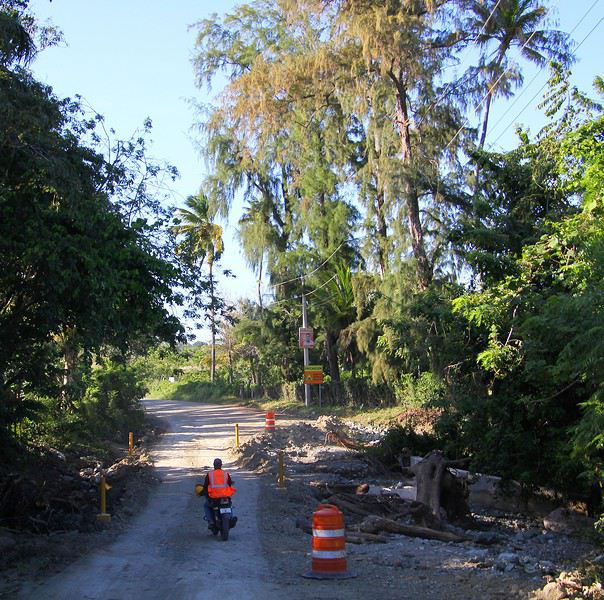
Sur ce tronçon, un torrent a emporté une partie de la route, le passage se fait désormais sur une seule voie constituée de terre battue.
Destination le Mali par la route de l'espoir English translation pending
Bonjour
J'aurais voulu avoir des renseignements pour partir de la France à Bamako (Mali).
Ces renseignements portent sur l'état de la route de l'espoir et surtout le parcours Nioro du sahel à Bamako.
Qu'en est les possibilités de traverser l'Espagne, le Maroc, la Mauritanie et le Mali 'Frontieres ouvertes depuis le coup d'état avec le coronavirus.
Cordialement
Traversée des Pyrénées par la route des cols (à vélo) English translation pending
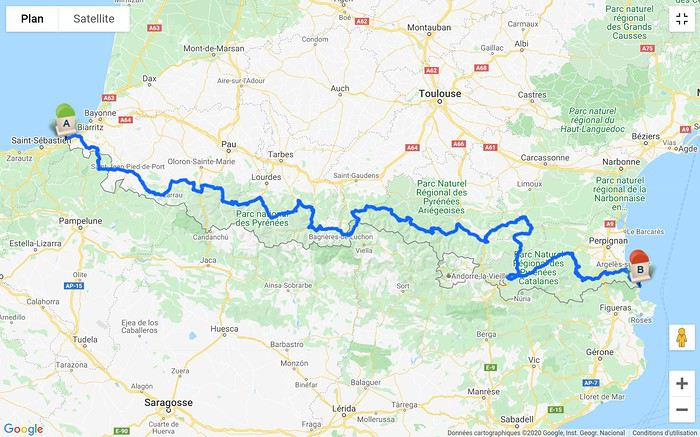 Bonjour à tous
La COVID aura eu raison de mon voyage en Écosse pour cette année qui était prévu du 21 août au 9 septembre. En effet, je suis contraint de reporter mon voyage à l'année prochaine pour cause de quarantaine au Royaume-Uni. J'ai donc changé mes billets d'avion pour septembre 2021.
C'est l'occasion de réaliser un projet qui me tente depuis un moment, la traversée des Pyrénées d'Ouest en Est par la route des cols. Après la route des Grandes Alpes en juin, c'est mon année montagne !
Si vous voulez faire quelques kilomètres ou plus avec moi, vous pourrez suivre ma progression ici:
Bonjour à tous
La COVID aura eu raison de mon voyage en Écosse pour cette année qui était prévu du 21 août au 9 septembre. En effet, je suis contraint de reporter mon voyage à l'année prochaine pour cause de quarantaine au Royaume-Uni. J'ai donc changé mes billets d'avion pour septembre 2021.
C'est l'occasion de réaliser un projet qui me tente depuis un moment, la traversée des Pyrénées d'Ouest en Est par la route des cols. Après la route des Grandes Alpes en juin, c'est mon année montagne !
Si vous voulez faire quelques kilomètres ou plus avec moi, vous pourrez suivre ma progression ici:https://deconcarneauavelobiensur.blogspot.com
Ne trouvant pas de train avec vélo de Quimper à Biarritz, c'est en voiture que je pense descendre vers le départ à Hendaye. Je suis donc à la recherche d'une place de stationnement dans la région pour deux semaines minimum, voir trois à partir du mercredi 19 ou jeudi 20 août. J'en appelle à tous les membres du forum qui auraient une solution, même payante. Les parking pro que je trouve sur internet sont tous complet. Merci pour votre aide éventuelle, André.
Conseil roues sur vélo de route Gravel Specialized Diverge English translation pending
Bonjour,
l'année dernière j'ai fait un voyage dans l'Occitanie avec mon vélo route/ gravel specialized Diverge ( 11 vitesses, frein a disque).
Cependant, la roue arrière n'a pas trop aimé le poids et encore moins les hors chemins. Du coup, ma jante commence a se casser. Peut-être que certains entre vous pourrais me conseiller des références des roues pas très cher et costaud (300 euros maxi).
merci pour votre aide!
l'année dernière j'ai fait un voyage dans l'Occitanie avec mon vélo route/ gravel specialized Diverge ( 11 vitesses, frein a disque).
Cependant, la roue arrière n'a pas trop aimé le poids et encore moins les hors chemins. Du coup, ma jante commence a se casser. Peut-être que certains entre vous pourrais me conseiller des références des roues pas très cher et costaud (300 euros maxi).
merci pour votre aide!
Aller à Bamako par la route Espagne, Maroc et Mauritanie English translation pending
Très bien cette série de contes surtout par ces temps de confinement.
Je profite de ce message pour avoir des renseignements sur les possibilités de partir à Bamako par la route; Espagne, Maroc et Mauritanie comme j'ai l'habitude de le faire.
Cordialement
Trajet Demnate-Ouarzazate et état de la route English translation pending
Bonjour.En voyage virtuel je prépare un futur périple pour emmener des amies qui ne connaissent pas le Maroc. Après la vallée des Ait Bouguemez, Demnate je voudrais rejoindre les environs de Ouarzazate (telouet etc...). J'ai déjà pris la R307 et mis à part des paysages grandioses j'en garde un souvenir épouvantable à cause de la route :j'ai fait du 20 kms tout du long en me demandant si la voiture n'allait pas expirer car moi je suis arrivée à bout de souffle au gîte...je me demande quel serait le meilleur itinéraire à partir de Demnate:
-P 3108-P2016: Ait Adel, Ait Abdi, Azlag, abadou, Mdast, Al Mahrouze puis la N9..
-P2117: Sidi Rahal-Touama puis N9...
Avez-vous fait la route Agouti-Demnate :R302 car je n'en ai fait qu'une petite partie.
Merci.Au plaisir de vous lire.
Itinéraire de randonnée sur la Haute Route des Pyrénées (orientation) English translation pending
Bonjour,
J'envisage de faire la traversée des Pyrénées dans le sens Est Ouest l'été prochain avec un départ début juillet. mon itinéraire est quasiment arrêté constituant un mix du GR10, GR 11 et HRP. je me suis procuré les guides Treck des Pyrénées , Transpyr et la Senda GR 11 pour me faciliter la tache, pas simple malgré tout car les descriptions peuvent manquer de précisions sur certaines étapes. pour éviter d'embarquer des tonnes de cartes, je prévois d'acheter la carte micro SD de chez Globexplorer (pas donné 148 Eur mais tellement légère !)à intégrer dans un smartphone. j'aimerais avoir un retour d'expérience sur l'utilisation de cette carte et(ou) tout autre conseil pour bien s'orienter sur la HRP peu balisée et donc compliquée par mauvais temps. un grand merci par avance. Philippe
J'envisage de faire la traversée des Pyrénées dans le sens Est Ouest l'été prochain avec un départ début juillet. mon itinéraire est quasiment arrêté constituant un mix du GR10, GR 11 et HRP. je me suis procuré les guides Treck des Pyrénées , Transpyr et la Senda GR 11 pour me faciliter la tache, pas simple malgré tout car les descriptions peuvent manquer de précisions sur certaines étapes. pour éviter d'embarquer des tonnes de cartes, je prévois d'acheter la carte micro SD de chez Globexplorer (pas donné 148 Eur mais tellement légère !)à intégrer dans un smartphone. j'aimerais avoir un retour d'expérience sur l'utilisation de cette carte et(ou) tout autre conseil pour bien s'orienter sur la HRP peu balisée et donc compliquée par mauvais temps. un grand merci par avance. Philippe
Recherche un ou deux compagnons de route pour la Côte d’Ivoire English translation pending
Bonjour à tous
Nous sommes un groupe de 4 véhicules 4x4 en préparation pour un road tripe en Côte d’Ivoire
Aussi nous recherchons un ou deux compagnons de voyage (femmes ou hommes) sachant lire un road book et une carte savoir utiliser un GPS
avec une participation des frais
Tente de bivouac indispensable
Le départ est prévu dernière semaine de Mars 2020 pour un retour fin Mai
Au plaisir de vous lire et pourquoi pas faire le voyage ensemble
Road trip Cluj-Napoca, Transylvanie et route de Transfagaras en hiver (Roumanie) English translation pending
Bonjour,
Nous aimerions faire un roadtrip en roumanie la première semaine de Mars, en débutant notre périple à Cluj-Napoca, en passant par la Transylvanie et la célèbre route de Transfagaran.
Nous nous questionnons cependant sur la faisabilité du voyage: la météo en Roumanie à cette époque nous permettrait-elle de le réaliser? Si certains d'entre vous ont réalisé un tel voyage à cette époque, nous sommes preneuses de conseils. Nous avons peur d'être bloquées par la neige.
Les sites nous indiquant la météo paraissent défavorables à ce projet. Nous souhaitons nous renseigner avant de changer de destination.
Belle journée,
JuneMoone
Nous aimerions faire un roadtrip en roumanie la première semaine de Mars, en débutant notre périple à Cluj-Napoca, en passant par la Transylvanie et la célèbre route de Transfagaran.
Nous nous questionnons cependant sur la faisabilité du voyage: la météo en Roumanie à cette époque nous permettrait-elle de le réaliser? Si certains d'entre vous ont réalisé un tel voyage à cette époque, nous sommes preneuses de conseils. Nous avons peur d'être bloquées par la neige.
Les sites nous indiquant la météo paraissent défavorables à ce projet. Nous souhaitons nous renseigner avant de changer de destination.
Belle journée,
JuneMoone
Voyage en motorisé pour la route Dempster au Yukon English translation pending
J'ai le projet de faire la route Dempster au Yukon en juin-juillet prochain...Est-ce sécuritaire pour le
VR?
Station essence à San Pedro d'Atacama, route de Toconao English translation pending
Bonjour,
Il y a désormais une station essence à San Pedro d'Atacama, ouverte 24/24 et 7j/7, à la sortie de San Pedro, route de Toconao.
Anne
Il y a désormais une station essence à San Pedro d'Atacama, ouverte 24/24 et 7j/7, à la sortie de San Pedro, route de Toconao.
Anne
Crossing the border by road from Kyrgyzstan to Kashgar in China
Hi,
Does anyone know if it's possible to cross the border by road from Kyrgyzstan to Kashgar in China? If so, is it possible to get a Chinese visa at the border, or do I need to arrange it in advance from France? Any info is welcome, THANKS! :)
Does anyone know if it's possible to cross the border by road from Kyrgyzstan to Kashgar in China? If so, is it possible to get a Chinese visa at the border, or do I need to arrange it in advance from France? Any info is welcome, THANKS! :)
Trajet Edmonton (Alberta) - Yellowknife (Territoires du Nord-Ouest) par la route English translation pending
Bonjour à tous,
Après avoir été dans l'ouest canadien, au Québec , en Ontario , au Yukon , en Alaska plus dans une quinzaine d'états américains je suis attiré ( et je ne sais pas pourquoi ) par les territoires du nord ouest . J'aimerai bien faire le trajet Edmonton- Yellowknife par la route et sans doute revenir sur mes pas car je ne sais pas si il est possible d'abandonner un véhicule à Yellowknife loué en Alberta.
J'aimerai donc savoir si certains d'entre vous ont déjà fait ce trajet, si ça vaut vraiment le coup et si Yellowknife mérite d'être vue. Je sais que l'on peut y voir des aurores boréales mais si je devais faire ce voyage je privilégierai plutôt l'été. Car j'avoue que sur internet on ne trouve pas grand chose sur cette région ni sur des guides de voyage non plus.
Merci pour vos réponses.
Daniel