Results for "Faute-sur-Mer+|+127"
292875 results found.
Que peut-on apporter et donner à Cuba? English translation pending
Je lis souvent que de donner des t-shirts, dentifrice, shampooing, etc est beaucoup apprécié.
Est-ce vrai ?
Quoi apporter ?
Commment ça marche ?
Est-ce vrai ?
Quoi apporter ?
Commment ça marche ?
À ne pas manquer en Bolivie English translation pending
Bonjour à tous!
Je compte aller en Bolivie, un mois cet été et je cherche des gens qui ont deja fait ce voyage pour me conseiller sur les sites à ne pas manquer
J'attends vos réponses!
Merci d'avance et à bientôt
Je compte aller en Bolivie, un mois cet été et je cherche des gens qui ont deja fait ce voyage pour me conseiller sur les sites à ne pas manquer
J'attends vos réponses!
Merci d'avance et à bientôt
Livres à ne pas lire quand on est déjà mordu English translation pending
Bonjour
je propose ce nouveau sujet de discussion.
Parlez des livres que vous avez lu, qui traitent du voyage, et qui donnent encore plus envie de partir.
Je sais, c'est pas bien de faire ça, c'est malsain, parce qu'on a tous suffisamment envie de se barrer, mais c'est plus fort que nous, n'est-ce pas?
J'ouvre, avec l'Usage du Monde de Nicolas Bouvier.
Entre 1951 et 1953, Nicolas Bouvier est parti avec un ami peintre (Thierry Vernet) en fiat facile à réparer qui tombe tout le temps en panne à travers l'Europe Balkanique, puis la Turquie, le Kurdistan, l'Iran, l'Afganistan. Il raconte ses souvenirs et ses analyses d'une manière simple et très émouvante. Les rencontres et les moments insolites donnent particulièrement envie de vivre des instants similaires, même s'ils ont quand même pas mal galéré. Mais la galère est un véhicule comme un autre...
Donc voilà, pour ceux qui n'aiment pas voyager, lisez ce bouquin, les autres, surtout, abstenez vous, sinon, vous serez irrémédiablement perdus, korzéam.
Which island for a first trip to Greece?
Hi there,
Our first trip to Greece as a couple. We're planning to spend 7 days in Greece from August 30th to September 5th. We'll reserve 2 days for Athens at the end of the trip. For the remaining 5 days, we want to visit an island—any recommendations? Thanks for your tips and details, we really appreciate it.
August 2026 Photo Contest Theme: Religious Buildings
Since I don’t have time to come up with an original theme, I’m suggesting a broad, international topic: religious buildings around the world. Given how vast the subject is, I’d like us to focus on photos of exteriors—wide shots or details. Interiors, which are just as varied, could be the subject of another contest.
A few of my own photos, just to give you an idea: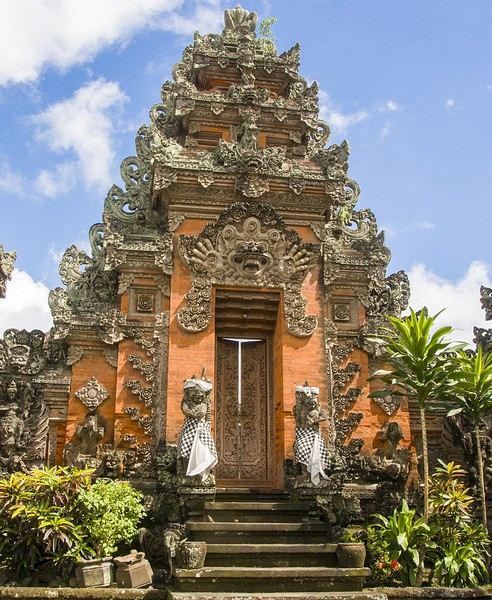
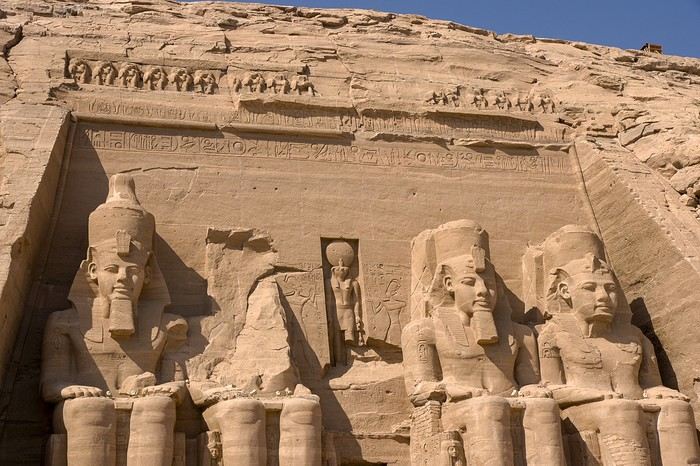
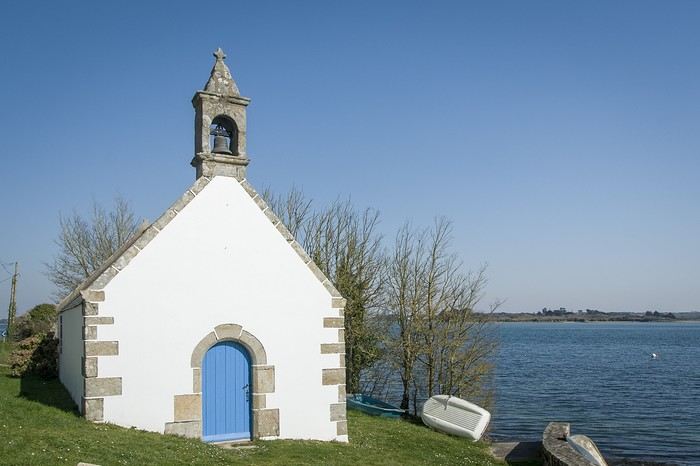
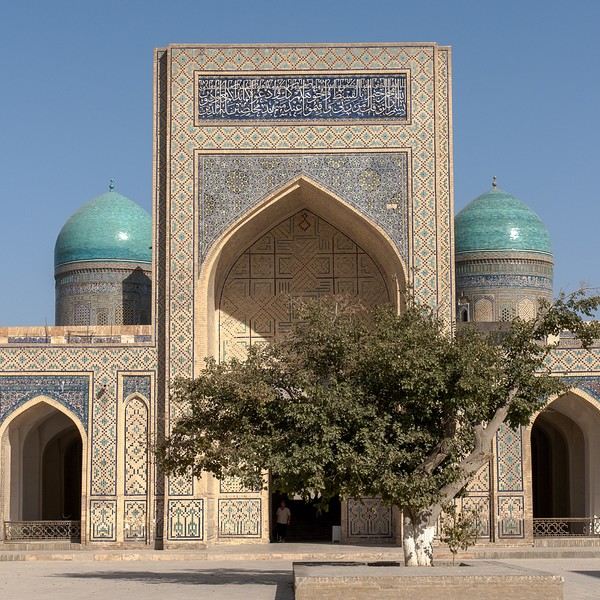
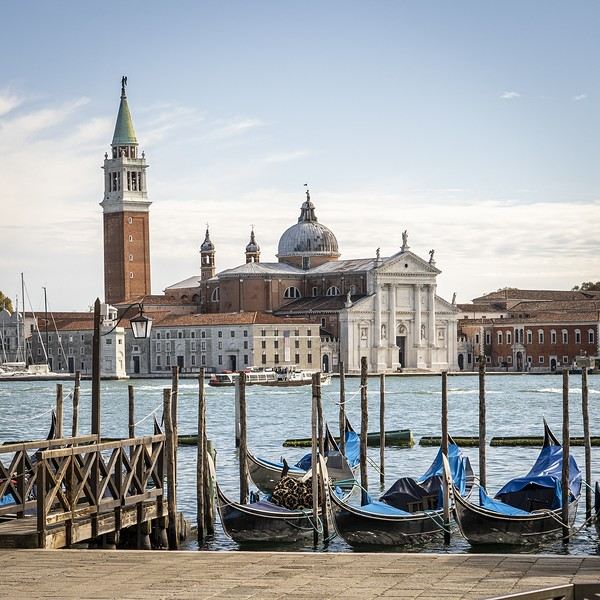

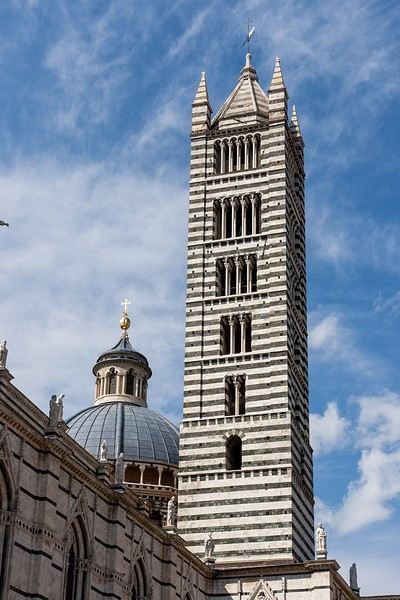
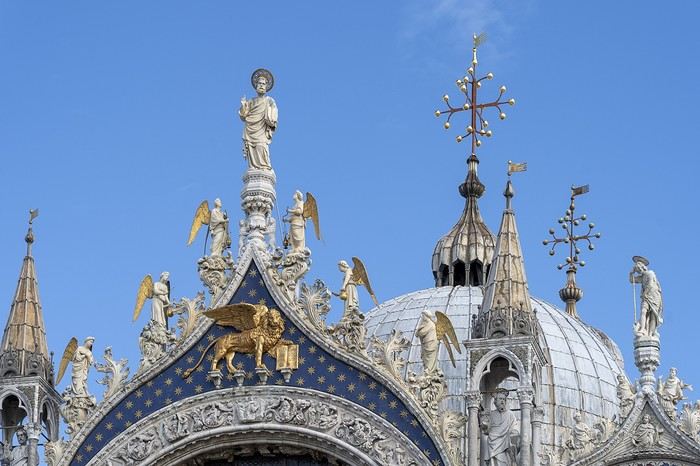
A few of my own photos, just to give you an idea:
Planning a 3-month Southern Africa trip with kids in a camper van
Hello,
I’m reaching out because I’ve already read tons of info from other forums (thanks a million, by the way!) and blogs, but now I’m overwhelmed with details and have so many questions. I’m really hoping you can help us figure this out! Here’s the plan: We’re leaving France for Senegal in our camper van (with two kids, aged 4 and 7), then shipping the van to South Africa before heading to Namibia. We’re planning to leave this summer and should arrive in South Africa in early September. The goal is to reach Réunion by early December, which gives us 3 months to explore Southern Africa. Originally, we wanted to pick up the van in Cape Town, head up to Namibia, and visit the main parks and iconic spots, then go north to Botswana (Etosha Park) and Zimbabwe (Victoria Falls) before heading back down to South Africa to enjoy the milder temperatures while exploring the country. But now we’re wondering how to get back to South Africa. We’ve come up with three options: - Head back down through Botswana: I’ve read everywhere that Botswana isn’t recommended for kids under 6 (most parks) because it can be potentially dangerous—few enclosures for animals (even though we have a camper van with "secure" beds), and the agencies we’ve contacted don’t recommend it. Plus, southern Botswana is tough to navigate in a camper van. - Return from central Botswana (Maun) to Windhoek and drive back to Cape Town via Namibia. - Cross Zimbabwe and potentially Mozambique to head down to Kruger Park and Johannesburg.
Anyone familiar with this region have any recommendations?
Also, is it necessary to book accommodations in advance? Is that only required in certain countries (maybe Botswana/Zimbabwe)? We’d like a mix of camping and lodges.
All advice is welcome!
I’m reaching out because I’ve already read tons of info from other forums (thanks a million, by the way!) and blogs, but now I’m overwhelmed with details and have so many questions. I’m really hoping you can help us figure this out! Here’s the plan: We’re leaving France for Senegal in our camper van (with two kids, aged 4 and 7), then shipping the van to South Africa before heading to Namibia. We’re planning to leave this summer and should arrive in South Africa in early September. The goal is to reach Réunion by early December, which gives us 3 months to explore Southern Africa. Originally, we wanted to pick up the van in Cape Town, head up to Namibia, and visit the main parks and iconic spots, then go north to Botswana (Etosha Park) and Zimbabwe (Victoria Falls) before heading back down to South Africa to enjoy the milder temperatures while exploring the country. But now we’re wondering how to get back to South Africa. We’ve come up with three options: - Head back down through Botswana: I’ve read everywhere that Botswana isn’t recommended for kids under 6 (most parks) because it can be potentially dangerous—few enclosures for animals (even though we have a camper van with "secure" beds), and the agencies we’ve contacted don’t recommend it. Plus, southern Botswana is tough to navigate in a camper van. - Return from central Botswana (Maun) to Windhoek and drive back to Cape Town via Namibia. - Cross Zimbabwe and potentially Mozambique to head down to Kruger Park and Johannesburg.
Anyone familiar with this region have any recommendations?
Also, is it necessary to book accommodations in advance? Is that only required in certain countries (maybe Botswana/Zimbabwe)? We’d like a mix of camping and lodges.
All advice is welcome!
Three beautiful weeks during the Japanese autumn
I’m sharing our three-week trip to Japan from late October to mid-November 2025. There were four of us—my partner and a couple of friends.
I’ve traveled often with my friend Christian (Bolivia, Argentina, Costa Rica, Namibia, Laos), but this time our partners joined us.
The rough itinerary:
Arrival in Tokyo. Visiting Shinjuku/Shibuya districts + day trip to Kamakura
5 days in the Japanese Alps, from Matsumoto to Kanazawa (via Kamikochi, Hirayu Onsen, and Takayama)
5 days in Kyoto
Nara, Osaka, Koyasan
Return to Tokyo (Asakusa district), with a day trip to Nikko
We booked our flights well in advance (9 months ahead): the flight cost 1086 € per person. Compared to over 2000 € if we’d booked for the same dates just 3 months prior.
For accommodations, we mostly used Booking.com. The onsen was booked via Japanican, and in Kyoto, we stayed in an Airbnb.
We also made 5 train reservations a month in advance on Klook or directly on the train’s website.
Day 1: Departure from Brussels (October 24, 2025) Early morning takeoff at 6 AM to Munich (1.5-hour layover) with Lufthansa, then a 12-hour flight with ANA, arriving the next morning at 7 AM at Tokyo Haneda.
Day 2: Arrival in Tokyo Airport formalities were quick. The eSIM we bought before leaving activated as soon as we landed (10 GB plan with Saily—more than enough for our mobile internet needs, mainly Google Maps and Google Translate). We’d received 4 ICOCA cards from our neighbors, which we loaded with 15000 ¥ each. We took the Keihin train, then the Yamanote Line. It’s easy to navigate since everything is in English, and each station is announced on scrolling displays in English too.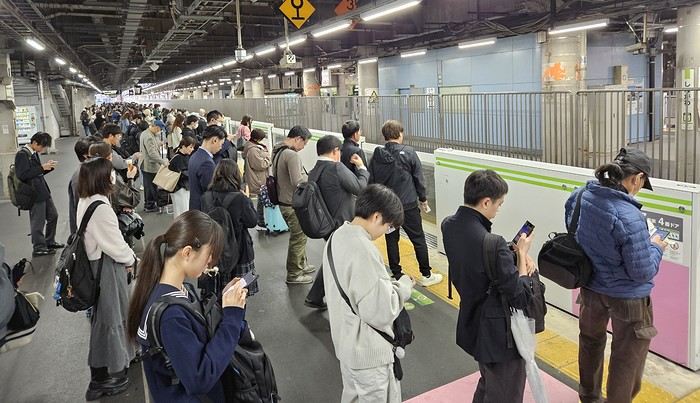
We got off the Yamanote Line at the station just after Shinjuku because it’s easier to exit that massive station with our luggage. So we ended up in Shin-Okubo, right in the Korean district. A 10-minute walk took us to Villa Fontaine Hotel. A great hotel, well-located north of the Kabukichō district. The room even seemed bigger than we’d expected.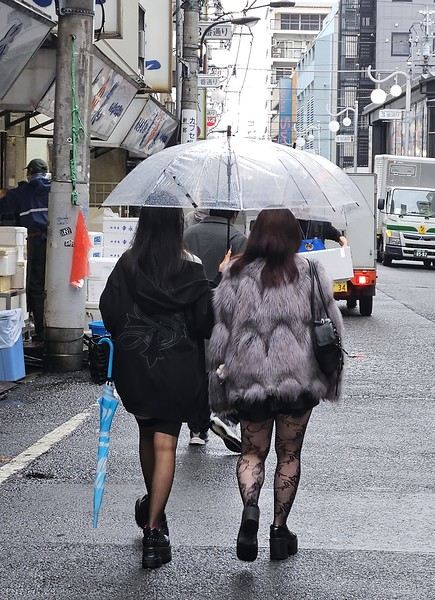
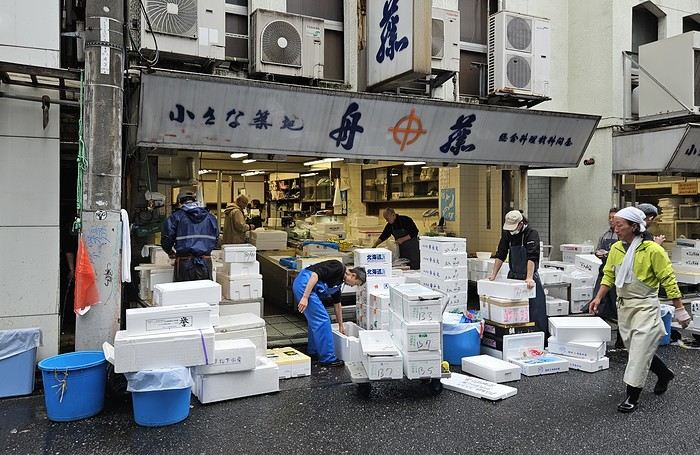 It was 15°C, but it rained—and kept raining on and off all day. Belgian weather, basically.
We went for a walk in Shinjuku Gyoen Park. Not as pretty in the rain, but the big greenhouse was interesting.
It was 15°C, but it rained—and kept raining on and off all day. Belgian weather, basically.
We went for a walk in Shinjuku Gyoen Park. Not as pretty in the rain, but the big greenhouse was interesting.
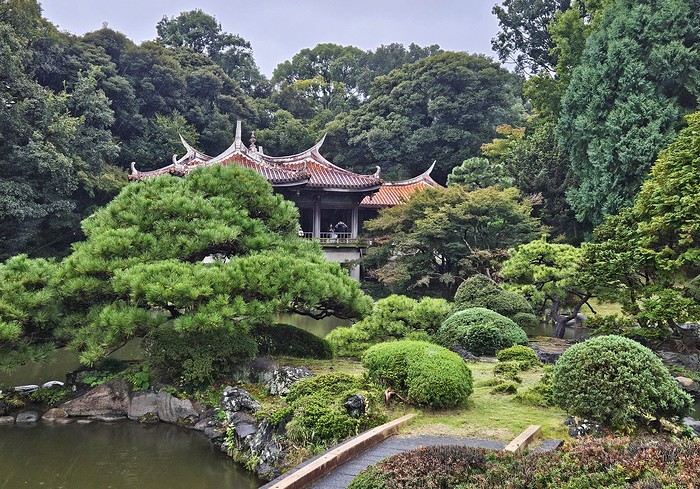
Then our first ramen (hearty and for 1000 ¥—pretty much the price of all our ramen during the trip). We headed back to the hotel since check-in was after 3 PM. Shower and relax before going out for dinner. Dinner was barbecue at Shichirin Yakiniku Anan (1700 ¥ each—good and cheap). Ordering via tablet wasn’t easy, but luckily it was in English.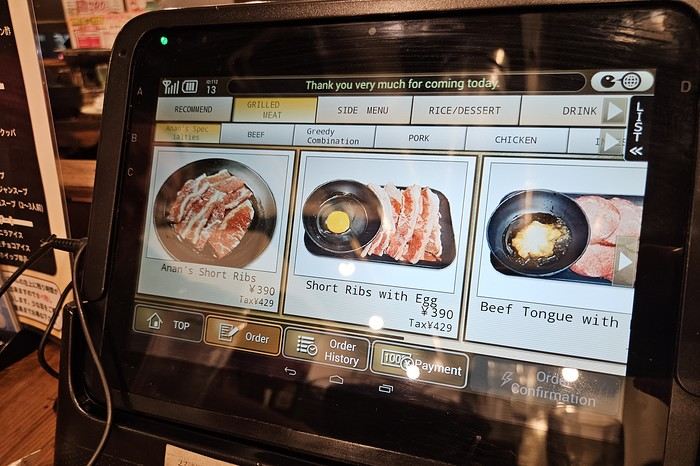
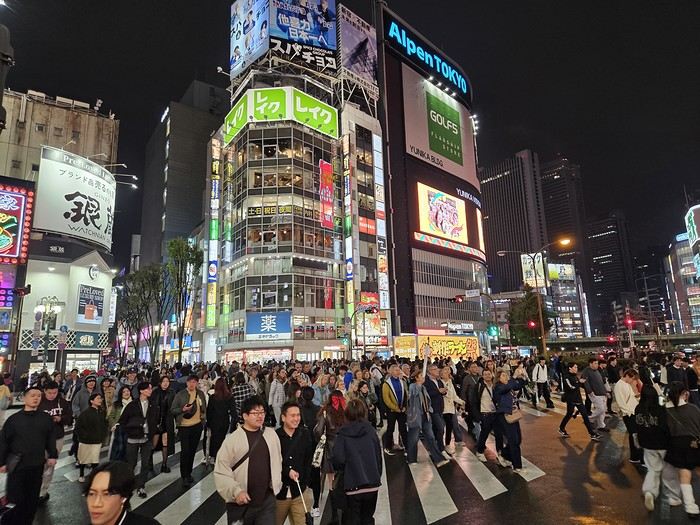
We ended the evening with a stroll through Kabukichō before a well-deserved sleep.
Day 1: Departure from Brussels (October 24, 2025) Early morning takeoff at 6 AM to Munich (1.5-hour layover) with Lufthansa, then a 12-hour flight with ANA, arriving the next morning at 7 AM at Tokyo Haneda.
Day 2: Arrival in Tokyo Airport formalities were quick. The eSIM we bought before leaving activated as soon as we landed (10 GB plan with Saily—more than enough for our mobile internet needs, mainly Google Maps and Google Translate). We’d received 4 ICOCA cards from our neighbors, which we loaded with 15000 ¥ each. We took the Keihin train, then the Yamanote Line. It’s easy to navigate since everything is in English, and each station is announced on scrolling displays in English too.
We got off the Yamanote Line at the station just after Shinjuku because it’s easier to exit that massive station with our luggage. So we ended up in Shin-Okubo, right in the Korean district. A 10-minute walk took us to Villa Fontaine Hotel. A great hotel, well-located north of the Kabukichō district. The room even seemed bigger than we’d expected.
It was 15°C, but it rained—and kept raining on and off all day. Belgian weather, basically.
We went for a walk in Shinjuku Gyoen Park. Not as pretty in the rain, but the big greenhouse was interesting.
Then our first ramen (hearty and for 1000 ¥—pretty much the price of all our ramen during the trip). We headed back to the hotel since check-in was after 3 PM. Shower and relax before going out for dinner. Dinner was barbecue at Shichirin Yakiniku Anan (1700 ¥ each—good and cheap). Ordering via tablet wasn’t easy, but luckily it was in English.
We ended the evening with a stroll through Kabukichō before a well-deserved sleep.
Martine from DD in Arizona and New Mexico
Good evening everyone! 🙂
We’re back from our September 2025 road trip, this time to explore Arizona and New Mexico, and it’s time for me to start my travel journal—especially since everything’s already booked for another trip in September 2026 (to California), and I need to get started on the planning.
I was a little worried this new visit to Uncle Sam’s country might not be as "wow" as the others, but we still discovered some incredible places.
For those who don’t know us, we’re a couple in our seventies who speak very little English, but that didn’t stop us from fully enjoying our stay.
For this 6th road trip in the U.S., we spent 21 nights there, drove 4,160 km by car, and walked nearly 160 km in a loop starting from Phoenix.
We’d been to Arizona before (but not this side) and never to New Mexico. This whole road trip was a huge discovery for us.
In the prices mentioned (some in euros, others in dollars), bank fees and exchange charges are included. The flights, car rental, and parking were all paid for in December 2024 when we booked.
We’d downloaded the MPC (Mobile Passport Control) app, but there wasn’t a dedicated line at Phoenix Airport. Still, we got through quickly with friendly, smiling agents.
I don’t drive at all (I hate it), so the stops were chosen based on activities but also, for some, to limit daily mileage for the sole driver. The kilometers listed in the itinerary are the daily distances.
We traveled from September 9th to 22nd, unfortunately once again without our dear friends Mimi and Maumau.
The itinerary
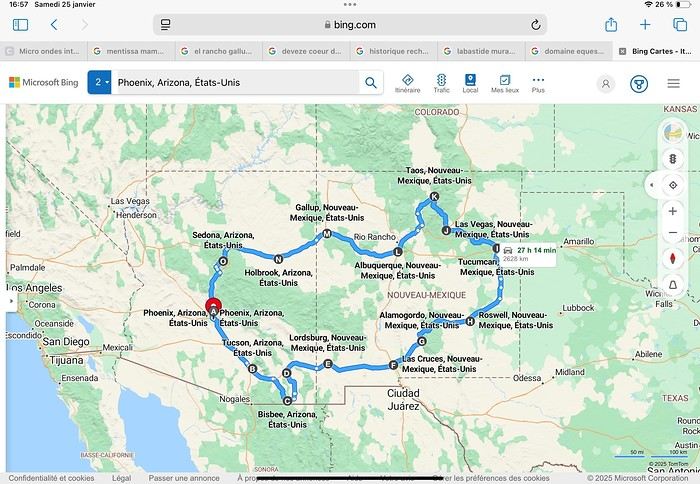
Day 1: Flight Marseille-Paris-Phoenix, then Gold Canyon (133 km) Day 2: Tucson (271 km) Lost Dutchman State Park Day 3: Tucson (155 km) Day 4: Tucson (34 km) Day 5: Bisbee (182 km) Day 6: Lordsburg (345 km) Day 7: Las Cruces (253 km) Day 8: Alamogordo (162 km) Day 9: Roswell (264 km) Day 10: Tucumcari (369 km) Day 11: Las Vegas (281 km) – the one in New Mexico Day 12: Taos (213 km) Day 13: Santa Fe (224 km) Day 14: Albuquerque (123 km) Day 15: Gallup (246 km) Day 16: Holbrook (224 km) Day 17: Flagstaff (179 km) Day 18: Sedona (118 km) Day 19: Sedona (48 km) Day 20: Sedona (41 km) Day 21: Phoenix (256 km) Day 22: Phoenix Airport (35 km)
📊 **Budget**: A little over 7,500 € for both of us, all included. The exchange rate was in our favor (1.17 dollars to 1 €). 📊 **Flights**: Marseille-Paris Charles de Gaulle-Phoenix: 1,787 € for two, with one checked bag each (Air France) 📊 **ESTA**: $42 📊 **America the Beautiful Pass**: $80 📊 **Parking**: 134 € (super eco at Marseille) 📊 **Car rental (Hertz)**: 865 €. Since there were no SUVs left in the reserved category (Nissan Rogue), we got an upgrade (4x4 Ford Explorer). We booked through Air France (15% discount). We’d originally reserved it in December for 1,140 €, but since prices dropped in March, we canceled and rebooked for 865 €. Hertz offers a free Hertz Gold Plus Rewards program, which gives you priority counter service when picking up the car. 📊 **Accommodation**: 2,400 € We stayed in hotels and motels of varying standards (from 60 to 203 € per night, depending on the city), all booked through Booking.com or Hotels.com. Out of 21 nights, only two didn’t include breakfast in the price. Booking.com sometimes offers slightly cheaper rates if you book by phone using the mobile app, and our Genius 3 status on the site also got us some preferential rates. 📊 **Supplementary insurance**: AVA 200 € for medical care if needed 📊 **Cash**: $2,078. We left with 1,000 € exchanged before departure and made two withdrawals of $500. This cash covered: - Evening restaurants and tips - Midday picnics - Gas: $298 for 4,160 km - Museum and private park entries (per person): - Lost Dutchman: $10 - Arizona-Sonora Desert Museum: $28 - Bird Cage Theater: $16 - Tombstone Shootout: $8 - New Mexico Farm & Ranch Museum: $12 - Roswell International UFO Museum: $5 - Billy the Kid Museum: $7 - Rancho de Taos: $22 - West Fork Oak Creek Trail entry: $15 We got a few discounts thanks to our senior age (+65). - Souvenirs and little treats
Like on our previous road trips, we didn’t rent a GPS. We got around using offline GPS apps Here WeGo and Organic Maps, with maps of the states we visited downloaded before we left (on our phones).
❤️❤️❤️ **Highlights** (there are so many!) 📍 Goldfield Ghost Town (even if it’s a reconstruction) 📍 The standing army of Saguaro cacti at Saguaro National Park West 📍 Diving into the cowboy universe of Tombstone 📍 The welcome from Rick and Henry at our guesthouse in Bisbee (Garden at Mile High Ranch) 📍 The tangled rocks of Chiricahua National Monument 📍 The flavored pistachios from Dwayne’s Fresh Jerky and Mac Ginnis Pistachioland 📍 Restaurants: La Posta (Las Cruces), Diner 66 (Albuquerque), and the Haunted Hamburger (Jerome) 📍 The old plazas of New Mexico 📍 The solitude and beauty of the white dunes at White Sands National Park 📍 Stepping back in time at the Billy the Kid Museum (Fort Stanton) 📍 Sections of historic Route 66 and the old motels of Tucumcari, especially at night when all the neon lights are on 📍 Taos Pueblo and diving into Native American culture 📍 After the Rio Grande Bridge, the descent via NM 567 to the very bottom of the Rio Grande Gorge, then the road along the riverbanks to Taos 📍 The tranquility of the Chimayo Sanctuary 📍 Discovering the ingenious native dwellings at Bandelier National Monument and Walnut Canyon National Park 📍 The small towns along the Turquoise Trail 📍 The red rocks of Red Rock Park and the Painted Desert 📍 The extraordinary colors of the petrified trees at Petrified Forest National Park 📍 Sedona, its red rocks, and the reward of the viewpoints at the end of hikes (Devil’s Bridge, The Subway, and West Fork Oak Creek) 📍 The immersion in Mexico when visiting Tlaquepaque 📍 The almost-ghost town of Jerome and its terraced streets 📍 The incredible kindness of Americans, always ready to help and up for a chat ❤️
☹️☹️☹️ **Flops** (there are very few) 📍 Several museums and churches being closed, so we couldn’t visit them 📍 Some museums and visitor centers opening late (10 AM) and closing early (4 PM) 📍 A 64 € phone roaming charge because we got near the Mexican border and picked up their cell tower 📍 The outrageous price ($5.99) for a gallon of gas at the Shell near Phoenix Airport
I hope this helps! Anyway, thanks for reading my long post. Don’t hesitate to reach out, even via PM, if you see I haven’t replied and you’d like more details. Have a great evening, everyone! 🙂
We’re back from our September 2025 road trip, this time to explore Arizona and New Mexico, and it’s time for me to start my travel journal—especially since everything’s already booked for another trip in September 2026 (to California), and I need to get started on the planning.
I was a little worried this new visit to Uncle Sam’s country might not be as "wow" as the others, but we still discovered some incredible places.
For those who don’t know us, we’re a couple in our seventies who speak very little English, but that didn’t stop us from fully enjoying our stay.
For this 6th road trip in the U.S., we spent 21 nights there, drove 4,160 km by car, and walked nearly 160 km in a loop starting from Phoenix.
We’d been to Arizona before (but not this side) and never to New Mexico. This whole road trip was a huge discovery for us.
In the prices mentioned (some in euros, others in dollars), bank fees and exchange charges are included. The flights, car rental, and parking were all paid for in December 2024 when we booked.
We’d downloaded the MPC (Mobile Passport Control) app, but there wasn’t a dedicated line at Phoenix Airport. Still, we got through quickly with friendly, smiling agents.
I don’t drive at all (I hate it), so the stops were chosen based on activities but also, for some, to limit daily mileage for the sole driver. The kilometers listed in the itinerary are the daily distances.
We traveled from September 9th to 22nd, unfortunately once again without our dear friends Mimi and Maumau.
The itinerary
Day 1: Flight Marseille-Paris-Phoenix, then Gold Canyon (133 km) Day 2: Tucson (271 km) Lost Dutchman State Park Day 3: Tucson (155 km) Day 4: Tucson (34 km) Day 5: Bisbee (182 km) Day 6: Lordsburg (345 km) Day 7: Las Cruces (253 km) Day 8: Alamogordo (162 km) Day 9: Roswell (264 km) Day 10: Tucumcari (369 km) Day 11: Las Vegas (281 km) – the one in New Mexico Day 12: Taos (213 km) Day 13: Santa Fe (224 km) Day 14: Albuquerque (123 km) Day 15: Gallup (246 km) Day 16: Holbrook (224 km) Day 17: Flagstaff (179 km) Day 18: Sedona (118 km) Day 19: Sedona (48 km) Day 20: Sedona (41 km) Day 21: Phoenix (256 km) Day 22: Phoenix Airport (35 km)
📊 **Budget**: A little over 7,500 € for both of us, all included. The exchange rate was in our favor (1.17 dollars to 1 €). 📊 **Flights**: Marseille-Paris Charles de Gaulle-Phoenix: 1,787 € for two, with one checked bag each (Air France) 📊 **ESTA**: $42 📊 **America the Beautiful Pass**: $80 📊 **Parking**: 134 € (super eco at Marseille) 📊 **Car rental (Hertz)**: 865 €. Since there were no SUVs left in the reserved category (Nissan Rogue), we got an upgrade (4x4 Ford Explorer). We booked through Air France (15% discount). We’d originally reserved it in December for 1,140 €, but since prices dropped in March, we canceled and rebooked for 865 €. Hertz offers a free Hertz Gold Plus Rewards program, which gives you priority counter service when picking up the car. 📊 **Accommodation**: 2,400 € We stayed in hotels and motels of varying standards (from 60 to 203 € per night, depending on the city), all booked through Booking.com or Hotels.com. Out of 21 nights, only two didn’t include breakfast in the price. Booking.com sometimes offers slightly cheaper rates if you book by phone using the mobile app, and our Genius 3 status on the site also got us some preferential rates. 📊 **Supplementary insurance**: AVA 200 € for medical care if needed 📊 **Cash**: $2,078. We left with 1,000 € exchanged before departure and made two withdrawals of $500. This cash covered: - Evening restaurants and tips - Midday picnics - Gas: $298 for 4,160 km - Museum and private park entries (per person): - Lost Dutchman: $10 - Arizona-Sonora Desert Museum: $28 - Bird Cage Theater: $16 - Tombstone Shootout: $8 - New Mexico Farm & Ranch Museum: $12 - Roswell International UFO Museum: $5 - Billy the Kid Museum: $7 - Rancho de Taos: $22 - West Fork Oak Creek Trail entry: $15 We got a few discounts thanks to our senior age (+65). - Souvenirs and little treats
Like on our previous road trips, we didn’t rent a GPS. We got around using offline GPS apps Here WeGo and Organic Maps, with maps of the states we visited downloaded before we left (on our phones).
❤️❤️❤️ **Highlights** (there are so many!) 📍 Goldfield Ghost Town (even if it’s a reconstruction) 📍 The standing army of Saguaro cacti at Saguaro National Park West 📍 Diving into the cowboy universe of Tombstone 📍 The welcome from Rick and Henry at our guesthouse in Bisbee (Garden at Mile High Ranch) 📍 The tangled rocks of Chiricahua National Monument 📍 The flavored pistachios from Dwayne’s Fresh Jerky and Mac Ginnis Pistachioland 📍 Restaurants: La Posta (Las Cruces), Diner 66 (Albuquerque), and the Haunted Hamburger (Jerome) 📍 The old plazas of New Mexico 📍 The solitude and beauty of the white dunes at White Sands National Park 📍 Stepping back in time at the Billy the Kid Museum (Fort Stanton) 📍 Sections of historic Route 66 and the old motels of Tucumcari, especially at night when all the neon lights are on 📍 Taos Pueblo and diving into Native American culture 📍 After the Rio Grande Bridge, the descent via NM 567 to the very bottom of the Rio Grande Gorge, then the road along the riverbanks to Taos 📍 The tranquility of the Chimayo Sanctuary 📍 Discovering the ingenious native dwellings at Bandelier National Monument and Walnut Canyon National Park 📍 The small towns along the Turquoise Trail 📍 The red rocks of Red Rock Park and the Painted Desert 📍 The extraordinary colors of the petrified trees at Petrified Forest National Park 📍 Sedona, its red rocks, and the reward of the viewpoints at the end of hikes (Devil’s Bridge, The Subway, and West Fork Oak Creek) 📍 The immersion in Mexico when visiting Tlaquepaque 📍 The almost-ghost town of Jerome and its terraced streets 📍 The incredible kindness of Americans, always ready to help and up for a chat ❤️
☹️☹️☹️ **Flops** (there are very few) 📍 Several museums and churches being closed, so we couldn’t visit them 📍 Some museums and visitor centers opening late (10 AM) and closing early (4 PM) 📍 A 64 € phone roaming charge because we got near the Mexican border and picked up their cell tower 📍 The outrageous price ($5.99) for a gallon of gas at the Shell near Phoenix Airport
I hope this helps! Anyway, thanks for reading my long post. Don’t hesitate to reach out, even via PM, if you see I haven’t replied and you’d like more details. Have a great evening, everyone! 🙂
Yet Another Travel Journal in this (Too) Familiar Rajasthan, But with Family and Kids
Prologue
This journal recounts a trip to Rajasthan that’s already over a year old and that I’ve only now found the chance to write about. The summer of 2024 marked my return to India—my tenth trip—after six long years away since my last solo wanderings in Tamil Nadu in 2018 (the journal of which is published on this site). That absence was partly (but not only) due to the long COVID and post-COVID period, which saw a complete halt and then a major slowdown in global tourism. To top it off, Voyage Forum announced its closure in an end-of-the-world atmosphere. A sad time for our favorite social activity…
A few weeks after returning from Rajasthan, I tried to motivate myself to start writing a journal to publish on a forum claiming to be VF’s successor, which I’d eventually signed up for out of desperation. But I kept hesitating and putting the project off because, for one, I no longer have the time I used to. For another, the vibe wasn’t really taking off on that forum—it was overrun with ads and not very active, contrary to what its host’s name suggested. Despite its good intentions and commendable role as a stopgap, it also turned out to be very impractical to use, especially when you don’t have much time like me. I’ll admit I’d occasionally check back on VF to see if anything was happening. But all the discussions remained frozen in time, stuck in that fateful year, 2020. Then, rumors swirled online about shady reasons behind its closure, leaving little room for hope.
And then, one fine morning, I got a message at work from Marien informing me that VF had reopened. What a huge surprise! Even though the forum’s “end” had played out in a somewhat apocalyptic atmosphere, the memories of passionate and heated discussions, the frank debates, and the useful exchanges that made this site a traveler’s goldmine and a unique hub of conviviality all came rushing back to me like a breath of fresh air. I finally saw a sign and tried to motivate myself to find the time to publish the journal of this tenth trip to India and fifth to Rajasthan. But in the end, I got bogged down in professional and family obligations and never managed to find the time to get started. That’s now fixed, though, because I had two reasons for wanting to do it: I find that looking back on a trip to tell others about it is a highly beneficial introspective exercise. Also, I thought this journal could be useful to other travelers on a few points.
Because, “do we really need yet another journal about Rajasthan?” you might rightly ask! Especially in a time when so many journals about the “Land of Kings” have been published since VF’s return, not to mention the countless stories you can already find online about this region, one of India’s most touristy. And I’d add, why go back to Rajasthan for a fifth time, where I’ve already dragged my feet more than enough—through its forts, deserts, temples, cities, villages, bumpy roads, train stations, tasty street food stalls, cheap guesthouses, and more? Where some might see just another overhyped tourist destination full of the same old *Arabian Nights* clichés, worn to a thread, that I mentioned earlier, when there’s so much else to see in India? Well, first because it’s a magnificent country I never tire of, where I started an academic study and made so many connections. It’s also packed with places where you won’t find a single tourist (right, Marie-Jo?), even in the heart of well-trodden paths and classic itineraries. And most importantly, as I said earlier, things have changed in recent years. First, after six years without traveling far, the urge to go back to India was getting stronger. But this time, no more solo trips (often) or duo adventures (sometimes)—now it’s a team of four that has to come along! And even if you can argue with that, what better place than Rajasthan to introduce India to people who’ve never seen it? To kids you want to amaze? Plus, traveling with your new little family to your favorite country isn’t the same as going solo in often spartan conditions that only affect you. It’s a different challenge, but ultimately probably much harder. So, is it really reasonable to take two kids to India, including a two-year-old baby? That’s one of the main goals of this journal (but not the only one)—to try to answer that question.
As you can tell, it’s not so much the destination but the slightly unusual setup of this trip that, in my opinion, will make this journal interesting. Despite my experience and expertise (yes, I dare say it) in India, there were plenty of questions before we finalized the plan and said, “Alright, let’s go!” The questions were flying for us parents. Is it wise to travel to India with a two-year-old? What would we do (it happened) if the kids got very sick? Would they be able to handle a road trip on Rajasthan’s bumpy, dusty roads using public transport? Could they handle the shock of such a different world—the dirt, poverty, pollution, noise (…and the smell, as they say), the spicy food, monkeys, mosquitoes, snakes, tigers, leopards, and so on? In short, all the clichés that I usually joke about suddenly became potential realities. Another concern: as a mixed Franco-African family (not me, but my partner and her oldest), wouldn’t we risk not always being well received, given what you sometimes hear about that in India? How would Indians react to seeing a mixed-race family, the ultimate taboo in a country of purity and social segregation, which would undoubtedly raise many questions for them? Of course, not everything went as expected… Because, as you know, with India—and what makes it charming for some—there are always complications: sometimes where you don’t expect them… and sometimes where you do. I’ll go into detail about that in the journal to come (not right away) and in the final review (even later). These experiences could be useful to travelers who find themselves in similar situations and have the same questions we did before embarking on such a journey. And maybe it’ll spark the curiosity of those who aren’t concerned and will read yet another Rajasthan journal, but with its own unique twists.
Despite my unchanged constraints, which mean I have little time to write this, I don’t want to rush the story, so I’ll take my time. There will probably be lulls. I hope that won’t stop people from coming to react, debate, share their impressions, or ask for information.
This journal recounts a trip to Rajasthan that’s already over a year old and that I’ve only now found the chance to write about. The summer of 2024 marked my return to India—my tenth trip—after six long years away since my last solo wanderings in Tamil Nadu in 2018 (the journal of which is published on this site). That absence was partly (but not only) due to the long COVID and post-COVID period, which saw a complete halt and then a major slowdown in global tourism. To top it off, Voyage Forum announced its closure in an end-of-the-world atmosphere. A sad time for our favorite social activity…
A few weeks after returning from Rajasthan, I tried to motivate myself to start writing a journal to publish on a forum claiming to be VF’s successor, which I’d eventually signed up for out of desperation. But I kept hesitating and putting the project off because, for one, I no longer have the time I used to. For another, the vibe wasn’t really taking off on that forum—it was overrun with ads and not very active, contrary to what its host’s name suggested. Despite its good intentions and commendable role as a stopgap, it also turned out to be very impractical to use, especially when you don’t have much time like me. I’ll admit I’d occasionally check back on VF to see if anything was happening. But all the discussions remained frozen in time, stuck in that fateful year, 2020. Then, rumors swirled online about shady reasons behind its closure, leaving little room for hope.
And then, one fine morning, I got a message at work from Marien informing me that VF had reopened. What a huge surprise! Even though the forum’s “end” had played out in a somewhat apocalyptic atmosphere, the memories of passionate and heated discussions, the frank debates, and the useful exchanges that made this site a traveler’s goldmine and a unique hub of conviviality all came rushing back to me like a breath of fresh air. I finally saw a sign and tried to motivate myself to find the time to publish the journal of this tenth trip to India and fifth to Rajasthan. But in the end, I got bogged down in professional and family obligations and never managed to find the time to get started. That’s now fixed, though, because I had two reasons for wanting to do it: I find that looking back on a trip to tell others about it is a highly beneficial introspective exercise. Also, I thought this journal could be useful to other travelers on a few points.
Because, “do we really need yet another journal about Rajasthan?” you might rightly ask! Especially in a time when so many journals about the “Land of Kings” have been published since VF’s return, not to mention the countless stories you can already find online about this region, one of India’s most touristy. And I’d add, why go back to Rajasthan for a fifth time, where I’ve already dragged my feet more than enough—through its forts, deserts, temples, cities, villages, bumpy roads, train stations, tasty street food stalls, cheap guesthouses, and more? Where some might see just another overhyped tourist destination full of the same old *Arabian Nights* clichés, worn to a thread, that I mentioned earlier, when there’s so much else to see in India? Well, first because it’s a magnificent country I never tire of, where I started an academic study and made so many connections. It’s also packed with places where you won’t find a single tourist (right, Marie-Jo?), even in the heart of well-trodden paths and classic itineraries. And most importantly, as I said earlier, things have changed in recent years. First, after six years without traveling far, the urge to go back to India was getting stronger. But this time, no more solo trips (often) or duo adventures (sometimes)—now it’s a team of four that has to come along! And even if you can argue with that, what better place than Rajasthan to introduce India to people who’ve never seen it? To kids you want to amaze? Plus, traveling with your new little family to your favorite country isn’t the same as going solo in often spartan conditions that only affect you. It’s a different challenge, but ultimately probably much harder. So, is it really reasonable to take two kids to India, including a two-year-old baby? That’s one of the main goals of this journal (but not the only one)—to try to answer that question.
As you can tell, it’s not so much the destination but the slightly unusual setup of this trip that, in my opinion, will make this journal interesting. Despite my experience and expertise (yes, I dare say it) in India, there were plenty of questions before we finalized the plan and said, “Alright, let’s go!” The questions were flying for us parents. Is it wise to travel to India with a two-year-old? What would we do (it happened) if the kids got very sick? Would they be able to handle a road trip on Rajasthan’s bumpy, dusty roads using public transport? Could they handle the shock of such a different world—the dirt, poverty, pollution, noise (…and the smell, as they say), the spicy food, monkeys, mosquitoes, snakes, tigers, leopards, and so on? In short, all the clichés that I usually joke about suddenly became potential realities. Another concern: as a mixed Franco-African family (not me, but my partner and her oldest), wouldn’t we risk not always being well received, given what you sometimes hear about that in India? How would Indians react to seeing a mixed-race family, the ultimate taboo in a country of purity and social segregation, which would undoubtedly raise many questions for them? Of course, not everything went as expected… Because, as you know, with India—and what makes it charming for some—there are always complications: sometimes where you don’t expect them… and sometimes where you do. I’ll go into detail about that in the journal to come (not right away) and in the final review (even later). These experiences could be useful to travelers who find themselves in similar situations and have the same questions we did before embarking on such a journey. And maybe it’ll spark the curiosity of those who aren’t concerned and will read yet another Rajasthan journal, but with its own unique twists.
Despite my unchanged constraints, which mean I have little time to write this, I don’t want to rush the story, so I’ll take my time. There will probably be lulls. I hope that won’t stop people from coming to react, debate, share their impressions, or ask for information.
Trip report: Our South Africa journey in July
Hi there,
We’re back from our 3-week trip to South Africa in July. It was a family trip with our four grown-up kids (ages 18 to 25).
First off, I’d like to thank everyone on this forum for their great tips—they really helped us plan this trip!
The trip: We spent 15 days between Port Elizabeth and Cape Town, then a week around Kruger (including Blyde River Canyon). We found South Africans to be welcoming and always ready to help. We never felt unsafe (just followed basic safety rules). The police are very visible, especially on the roads.
Logistics: We’d booked our accommodations in advance but made a few changes on the spot based on how we felt at the time. We rented two vehicles from Firefly (Hertz). No complaints—recent cars, quick returns, and the deposit wasn’t charged. We’d gotten our international driver’s permits... which stayed in France! Luckily, no one asked for them. Driving on the left wasn’t an issue (it wasn’t our first time). The roads we took were in good, even great, condition. Only a few tracks to lodges or parks were rough and required extra caution. Lots of pedestrians on the sides of roads, even highways. And plenty of very slow trucks. But they pull over to let you pass. It’s also common for cars to cross into the opposite lane to overtake, even with white lines. We took two domestic flights: one early in the morning (Johannesburg to Port Elizabeth) and one in the late afternoon (Cape Town to Johannesburg) to save time.
We had some highlights and a few disappointments—all part of the journey! More details coming soon.
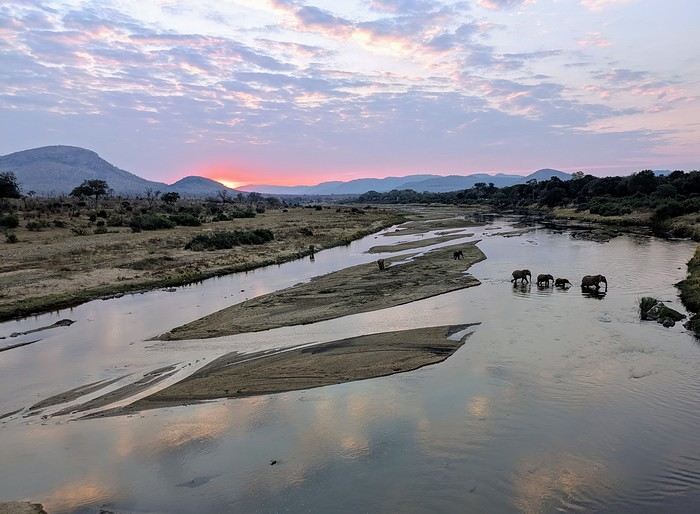
We’re back from our 3-week trip to South Africa in July. It was a family trip with our four grown-up kids (ages 18 to 25).
First off, I’d like to thank everyone on this forum for their great tips—they really helped us plan this trip!
The trip: We spent 15 days between Port Elizabeth and Cape Town, then a week around Kruger (including Blyde River Canyon). We found South Africans to be welcoming and always ready to help. We never felt unsafe (just followed basic safety rules). The police are very visible, especially on the roads.
Logistics: We’d booked our accommodations in advance but made a few changes on the spot based on how we felt at the time. We rented two vehicles from Firefly (Hertz). No complaints—recent cars, quick returns, and the deposit wasn’t charged. We’d gotten our international driver’s permits... which stayed in France! Luckily, no one asked for them. Driving on the left wasn’t an issue (it wasn’t our first time). The roads we took were in good, even great, condition. Only a few tracks to lodges or parks were rough and required extra caution. Lots of pedestrians on the sides of roads, even highways. And plenty of very slow trucks. But they pull over to let you pass. It’s also common for cars to cross into the opposite lane to overtake, even with white lines. We took two domestic flights: one early in the morning (Johannesburg to Port Elizabeth) and one in the late afternoon (Cape Town to Johannesburg) to save time.
We had some highlights and a few disappointments—all part of the journey! More details coming soon.
Australia 2025: Discovering the 5th Continent
Hi everyone.
Because that’s also what sparks the desire in every traveler (well, at least for me) to set foot on Australian soil: discovering a new continent.
Right now, I’ve got some time on my hands—those who follow me know that. A nasty muscle tear (which really doesn’t want to heal) is keeping me grounded for another week, so I’ve decided to open a new travel journal, recounting my recent trip from December 14, 2024, to January 12, 2025, in Australia.
The origins of this trip started last May in Crete, an island I chose for a 10-day break. It’s really lovely, by the way, but that’s not the point… It’s around this time every year that we decide on our next winter destination, and Argentina was at the top of the list—Sydney wasn’t even on the radar… I’d been looking at flights to Buenos Aires for a while, and the prices were shocking… But by the pool one lazy afternoon, scrolling on my iPhone, a promo from Geneva to Sydney caught my eye. The deal ticked two boxes on my traveler’s bucket list: a flight to Australia and a flight with Singapore Airlines, often ranked as the world’s best airline. A quick chat with the missus (well, of course!) and the decision was made: off to the land of kangaroos! Now, once you add luggage and Economy Plus, it still comes to 1600 € per person, but that’s a reasonable price. Either way, we already know what we’re in for—Australia is a budget commitment!

Thanks to 123rf for the image loan 😛
Right now, I’ve got some time on my hands—those who follow me know that. A nasty muscle tear (which really doesn’t want to heal) is keeping me grounded for another week, so I’ve decided to open a new travel journal, recounting my recent trip from December 14, 2024, to January 12, 2025, in Australia.
The origins of this trip started last May in Crete, an island I chose for a 10-day break. It’s really lovely, by the way, but that’s not the point… It’s around this time every year that we decide on our next winter destination, and Argentina was at the top of the list—Sydney wasn’t even on the radar… I’d been looking at flights to Buenos Aires for a while, and the prices were shocking… But by the pool one lazy afternoon, scrolling on my iPhone, a promo from Geneva to Sydney caught my eye. The deal ticked two boxes on my traveler’s bucket list: a flight to Australia and a flight with Singapore Airlines, often ranked as the world’s best airline. A quick chat with the missus (well, of course!) and the decision was made: off to the land of kangaroos! Now, once you add luggage and Economy Plus, it still comes to 1600 € per person, but that’s a reasonable price. Either way, we already know what we’re in for—Australia is a budget commitment!
Thanks to 123rf for the image loan 😛
Skyscrapers, Markets, Ice Cubes, Tourism, and Waterfalls... Thailand's Excesses
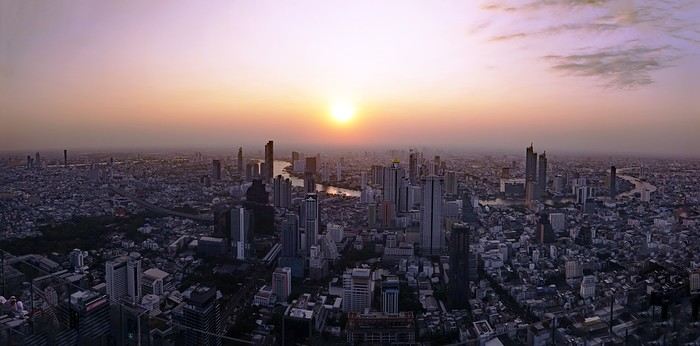
A somewhat lengthy title... I could have simply written: from Bangkok to Chiang Rai, via Chiang Mai, since that was my route. But when poets embellish our travel journals with their verbal flourishes, you’ve got to try not to be too ordinary.
Skyscrapers of excess? You’ll have gathered that from the photo illustrating this journal—though it might change as the trip goes on.
The excess of markets—not so much in their size, though... Chatuchak... But in their sheer number. Day markets, night markets, floating markets, fresh produce markets, fish markets, meat markets, spice markets, fabric markets... and even... amulet markets... For luck, good fortune, protection. Not to mention, sadly, the market for girls—and boys, incidentally. I’ve even heard they’re displayed in windows. I’ve heard about that one, like you have, but I didn’t set foot in it, so I can’t say anything about it. Some even claim there’s a black-market trade in children. Disgusting! It reminded me of the book *The Parcel* by Anosh Irani, which I recommended in another journal. The story is set in India, but I’ve been told it exists in Thailand too. So, the "famous Thai markets" we’re bombarded with in paper and online guides—sure, they amazed me in the first few days, and I don’t regret visiting them. But no matter how big they were, I quickly got my fill since you saw the same things at every stall...
I had a market overdose.
Excess of tourism? I should say *tourists*, since I saw them literally swarming in the streets and those famous markets. I’d forgotten about them. I’d lost the habit, living in an Indian city for so long...
Waterfalls are a bit like markets. At this time of year, they’re not particularly spectacular, but they’re everywhere. There are the ones everyone goes to see. For example, Erawan, which I decided to skip even though it was in my original itinerary—I guessed it’d be a nightmare with the selfie circus. On the other hand, you come across them all over the place, hidden in the mountains and forests, not listed in any guide. Not to mention the ones you can find in temples or even private homes... Yes, really! Thais love waterfalls, so they install them in their gardens—and I even saw one in the middle of the city, right on the street! Sometimes they’re tiny, but very photogenic.
But what do ice cubes have to do with this? Why the excess of ice cubes? Not only are they everywhere by the ton, but they put them in *everything* you drink. You’d think they’d even put them in soup! And it’s not just one or two ice cubes—no! They fill the container to the brim, whatever it is, then pour the liquid on top to fill the gaps. They’ll make you an excellent coffee right in front of you, piping hot, then—bam! An avalanche of ice cubes in the glass. Okay, I’m exaggerating a little. They *do* sometimes ask if you prefer your coffee—or tea—hot. Everything edible, and especially everything drinkable, is refrigerated: vegetables, fruit, hot drinks (I mean, drinks that are *usually* hot), but meat and fish are left out in the open. They just wave a little whisk to shoo away the flies when they get too eager. Mind you, I never put fruit, cheese, eggs, or water in the fridge in France, but I do in India. And I refrigerate meat and fish too... Though sometimes one of those little flies sneaks into the fridge...
You won’t find practical or technical details in this journal, like addresses or prices. Others do that better than me. You also won’t find the names of obscure or unknown places I discovered, or directions to get there.
I don’t really feel like recounting what I saw day by day, following my schedule and route. There might be flashbacks, projections into the future. It’ll depend on my memories, what I felt, what I hated, what comes back to me—and maybe your questions and our exchanges. And for those who’ve never read me before, you’ll have to get used to my parentheses and digressions, maybe on a completely different subject, as my thoughts wander. Stories within stories. There’ll also be long, endless sentences—but still punctuated, so you can follow along. Though I used to curse Proust and his sentences that started on one page and ended on the next, sometimes even further. I’d have to reread them twenty times to follow and understand what he was saying. I hated Proust. But hey, I was 20. Maybe I’d like him now?
See? The digressions are starting already. Forgive me.
You’ll find few photos here. First, the number is limited, and second, photos aren’t the main purpose of either VF or a travel journal. They’re too often used to mask the poverty of the text. And, sorry to say it, but so many of them are just plain ugly! If you really want to see photos, I’ll share some links where you can browse them at your leisure
15 days in Turkey with family: Is this itinerary doable?
Hi there.
About a month ago, I posted a potential itinerary for Bulgaria and Istanbul, but in the end, since we found some relatively cheap flight tickets to Istanbul, we decided to go for a trip to Turkey instead.
When? 2 weeks, late August (14th to 29th) Who? Dad, mom, a 17-year-old teen, and an 11-year-old child
Here’s our plan: do you think it’s doable? Any practical tips?
We start with 4 full days in Istanbul (5 nights) Then, we rent a car and head to Ephesus. We stay there for 1 day (2 nights) After that, we drive to Kaş. We stay there for 4 full days (5 nights), enough time to relax a bit, see Kaputaş Beach and Kekova, the site of Myra, the site of Patara, and possibly the site of Çıralı/Olympos—even though it’s a bit far—and Saklıkent Gorge. From Kaş, we spend 2 nights near Denizli to see Pamukkale and Aphrodisias. Is it possible to visit both sites in the same day? Then, we travel from Pamukkale back to Istanbul, return the car, and spend one last night in Istanbul.
Thanks for your thoughts!
When? 2 weeks, late August (14th to 29th) Who? Dad, mom, a 17-year-old teen, and an 11-year-old child
Here’s our plan: do you think it’s doable? Any practical tips?
We start with 4 full days in Istanbul (5 nights) Then, we rent a car and head to Ephesus. We stay there for 1 day (2 nights) After that, we drive to Kaş. We stay there for 4 full days (5 nights), enough time to relax a bit, see Kaputaş Beach and Kekova, the site of Myra, the site of Patara, and possibly the site of Çıralı/Olympos—even though it’s a bit far—and Saklıkent Gorge. From Kaş, we spend 2 nights near Denizli to see Pamukkale and Aphrodisias. Is it possible to visit both sites in the same day? Then, we travel from Pamukkale back to Istanbul, return the car, and spend one last night in Istanbul.
Thanks for your thoughts!
Which destination to prioritize in Southeast Asia in the summer?
Hi there,
Big travel year in Asia for me. I’m heading to Southeast Asia for a month in mid-July. The dates aren’t flexible since I’m going primarily for a wedding (Laos). So, I’ll start my trip in Laos for 4 days, then head off... where?
I’ve already done a trip exclusively in Laos a few years ago. I also visited Vietnam for the second time last year, so I’d love to explore something new. I was thinking of Cambodia (but only for Angkor) and northern Thailand, which I haven’t seen yet (Chiang Mai, Chiang Rai, Mae Hong Son, Nan, Phrae, Phayao, Pa Hin Ngam National Park), and wrapping up with a few nights in Koh Samui. My question is about the weather. From what I’ve seen, Koh Samui seems to be spared during this period. But for Angkor and northern Thailand, I’m not so sure—it feels like a gamble. And I’m really not in the mood for rainy vacations, since I already get enough gray skies where I live 😅.
So, I had another idea: after Laos, I could head to Bali (or another Indonesian island) where it’s supposedly the right season. The flight ticket price is exactly the same, including a one-way to Bali and the return from Bali (with a layover in Bangkok). For those who’ve traveled in July, what do you think? Is there a big risk in trying northern Thailand and Angkor?
Thanks in advance!
I’ve already done a trip exclusively in Laos a few years ago. I also visited Vietnam for the second time last year, so I’d love to explore something new. I was thinking of Cambodia (but only for Angkor) and northern Thailand, which I haven’t seen yet (Chiang Mai, Chiang Rai, Mae Hong Son, Nan, Phrae, Phayao, Pa Hin Ngam National Park), and wrapping up with a few nights in Koh Samui. My question is about the weather. From what I’ve seen, Koh Samui seems to be spared during this period. But for Angkor and northern Thailand, I’m not so sure—it feels like a gamble. And I’m really not in the mood for rainy vacations, since I already get enough gray skies where I live 😅.
So, I had another idea: after Laos, I could head to Bali (or another Indonesian island) where it’s supposedly the right season. The flight ticket price is exactly the same, including a one-way to Bali and the return from Bali (with a layover in Bangkok). For those who’ve traveled in July, what do you think? Is there a big risk in trying northern Thailand and Angkor?
Thanks in advance!
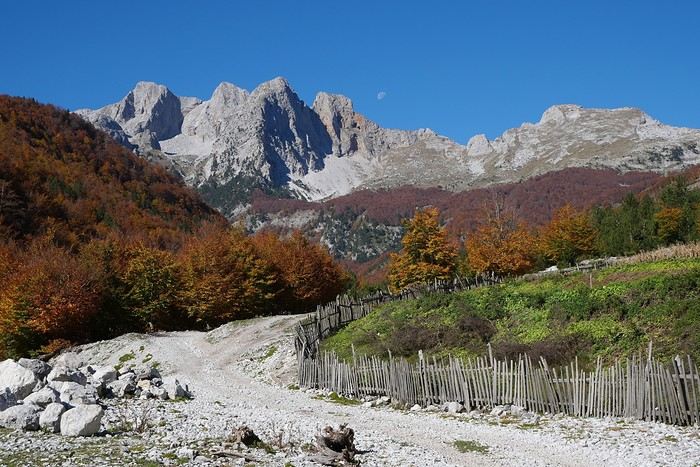
Albania in Autumn Colors
A new work assignment means our vacation dates can't stay the same.
We had planned to go to the Canary Islands, but flight prices are skyrocketing with this new holiday schedule.
So, I’m looking for an alternative to Gran Canaria and El Hierro and found two round-trip flights with Wizz Air to Tirana.
398 €, including baggage and seats—perfect!
Plus, the departure and return times are great, which is pretty rare for a low-cost flight!
All that’s left is to rent a car, plan the route, and book accommodations.
With two weeks, we’ll have to make some choices!
Here’s the final itinerary: Shkodra (2 nights), Valbonë (3 nights), Tirana (1 night), Lake Ohrid (1 night), Korçë (1 night), Përmet (1 night), Gjirokastër (1 night), Himarë (2 nights), Berat (2 nights), and Krujë (1 night).
A mix of countryside and small towns, a bit of the Mediterranean, and some mountains!
Late October isn’t the best season, so let’s keep our fingers crossed for the rest...
We had planned to go to the Canary Islands, but flight prices are skyrocketing with this new holiday schedule.
So, I’m looking for an alternative to Gran Canaria and El Hierro and found two round-trip flights with Wizz Air to Tirana.
398 €, including baggage and seats—perfect!
Plus, the departure and return times are great, which is pretty rare for a low-cost flight!
All that’s left is to rent a car, plan the route, and book accommodations.
With two weeks, we’ll have to make some choices!
Here’s the final itinerary: Shkodra (2 nights), Valbonë (3 nights), Tirana (1 night), Lake Ohrid (1 night), Korçë (1 night), Përmet (1 night), Gjirokastër (1 night), Himarë (2 nights), Berat (2 nights), and Krujë (1 night).
A mix of countryside and small towns, a bit of the Mediterranean, and some mountains!
Late October isn’t the best season, so let’s keep our fingers crossed for the rest...
So where are they and what are they doing?
This catchy and somewhat mysterious title comes from several questions I’ve been asking myself.
VF has been back open for a reasonable number of weeks and months now. The number of visitors overall matches past averages, but the number of members online in the last 24 hours seems relatively lower than what we used to see.
Yet, to my surprise, I’m seeing fewer travel journals, way fewer messages, and way fewer questions. I don’t see many new registered users online, and I notice a number of members who are logged in but either aren’t participating or have stopped participating.
Something’s not adding up for me because, in my opinion, VF is still appealing, and I don’t see which other sites could really compete.
Was there a real break between pre- and post-Covid? Does it just take more time for some people to discover the site or learn that it’s active again? Do people now prefer quick consumption on sites like FB or others I’m not familiar with? Where have the site’s old-timers gone, and what are they doing with their time now? What’s really going on here?
VF has been back open for a reasonable number of weeks and months now. The number of visitors overall matches past averages, but the number of members online in the last 24 hours seems relatively lower than what we used to see.
Yet, to my surprise, I’m seeing fewer travel journals, way fewer messages, and way fewer questions. I don’t see many new registered users online, and I notice a number of members who are logged in but either aren’t participating or have stopped participating.
Something’s not adding up for me because, in my opinion, VF is still appealing, and I don’t see which other sites could really compete.
Was there a real break between pre- and post-Covid? Does it just take more time for some people to discover the site or learn that it’s active again? Do people now prefer quick consumption on sites like FB or others I’m not familiar with? Where have the site’s old-timers gone, and what are they doing with their time now? What’s really going on here?
A lovely wander at the mercy of the wind in this amazing Rajasthan
Hey there, forum friends 😉
Some of you have mentioned missing the activity on this Indian "page," so let’s try to liven things up a bit—with joy and good vibes (mandatory with me 😜). Plus, it’ll make Jojoone happy 😊.
As big lovers of India—we’ve been six times—my co-traveler husband and I decided to explore Rajasthan this time around. The reason we waited so long to come here? We were dreading the tourist crowds in this state. But thanks to the timing (late March to early April 2024, which is starting to get pretty hot) and Aleph’s great tips, we were *very* far from mass tourism.
We spent three weeks getting around on our own for transport: mostly taxis and trains.
And I’ll admit, we had a rather "Arabian Nights" experience, far from the "real" India (Marien, if you’re reading this 😉). So this travel journal makes no claims other than to share what we saw, experienced, and felt—with all our ignorance about this country (which I’m fully aware of).
But fair warning: I go overboard with emojis, and this journal is super casual because it’s the one I share, almost in "live" mode, with our loved ones.
So, if you’re here, consider yourself almost part of the family 😄.
See you soon and....
Some of you have mentioned missing the activity on this Indian "page," so let’s try to liven things up a bit—with joy and good vibes (mandatory with me 😜). Plus, it’ll make Jojoone happy 😊.
As big lovers of India—we’ve been six times—my co-traveler husband and I decided to explore Rajasthan this time around. The reason we waited so long to come here? We were dreading the tourist crowds in this state. But thanks to the timing (late March to early April 2024, which is starting to get pretty hot) and Aleph’s great tips, we were *very* far from mass tourism.
We spent three weeks getting around on our own for transport: mostly taxis and trains.
And I’ll admit, we had a rather "Arabian Nights" experience, far from the "real" India (Marien, if you’re reading this 😉). So this travel journal makes no claims other than to share what we saw, experienced, and felt—with all our ignorance about this country (which I’m fully aware of).
But fair warning: I go overboard with emojis, and this journal is super casual because it’s the one I share, almost in "live" mode, with our loved ones.
So, if you’re here, consider yourself almost part of the family 😄.
See you soon and....
Summer trip to South Africa
Hello,
Happy 2025, filled with wonderful travels! 🙂
We’re traveling as a family to South Africa for the first time in July (two parents and our four young adult children). We’ve planned a loop starting from Port Elizabeth for 13 days, followed by another loop from Johannesburg with 2 days at Blyde River Canyon and 5 days in Kruger NP.
We’re wondering about the Port Elizabeth loop. Here’s our initial idea: Day 1: Early arrival in Port Elizabeth, morning walk in Tsitsikamma NP, night at Storm River Rest Camp. Day 2: Continue visiting Tsitsikamma NP early in the morning, then Robberg Nature Reserve, night at Ebb and Flow Rest Camp. Day 3: Visit the Wilderness area, night at Ebb and Flow Rest Camp. Day 4: Drive to Hermanus. Several options: Bontebok NP or The Hoop and Cape Agulhas; night in Hermanus. Day 5: Coastal trail, boat trip (?), night in Cape Town. Day 6: Table Mountain, Bo-Kaap, Waterfront; night in Cape Town. Day 7: Cape Peninsula, night in Cape Town. Day 8: Karoo Desert National Botanical Garden, Matjiesfontein; night in the area. Day 9: AM: Karoo NP; night in Beaufort West. Day 10: Karoo NP; night in Beaufort West. Day 11: AM: Camdeboo NP; night in Graaff-Reinet. Day 12: Morning: Camdeboo NP; drive to Addo Elephant NP; visit depending on arrival time; night at Addo Elephant Rest Camp. Day 13: Addo Elephant NP; night in Port Elizabeth. Day 14: Early flight.
Does this seem balanced and suitable for July? It’s quite packed, but we’ve already had to skip quite a bit. Initially, would it be better to spend 2 nights in Tsitsikamma and just one in Wilderness? Or just one night at each to free up a day for something else?
For the car, is a minivan enough, or should we plan at least an SUV for the parks given the season?
Thanks in advance for your feedback. Have a great evening
Happy 2025, filled with wonderful travels! 🙂
We’re traveling as a family to South Africa for the first time in July (two parents and our four young adult children). We’ve planned a loop starting from Port Elizabeth for 13 days, followed by another loop from Johannesburg with 2 days at Blyde River Canyon and 5 days in Kruger NP.
We’re wondering about the Port Elizabeth loop. Here’s our initial idea: Day 1: Early arrival in Port Elizabeth, morning walk in Tsitsikamma NP, night at Storm River Rest Camp. Day 2: Continue visiting Tsitsikamma NP early in the morning, then Robberg Nature Reserve, night at Ebb and Flow Rest Camp. Day 3: Visit the Wilderness area, night at Ebb and Flow Rest Camp. Day 4: Drive to Hermanus. Several options: Bontebok NP or The Hoop and Cape Agulhas; night in Hermanus. Day 5: Coastal trail, boat trip (?), night in Cape Town. Day 6: Table Mountain, Bo-Kaap, Waterfront; night in Cape Town. Day 7: Cape Peninsula, night in Cape Town. Day 8: Karoo Desert National Botanical Garden, Matjiesfontein; night in the area. Day 9: AM: Karoo NP; night in Beaufort West. Day 10: Karoo NP; night in Beaufort West. Day 11: AM: Camdeboo NP; night in Graaff-Reinet. Day 12: Morning: Camdeboo NP; drive to Addo Elephant NP; visit depending on arrival time; night at Addo Elephant Rest Camp. Day 13: Addo Elephant NP; night in Port Elizabeth. Day 14: Early flight.
Does this seem balanced and suitable for July? It’s quite packed, but we’ve already had to skip quite a bit. Initially, would it be better to spend 2 nights in Tsitsikamma and just one in Wilderness? Or just one night at each to free up a day for something else?
For the car, is a minivan enough, or should we plan at least an SUV for the parks given the season?
Thanks in advance for your feedback. Have a great evening
Slow Travel or the Illusion of Authenticity
“Slow travel” is a concept that some tout as a philosophical revolution in travel. But on closer inspection, it’s nothing more than a marketing repackaging of an age-old practice.
This term is wrapped in an aura of intellectualism. It promises to reinvent the experience of travel by valuing slowness, contemplation, and cultural immersion.
The term “slow travel” claims to bring depth to travel, but it often relies on clichés.
Taking your time, meeting locals, avoiding quick visits—these practices have always existed and are nothing revolutionary.
Before the era of airplanes, high-speed trains, and express stays, traveling necessarily meant taking your time. Pilgrims, merchants, and explorers already practiced a form of “slow travel,” without hashtags or self-proclaimed spiritual guides.
Crossing lands on foot or by horse required total immersion in the landscapes, cultures, and unpredictability of the journey. Yet, no one attributed philosophical intentions to them: it was a necessity.
Slow travel, in its current version, may be less a philosophy than a reflection of the contradictions of an affluent class searching for meaning in a world they help overload.
So-called “slow” travel is presented as a privileged way to understand a culture, but this claim is debatable. A region never represents an entire country.
Immersing yourself in a community doesn’t guarantee a complete or more authentic understanding than any other way of traveling.
Slowness in itself doesn’t guarantee depth or ethics. You can immerse yourself in a place over a weekend, just as you can spend months in a country without grasping its subtleties.
By positioning itself as an antidote to “fast” tourism, slow travel fetishizes a temporality that only makes sense if it’s accompanied by real openness and an effort to integrate.
But this over-intellectualization often masks a desire to belong to a trend or a need to stand out socially.
Behind this posture sometimes lies a whim: the urge to reinvent one’s life elsewhere in an idealized form. But this quest for elsewhere remains fundamentally a way to escape or respond to unease, rather than a true commitment to the cultures visited.
When we talk about “encounters” while traveling, we often forget that these exchanges are facilitated by biased contexts. As a traveler, you’re seen as a temporary visitor, unattached, and that changes the dynamic.
Locals, whether curious or used to tourists, adopt a different stance than they would with a neighbor they see daily.
This interaction is also tinged with asymmetry: the traveler has the luxury of time and availability, while in daily life, personal concerns often take precedence over the desire to connect.
The flip side is that the openness displayed while traveling is often a facade. We boast about chatting with a fisherman or sharing a meal with a local family, but how many of these encounters lead to a real understanding of cultural differences or sincere reflection?
Once home, these moments become anecdotes, social trophies to show off, without fundamentally changing our relationship with others in our daily lives.
By imposing a definition, we push people to adapt their practices to fit an idealized model. This can lead to a paradoxical standardization: “slow travel” becomes a checklist of behaviors (meetings, immersion, slowness).
The “bobos” (bourgeois-bohemians), often in search of meaning in a world saturated with options, believe that giving a name to a practice grants it legitimacy or moral value. But this obsession with framing and theorizing travel only drains it of its spontaneity.
Someone who grew up at the crossroads of multiple cultures, on the other hand, doesn’t feel this need. For them, traveling isn’t a philosophical project but an intrinsic part of their life.
The very concept of “slow travel” can seem absurd: why glorify what’s simply natural?
Why try to turn into an ideology what should be a personal, intimate experience, free from semantic constraints?
Ultimately, this need for labeling, this frantic quest to name every gesture, reveals a society craving simplicity.
Travel, in its purest form, doesn’t need justification or slogans. It doesn’t need slowness or speed: it’s simply lived.
Perhaps the real challenge is to unlearn this Western habit of conceptualizing everything that should simply be felt.
For many, travel is a parenthesis, a temporary break from daily life. But if we reject this distinction between “home” and “elsewhere,” every human life becomes a continuous journey through varied environments.
From this perspective, “slow travel” loses all meaning, because living somewhere—whether for a week or five years—is part of the same experience of adaptation.
So, we ask the fans of marketing slogans: is travel a parenthesis or a journey?
“Slow travel” is often driven by a Western eco-bobo ideology, tinged with post-colonial guilt. This discourse promotes a supposedly virtuous way of traveling while forgetting that these practices remain a privilege.
Far from deconstructing power dynamics, it sometimes reinforces them by glorifying a different kind of consumption, still centered on comfort.
There’s also a condescending side to this rhetoric. By idealizing slowness, slow travel advocates imply that those who travel quickly or on a budget are less “authentic” in their approach.
Yet, isn’t that a form of contempt? Do those who leave for a well-deserved week after months of hard work deserve less consideration?
Concepts like “slow travel” or “sustainable tourism” seem hollow when reduced to marketing slogans or standardized behaviors. They confine travel to preconceived frameworks, stripping it of its spontaneous and unpredictable dimension.
Instead of categorizing, it would be more relevant to recognize the plurality of human experiences without trying to define them.
Slow travel doesn’t invent anything. It simply puts into words—and often slogans—what travel has always been for those who practice it with intention.
Maybe we should stop trying to theorize every movement and simply rediscover travel for what it is: a human experience, sometimes slow, sometimes fast, but always personal.
More info on our site
This term is wrapped in an aura of intellectualism. It promises to reinvent the experience of travel by valuing slowness, contemplation, and cultural immersion.
The term “slow travel” claims to bring depth to travel, but it often relies on clichés.
Taking your time, meeting locals, avoiding quick visits—these practices have always existed and are nothing revolutionary.
Before the era of airplanes, high-speed trains, and express stays, traveling necessarily meant taking your time. Pilgrims, merchants, and explorers already practiced a form of “slow travel,” without hashtags or self-proclaimed spiritual guides.
Crossing lands on foot or by horse required total immersion in the landscapes, cultures, and unpredictability of the journey. Yet, no one attributed philosophical intentions to them: it was a necessity.
Slow travel, in its current version, may be less a philosophy than a reflection of the contradictions of an affluent class searching for meaning in a world they help overload.
So-called “slow” travel is presented as a privileged way to understand a culture, but this claim is debatable. A region never represents an entire country.
Immersing yourself in a community doesn’t guarantee a complete or more authentic understanding than any other way of traveling.
Slowness in itself doesn’t guarantee depth or ethics. You can immerse yourself in a place over a weekend, just as you can spend months in a country without grasping its subtleties.
By positioning itself as an antidote to “fast” tourism, slow travel fetishizes a temporality that only makes sense if it’s accompanied by real openness and an effort to integrate.
But this over-intellectualization often masks a desire to belong to a trend or a need to stand out socially.
Behind this posture sometimes lies a whim: the urge to reinvent one’s life elsewhere in an idealized form. But this quest for elsewhere remains fundamentally a way to escape or respond to unease, rather than a true commitment to the cultures visited.
When we talk about “encounters” while traveling, we often forget that these exchanges are facilitated by biased contexts. As a traveler, you’re seen as a temporary visitor, unattached, and that changes the dynamic.
Locals, whether curious or used to tourists, adopt a different stance than they would with a neighbor they see daily.
This interaction is also tinged with asymmetry: the traveler has the luxury of time and availability, while in daily life, personal concerns often take precedence over the desire to connect.
The flip side is that the openness displayed while traveling is often a facade. We boast about chatting with a fisherman or sharing a meal with a local family, but how many of these encounters lead to a real understanding of cultural differences or sincere reflection?
Once home, these moments become anecdotes, social trophies to show off, without fundamentally changing our relationship with others in our daily lives.
By imposing a definition, we push people to adapt their practices to fit an idealized model. This can lead to a paradoxical standardization: “slow travel” becomes a checklist of behaviors (meetings, immersion, slowness).
The “bobos” (bourgeois-bohemians), often in search of meaning in a world saturated with options, believe that giving a name to a practice grants it legitimacy or moral value. But this obsession with framing and theorizing travel only drains it of its spontaneity.
Someone who grew up at the crossroads of multiple cultures, on the other hand, doesn’t feel this need. For them, traveling isn’t a philosophical project but an intrinsic part of their life.
The very concept of “slow travel” can seem absurd: why glorify what’s simply natural?
Why try to turn into an ideology what should be a personal, intimate experience, free from semantic constraints?
Ultimately, this need for labeling, this frantic quest to name every gesture, reveals a society craving simplicity.
Travel, in its purest form, doesn’t need justification or slogans. It doesn’t need slowness or speed: it’s simply lived.
Perhaps the real challenge is to unlearn this Western habit of conceptualizing everything that should simply be felt.
For many, travel is a parenthesis, a temporary break from daily life. But if we reject this distinction between “home” and “elsewhere,” every human life becomes a continuous journey through varied environments.
From this perspective, “slow travel” loses all meaning, because living somewhere—whether for a week or five years—is part of the same experience of adaptation.
So, we ask the fans of marketing slogans: is travel a parenthesis or a journey?
“Slow travel” is often driven by a Western eco-bobo ideology, tinged with post-colonial guilt. This discourse promotes a supposedly virtuous way of traveling while forgetting that these practices remain a privilege.
Far from deconstructing power dynamics, it sometimes reinforces them by glorifying a different kind of consumption, still centered on comfort.
There’s also a condescending side to this rhetoric. By idealizing slowness, slow travel advocates imply that those who travel quickly or on a budget are less “authentic” in their approach.
Yet, isn’t that a form of contempt? Do those who leave for a well-deserved week after months of hard work deserve less consideration?
Concepts like “slow travel” or “sustainable tourism” seem hollow when reduced to marketing slogans or standardized behaviors. They confine travel to preconceived frameworks, stripping it of its spontaneous and unpredictable dimension.
Instead of categorizing, it would be more relevant to recognize the plurality of human experiences without trying to define them.
Slow travel doesn’t invent anything. It simply puts into words—and often slogans—what travel has always been for those who practice it with intention.
Maybe we should stop trying to theorize every movement and simply rediscover travel for what it is: a human experience, sometimes slow, sometimes fast, but always personal.
More info on our site
3 weeks in Colombia in August 2024
Hi there,
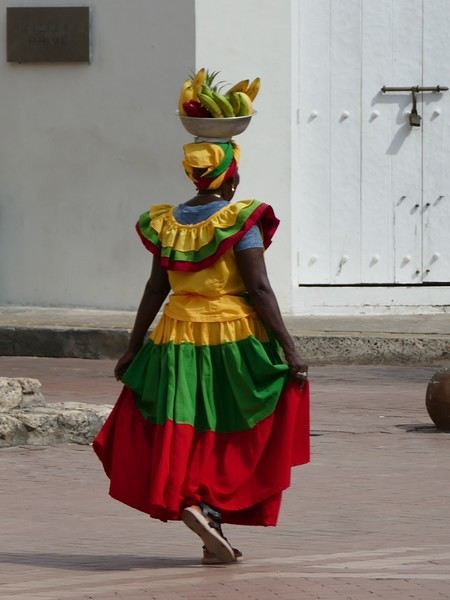
This summer, we spent 3 weeks in northern Colombia. A vibrant trip that complemented our southern Peru adventure from the previous year perfectly. Two neighboring countries, but completely different.
To start, we had to make a choice because the country is vast.
So we focused on 3 different regions for our 3 weeks: - Week 1: Bogotá and the colonial villages (Villa de Leyva, Barichara) - Week 2: Medellín and the Coffee Region - Week 3: the Caribbean coast
We entrusted the organization to a small local agency that handled accommodations, guides, and transportation. Transportation is key. The country is large, the road network isn’t very efficient, and we spent a lot of time traveling (cars, planes, and boats...), but it was the price to pay to explore it.
The overall budget isn’t exactly "backpacker" level. We spent 7,500 € (excluding Air France) for our 3-week stay (hotels, drivers, guides, flights, visits, meals). But we treated ourselves to nice accommodations—you’ll see as we share more posts.
For vacations, I try to follow Philippe Noiret’s motto: "Travel is short. Let’s try to do it first class."
This summer, we spent 3 weeks in northern Colombia. A vibrant trip that complemented our southern Peru adventure from the previous year perfectly. Two neighboring countries, but completely different.
To start, we had to make a choice because the country is vast.
So we focused on 3 different regions for our 3 weeks: - Week 1: Bogotá and the colonial villages (Villa de Leyva, Barichara) - Week 2: Medellín and the Coffee Region - Week 3: the Caribbean coast
We entrusted the organization to a small local agency that handled accommodations, guides, and transportation. Transportation is key. The country is large, the road network isn’t very efficient, and we spent a lot of time traveling (cars, planes, and boats...), but it was the price to pay to explore it.
The overall budget isn’t exactly "backpacker" level. We spent 7,500 € (excluding Air France) for our 3-week stay (hotels, drivers, guides, flights, visits, meals). But we treated ourselves to nice accommodations—you’ll see as we share more posts.
For vacations, I try to follow Philippe Noiret’s motto: "Travel is short. Let’s try to do it first class."
Le risque de contracter le paludisme à Libreville English translation pending
Bonjour
Je pars vivre quelques mois à Libreville. Je ne prendrai pas de prophylaxie au long cours. Le risque de contracter le paludisme est il toujours aussi important en zone urbaine ? (je respecterai les gestes barrières...). Merci !
Je pars vivre quelques mois à Libreville. Je ne prendrai pas de prophylaxie au long cours. Le risque de contracter le paludisme est il toujours aussi important en zone urbaine ? (je respecterai les gestes barrières...). Merci !
Seul l'exotisme fait l'effet du voyage English translation pending
J en ai connus qui ne supporteraient pas, ou plus, de prendre des vacances ou de voyager hors de leur pays, en Belgique en Suisse ou en France. Ou en Europe.
je ne suis pas de ceux là. Il me faut un cadre qui m eloigne de tout ce que je connais visuellement parlant. Des paysages radicalement differents, une tout autre restauration, des visages et un langage qui appartiennent a un "ailleurs". D autres coutumes une autre monnaie une autre musique. Sinon mon esprit ne ressent pas l apaisement la distraction et je ne sens pas les bienfaits de ce repos 1 fois dans une annee. Oh on arrive a s en passer mais il manque quelque chose. Les bienfaits de l exotisme, des alizees, des tropiques, un autre gout de vin ou de whisky.
nous voila drogués du voyage et en ce moment a la fois libres et en prison.
Chorizo ou pas dans la paëlla? English translation pending
Tout fout le camp...
Chorizo ou pas ? Un illustre chef espagnol ravive le «paellagate»
(Mais moi j'en ai toujours mis... 😛 )
Quelques campings à me conseiller en Bretagne? English translation pending
Bonjour à tous
Cet été je pédale en France : en Bretagne et Loire-Atlantique. En gros : Redon - Carhaix par le Canal de Nantes à Brest direction Concarneau puis le littoral Sud, quelques îles, golfe du Morbihan Guérande - Pornic.
Les tarifs stratosphériques de certains campings m'affolent un peu. Il est vrai que je pars à la mauvaise période : fin juillet - mi août...
Quant aux tarifs cyclos, j'en ai trouvé quelques uns mais à partir de la presqu'île de Rhuys et jusqu'à Pornic je sèche un peu... il reste l'option bivouac mais dans les coins très touristiques, je préfère éviter et surtout pouvoir me "poser" afin de me donner le temps de visiter :)
Avez vous des campings à me conseiller - toute catégories confondues - pour leur accueil, leur confort et/ou leurs tarifs, de Port Navalo à Pornic (où j'ai déjà réservé un hébergement).
Merci !
Cet été je pédale en France : en Bretagne et Loire-Atlantique. En gros : Redon - Carhaix par le Canal de Nantes à Brest direction Concarneau puis le littoral Sud, quelques îles, golfe du Morbihan Guérande - Pornic.
Les tarifs stratosphériques de certains campings m'affolent un peu. Il est vrai que je pars à la mauvaise période : fin juillet - mi août...
Quant aux tarifs cyclos, j'en ai trouvé quelques uns mais à partir de la presqu'île de Rhuys et jusqu'à Pornic je sèche un peu... il reste l'option bivouac mais dans les coins très touristiques, je préfère éviter et surtout pouvoir me "poser" afin de me donner le temps de visiter :)
Avez vous des campings à me conseiller - toute catégories confondues - pour leur accueil, leur confort et/ou leurs tarifs, de Port Navalo à Pornic (où j'ai déjà réservé un hébergement).
Merci !
Découvrir la Pologne, oui, sans hésitation English translation pending
A force d'entendre toutes sortes de choses bizarres à propos de la Pologne, j'ai eu envie d'écrire un petit mot.
Je ne comprends pas pourquoi la Pologne a une image toute noire et arriérée dans la tête de beaucoup de Français. Je ne comprends pas pourquoi certain·e·s font plus de 2 500 km pour aller seulement à Auschwitz. Je ne comprends pas pourquoi on valorise celui-celle qui part en Espagne et on s'interroge sur la santé mentale de celui-celle qui va passer un moment de vacances en Pologne.
Bon, d'accord, la situation politique n'est pas idéale mais il faut aller s'asseoir sur un banc public qui diffuse du Chopin à Varsovie, se plonger dans la vie de Copernic à Torun... et, surtout, surtout, rencontrer les Polonais d'aujourd'hui. Aspects pratiques : le coût de la vie quotidienne est très avantageux pour les Français ;) et oui, oui, la frontière est ouverte, sans contraintes particulières https://reopen.europa.eu/fr/map/POL
Je ne cherche pas à faire la promotion du tourisme en Pologne, mais après y être retourné l'année dernière, je tente de modifier un peu des représentations qui me paraissent datées et injustes. Je ne veux pas allonger trop ce premier message. D'autres personnes viendront peut-être le compléter...
Je ne comprends pas pourquoi la Pologne a une image toute noire et arriérée dans la tête de beaucoup de Français. Je ne comprends pas pourquoi certain·e·s font plus de 2 500 km pour aller seulement à Auschwitz. Je ne comprends pas pourquoi on valorise celui-celle qui part en Espagne et on s'interroge sur la santé mentale de celui-celle qui va passer un moment de vacances en Pologne.
Bon, d'accord, la situation politique n'est pas idéale mais il faut aller s'asseoir sur un banc public qui diffuse du Chopin à Varsovie, se plonger dans la vie de Copernic à Torun... et, surtout, surtout, rencontrer les Polonais d'aujourd'hui. Aspects pratiques : le coût de la vie quotidienne est très avantageux pour les Français ;) et oui, oui, la frontière est ouverte, sans contraintes particulières https://reopen.europa.eu/fr/map/POL
Je ne cherche pas à faire la promotion du tourisme en Pologne, mais après y être retourné l'année dernière, je tente de modifier un peu des représentations qui me paraissent datées et injustes. Je ne veux pas allonger trop ce premier message. D'autres personnes viendront peut-être le compléter...
La Thaïlande, what else... English translation pending
Bonjour,
Plus les mois passent, plus je commence à me faire à l'idée qu'il y aura décidément un avant et un après pour ce pays que nous aimons tous. J'avoue humblement que je suis passé d'optimiste à pessimiste.
Aujourd'hui le gouvernement Thaï change les règles, et pour combien de temps
Nous savons maintenant avec certitude que ce sera le parcours du combattant pour y retourner cette année , sans parler du nerf de la guerre ce coût financier qui se dessine . (Assurance , quarantaine, test, bulle j'en passe etc ... )
Vais-je accepter payer une assurance la peau des fesses pour rester enfermé 14 jours dans un hôtel à 64€ par nuit. Ensuite on ne sait pas à quelle sauce on nous mettra sur des rails.
Suis-je le seul à penser cela ?
Enfermé depuis Mars , j'ai vraiment pas envie de rester en France cet hiver . ...
Mais pour aller ou ? Quel est le pays qui se rapproche le plus de la Thaïlande ?
Plus les mois passent, plus je commence à me faire à l'idée qu'il y aura décidément un avant et un après pour ce pays que nous aimons tous. J'avoue humblement que je suis passé d'optimiste à pessimiste.
Aujourd'hui le gouvernement Thaï change les règles, et pour combien de temps
Nous savons maintenant avec certitude que ce sera le parcours du combattant pour y retourner cette année , sans parler du nerf de la guerre ce coût financier qui se dessine . (Assurance , quarantaine, test, bulle j'en passe etc ... )
Vais-je accepter payer une assurance la peau des fesses pour rester enfermé 14 jours dans un hôtel à 64€ par nuit. Ensuite on ne sait pas à quelle sauce on nous mettra sur des rails.
Suis-je le seul à penser cela ?
Enfermé depuis Mars , j'ai vraiment pas envie de rester en France cet hiver . ...
Mais pour aller ou ? Quel est le pays qui se rapproche le plus de la Thaïlande ?
Suisse, pays de lacs et montagnes du 16 au 28 mai 2020 English translation pending
Bonjour,
Comme pour beaucoup de voyageurs, le Coronavirus a perturbé nos plans pour cette année. Notre road trip au Pérou est tombé à l’eau et la fermeture des frontières ne nous permettait pas de quitter la Suisse.
Heureusement, en Suisse, nous n’avons pas subi un confinement strict et nous pouvions nous déplacer librement dans le pays, en respectant certaines règles (distance de 2 mètres entres les personnes, rassemblements de maximum 5 personnes). De plus, une semaine avant notre départ, les magasins, restaurants et musées pouvaient ouvrir. Par contre, les campings, télécabines et télésièges sont restés fermés jusqu’au 6 juin.
Nous avons décidé de ne pas préparer un itinéraire fixe. Le but principal était le canton des Grisons que nous connaissions très peu. Pour y aller et pour revenir, nous avons traversé d’autres cantons où nous avons profité de faire des visites et randonnées. Certains endroits nous étaient bien connus, mais les voir sans les touristes habituels, asiatiques, indiens et américains, change complètement la perception des lieux. Imaginez, le fameux pont de la Chapelle à Lucerne, sans les hordes de touristes asiatiques qui l’envahissent tous les jours.
Nous avons loué un van, afin d’être autonome et libre. Notre choix s’est porté sur le VW California Ocean. Ce van est passe-partout, on peut facilement emprunter toutes les petites routes de montagnes et se parquer partout. Seul inconvénient, il n’a pas de salle de bain. La douche se fait à l’extérieur (eau froide), mais nous avons des toilettes portables. Le California Ocean est équipé avec une petite cuisine (un réchaud à gaz avec deux feux, un frigo de 42 litres, un petit évier). Il y a des placards sous la cuisine, au-dessus de la banquette et à l’arrière, ainsi qu’un grand tiroir sous la banquette. Les sièges avant se tournent, il y a deux tables, une à l’intérieur et une autre, encastrée dans la portière, pour l’extérieur. Les deux chaises pour l’extérieur sont encastrées dans la porte du coffre. Le toit se lève, on peut donc se mettre debout à l’intérieur du van. Le lit sous le toit est confortable, avec son sommier sur lequel sont fixé des ressorts. Un store extérieur nous protège du soleil lorsqu’on est à l’arrêt. Le chauffage stationnaire est bien agréable pour chauffer l’habitacle lorsqu’il fait froid. Il y a aussi plusieurs prises, dont une qui fonctionne avec la deuxième batterie et permet de charger le téléphone, tablette, etc. la nuit. Bref, ce petit van est vraiment fonctionnel.
Au dernier moment, nous avons décidé de prendre notre chien Tidou avec nous. Il a fallu adapter nos randonnées et visites. Eh oui, notre Tidou n’est plus tout jeune et il a des soucis avec son dos. Nous avons acheté un sac à dos spécifique, pour pouvoir le porter en terrain abrupte et lorsqu’il sera trop fatigué.
Nous avons chargé l’application park4night sur nos iPhones. Cette application est bien utile pour trouver des emplacements pour passer la nuit. Contrairement, à ce que l’on peut souvent lire, nous n’avons rencontré aucune difficulté pour passer la nuit. Le camping sauvage est donc possible en Suisse, si on ne s’installe pas pour plusieurs jours au même endroit. Concernant l’eau potable, on trouve de nombreuses fontaines, le plus souvent avec de l’eau potable.
Comme pour beaucoup de voyageurs, le Coronavirus a perturbé nos plans pour cette année. Notre road trip au Pérou est tombé à l’eau et la fermeture des frontières ne nous permettait pas de quitter la Suisse.
Heureusement, en Suisse, nous n’avons pas subi un confinement strict et nous pouvions nous déplacer librement dans le pays, en respectant certaines règles (distance de 2 mètres entres les personnes, rassemblements de maximum 5 personnes). De plus, une semaine avant notre départ, les magasins, restaurants et musées pouvaient ouvrir. Par contre, les campings, télécabines et télésièges sont restés fermés jusqu’au 6 juin.
Nous avons décidé de ne pas préparer un itinéraire fixe. Le but principal était le canton des Grisons que nous connaissions très peu. Pour y aller et pour revenir, nous avons traversé d’autres cantons où nous avons profité de faire des visites et randonnées. Certains endroits nous étaient bien connus, mais les voir sans les touristes habituels, asiatiques, indiens et américains, change complètement la perception des lieux. Imaginez, le fameux pont de la Chapelle à Lucerne, sans les hordes de touristes asiatiques qui l’envahissent tous les jours.
Nous avons loué un van, afin d’être autonome et libre. Notre choix s’est porté sur le VW California Ocean. Ce van est passe-partout, on peut facilement emprunter toutes les petites routes de montagnes et se parquer partout. Seul inconvénient, il n’a pas de salle de bain. La douche se fait à l’extérieur (eau froide), mais nous avons des toilettes portables. Le California Ocean est équipé avec une petite cuisine (un réchaud à gaz avec deux feux, un frigo de 42 litres, un petit évier). Il y a des placards sous la cuisine, au-dessus de la banquette et à l’arrière, ainsi qu’un grand tiroir sous la banquette. Les sièges avant se tournent, il y a deux tables, une à l’intérieur et une autre, encastrée dans la portière, pour l’extérieur. Les deux chaises pour l’extérieur sont encastrées dans la porte du coffre. Le toit se lève, on peut donc se mettre debout à l’intérieur du van. Le lit sous le toit est confortable, avec son sommier sur lequel sont fixé des ressorts. Un store extérieur nous protège du soleil lorsqu’on est à l’arrêt. Le chauffage stationnaire est bien agréable pour chauffer l’habitacle lorsqu’il fait froid. Il y a aussi plusieurs prises, dont une qui fonctionne avec la deuxième batterie et permet de charger le téléphone, tablette, etc. la nuit. Bref, ce petit van est vraiment fonctionnel.
Au dernier moment, nous avons décidé de prendre notre chien Tidou avec nous. Il a fallu adapter nos randonnées et visites. Eh oui, notre Tidou n’est plus tout jeune et il a des soucis avec son dos. Nous avons acheté un sac à dos spécifique, pour pouvoir le porter en terrain abrupte et lorsqu’il sera trop fatigué.
Nous avons chargé l’application park4night sur nos iPhones. Cette application est bien utile pour trouver des emplacements pour passer la nuit. Contrairement, à ce que l’on peut souvent lire, nous n’avons rencontré aucune difficulté pour passer la nuit. Le camping sauvage est donc possible en Suisse, si on ne s’installe pas pour plusieurs jours au même endroit. Concernant l’eau potable, on trouve de nombreuses fontaines, le plus souvent avec de l’eau potable.
La prière dans le monde! English translation pending
La nuit tombe d’un coup et je suis sans cesse étonnée de passer ainsi du clair au noir.
Après cette journée fatigante, je rentre à la maison et jette mes sandales dans un coin.
Dans son petit bassin de bronze, la fleur de lotus est déjà refermée.
Tout est silencieux mais j’entends le léger murmure incantatoire de Tiago.
Il prie.
Assis devant son petit autel, les volutes odorantes des bâtonnets d’encens s’enroulent autour de ses cheveux noirs. Son dos dur et sombre luit et la lueur de la flamme dans la coupelle de ghee danse sur ses épaules.
La grande image de Shiva fixée au mur se décolle dans un angle, pliant les pointes du trident.
Le dieu garde ses yeux mi-clos sur la création du monde et les cycles de l’univers.
Dans sa longue chevelure, au sommet de sa tête s’enroule un serpent.
Un dieu coloré bienveillant dans cette représentation, l’une de ses quatre mains ouverte sur le genou.
Tiago a posé son offrande, une noix de coco est une guirlande de fleurs jaune dont je ne retiens jamais le nom.
Immobile.
Il prie.
__
J’ai vu des gens agenouillés, des gens couchés face contre terre, assis en tailleur, assis mains jointes. J’ai vu des gens danser, j’ai vu des processions colorées, j’ai entendu des mélopées hypnotiques, j’ai écouté des cymbales, des trompettes, de grandes orgues, des chants liturgiques, des psaumes, le fanbai, des chants grégoriens et des gospels, des chants diphoniques qui remuent le ventre.
J’ai vu des flèches perçant les nuages, des coupoles dorées, des dômes de pierre, des cathédrales, des temples, des autels flamboyant de dorures, des allées de chevaux de pierre, des temples de feu et des chapelles de pierre blotties sous les ombrages, de bois ensevelies sous la neige, des cryptes froides et silencieuses, des maisons d’adoration sans effigie, des monastères accrochés à la montagne , des cloîtres dans la ville.
j’ai vu des costumes de cérémonies multicolores, des tenues de fourrure, des saris de fêtes soyeux, des chapeaux rouge étranges, des plumets et des têtes rasées. J’ai vu des hommes tirer des chars la peau du dos distendue par des crochets, j’ai été subjuguée par des mandala de sable, tout est éphémère.
Partout où mes pas ont foulé d’autres terres, j’ai vu des croyants réunis, rassemblés, unis, bruyants, silencieux, exaltés, recueillis.
J’ai touché des chapelets de buis, d’ivoire, en corail, en noyaux, les perles égrenant le nom divin, les mantras, les prières, tenu des croix de roseaux, de feuilles de maïs, porté des couronnes de fleurs, tenu des moulins de prière. J’ai regardé des dieux vêtus d’oripeaux décolorés, vêtus d’habits précieux, nus ceints d’un pagne, l’arbre à souhaits aux rubans multicolores agités par les tourbillons de neige.
J’ai respiré l’odeur de l’encens, j’ai respiré l’odeur de la cire fondue, j’ai respiré le parfum des fleurs fraîches et l’odeur surette des offrandes pourrissantes.
J’ai fermé les yeux, souvent, pour mieux entendre, pour mieux comprendre.
Et je sais, qu’aujourd’hui, je ne sais rien de cette ferveur puissante qui soulève et porte et emporte les peuples du monde. Je sais aussi que le tremblement de mes jambes et les yeux qui picotent devant la ferveur de Tiago, ce soir là, il y a des lustres, huit peut-être, c’est tellement loin, fut ce qui s’approchait le plus d’une prière. Ou, peut-être étais-je secrètement amoureuse...
Ainsi, je crois que beaucoup ont vécu ces instants étranges de communion, d’observation respectueuse, que beaucoup connaissent les rites et rituels, les byzantins, coptes, maronites, et tant d’autres, des rites de passage et des rites d’intercessions appelant la pluie, la fécondité . Ces rites qui rythment la vie dans tous ces pays que je n’aurais plus le temps de connaître.
Comment se vit la prière en Afrique, chez les aborigènes d’Australie, à Madagascar, à Cuba, en Chine, au Japon, en Indonésie ou ailleurs ?. Comment se vit-elle, la prière, aujourd’hui où partout des moments religieux forts s’annoncent ? Monothéiste, animiste, shintoïsme, bouddhisme, syncrétisme religieux, l’aspect religieux est toujours présents dans mes voyages, l’est-il pour vous aussi ?
Z’avez lu jusqu’au bout ? Bravo, vous avez gagné une image pieuse ou non. Pour ce faire, aller dans la rubrique -jeux voyages – sur le fil -défilés et processions -, il y en a des magnifiques.
J’ai vu des gens agenouillés, des gens couchés face contre terre, assis en tailleur, assis mains jointes. J’ai vu des gens danser, j’ai vu des processions colorées, j’ai entendu des mélopées hypnotiques, j’ai écouté des cymbales, des trompettes, de grandes orgues, des chants liturgiques, des psaumes, le fanbai, des chants grégoriens et des gospels, des chants diphoniques qui remuent le ventre.
J’ai vu des flèches perçant les nuages, des coupoles dorées, des dômes de pierre, des cathédrales, des temples, des autels flamboyant de dorures, des allées de chevaux de pierre, des temples de feu et des chapelles de pierre blotties sous les ombrages, de bois ensevelies sous la neige, des cryptes froides et silencieuses, des maisons d’adoration sans effigie, des monastères accrochés à la montagne , des cloîtres dans la ville.
j’ai vu des costumes de cérémonies multicolores, des tenues de fourrure, des saris de fêtes soyeux, des chapeaux rouge étranges, des plumets et des têtes rasées. J’ai vu des hommes tirer des chars la peau du dos distendue par des crochets, j’ai été subjuguée par des mandala de sable, tout est éphémère.
Partout où mes pas ont foulé d’autres terres, j’ai vu des croyants réunis, rassemblés, unis, bruyants, silencieux, exaltés, recueillis.
J’ai touché des chapelets de buis, d’ivoire, en corail, en noyaux, les perles égrenant le nom divin, les mantras, les prières, tenu des croix de roseaux, de feuilles de maïs, porté des couronnes de fleurs, tenu des moulins de prière. J’ai regardé des dieux vêtus d’oripeaux décolorés, vêtus d’habits précieux, nus ceints d’un pagne, l’arbre à souhaits aux rubans multicolores agités par les tourbillons de neige.
J’ai respiré l’odeur de l’encens, j’ai respiré l’odeur de la cire fondue, j’ai respiré le parfum des fleurs fraîches et l’odeur surette des offrandes pourrissantes.
J’ai fermé les yeux, souvent, pour mieux entendre, pour mieux comprendre.
Et je sais, qu’aujourd’hui, je ne sais rien de cette ferveur puissante qui soulève et porte et emporte les peuples du monde. Je sais aussi que le tremblement de mes jambes et les yeux qui picotent devant la ferveur de Tiago, ce soir là, il y a des lustres, huit peut-être, c’est tellement loin, fut ce qui s’approchait le plus d’une prière. Ou, peut-être étais-je secrètement amoureuse...
Ainsi, je crois que beaucoup ont vécu ces instants étranges de communion, d’observation respectueuse, que beaucoup connaissent les rites et rituels, les byzantins, coptes, maronites, et tant d’autres, des rites de passage et des rites d’intercessions appelant la pluie, la fécondité . Ces rites qui rythment la vie dans tous ces pays que je n’aurais plus le temps de connaître.
Comment se vit la prière en Afrique, chez les aborigènes d’Australie, à Madagascar, à Cuba, en Chine, au Japon, en Indonésie ou ailleurs ?. Comment se vit-elle, la prière, aujourd’hui où partout des moments religieux forts s’annoncent ? Monothéiste, animiste, shintoïsme, bouddhisme, syncrétisme religieux, l’aspect religieux est toujours présents dans mes voyages, l’est-il pour vous aussi ?
Z’avez lu jusqu’au bout ? Bravo, vous avez gagné une image pieuse ou non. Pour ce faire, aller dans la rubrique -jeux voyages – sur le fil -défilés et processions -, il y en a des magnifiques.
Déréclusion! English translation pending
Déréclusion !
Je ne suis pas à un néologisme près.
Parce que j’me demande : Suis-je libre ? En liberté surveillée ? Contrainte ? Coercition sanitaire et salubrité publique... J’crois que secouer les peurs est mille fois plus efficace qu’un bracelet électronique. Voir le monde entier en pause, je ne pensais pas le vivre. Je comprends aujourd’hui avec quelle rapidité pourrait s’installer une dictature.
J’me demande pourquoi je ne ressens aucune crainte, pourquoi je me sens à mille lieux des peurs dont j’entends parler. Suis-je normale ? Suis-je inconsciente ? J’ai vu des gens avec un masque en voiture, mettre des gants pour tenir un chariot de magasin, où s’arrête le bon sens ? C’est quand même horripilant de se sentir infantilisé. Quand j’entends toutes ces sommités parler, j’ai l’impression qu’elles s’adressent à une population de mômes.
Parait que certains sont porteurs sains et transmettent le virus, paraît que certains ont eu la maladie sans s’en apercevoir et ont des anticorps, paraît que certains ont été malades et ont développé des anticorps, paraît que certains n’ont jamais été en contact et ne seront jamais malades, paraît qu’il faut qu’il y ait 60 % au moins de gens avec des anticorps pour l’immunité collective. Ca s’appelle RO lala.
Et beaucoup sont morts et au regard de l’humanité sur nos plus de 7 milliards, c’est une goutte. Une goutte d’acide et de chagrin pour les familles et amis des décédés, c’est certain. Des cataractes de panique pour des millions d’autres qui tremblent d’entendre un reniflement ou un éternuement. J’me demande aussi combien sont morts de faim et de maladie dans le même temps et aussi combien vont mourir des dégâts induits par le monde à l’arrêt.
Combien de pandémies ont-elles eu lieu sans que le monde occidental ne bouge un cil ? Un virus à la volette et qui disparaîtra comme tous les virus avant qu’un autre ne prenne le relais. C’est ainsi depuis toujours.
Ma solution : je respecte les peurs et angoisses des autres. Je respecte les consignes assenées à longueur de temps. Mais dans l’absolu, au fond de ma p’tite tête, j’pense tout autre chose et me tiens coite.
Je ne suis pas à un néologisme près.
Parce que j’me demande : Suis-je libre ? En liberté surveillée ? Contrainte ? Coercition sanitaire et salubrité publique... J’crois que secouer les peurs est mille fois plus efficace qu’un bracelet électronique. Voir le monde entier en pause, je ne pensais pas le vivre. Je comprends aujourd’hui avec quelle rapidité pourrait s’installer une dictature.
J’me demande pourquoi je ne ressens aucune crainte, pourquoi je me sens à mille lieux des peurs dont j’entends parler. Suis-je normale ? Suis-je inconsciente ? J’ai vu des gens avec un masque en voiture, mettre des gants pour tenir un chariot de magasin, où s’arrête le bon sens ? C’est quand même horripilant de se sentir infantilisé. Quand j’entends toutes ces sommités parler, j’ai l’impression qu’elles s’adressent à une population de mômes.
Parait que certains sont porteurs sains et transmettent le virus, paraît que certains ont eu la maladie sans s’en apercevoir et ont des anticorps, paraît que certains ont été malades et ont développé des anticorps, paraît que certains n’ont jamais été en contact et ne seront jamais malades, paraît qu’il faut qu’il y ait 60 % au moins de gens avec des anticorps pour l’immunité collective. Ca s’appelle RO lala.
Et beaucoup sont morts et au regard de l’humanité sur nos plus de 7 milliards, c’est une goutte. Une goutte d’acide et de chagrin pour les familles et amis des décédés, c’est certain. Des cataractes de panique pour des millions d’autres qui tremblent d’entendre un reniflement ou un éternuement. J’me demande aussi combien sont morts de faim et de maladie dans le même temps et aussi combien vont mourir des dégâts induits par le monde à l’arrêt.
Combien de pandémies ont-elles eu lieu sans que le monde occidental ne bouge un cil ? Un virus à la volette et qui disparaîtra comme tous les virus avant qu’un autre ne prenne le relais. C’est ainsi depuis toujours.
Ma solution : je respecte les peurs et angoisses des autres. Je respecte les consignes assenées à longueur de temps. Mais dans l’absolu, au fond de ma p’tite tête, j’pense tout autre chose et me tiens coite.
Croisière Tour du monde 2021 English translation pending
Bonjour
Beaucoup de voyageurs ont déjà réservé leur tour du monde en croisière pour 2021. L'achat s'est fait au regard de publicités qui vantaient un certains nombres d'escales , d’excursions etc.... Si durant le voyage des impératifs de sécurité (météo , conflits, etc... ) ou des interdictions se font jour suite à des décisions de pays face à des impératifs sanitaires (Covid19) , on peut comprendre que la force majeure peut être invoquée par la compagnie qui a vendu son produit. Mais la question suivante mérite d'être posée :
Si AVANT de partir , la compagnie sait qu'elle ne pourra pas assurer un certain nombre de prestations en regard avec celles qui ont été décrites par voie publicitaire (Elle ne peut invoquer le cas imprévu et impératif) , doit elle le faire savoir aux croisiéristes d'une manière formelle et le croisiériste pourra il demander le remboursement de tout ce qu'il aura versé quelle qu’en soit la somme et sans aucune retenue ou le report (A son choix) à une date ultérieure ? (Que la réservation ait été effectuée par le biais d'une agence ou en directe ) La question est simple , et mériterait une réponse claire et limpide des compagnies (MSC, Costa Croisières etc...)
qu'en pensez vous ?
Beaucoup de voyageurs ont déjà réservé leur tour du monde en croisière pour 2021. L'achat s'est fait au regard de publicités qui vantaient un certains nombres d'escales , d’excursions etc.... Si durant le voyage des impératifs de sécurité (météo , conflits, etc... ) ou des interdictions se font jour suite à des décisions de pays face à des impératifs sanitaires (Covid19) , on peut comprendre que la force majeure peut être invoquée par la compagnie qui a vendu son produit. Mais la question suivante mérite d'être posée :
Si AVANT de partir , la compagnie sait qu'elle ne pourra pas assurer un certain nombre de prestations en regard avec celles qui ont été décrites par voie publicitaire (Elle ne peut invoquer le cas imprévu et impératif) , doit elle le faire savoir aux croisiéristes d'une manière formelle et le croisiériste pourra il demander le remboursement de tout ce qu'il aura versé quelle qu’en soit la somme et sans aucune retenue ou le report (A son choix) à une date ultérieure ? (Que la réservation ait été effectuée par le biais d'une agence ou en directe ) La question est simple , et mériterait une réponse claire et limpide des compagnies (MSC, Costa Croisières etc...)
qu'en pensez vous ?