Results for "Arrée+|+127"
68359 results found.
A trip to Australia: the Northern Territory.
Thursday, November 2, 2023
Lake Argyle – Katherine
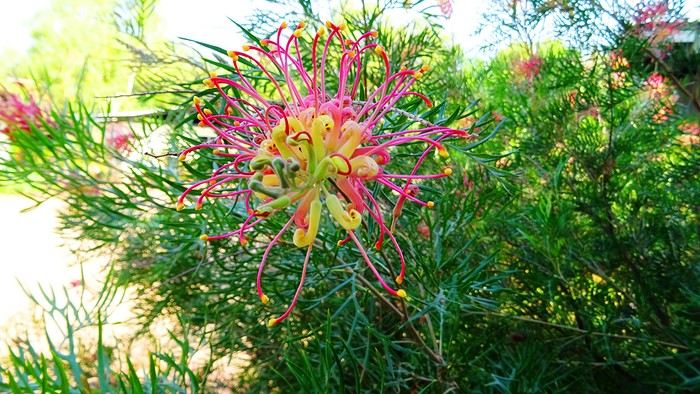
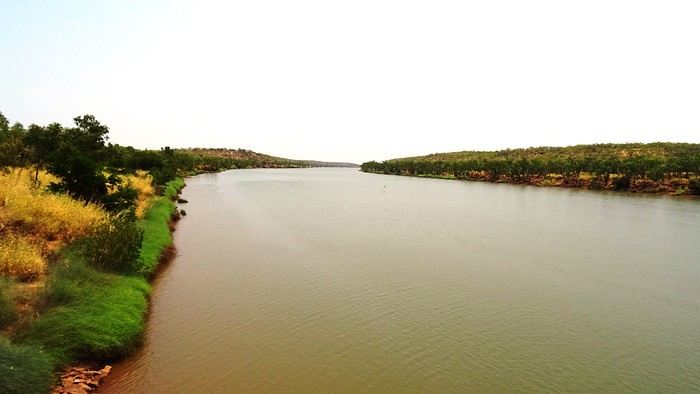
We had a great time. Now we’ve got to pay the price. We’re down one stop before Katherine. Gotta do the whole trip in one go—6 hours of driving. Let’s go! We’re a bit low on fuel with only 300 kilometers of range. The only station at the lake doesn’t open until 9 a.m., and the next (and only) one is 227 kilometers away… Should we risk it? Except for a magnificent frilled-neck lizard darting across the road on its big hind legs and an emu quickly disappearing into the bush, we didn’t see much. Oh—there was also a donkey, lost and panicked in the middle of the road… A quiet road with some beautiful scenery,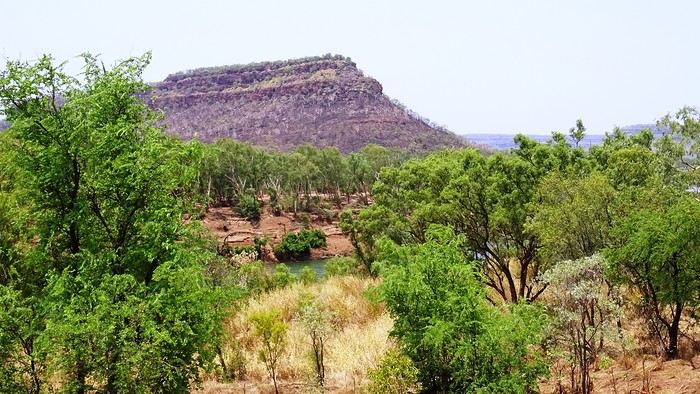 some worrying bushfires
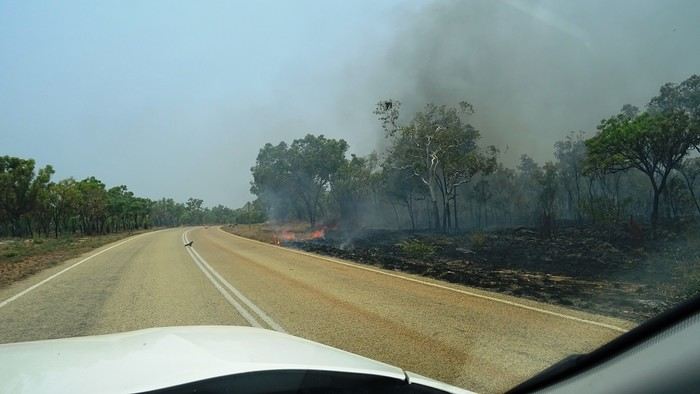
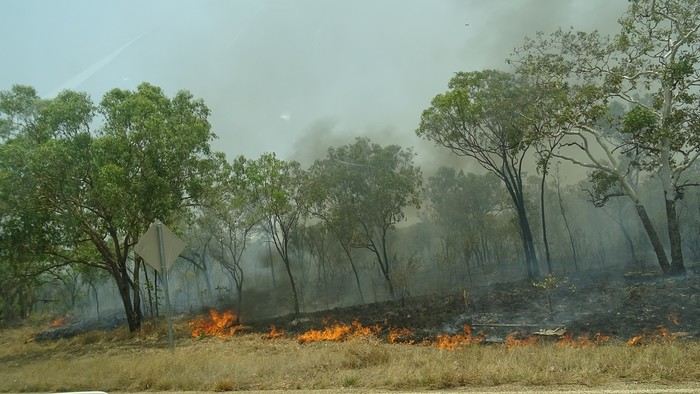 and a few opportunities to stop for a "warrior’s rest" (never go beyond the first second of the thought that starts drifting off the road…)
We cross an invisible border as we enter the Northern Territory, which comes with consequences—we immediately lose an hour and a half by changing time zones. The speed limit goes from 110 to 130.
and a few opportunities to stop for a "warrior’s rest" (never go beyond the first second of the thought that starts drifting off the road…)
We cross an invisible border as we enter the Northern Territory, which comes with consequences—we immediately lose an hour and a half by changing time zones. The speed limit goes from 110 to 130.
We arrive at the self check-in in Katherine. As usual, we’re a little taken aback at first. The noise, for starters. There’s a group rehearsing, it seems. We go check it out. We pass through the doors separating "The Stuart" from the adjoining bar and stumble upon what feels like collective hysteria. Turns out, it’s a concert. Aboriginal musicians completely fired up by some incredible music! There are just three of them, but they’re delivering a wall of sound that reminds us of South Africa’s finest neo-techno with a trance-like vibe. The crowd is wild! They’re singing in unison, screaming with joy. We get gently kicked out by security because we’re carrying our groceries, and they’re not having it. We promise ourselves we’ll come back once we’ve put them away in our little fridge.
Then we land. We end up finding plenty of nice things. It’s very possible we’ll like this place!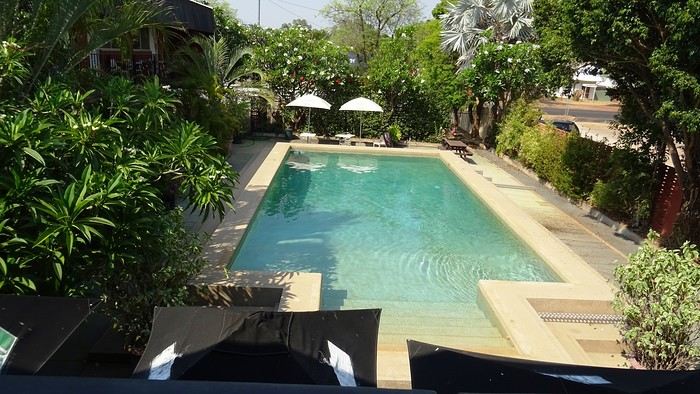
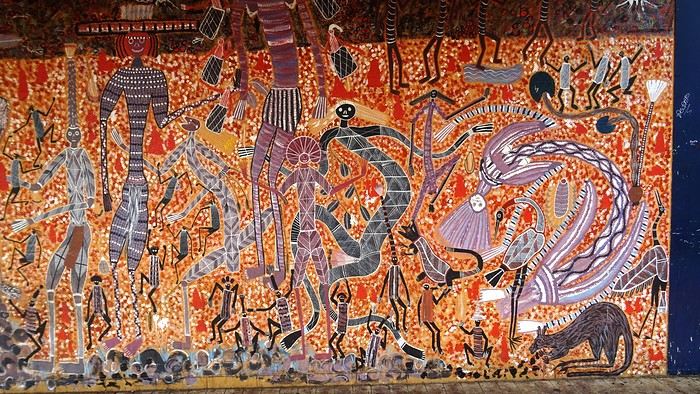 We head back to enjoy our post-battle Happy Hour.
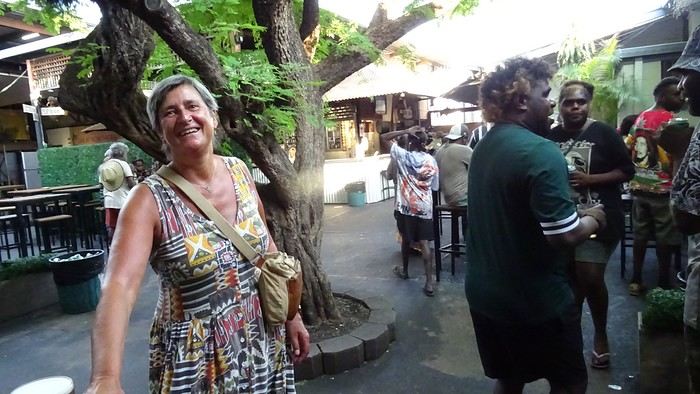 The concert’s over, but the crowd’s still riding the high. It’s indescribable. People are shouting across the room, screaming just for the fun of it—men and women alike. There’s pool, some beat-up arcade games being shaken like coconut trees. Dom and I feel like anthropologists. We’re pretty blown away. It’s epic! And the beer’s half the price it is elsewhere! We’ll definitely be back—that’s for sure!
We give up on finding a restaurant. Not sure they even exist, at least not this season. So, we’ve got a microwave—we eat at home on our little terrace, with a musical accompaniment from a massive orchestra of birds.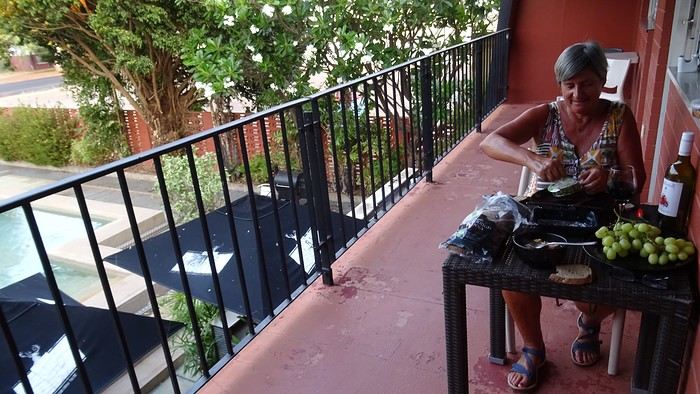 It sounds amazing!
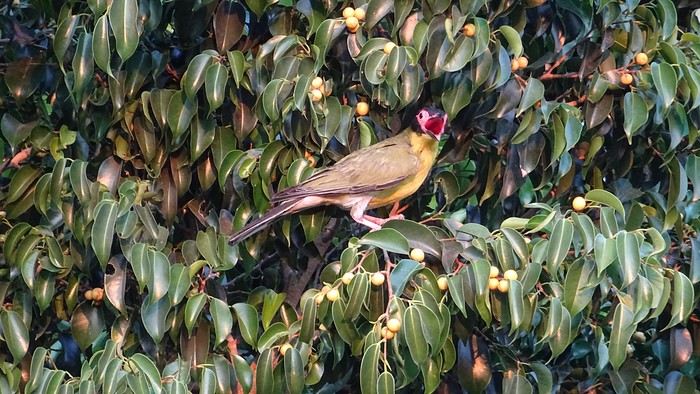
We had a great time. Now we’ve got to pay the price. We’re down one stop before Katherine. Gotta do the whole trip in one go—6 hours of driving. Let’s go! We’re a bit low on fuel with only 300 kilometers of range. The only station at the lake doesn’t open until 9 a.m., and the next (and only) one is 227 kilometers away… Should we risk it? Except for a magnificent frilled-neck lizard darting across the road on its big hind legs and an emu quickly disappearing into the bush, we didn’t see much. Oh—there was also a donkey, lost and panicked in the middle of the road… A quiet road with some beautiful scenery,
some worrying bushfires
and a few opportunities to stop for a "warrior’s rest" (never go beyond the first second of the thought that starts drifting off the road…)
We cross an invisible border as we enter the Northern Territory, which comes with consequences—we immediately lose an hour and a half by changing time zones. The speed limit goes from 110 to 130.
We arrive at the self check-in in Katherine. As usual, we’re a little taken aback at first. The noise, for starters. There’s a group rehearsing, it seems. We go check it out. We pass through the doors separating "The Stuart" from the adjoining bar and stumble upon what feels like collective hysteria. Turns out, it’s a concert. Aboriginal musicians completely fired up by some incredible music! There are just three of them, but they’re delivering a wall of sound that reminds us of South Africa’s finest neo-techno with a trance-like vibe. The crowd is wild! They’re singing in unison, screaming with joy. We get gently kicked out by security because we’re carrying our groceries, and they’re not having it. We promise ourselves we’ll come back once we’ve put them away in our little fridge.
Then we land. We end up finding plenty of nice things. It’s very possible we’ll like this place!
We head back to enjoy our post-battle Happy Hour.
The concert’s over, but the crowd’s still riding the high. It’s indescribable. People are shouting across the room, screaming just for the fun of it—men and women alike. There’s pool, some beat-up arcade games being shaken like coconut trees. Dom and I feel like anthropologists. We’re pretty blown away. It’s epic! And the beer’s half the price it is elsewhere! We’ll definitely be back—that’s for sure!We give up on finding a restaurant. Not sure they even exist, at least not this season. So, we’ve got a microwave—we eat at home on our little terrace, with a musical accompaniment from a massive orchestra of birds.
It sounds amazing!
Feasibility and safety for a trip to Bangladesh
Hi there,
I’m planning a trip to Bangladesh for tourism during All Saints' Day 25. The government website is pretty discouraging! I’d love to hear from people living there or who’ve been recently before I buy my tickets.
How’s the security level and feasibility of a circuit (boat, train, bus around the country)? We’re used to basic conditions :)
Thanks in advance for your tips!
Cécile
3 weeks camping in the Azores, August 2024
Hi everyone,
So glad this forum is back up! Here’s a recap of our three little weeks in the Azores in August 2024, camping on Terceira, Flores/Corvo, and São Miguel, with a special focus on the camping side—something I struggled to find info on before we left.
As others have mentioned, a trip to the Azores isn’t something you can improvise last-minute, especially in August. The rental car fleet is limited, so prices go up as availability drops, and vacation rentals/hotels are scarce. Plus, inter-island flights and ferries aren’t exactly frequent. I picked our destination in mid-April, and there were already few rental car options left (some local companies had nothing), and no accommodations on Flores for our dates—or only very expensive ones requiring multiple location changes. Since we love camping, we decided to bring our gear without really knowing what to expect.
Flight with TAP (426 €): Outbound: Lyon → Lisbon → Terceira Return: São Miguel → Lisbon (9-hour stopover for a quick visit) → Lyon
Inter-island flights with SATA: Terceira → Flores (via Horta): 87 € Flores → São Miguel: 90 €
I rented all three cars from the same local company, Ilha Grande—they weren’t picky about the car’s condition. For a Clio (or similar): Terceira (4 days): 461 € Flores (5 days): 623 € São Miguel (8 days): 730 €
Weather: The first two weeks were gorgeous—blue skies, no rain, and even hotter than we expected, around 30°C (temperatures barely dropped at night). The last week of August brought more fine rain (mostly at night) and temps between 20 and 25°C (a light jacket was nice in the mornings and evenings).
TERCEIRA: A great introduction! When I looked at what each island had to offer, Terceira wasn’t at the top of my list, but flying into Terceira cut costs and fit our schedule well, so we spent 4 days there. It turned out to be a lovely start.
For camping, we stayed at Salga Campismo in Porto Judeu, 20 minutes from the airport. We discovered that the island’s campsites were packed with locals—extended families or groups of friends having big, festive gatherings with barbecues and long tables. They spend their summers camping instead of at home, and some even commute to work from there. They had huge tents for sleeping, plus tarps for cooking and relaxing—way more gear than the tourists. Since the week of August 15th is peak vacation time (like in France), we struggled to find a spot, and the nights were pretty noisy. This was the only campsite of the trip with numbered pitches. It’s right by the ocean, next to natural pools. Facilities were decent, with hot showers and picnic tables. Lots of shaded spots. Cost: 4 € per small tent + 2 € per person. Electrical outlets were free (20 € deposit). During our explorations, we passed by Cinco Ribeiras campsite (west coast), which seemed similar.
Camping gas: Always ask the campsite reception if any travelers left a gas canister before buying a new one! Before the trip, I emailed each island’s tourism office, and they gave me addresses for Campingaz bottles. On Terceira, No. 13 Rua João Vaz Corte Real in Angra do Heroísmo (an agricultural store in the industrial zone). CV300 cartridge: 10 €. Note: The tourism office gave me the name of the neighboring store, which didn’t carry that brand.
Fridge: No fridges at any campsite on any island. We had a foldable cooler and found bags of crushed ice in supermarkets’ fish sections.
Things to see: Key takeaway: Do the must-see spots early in your stay in case the weather doesn’t cooperate. We were lucky and saw all the viewpoints without clouds—apparently not always the case!
Our main visits/hikes on Terceira: Miradouro Serra do Cume (a must—*the* iconic Terceira photo)
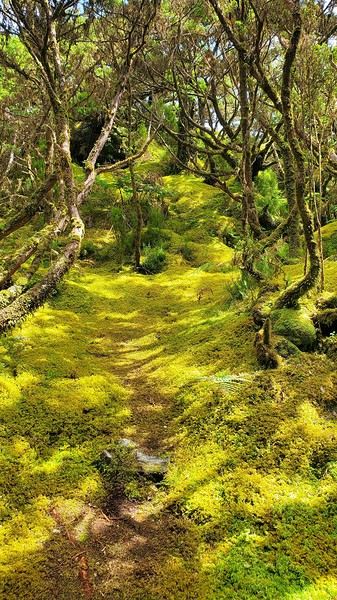
Furnas do Enxofre (free): Few fumaroles, but a pretty 1 km walk through moss and endemic plants. Hike PRC01 TER – Misterios Negros (some acrobatic sections, but a very scenic path). Monte Brasil + Angra do Heroísmo: Lovely town. Hike PR02 TER – Baía da Agualva: Nice, but not much shade (along the coast). Quatro Ribeiras: Church and swimming in natural pools. Biscoitos natural pools: Too touristy (but still free).
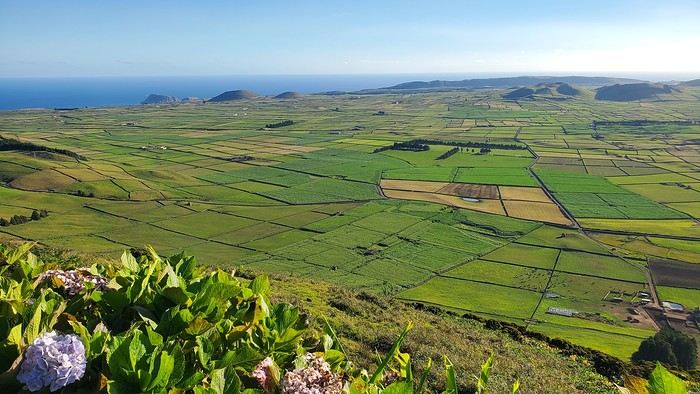
FLORES: Our favorite! This was the island I *had* to visit, and we weren’t disappointed—no mass tourism, just stunning nature.
For camping, we chose Santa Cruz campsite. Unlike Terceira, it was only tourists here. Very little shade, but ocean views. Modern facilities with hot showers, clotheslines, and a charging station. A big area with picnic tables, each with a barbecue and sink, all sheltered. Right across from gorgeous natural pools. FREE (you can leave a tip for the caretaker).
For Campingaz, the campsite manager stores canisters and gear left by campers. Otherwise, you can find them at Movipesca.
During a hike, we passed by Fajã Grande campsite (campsites here double as picnic spots for everyone). It’s terraced, with no shade, but very clean facilities and a small bar/restaurant nearby. Natural pools across the street. When we stopped by midday, there were only a few tents. Fajã Grande felt even quieter than Santa Cruz, with just one supermarket.
We also picnicked at Ponta Delgada campsite in the north. Impeccable facilities, lots of picnic tables with barbecues. Empty when we were there. A bit out of the way.
Rental car or not on Flores? Given the high cost, I really debated whether we needed a car. In Santa Cruz, the port, airport, and supermarkets are walkable, and the most famous hikes are one-way, not loops. So I contacted a taxi (the tourism office emails a list of drivers—they don’t wait for customers; you have to call). Prices were around 20 € for Santa Cruz to Fajã Grande, for example. That means you could take several taxi trips before the rental car (over 100 €/day) pays off. But it does mean planning your route and schedule in advance, leaving little room for spontaneity. The taxi I contacted was already booked solid in July, so I decided to keep the car and adjust our hikes to make loops. (FYI, we’re in our 50s, two couples splitting costs—maybe a different calculation if we were 25!) No regrets—it gave us way more freedom.
Our main visits/hikes:
Hike (amazing): Poço da Ribeira do Ferreiro (the iconic waterfalls) → Fajã Grande → Poço do Bacalhau (swim in the waterfall) → Aldeia da Cuada → Poço da Ribeira do Ferreiro. Hike PR04: Loop from Miradouro da Fajã de Lopo Vaz, then down to the beach via the trail. Return along the pebble beach before climbing back up. Worth it, but the descent and ascent are steep.
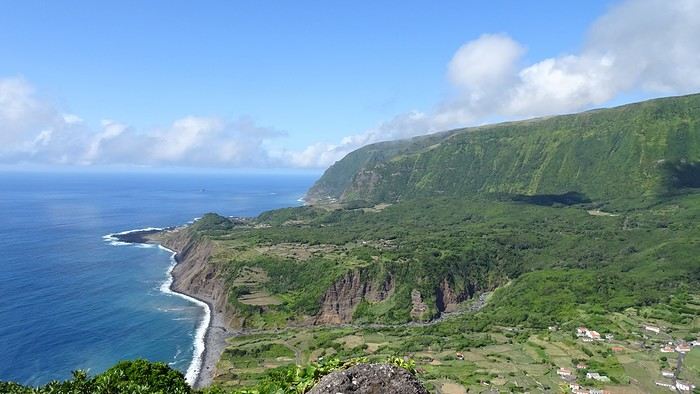
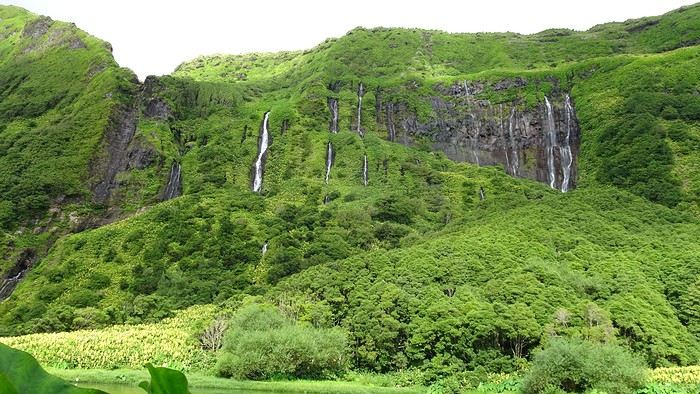 By car: Miradouro do Portal (great view of the coast to Fajã Grande) – Rocha dos Bordões (basalt columns) – Miradouro das Lagoas Rasa e Funda (a must) – Miradouro da Fajã do Conde.
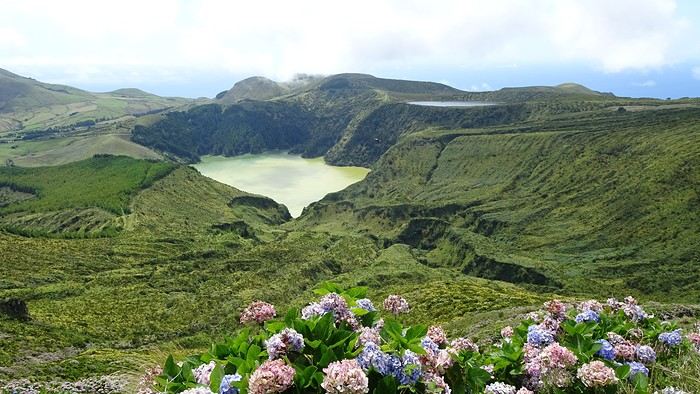
 Hike: Miradouro das Lagoas Funda e Comprida, Lagoa Negra, Seca e Branda, Lagoa Branca. A bit muddy and not as memorable as other hikes. The best part (a must) is the view from the starting miradouro.
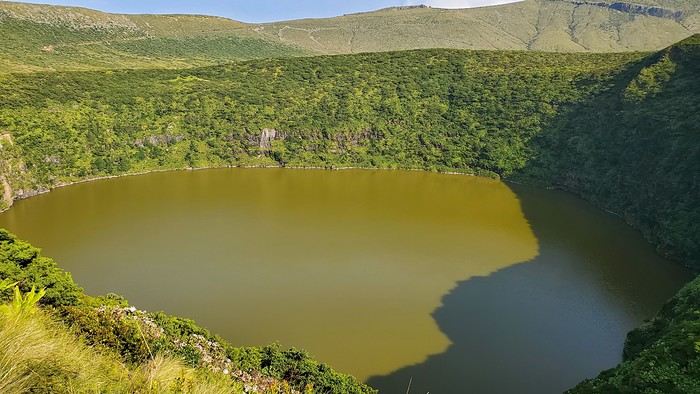
By car: The north of the island.
CORVO: Stunning!!
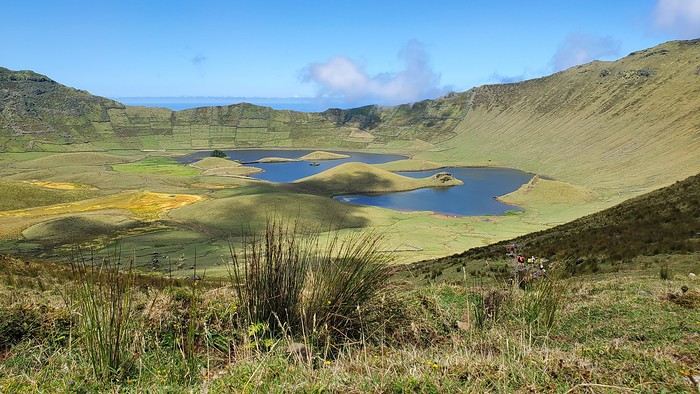
No spots left on the ferry (12 seats), so we took a tourist zodiac (booked a few weeks ahead by email, but there were still spots the day of—several boats make the trip). On the way out, we cruised along Flores’ coast to see waterfalls and caves. On the return, they looked for dolphins (we saw some! 🙂 ). Boat price: 35 € per person. At Corvo, minibuses shuttle between the port and the top of the caldera (10 € round-trip per person). Lots of people just stop at the viewpoint when the shuttle arrives, so we weren’t too crowded on the caldera hike. But it’s too tight on time to walk back down to the port. If you really want to, I think you’d need to stay overnight. All boats spend the same amount of time on the island.
SÃO MIGUEL: Back to civilization—but not just that! São Miguel is way more touristy than the other islands (though still nothing compared to other destinations), but it’s worth it for all the natural sites.
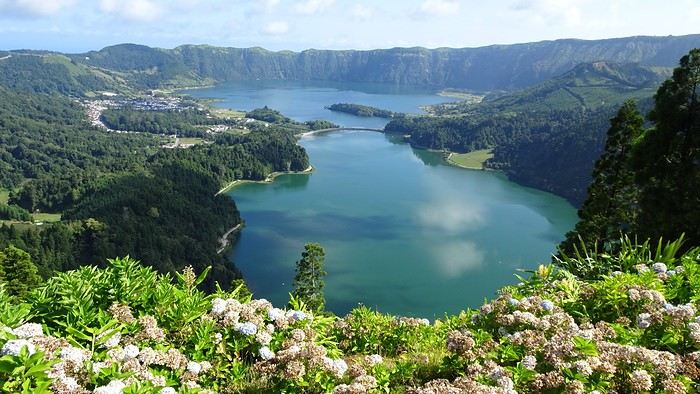
For camping, to avoid long drives, we started at Sete Cidades campsite on the west side. A big, free, terraced campsite with some shade. We were there the last week of August, when crowds start thinning, so there was space—a mix of tourists and locals. A few picnic tables with barbecues. For facilities, one side for men, one for women, each with one toilet (cleaned regularly) and three outdoor cold showers (swimsuits recommended). You can charge your phone in the caretaker’s hut.
After exploring the west, we moved to Furnas for the rest of the trip. We arrived on a Friday night, and the campsite was packed with locals spending the weekend. It emptied out Sunday afternoon. A large, shady campsite with several bathroom blocks (hot showers). There’s a restaurant, but only two picnic tables. Cost: 3.5 € per small tent + 3.5 € per person.
Campingaz: We bought canisters at Decathlon in Ponta Delgada (next to Decathlon, there’s a big shopping center for groceries). Didn’t ask at Sete Cidades, but at Furnas, there was a closet full of gas bottles of all sizes left by campers.
Main visits/hikes: Sete Cidades and the surrounding lakes (lots of viewpoints and short hikes): Beautiful.
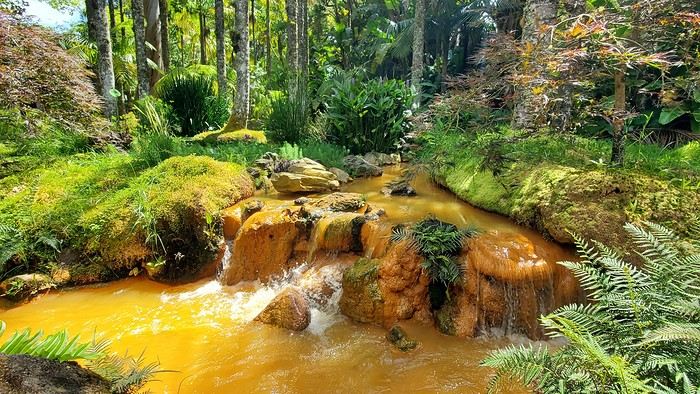
Swimming in the hot springs at Ponta da Ferraria (west side of the island).

Furnas: The lake, fumaroles, and parks (like Terra Nostra).
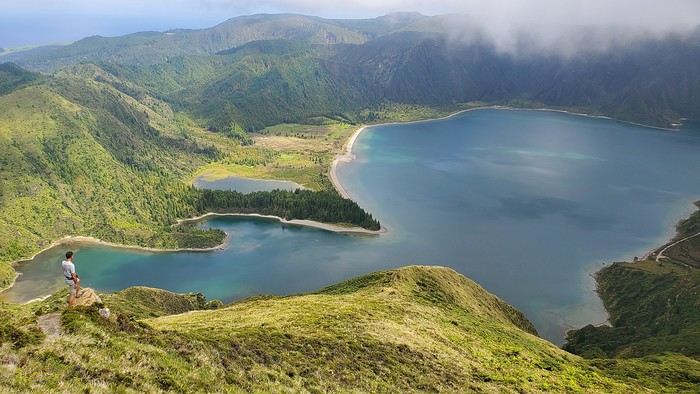
Lagoa do Fogo (gorgeous).
Gorreana tea factory (nice hike through the tea fields + guided tour), Ribeira Grande, Ermida de Nossa Senhora da Paz. The east coast and Ribeira dos Caldeirões park. Ponta Delgada.
Final thoughts: The Azores are a fantastic discovery for nature lovers—lakes, waterfalls, and tranquility. Almost all sites are accessible without hiking (though it’s a shame not to). The “miradouros” (viewpoints) have parking, often with toilets and picnic tables (always very clean), which helps protect nature. Camping is totally doable and really enjoyable! Our only disappointment: Not finding good fruits and veggies (except for São Miguel’s delicious but expensive pineapples).
If you have any questions, I’d be happy to help! Christine
So glad this forum is back up! Here’s a recap of our three little weeks in the Azores in August 2024, camping on Terceira, Flores/Corvo, and São Miguel, with a special focus on the camping side—something I struggled to find info on before we left.
As others have mentioned, a trip to the Azores isn’t something you can improvise last-minute, especially in August. The rental car fleet is limited, so prices go up as availability drops, and vacation rentals/hotels are scarce. Plus, inter-island flights and ferries aren’t exactly frequent. I picked our destination in mid-April, and there were already few rental car options left (some local companies had nothing), and no accommodations on Flores for our dates—or only very expensive ones requiring multiple location changes. Since we love camping, we decided to bring our gear without really knowing what to expect.
Flight with TAP (426 €): Outbound: Lyon → Lisbon → Terceira Return: São Miguel → Lisbon (9-hour stopover for a quick visit) → Lyon
Inter-island flights with SATA: Terceira → Flores (via Horta): 87 € Flores → São Miguel: 90 €
I rented all three cars from the same local company, Ilha Grande—they weren’t picky about the car’s condition. For a Clio (or similar): Terceira (4 days): 461 € Flores (5 days): 623 € São Miguel (8 days): 730 €
Weather: The first two weeks were gorgeous—blue skies, no rain, and even hotter than we expected, around 30°C (temperatures barely dropped at night). The last week of August brought more fine rain (mostly at night) and temps between 20 and 25°C (a light jacket was nice in the mornings and evenings).
TERCEIRA: A great introduction! When I looked at what each island had to offer, Terceira wasn’t at the top of my list, but flying into Terceira cut costs and fit our schedule well, so we spent 4 days there. It turned out to be a lovely start.
For camping, we stayed at Salga Campismo in Porto Judeu, 20 minutes from the airport. We discovered that the island’s campsites were packed with locals—extended families or groups of friends having big, festive gatherings with barbecues and long tables. They spend their summers camping instead of at home, and some even commute to work from there. They had huge tents for sleeping, plus tarps for cooking and relaxing—way more gear than the tourists. Since the week of August 15th is peak vacation time (like in France), we struggled to find a spot, and the nights were pretty noisy. This was the only campsite of the trip with numbered pitches. It’s right by the ocean, next to natural pools. Facilities were decent, with hot showers and picnic tables. Lots of shaded spots. Cost: 4 € per small tent + 2 € per person. Electrical outlets were free (20 € deposit). During our explorations, we passed by Cinco Ribeiras campsite (west coast), which seemed similar.
Camping gas: Always ask the campsite reception if any travelers left a gas canister before buying a new one! Before the trip, I emailed each island’s tourism office, and they gave me addresses for Campingaz bottles. On Terceira, No. 13 Rua João Vaz Corte Real in Angra do Heroísmo (an agricultural store in the industrial zone). CV300 cartridge: 10 €. Note: The tourism office gave me the name of the neighboring store, which didn’t carry that brand.
Fridge: No fridges at any campsite on any island. We had a foldable cooler and found bags of crushed ice in supermarkets’ fish sections.
Things to see: Key takeaway: Do the must-see spots early in your stay in case the weather doesn’t cooperate. We were lucky and saw all the viewpoints without clouds—apparently not always the case!
Our main visits/hikes on Terceira: Miradouro Serra do Cume (a must—*the* iconic Terceira photo)
Furnas do Enxofre (free): Few fumaroles, but a pretty 1 km walk through moss and endemic plants. Hike PRC01 TER – Misterios Negros (some acrobatic sections, but a very scenic path). Monte Brasil + Angra do Heroísmo: Lovely town. Hike PR02 TER – Baía da Agualva: Nice, but not much shade (along the coast). Quatro Ribeiras: Church and swimming in natural pools. Biscoitos natural pools: Too touristy (but still free).
FLORES: Our favorite! This was the island I *had* to visit, and we weren’t disappointed—no mass tourism, just stunning nature.
For camping, we chose Santa Cruz campsite. Unlike Terceira, it was only tourists here. Very little shade, but ocean views. Modern facilities with hot showers, clotheslines, and a charging station. A big area with picnic tables, each with a barbecue and sink, all sheltered. Right across from gorgeous natural pools. FREE (you can leave a tip for the caretaker).
For Campingaz, the campsite manager stores canisters and gear left by campers. Otherwise, you can find them at Movipesca.
During a hike, we passed by Fajã Grande campsite (campsites here double as picnic spots for everyone). It’s terraced, with no shade, but very clean facilities and a small bar/restaurant nearby. Natural pools across the street. When we stopped by midday, there were only a few tents. Fajã Grande felt even quieter than Santa Cruz, with just one supermarket.
We also picnicked at Ponta Delgada campsite in the north. Impeccable facilities, lots of picnic tables with barbecues. Empty when we were there. A bit out of the way.
Rental car or not on Flores? Given the high cost, I really debated whether we needed a car. In Santa Cruz, the port, airport, and supermarkets are walkable, and the most famous hikes are one-way, not loops. So I contacted a taxi (the tourism office emails a list of drivers—they don’t wait for customers; you have to call). Prices were around 20 € for Santa Cruz to Fajã Grande, for example. That means you could take several taxi trips before the rental car (over 100 €/day) pays off. But it does mean planning your route and schedule in advance, leaving little room for spontaneity. The taxi I contacted was already booked solid in July, so I decided to keep the car and adjust our hikes to make loops. (FYI, we’re in our 50s, two couples splitting costs—maybe a different calculation if we were 25!) No regrets—it gave us way more freedom.
Our main visits/hikes:
Hike (amazing): Poço da Ribeira do Ferreiro (the iconic waterfalls) → Fajã Grande → Poço do Bacalhau (swim in the waterfall) → Aldeia da Cuada → Poço da Ribeira do Ferreiro. Hike PR04: Loop from Miradouro da Fajã de Lopo Vaz, then down to the beach via the trail. Return along the pebble beach before climbing back up. Worth it, but the descent and ascent are steep.
By car: Miradouro do Portal (great view of the coast to Fajã Grande) – Rocha dos Bordões (basalt columns) – Miradouro das Lagoas Rasa e Funda (a must) – Miradouro da Fajã do Conde.
Hike: Miradouro das Lagoas Funda e Comprida, Lagoa Negra, Seca e Branda, Lagoa Branca. A bit muddy and not as memorable as other hikes. The best part (a must) is the view from the starting miradouro.By car: The north of the island.
CORVO: Stunning!!
No spots left on the ferry (12 seats), so we took a tourist zodiac (booked a few weeks ahead by email, but there were still spots the day of—several boats make the trip). On the way out, we cruised along Flores’ coast to see waterfalls and caves. On the return, they looked for dolphins (we saw some! 🙂 ). Boat price: 35 € per person. At Corvo, minibuses shuttle between the port and the top of the caldera (10 € round-trip per person). Lots of people just stop at the viewpoint when the shuttle arrives, so we weren’t too crowded on the caldera hike. But it’s too tight on time to walk back down to the port. If you really want to, I think you’d need to stay overnight. All boats spend the same amount of time on the island.
SÃO MIGUEL: Back to civilization—but not just that! São Miguel is way more touristy than the other islands (though still nothing compared to other destinations), but it’s worth it for all the natural sites.
For camping, to avoid long drives, we started at Sete Cidades campsite on the west side. A big, free, terraced campsite with some shade. We were there the last week of August, when crowds start thinning, so there was space—a mix of tourists and locals. A few picnic tables with barbecues. For facilities, one side for men, one for women, each with one toilet (cleaned regularly) and three outdoor cold showers (swimsuits recommended). You can charge your phone in the caretaker’s hut.
After exploring the west, we moved to Furnas for the rest of the trip. We arrived on a Friday night, and the campsite was packed with locals spending the weekend. It emptied out Sunday afternoon. A large, shady campsite with several bathroom blocks (hot showers). There’s a restaurant, but only two picnic tables. Cost: 3.5 € per small tent + 3.5 € per person.
Campingaz: We bought canisters at Decathlon in Ponta Delgada (next to Decathlon, there’s a big shopping center for groceries). Didn’t ask at Sete Cidades, but at Furnas, there was a closet full of gas bottles of all sizes left by campers.
Main visits/hikes: Sete Cidades and the surrounding lakes (lots of viewpoints and short hikes): Beautiful.
Swimming in the hot springs at Ponta da Ferraria (west side of the island).
Furnas: The lake, fumaroles, and parks (like Terra Nostra).
Lagoa do Fogo (gorgeous).
Gorreana tea factory (nice hike through the tea fields + guided tour), Ribeira Grande, Ermida de Nossa Senhora da Paz. The east coast and Ribeira dos Caldeirões park. Ponta Delgada.
Final thoughts: The Azores are a fantastic discovery for nature lovers—lakes, waterfalls, and tranquility. Almost all sites are accessible without hiking (though it’s a shame not to). The “miradouros” (viewpoints) have parking, often with toilets and picnic tables (always very clean), which helps protect nature. Camping is totally doable and really enjoyable! Our only disappointment: Not finding good fruits and veggies (except for São Miguel’s delicious but expensive pineapples).
If you have any questions, I’d be happy to help! Christine
Sharing the Toubkal ascent in the Atlas Mountains in February 2025
Hello fellow adventurers! :)
I’m writing this little message to the community and adventurers because I’m thinking of heading to Morocco (a country I know well) for a week in February (around the 6th or 10th, for about a week) to climb Mount Toubkal in the Atlas Mountains.
I’m used to hiking and backpacking, but this would be my first 4,000m peak.
I think the mountain landscapes are even more stunning in winter.
I know it’s necessary to hire a guide for this ascent.
Has anyone here already climbed it in winter? If so, any feedback or tips?
Also, if anyone wants to join me on this adventure, I’d love the company! :)
The idea would be to rent a car (around 10–15 € per day) and do some other hikes in the Marrakech area too.
Don’t hesitate to get in touch!
antoine.petiard@gmail.com - 0650536769
Looking forward to it, see you soon!
Antoine :)
Short city trip - Stockholm February 2024
Hello everyone,
I’m trying to take the time to share one or two travel journals I wrote elsewhere (the forum wasn’t accessible when I was writing them...).
My partner and I went to Stockholm from February 27th to March 1st, 2024.
It was a pretty short trip, shaped by the usual factors: time, budget, and the kids.
We live not far from Luxembourg City (about an hour away), and when we can, we fly with Luxair. It’s a quality airline, but it’s a bit pricey.
This trip was originally planned for 2022, but it was canceled by the airline a few weeks before departure. Since the flight was on a De Havilland Q-400 with a max of 76 passengers, I think there just weren’t enough people booked.
So, we booked a flight with checked baggage and seat selection (2 + 2 seating) for around 400 € round trip.
For the hotel, I chose the **Radisson Blu Waterfront** through Booking.com for just under 600 €, including breakfast.
PS: I had to grab photos from the web and adjust their resolution, so they’re not amazing—sorry about that!
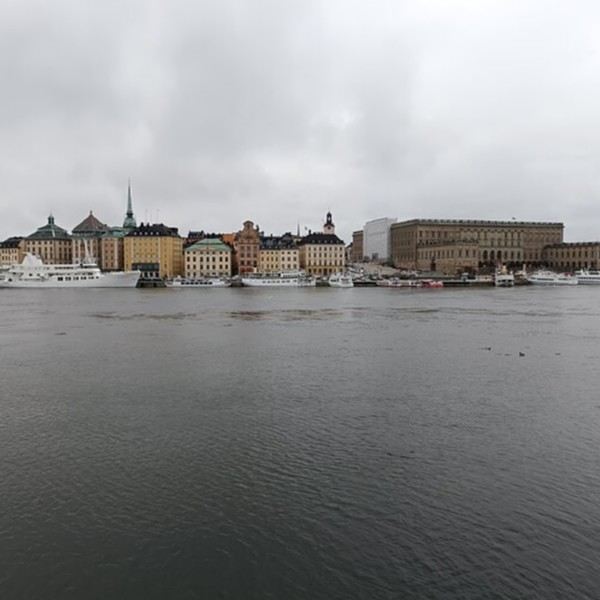
I’m trying to take the time to share one or two travel journals I wrote elsewhere (the forum wasn’t accessible when I was writing them...).
My partner and I went to Stockholm from February 27th to March 1st, 2024.
It was a pretty short trip, shaped by the usual factors: time, budget, and the kids.
We live not far from Luxembourg City (about an hour away), and when we can, we fly with Luxair. It’s a quality airline, but it’s a bit pricey.
This trip was originally planned for 2022, but it was canceled by the airline a few weeks before departure. Since the flight was on a De Havilland Q-400 with a max of 76 passengers, I think there just weren’t enough people booked.
So, we booked a flight with checked baggage and seat selection (2 + 2 seating) for around 400 € round trip.
For the hotel, I chose the **Radisson Blu Waterfront** through Booking.com for just under 600 €, including breakfast.
PS: I had to grab photos from the web and adjust their resolution, so they’re not amazing—sorry about that!
Exploring California's major coastal cities in two weeks
We’d like to do the California coast in two weeks this September.
Two adults, rental car, and Airbnb.
First time except for San Francisco, where we’re starting a cruise.
Is San Francisco-Los Angeles-San Diego doable?
If not, what are the must-sees?
Thanks! !
Your favorite cruise lines
Hi everyone (and yes, ladies first 😎)
I was wondering, besides MSC and Costa, which cruise lines are your favorites? Which ones would you like to try?
For my part, I’ve tried Virgin… and how can I put it… it was one of the best cruises of my life! There are a lot of preconceptions about the company that honestly aren’t entirely justified (even if I’ll admit I’m their target audience!).
Anyway, if you’re interested, I’ll give you a little rundown 🙂
I was wondering, besides MSC and Costa, which cruise lines are your favorites? Which ones would you like to try?
For my part, I’ve tried Virgin… and how can I put it… it was one of the best cruises of my life! There are a lot of preconceptions about the company that honestly aren’t entirely justified (even if I’ll admit I’m their target audience!).
Anyway, if you’re interested, I’ll give you a little rundown 🙂
Train from Bangkok (Thailand) to Vientiane (Laos)
Hi there,
I’m heading to Laos at the end of the year. We’ll be landing in Bangkok, and from there, we’d like to hop straight on a train to Vientiane. I think the line exists now. I’m guessing it’s from the new station, which I don’t know yet. Can anyone tell me about it, as well as the visa for Laos if I take this mode of transport?
Thanks
Traveling in Myanmar in 2024
Important: I’ve been living in Myanmar for several years now, and I speak and write Burmese correctly (though I still have a strong French accent).
I really don’t want this post to make you think that traveling in Myanmar right now is easy.
It’s crucial to understand that the country is unstable—this isn’t the place for a relaxing vacation.
The security situation and areas open to tourists are constantly changing.
I started my trip in Bagan. Flights were fully booked, so I took a VIP overnight bus from Yangon. Along the way, we encountered 4 checkpoints run by the military. The bus conductor announces that it’s forbidden to use your phone during these stops. Each time, the conductor hands over the passenger list to the checkpoint, and sometimes one or two passengers are asked to step out for questioning before we’re allowed to continue. I didn’t have to interact directly with the soldiers.
In Bagan, there are quite a few local visitors but very, very few foreign tourists... I remember my trip in December 2019 when I’d hear French spoken regularly...
I’m staying at the Bagan Thande Hotel for 130,000 kyats, or about thirty dollars at the current exchange rate.
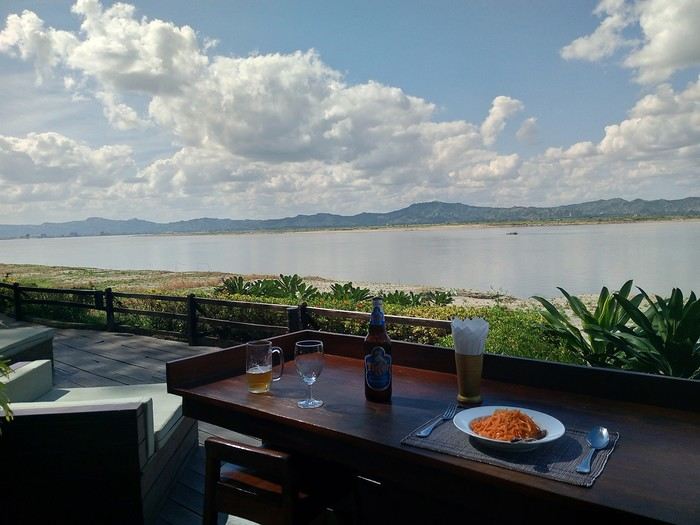
I started my trip in Bagan. Flights were fully booked, so I took a VIP overnight bus from Yangon. Along the way, we encountered 4 checkpoints run by the military. The bus conductor announces that it’s forbidden to use your phone during these stops. Each time, the conductor hands over the passenger list to the checkpoint, and sometimes one or two passengers are asked to step out for questioning before we’re allowed to continue. I didn’t have to interact directly with the soldiers.
In Bagan, there are quite a few local visitors but very, very few foreign tourists... I remember my trip in December 2019 when I’d hear French spoken regularly...
I’m staying at the Bagan Thande Hotel for 130,000 kyats, or about thirty dollars at the current exchange rate.
California trip September 2022
Last trip in September 2022 with my new wife.
Third trip to the States for her, sixth for me...
LA, the Pacific coast, then we head east toward the sequoias and that’s when... fever, shivers... sick—"honey, pass me some Doliprane, I’ve got COVID." We go up into the forest, nap for 2 hours, then hit the road again—feeling a bit better... I’m thirsty, I’m *always* thirsty, everything I drink tastes awful... I’m exhausted, I go to bed around 6:30 PM. Once we get to the hotels, I’m up 6 or 7 times a night to pee. I pull over on the side of the road to empty my bladder... glug-glug pee, glug-glug pee.
We barely scratch the surface of sightseeing—I spend a whole day in SF sleeping... we head home, I sleep for 4 days straight. Doctor, ER. Nearly diabetic coma + pulmonary embolism + an 18 cm piece of *well-done* meat... 15 days in the hospital... antibiotic treatment, 2 shots a day for a month + insulin.
But we had a great trip:
https://youtu.be/dLRJ1kY9q1M?feature=shared
Da Nang and Hoi An (Vietnam)
DANANG
A big city in the midst of an economic boom. The setting is stunning, with its large bay, the Son Tra Peninsula, and the Annamite Mountains on the horizon.
Where to stay and eat? Da Nang is a bustling business hub, so hotels are pricier and often fully booked. I was lucky to find a motorbike taxi driver who, after six full hotels, took me to Mai Son Hotel, 113 Nguyen Van Linh, a spotless 2-star place. Plus, right next door, there’s a great restaurant that seems popular with locals, and a good Chinese restaurant just a 5-minute walk away, Phi Lu (178 Nguyen Van Linh), recommended by the *Guide du Routard*. So, I’d definitely recommend this hotel. For a pricier option, the very Christian Dai A Hotel, near the tiny pink cathedral, is nice, but why pay more?
Actually, why stay in Da Nang when the gorgeous Hoi An is just 34 km to the south?
What to see? - The lovely Cham Museum (small, takes at most an hour) - The climb up Son Tra Peninsula (great views of the whole area) - The “tour” of the peninsula—quotation marks because the road stops two-thirds of the way. There’s an interesting little museum on the left before reaching the base of the huge statue, the Đong Đinh (large entrance on the left side of the hill), with traditional houses in the jungle holding artifacts over 2,000 years old (Sa Huynh culture; if you’re interested, check out the small Sa Huynh Museum in Hoi An, just before the Japanese Bridge). However, the big Linh Ung Pagoda is just colorful concrete! A beautiful resort, the Son Tra Beach Resort and Spa, sits on a pristine beach and isn’t too expensive: $120 for a garden room and $200–$270 for duplexes with a pool, where you can sleep six. Before reaching the resort, you’ll find two excellent seafood restaurants with large beachfront terraces on your right. - On the way to Hoi An, Marble Mountain, where I loved the village of marble sculpture workshops, the pretty pagodas and caves, and the stunning view from the top of the last promontory (the stairs are steep!). However, you can skip the famous China Beach and its resorts—all pretentious and expensive, not to mention the ones under construction on both sides of the road (they’re multiplying like crazy!). So, when traveling from Da Nang to Hoi An, I recommend two stops: the Cham Museum and Marble Mountain. - The beautiful drive to the Hai Van Pass (there weren’t any clouds!), offering spectacular views of the Da Nang region to the south and the coast to the north. The descent leads to the fishing village and beach of Lang Co, which is lovely but destined for rampant resort development, judging by the huge projects advertised on billboards along the road after the village. - Some affordable guesthouses ($15) and big resorts, including the lovely Lang Co Beach Resort, with a large pool and great value given the beautiful gardens and elegant bungalows. Recommended in Lang Co: lunch at one of the two stilt restaurants over the lagoon—great views and fresh seafood.
The public bus to Hoi An, 34 km south of Da Nang, takes 45 minutes for 50,000 dong. There’s one every half hour.
HOI AN This is a “must-see” for so many reasons: stunning old houses, temples, and pagodas; a colorful daily open-air and covered market near the bridge; charming little streets in the old quarter—especially at night, with all the multicolored lanterns and riverside restaurant terraces, it’s very romantic. The local food is delicious, the people are friendly and kind, there are two beautiful beaches, and attractions like the Cham ruins of My Son. Some say Hoi An is overrun with tourists and should be avoided. That’s true for the historic center and An Bang Beach, but not at all once you step outside.
WHERE TO STAY For a 2-star option, I recommend Ngo House Villa (99 Nguyen Phuc Tan St), very quiet on the island just across from the Old Quarter: 3-star rooms + suites, a large “Family” room, and a nice pool, all for $20 ($40 for the “Family” room). The same charming owner has a second hotel 20 meters away (No. 74), Phan Ngô, which is older but has a large terrace and a small pool—I prefer this one. For 3 stars, Thuy Duong 3 (92 Ba Trieu) is perfect, with a pool and garden ($40–$60). A bit pricier but great is A Han on Phan Bai Chau, with a large garden and terrace restaurant.
For those with a bigger budget, I recommend two riverside spots with rooms, suites, and pools, priced at $200–$350: the secluded Coco River Resort (formerly Ancient House River, with a large wooden terrace for romantic dinners by the river) and Anantara, (formerly Heritage), with bungalows close to the old town—but pricey.
Outside the city, my favorite hotel is Villa Loan, the new place from the famous Loan of Tam Coc, very quiet in the countryside, 15 minutes by bike from Old Hoi An and An Bang Beach. Beautiful rooms ($35), a Family room with two double beds ($55), two 65 m² twins that can sleep six (two large beds + two single beds—$80), a terrace restaurant, and a lovely pool. Prices include a buffet breakfast and a bike.
Also great is Daisy Anbang on An Bang Beach, elegant with a pool and beach just 50 meters away (skip the Aira next door—too expensive).
WHERE TO EAT Hoi An is Vietnam’s culinary capital. For Vietnamese food, I recommend Dao Tien, 21 Phan Bai Chau. No surprise—the chef is a former chef at the luxury 4-star Victoria Hoi An, a solid reference. The restaurant now has a beautiful terrace by the river (take the alley on the right side of the main street Dao Tien). Plus, you’re doing a good deed: a large part of the profits goes toward educating underprivileged children—one year of free hospitality, cooking, and English training, followed by job placement in local establishments. Madame Hien Hoi An (formerly Co Mai), 2 Nguyen Thai Hoc (left of the market), is another great spot—the chef is Didier Corlou, formerly of the famous *Porte d’Annam* and *Madame Hien* in Hanoi (closed in March 2022 due to COVID, so foreign tourists are still scarce). Also worth checking out is Secret Garden, in the Phuong Minh An alley (entrance at 60 Le Loi), set in a beautiful space. One of my favorites is Madam Kieu, 43 Nguyen Phuc Chu, right on the river across from the little bridge—very elegant with excellent Vietnamese cuisine. Unfortunately, all the restaurants on this esplanade blast “music” (boom boom boom yeah yeah yeah) in the evenings, so it’s impossible to talk—go for lunch instead.
For a break from Vietnamese food, try Good Morning Vietnam, a ridiculous name for an excellent Italian restaurant (11 Le Loi). The cheerful chef is from Bologna, the “Lyon of Italy”: lasagna like an Italian *mama*’s, delicious tagliatelle ai porcini (porcini mushrooms imported from Italy), and a divine homemade tiramisu (pro tip: order a grappa and drizzle a few drops on the tiramisu). It’s also one of the few places where you can get an excellent bottle of red wine for 350,000 dong instead of the usual 600,000–800,000 dong (South African Robertson Chapel). Another gem: the Japanese restaurant Samurai Kitchen (no sushi, but divine gyoza), 21 Phan Chau Trinh—the street on the right side of the market when you turn your back to the river. Finally, Ganesh, which I consider the best Indian restaurant in Vietnam (99 Tran Hung Dao St).
At An Bang, there are plenty of beachfront restaurants. The two best are the large one at the far right of the parking lot (huge seafood selection) and the fantastic La Luna d’Autumno, owned by the same person as the Italian restaurant of the same name, once considered the best in Vietnam but closed in 2020 due to COVID. Divine pizzas, including the vegetariana.
WHAT TO VISIT The Japanese Bridge and all the old Chinese houses, temples, and pagodas in the three historic streets. Don’t miss the extraordinary gallery-museum of the great French photographer Réhahn, the Precious Heritage Museum at 26 Phan Boi Chau. His remarkable photo collection—including the famous shot of the little Cham girl with clear blue eyes—has graced the covers of many magazines. His Montagnard Museum is a wonder, with a larger collection of tribal women’s costumes than the Museum of Ethnology in Hanoi. Free entry.
THE BEACHES Cua Dai Beach has mostly disappeared, a victim of the waves, except in a few spots. The beautiful An Bang Beach remains, with great beachfront restaurants, or you can head to Cham Island.
MY SON A beautiful complex of Cham ruins surrounded by mountains, 50 km southwest of Hoi An via a scenic road. You can rent a motorbike, take a motorbike taxi, or join a half-day organized tour. It’s best to go in the afternoon—less crowded than in the morning.
CHAM ISLANDS (Cu Lao Cham) Wow, I loved it! It reminded me of St. Barts 35 years ago. The archipelago, 19 km from Hoi An, consists of eight small islands within the Cu Lao Cham Marine Reserve, declared a “Biosphere Reserve” by UNESCO. The largest and only inhabited island, Hon Lao (Pearl Island), covers 1,317 hectares, and its highest peak reaches 517 meters. Hon Lao has two villages: Bai Lang, where the boats from Hoi An dock, and the charming little fishing port of Bai Huong. Part of the island is a military zone, so only the east coast is accessible to tourists.
To get there, you have three options: - The public boat (100,000 dong) that leaves from in front of Café des Amis at 7:30 AM. The catch is it returns to Hoi An at noon, so to enjoy the charm of the place, you’ll need to spend a night on the island (which I highly recommend). - Organized tours by Cham Diving Club, with two options: diving or snorkeling only. - A private speedboat, but it’s not cheap: $200 for the day!
Note: Even if the weather seems fine, the large public boat won’t leave if the sea is too rough. The only solution is to go to the port around 7:30 AM and check (easy, since it brings all the supplies for the island’s locals—if it’s leaving, it’ll be loading up). Avoid weekends—it gets swarmed with locals.
Small coves with dreamy beaches, as they say. Two are very close to Bai Lang: one to the left (facing the village), Bai Ong, lined with restaurants, and a tiny one to the right of the village. The other two beaches, including Bai Chong and the little fishing port of Bai Huong, are accessible by motorbike or boat. I recommend renting a motorbike (biking is tough due to steep hills) and taking the road that overlooks the coast—it’s stunning.
Great diving. The Cham Diving Club is superbly organized by a very friendly Italian, Lodovico, and two French guys (www.chamislanddiving.com).
When you arrive at Bai Lang’s pier, they’ll offer you TWO family-run guesthouses in the village. There are also homestays, but they’re really basic (usually bamboo mats on wooden planks as beds), no English or French is spoken, and locals speak a dialect that’s hard to understand even if you’re decent at Vietnamese. Anyway, I don’t recommend staying in Bai Lang because of the public loudspeakers. Two options if you want a quiet night: - A small guesthouse facing the tiny rice field on the way to Bai Ong Beach. Very clean rooms and a large terrace overlooking the “rice field.” 300,000 dong, with meals available on the terrace. Nha Nghi Vu Truong Tel: 235 386 4783 Mobile: 01 67 76 63 110. - Homestays in the little fishing port of Bai Huong.
Where to stay and eat? Da Nang is a bustling business hub, so hotels are pricier and often fully booked. I was lucky to find a motorbike taxi driver who, after six full hotels, took me to Mai Son Hotel, 113 Nguyen Van Linh, a spotless 2-star place. Plus, right next door, there’s a great restaurant that seems popular with locals, and a good Chinese restaurant just a 5-minute walk away, Phi Lu (178 Nguyen Van Linh), recommended by the *Guide du Routard*. So, I’d definitely recommend this hotel. For a pricier option, the very Christian Dai A Hotel, near the tiny pink cathedral, is nice, but why pay more?
Actually, why stay in Da Nang when the gorgeous Hoi An is just 34 km to the south?
What to see? - The lovely Cham Museum (small, takes at most an hour) - The climb up Son Tra Peninsula (great views of the whole area) - The “tour” of the peninsula—quotation marks because the road stops two-thirds of the way. There’s an interesting little museum on the left before reaching the base of the huge statue, the Đong Đinh (large entrance on the left side of the hill), with traditional houses in the jungle holding artifacts over 2,000 years old (Sa Huynh culture; if you’re interested, check out the small Sa Huynh Museum in Hoi An, just before the Japanese Bridge). However, the big Linh Ung Pagoda is just colorful concrete! A beautiful resort, the Son Tra Beach Resort and Spa, sits on a pristine beach and isn’t too expensive: $120 for a garden room and $200–$270 for duplexes with a pool, where you can sleep six. Before reaching the resort, you’ll find two excellent seafood restaurants with large beachfront terraces on your right. - On the way to Hoi An, Marble Mountain, where I loved the village of marble sculpture workshops, the pretty pagodas and caves, and the stunning view from the top of the last promontory (the stairs are steep!). However, you can skip the famous China Beach and its resorts—all pretentious and expensive, not to mention the ones under construction on both sides of the road (they’re multiplying like crazy!). So, when traveling from Da Nang to Hoi An, I recommend two stops: the Cham Museum and Marble Mountain. - The beautiful drive to the Hai Van Pass (there weren’t any clouds!), offering spectacular views of the Da Nang region to the south and the coast to the north. The descent leads to the fishing village and beach of Lang Co, which is lovely but destined for rampant resort development, judging by the huge projects advertised on billboards along the road after the village. - Some affordable guesthouses ($15) and big resorts, including the lovely Lang Co Beach Resort, with a large pool and great value given the beautiful gardens and elegant bungalows. Recommended in Lang Co: lunch at one of the two stilt restaurants over the lagoon—great views and fresh seafood.
The public bus to Hoi An, 34 km south of Da Nang, takes 45 minutes for 50,000 dong. There’s one every half hour.
HOI AN This is a “must-see” for so many reasons: stunning old houses, temples, and pagodas; a colorful daily open-air and covered market near the bridge; charming little streets in the old quarter—especially at night, with all the multicolored lanterns and riverside restaurant terraces, it’s very romantic. The local food is delicious, the people are friendly and kind, there are two beautiful beaches, and attractions like the Cham ruins of My Son. Some say Hoi An is overrun with tourists and should be avoided. That’s true for the historic center and An Bang Beach, but not at all once you step outside.
WHERE TO STAY For a 2-star option, I recommend Ngo House Villa (99 Nguyen Phuc Tan St), very quiet on the island just across from the Old Quarter: 3-star rooms + suites, a large “Family” room, and a nice pool, all for $20 ($40 for the “Family” room). The same charming owner has a second hotel 20 meters away (No. 74), Phan Ngô, which is older but has a large terrace and a small pool—I prefer this one. For 3 stars, Thuy Duong 3 (92 Ba Trieu) is perfect, with a pool and garden ($40–$60). A bit pricier but great is A Han on Phan Bai Chau, with a large garden and terrace restaurant.
For those with a bigger budget, I recommend two riverside spots with rooms, suites, and pools, priced at $200–$350: the secluded Coco River Resort (formerly Ancient House River, with a large wooden terrace for romantic dinners by the river) and Anantara, (formerly Heritage), with bungalows close to the old town—but pricey.
Outside the city, my favorite hotel is Villa Loan, the new place from the famous Loan of Tam Coc, very quiet in the countryside, 15 minutes by bike from Old Hoi An and An Bang Beach. Beautiful rooms ($35), a Family room with two double beds ($55), two 65 m² twins that can sleep six (two large beds + two single beds—$80), a terrace restaurant, and a lovely pool. Prices include a buffet breakfast and a bike.
Also great is Daisy Anbang on An Bang Beach, elegant with a pool and beach just 50 meters away (skip the Aira next door—too expensive).
WHERE TO EAT Hoi An is Vietnam’s culinary capital. For Vietnamese food, I recommend Dao Tien, 21 Phan Bai Chau. No surprise—the chef is a former chef at the luxury 4-star Victoria Hoi An, a solid reference. The restaurant now has a beautiful terrace by the river (take the alley on the right side of the main street Dao Tien). Plus, you’re doing a good deed: a large part of the profits goes toward educating underprivileged children—one year of free hospitality, cooking, and English training, followed by job placement in local establishments. Madame Hien Hoi An (formerly Co Mai), 2 Nguyen Thai Hoc (left of the market), is another great spot—the chef is Didier Corlou, formerly of the famous *Porte d’Annam* and *Madame Hien* in Hanoi (closed in March 2022 due to COVID, so foreign tourists are still scarce). Also worth checking out is Secret Garden, in the Phuong Minh An alley (entrance at 60 Le Loi), set in a beautiful space. One of my favorites is Madam Kieu, 43 Nguyen Phuc Chu, right on the river across from the little bridge—very elegant with excellent Vietnamese cuisine. Unfortunately, all the restaurants on this esplanade blast “music” (boom boom boom yeah yeah yeah) in the evenings, so it’s impossible to talk—go for lunch instead.
For a break from Vietnamese food, try Good Morning Vietnam, a ridiculous name for an excellent Italian restaurant (11 Le Loi). The cheerful chef is from Bologna, the “Lyon of Italy”: lasagna like an Italian *mama*’s, delicious tagliatelle ai porcini (porcini mushrooms imported from Italy), and a divine homemade tiramisu (pro tip: order a grappa and drizzle a few drops on the tiramisu). It’s also one of the few places where you can get an excellent bottle of red wine for 350,000 dong instead of the usual 600,000–800,000 dong (South African Robertson Chapel). Another gem: the Japanese restaurant Samurai Kitchen (no sushi, but divine gyoza), 21 Phan Chau Trinh—the street on the right side of the market when you turn your back to the river. Finally, Ganesh, which I consider the best Indian restaurant in Vietnam (99 Tran Hung Dao St).
At An Bang, there are plenty of beachfront restaurants. The two best are the large one at the far right of the parking lot (huge seafood selection) and the fantastic La Luna d’Autumno, owned by the same person as the Italian restaurant of the same name, once considered the best in Vietnam but closed in 2020 due to COVID. Divine pizzas, including the vegetariana.
WHAT TO VISIT The Japanese Bridge and all the old Chinese houses, temples, and pagodas in the three historic streets. Don’t miss the extraordinary gallery-museum of the great French photographer Réhahn, the Precious Heritage Museum at 26 Phan Boi Chau. His remarkable photo collection—including the famous shot of the little Cham girl with clear blue eyes—has graced the covers of many magazines. His Montagnard Museum is a wonder, with a larger collection of tribal women’s costumes than the Museum of Ethnology in Hanoi. Free entry.
THE BEACHES Cua Dai Beach has mostly disappeared, a victim of the waves, except in a few spots. The beautiful An Bang Beach remains, with great beachfront restaurants, or you can head to Cham Island.
MY SON A beautiful complex of Cham ruins surrounded by mountains, 50 km southwest of Hoi An via a scenic road. You can rent a motorbike, take a motorbike taxi, or join a half-day organized tour. It’s best to go in the afternoon—less crowded than in the morning.
CHAM ISLANDS (Cu Lao Cham) Wow, I loved it! It reminded me of St. Barts 35 years ago. The archipelago, 19 km from Hoi An, consists of eight small islands within the Cu Lao Cham Marine Reserve, declared a “Biosphere Reserve” by UNESCO. The largest and only inhabited island, Hon Lao (Pearl Island), covers 1,317 hectares, and its highest peak reaches 517 meters. Hon Lao has two villages: Bai Lang, where the boats from Hoi An dock, and the charming little fishing port of Bai Huong. Part of the island is a military zone, so only the east coast is accessible to tourists.
To get there, you have three options: - The public boat (100,000 dong) that leaves from in front of Café des Amis at 7:30 AM. The catch is it returns to Hoi An at noon, so to enjoy the charm of the place, you’ll need to spend a night on the island (which I highly recommend). - Organized tours by Cham Diving Club, with two options: diving or snorkeling only. - A private speedboat, but it’s not cheap: $200 for the day!
Note: Even if the weather seems fine, the large public boat won’t leave if the sea is too rough. The only solution is to go to the port around 7:30 AM and check (easy, since it brings all the supplies for the island’s locals—if it’s leaving, it’ll be loading up). Avoid weekends—it gets swarmed with locals.
Small coves with dreamy beaches, as they say. Two are very close to Bai Lang: one to the left (facing the village), Bai Ong, lined with restaurants, and a tiny one to the right of the village. The other two beaches, including Bai Chong and the little fishing port of Bai Huong, are accessible by motorbike or boat. I recommend renting a motorbike (biking is tough due to steep hills) and taking the road that overlooks the coast—it’s stunning.
Great diving. The Cham Diving Club is superbly organized by a very friendly Italian, Lodovico, and two French guys (www.chamislanddiving.com).
When you arrive at Bai Lang’s pier, they’ll offer you TWO family-run guesthouses in the village. There are also homestays, but they’re really basic (usually bamboo mats on wooden planks as beds), no English or French is spoken, and locals speak a dialect that’s hard to understand even if you’re decent at Vietnamese. Anyway, I don’t recommend staying in Bai Lang because of the public loudspeakers. Two options if you want a quiet night: - A small guesthouse facing the tiny rice field on the way to Bai Ong Beach. Very clean rooms and a large terrace overlooking the “rice field.” 300,000 dong, with meals available on the terrace. Nha Nghi Vu Truong Tel: 235 386 4783 Mobile: 01 67 76 63 110. - Homestays in the little fishing port of Bai Huong.
Connecting by bus between Agadir, Tagazout, and Essaouira
Hi! I’m thinking of landing in Agadir, staying for a day, then heading to Tagazout for 3 days, and after that Essaouira. Is it possible by bus, and how long does it take to get to each destination?
What’s the temperature like at the end of January? Thanks for your replies!
Fanfancom
Public transport between Bayahibe and Las Terrenas
Hi there,
We’re heading to the Dominican Republic for two weeks in January. We’d like to get from Bayahibe to Las Terrenas using public transport. Is it doable in a day? Thanks for your help!
Romania with the wind in my face
Hi there,
In spring 2023, I headed to Romania by motorcycle. I’ve been going there for over 20 years—by car, bike, and plane—and I’ve really fallen for this country. I feel so at home there. The big difference this time? I had all the time in the world, no constraints at all.
I left the Paris region (IDF) and headed for the Sundgau, avoiding the motorways. I know a little hotel tucked away in the countryside there. The next day, I followed the Swiss border on a small road along the Lucelle River, which acts as the frontier. Around a bend, you cross to the other side and then back into France—kind of fun.

I crossed Switzerland via the motorway—I know the route well, so no sightseeing. I arrived in Austria, which I also know pretty well, and took the Arlberg Pass. It was deserted, everything was closed, and there was still snow.

The weather wasn’t great—it was raining—so I stopped for the night at a remote inn. Perfect for drying off! I set off in the rain the next morning and kept going. Gradually, the rain stopped. I took a detour through the Trentino-Alto Adige region and the Sella Pass. Up there, it was rain, snow, and a bit of black ice in a tunnel (wind + rain + sub-zero temps = skating rink).

I arrived in Burgenland to see the famous giant glass-and-metal grape cluster, the largest in Europe. The region is hilly, full of tiny roads, and covered in vineyards.

Burgenland

Then into Slovenia.

I stopped for the night at a winegrower’s B&B perched on a ridge straddling the Croatian border. The welcome was fantastic—I spent the evening with the owners and their friends who arrived later. The white wine was amazing! The next day, I hit the road again.

I headed for Vukovar, on the Danube, a symbol of resistance during the Balkan War. I found a really comfortable B&B by the river and stayed for two nights to explore. What a strange monument!

I visited the water tower, which you can go inside—it’s riddled with bullet holes. There’s an exhibition inside. I also checked out a museum of equipment used during the Balkan War. Since it’s in a barracks, it’s guarded. I asked if I could bring my motorcycle in, and a Croatian officer came to meet me and gave me permission, along with a sticker to put on the bike. I met some fellow bikers from Marseille riding beautiful vintage bikes.

I left Vukovar following the Danube toward Serbia. The rain caught up with me. The roads were busy, with construction causing mud everywhere and crazy truck drivers. At one point, I cut through the construction zone! I stopped for coffee in a village—it had a *Deliverance* vibe. Total silence when I walked in, and the owner gave me a suspicious look. Finally, the Romanian border... and the sun came out! The Romanian customs officer asked if I had anything to declare. "Yes—just happy to be back in Romania!" I stopped for the night at a *cabana* (mountain hut) lost in the forest. Chaos ensued—a tourist! So they rushed to get supplies, quench my thirst, give me a room, and then the owner took charge: țuică (plum brandy), omelette, beers... Everyone bent over backwards to make me happy.
I love these Romanian roads!


I passed through Băile Herculane, which isn’t as beautiful as it once was—everything’s run-down. What are they waiting for to restore this *Mittel Europa*-style spa town that’s still active?
I stopped at the birthplace of Constantin Brâncuși.

Keep your eyes peeled on the roads!

Via the Jiu Valley, I arrived in Craiova to visit my in-laws. A few days of laughs and outings. I picked up my wife at the airport.
My favorite brand

We took a trip to Horezu, a village famous for its beautiful ceramics.


After those few days together, I dropped my wife off at the airport, and the next day, I set off for Dobrogea, a region split in two after the war with Bulgaria. The road was dull—flat as far as the eye could see—but the sun was out. I followed a military convoy of about fifty vehicles, with orders not to overtake. I stopped by the roadside for some homemade *ciorbă* (sour soup). That evening, I stopped in Călărași. The next day, I crossed the Danube by ferry. There are two ferries—one goes to Bulgaria, the other stays in Romania.

A priest on board came over to bless the motorcycle, the rider, and the ferry. I arrived on the other side with some traffic. Dobrogea

It’s like that all the way to the Bulgarian border—no restaurants, hotels, or gas stations, just old collective farms. And it’s the same in Bulgaria! I stopped at Adamclisi, site of a major battle in Moesia (now Dobrogea) in 101–102 BC, one of Trajan’s most important Dacian Wars.

An oasis in the agricultural steppe.

I arrived at the Bulgarian border.

A customs officer—built like a weightlifter, shaved head, thick neck, and as square as a truck—saw me take this photo and came over to ask me to delete it. I did... but I didn’t empty the trash! The weather turned stormy. I arrived in Balchik, a resort town where the last queen of Romania, Maria, used to vacation.
The Black Sea and the Bulgarian coast

The weather wasn’t great, so I headed back to Romania to follow the coastline. Constanța and its casino

Then came the seaside resorts—just as ugly as each other: Neptun, Mangalia, Eforie Nord, Eforie Sud. I stopped at a B&B near the Danube Delta, in some random village. The welcome was nice. The next day, I headed for Dunavățu de Jos, the last stretch of tarmac in Romania. After that, it’s the Danube Delta. The area is flat and sandy, with typical houses featuring reed roofs.

Now, I’m following the Ukrainian border. I passed the last active quarantine station in Europe. I came across a funeral procession—it’s customary to honk as you pass. If you’re on foot, you cross yourself. When I arrived in Galați, it was raining. I boarded the ferry in a downpour. On board, we were packed in like sardines. As soon as the ramp hit land, the drivers rushed out, revving their engines and honking. I let them go and exited calmly. I continued toward the Székely Land. These are Hungarians who, back in the day, were border guards for the king. They’ve kept their own script (it looks like runes), their flag, and their independence streak. For them, Romania is Hungarian, despite the Treaty of Sèvres in 1920. There are still clashes between Romanians and Székely Hungarians now and then. Since I speak a bit of Romanian, I used it—logical, since it’s the language there—and it put everyone in a good mood! Székely flag

I passed through Bicaz Chei, arriving via one of my favorite kinds of roads. During a break, a bear came to check me out from a distance.

Bicaz Chei

I arrived at the "Heart of Jesus" monument, built by public subscription to thank God for sparing the village from severe flooding.

Now, I’m heading west—next stop, Transylvania, with the in-laws. On the road

Roma house

Bozorka—a Hungarian specialty... 450 grams of meat!
I made it back to France without any issues, already thinking about my next trip. Actually, I just got back from one!
I left the Paris region (IDF) and headed for the Sundgau, avoiding the motorways. I know a little hotel tucked away in the countryside there. The next day, I followed the Swiss border on a small road along the Lucelle River, which acts as the frontier. Around a bend, you cross to the other side and then back into France—kind of fun.
I crossed Switzerland via the motorway—I know the route well, so no sightseeing. I arrived in Austria, which I also know pretty well, and took the Arlberg Pass. It was deserted, everything was closed, and there was still snow.
The weather wasn’t great—it was raining—so I stopped for the night at a remote inn. Perfect for drying off! I set off in the rain the next morning and kept going. Gradually, the rain stopped. I took a detour through the Trentino-Alto Adige region and the Sella Pass. Up there, it was rain, snow, and a bit of black ice in a tunnel (wind + rain + sub-zero temps = skating rink).
I arrived in Burgenland to see the famous giant glass-and-metal grape cluster, the largest in Europe. The region is hilly, full of tiny roads, and covered in vineyards.
Burgenland
Then into Slovenia.
I stopped for the night at a winegrower’s B&B perched on a ridge straddling the Croatian border. The welcome was fantastic—I spent the evening with the owners and their friends who arrived later. The white wine was amazing! The next day, I hit the road again.
I headed for Vukovar, on the Danube, a symbol of resistance during the Balkan War. I found a really comfortable B&B by the river and stayed for two nights to explore. What a strange monument!
I visited the water tower, which you can go inside—it’s riddled with bullet holes. There’s an exhibition inside. I also checked out a museum of equipment used during the Balkan War. Since it’s in a barracks, it’s guarded. I asked if I could bring my motorcycle in, and a Croatian officer came to meet me and gave me permission, along with a sticker to put on the bike. I met some fellow bikers from Marseille riding beautiful vintage bikes.
I left Vukovar following the Danube toward Serbia. The rain caught up with me. The roads were busy, with construction causing mud everywhere and crazy truck drivers. At one point, I cut through the construction zone! I stopped for coffee in a village—it had a *Deliverance* vibe. Total silence when I walked in, and the owner gave me a suspicious look. Finally, the Romanian border... and the sun came out! The Romanian customs officer asked if I had anything to declare. "Yes—just happy to be back in Romania!" I stopped for the night at a *cabana* (mountain hut) lost in the forest. Chaos ensued—a tourist! So they rushed to get supplies, quench my thirst, give me a room, and then the owner took charge: țuică (plum brandy), omelette, beers... Everyone bent over backwards to make me happy.
I love these Romanian roads!
I passed through Băile Herculane, which isn’t as beautiful as it once was—everything’s run-down. What are they waiting for to restore this *Mittel Europa*-style spa town that’s still active?
I stopped at the birthplace of Constantin Brâncuși.
Keep your eyes peeled on the roads!
Via the Jiu Valley, I arrived in Craiova to visit my in-laws. A few days of laughs and outings. I picked up my wife at the airport.
My favorite brand
We took a trip to Horezu, a village famous for its beautiful ceramics.
After those few days together, I dropped my wife off at the airport, and the next day, I set off for Dobrogea, a region split in two after the war with Bulgaria. The road was dull—flat as far as the eye could see—but the sun was out. I followed a military convoy of about fifty vehicles, with orders not to overtake. I stopped by the roadside for some homemade *ciorbă* (sour soup). That evening, I stopped in Călărași. The next day, I crossed the Danube by ferry. There are two ferries—one goes to Bulgaria, the other stays in Romania.
A priest on board came over to bless the motorcycle, the rider, and the ferry. I arrived on the other side with some traffic. Dobrogea
It’s like that all the way to the Bulgarian border—no restaurants, hotels, or gas stations, just old collective farms. And it’s the same in Bulgaria! I stopped at Adamclisi, site of a major battle in Moesia (now Dobrogea) in 101–102 BC, one of Trajan’s most important Dacian Wars.
An oasis in the agricultural steppe.
I arrived at the Bulgarian border.
A customs officer—built like a weightlifter, shaved head, thick neck, and as square as a truck—saw me take this photo and came over to ask me to delete it. I did... but I didn’t empty the trash! The weather turned stormy. I arrived in Balchik, a resort town where the last queen of Romania, Maria, used to vacation.
The Black Sea and the Bulgarian coast
The weather wasn’t great, so I headed back to Romania to follow the coastline. Constanța and its casino
Then came the seaside resorts—just as ugly as each other: Neptun, Mangalia, Eforie Nord, Eforie Sud. I stopped at a B&B near the Danube Delta, in some random village. The welcome was nice. The next day, I headed for Dunavățu de Jos, the last stretch of tarmac in Romania. After that, it’s the Danube Delta. The area is flat and sandy, with typical houses featuring reed roofs.
Now, I’m following the Ukrainian border. I passed the last active quarantine station in Europe. I came across a funeral procession—it’s customary to honk as you pass. If you’re on foot, you cross yourself. When I arrived in Galați, it was raining. I boarded the ferry in a downpour. On board, we were packed in like sardines. As soon as the ramp hit land, the drivers rushed out, revving their engines and honking. I let them go and exited calmly. I continued toward the Székely Land. These are Hungarians who, back in the day, were border guards for the king. They’ve kept their own script (it looks like runes), their flag, and their independence streak. For them, Romania is Hungarian, despite the Treaty of Sèvres in 1920. There are still clashes between Romanians and Székely Hungarians now and then. Since I speak a bit of Romanian, I used it—logical, since it’s the language there—and it put everyone in a good mood! Székely flag
I passed through Bicaz Chei, arriving via one of my favorite kinds of roads. During a break, a bear came to check me out from a distance.
Bicaz Chei
I arrived at the "Heart of Jesus" monument, built by public subscription to thank God for sparing the village from severe flooding.
Now, I’m heading west—next stop, Transylvania, with the in-laws. On the road
Roma house
Bozorka—a Hungarian specialty... 450 grams of meat!
I made it back to France without any issues, already thinking about my next trip. Actually, I just got back from one!
Stopovers during the Costa Deliziosa cruise in May 2025
Hi everyone,
I’m so glad VOYAGE FORUM is back up—it’s such a lifesaver for us travelers!!
Next May, I’ll be going on a cruise on the COSTA DELIZIOSA with stopovers in SPLIT, DUBROVNIK, KOTOR, CORFU, KATAKOLON, and BARI.
Since the forum closed during COVID, all the discussions stopped at the same time. So, I’d love to hear from anyone who’s done this cruise to share some tips about the stopovers.
Thanks in advance for your help!
Ancient Cities Festival in Mauritania in December
Come on, let’s give a little shout-out to this stunning country that desperately needs more tourists...
Soon, the Medayin Festival of Ancient Cities in December. It happens every year... It rotates between Ouadane, Tichitt, Oualata, and Chinguetti, where it’ll be this year...
Access is easy by vehicle, and it’s a gorgeous area... Don’t hesitate to ask if you’ve got questions about the region...
Soon, the Medayin Festival of Ancient Cities in December. It happens every year... It rotates between Ouadane, Tichitt, Oualata, and Chinguetti, where it’ll be this year...
Access is easy by vehicle, and it’s a gorgeous area... Don’t hesitate to ask if you’ve got questions about the region...
The Blue Eye Site (Albania): How to Turn Nature into an Amusement Park
I was expecting the worst when I went to discover the Blue Eye site between Gjirokastër and Ksamil—I definitely got my money’s worth...
What a terrible idea to turn a stunning natural wonder into a concrete cash machine!
Okay, so they built a parking lot and made it paid—that’s fine. And protecting the natural spring with a wooden barrier to keep it from turning into a public swimming pool makes sense.
But why dig a road all the way up to 10 meters from the site with an excavator?
Why allow a super polluting and stinky little train to run there?
Why let personal motorcycles use it?
Why rent electric scooters or mini motorbikes to cover the 1,500 meters on foot?
I have my answer: greed...
Thankfully, there’s still a trail on the other side that’s been spared from the money grab.
What a terrible idea to turn a stunning natural wonder into a concrete cash machine!
Okay, so they built a parking lot and made it paid—that’s fine. And protecting the natural spring with a wooden barrier to keep it from turning into a public swimming pool makes sense.
But why dig a road all the way up to 10 meters from the site with an excavator?
Why allow a super polluting and stinky little train to run there?
Why let personal motorcycles use it?
Why rent electric scooters or mini motorbikes to cover the 1,500 meters on foot?
I have my answer: greed...
Thankfully, there’s still a trail on the other side that’s been spared from the money grab.
Alternative to the Revolut card
Hi,
I’ve been using a Revolut card for my travels so far, and it’s been working great for me.
But now it has two issues: 1) There are spending limits before fees kick in (1000 euros—easy to hit on a trip abroad) 2) You can’t top it up with a Visa or Mastercard anymore since those networks block those transfers. Now you have to do a bank transfer, which is less convenient. And, debatable, but Revolut now uses its own exchange rate instead of the official one like before. I say "debatable" because when I checked, it’s pretty close to the official rate and the difference is minimal.
So I’m looking for an alternative. Some of you here mention the N26 card. Is it worth it?
I’ve been using a Revolut card for my travels so far, and it’s been working great for me.
But now it has two issues: 1) There are spending limits before fees kick in (1000 euros—easy to hit on a trip abroad) 2) You can’t top it up with a Visa or Mastercard anymore since those networks block those transfers. Now you have to do a bank transfer, which is less convenient. And, debatable, but Revolut now uses its own exchange rate instead of the official one like before. I say "debatable" because when I checked, it’s pretty close to the official rate and the difference is minimal.
So I’m looking for an alternative. Some of you here mention the N26 card. Is it worth it?
Questions about Tamil Nadu and Kerala
Hi there,
I’ve got a few questions about my upcoming 3.5-week trip to Tamil Nadu and Kerala (January 2025).
On the itinerary, we’re supposed to spend 3 or 4 days in Thanjavur (Tanjore). I thought the location would let us explore the surrounding area, but I’m realizing everything I want to see won’t fit into the schedule! I’d planned: 1 day to arrive from Pondicherry 1 day to go to Darasuram 1 day to go to Tiruchirappalli 1 day to head to Madurai with a stop in Chettinad Basically, we won’t see anything of Thanjavur itself! Should I skip one of the destinations?
In Kerala, after 3 days in Munnar, I’ve planned to spend a few days in Munroe Island since I didn’t get great feedback about Alleppey. I wanted to "wander" through the backwaters. Has anyone been there?
Finally, we’re ending the trip in Cherai. After booking, I realized the beaches seemed unusable (trash, rough sea...) and I’m pretty frustrated about not being able to swim. Unless there’s a better spot nearby?
Thanks for your input!
I’ve got a few questions about my upcoming 3.5-week trip to Tamil Nadu and Kerala (January 2025).
On the itinerary, we’re supposed to spend 3 or 4 days in Thanjavur (Tanjore). I thought the location would let us explore the surrounding area, but I’m realizing everything I want to see won’t fit into the schedule! I’d planned: 1 day to arrive from Pondicherry 1 day to go to Darasuram 1 day to go to Tiruchirappalli 1 day to head to Madurai with a stop in Chettinad Basically, we won’t see anything of Thanjavur itself! Should I skip one of the destinations?
In Kerala, after 3 days in Munnar, I’ve planned to spend a few days in Munroe Island since I didn’t get great feedback about Alleppey. I wanted to "wander" through the backwaters. Has anyone been there?
Finally, we’re ending the trip in Cherai. After booking, I realized the beaches seemed unusable (trash, rough sea...) and I’m pretty frustrated about not being able to swim. Unless there’s a better spot nearby?
Thanks for your input!
Miami to Atlanta: What to see along the way?
Hi there,
I’m planning a family trip from Miami to Atlanta in May.
Where should I stop along the route?
Which cities are the most interesting?
Thanks! !
I’m planning a family trip from Miami to Atlanta in May.
Where should I stop along the route?
Which cities are the most interesting?
Thanks! !
Which transport should I take from Drancy to the Grévin Museum (Paris)?
Hi, I need your advice.
I’m heading to Drancy in the Paris region this Friday, on Auguste Blanqui Street—apparently it’s next to a police station.
I’d like to get from there to the Grévin Museum, but I’m not sure how: should I take the bus, RER, tram, or metro? If a kind soul could point me in the right direction and explain what type of transport ticket I need, that’d be great. I’m new to getting around Paris—I’m from the north and not used to it.
Thanks in advance!
Visa de transit ou pas pour une escale à Londres? English translation pending
je dois aller en Italie avec escale à Londres Stanted
Durée de l'escale : 1H45
bagage à main
Transfert autonome à Londres-stanted
faut il avoir un visa de transit ?
Trajet Mauritanie - Maroc par voie terrestre English translation pending
Salut le groupe..
Suis de retour pour en savoir plus sur la route Mauritanie 🚎 Maroc (par voie terrestre) et aussi les bons périodes approprié pour faire des voyages sur la voie et sans oublier le coût du transport bien sûr.
Merci d'avance 🙏🏽.
Transports pour se rendre au Vésuve et à Pompéi English translation pending
Bonjour,
J'aimerais début octobre aller à Pompéi et au Vésuve le même jour.
Je comptais de Naples aller à Pompéi par le train, ensuite prendre le bus eav pour le cratère au Vésuve
Mais ensuite du Vésuve (cratère) quel est le moyen de locomotion pour revenir sur Naples? et quel horaire?
Je voyage seul
merci.
J'aimerais début octobre aller à Pompéi et au Vésuve le même jour.
Je comptais de Naples aller à Pompéi par le train, ensuite prendre le bus eav pour le cratère au Vésuve
Mais ensuite du Vésuve (cratère) quel est le moyen de locomotion pour revenir sur Naples? et quel horaire?
Je voyage seul
merci.
Road trip en famille au Danemark et en Suède English translation pending
Bonjour à tous,
Nous désirons partir en Aout 2021 pour un road-trip au Danemark et en Suède. Nous partons du sud-ouest de la France en voiture et sommes une famille de trois (papa, maman et un petit garçon de 5ans). Je souhaiterai avoir vos avis concernant notre planning… il est encore en construction, bien sur :-)
J+1 : départ de notre maison pour la lorraine (famille) J+2 : Trajet vers Hambourg - nuit sur place J+3 : trajet vers Naestved - Arrêt à Odense pour visite - Nuit à Naestved J+4 : Campadventure avec la tour forest à Ronnede + balade au alentour - Nuit à Naestved J+5 : Trajet vers copenhague en passant par Roskilde - Nuit Copenhague J+6 : Copenhague J+7 : Copenhague J+8 : Riviera Danoise - Nuit Copenhague J+9 : Trajet vers goteberg visite - nuit à Kungsbacka J+10 : Fjallbacka + tanum + balade cote J+11 : excursion sur une des iles de Goteberg J+12 : Jour off - en réflexion - une journée tranquille ... J+13 : Trajet vers Mols Bjerge via ferry - Nuit Mols Bjerge J+14 : Aarhus visite - nuit Mols Bjerge J+15 : Trajet vers Ribe - sur le chemin, journée à Legoland J+16 et J+17 : Farniente + plage + balade cote J+18 : retour vers Hanovre J+19 : retour en lorraine
Qu'en pensez-vous ? est-ce trop intense ? Notre fils supporte très bien les longs trajets et aime la nature, la plage et les jeux :-)
Dans l'attente de vos remarques et suggestions, n'hésitez surtout pas si nos choix ne vous semble pas judicieux ou si nous ratons des lieux essentiels!! Concernant nos étapes si vous avez des bonnes adresses de choses à faire avec un enfant, je pense notamment à Copenhague ou Aarhus... nous sommes preneurs ;).
D'avance Merci, Cordialement,
Nous désirons partir en Aout 2021 pour un road-trip au Danemark et en Suède. Nous partons du sud-ouest de la France en voiture et sommes une famille de trois (papa, maman et un petit garçon de 5ans). Je souhaiterai avoir vos avis concernant notre planning… il est encore en construction, bien sur :-)
J+1 : départ de notre maison pour la lorraine (famille) J+2 : Trajet vers Hambourg - nuit sur place J+3 : trajet vers Naestved - Arrêt à Odense pour visite - Nuit à Naestved J+4 : Campadventure avec la tour forest à Ronnede + balade au alentour - Nuit à Naestved J+5 : Trajet vers copenhague en passant par Roskilde - Nuit Copenhague J+6 : Copenhague J+7 : Copenhague J+8 : Riviera Danoise - Nuit Copenhague J+9 : Trajet vers goteberg visite - nuit à Kungsbacka J+10 : Fjallbacka + tanum + balade cote J+11 : excursion sur une des iles de Goteberg J+12 : Jour off - en réflexion - une journée tranquille ... J+13 : Trajet vers Mols Bjerge via ferry - Nuit Mols Bjerge J+14 : Aarhus visite - nuit Mols Bjerge J+15 : Trajet vers Ribe - sur le chemin, journée à Legoland J+16 et J+17 : Farniente + plage + balade cote J+18 : retour vers Hanovre J+19 : retour en lorraine
Qu'en pensez-vous ? est-ce trop intense ? Notre fils supporte très bien les longs trajets et aime la nature, la plage et les jeux :-)
Dans l'attente de vos remarques et suggestions, n'hésitez surtout pas si nos choix ne vous semble pas judicieux ou si nous ratons des lieux essentiels!! Concernant nos étapes si vous avez des bonnes adresses de choses à faire avec un enfant, je pense notamment à Copenhague ou Aarhus... nous sommes preneurs ;).
D'avance Merci, Cordialement,
L'alimentation idéale en voyage à vélo English translation pending
Je suis a la recherche de menus idéal pour avoir une alimentation équilibré en voyage a vélo qui pourrai donner assez d'énergie pour la journée et éviter les carences et autres fringales . Merci pour vos idées .
Premières mesures de rouverture en Thailande pour des visas longs séjours de 3 à 9 mois English translation pending
Bjr
enfin les choses avancent - premières etapes avec les ''longs séjours''
comme on s'y attendait premières ouvertures debut octobre - afin de relancer la saison d'hiver qui courre de novembre a avril -- de toutes evidences a destination des touristes des pays asiatiques ( les 10 millions de chinois de 2019 !) beaucoup plus ''disciplinés'' que les touristes européeens
**
L'ouverture se faisant probablement de facon 'non-dite'' officiellement encore sur le critère des pays '' disciplinés ou il n' y aura pas eu de détection de nouveaux cas depuis 2 mois ( donc on pense tres fortement a la Chine - decision region par region - aeroport par aeroport )
**
Pour l'instant une periode de confinement stricte de 2 semaines -puis fort probablement comme cela vient de se faire à SIngapore un confinement reduit a une seule semaine
**
Evidemment cela ne concerne pas (ou quasiment pas) les ''touristes'' classiques europeens-
**
PUBLICATION du 15 septembre --
The cabinet has agreed in theory to a long stay visa called Special Tourist Visa which will cost ฿2,000 for the first 90 days. Can be extended twice more for ฿2,000 each time. Maximum stay 9 months. Foreigners must agree to do 14-day quarantine in a hotel or hospital first. The cabinet has agreed in theory to a long stay visa called Special Tourist Visa which will cost ฿2,000 for the first 90 days. Can be extended twice more for ฿2,000 each time. Maximum stay 9 months. Foreigners must agree to do 14-day quarantine in a hotel or hospital first.
Watch this space as I will update as soon as more information becomes available.
Cabinet approves long-term tourist visas
-- =AT3jWOz9XYUufSzXxnLDr5IKawUiXZgnUNfa01HOi2WBB3d7CQY1jmMAQsiU-XWN3yLYeCdxpGaUdabtPmA9QMAAaOeB5lVUcJg7UdTsjRGKBY7lEdMrzqeK8HkYax9iS8T-cDvoDfoJiuH5oZ-1gq6E8gEUYaxfJ5rH_rS9EEP5q9PwQJT_Ew6cMBR2EQhxaYVYXcBUXp70_4u5Mh5Y05-xhvipie0hxg-I8KuN9DXaLluGB01w"]https://www.bangkokpost.com/thailand/general/1985839
Source: ไฟเขียว! เปิดรับนักท่องเที่ยวประเภทพิเศษ พักในไทยระยะยาว270วัน =AT3jWOz9XYUufSzXxnLDr5IKawUiXZgnUNfa01HOi2WBB3d7CQY1jmMAQsiU-XWN3yLYeCdxpGaUdabtPmA9QMAAaOeB5lVUcJg7UdTsjRGKBY7lEdMrzqeK8HkYax9iS8T-cDvoDfoJiuH5oZ-1gq6E8gEUYaxfJ5rH_rS9EEP5q9PwQJT_Ew6cMBR2EQhxaYVYXcBUXp70_4u5Mh5Y05-xhvipie0hxg-I8KuN9DXaLluGB01w"]https://www.tnnthailand.com/content/55041 =AZUVGruwwu4cZhza-SUAf03d1x1c5lVfrljIRD0J1HaEA04jIZTv99eseQVIXZmufoFe8DZJloqEyYBVNRxpWRuT0ELQJdWdxv6cE6VhyOe0Ze0MMaEyGbP56Fok8fr9_Vm3dT399RSHSydg8iFIExoCYiycs-HKgLYEL140eQ5EyKZ9Ei-fFcL1jv3Aqfa3pNi2yIGjqwfjzMdwqwGLfdocAfeAKyb-YcACNRtqufYaBw&__tn__=*NK-y-R"]#Thailand
Itinéraire par la route et les villes au Pays Basque espagnol English translation pending
Bonjour,
En raison du Covid, j'ai dû laisser tomber mes projets voyages en Afrique et je me rabats donc (avec envie tout de même) sur le Pays Basque espagnol pour une petite semaine en novembre. Pour des raisons professionnelles le départ se ferait en voiture de Bordeaux et j'ai imaginé le circuit suivant, si les conditions sanitaires d'ici là le permettent ...
Jour 1 : Départ de Bordeaux pour San Sebastian en voiture, arrivée en début d'après-midi et visite de la ville
Jour 2 : Visite des environs de San Sebastian, avec deux options qui me font hésiter : - visiter l'est entre San Sebastian et la frontière française (Fontarrabie etc.) et revenir dormir sur San Sebastian - visiter l'ouest (Getaria, Zarautz, Orio) et dormir dans ce secteur
Jour 3 : Route vers Bilbao en passant par la côte avec un arrêt vers midi à Gernika et dans l'après midi la visite de San Gaztelugatxe par la route B2235 (a priori non accessible en novembre, y a t'il un intérêt à voir l'endroit ''de loin''?). Nuit à Bilbao avec retour par la route 3101.
Jour 4 : Visite de la biosphère d'Urdaibai dans l'après midi avec une visite de Bilbao dans la matinée.
Jour 5 : Route vers Pampelune en passant plus bas par l'Alava (un autre itinéraire serait-il plus sympa ? Des arrêts à conseiller sur la route ? ). Vaut-il mieux ''tracer'' la veille au soir vers Pampelune pour avoir une journée de plus dans ce secteur ?)
Jour 6 : Visite des Bardenas Reales par l'entrée nord avec un arrêt à Olite. Nuit à Pampelune (ou à Tudela?)
Jour 7 : Ce jour devrait nous permettre de remonter plus au nord, voire en France, pour une dernière halte avant le retour à Bordeaux. Petite hésitation entre passer par une vallée des Pyrénées genre Roncevaux (fin novembre) ou revenir sur la côte et s'arrêter vers Biarritz (peut être répétitif par rapport au reste du voyage ?)
Jour 8 : Route pour Bordeaux où nous devons arriver pour midi !
Voilà en gros ce que mes recherches ont donné avec beaucoup de ''trous''... Je suis ouverte à toutes les suggestions surtout pour les parties un peu floues de mon itinéraire... L'idée n'est pas d'avoir des vacances reposantes. Au niveau voyage, j'aime visiter par la ''route'', les villes sont plutôt pour moi à visiter en soirée autour d'un bon repas sans m'attarder dans les musées etc !
Merci pour votre aide,
Anna
En raison du Covid, j'ai dû laisser tomber mes projets voyages en Afrique et je me rabats donc (avec envie tout de même) sur le Pays Basque espagnol pour une petite semaine en novembre. Pour des raisons professionnelles le départ se ferait en voiture de Bordeaux et j'ai imaginé le circuit suivant, si les conditions sanitaires d'ici là le permettent ...
Jour 1 : Départ de Bordeaux pour San Sebastian en voiture, arrivée en début d'après-midi et visite de la ville
Jour 2 : Visite des environs de San Sebastian, avec deux options qui me font hésiter : - visiter l'est entre San Sebastian et la frontière française (Fontarrabie etc.) et revenir dormir sur San Sebastian - visiter l'ouest (Getaria, Zarautz, Orio) et dormir dans ce secteur
Jour 3 : Route vers Bilbao en passant par la côte avec un arrêt vers midi à Gernika et dans l'après midi la visite de San Gaztelugatxe par la route B2235 (a priori non accessible en novembre, y a t'il un intérêt à voir l'endroit ''de loin''?). Nuit à Bilbao avec retour par la route 3101.
Jour 4 : Visite de la biosphère d'Urdaibai dans l'après midi avec une visite de Bilbao dans la matinée.
Jour 5 : Route vers Pampelune en passant plus bas par l'Alava (un autre itinéraire serait-il plus sympa ? Des arrêts à conseiller sur la route ? ). Vaut-il mieux ''tracer'' la veille au soir vers Pampelune pour avoir une journée de plus dans ce secteur ?)
Jour 6 : Visite des Bardenas Reales par l'entrée nord avec un arrêt à Olite. Nuit à Pampelune (ou à Tudela?)
Jour 7 : Ce jour devrait nous permettre de remonter plus au nord, voire en France, pour une dernière halte avant le retour à Bordeaux. Petite hésitation entre passer par une vallée des Pyrénées genre Roncevaux (fin novembre) ou revenir sur la côte et s'arrêter vers Biarritz (peut être répétitif par rapport au reste du voyage ?)
Jour 8 : Route pour Bordeaux où nous devons arriver pour midi !
Voilà en gros ce que mes recherches ont donné avec beaucoup de ''trous''... Je suis ouverte à toutes les suggestions surtout pour les parties un peu floues de mon itinéraire... L'idée n'est pas d'avoir des vacances reposantes. Au niveau voyage, j'aime visiter par la ''route'', les villes sont plutôt pour moi à visiter en soirée autour d'un bon repas sans m'attarder dans les musées etc !
Merci pour votre aide,
Anna
Avant le voyage... il reste la musique (Maroc) English translation pending
Bonjour,
En attendant cette mythique réouverture des frontières , j'occupe un peu de mon temps à écouter de la musique du Maroc, du désert et plus largement d' Afrique et du pourtour Méditerranéen .
J'ai découvert un groupe marocain qui s'appelle Tasuta N'Imal que j'apprécie beaucoup . C'est de la musique du Sud . Le clip est fait à Aït Benhaddou, à l'auberge Ayouz où j'ai séjourné déjà 2 fois . Donc çà me fait chaud au coeur et remue de bons souvenirs .
La musique adouci les moeurs et certains esprits s'étant échauffés sur le forum récemment, pourquoi ne pas tenter cette thérapie collective ...
J'espère que çà va passer et si çà marche, on pourrait peut-être continuer ?
https://www.youtube.com/watch?v=r4OjsKUBT-Q
A plus....
En attendant cette mythique réouverture des frontières , j'occupe un peu de mon temps à écouter de la musique du Maroc, du désert et plus largement d' Afrique et du pourtour Méditerranéen .
J'ai découvert un groupe marocain qui s'appelle Tasuta N'Imal que j'apprécie beaucoup . C'est de la musique du Sud . Le clip est fait à Aït Benhaddou, à l'auberge Ayouz où j'ai séjourné déjà 2 fois . Donc çà me fait chaud au coeur et remue de bons souvenirs .
La musique adouci les moeurs et certains esprits s'étant échauffés sur le forum récemment, pourquoi ne pas tenter cette thérapie collective ...
J'espère que çà va passer et si çà marche, on pourrait peut-être continuer ?
https://www.youtube.com/watch?v=r4OjsKUBT-Q
A plus....
Six jours en Suisse centrale et Oberland bernois English translation pending
Bonjour
A la base nous devions aller au Tessin mais les intempéries en ont décidé autrement...... Donc direction Lucerne et le lac des quatre cantons pour les vacances 2020 ! Premier stop : Lucerne ville magnifique visitée plusieurs fois mais cette fois-ci sans trop de touristes. Enfin les touristes sont les romands en Suisse allemande :)
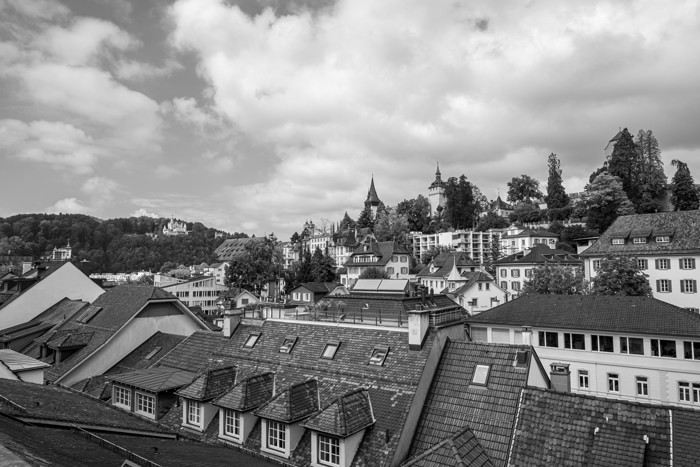
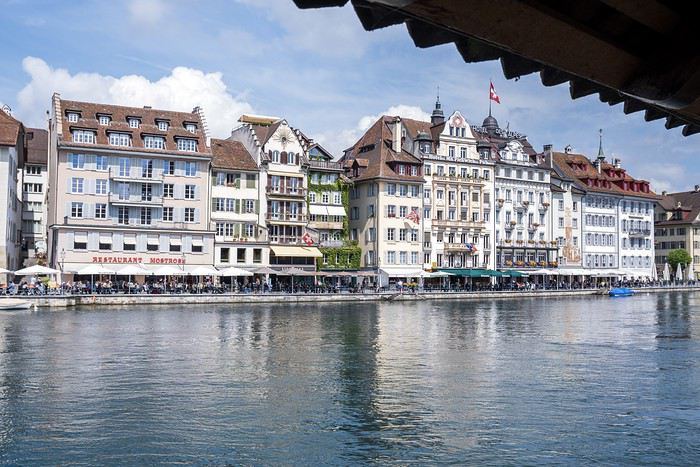
Ce sera le meilleur repas du séjour : émincé à la zurichoise avec rösti 😛
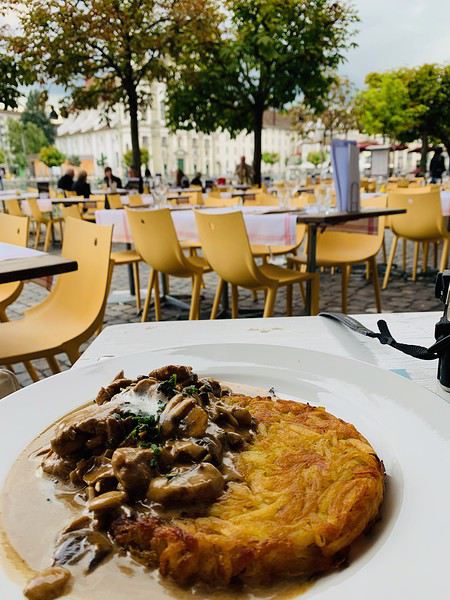
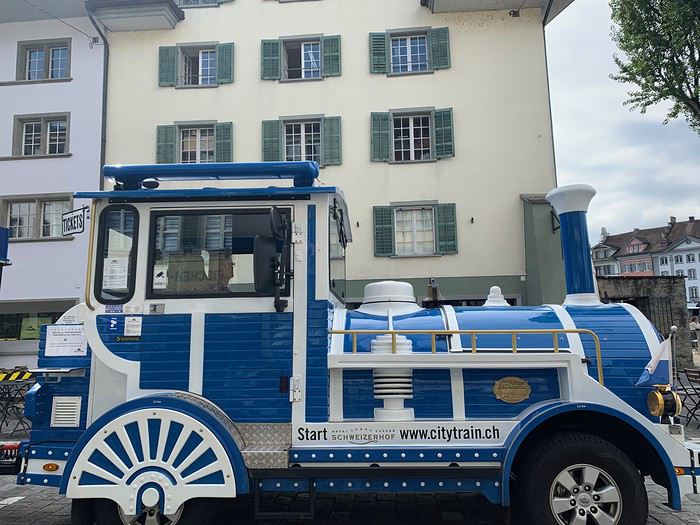
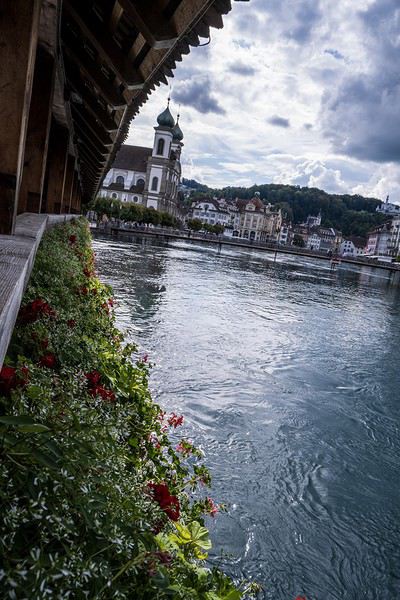
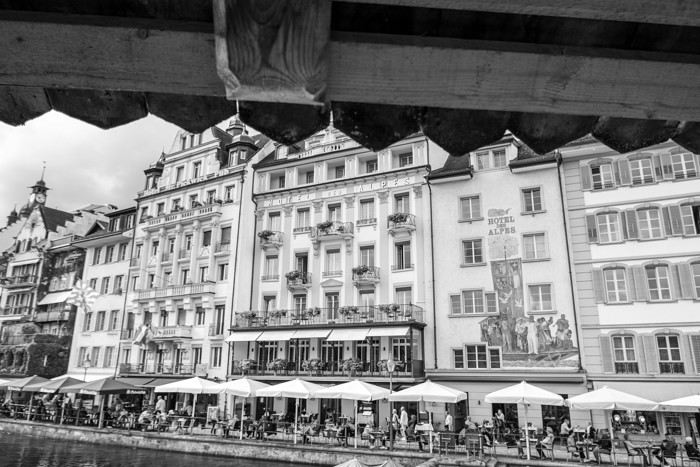
Demain direction Weggis notre base pour 4 jours ! Nous serions bien restés plus longtemps !
A la base nous devions aller au Tessin mais les intempéries en ont décidé autrement...... Donc direction Lucerne et le lac des quatre cantons pour les vacances 2020 ! Premier stop : Lucerne ville magnifique visitée plusieurs fois mais cette fois-ci sans trop de touristes. Enfin les touristes sont les romands en Suisse allemande :)
Ce sera le meilleur repas du séjour : émincé à la zurichoise avec rösti 😛
Demain direction Weggis notre base pour 4 jours ! Nous serions bien restés plus longtemps !