Results for "Paradis+slovaque+|+123+>+229"
22815 results found.
Croatia, Montenegro – two victims of overtourism?
Mid-June, two Auvergnats on the starting blocks—off we go to the former Yugoslavia!
We’d already explored some nooks and crannies of northern Croatia back in 2019, so we’re keeping the momentum going by planning a trip to the south of the country and then Montenegro.
On the way back, we’ll drift into Bosnia-Herzegovina just to mix things up a bit!
We’re a little unsure about what to expect in terms of tourist crowds.
Dubrovnik has a reputation for being the hardest-hit city by overtourism, and Kotor and the whole Dalmatian coast aren’t exactly empty...
Luckily, most European countries haven’t started school holidays yet, and some measures seem to have been put in place to limit the flow (like restrictions on the number of cruise ships allowed to dock at the same time).
Maybe we’ll manage to escape the promised hell?
For now, we’re slamming the doors of the Scirocco and heading off to our first stop: northern Italy!
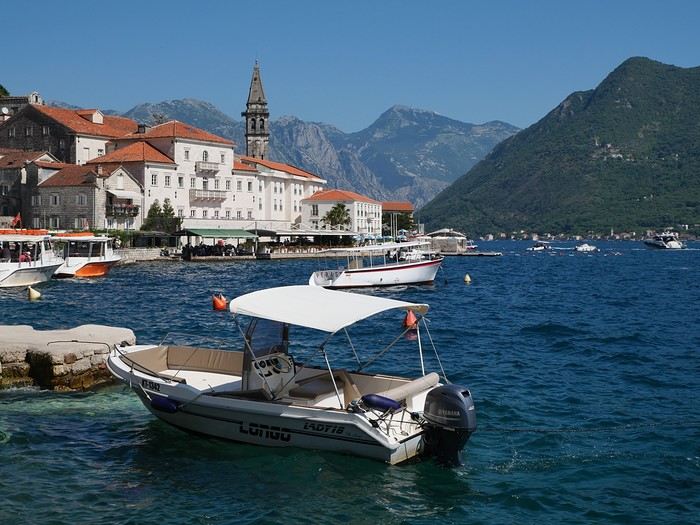
On the way back, we’ll drift into Bosnia-Herzegovina just to mix things up a bit!
We’re a little unsure about what to expect in terms of tourist crowds.
Dubrovnik has a reputation for being the hardest-hit city by overtourism, and Kotor and the whole Dalmatian coast aren’t exactly empty...
Luckily, most European countries haven’t started school holidays yet, and some measures seem to have been put in place to limit the flow (like restrictions on the number of cruise ships allowed to dock at the same time).
Maybe we’ll manage to escape the promised hell?
For now, we’re slamming the doors of the Scirocco and heading off to our first stop: northern Italy!
Wood: Discussion(s) about the July 2025 contest
All the side discussions about the contest happen here.
Looking for a nice island off the beaten path for diving
Hi everyone!
I’ve been in Malaysia for a month now and still have two more to go. I started traveling with friends, but I’ll be solo for the next month and a half.
We did a pretty classic route: Perhentians, Cameron Highlands (which I found pointless), Tioman, and Kinabatangan in Borneo. Now I’m thinking of heading to Redang Island—Langkawi is also an option, but it doesn’t appeal to me as much. Any feedback on these two spots?
Especially Redang?
Any thoughts on the diving there?
So far, I haven’t had much luck with diving—at the Perhentians, it was pretty disastrous with water at 31°C 😵😫
I’d love to find a nice island where I can meet people (locals and travelers) because going from a group of six to solo at the end is going to feel weird.
So I’m open to all tips and opinions. Also, I’d love to hear about Langkawi, and if anyone knows of an island that’s a bit more off the beaten path, that’d be amazing. Thanks in advance, and happy travels to you all!
Scams and Violence in Thailand
Hi,
If you take the bus from Bangkok Ekkamai to Pattaya, foreigners will be asked to pay an extra 20k for checked baggage, even though it’s already been paid for and listed on the ticket. They don’t even weigh it—a woman just demands you pay again, and if you refuse, she goes to get security colleagues who yell at you and threaten not to let you board. We later found out at the hotel that this is a well-known organized scam. The company is ROONG REUANG COACH, and we were about fifteen people—all foreign tourists—in the same situation. For Thai passengers, they didn’t ask for anything.
Then in Pattaya, violence and corruption rule. The next day, we learned the city is classified as "scarlet" (high-risk). A hotel guest was attacked with a knife by four Thais on a scooter—they stole his bag with his bank card and cash inside, luckily not his passport. A large hotel near ours was just shut down administratively for pedophilia. On Apple Maps, many reviews warn about how dangerous the city is. I’ve been coming to Thailand regularly for over 30 years, but I barely recognize the country since COVID. The "Land of Smiles" is turning into the "Land of Scowls," and a form of racism is emerging. For us, this will be the last time—next stop, Vietnam, and even China, which pleasantly surprised us.
Finally, China and the U.S. are advising their citizens against traveling to Thailand due to violence. Right now, most tourists here are Indians and Russians—together, they make up the majority—along with some from the Gulf (Qatar, Dubai, Oman).
If you take the bus from Bangkok Ekkamai to Pattaya, foreigners will be asked to pay an extra 20k for checked baggage, even though it’s already been paid for and listed on the ticket. They don’t even weigh it—a woman just demands you pay again, and if you refuse, she goes to get security colleagues who yell at you and threaten not to let you board. We later found out at the hotel that this is a well-known organized scam. The company is ROONG REUANG COACH, and we were about fifteen people—all foreign tourists—in the same situation. For Thai passengers, they didn’t ask for anything.
Then in Pattaya, violence and corruption rule. The next day, we learned the city is classified as "scarlet" (high-risk). A hotel guest was attacked with a knife by four Thais on a scooter—they stole his bag with his bank card and cash inside, luckily not his passport. A large hotel near ours was just shut down administratively for pedophilia. On Apple Maps, many reviews warn about how dangerous the city is. I’ve been coming to Thailand regularly for over 30 years, but I barely recognize the country since COVID. The "Land of Smiles" is turning into the "Land of Scowls," and a form of racism is emerging. For us, this will be the last time—next stop, Vietnam, and even China, which pleasantly surprised us.
Finally, China and the U.S. are advising their citizens against traveling to Thailand due to violence. Right now, most tourists here are Indians and Russians—together, they make up the majority—along with some from the Gulf (Qatar, Dubai, Oman).
How to get to Aguinane (Morocco) without a 4x4 vehicle?
Hi there,
We’re planning a trip to Morocco in September-October in our Fiat camper van, which isn’t a 4x4 but has already handled quite a bit of rough travel. While reading up on southern Morocco, we’ve been drawn to the Aguinane oasis but I’m having trouble locating it on the map. Is it possible to get there without a 4x4?
Thanks for your help
Visiting Bologna in Photos
Since I didn’t have time to write a proper travel journal, I thought I’d share a few photos of Bologna—a really lovely city I discovered in 2017 while stopping on my way to Tuscany.
Around Piazza Maggiore, which was packed with a stage and chairs for a show, stands the Basilica of San Petronio, massive and Gothic in style, with an unfinished façade (a common sight in Italy).

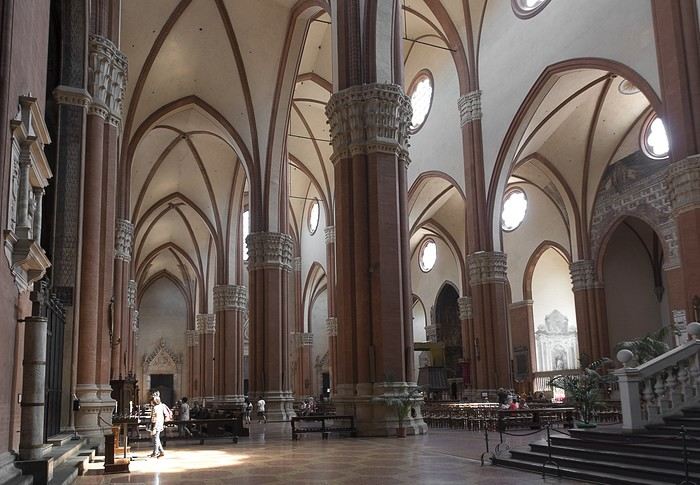
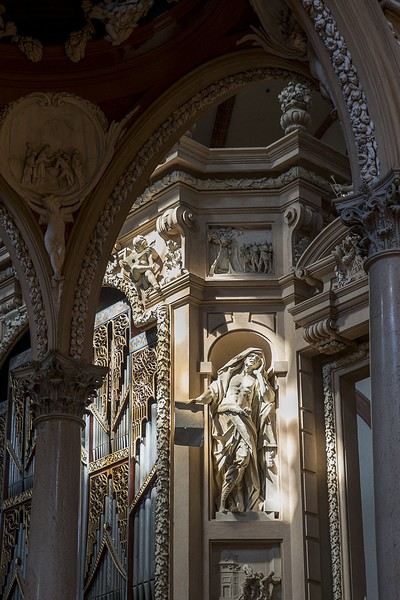
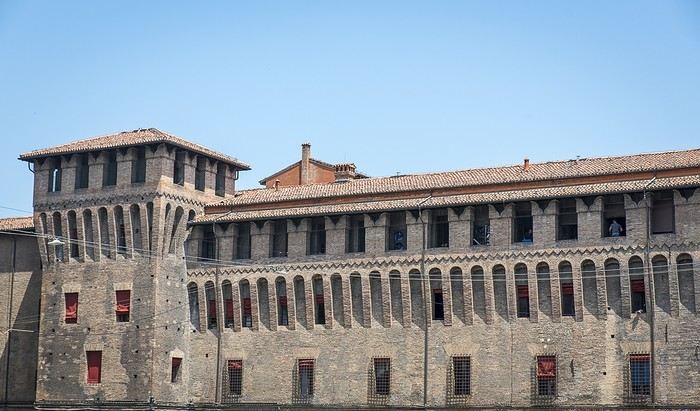
Another building near the square:
 But Bologna’s real charm lies in its porticoes, which were added to the UNESCO World Heritage list in 2021: 62 km of arcades running along buildings, letting you walk sheltered from the sun or rain. Back in 1288, the city required houses to include private arcades for public use. In the city center, you can stroll under 32 km of porticoes in all sorts of styles—some plain, some ornate—with a strong presence of red tones.
Another building near the square:
But Bologna’s real charm lies in its porticoes, which were added to the UNESCO World Heritage list in 2021: 62 km of arcades running along buildings, letting you walk sheltered from the sun or rain. Back in 1288, the city required houses to include private arcades for public use. In the city center, you can stroll under 32 km of porticoes in all sorts of styles—some plain, some ornate—with a strong presence of red tones.Trip to Madagascar in 2026: Nosy Be or Île Sainte-Marie?
Hi everyone,
I’m planning a third trip to Madagascar in 2026. This time, heading north and then part of the west coast before going back up.
The question I’m asking myself—same as during our first visits—is Nosy Be or not?
Of course, the photos show stunning beaches, and when you mention Madagascar, almost everyone says Nosy Be or at least has heard of it. That’s actually why we didn’t include it in our itineraries before, especially since we’d already seen paradise-like beaches in the south, and we had them all to ourselves because they were hard to reach.
On the other hand, I’ve always been drawn to Île Sainte-Marie, but from the north, you have to go back down to Tana, which I’m okay with in principle.
So, what’s your take? Nosy Be and its surroundings—what do you think? Just tourists looking to party?
Thanks
Campervan Road Trips: Freedom and Adventure in New Zealand
Ah! New Zealand, the ultimate road trip destination. If you've been dreaming of trying out a campervan adventure, it's definitely one of the best places in the world to take the plunge. With its diverse landscapes—white sand beaches, volcanoes, glaciers, fjords, and glacial lakes—the country also boasts top-notch infrastructure for campers, making it ideal for campervan circuits, even for beginners!
Why is New Zealand the perfect country for your first campervan trip?
Safe and Scenic Roads
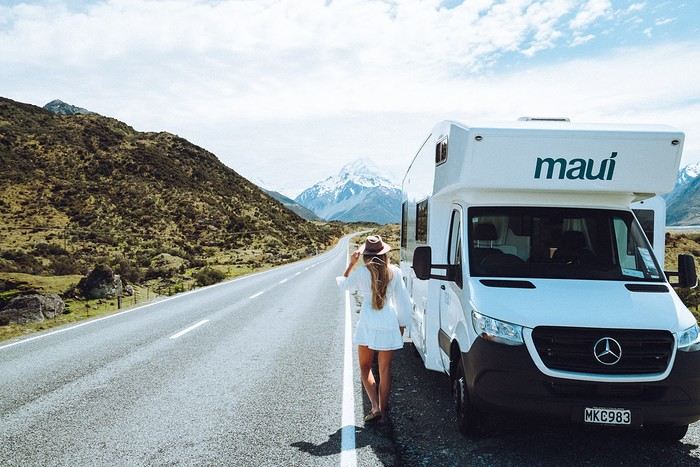
New Zealand offers a well-maintained road network, usually not too busy outside major cities. This is a huge plus if you're new to driving a campervan. The routes often feature spectacular viewpoints. You'll also find a vast network of campgrounds, and while freedom camping is regulated, there are still plenty of spots where you can sleep for free. Speed limits are reasonable, and the driving culture is pretty relaxed.
Adapted Infrastructure
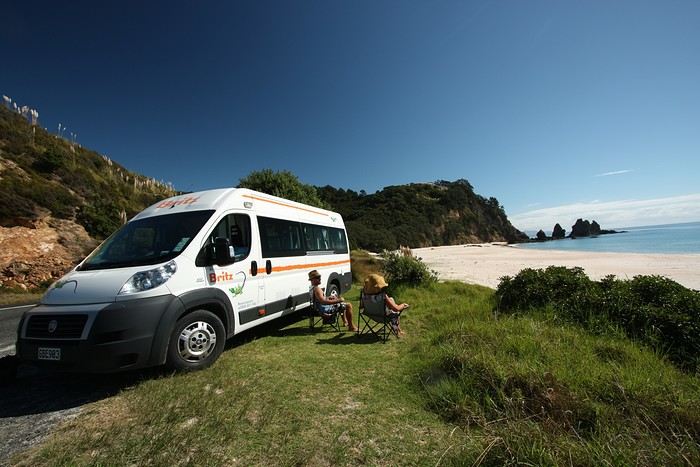
There are plenty of campervan rental companies offering different models, from converted vans to large family motorhomes. You'll find rental depots in major cities (Auckland, Christchurch, Queenstown), along with shuttle services between the airport and the depot. Campgrounds in New Zealand, whether private or managed by the Department of Conservation (DOC), are easy to find and well-marked. Plus, since New Zealand is a country of campers, you'll often get helpful tips from the locals.
Diverse and Accessible Landscapes
Beaches, volcanoes, deep fjords, or subtropical forests—you can experience a completely different setting in just a few hours of driving. No need to be a 4x4 expert: most roads leading to these stunning sites are campervan-friendly. This variety of landscapes, combined with easy access, makes New Zealand a top choice for a first road trip experience.
The Most Beautiful Places to Discover in a Campervan
To give you an idea, here’s a selection of must-see spots to inspire your next adventure.
1. The Coromandel Peninsula (North Island)
Just a few hours from Auckland, the Coromandel Peninsula is famous for its white sand beaches, hot springs, and lush vegetation. Hot Water Beach is a must-visit—dig your own "thermal bath" on the shore at low tide. You’ll easily find campgrounds by the ocean, perfect for your first taste of campervan life.
2. Rotorua and the Geothermal Wonders (North Island)
A little further south, Rotorua is the geothermal heart of New Zealand. Geysers, bubbling pools, and sulfur lakes with amazing colors—there’s no shortage of things to do. It’s also a major hub for Māori culture. Take the time to visit a traditional village or watch a haka performance. In the evening, relax at a campground with natural hot pools.
3. Tongariro National Park (North Island)
A UNESCO World Heritage site, this volcanic park is a paradise for hikers, especially with the famous Tongariro Alpine Crossing. Even if you're not an experienced hiker, you can enjoy stunning views from the roads or short marked trails. The campgrounds in the area will immerse you in a postcard-worthy setting.
4. Abel Tasman, Coastal Gem (South Island)
After taking the ferry from Wellington to Picton, head to Abel Tasman National Park. Its golden beaches, crystal-clear waters, and coastal trails are perfect for unwinding. One of the perks of a campervan is exploring at your own pace, choosing spots near the beaches or deeper in the forest.
5. Punakaiki and the Pancake Rocks (South Island)
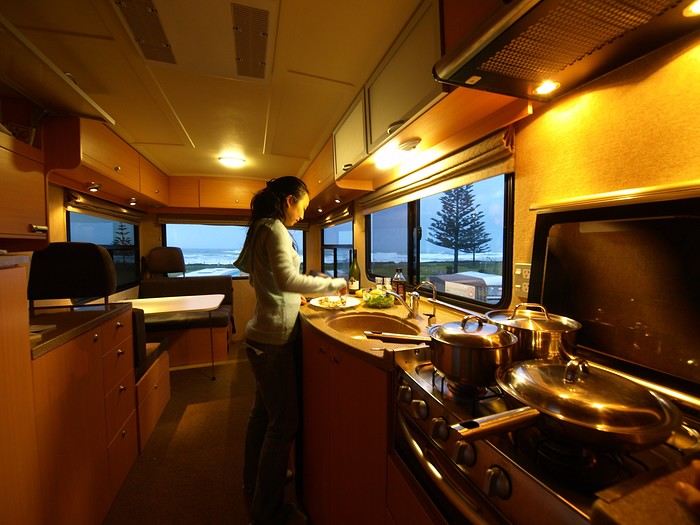
As you drive along the West Coast’s thick rainforests and wild beaches, stop at Punakaiki to see the Pancake Rocks—surprising rock formations that look like stacks of pancakes. A marked trail runs along the coast, letting you watch waves crash into the "blowholes" (marine geysers). Spending the night at a seaside campground, lulled by the sound of waves, is an experience not to be missed.
6. The Franz Josef and Fox Glaciers (South Island)
Further south, the glacier region is a must for lovers of breathtaking landscapes. You can admire the icy giants from a distance on an easy trail or take a helicopter to fly over them—or even walk on them. The campgrounds in Franz Josef or Fox Glacier let you wake up in an alpine atmosphere, contrasting with the lush vegetation around you.
7. Queenstown and Wanaka (South Island)
Queenstown, on the shore of a sparkling lake surrounded by majestic peaks, is known as the adventure capital: bungee jumping, paragliding, rafting—anything’s possible. If you prefer a quieter vibe, Wanaka is just as charming, with its beautiful lake and accessible walks. The road between these two towns is stunning, with plenty of perfect spots for a picnic stop.
8. Te Anau and Milford Sound (South Island)
New Zealand’s fjords are world-famous. Te Anau is the gateway to exploring Milford Sound or, for something wilder, Doubtful Sound. A cruise through these deep fjords, surrounded by towering cliffs, is one of the highlights of any trip to New Zealand. Staying overnight in a campervan in Te Anau saves you a long round trip in a day and lets you set off at dawn for more adventures.
9. Lake Tekapo and Mount Cook (South Island)
In the heart of the Southern Alps, Lake Tekapo charms with its unique turquoise color and its picturesque church by the water. The area is known for its starry skies (it’s an International Dark Sky Reserve). Mount Cook, the country’s highest peak, stands majestically in the background. Several campgrounds offer views of these mountains.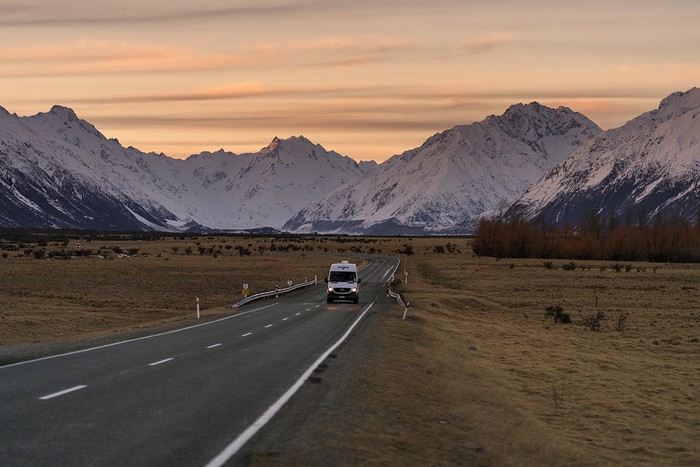
Practical Tips for a Successful Campervan Road Trip
Where to start? Between choosing the right vehicle, the best time to go, parking rules, and tips for where to sleep, here are our practical tips to plan your road trip stress-free.
Duration and Itinerary Choices
Less than 15 days: Focus on one island to avoid spending too much time on the road.
More than 15 days: Consider a North-South combo with a one-way trip (e.g., Auckland to Christchurch).
Book Early
In peak season (November to March), demand is high, especially for family-sized vehicles. Book your campervan ideally 6 to 8 months in advance.
Opt for full insurance to avoid high excess fees and hassles in case of issues. Standard bank insurance rarely covers campervans.
Choosing the Right Vehicle
Watch out for campervans over 3 years old—they can be "tired" in terms of both equipment and driving. If your budget allows, go for a newer model for better reliability and comfort.
Check the depot’s opening hours for pick-up. If you arrive late or after a long trip, it’s better to spend the first night in accommodation rather than driving straight away.
Where to Spend the Night
Freedom camping: Allowed in some remote areas but heavily regulated. Fines for breaking the rules can reach $200. Use comprehensive apps to identify legal spots and avoid penalties!
Basic campsites / DOC: Basic facilities but often in idyllic settings. These are campgrounds managed by the Department of Conservation, perfect for getting close to nature.
Private campgrounds: More expensive but offer hot showers, electricity, playgrounds for kids, pools, and laundry. Ideal for recharging—both your campervan’s batteries and your own.
Respect Nature
New Zealand is known for its pristine landscapes. Manage your waste, use designated dumping areas, and follow local signage. New Zealanders care deeply about keeping their environment clean and warmly welcome responsible tourists. For support, consider a local French-speaking agency like Frogs, which can help with administrative steps, planning your itinerary, and of course, renting a campervan.
Why is New Zealand the perfect country for your first campervan trip?
Safe and Scenic Roads
New Zealand offers a well-maintained road network, usually not too busy outside major cities. This is a huge plus if you're new to driving a campervan. The routes often feature spectacular viewpoints. You'll also find a vast network of campgrounds, and while freedom camping is regulated, there are still plenty of spots where you can sleep for free. Speed limits are reasonable, and the driving culture is pretty relaxed.
Adapted Infrastructure
There are plenty of campervan rental companies offering different models, from converted vans to large family motorhomes. You'll find rental depots in major cities (Auckland, Christchurch, Queenstown), along with shuttle services between the airport and the depot. Campgrounds in New Zealand, whether private or managed by the Department of Conservation (DOC), are easy to find and well-marked. Plus, since New Zealand is a country of campers, you'll often get helpful tips from the locals.
Diverse and Accessible Landscapes
Beaches, volcanoes, deep fjords, or subtropical forests—you can experience a completely different setting in just a few hours of driving. No need to be a 4x4 expert: most roads leading to these stunning sites are campervan-friendly. This variety of landscapes, combined with easy access, makes New Zealand a top choice for a first road trip experience.
The Most Beautiful Places to Discover in a Campervan
To give you an idea, here’s a selection of must-see spots to inspire your next adventure.
1. The Coromandel Peninsula (North Island)
Just a few hours from Auckland, the Coromandel Peninsula is famous for its white sand beaches, hot springs, and lush vegetation. Hot Water Beach is a must-visit—dig your own "thermal bath" on the shore at low tide. You’ll easily find campgrounds by the ocean, perfect for your first taste of campervan life.
2. Rotorua and the Geothermal Wonders (North Island)
A little further south, Rotorua is the geothermal heart of New Zealand. Geysers, bubbling pools, and sulfur lakes with amazing colors—there’s no shortage of things to do. It’s also a major hub for Māori culture. Take the time to visit a traditional village or watch a haka performance. In the evening, relax at a campground with natural hot pools.
3. Tongariro National Park (North Island)
A UNESCO World Heritage site, this volcanic park is a paradise for hikers, especially with the famous Tongariro Alpine Crossing. Even if you're not an experienced hiker, you can enjoy stunning views from the roads or short marked trails. The campgrounds in the area will immerse you in a postcard-worthy setting.
4. Abel Tasman, Coastal Gem (South Island)
After taking the ferry from Wellington to Picton, head to Abel Tasman National Park. Its golden beaches, crystal-clear waters, and coastal trails are perfect for unwinding. One of the perks of a campervan is exploring at your own pace, choosing spots near the beaches or deeper in the forest.
5. Punakaiki and the Pancake Rocks (South Island)
As you drive along the West Coast’s thick rainforests and wild beaches, stop at Punakaiki to see the Pancake Rocks—surprising rock formations that look like stacks of pancakes. A marked trail runs along the coast, letting you watch waves crash into the "blowholes" (marine geysers). Spending the night at a seaside campground, lulled by the sound of waves, is an experience not to be missed.
6. The Franz Josef and Fox Glaciers (South Island)
Further south, the glacier region is a must for lovers of breathtaking landscapes. You can admire the icy giants from a distance on an easy trail or take a helicopter to fly over them—or even walk on them. The campgrounds in Franz Josef or Fox Glacier let you wake up in an alpine atmosphere, contrasting with the lush vegetation around you.
7. Queenstown and Wanaka (South Island)
Queenstown, on the shore of a sparkling lake surrounded by majestic peaks, is known as the adventure capital: bungee jumping, paragliding, rafting—anything’s possible. If you prefer a quieter vibe, Wanaka is just as charming, with its beautiful lake and accessible walks. The road between these two towns is stunning, with plenty of perfect spots for a picnic stop.
8. Te Anau and Milford Sound (South Island)
New Zealand’s fjords are world-famous. Te Anau is the gateway to exploring Milford Sound or, for something wilder, Doubtful Sound. A cruise through these deep fjords, surrounded by towering cliffs, is one of the highlights of any trip to New Zealand. Staying overnight in a campervan in Te Anau saves you a long round trip in a day and lets you set off at dawn for more adventures.
9. Lake Tekapo and Mount Cook (South Island)
In the heart of the Southern Alps, Lake Tekapo charms with its unique turquoise color and its picturesque church by the water. The area is known for its starry skies (it’s an International Dark Sky Reserve). Mount Cook, the country’s highest peak, stands majestically in the background. Several campgrounds offer views of these mountains.
Practical Tips for a Successful Campervan Road Trip
Where to start? Between choosing the right vehicle, the best time to go, parking rules, and tips for where to sleep, here are our practical tips to plan your road trip stress-free.
Duration and Itinerary Choices
Less than 15 days: Focus on one island to avoid spending too much time on the road.
More than 15 days: Consider a North-South combo with a one-way trip (e.g., Auckland to Christchurch).
Book Early
In peak season (November to March), demand is high, especially for family-sized vehicles. Book your campervan ideally 6 to 8 months in advance.
Opt for full insurance to avoid high excess fees and hassles in case of issues. Standard bank insurance rarely covers campervans.
Choosing the Right Vehicle
Watch out for campervans over 3 years old—they can be "tired" in terms of both equipment and driving. If your budget allows, go for a newer model for better reliability and comfort.
Check the depot’s opening hours for pick-up. If you arrive late or after a long trip, it’s better to spend the first night in accommodation rather than driving straight away.
Where to Spend the Night
Freedom camping: Allowed in some remote areas but heavily regulated. Fines for breaking the rules can reach $200. Use comprehensive apps to identify legal spots and avoid penalties!
Basic campsites / DOC: Basic facilities but often in idyllic settings. These are campgrounds managed by the Department of Conservation, perfect for getting close to nature.
Private campgrounds: More expensive but offer hot showers, electricity, playgrounds for kids, pools, and laundry. Ideal for recharging—both your campervan’s batteries and your own.
Respect Nature
New Zealand is known for its pristine landscapes. Manage your waste, use designated dumping areas, and follow local signage. New Zealanders care deeply about keeping their environment clean and warmly welcome responsible tourists. For support, consider a local French-speaking agency like Frogs, which can help with administrative steps, planning your itinerary, and of course, renting a campervan.
The Kingdom of Lions...
 Hello everyone!
This trip dates back to late 2021, but since Voyage Forum reopened for writing, I haven’t seen many travel journals about Tanzania, so I decided to repost this one, which I originally shared on another well-known travelers’ site—even though I prefer Voyage Forum’s user experience.
It’s also a chance for me to relive this exhilarating trip... So, if you’re up for it, let me take you on a classic adventure: Tarangire - Ngorongoro - Serengeti, plus a little bonus—the small Arusha Park.
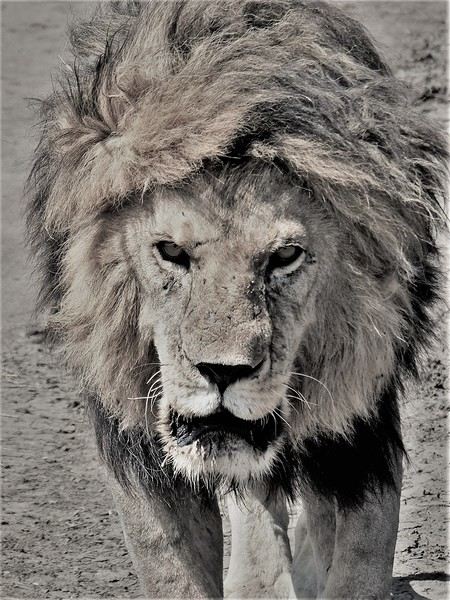
First off, yes, as the title of this journal suggests, we were lucky enough to spot *tons* of lions. The power they exude is incredible, even if most of the time they just look like big cats napping or strolling around. But lock eyes with one, and you’ll be glad you’re in the jeep.
Hello everyone!
This trip dates back to late 2021, but since Voyage Forum reopened for writing, I haven’t seen many travel journals about Tanzania, so I decided to repost this one, which I originally shared on another well-known travelers’ site—even though I prefer Voyage Forum’s user experience.
It’s also a chance for me to relive this exhilarating trip... So, if you’re up for it, let me take you on a classic adventure: Tarangire - Ngorongoro - Serengeti, plus a little bonus—the small Arusha Park.
First off, yes, as the title of this journal suggests, we were lucky enough to spot *tons* of lions. The power they exude is incredible, even if most of the time they just look like big cats napping or strolling around. But lock eyes with one, and you’ll be glad you’re in the jeep.
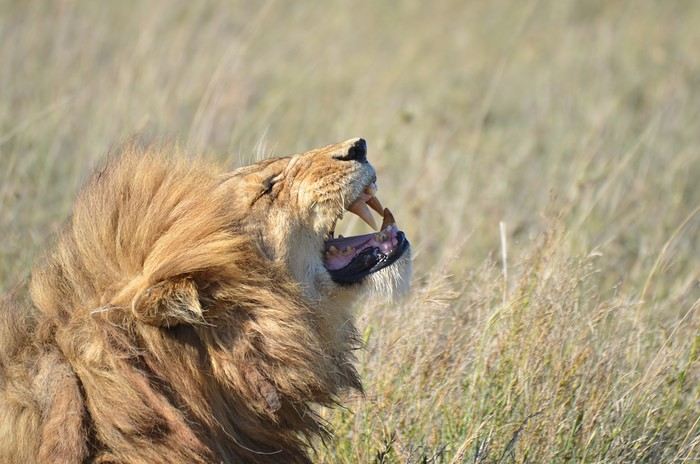
But let’s not forget the rest of the wildlife—and the landscapes, which are absolutely stunning, with those iconic tree silhouettes.
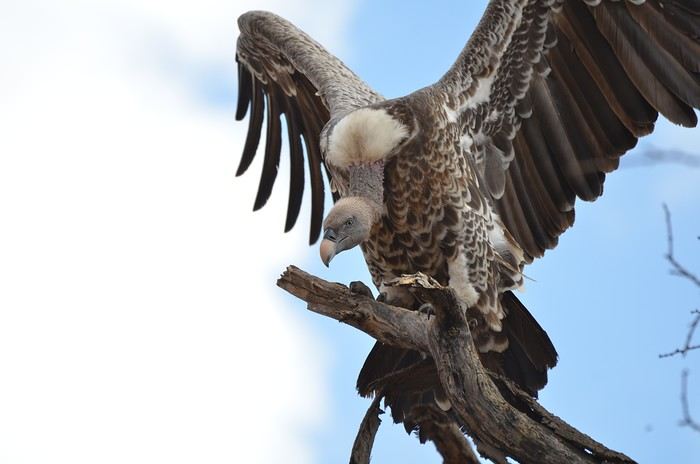
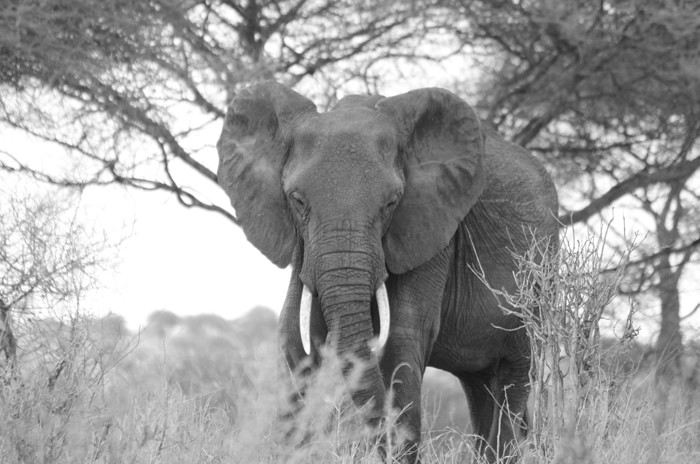
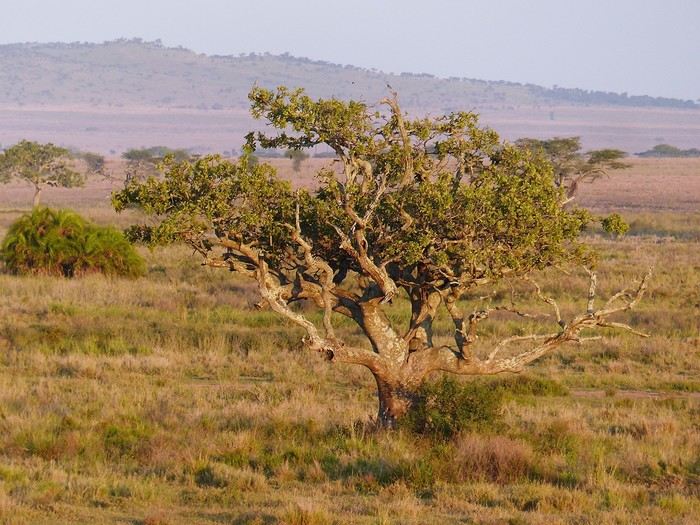
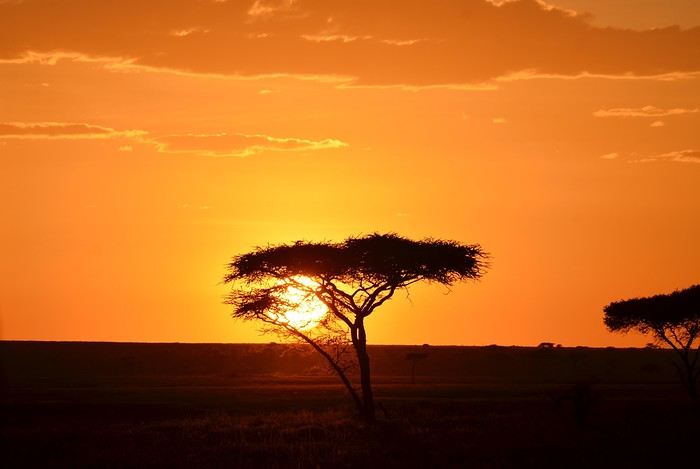
I remember before leaving, I was a little worried I wouldn’t feel that same sense of wonder I’d experienced two years earlier in Botswana (see my travel journal). That fear was unfounded—the magic worked its charm once again! Note: Since we had limited time, we focused our trip entirely on safari, so this journal is 100% animals and landscapes—and 0% Maasai. Next post: TARANGIRE
Tips for a 3-week road trip from New York to Québec
Hi everyone,
It’s been a long time since I last asked for your help! After an amazing road trip in the American West in 2011, thanks to all of you, and another one in 2019 from HOUSTON to L.A., this time I’m tackling the East Coast. But I’m stuck on the planning. I’ve booked a round-trip flight to NYC for 3 weeks in August. Now I’m trying to fill in the days. 5 nights already booked in NYC (Monday to Saturday). Then I absolutely want to head down to WASHINGTON for 2 or 3 days. I wanted to do a loop: NYC, Washington, Niagara Falls, Toronto, Ottawa, Montréal, Boston, and back to NYC. I think that’s too many miles for the loop from Washington to Québec and back to NYC in 2 weeks? Especially since the first week is already planned: NYC to WASHINGTON! On the way back from Washington, I’d like to stop in Strasburg, Lancaster, and Gettysburg. Given that I don’t want to take any domestic flights, since my wife really can’t handle them! Originally, I wanted to fly from NYC to DENVER/SLC to do the Yellowstone loop. We’re getting older and don’t have the stamina for that anymore :( Driving down from NYC to Washington, there’s Philadelphia, but that scares me a bit. Back in 2019, before COVID, I thought we were going to get shot in downtown DALLAS! I can’t figure out how to plan 3 weeks around NYC! Considering we didn’t really like San Francisco in 2011 either. Though after 3 weeks in paradise among the canyons, arriving in that big city and going from 40°C to 16°C was a shock :) We prefer nature over big cities. Thanks for your feedback! Cheers
It’s been a long time since I last asked for your help! After an amazing road trip in the American West in 2011, thanks to all of you, and another one in 2019 from HOUSTON to L.A., this time I’m tackling the East Coast. But I’m stuck on the planning. I’ve booked a round-trip flight to NYC for 3 weeks in August. Now I’m trying to fill in the days. 5 nights already booked in NYC (Monday to Saturday). Then I absolutely want to head down to WASHINGTON for 2 or 3 days. I wanted to do a loop: NYC, Washington, Niagara Falls, Toronto, Ottawa, Montréal, Boston, and back to NYC. I think that’s too many miles for the loop from Washington to Québec and back to NYC in 2 weeks? Especially since the first week is already planned: NYC to WASHINGTON! On the way back from Washington, I’d like to stop in Strasburg, Lancaster, and Gettysburg. Given that I don’t want to take any domestic flights, since my wife really can’t handle them! Originally, I wanted to fly from NYC to DENVER/SLC to do the Yellowstone loop. We’re getting older and don’t have the stamina for that anymore :( Driving down from NYC to Washington, there’s Philadelphia, but that scares me a bit. Back in 2019, before COVID, I thought we were going to get shot in downtown DALLAS! I can’t figure out how to plan 3 weeks around NYC! Considering we didn’t really like San Francisco in 2011 either. Though after 3 weeks in paradise among the canyons, arriving in that big city and going from 40°C to 16°C was a shock :) We prefer nature over big cities. Thanks for your feedback! Cheers
Sumatra Questions: Domestic Flights and Route Direction
Hi there,
After visiting southern Sumatra in 2020 (Padang area, Bukkitinggi, Lake Maninjau), we’re heading north in two weeks to explore.
We’ll arrive in Medan after Singapore.
Then we plan to go to Bukit Lawang, Berastagi, and Lake Toba before finishing up on Pulau Weh.
Yeah, I know three weeks is short, but we like taking our time now that we’re in our fifties 😄.
My questions:
- Which direction should we do the loop: Medan → Bukit Lawang → Lake Toba → Medan (we’ll be traveling by taxi)?
- Can I buy the Medan/Banda Aceh flights just 10 days in advance while we’re there? Any airline to prefer?
Thanks in advance to anyone familiar with this part of the world 😊
Questions about excursions around Marrakech
Hi there,
A group of 11 of us will be spending a week in Marrakech in May. I’d love your thoughts and advice on these excursions I’ve shortlisted—or any others I might not have considered:
- Visiting Marrakech: with or without a guide? Is one day enough for the main sights? - Essaouira: Is a day trip a good option? Is the journey scenic? - Ouzoud Waterfalls: Is the place worth the trip? - Agafay Desert: Any recommendations to avoid the tourist crowds? - Imlil Valley and Mount Toubkal: A worthwhile detour?
Of course, I don’t plan to do everything in one week, but your input will help me decide... Thanks in advance! !
A group of 11 of us will be spending a week in Marrakech in May. I’d love your thoughts and advice on these excursions I’ve shortlisted—or any others I might not have considered:
- Visiting Marrakech: with or without a guide? Is one day enough for the main sights? - Essaouira: Is a day trip a good option? Is the journey scenic? - Ouzoud Waterfalls: Is the place worth the trip? - Agafay Desert: Any recommendations to avoid the tourist crowds? - Imlil Valley and Mount Toubkal: A worthwhile detour?
Of course, I don’t plan to do everything in one week, but your input will help me decide... Thanks in advance! !
Revolut Visa Debit Card for the United States (Wyoming and Utah)
Hi
I’d like to know if anyone has used a Revolut Visa debit card to pay in Wyoming and Utah and whether it’s widely accepted.
Thanks
Feedback on 3-week itinerary: Atlantic Coast - Spanish Basque Country - Northern Spain
Hello everyone,
So, summer 2025 is when I turn 40, and to mark the occasion, I had the idea of doing a road trip through Northern Spain. Since I’ll be traveling with my two kids (9 and 6½ years old), I’m tied to school holidays, but I’m hoping the northern regions of Spain are a little less crowded than the Costa Brava.
We’d leave from Lyon to reach the Atlantic coast, head down to the Basque Country, cross the Spanish border, and then visit: Cantabria - Asturias - Galicia. It’s not exactly around the corner—I’ve seen that it’s about 1,500 km (one way) from Lyon to Galicia. But for this adventure, I’ve got 3 to 3½ weeks. The twist would be doing it in an electric car, stopping for 2-3 days here and there before moving on (alternating between wild camping and hotels). Why electric? Because it’s my company car, and my employer covers the charging and toll costs. Over 3 weeks of vacation, that adds up to big savings.
Question: Do you think this plan is doable? Aside from the charging stops, does the route seem too ambitious for 3 weeks with two kids? And in July/August, are these regions not too packed?
Thanks for your feedback and experiences!
So, summer 2025 is when I turn 40, and to mark the occasion, I had the idea of doing a road trip through Northern Spain. Since I’ll be traveling with my two kids (9 and 6½ years old), I’m tied to school holidays, but I’m hoping the northern regions of Spain are a little less crowded than the Costa Brava.
We’d leave from Lyon to reach the Atlantic coast, head down to the Basque Country, cross the Spanish border, and then visit: Cantabria - Asturias - Galicia. It’s not exactly around the corner—I’ve seen that it’s about 1,500 km (one way) from Lyon to Galicia. But for this adventure, I’ve got 3 to 3½ weeks. The twist would be doing it in an electric car, stopping for 2-3 days here and there before moving on (alternating between wild camping and hotels). Why electric? Because it’s my company car, and my employer covers the charging and toll costs. Over 3 weeks of vacation, that adds up to big savings.
Question: Do you think this plan is doable? Aside from the charging stops, does the route seem too ambitious for 3 weeks with two kids? And in July/August, are these regions not too packed?
Thanks for your feedback and experiences!
Quick feedback on our trip to Nepal, Rajasthan, South India, and the Andaman Islands
Our trip through Nepal, Rajasthan, South India, and the Andaman Islands.
Dates: October 26 to January 14, 2025
Departure from Geneva to Kathmandu.
NEPAL, one month. 2 days of exploring between Kathmandu and Patan. 14 days of trekking from Kathmandu to Langtang, passing by sacred lakes. Trek with a French-speaking guide and 2 porters from the local French-speaking tour operator "NEPAL VOYAGE." Ended with a helicopter ride due to a wrist fracture on black ice at 3,900m. 3 days in the hospital in Kathmandu. Continued the trip in Nepal with a self-guided stay in Bhaktapur and Pokhara. Returned to Kathmandu by plane, then flew to Delhi.
RAJASTHAN. 18 days touring Rajasthan with a French-speaking driver "RAVINDRA MENA." Highlights: Bikaner, Jaisalmer, Jodhpur*, Ranakpur*, Udaipur*, Bundi, Pushkar*, Jaipur, Agra, Jaipur (Top spots marked with *). Flight from Jaipur to Kochi.
KERALA. Kochi, 3 nights—disappointing, but the Backwaters to the north by scooter were stunning and not touristy. Kochi to Varkala by Uber with a Canadian couple. Varkala, 4 nights—great for relaxing, but scooter rentals weren’t available, which was a shame. Varkala to Munroe Island by train. 2 nights in Monroe. Munroe Island to Kumilly. 2 nights on Christmas Day—meh, not much to do since all the park excursions were booked by Indian tourists. Kumilly to Munnar by local taxi, negotiated the day before. Munnar—processions, tea fields, and *so* many Indian tourists during this period that it was impossible to find scooters to rent.
TAMIL NADU Crossed Tamil Nadu from Munnar to Auroville in 3 days, stopping at the extraordinary Tamil temples of Madurai, Trichy, Thanjavur, Darasuram, Chidambaram, and others. With the lunar conjunction, pilgrimages, and year-end holidays, there were *tons* of pilgrims! Auroville to Pondicherry by scooter, then a tuk-tuk for New Year’s Eve—still *so* crowded! Pondicherry to Mahabalipuram by local bus. Mahabalipuram, 2 nights—nice and chill. Mahabalipuram to Chennai by Uber.
ANDAMAN ISLANDS Chennai to Port Blair by flight, Andaman Islands. Port Blair, 2 nights—almost too much! Speedboat to Havelock, 4 nights—still lots of Indian tourism. Couldn’t go snorkeling with a dive operator or rent gear. Luckily, we managed to buy some and do it ourselves. Speedboat to Neil Island, 3 days, 2 nights—too short, but excellent snorkeling from "Elephant, Four Wise Men." Phew, no biting flies, and we weren’t eaten by crocodiles. Back to Port Blair, then Delhi, one night, and return to Geneva.
Our impressions of India. Rajasthan and Tamil Nadu—we eventually got tired of palaces and temples. It’s always complicated and exhausting to get around on foot in the cities. During the year-end period from mid-December to mid-January, *so* many tourists! The Andaman Islands were a bit disappointing—too short, and for snorkeling, Indonesia is easier and less expensive.
Our photos========================= Trip summary NEPAL AND INDIA (140 photos) https://photos.app.goo.gl/NVY4qaLcArvXzUx58
All photos from the Nepal trek (81 photos) https://photos.app.goo.gl/pXkG3JaFyJg93k1s8
All photos NEPAL After the trek and Christine’s accident (87 photos) https://photos.app.goo.gl/UgbNWb6oAibif3837
All photos RAJASTHAN (tough to narrow down! 230 photos) https://photos.app.goo.gl/GghreEkzhZoq6Rcw7
All photos SOUTH INDIA KERALA, Tamil Nadu, Andaman (200 photos) https://photos.app.goo.gl/DYnp2JLyLR2UCM3R6
NEPAL, one month. 2 days of exploring between Kathmandu and Patan. 14 days of trekking from Kathmandu to Langtang, passing by sacred lakes. Trek with a French-speaking guide and 2 porters from the local French-speaking tour operator "NEPAL VOYAGE." Ended with a helicopter ride due to a wrist fracture on black ice at 3,900m. 3 days in the hospital in Kathmandu. Continued the trip in Nepal with a self-guided stay in Bhaktapur and Pokhara. Returned to Kathmandu by plane, then flew to Delhi.
RAJASTHAN. 18 days touring Rajasthan with a French-speaking driver "RAVINDRA MENA." Highlights: Bikaner, Jaisalmer, Jodhpur*, Ranakpur*, Udaipur*, Bundi, Pushkar*, Jaipur, Agra, Jaipur (Top spots marked with *). Flight from Jaipur to Kochi.
KERALA. Kochi, 3 nights—disappointing, but the Backwaters to the north by scooter were stunning and not touristy. Kochi to Varkala by Uber with a Canadian couple. Varkala, 4 nights—great for relaxing, but scooter rentals weren’t available, which was a shame. Varkala to Munroe Island by train. 2 nights in Monroe. Munroe Island to Kumilly. 2 nights on Christmas Day—meh, not much to do since all the park excursions were booked by Indian tourists. Kumilly to Munnar by local taxi, negotiated the day before. Munnar—processions, tea fields, and *so* many Indian tourists during this period that it was impossible to find scooters to rent.
TAMIL NADU Crossed Tamil Nadu from Munnar to Auroville in 3 days, stopping at the extraordinary Tamil temples of Madurai, Trichy, Thanjavur, Darasuram, Chidambaram, and others. With the lunar conjunction, pilgrimages, and year-end holidays, there were *tons* of pilgrims! Auroville to Pondicherry by scooter, then a tuk-tuk for New Year’s Eve—still *so* crowded! Pondicherry to Mahabalipuram by local bus. Mahabalipuram, 2 nights—nice and chill. Mahabalipuram to Chennai by Uber.
ANDAMAN ISLANDS Chennai to Port Blair by flight, Andaman Islands. Port Blair, 2 nights—almost too much! Speedboat to Havelock, 4 nights—still lots of Indian tourism. Couldn’t go snorkeling with a dive operator or rent gear. Luckily, we managed to buy some and do it ourselves. Speedboat to Neil Island, 3 days, 2 nights—too short, but excellent snorkeling from "Elephant, Four Wise Men." Phew, no biting flies, and we weren’t eaten by crocodiles. Back to Port Blair, then Delhi, one night, and return to Geneva.
Our impressions of India. Rajasthan and Tamil Nadu—we eventually got tired of palaces and temples. It’s always complicated and exhausting to get around on foot in the cities. During the year-end period from mid-December to mid-January, *so* many tourists! The Andaman Islands were a bit disappointing—too short, and for snorkeling, Indonesia is easier and less expensive.
Our photos========================= Trip summary NEPAL AND INDIA (140 photos) https://photos.app.goo.gl/NVY4qaLcArvXzUx58
All photos from the Nepal trek (81 photos) https://photos.app.goo.gl/pXkG3JaFyJg93k1s8
All photos NEPAL After the trek and Christine’s accident (87 photos) https://photos.app.goo.gl/UgbNWb6oAibif3837
All photos RAJASTHAN (tough to narrow down! 230 photos) https://photos.app.goo.gl/GghreEkzhZoq6Rcw7
All photos SOUTH INDIA KERALA, Tamil Nadu, Andaman (200 photos) https://photos.app.goo.gl/DYnp2JLyLR2UCM3R6
RV trip across Alaska
Hi everyone,
My husband and I are planning an RV trip to Alaska. If any of you have already done a road trip in that part of the world, could you share your experience with us? We’re planning to leave in mid-June (departing from Halifax).
Any tips or info would be greatly appreciated.
Annie
The 8 Most Beautiful Hikes to Do in Réunion Island
Réunion Island, this paradise in the Indian Ocean, is a must-visit destination for hiking enthusiasts. With its active volcanoes, majestic cirques, and impressive peaks, there’s plenty to delight nature and adventure lovers. This article takes you on a journey to discover the eight most beautiful hikes the island has to offer. Lace up your hiking boots—let’s go!
1- Piton des Neiges: The Summit of Réunion
Piton des Neiges is the highest point on Réunion Island at 3,070 meters. It’s an iconic hike that attracts a large number of hikers every year. Climbing Piton des Neiges is like stepping into a unique atmosphere where volcanic landscapes blend with lush vegetation.
The hike usually starts from the picturesque village of Cilaos. It takes about six hours to reach the summit, so good physical condition is a must. Once at the top, you’ll be rewarded with a breathtaking panoramic view of the entire island. A simple flight from Paris to Saint-Denis and you’re ready for this stunning adventure.
Here are a few tips:
Bring warm clothes—it can get very cold at the summit. Pack enough water and food. Start before dawn to catch the sunrise from the summit.
2- Piton de la Fournaise: A Volcanic Walk
You can’t visit Réunion without stopping by Piton de la Fournaise, one of the world’s most active volcanoes. The hike usually begins at Pas de Bellecombe, accessible after a winding road that already offers spectacular views. The well-marked trail first takes you through lunar landscapes to the Enclos Fouqué, then continues toward the Dolomieu crater. Frequent eruptions often change the scenery, making each visit unique. Piton de la Fournaise is a grand natural spectacle you won’t want to miss during your trip.
Here are a few tips:
Check the volcano’s current activity before heading out. Wear sturdy shoes for walking on solidified lava. Always bring maps or a GPS, as signs may be damaged by eruptions.
3- Cirque de Mafate: In the Heart of Nature
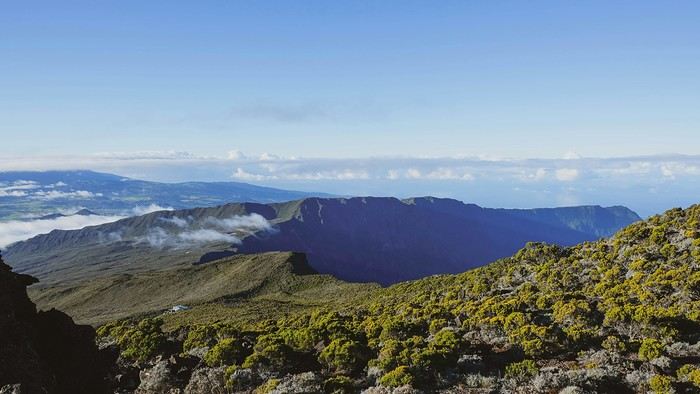
Accessible only on foot or by helicopter, the Cirque de Mafate is a true paradise for hikers. This isolated area offers a multitude of trails leading to authentic villages, stunning viewpoints, and untouched nature. The Sentier Scout is one of the most popular routes for exploring Mafate. It starts at Le Bélier, passes through the Col des Bœufs, and then descends into the cirque. Get ready to be amazed by the enchanting panoramas and majestic peaks along the way. It’s a full immersion into the tranquility of Mafate.
Here are a few tips:
Wear good hiking shoes, as some sections can be steep. Book your nights in a gîte in advance if you’re planning a multi-day hike. Respect the environment and locals by taking all your trash with you.
4- Cirque de Cilaos: Between Mountains and Vineyards
The Cirque de Cilaos, with its waterfalls and lush forests, also offers magnificent hiking opportunities. One of the most remarkable trails leads to Grand Bénare, the island’s third-highest peak.
The hike usually starts from the Plateau des Chênes. This moderate-difficulty hike takes about five hours to reach the summit. Once there, you’ll be treated to a breathtaking view of the Cirque de Cilaos and Piton des Neiges.
Here are a few tips:
Start early to avoid clouds that can quickly envelop the summit. Don’t forget your camera to capture the stunning landscapes. Visit the vineyards of Cilaos after your hike to taste local wine.
5- Cirque de Salazie: The Valley of Waterfalls
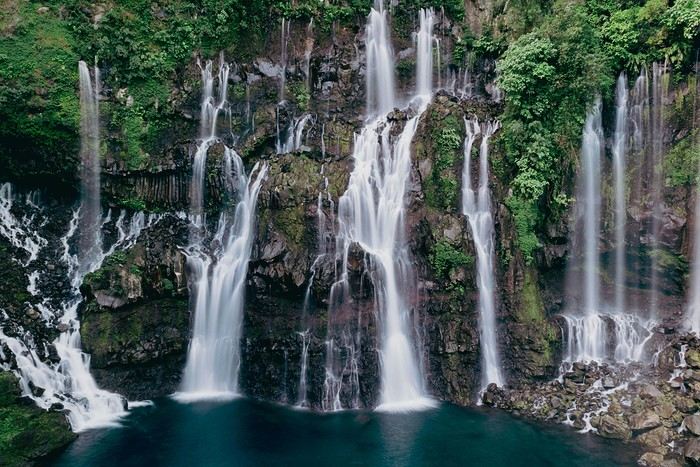
Known for its humid climate, the Cirque de Salazie is filled with impressive waterfalls and lush tropical forests. One of the most popular hikes leads to the Trou de Fer.
The trail starts in Hell-Bourg, ranked among France’s most beautiful villages. After a few hours of hiking through primary forest, you’ll reach a viewpoint offering an incredible view of the Trou de Fer’s abyss and its dizzying waterfalls.
Here are a few tips:
Wear waterproof and mosquito-repellent clothing. Bring a headlamp and compass, as fog can make the trail hard to follow. Check trail conditions before heading out, especially after heavy rain.
6- Grand Bénare: A Stunning Panorama
Grand Bénare offers a spectacular hike that’s a must-do on Réunion Island. Starting from the well-known viewpoint of Maïdo, the challenging yet rewarding ascent leads to the summit.
Over about ten kilometers of climbing through varied vegetation, the summit reveals a breathtaking panorama of the three cirques—Mafate, Cilaos, and Salazie. It’s a true feast for the eyes and a memorable experience for mountain lovers.
Here are a few tips:
Go when the weather is clear to fully enjoy the view from the summit. Wear good hiking shoes and bring trekking poles to make the climb easier. Don’t underestimate the duration—prepare physically for this long hike.
7- Roche Écrite: Biodiversity at Altitude
Located between the Cirque de Salazie and the Cirque de Mafate, Roche Écrite offers a hike that lets you discover exceptional flora and fauna. The hike often starts at Le Colorado, near Saint-Denis, the island’s capital.
After several hours of walking through tropical forests and varied landscapes, you’ll reach the summit at 2,276 meters. From there, you can enjoy a spectacular view of the two adjacent cirques and even spot Piton des Neiges in the distance. A must for adventurers and budding biologists.
Here are a few tips:
Check the weather forecast before heading out, as conditions can change quickly at altitude. Bring binoculars to observe endemic birds and other wildlife. Take regular breaks to soak in the scenery and recharge your energy.
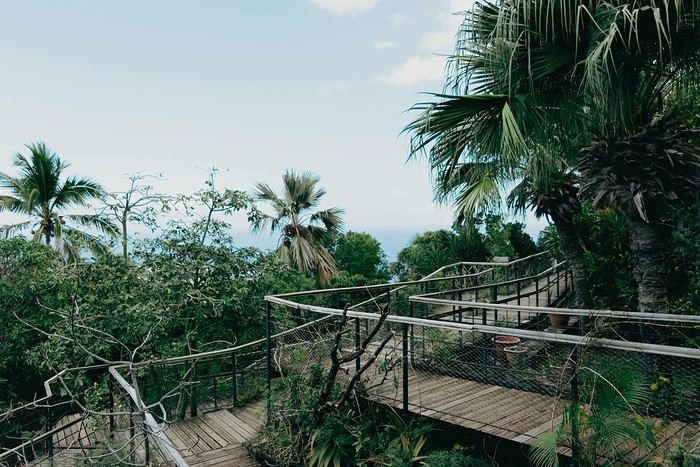
8- Col des Bœufs: The Gateway to Mafate
Col des Bœufs is another popular starting point for accessing the Cirque de Mafate. This comfortable hike offers beautiful views along the way and leads to picturesque villages like Marla and La Nouvelle.
The trail starts gently from the Col des Bœufs parking lot, climbing slightly before revealing a panoramic view of Mafate. Perfect for a relaxed day hike, this route is suitable for all levels of hikers.
Here are a few tips:
Bring a picnic to enjoy a lunch break with a view. Start early to avoid crowds and the afternoon heat. Check local bus schedules to avoid any surprises at the end of your hike.
In conclusion, Réunion Island offers a multitude of exceptional hikes that let you discover breathtaking landscapes—volcanoes, cirques, tropical forests, and waterfalls. Whether you’re a beginner or an experienced hiker, the island will amaze you with the diversity of its trails. Get ready for unforgettable adventures in the heart of preserved nature while admiring the unique beauty of this volcanic island.
1- Piton des Neiges: The Summit of Réunion
Piton des Neiges is the highest point on Réunion Island at 3,070 meters. It’s an iconic hike that attracts a large number of hikers every year. Climbing Piton des Neiges is like stepping into a unique atmosphere where volcanic landscapes blend with lush vegetation.
The hike usually starts from the picturesque village of Cilaos. It takes about six hours to reach the summit, so good physical condition is a must. Once at the top, you’ll be rewarded with a breathtaking panoramic view of the entire island. A simple flight from Paris to Saint-Denis and you’re ready for this stunning adventure.
Here are a few tips:
Bring warm clothes—it can get very cold at the summit. Pack enough water and food. Start before dawn to catch the sunrise from the summit.
2- Piton de la Fournaise: A Volcanic Walk
You can’t visit Réunion without stopping by Piton de la Fournaise, one of the world’s most active volcanoes. The hike usually begins at Pas de Bellecombe, accessible after a winding road that already offers spectacular views. The well-marked trail first takes you through lunar landscapes to the Enclos Fouqué, then continues toward the Dolomieu crater. Frequent eruptions often change the scenery, making each visit unique. Piton de la Fournaise is a grand natural spectacle you won’t want to miss during your trip.
Here are a few tips:
Check the volcano’s current activity before heading out. Wear sturdy shoes for walking on solidified lava. Always bring maps or a GPS, as signs may be damaged by eruptions.
3- Cirque de Mafate: In the Heart of Nature
Accessible only on foot or by helicopter, the Cirque de Mafate is a true paradise for hikers. This isolated area offers a multitude of trails leading to authentic villages, stunning viewpoints, and untouched nature. The Sentier Scout is one of the most popular routes for exploring Mafate. It starts at Le Bélier, passes through the Col des Bœufs, and then descends into the cirque. Get ready to be amazed by the enchanting panoramas and majestic peaks along the way. It’s a full immersion into the tranquility of Mafate.
Here are a few tips:
Wear good hiking shoes, as some sections can be steep. Book your nights in a gîte in advance if you’re planning a multi-day hike. Respect the environment and locals by taking all your trash with you.
4- Cirque de Cilaos: Between Mountains and Vineyards
The Cirque de Cilaos, with its waterfalls and lush forests, also offers magnificent hiking opportunities. One of the most remarkable trails leads to Grand Bénare, the island’s third-highest peak.
The hike usually starts from the Plateau des Chênes. This moderate-difficulty hike takes about five hours to reach the summit. Once there, you’ll be treated to a breathtaking view of the Cirque de Cilaos and Piton des Neiges.
Here are a few tips:
Start early to avoid clouds that can quickly envelop the summit. Don’t forget your camera to capture the stunning landscapes. Visit the vineyards of Cilaos after your hike to taste local wine.
5- Cirque de Salazie: The Valley of Waterfalls
Known for its humid climate, the Cirque de Salazie is filled with impressive waterfalls and lush tropical forests. One of the most popular hikes leads to the Trou de Fer.
The trail starts in Hell-Bourg, ranked among France’s most beautiful villages. After a few hours of hiking through primary forest, you’ll reach a viewpoint offering an incredible view of the Trou de Fer’s abyss and its dizzying waterfalls.
Here are a few tips:
Wear waterproof and mosquito-repellent clothing. Bring a headlamp and compass, as fog can make the trail hard to follow. Check trail conditions before heading out, especially after heavy rain.
6- Grand Bénare: A Stunning Panorama
Grand Bénare offers a spectacular hike that’s a must-do on Réunion Island. Starting from the well-known viewpoint of Maïdo, the challenging yet rewarding ascent leads to the summit.
Over about ten kilometers of climbing through varied vegetation, the summit reveals a breathtaking panorama of the three cirques—Mafate, Cilaos, and Salazie. It’s a true feast for the eyes and a memorable experience for mountain lovers.
Here are a few tips:
Go when the weather is clear to fully enjoy the view from the summit. Wear good hiking shoes and bring trekking poles to make the climb easier. Don’t underestimate the duration—prepare physically for this long hike.
7- Roche Écrite: Biodiversity at Altitude
Located between the Cirque de Salazie and the Cirque de Mafate, Roche Écrite offers a hike that lets you discover exceptional flora and fauna. The hike often starts at Le Colorado, near Saint-Denis, the island’s capital.
After several hours of walking through tropical forests and varied landscapes, you’ll reach the summit at 2,276 meters. From there, you can enjoy a spectacular view of the two adjacent cirques and even spot Piton des Neiges in the distance. A must for adventurers and budding biologists.
Here are a few tips:
Check the weather forecast before heading out, as conditions can change quickly at altitude. Bring binoculars to observe endemic birds and other wildlife. Take regular breaks to soak in the scenery and recharge your energy.
8- Col des Bœufs: The Gateway to Mafate
Col des Bœufs is another popular starting point for accessing the Cirque de Mafate. This comfortable hike offers beautiful views along the way and leads to picturesque villages like Marla and La Nouvelle.
The trail starts gently from the Col des Bœufs parking lot, climbing slightly before revealing a panoramic view of Mafate. Perfect for a relaxed day hike, this route is suitable for all levels of hikers.
Here are a few tips:
Bring a picnic to enjoy a lunch break with a view. Start early to avoid crowds and the afternoon heat. Check local bus schedules to avoid any surprises at the end of your hike.
In conclusion, Réunion Island offers a multitude of exceptional hikes that let you discover breathtaking landscapes—volcanoes, cirques, tropical forests, and waterfalls. Whether you’re a beginner or an experienced hiker, the island will amaze you with the diversity of its trails. Get ready for unforgettable adventures in the heart of preserved nature while admiring the unique beauty of this volcanic island.
A lovely wander at the mercy of the wind in this amazing Rajasthan
Hey there, forum friends 😉
Some of you have mentioned missing the activity on this Indian "page," so let’s try to liven things up a bit—with joy and good vibes (mandatory with me 😜). Plus, it’ll make Jojoone happy 😊.
As big lovers of India—we’ve been six times—my co-traveler husband and I decided to explore Rajasthan this time around. The reason we waited so long to come here? We were dreading the tourist crowds in this state. But thanks to the timing (late March to early April 2024, which is starting to get pretty hot) and Aleph’s great tips, we were *very* far from mass tourism.
We spent three weeks getting around on our own for transport: mostly taxis and trains.
And I’ll admit, we had a rather "Arabian Nights" experience, far from the "real" India (Marien, if you’re reading this 😉). So this travel journal makes no claims other than to share what we saw, experienced, and felt—with all our ignorance about this country (which I’m fully aware of).
But fair warning: I go overboard with emojis, and this journal is super casual because it’s the one I share, almost in "live" mode, with our loved ones.
So, if you’re here, consider yourself almost part of the family 😄.
See you soon and....
Some of you have mentioned missing the activity on this Indian "page," so let’s try to liven things up a bit—with joy and good vibes (mandatory with me 😜). Plus, it’ll make Jojoone happy 😊.
As big lovers of India—we’ve been six times—my co-traveler husband and I decided to explore Rajasthan this time around. The reason we waited so long to come here? We were dreading the tourist crowds in this state. But thanks to the timing (late March to early April 2024, which is starting to get pretty hot) and Aleph’s great tips, we were *very* far from mass tourism.
We spent three weeks getting around on our own for transport: mostly taxis and trains.
And I’ll admit, we had a rather "Arabian Nights" experience, far from the "real" India (Marien, if you’re reading this 😉). So this travel journal makes no claims other than to share what we saw, experienced, and felt—with all our ignorance about this country (which I’m fully aware of).
But fair warning: I go overboard with emojis, and this journal is super casual because it’s the one I share, almost in "live" mode, with our loved ones.
So, if you’re here, consider yourself almost part of the family 😄.
See you soon and....
A Trip to Australia: New South Wales
Wednesday, November 15, 2023
Flight Cairns – Sydney
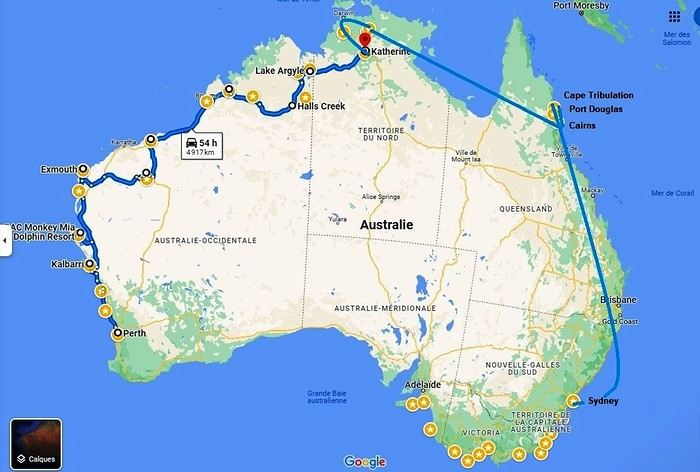 Okay, let’s recap. We’ve traveled through Western Australia, the Northern Territory, Queensland, and tonight we’ll be in New South Wales. We’ll even lose an extra hour—and a bunch of degrees!
We’re on a flawless journey so far. One of our suitcases is almost two kilos overweight. The guy checking us in gives us a nice smile and decides to overlook the excess baggage fee.
Okay, let’s recap. We’ve traveled through Western Australia, the Northern Territory, Queensland, and tonight we’ll be in New South Wales. We’ll even lose an extra hour—and a bunch of degrees!
We’re on a flawless journey so far. One of our suitcases is almost two kilos overweight. The guy checking us in gives us a nice smile and decides to overlook the excess baggage fee.
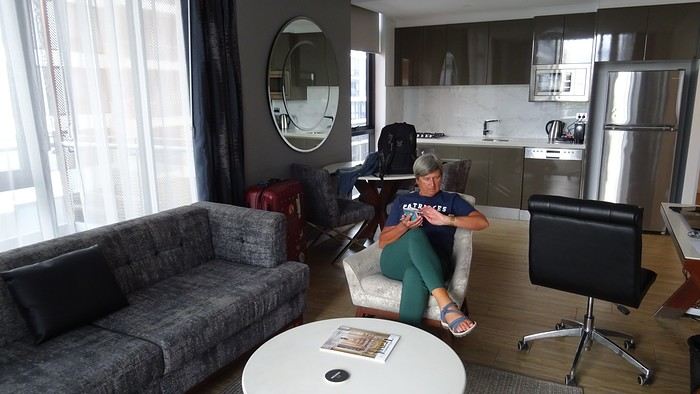
A flight, for once, without a hitch, no delay (just half an hour…). Taxi… We discover our… room… We’ve got a suite like never before on this trip. It’s a posh apartment on the 7th floor—on cloud nine, really! We can’t believe it. 113.26 € per night! The Meriton Suites Mascot Central if you ever find yourself in this city… We even have a washing machine (and it works!). Such a change from the cabins in the west!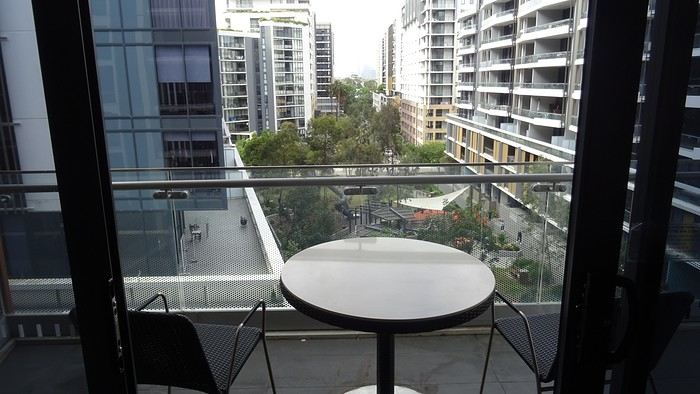
We don’t linger, though. We take the metro. Why? Well, yeah, we’re still kids at heart—off to the Opera House, of course!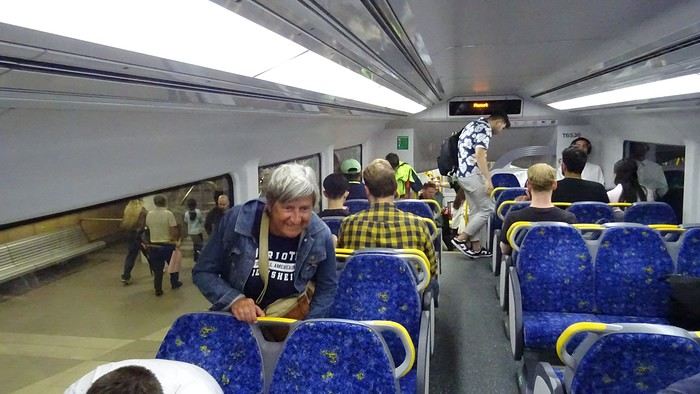
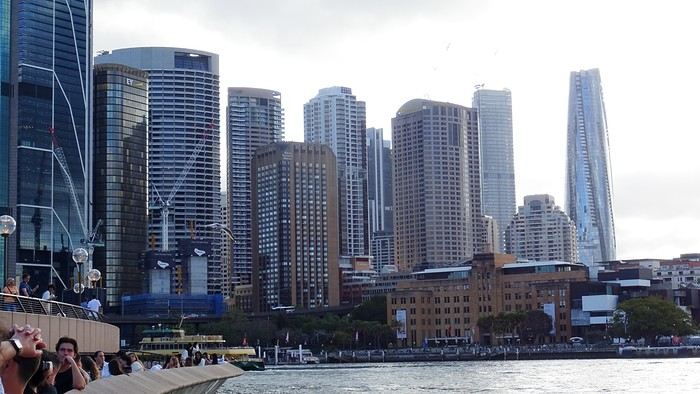
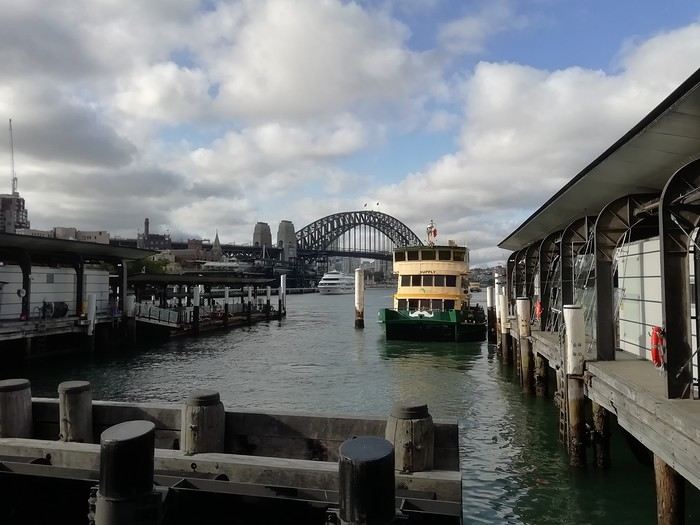 Restaurant prices have doubled. Even tripled. We reluctantly settle for a pizzeria because that T-bone for 155 AUD (100 €)…
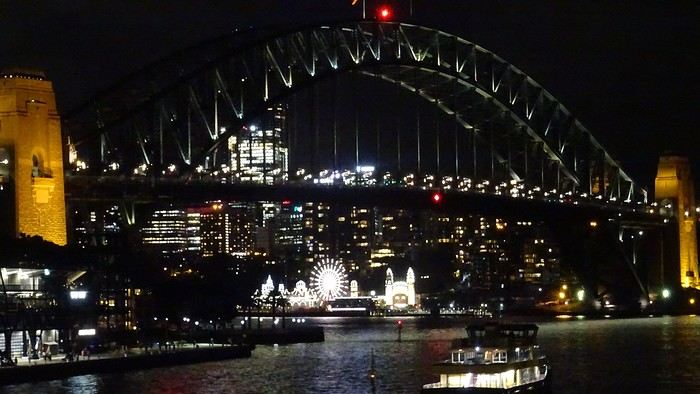
We know how to handle ourselves. There’s a Woolworths right downstairs. And we’ve got a kitchen, remember! And a terrace! We even have huge bats to brighten up our skies!
Okay, let’s recap. We’ve traveled through Western Australia, the Northern Territory, Queensland, and tonight we’ll be in New South Wales. We’ll even lose an extra hour—and a bunch of degrees!
We’re on a flawless journey so far. One of our suitcases is almost two kilos overweight. The guy checking us in gives us a nice smile and decides to overlook the excess baggage fee.A flight, for once, without a hitch, no delay (just half an hour…). Taxi… We discover our… room… We’ve got a suite like never before on this trip. It’s a posh apartment on the 7th floor—on cloud nine, really! We can’t believe it. 113.26 € per night! The Meriton Suites Mascot Central if you ever find yourself in this city… We even have a washing machine (and it works!). Such a change from the cabins in the west!
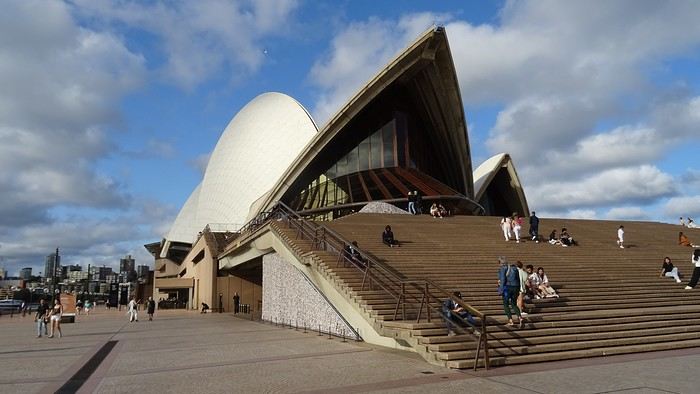
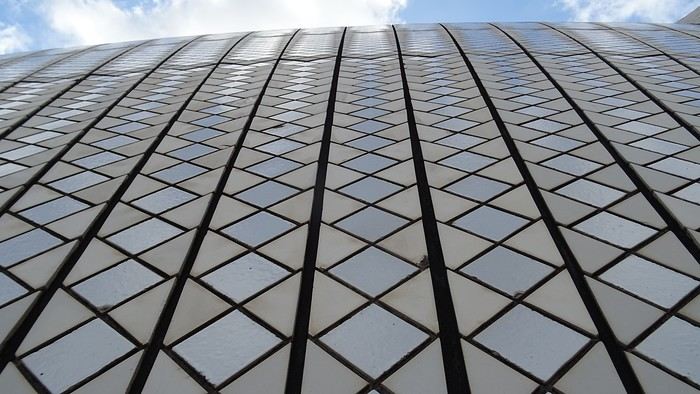
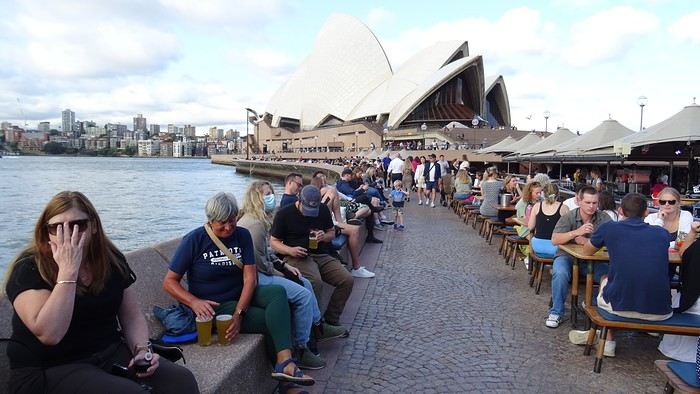
We don’t linger, though. We take the metro. Why? Well, yeah, we’re still kids at heart—off to the Opera House, of course!
Restaurant prices have doubled. Even tripled. We reluctantly settle for a pizzeria because that T-bone for 155 AUD (100 €)…
We know how to handle ourselves. There’s a Woolworths right downstairs. And we’ve got a kitchen, remember! And a terrace! We even have huge bats to brighten up our skies!
What’s your definition of a nature destination?
Hi,
I’m starting this thread after a digression that began in the India section and continued in a travel journal about Kerala.
The original topic was whether India is—or isn’t—a nature destination.
I’ll let you all discuss and share your own definition of a nature destination. 🙂
I’m starting this thread after a digression that began in the India section and continued in a travel journal about Kerala.
The original topic was whether India is—or isn’t—a nature destination.
I’ll let you all discuss and share your own definition of a nature destination. 🙂
Visiting northern Laos with a driver from Luang Prabang
Hi, I’d like to visit northern Laos by car with a driver from Luang Prabang.
Anyone able to share their experience and give me the contact details for a private driver? Thanks for your replies!
Kyushu between Fukuoka and Nagasaki in autumn 2024 (Japan)
Fellow travelers,
Don’t they say "never two without three"? It seems so. Here I am again on the forum to share—and let’s be honest, indulge a bit of selfish pleasure—by recounting the story of this third installment in the Land of the Rising Sun.
Where? It’s all in the title. On the island of Kyushu in southern Japan, more precisely in the northwest between Fukuoka and Nagasaki. I hope to take you along with me for 19 nights and 18 full days this autumn of 2024. On the itinerary: gastronomy, crafts, festivals, waterfalls, encounters, and leisurely strolls in all simplicity.
A last-minute flight booked just 7 days before departure, and the route evolved regularly based on whims and accommodation availability, eventually settling on this:
- 5 nights in Fukuoka: Fukuoka city, Ukiha, Itoshima, Dazaifu, Yanagawa - 4 nights in Hasami, Nagasaki Prefecture: Okawachiyama, Arita, Takeo, Kashima, Yobuko, Karatsu, Kabeshima - 6 nights in Nagasaki: Ureshino, Higashi-Sonogi, Nagasaki city, Unzen, Sotome - 4 nights in Fukuoka: Karatsu, Fukuoka city
Most of the trip was done by car for practical reasons—easier access to certain places and freedom of movement—but also for the sheer joy of it. Despite slow traffic at times, driving in rural Japan is a delight.
If the program interests you, see you soon for the start of the journey.
Don’t they say "never two without three"? It seems so. Here I am again on the forum to share—and let’s be honest, indulge a bit of selfish pleasure—by recounting the story of this third installment in the Land of the Rising Sun.
Where? It’s all in the title. On the island of Kyushu in southern Japan, more precisely in the northwest between Fukuoka and Nagasaki. I hope to take you along with me for 19 nights and 18 full days this autumn of 2024. On the itinerary: gastronomy, crafts, festivals, waterfalls, encounters, and leisurely strolls in all simplicity.
A last-minute flight booked just 7 days before departure, and the route evolved regularly based on whims and accommodation availability, eventually settling on this:
- 5 nights in Fukuoka: Fukuoka city, Ukiha, Itoshima, Dazaifu, Yanagawa - 4 nights in Hasami, Nagasaki Prefecture: Okawachiyama, Arita, Takeo, Kashima, Yobuko, Karatsu, Kabeshima - 6 nights in Nagasaki: Ureshino, Higashi-Sonogi, Nagasaki city, Unzen, Sotome - 4 nights in Fukuoka: Karatsu, Fukuoka city
Most of the trip was done by car for practical reasons—easier access to certain places and freedom of movement—but also for the sheer joy of it. Despite slow traffic at times, driving in rural Japan is a delight.
If the program interests you, see you soon for the start of the journey.
Abdulrazak Gurnah, an author with a unique journey and identity (Tanzania)
(A belated tribute on this forum)
Abdulrazak Gurnah, an author with a unique journey and identity (Tanzania)
Big surprise in Stockholm: the 2021 Nobel Prize in Literature was awarded to novelist Abdulrazak Gurnah. The Tanzanian author, who writes in English, is best known for his novels Paradise (1994) and By the Sea (2001). He was recognized for his "uncompromising and compassionate portrayal of the effects of colonialism and the fate of refugees caught between cultures and continents", according to the Nobel Committee.His work moves away from "stereotypical descriptions and opens our eyes to a culturally diverse East Africa that is little known in many parts of the world".
Gurnah is the first African author since 2003 to win the prestigious prize, and the fifth from the African continent overall—following Wole Soyinka (1986), Naguib Mahfouz (1988), Nadine Gordimer (1991), and J.M. Coetzee (2003). Once again, the prize passed over Kenyan Ngugi wa Thiong’o, who has long been among the favorites for the award.
Born in Zanzibar (now part of Tanzania) in 1948, Abdulrazak Gurnah grew up in an Arab family originally from Yemen. He sought refuge in the UK in the late 1960s, a few years after independence, at a time when the Muslim minority there was being persecuted. He wasn’t able to return to Zanzibar until 1984.
Since 1987, he has published around ten novels and several short stories in English (his native language is Swahili). None have become bestsellers, but his body of work as a whole offers a different perspective on issues like immigration and cultural diversity. His work sheds light on the effects of colonialism, exile, and the plight of refugees, "speaking" of his love for Africa and his fight against neocolonialism. Though Gurnah’s stories aren’t explicitly autobiographical, they’re inspired by his life as an immigrant in the UK.
Gurnah was also a professor of English and postcolonial literature at the University of Kent in Canterbury until his recent retirement.
Does this award bring more attention to African literature? Who knows? At the very least, it might give it a boost. If African literature is less visible in the West, it’s partly because it isn’t widely accessible: Gurnah is rarely translated into French or German, and not at all into Arabic.
In Tanzania and its Zanzibar archipelago, he’s being celebrated with joy. "This means a lot for Zanzibar’s struggle for self-determination," says Ismail Jussa, a literary critic from Zanzibar. "It helps put Zanzibar back on the map." The Swedish Committee acknowledged that his work has helped understand "the divisions caused by colonialists, but also the heartbreak of being torn between the homeland one comes from and the life of exile one is forced into."
By the Sea. Bloomsbury Publishing, 2001 (Fr.: Près de la Mer. Galaade Éd., 2006)
Paradise. Bloomsbury Publishing, 1994/2004 (Fr.: Paradis. Motifs, 1999)
Desertion. Bloomsbury Publishing, 2005 (Fr.: Adieu Zanzibar. Galaade Éd., 2009)
Afterlives. Bloomsbury Publishing, 2020 (Fr.: Les vies d’après. Denoël, 2023)
Hery
Abdulrazak Gurnah, an author with a unique journey and identity (Tanzania)
Big surprise in Stockholm: the 2021 Nobel Prize in Literature was awarded to novelist Abdulrazak Gurnah. The Tanzanian author, who writes in English, is best known for his novels Paradise (1994) and By the Sea (2001). He was recognized for his "uncompromising and compassionate portrayal of the effects of colonialism and the fate of refugees caught between cultures and continents", according to the Nobel Committee.His work moves away from "stereotypical descriptions and opens our eyes to a culturally diverse East Africa that is little known in many parts of the world".
Gurnah is the first African author since 2003 to win the prestigious prize, and the fifth from the African continent overall—following Wole Soyinka (1986), Naguib Mahfouz (1988), Nadine Gordimer (1991), and J.M. Coetzee (2003). Once again, the prize passed over Kenyan Ngugi wa Thiong’o, who has long been among the favorites for the award.
Born in Zanzibar (now part of Tanzania) in 1948, Abdulrazak Gurnah grew up in an Arab family originally from Yemen. He sought refuge in the UK in the late 1960s, a few years after independence, at a time when the Muslim minority there was being persecuted. He wasn’t able to return to Zanzibar until 1984.
Since 1987, he has published around ten novels and several short stories in English (his native language is Swahili). None have become bestsellers, but his body of work as a whole offers a different perspective on issues like immigration and cultural diversity. His work sheds light on the effects of colonialism, exile, and the plight of refugees, "speaking" of his love for Africa and his fight against neocolonialism. Though Gurnah’s stories aren’t explicitly autobiographical, they’re inspired by his life as an immigrant in the UK.
Gurnah was also a professor of English and postcolonial literature at the University of Kent in Canterbury until his recent retirement.
Does this award bring more attention to African literature? Who knows? At the very least, it might give it a boost. If African literature is less visible in the West, it’s partly because it isn’t widely accessible: Gurnah is rarely translated into French or German, and not at all into Arabic.
In Tanzania and its Zanzibar archipelago, he’s being celebrated with joy. "This means a lot for Zanzibar’s struggle for self-determination," says Ismail Jussa, a literary critic from Zanzibar. "It helps put Zanzibar back on the map." The Swedish Committee acknowledged that his work has helped understand "the divisions caused by colonialists, but also the heartbreak of being torn between the homeland one comes from and the life of exile one is forced into."
By the Sea. Bloomsbury Publishing, 2001 (Fr.: Près de la Mer. Galaade Éd., 2006)
Paradise. Bloomsbury Publishing, 1994/2004 (Fr.: Paradis. Motifs, 1999)
Desertion. Bloomsbury Publishing, 2005 (Fr.: Adieu Zanzibar. Galaade Éd., 2009)
Afterlives. Bloomsbury Publishing, 2020 (Fr.: Les vies d’après. Denoël, 2023)
Hery
Back from 4 weeks in Mozambique
hi everyone, we’re just back from 4 weeks in Mozambique. If you need any info—even though the situation’s getting more and more chaotic—just ask!
Morondava
Hi everyone,
I noticed the forum could use more recommendations for visiting Madagascar, so I thought I’d share my experience.
I arrived on the Big Island last March. I moved there as part of a contract with a friend who started a tech business. A quick note about Madagascar: this country is full of talent. The young people are incredibly ambitious, dynamic, and creative.
After visiting some of the more well-known tourist spots like Mahajanga (Majunga) and Toamasina (Tamatave), the place that really stood out to me was Morondava, in the southwest of the island.
To get there, we left Tananarive (Antananarivo) in the evening, heading to Antsirabe, where we spent the night. By the way, Antsirabe is worth lingering in—it’s a charming town with lots of pleasant spots, and you’ll often run into French travelers there.
The next day, we left at 4:00 AM for Morondava. Our goal was to arrive around 3:00 PM, driving at a relaxed pace to enjoy the scenery. We stopped in Miandrivazo for lunch—there, the tilapia and grilled prawns are a must.
Before Miandrivazo, the road isn’t great (like many roads in Madagascar, unfortunately), but the stunning landscapes more than make up for it. The vegetation, typical of African savannas, is fascinating. However, bushfires—unfortunately common on the island—leave visible scars on the scenery.
About 50 kilometers from Morondava, near Mahabo, the magic begins: majestic baobabs line the road, and the sunset turns this scene into a real postcard. It’s a moment I’ll never forget.
Once there, we stayed near Nosy Kely. It was very hot, but the warmth of the locals, the Sakalava, and their incredible culinary skills quickly made us forget the heat. The seafood and fish are prepared with impressive mastery… so good!
I’d love to recommend some great spots, but I’d rather not accidentally promote anything here. What I *can* say is that Morondava is absolutely worth the detour, if only for its unique atmosphere and breathtaking landscapes.
The next day, we set off to explore the famous Avenue of the Baobabs. This place is simply mind-blowing, one of a kind. As the name suggests, it’s an avenue lined with giant baobabs, with a dusty red-dirt road running through the middle. The whole scene has an almost mystical vibe.
We were planning to visit the Tsingy de Bemaraha on the fly, but it turned out to be too ambitious. According to our guide, we would’ve had to cross two rivers, at Belo and Bekopaka, which would’ve taken a lot more time. That’ll definitely be my next big adventure in Madagascar.
If you get the chance, I’d recommend going even farther than the Avenue of the Baobabs—about two hours by road. There, you can catch a glimpse of a real baobab forest in the distance. Some friends in another car were lucky enough to go, and their stories made me dream. They experienced a magical moment, one of those things you have to see to believe.
I’m no travel journal expert, but I hope this little glimpse inspires you to discover this little slice of paradise in Madagascar.
I noticed the forum could use more recommendations for visiting Madagascar, so I thought I’d share my experience.
I arrived on the Big Island last March. I moved there as part of a contract with a friend who started a tech business. A quick note about Madagascar: this country is full of talent. The young people are incredibly ambitious, dynamic, and creative.
After visiting some of the more well-known tourist spots like Mahajanga (Majunga) and Toamasina (Tamatave), the place that really stood out to me was Morondava, in the southwest of the island.
To get there, we left Tananarive (Antananarivo) in the evening, heading to Antsirabe, where we spent the night. By the way, Antsirabe is worth lingering in—it’s a charming town with lots of pleasant spots, and you’ll often run into French travelers there.
The next day, we left at 4:00 AM for Morondava. Our goal was to arrive around 3:00 PM, driving at a relaxed pace to enjoy the scenery. We stopped in Miandrivazo for lunch—there, the tilapia and grilled prawns are a must.
Before Miandrivazo, the road isn’t great (like many roads in Madagascar, unfortunately), but the stunning landscapes more than make up for it. The vegetation, typical of African savannas, is fascinating. However, bushfires—unfortunately common on the island—leave visible scars on the scenery.
About 50 kilometers from Morondava, near Mahabo, the magic begins: majestic baobabs line the road, and the sunset turns this scene into a real postcard. It’s a moment I’ll never forget.
Once there, we stayed near Nosy Kely. It was very hot, but the warmth of the locals, the Sakalava, and their incredible culinary skills quickly made us forget the heat. The seafood and fish are prepared with impressive mastery… so good!
I’d love to recommend some great spots, but I’d rather not accidentally promote anything here. What I *can* say is that Morondava is absolutely worth the detour, if only for its unique atmosphere and breathtaking landscapes.
The next day, we set off to explore the famous Avenue of the Baobabs. This place is simply mind-blowing, one of a kind. As the name suggests, it’s an avenue lined with giant baobabs, with a dusty red-dirt road running through the middle. The whole scene has an almost mystical vibe.
We were planning to visit the Tsingy de Bemaraha on the fly, but it turned out to be too ambitious. According to our guide, we would’ve had to cross two rivers, at Belo and Bekopaka, which would’ve taken a lot more time. That’ll definitely be my next big adventure in Madagascar.
If you get the chance, I’d recommend going even farther than the Avenue of the Baobabs—about two hours by road. There, you can catch a glimpse of a real baobab forest in the distance. Some friends in another car were lucky enough to go, and their stories made me dream. They experienced a magical moment, one of those things you have to see to believe.
I’m no travel journal expert, but I hope this little glimpse inspires you to discover this little slice of paradise in Madagascar.
Back from 3 weeks in Quebec
Hi there, just back from a three-week round trip to Quebec and a side trip to New Brunswick.
Departed from Montpellier, via CDG, then arrived in Montreal from July 31 to August 20, 2024.
AF flights went smoothly.
The RT itinerary (without the visit details):
Arrival in Montreal; Trois-Rivières; Tadoussac; Matane; Gaspé; Campbellton; Trois-Pistoles; Quebec City; Montreal and return to France, AF to CDG then Hop! to Montpellier.
Observations:
Getting out of Montreal airport is a nightmare! Two hours at Avis Auto to pick up the car (nice ride, though—a WW SUV Atlas V6 for two). From what I’ve heard, Montreal Airport is a pain because it was initially under-dimensioned for its infrastructure, and it seems impossible to reorganize everything.
Quebecers: Wonderful people in terms of hospitality and behavior toward tourists—especially French ones. You can ask them for advice at the supermarket, for directions here and there, and those distant cousins are great! That said, I’d exclude Montreal, which, due to its size and perhaps its cosmopolitanism, can’t be considered as welcoming as the countryside and small towns we passed through. A bit like Paris, you could say.
Quebecers prefer Quebec City over Montreal, and I get it. On a positive note for the city, I left some money in the hotel at the end of my stay. Once back in France, I contacted the hotel (day before yesterday), and they confirmed the oversight and are taking steps to send the money back. A nice gesture. It’s the Nouvel Hôtel, 1740 Avenue René Lévesque. Well-located, too.
Tourists: Same as always!
Americans: Still lacking in culture and education, but we already knew that. Loud, intrusive, annoying, you could say. And I’ll skip the “Oh my God! Oh my God!” all day long. And always with a coffee cup in hand on the streets. Not just American tourists, actually. Coffee is either enjoyed at the counter of a café or at home in front of the day’s news. It must also be said that our cousins’ coffee is more like dishwater.
Tourists from the Middle Kingdom: No change there! Flagrant lack of European culture and respect. They can be quite annoying at times. Thankfully, they don’t like the countryside or small towns.
Tourists from the Land of the Rising Sun: As usual, impeccable behavior. Both in terms of dress and discretion.
The British: They feel at home. Well, they kind of are, actually. Distant, inaccessible—typical English folks.
South Americans: A lot of them in Montreal during my stay. Quite noisy, especially at breakfast. But deep down, they’re great and very polite. I really like them. Must be my 36.1% Iberian DNA from my ancestry test that makes me say that.
And the French? Always the same! Complainers, grumblers, never happy with the meal, always finding prices too high, cutting in line, sometimes with a Quechua backpack but not always. In short, we don’t change. That said, there were some really nice people and great encounters that will leave wonderful memories. Some folks from Marseille in Quebec City, Toulouse in Montreal, Perpignan... But not many Parisians. Or maybe they just don’t talk to outsiders. When I think that my wife is from the 14th arrondissement...
And lots of lovely young French people there on a Working Holiday Visa for two years.
Others? Italians? Didn’t run into many. Eastern Europeans? Didn’t see any, or they were super discreet.
The trip started on July 31. 2,000 photos to sort through. More to come later.
The RT itinerary (without the visit details):
Arrival in Montreal; Trois-Rivières; Tadoussac; Matane; Gaspé; Campbellton; Trois-Pistoles; Quebec City; Montreal and return to France, AF to CDG then Hop! to Montpellier.
Observations:
Getting out of Montreal airport is a nightmare! Two hours at Avis Auto to pick up the car (nice ride, though—a WW SUV Atlas V6 for two). From what I’ve heard, Montreal Airport is a pain because it was initially under-dimensioned for its infrastructure, and it seems impossible to reorganize everything.
Quebecers: Wonderful people in terms of hospitality and behavior toward tourists—especially French ones. You can ask them for advice at the supermarket, for directions here and there, and those distant cousins are great! That said, I’d exclude Montreal, which, due to its size and perhaps its cosmopolitanism, can’t be considered as welcoming as the countryside and small towns we passed through. A bit like Paris, you could say.
Quebecers prefer Quebec City over Montreal, and I get it. On a positive note for the city, I left some money in the hotel at the end of my stay. Once back in France, I contacted the hotel (day before yesterday), and they confirmed the oversight and are taking steps to send the money back. A nice gesture. It’s the Nouvel Hôtel, 1740 Avenue René Lévesque. Well-located, too.
Tourists: Same as always!
Americans: Still lacking in culture and education, but we already knew that. Loud, intrusive, annoying, you could say. And I’ll skip the “Oh my God! Oh my God!” all day long. And always with a coffee cup in hand on the streets. Not just American tourists, actually. Coffee is either enjoyed at the counter of a café or at home in front of the day’s news. It must also be said that our cousins’ coffee is more like dishwater.
Tourists from the Middle Kingdom: No change there! Flagrant lack of European culture and respect. They can be quite annoying at times. Thankfully, they don’t like the countryside or small towns.
Tourists from the Land of the Rising Sun: As usual, impeccable behavior. Both in terms of dress and discretion.
The British: They feel at home. Well, they kind of are, actually. Distant, inaccessible—typical English folks.
South Americans: A lot of them in Montreal during my stay. Quite noisy, especially at breakfast. But deep down, they’re great and very polite. I really like them. Must be my 36.1% Iberian DNA from my ancestry test that makes me say that.
And the French? Always the same! Complainers, grumblers, never happy with the meal, always finding prices too high, cutting in line, sometimes with a Quechua backpack but not always. In short, we don’t change. That said, there were some really nice people and great encounters that will leave wonderful memories. Some folks from Marseille in Quebec City, Toulouse in Montreal, Perpignan... But not many Parisians. Or maybe they just don’t talk to outsiders. When I think that my wife is from the 14th arrondissement...
And lots of lovely young French people there on a Working Holiday Visa for two years.
Others? Italians? Didn’t run into many. Eastern Europeans? Didn’t see any, or they were super discreet.
The trip started on July 31. 2,000 photos to sort through. More to come later.
Wild Colombia off the tourist trail
Hi,
I'd love to know where we can observe wildlife, birds, and nature in Colombia... Like going on a hike without a guide, immersing ourselves in the forest, far from tourist spots. I want to avoid places that are specially set up, since you usually don’t see much there.
Thanks in advance!
Bernard
South Africa in Three Trips
Hello,
In these post-COVID years, South Africa (SA) has drawn me back again... The long-time forum members will say I'm a bit obsessed (I've now surpassed 20 trips to this country, including 2 in Namibia)... But new readers can find my old travel journals and enjoy this new installment. So, three new trips... each lasting a month... always too short. I’ll try to be pragmatic.
Let’s start with the basics! You can plan your trip from your couch with complete peace of mind. Through any Booking site or directly (sometimes cheaper), I’ve never had any issues with my direct bookings—they’ve always matched what was promised. For national parks outside KwaZulu-Natal (where it’s KZN Wildlife), use the SANparks website, or Nature Reserve for that type of "accommodation." Air France, Lufthansa, or KLM... depending on the year and circumstances. Most flights are overnight, allowing you to arrive early in Joburg and... leave this city I don’t much like as quickly as possible. KLM offers a daytime flight to Cape Town... just arrange your first night’s stay. You drive on the left in SA (you knew that, right?)... you get used to it. Passport: must still be valid for 6 months with several blank pages... Car rental? A car is pretty much essential, whether for short or long trips. It’s safer too. Aside from the secure Gautrain in Joburg and Cape Town (CT from now on), I don’t take the train. Except for the red bus drop-off/pick-up in CT, I don’t take the bus. In this specific case, it’s practical because you can access all of CT’s spots—including the famous Lion’s Head—without worrying about parking or traffic. These past three years, I’ve chosen Around About Cars as my rental company. I’m very satisfied with them. What kind of car? It depends on what you’re doing and your budget. The vast majority of roads don’t require a special vehicle. In a park, the "high ground clearance" of SUVs lets you see animals better and helps avoid potholes (the SA version—ostrich-sized), speed bumps (our "sleeping policemen" with a big belly), and tackle the last few kilometers or 100 meters that can be a bit rough with complete peace of mind. Do your research. For me, it’s 4x2 or 4x4 depending on... South Africans drive fast... and I feel safer that way. International driver’s permit? Legally required! Never asked for by a rental company, only once by the police—but I stood my ground, confident, and it went smoothly. Road checks? Yes, often—at least two every time, but they’re relaxed... Note that if a police officer wants to give you a fine, it must be done at the police station—insist on going there... they’ll usually drop it. If they suggest paying on the spot in cash to "make things easier"... it’s just for their pocket. There’s a special "police alert" number—remind them of it! The rand is the South African currency. Nowadays, cards work in many places. But note: a car rental company will ask for a credit card, not a debit card. Be careful: cash is no longer accepted in SANparks camps and other places (entrances, etc.)! It’s card only! I always carry some cash. I order it from Yeschange (sounds dodgy, but it’s very reliable). Phew... What an introduction!
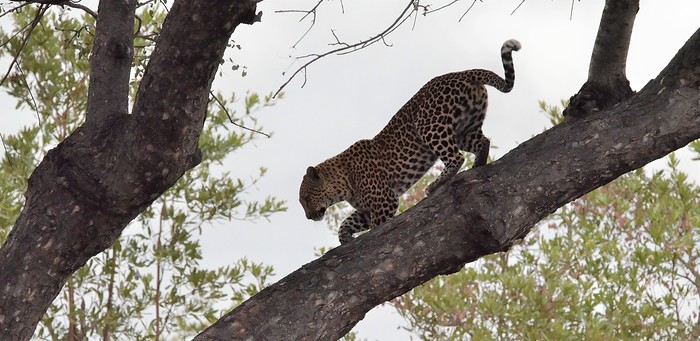
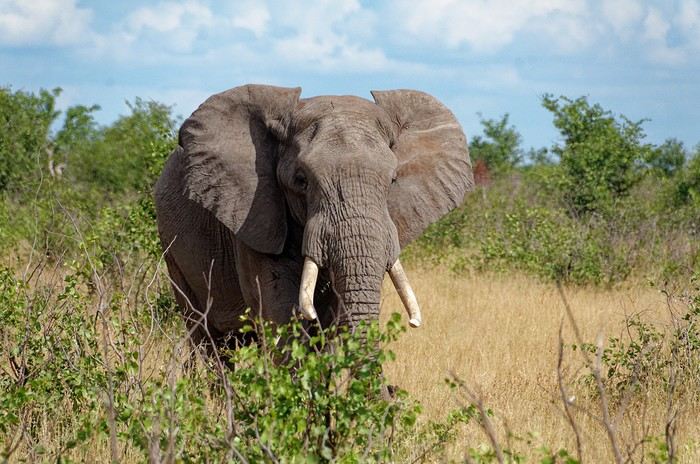
In these post-COVID years, South Africa (SA) has drawn me back again... The long-time forum members will say I'm a bit obsessed (I've now surpassed 20 trips to this country, including 2 in Namibia)... But new readers can find my old travel journals and enjoy this new installment. So, three new trips... each lasting a month... always too short. I’ll try to be pragmatic.
Let’s start with the basics! You can plan your trip from your couch with complete peace of mind. Through any Booking site or directly (sometimes cheaper), I’ve never had any issues with my direct bookings—they’ve always matched what was promised. For national parks outside KwaZulu-Natal (where it’s KZN Wildlife), use the SANparks website, or Nature Reserve for that type of "accommodation." Air France, Lufthansa, or KLM... depending on the year and circumstances. Most flights are overnight, allowing you to arrive early in Joburg and... leave this city I don’t much like as quickly as possible. KLM offers a daytime flight to Cape Town... just arrange your first night’s stay. You drive on the left in SA (you knew that, right?)... you get used to it. Passport: must still be valid for 6 months with several blank pages... Car rental? A car is pretty much essential, whether for short or long trips. It’s safer too. Aside from the secure Gautrain in Joburg and Cape Town (CT from now on), I don’t take the train. Except for the red bus drop-off/pick-up in CT, I don’t take the bus. In this specific case, it’s practical because you can access all of CT’s spots—including the famous Lion’s Head—without worrying about parking or traffic. These past three years, I’ve chosen Around About Cars as my rental company. I’m very satisfied with them. What kind of car? It depends on what you’re doing and your budget. The vast majority of roads don’t require a special vehicle. In a park, the "high ground clearance" of SUVs lets you see animals better and helps avoid potholes (the SA version—ostrich-sized), speed bumps (our "sleeping policemen" with a big belly), and tackle the last few kilometers or 100 meters that can be a bit rough with complete peace of mind. Do your research. For me, it’s 4x2 or 4x4 depending on... South Africans drive fast... and I feel safer that way. International driver’s permit? Legally required! Never asked for by a rental company, only once by the police—but I stood my ground, confident, and it went smoothly. Road checks? Yes, often—at least two every time, but they’re relaxed... Note that if a police officer wants to give you a fine, it must be done at the police station—insist on going there... they’ll usually drop it. If they suggest paying on the spot in cash to "make things easier"... it’s just for their pocket. There’s a special "police alert" number—remind them of it! The rand is the South African currency. Nowadays, cards work in many places. But note: a car rental company will ask for a credit card, not a debit card. Be careful: cash is no longer accepted in SANparks camps and other places (entrances, etc.)! It’s card only! I always carry some cash. I order it from Yeschange (sounds dodgy, but it’s very reliable). Phew... What an introduction!
Your thoughts on my Sri Lanka itinerary for November 2024
hi there,
what a joy this forum is back up and running!
so happy to be the first Sri Lanka post.
it’s helped me plan so many real trips—unlike other sites that are mostly commercial, pushing drivers, and such.
new adventure in Sri Lanka! here’s our itinerary from November 6th to 22nd, 2024.
Our plan: 3 days in Habarana (Mineriya or Kaudulla, Polonnaruwa, Dambulla, Sigiriya) 3 days in Kandy (including two days at the Elephant Freedom Project) 1 day on the train from Kandy to Haputale (Lipton’s Seat) 2 days in Ella 1 day in Uda Walawe 1 flexible day to adjust as needed 2 days in Tangalle or nearby (which beaches are the quietest?) 1 day in Galle 1 day in Colombo
thank you in advance for any tips or advice you can share—we’re so excited to explore this amazing country!
looking forward to hearing from you, we’ll be sure to share our experience when we’re back.
Monique
new adventure in Sri Lanka! here’s our itinerary from November 6th to 22nd, 2024.
Our plan: 3 days in Habarana (Mineriya or Kaudulla, Polonnaruwa, Dambulla, Sigiriya) 3 days in Kandy (including two days at the Elephant Freedom Project) 1 day on the train from Kandy to Haputale (Lipton’s Seat) 2 days in Ella 1 day in Uda Walawe 1 flexible day to adjust as needed 2 days in Tangalle or nearby (which beaches are the quietest?) 1 day in Galle 1 day in Colombo
thank you in advance for any tips or advice you can share—we’re so excited to explore this amazing country!
looking forward to hearing from you, we’ll be sure to share our experience when we’re back.
Monique
Louer un van aux Philippines, vous en pensez quoi? English translation pending
Salut à tous,
je réside aux Philippines et je viens de finir l'aménagement de mon van. Je cherche à déterminer si une activité de location de van aménagés pourrait intéresser les touristes qui viennent en vacance ici... Vous en pensez quoi ?
Merci pour vos avis.
* Voici mon van = https://youtu.be/uxzdshQCKOU
je réside aux Philippines et je viens de finir l'aménagement de mon van. Je cherche à déterminer si une activité de location de van aménagés pourrait intéresser les touristes qui viennent en vacance ici... Vous en pensez quoi ?
Merci pour vos avis.
* Voici mon van = https://youtu.be/uxzdshQCKOU