Results for "Nattes+|+122+>+63"
7334 results found.
Madagascar: Andasibe et Foulpointe English translation pending
Nous projettons un circuit ( petit ! ) est, vers Andasibe et Foulpointe avant d'aller a Ste Marie .
Auriez vous des adresses d'hotels et des conseils sur ces 2 villages ?
Est ce que Foulpointe ( ou Mahombo ) vaut le coup ?
Merci😉
Cambodge: Phnom Penh, Siem Reap et Shianoukville English translation pending
BONJOUR,
je vais partir au Cambodge en décembre 2005, j'ai réservé un hotel à Siem reap à PP et Shianoukville, si des personnes sont allées dans ces trois villes. pouvez vous me renseigner surtout comment aller de PP à Shianoukville. les restau sympa mais pas trop ruineux et les trucs a éviter d'office😎 et les trucs super
Aide humanitaire au Pérou English translation pending
Je cherche un organisme qui partirais au mois de mai pour environ trois semaines au Pérou pour faire de l'aide humanitaire et en meme temps un peu de tourisme.
Madagascar: Sainte-Marie ou Nosy-Be? English translation pending
Bonjour à tous,
Je souhaiterais avoir votre avis: selon vous, quelle île est la plus intéressante à Madagascar: Sainte-Marie ou Nosy-bé?
Quand je dis intéressante, je parle du point de vue de la faune et la flore, de la beauté de l'île.
Merci de me réponre rapidement, c'est urgent!
Vols internes au Madagascar English translation pending
qui pourrai me renseigner sur les vols intérieurs ANTANARIVE- DIEGO sur les jours des vols et les prix ?
de plus, je cherche un hotel sympa dans la région mais plus sur RAMENA.
MERCI D AVANCE
Climat à Madagascar d'octobre à décembre English translation pending
salut a tous,
madagascar en octobre à décembre est-ce vraiment merdique? cest la saison des pluies a partir de mi-novembre mais si je descends vers le sud je pense bien que je pourrais m'en sortir. Aussi est-ce vraiment si chaud que ca à cette période?
je suis en dilemme entre madagascar et sénégal, ( le premier m'attire pour la danse, la culture, le peuple, le deuxième est pour moi un choix sûr coté beautés naturelles/faune et flore )
je cherche meilleur tarif billet avion a partir de montréal, cest tellement cher ( meme prix que pour l'australie ). je suis découragée 😕 alors tous vos conseils sont plus que bienvenus...
madagascar en octobre à décembre est-ce vraiment merdique? cest la saison des pluies a partir de mi-novembre mais si je descends vers le sud je pense bien que je pourrais m'en sortir. Aussi est-ce vraiment si chaud que ca à cette période?
je suis en dilemme entre madagascar et sénégal, ( le premier m'attire pour la danse, la culture, le peuple, le deuxième est pour moi un choix sûr coté beautés naturelles/faune et flore )
je cherche meilleur tarif billet avion a partir de montréal, cest tellement cher ( meme prix que pour l'australie ). je suis découragée 😕 alors tous vos conseils sont plus que bienvenus...
Souvenir de Tunis English translation pending
Tout d'abord un grand salut à tous je vie en France à Strasbourg (capital de l'Europe) lors de mon dernier voyage je suis partie à tunis.
Départ à 5H30 de Strasbourg en voiture direction gène plus exactement savonna le port super endroit vieille pierre chaleur enfin tous ....
Arriver à savonna j'ai pris le bateau en direction de Tunis (et oui comme je voyage avec un toutou qui mange de trop impossible de prendre l'avion sauf si je le met en soute) 20H de bateau c super je me suis crue dans une série très célèbre lollllllll le bateau pas mal g fait le tour en 1H donc je vous laisse imaginé que le voyage fut l’on.
Pas de problème avec toutou
le restaurant du bateau sympa ma pas vraiment bon la cabine sobre sans TV mais sympa.
Arrivé a Tunis contrôle papier les miens et ce du chien ok pas de stress
direction Hammamet pour trouvé l'hôtel royal azur ou g pris ma résa.
Petit stress sur la route je ne savais pas qu'en Tunisie les chèvres avaient le droit de passé au travers des routes et autoroute donc un peu de stress.
Hammamet enfin ville sympa je trouve l'hôtel un endroit super déco remarquable service soigné enfin le grand luxe.
J’ai eu la chance de me faire chouchouté pendant mon séjour l'hôtel propose des soin de thalasso enfin le pied les resto sympa mais je n'ai pas fait que manger g bu aussi leur fameux rosé MORNAG je suis sorti aussi cartage sidi bou Monastir ....
Je vous avouerez que j'ai pas fait de tour en 4x4 ou autre track c pas mon truc je suis plus 4h pile 4h face enfin je suis sur que personne ne va lire ce que j'écris pourquoi ? Déjà c plein de fautes donc pardon mais je ne parle le français que depuis peu donc merci pour votre indulgence.
Ce fut pour moi un voyage super qui me laisse un super souvenir donc si vous avez la chance de vous rendre en Tunisie faite moi plaisir avant de parlé respiré et glissez vous dans un personnage que vous inventerez je suis sur que ce pays va vous plaire donc à tous je vous souhaites de faire au cour de votre vie des voyages magnifiques qui vous laisserons des souvenir superbe bonne vacances à tous.
Les voyages n'importe ou dans le monde loin ou pas de votre domicile doivent vous laissez pleins de bon souvenirs que vous rangerez dans un coin de votre téte afin de pouvoir vous en souvenir le jour ou ont vous demanderas de faire lecture de votre vie encore une fois à tous bonne vacances. plus plus gmtstras.
Les voyages n'importe ou dans le monde loin ou pas de votre domicile doivent vous laissez pleins de bon souvenirs que vous rangerez dans un coin de votre téte afin de pouvoir vous en souvenir le jour ou ont vous demanderas de faire lecture de votre vie encore une fois à tous bonne vacances. plus plus gmtstras.
Qui est allé au Fiesta beach club Djerba en 2004? English translation pending
bonjour !
je voudrais correspondre avec des personnes qui ont séjourné dans cet hôtel l'année dernière, en particulier entre avril et septembre 2004 !!!!!
et aussi ceux qui ont connu les animateurs de ce club 😎😛
svp répondez moi....
kiss Julia.
je voudrais correspondre avec des personnes qui ont séjourné dans cet hôtel l'année dernière, en particulier entre avril et septembre 2004 !!!!!
et aussi ceux qui ont connu les animateurs de ce club 😎😛
svp répondez moi....
kiss Julia.
Hôtel Club Dar Nouar 3* (Gammarth) English translation pending
Bonjour à tous,
Avec une amie nous avons décidé de partir en Tunisie la dernière semaine de mai. Nous sommes sur le point de réserver à l'hotel Dar Naouar qui a l'air très sympa. Notre seule crainte : que les autres vacanciers ne soient que couples avec jeunes enfants et personnes agées! Nous avons toutes deux 28 ans et y allons bien sûr dans l'optique de se reposer et de visiter le nord de Tunisie, nous ne sommes pas à "la recherche" d'un homme 😛mais nous avons envie de faire la fête un peu quand même !! Qui connait cet hotel ? est il bien ? Et quelle en est sa fréquentation ???
Dernière question : quelle est la solution la plus rapide et pratique pour joindre Tunis de cet hotel ?
Merci à tous🙂
Avec une amie nous avons décidé de partir en Tunisie la dernière semaine de mai. Nous sommes sur le point de réserver à l'hotel Dar Naouar qui a l'air très sympa. Notre seule crainte : que les autres vacanciers ne soient que couples avec jeunes enfants et personnes agées! Nous avons toutes deux 28 ans et y allons bien sûr dans l'optique de se reposer et de visiter le nord de Tunisie, nous ne sommes pas à "la recherche" d'un homme 😛mais nous avons envie de faire la fête un peu quand même !! Qui connait cet hotel ? est il bien ? Et quelle en est sa fréquentation ???
Dernière question : quelle est la solution la plus rapide et pratique pour joindre Tunis de cet hotel ?
Merci à tous🙂
Trajet Luang Prabang-Vientiane en bateau + Passage frontière English translation pending
Bonjour à tous,
Nous partons cet été réaliser un petit périple en Asie du sud est.. C'est pourquoi nous vous sollicitons. Nous aimerions faire le trajet Luang prabang - Vientiane en bateau (vitesse rapide), avez vous des infos sur le sujet ? (prix, durée, horaires, embarquement).
Par ailleurs, savez vous à quelle heure ferme la frontière à Nong Thai (thai-laos) ?
Enfin, des infos sur les 2 jours en jonques sur la baie d'along ?
Merci d'avance...
Nous partons cet été réaliser un petit périple en Asie du sud est.. C'est pourquoi nous vous sollicitons. Nous aimerions faire le trajet Luang prabang - Vientiane en bateau (vitesse rapide), avez vous des infos sur le sujet ? (prix, durée, horaires, embarquement).
Par ailleurs, savez vous à quelle heure ferme la frontière à Nong Thai (thai-laos) ?
Enfin, des infos sur les 2 jours en jonques sur la baie d'along ?
Merci d'avance...
Nosy Be ou Sainte Marie à Madagascar? English translation pending
nous allons cet été à madagascar et voulons finir notre périple par quelques jours de farniente.
Ok on sait que Nosy be est plus touristique et que Sainte Marie plus robinson.
Mais qui a fait les 2 et franchement les plus belles plages, sable blanc, eaux claires... elles sont où ? Il semble qu'à Sainte Marie l'été, il pleut pas mal. qu'en pensez vous ?
merci pour la réponse. Annie
Mais qui a fait les 2 et franchement les plus belles plages, sable blanc, eaux claires... elles sont où ? Il semble qu'à Sainte Marie l'été, il pleut pas mal. qu'en pensez vous ?
merci pour la réponse. Annie
Climat à Madagascar en mars avril? English translation pending
Bonsoir,
Je souhaite me rendre une semaine sur l'ile de sainte marie avec ma femme fin mars début avril. D'après les guides il devrait y pleuvoir constamment à cette période. Quelqu'un qui aurait été sur cette ile à cette période peut-il me confirmer ou me rassurer un peu sur un ensoleillement possible avant que je ne commande mon séjour.
Merci
Je souhaite me rendre une semaine sur l'ile de sainte marie avec ma femme fin mars début avril. D'après les guides il devrait y pleuvoir constamment à cette période. Quelqu'un qui aurait été sur cette ile à cette période peut-il me confirmer ou me rassurer un peu sur un ensoleillement possible avant que je ne commande mon séjour.
Merci
Climat à Madagascar en juillet/août? English translation pending
nous partons 3 semaines à Mada en Juillet Août.Nous aimerions faire une petite virée à Ste Marie pour voir les baleines mais la pèriode ne semble pas idéale.Ce sont des orages tropicaux ou bien une pluie en continu?
Merci
Merci
Tdm et sécurité sociale française English translation pending
En appelant mon centre de sécu on m'a dit que c'était bon j'étais inscrite jusqu'en 2007, donc que je pouvais partir un an, sans soucis, et me faire rembourser d'éventuelles frais de maladie.
Est ce fiable, comme info ? Si nous ne sommes pas aux assedics ou a l'anpe, ni en congé sans solde...sommes nous couverts ? Et cela aussi à notre retour ?
Merci de me donner des infos sur ce sujet plutot casse tete.
Est ce fiable, comme info ? Si nous ne sommes pas aux assedics ou a l'anpe, ni en congé sans solde...sommes nous couverts ? Et cela aussi à notre retour ?
Merci de me donner des infos sur ce sujet plutot casse tete.
Madagascar/Ile Sainte Marie English translation pending
Bonsoir,
Je pars le 12 novembre pour Tana puis a Sainte Marie quelques jours.J'aimerais que ceux qui connaissent cette ile m'indiquent des hebergements basiques mais corrects a prix sympas en ville et les coins supers a visiter.Est il facile de louer une petite moto?Merçi pour vos infos.
Je pars le 12 novembre pour Tana puis a Sainte Marie quelques jours.J'aimerais que ceux qui connaissent cette ile m'indiquent des hebergements basiques mais corrects a prix sympas en ville et les coins supers a visiter.Est il facile de louer une petite moto?Merçi pour vos infos.
Ethnies en Iran English translation pending
Bonjour,
Partant quelques semaines en Iran dès fin octobre, j'ai quelques questions sur cete destination:
1- je souhaiterai approcher quelques ethnies nomades tels que Lor, Bakthiari, Qashgai aux alentours de Shar-e Kord, Firuz Abad, Yasuj. Est-ce que certains d'entre vous ont déjà réaliser ce genre de choses en individuel voire auprès d'un guide locale ?
2- Je recherche des infos sur la route Machhad - Yazd via Tabas.
3- Je cherche enfin à localiser un village nommé Toups dans le Sistan ou le Baluchestan. Toups est la légende de la photo
Merci,
Herve
Partant quelques semaines en Iran dès fin octobre, j'ai quelques questions sur cete destination:
1- je souhaiterai approcher quelques ethnies nomades tels que Lor, Bakthiari, Qashgai aux alentours de Shar-e Kord, Firuz Abad, Yasuj. Est-ce que certains d'entre vous ont déjà réaliser ce genre de choses en individuel voire auprès d'un guide locale ?
2- Je recherche des infos sur la route Machhad - Yazd via Tabas.
3- Je cherche enfin à localiser un village nommé Toups dans le Sistan ou le Baluchestan. Toups est la légende de la photo
Merci,
Herve
Et au milieu coule une riviere English translation pending
Lever avec le soleil, seau d’eau froide pour tres momentanement baisser la temperature corporelle, puis je m’installe dans mon fauteuil et j’allume la television.
C’est un reportage comme je n’en ai jamais vu, encore mieux que National Geographic et Planete reunis, intitule «De l’autre cote de la riviere, les ghats ».
Une riviere donc, des ghats ensuite, et derriere, pour couronner le paysage, les gopurams du temple de Viruspaksha, ainsi que les ruines de Hemkuta Hill en vision panoramique
Pour eclairage, le soleil levant qui illumine l’entree du temple oriente a l’est.
Un reportage sans commentaire ni musique, juste les bruits du linge que l’on frappe contre la pierre, des enfants qui pataugent dans l’eau et des oiseaux qui chantent. Pas un klaxon, pas un bruit de frein, pas une voiture.
Un reportage comme si j’y etais…
… mais j’y suis !
Je suis assise sur une chaise, en face de Hampi, de l’autre cote de la riviere. Je ne me lasse pas de regarder sans fin, ces hommes, femmes et enfants, profiter de la plus grande salle de bain de la region. Un defile de couleurs, tous ces vetements qui sont mouilles, savonnes, frappes, rinces et enfin etendus sur les escaliers. Pour connaître la longueur d’un sarii, comptez le nombre de marches a gravir pour entierement l’etaler. Un assortiment de jaune, rouge, vert, bleu tel un patchwork, une peinture moderne, composee de carres multicolores de tailles variables.
Les gens aussi sont mouilles, savonnes, rinces, seches, pour commencer tout propre une nouvelle journee. Les enfants s’amusent, les jeunes garcons se prennent en photos en pyramide humaines, les religieux font les prieres, les femmes lavent leurs longues nattes.
Et au milieu de la riviere, les pecheurs qui relevent leurs filets, a bord d’une coracle. Cette embarcation ronde a base de roseau, est aussi utilisee pour traverser la riviere par les gens bien sur, les velos egalement, les motos aussi incroyable que ca puisse paraître, tellement cette embarcation parait fragile.
Vijayanagar (cite de la victoire), capitale d’un des plus grand empires hindous. Fondee en 1336, au temps de la conquete du nord de l’Inde par les musulmans, ce royaume a connu prosperite et abondance pendant environ deux siecles. Difficile d’imaginer que ce coin tranquille de verdure et ce hameau de 1000 ames, ait au temps de sa splendeur abrite plus de 500 000 habitants sur plus de 43 km carres.
Vestiges de cette epoque, des ruines de temples, de palais royaux, de bains, de bazaar eparpilles un peu partout entre paysages de grands canyons, compose de cailloux, roches, monts et vallees ; et oasis de palmiers, bananier et champs de tournesols.
Plus de 80 monuments, qui se decouvrent au detour d’un chemin, le long de la route ou pres de la riviere.
Chaque pas amene son lot de surprise, tel le temple d’Achyutaraya que je decouvre petit a petit au milieu de son ecrin de verdure en descendant dans une vallee rocheuse. J’essaye d’imaginer l’ambiance du Sule Bazaar, longue allee, maintenant deserte et vide, qui mene au temple, ou se trouvaient tous les commercants et l’animation de la ville.
Comment ne pas s’extasier devant la finesse des sculptures, la precision des details, sur les colonnes, les lintaux, les statues.
Des dimensions inimaginables, des animaux mythologiques, des dieux et des deesses dans toutes les positions graves dans le granit et la pierre.
Sous le fort soleil de l’ete indien, le bain en plein air du temple de Krishna m’appelle, difficile de resister a ce reservoir encadre d’un cloitre au milieu des champs de bananiers. Mais il ne faut pas se laisser tromper par cette eau pleine d’algues ! Des bains, il y en a a profusion, les bains de la reine et son decor des milles et une nuit, le bain ocotogonal isole dans la campagne, bains le plus souvent vides, comme pour narguer le pauvre visiteur ruisselant de sueur.
Empire hindou, mais visiteurs de tous les coins de l’Inde et meme d’Europe. Une mosquee s’integre parfaitement dans le quartier royal, a cote des etables des elephants royaux, des aqueducs, du reservoir en escaliers en pierres noires a la geometrie parfaite, du temple souterrain et tant d’autres vestiges.
Le long de la route, un village, une ecole decoree aux couleurs de l’Inde, puis en haut de cette montee, un temple. Un peu de monde le long des bananiers, un chemin de terre, puis une statue de Narasimha, quatrieme avatar de Vishnu.
Impossible de les decrire tous, impossible de mettre des mots sur ces prouesses architecturales et artistiques, impossible de decrire le sentiment de serenite et de bien etre qui se degage de ces lieux.
Ballades entre riviere et ruines, entre verdure et pierres, temoignages d'hier, scenes d’aujourd’hui.
Vijayanagar, Hampi, merveille du Karnataka.
C’est un reportage comme je n’en ai jamais vu, encore mieux que National Geographic et Planete reunis, intitule «De l’autre cote de la riviere, les ghats ».
Une riviere donc, des ghats ensuite, et derriere, pour couronner le paysage, les gopurams du temple de Viruspaksha, ainsi que les ruines de Hemkuta Hill en vision panoramique
Pour eclairage, le soleil levant qui illumine l’entree du temple oriente a l’est.
Un reportage sans commentaire ni musique, juste les bruits du linge que l’on frappe contre la pierre, des enfants qui pataugent dans l’eau et des oiseaux qui chantent. Pas un klaxon, pas un bruit de frein, pas une voiture.
Un reportage comme si j’y etais…
… mais j’y suis !
Je suis assise sur une chaise, en face de Hampi, de l’autre cote de la riviere. Je ne me lasse pas de regarder sans fin, ces hommes, femmes et enfants, profiter de la plus grande salle de bain de la region. Un defile de couleurs, tous ces vetements qui sont mouilles, savonnes, frappes, rinces et enfin etendus sur les escaliers. Pour connaître la longueur d’un sarii, comptez le nombre de marches a gravir pour entierement l’etaler. Un assortiment de jaune, rouge, vert, bleu tel un patchwork, une peinture moderne, composee de carres multicolores de tailles variables.
Les gens aussi sont mouilles, savonnes, rinces, seches, pour commencer tout propre une nouvelle journee. Les enfants s’amusent, les jeunes garcons se prennent en photos en pyramide humaines, les religieux font les prieres, les femmes lavent leurs longues nattes.
Et au milieu de la riviere, les pecheurs qui relevent leurs filets, a bord d’une coracle. Cette embarcation ronde a base de roseau, est aussi utilisee pour traverser la riviere par les gens bien sur, les velos egalement, les motos aussi incroyable que ca puisse paraître, tellement cette embarcation parait fragile.
Vijayanagar (cite de la victoire), capitale d’un des plus grand empires hindous. Fondee en 1336, au temps de la conquete du nord de l’Inde par les musulmans, ce royaume a connu prosperite et abondance pendant environ deux siecles. Difficile d’imaginer que ce coin tranquille de verdure et ce hameau de 1000 ames, ait au temps de sa splendeur abrite plus de 500 000 habitants sur plus de 43 km carres.
Vestiges de cette epoque, des ruines de temples, de palais royaux, de bains, de bazaar eparpilles un peu partout entre paysages de grands canyons, compose de cailloux, roches, monts et vallees ; et oasis de palmiers, bananier et champs de tournesols.
Plus de 80 monuments, qui se decouvrent au detour d’un chemin, le long de la route ou pres de la riviere.
Chaque pas amene son lot de surprise, tel le temple d’Achyutaraya que je decouvre petit a petit au milieu de son ecrin de verdure en descendant dans une vallee rocheuse. J’essaye d’imaginer l’ambiance du Sule Bazaar, longue allee, maintenant deserte et vide, qui mene au temple, ou se trouvaient tous les commercants et l’animation de la ville.
Comment ne pas s’extasier devant la finesse des sculptures, la precision des details, sur les colonnes, les lintaux, les statues.
Des dimensions inimaginables, des animaux mythologiques, des dieux et des deesses dans toutes les positions graves dans le granit et la pierre.
Sous le fort soleil de l’ete indien, le bain en plein air du temple de Krishna m’appelle, difficile de resister a ce reservoir encadre d’un cloitre au milieu des champs de bananiers. Mais il ne faut pas se laisser tromper par cette eau pleine d’algues ! Des bains, il y en a a profusion, les bains de la reine et son decor des milles et une nuit, le bain ocotogonal isole dans la campagne, bains le plus souvent vides, comme pour narguer le pauvre visiteur ruisselant de sueur.
Empire hindou, mais visiteurs de tous les coins de l’Inde et meme d’Europe. Une mosquee s’integre parfaitement dans le quartier royal, a cote des etables des elephants royaux, des aqueducs, du reservoir en escaliers en pierres noires a la geometrie parfaite, du temple souterrain et tant d’autres vestiges.
Le long de la route, un village, une ecole decoree aux couleurs de l’Inde, puis en haut de cette montee, un temple. Un peu de monde le long des bananiers, un chemin de terre, puis une statue de Narasimha, quatrieme avatar de Vishnu.
Impossible de les decrire tous, impossible de mettre des mots sur ces prouesses architecturales et artistiques, impossible de decrire le sentiment de serenite et de bien etre qui se degage de ces lieux.
Ballades entre riviere et ruines, entre verdure et pierres, temoignages d'hier, scenes d’aujourd’hui.
Vijayanagar, Hampi, merveille du Karnataka.
Que visiter à Hammamet et Nabeul en Tunisie? English translation pending
Bonjour à vous tous.
Nous allons nous rendre à Hammamet du 29 mars au 05 avril 2004.
Nous serons en 1/2 pension à l'hôtel KINZA situé entre Hammamet et Nabeul.Nous ne connaissons absolument pas la Tunisie. De ce fait nous aimerions savoir les choses incontournables à ne pas manquer.Les restos sympas à proximité et bien sur tout ce qui est le plus typique.Merci à vous tous.
Nota: Qui connait l'Hotel KINZA?..
Antoine
From Avignon to Casamance Without Flying
Hi there,
Last February, I made a trip using "public transport" from France to southern Senegal via Spain, Morocco, Western Sahara, and Mauritania.
It’s a journey of about 5,000 km, where I took trains (as far as Marrakech), ferries (to cross Gibraltar and then to reach Casamance from Dakar), and mostly buses on the long desert straightaways. I hadn’t planned any stops in advance or booked any hotels, except for the very first train to Spain, which left plenty of room for the unexpected. Why travel by land and sea? In recent years, flight-free travel has been gaining popularity. On social media, posts explaining how to cross Europe by train as quickly as possible go viral. Traveling without flying—and making sure people know about it—has become a great way to earn a badge of eco-responsibility: an essential totem for anyone wanting to prove both their dedication to the ecological cause and the wisdom of slow travel. I haven’t flown in years, and this journey to West Africa could easily be filed under "responsible travel." But it wouldn’t be honest to say that: in reality, it wasn’t really my aversion to flying that motivated this long trek. I see overland travel primarily as a way to experience the world’s geography at a grounded, earthly pace—the pace of the locals. Besides, I’ll be flying back, which disqualifies any claim to being a model of sustainability. So no eco-badge, and no adventurer’s badge either: you won’t find any heroic tales of camel rides in lost lands or mineral train wagons in this account (popular with influencers, the Mauritania iron ore train now attracts tourists from all over the world, turning "the experience" into something you "have to do at least once in your life"). This five-part story, written on the road, has no other ambition than to recount a journey through places and people, and to share the thoughts they inspire in me. As simply and, I hope, as humbly as possible.
I’m posting the episodes here, which you can also find on my blog (with more photos) at the following links:
Episode 1: Spain, from Avignon to Algeciras
Episode 2: Morocco, from Tangier to Tarfaya
Episode 3: Western Sahara, from Tarfaya to Guerguerat
Episode 4: Mauritania, from Guerguerat to Nouakchott
Episode 5: Senegal, from Rosso to Saloulou
To help those who might want to make the same trip, I’ve also put together a summary of the route with recommendations—you can read it at the end of the story and on the blog: From France to Senegal Without Flying: Route and Itinerary Recommendations
Happy reading, and safe travels!
Last February, I made a trip using "public transport" from France to southern Senegal via Spain, Morocco, Western Sahara, and Mauritania.
It’s a journey of about 5,000 km, where I took trains (as far as Marrakech), ferries (to cross Gibraltar and then to reach Casamance from Dakar), and mostly buses on the long desert straightaways. I hadn’t planned any stops in advance or booked any hotels, except for the very first train to Spain, which left plenty of room for the unexpected. Why travel by land and sea? In recent years, flight-free travel has been gaining popularity. On social media, posts explaining how to cross Europe by train as quickly as possible go viral. Traveling without flying—and making sure people know about it—has become a great way to earn a badge of eco-responsibility: an essential totem for anyone wanting to prove both their dedication to the ecological cause and the wisdom of slow travel. I haven’t flown in years, and this journey to West Africa could easily be filed under "responsible travel." But it wouldn’t be honest to say that: in reality, it wasn’t really my aversion to flying that motivated this long trek. I see overland travel primarily as a way to experience the world’s geography at a grounded, earthly pace—the pace of the locals. Besides, I’ll be flying back, which disqualifies any claim to being a model of sustainability. So no eco-badge, and no adventurer’s badge either: you won’t find any heroic tales of camel rides in lost lands or mineral train wagons in this account (popular with influencers, the Mauritania iron ore train now attracts tourists from all over the world, turning "the experience" into something you "have to do at least once in your life"). This five-part story, written on the road, has no other ambition than to recount a journey through places and people, and to share the thoughts they inspire in me. As simply and, I hope, as humbly as possible.
I’m posting the episodes here, which you can also find on my blog (with more photos) at the following links:
Episode 1: Spain, from Avignon to Algeciras
Episode 2: Morocco, from Tangier to Tarfaya
Episode 3: Western Sahara, from Tarfaya to Guerguerat
Episode 4: Mauritania, from Guerguerat to Nouakchott
Episode 5: Senegal, from Rosso to Saloulou
To help those who might want to make the same trip, I’ve also put together a summary of the route with recommendations—you can read it at the end of the story and on the blog: From France to Senegal Without Flying: Route and Itinerary Recommendations
Happy reading, and safe travels!
Trip to Thailand and Laos
Hello! 🙂
January 2026 Here we go again for new adventures and the pleasure of sharing them with you here! First of all, I’d like to thank everyone who helped me with the preparations, even with some last-minute improvisations just days before departure. Thanks to Montagnard74, Jojoone1, Songsam, Attila, Dennis2, NadegerFERM, and the authors whose travel journals about Laos inspired me (Montagnard74, Muriel18, Mavietongs...).
In this story, written by Richard and illustrated by me, we’ll tell you about the journey of four friends: Catherine, Richard, Nathalie, and Bruno. A reinvented but overall successful trip, filled with discoveries and surprises, the scents of spices and frangipani flowers, (too) spicy food, sunsets, and... one big mess.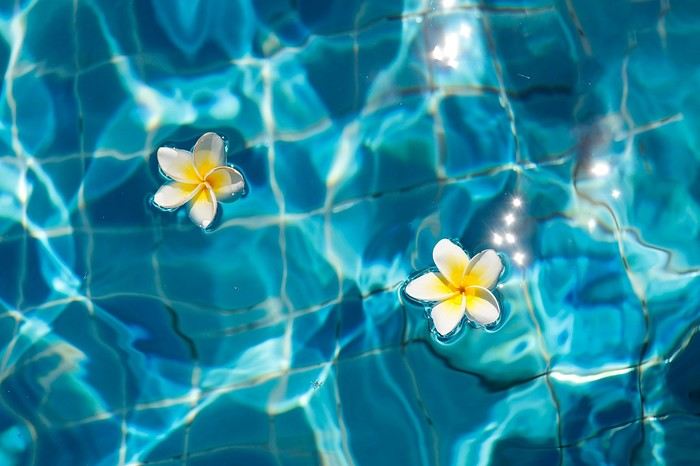
January 2026 Here we go again for new adventures and the pleasure of sharing them with you here! First of all, I’d like to thank everyone who helped me with the preparations, even with some last-minute improvisations just days before departure. Thanks to Montagnard74, Jojoone1, Songsam, Attila, Dennis2, NadegerFERM, and the authors whose travel journals about Laos inspired me (Montagnard74, Muriel18, Mavietongs...).
In this story, written by Richard and illustrated by me, we’ll tell you about the journey of four friends: Catherine, Richard, Nathalie, and Bruno. A reinvented but overall successful trip, filled with discoveries and surprises, the scents of spices and frangipani flowers, (too) spicy food, sunsets, and... one big mess.
Backpacking itinerary in Tunisia
Hi there,
I'm urgently planning a trip to Tunisia in November, backpacker-style (no agency, no guide or taxi, public transport, youth hostels or small hotels, local restaurants). I'm not interested in the beach, and I like to take my time at archaeological sites and museums (twice as long as the average visitor). I'm aiming for about two weeks, give or take.
First, I'm trying to roughly outline a route/schedule so I can book my flight as soon as possible (no desert in the south this time—I went there years ago and want to stay independent). I’ve sketched out the following itinerary, knowing that apparently, there are quite a few towns without budget-friendly hotels (even on Airbnb), which means I’ll be staying longer where they’re available. Three questions: 1. Does this seem reasonable overall (time spent in each city)? 2. Should I add other cities, maybe in the northwest? 3. For hotels, in November, is it better to scout options on booking sites first, then book on the spot for cheaper rates (no site commission + possible negotiation)? Also, are hotels not listed online and found randomly on-site much cheaper?
ROUGH ITINERARY (order to be confirmed)
TUNIS 5 days (cheap accommodations: 13 or 19 €) 2 days: Medina, souks, Bardo Museum, Royal Mausoleum of Tourbet El Bey, Zitouna Mosque (exterior) 1 day: Sidi Bou Said 1 day: Carthage 1 day: A-R Dougga (bus to Tebersouk 2h + taxi) – pack a picnic + option: hike to Zaghouan (750m+, 10km round trip) – worth it? Doable alone?
KAIROUAN 2 days (very expensive room: 40-50 €!) Great Mosque, Medina, Three Doors Mosque, medieval cemetery, Sidi Sahbi Mosque...
SOUSSE 3 days (room 15 €) 2 days: Medina, archaeological museum, Port El Kantaoui, the Ribat (fortress), Contemporary Art Museum Dar Am Taïeb, Dar Essid (17th-century traditional house) 1 day: A-R El Jem (60km away) + option: 1 day A-R Monastir? Worth it? + option: 1 day A-R Mahdia (or 2 days sleeping there)?
OPTIONS -> Gabes to mix things up? But is it easy to find cheap lodging and get around/visit alone? -> Other sights or stops to sleep: Sfax, El Kef, others? -> Kerkenna Islands (easy accommodation?)
Thanks for your thoughts and opinions on these options. Once I’ve adjusted the duration, I’ll book my tickets for early November! (By the way, do you think I should arrive and depart from two different airports?)
I'm urgently planning a trip to Tunisia in November, backpacker-style (no agency, no guide or taxi, public transport, youth hostels or small hotels, local restaurants). I'm not interested in the beach, and I like to take my time at archaeological sites and museums (twice as long as the average visitor). I'm aiming for about two weeks, give or take.
First, I'm trying to roughly outline a route/schedule so I can book my flight as soon as possible (no desert in the south this time—I went there years ago and want to stay independent). I’ve sketched out the following itinerary, knowing that apparently, there are quite a few towns without budget-friendly hotels (even on Airbnb), which means I’ll be staying longer where they’re available. Three questions: 1. Does this seem reasonable overall (time spent in each city)? 2. Should I add other cities, maybe in the northwest? 3. For hotels, in November, is it better to scout options on booking sites first, then book on the spot for cheaper rates (no site commission + possible negotiation)? Also, are hotels not listed online and found randomly on-site much cheaper?
ROUGH ITINERARY (order to be confirmed)
TUNIS 5 days (cheap accommodations: 13 or 19 €) 2 days: Medina, souks, Bardo Museum, Royal Mausoleum of Tourbet El Bey, Zitouna Mosque (exterior) 1 day: Sidi Bou Said 1 day: Carthage 1 day: A-R Dougga (bus to Tebersouk 2h + taxi) – pack a picnic + option: hike to Zaghouan (750m+, 10km round trip) – worth it? Doable alone?
KAIROUAN 2 days (very expensive room: 40-50 €!) Great Mosque, Medina, Three Doors Mosque, medieval cemetery, Sidi Sahbi Mosque...
SOUSSE 3 days (room 15 €) 2 days: Medina, archaeological museum, Port El Kantaoui, the Ribat (fortress), Contemporary Art Museum Dar Am Taïeb, Dar Essid (17th-century traditional house) 1 day: A-R El Jem (60km away) + option: 1 day A-R Monastir? Worth it? + option: 1 day A-R Mahdia (or 2 days sleeping there)?
OPTIONS -> Gabes to mix things up? But is it easy to find cheap lodging and get around/visit alone? -> Other sights or stops to sleep: Sfax, El Kef, others? -> Kerkenna Islands (easy accommodation?)
Thanks for your thoughts and opinions on these options. Once I’ve adjusted the duration, I’ll book my tickets for early November! (By the way, do you think I should arrive and depart from two different airports?)
Yet Another Travel Journal in this (Too) Familiar Rajasthan, But with Family and Kids
Prologue
This journal recounts a trip to Rajasthan that’s already over a year old and that I’ve only now found the chance to write about. The summer of 2024 marked my return to India—my tenth trip—after six long years away since my last solo wanderings in Tamil Nadu in 2018 (the journal of which is published on this site). That absence was partly (but not only) due to the long COVID and post-COVID period, which saw a complete halt and then a major slowdown in global tourism. To top it off, Voyage Forum announced its closure in an end-of-the-world atmosphere. A sad time for our favorite social activity…
A few weeks after returning from Rajasthan, I tried to motivate myself to start writing a journal to publish on a forum claiming to be VF’s successor, which I’d eventually signed up for out of desperation. But I kept hesitating and putting the project off because, for one, I no longer have the time I used to. For another, the vibe wasn’t really taking off on that forum—it was overrun with ads and not very active, contrary to what its host’s name suggested. Despite its good intentions and commendable role as a stopgap, it also turned out to be very impractical to use, especially when you don’t have much time like me. I’ll admit I’d occasionally check back on VF to see if anything was happening. But all the discussions remained frozen in time, stuck in that fateful year, 2020. Then, rumors swirled online about shady reasons behind its closure, leaving little room for hope.
And then, one fine morning, I got a message at work from Marien informing me that VF had reopened. What a huge surprise! Even though the forum’s “end” had played out in a somewhat apocalyptic atmosphere, the memories of passionate and heated discussions, the frank debates, and the useful exchanges that made this site a traveler’s goldmine and a unique hub of conviviality all came rushing back to me like a breath of fresh air. I finally saw a sign and tried to motivate myself to find the time to publish the journal of this tenth trip to India and fifth to Rajasthan. But in the end, I got bogged down in professional and family obligations and never managed to find the time to get started. That’s now fixed, though, because I had two reasons for wanting to do it: I find that looking back on a trip to tell others about it is a highly beneficial introspective exercise. Also, I thought this journal could be useful to other travelers on a few points.
Because, “do we really need yet another journal about Rajasthan?” you might rightly ask! Especially in a time when so many journals about the “Land of Kings” have been published since VF’s return, not to mention the countless stories you can already find online about this region, one of India’s most touristy. And I’d add, why go back to Rajasthan for a fifth time, where I’ve already dragged my feet more than enough—through its forts, deserts, temples, cities, villages, bumpy roads, train stations, tasty street food stalls, cheap guesthouses, and more? Where some might see just another overhyped tourist destination full of the same old *Arabian Nights* clichés, worn to a thread, that I mentioned earlier, when there’s so much else to see in India? Well, first because it’s a magnificent country I never tire of, where I started an academic study and made so many connections. It’s also packed with places where you won’t find a single tourist (right, Marie-Jo?), even in the heart of well-trodden paths and classic itineraries. And most importantly, as I said earlier, things have changed in recent years. First, after six years without traveling far, the urge to go back to India was getting stronger. But this time, no more solo trips (often) or duo adventures (sometimes)—now it’s a team of four that has to come along! And even if you can argue with that, what better place than Rajasthan to introduce India to people who’ve never seen it? To kids you want to amaze? Plus, traveling with your new little family to your favorite country isn’t the same as going solo in often spartan conditions that only affect you. It’s a different challenge, but ultimately probably much harder. So, is it really reasonable to take two kids to India, including a two-year-old baby? That’s one of the main goals of this journal (but not the only one)—to try to answer that question.
As you can tell, it’s not so much the destination but the slightly unusual setup of this trip that, in my opinion, will make this journal interesting. Despite my experience and expertise (yes, I dare say it) in India, there were plenty of questions before we finalized the plan and said, “Alright, let’s go!” The questions were flying for us parents. Is it wise to travel to India with a two-year-old? What would we do (it happened) if the kids got very sick? Would they be able to handle a road trip on Rajasthan’s bumpy, dusty roads using public transport? Could they handle the shock of such a different world—the dirt, poverty, pollution, noise (…and the smell, as they say), the spicy food, monkeys, mosquitoes, snakes, tigers, leopards, and so on? In short, all the clichés that I usually joke about suddenly became potential realities. Another concern: as a mixed Franco-African family (not me, but my partner and her oldest), wouldn’t we risk not always being well received, given what you sometimes hear about that in India? How would Indians react to seeing a mixed-race family, the ultimate taboo in a country of purity and social segregation, which would undoubtedly raise many questions for them? Of course, not everything went as expected… Because, as you know, with India—and what makes it charming for some—there are always complications: sometimes where you don’t expect them… and sometimes where you do. I’ll go into detail about that in the journal to come (not right away) and in the final review (even later). These experiences could be useful to travelers who find themselves in similar situations and have the same questions we did before embarking on such a journey. And maybe it’ll spark the curiosity of those who aren’t concerned and will read yet another Rajasthan journal, but with its own unique twists.
Despite my unchanged constraints, which mean I have little time to write this, I don’t want to rush the story, so I’ll take my time. There will probably be lulls. I hope that won’t stop people from coming to react, debate, share their impressions, or ask for information.
This journal recounts a trip to Rajasthan that’s already over a year old and that I’ve only now found the chance to write about. The summer of 2024 marked my return to India—my tenth trip—after six long years away since my last solo wanderings in Tamil Nadu in 2018 (the journal of which is published on this site). That absence was partly (but not only) due to the long COVID and post-COVID period, which saw a complete halt and then a major slowdown in global tourism. To top it off, Voyage Forum announced its closure in an end-of-the-world atmosphere. A sad time for our favorite social activity…
A few weeks after returning from Rajasthan, I tried to motivate myself to start writing a journal to publish on a forum claiming to be VF’s successor, which I’d eventually signed up for out of desperation. But I kept hesitating and putting the project off because, for one, I no longer have the time I used to. For another, the vibe wasn’t really taking off on that forum—it was overrun with ads and not very active, contrary to what its host’s name suggested. Despite its good intentions and commendable role as a stopgap, it also turned out to be very impractical to use, especially when you don’t have much time like me. I’ll admit I’d occasionally check back on VF to see if anything was happening. But all the discussions remained frozen in time, stuck in that fateful year, 2020. Then, rumors swirled online about shady reasons behind its closure, leaving little room for hope.
And then, one fine morning, I got a message at work from Marien informing me that VF had reopened. What a huge surprise! Even though the forum’s “end” had played out in a somewhat apocalyptic atmosphere, the memories of passionate and heated discussions, the frank debates, and the useful exchanges that made this site a traveler’s goldmine and a unique hub of conviviality all came rushing back to me like a breath of fresh air. I finally saw a sign and tried to motivate myself to find the time to publish the journal of this tenth trip to India and fifth to Rajasthan. But in the end, I got bogged down in professional and family obligations and never managed to find the time to get started. That’s now fixed, though, because I had two reasons for wanting to do it: I find that looking back on a trip to tell others about it is a highly beneficial introspective exercise. Also, I thought this journal could be useful to other travelers on a few points.
Because, “do we really need yet another journal about Rajasthan?” you might rightly ask! Especially in a time when so many journals about the “Land of Kings” have been published since VF’s return, not to mention the countless stories you can already find online about this region, one of India’s most touristy. And I’d add, why go back to Rajasthan for a fifth time, where I’ve already dragged my feet more than enough—through its forts, deserts, temples, cities, villages, bumpy roads, train stations, tasty street food stalls, cheap guesthouses, and more? Where some might see just another overhyped tourist destination full of the same old *Arabian Nights* clichés, worn to a thread, that I mentioned earlier, when there’s so much else to see in India? Well, first because it’s a magnificent country I never tire of, where I started an academic study and made so many connections. It’s also packed with places where you won’t find a single tourist (right, Marie-Jo?), even in the heart of well-trodden paths and classic itineraries. And most importantly, as I said earlier, things have changed in recent years. First, after six years without traveling far, the urge to go back to India was getting stronger. But this time, no more solo trips (often) or duo adventures (sometimes)—now it’s a team of four that has to come along! And even if you can argue with that, what better place than Rajasthan to introduce India to people who’ve never seen it? To kids you want to amaze? Plus, traveling with your new little family to your favorite country isn’t the same as going solo in often spartan conditions that only affect you. It’s a different challenge, but ultimately probably much harder. So, is it really reasonable to take two kids to India, including a two-year-old baby? That’s one of the main goals of this journal (but not the only one)—to try to answer that question.
As you can tell, it’s not so much the destination but the slightly unusual setup of this trip that, in my opinion, will make this journal interesting. Despite my experience and expertise (yes, I dare say it) in India, there were plenty of questions before we finalized the plan and said, “Alright, let’s go!” The questions were flying for us parents. Is it wise to travel to India with a two-year-old? What would we do (it happened) if the kids got very sick? Would they be able to handle a road trip on Rajasthan’s bumpy, dusty roads using public transport? Could they handle the shock of such a different world—the dirt, poverty, pollution, noise (…and the smell, as they say), the spicy food, monkeys, mosquitoes, snakes, tigers, leopards, and so on? In short, all the clichés that I usually joke about suddenly became potential realities. Another concern: as a mixed Franco-African family (not me, but my partner and her oldest), wouldn’t we risk not always being well received, given what you sometimes hear about that in India? How would Indians react to seeing a mixed-race family, the ultimate taboo in a country of purity and social segregation, which would undoubtedly raise many questions for them? Of course, not everything went as expected… Because, as you know, with India—and what makes it charming for some—there are always complications: sometimes where you don’t expect them… and sometimes where you do. I’ll go into detail about that in the journal to come (not right away) and in the final review (even later). These experiences could be useful to travelers who find themselves in similar situations and have the same questions we did before embarking on such a journey. And maybe it’ll spark the curiosity of those who aren’t concerned and will read yet another Rajasthan journal, but with its own unique twists.
Despite my unchanged constraints, which mean I have little time to write this, I don’t want to rush the story, so I’ll take my time. There will probably be lulls. I hope that won’t stop people from coming to react, debate, share their impressions, or ask for information.
Discovering Assam and Nagaland 2025
Before I begin, I’d like to thank Michèle Buisson and her "Misha’s travel journals," which really helped me plan this trip. It’s tough to find information about this part of India, which is quite different from the "more traditional India." I’m so grateful to her for introducing me to a family who hosted me for 4 nights and 3 days. I can’t wait to return the favor and welcome you all to my place in early July!
Thursday, March 20th. The alarm goes off super early, but I’m already awake—I was too worried I’d sleep through it. I leave the house at 4:00 AM. The rain has stopped, and at this hour, there aren’t many trucks on the road. I arrive at Barcelona Airport easily by 6:20 AM, let the valet know I’m there, and he quickly picks up my car. This time, I’m flying with Etihad Airways again. I booked the ticket during my trip to Cambodia: Barcelona/Kolkata, Delhi/Barcelona for 567 €. At that price, I didn’t hesitate for long—I knew I had to take it. And I’m glad I did because, by the time I returned, the price had gone up to 700 €. I can already hear the reactions: "Wow, how’d you get a ticket for that price? What site did you use? You’re amazing, MarieJo!" One thing’s for sure—I’m really happy with this deal. The flights from Barcelona to Abu Dhabi and Abu Dhabi to Kolkata go smoothly, and we arrive on time at 2:55 AM. There aren’t many people at immigration, so I get through quickly. My luggage isn’t on the carousel yet. After collecting my bag, I check in for my next flight with IndiGo, a 5:40 AM flight to Guwahati, arriving at 7:00 AM. I’m starting to feel pretty tired, so I take a taxi from the airport to Gruham Sojourn Homestay. The house is upstairs, and the neighborhood seems quiet, with restaurants lining the street. The room won’t be ready until 10:00 AM, so I rest on the bench in the meantime. Once in the room, I take a shower—it really helps me feel refreshed. I need to exchange some euros, so I look up a nearby exchange bureau on Google and head out to find it. I locate it easily, and the staff are super friendly. I get a great rate (1 € = 90 INR). I wander around the neighborhood. The train station isn’t far, and small markets line the streets. I head back to my area, walking along the main avenue. About 500 meters from my street, I discover a museum. The visit is fascinating—I see the famous Majuli masks, among other things.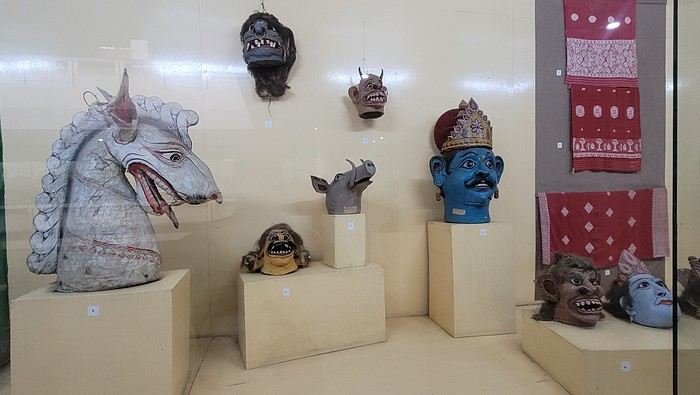

I’m not far from the Brahmaputra River, and the temptation to visit is too strong to resist. I’d hoped to find a promenade along the river, but that doesn’t exist here. I walk back calmly and notice several restaurants in my street. On the doorstep of my accommodation, I spot a pastry shop with cakes that look more like the ones we have in France than the typical ones here in India. A visit is a must, and I’m not disappointed!

Tonight, I’m dining at a restaurant in the street. The menu is a bit disappointing—burgers, pizzas, pasta—nothing very Indian. So, I’ll go with tomato pasta.
Thursday, March 20th. The alarm goes off super early, but I’m already awake—I was too worried I’d sleep through it. I leave the house at 4:00 AM. The rain has stopped, and at this hour, there aren’t many trucks on the road. I arrive at Barcelona Airport easily by 6:20 AM, let the valet know I’m there, and he quickly picks up my car. This time, I’m flying with Etihad Airways again. I booked the ticket during my trip to Cambodia: Barcelona/Kolkata, Delhi/Barcelona for 567 €. At that price, I didn’t hesitate for long—I knew I had to take it. And I’m glad I did because, by the time I returned, the price had gone up to 700 €. I can already hear the reactions: "Wow, how’d you get a ticket for that price? What site did you use? You’re amazing, MarieJo!" One thing’s for sure—I’m really happy with this deal. The flights from Barcelona to Abu Dhabi and Abu Dhabi to Kolkata go smoothly, and we arrive on time at 2:55 AM. There aren’t many people at immigration, so I get through quickly. My luggage isn’t on the carousel yet. After collecting my bag, I check in for my next flight with IndiGo, a 5:40 AM flight to Guwahati, arriving at 7:00 AM. I’m starting to feel pretty tired, so I take a taxi from the airport to Gruham Sojourn Homestay. The house is upstairs, and the neighborhood seems quiet, with restaurants lining the street. The room won’t be ready until 10:00 AM, so I rest on the bench in the meantime. Once in the room, I take a shower—it really helps me feel refreshed. I need to exchange some euros, so I look up a nearby exchange bureau on Google and head out to find it. I locate it easily, and the staff are super friendly. I get a great rate (1 € = 90 INR). I wander around the neighborhood. The train station isn’t far, and small markets line the streets. I head back to my area, walking along the main avenue. About 500 meters from my street, I discover a museum. The visit is fascinating—I see the famous Majuli masks, among other things.
I’m not far from the Brahmaputra River, and the temptation to visit is too strong to resist. I’d hoped to find a promenade along the river, but that doesn’t exist here. I walk back calmly and notice several restaurants in my street. On the doorstep of my accommodation, I spot a pastry shop with cakes that look more like the ones we have in France than the typical ones here in India. A visit is a must, and I’m not disappointed!
Tonight, I’m dining at a restaurant in the street. The menu is a bit disappointing—burgers, pizzas, pasta—nothing very Indian. So, I’ll go with tomato pasta.
Looking for advice and opinions on a 5-week itinerary in Madagascar
Hi everyone! I’ve put together an itinerary for Madagascar and would love to get your feedback if you can help—thanks!
December 6–9: Antananarivo 3 nights, sightseeing Andasibe-Mantadia National Park Rova of Antananarivo (Ambohimanga Fort) Lemurs’ Park
December 9–11: Fianarantsoa, 2 nights Ranomafana National Park
Ambalavao, December 11–13, 2 nights Andringitra National Park
December 13–15: Ranohira or Ilakaka, 2 nights Monkey Canyon visit Isalo National Park
December 15–18: Tulear, 3 nights Reniala Reserve visit Beach time, possible diving Antsokay Arboretum Ifaty Forest
December 18–19: Full day—take a flight to the capital and stay overnight Then on December 19, take the bus to Morondava
December 19–23: Morondava, 4 nights Kirindy Mitea National Park Avenue of the Baobabs Tsingy de Bemaraha National Park
12:30-hour bus ride from Morondava to the capital
Antananarivo, December 23–24 11:30-hour trip from the capital to Mahajanga
Mahajanga/Majunga, December 24–27, 3 nights Ankarafantsika National Park visit
Ambanja District, 3 nights December 27–30 Tsaratanana Nature Reserve visit Maromokotro trek
Nosy Be Island, December 30–January 7, 2026, 8 nights diving, beach time, relaxation, walks, hiking, snorkeling
Antsiranana, January 7–11, 4 nights Ambavanibe Bay visit Montagne d’Ambre National Park
Return to the capital for a flight home or a 28-hour bus ride
1 or 2 nights in Antananarivo depending on the return trip
January 13: Departure for France Arrival in Paris, France the next day
December 6–9: Antananarivo 3 nights, sightseeing Andasibe-Mantadia National Park Rova of Antananarivo (Ambohimanga Fort) Lemurs’ Park
December 9–11: Fianarantsoa, 2 nights Ranomafana National Park
Ambalavao, December 11–13, 2 nights Andringitra National Park
December 13–15: Ranohira or Ilakaka, 2 nights Monkey Canyon visit Isalo National Park
December 15–18: Tulear, 3 nights Reniala Reserve visit Beach time, possible diving Antsokay Arboretum Ifaty Forest
December 18–19: Full day—take a flight to the capital and stay overnight Then on December 19, take the bus to Morondava
December 19–23: Morondava, 4 nights Kirindy Mitea National Park Avenue of the Baobabs Tsingy de Bemaraha National Park
12:30-hour bus ride from Morondava to the capital
Antananarivo, December 23–24 11:30-hour trip from the capital to Mahajanga
Mahajanga/Majunga, December 24–27, 3 nights Ankarafantsika National Park visit
Ambanja District, 3 nights December 27–30 Tsaratanana Nature Reserve visit Maromokotro trek
Nosy Be Island, December 30–January 7, 2026, 8 nights diving, beach time, relaxation, walks, hiking, snorkeling
Antsiranana, January 7–11, 4 nights Ambavanibe Bay visit Montagne d’Ambre National Park
Return to the capital for a flight home or a 28-hour bus ride
1 or 2 nights in Antananarivo depending on the return trip
January 13: Departure for France Arrival in Paris, France the next day
Sao Tomé, the forgotten island
Hey there, it's me again—back with my usual travel journal share for our loved ones, from our 15-day trip in October 2019.
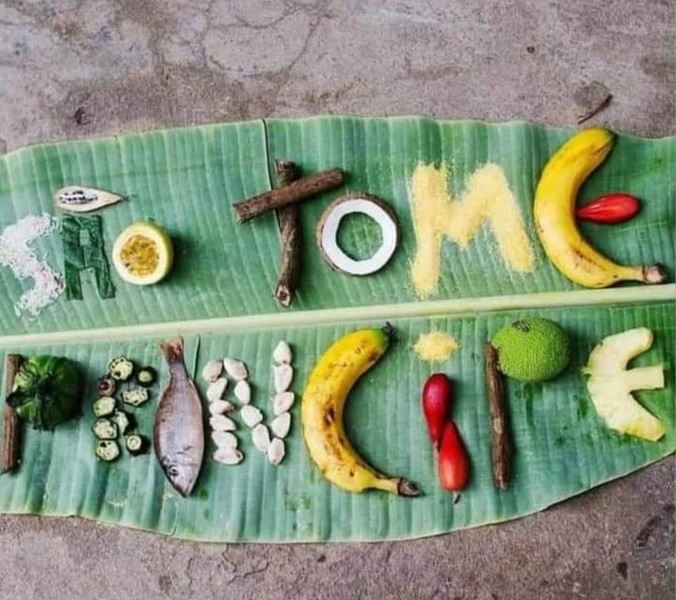
"Ah, here it is at last—that sweet scent of elsewhere so dear to Cricri and Lulu’s noses, that mix of apprehension and desire when facing the unknown.
We’re really diving into the unknown this time, taking you to the island of SAO TOMÉ... also known as the island: *‘Wait, what did you say?’* 😄. Because apparently, no one’s heard of Sao Tomé—except our Portuguese friends.
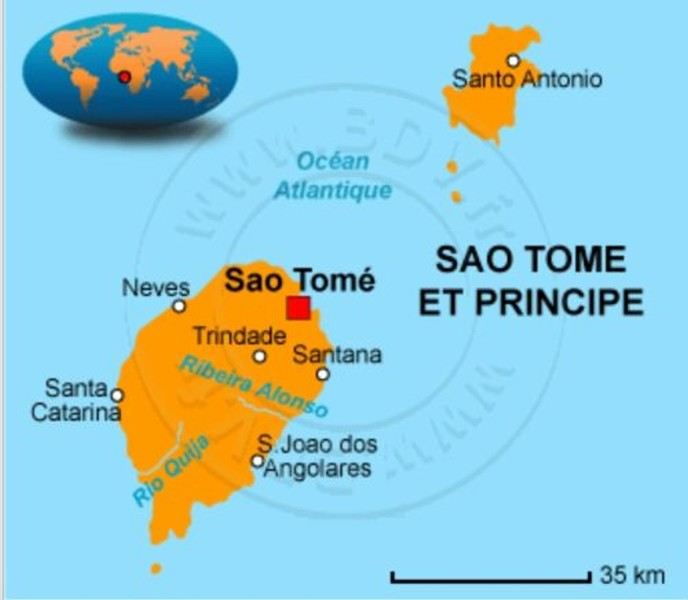
It’s an archipelago of three islands smack in the middle of the world, right on the equator, off the coast of Gabon.
No, these aren’t the sun-soaked, Polynesian lagoon islands. Here, *‘it rains, it pours...’* pretty much all the time, it seems.
There’s not much to *‘see’* in the traditional tourist sense—EXCEPT for stunning landscapes, lush vegetation, a few beaches with golden or black sand, colonial buildings still in their original state, a single main road, and plenty of *‘tracks’* that are more or less drivable. All this surrounded by an African population that speaks Portuguese and is known for its warm welcome.
Well, that should be enough for our happiness—and hopefully yours too! 😊
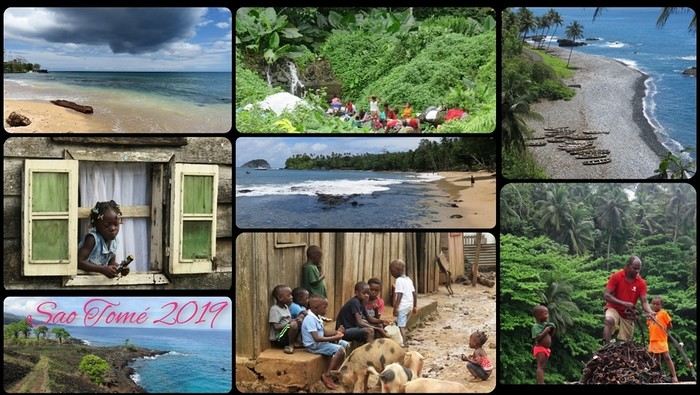
Ready for landing?
"Ah, here it is at last—that sweet scent of elsewhere so dear to Cricri and Lulu’s noses, that mix of apprehension and desire when facing the unknown.
We’re really diving into the unknown this time, taking you to the island of SAO TOMÉ... also known as the island: *‘Wait, what did you say?’* 😄. Because apparently, no one’s heard of Sao Tomé—except our Portuguese friends.
It’s an archipelago of three islands smack in the middle of the world, right on the equator, off the coast of Gabon.
No, these aren’t the sun-soaked, Polynesian lagoon islands. Here, *‘it rains, it pours...’* pretty much all the time, it seems.
There’s not much to *‘see’* in the traditional tourist sense—EXCEPT for stunning landscapes, lush vegetation, a few beaches with golden or black sand, colonial buildings still in their original state, a single main road, and plenty of *‘tracks’* that are more or less drivable. All this surrounded by an African population that speaks Portuguese and is known for its warm welcome.
Well, that should be enough for our happiness—and hopefully yours too! 😊
Ready for landing?
4- to 5-day itinerary for Madagascar
Hi there, following a work trip, I’ll have 4.5 days left to get a quick overview of Madagascar during the last week of February. I’ll already have had a good look around Tana (3 days of work and 1.5 days beforehand to see 1 or 2 points of interest 2-3 hours from Tana).
Is it feasible to spend the remaining 4.5 days like this:
- Day 1 & 2 (and maybe the morning of Day 3): relaxing on a coast with a pleasant climate, for example, a one-way flight to Tuléar (there’s a flight on Day 1 at 3 AM) and heading to a nice beach. Ideally, I’d have liked to go toward Morondava (baobabs, beautiful beaches near Belo), but the flight schedules don’t really work, and it wouldn’t let me visit Isalo.
- Then 2 days to head back up via the RN7, ideally with a stop in Isalo, which really appeals to me (I’m an experienced hiker in France), and/or Ranomafana. But do the weather conditions allow for long hikes in that area? Ideally, I’d like to do Tuléar–Tana by public transport up to my first road stop (shared bus? To Isalo?), then find a local hiking guide for the day. And take another transport to another point of interest before returning to Tana, where I have my return flight to France on Day 5 at noon.
My questions: - How to travel from Day 3 to Day 5 from the west coast (Tuléar? Morondava?) back to Tana? I’d prefer not to depend on a guide the whole way, but if I have to 🤷🏽♂️) If I choose Morondava, will I miss out on really interesting spots I could’ve seen along the RN7?
I’m open to any suggestions or ideas to make the most of these 4.5 days, like another beach destination I might not have considered (I ruled out Nosy Bé because of the February weather—maybe I was wrong?)
Is it feasible to spend the remaining 4.5 days like this:
- Day 1 & 2 (and maybe the morning of Day 3): relaxing on a coast with a pleasant climate, for example, a one-way flight to Tuléar (there’s a flight on Day 1 at 3 AM) and heading to a nice beach. Ideally, I’d have liked to go toward Morondava (baobabs, beautiful beaches near Belo), but the flight schedules don’t really work, and it wouldn’t let me visit Isalo.
- Then 2 days to head back up via the RN7, ideally with a stop in Isalo, which really appeals to me (I’m an experienced hiker in France), and/or Ranomafana. But do the weather conditions allow for long hikes in that area? Ideally, I’d like to do Tuléar–Tana by public transport up to my first road stop (shared bus? To Isalo?), then find a local hiking guide for the day. And take another transport to another point of interest before returning to Tana, where I have my return flight to France on Day 5 at noon.
My questions: - How to travel from Day 3 to Day 5 from the west coast (Tuléar? Morondava?) back to Tana? I’d prefer not to depend on a guide the whole way, but if I have to 🤷🏽♂️) If I choose Morondava, will I miss out on really interesting spots I could’ve seen along the RN7?
I’m open to any suggestions or ideas to make the most of these 4.5 days, like another beach destination I might not have considered (I ruled out Nosy Bé because of the February weather—maybe I was wrong?)
12-day family trip to Cambodia: opinions and advice
Hi there, a regular reader of the forum for planning my past trips—I’m now reaching out to ask for your thoughts on a 12-day itinerary in Cambodia, as so much there appeals to me...
Thanks for your tips and feedback!!
Day 1: arrival in PP
Day 2: PP
Day 3: PP to Kampot (bus)
Day 4: Kampot to Kep (scooter)
Day 5: Kampot to Koh Rong via Sihanoukville
Day 6: Koh Rong
Day 7: Koh Rong
Day 8: Koh Rong to Sihanoukville to Siem Reap (flight)
Day 9: Siem Reap
Day 10: Siem Reap
Day 11: Siem Reap
Day 12: departure from Siem Reap
I was thinking of exploring Tonlé Sap Lake to visit the floating villages during our 3 days in Siem Reap, but I’m also considering squeezing in a stay in Battambang since it seems worth visiting... Is the lake level high enough in February to make it worthwhile?
Thanks for your input!
I was thinking of exploring Tonlé Sap Lake to visit the floating villages during our 3 days in Siem Reap, but I’m also considering squeezing in a stay in Battambang since it seems worth visiting... Is the lake level high enough in February to make it worthwhile?
Thanks for your input!
4 friends discover a piece of North India
Hello fellow travelers!
I’m adding my small contribution to the reopening celebration by posting this travel journal from India, made in January 2024. We’re 4 friends (2 couples), and we did a 3-week loop in Rajasthan, stopping by Delhi and Agra (which, as everyone knows, aren’t in Rajasthan 😛). Delhi - Agra - Jaipur - Bundi - Udaipur - Jodhpur - Jaisalmer - Delhi
We rented a car with a driver from Agra to Jaisalmer, 550 € for 14 days. https://chauffeurpriveeninde.com/fr/
We took the train from Delhi to Agra and the plane (Spicejet) from Jaisalmer to Delhi.
Most of the accommodations were booked on Booking before we left.
I’m sharing this story written by Richard and illustrated by me. We dedicate it to Nathalie and Bruno, our amazing travel companions.
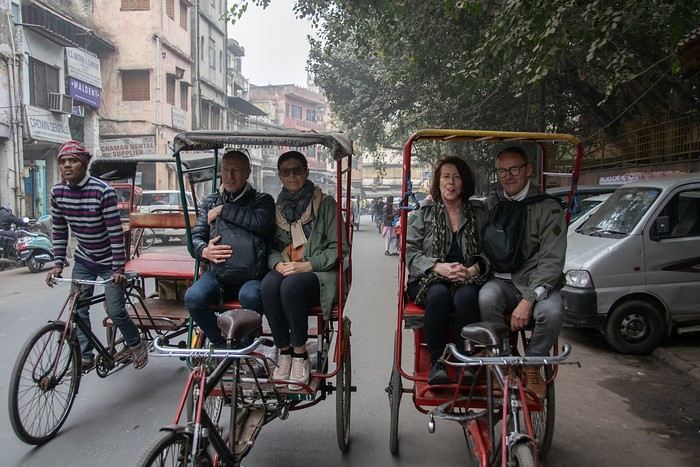
I’m adding my small contribution to the reopening celebration by posting this travel journal from India, made in January 2024. We’re 4 friends (2 couples), and we did a 3-week loop in Rajasthan, stopping by Delhi and Agra (which, as everyone knows, aren’t in Rajasthan 😛). Delhi - Agra - Jaipur - Bundi - Udaipur - Jodhpur - Jaisalmer - Delhi
We rented a car with a driver from Agra to Jaisalmer, 550 € for 14 days. https://chauffeurpriveeninde.com/fr/
We took the train from Delhi to Agra and the plane (Spicejet) from Jaisalmer to Delhi.
Most of the accommodations were booked on Booking before we left.
I’m sharing this story written by Richard and illustrated by me. We dedicate it to Nathalie and Bruno, our amazing travel companions.
Trois mois de randonnée à deux à Madagascar English translation pending
Bonjour !
Mon amis et moi avons comme projet de voyager à pied au sein de Madagascar durant 3 mois. Nous aimerons commencer par la côte Nord est, remonter jusqu'à Antsiranana pour descendre par la cote ouest jusqu'à Belo-sur-mer. Si possible nous aimerions finir par Isalo et remonter a Tana par Andringitra et Fianarantsoa.
Nos questions sont donc les suivantesm :
Sur ce circuit que pouvons nous faire à pied ?
Ensuite, est-ce que c'est possible et envisageable sans prendre de guide ? Tous en restant dans les délais et en prenant des taxis pour éviter les zones dangereuses ou infranchissables.
Ensuite, auriez-vous des conseils à nous fournir selon certains ville où quartier à éviter ? Ou certains lieu à ne pas manqué !
Nous somme friands de tous conseils !
PS : On veut surtout voir un maximum de chose grâce à la force de nos jambes. Mais on veut pas partir sans tous avoir vue ! On ne souhaite pas prendre de risque inconsidérée non plus donc soyez prévenant.
Mon amis et moi avons comme projet de voyager à pied au sein de Madagascar durant 3 mois. Nous aimerons commencer par la côte Nord est, remonter jusqu'à Antsiranana pour descendre par la cote ouest jusqu'à Belo-sur-mer. Si possible nous aimerions finir par Isalo et remonter a Tana par Andringitra et Fianarantsoa.
Nos questions sont donc les suivantesm :
Sur ce circuit que pouvons nous faire à pied ?
Ensuite, est-ce que c'est possible et envisageable sans prendre de guide ? Tous en restant dans les délais et en prenant des taxis pour éviter les zones dangereuses ou infranchissables.
Ensuite, auriez-vous des conseils à nous fournir selon certains ville où quartier à éviter ? Ou certains lieu à ne pas manqué !
Nous somme friands de tous conseils !
PS : On veut surtout voir un maximum de chose grâce à la force de nos jambes. Mais on veut pas partir sans tous avoir vue ! On ne souhaite pas prendre de risque inconsidérée non plus donc soyez prévenant.
Voyage du West Bengal à Varanasi en passant par Bodhgaya English translation pending
Atteints par le virus "Inde" depuis notre premier voyage en 2013 , (seulement😮 ! ), nous y revoilà pour un 8° séjour ( du 14 au 28 janvier 2020).
Cette fois-ci notre périple nous amènera de Calcutta à Varanasi en passant par des petits villages du Westbengal et par Bodhgaya..
Nous prendrons ensuite notre vol de retour de Delhi à Nice .
Je me lance enfin pour rédiger mon premier cahier de voyage en remerciant aux passage tous ceux et celles qui ont alimenté ce forum en postant carnets, photos et commentaires, fort utiles à la préparation d'un voyage. Je demande d'avance un peu d'indulgence concernant ce récit, où quelques fautes vont peut-être s'immiscer par ci par là car, même si je vis en France depuis longtemps, ma langue maternelle reste l'allemand. Vous voilà prévenus 🙂!
Notre séjour débute à Kolkata ou nous resterons 2 jours entiers. Nous logeons dans un petit hôtel de College street . Le personnel est très sympathique et très serviable, notre chambre très propre, que demander de plus? Certes , c'est bruyant côté rue mais l'avantage d'un petit balcon nous permet d'observer tout le trafic d'en bas. Celui -ci ne s'arrête guère même pendant la nuit...Ceci dit, nous dormons très bien, le voyage a été long !
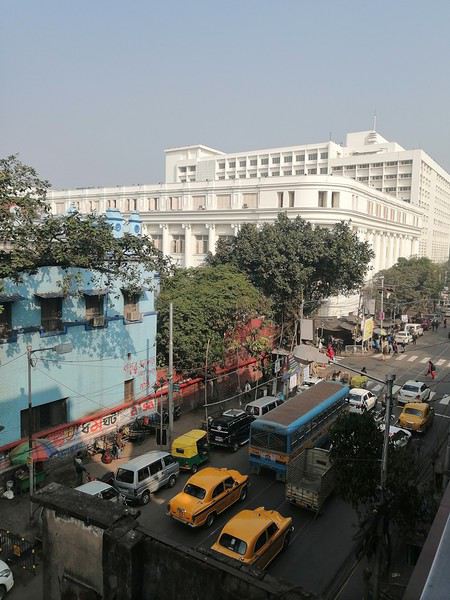
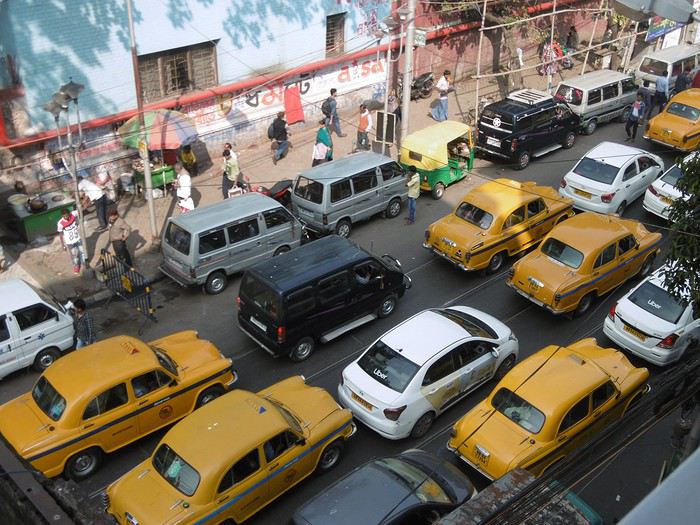
 Vue du balcon de l'hôtel

Je me lance enfin pour rédiger mon premier cahier de voyage en remerciant aux passage tous ceux et celles qui ont alimenté ce forum en postant carnets, photos et commentaires, fort utiles à la préparation d'un voyage. Je demande d'avance un peu d'indulgence concernant ce récit, où quelques fautes vont peut-être s'immiscer par ci par là car, même si je vis en France depuis longtemps, ma langue maternelle reste l'allemand. Vous voilà prévenus 🙂!
Notre séjour débute à Kolkata ou nous resterons 2 jours entiers. Nous logeons dans un petit hôtel de College street . Le personnel est très sympathique et très serviable, notre chambre très propre, que demander de plus? Certes , c'est bruyant côté rue mais l'avantage d'un petit balcon nous permet d'observer tout le trafic d'en bas. Celui -ci ne s'arrête guère même pendant la nuit...Ceci dit, nous dormons très bien, le voyage a été long !
Vue du balcon de l'hôtel