Results for "Kaili+|+112+>+171"
1232 results found.
Prix des repas en Equateur? English translation pending
merci de me renseigner, sur les prix des resto
en equateur, en general quel est le prix des repas ?
merci
en equateur, en general quel est le prix des repas ?
merci
East African existe-t-elle encore? English translation pending
Qu'est devenue la compagnie East African ? Elle proposait les vols les moins chers sur Kenya et Tanzanie mais plus moyen d'accéder au site http://www.eastafrican.fr
Trek Kenya-Tanzanie English translation pending
😛Quelqu'un connaitrait t-il des organismes pour partir en petit groupe de routards (style ucpa) car je voudrais aller visiter ces pays mais voilà j'ai pas trouvé de "compagnons" qui puissent partir avec moi, alors seule ça craind.... et j'ai très envie de faire un tour en afrique....
La colère des aubergines English translation pending
"La colère des aubergines" de Bulbul SHARMA. Editions Philippe Picquier. 2002 en poche.
http://images-eu.amazon.com/images/P/2877306224.08.LZZZZZZZ.jpg
Non, je suis bien à la bonne rubrique, ce sont des récits gastronomiques indiens : les histoires racontées sont pleines d'odeurs de cuisine et d'aromates indiens, et surtout ce livre regorge de véritables recettes, comme un pickle de mangue, un gateau de carottes, Biryani vert, Chutney à la menthe, Kali, etc....( et quel etc !!!).
J'aime beaucoup les aubergines, et cela fait un moment que le titre de ce livre m'attire, d'où mon achat !!! Logique que je selectionne donc, pour ce soir 1 recette à base d'aubergines : CURRY D'AUBERGINES AU YAOURT 500 g d'aubergines longues ou rondes coupées en petits morceaux 1/2 cuillère à café de poudre de coriandre 1/2 cuillère à café de poudre de cumin 1/2 cuillère à café de poudre de curcuma 1 tasse de yaourt battu 1 cuillère à soupe d'huile Faites chauffer l'huile, mettez-y à frire les épices en poudre pendant seulement quelques secondes avant d'ajouter les aubergines en morceaux. Couvrez et laissez cuire jusqu'à ce que les aubergines soient tendres (environ dix minutes). Vous pouvez ajouter un petit peu d'eau et remuer en cours de cuisson pour que les épices se mélangent bien. Retirez du feu et ajoutez le yaourt battu juste avant de servir. Se mange chaud ou froid avec riz, nan ou chapati. Bonne dégustation !!! Nawal.
http://images-eu.amazon.com/images/P/2877306224.08.LZZZZZZZ.jpg
Non, je suis bien à la bonne rubrique, ce sont des récits gastronomiques indiens : les histoires racontées sont pleines d'odeurs de cuisine et d'aromates indiens, et surtout ce livre regorge de véritables recettes, comme un pickle de mangue, un gateau de carottes, Biryani vert, Chutney à la menthe, Kali, etc....( et quel etc !!!).
J'aime beaucoup les aubergines, et cela fait un moment que le titre de ce livre m'attire, d'où mon achat !!! Logique que je selectionne donc, pour ce soir 1 recette à base d'aubergines : CURRY D'AUBERGINES AU YAOURT 500 g d'aubergines longues ou rondes coupées en petits morceaux 1/2 cuillère à café de poudre de coriandre 1/2 cuillère à café de poudre de cumin 1/2 cuillère à café de poudre de curcuma 1 tasse de yaourt battu 1 cuillère à soupe d'huile Faites chauffer l'huile, mettez-y à frire les épices en poudre pendant seulement quelques secondes avant d'ajouter les aubergines en morceaux. Couvrez et laissez cuire jusqu'à ce que les aubergines soient tendres (environ dix minutes). Vous pouvez ajouter un petit peu d'eau et remuer en cours de cuisson pour que les épices se mélangent bien. Retirez du feu et ajoutez le yaourt battu juste avant de servir. Se mange chaud ou froid avec riz, nan ou chapati. Bonne dégustation !!! Nawal.
Des livres à partager English translation pending
Ces derniers temps, j'accumule une série de livres lus que je voudrais vous offrir suivant les possiblilités. Comme je viens à Paris pour la phénoménale rencontre de VF, je pourrais peut-être vous en apporter quelques uns (ouille, le poids !!!..🤪....) Voici la liste :
Renaître en Inde/Guy Deleury
La reine des bandits/Mala Sen
40.000 km d'aventure/Robert Gaillard
Flas....ou le grand voyage/C.Duchaussois
Mille Soleils/D.Lapierre
Noces Indiennes/Sharon Maas
Taj/TN. Murari
Pour l'amour de Kali/Yanne Dimay
Il était minuit moins cinq à Bhopal/D.Lapierre
Le dernier soupir du Maure/Salman Rushdi
Cette nuit la liberté/D.Lapierre
L'Inde impudique des Maharajas/Vitold de Golish
Routes des Indes/E.M. Foster
L'inde fabuleuse d'aujourd'hui/Jacques Chegaray
La vie privée d'un prince indien/Mulk Raj Anand
Le riz et la mousson/Kamala Markandaya
Mandala(histoire d'une famille indienne/Pearl Buck
La mousson/Louis Bromfield
Si l'un de ces livres vous intéresse, n'hésitez pas à me contacter.
Marie
Renaître en Inde/Guy Deleury
La reine des bandits/Mala Sen
40.000 km d'aventure/Robert Gaillard
Flas....ou le grand voyage/C.Duchaussois
Mille Soleils/D.Lapierre
Noces Indiennes/Sharon Maas
Taj/TN. Murari
Pour l'amour de Kali/Yanne Dimay
Il était minuit moins cinq à Bhopal/D.Lapierre
Le dernier soupir du Maure/Salman Rushdi
Cette nuit la liberté/D.Lapierre
L'Inde impudique des Maharajas/Vitold de Golish
Routes des Indes/E.M. Foster
L'inde fabuleuse d'aujourd'hui/Jacques Chegaray
La vie privée d'un prince indien/Mulk Raj Anand
Le riz et la mousson/Kamala Markandaya
Mandala(histoire d'une famille indienne/Pearl Buck
La mousson/Louis Bromfield
Si l'un de ces livres vous intéresse, n'hésitez pas à me contacter.
Marie
Ascension du volcan Ol Doinyo Lengaï en Tanzanie English translation pending
Bonjour,
On projette à qq uns d'aller en Tanzanie.
On amerait bien entre autre faire un tour sur le volcan Ol Doinyo Lengaï.
Est-ce que certains d'entre vous y sont déjà aller ?
Faut-il obligatoirement un guide ? Un équipement spécial (bottes de cuir...) ?
Les éruption sont elles fréquentes ? Y a t'il toujours des coulées ?
Par ailleurs si vous connaissez des agences qui organisent des Safaris, sympas et surtout pas cher (ngorongo par exemple...)
Merci
F.
On projette à qq uns d'aller en Tanzanie.
On amerait bien entre autre faire un tour sur le volcan Ol Doinyo Lengaï.
Est-ce que certains d'entre vous y sont déjà aller ?
Faut-il obligatoirement un guide ? Un équipement spécial (bottes de cuir...) ?
Les éruption sont elles fréquentes ? Y a t'il toujours des coulées ?
Par ailleurs si vous connaissez des agences qui organisent des Safaris, sympas et surtout pas cher (ngorongo par exemple...)
Merci
F.
Tour Opérateur en Tanzanie? English translation pending
Est ce que quelqu'un connait le T.O basé à arusha SHIDOLYA ? en effet nous envisageons de partir avec eux et ils sont très compétitifs par rapport à tout ce que j'ai vu MERCI
Conseils sur la Tanzanie et l'ascension du Kilimandjaro English translation pending
Bonjour à tous,
Je veux planifier un voyage en Afrique cet hiver, décembre ou janvier. Au départ je voulais faire un safari, Kenya et Tanzanie mais comme j'aime beaucoup la montagne je commence à penser à faire le Kilimandjaro mais pour cela, je pars 3 semaines, je devrai sacrifier le Kenya et faire un safari de 7 jours en Tanzanie. C'est un premier voyage en Afrique, est-ce que le Kili vaut la peine que je sacrifie le Kenya, alors à ceux qui y sont dejà allé, je demande conseils
Merci
Inde: informations sur Assam, Arunachal Pradesh English translation pending
Namaskar😏
Quelqu'un aurait il des infos sur cette région? Qui aurait déjà été? Les permis sont ils facilement délivrés? Février n'est pas trop froid pour y aller?
Merci d'avance! Donievad 🙂
Nepal Feedback
NAMASTE NEPAL! PRACTICAL INFO AND EXPERIENCE FEEDBACK
Stay from March 25 to April 16, 2025
· Flight tickets Air India (via Delhi) (via Skyscanner) = 1130 € per person · Planned budget (and respected without too many restrictions and while buying a few small gifts) = 2000 € for the stay for two. Buses, taxis, and entrance fees to various sites represent a budget to consider. Meals are cheap. Drinks like beer/Coke, however, are not cheap and cost the equivalent of a meal. · Exchange rate of the rupee during our stay = 0.0064 € (the exchange rate is almost identical everywhere, including at the airport). · At the airport, purchase of two SIM cards (phone) = 1000 NPR x 2 for 28 days. · Kathmandu: we had booked the hotel upon arrival: Kathmandu Boutique Hotel (+977 015 357 446 – email: booking@kathmanduboutiquehotel.com), very well located in a quiet alley off the street, south of Thamel, a 10-minute walk from Durbar Square. A hotel like Nepal knows how to do, where tall people will have to duck. Night + breakfast = 18 € for two. Very warm welcome, great location, excellent value for money. · Bhaktapur: we had also booked a hotel for the end of our stay because the chance of the year 2025 made the Nepali New Year and Bisket Jatra particularly festive in Bhaktapur: Manju Baha Hotel School (+977 976 7234014 – email: manjubahahotel@gmail.com) located in an old monastery. "A social enterprise transforming an old monastery into a charming hotel, offering professional hospitality training to underprivileged Nepali youth." Night + breakfast = 32 € for two. Beautifully decorated room. Very warm welcome. Don’t miss the Changunarayan site (near Bhaktapur), it’s amazing. And if you’re lucky enough to be in Bhaktapur in mid-April for 3 days, there’s the Bisket Jatra festivities (Newari festival), joyful, noisy, fun, and wild… · Pokhara (hotel recommended by the Kathmandu hotel): Hotel Green Tara, Lakeside, 10th street, set back, quiet (Tel. +977 61 462698 – email: greentara_67@hotmail.com) · Trek permit (Lower Mustang, no need for an agency or guide, permits checked at Ghasa and Jomsom) = 2000 NPR per person (2 ID photos) · Bus Kathmandu/Pokhara and return = 2000 NPR per person · Bus Pokhara/Jomsom, 2 one-way tickets = 2800 NPR. · Taxi: negotiation with a driver we recommend, Vicky (+977 984 075 599). You explain what you want, negotiate the price, and he waits for you during the visit. Very charming, we used him several times. For example: departure from our hotel at 10 AM -> Boudhanath/Pashupatinath/Patan return at 5 PM to the hotel = 6500 NPR – Swayambhunath (round trip) = 1200 NPR · Site prices: https://ntb.gov.np/plan-your-trip/before-you-come/heritage-site-entry-fees o Visitor Pass for Kathmandu Durbar Square (for the duration of the stay, show your visa) = 1000 NPR per person (1 ID photo) o Bhaktapur Durbar Square (old town) = 1800 NPR per person o Patan = 1000 NPR per person o Swayambhu Stupa = 200 NPR per person o Boudha Stupa = 200 NPR per person o Pashupatinath Temple = 1000 NPR per person (interesting to take a guide) o Changunarayan Temple (6 km north of Bhaktapur) = 400 NPR per person o Mountain Museum in Pokhara = 750 NPR per person · E-cigarettes: e-cigarettes are banned in India and confiscated whether they’re in carry-on or checked luggage. On the way there, we had kept them in our carry-on, they were confiscated in Delhi. On the way back, learning from our previous experience, we put them in our checked luggage. Someone came to get us to take them out of our bags and confiscate them… You can find e-cigarettes and products in Kathmandu.
* * *
I’m 74 years old. I went to Nepal in 1982, 1983, and the last time in 1986. I wanted to introduce this beautiful and endearing country to my husband, and it was… now or never. So we decided it was now.
I knew the trek starting from Pokhara: Naudanda/Birethanti/Ghorepani/Tatopani/Kalopani. There was no way I was going to do that trek, especially the 1000-meter staircase to reach Ghorepani… You have to stay humble with age.
Back then, the road didn’t exist. I didn’t consider, with the construction of this road (NH48) along the western bank of the Kali Gandaki, doing a trek along a windy and dusty road. Was there an alternative hiking trail on the eastern bank? No one answered my question on VoyageForum, so I did my research online. And I found this site: "Andrées de Ruiter and Prem Rai - Trekking the Annapurna Circuit, including the new NATT trails that avoid the road - A guide to one of the most beautiful trekking regions in Nepal and the world (2011) - NATT = New Annapurna Trekking Trail".
Phew! A solution was emerging. This circuit from 2011 wasn’t fully marked. The idea was to go from Jomsom to Tatopani, so we needed to make sure the path was well-marked all the way, which we did, and the path exists, marked in red and white!
So, with the walking times information, we built our 8-day circuit:
· Jomsom/Thinigaon · Thinigaon/Chimang · Chimang/Saura · Saura/Kokhetanti · Rest day or, if in good shape: loop to Sekong Lake · Kokhetanti/Jhipra Deurali · Jhipra Deurali/Kopchepani · Kopchepani/Tatopani
It’s a senior trek, after all. So the walking times noted on the sites indicated 3 hours or even 4 hours for the two longest stages. That pace suited us fine.
On March 29, we left Kathmandu (1400m), after visiting the must-see sites, by bus to Pokhara: 200 km and 8.5 hours on a chaotic road under construction. I had a memory of Pokhara where it was the first city where you could see the Himalayan range, especially Machhapuchhare. But the pollution is such, the dust raised by traffic and construction, that no horizon is visible except the first hills around Pokhara.
We stayed 24 hours in Pokhara (820m), and on March 31, we left our luggage at the hotel and set off with our lightest backpacks: change of clothes, toiletries, first aid kit, anti-chafing cream, water bottle, sleeping bag liner, and light shoes for the stages.
We took the bus to Jomsom: 160 km/7.5 hours including stops for bathroom breaks, tea, and lunch. The road is nothing but a chaos of potholes, landslides, construction, dust, rebuilding, and mudslides. In Ghasa, the bus stops, and we’re told we’re at a checkpoint and that the two foreigners in the bus, my husband and I, need to have our permits checked, which takes a few minutes. The driving is rock-and-roll, surprising, and courteous. The drivers have their codes, and on these improbable roads, they’re virtuosos.
We could have chosen the plane, but several reasons dissuaded us: if there’s too much wind, the planes don’t take off; personally, I wasn’t reassured about landing in Jomsom, and this transport has a cost.
We arrived around 2 PM in Jomsom (2720m), and despite the early wake-up, the nearly 8 hours on the bus, and the altitude, we decided to head straight to Thinigaon (2840m). At the Jomsom checkpoint, they told us it was a 30-minute walk. Great! Except we took an hour and a half on an uphill road, bent over to fight a strong wind. But the Himalayan range is there! The Dhaulagiri, the Nilgiri, the Annapurnas as a reward.
In Thinigaon, we found a room at the "Nilgiri View Hotel" run by a didi (big sister in Nepali). From the lodge’s roof, she proudly showed us the different peaks surrounding the village and told us, worried, that it hadn’t snowed here for 3 years. She said there are very few tourists, that the season is rather in September/October/November. It seems there’s not a soul in this village, yet mules pass through the narrow street paved with large flat stones, their bells ringing. We dine at 6 PM and go to bed… Room = 1200 NPR and dinner, breakfast, and drinks = 2560 NPR.
On April 1, we set off at 9 AM, not for Chimang as planned but for Marpha! The didi from the Thinigaon lodge had said it was a 3-hour walk. The first part of this stage is attractive, the mountains are magnificent and imposing, the landscape is superb, there’s no one around, a feeling of being "alone in the world." We follow Dhumbra Tal, this small green lake. The path is a rocky track that climbs steeply. Then, around a hill, we start the big descent that joins the Kali Gandaki. We face the wind head-on, and the violent gusts take our breath away, throw us off balance, and envelop us in dust. We see the road on the other side of the Kali Gandaki. We arrive in the village of Chhairo at 2 PM, completely exhausted and with blistered feet, after 5 hours of walking instead of the planned 3.5 hours.
We’re welcomed by the village nurse, who tells us there’s a lodge in the village. Chhairo is a Tibetan village, a 20-minute walk from Marpha (according to the locals, multiply by 2 or even 3 for us…). We’re going to revise our trek plan and, first of all, spend the night in Chhairo.
The lodge is quite pleasant, and Karma, the hostess, is very friendly. She asks about our plans and suggests we stay in Chhairo the next day, from where we can visit Marpha and also Chimang, a 1-hour walk away, in light mode, meaning without backpacks. She invites us to participate in a village ceremony the next evening.
We immediately accept the proposal, as our feet need rest and the welcome is so warm… Dinner and bed!
We reworked our trek plan, which was too ambitious for our untrained bodies and, let’s face it… no longer in our first youth. In the initial plan, we thought there wouldn’t be too much elevation gain following the Kali Gandaki, but checking the map, we realize there might be significant elevation changes between Sauru and Sirkung. So we plan:
· Tomorrow: visit Marpha (2670m) and Chimang (2744m) · April 3: bus from Chhairo (2700m) to Kalopani (2530m) and continue on foot to Ghasa (2010m) · April 4: Ghasa/Pairataplo (1940m) · April 5: Pairatapla/Gadpar (1580m) · April 6: Gadpar/Narchyang (1510m) · April 7: Narchyang/Tatopani (1190m) · April 8: return to Pokhara.
Normally, it’s all downhill…
April 2, a rest day then… We set off in the morning to explore Marpha. We have to take a temporary bridge because the suspension bridge is closed due to road construction. We join the road and arrive in Marpha, a village famous for its apple orchards, brandy, cider, and apple juice production. This village is magnificent with its stone houses and monastery clinging to the hillside. The road construction spared it. There are people, but very few Western tourists.
We have lunch in Marpha and go back through Chhairo to take the path to Chimang. We cross a fragrant pine forest and find the rocky path; the landscape is splendid. We walk quietly, passing peaceful buffaloes and cows, and arrive at the foot of a stone staircase… 275 steps (which we counted on the way back) leading us to the village of Chimang. Chimang is an isolated Newari village that seems a bit desolate. Despite the slopes, there are crops on every little bit of land. Thankfully, we changed our initial program because there’s no lodge in this village, contrary to what we saw on a map… We wander through the village, which seems very deserted, have coffee in a house from another world, and then head back to Chhairo.
A rest day? = 5 hours of walking!!
Dinner and village ceremony. From what we understand, this ceremony is in honor of the Dalai Lama. Men, women, and children in traditional costumes gather twice a month; they dance, make, and offer small sweet cakes with Tibetan tea (made from tea, yak butter—often rancid—water, and salt). Surprising for first-timers…
Around 10 PM, we leave the ceremony; tomorrow morning, we need to be on the roadside by 7 AM to catch the bus to Kalopani…
This village of Chhairo is very pleasant and welcoming, no tourists, just two motorcyclists who arrived in the evening, one of whom participated in the ceremony and discreetly poured his Tibetan tea outside.
Lodge: "Norsang Tibetan Guesthouse and Restaurant". Total bill for 2 nights, 2 dinners, 2 breakfasts, and drinks = 8000 NPR.
April 3: bus from Chhairo to Kalopani, about 1.5 hours for the 20 km (200 NPR per person). We descend on the right bank of the Kali Gandaki. We find the red and white markings to resume the trek toward Ghasa. We’re in a fragrant pine forest, the Dhaulagiri on one side and the Annapurnas on the other, magnificent, and the path is pleasant and easy. We get a bit lost in this forest, always looking for the markings. Near Lete, two trekkers pass us, and we meet them again a little further on with two very young children, to whom we give the 2 hard-boiled eggs I didn’t eat this morning. They accepted them without hesitation.
We arrive in a village and ask for directions to Ghasa. The young girls point the way. But we come across a forest being logged, trees cut in all directions. We turn back and ask for confirmation. They confirm… But the two young girls catch up with us and clear the way. We have to step over, go around, and cross the felled trees, with no indication at all. Through this pick-up sticks of felled trees, the girls lead us to the top of a stone staircase, indicating that was the path. It’s the only place where we saw rhododendrons in bloom.
We descend the staircase. At the bottom, to the left, there’s a bridge to go toward Choyo, and to the right, a path to Ghasa. We take the right path and join the road. We should normally find the red and white markings, but we don’t… So we continue on the western bank road of the Kali Gandaki.
A little before the village of Misi, we see fumaroles on the opposite bank that seem to come from the ground. We don’t understand. We stopped to eat in the village of Misi (noodle soup = 600 NPR), but it’s hard to communicate with the elderly people running the guesthouse.
We continued on the road, not finding the marked path parallel to the road. Landslides, both on the left and right banks, seem to have taken over the marked routes. It’s a place where the Kali Gandaki gorge narrows, and on the opposite bank, the mountain smokes more and more, and we now hear the crackling of fire. Across from us, the mountain is burning… Our initial plan had us passing on that burning bank right now…
We arrive in Ghasa at 3:30 PM, a 6.5-hour stage but with a 1-hour stop at noon. We’re at the "Florida Guesthouse and Restaurant." From our room, we see the mountain smoking on the other side of the river, and at night, we see the flames. In this village, posters show Himalayan eagles and vultures that seem to be protected species. Indeed, we saw (and heard) 3 eagles circling today.
April 4 – Today, heading to Pairothapla or Kopchepani depending on our feet, accommodation options, and simply our desires.
No more smoke on the mountain this morning. It’s chilly, 7:45 AM, the sky is clear, just a smell of smoke outside.
Price of the lodge = 1000 NPR for the night + 3580 NPR for meals.
We cross Ghasa, which stretches over more than a kilometer. We have a drink at the last guesthouse in the village, and the didi, when she learns our destination, tells us to be careful because the villages we’re going to aren’t safe. Should we distribute our rupees in different pockets? Nah, we kept going.
At the exit of Ghasa, we find the red and white markings and take the suspension bridge to cross the boiling waters of the Kali Gandaki. The passage is impressive because the river is tumultuous. Lots of climbs and even more descents. We’re back on the eastern bank. It’s hot! On the narrow path, we meet a group of buffaloes. Who has the right of way? We decide to stick as close as possible to the rock wall and move forward calmly. The buffaloes look at us, chewing placidly, with no intention of jumping on us. Phew!
After a 5-hour stage (including stops), we arrive in Pairothapla, with hot feet and firm thighs, and decide we won’t go any further. It’s a good thing because there’s a lodge, the most basic so far, but with a great welcome. We have a meal and a short nap. The buffaloes we met on the way belong to this house. They come to drink at the fountain by the path.
Our host, very pleasant, doesn’t know what to do to please us and is very attentive. He wants to chat. He has two children, a 4-year-old girl and a 7-year-old boy. Where do they go to school? Do they go? He tells us that the fires in the mountain are caused by people, but for what reason? We won’t find out, but it’s illegal. From here, we can still see smoke rising in the distance. The wife is a bit less friendly. Corn kernels dry on a woven straw mat on the ground, and the mom sorts them.
From where we are, we overlook the valley and see the road under construction winding along the mountainside on the other bank.
Dinner on the terrace of the house overlooking the path, windbreaker and fleece on: dal bhat chicken for me and chicken curry for my husband: "organic" products, at least local production. There are small vegetable gardens everywhere with all sorts of vegetables.
April 5 – While we’re having breakfast on the terrace of our lodge, 5 porters, straps on their foreheads, heavily loaded, pass by on the path. A few minutes later, a group of 9 people appears. It must be said that since the beginning of our journey, we’ve met very few hikers. Two backpackers in Chhairo, the two hikers near Lete, two female hikers passed us before Pairothapla, a solo female hiker passed us…
The lodge in Pairothapla is called "Bimala Lodge & Thakali Kitchen" – Price for night + 4 meals + 2 breakfasts = 3000 NPR.
The descent toward the Kali Gandaki involves climbs whose steps we didn’t count. Clearly, the landslides on the mountain cause changes to the official ACAP trek marked in red and white, and the marking updates can’t keep up with the pace of these landslides. It’s almost always by chance that we find the markings. Fortunately, we can follow the power line that guides us somewhat.
Drink stop in Kopchepani, the legs are fine, but the feet don’t like being tightly enclosed. A group of trekkers with porters passes on the path. We met buffaloes that we kindly let pass; the path was wide enough, but it was a staircase going up, and we didn’t want to take any risks.
Across, a view of the magnificent Rupse Waterfall on the other bank of the Kali Gandaki, at the bottom, lots of vehicles and people.
Arrival in Gadpar after crossing a rather unwelcoming small village and cultivated gardens between dry stone walls, each better built than the last.
First lodge spotted, first lodge adopted to answer the call of our feet, and a very warm welcome from the owner. Since we hadn’t eaten at noon, we had Tibetan bread/jam. 6-hour stage including 1 hour of stops. Night + dinner + breakfast + drinks = 5060 NPR
April 6 – Today, heading to Narchyang.
For several days, we’ve seen banana trees with their bunches of fruit and even a prickly pear with large fruits ripening.
This stage is quite peaceful and pleasant. We take a suspension bridge to cross a tributary of the Kali Gandaki. While we’re resting for a moment before crossing the bridge, a couple of porters, a man and a woman, arrive and start across the bridge with their wood load in a basket held by a strap on their forehead, making them bend. We set off too… lighter than them.
On the other side of the bridge… a stone staircase, and it climbs steeply. The porter couple didn’t take this staircase; they went right on the path.
At the top of the staircase, we arrive in Narchyang after a 4-hour stage. A magnificent waterfall overlooks the village. We get lost in this fairly large village looking for a lodge. After wandering around for a while, we ask for directions, and an 84-year-old man takes us through the whole village and accompanies us to a very nice lodge run by a woman.
We chat with our hostess, who asks where we’re from and where we’re going. We explain that we want to reach Tatopani the next day and then return to Pokhara. She tells us there are 4x4s going directly to Pokhara and that it would probably be easier than taking a bus that might be full in Tatopani. After a quick consultation, we decide to return to Pokhara the next day by 4x4. She finds us a 4x4 with 2 seats left, departure at 8 AM – 5 hours on the road and 1500 NPR per person. A charming didi who does everything to be pleasant and helpful.
Narchyang community lodge = night + snacks + dinner + breakfast = 3000 NPR.
There you go, our trek ends tomorrow. Many necessary changes and adaptations to our initial trek, but no regrets, it was superb and a great experience that, for my part, I won’t be able to repeat. Always this encounter with the endearing, welcoming, curious, and very kind Nepali people. It was now or never, and we did it!
* * *
In conclusion, 3 full weeks in Nepal is a duration that allows visiting Kathmandu, Patan, and Bhaktapur, enjoying the various sites, and soaking in the atmosphere and urban Nepali life.
The trek, even revised and corrected, allowed us to get close to the impressive Annapurna and Dhaulagiri peaks. One or two acclimatization days might be necessary to get the body in tune with this magical and extraordinary land.
Stay from March 25 to April 16, 2025
· Flight tickets Air India (via Delhi) (via Skyscanner) = 1130 € per person · Planned budget (and respected without too many restrictions and while buying a few small gifts) = 2000 € for the stay for two. Buses, taxis, and entrance fees to various sites represent a budget to consider. Meals are cheap. Drinks like beer/Coke, however, are not cheap and cost the equivalent of a meal. · Exchange rate of the rupee during our stay = 0.0064 € (the exchange rate is almost identical everywhere, including at the airport). · At the airport, purchase of two SIM cards (phone) = 1000 NPR x 2 for 28 days. · Kathmandu: we had booked the hotel upon arrival: Kathmandu Boutique Hotel (+977 015 357 446 – email: booking@kathmanduboutiquehotel.com), very well located in a quiet alley off the street, south of Thamel, a 10-minute walk from Durbar Square. A hotel like Nepal knows how to do, where tall people will have to duck. Night + breakfast = 18 € for two. Very warm welcome, great location, excellent value for money. · Bhaktapur: we had also booked a hotel for the end of our stay because the chance of the year 2025 made the Nepali New Year and Bisket Jatra particularly festive in Bhaktapur: Manju Baha Hotel School (+977 976 7234014 – email: manjubahahotel@gmail.com) located in an old monastery. "A social enterprise transforming an old monastery into a charming hotel, offering professional hospitality training to underprivileged Nepali youth." Night + breakfast = 32 € for two. Beautifully decorated room. Very warm welcome. Don’t miss the Changunarayan site (near Bhaktapur), it’s amazing. And if you’re lucky enough to be in Bhaktapur in mid-April for 3 days, there’s the Bisket Jatra festivities (Newari festival), joyful, noisy, fun, and wild… · Pokhara (hotel recommended by the Kathmandu hotel): Hotel Green Tara, Lakeside, 10th street, set back, quiet (Tel. +977 61 462698 – email: greentara_67@hotmail.com) · Trek permit (Lower Mustang, no need for an agency or guide, permits checked at Ghasa and Jomsom) = 2000 NPR per person (2 ID photos) · Bus Kathmandu/Pokhara and return = 2000 NPR per person · Bus Pokhara/Jomsom, 2 one-way tickets = 2800 NPR. · Taxi: negotiation with a driver we recommend, Vicky (+977 984 075 599). You explain what you want, negotiate the price, and he waits for you during the visit. Very charming, we used him several times. For example: departure from our hotel at 10 AM -> Boudhanath/Pashupatinath/Patan return at 5 PM to the hotel = 6500 NPR – Swayambhunath (round trip) = 1200 NPR · Site prices: https://ntb.gov.np/plan-your-trip/before-you-come/heritage-site-entry-fees o Visitor Pass for Kathmandu Durbar Square (for the duration of the stay, show your visa) = 1000 NPR per person (1 ID photo) o Bhaktapur Durbar Square (old town) = 1800 NPR per person o Patan = 1000 NPR per person o Swayambhu Stupa = 200 NPR per person o Boudha Stupa = 200 NPR per person o Pashupatinath Temple = 1000 NPR per person (interesting to take a guide) o Changunarayan Temple (6 km north of Bhaktapur) = 400 NPR per person o Mountain Museum in Pokhara = 750 NPR per person · E-cigarettes: e-cigarettes are banned in India and confiscated whether they’re in carry-on or checked luggage. On the way there, we had kept them in our carry-on, they were confiscated in Delhi. On the way back, learning from our previous experience, we put them in our checked luggage. Someone came to get us to take them out of our bags and confiscate them… You can find e-cigarettes and products in Kathmandu.
* * *
I’m 74 years old. I went to Nepal in 1982, 1983, and the last time in 1986. I wanted to introduce this beautiful and endearing country to my husband, and it was… now or never. So we decided it was now.
I knew the trek starting from Pokhara: Naudanda/Birethanti/Ghorepani/Tatopani/Kalopani. There was no way I was going to do that trek, especially the 1000-meter staircase to reach Ghorepani… You have to stay humble with age.
Back then, the road didn’t exist. I didn’t consider, with the construction of this road (NH48) along the western bank of the Kali Gandaki, doing a trek along a windy and dusty road. Was there an alternative hiking trail on the eastern bank? No one answered my question on VoyageForum, so I did my research online. And I found this site: "Andrées de Ruiter and Prem Rai - Trekking the Annapurna Circuit, including the new NATT trails that avoid the road - A guide to one of the most beautiful trekking regions in Nepal and the world (2011) - NATT = New Annapurna Trekking Trail".
Phew! A solution was emerging. This circuit from 2011 wasn’t fully marked. The idea was to go from Jomsom to Tatopani, so we needed to make sure the path was well-marked all the way, which we did, and the path exists, marked in red and white!
So, with the walking times information, we built our 8-day circuit:
· Jomsom/Thinigaon · Thinigaon/Chimang · Chimang/Saura · Saura/Kokhetanti · Rest day or, if in good shape: loop to Sekong Lake · Kokhetanti/Jhipra Deurali · Jhipra Deurali/Kopchepani · Kopchepani/Tatopani
It’s a senior trek, after all. So the walking times noted on the sites indicated 3 hours or even 4 hours for the two longest stages. That pace suited us fine.
On March 29, we left Kathmandu (1400m), after visiting the must-see sites, by bus to Pokhara: 200 km and 8.5 hours on a chaotic road under construction. I had a memory of Pokhara where it was the first city where you could see the Himalayan range, especially Machhapuchhare. But the pollution is such, the dust raised by traffic and construction, that no horizon is visible except the first hills around Pokhara.
We stayed 24 hours in Pokhara (820m), and on March 31, we left our luggage at the hotel and set off with our lightest backpacks: change of clothes, toiletries, first aid kit, anti-chafing cream, water bottle, sleeping bag liner, and light shoes for the stages.
We took the bus to Jomsom: 160 km/7.5 hours including stops for bathroom breaks, tea, and lunch. The road is nothing but a chaos of potholes, landslides, construction, dust, rebuilding, and mudslides. In Ghasa, the bus stops, and we’re told we’re at a checkpoint and that the two foreigners in the bus, my husband and I, need to have our permits checked, which takes a few minutes. The driving is rock-and-roll, surprising, and courteous. The drivers have their codes, and on these improbable roads, they’re virtuosos.
We could have chosen the plane, but several reasons dissuaded us: if there’s too much wind, the planes don’t take off; personally, I wasn’t reassured about landing in Jomsom, and this transport has a cost.
We arrived around 2 PM in Jomsom (2720m), and despite the early wake-up, the nearly 8 hours on the bus, and the altitude, we decided to head straight to Thinigaon (2840m). At the Jomsom checkpoint, they told us it was a 30-minute walk. Great! Except we took an hour and a half on an uphill road, bent over to fight a strong wind. But the Himalayan range is there! The Dhaulagiri, the Nilgiri, the Annapurnas as a reward.
In Thinigaon, we found a room at the "Nilgiri View Hotel" run by a didi (big sister in Nepali). From the lodge’s roof, she proudly showed us the different peaks surrounding the village and told us, worried, that it hadn’t snowed here for 3 years. She said there are very few tourists, that the season is rather in September/October/November. It seems there’s not a soul in this village, yet mules pass through the narrow street paved with large flat stones, their bells ringing. We dine at 6 PM and go to bed… Room = 1200 NPR and dinner, breakfast, and drinks = 2560 NPR.
On April 1, we set off at 9 AM, not for Chimang as planned but for Marpha! The didi from the Thinigaon lodge had said it was a 3-hour walk. The first part of this stage is attractive, the mountains are magnificent and imposing, the landscape is superb, there’s no one around, a feeling of being "alone in the world." We follow Dhumbra Tal, this small green lake. The path is a rocky track that climbs steeply. Then, around a hill, we start the big descent that joins the Kali Gandaki. We face the wind head-on, and the violent gusts take our breath away, throw us off balance, and envelop us in dust. We see the road on the other side of the Kali Gandaki. We arrive in the village of Chhairo at 2 PM, completely exhausted and with blistered feet, after 5 hours of walking instead of the planned 3.5 hours.
We’re welcomed by the village nurse, who tells us there’s a lodge in the village. Chhairo is a Tibetan village, a 20-minute walk from Marpha (according to the locals, multiply by 2 or even 3 for us…). We’re going to revise our trek plan and, first of all, spend the night in Chhairo.
The lodge is quite pleasant, and Karma, the hostess, is very friendly. She asks about our plans and suggests we stay in Chhairo the next day, from where we can visit Marpha and also Chimang, a 1-hour walk away, in light mode, meaning without backpacks. She invites us to participate in a village ceremony the next evening.
We immediately accept the proposal, as our feet need rest and the welcome is so warm… Dinner and bed!
We reworked our trek plan, which was too ambitious for our untrained bodies and, let’s face it… no longer in our first youth. In the initial plan, we thought there wouldn’t be too much elevation gain following the Kali Gandaki, but checking the map, we realize there might be significant elevation changes between Sauru and Sirkung. So we plan:
· Tomorrow: visit Marpha (2670m) and Chimang (2744m) · April 3: bus from Chhairo (2700m) to Kalopani (2530m) and continue on foot to Ghasa (2010m) · April 4: Ghasa/Pairataplo (1940m) · April 5: Pairatapla/Gadpar (1580m) · April 6: Gadpar/Narchyang (1510m) · April 7: Narchyang/Tatopani (1190m) · April 8: return to Pokhara.
Normally, it’s all downhill…
April 2, a rest day then… We set off in the morning to explore Marpha. We have to take a temporary bridge because the suspension bridge is closed due to road construction. We join the road and arrive in Marpha, a village famous for its apple orchards, brandy, cider, and apple juice production. This village is magnificent with its stone houses and monastery clinging to the hillside. The road construction spared it. There are people, but very few Western tourists.
We have lunch in Marpha and go back through Chhairo to take the path to Chimang. We cross a fragrant pine forest and find the rocky path; the landscape is splendid. We walk quietly, passing peaceful buffaloes and cows, and arrive at the foot of a stone staircase… 275 steps (which we counted on the way back) leading us to the village of Chimang. Chimang is an isolated Newari village that seems a bit desolate. Despite the slopes, there are crops on every little bit of land. Thankfully, we changed our initial program because there’s no lodge in this village, contrary to what we saw on a map… We wander through the village, which seems very deserted, have coffee in a house from another world, and then head back to Chhairo.
A rest day? = 5 hours of walking!!
Dinner and village ceremony. From what we understand, this ceremony is in honor of the Dalai Lama. Men, women, and children in traditional costumes gather twice a month; they dance, make, and offer small sweet cakes with Tibetan tea (made from tea, yak butter—often rancid—water, and salt). Surprising for first-timers…
Around 10 PM, we leave the ceremony; tomorrow morning, we need to be on the roadside by 7 AM to catch the bus to Kalopani…
This village of Chhairo is very pleasant and welcoming, no tourists, just two motorcyclists who arrived in the evening, one of whom participated in the ceremony and discreetly poured his Tibetan tea outside.
Lodge: "Norsang Tibetan Guesthouse and Restaurant". Total bill for 2 nights, 2 dinners, 2 breakfasts, and drinks = 8000 NPR.
April 3: bus from Chhairo to Kalopani, about 1.5 hours for the 20 km (200 NPR per person). We descend on the right bank of the Kali Gandaki. We find the red and white markings to resume the trek toward Ghasa. We’re in a fragrant pine forest, the Dhaulagiri on one side and the Annapurnas on the other, magnificent, and the path is pleasant and easy. We get a bit lost in this forest, always looking for the markings. Near Lete, two trekkers pass us, and we meet them again a little further on with two very young children, to whom we give the 2 hard-boiled eggs I didn’t eat this morning. They accepted them without hesitation.
We arrive in a village and ask for directions to Ghasa. The young girls point the way. But we come across a forest being logged, trees cut in all directions. We turn back and ask for confirmation. They confirm… But the two young girls catch up with us and clear the way. We have to step over, go around, and cross the felled trees, with no indication at all. Through this pick-up sticks of felled trees, the girls lead us to the top of a stone staircase, indicating that was the path. It’s the only place where we saw rhododendrons in bloom.
We descend the staircase. At the bottom, to the left, there’s a bridge to go toward Choyo, and to the right, a path to Ghasa. We take the right path and join the road. We should normally find the red and white markings, but we don’t… So we continue on the western bank road of the Kali Gandaki.
A little before the village of Misi, we see fumaroles on the opposite bank that seem to come from the ground. We don’t understand. We stopped to eat in the village of Misi (noodle soup = 600 NPR), but it’s hard to communicate with the elderly people running the guesthouse.
We continued on the road, not finding the marked path parallel to the road. Landslides, both on the left and right banks, seem to have taken over the marked routes. It’s a place where the Kali Gandaki gorge narrows, and on the opposite bank, the mountain smokes more and more, and we now hear the crackling of fire. Across from us, the mountain is burning… Our initial plan had us passing on that burning bank right now…
We arrive in Ghasa at 3:30 PM, a 6.5-hour stage but with a 1-hour stop at noon. We’re at the "Florida Guesthouse and Restaurant." From our room, we see the mountain smoking on the other side of the river, and at night, we see the flames. In this village, posters show Himalayan eagles and vultures that seem to be protected species. Indeed, we saw (and heard) 3 eagles circling today.
April 4 – Today, heading to Pairothapla or Kopchepani depending on our feet, accommodation options, and simply our desires.
No more smoke on the mountain this morning. It’s chilly, 7:45 AM, the sky is clear, just a smell of smoke outside.
Price of the lodge = 1000 NPR for the night + 3580 NPR for meals.
We cross Ghasa, which stretches over more than a kilometer. We have a drink at the last guesthouse in the village, and the didi, when she learns our destination, tells us to be careful because the villages we’re going to aren’t safe. Should we distribute our rupees in different pockets? Nah, we kept going.
At the exit of Ghasa, we find the red and white markings and take the suspension bridge to cross the boiling waters of the Kali Gandaki. The passage is impressive because the river is tumultuous. Lots of climbs and even more descents. We’re back on the eastern bank. It’s hot! On the narrow path, we meet a group of buffaloes. Who has the right of way? We decide to stick as close as possible to the rock wall and move forward calmly. The buffaloes look at us, chewing placidly, with no intention of jumping on us. Phew!
After a 5-hour stage (including stops), we arrive in Pairothapla, with hot feet and firm thighs, and decide we won’t go any further. It’s a good thing because there’s a lodge, the most basic so far, but with a great welcome. We have a meal and a short nap. The buffaloes we met on the way belong to this house. They come to drink at the fountain by the path.
Our host, very pleasant, doesn’t know what to do to please us and is very attentive. He wants to chat. He has two children, a 4-year-old girl and a 7-year-old boy. Where do they go to school? Do they go? He tells us that the fires in the mountain are caused by people, but for what reason? We won’t find out, but it’s illegal. From here, we can still see smoke rising in the distance. The wife is a bit less friendly. Corn kernels dry on a woven straw mat on the ground, and the mom sorts them.
From where we are, we overlook the valley and see the road under construction winding along the mountainside on the other bank.
Dinner on the terrace of the house overlooking the path, windbreaker and fleece on: dal bhat chicken for me and chicken curry for my husband: "organic" products, at least local production. There are small vegetable gardens everywhere with all sorts of vegetables.
April 5 – While we’re having breakfast on the terrace of our lodge, 5 porters, straps on their foreheads, heavily loaded, pass by on the path. A few minutes later, a group of 9 people appears. It must be said that since the beginning of our journey, we’ve met very few hikers. Two backpackers in Chhairo, the two hikers near Lete, two female hikers passed us before Pairothapla, a solo female hiker passed us…
The lodge in Pairothapla is called "Bimala Lodge & Thakali Kitchen" – Price for night + 4 meals + 2 breakfasts = 3000 NPR.
The descent toward the Kali Gandaki involves climbs whose steps we didn’t count. Clearly, the landslides on the mountain cause changes to the official ACAP trek marked in red and white, and the marking updates can’t keep up with the pace of these landslides. It’s almost always by chance that we find the markings. Fortunately, we can follow the power line that guides us somewhat.
Drink stop in Kopchepani, the legs are fine, but the feet don’t like being tightly enclosed. A group of trekkers with porters passes on the path. We met buffaloes that we kindly let pass; the path was wide enough, but it was a staircase going up, and we didn’t want to take any risks.
Across, a view of the magnificent Rupse Waterfall on the other bank of the Kali Gandaki, at the bottom, lots of vehicles and people.
Arrival in Gadpar after crossing a rather unwelcoming small village and cultivated gardens between dry stone walls, each better built than the last.
First lodge spotted, first lodge adopted to answer the call of our feet, and a very warm welcome from the owner. Since we hadn’t eaten at noon, we had Tibetan bread/jam. 6-hour stage including 1 hour of stops. Night + dinner + breakfast + drinks = 5060 NPR
April 6 – Today, heading to Narchyang.
For several days, we’ve seen banana trees with their bunches of fruit and even a prickly pear with large fruits ripening.
This stage is quite peaceful and pleasant. We take a suspension bridge to cross a tributary of the Kali Gandaki. While we’re resting for a moment before crossing the bridge, a couple of porters, a man and a woman, arrive and start across the bridge with their wood load in a basket held by a strap on their forehead, making them bend. We set off too… lighter than them.
On the other side of the bridge… a stone staircase, and it climbs steeply. The porter couple didn’t take this staircase; they went right on the path.
At the top of the staircase, we arrive in Narchyang after a 4-hour stage. A magnificent waterfall overlooks the village. We get lost in this fairly large village looking for a lodge. After wandering around for a while, we ask for directions, and an 84-year-old man takes us through the whole village and accompanies us to a very nice lodge run by a woman.
We chat with our hostess, who asks where we’re from and where we’re going. We explain that we want to reach Tatopani the next day and then return to Pokhara. She tells us there are 4x4s going directly to Pokhara and that it would probably be easier than taking a bus that might be full in Tatopani. After a quick consultation, we decide to return to Pokhara the next day by 4x4. She finds us a 4x4 with 2 seats left, departure at 8 AM – 5 hours on the road and 1500 NPR per person. A charming didi who does everything to be pleasant and helpful.
Narchyang community lodge = night + snacks + dinner + breakfast = 3000 NPR.
There you go, our trek ends tomorrow. Many necessary changes and adaptations to our initial trek, but no regrets, it was superb and a great experience that, for my part, I won’t be able to repeat. Always this encounter with the endearing, welcoming, curious, and very kind Nepali people. It was now or never, and we did it!
* * *
In conclusion, 3 full weeks in Nepal is a duration that allows visiting Kathmandu, Patan, and Bhaktapur, enjoying the various sites, and soaking in the atmosphere and urban Nepali life.
The trek, even revised and corrected, allowed us to get close to the impressive Annapurna and Dhaulagiri peaks. One or two acclimatization days might be necessary to get the body in tune with this magical and extraordinary land.
Easy hikes to do in Nepal?
Hello,
I’ll be in Nepal from March 6th to 29th (we’re flying into Kathmandu via Varanasi and leaving via Delhi).
I’m a bit confused about the regulations requiring a guide.
My wife and I (we’re 63 and 64) aren’t experienced trekkers—we’re more used to walking on terrain with very moderate elevation changes. I’m looking for fairly easy hikes, possibly day trips. Here are my questions: - Does the Poon Hill trek from Pokhara require a guide, or is it better to go through a local agency? (I’ve seen a lot of them offering 4-day packages) - I’d like to do a few multi-day hikes around Jomsom (Kagbeni, Mukitinath, Lupra, Marpha)... Do you need a guide for those, and can you find accommodations easily without booking in advance?
Last question—I’m really hesitant to lug around a sleeping bag or down jacket during our 6 weeks in India. Can you easily find these kinds of items at reasonable prices in Pokhara?
Thanks in advance for any tips you can share! Yann
My wife and I (we’re 63 and 64) aren’t experienced trekkers—we’re more used to walking on terrain with very moderate elevation changes. I’m looking for fairly easy hikes, possibly day trips. Here are my questions: - Does the Poon Hill trek from Pokhara require a guide, or is it better to go through a local agency? (I’ve seen a lot of them offering 4-day packages) - I’d like to do a few multi-day hikes around Jomsom (Kagbeni, Mukitinath, Lupra, Marpha)... Do you need a guide for those, and can you find accommodations easily without booking in advance?
Last question—I’m really hesitant to lug around a sleeping bag or down jacket during our 6 weeks in India. Can you easily find these kinds of items at reasonable prices in Pokhara?
Thanks in advance for any tips you can share! Yann
Tanzania: with or without the Serengeti?
Hi everyone,
I’m planning a Tanzania trip combined with Zanzibar for 15 days (8+6 days). The setup: a private trip for two, in July or August.
We’re heading to Tanzania primarily for the safari experience—the animals, photography, and stunning landscapes. The classic Northern Circuit for beginners is Arusha / Tarangire / Ngorongoro / Serengeti.
But that’s a lot of driving if we do the full loop... and I’ve read it’s better to take your time in the parks rather than spend all day in transfers (saw that in Lonely Planet).
So, beginner’s question... Do you think Arusha / Tarangire / Ngorongoro is a good alternative? We’d skip the legendary Serengeti but could spend more time in the parks and avoid long stretches of rough roads (prioritizing paved routes instead)... Maybe adding Lake Manyara to the mix.
For context, we did Kruger about ten years ago (5 days self-drive).
I’m planning a Tanzania trip combined with Zanzibar for 15 days (8+6 days). The setup: a private trip for two, in July or August.
We’re heading to Tanzania primarily for the safari experience—the animals, photography, and stunning landscapes. The classic Northern Circuit for beginners is Arusha / Tarangire / Ngorongoro / Serengeti.
But that’s a lot of driving if we do the full loop... and I’ve read it’s better to take your time in the parks rather than spend all day in transfers (saw that in Lonely Planet).
So, beginner’s question... Do you think Arusha / Tarangire / Ngorongoro is a good alternative? We’d skip the legendary Serengeti but could spend more time in the parks and avoid long stretches of rough roads (prioritizing paved routes instead)... Maybe adding Lake Manyara to the mix.
For context, we did Kruger about ten years ago (5 days self-drive).
My life in Camargue, my homeland, and in Colombia, my heart's country
My two bullfighting traditions when I'm back home in Camargue (France) and in Colombia (Caribbean) every time I return. 🤠
Details:
Bullfights (corridas) aren’t part of my two bullfighting traditions, but I respect those who attend them!!!
In these two ancestral bullfighting traditions—which aren’t bullfights—the Bulls and Toros aren’t killed or tortured, as some might think.
These are bull games where the animals return to their pastures afterward and only come back to the Arenas 2–3 times a year at most.
They spend 15 minutes in the ring for the Camarguais and 5 minutes for the Toros in the Colombian Corralejas.
They’re cared for and pampered. They’ll die of old age in miles of open fields.
The young people who face them are professionals, risking their lives to support their families and live their Passion for the Toro!!! 😄
https://youtu.be/yYKQer42HoQ
Colombian Corraleja in the link below (hope it works) 🤪
https://fb.watch/BMfmuCgQpG/
Your thoughts on my Zanzibar itinerary prep?
Hi there, I’m planning our trip for February 2026. I’ve done my homework, but I’d still love your insights in case I’ve missed anything.
Arrival in Stone Town – 1 night
Jambiani – 6 nights. Activities with a guide: Mnemba, Safari Blue Mangrove, Nakupenda sandbank, etc. Without a guide, we’re thinking of renting bikes on the beach, visiting Maalum Cave, Jozani Forest ??? (no strong opinions), N’tende ??? What do you think? Quad biking?
Nungwi – 3 nights, mostly chilling and a sunset boat ride.
Last day: on the way to the airport, visit Stone Town and a spice farm.
For Jambiani, I was considering Garden Beach Bungalow. Any other accommodation recommendations?
Thanks a million for your feedback...
Arrival in Stone Town – 1 night
Jambiani – 6 nights. Activities with a guide: Mnemba, Safari Blue Mangrove, Nakupenda sandbank, etc. Without a guide, we’re thinking of renting bikes on the beach, visiting Maalum Cave, Jozani Forest ??? (no strong opinions), N’tende ??? What do you think? Quad biking?
Nungwi – 3 nights, mostly chilling and a sunset boat ride.
Last day: on the way to the airport, visit Stone Town and a spice farm.
For Jambiani, I was considering Garden Beach Bungalow. Any other accommodation recommendations?
Thanks a million for your feedback...
Layover time in Rhodes between two ferries
Hi there,
I'm trying to plan a little Greek getaway in early summer, and it's a tad complicated—connections from Sitia to Rhodes via Karpathos are only twice a week (and not on the days that work for me!). I gave up on the idea of Kastelorizo, which isn’t that easy to reach either, and replaced it with Symi, which has a daily connection—even several—to Rhodes, where I’d like to spend as little time as possible. I found a boat leaving Symi at 8:15 AM and arriving in Rhodes at 9:35 AM. The ferry to Karpathos leaves the same day at 11:00 AM. That’s 1 hour and 25 minutes to switch boats. It’s tempting because it’s a perfect sequence, but I’m wondering if it’s still a bit too tight.
Do Sebeco Lines’ speedboats arrive at the same port where Blue Star ferries depart? Are they punctual?
Catherine
I'm trying to plan a little Greek getaway in early summer, and it's a tad complicated—connections from Sitia to Rhodes via Karpathos are only twice a week (and not on the days that work for me!). I gave up on the idea of Kastelorizo, which isn’t that easy to reach either, and replaced it with Symi, which has a daily connection—even several—to Rhodes, where I’d like to spend as little time as possible. I found a boat leaving Symi at 8:15 AM and arriving in Rhodes at 9:35 AM. The ferry to Karpathos leaves the same day at 11:00 AM. That’s 1 hour and 25 minutes to switch boats. It’s tempting because it’s a perfect sequence, but I’m wondering if it’s still a bit too tight.
Do Sebeco Lines’ speedboats arrive at the same port where Blue Star ferries depart? Are they punctual?
Catherine
Under Antalya's Sky (Turkey)
Saturday, November 9, 2024
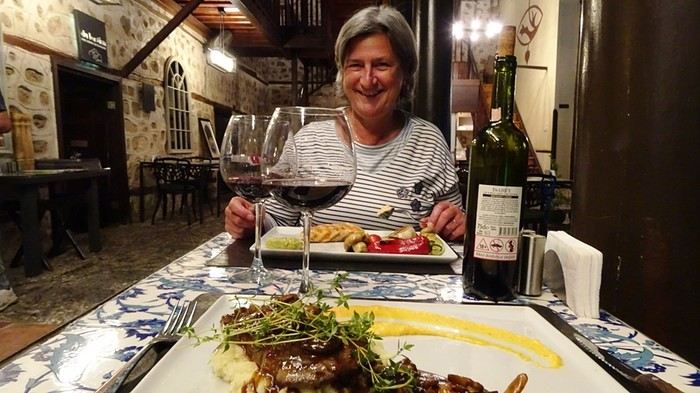
We left the house in the late morning, heading to the nearby airport parking lot, shuttle, formalities, and a quiet flight on a half-empty plane. Three hours eastward, we arrived in pitch-black night. Like everywhere in the world, we entered the city by crossing a vast, garish commercial zone, then the roads turned into streets, then alleys. Eventually, our driver had to stop to move poorly parked scooters so his oversized minibus could pass. We arrived in the middle of the old town, in a huge old house. We’re thrilled. The neighborhood is lively, full of atmosphere. Hungry and exhausted, we ate (very well) at the hotel restaurant, then strolled around. First impressions are promising!
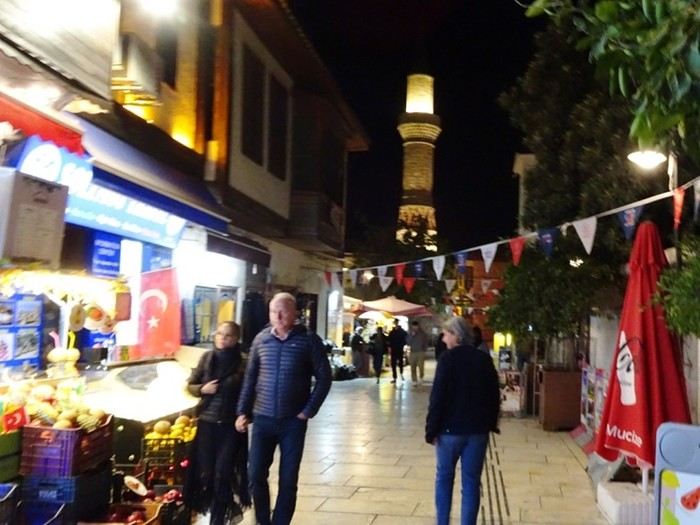
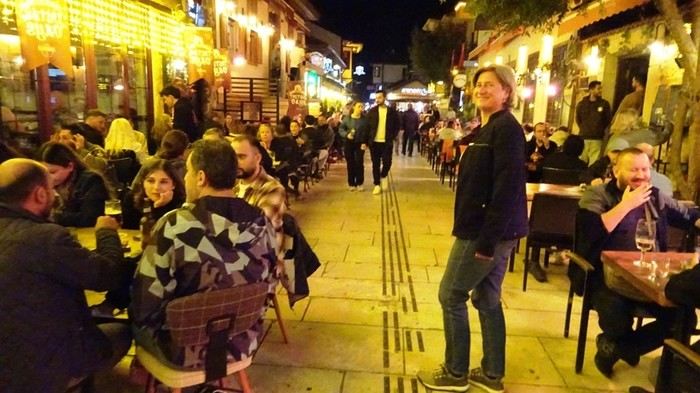
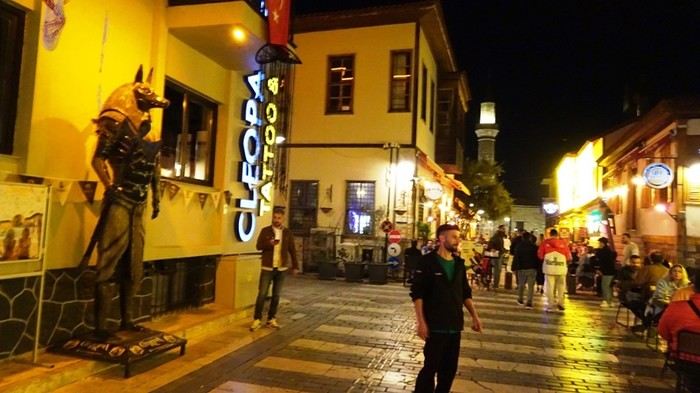
Sunday, November 10, 2024 Antalya In this part of the world, there are some quirks that don’t always suit us infidels! Here in Antalya, the religious influence is still pretty light. You can drink freely, girls can save a lot on fabric—it’s all good, no one’s gonna say anything. But there’s the muezzin. That lanky guy who belts out his tune five times a day from the top of his minaret didn’t spare us this morning. Just a heads-up, we’ve got a two-hour time difference, and this guy starts his serenade at 4 AM, right in the middle of the night. That’s early!
Anyway, we recover, have breakfast, and realize that in terms of revered figures, Atatürk doesn’t take a backseat to the prophet responsible for our nighttime disturbances. We’d already been surprised by how ubiquitous his portrait is, but on the restaurant terrace, we see it’s a full-blown cult. There’s a little altar with rose petals under his portrait. First thing in the morning, the staff lines up to pay their respects, then sings a stirring hymn while some customers stand, hand on heart.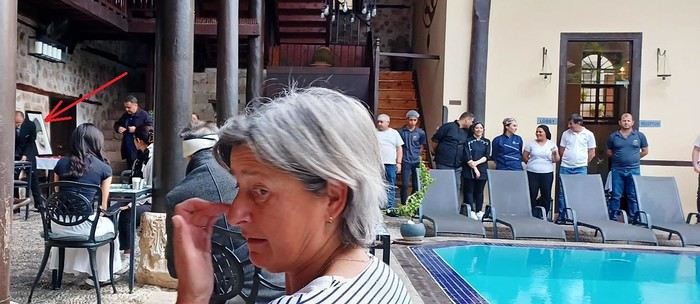
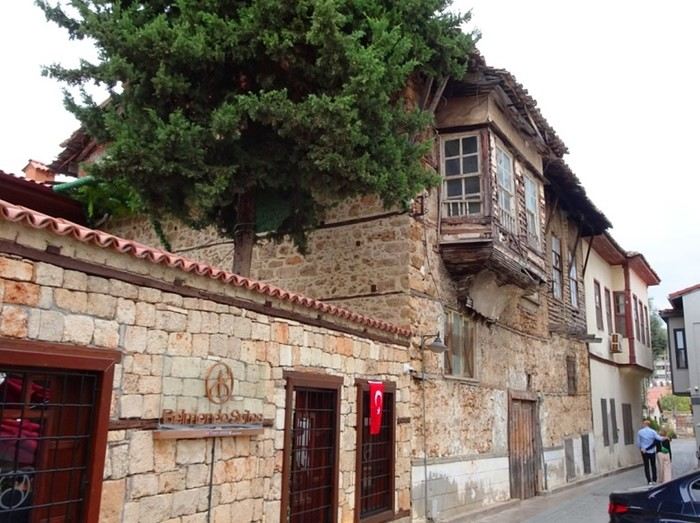
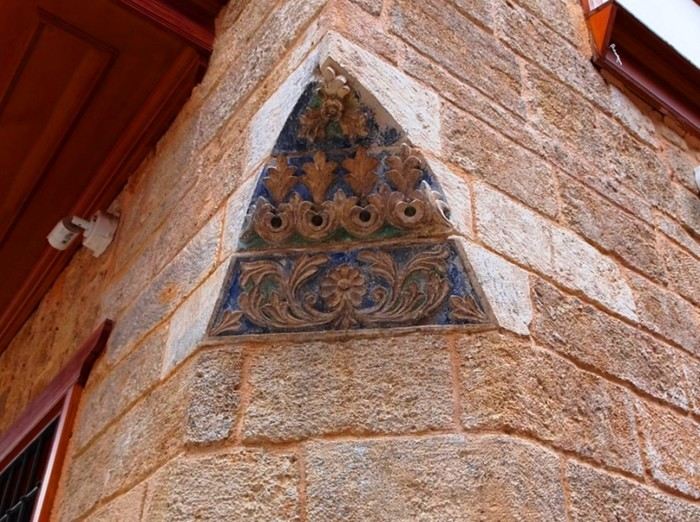
Right after breakfast, we set off like explorers through the old town. It’s incredible how many walls, monuments, and statues have survived from the glorious Greek and Roman eras. Back then, they built things to last!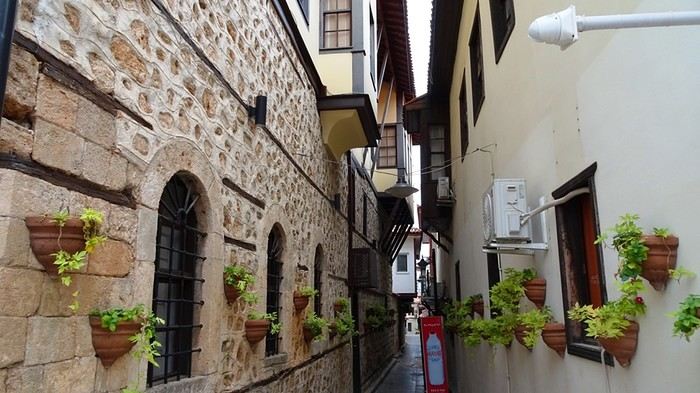

Sunday, November 10, 2024 Antalya In this part of the world, there are some quirks that don’t always suit us infidels! Here in Antalya, the religious influence is still pretty light. You can drink freely, girls can save a lot on fabric—it’s all good, no one’s gonna say anything. But there’s the muezzin. That lanky guy who belts out his tune five times a day from the top of his minaret didn’t spare us this morning. Just a heads-up, we’ve got a two-hour time difference, and this guy starts his serenade at 4 AM, right in the middle of the night. That’s early!
Anyway, we recover, have breakfast, and realize that in terms of revered figures, Atatürk doesn’t take a backseat to the prophet responsible for our nighttime disturbances. We’d already been surprised by how ubiquitous his portrait is, but on the restaurant terrace, we see it’s a full-blown cult. There’s a little altar with rose petals under his portrait. First thing in the morning, the staff lines up to pay their respects, then sings a stirring hymn while some customers stand, hand on heart.
Right after breakfast, we set off like explorers through the old town. It’s incredible how many walls, monuments, and statues have survived from the glorious Greek and Roman eras. Back then, they built things to last!
Easy trek in Nepal for two older gentlemen
Hello,
A few years ago, I visited Nepal. I have wonderful memories of it. My friend (77) and I (73) would like to go back. We’re still in good shape! But let’s not exaggerate either. So, we’re looking for a relaxed trek in the mid-mountains, in touch with the local people, passing near monasteries, and with beautiful views of the peaks. And no agencies!
Can you give us some tips?
Thanks a million
On remonte le temps: Tanzanie - Kenya 1992 English translation pending
Le carnet de Christian alias Eiger m'a donné une idée. Pourquoi ne pas moi aussi vous raconter mon premier grand voyage qui remonte à 1992 ? Mon premier safari et la découverte de l'Afrique de l'est à jamais enraciné dans mon cœur avec l'Afrique Australe.
Bon à l'époque je débutais dans la photographie, donc c'est pas spécialement brillant et mot est faible ! Les photos ont été à l'époque directement scannées et transférées sur CD par Kodak.
Il restera ancré à tout jamais dans ma mémoire comme mon premier grand voyage ! Ma grand mère, ma mère me traitent de fou 🤪 Mon père ancien marin dans la marchande qui a fait plus de deux fois le tour du monde, m'encourage 🙂
N'ayant pas l'esprit aventureux de certain, un niveau d'anglais moyen et pas de temps à perdre en recherche d'information sur place, je passe par une agence de voyage qui a toujours pignon sur rue et qui organise des voyages en groupe.
Le voyage durera 23 jours et sur la fin les relations furent un peux compliquées.
Le voyage sera découpé comme cela :
Kilimandjaro Safari - Ngorongoro et Serengeti Zanzibar Retour par le Kenya
Bon à l'époque je débutais dans la photographie, donc c'est pas spécialement brillant et mot est faible ! Les photos ont été à l'époque directement scannées et transférées sur CD par Kodak.
Il restera ancré à tout jamais dans ma mémoire comme mon premier grand voyage ! Ma grand mère, ma mère me traitent de fou 🤪 Mon père ancien marin dans la marchande qui a fait plus de deux fois le tour du monde, m'encourage 🙂
N'ayant pas l'esprit aventureux de certain, un niveau d'anglais moyen et pas de temps à perdre en recherche d'information sur place, je passe par une agence de voyage qui a toujours pignon sur rue et qui organise des voyages en groupe.
Le voyage durera 23 jours et sur la fin les relations furent un peux compliquées.
Le voyage sera découpé comme cela :
Kilimandjaro Safari - Ngorongoro et Serengeti Zanzibar Retour par le Kenya
Voyage au Népal, région du Mustang et randonnée à cheval English translation pending
Bonjour à tous,
Ma femme et moi partons au Népal pendant 18 jours en mars et aimerions savoir si vous aviez quelques conseils à nous donner! :-) (choses pratiques à savoir, immanquables à voir, à visiter, ...)
Egalement nous souhaiterons aller dans le Mustang. Cela semble compliqué de s'y rendre... Auriez-vous des conseils à nous donner? Idéalement nous aimerions faire une rando à cheval, si vous avez des plans nous sommes preneurs!
Merci beaucoup d'avance pour vos conseils!!!
Arthur
Ma femme et moi partons au Népal pendant 18 jours en mars et aimerions savoir si vous aviez quelques conseils à nous donner! :-) (choses pratiques à savoir, immanquables à voir, à visiter, ...)
Egalement nous souhaiterons aller dans le Mustang. Cela semble compliqué de s'y rendre... Auriez-vous des conseils à nous donner? Idéalement nous aimerions faire une rando à cheval, si vous avez des plans nous sommes preneurs!
Merci beaucoup d'avance pour vos conseils!!!
Arthur
Tour des Annapurnas 2019 English translation pending
Tour des Annapurnas mi octobre-novembre 2019 et pas mars comme prévu initialement
Grand merci à Djalma et aussi à d’autres personnes intervenues dans la discussion de « voyageforum.com » merci aussi aux auteurs Andrées de Ruiter et Prem Rai sur les Natts (sentiers qui évitent la route ).Ils nous ont vraiment aidé à réaliser notre projet.
Merci à notre guide Dukpa et à notre porteur Pasang sans qui nous n’aurions pas réussi cette magnifique aventure.
Recherche à faire : http://www.nepal-dia.de/Trekking_the_Annapurna_Circuit_with_the_new_NATT_trails_111017.pdf Itinéraire complet, appréciations, conseils , médicaments, bagages, mal d’altitude, tout y est.C’est superbement bien fait.
Aussi une cartographie indispensable pour établir visuellement les choses. - Carte côté Est avec courbes de niveau : Besi Sahar – Chame http://www.nepal-trekking-online.de/muktinath/map/besi-sahar-chame.jpg - Carte côté Ouest avec courbes de niveau Jomsom- Pokhara et aussi Mohare Danda PonnHill-Beni Gandrug Birethanti pas le Sanctuaire http://www.nepal-trekking-online.de/muktinath/map/annapurna-map-large.jpg - Très belle carte sur l’entièreté du trek ; cliquer 2 fois sur les zones voulues mais sans courbes de niveau https://www.magicalnepal.com/annapurna-circuit-trek-map/
Au total 21 jours: 16 jours de trek et 5 jours de transport. A notre rythme car nous ne sommes plus tout jeune (68 et mon mari 71 ans) mais nous marchons régulièrement.
20/10 J1 KTM 9h30 –Besi Sahar 16h minibus 760 m 21/10 J2 Besi Sahar –Tal Jeep 1700 m 22/10 J3 Tal – Dharapani Trek à partir de Tal (toujours éviter la piste et prendre la voie haute pour acclimatation à l’altitude) 1860 m 23/10 J4 Dharapani – Koto 2600 m 24/10 j5 Koto _ Upper Pisang 3300 m 25/10 j6 Upper Pisang _ Ghyaru _ Nawal(Ngawal) 3660 m 26/10 j7 Nawal _ Braka _ Manang 3540 m 27/10 j8 Nanang _ excursion au Chonger View Point (3855 m) Lac Ganggapurna et vieux Manang 28/10 j9 Manang _ Khangsar _ Shri Karka 3900 m 29/10 j10 Shri Karka _ Tilicho Base Camp 4150 m 30/10 j11 Tilicho BC _ Tilicho Lac 4900 m _ Tilicho Base Camp 4200 m 31/10 j12 Tilicho Base Camp _ Shri Karka _ Old Khansar _ Karche _ Yak Karka 4100 m 1/11 j13 Yak Karka _ Thorong Phedi High Camp 4833 m 2/11 j14 Thorong Phedi HC _ Thorong Phedi La Pass 5416 m Muktinath 3760 m 3/11 j15 Muktinath _ repos et visites : Muktinath et Jharkot 4/11 j16 Muktinath _ Kagbeni voie haute Jhong (Dzong) 2810 m 5/11 j17 Kagbeni _ Jomsom _ Marpha 2670 m Nous aurions aimé éviter Jomsom et aller à Lupra et Thinigaon mais pas de logement à trouver sur cette partie d’après le guide. Peut-être l’organiser à partir de Jomsom en voiture ? et prendre une journée en plus. 6/11 j18 Marpha _ Kalopani Fin du trek 2530 m Très longue route monotone dans la caillasse le long de la rivière ‘Kali Gandaki’ et il fait de plus en plus brumeux. 7/11 j19 Kalopani _ Tatopani en bus 8/11 j20 Tatopani _ Pokhara bus 9/11 j21 Pokhara _ KTM bus
C’était super beau et nous conseillons à tous ceux qui aiment la marche de faire cette magnifique expérience. Le tout est de ne pas aller trop vite pour s’adapter à l’altitude et profiter de la beauté des villages, des paysages et des gens que l’on rencontre. A noter que nous avons eu beaucoup de chance de ne pas avoir de chute de neige avant le passage du col qui est alors fermé.
Bonjour à vous tous et laissez-vous tenter. Bien cordialement, Christianede
Recherche à faire : http://www.nepal-dia.de/Trekking_the_Annapurna_Circuit_with_the_new_NATT_trails_111017.pdf Itinéraire complet, appréciations, conseils , médicaments, bagages, mal d’altitude, tout y est.C’est superbement bien fait.
Aussi une cartographie indispensable pour établir visuellement les choses. - Carte côté Est avec courbes de niveau : Besi Sahar – Chame http://www.nepal-trekking-online.de/muktinath/map/besi-sahar-chame.jpg - Carte côté Ouest avec courbes de niveau Jomsom- Pokhara et aussi Mohare Danda PonnHill-Beni Gandrug Birethanti pas le Sanctuaire http://www.nepal-trekking-online.de/muktinath/map/annapurna-map-large.jpg - Très belle carte sur l’entièreté du trek ; cliquer 2 fois sur les zones voulues mais sans courbes de niveau https://www.magicalnepal.com/annapurna-circuit-trek-map/
Au total 21 jours: 16 jours de trek et 5 jours de transport. A notre rythme car nous ne sommes plus tout jeune (68 et mon mari 71 ans) mais nous marchons régulièrement.
20/10 J1 KTM 9h30 –Besi Sahar 16h minibus 760 m 21/10 J2 Besi Sahar –Tal Jeep 1700 m 22/10 J3 Tal – Dharapani Trek à partir de Tal (toujours éviter la piste et prendre la voie haute pour acclimatation à l’altitude) 1860 m 23/10 J4 Dharapani – Koto 2600 m 24/10 j5 Koto _ Upper Pisang 3300 m 25/10 j6 Upper Pisang _ Ghyaru _ Nawal(Ngawal) 3660 m 26/10 j7 Nawal _ Braka _ Manang 3540 m 27/10 j8 Nanang _ excursion au Chonger View Point (3855 m) Lac Ganggapurna et vieux Manang 28/10 j9 Manang _ Khangsar _ Shri Karka 3900 m 29/10 j10 Shri Karka _ Tilicho Base Camp 4150 m 30/10 j11 Tilicho BC _ Tilicho Lac 4900 m _ Tilicho Base Camp 4200 m 31/10 j12 Tilicho Base Camp _ Shri Karka _ Old Khansar _ Karche _ Yak Karka 4100 m 1/11 j13 Yak Karka _ Thorong Phedi High Camp 4833 m 2/11 j14 Thorong Phedi HC _ Thorong Phedi La Pass 5416 m Muktinath 3760 m 3/11 j15 Muktinath _ repos et visites : Muktinath et Jharkot 4/11 j16 Muktinath _ Kagbeni voie haute Jhong (Dzong) 2810 m 5/11 j17 Kagbeni _ Jomsom _ Marpha 2670 m Nous aurions aimé éviter Jomsom et aller à Lupra et Thinigaon mais pas de logement à trouver sur cette partie d’après le guide. Peut-être l’organiser à partir de Jomsom en voiture ? et prendre une journée en plus. 6/11 j18 Marpha _ Kalopani Fin du trek 2530 m Très longue route monotone dans la caillasse le long de la rivière ‘Kali Gandaki’ et il fait de plus en plus brumeux. 7/11 j19 Kalopani _ Tatopani en bus 8/11 j20 Tatopani _ Pokhara bus 9/11 j21 Pokhara _ KTM bus
C’était super beau et nous conseillons à tous ceux qui aiment la marche de faire cette magnifique expérience. Le tout est de ne pas aller trop vite pour s’adapter à l’altitude et profiter de la beauté des villages, des paysages et des gens que l’on rencontre. A noter que nous avons eu beaucoup de chance de ne pas avoir de chute de neige avant le passage du col qui est alors fermé.
Bonjour à vous tous et laissez-vous tenter. Bien cordialement, Christianede
Coût d'un safari en Tanzanie par agence locale English translation pending
Bonjour,
Nous partons au mois de Juin avec une petite agence locale. Hors billet d'avion : Le coût pour 10j 9 nuit est de 3000€/pers en safari privée, juste mon mari, le guide et moi.
Un safari africain reste quand tout les cas cher mais on a fait un même devis chez FRAM et ils nous tarifé 4500€/pers pour 2/3j de moins !
Faîtes bien le tour. :)
Nous partons au mois de Juin avec une petite agence locale. Hors billet d'avion : Le coût pour 10j 9 nuit est de 3000€/pers en safari privée, juste mon mari, le guide et moi.
Un safari africain reste quand tout les cas cher mais on a fait un même devis chez FRAM et ils nous tarifé 4500€/pers pour 2/3j de moins !
Faîtes bien le tour. :)
Quel trek choisir pour éviter les pistes au Népal? English translation pending
Bonjour,
Je rêve du Népal depuis de nombreuses années et j'aimerais m'y rendre en novembre 2020.
Néanmoins, à la lecture de nombreux posts ou articles, j'ai l'impression que le pays est en chantier et n'est plus le paradis du trek qu'il était (comme de nombreux autres endroits sur notre planète malheureusement).
J'ai renoncé à effectuer le "tour" des Annapurnas car il semblerait que ce "sentier" comprenne désormais 70 ou 80% de piste (...).
J'étais donc tentée par le tour du Manaslu mais je lis que les pistes sont également très présentes sur ce parcours.
Dès lors, quel trek faut-il envisager pour marcher sur de vrais sentiers, profiter de la nature et contempler les montagnes sans que le regard ne tombe sur une pelleteuse ou un bulldozer?
Je précise que je souhaite me joindre à un groupe via une agence locale et ne pas marcher seule.
Par avance merci pour vos précieux conseils.
Je rêve du Népal depuis de nombreuses années et j'aimerais m'y rendre en novembre 2020.
Néanmoins, à la lecture de nombreux posts ou articles, j'ai l'impression que le pays est en chantier et n'est plus le paradis du trek qu'il était (comme de nombreux autres endroits sur notre planète malheureusement).
J'ai renoncé à effectuer le "tour" des Annapurnas car il semblerait que ce "sentier" comprenne désormais 70 ou 80% de piste (...).
J'étais donc tentée par le tour du Manaslu mais je lis que les pistes sont également très présentes sur ce parcours.
Dès lors, quel trek faut-il envisager pour marcher sur de vrais sentiers, profiter de la nature et contempler les montagnes sans que le regard ne tombe sur une pelleteuse ou un bulldozer?
Je précise que je souhaite me joindre à un groupe via une agence locale et ne pas marcher seule.
Par avance merci pour vos précieux conseils.
Agence trek du Mustang en camping (Népal) English translation pending
Bonjour,
j'hésite actuellement entre plusieurs projets de voyage, l'un d'eux étant un trek au Mustang, car j'ai l'impression que c'est très beau; mais je ne veux pas dormir en lodges, je cherche donc une solution camping... mais "dans la nature", pas dans la cour des lodges comme j'ai connu sur le tour du Manaslu...!
A force de chercher, je suis tombée sur cette offre de Tirawa : https://www.tirawa.com/voyages-nepal/grand-tour-du-mustang-np-318#infos-pratiques
Mais je me demande si certains des campements ne sont pas, en fait, dans la cour des lodges ou du moins dans les villages comme sur le tour du Manaslu... d'autre part, je trouve leurs dates de départ un peu bizarres : mai et septembre. Ne risque-t-il pas de faire trop chaud? Je supporte le froid, on peut toujours s'équiper, mais je n'aime vraiment pas la chaleur... Merci beaucoup pour les conseils...! si des personnes connaissent des agences organisant ce trek, en camping, à d'autres dates, cela pourrait m'intéresser (agences locales si possibles, pas de problème si anglophones ).
Mais je me demande si certains des campements ne sont pas, en fait, dans la cour des lodges ou du moins dans les villages comme sur le tour du Manaslu... d'autre part, je trouve leurs dates de départ un peu bizarres : mai et septembre. Ne risque-t-il pas de faire trop chaud? Je supporte le froid, on peut toujours s'équiper, mais je n'aime vraiment pas la chaleur... Merci beaucoup pour les conseils...! si des personnes connaissent des agences organisant ce trek, en camping, à d'autres dates, cela pourrait m'intéresser (agences locales si possibles, pas de problème si anglophones ).
20 jours au Népal sans grands treks English translation pending
Bonjour, je viens visiter le nepal avec ma fille de 18 ans.
Ni elle ni moi ne sommes partant pour des treks de plusieurs jours (ballade à la journée autour des villes visitée)
Nous venons 19 jours mais avec l'envie de profiter de shiva ratri au milieu du sejour que nous pensons passer à Kathmandou. ce qui complique pour faire un grand tour.
Je pensais donc passer les Premiers jours à et autour de kathmandou puis partir un peu plus loin.
que faire donc autour de kathmandou?
Pour un tour de 8 jours? le classique Bandipur - pokhara - lumbini - chitwan ?? ce n'est pas beaucoup de route en si peu de temps?
merci de vos conseils
Ni elle ni moi ne sommes partant pour des treks de plusieurs jours (ballade à la journée autour des villes visitée)
Nous venons 19 jours mais avec l'envie de profiter de shiva ratri au milieu du sejour que nous pensons passer à Kathmandou. ce qui complique pour faire un grand tour.
Je pensais donc passer les Premiers jours à et autour de kathmandou puis partir un peu plus loin.
que faire donc autour de kathmandou?
Pour un tour de 8 jours? le classique Bandipur - pokhara - lumbini - chitwan ?? ce n'est pas beaucoup de route en si peu de temps?
merci de vos conseils
Trek des Annapurnas en hiver: possible et quelles chaussures? English translation pending
Bonjour,
Je pars au Népal le 3 janvier pour 3 semaines et idéalement j'aimerais faire le trek des Annapurnas (car assez long et je comprends que c'est un des plus fréquentés donc une bonen idée étant seule et sans guide (pour raison économique entres autres). Je ne suis pas encore sûre que ce soit possible.
Tout avis sera bienvenu! :)
En cas affirmatif, ma grande question c'est quelle chaussures de rando enmener? Les Salewa alp trainer mid gtx w https://www.salewa.com/es-es/alp-trainer-mid-gore-tex-botas-mujer-00-0000063433: est-ce de la folie à cette période? Elles sont imperméables mais évidemment s'il y a beaucoup de neige c'est peut-être fortement déconseillé et il me faudrait une paire plus rigide et couvrante? Elles sont assez souples et pas très chaudes, meme si très très confortables..Le budget est limité et je comptais m'acheter celles-là car elles me serviront après pour tous mes randos par ici (je les ai dejà eu et elles sont extra)...Mais je ne veux pas prendre de risques absurdes. Savez-vous si en général il y a beaucoup de neige? besoin de crampons bien fixés?
Ou est-ce possible de louer a Katmandou/Pokhara des bottes plus robustes si je fais le trek des Annapurnas (et non pas d'autres plus courts avec moins d'altitude -autre option à laquelle je pense comme plan B?-.
Merci pour vos précieux avis et conseils!!!
En cas affirmatif, ma grande question c'est quelle chaussures de rando enmener? Les Salewa alp trainer mid gtx w https://www.salewa.com/es-es/alp-trainer-mid-gore-tex-botas-mujer-00-0000063433: est-ce de la folie à cette période? Elles sont imperméables mais évidemment s'il y a beaucoup de neige c'est peut-être fortement déconseillé et il me faudrait une paire plus rigide et couvrante? Elles sont assez souples et pas très chaudes, meme si très très confortables..Le budget est limité et je comptais m'acheter celles-là car elles me serviront après pour tous mes randos par ici (je les ai dejà eu et elles sont extra)...Mais je ne veux pas prendre de risques absurdes. Savez-vous si en général il y a beaucoup de neige? besoin de crampons bien fixés?
Ou est-ce possible de louer a Katmandou/Pokhara des bottes plus robustes si je fais le trek des Annapurnas (et non pas d'autres plus courts avec moins d'altitude -autre option à laquelle je pense comme plan B?-.
Merci pour vos précieux avis et conseils!!!
Un mois dingue en Bolivie et au Pérou English translation pending
Voici le récit de notre extra voyage d’1 mois en Bolivie- Perou sac à dos, mon pote Christian et moi, Patrick (chacun 58 ans)
Tout d’abord le circuit fait en juillet 2017- oui je sais j’ai mis du temps à cette mise en ligne mais depuis j’ai été au Myanmar, Canada, Oman, Vietnam. Et maintenant que notre futur trip en Namibie l’été prochain est booké, je me lance dans ce retour arrière de 2 ans. Après énormément de recherches sur de nombreux blogs perso, carnets de voyages et forum de voyages, on a finalisé notre circuit :
J1 : départ de Bruxelles J2 :arrivée La Paz- transfert le soir sur Uyuni J3 :Uyuni-Tupiza J4 :Tupiza J5 :Tupiza- sud Lipez J6 :sud Lipez J7 :sud Lipez J8 :sud Lipez- Uyuni-La Paz J9 :La Paz-Rurrenabaque J10 :Amazonie J11 :Amazonie J12 :Amazonie J13 :Amazonie J14 :Amazonie J15 :Amazonie-Rurrenabaque J16 :Rurrenabaque-La Paz- Copacabana J17 :Copacabana-isla del sol J18 :isla del sol-Puno J19 :Puno- Cusco J20 :Cusco J21 :Cusco-Ollantaytambo J22 :Ollantaytambo- Pisac J23 :Pisac- Cusco J24 :inca trail J25 :inca trail J26 :inca trail J27 :Machu picchu- Cusco J28:Cusco J29 :Cusco-La paz J30 :La Paz- départ J31 :arrivée
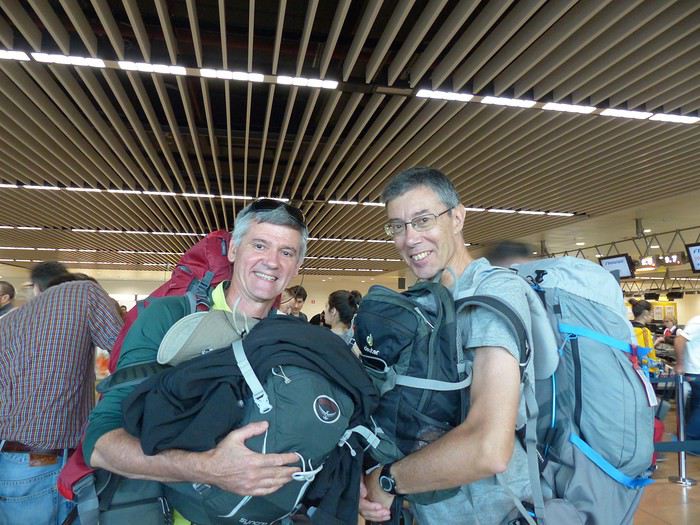
Tout d’abord le circuit fait en juillet 2017- oui je sais j’ai mis du temps à cette mise en ligne mais depuis j’ai été au Myanmar, Canada, Oman, Vietnam. Et maintenant que notre futur trip en Namibie l’été prochain est booké, je me lance dans ce retour arrière de 2 ans. Après énormément de recherches sur de nombreux blogs perso, carnets de voyages et forum de voyages, on a finalisé notre circuit :
J1 : départ de Bruxelles J2 :arrivée La Paz- transfert le soir sur Uyuni J3 :Uyuni-Tupiza J4 :Tupiza J5 :Tupiza- sud Lipez J6 :sud Lipez J7 :sud Lipez J8 :sud Lipez- Uyuni-La Paz J9 :La Paz-Rurrenabaque J10 :Amazonie J11 :Amazonie J12 :Amazonie J13 :Amazonie J14 :Amazonie J15 :Amazonie-Rurrenabaque J16 :Rurrenabaque-La Paz- Copacabana J17 :Copacabana-isla del sol J18 :isla del sol-Puno J19 :Puno- Cusco J20 :Cusco J21 :Cusco-Ollantaytambo J22 :Ollantaytambo- Pisac J23 :Pisac- Cusco J24 :inca trail J25 :inca trail J26 :inca trail J27 :Machu picchu- Cusco J28:Cusco J29 :Cusco-La paz J30 :La Paz- départ J31 :arrivée
Visiter de la forteresse de Kumbhalgarh et temple Jain de Ranakpur au Rajasthan (vidéo) English translation pending
Voici le récit de mon trajet entre Udaipur et Johdur dans le Rajasthan avec mes deux arrtets à la forteresse de Kumbhalgarh et à l'incroyable temple Jain de Ranakpur.
Vous pouvez voir ces deux visites sur une petite vidéo perso que j'ai mise en ligne sur Youtube
Après un petit dej, à 9 heures départ avec le taxi d'Udaipur (4500 roupies) direction Jodhpur. Voie express, puis nous quittons vite la voie principale pour prendre des petites routes sinueuses et défoncées à travers les montagnes. La conduite en Inde est toujours impressionnante, mais sur ces petites routes j'aurais apprécié que mon chauffeur passe plus de temps à regarder la route que l'écran de son téléphone. Le paysage est aride et ça et là d'ingénieux barrages tentent de retenir le peu d'eau disponible. En période humide, ce sont de véritables forêts luxuriante, parait-il. Des sortes de cactus forment de gros bosquets entremêlés. De temps à autre un traverse un petit village d'agriculteur pour on continue sur cette route de plus en plus défoncée ou les véhicules se croisent on ne sait trop comment sans y laisser la moitié de la carrosserie. Vers 12h30 au détour d'un virage, elle apparait, c'est la citadelle de Kumbhalgarh. Perchée sur sa colline et sertie d’une enceinte massive dont les tours ont des allures de genres et les remparts. Je vais monter vers le château (palais?) à pied (600 roupies et longue négociation pour la caméra). Dans l'enceinte un petit hameau, ou logent quelques familles. Le chemin qui mène au sommet est très abrupt. On passe devant les anciennes écuries, les bassins et même l'abri des canons, un temple dédié à Kali, on franchit plusieurs portes et on arrive enfin au palais de Rana Kumbha, le Badal Mahal ou palais des nuages qui date en fait du 19e s. Une cour donne accès à diverses salles dont la destination reste un mystère, on notera juste les élégantes peintures d'éléphant. L'intérêt est en haut des escaliers, sur le toit terrasse. On contemple un panorama à couper le souffle, on découvre la véritable ampleur de cet ouvrage de fortification qui s'étend sur 36 km, ce qui en ferait la troisième plus grande muraille au monde (selon les guides sur place). On voit disséminés dans le paysage des temples et divers ouvrages et le regard est poussé vers les grandes et très profondes vallées alentour. En redescendant vers l'entrée principale, il y a deux temples en enfilade au bout d'une sorte de place. Le temple de Vedi (15e s) puis un peu en retrait le temple de Nikantha dédié à Shiva, bien plus petit et bien plus jolie. Le visite de serait se terminer sans grimper et marcher un peu sur les remparts de 7 mètres de large. Nous repartons la route semble un instant meilleurs puis asphalte disparait et réapparait par intermittence. Nous nous arrêtons dans un minuscule village, les enfants se précipitent vers nous, magnifiques, les yeux vifs mais manifestement très pauvres. Le chauffeur entament la distribution de piécettes de 1 ou 2 roupies, j'en fait de même (donner plus pourrait déstabiliser l'organisation sociale du village à la longue). Les enfants finissent par se disperser, mon chauffeur les suit et me montre comment ils vont dépenser leur argent... En achetant du céleri et des feuilles d'épinard dans une petite échoppe bien poussiéreuse. Nous reprenons la route en traversant des zones agricoles très reculées ou l'agriculture est manifestement vivrière. Puis on entame la descente d'une vallée. On s'arrêtera à un petit restaurant très touristique Amrai Valley Restaurant ou je vais faire une bien maigre collation (mais je n'ai pas très faim) pour 540 roupies. Encore presque heure de route à zigzaguer entre les singes, les vaches et les sangliers et on arrive vers 16 heures au temple de Ranakpur. Dès l'entrée dans le parking les règles sont strictes, pantalon long, aucun objet en cuir, pas de téléphone, pas de tabac, d'eau ou de nourriture sur soi ou dans un sac. L'entrée au temple est de 200 roupies + 200 roupies pour l'audio guide (obligatoire?) + 200 roupies pour un appareil photo ou 300 pour une caméra ou une tablette. Le temple principal d'Adinatha est assez impressionnant de l'extérieur avec ses tours et ses dômes blancs. A l'entrée trois gardes passent les visiteurs à la fouille, sac, palpation et détecteur de métaux. L'audioguide, qui ne comporte qu'une dizaine de petites séquences a le mérite de ne pas nous laisser passer à côté de l'essentiel. Il faut lever la tête pour voir les incroyables et très fines ciselures du plafond (dont des scènes du kamautra). L'escalier donne accès à une première coupole dont les ornements sont d'une très grande délicatesse et d'une très grande profusion. Tout le temple est soutenue par une forêt de 1400 piliers de marbres, de sculptés avec des motifs différents. Le sanctuaire à proprement dit est au centre mais des gardent veillent à ce que les non Indien n'y pénètrent pas ou même prennent des photos. Derrière se trouve une deuxième coupole encore plus impressionnante que la première avec sa clef pendante. Tout autour du temple des petites niches abritent des divinités. Il est malheureusement déjà cinq heures et je dois aller restitué l'audioguide si je veux récupérer mon passeport. Avant de partir, je vais toutefois aller le second temple, plus petit, plus classique mais dont les décorations extérieures sont très érotiques.
Vous pouvez voir ces deux visites sur une petite vidéo perso que j'ai mise en ligne sur Youtube
Après un petit dej, à 9 heures départ avec le taxi d'Udaipur (4500 roupies) direction Jodhpur. Voie express, puis nous quittons vite la voie principale pour prendre des petites routes sinueuses et défoncées à travers les montagnes. La conduite en Inde est toujours impressionnante, mais sur ces petites routes j'aurais apprécié que mon chauffeur passe plus de temps à regarder la route que l'écran de son téléphone. Le paysage est aride et ça et là d'ingénieux barrages tentent de retenir le peu d'eau disponible. En période humide, ce sont de véritables forêts luxuriante, parait-il. Des sortes de cactus forment de gros bosquets entremêlés. De temps à autre un traverse un petit village d'agriculteur pour on continue sur cette route de plus en plus défoncée ou les véhicules se croisent on ne sait trop comment sans y laisser la moitié de la carrosserie. Vers 12h30 au détour d'un virage, elle apparait, c'est la citadelle de Kumbhalgarh. Perchée sur sa colline et sertie d’une enceinte massive dont les tours ont des allures de genres et les remparts. Je vais monter vers le château (palais?) à pied (600 roupies et longue négociation pour la caméra). Dans l'enceinte un petit hameau, ou logent quelques familles. Le chemin qui mène au sommet est très abrupt. On passe devant les anciennes écuries, les bassins et même l'abri des canons, un temple dédié à Kali, on franchit plusieurs portes et on arrive enfin au palais de Rana Kumbha, le Badal Mahal ou palais des nuages qui date en fait du 19e s. Une cour donne accès à diverses salles dont la destination reste un mystère, on notera juste les élégantes peintures d'éléphant. L'intérêt est en haut des escaliers, sur le toit terrasse. On contemple un panorama à couper le souffle, on découvre la véritable ampleur de cet ouvrage de fortification qui s'étend sur 36 km, ce qui en ferait la troisième plus grande muraille au monde (selon les guides sur place). On voit disséminés dans le paysage des temples et divers ouvrages et le regard est poussé vers les grandes et très profondes vallées alentour. En redescendant vers l'entrée principale, il y a deux temples en enfilade au bout d'une sorte de place. Le temple de Vedi (15e s) puis un peu en retrait le temple de Nikantha dédié à Shiva, bien plus petit et bien plus jolie. Le visite de serait se terminer sans grimper et marcher un peu sur les remparts de 7 mètres de large. Nous repartons la route semble un instant meilleurs puis asphalte disparait et réapparait par intermittence. Nous nous arrêtons dans un minuscule village, les enfants se précipitent vers nous, magnifiques, les yeux vifs mais manifestement très pauvres. Le chauffeur entament la distribution de piécettes de 1 ou 2 roupies, j'en fait de même (donner plus pourrait déstabiliser l'organisation sociale du village à la longue). Les enfants finissent par se disperser, mon chauffeur les suit et me montre comment ils vont dépenser leur argent... En achetant du céleri et des feuilles d'épinard dans une petite échoppe bien poussiéreuse. Nous reprenons la route en traversant des zones agricoles très reculées ou l'agriculture est manifestement vivrière. Puis on entame la descente d'une vallée. On s'arrêtera à un petit restaurant très touristique Amrai Valley Restaurant ou je vais faire une bien maigre collation (mais je n'ai pas très faim) pour 540 roupies. Encore presque heure de route à zigzaguer entre les singes, les vaches et les sangliers et on arrive vers 16 heures au temple de Ranakpur. Dès l'entrée dans le parking les règles sont strictes, pantalon long, aucun objet en cuir, pas de téléphone, pas de tabac, d'eau ou de nourriture sur soi ou dans un sac. L'entrée au temple est de 200 roupies + 200 roupies pour l'audio guide (obligatoire?) + 200 roupies pour un appareil photo ou 300 pour une caméra ou une tablette. Le temple principal d'Adinatha est assez impressionnant de l'extérieur avec ses tours et ses dômes blancs. A l'entrée trois gardes passent les visiteurs à la fouille, sac, palpation et détecteur de métaux. L'audioguide, qui ne comporte qu'une dizaine de petites séquences a le mérite de ne pas nous laisser passer à côté de l'essentiel. Il faut lever la tête pour voir les incroyables et très fines ciselures du plafond (dont des scènes du kamautra). L'escalier donne accès à une première coupole dont les ornements sont d'une très grande délicatesse et d'une très grande profusion. Tout le temple est soutenue par une forêt de 1400 piliers de marbres, de sculptés avec des motifs différents. Le sanctuaire à proprement dit est au centre mais des gardent veillent à ce que les non Indien n'y pénètrent pas ou même prennent des photos. Derrière se trouve une deuxième coupole encore plus impressionnante que la première avec sa clef pendante. Tout autour du temple des petites niches abritent des divinités. Il est malheureusement déjà cinq heures et je dois aller restitué l'audioguide si je veux récupérer mon passeport. Avant de partir, je vais toutefois aller le second temple, plus petit, plus classique mais dont les décorations extérieures sont très érotiques.
Locations de scooters et voitures à Amorgos (Cyclades) English translation pending
bonjour
nous aimerions avoir des appréciations sur les loueurs de scooters et voitures sur l'ile d"Amorgos où nous arriverons le 5 septembre et savoir s'il faut retenir avant notre départ ou s'il suffit de louer en arrivant merci de vos commentaires
Vol de Nairobi à l'aéroport du Kilimandjaro et siège dans l'avion English translation pending
Bonjour , ma question peux vous semblez bizarre, mais je vais prendre un vol de Nairobi à l'aéroport du Kilimandjaro le 15 août 2029 pour aller faire un safari. Étant photographe, et ici , j'aimerai avoir des réponses de personnes qui ont déja fait ce vol, de quel côté faut t'il avoir son siège dans l'avion pour bien voir le Kilimandjaro du hublot.
Merci
Benoit
Merci
Benoit
Le Masai Mara dans toute sa splendeur English translation pending
Pour une fois je délaisse le self drive Sud Africain pour un safari photo organisé dans le Masai Mara.
Ça faisait quelque temps que j'échangeais via email avec Tony Crocetta pour pouvoir partir dans son camp que l'on m'avait chaudement recommandé, mais la vitesse de remplissage et les impératifs du boulot et des vacances avec ma fille font qu'à chaque fois je reportais à l'année suivante le départ.
Un voyage se libérant en janvier 2019, pour juillet de la même année. Ma fille ayant décidé de faire un voyage linguistique, tous les signaux étaient au vert pour enfin découvrir le Masai Mara.
La prise en charge du safari commence à la descente de l'aéroport, direction Roussel Housse. Guest housse tenue par des sœurs. C'est très courant en Afrique de l'est. Le confort est correct et la nourriture est bonne voire très bonne.
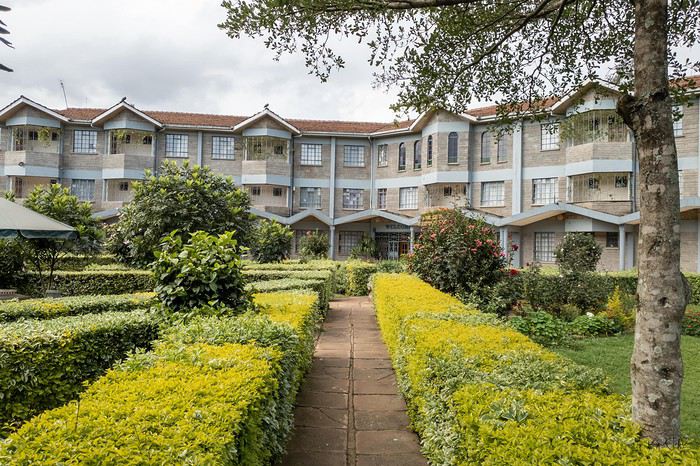
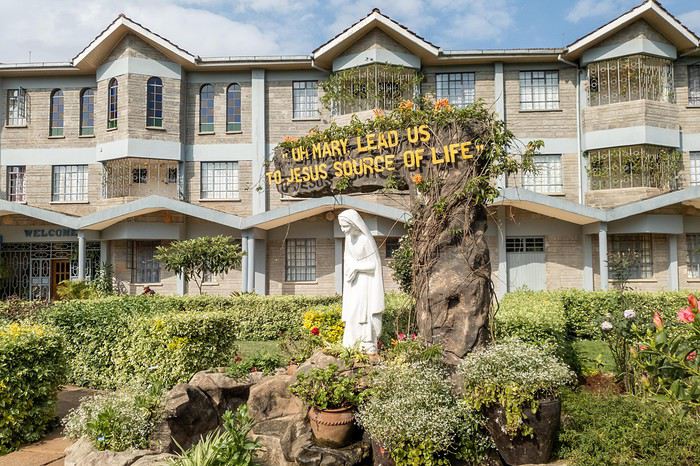
Le lendemain départ de bonne heure pour le Masai Mara, les derniers 90 km se font sur une piste défoncée et vous mettent directement dans l'ambiance.
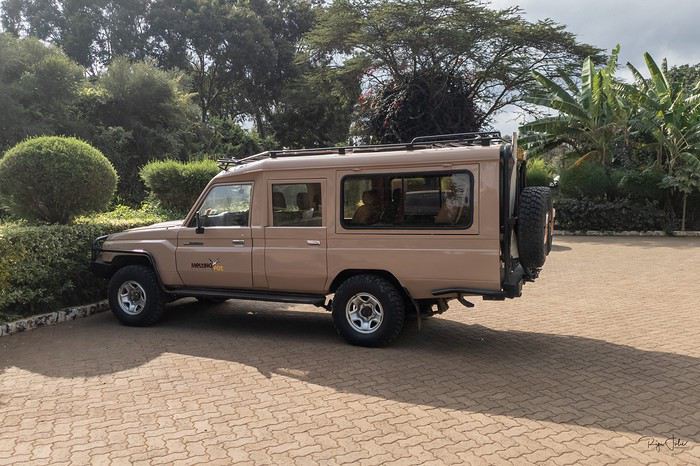
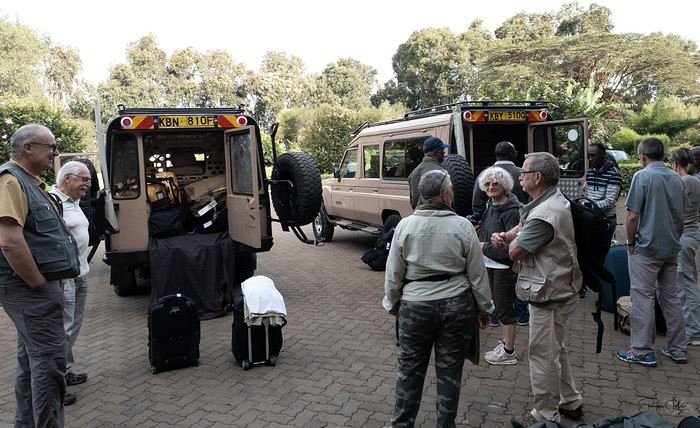
Le camp est idéalement situé au bord de la rivière Mara, avec les hippos pour bercer nos nuits.
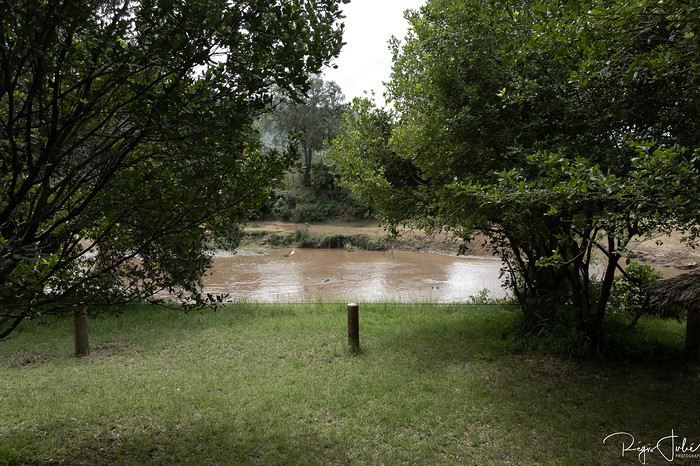
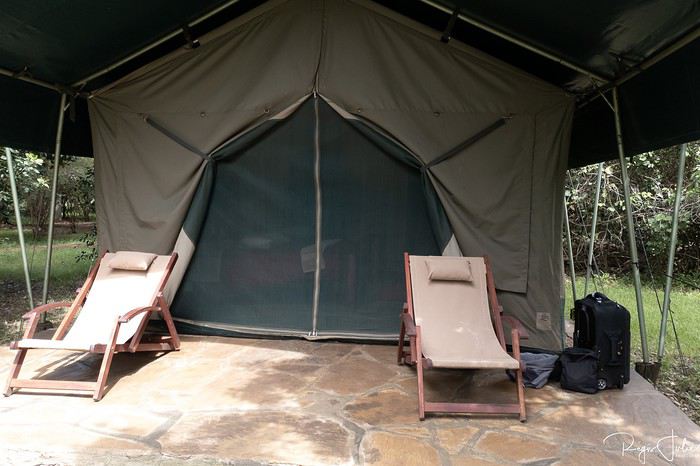
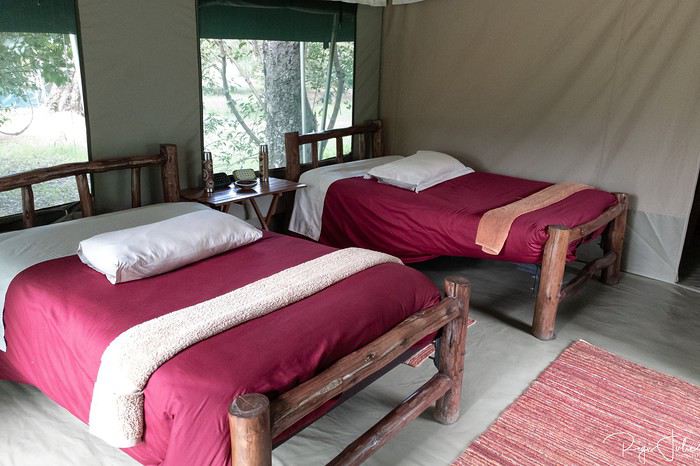
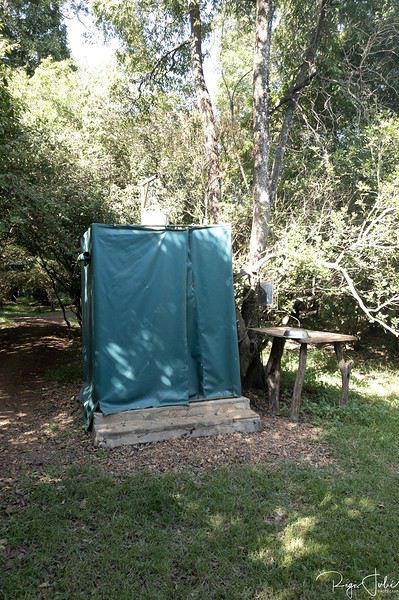
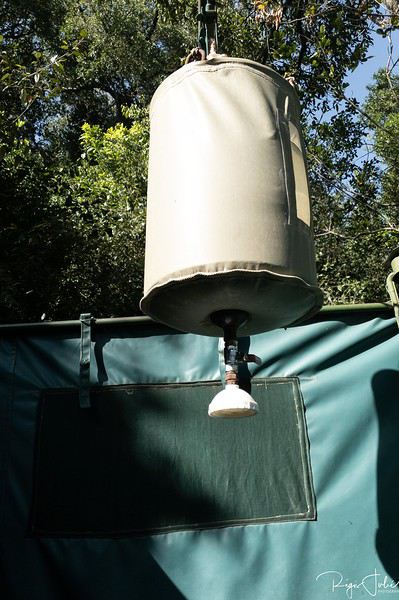
Les repas sont pris autour d'une même table et seront très bon.
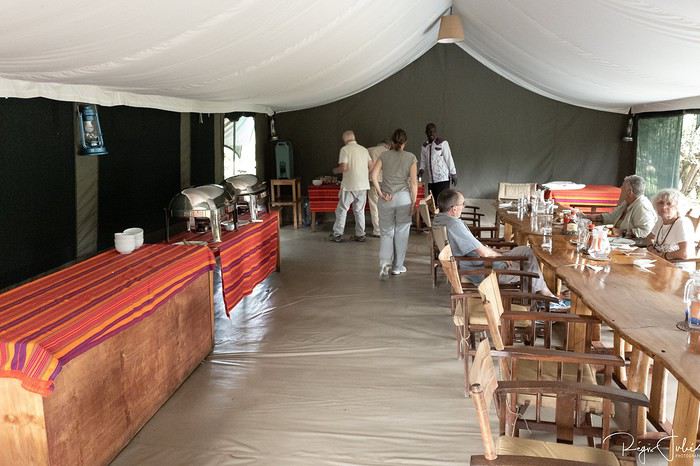
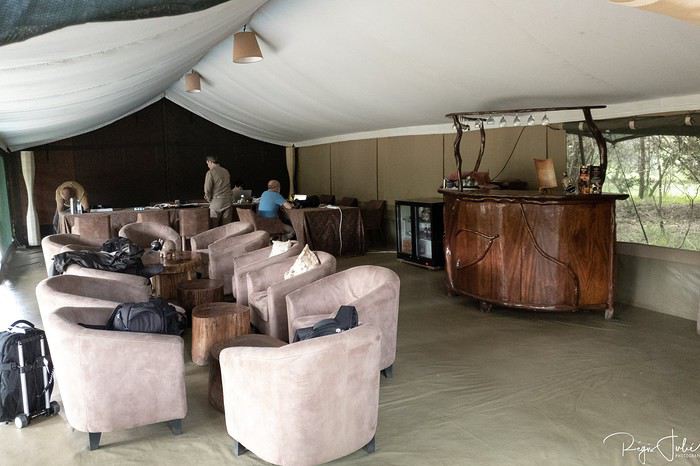
Ça faisait quelque temps que j'échangeais via email avec Tony Crocetta pour pouvoir partir dans son camp que l'on m'avait chaudement recommandé, mais la vitesse de remplissage et les impératifs du boulot et des vacances avec ma fille font qu'à chaque fois je reportais à l'année suivante le départ.
Un voyage se libérant en janvier 2019, pour juillet de la même année. Ma fille ayant décidé de faire un voyage linguistique, tous les signaux étaient au vert pour enfin découvrir le Masai Mara.
La prise en charge du safari commence à la descente de l'aéroport, direction Roussel Housse. Guest housse tenue par des sœurs. C'est très courant en Afrique de l'est. Le confort est correct et la nourriture est bonne voire très bonne.
Le lendemain départ de bonne heure pour le Masai Mara, les derniers 90 km se font sur une piste défoncée et vous mettent directement dans l'ambiance.
Le camp est idéalement situé au bord de la rivière Mara, avec les hippos pour bercer nos nuits.
Les repas sont pris autour d'une même table et seront très bon.