Results for "Forez+|+127"
26415 results found.
Come discover the island of Madeira with me
Introduction
We arrived on the island of Madeira (Portugal) at the beginning of May 2023 and stayed for 5 weeks.
This island is renowned for its rich cultural heritage, its famous hikes through lush landscapes, and its seaside resorts. It offers an unforgettable experience for nature lovers.
In this travel journal, you’ll find a list of the many activities we did during our stay to explore the different attractions of this magnificent island.
These attractions are categorized to make it easier to search based on your interests, if needed.
Videos are included throughout the summary. Please click on the image to start the video.
To jump to a specific post, here are the appropriate links:
HIKES:
Calheta - PR19 Caminho Real do Paúl do Mar Santana - Ribeiro Frio - PR11 Vereda dos Balcões Sao Vicente - Gingas - PR16 Levada Fajã do Rodrigues Rabaçal - PR6.1 Levada do Risco & PR6 Levada das 25 fontes Rabaçal - PR6.2 Levada do Alecrim & PR6.3 Vereda da Lagoa do Vento Caniçal - PR8 Vereda da Ponta de São Lourenço São Jorge - PR18 Levada do Rei Ponta do Sol - PR7 modified - Levada Nova & Levada do Moinho Machico - PR5 Vereda das Funduras Funchal - PR1 Vereda do Areeiro (Pico do Areeiro to Pico Ruivo) Funchal - PR1 Vereda do Areeiro (Pico Ruivo to Pico do Areeiro) Funchal - PR1.2 Vereda do Pico Ruivo (outbound) Funchal - PR1.2 Vereda do Pico Ruivo (return) Porto Moniz - Fanal Forest Porto Moniz - PR14 Levada dos Cedros Ribeira Brava - PR17 Caminho do Pináculo e Folhadal (Encumeada) Ribeira Brava - PR17 Caminho do Pináculo e Folhadal (Lombo do Mouro) Ribeira Brava - PR17 Caminho do Pináculo e Folhadal (Bica da Cana) Santana - PR9 Levada do Caldeirão Verde Lamaceiros - Levada Ribeira da Janela Ribeiro Frio - PR10 Levada do Furado Tabua - Levada da Nova (Eastern Sector) Tabua - Levada da Nova (Western Sector) Boa Morte - Levada do Norte Verada da Levada do Facho - Levada do Norte (South) Vale Paraiso - Levada da Serra do Faial Porto Moniz - PR13 Vereda do Fanal Referta - Levada do Castelejo Porto da Cruz - Levada do Castelejo Estanquinhos - Pico Ruivo do Paul da Serra Boaventura - Levada de Cima & Levada da Acha Grande
SEASIDE RESORTS & NATURAL POOLS:
Natural pools of Seixal Seixal Naval Club Seaside Resort - Natural pool Natural pools of Porto Moniz Funchal - Lido Seaside Resort Santana - Foz da Ribeira do Faial Seaside Resort Câmara de Lobos - Salinas Seaside Resort Porto Moniz - Aquário/Cachalote Natural Pools Funchal - Doca do Cavacas Seaside Resort Funchal - Ponta Gorda Seaside Resort Caniço - Roca Mar Hotel Seaside Resort Caniço - Lido Galoma Seaside Resort Calhau de São Jorge Seaside Resort Ribeira Brava Seaside Resort
BEACHES:
São Jorge Beach Calheta Beach Seixal - Laje Beach (Jamaica) Porto de Seixal Beach Caniço - Reis Magos Beach Machico - Machico Beach (Banda d'Além) Machico - São Roque Beach Machico - Ribeira Natal Beach Caniçal - Prainha Beach Porto da Cruz - Alagoa Beach
TOWNS:
Stroll through the town of Ponta do Sol Stroll through the town of Câmara de Lobos Stroll through the town of Ribeira Brava Stroll through the town of Funchal Funchal - Wicker toboggan ride Stroll through the town of Machico Stroll through the town of Santana Stroll through the town of São Vicente São Vicente Caves Park
VIEWPOINTS:
Calheta Region Ponta do Sol Region Ribeira Brava Region Câmara de Lobos Region Funchal Region Santa Cruz Region Porto Moniz Region São Vicente Region Santana Region Machico Region On the road in Madeira
WATERFALLS ALONG THE WAY
Ponta do Sol - Anjos Waterfall Sao Vicente - Água d'Alto Waterfall Seixal - Córrego da Furna Waterfall
We arrived on the island of Madeira (Portugal) at the beginning of May 2023 and stayed for 5 weeks.
This island is renowned for its rich cultural heritage, its famous hikes through lush landscapes, and its seaside resorts. It offers an unforgettable experience for nature lovers.
In this travel journal, you’ll find a list of the many activities we did during our stay to explore the different attractions of this magnificent island.
These attractions are categorized to make it easier to search based on your interests, if needed.
Videos are included throughout the summary. Please click on the image to start the video.
To jump to a specific post, here are the appropriate links:
HIKES:
Calheta - PR19 Caminho Real do Paúl do Mar Santana - Ribeiro Frio - PR11 Vereda dos Balcões Sao Vicente - Gingas - PR16 Levada Fajã do Rodrigues Rabaçal - PR6.1 Levada do Risco & PR6 Levada das 25 fontes Rabaçal - PR6.2 Levada do Alecrim & PR6.3 Vereda da Lagoa do Vento Caniçal - PR8 Vereda da Ponta de São Lourenço São Jorge - PR18 Levada do Rei Ponta do Sol - PR7 modified - Levada Nova & Levada do Moinho Machico - PR5 Vereda das Funduras Funchal - PR1 Vereda do Areeiro (Pico do Areeiro to Pico Ruivo) Funchal - PR1 Vereda do Areeiro (Pico Ruivo to Pico do Areeiro) Funchal - PR1.2 Vereda do Pico Ruivo (outbound) Funchal - PR1.2 Vereda do Pico Ruivo (return) Porto Moniz - Fanal Forest Porto Moniz - PR14 Levada dos Cedros Ribeira Brava - PR17 Caminho do Pináculo e Folhadal (Encumeada) Ribeira Brava - PR17 Caminho do Pináculo e Folhadal (Lombo do Mouro) Ribeira Brava - PR17 Caminho do Pináculo e Folhadal (Bica da Cana) Santana - PR9 Levada do Caldeirão Verde Lamaceiros - Levada Ribeira da Janela Ribeiro Frio - PR10 Levada do Furado Tabua - Levada da Nova (Eastern Sector) Tabua - Levada da Nova (Western Sector) Boa Morte - Levada do Norte Verada da Levada do Facho - Levada do Norte (South) Vale Paraiso - Levada da Serra do Faial Porto Moniz - PR13 Vereda do Fanal Referta - Levada do Castelejo Porto da Cruz - Levada do Castelejo Estanquinhos - Pico Ruivo do Paul da Serra Boaventura - Levada de Cima & Levada da Acha Grande
SEASIDE RESORTS & NATURAL POOLS:
Natural pools of Seixal Seixal Naval Club Seaside Resort - Natural pool Natural pools of Porto Moniz Funchal - Lido Seaside Resort Santana - Foz da Ribeira do Faial Seaside Resort Câmara de Lobos - Salinas Seaside Resort Porto Moniz - Aquário/Cachalote Natural Pools Funchal - Doca do Cavacas Seaside Resort Funchal - Ponta Gorda Seaside Resort Caniço - Roca Mar Hotel Seaside Resort Caniço - Lido Galoma Seaside Resort Calhau de São Jorge Seaside Resort Ribeira Brava Seaside Resort
BEACHES:
São Jorge Beach Calheta Beach Seixal - Laje Beach (Jamaica) Porto de Seixal Beach Caniço - Reis Magos Beach Machico - Machico Beach (Banda d'Além) Machico - São Roque Beach Machico - Ribeira Natal Beach Caniçal - Prainha Beach Porto da Cruz - Alagoa Beach
TOWNS:
Stroll through the town of Ponta do Sol Stroll through the town of Câmara de Lobos Stroll through the town of Ribeira Brava Stroll through the town of Funchal Funchal - Wicker toboggan ride Stroll through the town of Machico Stroll through the town of Santana Stroll through the town of São Vicente São Vicente Caves Park
VIEWPOINTS:
Calheta Region Ponta do Sol Region Ribeira Brava Region Câmara de Lobos Region Funchal Region Santa Cruz Region Porto Moniz Region São Vicente Region Santana Region Machico Region On the road in Madeira
WATERFALLS ALONG THE WAY
Ponta do Sol - Anjos Waterfall Sao Vicente - Água d'Alto Waterfall Seixal - Córrego da Furna Waterfall
Where to spend 6 weeks in Costa Rica in early 2026 for a retired couple?
We’re a retired couple in our 70s looking to spend six weeks in Costa Rica between mid-January and mid-March 2026. We’d like to stay in comfortable bungalows (2x3 weeks) and rent a car for the entire period. We enjoy light hiking and some beach time, but we also love relaxing on a shaded veranda, reading, and unwinding. Which places would suit these preferences? We have a lot of experience with this kind of stay in the French West Indies or Indian Ocean islands but have never been to Central America. Does anyone have good tips?
A Series: June 2025 Photo Contest Theme
The theme for June is: A SERIES
"A series is a set of coherent images that share several common points while still being different from one another."
In 3 photos, posted simultaneously in the same message, I’d like you to tell me a little story with a few words. You’re allowed 2 series.
They can be narrative or thematic. For example: 3 shots representing 3 professions, 3 places of worship, 3 market stalls, 3 trains... the ideas are endless—whether in the same place or in different countries... or 3 images of the same place, photographed from 3 different angles, under 3 different lights... or 3 images where the predominant color is the same... Narrative and theme can, of course, overlap.
Practical details:
Participation Each VF member can submit up to 2 series, until Saturday, June 21 at 11:59 PM Paris time. Each series of 3 photos must be presented in a single message, with its number indicated (series 1, series 2).
Voting: Each VF member can vote for the 3 series they consider the best, based on their own criteria and the theme.
Voting will take place from Saturday, June 21 at midnight until Saturday, June 28 at 11:59 PM Paris time.
The selected series will be ranked in order of preference: - 1st series: 3 points - 2nd: 2 points - 3rd: 1 point
The winner is the author of the series with the most points.
Results will be published on June 29 during the day. In case of a tie, the number of first-place votes will decide. The winner will have the honor of organizing July 2025’s contest.
Photos that have won (1st, 2nd, or 3rd place) in another VF contest are not eligible for this one.
This thread is exclusively for series submitted to the contest. All discussions, comments, and other chatter should take place in this thread.
...................................................................
Narrative: In Bali, I took a cooking class. We went to the market to shop with the teacher. We cleaned and prepped the ingredients to make, among other things, a lovely salad.
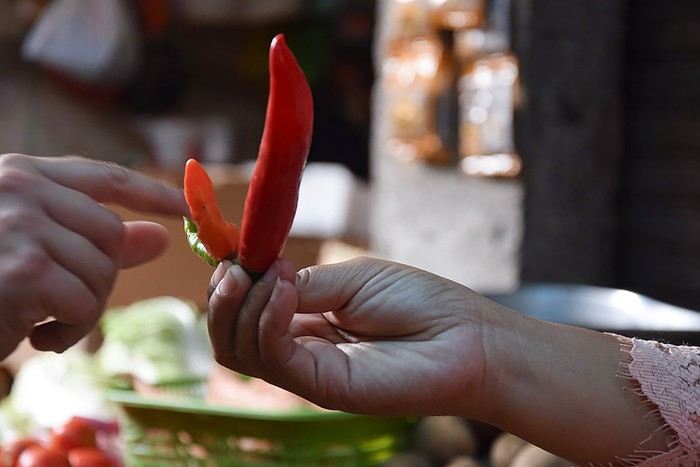
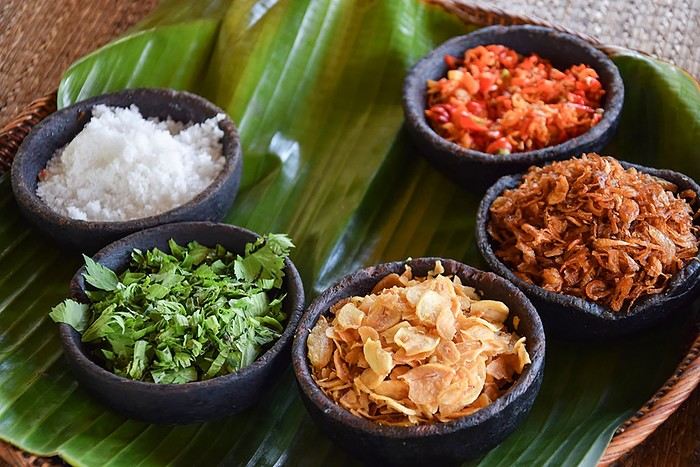
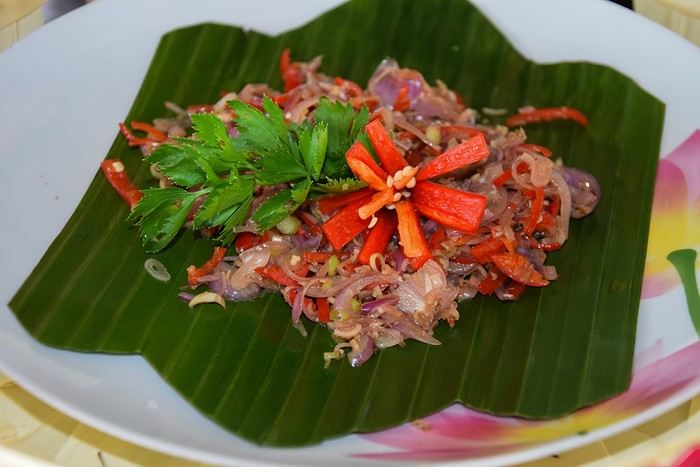
...........................................................................
Narrative and thematic: I really loved this place 30 km from Essaouira. A little souk "just as it is," as they say. The souk of Ida Ougourd.
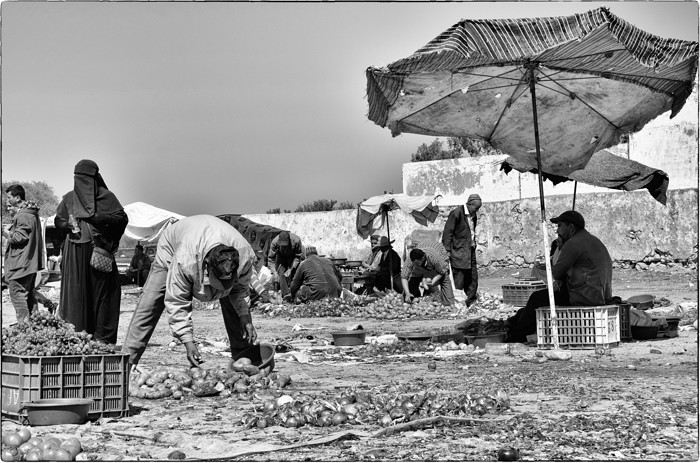
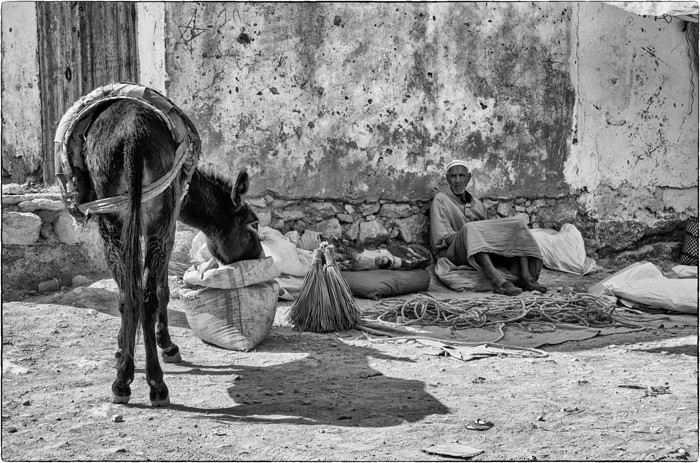
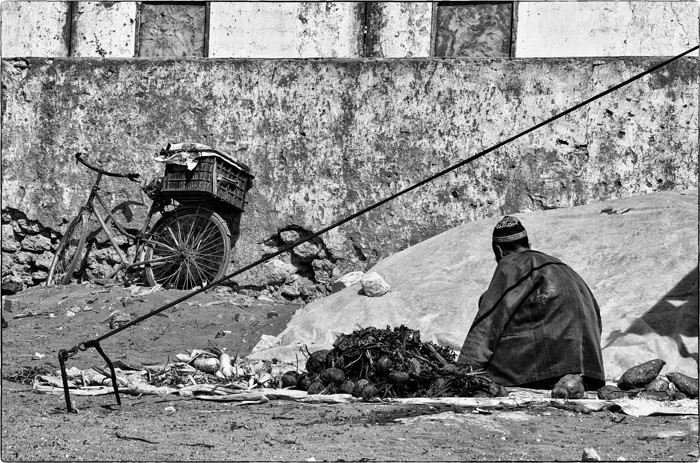
...........................................................................
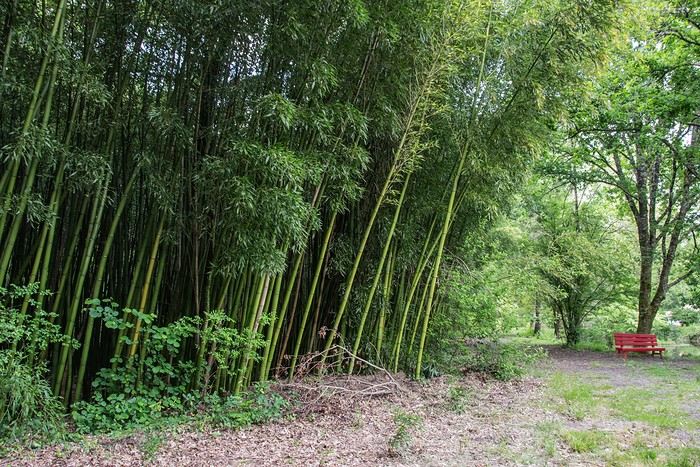
Thematic: Green in nature. The green of tea plantations in Munnar, a bamboo forest in Les Landes, and a park in Tokyo.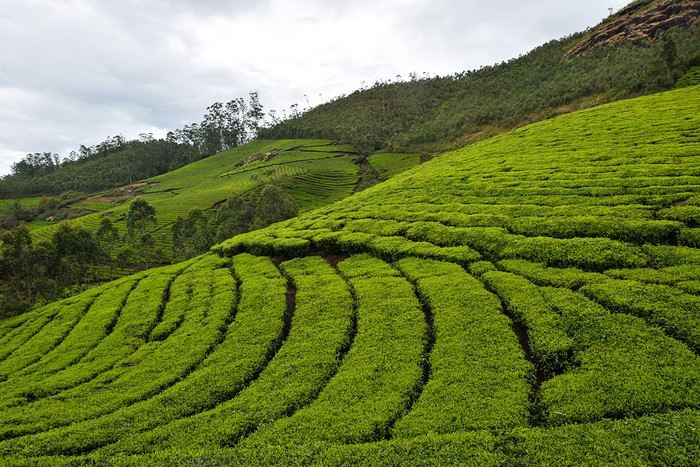
In 3 photos, posted simultaneously in the same message, I’d like you to tell me a little story with a few words. You’re allowed 2 series.
They can be narrative or thematic. For example: 3 shots representing 3 professions, 3 places of worship, 3 market stalls, 3 trains... the ideas are endless—whether in the same place or in different countries... or 3 images of the same place, photographed from 3 different angles, under 3 different lights... or 3 images where the predominant color is the same... Narrative and theme can, of course, overlap.
Practical details:
Participation Each VF member can submit up to 2 series, until Saturday, June 21 at 11:59 PM Paris time. Each series of 3 photos must be presented in a single message, with its number indicated (series 1, series 2).
Voting: Each VF member can vote for the 3 series they consider the best, based on their own criteria and the theme.
Voting will take place from Saturday, June 21 at midnight until Saturday, June 28 at 11:59 PM Paris time.
The selected series will be ranked in order of preference: - 1st series: 3 points - 2nd: 2 points - 3rd: 1 point
The winner is the author of the series with the most points.
Results will be published on June 29 during the day. In case of a tie, the number of first-place votes will decide. The winner will have the honor of organizing July 2025’s contest.
Photos that have won (1st, 2nd, or 3rd place) in another VF contest are not eligible for this one.
This thread is exclusively for series submitted to the contest. All discussions, comments, and other chatter should take place in this thread.
...................................................................
Narrative: In Bali, I took a cooking class. We went to the market to shop with the teacher. We cleaned and prepped the ingredients to make, among other things, a lovely salad.
...........................................................................
Narrative and thematic: I really loved this place 30 km from Essaouira. A little souk "just as it is," as they say. The souk of Ida Ougourd.
...........................................................................
Thematic: Green in nature. The green of tea plantations in Munnar, a bamboo forest in Les Landes, and a park in Tokyo.
Newfoundland - Hikes in the Eastern Part of the Island
The Eastern region is a landscape of protected coasts and bays, charming little fishing villages, exceptional scenic routes, and hiking trails in the heart of preserved habitats where many migratory bird species live, including puffins.
Stretching from Cape Bonavista in the north, where John Cabot landed in 1497, to Fortune and Grand Bank in the south, this part of Newfoundland was the first to be discovered and settled.
Visiting this region is like stepping back in time and discovering the cultural and artistic richness of this province, all at a more relaxed pace.
Source: https://www.exploretnl.ca/region-est
Videos are embedded throughout the summary. Please click on the image to start the video.
Bonavista Peninsula - Trinity - Gun Hill Trail Bonavista Peninsula - Trinity East - Skerwink Trail Bonavista Peninsula - Elliston - Puffin viewing site Bonavista Peninsula - Elliston - Spillars Cove (Cable John Cove) Bonavista - Dungeon Provincial Park Bonavista - John Cabot Municipal Park Bonavista Peninsula - Cape Bonavista Lighthouse St. Lawrence - Cape Chapeau Rouge Trail
Stretching from Cape Bonavista in the north, where John Cabot landed in 1497, to Fortune and Grand Bank in the south, this part of Newfoundland was the first to be discovered and settled.
Visiting this region is like stepping back in time and discovering the cultural and artistic richness of this province, all at a more relaxed pace.
Source: https://www.exploretnl.ca/region-est
Videos are embedded throughout the summary. Please click on the image to start the video.
Bonavista Peninsula - Trinity - Gun Hill Trail Bonavista Peninsula - Trinity East - Skerwink Trail Bonavista Peninsula - Elliston - Puffin viewing site Bonavista Peninsula - Elliston - Spillars Cove (Cable John Cove) Bonavista - Dungeon Provincial Park Bonavista - John Cabot Municipal Park Bonavista Peninsula - Cape Bonavista Lighthouse St. Lawrence - Cape Chapeau Rouge Trail
Mauritius: Looking for snorkeling beaches and hiking ideas
Hi there,
My flight ticket to Mauritius is booked, and my accommodations are all set.
The plan: relaxation, hiking, and swimming...😛
I’m looking for hiking ideas anywhere on the island (I’ll have a car). Nothing over 15 km round trip and a maximum of 500 m elevation gain. (A little more if it’s an exceptional hike.)
I’m also searching for beaches where I can do some snorkeling without needing to take a boat or join an excursion.
I’ve seen that sea kayaking tours are available. Is it possible to just rent a kayak, and which spots on the island are best for easy kayaking?
If you have other suggestions (villages, viewpoints, etc.) for independent excursions, I’m all ears!😉
Thanks🙂
My flight ticket to Mauritius is booked, and my accommodations are all set.
The plan: relaxation, hiking, and swimming...😛
I’m looking for hiking ideas anywhere on the island (I’ll have a car). Nothing over 15 km round trip and a maximum of 500 m elevation gain. (A little more if it’s an exceptional hike.)
I’m also searching for beaches where I can do some snorkeling without needing to take a boat or join an excursion.
I’ve seen that sea kayaking tours are available. Is it possible to just rent a kayak, and which spots on the island are best for easy kayaking?
If you have other suggestions (villages, viewpoints, etc.) for independent excursions, I’m all ears!😉
Thanks🙂
Newfoundland - Hikes in the Avalon Peninsula
The Avalon Peninsula, located in the southeast of Newfoundland Island, isn't just a picturesque place—it's also teeming with natural wonders: icebergs, whales, migratory seabirds, and wild caribou.
It was the first region of the province to be settled. Moreover, it's rich in legends, traditions, and the history of the early adventurers who conquered the New World.
St. John's, the capital, is one of the oldest and easternmost cities in North America. With its colorful houses nestled in the heart of steep rocky hills, it has the traditional charm of a small port town.
Below are the hikes we did in this region. A link is attached to each hike to give you quicker access to the relevant information.
Videos are embedded throughout the summary. Please click on the image to start the video.
Chance Cove Coastal Hiking Trail Cape St. Mary's Ecological Reserve Holyrood - Salmonier Nature Park La Manche Provincial Park - Suspension Bridge Trail Cape Spear - Lighthouse Trail St. John's - Deadman's Bay Trail Quidi Vidi - Sugarloaf Trail St. John's - Signal Hill National Historic Site St. John's - North Head Trail Loop - Signal Hill Salmon Cove - Salmon Cove Sands Provincial Park
It was the first region of the province to be settled. Moreover, it's rich in legends, traditions, and the history of the early adventurers who conquered the New World.
St. John's, the capital, is one of the oldest and easternmost cities in North America. With its colorful houses nestled in the heart of steep rocky hills, it has the traditional charm of a small port town.
Below are the hikes we did in this region. A link is attached to each hike to give you quicker access to the relevant information.
Videos are embedded throughout the summary. Please click on the image to start the video.
Chance Cove Coastal Hiking Trail Cape St. Mary's Ecological Reserve Holyrood - Salmonier Nature Park La Manche Provincial Park - Suspension Bridge Trail Cape Spear - Lighthouse Trail St. John's - Deadman's Bay Trail Quidi Vidi - Sugarloaf Trail St. John's - Signal Hill National Historic Site St. John's - North Head Trail Loop - Signal Hill Salmon Cove - Salmon Cove Sands Provincial Park
Newfoundland: Hikes in Gros Morne National Park
INTRODUCTION
Creating a masterpiece like Gros Morne National Park wasn’t done overnight. So, when you first discover this extraordinary place, it’s easy to understand why Mother Nature took over 485 million years to bring it to life.
Here, glacial valleys, forests, rugged coastline, beaches, and peat bogs follow one another and intertwine to form a unique ecosystem, one that’s rare in the world. After all, this is where geologists found tangible evidence of the theory of continental drift, and it’s one of the few places on Earth where you can see—and even walk on—the Earth’s mantle. This site is a true celebration of the raw, enigmatic power and beauty of the physical world.
Designated a national park in 1973 and later a UNESCO World Heritage Site in 1987, it’s an 1,805 km² playground just waiting for the adventurer in you. Whether you’re traveling solo, with family, or with friends, for a few days or several weeks, you won’t run out of things to do here.
Source: https://www.exploretnl.ca/parc-national-gros-morne
The hikes we did in this region are listed below. Each hike has a link so you can quickly access more information about it.
Videos are embedded throughout the summary. Click on the image to start the video.
Stanleyville Trail Trout River Pond Trail Trout River Pond Trail (Return) Green Gardens Trail Tablelands Trail Scenic Route 431 Lookout Hills Trail Southeast Brook Falls Trail Gros Morne Mountain Trail (James Callaghan Trail) Berry Hill Trail Baker's Brook Falls Trail Berry Hill Pond Trail Western Brook Pond Trail Boat Tour on Western Brook Pond Steve’s Trail Shallow Bay Beach
Creating a masterpiece like Gros Morne National Park wasn’t done overnight. So, when you first discover this extraordinary place, it’s easy to understand why Mother Nature took over 485 million years to bring it to life.
Here, glacial valleys, forests, rugged coastline, beaches, and peat bogs follow one another and intertwine to form a unique ecosystem, one that’s rare in the world. After all, this is where geologists found tangible evidence of the theory of continental drift, and it’s one of the few places on Earth where you can see—and even walk on—the Earth’s mantle. This site is a true celebration of the raw, enigmatic power and beauty of the physical world.
Designated a national park in 1973 and later a UNESCO World Heritage Site in 1987, it’s an 1,805 km² playground just waiting for the adventurer in you. Whether you’re traveling solo, with family, or with friends, for a few days or several weeks, you won’t run out of things to do here.
Source: https://www.exploretnl.ca/parc-national-gros-morne
The hikes we did in this region are listed below. Each hike has a link so you can quickly access more information about it.
Videos are embedded throughout the summary. Click on the image to start the video.
Stanleyville Trail Trout River Pond Trail Trout River Pond Trail (Return) Green Gardens Trail Tablelands Trail Scenic Route 431 Lookout Hills Trail Southeast Brook Falls Trail Gros Morne Mountain Trail (James Callaghan Trail) Berry Hill Trail Baker's Brook Falls Trail Berry Hill Pond Trail Western Brook Pond Trail Boat Tour on Western Brook Pond Steve’s Trail Shallow Bay Beach
Looking for participants for a Tanzania safari in early 2026
Hello.
I’m looking for participants for a safari in Tanzania in the first quarter of 2026. I’m in direct negotiations with a local guide. Below is the description (via a draft service contract). If you’re interested, reply to me. We’ll then communicate via private email.
Between the undersigned:
Ms./Mr. (provide the provider’s name), representing the company (specify), whose registered office is located at (provide the address), Hereinafter referred to as The Provider
And,
Ms./Mr. (provide the client’s name and contact details), Hereinafter referred to as The Client
The following has been agreed:
I. Purpose This service contract covers the organization of a safari in Tanzania by The Provider for the benefit of The Client.
II. Duration This contract is concluded for a duration of (specify). It takes effect from day J1: (specify the date) and will end on (specify the date). Unless otherwise agreed between the two parties, this contract is not subject to any automatic renewal.
III. Execution Terms The Provider undertakes to carry out the tasks assigned by The Client with professionalism and rigor, in accordance with best practices. They also agree to comply with all applicable regulations and standards for their tasks. To fulfill their duties, The Provider will mobilize all necessary resources. The Client, for their part, agrees to collaborate with The Provider and provide all useful information for the smooth execution of the tasks. IV. Payment The Client will pay The Provider the sum of (specify), according to the following terms: (specify). In case of late payment, The Provider reserves the right to claim penalties in the amount of (specify). V. Confidentiality The Provider agrees not to disclose any information or documents provided by The Client. Upon completion of their task, they will destroy all documents in their possession. VI. Service Details Accommodation during the stay (excluding days 1, 2, and 9): participants will sleep in tents, with 2 people per tent. A sleeping bag and an inflatable mattress will be provided. They will have water for washing and access to toilets. Tents will be set up and taken down during each transfer. It will be possible to charge camera batteries. Day 1: ARRIVAL AND TRANSFER Welcome at Kilimanjaro Airport for transfer to Arusha and overnight at Green Mountain Hotel (breakfast included) - https://greenmountainhotel.co.tz/ Day 2: HIKE ON THE TRAILS OF KILIMANJARO. Pick-up from your hotel in Arusha to the village of Moshi Materuni, at the foot of Kilimanjaro. You’ll begin a day of hiking toward the impressive waterfalls in one of the country’s highest regions, where crystal-clear glacial water cascades from 70 meters high. The beautiful trail leads to the Materuni waterfalls, located at 2,500 meters altitude. To reach these falls, you’ll cross valleys and hills covered in tropical forest, coffee, avocado, and banana plantations. On a clear day, you’ll enjoy a breathtaking view of Kibo, the highest peak of Kilimanjaro. You’ll also learn how to prepare and taste coffee. In the evening, you’ll be picked up in Arusha and spend the night at Green Mountain Hotel. Day 3: HIKE IN A MAASAI VILLAGE After breakfast around 8:30 AM, you’ll be picked up from your hotel for a walking hike in the wild nature of the village. You’ll visit local primary schools, meet traditional healers, and discover their techniques. You’ll also visit one of the local livestock markets. Dinner and overnight at the Maasai village house in Boma. Day 4: WILDLIFE IN 4X4 ALONG THE TARANGIRE RIVER Around 8 AM, you’ll be picked up from your hotel in Arusha and drive for 2 hours to Tarangire National Park for a day of wildlife viewing. The park is known for its dense wildlife along the Tarangire River. It’s home to a large number of elephants in the northern circuit and hosts 550 bird species. You’ll also observe herds of impalas, hartebeests, wildebeests, kudus, oryxes, gerenuks, zebras, buffaloes, and giraffes. Predators like lions, leopards, cheetahs, hyenas, and massive African baobabs can also be spotted. Dinner and overnight at Lake Manyara Fig Tree Lodge. Day 5: LAKE MANYARA PARK - WILDLIFE VIEWING IN THE RIFT VALLEY Around 8 AM, departure from your camp to Lake Manyara Park (at the foot of a 600-meter escarpment in the Great Rift Valley) for a day of safaris. You’ll see giraffes, buffaloes, groups of baboons, tree-climbing lions, and many other animals. Dinner and overnight at Lake Manyara Fig Tree Lodge. Day 6: WILDLIFE IN SERENGETI In the morning, you’ll drive for 5 hours to the magnificent Serengeti National Park, passing through the archaeological site of Olduvai Gorge. This park is arguably the world’s most famous wildlife reserve. It’s home to over 3 million large mammals, and you’ll quickly spot the "Big Five": buffaloes, elephants, black rhinos of the Moru Kopjes, lions, and leopards. Over 500 bird species have been recorded here. You’ll also witness the spectacular wildebeest migration in the western Serengeti. Dinner and overnight at Serengeti Nyani campsite. Day 7: MAGNIFICENT WILDLIFE AT SUNRISE IN SERENGETI Stunning sunrise safaris in the golden savanna of the endless plains of Serengeti National Park, all day long, following the animals’ movements. You’ll spend the night at the campsite and share your exceptional experience so far at Serengeti Nyani campsite. Day 8: MAJESTIC EXCURSION IN THE SERENGETI PLAINS Wake-up at 6 AM, coffee at the campsite, then departure for a sunrise safari in the Serengeti. Our guide will take you to the best spots to admire the sunrise and observe predators, as most of them, like lions, are very active at this time of day. You’ll return to the campsite around 10 AM for brunch, then load your belongings into the jeep for a 2-hour safari on the way to the Ngorongoro Conservation Area. Dinner and overnight at Ngorongoro Simba Lodge. Day 9: SPECTACULAR EXCURSION TO NGORONGORO CRATER Shortly after breakfast, you’ll descend into the Ngorongoro Crater for a sunrise safari in the world’s largest uninterrupted caldera, surrounded by steep walls rising 610 meters from the crater floor. This natural wonder measures 19.2 km in diameter and covers 304 km². You’ll go on safaris and discover rare species like black rhinos, wildebeests, giraffes, ostriches, bustards, lions, cheetahs, and flamingos in the Soda Lake. In the afternoon, you’ll return to Arusha, arriving in the evening for your private activities. Accommodation in half-board (dinner, overnight, breakfast) Day 10: TRANSFER TO KILIMANJARO AIRPORT Breakfast and transfer to Kilimanjaro Airport. VII- RATES: The package price is 2030 USD (approximately per person in a double room). VIII- THE PRICE INCLUDES: - Provision of sealed water bottles for participants - Park entry fees. - Transfer from Kilimanjaro Airport. - Accommodation in Arusha (breakfast included). - Village development fees. - Accommodation in camps/lodges (breakfast, lunch, dinner). - Transport in a 4x4 Land Cruiser with a pop-up roof in national parks. - Government taxes. - Activities detailed in the itinerary. - Safari guides. - Transfer from Arusha to Kilimanjaro Airport on day 10.
IX- THE PRICE DOES NOT INCLUDE: - Alcoholic beverages. - International flights. - Personal items such as visas, laundry, etc. - Tips.
Done at Done at
Date: Date: Provider’s Signature: Client’s Signature:
Between the undersigned:
Ms./Mr. (provide the provider’s name), representing the company (specify), whose registered office is located at (provide the address), Hereinafter referred to as The Provider
And,
Ms./Mr. (provide the client’s name and contact details), Hereinafter referred to as The Client
The following has been agreed:
I. Purpose This service contract covers the organization of a safari in Tanzania by The Provider for the benefit of The Client.
II. Duration This contract is concluded for a duration of (specify). It takes effect from day J1: (specify the date) and will end on (specify the date). Unless otherwise agreed between the two parties, this contract is not subject to any automatic renewal.
III. Execution Terms The Provider undertakes to carry out the tasks assigned by The Client with professionalism and rigor, in accordance with best practices. They also agree to comply with all applicable regulations and standards for their tasks. To fulfill their duties, The Provider will mobilize all necessary resources. The Client, for their part, agrees to collaborate with The Provider and provide all useful information for the smooth execution of the tasks. IV. Payment The Client will pay The Provider the sum of (specify), according to the following terms: (specify). In case of late payment, The Provider reserves the right to claim penalties in the amount of (specify). V. Confidentiality The Provider agrees not to disclose any information or documents provided by The Client. Upon completion of their task, they will destroy all documents in their possession. VI. Service Details Accommodation during the stay (excluding days 1, 2, and 9): participants will sleep in tents, with 2 people per tent. A sleeping bag and an inflatable mattress will be provided. They will have water for washing and access to toilets. Tents will be set up and taken down during each transfer. It will be possible to charge camera batteries. Day 1: ARRIVAL AND TRANSFER Welcome at Kilimanjaro Airport for transfer to Arusha and overnight at Green Mountain Hotel (breakfast included) - https://greenmountainhotel.co.tz/ Day 2: HIKE ON THE TRAILS OF KILIMANJARO. Pick-up from your hotel in Arusha to the village of Moshi Materuni, at the foot of Kilimanjaro. You’ll begin a day of hiking toward the impressive waterfalls in one of the country’s highest regions, where crystal-clear glacial water cascades from 70 meters high. The beautiful trail leads to the Materuni waterfalls, located at 2,500 meters altitude. To reach these falls, you’ll cross valleys and hills covered in tropical forest, coffee, avocado, and banana plantations. On a clear day, you’ll enjoy a breathtaking view of Kibo, the highest peak of Kilimanjaro. You’ll also learn how to prepare and taste coffee. In the evening, you’ll be picked up in Arusha and spend the night at Green Mountain Hotel. Day 3: HIKE IN A MAASAI VILLAGE After breakfast around 8:30 AM, you’ll be picked up from your hotel for a walking hike in the wild nature of the village. You’ll visit local primary schools, meet traditional healers, and discover their techniques. You’ll also visit one of the local livestock markets. Dinner and overnight at the Maasai village house in Boma. Day 4: WILDLIFE IN 4X4 ALONG THE TARANGIRE RIVER Around 8 AM, you’ll be picked up from your hotel in Arusha and drive for 2 hours to Tarangire National Park for a day of wildlife viewing. The park is known for its dense wildlife along the Tarangire River. It’s home to a large number of elephants in the northern circuit and hosts 550 bird species. You’ll also observe herds of impalas, hartebeests, wildebeests, kudus, oryxes, gerenuks, zebras, buffaloes, and giraffes. Predators like lions, leopards, cheetahs, hyenas, and massive African baobabs can also be spotted. Dinner and overnight at Lake Manyara Fig Tree Lodge. Day 5: LAKE MANYARA PARK - WILDLIFE VIEWING IN THE RIFT VALLEY Around 8 AM, departure from your camp to Lake Manyara Park (at the foot of a 600-meter escarpment in the Great Rift Valley) for a day of safaris. You’ll see giraffes, buffaloes, groups of baboons, tree-climbing lions, and many other animals. Dinner and overnight at Lake Manyara Fig Tree Lodge. Day 6: WILDLIFE IN SERENGETI In the morning, you’ll drive for 5 hours to the magnificent Serengeti National Park, passing through the archaeological site of Olduvai Gorge. This park is arguably the world’s most famous wildlife reserve. It’s home to over 3 million large mammals, and you’ll quickly spot the "Big Five": buffaloes, elephants, black rhinos of the Moru Kopjes, lions, and leopards. Over 500 bird species have been recorded here. You’ll also witness the spectacular wildebeest migration in the western Serengeti. Dinner and overnight at Serengeti Nyani campsite. Day 7: MAGNIFICENT WILDLIFE AT SUNRISE IN SERENGETI Stunning sunrise safaris in the golden savanna of the endless plains of Serengeti National Park, all day long, following the animals’ movements. You’ll spend the night at the campsite and share your exceptional experience so far at Serengeti Nyani campsite. Day 8: MAJESTIC EXCURSION IN THE SERENGETI PLAINS Wake-up at 6 AM, coffee at the campsite, then departure for a sunrise safari in the Serengeti. Our guide will take you to the best spots to admire the sunrise and observe predators, as most of them, like lions, are very active at this time of day. You’ll return to the campsite around 10 AM for brunch, then load your belongings into the jeep for a 2-hour safari on the way to the Ngorongoro Conservation Area. Dinner and overnight at Ngorongoro Simba Lodge. Day 9: SPECTACULAR EXCURSION TO NGORONGORO CRATER Shortly after breakfast, you’ll descend into the Ngorongoro Crater for a sunrise safari in the world’s largest uninterrupted caldera, surrounded by steep walls rising 610 meters from the crater floor. This natural wonder measures 19.2 km in diameter and covers 304 km². You’ll go on safaris and discover rare species like black rhinos, wildebeests, giraffes, ostriches, bustards, lions, cheetahs, and flamingos in the Soda Lake. In the afternoon, you’ll return to Arusha, arriving in the evening for your private activities. Accommodation in half-board (dinner, overnight, breakfast) Day 10: TRANSFER TO KILIMANJARO AIRPORT Breakfast and transfer to Kilimanjaro Airport. VII- RATES: The package price is 2030 USD (approximately per person in a double room). VIII- THE PRICE INCLUDES: - Provision of sealed water bottles for participants - Park entry fees. - Transfer from Kilimanjaro Airport. - Accommodation in Arusha (breakfast included). - Village development fees. - Accommodation in camps/lodges (breakfast, lunch, dinner). - Transport in a 4x4 Land Cruiser with a pop-up roof in national parks. - Government taxes. - Activities detailed in the itinerary. - Safari guides. - Transfer from Arusha to Kilimanjaro Airport on day 10.
IX- THE PRICE DOES NOT INCLUDE: - Alcoholic beverages. - International flights. - Personal items such as visas, laundry, etc. - Tips.
Done at Done at
Date: Date: Provider’s Signature: Client’s Signature:
15-Day Namibia Itinerary
Hi there,
I’m finalizing the itinerary for my trip to Namibia in October and would love to get it validated by you, the experts.
I’ll be traveling by 4x4 with a rooftop tent.
Here’s the itinerary:
Day 1: Arrival in Windhoek Night in REHOBOTH or nearby
Day 2: Rehoboth to Stampriet
Day 3: Road to Sesriem
Day 4: Head to Sossusvlei/Sesriem Canyon
Day 5: Road to Walvis Bay
Day 6: Day in Walvis Bay
Day 7: Head to Spitzkoppe
Day 8: Direction Cape Cross then Brandberg
Day 9: Brandberg, Twyfelfontein, Palmwag
Day 10: Palmwag
Day 11: Head to Etosha Day 12: Etosha
Day 13: Head to Waterberg after morning safari
Day 14: Full day at Waterberg
Day 15: Return to Windhoek for flight at 8:30 PM
What do you think? I’m open to all suggestions!
Thanks
Here’s the itinerary:
Day 1: Arrival in Windhoek Night in REHOBOTH or nearby
Day 2: Rehoboth to Stampriet
Day 3: Road to Sesriem
Day 4: Head to Sossusvlei/Sesriem Canyon
Day 5: Road to Walvis Bay
Day 6: Day in Walvis Bay
Day 7: Head to Spitzkoppe
Day 8: Direction Cape Cross then Brandberg
Day 9: Brandberg, Twyfelfontein, Palmwag
Day 10: Palmwag
Day 11: Head to Etosha Day 12: Etosha
Day 13: Head to Waterberg after morning safari
Day 14: Full day at Waterberg
Day 15: Return to Windhoek for flight at 8:30 PM
What do you think? I’m open to all suggestions!
Thanks
Questions about planning - 3 weeks to meet primates in Uganda
Hello,
After having to cancel our trip to Uganda in December 2020, we finally decided to go in December/January. We leave on December 28th and return on January 18th, which gives us 20 days and 20 nights there 🙂
The main goal of this trip is to meet primates, big and small. We won’t skip the birds and other mammals or the local culture and people, but we want to maximize our chances of meeting our monkey friends.
It’ll be a self-drive road trip with lodge stays. The 4x4 is booked, as are the chimpanzee and gorilla permits, and most of the accommodations.
I’m reaching out because I have a big question mark about my itinerary. Here’s what was originally planned (with the parts I’m unsure about in bold):
1 night in Entebbe on arrival day 1 night at Ziwa Rhino & Wildlife Ranch (rhino trek and shoebill trek) 2 nights at Murchison Falls NP (Murchison River Lodge) 2 nights at Lake Albert (Kabwoya Wildlife Reserve) 2 nights in Kibale (for the chimpanzee habituation day) 2 nights in Queen Elizabeth NP (chimpanzee trek in Kyambura Gorge) 2 nights in Bwindi, Ruhija sector (gorilla trek) 2 nights at Lake Mutanda (gorilla trek in Mgahinga) 1 night in Kisoro (golden monkey trek in Mgahinga) 1 night at Lake Bunyonyi 2 nights in Lake Mburo NP 2 nights near Mabamba Swamps (for the shoebill and to relax before flying back)
My "issue": The lodge at Lake Albert only has availability for the first of the 2 nights. So I’m hesitating between a few options (if you have other ideas, I’m all ears!):
1- Add an extra night at MFNP and make a stop somewhere between MFNP and Kibale. But where? 2- Keep 1 night at Lake Albert and do 3 nights in Kibale (but is 3 days in Kibale too much?) 3- Do 3 nights at MFNP and 3 nights in Kibale, with a long drive between the two 4- 2 nights at Lake Albert but at another lodge not in Kabwoya Wildlife Reserve (is there enough to fill 2 days? Any lodge recommendations?)
A huge thank you for your help and advice 🙂 Have a wonderful sunny weekend, Pascale
After having to cancel our trip to Uganda in December 2020, we finally decided to go in December/January. We leave on December 28th and return on January 18th, which gives us 20 days and 20 nights there 🙂
The main goal of this trip is to meet primates, big and small. We won’t skip the birds and other mammals or the local culture and people, but we want to maximize our chances of meeting our monkey friends.
It’ll be a self-drive road trip with lodge stays. The 4x4 is booked, as are the chimpanzee and gorilla permits, and most of the accommodations.
I’m reaching out because I have a big question mark about my itinerary. Here’s what was originally planned (with the parts I’m unsure about in bold):
1 night in Entebbe on arrival day 1 night at Ziwa Rhino & Wildlife Ranch (rhino trek and shoebill trek) 2 nights at Murchison Falls NP (Murchison River Lodge) 2 nights at Lake Albert (Kabwoya Wildlife Reserve) 2 nights in Kibale (for the chimpanzee habituation day) 2 nights in Queen Elizabeth NP (chimpanzee trek in Kyambura Gorge) 2 nights in Bwindi, Ruhija sector (gorilla trek) 2 nights at Lake Mutanda (gorilla trek in Mgahinga) 1 night in Kisoro (golden monkey trek in Mgahinga) 1 night at Lake Bunyonyi 2 nights in Lake Mburo NP 2 nights near Mabamba Swamps (for the shoebill and to relax before flying back)
My "issue": The lodge at Lake Albert only has availability for the first of the 2 nights. So I’m hesitating between a few options (if you have other ideas, I’m all ears!):
1- Add an extra night at MFNP and make a stop somewhere between MFNP and Kibale. But where? 2- Keep 1 night at Lake Albert and do 3 nights in Kibale (but is 3 days in Kibale too much?) 3- Do 3 nights at MFNP and 3 nights in Kibale, with a long drive between the two 4- 2 nights at Lake Albert but at another lodge not in Kabwoya Wildlife Reserve (is there enough to fill 2 days? Any lodge recommendations?)
A huge thank you for your help and advice 🙂 Have a wonderful sunny weekend, Pascale
Aloha State: Hawaii February 2025
Alright, I'm diving into this Hawaiian travel journal!
I hope lots of you will follow along because the destination is absolutely charming. 🙂
Just a heads-up—I might take a while to finish it.
The trip took place from February 20th to March 3rd, 2025 (11 days total, with 9 days on-site). It was a trip with my friend Christelle, with whom I’ve already traveled to Iceland and Morocco in recent years. We’re totally on the same wavelength, with the same expectations and desires, which makes things a lot easier (and, as a bonus, it helps cut down the final bill). Being the generous soul I am, I asked Christelle which country she wanted to visit. Her answer: Asia, since I’ve never been, or Namibia... Hawaii is basically the same thing, right?!! All thanks to the search comparator—I stumbled upon round-trip tickets from Paris to Honolulu for 580 € per person during school holidays, with a layover in Canada (I don’t get to choose my vacation dates). We jumped on it on August 28th (didn’t take much convincing). For info, I always check flight tickets during the last week of August or the first half of September because there are always amazing deals.
Nine days on-site is short, so we had to make some tough choices for the islands we’d visit (I’m only listing the main ones): - Oahu: the most urbanized but also home to Honolulu, Pearl Harbor, and some stunning beaches.
Kauai: the Garden Isle. It’s the island from *Jurassic Park*, with lush vegetation—so it’s pretty rainy. Big Island: volcanoes, volcanoes, and more, but also things like night snorkeling with manta rays. Maui: very touristy, with a magnificent volcano, the Road to Hana, and the ultimate spot for whale watching (and we were there right in the middle of whale season).
We limited ourselves to two islands to avoid rushing, and in the end, we picked Kauai (non-negotiable) and Oahu (which saved us an extra domestic flight and, since we were there in winter, let us experience the BIG WAVES on the North Shore). We would’ve loved to visit Big Island, but we’d already seen volcanoes in Iceland, and the island is huge—we just didn’t have enough time. Maui was recently hit by a major wildfire and is also the most expensive island (along with Kauai). We were really hoping to see humpback whales (my favorite animal) on both Oahu and Kauai. Hawaii is far, and it’s worth the effort. The journey went smoothly. I took a 40-minute bus ride and a 1h32 RER trip just to get to Roissy, then a 9h15 flight to Calgary, with a two-hour layover before a 6h45 flight to Honolulu. 11 hours of time difference, arriving at 10 PM local time. And you know what? (spoiler alert) I’d do it a thousand times if I got the chance.
Alright, let’s go—here we go!
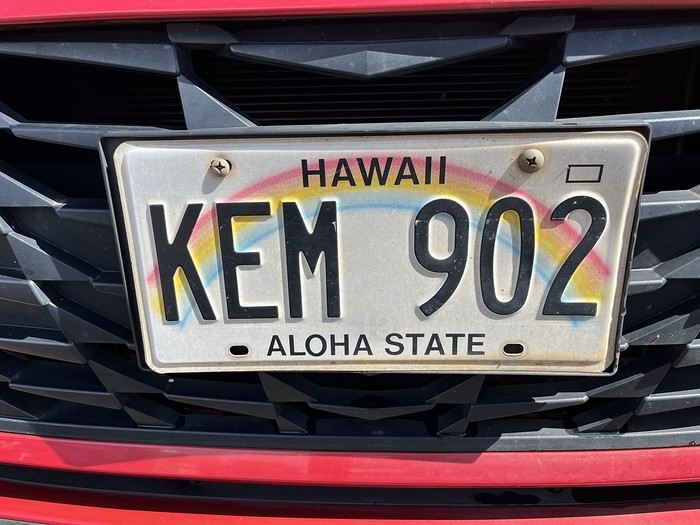
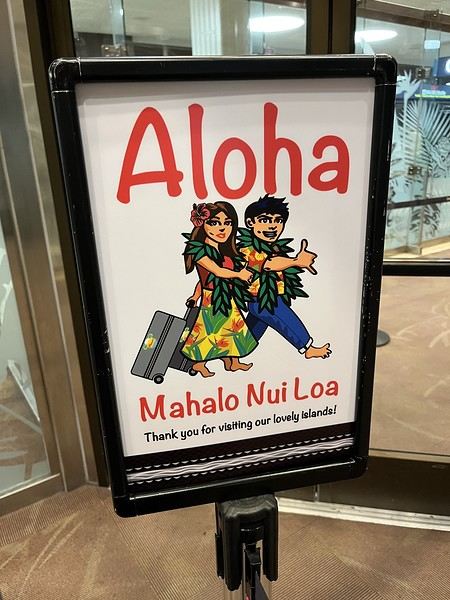
The trip took place from February 20th to March 3rd, 2025 (11 days total, with 9 days on-site). It was a trip with my friend Christelle, with whom I’ve already traveled to Iceland and Morocco in recent years. We’re totally on the same wavelength, with the same expectations and desires, which makes things a lot easier (and, as a bonus, it helps cut down the final bill). Being the generous soul I am, I asked Christelle which country she wanted to visit. Her answer: Asia, since I’ve never been, or Namibia... Hawaii is basically the same thing, right?!! All thanks to the search comparator—I stumbled upon round-trip tickets from Paris to Honolulu for 580 € per person during school holidays, with a layover in Canada (I don’t get to choose my vacation dates). We jumped on it on August 28th (didn’t take much convincing). For info, I always check flight tickets during the last week of August or the first half of September because there are always amazing deals.
Nine days on-site is short, so we had to make some tough choices for the islands we’d visit (I’m only listing the main ones): - Oahu: the most urbanized but also home to Honolulu, Pearl Harbor, and some stunning beaches.
Kauai: the Garden Isle. It’s the island from *Jurassic Park*, with lush vegetation—so it’s pretty rainy. Big Island: volcanoes, volcanoes, and more, but also things like night snorkeling with manta rays. Maui: very touristy, with a magnificent volcano, the Road to Hana, and the ultimate spot for whale watching (and we were there right in the middle of whale season).
We limited ourselves to two islands to avoid rushing, and in the end, we picked Kauai (non-negotiable) and Oahu (which saved us an extra domestic flight and, since we were there in winter, let us experience the BIG WAVES on the North Shore). We would’ve loved to visit Big Island, but we’d already seen volcanoes in Iceland, and the island is huge—we just didn’t have enough time. Maui was recently hit by a major wildfire and is also the most expensive island (along with Kauai). We were really hoping to see humpback whales (my favorite animal) on both Oahu and Kauai. Hawaii is far, and it’s worth the effort. The journey went smoothly. I took a 40-minute bus ride and a 1h32 RER trip just to get to Roissy, then a 9h15 flight to Calgary, with a two-hour layover before a 6h45 flight to Honolulu. 11 hours of time difference, arriving at 10 PM local time. And you know what? (spoiler alert) I’d do it a thousand times if I got the chance.
Alright, let’s go—here we go!
Feedback to improve my summer itinerary in Greece
Hello,
I’ll be in Greece with my two daughters, aged 10 and 13, from July 6th to 27th.
I’ve planned a route that seems fairly coherent, but I’d love to hear your thoughts:
J1 – Arrive in Athens in the afternoon and head straight to Corinth for the night J2 – Relax (beach) and visit Corinth or nearby – night in Corinth J3 – Mycenae + Epidaurus + Nafplio – night in Nafplio J4 – Mystras + Olympia – night in Olympia J5 – Delphi – night in Delphi J6 – Meteora (monasteries and more) – night in Kalambaka J7 – Meteora (nature walk) – night in Athens J8 – Explore Athens – night in Athens J9 – Explore Athens – night in Athens J10 – Ferry to Santorini + visit – night in Santorini J11 – Amorgos or another island – night in Amorgos J12 – Amorgos or another island – night in Amorgos J13 – Amorgos or another island – night in Amorgos J14 – Naxos – night in Naxos J15 – Naxos – night in Naxos J16 – Naxos – night in Naxos J17 – Paros – night in Paros J18 – Paros – night in Paros J19 – Paros – night in Paros J20 – Paros – night in Paros J21 – Ferry from Paros to Athens (is this possible?) – night in Athens J22 – Departure late morning
I’d like to know if there’s a town in the Peloponnese where we can stay and visit everything from there—I’d prefer not to change hotels every night. Are there any stops I can skip? Any must-see additions? I’d love to find pools or beaches to cool off at the end of the day—with the heat and the kids, we’ll need to refresh after sightseeing! For the Cyclades, I’m thinking of spending just an afternoon and evening in Santorini before moving on. I’m looking for authentic, quiet, beautiful islands with few tourists and nice beaches. Should I book all our rooms before leaving, or can we improvise a little? Thanks for your tips!
J1 – Arrive in Athens in the afternoon and head straight to Corinth for the night J2 – Relax (beach) and visit Corinth or nearby – night in Corinth J3 – Mycenae + Epidaurus + Nafplio – night in Nafplio J4 – Mystras + Olympia – night in Olympia J5 – Delphi – night in Delphi J6 – Meteora (monasteries and more) – night in Kalambaka J7 – Meteora (nature walk) – night in Athens J8 – Explore Athens – night in Athens J9 – Explore Athens – night in Athens J10 – Ferry to Santorini + visit – night in Santorini J11 – Amorgos or another island – night in Amorgos J12 – Amorgos or another island – night in Amorgos J13 – Amorgos or another island – night in Amorgos J14 – Naxos – night in Naxos J15 – Naxos – night in Naxos J16 – Naxos – night in Naxos J17 – Paros – night in Paros J18 – Paros – night in Paros J19 – Paros – night in Paros J20 – Paros – night in Paros J21 – Ferry from Paros to Athens (is this possible?) – night in Athens J22 – Departure late morning
I’d like to know if there’s a town in the Peloponnese where we can stay and visit everything from there—I’d prefer not to change hotels every night. Are there any stops I can skip? Any must-see additions? I’d love to find pools or beaches to cool off at the end of the day—with the heat and the kids, we’ll need to refresh after sightseeing! For the Cyclades, I’m thinking of spending just an afternoon and evening in Santorini before moving on. I’m looking for authentic, quiet, beautiful islands with few tourists and nice beaches. Should I book all our rooms before leaving, or can we improvise a little? Thanks for your tips!
Looking for participants for a TANZANIA SAFARI in January 2026
Hello.
I’m looking for participants to form a group of 5 to 6 people for a safari in Tanzania during the dry season in January or even February 2026. There are already two of us. This period is ideal for the Great Migration (when animals cross into Kenya, including wildebeest and zebras, with predators like lions around).
Duration: about one week. A 13-day option is available, but it’s more expensive.
Approximate price: 3500 € (flights included).
You can either go through an agency (local or not) or directly contact a guide (like the SO GUIDES association, for example). I have a contact with a guide who has received very positive reviews.
I won’t go into all the details yet. The first step is to form a group so we can negotiate with a provider. After that, we’ll communicate and make decisions together.
You can reach me at this email: jp54pradines@gmail.com (my personal OVS space is no longer valid—this is my partner’s email).
If you’re interested, please contact me quickly. It’s best to book flight tickets as early as possible for better prices.
Here’s an example of a safari package with a guide:
**8-DAY/7-NIGHT WILD ADVENTURE SAFARI**
**Day 1: ARRIVAL AND TRANSFER** Welcome at Kilimanjaro Airport and transfer to Arusha. Overnight at Green Mountain Hotel (breakfast included).
**Day 2: HIKE ON THE TRAILS OF KILIMANJARO** Pickup from your hotel in Arusha to Moshi Materuni village at the foot of Kilimanjaro. Start a day hike to the impressive waterfalls in one of the country’s highest regions, where glacial, crystal-clear water cascades from 70 meters high. The beautiful trail leads to Materuni Waterfalls at 2,500 meters altitude. To reach them, you’ll cross valleys and hills covered in tropical forest, coffee, avocado, and banana plantations. On clear days, you’ll enjoy a breathtaking view of Kibo, Kilimanjaro’s highest peak. You’ll also learn how to prepare and taste coffee. In the evening, return to Arusha for an overnight stay at Green Mountain Hotel.
**Day 3: HIKE IN A MAASAI VILLAGE** After breakfast around 8:30 AM, you’ll be picked up from your hotel for a walking safari in the wild village. Visit local primary schools, meet traditional healers, and learn about their techniques. You’ll also visit one of the local livestock markets. Dinner and overnight at the Maasai village Boma house.
**Day 4: WILDLIFE IN 4X4 ALONG THE TARANGIRE RIVER** Around 8 AM, pickup from your hotel in Arusha for a 2-hour drive to Tarangire National Park for a day of wildlife viewing. The park is famous for its dense wildlife along the Tarangire River. It’s home to a large number of elephants in the northern circuit and over 550 bird species. You’ll also spot herds of impalas, hartebeests, wildebeests, kudus, oryxes, gerenuks, zebras, buffaloes, and giraffes. Predators like lions, leopards, cheetahs, and hyenas are also present, along with massive African baobabs. Dinner and overnight at Lake Manyara Fig Tree Lodge.
**Day 5: LAKE MANYARA PARK – WILDLIFE VIEWING IN THE RIFT VALLEY** Around 8 AM, depart from your camp to Lake Manyara Park (at the foot of a 600-meter escarpment in the Great Rift Valley) for a day of safaris. You’ll see giraffes, buffaloes, baboon troops, tree-climbing lions, and many other animals. Dinner and overnight at Lake Manyara Fig Tree Lodge.
**Day 6: WILDLIFE IN SERENGETI** In the morning, drive for 5 hours to the stunning Serengeti National Park, passing through the Olduvai Gorge archaeological site. This park is arguably the world’s most famous wildlife reserve, home to over 3 million large mammals. You’ll quickly spot the “Big Five”: buffaloes, elephants, black rhinos in the Moru Kopjes, lions, and leopards. Over 500 bird species have been recorded here. You’ll also witness the spectacular wildebeest migration in the western Serengeti. Dinner and overnight at Serengeti Nyani Camp.
**Day 7: MAGNIFICENT SUNRISE SAFARI IN SERENGETI** Enjoy a stunning sunrise safari in the golden savanna of the Serengeti’s endless plains, all day long, following the animals’ movements. Spend the night at the camp and share your incredible experience so far at Serengeti Nyani Camp.
**Day 8: MAJESTIC EXCURSION IN THE SERENGETI PLAINS** Wake up at 6 AM for coffee at the camp, then head out for a sunrise safari in the Serengeti. Our guide will take you to the best spots to admire the sunrise and observe predators, as many of them, like lions, are most active at this time of day. Return to camp around 10 AM for brunch, then load your belongings into the jeep for a 2-hour safari en route to the Ngorongoro Conservation Area. Dinner and overnight at Ngorongoro Simba Lodge.
**Day 9: SPECTACULAR EXCURSION TO NGORONGORO CRATER** Shortly after breakfast, descend into the Ngorongoro Crater for a sunrise safari in the world’s largest uninterrupted caldera, surrounded by steep walls rising 610 meters from the crater floor. This natural wonder is 19.2 km in diameter and covers 304 km². You’ll explore the area on safari and spot rare species like black rhinos, wildebeests, giraffes, ostriches, bustards, lions, cheetahs, and flamingos in the Soda Lake. In the afternoon, return to Arusha, arriving in the evening for your private activities.
**END OF SERVICES**
**RATES:** The package price is 1,800 USD per person in a double room. Since the guide doesn’t handle flight tickets, we’ll need to arrange those ourselves.
You’ll need to add around 1200 €, bringing the total to 3000 €. This is the price for an independent guide. For a travel agency, you’d need to budget at least 3600 €. Plus, with the guide, we get an extra day of activities compared to an agency’s offer.
**PRICE INCLUDES:** - Park entry fees. - Transfer from Kilimanjaro Airport. - Accommodation in Arusha (breakfast included). - Village development fees. - Accommodation in camps/lodges (breakfast, lunch, dinner). - Transport in a 4x4 Land Cruiser with a pop-up roof in national parks. - Government taxes. - Activities detailed in the itinerary. - Safari guides. - You’ll need to add: return trip from Arusha to Kilimanjaro Airport.
**PRICE DOES NOT INCLUDE:** - Alcoholic beverages. - International flights. - Personal items like visas, laundry, etc. - Tips.
Meleji Mollel (the guide).
This package is for a non-private group. If we form our own group, it becomes private, and we can negotiate with the guide—including requesting a French-speaking guide.
So, are you interested? Could you let me know soon, please?
I’m looking for participants to form a group of 5 to 6 people for a safari in Tanzania during the dry season in January or even February 2026. There are already two of us. This period is ideal for the Great Migration (when animals cross into Kenya, including wildebeest and zebras, with predators like lions around).
Duration: about one week. A 13-day option is available, but it’s more expensive.
Approximate price: 3500 € (flights included).
You can either go through an agency (local or not) or directly contact a guide (like the SO GUIDES association, for example). I have a contact with a guide who has received very positive reviews.
I won’t go into all the details yet. The first step is to form a group so we can negotiate with a provider. After that, we’ll communicate and make decisions together.
You can reach me at this email: jp54pradines@gmail.com (my personal OVS space is no longer valid—this is my partner’s email).
If you’re interested, please contact me quickly. It’s best to book flight tickets as early as possible for better prices.
Here’s an example of a safari package with a guide:
**8-DAY/7-NIGHT WILD ADVENTURE SAFARI**
**Day 1: ARRIVAL AND TRANSFER** Welcome at Kilimanjaro Airport and transfer to Arusha. Overnight at Green Mountain Hotel (breakfast included).
**Day 2: HIKE ON THE TRAILS OF KILIMANJARO** Pickup from your hotel in Arusha to Moshi Materuni village at the foot of Kilimanjaro. Start a day hike to the impressive waterfalls in one of the country’s highest regions, where glacial, crystal-clear water cascades from 70 meters high. The beautiful trail leads to Materuni Waterfalls at 2,500 meters altitude. To reach them, you’ll cross valleys and hills covered in tropical forest, coffee, avocado, and banana plantations. On clear days, you’ll enjoy a breathtaking view of Kibo, Kilimanjaro’s highest peak. You’ll also learn how to prepare and taste coffee. In the evening, return to Arusha for an overnight stay at Green Mountain Hotel.
**Day 3: HIKE IN A MAASAI VILLAGE** After breakfast around 8:30 AM, you’ll be picked up from your hotel for a walking safari in the wild village. Visit local primary schools, meet traditional healers, and learn about their techniques. You’ll also visit one of the local livestock markets. Dinner and overnight at the Maasai village Boma house.
**Day 4: WILDLIFE IN 4X4 ALONG THE TARANGIRE RIVER** Around 8 AM, pickup from your hotel in Arusha for a 2-hour drive to Tarangire National Park for a day of wildlife viewing. The park is famous for its dense wildlife along the Tarangire River. It’s home to a large number of elephants in the northern circuit and over 550 bird species. You’ll also spot herds of impalas, hartebeests, wildebeests, kudus, oryxes, gerenuks, zebras, buffaloes, and giraffes. Predators like lions, leopards, cheetahs, and hyenas are also present, along with massive African baobabs. Dinner and overnight at Lake Manyara Fig Tree Lodge.
**Day 5: LAKE MANYARA PARK – WILDLIFE VIEWING IN THE RIFT VALLEY** Around 8 AM, depart from your camp to Lake Manyara Park (at the foot of a 600-meter escarpment in the Great Rift Valley) for a day of safaris. You’ll see giraffes, buffaloes, baboon troops, tree-climbing lions, and many other animals. Dinner and overnight at Lake Manyara Fig Tree Lodge.
**Day 6: WILDLIFE IN SERENGETI** In the morning, drive for 5 hours to the stunning Serengeti National Park, passing through the Olduvai Gorge archaeological site. This park is arguably the world’s most famous wildlife reserve, home to over 3 million large mammals. You’ll quickly spot the “Big Five”: buffaloes, elephants, black rhinos in the Moru Kopjes, lions, and leopards. Over 500 bird species have been recorded here. You’ll also witness the spectacular wildebeest migration in the western Serengeti. Dinner and overnight at Serengeti Nyani Camp.
**Day 7: MAGNIFICENT SUNRISE SAFARI IN SERENGETI** Enjoy a stunning sunrise safari in the golden savanna of the Serengeti’s endless plains, all day long, following the animals’ movements. Spend the night at the camp and share your incredible experience so far at Serengeti Nyani Camp.
**Day 8: MAJESTIC EXCURSION IN THE SERENGETI PLAINS** Wake up at 6 AM for coffee at the camp, then head out for a sunrise safari in the Serengeti. Our guide will take you to the best spots to admire the sunrise and observe predators, as many of them, like lions, are most active at this time of day. Return to camp around 10 AM for brunch, then load your belongings into the jeep for a 2-hour safari en route to the Ngorongoro Conservation Area. Dinner and overnight at Ngorongoro Simba Lodge.
**Day 9: SPECTACULAR EXCURSION TO NGORONGORO CRATER** Shortly after breakfast, descend into the Ngorongoro Crater for a sunrise safari in the world’s largest uninterrupted caldera, surrounded by steep walls rising 610 meters from the crater floor. This natural wonder is 19.2 km in diameter and covers 304 km². You’ll explore the area on safari and spot rare species like black rhinos, wildebeests, giraffes, ostriches, bustards, lions, cheetahs, and flamingos in the Soda Lake. In the afternoon, return to Arusha, arriving in the evening for your private activities.
**END OF SERVICES**
**RATES:** The package price is 1,800 USD per person in a double room. Since the guide doesn’t handle flight tickets, we’ll need to arrange those ourselves.
You’ll need to add around 1200 €, bringing the total to 3000 €. This is the price for an independent guide. For a travel agency, you’d need to budget at least 3600 €. Plus, with the guide, we get an extra day of activities compared to an agency’s offer.
**PRICE INCLUDES:** - Park entry fees. - Transfer from Kilimanjaro Airport. - Accommodation in Arusha (breakfast included). - Village development fees. - Accommodation in camps/lodges (breakfast, lunch, dinner). - Transport in a 4x4 Land Cruiser with a pop-up roof in national parks. - Government taxes. - Activities detailed in the itinerary. - Safari guides. - You’ll need to add: return trip from Arusha to Kilimanjaro Airport.
**PRICE DOES NOT INCLUDE:** - Alcoholic beverages. - International flights. - Personal items like visas, laundry, etc. - Tips.
Meleji Mollel (the guide).
This package is for a non-private group. If we form our own group, it becomes private, and we can negotiate with the guide—including requesting a French-speaking guide.
So, are you interested? Could you let me know soon, please?
From Cairo to Luxor via the White Desert or via the Nile Valley: preparatory questions
Hi there,
This trip to Egypt isn’t happening anytime soon, but I like to plan a few steps ahead! 😉
I’ve already been to Egypt several times (Cairo, Alexandria, Luxor, the classic cruise, the Lake Nasser cruise, Abu Simbel, Taba) both solo and on organized tours, but my partner hasn’t.
So, I’m thinking of mixing the classic with something a bit more original.
My idea is to visit Cairo and its surroundings, then make my way to Luxor in stages. The trip would end in Luxor.
Renting a car doesn’t seem like a viable option. That leaves boats, public transport, a car with a driver, or even a private tour for the stretch between Cairo and Luxor.
My questions:
How can I cover the Cairo-Luxor stretch if I go through the White Desert? Is a car with a driver possible? What’s the daily cost of hiring a car with a driver (including the driver’s accommodation and expenses)? How many days should I plan for this route (Saqqara, Fayoum Oasis, Black Desert, White Desert, Ad-Dakhla, El Kharga)?
Are there any cruise boats that do the Cairo-Luxor route (or vice versa)? Dahabiyas? Or at least the Assiut-Luxor stretch?
Thanks! 🙂
This trip to Egypt isn’t happening anytime soon, but I like to plan a few steps ahead! 😉
I’ve already been to Egypt several times (Cairo, Alexandria, Luxor, the classic cruise, the Lake Nasser cruise, Abu Simbel, Taba) both solo and on organized tours, but my partner hasn’t.
So, I’m thinking of mixing the classic with something a bit more original.
My idea is to visit Cairo and its surroundings, then make my way to Luxor in stages. The trip would end in Luxor.
Renting a car doesn’t seem like a viable option. That leaves boats, public transport, a car with a driver, or even a private tour for the stretch between Cairo and Luxor.
My questions:
How can I cover the Cairo-Luxor stretch if I go through the White Desert? Is a car with a driver possible? What’s the daily cost of hiring a car with a driver (including the driver’s accommodation and expenses)? How many days should I plan for this route (Saqqara, Fayoum Oasis, Black Desert, White Desert, Ad-Dakhla, El Kharga)?
Are there any cruise boats that do the Cairo-Luxor route (or vice versa)? Dahabiyas? Or at least the Assiut-Luxor stretch?
Thanks! 🙂
In MIKUMI and SELOUS, Southern Tanzania (June 2024)
Hi everyone,
I’m a newbie to this forum, passionate about wildlife, the landscapes of East Africa, and Tanzania in particular. This June 2024 trip/safari is our 7th visit to Tanzania and our 5th in the south, which has drawn us more than the north ever since we discovered it in 2015.
In 2024, the entrance fees for the reserves and services have gone up again since our last visit. I chose to return first to Mikumi Reserve, which was the very first one we visited in the south. Then, we’ll head to Selous (J. Nyerere N. P.) as usual. Initially, we wanted to spend 2/3 days on Mafia Island at the end of the trip, but it made the total cost too high, so we gave up... We usually go to Ruaha and Selous, but I wanted to mix it up a bit—also to save some money...
As for the timing, June is a new experience for us. I thought it might be interesting to come just after the lodges reopen... hoping for some great wildlife encounters??
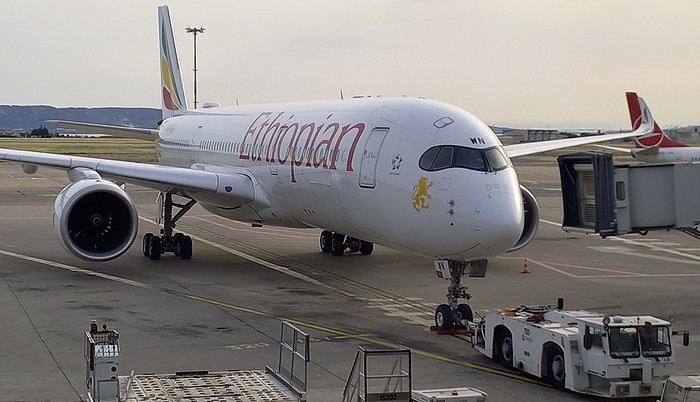
The trip starts in Marseille with our first flight on Ethiopian Airlines to Addis Ababa, then continues to Dar es Salaam, where we’ll finally set foot on Tanzanian soil again.
In Addis... "our" A-350.
.....
After arriving in Dar, we spent one night at a hotel near the airport. The next morning, we headed to the domestic flights terminal, which hasn’t changed in years.
By mid-morning, we boarded a Cessna 208B Caravan with Safari Air Link, heading to the Kikoboga bush airstrip in Mikumi, which we reached 45 minutes later. Fun fact: the pilot was the same one as on our return flight two years ago.
Welcome on board:
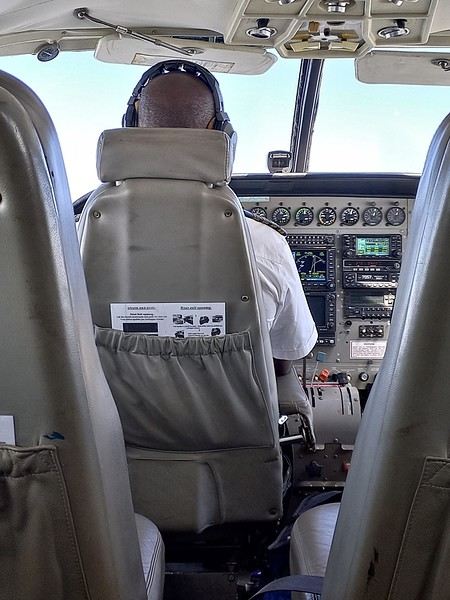
Of course, a driver/guide team from our chosen lodge was waiting for us upon arrival:
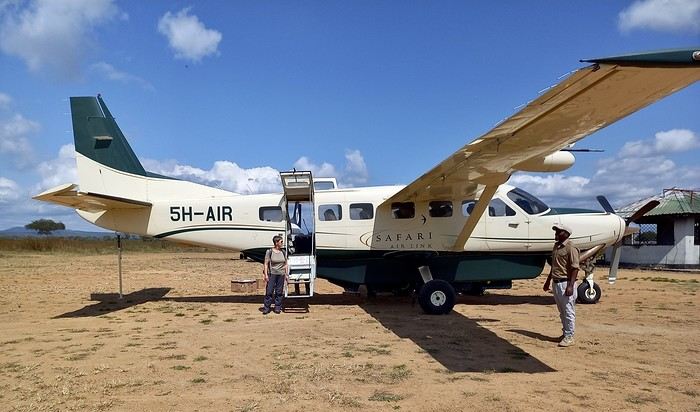
I was surprised to see so many aircraft parked there... even twin-engine Embraer Brasilias?? As a fan of vintage planes, I loved it...
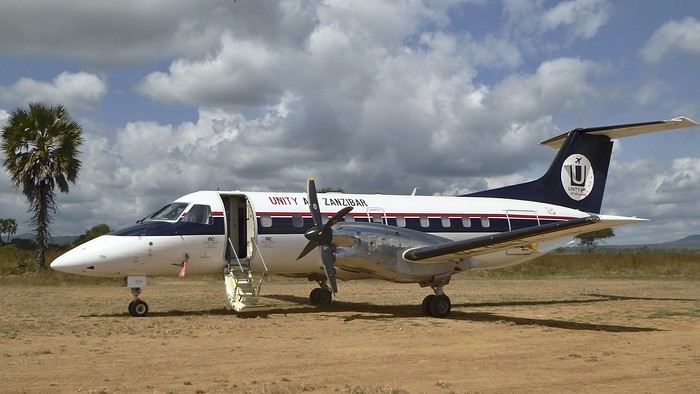
On the other hand, the light was incredibly harsh.....!! Our guides only speak English. We knew that in advance. In the south, it’s very rare to find someone who speaks French. This’ll force us to dig into our high school English memories... from 60 years ago... at least.
It’s noon, and we head toward the lodge. Near the airstrip, next to the Mikumi rangers’ base, there are quite a few herbivores. They find a bit more peace here—the big cats don’t venture this way...
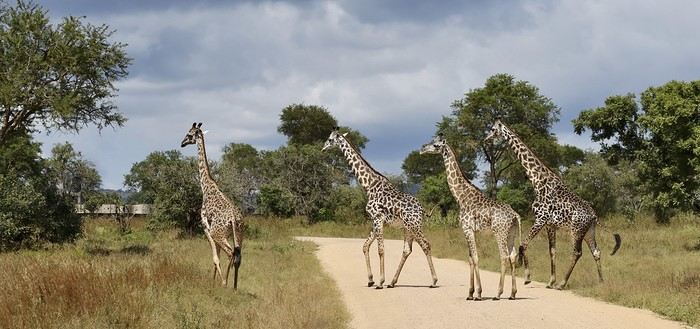
Our first encounter was a group of Masai giraffes.
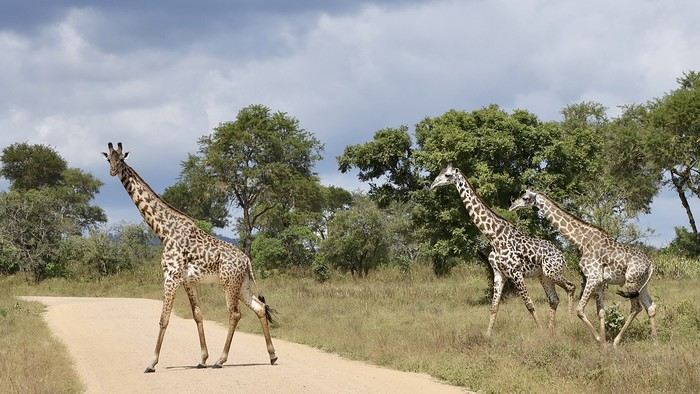
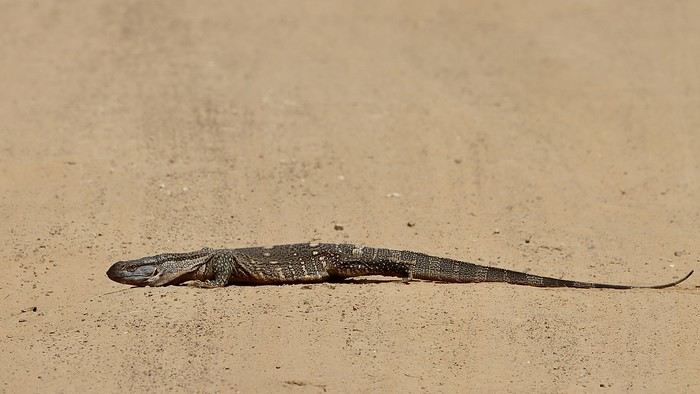
Rarer (for us), a savanna monitor lizard basking in the sun right in the middle of the track...??
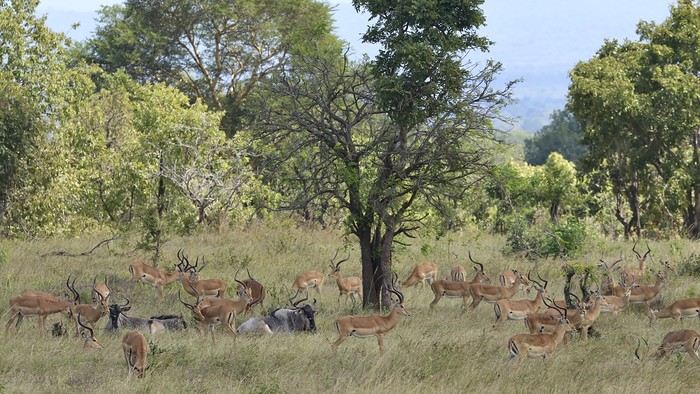
A large gathering of impalas (mostly males) along with a few blue wildebeest:

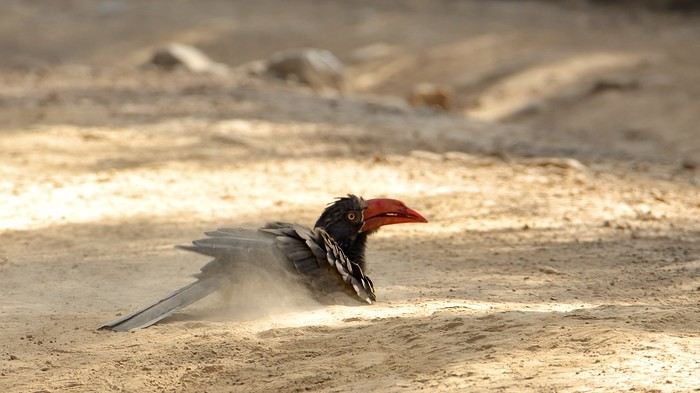
Also unusual: a African crowned hornbill taking a dust bath in the middle of the track...!!
When it comes to identifying mammals or birds, I don’t know everything... so I might make mistakes. Please forgive me. I’m counting on my friend Blesl’s active participation... 😉
...
I’m a newbie to this forum, passionate about wildlife, the landscapes of East Africa, and Tanzania in particular. This June 2024 trip/safari is our 7th visit to Tanzania and our 5th in the south, which has drawn us more than the north ever since we discovered it in 2015.
In 2024, the entrance fees for the reserves and services have gone up again since our last visit. I chose to return first to Mikumi Reserve, which was the very first one we visited in the south. Then, we’ll head to Selous (J. Nyerere N. P.) as usual. Initially, we wanted to spend 2/3 days on Mafia Island at the end of the trip, but it made the total cost too high, so we gave up... We usually go to Ruaha and Selous, but I wanted to mix it up a bit—also to save some money...
As for the timing, June is a new experience for us. I thought it might be interesting to come just after the lodges reopen... hoping for some great wildlife encounters??
The trip starts in Marseille with our first flight on Ethiopian Airlines to Addis Ababa, then continues to Dar es Salaam, where we’ll finally set foot on Tanzanian soil again.
In Addis... "our" A-350.
.....
After arriving in Dar, we spent one night at a hotel near the airport. The next morning, we headed to the domestic flights terminal, which hasn’t changed in years.
By mid-morning, we boarded a Cessna 208B Caravan with Safari Air Link, heading to the Kikoboga bush airstrip in Mikumi, which we reached 45 minutes later. Fun fact: the pilot was the same one as on our return flight two years ago.
Welcome on board:
Of course, a driver/guide team from our chosen lodge was waiting for us upon arrival:
I was surprised to see so many aircraft parked there... even twin-engine Embraer Brasilias?? As a fan of vintage planes, I loved it...
On the other hand, the light was incredibly harsh.....!! Our guides only speak English. We knew that in advance. In the south, it’s very rare to find someone who speaks French. This’ll force us to dig into our high school English memories... from 60 years ago... at least.
It’s noon, and we head toward the lodge. Near the airstrip, next to the Mikumi rangers’ base, there are quite a few herbivores. They find a bit more peace here—the big cats don’t venture this way...
Our first encounter was a group of Masai giraffes.
Rarer (for us), a savanna monitor lizard basking in the sun right in the middle of the track...??
A large gathering of impalas (mostly males) along with a few blue wildebeest:
Also unusual: a African crowned hornbill taking a dust bath in the middle of the track...!!
When it comes to identifying mammals or birds, I don’t know everything... so I might make mistakes. Please forgive me. I’m counting on my friend Blesl’s active participation... 😉
...
Is it better to visit Martinique or Guadeloupe in April?
hi
need some info—I’m torn between Martinique and Guadeloupe for April.
also, which island is bigger in terms of trip length?
thanks in advance
Bike Loop on the Petit Train du Nord (Quebec)
Hi there,
We’re leaving from Montreal and planning to bike the Petit Train du Nord route.
Any ideas for loops so we don’t have to return the same way?
We’re thinking of a one-week trip.
Thanks in advance for your tips!
Rachel
Back from Yunnan and Guizhou
We’re a retired French couple.
We’ve just spent 4 weeks in China:
- 1. Exploring Yunnan in a group (12 people); a journey that took us from the Vietnamese border in the south to the edges of Tibet in the north.
- 2. A private trip to Guizhou with just a driver.
We’re absolutely delighted with what we discovered: a modern country with excellent infrastructure (especially the low level of urban pollution thanks to the high number of electric vehicles, the absence of diesel, and no noisy motorbikes in these two less industrialized provinces), friendly Chinese people who were always ready to help us when we had difficulties or questions, and a rich natural and cultural heritage.
The language barrier remains the biggest challenge, despite instant translation tools.
For both trips, we booked through the agency CIELCHINE, which we highly recommend.
The value for money is unbeatable.
The services were luxurious, especially for us since we usually travel alone on a tight budget for accommodation and food.
The agency’s staff were perfectly competent and, what’s more, warm and welcoming.
For Yunnan, our guide SEBASTIEN, who was experienced and knowledgeable, won everyone over.
In Guizhou, our driver HUANG was professionally flawless and guided us through villages he knows well. Friendly and full of humor, he’d spontaneously talk to people he met, which made us be treated with much more kindness and allowed us to exchange a few basic words.
As you can see, I haven’t ticked anything negative—not because I’m hiding anything or have any ulterior motive, but because I’m completely satisfied and the experience even exceeded all my expectations.
Thoughts on 3 Weeks of Travel in Costa Rica
We just got back from a nearly 3-week trip to Costa Rica in March. For the occasion, we used EVANEOS to plan our trip based on our preferences.
After some setbacks with ADOBE RENT-A-CAR—they refused the Visa Premier card and forced us to pay for extra insurance (which is usually covered by the Visa Premier)—we finally set off to explore the country.
Observation: Apart from nature, wildlife, and flora, there isn’t much else to see, but it’s so beautiful! Some people criticize the country as insignificant, with bland food and unwelcoming locals. I think those people didn’t really explore—maybe they stayed in their hotel near the beach (UVITA?) without venturing out. Otherwise, there wouldn’t be so many Europeans living in Costa Rica who don’t even consider going back to their home countries.
For our part, we found Costa Ricans very kind and welcoming. It’s often said they’re thieves, but personally, we left a small suitcase in a restaurant. When we returned after driving 20 km round trip, the staff were trying to find our phone number to contact us. I think it’s like anywhere—even in France, I’d tell tourists not to leave anything in their car to avoid… well, you know.
Food: Traditional dishes, fish plates (tilapia was excellent), and especially ceviche (around 15 € per person)—really good—and lobster (around 30 to 35 € per person), all served with fruit batidos (around 3 € per person).
Car: We had a 2-wheel-drive vehicle, which kept us from visiting some sites that require a 4x4, like Boruca, the town of artisan masks. Some lodges are also only accessible via rough, rocky trails that are tough to navigate in a regular car. Don’t hesitate to insist on a 4x4.
Keep in mind that driving fast in Costa Rica isn’t possible. Some roads are in poor condition, and there are often unmarked speed bumps that are much worse than the ones in France. You’ll average about 50 to 60 km/h on a leg of the trip.
I also recommend bringing a road map to cross-check the routes suggested by Waze or Google Maps. Sometimes, these apps will send you down completely wrecked roads to save time! A paper map will help you verify the road type. It’s better to drive an extra 20 km than to get stuck on a rocky path.
- San José to Barra de Pacuare (much less crowded than Tortuguero). Sea turtles are still rare this time of year. Via the canals, we spotted howler monkeys, sloths, and birds, and on land, we saw venomous spiders, poisonous frogs, and a leatherback turtle conservation site.
Explored a primary tropical forest with its many species of flora and fauna (monkeys, snakes, sloths, toucans, raccoons, etc.).
- Barra de Pacuare to Cahuita: Explored Cahuita National Park (howler monkeys, capuchin monkeys, raccoons, sloths, blue crabs, leaf-cutter ants, etc.) and walked along the trail by Puerto Viejo’s beach.
- Cahuita to Bambú: Visited the Bribri tribe and their customs. This isn’t a tourist trap—it’s a deep immersion into a community living almost self-sufficiently. To get there, you take a motorized canoe for over an hour. But be warned:
1 - The restroom cleanliness leaves a lot to be desired
2 - There’s no hot water
3 - A waterfall hike is offered. The first two-thirds are fine, but the last third is very dangerous, especially if it’s rained, even with sneakers. You need sturdy shoes. Our guide turned back halfway…
- Bambú to Sarapiquí:
- La Fortuna: Explored the Mistico Park tropical forest. A 3+ km trail lets you discover animals and lush vegetation. Sixteen suspension bridges, some up to 45 meters high, offer stunning views of the canopy.
Walked around Arenal Volcano: Big disappointment for seeing lava flows. After 2 km, a viewpoint shows vegetation that’s taken over—only a few volcanic rocks hint at the 1968 eruption.
- La Fortuna to Carara: Spotted crocodiles at the Tarcoles Bridge.
- Carara to Uvita: Relaxed. Uvita is a small tourist town with nothing particularly original, but it’s the place to try CEVICHE, a typical dish of raw fish “cooked” in lime juice. Delicious! We recommend Mestizo for very affordable prices.
- Osa to Corcovado National Park: This park is gorgeous. You’ll see all four monkey species, tapirs, scarlet macaws, etc.
From Drake Bay, it takes about 1 hour 15 to 1 hour 30 to cross to the park. After navigating the mangroves, the boat heads into open sea until reaching the beach, where you’ll wade ashore (water up to your thighs—bring shoes for the slippery rocks).
National Geographic called the park a "jewel of humanity" that must be preserved at all costs due to its incredible biodiversity. The park represents 3% of the world’s biodiversity. You can observe countless monkeys (all four species are present), crocodiles, tapirs, and scarlet macaws.
Our guided hike with a French-speaking guide lasted 4 hours before returning by boat to the lodge.
WARNING: There’s strict control at the park entrance:
- No plastic bottles
- No knives
- No plastic items
- No bare feet. Closed-toe shoes are required (in addition to a pair for the boat)
- Osa to Zona de los Santos: This is the coffee region and home to the quetzal, a stunning but hard-to-spot bird that’s also Guatemala’s symbol. Paraíso Quetzal Lodge has a platform with a spotting scope to try to see the bird in the forest. CAUTION: This beautiful lodge is at 2,650 meters altitude. The rooms have incredible forest views, but it’s VERY VERY cold!
- Zona de los Santos to San José: Detour to Irazú Volcano. WARNING: Buy tickets before arriving. The staff kindly bought them for us via their phone. Small disappointment: The crater lake hasn’t existed for years! The ads are misleading about this.
- San José: A city we found uninteresting.
Campervan Road Trips: Freedom and Adventure in New Zealand
Ah! New Zealand, the ultimate road trip destination. If you've been dreaming of trying out a campervan adventure, it's definitely one of the best places in the world to take the plunge. With its diverse landscapes—white sand beaches, volcanoes, glaciers, fjords, and glacial lakes—the country also boasts top-notch infrastructure for campers, making it ideal for campervan circuits, even for beginners!
Why is New Zealand the perfect country for your first campervan trip?
Safe and Scenic Roads
New Zealand offers a well-maintained road network, usually not too busy outside major cities. This is a huge plus if you're new to driving a campervan. The routes often feature spectacular viewpoints. You'll also find a vast network of campgrounds, and while freedom camping is regulated, there are still plenty of spots where you can sleep for free. Speed limits are reasonable, and the driving culture is pretty relaxed.
Adapted Infrastructure
There are plenty of campervan rental companies offering different models, from converted vans to large family motorhomes. You'll find rental depots in major cities (Auckland, Christchurch, Queenstown), along with shuttle services between the airport and the depot. Campgrounds in New Zealand, whether private or managed by the Department of Conservation (DOC), are easy to find and well-marked. Plus, since New Zealand is a country of campers, you'll often get helpful tips from the locals.
Diverse and Accessible Landscapes
Beaches, volcanoes, deep fjords, or subtropical forests—you can experience a completely different setting in just a few hours of driving. No need to be a 4x4 expert: most roads leading to these stunning sites are campervan-friendly. This variety of landscapes, combined with easy access, makes New Zealand a top choice for a first road trip experience.
The Most Beautiful Places to Discover in a Campervan
To give you an idea, here’s a selection of must-see spots to inspire your next adventure.
1. The Coromandel Peninsula (North Island)
Just a few hours from Auckland, the Coromandel Peninsula is famous for its white sand beaches, hot springs, and lush vegetation. Hot Water Beach is a must-visit—dig your own "thermal bath" on the shore at low tide. You’ll easily find campgrounds by the ocean, perfect for your first taste of campervan life.
2. Rotorua and the Geothermal Wonders (North Island)
A little further south, Rotorua is the geothermal heart of New Zealand. Geysers, bubbling pools, and sulfur lakes with amazing colors—there’s no shortage of things to do. It’s also a major hub for Māori culture. Take the time to visit a traditional village or watch a haka performance. In the evening, relax at a campground with natural hot pools.
3. Tongariro National Park (North Island)
A UNESCO World Heritage site, this volcanic park is a paradise for hikers, especially with the famous Tongariro Alpine Crossing. Even if you're not an experienced hiker, you can enjoy stunning views from the roads or short marked trails. The campgrounds in the area will immerse you in a postcard-worthy setting.
4. Abel Tasman, Coastal Gem (South Island)
After taking the ferry from Wellington to Picton, head to Abel Tasman National Park. Its golden beaches, crystal-clear waters, and coastal trails are perfect for unwinding. One of the perks of a campervan is exploring at your own pace, choosing spots near the beaches or deeper in the forest.
5. Punakaiki and the Pancake Rocks (South Island)
As you drive along the West Coast’s thick rainforests and wild beaches, stop at Punakaiki to see the Pancake Rocks—surprising rock formations that look like stacks of pancakes. A marked trail runs along the coast, letting you watch waves crash into the "blowholes" (marine geysers). Spending the night at a seaside campground, lulled by the sound of waves, is an experience not to be missed.
6. The Franz Josef and Fox Glaciers (South Island)
Further south, the glacier region is a must for lovers of breathtaking landscapes. You can admire the icy giants from a distance on an easy trail or take a helicopter to fly over them—or even walk on them. The campgrounds in Franz Josef or Fox Glacier let you wake up in an alpine atmosphere, contrasting with the lush vegetation around you.
7. Queenstown and Wanaka (South Island)
Queenstown, on the shore of a sparkling lake surrounded by majestic peaks, is known as the adventure capital: bungee jumping, paragliding, rafting—anything’s possible. If you prefer a quieter vibe, Wanaka is just as charming, with its beautiful lake and accessible walks. The road between these two towns is stunning, with plenty of perfect spots for a picnic stop.
8. Te Anau and Milford Sound (South Island)
New Zealand’s fjords are world-famous. Te Anau is the gateway to exploring Milford Sound or, for something wilder, Doubtful Sound. A cruise through these deep fjords, surrounded by towering cliffs, is one of the highlights of any trip to New Zealand. Staying overnight in a campervan in Te Anau saves you a long round trip in a day and lets you set off at dawn for more adventures.
9. Lake Tekapo and Mount Cook (South Island)
In the heart of the Southern Alps, Lake Tekapo charms with its unique turquoise color and its picturesque church by the water. The area is known for its starry skies (it’s an International Dark Sky Reserve). Mount Cook, the country’s highest peak, stands majestically in the background. Several campgrounds offer views of these mountains.
Practical Tips for a Successful Campervan Road Trip
Where to start? Between choosing the right vehicle, the best time to go, parking rules, and tips for where to sleep, here are our practical tips to plan your road trip stress-free.
Duration and Itinerary Choices
Less than 15 days: Focus on one island to avoid spending too much time on the road.
More than 15 days: Consider a North-South combo with a one-way trip (e.g., Auckland to Christchurch).
Book Early
In peak season (November to March), demand is high, especially for family-sized vehicles. Book your campervan ideally 6 to 8 months in advance.
Opt for full insurance to avoid high excess fees and hassles in case of issues. Standard bank insurance rarely covers campervans.
Choosing the Right Vehicle
Watch out for campervans over 3 years old—they can be "tired" in terms of both equipment and driving. If your budget allows, go for a newer model for better reliability and comfort.
Check the depot’s opening hours for pick-up. If you arrive late or after a long trip, it’s better to spend the first night in accommodation rather than driving straight away.
Where to Spend the Night
Freedom camping: Allowed in some remote areas but heavily regulated. Fines for breaking the rules can reach $200. Use comprehensive apps to identify legal spots and avoid penalties!
Basic campsites / DOC: Basic facilities but often in idyllic settings. These are campgrounds managed by the Department of Conservation, perfect for getting close to nature.
Private campgrounds: More expensive but offer hot showers, electricity, playgrounds for kids, pools, and laundry. Ideal for recharging—both your campervan’s batteries and your own.
Respect Nature
New Zealand is known for its pristine landscapes. Manage your waste, use designated dumping areas, and follow local signage. New Zealanders care deeply about keeping their environment clean and warmly welcome responsible tourists. For support, consider a local French-speaking agency like Frogs, which can help with administrative steps, planning your itinerary, and of course, renting a campervan.
Why is New Zealand the perfect country for your first campervan trip?
Safe and Scenic Roads
New Zealand offers a well-maintained road network, usually not too busy outside major cities. This is a huge plus if you're new to driving a campervan. The routes often feature spectacular viewpoints. You'll also find a vast network of campgrounds, and while freedom camping is regulated, there are still plenty of spots where you can sleep for free. Speed limits are reasonable, and the driving culture is pretty relaxed.
Adapted Infrastructure
There are plenty of campervan rental companies offering different models, from converted vans to large family motorhomes. You'll find rental depots in major cities (Auckland, Christchurch, Queenstown), along with shuttle services between the airport and the depot. Campgrounds in New Zealand, whether private or managed by the Department of Conservation (DOC), are easy to find and well-marked. Plus, since New Zealand is a country of campers, you'll often get helpful tips from the locals.
Diverse and Accessible Landscapes
Beaches, volcanoes, deep fjords, or subtropical forests—you can experience a completely different setting in just a few hours of driving. No need to be a 4x4 expert: most roads leading to these stunning sites are campervan-friendly. This variety of landscapes, combined with easy access, makes New Zealand a top choice for a first road trip experience.
The Most Beautiful Places to Discover in a Campervan
To give you an idea, here’s a selection of must-see spots to inspire your next adventure.
1. The Coromandel Peninsula (North Island)
Just a few hours from Auckland, the Coromandel Peninsula is famous for its white sand beaches, hot springs, and lush vegetation. Hot Water Beach is a must-visit—dig your own "thermal bath" on the shore at low tide. You’ll easily find campgrounds by the ocean, perfect for your first taste of campervan life.
2. Rotorua and the Geothermal Wonders (North Island)
A little further south, Rotorua is the geothermal heart of New Zealand. Geysers, bubbling pools, and sulfur lakes with amazing colors—there’s no shortage of things to do. It’s also a major hub for Māori culture. Take the time to visit a traditional village or watch a haka performance. In the evening, relax at a campground with natural hot pools.
3. Tongariro National Park (North Island)
A UNESCO World Heritage site, this volcanic park is a paradise for hikers, especially with the famous Tongariro Alpine Crossing. Even if you're not an experienced hiker, you can enjoy stunning views from the roads or short marked trails. The campgrounds in the area will immerse you in a postcard-worthy setting.
4. Abel Tasman, Coastal Gem (South Island)
After taking the ferry from Wellington to Picton, head to Abel Tasman National Park. Its golden beaches, crystal-clear waters, and coastal trails are perfect for unwinding. One of the perks of a campervan is exploring at your own pace, choosing spots near the beaches or deeper in the forest.
5. Punakaiki and the Pancake Rocks (South Island)
As you drive along the West Coast’s thick rainforests and wild beaches, stop at Punakaiki to see the Pancake Rocks—surprising rock formations that look like stacks of pancakes. A marked trail runs along the coast, letting you watch waves crash into the "blowholes" (marine geysers). Spending the night at a seaside campground, lulled by the sound of waves, is an experience not to be missed.
6. The Franz Josef and Fox Glaciers (South Island)
Further south, the glacier region is a must for lovers of breathtaking landscapes. You can admire the icy giants from a distance on an easy trail or take a helicopter to fly over them—or even walk on them. The campgrounds in Franz Josef or Fox Glacier let you wake up in an alpine atmosphere, contrasting with the lush vegetation around you.
7. Queenstown and Wanaka (South Island)
Queenstown, on the shore of a sparkling lake surrounded by majestic peaks, is known as the adventure capital: bungee jumping, paragliding, rafting—anything’s possible. If you prefer a quieter vibe, Wanaka is just as charming, with its beautiful lake and accessible walks. The road between these two towns is stunning, with plenty of perfect spots for a picnic stop.
8. Te Anau and Milford Sound (South Island)
New Zealand’s fjords are world-famous. Te Anau is the gateway to exploring Milford Sound or, for something wilder, Doubtful Sound. A cruise through these deep fjords, surrounded by towering cliffs, is one of the highlights of any trip to New Zealand. Staying overnight in a campervan in Te Anau saves you a long round trip in a day and lets you set off at dawn for more adventures.
9. Lake Tekapo and Mount Cook (South Island)
In the heart of the Southern Alps, Lake Tekapo charms with its unique turquoise color and its picturesque church by the water. The area is known for its starry skies (it’s an International Dark Sky Reserve). Mount Cook, the country’s highest peak, stands majestically in the background. Several campgrounds offer views of these mountains.
Practical Tips for a Successful Campervan Road Trip
Where to start? Between choosing the right vehicle, the best time to go, parking rules, and tips for where to sleep, here are our practical tips to plan your road trip stress-free.
Duration and Itinerary Choices
Less than 15 days: Focus on one island to avoid spending too much time on the road.
More than 15 days: Consider a North-South combo with a one-way trip (e.g., Auckland to Christchurch).
Book Early
In peak season (November to March), demand is high, especially for family-sized vehicles. Book your campervan ideally 6 to 8 months in advance.
Opt for full insurance to avoid high excess fees and hassles in case of issues. Standard bank insurance rarely covers campervans.
Choosing the Right Vehicle
Watch out for campervans over 3 years old—they can be "tired" in terms of both equipment and driving. If your budget allows, go for a newer model for better reliability and comfort.
Check the depot’s opening hours for pick-up. If you arrive late or after a long trip, it’s better to spend the first night in accommodation rather than driving straight away.
Where to Spend the Night
Freedom camping: Allowed in some remote areas but heavily regulated. Fines for breaking the rules can reach $200. Use comprehensive apps to identify legal spots and avoid penalties!
Basic campsites / DOC: Basic facilities but often in idyllic settings. These are campgrounds managed by the Department of Conservation, perfect for getting close to nature.
Private campgrounds: More expensive but offer hot showers, electricity, playgrounds for kids, pools, and laundry. Ideal for recharging—both your campervan’s batteries and your own.
Respect Nature
New Zealand is known for its pristine landscapes. Manage your waste, use designated dumping areas, and follow local signage. New Zealanders care deeply about keeping their environment clean and warmly welcome responsible tourists. For support, consider a local French-speaking agency like Frogs, which can help with administrative steps, planning your itinerary, and of course, renting a campervan.
Phongsaly or Luang Namtha for an authentic trek with a child?
Hello, We’re heading to Laos in December 2025, and we want to do a multi-day trek—maybe even a week—to really take our time and make stops in villages since we’ll have our 3-year-old daughter with us.
We’re torn between the Luang Namtha region or Phongsaly for our big trek. We’re looking for the least touristy spot possible, we love mountains, so we’d like an area with varied landscapes, including rice paddies, and a chance to really connect with local ethnic groups. We’re after authenticity and only want to stay with locals. Which of the two should we prioritize? Any advice would be welcome to help us decide—it’s tough when you don’t know the area! Maybe there are other spots in the north worth considering for a beautiful week-long trek.
Thanks, fellow travelers
We’re torn between the Luang Namtha region or Phongsaly for our big trek. We’re looking for the least touristy spot possible, we love mountains, so we’d like an area with varied landscapes, including rice paddies, and a chance to really connect with local ethnic groups. We’re after authenticity and only want to stay with locals. Which of the two should we prioritize? Any advice would be welcome to help us decide—it’s tough when you don’t know the area! Maybe there are other spots in the north worth considering for a beautiful week-long trek.
Thanks, fellow travelers
Family Road Trip from Salt Lake City to Salt Lake City
Hello fellow travel forum members,
This time, it's real, concrete stuff.
We’ll be going on a road trip in September this year (if all goes well, yes, I know it’s a bit superstitious, but I can’t help it, especially with the current family circumstances).
There’ll be four of us: my husband, our two grown kids (20 and 24), and me.
The flights aren’t booked yet because I’m still hesitating over the dates (it’s down to a day or two). They should be finalized by the end of this week or sometime next week.
J1 - Friday, August 29: Brussels-SLC via Amsterdam with KLM (I’d love your opinions on this airline since I’ve never flown with them before) – arrival scheduled for early afternoon. J2 - Saturday, August 30: SLC-Moab J3 - Sunday, August 31: Arches – we’ll see if we can get tickets; otherwise, we’ll wake up at dawn (entries possible without a reservation before 7 am) J4 - Monday, September 1: Arches J5 - Tuesday, September 2: Moab - Grand Teton – night booked J6 - Wednesday, September 3: Grand Teton – night booked J7 - Thursday, September 4: Grand Teton - Jackson J8 - Friday, September 5: Jackson J9 - Saturday, September 6: Jackson – evening: Rodeo (tickets booked) J10 - Sunday, September 7: Jackson - Yellowstone – night booked at Lake Yellowstone J11 - Monday, September 8: Yellowstone – night booked at Canyon Lodge J12 - Tuesday, September 9: Yellowstone – night booked at Canyon Lodge J13 - Wednesday, September 10: Yellowstone – night booked at Old Faithful Snow J14 - Thursday, September 11: Yellowstone – night booked at Old Faithful Snow J15 - Friday, September 12: Yellowstone - SLC J16 - Saturday, September 13: departure from SLC J17 - Sunday, September 14: arrival in Brussels
As I mentioned in the intro, the departure and return dates aren’t set in stone yet. Normally, we’d leave on August 29, which would mean visiting Moab and Arches. Otherwise, we’d leave on August 30 and stay in SLC. Around SLC, we’d explore the area, but I’ll admit I’m a bit stuck on what to do there.
For the return, we’d leave SLC on Saturday, September 13, or Sunday, September 14. Our youngest starts classes on Monday, September 15, but he doesn’t mind starting a day later.
Some things are already booked and paid for and can’t be changed (or only with difficulty), so please keep that in mind in your comments. 😕
I’d love to hear about your experiences with a few questions:
* Is it too ambitious to include Arches in the road trip? Especially since the drives are long, particularly the Moab-Grand Teton stretch.
* What do you recommend doing around SLC?
* Same for Jackson. We’ve decided to spend two full days there to take a break between the national parks.
* For the return, I was wondering if spending a day in SLC before heading back to Europe might be a good idea.
Thanks so much in advance for your advice!
Patricia
This time, it's real, concrete stuff.
We’ll be going on a road trip in September this year (if all goes well, yes, I know it’s a bit superstitious, but I can’t help it, especially with the current family circumstances).
There’ll be four of us: my husband, our two grown kids (20 and 24), and me.
The flights aren’t booked yet because I’m still hesitating over the dates (it’s down to a day or two). They should be finalized by the end of this week or sometime next week.
J1 - Friday, August 29: Brussels-SLC via Amsterdam with KLM (I’d love your opinions on this airline since I’ve never flown with them before) – arrival scheduled for early afternoon. J2 - Saturday, August 30: SLC-Moab J3 - Sunday, August 31: Arches – we’ll see if we can get tickets; otherwise, we’ll wake up at dawn (entries possible without a reservation before 7 am) J4 - Monday, September 1: Arches J5 - Tuesday, September 2: Moab - Grand Teton – night booked J6 - Wednesday, September 3: Grand Teton – night booked J7 - Thursday, September 4: Grand Teton - Jackson J8 - Friday, September 5: Jackson J9 - Saturday, September 6: Jackson – evening: Rodeo (tickets booked) J10 - Sunday, September 7: Jackson - Yellowstone – night booked at Lake Yellowstone J11 - Monday, September 8: Yellowstone – night booked at Canyon Lodge J12 - Tuesday, September 9: Yellowstone – night booked at Canyon Lodge J13 - Wednesday, September 10: Yellowstone – night booked at Old Faithful Snow J14 - Thursday, September 11: Yellowstone – night booked at Old Faithful Snow J15 - Friday, September 12: Yellowstone - SLC J16 - Saturday, September 13: departure from SLC J17 - Sunday, September 14: arrival in Brussels
As I mentioned in the intro, the departure and return dates aren’t set in stone yet. Normally, we’d leave on August 29, which would mean visiting Moab and Arches. Otherwise, we’d leave on August 30 and stay in SLC. Around SLC, we’d explore the area, but I’ll admit I’m a bit stuck on what to do there.
For the return, we’d leave SLC on Saturday, September 13, or Sunday, September 14. Our youngest starts classes on Monday, September 15, but he doesn’t mind starting a day later.
Some things are already booked and paid for and can’t be changed (or only with difficulty), so please keep that in mind in your comments. 😕
I’d love to hear about your experiences with a few questions:
* Is it too ambitious to include Arches in the road trip? Especially since the drives are long, particularly the Moab-Grand Teton stretch.
* What do you recommend doing around SLC?
* Same for Jackson. We’ve decided to spend two full days there to take a break between the national parks.
* For the return, I was wondering if spending a day in SLC before heading back to Europe might be a good idea.
Thanks so much in advance for your advice!
Patricia
On the Derisive Thread (Episode 1)
Dear members of this forum,
*With the pandemic, travel guides were replaced by cookbooks. With lockdown, there’s no need for the *Guía del Trotamundos*—the cookbook is gospel, and your daily life turns into a *Spaghetti Western*. It’s no longer about good and bad actors but good and bad fats. And for a few extra pinches of salt. To the tune of Ennio Morricone, it’s hard to diagnose pastalogy—sorry, the pathology—you’re suffering from. Italy, now confined, and pasta—no more aimless gondola rides on Venice’s canals or *Dolce Vita* weekends in Rome. The beauty of the soul blends with minestrone preparation.
*With the pandemic, Professor Didier Raoult became the new Christ-like figure; like the Indira Gandhi of medicine, like Moses showing the way to the people across the Dead Sea, for tormented souls, the value of a medical prescription doesn’t wait for the years to pass. And plexiglass reigned over the world.
*With the pandemic and gender theory, in particular, pushing us to become androgynous, hermaphroditic beings—*patatras*—the Colossi of Rhodes we are waver because of a tiny nuisance.
*Phew, the pandemic has receded... but watch out for a new swine flu pandemic, because on this forum, it’ll be followed by long-winded rants. Political/historical revisionism with such a pandemic—Fidel Castro wouldn’t have been able to invade the *Bahía de los Cochinos*. And that’s where his comrade Ernesto *Che* Guevara becomes a perfect scam. A fierce opponent of capitalist ideology, yet many clothing sellers got rich selling T-shirts with his face on them.
*Neutrality and the Helvetic underground. Last summer, I found myself passing the *Chalet Gaillard* deep in the *Forêt du Risoux* in the Jura, then crossing the border into the Canton of Vaud on foot. My disappointment was great: no sign indicating we were in neutral territory. And what kind of neutrality are we talking about? Since neutrality is an abstract concept. It’s like those visitors eager to see Calais who, spotting the sign for the *Pas-de-Calais* department, turn around on the road.
*There’s always a traveler quick to recommend a local guide. I know an excellent guide named Michel who lives in Cairo—Michel of Cairo. He has a truck and takes you to see the pharaoh’s ruins by truck. Still, be careful—good guides aren’t that common, because there are only eight Cairenes.
*The mix between large mammals and humans. Or how infantilism rules the world. The ultimate quest for happiness is petting rhinos in Nepal—we’ll confirm if this kind of animal is visible on the streets of Sauraha, a town near Chitwan National Park. The downside of this animal? It takes up too much space as a pet—better to raise a Yorkshire terrier in your modest apartment.
*I’m tired of recurring topics like, *‘Do I have time for my connection at New York airport?’* Aren’t you? There’s the discussion about *Gare de Lyon Part-Dieu*—*Gare de Lyon Part-Dieu*, God bless you. In the name of the Father, the taxman, and the Holy Spirit, don’t miss your connection. *Gare de Lyon-Part-Dieu*—apparently, a great French actor, Gérard de Part-Dieu, was born there. If you think you’ll miss your connection, just get rich and fly private. The working masses of the *lumpenproletariat*—they dare everything, that’s how you recognize them.
*Experts in non-events: learning that some members don’t like Spanish-speaking countries because, supposedly, the people are too loud. That’s it, I’m not going to China anymore—too many stairs on the Great Wall. So, too bad, I’m not going. It’s like two people crossing paths—one asks, *‘Going fishing?’* and the other says no. These experts are probably natives of Arles, because with people like that, it’s *l’Arlésienne*...
*The art of taking selfies at every turn. You’d think it’s an ancient practice, almost an anthropological ritual—everything suggests it dates back to prehistoric times. Back in the days of the Lascaux caves, instead of photographing the meal they were about to eat (it’s crazy how many food photos we see on this forum, especially in travel journals), prehistoric men and women could only make cave paintings. From there, it’s only a small step to conclude that cave art was nothing more than the menu served in caves that doubled as *Buffalo Grills* long before the chain existed. By the way, if you want to visit the caves, ask for a guide named Josiane. When it comes to parietal art skills, Josiane beats Lascaux... (Only the French on this forum will get that one.)
*Mythology of an object: the suitcase (a nod to Mr. Éric Libiot, whose columns I enjoy) An object that gets lost during a flight, especially during a transfer at an airport. And it’s stuffed to the brim with clothes and other useless items, like Mickey Mouse slippers. You’re in despair: when going through customs, the officers find those slightly risqué photos hidden in your laundry, taken at Cap d’Agde on a naturist beach. The suitcase is an object that makes noise when rolling because of its wheels—you’re quickly spotted.
*Hurry up and visit New York while you still can. Because of *Woke* ideology, more and more statues are being torn down, and the Statue of Liberty will likely meet the same fate. *Queer* culture isn’t everyone’s cup of tea.
*The Dead Poets Society I admired the beautiful photos of Venice, and *click*—I check the new discussions when I come across one where Mr. J.M.B. offers money loans. This person probably works at the Ministry of Finance and risks loosening the purse strings of your wallets.
*Toward the independence of New Caledonia: will we call it *Nouvelle Nouvelle-Calédonie*? From what I know, Chinese authorities want to settle there and invest; apparently, they want to send (fake) tourists—facsimiles of real travelers. So, it’ll be hard to separate the wheat from the chaff (the *ivraie* tourists).
*There’s a topic about hitchhiking in Scotland: apparently, Scots are very welcoming people. I imagine arriving at Aberdeen Airport to a typical welcoming committee—men in kilts and a bagpiper playing. Just like arriving in Papeete, where you’re greeted with flower leis—*Aloha! (Jacta Est)*. To attract tourists, Scottish cities will end up installing whisky vending machines.
*Eskimo pies banned for sale because of *cancel culture*—you can’t go to Iqaluit anymore. Panicked, ice cream manufacturers had to revise their *packaging*—sorry for the anglicism. Because of *cancel culture*, we can no longer say *Eskimo* without it being pejorative. The identity of the Arctic people of the same name takes a hit—it’s crazy how *bien-pensance* wreaks havoc in our minds... We can’t even bite into a chocolate *Eskimo* pie anymore.
*Diplomatic tensions between France and Australia: and there goes the submarine sale project, canceled. Given that the cost of these machines is a fifth of Australia’s public finances budget, it’s tough to pay in didgeridoos and kangaroo skins.
Thanks for reading, and see you soon for more chronicles.
*With the pandemic, travel guides were replaced by cookbooks. With lockdown, there’s no need for the *Guía del Trotamundos*—the cookbook is gospel, and your daily life turns into a *Spaghetti Western*. It’s no longer about good and bad actors but good and bad fats. And for a few extra pinches of salt. To the tune of Ennio Morricone, it’s hard to diagnose pastalogy—sorry, the pathology—you’re suffering from. Italy, now confined, and pasta—no more aimless gondola rides on Venice’s canals or *Dolce Vita* weekends in Rome. The beauty of the soul blends with minestrone preparation.
*With the pandemic, Professor Didier Raoult became the new Christ-like figure; like the Indira Gandhi of medicine, like Moses showing the way to the people across the Dead Sea, for tormented souls, the value of a medical prescription doesn’t wait for the years to pass. And plexiglass reigned over the world.
*With the pandemic and gender theory, in particular, pushing us to become androgynous, hermaphroditic beings—*patatras*—the Colossi of Rhodes we are waver because of a tiny nuisance.
*Phew, the pandemic has receded... but watch out for a new swine flu pandemic, because on this forum, it’ll be followed by long-winded rants. Political/historical revisionism with such a pandemic—Fidel Castro wouldn’t have been able to invade the *Bahía de los Cochinos*. And that’s where his comrade Ernesto *Che* Guevara becomes a perfect scam. A fierce opponent of capitalist ideology, yet many clothing sellers got rich selling T-shirts with his face on them.
*Neutrality and the Helvetic underground. Last summer, I found myself passing the *Chalet Gaillard* deep in the *Forêt du Risoux* in the Jura, then crossing the border into the Canton of Vaud on foot. My disappointment was great: no sign indicating we were in neutral territory. And what kind of neutrality are we talking about? Since neutrality is an abstract concept. It’s like those visitors eager to see Calais who, spotting the sign for the *Pas-de-Calais* department, turn around on the road.
*There’s always a traveler quick to recommend a local guide. I know an excellent guide named Michel who lives in Cairo—Michel of Cairo. He has a truck and takes you to see the pharaoh’s ruins by truck. Still, be careful—good guides aren’t that common, because there are only eight Cairenes.
*The mix between large mammals and humans. Or how infantilism rules the world. The ultimate quest for happiness is petting rhinos in Nepal—we’ll confirm if this kind of animal is visible on the streets of Sauraha, a town near Chitwan National Park. The downside of this animal? It takes up too much space as a pet—better to raise a Yorkshire terrier in your modest apartment.
*I’m tired of recurring topics like, *‘Do I have time for my connection at New York airport?’* Aren’t you? There’s the discussion about *Gare de Lyon Part-Dieu*—*Gare de Lyon Part-Dieu*, God bless you. In the name of the Father, the taxman, and the Holy Spirit, don’t miss your connection. *Gare de Lyon-Part-Dieu*—apparently, a great French actor, Gérard de Part-Dieu, was born there. If you think you’ll miss your connection, just get rich and fly private. The working masses of the *lumpenproletariat*—they dare everything, that’s how you recognize them.
*Experts in non-events: learning that some members don’t like Spanish-speaking countries because, supposedly, the people are too loud. That’s it, I’m not going to China anymore—too many stairs on the Great Wall. So, too bad, I’m not going. It’s like two people crossing paths—one asks, *‘Going fishing?’* and the other says no. These experts are probably natives of Arles, because with people like that, it’s *l’Arlésienne*...
*The art of taking selfies at every turn. You’d think it’s an ancient practice, almost an anthropological ritual—everything suggests it dates back to prehistoric times. Back in the days of the Lascaux caves, instead of photographing the meal they were about to eat (it’s crazy how many food photos we see on this forum, especially in travel journals), prehistoric men and women could only make cave paintings. From there, it’s only a small step to conclude that cave art was nothing more than the menu served in caves that doubled as *Buffalo Grills* long before the chain existed. By the way, if you want to visit the caves, ask for a guide named Josiane. When it comes to parietal art skills, Josiane beats Lascaux... (Only the French on this forum will get that one.)
*Mythology of an object: the suitcase (a nod to Mr. Éric Libiot, whose columns I enjoy) An object that gets lost during a flight, especially during a transfer at an airport. And it’s stuffed to the brim with clothes and other useless items, like Mickey Mouse slippers. You’re in despair: when going through customs, the officers find those slightly risqué photos hidden in your laundry, taken at Cap d’Agde on a naturist beach. The suitcase is an object that makes noise when rolling because of its wheels—you’re quickly spotted.
*Hurry up and visit New York while you still can. Because of *Woke* ideology, more and more statues are being torn down, and the Statue of Liberty will likely meet the same fate. *Queer* culture isn’t everyone’s cup of tea.
*The Dead Poets Society I admired the beautiful photos of Venice, and *click*—I check the new discussions when I come across one where Mr. J.M.B. offers money loans. This person probably works at the Ministry of Finance and risks loosening the purse strings of your wallets.
*Toward the independence of New Caledonia: will we call it *Nouvelle Nouvelle-Calédonie*? From what I know, Chinese authorities want to settle there and invest; apparently, they want to send (fake) tourists—facsimiles of real travelers. So, it’ll be hard to separate the wheat from the chaff (the *ivraie* tourists).
*There’s a topic about hitchhiking in Scotland: apparently, Scots are very welcoming people. I imagine arriving at Aberdeen Airport to a typical welcoming committee—men in kilts and a bagpiper playing. Just like arriving in Papeete, where you’re greeted with flower leis—*Aloha! (Jacta Est)*. To attract tourists, Scottish cities will end up installing whisky vending machines.
*Eskimo pies banned for sale because of *cancel culture*—you can’t go to Iqaluit anymore. Panicked, ice cream manufacturers had to revise their *packaging*—sorry for the anglicism. Because of *cancel culture*, we can no longer say *Eskimo* without it being pejorative. The identity of the Arctic people of the same name takes a hit—it’s crazy how *bien-pensance* wreaks havoc in our minds... We can’t even bite into a chocolate *Eskimo* pie anymore.
*Diplomatic tensions between France and Australia: and there goes the submarine sale project, canceled. Given that the cost of these machines is a fifth of Australia’s public finances budget, it’s tough to pay in didgeridoos and kangaroo skins.
Thanks for reading, and see you soon for more chronicles.
Chiang Rai to Pai road in April
Hi there,
As we’re putting the finishing touches on our travel journal, we could really use your help, please.
We’re heading to Thailand in three weeks and will be in Chiang Rai right during the burning season...
Will the stunning road between Chiang Rai and Pai still be beautiful?
Are the landscapes green like we’d expect at this time of year, or are they dry with gray and brown mountains due to the drought?
We were planning to rent a car, but that’s a lot of time we could spend elsewhere if it’s not worth it!
Thanks for your help.
2-day budget safari in northern Tanzania
Hi there,
We’re currently planning our trip to Tanzania for August 2025.
We’re a family with two teens (16 and 14) and we’re used to traveling with our backpacks, using local transport to create authentic exchanges with locals.
We’d like to do a short safari (2 days and 1 night) during our 3-week trip on a small budget.
If we had to choose just one park in Tanzania in August, which one would you recommend?
Is it easy to rent a jeep with a driver in August without going through an agency in Tanzania?
Who can help us decode the rates offered by agencies? - Park entry: how much per person? Does it vary by age? Are the rates different depending on the park? - Cost of the driver and a guide? - Is accommodation in the park taxed? - Do we need to budget for a tip?
We’d like to do a short safari (2 days and 1 night) during our 3-week trip on a small budget.
If we had to choose just one park in Tanzania in August, which one would you recommend?
Is it easy to rent a jeep with a driver in August without going through an agency in Tanzania?
Who can help us decode the rates offered by agencies? - Park entry: how much per person? Does it vary by age? Are the rates different depending on the park? - Cost of the driver and a guide? - Is accommodation in the park taxed? - Do we need to budget for a tip?
One-month trip to Nicaragua – feedback
Hi everyone,
There’s not much info out there on Nicaragua in general, which is why I posted my questions here on the forum... but didn’t get many answers since it’s tough to find any anyway.
It’s a stunning country, but my experience was mixed.
There are areas with very few tourists (which is exactly what we were looking for), but as a result, there’s almost no way to get around (unless you walk, and even that’s not easy or always possible) and no real tourist infrastructure.
Finding info is nearly impossible—there’s practically nothing, so it’s hard to know what you’ll find in a given place, whether it’s worth taking a 12-hour bus ride across the country, only to turn around 48 hours later.
The easy and pleasant spots: Granada, Ometepe, San Juan del Sur and the Pacific beaches, León, and the Corn Islands. These are the places mentioned in guidebooks (the rest is jungle to the east, not many roads south of the lake, and no boats on the lake either—except for the Rivas-Ometepe connection). Venturing off the beaten path is really tough.
The Caribbean coast: aside from the Corn Islands (which are very touristy but not easy to reach by ferry from Bluefields), or if you want to take a flight with La Costeña, book in advance—there are often very few seats! The rest isn’t particularly satisfying, especially Pearl Lagoon, where swimming isn’t possible due to unsafe water. Don’t expect a postcard-perfect setting. But everything’s worth it if you have the time...
Buses: there are plenty, and they’re super cheap—but be warned, they stop everywhere, take forever, and are loud (though kind of charming in a vintage way). Too many buses can ruin a trip.
Lodges: affordable on a small budget, except in Managua and along the entire Caribbean coast! For example, beaches like El Tránsito (which is gorgeous) charge at least $50 or $60 per night for a basic room. Good to know.
In Matagalpa, we tried to rent a motorcycle to get around—impossible. I asked everywhere, but there was no way. So we cut our stay short because once you’ve explored Selva Negra, there’s not much else to do (an 8-hour bus ride to see a waterfall? No thanks). These might seem like small details, but they really matter when you want to enjoy where you are and discover nice spots—you end up stuck.
Bring plenty of mosquito spray + oral antihistamines: mosquitoes and bites are a *serious* nuisance. (I got over 200 bites in one go during a trip to a humid tropical forest, even though I was covered and protected.)
All in all, it’s an adventurous, exploratory trip. The people are great, and we never felt unsafe (even though some travelers have had *really* bad experiences). I thought there’d be a carnival since it was the right time of year—nothing. No dancing, not festive at all (compared to Brazil, for example, it’s the complete opposite).
We saw animals, but no toucans, for example!
For a beautiful, pristine, and well-organized trip, everyone agrees—go to Costa Rica, but be prepared to pay a lot more. Nicaragua is something else entirely. For surfers, though, it’s amazing! Personally, I love watching fish in clear, calm waters, hiking in nature, and swimming—I think I picked the wrong destination, but I’m glad I got to experience this totally wild side of Central America! :-)
3-week Panama itinerary plan for summer
Hi there,
I’m planning a trip to Panama in the summer of 2026 (2 adults and 2 kids, ages 9 and 6).
Here’s my first draft for the itinerary. Could you give me some advice, please?
Day 1: Panama City + night 1 Day 2: Departure for the San Blas Islands (I don’t have a transfer company yet and I’m hesitant to drive there myself in an SUV) + 1 or 2 nights depending on the price Day 3 (or 4): Return to Panama City + departure for Isla Grande (maybe too much in one day, so maybe an extra night in Panama City and leave the next day for Isla Grande) For Isla Grande, should I go through Portobelo? Day 3 or 4: Isla Grande + night Day 4 or 5: From Isla Grande to Lake Gatun for an Embera immersion (I haven’t checked the travel time yet) + night Day 5 or 6: Departure from Lake Gatun to El Valle de Antón + 2 or 3 nights Day 7 or max Day 9: Head to the Gulf of Chiriquí and Boca Chica + 2 or 3 nights? Day 9 or max Day 12: Boquete + 2 nights Day 11 or 14: Bocas del Toro (one of the surrounding islands) + 2 nights Day 13 or 16: Return to Panama City by plane the day before the international flight. I don’t have all 21 nights planned yet, but there are still some details to work out with your help ;)
Also, is it possible to rent a car in Panama City and drop it off at the Bocas del Toro airport? (I think so...) Finally, what are the steps for driving back from Bocas del Toro to Panama City (to avoid the domestic flight)?
Thanks in advance!
I’m planning a trip to Panama in the summer of 2026 (2 adults and 2 kids, ages 9 and 6).
Here’s my first draft for the itinerary. Could you give me some advice, please?
Day 1: Panama City + night 1 Day 2: Departure for the San Blas Islands (I don’t have a transfer company yet and I’m hesitant to drive there myself in an SUV) + 1 or 2 nights depending on the price Day 3 (or 4): Return to Panama City + departure for Isla Grande (maybe too much in one day, so maybe an extra night in Panama City and leave the next day for Isla Grande) For Isla Grande, should I go through Portobelo? Day 3 or 4: Isla Grande + night Day 4 or 5: From Isla Grande to Lake Gatun for an Embera immersion (I haven’t checked the travel time yet) + night Day 5 or 6: Departure from Lake Gatun to El Valle de Antón + 2 or 3 nights Day 7 or max Day 9: Head to the Gulf of Chiriquí and Boca Chica + 2 or 3 nights? Day 9 or max Day 12: Boquete + 2 nights Day 11 or 14: Bocas del Toro (one of the surrounding islands) + 2 nights Day 13 or 16: Return to Panama City by plane the day before the international flight. I don’t have all 21 nights planned yet, but there are still some details to work out with your help ;)
Also, is it possible to rent a car in Panama City and drop it off at the Bocas del Toro airport? (I think so...) Finally, what are the steps for driving back from Bocas del Toro to Panama City (to avoid the domestic flight)?
Thanks in advance!
Where to stay between Tarifa and Cadiz for hiking along the beaches?
Hi there!
We’re heading to Andalusia for a week in early April. We’ll spend 3 days in Seville and 1 day in Córdoba. After that, we’d like to rent a car for the remaining 3 days to explore the Costa de la Luz.
We’d love to do some great hikes along the beaches between Tarifa and Cadiz and visit Cadiz itself. Is 3 full days enough to do this? Is it better to stay in Cadiz and explore the area from there, or should we move around to different villages? Do you have any hiking suggestions? We’ve spotted some hikes in Barbate, Trafalgar Beach, and Bolonia.
Thanks for your tips and hiking ideas! :-)
We’d love to do some great hikes along the beaches between Tarifa and Cadiz and visit Cadiz itself. Is 3 full days enough to do this? Is it better to stay in Cadiz and explore the area from there, or should we move around to different villages? Do you have any hiking suggestions? We’ve spotted some hikes in Barbate, Trafalgar Beach, and Bolonia.
Thanks for your tips and hiking ideas! :-)
Sumatra Questions: Domestic Flights and Route Direction
Hi there,
After visiting southern Sumatra in 2020 (Padang area, Bukkitinggi, Lake Maninjau), we’re heading north in two weeks to explore.
We’ll arrive in Medan after Singapore.
Then we plan to go to Bukit Lawang, Berastagi, and Lake Toba before finishing up on Pulau Weh.
Yeah, I know three weeks is short, but we like taking our time now that we’re in our fifties 😄.
My questions:
- Which direction should we do the loop: Medan → Bukit Lawang → Lake Toba → Medan (we’ll be traveling by taxi)?
- Can I buy the Medan/Banda Aceh flights just 10 days in advance while we’re there? Any airline to prefer?
Thanks in advance to anyone familiar with this part of the world 😊
Two Quebecers Attempting Mount Meru
In 2015, for my 50th birthday, my daughter and I went to Kenya and Tanzania for a safari. Ten years later, for my 60th, a new African adventure: returning to Tanzania, this time to attempt the ascent of Mount Meru.
After watching documentaries and films about Everest climbers, I’ve always been drawn to the idea of experiencing something like that. I’m impressed by those who risk their lives just to chase their dreams and push their limits (my partner would say they’re crazy). I’ve never pretended I could climb the roof of the world. My sights were set on Kilimanjaro instead. But when my daughter planned our adventure, she lowered my ambitions by a few meters by choosing Meru—and I get it. We’re both very active, but we’re not seasoned athletes. And our mountains in Quebec, as beautiful as they are, don’t offer the chance to climb very high to test our endurance against the lack of oxygen.
So, to prepare physically, I worked my 60-year-old legs daily by walking and climbing small hills near home. As for altitude sickness, I’ll have to trust my system and my old lungs, but it still stresses me out. The departure is approaching, and there’s no turning back—I tell myself that at worst, I’ll have tried.
February 2nd, departure day. We leave Montreal on an Air France flight as scheduled. Luckily, because we were worried, our flight times were delayed, and our layover at CDG will be tight. After a 6.5-hour flight to Paris, no messing around—we have just enough time to sit for about thirty minutes before boarding another 8.5-hour flight to Zanzibar, still with Air France. In Zanzibar, we stay on the plane while pale-faced passengers disembark, replaced by sun-kissed travelers (it’s sunny and warm in Zanzibar). We then take a short flight to Kilimanjaro Airport, our final destination. Exhausted but happy to step off the big metal bird, a driver from the agency we chose (Soaring Flamingo) waits to take us to our hotel, the Tulia in Arusha. It’s 2 AM when we finally collapse onto the mattress. Tomorrow, we’ll spend the day recovering from the sleepless flight, relaxing by a murky pool in a beautiful flower-filled courtyard, surrounded by palm trees and the everyday sounds of Africa. At that moment, I feel privileged to share this experience with my daughter, and I think about the mountain that awaits us.
To be continued...
After watching documentaries and films about Everest climbers, I’ve always been drawn to the idea of experiencing something like that. I’m impressed by those who risk their lives just to chase their dreams and push their limits (my partner would say they’re crazy). I’ve never pretended I could climb the roof of the world. My sights were set on Kilimanjaro instead. But when my daughter planned our adventure, she lowered my ambitions by a few meters by choosing Meru—and I get it. We’re both very active, but we’re not seasoned athletes. And our mountains in Quebec, as beautiful as they are, don’t offer the chance to climb very high to test our endurance against the lack of oxygen.
So, to prepare physically, I worked my 60-year-old legs daily by walking and climbing small hills near home. As for altitude sickness, I’ll have to trust my system and my old lungs, but it still stresses me out. The departure is approaching, and there’s no turning back—I tell myself that at worst, I’ll have tried.
February 2nd, departure day. We leave Montreal on an Air France flight as scheduled. Luckily, because we were worried, our flight times were delayed, and our layover at CDG will be tight. After a 6.5-hour flight to Paris, no messing around—we have just enough time to sit for about thirty minutes before boarding another 8.5-hour flight to Zanzibar, still with Air France. In Zanzibar, we stay on the plane while pale-faced passengers disembark, replaced by sun-kissed travelers (it’s sunny and warm in Zanzibar). We then take a short flight to Kilimanjaro Airport, our final destination. Exhausted but happy to step off the big metal bird, a driver from the agency we chose (Soaring Flamingo) waits to take us to our hotel, the Tulia in Arusha. It’s 2 AM when we finally collapse onto the mattress. Tomorrow, we’ll spend the day recovering from the sleepless flight, relaxing by a murky pool in a beautiful flower-filled courtyard, surrounded by palm trees and the everyday sounds of Africa. At that moment, I feel privileged to share this experience with my daughter, and I think about the mountain that awaits us.
To be continued...