Results for "Forêt-Noire+|+9+>+196"
85962 results found.
Des suggestions de destination? English translation pending
Bonjour,
Moi et mon copain se cherchont une destination pour un voyage de 3 semaines en mai prochain. Nous voulons principalement: Que ca coute max 2800 pour lavion et tous nos besoins là bas, pour les 3 semaine (2800 chacun) Être dépaysé, côté facon de vivre dans une culture completement différente Pouvoir parler un peu anglais (nous savons que des réseaux de guides existent dans certains pays, cela nous suffirait) Être quand même en sécurité, que la police ne soit pas comrompue, et qu'il n'y ait pas de risques d'enlevement, ou de se faire tuer sans avertissement pour notre agent Visiter des villes dépaysantes, pas de building comme à Mtl Idéalement bien manger, pas que ca soit uniquement de la friture, j'aime bien les fruits et légumes frais Visiter des grandes merveilles du mondes, des montagnes, canyons, volcans, muraille Nous ne sommes pas vraiment attirées par les musées et l'architecture (donc pas l'Europe) Que les habitants ne soient pas hostiles envers les étrangers, à la limite qu'ils aiment voir des blancs Faire de la rando pédestre dans les montages, pour voir des points de vue époustoufflants Voir des animaux typiques du pays (pas trop de tarentules ou dinsectes dangereux idéalement) Au début on pensait à l'Amérique du sud, mais finalement, on hésitait côté sécurité (à moins que certains paysa soient tr;es surs? Lesquels?)
Nous pensons peu-être à la Chine, dépaysement maximum, mais il nous faudrait des suggestions de rando à faire idéalement... Et je suis pas trop sur côté salubrité. Au moins la sécurité est ok car il y a plein de police partout...
Des suggestions?
Merci beaucoup!
Moi et mon copain se cherchont une destination pour un voyage de 3 semaines en mai prochain. Nous voulons principalement: Que ca coute max 2800 pour lavion et tous nos besoins là bas, pour les 3 semaine (2800 chacun) Être dépaysé, côté facon de vivre dans une culture completement différente Pouvoir parler un peu anglais (nous savons que des réseaux de guides existent dans certains pays, cela nous suffirait) Être quand même en sécurité, que la police ne soit pas comrompue, et qu'il n'y ait pas de risques d'enlevement, ou de se faire tuer sans avertissement pour notre agent Visiter des villes dépaysantes, pas de building comme à Mtl Idéalement bien manger, pas que ca soit uniquement de la friture, j'aime bien les fruits et légumes frais Visiter des grandes merveilles du mondes, des montagnes, canyons, volcans, muraille Nous ne sommes pas vraiment attirées par les musées et l'architecture (donc pas l'Europe) Que les habitants ne soient pas hostiles envers les étrangers, à la limite qu'ils aiment voir des blancs Faire de la rando pédestre dans les montages, pour voir des points de vue époustoufflants Voir des animaux typiques du pays (pas trop de tarentules ou dinsectes dangereux idéalement) Au début on pensait à l'Amérique du sud, mais finalement, on hésitait côté sécurité (à moins que certains paysa soient tr;es surs? Lesquels?)
Nous pensons peu-être à la Chine, dépaysement maximum, mais il nous faudrait des suggestions de rando à faire idéalement... Et je suis pas trop sur côté salubrité. Au moins la sécurité est ok car il y a plein de police partout...
Des suggestions?
Merci beaucoup!
Excursions en catamaran? English translation pending
😉bonjour
lors de ma prochaine croisiere j'aimerais bien, faire un tour en catamaran avez-vous
déjà tenté l'experience? les îles que je vais visités sont st tomas, barbades, antigua, grenade et roseau
que me conseillez-vous? aussi j'aimerais bien voir des cascades et chutes naturel lors d' une excurssion
peut-etre avez-vous une idée !!🙂 merci
Donne infos plongée Martinique English translation pending
🙂 Je suis passionnée de plongée sous marine, je réside à la martinique ;
Je peux donner des infos sur les sites, pour la plongée bouteille ou bien pour ceux qui veulent faire du palme masque tuba. 😉
Modestement, je fais un peu de photos sous marines, donc je peux vous indiquer les plans ici !
voilà ! @ + !
Je peux donner des infos sur les sites, pour la plongée bouteille ou bien pour ceux qui veulent faire du palme masque tuba. 😉
Modestement, je fais un peu de photos sous marines, donc je peux vous indiquer les plans ici !
voilà ! @ + !
Costa Rica pour la première fois avec 2 enfants English translation pending
bonjour, je suis toute nouvelle sur le forum et apres avoir TOUT lu ce qui s'est ecrit, je viens vers vous pour m'aider à organiser mon sejour en juillet 2006....(avec les enfants, il faut bien s'organiser!!)
j'organise tout doucement mon sejour et le probleme, c'est que j'ai tout envie de voir en seulement 15 jours et c'est là que ca se complique forcement!!
Donc, je compte sur vous pour me dire si il y a des endroits à favoriser plus que d'autres avec les enfanst (4 ans et 8 ans )...et des endroits à eviter!!!!
Est-il facile de trouver des chambres pour nous 4?
j'attends vos commentaires avec imaptience
et merci d'avance
Un objet de rêve! English translation pending
Salut!!l'objet de vos rêves, est un objet que vous-avez acheté a l'étranger a lors de l'un de de vos voyages, un objet qui a une valeur inestimable a vos yeux( qui n'a rien a voir avec l'argent), un objet qui vous fait replonger a l'intérieur de vos souvenirs les plus lointain, un objet qui incite a la rêverie...quel est cet objet qui vous rapelle l'exaltation de votre dernier voyage????
Freiheit!!
Freiheit!!
Guyane Française - Vénézuela par la route? English translation pending
Bonjour, j'ai l'intention de rejoindre le Venezuela depuis la Guyane Française ou j'habite, j'aurais aimé avoir des infos sur une route éventuelle passant par le Suriname, et le Guyana. (état des routes, haltes possibles etc..) Par avance merci.😛
A ne pas manquer en Guadeloupe English translation pending
ça va être la première fois que je quitte la france et par la même occasion que je vais prendre l'avion.... direction la guadeloupe 😉
Pouvez-vous me faire part de votre expérience de grand voyageur par me dire se qu'il ne faut surtout pas manquer de visiter dans cette île ?
Peut être aussi des adresses de resto sympa 😛
Pouvez-vous me faire part de votre expérience de grand voyageur par me dire se qu'il ne faut surtout pas manquer de visiter dans cette île ?
Peut être aussi des adresses de resto sympa 😛
Éthiopie English translation pending
Rentrant d’Ethiopie, où je vais à peu près deux fois par an depuis six ans, je ne résiste pas à l’envie de partager mon enthousiasme.
D’abord, il faut savoir qu’il s’agit d’une « République Fédérale » et que ce nom n’est pas usurpé. En effet, ce sont des pays bien différents. En ne prenant que les quatre points cardinaux, on a :
LE NORD : le berceau du christianisme en Afrique. C’est le pays des monuments (églises enterrées de Lalibela, églises troglodytes vers Chelekot, monastères dans les îles du lac Tana, Axum la cité antique avec ses tombeaux, stèles, l’enceinte royale, Gondar avec le Campement Impérial) plus le Nil Bleu, les montagnes du Simien. Les amateurs d’histoire et de vieilles pierres se régaleront. Il faut ajouter les somptueuses fêtes de Noël et du Jour de l’An (calendrier julien) et, bien sûr, Timkat.
L’OUEST : Une nature exubérante, une succession de panorama superbes et, au bout du chemin, deux ethnies aux rites séculaires :les Nuer et les Anuak.
Installés vers Gog et le lac Tatta, les Anuak sont des agriculteurs sédentaires. Leurs villages sont disséminés dans la forêt. Passer d'un village à l'autre, sous des arbres immenses, découvrir leurs cases, leur mode de vie, est un réel plaisir. Un système de type féodal, toujours en vigueur, régit leur existence.
On découvre les Nuer dans les environs d’Itang. Ces hommes et femmes aux allures élancées sont immenses. Ils vivent dans des zones inondables et doivent donc déplacer leurs cases à chaque période de crues. Ils sont avant tout éleveurs, le soin qu'ils apportent aux troupeaux rythme leurs activités quotidiennes. Leurs traditions, leurs rites, dont celui de l'initiation des jeunes hommes, restent aussi vivants que ceux des Anuak.
Gambela sert de base pour partir à la découverte de ces peuples. Le retour par Bedele permet d'approcher la région de Kafa, ses plantations de café, ses forêts immenses puis, en passant par Jimma, de traverser le pays Gouragué.
L’EST : deux grandes directions : la dépression du Danakil (le site de Lucy) et Harar.
Aller vers le Danakil, c’est emprunter la très belle route Addis-Kombolcha. C’est ensuite bifurquer pour aller vers la Mer Rouge par une des routes les plus spectaculaires d’Ethiopie. C’est aussi visiter quelques marchés dont (le lundi) celui de Bati (41 km. de Kombolcha) le plus important d’Ethiopie après le « Merkato » d’Addis, lieu de rencontre des Afars, Oromos, Amaras, … C’est enfin le désert du Danakil et les fouilles de Hadar (3-4 millions d’années).
Sur le retour, en empruntant la route qui suit la vallée de l’Awash, on peut rejoindre la deuxième direction.
Allant vers Harar, on rencontre le parc national d’Awash, d’une superficie de 827 km.2, c’est le plus ancien et le mieux entretenu d’Ethiopie. Autrefois territoire de chasse de l’Empereur Hailé Sélassié, il abrite près de 50 espèces de mammifères (oryx, petits et grands koudou, bubales, gazelles…).
Puis la route d’Awash à Harar longe d’abord la voie de chemin de fer. A partir de Mieso, elle grimpe dans la montagne et suit pratiquement les crêtes, découvrant de magnifiques panoramas.
Flâner dans Harar, la quatrième ville sainte de l'Islam, c'est découvrir les maisons harari, leur cour intérieure, leur petit jardin et l'accueil de leurs habitants. Au détour d'une ruelle : la maison de Rimbaud, un peu plus loin : un marché très coloré et très achalandé. Cette ville mérite, à elle seule, quelques jours de visite.
Vous êtes dans le pays des Afars. Ils vivent dans une région désertique où la température peut atteindre 50 °. C’est l'un des déserts les plus inhospitaliers mais aussi des plus étranges : lacs saumâtres, eau sulfureuse, laves incandescentes, fumerolles, …
Dans cet environnement les Afars essaient de survivre avec leurs chameaux et leurs troupeaux, en perpétuelle recherche d'eau, de nourriture, de pâturages.
Tous se parent avec soin, les hommes portent le"gilé", impressionnant grand couteau courbe. Les femmes portent des coiffures complexes, tressées et décorées de perles multicolores ainsi que des vêtements chamarrés.
LE SUD : coupé en deux par la vallée du Rift, la région des grands lacs.
A l’est, touchant la Somalie, au sud d’Harar, l’Ogaden ressemble à l’image que certains ont de l’Ethiopie : un désert, le pays des grandes famines.
Mais entre cette région et le Rift, la route qui va vers le Kenya traverse la partie probablement la plus riche d’Ethiopie. En passant et selon la saison, on peut y acheter à peu près tous les fruits locaux (ananas, mangues, papayes, bananes, pastèques, …), des légumes et, bien entendu le célèbre café de Sidamo (origine du Moka).
A environ 150 km., entre la route principale et l’Ogaden, les montagnes de Bale sont le paradis des ornithologues. On y trouve des centaines d’espèces différentes dont certaines n’existent nulle part ailleurs.
A l’ouest, c’est principalement la vallée de l’Omo, qui alimente le lac Turkana. Christian Bader, dans « Les Guerriers nus », donne une bonne idée de cette région :
« Il est en Afrique une région presque aussi vaste que la France que les grandes villes et vieilles civilisations du continent n'ont fait qu'effleurer, que les expéditions dépêchées par les colonisateurs européens se sont contentées de traverser, et que les différents Etats dont elle relève aujourd'hui ne gouvernent encore que de loin. Cette région, dont les cartes les plus récentes n'offrent pour l'instant qu'une couverture approximative, comprend le sud-est du Soudan, le nord-est de l'Ouganda, le nord-ouest du Kenya et le sud-ouest de l'Ethiopie.
Dans ces lointains confins, où le temps semble s'être arrêté, coexistent près d'une quarantaine de groupes ethniques, certains fort nombreux, d'autres réduits à quelques familles, certains établis sur d'immenses territoires où ils nomadisent avec leurs troupeaux, d'autres confinés dans quelque vallée isolée où ils subsistent de chasse et d'agriculture sur brûlis. C'est sans aucun doute dans le sud-ouest de l'Ethiopie que se trouve l'une des plus prodigieuse concentration de ces peuples qui, à l'aube du XXIe siècle, continuent de donner l'impression de surgir tout droit des premiers matins du monde. »
Qu’ajouter à cela sinon que c’est la région dont je suis tombé amoureux, que parmi ces peuples (Karo, Dassanecht, Konso, Mursi, etc.) les Hamer m’ont séduit, que c’est chez eux que j’ai ma « maison » et qu’il ne faut pas me demander trop d’objectivité à leur sujet.
Bien sûr, je suis prêt à partager mes petites connaissances avec tous ceux qui envisagent de partir dans ce pays
D’abord, il faut savoir qu’il s’agit d’une « République Fédérale » et que ce nom n’est pas usurpé. En effet, ce sont des pays bien différents. En ne prenant que les quatre points cardinaux, on a :
LE NORD : le berceau du christianisme en Afrique. C’est le pays des monuments (églises enterrées de Lalibela, églises troglodytes vers Chelekot, monastères dans les îles du lac Tana, Axum la cité antique avec ses tombeaux, stèles, l’enceinte royale, Gondar avec le Campement Impérial) plus le Nil Bleu, les montagnes du Simien. Les amateurs d’histoire et de vieilles pierres se régaleront. Il faut ajouter les somptueuses fêtes de Noël et du Jour de l’An (calendrier julien) et, bien sûr, Timkat.
L’OUEST : Une nature exubérante, une succession de panorama superbes et, au bout du chemin, deux ethnies aux rites séculaires :les Nuer et les Anuak.
Installés vers Gog et le lac Tatta, les Anuak sont des agriculteurs sédentaires. Leurs villages sont disséminés dans la forêt. Passer d'un village à l'autre, sous des arbres immenses, découvrir leurs cases, leur mode de vie, est un réel plaisir. Un système de type féodal, toujours en vigueur, régit leur existence.
On découvre les Nuer dans les environs d’Itang. Ces hommes et femmes aux allures élancées sont immenses. Ils vivent dans des zones inondables et doivent donc déplacer leurs cases à chaque période de crues. Ils sont avant tout éleveurs, le soin qu'ils apportent aux troupeaux rythme leurs activités quotidiennes. Leurs traditions, leurs rites, dont celui de l'initiation des jeunes hommes, restent aussi vivants que ceux des Anuak.
Gambela sert de base pour partir à la découverte de ces peuples. Le retour par Bedele permet d'approcher la région de Kafa, ses plantations de café, ses forêts immenses puis, en passant par Jimma, de traverser le pays Gouragué.
L’EST : deux grandes directions : la dépression du Danakil (le site de Lucy) et Harar.
Aller vers le Danakil, c’est emprunter la très belle route Addis-Kombolcha. C’est ensuite bifurquer pour aller vers la Mer Rouge par une des routes les plus spectaculaires d’Ethiopie. C’est aussi visiter quelques marchés dont (le lundi) celui de Bati (41 km. de Kombolcha) le plus important d’Ethiopie après le « Merkato » d’Addis, lieu de rencontre des Afars, Oromos, Amaras, … C’est enfin le désert du Danakil et les fouilles de Hadar (3-4 millions d’années).
Sur le retour, en empruntant la route qui suit la vallée de l’Awash, on peut rejoindre la deuxième direction.
Allant vers Harar, on rencontre le parc national d’Awash, d’une superficie de 827 km.2, c’est le plus ancien et le mieux entretenu d’Ethiopie. Autrefois territoire de chasse de l’Empereur Hailé Sélassié, il abrite près de 50 espèces de mammifères (oryx, petits et grands koudou, bubales, gazelles…).
Puis la route d’Awash à Harar longe d’abord la voie de chemin de fer. A partir de Mieso, elle grimpe dans la montagne et suit pratiquement les crêtes, découvrant de magnifiques panoramas.
Flâner dans Harar, la quatrième ville sainte de l'Islam, c'est découvrir les maisons harari, leur cour intérieure, leur petit jardin et l'accueil de leurs habitants. Au détour d'une ruelle : la maison de Rimbaud, un peu plus loin : un marché très coloré et très achalandé. Cette ville mérite, à elle seule, quelques jours de visite.
Vous êtes dans le pays des Afars. Ils vivent dans une région désertique où la température peut atteindre 50 °. C’est l'un des déserts les plus inhospitaliers mais aussi des plus étranges : lacs saumâtres, eau sulfureuse, laves incandescentes, fumerolles, …
Dans cet environnement les Afars essaient de survivre avec leurs chameaux et leurs troupeaux, en perpétuelle recherche d'eau, de nourriture, de pâturages.
Tous se parent avec soin, les hommes portent le"gilé", impressionnant grand couteau courbe. Les femmes portent des coiffures complexes, tressées et décorées de perles multicolores ainsi que des vêtements chamarrés.
LE SUD : coupé en deux par la vallée du Rift, la région des grands lacs.
A l’est, touchant la Somalie, au sud d’Harar, l’Ogaden ressemble à l’image que certains ont de l’Ethiopie : un désert, le pays des grandes famines.
Mais entre cette région et le Rift, la route qui va vers le Kenya traverse la partie probablement la plus riche d’Ethiopie. En passant et selon la saison, on peut y acheter à peu près tous les fruits locaux (ananas, mangues, papayes, bananes, pastèques, …), des légumes et, bien entendu le célèbre café de Sidamo (origine du Moka).
A environ 150 km., entre la route principale et l’Ogaden, les montagnes de Bale sont le paradis des ornithologues. On y trouve des centaines d’espèces différentes dont certaines n’existent nulle part ailleurs.
A l’ouest, c’est principalement la vallée de l’Omo, qui alimente le lac Turkana. Christian Bader, dans « Les Guerriers nus », donne une bonne idée de cette région :
« Il est en Afrique une région presque aussi vaste que la France que les grandes villes et vieilles civilisations du continent n'ont fait qu'effleurer, que les expéditions dépêchées par les colonisateurs européens se sont contentées de traverser, et que les différents Etats dont elle relève aujourd'hui ne gouvernent encore que de loin. Cette région, dont les cartes les plus récentes n'offrent pour l'instant qu'une couverture approximative, comprend le sud-est du Soudan, le nord-est de l'Ouganda, le nord-ouest du Kenya et le sud-ouest de l'Ethiopie.
Dans ces lointains confins, où le temps semble s'être arrêté, coexistent près d'une quarantaine de groupes ethniques, certains fort nombreux, d'autres réduits à quelques familles, certains établis sur d'immenses territoires où ils nomadisent avec leurs troupeaux, d'autres confinés dans quelque vallée isolée où ils subsistent de chasse et d'agriculture sur brûlis. C'est sans aucun doute dans le sud-ouest de l'Ethiopie que se trouve l'une des plus prodigieuse concentration de ces peuples qui, à l'aube du XXIe siècle, continuent de donner l'impression de surgir tout droit des premiers matins du monde. »
Qu’ajouter à cela sinon que c’est la région dont je suis tombé amoureux, que parmi ces peuples (Karo, Dassanecht, Konso, Mursi, etc.) les Hamer m’ont séduit, que c’est chez eux que j’ai ma « maison » et qu’il ne faut pas me demander trop d’objectivité à leur sujet.
Bien sûr, je suis prêt à partager mes petites connaissances avec tous ceux qui envisagent de partir dans ce pays
Lac Baïkal - 2004 English translation pending
Voici le récit de 3 merveilleuses semaines passées au lac. Avec Laurent, ça fait déjà un mois et demi qu'on est à Moscou pour nos études. Histoire de profiter d'être déja si loin, on s'est dit " Pourquoi ne pas bouger plus loin après ? ". Et en regardant la carte, on a vu le Baïkal. On ne savait vraiment pas tout ce qui nous attendait là-bas, toutes les merveilles que nous allions découvrir...
Le Transsibérien
Tout a commence à Moscou le 20, avec ce fameux train dans lequel on pensait s’ennuyer comme jamais auparavant. En plus de 90h, il y avait vraiment moyen ! On a eu peur en arrivant de nos voisines, 2 russes qui pouffaient entre elles dès qu'on leur demandait quelque chose, se disant l’une l’autre « je n'ai pas compris... Ah Ah » . La perspective de longues conversations avec elles était donc impossible... Heureusement, de l’autre côté nous avons eu des voisins plus loquaces, tous originaires de Sibérie et parlant volontiers des us et coutumes du coin, en particulier Marina, devouchka de notre âge, fort charmante et énigmatique. Le paysage sinon était assez sympathique : forêt, forêt, forêt, et parfois une ville, tous les 100km des qu’on est entré en Sibérie, une fois passé l’Oural. Les arrêts, 20-30mn toutes les 7 ou 8h, étaient par contre plus intéressant, car chaque ville a son combinat spécialisé et donc sa production particulière. Ça se voit en descendant du train au nombre de babouchkas qui vendent la même chose : poisson séché, noix de cèdres, laines... Idéal pour tester la gastronomie locale ! Le tout accompagné de thé noir, la boisson préférée des russes, préparé à l’aide du samovar, grosse réserve à eau chaude dont sont équipées les maisons russes mais aussi notre wagon. Le 2ème soir, nous avons eu droit a un spectacle d’une rare beauté : à travers les vitres du train, nous avons assisté pendant plus de 5 heures à un déluge d’éclairs. En moyenne toutes les 4 ou 5 secondes, un éclair tombait et illuminait la taïga d’une lumière électrique et irréelle. Notre contrôleur, grand sexagénaire chauve et à la dentition émaillée d’or, est originaire de Severobaikalsk et nous invite à prendre le thé. Nous passons d’agréables moments avec lui à l’écouter parler du lac qu’il connaît bien. A un arrêt, Laurent, grand amateur de photographie, en profite pour réaliser sa plus belle photo, et nous échangeons nos adresses. Au final le voyage est passe très vite et nous ne l avons pas vu passer, excepté la journée a 35 degrés dans le wagon ! Pourtant, aux descriptions de voyageurs que j’avais pu lire auparavant, je m'attendais à une rude épreuve, nerveuse et olfactive, mais pour nous le voyage fut comme un enchantement, entraîné que nous étions vers l’inconnu et la nature a n’en plus finir.
Enfin, le lac !
Après, arrivée à Severobaikalsk. Enfin, le lac ! Un peu déçu au début, sûrement parce que j’habite à 2km de la Manche. On a trouvé un logement par l’intermédiaire de Natalia Raspoutina. Elle travaille à la toute nouvelle office de tourisme et s’exprime dans un français excellent. Nous avons passé une nuit assez sympathique dans le bungalow qu’une famille de NijniAngarsk a tout juste fini de construire pour accueillir des touristes. On a pu profiter de leur « bania », le bain russe. Il consiste en une pièce chauffée par un gros poêle à bois sur lequel sont placées des pierres. Pour faire circuler le sang, on se fouette avidement de branches de bouleaux, puis on sort dehors a défaut de douche froide, mais pas trop car des qu on a repris une température normale les moustiques arrivent. Seule déception, le comportement trop intéressé de nos hôtes :
- Venez manger ! - Merci il est 15h on a mangé à midi on n’a vraiment pas faim. - Ouh là là impossible ! On est en Russie, ça ne se refuse pas ! Vous êtes nos invités, on ne refuse pas une invitation !
...
- 100p chacun SVP. - Mais on n’a mangé qu’une soupe tellement on avait pas faim ! - Ah oui mais il a bien fallu qu’on aille au produkti et qu’on prépare et ici c’est une gastinitsa il faut payer, vous êtes Français de toute façon qu'est-ce que ça peut vous faire de nous donner ça c’est rien pour vous !
Expérience un peu décevante donc et nous avons rapidement passé notre chemin !
Le Transsibérien
Tout a commence à Moscou le 20, avec ce fameux train dans lequel on pensait s’ennuyer comme jamais auparavant. En plus de 90h, il y avait vraiment moyen ! On a eu peur en arrivant de nos voisines, 2 russes qui pouffaient entre elles dès qu'on leur demandait quelque chose, se disant l’une l’autre « je n'ai pas compris... Ah Ah » . La perspective de longues conversations avec elles était donc impossible... Heureusement, de l’autre côté nous avons eu des voisins plus loquaces, tous originaires de Sibérie et parlant volontiers des us et coutumes du coin, en particulier Marina, devouchka de notre âge, fort charmante et énigmatique. Le paysage sinon était assez sympathique : forêt, forêt, forêt, et parfois une ville, tous les 100km des qu’on est entré en Sibérie, une fois passé l’Oural. Les arrêts, 20-30mn toutes les 7 ou 8h, étaient par contre plus intéressant, car chaque ville a son combinat spécialisé et donc sa production particulière. Ça se voit en descendant du train au nombre de babouchkas qui vendent la même chose : poisson séché, noix de cèdres, laines... Idéal pour tester la gastronomie locale ! Le tout accompagné de thé noir, la boisson préférée des russes, préparé à l’aide du samovar, grosse réserve à eau chaude dont sont équipées les maisons russes mais aussi notre wagon. Le 2ème soir, nous avons eu droit a un spectacle d’une rare beauté : à travers les vitres du train, nous avons assisté pendant plus de 5 heures à un déluge d’éclairs. En moyenne toutes les 4 ou 5 secondes, un éclair tombait et illuminait la taïga d’une lumière électrique et irréelle. Notre contrôleur, grand sexagénaire chauve et à la dentition émaillée d’or, est originaire de Severobaikalsk et nous invite à prendre le thé. Nous passons d’agréables moments avec lui à l’écouter parler du lac qu’il connaît bien. A un arrêt, Laurent, grand amateur de photographie, en profite pour réaliser sa plus belle photo, et nous échangeons nos adresses. Au final le voyage est passe très vite et nous ne l avons pas vu passer, excepté la journée a 35 degrés dans le wagon ! Pourtant, aux descriptions de voyageurs que j’avais pu lire auparavant, je m'attendais à une rude épreuve, nerveuse et olfactive, mais pour nous le voyage fut comme un enchantement, entraîné que nous étions vers l’inconnu et la nature a n’en plus finir.
Enfin, le lac !
Après, arrivée à Severobaikalsk. Enfin, le lac ! Un peu déçu au début, sûrement parce que j’habite à 2km de la Manche. On a trouvé un logement par l’intermédiaire de Natalia Raspoutina. Elle travaille à la toute nouvelle office de tourisme et s’exprime dans un français excellent. Nous avons passé une nuit assez sympathique dans le bungalow qu’une famille de NijniAngarsk a tout juste fini de construire pour accueillir des touristes. On a pu profiter de leur « bania », le bain russe. Il consiste en une pièce chauffée par un gros poêle à bois sur lequel sont placées des pierres. Pour faire circuler le sang, on se fouette avidement de branches de bouleaux, puis on sort dehors a défaut de douche froide, mais pas trop car des qu on a repris une température normale les moustiques arrivent. Seule déception, le comportement trop intéressé de nos hôtes :
- Venez manger ! - Merci il est 15h on a mangé à midi on n’a vraiment pas faim. - Ouh là là impossible ! On est en Russie, ça ne se refuse pas ! Vous êtes nos invités, on ne refuse pas une invitation !
...
- 100p chacun SVP. - Mais on n’a mangé qu’une soupe tellement on avait pas faim ! - Ah oui mais il a bien fallu qu’on aille au produkti et qu’on prépare et ici c’est une gastinitsa il faut payer, vous êtes Français de toute façon qu'est-ce que ça peut vous faire de nous donner ça c’est rien pour vous !
Expérience un peu décevante donc et nous avons rapidement passé notre chemin !
Qui est allé eu Rwanda? English translation pending
Bonsoir,
Je vais au rwanda au mois de Novembre😉, il y a-t-il une personne ici qui à déja été et qui pourrait m'indiquer les choses qu'il ne faut pas rater sur place
J'ai cherché un guide et RIEN😕, si il y en a un pouvez vous me communiquer titre et éditeur
Un grand merci d'avance
Indinettejones
Je vais au rwanda au mois de Novembre😉, il y a-t-il une personne ici qui à déja été et qui pourrait m'indiquer les choses qu'il ne faut pas rater sur place
J'ai cherché un guide et RIEN😕, si il y en a un pouvez vous me communiquer titre et éditeur
Un grand merci d'avance
Indinettejones
Lariam et Malarone English translation pending
A priori, d'aprés les contacts que j'ai eu et les gens que j'ai vu qui ont pris du Lariam (en test avant le voyage par précaution en général -merci pour eux aux médecins qui sont informés-), ils ont eu des effets secondaires pas top (depression, humeurs "volages"...). Certains sont partis sans traitement du coup (mais avec des répulsifs DEEP). Je compte, moi, prendre de la Malarone (malgré son prix) pour un voyage de 8 mois en asie du sud-est avec en reserve quelque sachets de Lariams en cas de crise (je compte également prendre des répulsif vêtement et moustiquaire).
Je suis certainement trop prudent (un membre de ma famille est revenu avec le palu pour un voyage de 15 jours donc ça ne me fait pas envie).
Je ne compte pas gacher ce voyage pour un manque d'information ou de précaution de ma part !
Mais, cela vous paraît-il une solution cohérente en cas d'oubli de prise de Malarone et de piqûre hasardeuse ?
Vous semble-t-il également normal de prendre de la Malarone pendant une durée aussi longue (8 mois) ? Y a-t-il des expériences néfastes connues (je n'en ai pas trouvé sur le net) ?
Personnelement, je pense que je devrais me limiter aux précautions des vêtements longs, de la moustiquaire et du répulsif et éventuellement prendre un traitement sporadique à la Malarone dans les zones de jungles/forêts ou de riziéres.
Qu'en pensez-vous ?
Je suis certainement trop prudent (un membre de ma famille est revenu avec le palu pour un voyage de 15 jours donc ça ne me fait pas envie).
Je ne compte pas gacher ce voyage pour un manque d'information ou de précaution de ma part !
Mais, cela vous paraît-il une solution cohérente en cas d'oubli de prise de Malarone et de piqûre hasardeuse ?
Vous semble-t-il également normal de prendre de la Malarone pendant une durée aussi longue (8 mois) ? Y a-t-il des expériences néfastes connues (je n'en ai pas trouvé sur le net) ?
Personnelement, je pense que je devrais me limiter aux précautions des vêtements longs, de la moustiquaire et du répulsif et éventuellement prendre un traitement sporadique à la Malarone dans les zones de jungles/forêts ou de riziéres.
Qu'en pensez-vous ?
Travailler 2 mois en Bulgarie English translation pending
bonjour,
je pars 2 mois en bulgarie pour travailler, je cheche toute sorte d'info sur le pays( coutume, lieux à pas rater ect...) merci d'avance
je pars 2 mois en bulgarie pour travailler, je cheche toute sorte d'info sur le pays( coutume, lieux à pas rater ect...) merci d'avance
Nicaragua -côte caraibe - transport pour corn island English translation pending
hola,
alors voilà on se casse dans 2 semaines pour un itinéraire Guaté-Salvador et nicaragua.... au nica on voudrait aller du coté de corn island, little c.i etc... on se demande kel est le meilleur le moyen pour rejoindre corn island. Je sais kil est possible de longet le fleuve depuis le costa-rica pour remonter a la frontière du nica ..mais est-ce ke ca vaut la peine ?
sinon toute infos sur le pays, bons plans, bonne adresses .. des trucs à voir ki vous ont marqué !!! welcome les infos!!!! également sur le salvador ????
merci à ki voudra prendre le temps de me répondre !!!
Salutations, maud
alors voilà on se casse dans 2 semaines pour un itinéraire Guaté-Salvador et nicaragua.... au nica on voudrait aller du coté de corn island, little c.i etc... on se demande kel est le meilleur le moyen pour rejoindre corn island. Je sais kil est possible de longet le fleuve depuis le costa-rica pour remonter a la frontière du nica ..mais est-ce ke ca vaut la peine ?
sinon toute infos sur le pays, bons plans, bonne adresses .. des trucs à voir ki vous ont marqué !!! welcome les infos!!!! également sur le salvador ????
merci à ki voudra prendre le temps de me répondre !!!
Salutations, maud
Je vous conseille pour Tamarindo (Costa Rica) English translation pending
Bonjour A tous,
je suis francais et vis de puis plus de 2 ans a Tamarindo au Costa Rica. Si vous avez besoin de renseignements ou besoin d'aide pour votre venue au Costa Rica.
A tres bientot.
P.S: message pour Mr Paul Leduc : le message que vous m'avez envoye a ete supprime malhencontreuseument, merci de me le faire suivre directement a mon adresse e-mail : geralddesmons@hotmail.com
je suis francais et vis de puis plus de 2 ans a Tamarindo au Costa Rica. Si vous avez besoin de renseignements ou besoin d'aide pour votre venue au Costa Rica.
A tres bientot.
P.S: message pour Mr Paul Leduc : le message que vous m'avez envoye a ete supprime malhencontreuseument, merci de me le faire suivre directement a mon adresse e-mail : geralddesmons@hotmail.com
Draw Me Your Japan...
Hi there!
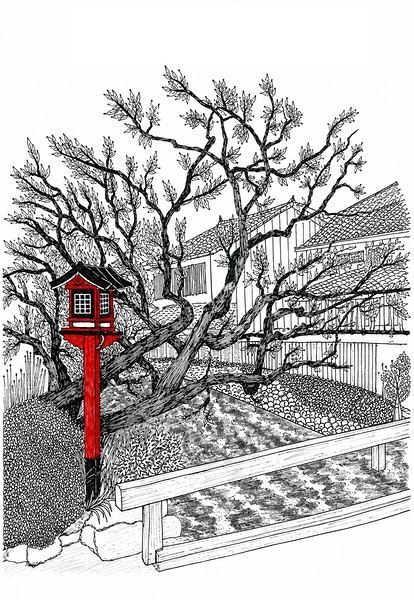 I’m inviting you on a stroll through my drawings—a completely subjective, far from exhaustive, and totally personal take, since it’s based on my own sketches. I put this travel journal together after returning in late 2024, mostly using felt-tip pens and pencils, with a few collages thrown in. I worked from our personal photos.
Let’s start with the shotengai...
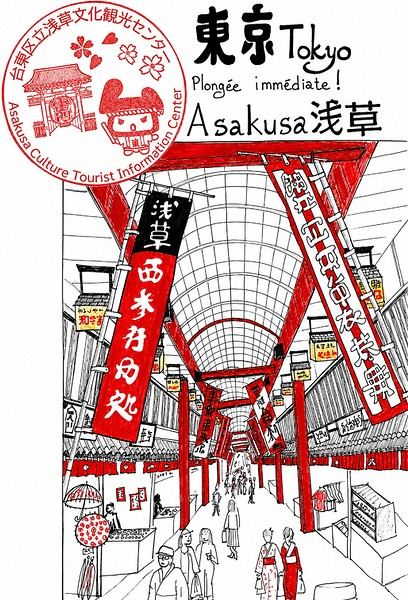
Our first "wow" moment came as we stepped out of the subway in Asakusa, the Tokyo neighborhood where we’d booked our hotel for our first five nights. Exhausted after our long flight, we finally arrived and took an exit that led straight into a shotengai—one of those covered shopping streets that pop up in city centers and flourished between the 1950s and 1980s.
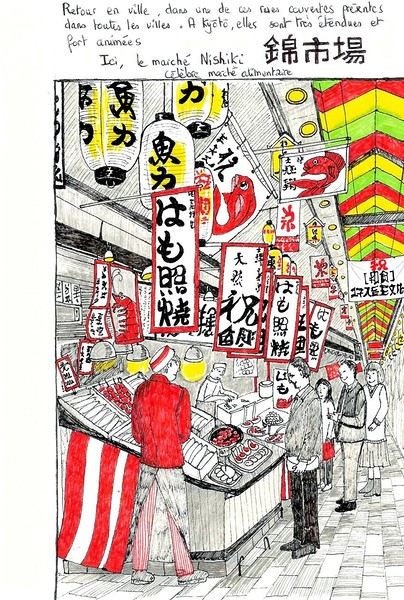
It was an instant aesthetic shock, like a close encounter of the third kind between the modern city, a typical Asian market with its street stalls, the vintage vibe of the arcade, the sheer abundance of goods, and the bustling crowd—a mix of tourists, pilgrims (thanks to nearby Senso-ji Temple), and locals (it’s a very working-class area). In the end, it set the tone for a feeling we’d experience throughout the trip. Wherever we went, shotengai turned out to be fantastic spots for finding little restaurants, shops, or even fresh produce. Some are like real mazes, like in Kyoto, where we spent ages trying to relocate a restaurant we’d loved ;-)
In Kanazawa, the Omicho Market: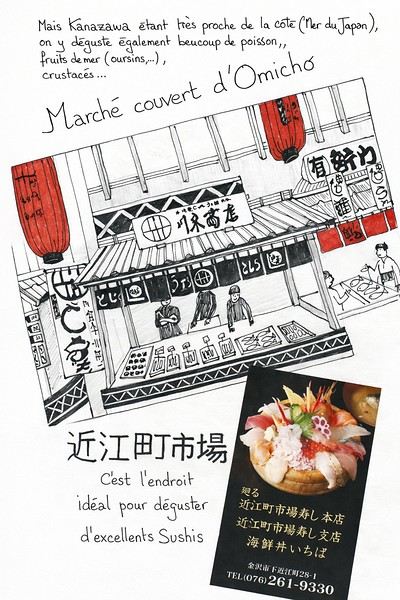 And in Kyoto, Nishiki Market:
To be continued...
I’m inviting you on a stroll through my drawings—a completely subjective, far from exhaustive, and totally personal take, since it’s based on my own sketches. I put this travel journal together after returning in late 2024, mostly using felt-tip pens and pencils, with a few collages thrown in. I worked from our personal photos.Let’s start with the shotengai...
Our first "wow" moment came as we stepped out of the subway in Asakusa, the Tokyo neighborhood where we’d booked our hotel for our first five nights. Exhausted after our long flight, we finally arrived and took an exit that led straight into a shotengai—one of those covered shopping streets that pop up in city centers and flourished between the 1950s and 1980s.
It was an instant aesthetic shock, like a close encounter of the third kind between the modern city, a typical Asian market with its street stalls, the vintage vibe of the arcade, the sheer abundance of goods, and the bustling crowd—a mix of tourists, pilgrims (thanks to nearby Senso-ji Temple), and locals (it’s a very working-class area). In the end, it set the tone for a feeling we’d experience throughout the trip. Wherever we went, shotengai turned out to be fantastic spots for finding little restaurants, shops, or even fresh produce. Some are like real mazes, like in Kyoto, where we spent ages trying to relocate a restaurant we’d loved ;-)
In Kanazawa, the Omicho Market:
And in Kyoto, Nishiki Market:
To be continued...
A whimsical taste of coming back!
I left my heart’s country eight days ago and returned to my adopted one—or was it the other way around? Scotland-Morvan, Morvan-Scotland, I’m not quite sure anymore.
After a quarter without dragging my slippers around here, even though I’d loudly declared I had no interest left in this site, here I am again!
My imagination never stays fallow for long. Just enough time for my inner land to rest. It gets overgrown with fresh nettles, the kind you can pick without getting stung. Then, it’s time to till the fragrant earth and let the story grow.
I hesitated over where to set this story. Maybe the Highlands, maybe the Hebrides, maybe the Orkney Islands, maybe the Shetland Islands. All of Scotland is myth—easy to embroider. But in the end, no. I’d almost be too afraid to bare my soul.
The story will take place at home. Simple, practical.
1)
This morning, I was up well before dawn, feeling a bit grumpy, but nothing a bowl of coffee won’t fix. I love my bowl, and no one dares take it. It’s porcelain, edged with intertwined blue flowers. On the bottom, it says "Revol." The factory has existed long before the Revolution. It was my great-grandmother’s bowl. She drank roasted barley from it during the war, then her Leroux chicory.
Last year, a little guy dropped it. My bowl broke into three pieces. A black anger vibrated deep inside me. The little boy was so upset, on the verge of tears. How could I scold him!
I picked up the three pieces and took Little Boy in my arms. His hair smelled of the light, sweet sweat of toddlers. A gentle hug that healed—his budding sorrow and my anger—everything vanished, and time carried on.
Today, my bowl is even prettier. Man fixed it using the traditional kintsugi technique, except he didn’t use gold powder or lacquer but superglue, and he delicately painted the cracks with woad blue. And my bowl is even more beautiful now.
I’m lingering, I can tell—it’s just that a story wraps itself in life, and life can’t be told in the snap of a finger. Life is long. Like in architecture, you start with a rough sketch, called a "sous-cul" (the initial pencil drawing), then you make a tracing, which is the work itself, the one you later carefully roll up in a wooden tube. Life is like that: you erase, you start over, you use the nub of the pencil until it’s tiny, but you keep going—dreaming, loving.
"Living is a full-time occupation, a unique adventure. Always a surprise and a wonder, which sometimes turns into astonishment. And, from time to time, happiness."*
Alright, enough digressing—this introduction is definitely too long. Tomorrow, I’ll get to the heart of the matter. (I hate that expression; it feels like I’m cutting into someone’s skin.)
*Jean d’Ormesson
2)
After a quarter without dragging my slippers around here, even though I’d loudly declared I had no interest left in this site, here I am again!
My imagination never stays fallow for long. Just enough time for my inner land to rest. It gets overgrown with fresh nettles, the kind you can pick without getting stung. Then, it’s time to till the fragrant earth and let the story grow.
I hesitated over where to set this story. Maybe the Highlands, maybe the Hebrides, maybe the Orkney Islands, maybe the Shetland Islands. All of Scotland is myth—easy to embroider. But in the end, no. I’d almost be too afraid to bare my soul.
The story will take place at home. Simple, practical.
1)
This morning, I was up well before dawn, feeling a bit grumpy, but nothing a bowl of coffee won’t fix. I love my bowl, and no one dares take it. It’s porcelain, edged with intertwined blue flowers. On the bottom, it says "Revol." The factory has existed long before the Revolution. It was my great-grandmother’s bowl. She drank roasted barley from it during the war, then her Leroux chicory.
Last year, a little guy dropped it. My bowl broke into three pieces. A black anger vibrated deep inside me. The little boy was so upset, on the verge of tears. How could I scold him!
I picked up the three pieces and took Little Boy in my arms. His hair smelled of the light, sweet sweat of toddlers. A gentle hug that healed—his budding sorrow and my anger—everything vanished, and time carried on.
Today, my bowl is even prettier. Man fixed it using the traditional kintsugi technique, except he didn’t use gold powder or lacquer but superglue, and he delicately painted the cracks with woad blue. And my bowl is even more beautiful now.
I’m lingering, I can tell—it’s just that a story wraps itself in life, and life can’t be told in the snap of a finger. Life is long. Like in architecture, you start with a rough sketch, called a "sous-cul" (the initial pencil drawing), then you make a tracing, which is the work itself, the one you later carefully roll up in a wooden tube. Life is like that: you erase, you start over, you use the nub of the pencil until it’s tiny, but you keep going—dreaming, loving.
"Living is a full-time occupation, a unique adventure. Always a surprise and a wonder, which sometimes turns into astonishment. And, from time to time, happiness."*
Alright, enough digressing—this introduction is definitely too long. Tomorrow, I’ll get to the heart of the matter. (I hate that expression; it feels like I’m cutting into someone’s skin.)
*Jean d’Ormesson
2)
In the land... of Senegambia
Hey fellow travelers!
So, a new year has begun. It’s time to reconnect with the VF buddies and wish you all my best for 2026—a year I hope is obviously full of travel, since, as I just made up: "If travel’s good, everything’s good" 😄.
To celebrate, I’m inviting you into my new "travel journal," the one from our latest trip in November 2025, a little two-week adventure.
This time, we headed to The Gambia, a tiny country tucked right in the middle of Senegal, before making our way to Casamance.
The Gambia is English-speaking, Senegal is French-speaking, but the locals? They couldn’t care less—because in this part of the world, they mostly speak Wolof, Fula, Jola, or Mandinka. Hence the title: Senegambia 😉.
As usual, I’m sharing the live updates I sent to friends and family—super casual, of course.
I know this isn’t the kind of destination that draws crowds, but if you love adventure, laughter, and emotion, it might just be your thing 😊.
Hugs 😘
So, a new year has begun. It’s time to reconnect with the VF buddies and wish you all my best for 2026—a year I hope is obviously full of travel, since, as I just made up: "If travel’s good, everything’s good" 😄.
To celebrate, I’m inviting you into my new "travel journal," the one from our latest trip in November 2025, a little two-week adventure.
This time, we headed to The Gambia, a tiny country tucked right in the middle of Senegal, before making our way to Casamance.
The Gambia is English-speaking, Senegal is French-speaking, but the locals? They couldn’t care less—because in this part of the world, they mostly speak Wolof, Fula, Jola, or Mandinka. Hence the title: Senegambia 😉.
As usual, I’m sharing the live updates I sent to friends and family—super casual, of course.
I know this isn’t the kind of destination that draws crowds, but if you love adventure, laughter, and emotion, it might just be your thing 😊.
Hugs 😘
15-Day Road Trip Recap: Colorado and New Mexico
Hello, here’s a totally subjective recap of our 15-day road trip between Colorado and New Mexico, from late September to mid-October.
Our main interests are culture, museums, and landscapes—no hiking or trails for us. Personally, I’m pretty contemplative, and luckily, there’s always something to see out there! We’re pretty used to the US; we’ve been going there often for a long time (let’s just say we’re not exactly young anymore).
Budget: Even though we don’t set a strict budget beforehand, we try to keep costs as low as possible. This time, we managed to spend around 4000 € for two, all included. To do this: avoid expensive accommodations, staying between 60 and 120 € per night with an average of 90 €/night, mixing Airbnb and motels. And skip the “real” restaurants, which are pretty pricey in the US: sandwiches for lunch, takeout or cooking in the Airbnb in the evening. We shop at Sprouts or Whole Foods—organic-style chains that are pricier than Walmart but better. In the evenings, Sprouts has discounts on items that didn’t sell during the day. Also, avoid toll roads, paid parking, and overly expensive attractions or sites. The dispensary budget is separate…
Route: Denver/Colorado Springs/Alamosa/Raton/Santa Fe/Cuba/Cortez/Grand Junction/Glenwood Springs/Denver This wasn’t too planned in advance—we booked a few nights upon arrival and went with the flow. Flight from CDG to Denver with AF/Delta, car rental at Dollar for a standard SUV. The guy at the Dollar counter upsold me on extra insurance for flat tires (and since I knew we’d be off-roading, I took it). Without telling me, he upgraded me to a Jeep Sahara 4X4 Hybrid. Nice.
Listening to the news upon arrival, the anchor announced, “It’s officially fall now.” We hadn’t really thought about that before leaving, but yeah—it’s the time when the trees turn fluorescent yellow and red. Amazing.
Colorado Springs: Garden of the Gods is a free park with paved trails winding through red/orange rock formations. Magical at sunrise—groups of deer roam around, along with birds and rabbits. It’s small but wow! Didn’t try the Manitou Incline in Manitou Springs, a staircase with thousands of steps going straight up the mountain. Impressive from the bottom, but the parking is paid, which is a downside for those willing to tackle it. The Cog Railway goes up to the summit of Pikes Peak—around $100 when we were there. No thanks. And of course, the parking is paid too. For fans, Maggie’s Farm dispensary is great.
On Route 24, Eleven Mile Canyon Recreation Area is fly-fishing paradise—just like in the movie *A River Runs Through It*. Entry is $11, and a trail follows the river at the bottom of the canyon to the dam. Dozens of people in waders are in the water, casting their lines over and over. You can see the salmon in the clear water, and we had a picnic in the sun, imagining Brad Pitt catching a fish.
Buena Vista: A cute little tourist town with an Outdoor Fair that day—some pretty impressive vehicles for sale, set up for mountain living (like Juniper outfitting a RAM).
Alamosa: The closest town to Great Sand Dunes National Park, crossed by the Rio Grande (and let’s be real—it’s more of a stream than a river!). Park access was free because it was National Park Day. A park with massive dunes—climbing them is pretty exhausting, with lots of wind and sinking sand. Glad we didn’t do it in summer; I can’t imagine how tough it’d be in the heat. It’s a bit deceptive: it looks easy to get to the top of a dune, but it’s really not. The campsites were nice, and it was busy that weekend. We passed the “Point of No Return,” a sandy trail winding through the hills and connecting to Route 559 from above. Didn’t go all the way, but it’s possible the entrance is free from that side. However, you need a 4X4 with good ground clearance. After 1 or 2 km on the trail, you’re alone between the dunes and hills—hardly anyone around. But tricky to turn around or pass other vehicles; the trail isn’t wide. We crossed paths with a Hanomag (registered in the Netherlands—impressive!) coming down without stopping, or risking getting stuck.
On the way out, we took the small Route 403, which quickly turns into a trail crossing the mountain. Entire sections of forest were turning fluorescent yellow with patches of green and red—an incredible sight.
Raton: A small town that probably peaked in the late 19th century and has been in slow decline ever since. The Raton Pass Motor Inn is the kind of place that makes the US legendary—entirely 50s and 60s decor, really well done. I had the Betty Page room—too cool. Felt like we were on Route 66. Even better.
Santa Fe: A small city with no high-rises—almost all low-rise buildings, many in adobe, blending perfectly into the landscape. The old downtown is touristy but nice, with its plaza and church. There’s a really cool vibe—we loved it. For drinks, the bar at the top of La Fonda Hotel was packed for sunset, with a diverse crowd. Not overpriced for the location. SITE Santa Fe is a contemporary art space near the train station. It’s free, and the temporary exhibit was really good—high quality. Museum Hill is, as the name suggests, where several museums are located. We visited the Museum of Indian Art and Culture—great if you’re into “First Nations” history. Saw The Dandy Warhols at The Bridge—an outdoor venue, one of the last concerts of the season before winter makes it too cold. Oddly, there was no bag check, just an ID required (even though it was obvious we were over 21!). Tickets were reasonable, around $30 (concerts in the US can be crazy expensive). The band was good, with fewer than 300 people in front. A sign at the bar warned: Don’t forget you’re at 1,500 meters—alcohol hits harder up here!
Albuquerque: A sprawling city with an old historic center that feels a bit like Disneyland—too perfect for my taste. The real highlight is the Sandia Peak Tramway, which goes up to the old ski resort above the city. Tickets are around $35, and it’s worth it—the ride over the canyons is pretty wild. The ski resort is a bit abandoned; apparently, like elsewhere, there’s no snow anymore. I asked several people about the lack of snow, and the answer was always the same: “It’s cyclical.” Okay then. We arrived for the start of the International Balloon Fiesta (one of the world’s largest hot-air balloon gatherings), hoping to see hundreds of balloons in the sky. Nope—windy today, so no one took off. Bummer.
Las Vegas: New Mexico has its own Las Vegas, but it’s nothing like the other one—a sleepy little town with a perfectly preserved 19th-century Historic Plaza Hotel, brick buildings, and vintage streetlights. Everything is so well-preserved it’s often used as a filming location. NM attracts a lot of productions thanks to tax incentives and its Western landscapes—and it’s cheaper than California! That day, a huge Texas flag was flying in the wind: they were filming the second season of *Ransom Canyon* for Netflix in the town center. If we’d been dressed more “Western,” we could’ve been extras.
Jemez Springs: Its Jemez Hot Springs is super cute—several thermal pools at different temperatures, a New Age vibe. The pools are surrounded by big rocks, and you’re asked to speak softly. A place where you could spend hours. $50 for two hours for two.
Los Alamos: A town made legendary by the bomb, the movie, etc. Heads up: It’s still a research center, and to cross part of the town, you need to show ID. No stopping or taking photos allowed. Other than the Oppenheimer House (currently closed—only the neighboring house is open to visitors), there’s not much to see. There’s a replica of the camp entrance, but it’s been turned into restrooms.
Georgia O’Keeffe Trail (American painter, 1887–1986): Her museum in Santa Fe is pretty good, even if they don’t have tons of works. Entry is $20. Her house in Abiquiu is open for visits, but it’s way overpriced at $65. So we skipped it. You can get an idea of it by stopping at the Welcome Center on Route 84. Further down the same road, Ghost Ranch is worth a visit—beautiful setting, free to enter, with trails to explore and a great atmosphere.
Chaco Culture National Historical Park: A pretty isolated park—25 km of trails to get there, with only a small section paved. The road is decent except for the last few kilometers, which have potholes. I can’t imagine it being accessible after rain, though that doesn’t happen often! This park, in the middle of a desert plain with a few canyons, is one of the rare places where you can find multi-story structures from pre-Columbian civilizations—so, before the “current” tribes. But cruel disappointment: it’s been shut down for a few days. We met a Native ranger—tall, with long hair—who explained that even though he wasn’t being paid, he was still guarding the park and had closed all access to the sites. Darn. Turned around and headed back down the trail.
Same story in the next town, Aztec (a funny name, right?): Aztec Ruins National Monument was closed too.
We passed Ship Rock, the Navajo’s sacred mountain—really impressive. Couldn’t find a trail to get closer, but it’s better from a distance anyway! The town of Shiprock itself is pretty depressing—poor living conditions for some Natives, with rundown mobile homes and piles of junk cars.
Stopped in Cortez to visit Mesa Verde National Park. Ate at Denny’s—hadn’t been there in ages (though it’s the kind of place I should feel at home in!). The customers all looked like they’d stepped out of *The Addams Family*—a little creepy. Or funny, depending on your perspective. For Mesa Verde, after discussing it on this forum with the honorable member Caussat (who didn’t find it that amazing), we were on the fence. Problem solved: it was closed too. Back on the road.
Durango: Really nice with its Main Ave and its shops, cafés—touristy but with local life. Famous for its tourist train to Silverton, but we didn’t do it—way too expensive. Choice between a steam locomotive or diesel (which belches black, stinky smoke—yuck). The diesel should be replaced with electric as soon as they get the funds.
Million Dollar Highway: The road winds through the mountains, and every turn (and there are a lot) is breathtaking—unbelievable landscapes with fluorescent yellow, green, and snow-capped mountains. Just wow.
Silverton: A Western town nestled between two mountains, preserved in its original state despite the tourists arriving by train. Around it, abandoned mines and old wooden ties—must’ve been tough for the 19th-century miners.
Grand Junction: The city is surrounded by giant mesas—pretty impressive. The old downtown is *too* clean—almost sterile.
Colorado National Monument: Just outside the city, a winding road climbs between stunning canyons, with sweeping views of the valley. Entry was free that day due to the shutdown.
Route 330, which we took to get back to the highway, passes through a place called “Cowboy Country”—and it’s true. We saw guys in Stetsons with huge pickups, the road turned into a trail with cows wandering on it, and we had to honk to get them to move. The trail to I-70 was full of potholes—the 4X4 came in handy. Had a picnic by Vega Reservoir: the booth at the entrance was empty, but people left cash in envelopes for camping fees. Anyone passing by could’ve taken it, but it’s an example of US trust and honesty!
Glenwood Springs: A small town famous for its hot springs pool—they claim it’s the largest in the world. I don’t know about that, but it has a great look. Unfortunately, it was closed for maintenance those days! Blew our budget by staying at the Hotel Colorado, a huge 1893 building with a real atmosphere in its grand lobby and fake fireplaces. Fire pits in front of wooden chairs in the garden with mountain views—just really great.
Aspen: The billionaires’ ski resort, but surprisingly, parking was free for 2 hours. Rare to see a place for the super-rich that doesn’t scream “not for you” (like Palm Beach, for example). A former mining town completely redone, every shop occupied by a luxury brand. There’s even a thrift shop run by sweet retirees—funny as hell. Two ski lifts to start directly with your skis, but we didn’t see the price—they were still closed. Lots of houses that aren’t huge but are cute, though looking at real estate prices made us think, “Is there an extra zero on that listing?” A 6-bedroom villa for $52 million? Wow. The mountains around are gorgeous—no wonder it became what it is.
Another fancy resort nearby: Vail, more modern in its construction. The restaurants opted for a “Schwarzwald” decor—kind of odd.
Denver: Nothing really stood out for us in this city, except the Design Museum—the Kirkland, where a local painter collected furniture and supplies from Arts and Crafts to Postmodern. Just really great. Entry is included with a visit to the Denver Art Museum, which has diverse collections—from Impressionism (they have a Manet, a Van Gogh, a Cézanne, several Sisleys) to photography. The best part for me was the “Ancient Americas” totems—huge, impressive wooden sculptures, painted, the kind you’re more used to seeing in Polynesia or Easter Island. Personally, I didn’t know Natives made them too. That’s what museums are for!
Back at the airport, where I had to tag my own luggage (you have to do everything yourself with these US airlines). The tag said SLC/CDG! But we were supposed to connect through JFK. Turns out, they’d put us on a DEN/SLC/CDG flight without telling us. In the end, we gained 30 minutes on our original arrival time in Paris!
There you go—hope this inspires other travelers! !
Our main interests are culture, museums, and landscapes—no hiking or trails for us. Personally, I’m pretty contemplative, and luckily, there’s always something to see out there! We’re pretty used to the US; we’ve been going there often for a long time (let’s just say we’re not exactly young anymore).
Budget: Even though we don’t set a strict budget beforehand, we try to keep costs as low as possible. This time, we managed to spend around 4000 € for two, all included. To do this: avoid expensive accommodations, staying between 60 and 120 € per night with an average of 90 €/night, mixing Airbnb and motels. And skip the “real” restaurants, which are pretty pricey in the US: sandwiches for lunch, takeout or cooking in the Airbnb in the evening. We shop at Sprouts or Whole Foods—organic-style chains that are pricier than Walmart but better. In the evenings, Sprouts has discounts on items that didn’t sell during the day. Also, avoid toll roads, paid parking, and overly expensive attractions or sites. The dispensary budget is separate…
Route: Denver/Colorado Springs/Alamosa/Raton/Santa Fe/Cuba/Cortez/Grand Junction/Glenwood Springs/Denver This wasn’t too planned in advance—we booked a few nights upon arrival and went with the flow. Flight from CDG to Denver with AF/Delta, car rental at Dollar for a standard SUV. The guy at the Dollar counter upsold me on extra insurance for flat tires (and since I knew we’d be off-roading, I took it). Without telling me, he upgraded me to a Jeep Sahara 4X4 Hybrid. Nice.
Listening to the news upon arrival, the anchor announced, “It’s officially fall now.” We hadn’t really thought about that before leaving, but yeah—it’s the time when the trees turn fluorescent yellow and red. Amazing.
Colorado Springs: Garden of the Gods is a free park with paved trails winding through red/orange rock formations. Magical at sunrise—groups of deer roam around, along with birds and rabbits. It’s small but wow! Didn’t try the Manitou Incline in Manitou Springs, a staircase with thousands of steps going straight up the mountain. Impressive from the bottom, but the parking is paid, which is a downside for those willing to tackle it. The Cog Railway goes up to the summit of Pikes Peak—around $100 when we were there. No thanks. And of course, the parking is paid too. For fans, Maggie’s Farm dispensary is great.
On Route 24, Eleven Mile Canyon Recreation Area is fly-fishing paradise—just like in the movie *A River Runs Through It*. Entry is $11, and a trail follows the river at the bottom of the canyon to the dam. Dozens of people in waders are in the water, casting their lines over and over. You can see the salmon in the clear water, and we had a picnic in the sun, imagining Brad Pitt catching a fish.
Buena Vista: A cute little tourist town with an Outdoor Fair that day—some pretty impressive vehicles for sale, set up for mountain living (like Juniper outfitting a RAM).
Alamosa: The closest town to Great Sand Dunes National Park, crossed by the Rio Grande (and let’s be real—it’s more of a stream than a river!). Park access was free because it was National Park Day. A park with massive dunes—climbing them is pretty exhausting, with lots of wind and sinking sand. Glad we didn’t do it in summer; I can’t imagine how tough it’d be in the heat. It’s a bit deceptive: it looks easy to get to the top of a dune, but it’s really not. The campsites were nice, and it was busy that weekend. We passed the “Point of No Return,” a sandy trail winding through the hills and connecting to Route 559 from above. Didn’t go all the way, but it’s possible the entrance is free from that side. However, you need a 4X4 with good ground clearance. After 1 or 2 km on the trail, you’re alone between the dunes and hills—hardly anyone around. But tricky to turn around or pass other vehicles; the trail isn’t wide. We crossed paths with a Hanomag (registered in the Netherlands—impressive!) coming down without stopping, or risking getting stuck.
On the way out, we took the small Route 403, which quickly turns into a trail crossing the mountain. Entire sections of forest were turning fluorescent yellow with patches of green and red—an incredible sight.
Raton: A small town that probably peaked in the late 19th century and has been in slow decline ever since. The Raton Pass Motor Inn is the kind of place that makes the US legendary—entirely 50s and 60s decor, really well done. I had the Betty Page room—too cool. Felt like we were on Route 66. Even better.
Santa Fe: A small city with no high-rises—almost all low-rise buildings, many in adobe, blending perfectly into the landscape. The old downtown is touristy but nice, with its plaza and church. There’s a really cool vibe—we loved it. For drinks, the bar at the top of La Fonda Hotel was packed for sunset, with a diverse crowd. Not overpriced for the location. SITE Santa Fe is a contemporary art space near the train station. It’s free, and the temporary exhibit was really good—high quality. Museum Hill is, as the name suggests, where several museums are located. We visited the Museum of Indian Art and Culture—great if you’re into “First Nations” history. Saw The Dandy Warhols at The Bridge—an outdoor venue, one of the last concerts of the season before winter makes it too cold. Oddly, there was no bag check, just an ID required (even though it was obvious we were over 21!). Tickets were reasonable, around $30 (concerts in the US can be crazy expensive). The band was good, with fewer than 300 people in front. A sign at the bar warned: Don’t forget you’re at 1,500 meters—alcohol hits harder up here!
Albuquerque: A sprawling city with an old historic center that feels a bit like Disneyland—too perfect for my taste. The real highlight is the Sandia Peak Tramway, which goes up to the old ski resort above the city. Tickets are around $35, and it’s worth it—the ride over the canyons is pretty wild. The ski resort is a bit abandoned; apparently, like elsewhere, there’s no snow anymore. I asked several people about the lack of snow, and the answer was always the same: “It’s cyclical.” Okay then. We arrived for the start of the International Balloon Fiesta (one of the world’s largest hot-air balloon gatherings), hoping to see hundreds of balloons in the sky. Nope—windy today, so no one took off. Bummer.
Las Vegas: New Mexico has its own Las Vegas, but it’s nothing like the other one—a sleepy little town with a perfectly preserved 19th-century Historic Plaza Hotel, brick buildings, and vintage streetlights. Everything is so well-preserved it’s often used as a filming location. NM attracts a lot of productions thanks to tax incentives and its Western landscapes—and it’s cheaper than California! That day, a huge Texas flag was flying in the wind: they were filming the second season of *Ransom Canyon* for Netflix in the town center. If we’d been dressed more “Western,” we could’ve been extras.
Jemez Springs: Its Jemez Hot Springs is super cute—several thermal pools at different temperatures, a New Age vibe. The pools are surrounded by big rocks, and you’re asked to speak softly. A place where you could spend hours. $50 for two hours for two.
Los Alamos: A town made legendary by the bomb, the movie, etc. Heads up: It’s still a research center, and to cross part of the town, you need to show ID. No stopping or taking photos allowed. Other than the Oppenheimer House (currently closed—only the neighboring house is open to visitors), there’s not much to see. There’s a replica of the camp entrance, but it’s been turned into restrooms.
Georgia O’Keeffe Trail (American painter, 1887–1986): Her museum in Santa Fe is pretty good, even if they don’t have tons of works. Entry is $20. Her house in Abiquiu is open for visits, but it’s way overpriced at $65. So we skipped it. You can get an idea of it by stopping at the Welcome Center on Route 84. Further down the same road, Ghost Ranch is worth a visit—beautiful setting, free to enter, with trails to explore and a great atmosphere.
Chaco Culture National Historical Park: A pretty isolated park—25 km of trails to get there, with only a small section paved. The road is decent except for the last few kilometers, which have potholes. I can’t imagine it being accessible after rain, though that doesn’t happen often! This park, in the middle of a desert plain with a few canyons, is one of the rare places where you can find multi-story structures from pre-Columbian civilizations—so, before the “current” tribes. But cruel disappointment: it’s been shut down for a few days. We met a Native ranger—tall, with long hair—who explained that even though he wasn’t being paid, he was still guarding the park and had closed all access to the sites. Darn. Turned around and headed back down the trail.
Same story in the next town, Aztec (a funny name, right?): Aztec Ruins National Monument was closed too.
We passed Ship Rock, the Navajo’s sacred mountain—really impressive. Couldn’t find a trail to get closer, but it’s better from a distance anyway! The town of Shiprock itself is pretty depressing—poor living conditions for some Natives, with rundown mobile homes and piles of junk cars.
Stopped in Cortez to visit Mesa Verde National Park. Ate at Denny’s—hadn’t been there in ages (though it’s the kind of place I should feel at home in!). The customers all looked like they’d stepped out of *The Addams Family*—a little creepy. Or funny, depending on your perspective. For Mesa Verde, after discussing it on this forum with the honorable member Caussat (who didn’t find it that amazing), we were on the fence. Problem solved: it was closed too. Back on the road.
Durango: Really nice with its Main Ave and its shops, cafés—touristy but with local life. Famous for its tourist train to Silverton, but we didn’t do it—way too expensive. Choice between a steam locomotive or diesel (which belches black, stinky smoke—yuck). The diesel should be replaced with electric as soon as they get the funds.
Million Dollar Highway: The road winds through the mountains, and every turn (and there are a lot) is breathtaking—unbelievable landscapes with fluorescent yellow, green, and snow-capped mountains. Just wow.
Silverton: A Western town nestled between two mountains, preserved in its original state despite the tourists arriving by train. Around it, abandoned mines and old wooden ties—must’ve been tough for the 19th-century miners.
Grand Junction: The city is surrounded by giant mesas—pretty impressive. The old downtown is *too* clean—almost sterile.
Colorado National Monument: Just outside the city, a winding road climbs between stunning canyons, with sweeping views of the valley. Entry was free that day due to the shutdown.
Route 330, which we took to get back to the highway, passes through a place called “Cowboy Country”—and it’s true. We saw guys in Stetsons with huge pickups, the road turned into a trail with cows wandering on it, and we had to honk to get them to move. The trail to I-70 was full of potholes—the 4X4 came in handy. Had a picnic by Vega Reservoir: the booth at the entrance was empty, but people left cash in envelopes for camping fees. Anyone passing by could’ve taken it, but it’s an example of US trust and honesty!
Glenwood Springs: A small town famous for its hot springs pool—they claim it’s the largest in the world. I don’t know about that, but it has a great look. Unfortunately, it was closed for maintenance those days! Blew our budget by staying at the Hotel Colorado, a huge 1893 building with a real atmosphere in its grand lobby and fake fireplaces. Fire pits in front of wooden chairs in the garden with mountain views—just really great.
Aspen: The billionaires’ ski resort, but surprisingly, parking was free for 2 hours. Rare to see a place for the super-rich that doesn’t scream “not for you” (like Palm Beach, for example). A former mining town completely redone, every shop occupied by a luxury brand. There’s even a thrift shop run by sweet retirees—funny as hell. Two ski lifts to start directly with your skis, but we didn’t see the price—they were still closed. Lots of houses that aren’t huge but are cute, though looking at real estate prices made us think, “Is there an extra zero on that listing?” A 6-bedroom villa for $52 million? Wow. The mountains around are gorgeous—no wonder it became what it is.
Another fancy resort nearby: Vail, more modern in its construction. The restaurants opted for a “Schwarzwald” decor—kind of odd.
Denver: Nothing really stood out for us in this city, except the Design Museum—the Kirkland, where a local painter collected furniture and supplies from Arts and Crafts to Postmodern. Just really great. Entry is included with a visit to the Denver Art Museum, which has diverse collections—from Impressionism (they have a Manet, a Van Gogh, a Cézanne, several Sisleys) to photography. The best part for me was the “Ancient Americas” totems—huge, impressive wooden sculptures, painted, the kind you’re more used to seeing in Polynesia or Easter Island. Personally, I didn’t know Natives made them too. That’s what museums are for!
Back at the airport, where I had to tag my own luggage (you have to do everything yourself with these US airlines). The tag said SLC/CDG! But we were supposed to connect through JFK. Turns out, they’d put us on a DEN/SLC/CDG flight without telling us. In the end, we gained 30 minutes on our original arrival time in Paris!
There you go—hope this inspires other travelers! !
Discovering Assam and Nagaland 2025
Before I begin, I’d like to thank Michèle Buisson and her "Misha’s travel journals," which really helped me plan this trip. It’s tough to find information about this part of India, which is quite different from the "more traditional India." I’m so grateful to her for introducing me to a family who hosted me for 4 nights and 3 days. I can’t wait to return the favor and welcome you all to my place in early July!
Thursday, March 20th. The alarm goes off super early, but I’m already awake—I was too worried I’d sleep through it. I leave the house at 4:00 AM. The rain has stopped, and at this hour, there aren’t many trucks on the road. I arrive at Barcelona Airport easily by 6:20 AM, let the valet know I’m there, and he quickly picks up my car. This time, I’m flying with Etihad Airways again. I booked the ticket during my trip to Cambodia: Barcelona/Kolkata, Delhi/Barcelona for 567 €. At that price, I didn’t hesitate for long—I knew I had to take it. And I’m glad I did because, by the time I returned, the price had gone up to 700 €. I can already hear the reactions: "Wow, how’d you get a ticket for that price? What site did you use? You’re amazing, MarieJo!" One thing’s for sure—I’m really happy with this deal. The flights from Barcelona to Abu Dhabi and Abu Dhabi to Kolkata go smoothly, and we arrive on time at 2:55 AM. There aren’t many people at immigration, so I get through quickly. My luggage isn’t on the carousel yet. After collecting my bag, I check in for my next flight with IndiGo, a 5:40 AM flight to Guwahati, arriving at 7:00 AM. I’m starting to feel pretty tired, so I take a taxi from the airport to Gruham Sojourn Homestay. The house is upstairs, and the neighborhood seems quiet, with restaurants lining the street. The room won’t be ready until 10:00 AM, so I rest on the bench in the meantime. Once in the room, I take a shower—it really helps me feel refreshed. I need to exchange some euros, so I look up a nearby exchange bureau on Google and head out to find it. I locate it easily, and the staff are super friendly. I get a great rate (1 € = 90 INR). I wander around the neighborhood. The train station isn’t far, and small markets line the streets. I head back to my area, walking along the main avenue. About 500 meters from my street, I discover a museum. The visit is fascinating—I see the famous Majuli masks, among other things.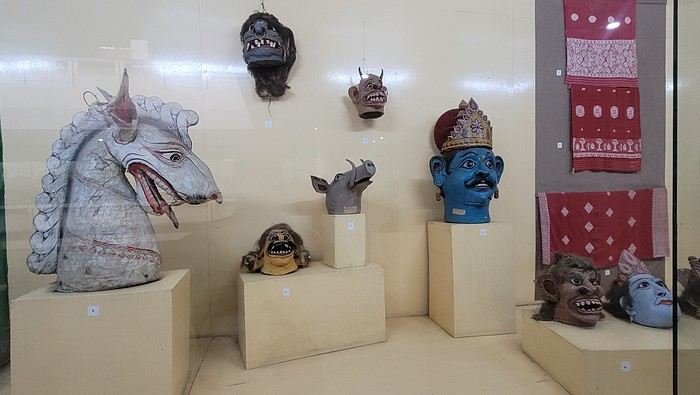

I’m not far from the Brahmaputra River, and the temptation to visit is too strong to resist. I’d hoped to find a promenade along the river, but that doesn’t exist here. I walk back calmly and notice several restaurants in my street. On the doorstep of my accommodation, I spot a pastry shop with cakes that look more like the ones we have in France than the typical ones here in India. A visit is a must, and I’m not disappointed!

Tonight, I’m dining at a restaurant in the street. The menu is a bit disappointing—burgers, pizzas, pasta—nothing very Indian. So, I’ll go with tomato pasta.
Thursday, March 20th. The alarm goes off super early, but I’m already awake—I was too worried I’d sleep through it. I leave the house at 4:00 AM. The rain has stopped, and at this hour, there aren’t many trucks on the road. I arrive at Barcelona Airport easily by 6:20 AM, let the valet know I’m there, and he quickly picks up my car. This time, I’m flying with Etihad Airways again. I booked the ticket during my trip to Cambodia: Barcelona/Kolkata, Delhi/Barcelona for 567 €. At that price, I didn’t hesitate for long—I knew I had to take it. And I’m glad I did because, by the time I returned, the price had gone up to 700 €. I can already hear the reactions: "Wow, how’d you get a ticket for that price? What site did you use? You’re amazing, MarieJo!" One thing’s for sure—I’m really happy with this deal. The flights from Barcelona to Abu Dhabi and Abu Dhabi to Kolkata go smoothly, and we arrive on time at 2:55 AM. There aren’t many people at immigration, so I get through quickly. My luggage isn’t on the carousel yet. After collecting my bag, I check in for my next flight with IndiGo, a 5:40 AM flight to Guwahati, arriving at 7:00 AM. I’m starting to feel pretty tired, so I take a taxi from the airport to Gruham Sojourn Homestay. The house is upstairs, and the neighborhood seems quiet, with restaurants lining the street. The room won’t be ready until 10:00 AM, so I rest on the bench in the meantime. Once in the room, I take a shower—it really helps me feel refreshed. I need to exchange some euros, so I look up a nearby exchange bureau on Google and head out to find it. I locate it easily, and the staff are super friendly. I get a great rate (1 € = 90 INR). I wander around the neighborhood. The train station isn’t far, and small markets line the streets. I head back to my area, walking along the main avenue. About 500 meters from my street, I discover a museum. The visit is fascinating—I see the famous Majuli masks, among other things.
I’m not far from the Brahmaputra River, and the temptation to visit is too strong to resist. I’d hoped to find a promenade along the river, but that doesn’t exist here. I walk back calmly and notice several restaurants in my street. On the doorstep of my accommodation, I spot a pastry shop with cakes that look more like the ones we have in France than the typical ones here in India. A visit is a must, and I’m not disappointed!
Tonight, I’m dining at a restaurant in the street. The menu is a bit disappointing—burgers, pizzas, pasta—nothing very Indian. So, I’ll go with tomato pasta.
In MIKUMI and SELOUS, Southern Tanzania (June 2024)
Hi everyone,
I’m a newbie to this forum, passionate about wildlife, the landscapes of East Africa, and Tanzania in particular. This June 2024 trip/safari is our 7th visit to Tanzania and our 5th in the south, which has drawn us more than the north ever since we discovered it in 2015.
In 2024, the entrance fees for the reserves and services have gone up again since our last visit. I chose to return first to Mikumi Reserve, which was the very first one we visited in the south. Then, we’ll head to Selous (J. Nyerere N. P.) as usual. Initially, we wanted to spend 2/3 days on Mafia Island at the end of the trip, but it made the total cost too high, so we gave up... We usually go to Ruaha and Selous, but I wanted to mix it up a bit—also to save some money...
As for the timing, June is a new experience for us. I thought it might be interesting to come just after the lodges reopen... hoping for some great wildlife encounters??
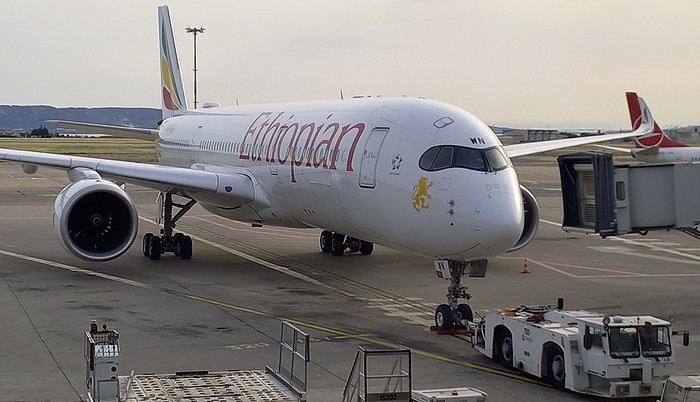
The trip starts in Marseille with our first flight on Ethiopian Airlines to Addis Ababa, then continues to Dar es Salaam, where we’ll finally set foot on Tanzanian soil again.
In Addis... "our" A-350.
.....
After arriving in Dar, we spent one night at a hotel near the airport. The next morning, we headed to the domestic flights terminal, which hasn’t changed in years.
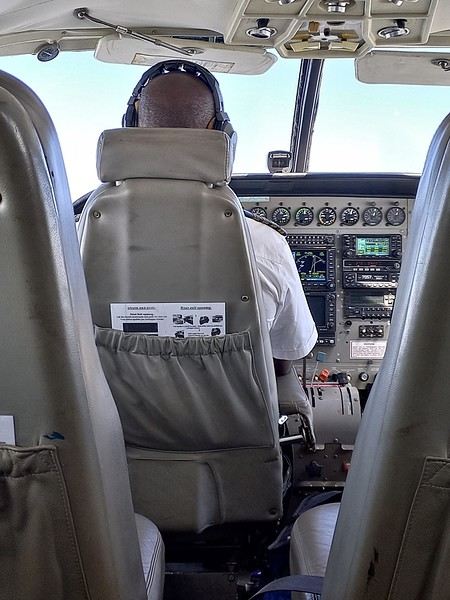
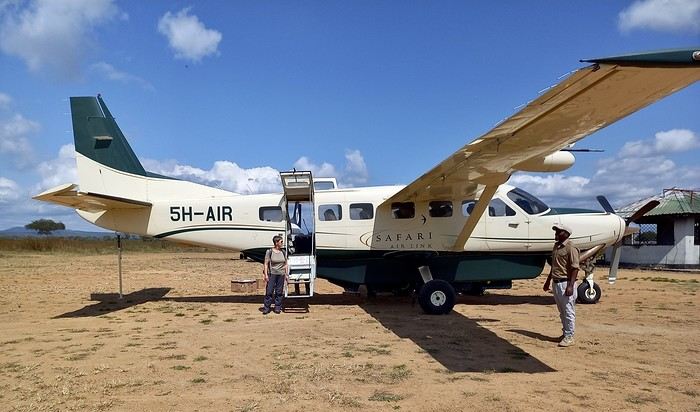
By mid-morning, we boarded a Cessna 208B Caravan with Safari Air Link, heading to the Kikoboga bush airstrip in Mikumi, which we reached 45 minutes later. Fun fact: the pilot was the same one as on our return flight two years ago.
Welcome on board:
Of course, a driver/guide team from our chosen lodge was waiting for us upon arrival:
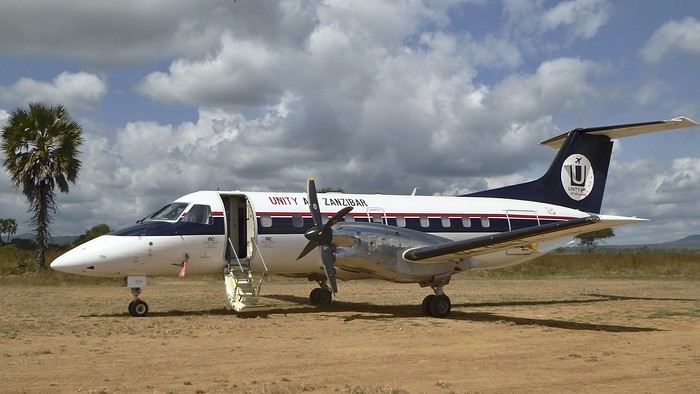
I was surprised to see so many aircraft parked there... even twin-engine Embraer Brasilias?? As a fan of vintage planes, I loved it...
On the other hand, the light was incredibly harsh.....!! Our guides only speak English. We knew that in advance. In the south, it’s very rare to find someone who speaks French. This’ll force us to dig into our high school English memories... from 60 years ago... at least.
It’s noon, and we head toward the lodge. Near the airstrip, next to the Mikumi rangers’ base, there are quite a few herbivores. They find a bit more peace here—the big cats don’t venture this way...
Our first encounter was a group of Masai giraffes.
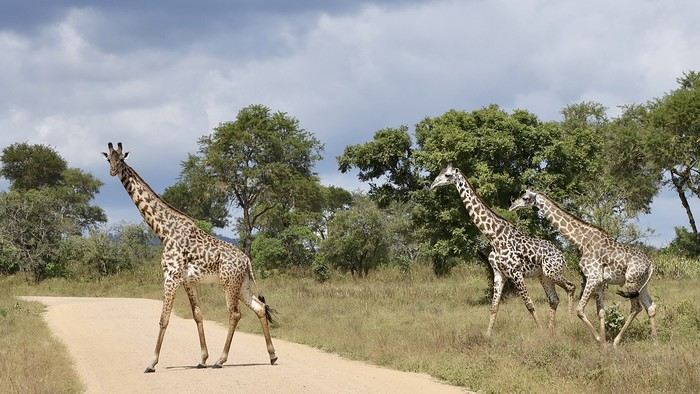
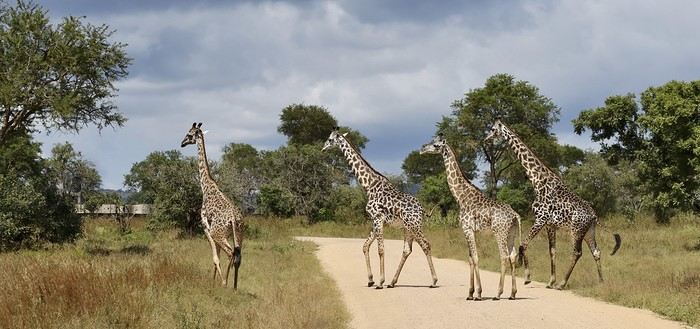
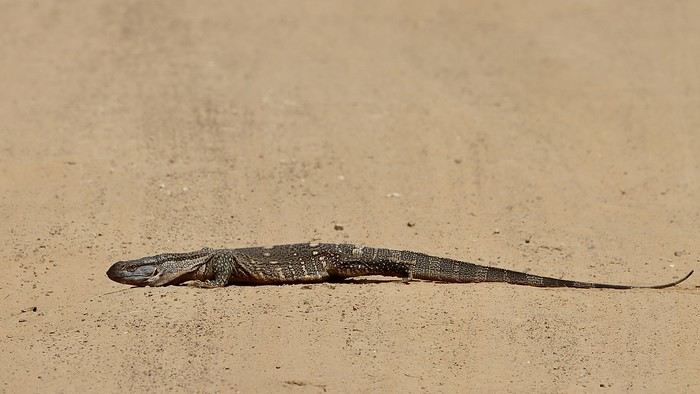
Rarer (for us), a savanna monitor lizard basking in the sun right in the middle of the track...??
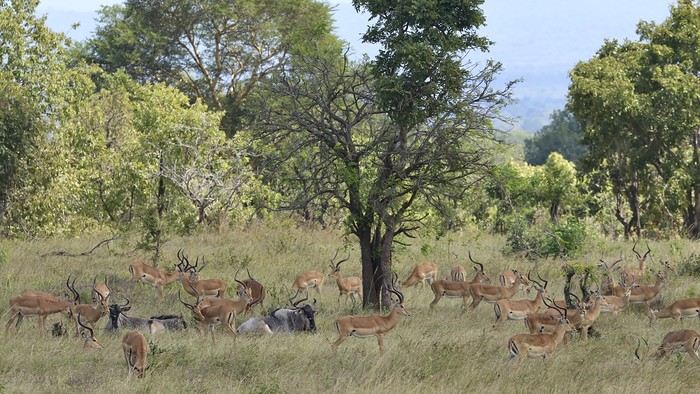
A large gathering of impalas (mostly males) along with a few blue wildebeest:

Also unusual: a African crowned hornbill taking a dust bath in the middle of the track...!!
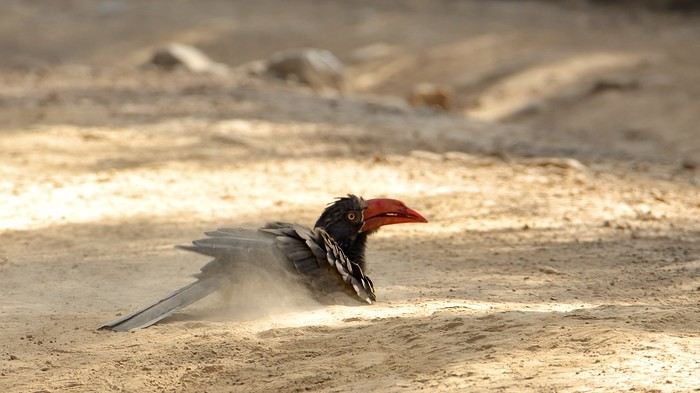
When it comes to identifying mammals or birds, I don’t know everything... so I might make mistakes. Please forgive me. I’m counting on my friend Blesl’s active participation... 😉
...
I’m a newbie to this forum, passionate about wildlife, the landscapes of East Africa, and Tanzania in particular. This June 2024 trip/safari is our 7th visit to Tanzania and our 5th in the south, which has drawn us more than the north ever since we discovered it in 2015.
In 2024, the entrance fees for the reserves and services have gone up again since our last visit. I chose to return first to Mikumi Reserve, which was the very first one we visited in the south. Then, we’ll head to Selous (J. Nyerere N. P.) as usual. Initially, we wanted to spend 2/3 days on Mafia Island at the end of the trip, but it made the total cost too high, so we gave up... We usually go to Ruaha and Selous, but I wanted to mix it up a bit—also to save some money...
As for the timing, June is a new experience for us. I thought it might be interesting to come just after the lodges reopen... hoping for some great wildlife encounters??
The trip starts in Marseille with our first flight on Ethiopian Airlines to Addis Ababa, then continues to Dar es Salaam, where we’ll finally set foot on Tanzanian soil again.
In Addis... "our" A-350.
.....
After arriving in Dar, we spent one night at a hotel near the airport. The next morning, we headed to the domestic flights terminal, which hasn’t changed in years.
By mid-morning, we boarded a Cessna 208B Caravan with Safari Air Link, heading to the Kikoboga bush airstrip in Mikumi, which we reached 45 minutes later. Fun fact: the pilot was the same one as on our return flight two years ago.
Welcome on board:
Of course, a driver/guide team from our chosen lodge was waiting for us upon arrival:
I was surprised to see so many aircraft parked there... even twin-engine Embraer Brasilias?? As a fan of vintage planes, I loved it...
On the other hand, the light was incredibly harsh.....!! Our guides only speak English. We knew that in advance. In the south, it’s very rare to find someone who speaks French. This’ll force us to dig into our high school English memories... from 60 years ago... at least.
It’s noon, and we head toward the lodge. Near the airstrip, next to the Mikumi rangers’ base, there are quite a few herbivores. They find a bit more peace here—the big cats don’t venture this way...
Our first encounter was a group of Masai giraffes.
Rarer (for us), a savanna monitor lizard basking in the sun right in the middle of the track...??
A large gathering of impalas (mostly males) along with a few blue wildebeest:
Also unusual: a African crowned hornbill taking a dust bath in the middle of the track...!!
When it comes to identifying mammals or birds, I don’t know everything... so I might make mistakes. Please forgive me. I’m counting on my friend Blesl’s active participation... 😉
...
From Delhi to Agra and the extraordinary stay in Chhattisgarh
My train to Mathura is at 2 PM, and we’ll arrive an hour late—all good. I booked a hotel on booking, but unfortunately, it’s really far from the ghats. Walking there is out of the question—what a shame.
The hotel itself is fine, and there are several restaurants right across the street, which will be handy for dinner. This won’t be an exception, though—starting at 10 PM, they must wake up because I can hear them talking loudly, and music is playing along. My room faces the entrance, so it’s going to be tough. At midnight, I ask them to lower the volume, but they don’t listen. By 1 AM, I lose my temper, and this time, everything stops. Finally, I can get some sleep—until 4 AM, when they start up again for a little while before quiet returns until 6 AM. But when do they sleep? The noise never seems to bother them—it’s unbelievable, and I’m finding it harder and harder to tolerate. It makes a huge difference.
The next morning, as I leave, they tell me they’ll give me another room for the following night. Oh, two nights like that wouldn’t be possible—I’m exhausted.
I head out to explore the ghats and take a rickshaw, which I share with a family, to Vrindavan, a city of temples dedicated to Krishna. I visit several while wandering through the lively streets, surrounded by a crowd of devotees. By 1 PM, I’m near the Bankey Bihari Temple, but I can’t go in—it just closed. Nearby, there are restaurants, so I take the opportunity to grab my usual aloo paratha with a lassi.

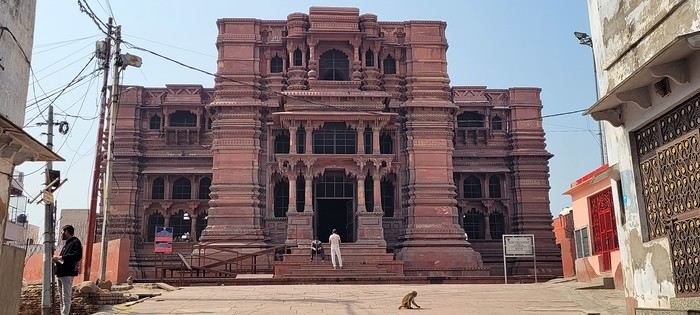
The work women do here is incredibly hard, and their pay must be miserable.

I want to leave Vrindavan for Govardhan. Two young guys on a motorcycle in front of the temple approach me, and the driver offers to take me part of the way. I’m pretty skeptical, but he insists, and I eventually agree. I didn’t fully understand what was happening. Once on the bike, his friend hops on too, and suddenly I’m sandwiched between them for a multi-kilometer ride—*travel Indian-style*. We quickly drop off the friend, and I breathe easier for the rest of the trip. At an intersection, he stops—Govardhan is straight ahead, but to get to his village, he needs to turn right. We wait for the bus for a few minutes, and he flags it down so I can hop on and continue my journey. What an adventure.
the neighbor with its beautiful dome.
The work women do here is incredibly hard, and their pay must be miserable.
I want to leave Vrindavan for Govardhan. Two young guys on a motorcycle in front of the temple approach me, and the driver offers to take me part of the way. I’m pretty skeptical, but he insists, and I eventually agree. I didn’t fully understand what was happening. Once on the bike, his friend hops on too, and suddenly I’m sandwiched between them for a multi-kilometer ride—*travel Indian-style*. We quickly drop off the friend, and I breathe easier for the rest of the trip. At an intersection, he stops—Govardhan is straight ahead, but to get to his village, he needs to turn right. We wait for the bus for a few minutes, and he flags it down so I can hop on and continue my journey. What an adventure.
the neighbor with its beautiful dome.
Which island(s) should we prioritize for 4 weeks in Indonesia?
Hi everyone,
As part of a four-month world trip with our kids (ages 6, 12, and 13), we’ll be spending four weeks in Indonesia. Choosing destinations is so tough because everything is just so appealing! We’ll be spending some time on Java and will likely make a "quick trip" to Borneo for the orangutan reserve. We also want to experience Bali’s culture and the small islands of the Lesser Sundas, with their incredible marine life... but which ones should we prioritize? For a few days of diving and relaxation, do you think we should go for Nusa Penida, the Gili Islands, or Moyo Island? Is Sumbawa complicated to explore? Is it worth taking the time to visit? Can it be crossed by car to then reach Komodo National Park? Anyway, any advice would be greatly appreciated. Our goal is to avoid overly touristy spots (but not places that feel too unsafe with the kids), to discover local culture and villages, and to be amazed both underwater and above. Thanks so much for your help!
As part of a four-month world trip with our kids (ages 6, 12, and 13), we’ll be spending four weeks in Indonesia. Choosing destinations is so tough because everything is just so appealing! We’ll be spending some time on Java and will likely make a "quick trip" to Borneo for the orangutan reserve. We also want to experience Bali’s culture and the small islands of the Lesser Sundas, with their incredible marine life... but which ones should we prioritize? For a few days of diving and relaxation, do you think we should go for Nusa Penida, the Gili Islands, or Moyo Island? Is Sumbawa complicated to explore? Is it worth taking the time to visit? Can it be crossed by car to then reach Komodo National Park? Anyway, any advice would be greatly appreciated. Our goal is to avoid overly touristy spots (but not places that feel too unsafe with the kids), to discover local culture and villages, and to be amazed both underwater and above. Thanks so much for your help!
Discovering South India: Tamil Nadu and Kerala
Hello everyone!
We're off! After exploring the north, the four friends have now discovered the south. We’re excited to share this new travel journal, dedicated to our little group and our strong friendship, written by Richard and illustrated with Kate’s photos. I’ll chime in from time to time with practical tips.
First of all, a big thank you to everyone on VoyageForum who helped us plan this trip. It would’ve been quite different if we’d just relied on guidebooks.
The itinerary lasted just over 3 weeks: Mahabalipuram, Pondicherry, Thanjavur, the Chettinad region, Madurai, Munnar, Munroe Island, Cochin, and Chennai. We traveled by train, taxi, and private car with a driver, took a domestic flight, and stayed in guesthouses, Airbnb apartments, and hotels. For each of us, including flights, the total budget barely reached 2000 €, and we didn’t hold back—knowing we avoid resorts and love street food and small Indian restaurants.
We're off! After exploring the north, the four friends have now discovered the south. We’re excited to share this new travel journal, dedicated to our little group and our strong friendship, written by Richard and illustrated with Kate’s photos. I’ll chime in from time to time with practical tips.
First of all, a big thank you to everyone on VoyageForum who helped us plan this trip. It would’ve been quite different if we’d just relied on guidebooks.
The itinerary lasted just over 3 weeks: Mahabalipuram, Pondicherry, Thanjavur, the Chettinad region, Madurai, Munnar, Munroe Island, Cochin, and Chennai. We traveled by train, taxi, and private car with a driver, took a domestic flight, and stayed in guesthouses, Airbnb apartments, and hotels. For each of us, including flights, the total budget barely reached 2000 €, and we didn’t hold back—knowing we avoid resorts and love street food and small Indian restaurants.
Tuscany: Arezzo province and the Siena area
So happy the forum reopened last October!!!
I’ve started reading again (posts, travel journals) and chiming in on a few discussions. Now I’m stepping it up by writing a new travel journal—I’ve already posted a few between 2018 and 2020.
My latest trip was to Italy from August 27 to September 26, 2024. As the title says, it was a wander through Tuscany in parts of the region that aren’t the most visited. No Firenze-Siena-Pisa trilogy, no San Gimignano; there’ll be a quick detour into Siena, but I’ll skip the best-known sights. That choice, plus traveling in September, should help dodge overtourism. It worked out—crowds were light, sometimes very light, the whole way. Here’s the practical rundown: - a long trip outside peak season (ah, retirees!) - solo camping (caravan) - a mix of activities (hiking, mountain biking, sightseeing) in places that aren’t always packed with tourists. Still, I don’t feel like I ended up in some hidden-away spots. Not sure if this will draw any readers.
DAY 1: Tuesday, August 27, 2024 The heat was intense on the drive in across the plain; two big storms—more rain and hail than lightning and thunder—threw the weather off, the first near Imola, the second on the four-lane road up the Savio valley. I left the Cesena-Roma four-lane at the Verghereto exit and climbed up to Balze (1,100 meters). The campsite is even higher (1,200 meters), in the forest near the source of the Tevere (Tiber). Staying up here will cut down on driving for the first part of the trip: a route through the Appennino (Apennines) on the border between Toscana and Emilia-Romagna. The temperature was surprisingly mild for the altitude, the air thick with moisture by late afternoon. I drove back down from the campsite to Balze (2 km on the road) to grab groceries (it’s doable) and scout tomorrow’s hike. .
The endpoint of the planned hike is just a few meters from this sign (the trail crosses this road about 3 km from Balze). I realized Balze and the source of the Tevere (Tiber) are actually in Emilia-Romagna, not Toscana. I always thought the Tevere (Tiber), which flows toward Roma (Tyrrhenian side), started in Toscana! I’ll come back to this quirk in Day 3’s write-up.
My latest trip was to Italy from August 27 to September 26, 2024. As the title says, it was a wander through Tuscany in parts of the region that aren’t the most visited. No Firenze-Siena-Pisa trilogy, no San Gimignano; there’ll be a quick detour into Siena, but I’ll skip the best-known sights. That choice, plus traveling in September, should help dodge overtourism. It worked out—crowds were light, sometimes very light, the whole way. Here’s the practical rundown: - a long trip outside peak season (ah, retirees!) - solo camping (caravan) - a mix of activities (hiking, mountain biking, sightseeing) in places that aren’t always packed with tourists. Still, I don’t feel like I ended up in some hidden-away spots. Not sure if this will draw any readers.
DAY 1: Tuesday, August 27, 2024 The heat was intense on the drive in across the plain; two big storms—more rain and hail than lightning and thunder—threw the weather off, the first near Imola, the second on the four-lane road up the Savio valley. I left the Cesena-Roma four-lane at the Verghereto exit and climbed up to Balze (1,100 meters). The campsite is even higher (1,200 meters), in the forest near the source of the Tevere (Tiber). Staying up here will cut down on driving for the first part of the trip: a route through the Appennino (Apennines) on the border between Toscana and Emilia-Romagna. The temperature was surprisingly mild for the altitude, the air thick with moisture by late afternoon. I drove back down from the campsite to Balze (2 km on the road) to grab groceries (it’s doable) and scout tomorrow’s hike. .
The endpoint of the planned hike is just a few meters from this sign (the trail crosses this road about 3 km from Balze). I realized Balze and the source of the Tevere (Tiber) are actually in Emilia-Romagna, not Toscana. I always thought the Tevere (Tiber), which flows toward Roma (Tyrrhenian side), started in Toscana! I’ll come back to this quirk in Day 3’s write-up.
Nothing’s stopping you from going to Ampefy (Madagascar)
During these three big weeks in Madagascar, one week in Sainte Marie, a few days for a little loop in the west/south, and the rest in Tana.
This loop I’m talking about covers an area I’d never taken the time to visit before. A recent road in good condition, the chance to pass through beautiful highland landscapes, and a few free days made it the perfect opportunity. Destination: Ampefy, west of Tana via the RN1, then a turn south onto the recently rehabilitated RN43 to reach Antsirabe before heading back to Tana. Four days planned—perfect, since an extra day wouldn’t have been a problem given all the activities in Ampefy.
First day: a relaxed and fairly late departure for Ampefy. We weren’t in a rush and took our time. Traffic leaving Tana to get back on the RN1 cost us the head start we had on our original schedule. An hour and a half bumper-to-bumper with the *buxis*, inching painfully toward the roundabout and then the bridge that acts as a bottleneck—we dove in like all our fellow sufferers. It’s not our everyday reality, and we were early, so no big deal, but man, it’s long and slow. Once past that obstacle, traffic flowed smoothly, and the road was good (all the way to Ampefy). We moved through highland landscapes, bustling villages full of activity, and countless agricultural supply shops—clear proof, if any were needed, that we were crossing a prime farming region. Around Arivonimamo, we passed through a forest with a Mediterranean vibe: a single-species forest of stout little trees with glossy, elongated light-green leaves—these are *tapia*. An endemic tree in Madagascar, and a pretty unique forest as a result (you can see them elsewhere, like between Antsirabe and Ambositra). There are efforts to protect it from illegal logging because the wood is fire-resistant, which helps shield the forest from wildfires. Beyond its biodiversity value, the *tapia* hosts silkworms, giving it economic and cultural importance.
As we kept going, we started spotting a lake and mountains with the rounded shapes typical of extinct volcanoes worn down by time and the elements. We were approaching Lake Itasy and, by extension, Ampefy. We stopped at a *hotely* for a plate of *tongon’kisoa*—pig’s trotters caramelized by cooking, with thick, flavorful skin—along with the obligatory portion of rice, which we took the time to drizzle with cooking juices to make it a bit more appetizing. Full, we turned left to reach Ampefy and our hotel. The landscape was dotted with collapsed, dormant volcanic cones, and suddenly, the view opened up onto the lake. Shallow and expansive, we followed it, losing sight of it now and then before finding it again in Ampefy itself, which we entered after crossing the Lily, a beautiful river that drains the lake. Lots of hotels and restaurants, with plenty of options at all price points. We chose the *Farihy*, about 5 km past Ampefy. A gorgeous spot by the lake, with a pool and lovely bungalows—some with picture windows overlooking the lake. Really nice. In the evening, a drink and some *sak sak* for aperitif on the terrace. It wasn’t warm, there was a lot of wind, and a storm was brewing. Off to bed quickly to start the next day’s visits.
After buying some lychees—we hadn’t seen many this year, and these were fresh from the field, picked in Ampefy—we headed to the Lily Falls. Well signposted, with a paved road in great condition, we stopped at the kiosk for the entrance fee and parking (1 euro for one *vahiny* and 10 cents for one Malagasy). We set off down the path and quickly reached the first waterfall, then continued for maybe 1 km on a well-marked trail to the second. A guide led us to the third, which is harder to spot and isn’t actually on the Lily itself. Beautiful countryside scenery: fishermen straight out of *Tom Sawyer*, straw hats on their heads, lying down with one foot hooked to a fragile bamboo rod, their line dipping into the calm river. Men preparing rice paddies with their *angady*, women transplanting rice, bent over the water. At some points, we walked along the dikes between paddies almost ready for harvest. It’s peaceful and beautiful when you’re strolling or fishing, but working the paddies is grueling, especially under that beating sun. A really nice walk—2 hours and a bit, going at a leisurely pace. A guide isn’t mandatory; only the entrance fee is. We took one because it provides a bit of work and puts money in the hands of locals, giving them more incentive to protect the site. But you can easily skip it, like most people do. Lots of visitors since it was the weekend—Tananarivians with family or groups of young people, scout groups organized under their chaperones’ direction. Very few foreign tourists, though—that’s a general observation. It’s great to see this growth in domestic tourism, giving Malagasy people the chance to discover their own country and allowing those in the sector to rely less on foreign visitors, who’ve been scarce for years.
Next, we headed to the "geysers" (which aren’t actually geysers, but whatever). We had to go back to the RN1, head toward Tsiroanomandidy, and a few kilometers later, a well-marked sign and a newly paved track led us to a pretty site. Again, lots of people, another kiosk, more fees to pay, and guides available. This time, we skipped the guide. A downpour caught us in front of the "geysers," so we took shelter under a little shop, grabbing an ice cream and some drinks. We didn’t stay long—we weren’t interested in a massage or a dip in the thermal water. The countryside and barren mountain landscapes were stunning on the way back to the hotel. We noticed you could go paragliding right in front of the bungalow, so we booked a session for the next morning. After eating at the *Auberge* in the town center (it was good), we headed back to the hotel to turn in early. Once again, a storm rolled in during the afternoon, and the temperature dropped significantly.
The next morning, around 8 a.m., we walked to the takeoff zone near the hotel. Towed by a small boat, we took off for a flight over the lake and the volcanic domes before landing back at the same spot. Two companies handle this. I’m no expert, but it seemed safe and well-organized.
To be continued...
First day: a relaxed and fairly late departure for Ampefy. We weren’t in a rush and took our time. Traffic leaving Tana to get back on the RN1 cost us the head start we had on our original schedule. An hour and a half bumper-to-bumper with the *buxis*, inching painfully toward the roundabout and then the bridge that acts as a bottleneck—we dove in like all our fellow sufferers. It’s not our everyday reality, and we were early, so no big deal, but man, it’s long and slow. Once past that obstacle, traffic flowed smoothly, and the road was good (all the way to Ampefy). We moved through highland landscapes, bustling villages full of activity, and countless agricultural supply shops—clear proof, if any were needed, that we were crossing a prime farming region. Around Arivonimamo, we passed through a forest with a Mediterranean vibe: a single-species forest of stout little trees with glossy, elongated light-green leaves—these are *tapia*. An endemic tree in Madagascar, and a pretty unique forest as a result (you can see them elsewhere, like between Antsirabe and Ambositra). There are efforts to protect it from illegal logging because the wood is fire-resistant, which helps shield the forest from wildfires. Beyond its biodiversity value, the *tapia* hosts silkworms, giving it economic and cultural importance.
As we kept going, we started spotting a lake and mountains with the rounded shapes typical of extinct volcanoes worn down by time and the elements. We were approaching Lake Itasy and, by extension, Ampefy. We stopped at a *hotely* for a plate of *tongon’kisoa*—pig’s trotters caramelized by cooking, with thick, flavorful skin—along with the obligatory portion of rice, which we took the time to drizzle with cooking juices to make it a bit more appetizing. Full, we turned left to reach Ampefy and our hotel. The landscape was dotted with collapsed, dormant volcanic cones, and suddenly, the view opened up onto the lake. Shallow and expansive, we followed it, losing sight of it now and then before finding it again in Ampefy itself, which we entered after crossing the Lily, a beautiful river that drains the lake. Lots of hotels and restaurants, with plenty of options at all price points. We chose the *Farihy*, about 5 km past Ampefy. A gorgeous spot by the lake, with a pool and lovely bungalows—some with picture windows overlooking the lake. Really nice. In the evening, a drink and some *sak sak* for aperitif on the terrace. It wasn’t warm, there was a lot of wind, and a storm was brewing. Off to bed quickly to start the next day’s visits.
After buying some lychees—we hadn’t seen many this year, and these were fresh from the field, picked in Ampefy—we headed to the Lily Falls. Well signposted, with a paved road in great condition, we stopped at the kiosk for the entrance fee and parking (1 euro for one *vahiny* and 10 cents for one Malagasy). We set off down the path and quickly reached the first waterfall, then continued for maybe 1 km on a well-marked trail to the second. A guide led us to the third, which is harder to spot and isn’t actually on the Lily itself. Beautiful countryside scenery: fishermen straight out of *Tom Sawyer*, straw hats on their heads, lying down with one foot hooked to a fragile bamboo rod, their line dipping into the calm river. Men preparing rice paddies with their *angady*, women transplanting rice, bent over the water. At some points, we walked along the dikes between paddies almost ready for harvest. It’s peaceful and beautiful when you’re strolling or fishing, but working the paddies is grueling, especially under that beating sun. A really nice walk—2 hours and a bit, going at a leisurely pace. A guide isn’t mandatory; only the entrance fee is. We took one because it provides a bit of work and puts money in the hands of locals, giving them more incentive to protect the site. But you can easily skip it, like most people do. Lots of visitors since it was the weekend—Tananarivians with family or groups of young people, scout groups organized under their chaperones’ direction. Very few foreign tourists, though—that’s a general observation. It’s great to see this growth in domestic tourism, giving Malagasy people the chance to discover their own country and allowing those in the sector to rely less on foreign visitors, who’ve been scarce for years.
Next, we headed to the "geysers" (which aren’t actually geysers, but whatever). We had to go back to the RN1, head toward Tsiroanomandidy, and a few kilometers later, a well-marked sign and a newly paved track led us to a pretty site. Again, lots of people, another kiosk, more fees to pay, and guides available. This time, we skipped the guide. A downpour caught us in front of the "geysers," so we took shelter under a little shop, grabbing an ice cream and some drinks. We didn’t stay long—we weren’t interested in a massage or a dip in the thermal water. The countryside and barren mountain landscapes were stunning on the way back to the hotel. We noticed you could go paragliding right in front of the bungalow, so we booked a session for the next morning. After eating at the *Auberge* in the town center (it was good), we headed back to the hotel to turn in early. Once again, a storm rolled in during the afternoon, and the temperature dropped significantly.
The next morning, around 8 a.m., we walked to the takeoff zone near the hotel. Towed by a small boat, we took off for a flight over the lake and the volcanic domes before landing back at the same spot. Two companies handle this. I’m no expert, but it seemed safe and well-organized.
To be continued...
From Caño Cristales to Tayrona Park
After about 12 hours of flying from Toulouse (via Paris), we landed in Bogotá six years after our first trip to Colombia. This time, our journey will be very different, with only this stop in the Colombian capital in common.
Our travel itinerary
Bogotá / La Macarena (Caño Cristales) / Villa de Leyva / Barichara / San Gil / Girón / Mompox / Ciénaga and the Santa Marta lagoon / Minca / Los Naranjos (Tayrona Park) / Bogotá.
Step 1: Bogotá (and Nemecon)
Bogotá (1/3)
This morning, we had a meet-up with Flora from Aventure Colombia, who helped me organize one of our stops, a few transfers, and tomorrow’s day trip, the program of which I changed at the last minute after deciding to skip the visit to the Salt Cathedral of Zipaquirá. Flora is a kind and lovely person, always available, and she did everything to answer my questions and give me advice.
She’s a local contact I highly recommend. Flora can help you plan your trip, whether you want a fully organized tour or, like us, just need assistance with a specific stop or one or more transfers between cities.
We left Flora after setting a meet-up for our return to Bogotá in a month. As we walked out of her agency, we headed to the wonderful Gold Museum, located just a hundred meters away. I was excited to revisit this amazing museum.
Note: Free entry for those over 60, regardless of nationality. Just show your passport.
Like six years ago, I was amazed by its museography, the beauty of the pieces on display, and that breathtaking shamanic room.
About two hours later, we decided to walk (careful, it’s a climb!) to the Monserrate cable car (3152m). Long wait to buy tickets and board the cable car! Once we arrived, a few raindrops, an impressive panoramic view of Bogotá’s vastness, a quick visit to the basilica (a pilgrimage site for Colombians), a walk through the tourist market, and at the top, plenty of small restaurants where we had our first Colombian meal. After our hearty lunch, we were lucky to see the sun return! No line for the descent. We then headed back to the hotel because Justine wanted to rest and recover from the trip. As for me, I continued my walk. I discovered a really nice craft market recommended by Flora, Pasaje Rivas, returned to Bolívar Square, and wandered through different streets, including the main pedestrian avenue (Calle 7), where there’s always something to see.
Tomorrow, a change of scenery as we head out for a hike in a small desert (Desierto de Chueca), located about 2 hours from Bogotá in the village of Nemecon. For this outing from Bogotá, with Flora’s help, we booked a car with a driver for the day. Flora also took care of booking the guide (since the site can only be visited with one). Nemecon (2/3) Today, we went to Nemecon to hike about 7.5 km in the ‘Desert of Checua.’ It’s nothing like sandy deserts! Instead, it’s geological formations sculpted by time, wind, and water. After two hours on the road—almost one of them spent navigating traffic jams with cars, trucks, buses, and a continuous flow of motorcycles on either side of our taxi—we reached Nemecon! The village center is really (too?) quiet. We met up with Deisy and headed toward the ‘desert,’ about twenty minutes away on a bumpy dirt road. Once there, a quick briefing, and off we went! Deisy didn’t stop talking (in Spanish) for over 3 hours!!! She told us so much about her region (flower farming, water management, traditions, songs, etc.), the origin of the site, and even mentioned Antonio Banderas, who filmed *The 33* in the village’s salt mine (the story of the survival of 33 Chilean miners after a collapse in their copper and gold mine). One hour of walking to reach the site, one hour to explore it, and one hour to return.
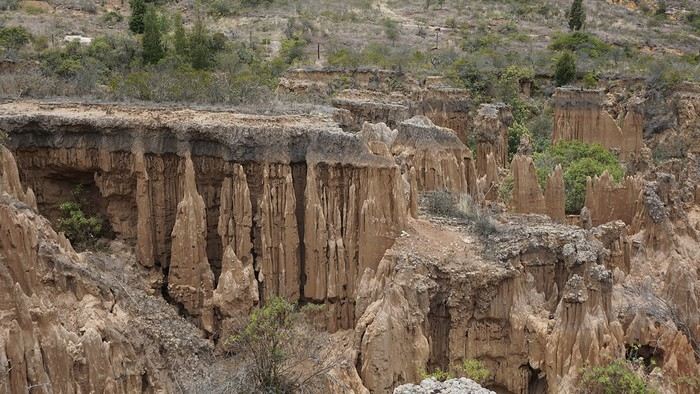
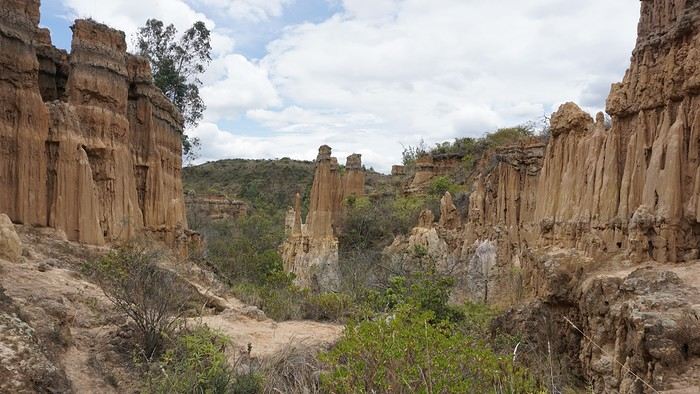
The advantage of this non-stop chatter was that it forced us to brush up on our Spanish at lightning speed. I even wondered if the effort to concentrate wasn’t more exhausting than the physical effort! Especially since on the way back, I got an oral quiz. Deisy wanted to make sure I remembered some of the information she’d given me during the visit: why is this rock white, that one red, and that one black? Back in the village, we had lunch at a restaurant recommended by Deisy before visiting the Nemecon salt mine. Before entering, a guide spent a good half-hour explaining the origin of the salt and the presence of many fossils in the area. Again, concentrating was tough because all the comments were exclusively in Spanish! An hour and a half wandering through the tunnels with a ‘lovely miner’s helmet’ on our heads!
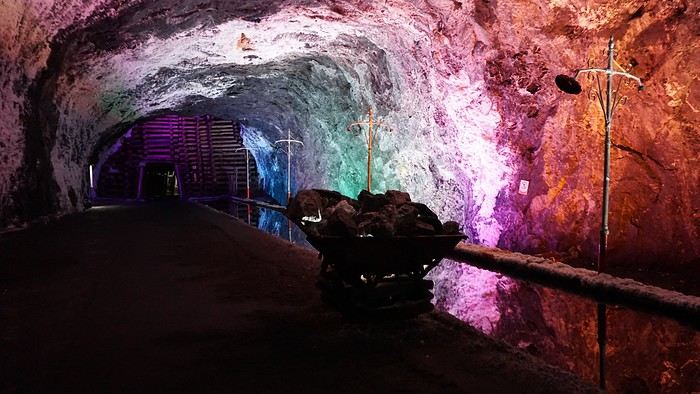
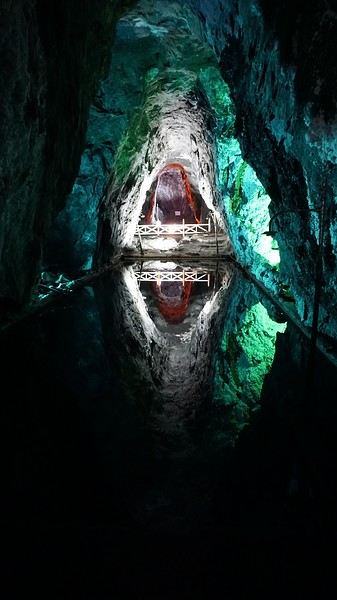
We met our driver at the mine entrance. The return to Bogotá was a bit faster, but traffic in the city center was still heavy! We arrived in front of our hotel between 8:00 and 8:30 PM. It’s been a pretty intense start to the trip! Tonight, our legs are tired. Hopefully, tomorrow will be a bit more relaxed! Bogotá (3/3) We started the day by visiting the Santa Clara Church Museum, located next to the presidential palace. Alejandra (from the local agency ‘Gaia Tours Colombia,’ which organized our stay in Caño Cristales (La Macarena)) had recommended this visit for its rich mural paintings.
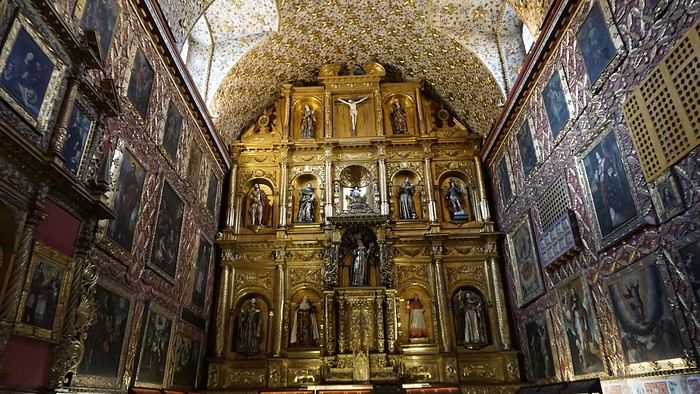
A few hundred meters further, after crossing the Plaza Mayor again, we visited the cultural complex housing the Botero Museum, the Mint Museum, and the Bank of the Republic Art Museum. Note that entry is free for all three museums. Botero Museum: There are fewer works by Botero here than in the Medellín museum, but more paintings and sculptures by other artists, all from Botero’s private collection (donated to Colombia). Mint Museum: We limited ourselves to visiting one room (on Flora’s advice) where three gold and gemstone monstrances and a Christ with a crown of emerald thorns are displayed. Photos are not allowed. Art Museum: We visited two temporary exhibitions. Lunchtime came quickly. We had a good meal at a reasonably priced small restaurant in the La Candelaria micro-district, near the Chorro de Quevedo square. We decided to spend the afternoon wandering the streets and alleys of the historic center to discover local street art.
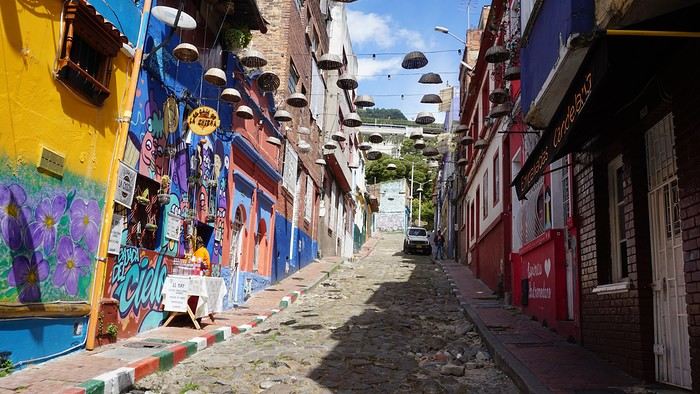
We also passed through very lively pedestrian streets. I also decided to revisit Pasaje Rivas to show Justine all the shops selling more or less artisanal products. Tomorrow morning, we fly to La Macarena at 10:30 AM. Not to dance (you’d be surprised if I told you we were going to take a South American dance class, right?!), but to visit the fabulous Caño Cristales, a river naturally colored by aquatic plants. The planned program includes hiking, horseback riding, canoeing, and swimming among these plants. This site was long inaccessible because the area was controlled by the FARC. Access and tourism development became possible after agreements and amnesty measures between the Colombian government and paramilitary groups. As in other regions, former FARC members have been able to transition into various tourism-related activities.
About two hours later, we decided to walk (careful, it’s a climb!) to the Monserrate cable car (3152m). Long wait to buy tickets and board the cable car! Once we arrived, a few raindrops, an impressive panoramic view of Bogotá’s vastness, a quick visit to the basilica (a pilgrimage site for Colombians), a walk through the tourist market, and at the top, plenty of small restaurants where we had our first Colombian meal. After our hearty lunch, we were lucky to see the sun return! No line for the descent. We then headed back to the hotel because Justine wanted to rest and recover from the trip. As for me, I continued my walk. I discovered a really nice craft market recommended by Flora, Pasaje Rivas, returned to Bolívar Square, and wandered through different streets, including the main pedestrian avenue (Calle 7), where there’s always something to see.
Tomorrow, a change of scenery as we head out for a hike in a small desert (Desierto de Chueca), located about 2 hours from Bogotá in the village of Nemecon. For this outing from Bogotá, with Flora’s help, we booked a car with a driver for the day. Flora also took care of booking the guide (since the site can only be visited with one). Nemecon (2/3) Today, we went to Nemecon to hike about 7.5 km in the ‘Desert of Checua.’ It’s nothing like sandy deserts! Instead, it’s geological formations sculpted by time, wind, and water. After two hours on the road—almost one of them spent navigating traffic jams with cars, trucks, buses, and a continuous flow of motorcycles on either side of our taxi—we reached Nemecon! The village center is really (too?) quiet. We met up with Deisy and headed toward the ‘desert,’ about twenty minutes away on a bumpy dirt road. Once there, a quick briefing, and off we went! Deisy didn’t stop talking (in Spanish) for over 3 hours!!! She told us so much about her region (flower farming, water management, traditions, songs, etc.), the origin of the site, and even mentioned Antonio Banderas, who filmed *The 33* in the village’s salt mine (the story of the survival of 33 Chilean miners after a collapse in their copper and gold mine). One hour of walking to reach the site, one hour to explore it, and one hour to return.
The advantage of this non-stop chatter was that it forced us to brush up on our Spanish at lightning speed. I even wondered if the effort to concentrate wasn’t more exhausting than the physical effort! Especially since on the way back, I got an oral quiz. Deisy wanted to make sure I remembered some of the information she’d given me during the visit: why is this rock white, that one red, and that one black? Back in the village, we had lunch at a restaurant recommended by Deisy before visiting the Nemecon salt mine. Before entering, a guide spent a good half-hour explaining the origin of the salt and the presence of many fossils in the area. Again, concentrating was tough because all the comments were exclusively in Spanish! An hour and a half wandering through the tunnels with a ‘lovely miner’s helmet’ on our heads!
We met our driver at the mine entrance. The return to Bogotá was a bit faster, but traffic in the city center was still heavy! We arrived in front of our hotel between 8:00 and 8:30 PM. It’s been a pretty intense start to the trip! Tonight, our legs are tired. Hopefully, tomorrow will be a bit more relaxed! Bogotá (3/3) We started the day by visiting the Santa Clara Church Museum, located next to the presidential palace. Alejandra (from the local agency ‘Gaia Tours Colombia,’ which organized our stay in Caño Cristales (La Macarena)) had recommended this visit for its rich mural paintings.
A few hundred meters further, after crossing the Plaza Mayor again, we visited the cultural complex housing the Botero Museum, the Mint Museum, and the Bank of the Republic Art Museum. Note that entry is free for all three museums. Botero Museum: There are fewer works by Botero here than in the Medellín museum, but more paintings and sculptures by other artists, all from Botero’s private collection (donated to Colombia). Mint Museum: We limited ourselves to visiting one room (on Flora’s advice) where three gold and gemstone monstrances and a Christ with a crown of emerald thorns are displayed. Photos are not allowed. Art Museum: We visited two temporary exhibitions. Lunchtime came quickly. We had a good meal at a reasonably priced small restaurant in the La Candelaria micro-district, near the Chorro de Quevedo square. We decided to spend the afternoon wandering the streets and alleys of the historic center to discover local street art.
We also passed through very lively pedestrian streets. I also decided to revisit Pasaje Rivas to show Justine all the shops selling more or less artisanal products. Tomorrow morning, we fly to La Macarena at 10:30 AM. Not to dance (you’d be surprised if I told you we were going to take a South American dance class, right?!), but to visit the fabulous Caño Cristales, a river naturally colored by aquatic plants. The planned program includes hiking, horseback riding, canoeing, and swimming among these plants. This site was long inaccessible because the area was controlled by the FARC. Access and tourism development became possible after agreements and amnesty measures between the Colombian government and paramilitary groups. As in other regions, former FARC members have been able to transition into various tourism-related activities.
Three weeks in Norway (July 2022): fantastic memories despite the rain
Our trip to Norway was two years ago already, but I thought it might still be of interest—and it’ll let me relive it a bit by proxy.
Before booking our flight tickets, we debated the route: should we prioritize the north with the Lofoten and Senja islands, or the south with its countless fjords? I was tempted to stay in the south—the country is so vast, and the drive north is long... but my husband really didn’t want to miss the Lofoten. In the end, we figured that since Norway is known for being expensive, we might only visit once (funny how we said the same thing before our first trip to the American West, and look how that turned out 😎), so we didn’t want to skip anything. That meant a 2–3 day drive up north. With 22 days on the ground, it was doable. Especially since, as usual, we skip big cities and gave Oslo a pass.
Practical details: - Flight tickets: 1195 € for 4 with Air France (Paris–Oslo outbound, Tromsø–Bergen–Paris return) - Car rental: 2020 € for 21 days (including the outrageous drop-off fee between Oslo and Tromsø—about 1000 €) - Tolls and ferries: 250 € for the portion billed directly by the rental company. Some ferries required advance booking and payment at the time of reservation—I’ll note their prices as I go through the story. - Hotels: 4135 €, averaging 188 € per night. We blew past our usual budgets from trips to the U.S., but oh well... - Food: 1570 €, averaging 71 € per day for 4 in a country where everything’s expensive... How’d we manage? We rarely ate out, mostly grocery shopped, and even packed half a suitcase with non-perishables: pasta, rice, a few cans, and even some cured sausage! We also stayed 3 nights at Clarion Collection hotels, where an evening buffet was included in the room rate.
Before booking our flight tickets, we debated the route: should we prioritize the north with the Lofoten and Senja islands, or the south with its countless fjords? I was tempted to stay in the south—the country is so vast, and the drive north is long... but my husband really didn’t want to miss the Lofoten. In the end, we figured that since Norway is known for being expensive, we might only visit once (funny how we said the same thing before our first trip to the American West, and look how that turned out 😎), so we didn’t want to skip anything. That meant a 2–3 day drive up north. With 22 days on the ground, it was doable. Especially since, as usual, we skip big cities and gave Oslo a pass.
Practical details: - Flight tickets: 1195 € for 4 with Air France (Paris–Oslo outbound, Tromsø–Bergen–Paris return) - Car rental: 2020 € for 21 days (including the outrageous drop-off fee between Oslo and Tromsø—about 1000 €) - Tolls and ferries: 250 € for the portion billed directly by the rental company. Some ferries required advance booking and payment at the time of reservation—I’ll note their prices as I go through the story. - Hotels: 4135 €, averaging 188 € per night. We blew past our usual budgets from trips to the U.S., but oh well... - Food: 1570 €, averaging 71 € per day for 4 in a country where everything’s expensive... How’d we manage? We rarely ate out, mostly grocery shopped, and even packed half a suitcase with non-perishables: pasta, rice, a few cans, and even some cured sausage! We also stayed 3 nights at Clarion Collection hotels, where an evening buffet was included in the room rate.
Flânerie le long de la rivière Luangwa English translation pending
Bonjour à toutes et tous,
En avril dernier, à la suite de Régis puis de Claire, nous avions partagé sur ce forum notre pérégrination atypique au Kenya dans la réserve du Masaï-Mara. A l'issue de ce récit, nous avions imaginé repartir soit en randonnée sur les plus hautes terres d'Ethiopie (une dizaine de jours dans les montagnes du Simien lors d'un long séjour en 2009), soit de suivre le cours tranquille de la rivière Luangwa, dans sa partie sud (deux semaines à cheval sur octobre et novembre 2019). Dans le but d'animer les colonnes désertées de Voyage Forum en raison d'une sournoise pandémie, nous avons choisi l'Afrique Australe, précisant que ce texte, destiné à notre entourage ne correspond pas tout à fait à l'esprit "Carnets de Voyages" du site, vous nous en excuserez. Comme la précédente, cette escapade est l'une des rares que nous ayons réalisée avec une agence : y prendrait-on goût ou vieillirait-on ? Pour agrémenter ses longues pages d'écriture (une trentaine pour la partie South Luangwa N P et une dizaine pour la visite de Mosi-oa-Tunya et alentours), Yolande a sélectionné les photos les plus représentatives de cette vadrouille zambienne, dont cette magnifique panthère, rencontrée dès notre entrée dans le sanctuaire.
En route pour le rêve, seule frontière encore ouverte. Bien amicalement. Jety 34.
Impossible de joindre la photo (au secours !), ci-joint le message de VF (??????)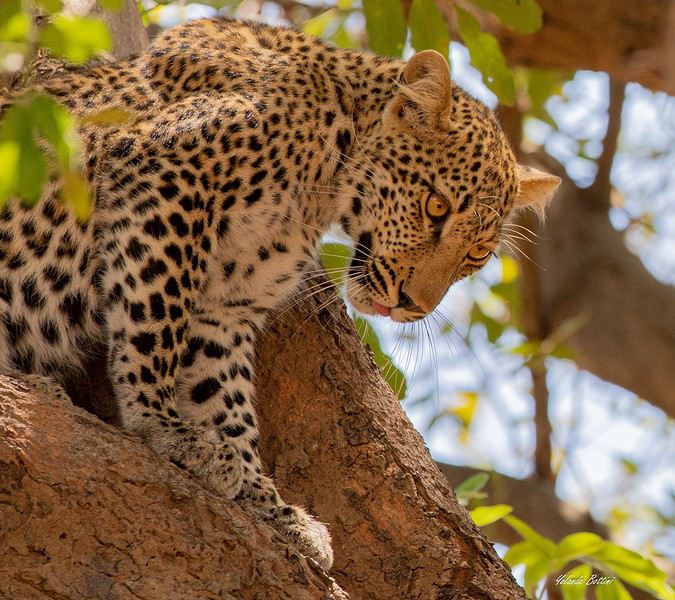
En avril dernier, à la suite de Régis puis de Claire, nous avions partagé sur ce forum notre pérégrination atypique au Kenya dans la réserve du Masaï-Mara. A l'issue de ce récit, nous avions imaginé repartir soit en randonnée sur les plus hautes terres d'Ethiopie (une dizaine de jours dans les montagnes du Simien lors d'un long séjour en 2009), soit de suivre le cours tranquille de la rivière Luangwa, dans sa partie sud (deux semaines à cheval sur octobre et novembre 2019). Dans le but d'animer les colonnes désertées de Voyage Forum en raison d'une sournoise pandémie, nous avons choisi l'Afrique Australe, précisant que ce texte, destiné à notre entourage ne correspond pas tout à fait à l'esprit "Carnets de Voyages" du site, vous nous en excuserez. Comme la précédente, cette escapade est l'une des rares que nous ayons réalisée avec une agence : y prendrait-on goût ou vieillirait-on ? Pour agrémenter ses longues pages d'écriture (une trentaine pour la partie South Luangwa N P et une dizaine pour la visite de Mosi-oa-Tunya et alentours), Yolande a sélectionné les photos les plus représentatives de cette vadrouille zambienne, dont cette magnifique panthère, rencontrée dès notre entrée dans le sanctuaire.
En route pour le rêve, seule frontière encore ouverte. Bien amicalement. Jety 34.
Impossible de joindre la photo (au secours !), ci-joint le message de VF (??????)
Dans quelle ville belge ne faut-il pas (encore?) porter le masque partout? English translation pending
Bonjour ,
Tout est dans le titre . Porter le masque dans les transports publics, dans les commerces et les endroits où il y a beaucoup de monde , d'accord . Mais l'obligation de le porter dans tout l'espace public à Bruxelles me dégoûte . Là c'est franchement trop . ....Pouvez-vous me dire dans quelles villes beges ce n'est-ce pas (encore ?) ainsi , histoire de marcher quelque part , sans devoir supporter un masque trempé de sueur sur le visage , ni devoir respirer l'air au travers de ce même masque ?
Tout est dans le titre . Porter le masque dans les transports publics, dans les commerces et les endroits où il y a beaucoup de monde , d'accord . Mais l'obligation de le porter dans tout l'espace public à Bruxelles me dégoûte . Là c'est franchement trop . ....Pouvez-vous me dire dans quelles villes beges ce n'est-ce pas (encore ?) ainsi , histoire de marcher quelque part , sans devoir supporter un masque trempé de sueur sur le visage , ni devoir respirer l'air au travers de ce même masque ?
Un petit tour au bout du monde: Ushuaïa English translation pending
Un libro como un viaje se comienza con inquietud y se termina con melancolía. José Vasconcelos Calderón
CHAPITRE 1 : USHUAÏA
Me voici à Londres, où m’attends une journée d’escale. Située assez loin dans ma liste personnelle des lieux à visiter, je suis quand même heureuse de pouvoir découvrir une nouvelle ville, pour le peu de temps que j’ai à y passer. Elle me fait penser à un Paris version Britannique. Je visite le British Museum : c’est une mine d’or historique et culturelle ( en plus on m’offre le guide audio ) ! Je vois Big Ben en travaux de loin, ainsi que Buckingham Palace. Je monte dans un des fameux bus rouge à étages, et m’arrête boire une bière locale dans un pub : en bref, je fais ma touriste de base.
Je comprends que l’on puisse aimer les grandes villes ( diversité et abondance culturelle, ambiance, tout à disposition, animation.. ), mais il m’est compliqué de faire abstraction du brouhaha incessant, des bruits de voitures, du mauvais temps, du stress qui pourrait se couper au couteau, et du béton omniprésent.
Je me dirige vers l’aéroport, et, 13h de vol, la sympathisation avec une française, 3h d’escale à Buenos Aires, et 4h de vol plus tard, me voici enfin à Ushuaïa ! Je suis heureuse d’avoir un pied sur le continent, et de pouvoir enfin démarrer mon voyage.
À l’atterrissage, je peux distinguer la Terre de Feu sous les nuages, avec ses îles et ses sommets enneigés. Ushuaïa est une petite ville dont le centre compte de petits chalets mignons, même si j’avoue, il y plane une odeur pesante de machine à fric. Le soir, je regarde la ville s’endormir avec le soleil, spectacle que je dois avouer très agréable.
Le lendemain, je me réveille tôt, auberge de jeunesse tmtc, on paie moins cher car on offre sa promiscuité. Je vais me faire tamponner le passeport à l’Office du tourisme, après avoir dégusté le petit déjeuner copieux de l’auberge ( avec du pain fait maison ! ).
Dans la matinée, je vais au Musée Maritime de l’Antarctique dans l’ancienne prison d’Ushuaia. Un prisonnier avait dessiné son portrait sur les murs de sa cellule. Toute une aile du musée est dédiée à l’entreprise Total, dont l’apologie est faite ( ils sauveraient les pingouins en Antarctique, et contribueraient à leur protection ). Je ris jaune très fort dans ma tête.
Dans l’après-midi, je teste l’Icebar. Le concept : un congélateur géant à -18 degrés, orné de sculptures de glace ( maintenues telles quelles depuis deux ans ), de la musique, et un vrai bar avec boissons à volonté. Je me bois trois cocktails dans des verres de glace, en papotant avec le barman. Je ne vois pas le temps passer, à part mes doigts qui commencent à se congeler : je reste en tout 40min, grand maximum pour la santé.
Je rentre à l’auberge frigorifiée, en pensant prendre une douche brûlante avant de dormir. Que Neni, je tombe sur une Suisse dans mon dortoir, paniquée car elle venait de se rendre compte qu’elle s’était faite voler sa carte bleue ! On accroche de suite et je me prends d’une envie de l’aider. On part donc en ville pour essayer de régler son problème, alors qu’on se connaît depuis à peine dix minutes. On va dans différentes institutions, réussit à appeler sa banque aux Etats Unis, et finalement, après quelques montagnes russes, on réussit à régler son problème. On va donc boire un coup pour se détendre, dans un bar Irlandais, où je recroise un français avec qui j’avais papoté. On parle durant des heures. Cette fille est incroyable, elle a une vie hors du commun. Elle me raconte ses péripéties, et on part dans de grandes conversations. Je passe une très bonne soirée.
Le lendemain, je pars pour la Estancia Tunel. Le colectivo ( minibus, ( attend d’être plein avant de partir selon les endroits )) n’accepte que la carte » Sube « , et pas le liquide. La conductrice, adorable, me laisse passer gratuitement. Je marche environ 45 minutes, avant d’arriver à la balise qui est malheureusement en travaux; on ne peut pas accéder à la forêt. Tant pis, je trouve un coin isolé et désert, entre la forêt et le bord du canal. Les pics enneigés, la verdure, les lacs : c’est magnifique et très agréable. Je pique-nique et me pose toute l’après-midi avant de rentrer. Un local très gentil passe sa carte Sube pour moi, et refuse que je le rembourse en liquide.
À l’auberge, je retrouve la Suisse qui a passé une sale journée. On fait le tour des hostals, pour qu’elle puisse trouver un volontariat afin de rester, seulement, on est entre deux périodes touristiques, et aucune auberge ne recherche de volontaires. On se boit une bouteille de vin au bord du lac, et rentre assez éméchées. Nos rires ont l’air d’agacer les deux autres personnes du dortoir, qui écoutent leurs telenovelas sans écouteurs H24 : ça leur fait les pieds un peu.
Le lendemain, incroyable en Amérique latine : le car arrive en avance. Je pars dans le parc national Tierra del Fuego. Cela fait trois jours que ma cheville droite me fait souffrir et a doublé de volume: après 1h30 de marche je fais du stop pour aller sur mon lieu de campement. J’avais prévu de faire le trek du Hito XXIV, le seul qui n’est pas enseveli sous la neige, mais ça ne sera pas possible pour aujourd’hui. En montant ma tente, je me rend compte que le problème vient de mes chaussures, qui sont devenues bien trop petites pour moi, et que l’os de mon pied creuse le cuir de la chaussure haha, c’est pour ça que ma cheville a autant gonflé.
Il y a un petit ruisseau, le coin est très agréable, et une fois tous les touristes partis, sachant que je suis la seule campeuse du parc, personne à des kilomètres, j’en profite pour chanter à tue-tête.
Je dors à peine ( des rafales de vent à 100km/h ça fait du bruit contre une tente ), mais je n’ai pas froid, mon sac de couchage a une température maximale de -5°.
Je fais le Hito XXIV en chaussettes, et 2h30 de marche plus tard, j’arrive à à la frontière officielle Chilienne, délimitée par un simple panneau et la fin du sentier. Avec la fonte des neiges, je suis trempée, mais bon, j’aurai vu le joli lac. Je croise deux magnifiques chevaux dans la forêt. Il y a un petit restau à côté de l’arrêt de bus, où le patron m’offre un thé, sûrement car j’ai été la seule idiote à camper par ce temps haha.
En rentrant, j’achète des baskets de piètre qualité, mais qui tiendront tous mes treks des quatre prochains mois.
En rentrant à l’auberge, j’apprends que la Suisse a pu trouver un couchsurfing. Je suis contente pour elle, même si on a pas échangé nos contacts.
Le lendemain, je me fais réveiller par une brésilienne, paniquée car des clients nous avaient enfermées à clé sans faire exprès. J’appelle mes proches, le lendemain je pars pour le Chili.
J'alimente régulièrement mon blog de mes récits de voyage également ! Si ça peut vous intéresser : lacobayeailee.com
CHAPITRE 1 : USHUAÏA
Me voici à Londres, où m’attends une journée d’escale. Située assez loin dans ma liste personnelle des lieux à visiter, je suis quand même heureuse de pouvoir découvrir une nouvelle ville, pour le peu de temps que j’ai à y passer. Elle me fait penser à un Paris version Britannique. Je visite le British Museum : c’est une mine d’or historique et culturelle ( en plus on m’offre le guide audio ) ! Je vois Big Ben en travaux de loin, ainsi que Buckingham Palace. Je monte dans un des fameux bus rouge à étages, et m’arrête boire une bière locale dans un pub : en bref, je fais ma touriste de base.
Je comprends que l’on puisse aimer les grandes villes ( diversité et abondance culturelle, ambiance, tout à disposition, animation.. ), mais il m’est compliqué de faire abstraction du brouhaha incessant, des bruits de voitures, du mauvais temps, du stress qui pourrait se couper au couteau, et du béton omniprésent.
Je me dirige vers l’aéroport, et, 13h de vol, la sympathisation avec une française, 3h d’escale à Buenos Aires, et 4h de vol plus tard, me voici enfin à Ushuaïa ! Je suis heureuse d’avoir un pied sur le continent, et de pouvoir enfin démarrer mon voyage.
À l’atterrissage, je peux distinguer la Terre de Feu sous les nuages, avec ses îles et ses sommets enneigés. Ushuaïa est une petite ville dont le centre compte de petits chalets mignons, même si j’avoue, il y plane une odeur pesante de machine à fric. Le soir, je regarde la ville s’endormir avec le soleil, spectacle que je dois avouer très agréable.
Le lendemain, je me réveille tôt, auberge de jeunesse tmtc, on paie moins cher car on offre sa promiscuité. Je vais me faire tamponner le passeport à l’Office du tourisme, après avoir dégusté le petit déjeuner copieux de l’auberge ( avec du pain fait maison ! ).
Dans la matinée, je vais au Musée Maritime de l’Antarctique dans l’ancienne prison d’Ushuaia. Un prisonnier avait dessiné son portrait sur les murs de sa cellule. Toute une aile du musée est dédiée à l’entreprise Total, dont l’apologie est faite ( ils sauveraient les pingouins en Antarctique, et contribueraient à leur protection ). Je ris jaune très fort dans ma tête.
Dans l’après-midi, je teste l’Icebar. Le concept : un congélateur géant à -18 degrés, orné de sculptures de glace ( maintenues telles quelles depuis deux ans ), de la musique, et un vrai bar avec boissons à volonté. Je me bois trois cocktails dans des verres de glace, en papotant avec le barman. Je ne vois pas le temps passer, à part mes doigts qui commencent à se congeler : je reste en tout 40min, grand maximum pour la santé.
Je rentre à l’auberge frigorifiée, en pensant prendre une douche brûlante avant de dormir. Que Neni, je tombe sur une Suisse dans mon dortoir, paniquée car elle venait de se rendre compte qu’elle s’était faite voler sa carte bleue ! On accroche de suite et je me prends d’une envie de l’aider. On part donc en ville pour essayer de régler son problème, alors qu’on se connaît depuis à peine dix minutes. On va dans différentes institutions, réussit à appeler sa banque aux Etats Unis, et finalement, après quelques montagnes russes, on réussit à régler son problème. On va donc boire un coup pour se détendre, dans un bar Irlandais, où je recroise un français avec qui j’avais papoté. On parle durant des heures. Cette fille est incroyable, elle a une vie hors du commun. Elle me raconte ses péripéties, et on part dans de grandes conversations. Je passe une très bonne soirée.
Le lendemain, je pars pour la Estancia Tunel. Le colectivo ( minibus, ( attend d’être plein avant de partir selon les endroits )) n’accepte que la carte » Sube « , et pas le liquide. La conductrice, adorable, me laisse passer gratuitement. Je marche environ 45 minutes, avant d’arriver à la balise qui est malheureusement en travaux; on ne peut pas accéder à la forêt. Tant pis, je trouve un coin isolé et désert, entre la forêt et le bord du canal. Les pics enneigés, la verdure, les lacs : c’est magnifique et très agréable. Je pique-nique et me pose toute l’après-midi avant de rentrer. Un local très gentil passe sa carte Sube pour moi, et refuse que je le rembourse en liquide.
À l’auberge, je retrouve la Suisse qui a passé une sale journée. On fait le tour des hostals, pour qu’elle puisse trouver un volontariat afin de rester, seulement, on est entre deux périodes touristiques, et aucune auberge ne recherche de volontaires. On se boit une bouteille de vin au bord du lac, et rentre assez éméchées. Nos rires ont l’air d’agacer les deux autres personnes du dortoir, qui écoutent leurs telenovelas sans écouteurs H24 : ça leur fait les pieds un peu.
Le lendemain, incroyable en Amérique latine : le car arrive en avance. Je pars dans le parc national Tierra del Fuego. Cela fait trois jours que ma cheville droite me fait souffrir et a doublé de volume: après 1h30 de marche je fais du stop pour aller sur mon lieu de campement. J’avais prévu de faire le trek du Hito XXIV, le seul qui n’est pas enseveli sous la neige, mais ça ne sera pas possible pour aujourd’hui. En montant ma tente, je me rend compte que le problème vient de mes chaussures, qui sont devenues bien trop petites pour moi, et que l’os de mon pied creuse le cuir de la chaussure haha, c’est pour ça que ma cheville a autant gonflé.
Il y a un petit ruisseau, le coin est très agréable, et une fois tous les touristes partis, sachant que je suis la seule campeuse du parc, personne à des kilomètres, j’en profite pour chanter à tue-tête.
Je dors à peine ( des rafales de vent à 100km/h ça fait du bruit contre une tente ), mais je n’ai pas froid, mon sac de couchage a une température maximale de -5°.
Je fais le Hito XXIV en chaussettes, et 2h30 de marche plus tard, j’arrive à à la frontière officielle Chilienne, délimitée par un simple panneau et la fin du sentier. Avec la fonte des neiges, je suis trempée, mais bon, j’aurai vu le joli lac. Je croise deux magnifiques chevaux dans la forêt. Il y a un petit restau à côté de l’arrêt de bus, où le patron m’offre un thé, sûrement car j’ai été la seule idiote à camper par ce temps haha.
En rentrant, j’achète des baskets de piètre qualité, mais qui tiendront tous mes treks des quatre prochains mois.
En rentrant à l’auberge, j’apprends que la Suisse a pu trouver un couchsurfing. Je suis contente pour elle, même si on a pas échangé nos contacts.
Le lendemain, je me fais réveiller par une brésilienne, paniquée car des clients nous avaient enfermées à clé sans faire exprès. J’appelle mes proches, le lendemain je pars pour le Chili.
J'alimente régulièrement mon blog de mes récits de voyage également ! Si ça peut vous intéresser : lacobayeailee.com