Results for "Cap+Antibes+|+127"
19331 results found.
Our road trip through the American Southwest for summer 2026
Hello! The itinerary is pretty much set for August 2026. Yeah, I know it’s gonna be *super* hot. But it’s the only time we can get away.
So, here’s the plan: Montpellier-CDG-Dallas.
Stay from July 31 to August 26, 2026: Car rental – check, Hotels – check, Itinerary – almost check, Photo gear – check, Budget – check, 🤪 Meal planning – meh, we’ll see... Walmart, of course, for the cooler when we arrive.
And now, without too much detail...
Fort Worth: The Longhorns and the Stockyards; JR’s ranch (for the missus); Medal of Honor Museum – Arlington.
Houston and NASA Space Center: See the Gulf of Mexico/America.
San Antonio and the missions.
Fort Stockton for an overnight stop.
El Paso via Guadalupe Mountains: El Paso and White Sands.
Tucson and the Pima Air & Space Museum: Tombstone, Bisbee.
Phoenix:
Still working on the program.
Sedona: Round trip around the area via Flagstaff and Williams, or the Grand Canyon (already done) – we’ll decide on the spot.
Albuquerque: Santa Fe, Turquoise Trail, Los Alamos.
Amarillo via Route 66: Old Route 66 in the city; Big Texas Ranch Steak 😏.
Dallas: JFK Museum; Perot Museum; West End district.
And through it all – the road, the road, and more road!!!
We’ll adapt day by day based on our mental and physical state (we’re not exactly spring chickens).
Return to France: Dallas-Montpellier via CDG.
Cheers!
Best destinations for a first solo trip?
Hi there! I’m in the middle of planning my first solo trip (as a woman). Do you have any ideal destinations with activities like hiking, diving, sightseeing, and easy ways to meet locals—all on a small budget?
I’d love to hear from anyone who’s had this experience before! :)
I’d love to hear from anyone who’s had this experience before! :)
Questions about homestays and buses in Réunion during peak tourist season
hi there
I’m planning to spend about twenty days in Réunion in November. I’d like to get around using the *car jaune* (2 € per ticket), but from what I’ve heard, it doesn’t cover the whole island. I’m not looking to head toward the ocean and the beautiful beaches—more toward the mountainous landscapes, even if I’ll just be admiring them from below. 😉 Maybe other buses go where I want to go. By the way, are there any relatively easy mountain hikes, and where?
But here’s the most important part: I don’t want to book anything in advance because I don’t know what my itinerary will look like—it’ll change depending on my mood. 3 days here, 5 days there, etc. On top of that, I’d like to arrange half-board stays with locals—not professionals—by approaching them and asking if they’d be willing to host me (overnight stay, breakfast, and dinner) for 30 € to 40 € per day.
What do you think? Does the price seem reasonable? And is it okay to take the initiative and ask Réunionnais directly?
The tourist office in Réunion told me that since November is peak tourist season, I should book without delay. 🤪
For four years in a row, I traveled across Canada for a month and a half each time, relying only on hitchhiking and half-board stays with Canadians who welcomed me (and refused to let me pay them).
If I’d listened to my family and friends, I never would’ve taken the leap—and that adventure remains one of the best experiences of my life.
Thanks for your input!
April 2026 Photo Contest Theme: Feeling Fishy?
The 140th (wow!) edition of the contest is now live!
Since it’s April Fools’ month and I’m a diver at heart, I had to pick a theme around the sea and fish.
This month’s theme is: sea fishing 🙂. Deep-sea fishing, rockpooling, shore casting, shellfish & crustaceans—anything remotely related to sea fishing fits the bill 😉
Photos of fishing boats, fishing ports, fish auctions, seafood stalls, nets and trawls, lobster pots, fishermen, your kids collecting cockles, even those New Year’s oyster shells 😏—no limits as long as it ties into the theme 😛 And of course, a special shout-out to anglers worldwide! 🙂
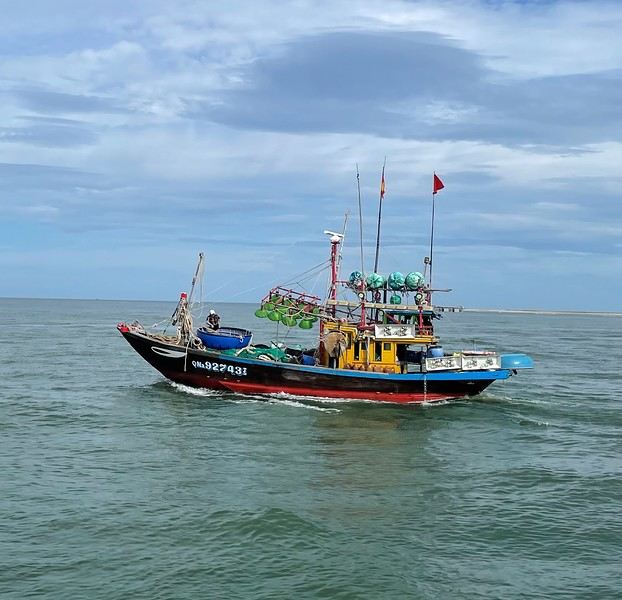
I’m traveling right now, so I don’t have many photos on hand. To illustrate the theme, I’ve chosen this shot of a small Vietnamese fishing boat I spotted near the Cham Islands, returning from a dive.
Contest rules: You can post up to three photos, each in a separate message, clearly numbering them (1, 2, or 3) and including the location where the photo was taken. Any explanations about your photos are welcome.
When voting, you’ll choose three photos, clearly stating the participant’s name followed by their photo number. The first photo in your vote gets three points, the second gets two, and the third gets one.
The winner will be the person whose photo earns the most points. In case of a tie, the winner will be the one with the most first-place votes, or if still tied, the most second-place votes. If it’s a perfect tie, the person who reached their score first wins. The winner then gets the honor of choosing and organizing May 2026’s contest theme. Ties for any other position won’t be broken. Finally, you don’t need to enter the contest to vote, but participants (and I hope there’ll be lots of you!) are *strongly* encouraged to vote!
Please only post contest photos in this thread. Starting Saturday, April 25 (00:01 Paris time), only votes should be posted.
Key dates: You can submit your photos from today until Friday, April 24, 2026 (23:59 Paris time—Xavier, you can do the math for Perth 😏). Voting starts the very next minute and ends on Thursday, April 29 (23:59 Paris time). Results will be announced on Thursday, April 30, 2026... The next host can take over on Saturday, May 2 (yeah, May 1 is a no-work day 😛)
Ready, set, shoot!
Since it’s April Fools’ month and I’m a diver at heart, I had to pick a theme around the sea and fish.
This month’s theme is: sea fishing 🙂. Deep-sea fishing, rockpooling, shore casting, shellfish & crustaceans—anything remotely related to sea fishing fits the bill 😉
Photos of fishing boats, fishing ports, fish auctions, seafood stalls, nets and trawls, lobster pots, fishermen, your kids collecting cockles, even those New Year’s oyster shells 😏—no limits as long as it ties into the theme 😛 And of course, a special shout-out to anglers worldwide! 🙂
I’m traveling right now, so I don’t have many photos on hand. To illustrate the theme, I’ve chosen this shot of a small Vietnamese fishing boat I spotted near the Cham Islands, returning from a dive.
Contest rules: You can post up to three photos, each in a separate message, clearly numbering them (1, 2, or 3) and including the location where the photo was taken. Any explanations about your photos are welcome.
When voting, you’ll choose three photos, clearly stating the participant’s name followed by their photo number. The first photo in your vote gets three points, the second gets two, and the third gets one.
The winner will be the person whose photo earns the most points. In case of a tie, the winner will be the one with the most first-place votes, or if still tied, the most second-place votes. If it’s a perfect tie, the person who reached their score first wins. The winner then gets the honor of choosing and organizing May 2026’s contest theme. Ties for any other position won’t be broken. Finally, you don’t need to enter the contest to vote, but participants (and I hope there’ll be lots of you!) are *strongly* encouraged to vote!
Please only post contest photos in this thread. Starting Saturday, April 25 (00:01 Paris time), only votes should be posted.
Key dates: You can submit your photos from today until Friday, April 24, 2026 (23:59 Paris time—Xavier, you can do the math for Perth 😏). Voting starts the very next minute and ends on Thursday, April 29 (23:59 Paris time). Results will be announced on Thursday, April 30, 2026... The next host can take over on Saturday, May 2 (yeah, May 1 is a no-work day 😛)
Ready, set, shoot!
Recent CFC Reviews
Hi
Has anyone taken the CFC recently?
Thoughts?
Thanks
Thoughts?
Thanks
Solar vehicle Otonomi: seeking senior adventurer for journey from France to the Pamir!
It’s never too late to live intensely.
I’m Guy, I’ve passed 70, and I’m looking for a female travel companion for an extraordinary adventure aboard OTONOMI—a solar-powered tandem I built with my own hands over two years.
My past is that of an unrepentant traveler: crossing the Atlantic in an ultralight aircraft, swimming across channels, and a high-level sailing record in major transatlantic races... OTONOMI isn’t a retiree’s whim—it’s the final chapter of a life of adventure, perhaps the most beautiful one.
Departure at the end of May. Route: Europe to Baku, crossing the Caspian by ferry, then Turkmenistan, Uzbekistan, Tajikistan, the Pamir, Kyrgyzstan, and return via Kazakhstan. At least 3-4 months.
No need to be athletic—a session of *longe côte* (coastal walking) requires more physical effort than a full day on OTONOMI. You don’t even have to pedal at all.
OTONOMI tows a foldable solar-powered caravan trailer—camping under the stars or staying in small local hotels, depending on your mood. Road expenses are shared simply.
I’m looking for a free-spirited woman, curious, passionate about genuine encounters and wide-open spaces—appearance or insecurities don’t matter. Just that flame still burning inside you.
A real-life test run is planned before departure—so we can meet naturally, without pressure.
📩 guy.otonomi@outlook.fr
Discussion around March 2026's Theme: Metal, Metallic
This is where we share stories (or post extra photos) around March’s theme Metal, Metallic.
Back to the March 2026 contest: HERE
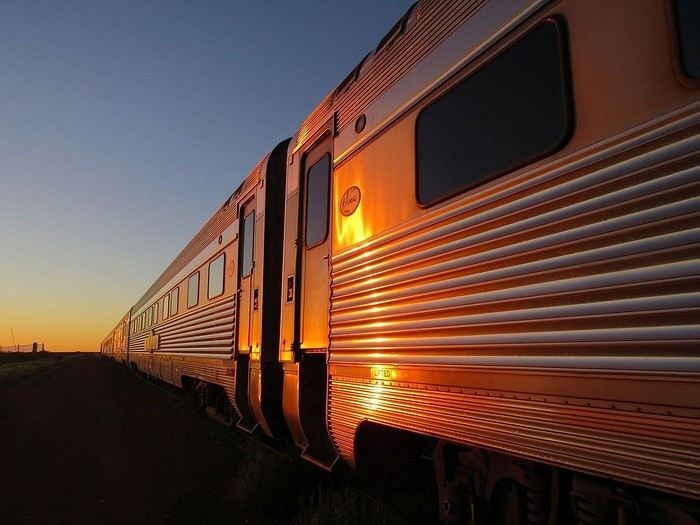
The Ghan (train connecting Adelaide to Darwin), at dawn.
Back to the March 2026 contest: HERE
The Ghan (train connecting Adelaide to Darwin), at dawn.
March 2026 Photo Contest Theme: Metal, Metallic
The 139th edition of this contest is now open, and this month’s theme is:
« Metal, Metallic».
From ore to rockets, wire to the Eiffel Tower—or in a pinch, even a self-portrait at the bottom of a spoon—the theme is broad enough that you should be able to come up with at least three ideas pretty easily! Sure, things might get tricky when it’s time to vote, but that could just be a sign of a successful contest, right?! But we’re not there yet.
Contest rules: You can post up to three photos, each in a separate message, clearly indicating their number (1, 2, or 3) along with the location where the photo was taken. Any explanations about your photos are welcome.
You’ll vote for three photos, clearly stating the name of the participant you’ve chosen, followed by the photo number. The first photo in your vote will receive three points, the second two points, and the third one point.
The winner will be the person whose photo earns the most points. In case of a tie, the winner will be the one with the most first-place votes—or, if still tied, the most second-place votes. Finally, if it’s a perfect tie, the winner will be the one who reached their score first. The winner will then have the pleasure of choosing the theme for the April 2026 contest and organizing it. Ties for any position other than first won’t be broken. Lastly, you don’t need to participate in the contest to vote. However, participants (and I hope there’ll be lots of you!) are strongly encouraged to vote!
Please only post contest photos in this thread, and starting Thursday, March 26 (00:01 Paris time), only votes.
Key dates: You can submit your photos starting today, Tuesday, March 3, 2026, until Wednesday, March 25, 2026 (23:59 Paris time). Voting will begin the minute after and end on Monday, March 30 (23:59 Paris time). Results will be announced on Tuesday, March 31, 2026 ... if all goes well!
A discussion thread for this contest is open HERE: The photorama can be found HERE
Norwegian Fjords Cruise: What to see during the stops?
hi there, a group of friends and I are going on a cruise at the end of June with CFC in Norway. I’d love to get some info on the different stops we’ll be making. Most of them are one-day stops (from around 10 AM to 8 PM on average). Here are the stops: Andalsnes, Trondheim, Honningsvåg, Alta, Hellesylt, Sandane, Austefjorden.
Thanks in advance to anyone who can share what there is to see or do in these places.
When I get back, I’ll post what we did—it might help others who come after us.
Also, does anyone know if the boat sticks to the arrival time in Dunkirk for catching tickets to head back south? We’ll plan a buffer just in case.
Thanks everyone!
From Nan to Chiang Rai: itinerary ideas?
Hi, just a quick note mainly for Samsong, even if he’s still giving me the silent treatment.
I’ve been in Nan since yesterday and... I love it! So thanks, Thierry. It’s exactly the kind of place I’d been dreaming of... Even if communication is a bit tough, it’s not impossible. They don’t even know the most basic English words! Everyone laughs and they’re the first to pull out their phones to... translate. They’re even quicker on the uptake than I am.
And then there’s the time I say Nan (pronounced "Nane"). They don’t understand me. After a while (sometimes a long one), they reply: "Ah, Nan?" (pronounced "Nane") 😵🤳😃
The town is exactly how you described it back in 2022. Though I’m surprised to find so many trendy, slightly intellectual "Cafés." Apparently, coffee—excellent everywhere—is king in Nan. It feels like a university town. And it seems pretty lively at night! But for now, I’m going to bed early. I caught a nasty cold, which didn’t stop me from walking 12 km this morning. But I came back to my accommodation by 3 PM (gorgeous and luxurious with top-notch service for 800 baht—even a cute local welcome gift this morning, plus other unexpected touches like a bottle of honey and chrysanthemum flowers for tea. The lady must’ve guessed I was coming down with something yesterday). I thought about going out for dinner but didn’t have the energy. I think I’ve got at least 39°C fever...
Anyway, I’m sending you this message, Thierry, because you mentioned a daily bus to Chiang Rai, so I didn’t look into it. But now it’s a real problem—no buses to Chiang Rai, only taxis. At least 2,500 baht for the cheapest one! I’ll check the bus station directly tomorrow. Online, it’s all taxis, no buses. I’d like to explore the countryside/mountains if I can find an affordable driver. Any ideas for destinations or itineraries? Thanks.
What routes for Kruger?
Hi everyone again 🙂
I was thinking of continuing the questions from my first post, but since the title was changed... I’m starting a new thread
The plane should land on Saturday around 11 AM. After collecting luggage and the car, I think we’ll leave the airport between 1 and 2 PM. Question #1: Where should we stop along the way, allowing some buffer time so we don’t end up driving at night if the flight is delayed? (The idea isn’t to sightsee but just to take a break while making progress toward Kruger.)
We’ll spend part of Sunday, Monday, Tuesday, Wednesday, and Thursday (a little over 4 days) in Kruger. Questions #2 and beyond: What route should we take? I’ve considered two options: either enter from the south (Malelane Gate?) and head north up to the Olifants area to exit at Orpen Gate. How many accommodations should we book in this case, and where? Or enter at Orpen Gate and exit near Hazyview (or the other way around, and near Hazyview, should it be Paul Kruger Gate or Phabeni?). In this case, it would allow us to spend 2 nights in one place and 2 in another, but we’d skip the south (or is it possible to visit it in a day?) Well, for accommodations (accessible by sedan), all suggestions are welcome… but I’ve checked October availability, and there aren’t many left 😕 I plan to spend Thursday in the park and exit before it closes to sleep outside, which would save time the next day for the drive to the airport. I was thinking of Hazyview (again, no sightseeing since we already visited the area in 2009), but do you have another/better idea?
For clarity, here’s a summary of the Kruger part: Day 1: Arrival in Johannesburg and drive to ? Day 2: Enter Kruger (likely late morning or early afternoon) Days 3, 4, and 5: Kruger with exit at the end of Day 5 Day 6: Drive to the airport for the Cape Town and surrounds portion
Regarding Kruger bookings, it seems (I lost my old notes when my hard drive crashed—I backed up work documents but not vacation ones, what a mess!) that you can monitor reservations, and if a preferred accommodation becomes available, you can book it and cancel the old one. Is that still the case? (And is it easy to do?)
Thanks in advance for your answers. I’m off to reread travel journals about Cape Town and will probably be back with more questions (the accommodation availability issue seems less urgent there, so less of a priority).
Feedback on 2-week South Africa itinerary
Hi everyone,
It's official—I've got our flight tickets for next October! Two weeks with my 16-year-old son, aiming to see plenty of big animals and birds.
Thanks to all of you for the wealth of information on this site.
After going through a good chunk of the forum and travel journals about South Africa, I think my itinerary is ready...
I’ve planned 2 days with long drives to minimize time spent outside the parks. These are Sunday the 18th: Johannesburg Airport to Hluhluwe-Umfolozi Reserve, and Friday the 23rd: St. Lucia to Nelspruit (staying in South Africa) or as close as possible to visit the Canyon the next day.
I’d love to hear your thoughts on the itinerary, especially these 2 days—are they doable or not? Should I book in advance, or will there be places to sleep along the way if we don’t make it to our planned destination? What’s the crowd level in South Africa in October?
As for Kruger, I’ve chosen campsites with camping facilities, prioritizing the "satellite" camps, at least in the northern part!! I’ve planned to change camps almost every day to combine travel and wildlife spotting, but is this the right choice?
The itinerary:
Sunday 18th Arrival at 8:50 AM in Johannesburg Drive to Hluhluwe-Umfolozi Reserve 530 km, 7h20 1 night (18th–19th) at the northern gate
Monday 19th Hluhluwe-Umfolozi Reserve 1h30, 50 km 2nd night (19th–20th) southeast of the reserve
Tuesday 20th Hluhluwe-Umfolozi Reserve 3rd night (20th–21st) southeast of the reserve or Mpila
Wednesday 21st Reserve and drive to St. Lucia Drive to St. Lucia: 1h, 50 km Crocodile and hippo boat tour at 3 PM 4th night (21st–22nd) in St. Lucia Sugarloaf Campsites
Thursday 22nd Whale-watching tour 7–9 AM (or the next day) Cap Vidal, day trip: 70 km round trip 5th night (22nd–23rd) in St. Lucia Sugarloaf Campsites
Friday 23rd Drive to Nelspruit 541 km, 7h Night in Nelspruit 6th night (23rd–24th) in Graskop
Saturday 24th Blyde River Canyon 150 km, 2h + stops 7th night (24th–25th) at Blyde Canyon Forever Resort
Sunday 25th (Kruger Day 1) Leopard Trail hike: 3h Drive to Kruger, Phalaborwa Gate 136 km, 2h to the park entrance 75 km, 3h to Mopani - Tzende 8th night (25th–26th) Kruger 1: Tsendze
Monday 26th (Kruger Day 2) Drive to Balule: 84 km, 3h20 9th night (26th–27th) Kruger 2: Balule
Tuesday 27th (Kruger Day 3) Drive to Satara: 160 km, 6h25 10th night (27th–28th) Kruger 3: Satara
Wednesday 28th (Kruger Day 4) Kruger 11th night (28th–29th) Kruger 4: Satara
Thursday 29th (Kruger Day 5) Kruger 12th night (29th–30th) Kruger 5: Skukuza
Friday 30th (Kruger Day 6) Kruger 13th night (30th–31st) Kruger 6: Lower Sabi
Saturday 31st (Kruger Day 7) Kruger 14th night (31st–1st) Kruger 7: Berg-en-Dal
Sunday 31st Departure: flight at 9:15 PM (must be at the airport by 6 PM max) Morning in Kruger, then drive 400 km, 5h30—departure by 11 AM max
Thanks in advance for your feedback! Claude
Which taxi app for Senegal?
Hi
Which taxi app do you recommend for Senegal? Are there shared taxis from Dakar Airport to La Somone? If not, do you have an idea of the price for a taxi?
Thanks in advance
Which taxi app do you recommend for Senegal? Are there shared taxis from Dakar Airport to La Somone? If not, do you have an idea of the price for a taxi?
Thanks in advance
SIM Card + Transport Reservations in Tamil Nadu and Kerala
Hi everyone,
we’re heading to Tamil Nadu and Kerala at the start of the year for 30 days. We did Rajasthan 12 years ago, but things change fast.
I’ve read that to get a SIM card, you have to buy it at a shop and then go to the operator to get a number; you’d also need an Indian mobile number. Has anyone here had recent experience with this?
For buses and trains, do you need to book them well in advance?
Any tips are welcome—thanks in advance!
Happy holidays to all,
Philippe
Recommendations for a third trip to Cambodia in the summer
Hi everyone,
We’re planning to return to Cambodia in July 2026, as a family, for the third time. Since we’ve already visited Siem Reap and Battambang, we’re not considering going back this time. Instead, we’d like to travel more slowly and take the time to settle in.
We’re thinking of an itinerary around Mondulkiri, Kampot, and Koh Kong (Tatai waterfalls, mangroves, etc.).
For those who know the Koh Kong province and Mondulkiri well: are these areas still accessible and enjoyable during the rainy season?
We’d also like to spend 2 or 3 days on an island, but we’re not sure if it’s really feasible at this time of year (sea conditions, boat crossings…). If it’s doable, which one would you recommend?
We’re planning to spend only a short time in Phnom Penh, then a few days with family near Koh Thom.
If you have any other ideas, firsthand experiences, or suggestions for stops that work well for a trip in July, we’d love to hear them.
Thanks in advance !
Feedback on a road trip in Greece
Hi there,
We’re planning a 12-day trip to Greece next February.
It’s our first time, so we’ll be hitting the "Must-Sees"—that should keep us busy enough! 😎
The itinerary isn’t set in stone yet, but we’re already wondering if it’s doable or just crazy, if some stops are essential or a waste of time...
Here’s the plan: Day 1-2-3: Athens (we arrive midday on Day 1) Day 4: Southern Athens (Temple of Neptune) then overnight in Corinth (we’re renting a car from the airport) Day 5-6-7: Western/Southern Peloponnese (one or two places to stay, and the iconic spots: Acrocorinth, Cargo, Mycenae, Sanctuary of Epidaurus, Nafplio, Nemea...) Day 8: Transit to Delphi via Olympia Day 9-10: Delphi, Monastery of Osios Loukas... Day 11: Return to Athens via Thermopylae We were wondering if it’s feasible to add the Meteora monasteries? And Mount Olympus, just for fun?
For accommodations, do you have any recommendations for Athens? Peloponnese? Delphi? In Athens, I think it’s best to stay near the metro line that connects to the airport. But which neighborhood is good? It’s hard to navigate such a big city...
Two more questions: - Is Piraeus worth a visit? - We know February is a quieter time than peak tourist season, and that’s what we like. But there must be consequences—do all sites/museums close by 5 PM (except in Athens, maybe)? What do you do in the evenings once it’s dark?
Thanks in advance for your tips and advice!
Patagonia Itinerary with a 2.5-Year-Old Baby
Hi there,
We’re a couple traveling with our 2.5-year-old baby. We’re heading to Patagonia in March or April 2026. We don’t have exact dates yet because this will be the start of a long trip around Latin America. We’ll be traveling by public transport, with our backpacks and a baby carrier for support. We’ll take a domestic flight from Buenos Aires to Ushuaia, and the rest will be by bus.
Here’s the itinerary we’ve planned: - Buenos Aires (5 days) - Ushuaia (5 days or more) - El Calafate (3 days) - El Chaltén (5 days) - Los Antiguos + border crossing at Chile Chico - Puerto Río Tranquilo (Chile) (5 days) - Coyhaique (Chile) (3 days) - Chiloé Island (Chile) (10 days) - Puerto Varas (Chile) (3 days) - Bariloche (5 days) - San Martín de los Andes (3 days) - Mendoza (5 days)
After that, we’re thinking of spending a few days in Córdoba, then a month in Salta. We plan to head back down to Santiago (Chile) and then head north along the Chilean side toward Peru.
What do you think of this itinerary (especially the Patagonia part)? Is it doable with a young child just over 2.5 years old? I’d also love to include Esquel and El Bolsón in Argentina, but I’m not sure how to fit them in or if they’re really worth it. The durations are approximate, depending on what there is to do in each place... Do you have any suggestions for improving it or any tips?
We want to do some easy hikes or half-day walks since we won’t be able to carry him all day. That’s why we’ve intentionally left out Torres del Paine National Park (very expensive and not very baby-friendly, I think). Do you know of any hikes that are accessible with a little one?
Thanks in advance! !
5 weeks to tour Scandinavia: what are the best routes and tips?
Hi there,
We’re planning to tour Scandinavia by camper van—Denmark, Sweden, Finland, and Norway (in that order)—for 5 weeks from late May to late June 2026.
I’ve done it before, but that was way back in 1980 😎 and by hitchhiking!
We’d love to hear from anyone who’s done this trip about the best routes, great tips, must-know advice, and what to do or avoid (ferries, campsites, etc.).
Thanks in advance!
Spitsbergen – A Night with the Walruses on Lågøya
Spitsbergen, 80° North latitude. A lost archipelago on the edge of the world, northeast of Greenland, the last lands before the pole. I’m aboard the *Grigoriy Mikheev*, a Russian ship from the Murmansk Polar Research Institute. Russian flag, Russian crew. Chartered by OceanWide Expeditions.
Last night, we were stuck in drifting pack ice in the long Hinlopen Strait. This incident led to an unforgettable barbecue and party on the ship’s foredeck, but we had to abandon our plan to head south and circle Spitsbergen. This summer, there’s too much ice in the strait, and it’s too thick. At dawn, the tide turned, allowing us to break free and head north again. The ship is now moving slowly through sea ice density that satellite maps estimate at around five-tenths. Our progress is punctuated by dull thuds: the ship’s bow constantly shoves and fractures enormous ice floes.
At breakfast, Tarik, our expedition leader, informs us that our program will be significantly altered. Since we can’t cross the strait, we’ll turn back and head north. To kick off our Plan B, Tarik plans a landing tonight on the small island of Låg (Lågøya), at 80°10' North. Last summer, he saw a large walrus colony there and hopes we’ll find them again. The weather is perfect—glorious sunshine—and walruses are truly addicted to sunbathing on the beaches.
We’ve now exited the strait and are sailing far from the coast. In case the walrus colony is there, we don’t want the ship’s approach to scare them into the water before we even see them. So, we scan the shore methodically with binoculars. We pass several bays, round a cape, and examine several shorelines littered with driftwood, but no walruses in sight. Several times, clusters of large rounded rocks trigger false alarms… but no, they’re just rocks…
Suddenly, Tarik spots them through his binoculars! On an isolated peninsula, our expedition leader’s highly trained eye has picked out, among those brown masses, the shape and white color of the enormous tusks of what he calls "the heavyweights of the Arctic!" Now, fifteen or twenty pairs of binoculars are pointed in the indicated direction… Sure enough, I see them now! They’re there, huge, sprawled in the sun on the beach. Without Tarik’s sharp eye, we might have missed them. They’re so tightly packed together that they really look like a mass of brown rocks. Only the white, saber-shaped tusks and the occasional furtive movements hint that they’re animals.
It’s 11 PM, and on the deck of the *Grigoriy Mikheev*, as you can imagine, excitement has ramped up several notches. Several of us have already rushed to our cabins to gear up, pulling on boots and life jackets in anticipation of a landing that promises to be absolutely amazing. Tarik reins in our enthusiasm a bit: Okay, so we were lucky to find them, but now we need to think about how to approach them. Not that they’re dangerous—at least not on land… Their enormous bulk and their pseudo-feet (flippers) only allow for very limited mobility. But when they feel threatened, their first instinct is to head for the water, where their perfect ease keeps them safe. So, the challenge will be not to scare them off, to avoid them bolting into the water in the first few seconds! That’s exactly what would happen if we arrived by Zodiac right in front of them.
So, Tarik decides we’ll make a wide detour to land on the other side of the peninsula where they are. From there, we’ll leave the Zodiacs on the beach and cross the peninsula on foot, about a kilometer and a half. That way, we’ll approach the herd from behind. This approach will also keep us downwind of them. There you go—with a few precautions, they shouldn’t hear us coming or catch our scent.
Everyone is geared up now and practically bursting with impatience… While the Zodiacs are being lowered into the water, Tarik and Delphine recap the approach rules: absolute silence, communication only by signs, no dragging feet on the rocks, watch your step, and strict coordination with slow movements.
Here we go… we’re off now! Spray flying from the Zodiac’s bow, icy air whipping our faces, gloves gripping the side ropes, freezing splashes, pure emotion… Ahh, I love this! We describe a wide curve offshore to round the peninsula. Ahead of us, the magnificent landscape of this intensely blue sea unfolds, with the hills of Lågøya and, in the distance, the ice-covered mountains of Nordaustlandet under the sun. It’s midnight now. In July, at 80 degrees North, the sun is just like midday.
This navigation takes us far from the walruses, on the other side of the cape. Easy landing on a shoreline of large pebbles covered in giant seaweed brought in by the currents. They look like long strips of plastic—sometimes translucent, sometimes white, beige, or orange. In places, there are huge tangled layers of it. Our boots sink into this material, which gives off a strong iodine smell. Unfortunately, there’s also some plastic waste—fishing floats and net debris. Seeing this here is crazy… A little farther on, in a cove, tides and storms have piled up numerous tree trunks from Siberia.
We begin crossing the peninsula on foot, staying close together. We’re walking on a nearly deserted polar tundra. We’re only ten degrees of latitude from the North Pole here. The violent winds and extreme temperatures that dominate this island for nine months of the year allow only a few rare plants to grow, close to the ground, between the rocks. In places, rocks are covered with large patches of black lichen.
Gérard, rifle slung over his shoulder, constantly scans the terrain. Tarik and Delphine are also very vigilant. We know no one ever lands here, and although this environment isn’t ideal for bears, you never know—better to be cautious. The terrain is mostly flat, but whenever a small rise blocks our view, Gérard moves ahead and only signals us to proceed when he’s sure there’s no "big man in fur" (tradition dictates we don’t name the polar bear).
After a few hundred meters, we find an enormous whale vertebra. Judging by the state of the bone, it’s likely a relic from the whaling era that ravaged this area in the 17th century and all over northern Spitsbergen. A little farther on, the remains of a grave catch our attention. The only human trace on this remote island, this burial is surely very old, also likely dating from the whalers’ time. But this whaler’s final resting place didn’t shelter him for long—there’s not much left, just a piece of skull and a few broken bones. Due to the permafrost, the body could only be buried a few dozen centimeters deep, between some planks held in place by large stones. This makeshift grave was probably ravaged by a bear shortly after the burial. Several stone blocks are overturned, the planks are broken open. We only linger for a minute to pay our respects to this whaler, whose poor remains now merge with the mineral landscape.
A slight rise bulges in the center of the peninsula, and here we are at the highest point. If our orientation is correct, we’re heading straight for the walrus colony. A moment of emotion… my heart’s pounding. Yes, they’re there, about three hundred meters ahead of us! They haven’t moved since we spotted them from the *Grigoriy Mikheev*’s deck. They’re sprawled in a heap, packed tightly together in the sun, on the shingle beach. The light breeze blowing in our faces confirms we’re on the right track—not to be sniffed out from afar by the big beasts.
By signs, Tarik tells us we’ll approach slowly, in stages, moving about thirty meters at a time, making as little noise as possible with our boots, then freezing completely for a minute or two, crouching down to let them forget us. This strategy proves excellent. We’re now less than a hundred meters away, and it doesn’t seem like our presence is perceived as a threat by the "heavyweights of the Arctic." At this distance, let’s not kid ourselves: we’re certainly spotted, but our way of approaching must seem reassuring—or at least manageable—since they’re only a few meters from the water and know they could dash into it in seconds if they felt the need.
We now advance in shorter stages—twenty meters at a time, then just ten, crouching, then freezing like statues, our breathing nearly held from emotion and concentration. We’re now thirty meters from the mastodons. Our presence must be starting to stress them because they’re moving more. While still sprawled against each other, some suddenly rear up on their flipper-feet, grunting and snorting like monstrous pigs. Their head shakes make their two enormous ivory sabers sway. They jab them into the fat of their neighbors, who in turn stir and emit irritated snorts.
At Tarik’s signal, we move a few more meters, "on velvet paws"… We’re right there now. I hold my breath, throat tight… Intense emotion, a fantastic spectacle—these enormous Arctic animals sprawled in the sun, with the magnificent backdrop of snow-covered mountains across the sound. I think to myself: *I’m here… this can’t be real!* It’s nearly 2 AM now, the air is crystal clear, and the Arctic sun bathes this scene in what might be the most beautiful light I’ve ever seen. We’re about fifteen meters away now. Tarik signals that we won’t go any closer. The walruses are still lying down, but occasionally, our close presence and the clicking of cameras trigger bouts of agitation that ripple through the herd, causing some jostling. They’re so tightly packed and tangled that it’s a bit hard to count them. In the end, we tally sixteen, plus one "little one," half-crushed in the general mass.
Seen from here, they’re truly impressive! The "sumo wrestlers of the Arctic!" According to Tarik, they must weigh about a ton—slightly more for the males than the females—and the "little one" must already be around 200 kg. When the weather’s nice like today, they love sprawling on the beaches to soak up the sun.
Walruses are marvels of Arctic adaptation. They can modify their blood circulation depending on thermal conditions. They withstand extreme cold by directing most of their circulation to vital organs (heart, lungs) and minimizing peripheral blood flow (skin and limbs) to prevent heat loss. Conversely, when they sunbathe, they direct most of their blood flow to the skin, turning themselves into true solar collectors.
At this latitude, there’s practically no difference in sunlight between day and night. Noon or midnight, the sun’s angle barely changes. Walruses make the most of these fair-weather phases by sprawling in the sun 23 hours out of 24… Enough to make siesta lovers dream, right? Twenty-three hours of lounging… and the twenty-fourth for eating!
And when we say "eating," what a feast! The proverb *"Who sleeps dines"* is fully justified here: when a walrus decides to feed, it gulps down between 50 and 60 kg of shellfish in an hour! Its food consists of large bivalve mollusks, which it tears from the seabed with its tusks and sucks up nonstop! A 50 kg meal certainly justifies a 23-hour nap for digestion, right? And speaking of digestion—it’s what the "big guys" in front of us are doing right now! You might wonder how we know this… Well, I’ll tell you: if you were here, downwind (or should I say *down the winds!*) of these marine giants, you’d have no doubt! Pfft… what flatulence! I can confirm that today’s scent is called *"Morsanus, from the North"* (*"Because I’m worth it!"*). Mmm, yeah… Tarik, you had a great idea putting us upwind… at least *they* can’t smell us, but we sure can!
But… heepp! Delphine discreetly signals to get our attention—she’s just spotted something: in the smooth water of the bay, a small V-shaped ripple runs along the beach, then turns toward the shore… So the colony wasn’t complete on the beach… Here’s an 800 kg bather stepping ashore now, right before our astonished eyes! She lifts her head and stays like that for a long moment, her enormous tusks half out of the water. She looks exhausted, resting a bit before coming out. Or more likely, she’s hesitating to climb onto the beach because she’s seen us… The shapeless head stays still for a moment, then violently snorts like a clogged drain! A misshapen head where you can’t make out anything that usually makes a head! No eyes, no ears, no mouth… A sort of monstrous cabbage! But the temptation to join the warmth of the "sunbathers" is too strong! Here’s our pachyderm bather climbing the few meters of the shore and sprawling right in the middle of her companions, who greet her with jostling, grunts, and tusk jabs! Then everything settles back into order—800 kg of fat and flesh added to the fifteen or so tons of local biomass. Welcome to the club!
It seems the walruses have gotten a bit used to us now. They’re moving and grunting much less. I realize it wasn’t obvious to approach them like this without scaring them into the water… It’s thanks to Tarik and Delphine’s advice that we managed it. It’s also, let’s be honest, because we’re all passionate here, and there’s been total discipline and cohesion from the start of this approach.
It’s past 2 AM now—time to head back… We’ll leave them to their wild world, to their life at the beginning of the world. We’re happy to have disturbed them as little as possible and not to have disrupted their nap too much. We leave stealthily, first backing up a few meters, then turning around and crossing the peninsula again, walking slowly, avoiding making noise with our boots as long as we’re still close.
We find the Zodiacs on the shoreline with the giant kelp. The sea is like a lake—easy boarding. We make another wide loop to round the cape, passing offshore. The sharp cold stings my cheeks and ears again—I put my hat back on. The cold—I hadn’t thought about it at all during our encounter with the walruses. In the Zodiac, with the engine noise, no one speaks. The faces and smiles are those of men and women who’ve just crossed an inner frontier—the one that separates dream from reality. But tonight, that frontier was porous, and the dream entered reality.
We return to the *Grigoriy Mikheev*, waiting at anchor. It’s past 3 AM, but I don’t feel any fatigue. A few minutes later, I’m in my bunk, rocked by a gentle swell and the hum of the engines. In the soft warmth of the blanket, a strange sleep overtakes me… A sleep filled with luminous, icy landscapes, with large beasts bearing saber-like tusks. Large beasts that sleep, snore, snort, grunt, and jostle in their sleep… in *my* sleep. An unforgettable memory. It was July 2004, in Spitsbergen.
Chris51.
Family trip to Sari Solenzara in the summer
Hi,
This summer, we’re planning a family trip to Corsica.
We’ve chosen Sari Solenzara because we want to combine: sea, mountain hikes, natural pools, canyoning, and peace and quiet. Does this choice seem like a good one to you?
Second question: which airport should we prioritize to have the easiest roads to access?
Thanks in advance for your tips! :-)
When to buy cheap flight tickets to Thailand?
Dear VoyageForum members,
For the past two months, I’ve been checking flight ticket prices to spend 4.5 weeks in Thailand from early July to early August. I’m traveling from Brussels with a young child, so I want to avoid layovers. That’s why I’m only looking at Thai Airways’ website and only choosing direct flights.
At the end of August, I saw tickets for 955 € per person. On October 1st, they were 1,225 €. Today (October 22nd), the price is the same as on October 1st. (Same dates: Departure: July 4th, Return: August 7th.)
My question is: Is it possible these prices will drop significantly in the coming months?
Note: I clear my browser cache before every search, which I always do during the week and in the evening. This time, I also checked with my work computer, which has a VPN. So, the price isn’t influenced by cookies.
Thanks in advance for your feedback and tips.
Damien
Political situation and travel
Hi everyone.
We’ve been feeling like there’s a big drop in activity on our forum...
Probably due to the current situation... Have any of you canceled or postponed your upcoming trips?
The forum is also facing competition from social media like Facebook and others, which play a big role in the political situation but are pretty limited when it comes to planning an individual trip.
The mandatory ads for new members on the forum are also a major turn-off that should be removed.
As for the current situation, I’m in Nosy Be, and there’s no problem here. I’d love to hear your thoughts on the future. I feel like this crisis is different this time and could lead to real change. Hope I’m not wrong!
Thanks for your replies!
Public transport from Puerto Natales to Santiago
Hi there,
We’re two friends and want to explore Patagonia in 3 weeks, traveling from Puerto Natales to Santiago. We’d like to use public transport. Has anyone tried this before? If so, could you share your itinerary, booking tips, etc.? We’ll be traveling in December–January.
Thanks!
Mauritian Ti' Punch
The recipe for the cocktail: endless beaches, a dazzling palette of colors, some breathtaking hikes, and excellent cuisine...
For the tasting, follow along in the pages of this travel journal! 😉
Don’t forget your hiking shoes, a swimsuit, sunscreen, but also a sweater, your driver’s license, and your credit card...
Just over 11 hours of flight, and we’ll be setting foot on Mauritian soil!
For the tasting, follow along in the pages of this travel journal! 😉
Don’t forget your hiking shoes, a swimsuit, sunscreen, but also a sweater, your driver’s license, and your credit card...
Just over 11 hours of flight, and we’ll be setting foot on Mauritian soil!
Visiting Auschwitz-Birkenau during a motorcycle trip
Hello! We’re planning a motorcycle trip that will include a visit to Auschwitz-Birkenau in June 2026.
We’re unsure (still debating) whether we should stay at a hotel on-site and get to the memorial with an Uber (leaving our bikes at the hotel) and book a guided tour, or base ourselves in Kraków and take a tour that includes transport.
One thing’s for sure—we’d prefer a guide in French since we don’t speak English 😅.
Could you share your experiences or advice? I understand we need to book online rather than on-site. Thanks in advance for your replies!
Could you share your experiences or advice? I understand we need to book online rather than on-site. Thanks in advance for your replies!
Norway Cruise: Sightseeing Ideas
Hi, we're going on a cruise to Norway departing from Dunkirk and sailing up the coast—can you share some ideas on what to visit? Thanks!
Gigi
Tips for cycling the EuroVelo 8 from Nice to Izmir
Hi there,
I’m planning to cycle the EuroVelo 8 route from Nice to Izmir in Turkey (about 2,500 km), but I’m not finding much info or tips for this itinerary.
I’d like to leave at the end of September and complete the route in a max of 2 months, as self-sufficiently as possible (I have a tent, sleeping bag, and camping cookware).
Is this a good idea (will it be too cold starting in October)?
Are there any precautions I should take? Any areas to avoid? Since multiple countries are involved.
And are there any places worth visiting that aren’t on the main route?
I’m used to cycle touring in France but not abroad, so I’d appreciate any tips!
Thanks in advance.
24 Days in Réunion/Mauritius: Feedback on My Itinerary
Hello!
My wife and I (Quebecers, 63 years old, retired, celebrating our 45 years together this year, including 20 years of marriage) have chosen to mark the occasion with a trip to Dubai, Réunion, and Mauritius (4 days in Dubai, then 24 days on the islands).
We have a lot of experience planning road trips (scouting routes, visits, hotels, and restaurants of interest), but we travel without reservations to keep the freedom to follow our instincts and tips we get on the spot. We’re moderately active physically and prefer the countryside and beaches over big cities. Our only fixed dates: arrival in Réunion on October 5th and departure from Mauritius on October 29th.
After lots of reading and with the help of an AI (super useful for drafting a first outline!), here’s a possible itinerary framework. Nothing is set in stone—I’d love your suggestions, comments, and thoughts on what’s worth adding or avoiding. Are the proposed bases optimal? Also, if you have recommendations for hotels (mid-range budget of 100–200 euros per night), restaurants, etc., I’m all ears! ;-)
Thanks! 😊
🌴 Réunion (October 5–13, 9 days) Base 1 – Saint-Gilles / L’Hermitage (October 5–8, 3 nights) Oct 5 (Sun): Settle in, relax at L’Hermitage beach. Oct 6 (Mon): Saint-Paul market (morning), beach + sunset at Boucan Canot. Oct 7 (Tue): Excursion to Maïdo (view of Mafate), return via Saint-Leu (Stella Matutina). Oct 8 (Wed): Beach + dolphin/whale-watching boat trip.
Base 2 – Cilaos (October 8–10, 2 nights) Oct 9 (Thu): Route des 400 virages, stroll through the village and Roche Merveilleuse. Oct 10 (Fri): Hike to Bras Rouge (3–4h) or the Chapelle canyon. Creole inn evening.
Base 3 – Plaine des Cafres / Bourg-Murat (October 10–13, 3 nights) Oct 11 (Sat): Road to the volcano → Plaine des Sables → Piton de la Fournaise. Oct 12 (Sun): Wild south coast at Cap Méchant, lava flows, Jardin Parfums, Grande Anse beach. Oct 13 (Mon): Relaxed morning, flight from Réunion to Mauritius.
🏝️ Mauritius (October 13–29, 16 days) Base 1 – Grand Baie / Pereybère (October 13–18, 5 nights) Oct 13 (Mon): Settle in, swim at Mont Choisy. Oct 14 (Tue): Boat excursion to Île Plate & Coin de Mire. Oct 15 (Wed): Pamplemousses Garden + L’Aventure du Sucre. Evening in Grand Baie. Oct 16 (Thu): Trou aux Biches beach, snorkeling. Oct 17 (Fri): Free day, relaxation/shopping.
Base 2 – Flic-en-Flac / Tamarin (October 18–23, 5 nights) Oct 18 (Sat): Drive to the west, settle in, beach. Oct 19 (Sun): Dolphin excursion in Tamarin, relax in the afternoon. Oct 20 (Mon): Chamarel: Terres 7 Couleurs + rum distillery. Oct 21 (Tue): Black River Gorges (hike + waterfalls). Oct 22 (Wed): Snorkeling + sunset.
Base 3 – Belle Mare / Trou d’Eau Douce (October 23–26, 3 nights) Oct 23 (Thu): Settle in, Belle Mare beach. Oct 24 (Fri): Catamaran excursion to Île aux Cerfs. Oct 25 (Sat): Flacq market (morning), beach in the afternoon.
Base 4 – Mahébourg / Blue Bay (October 26–29, 3 nights) Oct 26 (Sun): Settle in, snorkeling at Blue Bay Marine Park. Oct 27 (Mon): Pointe d’Esny + Île aux Aigrettes. Oct 28 (Tue): Free beach day + Mahébourg village. Oct 29 (Wed): Morning swim, return flight at 4 PM (airport is 15 min away).
September 2025 Contest Discussion: World Signs
For the contest, it's here !
Two weeks in Corfu with the family – our feedback
Hi everyone,
Here’s a little account of our two-week family trip (with two boys aged 7 and 10) to Corfu. I hope it helps other travelers! We chose Corfu because there are direct flights from Paris, and we were looking for a destination where it’d be easy to swim with the kids. We were there from August 14 to 28.
Since I wasn’t sure about the distances and had read quite a bit about Greek driving and the state of the roads, I decided to split the trip into three parts: Corfu Town, the North, and the South.
Corfu Town (3 nights) Day 1: We landed in the late afternoon. Booked three nights via Booking on the edge of the old town (Sueno Garden Apartment), which is walkable from the airport—no need to rent a car for the first few days or stay in Corfu Town. First evening in the old town, dinner at Pane e Souvlaki on Dimarchiou Square. Touristy, but good vibes.
Day 2: Visited the Old Fort. Nice for the Church of St. George, which looks like an ancient Greek temple, and especially for the 360° view from the top. By 11 a.m., the sun was already beating down. Left the fort and strolled through the People’s Gardens. Lunch at Mouragia a bit further away, then backtracked to let the kids swim at Faliraki Bathing Beach.
Day 3: We took bus line 2A from Spinada (in front of the Old Fort) to the end of the runway (stop ΚΑΛΟΚΑΙΡΙ Ε). Poorly signposted when you’re at the top—you have to go down via the bar. Not well set up, which is a shame. The Panagia Vlacherna Monastery is pretty on its little island, but don’t turn around—the landings are impressive. Returned via the 2A with a stop at Mon Repos Beach, where the kids loved jumping off the pier.
North (6 nights) Day 4: Headed to Sidari, rented a small Fiat Panda from Europcar—no issues with this rental company (I booked late, so it’s probably possible to find cheaper). We’d also booked via Booking at Blue Dreams Apartment, just south of Sidari. A family-run hotel with a nice pool, we had a great stay (it’s just been taken over by Belgians who speak French). We wandered around Sidari to the Canal d’Amour. Not easy to access—you have to walk through all the bars, and the tiny beach is pretty dirty. Still, it’s fun for a swim and exploring the cave.
Day 5: Quick breakfast to be at Cap Drastis by 9 a.m. Parked at the top, but there’s very little space (we couldn’t park on the way back), and it’s a dirt road. The signs saying “To the sea” actually lead to a boat dock for a cape tour. You only see the cape from above, not below. A bit of a letdown, but since it was early and no one was down there yet, we treated ourselves to a quick swim. Brunch back in Sidari at Eviva—I recommend it: not Greek at all, but high quality. Agios Stefanos in the late afternoon after the heat. The port is awful (dirty and uninteresting), but there’s a swimming spot just before the beach, near the old port (park above, by the church). No one was there—great moment with the kids.
Day 6: Left around 9 a.m. for Mount Pantokrator. A bit of a climb at the end in the Fiat Panda—it’s steep! The road is long, but I think it’s worth it for the lunar landscape at the top, the monastery-antenna, and the 360° view. Then down to Kassiopi (we paid 5 euros for the Kassiopi Car Park—I think it’s the best option, as there’s no big free parking like in Sidari) and a swim at Paralia Mpataria (small but nice). Really relaxing in the late afternoon. Walked around the peninsula and saw several dolphin pods with amazing jumps. Unforgettable. Kassiopi is more family-friendly than Sidari and has more charm (Sidari has none, so that’s easy!).
Day 7: Morning off at the hotel, then afternoon at Paralia Kalamaki for the inflatable playground the kids had spotted on the way back from Kassiopi. 10 euros per person for an hour, not many people around 4 p.m., and we had a blast. Shallow sandy beach. Not much marine life, but safe for young kids. Note: free freshwater shower. Dinner at Nikos Family Restaurant in Roda. Great welcome and atmosphere. The stifado and soutzoukakia were delicious, and the Greek desserts were amazing too. Next door, at Roda Park restaurant, there was a Greek party with traditional dancing and plaster plate-smashing. Even though we didn’t eat there, everyone was invited to join in the street—it was fun. Probably touristy, but pretty spontaneous, and it was a good time.
Day 8: I’d booked two dives in Paleokastritsa with Achilleon Diving Center, directly via WhatsApp. Great international vibe, two easy but interesting dives (a barracuda school and a “cow” nudibranch at Colovri Reefs, cool crevasses and holes at Donald’s Place). In the afternoon, we visited the Paleokastritsa Monastery (well-maintained, pretty nice) and spent some time at the beach (very crowded).
Day 9: Day off—we enjoyed the hotel pool and went to Olea next door to buy a small olive wood souvenir. Note that the old man who works the wood doesn’t have many fingers left…
South (5 nights) Day 10: Headed to Lefkimmi. Stopped at Achilleion on the way. I knew from reviews that only the gardens were accessible, but I think it’s worth it, even at 7 euros. We passed by the French military cemetery nearby (nothing special, poorly signposted but quiet and peaceful) and ate at Elia Tavern right next door: super good, best calamari of the trip. We’d booked our accommodation at Villa Rosa South Corfu, a bit outside Lefkimmi, near Alikes. Pretty isolated, but the beach is a 3-minute walk away, right next to the old salt pans. On the way, we saw a poster (use Google Lens to translate) for a local festival near Linia. We went that evening: barbecue, concert, and local dancing. Lots of people, but only locals—it was a great time.
Day 11: Short “hike” to Arkoudilas. We parked at the exit of Kavos, just before The Rose Tree restaurant. Some people drive all the way to the beach, but it’s very rocky. We followed the “Monastery” path to see Cape Asprokavos and the ruins of the monastery nearby. To avoid backtracking, we continued through the woods after the monastery to reach Arkoudilas Beach. Nice shaded walk, but dusty road. Dinner at Agali on the Potami Canal (friendly family vibe, but long wait).
Day 12: Boat trip to Sivota with Pegasus. A wooden boat, human-sized. Crowded, but not cramped. Two swimming stops (Blue Lagoon in the morning and a beach in the afternoon) and a 2-hour stop at noon in Sivota. We knew it’d be touristy, but the vibe was good, with some dancing on the way back. Not too many people at the swimming stops.
Day 13: Kouris Museum in Lefkimmi. Okay, don’t go for the history—the guide cracks more jokes than gives rational explanations. Still, we laughed a lot and had a great time. Lunch at The Village on the main road: very fresh, very good. Perfect homemade dip platter. Not the best location since it’s right on the road, but it’s worth it. Free ice cream for the kids, super-friendly owner. Fresh ratatouille (finally, some veggies!). Afternoon at Paralia Issos. View of Korission Lagoon and a walk through the sand dunes, a bit like the Sahara in places (hard to do before 5 p.m., even 6 p.m., because of the heat).
Day 14: I’d booked a visit/tasting at Pontiglio Winery. Short tour of the small site and tasting of the 4 wines produced there: 2 whites, 1 red, 1 rosé. Fresh homemade snacks, fruit for the kids, great welcome. Then to Paralia Kanoula Beach. Mikro Nisi Bar, sunbeds at 20 euros—expensive. But a nice beach with some rocks, so a bit of marine life. We saw octopuses while snorkeling with the kids—great moment.
Honest take on Corfu The island is dirty—not just at the garbage sites, which aren’t collected often enough and overflow constantly, but everywhere. Not a single square meter without cigarette butts, even if you get off the main paths. Stray cats everywhere, wasps everywhere, sewage smells often.
The natural heritage is stunning but ruined by private encroachment on the coastline. Bars and restaurants take over the land right up to the sea. I’d only been to Santorini and Paros about ten years ago, and I don’t remember it being like this at all. Maybe the Cyclades are different now. From talking to a few tourists here and there, it seems Crete is better managed. We still had a good vacation, even if it was sometimes hard to overlook the dirtiness.