Hi, just a quick note mainly for Samsong, even if he’s still giving me the silent treatment.
I’ve been in Nan since yesterday and... I love it! So thanks, Thierry. It’s exactly the kind of place I’d been dreaming of... Even if communication is a bit tough, it’s not impossible. They don’t even know the most basic English words! Everyone laughs and they’re the first to pull out their phones to... translate. They’re even quicker on the uptake than I am.
And then there’s the time I say Nan (pronounced "Nane"). They don’t understand me. After a while (sometimes a long one), they reply: "Ah, Nan?" (pronounced "Nane") 😵🤳😃
The town is exactly how you described it back in 2022.
Though I’m surprised to find so many trendy, slightly intellectual "Cafés." Apparently, coffee—excellent everywhere—is king in Nan. It feels like a university town. And it seems pretty lively at night! But for now, I’m going to bed early. I caught a nasty cold, which didn’t stop me from walking 12 km this morning. But I came back to my accommodation by 3 PM (gorgeous and luxurious with top-notch service for 800 baht—even a cute local welcome gift this morning, plus other unexpected touches like a bottle of honey and chrysanthemum flowers for tea. The lady must’ve guessed I was coming down with something yesterday). I thought about going out for dinner but didn’t have the energy. I think I’ve got at least 39°C fever...
Anyway, I’m sending you this message, Thierry, because you mentioned a daily bus to Chiang Rai, so I didn’t look into it. But now it’s a real problem—no buses to Chiang Rai, only taxis. At least 2,500 baht for the cheapest one! I’ll check the bus station directly tomorrow. Online, it’s all taxis, no buses.
I’d like to explore the countryside/mountains if I can find an affordable driver. Any ideas for destinations or itineraries?
Thanks.
In Nan or anywhere else, that’s the best way to get complete and up-to-date info.
Bus Nan-Chiang Rai: route 611, Kor Sahakit Dernrod company. If it no longer exists, the shortest Plan B is to first go to Phayao (1 bus/day, book at the bus station the day before), then from Phayao to Chiang Rai—frequent buses or minivans and a short trip, so no need to book. If you have to spend the night in Phayao, it’s a town with very pleasant lakeside areas (accommodations tried: Huanpak Jumjak GH, great but with steep stairs, around 800-1000 THB, or KwanPhayao Lake House for 700-900 THB—book both if it’s the weekend).
Private driver in Nan: contacts can be found here 18°46'29.93"N 100°46'19.03"E (tourist center) or there 18°46'21.40"N 100°46'19.17"E (T.A.T.), both on Phakong Road running along the east side of Wat Phumin.
For specific sites, this isn’t the province’s strong suit—it’s more about nature and ethnic groups.
Itinerary: overall, the road options don’t allow for a loop.
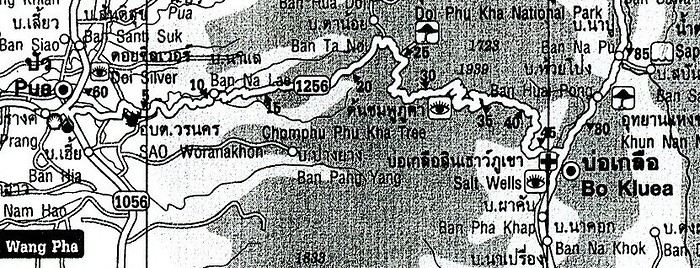
Route combining countryside and mountains: Highway 1256, which passes near the Doi Phu Kha National Park headquarters before ending in Bo Kluea.
It all started one day when I decided to explore the "Nan-ese" countryside. The day before, knowing that public transport rarely covers its roads, I got in touch with a driver with a car—actually, a driver*—that the Nan Tourist Center arranged for me. My request about the exact destination was simple: there wasn’t one. Sensing the driver was thrown off over the phone ("They’re crazy, these farangs!..."), I explained that my goal was just to wander around the countryside to photograph it (the countryside, not the driver!...). Well, I could tell that without any direction, it wasn’t going to work—wandering aimlessly isn’t very Thai (I already knew that, but I figured they’d make an effort for baht...). I quickly glanced at the province map on the wall and finally gave the driver a heading: straight to 010 until Pua, then a right turn at 090 to take route 1256 at a leisurely pace, passing near the headquarters of Doi Phu Kha National Park before ending up in Bo Kluea, then exploring the area around there. Ah, I could hear the driver’s relief. Meet-up at 7 AM at the guesthouse.
The next day, we set off on the winding route 1256, stopping often for photos and chatting with the few locals we met. We passed through Bo Kluea without stopping and kept going deeper into the countryside... until, on a tiny backroad in the middle of nowhere, we crossed a barrier with a sign I only had time to read: "under the royal patronage of the princess So-and-so."
"??? Where are we going? What is this?" I asked.
"I’m taking you to a Mlabri village. I thought it might interest you."
Oh...
I remembered that meeting the Mlabri was a dream for many travelers who love "hill tribes," a dream usually unfulfilled since this group is so hard to find—they’re nomadic, avoid outside contact, and their numbers are dwindling (about 235 total on the Thai and Laotian sides of the border, according to Wikipedia). And here I was, an average Songsam, being taken there without even asking. What a driver...
But my joy was short-lived—it was too good to be true.
Turns out, it was a village where some Mlabri were gathered to learn sedentarization, which has become necessary due to deforestation. It looked like any other ethnic village, except... they all seemed miserable. Usually, when you show up in a remote village, the kids run away at first, and the adults watch from a distance. But with a little patience and some goofing around to break the ice, the kids eventually come closer—sometimes even swarming you—and the parents relax and lose their shyness. Not this time. We stayed for about two hours: no way to lighten the mood or start a conversation. Nothing. They kept going about their business in the same big communal space as us, but it was like we weren’t there. We had a small meal that the driver had prepared herself. She offered to share with them, but they stayed apart. After a while, feeling out of place and uncomfortable, we went for a walk around the village—same vibe everywhere.
Seeing my disappointment, the driver reassured me:
"Don’t worry, it’s always like this. It’s not because of you—it’s their culture. Do you want to leave?"
"Yes."
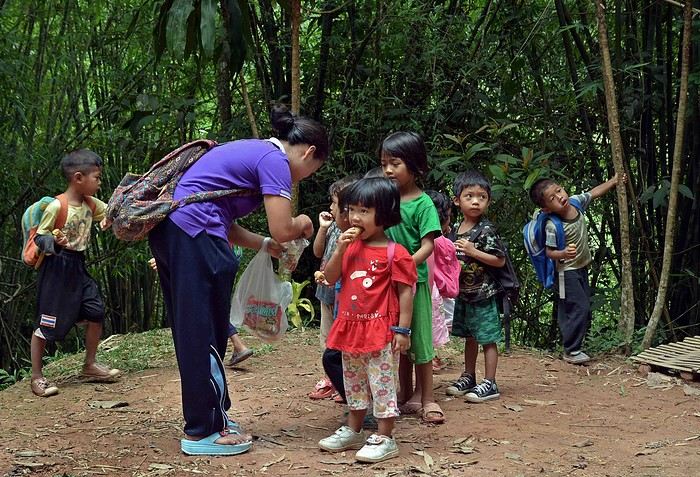
Before leaving, we did run into a few kids with their two teachers. The teachers, who were regular Thais, chatted with us. They were on a mission here.
Well, there you go—I met the Mlabri.
"And?" the curious traveler asks.
And... nothing.
Just so you know, I really liked the mountainous area around Thung Chang, north of the province.
As for cafés, I mentioned them in my travel journal. In the early 2020s, they sprouted like mushrooms all over the country, even in unlikely places.
It’s always the same story: one person opens the first one, others see it’s working and follow suit. No business plan, no market research.
Still, it’s super handy for folks like us.
« Tout le monde s'interroge sur comment laisser une meilleure planète à nos enfants, mais on devrait plutôt penser à laisser de meilleurs enfants pour notre planète. » Clint Eastwood
Just wanted to mention that I really liked the mountainous area around Thung Chang, north of the province.
The "elephant sector"* is another area I loved—perfect for walking or biking through its very rural surroundings. To really enjoy the beautiful scenery, don’t just do a day trip (even by car) from Nan.
Downside: since the super convenient Siam Garden Bungalow in town closed, it seems like only a few scattered resorts are left for accommodation.
Despite its remoteness and small size, the town is connected to Bangkok by several comfortable overnight buses.
* Translation of Thung Chang, even though elephants aren’t around there anymore.
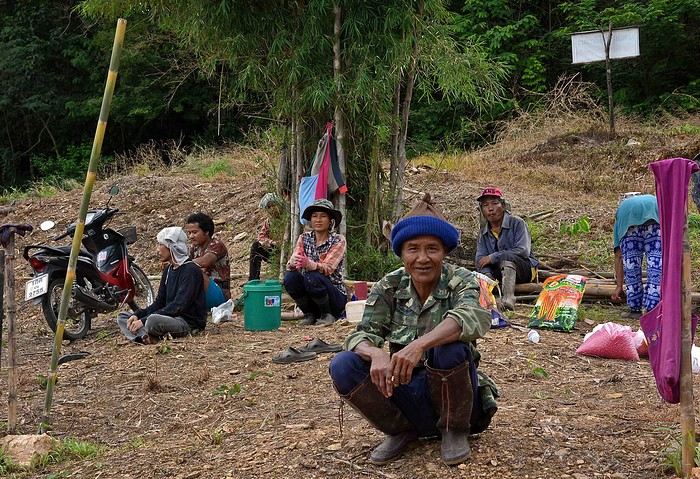
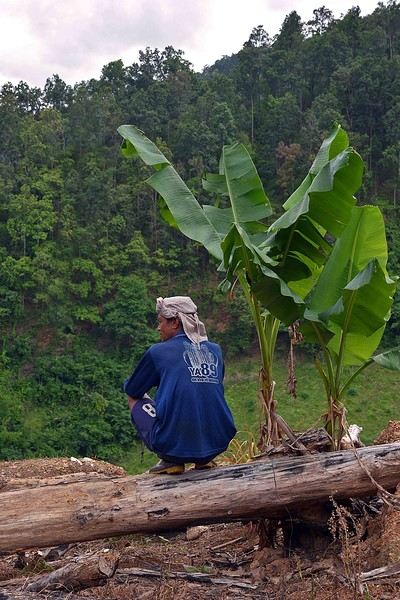
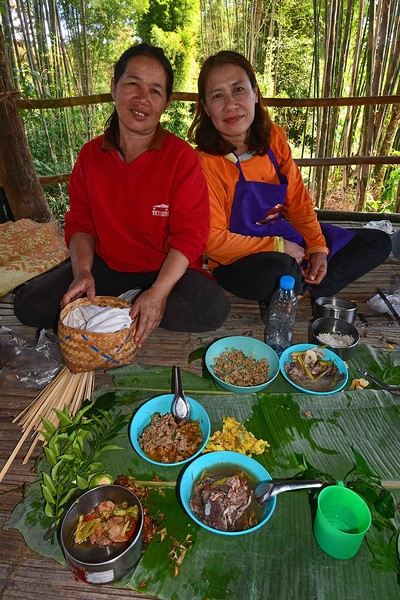
Invited to lunch by farmers during a long half-day hike east of Thung Chang:
This happened one day when I decided to explore the "Nan-ese" countryside. The day before, knowing that public transport rarely covers its roads, I contacted a driver with a car—actually, a female driver—that the Nan Tourist Center arranged for me. My request for a specific destination was simple: there wasn’t one. Sensing the driver was thrown off over the phone ("They’re crazy, these farangs!..."), I explained that my goal was just to wander around the countryside to photograph it (the countryside, not the driver!...). Well, I could tell that without any direction, it wasn’t going to work—wandering aimlessly isn’t very Thai (I already knew that, but I figured they’d make an effort for baht...). I quickly checked the province map on the wall and finally gave the driver a direction: head straight to 010 until Pua, then turn right onto 090 to take route 1256 at a leisurely pace, passing near the Doi Phu Kha National Park headquarters before ending up in Bo Kluea, then explore the area around there. Ah, I could hear the driver brighten up. Meet-up tomorrow at 7 AM at the guesthouse.
The next day, we drove along the winding route 1256, stopping often for photos and chats with the few locals we met. We passed through Bo Kluea without stopping and continued deep into the countryside... until, on a tiny backroad at the end of the world, we crossed a barrier with a sign I only had time to read: "under the royal patronage of the princess So-and-so."
"???, where are we going? What is this?" I asked.
"I’m taking you to a Mlabri village. I thought you might be interested."
Wow...
I remembered that meeting the Mlabri was a dream for many travelers who love "hill tribes," a dream usually unfulfilled because this group is so hard to find—they’re nomadic, avoid outside contact, and their numbers are dwindling (about 235 total on the Thai and Lao side of the border, according to Wikipedia). And here I was, an average Songsam, being taken there without even asking. What a driver...
But my excitement was a little dampened—it was too good to be true.
Turns out, it was a village where some Mlabri were gathered to learn how to settle down, which has become necessary due to deforestation. It looked like any other ethnic village, except... everyone seemed miserable. Usually, when you show up in a remote village, the kids run away at first, and the adults watch from a distance. But with a little patience and some goofing around to break the ice, the kids eventually come closer—sometimes swarming you—and the parents relax and lose their shyness. Not this time. We stayed for about 2 hours: no way to lighten the mood or start a conversation. Nothing. They just went about their business in the same big common room as us, ignoring us. We had a small meal that the driver prepared herself, and she invited them to join us, but they stayed away. After a while, feeling out of place and uncomfortable, we went for a walk around the village—same vibe.
Seeing my disappointment, the driver reassured me:
"Don’t worry, it’s always like this. It’s not because of you—it’s their culture. Do you want to leave?"
"Yes."
Before leaving, we did run into a few kids with their two teachers. The teachers chatted with us. They were "normal" Thais on a mission here.
Well, there you go—I met the Mlabri.
"And?" the curious traveler asks.
And nothing...
On route 1256 (x7):
Mlabri children:
Thanks, but I already re-read that yesterday... And I’m actually really into it. Not the ethnic groups, but the road, the landscapes. And I was just thinking yesterday that all these tribes (at least in India) are tired of tourists visiting them like "curiosities" or even like animals. That wasn’t your intention, but they couldn’t have known that...
For cafés, I mentioned them in my travel journal in progress. In the early 2020s, they sprouted like mushrooms all over the country, including in unlikely places.
What surprised me was the style of all these cafés. Pretty chic, even very chic. You expect to see the whole local intelligentsia show up there.
It’s always the same principle: one person opens the first one, others see it works and do the same. No business plan, no market study.
Still, it’s really convenient for people like us.
I know what you mean—it’s the same in India. And often, it’s a complete failure and they close just as fast as they opened
I just checked the map you sent me the link to—I’d zoomed in (Nan area) and printed it—but I can’t find route 1256. I wanted to see if I could pick a destination that would force me to take that road, because I’m not sure the guy will know "route 1256." So if I tell him, "I want to go to this village," he’ll have to take route 1256...
My landlady, always as charming as ever, says she’ll ask her neighbor who has a 4x4 if he’s interested in taking me on a little trip. But as you know, I have to tell him, "I want to go here today, there tomorrow, and over there the day after..."
I don’t know if he’ll recognize road names/numbers.
My landlady is super dynamic (and smart and well-educated). She rides a motorbike and has already taken me around the city several times to show me where I can find this or that—even things I don’t need. She just gave me another little gift: a box of fresh fruit that’s naturally sweet but... salty. And with it, a small jar I thought was some kind of jam to go with the fruit... When I tasted it, it was spicy (which I love), but it was *heavily* fish-based!!! I have no idea what it was. I’ll have to dump it in the toilet so she doesn’t find the untouched jar in the trash. She’s 63 and full of energy...
This afternoon, in a shoe store in town, I felt like a little boy with his mom...😉 I have to say, I’m really not in great shape. Fever and exhaustion. I spent the whole morning in bed...
sort of jam to go with fruit... When I tried it, it was spicy (which I love), but it was heavily fish-based
The description could match shrimp paste, an ingredient whose raw smell and taste might put off our Western palates and noses, but which, when mixed with other ingredients, is used in many Thai recipes.
I had enlarged and printed the map you sent me a link to (Nan area), but I don’t see route 1256.
It’s not on that map, but it is on the next one (east of Pua).
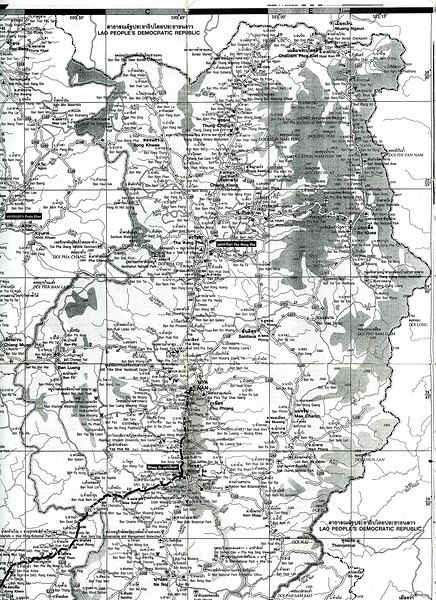
Map of Nan province (full file so it keeps its details when enlarged):
The description might match shrimp paste, an ingredient whose raw smell and taste can put off our Western palates and noses, and which, when mixed with other ingredients, is used in many Thai cuisine recipes.
No, it wasn’t shrimp. It was very dark brown, almost black—it really made me think of jam, not a "paste."
Maybe it’s a Korean specialty. We were in a Korean shop... for the wealthy... Because there were lots of rare, high-quality products, and I suppose a bit pricey for the average Thai budget...
Map of Nan Province (full file so it keeps its details when enlarged):
Thanks for the map. I’ll check it out tomorrow... I’m heading back to bed
Ask the landlady to take you to karaoke: it’ll be super authentic and absolutely unforgettable!
« Tout le monde s'interroge sur comment laisser une meilleure planète à nos enfants, mais on devrait plutôt penser à laisser de meilleurs enfants pour notre planète. » Clint Eastwood
Ask the landlady to take you to karaoke: it’ll be super authentic and absolutely unforgettable!
Since karaoke spots are often flirting hotspots, and given how much Thai widows are drawn to older foreigners—and how well she’s been looking after him since he arrived—it could definitely be unforgettable, that’s for sure...
« Tout le monde s'interroge sur comment laisser une meilleure planète à nos enfants, mais on devrait plutôt penser à laisser de meilleurs enfants pour notre planète. » Clint Eastwood
You mentioned a daily bus to Chiang Rai, so I didn’t look into that detail. Which is no longer a detail but a real problem—no buses to Chiang Rai, only taxis... at least 2,500 baht for the cheapest one...
My reply from 01/21:
Nan-Chiang Rai bus: route 611, Kor Sahakit Dernrod company. If it no longer exists...
Update: as of 01/22/2026, the Nan-Chiang Rai bus still runs daily except on Thursdays*. Departs at 9 AM, 250 baht, arrives at Chiang Rai’s downtown terminal. ~5h30 trip. Buy your ticket the day before.
During the first half of the trip, the bus heads straight north to Tha Wang Pha, then turns west onto a road that roughly follows the Laotian border, passing through some beautiful mountain scenery. The second half descends into the plains, heading northwest via Chiang Kham and Thoeng.
I was just about to drop you a line. I’ve just come back from the night market on Fridays, Saturdays, and Sundays... I stumbled upon this market tonight by pure chance. I had no idea... What an atmosphere! Nothing like what I experienced last year. This year, I’m really discovering Thailand...
I walked another 15 km through this charming little town, and just as I was heading to the bus terminal—where I got the info—the (small) bus from Chiang Rai to Nan pulled in right as I arrived...
For me, visiting a country isn’t just about seeing museums, temples, or palaces. It’s about experiencing the city itself—the vibe, the general atmosphere, seeing people live their daily lives... I had just as much fun wandering through the streets, checking out all sorts of stalls with pots, tools, and all kinds of odds and ends you don’t see anywhere in France or Europe anymore. It brought back memories of my childhood in the 1950s... And finally, I saw all those spontaneous smiles you kept telling me about last year—where I only saw polite, business-like smiles and a lot of people looking miserable.
Whether some like it or not, the difference is in a city not ruined by tourism...
I’m almost regretting saying I wouldn’t do another travel journal.
My landlady isn’t at all what you might imagine in your fantasies, and neither am I, for that matter. She’s just naturally kind—like me!!!—and takes her role as a host seriously... with everyone, I think. Just look at all the reviews on Booking.com.
She’s not the type to INVITE you for tea and then secretly send her helper to charge you for it after she just OFFERED it to you!!!
Don’t worry, my keyboard’s acting up, and I don’t feel like fixing everything... This isn’t a travel journal...
It’s a provincial capital, though you’d easily forget that when you stay there—it’s so small and charming, and I’d add that car traffic is much lighter than in many other provincial capitals.
You won’t see many foreign tourists* because the province’s policy is to do everything possible to avoid becoming like Chiang Mai or Chiang Rai. That’s why they don’t promote it—the locals just want to keep things peaceful.
*Though you might see some Thai tourists this weekend.
I’ll almost regret saying I won’t do another travel journal.
You don’t have to make a full one for the whole trip—you could just do one about Nan.
You might want to consider making a little detour to Pua—we stayed there when we visited the northern part of the province.
« Tout le monde s'interroge sur comment laisser une meilleure planète à nos enfants, mais on devrait plutôt penser à laisser de meilleurs enfants pour notre planète. » Clint Eastwood
No, because I don’t remember which site I found it on. I just did a Google Images search but had no luck—only maps of the province that aren’t detailed enough and in really low resolution.
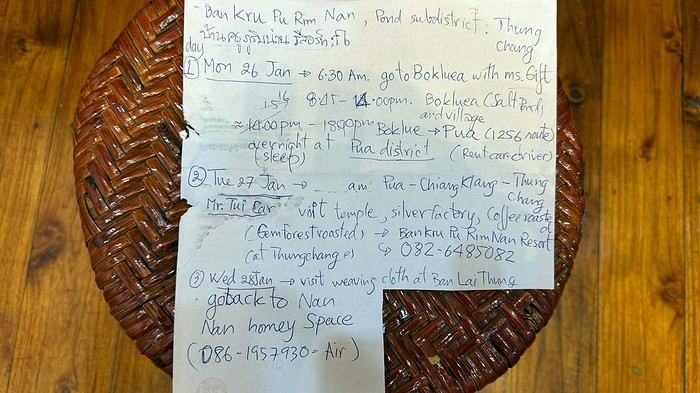
When I showed my plan to my landlady based on your advice, she took charge. She organized everything. At first, I was skeptical and even annoyed because I thought: here’s another person who’s going to decide for me. But what she put together seems really smart and well-balanced. Plus, she told me I should spend at least two nights outside of Nan to really enjoy the mountains. And since the driver she’d arranged (her neighbor) wasn’t keen on a trip with two nights away from home, she contacted no fewer than three drivers. First, a lovely young woman (she even came to meet me) from Nan to Bo Kluea. Then another driver from Bo Kluea to Pua. Overnight in Pua. I booked a room in a homestay outside the village, in the middle of the rice fields—it looks super comfortable and affordable. And a third driver from Pua to Chiang Klang/Thung Chang, where I’ll spend the second night. The manager of this homestay will pick me up in Pua and then take me back to Nan on the third day. With all the photo stops, bathroom breaks, meals, and visits at my own pace...
If it goes as she described, it should be amazing all around. But I couldn’t figure out how much it was going to cost.
- You’ll see with each of them, but it won’t be expensive...
😐😊
As someone who’s usually a total skeptic, this time I’m putting my trust in this little lady.
Here’s her plan:
Program that reeks of a touristy package tour, the accommodation owner being all sweet with you from the start and now suddenly acting as the organizer of said program, not being able to know the price before leaving... I fear the pigeon hunt is on.
Program that reeks of a touristy package trip, the accommodation owner being all sweet with you from the start and now improvising as the organizer of said program, unable to know the price before leaving... I fear the pigeon hunt is on.
I hesitated for a long time before sending my itinerary...
I’m sorry to contradict you—you might be right—but I’m an old-school traveler, and I’ve got nearly 20 years of experience traveling in India. The mentality about "touristy" stuff is the same, as is this kind of pigeon hunt. I can sniff them out from 10 km away... But since I’ve got a bad cold and my nose is really stuffed up right now, maybe I didn’t smell anything...
Anyway, it’s too late to back out now...
So I’m wishing myself a great trip through the mountains in the north of Nan Province.
Program that reeks of a touristy package tour, the accommodation owner who was all sweetness and light with you at first and now suddenly fancies herself as the organizer of said program, no way to know the price before you leave... I fear the pigeon-hunting season is open.
If you want to put together a circuit in places like this, you’ve basically got three options:
- you miraculously stumble upon a rare gem who knows everything and really gets the desires of a non-conventional Westerner
- you let yourself be guided by the local organizer
- you prep it like a pro with dozens, even hundreds of hours of online research in the months beforehand
Sometimes we’re quick to throw the first stone, which is easy when you’ve got a fair bit of experience...
« Tout le monde s'interroge sur comment laisser une meilleure planète à nos enfants, mais on devrait plutôt penser à laisser de meilleurs enfants pour notre planète. » Clint Eastwood
Good evening,
I’ll get back to both of you soon. I just got home this afternoon and can’t wait to look at my photos on my computer instead of my camera screen. Last year in February, I didn’t see a single slash-and-burn fire in the mountains I traveled through, but this year, they’ve already started everywhere since January… So, we’re really getting a lot of haze this time around.
It's awful from January to March. Recently, they were lucky in Chiang Mai because the wind was blowing exceptionally in the right direction. Generally, during those few months, it's the most polluted city on the planet.
There's quite a bit of smoke coming from Cambodia that drifts southwest, which means even Hua Hin and Prachuap aren't spared.
There’s a lot of talk about this at the highest levels, but not much action. There’s a phone number where people can report illegal fires. I guess in many cases, it’s just an opportunity for police to pocket a few bills...
« Tout le monde s'interroge sur comment laisser une meilleure planète à nos enfants, mais on devrait plutôt penser à laisser de meilleurs enfants pour notre planète. » Clint Eastwood
Hello,
This discussion isn’t a travel journal, so I’ll keep it short.
No, my nose wasn’t blocked when it came to this plan or these people. My instincts rarely lead me astray—a professional bias and a solid grasp of Indian-Asian attitudes toward tourists.
To cut a long story short, my first driver, a charming young woman, didn’t charge me anything at all from Nan to Bo Kluea. The kind, completely illiterate farmer—but who knew how to count—who took me from Bo Kluea to Pua via Route 1256 first asked for 1800 baht, then added 500 baht for fuel at the last minute (right before leaving, though), bringing the total to 2300 baht. That seemed entirely reasonable to me since he’d made himself available just for me at my helpful driver’s request and had to make the return trip home. The third driver—the owner of the resort where I was staying the second night—charged me 2500 baht to drive me around Doi Phu Kha all day. He didn’t charge me anything at all to take me back from Thung Chang to Nan the next day.
And since I asked for a cheaper room—there were some—than the 1000 baht one he’d reserved for me, he lowered the price to 800 baht. Keeping the same room, of course. That was a real steal because even the 1000 baht price was a bargain given the beauty and quality of the accommodation, not to mention the natural surroundings that many hoteliers use as an excuse to inflate their rates. And the next morning, I woke up to the lovely surprise of a delicious and hearty breakfast included in the nightly rate. A bit too Western for my taste—the breakfast, that is—since he clearly wanted to please me, as 99% of his clientele is Thai or from neighboring Asian countries...
Since this isn’t a travel journal, I won’t go on and on about how amazing this resort and its magical surroundings are.
One thing’s for sure: I promised him I’d come back to stay for three weeks next year. There’s plenty to keep me busy with trekking, car trips, swimming—in the river flowing below the gorgeous teak bungalows—and lazing around, all while stuffing myself with excellent food cooked by his wife.
Unfortunately, after a flare-up of my coughing, sneezing, and breathing problems, I’m wondering if the agricultural burning isn’t to blame...
In conclusion: Instead of "pigeon hunting," they kindly "scattered grain for the pigeon."
You mentioned an unforgettable memory? That’s definitely the case...
A program that screams "cookie-cutter tour" from miles away, the accommodation owner being all sweet with you from the start and now suddenly playing tour organizer, not being able to know the price before leaving... I fear the pigeon hunt is on.
When planning a trip to places like this, either:
- you miraculously stumble upon a rare gem who knows everything and really gets the wishes of a non-conventional Westerner
- you let the local organizer take the lead
- you prepare like a pro with dozens or even hundreds of hours of online research in the months before
Sometimes we throw the first stone, which is easy when you’ve got quite a bit of experience...
I’m going with the first option...
And when a non-conventional Western traveler meets a non-conventional Thai resort owner, it’s a total win.
And in the non-conventional category, you’ve got to include the place itself: neither a hotel, nor a homestay, nor a resort...[;]
To keep it short, my first driver—a charming young woman—didn’t charge me anything at all from Nan to Bo Kluea. The kind, completely illiterate farmer (but who knew how to count!) who took me from Bo Kluea to Pua via Route 1256 first asked for 1,800 baht, then added 500 baht for fuel at the last minute (right before leaving, though), bringing the total to 2,300 baht, which seemed entirely reasonable since he went out of his way for me at my helpful driver’s request and had to make the return trip home. The third driver—the owner of the resort where I was staying the second night—charged me 2,500 baht to drive me around Doi Phu Kha all day. He didn’t charge me anything to take me back from Thung Chang to Nan the next day.
And since I asked for a cheaper room—there were some—than the 1,000 baht one he’d reserved for me, he lowered the price to 800 baht. Same room, of course. That was a real steal because even the 1,000 baht price was a great deal given the beauty and quality of the accommodation, not to mention the natural surroundings that many hoteliers use as an excuse to inflate their rates. And the next morning, I was pleasantly surprised to find a delicious and hearty breakfast included in the nightly rate. It was a bit too Western-style for my taste—clearly, he wanted to please me, as 99% of his guests are Thai or from neighboring Asian countries...
Since this isn’t a travel journal, I won’t gush about this resort and its magical surroundings here.
One thing’s for sure: I promised him I’d come back to stay for three weeks next year. There’s plenty to keep busy with—trekking, car trips, swimming in the river that flows below the beautiful teak bungalows—and just relaxing while stuffing yourself with the excellent food his wife cooks.
So, to summarize (and correct me if I’m wrong):
Day 1: Nan to Bo Kluea (+ exploring the area) with the young driver, then the 50 km on Route 1256 to Pua with the farmer who knows how to count, overnight in Pua.
Day 2: No exploring around Pua. The resort owner from Thung Chang picks you up at your Pua accommodation, takes you for a day trip to Doi Phu Kha National Park, then heads to Thung Chang for a night at his resort.
Day 3: The same owner drives you back to Nan—it’s at his place that you promised to return for three weeks next year.
Does my summary check out?
No little detour around Thung Chang before heading back to Nan?
Is the Thung Chang resort in town? (It’d be easier if you shared its name.)
Could you sum up your impressions of Doi Phu Kha National Park in one or two lines, please?
No short walk around the Thung Chang area before heading back to Nan? Is the Thung Chang resort in town? (It’d be easier if you mentioned its name.)
Could you summarize your impressions of Doi Phu Kha National Park in one or two lines, please?
This was replying to "the first stone" Joël was talking about...
Just to say the pigeon wasn’t shot because there were NO pigeon hunters at all.
This discussion isn’t a travel journal...
You should’ve realized by now that I’m—supposedly—a pain in the neck who’s hard to please. If I say it was unforgettable, it’s because it was unforgettable. I intentionally don’t give any details; I was just saying it wasn’t a "program that reeks of a cookie-cutter tour" and that I didn’t get ripped off...
I’ve got nothing else to add on this topic.
I want to thank you again for pointing me toward Nan last year. And even if I neglected it last year, I hadn’t forgotten, and I followed your advice this year...
No short walk around the Thung Chang area before heading back to Nan? Is the Thung Chang resort in town? (It’d be easier if you mentioned its name.)
Could you sum up your impressions of Doi Phu Kha National Park in one or two lines, please?
This message was replying to Joël’s “first stone”...
Just to say the pigeon wasn’t shot because there were NO pigeon hunters around.
This discussion isn’t a travel journal...
You should’ve realized by now that I’m—supposedly—a pain in the neck to please. If I say it was unforgettable, it’s because it was unforgettable. I deliberately didn’t give any details; I was just saying it wasn’t a “program that reeks of a cookie-cutter tour” and that I didn’t get ripped off...
I’ve got nothing else to add on this topic.
I want to thank you again for pointing me toward Nan last year. And even though I neglected it last year, I hadn’t forgotten, and I followed your advice this year...
No short walk around the Thung Chang area before heading back to Nan? Is the Thung Chang resort in town? (It’d be easier if you mentioned its name.)
Could you sum up your impressions of Doi Phu Kha National Park in one or two lines, please?
This was replying to "the first stone" Joël was talking about...
Just to say the pigeon wasn’t shot because there were NO pigeon hunters.
This discussion isn’t a travel journal...
You should’ve realized by now that I’m—supposedly—a pain in the neck who’s hard to please. If I say it was unforgettable, it’s because it was unforgettable. I deliberately don’t give any details; I was just saying it wasn’t a "program that reeks of a cookie-cutter tour" and that I didn’t get ripped off...
I’ve got nothing else to add on this topic.
I want to thank you again for pointing me toward Nan last year. And even if I neglected it last year, I hadn’t forgotten, and I followed your advice this year...
For once, it was me asking someone for info...
It’s unlikely I’ll write a travel journal about this second trip to Thailand, but I’ll answer any practical questions via PM about the places I visited and accommodations. I do have three great spots to recommend.
Someone recently wrote—I can’t remember which thread—that as soon as an off-the-beaten-path place is posted online, it instantly loses its off-the-beaten-path status.
The real danger is travel agencies and other tourism service providers who now use "off the beaten path" as their main selling point. In less than a year, a magical place, a hidden gem, can turn into something completely ruined by sudden crowds. A magical place, a gem, should be shared with those who deserve it—not thrown out there for anyone and everyone. And definitely not served up on a public forum.
So if you want, I’ll tell you all about it in a PM (as long as you unblock me 😅😊).
I myself used to run guest rooms and an upscale guest table back in the 80s. Some enthusiastic and friendly guests wanted to be nice and promote me. They put up tons of posters with glowing reviews about me all over the (5-star) campsite. A year later, I saw rude, uncouth, ill-mannered people showing up at my place in swimsuits, behaving like pigs at the table... Just because you’ve got money doesn’t mean you’ve got class or refinement... And I ended up a victim of too much haphazard publicity aimed at just anyone...
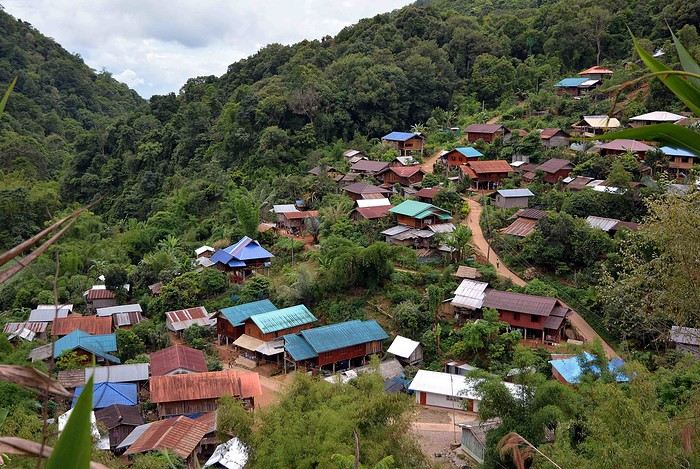
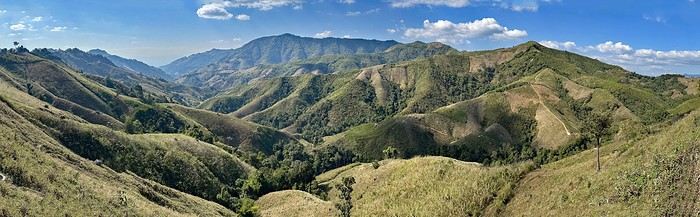
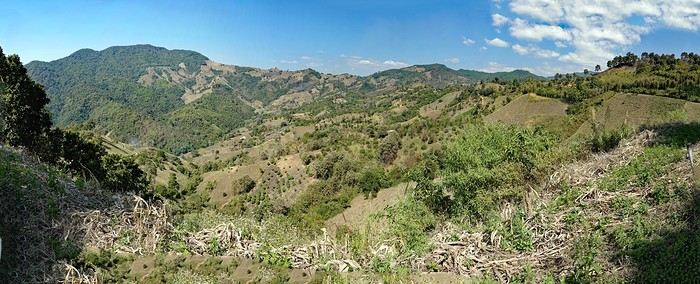
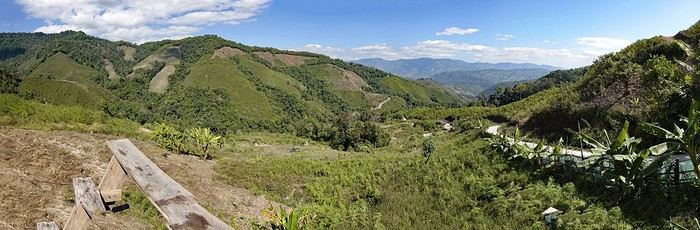
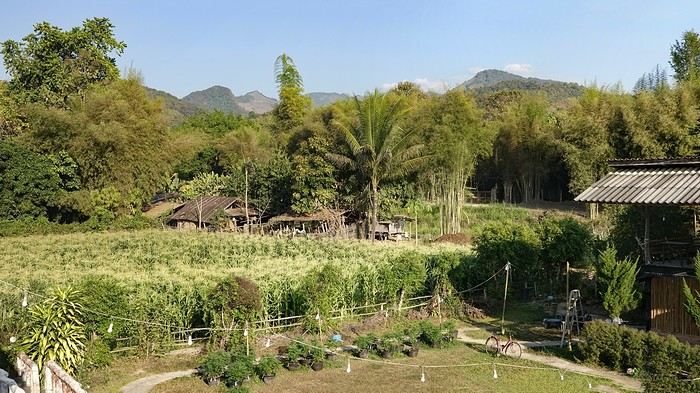
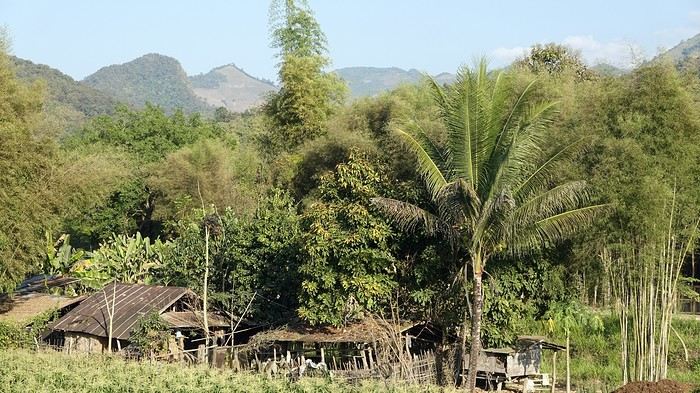
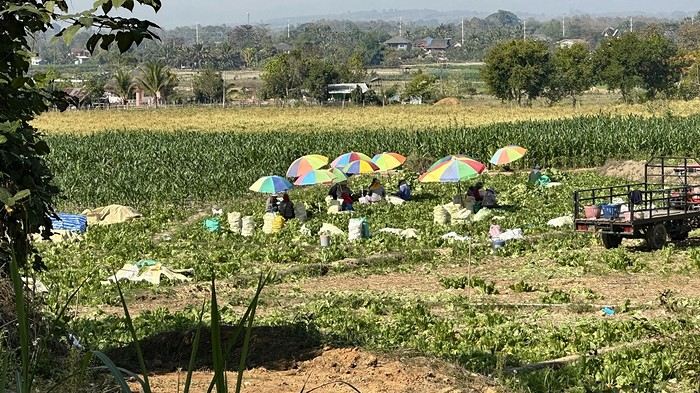
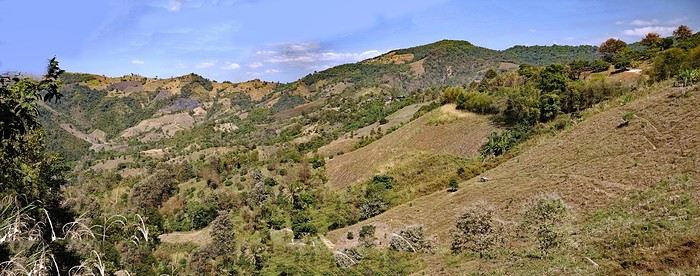
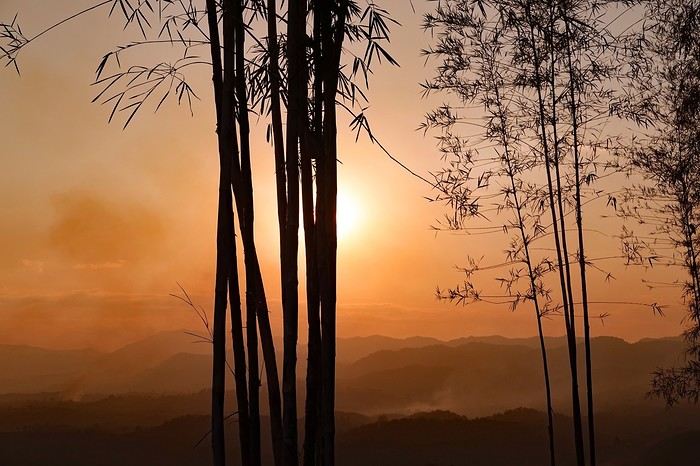
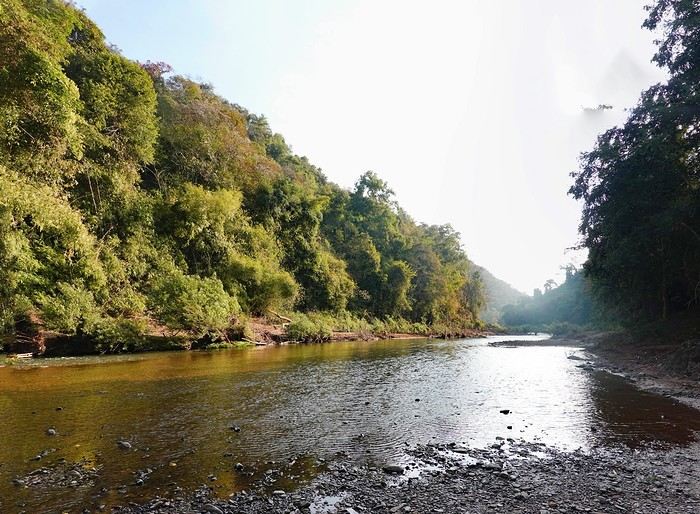
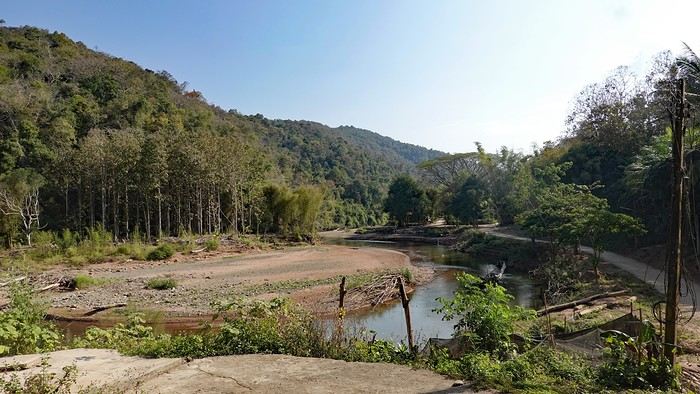
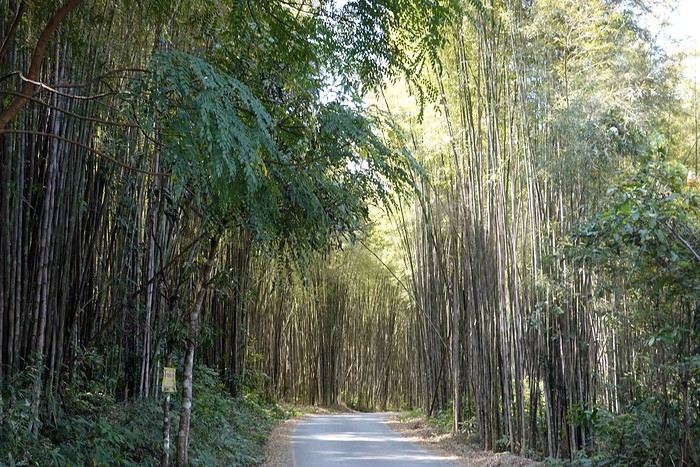
For now, here are some photos from my trip.
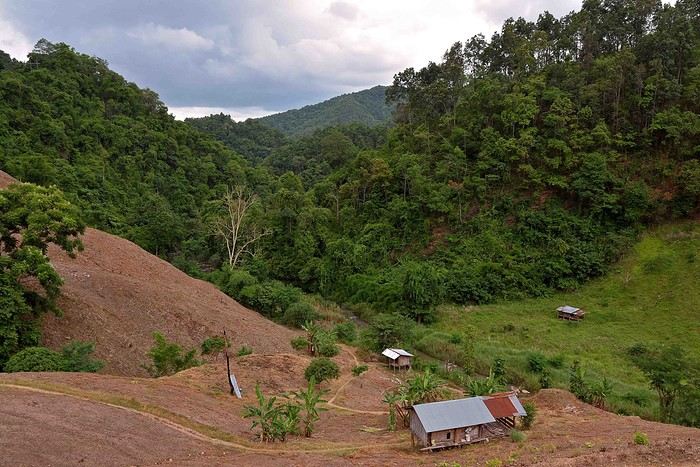
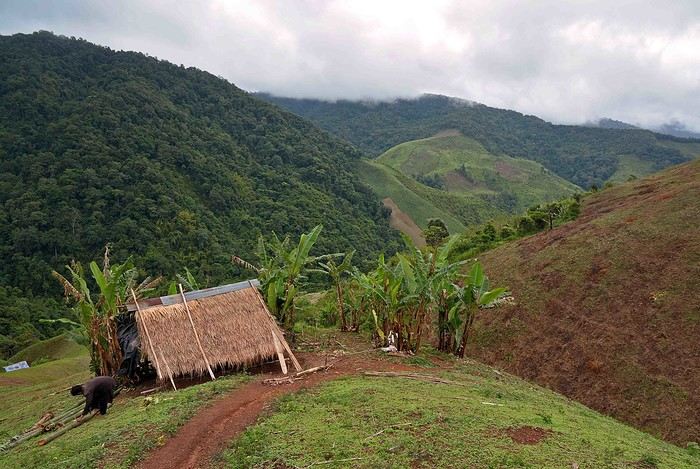
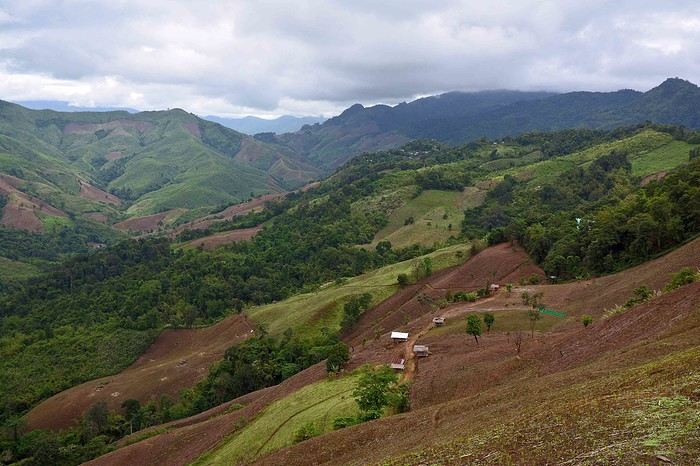
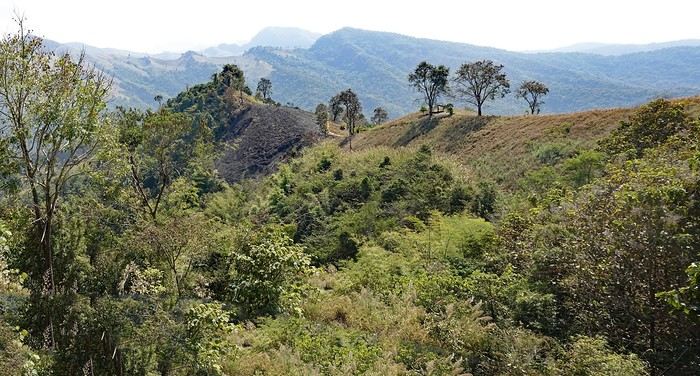
Highway 1256 offered stunning landscapes, but the haze from the burn-offs kept me from getting decent photos, even after post-processing.
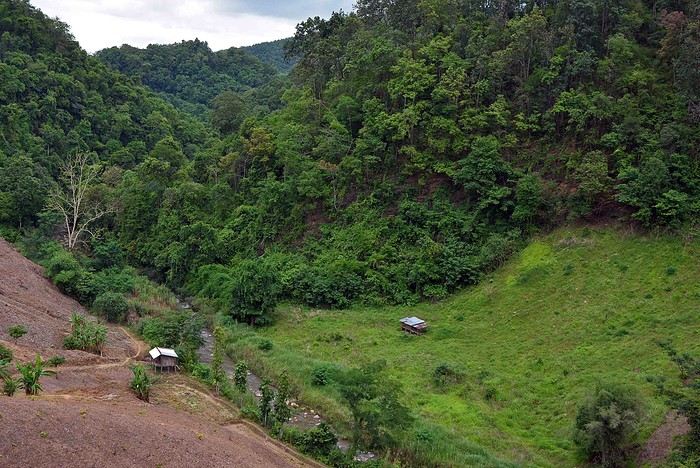
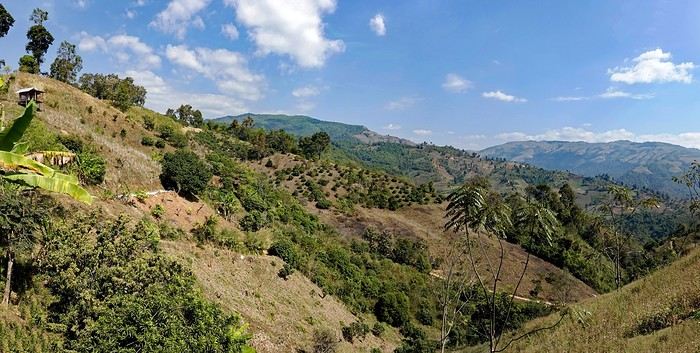
I had better luck wandering around the countryside near Pua in the late afternoon.
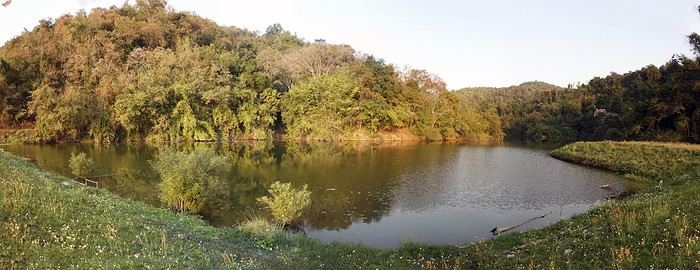
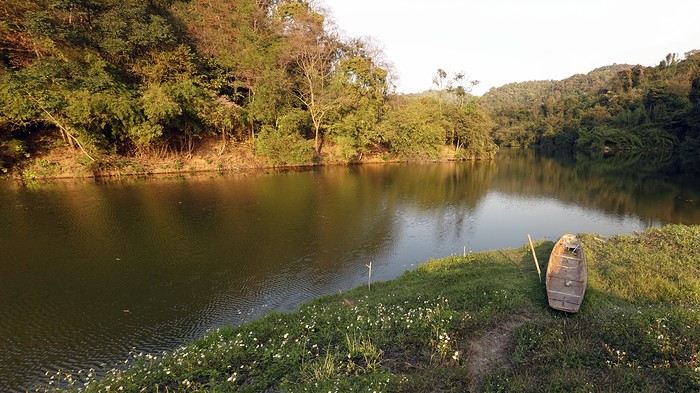
And the next morning before heading to Doi Phu Kha (Doi Sakat).
That said, Thierry, I’m sending you this message because you mentioned a daily bus to Chiang Rai, so I didn’t look into that detail. Which is no longer a detail but a real thorn in my side—no buses to Chiang Rai, only taxis... at least 2,500 baht for the cheapest one. I’ll go check directly at the bus station tomorrow because online, it’s only taxis, no buses.
Me:
Update: as of 01/22/2026, the Nan-Chiang Rai bus still runs daily except on Thursdays*. Departs at 9 AM, 250 baht, arrives at Chiang Rai’s downtown terminal. ~5h30 trip. Buy your ticket the day before.
For the first half of the trip, the bus heads straight north to Tha Wang Pha, then turns west onto a road that more or less follows the Laotian border, passing through some gorgeous mountain scenery. The second half descends into the plains heading northwest, passing through Chiang Kham and Thoeng.
*Except on Wednesdays in the opposite direction.
So how did you end up making the trip? The 2,500-baht taxi or the 250-baht bus as described above?
That said, Thierry, I’m sending you this message because you mentioned a daily bus to Chiang Rai, so I didn’t look into that detail. Which is no longer a detail—it’s a real pain now—because there’s no bus to Chiang Rai. Only taxis... at least 2,500 baht for the cheapest one... I’ll go check the bus station directly tomorrow. Because online, it’s only taxis, no buses.
Me:
Update: as of 01/22/2026, the Nan-Chiang Rai bus still runs daily except on Thursdays*. Departs at 9 AM, 250 baht, arrives at Chiang Rai’s downtown terminal. ~5h30 trip. Buy your ticket the day before.
For the first half of the trip, the bus heads straight north to Tha Wang Pha, then turns west onto a road that more or less follows the Laotian border, passing through some gorgeous mountain scenery. The second half descends into the plains, heading northwest through Chiang Kham and Thoeng.
*Except on Wednesdays in the opposite direction.
So how did you end up making the trip? 2,500-baht taxi or the 250-baht bus as described above?
Hey, I haven’t even talked about Chiang Rai yet—I was still in Nan, enjoying that three-day getaway that I loved so much...
Yes, of course, I took the 250-baht bus... And I think I already thanked you for the tip when you gave it to me... I was just too eager to post photos in your "Countryside Escapes" thread to talk about my arrival in Chiang Rai. It was my way of thanking you for your advice by contributing more actively to your discussion. I’m losing my mind... juggling multiple threads at once. Plus, ever since my brain was deprived of oxygen, I’ve had some lingering cognitive issues...😉
I was planning to talk about the bus later... It’s really great, and I didn’t even notice the time passing...
Hello,
Since January 31st, I haven’t been receiving any email notifications. Neither replies in the threads I follow nor new threads that have been opened.
It’s really quite annoying.
I’ve already reported this several times, but to no avail.
Thank you.
Best regards,
Marien
I’m wrapping up my second trip to Thailand in style today with a little excursion into the border area with Myanmar at Doi Hua Mae Kham.
Tomorrow and Saturday I’ll be unwinding, and on Sunday I’m off to Bangkok for a couple of days before flying to India.
I’ve said it a few times already—there wouldn’t be a travel journal. But if I had a great trip, it’s really thanks to the tips and advice from Joël and Thierry. A special shout-out to Thierry (Songsam), who helped me discover two highlights: NAN and THA TON.
So yes, especially for them, to say thank you, I’ll put together that travel journal. I owe them that much.
But you’ll have to be a little patient—right, Joël?—to give me time to readjust to my Indian life, or more precisely, my Indian pace: deep-cleaning after the trip, grocery shopping, laundry, friends eager to see me again, delicious meals and desserts to prepare, my bougainvillea, my hammock, my early-morning walks—especially with the start of the brutal hot months ahead... In France, people complain about a heatwave after a few days at 28°C or 30°C... But where I’ll be, it’ll be three months, each hotter than the last.
That’s really nice, for us and for a few others who unfortunately probably won’t respond. We’ll be patient.
My reward might be publishing a travel journal that’ll give you more to read than the last one (and a different destination). That is, if the format of these old photos is downloadable and if VoyageForum technically allows it. Based on my first tests, it’s not looking promising...
« Tout le monde s'interroge sur comment laisser une meilleure planète à nos enfants, mais on devrait plutôt penser à laisser de meilleurs enfants pour notre planète. » Clint Eastwood
I’ve repeated several times that there wouldn’t be a travel journal. But if I had a great trip, it’s thanks to the tips and advice from Joël and Thierry. A special shout-out to Thierry (Songsam), who helped me discover two highlights: NAN and THA TON.
So yes, especially for them, to say thank you, I’ll make this travel journal.
Not sure how to respond to all that, so I’ll keep it simple and short: thanks.
I didn’t know you’d also stopped in Tha Ton. If you liked this little town, it’s probably because it’s regained all its charm after the destructive floods it suffered in September 2024.
Je suis à la recherche de la manière la plus rapide de rejoindre NAN depuis CHIANG RAI (début mars, un jour de semaine). Un hôtelier de Nan me dit qu'il y a un…
Je refais appel à vous, lasse de me triturer le cerveau dans tous les sens, sans trouver de réponse... Nous partons début mars pour la Thaïlande.. au départ…
Préparant un voyage en asie du sud-est, je m'adresse à vous car je ne trouve que très peu de renseignements (voir pas du tout!) concernant la ville de Nan…
en preparartion d'un voyage en thailande au moi d'octobre j'aurais voulu savoir si les possibilitées de trek vers nan et chiang mai n'etait pas moindre a cette…
Première étape de découverte de la péninsule, Amphawa. C'est notre première nuit en Thailande (arrivée à Suvarnabhumi à 8h50 ).
L'idée de départ était de visiter le coin avant de descendre plus au sud. Le marché ferovière de Mae Klong nous tente bien...... mais quoi d'autre ????
Nous y serons le mercredi et à lire le forum, d'après certains, il n'y a rien rien à y faire en semaine ; Pas de marché flottant, mais surtout aucun commerce ouvert, pas de resto, ....
Pour d'autres il semblerait que l'endroit ait plus de charme en semaine sans la foule du we
Merci de me dire ce que vous en pensez. Que je rate le marché flottant, c'est une chose mais si c'est vraiment le désert le mercredi, je vais peut-être poser ma valise ailleurs ???
A 1h30 de l'aéroport, Amphawa me semblait une bonne première étape, mais j'aimerais quand même me poser dans un coin un peu animé pour notre première soirée.
On sera là-bas fin Octobre.
Merci
Hi there,
I didn’t plan to return to Thailand this year, but my health conditions mean it’ll be the best place for me to stay between two trips to India. The tourism setup there is so well-organized that it’s the most "comfortable" country for a short visit. Thailand feels too sanitized for my taste, and there’s too much religion, Buddha, and the King, but it’s still the best option given how my health has been evolving. I’d considered two weeks in ThaTon for hiking, but I got too sick from the burn-offs during my trips to the mountains around Chiang Rai. So I’m not sure where to go this year. Definitely not the sea, touristy spots, or the mountains with burn-offs...
Hi,
I wanted to visit the plantations in the morning with GetYourGuide or by just showing up.
How much time should I really plan for?
I’d like to catch either the 3 PM or 5 PM bus back to KL.
Thanks
Hi,
On September 1st, we're heading to Kalimantan for six weeks, probably from Pontianak to the Derawan Islands.
I've scoured this site, which is usually my go-to 😉, and others like VoyageForum, but recent info is pretty scarce.
I'd love any tips on places you've visited—our itinerary is still a work in progress.
We're two couples traveling with backpacks, using buses, boats, guesthouses, and homestays.
Thanks in advance!
Hi fellow travelers,
First trip to Vietnam.
We’ll be arriving in Ho Chi Minh City during Tet.
Is it complicated to find accommodation and get around during this period?
Any tips would be welcome.
Thanks for your replies.
Hi! I’d like to split my trip into two parts: 15 days in Phuket and 15 days in Krabi. Do you know if I can rent a car and drop it off in Krabi when I fly back to France?
Thanks for your feedback!
Have a great Sunday!
Martine
Hello,
After 1 night in Khao Sok, I’d like to find a 2 Days 1 Night package on the lake.
After reading a lot, I decided to "break the bank" and treat ourselves to a private tour—mainly to avoid the crowds.
But after contacting several operators, they offer "private tours" that are very expensive (around 700 €), yet in the details, the boats can only leave from the pier at 10 AM like everyone else. (I was hoping to leave much earlier.) The morning program is the same for everyone too (private or not). They drop us off at noon at our floating hotel (I’d chosen Phupha Waree). Free afternoon (swimming or kayaking in front of the hotel). We head back by boat for a 1-hour sunset ride. And the next morning, we leave the hotel at 8 AM to be at the pier by 9:30 AM at the latest—end of the trip.
So basically, we’re paying a lot for a private tour just to do the same thing as everyone else at the same time.
Or maybe I just had bad luck in my search.
I contacted Panida Ladi, who’s very popular on forums. We’d agreed on a private tour that matched my request (departure from the pier at 8 AM, very personalized itinerary). We settled on the itinerary and price, she asked for a Wise transfer for a 30% deposit, confirmed receipt of the deposit. Then 30 minutes later, she messaged me to say she was canceling everything because it was impossible to do the requested tour—and promised a quick refund of my deposit.
So here’s my question: Who’s done a *real* private tour on this lake? Who can recommend a reliable agency? Is it even really possible to do a private tour here?
Hi,
I wanted to get some info about the cable car and the bridge—I see lots of different options...
How much time should we allow for these two activities? If we arrive around 4 PM, will we have enough time to visit without rushing?
Thanks
I’m searching for a real gem for my 3rd stay in Koh Lanta: a lovely, high-quality hotel right by an easily accessible beach in a lively spot.
If you know of anything that fits what I’m looking for and want to share, don’t hesitate!
Hi, is anyone there in Flores right now? According to some websites, everything is closed and the situation is tough. But our guide says it's fine. Who should we believe? We're supposed to leave on September 2nd. Thanks to anyone in Flores at the moment!
Hi dear community,
I'm planning to visit Cambodia this winter, right after Christmas, for my first solo trip and my first trip to Asia. For two weeks (yes, I know it's short, but I really can't do more...). I have two main desires: Siem Reap and the countryside, the villages, the Mekong...
What do you think of this itinerary? Arrival in Siem Reap, departure from Phnom Penh.
SR: 5 days (1 day for arrival, 3 for the temples, 1 for the lake and its villages)
Kratie (stop on the way to Mondolkiri): 3 days (1 day of travel, 2 days there)
Mondolkiri/Sen Monorom: 4 days (1 day of travel, 1 day there, 2 days of treks)
PP: 3 days (1 day of travel, 2 days of sightseeing)
I think I need to cut one day somewhere if I travel from Saturday to Saturday or Sunday to Sunday. In Kratie, maybe? Or in PP? And I'll miss the boat trip that everyone recommends (SR-Battambang), but I don't see where to fit it in. Unless I do a PP-PP loop starting in the east, skip Kratie or just stay one night, then SR, then PP.
In my timing, Mondolkiri seems closer than Ratanakiri, which also tempted me a lot! Will it be too complicated alone? I'm thinking of using local guides or a small local agency for a nature and village getaway.
I've read that Siem Reap is very crowded between Christmas and New Year's. I could also do the circuit in the opposite direction. But I thought it would be easier to get familiar with the country by arriving in a touristy area—I might be wrong...
Thanks for your advice and opinions!
Hi everyone.
I’m planning my trip, and based on all the posts I’ve read, this country is amazing.
Of course, I’ve got a ton of questions for you.
Here’s a possible itinerary: Vientiane - Vang Vieng - Phonsavan - Sam Neua - Nong Khiaw + villages - Phongsali - Luang Namtha and the area - Udomxai - Huay Xai - Luang Prabang and back to Vientiane.
What do you think?
We’re planning to prioritize local transport—is it possible to do this loop?
We’d also love to go kayaking, but I’m not sure if the season’s right or where the best spot is.
For trekking—I read that Phongsali is the most authentic spot to visit villages and see wildlife. Do you know of a reliable agency and a guesthouse with reasonable prices?
Is it worth taking a slow boat for a stretch on the Mekong, and if so, which route?
For accommodations, is it better to book through Booking.com and Agoda or look when we arrive?
Are mosquitoes bad in Laos, and should we take malaria prophylaxis?
What’s the average daily budget (accommodation, food, visits)?
Is renting scooters a good option for exploring towns, and if so, which ones?
From what I’ve read, it’s best to carry cash—euros or dollars? Is it risky to walk around with that much cash?
I’ve still got tons of questions. Thanks to anyone who can help, and I’m open to all tips, info, etc.
Thanks again
Hi there,
I’m planning a trip to Vietnam in February, specifically Da Nang and Hoi An.
Does anyone know a French-speaking guide in the area?
Thanks for your help
Hi there,
I’m planning a family trip (my wife and I, both 47, and our two sons, aged 5 and 12) to Malaysia for the last week of June and the first two weeks of July 2027.
We used to love road trips as a couple, then as a trio, but since our second child arrived, we’ve taken a break with "camping village" style trips.
Now feels like the right time to get back to our old habits, while adjusting the pace for the kids.
We’re craving Asia. We’ve been lucky enough to visit Thailand, Indonesia (Bali and Lombok), and Sri Lanka before.
Friends have raved about Malaysia, so we’re definitely tempted.
For those who know and love Malaysia, what would be a good itinerary starting from Kuala Lumpur, with a maximum of 3-4 stops? We’d like a mix of culture, nature, and relaxation (just to clarify, we’re not big beach fans). All of this without rushing, of course.
Hello,
We’re a family of four with two teens aged 16 and 18. We’re heading to Thailand this summer. We’ll arrive in Bangkok and plan to take a flight to Luang Prabang.
I’ve seen there are some great visits and excursions to do (temples, markets, waterfalls) and maybe even venture a bit north to places like Nong Khiaw, Muang Xay, Muang Ngoy, or Oudom Xay.
But I’ve also heard about the Bokeo region with the Gibbon Experience.
Since we won’t be able to do everything, I’d love to hear about your experiences, impressions, and advice on the two options I’m considering, especially since we’ll be meeting family in Chiang Mai, Thailand, afterward.
Option 1: A loop from Luang Prabang heading slightly north, then a flight from Luang Prabang to Chiang Mai.
Option 2: A few days in Luang Prabang, exploring within a few dozen kilometers around, then heading to Bokeo province for the 2-day/1-night Gibbon Experience. For this option, I saw on Rome2Rio that it’s possible to book a ferry trip on the Mekong from Luang Prabang to Huay Xay—they mention about 8 hours. But is that realistic? What type of boat is it?
Then, to get to Chiang Mai, there aren’t many options—bus or minivan—but how does crossing the border work?
Finally, for those of you who’ve been to Laos in August, what was the weather like?
We’ve already visited Thailand, Vietnam, and Cambodia during the same period over the past four years and weren’t really bothered by bad weather.
I’m starting a discussion about guides in the Mekong Delta because we’ve just finished our trip in this region and had a hard time finding a French-speaking guide. We had Thanh—she speaks French really well and travels all over the delta region, including Ho Chi Minh City. She’s super friendly and flexible. I recommend her wholeheartedly. If it can help someone...
Feel free to contact us for her number.
Hi everyone,
I couldn’t find any recent info on Kuching.
Can anyone recommend a hotel or guesthouse for under 100 RM that’s nice and affordable? No dorms, please.
Also, does it rain a lot in November, and is it still worth visiting Semenggoh or Bako?
We’ll be arriving in Phnom Penh this coming January and we’re thinking of starting our trip with a stop in Kampong Cham, then Kratie.
After Kratie, we’re considering heading toward Siem Reap with a stop in Kampong Thom.
That said, I’m not really sure how long the Kratie–Kampong Thom journey might take or how complicated it is.
Does this stop on the way to Siem Reap seem like a good idea to you?
If we don’t visit the Sambor Prei Kuk site, are there still any walks or sights worth checking out in Kampong Thom?
Silly question—backpack or hard-shell suitcase for the Sepilok, Kinabatangan, Tioman, KL trip?
I’m struggling to fit all my son’s and my stuff into the 70L backpack... and I’m thinking a suitcase would be easier, but I’m not sure if it’ll work for getting around.
After a stay on Koh Phayam this coming November, I’d like to spend 2 or 3 days on Koh Phra Thong before heading further south.
Do you think it’s doable to leave Koh Phayam early enough to catch the 10 AM boat from Khura Buri to Koh Phra Thong? The next one isn’t until 4 PM, which would cost me a whole day.
I’m planning a trip to Indonesia, specifically Sulawesi and Java, in September for 10 days.
I don’t know this part of the world at all—any advice is welcome!
I’ll be traveling solo and would also love tips on meeting other travelers or locals.
Hello everyone,
Not long ago, I used to travel as a couple, but my husband has since passed away, and I’ve decided to set off again. The trip I took to Cambodia in January 2025 did me a world of good.
I’m now considering Thailand, a destination we never included in our plans because even 15 years ago, people said it was too touristy. Still, I’m thinking about the itinerary below, but I don’t feel up to arranging buses, trains, or guides on my own while I’m there. I’m looking for one or more drivers and have been in touch with an agency, but their offers are just copy-paste group tours that I don’t want.
So, if you have any contacts, experiences, or advice, I’d be so grateful if you’d share them with me. Here’s my rough plan:
Arrival in Bangkok
Ayutthaya (2 nights)
Kanchanaburi (2 or 3 nights)
Sangkhlaburi/Sai Yok (3 nights)
Sukhothai (2 nights)
Lampang (I’ve planned 3 nights, but that might be a bit much—it depends on what time I arrive in the city)
Chiang Mai
Chiang Dao
Pai
Chiang Rai
I was thinking about the Mae Hong Son loop—thoughts?
What do you think about staying overnight at the Golden Triangle?
When I look online, of course, I can find agencies that organize tours to national parks, etc.
I’m retired but in great physical shape. I’d rather go hiking than sit in hot springs with crowds of tourists who’ve all arranged meet-ups. I don’t want to spend a day at an elephant camp, and I don’t want to visit Karen villages.
I’d love to hear your advice.
Thank you all,
Hi everyone,
Could you share your thoughts on my 3-week itinerary?
We’re a small group (family + friends) of 12 people, planning to leave around January 21, 2027.
Here’s my itinerary:
3 nights in Bangkok
4 nights in Chiang Mai
3 nights on Koh Samui
3 nights on Koh Phangan
4 nights in Krabi
4 nights in Phuket
I’m also open to any great tips you might have...
Thanks, everyone! Alain.
Hi there,
We’re planning a 3-week family trip next summer with our three kids, who’ll be 8, 8, and 7 years old.
After some research, we’re leaning toward Malaysia to combine nature/forests and paradise beaches. The idea is to introduce our kids to the country’s culture, nature, and wildlife.
We want a great trip but without splurging on luxury options like high-end lodges and resorts. We’re looking for comfort with a touch of authenticity—basically, a good middle ground.
I’ve started putting together an itinerary and would love your expert advice and tips to help us build this amazing trip with our little ones.
Day 1: Departure from France
Day 2: Kuala Lumpur
Stay at a hotel near the airport or KL Sentral.
Just one night.
Day 3: Morning flight to Sandakan (Borneo).
Stay in Sepilok
Day 4: Sepilok:
* Orangutan Center
* Malayan Sun Bear Center
* Rainforest Discovery Centre
Day 5: Depart for Kinabatangan.
Boat safari in the late afternoon.
Day 6: Sunrise safari.
Jungle walk.
Evening safari.
Day 7: Final safari.
Return to Sandakan.
Flight to Kuala Lumpur, then to Kota Bharu (or overnight transit depending on schedules).
Day 8: Transfer to the port.
Boat to the Perhentian Islands.
Days 9 to 13: Perhentian Besar
5 full days.
* Snorkeling
* Hiking
* Turtle watching
* Wild beaches
* Relaxation
Day 14: Return to the mainland.
Bus or private car to Taman Negara.
Summer seems to be the best time weather-wise for Bali.
And since summer’s when we can take a long trip, let’s go for Bali... even though we know it’ll be *packed* with people!
So we’ll steer clear of the island’s south...
Our current plan (19 days on the ground, 7 stops):
- 4 Nights (3 days) in Ubud
2 days for rice terraces / activities (Tegallalang, Campuhan Ridge, Monkey Forest, Bird Park, coffee plantation, market (?), dance "pestacle," cooking class and/or spa)
1 day with a driver for the Temples (Pura Gunung Kawi, Tirta Empul Spring, Pura Mengening, Goa Gajah...)
- 2 nights in Sidemen (1 day for Pura Kehen + Batur Caldera + Pura Besakih and 1 day to relax in the rice terraces)
- 3 nights on Gili Meno (Rest and beaches) from Padangbai
- 2 nights in Amed (1 day from Padangbai with the Abang rice terrace and Tirta Gangga baths, and the next day a boat tour in Amed)
- 4 nights in Pemuteran (1 day for transfer and rest, 1 day to visit Kawah Ijen, and 2 days of snorkeling at Menjangan Island)
- 2 nights in Munduk (1 day with the Dayang rice terrace and the 3-waterfall hike, 1 day at Pura Ulun Danu Bratan)
- 2 nights in Jatiluwih (1 day in the rice terraces, and on the last day, we’ll stop by Pura Taman Ayun in Mengwi and Pura Tanah Lot before catching our red-eye flight).
Accommodations in homestays or hotels.
Transportation to be arranged on-site with the lodgings (?)
Boat to Gili Meno to book in advance (?)
Kawah Ijen excursion to plan ahead (?)—check with the homestay (?)
Thanks for your thoughts/comments to help us explore this destination...
After reading and researching, we're planning the following stops in Cambodia in January 2027:
- Phnom Penh
- Kampong Cham
- Kratie
- Siem Reap
- Battambang
- Kampot (round trip)
I'm wondering about the direction of these stops, which could also influence our international flights.
Either a round trip from Phnom Penh in the order above.
Or landing in Siem Reap with the following order:
This second option would save us the Battambang - PP - Kampot trip but means doing a round trip to Battambang from Siem Reap and placing the "highlight of the trip" (Angkor) at the beginning of our stay.
Hi there,
We’re planning to travel from Chiang Rai to Luang Prabang next November.
We’d like to take a slow boat from Chiang Khong—or rather from Huay Xai in Laos—with an overnight stop in Pakbeng.
Could you let us know if the boat still leaves Huay Xai in the late morning? If so, what time roughly, and what’s the price for the trip?
Thanks for your help!
Alod
We (3 adults: 68, 65, and 25 years old) are just back from a short trip to the Philippines, and I’d like to share a little summary of our journey. First of all, I’d like to thank everyone who contributes to this forum about this destination and answers the questions of those who aren’t familiar with it. I should also mention that my comments are personal and don’t reflect anyone else’s opinions. Since I don’t have any literary or photographic talent, I’ll stick to the facts and share a few details about the sights, hotels, and restaurants.
Preparations:
We chose this destination in December and quickly booked our flight tickets (540 € with Turkish Airlines) for a departure on February 16 and return on March 5, 2019. We then contacted two French-speaking tour operators based in Manila, asking them to put together an itinerary based on our wishes (places to visit, type of accommodation) and our budget. We wanted to see the rice terraces in northern Luzon, the hanging coffins in Sagada, before flying to the Visayas (Bohol, Siquijor, etc.), and the Taal Volcano, while limiting our nights in Manila as much as possible. In the end, we opted for Alize, whose itinerary and quote matched our request almost perfectly. Our exchanges helped us refine our circuit.
International flights:
The round-trip flights went smoothly. Turkish Airlines, while not at the level of Asian or Gulf airlines, does the job just fine.
Day 1:
We landed on time (6:15 PM) on Monday, February 16, at Terminal 3. We exchanged our euros (near the car rental counters), and I can confirm the exchange rate was very good. On the way to the St. Giles Hotel (decent and affordable for a transit night), we got our first glimpse of Manila’s dense traffic. The Makati district, where our hotel was located, offers a wide choice of restaurants, so we grabbed a quick bite to recover from the trip.
Day 2:
This day was dedicated to transferring to Banaue. Fortunately, we had a comfortable van and an excellent driver for this journey, which took all day (8 to 9 hours with stops). We got a taste of driving in the Philippines—and it’s terrifying. You wouldn’t want to drive on these roads. The first thing that struck us was the relatively good condition of the roads and the cleanliness (a change from other Southeast Asian countries). This impression lasted throughout our trip. Around 6 PM, we checked into our room at the Banaue Hotel (large, charm-free, but with a beautiful view of the rice terraces).
Day 3:
With the help of a local guide, we took a jeepney to Batad. And then—wow! The rice terraces form an amphitheater overlooking the small village. Under the sun, it’s simply spectacular and breathtaking! Even though we’re familiar with rice terraces (Sapa, Bali, Thailand, etc.), we were dazzled by so much beauty. We spent the day walking along the terrace walls. This place is timeless and fully deserves its UNESCO World Heritage status. However, we returned to the hotel exhausted (due to our ages and lack of exercise). We had dinner with our driver at the Las Vegas restaurant in the center of Banaue. The meal was decent, cheap, and the Filipino owner played the guitar to accompany our dinner.
Day 4:
Today, our driver took us to Sagada. The mountain road offered spectacular landscapes (about 1.5 to 2 hours). Along the way, we stopped in Bontoc to visit the small but interesting anthropological museum. It features old photos and various objects from the Ifugao tribes, as well as a reconstruction of primitive dwellings.
We then went on a short hike in Sagada with a very friendly local guide who explained the region’s funeral rites. The walk started at the communal cemetery before reaching “Echo Valley,” where we saw the first coffins hanging on the cliff. We continued to the “Underground River” and a small waterfall, ending our journey in the “Lumiang Cave” burial cave. All in all, this day was very interesting. On the way back, we made a few photo stops.
In the evening, on our driver’s recommendation, we ate at the “Bistro,” a French enclave in the center of Banaue (good pizza, roasted quail, homemade fries).
Day 5:
Today was a transfer day. To limit fatigue and nights in Manila, our tour operator arranged a flight from Clark to Tagbilaran (Bohol), saving us 2 to 3 hours of driving. But to catch our flight, we had to leave very early: 5:30 AM. Our kind driver dropped us off on time at the airport. To use it, we had to pay a 150 PHP tax per person. The Philippine Airlines flight (15 minutes) left early and was far from full. Upon arrival, we were taken to the Loboc River Hotel, on the banks of the river of the same name. A very charming lodge lost in a tropical garden. We stayed in a stilt cottage overlooking the river. We relaxed a bit in the lovely pool. This place is really great—the staff is charming, and the food is excellent for a reasonable price.
Day 6:
This day was dedicated to exploring Bohol. The program was classic, starting with the tarsier sanctuary. We saw a few specimens in a small garden, each pointed out by a staff member. It was both good and disappointing because the animals were in pseudo-freedom in a small enclosure. Then we went to the “Chocolate Hills” and climbed 240 steps to admire the panoramic view of the hills—but by 10 AM, it was crowded. On the way back, we stopped at the butterfly garden, which was uninteresting: tiny, with few butterflies. We consoled ourselves by photographing beautiful flowers. To please our teen, we stopped at the Loboc Eco Tourism Adventure Park and crossed the river lying down, suspended from a steel cable (300 PHP). Finally, we had the traditional lunch-cruise on the Loboc River. It was a factory-like experience, and the meal was unremarkable. The only good thing was the singer on each boat and the lush vegetation. Afterward, we visited colonial churches and the cathedral, remnants of the Spanish presence, before returning to the hotel for a well-deserved dip in the pool. Note that for those interested, there’s an arena near the hotel where cockfights are held every Sunday—something Filipinos are passionate (if not obsessed) about.
Day 8:
Very early departure for the port. We boarded a *banca* in search of dolphins. After about an hour of sailing, we were lucky enough to spot around a hundred dolphins. Our boat then headed to the small and charming island of Pamilacan. After a walk through the little village, we came across locals traditionally building a boat. They told us it takes about a month to finish their outrigger boat. Then we had to choose our snorkeling spot between the coral garden, the fish park, and the turtle enclosure. Note that a fee is charged for each spot: 150 PHP per place and per person. It felt a bit like we were being ripped off, especially since the spots weren’t amazing—we’d see much better on Apo for much less. We had lunch on the island at one of the many small eateries (350 PHP per person).
Days 9 and 10:
On our return, we were taken to the Bohol Sea Resort on Panglao Island, where we stayed for 2 nights. It’s a small, recent establishment in a quiet corner of the island. It’s relaxing—maybe a bit too much. It has a nice pool and access to Danao Beach, but the view is blocked by a flotilla of boats. We didn’t try their diving school. The meals were good. If we had to do it again, we’d skip this stop to spend more time in Negros.
Days 11 and 12:
We took a fast ferry (Ocean Jet) from Tagbilaran port to Dumaguete and were taken to the Thalatta Resort, about 20 km away near Zamboanguita. We stayed there for 2 nights. Let’s just say it was our favorite. It’s a small place facing Apo Island. The rooms are simple, and the pool, nestled in a magnificent tropical garden, is fantastic. The staff is friendly, and the meals are very good. The hotel has its own diving center (snorkeling gear provided) and its own boats. We booked the Apo Island excursion: 1,350 PHP per person, including lunch. It was incredible: magnificent corals, colorful fish, and turtles of all sizes. The crew was endlessly kind and didn’t hesitate to dive to guide us to the best spots. In short, a perfect day. This site is ranked among the top 5 diving spots in the Philippines.
Since we were lucky enough to be there on a Wednesday morning, we explored the surprising Malapay Market, a 10-minute walk from our hotel. You’ll find numerous stalls selling vegetables, fruits, live or dried fish, and handicrafts. Enclosures are set up for selling livestock (calves, zebu, pigs). There are also restaurants. We were lucky to see two pigs roasted traditionally on a spit. There are few Europeans, and the people are warm. A great moment.
We left this beautiful place with regret because we didn’t have time to visit the island or go swimming with whale sharks.
Days 12 to 15:
From Dumaguete port, we took a short crossing (1 hour with Ocean Jet) to Siquijor Island to reach the Coco Grove Beach Resort. A beautiful hotel nestled in a spacious tropical garden. Several restaurants and bars, 4 pools. Despite the size of the place, it remains intimate. You can snorkel (corals and fish) right in front of the beautiful beach. We stayed in a very pleasant duplex suite. For those interested, there’s a spa and a diving center. You can also take the Apo Island excursion (offered at 1,950 PHP).
We spent our days relaxing between the pool and the beach. In the evening, the sunsets over Negros and Apo were stunning.
We booked an island tour with a comfortable tricycle from the hotel (1,500 PHP). The circuit was classic and allowed us to go around the island. We discovered beaches, the famous 400-year-old ficus tree with its enormous roots, and its equally famous foot bath with its cleaning fish. Then we visited the St. Isidore Convent before heading to the Cambugahay waterfalls and their four pools. The setting is idyllic, and the water is surprisingly good—we had a lot of fun swimming. We had dinner at a restaurant overlooking the island, where you can see Apo, Cebu, and Negros. In the end, Siquijor turned out to be a real little tropical paradise.
Since the hotel restaurants were expensive, we dined at nearby establishments: Fuego (clean, good—excellent raw fish—and quiet), Chekesch (louder), and the very pleasant Baha Bar, which brews its own beer and offers more refined cuisine.
Days 15 to 16:
We left at dawn to return to Dumaguete and its airport by ferry. We had breakfast at the Coco Grande Hotel, an annex of the previous one. The Philippine Airlines flight went smoothly. A driver took us to the town of Taal. We stayed at Paradores Del Castillo, right in the heart of the old town. It’s a charming old house with only 6 rooms. The various rooms are decorated with antiques—a real little museum. The garden is pleasant and opens onto the town.
It’s an old early 19th-century house converted into a hotel, beautifully arranged with 6 rooms in the heart of the city. The restaurant in the garden is very pleasant and offers a panoramic view.
We visited an old Spanish house before heading to the beautiful Basilica of St. Martin of Tours, one of the most beautiful religious buildings in the Philippines. A mass was in progress, allowing us to gauge the Filipinos’ fervor before we could visit. When we left, it was dark, and we could admire the illuminated building. We ended our evening by exploring the night market with its many fruit and skewer stalls. A nice surprise.
In the morning, we were taken to the shores of Taal Lake, an ancient caldera where a second volcano has formed in the middle of the lake, which in turn contains another lake. We boarded a *banca* to reach the island in the middle of the lake. This was followed by an uphill walk, made difficult by the high temperature (36°C) and the dust on the path. The dust was worsened by the many horses carrying (or bringing back) the less courageous. To illustrate the difficulty of the climb, the trail is marked by the Stations of the Cross and its 14 stations. We were panting while our guide trotted far ahead. Our effort was rewarded when we reached the summit and its viewpoints over the inner lake and the surroundings. The wisps of smoke seen here and there confirmed we were on an active volcano. Inside the lake, there are supposedly 45 small volcanoes, one of which emerged during its last eruption in 1911.
On the way back, we had lunch by the lake before returning to Manila and the Bayleaf Hotel, whose main merit is its location in the Intramuros district. In the late afternoon, we walked along the walls of the old city.
We had dinner on the hotel’s panoramic terrace overlooking the city and the bay.
Day 17:
Last day! Our tour operator joined us for a tour of the Intramuros district. He enriched the visit with comments on the history, geopolitics, and economy of the Philippines. We visited the Manila Cathedral, destroyed 7 times in the past (6 earthquakes and the 1945 bombing). It’s beautiful, and its stained glass is magnificent. We couldn’t enter the San Agustin Church, the oldest Catholic building in Manila. We passed by the memorial to the Battle of Manila, which claimed over 100,000 lives. We visited the area around Casa Manila, which was closed on Monday, and had a drink at Barbara’s cabaret, located in a historic house. A very enriching morning.
Then we went to the Mall of Asia, the world’s largest shopping mall, to buy some souvenirs (Kultura store) before being taken to the airport. We exchanged our last pesos at the buying rate right after check-in.
The return flight went smoothly. We regretted not being able to use the facilities of Istanbul’s new airport, as its opening was delayed by another month.
Finances:
In the end, we spent 1,640 € for the international flights, 4,200 € for the stay (hotels, visits, various transports) with the agency (whose professionalism we can only praise), and about 700 € for meals, tips, and souvenirs.
Summary:
Luckily, we had beautiful weather throughout our stay, with temperatures between 26 and 35°C. Discovering the Philippines was a wonderful experience. The diversity of the landscapes, the kindness of the Filipinos, the cleanliness, and the truly delicious fruits (especially pineapples and mangoes). We were never harassed, unlike in many touristy countries. On the other hand, the food, though generally cheap, wasn’t exceptional.
Since this country is so vast, we might return in the near future.
Though I’m not a specialist on this destination, I’m happy to answer your questions based on my experience.