Results for "Sept-Iles+|+128"
13135 results found.
Quelle île pour voyage de noces aux Maldives? English translation pending
Hello,
Pour notre voyage de noce, on voudrait partir 2 semaines aux maldives.
Un semaine à Rihiveli et une semaine dans un bungalow sur pilotis mais quelle île choisir ??
J'en ai repéré 4 qui ont l'air bien : Rangali, Mihiri, Thulhaagiri et Rannalhi ! Vous les connaissez ?? Coco Palm avait l'air très bien aussi mais c'est un peu cher ! Si vous avez d'autres suggestions...
aD
Météo en République Dominicaine English translation pending
Je voudrais partir 1 semaine en RD après le 15/08.
En en regardant les prévisions sur Yahoo, il semble que ce ne soit pas la bonne période pour se rendre en RD.
Qqun pourrait-il me donner des infos ?
Merci d'avance.
En en regardant les prévisions sur Yahoo, il semble que ce ne soit pas la bonne période pour se rendre en RD.
Qqun pourrait-il me donner des infos ?
Merci d'avance.
Logement à Prague Tchéquie et Busapest, Hongrie English translation pending
Sommes un couple de retraité de Montréal. Planifions un voyage de 1 mois à Vienne, Prague, et Budapest en septembre et octobre 2003. Avons identifié apt. location centre de Vienne. Quelqu'un pourrait nous indiquer la facon de trouver apt pour 7 jours à Prague centre-ville également 7 jours à Budapest, Hongrie un tarif d'environ 75$ à 85$ USD par jour. Serons à Vienne pour les semaines des7 et 14 septembre 2003 Prague Tchéquie, la semaine du 22 sept. et Budapest celle du 29 sept. 2003.
1ere fois en République Dominicaine: hôtel, argent, climat English translation pending
Bonjour,
je pars avec mon mai pour la premiere fois en RD après demain, jeudi 24/4.
n' y étant jamais allée, j ai besoin de qlqes renseignemnts svp!
déjà, qqn connais t il Juan Dolio? Est ce bien? auriez vous des infos, des conseils, des trucs symap à faire dans la région?
Pour le rhum, tous mes amis veulent que je leur ramene une bouteille ne souvenir! Prtaique.. mais... à ombien de bouteille sommes nous limiter par personne, svp?
Coté climat, je vois partout qu il pleut ( pluie diluviennes meme sur certains sites!!!) va t on passer notre séjour sous un parapluie?
Pour l argent, ; les pesos correspondent à combien de francs? on peut faire le change à l aéroports d atterissage? y a t il des distributeurs automatique ou ont peut retirer de l argent avec une visa?
merci d avance de vos réponses!
Zazou
Travel companion for southern Madagascar from Tulear to Fort Dauphin
I contacted several agencies in Madagascar to arrange this 4x4 trip along the coast.
Always the same answer: a tailor-made trip with at least 2 participants.
Since I don’t want to travel alone and a friend isn’t available, I’m looking for a woman to share this trip with the agency Mahay Mada, which offers a 12-day, 11-night tour of southern Madagascar. I’m available from August 23 to September 14.
Thanks for your direct response at 0784659791. See you soon, Mireille
Sponsored: Mediterranean Cruise: What I Wish I’d Known Before Choosing My Operator
Stopovers, onboard atmosphere, cabins, dining... A look back at the criteria that make all the difference when choosing a Mediterranean cruise.
When planning a first cruise—or even a fifth—the choice of operator is often the last criterion considered, after dates, budget, and stopovers. That’s a mistake. The operator determines the onboard atmosphere, how unexpected situations are handled, the quality of dining, and the level of entertainment. Two cruises on the same itinerary can feel like completely different experiences.
Here’s what I took away after comparing several options this autumn in the western Mediterranean.
The stopover question: quantity vs. depth
Many "large-scale" cruises pack six to eight stopovers into seven days. It looks appealing on paper. In practice, you spend two hours in each port—just enough time for a photo and a coffee. If you really want to explore a city—Barcelona, Valencia, Palermo—it’s better to choose an itinerary with fewer stopovers but full half-days docked.
Operators whose ships stay in port until the evening let you experience the city in a way that’s more than just a bus tour. It’s a criterion worth checking systematically before booking.
How onboard atmosphere really makes a difference
A cruise also means a lot of time at sea. The quality of onboard programming—shows, workshops, relaxation spaces—determines whether you experience those hours as a pleasant break or just waiting around.
I tested two approaches here. The first, very minimalist, suits travelers looking for absolute peace and quiet. The second, with lively entertainment and a mixed international crowd, created a much more vibrant atmosphere. If you’re traveling solo or as a couple and want to meet people, this is a key factor.
This is where I took the time to explore Costa Cruises, whose reputation for onboard atmosphere and passenger diversity comes up regularly in forums. Their positioning is clearly geared toward travelers who want the cruise itself to be a destination, not just a way to get from one stopover to the next.
Cabin: the classic mistake to avoid
Opting for the cheapest interior cabin to "save money" can make sense for a short cruise or if you plan to spend little time in the room. But over 7 to 10 days, the lack of natural light takes a toll. The value for money of outside cabins with a porthole is often better than it seems, especially if you book early or take advantage of the early-bird windows most operators offer.
Note: "Guarantee" cabins (where you let the operator assign your location) sometimes give access to higher categories at a reduced price. It’s a gamble if you’re sensitive to engine noise, but worth it if you’re flexible.
Dining: an underestimated criterion
The all-inclusive formula is misleading. Most cruises include the buffet and main dining room. Specialty restaurants—often the best onboard—are charged as extras. Budget 15 to 30 € per person per evening if you plan to visit them several times.
Some operators offer dining packages at a discounted rate upon embarkation. It’s worth checking, as long as you verify which establishments are included.
What I’d do differently next time
Book excursions directly rather than through the operator. Prices are usually 30 to 40% lower, groups are smaller, and guides are often more passionate. Forums like this one are the best resource for finding reliable local providers port by port.
Double-check the actual departure port—some cruises "departing from Barcelona" actually leave from Tarragona or a terminal far from the city center. A small logistical detail with a real impact on the trip.
Article based on personal experience. Pricing and programs may vary by season.
A Few Days in Turkmenistan from Uzbekistan
The latest travel journal about Turkmenistan dates back to 2019. Here’s a quick update on this vast desert country, which is now a bit easier to visit than before.
This is my first travel journal. If you have any questions, don’t hesitate to ask. The country is slowly opening up, but it’s still possible to visit sites where you’ll be completely alone. In five days, I saw two Hongkongers, a few Germans, and a Chilean at the crater, ten Chinese people in a capital bazaar, and that’s it!
It’s possible to visit Turkmenistan from Uzbekistan. The easiest and most economical way is to take a taxi to the border from Bukhara. The trip takes a little over an hour.
Crossing the border takes quite a while because many Turkmen bring back items bought in Uzbekistan to resell in Turkmenistan. For example, diapers, baby products, or beauty products. It took me over 2.5 hours to cross the border. To visit Turkmenistan, it’s mandatory to have a guide and go through a travel agency. British agencies often offer three-, five-, or seven-day trips for over 1,500 or 2,000 €. But if your budget is more limited, you can contact a few Turkmen agencies directly by email, and they’ll make you an offer between 700 and 1,300 € for three to seven days. I took a five-day trip from Turkmenabat in the northeast of the country to Dashoguz in the north. The goal was to visit the main UNESCO-listed sites, including Merv, and archaeological sites like Nisa or Gonur Tepe.
Your guide will also be your driver. They’ll pick you up at the border. The formalities are very long because customs officers have to stamp multiple documents, and obtaining the visa you previously requested from your travel agency requires several checks. But the process goes relatively smoothly, even if each step takes a while.
Once on the other side, the first surprise is the brand-new highway all the way to Turkmenabat. A very long line of trucks stretches for several kilometers on the Turkmen side to cross the border into Uzbekistan. According to my guide, Turkmen trucks transport gas and cotton (though not this season, since the harvest is in September), but they mainly fill up their tanks because fuel is much cheaper in Turkmenistan. A full tank for a car costs about 3 €, which is unbeatable.

From the Farap border post, the goal is to reach the city of Mary, which is home to the UNESCO-listed site of Merv in its suburbs, about thirty kilometers away. This city is known as a foundation by Alexander the Great in the 4th century BC under the name Alexandria of Margiana. Several fortresses are visible.
After more than three hours on the road, we have lunch at a Turkish restaurant called Aladdin. Several quotes from the president are visible along the highway, but the road is in good condition, and we move along easily. This will be by far the best road in the country—things will get much worse later.


 Roundabouts are particularly interesting because they feature emblems of Turkmen culture, like the dog, a carpet, the Ahal Teke horse, or Muslim symbols, even though the presence of Islamic artifacts is quite limited.

This is my first travel journal. If you have any questions, don’t hesitate to ask. The country is slowly opening up, but it’s still possible to visit sites where you’ll be completely alone. In five days, I saw two Hongkongers, a few Germans, and a Chilean at the crater, ten Chinese people in a capital bazaar, and that’s it!
It’s possible to visit Turkmenistan from Uzbekistan. The easiest and most economical way is to take a taxi to the border from Bukhara. The trip takes a little over an hour.
Crossing the border takes quite a while because many Turkmen bring back items bought in Uzbekistan to resell in Turkmenistan. For example, diapers, baby products, or beauty products. It took me over 2.5 hours to cross the border. To visit Turkmenistan, it’s mandatory to have a guide and go through a travel agency. British agencies often offer three-, five-, or seven-day trips for over 1,500 or 2,000 €. But if your budget is more limited, you can contact a few Turkmen agencies directly by email, and they’ll make you an offer between 700 and 1,300 € for three to seven days. I took a five-day trip from Turkmenabat in the northeast of the country to Dashoguz in the north. The goal was to visit the main UNESCO-listed sites, including Merv, and archaeological sites like Nisa or Gonur Tepe.
Your guide will also be your driver. They’ll pick you up at the border. The formalities are very long because customs officers have to stamp multiple documents, and obtaining the visa you previously requested from your travel agency requires several checks. But the process goes relatively smoothly, even if each step takes a while.
Once on the other side, the first surprise is the brand-new highway all the way to Turkmenabat. A very long line of trucks stretches for several kilometers on the Turkmen side to cross the border into Uzbekistan. According to my guide, Turkmen trucks transport gas and cotton (though not this season, since the harvest is in September), but they mainly fill up their tanks because fuel is much cheaper in Turkmenistan. A full tank for a car costs about 3 €, which is unbeatable.
From the Farap border post, the goal is to reach the city of Mary, which is home to the UNESCO-listed site of Merv in its suburbs, about thirty kilometers away. This city is known as a foundation by Alexander the Great in the 4th century BC under the name Alexandria of Margiana. Several fortresses are visible.
After more than three hours on the road, we have lunch at a Turkish restaurant called Aladdin. Several quotes from the president are visible along the highway, but the road is in good condition, and we move along easily. This will be by far the best road in the country—things will get much worse later.
Roundabouts are particularly interesting because they feature emblems of Turkmen culture, like the dog, a carpet, the Ahal Teke horse, or Muslim symbols, even though the presence of Islamic artifacts is quite limited.
Immersive photo journey at the Bai People's Torch Festival in Dali
It’s an ancient city that breathes, a living spring.
Here, no kitschy signs like “I miss you in Fengyu,” nor mass-produced fake antiques.
The century-old houses still bear the marks of wind and rain; in the morning, you hear roosters crowing, and at dusk, smoke gently rises from the kitchens.
This city doesn’t try to please anyone—like the spring water flowing through it, it simply keeps living at its own pace.
Located in Eryuan County, in the Dali Prefecture of Yunnan, the ancient town of Fengyu is a nationally designated historical and cultural city. It’s nicknamed the “land of scholars and ink”—during the Qing Dynasty, the Fengxiang Academy produced four *jinshi* and eleven *juren* in the imperial examinations. The Bai families made studying and farming a true legacy. Even on market days, you’ll find stalls of calligraphy and paintings, while lintels and screen walls are covered with family mottos.
Fengyu was also an important stop on the ancient Tea Horse Road. It preserves the second-largest Bai architectural complex in China, just after Xizhou. The famous traveler Xu Xiake spent seven days here and compared it to the “peach blossom paradise.”
Already twenty years...
« Ali is not dead; he continues to inspire many talented musicians. There’s a new generation of artists who have their own style, but they’ve all listened to Ali Farka Touré. » (Ms. Kuypers-Touré, widow of Ali Farka Touré)
Ali Farka Touré (1939-2006)
Recognized worldwide as one of the most important musicians from Africa, his guitar playing earned him the nickname “the African John Lee Hooker.” But Ali Farka Touré preferred to flip the script and highlight the roots of Southern U.S. music in the Sahel region: « I have the roots and the trunk; they only have the leaves and branches. » In other words, what John Lee Hooker played was an echo of a distant African past. Ali Farka Touré was the guardian of traditions, and even though his sound resembled the blues, it remained deeply tied to the land of his ancestors—in Africa, in Mali. A farmer at heart, the famous Malian singer and guitarist continued to cultivate the land until his hospitalization for cancer, from which he passed away on March 7, 2006, in Bamako at the age of 66.
The son of a soldier who fell in combat while serving in the French army, he was born in 1939 in Kanau, near Timbuktu, then part of French Sudan (a subdivision of French West Africa, now Mali). He was raised by an uncle with harsh teaching methods and a grandmother who was “strong in voodoo,” communicating with spirits. At ten years old, he had a revelation for the single-string lute djurkel, “the instrument of the spirits,” and for the fiddle njarka. Seven years later, while training as a driver at a clinic, he fell in love with a colleague’s guitar. It wasn’t until 1968, when he was to represent Mali in Bulgaria, that he finally had the chance to acquire his first six-string guitar. International acclaim came later, following numerous concerts in the UK in the mid-1980s, at the invitation of World Circuit, the independent English label to which he remained loyal his entire life.
Several times, Ali Farka Touré announced his plan to stop making music. « It’s time for me to focus on my own. I don’t want Europe to tear me away from Africa. [...] Me, I love cultivating the land. In my life, if I’m not in the fields, I’m fishing or in the garden! »
Yet, Ali Farka Touré regularly returned to perform in Europe and the U.S. In 1995, he won his first Grammy Award for the album Talking Timbuktu, recorded in 1993 with bassist John Patitucci, percussionist Jim Keltner, the great Californian guitarist Ry Cooder, and the venerable guitarist Clarence Gatemouth Brown. His last three years were extraordinarily productive. Back to back, he recorded his best albums: In the Heart of the Moon (2004), Ali & Toumani (released in 2010), both duets with kora player Toumani Diabaté, and Savane (2005), dedicated to the traditional Peul and Songhai repertoires. At the same time, he tirelessly devoted himself to his agricultural work and his duties as mayor, a role he had held since 2004.
A multi-instrumentalist, he was a self-taught musician with an impressive musical culture. His discography includes around fifteen albums and several timeless hits used in films or as TV program themes. A universal symbol of West African sound heritage, his presence and his role in spreading a centuries-old legacy are undeniable. His son, also a musician, Vieux Farka Touré, now bears the heavy responsibility of carrying on his illustrious father’s message and legacy. His album Les Racines, released in 2002, is his contribution to preserving an instantly recognizable sound.
Meanwhile, his country, Mali, has paid tribute to him: for several years now, a square and a street in Bamako, the capital of Mali, have borne his name (both located in the Lafiabougou district).
In 2023, World Circuit released a new posthumous album, Voyageur, the first to feature previously unreleased tracks since 2010. It includes pieces composed and recorded spontaneously over the last 15 years, whether during his many tours or in the studio. These tracks once again showcase Touré’s passion for the musical traditions of his homeland and for the creativity and cultural diversity of West Africa. Below, an excerpt from this album: the beautiful song Chérie (with a very young Oumou Sangaré)—magnificent!!!
hgb
Ali Farka Touré feat. Oumou Sangaré: Chérie
Prepping for a North-to-South Africa backpacking trip for 8-9 months
Hey everyone!
I’m diving into planning a trip I’ve dreamed of for a long time: crossing Africa from North to South solo, with a departure planned for October 2025 for about 8-9 months. I’m leaving from Paris with a starting budget of around 7,000 €, aiming to supplement it with work along the way.
My planned route: Senegal → Gambia → Sierra Leone/Liberia (if logistics work out) → Côte d'Ivoire → Ghana → Togo → Benin → Cameroon → Gabon → Kenya (Masai Mara) → Uganda (Bwindi gorillas) → Rwanda → Tanzania (Kili + Serengeti + Zanzibar) → Mozambique → Malawi → Zambia (Victoria Falls) → Botswana → Namibia → South Africa (Cape Town). Madagascar as a bonus if timing/budget allows from Mozambique.
I’m not a backpacking newbie—I’ve done several trips in Europe and I’m familiar with the lifestyle, hostels, local transport, etc. But Africa is my first big adventure on this continent, and I’ve got some very concrete questions I’d love feedback on from people who’ve been there.
🎭 My big dilemma: flexibility vs. pre-organized work
What matters most to me is NOT rushing through. If I feel good somewhere, I’ll stay longer. If a region doesn’t click, I’ll cut it short. That seems totally incompatible with having pre-booked work or volunteer gigs, yet I need that income to stretch my budget.
I’m torn between two approaches:
Option A: The mixed rhythm: 3-4 weeks of volunteering in a country (free accommodation, full immersion), then 1-2 countries in classic backpacker "vacation" mode, then another mission somewhere, etc. This gives a breathing rhythm and avoids burnout from non-stop volunteering.
Option B: The continuous flow: finding gigs as I go, from the previous country, contacting hosts 2-3 weeks in advance with a flexible date range. Keeping maximum spontaneity but never arriving anywhere without a safety net.
Have you tried either? What actually works on the ground in Africa?
🌍 What I’m really looking for in this trip
Not just the classic tourist spots. I want to see the country as it is—eating at local joints, taking local transport (bush taxis, minibuses, sept-places), staying with locals when possible. The big reserves and safaris are part of the plan (Masai Mara, Serengeti, Okavango), but just as much as hanging out in a residential neighborhood in Dakar, understanding how people really live.
Volunteering or work interests me for that reason too (not just for free lodging, but because it’s the deepest way to dive into a country). Working at a school in Ghana, a lodge in Kenya, a permaculture farm in Mozambique—I see it as an immersion that classic tourism can’t offer.
🎒 My concrete questions
About Workaway and Worldpackers: I’ve read a lot but would love on-the-ground feedback, especially for West and East Africa. Are hosts really flexible with dates for long-term travelers? Do the advertised gigs match reality? Are there alternative platforms you’d recommend for Africa specifically (I’ve heard of Help Exchange, WWOOF Africa, local networks…)?
About "off-platform" jobs: Is it really doable to find informal work on the spot (bars, restaurants, lodges) without prior contacts? In which countries/cities is this most accessible for a French speaker without a local work permit?
About logistics between countries: For those who’ve done the West Coast (Senegal → Ghana → Benin), how did you cross borders? Direct buses or local shared taxis at each border? And for the jump from Central Africa → Kenya, is a flight mandatory, or are there feasible overland routes?
About Madagascar: I’m considering adding it from Mozambique (flight Maputo or Beira → Tana). Those who’ve done it backpacker-style on a tight budget—is 3-4 weeks doable, or is it too short to be worth it?
I’m open to all tips, experiences, warnings, and pleasant surprises. And if you’ve got trusted local contacts (Workaway hosts, associations, community lodges), I’m all ears!
I’ve got tons of questions and I’m eager for any advice or experiences you can share!!
Private visa request for Russia
Hi there,
I’d like to know if anyone has already applied for a private visa to Russia with an invitation from a Russian resident. I traveled earlier this year with an e-visa, but since I want to stay longer, I’ll be visiting my friend who lives in eastern Russia. For the visa application, does the invitation need to be on an official paper form issued by the Russian ministry? And most importantly, do I need to present the original for the application, or is there an electronic version that can be sent directly to the consulate in France? Thanks for any info if you’ve gone through this process before!
Best regards,
Gilles
Solo cruise: is the cruise destockage deal worth it?
Hi there,
I’m thinking about taking my first cruise.
Has anyone ever booked with Destockage Croisière?
I’ve been offered a Mediterranean cruise departing from Marseille for 1,200 € solo in an inside cabin. Does that sound like a fair price? The departure is in April 2026, so pretty soon.
It’s with MSC, and the ship is the MSC World Europa 5*.
Has anyone traveled on this ship before? If so, I’d love to hear about your experience.
Also, if you have any tips to share, I’m all ears.
And what about solo cruising in general? I get the feeling most people go as couples or families… will I still enjoy it without feeling too isolated? Are the dining tables shared, etc.?
Thanks so much!
From the Awakening to Travel to Morocco in the 90s
As I’ve mentioned elsewhere, I inherited my love of travel from my parents and some of my grandparents. A strong passion, but one that was unfortunately limited by our family’s modest resources. Back then, living in northern Alsace, a simple trip to the southern part of the region—with the Wine Route as our destination—felt like an extraordinary journey to a land of plenty for the little boy I was in the late 60s and early 70s.
Everything seemed so huge when you were still just a kid.
Back then, I was overwhelmed by countless sensations—I was already highly sensitive, with a keen mind and a nose and taste buds that were developing like a pro’s. Which, as I’d later realize, wasn’t always an advantage.
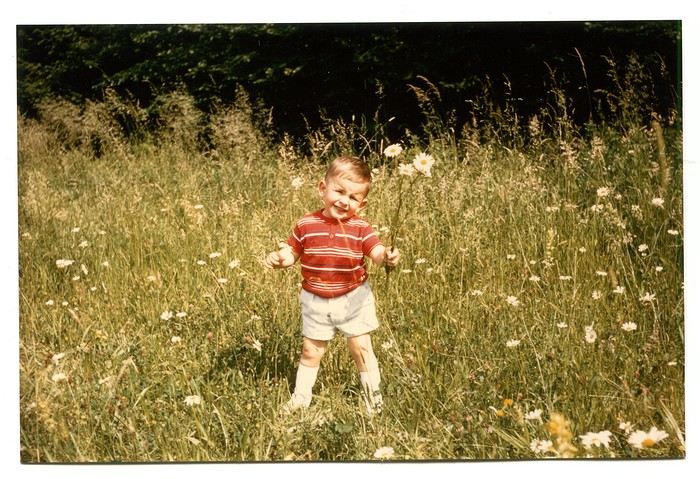
Those magical days always began with a gentle late-spring or midsummer morning. The interior of the white Peugeot 404, license plate 210 LZ 67, had already soaked up the sun before the engine purred to life, and the cabin gave off a scent I could still recognize today—a fragrance I found so pleasant. Back then, I had no idea it was just the smell of warm plastic from the car’s interior. Yes, the scents of the 404 on sunny days became my madeleine de Proust... What’s more, the whole family was unusually cheerful because those moments of relaxation and leisure were rare. Everyone worked, and no one had an easy job or was well paid. Without the *Trente Glorieuses*, these experiences might never have happened.
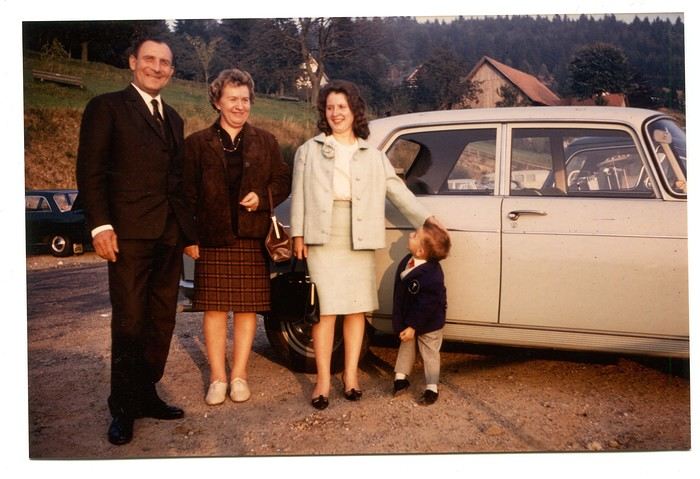
Once we crossed the canton’s borders, I felt like I was light-years away from my everyday surroundings, and every kilometer plunged me deeper into *terra incognita*. It was thrilling. Far from my so-called "medium-sized" town, wheat fields, cornfields, and cabbage patches stretched out, punctuated by tall poles connected by long wires and topped with vegetation—like giant clotheslines without laundry, where magical beanstalks might grow to touch the sky. Back then, I was still far from tasting their product, which was simply beer. At the time, there was still a significant local hop production. Fun fact: it wasn’t until 2002 that Anglo-Saxon scientists proved hops and cannabis belong to the same biological family.
After the fields, the landscape took another step up as it rolled past the little boy’s eyes, often glued to the windows. First came modest hills, then a succession of rolling slopes that soon formed an unbroken chain. Their 700 meters in altitude felt like Himalayan peaks to me—impressive, inert giants, a whole new world. Gazing at them, an intense emotion welled up somewhere between my stomach and lungs, nearly taking my breath away. What mysteries, what treasures did these heights hold? And then there were the cherries on top—the crowning touch that made the scene even more magical: proud, majestic castles perched on the summits like impassive sentinels. Monuments from the past, yet firmly rooted in the present on their rocky spurs. The little boy’s eyes sparkled—he’d been given a castle for Christmas, complete with battlements, towers, a drawbridge, and fully armed knights. He’d watched and lived *Ivanhoe* on the only French TV channel that existed back then.
Only once did my paternal grandfather join us on one of these trips. A tall, intelligent man with a face that could shift from stern to mischievous, clearly full of humor and charisma. Sadly, his relationship with alcohol had taken a toll on his life and, by extension, those of his loved ones. He had a strong personality—if his boss crossed the line, he wouldn’t hesitate to punch him, which meant he went through a lot of different jobs. Back then, you could quit one job and easily find another. It was quite something to see him in his final stages, hallucinating pink elephants and even drinking perfume when he had nothing else left. The last time I saw him, he’d slipped away from the doctors and nurses while hospitalized in pretty bad shape—at least, I assume his liver was the issue. We were sitting down for a family lunch when the door burst open, and there he stood in his pajamas, eyes twinkling with mischief, clearly pleased with the dramatic entrance. That theatrical moment didn’t spare us from burying him a few months later at the age of 71. One day, my mother told me the family doctor had quietly remarked that it was a shame—with his robust constitution, he could’ve lived to be a hundred. Yes, the family doctor—this was the man who’d come treat you any day, at almost any hour, just for a phone call. It really existed, it’s not a myth!
That day, his wife—my paternal grandmother—was also along for the ride. Everyone agreed that Jeannette was a good woman. She worked as a waitress at *Le Tigre*, the biggest brasserie in town, right in the center. Most customers preferred to be served by her, including local dignitaries and even the mayor. As a kid, I didn’t find her very fun, open, or warm—she seemed a bit stern. Back then, women in their fifties already had the face and build of grandmothers. Same went for men, don’t get me wrong. I had no idea about the struggles she faced because of her husband. I didn’t know that 30 years earlier, she’d had to flee Alsace while pregnant, under threat from Nazi fighter-bombers. I didn’t know she’d had several miscarriages, and that my father—her only surviving child, born prematurely in March 1940 at the other end of France—weighed less than a kilo at birth and was so tiny he could fit in a shoebox. Hard to imagine he’d grow into a strapping man nearly 1.80 meters tall, tipping the scales at 100 kilos. When you come back from summer camp in early August and ask why she didn’t pick you up with your parents, and they gently tell you she’s "in heaven," you don’t realize she passed away at 54 after suffering greatly from stomach cancer that had spread.
Back to that family outing, that enchanted parenthesis. I even remembered where we’d had lunch when I passed through Dambach-la-Ville decades later. One of those charming, flower-filled towns Alsace produces in abundance—and preserves so well. This one sits high on a hill, and I was a bit stunned on the parking lot because the view stretched far, revealing the Alsace plain below—its fields, villages, hills, and forests. The world seemed so vast and enticing that day, even though I was only glimpsing a tiny fraction of it.
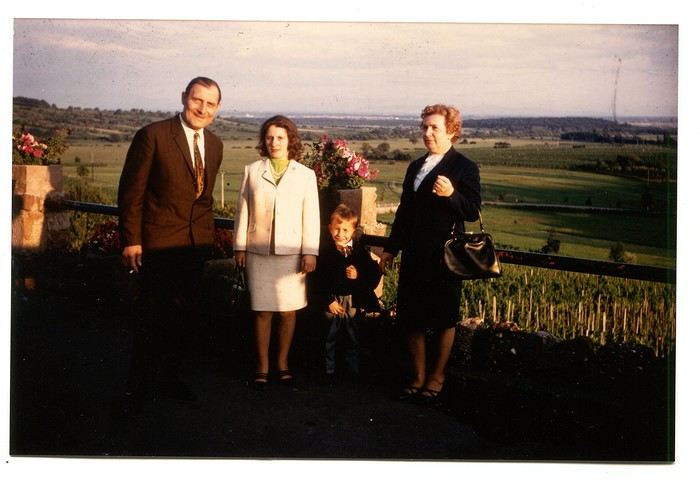
The region was already very touristy, but I wouldn’t notice the downsides until much later. That Sunday noon, I discovered a large restaurant filled with diners. I can still see the enormous piece of meat they served me, decorated with a little wooden skewer topped with a flag. I kept that one for a long time. Those were the golden days of rich, flowing, thick sauces—so flavorful—and the era of the world’s best fries, made on the spot with the best potatoes. To top it off, I was *exceptionally* allowed a small bottle of apple juice, Orangina, or—even better if possible—Sinalco. Yes, Sinalco—like Orangina, but better. A brand that must’ve disappeared in the 70s, but why, and what a shame! Since then, Orangina’s little bubbles have taken the brand to the other side of the planet—it’s now Japanese.
Year after year, I’d eagerly await that ecstatic moment when the most beautiful castle in Alsace, the Haut-Koenigsbourg, appeared in my field of vision. The perfect model, the archetype that blended into the landscape at the height of a child’s dreams. The trip home always felt like a reality check—less jarring than an alarm clock, but more diffuse and melancholic. From then on, there was only one wish: *When do we leave again?*
Those magical days always began with a gentle late-spring or midsummer morning. The interior of the white Peugeot 404, license plate 210 LZ 67, had already soaked up the sun before the engine purred to life, and the cabin gave off a scent I could still recognize today—a fragrance I found so pleasant. Back then, I had no idea it was just the smell of warm plastic from the car’s interior. Yes, the scents of the 404 on sunny days became my madeleine de Proust... What’s more, the whole family was unusually cheerful because those moments of relaxation and leisure were rare. Everyone worked, and no one had an easy job or was well paid. Without the *Trente Glorieuses*, these experiences might never have happened.
Once we crossed the canton’s borders, I felt like I was light-years away from my everyday surroundings, and every kilometer plunged me deeper into *terra incognita*. It was thrilling. Far from my so-called "medium-sized" town, wheat fields, cornfields, and cabbage patches stretched out, punctuated by tall poles connected by long wires and topped with vegetation—like giant clotheslines without laundry, where magical beanstalks might grow to touch the sky. Back then, I was still far from tasting their product, which was simply beer. At the time, there was still a significant local hop production. Fun fact: it wasn’t until 2002 that Anglo-Saxon scientists proved hops and cannabis belong to the same biological family.
After the fields, the landscape took another step up as it rolled past the little boy’s eyes, often glued to the windows. First came modest hills, then a succession of rolling slopes that soon formed an unbroken chain. Their 700 meters in altitude felt like Himalayan peaks to me—impressive, inert giants, a whole new world. Gazing at them, an intense emotion welled up somewhere between my stomach and lungs, nearly taking my breath away. What mysteries, what treasures did these heights hold? And then there were the cherries on top—the crowning touch that made the scene even more magical: proud, majestic castles perched on the summits like impassive sentinels. Monuments from the past, yet firmly rooted in the present on their rocky spurs. The little boy’s eyes sparkled—he’d been given a castle for Christmas, complete with battlements, towers, a drawbridge, and fully armed knights. He’d watched and lived *Ivanhoe* on the only French TV channel that existed back then.
Only once did my paternal grandfather join us on one of these trips. A tall, intelligent man with a face that could shift from stern to mischievous, clearly full of humor and charisma. Sadly, his relationship with alcohol had taken a toll on his life and, by extension, those of his loved ones. He had a strong personality—if his boss crossed the line, he wouldn’t hesitate to punch him, which meant he went through a lot of different jobs. Back then, you could quit one job and easily find another. It was quite something to see him in his final stages, hallucinating pink elephants and even drinking perfume when he had nothing else left. The last time I saw him, he’d slipped away from the doctors and nurses while hospitalized in pretty bad shape—at least, I assume his liver was the issue. We were sitting down for a family lunch when the door burst open, and there he stood in his pajamas, eyes twinkling with mischief, clearly pleased with the dramatic entrance. That theatrical moment didn’t spare us from burying him a few months later at the age of 71. One day, my mother told me the family doctor had quietly remarked that it was a shame—with his robust constitution, he could’ve lived to be a hundred. Yes, the family doctor—this was the man who’d come treat you any day, at almost any hour, just for a phone call. It really existed, it’s not a myth!
That day, his wife—my paternal grandmother—was also along for the ride. Everyone agreed that Jeannette was a good woman. She worked as a waitress at *Le Tigre*, the biggest brasserie in town, right in the center. Most customers preferred to be served by her, including local dignitaries and even the mayor. As a kid, I didn’t find her very fun, open, or warm—she seemed a bit stern. Back then, women in their fifties already had the face and build of grandmothers. Same went for men, don’t get me wrong. I had no idea about the struggles she faced because of her husband. I didn’t know that 30 years earlier, she’d had to flee Alsace while pregnant, under threat from Nazi fighter-bombers. I didn’t know she’d had several miscarriages, and that my father—her only surviving child, born prematurely in March 1940 at the other end of France—weighed less than a kilo at birth and was so tiny he could fit in a shoebox. Hard to imagine he’d grow into a strapping man nearly 1.80 meters tall, tipping the scales at 100 kilos. When you come back from summer camp in early August and ask why she didn’t pick you up with your parents, and they gently tell you she’s "in heaven," you don’t realize she passed away at 54 after suffering greatly from stomach cancer that had spread.
Back to that family outing, that enchanted parenthesis. I even remembered where we’d had lunch when I passed through Dambach-la-Ville decades later. One of those charming, flower-filled towns Alsace produces in abundance—and preserves so well. This one sits high on a hill, and I was a bit stunned on the parking lot because the view stretched far, revealing the Alsace plain below—its fields, villages, hills, and forests. The world seemed so vast and enticing that day, even though I was only glimpsing a tiny fraction of it.
The region was already very touristy, but I wouldn’t notice the downsides until much later. That Sunday noon, I discovered a large restaurant filled with diners. I can still see the enormous piece of meat they served me, decorated with a little wooden skewer topped with a flag. I kept that one for a long time. Those were the golden days of rich, flowing, thick sauces—so flavorful—and the era of the world’s best fries, made on the spot with the best potatoes. To top it off, I was *exceptionally* allowed a small bottle of apple juice, Orangina, or—even better if possible—Sinalco. Yes, Sinalco—like Orangina, but better. A brand that must’ve disappeared in the 70s, but why, and what a shame! Since then, Orangina’s little bubbles have taken the brand to the other side of the planet—it’s now Japanese.
Year after year, I’d eagerly await that ecstatic moment when the most beautiful castle in Alsace, the Haut-Koenigsbourg, appeared in my field of vision. The perfect model, the archetype that blended into the landscape at the height of a child’s dreams. The trip home always felt like a reality check—less jarring than an alarm clock, but more diffuse and melancholic. From then on, there was only one wish: *When do we leave again?*
Arusha, Tanzania - October 2025
I would wish never to go to bed where I had woken up, to wander my tent from the shores of Egypt to those of the Persian Gulf; to have no goal for the evening other than the evening itself; to traverse on foot, with my eyes and my heart, all these unknown lands, all these races of people so different from my own; to contemplate humanity, God’s finest creation, in all its forms.
Lamartine in Fatalla Sayeghir’s Account (1861)
As soon as it’s about flying, I lose all willpower. Being reasonable and thoughtful, I still lose all my composure at the mere possibility of a flight—especially if it’s piloted by F.—and even more so if that flight can take me to unexplored lands. I’ve long wanted to unravel the mystery of animal tourism, and why not in Tanzania, following up on my trip from four years ago, when I was already questioning the glaring inequalities in Zanzibar: the coastal strip sacrificed to capitalism, and the inland areas, just a hundred meters from the waves, where you find—though a bit more peaceful than elsewhere on the continent—the chaos of Africa.
I’m an adventurer at heart. When it comes to the terrain, though, it’s a whole different story. I see people setting off for months at a time; I know my endurance doesn’t last beyond three days. It’s not that I’m afraid of this unfamiliar environment when it comes to embracing different realities. I’m mostly afraid of myself—of this heightened sensitivity that makes me see things I’d rather not see and understand others that sometimes overwhelm me.
After an absolutely fantastic daytime flight, I land in Zanzibar and have to resign myself—this is the whole point of the trip—to what feels like a real spacewalk. I’m alone. My lucky star, backed up by my phone, will serve as my lifeline. I step out of the airport and breathe in the scent of Africa full-on: a mix of exotic perfumes, baked earth, and poorly refined fuel, inevitably mingled with the smell of wood smoke. So many images come flooding back. So many stories. Another world.
I head to Arusha the very next day. The gateway to the country’s northern national parks, this city of half a million offers one of those rare breath-holding dives that Africa keeps secret. As the only white person walking the streets, I know I’m visible and vulnerable, yet I move forward confidently, barely bothered. But where are all my fellow Westerners? While this city draws countless tourists, I only cross paths with one white couple in nearly three hours of walking. Because you have to hold on tight to wander here. You have to stay alert. The traffic is dense and erratic—don’t even trust the fact that in Tanzania, people drive on the left. That can change from one minute to the next, especially with motorbikes. With barely centimeters between vehicles, I weave my way through the urban jungle, trying not to stumble into the huge ditch on my left or get sideswiped by cars brushing past me on the right. Speakers blare music, ads, or political speeches at will—the explosion of yellow and green tells us we’re on the eve of the presidential election—but they barely compete with the calls to prayer, nearly nonstop on this holy Friday. The vital space is as saturated as the sound. Imagine an unbroken line of shops and stalls of every kind—supermarkets haven’t made it here yet—where you can find just about anything: phones, copper pipes, Chinese-made hardware, shoes, clothes, basins, and professional tools… The luckiest own a big store; others spend their lives trying to survive on the profits from selling toothbrushes one at a time on the streets. But maybe it’s more lucrative than spending the day slumped on the sidewalk, preferably missing a limb, trusting your survival to the mercy of passersby.
I think I’ll escape the street by slipping into the narrow alleys of the central market. Here, I know I won’t run into anyone like me! The vendors’ stalls start at waist height; the sellers, perched higher up, haggle or not while discussing prices. Here, colorful fruits and vegetables; there, huge piles of dried fish. Spices, seeds, roots. Smells. Noises. Africa. Life. Further on, the fresh fish aisle makes a right angle with the butchers’. Everywhere, flies—everywhere, the same gesture from vendors swatting blindly at these relentless pests. Aware that I’ll be eating this same meat within the hour, displayed with total disregard for basic hygiene, I reassure myself that Arusha sits at 1400m altitude. Yes, we can probably do without a fridge.
*
It’s time to leave the city and go wildlife spotting in the surrounding parks. To that end, I’ve negotiated a package deal with a local agency that prides itself on grouping solo travelers into a vehicle meant for seven. We leave behind the imposing masses of Mount Meru and Kilimanjaro, peaking at 4565m and 5895m respectively, and head west to conquer Tarangire and Ngorongoro parks. I’ve been promised a spectacle; I remain cautious. I’ve read rave reviews; I know how to temper my expectations. Above all, I know what I came for—and paradoxically, my hopes are less about animals than strictly anthropological. So I’m sure I won’t go home disappointed.
I’m in the thick of it. Since 2021, tourism has been booming: I’m one of the two million tourists who come here every year seeking thrills. I also contribute, in a small way, to the 20% of the country’s GDP generated by tourism revenue. Around 3 billion € annually… Tanzania has 16 national parks, twice as many reserves; it charges meticulously for every entry, every night, every activity, to the tune of several dozen euros. I calculated that Tarangire Park alone rakes in around 15 million € a year. Mind-boggling. Yet to get there, a dusty, rickety old track is used daily by hundreds of vehicles that literally saturate the surrounding area with white dust and exhaust fumes. At the park entrance, we wait a good hour while the driver pays the entry fees. Then it’s a free-for-all: dozens of 4x4s try to enter at the same time through the single access point, to the left of the building, while the three barriers are stuck due to a computer glitch. It’s pure chaos: no way to buy your ticket in advance—the QR code revolution hasn’t arrived; no smart layout before the barriers; nothing smooth, nothing practical, everything improvised.
So, the animals? Given the time and money involved, I’d be tempted to say it’s not worth the hassle and there’s really no need to break five legs off one of the too-many zebras we pass. Hours and hours of travel to get to Tanzania, specifically Arusha; hours and hours on the road—up to 12 hours a day—to spend barely three in the parks; at least 200 € per day for the most basic option, so 400 € in my case, and up to several thousand for those wealthy couples opting for the luxury package with a private vehicle. Sure, I saw zebras and elephants in their natural habitat, wildebeest, buffalo, and a few hippos, but I didn’t feel the thrill touted in the articles or even by my two-day trip organizer. Would I have been more satisfied if I’d seen the lion, the leopard, and the rhino? Maybe. But the story won’t be rewritten in light of those assumptions.
Yet I’m not disappointed. As I said earlier: I know what I came for. I wanted to see the world as it is with my own eyes. And the safari world fascinates me more for its anthropological aspect than for what it offers. Yes, the fact that people from all over the world come here, juggling hotels and big 4x4s—while notably avoiding the streets of cities and villages—truly fascinates me. Two worlds coexist on either side of a barely porous border. As soon as the tourist sets foot in the airport, they’re whisked away, sight unseen, into a tourist vehicle. Dropped off at the hotel, they rest there, shielded from view, until the 4x4 departs. Then they speed through those same cities and villages they scorn out of fear or disdain, leaving on the roadside the Maasai herding their flocks and all those poignant or mundane scenes that make up daily African life. In the evening, in their lodge, far from the city’s pulse, they fall asleep thinking about the images they’ve collected, those long hours on the road, the wait for the animals. And the days go by… Maybe the term *luxury*, whether for food or accommodation, refers to what we experience as utterly ordinary in the West? Forgetting that you’re there, in Africa, just steps away from poverty and a certain arbitrariness. And at the end of the journey: back to the airport, back to normal life.
Maybe we need to take a broader view. All that money seems invisible, yet it must serve the population at some point, right? The main roads are passable, the power grid seems well-maintained—I can tell by the excellent condition of the high-voltage transmission towers. Is it really too expensive to significantly improve all the infrastructure? I hoped this windfall would truly serve the people’s interests. The driver taking me back to the airport on the last evening dashes my sweet illusions: « All this is bad. Africa is bad. But you have no choice. The hospitals don’t work, the schools don’t work, the roads don’t work (just as he says this, roadworks force us onto a terrible detour for several kilometers—a rutted track, in fact), and if you say anything, if you speak up too much, they come for you and then you disappear. » That’s just one opinion. Nothing empirical. But I don’t need to be a West Point graduate to realize how rampant corruption is in these regions: while the muezzin bellows the greatness of Allah, I consider the dilapidated equipment and the energy expended by the masses just to survive here. But maybe all that money keeps the country afloat by paying civil servants’ salaries? Meanwhile, one thing is certain: regardless of where the profits go, tourism supports millions of people, and I’m in no position to judge this system too harshly. Maybe I’m too much of an aesthete to appreciate the almost exclusive use of corrugated iron at its true value…
*
I’ll give this system credit for one thing: the chance to set foot in spaces impossible to visit otherwise. At one point, in the heart of the Ngorongoro Crater—a vast 20km-wide plain topped by a 600m-high caldera—I was simply happy to be there. Barely bothered by the constant ballet of 4x4s—the space is vast—I contemplate the simple life of the local animals. Buffalo, wildebeest, zebras as numerous as the flamingos patiently standing on one leg, waiting for the day to pass. Over there, you can make out a few hyenas with vultures circling above. Finally, in a large body of water, hippos surface at regular intervals. I’m aware of my luck. I’m especially aware that, unlike all the people I’ve met there, a lot of money and a little resourcefulness greatly favor the luck factor.
I’m heading home. I soak up the last images of this improbable Africa as night falls quickly over the countryside. I’m fascinated by the number of Maasai herding their livestock along the main road. Some pass the time, globalization obliges, on an old phone; others, sometimes as young as my eldest—barely 10 years old—watch us pass, indifferent. We overtake or are overtaken; the two-lane road is the stage for a majestic ballet of semi-trailers, *dalas-dalas*, and other 4x4s, as numerous as the names of their companies: Leopard Tours, Climbing Kilimanjaro, Smiling Zebra, Nomad Life Enhanced, Elephant Roaming, Mountain Warrior, Master of the Ambush… They drop me off at the hotel, where I have an hour to shower and change into clean clothes before my return flight. Already, I’m slipping back into my own world without really seeing it, leaving behind the hotel’s glass window that African life to which nothing truly binds me. Then that chaotic, suffocating nighttime drive to the airport. Check-in; the stupid questions (« Where are you going? »); the slow police officer who, in the end, stamps my passport anywhere; the idiocy of the security agent (my empty 33cl bottle is forbidden); the rather shabby lounge at Kilimanjaro Airport. Then the return to the vessel—to the Air France plane that left Zanzibar an hour earlier—after this 72-hour spacewalk without a real lifeline. I’ve never been so happy to see F. again.
Court Ruling on Compensation for Delays of "3 Hours or More" by Airlines
Hi,
On October 30, 2025, the Court of Justice of the European Union issued its ruling in case C-558/24 Corendon.
When an airline issues a ticket (or booking confirmation) and later issues a new ticket delaying the arrival time at the final destination, the delay of "3 hours or more"—which entitles passengers to compensation of 250, 400, or 600 euros (depending on the distance) per paying passenger—must be calculated based on the arrival time stated in the initial booking.
In the case examined, the airline had issued a new booking confirmation that delayed the flight. The passenger arrived less than 3 hours late compared to the arrival time in the new confirmation but was more than 3 hours late compared to the original booking confirmation.
This puts an end to interpretations that the previous texts allowed.
The ruling states:
"Article 5(1)(c) and Article 7(1) of Regulation (EC) No 261/2004 of the European Parliament and of the Council of 11 February 2004 [...] must be interpreted as meaning that: in the event of a change to the departure and arrival times of a flight, announced in advance by an air carrier and accompanied by the issuance of a new booking confirmation to the passengers concerned, the duration of the delay suffered by those passengers upon arrival must be determined by taking into consideration the initially scheduled arrival time."
Full ruling here:
https://eur-lex.europa.eu/legal-content/FR/TXT/PDF/?uri=CELEX:62024CJ0558
Best regards
Which taxi app for Senegal?
Hi
Which taxi app do you recommend for Senegal? Are there shared taxis from Dakar Airport to La Somone? If not, do you have an idea of the price for a taxi?
Thanks in advance
Which taxi app do you recommend for Senegal? Are there shared taxis from Dakar Airport to La Somone? If not, do you have an idea of the price for a taxi?
Thanks in advance
Scam with Pace Car Rental via Carwiz in Cape Town
Hi,
Back from South Africa since 24/10/25, we’re having trouble getting our deposit back after renting a car at Cape Town Airport with Pace Car Rental through Carwiz! It’s still a sum over 1000 €!!
Lots of email exchanges via WhatsApp where they send me the refund proof dated 25/11, but my bank can’t find any trace of it!! Just to clarify, the car was returned without a scratch, as they confirmed!
Has anyone else run into this issue with this rental company, or others for that matter? And if it’s a scam, what are the possible courses of action? I’m hoping there are some… I was thinking of contacting our Consulate in Cape Town to see if they can help with the next steps or even intervene with this rental company!
This kind of practice isn’t going to help boost tourism relations with South Africa!!
Thanks for your feedback,
Dan
Organizing a 3-day safari with kids then Zanzibar
Hi everyone,
I’m reaching out for your advice since we’re planning a trip to Tanzania for our 10th wedding anniversary, with a continental part (4 nights) followed by Zanzibar for some relaxation (7 nights). A childhood dream.
My first question is: have families with kids this age already done this trip? Is it relatively safe, because I know that if there’s even the slightest health issue, the infrastructure can be tricky, especially on the mainland in Tanzania. We’ll of course take our precautions (vaccines and Malarone), but I want to make sure we’re not being reckless, as my in-laws seem to suggest (they’ve never traveled).
Also, for the safari, I need your opinions. I’m in advanced talks with the agency *Tanzania Wise Safari*. Has anyone heard of them?
Day 1 - night in Arusha to rest Day 2 - departure for Tarangire and safari (likely in the early afternoon), night in a lodge near the northern part of the lake at the crater entrance Day 3 - crater - night in the same lodge (I want to limit changes for my kids, but I’m not sure if that’s smart) Day 4 - I’m hesitating - what to do in the morning? Lake Manyara? Or return to Arusha at a relaxed pace and spend the night there? The guide suggested Arusha National Park, but I think it’s too much driving for the kids, since there’s already the trip from the crater to Arusha to get to the park. Day 5 - departure for Zanzibar. Do you have a recommended airline?
For flights, I tried a multi-destination option, but it seems complicated.
Thanks so much for your feedback
2-Week Itinerary in Senegal with 3 Kids
Hi there!
After our Central Asia trip this summer, we’ll be setting foot in Africa for the first time next February with our three kids (ages 5, 13, and 17).
I’ve fine-tuned a little itinerary with ChatGPT based on our interests and expectations, and here’s what came out:
Tuesday, February 24 — Dakar
Landing at 1:00 AM
Early afternoon: visit Gorée Island
Back to Dakar, light dinner
7:00 PM: boarding the ferry “Aline Sitoé Diatta”
Overnight on board (cabin)
Wednesday, February 25 — Ziguinchor
Arrival between 9:00–11:00 AM
Staying with a local host
Stroll: Saint-Maur market, river port
Overnight in Ziguinchor
Thursday, February 26 – Saturday, February 28 — Casamance (Cap Skirring & Oussouye)
February 26: Ziguinchor → Carabane road trip, explore the island, overnight on the island
February 27: Cap Skirring, beach time
February 28: Cap Skirring, relaxation, stroll, beach
Sunday, March 1 – Tuesday, March 3 — Oussouye
Head to Oussouye (~1 hour)
Discover Diola villages, rice fields, market, handicrafts
Overnights: Oussouye (3 nights)
Wednesday, March 4 – Friday, March 6 — Sine-Saloum
Drive to Toubacouta via the Trans-Gambian Highway (Gambia)
Stay with a local host / camp on the bolongs
Activities: pirogue ride in the delta, Serer villages, biking, handicraft discovery
Overnights: Sine-Saloum (3 nights)
Saturday, March 7 – Sunday, March 8 — Petite Côte
Drive to Somone / Ngaparou (~3 hours)
Stay with a local host
Activities: beach, safari at Bandia Reserve, kayaking on the lagoon, craft market
Overnights: Petite Côte (2 nights, including Sunday, March 8, to enjoy the full day before the nighttime departure)
Monday, March 9 — Departure
Transfer to Blaise Diagne International Airport (~45 minutes)
Flight leaves at 2:00 AM
I’ve got a few questions:
- Is an afternoon on Gorée Island worth it? I really want to go, but the ferry departure days are a bit limiting. - How easy is it to get around between these different stops? Can we find a taxi that fits all five of us? - Do you have any accommodation recommendations? I’d love to stay with locals as much as possible—we’re not looking for luxury, just a bed and a shower. - February 28 is my birthday, and I’d love to do something “special”: any ideas for a nice place to stay, a great restaurant, or an out-of-the-ordinary activity? We’ll be around Cap Skirring. - Does this itinerary seem coherent? I really want to visit Casamance, and we’d prefer to stay no more than 3 nights in the same place.
Don’t hesitate to share your tips! Thanks so much!
When is the best time to travel to Namibia?
Hi there,
I’m planning a trip to Namibia in 2026.
I’m torn between visiting the Fish River Canyon and the Caprivi Strip / Victoria Falls.
I’d also love your advice on the best time to travel for wildlife viewing and pleasant weather.
I haven’t chosen a tour operator yet... since I’m traveling solo, I’d prefer a small-group escorted trip. Has anyone traveled with a local agency and what’s your feedback or advice?
Thanks so much!
Vacation
It’s vacation time
Vacation and silence
Silence and absence
Absence and latency
Latency and silence
Silence and vacation
Vacation and absence
It’s vacation time
I wrote these few words on July 12, 2010, and I can post them again today—nothing’s changed...🙂
I wrote these few words on July 12, 2010, and I can post them again today—nothing’s changed...🙂
Ban on using foreign currencies for payments in Tanzania
Hi,
This is new—just announced!:
The Tanzanian government has recently implemented a new regulation banning the use of foreign currencies for domestic transactions. The Bank of Tanzania issued a notice requiring all local payments to be made exclusively in Tanzanian shillings (TZS).
More info:
https://www.agenceecofin.com/actualites/0505-128083-tanzanie-interdiction-de-lusage-des-devises-etrangeres-dans-les-transactions-locales
https://partir.ouest-france.fr/magazine/it-is-now-impossible-to-pay-in-foreign-currency-in-tanzania/
...
Change of airport from Lyon to Paris with Royal Jordanian
Hi, I booked a ticket on January 2nd for a round trip from Lyon to Amman from August 13th to 27th.
I received an email on March 27th informing me that my departure and arrival airport would no longer be Lyon but Paris.
I contacted them to say I refused this change, since it’s 400 km between the two airports.
They replied that I could cancel my flight with cancellation fees of 130 € and a non-refundable tax of 29.82 €.
Or I could change the dates and still face a 130 € penalty.
I find this unbelievable—the airport change isn’t my fault, but theirs.
They told me Royal Jordanian no longer flies out of Lyon.
What should I do?
Whale watching: Tadoussac or Bay of Fundy?
Hi there,
My partner and I are planning a trip with our two kids to see whales this summer in Canada. We’ve got two options: Tadoussac or the Bay of Fundy in Saint Andrews. We’ll be there at the end of July.
Could you let me know if one spot is better than the other? Especially in terms of how likely we are to actually see the whales.
Thanks in advance, and have a great day!
Bruno
EuroVelo 8
Hi there,
No recent discussion here on the topic (2025).
Anyone else interested?
Solo traveler: Discovering Argentina differently
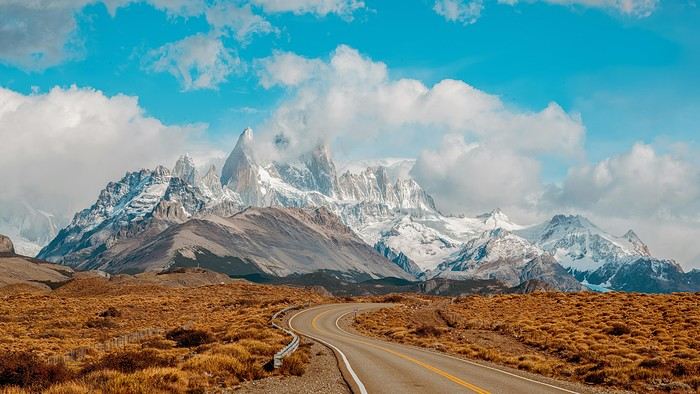
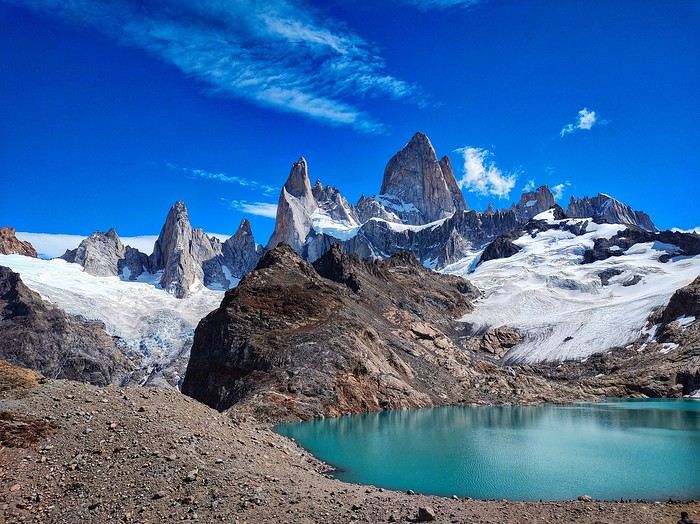
If you dream of an extraordinary adventure, you’ve come to the right place! Argentina, this land at the end of the world, offers a unique change of scenery and the perfect opportunity to travel solo. With its spectacular landscapes, stretching from the ends of Tierra del Fuego to the high Andean plateaus, this vast country captivates both nature lovers and those passionate about authentic encounters. Here, the notions of borders and distance fade away: the glaciers of Patagonia, the Iguazu Falls in the heart of the tropical forest, wild steppes, and Andean villages nestled in colorful valleys. In Argentina, you quickly forget the passing of time, as the human experience and the beauty of the places leave their mark on every moment.
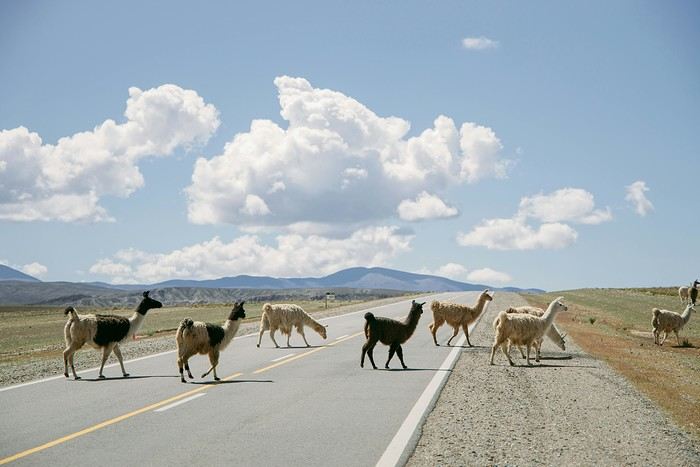
The perfect place to escape mass tourism
When traveling solo, there’s nothing like Argentina to get off the beaten path and avoid the crowds. Of course, some iconic spots like the Perito Moreno Glacier in El Calafate or Tierra del Fuego National Park in Ushuaia attract travelers from all over the world. However, the country’s vastness offers plenty of opportunities to find yourself almost alone in nature. A sunrise over the Andes, an afternoon riding with gauchos in the pampa, or a hike deep in Patagonia—these suspended moments happen far from the crowds.
A country ideal for connecting with local communities
One of Argentina’s strengths is the warmth of its people. Deeply attached to their traditions and genuinely curious about visitors, Argentinians have a knack for breaking down barriers, whether linguistic or cultural. You might find yourself chatting in Spanish over a mate (the local herbal tea), joining an impromptu barbecue, or even trying a few tango steps in a milonga. Simply showing interest in their culture and history is often enough to start a conversation. With Argentinians’ innate sense of hospitality, you never feel alone, even as a solo traveler.
Meeting local communities: a unique human adventure
Traveling solo in Argentina also means encountering its diverse communities. Staying with a local family or in an estancia (an Argentine ranch) lets you dive into the daily lives of families who often live self-sufficiently. In the Northwest, for example, you can share the life of an Andean community and learn to cook delicious local specialties. In Bariloche, some stays even include discovering a Mapuche community, offering a chance to better understand their relationship with the land and the importance of their ancestral traditions.
Diverse experiences for an unforgettable trip
Argentina is a true playground for outdoor enthusiasts: hikes in the steppes, sailing on the Beagle Channel in Tierra del Fuego, whale watching in Puerto Madryn (from June to December), or exploring the Iguazu jungle to encounter its wildlife and flora. And just when you think you’ve seen it all, Argentina still has surprises in store. In the Salta region, the Quebrada de Humahuaca reveals mountains with seven colors that tell the geological history of the Andes. It’s a feast for the eyes!
Why not join a small group with Tierra Latina?
Traveling alone doesn’t mean you can’t share parts of your journey with other enthusiasts. That’s what Tierra Latina offers: small-group tours (between 2 and 12 people), designed to balance the freedom of traveling in a small group with the camaraderie of exchanges between travelers. Each itinerary is crafted to alternate highlights (like visiting must-sees: Buenos Aires, Ushuaia, Perito Moreno…) with more intimate moments, far from mass tourism.
The focus is on authentic encounters and respect for local communities—that’s Tierra Latina’s signature. For example, in northwestern Argentina, Tierra Latina offers the chance to spend time in an Andean community to learn about traditional dish preparation during a cooking workshop. It’s an opportunity to exchange recipes and knowledge passed down through generations. The goal: to go beyond simple sightseeing and experience true moments of sharing.
In a small group, you quickly feel like part of a family of travelers, all united by the beauty of the landscapes. You also benefit from French-speaking guides who share their tips and anecdotes while leaving plenty of free time to explore at your own pace. Whether you’re traveling solo, as a couple, or with friends, you’ll find the perfect balance between independence and the comfort of being surrounded.
Human connections at the heart of the journey
At Tierra Latina, the goal is to put people at the center of the experience. Accommodations are chosen for their authentic character, often tested and approved by the team itself. Whether you’re staying with an Andean family in a small village in the Quebrada de Humahuaca or in an estancia in the heart of the Patagonian steppe, you’ll take part in local life and contribute to the economy of these sometimes isolated regions.
This responsible approach to travel helps minimize environmental impact while maintaining a privileged connection with those who make Argentina so rich: its people. You’ll leave with intense memories, marked by moments of sharing that are hard to replicate elsewhere. So, ready to pack your bags? Follow the guide and fly off to this fascinating country—you’ll only want one thing: to come back!
The perfect place to escape mass tourism
When traveling solo, there’s nothing like Argentina to get off the beaten path and avoid the crowds. Of course, some iconic spots like the Perito Moreno Glacier in El Calafate or Tierra del Fuego National Park in Ushuaia attract travelers from all over the world. However, the country’s vastness offers plenty of opportunities to find yourself almost alone in nature. A sunrise over the Andes, an afternoon riding with gauchos in the pampa, or a hike deep in Patagonia—these suspended moments happen far from the crowds.
A country ideal for connecting with local communities
One of Argentina’s strengths is the warmth of its people. Deeply attached to their traditions and genuinely curious about visitors, Argentinians have a knack for breaking down barriers, whether linguistic or cultural. You might find yourself chatting in Spanish over a mate (the local herbal tea), joining an impromptu barbecue, or even trying a few tango steps in a milonga. Simply showing interest in their culture and history is often enough to start a conversation. With Argentinians’ innate sense of hospitality, you never feel alone, even as a solo traveler.
Meeting local communities: a unique human adventure
Traveling solo in Argentina also means encountering its diverse communities. Staying with a local family or in an estancia (an Argentine ranch) lets you dive into the daily lives of families who often live self-sufficiently. In the Northwest, for example, you can share the life of an Andean community and learn to cook delicious local specialties. In Bariloche, some stays even include discovering a Mapuche community, offering a chance to better understand their relationship with the land and the importance of their ancestral traditions.
Diverse experiences for an unforgettable trip
Argentina is a true playground for outdoor enthusiasts: hikes in the steppes, sailing on the Beagle Channel in Tierra del Fuego, whale watching in Puerto Madryn (from June to December), or exploring the Iguazu jungle to encounter its wildlife and flora. And just when you think you’ve seen it all, Argentina still has surprises in store. In the Salta region, the Quebrada de Humahuaca reveals mountains with seven colors that tell the geological history of the Andes. It’s a feast for the eyes!
Why not join a small group with Tierra Latina?
Traveling alone doesn’t mean you can’t share parts of your journey with other enthusiasts. That’s what Tierra Latina offers: small-group tours (between 2 and 12 people), designed to balance the freedom of traveling in a small group with the camaraderie of exchanges between travelers. Each itinerary is crafted to alternate highlights (like visiting must-sees: Buenos Aires, Ushuaia, Perito Moreno…) with more intimate moments, far from mass tourism.
The focus is on authentic encounters and respect for local communities—that’s Tierra Latina’s signature. For example, in northwestern Argentina, Tierra Latina offers the chance to spend time in an Andean community to learn about traditional dish preparation during a cooking workshop. It’s an opportunity to exchange recipes and knowledge passed down through generations. The goal: to go beyond simple sightseeing and experience true moments of sharing.
In a small group, you quickly feel like part of a family of travelers, all united by the beauty of the landscapes. You also benefit from French-speaking guides who share their tips and anecdotes while leaving plenty of free time to explore at your own pace. Whether you’re traveling solo, as a couple, or with friends, you’ll find the perfect balance between independence and the comfort of being surrounded.
Human connections at the heart of the journey
At Tierra Latina, the goal is to put people at the center of the experience. Accommodations are chosen for their authentic character, often tested and approved by the team itself. Whether you’re staying with an Andean family in a small village in the Quebrada de Humahuaca or in an estancia in the heart of the Patagonian steppe, you’ll take part in local life and contribute to the economy of these sometimes isolated regions.
This responsible approach to travel helps minimize environmental impact while maintaining a privileged connection with those who make Argentina so rich: its people. You’ll leave with intense memories, marked by moments of sharing that are hard to replicate elsewhere. So, ready to pack your bags? Follow the guide and fly off to this fascinating country—you’ll only want one thing: to come back!
Feedback on 3-week Argentina itinerary
Hi there,
Could you let me know if this itinerary is doable:
14/09: Arrival in BA at 9:45 PM
15/09 to 16/09: BA
17/09: Flight to Iguazu early in the morning + visit the falls on the Brazilian side
18/09: Visit the falls on the Argentine side
19/09: Flight to Salta + visit Salta
20/09 to 25/09: Northern + Southern Loop in 6 full days (rental car)
26/09 to 28/09: Tolar Grande 3 days (with an agency)
29/09: Flight to Puerto Madryn (arrival in the evening)
30/09: Valdes Peninsula
01/10: Valdes Peninsula + Punta Tombo + overnight bus to Bariloche
02/10 to 07/10: 6 days to see Bariloche and the surrounding area by car (what are the must-sees?)
08/10: Flight to BA
09/10: Flight to Paris at 2:40 PM
Trek from Wamena to the Baliem Valley in 5-6 days
Hi there!
Discussions are rare and not recent, so I’m giving this a little bump—hope some folks are still around! ;-)
I’d love to head to Wamena and trek south through the Valley over 5-6 days on foot.
From what I’ve seen, finding your way isn’t exactly straightforward, and it seems best to hire a guide. I’ve never done that before because the encounters just aren’t the same...
Has anyone here explored the area? Is it feasible to trek down along the Baliem River, from Sogokmo to Kulise, then to Wamerek, cross over, and head back up along the river?
I’ve heard you should bring supplies to offer your hosts, which I’m happy to do!
What do you all think? The carefree spirit of my 20s is long gone, but I’d love to find it again, even just for a little while. ;-)
Thanks so much in advance for any tips or advice! Juliette
Preparing for a one-month road trip in Uganda
Yiiihiiiiii😎
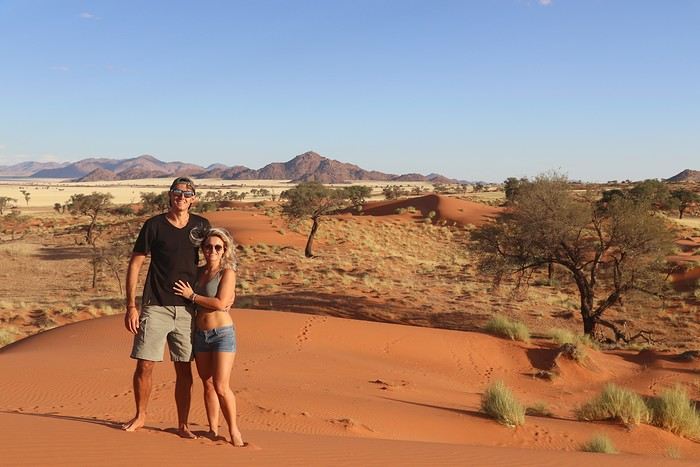
Hey everyone, and warm greetings to all you Southern African wanderers exploring the eastern lands of this African forum!
Four years later, I can finally create a new thread about my next trip—and not just any trip: Uganda! 🙂 A destination that’s been making me dream more and more over the past few years. Originally planned for 2019 but swapped for Tanzania, Kilimanjaro, and Zanzibar. Then pushed aside for another well-known African destination, Namibia, with 6 friends in 2021 (but ultimately done with just 2 because of Covid). 2022 was supposed to be the year of our Canada trip (initially planned for 2020 and canceled two years in a row for the same health reasons). The 2021 safari with friends finally happened in South Africa in 2023—a classic loop that didn’t require much planning and let me start dreaming about my next African destination while devouring all the Uganda travel journals, frustrated I couldn’t reply or comment. Uganda was then reconsidered for 2024 as a follow-up to a 6-week road trip in Finland and Norway, starting from Paris to save time, money, and the ecological footprint of a transatlantic round trip—but ultimately canceled due to budget constraints, the start of my freelance work (no more paid leave), the high cost of 6 weeks in Scandinavia, and no desire to cheapen our first Uganda trip.
Uganda will be the absolute priority for 2025! 😉 And I plan to use this time to prepare for the trip properly. I also hope to use this period to get back to writing our travel journals. By absolute priority, I mean minimal restrictions and compromises on budget and travel time. 🙂
So, we’re planning to spend a month in Uganda next summer (2025). The exact month will be decided in the coming weeks. Why a month? To explore a good part of the country (really want to go up to Kidepo), enjoy the stops, and avoid putting ourselves at risk on the roads. Also, several rental companies offered me 4x4 quotes with a 10% discount for 30+ days of rental...
Here’s my humble draft itinerary:
Day 1: Late arrival in Entebbe around 11 PM. Day 2: Pick up 4x4 vehicle. Night in Jinja.
Day 3: Drive and night in Sipi Falls. Day 4: Night in Sipi Falls. Day 5: Night in Moroto. Day 6: Night in Moroto. Day 7: Drive to Kidepo NP. Day 8: Safari in Kidepo NP. Day 9: Safari in Kidepo NP. Day 10: Full day drive to Murchison Falls. Day 11: Safari in Murchison Falls. Day 12: Safari in Murchison Falls. Day 13: Ziwa Rhino Sanctuary. Day 14: Lake Albert. Day 15: Full day drive to Kibale Forest. Day 16: Kibale Forest NP. Day 17: Drive to Kilembe (Rwenzori NP). Day 18: Hike in southern Rwenzori region. OR start Weismann’s Peak trek (Day 1). Day 19: Weismann’s Peak trek (Day 2). Day 20: Weismann’s Peak trek (Day 3). Day 21: Weismann’s Peak trek (Day 4). Day 22: Weismann’s Peak trek (Day 5), night in QENP. Day 23: QENP. Day 24: Visit Ishasha and drive to Lake Bunyonyi. Day 25: Drive to Ruhija. Day 26: Ruhija, Bwindi NP, gorilla tracking. Day 27: Mgahinga Gorilla NP... Day 28: Morning trek (gorillas or golden monkeys). Drive and night in Mburo NP.
Day 31: Visit Mburo NP and drive to Entebbe. Mabamba Swamp if we haven’t seen shoebills yet? Return 4x4 (30 days rental). Day 32: Departure from Entebbe (flight at 7:30 PM direct to Johannesburg with Uganda Airlines).
It’s not easy to visualize such a long itinerary. In terms of nights, it would look like this:
● Entebbe (1 night)
● Jinja (1 night)
● Sipi Falls (2 nights) ● Moroto (2 nights) ● Kidepo NP (3 nights) ● Murchison Falls (3 nights)
● Ziwa Rhino Sanctuary (1 night)
● Lake Albert (1 night) ● Kibale Forest (2 nights)
● Rwenzori NP (5 nights) ● QENP (2 nights)
● Lake Bunyonyi (1 night)
● Ruhija (2 nights)
● Mgahinga Gorilla NP (1 night?)
● Mburo NP (2 nights)
● Entebbe (1 night)
Obviously, I already have a lot of questions .
A question I really like: Where would you add extra nights? Keeping the 5 days in Rwenzori, we still have at least 2 nights to add to this itinerary.
Also, I don’t really have a clear idea about the loop’s direction. Instinctively, I thought of doing the gorillas last to end on a high note, but given the state of rental vehicles and traveler feedback, it seems we might not even make it to the end of the trip . Is there a meteorologically better direction? Given we’re likely leaving from early August to early September.
We’ve debated a lot about renting a vehicle with or without a guide, RAV4 or a proper 4x4, rooftop tent or not... In the end, after testing the guided experience in Tanzania and noting the relatively reasonable prices of hard lodgings (compared to Tanzania, Namibia, or Botswana, for example), the high cost of equipped 4x4s, and their unpredictable condition... We’re currently leaning toward a non-equipped 4x4, opting for the newest and most reliable vehicle possible to minimize breakdowns and missed stops. Any agencies/vehicles you’d recommend? Any recent feedback from the past few years?
Where’s the best place to see golden monkeys? I read that the southern part of QENP is no longer accessible. Can’t we go to Ishasha anymore? I’ve seen a lot of disappointed reviews about QENP, but it still seems like a good place to spot leopards and hyenas. If we stick with hard lodgings, which lodge is worth it in QENP, and how many nights should we plan? Are there night drives in Uganda to observe nocturnal wildlife? Initially, I thought of doing two gorilla treks—one in Bwindi (Ruhija) and another in Mgahinga Gorilla NP. But I got excited about Rwenzori (especially with the option to extend the stay a bit) and now I’m considering a trek there instead. However, the trek to Margherita Peak’s summit takes at least 7 days at 1580 $/person (plus extra rental days...), so I’m leaning toward the 5-day Weismann’s Peak trek. Has anyone done the Weissman’s Peak trek? If we skip the gorilla trek, is Mgahinga Gorilla NP still worth visiting?
Thanks in advance for all your comments, answers, feedback, favorite spots, and tips! 🙂
Looking forward to chatting with you all on this forum again! 😉
Pierre & Alison
Hey everyone, and warm greetings to all you Southern African wanderers exploring the eastern lands of this African forum!
Four years later, I can finally create a new thread about my next trip—and not just any trip: Uganda! 🙂 A destination that’s been making me dream more and more over the past few years. Originally planned for 2019 but swapped for Tanzania, Kilimanjaro, and Zanzibar. Then pushed aside for another well-known African destination, Namibia, with 6 friends in 2021 (but ultimately done with just 2 because of Covid). 2022 was supposed to be the year of our Canada trip (initially planned for 2020 and canceled two years in a row for the same health reasons). The 2021 safari with friends finally happened in South Africa in 2023—a classic loop that didn’t require much planning and let me start dreaming about my next African destination while devouring all the Uganda travel journals, frustrated I couldn’t reply or comment. Uganda was then reconsidered for 2024 as a follow-up to a 6-week road trip in Finland and Norway, starting from Paris to save time, money, and the ecological footprint of a transatlantic round trip—but ultimately canceled due to budget constraints, the start of my freelance work (no more paid leave), the high cost of 6 weeks in Scandinavia, and no desire to cheapen our first Uganda trip.
Uganda will be the absolute priority for 2025! 😉 And I plan to use this time to prepare for the trip properly. I also hope to use this period to get back to writing our travel journals. By absolute priority, I mean minimal restrictions and compromises on budget and travel time. 🙂
So, we’re planning to spend a month in Uganda next summer (2025). The exact month will be decided in the coming weeks. Why a month? To explore a good part of the country (really want to go up to Kidepo), enjoy the stops, and avoid putting ourselves at risk on the roads. Also, several rental companies offered me 4x4 quotes with a 10% discount for 30+ days of rental...
Here’s my humble draft itinerary:
Day 1: Late arrival in Entebbe around 11 PM. Day 2: Pick up 4x4 vehicle. Night in Jinja.
Day 3: Drive and night in Sipi Falls. Day 4: Night in Sipi Falls. Day 5: Night in Moroto. Day 6: Night in Moroto. Day 7: Drive to Kidepo NP. Day 8: Safari in Kidepo NP. Day 9: Safari in Kidepo NP. Day 10: Full day drive to Murchison Falls. Day 11: Safari in Murchison Falls. Day 12: Safari in Murchison Falls. Day 13: Ziwa Rhino Sanctuary. Day 14: Lake Albert. Day 15: Full day drive to Kibale Forest. Day 16: Kibale Forest NP. Day 17: Drive to Kilembe (Rwenzori NP). Day 18: Hike in southern Rwenzori region. OR start Weismann’s Peak trek (Day 1). Day 19: Weismann’s Peak trek (Day 2). Day 20: Weismann’s Peak trek (Day 3). Day 21: Weismann’s Peak trek (Day 4). Day 22: Weismann’s Peak trek (Day 5), night in QENP. Day 23: QENP. Day 24: Visit Ishasha and drive to Lake Bunyonyi. Day 25: Drive to Ruhija. Day 26: Ruhija, Bwindi NP, gorilla tracking. Day 27: Mgahinga Gorilla NP... Day 28: Morning trek (gorillas or golden monkeys). Drive and night in Mburo NP.
Day 31: Visit Mburo NP and drive to Entebbe. Mabamba Swamp if we haven’t seen shoebills yet? Return 4x4 (30 days rental). Day 32: Departure from Entebbe (flight at 7:30 PM direct to Johannesburg with Uganda Airlines).
It’s not easy to visualize such a long itinerary. In terms of nights, it would look like this:
● Entebbe (1 night)
● Jinja (1 night)
● Sipi Falls (2 nights) ● Moroto (2 nights) ● Kidepo NP (3 nights) ● Murchison Falls (3 nights)
● Ziwa Rhino Sanctuary (1 night)
● Lake Albert (1 night) ● Kibale Forest (2 nights)
● Rwenzori NP (5 nights) ● QENP (2 nights)
● Lake Bunyonyi (1 night)
● Ruhija (2 nights)
● Mgahinga Gorilla NP (1 night?)
● Mburo NP (2 nights)
● Entebbe (1 night)
Obviously, I already have a lot of questions .
A question I really like: Where would you add extra nights? Keeping the 5 days in Rwenzori, we still have at least 2 nights to add to this itinerary.
Also, I don’t really have a clear idea about the loop’s direction. Instinctively, I thought of doing the gorillas last to end on a high note, but given the state of rental vehicles and traveler feedback, it seems we might not even make it to the end of the trip . Is there a meteorologically better direction? Given we’re likely leaving from early August to early September.
We’ve debated a lot about renting a vehicle with or without a guide, RAV4 or a proper 4x4, rooftop tent or not... In the end, after testing the guided experience in Tanzania and noting the relatively reasonable prices of hard lodgings (compared to Tanzania, Namibia, or Botswana, for example), the high cost of equipped 4x4s, and their unpredictable condition... We’re currently leaning toward a non-equipped 4x4, opting for the newest and most reliable vehicle possible to minimize breakdowns and missed stops. Any agencies/vehicles you’d recommend? Any recent feedback from the past few years?
Where’s the best place to see golden monkeys? I read that the southern part of QENP is no longer accessible. Can’t we go to Ishasha anymore? I’ve seen a lot of disappointed reviews about QENP, but it still seems like a good place to spot leopards and hyenas. If we stick with hard lodgings, which lodge is worth it in QENP, and how many nights should we plan? Are there night drives in Uganda to observe nocturnal wildlife? Initially, I thought of doing two gorilla treks—one in Bwindi (Ruhija) and another in Mgahinga Gorilla NP. But I got excited about Rwenzori (especially with the option to extend the stay a bit) and now I’m considering a trek there instead. However, the trek to Margherita Peak’s summit takes at least 7 days at 1580 $/person (plus extra rental days...), so I’m leaning toward the 5-day Weismann’s Peak trek. Has anyone done the Weissman’s Peak trek? If we skip the gorilla trek, is Mgahinga Gorilla NP still worth visiting?
Thanks in advance for all your comments, answers, feedback, favorite spots, and tips! 🙂
Looking forward to chatting with you all on this forum again! 😉
Pierre & Alison
Sri Lanka Visa / ETA
Hi everyone!
So happy the forum is back—I’ve been part of it since 2012! ☺️
After lots of twists and turns with Sri Lanka’s visa (called ETA) over the past few months, here’s a quick recap of the current situation for travelers:
- You need to get an ETA, either online or on arrival. I recommend doing it online because it’s cheaper (here’s a step-by-step guide to avoid common pitfalls: https://www.tongsetsrilanka.com/mode-demploi-pour-eta-au-sri-lanka)
- It’s valid for 30 days and costs $50 online or $60 on arrival.
- It was supposed to be free starting October 1st, but due to the elections and Parliament being dissolved, that didn’t happen. Stay tuned in December in case the topic comes up again.
- The online ETA is recorded in your passport, so you don’t need to show any documents, but I’d still recommend traveling with the confirmation.
- If you didn’t receive the confirmation email, you can check the status on the official ETA website.
- The only official site is eta.gov.lk. Watch out for agency websites pretending to be the official one.
- Avoid filling out your ETA on the French version—it’s buggy. Use my guide and do it in English instead. 😅
Happy travels! Caroline