Results for "Art+cycladique+|+123+>+211"
12961 results found.
Your thoughts on Senegal from Canada
Hello from Quebec,
I’m a French-Canadian from Montreal. I’d love to go to Senegal during the Quebec winter to shorten this long season. Two people told me it’s not worth spending a lot of money to get there from Canada because there’s not much to discover. But I’m still skeptical. I’d love to read real testimonials from travelers who’ve been there, with as much info as possible. Thanks
Wooden house facing the ocean for rent, minimum 3 nights from April to September 2026
A wooden house, styled like a beautiful cabin, facing the Pacific Ocean in Costa Rica. If you love stunning sunsets, authentic and peaceful living among coconut trees, the songs of birds, and monkeys, then this place is for you. It’s just a short walk from the village (along the beach), where you can enjoy fresh fish and lobsters. Magical!
My email: coste.art@wanadoo.fr
7 weeks and 150 years between us on a southern Morocco road trip
We arrive in the evening in Marrakesh, and a taxi arranged by our friendly Riad is waiting for us. The driver takes us to the door, where we’re briefly greeted by our hosts. The room is heated—phew—because it’s really cold on this January 17th for our arrival. Riad Alisma, where we’re staying for 2 nights. The next morning, it’s pouring rain when we wake up, but after a good breakfast, the rain has calmed down. Off we go to the medersa, which allows for a relatively sheltered visit. We’d visited this palace 15 years ago—it’s been renovated since then.
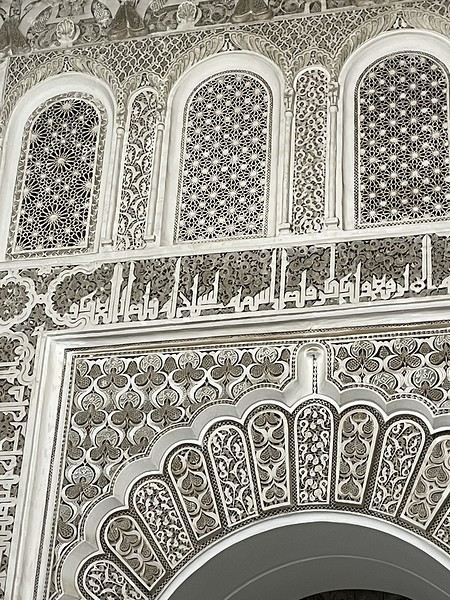
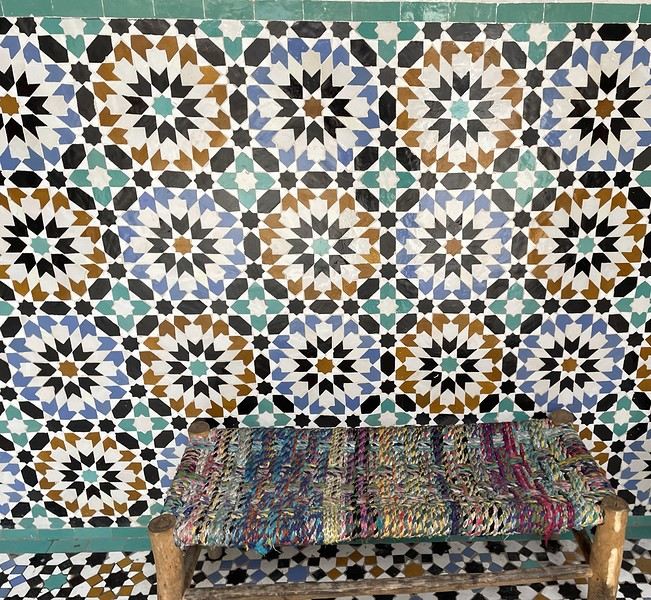
From there, without the rain, we wander aimlessly and eventually end up near the tanneries, but it’s Sunday, and there’s very little activity. Of course, we get hassled by a tout.
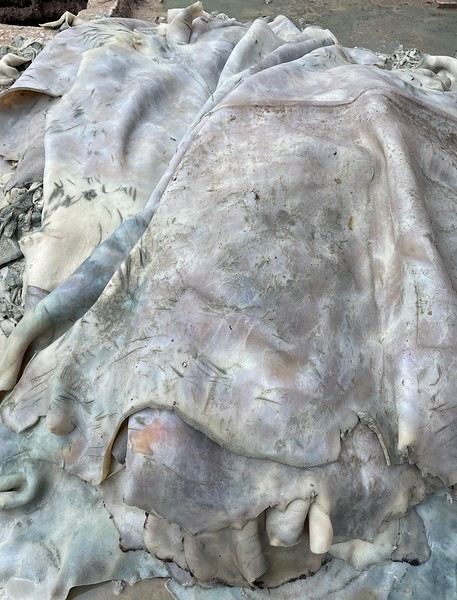
Here, the hides after being treated with lime—I love the colors.
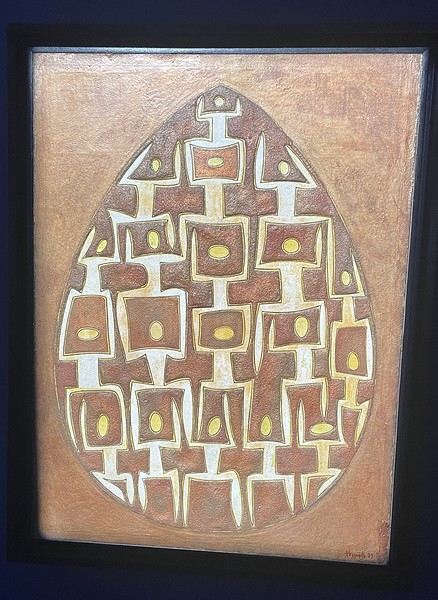
We part ways a bit annoyed. He gets a little revenge by giving us bad directions, and we end up outside the city walls. We decide to take a taxi to the new modern art museum—60 dirhams for the 5 km, which is nothing when you think about it. That tout, who we didn’t ask for anything and made it clear we weren’t buying anything, dragged us into a shop supposedly only open that day and demanded 50 dirhams for his "services"! Let’s forget that bad moment and enjoy the exhibition at the MACAL.
The taxi on the way back drops us off at Place des Ferblantiers, not far from our Riad. We’re a little peckish—it’s worth mentioning that at lunchtime, we only ate a plate of beans from a street vendor. So, we buy a bunch of little sweets, each more delicious than the last, at Ajar. We snack while sipping mint tea and watching life go by around us. A final visit to the Museum of Moroccan Cuisine on our way back helps us dodge a few more showers. Then it’s back to the Riad. The atmosphere in the city is heating up—it’s the AFCON final tonight. The temperatures, though? Not so much. We ordered a meal at the Riad, and it was a good call—not only was it really tasty, but the rain also picked up again. Our day in Marrakesh ends under the covers with a good book and some photo sorting. Still, we managed 10,750 steps. View of our Riad
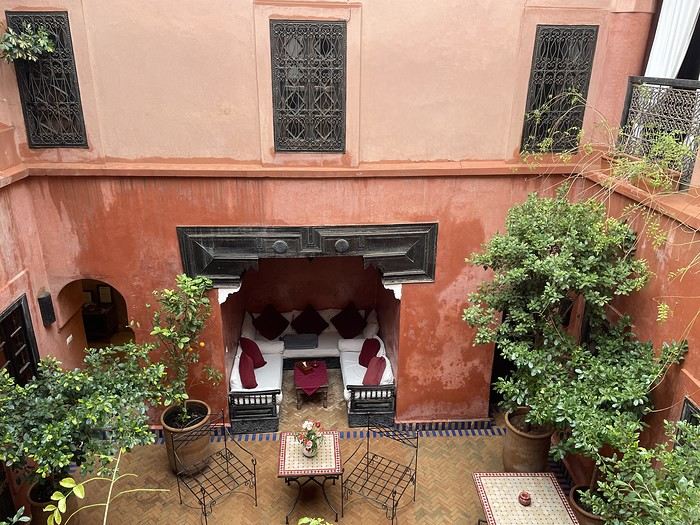
Tomorrow, we’ll pick up our rental car from Medloc and head to Essaouira.
From there, without the rain, we wander aimlessly and eventually end up near the tanneries, but it’s Sunday, and there’s very little activity. Of course, we get hassled by a tout.
Here, the hides after being treated with lime—I love the colors.
We part ways a bit annoyed. He gets a little revenge by giving us bad directions, and we end up outside the city walls. We decide to take a taxi to the new modern art museum—60 dirhams for the 5 km, which is nothing when you think about it. That tout, who we didn’t ask for anything and made it clear we weren’t buying anything, dragged us into a shop supposedly only open that day and demanded 50 dirhams for his "services"! Let’s forget that bad moment and enjoy the exhibition at the MACAL.
The taxi on the way back drops us off at Place des Ferblantiers, not far from our Riad. We’re a little peckish—it’s worth mentioning that at lunchtime, we only ate a plate of beans from a street vendor. So, we buy a bunch of little sweets, each more delicious than the last, at Ajar. We snack while sipping mint tea and watching life go by around us. A final visit to the Museum of Moroccan Cuisine on our way back helps us dodge a few more showers. Then it’s back to the Riad. The atmosphere in the city is heating up—it’s the AFCON final tonight. The temperatures, though? Not so much. We ordered a meal at the Riad, and it was a good call—not only was it really tasty, but the rain also picked up again. Our day in Marrakesh ends under the covers with a good book and some photo sorting. Still, we managed 10,750 steps. View of our Riad
Tomorrow, we’ll pick up our rental car from Medloc and head to Essaouira.
Self-organized stopovers in the Canary Islands and Madeira
Hi there! We’d love some tips on organizing stopovers on our own in Santa Cruz de Tenerife, Arrecife, Puerto del Rosario, Santa Cruz de La Palma, Las Palmas, and Funchal. Thanks so much for your help
Call for Applications – Humanitarian Missions & Professional Internships with JVI-Togo 2025-2026
Call for Applications – Humanitarian Missions & Professional Internships with JVI-Togo
Are you a student, recent graduate, or simply passionate about solidarity work? Jeunesse Volontaire Internationale (JVI-Togo) invites you to experience an unforgettable human and professional adventure in the heart of Africa. What we offer:
Supervised professional internships in fields like education, health, environment, communication, law, entrepreneurship, journalism, and more.
Hands-on humanitarian missions serving rural communities: socio-educational activities, awareness campaigns, reforestation, and support for women and children.
A rewarding cultural immersion in a secure and supportive environment.
Areas of intervention:
-Education & literacy
-Community health
-Environment & sustainable agriculture
-Human rights & women’s empowerment
-Communication, journalism & media
-Solidarity tourism, art & culture
Why join JVI-Togo?
-Develop practical and interpersonal skills
-Receive an internship or mission certificate
-Build lasting connections with change-makers
-Participate in a meaningful and impactful project
To apply: Send us your CV and a brief cover letter to
Are you a student, recent graduate, or simply passionate about solidarity work? Jeunesse Volontaire Internationale (JVI-Togo) invites you to experience an unforgettable human and professional adventure in the heart of Africa. What we offer:
Supervised professional internships in fields like education, health, environment, communication, law, entrepreneurship, journalism, and more.
Hands-on humanitarian missions serving rural communities: socio-educational activities, awareness campaigns, reforestation, and support for women and children.
A rewarding cultural immersion in a secure and supportive environment.
Areas of intervention:
-Education & literacy
-Community health
-Environment & sustainable agriculture
-Human rights & women’s empowerment
-Communication, journalism & media
-Solidarity tourism, art & culture
Why join JVI-Togo?
-Develop practical and interpersonal skills
-Receive an internship or mission certificate
-Build lasting connections with change-makers
-Participate in a meaningful and impactful project
To apply: Send us your CV and a brief cover letter to
Far from the daily grind*
Hello,
Since I enjoy not only the countryside but also everything related to rail travel, I’m starting this photo thread dedicated to trains in Thailand (I’d guess most of us have taken one at some point...).
Feel free to post your pictures here as long as they fit the theme: rolling stock**, stations**, platforms, tracks (even without a train on them), technical equipment, engineering structures (bridges, viaducts), etc.—all in Thailand.
For each photo, I’ll (or you can) note the station or line where it was taken.
Comments and questions are welcome.
* train ** interiors or exteriors
All aboard!
* train ** interiors or exteriors
All aboard!
The Extraordinary Painted Houses Village of Tam Thanh near Hoi An
Not sure if I’ve already posted this, so here it is again!
https://hiddenhoian.com/travel/tam-thanh-mural-village/
Imagine a peaceful coastal fishing village completely transformed by artists who worked their magic on the walls of 100 residential houses. That’s the remarkable story of the Tam Thanh mural village in Quang Nam province. Once similar to many other coastal villages in the area, it now firmly stands out on the tourist map for day trips from Hoi An. In the summer of 2016, Tam Thanh was selected by a joint Korean-Vietnamese project called “Art For A Better Community.” The village was chosen to be their blank canvas, inspired by the success of mural villages in Korea. The project aimed to make Tam Thanh the first painted village of its kind in Vietnam. The team included five Korean artists and seven Vietnamese artists, along with local volunteers. Their goal was to show Vietnamese people that art could be part of everyday life, no matter their place in society. The effort began with about three weeks of wall washing, followed by painting the walls of over 100 residents’ homes. The project was a success, and the village came alive with the paintings. The entire village is now a breathtaking gallery just waiting to be explored. The murals capture the life and soul of the village, from young children playing to fishermen in the ocean. A mix of fantastic pieces offers stunning backdrops for photos. The painted art around the town hasn’t just had a visual impact—it’s also had a social one. The village was chosen not only for the layout of the houses but also to contribute to economic development opportunities in Tam Thanh. Tourists now visit the once-overlooked village, creating more income for locals and making it a successful “art for a cause” project. For example, one entrepreneurial resident who owned a small local café invested 000,000 VND (390 USD) in a sugarcane press a week before the paintings were completed. Sugarcane juice vendors then multiplied with the growth of tourism (5,000 VND - 0.20 USD). Walking down the village’s single street, it’s common to find locals selling refreshments and handmade crafts. In one house in particular, a tailor and his family are painted on an outer wall with incredible detail. The family started selling tote bags decorated by their young daughter. The price for the bags is 100,000 VND (4 USD). If you’re looking for a way to support the village’s economy, this is it. Since there’s no middleman here, you can be sure your money goes directly to the community. You can have lunch at a house with a terrace right by the beach at the edge of the village.
How to Get There Route No. 1: Cross the large Cua Đai bridge. Once you’ve crossed it, continue toward Duong 129/Duong Ven Bien. Stay on this road for 33 kilometers. Upside: this route has light traffic, no traffic lights, and no trucks or buses. It’s a great direct route to the village but offers little to see along the way. You’ll eventually reach a crossroads. Turn right toward Tam Ky town, while the left will take you toward the Tam Thanh mural village. Stay on Route 608 as it turns twice before reaching a bridge. Cross the bridge, and you’ll arrive at Thanh Nien Road. Finally, turn right to reach the village. This route takes about an hour. Use your best judgment. For reference, it costs about 5,000 VND (0.20 USD) to park a motorbike.
Route #2: Cross the large Cua Đai bridge. Once you’ve crossed it, continue toward Duong 129/Duong Ven Bien. Stay on this road for 12 kilometers, then turn left onto Route 613, where you’ll continue for 1.5 kilometers until you reach Thanh Nien Road. Finally, turn right and drive 23 kilometers to the painted village. For most of the trip, taking Thanh Nien Road will take you through a much more local part of the region. The journey takes about an hour and a half.
https://hiddenhoian.com/travel/tam-thanh-mural-village/
Imagine a peaceful coastal fishing village completely transformed by artists who worked their magic on the walls of 100 residential houses. That’s the remarkable story of the Tam Thanh mural village in Quang Nam province. Once similar to many other coastal villages in the area, it now firmly stands out on the tourist map for day trips from Hoi An. In the summer of 2016, Tam Thanh was selected by a joint Korean-Vietnamese project called “Art For A Better Community.” The village was chosen to be their blank canvas, inspired by the success of mural villages in Korea. The project aimed to make Tam Thanh the first painted village of its kind in Vietnam. The team included five Korean artists and seven Vietnamese artists, along with local volunteers. Their goal was to show Vietnamese people that art could be part of everyday life, no matter their place in society. The effort began with about three weeks of wall washing, followed by painting the walls of over 100 residents’ homes. The project was a success, and the village came alive with the paintings. The entire village is now a breathtaking gallery just waiting to be explored. The murals capture the life and soul of the village, from young children playing to fishermen in the ocean. A mix of fantastic pieces offers stunning backdrops for photos. The painted art around the town hasn’t just had a visual impact—it’s also had a social one. The village was chosen not only for the layout of the houses but also to contribute to economic development opportunities in Tam Thanh. Tourists now visit the once-overlooked village, creating more income for locals and making it a successful “art for a cause” project. For example, one entrepreneurial resident who owned a small local café invested 000,000 VND (390 USD) in a sugarcane press a week before the paintings were completed. Sugarcane juice vendors then multiplied with the growth of tourism (5,000 VND - 0.20 USD). Walking down the village’s single street, it’s common to find locals selling refreshments and handmade crafts. In one house in particular, a tailor and his family are painted on an outer wall with incredible detail. The family started selling tote bags decorated by their young daughter. The price for the bags is 100,000 VND (4 USD). If you’re looking for a way to support the village’s economy, this is it. Since there’s no middleman here, you can be sure your money goes directly to the community. You can have lunch at a house with a terrace right by the beach at the edge of the village.
How to Get There Route No. 1: Cross the large Cua Đai bridge. Once you’ve crossed it, continue toward Duong 129/Duong Ven Bien. Stay on this road for 33 kilometers. Upside: this route has light traffic, no traffic lights, and no trucks or buses. It’s a great direct route to the village but offers little to see along the way. You’ll eventually reach a crossroads. Turn right toward Tam Ky town, while the left will take you toward the Tam Thanh mural village. Stay on Route 608 as it turns twice before reaching a bridge. Cross the bridge, and you’ll arrive at Thanh Nien Road. Finally, turn right to reach the village. This route takes about an hour. Use your best judgment. For reference, it costs about 5,000 VND (0.20 USD) to park a motorbike.
Route #2: Cross the large Cua Đai bridge. Once you’ve crossed it, continue toward Duong 129/Duong Ven Bien. Stay on this road for 12 kilometers, then turn left onto Route 613, where you’ll continue for 1.5 kilometers until you reach Thanh Nien Road. Finally, turn right and drive 23 kilometers to the painted village. For most of the trip, taking Thanh Nien Road will take you through a much more local part of the region. The journey takes about an hour and a half.
Looking for hiking buddies from Aug 25 to Sep 13, here or there or elsewhere
Hi there,
On holiday from August 25 to September 13, I’m looking for hiking buddies to explore trails through the greenery, discover viewpoints, and enjoy panoramas.
A base location with day hikes radiating out, or a relaxed multi-day trek for one, two, or three days.
Visit heritage sites, canoe, mountain bike, swim, sightsee, take in viewpoints, local history, music, culture, arts—all chill 🙂
All your suggestions, ideas, projects, places, and destinations are welcome. In France, in Lanzarote, in Sicily, the Dolomites, in Crete… or elsewhere.
Let’s meet up for coffee in Paris, Marne-la-Vallée, or Meaux to get to know each other and chat (dates, locations, transport, budget, routes, visits, stages, duration, semi-autonomy/day trips, accommodation…).
And co-create together for a fun summer holiday.
A “basic fitness level” required. Energy, culture, sharing, respect, curiosity to discover the world. Chill vibes.
I play badminton and enjoy hiking. I love art, old stones, music, and upcycling.
Looking forward to meeting up here, there, or somewhere else. 😛
I’m 53, from Meaux (77).
Buying a SIM card in Murghab
Hey fellow travelers! Could anyone tell me if it's possible to buy a SIM card in Murghab? Thanks in advance for your tips!! 🙏🙏🙏
First trip to Sardinia from 04/12/24 to 04/21/24
I just got back from Sardinia 2 and wanted to share my little recap with you.
It’s a stunning country, and the people are so welcoming.
We were lucky to see it at the end of April—I wouldn’t go in July or August because it gets overcrowded and loses its charm!!!
SARDINIA 2: 10 days
-Departure from Geneva to Olbia on Friday, 04/12/24 with EasyJet: 1h30 flight -Return from Cagliari to Geneva on Sunday, 04/21/24 with EasyJet: 1h40 flight (Round-trip price: 314 €) -Car rental with Locauto: 250 €, including 51 € for "full" insurance + 87 € (drop-off at a different airport) -Accommodation every night via Booking 13: room + kitchen *OLBIA: Arrival at the airport… wasted time at Locauto because there was only one person at the desk (you can check in online and send the driver’s license and ID, but it was impossible to do!) Headed to our lodging. *COSTA SMERALDA: The part we liked the least… everything feels artificial since the billionaires moved in (Porto Rotondo, Porto Cervo, Baia di Sardinia). We regret not stopping at Golfo Aranci to see its underwater art museum, Mumart. *ARZACHENA and its archaeological park (Tomba dei Giganti: Coddu Ecchju, Li Muri, Nuraghe la Prisgiona) to see in beautiful nature. Coastal road toward Palau (lagoons with lots of birds). *PALAU: Ferries to La Maddalena Island every 15/30 minutes (37 € for 2 people + 1 car). *** La Maddalena is part of an archipelago with 7 large islands and small islets… absolutely stunning… views of Corsica! *** -La Maddalena: A charming little town with narrow streets. -Follow the scenic coastal road that loops around the island for 21 km (gorgeous). -On the east side of the island, take a 600m bridge to Caprera Island (lots of great hiking trails). -Lots of beaches with granite rocks and wild coves. -Return by ferry to Palau. *SANTA TERESA GALLURA: Departure for Bonifacio 2, 4 km to Capo Testa (cape with a lighthouse… granite rocks). Here, there were Roman quarries. *Drive down a beautiful road along the Costa Paradiso (red trachyte). *CASTELSARDO: A fortified hilltop town worth seeing. *PORTO TORRES: Visit the Basilica San Gavino. *STINTINO and its beaches, including La Pelosa with its Genoese tower… too crowded for us! *Viewpoint at Capo Falcone with a view of Parco dell’Asinara (we didn’t have time to go, but it’s a must). *Drive down to Argentiera via small coastal roads (old lead, zinc, and silver mines). A "ghost town" with a museum that’s apparently only open on weekends at this time of year. *Small road (with stunning sea views) toward Grotta di Nettuno (you get there by a long staircase, but it was too windy and closed!). Capo Caccia. *Drive down (along lagoons with birds, including pink flamingos) toward Alghero (historic center: ramparts, bell tower, churches). The city of coral and lobsters! *Drive along the sea to Bosa, a colorful little town (Malvasia vineyards) between the Temo River and the sea. *Road to Montiferru Castle on a volcanic massif—ruins of the castle with a beautiful panorama of rolling hills (cork oak forests, chestnut trees, oaks) and cultivated plots. *** Cuglieri: Olive oil museum *** *Santa Caterina di Pittinuri, S’Archittu (many beaches with limestone cliffs) (many archaeological sites). *SINIS PENINSULA: Cabras and its lagoons with lots of pink flamingos. Archaeological museum with its Nuragic giants. *Archaeological site of Tharros. *ORISTANO: Not much visited, but it has some beautiful buildings. A traditional Sardinian pastry shop—an absolute delight (DELIGIA, Via Figoli 61). *Road surrounded by marshes, along the coast with beautiful little beaches. *Arrival at Costa Verde: The Piscinas dunes and beaches are stunning. Miniera Montevecchio and the surrounding old mines (Iglesiente road) (Naracauli, Ingurtosu). *** Near Guspini, in the mountains, visit the village of Arbus, where many Sardinian knife makers are based. But make the detour to meet Paolo Pusceddu, the master knife maker who opens his workshop and created the *Museo del Coltello Sardo* Via Roma, 15 · +39 349 053 7765. Absolutely fascinating and super interesting… he also sells his knives at very reasonable prices. *Masua (mines) then Pan di Zucchero. *Porto Flavia: Transport of minerals from a port carved into the cliff with two 600m tunnels… the visit is a must. *IGLESIAS: Worth visiting. *ISOLA DI SANT’ANTIOCO: A bridge connects it to Sardinia 2. Drive around the island via small roads. Calasetta (white and blue houses), Nido del Passeri, Cala Lunga, Capo Sperone, Turri. Beautiful beaches and stunning views. *Road to Teulada, then Chia (see the small road from Chia to Tuerredda). *PULA: Archaeological site of Nora. *CAPOTERRA: We ended our trip with a night at an agriturismo in the middle of olive groves, "Azienda Agricola Corte degli Ulivi" (Pixina Sa Murta, Marco: +39 347 246 2361). Unforgettable welcome, eco-friendly place (wooden house with water and electricity self-sufficiency). *Cagliari airport. In total, 1000 km, and we still didn’t finish exploring (the area south of Olbia and the interior are still on the list). The Sardinians are very welcoming. Sardinia 2 is diverse (beaches, countryside, towns, archaeological sites…). We were lucky to visit at the end of April—summer must be awful with the heat and tourist crowds! Easy to visit with kids.
-Departure from Geneva to Olbia on Friday, 04/12/24 with EasyJet: 1h30 flight -Return from Cagliari to Geneva on Sunday, 04/21/24 with EasyJet: 1h40 flight (Round-trip price: 314 €) -Car rental with Locauto: 250 €, including 51 € for "full" insurance + 87 € (drop-off at a different airport) -Accommodation every night via Booking 13: room + kitchen *OLBIA: Arrival at the airport… wasted time at Locauto because there was only one person at the desk (you can check in online and send the driver’s license and ID, but it was impossible to do!) Headed to our lodging. *COSTA SMERALDA: The part we liked the least… everything feels artificial since the billionaires moved in (Porto Rotondo, Porto Cervo, Baia di Sardinia). We regret not stopping at Golfo Aranci to see its underwater art museum, Mumart. *ARZACHENA and its archaeological park (Tomba dei Giganti: Coddu Ecchju, Li Muri, Nuraghe la Prisgiona) to see in beautiful nature. Coastal road toward Palau (lagoons with lots of birds). *PALAU: Ferries to La Maddalena Island every 15/30 minutes (37 € for 2 people + 1 car). *** La Maddalena is part of an archipelago with 7 large islands and small islets… absolutely stunning… views of Corsica! *** -La Maddalena: A charming little town with narrow streets. -Follow the scenic coastal road that loops around the island for 21 km (gorgeous). -On the east side of the island, take a 600m bridge to Caprera Island (lots of great hiking trails). -Lots of beaches with granite rocks and wild coves. -Return by ferry to Palau. *SANTA TERESA GALLURA: Departure for Bonifacio 2, 4 km to Capo Testa (cape with a lighthouse… granite rocks). Here, there were Roman quarries. *Drive down a beautiful road along the Costa Paradiso (red trachyte). *CASTELSARDO: A fortified hilltop town worth seeing. *PORTO TORRES: Visit the Basilica San Gavino. *STINTINO and its beaches, including La Pelosa with its Genoese tower… too crowded for us! *Viewpoint at Capo Falcone with a view of Parco dell’Asinara (we didn’t have time to go, but it’s a must). *Drive down to Argentiera via small coastal roads (old lead, zinc, and silver mines). A "ghost town" with a museum that’s apparently only open on weekends at this time of year. *Small road (with stunning sea views) toward Grotta di Nettuno (you get there by a long staircase, but it was too windy and closed!). Capo Caccia. *Drive down (along lagoons with birds, including pink flamingos) toward Alghero (historic center: ramparts, bell tower, churches). The city of coral and lobsters! *Drive along the sea to Bosa, a colorful little town (Malvasia vineyards) between the Temo River and the sea. *Road to Montiferru Castle on a volcanic massif—ruins of the castle with a beautiful panorama of rolling hills (cork oak forests, chestnut trees, oaks) and cultivated plots. *** Cuglieri: Olive oil museum *** *Santa Caterina di Pittinuri, S’Archittu (many beaches with limestone cliffs) (many archaeological sites). *SINIS PENINSULA: Cabras and its lagoons with lots of pink flamingos. Archaeological museum with its Nuragic giants. *Archaeological site of Tharros. *ORISTANO: Not much visited, but it has some beautiful buildings. A traditional Sardinian pastry shop—an absolute delight (DELIGIA, Via Figoli 61). *Road surrounded by marshes, along the coast with beautiful little beaches. *Arrival at Costa Verde: The Piscinas dunes and beaches are stunning. Miniera Montevecchio and the surrounding old mines (Iglesiente road) (Naracauli, Ingurtosu). *** Near Guspini, in the mountains, visit the village of Arbus, where many Sardinian knife makers are based. But make the detour to meet Paolo Pusceddu, the master knife maker who opens his workshop and created the *Museo del Coltello Sardo* Via Roma, 15 · +39 349 053 7765. Absolutely fascinating and super interesting… he also sells his knives at very reasonable prices. *Masua (mines) then Pan di Zucchero. *Porto Flavia: Transport of minerals from a port carved into the cliff with two 600m tunnels… the visit is a must. *IGLESIAS: Worth visiting. *ISOLA DI SANT’ANTIOCO: A bridge connects it to Sardinia 2. Drive around the island via small roads. Calasetta (white and blue houses), Nido del Passeri, Cala Lunga, Capo Sperone, Turri. Beautiful beaches and stunning views. *Road to Teulada, then Chia (see the small road from Chia to Tuerredda). *PULA: Archaeological site of Nora. *CAPOTERRA: We ended our trip with a night at an agriturismo in the middle of olive groves, "Azienda Agricola Corte degli Ulivi" (Pixina Sa Murta, Marco: +39 347 246 2361). Unforgettable welcome, eco-friendly place (wooden house with water and electricity self-sufficiency). *Cagliari airport. In total, 1000 km, and we still didn’t finish exploring (the area south of Olbia and the interior are still on the list). The Sardinians are very welcoming. Sardinia 2 is diverse (beaches, countryside, towns, archaeological sites…). We were lucky to visit at the end of April—summer must be awful with the heat and tourist crowds! Easy to visit with kids.
Looking for participants for a Tanzania safari in early 2026
Hello.
I’m looking for participants for a safari in Tanzania in the first quarter of 2026. I’m in direct negotiations with a local guide. Below is the description (via a draft service contract). If you’re interested, reply to me. We’ll then communicate via private email.
Between the undersigned:
Ms./Mr. (provide the provider’s name), representing the company (specify), whose registered office is located at (provide the address), Hereinafter referred to as The Provider
And,
Ms./Mr. (provide the client’s name and contact details), Hereinafter referred to as The Client
The following has been agreed:
I. Purpose This service contract covers the organization of a safari in Tanzania by The Provider for the benefit of The Client.
II. Duration This contract is concluded for a duration of (specify). It takes effect from day J1: (specify the date) and will end on (specify the date). Unless otherwise agreed between the two parties, this contract is not subject to any automatic renewal.
III. Execution Terms The Provider undertakes to carry out the tasks assigned by The Client with professionalism and rigor, in accordance with best practices. They also agree to comply with all applicable regulations and standards for their tasks. To fulfill their duties, The Provider will mobilize all necessary resources. The Client, for their part, agrees to collaborate with The Provider and provide all useful information for the smooth execution of the tasks. IV. Payment The Client will pay The Provider the sum of (specify), according to the following terms: (specify). In case of late payment, The Provider reserves the right to claim penalties in the amount of (specify). V. Confidentiality The Provider agrees not to disclose any information or documents provided by The Client. Upon completion of their task, they will destroy all documents in their possession. VI. Service Details Accommodation during the stay (excluding days 1, 2, and 9): participants will sleep in tents, with 2 people per tent. A sleeping bag and an inflatable mattress will be provided. They will have water for washing and access to toilets. Tents will be set up and taken down during each transfer. It will be possible to charge camera batteries. Day 1: ARRIVAL AND TRANSFER Welcome at Kilimanjaro Airport for transfer to Arusha and overnight at Green Mountain Hotel (breakfast included) - https://greenmountainhotel.co.tz/ Day 2: HIKE ON THE TRAILS OF KILIMANJARO. Pick-up from your hotel in Arusha to the village of Moshi Materuni, at the foot of Kilimanjaro. You’ll begin a day of hiking toward the impressive waterfalls in one of the country’s highest regions, where crystal-clear glacial water cascades from 70 meters high. The beautiful trail leads to the Materuni waterfalls, located at 2,500 meters altitude. To reach these falls, you’ll cross valleys and hills covered in tropical forest, coffee, avocado, and banana plantations. On a clear day, you’ll enjoy a breathtaking view of Kibo, the highest peak of Kilimanjaro. You’ll also learn how to prepare and taste coffee. In the evening, you’ll be picked up in Arusha and spend the night at Green Mountain Hotel. Day 3: HIKE IN A MAASAI VILLAGE After breakfast around 8:30 AM, you’ll be picked up from your hotel for a walking hike in the wild nature of the village. You’ll visit local primary schools, meet traditional healers, and discover their techniques. You’ll also visit one of the local livestock markets. Dinner and overnight at the Maasai village house in Boma. Day 4: WILDLIFE IN 4X4 ALONG THE TARANGIRE RIVER Around 8 AM, you’ll be picked up from your hotel in Arusha and drive for 2 hours to Tarangire National Park for a day of wildlife viewing. The park is known for its dense wildlife along the Tarangire River. It’s home to a large number of elephants in the northern circuit and hosts 550 bird species. You’ll also observe herds of impalas, hartebeests, wildebeests, kudus, oryxes, gerenuks, zebras, buffaloes, and giraffes. Predators like lions, leopards, cheetahs, hyenas, and massive African baobabs can also be spotted. Dinner and overnight at Lake Manyara Fig Tree Lodge. Day 5: LAKE MANYARA PARK - WILDLIFE VIEWING IN THE RIFT VALLEY Around 8 AM, departure from your camp to Lake Manyara Park (at the foot of a 600-meter escarpment in the Great Rift Valley) for a day of safaris. You’ll see giraffes, buffaloes, groups of baboons, tree-climbing lions, and many other animals. Dinner and overnight at Lake Manyara Fig Tree Lodge. Day 6: WILDLIFE IN SERENGETI In the morning, you’ll drive for 5 hours to the magnificent Serengeti National Park, passing through the archaeological site of Olduvai Gorge. This park is arguably the world’s most famous wildlife reserve. It’s home to over 3 million large mammals, and you’ll quickly spot the "Big Five": buffaloes, elephants, black rhinos of the Moru Kopjes, lions, and leopards. Over 500 bird species have been recorded here. You’ll also witness the spectacular wildebeest migration in the western Serengeti. Dinner and overnight at Serengeti Nyani campsite. Day 7: MAGNIFICENT WILDLIFE AT SUNRISE IN SERENGETI Stunning sunrise safaris in the golden savanna of the endless plains of Serengeti National Park, all day long, following the animals’ movements. You’ll spend the night at the campsite and share your exceptional experience so far at Serengeti Nyani campsite. Day 8: MAJESTIC EXCURSION IN THE SERENGETI PLAINS Wake-up at 6 AM, coffee at the campsite, then departure for a sunrise safari in the Serengeti. Our guide will take you to the best spots to admire the sunrise and observe predators, as most of them, like lions, are very active at this time of day. You’ll return to the campsite around 10 AM for brunch, then load your belongings into the jeep for a 2-hour safari on the way to the Ngorongoro Conservation Area. Dinner and overnight at Ngorongoro Simba Lodge. Day 9: SPECTACULAR EXCURSION TO NGORONGORO CRATER Shortly after breakfast, you’ll descend into the Ngorongoro Crater for a sunrise safari in the world’s largest uninterrupted caldera, surrounded by steep walls rising 610 meters from the crater floor. This natural wonder measures 19.2 km in diameter and covers 304 km². You’ll go on safaris and discover rare species like black rhinos, wildebeests, giraffes, ostriches, bustards, lions, cheetahs, and flamingos in the Soda Lake. In the afternoon, you’ll return to Arusha, arriving in the evening for your private activities. Accommodation in half-board (dinner, overnight, breakfast) Day 10: TRANSFER TO KILIMANJARO AIRPORT Breakfast and transfer to Kilimanjaro Airport. VII- RATES: The package price is 2030 USD (approximately per person in a double room). VIII- THE PRICE INCLUDES: - Provision of sealed water bottles for participants - Park entry fees. - Transfer from Kilimanjaro Airport. - Accommodation in Arusha (breakfast included). - Village development fees. - Accommodation in camps/lodges (breakfast, lunch, dinner). - Transport in a 4x4 Land Cruiser with a pop-up roof in national parks. - Government taxes. - Activities detailed in the itinerary. - Safari guides. - Transfer from Arusha to Kilimanjaro Airport on day 10.
IX- THE PRICE DOES NOT INCLUDE: - Alcoholic beverages. - International flights. - Personal items such as visas, laundry, etc. - Tips.
Done at Done at
Date: Date: Provider’s Signature: Client’s Signature:
Between the undersigned:
Ms./Mr. (provide the provider’s name), representing the company (specify), whose registered office is located at (provide the address), Hereinafter referred to as The Provider
And,
Ms./Mr. (provide the client’s name and contact details), Hereinafter referred to as The Client
The following has been agreed:
I. Purpose This service contract covers the organization of a safari in Tanzania by The Provider for the benefit of The Client.
II. Duration This contract is concluded for a duration of (specify). It takes effect from day J1: (specify the date) and will end on (specify the date). Unless otherwise agreed between the two parties, this contract is not subject to any automatic renewal.
III. Execution Terms The Provider undertakes to carry out the tasks assigned by The Client with professionalism and rigor, in accordance with best practices. They also agree to comply with all applicable regulations and standards for their tasks. To fulfill their duties, The Provider will mobilize all necessary resources. The Client, for their part, agrees to collaborate with The Provider and provide all useful information for the smooth execution of the tasks. IV. Payment The Client will pay The Provider the sum of (specify), according to the following terms: (specify). In case of late payment, The Provider reserves the right to claim penalties in the amount of (specify). V. Confidentiality The Provider agrees not to disclose any information or documents provided by The Client. Upon completion of their task, they will destroy all documents in their possession. VI. Service Details Accommodation during the stay (excluding days 1, 2, and 9): participants will sleep in tents, with 2 people per tent. A sleeping bag and an inflatable mattress will be provided. They will have water for washing and access to toilets. Tents will be set up and taken down during each transfer. It will be possible to charge camera batteries. Day 1: ARRIVAL AND TRANSFER Welcome at Kilimanjaro Airport for transfer to Arusha and overnight at Green Mountain Hotel (breakfast included) - https://greenmountainhotel.co.tz/ Day 2: HIKE ON THE TRAILS OF KILIMANJARO. Pick-up from your hotel in Arusha to the village of Moshi Materuni, at the foot of Kilimanjaro. You’ll begin a day of hiking toward the impressive waterfalls in one of the country’s highest regions, where crystal-clear glacial water cascades from 70 meters high. The beautiful trail leads to the Materuni waterfalls, located at 2,500 meters altitude. To reach these falls, you’ll cross valleys and hills covered in tropical forest, coffee, avocado, and banana plantations. On a clear day, you’ll enjoy a breathtaking view of Kibo, the highest peak of Kilimanjaro. You’ll also learn how to prepare and taste coffee. In the evening, you’ll be picked up in Arusha and spend the night at Green Mountain Hotel. Day 3: HIKE IN A MAASAI VILLAGE After breakfast around 8:30 AM, you’ll be picked up from your hotel for a walking hike in the wild nature of the village. You’ll visit local primary schools, meet traditional healers, and discover their techniques. You’ll also visit one of the local livestock markets. Dinner and overnight at the Maasai village house in Boma. Day 4: WILDLIFE IN 4X4 ALONG THE TARANGIRE RIVER Around 8 AM, you’ll be picked up from your hotel in Arusha and drive for 2 hours to Tarangire National Park for a day of wildlife viewing. The park is known for its dense wildlife along the Tarangire River. It’s home to a large number of elephants in the northern circuit and hosts 550 bird species. You’ll also observe herds of impalas, hartebeests, wildebeests, kudus, oryxes, gerenuks, zebras, buffaloes, and giraffes. Predators like lions, leopards, cheetahs, hyenas, and massive African baobabs can also be spotted. Dinner and overnight at Lake Manyara Fig Tree Lodge. Day 5: LAKE MANYARA PARK - WILDLIFE VIEWING IN THE RIFT VALLEY Around 8 AM, departure from your camp to Lake Manyara Park (at the foot of a 600-meter escarpment in the Great Rift Valley) for a day of safaris. You’ll see giraffes, buffaloes, groups of baboons, tree-climbing lions, and many other animals. Dinner and overnight at Lake Manyara Fig Tree Lodge. Day 6: WILDLIFE IN SERENGETI In the morning, you’ll drive for 5 hours to the magnificent Serengeti National Park, passing through the archaeological site of Olduvai Gorge. This park is arguably the world’s most famous wildlife reserve. It’s home to over 3 million large mammals, and you’ll quickly spot the "Big Five": buffaloes, elephants, black rhinos of the Moru Kopjes, lions, and leopards. Over 500 bird species have been recorded here. You’ll also witness the spectacular wildebeest migration in the western Serengeti. Dinner and overnight at Serengeti Nyani campsite. Day 7: MAGNIFICENT WILDLIFE AT SUNRISE IN SERENGETI Stunning sunrise safaris in the golden savanna of the endless plains of Serengeti National Park, all day long, following the animals’ movements. You’ll spend the night at the campsite and share your exceptional experience so far at Serengeti Nyani campsite. Day 8: MAJESTIC EXCURSION IN THE SERENGETI PLAINS Wake-up at 6 AM, coffee at the campsite, then departure for a sunrise safari in the Serengeti. Our guide will take you to the best spots to admire the sunrise and observe predators, as most of them, like lions, are very active at this time of day. You’ll return to the campsite around 10 AM for brunch, then load your belongings into the jeep for a 2-hour safari on the way to the Ngorongoro Conservation Area. Dinner and overnight at Ngorongoro Simba Lodge. Day 9: SPECTACULAR EXCURSION TO NGORONGORO CRATER Shortly after breakfast, you’ll descend into the Ngorongoro Crater for a sunrise safari in the world’s largest uninterrupted caldera, surrounded by steep walls rising 610 meters from the crater floor. This natural wonder measures 19.2 km in diameter and covers 304 km². You’ll go on safaris and discover rare species like black rhinos, wildebeests, giraffes, ostriches, bustards, lions, cheetahs, and flamingos in the Soda Lake. In the afternoon, you’ll return to Arusha, arriving in the evening for your private activities. Accommodation in half-board (dinner, overnight, breakfast) Day 10: TRANSFER TO KILIMANJARO AIRPORT Breakfast and transfer to Kilimanjaro Airport. VII- RATES: The package price is 2030 USD (approximately per person in a double room). VIII- THE PRICE INCLUDES: - Provision of sealed water bottles for participants - Park entry fees. - Transfer from Kilimanjaro Airport. - Accommodation in Arusha (breakfast included). - Village development fees. - Accommodation in camps/lodges (breakfast, lunch, dinner). - Transport in a 4x4 Land Cruiser with a pop-up roof in national parks. - Government taxes. - Activities detailed in the itinerary. - Safari guides. - Transfer from Arusha to Kilimanjaro Airport on day 10.
IX- THE PRICE DOES NOT INCLUDE: - Alcoholic beverages. - International flights. - Personal items such as visas, laundry, etc. - Tips.
Done at Done at
Date: Date: Provider’s Signature: Client’s Signature:
15 days in Texas in October 2022
Ah! This trip to Texas, postponed so many times because of Covid. I wanted to discover this state, but not in the summer due to the temperatures.
I’ll try to dig into my memories since I didn’t take any notes.
Day 1: Departure
Early morning flight from Lyon to Frankfurt (I often fly with Lufthansa). We only have a 50-minute layover, but I trust German organization—it’s not just talk, since it took us only 30 minutes to get to the boarding gate. Arriving in Houston, we’re excited because it’s been 3 years since we last visited the USA, and we’ve missed it.
Everything goes smoothly with the formalities and the car rental, so 1.5 hours after landing, I park near Sam Houston Park to start our discovery. The park is pretty, clean, and has the unique feature of housing some well-preserved Victorian houses. The sun is shining, and it’s always fun to see old wooden houses surrounded by gleaming skyscrapers. A quick drive to the Rothko Chapel, which is dedicated to all faiths. There are also modern artworks in an annex building and outside. Then we head to Pasadena to reach our hotel and go to bed since we’ve been awake for a while!
Hotel: A classic Days Inn. It’s standard, but the beds are comfortable, and it’s a quiet place. The + of the day: We're back in the USA The -: Nothing
Day 2: NASA and then Galveston
Of course, we wake up super early. A quick trip to the nearby Walmart for the usual small purchases. Surprise—I can’t buy a bottle of California white wine because in Texas, there are set hours for buying alcohol. Talk about a bummer for my apéro! Next, we head to Kemah, a small, hyper-touristy port where everything is kitschy but clean and nice. It’s a bit overdone, but since NASA doesn’t open until 10 AM and it’s still early, we might as well enjoy the good weather in a pleasant spot.
We arrive at the NASA Houston center without any issues. It’s smaller than the one in Florida and organized a bit differently. There are trains that take passengers to the different sites, but you need to get tickets (included in the price), and once you’ve finished visiting one site, you have to return to the center to get a ticket for another. Not very practical.
We choose to visit the training center and the rockets, skipping the control room, which, based on the photos, looks like the one at Cape Canaveral. The training center is a cool place because it’s still in use. Engineers are working on machines and computers. We don’t see any astronauts training, but we see the space chair, the shuttle’s robotic arm, and lots of gadgets—this hangar is like Gyro Gearloose’s or Doc’s domain!
Next, we head to the rocket hangar, featuring the Saturn V, the same one as at Cape Canaveral. Finally, we wrap up our tour by returning to the center, where a Boeing 747 with a shuttle attached to its back dominates the outside. We can visit the shuttle, and we don’t miss the chance.
A few exhibits inside complete the experience and satisfy our thirst for knowledge. I love the space exploration era, and gotta say, the Americans do it right. Then we drive to Galveston, about 100 km away. Why Galveston? It’s by the sea, so swimming in late October isn’t unpleasant, and there’s a neighborhood called East End Historic District filled with stunning Victorian houses, each more beautiful than the last. Plus, it’s Halloween season, so the decorations are over the top! They really go all out!
Madame takes a swim, but I find the water too cold for my taste. Apéro (they didn’t trick me twice—I had time to go back to another Walmart!) Dinner + bedtime
Hotel: A classic Quality Inn. No issues. The +: NASA, even if it’s smaller than Cape Canaveral The -: I would’ve preferred the water in the Gulf of Mexico to be a bit warmer
Day 1: Departure
Early morning flight from Lyon to Frankfurt (I often fly with Lufthansa). We only have a 50-minute layover, but I trust German organization—it’s not just talk, since it took us only 30 minutes to get to the boarding gate. Arriving in Houston, we’re excited because it’s been 3 years since we last visited the USA, and we’ve missed it.
Everything goes smoothly with the formalities and the car rental, so 1.5 hours after landing, I park near Sam Houston Park to start our discovery. The park is pretty, clean, and has the unique feature of housing some well-preserved Victorian houses. The sun is shining, and it’s always fun to see old wooden houses surrounded by gleaming skyscrapers. A quick drive to the Rothko Chapel, which is dedicated to all faiths. There are also modern artworks in an annex building and outside. Then we head to Pasadena to reach our hotel and go to bed since we’ve been awake for a while!
Hotel: A classic Days Inn. It’s standard, but the beds are comfortable, and it’s a quiet place. The + of the day: We're back in the USA The -: Nothing
Day 2: NASA and then Galveston
Of course, we wake up super early. A quick trip to the nearby Walmart for the usual small purchases. Surprise—I can’t buy a bottle of California white wine because in Texas, there are set hours for buying alcohol. Talk about a bummer for my apéro! Next, we head to Kemah, a small, hyper-touristy port where everything is kitschy but clean and nice. It’s a bit overdone, but since NASA doesn’t open until 10 AM and it’s still early, we might as well enjoy the good weather in a pleasant spot.
We arrive at the NASA Houston center without any issues. It’s smaller than the one in Florida and organized a bit differently. There are trains that take passengers to the different sites, but you need to get tickets (included in the price), and once you’ve finished visiting one site, you have to return to the center to get a ticket for another. Not very practical.
We choose to visit the training center and the rockets, skipping the control room, which, based on the photos, looks like the one at Cape Canaveral. The training center is a cool place because it’s still in use. Engineers are working on machines and computers. We don’t see any astronauts training, but we see the space chair, the shuttle’s robotic arm, and lots of gadgets—this hangar is like Gyro Gearloose’s or Doc’s domain!
Next, we head to the rocket hangar, featuring the Saturn V, the same one as at Cape Canaveral. Finally, we wrap up our tour by returning to the center, where a Boeing 747 with a shuttle attached to its back dominates the outside. We can visit the shuttle, and we don’t miss the chance.
A few exhibits inside complete the experience and satisfy our thirst for knowledge. I love the space exploration era, and gotta say, the Americans do it right. Then we drive to Galveston, about 100 km away. Why Galveston? It’s by the sea, so swimming in late October isn’t unpleasant, and there’s a neighborhood called East End Historic District filled with stunning Victorian houses, each more beautiful than the last. Plus, it’s Halloween season, so the decorations are over the top! They really go all out!
Madame takes a swim, but I find the water too cold for my taste. Apéro (they didn’t trick me twice—I had time to go back to another Walmart!) Dinner + bedtime
Hotel: A classic Quality Inn. No issues. The +: NASA, even if it’s smaller than Cape Canaveral The -: I would’ve preferred the water in the Gulf of Mexico to be a bit warmer
Past trips, future travels
My passion for travel
Travel is an endless source of wonder and discovery for me. It lets me escape the everyday and immerse myself in different cultures, varied landscapes, and unique ways of life. Every destination is an invitation to learn and grow, while fueling an insatiable curiosity.
The types of trips I love I’m especially drawn to trips that combine adventure and cultural immersion. I love discovering places off the beaten path, where authenticity takes precedence over mass tourism. Whether it’s trekking through isolated mountains, exploring historic cities, or staying in remote villages, every trip is a chance to step out of my comfort zone and embrace the world’s diversity.
I also prioritize trips that let me deepen my knowledge in a particular area, like gastronomy, history, or art. Exchanges with locals—whether sharing a meal or taking part in traditional events—are essential to making the experience rich and meaningful.
Trips I’ve taken Among the memorable trips I’ve done, some have been turning points in how I see the world. My journey through the Austrian Alps, for example, didn’t just offer spectacular landscapes—it also let me discover Austrian culture in all its diversity, from festivals to music to cuisine.
I’ve also had the chance to visit more exotic destinations, like Southeast Asia, where I immersed myself in fascinating cultures, learned ancient practices, and met people whose life philosophies really inspired me.
Future travels Looking ahead, I dream of going to Latin America to explore its vibrant cultures and breathtaking landscapes. A road trip through Peru, Bolivia, and Chile is one of my long-term travel goals. I’d also love to discover the Pacific Islands and maybe even take part in volunteer projects with local communities.
I hope my future travels will keep pushing my limits while letting me meet people who share this passion for travel and connection.
The types of trips I love I’m especially drawn to trips that combine adventure and cultural immersion. I love discovering places off the beaten path, where authenticity takes precedence over mass tourism. Whether it’s trekking through isolated mountains, exploring historic cities, or staying in remote villages, every trip is a chance to step out of my comfort zone and embrace the world’s diversity.
I also prioritize trips that let me deepen my knowledge in a particular area, like gastronomy, history, or art. Exchanges with locals—whether sharing a meal or taking part in traditional events—are essential to making the experience rich and meaningful.
Trips I’ve taken Among the memorable trips I’ve done, some have been turning points in how I see the world. My journey through the Austrian Alps, for example, didn’t just offer spectacular landscapes—it also let me discover Austrian culture in all its diversity, from festivals to music to cuisine.
I’ve also had the chance to visit more exotic destinations, like Southeast Asia, where I immersed myself in fascinating cultures, learned ancient practices, and met people whose life philosophies really inspired me.
Future travels Looking ahead, I dream of going to Latin America to explore its vibrant cultures and breathtaking landscapes. A road trip through Peru, Bolivia, and Chile is one of my long-term travel goals. I’d also love to discover the Pacific Islands and maybe even take part in volunteer projects with local communities.
I hope my future travels will keep pushing my limits while letting me meet people who share this passion for travel and connection.
Looking for great tips for a 3-day stay in Barcelona
Hi everyone! This is my first time in Spain, and I don’t know it at all. I’m heading to Barcelona for 3 days, but I don’t have any specific plans yet. I’ve heard it can be quite expensive, so I’d love to get some tips on how not to break the bank during these 3 days! 😊
Connecting the Baltic capitals and tips
Hi there,
I’m looking for some info on these capitals I’m visiting in September and the best way to travel between them, spending 3 days in each city: restaurants, weather, and maybe a French-speaking guide if possible.
Thanks.
Authentic Greece: Immersion in the Hellenic Soul
Beyond Athens' iconic sites and Santorini's popular beaches, Greece reveals its hidden treasures to those who dare venture off the beaten path. FairMoove travel agency offers eco-responsible stays in Greece for an authentic experience at the heart of Hellenic traditions.
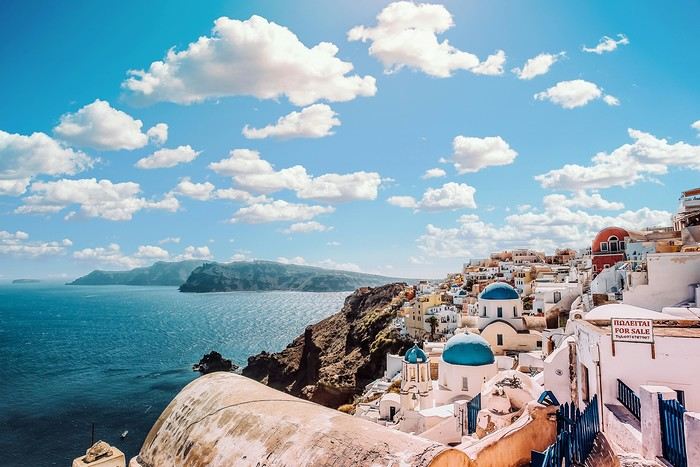
Authentic Peloponnese: A Land of Living Traditions
The Peloponnese peninsula is home to traditional villages where time seems to have stood still. In Dimitsana, perched in the Arcadian mountains, locals keep centuries-old traditions alive in their craft workshops. The cobbled streets echo with the sound of traditional looms, where artisans still create textiles using age-old methods.
In the Mani region, ancient stone towers tell the story of an untamed land. Local families welcome you into their traditional homes to share their culinary art: olive oil preparation, olive bread making, and dolmades crafted according to recipes passed down through generations. The Unknown Islands: Preserved Jewels of the Aegean Sea
Far from Mykonos' hustle and bustle, Ikaria island reveals its longevity secrets. This blue island, known for its inhabitants' exceptional lifespan, invites you to discover a unique way of life. Join the panigiria, traditional festivals where the entire community gathers to dance, sing, and share local dishes prepared in large communal ovens.
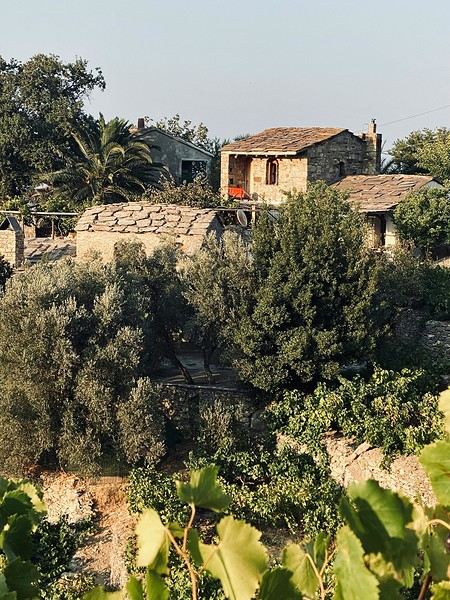
On Lemnos island, fishermen introduce you to their traditional sustainable fishing techniques. The ancient salt pans, still in operation, bear witness to ancestral know-how. In family-run tavernas by the harbor, taste thallasomelo, a unique sea honey produced by bees foraging on wild thyme from coastal cliffs. Greek Macedonia: A Living Heritage
In the northern mountains, the villages of Zagoria preserve their characteristic stone architecture. Eighteenth-century arched bridges still span deep gorges, showcasing a unique construction art. Locals invite you to discover medicinal herb gathering and traditional herbal tea preparation, knowledge passed down through generations.
In Nymfaio, a village perched at 1,350 meters altitude, ecotourism initiatives help preserve the natural habitat of brown bears. Traditional stone guesthouses offer an ideal base for exploring the region and observing wildlife in its natural environment. Agritourism and Authentic Rural Life
Traditional farms in Thessaly open their doors to travelers eager to discover sustainable agriculture. Participate in the autumn olive harvest, traditional feta cheese making, or the cultivation of aromatic herbs that flavor Greek cuisine. These experiences not only support the local economy but also help preserve ancestral farming practices.
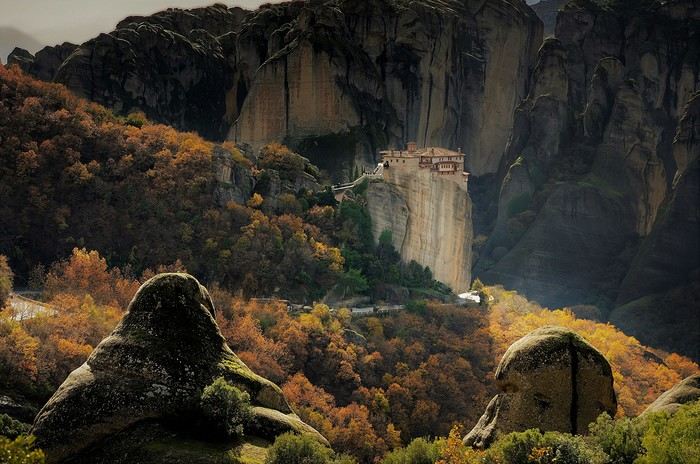
Traditional Festivals and Local Celebrations
The Greek calendar is marked by authentic celebrations that vary by region. In Pelion, the Goat Carnival transforms villages into living theater stages, where pagan traditions blend with Christian folklore. On Syros, the rebetiko festival lets you discover this UNESCO-listed music in its original context. Sustainable Initiatives and Heritage Preservation
Many Greek communities are committed to sustainable tourism projects. On Thirassia, Santorini's lesser-known neighbor, a traditional troglodyte house rehabilitation project allows visitors to stay in authentic dwellings while contributing to architectural heritage preservation. Supporting Local Communities
Women's cooperatives, particularly active in rural areas, offer traditional craft workshops. In Arnaia, Chalkidiki, learn to weave on traditional looms or prepare preserves using age-old methods. These initiatives help women maintain economic independence while preserving local traditions.
For more responsible tourism, many accommodations adopt eco-friendly practices. Using local products, sustainable water management, and solar energy production are among the initiatives that help preserve places' authenticity while respecting the environment.
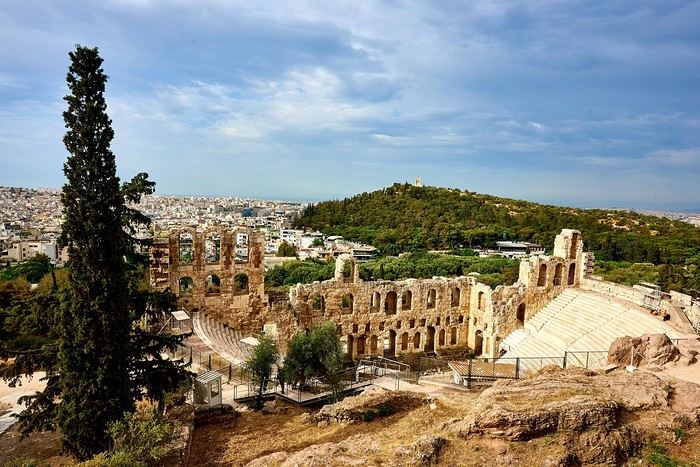
Tips for an Authentic Trip
To discover the real Greece, choose off-season stays from October to April. Milder temperatures and fewer crowds allow for more authentic encounters with locals. Opt for small family-run guesthouses and host tables that offer true immersion in local culture.
Greece's regions thus invite you to discover another facet of this millennia-old country, far from tourist clichés. Each village, each island, each mountain holds authentic treasures waiting to be discovered by travelers who respect traditions and the environment.
Authentic Peloponnese: A Land of Living Traditions
The Peloponnese peninsula is home to traditional villages where time seems to have stood still. In Dimitsana, perched in the Arcadian mountains, locals keep centuries-old traditions alive in their craft workshops. The cobbled streets echo with the sound of traditional looms, where artisans still create textiles using age-old methods.
In the Mani region, ancient stone towers tell the story of an untamed land. Local families welcome you into their traditional homes to share their culinary art: olive oil preparation, olive bread making, and dolmades crafted according to recipes passed down through generations. The Unknown Islands: Preserved Jewels of the Aegean Sea
Far from Mykonos' hustle and bustle, Ikaria island reveals its longevity secrets. This blue island, known for its inhabitants' exceptional lifespan, invites you to discover a unique way of life. Join the panigiria, traditional festivals where the entire community gathers to dance, sing, and share local dishes prepared in large communal ovens.
On Lemnos island, fishermen introduce you to their traditional sustainable fishing techniques. The ancient salt pans, still in operation, bear witness to ancestral know-how. In family-run tavernas by the harbor, taste thallasomelo, a unique sea honey produced by bees foraging on wild thyme from coastal cliffs. Greek Macedonia: A Living Heritage
In the northern mountains, the villages of Zagoria preserve their characteristic stone architecture. Eighteenth-century arched bridges still span deep gorges, showcasing a unique construction art. Locals invite you to discover medicinal herb gathering and traditional herbal tea preparation, knowledge passed down through generations.
In Nymfaio, a village perched at 1,350 meters altitude, ecotourism initiatives help preserve the natural habitat of brown bears. Traditional stone guesthouses offer an ideal base for exploring the region and observing wildlife in its natural environment. Agritourism and Authentic Rural Life
Traditional farms in Thessaly open their doors to travelers eager to discover sustainable agriculture. Participate in the autumn olive harvest, traditional feta cheese making, or the cultivation of aromatic herbs that flavor Greek cuisine. These experiences not only support the local economy but also help preserve ancestral farming practices.
Traditional Festivals and Local Celebrations
The Greek calendar is marked by authentic celebrations that vary by region. In Pelion, the Goat Carnival transforms villages into living theater stages, where pagan traditions blend with Christian folklore. On Syros, the rebetiko festival lets you discover this UNESCO-listed music in its original context. Sustainable Initiatives and Heritage Preservation
Many Greek communities are committed to sustainable tourism projects. On Thirassia, Santorini's lesser-known neighbor, a traditional troglodyte house rehabilitation project allows visitors to stay in authentic dwellings while contributing to architectural heritage preservation. Supporting Local Communities
Women's cooperatives, particularly active in rural areas, offer traditional craft workshops. In Arnaia, Chalkidiki, learn to weave on traditional looms or prepare preserves using age-old methods. These initiatives help women maintain economic independence while preserving local traditions.
For more responsible tourism, many accommodations adopt eco-friendly practices. Using local products, sustainable water management, and solar energy production are among the initiatives that help preserve places' authenticity while respecting the environment.
Tips for an Authentic Trip
To discover the real Greece, choose off-season stays from October to April. Milder temperatures and fewer crowds allow for more authentic encounters with locals. Opt for small family-run guesthouses and host tables that offer true immersion in local culture.
Greece's regions thus invite you to discover another facet of this millennia-old country, far from tourist clichés. Each village, each island, each mountain holds authentic treasures waiting to be discovered by travelers who respect traditions and the environment.
Authentic Spain: Immersing Yourself in Regional Diversity
Beyond the traditional tourist circuits, Spain reveals its true essence through its lesser-known regions and preserved traditions. For a unique and authentic experience, we invite you to explore the hidden facets of this fascinating country. You can check out FairMoove’s offers, an eco-responsible and authentic travel agency.
The Hidden Gems of Rural Andalusia
Far from the well-trodden paths of Seville and Granada, the white villages of Andalusia transport you to a timeless Spain. In Ronda, perched on its vertiginous cliffs, the cobbled streets tell centuries of history. In the intimacy of Mijas, artisans keep age-old traditions alive in their workshops, open to curious visitors.
Master potters introduce you to their ancestral craft, sharing techniques passed down through generations. In family-run taverns, tapas are enjoyed to the rhythm of conversations with locals, revealing jealously guarded recipes. Come evening, local flamenco schools open their doors, letting you discover the deep soul of Andalusia through its traditional dances. A Sensory Journey: The Wine Route
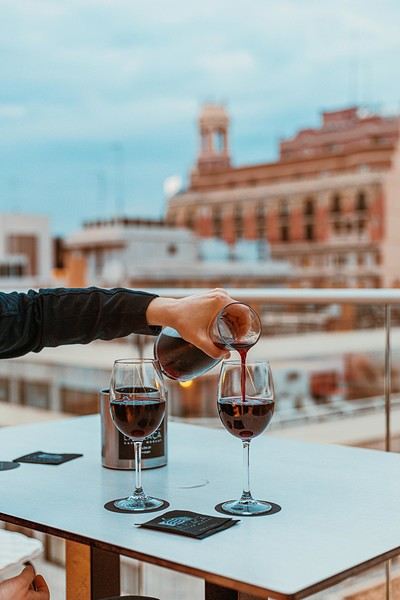
The wine regions of Rioja and Ribera del Duero invite you to a truly "non-touristy" authentic experience. In these family-run estates, often centuries old, winemakers share their passion with characteristic generosity. Tours of historic cellars reveal the secrets of traditional winemaking, while guided tastings awaken your senses to the subtleties of local grape varieties.
During harvest season, you can join in the grape picking alongside local families, continuing age-old traditions. Meals shared in the vineyards become moments of conviviality where the wine tells the story of the terroir. Some estates even offer blending workshops where you create your own cuvée under the expert guidance of enologists. From Lively Markets to Traditional Farms: Authentic Gastronomy
In Catalonia, local markets are true theaters of daily life. Beyond Barcelona’s La Boqueria, the markets in Catalan villages offer a more intimate experience. Producers share the stories behind their products—organic vegetables, artisanal cheeses, and traditional cured meats.
In the Balearic Islands, *fincas* turned into agritourism spots keep centuries-old agricultural traditions alive. In Mallorca, join the olive harvest and oil production using ancestral methods. In Menorca, cheesemakers introduce you to the crafting of the famous Mahón-Menorca PDO cheese, a skill passed down through generations.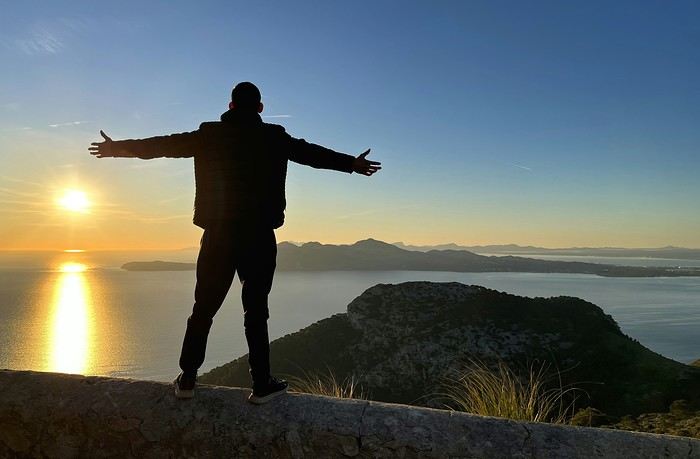
The Vibrant Soul of Spain’s Autonomous Regions
Each of Spain’s autonomous regions proudly cultivates its unique identity. In Galicia, Celtic traditions blend harmoniously with age-old pilgrimages. Traditional fishing ports welcome you to discover the secrets of sustainable fishing, while local festivities celebrate ancestral legends.
The Basque Country surprises with its ancient language and world-renowned gastronomy. In *txokos*—traditional gastronomic societies—you’ll explore Basque cuisine alongside locals. Local festivals, like Valencia’s Fallas or Seville’s Feria de Abril, immerse you in the excitement of Spanish popular traditions. Community-Based Tourism: A Rewarding Human Experience
Extremadura, a pioneer in community-based tourism, offers homestays that redefine travel. These initiatives not only support the local economy directly but also create authentic connections with communities. You’ll take part in seasonal agricultural work, learn traditional farming and livestock techniques, and share daily life with the families hosting you.
Community-based tourism projects also extend to preserving cultural heritage. Join efforts to restore historic monuments, rehabilitate traditional hiking trails, or pass on endangered artisanal skills.
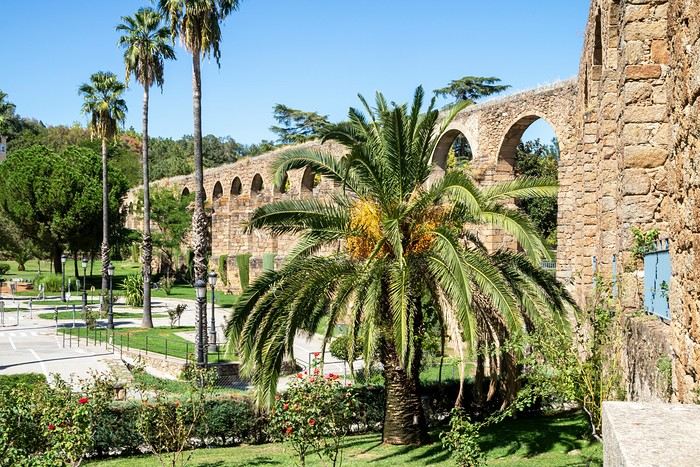
Responsible Travel to Preserve Authenticity
This immersive approach to travel in Spain helps preserve local traditions and promote sustainable development in communities. By choosing these authentic experiences, you actively contribute to keeping Spain’s cultural heritage alive while enjoying unique moments far from mass tourism. The income generated directly supports local preservation initiatives and the passing down of traditional knowledge. Positive Impact on Local Communities
Authentic tourism allows communities to keep their traditions alive while adapting to modern challenges. Younger generations find new opportunities to carry on ancestral skills, while visitors leave enriched by unforgettable experiences and encounters.
Spain’s regions invite you to discover their differences and similarities, creating a fascinating cultural mosaic where every stone tells a unique story. Each trip becomes an opportunity to learn, share, and support local initiatives that keep authentic Spain alive while preserving its heritage for future generations.
The Hidden Gems of Rural Andalusia
Far from the well-trodden paths of Seville and Granada, the white villages of Andalusia transport you to a timeless Spain. In Ronda, perched on its vertiginous cliffs, the cobbled streets tell centuries of history. In the intimacy of Mijas, artisans keep age-old traditions alive in their workshops, open to curious visitors.
Master potters introduce you to their ancestral craft, sharing techniques passed down through generations. In family-run taverns, tapas are enjoyed to the rhythm of conversations with locals, revealing jealously guarded recipes. Come evening, local flamenco schools open their doors, letting you discover the deep soul of Andalusia through its traditional dances. A Sensory Journey: The Wine Route
The wine regions of Rioja and Ribera del Duero invite you to a truly "non-touristy" authentic experience. In these family-run estates, often centuries old, winemakers share their passion with characteristic generosity. Tours of historic cellars reveal the secrets of traditional winemaking, while guided tastings awaken your senses to the subtleties of local grape varieties.
During harvest season, you can join in the grape picking alongside local families, continuing age-old traditions. Meals shared in the vineyards become moments of conviviality where the wine tells the story of the terroir. Some estates even offer blending workshops where you create your own cuvée under the expert guidance of enologists. From Lively Markets to Traditional Farms: Authentic Gastronomy
In Catalonia, local markets are true theaters of daily life. Beyond Barcelona’s La Boqueria, the markets in Catalan villages offer a more intimate experience. Producers share the stories behind their products—organic vegetables, artisanal cheeses, and traditional cured meats.
In the Balearic Islands, *fincas* turned into agritourism spots keep centuries-old agricultural traditions alive. In Mallorca, join the olive harvest and oil production using ancestral methods. In Menorca, cheesemakers introduce you to the crafting of the famous Mahón-Menorca PDO cheese, a skill passed down through generations.
The Vibrant Soul of Spain’s Autonomous Regions
Each of Spain’s autonomous regions proudly cultivates its unique identity. In Galicia, Celtic traditions blend harmoniously with age-old pilgrimages. Traditional fishing ports welcome you to discover the secrets of sustainable fishing, while local festivities celebrate ancestral legends.
The Basque Country surprises with its ancient language and world-renowned gastronomy. In *txokos*—traditional gastronomic societies—you’ll explore Basque cuisine alongside locals. Local festivals, like Valencia’s Fallas or Seville’s Feria de Abril, immerse you in the excitement of Spanish popular traditions. Community-Based Tourism: A Rewarding Human Experience
Extremadura, a pioneer in community-based tourism, offers homestays that redefine travel. These initiatives not only support the local economy directly but also create authentic connections with communities. You’ll take part in seasonal agricultural work, learn traditional farming and livestock techniques, and share daily life with the families hosting you.
Community-based tourism projects also extend to preserving cultural heritage. Join efforts to restore historic monuments, rehabilitate traditional hiking trails, or pass on endangered artisanal skills.
Responsible Travel to Preserve Authenticity
This immersive approach to travel in Spain helps preserve local traditions and promote sustainable development in communities. By choosing these authentic experiences, you actively contribute to keeping Spain’s cultural heritage alive while enjoying unique moments far from mass tourism. The income generated directly supports local preservation initiatives and the passing down of traditional knowledge. Positive Impact on Local Communities
Authentic tourism allows communities to keep their traditions alive while adapting to modern challenges. Younger generations find new opportunities to carry on ancestral skills, while visitors leave enriched by unforgettable experiences and encounters.
Spain’s regions invite you to discover their differences and similarities, creating a fascinating cultural mosaic where every stone tells a unique story. Each trip becomes an opportunity to learn, share, and support local initiatives that keep authentic Spain alive while preserving its heritage for future generations.
The Extraordinary Painted-House Village of Tam Thanh near Hoi An
Imagine a peaceful fishing village, completely transformed by artists who worked their magic on the walls of 100 residential houses. That’s the remarkable story of the Tam Thanh mural village in Quang Nam province. Once similar to many other coastal villages in the area, it now firmly stands out on the tourist map for a day trip from Hoi An.
In the summer of 2016, Tam Thanh was selected by a Korean-Vietnamese joint project called Art For A Better Community. The village was chosen to be their blank canvas, inspired by the success of mural villages in Korea. The project aimed to make Tam Thanh the first painted village of its kind in Vietnam.
The joint project included five Korean artists and seven Vietnamese artists, along with local volunteers. They aimed to show Vietnamese people that art could be part of everyday life, no matter where you stand in society. The effort began with about three weeks of wall washing, followed by painting the walls of over 100 residents' houses.
The project was a success, and the village came alive with the paintings. The entire village is now a breathtaking gallery just waiting to be explored. The murals capture the life and soul of the village—from young children playing to fishermen in the ocean. A mix of fantastic pieces offers stunning backdrops for photos.
The painted art around the town didn’t just have a visual impact; it also had a social one. The village itself was chosen not only for the layout of the houses but also to contribute to economic development opportunities in Tam Thanh. Tourists now visit the once-overlooked village, creating more income for locals and making it a successful "art for a cause" project. For example, an entrepreneurial resident who owned a small local café invested 1,000,000 VND ($390 USD) in a sugarcane press a week before the paintings were completed. Sugarcane juice vendors then multiplied with the growth of tourism (5,000 VND - $0.20 USD).
Walking down the village’s single street, it’s common to find locals selling refreshments and handmade crafts. In one house in particular, a tailor and his family are painted on an outer wall with incredible detail. The family started selling tote bags decorated by their young daughter. The asking price for the bags is 100,000 VND ($4 USD). If you’re looking for a way to support the village’s economy, this is it. Since there’s no middleman here, you can be sure your money goes directly to the community.
Since the project’s completion, two other villages in the province have now been painted. The new mural villages were created with different local Vietnamese artists to raise awareness about each community’s issues. Tam Hai Island was redecorated to highlight the serious waste problem the population faces due to the lack of treatment plants. Another village on An Binh Island was painted to raise awareness among locals and tourists about the importance of environmental protection.
How to get there
Route No. 1: Cross the large Cua Dai bridge. Once you’ve crossed it, continue onto Duong 129/Duong Ven Bien. Stay on this road for 33 kilometers. Upside: this route has light traffic, no traffic lights, and no trucks or buses. It’s a great direct route to the village but offers little to see. You’ll eventually reach a crossroads. Turn right toward Tam Ky town, while the left will take you toward the mural village; stay on Road 608 as it turns twice before reaching a bridge. Cross the bridge, and you’ll arrive at Thanh Nien Road. Finally, turn right to reach the village. This route takes about an hour.
Route #2: Cross the large Cua Dai bridge. Once you’ve crossed it, continue onto Duong 129/Duong Ven Bien. Stay on this road for 12 kilometers, then turn left onto Road 613, where you’ll continue for 1.5 kilometers until you reach Thanh Nien Road. Finally, turn right and drive 23 kilometers to the painted village. For most of the trip, taking Thanh Nien Road will take you through a much more local part of the region. The journey takes about an hour and a half.
Houston Rodeo Live Stock Show
Question about the Rodeo Live Stock Show:
Hi, does anyone know what this is about, what the usual hours are, and how much time we’d spend there on average with two kids aged 10 and 13? We checked the website, but it’s confusing... Rodeo, singers, meals, carnival?
And it looks like the dates only run from early March to late March, but we’ll be there in early April.
Thanks for your feedback!
Hi, does anyone know what this is about, what the usual hours are, and how much time we’d spend there on average with two kids aged 10 and 13? We checked the website, but it’s confusing... Rodeo, singers, meals, carnival?
And it looks like the dates only run from early March to late March, but we’ll be there in early April.
Thanks for your feedback!
Lascaux Caves: Which Replica Should We Visit?
Hi there,
We're really into prehistory and want to visit the cave replica. But there are two—Lascaux 2 and Lascaux 4. What are the differences, and which one should we visit? Plus, there’s also the Prehistory Museum in Les Eyzies. Is that worth checking out too? Thanks for your advice!
We're really into prehistory and want to visit the cave replica. But there are two—Lascaux 2 and Lascaux 4. What are the differences, and which one should we visit? Plus, there’s also the Prehistory Museum in Les Eyzies. Is that worth checking out too? Thanks for your advice!
What gifts should I bring for the Surma tribespeople?
Hello,
I’d like to know what small gifts I could bring for women, children, and men in the Surma tribes of the western Omo Valley.
Usually, I bring pencils, pens, perfumes, and cigarettes, depending on the country.
What do you recommend?
Philippe Departure on 11/13/24
What do you recommend?
Philippe Departure on 11/13/24
Cruise departing from Le Havre: what to see?
Hi everyone, I’m so happy Voyage Forum is back online.
This is perfect timing since we’re leaving on November 28th for a cruise departing from Le Havre (Southampton, Zeebrugge, Rotterdam, Hamburg). Could you share some info on the distances from the ports to the city centers, sights to see, etc.?
Thanks so much, and see you soon!
Recherche villages à visiter en Tanzanie English translation pending
Bonjour à tous,
Au-delà des Safaris, j'aimerai découvrir les différentes ethnies et cultures.
Avez-vous des villages/villes traditionnelles à me conseiller ? Connaissez-vous des marchés locaux et typiques où je pourrai aller ?
Bref, vous l'aurez compris, je recherche des rencontres, de l'authenticité et des traditions.
Merci pour vos conseils !
Claire
Au-delà des Safaris, j'aimerai découvrir les différentes ethnies et cultures.
Avez-vous des villages/villes traditionnelles à me conseiller ? Connaissez-vous des marchés locaux et typiques où je pourrai aller ?
Bref, vous l'aurez compris, je recherche des rencontres, de l'authenticité et des traditions.
Merci pour vos conseils !
Claire
Visiter Lausanne English translation pending
Bonjour à tous !
Aujourd'hui, j'ai envie de partager avec vous mon carnet de voyage sur la belle ville de Lausanne. Alors d'accord, c'est ma ville donc je suis un peu subjectif mais il n'empêche que Lausanne a beaucoup d'atouts à faire valoir.
Ca faisait très longtemps que je voulais écrire sur "ma ville" et partager mes bonnes adresses "d'insider" et mes coups de coeur. Une chose est sure, il y a de quoi se faire plaisir.
Voici le lien vers mon carnet de voyage: https://onholidaysagain.com/europe/suisse/visiter-lausanne/
Bonne lecture et à bientôt à Lausanne.
Aujourd'hui, j'ai envie de partager avec vous mon carnet de voyage sur la belle ville de Lausanne. Alors d'accord, c'est ma ville donc je suis un peu subjectif mais il n'empêche que Lausanne a beaucoup d'atouts à faire valoir.
Ca faisait très longtemps que je voulais écrire sur "ma ville" et partager mes bonnes adresses "d'insider" et mes coups de coeur. Une chose est sure, il y a de quoi se faire plaisir.
Voici le lien vers mon carnet de voyage: https://onholidaysagain.com/europe/suisse/visiter-lausanne/
Bonne lecture et à bientôt à Lausanne.
Adieu à un grand pianiste de jazz (États-Unis) English translation pending
« Il y a beaucoup de héros dans le jazz. Mais peu ont véritablement changé l’histoire du jazz. McCoy Tyner en est un. Il y a un avant et un après Mister McCoy Tyner. » (Craig Taborn, pianiste de jazz américain)
McCoy Tyner, pianiste illuminé et compagnon de Coltrane
Un pianiste hors norme, un géant du jazz a disparu à jamais début mars dernier à l’âge de 81 ans. Acteur clé du légendaire classic quartet de John Coltrane (que complètent Jimmy Garrison à la contrebasse et Elvin Jones à la batterie), il a joué du piano avec les plus grands de son époque. Avec Bill Evans et Cecil Taylor, McCoy Tyner compte parmi les pianistes de jazz les plus influents de ces 50 dernières années. Son jeu si particulier, puissant et inimitable, a changé l’histoire du jazz moderne. Il mérite bien une digne place dans la généalogie des grands pianistes, aux côtés de Bud Powell, de Thelonious Monk, d’Art Tatum, de Duke Ellington et de Cecil Taylor. …
Né à Philadelphie (Pennsylvanie) en 1938, McCoy Tyner commence à prendre des leçons de piano à l’âge de 13 ans. Sa carrière musicale débute vraiment en 1959 dans le Jazztet du saxophoniste Benny Golson et trompettiste Art Farmer. En plus, il joue avec Lee Morgan, Max Roach, Stanley Turrentine, Freddie Hubbard, Wayne Shorter, Joe Henderson, Sonny Rollins et Kenny Dorham. Plus tard, en 1960, à 21 ans, le pianiste quitte le Jazztet pour remplacer Steve Kuhn dans le quartet de John Coltrane et y reste membre jusqu’à la fin de 1965. McCoy Tyner est en premier lieu connu pour avoir accompagné – ce qui veut dire ici : a su soutenir et dynamiser le soliste – John Coltrane pendant la partie la plus essentielle de sa carrière, ces cinq années entre 1960 et 1965, au sein de ce classic quartet, formation la plus emblématique du jazz (encore) modal. Dans ladite période, il enregistre avec "son frère" John Coltrane une trentaine d’albums, dont les célèbres My Favorite Things (1961), Africa/Brass (1961), Live at the Village Vanguard (1961), A Love Supreme, chef-d’œuvre de l’histoire de la musique (1964), Live at Birdland (1964), Crescent (1964), Ascension (1965), Meditations (1965), Both directions at once : The lost album (1963/2018), etc. etc. etc. Non seulement le saxophoniste, mais juste la présence de ce pianiste virtuose dans le quatuor de Coltrane est l’un des éléments-clés qui a fait de cet ensemble un des incontournables du jazz des années 60.
Pourtant, Coltrane a laissé à son sideman beaucoup d’espace pour son propre jeu soliste. Et il a brillé par son expressivité exaltante. Avec sa main droite, il pouvait suivre la préférance de Coltrane pour ses soi-disant sheets of sounds. Celle de gauche, en revanche, a utilisé la tradition du stride piano pour créer une richesse et profondeur orchestrales en alternant les registres médium et grave (Tyner était gaucher). Le pianiste reste non seulement ancré dans son attachement à l’instrument, mais aussi humble dans son sens pour la beauté et l’harmonie. Au moment où Coltrane s’est de plus en plus laissé emporter par des zones atonales du free jazz, McCoy Tyner n’a plus voulu le suivre : "I didn’t see myself making any contribution to that music. All I could hear was a lot of noise." Cette position esthétique a conduit inévitablement à quitter le quatuor...
Après le split de Coltrane, McCoy Tyner commence à enregistrer sous son propre nom plusieurs albums post-bop dont Tender Moments (1968), Time for Tyner (1968), Extensions (1970) et surtout The Real McCoy (1967), peut-être son meilleur album de cette période. A partir de 1972, entre le free jazz et le jazz fusion, il cultive sa propre musique, dans laquelle il élargit – en solo, en trio ou en grandes formations – ses expériences des années 60, et collabore avec des musiciens tels que les saxophonistes Sonny Fortune, Gary Bartz, John Stubblefield, Andrew White et Azar Lawrence, le trompettiste Virgil Jones, le violoniste John Blake, le vibraphoniste Bobby Hutcherson, les contrebassistes Joony Booth et Buster Williams, et les batteurs Billy Hart et surtout Alphonse Mouzon. Des grandioses albums attestent cette période féconde : Sahara (1973), Atlantis (1974), Trident (1976) et Enlightment – Live at the Montreux Jazz Festival (1973), le dernier étant pour toujours mon album préféré de McCoy Tyner, ce quartet – à mon avis – sa meilleure formation ever (M.T. - Azar Lawrence - Joony Booth - Alphonse Mouzon).
McCoy Tyner a enregistré plus de 80 albums sous son propre nom, a reçu cinq Grammys, des géants comme Herbie Hancock et Chick Corea l’ont cité comme une influence décisive sur leur propre travail. En 2002, la NEA (National Endowment for the Arts) l’a nommé "Jazz Master". Son dernier album, Solo: Live from San Francisco, date de 2009, qui est décrit avec enthousiasme par la critique comme une preuve de l’impact ininterrompu de son style si puissant : "All of the hallmarks of his sound, from up and down dynamics to the legendary crashing of chords, especially with his left hand, and the stunning virtuosity of his improvisational runs and streaks, assure you that he is in good spirits and has energy to burn off even at his advanced age... This is yet another of the many triumphant recordings Tyner has given to the world…" (Allmusic)
Hery
https://www.youtube.com/watch?v=WXL4c67sX9E
McCoy Tyner, pianiste illuminé et compagnon de Coltrane
Un pianiste hors norme, un géant du jazz a disparu à jamais début mars dernier à l’âge de 81 ans. Acteur clé du légendaire classic quartet de John Coltrane (que complètent Jimmy Garrison à la contrebasse et Elvin Jones à la batterie), il a joué du piano avec les plus grands de son époque. Avec Bill Evans et Cecil Taylor, McCoy Tyner compte parmi les pianistes de jazz les plus influents de ces 50 dernières années. Son jeu si particulier, puissant et inimitable, a changé l’histoire du jazz moderne. Il mérite bien une digne place dans la généalogie des grands pianistes, aux côtés de Bud Powell, de Thelonious Monk, d’Art Tatum, de Duke Ellington et de Cecil Taylor. …
Né à Philadelphie (Pennsylvanie) en 1938, McCoy Tyner commence à prendre des leçons de piano à l’âge de 13 ans. Sa carrière musicale débute vraiment en 1959 dans le Jazztet du saxophoniste Benny Golson et trompettiste Art Farmer. En plus, il joue avec Lee Morgan, Max Roach, Stanley Turrentine, Freddie Hubbard, Wayne Shorter, Joe Henderson, Sonny Rollins et Kenny Dorham. Plus tard, en 1960, à 21 ans, le pianiste quitte le Jazztet pour remplacer Steve Kuhn dans le quartet de John Coltrane et y reste membre jusqu’à la fin de 1965. McCoy Tyner est en premier lieu connu pour avoir accompagné – ce qui veut dire ici : a su soutenir et dynamiser le soliste – John Coltrane pendant la partie la plus essentielle de sa carrière, ces cinq années entre 1960 et 1965, au sein de ce classic quartet, formation la plus emblématique du jazz (encore) modal. Dans ladite période, il enregistre avec "son frère" John Coltrane une trentaine d’albums, dont les célèbres My Favorite Things (1961), Africa/Brass (1961), Live at the Village Vanguard (1961), A Love Supreme, chef-d’œuvre de l’histoire de la musique (1964), Live at Birdland (1964), Crescent (1964), Ascension (1965), Meditations (1965), Both directions at once : The lost album (1963/2018), etc. etc. etc. Non seulement le saxophoniste, mais juste la présence de ce pianiste virtuose dans le quatuor de Coltrane est l’un des éléments-clés qui a fait de cet ensemble un des incontournables du jazz des années 60.
Pourtant, Coltrane a laissé à son sideman beaucoup d’espace pour son propre jeu soliste. Et il a brillé par son expressivité exaltante. Avec sa main droite, il pouvait suivre la préférance de Coltrane pour ses soi-disant sheets of sounds. Celle de gauche, en revanche, a utilisé la tradition du stride piano pour créer une richesse et profondeur orchestrales en alternant les registres médium et grave (Tyner était gaucher). Le pianiste reste non seulement ancré dans son attachement à l’instrument, mais aussi humble dans son sens pour la beauté et l’harmonie. Au moment où Coltrane s’est de plus en plus laissé emporter par des zones atonales du free jazz, McCoy Tyner n’a plus voulu le suivre : "I didn’t see myself making any contribution to that music. All I could hear was a lot of noise." Cette position esthétique a conduit inévitablement à quitter le quatuor...
Après le split de Coltrane, McCoy Tyner commence à enregistrer sous son propre nom plusieurs albums post-bop dont Tender Moments (1968), Time for Tyner (1968), Extensions (1970) et surtout The Real McCoy (1967), peut-être son meilleur album de cette période. A partir de 1972, entre le free jazz et le jazz fusion, il cultive sa propre musique, dans laquelle il élargit – en solo, en trio ou en grandes formations – ses expériences des années 60, et collabore avec des musiciens tels que les saxophonistes Sonny Fortune, Gary Bartz, John Stubblefield, Andrew White et Azar Lawrence, le trompettiste Virgil Jones, le violoniste John Blake, le vibraphoniste Bobby Hutcherson, les contrebassistes Joony Booth et Buster Williams, et les batteurs Billy Hart et surtout Alphonse Mouzon. Des grandioses albums attestent cette période féconde : Sahara (1973), Atlantis (1974), Trident (1976) et Enlightment – Live at the Montreux Jazz Festival (1973), le dernier étant pour toujours mon album préféré de McCoy Tyner, ce quartet – à mon avis – sa meilleure formation ever (M.T. - Azar Lawrence - Joony Booth - Alphonse Mouzon).
McCoy Tyner a enregistré plus de 80 albums sous son propre nom, a reçu cinq Grammys, des géants comme Herbie Hancock et Chick Corea l’ont cité comme une influence décisive sur leur propre travail. En 2002, la NEA (National Endowment for the Arts) l’a nommé "Jazz Master". Son dernier album, Solo: Live from San Francisco, date de 2009, qui est décrit avec enthousiasme par la critique comme une preuve de l’impact ininterrompu de son style si puissant : "All of the hallmarks of his sound, from up and down dynamics to the legendary crashing of chords, especially with his left hand, and the stunning virtuosity of his improvisational runs and streaks, assure you that he is in good spirits and has energy to burn off even at his advanced age... This is yet another of the many triumphant recordings Tyner has given to the world…" (Allmusic)
Hery
https://www.youtube.com/watch?v=WXL4c67sX9E
Un monde sans voyageurs English translation pending
Qui aurai pu imaginer qu'un jour quasiment tous les avions seraient cloués au sol, que toutes les frontières seraient fermées, même dans l'espace Schengen et que la moitié de l'humanité serait en confinement chez-soi.
Qui aurai pu penser que plus personne, ou presque, ne serai en voyage ? Hormis celui qui voyage de la cuisine vers le salon.
Même en 14-18 j'ai pas connu cela (je parle de 2014-2018 😎 ).
Ma "folie" de célibataire à 54 ans: vivre sur un voilier English translation pending
:
"ma folie de célibataire à 53 ans bientôt 54,
étant en train de retaper entierement un voilier en alu yawl 2 mats de 11m que j ai recupéré grtuitement vu que la personne de 96 ans ne pouvais plus rien faire et il est resté dans soins depuis plus de 5 années je refais tous le pont, toute la caréne, tous démonter a l'intérieur et le refaire a mon gout de vie et puis vivre sur un voilier de 11m x 3 tout refais, avec le solaire sans loyer m'est ce pas une belle vie lol lol lol je fais de mal a personne, ni femme, ni enfant juste mon animal fidéle ( le chien )
mais pas grave
je vie avec rien vu que notre pays de mrd prefere regarder et aider ailleur
alors oui mr oui mme
tous ce que j arrive a récupé car comme dit Zarco, LA FRANCE EST RICHE et bcp jetent des tonne de chose sont jeté aux ordures honte a vous bonheur a moi car je récupére et en faisant plusieurs systémé D récupe, faire des portraits en styl-art, gravure et bien d'autre chose
alors je refais ce joujou de 11m et je compte y vivre dedans tout en voyageant en cabotage car j ai beaucoup bouger a pied, en moto, en kayak jusqu en inde et on peux bien vivre sans effort suffit de regarder et bien écouter
mon projet est c est vrai fou mais vivre dans ce pays , est ce mieux ??????
alors voila j avais juste envie de le dire et si une personne serait interesser qu il hésite pas a m envoyer un blabla et après je commencerai a mettre dans le face book photo, vidéo, les bon comme le mauvais de chaque endroit passer
bises et amitié a tous ET LONGUE VIE
étant en train de retaper entierement un voilier en alu yawl 2 mats de 11m que j ai recupéré grtuitement vu que la personne de 96 ans ne pouvais plus rien faire et il est resté dans soins depuis plus de 5 années je refais tous le pont, toute la caréne, tous démonter a l'intérieur et le refaire a mon gout de vie et puis vivre sur un voilier de 11m x 3 tout refais, avec le solaire sans loyer m'est ce pas une belle vie lol lol lol je fais de mal a personne, ni femme, ni enfant juste mon animal fidéle ( le chien )
mais pas grave
je vie avec rien vu que notre pays de mrd prefere regarder et aider ailleur
alors oui mr oui mme
tous ce que j arrive a récupé car comme dit Zarco, LA FRANCE EST RICHE et bcp jetent des tonne de chose sont jeté aux ordures honte a vous bonheur a moi car je récupére et en faisant plusieurs systémé D récupe, faire des portraits en styl-art, gravure et bien d'autre chose
alors je refais ce joujou de 11m et je compte y vivre dedans tout en voyageant en cabotage car j ai beaucoup bouger a pied, en moto, en kayak jusqu en inde et on peux bien vivre sans effort suffit de regarder et bien écouter
mon projet est c est vrai fou mais vivre dans ce pays , est ce mieux ??????
alors voila j avais juste envie de le dire et si une personne serait interesser qu il hésite pas a m envoyer un blabla et après je commencerai a mettre dans le face book photo, vidéo, les bon comme le mauvais de chaque endroit passer
bises et amitié a tous ET LONGUE VIE
Voyage en Floride 15 jours avec bébé et excursions sur la Gold Coast English translation pending
Allo,
On s'en va deux semaines fin mars - début avril dans le sud de la Floride, côté Atlantique. Premier voyage pour bébé de 17 mois mais, si autrefois on avait tendance à faire mille étapes pour voir tout un pays, cette fois-ci c'est déplacements minimum et gros farniente car couple fatigué et bébé n.2 en route..... alors on prend ça trèèèès relaxe.
Les hébergements sont fixés, donc ça ressemble à ça : - arrivée à l'aéroport de Fort Lauderdale et déplacement direct vers Delray Beach où on a trouvé une petite maison pour 5 jours - ensuite Singer Island un peu plus haut (en fait Riviera Beach de son vrai nom, mais sur l'île) pour 3 nuits - puis retour à la même maison de Delray - puis 3 dernières nuits à Fort Lauderdale et vol tôt le dernier jour, donc un gros 2 jours pleins sur place pour visiter la ville. On sera dans le quartier Victoria Park, à une demi-heure de marche de Las Olas.
On n'a pas de véhicule pour la durée du séjour, on pensait louer à la journée lorsque envie d'excursion.
Justement : Avez-vous des suggestions de sorties dans ce coin-ci, qui pourraient partiellement int��resser bébé tout en étant le fun pour les parents ? Je pensais aux jardins japonais de Murakami, et au Butterfly Wonderland. Et peut-être un autre truc un peu plus à l'intérieur des terres. Sinon depuis FLL, une sortie d'une journée à Miami pour la plage art décor, Little Havana? Avez-vous des suggestions pour meubler 2,5j à FLL une fois qu'on a fait le Riverwalk et la plage?
Pour chacune des trois villes où on passe, si vous avez des recommandations de resto, de sorties, de visites moins connue mais sympa (y'a pratiquement rien dans aucun guide...), on est preneurs de tout !
Merci :)
On s'en va deux semaines fin mars - début avril dans le sud de la Floride, côté Atlantique. Premier voyage pour bébé de 17 mois mais, si autrefois on avait tendance à faire mille étapes pour voir tout un pays, cette fois-ci c'est déplacements minimum et gros farniente car couple fatigué et bébé n.2 en route..... alors on prend ça trèèèès relaxe.
Les hébergements sont fixés, donc ça ressemble à ça : - arrivée à l'aéroport de Fort Lauderdale et déplacement direct vers Delray Beach où on a trouvé une petite maison pour 5 jours - ensuite Singer Island un peu plus haut (en fait Riviera Beach de son vrai nom, mais sur l'île) pour 3 nuits - puis retour à la même maison de Delray - puis 3 dernières nuits à Fort Lauderdale et vol tôt le dernier jour, donc un gros 2 jours pleins sur place pour visiter la ville. On sera dans le quartier Victoria Park, à une demi-heure de marche de Las Olas.
On n'a pas de véhicule pour la durée du séjour, on pensait louer à la journée lorsque envie d'excursion.
Justement : Avez-vous des suggestions de sorties dans ce coin-ci, qui pourraient partiellement int��resser bébé tout en étant le fun pour les parents ? Je pensais aux jardins japonais de Murakami, et au Butterfly Wonderland. Et peut-être un autre truc un peu plus à l'intérieur des terres. Sinon depuis FLL, une sortie d'une journée à Miami pour la plage art décor, Little Havana? Avez-vous des suggestions pour meubler 2,5j à FLL une fois qu'on a fait le Riverwalk et la plage?
Pour chacune des trois villes où on passe, si vous avez des recommandations de resto, de sorties, de visites moins connue mais sympa (y'a pratiquement rien dans aucun guide...), on est preneurs de tout !
Merci :)
Discussion autour du concours du mois de mars 2020: Seul(e) au monde ou la solitude English translation pending
Bonjour 😉
C'est ici - et uniquement ici - qu'on discute à propos de la thématique du mois : Seul(e) au monde - concours photo du mois de Mars 2020
C'est ici - et uniquement ici - qu'on discute à propos de la thématique du mois : Seul(e) au monde - concours photo du mois de Mars 2020
Notre planning au Sri Lanka English translation pending
Ci-joint le détail de notre voyage. Tout s'est bien passé pas de regrets
A voir Nuit 22 février Arrivée Colombo direction Negombo Arrivée 9h30 Embiente Guest House Negombo 30€ 23 février Négombo
24 février Négombo Kandy Train 14h30 Colombo 190 rp 16h10 Kandy TucTuc auberge 250 rp Temple de la dent de Bouddha Jardin botanique Peradeniya Tuctuc 200 rp visite 3h
Hanthana Jungle View 16€ Stop 21 fev Nuit Kandy 25 février Kandy Dambulla Gare routière : bus intercity Départ 8h 160rp arrive 10h Stop temple !
Rocher royal. Grottes troglo, Temple d’or Durée 3h Voir aller à Ritigala 1h de Dambulla Hurulu Eco Park safari super Sevonrich Holliday ressort Piscine. 24€x2 Stop 22fev Nuit Dambulla A contacter pour récupération arrivée bus : 0094779515474 26 février Dambulla Siriya 20 mn Rocher au Lion (4h visite matin), Rocher Pidurangale, balades riz, fabrique de batik Nuit Siriya 27 février Siriya Polonnaruwa 1h Balades 5 à 6 h vélo matin visite Polonnaruwa Safari Minneriya aprem
Manger : Jagh Food Nuit Polooaruwa 28 février Polonnaruwa Kandy réserver le salon panoramique train 1ère classe pour aller à Nuwara Eliya 4h départ 8h45 droite Repos Kandyan Art 17h30 spect 1h 500rp Nuit Kandy 1er Mars Nuwara Eliya En fait le train s’arrête à Nanuoya 5h ! Paysages magnifiques dans plantations thé visite la fabrique de thé de Labookellie Nuwara village très British
Nuit Nuwara Eliya
2 Mars Nuwara Eliya
Hotyon Plains : balades de 10 km pas besoin guide durée 4h
Nuit Nuwara Eliya
3 Mars Nuwara Eliya – Ella train 2h20
A faire en train super Balades diverse. vers colline surnommée le Little Adam's Peak au milieu champs de thé visiter la Tea Factory d'Halpewatte
Green Hill Nuit Ella 4 Mars Ella Ella Rock ? Voir de faire la boucle en voiture : Elle- Temple de Buduruwagala –Diyaluna Falls- Elle Manger Garden view 5 Mars Ella Tissamaharama
1h15 jungle train + 4h rte superbe Possibilité en mini bus 3000rp 2h arrêt chutes de Rawana Lipton seat ?
Nuit Tissamaharama
6 Mars Tissamaharama
Temples et lacs Faire safari parc national Yala fin aprem Elephant Camp Guesthouse. Nuit Tissamaharama
7 Mars Mirissa
Plage . petite balade temple Kandavahari
Ocean Moon. Nuit Mirissa
8 Mars Mirissa
Nuit Mirissa
9 Mars Gale Hikkaduwa : mine pierre lune / plages Rampart View, Nuit Gale 10 Mars Colombo Quartier Pettah
11 Mars Retour Paris Depart 21h25
A voir Nuit 22 février Arrivée Colombo direction Negombo Arrivée 9h30 Embiente Guest House Negombo 30€ 23 février Négombo
24 février Négombo Kandy Train 14h30 Colombo 190 rp 16h10 Kandy TucTuc auberge 250 rp Temple de la dent de Bouddha Jardin botanique Peradeniya Tuctuc 200 rp visite 3h
Hanthana Jungle View 16€ Stop 21 fev Nuit Kandy 25 février Kandy Dambulla Gare routière : bus intercity Départ 8h 160rp arrive 10h Stop temple !
Rocher royal. Grottes troglo, Temple d’or Durée 3h Voir aller à Ritigala 1h de Dambulla Hurulu Eco Park safari super Sevonrich Holliday ressort Piscine. 24€x2 Stop 22fev Nuit Dambulla A contacter pour récupération arrivée bus : 0094779515474 26 février Dambulla Siriya 20 mn Rocher au Lion (4h visite matin), Rocher Pidurangale, balades riz, fabrique de batik Nuit Siriya 27 février Siriya Polonnaruwa 1h Balades 5 à 6 h vélo matin visite Polonnaruwa Safari Minneriya aprem
Manger : Jagh Food Nuit Polooaruwa 28 février Polonnaruwa Kandy réserver le salon panoramique train 1ère classe pour aller à Nuwara Eliya 4h départ 8h45 droite Repos Kandyan Art 17h30 spect 1h 500rp Nuit Kandy 1er Mars Nuwara Eliya En fait le train s’arrête à Nanuoya 5h ! Paysages magnifiques dans plantations thé visite la fabrique de thé de Labookellie Nuwara village très British
Nuit Nuwara Eliya
2 Mars Nuwara Eliya
Hotyon Plains : balades de 10 km pas besoin guide durée 4h
Nuit Nuwara Eliya
3 Mars Nuwara Eliya – Ella train 2h20
A faire en train super Balades diverse. vers colline surnommée le Little Adam's Peak au milieu champs de thé visiter la Tea Factory d'Halpewatte
Green Hill Nuit Ella 4 Mars Ella Ella Rock ? Voir de faire la boucle en voiture : Elle- Temple de Buduruwagala –Diyaluna Falls- Elle Manger Garden view 5 Mars Ella Tissamaharama
1h15 jungle train + 4h rte superbe Possibilité en mini bus 3000rp 2h arrêt chutes de Rawana Lipton seat ?
Nuit Tissamaharama
6 Mars Tissamaharama
Temples et lacs Faire safari parc national Yala fin aprem Elephant Camp Guesthouse. Nuit Tissamaharama
7 Mars Mirissa
Plage . petite balade temple Kandavahari
Ocean Moon. Nuit Mirissa
8 Mars Mirissa
Nuit Mirissa
9 Mars Gale Hikkaduwa : mine pierre lune / plages Rampart View, Nuit Gale 10 Mars Colombo Quartier Pettah
11 Mars Retour Paris Depart 21h25