Results for "Parc+Frontenac+|+128"
63792 results found.
Hôtel à Xcaret à Cancun? English translation pending
Salut,
Ma cousine se marie cet été et elle recherche un hotel à Xcaret ... est-ce que vous en avez à me suggerer ?
Elle veut un hotel là pour être plus proche des ruines Maya et du parc Xcaret pour la plongée ... est-ce une bonne idée ou elle peut avoir mieux et moin cher ailleur ?
Merci
Niki
Ma cousine se marie cet été et elle recherche un hotel à Xcaret ... est-ce que vous en avez à me suggerer ?
Elle veut un hotel là pour être plus proche des ruines Maya et du parc Xcaret pour la plongée ... est-ce une bonne idée ou elle peut avoir mieux et moin cher ailleur ?
Merci
Niki
Séjour au Kenya English translation pending
Je suis sur le point de réserver un séjour au Kenya pour la mi-mars avec FRAM dans le cadre de son forfait "Karibu Safari".
Ce séjour comprend 1 jour au Lac de Nakuru, 3 jours au parc "Masäi Mara" et 3 jours à l'hôtel Tiwi beach.
Si quelqu'un a déjà effectué ce séjour, merci de me donner ses impressions.
Ce séjour comprend 1 jour au Lac de Nakuru, 3 jours au parc "Masäi Mara" et 3 jours à l'hôtel Tiwi beach.
Si quelqu'un a déjà effectué ce séjour, merci de me donner ses impressions.
Namibie, terre de mirages English translation pending
 Comme le laisse suposer mes différentes interventions dans divers forums je suis un amoureux de ce superbe pays d'Afrique australe qu'est la Namibie.
Du Fish River Canyon au sud au Parc National d'Etosha au nord en passant par les sables du Namib, du Kalahari ou de la côte des squelettes; de la bande de Caprivi au Damaraland ; de la Petrified Forest au monts du Naukluft ; du plateau de Waterberg à Twiffelfontein ; de White Lady aux Welvetchias ........
Dans ce pays où un léger vent vous rafraichis tout au long de l'année, on ne peut faire beaucoup de Km sans s'émerveiller. Les sables et les dunes rouges sombres de Sossusvlei sont toujours un choc la première fois, nues ou couvertes d'herbes rases jaunies; quelques kilomètres plus loin les monts sombres du Naukluft; encore un peu plus loin cette vision lunaire du désert au portes de Swakopmund.
Et encore : le désert, la mer et ....... 60.000 phoques . Ou alors : le Damaraland avec ses sites pariétaux exeptionnels, sa forêt pétrifiée, Organ pipe, ses Welvetchias et ses cratères de météorites.
Et que dire du spectacle offert dans le parc national d'Etosha, au détour d'un point d'eau, derrrière le moindre buisson la vie animale africaine dans toute sa splendeur. Lions qui s'abreuvent, troupeaux de zèbres, gnous, oryx, et autres antiloppes et gazelles qui paissent, léopards repus sur sa branches, Hyènes, chacals, renards du Cap, Troupeaux d'éléphants ou mâles solitaires parcourant le bush, rhinocéros noirs trotinant près du pan ......
🙂 Et les nuits passé à veiller autour des "waterholes" éclairés pour fixer au fond de ma mémoire ces scènes nocturnes incroyables de la vie animale.
La bande de Caprivi et sa verdeur pleines de petits parcs nationaux sublimes. Le plateau du Waterberg où Isolés au sommet rhinocéros blancs et noirs y cotoient antiloppes roannes et hypodragues. et le Kalahari et ses Sans, ces petits bushimens si accueillant et vivant en parfaite harmonie avec sa terre hostile.
Ce pays mérite DES séjours et non pas UN car il y a tellement à y découvrir.
🙂 Vivement avril 2004 🙂
Infos Tsingy de Bamahara et... English translation pending
😉 bonjour,
Infos pour les routards à destination de Madagascar : Tsingy de Bemaraha, les villages Mangily (Ifaty) fin mai 2003 et Tana.
Taux de change 1€=7200 fmg au 2 juin 2003, il y aura la dévaluation de la monnaie et changement de billet dans les mois qui suivent.
De Tana vers le parc national des Tsingy de Bemaraha : De aéroport Ivato faites vous déposer à gare routière d’Anosibe (au nord de Tana), prix du taxi entre 40000 et 50000 fmg (moi j’ai payé 40000 fmg) ou partager les frais avec d’autres routards, départ tous les jours de Tana vers Morondava à 14h (horaire de départ est flexible et seyez mora mora !) tarif 100000 fmg et arrivé à Morondava le lendemain vers 6h50 du matin. Un conseil réserver votre place à l’avance si cela est possible, les meilleures places sont soient à côté de chauffeur côté fenêtre soient le rangé derrière le chauffeur plus d’espace pour les pieds. Une fois vous êtes à la gare routière de Morondava faites vous déposer par un taxi pour 5000 fmg à la gare routière au centre ville à côté du Menabe hôtel à destination de Belo-sur-Tsiribihina, là vous avez droit au 404 bâché avec deux rangés de siège en bois l’un en face de l’autre et vous êtes serré comme des sardines en boîte, 98 km, 4h de route, tarif 25000 fmg…mais en prime au quart du chemin préparez vos appareils photos car vous avez l’allée des Baobabs ! Tarif taxi de Morondava a/r pour la visite l’allée des Baobabs est de 80000 fmg, et d’après mes renseignements la forêt, les tombeaux, le parc… ne valent le coût pour la visite. Si vous souhaitiez de louer un 4x4 avec chauffeur de Morondava vers Bekopaka cela vous coûtera entre 2 millions à 2, 8 millions fmg pour 2 à 3 jours. Bref, après 4h de trajets vous êtes arrivé à l’embarcadère du village de St-Mary, la traversée dure 35’ et coûte 5000 fmg. Arrivé à l’embarcadère de Belo-sur-Tsiribihina entre 13h et 14h et vous êtes à 1 km du centre ville. Il est trop tard de prendre un taxi brousse pour continuer le chemin, une nuit de repos bien mérité s’impose, a moins que vous avez louer un 4x4 depuis Morondava… Bon il faut le dire un seul hôtel valable à Belo-sur-Tsiribihina est certainement l’hôtel du Menabe (ou Le grand hôtel pour les locaux) tenu par un natif grec marié avec une malgache, (une pensée amicale à eux), douche à l’intérieur, ventilateur, moustiquaire, très propre et vue sur le fleuve Tsiribihina et la ville ! Et il n’y a plus de musique en face pendant le WE depuis un an et demi ! Le guide est comme d’habitude tjs en retard pour la mise à jour et on ne peut plus camper derrière l’hôtel ! 70000 fmg une chambre pour deux ou 80000 fmg chambre familiale. Demander à voir les statuts, les photos, les peintures malgaches de 60 ans voir plus !
Taxi brousse de Belo-sur-Tsiribihina vers Andimaka ou Bekopaka(Tsingy) : Depuis le 24 mai 2003 vous avez un taxi brousse (sté Acoli c’est un karane) qui relie Belo-sur-Tsiribihina vers Bekopaka (Tsingy), tarif jusqu’au Andimaka 25000 fmg et jusqu’au Bekopaka 50000 fmg. Compter au moins 10h de trajet jusqu’au Bekopaka, bcp de poussière et ça secoue pas mal ! En cas où pas taxi brousse s’arrête à Andimaka, là c’est la galère ! soit faire les 23 km à pied ou louer une charrette à zébu jusqu’à Bekopaka entre 120 et 150000 fmg, 6h de route après vous jurez plus jamais la charrette !!!! Conseil faites la provision d’eau, de bière ou de vivre depuis Belo (5000 fmg la bouteille eau vive) sinon vous risquez de payer le double à Bekopaka, et dès fois il n’y a plus d’eau à acheter ! Emportez des micropurs en cas où… Je suppose que vous avez pu prendre le taxi brousse d’Acoli conduit par son fils Chaïne jusqu’au Bekopaka l’embarcadère de la rivière Manambolo, à l’heure actuel le bac ne fonctionne pas car il y a un trou… La traversée en pirogue coûte 2500 fmg/per et dure 15’. Enfin vous êtes au parc national des Tsingy de Bemaraha et le bureau de l’ANGAP se trouve à côté de l’embarcadère. Vous avez le choix de camper pour 10000 fmg/j au bord de la rivière de Manambolo ou de dormir Chez Ibrahim pour 45000 fmg/j mais il se trouve à 2, 5 km de l’embarcadère ! dur dur ! Vous pouvez louer un porteur pour 15000 à 25000 fmg (porteur de bagages et pas vous !) ou louer une charrette. Pour les riches le relais Tsingy est ouvert pour au minimum 250000 fmg/j et obligation de prendre les repas sur place !!!! Le repas Chez Ibrahim coûte 40000 fmg !!! et les boissons…je vous ai déjà prévenu !!! Vu l’état de la chambre, la douche avec un seau d’eau et surtout le wc avec le trou creusé et l’odeur pour 45000 fmg la nuit c’est du vol ! Bref, de toute façon vous avez pas de choix… Tarif parc national : Droit d’entrée pour 3 jours 50000 fmg, Grands Tsingy : Guide obligatoire 100000 fmg/j, assister au couché ou levé du soleil 120000 fmg, la distance totale à parcourir à pied départ Chez Ibrahim et retour Chez Ibrahim 45 km, vous avez égalemant le choix de louer une charrette pour 150000 fmg a/r. Penser à emmener au minimum 3 litres d’eau et à manger car il n’y a rien une fois vous êtes là bas, porteur de 15000 à 25000 fmg/j ; meilleure solution est de camper une nuit à 2 km de l’entrée des grands Tsingy dans un emplacement prévu pour et entamer la visite tôt le matin pour assister au levé du soleil. Circuit combiné petits Tsingy (4h de marche) + les georges Manambolo (2h de pirogue) : 165000 fmg. J’ai surpris d’entendre certains visiteurs dire que ça vaut pas le coût de visiter les petits Tsingy ! Ils répètent bêtement d’après le livre … mais il n’y rien avoir avec les Grands et ce n’est pas le même parcours, ce n’est pas le même paysage !!!! Moi, je l’ai fait des deux ! Par contre si vous n’avez pas le temps de visiter les deux, privilégié les grands Tsingy mais c’est vraiment dommage ! vous mettez des jours pour venir jusqu’ici et …. ! Tsingy un pur chef-d’œuvre de la nature, une merveille ! Pour repartir pour Morondava soit taxi brousse, soit la charrette ou à pieds jusqu’à Andimaka 23 km ! Quant à moi j’ai pu trouvé une place dans une 4X4 loué par un belge nommé jacques G jusqu’au Morondava et une autre 4X4 d’un vazaha résident à Tana nommé JC B (une pensée amicale à eux et merci). Une nuit à Morondava est presque obligatoire pour continuer votre chemin, le Trecigogne est fermé pour travaux (50000 fmg/nuit) pour l’hôtel similaire j’ai dormi Chez Bougainvilliers bord de la mer et j’ai le droit tout l’hôtel à moi tout seul ! Pour info le vol intérieur avec Air Mad de Morondava-Tuléar 101€ et par de liaison routière vers Belo-sur-mer piste encore inondée fin mai/03. Je continuais mon chemin jusqu’au Ansirabe avec le 4x4 de JC qui remontait à vide jusqu’au Tana, une fois à Ansirabe taxi brousse vers Tuléar, j’ai payé 125000 fmg ! en principe c’est 60000 fmg tarif malgache, départ tous les jours à partir de 17 ou 18 h et arrivée à Tuléar vers midi le lendemain (entre 18 et 20 h de trajet). A savoir pour le retour de Tuléar vers Tana il y a dès fois des 4X4 qui remontaient à vide, se renseigner dans la même gare routière (en principe même tarif que le taxi brousse 100000 et 115000 fmg). Taxi brousse de Tuléar vers Tana se fait tous les jours dès 6h du matin tarif 115000 fmg et arrivé à Tana vers 5h du matin le lendemain.
Tuléar vers Ifaty les villages Mangily : Taxi vers la gare routère pour Ifaty 5000 fmg ou en pousse-pousse 3000 fmg. Taxi brousse camion de Tuléar vers Mangily 10000 fmg, 23 km, 2h30 de transport ou en 1h30 avec le taxi brousse 4X4 mais il n’y en a pas tout le temps.
Les villages Mangily (Ifaty) : Chez micheline bungalows-paillottes 25000 fmg/j pas d’électricité et en retrait de la plage. Préférer Chez Alex bungalows-paillottes 35000 fmg bord de la plage, avec électricité de 18h-00h, toilettes et wc propres et discothèque le WE.
Tananarive : (tarif juin 2003) Déplacement avec le taxi dans la ville entre 2000 et 5000 fmg dans la journée, 10000 fmg le soir ou la nuit, de Tana vers aéroport 50000 fmg. Forfait taxi A/R de Tana/marché artisanat/ Croc Farm/Aéroport et une petite course dans la ville compter 150000 fmg.
Hôtel Lambert entre 60000 et 70000 fmg douche à l’intérieure avec eau chaude, préférer 70000 fmg au 1ère étage plus propre et avec vue sur la ville. S’il vous reste de l’argent je vous propose l’hôtel Le Sakamanga entre 132000 et 165000 fmg la nuit, c’est joli et très propre, il faut réserver longtemps à l’avance et c’est tjs complet, un bon restau surtout le filet de zébu avec les légumes grillés au sauce poivre vert, j’ai encore le goût dans la bouche (pour 37000 fmg) !!! Une assiette de foie gras à 27000 fmg il paraît que c’est bon.
Bonne route à tous les routards et un mot pour finir que j’aime Madagascar !
Climat en Afrique du Sud à Noël? English translation pending
J'envisageais de partir en Afrique du Sud pendant les vacances de Noël . Est-ce que c'est la bonne saison ? (températures, présence d'animaux ....)
Est-ce que qqn peut me renseigner sur les vaccins qu'il faut prévoir ?
(mon circuit serait le suivant : Johannesbourg, Parc National Kruger, réserve de Millwane, réserve de Mkuze, Durban, Parc National du Drakensberg, Lesotho, Johannesbourg)
Merci d'avance
Est-ce que qqn peut me renseigner sur les vaccins qu'il faut prévoir ?
(mon circuit serait le suivant : Johannesbourg, Parc National Kruger, réserve de Millwane, réserve de Mkuze, Durban, Parc National du Drakensberg, Lesotho, Johannesbourg)
Merci d'avance
Iberostar bavaro punta cana English translation pending
hello tout le monde,
nous partons en voyage de noce la deuxième quinzaine de novembre à l'iberostar bavaro, auriez vous des infos ou des avis sur cet hotel ou sur le dominica
merci d'avance😉
nous partons en voyage de noce la deuxième quinzaine de novembre à l'iberostar bavaro, auriez vous des infos ou des avis sur cet hotel ou sur le dominica
merci d'avance😉
Moustiquaire en Thaïlande English translation pending
Bonjour à tous
je pars dans qqes heures en thailande (bgk, ayutt..., suko..., Chang Mai, Mea hong song, Chang Rai, qq villages sur le mekong, le parc de Phu Kradung puis pour finir les iles du sud). On m'a preté une moustiquire impreignée et je ne sais pas si je dois la prendre : est-ce utile? y a t'il des crochets pour la fixer dans les GH (pas trops chères) ? y a t'il deja des moustiquaires dans les GH?
Merci
Virginie
Températures estivales en Patagonie chilienne! English translation pending
A tout ceux qui voyagent en amerique du sud et qui hesitent a passer en patagonie a cause des temperatures ne vous inquietez pas trop, cette annee l hiver est doux et les trekkeurs seront ravis car il est possible de trekker dans le parc Torres del paine y compris pour les marcheurs solitaires contrairement a ce que dit le Lonely planet (meme si ce n est pas conseille), de plus le parc qui est remplis de touriste en ete est presque vide en hiver, en 5 jours j ai vu 4 personnes.
A punta arenas il fait 8 degres et a puerto natales entre 8 et 15 degres, a torres del paine les conditions meteo changent tout le temps mais en passant 5 jours dans le parc j ai put tout voir(neige, pluie et beau temps).
Bon voyage a tous
A punta arenas il fait 8 degres et a puerto natales entre 8 et 15 degres, a torres del paine les conditions meteo changent tout le temps mais en passant 5 jours dans le parc j ai put tout voir(neige, pluie et beau temps).
Bon voyage a tous
Bons plans sur Koh Samet (Thaïlande) English translation pending
après un périple vers chang mai, ayuthaya, kanchanaburi, nous envisageons un petit repos sur koh samet, pour la baignade et le corail. Au total 15 jours du 16 au 31 Août. Merci de vos conseils
Itinéaires pour Guatemala et Honduras, Utila ou Roatan? English translation pending
😉 Bonjour à tous,
Je prépare un voyage d'un mois au Guatemala Honduras du 20 juin au 20 juillet 2004 environ.
Mon itinéraire approximatif est le suivant:
Flores- Tikal Poptun Biotopo Chocon Machacas Guatemala Ciudad, volcan Pacaya Lac Atitlan avec Panjachel (Nebaj dans la cordillère los Cuchumanates) La Ceiba, (parc national punta sal ou parc national cuero y salado) Utila ou Roatan
Que pensez-vous de cet itinéraire? Quelqu'un est-il déjà allé dans les parcs cités? Je recherche un parc où il y a des cascades, des animaux que l'on peut voir et éventuellement des grottes. Pour faire du rafting, où faut-il aller? La période pose t-elle problème?
Pour être sure de voir des animaux tels que le jaguar, je pense qu'il vaut mieux que j'aille dans un zoo, connaissez-vous un zoo au Guatemala ou dans la région de La Ceiba au Honduras ou des endroits où l'on soigne les animaux blessés?
J'hésite entre Utila et Roatan, laquelle est la mieux pour faire du snorkelling et de la plongée? Je sais que l'on peut aller nager avec les dauphins de Roatan, peut-on le faire d'Utila. Les requins-baleines sont-ils visisbles au mois de juillet?
Merci de vos réponses précieuses pour organiser ce voyage.
Mel
Terre-Neuve: hébergement et bons plans English translation pending
Je vais à Terre-Neuve à la fin de juin, début juillet. J'aimerais connaître les bons B&B ou chalets à louer dans la région du Parc du Gros Morne et dans la région Central. Nous y allons en avion de Montréal et nous louerons une auto. Est-ce qu'il y a des choses à voir absolument et dont on ne parle pas dans les guides touristiques.
Merci
Merci
Hôtels, transports et visites à Saint Domingue English translation pending
Que faut il voir absolument à Santo Domingo ?
Comment s'y rendre depuis les hotels, bus, taxis, collectivos ???
Quelqu'un aurait il quelques bonnes adresses, bar, resto??
D'avance merci
EUSKADI
Comment s'y rendre depuis les hotels, bus, taxis, collectivos ???
Quelqu'un aurait il quelques bonnes adresses, bar, resto??
D'avance merci
EUSKADI
Argentine and Chilean Patagonia from El Calafate to Ushuaia
This travel journal summarizes a trip I took in March to Argentine and Chilean Patagonia. It starts in El Calafate and ends in Ushuaia. During my planning, I considered looking into the Australis cruise from Punta Arenas to Ushuaia, as well as the W trek in Torres del Paine National Park. In both cases, I was put off by the prices. Instead of the cruise, I found two interesting wildlife excursions from Punta Arenas: whale watching in the Strait of Magellan and observing king penguins in Tierra del Fuego. The journey to Ushuaia was by bus. For Torres del Paine, things were a bit confusing, so I reached out to two agencies. In the end, I went with a rental car option, overnight stays on-site, and day hikes. I shared my full itinerary with the agency and ended up being taken care of by a local Argentine agency and a Chilean one.
So, here we go...
Malaria medication for Namibia
Hi,
I’m planning a trip to Namibia for 3 weeks in November: should I take malaria prophylaxis, which medication, when to take it, and are there any side effects?
At the end of my trip, I’ll spend 5 days up north near the Angolan border and in Etosha National Park.
Thanks for sharing your travel tips and advice!
Martine
Questions about exploring the Carretera Austral
Hi there,
I’ve got my flight ticket sorted—departing in mid-November and returning in mid-March. I’ll arrive in Santiago and leave from Buenos Aires. I’ve already been to southern Argentina, specifically Torres del Paine National Park, and I’d love to go back to do the full W trek (I only did the shorter version last time). I also want to do some hiking and maybe even tackle a summit. I climb and occasionally do some mountaineering, so I’ll definitely be going with a guide.
I plan to start around Temuco in Chile, with the idea of heading toward the lakes, then taking the Carretera Austral. I’m not sure if I’ll go all the way to Ushuaia—it’s supposed to not be *that* worth it, except for the bragging rights of saying you’ve been to the end of the world.
I saw there are lakes in Argentina too.
I don’t have a precise itinerary, but what I’d love is, once I reach the southernmost point of my trip, to take a mini-cruise to see some wildlife. Any tips for that?
What kind of sleeping bag did you take? Is a 0°C (32°F) one enough? And one last question: white gas stove or can I get by with my gas stove?
Nath
South Korea travel itinerary in September
hi there
I’m planning a trip in September—here’s my rough itinerary. What do you think? Is it easy to rent a car to get around between my stops? Thanks so much!
Philippe StopNightsFull daysSeoul44Gurye (Jirisan)43Suncheon43Namhae43Gyeongju21Seoul1—
Philippe StopNightsFull daysSeoul44Gurye (Jirisan)43Suncheon43Namhae43Gyeongju21Seoul1—
Recommended itinerary for an 11-day road trip from Quebec City?
hi everyone,
my flight’s all booked (Sept 19–Oct 4), with 1.5 days in Montreal + 1.5 days in Quebec City...
then I’ve got 11 days starting from Quebec City for a road trip—what route do you recommend?
(I’ve seen these stops come up a lot: Parc Omega, Charlevoix, Tadoussac, Bas-Saint-Laurent, Saguenay, Parc de la Gaspésie, Parc Forillon, Mauricie...)
The idea is no more than 2–3 hours of driving per day on average.
I’m traveling solo :-( (if you’re in the area around the same dates, hit me up!)
45 years old, I love sports (so I’m hoping to do hikes, kayaking, and other activities, see whales...discover beautiful landscapes). I’m not sure if there are any events in the area during those dates, but I’d also like to meet some people...
Thanks in advance for your tips!
Looking for a couple for a 4x4 road trip from Nairobi in early December 2026
Hello,
I’d love to explore Kenya for a week/8 days in early December by 4x4, with or without a driver-guide. The itinerary includes: biking at Hell’s Gate, hiking in Aberdare Park, visiting a Maasai village (Maji Moto Village), lakes Naivasha and Nakuru, and the Amboseli, Tsavo East, and Tsavo West parks. Optional day trip to Nairobi. Ideally looking for a couple in their 40s or 50s. Arnaud
Three national parks in Zambia and Victoria Falls
We landed in Victoria Falls, Zimbabwe, and headed straight to Kasane in Botswana to pick up our car.
Our vehicle is a 4x4 because in Zambia, it's practically impossible to use anything else, especially in the national parks. I’ve already had the pleasure of visiting South Luangwa National Park—it’s one of the reasons for this trip, the main one being to travel in Africa with one of my sons.
First stop: Livingstone on the banks of the Zambezi River. Along the way, we discovered a lovely restaurant at Socrates with a super-friendly owner (we’ll actually stop there again on our way back). We spent our first night in the rooftop tent after a stunning sunset, accompanied by the grunting of hippos in the river.
The next day, we set off early, heading to Kafue NP. In fact, we’ll always leave early—waking up between 5:00 and 5:30 AM and hitting the road an hour later. Kafue is a lesser-known park, mostly forested, and the animals are skittish because they’re not used to human presence. We crossed the park from south to north and came across various antelopes. Near Lake Itezhi-Tezhi, there are plains where wildlife is easier to spot.
After Kafue, we headed to South Luangwa. This journey requires stops in Mumbwa and Petauke. Two pleasant stops where we found lodges (a nice change from the rooftop tent) at affordable prices and met welcoming people.
For me, South Luangwa is Zambia’s most beautiful park—the river is stunning, the landscapes are gorgeous, and there’s a wide variety of wildlife, including, of course, big cats. A tip for those, like us, who aren’t with a guide: if you’re staying near the park for several days, don’t hesitate to do a "game drive" to scout out where the animals are so you can return the next day with your own vehicle. Of course, in the dry season, you’ll want to focus on waterholes to see the animals—and you’ll need a bit of luck too. The elephant population is growing, and we were lucky enough to see around sixty elephants crossing the Luangwa at dawn, spread across several groups. South Luangwa is the westernmost point of our trip, and we’re now heading east to Lower Zambezi.
Lower Zambezi is Zambia’s side of Mana Pools on the Zimbabwe side. We took a boat ride on the Zambezi to see elephants, hippos, crocodiles, and a multitude of birds living along the water and on the river’s islands. The sunset there is also magnificent.
To explore the park, we followed the waterways parallel to the Zambezi, mostly on the western side (see our route). Lower Zambezi is the last park we visit, and the final leg of our trip will be Victoria Falls.
Victoria Falls—or Mosi-Oa-Tunya ("The Smoke That Thunders")—are truly impressive, even during the dry season. We saw the falls from both countries: in Zambia for the overall view and the bridge that serves as the border, and in Zimbabwe to get as close as possible to the most spectacular parts of the falls.
This marks the end of our trip, which, despite a blown tire on the road, went off without any major issues. Zambia is a beautiful country that immerses you in wild, still-preserved nature.
Gaspésie off-season in October
Hi everyone,
I’ve already been to Quebec City and Montreal, so this time I’d like to return to Quebec but skip visiting those two cities and focus entirely on Gaspésie. I’ll be traveling solo from October 5th to 15th.
What do you think? Any thoughts on park closures, weather, etc.?
Thanks! :-)
I’ve already been to Quebec City and Montreal, so this time I’d like to return to Quebec but skip visiting those two cities and focus entirely on Gaspésie. I’ll be traveling solo from October 5th to 15th.
What do you think? Any thoughts on park closures, weather, etc.?
Thanks! :-)
Costa Rica: Our road trip through national parks, wildlife, and the Caribbean coast
Hi everyone,
It took us a long time to readjust after our last trip—the contrast with our daily life was just so stark.
Everything felt so simple and natural there... We were in this green paradise at the end of May 2026.
Our itinerary included: Manuel Antonio National Park and its beaches, Quepos and its marina (with a beautiful pair of scarlet macaws along the way), a photo stop at Crocodile Bridge on the way back to San José, and then the Caribbean coast with Cahuita National Park (an 8 km trail with caimans, sloths, and a tour with a local guide). We wrapped up with Tortuguero, accessible only by boat, before a final stop in the tropical rainforest of Sarapiquí and its stunning Selva Verde Lodge.
Our daily itinerary: |15/05/2026 Day 1|✈ Arrival — Juan Santamaría Airport, San José |16/05/2026 Day 2|🏠 San José |17/05/2026 Day 3|🚗 Road → Monteverde |18/05/2026 Day 4|🌳 Monteverde — Cloud Forest |19/05/2026 Day 5|🚤 Road → Manuel Antonio / Quepos |20/05/2026 Day 6|🦜 Manuel Antonio National Park |21/05/2026 Day 7|🏝 Manuel Antonio — Water activities |22/05/2026 Day 8|🌿 Manuel Antonio — Free day |23/05/2026 Day 9|✈ Juan Santamaría Airport |24/05/2026 Day 10|👨🌾 Road → Cahuita National Park |25/05/2026 Day 11|🐊 Cahuita National Park |26/05/2026 Day 12|🏝 Cahuita — Caribbean culture |27/05/2026 Day 13|🐢 Road → Tortuguero |28/05/2026 Day 14|🐊 Tortuguero — Canals & Jungle |29/05/2026 Day 15|⛺ Road to Sarapiquí |30/05/2026 Day 16|✈ Departure — Juan Santamaría Airport
We documented every step in detail (itinerary, practical tips, animals we spotted) in our travel journal: https://studiodurhone.blogspot.com
Feel free to ask if you have questions about any part of the trip!
Zhangjiajie and Tianmen: Should I book in advance or on-site?
Hi,
According to my calculations, I’ll be in Zhangjiajie on Monday, November 16th. I adjusted my itinerary to avoid the weekend.
I’m wondering:
1- Do I need to book the park entrance in advance (like, is there a visitor limit?)
2- I plan to take the elevator and maybe a cable car (I’ll walk the rest—I’m in good shape). Should I book those too, or can I sort it out when I arrive?
3- On Wednesday, November 18th, I’m aiming for Tianmen Mountain. Same question—do I need to reserve? I read it’s under construction right now. And apparently, it’s line C.
3 bis - Also, is it possible to go all the way to the top by bus only, without the cable car, and finish on foot?
Thanks for your help.
Looking for a co-driver in Namibia for February-March 2027
I’d like to visit Namibia by car and camping around February 8 to March 2, 2027.
Right now, I’m planning a route that covers all the main spots (desert, national parks, dunes, etc.).
My dates are flexible by a few days.
About me: I’m 63, in great shape, and I’ve always traveled solo or in groups.
Visiting Kruger in May: is it the right time and what vehicle should we use?
Hi there, my wife and I are likely going to spend a week volunteering at the in Bela Bela, near Hatfield, during the third week of May 2027. After that, we’d like to rent a car and spend a week in Kruger Park. What do you think about the timing and the type of vehicle? Also, which spots are best for accommodation so we can experience the park’s different sides? Thanks.
List of Light Trails in Paris and Île-de-France 2026
Hi everyone,
I’m planning a tour of the light trails in Paris and Île-de-France this winter. I’ve compiled the events still running or coming up for the 2026–2027 season, with dates, times, and prices. Maybe this’ll help others!
In Paris L’Odyssée Lumineuse — Parc floral, Paris 12th From November 14, 2026, to January 24, 2027. 5:30 PM to 10:00 PM, last entry at 9:30 PM. Note: several closures during the week. Dated ticket: 13 € adult / 11 € child aged 3 to 12; free for under 3s. On the program: giant lanterns, illuminated fountains, and northern lights effects.
Nuits Indiennes — Jardin d’Acclimatation, Paris 16th From November 27, 2026, to February 21, 2027. 6:00 PM to 9:30 PM, last entry at 9:00 PM. Closed Mondays and Tuesdays outside Zone C school holidays. Announced prices: 18 € adult / 12 € child. A trail around India, with around 2,000 lanterns and light sculptures.
In Seine-et-Marne — 77 Lumigny Safari de Lumières — Lumigny-Nesles-Ormeaux From October 15, 2026, to January 3, 2027. 6:00 PM to 10:00 PM, last entry at 8:30 PM. Thursday to Sunday outside school holidays, with more dates during the holidays. Closed December 24, 25, and 31, as well as January 1. Night trail only: 16.90 € for ages 11+ / 14.90 € for ages 3 to 10; free for under 3s. Lanterns on themes of the deep sea, animals, and fantastical creatures.
Le Grand Noël de Vaux-le-Vicomte — Maincy From November 14, 2026, to January 3, 2027, according to the schedule. Generally from 10:30 AM to 8:00 PM, with some evenings until 9:00 PM. Reduced hours on December 24 and 31; closed December 25 and January 1. Château + gardens: from 25.90 € adult / 20.90 € child aged 3 to 17. Higher prices on weekends and during holidays. This isn’t a lantern festival *per se*: more of a visit to the decorated château and gardens, with illuminations and projections on the façade.
In Yvelines — 78 Thoiry Lumières Sauvages — Thoiry From October 17, 2026, to March 7, 2027, according to the schedule. Generally from 5:00 PM to 9:00 PM, last entry at 8:00 PM, but hours vary by date. Night trail only: 23 € adult, or 25 € from December 19 to January 2; 19 € child aged 3 to 10. Nearly 3 km of walking among light sculptures, on the theme “In the Footsteps of Pachamama.”
La Nuit des Géants — France Miniature, Élancourt From November 28, 2026, to January 3, 2027, according to the schedule. Entry slots from 5:30 PM, with last entries at 8:30 PM or 9:00 PM depending on the period. Tickets start at 18 €; prices vary by date and category. A new light trail among miniature monuments, showcasing Christmas traditions from French regions.
One extra one-off event Parade lumineuse des Allebrilles — La Villette, Paris 19th December 5, 2026, free. Check the time. A procession of light creatures and puppets, rather than a trail open all winter.
Prices are based on the info I gathered, but it’s best to check the schedule and session prices on each official site before heading out.
I’d also like to film these outings to prepare a recap video for YouTube. If anyone’s already done these trails with a camera or stabilizer, I’d love your feedback: how was the equipment welcome, crowd levels, ability to stop and film? I’m also checking with the organizers about broadcasting permissions.
Know any others like this in Île-de-France, or have feedback on these?
Quelles dates choisir pour l'Afrique de l'est et australe? English translation pending
Bonjour!
Ma conjointe et moi sommes à choisir le forfait voyage qui nous amènera pour la première fois de notre vie dans ces pays (et probablement la seule fois, vu la distance - nous sommes du Québec (Canada)).
L'itinéraire détaillé nous fait arriver par Le Cap, où nous passerons quelques jours, ensuite Oudtshoorn, le parc de Tsitsikamma, Durban, la réserve de Nulu Zyala, Eswatini, bien sûr le parc Kruger, le canyon de la Blyde River, Johannesburg et Pretoria, les chutes Victoria et le parc de Chobe. Ça représente un voyage de 22 jours.
Ma question: nous avons le choix entre deux dates: du 22 janvier au 13 février ou du 2 au 24 avril.
Y a-t-il des différences significatives entre ces deux choix? Le voyagiste nous dit que c'est assez semblable point de vue météo, mais nous avons lu ailleurs que les chutes Victoria seraient plus spectaculaires en avril qu'en février (nous y serons dans la dernière partie du séjour). Tout cela en comprenant bien que la météo est une science inexacte...
Y a-t-il d'autres éléments que vous pourriez porter à notre attention, qui feraient en sorte de préférer une date à l'autre?
Merci à l'avance pour vos réponses!!!
Back to Swedish Lapland: Trekking the Kungsleden and Crossing Sarek
Summer 2022 left me with a sense of unfinished business, so here I am back in Swedish Lapland for summer 2024, ready to attempt the Sarek crossing again—and this time, tackle part of the Kungsleden too.
After much hesitation, my partner Jean Marie and I decided to start with the Kungsleden, which is, from what we’ve read, stunning but very busy (and it really is!!), and finish with the wilder option: SAREK! This park is known as Europe’s last true wilderness—sounds like a dream, right?! The downside of this plan is that there’s no way to resupply in Sarek, and the Kungsleden isn’t exactly set up for long-distance trekking either, so we’ll have to carry a lot of food for the first part of the trip with Sarek in mind. Oh well, we’re motivated!
Our plan is to start in Abisko (the classic route), head to Vakkotavare (also classic, but with some variations to avoid the official trail and the crowds), then continue the Kungsleden from Saltoluokta. Before reaching Aktse, we’ll set off on an east-to-west crossing of Sarek (weather-dependent, since aside from the Skarja hut in the center of the park, there’s no shelter if conditions turn bad). At least we’ll be on the right side of the park to climb Skierfe and enjoy the jaw-dropping view of Rappaladen if we have to bail on Sarek.
All in all, that’s 17 days of trekking, including 1 rest day and 1 buffer day for weather delays.
So if you’re interested, I invite you to follow our fully packed backpacks!
08/03 - Abisko – 5km before Abiskojaure Some info (guides we used for prep, SFT map, sending food to Saltoluokta) 08/04 – 5km before Abiskojaure - on the east shore of Lake Alisjavri 08/05 – East shore of Lake Alisjavri – just before Tjaktja 08/06 – Just before Tjaktja – above the Salka hut via Nallo 08/07 - Salka – just past Singi + side trip to Djalson Lake 08/08 - Singi – Teusajaure 08/09 - Teusajaure - Vakkotavare (end of the first section of the Kungsleden) 08/10 – rest day in Saltoluokta + round trip to the Sámi village of Pietjaure 08/11 – Saltoluokta – Sitojaure 08/12 - Sitojaure - Skierfe - Sarek or no Sarek? 08/13 – Skierfe – somewhere above Rapadalen 08/14 – Somewhere above Rapadalen – above the Skarki hut 08/15 – Above the Skarki hut - Skarja 08/16 – Camping at Skarja 08/17 – Ruohtesvagge 08/18 – Ruohtesvagge - Padjelantaleden 08/19 – Padjelantaleden - Ritsem – End of the trek 08/20–24 - End of the trip (Lullea - Stockholm) And of course, the recap
Slovenia and Northern Italy without a car
Here’s the itinerary for a ten-day trip through Slovenia and Northern Italy using local transport.
Saturday, May 2: Arrival
Arrived in Ljubljana on a Transavia flight from Paris. I’d spotted a bus connection to the city center, but it’s worth noting there’s no dedicated line—most buses stopping at the airport come from Bled. On a sunny Saturday afternoon, the bus was already packed with people who’d headed to the lake for some fresh air. I ended up taking a shared van, with drivers actively offering transfers to travelers. I paid 12 € for the ride to the train station, then walked 15 minutes to Hotel Celica. It lives up to its description as a former prison turned hotel—close to the city center, clean, with a hearty breakfast. The rooms are basic, with beds 3 meters off the ground, accessible by a wooden ladder. For dinner, I opted for an Indian restaurant.
Sunday, May 3: Urban marathon
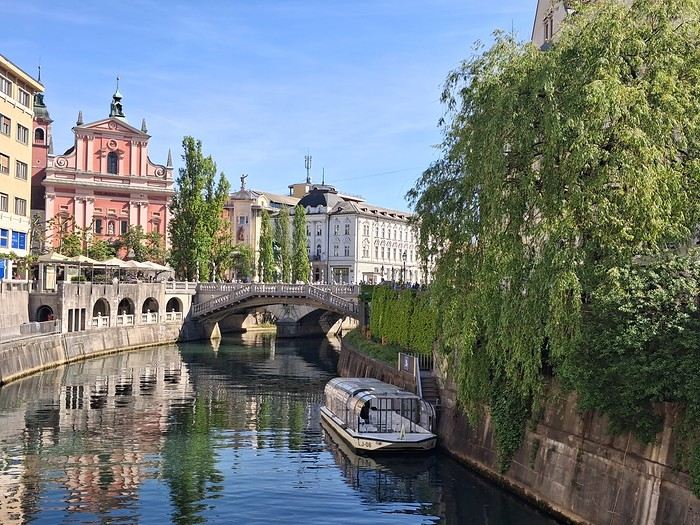
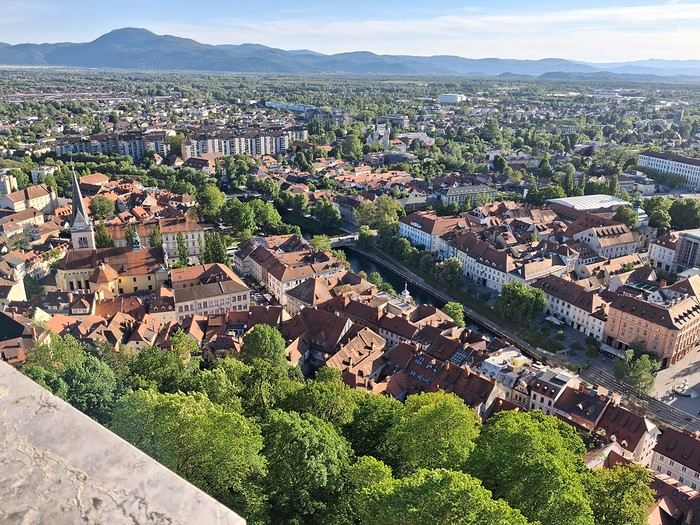
Good news: museums are free on the first Sunday of the month. I started with the National Gallery, then took a stroll through Tivoli Park, enjoying the outdoors. I tried grilling in the park before heading to the Museum of Modern Art and the eclectic National Museum of Slovenia, which was interesting for its architecture. Next up was the castle—you can enter the grounds for free; the only reason to pay is to access the keep for the city views.
Monday, May 4: Bled
I spent the morning exploring Ljubljana’s architecture but was disappointed by the Krakovo district, which guidebooks had hyped up.
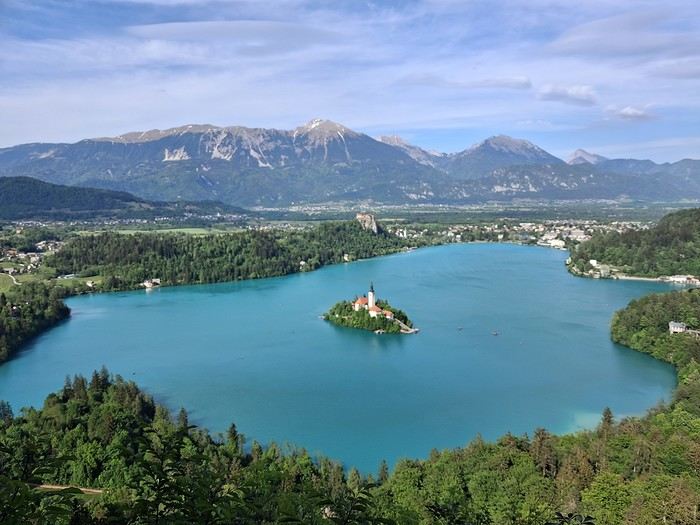
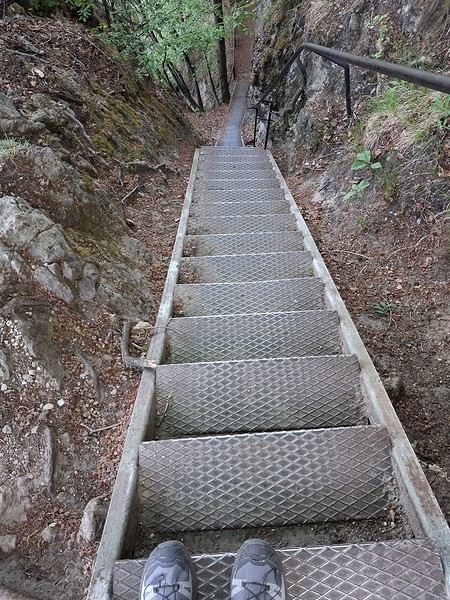
In the afternoon, I took the bus to Bled. The hostel was right at the bus station, and I soon realized I’d be the only guest—the owner was struggling to attract visitors. I walked around the lake and searched for the viewpoint access. It’s a steep climb with a staircase, but worth it.
Tuesday, May 5: Vintgar Gorge
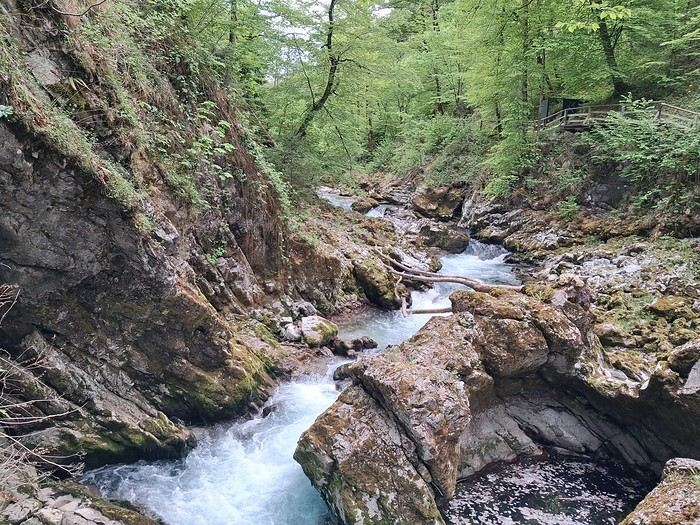
I headed to the gorges early in the morning via a shuttle, then walked back to Bled. It was stunning—it reminded me a bit of the Samaria Gorge I’d visited last year.
The bus took me straight to Stara Fužina near Lake Bohinj, where I stayed in a homestay. I loved it, even though there wasn’t much interaction with the hosts.
The weather was overcast and misty, giving the lake a Scottish vibe.
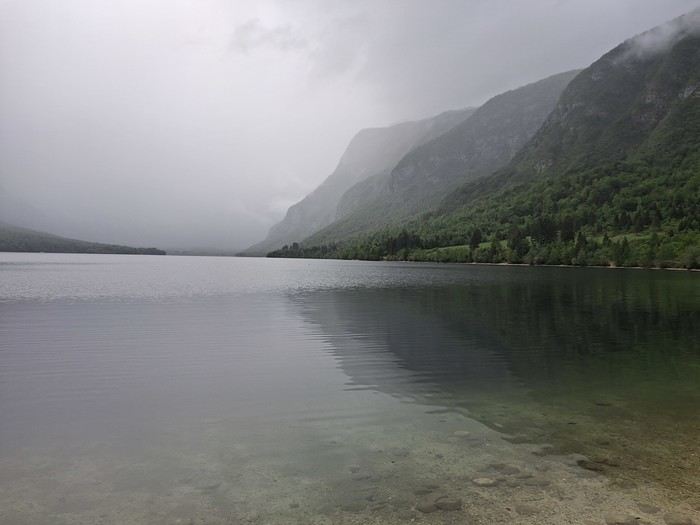
Wednesday, May 6: Bohinj
Rainy day, so I took the bus to Ukanc at the far end of the lake and walked back.
Thursday, May 7: Mostnica Gorge and the auto-train
I set off on foot for the gorges from Stara Fužina, taking a detour up to Planina Uskovnica, a steep and rarely used trail. The views of Triglav and the traditional alpine huts were incredible.
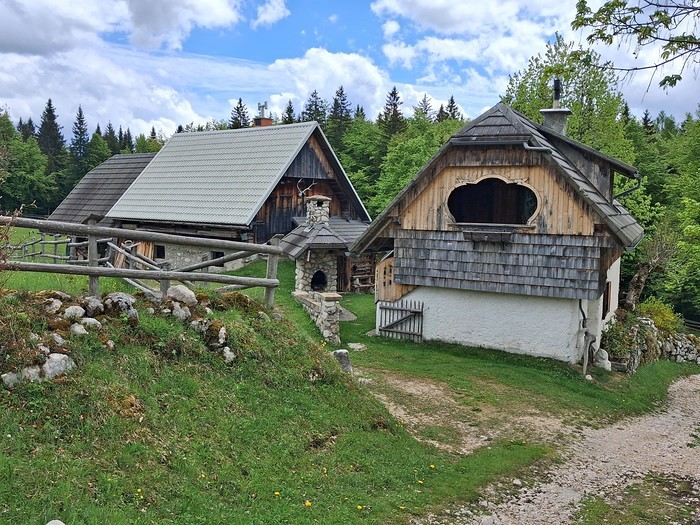
I then took the auto-train to Most na Soči. The passenger section has compartments, and the windows can be opened. The ride through the gorges was breathtaking. I stayed at a family-run guesthouse near the Most na Soči station—authentic and cozy.
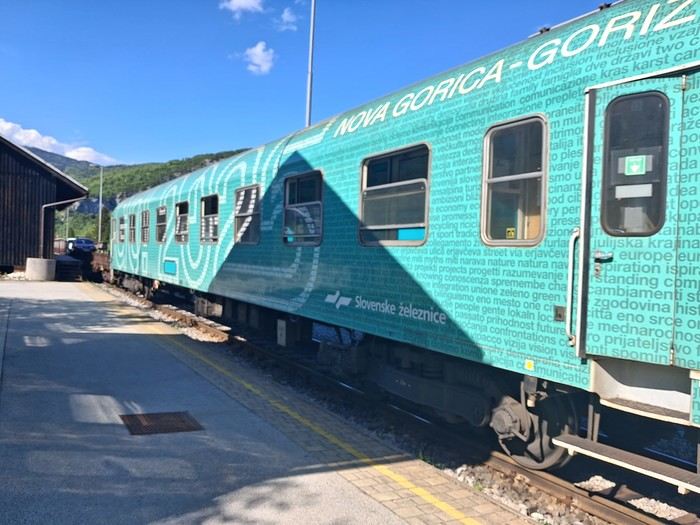
Friday, May 8: Tolmin Gorge and Nova Gorica
I took the bus to Tolmin, then walked 30 minutes to the gorges. The trail is well-maintained but short, so I extended my hike with a scenic loop through the gorges and nearby villages.
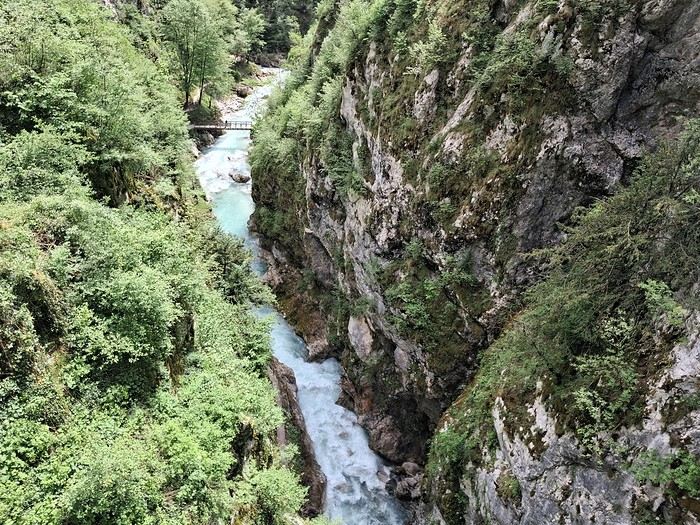
A quick train ride later, I was in Nova Gorica for the night, positioning myself to reach the Adriatic coast the next day. I explored at a fast pace—Villa Raffut on the Slovenian side, then crossed the border to visit Palazzo Attems-Petzenstein and grab an aperitivo in the main square. You could tell I was in Italy just by the vibe. The old border checkpoint is still there.
Saturday, May 9: Piran
Three trains and a bus later, I arrived. The journey was scenic, and it was worth it.
Piran is touristy but manageable. It feels like a mix of Croatia and Italy, with both influences evident. The maritime museum was fascinating, with its detailed ship models. There’s still a local feel—there was even a great blues concert by the harbor that evening.
Sunday, May 10: Piran
I walked to Izola along the coast—a beautiful route with paths, roads, and lakes. It was Sunday, and the tip of the village was lively with families picnicking. I decided to take the bus to Koper. The regional museum was quiet, but the garden was stunning.
Monday, May 11: Trieste
The bus connection from Koper was frequent and easy. Trieste is very open to the sea. I visited the castle and the massive Revoltella Museum—good timing, since it was raining. The collection spans everything from classical to contemporary art.
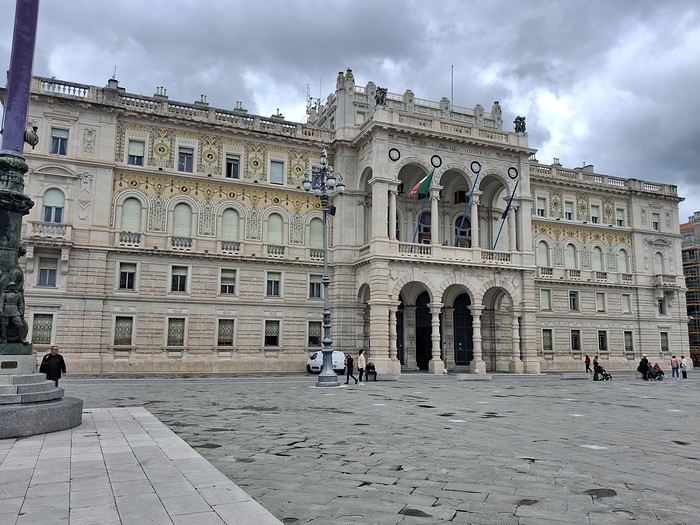
I missed my connection to Stresa later that day, so I had to improvise a night in a dorm near Milan’s train station.
Tuesday, May 12: Stresa
I came mainly for the Borromean Islands. First impressions weren’t great—crowded at the dock and windy. I didn’t like Isola Bella—too many people and too flashy. I much preferred Isola Madre, with its peaceful gardens where you can find solitude. On the way back, I stopped at Isola dei Pescatori after some hesitation, and it was worth it. Finally, I explored Stresa, with its colorful houses and grand palaces.
Wednesday, May 13: Heading to the Jura
I wrapped up my trip by taking the EuroCity train from Milan to Geneva via the Simplon Pass. From there, I headed to my vacation spot, taking the train from Nyon to La Cure (on the border). The rest of the journey was private.
Saturday, May 2: Arrival
Arrived in Ljubljana on a Transavia flight from Paris. I’d spotted a bus connection to the city center, but it’s worth noting there’s no dedicated line—most buses stopping at the airport come from Bled. On a sunny Saturday afternoon, the bus was already packed with people who’d headed to the lake for some fresh air. I ended up taking a shared van, with drivers actively offering transfers to travelers. I paid 12 € for the ride to the train station, then walked 15 minutes to Hotel Celica. It lives up to its description as a former prison turned hotel—close to the city center, clean, with a hearty breakfast. The rooms are basic, with beds 3 meters off the ground, accessible by a wooden ladder. For dinner, I opted for an Indian restaurant.
Sunday, May 3: Urban marathon
Good news: museums are free on the first Sunday of the month. I started with the National Gallery, then took a stroll through Tivoli Park, enjoying the outdoors. I tried grilling in the park before heading to the Museum of Modern Art and the eclectic National Museum of Slovenia, which was interesting for its architecture. Next up was the castle—you can enter the grounds for free; the only reason to pay is to access the keep for the city views.
Monday, May 4: Bled
I spent the morning exploring Ljubljana’s architecture but was disappointed by the Krakovo district, which guidebooks had hyped up.
In the afternoon, I took the bus to Bled. The hostel was right at the bus station, and I soon realized I’d be the only guest—the owner was struggling to attract visitors. I walked around the lake and searched for the viewpoint access. It’s a steep climb with a staircase, but worth it.
Tuesday, May 5: Vintgar Gorge
I headed to the gorges early in the morning via a shuttle, then walked back to Bled. It was stunning—it reminded me a bit of the Samaria Gorge I’d visited last year.
The bus took me straight to Stara Fužina near Lake Bohinj, where I stayed in a homestay. I loved it, even though there wasn’t much interaction with the hosts.
The weather was overcast and misty, giving the lake a Scottish vibe.
Wednesday, May 6: Bohinj
Rainy day, so I took the bus to Ukanc at the far end of the lake and walked back.
Thursday, May 7: Mostnica Gorge and the auto-train
I set off on foot for the gorges from Stara Fužina, taking a detour up to Planina Uskovnica, a steep and rarely used trail. The views of Triglav and the traditional alpine huts were incredible.
I then took the auto-train to Most na Soči. The passenger section has compartments, and the windows can be opened. The ride through the gorges was breathtaking. I stayed at a family-run guesthouse near the Most na Soči station—authentic and cozy.
Friday, May 8: Tolmin Gorge and Nova Gorica
I took the bus to Tolmin, then walked 30 minutes to the gorges. The trail is well-maintained but short, so I extended my hike with a scenic loop through the gorges and nearby villages.
A quick train ride later, I was in Nova Gorica for the night, positioning myself to reach the Adriatic coast the next day. I explored at a fast pace—Villa Raffut on the Slovenian side, then crossed the border to visit Palazzo Attems-Petzenstein and grab an aperitivo in the main square. You could tell I was in Italy just by the vibe. The old border checkpoint is still there.
Saturday, May 9: Piran
Three trains and a bus later, I arrived. The journey was scenic, and it was worth it.
Piran is touristy but manageable. It feels like a mix of Croatia and Italy, with both influences evident. The maritime museum was fascinating, with its detailed ship models. There’s still a local feel—there was even a great blues concert by the harbor that evening.
Sunday, May 10: Piran
I walked to Izola along the coast—a beautiful route with paths, roads, and lakes. It was Sunday, and the tip of the village was lively with families picnicking. I decided to take the bus to Koper. The regional museum was quiet, but the garden was stunning.
Monday, May 11: Trieste
The bus connection from Koper was frequent and easy. Trieste is very open to the sea. I visited the castle and the massive Revoltella Museum—good timing, since it was raining. The collection spans everything from classical to contemporary art.
I missed my connection to Stresa later that day, so I had to improvise a night in a dorm near Milan’s train station.
Tuesday, May 12: Stresa
I came mainly for the Borromean Islands. First impressions weren’t great—crowded at the dock and windy. I didn’t like Isola Bella—too many people and too flashy. I much preferred Isola Madre, with its peaceful gardens where you can find solitude. On the way back, I stopped at Isola dei Pescatori after some hesitation, and it was worth it. Finally, I explored Stresa, with its colorful houses and grand palaces.
Wednesday, May 13: Heading to the Jura
I wrapped up my trip by taking the EuroCity train from Milan to Geneva via the Simplon Pass. From there, I headed to my vacation spot, taking the train from Nyon to La Cure (on the border). The rest of the journey was private.
On the Camino de Santiago trails
Planning a bike road trip from Scandinavia, preparing a coastal voyage along Portugal’s shores to Santiago de Compostela, or taking one of the many routes leading to Compostela...
That’s right—did you know you don’t *have* to walk to experience the adventure of the Camino?
The spirit of travel stays open: hiking, biking, sailing (on a sailboat I can make available for the project), slow wandering, or a more ambitious long-term journey. What matters most is sharing, discovery, and the desire to build a great adventure together.
I’ve already been lucky enough to hike with friends—men and women—I met on this forum, especially in Mercantour Park. Those encounters led to amazing memories and real travel friendships.
If the idea of brainstorming a project, swapping route ideas, or preparing a shared adventure appeals to you, don’t hesitate to reach out.
Ready to start planning your next trip... and maybe even a long-term adventure!
Sri Lanka in summer: Can we book and decide on the spot, or should we plan everything in advance?
Hello,
I’m heading to Sri Lanka for 3 weeks in July with my two 11-year-old kids, and I’m wondering about how to organize the trip. We’re used to traveling on the go, staying 1 to 2 or 3 nights per place depending on how we feel.
Do you recommend planning the itinerary and booking accommodations in advance to save time once we’re there? Or is it pretty easy to organize everything as we go without any issues?
Same question for activities: Should we book safaris and tours ahead of time, or can we arrange them easily on the spot? Is there a risk of not getting a spot, for example, to visit a park since we’ll be there in July?
We’ll be using local transport (train, VTC via PickMe, tuk-tuk) to get from one place to another.
In short: Are there any must-book things we should reserve now? So far, I only have the flight tickets!
Thanks in advance for your help! 😊